Visual abstracts
New randomized trials and meta-analyses from leading journals at a glance: who was studied, what was compared, and what was found. Every paper is free to read in full.
All specialtiesCardiology 995Oncology 892Gastroenterology & Hepatology 360Infectious Disease 683Neurology 418Psychiatry & Mental Health 521Pulmonology 436Critical Care 302Endocrinology & Diabetes 559Pediatrics 626Surgery 424Orthopedics & Sports Medicine 194Neurosurgery 144Cardiothoracic & Vascular Surgery 103Plastic & Reconstructive Surgery 163Nephrology 225Rheumatology 129Hematology 213Dermatology 92Ophthalmology 117Obstetrics & Gynecology 305Public & Global Health 188Radiology & Imaging 122Anesthesiology 169Urology 191ENT (Otolaryngology) 138Emergency Medicine 115Allergy & Immunology 68Geriatrics 194Family Medicine & Primary Care 132Medical Genetics & Genomics 104Pathology & Laboratory Medicine 31Physical Medicine & Rehabilitation 174Palliative Care 92Nutrition 256Digital Health & AI 524General Medicine 105
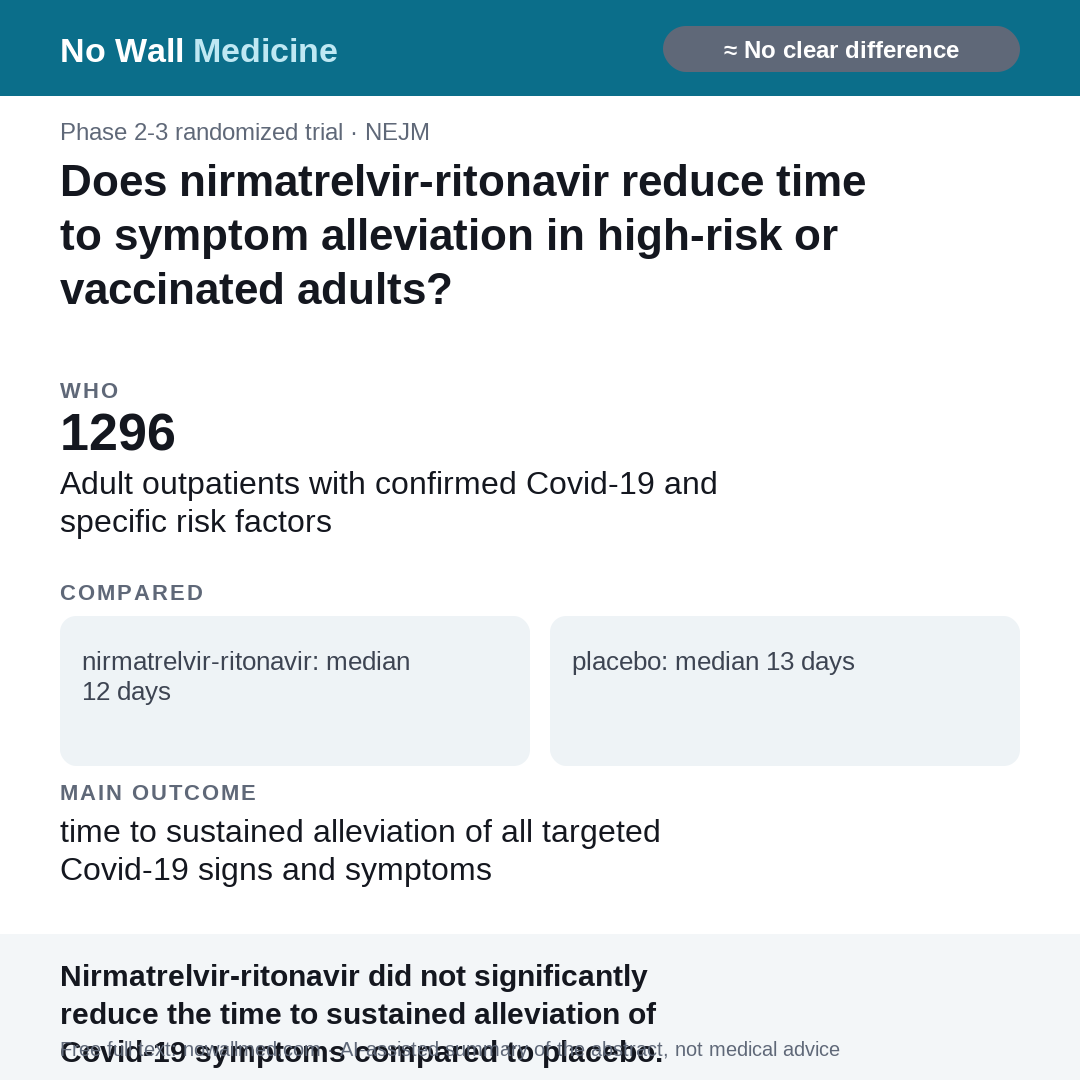
Nirmatrelvir for Vaccinated or Unvaccinated Adult Outpatients with Covid-19
Phase 2-3 randomized trialNo clear difference
Does nirmatrelvir-ritonavir reduce time to symptom alleviation in high-risk or vaccinated adults?
Who
1296
Adult outpatients with confirmed Covid-19 and specific risk factors
Compared
nirmatrelvir-ritonavir: median 12 days
placebo: median 13 days
Main outcome
time to sustained alleviation of all targeted Covid-19 signs and symptoms
Result: difference, -0.8 percentage points; 95% confidence interval, -2.0 to 0.4
Bottom line: Nirmatrelvir-ritonavir did not significantly reduce the time to sustained alleviation of Covid-19 symptoms compared to placebo.
Funded by: Pfizer
NEJM · 2024-04-10Download image
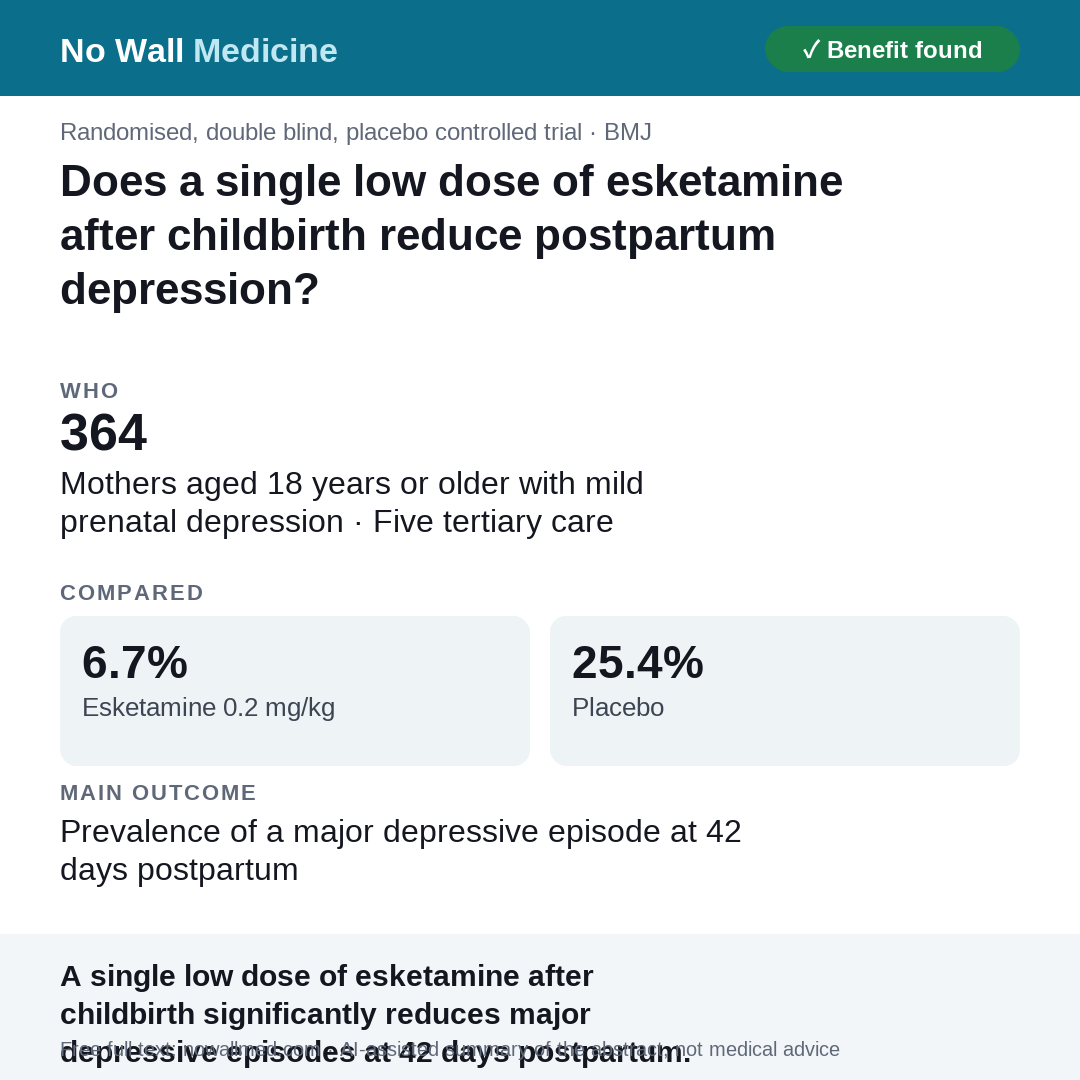
Efficacy of a single low dose of esketamine after childbirth for mothers with symptoms of prenatal depression: randomised clinical trial
Randomised, double blind, placebo controlled trialBenefit found
Does a single low dose of esketamine after childbirth reduce postpartum depression?
Who
364
Mothers aged 18 years or older with mild prenatal depression · Five tertiary care hospitals in China
Compared
6.7%Esketamine 0.2 mg/kg (12/180)
25.4%Placebo (46/181)
Main outcome
Prevalence of a major depressive episode at 42 days postpartum
Result: relative risk 0.26 (95% CI 0.14 to 0.48)
Bottom line: A single low dose of esketamine after childbirth significantly reduces major depressive episodes at 42 days postpartum.
BMJ · 2024-04-10Download image
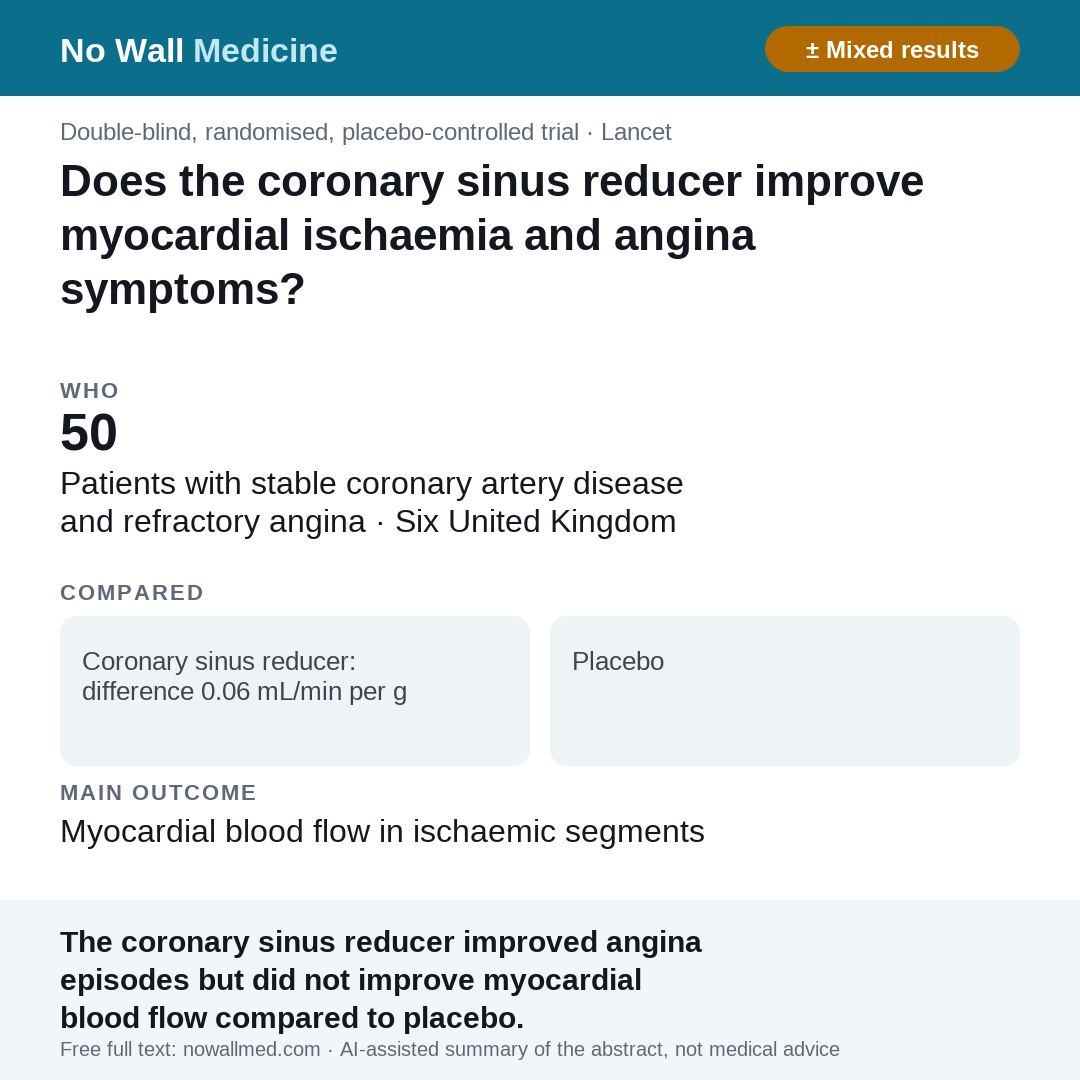
Coronary sinus reducer for the treatment of refractory angina (ORBITA-COSMIC): a randomised, placebo-controlled trial
Double-blind, randomised, placebo-controlled trialMixed results
Does the coronary sinus reducer improve myocardial ischaemia and angina symptoms?
Who
50
Patients with stable coronary artery disease and refractory angina · Six United Kingdom hospitals
Compared
Coronary sinus reducer: difference 0.06 mL/min per g
Placebo
Main outcome
Myocardial blood flow in ischaemic segments
Result: difference 0.06 mL/min per g (95% CrI -0.09 to 0.20)
Bottom line: The coronary sinus reducer improved angina episodes but did not improve myocardial blood flow compared to placebo.
Funded by: Medical Research Council and others
Lancet · 2024-04-08Download image
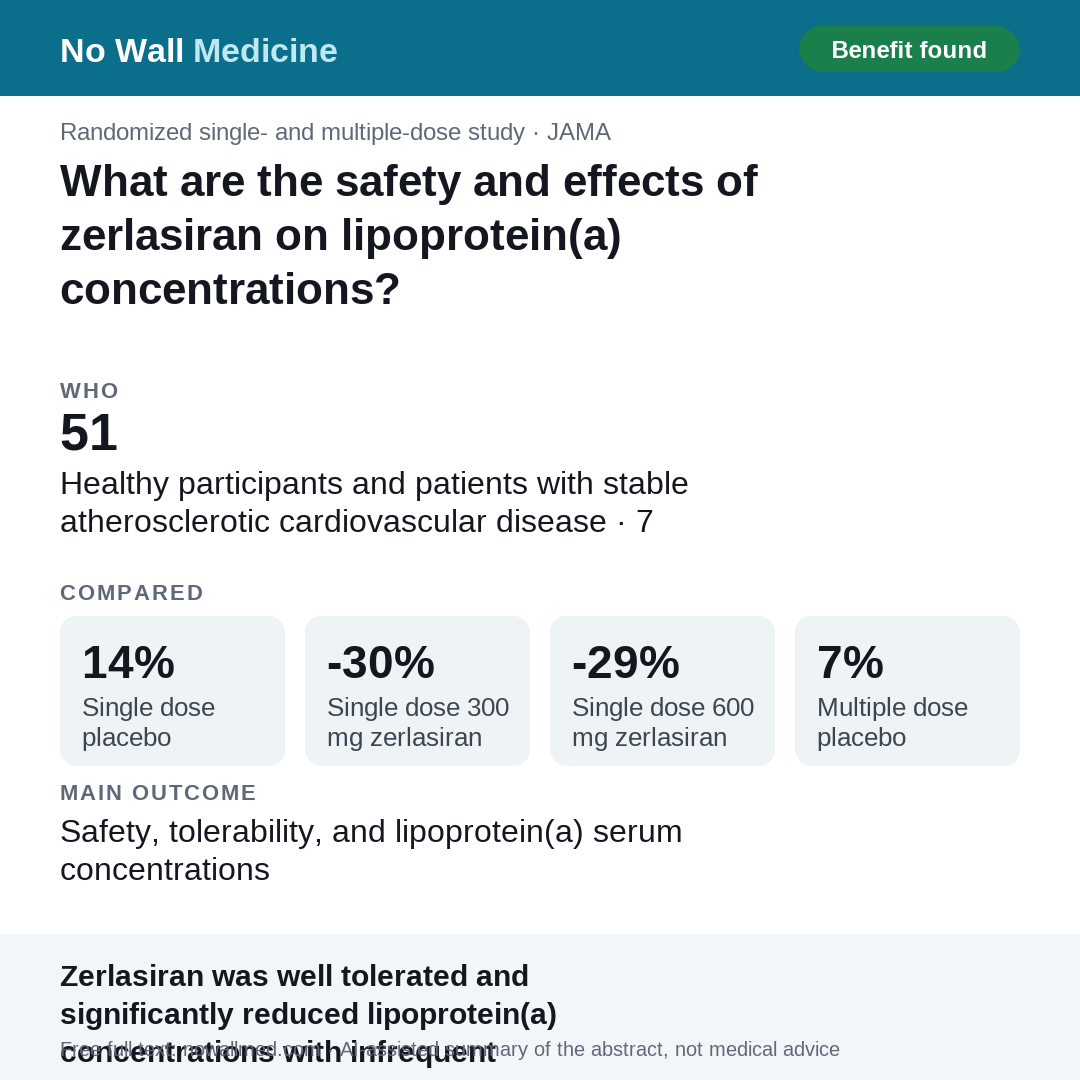
Single Ascending and Multiple-Dose Trial of Zerlasiran, a Short Interfering RNA Targeting Lipoprotein(a): A Randomized Clinical Trial
Randomized single- and multiple-dose studyBenefit found
What are the safety and effects of zerlasiran on lipoprotein(a) concentrations?
Who
51
Healthy participants and patients with stable atherosclerotic cardiovascular disease · 7 research sites in US, Netherlands, UK, and Australia
Compared
14%Single dose placebo (IQR, 13% to 15%)
-30%Single dose 300 mg zerlasiran (IQR, -51% to -18%)
-29%Single dose 600 mg zerlasiran (IQR, -39% to -7%)
7%Multiple dose placebo (IQR, -4% to 21%)
Main outcome
Safety, tolerability, and lipoprotein(a) serum concentrations
Bottom line: Zerlasiran was well tolerated and significantly reduced lipoprotein(a) concentrations with infrequent administration.
JAMA · 2024-04-08Download image
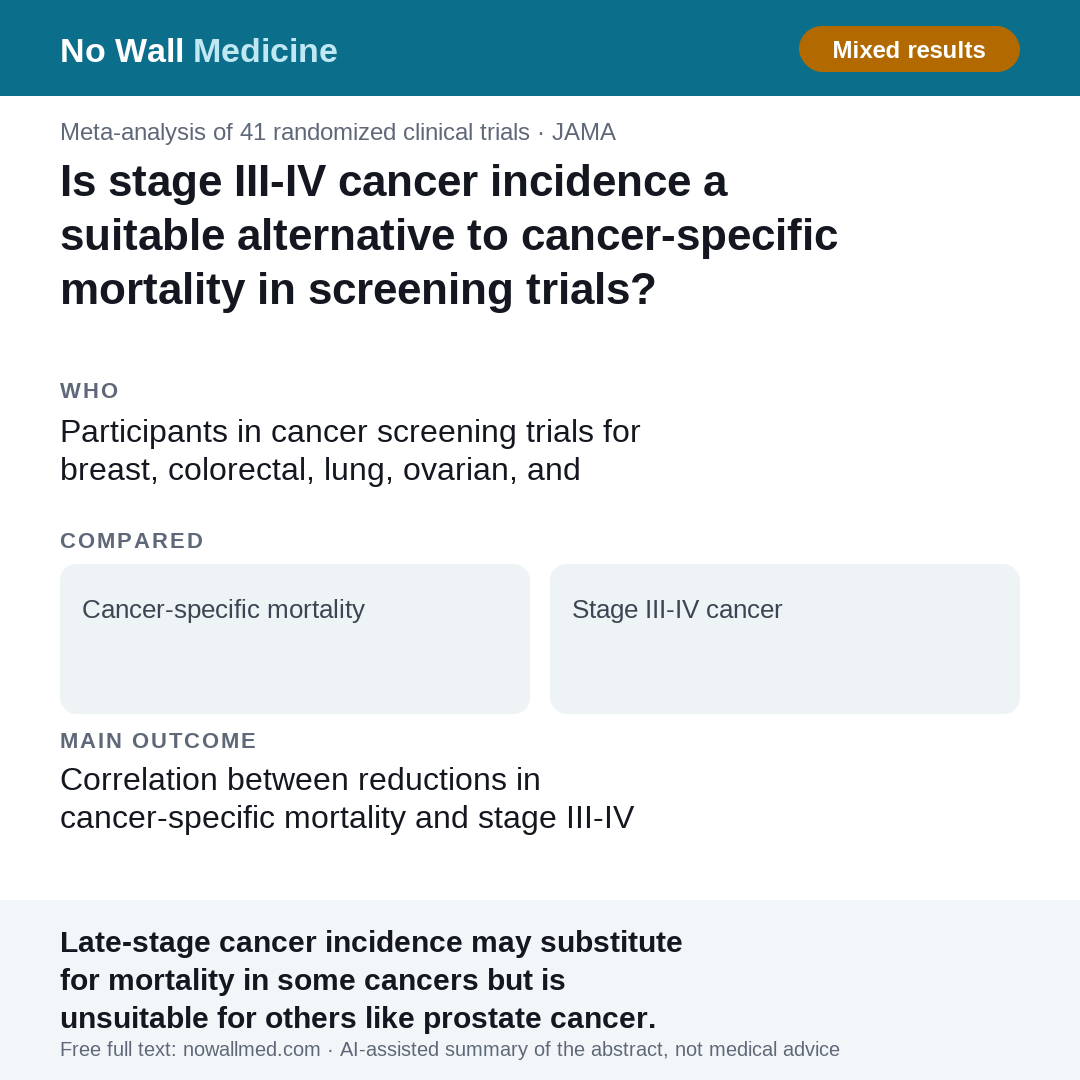
Cancer Stage Compared With Mortality as End Points in Randomized Clinical Trials of Cancer Screening: A Systematic Review and Meta-Analysis
Meta-analysis of 41 randomized clinical trialsMixed results
Is stage III-IV cancer incidence a suitable alternative to cancer-specific mortality in screening trials?
Who
Participants in cancer screening trials for breast, colorectal, lung, ovarian, and prostate cancers · Europe, North America, and Asia
Compared
Cancer-specific mortality
Stage III-IV cancer
Main outcome
Correlation between reductions in cancer-specific mortality and stage III-IV cancer
Bottom line: Late-stage cancer incidence may substitute for mortality in some cancers but is unsuitable for others like prostate cancer.
JAMA · 2024-04-08Download image
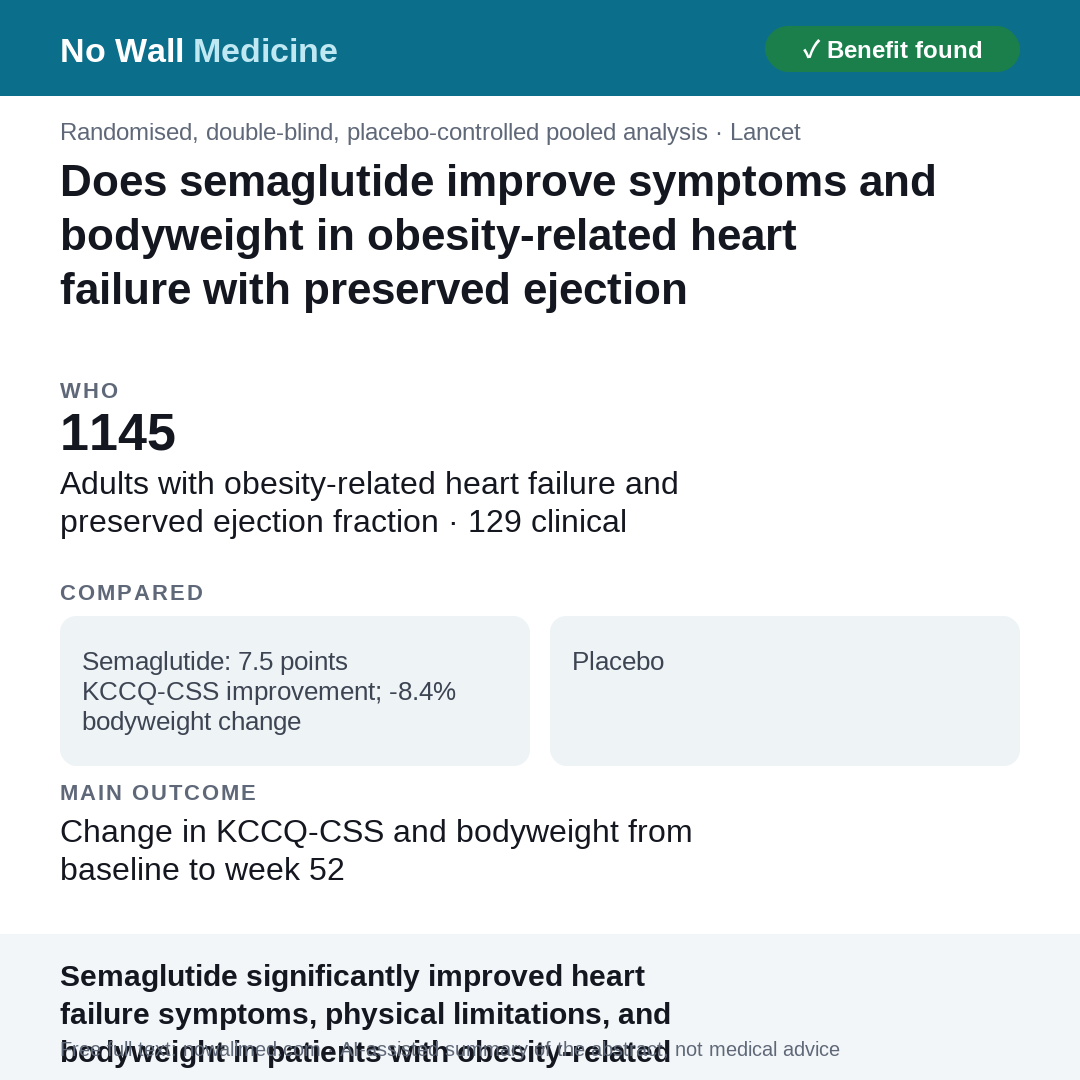
Semaglutide versus placebo in people with obesity-related heart failure with preserved ejection fraction: a pooled analysis of the STEP-HFpEF and STEP-HFpEF DM randomised trials
Randomised, double-blind, placebo-controlled pooled analysisBenefit found
Does semaglutide improve symptoms and bodyweight in obesity-related heart failure with preserved ejection fraction?
Who
1145
Adults with obesity-related heart failure and preserved ejection fraction · 129 clinical research sites in 18 countries
Compared
Semaglutide: 7.5 points KCCQ-CSS improvement; -8.4% bodyweight change
Placebo
Main outcome
Change in KCCQ-CSS and bodyweight from baseline to week 52
Result: mean between-group difference for KCCQ-CSS 7·5 points (95% CI 5·3 to 9·8)
Bottom line: Semaglutide significantly improved heart failure symptoms, physical limitations, and bodyweight in patients with obesity-related preserved ejection fraction.
Lancet · 2024-04-07Download image
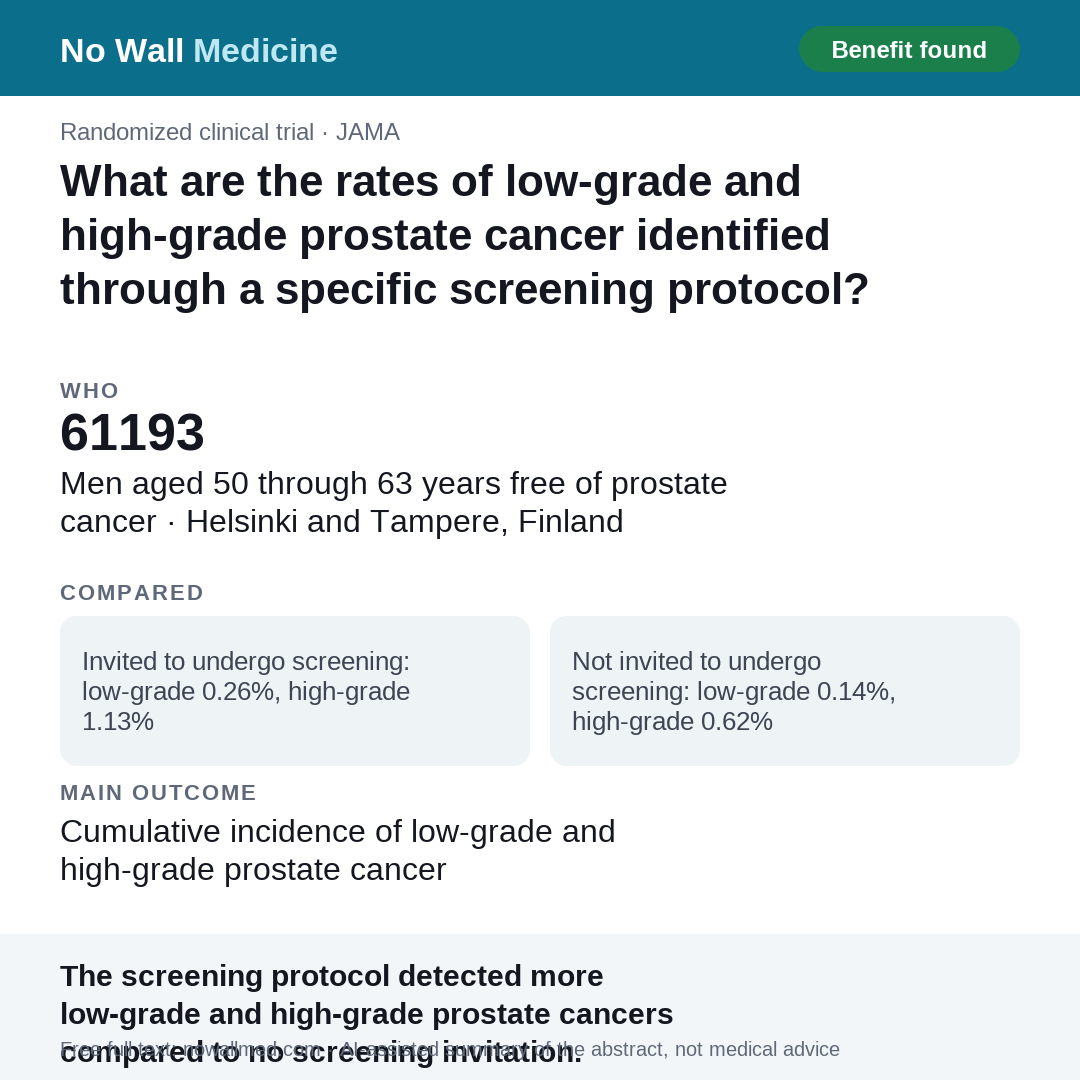
Prostate Cancer Screening With PSA, Kallikrein Panel, and MRI: The ProScreen Randomized Trial
Randomized clinical trialBenefit found
What are the rates of low-grade and high-grade prostate cancer identified through a specific screening protocol?
Who
61193
Men aged 50 through 63 years free of prostate cancer · Helsinki and Tampere, Finland
Compared
Invited to undergo screening: low-grade 0.26%, high-grade 1.13%
Not invited to undergo screening: low-grade 0.14%, high-grade 0.62%
Main outcome
Cumulative incidence of low-grade and high-grade prostate cancer
Result: risk difference 0.11% (95% CI, 0.03%-0.20%) for low-grade and 0.51% (95% CI, 0.33%-0.70%) for high-grade cancer
Bottom line: The screening protocol detected more low-grade and high-grade prostate cancers compared to no screening invitation.
JAMA · 2024-04-06Download image
Prostate-Specific Antigen Screening and 15-Year Prostate Cancer Mortality: A Secondary Analysis of the CAP Randomized Clinical Trial
Secondary analysis of a cluster randomized clinical trialBenefit found
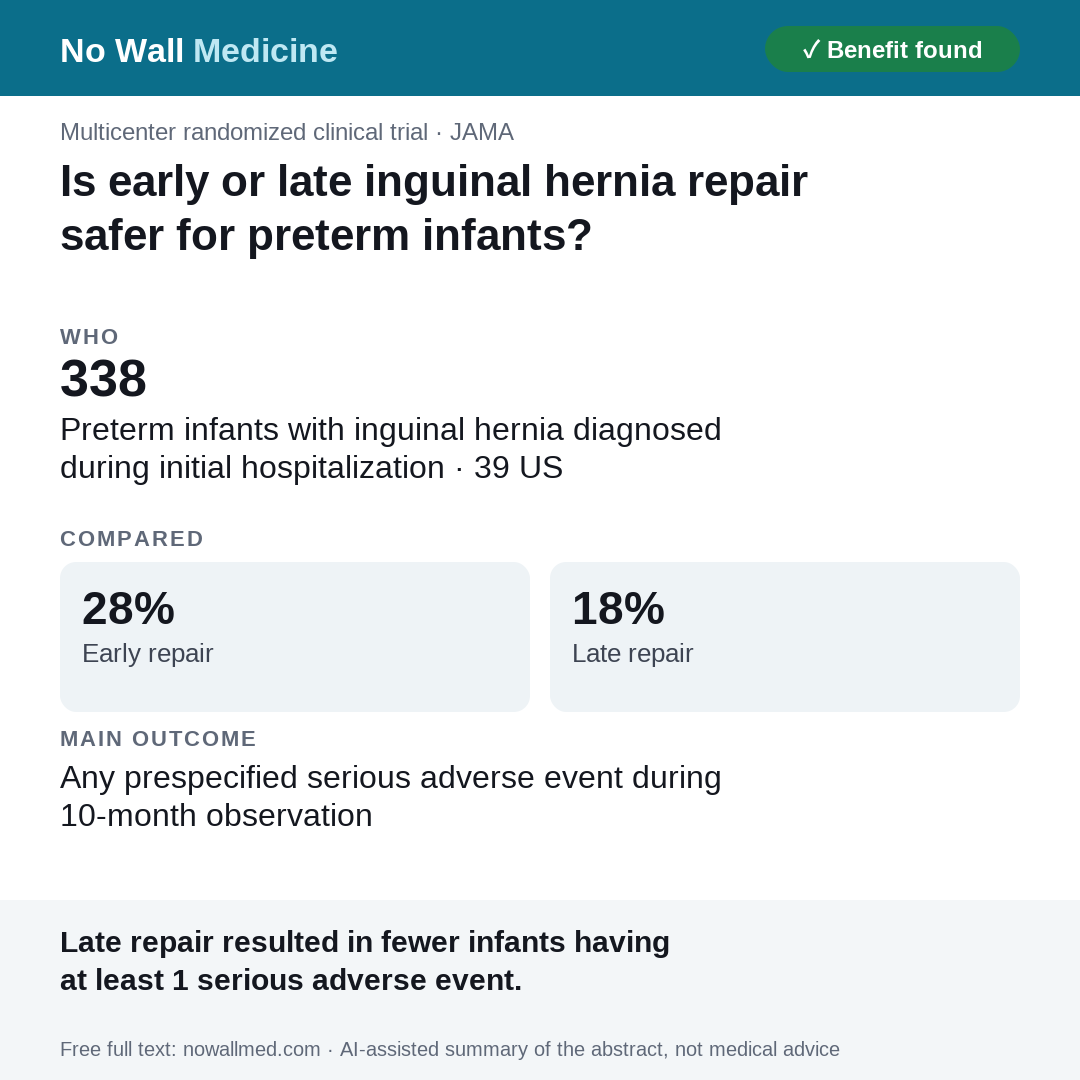
Does a single invitation for prostate-specific antigen screening reduce prostate cancer-specific mortality?
Who
415357
Men aged 50 to 69 years · 573 primary care practices in England and Wales
Compared
0.69%PSA screening intervention (95% CI, 0.65%-0.73%)
0.78%Control group (95% CI, 0.73%-0.82%)
Main outcome
prostate cancer-specific mortality
Result: rate ratio 0.92 (95% CI, 0.85-0.99)
Bottom line: A single invitation for prostate-specific antigen screening reduced prostate cancer deaths at a median 15-year follow-up.
Limitation: the absolute reduction in deaths was small
JAMA · 2024-04-06Download image
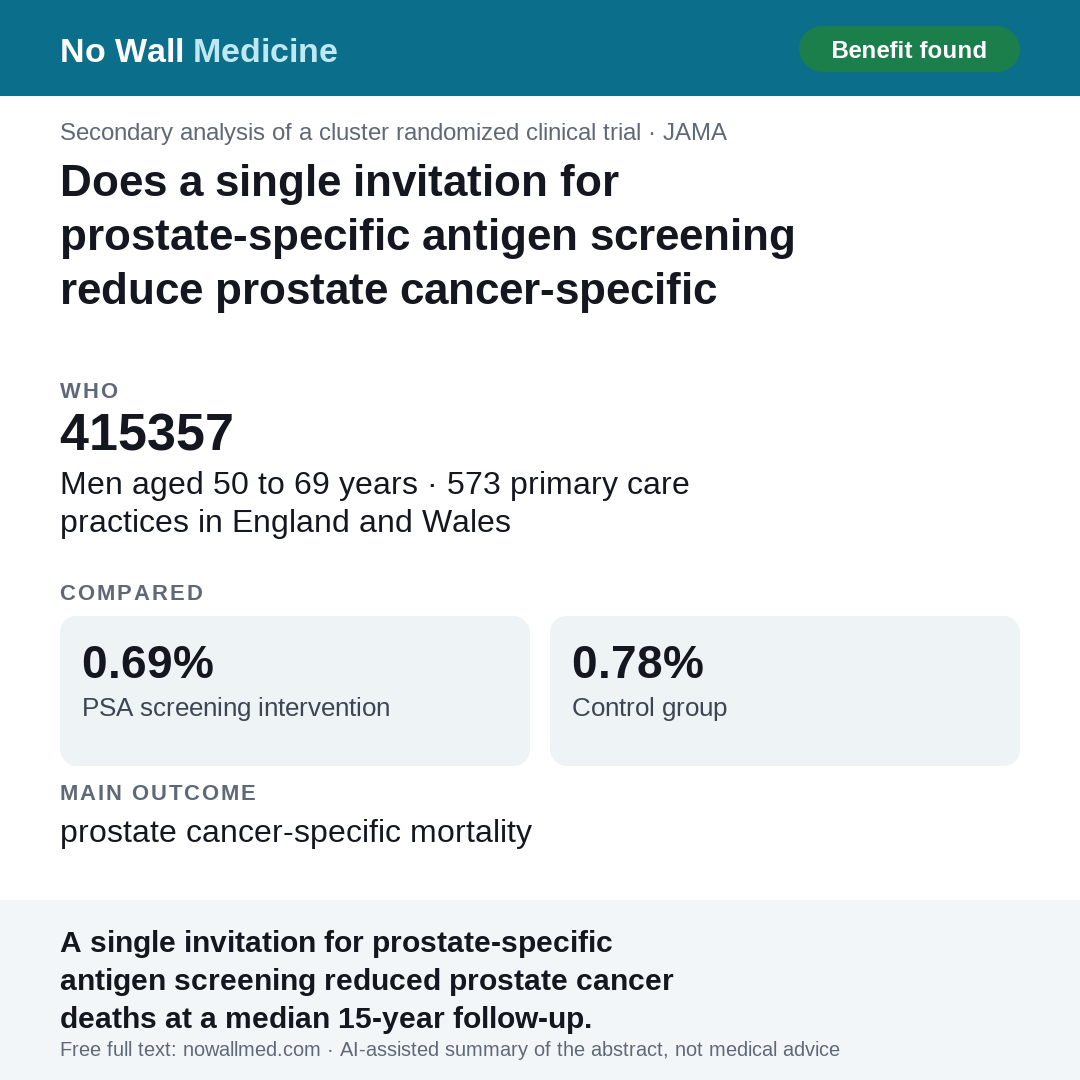
Integrated Hepatitis C-Opioid Use Disorder Care Through Facilitated Telemedicine: A Randomized Trial
Prospective, cluster randomized clinical trialBenefit found
Does facilitated telemedicine improve hepatitis C virus cure rates among persons with opioid use disorder?
Who
602
Hepatitis C-infected participants in opioid treatment programs · Twelve programs throughout New York State
Compared
90.3%Facilitated telemedicine (262 of 290)
39.4%Off-site referral (123 of 312)
Main outcome
Hepatitis C virus cure
Result: logarithmic odds ratio 2.9 (95% CI 2.0-3.5)
Bottom line: Integrated facilitated telemedicine resulted in significantly higher hepatitis C virus cure rates compared to standard off-site referral.
JAMA · 2024-04-03Download image
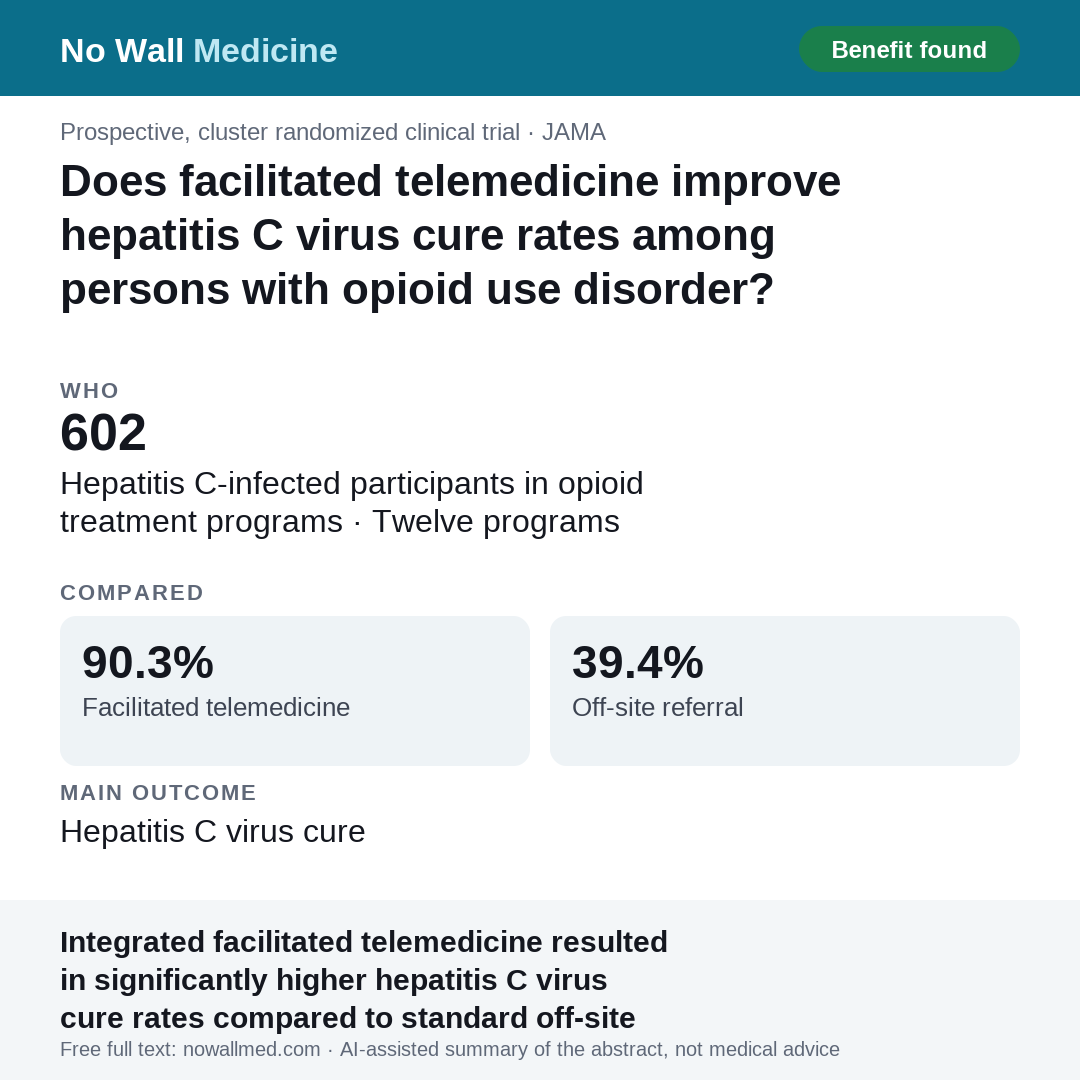
Management of Inpatient Elevated Blood Pressures : A Systematic Review of Clinical Practice Guidelines
Systematic review of clinical practice guidelinesUnclear result
How should elevated blood pressure be managed in hospitalized adults?
Who
Adult and older adult populations · Ambulatory, emergency department, and inpatient settings
Compared
Outpatient setting: goals varying between 130/80 and 140/90 mm Hg
Inpatient setting: no guidelines provided goals for inpatient blood pressure
Main outcome
guidelines on blood pressure management targets and treatments
Bottom line: Guidance for managing asymptomatic moderately elevated blood pressure in the hospital is currently lacking.
Limitation: Exclusion of non-English-language guidelines and guidelines specific to subpopulations.
Funded by: National Institute on Aging
Ann Intern Med · 2024-04-02Download image
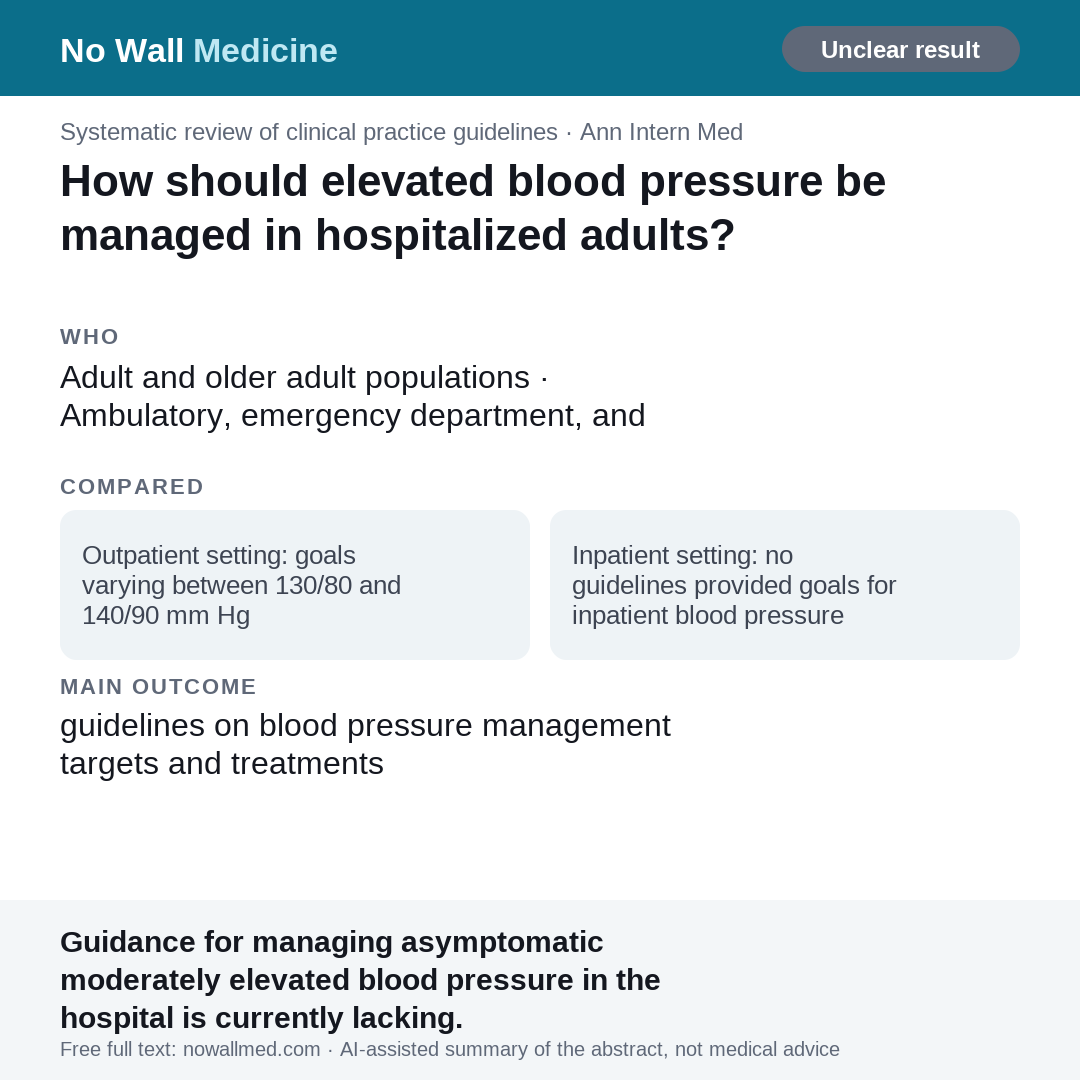
Effect of Early vs Late Inguinal Hernia Repair on Serious Adverse Event Rates in Preterm Infants: A Randomized Clinical Trial
Multicenter randomized clinical trialBenefit found
Is early or late inguinal hernia repair safer for preterm infants?
Who
338
Preterm infants with inguinal hernia diagnosed during initial hospitalization · 39 US hospitals
Compared
28%Early repair (159/149)
18%Late repair (149/149)
Main outcome
Occurrence of any prespecified serious adverse event
Result: risk difference, -7.9% (95% credible interval, -16.9% to 0%)
Bottom line: Late inguinal hernia repair resulted in fewer serious adverse events among preterm infants compared to early repair.
JAMA · 2024-03-26Download image
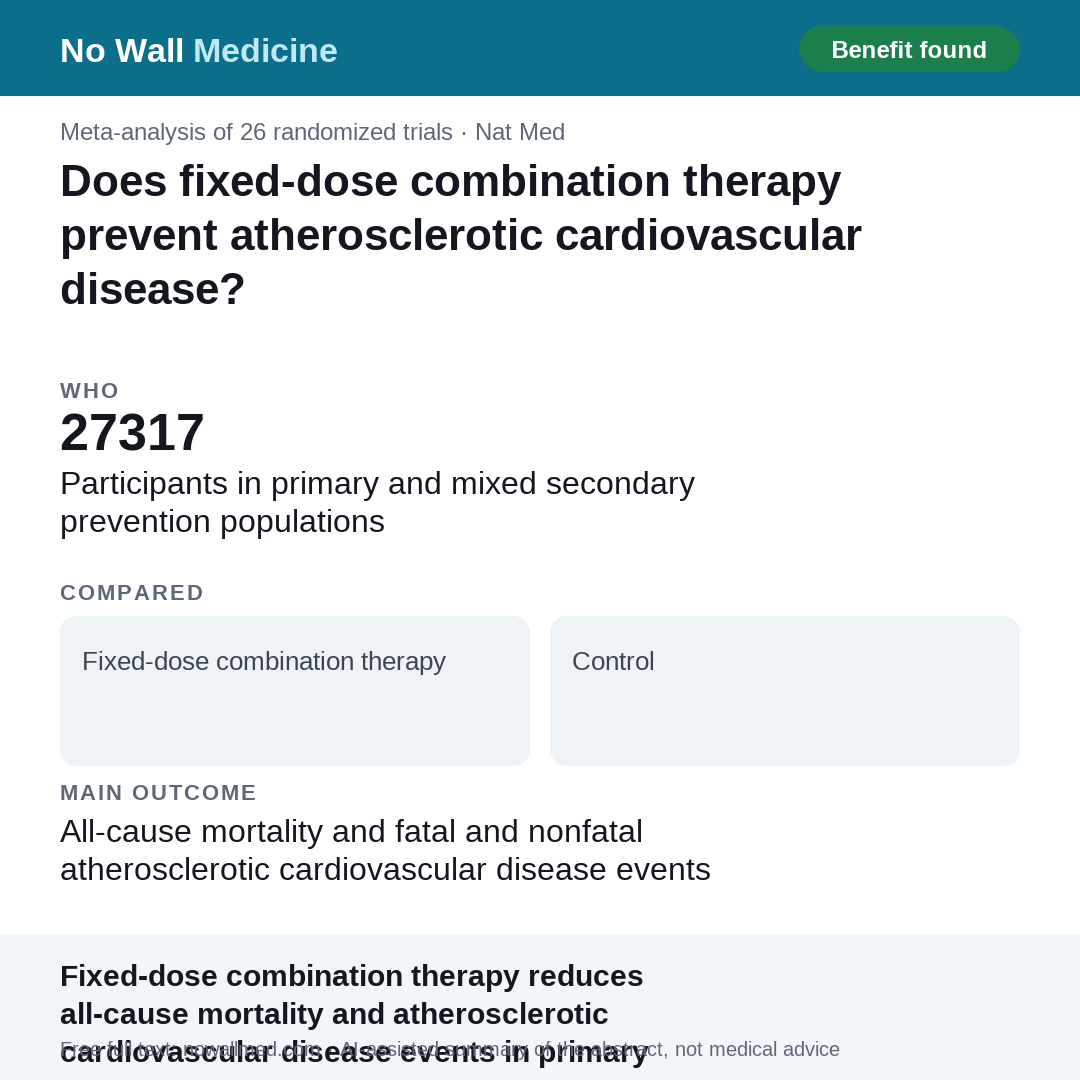
Fixed-dose combination therapy for the prevention of atherosclerotic cardiovascular disease
Meta-analysis of 26 randomized trialsBenefit found
Does fixed-dose combination therapy prevent atherosclerotic cardiovascular disease?
Who
27317
Participants in primary and mixed secondary prevention populations
Compared
Fixed-dose combination therapy
Control
Main outcome
All-cause mortality and fatal and nonfatal atherosclerotic cardiovascular disease events
Result: relative risk 0.89 (95% confidence interval 0.78 to 1.00) for mortality; relative risk 0.71 (95% confidence interval 0.63 to 0.79) for events
Bottom line: Fixed-dose combination therapy reduces all-cause mortality and atherosclerotic cardiovascular disease events in primary prevention populations.
Nat Med · 2024-03-26Download image
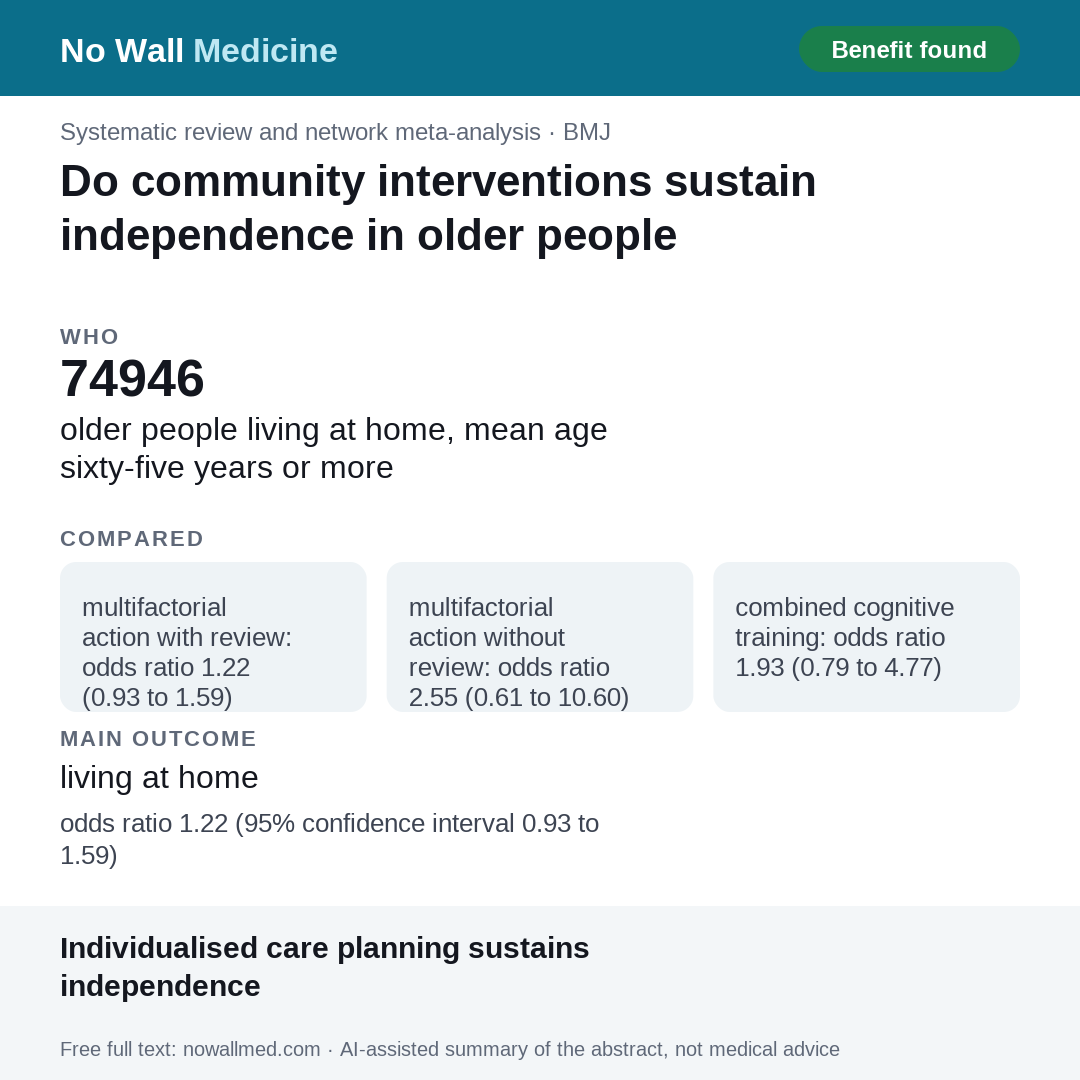
Community based complex interventions to sustain independence in older people: systematic review and network meta-analysis
Systematic review and network meta-analysisBenefit found
Do community interventions sustain independence in older people
Who
74946
older people living at home, mean age sixty-five years or more
Compared
multifactorial action with review: odds ratio 1.22 (0.93 to 1.59)
multifactorial action without review: odds ratio 2.55 (0.61 to 10.60)
combined cognitive training: odds ratio 1.93 (0.79 to 4.77)
Main outcome
living at home
Result: odds ratio 1.22 (95% confidence interval 0.93 to 1.59)
Bottom line: Individualised care planning sustains independence
Limitation: high risk of bias and imprecise estimates
BMJ · 2024-03-21Download image
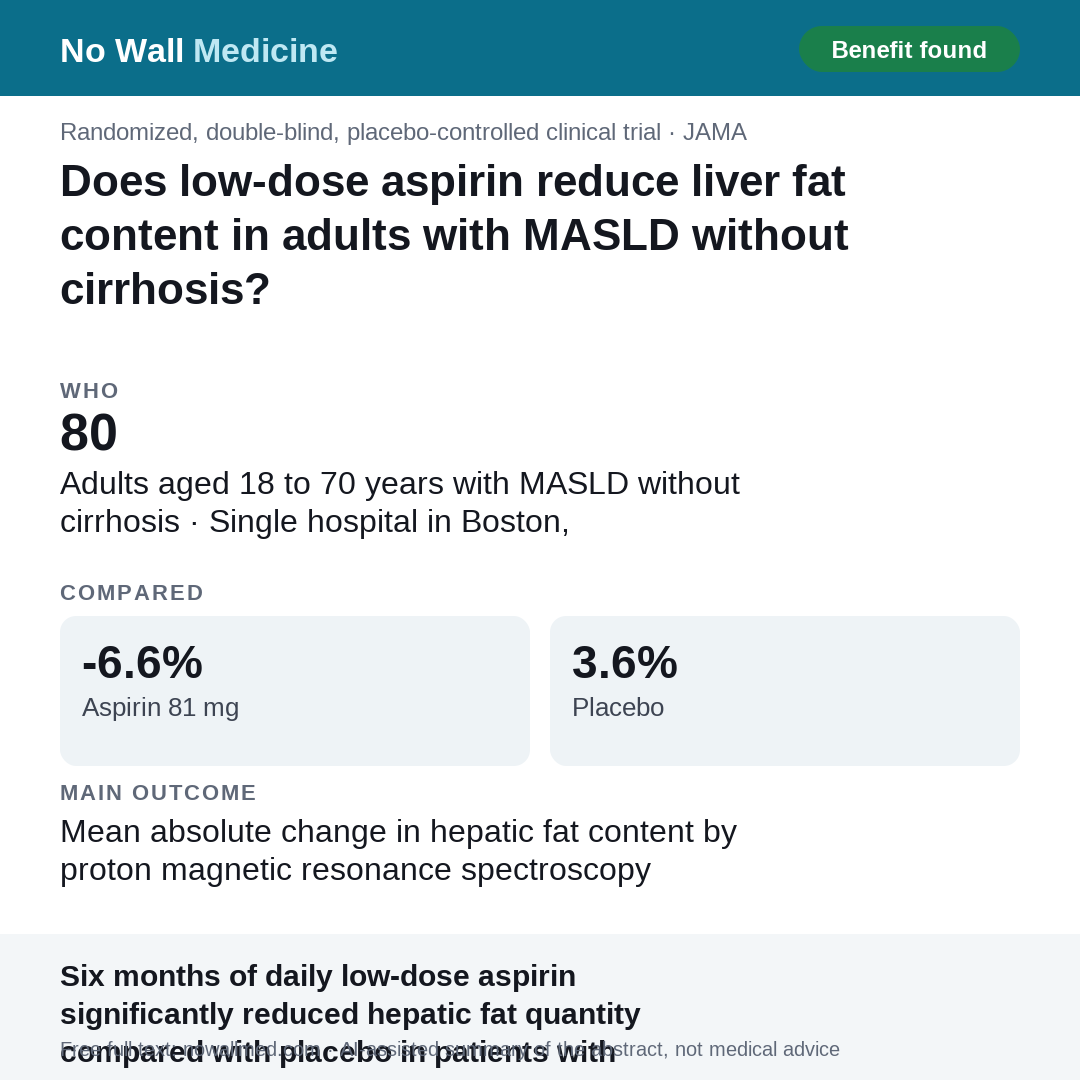
Aspirin for Metabolic Dysfunction-Associated Steatotic Liver Disease Without Cirrhosis: A Randomized Clinical Trial
Randomized, double-blind, placebo-controlled clinical trialBenefit found
Does low-dose aspirin reduce liver fat content in adults with MASLD without cirrhosis?
Who
80
Adults aged 18 to 70 years with MASLD without cirrhosis · Single hospital in Boston, Massachusetts
Compared
-6.6%Aspirin 81 mg
3.6%Placebo
Main outcome
Mean absolute change in hepatic fat content by proton magnetic resonance spectroscopy
Result: difference, -10.2% (95% CI, -27.7% to -2.6%)
Bottom line: Six months of daily low-dose aspirin significantly reduced hepatic fat quantity compared with placebo in patients with MASLD.
Limitation: Further study in a larger sample size is necessary to confirm these findings.
JAMA · 2024-03-19Download image
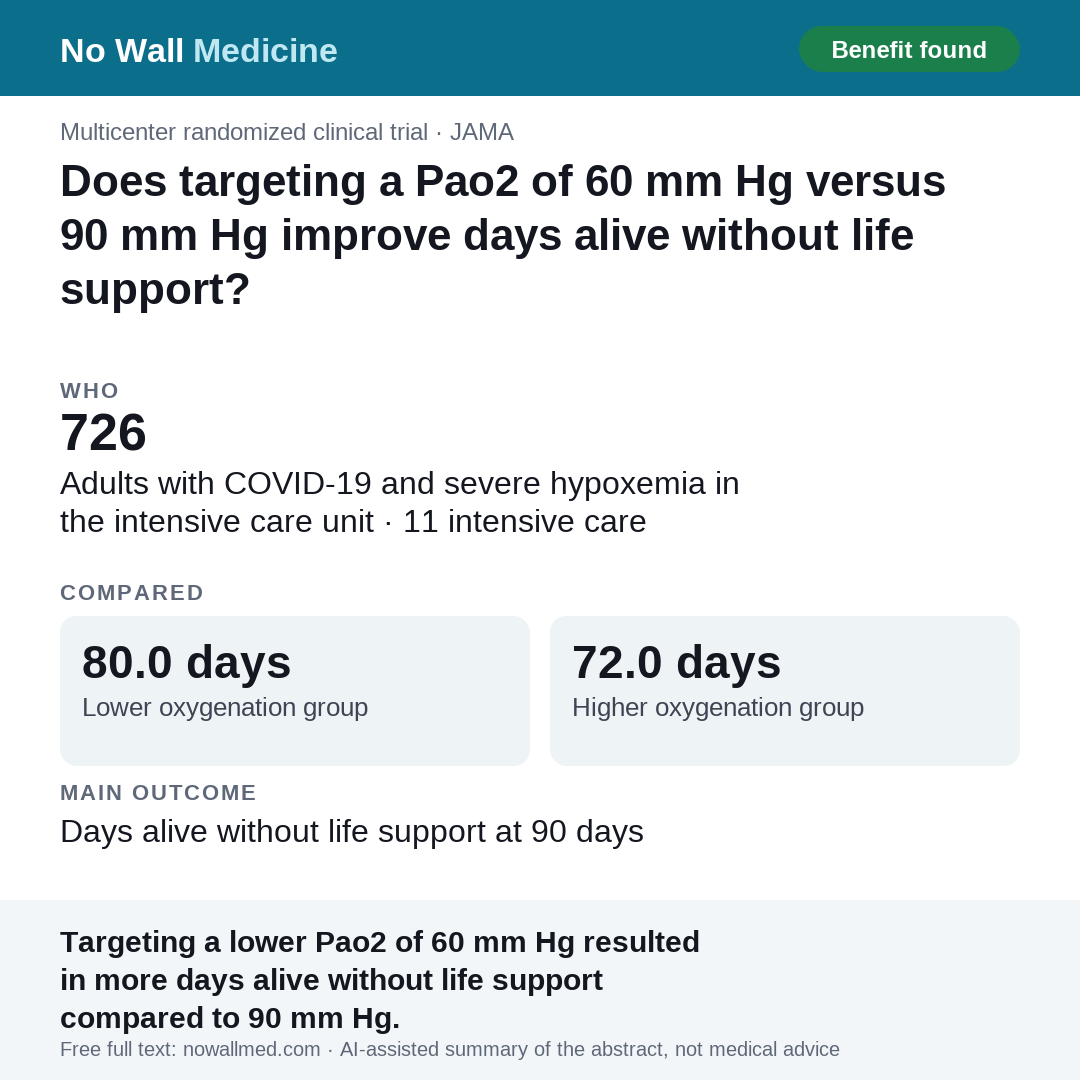
Lower vs Higher Oxygenation Target and Days Alive Without Life Support in COVID-19: The HOT-COVID Randomized Clinical Trial
Multicenter randomized clinical trialBenefit found
Does targeting a Pao2 of 60 mm Hg versus 90 mm Hg improve days alive without life support?
Who
726
Adults with COVID-19 and severe hypoxemia in the intensive care unit · 11 intensive care units in Europe
Compared
80.0 daysLower oxygenation group (IQR, 9.0-89.0 days)
72.0 daysHigher oxygenation group (IQR, 2.0-88.0 days)
Main outcome
Days alive without life support at 90 days
Result: adjusted mean difference, 5.8 days (95% CI, 0.2-11.5 days)
Bottom line: Targeting a lower Pao2 of 60 mm Hg resulted in more days alive without life support compared to 90 mm Hg.
JAMA · 2024-03-19Download image
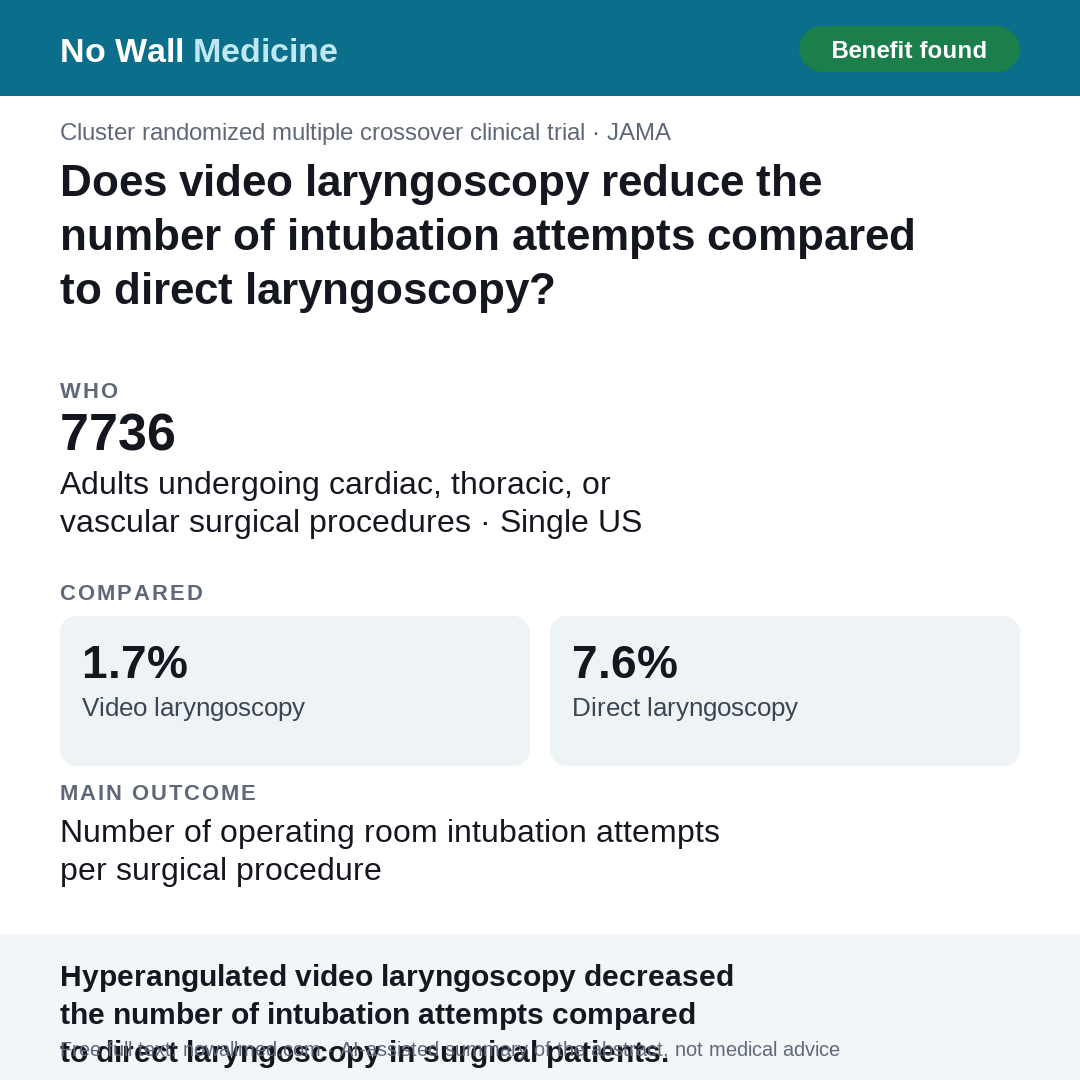
Video Laryngoscopy vs Direct Laryngoscopy for Endotracheal Intubation in the Operating Room: A Cluster Randomized Clinical Trial
Cluster randomized multiple crossover clinical trialBenefit found
Does video laryngoscopy reduce the number of intubation attempts compared to direct laryngoscopy?
Who
7736
Adults undergoing cardiac, thoracic, or vascular surgical procedures · Single US academic hospital
Compared
1.7%Video laryngoscopy
7.6%Direct laryngoscopy
Main outcome
Number of operating room intubation attempts per surgical procedure
Result: proportional odds ratio 0.20 (95% CI, 0.14-0.28)
Bottom line: Hyperangulated video laryngoscopy decreased the number of intubation attempts compared to direct laryngoscopy in surgical patients.
JAMA · 2024-03-18Download image
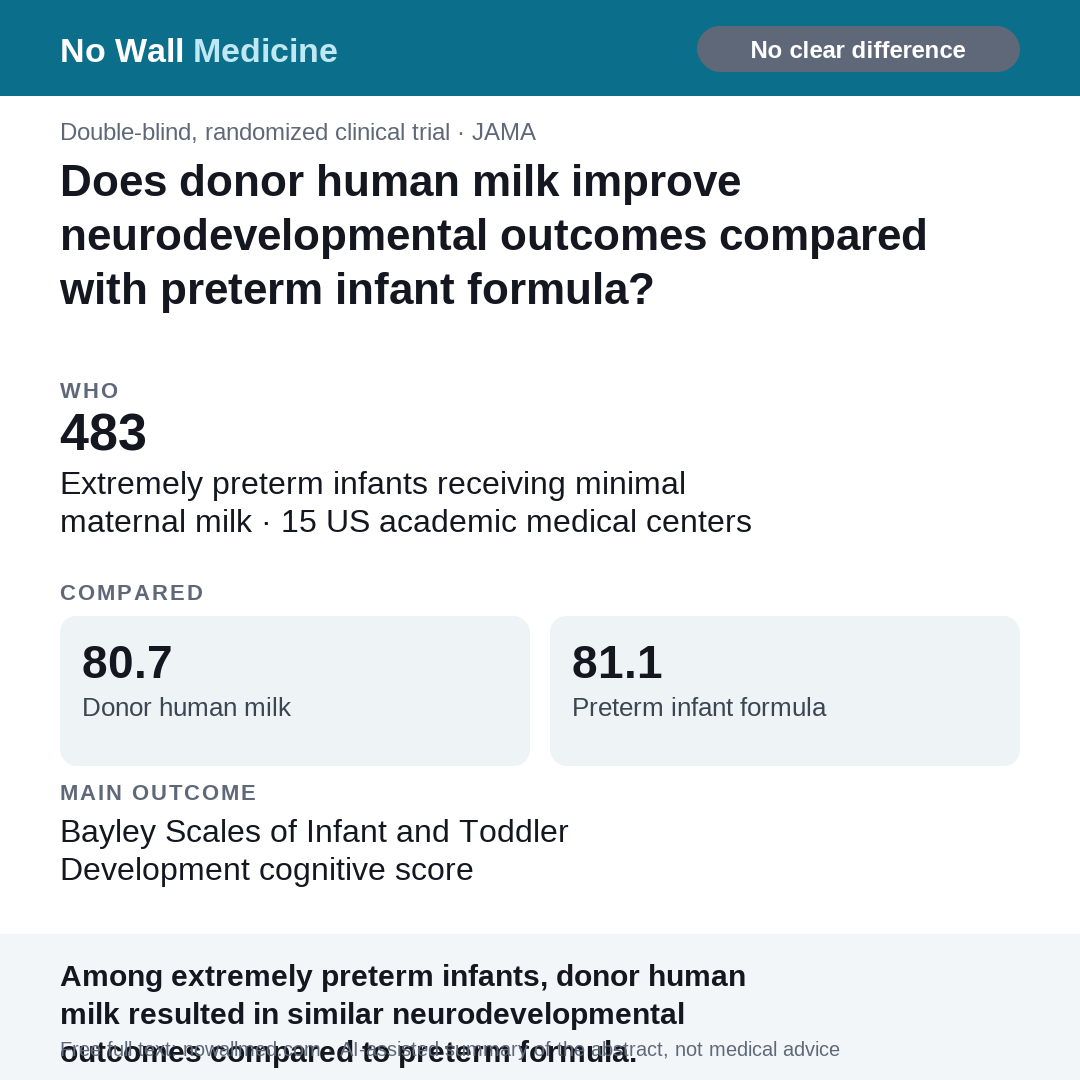
Neurodevelopmental Outcomes of Extremely Preterm Infants Fed Donor Milk or Preterm Infant Formula: A Randomized Clinical Trial
Double-blind, randomized clinical trialNo clear difference
Does donor human milk improve neurodevelopmental outcomes compared with preterm infant formula?
Who
483
Extremely preterm infants receiving minimal maternal milk · 15 US academic medical centers
Compared
80.7Donor human milk (SD, 17.4)
81.1Preterm infant formula (SD, 16.7)
Main outcome
Bayley Scales of Infant and Toddler Development cognitive score
Result: adjusted mean difference, -0.77 (95% CI, -3.93 to 2.39)
Bottom line: Among extremely preterm infants, donor human milk resulted in similar neurodevelopmental outcomes compared to preterm formula.
JAMA · 2024-03-18Download image
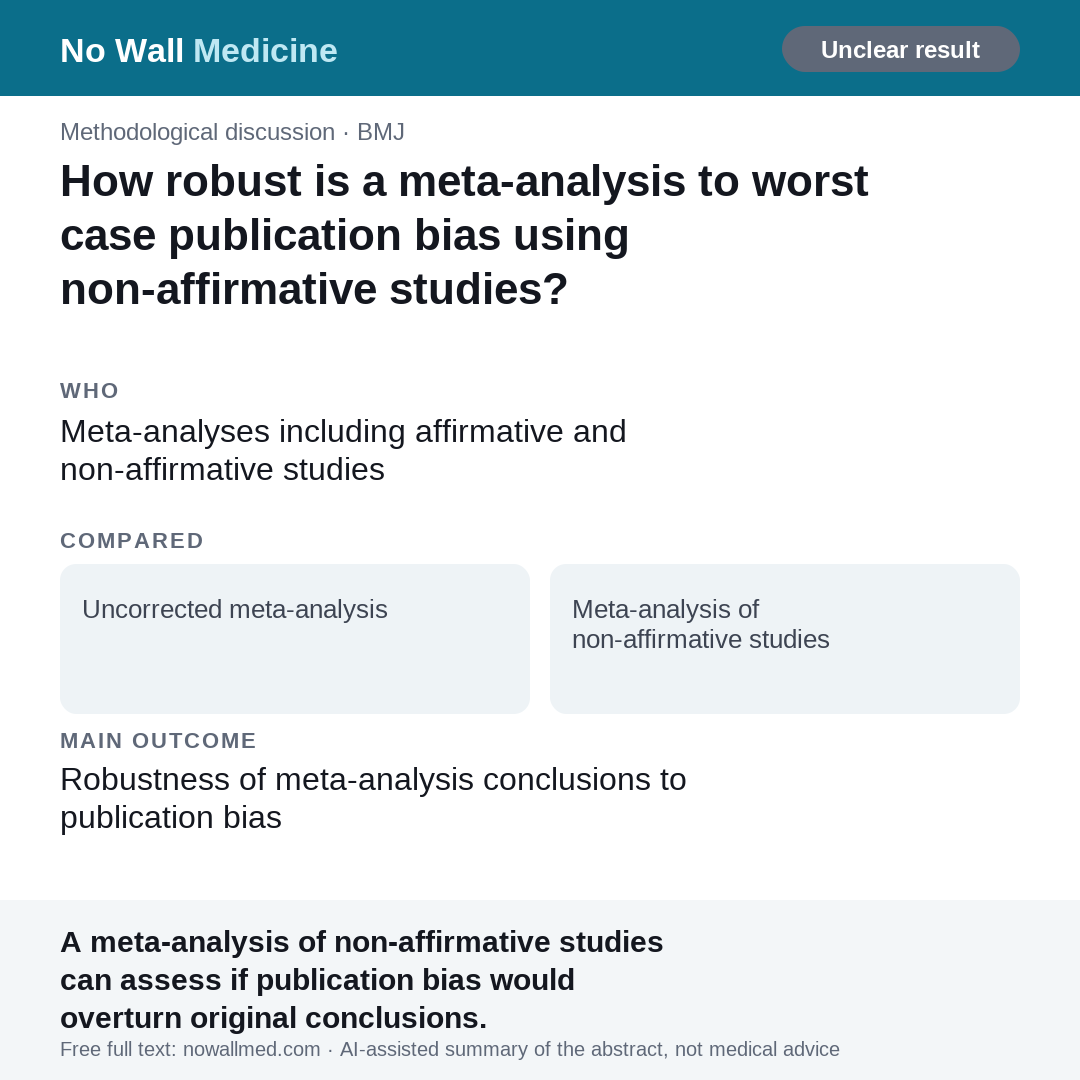
Assessing robustness to worst case publication bias using a simple subset meta-analysis
Methodological discussionUnclear result
How robust is a meta-analysis to worst case publication bias using non-affirmative studies?
Who
Meta-analyses including affirmative and non-affirmative studies
Compared
Uncorrected meta-analysis
Meta-analysis of non-affirmative studies
Main outcome
Robustness of meta-analysis conclusions to publication bias
Bottom line: A meta-analysis of non-affirmative studies can assess if publication bias would overturn original conclusions.
BMJ · 2024-03-15Download image
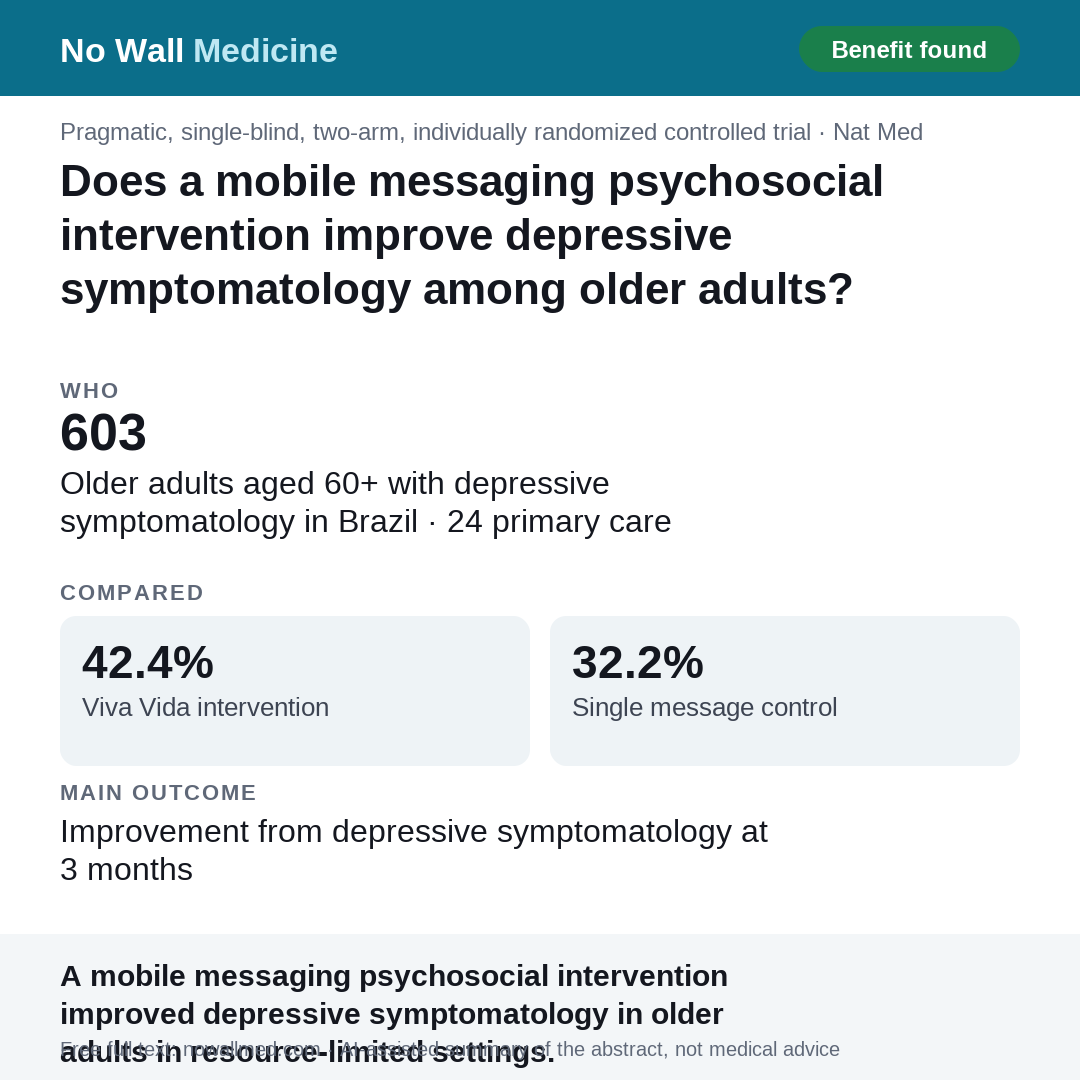
Self-help mobile messaging intervention for depression among older adults in resource-limited settings: a randomized controlled trial
Pragmatic, single-blind, two-arm, individually randomized controlled trialBenefit found
Does a mobile messaging psychosocial intervention improve depressive symptomatology among older adults?
Who
603
Older adults aged 60+ with depressive symptomatology in Brazil · 24 primary care clinics in Guarulhos, Brazil
Compared
42.4%Viva Vida intervention (109/257)
32.2%Single message control (87/270)
Main outcome
Improvement from depressive symptomatology at 3 months
Result: adjusted odds ratio 1.57 (95% confidence interval 1.07-2.29)
Bottom line: A mobile messaging psychosocial intervention improved depressive symptomatology in older adults in resource-limited settings.
Nat Med · 2024-03-14Download image
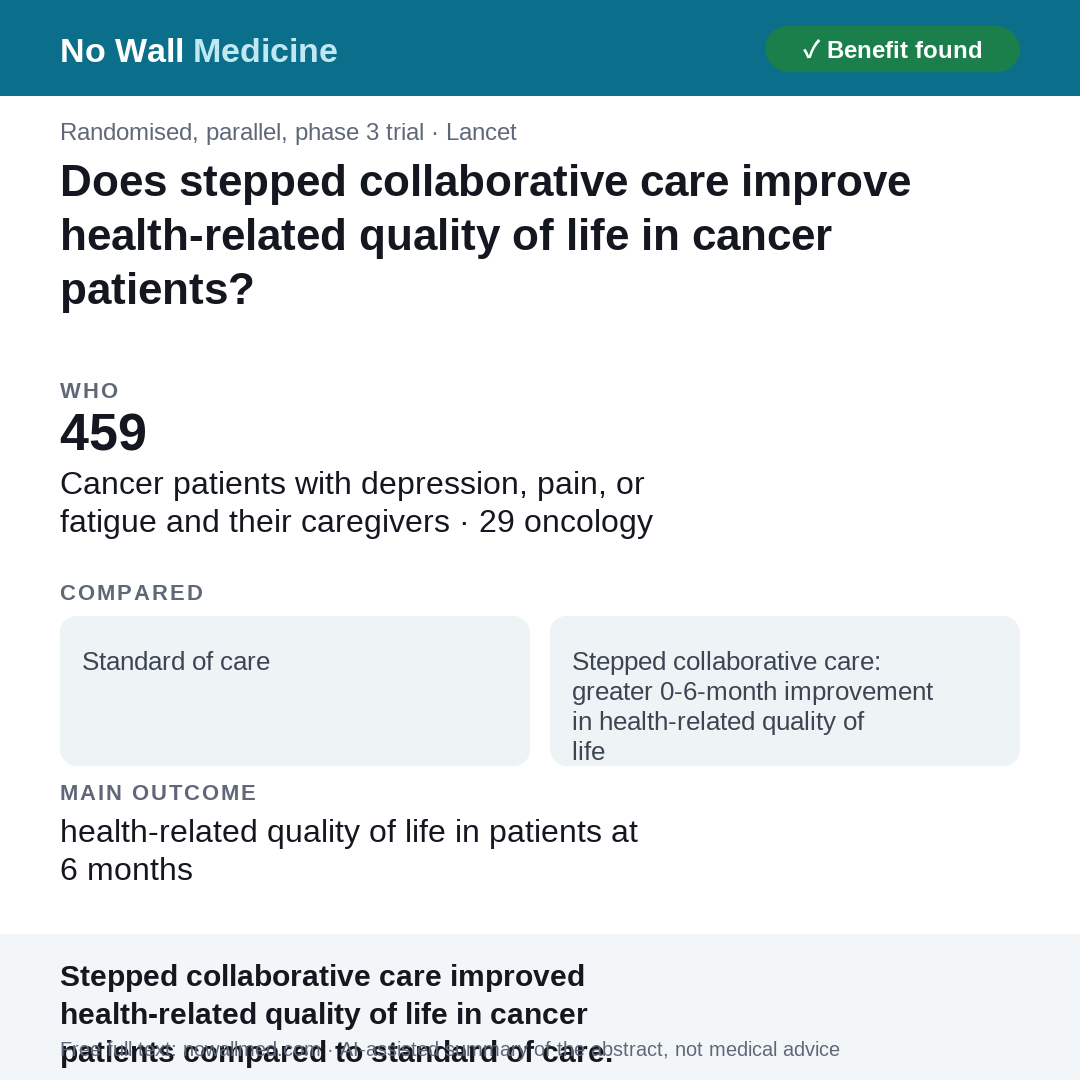
Patient, family caregiver, and economic outcomes of an integrated screening and novel stepped collaborative care intervention in the oncology setting in the USA (CARES): a randomised, parallel, phase 3 trial
Randomised, parallel, phase 3 trialBenefit found
Does stepped collaborative care improve health-related quality of life in cancer patients?
Who
459
Cancer patients with depression, pain, or fatigue and their caregivers · 29 oncology outpatient clinics in the USA
Compared
Standard of care
Stepped collaborative care: greater 0-6-month improvement in health-related quality of life
Main outcome
health-related quality of life in patients at 6 months
Result: effect size 0·09 (p=0·013)
Bottom line: Stepped collaborative care improved health-related quality of life in cancer patients compared to standard of care.
Funded by: US National Cancer Institute
Lancet · 2024-03-12Download image