Visual abstracts
New randomized trials and meta-analyses from leading journals at a glance: who was studied, what was compared, and what was found. Every paper is free to read in full.
All specialtiesCardiology 4877Oncology 4138Gastroenterology & Hepatology 1942Infectious Disease 3837Neurology 1905Psychiatry & Mental Health 2273Pulmonology 2143Critical Care 1365Endocrinology & Diabetes 2580Pediatrics 2980Surgery 2559Orthopedics & Sports Medicine 931Neurosurgery 537Cardiothoracic & Vascular Surgery 674Plastic & Reconstructive Surgery 591Nephrology 1133Rheumatology 823Hematology 1109Dermatology 621Ophthalmology 543Obstetrics & Gynecology 1686Public & Global Health 1058Radiology & Imaging 648Anesthesiology 986Urology 764ENT (Otolaryngology) 503Emergency Medicine 511Allergy & Immunology 313Geriatrics 981Family Medicine & Primary Care 562Medical Genetics & Genomics 676Pathology & Laboratory Medicine 159Physical Medicine & Rehabilitation 757Palliative Care 444Nutrition 1588Digital Health & AI 2201General Medicine 321
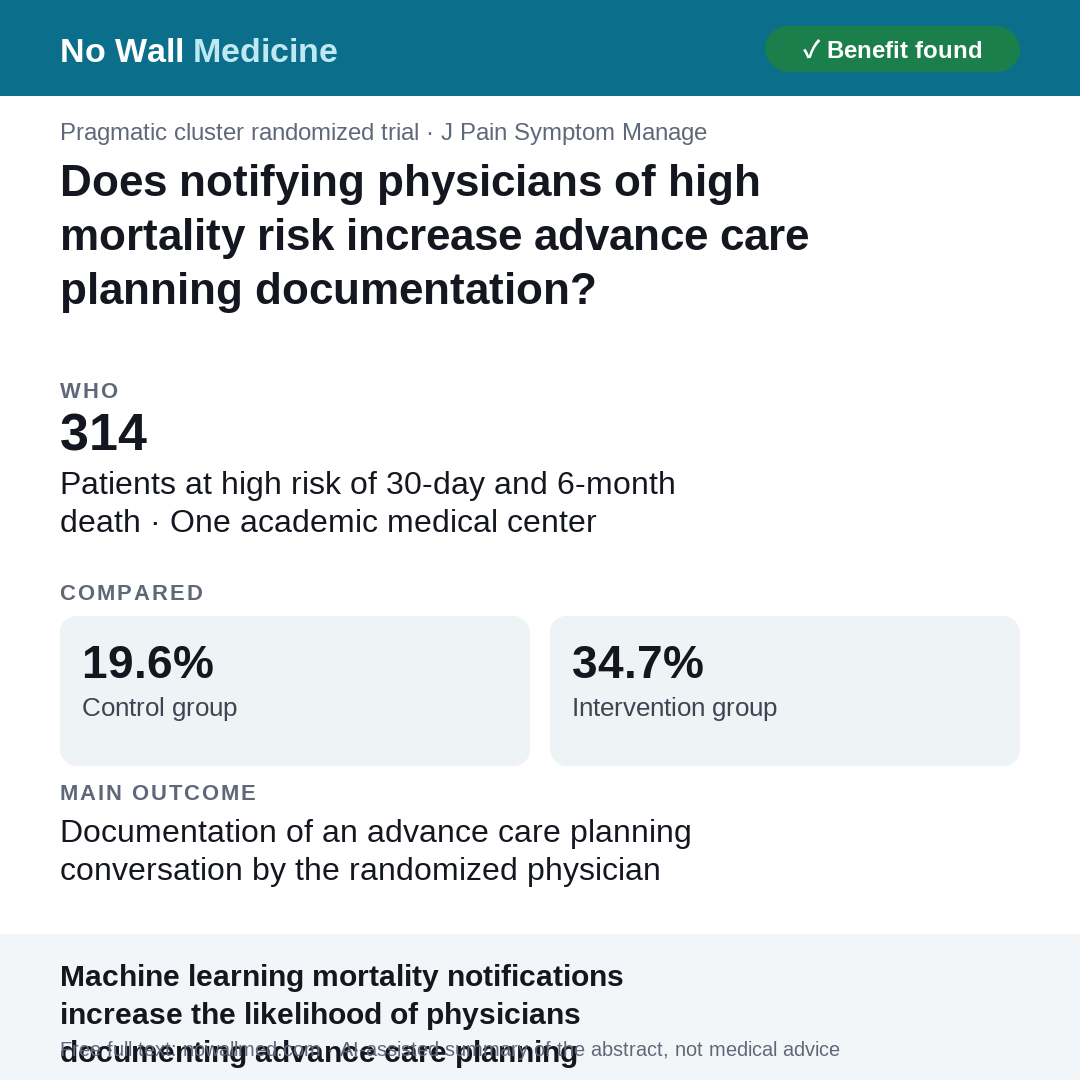
Impact of Prognostic Notifications on Inpatient Advance Care Planning: A Cluster Randomized Trial
Pragmatic cluster randomized trialBenefit found
Does notifying physicians of high mortality risk increase advance care planning documentation?
Who
314
Patients at high risk of 30-day and 6-month death · One academic medical center
Compared
19.6%Control group
34.7%Intervention group
Main outcome
Documentation of an advance care planning conversation by the randomized physician
Result: odds ratio 2.04 (95% CI 1.16-3.59)
Bottom line: Machine learning mortality notifications increase the likelihood of physicians documenting advance care planning conversations during hospitalization.
J Pain Symptom Manage · 2025-08-31Download image
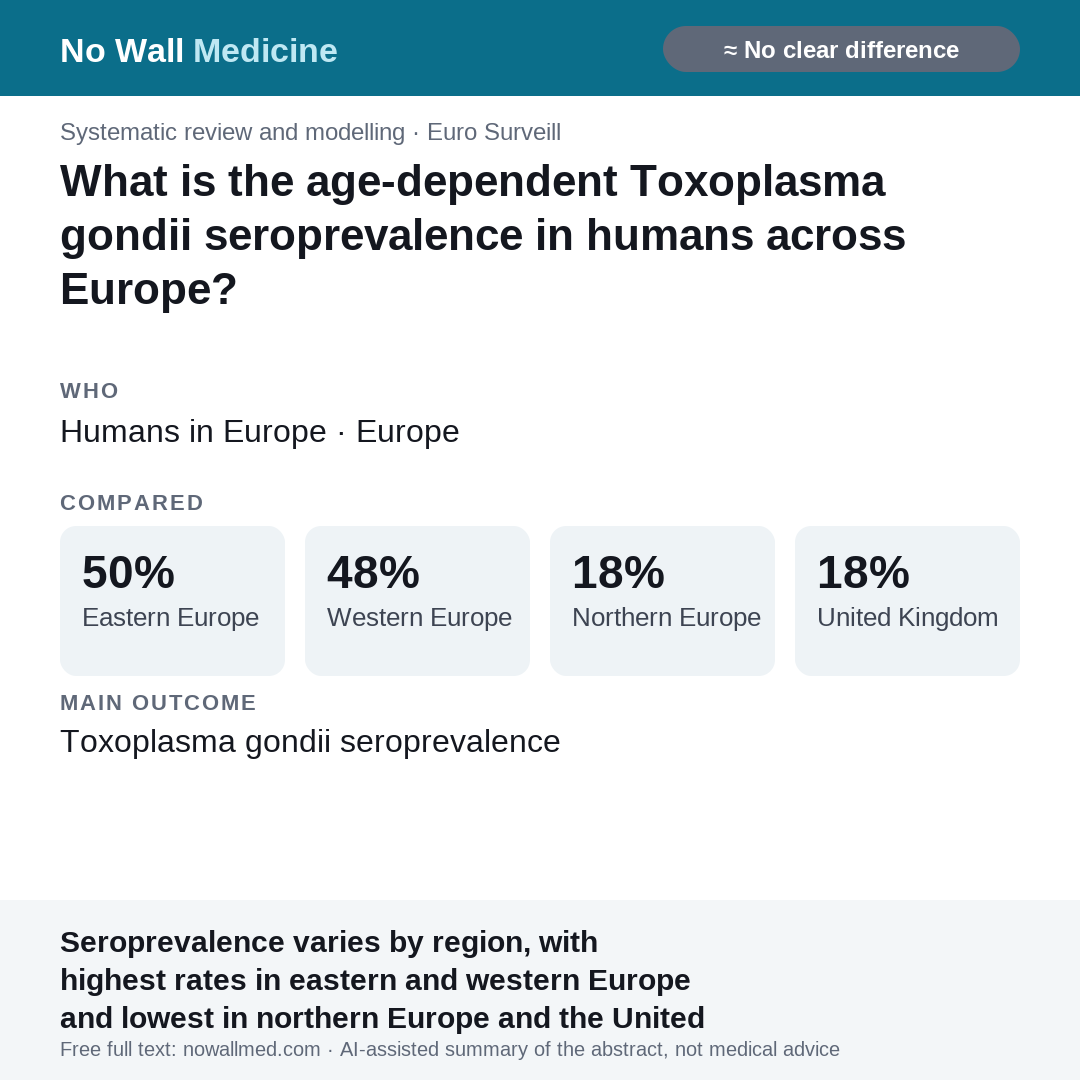
Systematic review and modelling of Toxoplasma gondii seroprevalence in humans, Europe, 2000 to 2021
Systematic review and modellingNo clear difference
What is the age-dependent Toxoplasma gondii seroprevalence in humans across Europe?
Who
Humans in Europe · Europe
Compared
50%Eastern Europe
48%Western Europe
18%Northern Europe
18%United Kingdom
Main outcome
Toxoplasma gondii seroprevalence
Bottom line: Seroprevalence varies by region, with highest rates in eastern and western Europe and lowest in northern Europe and the United Kingdom.
Euro Surveill · 2025-08-31Download image
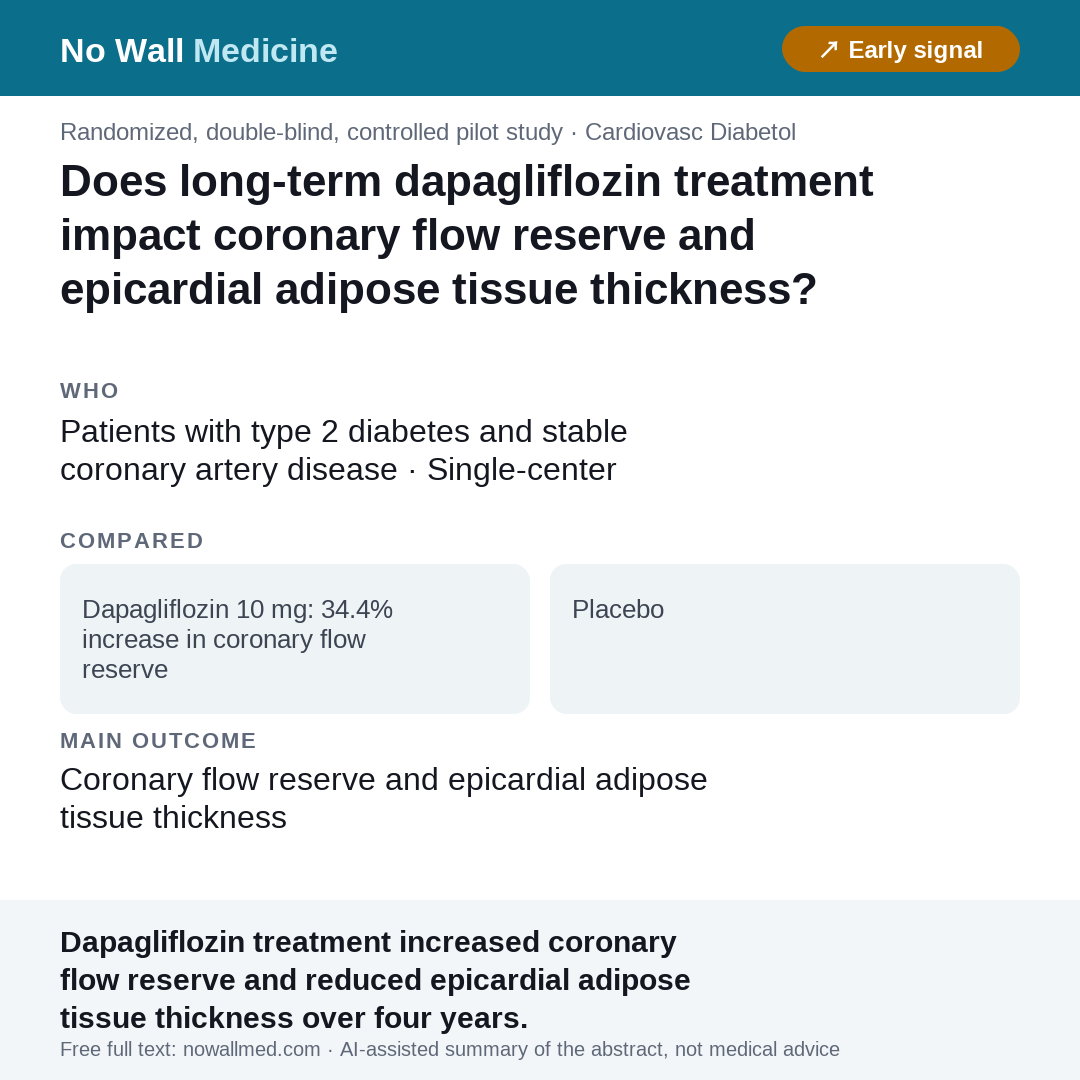
Coronary flow reserve increase after 4-year dapagliflozin treatment in patients with type 2 diabetes: the DAPAHEART follow-up study
Randomized, double-blind, controlled pilot studyBenefit found
Does long-term dapagliflozin treatment impact coronary flow reserve and epicardial adipose tissue thickness?
Who
Patients with type 2 diabetes and stable coronary artery disease · Single-center
Compared
Dapagliflozin 10 mg: 34.4% increase in coronary flow reserve
Placebo
Main outcome
Coronary flow reserve and epicardial adipose tissue thickness
Bottom line: Dapagliflozin treatment increased coronary flow reserve and reduced epicardial adipose tissue thickness over four years.
Limitation: This was a pilot study.
Cardiovasc Diabetol · 2025-08-31Download image
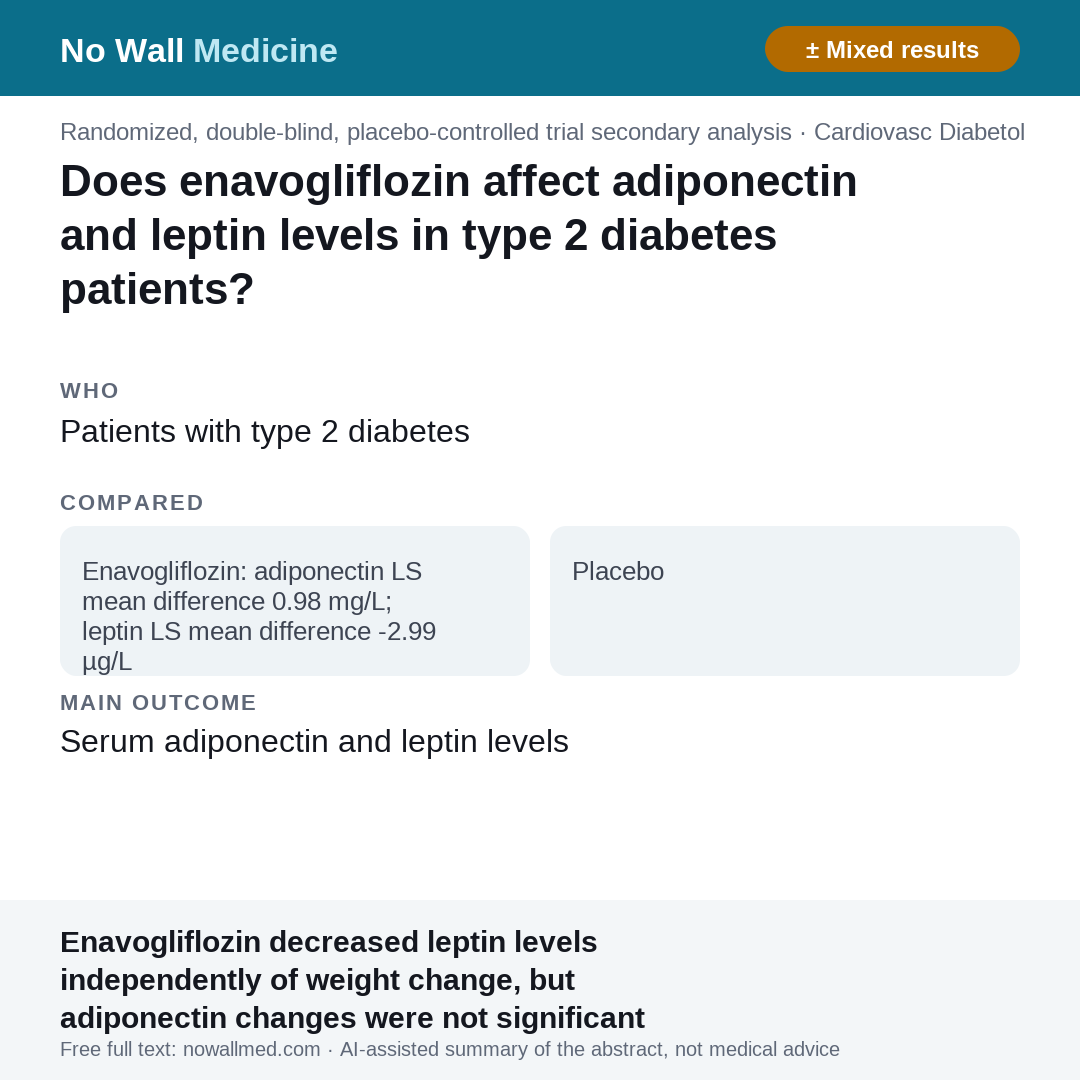
Weight-independent amelioration of adipokine profile by enavogliflozin, a selective SGLT2 inhibitor, in patients with type 2 diabetes
Randomized, double-blind, placebo-controlled trial secondary analysisMixed results
Does enavogliflozin affect adiponectin and leptin levels in type 2 diabetes patients?
Who
Patients with type 2 diabetes
Compared
Enavogliflozin: adiponectin LS mean difference 0.98 mg/L; leptin LS mean difference -2.99 µg/L
Placebo
Main outcome
Serum adiponectin and leptin levels
Bottom line: Enavogliflozin decreased leptin levels independently of weight change, but adiponectin changes were not significant after adjusting for weight.
Limitation: This was a secondary analysis of a phase III trial.
Cardiovasc Diabetol · 2025-08-31Download image
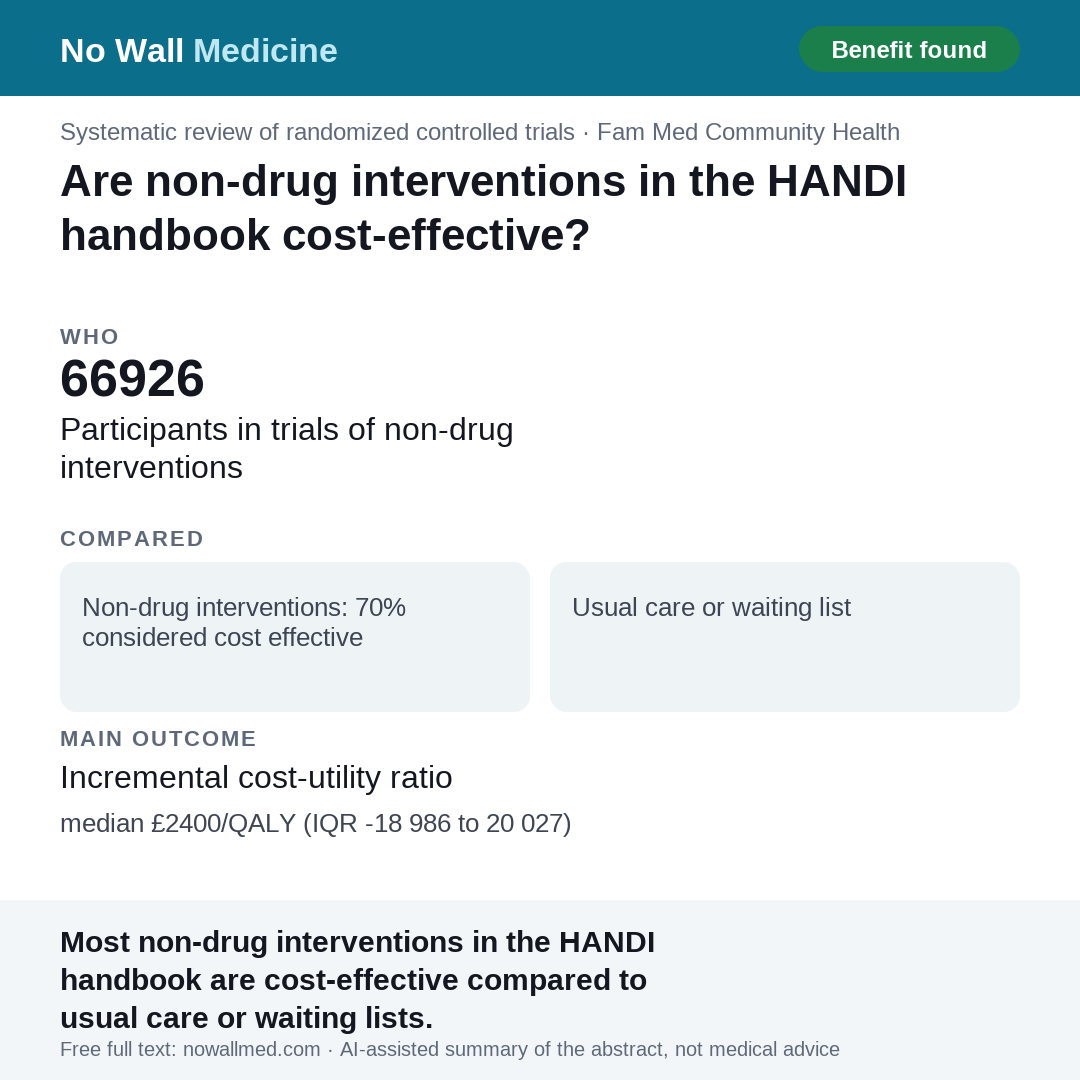
Trial-based economic evaluations of non-drug interventions in the Royal Australian College of General Practitioners (RACGP) Handbook of Non-Drug Interventions in primary care: a systemic review
Systematic review of randomized controlled trialsBenefit found
Are non-drug interventions in the HANDI handbook cost-effective?
Who
66926
Participants in trials of non-drug interventions
Compared
Non-drug interventions: 70% considered cost effective
Usual care or waiting list
Main outcome
Incremental cost-utility ratio
Result: median £2400/QALY (IQR -18 986 to 20 027)
Bottom line: Most non-drug interventions in the HANDI handbook are cost-effective compared to usual care or waiting lists.
Fam Med Community Health · 2025-08-31Download image
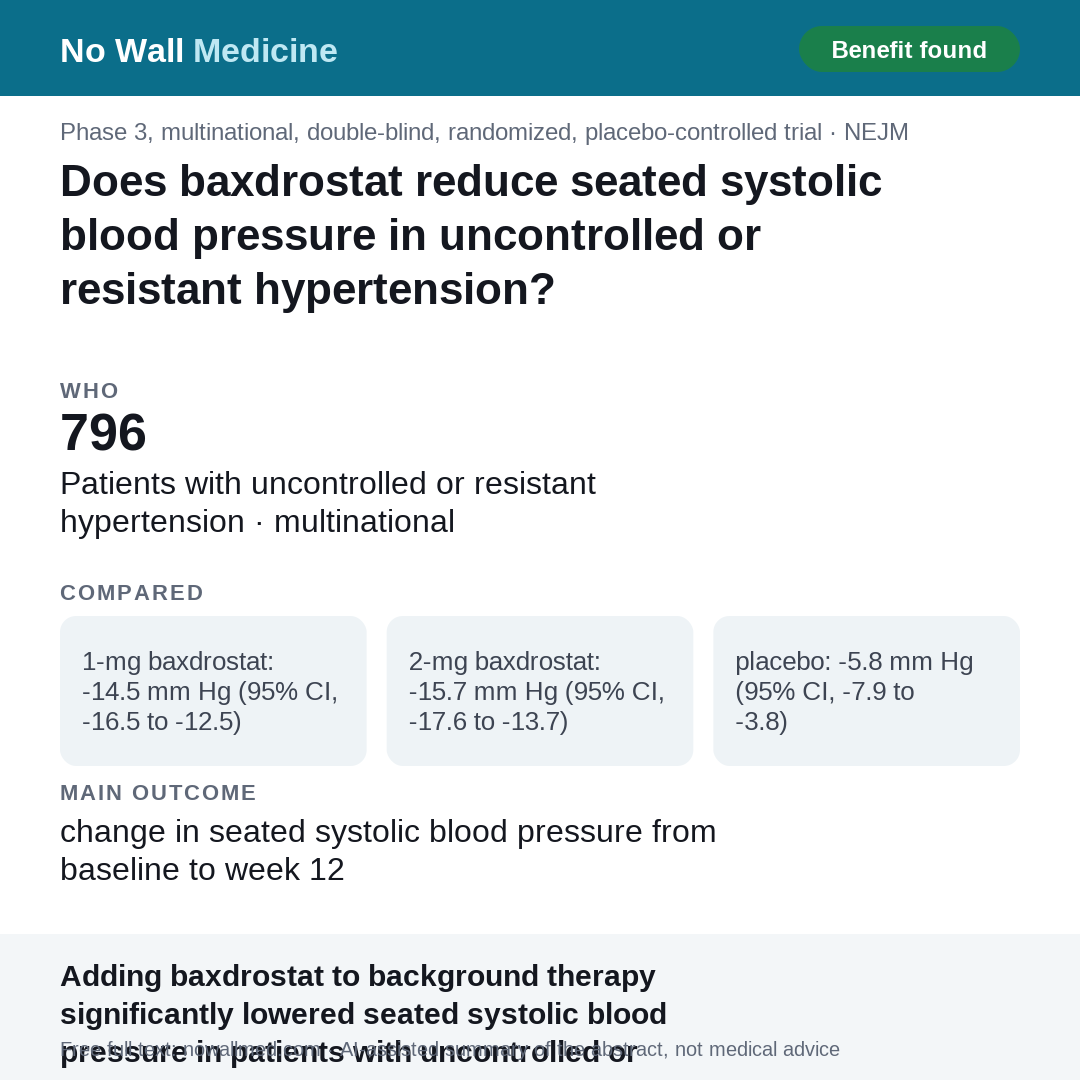
Efficacy and Safety of Baxdrostat in Uncontrolled and Resistant Hypertension
Phase 3, multinational, double-blind, randomized, placebo-controlled trialBenefit found
Does baxdrostat reduce seated systolic blood pressure in uncontrolled or resistant hypertension?
Who
796
Patients with uncontrolled or resistant hypertension · multinational
Compared
1-mg baxdrostat: -14.5 mm Hg (95% CI, -16.5 to -12.5)
2-mg baxdrostat: -15.7 mm Hg (95% CI, -17.6 to -13.7)
placebo: -5.8 mm Hg (95% CI, -7.9 to -3.8)
Main outcome
change in seated systolic blood pressure from baseline to week 12
Result: -8.7 mm Hg (95% CI, -11.5 to -5.8) with 1-mg and -9.8 mm Hg (95% CI, -12.6 to -7.0) with 2-mg
Bottom line: Adding baxdrostat to background therapy significantly lowered seated systolic blood pressure in patients with uncontrolled or resistant hypertension.
Funded by: AstraZeneca and others
NEJM · 2025-08-30Download image
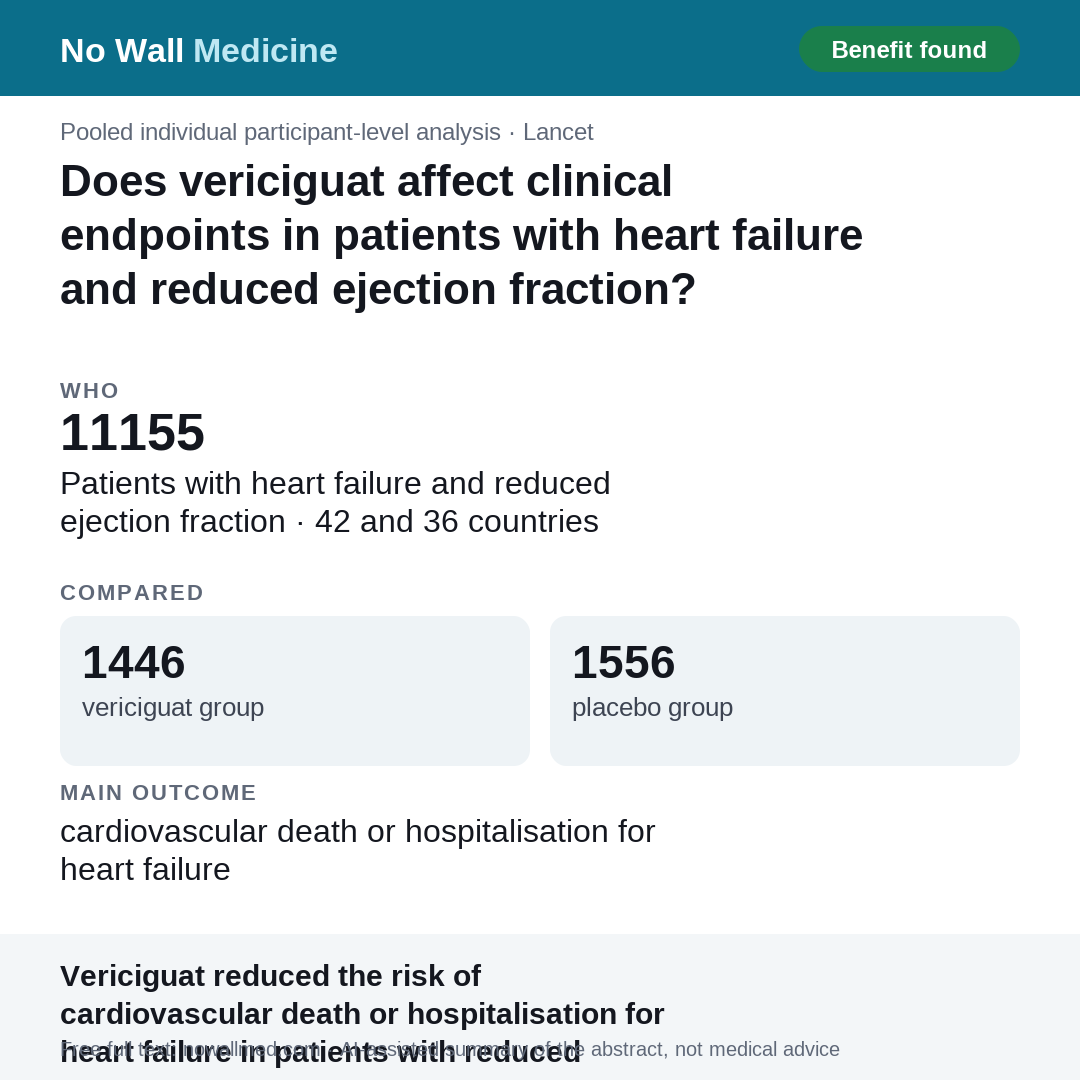
Vericiguat for patients with heart failure and reduced ejection fraction across the risk spectrum: an individual participant data analysis of the VICTORIA and VICTOR trials
Pooled individual participant-level analysisBenefit found
Does vericiguat affect clinical endpoints in patients with heart failure and reduced ejection fraction?
Who
11155
Patients with heart failure and reduced ejection fraction · 42 and 36 countries
Compared
1446vericiguat group (25·9%)
1556placebo group (27·9%)
Main outcome
cardiovascular death or hospitalisation for heart failure
Result: hazard ratio 0·91 (95% CI 0·85-0·98)
Bottom line: Vericiguat reduced the risk of cardiovascular death or hospitalisation for heart failure in patients with reduced ejection fraction.
Funded by: Merck Sharp & Dohme and Bayer
Lancet · 2025-08-30Download image
Provision of gender-affirming hormones for trans and gender-diverse adults: a systematic review of health and quality of life outcomes, values and preferences, and costs
Systematic reviewBenefit found
What are the health, quality of life, values, preferences, and cost outcomes of gender-affirming hormones?
Who
Transgender and gender-diverse adults
Compared
Received gender-affirming hormones
Did not receive gender-affirming hormones
Main outcome
Health, quality of life, values, preferences, and costs
Bottom line: Gender-affirming hormones may improve mental health and quality of life with no evidence of substantive harms.
Limitation: Uncontrolled longitudinal studies had serious to critical risk of bias.
Funded by: World Health Organization, Elton John AIDS Foundation, Bill and Melinda Gates Foundation
eClinicalMedicine · 2025-08-30Download image

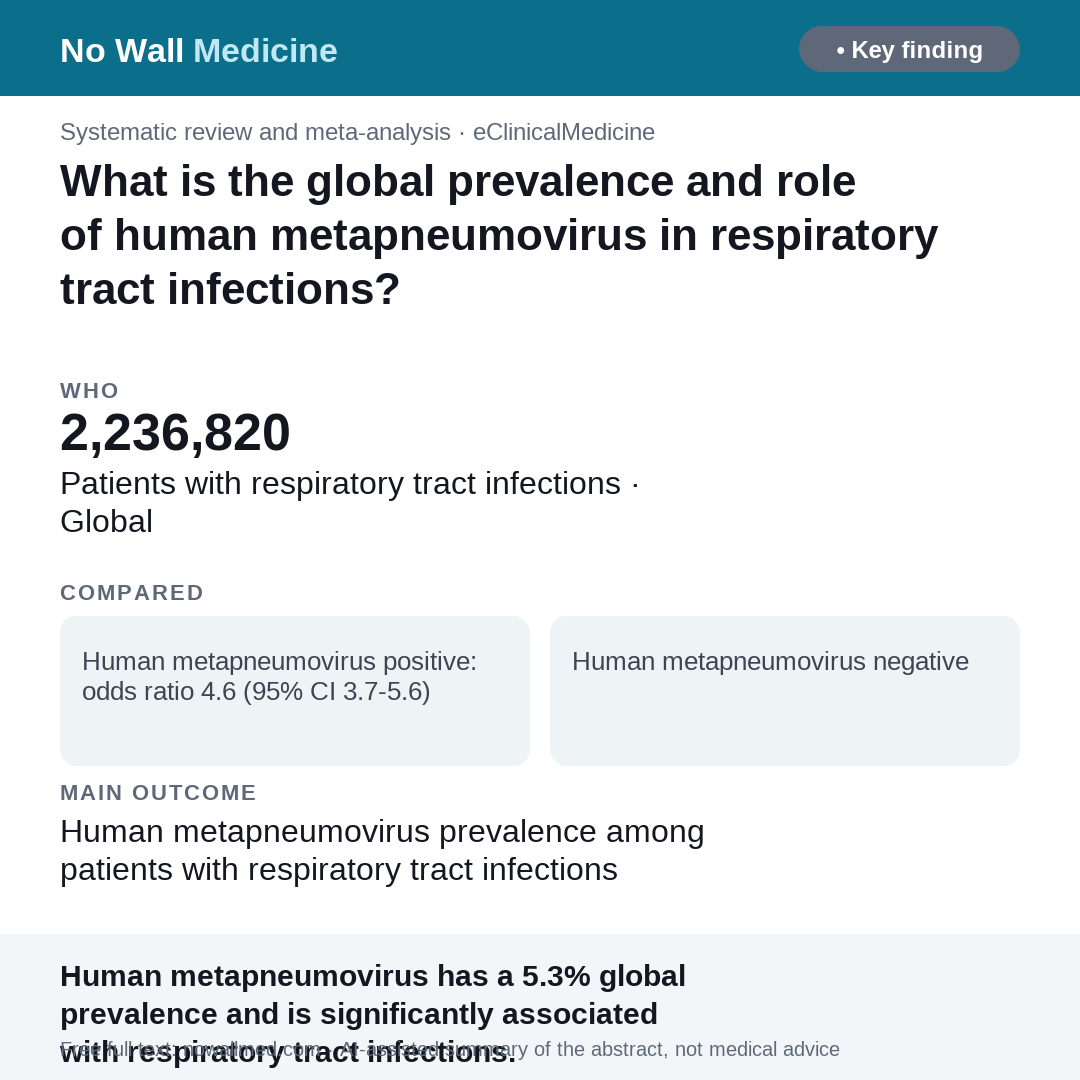
The prevalence and role of human metapneumovirus in respiratory tract infections: a systematic review and meta-analysis of global data
Systematic review and meta-analysisBenefit found
What is the global prevalence and role of human metapneumovirus in respiratory tract infections?
Who
2,236,820
Patients with respiratory tract infections · Global
Compared
Human metapneumovirus positive: odds ratio 4.6 (95% CI 3.7-5.6)
Human metapneumovirus negative
Main outcome
Human metapneumovirus prevalence among patients with respiratory tract infections
Result: odds ratio 4.6 (95% CI 3.7-5.6)
Bottom line: Human metapneumovirus has a 5.3% global prevalence and is significantly associated with respiratory tract infections.
Funded by: Iran University of Medical Sciences
eClinicalMedicine · 2025-08-30Download image
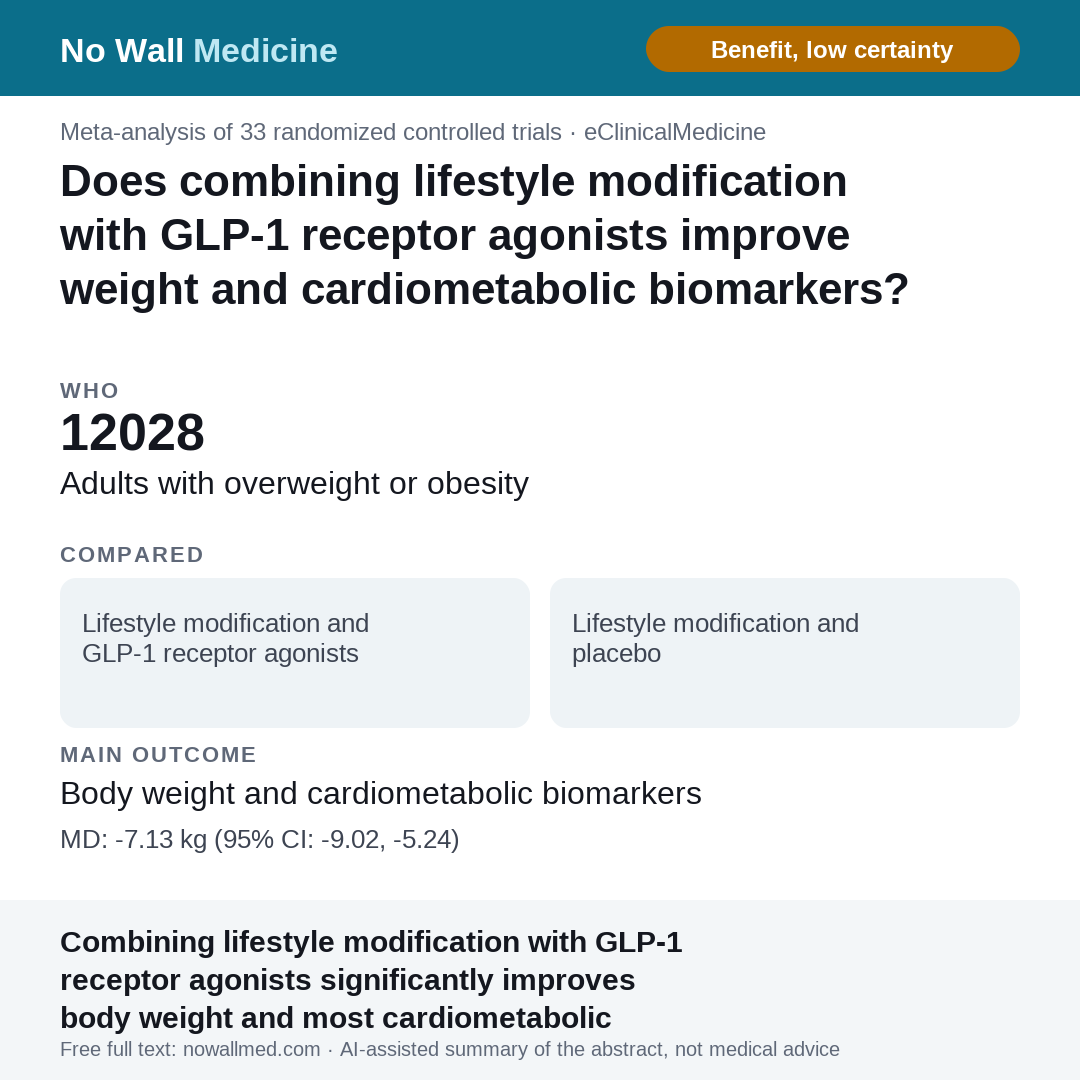
Efficacy of lifestyle modification combined with GLP-1 receptor agonists on body weight and cardiometabolic biomarkers in individuals with overweight or obesity: a systematic review and meta-analysis
Meta-analysis of 33 randomized controlled trialsBenefit found
Does combining lifestyle modification with GLP-1 receptor agonists improve weight and cardiometabolic biomarkers?
Who
12028
Adults with overweight or obesity
Compared
Lifestyle modification and GLP-1 receptor agonists
Lifestyle modification and placebo
Main outcome
Body weight and cardiometabolic biomarkers
Result: MD: -7.13 kg (95% CI: -9.02, -5.24)
Bottom line: Combining lifestyle modification with GLP-1 receptor agonists significantly improves body weight and most cardiometabolic biomarkers.
Limitation: Certainty of evidence varied from low to high, influenced by heterogeneity and potential publication bias.
Funded by: Shanghai Jiao Tong University
eClinicalMedicine · 2025-08-30Download image
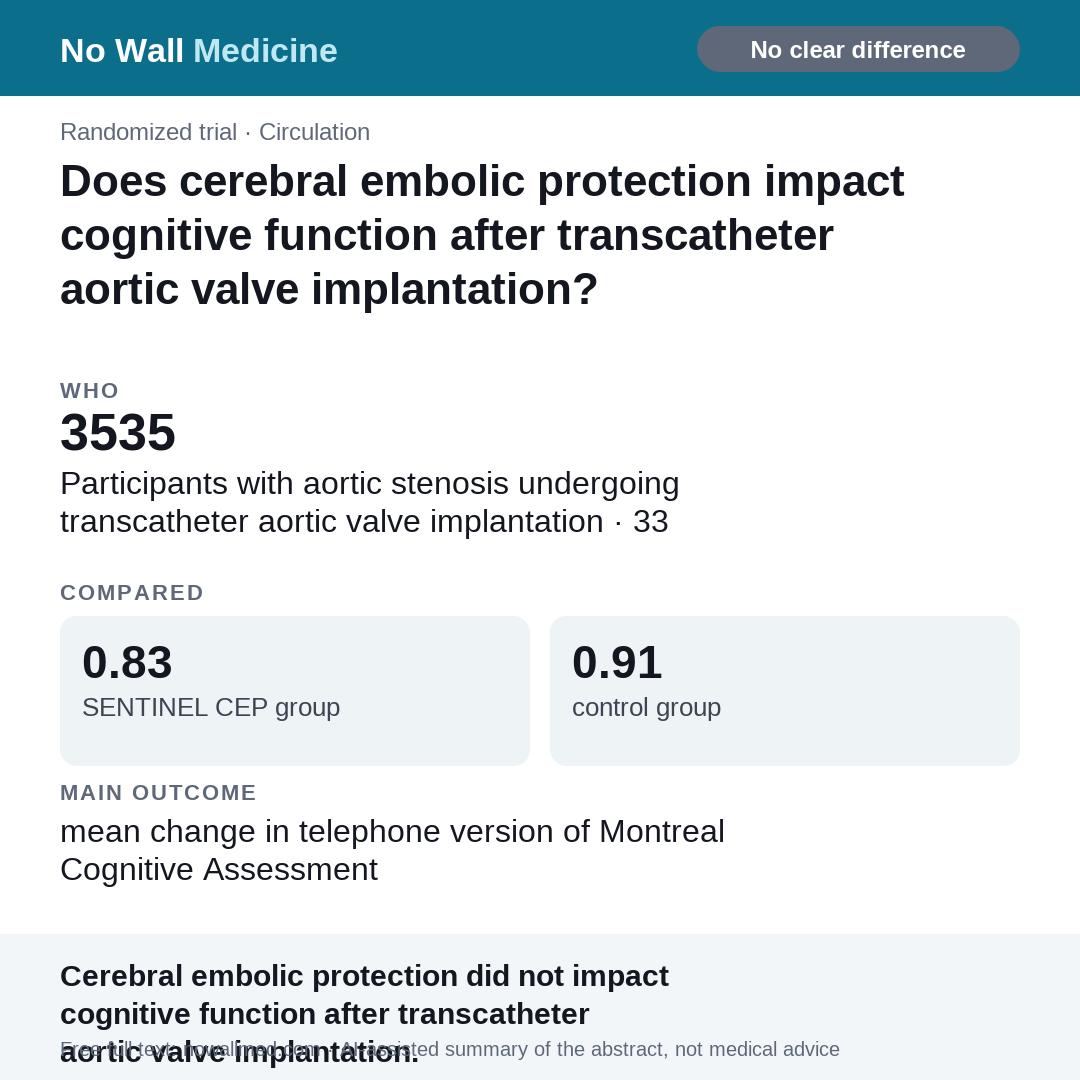
Impact of Cerebral Embolic Protection on Cognitive Function After Transcatheter Aortic Valve Implantation: Data From the BHF PROTECT-TAVI Randomized Trial
Randomized trialNo clear difference
Does cerebral embolic protection impact cognitive function after transcatheter aortic valve implantation?
Who
3535
Participants with aortic stenosis undergoing transcatheter aortic valve implantation · 33 centers in the United Kingdom
Compared
0.83SENTINEL CEP group (95% CI, 0.70-0.96)
0.91control group (95% CI, 0.79-1.04)
Main outcome
mean change in telephone version of Montreal Cognitive Assessment
Result: -0.07 (95% CI, -0.22 to 0.09)
Bottom line: Cerebral embolic protection did not impact cognitive function after transcatheter aortic valve implantation.
Circulation · 2025-08-30Download image
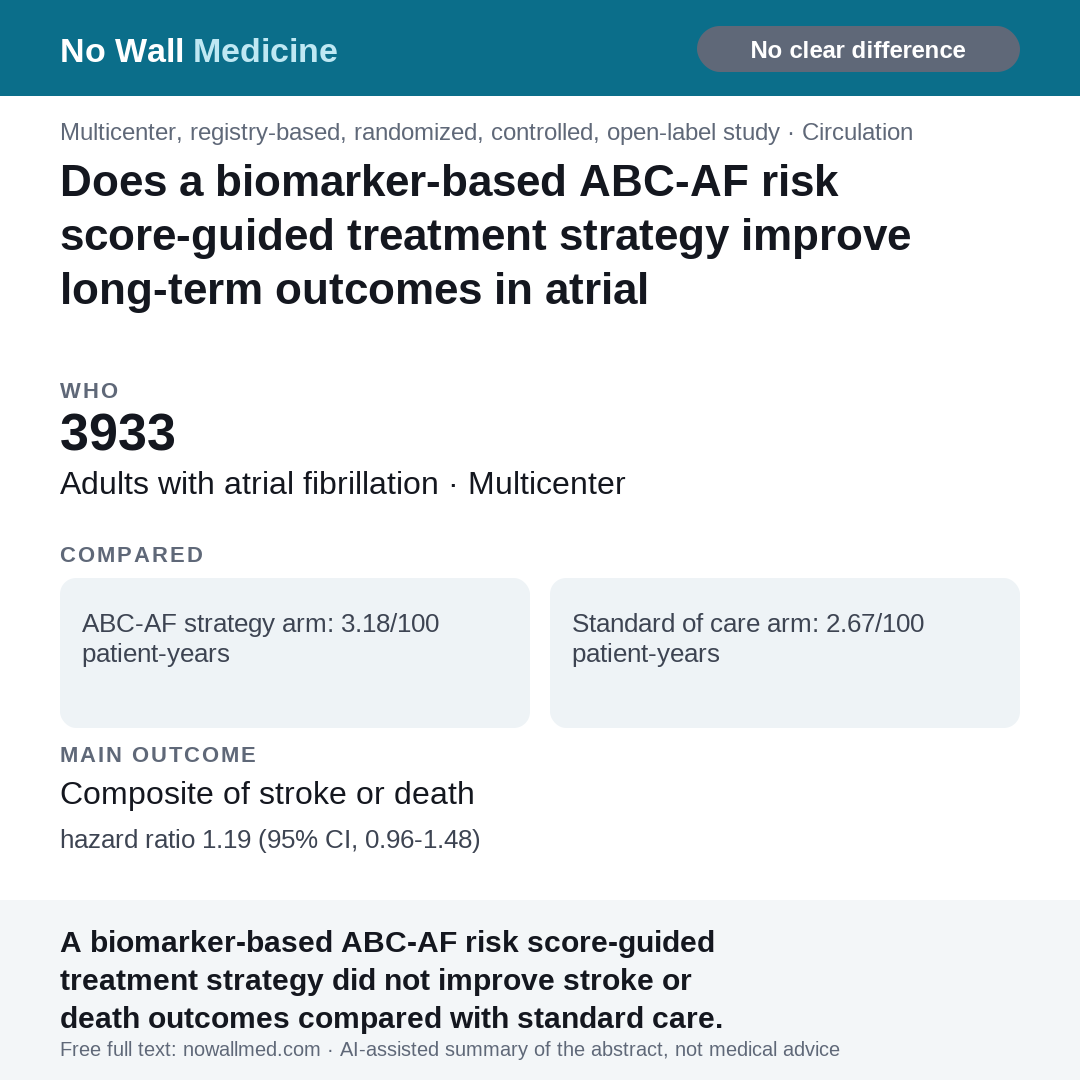
Biomarker-Based ABC-AF Risk Scores for Personalized Treatment to Reduce Stroke or Death in Atrial Fibrillation: A Registry-Based, Multicenter, Randomized, Controlled Study
Multicenter, registry-based, randomized, controlled, open-label studyNo clear difference
Does a biomarker-based ABC-AF risk score-guided treatment strategy improve long-term outcomes in atrial fibrillation?
Who
3933
Adults with atrial fibrillation · Multicenter
Compared
ABC-AF strategy arm: 3.18/100 patient-years
Standard of care arm: 2.67/100 patient-years
Main outcome
Composite of stroke or death
Result: hazard ratio 1.19 (95% CI, 0.96-1.48)
Bottom line: A biomarker-based ABC-AF risk score-guided treatment strategy did not improve stroke or death outcomes compared with standard care.
Circulation · 2025-08-30Download image
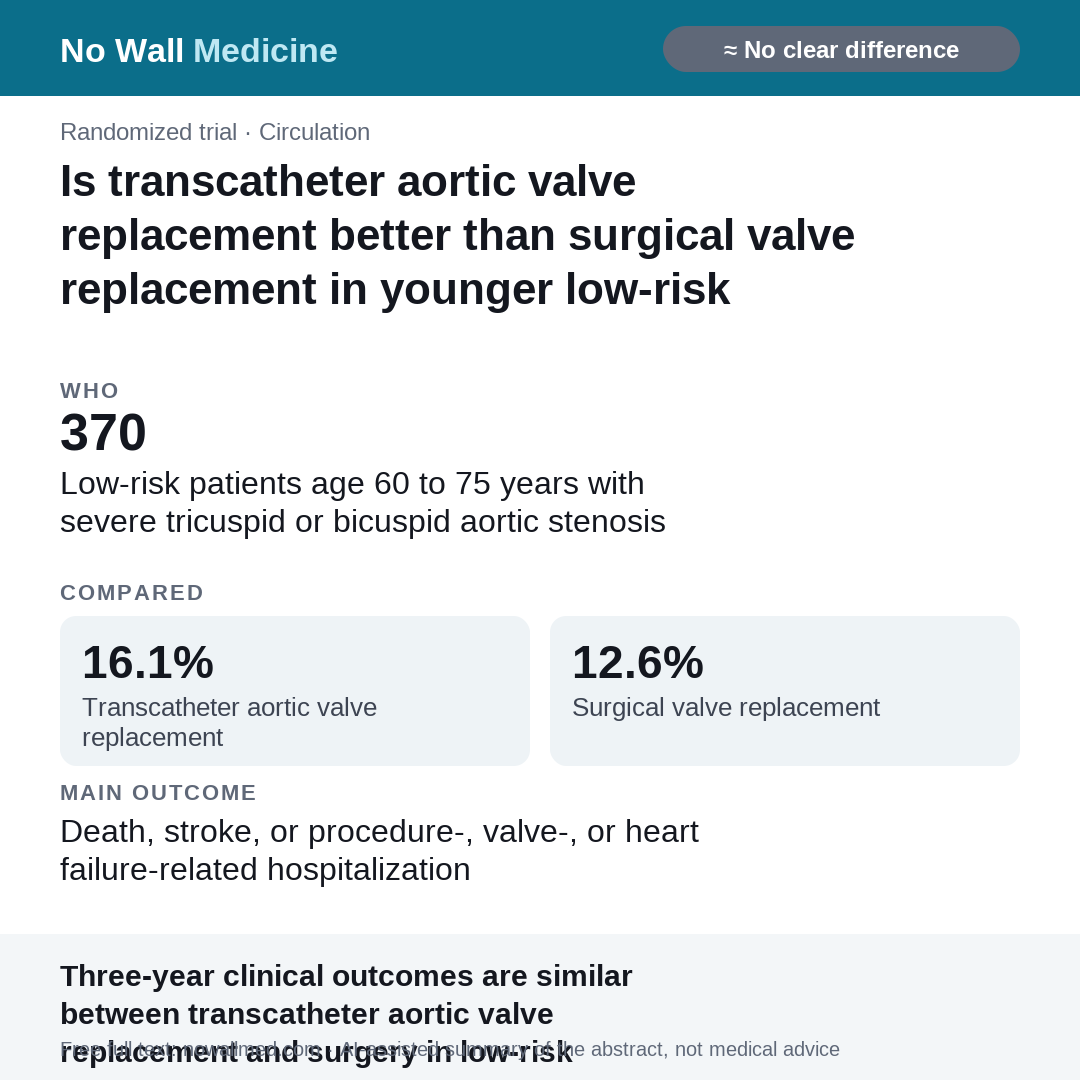
Three-Year Follow-Up of the NOTION-2 Trial: TAVR Versus SAVR to Treat Younger Low-Risk Patients With Tricuspid or Bicuspid Aortic Stenosis
Randomized trialNo clear difference
Is transcatheter aortic valve replacement better than surgical valve replacement in younger low-risk patients?
Who
370
Low-risk patients age 60 to 75 years with severe tricuspid or bicuspid aortic stenosis
Compared
16.1%Transcatheter aortic valve replacement
12.6%Surgical valve replacement
Main outcome
Death, stroke, or procedure-, valve-, or heart failure-related hospitalization
Result: hazard ratio 1.3 (95% CI 0.8-2.2%)
Bottom line: Three-year clinical outcomes are similar between transcatheter aortic valve replacement and surgery in low-risk patients.
Circulation · 2025-08-30Download image
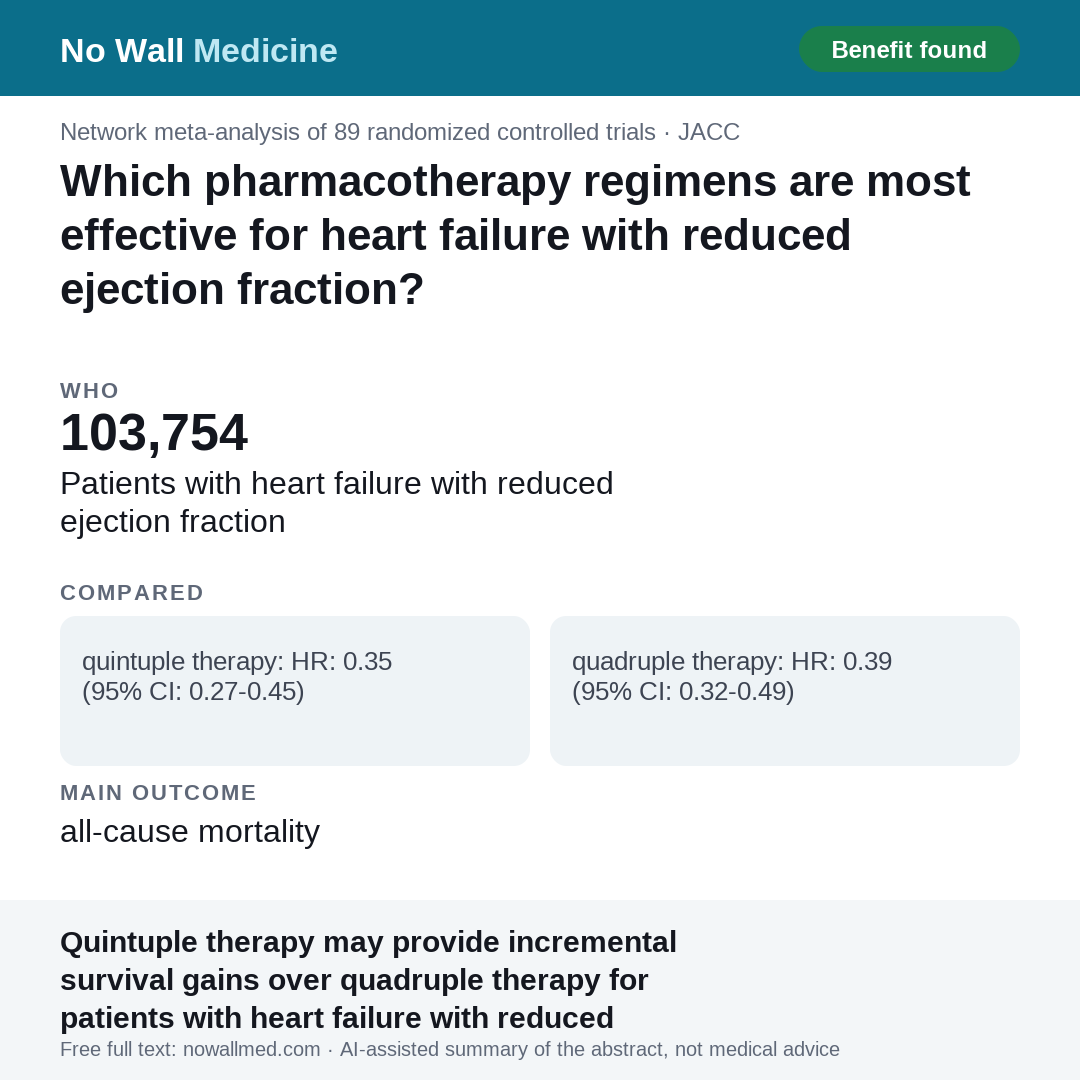
Pharmacologic Treatment of Heart Failure With Reduced Ejection Fraction: An Updated Systematic Review and Network Meta-Analysis
Network meta-analysis of 89 randomized controlled trialsBenefit found
Which pharmacotherapy regimens are most effective for heart failure with reduced ejection fraction?
Who
103,754
Patients with heart failure with reduced ejection fraction
Compared
quintuple therapy: HR: 0.35 (95% CI: 0.27-0.45)
quadruple therapy: HR: 0.39 (95% CI: 0.32-0.49)
Main outcome
all-cause mortality
Result: HR: 0.35 (95% CI: 0.27-0.45) for quintuple therapy
Bottom line: Quintuple therapy may provide incremental survival gains over quadruple therapy for patients with heart failure with reduced ejection fraction.
Limitation: results are exploratory as they are derived from a secondary endpoint of a single trial
JACC · 2025-08-30Download image
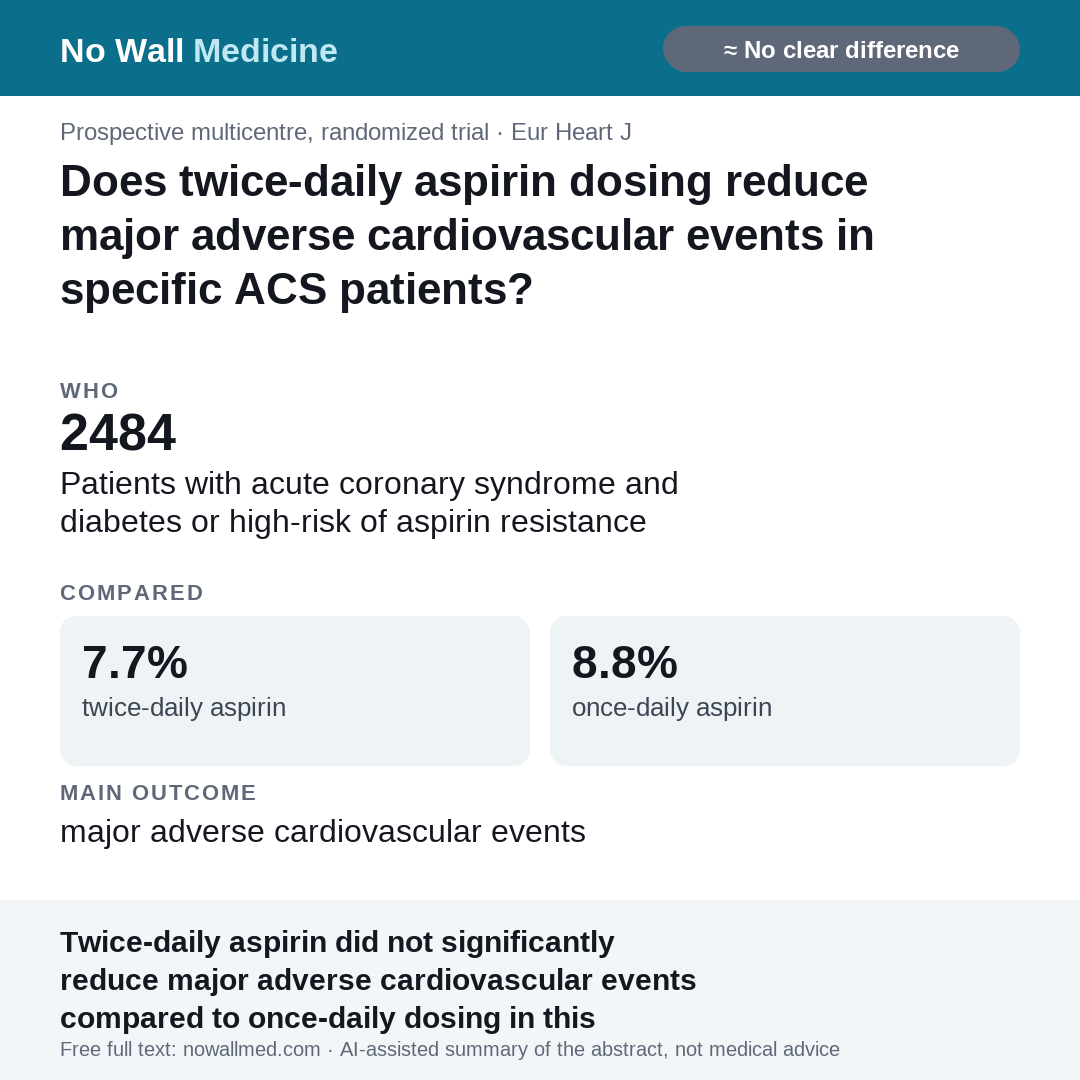
Aspirin dosing after acute coronary syndrome with suspected aspirin resistance: the ANDAMAN trial
Prospective multicentre, randomized trialNo clear difference
Does twice-daily aspirin dosing reduce major adverse cardiovascular events in specific ACS patients?
Who
2484
Patients with acute coronary syndrome and diabetes or high-risk of aspirin resistance
Compared
7.7%twice-daily aspirin (95/1228)
8.8%once-daily aspirin (110/1256)
Main outcome
major adverse cardiovascular events
Result: hazard ratio 0.90 (95% confidence interval 0.69-1.19)
Bottom line: Twice-daily aspirin did not significantly reduce major adverse cardiovascular events compared to once-daily dosing in this population.
Eur Heart J · 2025-08-30Download image
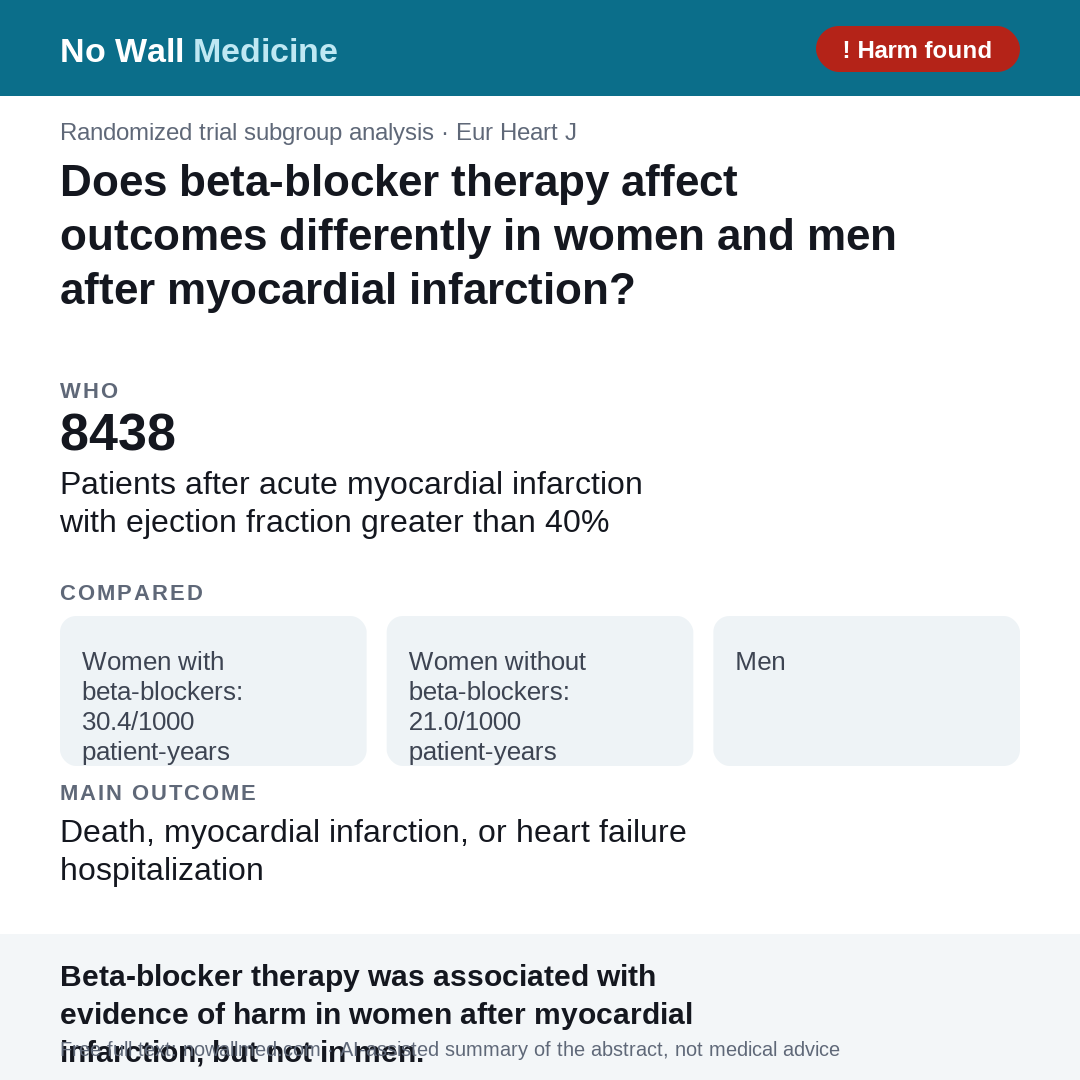
Beta-blockers after myocardial infarction: effects according to sex in the REBOOT trial
Randomized trial subgroup analysisHarm found
Does beta-blocker therapy affect outcomes differently in women and men after myocardial infarction?
Who
8438
Patients after acute myocardial infarction with ejection fraction greater than 40%
Compared
Women with beta-blockers: 30.4/1000 patient-years
Women without beta-blockers: 21.0/1000 patient-years
Men
Main outcome
Death, myocardial infarction, or heart failure hospitalization
Result: hazard ratio 1.45 (95% confidence interval 1.04-2.03) in women
Bottom line: Beta-blocker therapy was associated with evidence of harm in women after myocardial infarction, but not in men.
Eur Heart J · 2025-08-30Download image
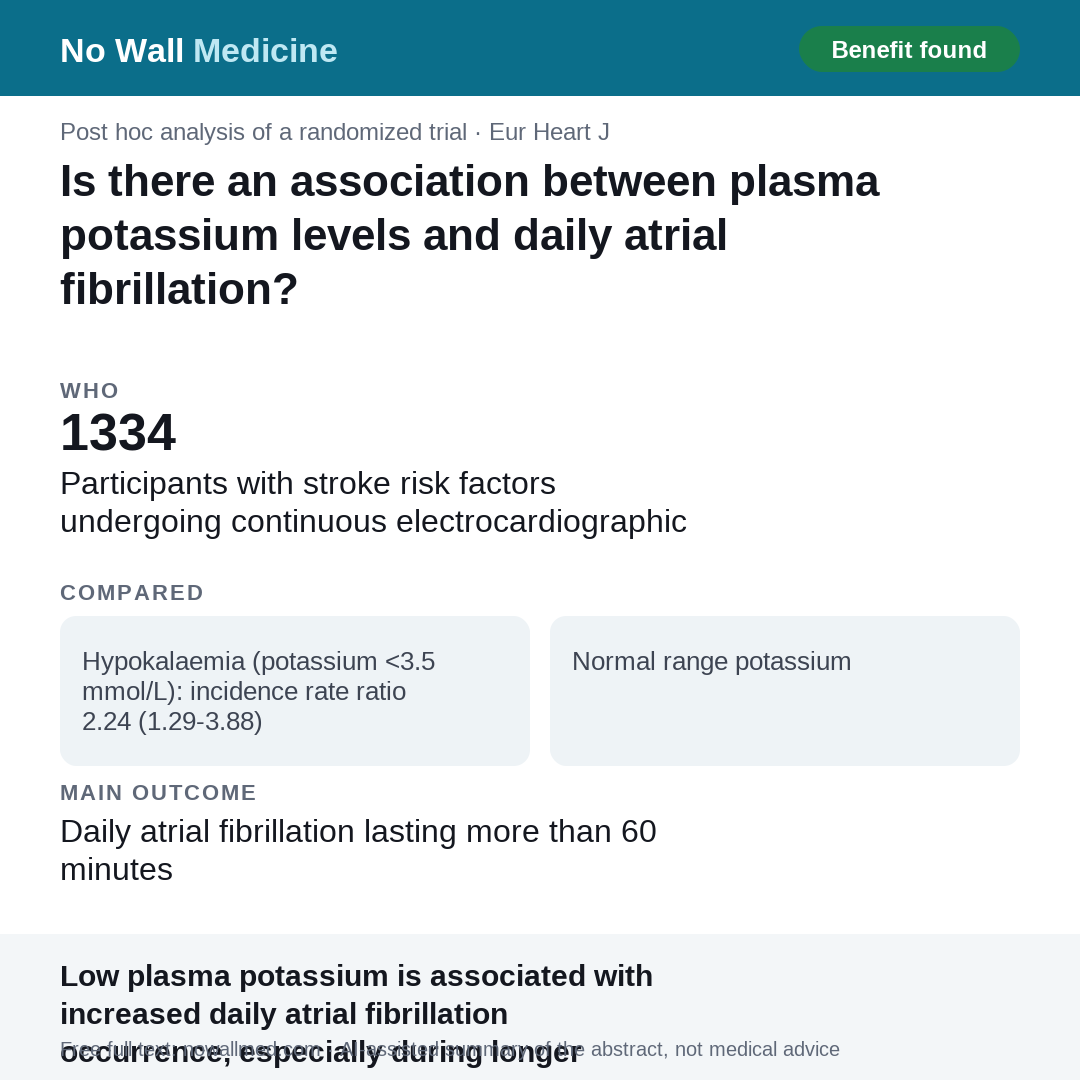
Hypokalaemia and atrial fibrillation detected by implanted loop recorders
Post hoc analysis of a randomized trialBenefit found
Is there an association between plasma potassium levels and daily atrial fibrillation?
Who
1334
Participants with stroke risk factors undergoing continuous electrocardiographic monitoring
Compared
Hypokalaemia (potassium <3.5 mmol/L): incidence rate ratio 2.24 (1.29-3.88)
Normal range potassium
Main outcome
Daily atrial fibrillation lasting more than 60 minutes
Result: incidence rate ratio 2.24 (1.29-3.88)
Bottom line: Low plasma potassium is associated with increased daily atrial fibrillation occurrence, especially during longer episodes.
Limitation: This was an exploratory post hoc analysis
Eur Heart J · 2025-08-30Download image
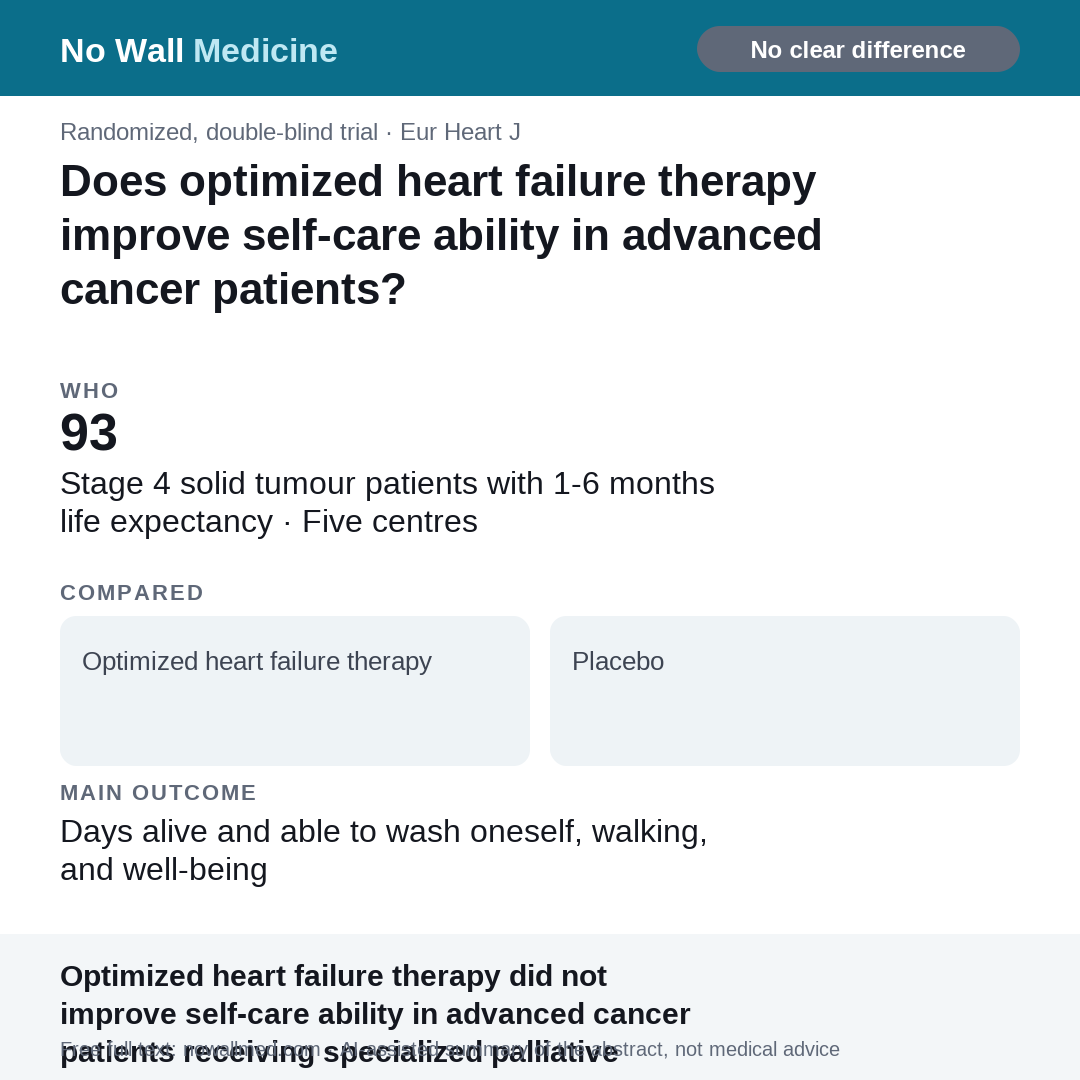
Heart failure therapy in patients with advanced cancer receiving specialized palliative care (EMPATICC trial)
Randomized, double-blind trialNo clear difference
Does optimized heart failure therapy improve self-care ability in advanced cancer patients?
Who
93
Stage 4 solid tumour patients with 1-6 months life expectancy · Five centres
Compared
Optimized heart failure therapy
Placebo
Main outcome
Days alive and able to wash oneself, walking, and well-being
Result: win ratio 0.95 (95% CI 0.57-1.58)
Bottom line: Optimized heart failure therapy did not improve self-care ability in advanced cancer patients receiving specialized palliative care.
Eur Heart J · 2025-08-30Download image
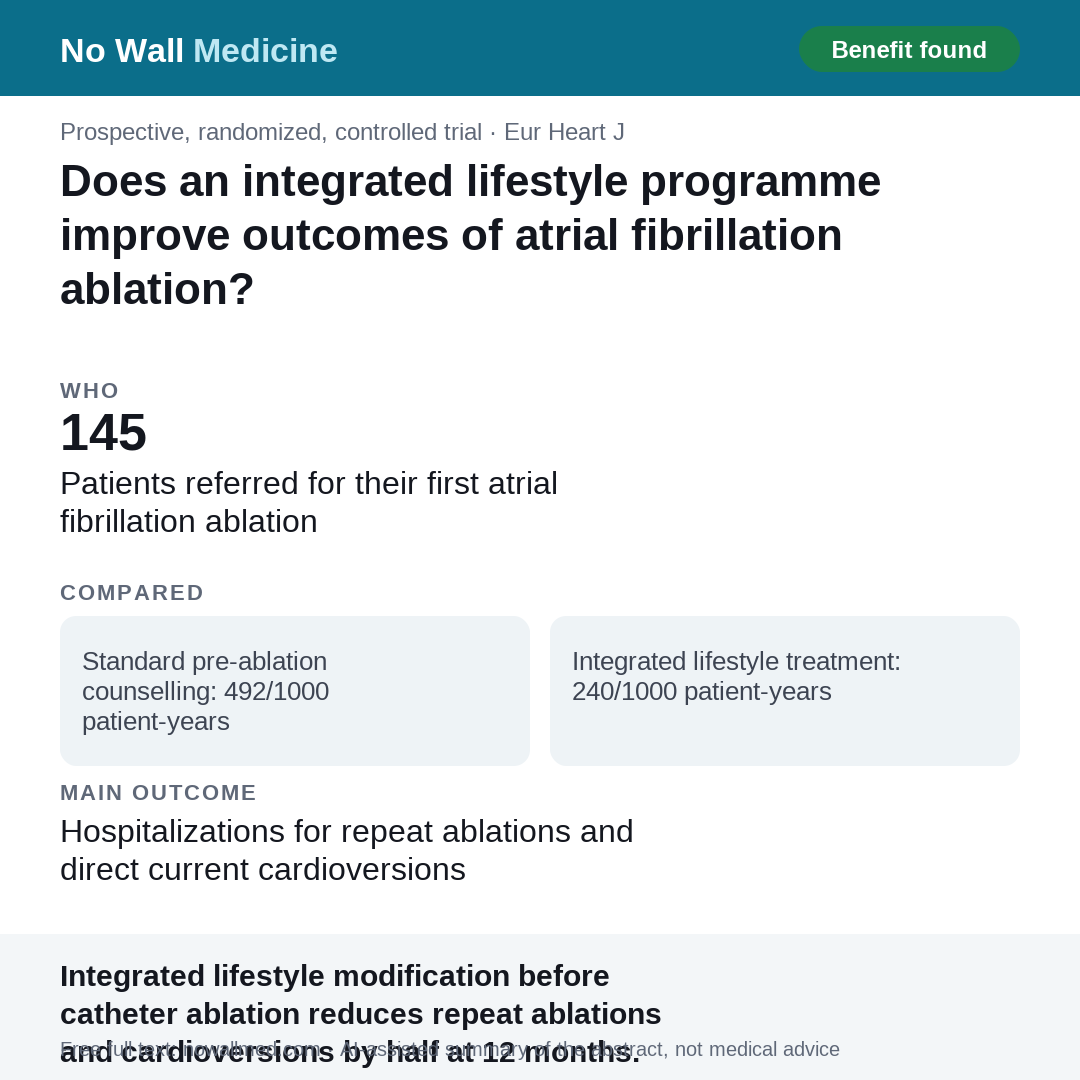
Improving outcomes of atrial fibrillation ablation by integrated personalized lifestyle interventions: a randomized controlled trial
Prospective, randomized, controlled trialBenefit found
Does an integrated lifestyle programme improve outcomes of atrial fibrillation ablation?
Who
145
Patients referred for their first atrial fibrillation ablation
Compared
Standard pre-ablation counselling: 492/1000 patient-years
Integrated lifestyle treatment: 240/1000 patient-years
Main outcome
Hospitalizations for repeat ablations and direct current cardioversions
Result: incidence relative risk 0.49 (95% CI 0.30-0.78)
Bottom line: Integrated lifestyle modification before catheter ablation reduces repeat ablations and cardioversions by half at 12 months.
Eur Heart J · 2025-08-30Download image
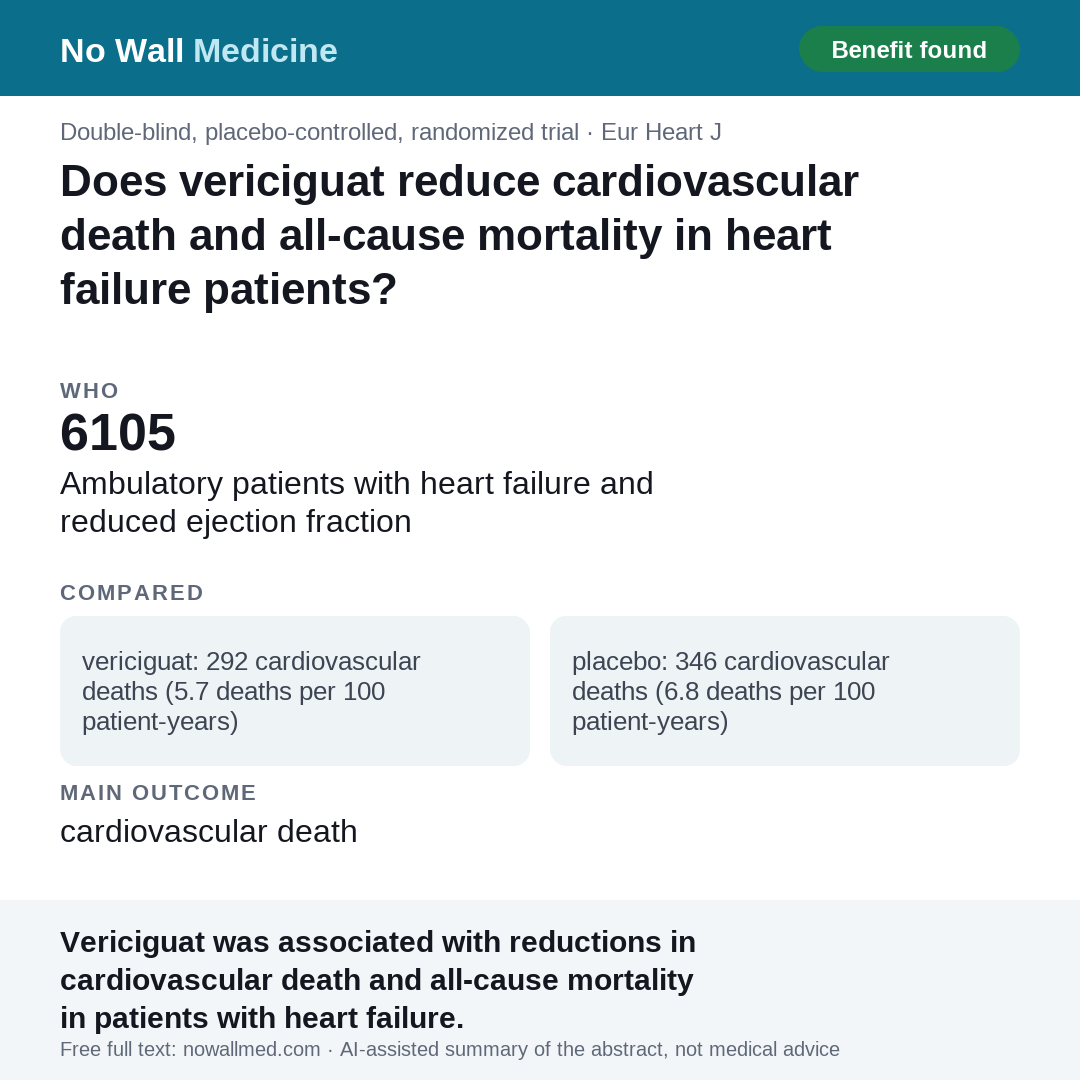
Vericiguat and mortality in heart failure and reduced ejection fraction: the VICTOR trial
Double-blind, placebo-controlled, randomized trialBenefit found
Does vericiguat reduce cardiovascular death and all-cause mortality in heart failure patients?
Who
6105
Ambulatory patients with heart failure and reduced ejection fraction
Compared
vericiguat: 292 cardiovascular deaths (5.7 deaths per 100 patient-years)
placebo: 346 cardiovascular deaths (6.8 deaths per 100 patient-years)
Main outcome
cardiovascular death
Result: hazard ratio 0.83 (95% CI 0.71-0.97)
Bottom line: Vericiguat was associated with reductions in cardiovascular death and all-cause mortality in patients with heart failure.
Eur Heart J · 2025-08-30Download image