Visual abstracts
New randomized trials and meta-analyses from leading journals at a glance: who was studied, what was compared, and what was found. Every paper is free to read in full.
All specialtiesCardiology 4877Oncology 4138Gastroenterology & Hepatology 1942Infectious Disease 3837Neurology 1905Psychiatry & Mental Health 2273Pulmonology 2143Critical Care 1365Endocrinology & Diabetes 2580Pediatrics 2980Surgery 2559Orthopedics & Sports Medicine 931Neurosurgery 537Cardiothoracic & Vascular Surgery 674Plastic & Reconstructive Surgery 591Nephrology 1133Rheumatology 823Hematology 1109Dermatology 621Ophthalmology 543Obstetrics & Gynecology 1686Public & Global Health 1058Radiology & Imaging 648Anesthesiology 986Urology 764ENT (Otolaryngology) 503Emergency Medicine 511Allergy & Immunology 313Geriatrics 981Family Medicine & Primary Care 562Medical Genetics & Genomics 676Pathology & Laboratory Medicine 159Physical Medicine & Rehabilitation 757Palliative Care 444Nutrition 1588Digital Health & AI 2201General Medicine 321
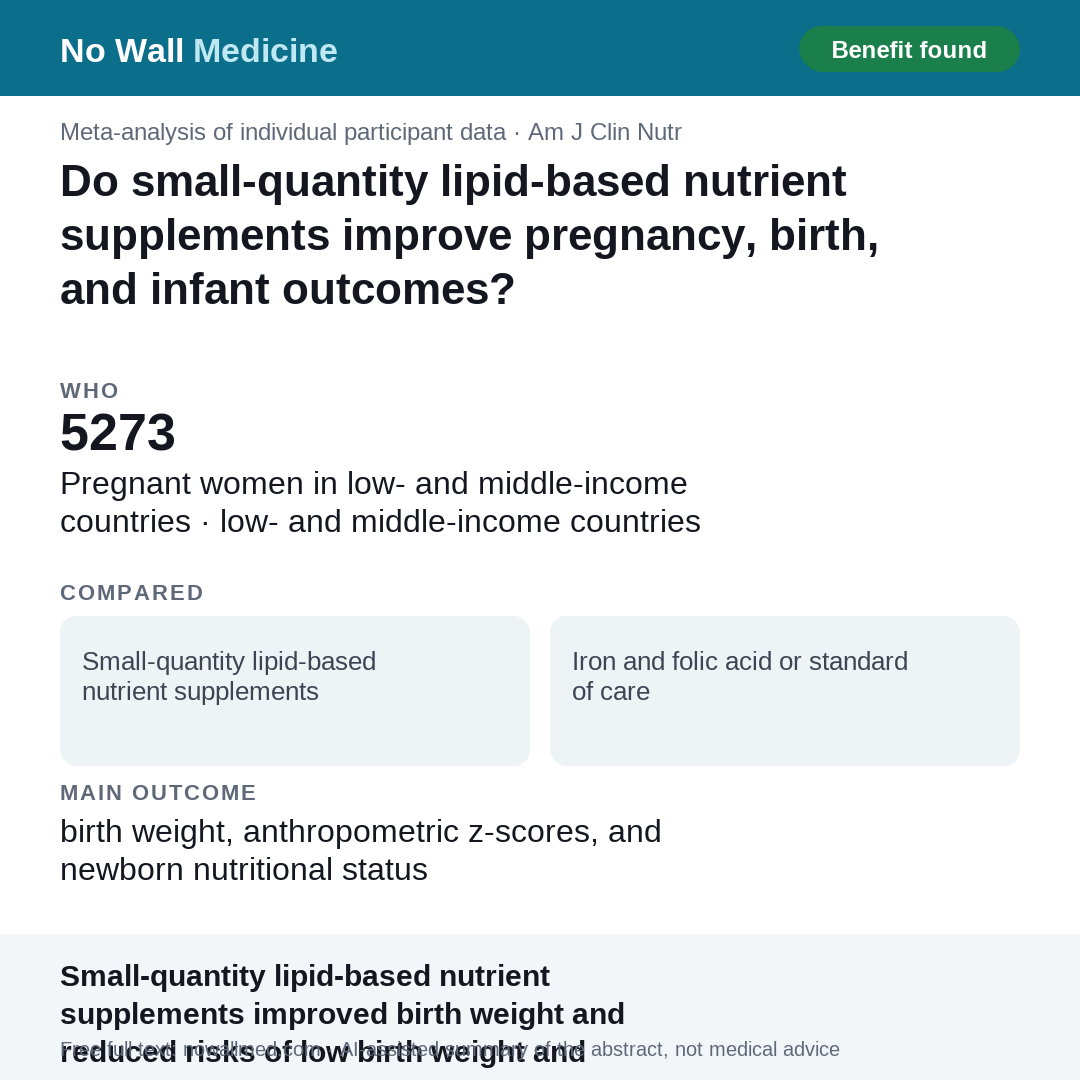
Effects of prenatal small-quantity lipid-based nutrient supplements on pregnancy, birth, and infant outcomes: a systematic review and meta-analysis of individual participant data from randomized controlled trials in low- and middle-income countries
Meta-analysis of individual participant dataBenefit found
Do small-quantity lipid-based nutrient supplements improve pregnancy, birth, and infant outcomes?
Who
5273
Pregnant women in low- and middle-income countries · low- and middle-income countries
Compared
Small-quantity lipid-based nutrient supplements
Iron and folic acid or standard of care
Main outcome
birth weight, anthropometric z-scores, and newborn nutritional status
Result: mean difference: +49 g; 95% confidence interval (CI): 26, 71 g
Bottom line: Small-quantity lipid-based nutrient supplements improved birth weight and reduced risks of low birth weight and newborn stunting.
Am J Clin Nutr · 2024-08-16Download image
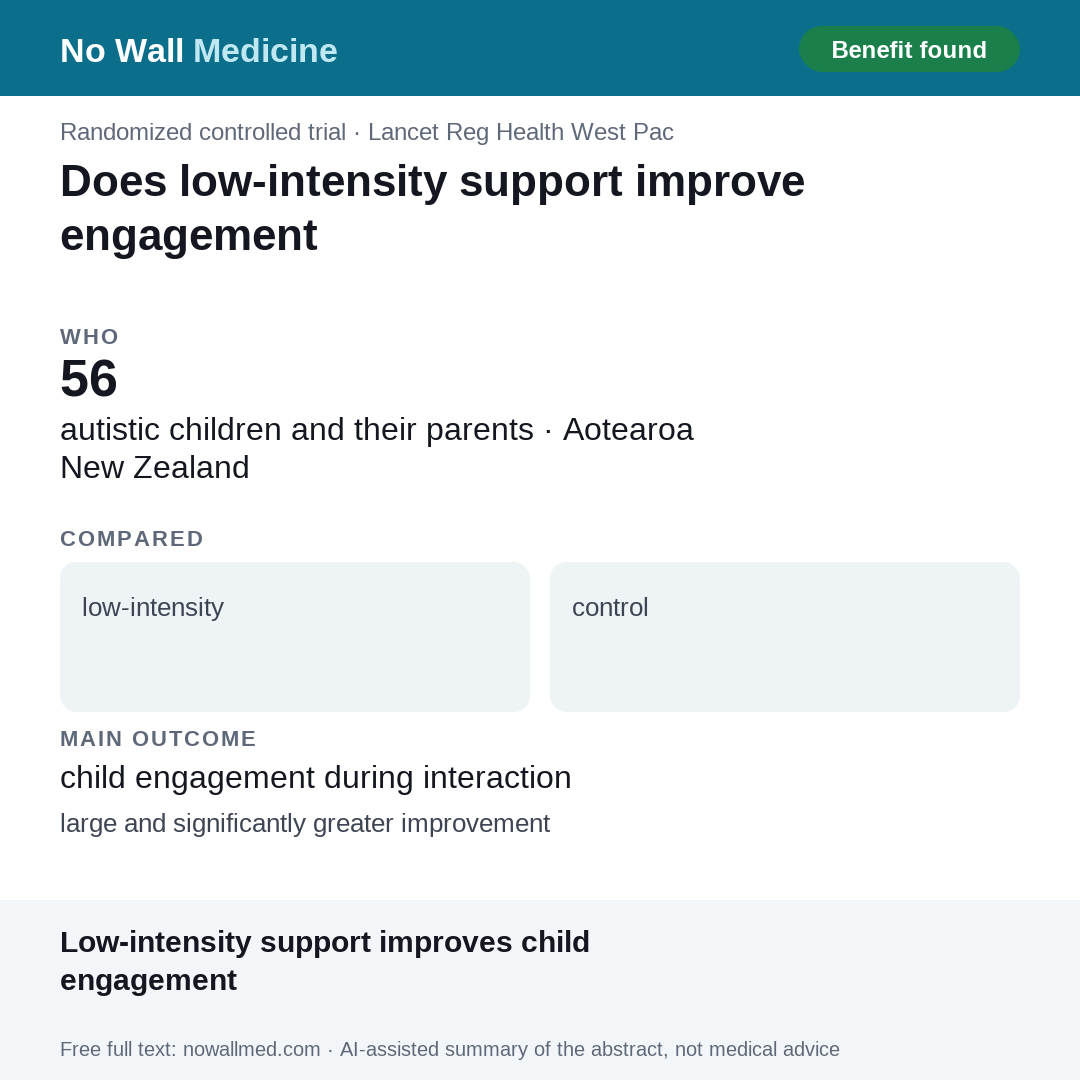
Low-intensity parent- and clinician-delivered support for young autistic children in Aotearoa New Zealand: a randomised controlled trial
Randomized controlled trialBenefit found
Does low-intensity support improve engagement
Who
56
autistic children and their parents · Aotearoa New Zealand
Compared
low-intensity
control
Main outcome
child engagement during interaction
Result: large and significantly greater improvement
Bottom line: Low-intensity support improves child engagement
Limitation: drop-outs occurred
Funded by: Health Research Council of New Zealand
Lancet Reg Health West Pac · 2024-08-16Download image
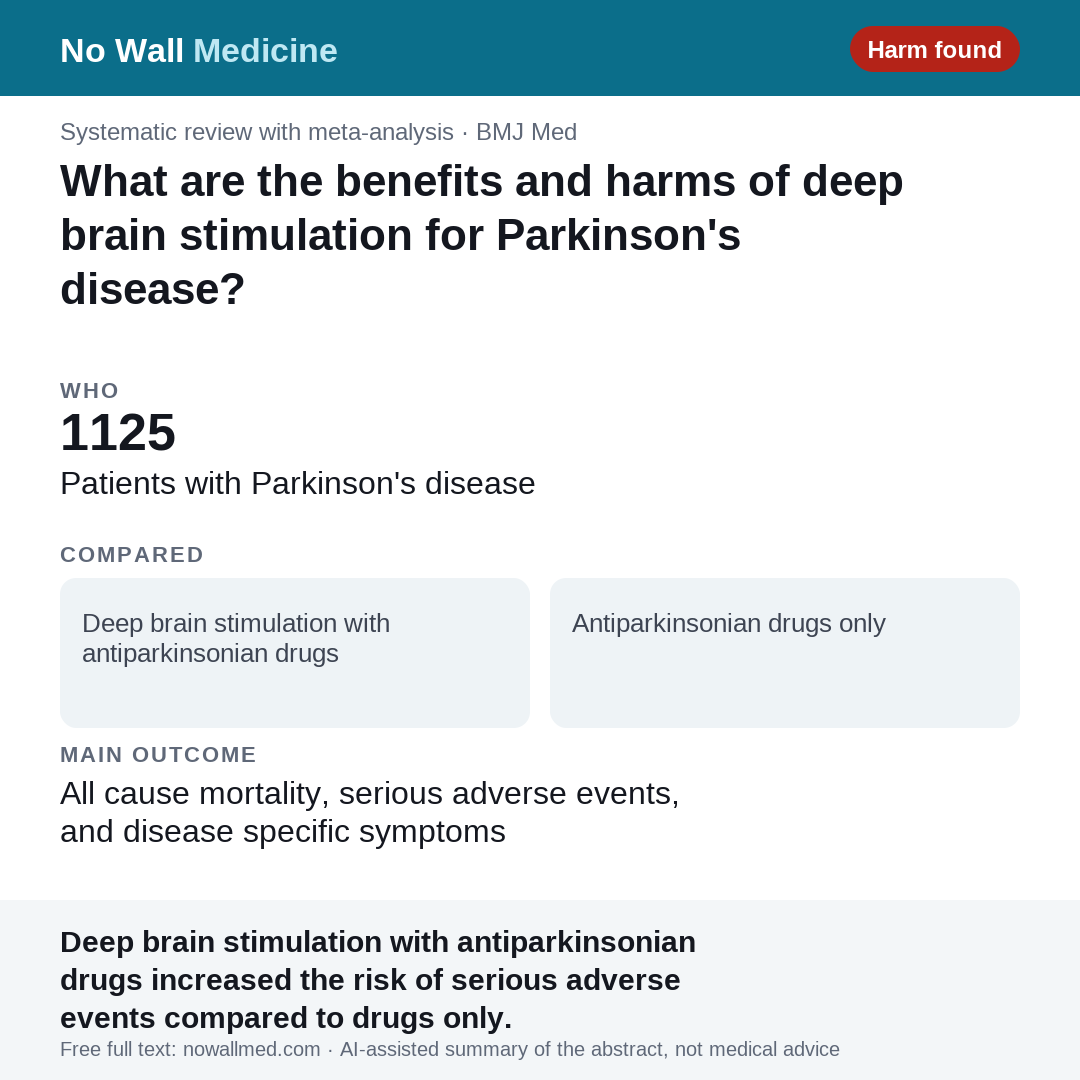
Deep brain stimulation for Parkinson's disease: systematic review with meta-analysis and trial sequential analysis
Systematic review with meta-analysisHarm found
What are the benefits and harms of deep brain stimulation for Parkinson's disease?
Who
1125
Patients with Parkinson's disease
Compared
Deep brain stimulation with antiparkinsonian drugs
Antiparkinsonian drugs only
Main outcome
All cause mortality, serious adverse events, and disease specific symptoms
Result: risk ratio 2.36 (95% CI 1.37 to 4.09) for serious adverse events
Bottom line: Deep brain stimulation with antiparkinsonian drugs increased the risk of serious adverse events compared to drugs only.
Limitation: High risk of bias and very low certainty of evidence for all primary outcomes.
BMJ Med · 2024-08-16Download image
The role of interleukin-17 and interleukin-23 inhibitors in the development, progression, and recurrence of cancer: A systematic review
Systematic reviewBenefit found
Do interleukin-17 and interleukin-23 inhibitors affect cancer development, progression, and recurrence?
Who
Patients treated with interleukin-17 and interleukin-23 inhibitors
Compared
Interleukin-17 and interleukin-23 inhibitors: no higher incidence of cancer compared to the general population
General population
Main outcome
Cancer development, progression, and recurrence
Bottom line: Interleukin-17 and interleukin-23 inhibitors show no increased malignancy rate in patients.
Limitation: Variations in study designs, outcomes, and small sample sizes.
JAAD Int · 2024-08-16Download image
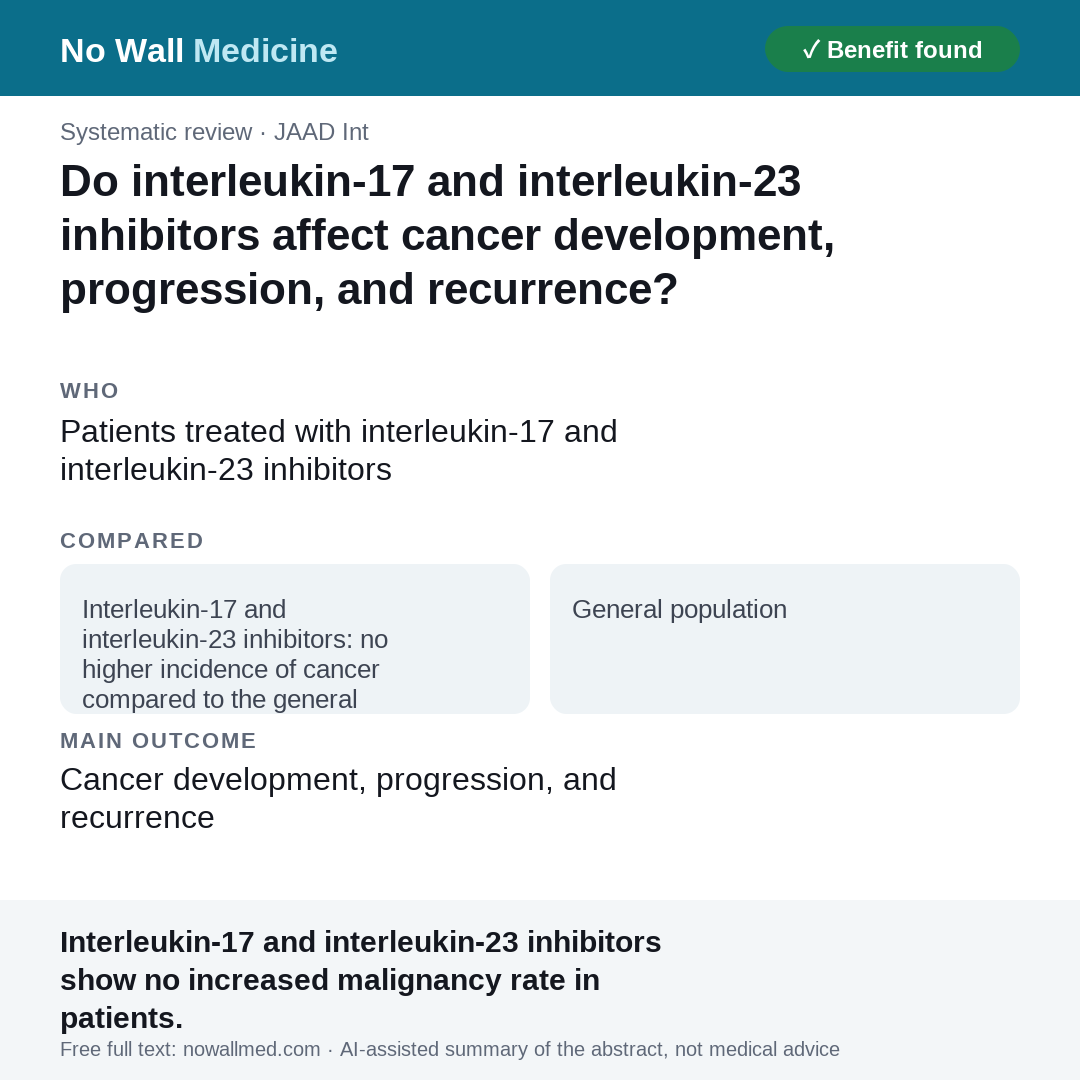
Task-sharing spinal anaesthesia care in three rural Indian hospitals: a non-inferiority randomised controlled clinical trial
Randomised, non-inferiority trialBenefit found
Are spinal anaesthesia failure rates of medical officers non-inferior to consultant anaesthesiologists?
Who
422
Patients aged over 18 years with low perioperative risk · Three rural hospitals in Tamil Nadu and Chhattisgarh, India
Compared
3.0%Medical officers
2.6%Consultant anaesthesiologists
Main outcome
Spinal anaesthesia failure rate
Result: difference in success rate of 0.4% (95% CI=0.36-0.43%; p=0.80)
Bottom line: Trained medical officers provided spinal anaesthesia care with failure rates non-inferior to consultant anaesthesiologists in low-risk patients.
BMJ Glob Health · 2024-08-16Download image
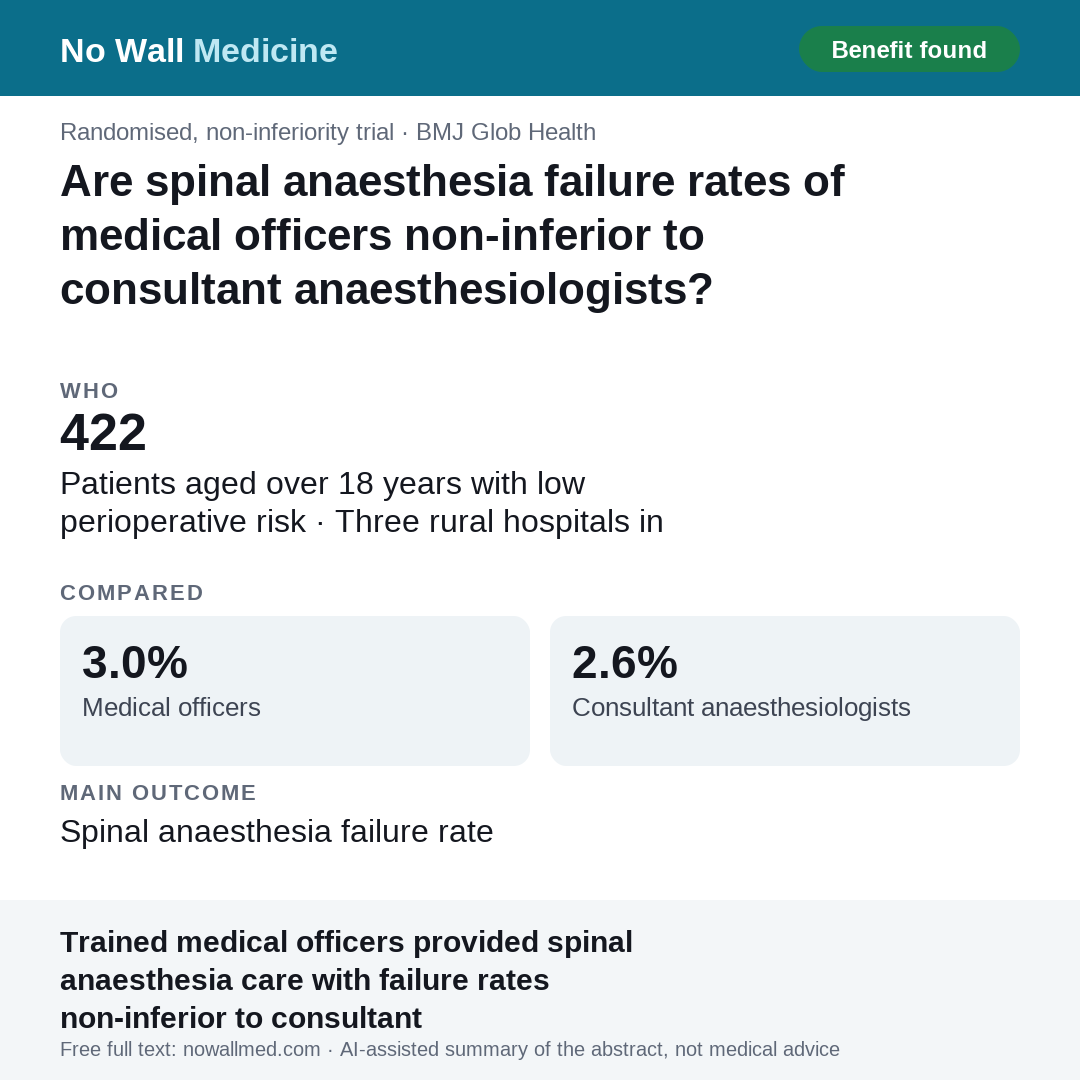
The impact of home-installed growth charts and small-quantity lipid-based nutrient supplements (SQ-LNS) on child growth in Zambia: a four-arm parallel open-label cluster randomised controlled trial
Four-arm parallel open-label cluster randomised controlled trialMixed results
Do home-installed growth charts and small-quantity lipid-based nutrient supplements reduce growth faltering?
Who
2291
Caregivers of infants between 2 and 10 months of age · 282 enumeration areas in Zambia
Compared
Control
Growth charts only
Small-quantity lipid-based nutrient supplements only: 0.21 SD (95% CI 0.06 to 0.36)
Growth charts and small-quantity lipid-based nutrient supplements
Main outcome
Height-for-age z-score and stunting
Result: hazard ratio 0.63 (95% CI 0.46 to 0.87)
Bottom line: Small-quantity lipid-based nutrient supplements improved height-for-age and reduced stunting, but combining them with growth charts showed no additional benefit.
BMJ Glob Health · 2024-08-16Download image
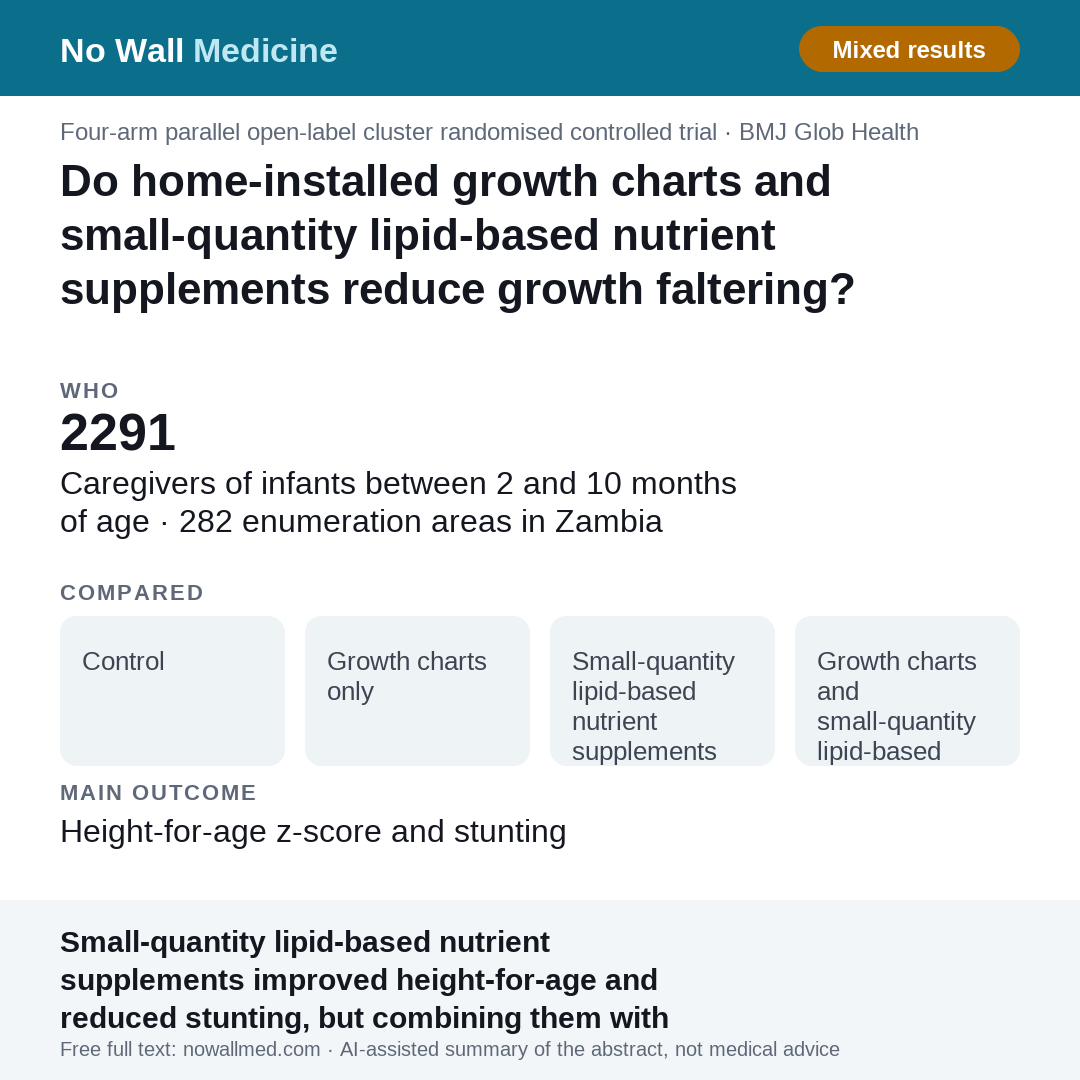
Rate and risk factors of kidney function decline among South Asians with type 2 diabetes: analysis of the CARRS Trial
Analysis of the CARRS TrialNo clear difference
What is the rate and predictors of kidney function decline in South Asian type 2 diabetes?
Who
1146
People with type 2 diabetes in South Asia · 10 diabetes clinics in India and Pakistan
Compared
Intervention
Usual care
Main outcome
estimated glomerular filtration rate slope
Bottom line: South Asians with type 2 diabetes experienced an annual kidney function decline of -1.33 mL/min/1.73 m2/year.
BMJ Open Diabetes Res Care · 2024-08-16Download image
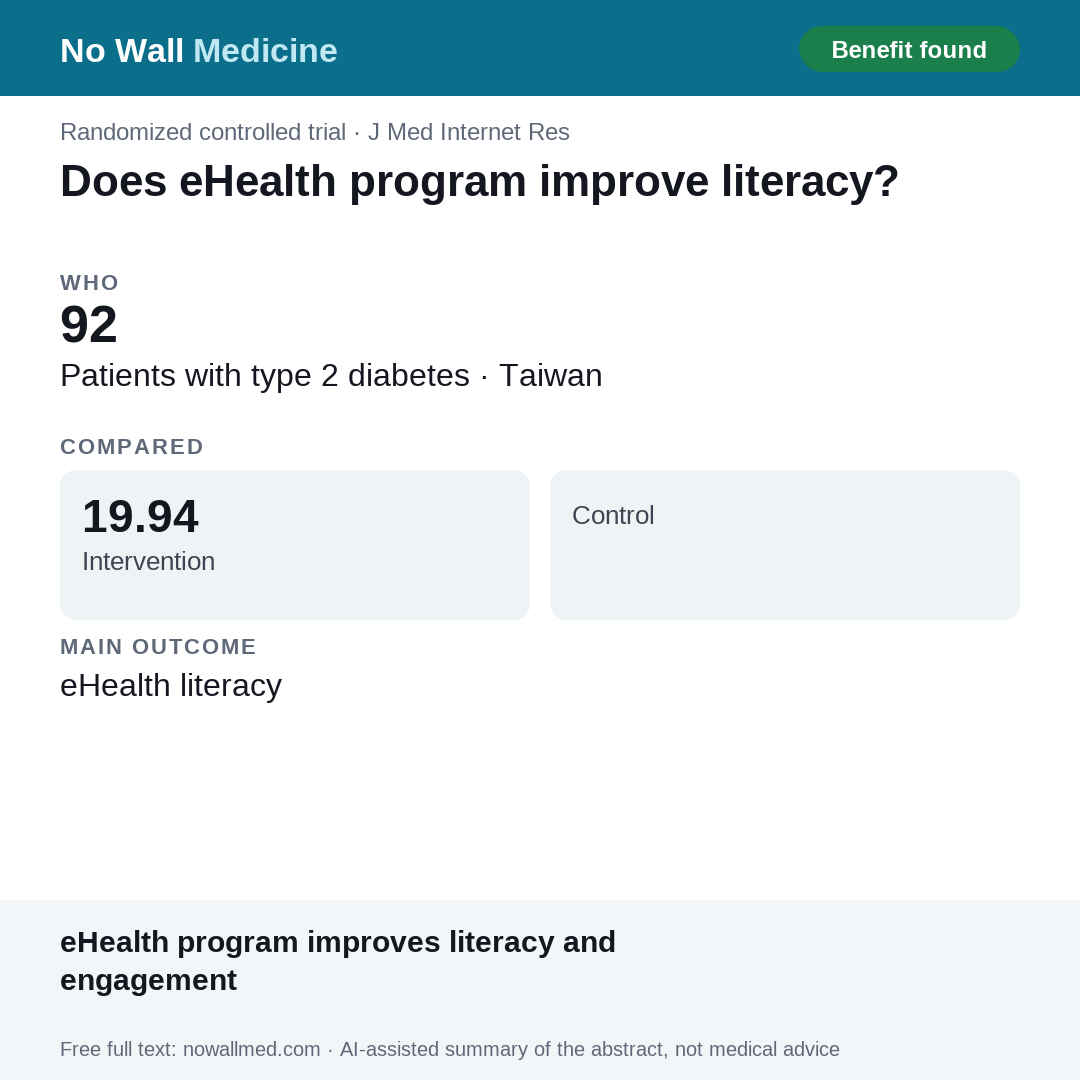
Short-Term Effects of an eHealth Care Experiential Learning Program Among Patients With Type 2 Diabetes: Randomized Controlled Trial
Randomized controlled trialBenefit found
Does eHealth program improve literacy?
Who
92
Patients with type 2 diabetes · Taiwan
Compared
19.94Intervention
Control
Main outcome
eHealth literacy
Bottom line: eHealth program improves literacy and engagement
J Med Internet Res · 2024-08-16Download image
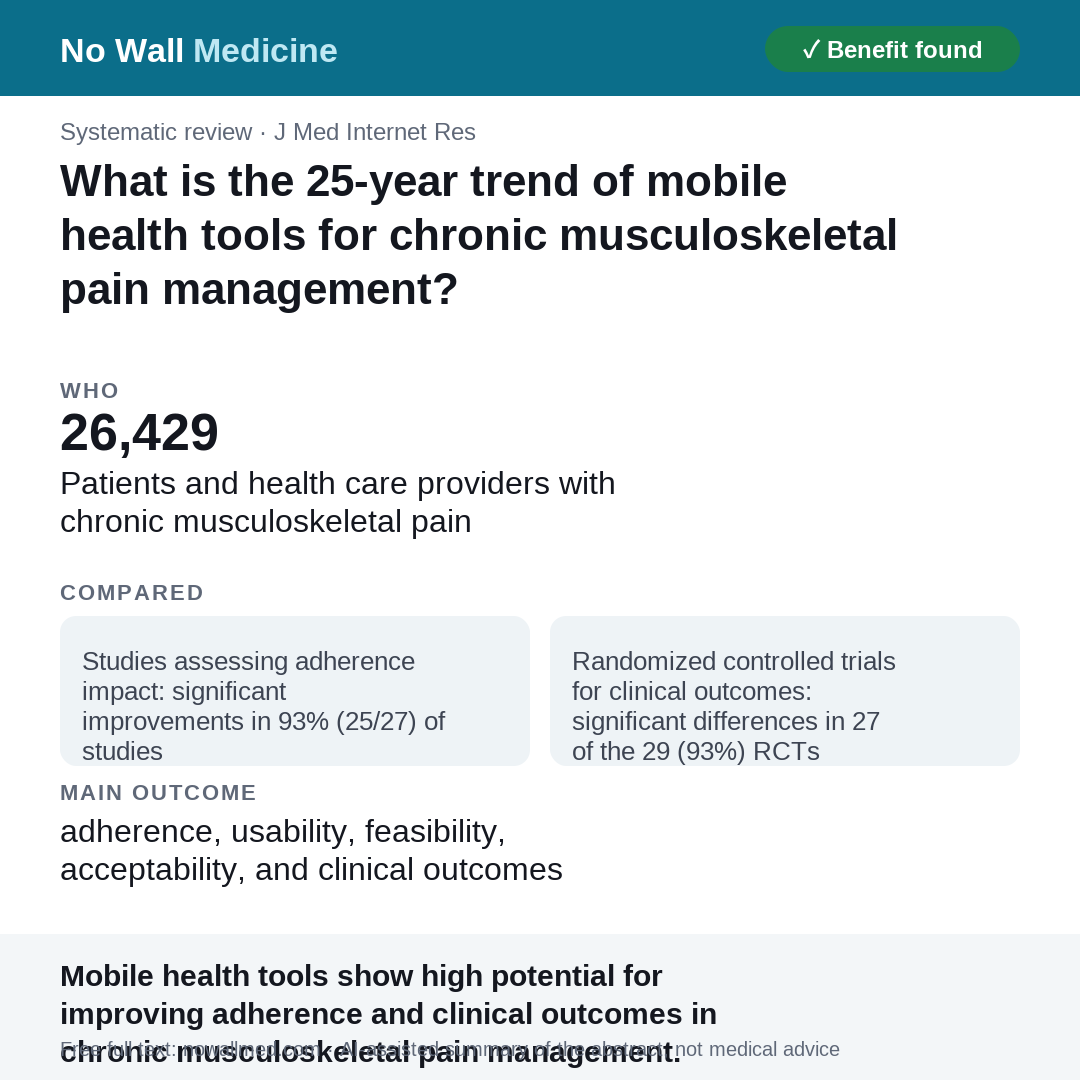
Impact of 25 Years of Mobile Health Tools for Pain Management in Patients With Chronic Musculoskeletal Pain: Systematic Review
Systematic reviewBenefit found
What is the 25-year trend of mobile health tools for chronic musculoskeletal pain management?
Who
26,429
Patients and health care providers with chronic musculoskeletal pain
Compared
Studies assessing adherence impact: significant improvements in 93% (25/27) of studies
Randomized controlled trials for clinical outcomes: significant differences in 27 of the 29 (93%) RCTs
Main outcome
adherence, usability, feasibility, acceptability, and clinical outcomes
Bottom line: Mobile health tools show high potential for improving adherence and clinical outcomes in chronic musculoskeletal pain management.
J Med Internet Res · 2024-08-16Download image
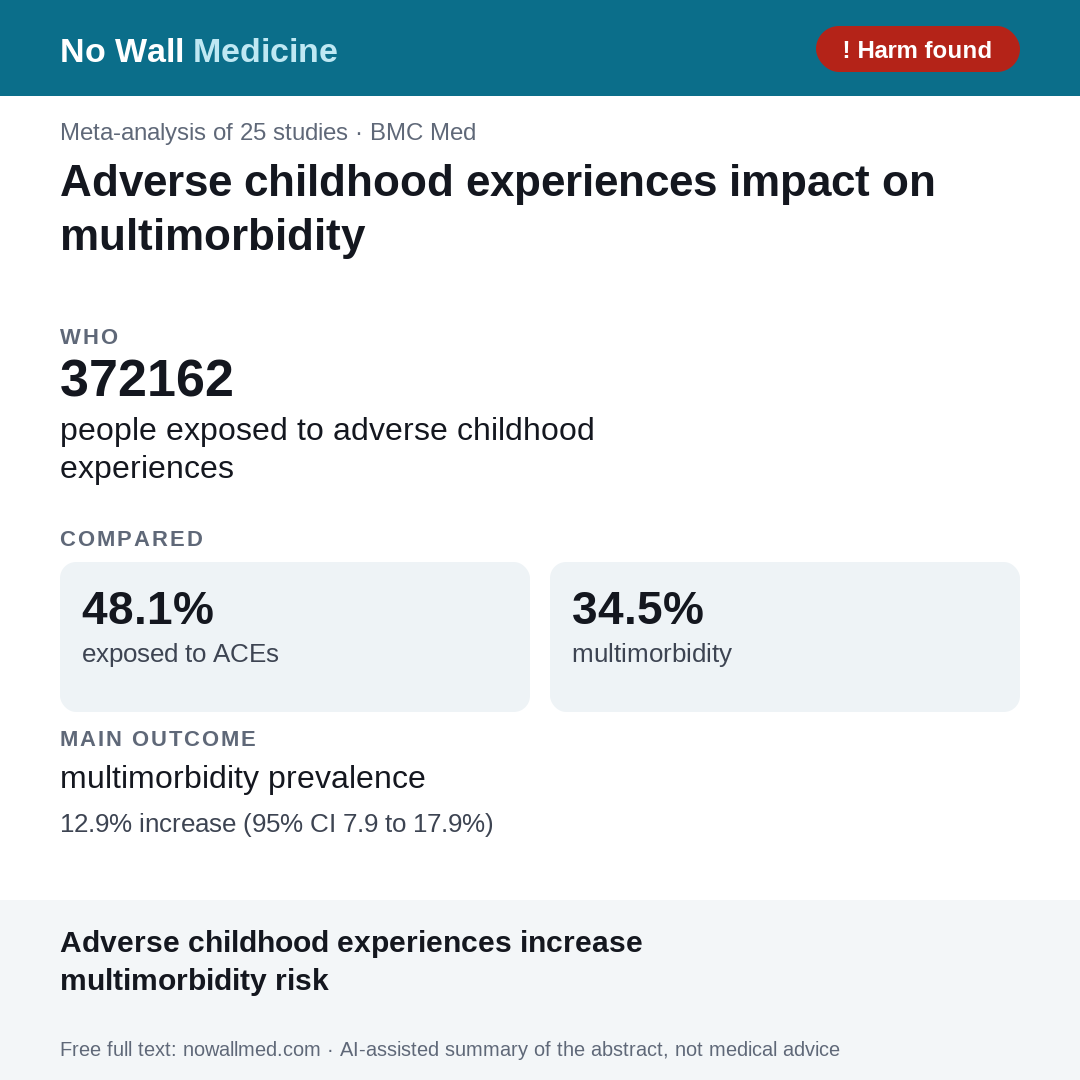
The impact of adverse childhood experiences on multimorbidity: a systematic review and meta-analysis
Meta-analysis of 25 studiesHarm found
Adverse childhood experiences impact on multimorbidity
Who
372162
people exposed to adverse childhood experiences
Compared
48.1%exposed to ACEs (95% CI 33.4 to 63.1%)
34.5%multimorbidity (95% CI 23.4 to 47.5%)
Main outcome
multimorbidity prevalence
Result: 12.9% increase (95% CI 7.9 to 17.9%)
Bottom line: Adverse childhood experiences increase multimorbidity risk
Limitation: heterogeneity among studies
BMC Med · 2024-08-15Download image
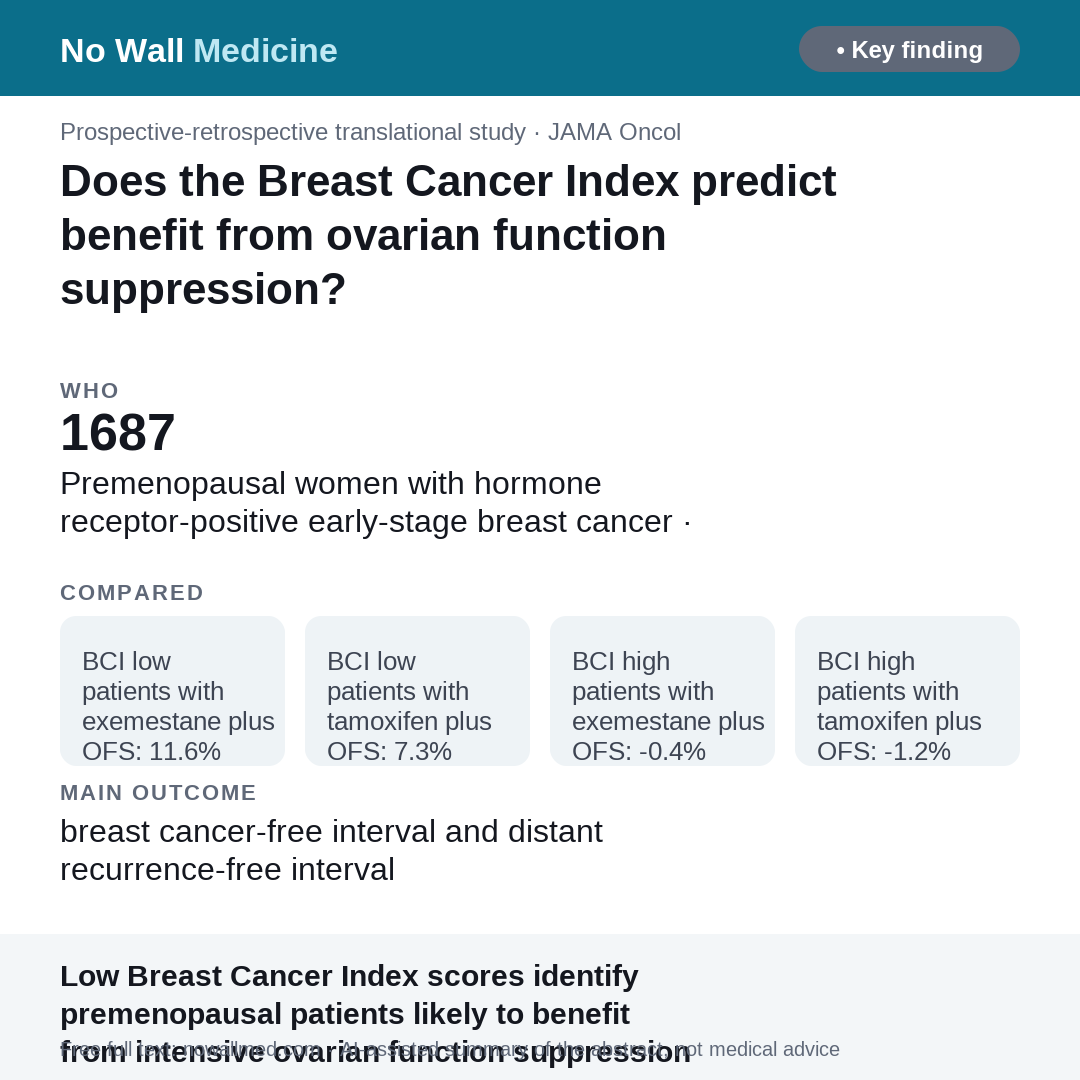
Breast Cancer Index in Premenopausal Women With Early-Stage Hormone Receptor-Positive Breast Cancer
Prospective-retrospective translational studyBenefit found
Does the Breast Cancer Index predict benefit from ovarian function suppression?
Who
1687
Premenopausal women with hormone receptor-positive early-stage breast cancer · Multiple centers internationally
Compared
BCI low patients with exemestane plus OFS: 11.6% absolute benefit in breast cancer-free interval
BCI low patients with tamoxifen plus OFS: 7.3% absolute benefit in breast cancer-free interval
BCI high patients with exemestane plus OFS: -0.4% absolute benefit
BCI high patients with tamoxifen plus OFS: -1.2% absolute benefit
Main outcome
breast cancer-free interval and distant recurrence-free interval
Result: hazard ratio 0.48 (95% CI 0.33-0.71) for BCI low exemestane plus OFS
Bottom line: Low Breast Cancer Index scores identify premenopausal patients likely to benefit from intensive ovarian function suppression therapy.
JAMA Oncol · 2024-08-15Download image
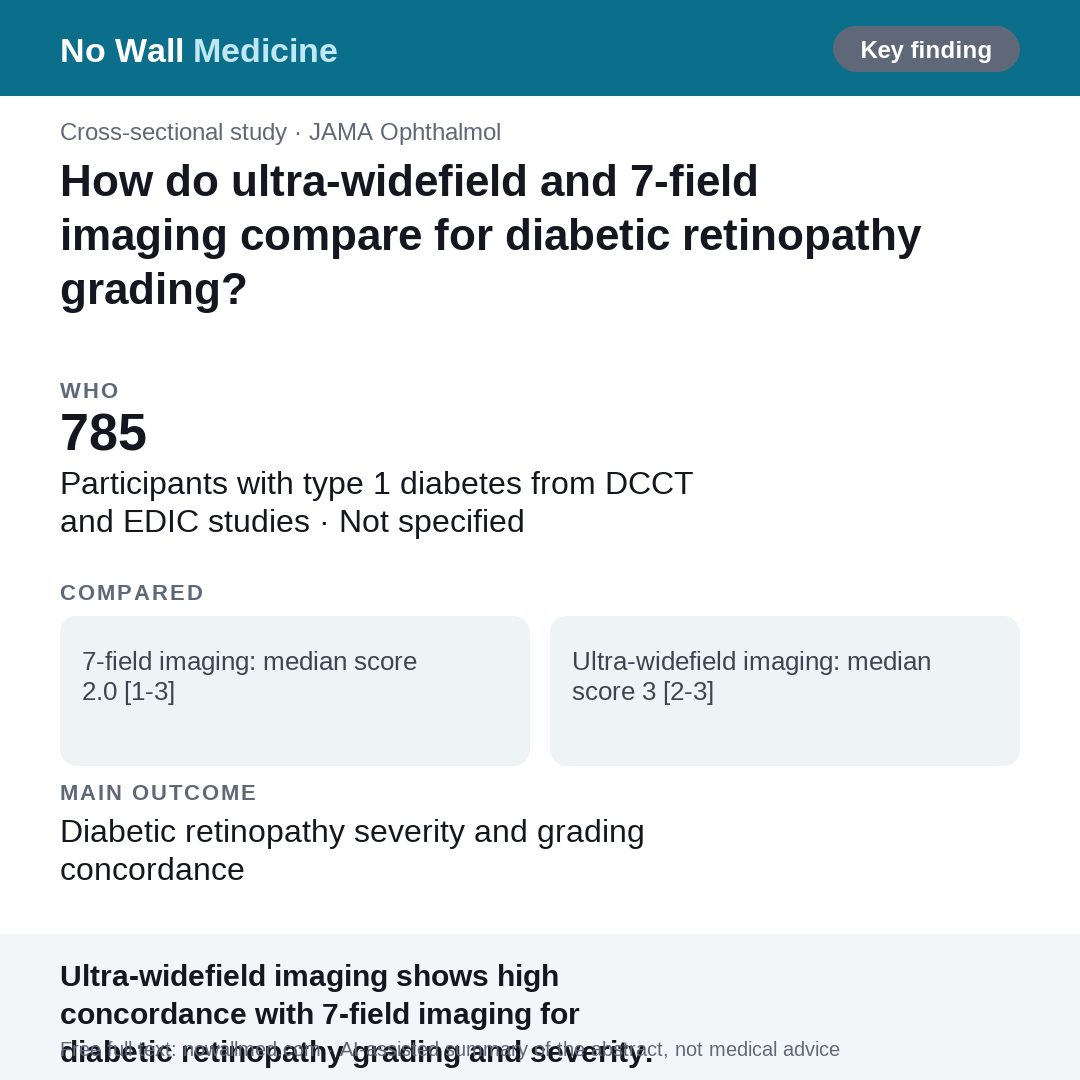
Ultra-Widefield and Early Treatment Diabetic Retinopathy Study 7-Field Grading of Diabetic Retinopathy
Cross-sectional studyBenefit found
How do ultra-widefield and 7-field imaging compare for diabetic retinopathy grading?
Who
785
Participants with type 1 diabetes from DCCT and EDIC studies · Not specified
Compared
7-field imaging: median score 2.0 [1-3]
Ultra-widefield imaging: median score 3 [2-3]
Main outcome
Diabetic retinopathy severity and grading concordance
Result: κ, 0.73 for severe nonproliferative diabetic retinopathy; κ, 0.74 for proliferative diabetic retinopathy
Bottom line: Ultra-widefield imaging shows high concordance with 7-field imaging for diabetic retinopathy grading and severity.
JAMA Ophthalmol · 2024-08-15Download image
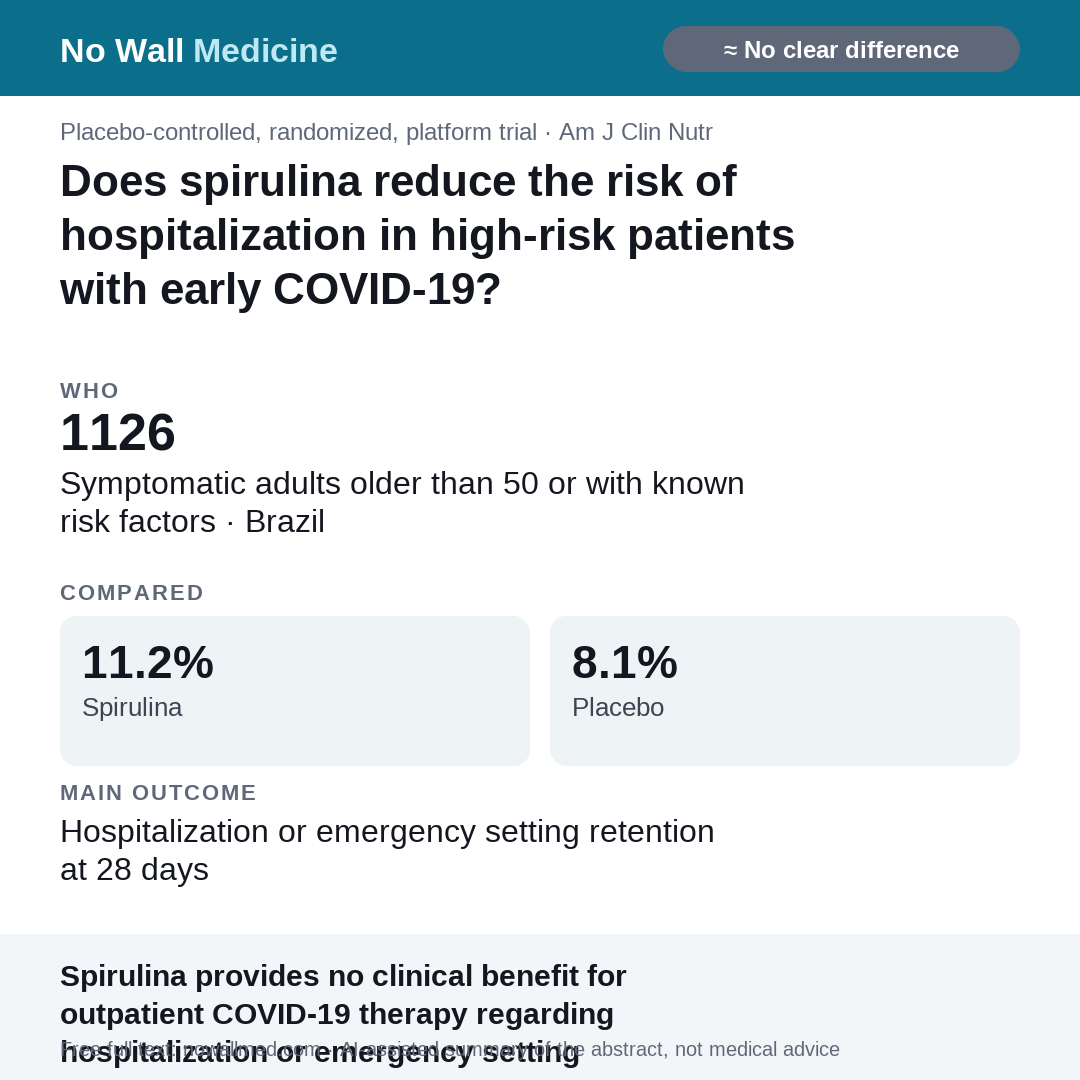
Effect of spirulina on risk of hospitalization among patients with COVID-19: the TOGETHER randomized trial
Placebo-controlled, randomized, platform trialNo clear difference
Does spirulina reduce the risk of hospitalization in high-risk patients with early COVID-19?
Who
1126
Symptomatic adults older than 50 or with known risk factors · Brazil
Compared
11.2%Spirulina
8.1%Placebo
Main outcome
Hospitalization or emergency setting retention at 28 days
Result: odds ratio 1.24 (95% credible interval: 0.84, 1.86)
Bottom line: Spirulina provides no clinical benefit for outpatient COVID-19 therapy regarding hospitalization or emergency setting retention.
Am J Clin Nutr · 2024-08-15Download image
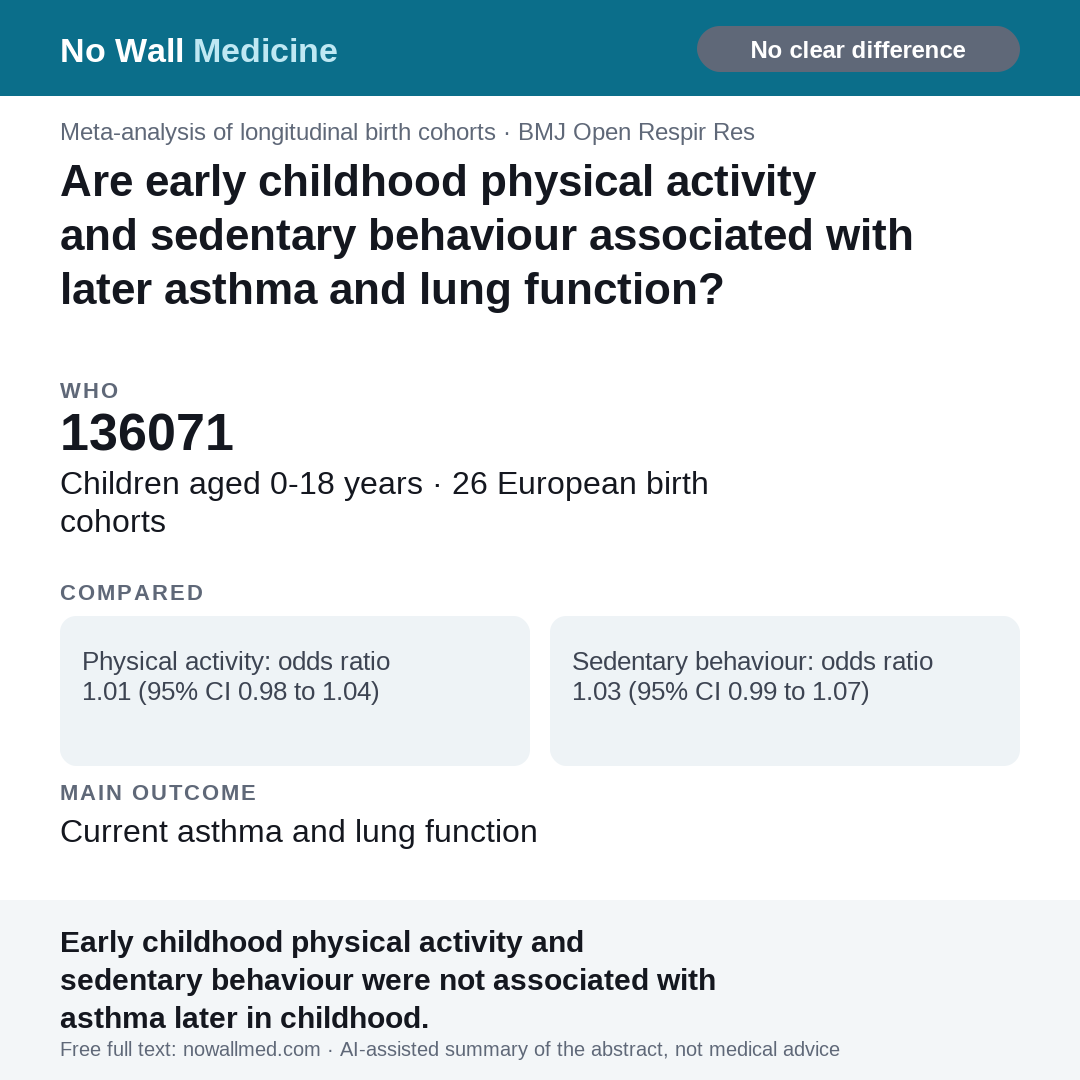
Physical activity, sedentary behaviour, and childhood asthma: a European collaborative analysis
Meta-analysis of longitudinal birth cohortsNo clear difference
Are early childhood physical activity and sedentary behaviour associated with later asthma and lung function?
Who
136071
Children aged 0-18 years · 26 European birth cohorts
Compared
Physical activity: odds ratio 1.01 (95% CI 0.98 to 1.04)
Sedentary behaviour: odds ratio 1.03 (95% CI 0.99 to 1.07)
Main outcome
Current asthma and lung function
Bottom line: Early childhood physical activity and sedentary behaviour were not associated with asthma later in childhood.
BMJ Open Respir Res · 2024-08-15Download image
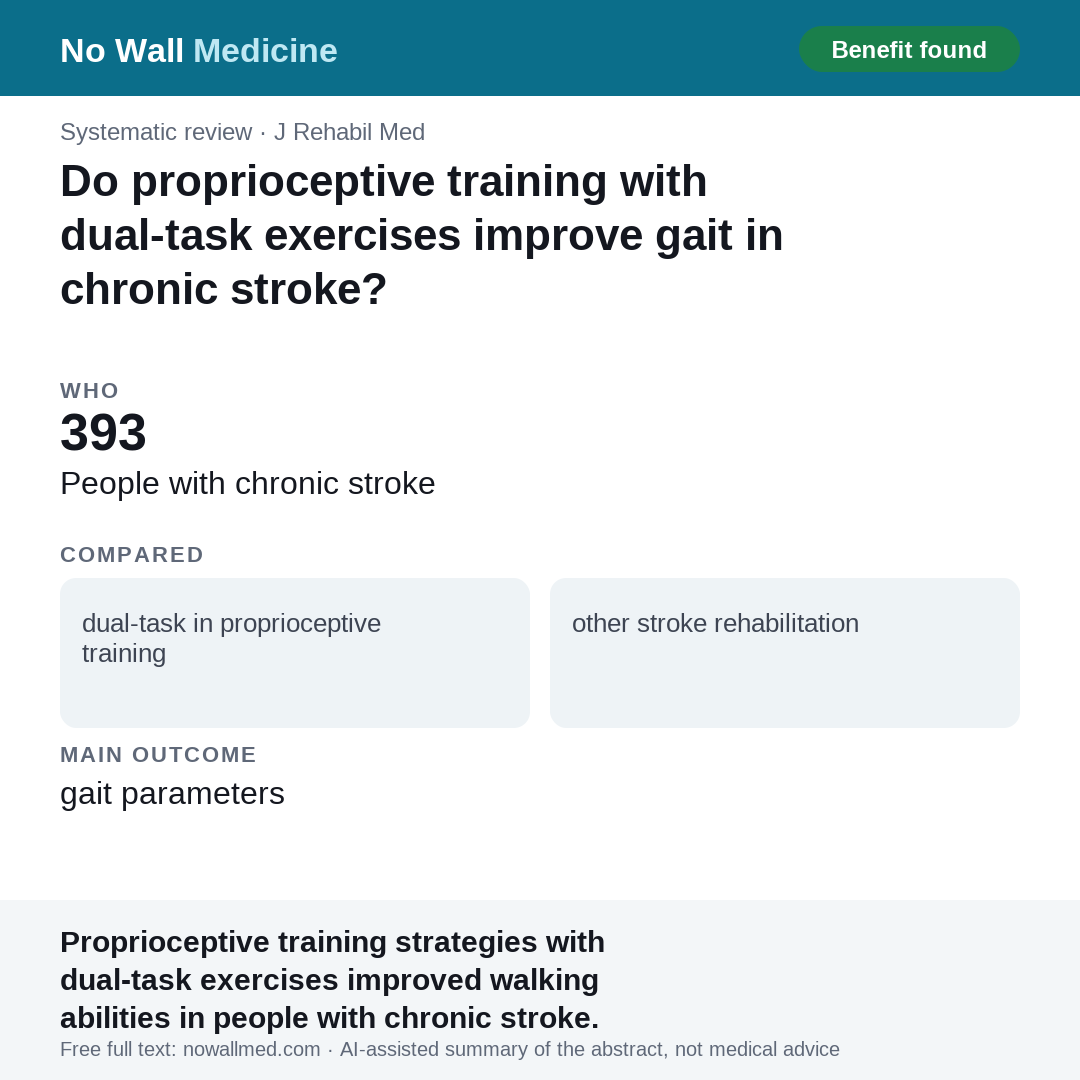
Do proprioceptive training strategies with dual-task exercises positively influence gait parameters in chronic stroke? A systematic review
Systematic reviewBenefit found
Do proprioceptive training with dual-task exercises improve gait in chronic stroke?
Who
393
People with chronic stroke
Compared
dual-task in proprioceptive training
other stroke rehabilitation
Main outcome
gait parameters
Bottom line: Proprioceptive training strategies with dual-task exercises improved walking abilities in people with chronic stroke.
J Rehabil Med · 2024-08-15Download image
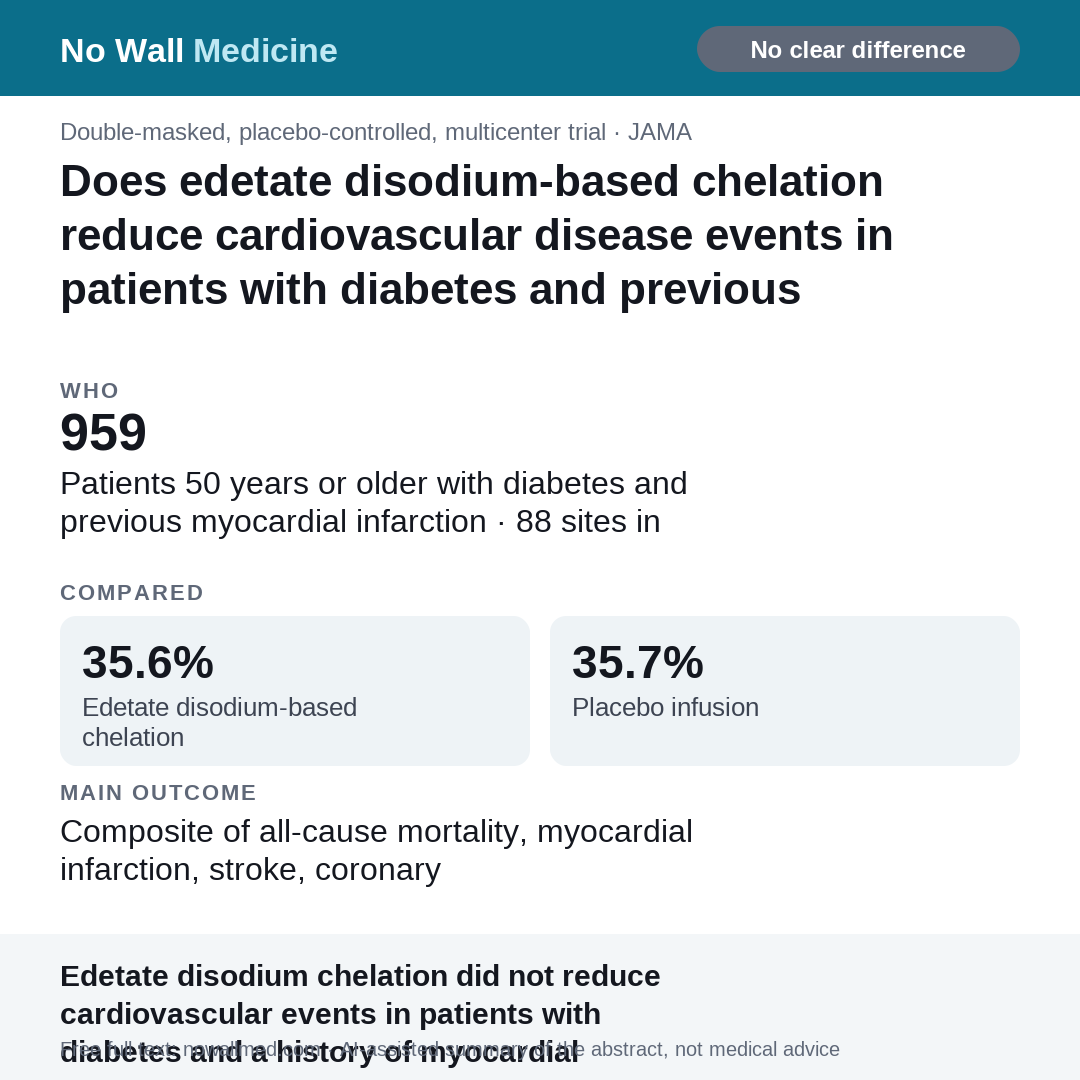
Edetate Disodium-Based Chelation for Patients With a Previous Myocardial Infarction and Diabetes: TACT2 Randomized Clinical Trial
Double-masked, placebo-controlled, multicenter trialNo clear difference
Does edetate disodium-based chelation reduce cardiovascular disease events in patients with diabetes and previous myocardial infarction?
Who
959
Patients 50 years or older with diabetes and previous myocardial infarction · 88 sites in the US and Canada
Compared
35.6%Edetate disodium-based chelation
35.7%Placebo infusion
Main outcome
Composite of all-cause mortality, myocardial infarction, stroke, coronary revascularization, or unstable angina hospitalization
Result: adjusted hazard ratio 0.93 (95% CI 0.76 to 1.16)
Bottom line: Edetate disodium chelation did not reduce cardiovascular events in patients with diabetes and a history of myocardial infarction.
JAMA · 2024-08-14Download image
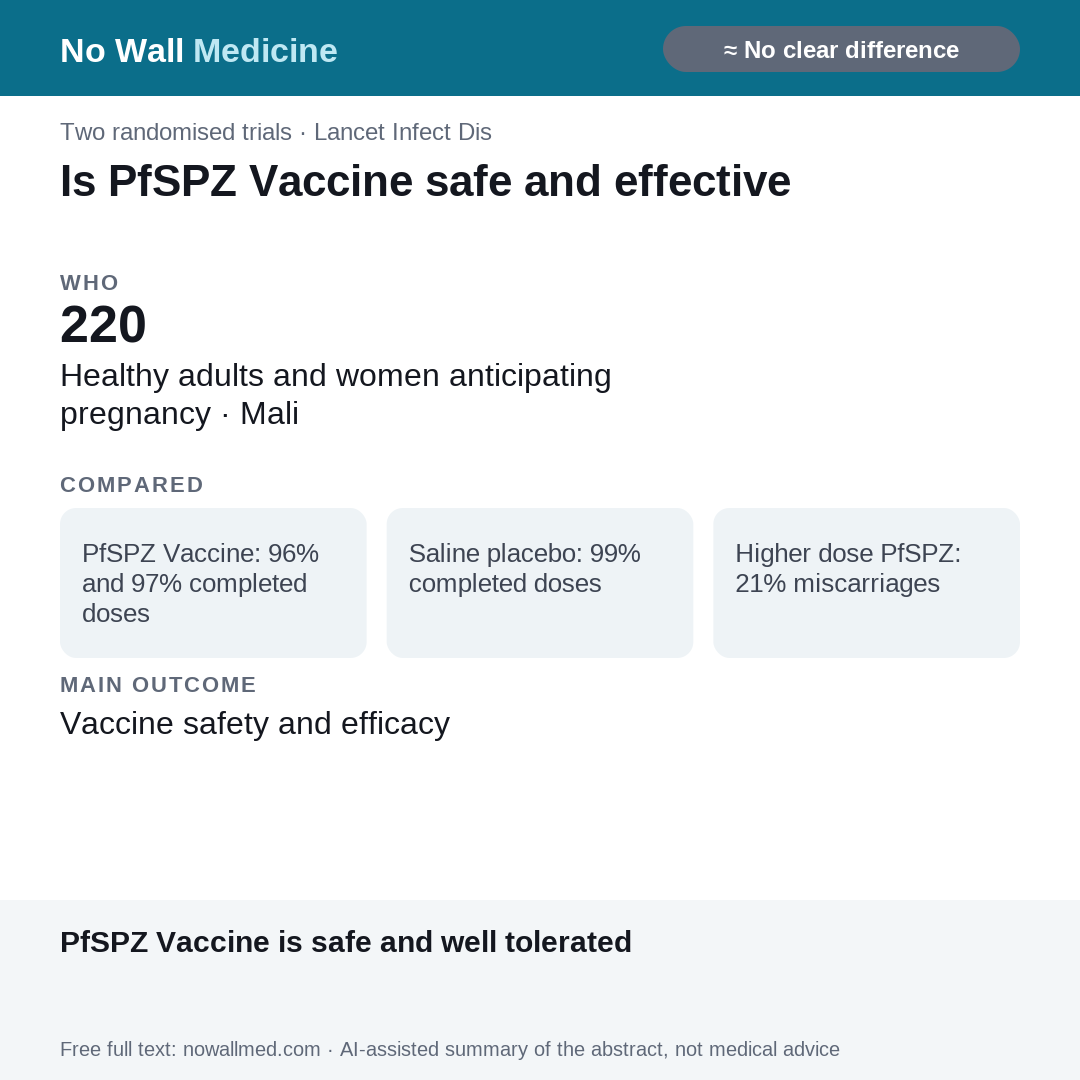
Safety and efficacy of PfSPZ Vaccine against malaria in healthy adults and women anticipating pregnancy in Mali: two randomised, double-blind, placebo-controlled, phase 1 and 2 trials
Two randomised trialsNo clear difference
Is PfSPZ Vaccine safe and effective
Who
220
Healthy adults and women anticipating pregnancy · Mali
Compared
PfSPZ Vaccine: 96% and 97% completed doses
Saline placebo: 99% completed doses
Higher dose PfSPZ: 21% miscarriages
Main outcome
Vaccine safety and efficacy
Bottom line: PfSPZ Vaccine is safe and well tolerated
Lancet Infect Dis · 2024-08-14Download image
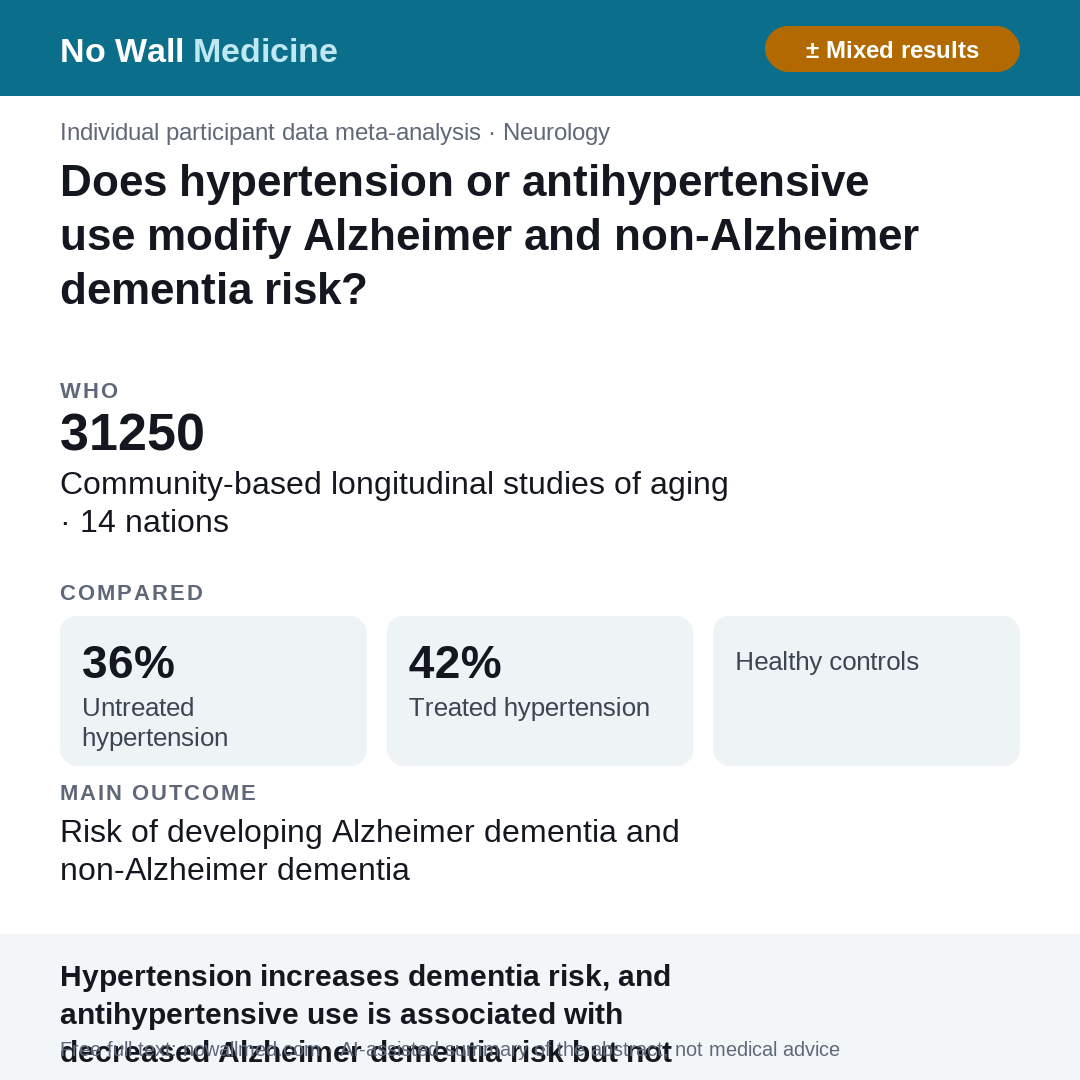
Blood Pressure, Antihypertensive Use, and Late-Life Alzheimer and Non-Alzheimer Dementia Risk: An Individual Participant Data Meta-Analysis
Individual participant data meta-analysisMixed results
Does hypertension or antihypertensive use modify Alzheimer and non-Alzheimer dementia risk?
Who
31250
Community-based longitudinal studies of aging · 14 nations
Compared
36%Untreated hypertension (hazard ratio 1.36, 95% CI 1.01-1.83)
42%Treated hypertension (hazard ratio 1.42, 95% CI 1.08-1.87)
Healthy controls
Main outcome
Risk of developing Alzheimer dementia and non-Alzheimer dementia
Bottom line: Hypertension increases dementia risk, and antihypertensive use is associated with decreased Alzheimer dementia risk but not non-Alzheimer dementia risk.
Neurology · 2024-08-14Download image
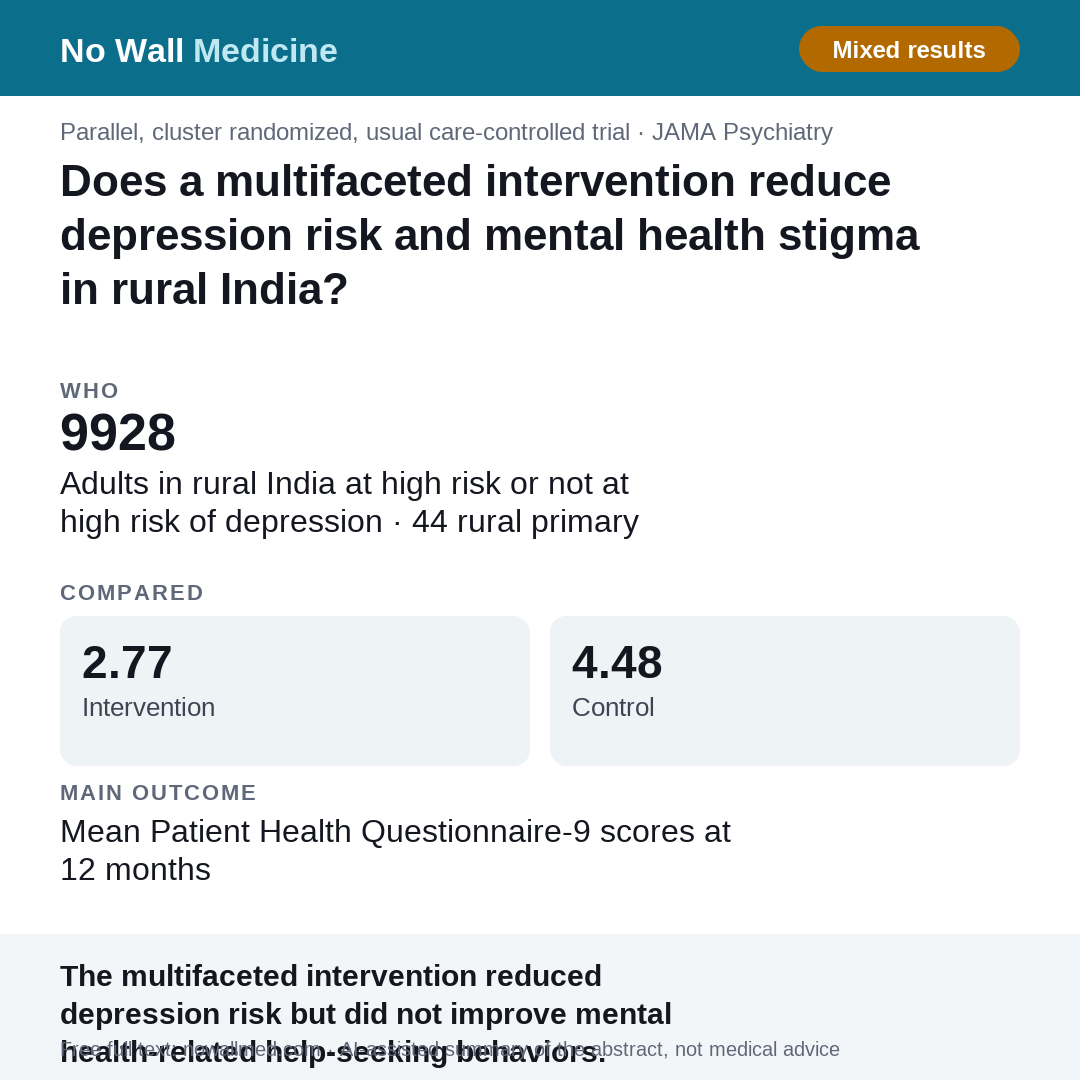
Mental Health Care Support in Rural India: A Cluster Randomized Clinical Trial
Parallel, cluster randomized, usual care-controlled trialMixed results
Does a multifaceted intervention reduce depression risk and mental health stigma in rural India?
Who
9928
Adults in rural India at high risk or not at high risk of depression · 44 rural primary health centers in India
Compared
2.77Intervention
4.48Control
Main outcome
Mean Patient Health Questionnaire-9 scores at 12 months
Result: mean difference, -1.71 (95% CI, -2.53 to -0.89)
Bottom line: The multifaceted intervention reduced depression risk but did not improve mental health-related help-seeking behaviors.
JAMA Psychiatry · 2024-08-14Download image
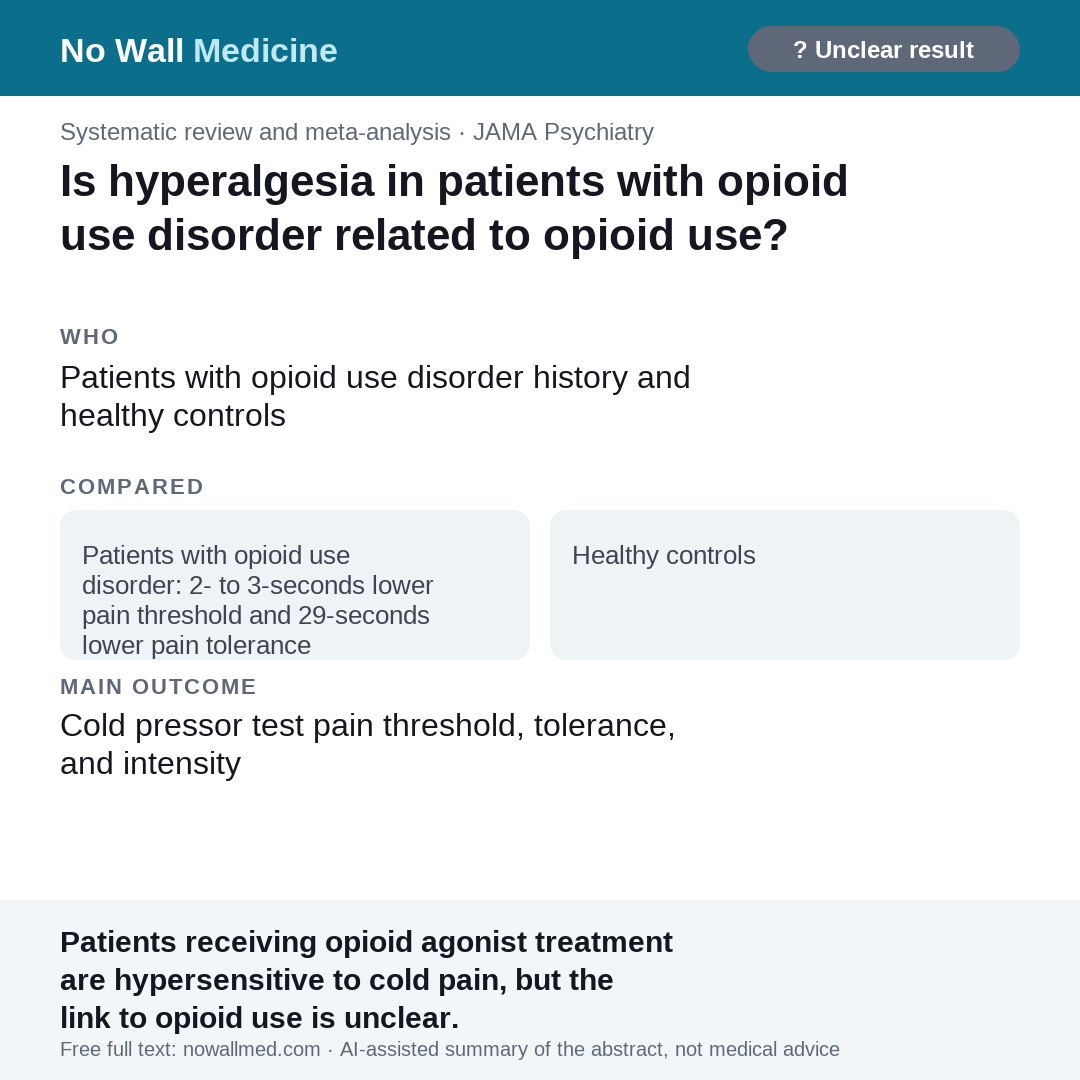
Hyperalgesia in Patients With a History of Opioid Use Disorder: A Systematic Review and Meta-Analysis
Systematic review and meta-analysisUnclear result
Is hyperalgesia in patients with opioid use disorder related to opioid use?
Who
Patients with opioid use disorder history and healthy controls
Compared
Patients with opioid use disorder: 2- to 3-seconds lower pain threshold and 29-seconds lower pain tolerance
Healthy controls
Main outcome
Cold pressor test pain threshold, tolerance, and intensity
Bottom line: Patients receiving opioid agonist treatment are hypersensitive to cold pain, but the link to opioid use is unclear.
Limitation: Differences may be overestimated; concerns of bias due to inadequate sample matching and participant dropout.
JAMA Psychiatry · 2024-08-14Download image