Visual abstracts
New randomized trials and meta-analyses from leading journals at a glance: who was studied, what was compared, and what was found. Every paper is free to read in full.
All specialtiesCardiology 4877Oncology 4138Gastroenterology & Hepatology 1942Infectious Disease 3837Neurology 1905Psychiatry & Mental Health 2273Pulmonology 2143Critical Care 1365Endocrinology & Diabetes 2580Pediatrics 2980Surgery 2559Orthopedics & Sports Medicine 931Neurosurgery 537Cardiothoracic & Vascular Surgery 674Plastic & Reconstructive Surgery 591Nephrology 1133Rheumatology 823Hematology 1109Dermatology 621Ophthalmology 543Obstetrics & Gynecology 1686Public & Global Health 1058Radiology & Imaging 648Anesthesiology 986Urology 764ENT (Otolaryngology) 503Emergency Medicine 511Allergy & Immunology 313Geriatrics 981Family Medicine & Primary Care 562Medical Genetics & Genomics 676Pathology & Laboratory Medicine 159Physical Medicine & Rehabilitation 757Palliative Care 444Nutrition 1588Digital Health & AI 2201General Medicine 321
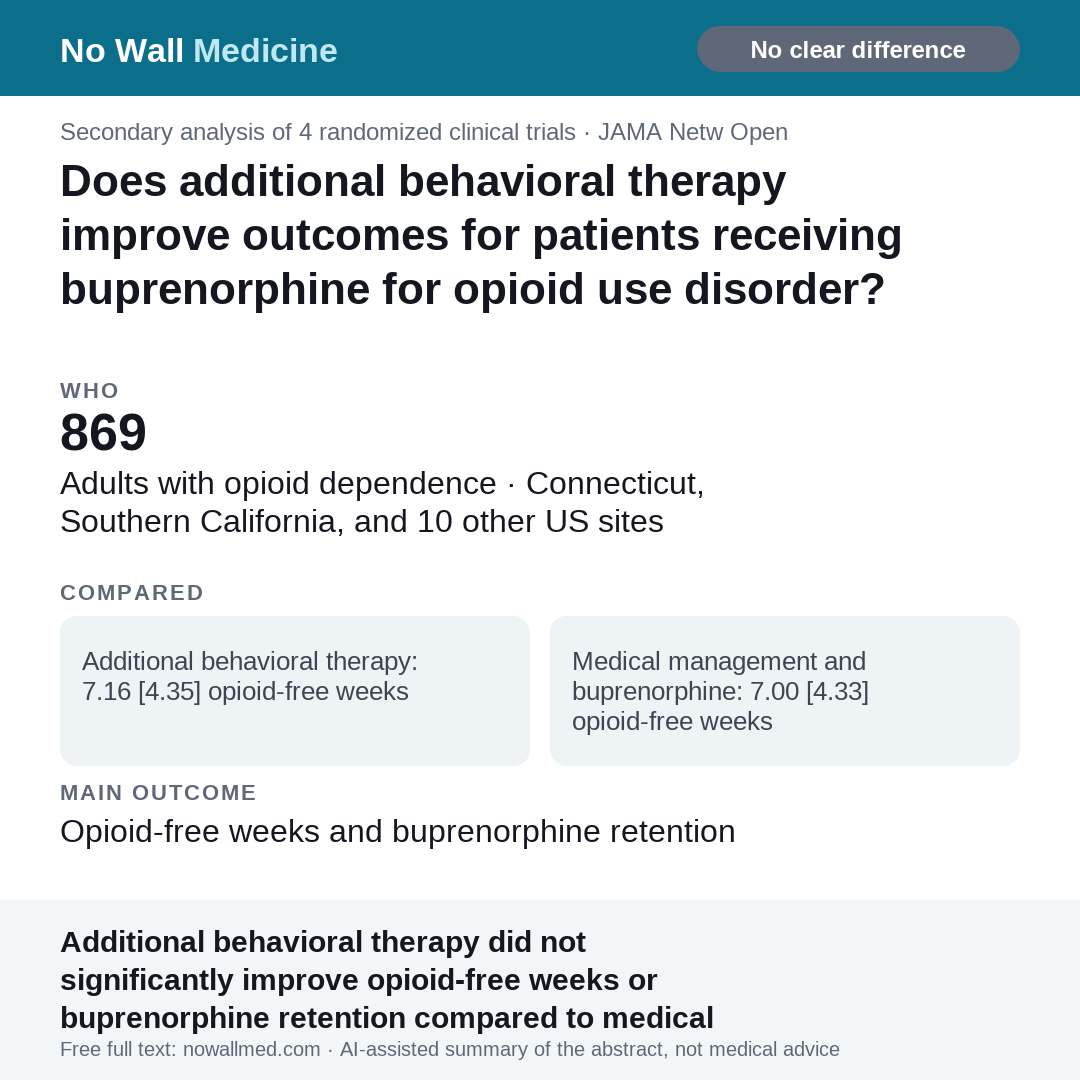
Behavioral Therapy as an Adjunct to Buprenorphine Treatment for Opioid Use Disorder: A Secondary Analysis of 4 Randomized Clinical Trials
Secondary analysis of 4 randomized clinical trialsNo clear difference
Does additional behavioral therapy improve outcomes for patients receiving buprenorphine for opioid use disorder?
Who
869
Adults with opioid dependence · Connecticut, Southern California, and 10 other US sites
Compared
Additional behavioral therapy: 7.16 [4.35] opioid-free weeks
Medical management and buprenorphine: 7.00 [4.33] opioid-free weeks
Main outcome
Opioid-free weeks and buprenorphine retention
Result: B = 0.28; 95% CI, -0.33 to 0.89
Bottom line: Additional behavioral therapy did not significantly improve opioid-free weeks or buprenorphine retention compared to medical management and buprenorphine.
JAMA Netw Open · 2025-08-01Download image
Healthy Food Benefit Programs, Fruit and Vegetable Consumption, and Food Security
Cohort study with randomly assigned treatment groupsBenefit found
Does a $40 monthly healthy food benefit program improve food security and diet?
Who
1973
Lower-income populations seeking enrollment in Fresh Bucks in Seattle, Washington · Seattle, Washington
Compared
Newly receive program benefits: 7.5 pp (95% CI, 0.39-14.52 pp) increase in consuming fruit and vegetables 3 or more times per day
Waiting list
Main outcome
Food security and fruit and vegetable consumption
Result: 5.5 percentage point (95% CI, 0.05-10.91 pp) increase in food security
Bottom line: A $40 monthly healthy food benefit program increased food security and fruit and vegetable consumption in lower-income populations.
JAMA Netw Open · 2025-08-01Download image

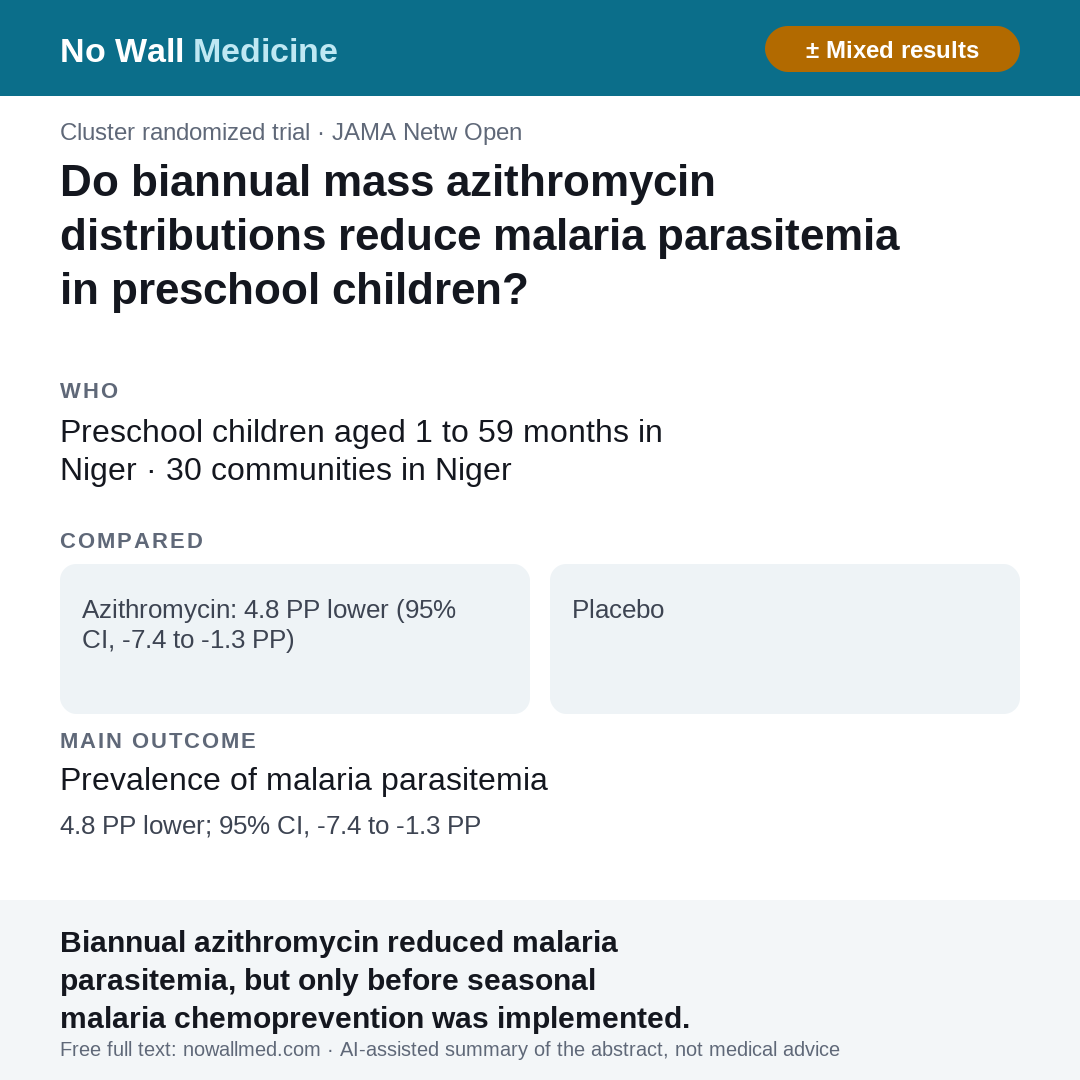
Biannual Mass Azithromycin Distributions for Preschool Children and Malaria Parasitemia: A Secondary Analysis of the MORDOR Cluster Randomized Trial
Cluster randomized trialMixed results
Do biannual mass azithromycin distributions reduce malaria parasitemia in preschool children?
Who
Preschool children aged 1 to 59 months in Niger · 30 communities in Niger
Compared
Azithromycin: 4.8 PP lower (95% CI, -7.4 to -1.3 PP)
Placebo
Main outcome
Prevalence of malaria parasitemia
Result: 4.8 PP lower; 95% CI, -7.4 to -1.3 PP
Bottom line: Biannual azithromycin reduced malaria parasitemia, but only before seasonal malaria chemoprevention was implemented.
JAMA Netw Open · 2025-08-01Download image
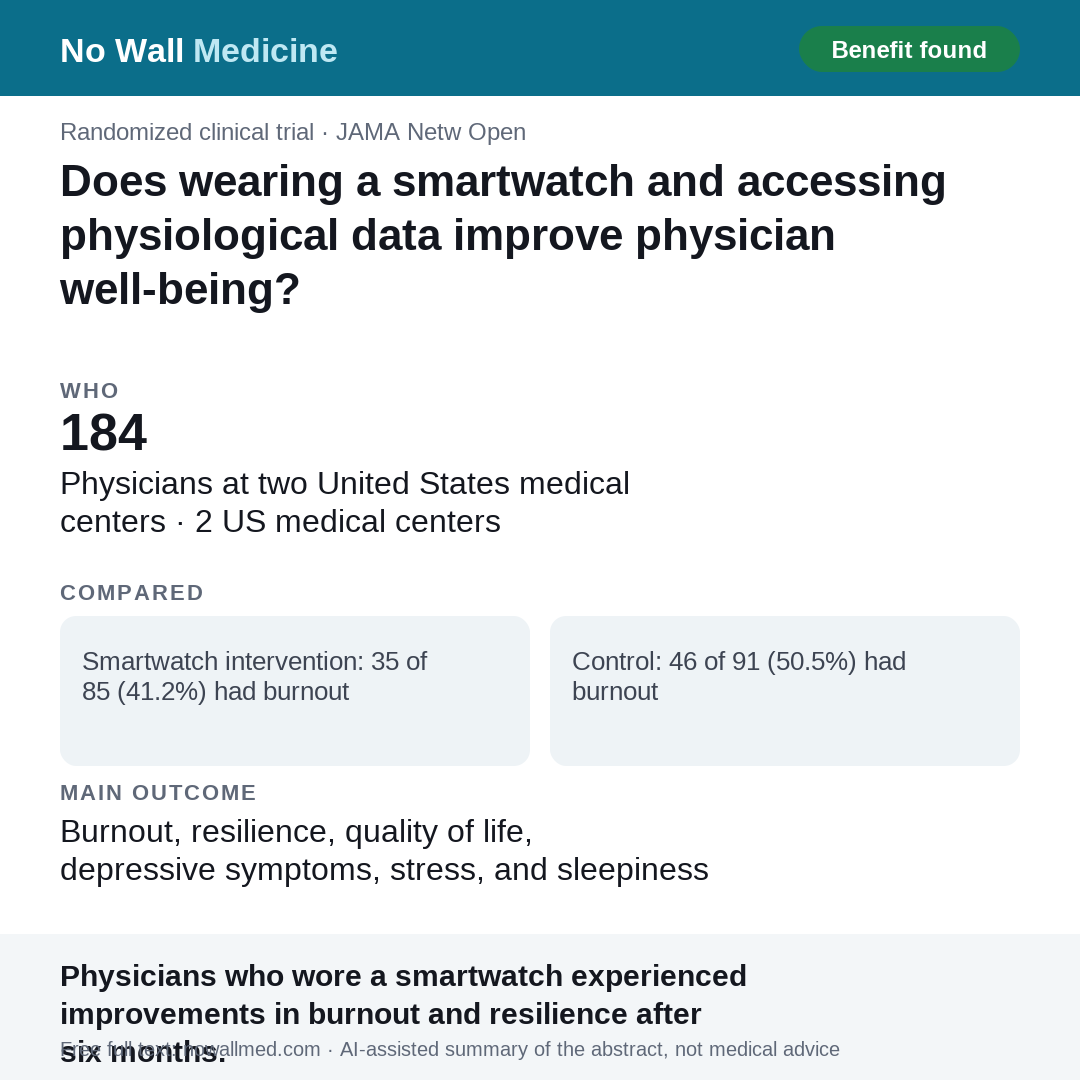
Smartwatch Use and Physician Well-Being: A Randomized Clinical Trial
Randomized clinical trialBenefit found
Does wearing a smartwatch and accessing physiological data improve physician well-being?
Who
184
Physicians at two United States medical centers · 2 US medical centers
Compared
Smartwatch intervention: 35 of 85 (41.2%) had burnout
Control: 46 of 91 (50.5%) had burnout
Main outcome
Burnout, resilience, quality of life, depressive symptoms, stress, and sleepiness
Result: odds ratio 0.46 (95% CI 0.21-0.99)
Bottom line: Physicians who wore a smartwatch experienced improvements in burnout and resilience after six months.
JAMA Netw Open · 2025-08-01Download image
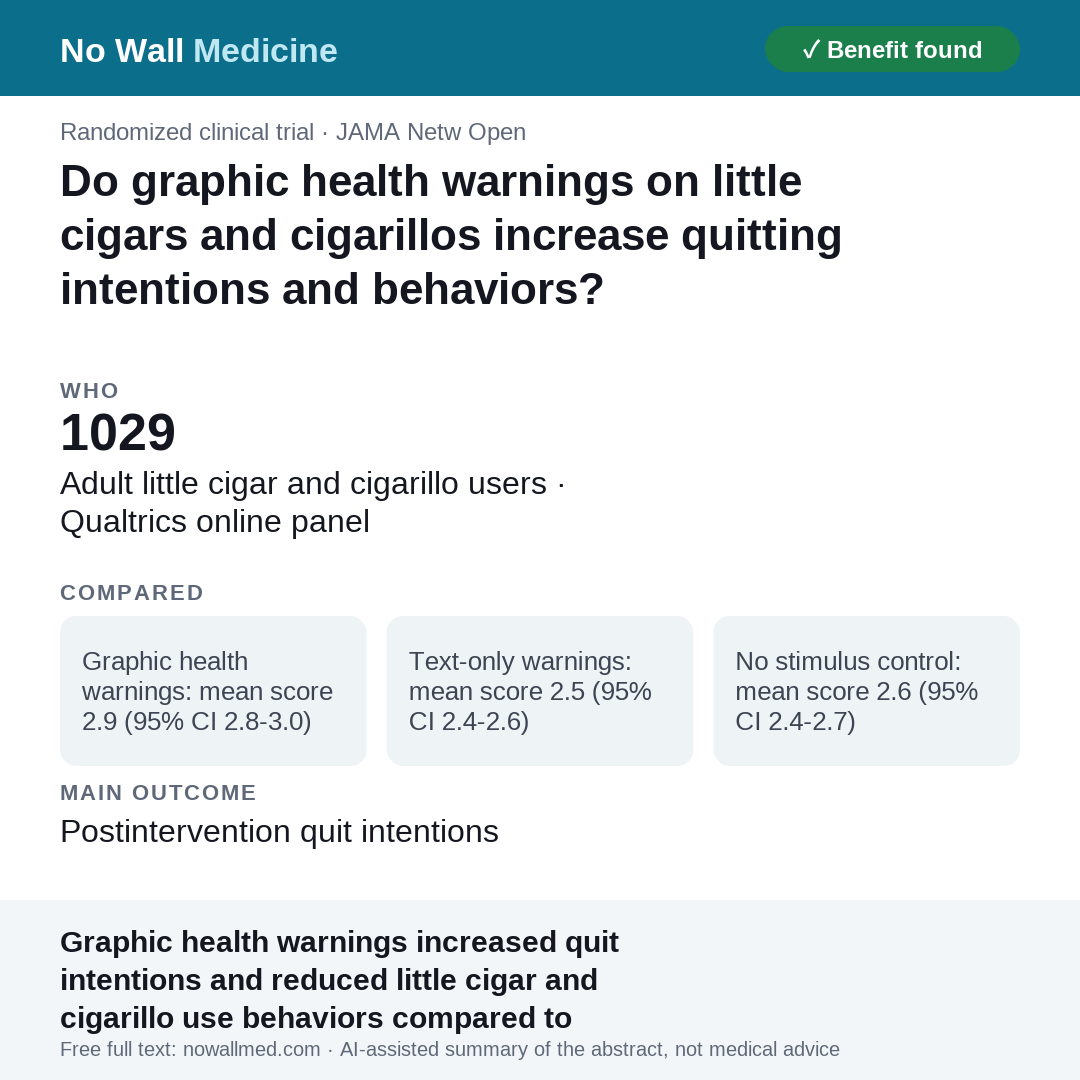
Little Cigar and Cigarillo Graphic Health Warnings and Quitting Behaviors: A Randomized Clinical Trial
Randomized clinical trialBenefit found
Do graphic health warnings on little cigars and cigarillos increase quitting intentions and behaviors?
Who
1029
Adult little cigar and cigarillo users · Qualtrics online panel
Compared
Graphic health warnings: mean score 2.9 (95% CI 2.8-3.0)
Text-only warnings: mean score 2.5 (95% CI 2.4-2.6)
No stimulus control: mean score 2.6 (95% CI 2.4-2.7)
Main outcome
Postintervention quit intentions
Bottom line: Graphic health warnings increased quit intentions and reduced little cigar and cigarillo use behaviors compared to text-only warnings.
JAMA Netw Open · 2025-08-01Download image
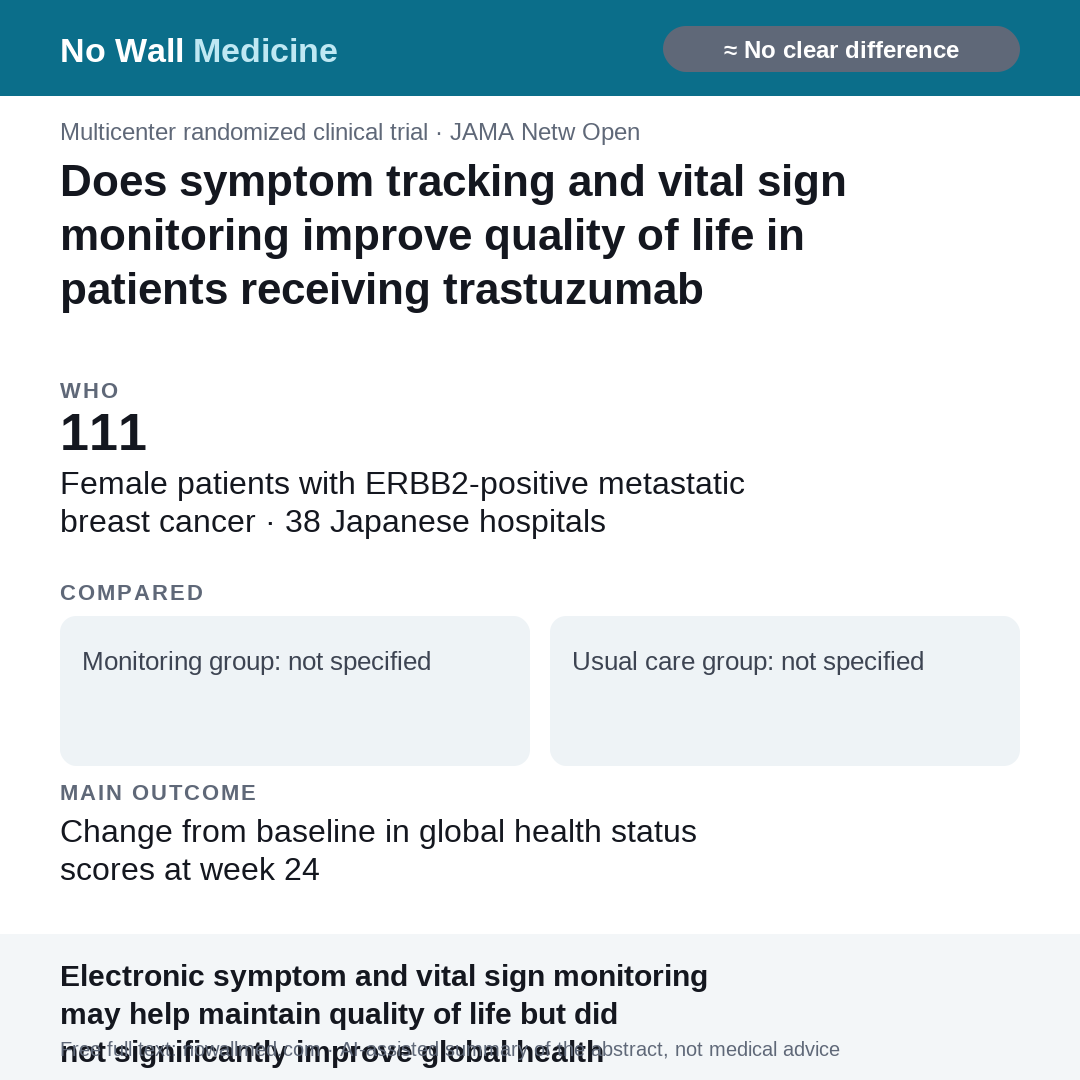
Electronic Patient-Reported Outcomes With Vital Sign Monitoring During Trastuzumab Deruxtecan Therapy: The PRO-DUCE Randomized Clinical Trial
Multicenter randomized clinical trialNo clear difference
Does symptom tracking and vital sign monitoring improve quality of life in patients receiving trastuzumab deruxtecan?
Who
111
Female patients with ERBB2-positive metastatic breast cancer · 38 Japanese hospitals
Compared
Monitoring group: not specified
Usual care group: not specified
Main outcome
Change from baseline in global health status scores at week 24
Result: mean difference, 8.0 (90% CI, 0.2-15.8)
Bottom line: Electronic symptom and vital sign monitoring may help maintain quality of life but did not significantly improve global health status.
JAMA Netw Open · 2025-08-01Download image
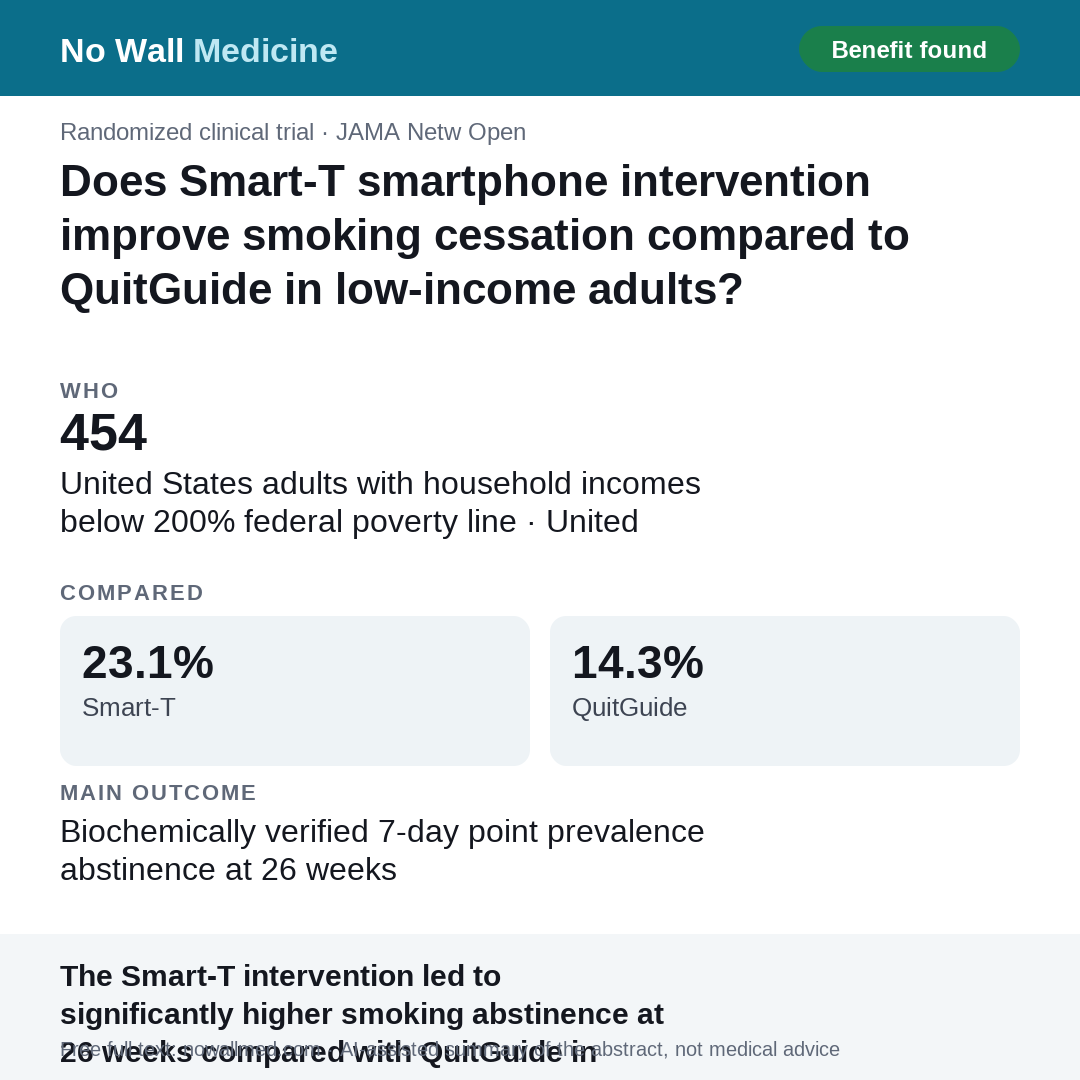
Just-in-Time Adaptive Intervention for Smoking Cessation in Low-Income Adults: A Randomized Clinical Trial
Randomized clinical trialBenefit found
Does Smart-T smartphone intervention improve smoking cessation compared to QuitGuide in low-income adults?
Who
454
United States adults with household incomes below 200% federal poverty line · United States
Compared
23.1%Smart-T (37 of 160 participants)
14.3%QuitGuide (23 of 161 participants)
Main outcome
Biochemically verified 7-day point prevalence abstinence at 26 weeks
Result: adjusted odds ratio 1.81 (95% CI 1.03-3.18)
Bottom line: The Smart-T intervention led to significantly higher smoking abstinence at 26 weeks compared with QuitGuide in low-income adults.
JAMA Netw Open · 2025-08-01Download image
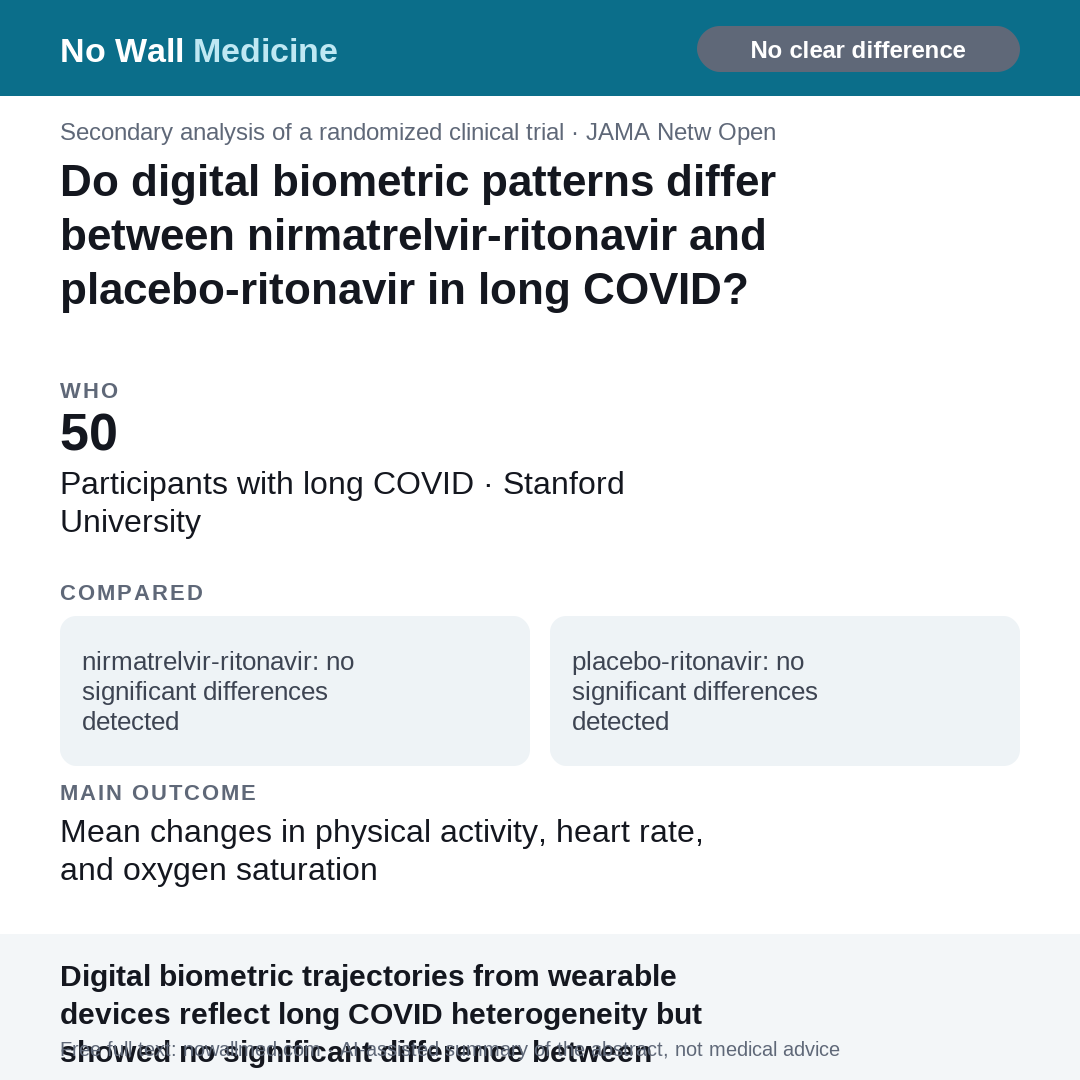
Digital Biometric Measures in Long COVID: A Secondary Analysis of the STOP-PASC Randomized Clinical Trial
Secondary analysis of a randomized clinical trialNo clear difference
Do digital biometric patterns differ between nirmatrelvir-ritonavir and placebo-ritonavir in long COVID?
Who
50
Participants with long COVID · Stanford University
Compared
nirmatrelvir-ritonavir: no significant differences detected
placebo-ritonavir: no significant differences detected
Main outcome
Mean changes in physical activity, heart rate, and oxygen saturation
Bottom line: Digital biometric trajectories from wearable devices reflect long COVID heterogeneity but showed no significant difference between treatment arms.
Limitation: This was an exploratory substudy of a larger randomized clinical trial.
JAMA Netw Open · 2025-08-01Download image
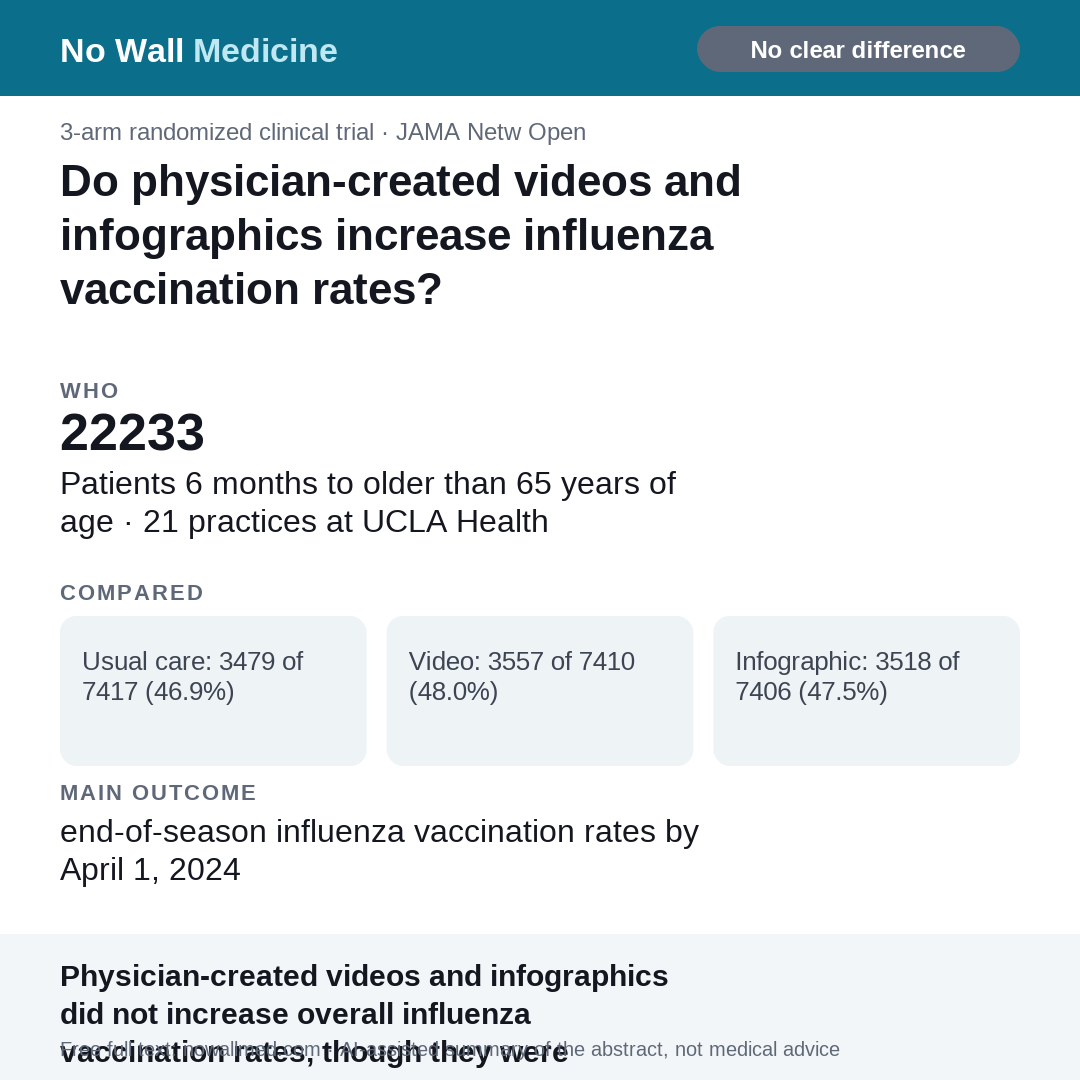
Video and Infographic Messages From Primary Care Physicians and Influenza Vaccination Rates: A Randomized Clinical Trial
3-arm randomized clinical trialNo clear difference
Do physician-created videos and infographics increase influenza vaccination rates?
Who
22233
Patients 6 months to older than 65 years of age · 21 practices at UCLA Health
Compared
Usual care: 3479 of 7417 (46.9%)
Video: 3557 of 7410 (48.0%)
Infographic: 3518 of 7406 (47.5%)
Main outcome
end-of-season influenza vaccination rates by April 1, 2024
Result: adjusted risk ratio 1.03 (95% CI 1.00-1.06) for video; adjusted risk ratio 1.02 (95% CI 0.99-1.06) for infographic
Bottom line: Physician-created videos and infographics did not increase overall influenza vaccination rates, though they were effective among children.
JAMA Netw Open · 2025-08-01Download image
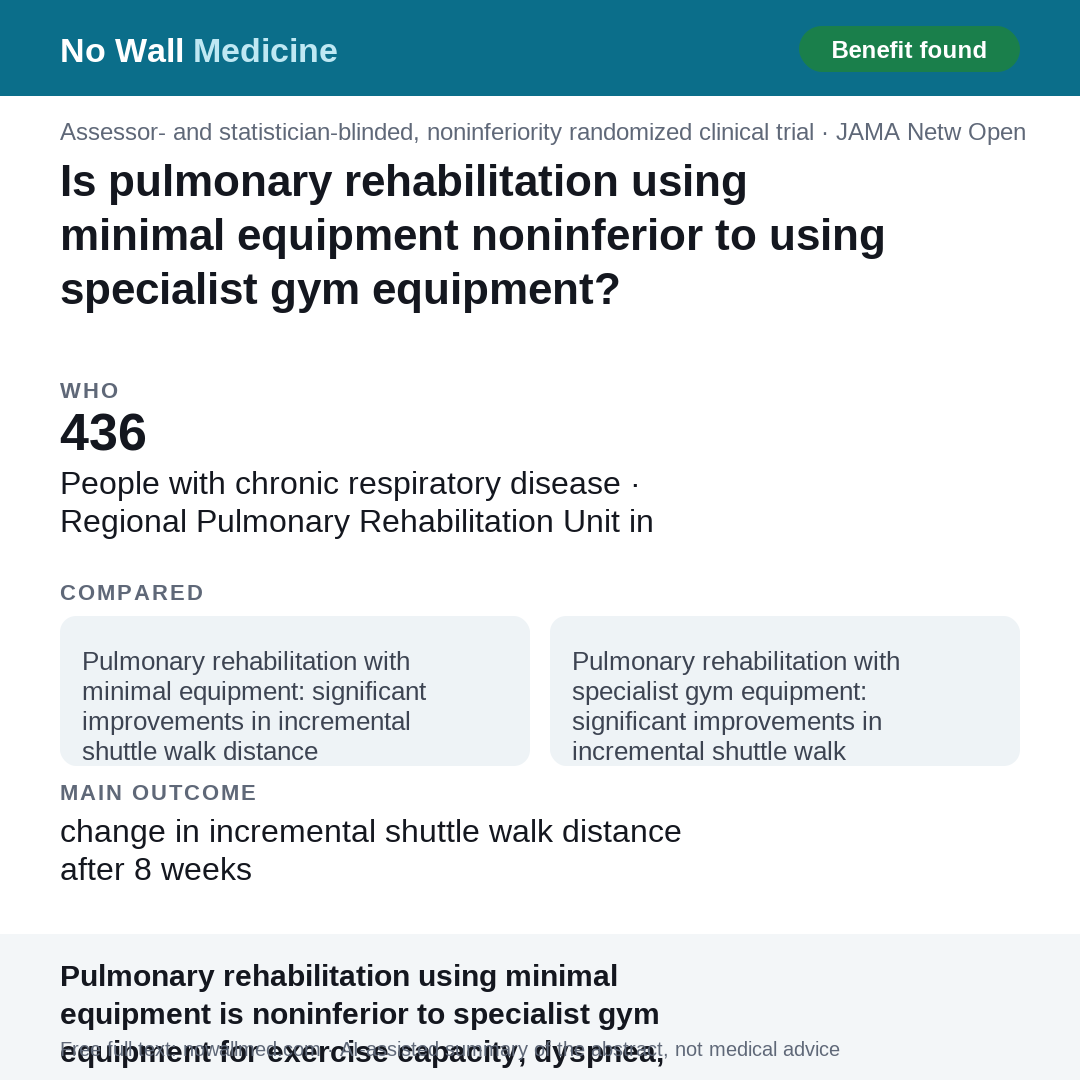
Minimal vs Specialized Exercise Equipment for Pulmonary Rehabilitation: A Randomized Clinical Trial
Assessor- and statistician-blinded, noninferiority randomized clinical trialBenefit found
Is pulmonary rehabilitation using minimal equipment noninferior to using specialist gym equipment?
Who
436
People with chronic respiratory disease · Regional Pulmonary Rehabilitation Unit in northwest London, UK
Compared
Pulmonary rehabilitation with minimal equipment: significant improvements in incremental shuttle walk distance
Pulmonary rehabilitation with specialist gym equipment: significant improvements in incremental shuttle walk distance
Main outcome
change in incremental shuttle walk distance after 8 weeks
Result: mean, 1.7 m; 1-sided 97.5% CI lower bound, -16.8
Bottom line: Pulmonary rehabilitation using minimal equipment is noninferior to specialist gym equipment for exercise capacity, dyspnea, and quality of life.
JAMA Netw Open · 2025-08-01Download image
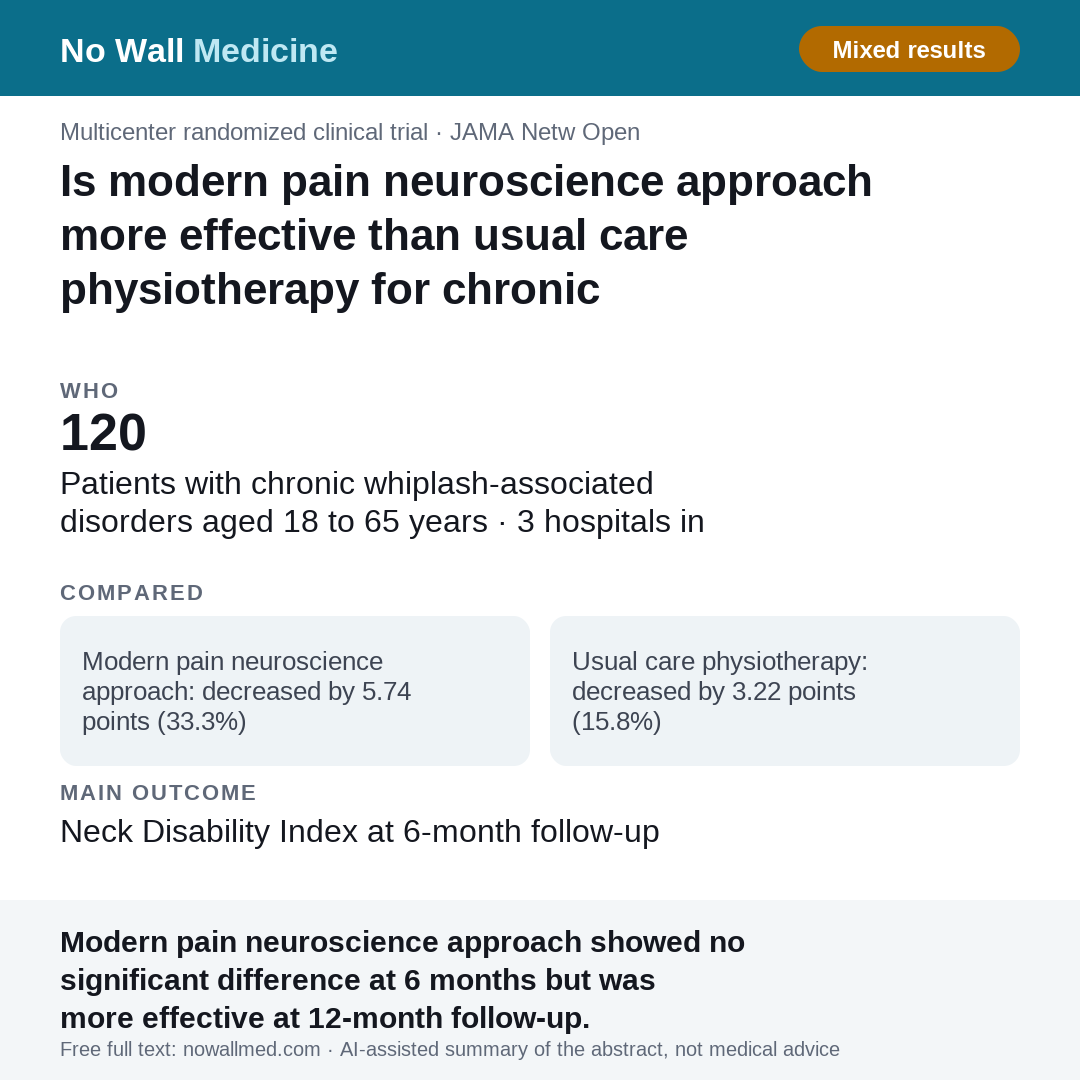
Pain Science Education, Stress Management, and Cognition-Targeted Exercise Therapy in Chronic Whiplash Disorders: A Randomized Clinical Trial
Multicenter randomized clinical trialMixed results
Is modern pain neuroscience approach more effective than usual care physiotherapy for chronic whiplash-associated disorders?
Who
120
Patients with chronic whiplash-associated disorders aged 18 to 65 years · 3 hospitals in Belgium
Compared
Modern pain neuroscience approach: decreased by 5.74 points (33.3%)
Usual care physiotherapy: decreased by 3.22 points (15.8%)
Main outcome
Neck Disability Index at 6-month follow-up
Result: mean group difference 2.38 (95% CI -0.12 to 4.89) points
Bottom line: Modern pain neuroscience approach showed no significant difference at 6 months but was more effective at 12-month follow-up.
JAMA Netw Open · 2025-08-01Download image
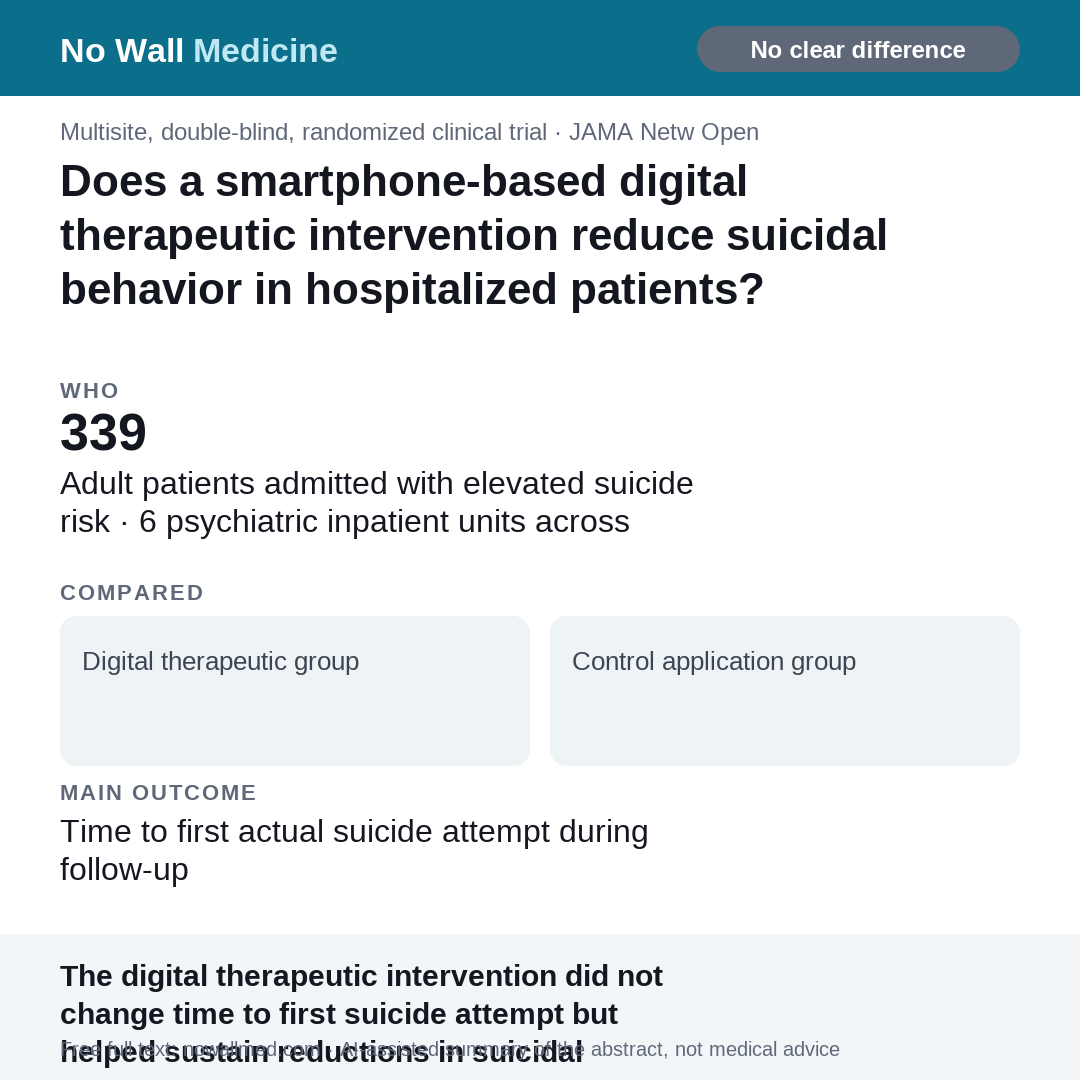
A Digital Therapeutic Intervention for Inpatients With Elevated Suicide Risk: A Randomized Clinical Trial
Multisite, double-blind, randomized clinical trialNo clear difference
Does a smartphone-based digital therapeutic intervention reduce suicidal behavior in hospitalized patients?
Who
339
Adult patients admitted with elevated suicide risk · 6 psychiatric inpatient units across the US
Compared
Digital therapeutic group
Control application group
Main outcome
Time to first actual suicide attempt during follow-up
Bottom line: The digital therapeutic intervention did not change time to first suicide attempt but helped sustain reductions in suicidal ideation.
Limitation: The trial was stopped early because it surpassed the prespecified futility boundary.
JAMA Netw Open · 2025-08-01Download image
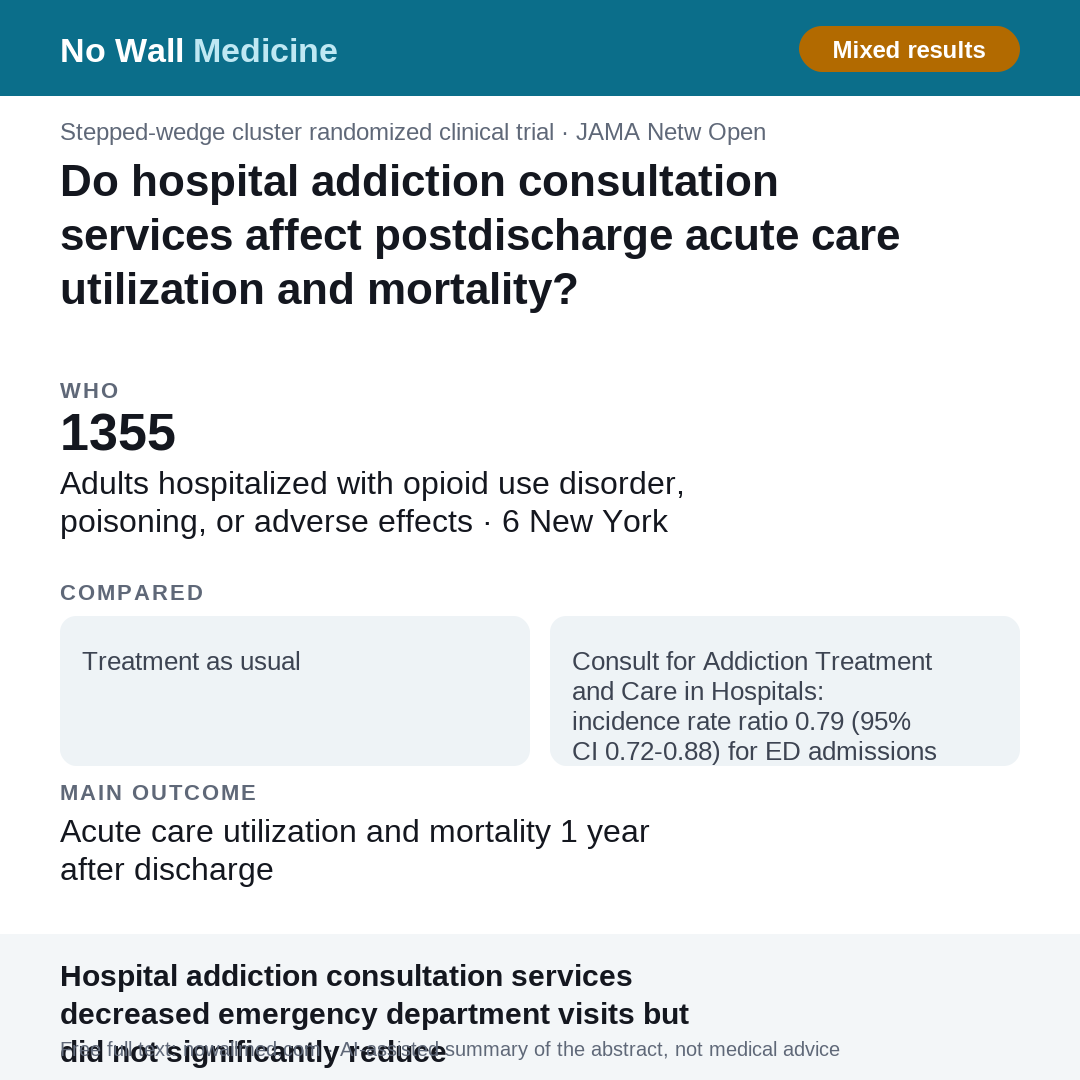
Addiction Consult Services, Mortality, and Acute Care Utilization in Inpatients With Opioid Use Disorder: A Secondary Analysis of a Cluster Randomized Clinical Trial
Stepped-wedge cluster randomized clinical trialMixed results
Do hospital addiction consultation services affect postdischarge acute care utilization and mortality?
Who
1355
Adults hospitalized with opioid use disorder, poisoning, or adverse effects · 6 New York City public hospitals
Compared
Treatment as usual
Consult for Addiction Treatment and Care in Hospitals: incidence rate ratio 0.79 (95% CI 0.72-0.88) for ED admissions
Main outcome
Acute care utilization and mortality 1 year after discharge
Result: incidence rate ratio 0.79 (95% CI 0.72-0.88) for emergency department admissions
Bottom line: Hospital addiction consultation services decreased emergency department visits but did not significantly reduce hospitalizations or mortality.
JAMA Netw Open · 2025-08-01Download image
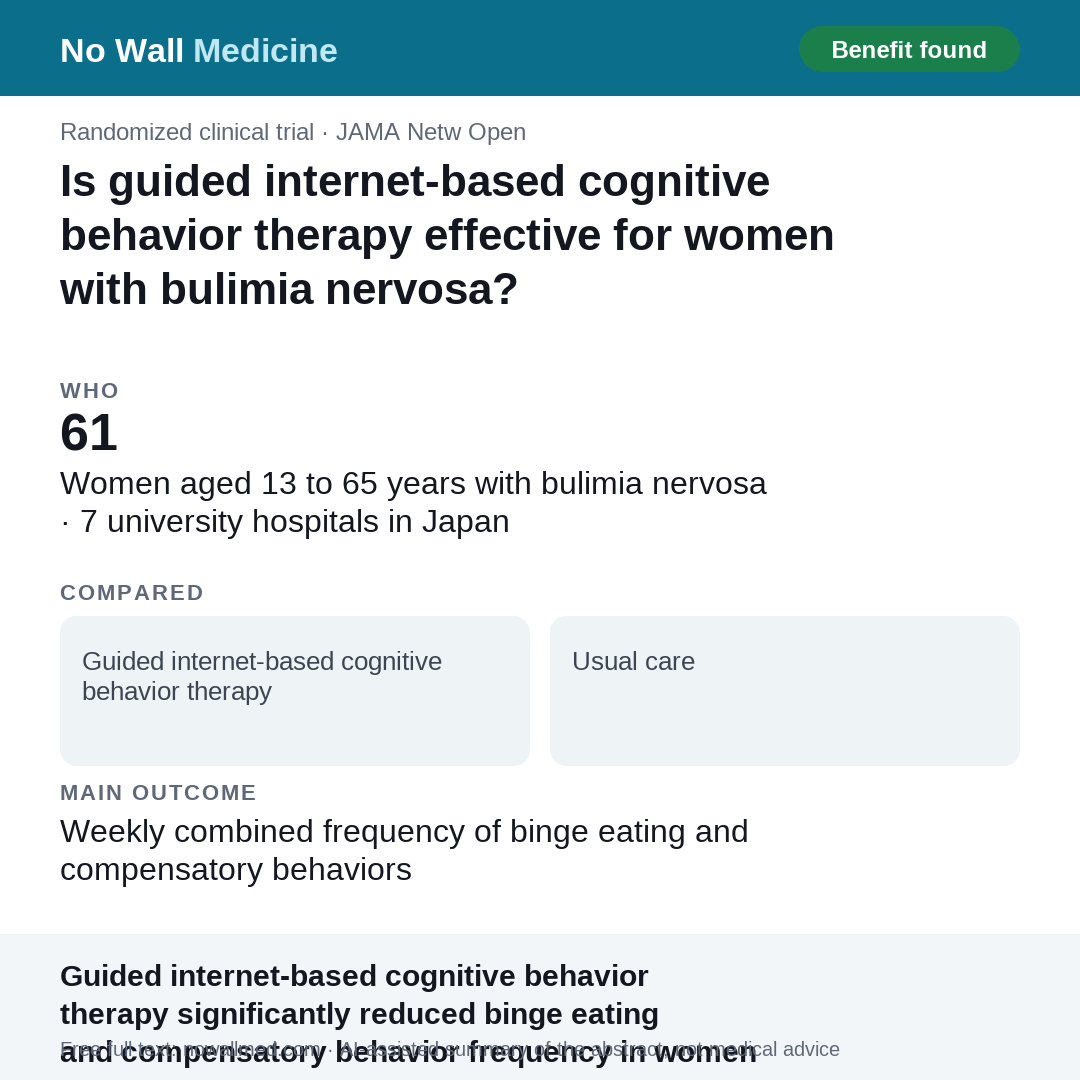
Guided Internet-Based Cognitive Behavior Therapy for Women With Bulimia Nervosa: A Randomized Clinical Trial
Randomized clinical trialBenefit found
Is guided internet-based cognitive behavior therapy effective for women with bulimia nervosa?
Who
61
Women aged 13 to 65 years with bulimia nervosa · 7 university hospitals in Japan
Compared
Guided internet-based cognitive behavior therapy
Usual care
Main outcome
Weekly combined frequency of binge eating and compensatory behaviors
Result: adjusted mean difference of 9.84 episodes [95% CI, 2.49-17.18 episodes]
Bottom line: Guided internet-based cognitive behavior therapy significantly reduced binge eating and compensatory behavior frequency in women with bulimia nervosa.
JAMA Netw Open · 2025-08-01Download image
Ecolabels and the Healthfulness and Carbon Footprint of Restaurant Meal Selections: A Randomized Clinical Trial
Randomized clinical trialMixed results
Do ecolabels on restaurant menus improve healthfulness and reduce carbon footprint?
Who
3147
United States adults aged 18 years or older · Online
Compared
Ecolabel arm: ADE, -0.78 [95% CI, -1.25 to -0.32] kg of CO2e emissions
Control arm
Main outcome
Healthfulness and total carbon footprint of meal selections
Result: ADE, -0.78 [95% CI, -1.25 to -0.32] kg of CO2e emissions
Bottom line: Menu ecolabels reduced the carbon footprint of meal selections but did not significantly improve overall healthfulness scores.
JAMA Netw Open · 2025-08-01Download image

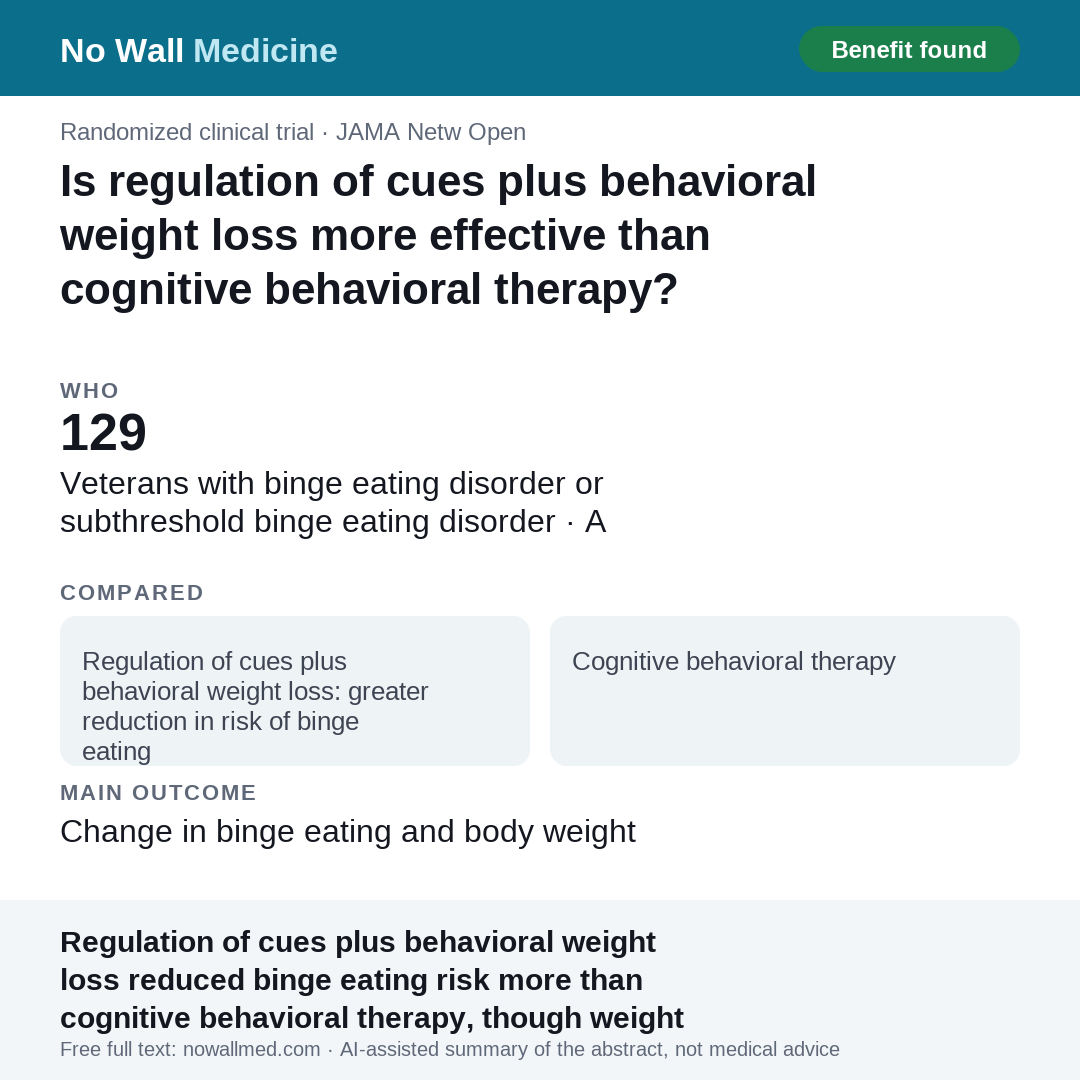
Regulation of Cues vs Cognitive Behavioral Therapy for Binge Eating and Weight Loss Among Veterans: A Feasibility and Randomized Clinical Trial
Randomized clinical trialBenefit found
Is regulation of cues plus behavioral weight loss more effective than cognitive behavioral therapy?
Who
129
Veterans with binge eating disorder or subthreshold binge eating disorder · A university clinic
Compared
Regulation of cues plus behavioral weight loss: greater reduction in risk of binge eating
Cognitive behavioral therapy
Main outcome
Change in binge eating and body weight
Result: difference in probability, -0.23; 95% CrI, -0.22 to -0.19
Bottom line: Regulation of cues plus behavioral weight loss reduced binge eating risk more than cognitive behavioral therapy, though weight loss differences were not maintained.
JAMA Netw Open · 2025-08-01Download image
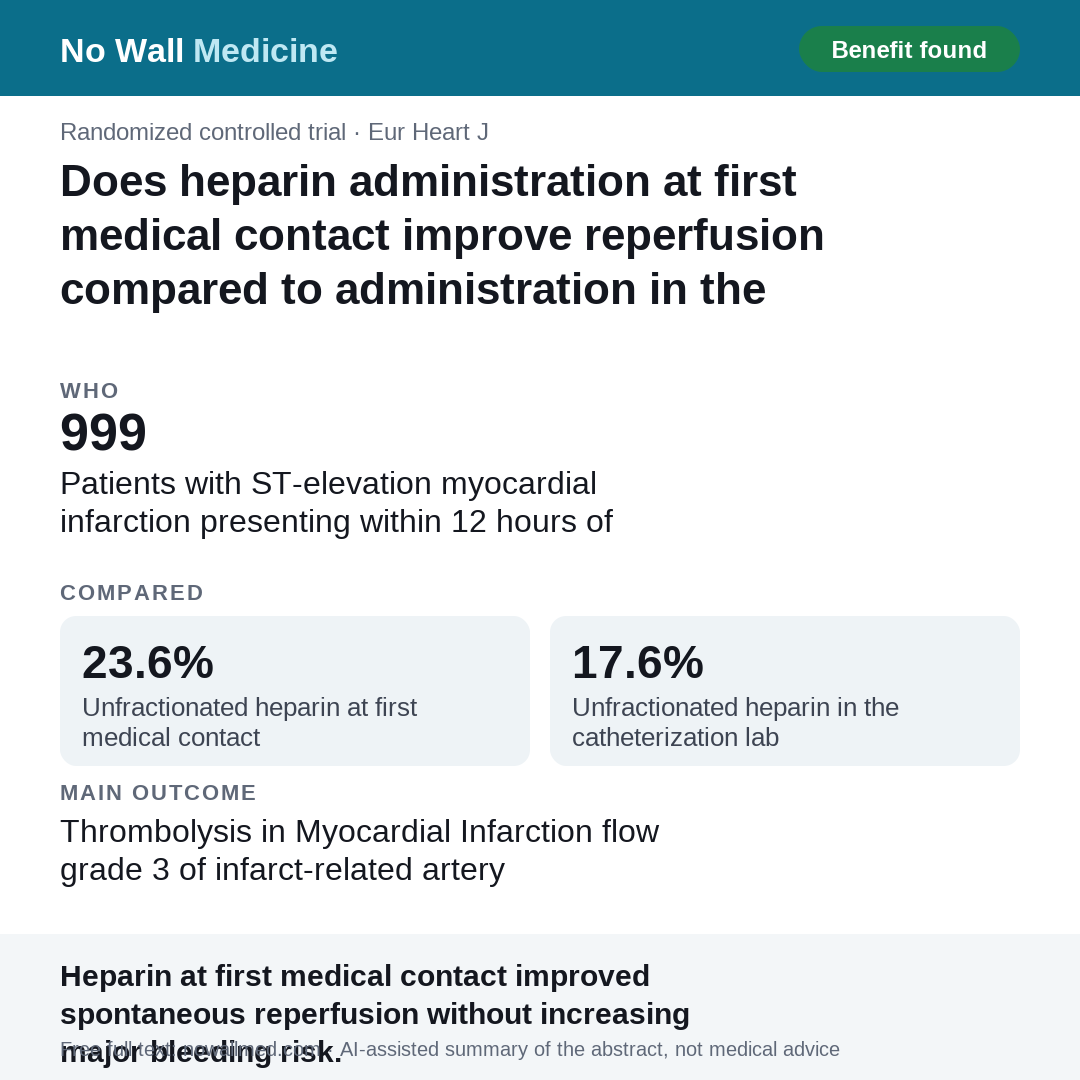
Heparin administration at first medical contact vs immediately before primary percutaneous coronary intervention: the HELP-PCI trial
Randomized controlled trialBenefit found
Does heparin administration at first medical contact improve reperfusion compared to administration in the catheterization lab?
Who
999
Patients with ST-elevation myocardial infarction presenting within 12 hours of symptom onset · 36 clinical centres in China
Compared
23.6%Unfractionated heparin at first medical contact
17.6%Unfractionated heparin in the catheterization lab
Main outcome
Thrombolysis in Myocardial Infarction flow grade 3 of infarct-related artery
Result: odds ratio 1.44 (95% confidence interval 1.06-1.97)
Bottom line: Heparin at first medical contact improved spontaneous reperfusion without increasing major bleeding risk.
Eur Heart J · 2025-08-01Download image
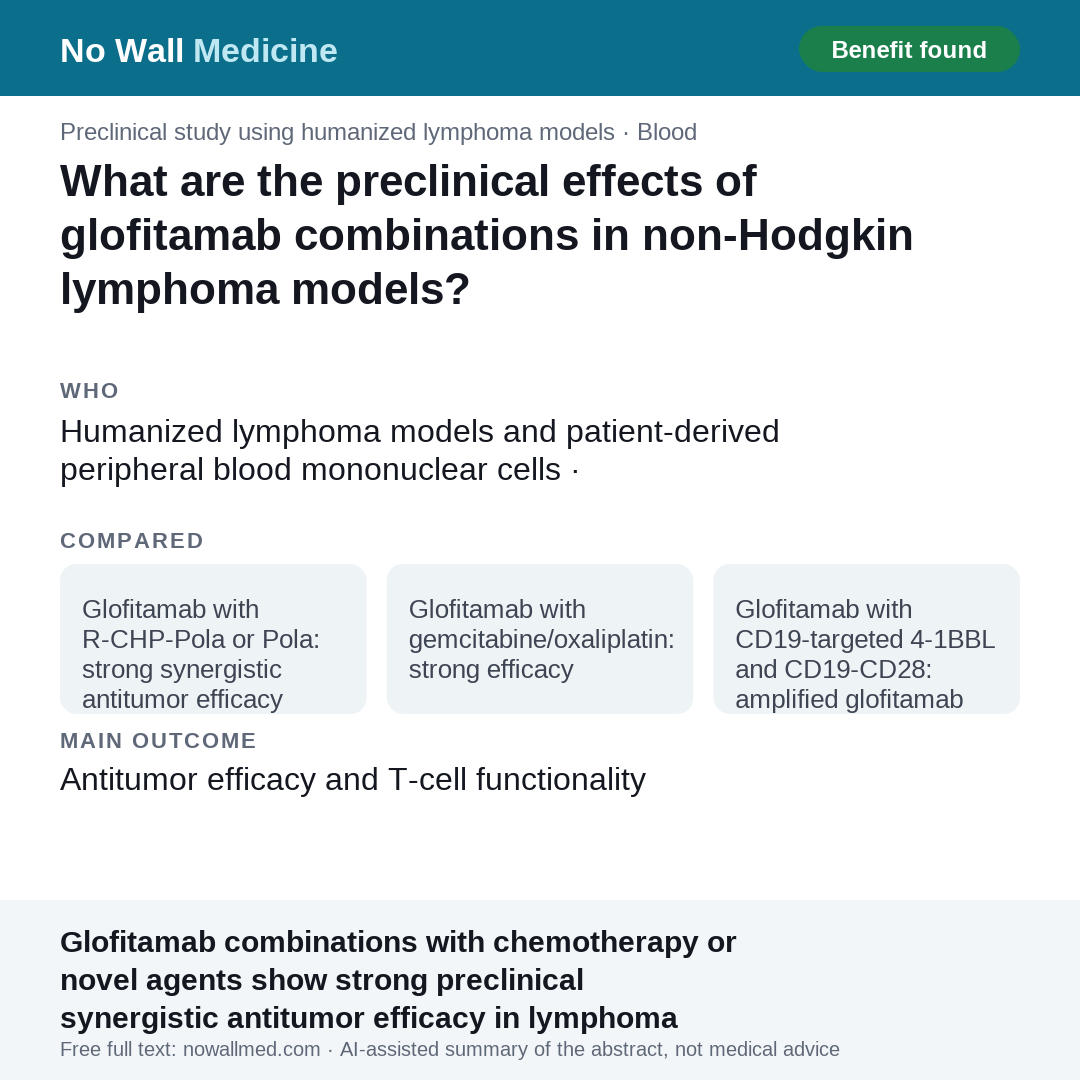
Preclinical advances in glofitamab combinations: a new frontier for non-Hodgkin lymphoma
Preclinical study using humanized lymphoma modelsBenefit found
What are the preclinical effects of glofitamab combinations in non-Hodgkin lymphoma models?
Who
Humanized lymphoma models and patient-derived peripheral blood mononuclear cells · Preclinical models
Compared
Glofitamab with R-CHP-Pola or Pola: strong synergistic antitumor efficacy
Glofitamab with gemcitabine/oxaliplatin: strong efficacy
Glofitamab with CD19-targeted 4-1BBL and CD19-CD28: amplified glofitamab activity
Main outcome
Antitumor efficacy and T-cell functionality
Bottom line: Glofitamab combinations with chemotherapy or novel agents show strong preclinical synergistic antitumor efficacy in lymphoma models.
Blood · 2025-08-01Download image
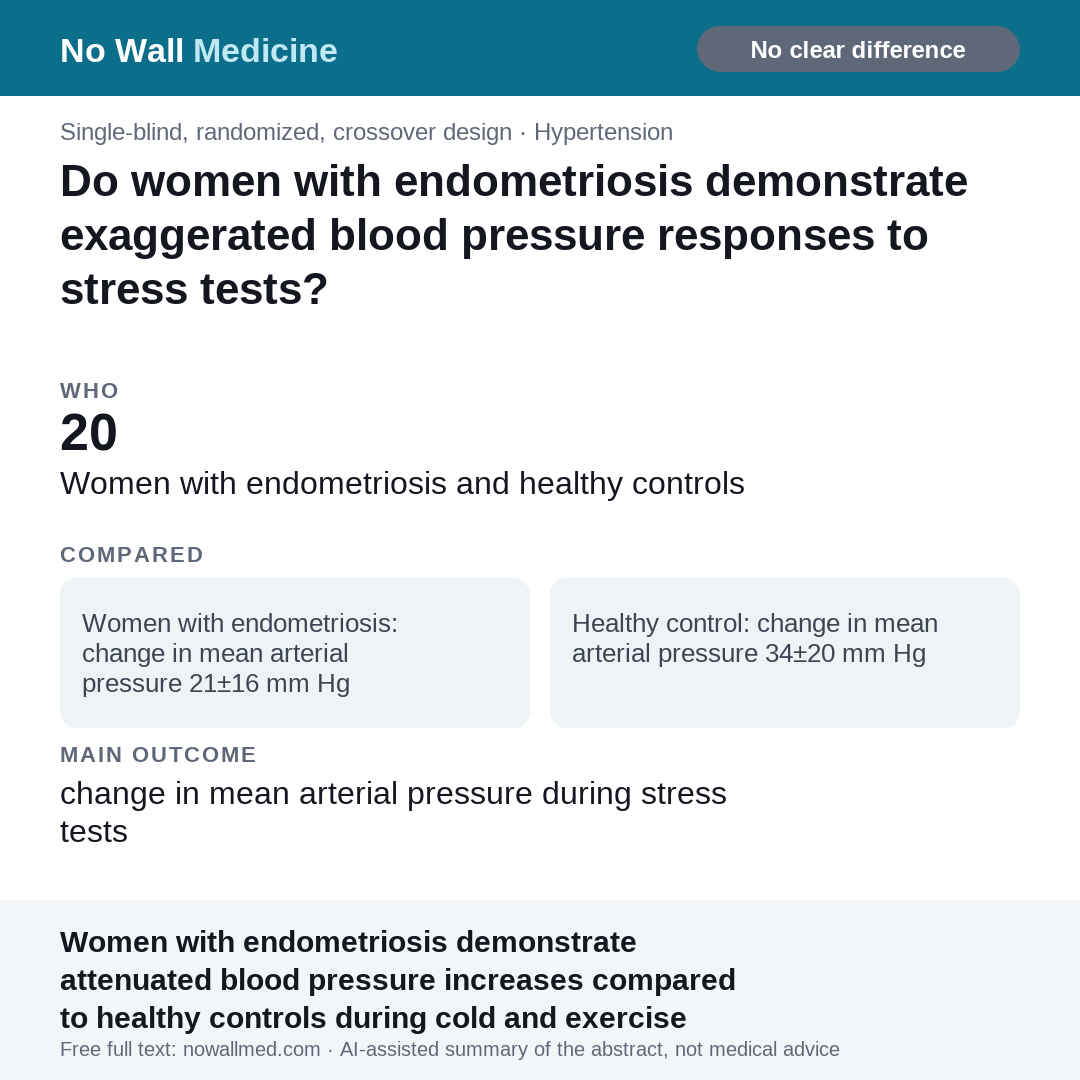
Altered Blood Pressure Reflexes in Women With Endometriosis
Single-blind, randomized, crossover designNo clear difference
Do women with endometriosis demonstrate exaggerated blood pressure responses to stress tests?
Who
20
Women with endometriosis and healthy controls
Compared
Women with endometriosis: change in mean arterial pressure 21±16 mm Hg
Healthy control: change in mean arterial pressure 34±20 mm Hg
Main outcome
change in mean arterial pressure during stress tests
Bottom line: Women with endometriosis demonstrate attenuated blood pressure increases compared to healthy controls during cold and exercise stress.
Hypertension · 2025-08-01Download image
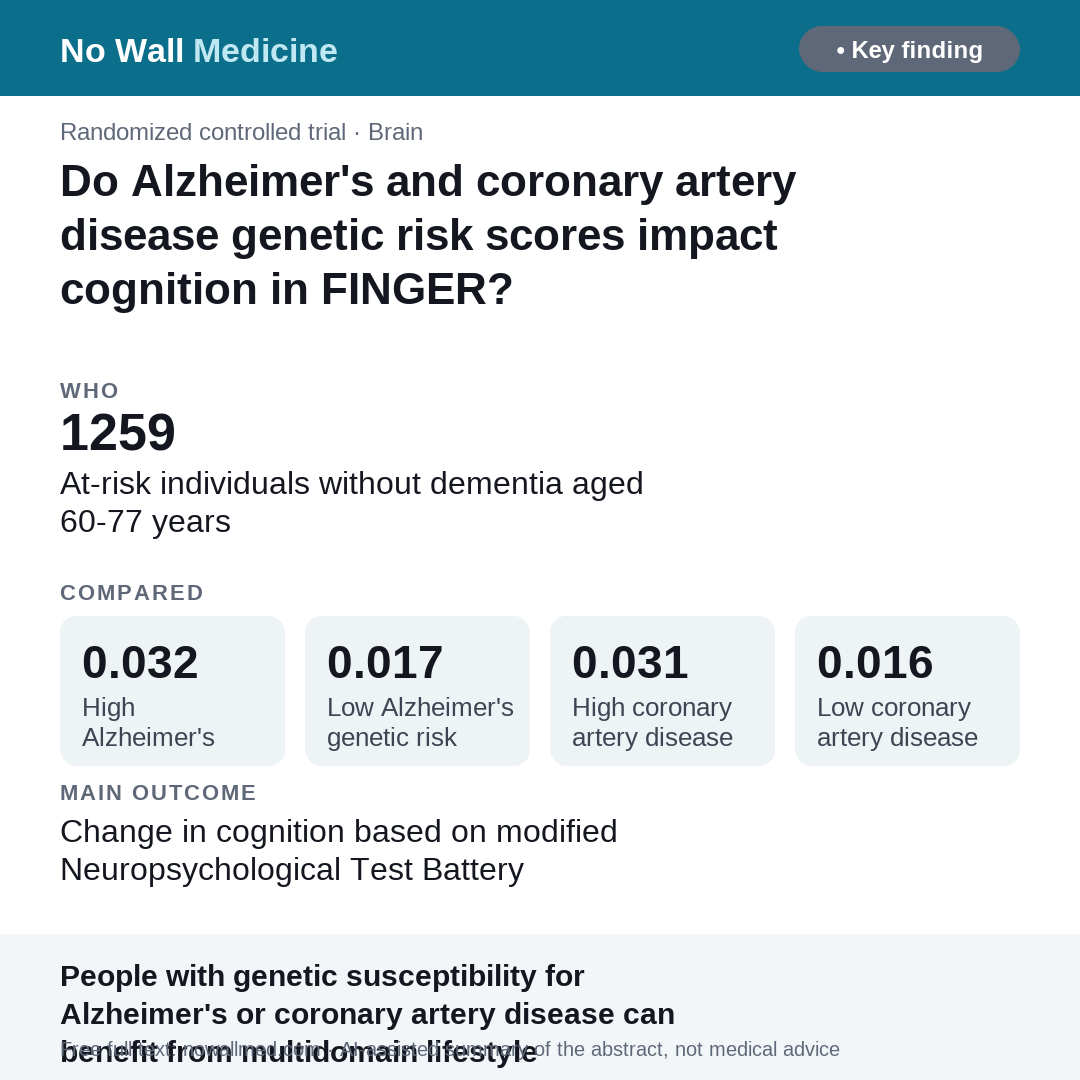
Alzheimer and cardiovascular genetic scores and cognition: the FINGER randomized controlled trial
Randomized controlled trialBenefit found
Do Alzheimer's and coronary artery disease genetic risk scores impact cognition in FINGER?
Who
1259
At-risk individuals without dementia aged 60-77 years
Compared
0.032High Alzheimer's genetic risk (0.002-0.063)
0.017Low Alzheimer's genetic risk (-0.011 to 0.045)
0.031High coronary artery disease genetic risk (0.002 to 0.059)
0.016Low coronary artery disease genetic risk (-0.012 to 0.044)
Main outcome
Change in cognition based on modified Neuropsychological Test Battery
Bottom line: People with genetic susceptibility for Alzheimer's or coronary artery disease can benefit from multidomain lifestyle interventions.
Brain · 2025-08-01Download image