Visual abstracts
New randomized trials and meta-analyses from leading journals at a glance: who was studied, what was compared, and what was found. Every paper is free to read in full.
All specialtiesCardiology 842Oncology 763Gastroenterology & Hepatology 307Infectious Disease 626Neurology 350Psychiatry & Mental Health 430Pulmonology 366Critical Care 245Endocrinology & Diabetes 480Pediatrics 536Surgery 324Orthopedics & Sports Medicine 162Neurosurgery 93Cardiothoracic & Vascular Surgery 87Plastic & Reconstructive Surgery 124Nephrology 197Rheumatology 108Hematology 182Dermatology 80Ophthalmology 97Obstetrics & Gynecology 261Public & Global Health 167Radiology & Imaging 98Anesthesiology 114Urology 162ENT (Otolaryngology) 91Emergency Medicine 73Allergy & Immunology 58Geriatrics 160Family Medicine & Primary Care 111Medical Genetics & Genomics 91Pathology & Laboratory Medicine 24Physical Medicine & Rehabilitation 148Palliative Care 81Nutrition 223Digital Health & AI 460General Medicine 101
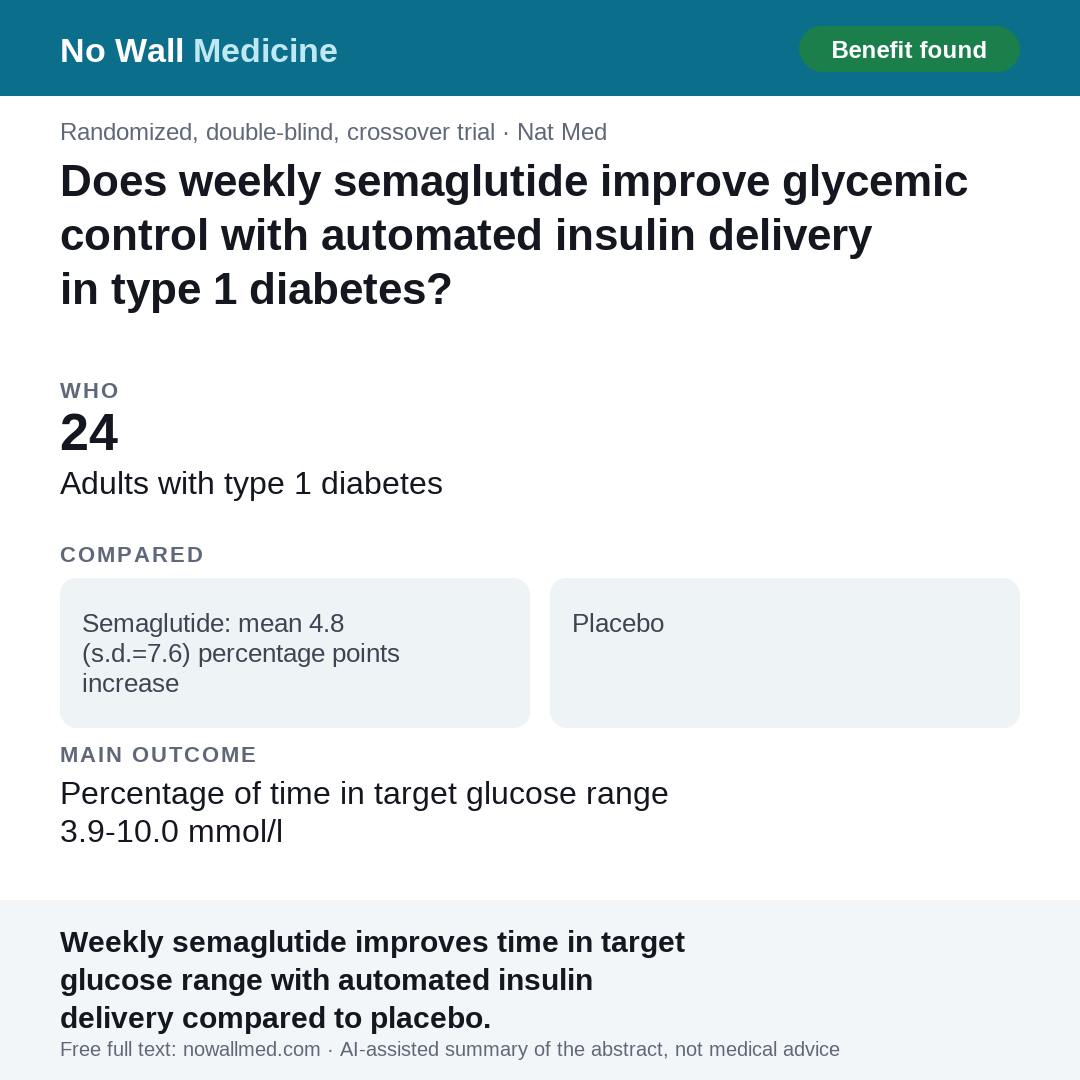
Subcutaneous weekly semaglutide with automated insulin delivery in type 1 diabetes: a double-blind, randomized, crossover trial
Randomized, double-blind, crossover trialBenefit found
Does weekly semaglutide improve glycemic control with automated insulin delivery in type 1 diabetes?
Who
24
Adults with type 1 diabetes
Compared
Semaglutide: mean 4.8 (s.d.=7.6) percentage points increase
Placebo
Main outcome
Percentage of time in target glucose range 3.9-10.0 mmol/l
Bottom line: Weekly semaglutide improves time in target glucose range with automated insulin delivery compared to placebo.
Nat Med · 2025-01-10Download image
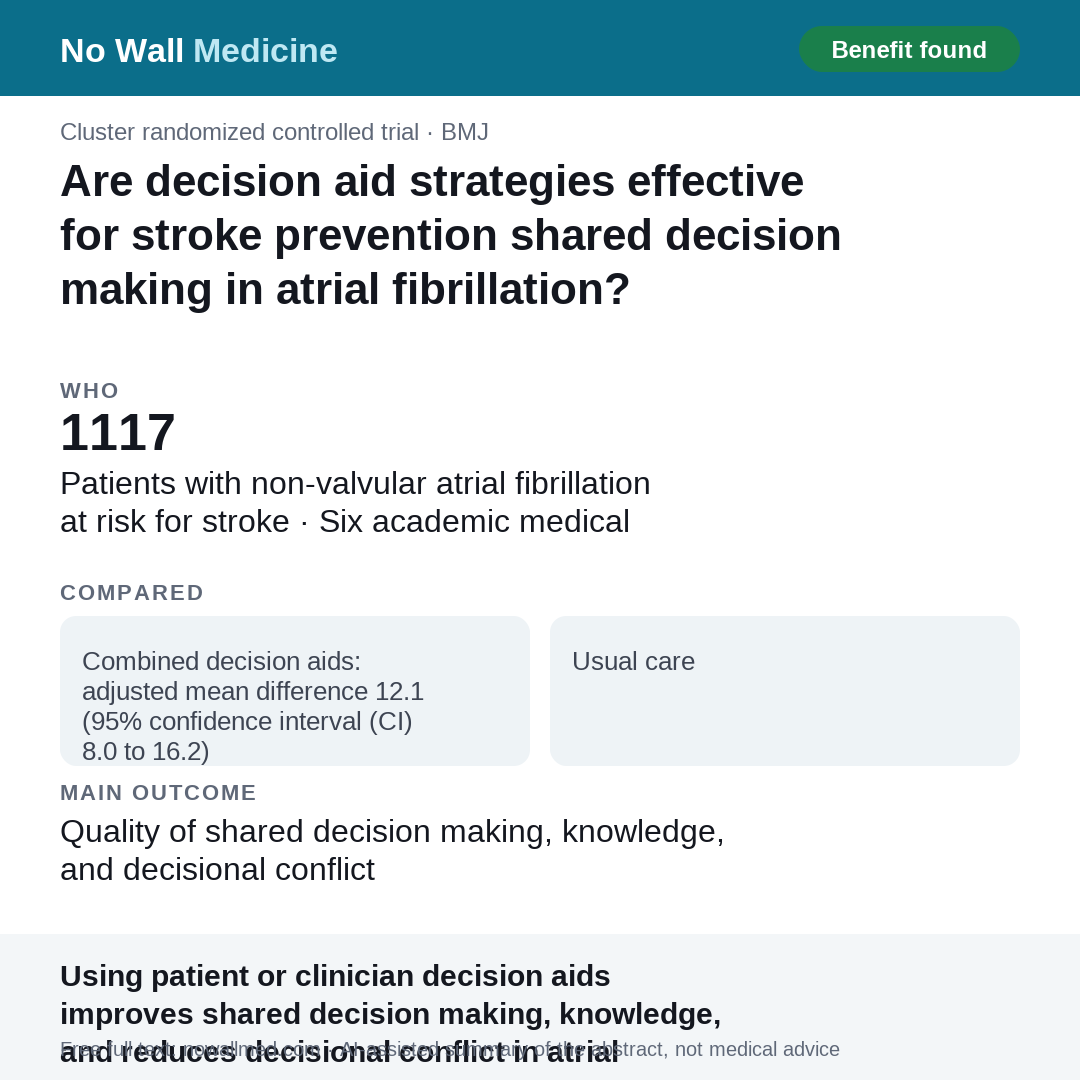
Effectiveness of shared decision making strategies for stroke prevention among patients with atrial fibrillation: cluster randomized controlled trial
Cluster randomized controlled trialBenefit found
Are decision aid strategies effective for stroke prevention shared decision making in atrial fibrillation?
Who
1117
Patients with non-valvular atrial fibrillation at risk for stroke · Six academic medical centers in the United States
Compared
Combined decision aids: adjusted mean difference 12.1 (95% confidence interval (CI) 8.0 to 16.2)
Usual care
Main outcome
Quality of shared decision making, knowledge, and decisional conflict
Result: adjusted mean difference 12.1 (95% confidence interval (CI) 8.0 to 16.2)
Bottom line: Using patient or clinician decision aids improves shared decision making, knowledge, and reduces decisional conflict in atrial fibrillation patients.
BMJ · 2025-01-09Download image
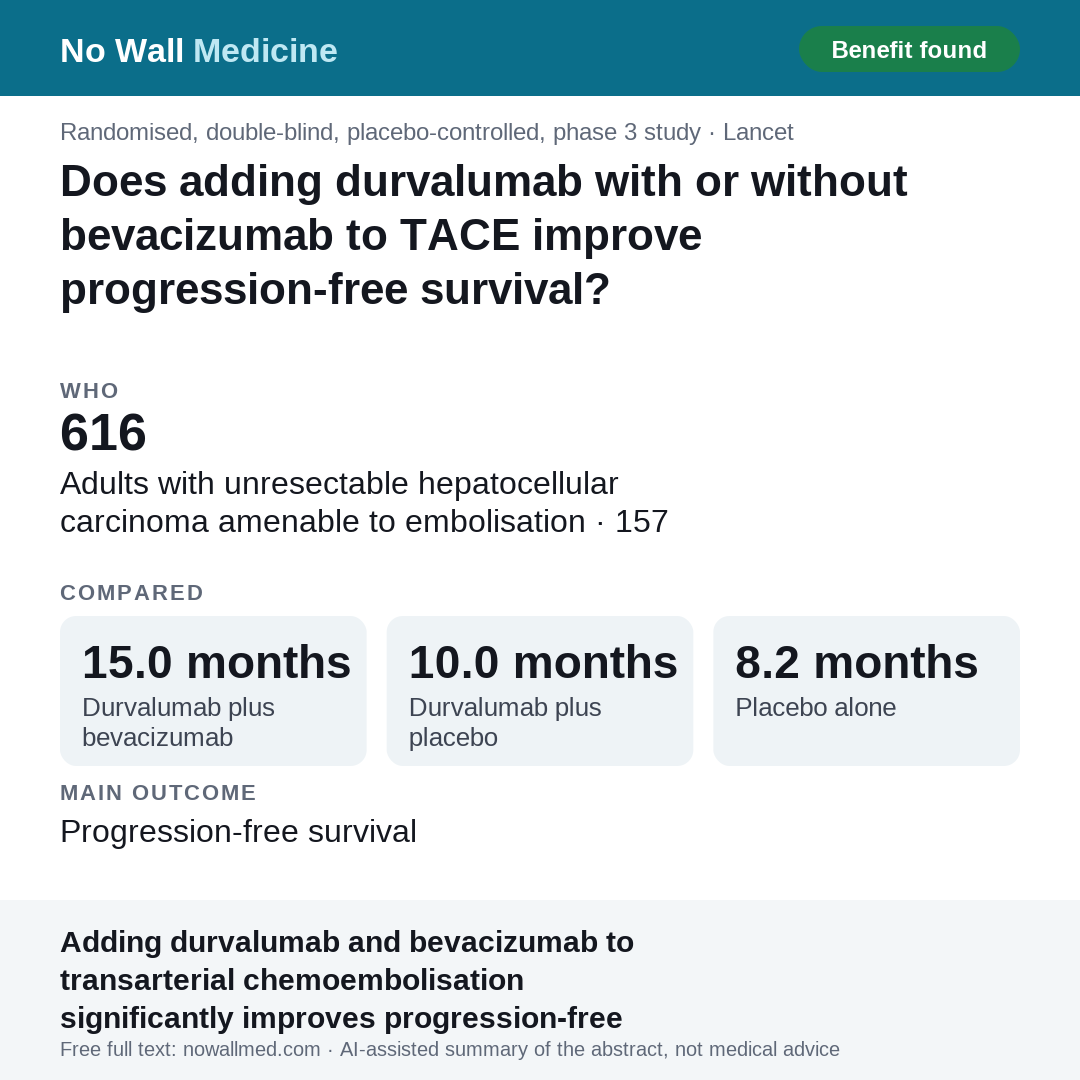
Durvalumab with or without bevacizumab with transarterial chemoembolisation in hepatocellular carcinoma (EMERALD-1): a multiregional, randomised, double-blind, placebo-controlled, phase 3 study
Randomised, double-blind, placebo-controlled, phase 3 studyBenefit found
Does adding durvalumab with or without bevacizumab to TACE improve progression-free survival?
Who
616
Adults with unresectable hepatocellular carcinoma amenable to embolisation · 157 medical sites in 18 countries
Compared
15.0 monthsDurvalumab plus bevacizumab (95% CI 11.1-18.9)
10.0 monthsDurvalumab plus placebo (9.0-12.7)
8.2 monthsPlacebo alone (6.9-11.1)
Main outcome
Progression-free survival
Result: hazard ratio 0.77 (95% CI 0.61-0.98)
Bottom line: Adding durvalumab and bevacizumab to transarterial chemoembolisation significantly improves progression-free survival in patients with unresectable hepatocellular carcinoma.
Lancet · 2025-01-08Download image
Time to nursing home admission and death in people with dementia: systematic review and meta-analysis
Systematic review and meta-analysisMixed results
What is the time to nursing home admission and death in people with dementia?
Who
5553960
People with dementia
Compared
Women: mean difference 4.1 years (95% confidence interval 2.1 to 6.1) shorter survival than men
Men
Main outcome
Survival and nursing home admission
Bottom line: Survival and nursing home admission depend on age, sex, and dementia type, with over half admitted within five years.
BMJ · 2025-01-08Download image

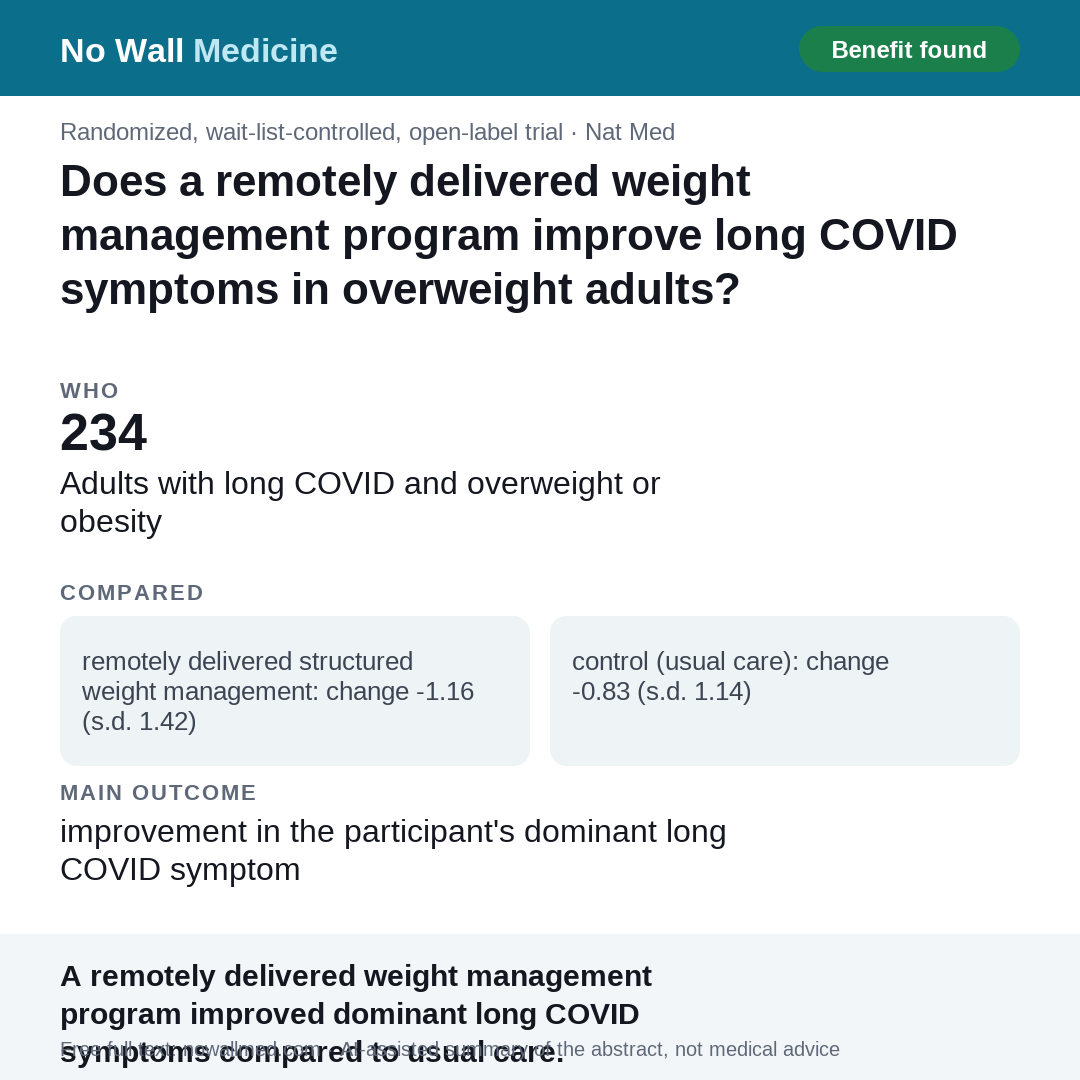
Remotely delivered weight management for people with long COVID and overweight: the randomized wait-list-controlled ReDIRECT trial
Randomized, wait-list-controlled, open-label trialBenefit found
Does a remotely delivered weight management program improve long COVID symptoms in overweight adults?
Who
234
Adults with long COVID and overweight or obesity
Compared
remotely delivered structured weight management: change -1.16 (s.d. 1.42)
control (usual care): change -0.83 (s.d. 1.14)
Main outcome
improvement in the participant's dominant long COVID symptom
Result: -0.34 (95% confidence interval -0.67 to -0.01)
Bottom line: A remotely delivered weight management program improved dominant long COVID symptoms compared to usual care.
Nat Med · 2025-01-08Download image
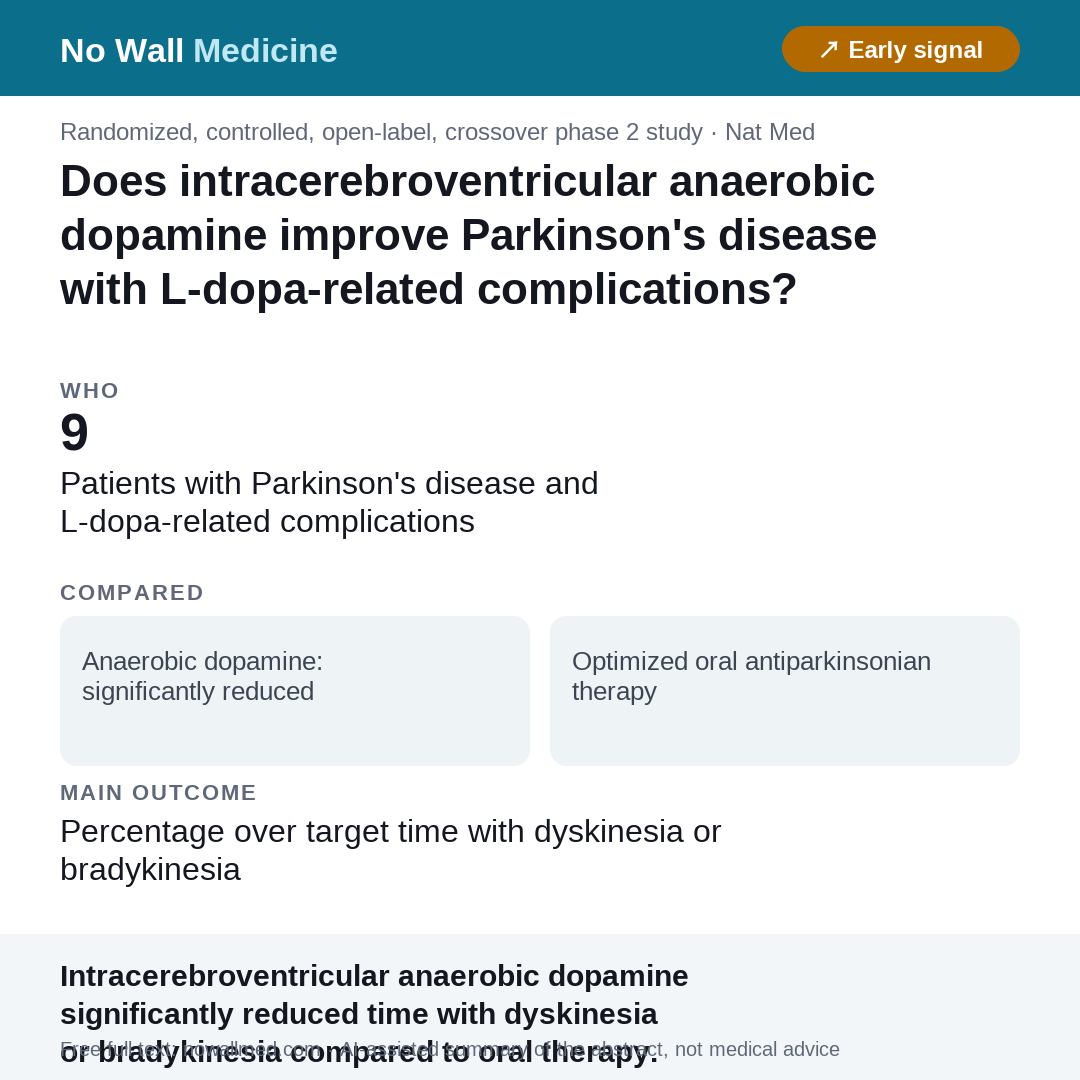
Intracerebroventricular anaerobic dopamine in Parkinson's disease with L-dopa-related complications: a phase 1/2 randomized-controlled trial
Randomized, controlled, open-label, crossover phase 2 studyBenefit found
Does intracerebroventricular anaerobic dopamine improve Parkinson's disease with L-dopa-related complications?
Who
9
Patients with Parkinson's disease and L-dopa-related complications
Compared
Anaerobic dopamine: significantly reduced
Optimized oral antiparkinsonian therapy
Main outcome
Percentage over target time with dyskinesia or bradykinesia
Result: Hedge g -0.62 (95% confidence interval: -1.43, -0.08)
Bottom line: Intracerebroventricular anaerobic dopamine significantly reduced time with dyskinesia or bradykinesia compared to oral therapy.
Nat Med · 2025-01-07Download image
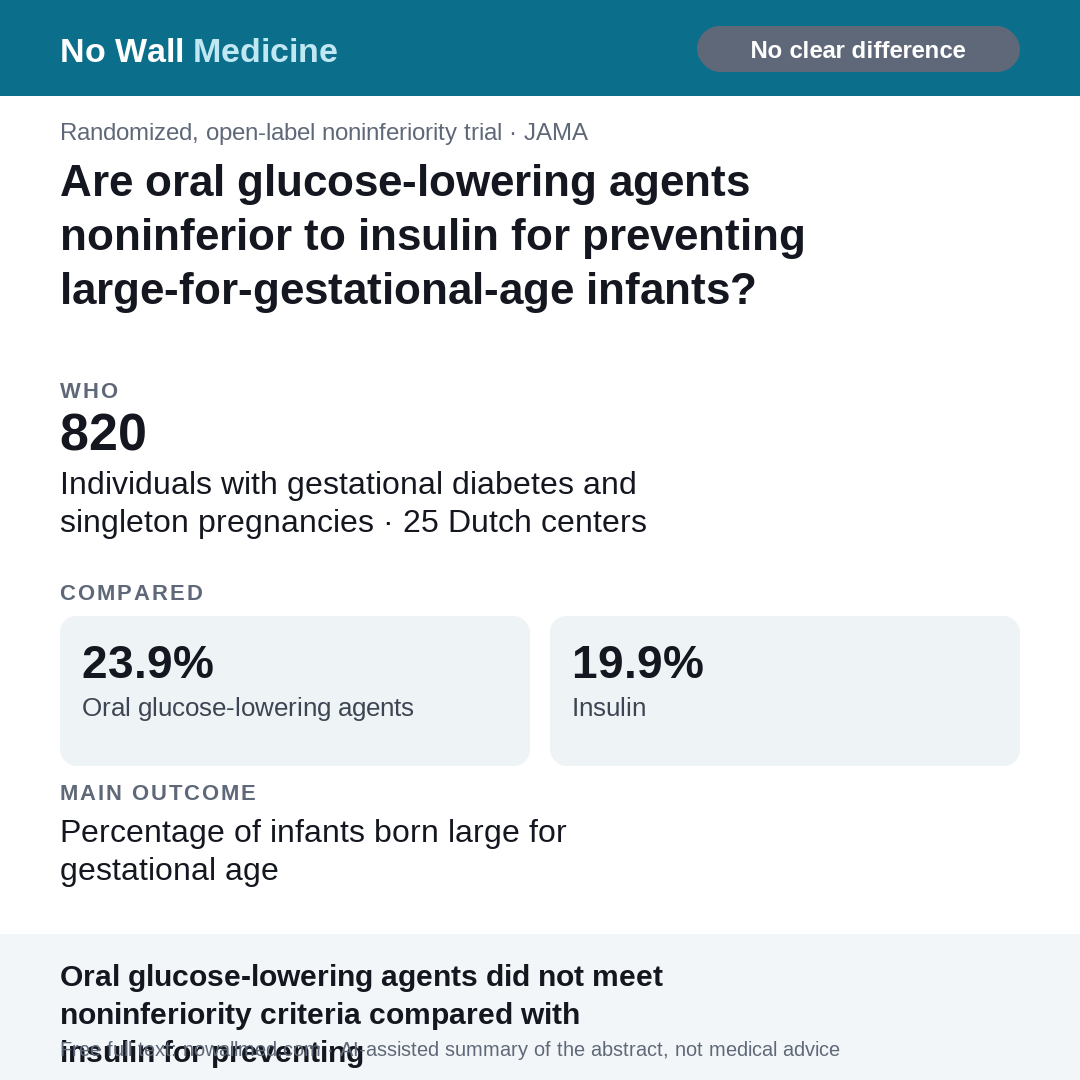
Oral Glucose-Lowering Agents vs Insulin for Gestational Diabetes: A Randomized Clinical Trial
Randomized, open-label noninferiority trialNo clear difference
Are oral glucose-lowering agents noninferior to insulin for preventing large-for-gestational-age infants?
Who
820
Individuals with gestational diabetes and singleton pregnancies · 25 Dutch centers
Compared
23.9%Oral glucose-lowering agents (n = 97)
19.9%Insulin (n = 79)
Main outcome
Percentage of infants born large for gestational age
Result: absolute risk difference, 4.0%; 95% CI, -1.7% to 9.8%
Bottom line: Oral glucose-lowering agents did not meet noninferiority criteria compared with insulin for preventing large-for-gestational-age infants.
JAMA · 2025-01-06Download image
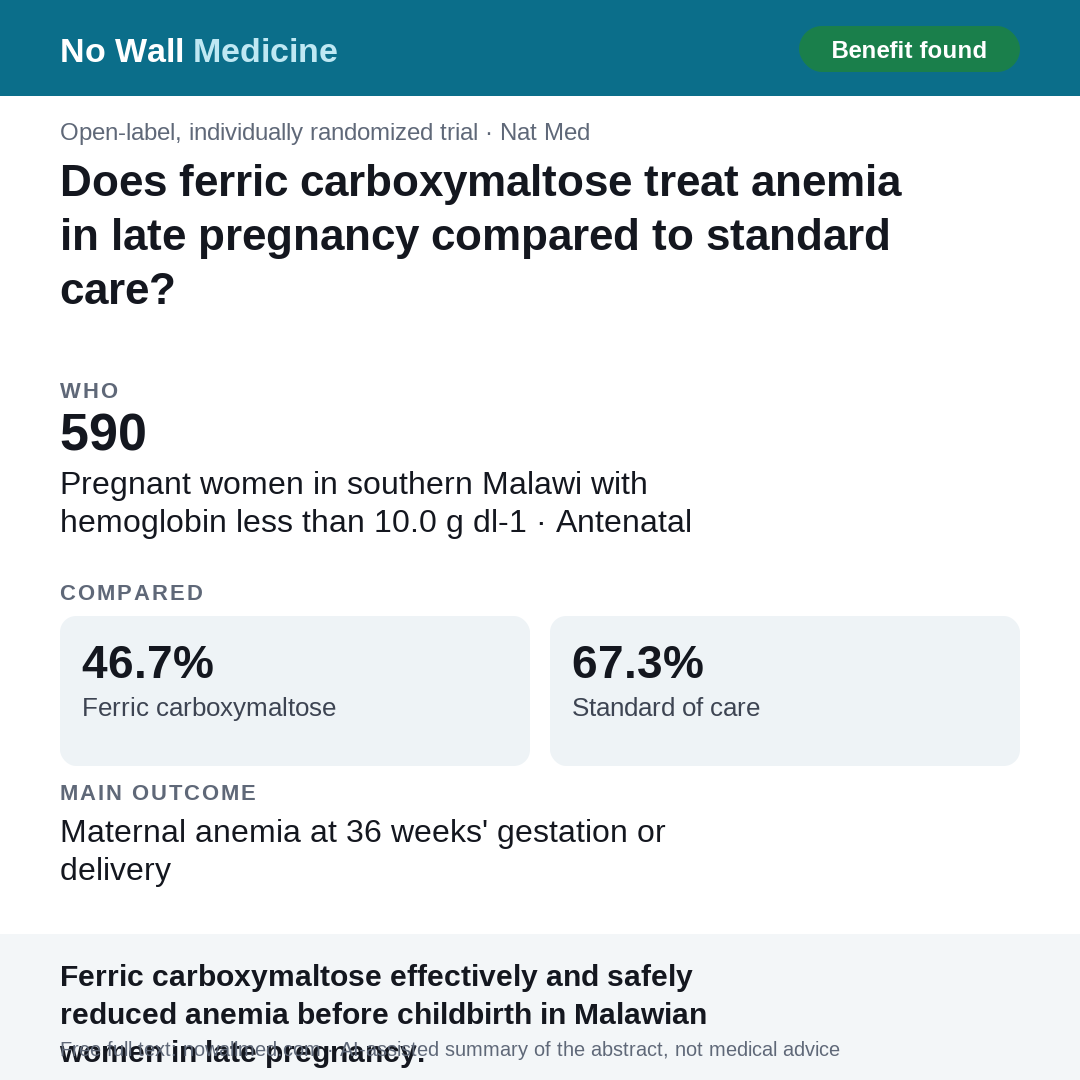
Ferric carboxymaltose for anemia in late pregnancy: a randomized controlled trial
Open-label, individually randomized trialBenefit found
Does ferric carboxymaltose treat anemia in late pregnancy compared to standard care?
Who
590
Pregnant women in southern Malawi with hemoglobin less than 10.0 g dl-1 · Antenatal clinics in southern Malawi
Compared
46.7%Ferric carboxymaltose (126/270)
67.3%Standard of care (170/271)
Main outcome
Maternal anemia at 36 weeks' gestation or delivery
Result: prevalence ratio 0.74 (95% CI 0.64, 0.87)
Bottom line: Ferric carboxymaltose effectively and safely reduced anemia before childbirth in Malawian women in late pregnancy.
Nat Med · 2025-01-06Download image
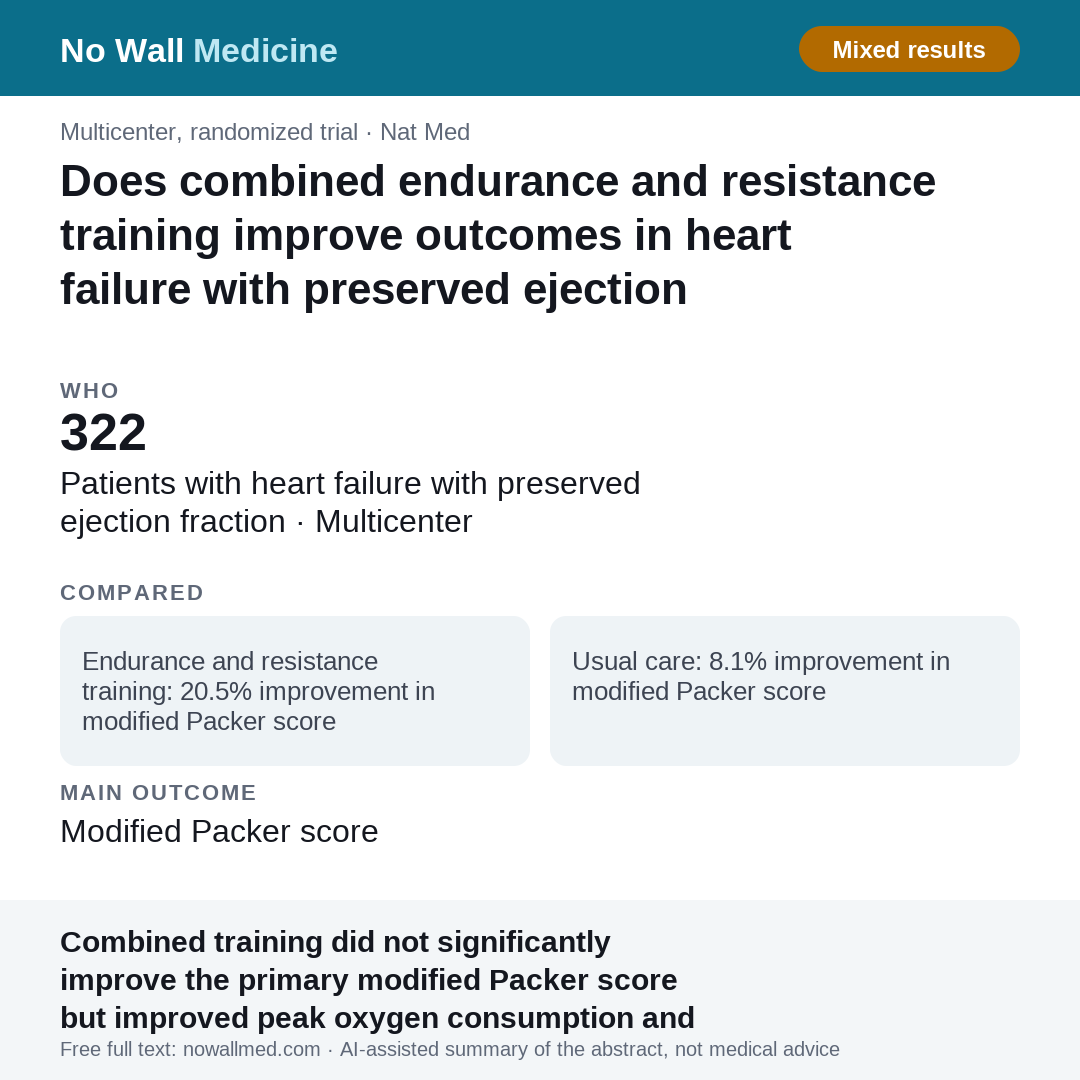
Combined endurance and resistance exercise training in heart failure with preserved ejection fraction: a randomized controlled trial
Multicenter, randomized trialMixed results
Does combined endurance and resistance training improve outcomes in heart failure with preserved ejection fraction?
Who
322
Patients with heart failure with preserved ejection fraction · Multicenter
Compared
Endurance and resistance training: 20.5% improvement in modified Packer score
Usual care: 8.1% improvement in modified Packer score
Main outcome
Modified Packer score
Result: Kendall's tau-b = -0.073, P = 0.17
Bottom line: Combined training did not significantly improve the primary modified Packer score but improved peak oxygen consumption and NYHA class.
Nat Med · 2025-01-02Download image
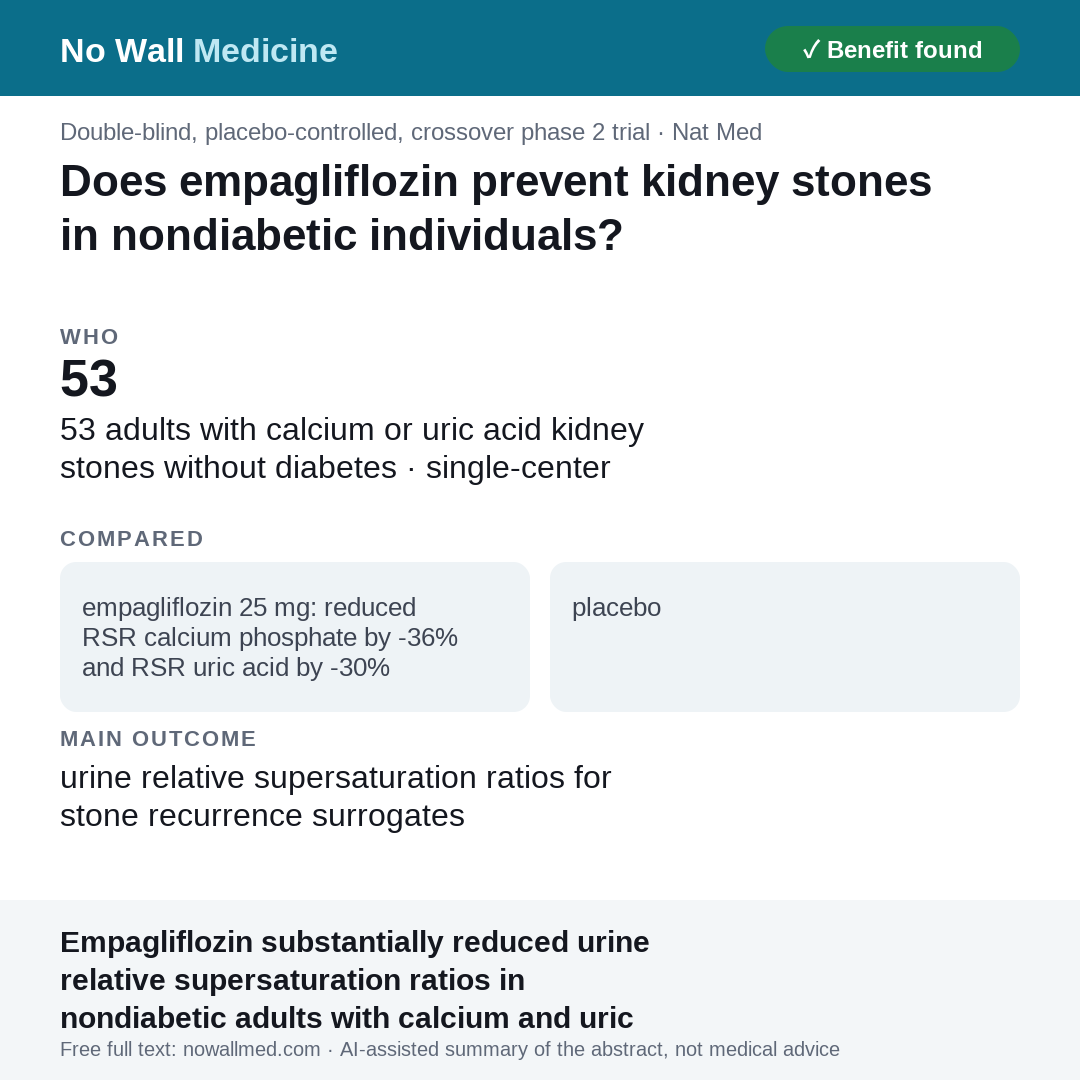
Empagliflozin in nondiabetic individuals with calcium and uric acid kidney stones: a randomized phase 2 trial
Double-blind, placebo-controlled, crossover phase 2 trialBenefit found
Does empagliflozin prevent kidney stones in nondiabetic individuals?
Who
53
53 adults with calcium or uric acid kidney stones without diabetes · single-center
Compared
empagliflozin 25 mg: reduced RSR calcium phosphate by -36% and RSR uric acid by -30%
placebo
Main outcome
urine relative supersaturation ratios for stone recurrence surrogates
Bottom line: Empagliflozin substantially reduced urine relative supersaturation ratios in nondiabetic adults with calcium and uric acid kidney stones.
Nat Med · 2025-01-02Download image
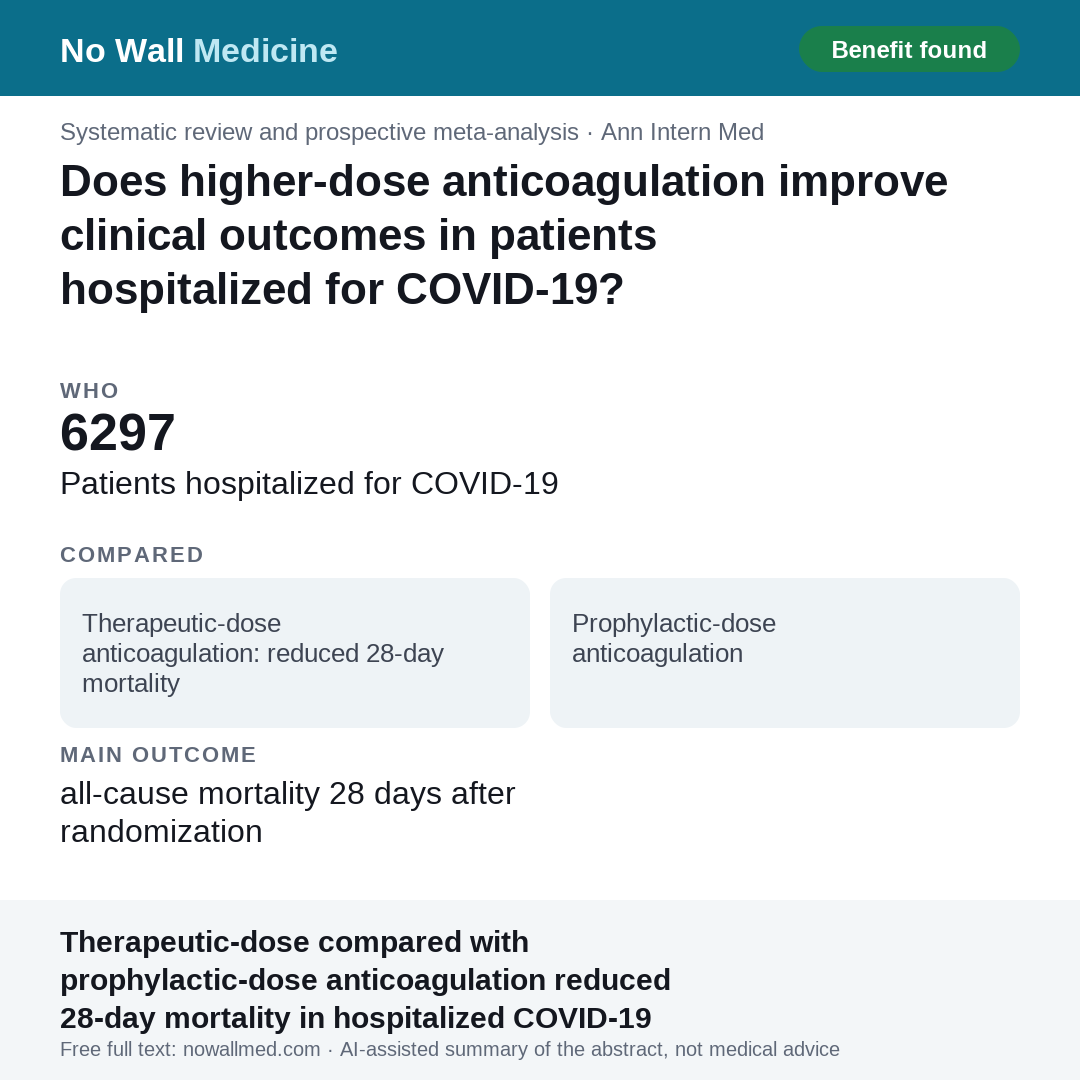
Anticoagulation Among Patients Hospitalized for COVID-19 : A Systematic Review and Prospective Meta-analysis
Systematic review and prospective meta-analysisBenefit found
Does higher-dose anticoagulation improve clinical outcomes in patients hospitalized for COVID-19?
Who
6297
Patients hospitalized for COVID-19
Compared
Therapeutic-dose anticoagulation: reduced 28-day mortality
Prophylactic-dose anticoagulation
Main outcome
all-cause mortality 28 days after randomization
Result: OR, 0.77 (95% CI, 0.64 to 0.93)
Bottom line: Therapeutic-dose compared with prophylactic-dose anticoagulation reduced 28-day mortality in hospitalized COVID-19 patients.
Limitation: some analyses were limited in power
Ann Intern Med · 2024-12-24Download image
Effect of a spatial repellent on malaria incidence in an area of western Kenya characterised by high malaria transmission, insecticide resistance, and universal coverage of insecticide treated nets (part of the AEGIS Consortium): a cluster-randomised, controlled trial
Cluster-randomised, controlled trialBenefit found
Does spatial repellent reduce malaria infection
Who
1526
Children aged 6 months to 10 years · Busia County, Kenya
Compared
Spatial repellent: 33.4% reduction
Placebo
Main outcome
Malaria infection incidence
Result: hazard ratio not given, but 33.4% (95% CI 11.1-50.1) reduction
Bottom line: Spatial repellent reduces malaria infection risk
Funded by: Unitaid to University of Notre Dame
Lancet · 2024-12-19Download image

Effect of heated mittens on physical hand function in people with hand osteoarthritis: randomised controlled trial
Randomised controlled trialNo clear difference
Do electrically heated mittens improve physical hand function in people with hand osteoarthritis?
Who
200
200 people with hand osteoarthritis aged 42-90 years · Osteoarthritis outpatient clinic, Copenhagen, Denmark
Compared
3.0 pointselectrically heated mittens (95% confidence interval -0.4 to 6.3)
control mittens
Main outcome
change in hand function measured on the Australian/Canadian hand osteoarthritis index
Result: 3.0 points (95% confidence interval -0.4 to 6.3)
Bottom line: Electrically heated mittens did not improve physical hand function compared to control mittens over six weeks.
BMJ · 2024-12-17Download image

Coaching inexperienced clinicians before a high stakes medical procedure: randomized clinical trial
Randomized clinical trialBenefit found
Does just-in-time coaching improve first attempt success rate of infant orotracheal intubation?
Who
153
Pediatric anesthesia fellows, residents, and student registered nurse anesthetists · Single center quaternary children's hospital in Boston, MA, USA
Compared
91.4%Trainee treatment group (212/232)
81.6%Control group (231/283)
Main outcome
First attempt success rate of intraoperative infant intubation
Result: odds ratio 2.42 (95% confidence interval 1.45 to 4.04)
Bottom line: Just-in-time expert coaching before high stakes procedures increased the first attempt success rate of infant intubation.
Limitation: Randomized evaluation in other settings is warranted.
BMJ · 2024-12-16Download image

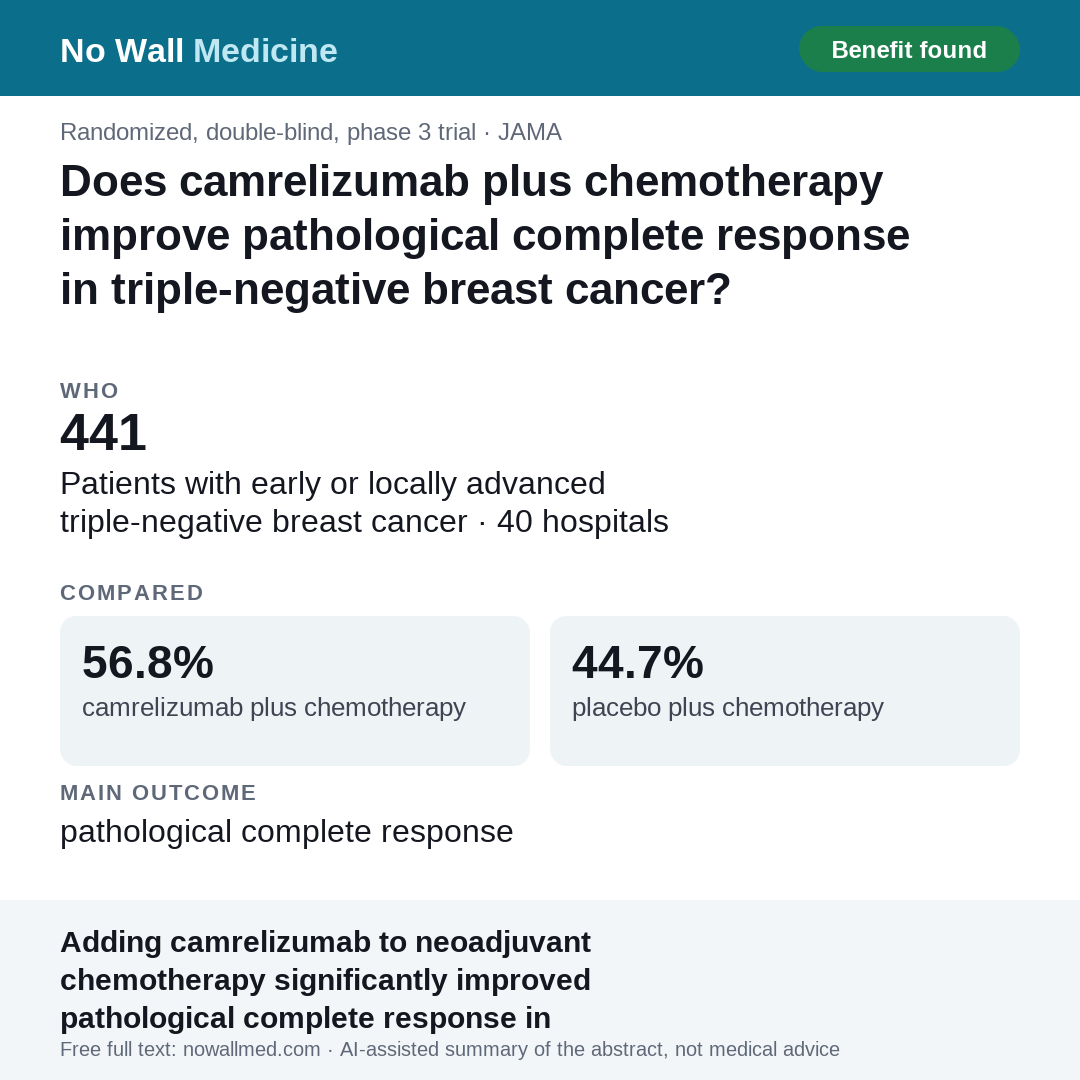
Camrelizumab vs Placebo in Combination With Chemotherapy as Neoadjuvant Treatment in Patients With Early or Locally Advanced Triple-Negative Breast Cancer: The CamRelief Randomized Clinical Trial
Randomized, double-blind, phase 3 trialBenefit found
Does camrelizumab plus chemotherapy improve pathological complete response in triple-negative breast cancer?
Who
441
Patients with early or locally advanced triple-negative breast cancer · 40 hospitals in China
Compared
56.8%camrelizumab plus chemotherapy (126/222)
44.7%placebo plus chemotherapy (98/219)
Main outcome
pathological complete response
Result: rate difference 12.2% (95% CI 3.3% to 21.2%)
Bottom line: Adding camrelizumab to neoadjuvant chemotherapy significantly improved pathological complete response in triple-negative breast cancer patients.
JAMA · 2024-12-13Download image
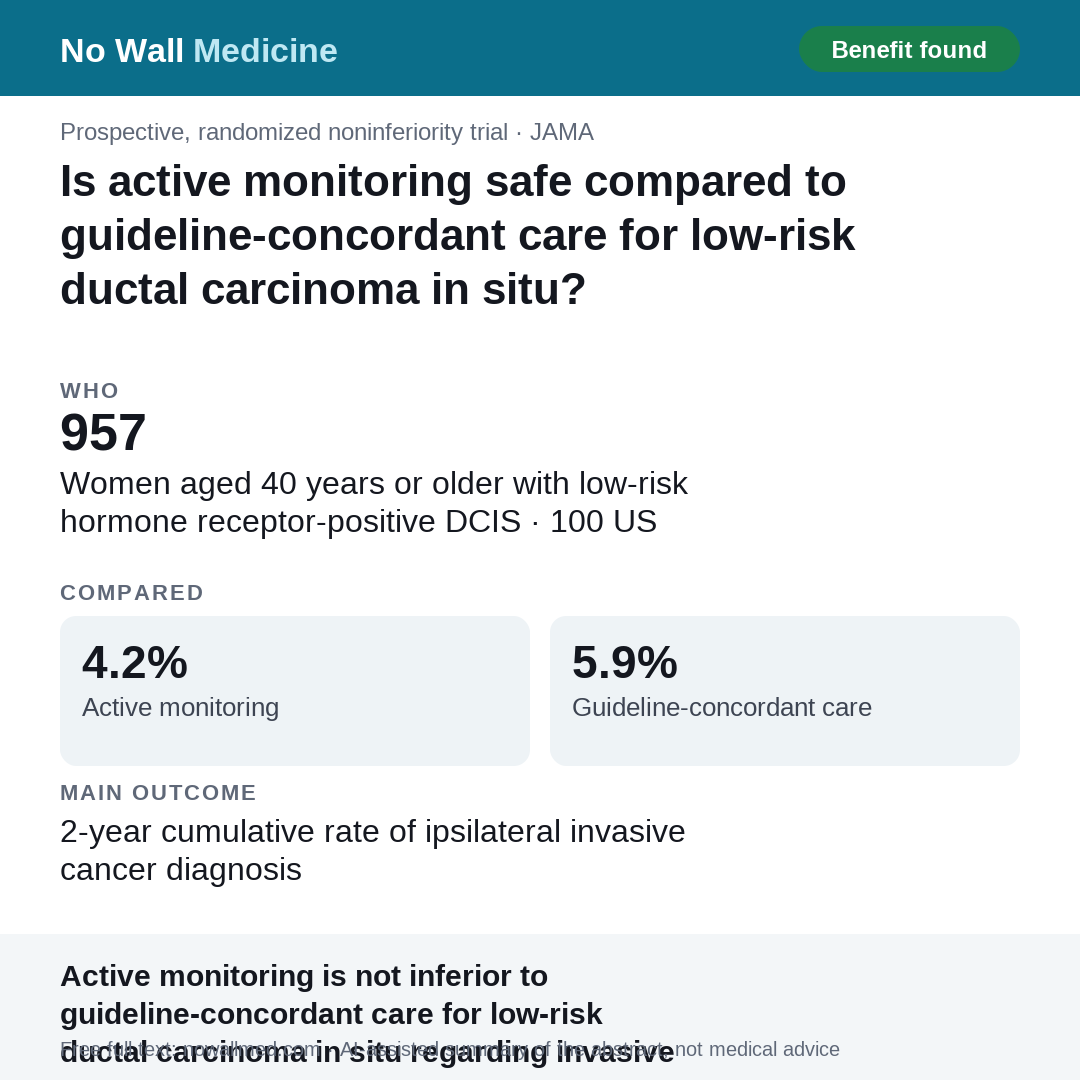
Active Monitoring With or Without Endocrine Therapy for Low-Risk Ductal Carcinoma In Situ: The COMET Randomized Clinical Trial
Prospective, randomized noninferiority trialBenefit found
Is active monitoring safe compared to guideline-concordant care for low-risk ductal carcinoma in situ?
Who
957
Women aged 40 years or older with low-risk hormone receptor-positive DCIS · 100 US Alliance Cancer Cooperative Group clinical trial sites
Compared
4.2%Active monitoring
5.9%Guideline-concordant care
Main outcome
2-year cumulative rate of ipsilateral invasive cancer diagnosis
Result: difference of -1.7% (upper limit of the 95% CI, 0.95%)
Bottom line: Active monitoring is not inferior to guideline-concordant care for low-risk ductal carcinoma in situ regarding invasive cancer risk.
JAMA · 2024-12-12Download image
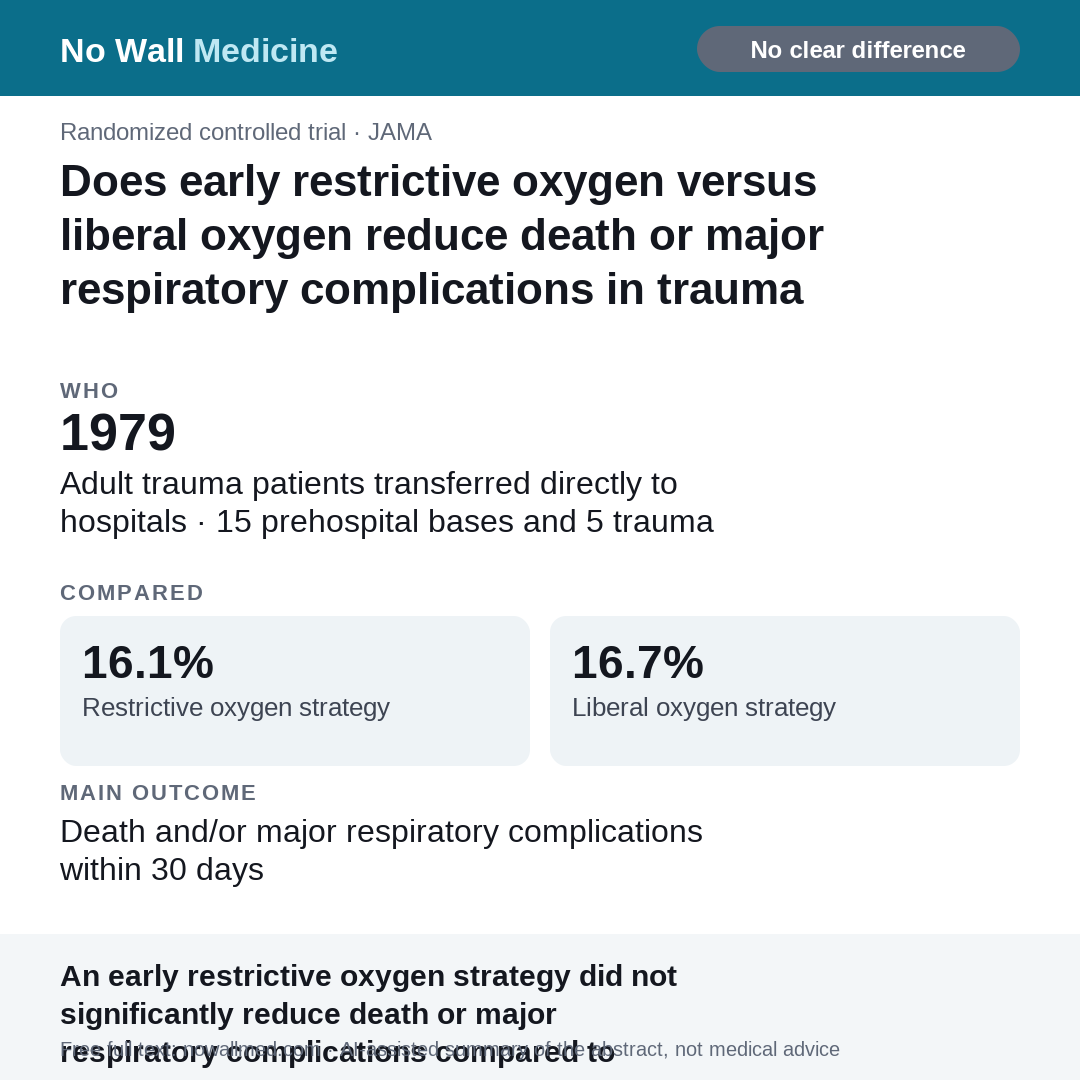
Early Restrictive vs Liberal Oxygen for Trauma Patients: The TRAUMOX2 Randomized Clinical Trial
Randomized controlled trialNo clear difference
Does early restrictive oxygen versus liberal oxygen reduce death or major respiratory complications in trauma patients?
Who
1979
Adult trauma patients transferred directly to hospitals · 15 prehospital bases and 5 trauma centers in three countries
Compared
16.1%Restrictive oxygen strategy (118/733)
16.7%Liberal oxygen strategy (121/724)
Main outcome
Death and/or major respiratory complications within 30 days
Result: odds ratio 1.01 (95% CI 0.75 to 1.37)
Bottom line: An early restrictive oxygen strategy did not significantly reduce death or major respiratory complications compared to liberal oxygen in adult trauma patients.
JAMA · 2024-12-12Download image
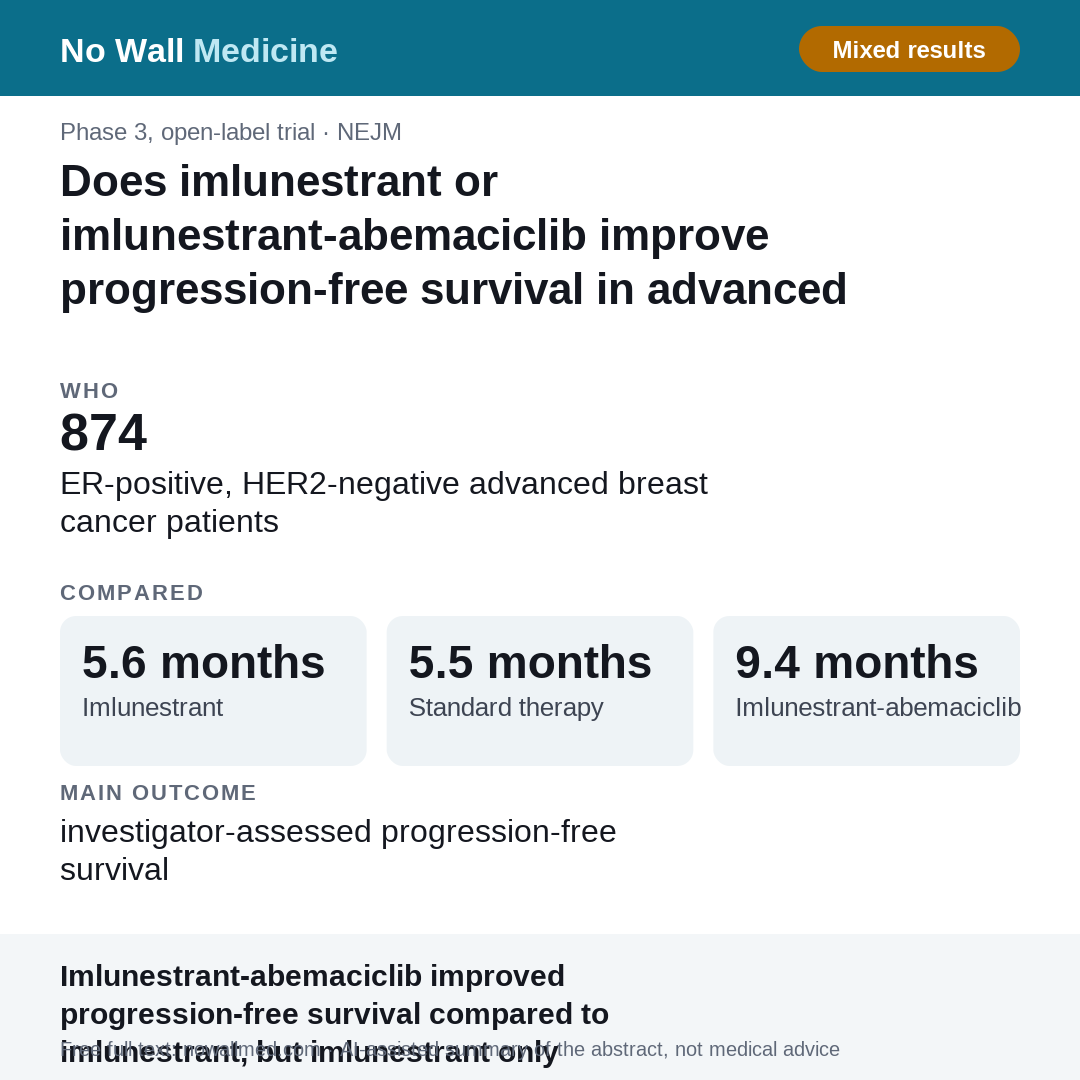
Imlunestrant with or without Abemaciclib in Advanced Breast Cancer
Phase 3, open-label trialMixed results
Does imlunestrant or imlunestrant-abemaciclib improve progression-free survival in advanced breast cancer?
Who
874
ER-positive, HER2-negative advanced breast cancer patients
Compared
5.6 monthsImlunestrant
5.5 monthsStandard therapy
9.4 monthsImlunestrant-abemaciclib
Main outcome
investigator-assessed progression-free survival
Result: hazard ratio 0.57 (95% CI 0.44 to 0.73)
Bottom line: Imlunestrant-abemaciclib improved progression-free survival compared to imlunestrant, but imlunestrant only outperformed standard therapy in patients with ESR1 mutations.
Funded by: Eli Lilly
NEJM · 2024-12-11Download image
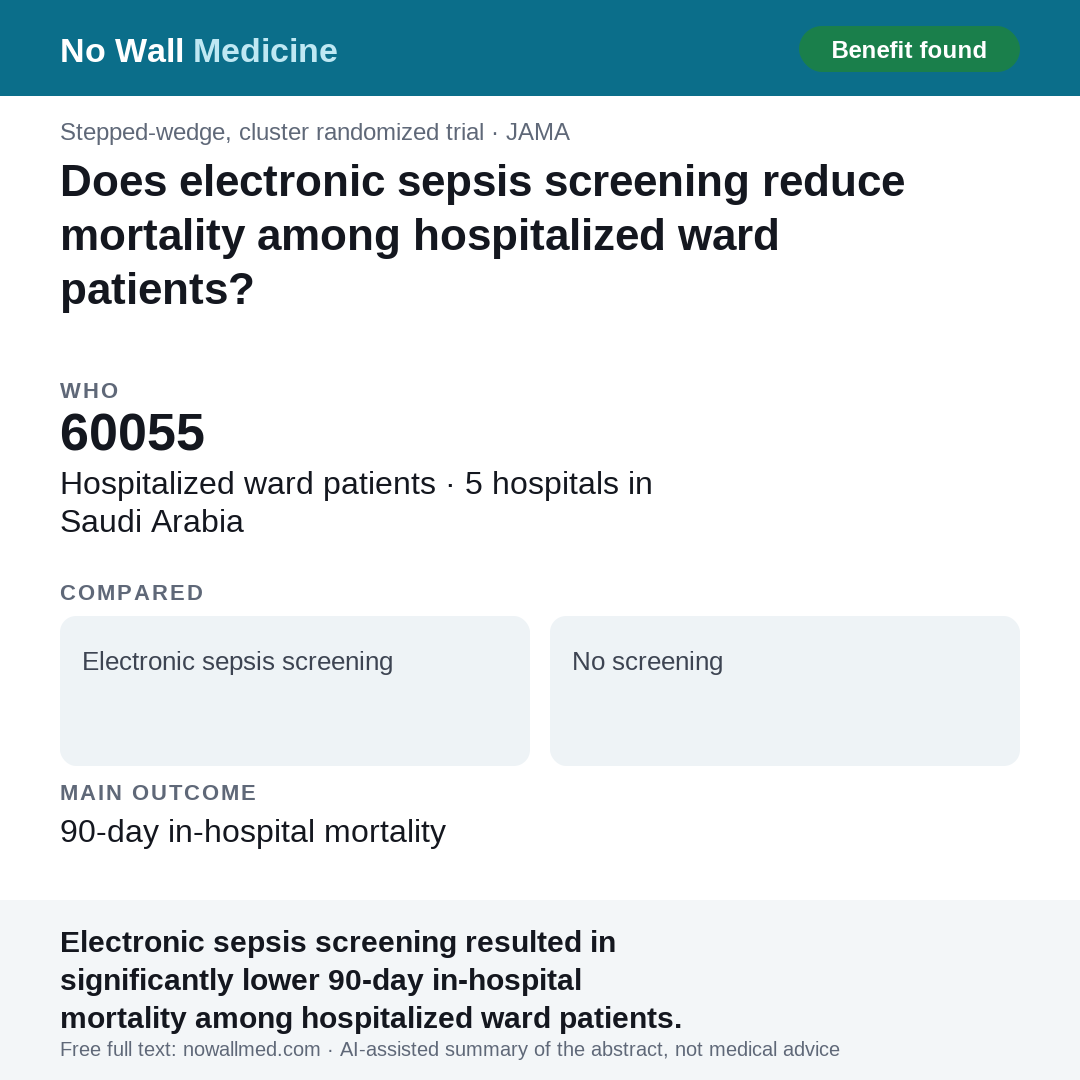
Electronic Sepsis Screening Among Patients Admitted to Hospital Wards: A Stepped-Wedge Cluster Randomized Trial
Stepped-wedge, cluster randomized trialBenefit found
Does electronic sepsis screening reduce mortality among hospitalized ward patients?
Who
60055
Hospitalized ward patients · 5 hospitals in Saudi Arabia
Compared
Electronic sepsis screening
No screening
Main outcome
90-day in-hospital mortality
Result: adjusted relative risk 0.85 (95% CI, 0.77-0.93)
Bottom line: Electronic sepsis screening resulted in significantly lower 90-day in-hospital mortality among hospitalized ward patients.
JAMA · 2024-12-11Download image
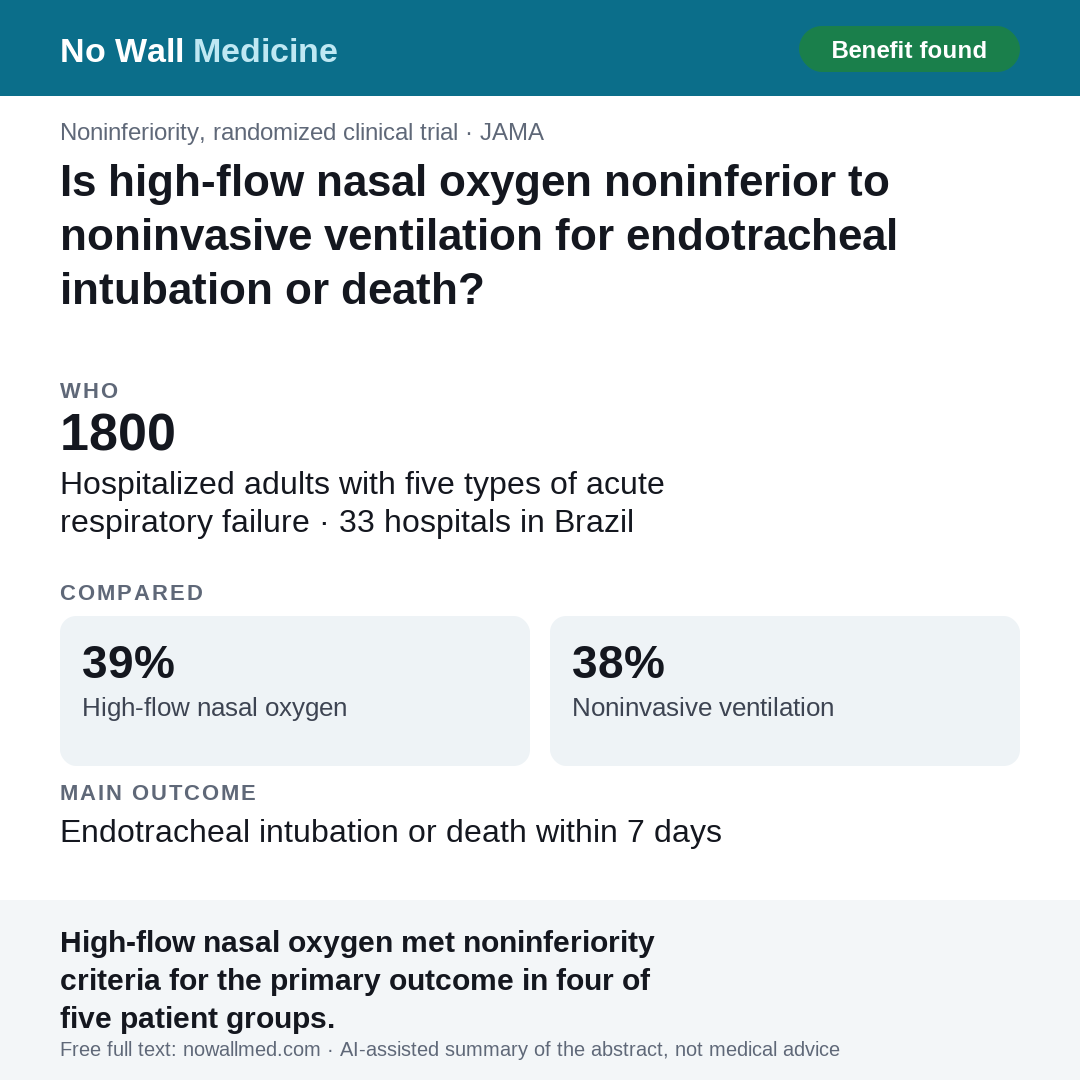
High-Flow Nasal Oxygen vs Noninvasive Ventilation in Patients With Acute Respiratory Failure: The RENOVATE Randomized Clinical Trial
Noninferiority, randomized clinical trialBenefit found
Is high-flow nasal oxygen noninferior to noninvasive ventilation for endotracheal intubation or death?
Who
1800
Hospitalized adults with five types of acute respiratory failure · 33 hospitals in Brazil
Compared
39%High-flow nasal oxygen (344/883)
38%Noninvasive ventilation (336/883)
Main outcome
Endotracheal intubation or death within 7 days
Bottom line: High-flow nasal oxygen met noninferiority criteria for the primary outcome in four of five patient groups.
Limitation: Small sample sizes in some groups and sensitivity to the choice of analysis model.
JAMA · 2024-12-11Download image