Visual abstracts
New randomized trials and meta-analyses from leading journals at a glance: who was studied, what was compared, and what was found. Every paper is free to read in full.
All specialtiesCardiology 2928Oncology 2485Gastroenterology & Hepatology 1119Infectious Disease 1890Neurology 1173Psychiatry & Mental Health 1355Pulmonology 1218Critical Care 808Endocrinology & Diabetes 1483Pediatrics 1735Surgery 1523Orthopedics & Sports Medicine 529Neurosurgery 354Cardiothoracic & Vascular Surgery 330Plastic & Reconstructive Surgery 422Nephrology 608Rheumatology 447Hematology 649Dermatology 352Ophthalmology 326Obstetrics & Gynecology 963Public & Global Health 544Radiology & Imaging 415Anesthesiology 591Urology 489ENT (Otolaryngology) 332Emergency Medicine 321Allergy & Immunology 186Geriatrics 623Family Medicine & Primary Care 338Medical Genetics & Genomics 344Pathology & Laboratory Medicine 102Physical Medicine & Rehabilitation 469Palliative Care 251Nutrition 806Digital Health & AI 1384General Medicine 210
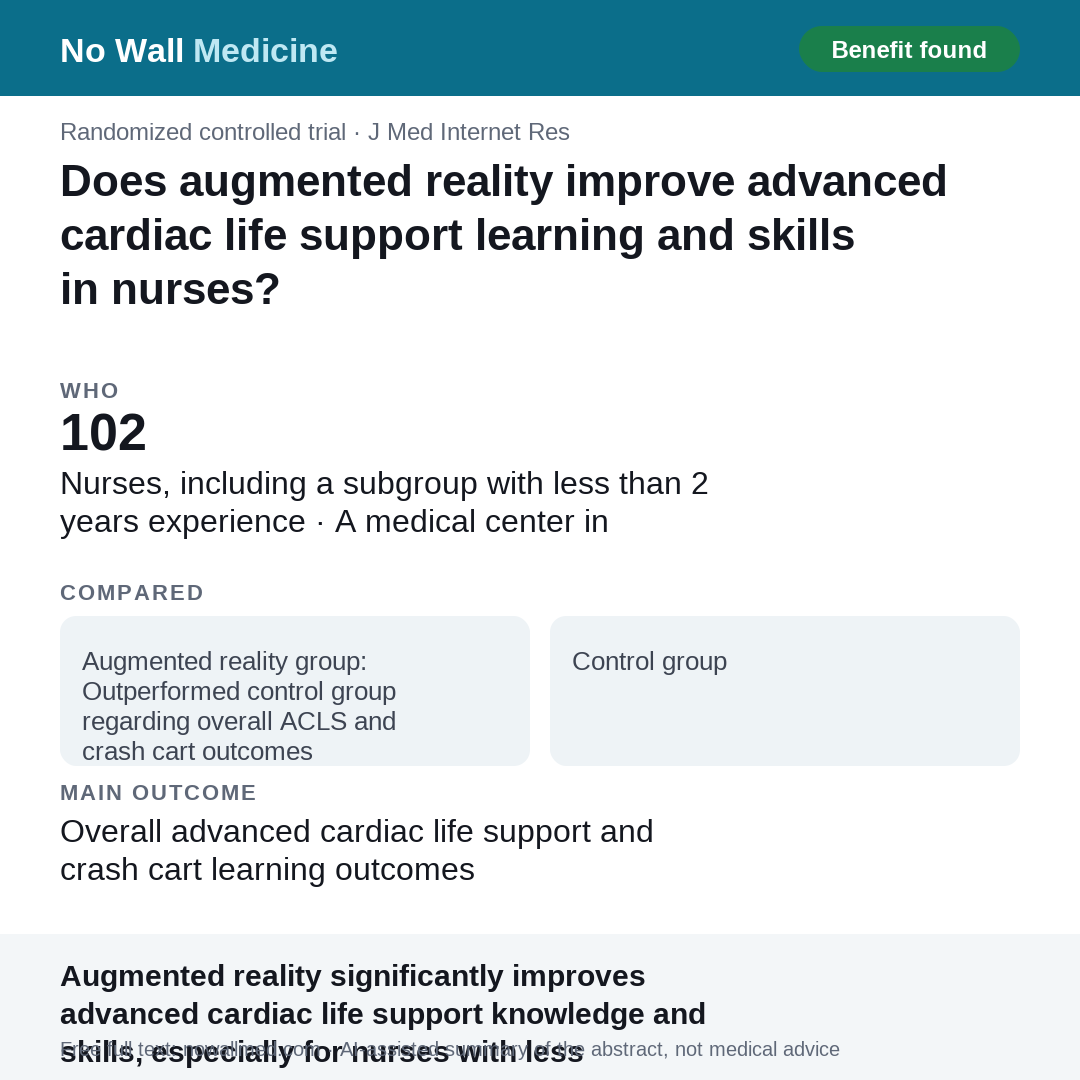
Nurses' Knowledge and Skills After Use of an Augmented Reality App for Advanced Cardiac Life Support Training: Randomized Controlled Trial
Randomized controlled trialBenefit found
Does augmented reality improve advanced cardiac life support learning and skills in nurses?
Who
102
Nurses, including a subgroup with less than 2 years experience · A medical center in southern Taiwan
Compared
Augmented reality group: Outperformed control group regarding overall ACLS and crash cart outcomes
Control group
Main outcome
Overall advanced cardiac life support and crash cart learning outcomes
Bottom line: Augmented reality significantly improves advanced cardiac life support knowledge and skills, especially for nurses with less experience.
J Med Internet Res · 2024-12-05Download image
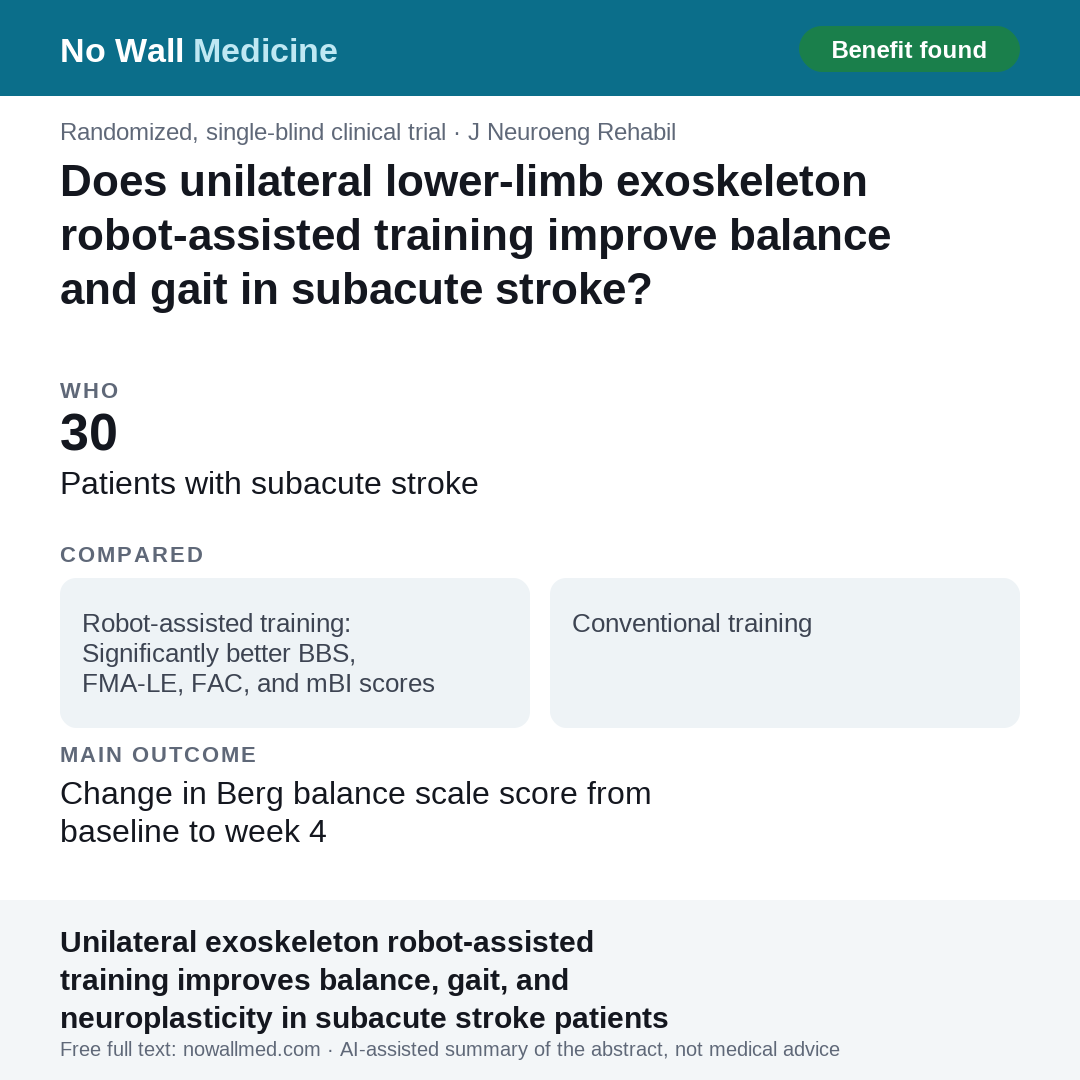
Effectiveness of unilateral lower-limb exoskeleton robot on balance and gait recovery and neuroplasticity in patients with subacute stroke: a randomized controlled trial
Randomized, single-blind clinical trialBenefit found
Does unilateral lower-limb exoskeleton robot-assisted training improve balance and gait in subacute stroke?
Who
30
Patients with subacute stroke
Compared
Robot-assisted training: Significantly better BBS, FMA-LE, FAC, and mBI scores
Conventional training
Main outcome
Change in Berg balance scale score from baseline to week 4
Bottom line: Unilateral exoskeleton robot-assisted training improves balance, gait, and neuroplasticity in subacute stroke patients compared to conventional training.
J Neuroeng Rehabil · 2024-12-05Download image
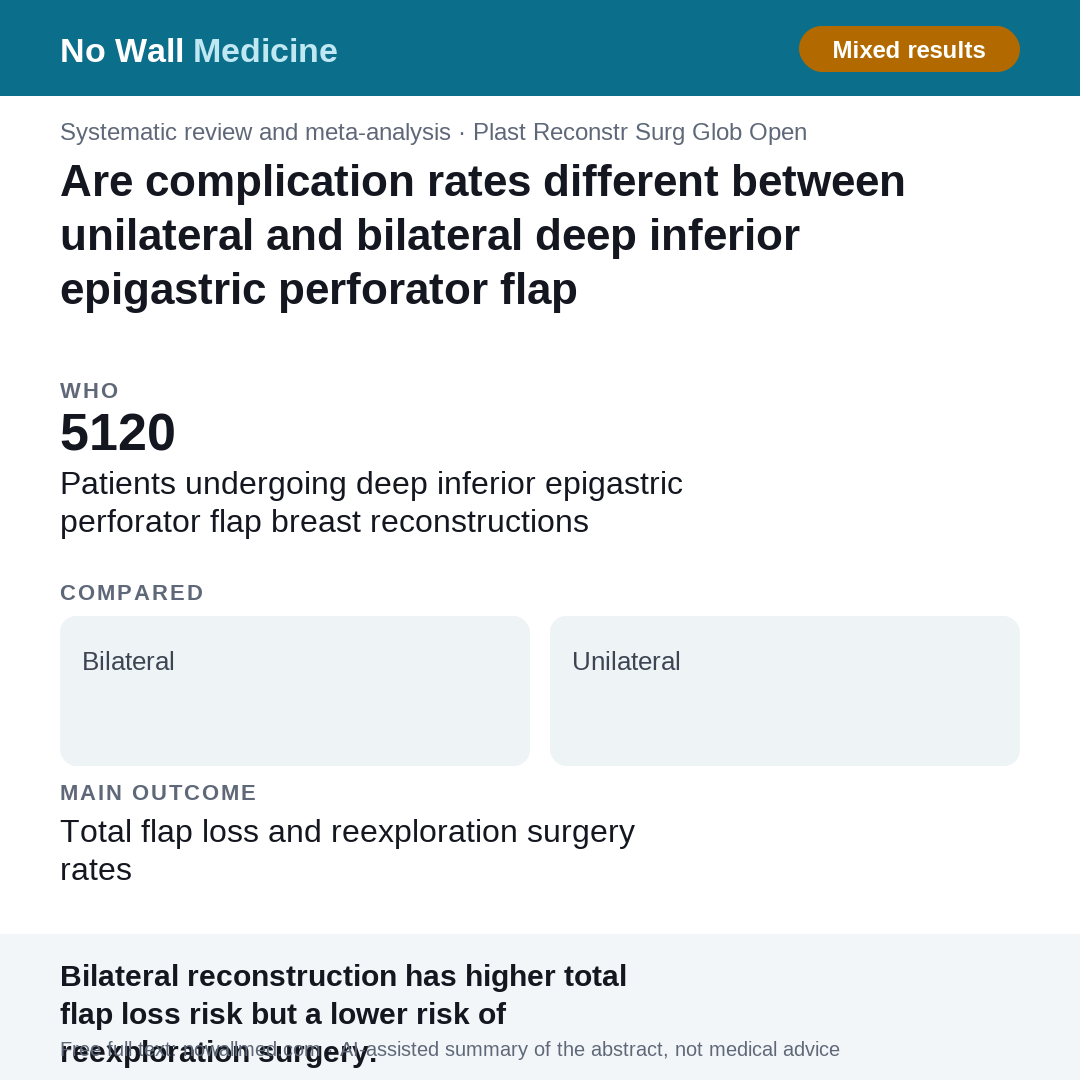
Unilateral Versus Bilateral Deep Inferior Epigastric Perforator Flap Breast Reconstruction: A Systematic Review and Meta-analysis
Systematic review and meta-analysisMixed results
Are complication rates different between unilateral and bilateral deep inferior epigastric perforator flap reconstructions?
Who
5120
Patients undergoing deep inferior epigastric perforator flap breast reconstructions
Compared
Bilateral
Unilateral
Main outcome
Total flap loss and reexploration surgery rates
Result: odds ratio 1.48 (95% CI, 1.02-2.14) for total flap loss
Bottom line: Bilateral reconstruction has higher total flap loss risk but a lower risk of reexploration surgery.
Plast Reconstr Surg Glob Open · 2024-12-05Download image
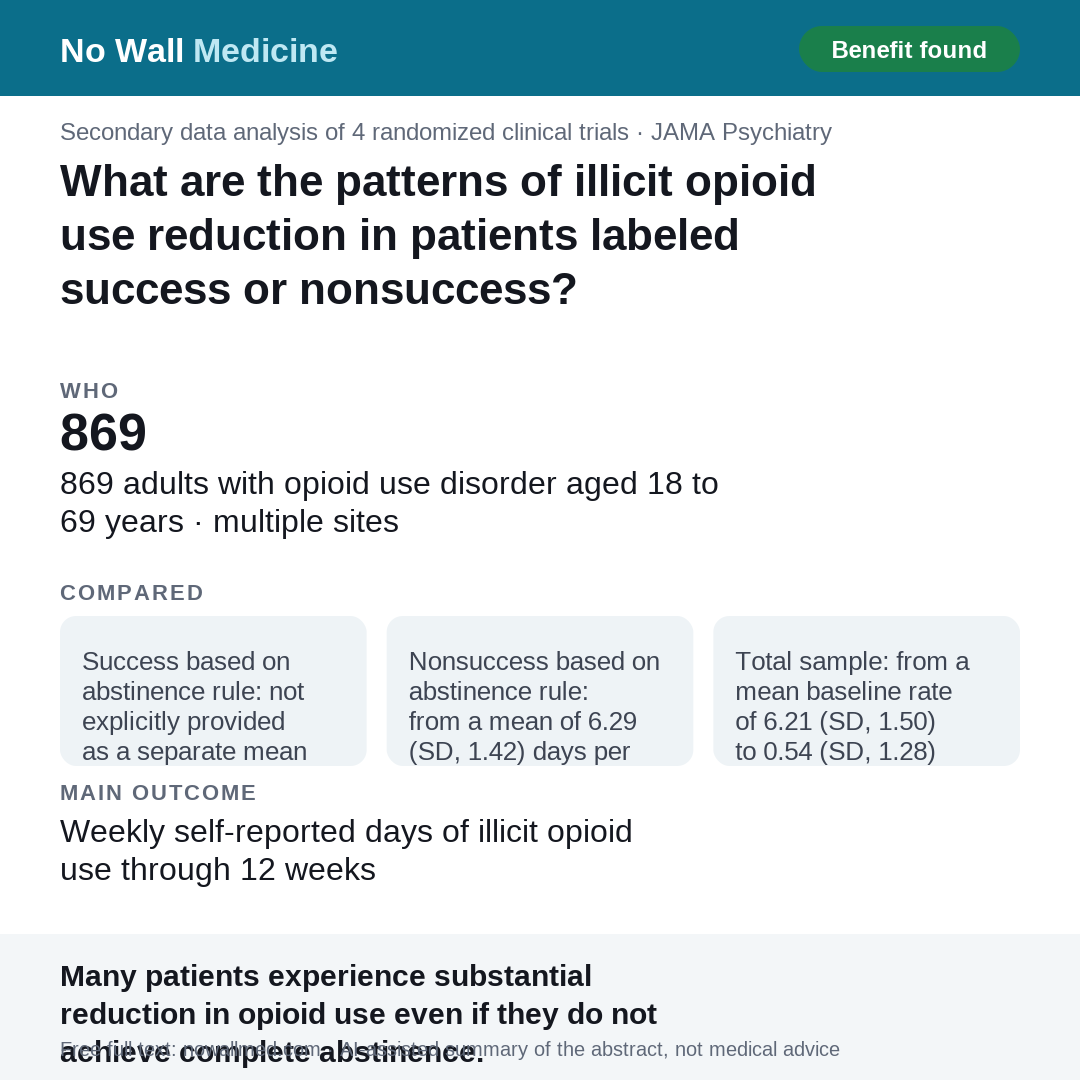
Capturing the Full Range of Buprenorphine Treatment Response
Secondary data analysis of 4 randomized clinical trialsBenefit found
What are the patterns of illicit opioid use reduction in patients labeled success or nonsuccess?
Who
869
869 adults with opioid use disorder aged 18 to 69 years · multiple sites
Compared
Success based on abstinence rule: not explicitly provided as a separate mean
Nonsuccess based on abstinence rule: from a mean of 6.29 (SD, 1.42) days per week to 1.51 (SD, 1.76) days per week
Total sample: from a mean baseline rate of 6.21 (SD, 1.50) to 0.54 (SD, 1.28)
Main outcome
Weekly self-reported days of illicit opioid use through 12 weeks
Bottom line: Many patients experience substantial reduction in opioid use even if they do not achieve complete abstinence.
Limitation: Future studies are needed to characterize how these reductions are associated with functional and long-term outcomes.
JAMA Psychiatry · 2024-12-04Download image
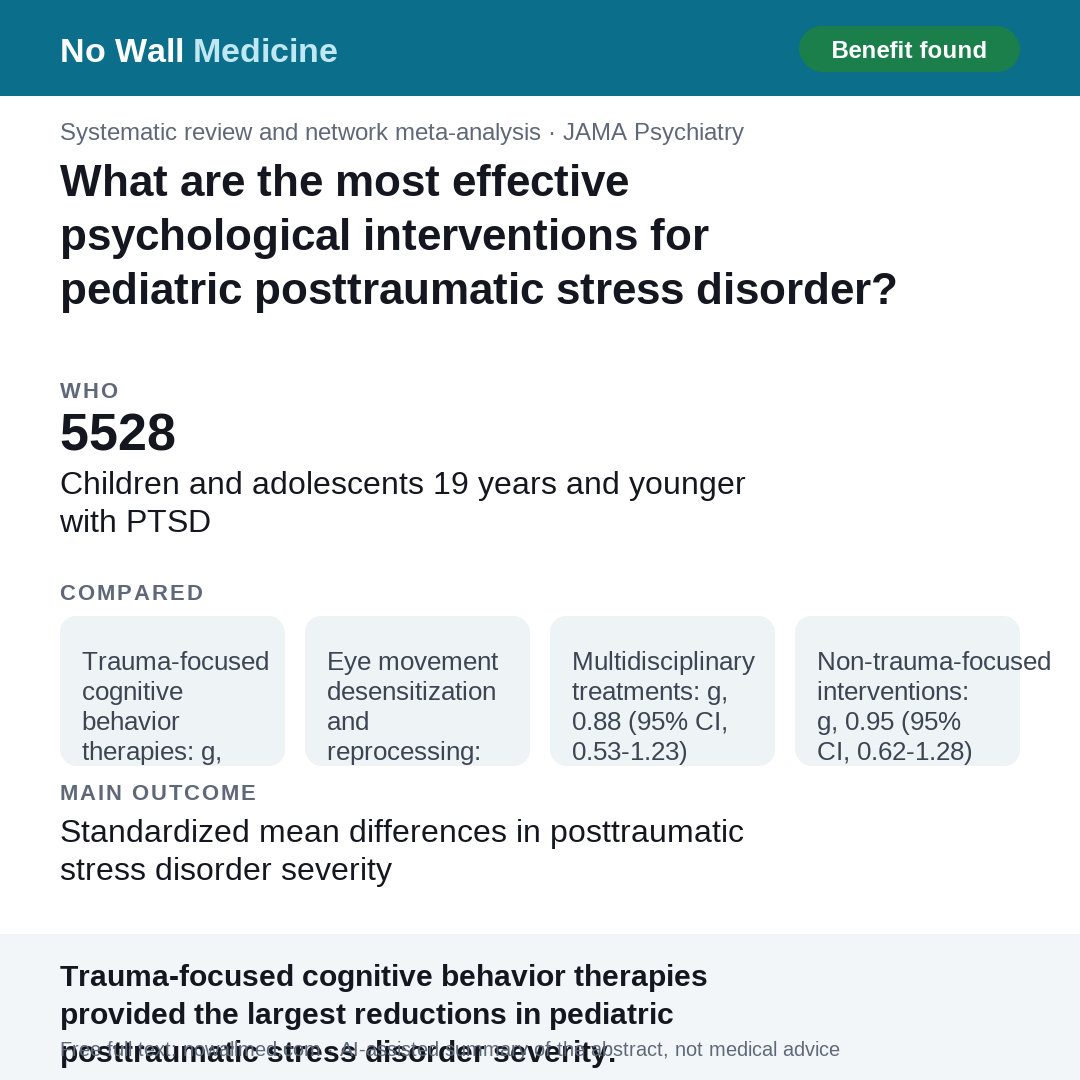
Psychological Interventions for Pediatric Posttraumatic Stress Disorder: A Systematic Review and Network Meta-Analysis
Systematic review and network meta-analysisBenefit found
What are the most effective psychological interventions for pediatric posttraumatic stress disorder?
Who
5528
Children and adolescents 19 years and younger with PTSD
Compared
Trauma-focused cognitive behavior therapies: g, 1.06 (95% CI, 0.86-1.26)
Eye movement desensitization and reprocessing: g, 0.86 (95% CI, 0.54-1.18)
Multidisciplinary treatments: g, 0.88 (95% CI, 0.53-1.23)
Non-trauma-focused interventions: g, 0.95 (95% CI, 0.62-1.28)
Main outcome
Standardized mean differences in posttraumatic stress disorder severity
Bottom line: Trauma-focused cognitive behavior therapies provided the largest reductions in pediatric posttraumatic stress disorder severity.
Limitation: More long-term data are needed for eye movement desensitization and reprocessing, multidisciplinary treatments, and non-trauma-focused interventions.
JAMA Psychiatry · 2024-12-04Download image
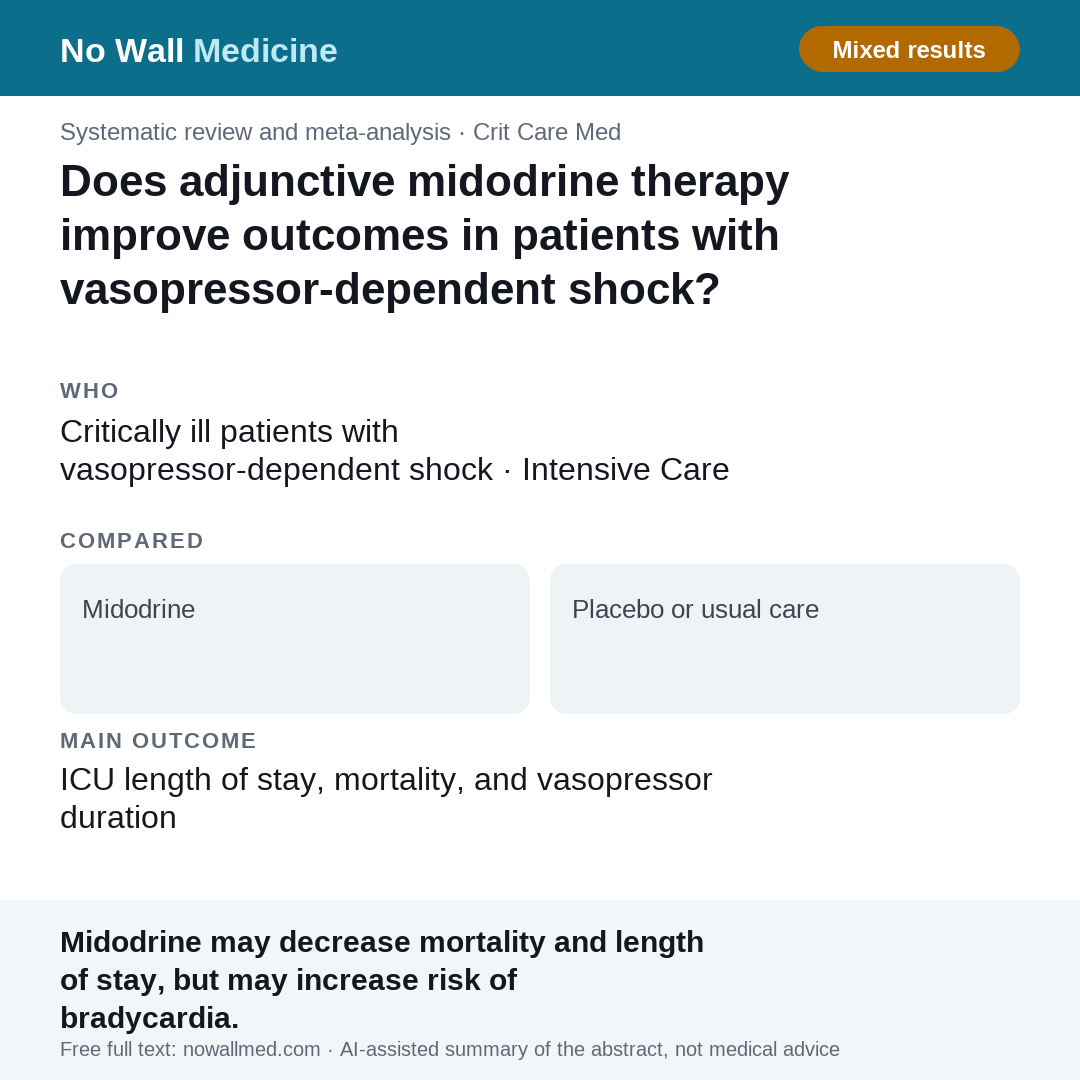
Adjunctive Midodrine Therapy for Vasopressor-Dependent Shock in the ICU: A Systematic Review and Meta-Analysis
Systematic review and meta-analysisMixed results
Does adjunctive midodrine therapy improve outcomes in patients with vasopressor-dependent shock?
Who
Critically ill patients with vasopressor-dependent shock · Intensive Care Unit
Compared
Midodrine
Placebo or usual care
Main outcome
ICU length of stay, mortality, and vasopressor duration
Bottom line: Midodrine may decrease mortality and length of stay, but may increase risk of bradycardia.
Limitation: Required sample sizes were not met for ICU length of stay or vasopressor duration.
Crit Care Med · 2024-12-04Download image
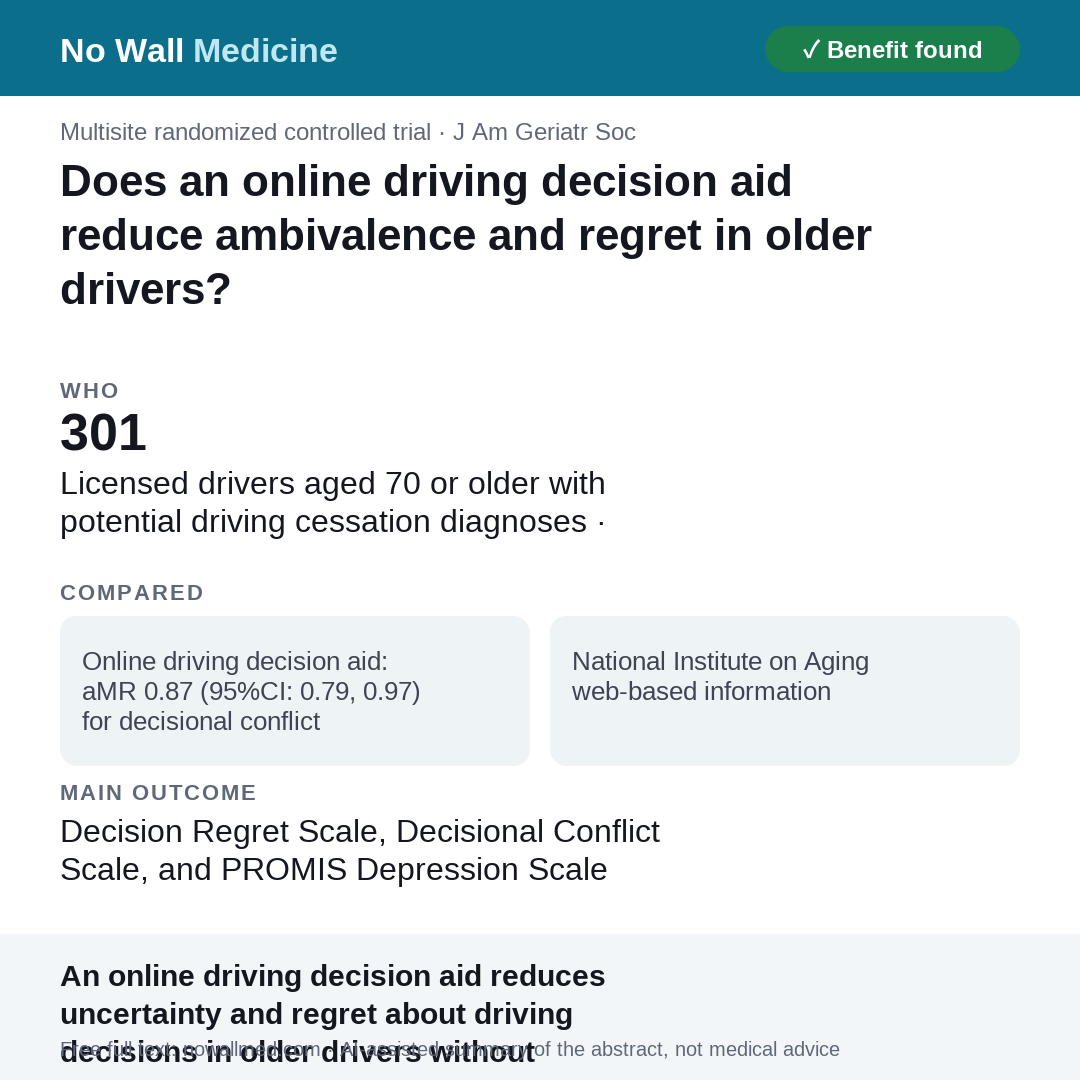
An online driving decision aid for older drivers reduces ambivalence and regret about driving decisions: Randomized trial
Multisite randomized controlled trialBenefit found
Does an online driving decision aid reduce ambivalence and regret in older drivers?
Who
301
Licensed drivers aged 70 or older with potential driving cessation diagnoses · Multisite
Compared
Online driving decision aid: aMR 0.87 (95%CI: 0.79, 0.97) for decisional conflict
National Institute on Aging web-based information
Main outcome
Decision Regret Scale, Decisional Conflict Scale, and PROMIS Depression Scale
Result: aMR 0.87 (95%CI: 0.79, 0.97) for decisional conflict; aMR 0.45 (95%CI: 0.27, 0.72) for decision regret
Bottom line: An online driving decision aid reduces uncertainty and regret about driving decisions in older drivers without increasing crash risk.
J Am Geriatr Soc · 2024-12-04Download image
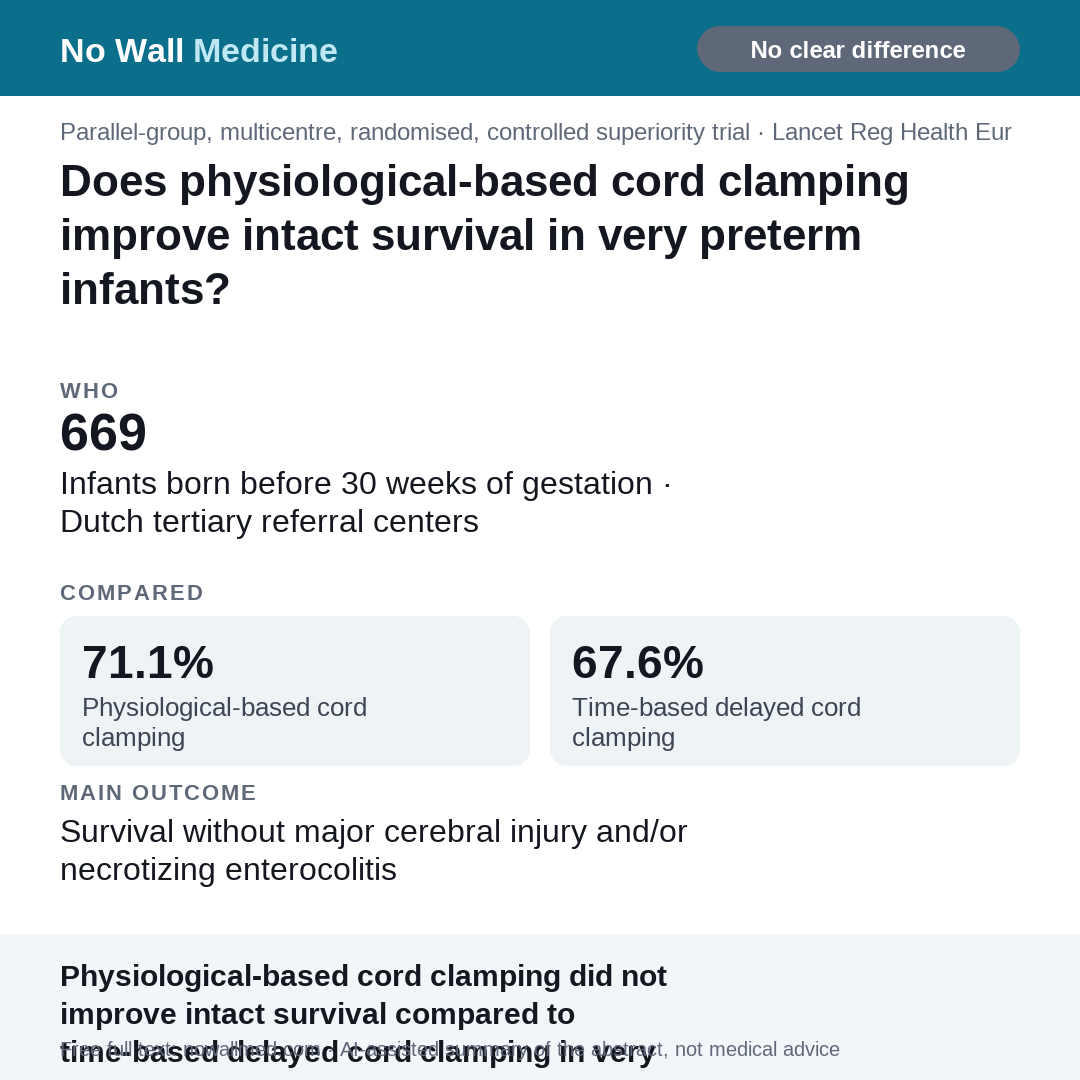
Physiological versus time based cord clamping in very preterm infants (ABC3): a parallel-group, multicentre, randomised, controlled superiority trial
Parallel-group, multicentre, randomised, controlled superiority trialNo clear difference
Does physiological-based cord clamping improve intact survival in very preterm infants?
Who
669
Infants born before 30 weeks of gestation · Dutch tertiary referral centers
Compared
71.1%Physiological-based cord clamping (241/339)
67.6%Time-based delayed cord clamping (223/330)
Main outcome
Survival without major cerebral injury and/or necrotizing enterocolitis
Result: odds ratio 1.18, 95% CI 0.84-1.66
Bottom line: Physiological-based cord clamping did not improve intact survival compared to time-based delayed cord clamping in very preterm infants.
Funded by: The Netherlands Organization for Health Research and Development
Lancet Reg Health Eur · 2024-12-04Download image
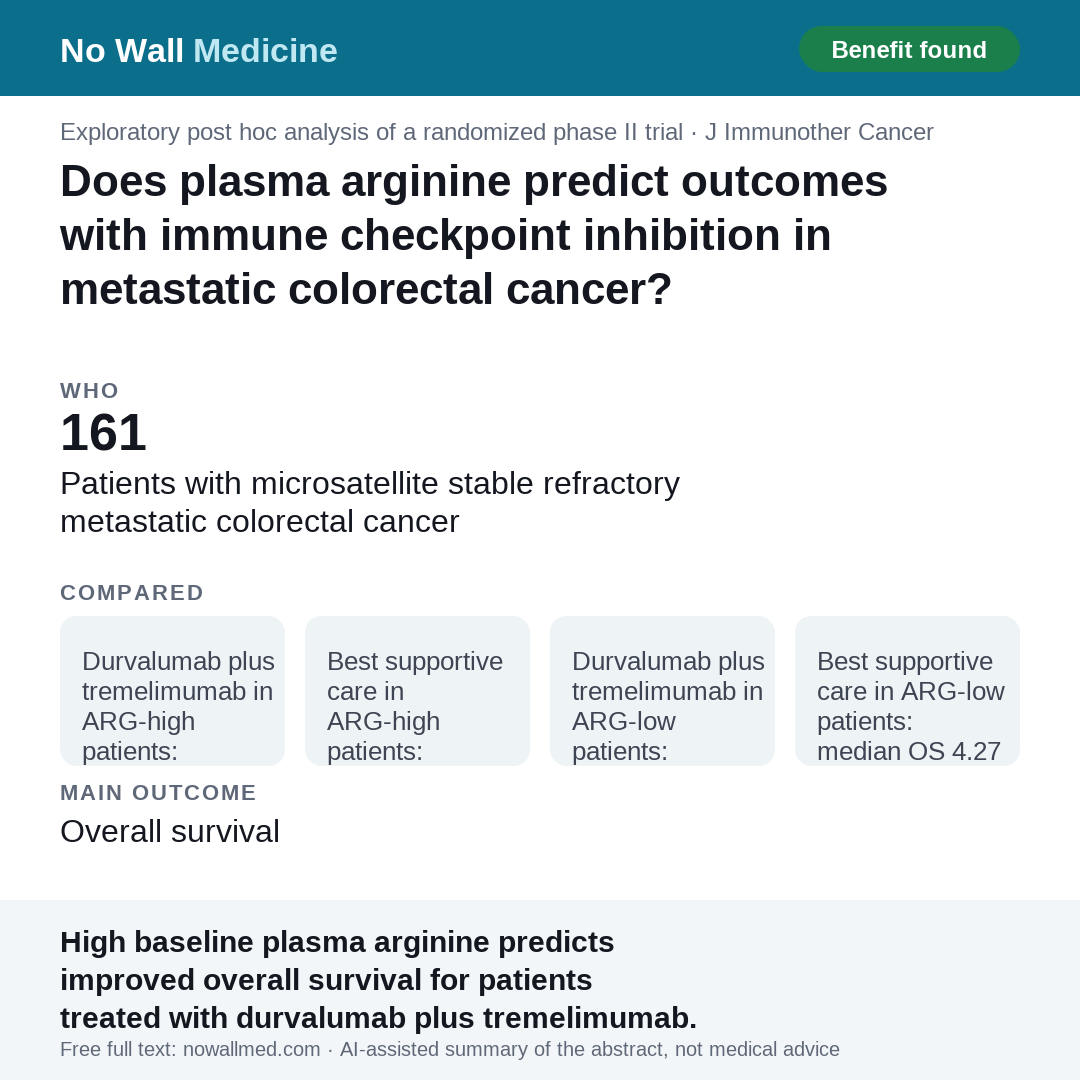
Plasma arginine as a predictive biomarker for outcomes with immune checkpoint inhibition in metastatic colorectal cancer: a correlative analysis of the CCTG CO.26 trial
Exploratory post hoc analysis of a randomized phase II trialBenefit found
Does plasma arginine predict outcomes with immune checkpoint inhibition in metastatic colorectal cancer?
Who
161
Patients with microsatellite stable refractory metastatic colorectal cancer
Compared
Durvalumab plus tremelimumab in ARG-high patients: median OS 7.62 months
Best supportive care in ARG-high patients: median OS 3.09 months
Durvalumab plus tremelimumab in ARG-low patients: median OS 5.27 months
Best supportive care in ARG-low patients: median OS 4.27 months
Main outcome
Overall survival
Result: HR 0.61 (0.37-0.99)
Bottom line: High baseline plasma arginine predicts improved overall survival for patients treated with durvalumab plus tremelimumab.
J Immunother Cancer · 2024-12-04Download image
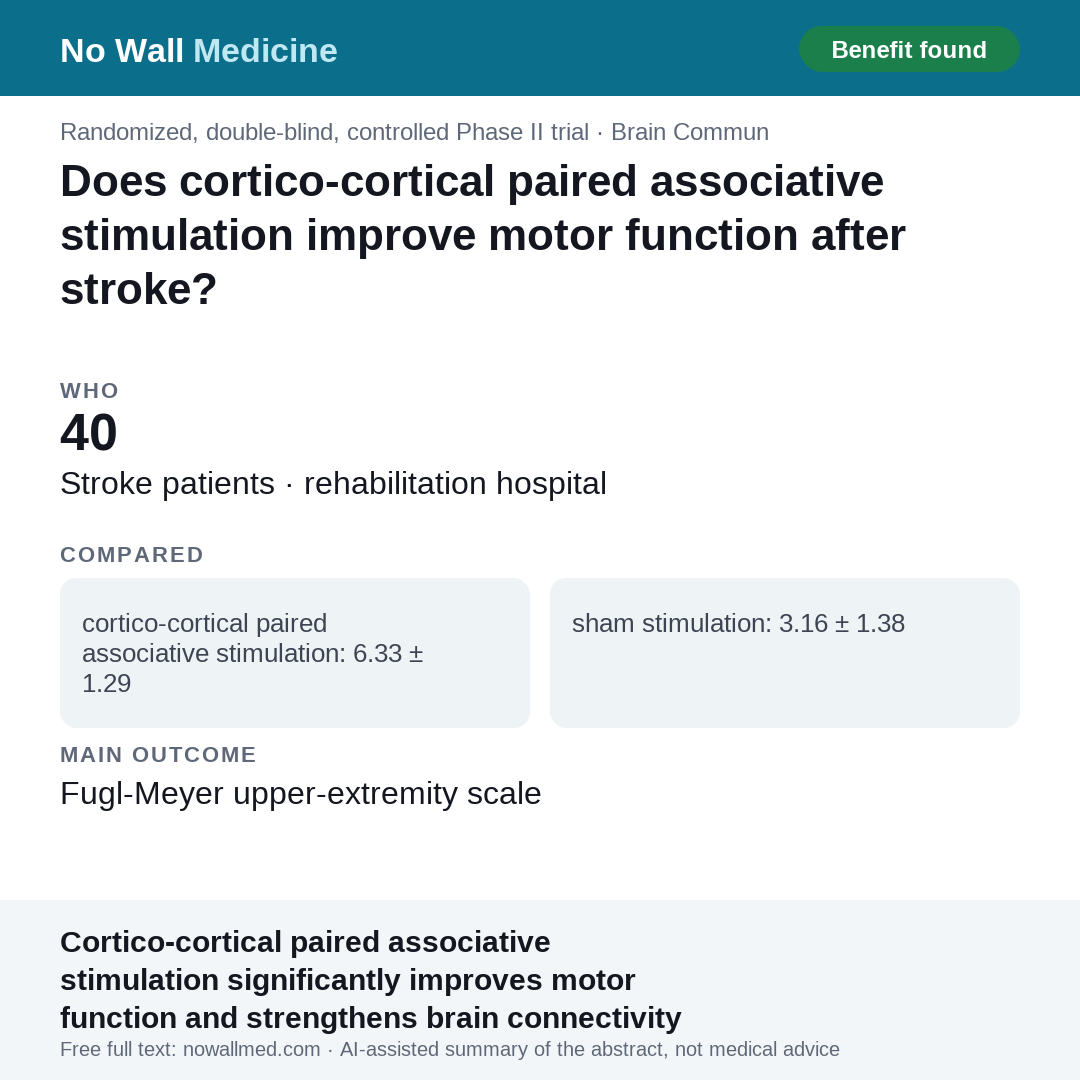
Rewiring the disordered connectome with circuit-based paired stimulation after stroke-a randomized, double-blind and controlled Phase II trial
Randomized, double-blind, controlled Phase II trialBenefit found
Does cortico-cortical paired associative stimulation improve motor function after stroke?
Who
40
Stroke patients · rehabilitation hospital
Compared
cortico-cortical paired associative stimulation: 6.33 ± 1.29
sham stimulation: 3.16 ± 1.38
Main outcome
Fugl-Meyer upper-extremity scale
Bottom line: Cortico-cortical paired associative stimulation significantly improves motor function and strengthens brain connectivity in stroke patients.
Brain Commun · 2024-12-04Download image
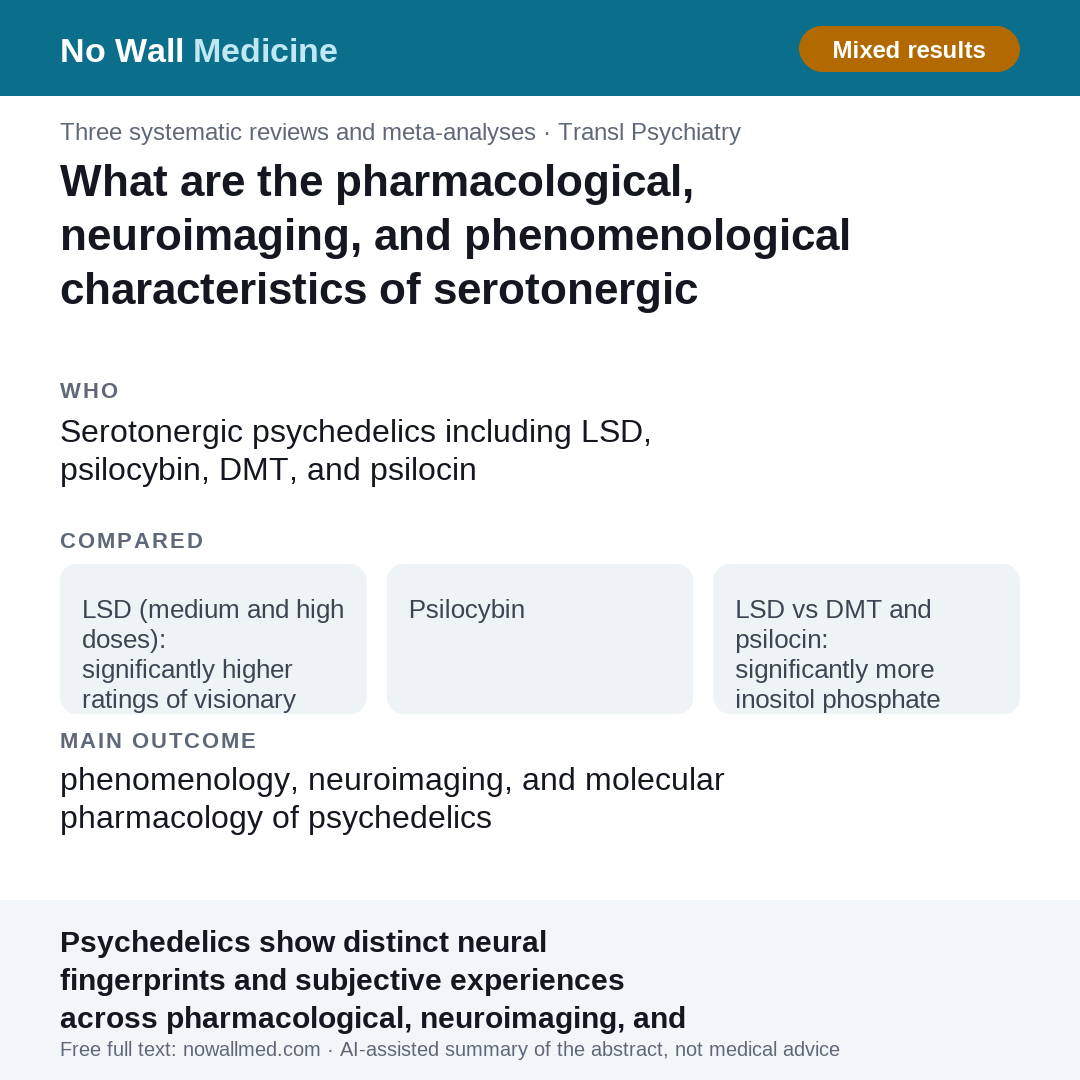
Synergistic, multi-level understanding of psychedelics: three systematic reviews and meta-analyses of their pharmacology, neuroimaging and phenomenology
Three systematic reviews and meta-analysesMixed results
What are the pharmacological, neuroimaging, and phenomenological characteristics of serotonergic psychedelics?
Who
Serotonergic psychedelics including LSD, psilocybin, DMT, and psilocin
Compared
LSD (medium and high doses): significantly higher ratings of visionary restructuralisation than psilocybin
Psilocybin
LSD vs DMT and psilocin: significantly more inositol phosphate formation at the 5-HT2A receptor
Main outcome
phenomenology, neuroimaging, and molecular pharmacology of psychedelics
Bottom line: Psychedelics show distinct neural fingerprints and subjective experiences across pharmacological, neuroimaging, and phenomenological levels.
Limitation: high heterogeneity and risk of bias in the literature
Transl Psychiatry · 2024-12-04Download image
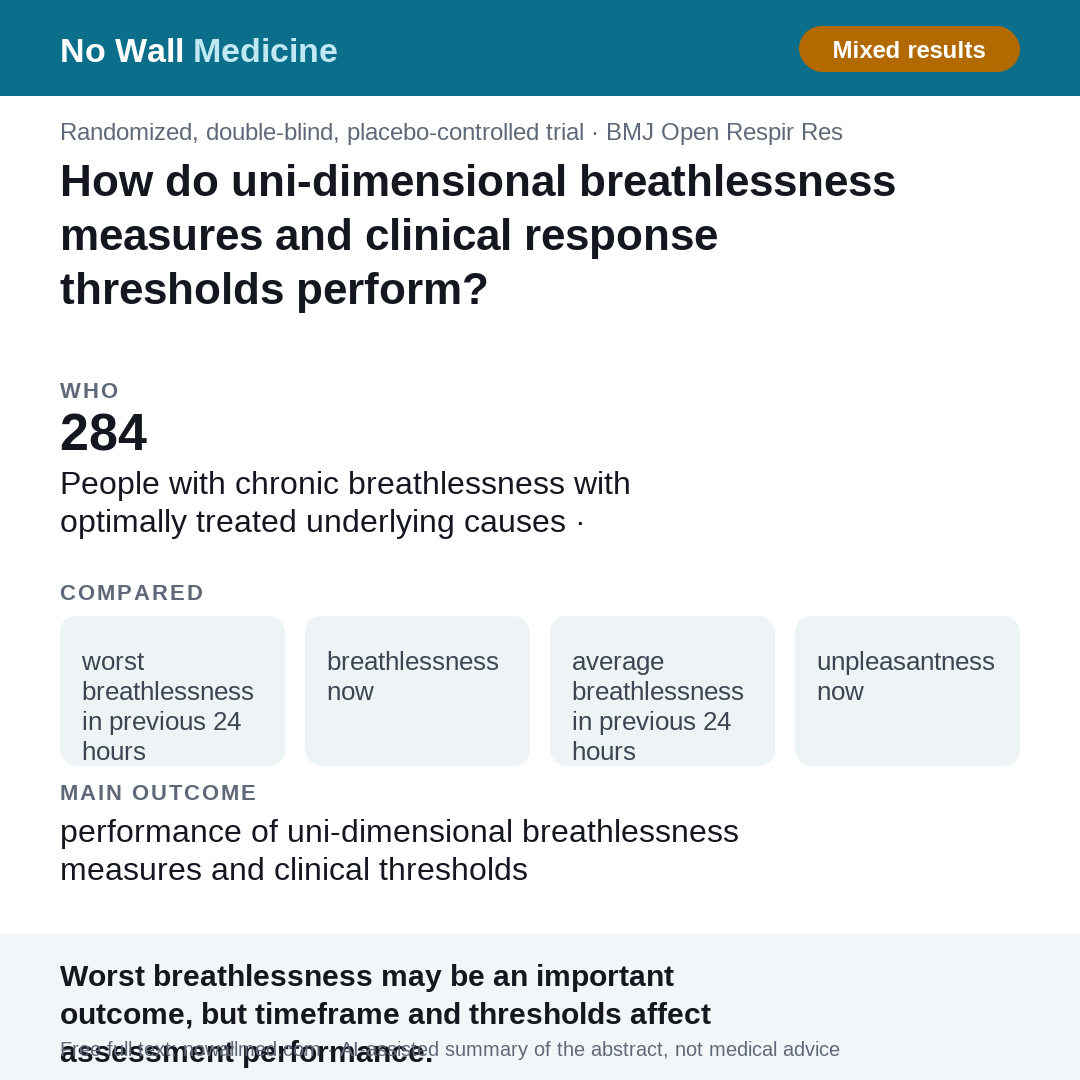
Differences in uni-dimensional breathlessness measures and thresholds for clinical response in a randomised controlled trial in people with chronic breathlessness: an exploratory study
Randomized, double-blind, placebo-controlled trialMixed results
How do uni-dimensional breathlessness measures and clinical response thresholds perform?
Who
284
People with chronic breathlessness with optimally treated underlying causes · multi-site
Compared
worst breathlessness in previous 24 hours
breathlessness now
average breathlessness in previous 24 hours
unpleasantness now
Main outcome
performance of uni-dimensional breathlessness measures and clinical thresholds
Bottom line: Worst breathlessness may be an important outcome, but timeframe and thresholds affect assessment performance.
BMJ Open Respir Res · 2024-12-04Download image
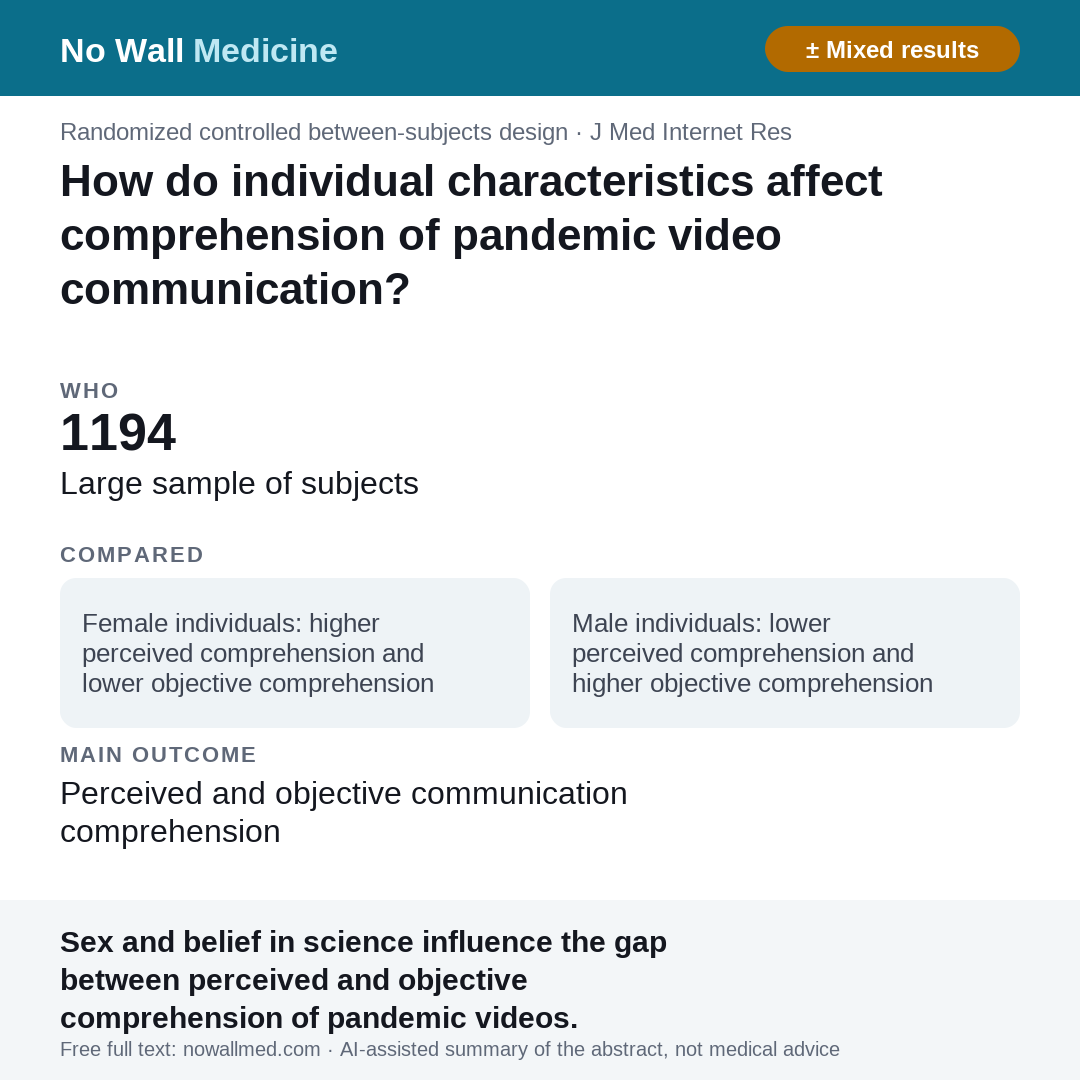
Individual Characteristics in the Comprehension of Pandemic Video Communication: Randomized Controlled Between-Subjects Design
Randomized controlled between-subjects designMixed results
How do individual characteristics affect comprehension of pandemic video communication?
Who
1194
Large sample of subjects
Compared
Female individuals: higher perceived comprehension and lower objective comprehension
Male individuals: lower perceived comprehension and higher objective comprehension
Main outcome
Perceived and objective communication comprehension
Bottom line: Sex and belief in science influence the gap between perceived and objective comprehension of pandemic videos.
J Med Internet Res · 2024-12-04Download image
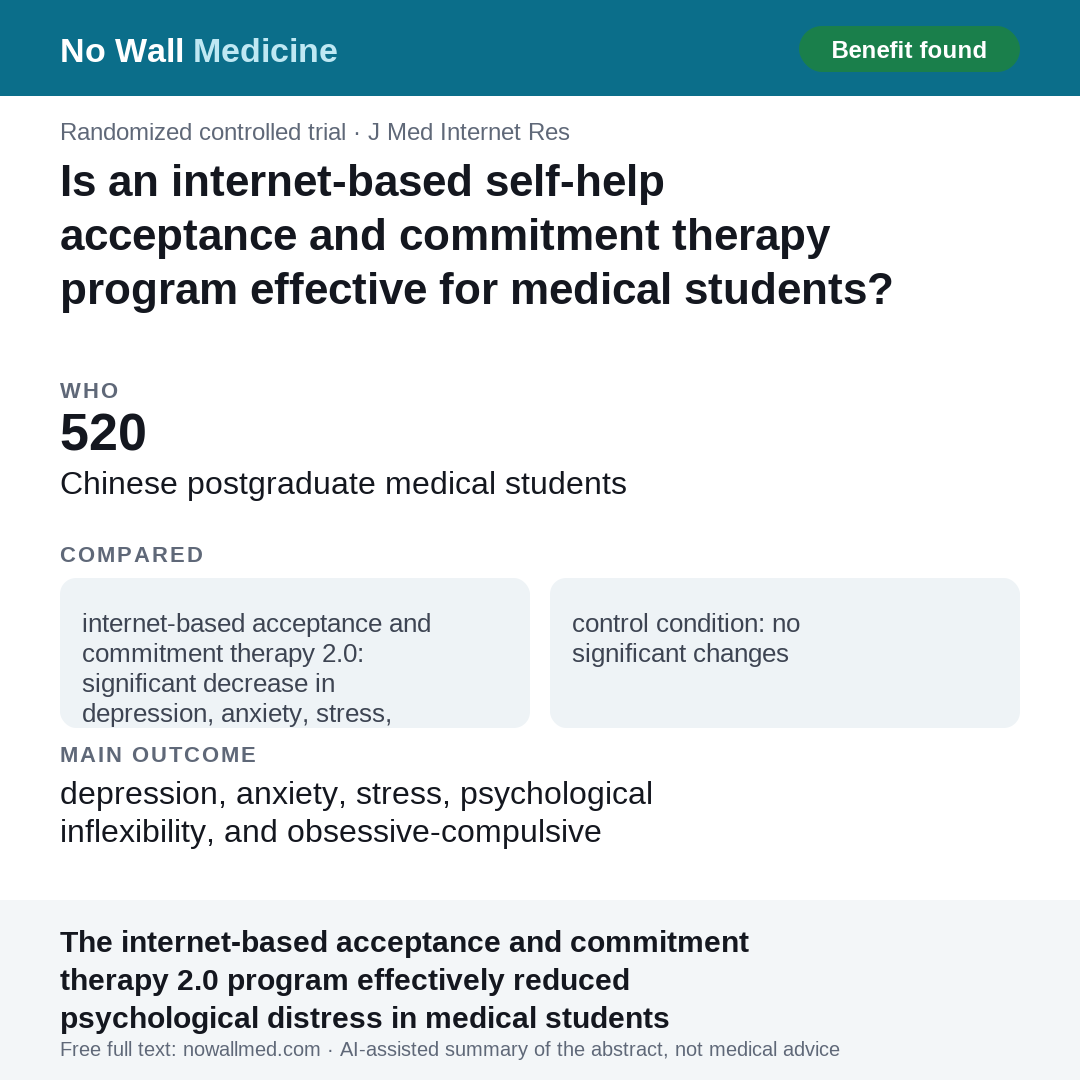
Effectiveness of an Internet-Based Self-Help Acceptance and Commitment Therapy Program on Medical Students' Mental Well-Being: Follow-Up Randomized Controlled Trial
Randomized controlled trialBenefit found
Is an internet-based self-help acceptance and commitment therapy program effective for medical students?
Who
520
Chinese postgraduate medical students
Compared
internet-based acceptance and commitment therapy 2.0: significant decrease in depression, anxiety, stress, psychological inflexibility, and obsessive-compulsive symptoms
control condition: no significant changes
Main outcome
depression, anxiety, stress, psychological inflexibility, and obsessive-compulsive symptoms
Bottom line: The internet-based acceptance and commitment therapy 2.0 program effectively reduced psychological distress in medical students through follow-up.
J Med Internet Res · 2024-12-04Download image
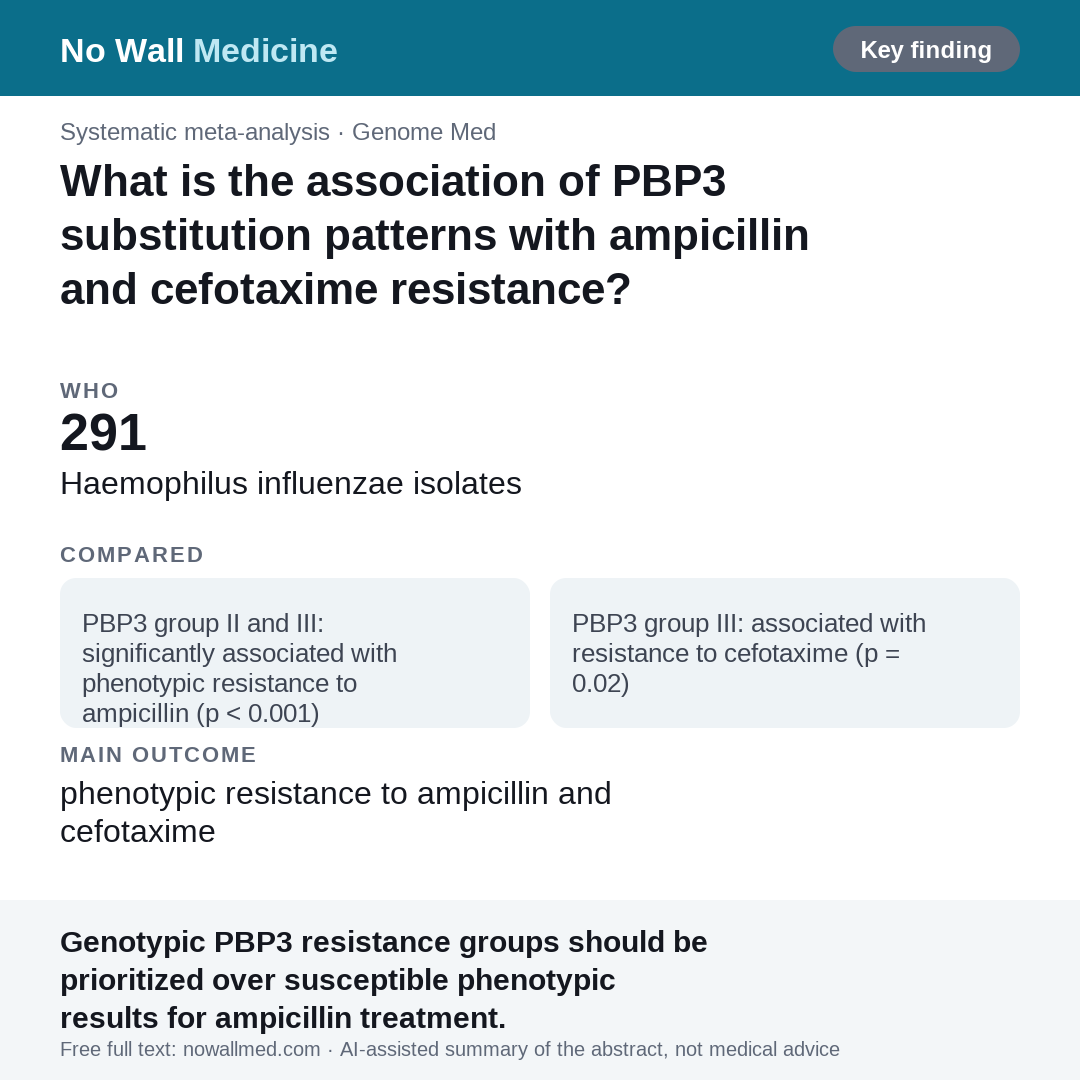
Revisiting mutational resistance to ampicillin and cefotaxime in Haemophilus influenzae
Systematic meta-analysisBenefit found
What is the association of PBP3 substitution patterns with ampicillin and cefotaxime resistance?
Who
291
Haemophilus influenzae isolates
Compared
PBP3 group II and III: significantly associated with phenotypic resistance to ampicillin (p < 0.001)
PBP3 group III: associated with resistance to cefotaxime (p = 0.02)
Main outcome
phenotypic resistance to ampicillin and cefotaxime
Bottom line: Genotypic PBP3 resistance groups should be prioritized over susceptible phenotypic results for ampicillin treatment.
Limitation: Implications on treatment outcome and bacterial fitness need to be determined.
Genome Med · 2024-12-04Download image
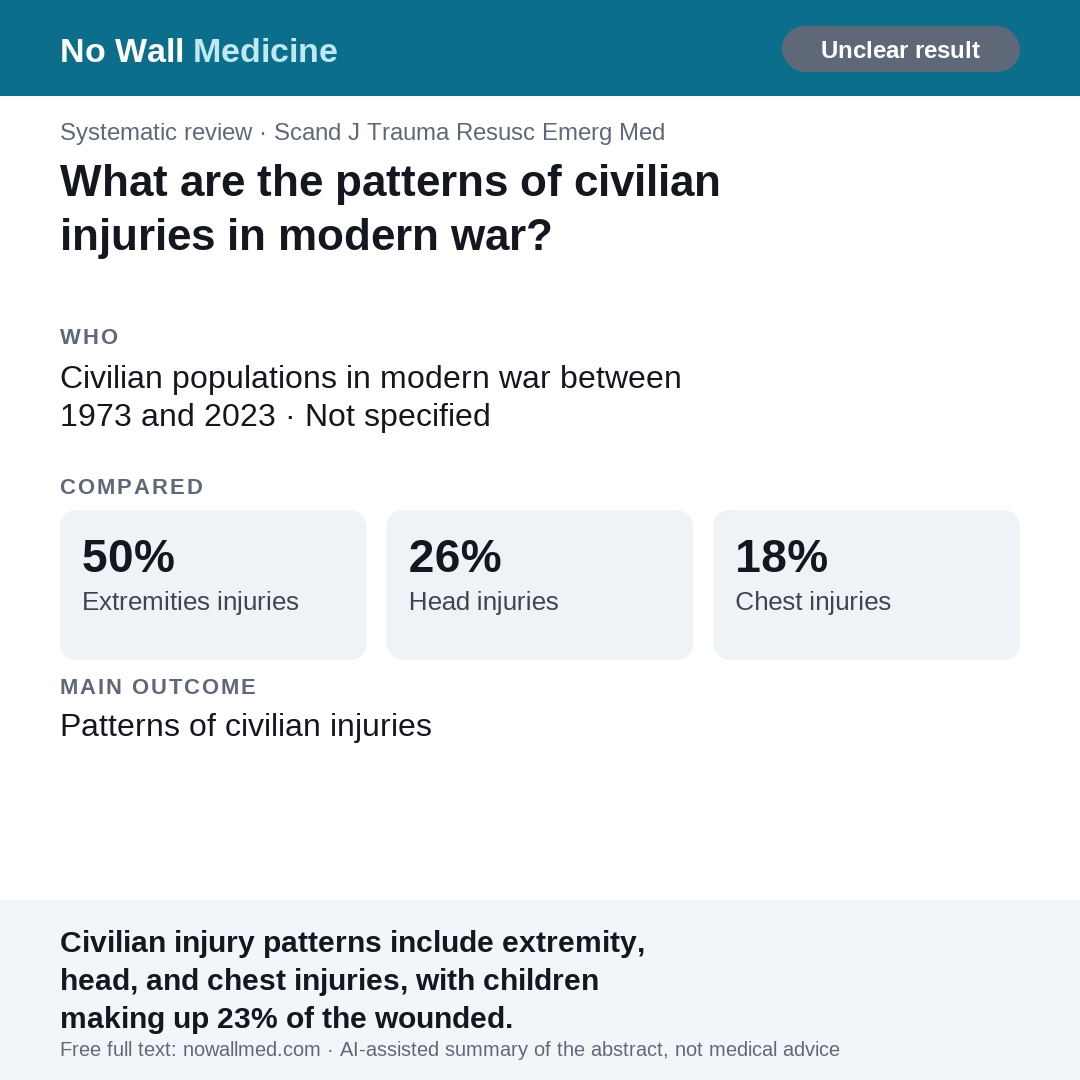
Civilian pattern of injuries in armed conflicts - a systematic review
Systematic reviewUnclear result
What are the patterns of civilian injuries in modern war?
Who
Civilian populations in modern war between 1973 and 2023 · Not specified
Compared
50%Extremities injuries
26%Head injuries
18%Chest injuries
Main outcome
Patterns of civilian injuries
Bottom line: Civilian injury patterns include extremity, head, and chest injuries, with children making up 23% of the wounded.
Scand J Trauma Resusc Emerg Med · 2024-12-04Download image
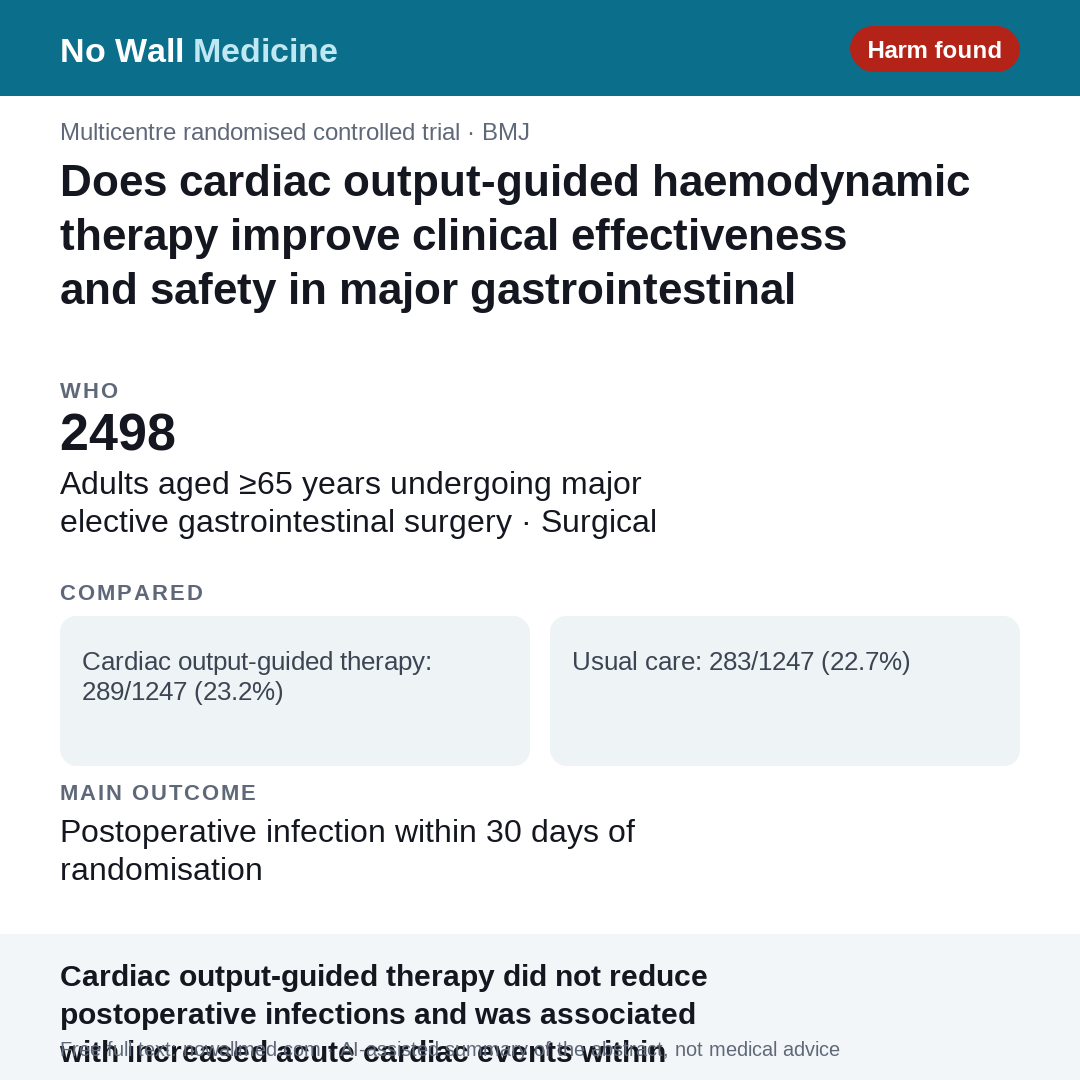
Cardiac output-guided haemodynamic therapy for patients undergoing major gastrointestinal surgery: OPTIMISE II randomised clinical trial
Multicentre randomised controlled trialHarm found
Does cardiac output-guided haemodynamic therapy improve clinical effectiveness and safety in major gastrointestinal surgery?
Who
2498
Adults aged ≥65 years undergoing major elective gastrointestinal surgery · Surgical services of 55 hospitals worldwide
Compared
Cardiac output-guided therapy: 289/1247 (23.2%)
Usual care: 283/1247 (22.7%)
Main outcome
Postoperative infection within 30 days of randomisation
Result: adjusted odds ratio 1.03 (95% confidence interval 0.84 to 1.25)
Bottom line: Cardiac output-guided therapy did not reduce postoperative infections and was associated with increased acute cardiac events within 24 hours.
BMJ · 2024-12-03Download image
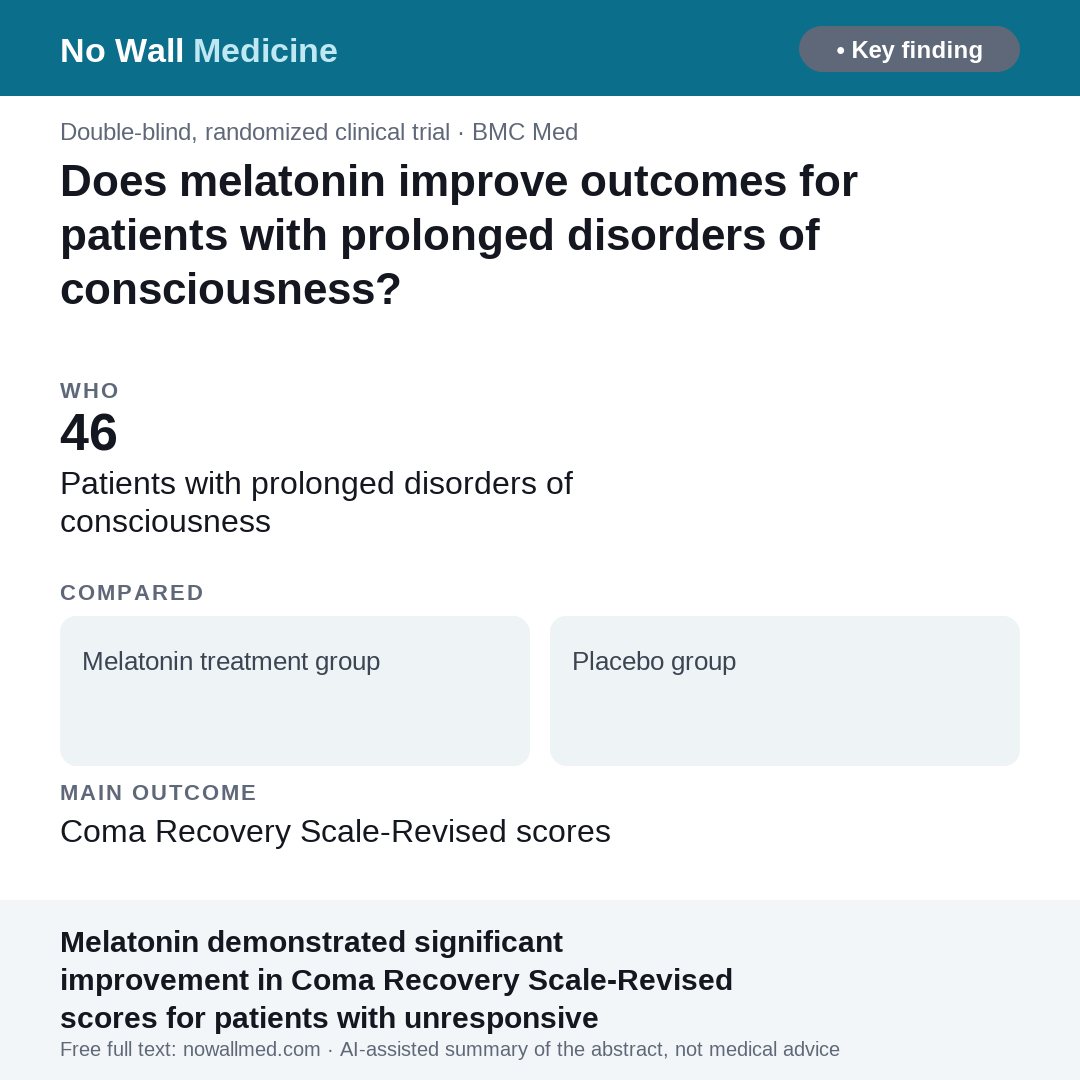
Efficacy of melatonin for prolonged disorders of consciousness: a double-blind, randomized clinical trial
Double-blind, randomized clinical trialBenefit found
Does melatonin improve outcomes for patients with prolonged disorders of consciousness?
Who
46
Patients with prolonged disorders of consciousness
Compared
Melatonin treatment group
Placebo group
Main outcome
Coma Recovery Scale-Revised scores
Bottom line: Melatonin demonstrated significant improvement in Coma Recovery Scale-Revised scores for patients with unresponsive wakefulness syndrome.
BMC Med · 2024-12-03Download image
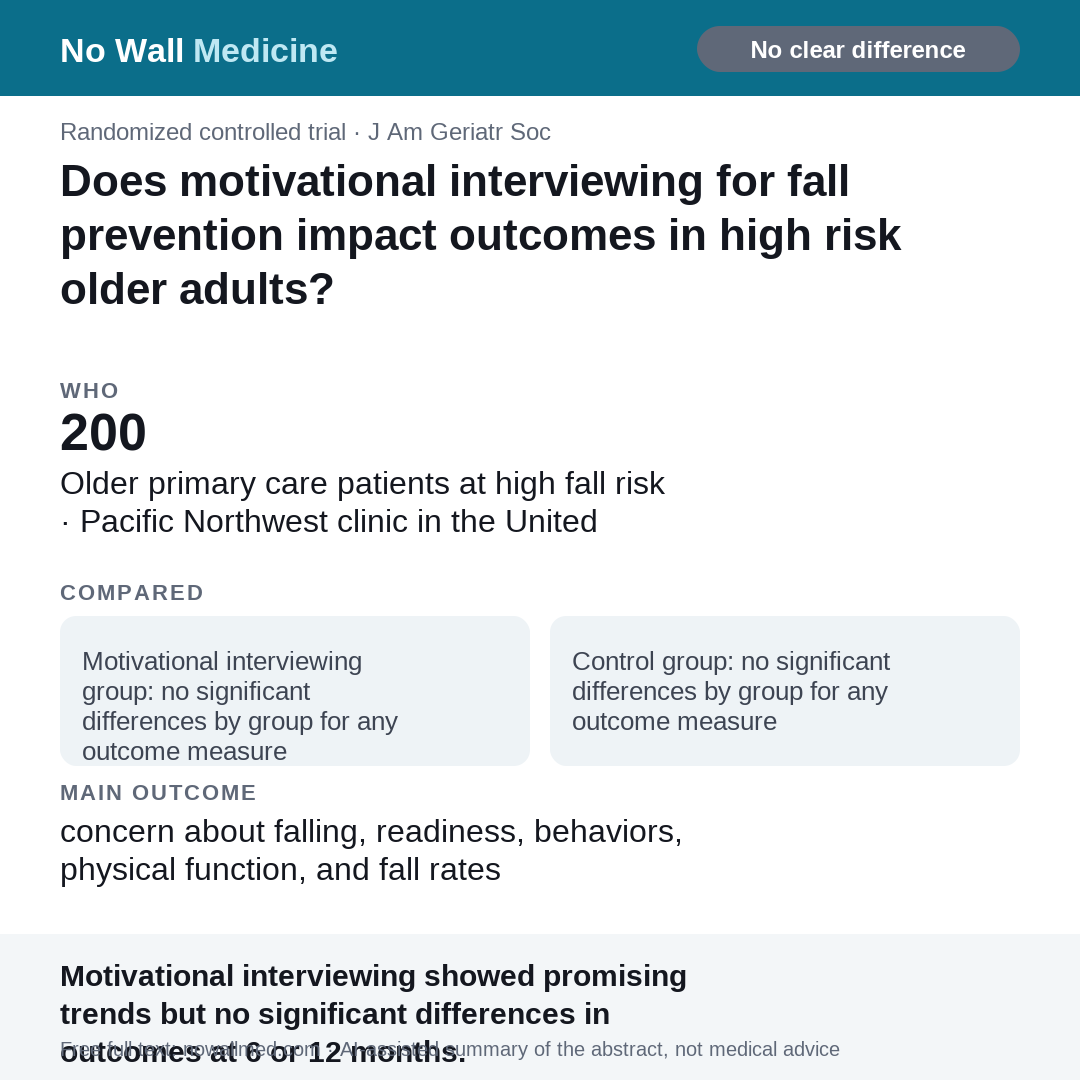
Motivational interviewing for fall prevention (MI-FP) pilot study: Randomized controlled trial
Randomized controlled trialNo clear difference
Does motivational interviewing for fall prevention impact outcomes in high risk older adults?
Who
200
Older primary care patients at high fall risk · Pacific Northwest clinic in the United States
Compared
Motivational interviewing group: no significant differences by group for any outcome measure
Control group: no significant differences by group for any outcome measure
Main outcome
concern about falling, readiness, behaviors, physical function, and fall rates
Bottom line: Motivational interviewing showed promising trends but no significant differences in outcomes at 6 or 12 months.
J Am Geriatr Soc · 2024-12-03Download image
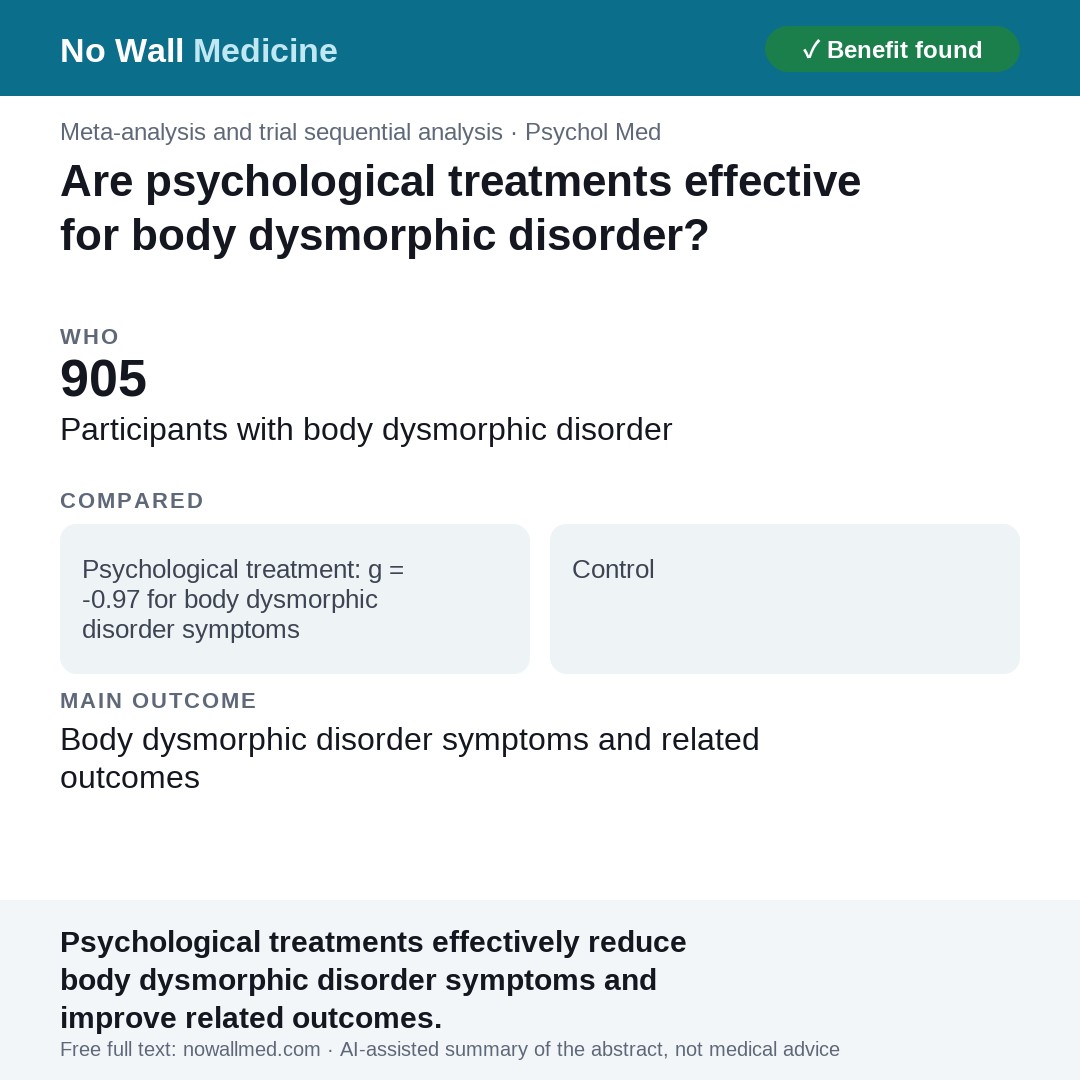
The efficacy of psychological treatments on body dysmorphic disorder: a meta-analysis and trial sequential analysis of randomized controlled trials
Meta-analysis and trial sequential analysisBenefit found
Are psychological treatments effective for body dysmorphic disorder?
Who
905
Participants with body dysmorphic disorder
Compared
Psychological treatment: g = -0.97 for body dysmorphic disorder symptoms
Control
Main outcome
Body dysmorphic disorder symptoms and related outcomes
Bottom line: Psychological treatments effectively reduce body dysmorphic disorder symptoms and improve related outcomes.
Limitation: Remaining outcome variables did not meet the desired level of evidence in trial sequential analysis.
Psychol Med · 2024-12-03Download image