Visual abstracts
New randomized trials and meta-analyses from leading journals at a glance: who was studied, what was compared, and what was found. Every paper is free to read in full.
All specialtiesCardiology 840Oncology 760Gastroenterology & Hepatology 306Infectious Disease 626Neurology 350Psychiatry & Mental Health 430Pulmonology 365Critical Care 243Endocrinology & Diabetes 480Pediatrics 534Surgery 319Orthopedics & Sports Medicine 161Neurosurgery 89Cardiothoracic & Vascular Surgery 87Plastic & Reconstructive Surgery 118Nephrology 197Rheumatology 108Hematology 181Dermatology 78Ophthalmology 97Obstetrics & Gynecology 261Public & Global Health 167Radiology & Imaging 96Anesthesiology 107Urology 162ENT (Otolaryngology) 86Emergency Medicine 68Allergy & Immunology 58Geriatrics 160Family Medicine & Primary Care 111Medical Genetics & Genomics 91Pathology & Laboratory Medicine 24Physical Medicine & Rehabilitation 148Palliative Care 81Nutrition 223Digital Health & AI 460General Medicine 101
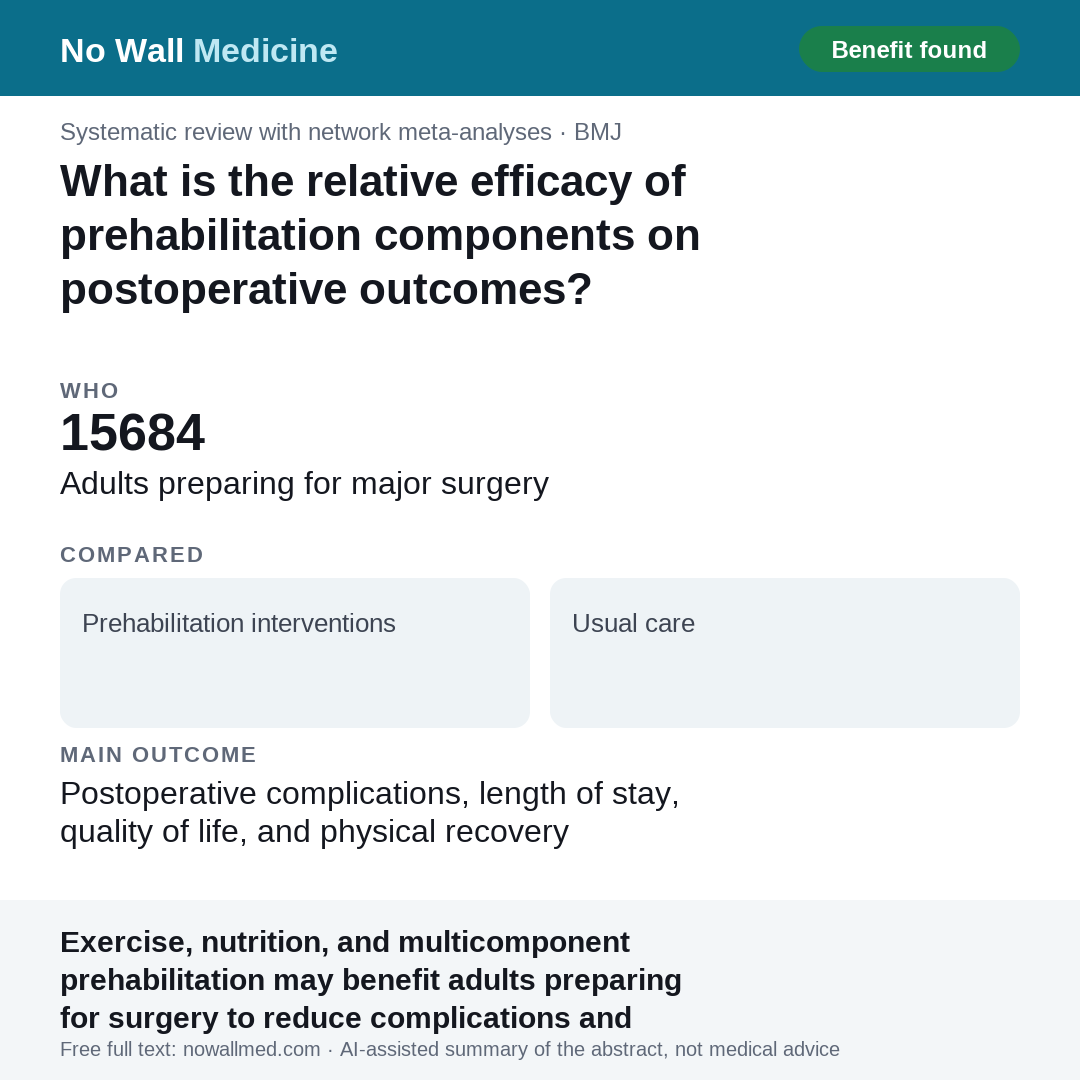
Relative efficacy of prehabilitation interventions and their components: systematic review with network and component network meta-analyses of randomised controlled trials
Systematic review with network meta-analysesBenefit found
What is the relative efficacy of prehabilitation components on postoperative outcomes?
Who
15684
Adults preparing for major surgery
Compared
Prehabilitation interventions
Usual care
Main outcome
Postoperative complications, length of stay, quality of life, and physical recovery
Result: isolated exercise odds ratio 0.50 (95% CI 0.39 to 0.64)
Bottom line: Exercise, nutrition, and multicomponent prehabilitation may benefit adults preparing for surgery to reduce complications and improve recovery.
Limitation: Certainty was low to very low due to trial level risk of bias and imprecision.
BMJ · 2025-01-22Download image
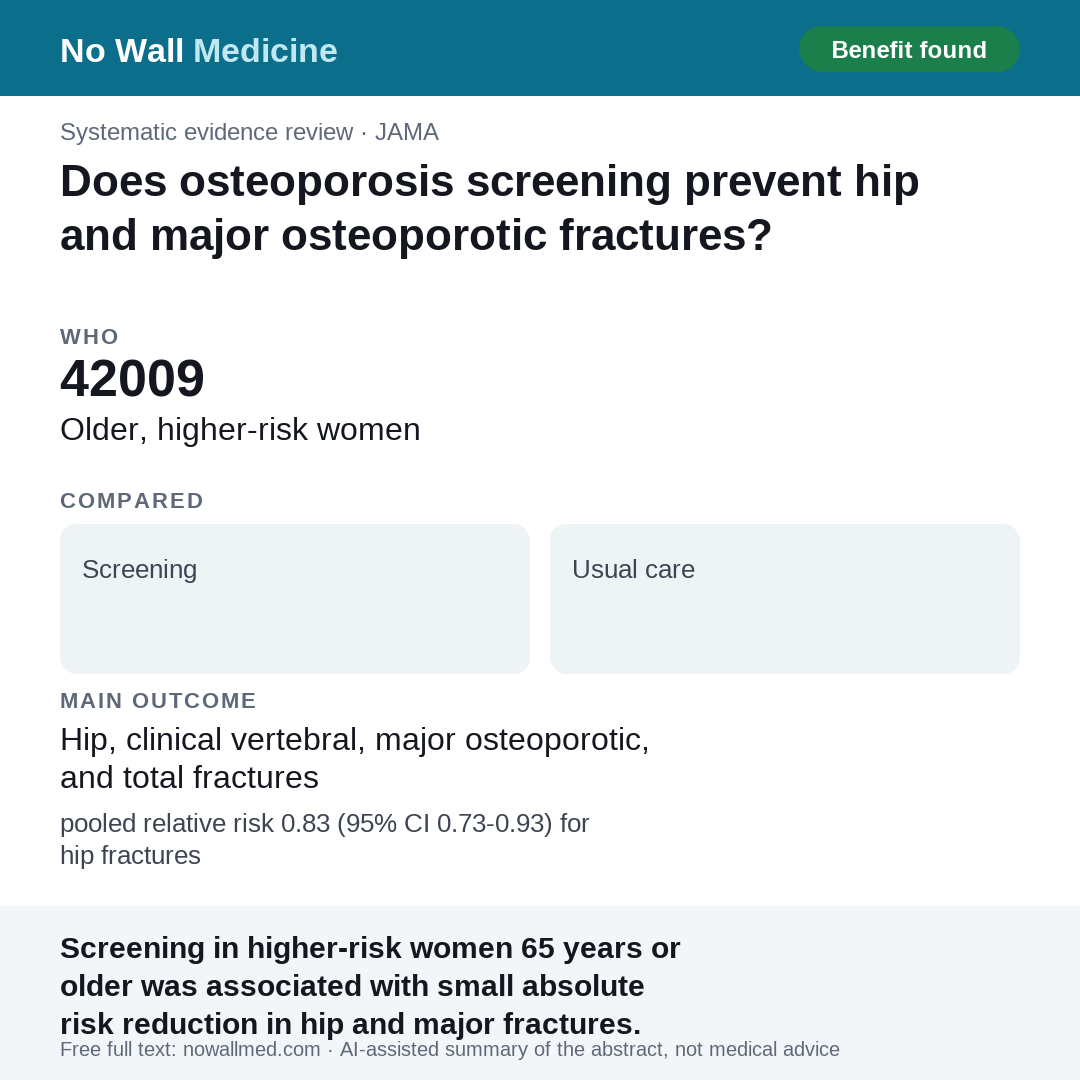
Screening for Osteoporosis to Prevent Fractures: A Systematic Evidence Review for the US Preventive Services Task Force
Systematic evidence reviewBenefit found
Does osteoporosis screening prevent hip and major osteoporotic fractures?
Who
42009
Older, higher-risk women
Compared
Screening
Usual care
Main outcome
Hip, clinical vertebral, major osteoporotic, and total fractures
Result: pooled relative risk 0.83 (95% CI 0.73-0.93) for hip fractures
Bottom line: Screening in higher-risk women 65 years or older was associated with small absolute risk reduction in hip and major fractures.
Limitation: No evidence evaluated screening with bone mineral density alone or screening in men or younger women.
JAMA · 2025-01-14Download image
Effectiveness of Synchronous Postdischarge Contacts on Health Care Use and Patient Satisfaction : A Systematic Review and Meta-analysis
Systematic review and meta-analysisNo clear difference
Do postdischarge contacts reduce emergency department visits, hospital readmissions, and improve patient satisfaction?
Who
Patients hospitalized receiving postdischarge contacts within 7 days
Compared
Postdischarge contacts
Usual care
Main outcome
30-day emergency department visits and 30-day hospital readmissions
Result: risk difference 0.00 (95% CI -0.02 to 0.03) for emergency department visits; risk difference 0.00 (CI -0.02 to 0.02) for hospital readmissions
Bottom line: Postdischarge contacts within 7 days did not reduce 30-day emergency department visits or hospital readmissions compared to usual care.
Limitation: Adherence and fidelity to postdischarge contact interventions were poorly described.
Funded by: Department of Veterans Affairs
Ann Intern Med · 2025-01-14Download image

Time to nursing home admission and death in people with dementia: systematic review and meta-analysis
Systematic review and meta-analysisMixed results
What is the time to nursing home admission and death in people with dementia?
Who
5553960
People with dementia
Compared
Women: mean difference 4.1 years (95% confidence interval 2.1 to 6.1) shorter survival than men
Men
Main outcome
Survival and nursing home admission
Bottom line: Survival and nursing home admission depend on age, sex, and dementia type, with over half admitted within five years.
BMJ · 2025-01-08Download image

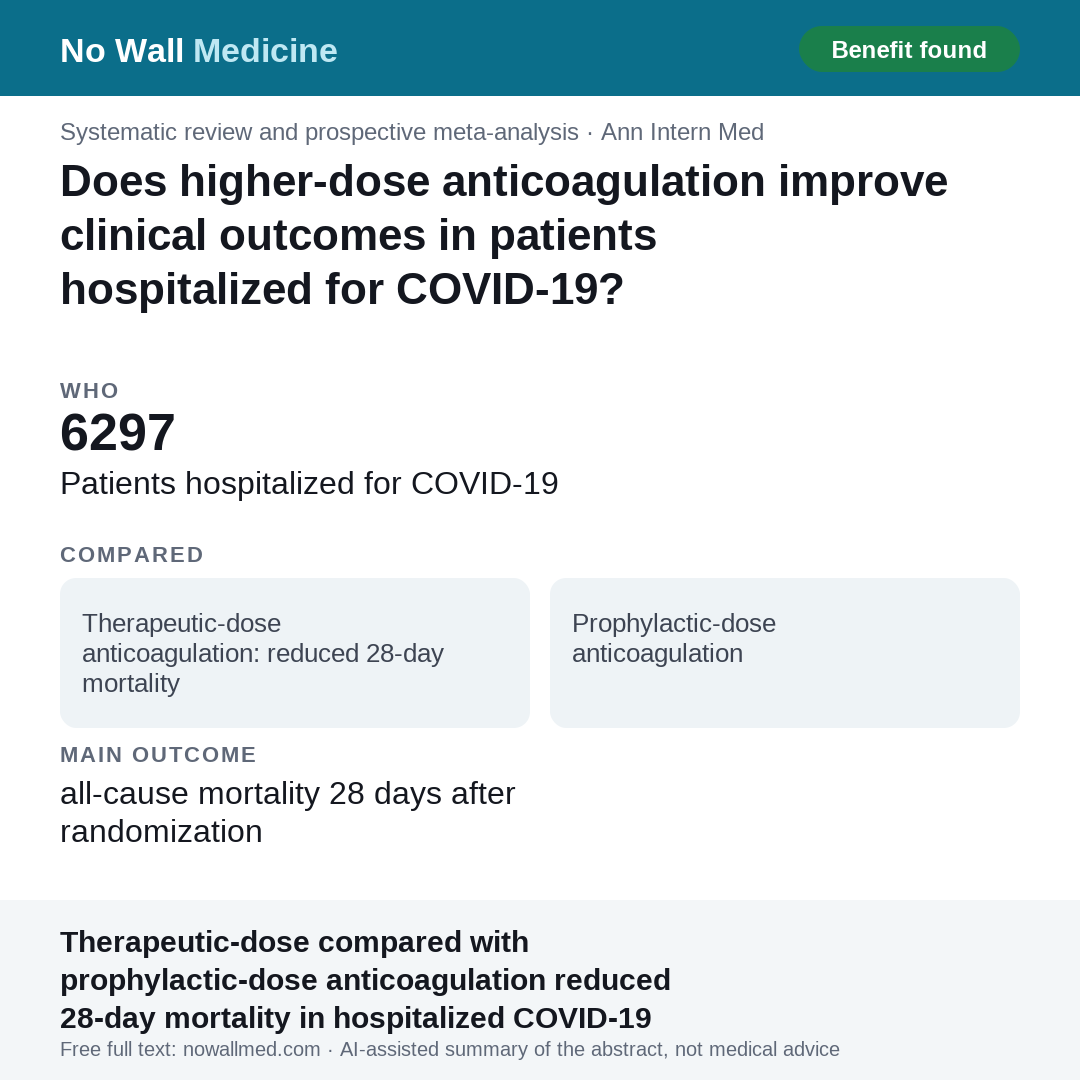
Anticoagulation Among Patients Hospitalized for COVID-19 : A Systematic Review and Prospective Meta-analysis
Systematic review and prospective meta-analysisBenefit found
Does higher-dose anticoagulation improve clinical outcomes in patients hospitalized for COVID-19?
Who
6297
Patients hospitalized for COVID-19
Compared
Therapeutic-dose anticoagulation: reduced 28-day mortality
Prophylactic-dose anticoagulation
Main outcome
all-cause mortality 28 days after randomization
Result: OR, 0.77 (95% CI, 0.64 to 0.93)
Bottom line: Therapeutic-dose compared with prophylactic-dose anticoagulation reduced 28-day mortality in hospitalized COVID-19 patients.
Limitation: some analyses were limited in power
Ann Intern Med · 2024-12-24Download image
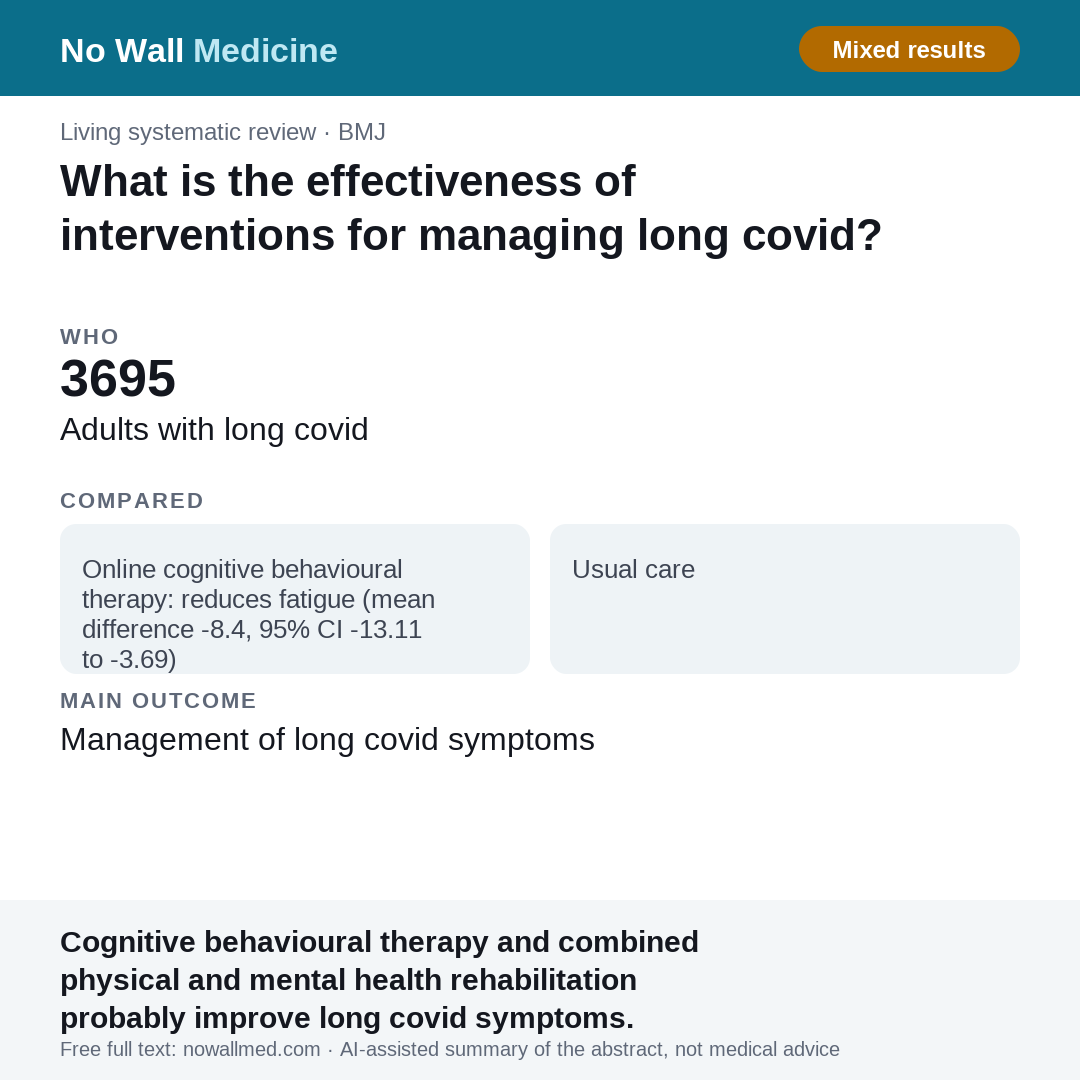
Interventions for the management of long covid (post-covid condition): living systematic review
Living systematic reviewMixed results
What is the effectiveness of interventions for managing long covid?
Who
3695
Adults with long covid
Compared
Online cognitive behavioural therapy: reduces fatigue (mean difference -8.4, 95% CI -13.11 to -3.69)
Usual care
Main outcome
Management of long covid symptoms
Bottom line: Cognitive behavioural therapy and combined physical and mental health rehabilitation probably improve long covid symptoms.
BMJ · 2024-11-27Download image
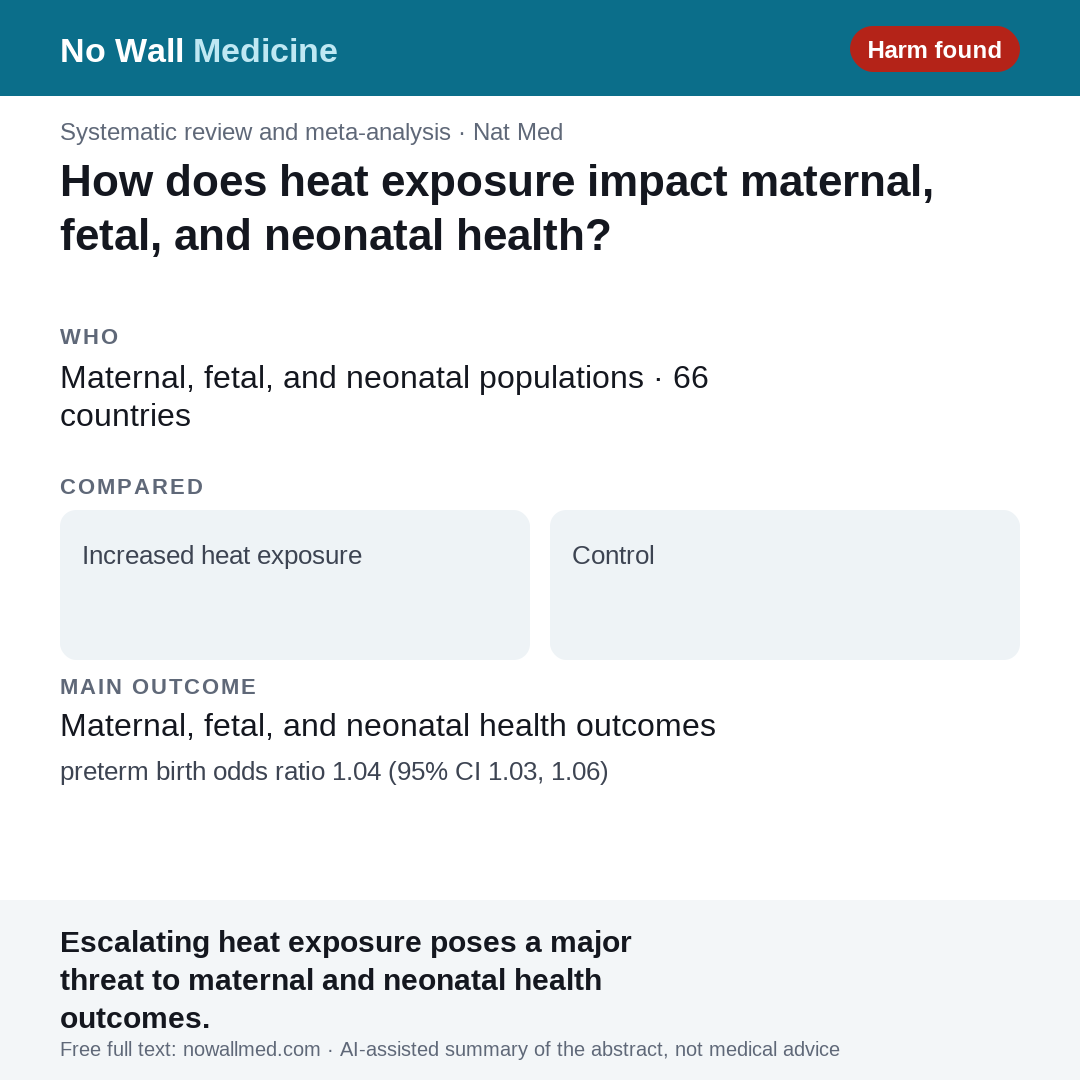
A systematic review and meta-analysis of heat exposure impacts on maternal, fetal and neonatal health
Systematic review and meta-analysisHarm found
How does heat exposure impact maternal, fetal, and neonatal health?
Who
Maternal, fetal, and neonatal populations · 66 countries
Compared
Increased heat exposure
Control
Main outcome
Maternal, fetal, and neonatal health outcomes
Result: preterm birth odds ratio 1.04 (95% CI 1.03, 1.06)
Bottom line: Escalating heat exposure poses a major threat to maternal and neonatal health outcomes.
Limitation: Heterogeneity in exposure metrics and study designs.
Nat Med · 2024-11-05Download image
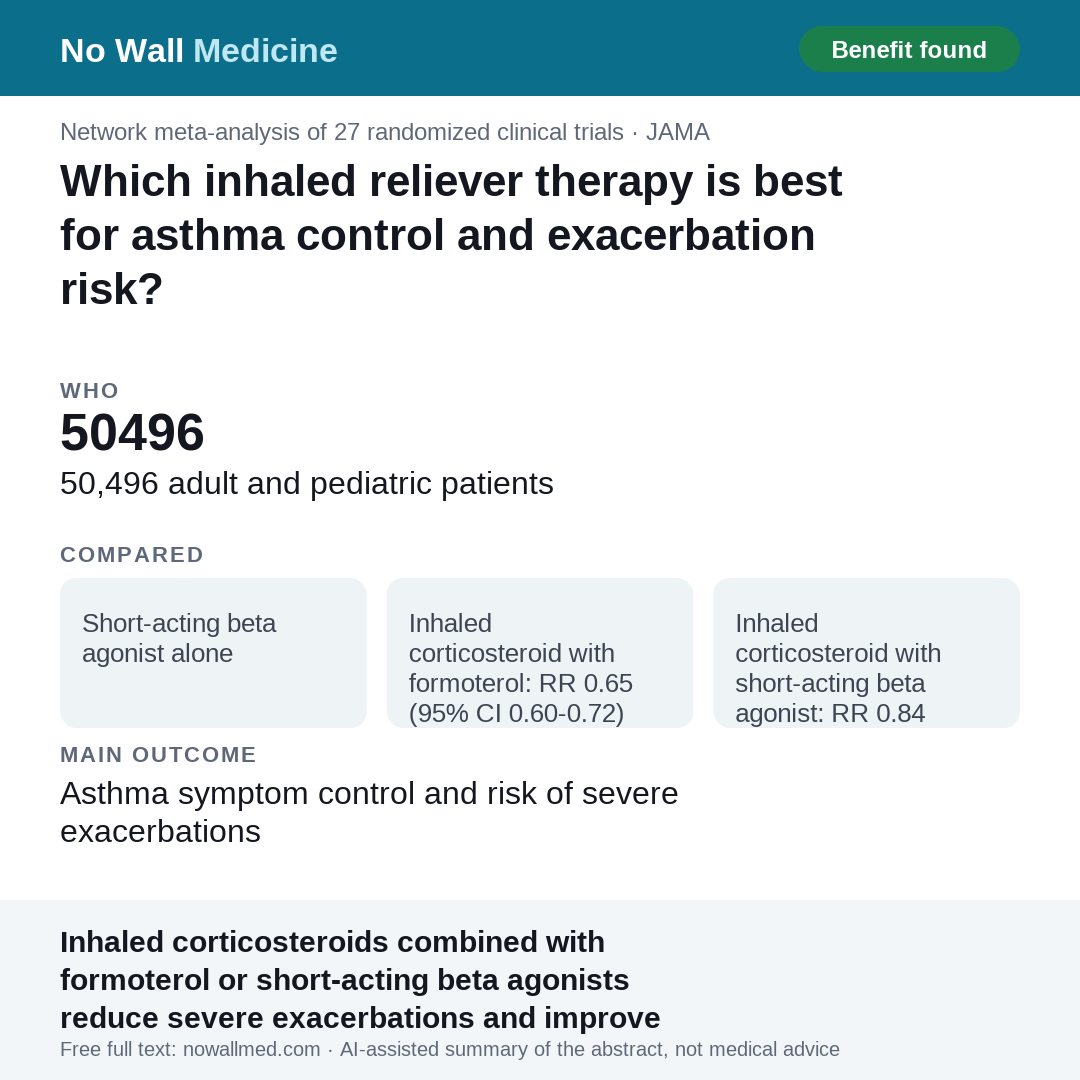
Inhaled Reliever Therapies for Asthma: A Systematic Review and Meta-Analysis
Network meta-analysis of 27 randomized clinical trialsBenefit found
Which inhaled reliever therapy is best for asthma control and exacerbation risk?
Who
50496
50,496 adult and pediatric patients
Compared
Short-acting beta agonist alone
Inhaled corticosteroid with formoterol: RR 0.65 (95% CI 0.60-0.72) for severe exacerbations
Inhaled corticosteroid with short-acting beta agonist: RR 0.84 (95% CI 0.73-0.95) for severe exacerbations
Main outcome
Asthma symptom control and risk of severe exacerbations
Result: ICS-formoterol RR 0.65 (95% CI 0.60-0.72) for severe exacerbations
Bottom line: Inhaled corticosteroids combined with formoterol or short-acting beta agonists reduce severe exacerbations and improve asthma control compared to short-acting beta agonists alone.
JAMA · 2024-10-28Download image
Testing and Evaluation of Health Care Applications of Large Language Models: A Systematic Review
Systematic reviewMixed results
How are large language models currently evaluated in health care settings?
Who
519
Studies evaluating one or more large language models in health care
Compared
5%Studies using real patient care data
95.4%Studies using accuracy as primary dimension
Main outcome
Evaluation components including data type, task, and dimension
Bottom line: Evaluations mostly focus on accuracy in question answering for medical exams rather than real patient care data.
JAMA · 2024-10-15Download image

Strategies and tactics to reduce the impact of healthcare on climate change: systematic review
Systematic reviewMixed results
How can healthcare systems mitigate their greenhouse gas emissions?
Who
205
Healthcare services and institutions
Compared
51.5%Macro level
Micro and meso levels
Main outcome
Strategies and tactics to reduce greenhouse gas emissions
Bottom line: Healthcare systems can reduce emissions through clinical changes, policy, waste management, and decarbonising supply chains.
BMJ · 2024-10-08Download image

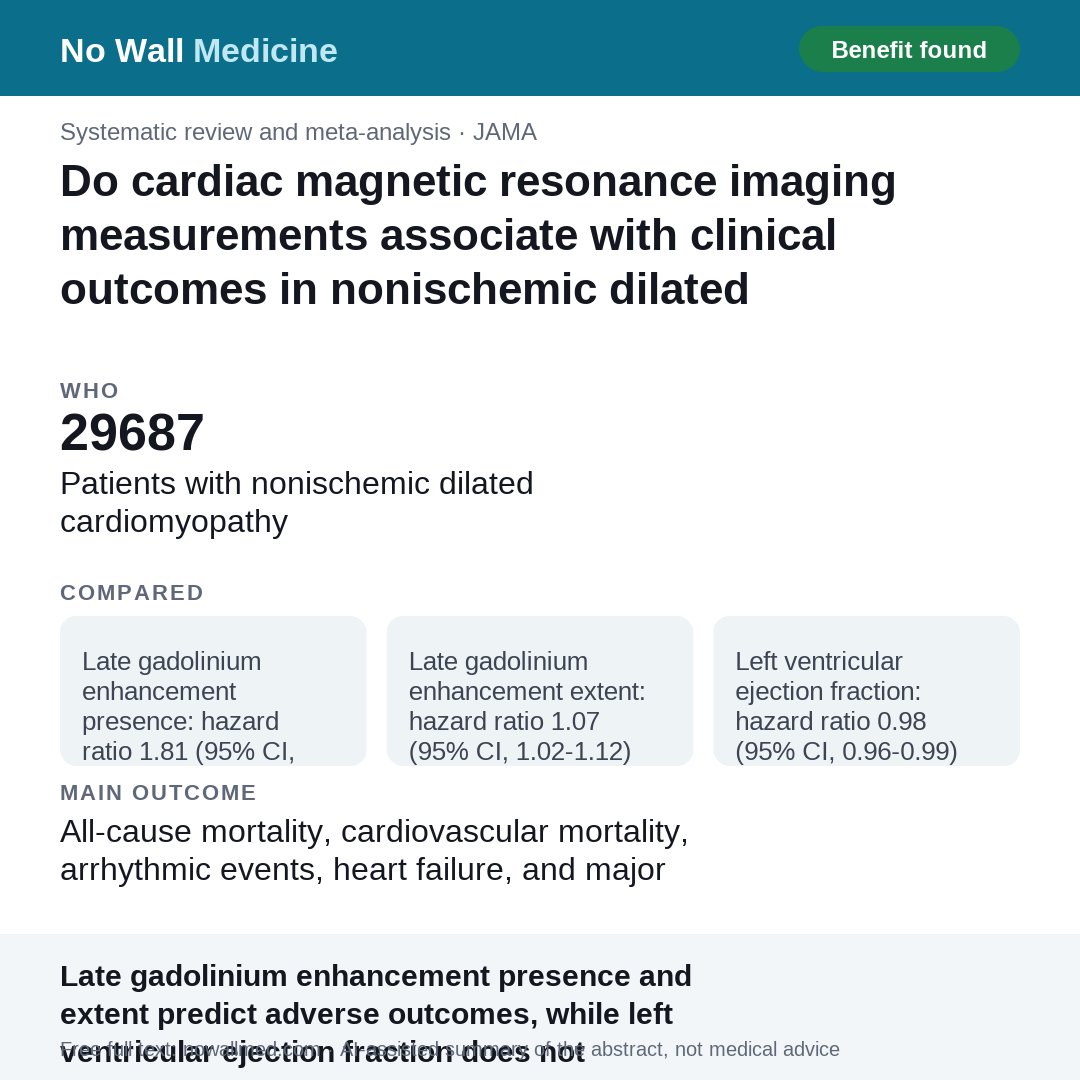
Risk Stratification in Nonischemic Dilated Cardiomyopathy Using CMR Imaging: A Systematic Review and Meta-Analysis
Systematic review and meta-analysisBenefit found
Do cardiac magnetic resonance imaging measurements associate with clinical outcomes in nonischemic dilated cardiomyopathy?
Who
29687
Patients with nonischemic dilated cardiomyopathy
Compared
Late gadolinium enhancement presence: hazard ratio 1.81 (95% CI, 1.60-2.04) for all-cause mortality
Late gadolinium enhancement extent: hazard ratio 1.07 (95% CI, 1.02-1.12) for all-cause mortality
Left ventricular ejection fraction: hazard ratio 0.98 (95% CI, 0.96-0.99) for major adverse cardiac events
Main outcome
All-cause mortality, cardiovascular mortality, arrhythmic events, heart failure, and major adverse cardiac events
Bottom line: Late gadolinium enhancement presence and extent predict adverse outcomes, while left ventricular ejection fraction does not predict mortality.
Limitation: Limited data precluded definitive analysis for native T1 relaxation times, global longitudinal strain, and extracellular volume fraction mortality.
JAMA · 2024-09-19Download image
Comparative effects of drug interventions for the acute management of migraine episodes in adults: systematic review and network meta-analysis
Systematic review and network meta-analysisBenefit found
Which oral monotherapies are most effective for acute migraine management in adults?
Who
89445
Adults with a diagnosis of migraine
Compared
Active interventions
Placebo
Main outcome
Pain freedom at two hours and sustained pain freedom to 24 hours
Result: odds ratios from 1.73 (95% CI 1.27 to 2.34) to 5.19 (4.25 to 6.33)
Bottom line: Eletriptan, rizatriptan, sumatriptan, and zolmitriptan were most effective for acute migraine treatment.
Limitation: Confidence in accordance with CINeMA ranged from high to very low.
BMJ · 2024-09-18Download image

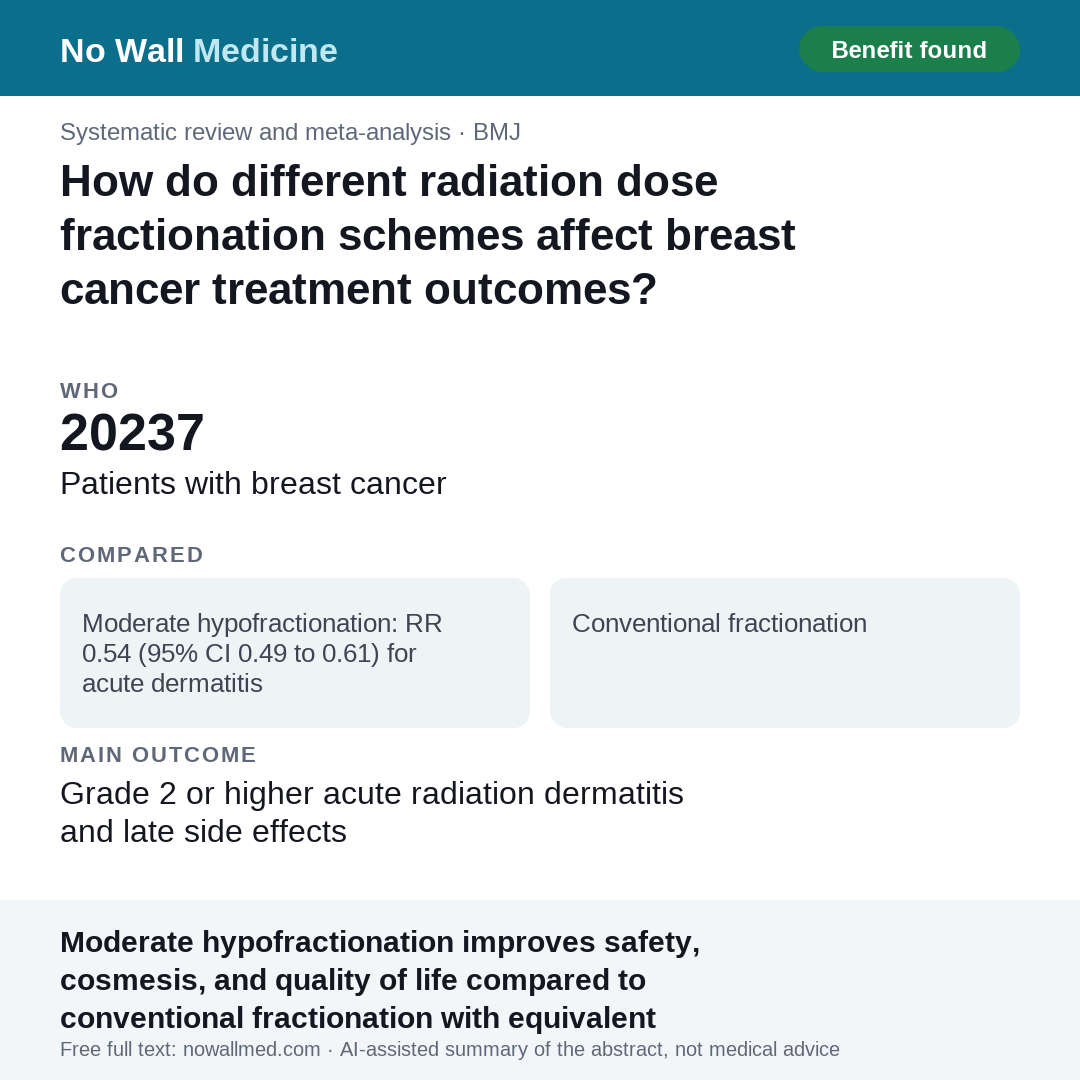
Randomised controlled trials on radiation dose fractionation in breast cancer: systematic review and meta-analysis with emphasis on side effects and cosmesis
Systematic review and meta-analysisBenefit found
How do different radiation dose fractionation schemes affect breast cancer treatment outcomes?
Who
20237
Patients with breast cancer
Compared
Moderate hypofractionation: RR 0.54 (95% CI 0.49 to 0.61) for acute dermatitis
Conventional fractionation
Main outcome
Grade 2 or higher acute radiation dermatitis and late side effects
Result: RR 0.54 (95% CI 0.49 to 0.61)
Bottom line: Moderate hypofractionation improves safety, cosmesis, and quality of life compared to conventional fractionation with equivalent oncological outcomes.
Limitation: 78.4% of outcomes had some concerns or high risk of bias.
BMJ · 2024-09-11Download image
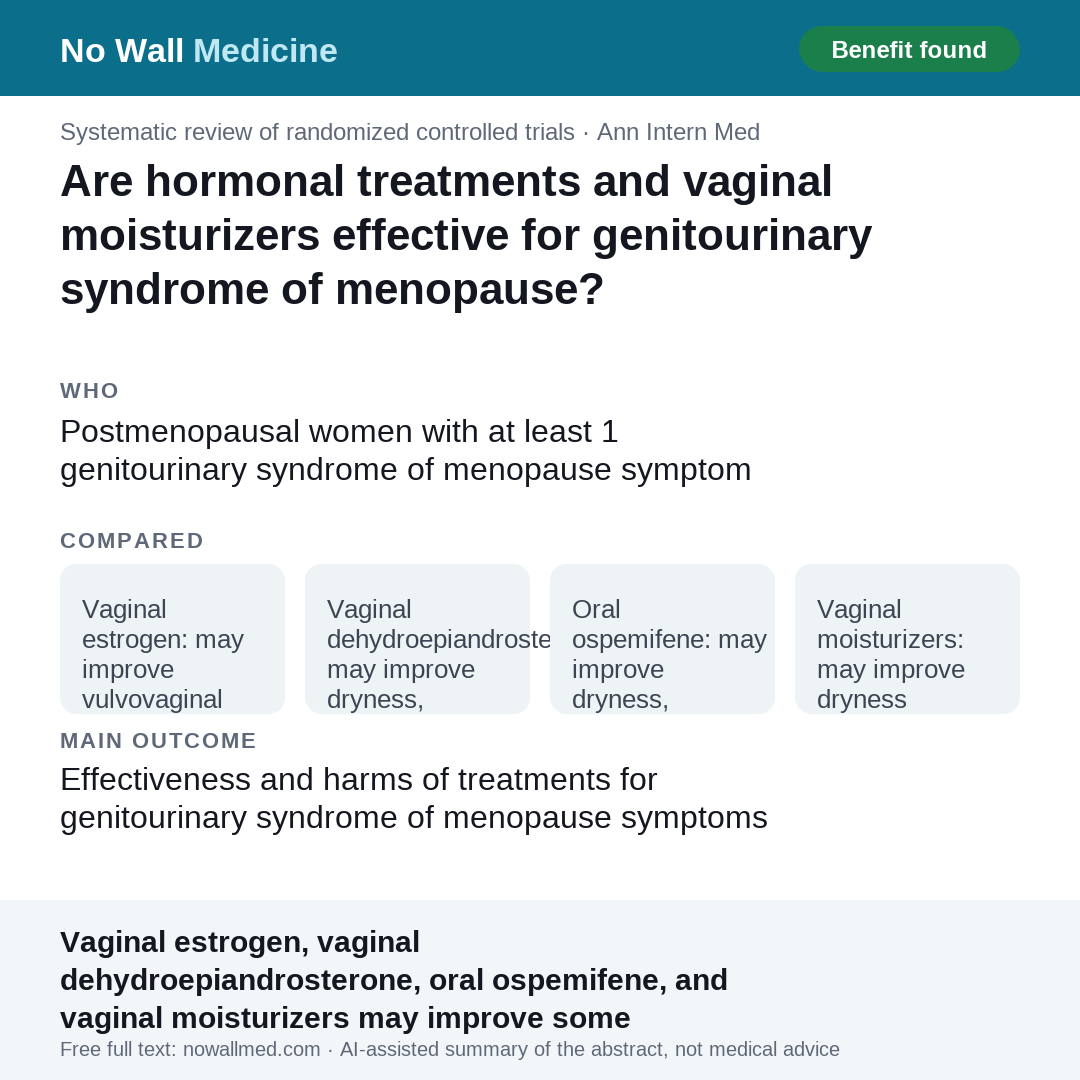
Hormonal Treatments and Vaginal Moisturizers for Genitourinary Syndrome of Menopause : A Systematic Review
Systematic review of randomized controlled trialsBenefit found
Are hormonal treatments and vaginal moisturizers effective for genitourinary syndrome of menopause?
Who
Postmenopausal women with at least 1 genitourinary syndrome of menopause symptom
Compared
Vaginal estrogen: may improve vulvovaginal dryness, dyspareunia, most bothersome symptom, and treatment satisfaction
Vaginal dehydroepiandrosterone: may improve dryness, dyspareunia, and distress, bother, or interference
Oral ospemifene: may improve dryness, dyspareunia, and treatment satisfaction
Vaginal moisturizers: may improve dryness
Main outcome
Effectiveness and harms of treatments for genitourinary syndrome of menopause symptoms
Bottom line: Vaginal estrogen, vaginal dehydroepiandrosterone, oral ospemifene, and vaginal moisturizers may improve some symptoms in the short term.
Limitation: Short-duration studies, heterogeneous diagnostic criteria, and few women with a history of cancer.
Funded by: Agency for Healthcare Research and Quality and Patient-Centered Outcomes Research Institute
Ann Intern Med · 2024-09-10Download image
Mineralocorticoid receptor antagonists in heart failure: an individual patient level meta-analysis
Individual patient level meta-analysisBenefit found
Do mineralocorticoid receptor antagonists reduce cardiovascular death or heart failure hospitalisation?
Who
13846
Patients with heart failure across the ejection fraction range
Compared
Mineralocorticoid receptor antagonists
Placebo
Main outcome
Time to first hospitalisation for heart failure or cardiovascular death
Result: hazard ratio 0·77 (95% CI 0·72-0·83)
Bottom line: Mineralocorticoid receptor antagonists reduce cardiovascular death or heart failure hospitalisation across various ejection fraction levels.
Lancet · 2024-09-01Download image

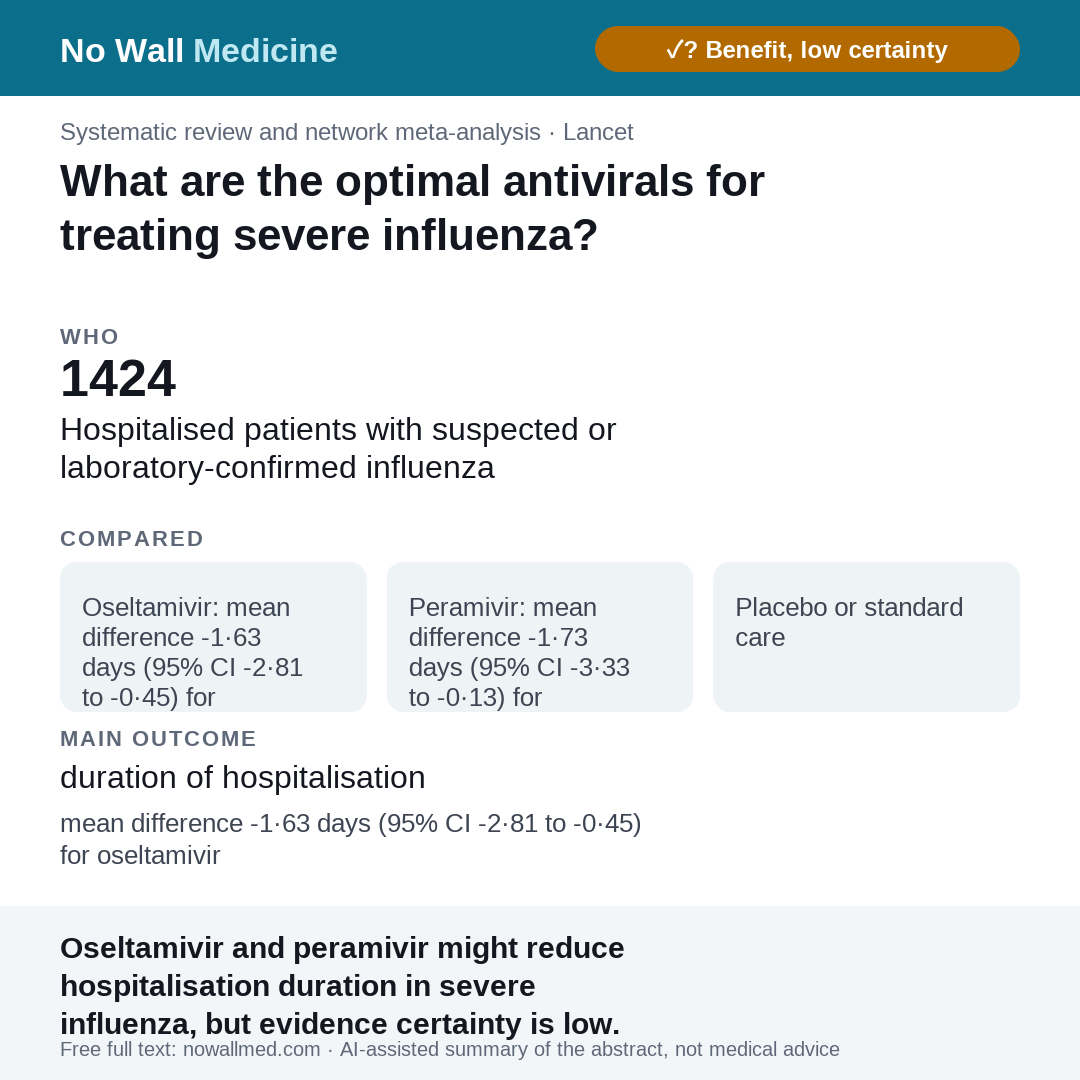
Antivirals for treatment of severe influenza: a systematic review and network meta-analysis of randomised controlled trials
Systematic review and network meta-analysisBenefit found
What are the optimal antivirals for treating severe influenza?
Who
1424
Hospitalised patients with suspected or laboratory-confirmed influenza
Compared
Oseltamivir: mean difference -1·63 days (95% CI -2·81 to -0·45) for hospitalisation
Peramivir: mean difference -1·73 days (95% CI -3·33 to -0·13) for hospitalisation
Placebo or standard care
Main outcome
duration of hospitalisation
Result: mean difference -1·63 days (95% CI -2·81 to -0·45) for oseltamivir
Bottom line: Oseltamivir and peramivir might reduce hospitalisation duration in severe influenza, but evidence certainty is low.
Limitation: Small number of eligible trials prevented testing for publication bias.
Funded by: World Health Organization
Lancet · 2024-08-26Download image
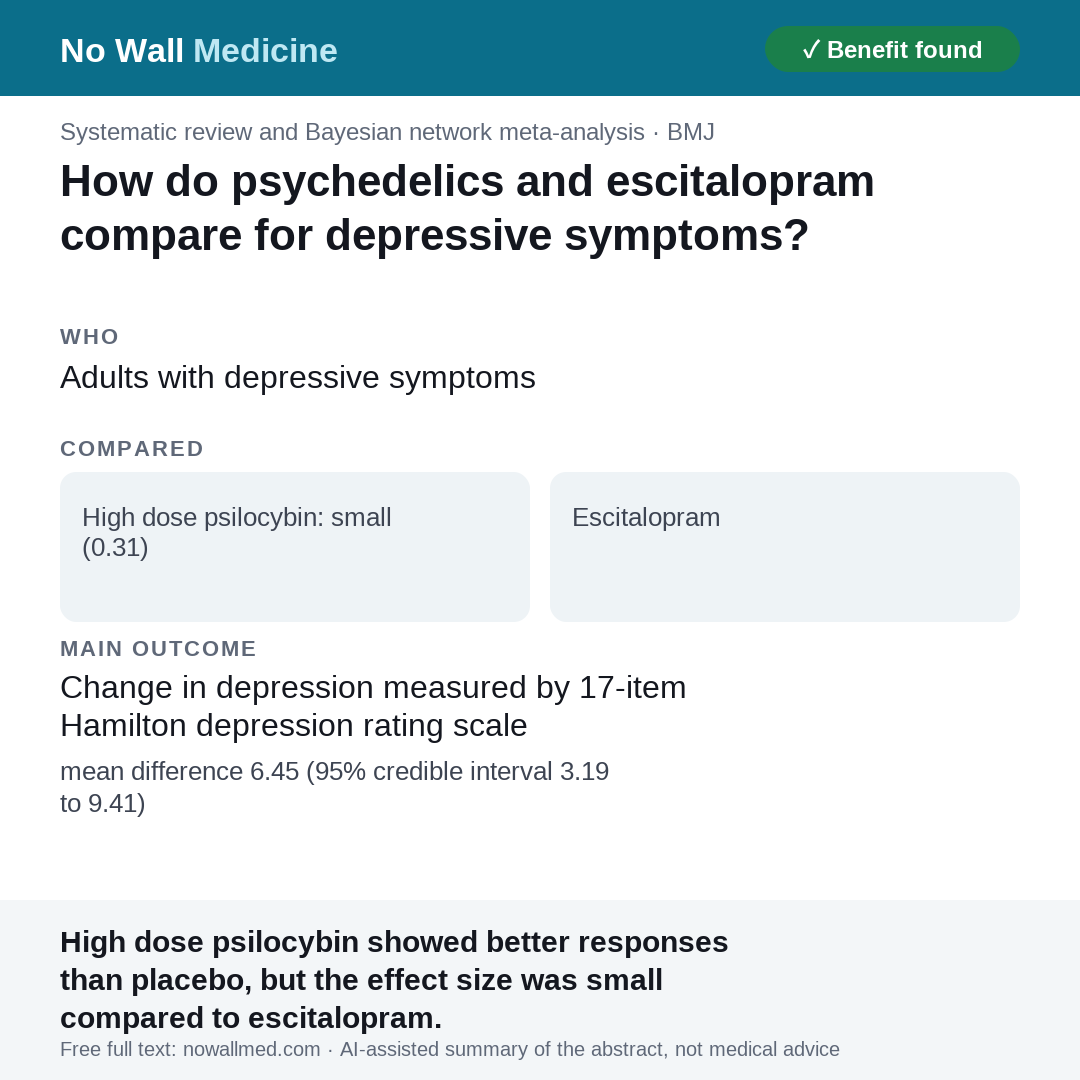
Comparative oral monotherapy of psilocybin, lysergic acid diethylamide, 3,4-methylenedioxymethamphetamine, ayahuasca, and escitalopram for depressive symptoms: systematic review and Bayesian network meta-analysis
Systematic review and Bayesian network meta-analysisBenefit found
How do psychedelics and escitalopram compare for depressive symptoms?
Who
Adults with depressive symptoms
Compared
High dose psilocybin: small (0.31)
Escitalopram
Main outcome
Change in depression measured by 17-item Hamilton depression rating scale
Result: mean difference 6.45 (95% credible interval 3.19 to 9.41)
Bottom line: High dose psilocybin showed better responses than placebo, but the effect size was small compared to escitalopram.
Limitation: Potential for overestimated effectiveness due to unsuccessful blinding.
BMJ · 2024-08-21Download image
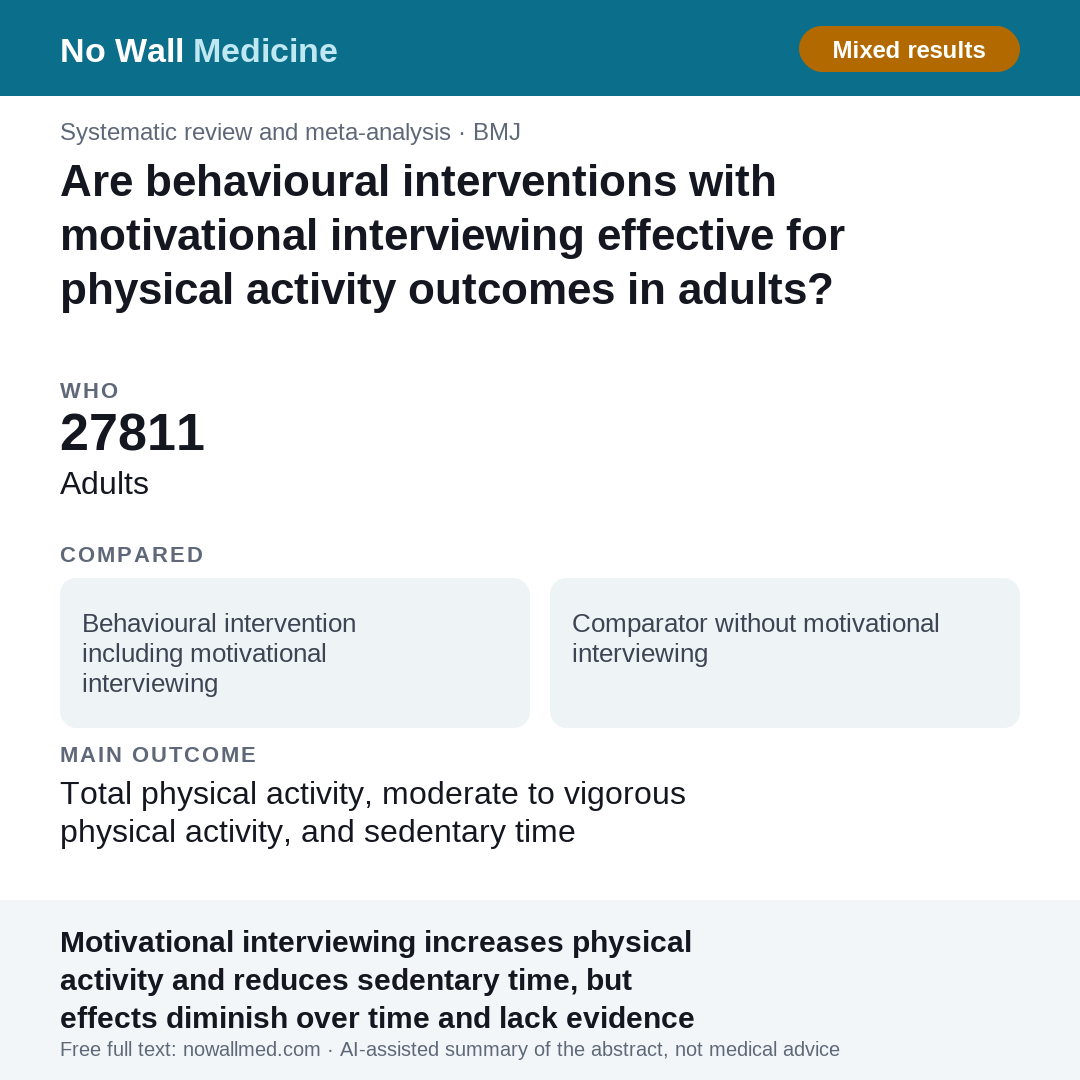
Effectiveness of behavioural interventions with motivational interviewing on physical activity outcomes in adults: systematic review and meta-analysis
Systematic review and meta-analysisMixed results
Are behavioural interventions with motivational interviewing effective for physical activity outcomes in adults?
Who
27811
Adults
Compared
Behavioural intervention including motivational interviewing
Comparator without motivational interviewing
Main outcome
Total physical activity, moderate to vigorous physical activity, and sedentary time
Result: SMD 0.45 (95% CI 0.33 to 0.65) for total physical activity
Bottom line: Motivational interviewing increases physical activity and reduces sedentary time, but effects diminish over time and lack evidence beyond one year.
Limitation: Effectiveness waned over time and evidence of benefit beyond one year was lacking.
BMJ · 2024-07-10Download image
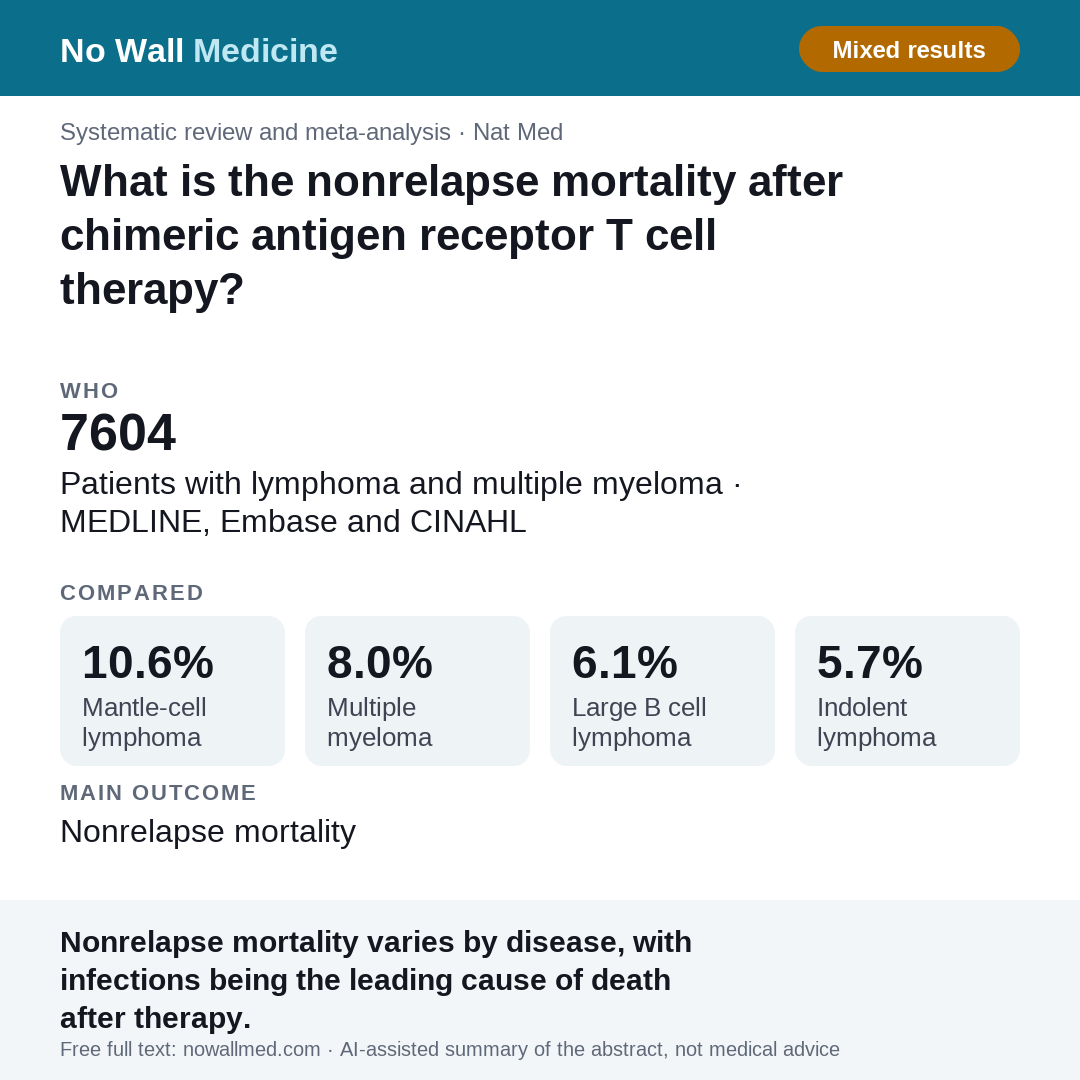
A systematic review and meta-analysis of nonrelapse mortality after CAR T cell therapy
Systematic review and meta-analysisMixed results
What is the nonrelapse mortality after chimeric antigen receptor T cell therapy?
Who
7604
Patients with lymphoma and multiple myeloma · MEDLINE, Embase and CINAHL
Compared
10.6%Mantle-cell lymphoma
8.0%Multiple myeloma
6.1%Large B cell lymphoma
5.7%Indolent lymphoma
Main outcome
Nonrelapse mortality
Bottom line: Nonrelapse mortality varies by disease, with infections being the leading cause of death after therapy.
Nat Med · 2024-07-08Download image
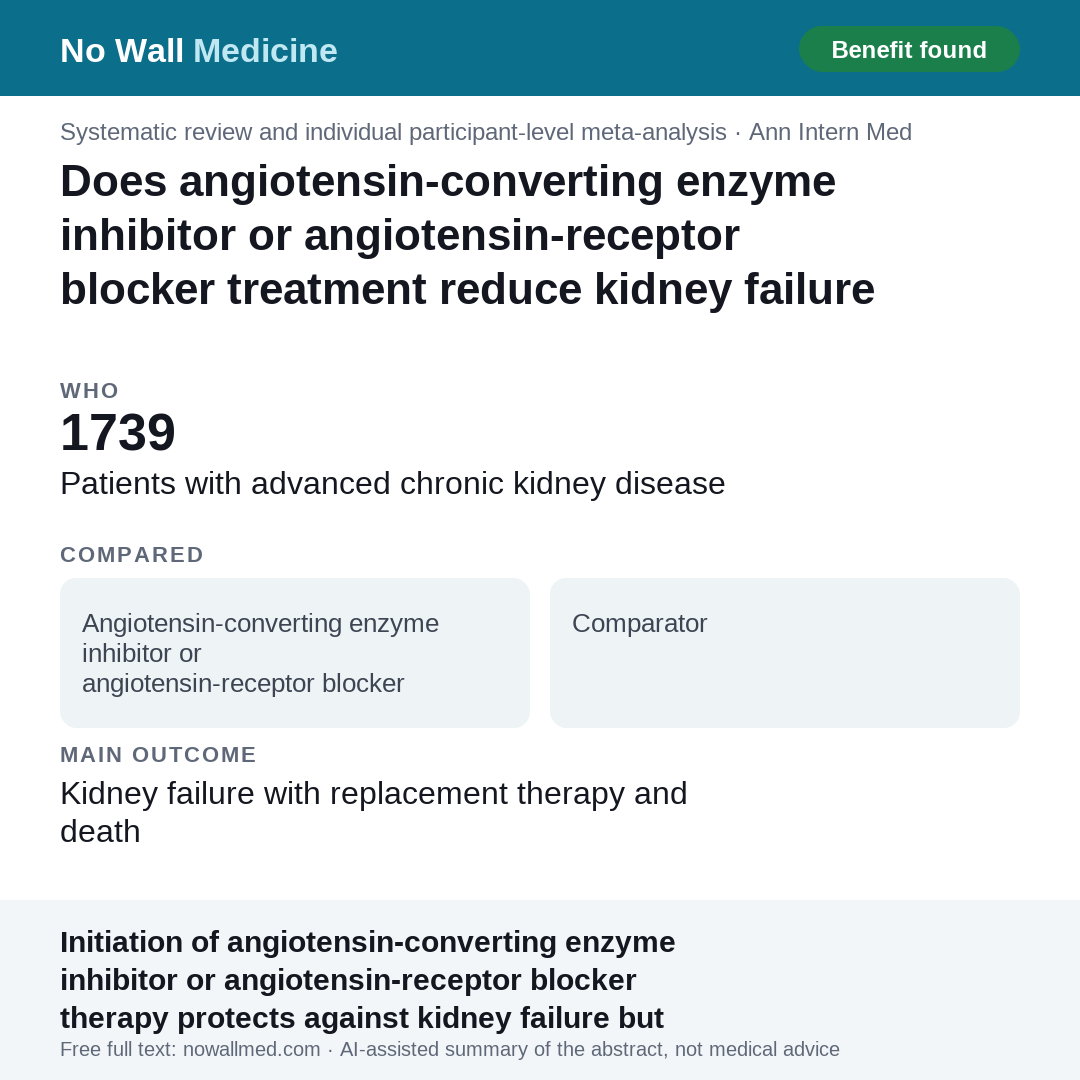
Angiotensin-Converting Enzyme Inhibitors or Angiotensin-Receptor Blockers for Advanced Chronic Kidney Disease : A Systematic Review and Retrospective Individual Participant-Level Meta-analysis of Clinical Trials
Systematic review and individual participant-level meta-analysisBenefit found
Does angiotensin-converting enzyme inhibitor or angiotensin-receptor blocker treatment reduce kidney failure or death?
Who
1739
Patients with advanced chronic kidney disease
Compared
Angiotensin-converting enzyme inhibitor or angiotensin-receptor blocker
Comparator
Main outcome
Kidney failure with replacement therapy and death
Result: adjusted hazard ratio 0.66 (95% CI 0.55 to 0.79) for kidney failure
Bottom line: Initiation of angiotensin-converting enzyme inhibitor or angiotensin-receptor blocker therapy protects against kidney failure but not death in advanced chronic kidney disease.
Limitation: Individual participant-level data for hyperkalemia or acute kidney injury were not available.
Funded by: National Institutes of Health
Ann Intern Med · 2024-07-02Download image