Visual abstracts
New randomized trials and meta-analyses from leading journals at a glance: who was studied, what was compared, and what was found. Every paper is free to read in full.
All specialtiesCardiology 4877Oncology 4138Gastroenterology & Hepatology 1942Infectious Disease 3837Neurology 1905Psychiatry & Mental Health 2273Pulmonology 2143Critical Care 1365Endocrinology & Diabetes 2580Pediatrics 2980Surgery 2559Orthopedics & Sports Medicine 931Neurosurgery 537Cardiothoracic & Vascular Surgery 674Plastic & Reconstructive Surgery 591Nephrology 1133Rheumatology 823Hematology 1109Dermatology 621Ophthalmology 543Obstetrics & Gynecology 1686Public & Global Health 1058Radiology & Imaging 648Anesthesiology 986Urology 764ENT (Otolaryngology) 503Emergency Medicine 511Allergy & Immunology 313Geriatrics 981Family Medicine & Primary Care 562Medical Genetics & Genomics 676Pathology & Laboratory Medicine 159Physical Medicine & Rehabilitation 757Palliative Care 444Nutrition 1588Digital Health & AI 2201General Medicine 321
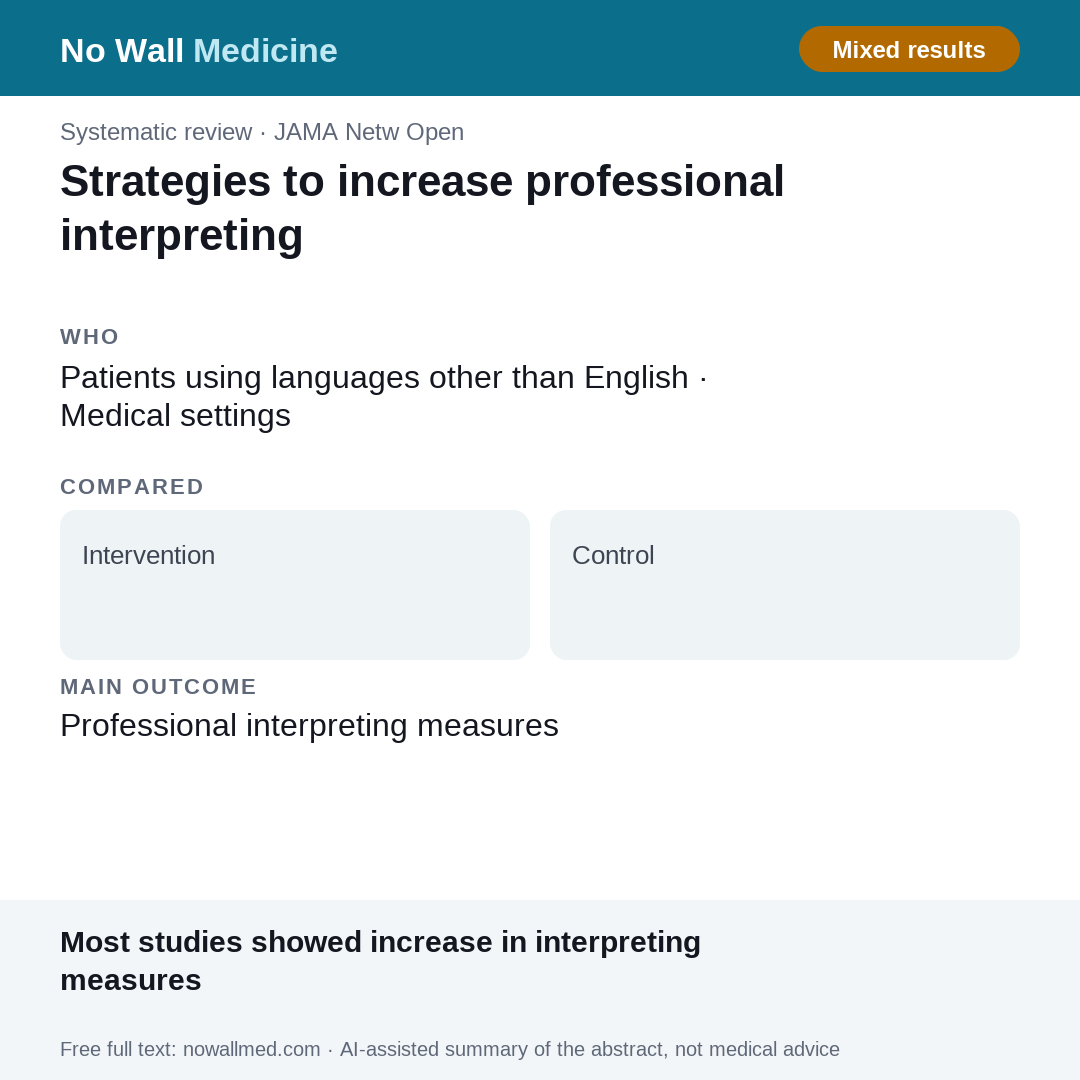
Strategies to Increase Professional Interpreting in Clinical Settings: A Systematic Review
Systematic reviewMixed results
Strategies to increase professional interpreting
Who
Patients using languages other than English · Medical settings
Compared
Intervention
Control
Main outcome
Professional interpreting measures
Bottom line: Most studies showed increase in interpreting measures
Limitation: Heterogeneity and risk of bias
JAMA Netw Open · 2025-07-01Download image
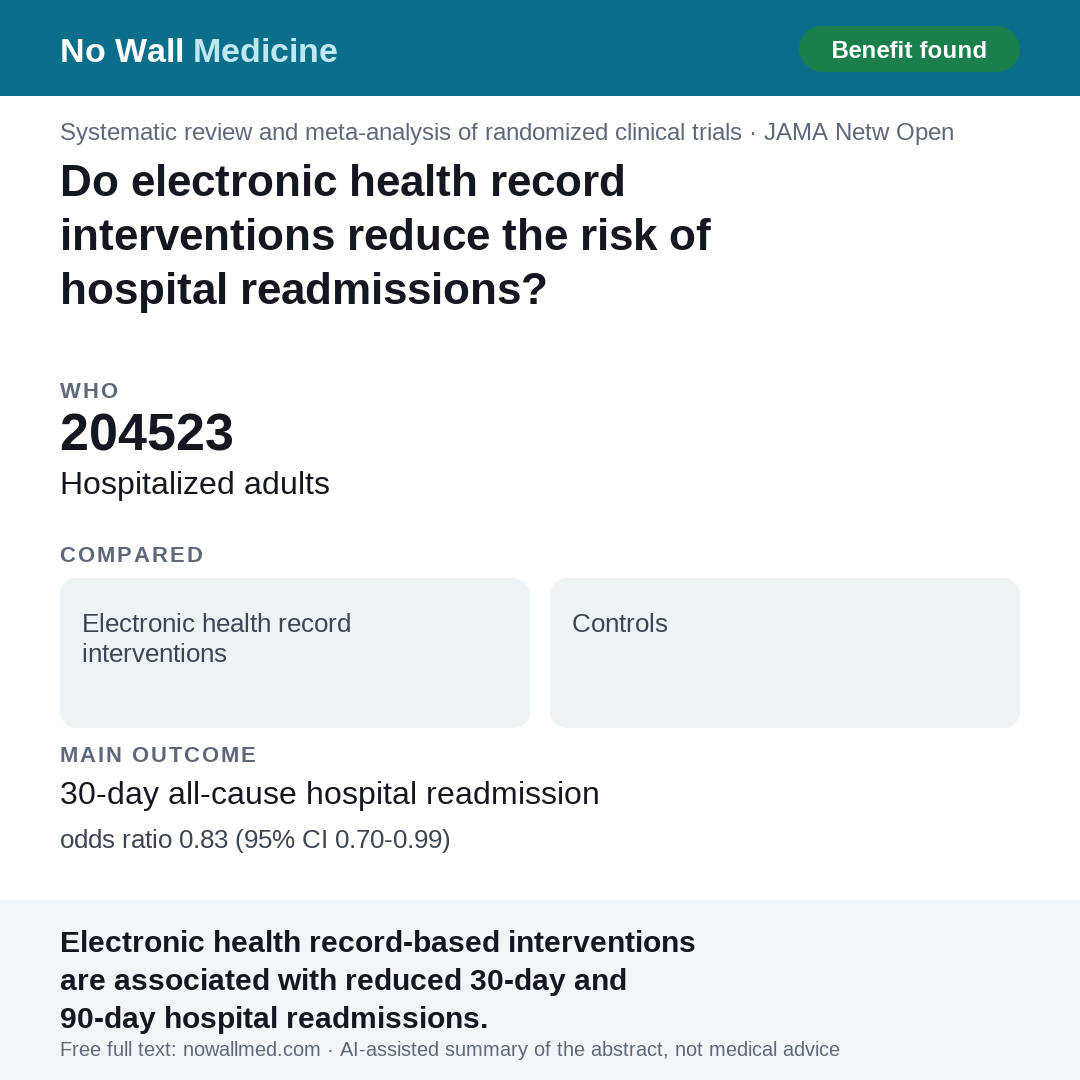
Electronic Health Record Interventions to Reduce Risk of Hospital Readmissions: A Systematic Review and Meta-Analysis
Systematic review and meta-analysis of randomized clinical trialsBenefit found
Do electronic health record interventions reduce the risk of hospital readmissions?
Who
204523
Hospitalized adults
Compared
Electronic health record interventions
Controls
Main outcome
30-day all-cause hospital readmission
Result: odds ratio 0.83 (95% CI 0.70-0.99)
Bottom line: Electronic health record-based interventions are associated with reduced 30-day and 90-day hospital readmissions.
Limitation: Future research should examine additional components to understand remaining gaps in effectiveness.
JAMA Netw Open · 2025-07-01Download image
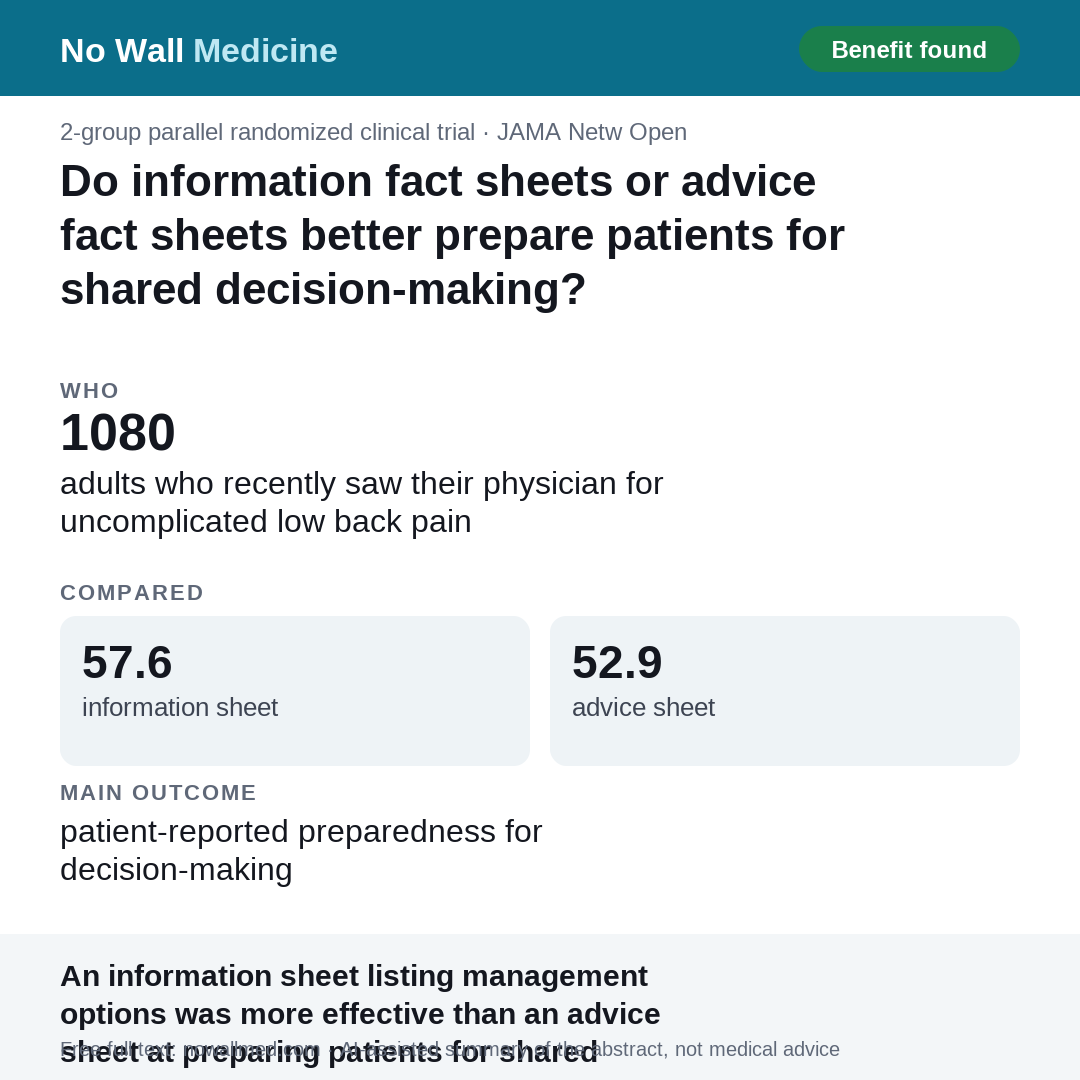
One-Page Patient Fact Sheets for Low Back Pain in Primary Care: A Randomized Clinical Trial
2-group parallel randomized clinical trialBenefit found
Do information fact sheets or advice fact sheets better prepare patients for shared decision-making?
Who
1080
adults who recently saw their physician for uncomplicated low back pain
Compared
57.6information sheet (26.5)
52.9advice sheet (26.2)
Main outcome
patient-reported preparedness for decision-making
Result: adjusted mean difference, 4.7 points; 95% CI, 1.0-8.5 points
Bottom line: An information sheet listing management options was more effective than an advice sheet at preparing patients for shared decision-making.
JAMA Netw Open · 2025-07-01Download image
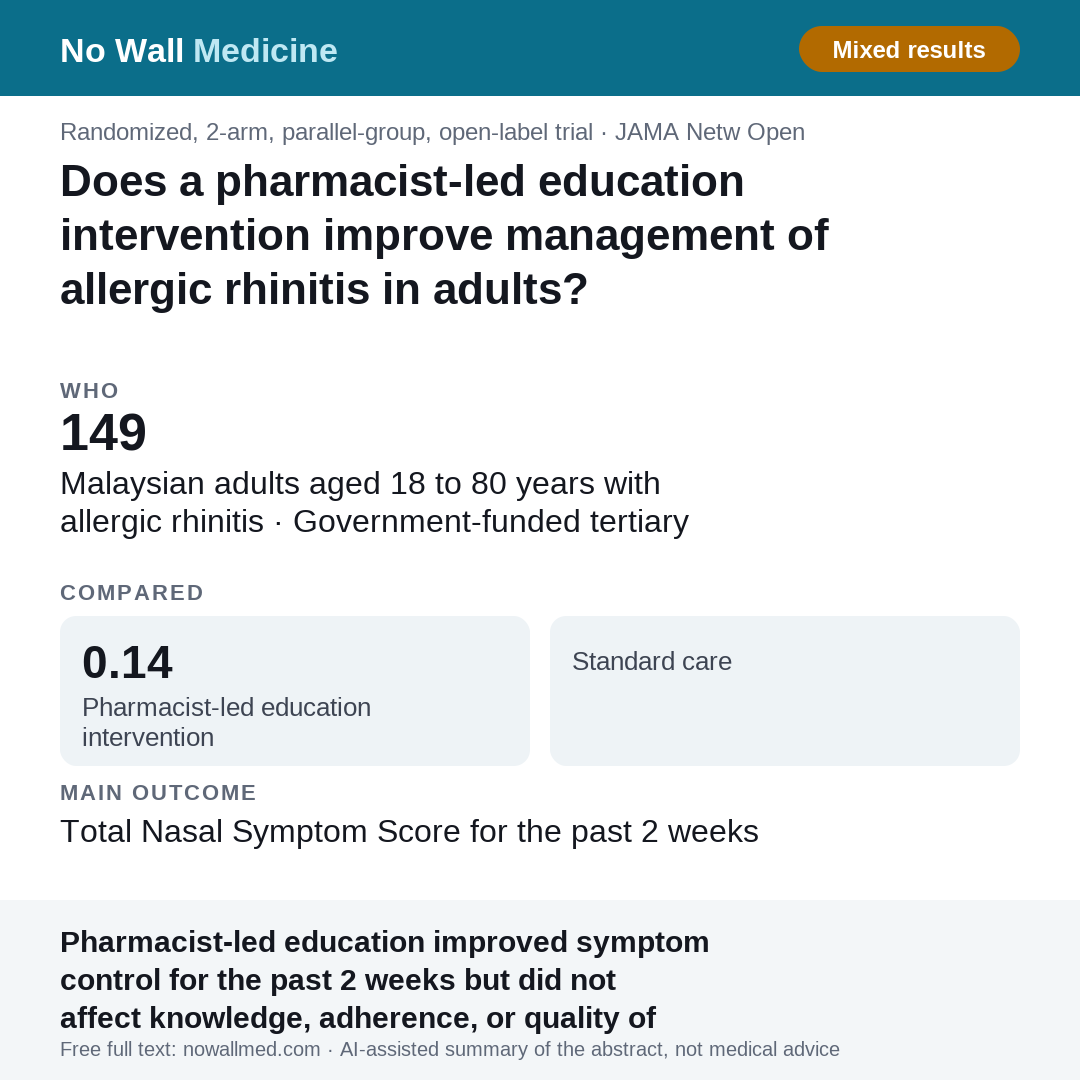
Pharmacist-Led Education Intervention for Adults With Allergic Rhinitis: A Randomized Clinical Trial
Randomized, 2-arm, parallel-group, open-label trialMixed results
Does a pharmacist-led education intervention improve management of allergic rhinitis in adults?
Who
149
Malaysian adults aged 18 to 80 years with allergic rhinitis · Government-funded tertiary referral hospital in northern Malaysia
Compared
0.14Pharmacist-led education intervention (95% CrI, 0.03-0.25)
Standard care
Main outcome
Total Nasal Symptom Score for the past 2 weeks
Result: estimate [SE], 0.14 [0.06]; 95% credible interval [CrI], 0.03-0.25
Bottom line: Pharmacist-led education improved symptom control for the past 2 weeks but did not affect knowledge, adherence, or quality of life.
JAMA Netw Open · 2025-07-01Download image
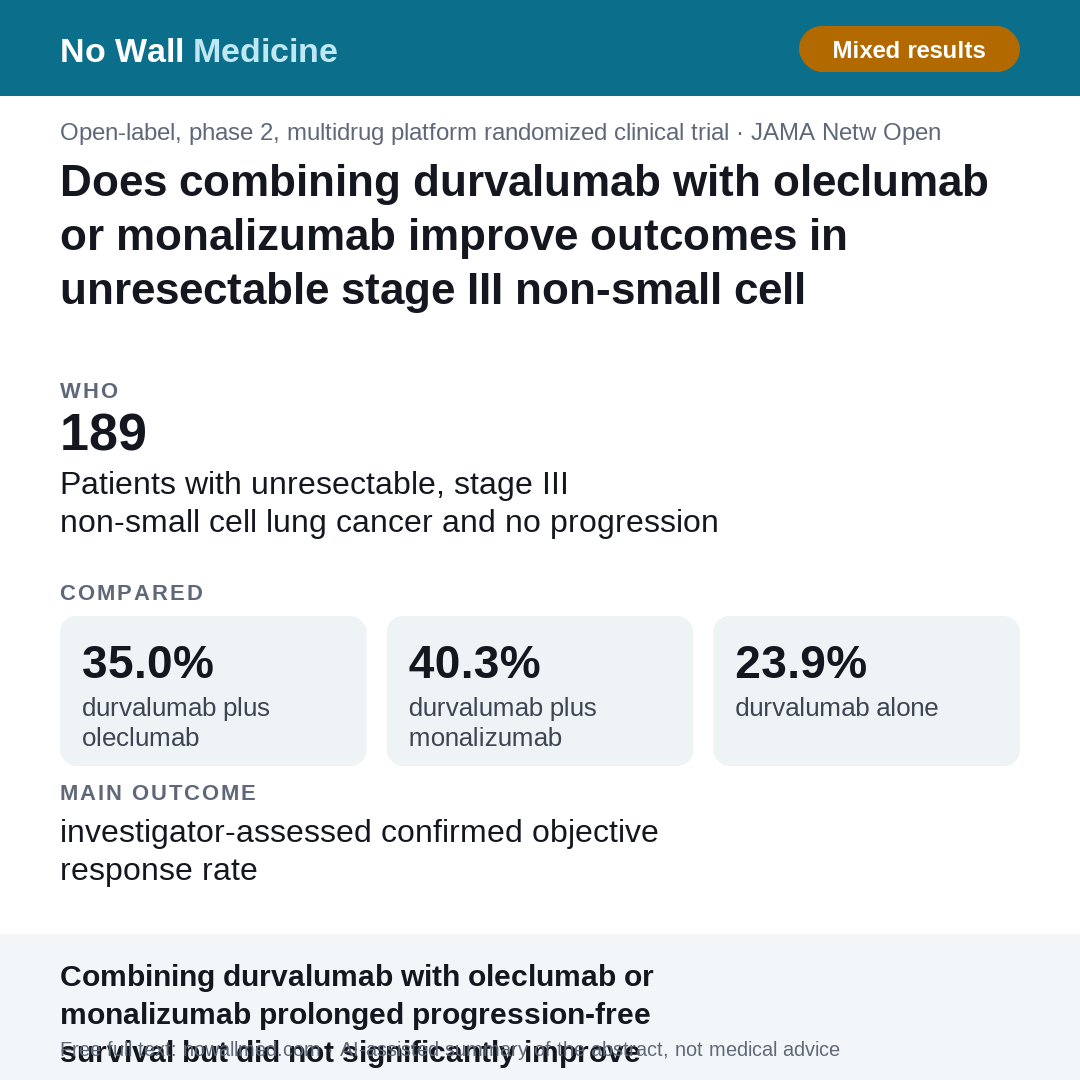
Durvalumab Alone or Combined With Novel Agents for Unresectable Stage III Non-Small Cell Lung Cancer: Update From the COAST Randomized Clinical Trial
Open-label, phase 2, multidrug platform randomized clinical trialMixed results
Does combining durvalumab with oleclumab or monalizumab improve outcomes in unresectable stage III non-small cell lung cancer?
Who
189
Patients with unresectable, stage III non-small cell lung cancer and no progression following chemoradiotherapy · 73 sites globally
Compared
35.0%durvalumab plus oleclumab (95% CI, 23.1%-48.4%)
40.3%durvalumab plus monalizumab (95% CI, 28.1%-53.6%)
23.9%durvalumab alone (95% CI, 14.3%-35.9%)
Main outcome
investigator-assessed confirmed objective response rate
Result: hazard ratio 0.59 (95% CI, 0.37-0.93) for oleclumab and 0.63 (95% CI, 0.40-0.99) for monalizumab for progression-free survival
Bottom line: Combining durvalumab with oleclumab or monalizumab prolonged progression-free survival but did not significantly improve objective response rate or overall survival.
Limitation: The difference in objective response rate was not statistically significant.
JAMA Netw Open · 2025-07-01Download image
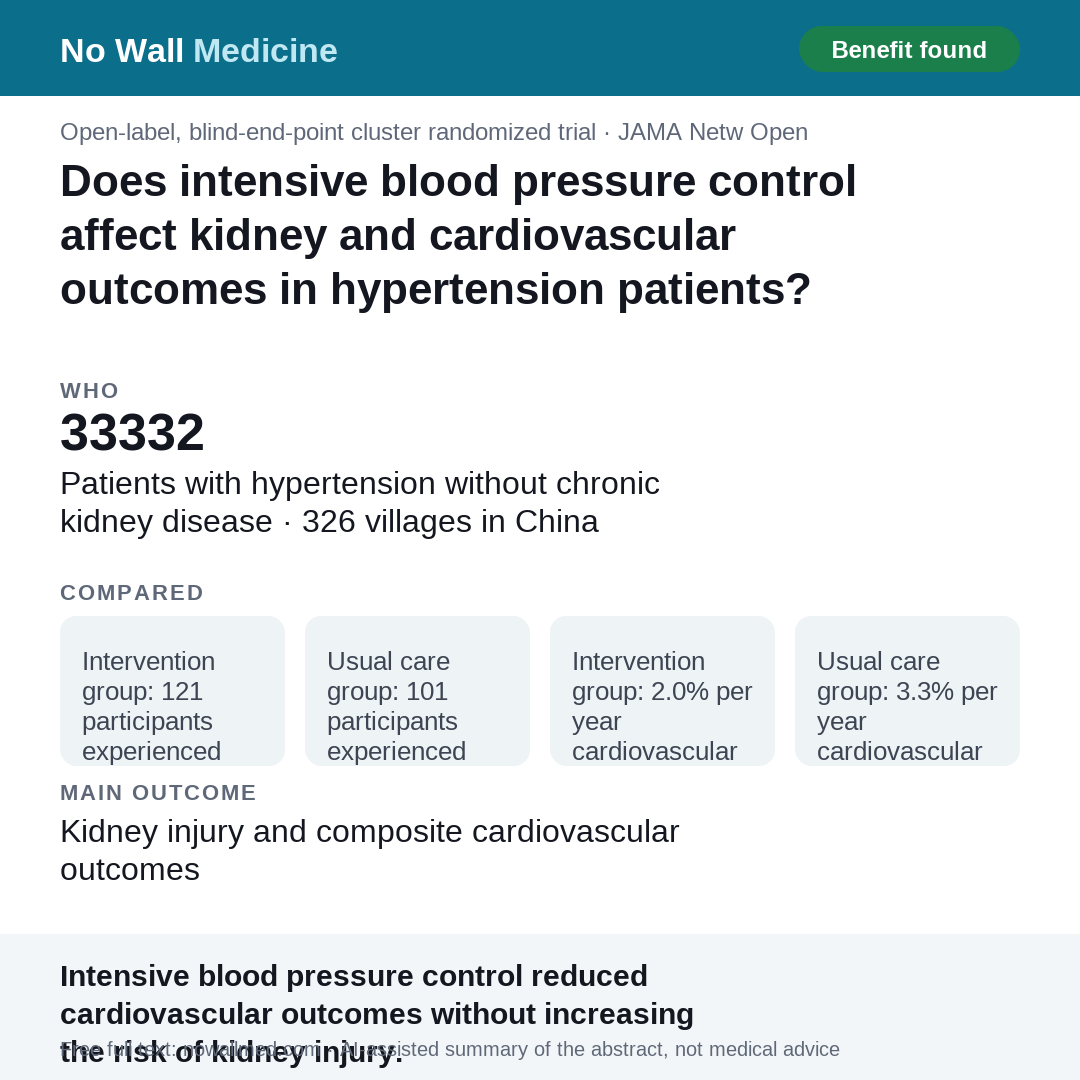
Intensive Systolic Blood Pressure Reduction and Kidney and Cardiovascular Outcomes: A Secondary Analysis of a Randomized Clinical Trial
Open-label, blind-end-point cluster randomized trialBenefit found
Does intensive blood pressure control affect kidney and cardiovascular outcomes in hypertension patients?
Who
33332
Patients with hypertension without chronic kidney disease · 326 villages in China
Compared
Intervention group: 121 participants experienced kidney outcome
Usual care group: 101 participants experienced kidney outcome
Intervention group: 2.0% per year cardiovascular outcome
Usual care group: 3.3% per year cardiovascular outcome
Main outcome
Kidney injury and composite cardiovascular outcomes
Result: hazard ratio 0.57 (95% CI 0.47-0.68)
Bottom line: Intensive blood pressure control reduced cardiovascular outcomes without increasing the risk of kidney injury.
JAMA Netw Open · 2025-07-01Download image
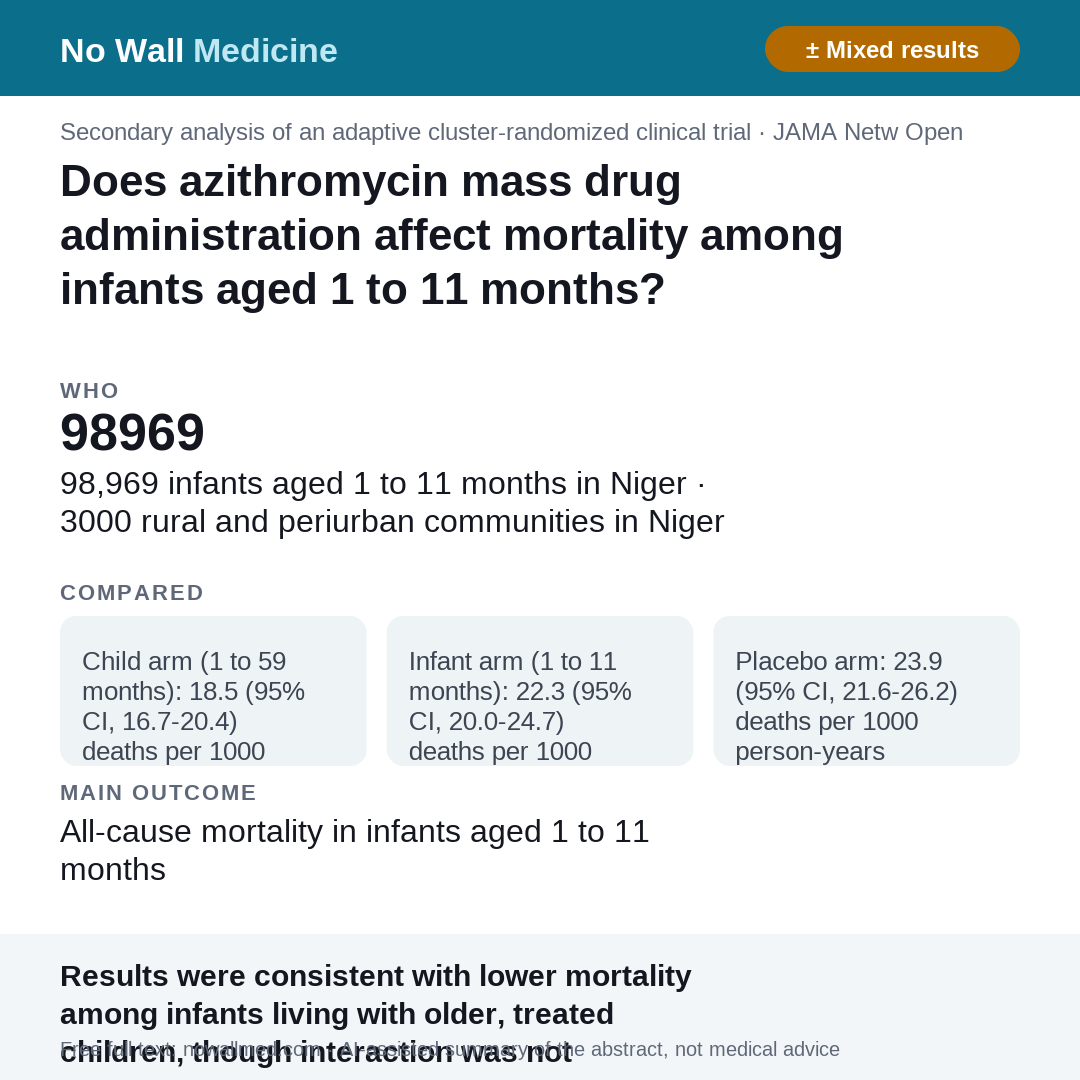
Spillover of Azithromycin Mass Drug Administration and Child Survival: A Secondary Analysis of a Cluster-Randomized Clinical Trial
Secondary analysis of an adaptive cluster-randomized clinical trialMixed results
Does azithromycin mass drug administration affect mortality among infants aged 1 to 11 months?
Who
98969
98,969 infants aged 1 to 11 months in Niger · 3000 rural and periurban communities in Niger
Compared
Child arm (1 to 59 months): 18.5 (95% CI, 16.7-20.4) deaths per 1000 person-years
Infant arm (1 to 11 months): 22.3 (95% CI, 20.0-24.7) deaths per 1000 person-years
Placebo arm: 23.9 (95% CI, 21.6-26.2) deaths per 1000 person-years
Main outcome
All-cause mortality in infants aged 1 to 11 months
Result: incidence rate ratio 0.78 (95% CI, 0.65-0.93)
Bottom line: Results were consistent with lower mortality among infants living with older, treated children, though interaction was not statistically significant.
JAMA Netw Open · 2025-07-01Download image
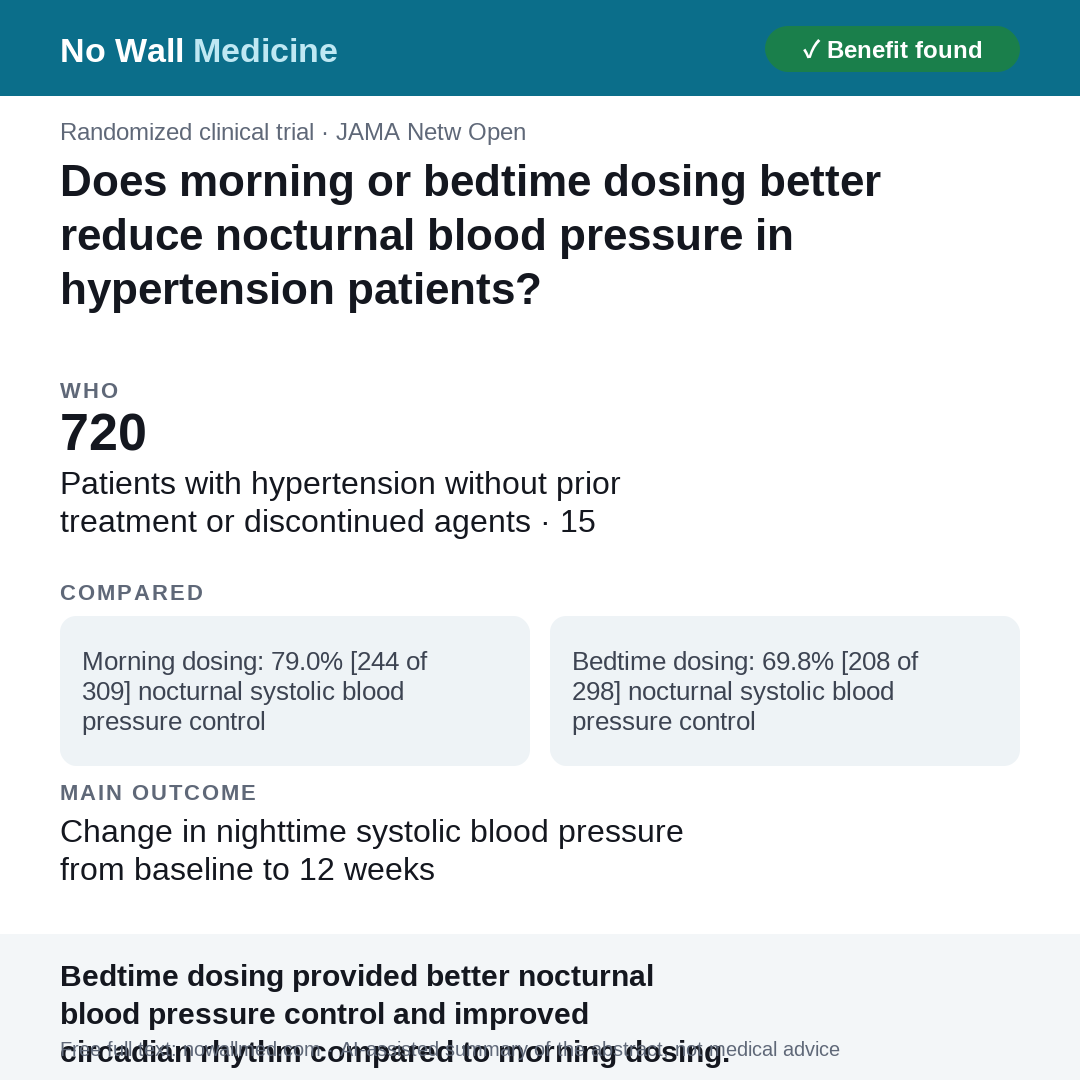
Morning vs Bedtime Dosing and Nocturnal Blood Pressure Reduction in Patients With Hypertension: The OMAN Randomized Clinical Trial
Randomized clinical trialBenefit found
Does morning or bedtime dosing better reduce nocturnal blood pressure in hypertension patients?
Who
720
Patients with hypertension without prior treatment or discontinued agents · 15 hospitals in China
Compared
Morning dosing: 79.0% [244 of 309] nocturnal systolic blood pressure control
Bedtime dosing: 69.8% [208 of 298] nocturnal systolic blood pressure control
Main outcome
Change in nighttime systolic blood pressure from baseline to 12 weeks
Result: -3.0 mm Hg (95% CI, -5.1 to -1.0 mm Hg)
Bottom line: Bedtime dosing provided better nocturnal blood pressure control and improved circadian rhythm compared to morning dosing.
JAMA Netw Open · 2025-07-01Download image
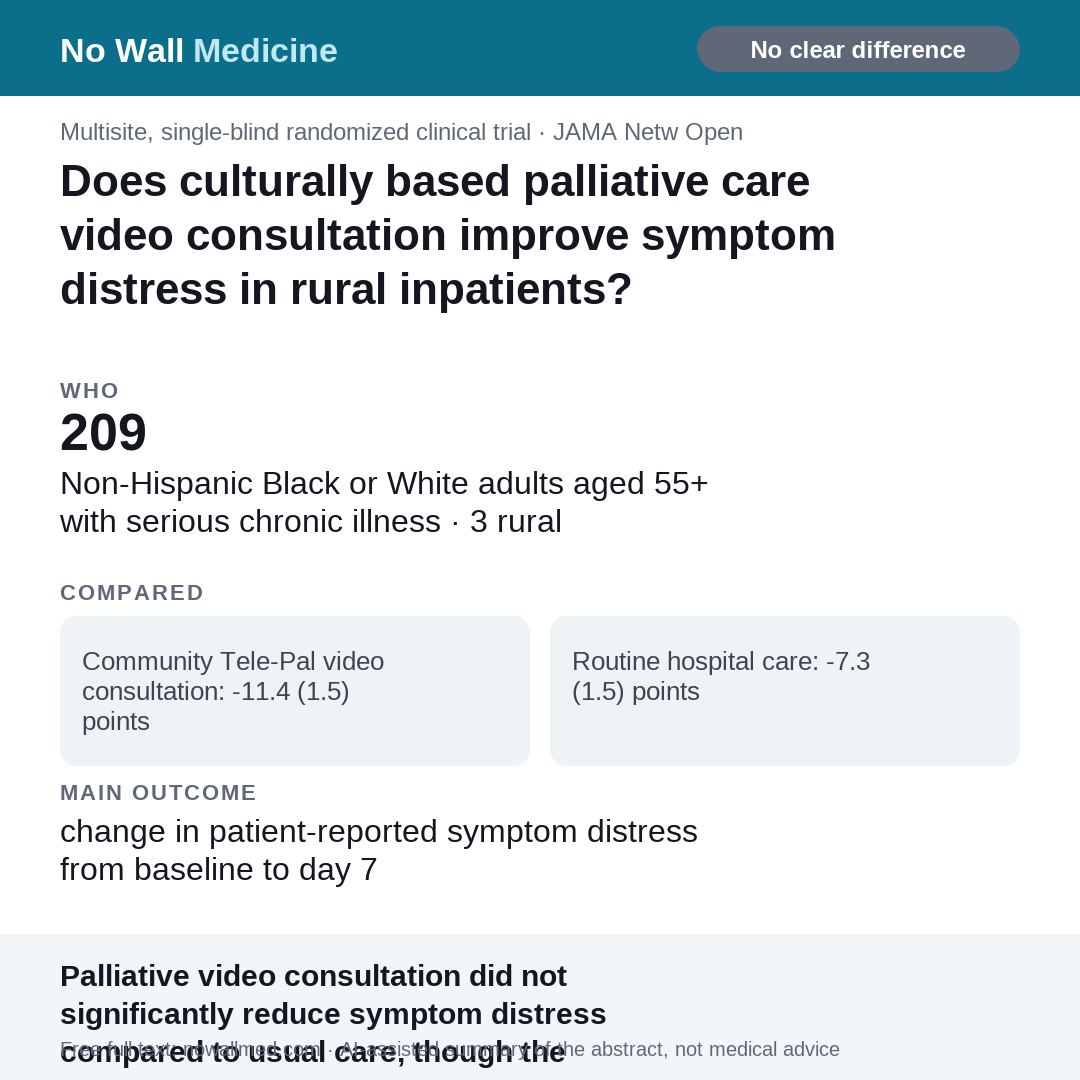
Palliative Video Consultation and Symptom Distress Among Rural Inpatients: A Randomized Clinical Trial
Multisite, single-blind randomized clinical trialNo clear difference
Does culturally based palliative care video consultation improve symptom distress in rural inpatients?
Who
209
Non-Hispanic Black or White adults aged 55+ with serious chronic illness · 3 rural hospitals in Alabama, Mississippi, and South Carolina
Compared
Community Tele-Pal video consultation: -11.4 (1.5) points
Routine hospital care: -7.3 (1.5) points
Main outcome
change in patient-reported symptom distress from baseline to day 7
Result: Westfall d, -0.28 (95% CI, -0.56 to 0.01)
Bottom line: Palliative video consultation did not significantly reduce symptom distress compared to usual care, though the difference met minimal clinically important criteria.
JAMA Netw Open · 2025-07-01Download image
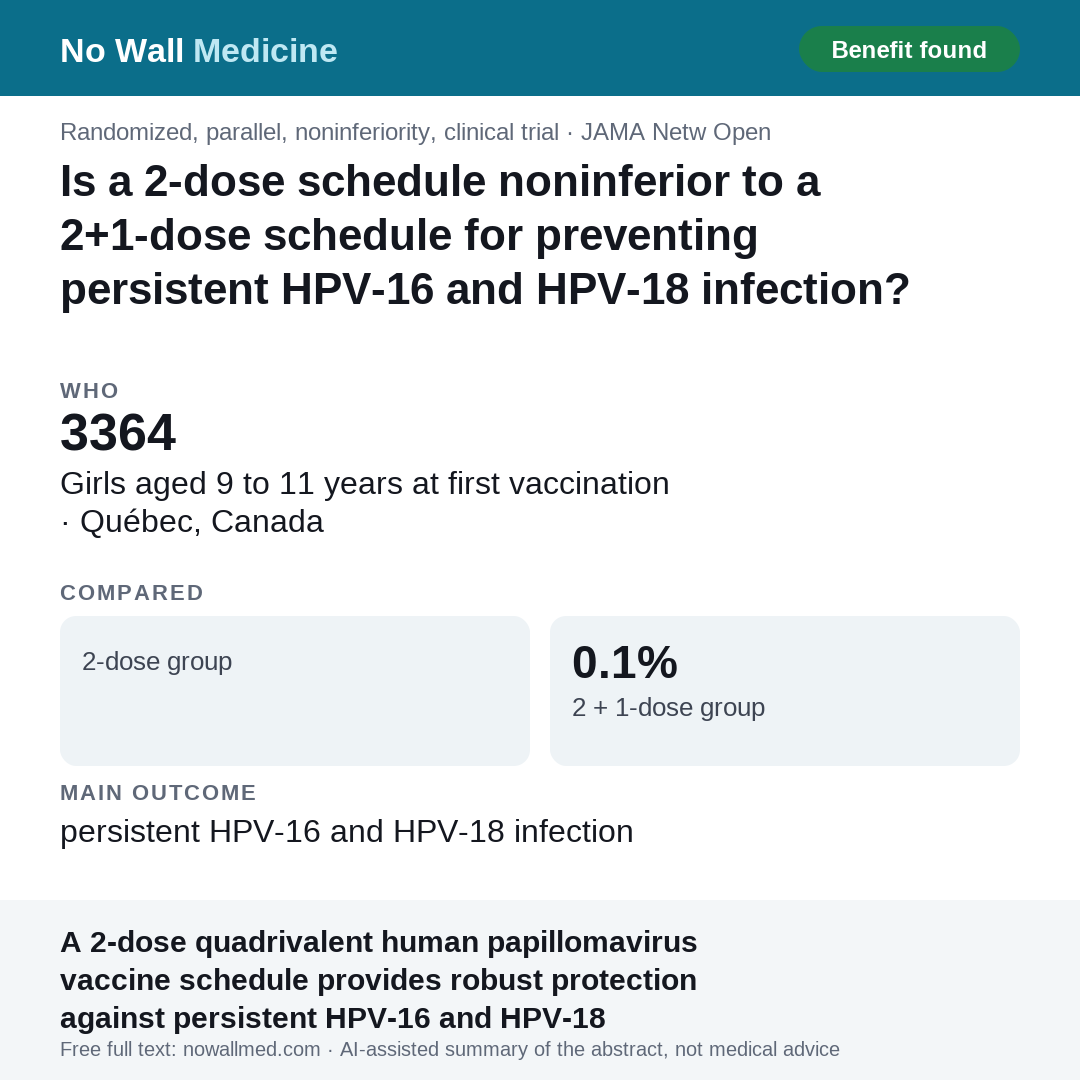
Protection Against Persistent HPV-16/18 Infection After Different Number of Doses of Quadrivalent Vaccine in Girls and Young Women: A Randomized Clinical Trial
Randomized, parallel, noninferiority, clinical trialBenefit found
Is a 2-dose schedule noninferior to a 2+1-dose schedule for preventing persistent HPV-16 and HPV-18 infection?
Who
3364
Girls aged 9 to 11 years at first vaccination · Québec, Canada
Compared
2-dose group
0.1%2 + 1-dose group
Main outcome
persistent HPV-16 and HPV-18 infection
Bottom line: A 2-dose quadrivalent human papillomavirus vaccine schedule provides robust protection against persistent HPV-16 and HPV-18 infection for up to 13 years.
JAMA Netw Open · 2025-07-01Download image
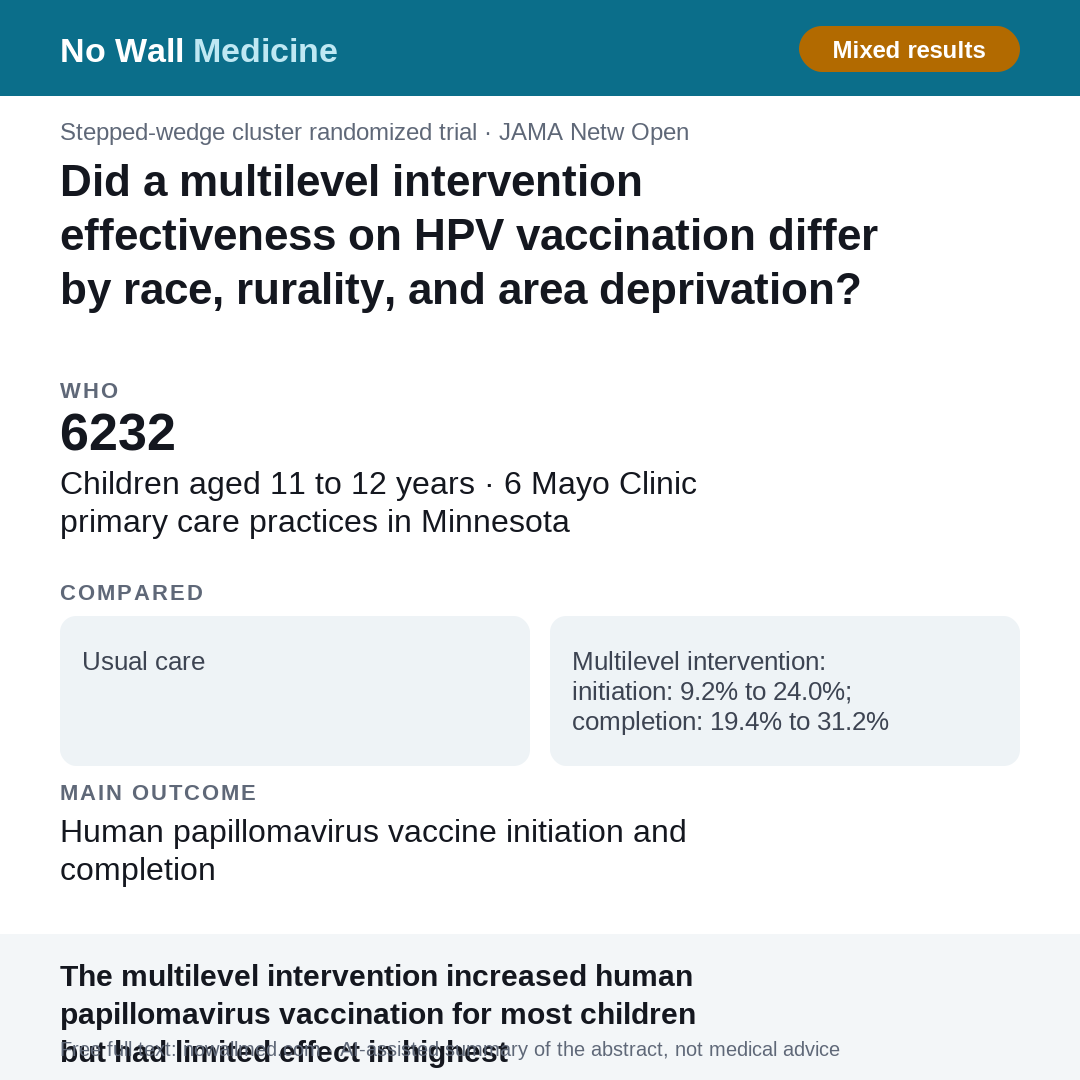
Multilevel Intervention and Human Papillomavirus Vaccination Disparities: A Secondary Analysis of a Cluster Randomized Trial
Stepped-wedge cluster randomized trialMixed results
Did a multilevel intervention effectiveness on HPV vaccination differ by race, rurality, and area deprivation?
Who
6232
Children aged 11 to 12 years · 6 Mayo Clinic primary care practices in Minnesota
Compared
Usual care
Multilevel intervention: initiation: 9.2% to 24.0%; completion: 19.4% to 31.2%
Main outcome
Human papillomavirus vaccine initiation and completion
Bottom line: The multilevel intervention increased human papillomavirus vaccination for most children but had limited effect in highest deprivation areas.
Limitation: The intervention had limited effect for those residing in areas of highest deprivation.
JAMA Netw Open · 2025-07-01Download image
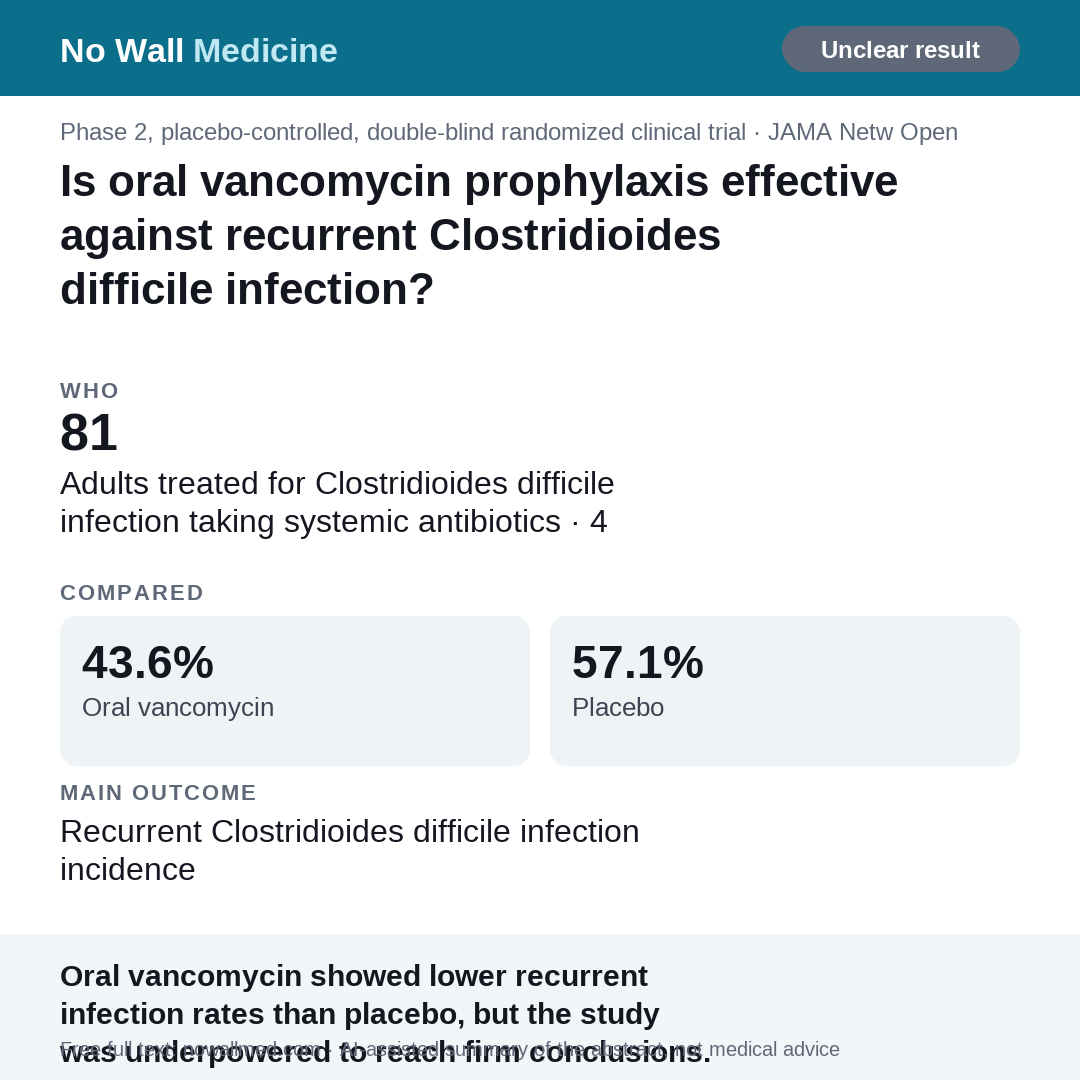
Oral Vancomycin for Prevention of Recurrent Clostridioides difficile Infection: A Randomized Clinical Trial
Phase 2, placebo-controlled, double-blind randomized clinical trialUnclear result
Is oral vancomycin prophylaxis effective against recurrent Clostridioides difficile infection?
Who
81
Adults treated for Clostridioides difficile infection taking systemic antibiotics · 4 large health systems, upper Midwest US
Compared
43.6%Oral vancomycin
57.1%Placebo
Main outcome
Recurrent Clostridioides difficile infection incidence
Result: absolute difference in percentage, -13.5% (95% CI, -35.1% to 8.0%)
Bottom line: Oral vancomycin showed lower recurrent infection rates than placebo, but the study was underpowered to reach firm conclusions.
JAMA Netw Open · 2025-07-01Download image
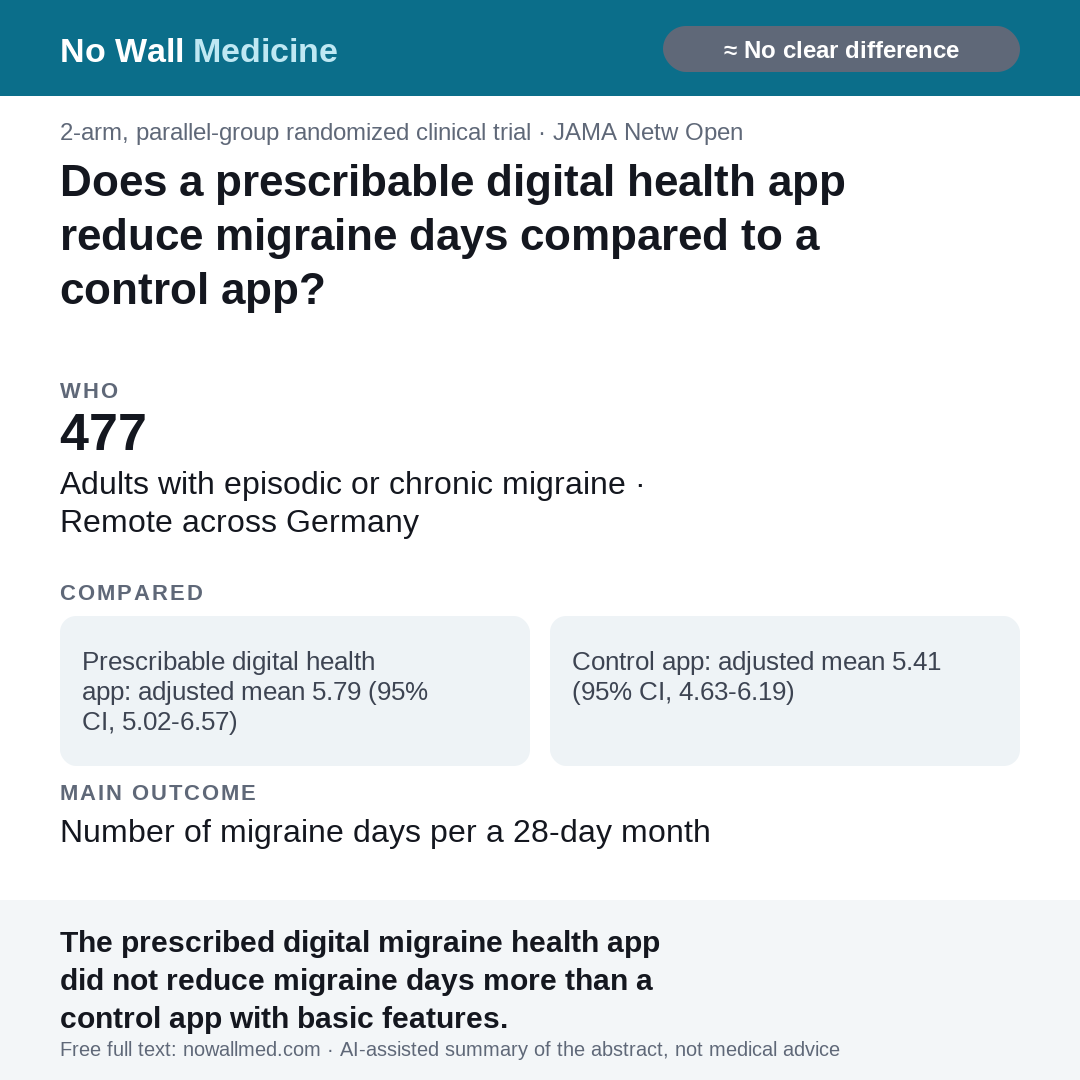
A Prescribed Digital Health App and Number of Migraine Days: A Randomized Clinical Trial
2-arm, parallel-group randomized clinical trialNo clear difference
Does a prescribable digital health app reduce migraine days compared to a control app?
Who
477
Adults with episodic or chronic migraine · Remote across Germany
Compared
Prescribable digital health app: adjusted mean 5.79 (95% CI, 5.02-6.57)
Control app: adjusted mean 5.41 (95% CI, 4.63-6.19)
Main outcome
Number of migraine days per a 28-day month
Result: estimated between-group difference of 0.38 days (95% CI, -0.32 to 1.08 days)
Bottom line: The prescribed digital migraine health app did not reduce migraine days more than a control app with basic features.
JAMA Netw Open · 2025-07-01Download image
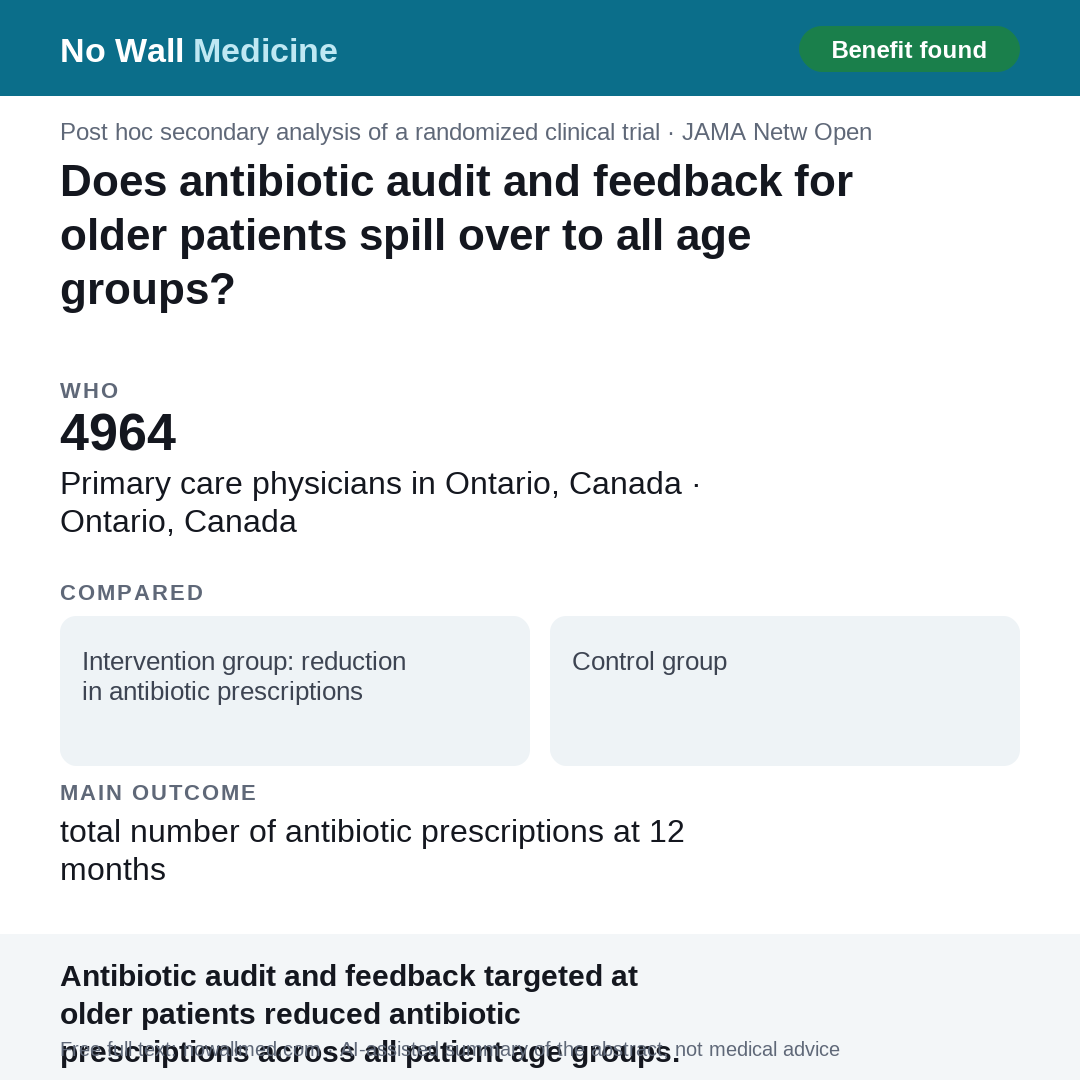
Spillover From an Intervention on Antibiotic Prescribing for Family Physicians: A Post Hoc Secondary Analysis of a Randomized Clinical Trial
Post hoc secondary analysis of a randomized clinical trialBenefit found
Does antibiotic audit and feedback for older patients spill over to all age groups?
Who
4964
Primary care physicians in Ontario, Canada · Ontario, Canada
Compared
Intervention group: reduction in antibiotic prescriptions
Control group
Main outcome
total number of antibiotic prescriptions at 12 months
Result: adjusted rate ratio 0.93 (95% CI, 0.93-0.94)
Bottom line: Antibiotic audit and feedback targeted at older patients reduced antibiotic prescriptions across all patient age groups.
JAMA Netw Open · 2025-07-01Download image
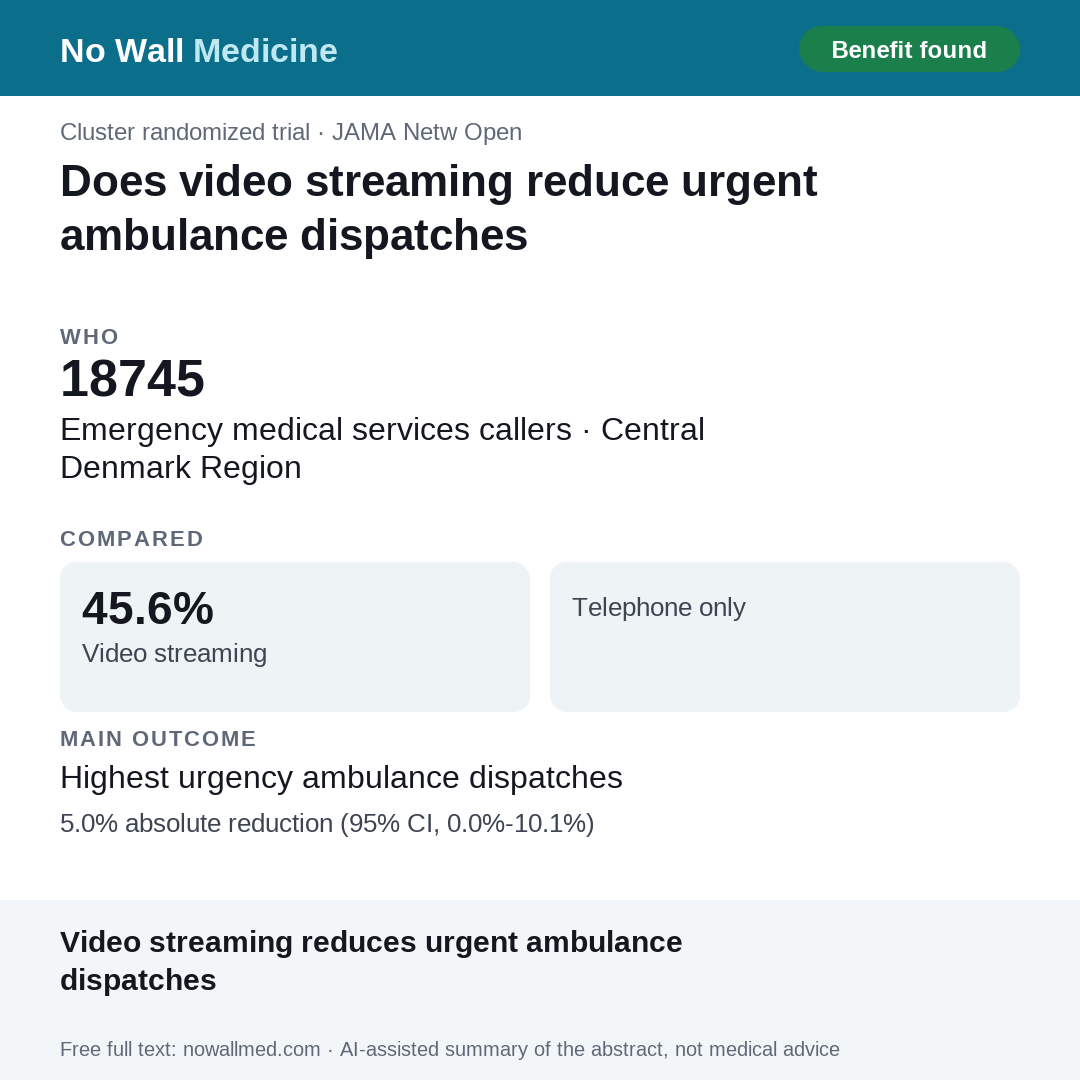
Video Streaming or Telephone Communication During Emergency Medical Services Dispatch Calls: A Cluster Randomized Clinical Trial
Cluster randomized trialBenefit found
Does video streaming reduce urgent ambulance dispatches
Who
18745
Emergency medical services callers · Central Denmark Region
Compared
45.6%Video streaming (3706/8124)
Telephone only
Main outcome
Highest urgency ambulance dispatches
Result: 5.0% absolute reduction (95% CI, 0.0%-10.1%)
Bottom line: Video streaming reduces urgent ambulance dispatches
Limitation: Single center study
JAMA Netw Open · 2025-07-01Download image
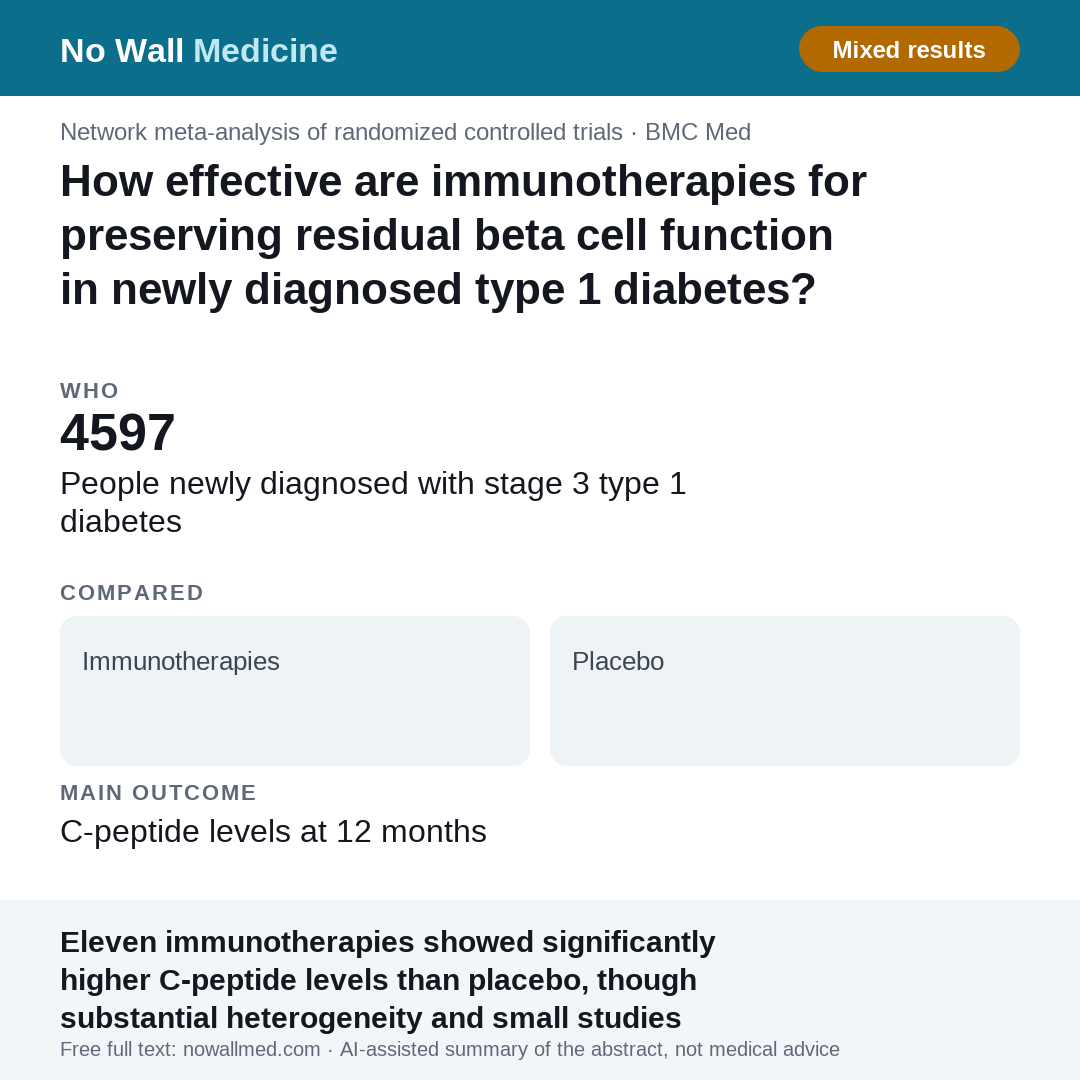
A systematic review and network meta-analysis of interventions to preserve insulin-secreting beta cell function in people newly diagnosed with type 1 diabetes: results from randomised controlled trials of immunomodulatory therapies
Network meta-analysis of randomized controlled trialsMixed results
How effective are immunotherapies for preserving residual beta cell function in newly diagnosed type 1 diabetes?
Who
4597
People newly diagnosed with stage 3 type 1 diabetes
Compared
Immunotherapies
Placebo
Main outcome
C-peptide levels at 12 months
Bottom line: Eleven immunotherapies showed significantly higher C-peptide levels than placebo, though substantial heterogeneity and small studies exist.
Limitation: Substantial heterogeneity and data for some interventions originated from small studies.
BMC Med · 2025-07-01Download image
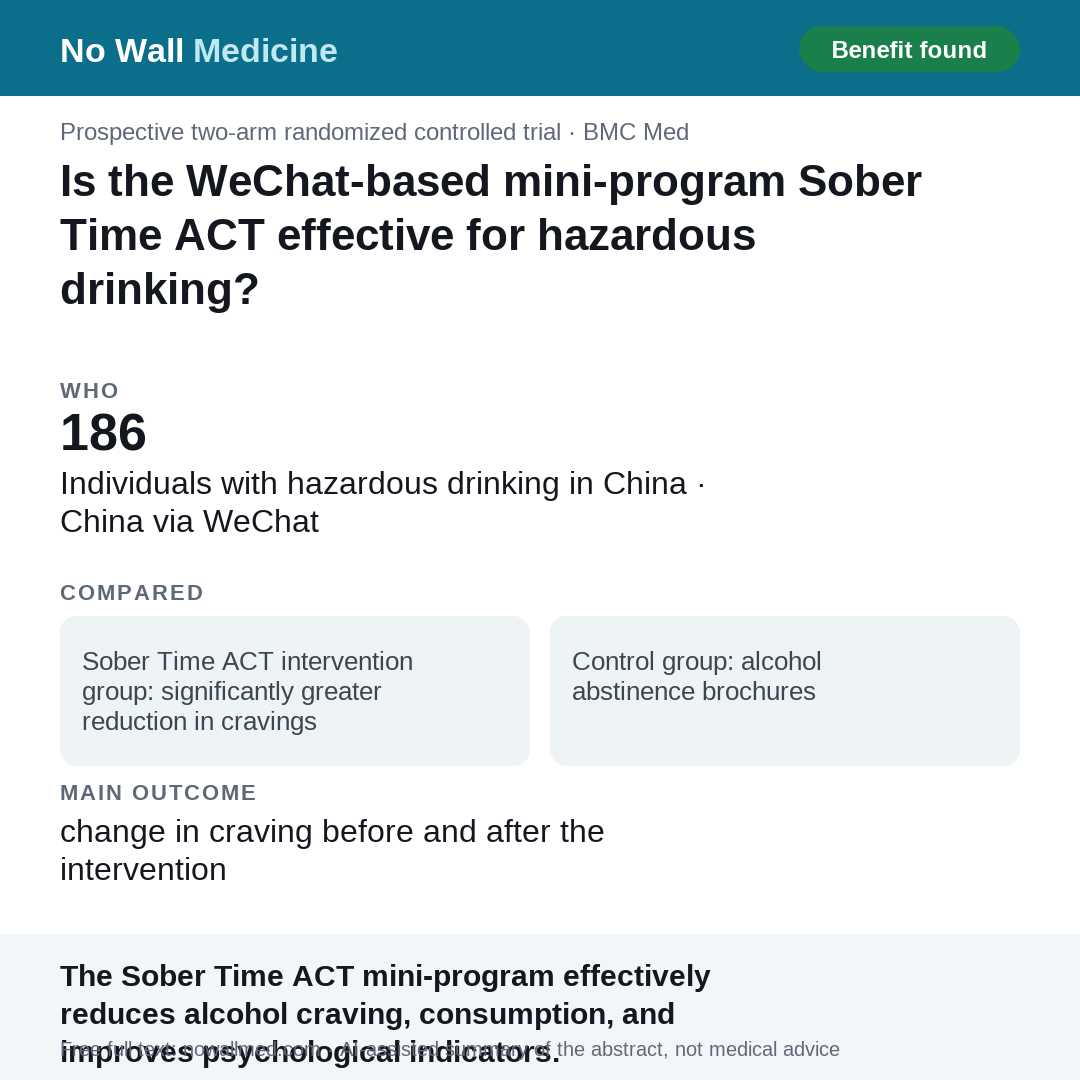
Effectiveness of the WeChat-based mini-program ("Sober Time ACT") on individuals with hazardous drinking in China: a randomized controlled trial
Prospective two-arm randomized controlled trialBenefit found
Is the WeChat-based mini-program Sober Time ACT effective for hazardous drinking?
Who
186
Individuals with hazardous drinking in China · China via WeChat
Compared
Sober Time ACT intervention group: significantly greater reduction in cravings
Control group: alcohol abstinence brochures
Main outcome
change in craving before and after the intervention
Bottom line: The Sober Time ACT mini-program effectively reduces alcohol craving, consumption, and improves psychological indicators.
Limitation: high dropout rate
BMC Med · 2025-07-01Download image
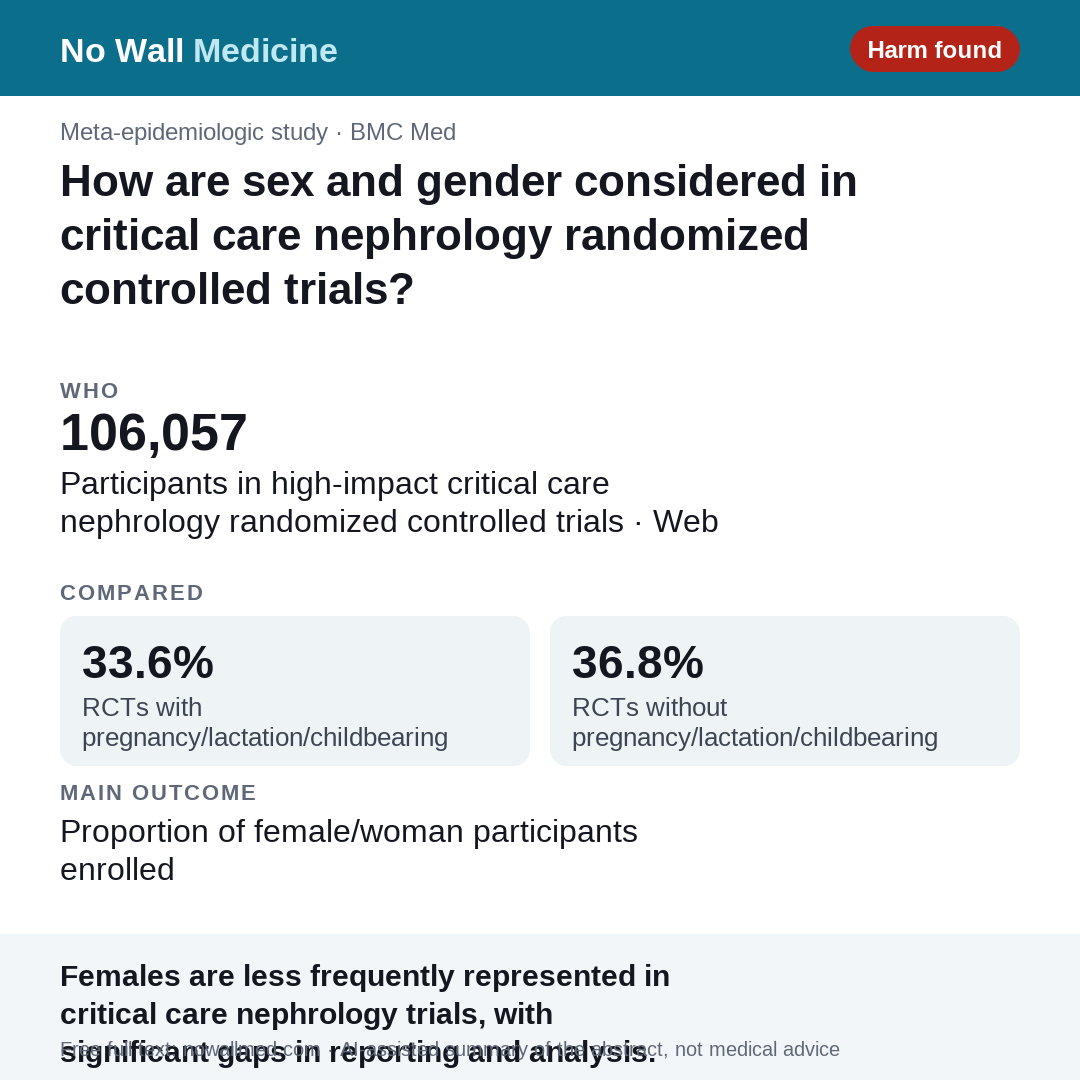
Sex and gender considerations in randomized controlled trials in critical care nephrology: a meta-epidemiologic study
Meta-epidemiologic studyHarm found
How are sex and gender considered in critical care nephrology randomized controlled trials?
Who
106,057
Participants in high-impact critical care nephrology randomized controlled trials · Web of Science Core Collection
Compared
33.6%RCTs with pregnancy/lactation/childbearing age exclusion
36.8%RCTs without pregnancy/lactation/childbearing age exclusion
Main outcome
Proportion of female/woman participants enrolled
Bottom line: Females are less frequently represented in critical care nephrology trials, with significant gaps in reporting and analysis.
BMC Med · 2025-07-01Download image
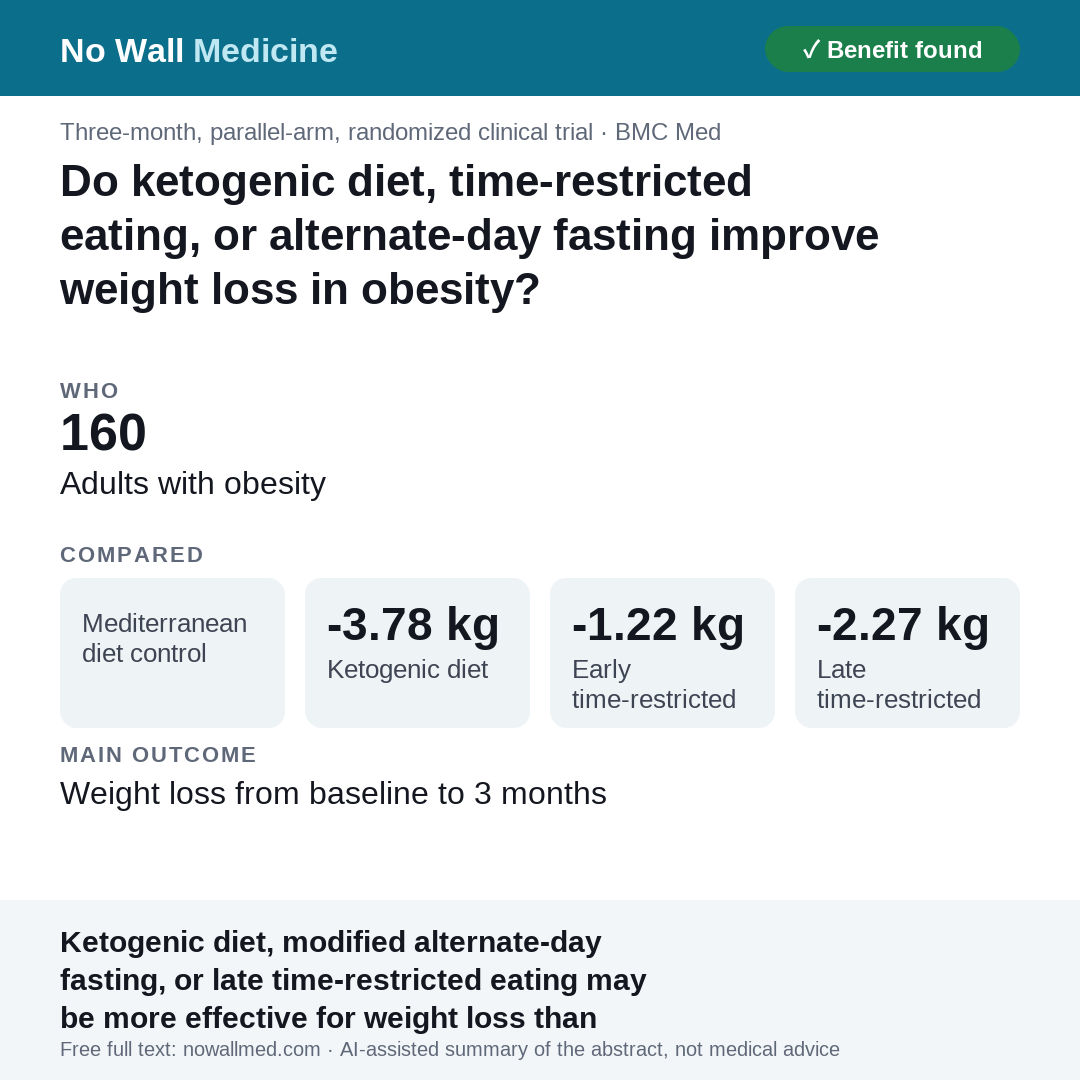
Effect of a ketogenic diet, time-restricted eating, or alternate-day fasting on weight loss in adults with obesity: a randomized clinical trial
Three-month, parallel-arm, randomized clinical trialBenefit found
Do ketogenic diet, time-restricted eating, or alternate-day fasting improve weight loss in obesity?
Who
160
Adults with obesity
Compared
Mediterranean diet control
-3.78 kgKetogenic diet (-5.65 to -1.91 kg)
-1.22 kgEarly time-restricted eating (-3.07 to 0.64 kg)
-2.27 kgLate time-restricted eating (-4.13 to -0.40 kg)
Main outcome
Weight loss from baseline to 3 months
Bottom line: Ketogenic diet, modified alternate-day fasting, or late time-restricted eating may be more effective for weight loss than Mediterranean diet.
BMC Med · 2025-07-01Download image
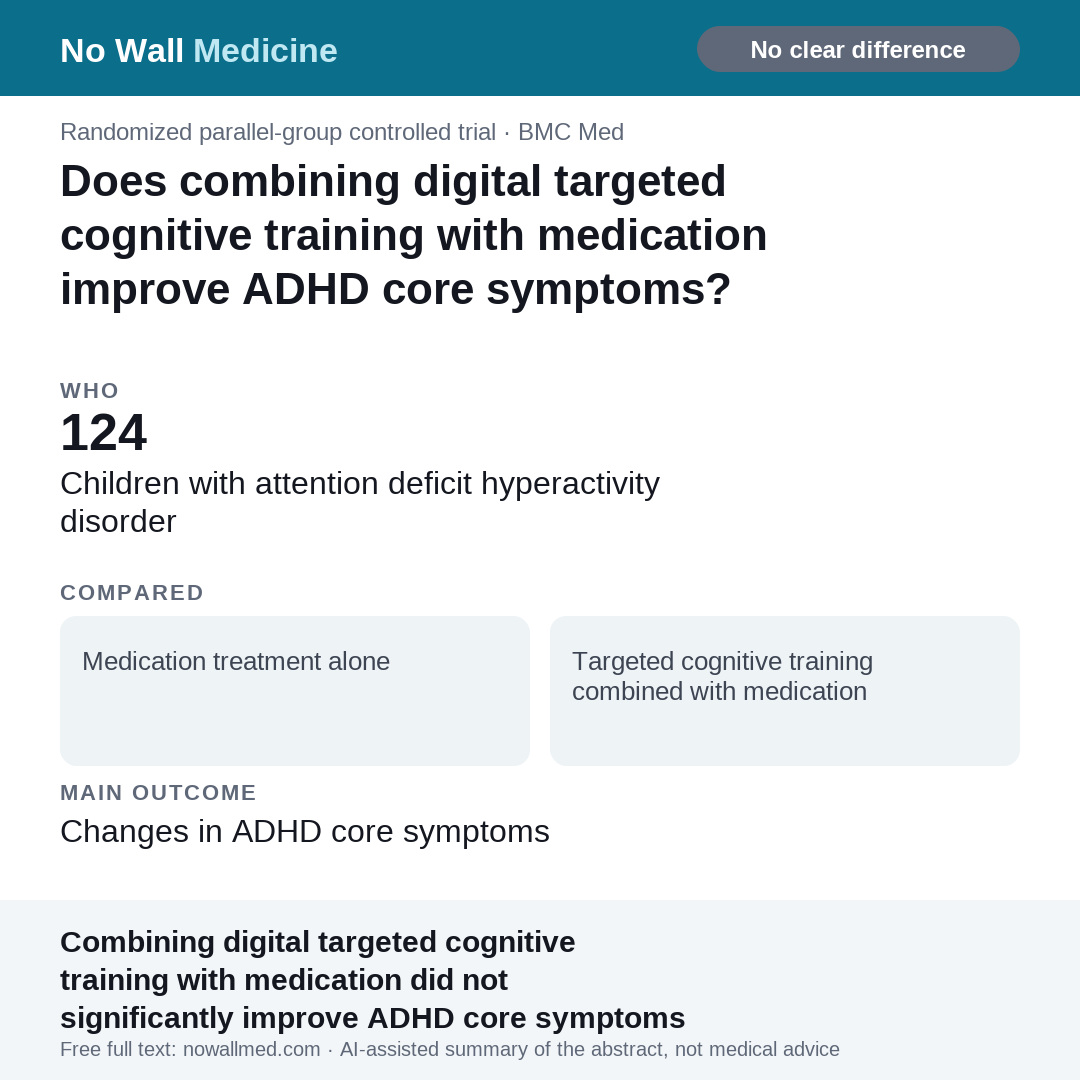
The promoting effects of digital targeted cognitive training in medication treatment for children with ADHD: a randomized controlled trial
Randomized parallel-group controlled trialNo clear difference
Does combining digital targeted cognitive training with medication improve ADHD core symptoms?
Who
124
Children with attention deficit hyperactivity disorder
Compared
Medication treatment alone
Targeted cognitive training combined with medication
Main outcome
Changes in ADHD core symptoms
Bottom line: Combining digital targeted cognitive training with medication did not significantly improve ADHD core symptoms compared to medication alone.
BMC Med · 2025-07-01Download image