Visual abstracts
New randomized trials and meta-analyses from leading journals at a glance: who was studied, what was compared, and what was found. Every paper is free to read in full.
All specialtiesCardiology 4877Oncology 4138Gastroenterology & Hepatology 1942Infectious Disease 3837Neurology 1905Psychiatry & Mental Health 2273Pulmonology 2143Critical Care 1365Endocrinology & Diabetes 2580Pediatrics 2980Surgery 2559Orthopedics & Sports Medicine 931Neurosurgery 537Cardiothoracic & Vascular Surgery 674Plastic & Reconstructive Surgery 591Nephrology 1133Rheumatology 823Hematology 1109Dermatology 621Ophthalmology 543Obstetrics & Gynecology 1686Public & Global Health 1058Radiology & Imaging 648Anesthesiology 986Urology 764ENT (Otolaryngology) 503Emergency Medicine 511Allergy & Immunology 313Geriatrics 981Family Medicine & Primary Care 562Medical Genetics & Genomics 676Pathology & Laboratory Medicine 159Physical Medicine & Rehabilitation 757Palliative Care 444Nutrition 1588Digital Health & AI 2201General Medicine 321
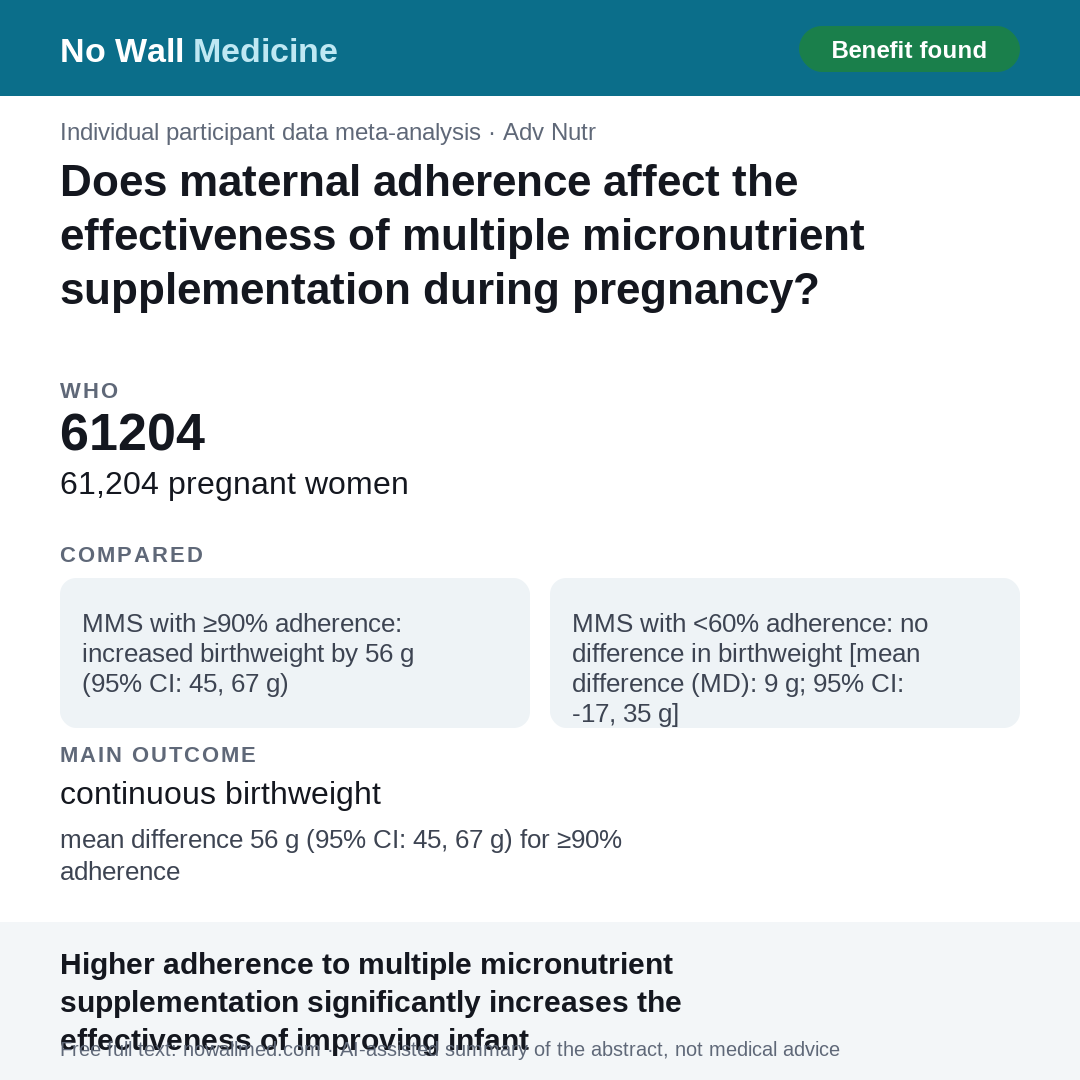
Contribution of Maternal Adherence to the Effect of Multiple Micronutrient Supplementation During Pregnancy: A Systematic Review and Individual Participant Data Meta-analysis
Individual participant data meta-analysisBenefit found
Does maternal adherence affect the effectiveness of multiple micronutrient supplementation during pregnancy?
Who
61204
61,204 pregnant women
Compared
MMS with ≥90% adherence: increased birthweight by 56 g (95% CI: 45, 67 g)
MMS with <60% adherence: no difference in birthweight [mean difference (MD): 9 g; 95% CI: -17, 35 g]
Main outcome
continuous birthweight
Result: mean difference 56 g (95% CI: 45, 67 g) for ≥90% adherence
Bottom line: Higher adherence to multiple micronutrient supplementation significantly increases the effectiveness of improving infant birthweight.
Adv Nutr · 2025-05-30Download image
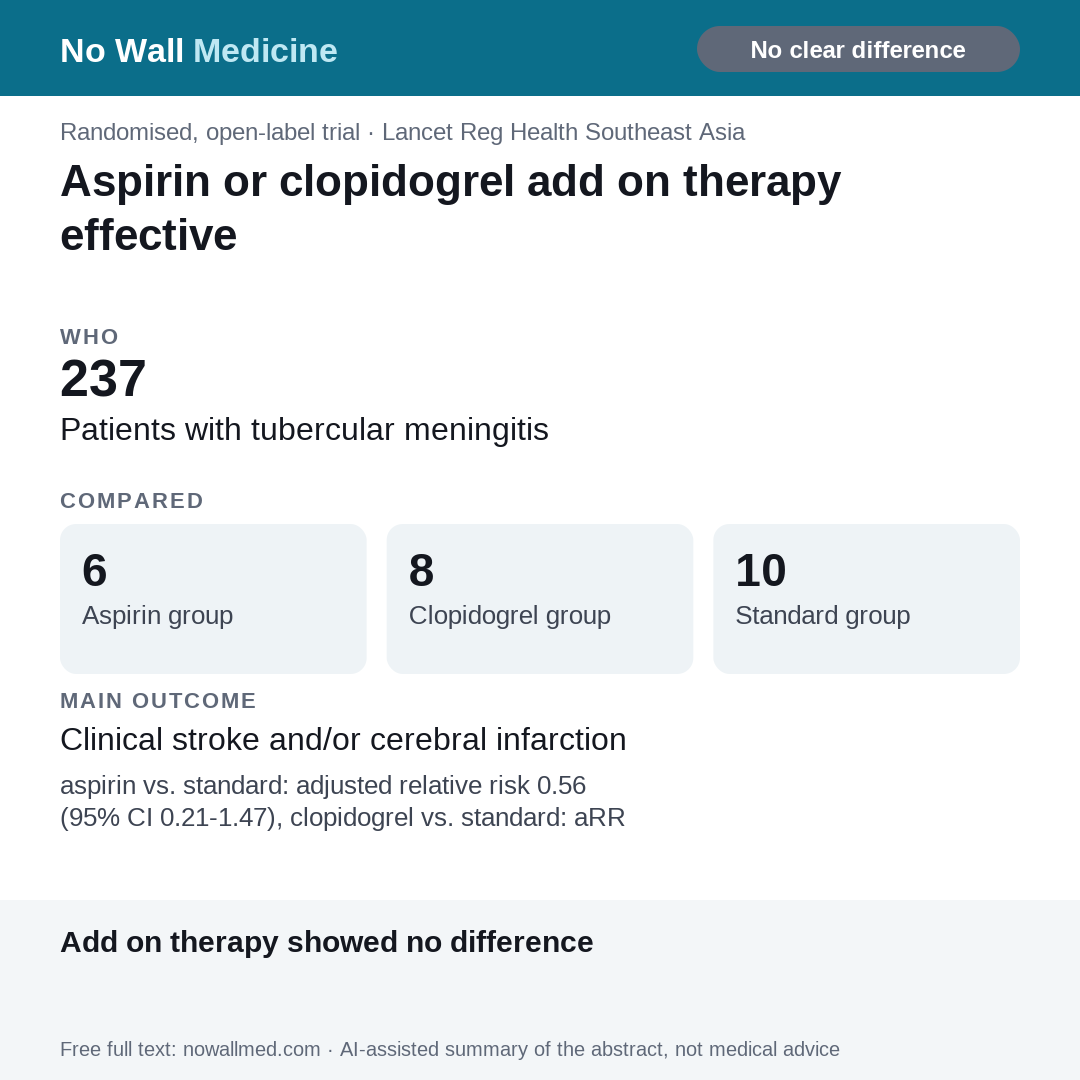
A randomised trial to assess the efficacy of add on therapy with aspirin or clopidogrel to the standard medical therapy alone in patients with tubercular meningitis: ACT TBM
Randomised, open-label trialNo clear difference
Aspirin or clopidogrel add on therapy effective
Who
237
Patients with tubercular meningitis
Compared
6Aspirin group (9.1%)
8Clopidogrel group (11.1%)
10Standard group (14.3%)
Main outcome
Clinical stroke and/or cerebral infarction
Result: aspirin vs. standard: adjusted relative risk 0.56 (95% CI 0.21-1.47), clopidogrel vs. standard: aRR 0.72 (95% CI 0.30-1.67)
Bottom line: Add on therapy showed no difference
Funded by: Indian Council of Medical Research
Lancet Reg Health Southeast Asia · 2025-05-30Download image
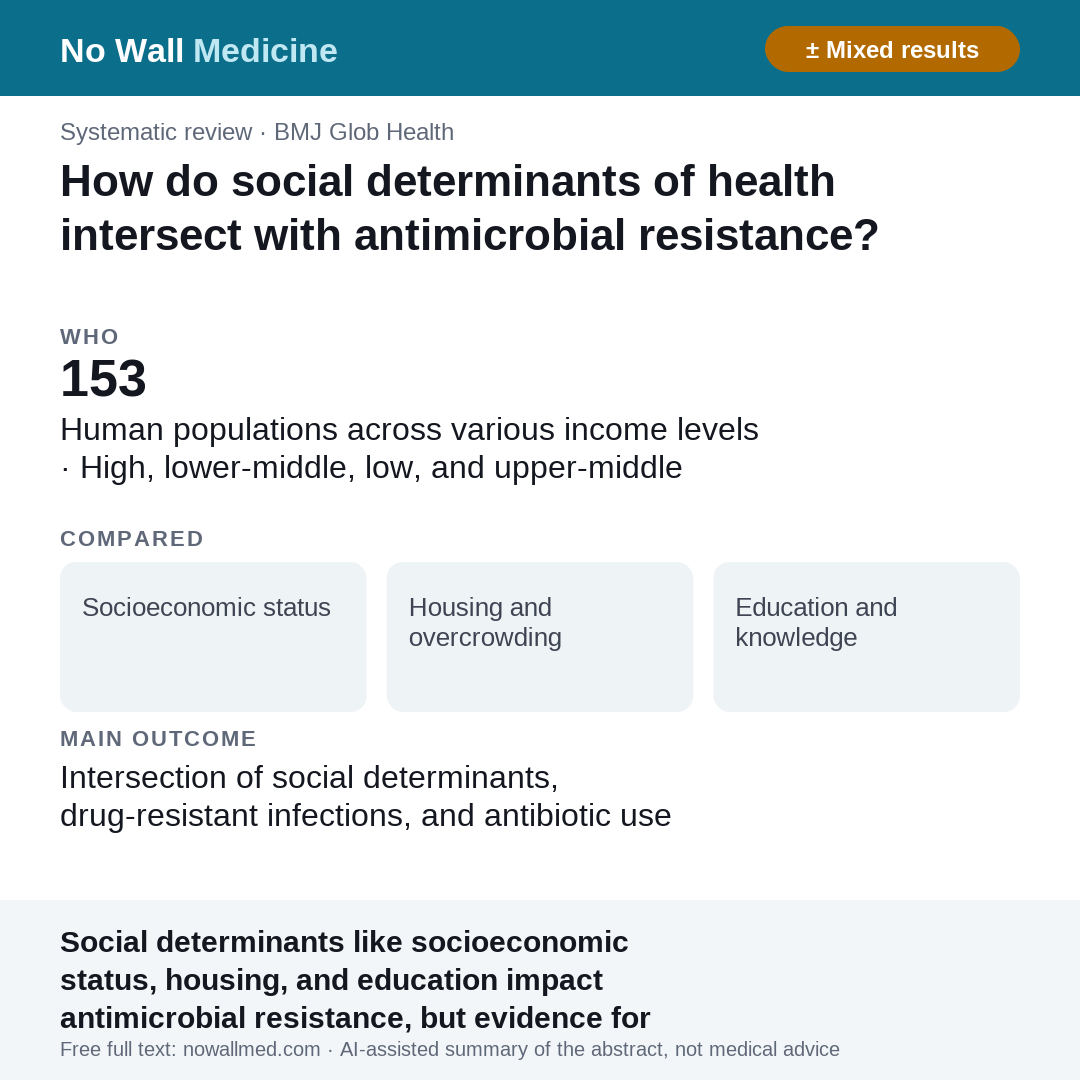
The intersection of the social determinants of health and antimicrobial resistance in human populations: a systematic review
Systematic reviewMixed results
How do social determinants of health intersect with antimicrobial resistance?
Who
153
Human populations across various income levels · High, lower-middle, low, and upper-middle income countries
Compared
Socioeconomic status
Housing and overcrowding
Education and knowledge
Main outcome
Intersection of social determinants, drug-resistant infections, and antibiotic use
Bottom line: Social determinants like socioeconomic status, housing, and education impact antimicrobial resistance, but evidence for specific groups is limited.
Limitation: Limited evidence associated with the complete range of social determinants and specific population groups.
BMJ Glob Health · 2025-05-30Download image
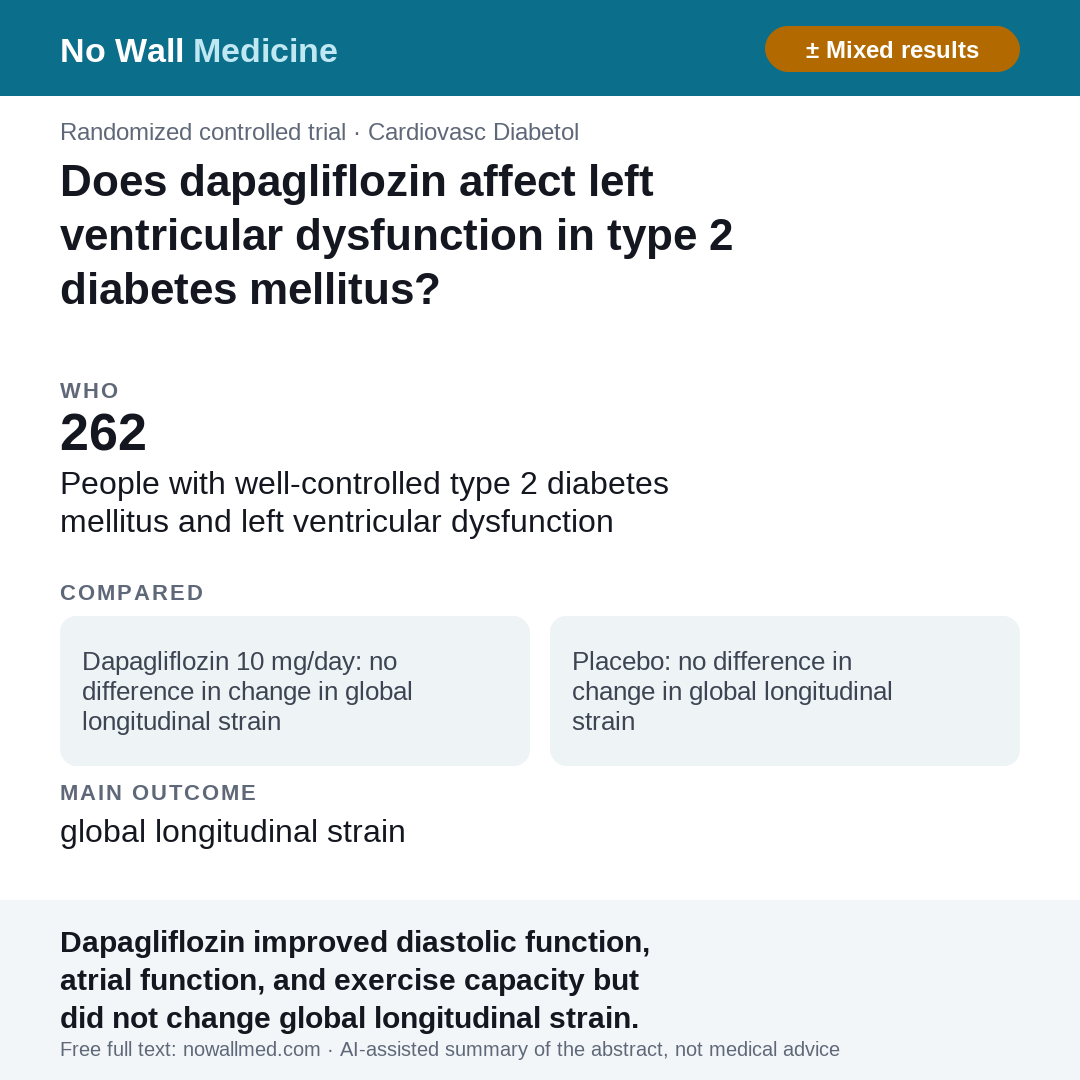
Effects of dapagliflozin on the progression of left ventricular dysfunction in type 2 diabetes mellitus: a randomized controlled trial
Randomized controlled trialMixed results
Does dapagliflozin affect left ventricular dysfunction in type 2 diabetes mellitus?
Who
262
People with well-controlled type 2 diabetes mellitus and left ventricular dysfunction
Compared
Dapagliflozin 10 mg/day: no difference in change in global longitudinal strain
Placebo: no difference in change in global longitudinal strain
Main outcome
global longitudinal strain
Bottom line: Dapagliflozin improved diastolic function, atrial function, and exercise capacity but did not change global longitudinal strain.
Cardiovasc Diabetol · 2025-05-30Download image
Using Virtual Reality to Enhance Surgical Skills and Engagement in Orthopedic Education: Systematic Review and Meta-Analysis
Meta-analysis of 23 randomized controlled trialsBenefit found
Does virtual reality enhance surgical skills and engagement in orthopedic education?
Who
1091
Undergraduates, trainees, resident doctors, and postgraduate doctors
Compared
Virtual reality
Traditional education
Main outcome
Knowledge, clinical operation, surgical design, and engagement scores
Result: standardized mean difference 1.08 (95% CI 0.71-1.46) for knowledge scores
Bottom line: Virtual reality significantly improves orthopedic theoretical knowledge, practical skills, and student engagement compared to traditional teaching methods.
Limitation: Notable heterogeneity in terms of virtual reality platforms used.
J Med Internet Res · 2025-05-30Download image

Impact of Digital Health on Patient-Provider Relationships in Respiratory Secondary Care Based on Qualitative and Quantitative Evidence: Systematic Review
Systematic reviewMixed results
Impact of digital health on patient relationships
Who
respiratory care patients
Compared
Digital health
Traditional care
Main outcome
patient-provider relationship
Bottom line: Digital health can strengthen or weaken relationships
J Med Internet Res · 2025-05-30Download image
Neurocognitive outcome of HS-WBRT vs WBRT in patients with brain metastases: A systematic review and meta-analysis
Meta-analysis of 7 studiesBenefit found
HS-WBRT vs WBRT neurocognitive outcome
Who
patients with brain metastases
Compared
HS-WBRT
WBRT
Main outcome
neurocognitive function
Result: SMD = 0.42 to 1.21
Bottom line: HS-WBRT preserves neurocognitive function better
Neurooncol Adv · 2025-05-30Download image

Effects of oral care combined with neuromuscular electrical stimulation on clinical outcomes in the acute phase of acute ischemic stroke: a pilot randomized controlled trial
Randomized, parallel group pilot trialBenefit found
Does combined oral care and neuromuscular electrical stimulation improve outcomes in acute ischemic stroke?
Who
35
Persons with acute ischemic stroke
Compared
Oral care only
Oral care plus neuromuscular electrical stimulation: greatest improvements in Gugging Swallowing Screening and Revised Oral Assessment Guide scores
Standard care
Main outcome
Revised Oral Assessment Guide and Gugging Swallowing Screening scores
Bottom line: Combined oral care and neuromuscular electrical stimulation may improve swallowing and oral health in acute ischemic stroke.
Limitation: This pilot study was not powered to determine superiority between the two intervention groups.
J Neuroeng Rehabil · 2025-05-30Download image
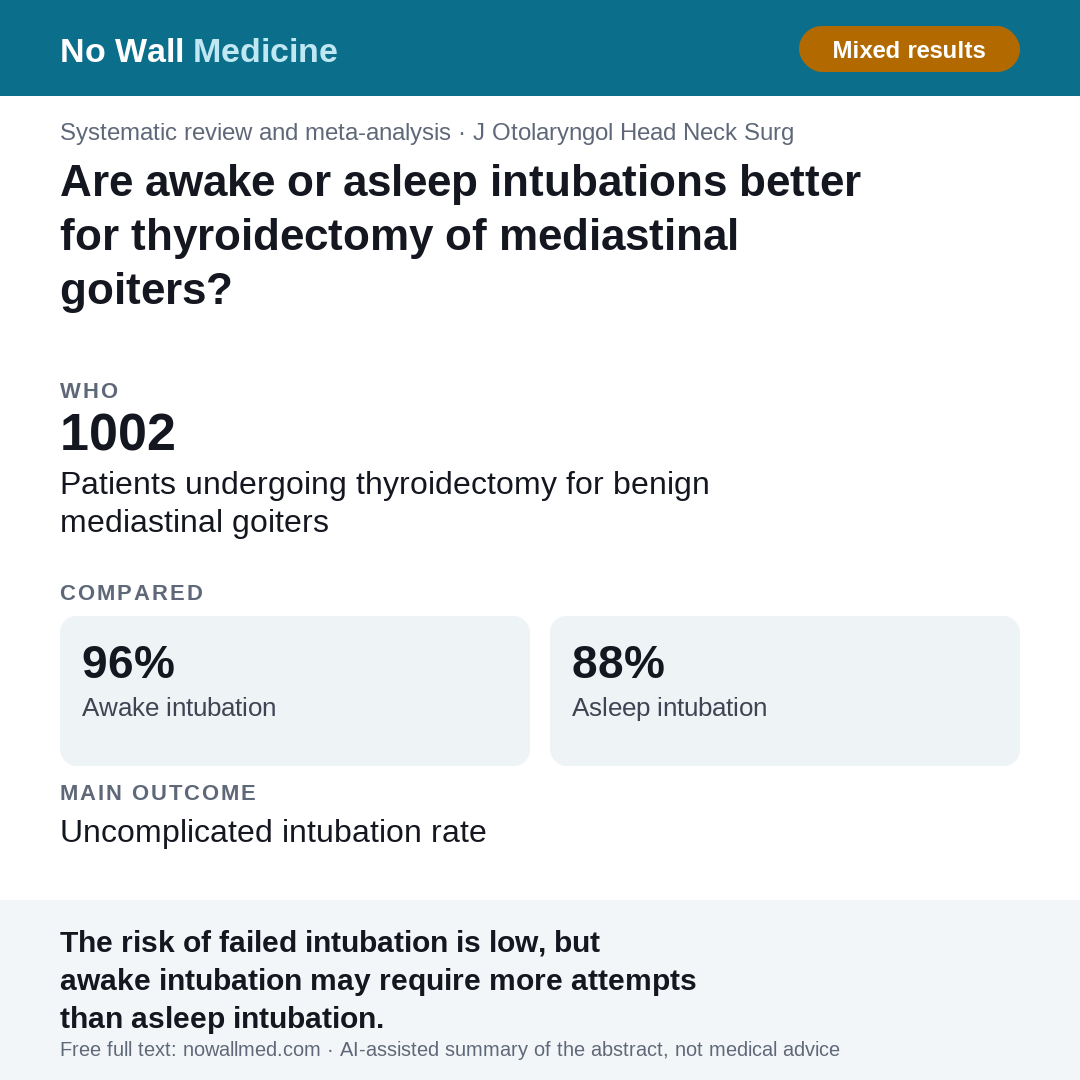
Awake Versus Asleep Intubation for Mediastinal Goiters: A Systematic Review and Meta-Analysis
Systematic review and meta-analysisMixed results
Are awake or asleep intubations better for thyroidectomy of mediastinal goiters?
Who
1002
Patients undergoing thyroidectomy for benign mediastinal goiters
Compared
96%Awake intubation (95% CI 73%-100%)
88%Asleep intubation (95% CI 69%-98%)
Main outcome
Uncomplicated intubation rate
Bottom line: The risk of failed intubation is low, but awake intubation may require more attempts than asleep intubation.
J Otolaryngol Head Neck Surg · 2025-05-30Download image
When can lumbar fusion be considered appropriate in the treatment of recurrent lumbar disc herniation? A systematic review and meta-analysis
Systematic review and meta-analysisNo clear difference
When should lumbar fusion be considered for treating recurrent lumbar disc herniation?
Who
Patients with recurrent lumbar disc herniation
Compared
Lumbar fusion
Redo discectomy
Main outcome
Clinical outcome scores, blood loss, hospitalization, and surgery duration
Bottom line: Lumbar fusion and redo discectomy are both safe and effective for recurrent lumbar disc herniation.
Brain Spine · 2025-05-30Download image
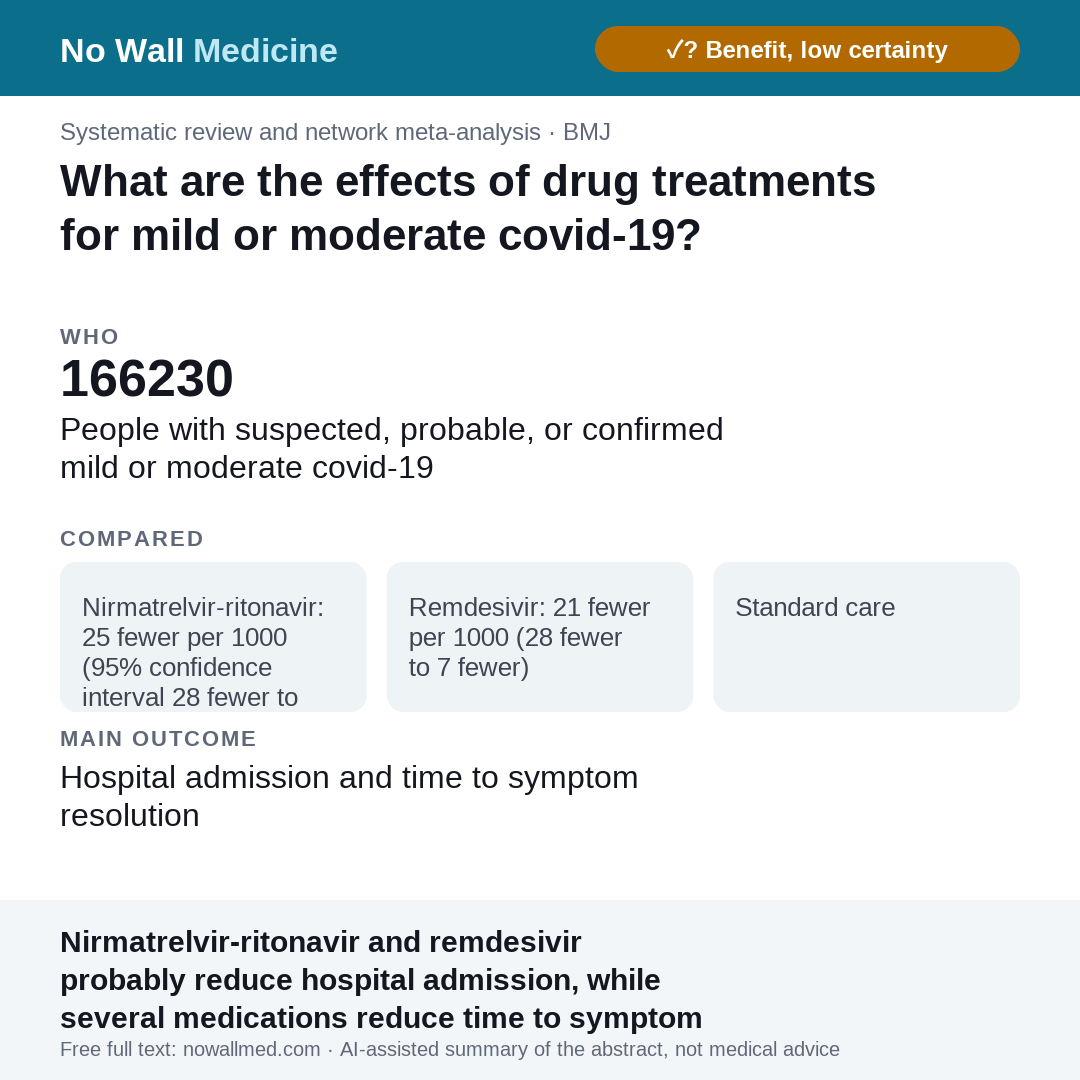
Drug treatments for mild or moderate covid-19: systematic review and network meta-analysis
Systematic review and network meta-analysisBenefit found
What are the effects of drug treatments for mild or moderate covid-19?
Who
166230
People with suspected, probable, or confirmed mild or moderate covid-19
Compared
Nirmatrelvir-ritonavir: 25 fewer per 1000 (95% confidence interval 28 fewer to 20 fewer)
Remdesivir: 21 fewer per 1000 (28 fewer to 7 fewer)
Standard care
Main outcome
Hospital admission and time to symptom resolution
Bottom line: Nirmatrelvir-ritonavir and remdesivir probably reduce hospital admission, while several medications reduce time to symptom resolution.
BMJ · 2025-05-29Download image
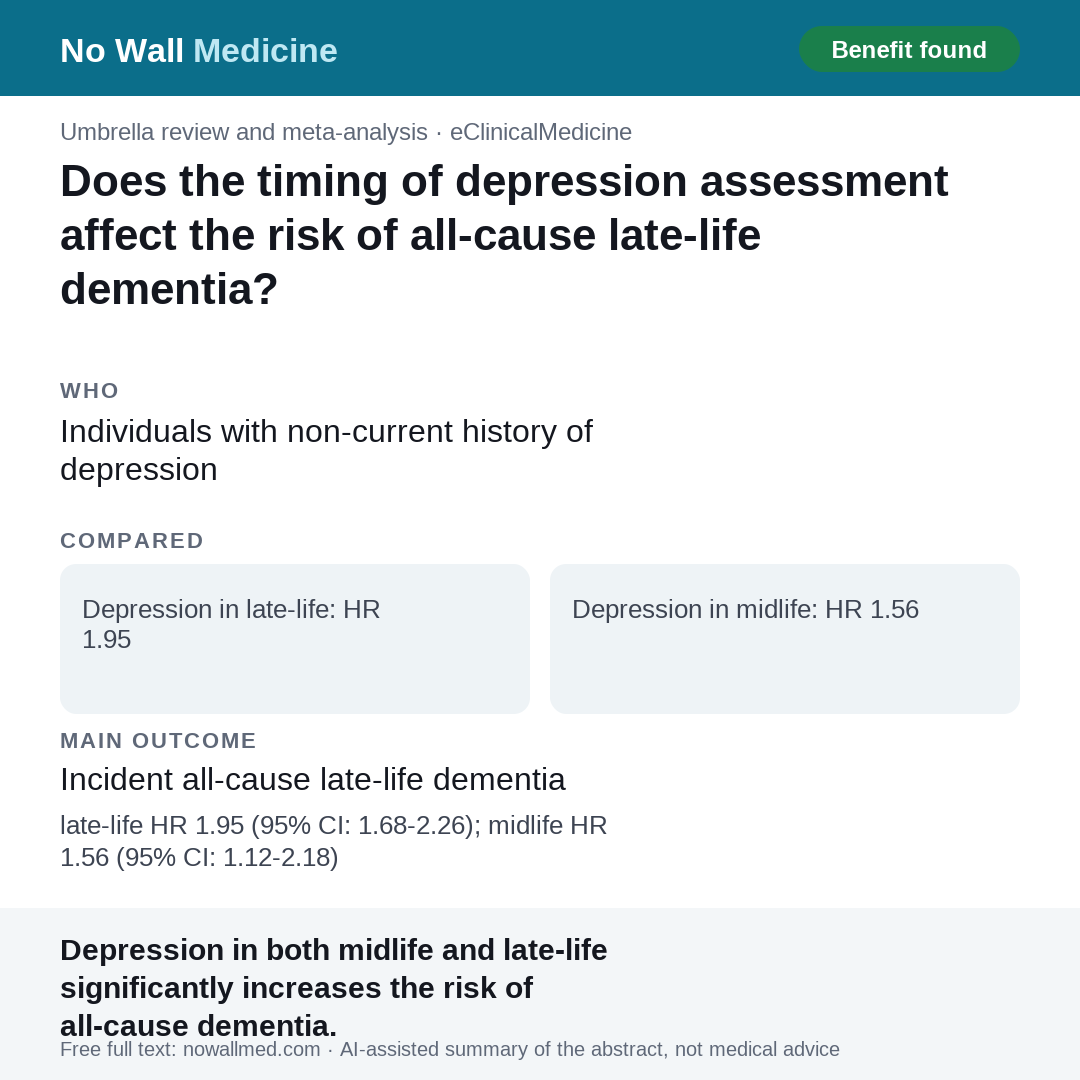
Temporal dynamics in the association between depression and dementia: an umbrella review and meta-analysis
Umbrella review and meta-analysisBenefit found
Does the timing of depression assessment affect the risk of all-cause late-life dementia?
Who
Individuals with non-current history of depression
Compared
Depression in late-life: HR 1.95
Depression in midlife: HR 1.56
Main outcome
Incident all-cause late-life dementia
Result: late-life HR 1.95 (95% CI: 1.68-2.26); midlife HR 1.56 (95% CI: 1.12-2.18)
Bottom line: Depression in both midlife and late-life significantly increases the risk of all-cause dementia.
Limitation: Substantial heterogeneity and low to critically low quality of included reviews.
eClinicalMedicine · 2025-05-29Download image
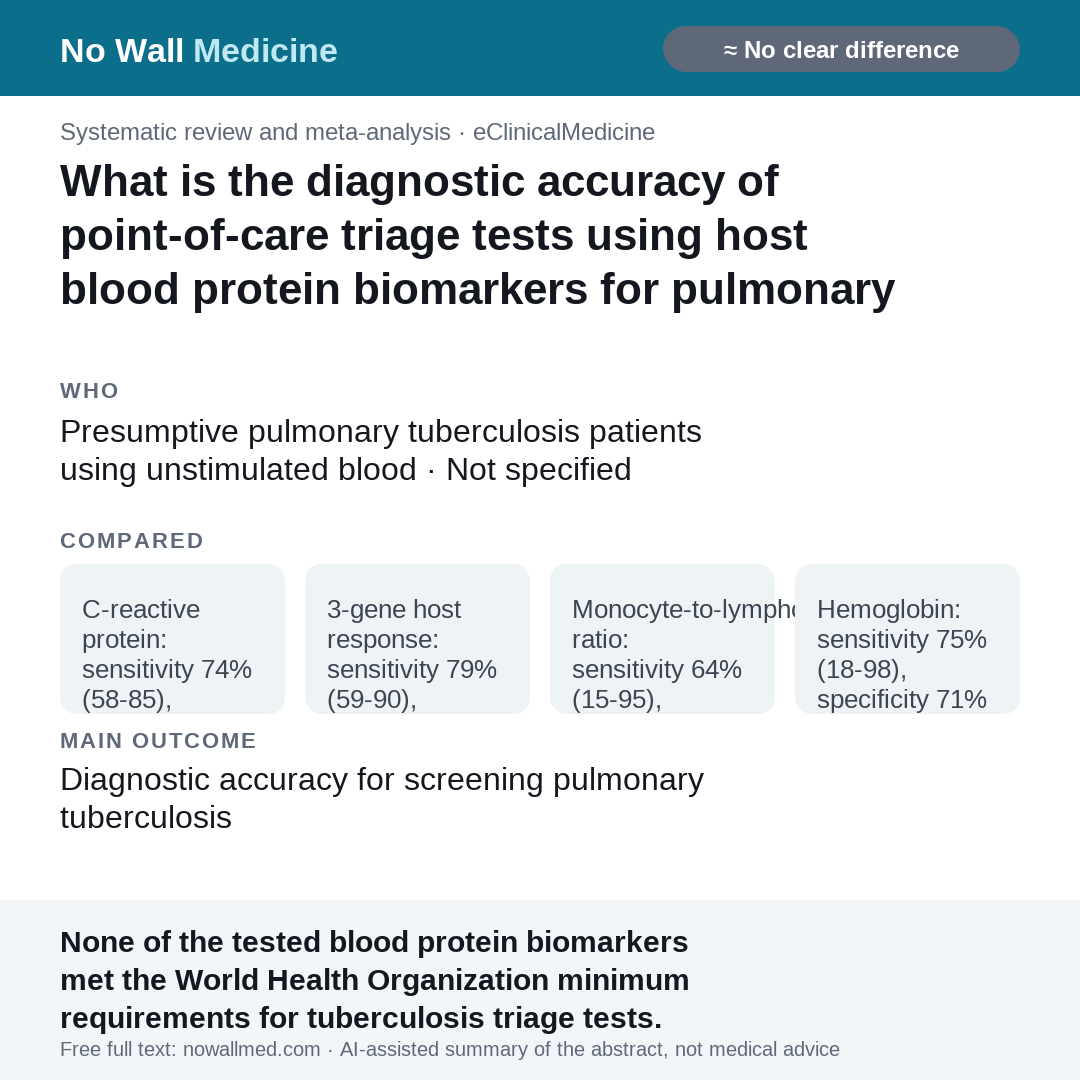
Diagnostic accuracy of point-of-care triage tests for pulmonary tuberculosis using host blood protein biomarkers: a systematic review and meta-analysis
Systematic review and meta-analysisNo clear difference
What is the diagnostic accuracy of point-of-care triage tests using host blood protein biomarkers for pulmonary tuberculosis?
Who
Presumptive pulmonary tuberculosis patients using unstimulated blood · Not specified
Compared
C-reactive protein: sensitivity 74% (58-85), specificity 68% (52-80)
3-gene host response: sensitivity 79% (59-90), specificity 85% (68-94)
Monocyte-to-lymphocyte ratio: sensitivity 64% (15-95), specificity 69% (30-92)
Hemoglobin: sensitivity 75% (18-98), specificity 71% (18-100)
Main outcome
Diagnostic accuracy for screening pulmonary tuberculosis
Bottom line: None of the tested blood protein biomarkers met the World Health Organization minimum requirements for tuberculosis triage tests.
Limitation: Need for head-to-head comparisons and combination tests is recommended.
Funded by: Mr. Willem Bakhuys Roozeboom Foundation and EDCTP grant
eClinicalMedicine · 2025-05-29Download image
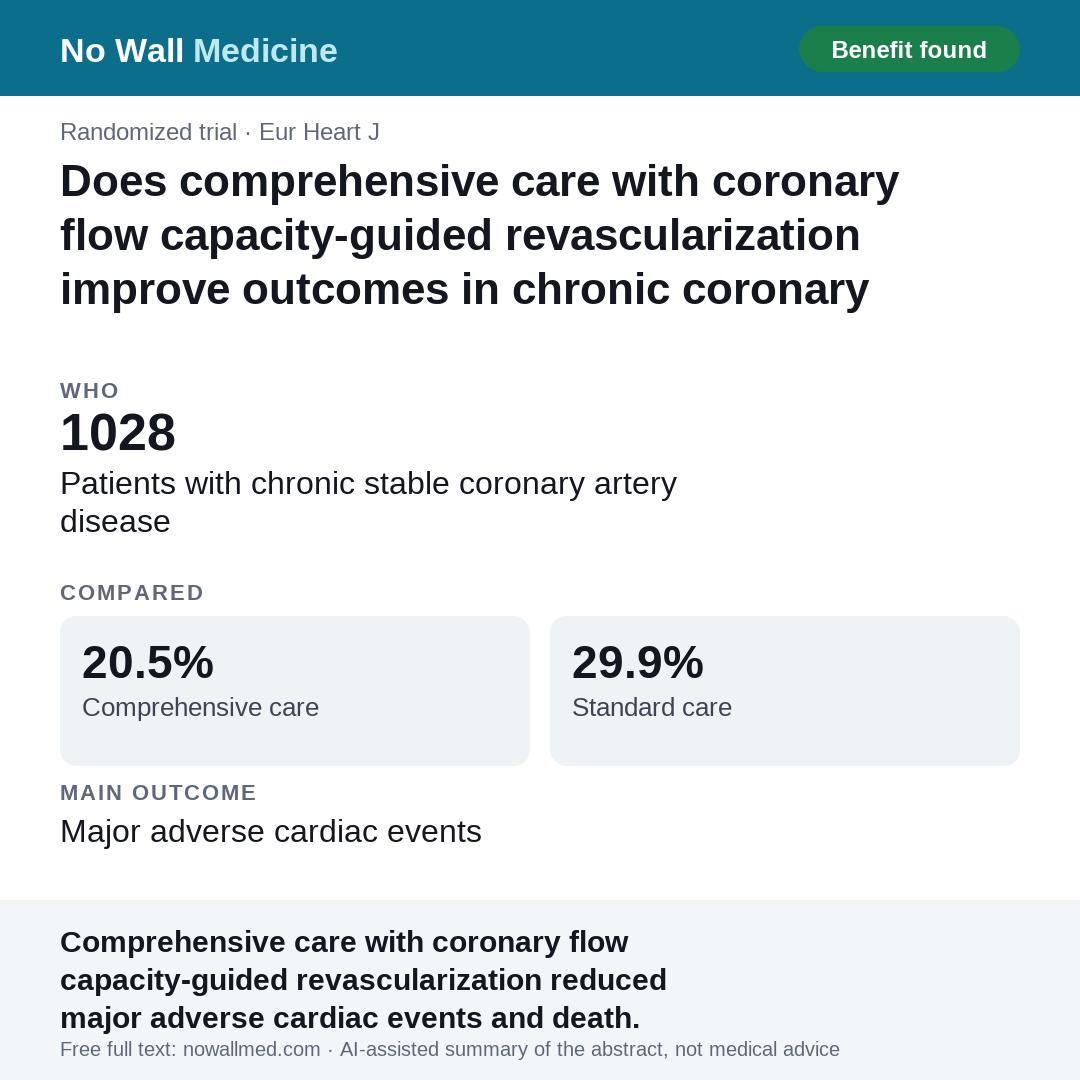
Optimal medical care and coronary flow capacity-guided myocardial revascularization vs usual care for chronic coronary artery disease: the CENTURY trial
Randomized trialBenefit found
Does comprehensive care with coronary flow capacity-guided revascularization improve outcomes in chronic coronary artery disease?
Who
1028
Patients with chronic stable coronary artery disease
Compared
20.5%Comprehensive care
29.9%Standard care
Main outcome
Major adverse cardiac events
Bottom line: Comprehensive care with coronary flow capacity-guided revascularization reduced major adverse cardiac events and death.
Eur Heart J · 2025-05-29Download image
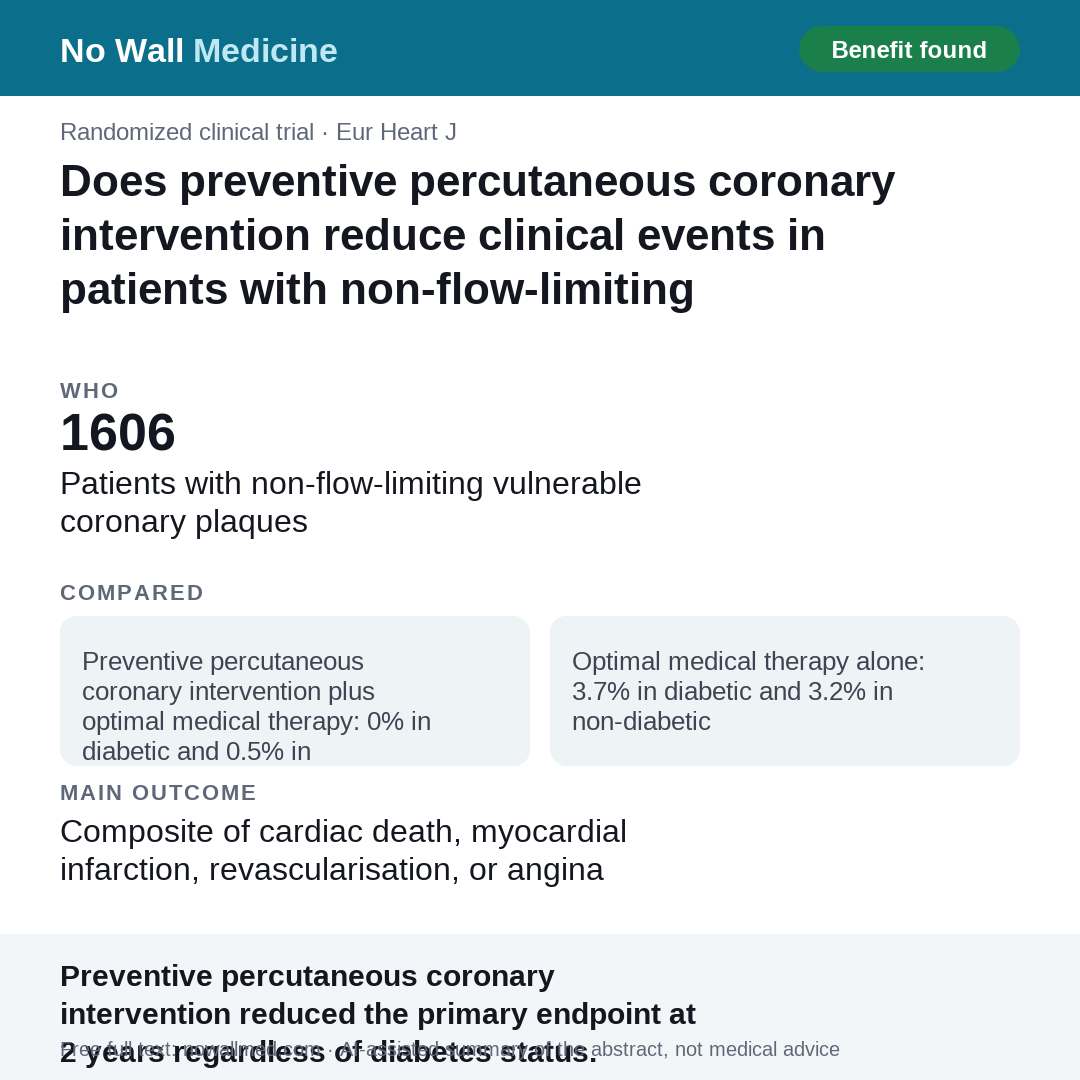
Preventive percutaneous coronary intervention for non-flow-limiting vulnerable atherosclerotic coronary plaques in diabetes: the PREVENT trial
Randomized clinical trialBenefit found
Does preventive percutaneous coronary intervention reduce clinical events in patients with non-flow-limiting vulnerable plaques?
Who
1606
Patients with non-flow-limiting vulnerable coronary plaques
Compared
Preventive percutaneous coronary intervention plus optimal medical therapy: 0% in diabetic and 0.5% in non-diabetic
Optimal medical therapy alone: 3.7% in diabetic and 3.2% in non-diabetic
Main outcome
Composite of cardiac death, myocardial infarction, revascularisation, or angina hospitalization
Result: hazard ratio 0.16 (95% confidence interval 0.05-0.55)
Bottom line: Preventive percutaneous coronary intervention reduced the primary endpoint at 2 years regardless of diabetes status.
Eur Heart J · 2025-05-29Download image
Risk of Tuberculosis Infection in Young Children Exposed to Multidrug-resistant Tuberculosis in the TB-CHAMP Multi-site Randomized Controlled Trial
Randomized controlled trialNo clear difference
What is the prevalence and risk factors of tuberculosis infection in young children?
Who
785
Child household contacts younger than 5 years exposed to multidrug-resistant tuberculosis · Multi-site
Compared
20.4%Children with positive interferon-gamma release assay (160/785)
Children with negative interferon-gamma release assay
Main outcome
Prevalence of Mycobacterium tuberculosis infection
Bottom line: The prevalence of infection was 20.4% among children exposed to multidrug-resistant tuberculosis.
Limitation: Possible test limitations or improved diagnosis and treatment of multidrug-resistant tuberculosis.
Clin Infect Dis · 2025-05-29Download image

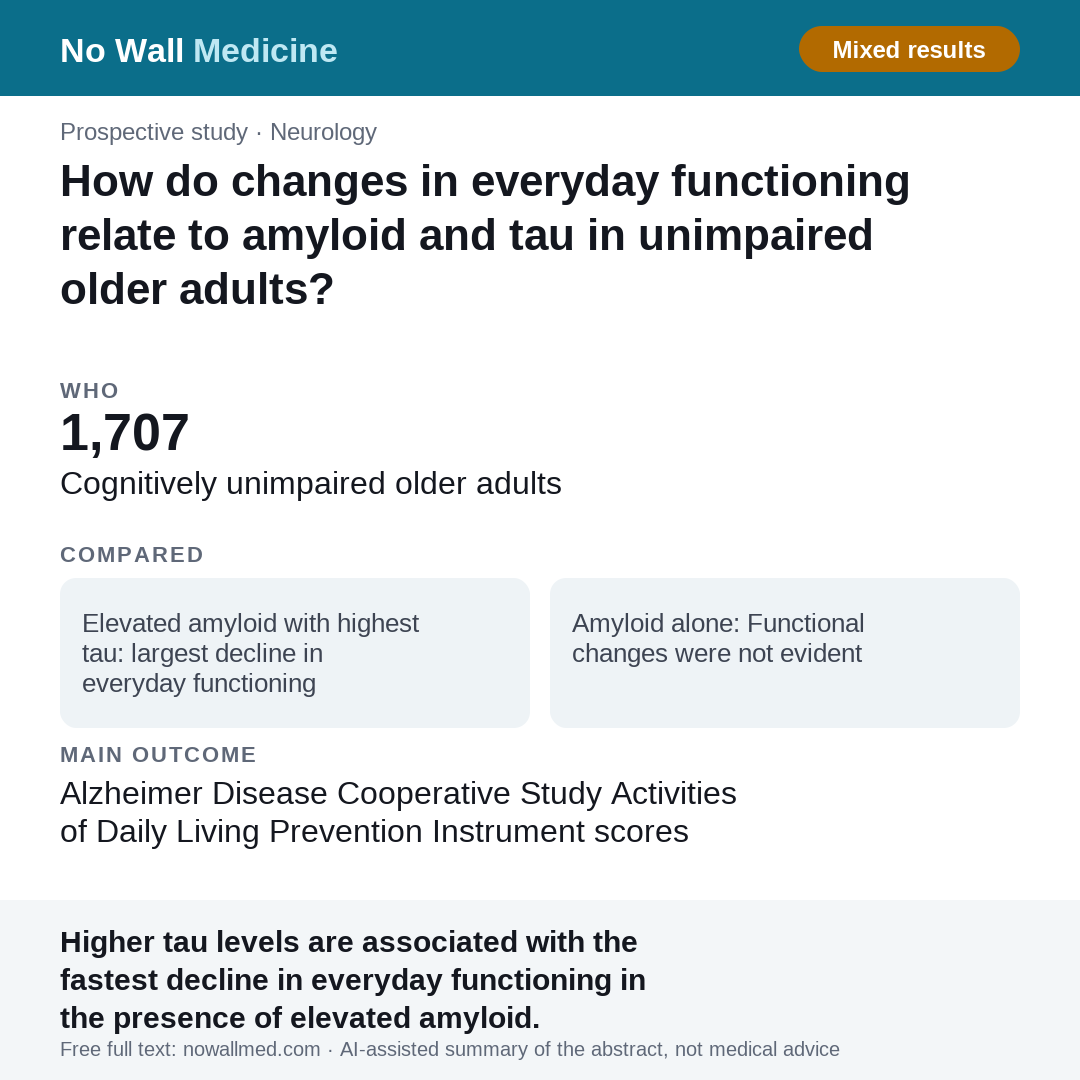
Changes in Daily Functioning in Association With Tau and Amyloid Among Unimpaired Older Adults With and Without Elevated Amyloid
Prospective studyMixed results
How do changes in everyday functioning relate to amyloid and tau in unimpaired older adults?
Who
1,707
Cognitively unimpaired older adults
Compared
Elevated amyloid with highest tau: largest decline in everyday functioning
Amyloid alone: Functional changes were not evident
Main outcome
Alzheimer Disease Cooperative Study Activities of Daily Living Prevention Instrument scores
Bottom line: Higher tau levels are associated with the fastest decline in everyday functioning in the presence of elevated amyloid.
Neurology · 2025-05-29Download image
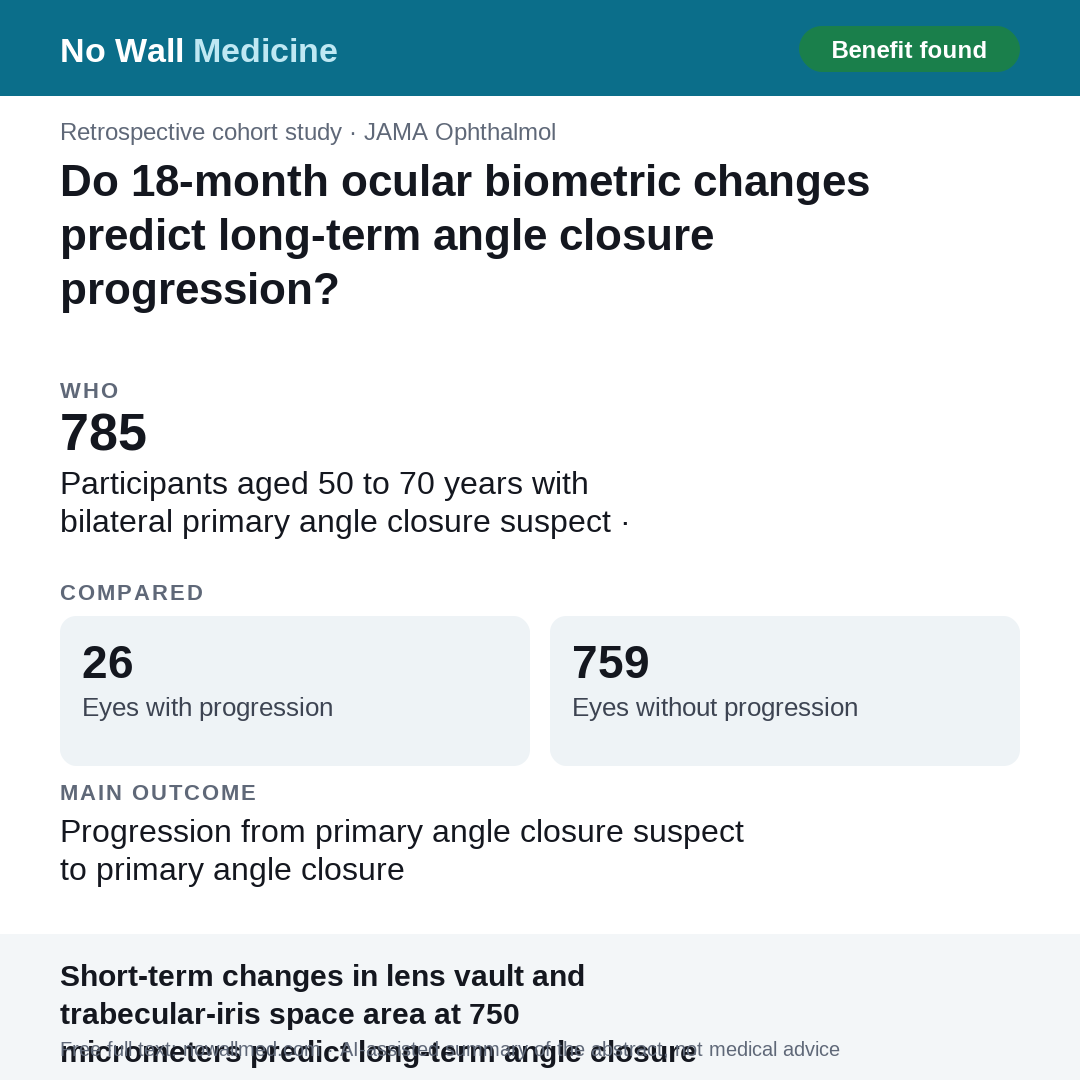
Short-Term Ocular Biometric Changes as Predictors of Long-Term Angle Closure Progression
Retrospective cohort studyBenefit found
Do 18-month ocular biometric changes predict long-term angle closure progression?
Who
785
Participants aged 50 to 70 years with bilateral primary angle closure suspect · Zhongshan Angle Closure Prevention Trial
Compared
26Eyes with progression
759Eyes without progression
Main outcome
Progression from primary angle closure suspect to primary angle closure
Result: hazard ratio 1.28 per -0.01 mm2 (95% CI 1.09-1.50)
Bottom line: Short-term changes in lens vault and trabecular-iris space area at 750 micrometers predict long-term angle closure progression.
JAMA Ophthalmol · 2025-05-29Download image
Mepolizumab Improves Histologic Severity as Measured by the EoEHSS in Adolescents and Adults With Eosinophilic Oesophagitis in a Multicenter, Randomised, Double-Blind, Placebo-Controlled Clinical Trial
Randomized, double-blind, placebo-controlled clinical trialBenefit found
Does mepolizumab improve histologic severity in adolescents and adults with eosinophilic oesophagitis?
Who
Adolescents and adults with eosinophilic oesophagitis · Multicenter
Compared
Mepolizumab 300 mg: grade 0.39 ± 0.14
Placebo: grade 0.56 ± 0.21
Main outcome
Eosinophilic oesophagitis Histologic Scoring System grade and stage
Bottom line: Mepolizumab significantly lowered eosinophilic oesophagitis histologic scoring system grade and stage compared to placebo.
Limitation: Improvement was primarily limited to the eosinophil-dependent histologic scoring system features.
Aliment Pharmacol Ther · 2025-05-29Download image

Efficacy of RTS,S/AS01E Only Seen in Baseline Parasitemic and Not Baseline Aparasitemic Plasmodium falciparum-Exposed, Drug-Treated Kenyan Adults
Phase 2b randomized trialNo clear difference
Does treating malaria infection before RTS,S/AS01E vaccination improve vaccine efficacy and immunogenicity?
Who
Kenyan adults with or without baseline Plasmodium falciparum infections · Kenya
Compared
34.8%Baseline P. falciparum-positive with RTS,S/AS01E (95% CI 8.9% to 53.4%)
Baseline P. falciparum-positive with rabies vaccine
-24.0%Baseline P. falciparum-negative with RTS,S/AS01E (95% CI -97% to 22.4%)
Baseline P. falciparum-negative with rabies vaccine
Main outcome
Plasmodium falciparum infection and anticircumsporozoite antibody titers
Bottom line: Treating Plasmodium falciparum infections before vaccination does not increase vaccine efficacy or improve antibody responses.
J Infect Dis · 2025-05-29Download image