Visual abstracts
New randomized trials and meta-analyses from leading journals at a glance: who was studied, what was compared, and what was found. Every paper is free to read in full.
All specialtiesCardiology 1219Oncology 1064Gastroenterology & Hepatology 429Infectious Disease 802Neurology 504Psychiatry & Mental Health 617Pulmonology 515Critical Care 355Endocrinology & Diabetes 679Pediatrics 725Surgery 542Orthopedics & Sports Medicine 230Neurosurgery 164Cardiothoracic & Vascular Surgery 135Plastic & Reconstructive Surgery 188Nephrology 255Rheumatology 161Hematology 252Dermatology 120Ophthalmology 137Obstetrics & Gynecology 381Public & Global Health 241Radiology & Imaging 159Anesthesiology 219Urology 219ENT (Otolaryngology) 168Emergency Medicine 131Allergy & Immunology 84Geriatrics 250Family Medicine & Primary Care 150Medical Genetics & Genomics 126Pathology & Laboratory Medicine 37Physical Medicine & Rehabilitation 209Palliative Care 109Nutrition 315Digital Health & AI 612General Medicine 114
Revisiting the Value of Admission Cardiotocography in Term Pregnancies: An Updated Systematic Review and Meta-Analysis
Systematic review and meta-analysis of 5 randomized controlled trialsNo clear difference
Does admission cardiotocography compared with intermittent auscultation improve maternal and neonatal outcomes?
Who
16341
Low-risk, term pregnancies with singleton fetuses
Compared
Admission cardiotocography: RR 1.23 (95% CI: 1.05-1.44) for continuous electronic fetal heart rate monitoring
Intermittent auscultation
Main outcome
maternal and neonatal outcomes
Result: no significant difference for caesarean section (RR 1.09, 95% CI: 0.86-1.37)
Bottom line: Routine admission cardiotocography in low-risk term pregnancies shows no improvement in maternal or neonatal outcomes compared to intermittent auscultation.
Limitation: Evidence certainty was rated moderate for most outcomes.
BJOG · 2025-10-11Download image

Discriminatory Characteristics of Responders and Nonresponders of Patients With Sepsis to Neuromuscular Electrical Stimulation: A Subanalysis of a Randomized Controlled Double-Blinded Trial
Subanalysis of a randomized, controlled, double-blind trialMixed results
What characteristics distinguish responders and nonresponders to neuromuscular electrical stimulation in sepsis?
Who
15
Adult patients diagnosed with sepsis or septic shock · Intensive care unit at a private hospital
Compared
Responder group: De Morton Mobility Index increased from 19±20 points to 33±30 points
Nonresponder group: Rectus femoris thickness reduced by more than 10%
Main outcome
Ultrasonographic muscle characteristics and physical function variables
Bottom line: Surgical ICU Optimal Mobilization Score and De Morton Mobility Index characterize responders to neuromuscular electrical stimulation.
Arch Phys Med Rehabil · 2025-10-11Download image

Novel avatar-based video-guided acupuncture imagery treatment for chronic low back pain: a randomised controlled trial in the USA
Parallel-group, randomised, controlled trialNo clear difference
Does avatar-based video-guided acupuncture imagery treatment improve chronic low back pain?
Who
60
Participants aged 18-75 years with chronic low back pain · Massachusetts General Hospital, USA
Compared
Avatar-based video-guided acupuncture imagery treatment: -1.71 [-2.38 to -1.04]
Avatar-based video-guided touch imagery treatment: -1.24 [-1.92 to -0.55]
Main outcome
Change from baseline in pain bothersomeness after 4 weeks
Result: -0.47 [-1.43 to 0.49]
Bottom line: Both acupuncture imagery and touch imagery treatments significantly reduced pain bothersomeness, but no significant difference was found between them.
Limitation: Short duration, limited treatment frequency, and small sample size may restrict generalisability.
Funded by: National Institutes of Health/National Center for Complementary and Integrative Health
eClinicalMedicine · 2025-10-10Download image

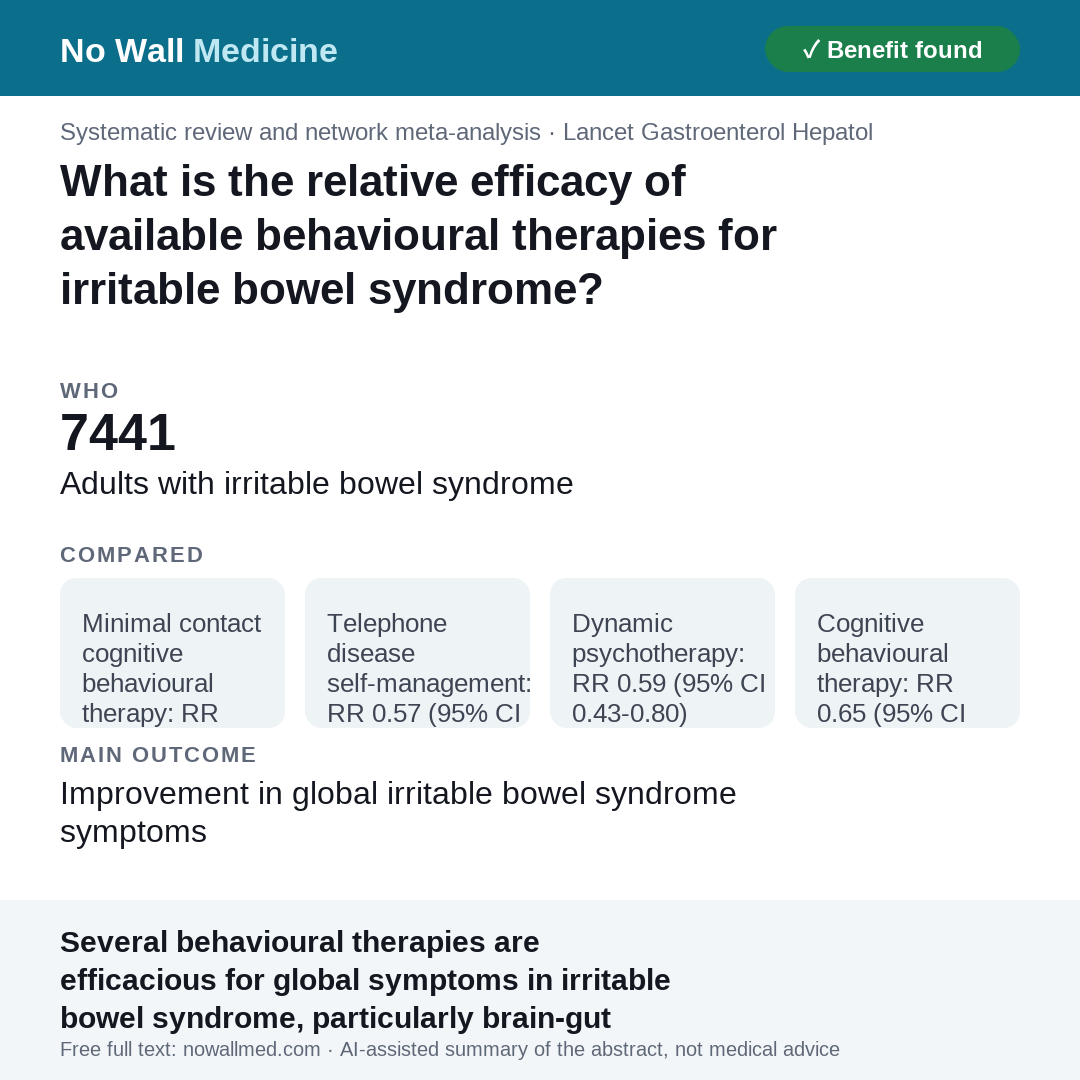
Efficacy of behavioural therapies for irritable bowel syndrome: a systematic review and network meta-analysis
Systematic review and network meta-analysisBenefit found
What is the relative efficacy of available behavioural therapies for irritable bowel syndrome?
Who
7441
Adults with irritable bowel syndrome
Compared
Minimal contact cognitive behavioural therapy: RR 0.55 (95% CI 0.39-0.76)
Telephone disease self-management: RR 0.57 (95% CI 0.41-0.80)
Dynamic psychotherapy: RR 0.59 (95% CI 0.43-0.80)
Cognitive behavioural therapy: RR 0.65 (95% CI 0.53-0.80)
Main outcome
Improvement in global irritable bowel syndrome symptoms
Bottom line: Several behavioural therapies are efficacious for global symptoms in irritable bowel syndrome, particularly brain-gut behaviour therapies.
Limitation: Evidence certainty was low or very low due to publication bias and risk of bias in trials.
Lancet Gastroenterol Hepatol · 2025-10-10Download image
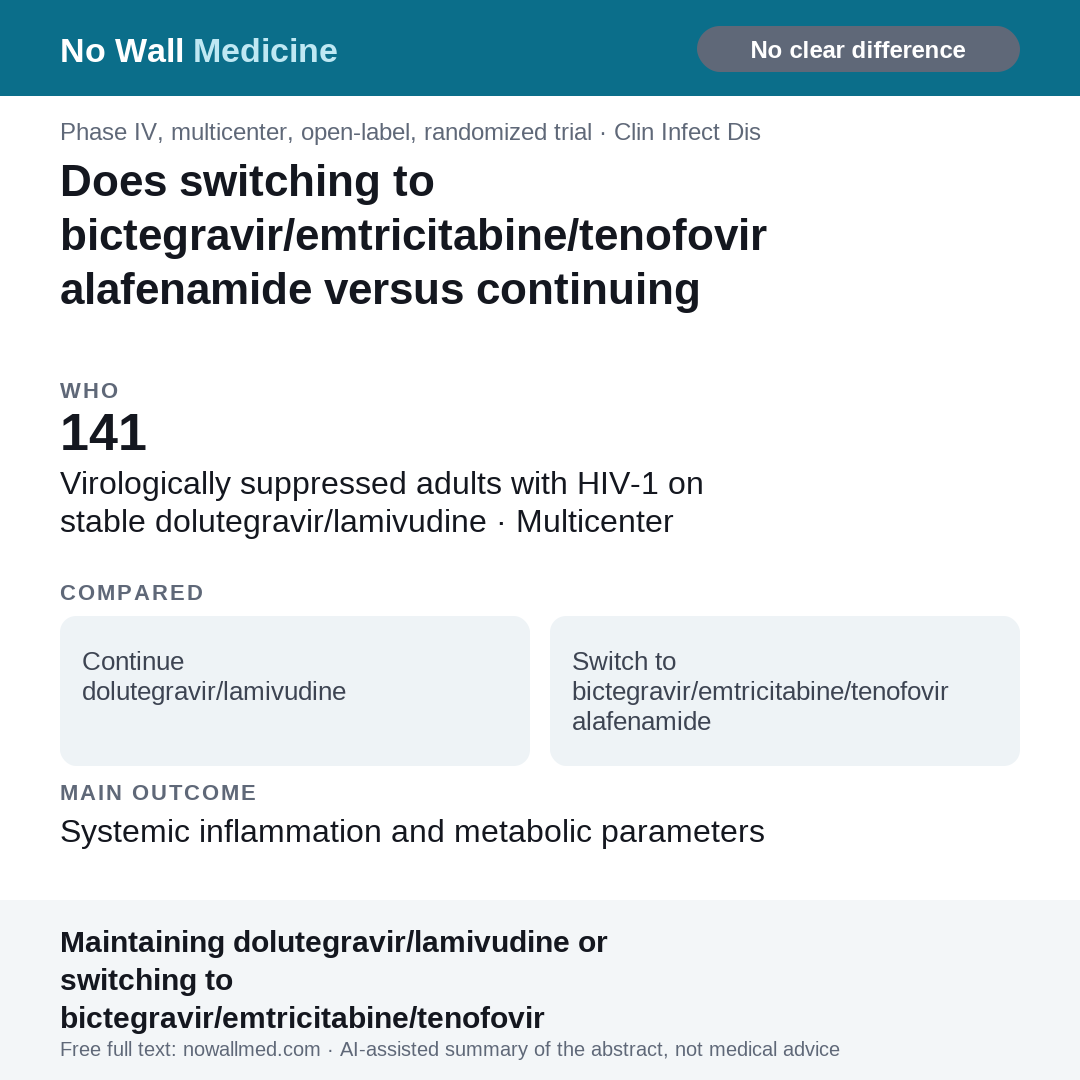
Comparable Inflammatory and Metabolic Outcomes After Switching to Bictegravir/Emtricitabine/Tenofovir Alafenamide Versus Continuing Dolutegravir/Lamivudine in Virologically Suppressed Adults With HIV (INSTINCT/GESIDA10918 Study)
Phase IV, multicenter, open-label, randomized trialNo clear difference
Does switching to bictegravir/emtricitabine/tenofovir alafenamide versus continuing dolutegravir/lamivudine affect inflammation and metabolism?
Who
141
Virologically suppressed adults with HIV-1 on stable dolutegravir/lamivudine · Multicenter
Compared
Continue dolutegravir/lamivudine
Switch to bictegravir/emtricitabine/tenofovir alafenamide
Main outcome
Systemic inflammation and metabolic parameters
Bottom line: Maintaining dolutegravir/lamivudine or switching to bictegravir/emtricitabine/tenofovir alafenamide showed equivalent inflammatory, metabolic, and immunologic profiles.
Clin Infect Dis · 2025-10-10Download image
From risk to chronicity: genetic and neuroimaging insights into the evolving patterns of spontaneous brain activity in schizophrenia
Neuroimaging meta-analysisBenefit found
How does spontaneous brain activity and genetic association change across schizophrenia stages?
Who
High-risk, first-episode, and chronic schizophrenia stages
Compared
High-risk stage: reduced brain activity in the right median cingulate and paracingulate gyri
First-episode stage: increased activity in the right putamen and decreased activity in the left gyrus rectus and right postcentral gyrus
Chronic stage: heightened activity in the right inferior frontal gyrus and reduced activity in the superior occipital gyrus and right postcentral gyrus
Main outcome
Spontaneous brain activity alterations and associated genes
Bottom line: Brain activity alterations and 199 consistent genes across schizophrenia stages may serve as universal biomarkers and therapeutic targets.
Psychol Med · 2025-10-10Download image

Effect of neuromuscular blocking agents on tracheal intubation quality in paediatric patients: a systematic review using network meta-analysis and meta-regression
Systematic review and network meta-analysisBenefit found
How do different neuromuscular blocking agents affect tracheal intubation quality in paediatric patients?
Who
8008
Healthy paediatric participants aged 0 to 12 years
Compared
Non depolarising neuromuscular blocking agents: excellent (OR: 2.97 [1.82-5.10]) and acceptable (OR: 2.29 [1.14-4.39]) intubation conditions
Intubation without neuromuscular blocking agents
Main outcome
excellent and acceptable tracheal intubation conditions
Bottom line: Non depolarising neuromuscular blocking agents enhance excellent and acceptable intubation conditions in paediatric patients.
Br J Anaesth · 2025-10-10Download image

Machine Learning to Predict Extranodal Extension in Head and Neck Squamous Cell Carcinoma: A Systematic Review and Meta-Analysis
Systematic review and meta-analysisBenefit found
Can machine learning algorithms diagnose extranodal extension in head and neck squamous cell carcinoma?
Who
1407
Patients with head and neck squamous cell carcinoma
Compared
Machine learning algorithms: pooled AUC of 0.92 (95% CI [0.915, 0.923])
Radiologists: pooled AUCs of 0.65 (95% CI [0.645-0.654])
Main outcome
Diagnostic accuracy of detecting extranodal extension using computed tomography imaging
Result: pooled AUC of 0.92 (95% CI [0.915, 0.923])
Bottom line: Machine learning algorithms demonstrate superior diagnostic performance in predicting extranodal extension compared to radiologists.
Laryngoscope · 2025-10-10Download image

The effect of enteral glycine on plasma glycine and muscle structure, size, and function in the critically ill: A randomized controlled trial
Parallel group, blinded, randomized clinical trialMixed results
Does enteral glycine affect plasma glycine and muscle structure in critically ill patients?
Who
29
Mechanically ventilated patients
Compared
Placebo
Low-dose glycine
High-dose glycine
Main outcome
plasma glycine availability
Result: Mean difference AUC240 high-dose glycine vs placebo: 759.40 μmol/L.min; 95 % CI 219.27, 1299.54
Bottom line: High-dose glycine increases plasma and muscle glycine concentrations, but effects on muscle loss require further evaluation in larger studies.
Limitation: The effect of glycine on muscle loss warrants further evaluation in larger studies.
Clin Nutr · 2025-10-10Download image

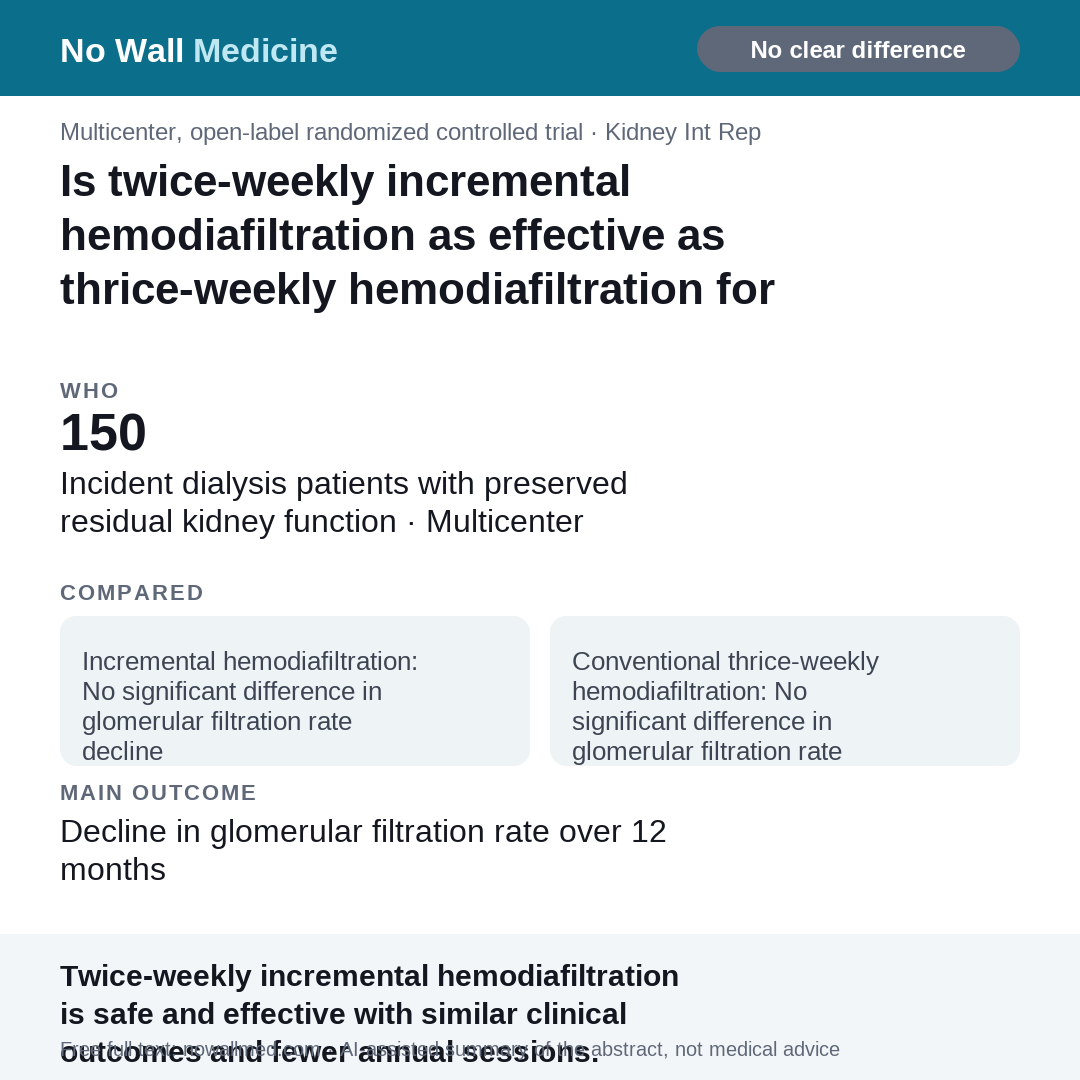
Randomized Trial of Twice-Weekly Versus Thrice-Weekly Hemodiafiltration for Initiation of Renal Replacement Therapy
Multicenter, open-label randomized controlled trialNo clear difference
Is twice-weekly incremental hemodiafiltration as effective as thrice-weekly hemodiafiltration for dialysis initiation?
Who
150
Incident dialysis patients with preserved residual kidney function · Multicenter
Compared
Incremental hemodiafiltration: No significant difference in glomerular filtration rate decline
Conventional thrice-weekly hemodiafiltration: No significant difference in glomerular filtration rate decline
Main outcome
Decline in glomerular filtration rate over 12 months
Bottom line: Twice-weekly incremental hemodiafiltration is safe and effective with similar clinical outcomes and fewer annual sessions.
Kidney Int Rep · 2025-10-10Download image
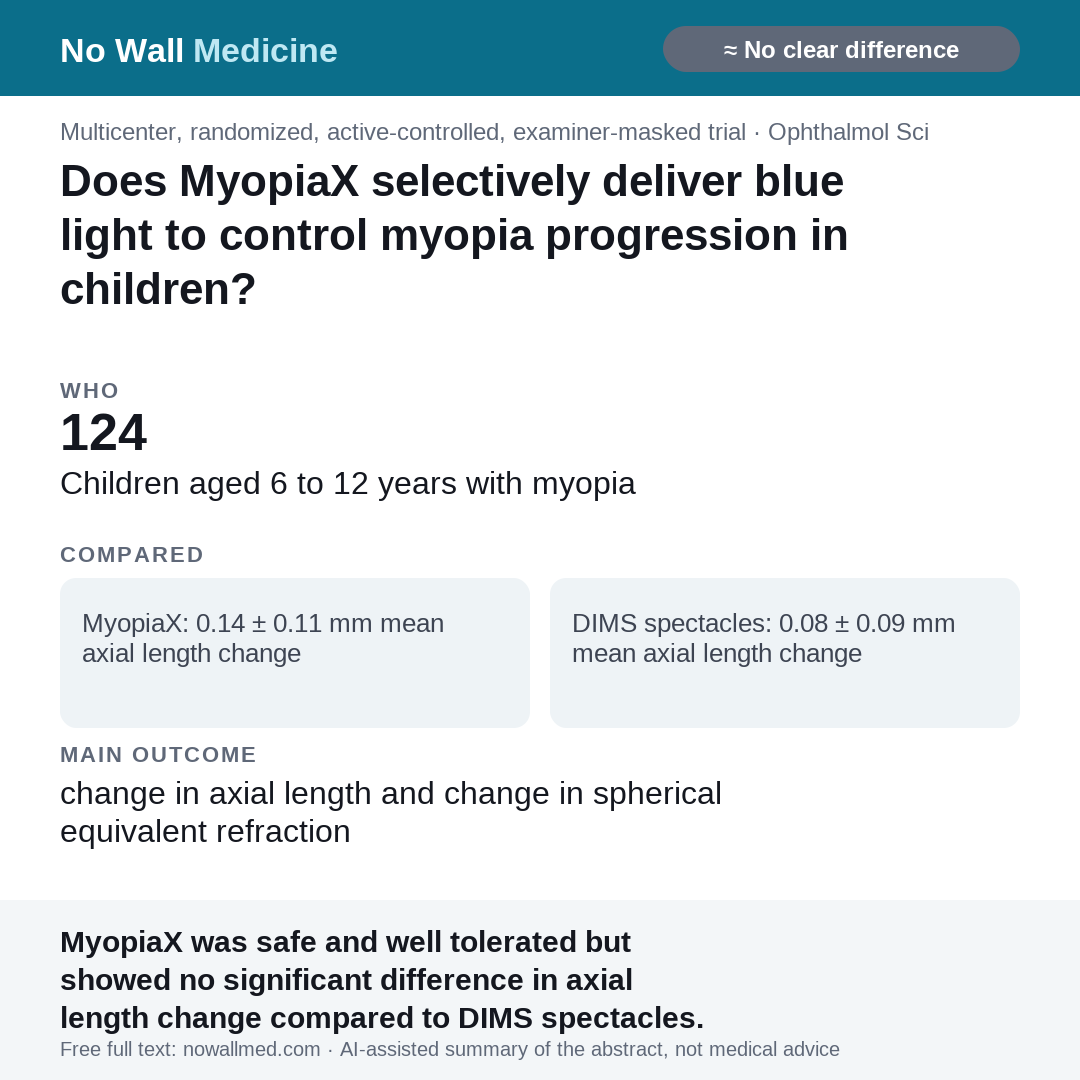
MyopiaX-1 Safety and Efficacy of a Novel Approach to Slow Juvenile Myopia Progression: A Multicenter, Randomized, Controlled Trial
Multicenter, randomized, active-controlled, examiner-masked trialNo clear difference
Does MyopiaX selectively deliver blue light to control myopia progression in children?
Who
124
Children aged 6 to 12 years with myopia
Compared
MyopiaX: 0.14 ± 0.11 mm mean axial length change
DIMS spectacles: 0.08 ± 0.09 mm mean axial length change
Main outcome
change in axial length and change in spherical equivalent refraction
Bottom line: MyopiaX was safe and well tolerated but showed no significant difference in axial length change compared to DIMS spectacles.
Ophthalmol Sci · 2025-10-10Download image
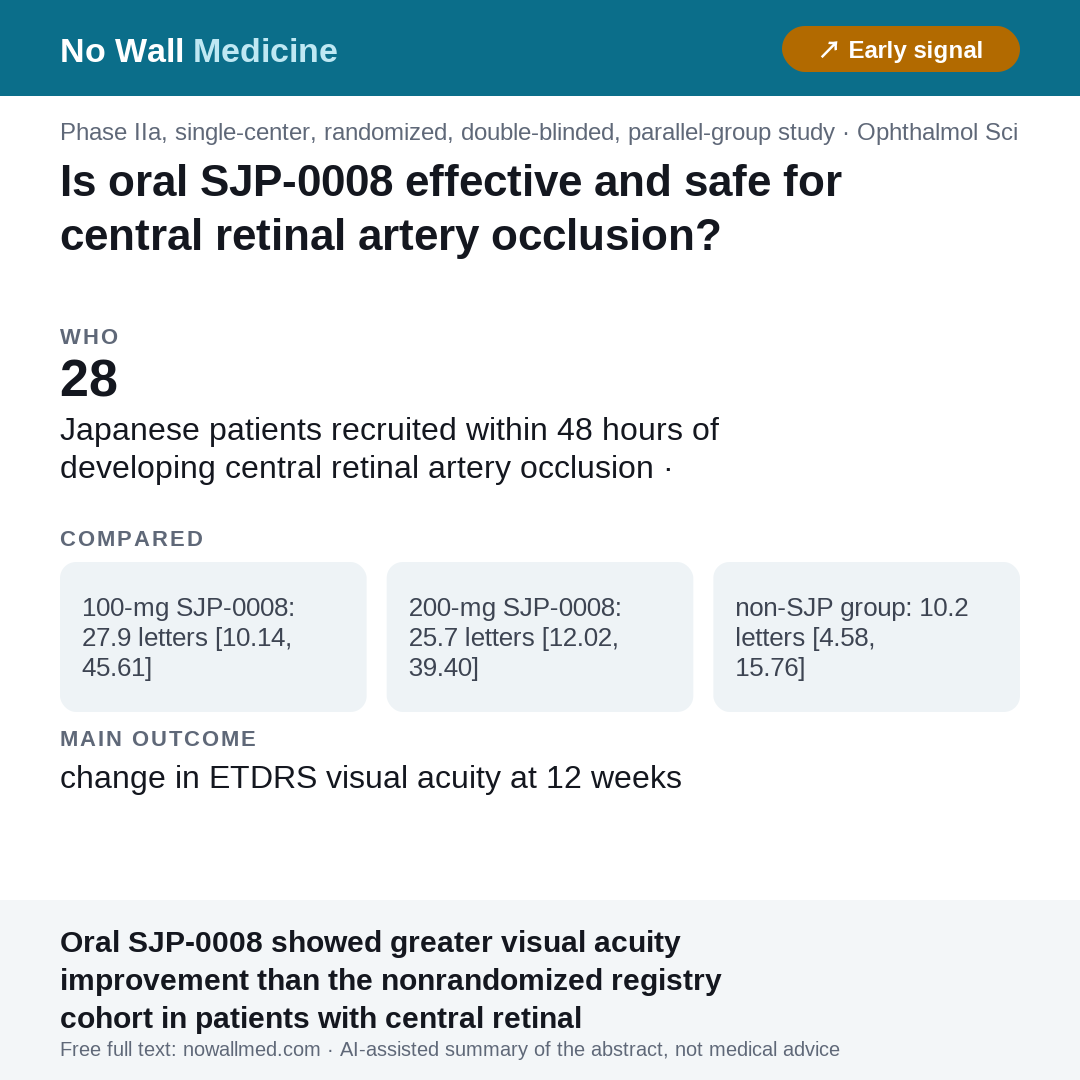
Safety and Efficacy of Orally Administered SJP-0008 in Central Retinal Artery Occlusion: A Phase IIa Randomized Clinical Trial
Phase IIa, single-center, randomized, double-blinded, parallel-group studyBenefit found
Is oral SJP-0008 effective and safe for central retinal artery occlusion?
Who
28
Japanese patients recruited within 48 hours of developing central retinal artery occlusion · single-center
Compared
100-mg SJP-0008: 27.9 letters [10.14, 45.61]
200-mg SJP-0008: 25.7 letters [12.02, 39.40]
non-SJP group: 10.2 letters [4.58, 15.76]
Main outcome
change in ETDRS visual acuity at 12 weeks
Bottom line: Oral SJP-0008 showed greater visual acuity improvement than the nonrandomized registry cohort in patients with central retinal artery occlusion.
Limitation: large-scale, multicenter randomized controlled trials are warranted to validate the findings
Ophthalmol Sci · 2025-10-10Download image
Interaction between tumor-infiltrating lymphocytes and BMI in early HER2-positive breast cancer: analysis of the ShortHER trial
Analysis of a randomized trialMixed results
How does body mass index modulate the prognostic role of tumor-infiltrating lymphocytes?
Who
1213
Patients with early human epidermal growth factor receptor 2-positive breast cancer
Compared
Lean patients with tumor-infiltrating lymphocytes <20%: higher cumulative incidence of locoregional relapse (P = 0.001)
Lean patients with tumor-infiltrating lymphocytes ≥20%: improved DFS (P = 0.007), RFS (P = 0.002) and DDFS (P = 0.027)
Overweight or obese patients with tumor-infiltrating lymphocytes <20%: higher cumulative incidence of distant relapse (P = 0.005)
Main outcome
Disease-free survival, recurrence-free survival, distant disease-free survival, and overall survival
Bottom line: Body mass index may impair the local protective effect of tumor-infiltrating lymphocytes in overweight or obese patients.
ESMO Open · 2025-10-10Download image

Health professional education in autism and intellectual disability: systematic review
Systematic review of 34 studiesBenefit found
Do educational interventions improve care for autism and intellectual disability?
Who
Health and mental health professionals
Compared
Educational interventions
Control
Main outcome
Health professionals' knowledge and skills
Bottom line: Educational interventions have positive effects
Limitation: Limited evidence and heterogeneity of measures
BJPsych Open · 2025-10-10Download image

The translational potential of salvinorin A: systematic review and meta-analysis of preclinical studies
Systematic review and meta-analysis of preclinical studiesMixed results
What is the therapeutic potential and toxicity of salvinorin A in preclinical models?
Who
Animal models of neurological and psychiatric disorders
Compared
Salvinorin A
Control
Main outcome
Therapeutic potential, toxic effects, and pharmacokinetic characteristics
Bottom line: Salvinorin A shows potential for pain, addiction, and stroke, but side effects may limit clinical use.
Limitation: Findings on depression were inconsistent, with both antidepressant and depressogenic outcomes reported.
Transl Psychiatry · 2025-10-10Download image

Magnitude and predictors of mild cognitive impairment among older populations in Africa: a systematic review and meta-analysis
Meta-analysisMixed results
Mild cognitive impairment in older Africans
Who
older populations in Africa · Africa
Compared
29.39%with mild cognitive impairment (95% CI:24.73, 34.04)
without mild cognitive impairment
Main outcome
mild cognitive impairment
Bottom line: Mild cognitive impairment is significant in older Africans
Transl Psychiatry · 2025-10-10Download image

Viral infections and the risk of neurodegenerative diseases: a comprehensive meta-analysis and systematic review
Meta-analysis and systematic reviewMixed results
Do viral infections increase the risk of neurodegenerative diseases?
Who
Observational studies on viral infections and neurodegenerative diseases
Compared
Alzheimer's disease risk: cytomegalovirus OR 1.41 (95% CI 1.03, 1.93)
Alzheimer's disease risk: severe acute respiratory syndrome coronavirus 2 OR 1.88 (95% CI 1.53, 2.32)
Alzheimer's disease risk: hepatitis C virus OR 1.39 (95% CI 1.14, 1.69)
Alzheimer's disease risk: human herpesvirus OR 1.24 (95% CI 1.02, 1.51)
Main outcome
Risk of Alzheimer's disease, Parkinson's disease, and amyotrophic lateral sclerosis
Bottom line: Select viral infections are associated with increased Alzheimer's and Parkinson's disease risk, but no association was found with amyotrophic lateral sclerosis.
Limitation: Need for further large, multicenter, and longitudinal studies to confirm causality.
Transl Psychiatry · 2025-10-10Download image

Sputum colour charts to guide antibiotic self-treatment of acute exacerbation of chronic obstructive pulmonary disease: the Colour-COPD RCT
Randomized trialNo clear difference
Do sputum colour charts guide antibiotic use?
Who
115
Severe chronic obstructive pulmonary disease patients · UK primary care
Compared
32%Colour chart
16%Usual care
Main outcome
Hospital admission for exacerbation
Result: Relative risk 1.95 (0.92-4.18)
Bottom line: Sputum colour charts unlikely to be useful
Limitation: Under-recruitment
BMJ Open Respir Res · 2025-10-10Download image

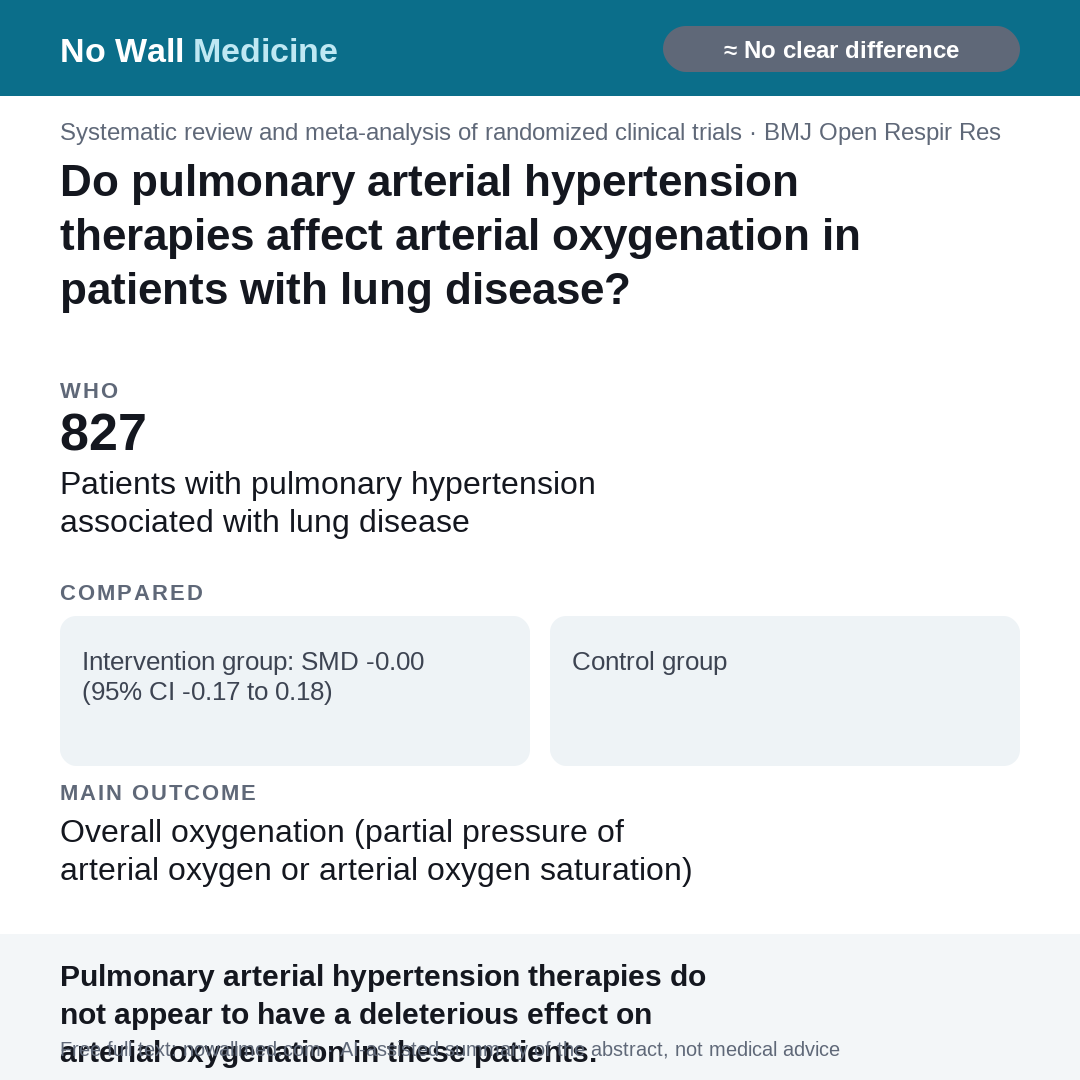
Effects of pulmonary arterial hypertension therapies on arterial oxygenation in patients with pulmonary hypertension associated with lung disease: a systematic review and meta-analysis
Systematic review and meta-analysis of randomized clinical trialsNo clear difference
Do pulmonary arterial hypertension therapies affect arterial oxygenation in patients with lung disease?
Who
827
Patients with pulmonary hypertension associated with lung disease
Compared
Intervention group: SMD -0.00 (95% CI -0.17 to 0.18)
Control group
Main outcome
Overall oxygenation (partial pressure of arterial oxygen or arterial oxygen saturation)
Result: standard mean difference -0.00 (95% CI -0.17 to 0.18)
Bottom line: Pulmonary arterial hypertension therapies do not appear to have a deleterious effect on arterial oxygenation in these patients.
BMJ Open Respir Res · 2025-10-10Download image
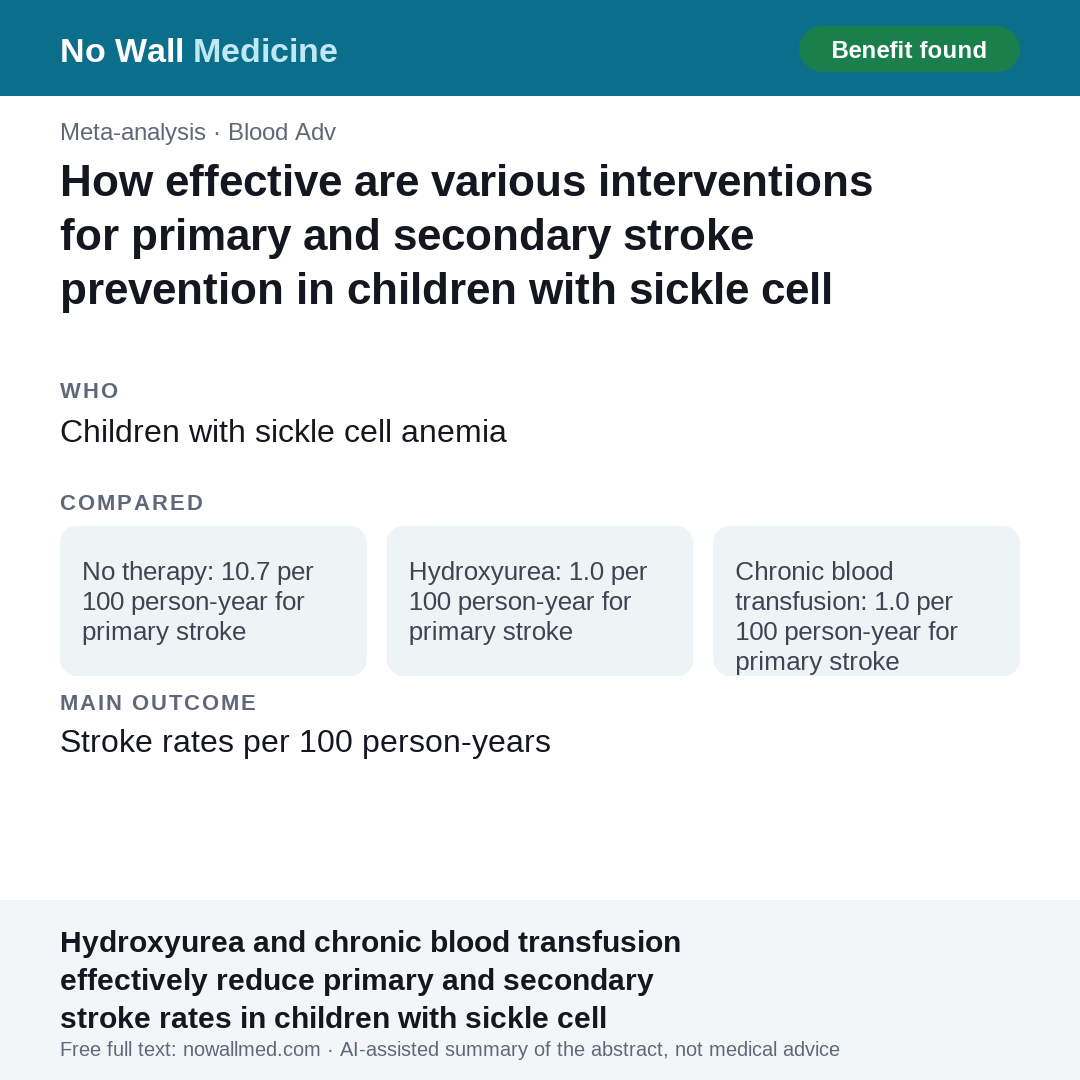
Primary and secondary stroke prophylaxis in children with sickle cell anemia: a meta-analysis
Meta-analysisBenefit found
How effective are various interventions for primary and secondary stroke prevention in children with sickle cell anemia?
Who
Children with sickle cell anemia
Compared
No therapy: 10.7 per 100 person-year for primary stroke
Hydroxyurea: 1.0 per 100 person-year for primary stroke
Chronic blood transfusion: 1.0 per 100 person-year for primary stroke
Main outcome
Stroke rates per 100 person-years
Bottom line: Hydroxyurea and chronic blood transfusion effectively reduce primary and secondary stroke rates in children with sickle cell anemia.
Blood Adv · 2025-10-10Download image