Visual abstracts
New randomized trials and meta-analyses from leading journals at a glance: who was studied, what was compared, and what was found. Every paper is free to read in full.
All specialtiesCardiology 2300Oncology 1960Gastroenterology & Hepatology 862Infectious Disease 1425Neurology 921Psychiatry & Mental Health 1091Pulmonology 962Critical Care 638Endocrinology & Diabetes 1203Pediatrics 1340Surgery 1161Orthopedics & Sports Medicine 419Neurosurgery 283Cardiothoracic & Vascular Surgery 248Plastic & Reconstructive Surgery 348Nephrology 483Rheumatology 320Hematology 493Dermatology 268Ophthalmology 270Obstetrics & Gynecology 755Public & Global Health 425Radiology & Imaging 317Anesthesiology 458Urology 388ENT (Otolaryngology) 295Emergency Medicine 262Allergy & Immunology 141Geriatrics 490Family Medicine & Primary Care 269Medical Genetics & Genomics 244Pathology & Laboratory Medicine 75Physical Medicine & Rehabilitation 392Palliative Care 195Nutrition 602Digital Health & AI 1150General Medicine 171
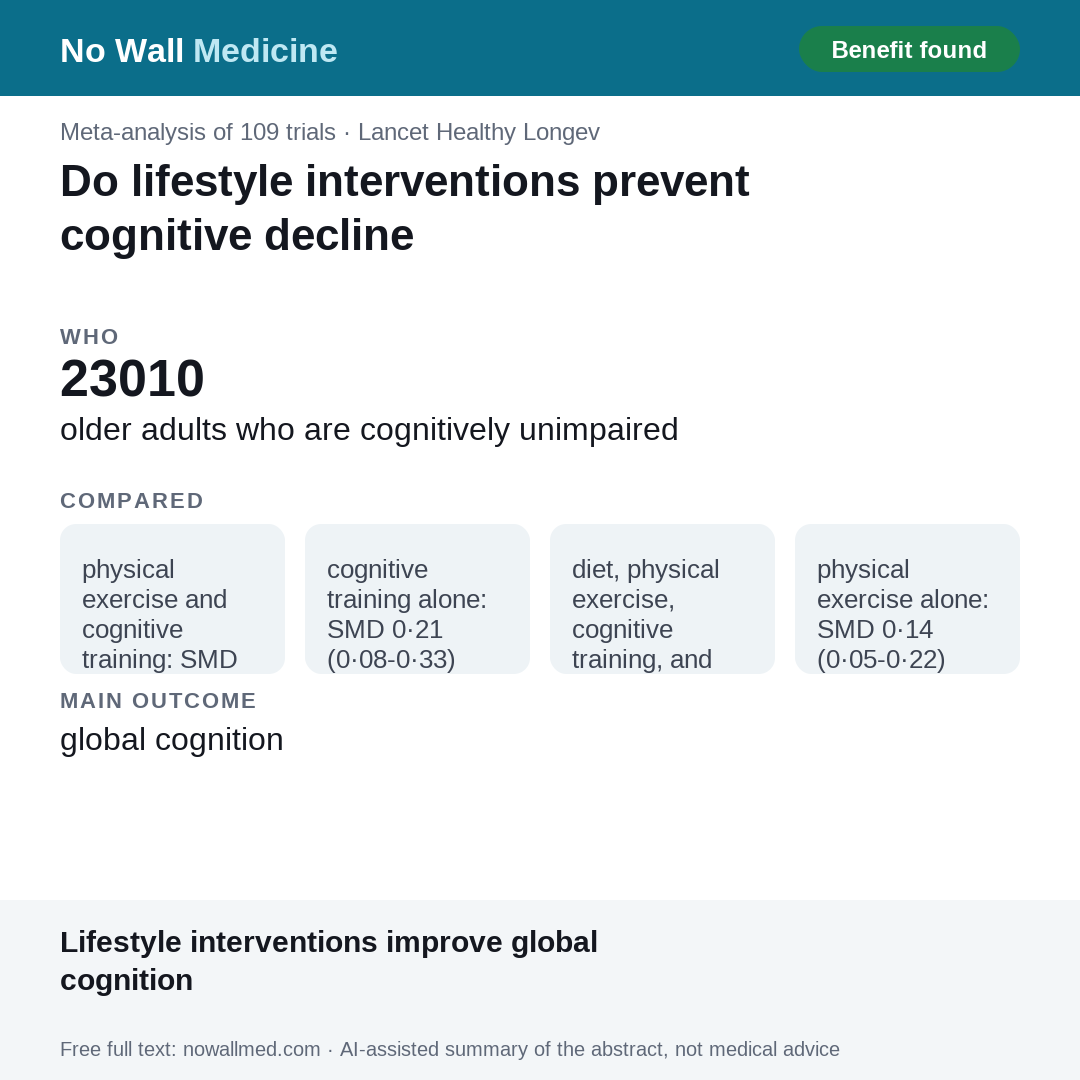
Single-domain and multidomain lifestyle interventions for the prevention of cognitive decline in older adults who are cognitively unimpaired: a systematic review and network meta-analysis
Meta-analysis of 109 trialsBenefit found
Do lifestyle interventions prevent cognitive decline
Who
23010
older adults who are cognitively unimpaired
Compared
physical exercise and cognitive training: SMD 0·26 (95% CI 0·10-0·42)
cognitive training alone: SMD 0·21 (0·08-0·33)
diet, physical exercise, cognitive training, and health education: SMD 0·14 (0·02-0·27)
physical exercise alone: SMD 0·14 (0·05-0·22)
Main outcome
global cognition
Bottom line: Lifestyle interventions improve global cognition
Limitation: high risk of bias in 40% of studies
Lancet Healthy Longev · 2025-09-25Download image
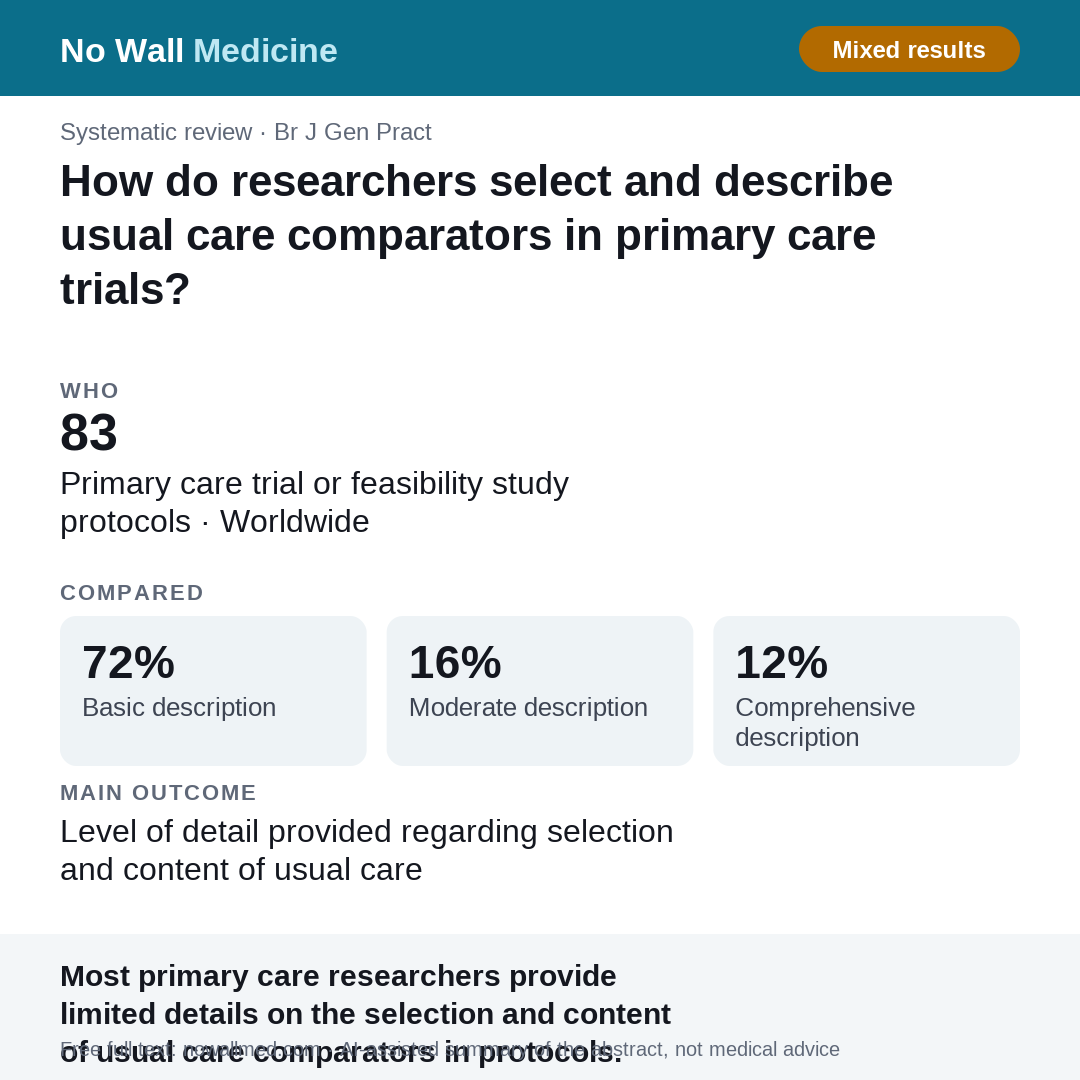
Selection and reporting of usual care comparators when designing primary care trials of complex health interventions: a systematic review
Systematic reviewMixed results
How do researchers select and describe usual care comparators in primary care trials?
Who
83
Primary care trial or feasibility study protocols · Worldwide
Compared
72%Basic description
16%Moderate description
12%Comprehensive description
Main outcome
Level of detail provided regarding selection and content of usual care
Bottom line: Most primary care researchers provide limited details on the selection and content of usual care comparators in protocols.
Br J Gen Pract · 2025-09-25Download image
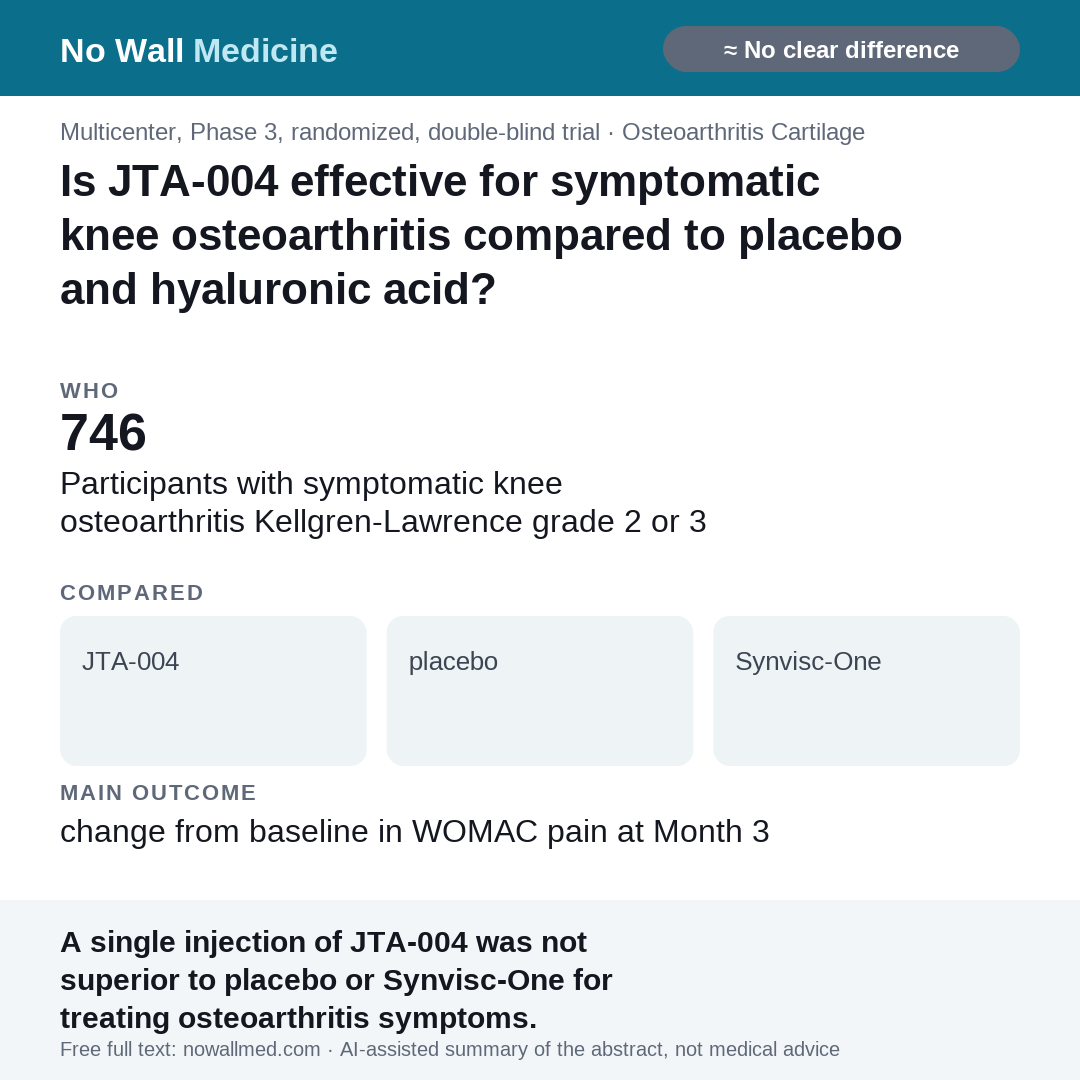
A single intra-articular injection of JTA-004, a combination of human plasma, hyaluronic acid, and clonidine, versus placebo in symptomatic knee osteoarthritis: A Phase 3 trial
Multicenter, Phase 3, randomized, double-blind trialNo clear difference
Is JTA-004 effective for symptomatic knee osteoarthritis compared to placebo and hyaluronic acid?
Who
746
Participants with symptomatic knee osteoarthritis Kellgren-Lawrence grade 2 or 3 · multicenter
Compared
JTA-004
placebo
Synvisc-One
Main outcome
change from baseline in WOMAC pain at Month 3
Result: LSmean difference: -1.50 mm, 95% CI 5.12; 2.12
Bottom line: A single injection of JTA-004 was not superior to placebo or Synvisc-One for treating osteoarthritis symptoms.
Osteoarthritis Cartilage · 2025-09-25Download image
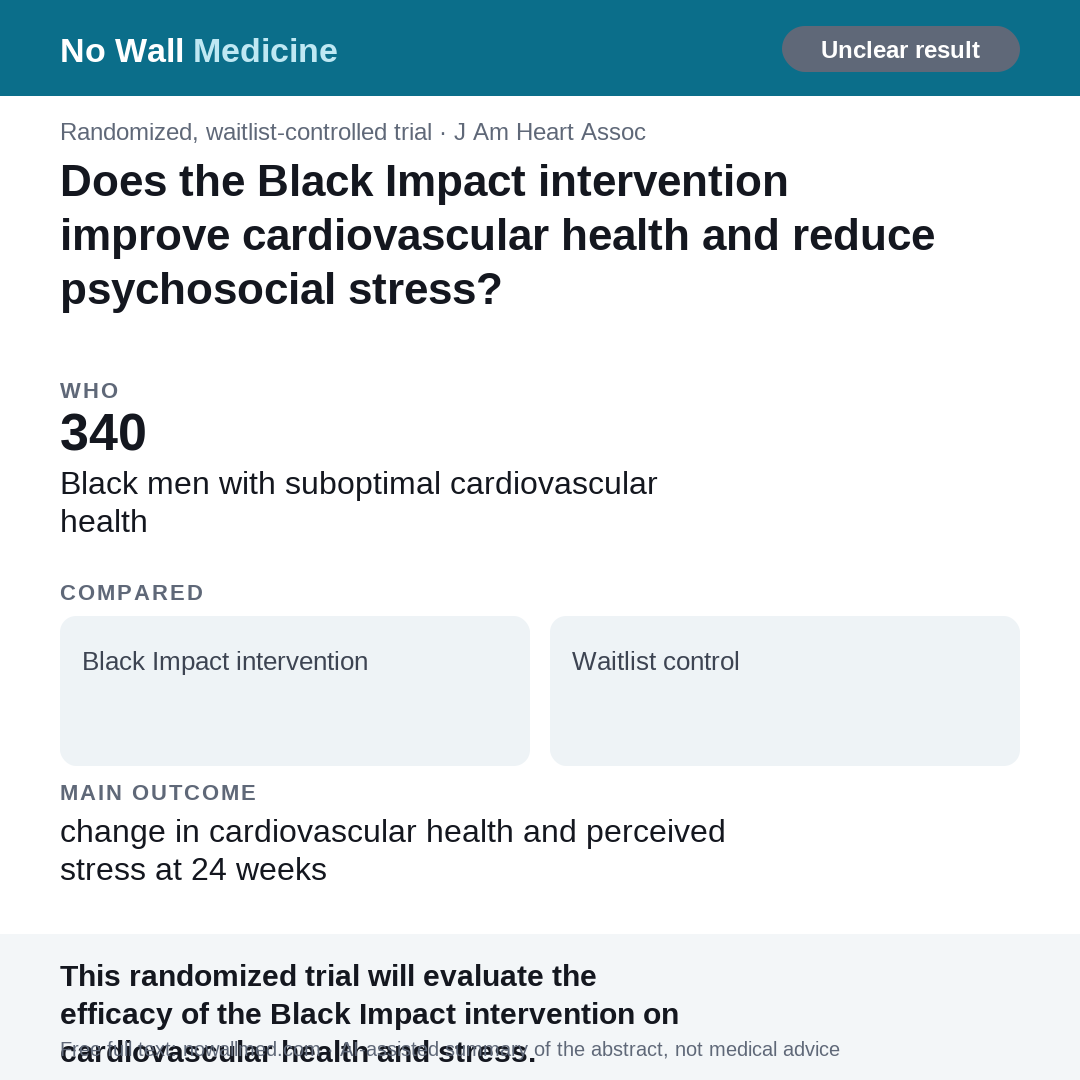
Design of Black Impact: A Randomized Controlled Trial Evaluating the Mechanisms Underlying Psychosocial Stress Reduction in a Cardiovascular Health Intervention
Randomized, waitlist-controlled trialUnclear result
Does the Black Impact intervention improve cardiovascular health and reduce psychosocial stress?
Who
340
Black men with suboptimal cardiovascular health
Compared
Black Impact intervention
Waitlist control
Main outcome
change in cardiovascular health and perceived stress at 24 weeks
Bottom line: This randomized trial will evaluate the efficacy of the Black Impact intervention on cardiovascular health and stress.
J Am Heart Assoc · 2025-09-25Download image
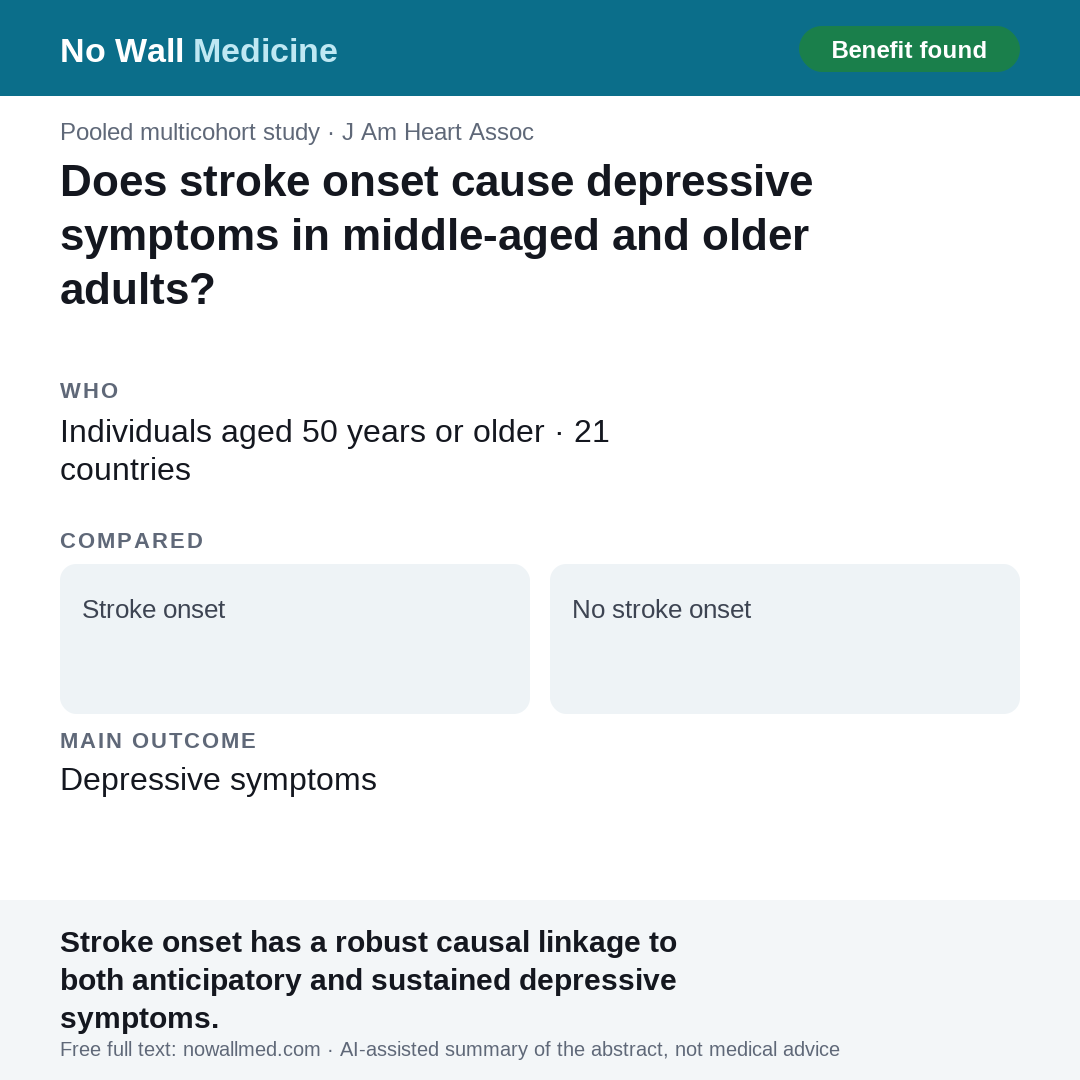
Static and Dynamic Effects of Stroke Onset on Depressive Symptoms in Middle-Aged and Older Adults: Evidence Across 21 Countries
Pooled multicohort studyBenefit found
Does stroke onset cause depressive symptoms in middle-aged and older adults?
Who
Individuals aged 50 years or older · 21 countries
Compared
Stroke onset
No stroke onset
Main outcome
Depressive symptoms
Bottom line: Stroke onset has a robust causal linkage to both anticipatory and sustained depressive symptoms.
J Am Heart Assoc · 2025-09-25Download image
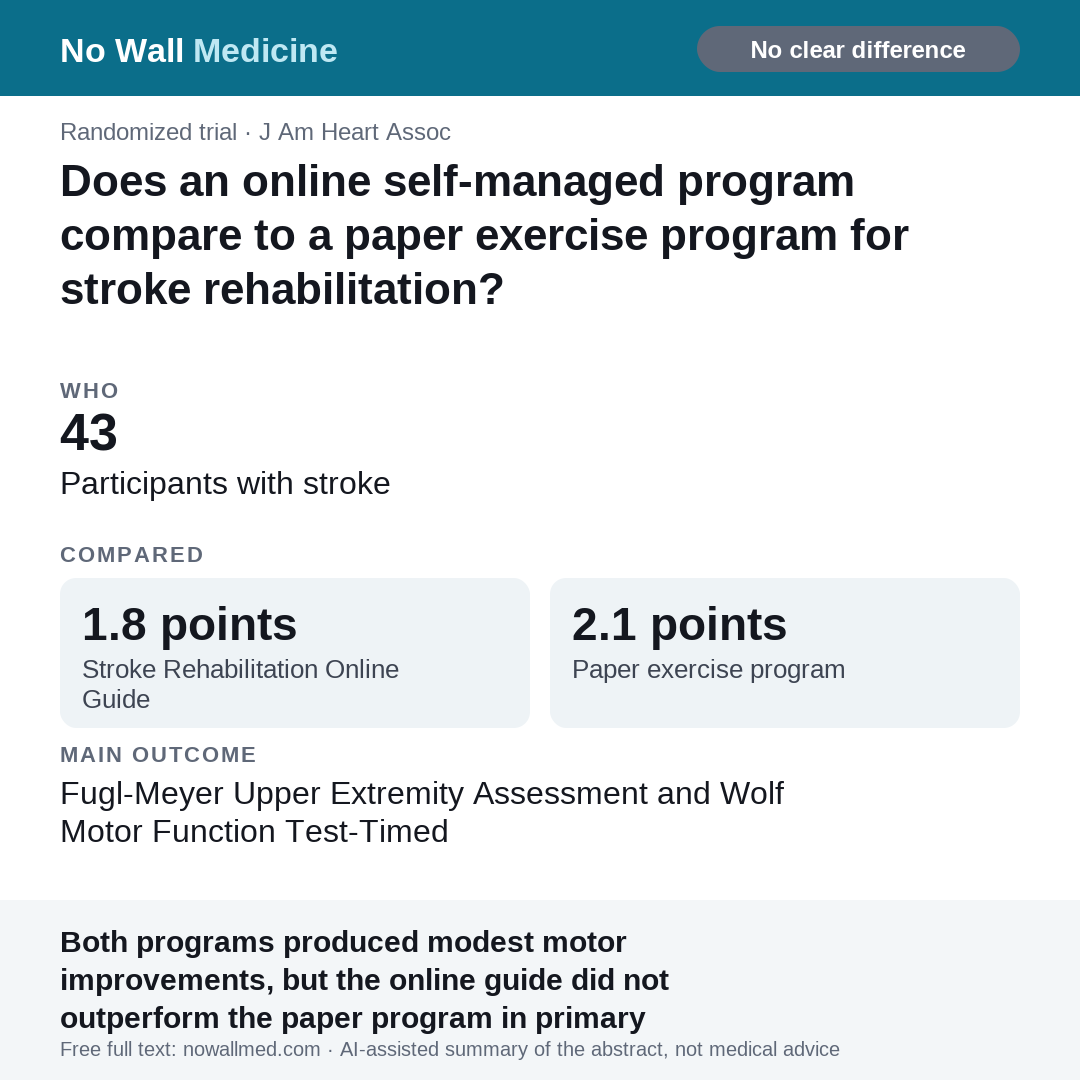
Rehabilitation Your Way: A Randomized Trial Comparing 2 Home-Based and Self-Managed Programs After Stroke
Randomized trialNo clear difference
Does an online self-managed program compare to a paper exercise program for stroke rehabilitation?
Who
43
Participants with stroke
Compared
1.8 pointsStroke Rehabilitation Online Guide (Fugl-Meyer Upper Extremity Assessment)
2.1 pointsPaper exercise program (Fugl-Meyer Upper Extremity Assessment)
Main outcome
Fugl-Meyer Upper Extremity Assessment and Wolf Motor Function Test-Timed
Bottom line: Both programs produced modest motor improvements, but the online guide did not outperform the paper program in primary outcomes.
Limitation: Larger studies are needed to confirm these results.
J Am Heart Assoc · 2025-09-25Download image
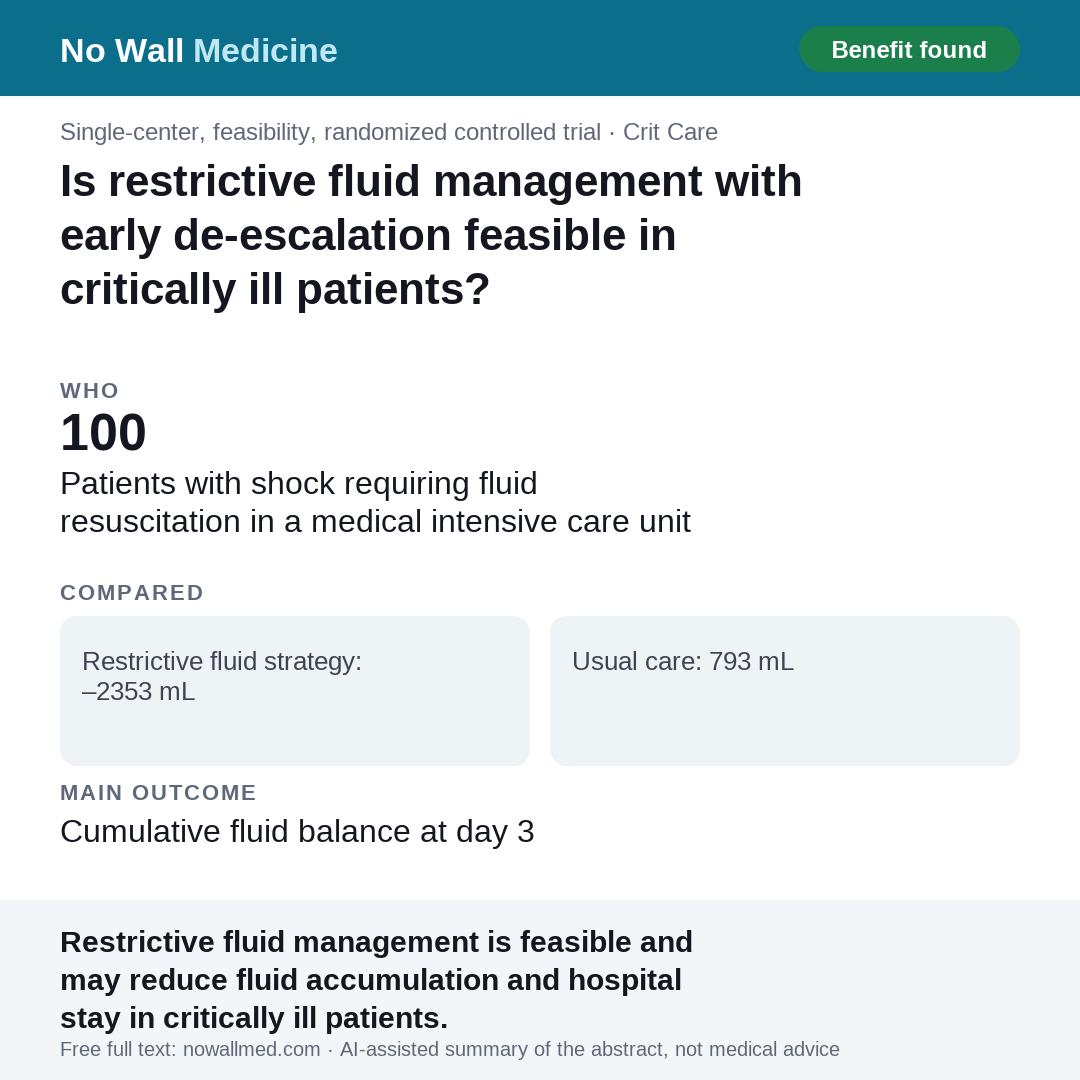
Restrictive fluid management with early de-escalation versus usual care in critically ill patients (reduce trial): a feasibility randomized controlled trial
Single-center, feasibility, randomized controlled trialBenefit found
Is restrictive fluid management with early de-escalation feasible in critically ill patients?
Who
100
Patients with shock requiring fluid resuscitation in a medical intensive care unit · Single-center medical intensive care unit
Compared
Restrictive fluid strategy: ‒2353 mL
Usual care: 793 mL
Main outcome
Cumulative fluid balance at day 3
Bottom line: Restrictive fluid management is feasible and may reduce fluid accumulation and hospital stay in critically ill patients.
Crit Care · 2025-09-25Download image
Factors influencing multidisciplinary clinical decision-making in the critical care unit: a systematic review and mixed-methods meta-synthesis
Systematic review and mixed-methods meta-synthesisUnclear result
What factors and processes influence multidisciplinary clinical decision-making regarding organ support in intensive care?
Who
33
Clinicians making organ support decisions in intensive care units
Compared
Human factors
Team factors
System factors
Patient factors
Main outcome
Factors and processes influencing organ support treatment decisions
Bottom line: Decision-making is complex, influenced by human, team, system, and patient factors.
Limitation: Further studies are needed to understand interventions and direct effects on patient outcomes.
BJA Open · 2025-09-25Download image
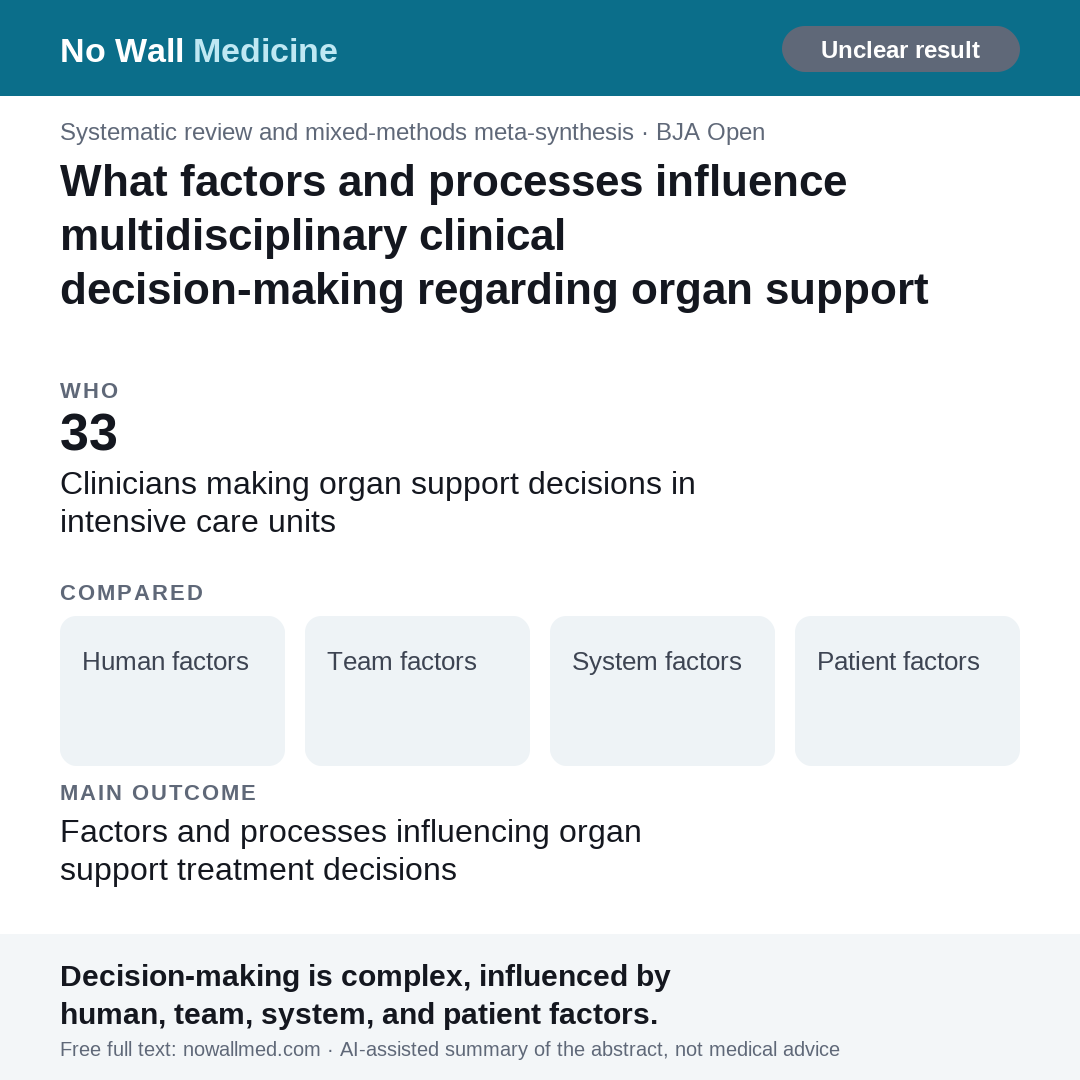
Discharge with a smartphone application for follow-up after day care surgery: a randomised controlled trial
Multi center non-blinded prospective randomised controlled trialNo clear difference
Does a smartphone application for follow-up improve quality of recovery after day care surgery?
Who
301
Day care surgery patients · Multi center
Compared
Smartphone application and standard care
Standard care
Main outcome
Quality of Recovery-15 scale on the seventh postoperative day
Result: median difference 0.0 (95% confidence interval: -10.0 to 7.0)
Bottom line: Adding a smartphone application for pain and nausea follow-up showed no difference in quality of recovery compared to standard care.
Limitation: non-blinded
BJA Open · 2025-09-25Download image
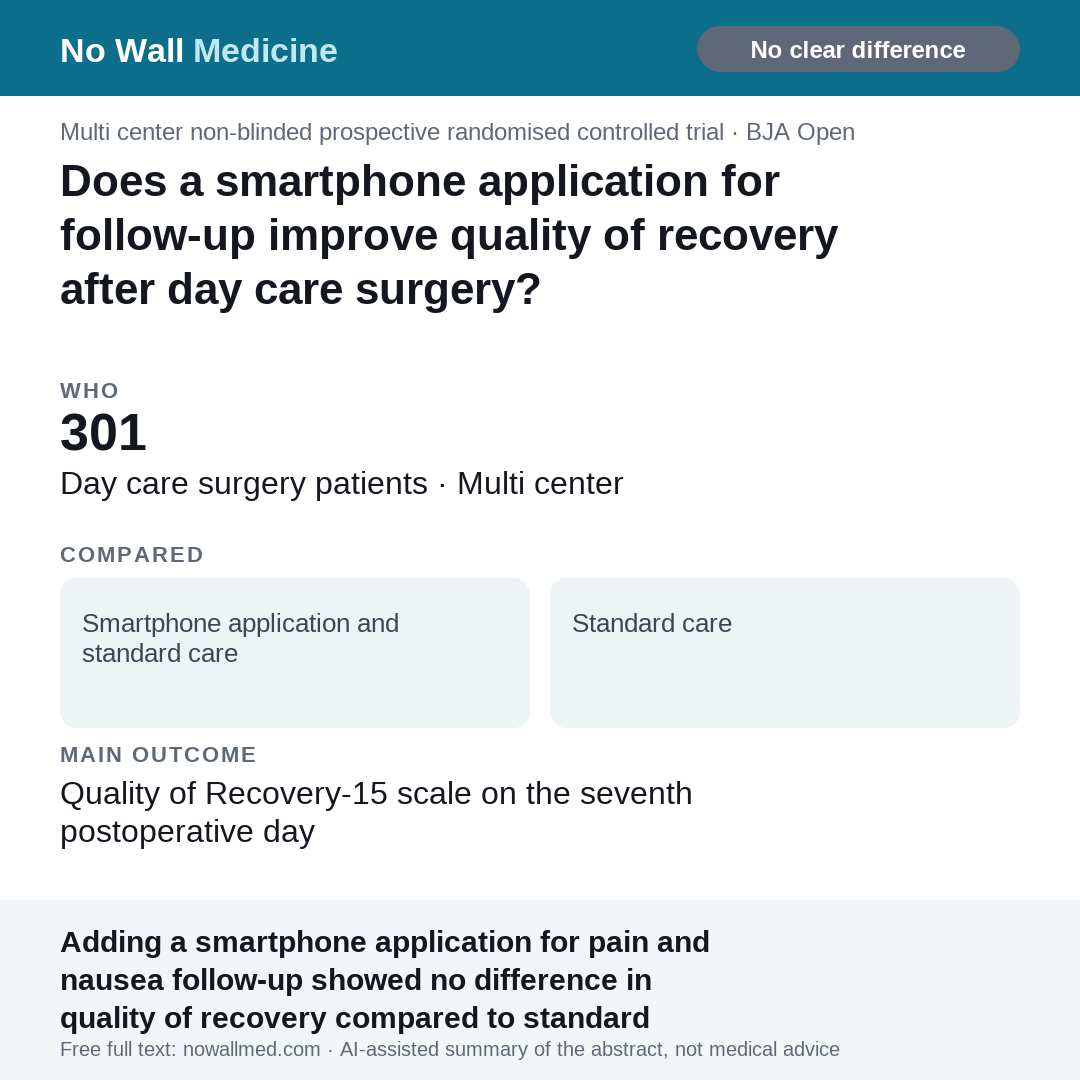
Permethrin-Treated Baby Wraps for the Prevention of Malaria
Double-blind, randomized, placebo-controlled trialBenefit found
Do permethrin-treated baby wraps prevent clinical malaria in children?
Who
400
Adult women with a child aged 6 to 18 months · Uganda
Compared
permethrin-treated wraps: 0.73 cases per 100 person-weeks
sham-treated wraps: 2.14 cases per 100 person-weeks
Main outcome
clinical malaria in the children
Result: incidence rate ratio 0.34 (95% CI 0.23 to 0.51)
Bottom line: Permethrin-treated baby wraps significantly reduced clinical malaria incidence in children when used alongside insecticide-treated bed nets.
Funded by: Doris Duke Foundation and others
NEJM · 2025-09-24Download image
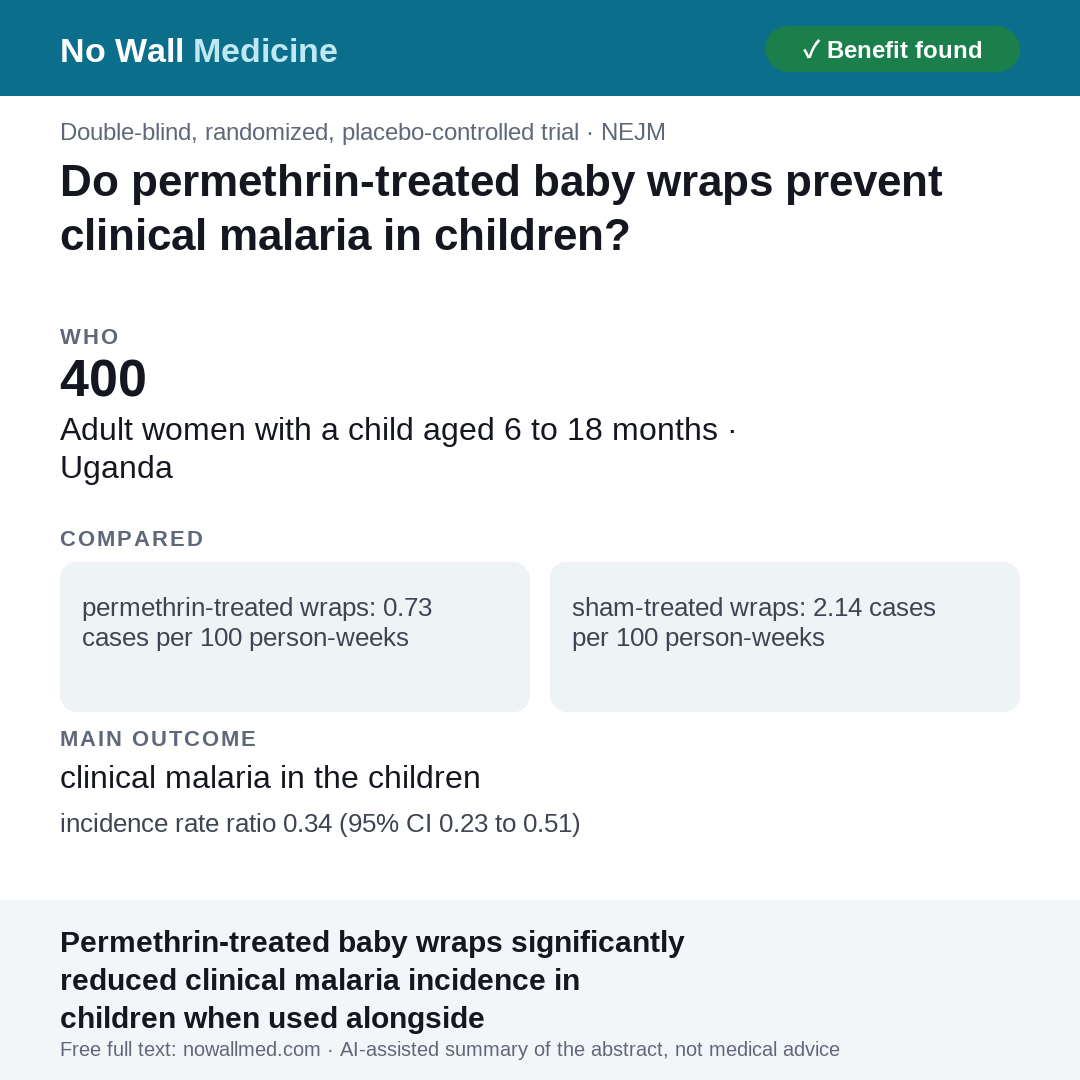
Five-Year Outcomes of the POLARIX Study Comparing Pola-R-CHP and R-CHOP in Patients With Diffuse Large B-Cell Lymphoma
Randomized trialBenefit found
Does Pola-R-CHP improve five-year outcomes compared to R-CHOP in diffuse large B-cell lymphoma?
Who
879
Patients with previously untreated intermediate- or high-risk diffuse large B-cell lymphoma · Global
Compared
64.9%Pola-R-CHP (95% CI, 59.8 to 70.0)
59.1%R-CHOP (95% CI, 53.9 to 64.3)
Main outcome
five-year progression-free survival rate
Result: hazard ratio 0.77 (95% CI, 0.62 to 0.97)
Bottom line: Pola-R-CHP provides sustained five-year progression-free survival benefits compared to R-CHOP in untreated diffuse large B-cell lymphoma.
J Clin Oncol · 2025-09-24Download image
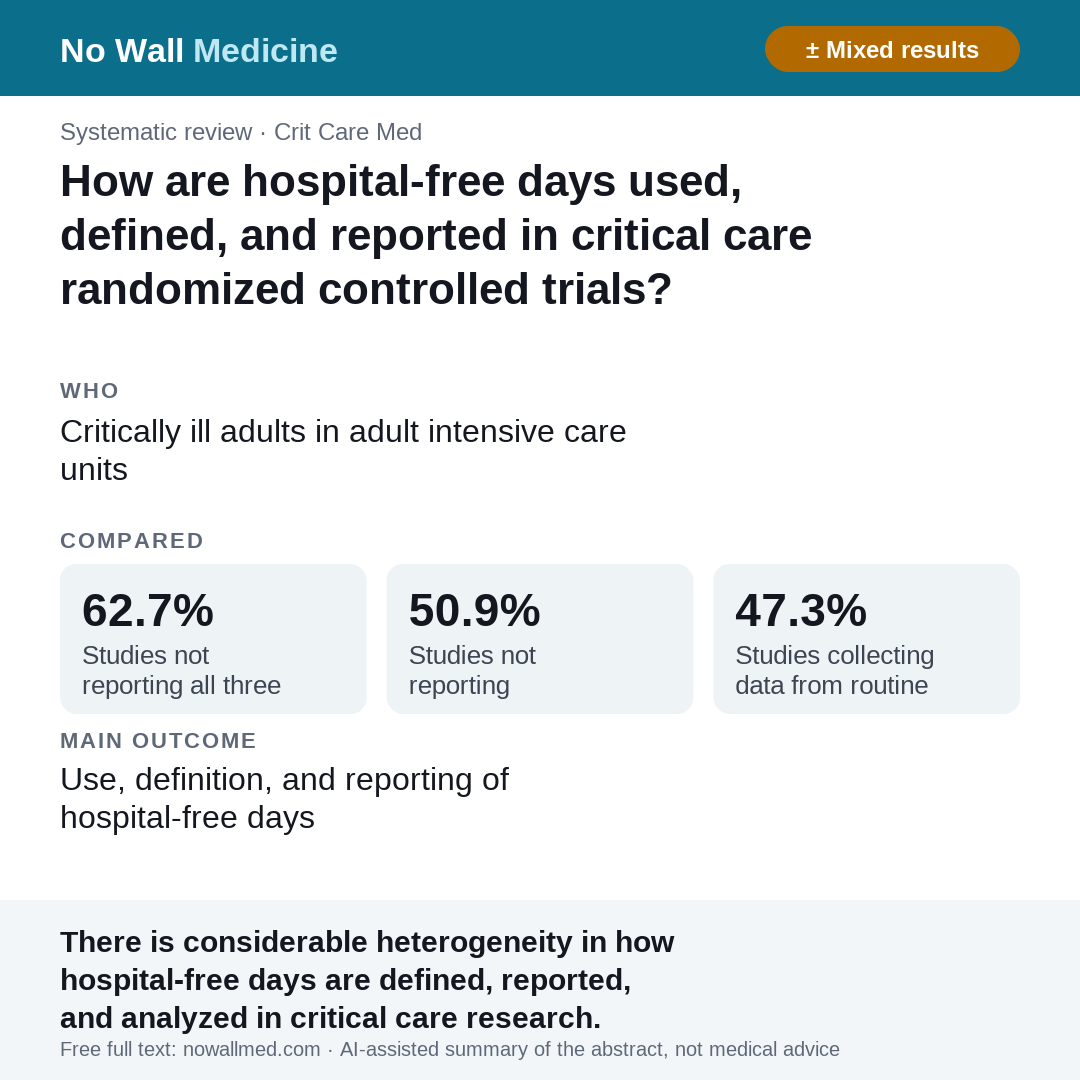
Reporting of Hospital-Free Days As an Outcome Measure in Critical Care Trials: A Systematic Review
Systematic reviewMixed results
How are hospital-free days used, defined, and reported in critical care randomized controlled trials?
Who
110
Critically ill adults in adult intensive care units
Compared
62.7%Studies not reporting all three components
50.9%Studies not reporting hospital-free days if patient died
47.3%Studies collecting data from routine healthcare records
Main outcome
Use, definition, and reporting of hospital-free days
Bottom line: There is considerable heterogeneity in how hospital-free days are defined, reported, and analyzed in critical care research.
Crit Care Med · 2025-09-24Download image
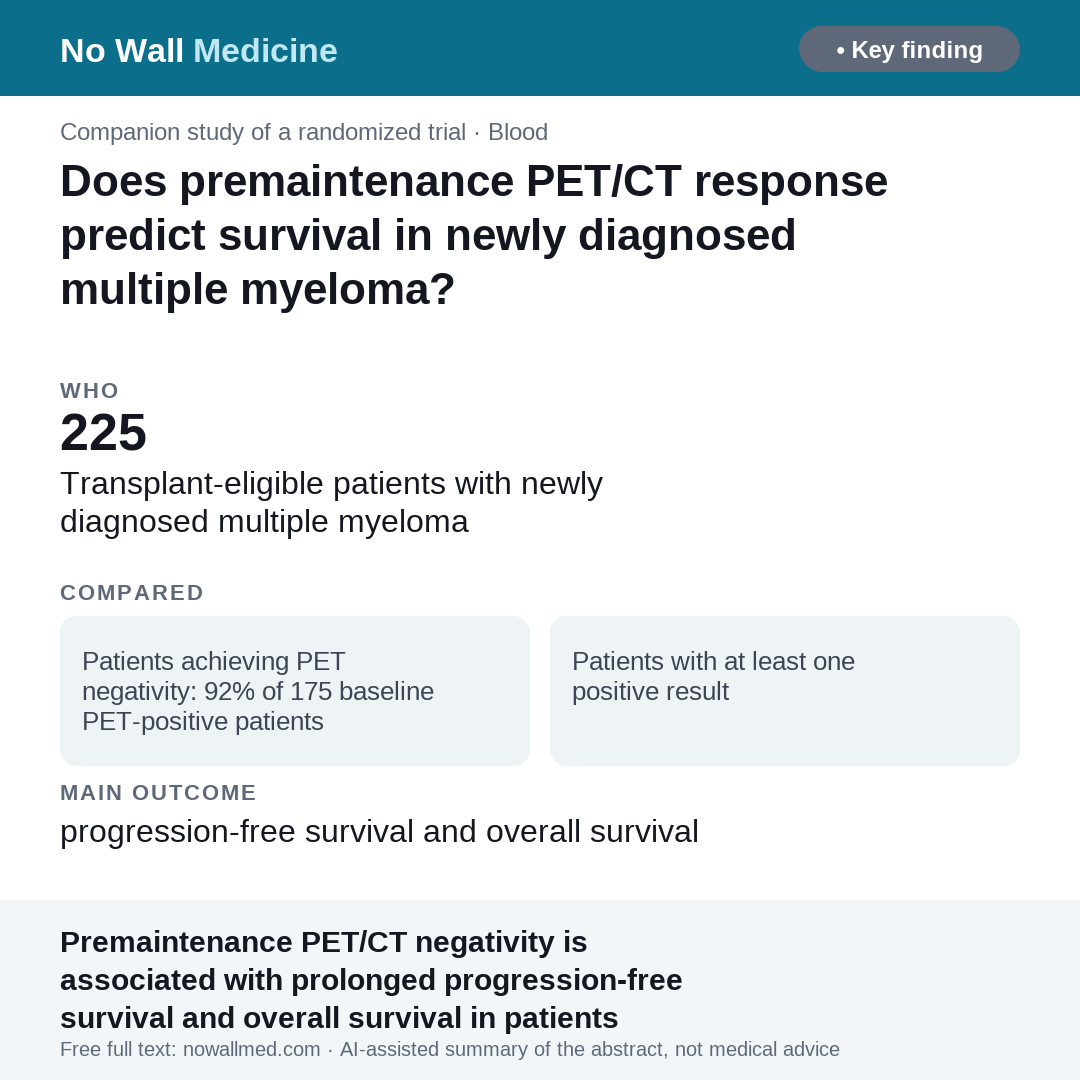
Prognostic value of premaintenance FDG PET/CT response in patients with newly diagnosed myeloma from the CASSIOPEIA trial
Companion study of a randomized trialBenefit found
Does premaintenance PET/CT response predict survival in newly diagnosed multiple myeloma?
Who
225
Transplant-eligible patients with newly diagnosed multiple myeloma
Compared
Patients achieving PET negativity: 92% of 175 baseline PET-positive patients
Patients with at least one positive result
Main outcome
progression-free survival and overall survival
Bottom line: Premaintenance PET/CT negativity is associated with prolonged progression-free survival and overall survival in patients treated with daratumumab.
Blood · 2025-09-24Download image
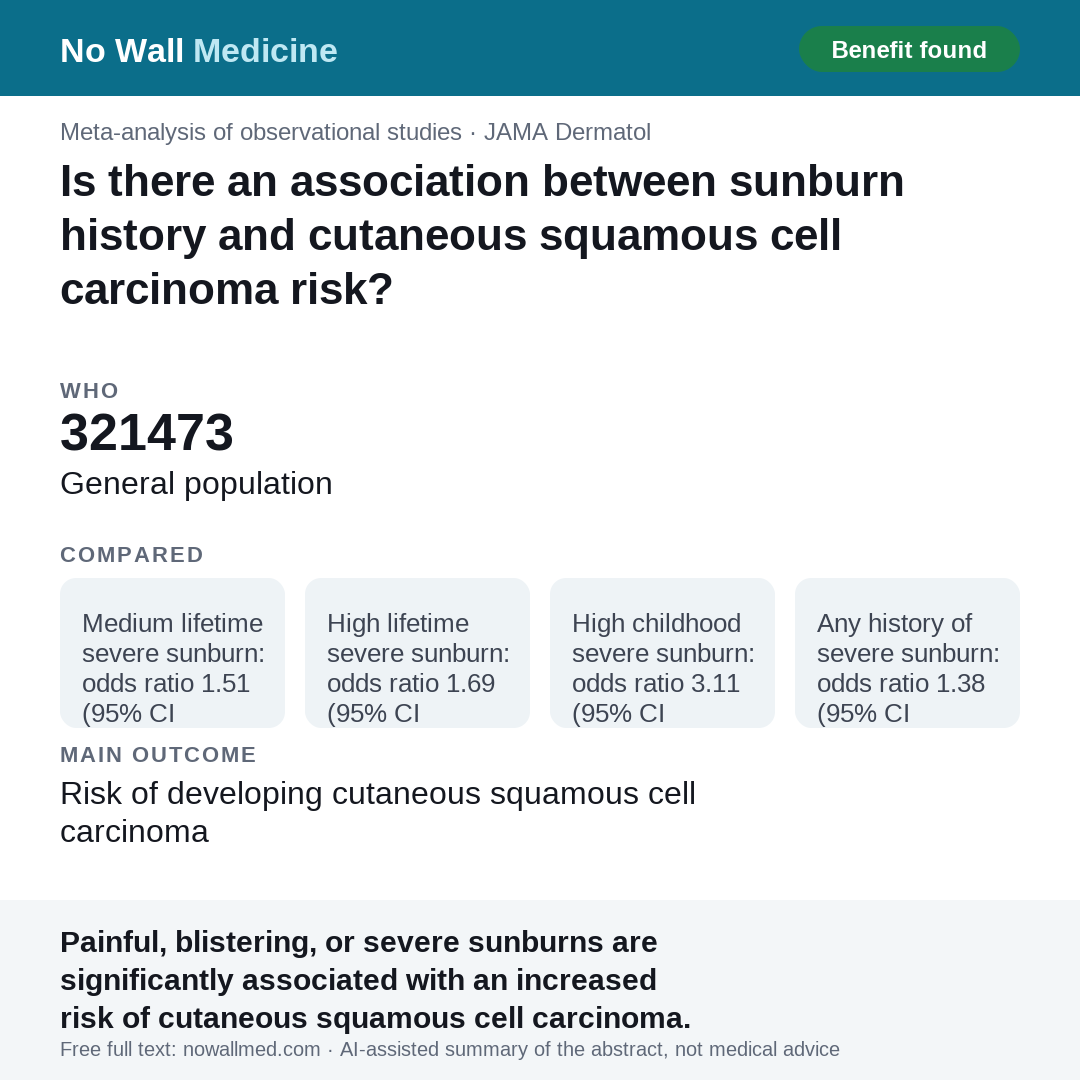
Sunburn and Cutaneous Squamous Cell Carcinoma: A Meta-Analysis
Meta-analysis of observational studiesBenefit found
Is there an association between sunburn history and cutaneous squamous cell carcinoma risk?
Who
321473
General population
Compared
Medium lifetime severe sunburn: odds ratio 1.51 (95% CI 1.26-1.81)
High lifetime severe sunburn: odds ratio 1.69 (95% CI 1.39-2.06)
High childhood severe sunburn: odds ratio 3.11 (95% CI 1.26-7.66)
Any history of severe sunburn: odds ratio 1.38 (95% CI 1.06-1.79)
Main outcome
Risk of developing cutaneous squamous cell carcinoma
Result: odds ratio 1.51 (95% CI 1.26-1.81) to 3.11 (95% CI 1.26-7.66)
Bottom line: Painful, blistering, or severe sunburns are significantly associated with an increased risk of cutaneous squamous cell carcinoma.
JAMA Dermatol · 2025-09-24Download image
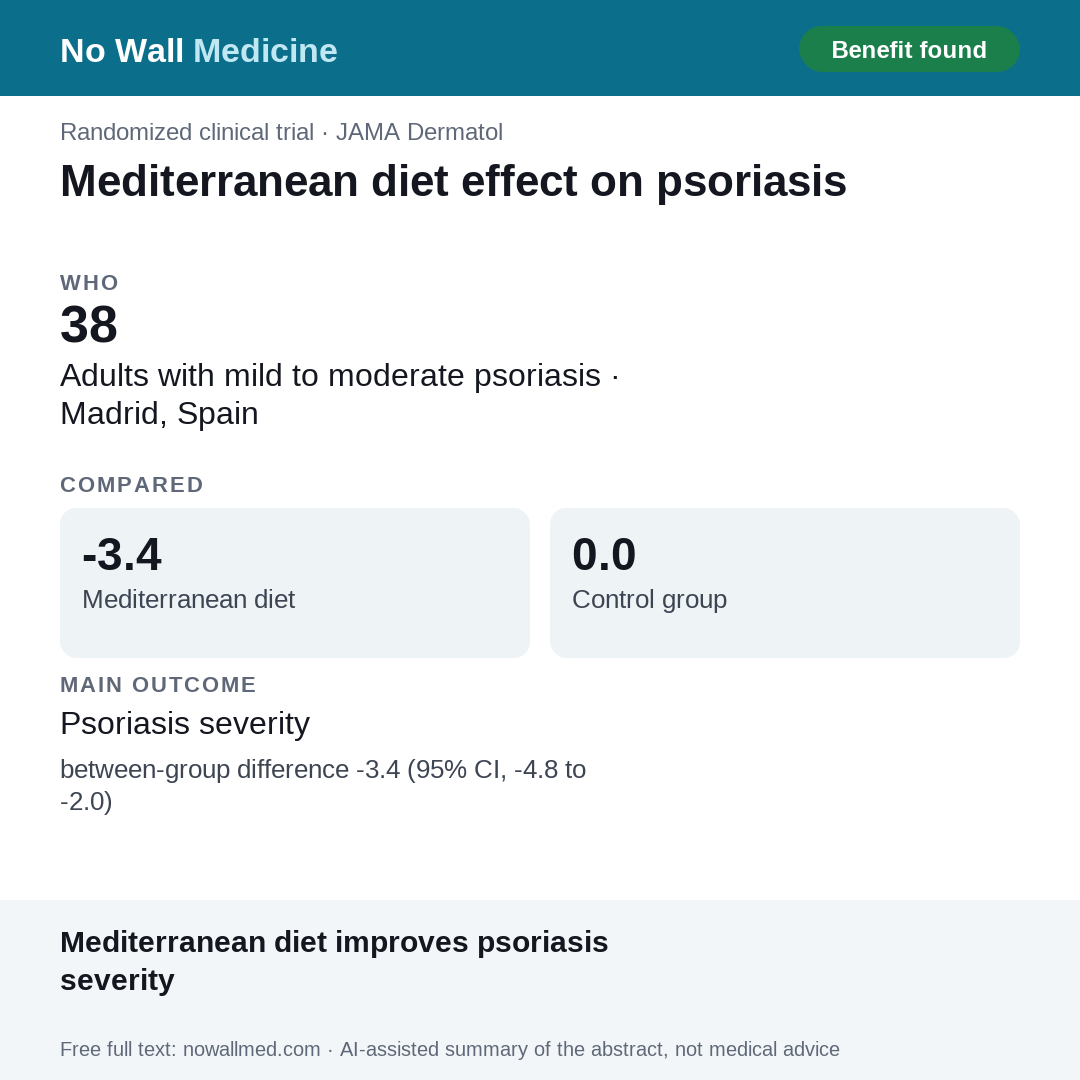
Mediterranean Diet and Patients With Psoriasis: The MEDIPSO Randomized Clinical Trial
Randomized clinical trialBenefit found
Mediterranean diet effect on psoriasis
Who
38
Adults with mild to moderate psoriasis · Madrid, Spain
Compared
-3.4Mediterranean diet (95% CI, -4.4 to -2.4)
0.0Control group (95% CI, -1.0 to 1.0)
Main outcome
Psoriasis severity
Result: between-group difference -3.4 (95% CI, -4.8 to -2.0)
Bottom line: Mediterranean diet improves psoriasis severity
JAMA Dermatol · 2025-09-24Download image
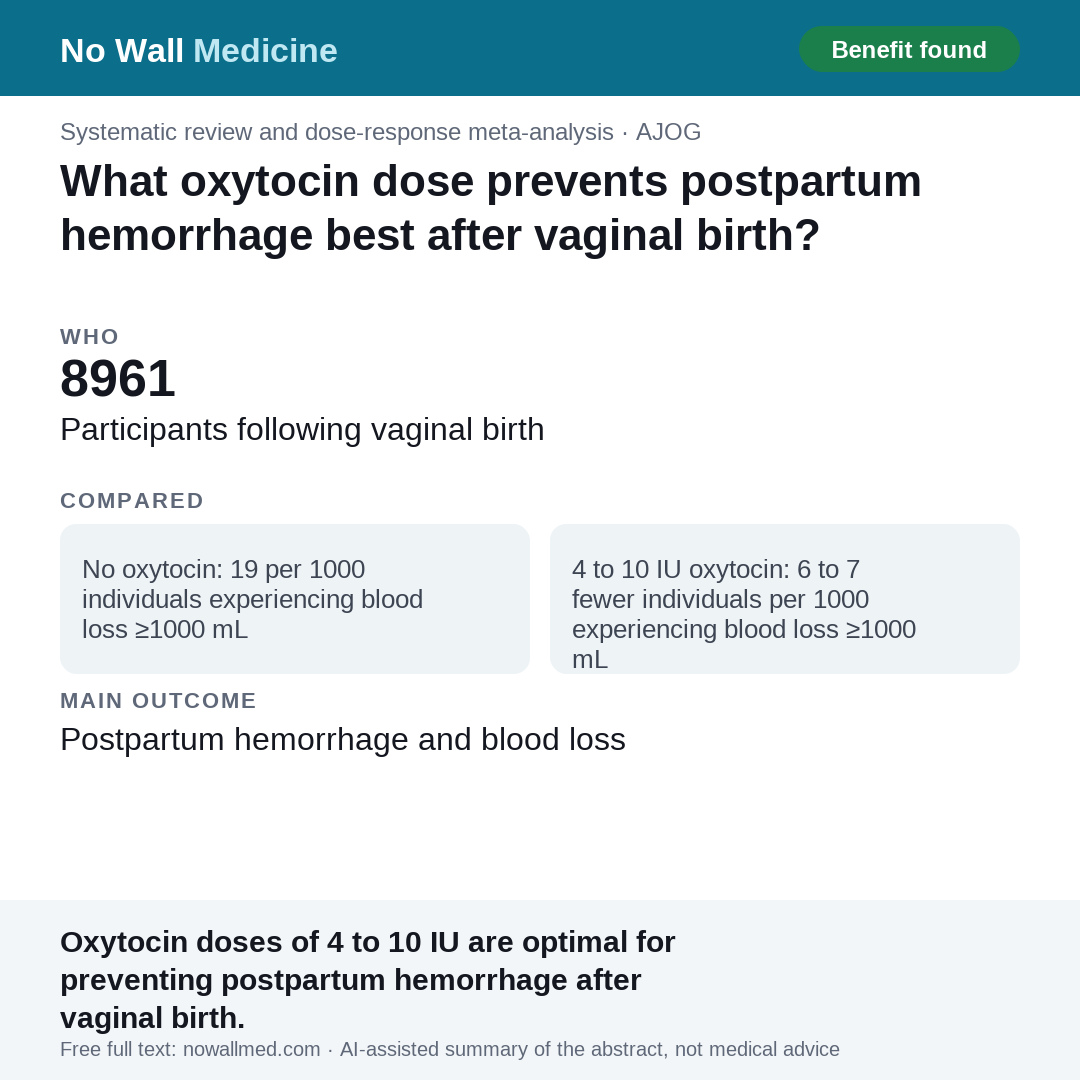
Prophylactic oxytocin dose following vaginal birth to prevent postpartum hemorrhage: a systematic review and dose-response meta-analysis
Systematic review and dose-response meta-analysisBenefit found
What oxytocin dose prevents postpartum hemorrhage best after vaginal birth?
Who
8961
Participants following vaginal birth
Compared
No oxytocin: 19 per 1000 individuals experiencing blood loss ≥1000 mL
4 to 10 IU oxytocin: 6 to 7 fewer individuals per 1000 experiencing blood loss ≥1000 mL
Main outcome
Postpartum hemorrhage and blood loss
Bottom line: Oxytocin doses of 4 to 10 IU are optimal for preventing postpartum hemorrhage after vaginal birth.
Limitation: Narrow dose ranges, under-representation of high-risk populations, and inconsistent reporting of safety outcomes.
AJOG · 2025-09-24Download image
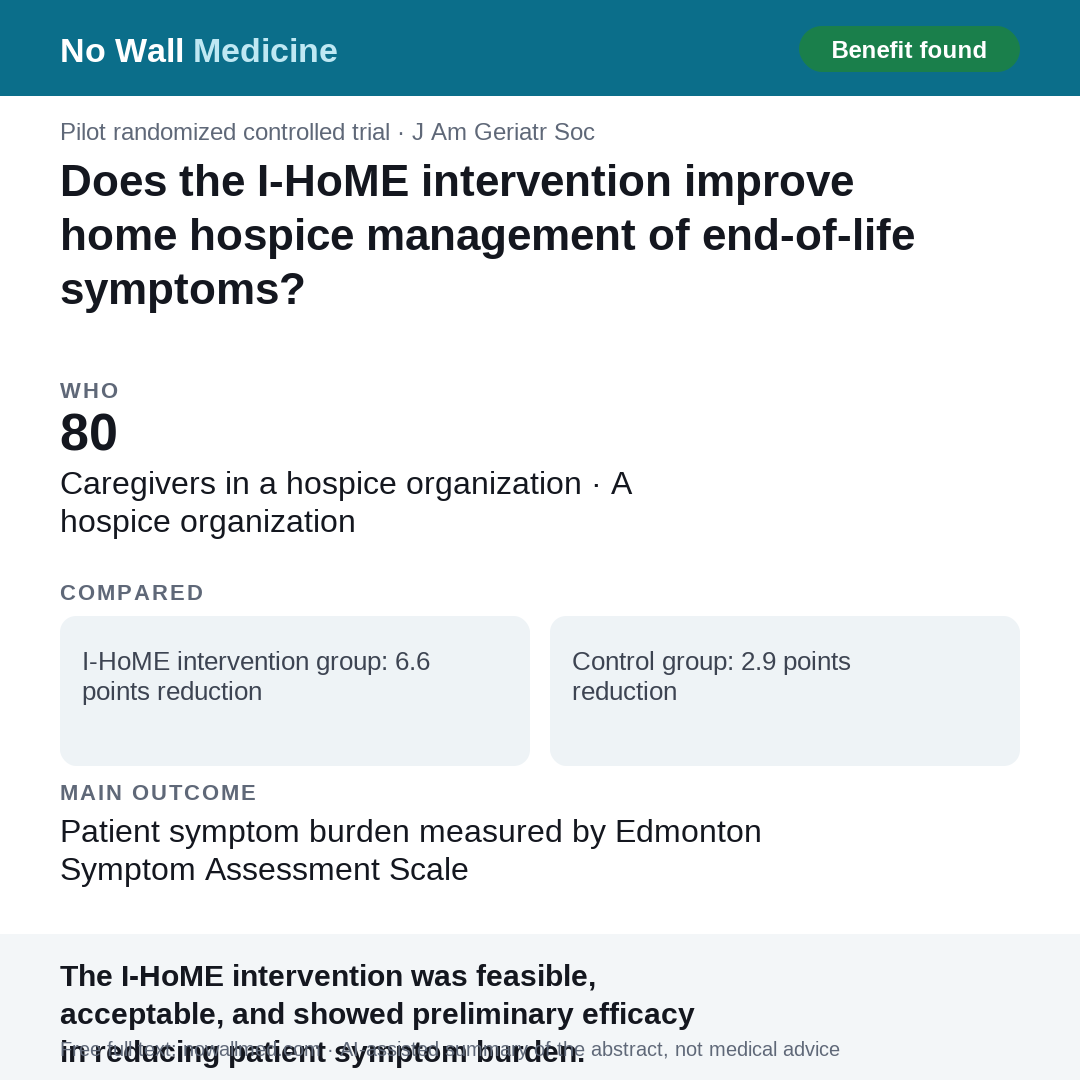
A Hospice Intervention for Caregivers: Improving Home Hospice Management of End-Of-Life Symptoms (I-HoME) Pilot Study
Pilot randomized controlled trialBenefit found
Does the I-HoME intervention improve home hospice management of end-of-life symptoms?
Who
80
Caregivers in a hospice organization · A hospice organization
Compared
I-HoME intervention group: 6.6 points reduction
Control group: 2.9 points reduction
Main outcome
Patient symptom burden measured by Edmonton Symptom Assessment Scale
Bottom line: The I-HoME intervention was feasible, acceptable, and showed preliminary efficacy in reducing patient symptom burden.
J Am Geriatr Soc · 2025-09-24Download image
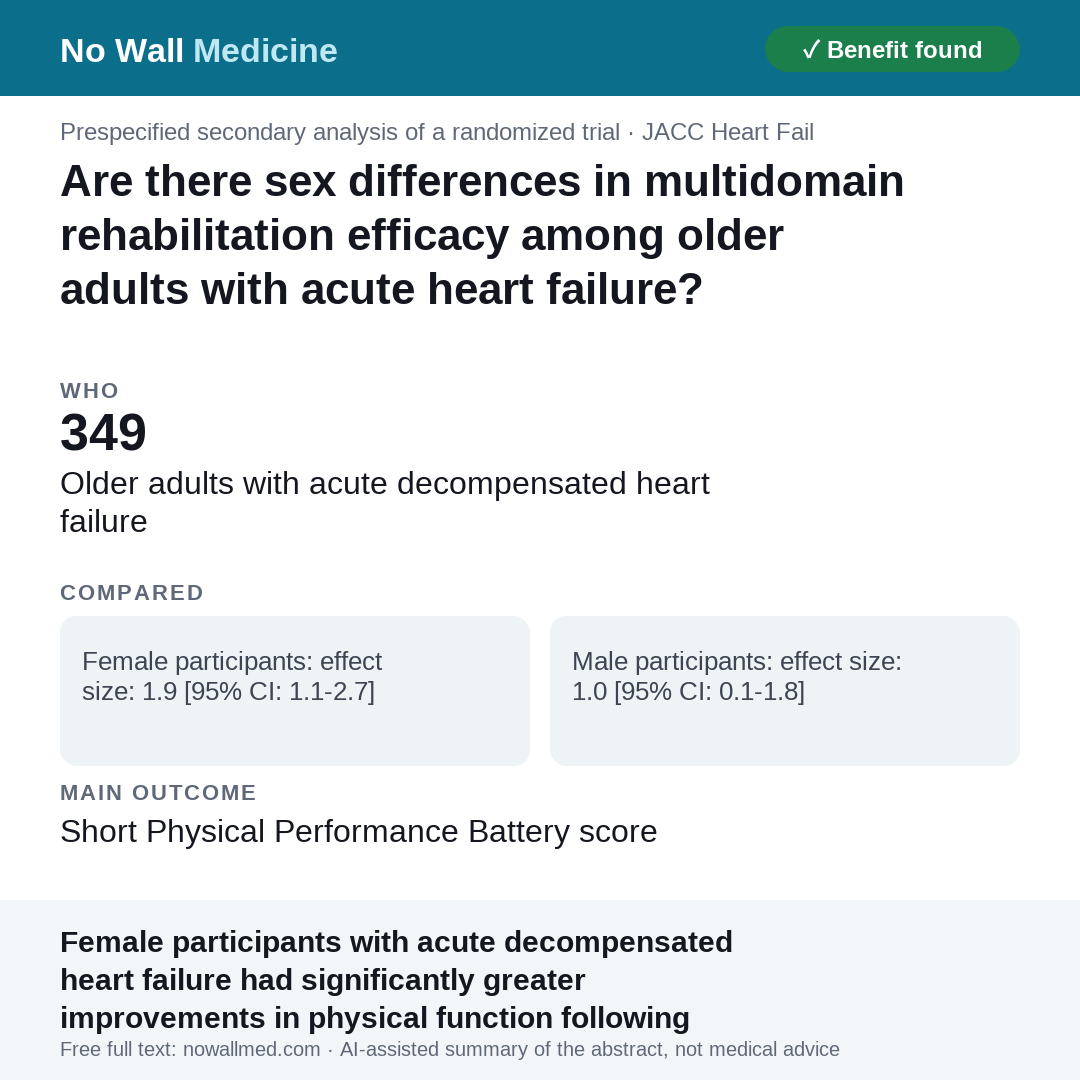
Sex Differences in Efficacy of Multidomain Rehabilitation Among Older Adults With Acute HF: The REHAB-HF Trial
Prespecified secondary analysis of a randomized trialBenefit found
Are there sex differences in multidomain rehabilitation efficacy among older adults with acute heart failure?
Who
349
Older adults with acute decompensated heart failure
Compared
Female participants: effect size: 1.9 [95% CI: 1.1-2.7]
Male participants: effect size: 1.0 [95% CI: 0.1-1.8]
Main outcome
Short Physical Performance Battery score
Result: effect size: 1.9 [95% CI: 1.1-2.7] vs 1.0 [95% CI: 0.1-1.8]
Bottom line: Female participants with acute decompensated heart failure had significantly greater improvements in physical function following multidomain rehabilitation.
JACC Heart Fail · 2025-09-24Download image
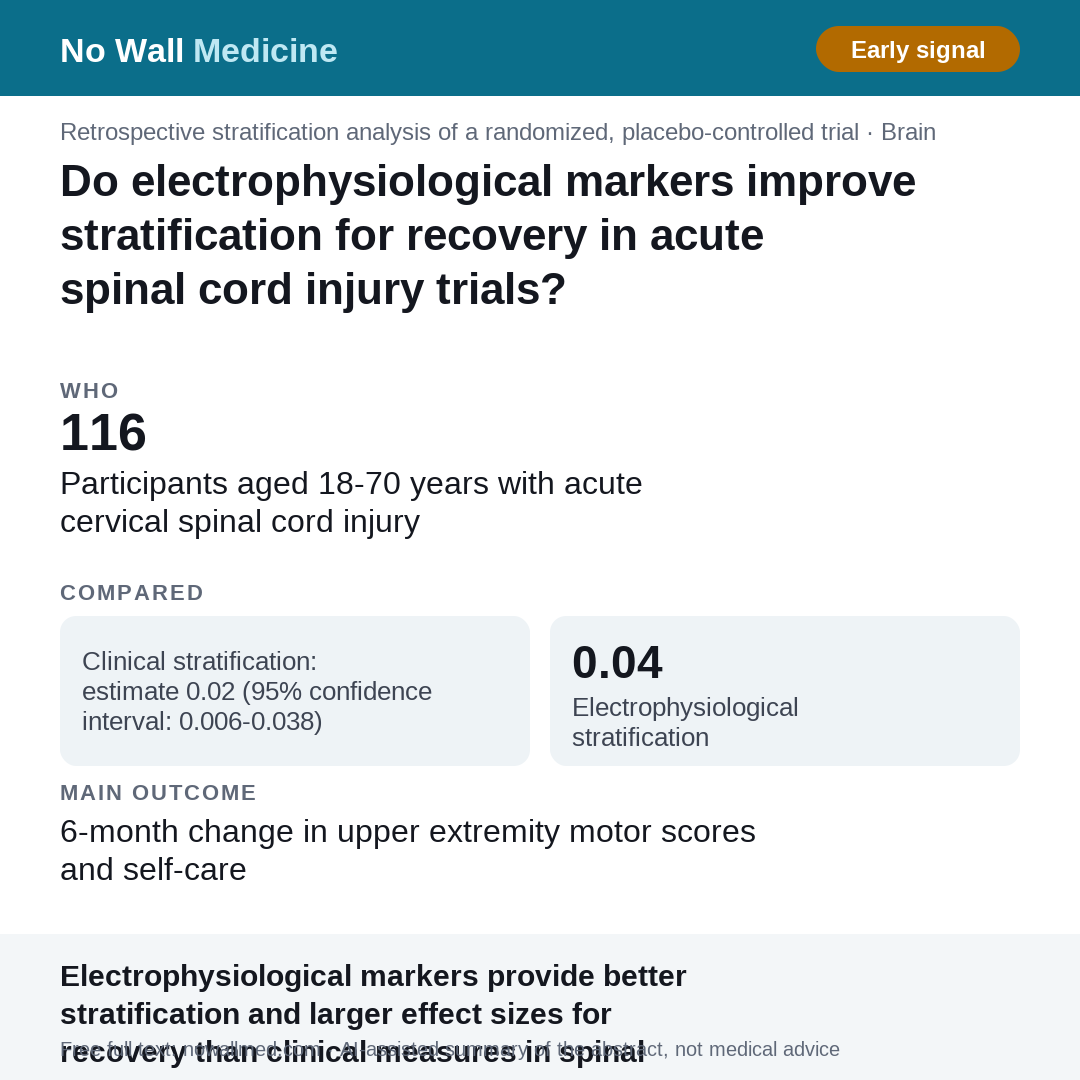
Enhanced clinical trial stratification in spinal cord injury: the value of electrophysiology
Retrospective stratification analysis of a randomized, placebo-controlled trialBenefit found
Do electrophysiological markers improve stratification for recovery in acute spinal cord injury trials?
Who
116
Participants aged 18-70 years with acute cervical spinal cord injury
Compared
Clinical stratification: estimate 0.02 (95% confidence interval: 0.006-0.038)
0.04Electrophysiological stratification (0.015-0.054)
Main outcome
6-month change in upper extremity motor scores and self-care
Result: Cohen's d = 0.94 for electrophysiological stratification
Bottom line: Electrophysiological markers provide better stratification and larger effect sizes for recovery than clinical measures in spinal cord injury trials.
Brain · 2025-09-24Download image
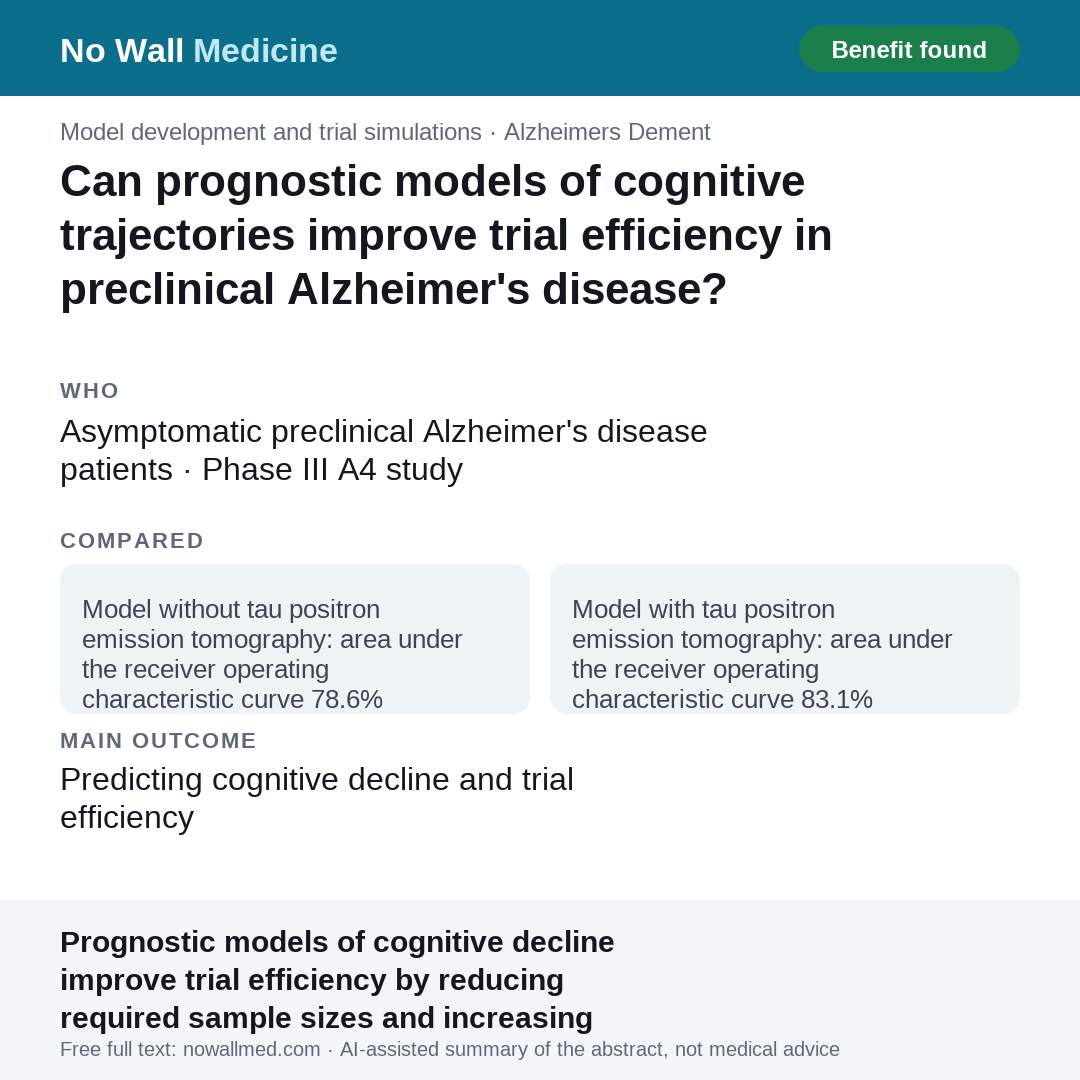
Multimodal prognostic modeling of individual cognitive trajectories to enhance trial efficiency in preclinical Alzheimer's disease
Model development and trial simulationsBenefit found
Can prognostic models of cognitive trajectories improve trial efficiency in preclinical Alzheimer's disease?
Who
Asymptomatic preclinical Alzheimer's disease patients · Phase III A4 study
Compared
Model without tau positron emission tomography: area under the receiver operating characteristic curve 78.6%
Model with tau positron emission tomography: area under the receiver operating characteristic curve 83.1%
Main outcome
Predicting cognitive decline and trial efficiency
Result: reduced sample sizes by 35% and increased power from 80% to 94.7%
Bottom line: Prognostic models of cognitive decline improve trial efficiency by reducing required sample sizes and increasing statistical power.
Alzheimers Dement · 2025-09-24Download image