Visual abstracts
New randomized trials and meta-analyses from leading journals at a glance: who was studied, what was compared, and what was found. Every paper is free to read in full.
All specialtiesCardiology 3606Oncology 3078Gastroenterology & Hepatology 1409Infectious Disease 2546Neurology 1450Psychiatry & Mental Health 1704Pulmonology 1548Critical Care 1028Endocrinology & Diabetes 1838Pediatrics 2185Surgery 1899Orthopedics & Sports Medicine 671Neurosurgery 423Cardiothoracic & Vascular Surgery 430Plastic & Reconstructive Surgery 498Nephrology 788Rheumatology 579Hematology 810Dermatology 447Ophthalmology 396Obstetrics & Gynecology 1231Public & Global Health 691Radiology & Imaging 501Anesthesiology 736Urology 591ENT (Otolaryngology) 395Emergency Medicine 383Allergy & Immunology 224Geriatrics 763Family Medicine & Primary Care 416Medical Genetics & Genomics 465Pathology & Laboratory Medicine 118Physical Medicine & Rehabilitation 559Palliative Care 333Nutrition 1087Digital Health & AI 1692General Medicine 259
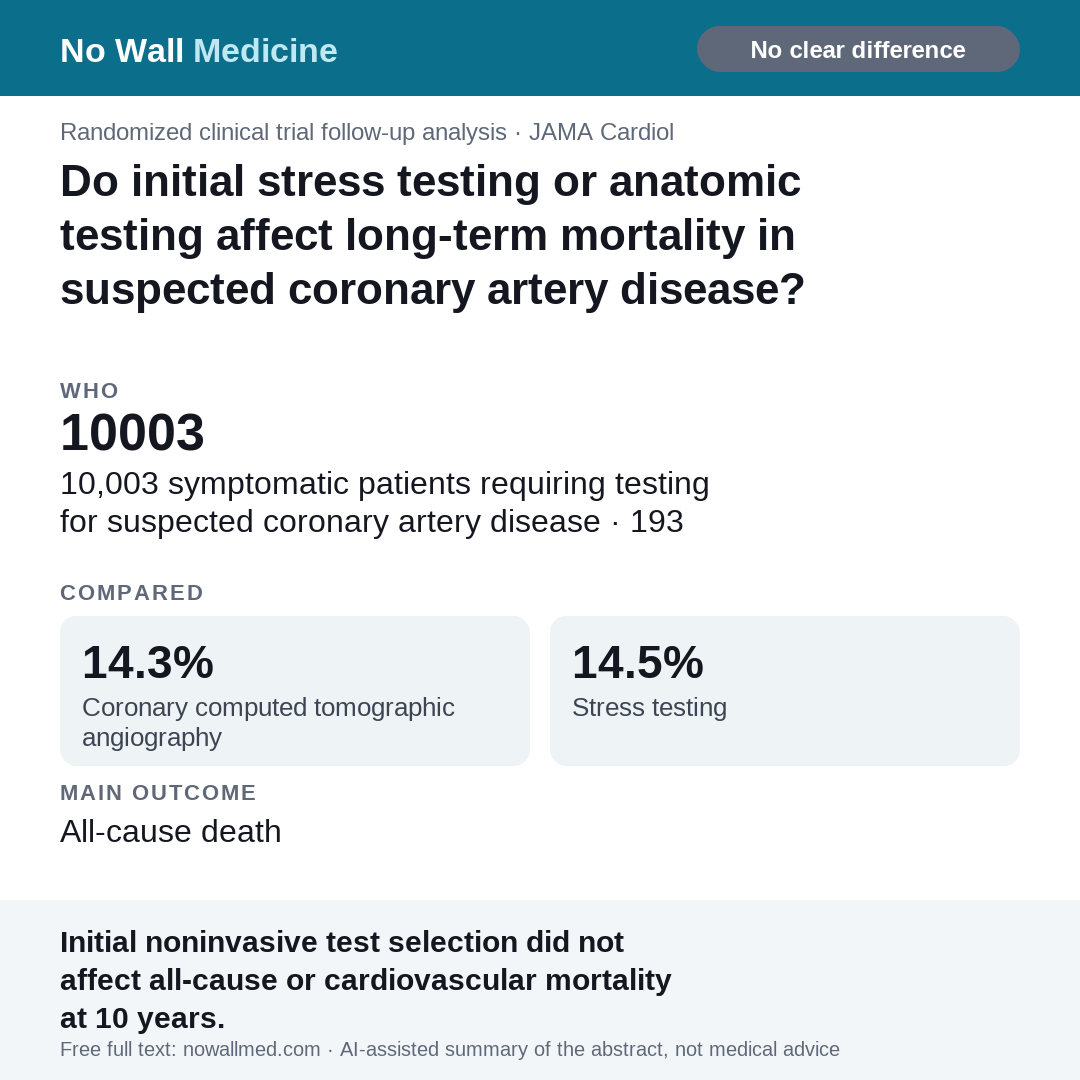
Survival After Initial Stress Testing vs Anatomic Testing in Suspected Coronary Artery Disease: Long-Term Follow-Up of the PROMISE Randomized Clinical Trial
Randomized clinical trial follow-up analysisNo clear difference
Do initial stress testing or anatomic testing affect long-term mortality in suspected coronary artery disease?
Who
10003
10,003 symptomatic patients requiring testing for suspected coronary artery disease · 193 multispecialty outpatient sites in North America
Compared
14.3%Coronary computed tomographic angiography
14.5%Stress testing
Main outcome
All-cause death
Result: hazard ratio 0.98 (95% CI, 0.87-1.10)
Bottom line: Initial noninvasive test selection did not affect all-cause or cardiovascular mortality at 10 years.
JAMA Cardiol · 2025-08-29Download image
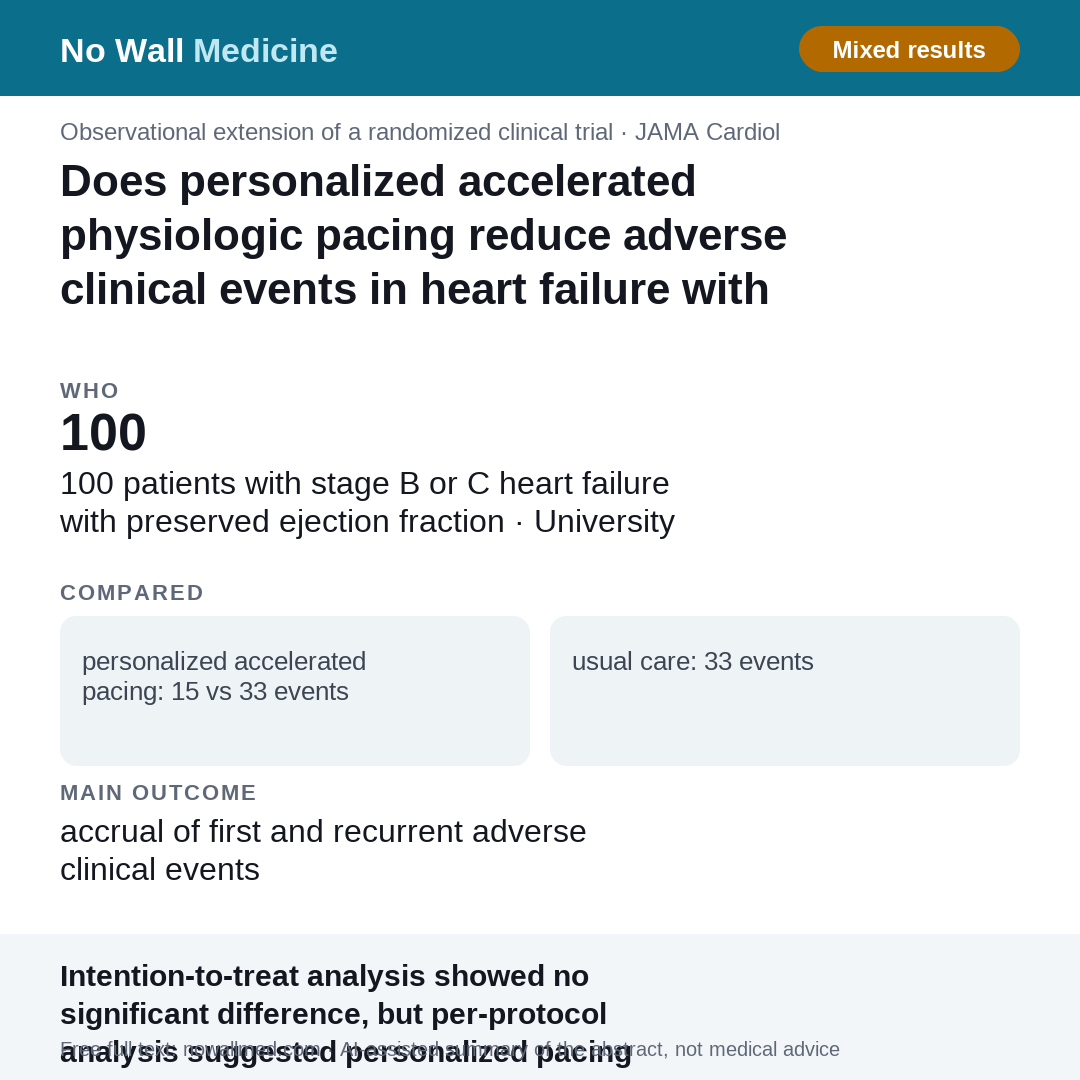
Clinical Outcomes With Personalized Accelerated Physiologic Pacing in Heart Failure With Preserved Ejection Fraction: Follow-up of the myPACE Trial
Observational extension of a randomized clinical trialMixed results
Does personalized accelerated physiologic pacing reduce adverse clinical events in heart failure with preserved ejection fraction?
Who
100
100 patients with stage B or C heart failure with preserved ejection fraction · University of Vermont Medical Center
Compared
personalized accelerated pacing: 15 vs 33 events
usual care: 33 events
Main outcome
accrual of first and recurrent adverse clinical events
Result: hazard ratio 0.63 (95% CI 0.31-1.29)
Bottom line: Intention-to-treat analysis showed no significant difference, but per-protocol analysis suggested personalized pacing reduces adverse clinical events.
Limitation: results are hypothesis generating and warrant confirmation in larger multicenter trials
JAMA Cardiol · 2025-08-29Download image
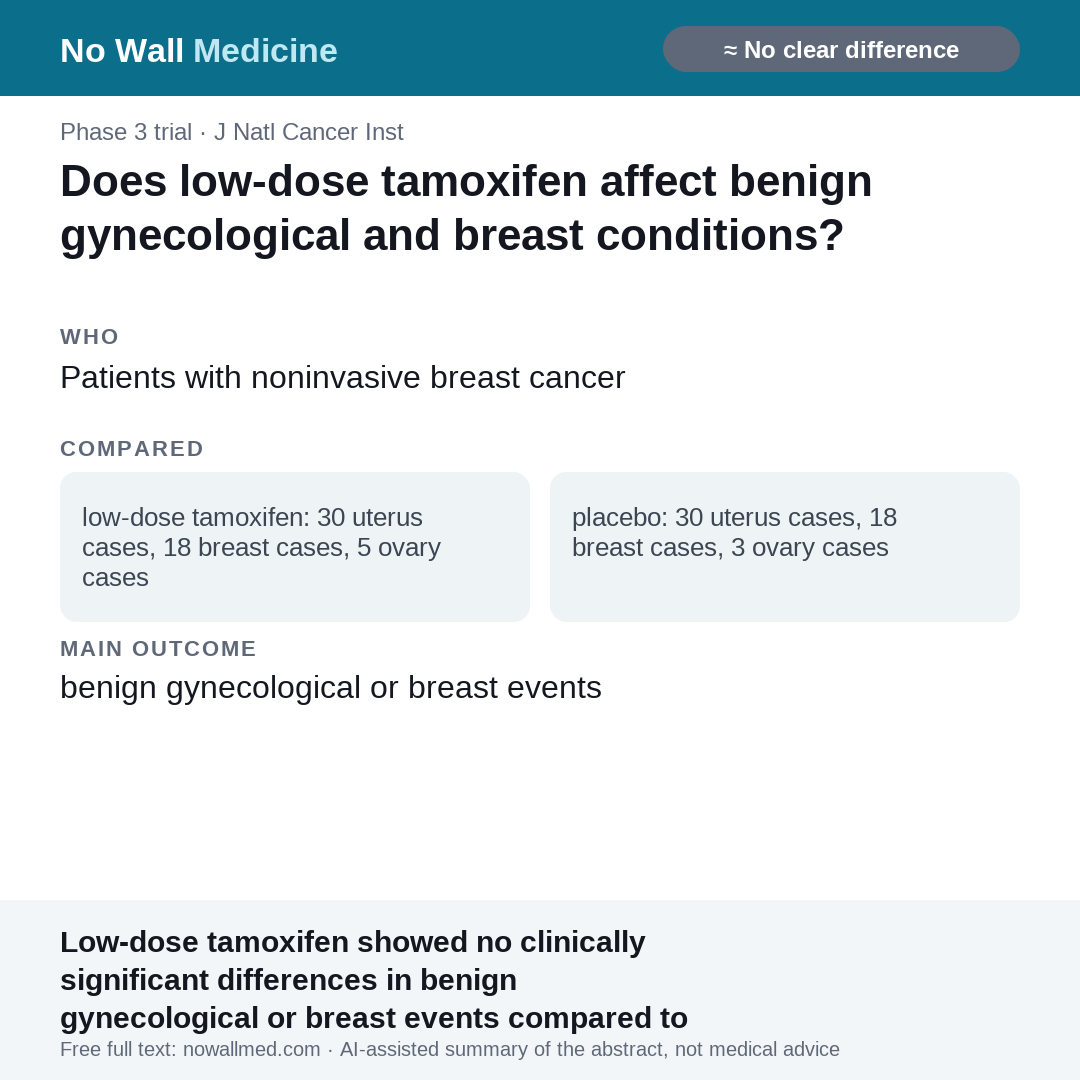
Effect of low-dose tamoxifen on benign gynecological and breast conditions in a phase 3 trial in noninvasive breast cancer
Phase 3 trialNo clear difference
Does low-dose tamoxifen affect benign gynecological and breast conditions?
Who
Patients with noninvasive breast cancer
Compared
low-dose tamoxifen: 30 uterus cases, 18 breast cases, 5 ovary cases
placebo: 30 uterus cases, 18 breast cases, 3 ovary cases
Main outcome
benign gynecological or breast events
Bottom line: Low-dose tamoxifen showed no clinically significant differences in benign gynecological or breast events compared to placebo.
J Natl Cancer Inst · 2025-08-29Download image
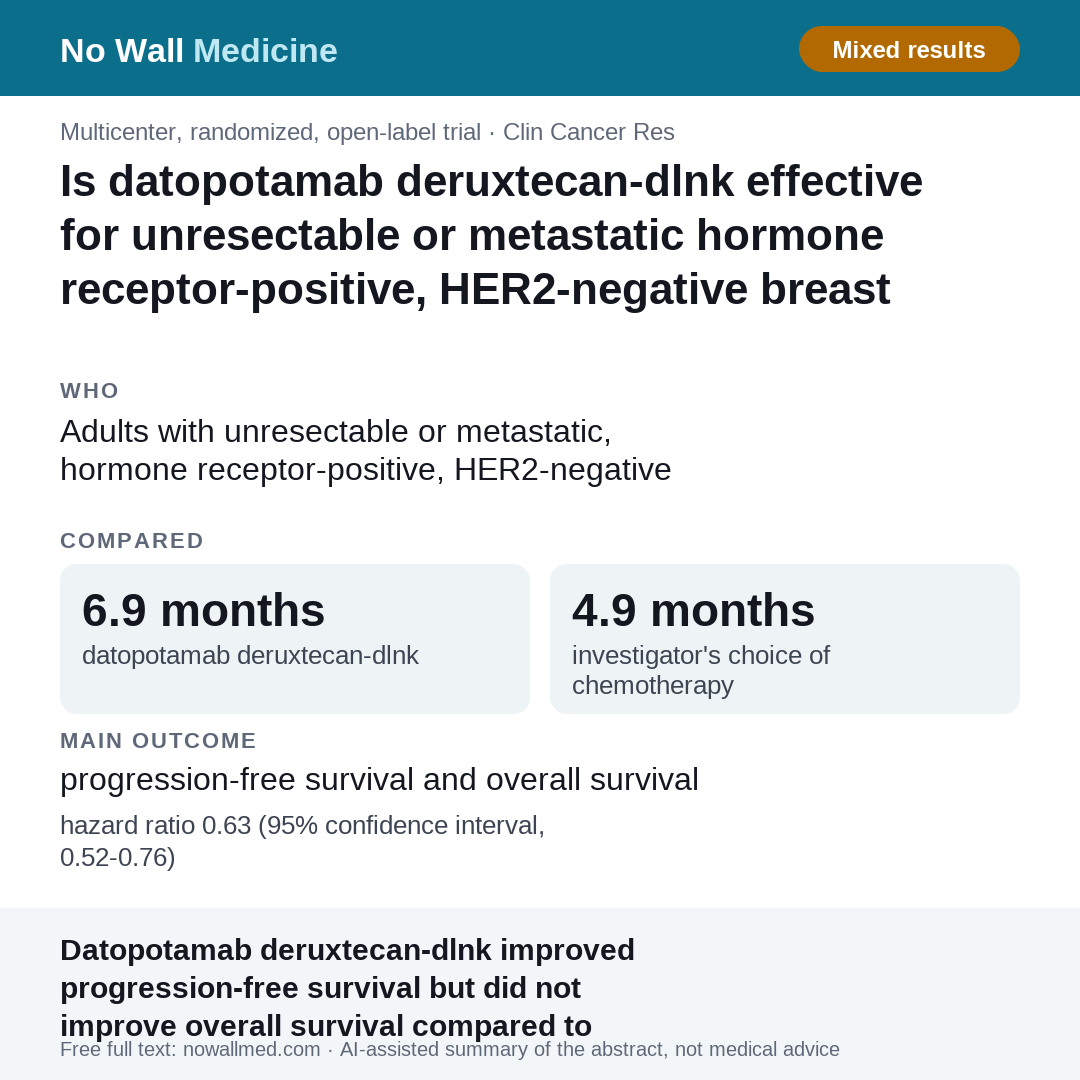
FDA Approval Summary: Datopotamab Deruxtecan-dlnk for Treatment of Patients with Unresectable or Metastatic, HR-Positive, HER2-Negative Breast Cancer
Multicenter, randomized, open-label trialMixed results
Is datopotamab deruxtecan-dlnk effective for unresectable or metastatic hormone receptor-positive, HER2-negative breast cancer?
Who
Adults with unresectable or metastatic, hormone receptor-positive, HER2-negative breast cancer · Multicenter
Compared
6.9 monthsdatopotamab deruxtecan-dlnk
4.9 monthsinvestigator's choice of chemotherapy
Main outcome
progression-free survival and overall survival
Result: hazard ratio 0.63 (95% confidence interval, 0.52-0.76)
Bottom line: Datopotamab deruxtecan-dlnk improved progression-free survival but did not improve overall survival compared to investigator's choice of chemotherapy.
Clin Cancer Res · 2025-08-29Download image
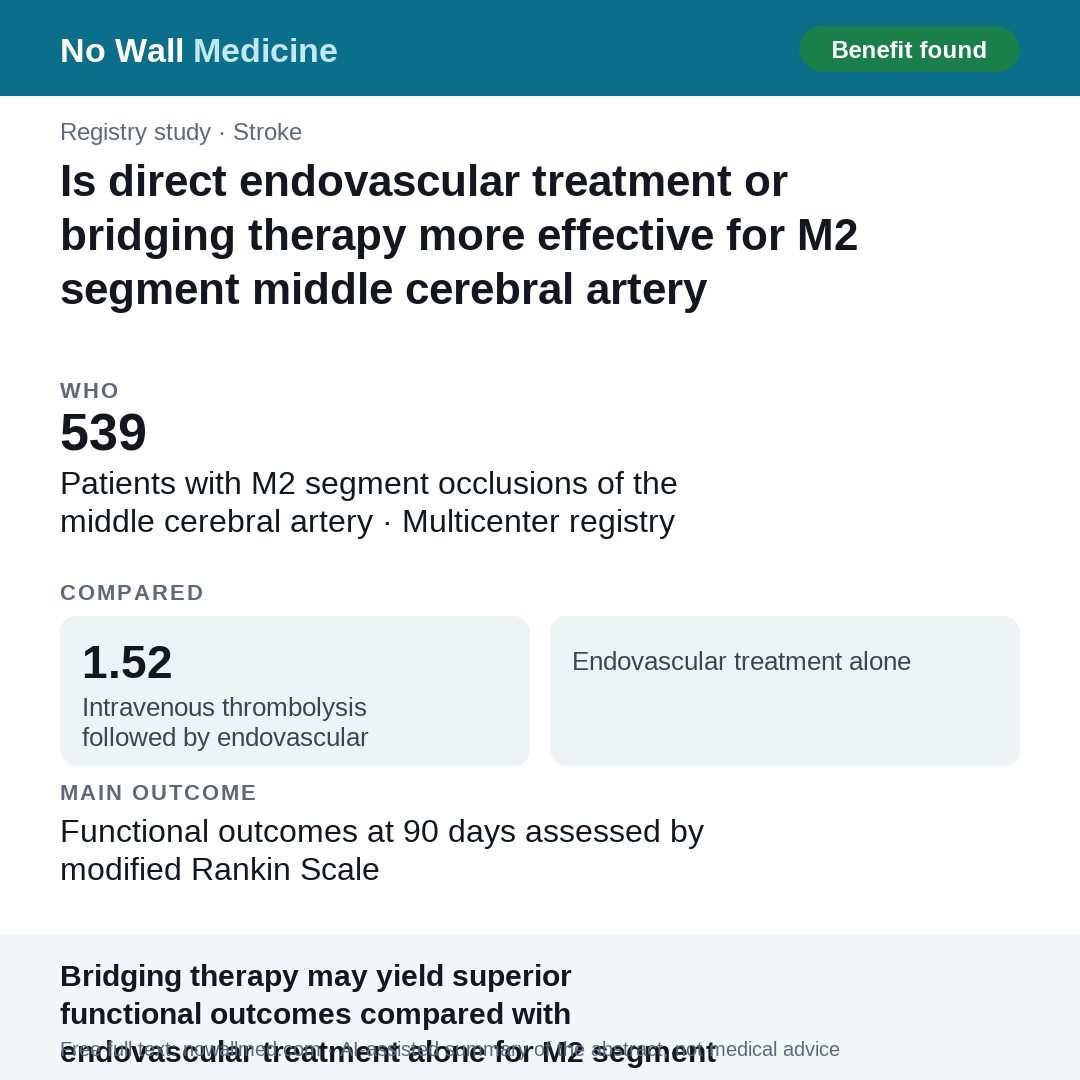
Direct Endovascular Versus Bridging Therapy in M2 Segment Occlusion of Middle Cerebral Artery: A MR CLEAN Registry Study
Registry studyBenefit found
Is direct endovascular treatment or bridging therapy more effective for M2 segment middle cerebral artery occlusions?
Who
539
Patients with M2 segment occlusions of the middle cerebral artery · Multicenter registry in the Netherlands
Compared
1.52Intravenous thrombolysis followed by endovascular treatment (95% CI, 1.04-2.21)
Endovascular treatment alone
Main outcome
Functional outcomes at 90 days assessed by modified Rankin Scale
Result: adjusted common odds ratio 1.52 (95% CI 1.04-2.21)
Bottom line: Bridging therapy may yield superior functional outcomes compared with endovascular treatment alone for M2 segment middle cerebral artery occlusions.
Stroke · 2025-08-29Download image
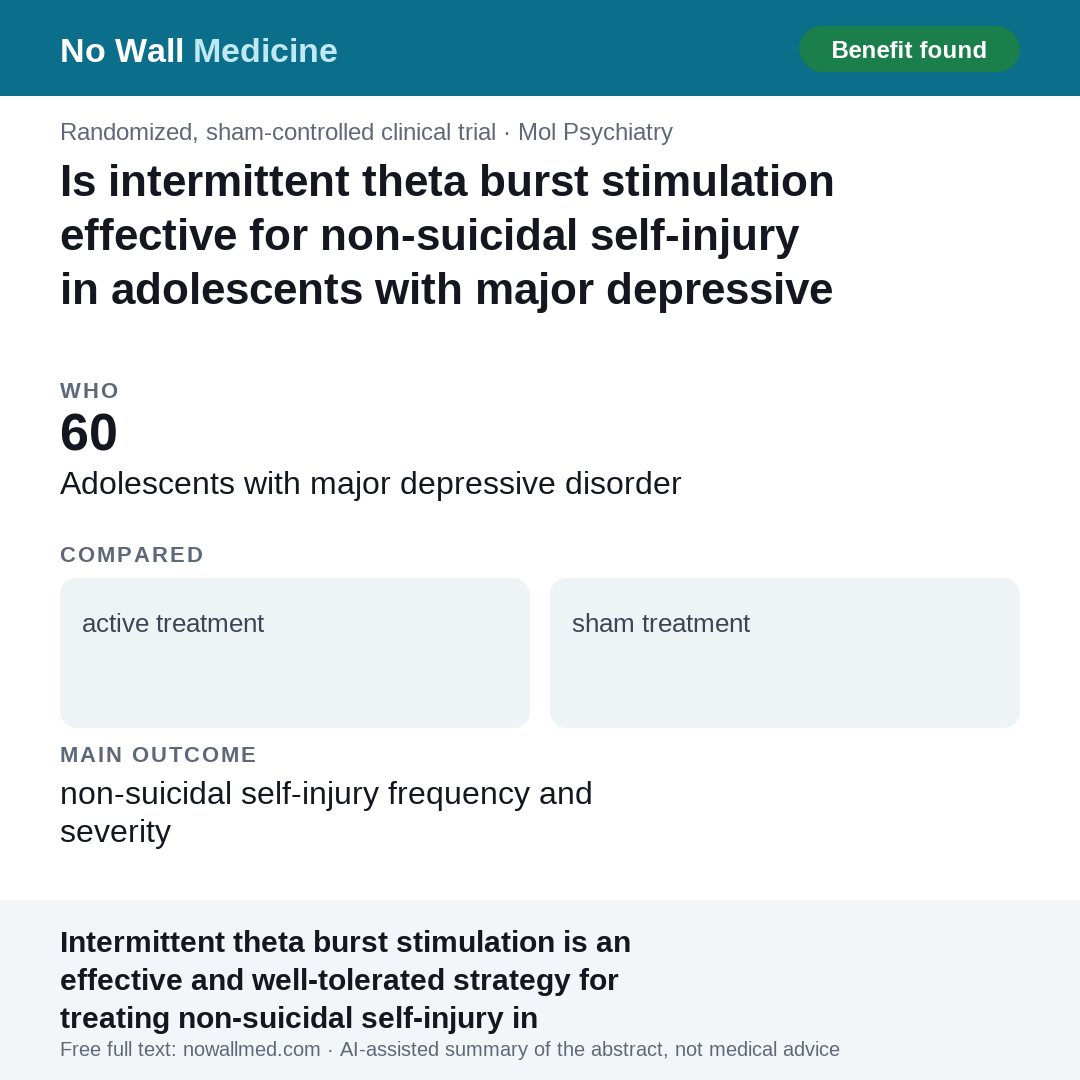
Intermittent theta burst stimulation for non-suicidal self-injury in adolescents with major depressive disorder: a randomized, sham-controlled trial
Randomized, sham-controlled clinical trialBenefit found
Is intermittent theta burst stimulation effective for non-suicidal self-injury in adolescents with major depressive disorder?
Who
60
Adolescents with major depressive disorder
Compared
active treatment
sham treatment
Main outcome
non-suicidal self-injury frequency and severity
Result: mean difference, -18.66 (95% CI, -28.35 to -8.97)
Bottom line: Intermittent theta burst stimulation is an effective and well-tolerated strategy for treating non-suicidal self-injury in adolescents.
Mol Psychiatry · 2025-08-29Download image
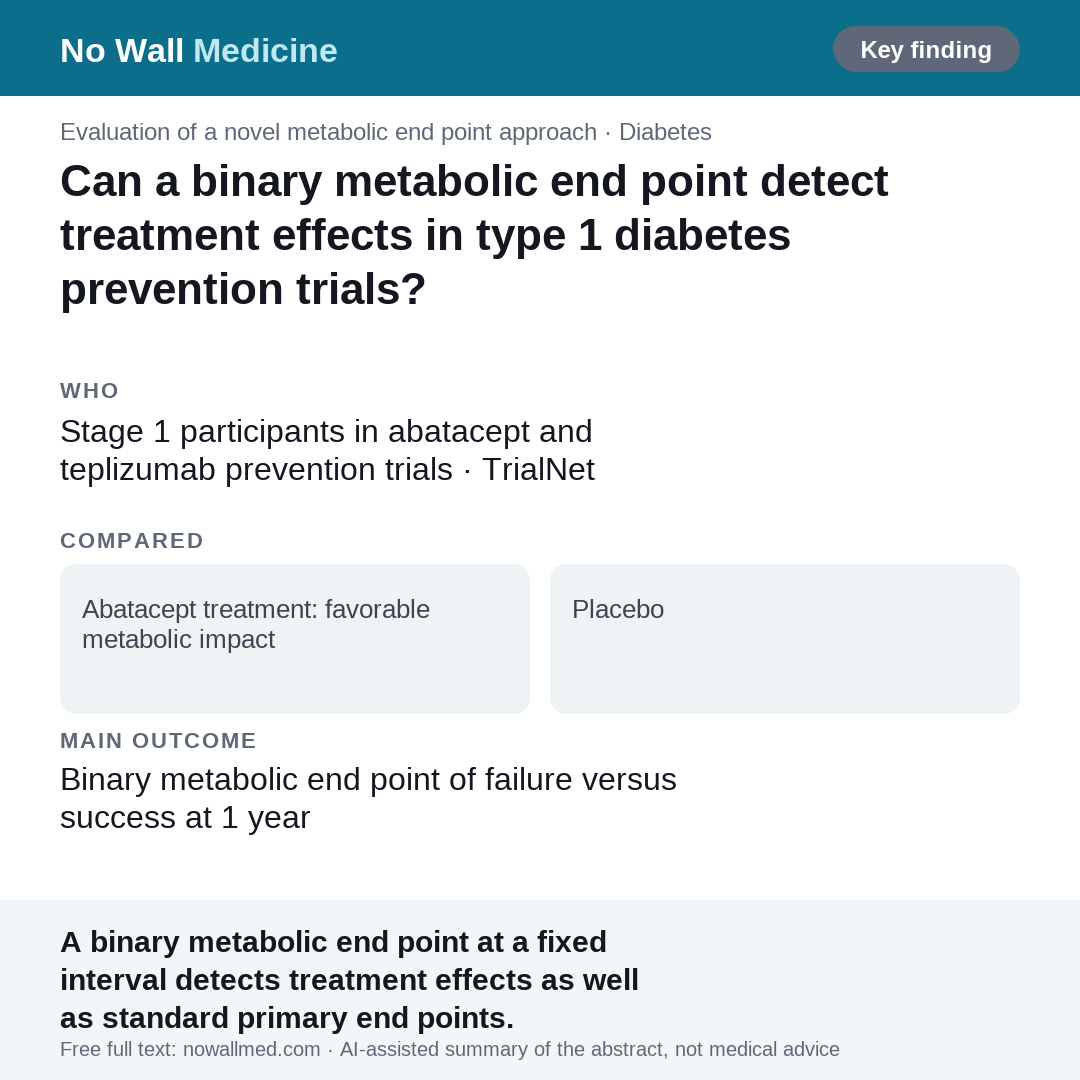
Novel Approach for Assessing Outcomes of Type 1 Diabetes Prevention Trials Over a Fixed Time Interval
Evaluation of a novel metabolic end point approachBenefit found
Can a binary metabolic end point detect treatment effects in type 1 diabetes prevention trials?
Who
Stage 1 participants in abatacept and teplizumab prevention trials · TrialNet Pathway to Prevention study
Compared
Abatacept treatment: favorable metabolic impact
Placebo
Main outcome
Binary metabolic end point of failure versus success at 1 year
Bottom line: A binary metabolic end point at a fixed interval detects treatment effects as well as standard primary end points.
Diabetes · 2025-08-29Download image
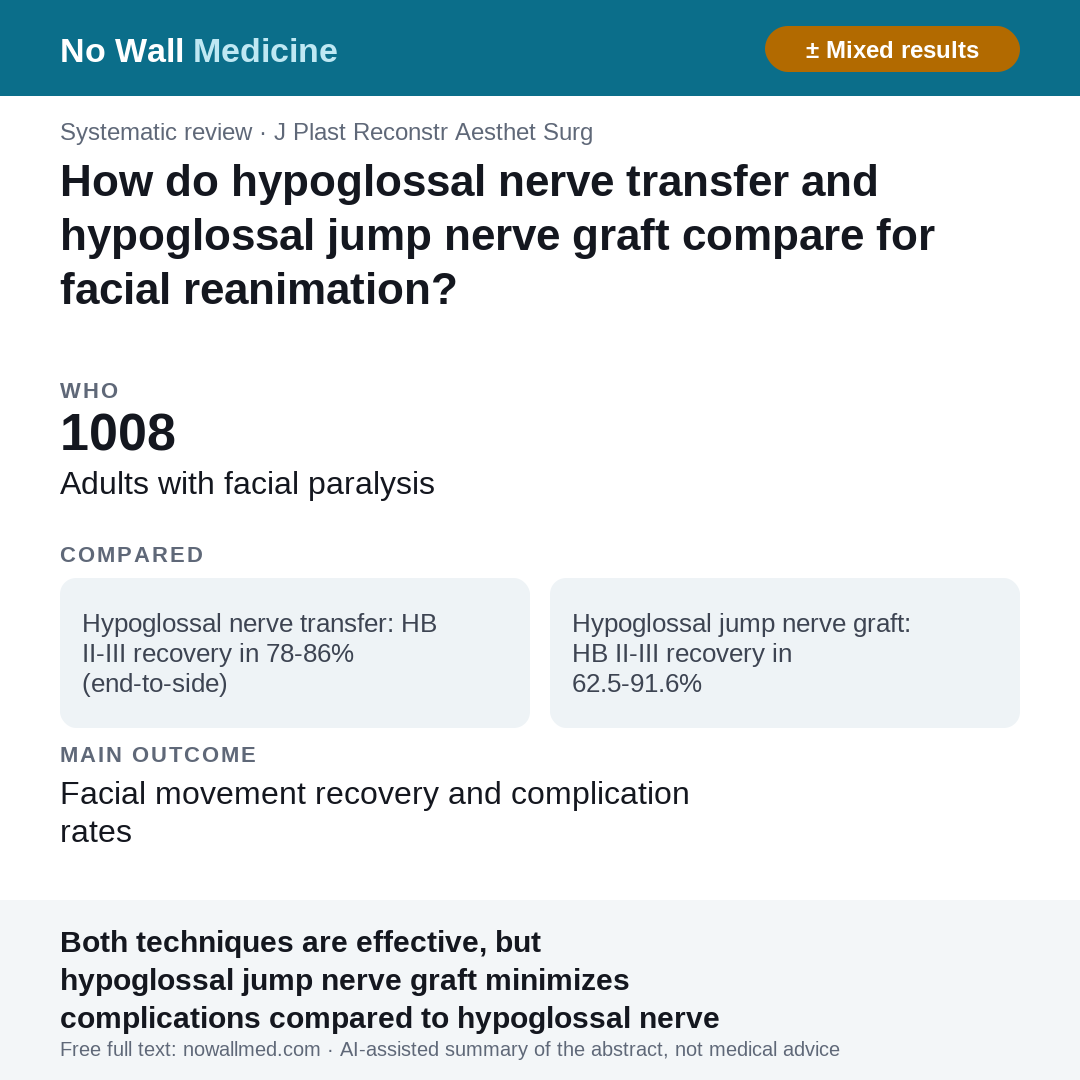
Comparison of hypoglossal nerve transfer and hypoglossal jump nerve graft techniques for facial reanimation: A systematic review
Systematic reviewMixed results
How do hypoglossal nerve transfer and hypoglossal jump nerve graft compare for facial reanimation?
Who
1008
Adults with facial paralysis
Compared
Hypoglossal nerve transfer: HB II-III recovery in 78-86% (end-to-side)
Hypoglossal jump nerve graft: HB II-III recovery in 62.5-91.6%
Main outcome
Facial movement recovery and complication rates
Bottom line: Both techniques are effective, but hypoglossal jump nerve graft minimizes complications compared to hypoglossal nerve transfer.
Limitation: Future comparative studies using standardized outcome measures are needed.
J Plast Reconstr Aesthet Surg · 2025-08-29Download image
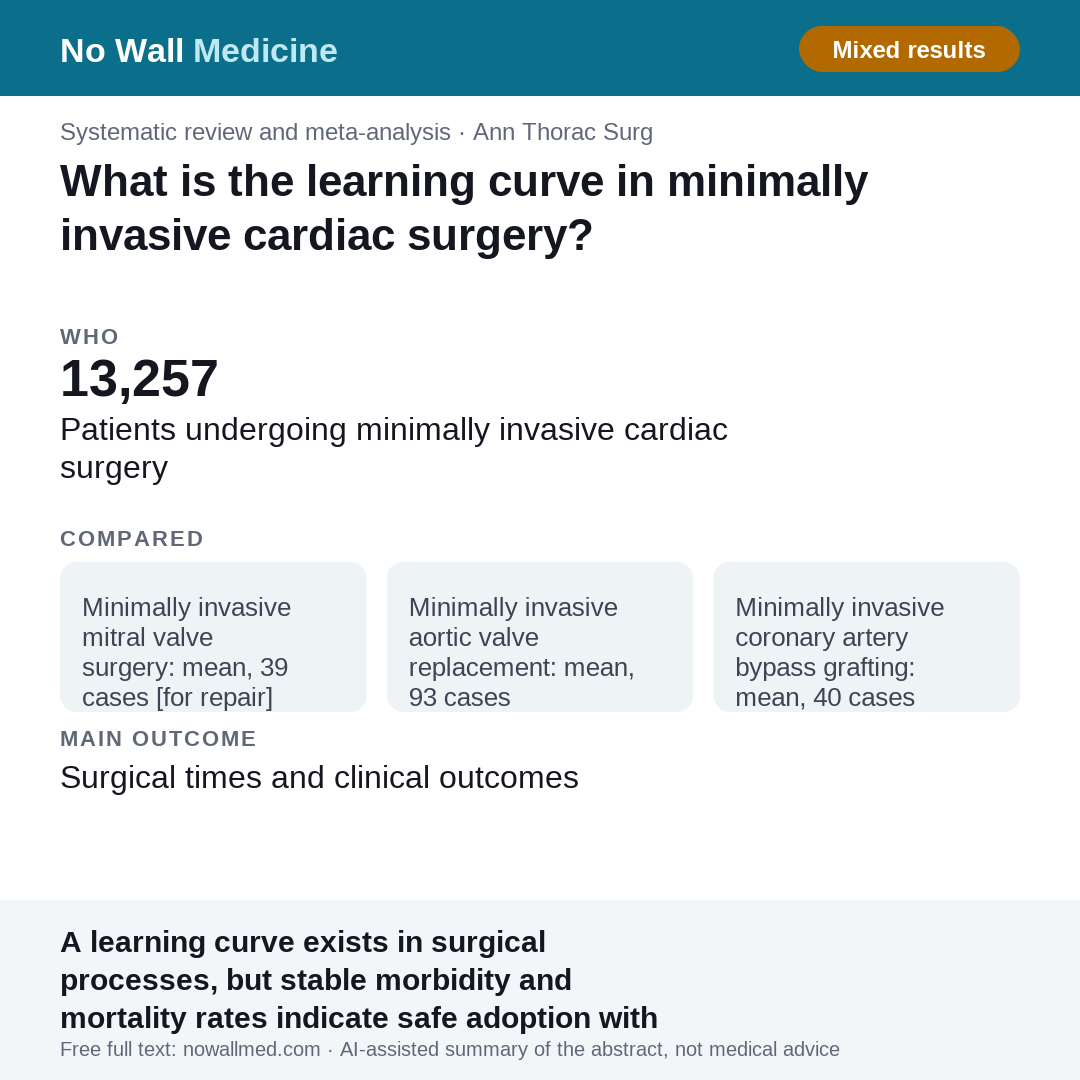
Defining the Learning Curve in Minimally Invasive Cardiac Surgery: A Systematic Review and Meta-Analysis
Systematic review and meta-analysisMixed results
What is the learning curve in minimally invasive cardiac surgery?
Who
13,257
Patients undergoing minimally invasive cardiac surgery
Compared
Minimally invasive mitral valve surgery: mean, 39 cases [for repair] and 78 [for replacement]
Minimally invasive aortic valve replacement: mean, 93 cases
Minimally invasive coronary artery bypass grafting: mean, 40 cases
Main outcome
Surgical times and clinical outcomes
Bottom line: A learning curve exists in surgical processes, but stable morbidity and mortality rates indicate safe adoption with training.
Limitation: Significant heterogeneity across studies prevents precise learning curve characterization.
Ann Thorac Surg · 2025-08-29Download image
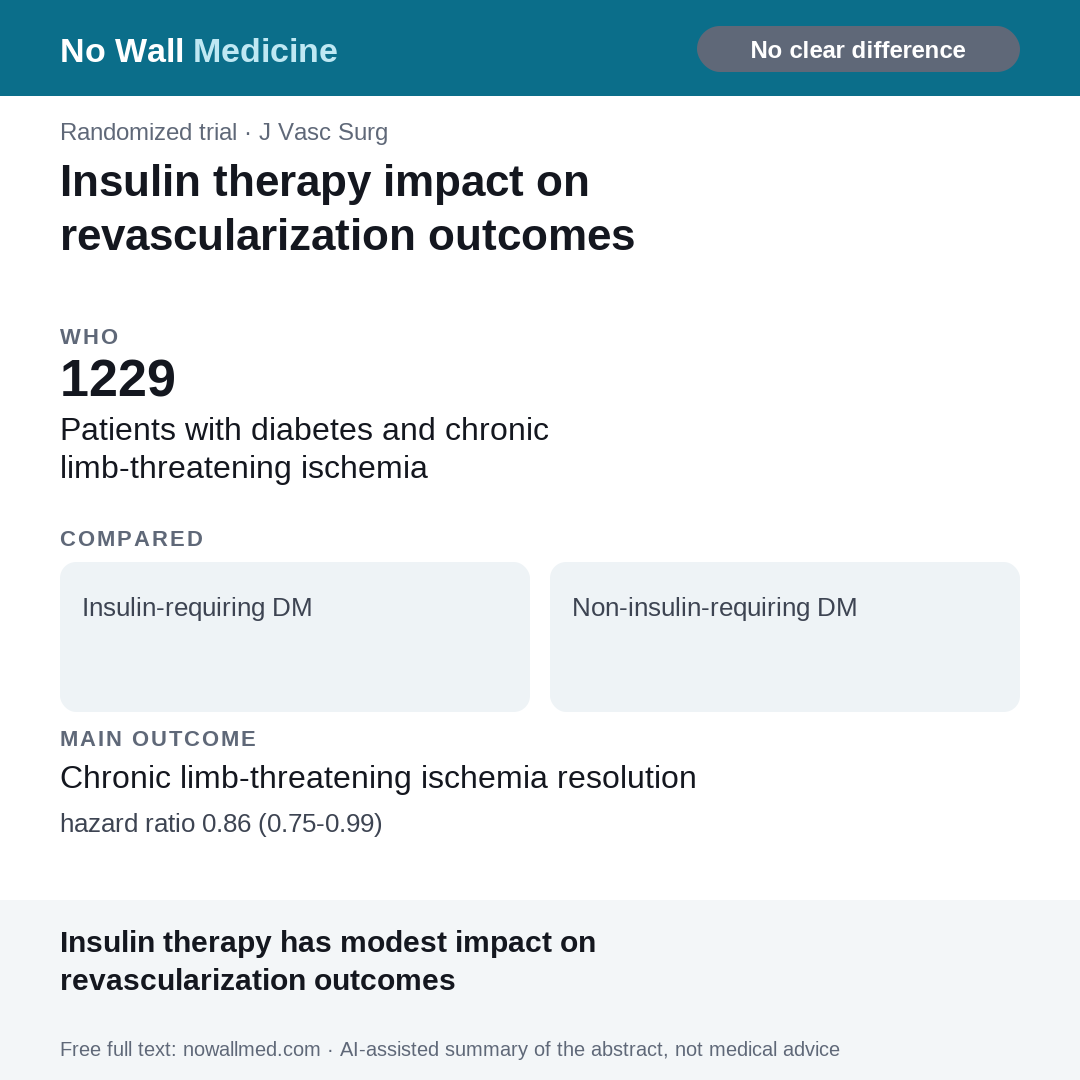
Insulin therapy and outcomes of revascularization procedures for chronic limb-threatening ischemia in the BEST-CLI trial
Randomized trialNo clear difference
Insulin therapy impact on revascularization outcomes
Who
1229
Patients with diabetes and chronic limb-threatening ischemia
Compared
Insulin-requiring DM
Non-insulin-requiring DM
Main outcome
Chronic limb-threatening ischemia resolution
Result: hazard ratio 0.86 (0.75-0.99)
Bottom line: Insulin therapy has modest impact on revascularization outcomes
J Vasc Surg · 2025-08-29Download image
Adherence to Lipid-Lowering Therapies and Cardiovascular Outcomes in Patients With Atherosclerotic Cardiovascular Disease: A Systematic Review and Meta-Analysis
Systematic review and meta-analysisBenefit found
Does adherence to lipid-lowering therapy reduce cardiovascular outcomes in patients with atherosclerotic cardiovascular disease?
Who
Adults with clinical atherosclerotic cardiovascular disease
Compared
Adherence to lipid-lowering therapy ≥80%: reduced risk of death, major adverse cardiovascular events, and myocardial infarction
Lower adherence
Main outcome
death, cardiovascular death, and major adverse cardiovascular events
Result: hazard ratio 0.77 (95% CI 0.68 to 0.86) for major adverse cardiovascular events
Bottom line: Adherence to lipid-lowering therapy at 80% or more is associated with reduced cardiovascular event risks.
Limitation: Most studies only reported adherence to statins and used proportion of days covered.
J Am Heart Assoc · 2025-08-29Download image

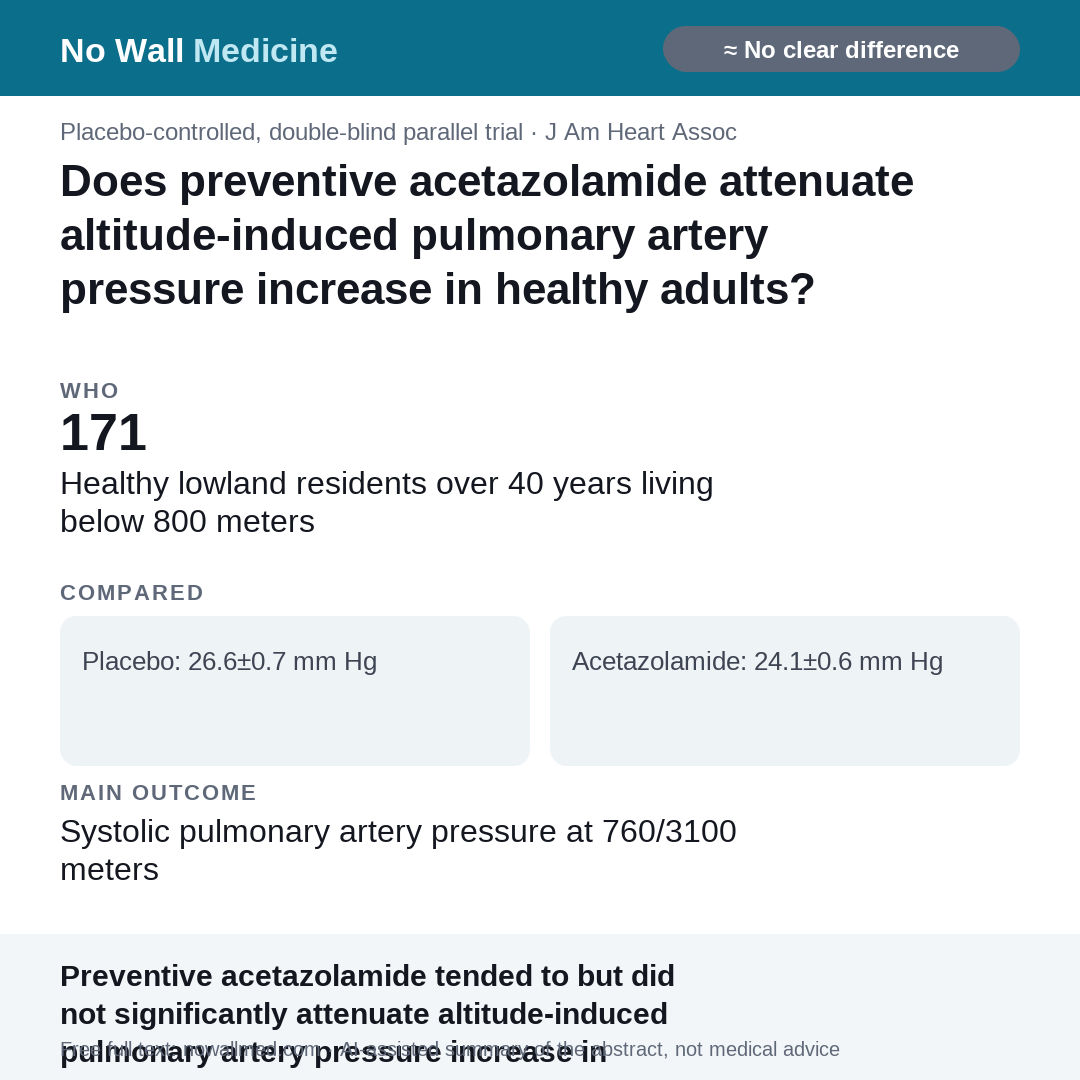
Effect of Acetazolamide on Pulmonary Hemodynamics and Right Heart Function in Healthy Adults Going to Altitude: A Randomized Controlled Trial
Placebo-controlled, double-blind parallel trialNo clear difference
Does preventive acetazolamide attenuate altitude-induced pulmonary artery pressure increase in healthy adults?
Who
171
Healthy lowland residents over 40 years living below 800 meters
Compared
Placebo: 26.6±0.7 mm Hg
Acetazolamide: 24.1±0.6 mm Hg
Main outcome
Systolic pulmonary artery pressure at 760/3100 meters
Result: -2.5 (95% CI, -5.3 to 0.4) mm Hg
Bottom line: Preventive acetazolamide tended to but did not significantly attenuate altitude-induced pulmonary artery pressure increase in healthy middle-aged adults.
J Am Heart Assoc · 2025-08-29Download image
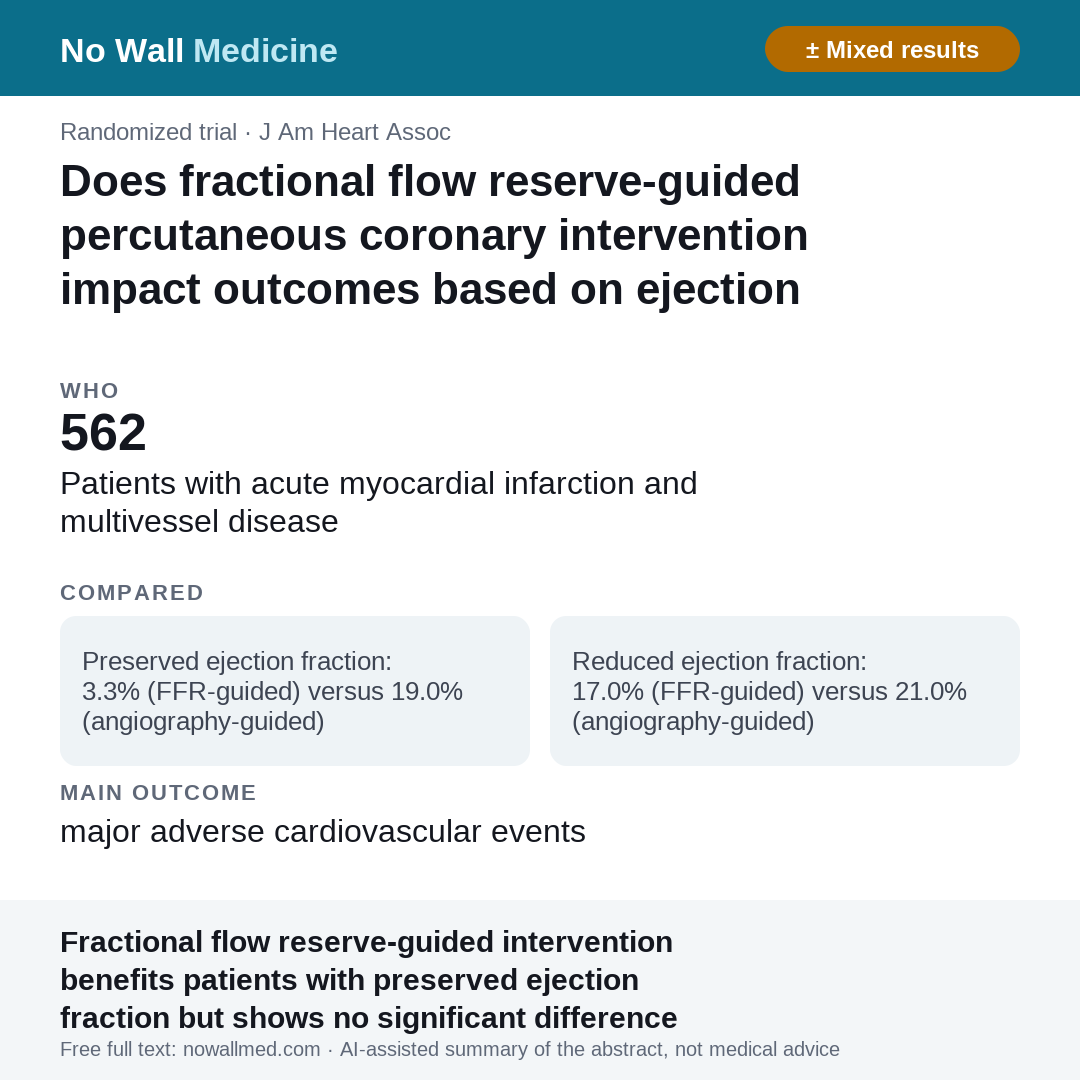
Clinical Relevance of Fractional Flow Reserve-Guided Percutaneous Coronary Interevention According to Left Ventricular Ejection Fraction in Patients With Acute Myocardial Infarction and Multivessel Disease
Randomized trialMixed results
Does fractional flow reserve-guided percutaneous coronary intervention impact outcomes based on ejection fraction?
Who
562
Patients with acute myocardial infarction and multivessel disease
Compared
Preserved ejection fraction: 3.3% (FFR-guided) versus 19.0% (angiography-guided)
Reduced ejection fraction: 17.0% (FFR-guided) versus 21.0% (angiography-guided)
Main outcome
major adverse cardiovascular events
Result: hazard ratio 0.26 (95% CI 0.11-0.66) for preserved ejection fraction
Bottom line: Fractional flow reserve-guided intervention benefits patients with preserved ejection fraction but shows no significant difference in those with reduced ejection fraction.
J Am Heart Assoc · 2025-08-29Download image
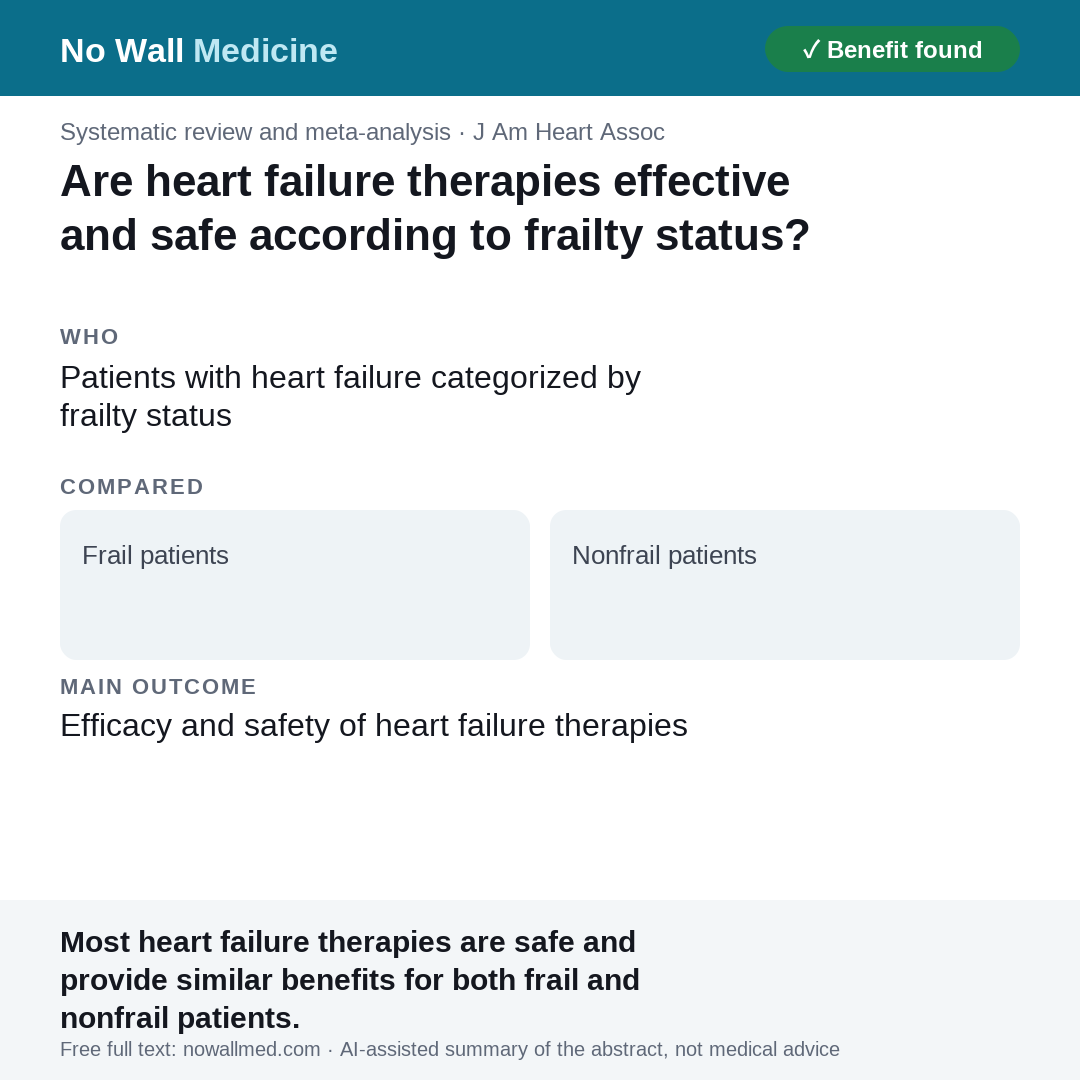
Efficacy and Safety of Heart Failure Treatment According to Frailty Status: A Systematic Review
Systematic review and meta-analysisBenefit found
Are heart failure therapies effective and safe according to frailty status?
Who
Patients with heart failure categorized by frailty status
Compared
Frail patients
Nonfrail patients
Main outcome
Efficacy and safety of heart failure therapies
Bottom line: Most heart failure therapies are safe and provide similar benefits for both frail and nonfrail patients.
J Am Heart Assoc · 2025-08-29Download image
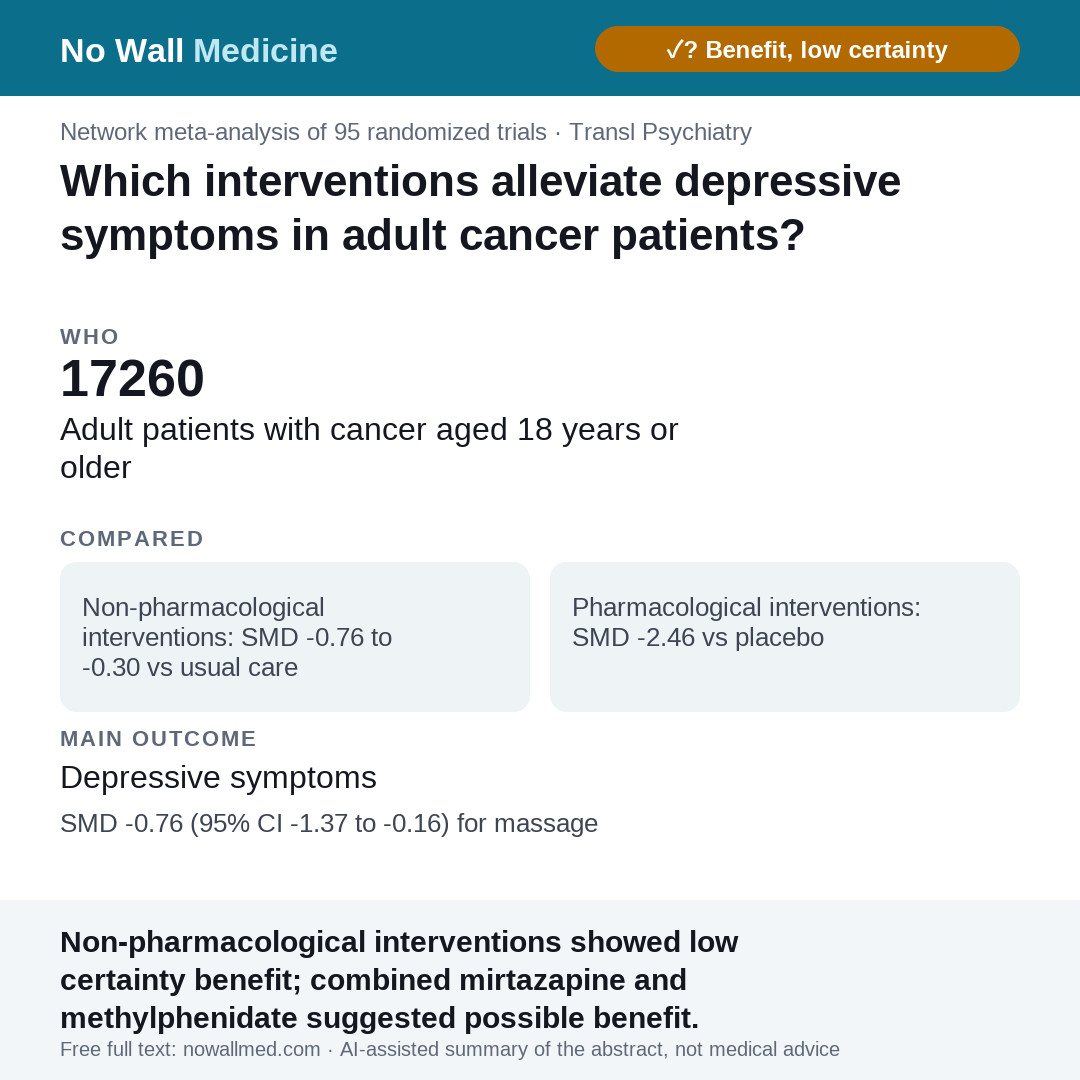
Treatments of depressive symptoms in cancer patients: A systematic review and network meta-analysis
Systematic review and network meta-analysisBenefit found
What are the most effective pharmacological and non-pharmacological interventions for depressive symptoms in cancer patients?
Who
17,260
Adult cancer patients aged 18 years or older
Compared
Massage and touch therapy: SMD -0.76 (95% CI -1.37 to -0.16)
Relaxation therapy: SMD -0.59 (95% CI -1.06 to -0.11)
Psychotherapy: SMD -0.43 (95% CI -0.56 to -0.30)
Mirtazapine and methylphenidate vs placebo: SMD -2.46 (95% CI -4.24 to -0.70)
Main outcome
Alleviation of depressive symptoms
Bottom line: Non-pharmacological interventions and combined mirtazapine and methylphenidate show promise in alleviating depressive symptoms in cancer patients.
Limitation: Overall evidence quality was low, reflecting substantial variability and limited data.
Transl Psychiatry · 2025-08-29Download image
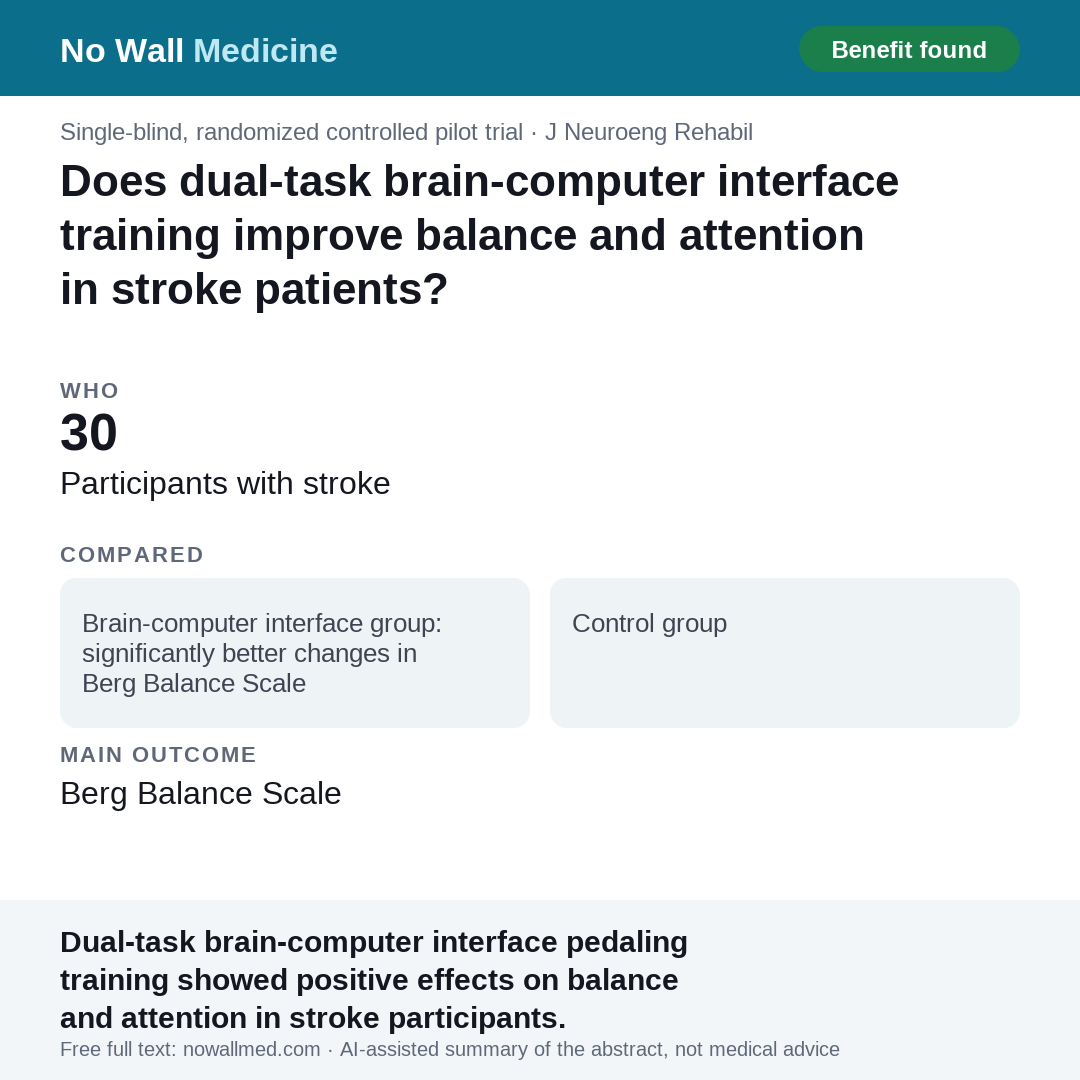
Effects of dual-task mode brain-computer interface based on motor imagery and virtual reality on balance and attention in patients with stroke: a randomized controlled pilot trial
Single-blind, randomized controlled pilot trialBenefit found
Does dual-task brain-computer interface training improve balance and attention in stroke patients?
Who
30
Participants with stroke
Compared
Brain-computer interface group: significantly better changes in Berg Balance Scale
Control group
Main outcome
Berg Balance Scale
Bottom line: Dual-task brain-computer interface pedaling training showed positive effects on balance and attention in stroke participants.
Limitation: The study is a preliminary pilot trial.
J Neuroeng Rehabil · 2025-08-29Download image
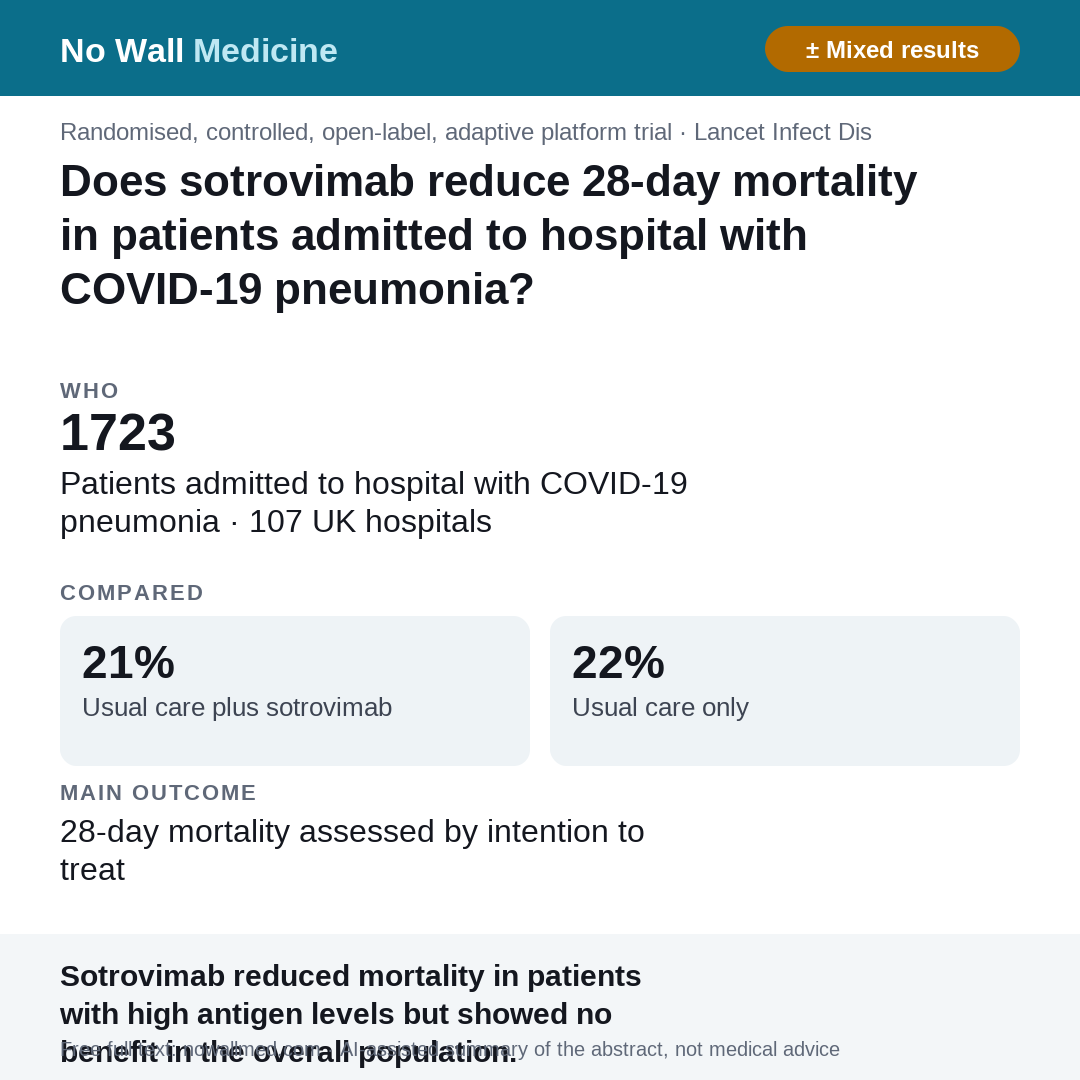
Sotrovimab versus usual care in patients admitted to hospital with COVID-19 (RECOVERY): a randomised, controlled, open-label, platform trial
Randomised, controlled, open-label, adaptive platform trialMixed results
Does sotrovimab reduce 28-day mortality in patients admitted to hospital with COVID-19 pneumonia?
Who
1723
Patients admitted to hospital with COVID-19 pneumonia · 107 UK hospitals
Compared
21%Usual care plus sotrovimab (177/828)
22%Usual care only (201/895)
Main outcome
28-day mortality assessed by intention to treat
Result: 0.95 (95% CI 0.77-1.16)
Bottom line: Sotrovimab reduced mortality in patients with high antigen levels but showed no benefit in the overall population.
Limitation: The emergence of high-level resistance to sotrovimab among subsequent SARS-CoV-2 variants restricts its current usefulness.
Funded by: UK Research and Innovation and National Institute for Health and Care Research
Lancet Infect Dis · 2025-08-28Download image
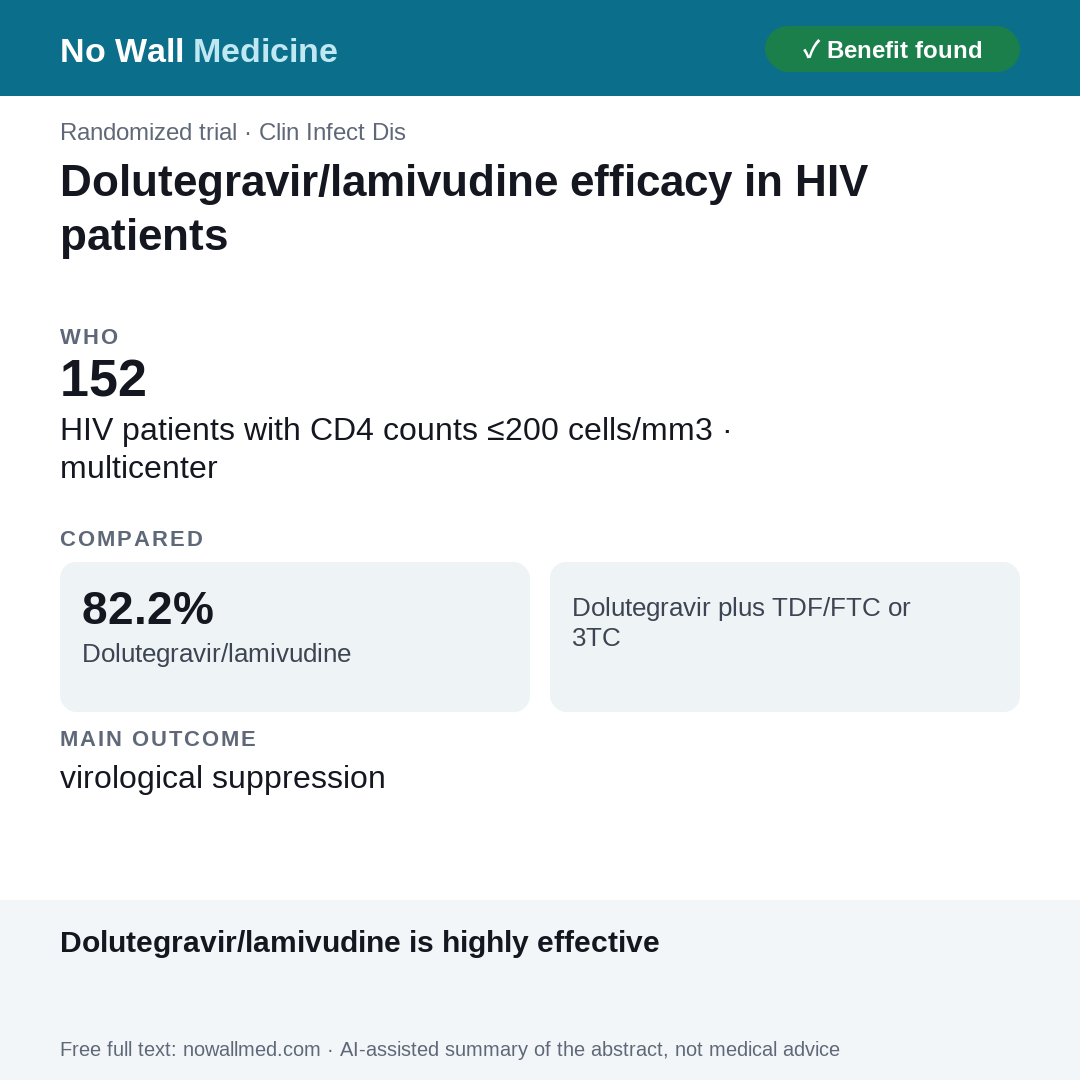
Efficacy and Safety of Dual Therapy With Dolutegravir/Lamivudine in Treatment-naive Persons With CD4 Counts <200/mm3: 48-Week Results of the DOLCE Study
Randomized trialBenefit found
Dolutegravir/lamivudine efficacy in HIV patients
Who
152
HIV patients with CD4 counts ≤200 cells/mm3 · multicenter
Compared
82.2%Dolutegravir/lamivudine (125/152)
Dolutegravir plus TDF/FTC or 3TC
Main outcome
virological suppression
Bottom line: Dolutegravir/lamivudine is highly effective
Clin Infect Dis · 2025-08-28Download image
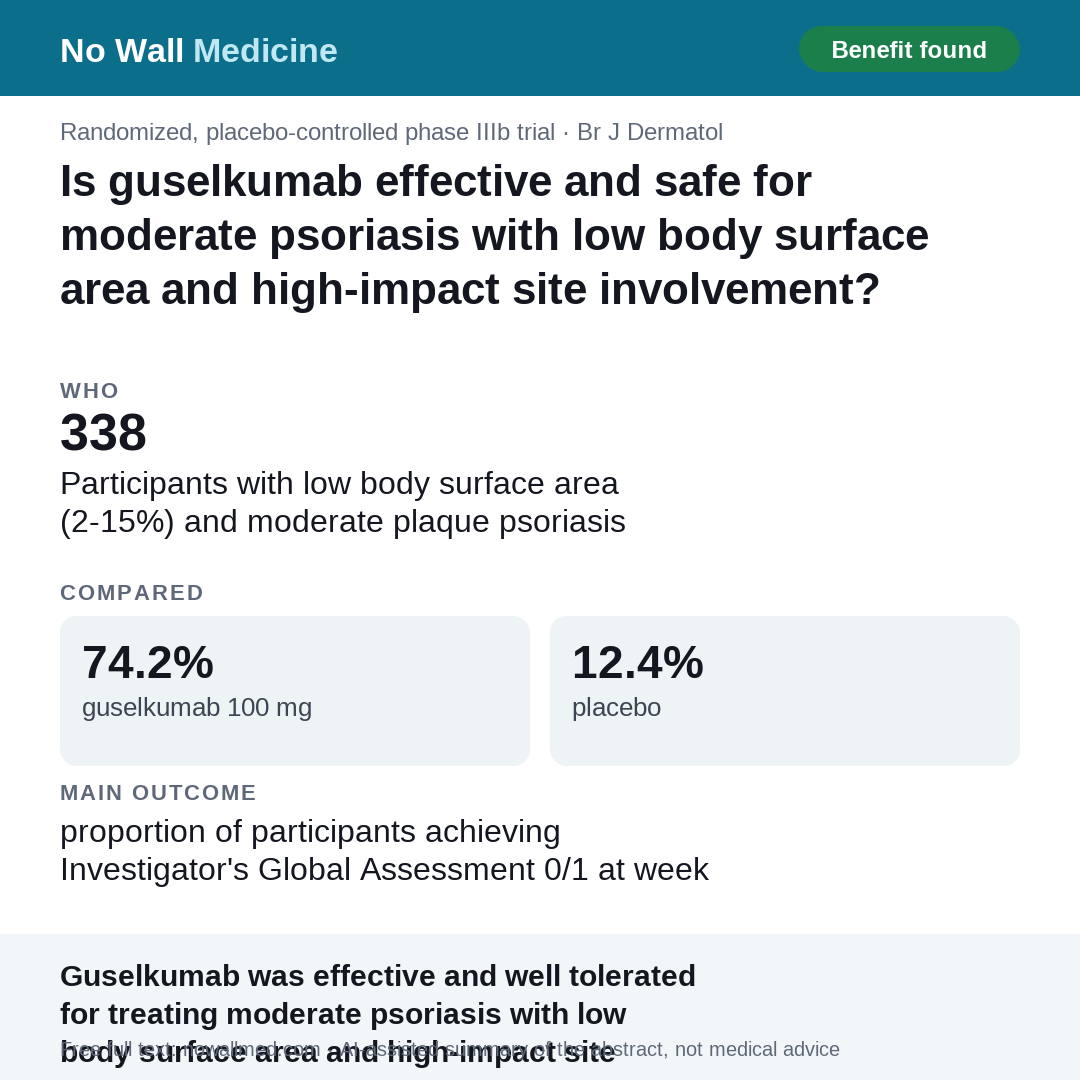
SPECTREM phase IIIb clinical trial results through week 16: guselkumab efficacy and safety for the treatment of low body surface area, moderate psoriasis with high-impact site involvement
Randomized, placebo-controlled phase IIIb trialBenefit found
Is guselkumab effective and safe for moderate psoriasis with low body surface area and high-impact site involvement?
Who
338
Participants with low body surface area (2-15%) and moderate plaque psoriasis
Compared
74.2%guselkumab 100 mg
12.4%placebo
Main outcome
proportion of participants achieving Investigator's Global Assessment 0/1 at week 16
Bottom line: Guselkumab was effective and well tolerated for treating moderate psoriasis with low body surface area and high-impact site involvement.
Br J Dermatol · 2025-08-28Download image
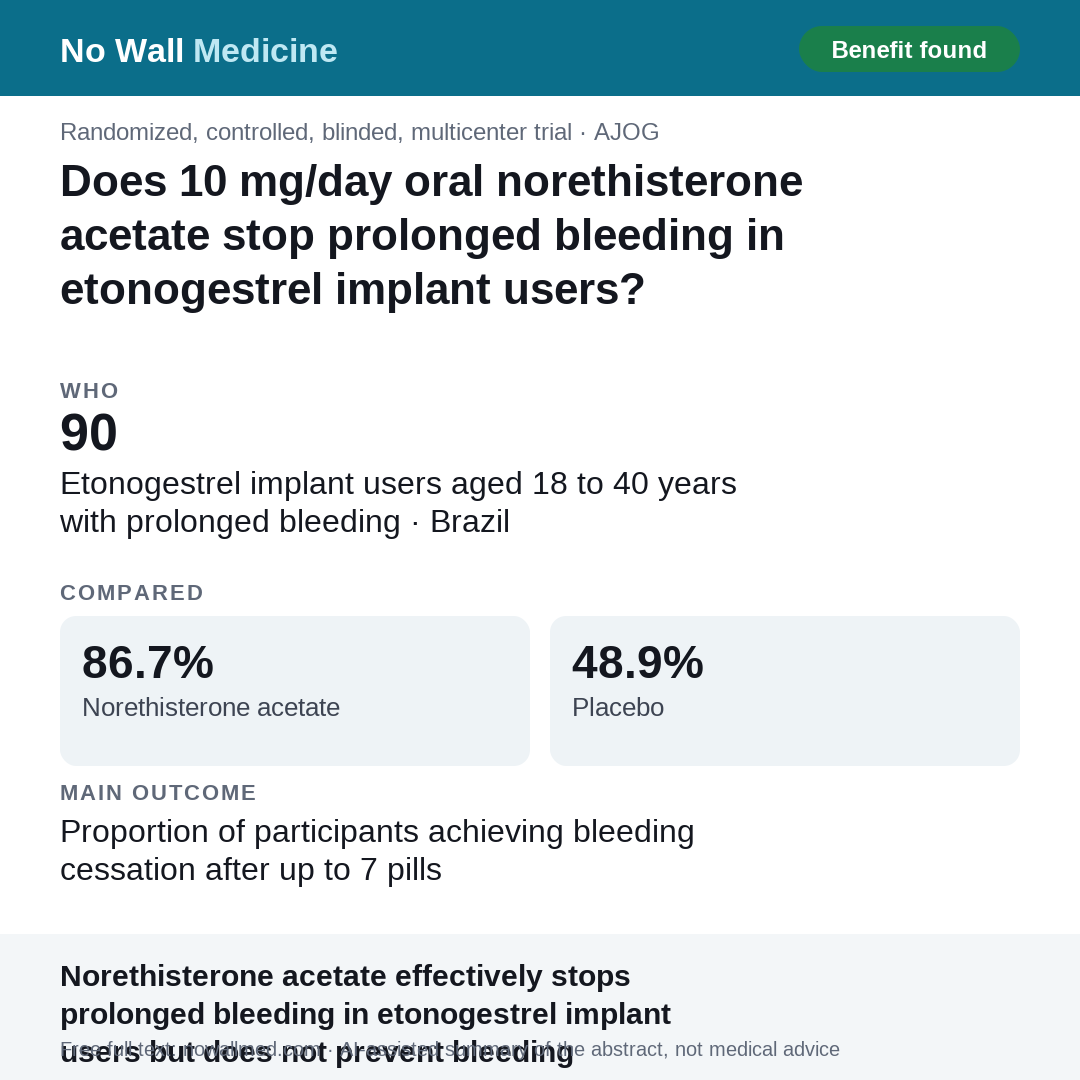
Norethisterone for prolonged uterine bleeding associated with etonogestrel implant (IMPLANET): a randomized controlled trial
Randomized, controlled, blinded, multicenter trialBenefit found
Does 10 mg/day oral norethisterone acetate stop prolonged bleeding in etonogestrel implant users?
Who
90
Etonogestrel implant users aged 18 to 40 years with prolonged bleeding · Brazil
Compared
86.7%Norethisterone acetate
48.9%Placebo
Main outcome
Proportion of participants achieving bleeding cessation after up to 7 pills
Result: adjusted risk difference, 35.6% (95% confidence interval, 17.1%-54.0%)
Bottom line: Norethisterone acetate effectively stops prolonged bleeding in etonogestrel implant users but does not prevent bleeding recurrence.
AJOG · 2025-08-28Download image