Visual abstracts
New randomized trials and meta-analyses from leading journals at a glance: who was studied, what was compared, and what was found. Every paper is free to read in full.
All specialtiesCardiology 4877Oncology 4138Gastroenterology & Hepatology 1942Infectious Disease 3837Neurology 1905Psychiatry & Mental Health 2273Pulmonology 2143Critical Care 1365Endocrinology & Diabetes 2580Pediatrics 2980Surgery 2559Orthopedics & Sports Medicine 931Neurosurgery 537Cardiothoracic & Vascular Surgery 674Plastic & Reconstructive Surgery 591Nephrology 1133Rheumatology 823Hematology 1109Dermatology 621Ophthalmology 543Obstetrics & Gynecology 1686Public & Global Health 1058Radiology & Imaging 648Anesthesiology 986Urology 764ENT (Otolaryngology) 503Emergency Medicine 511Allergy & Immunology 313Geriatrics 981Family Medicine & Primary Care 562Medical Genetics & Genomics 676Pathology & Laboratory Medicine 159Physical Medicine & Rehabilitation 757Palliative Care 444Nutrition 1588Digital Health & AI 2201General Medicine 321
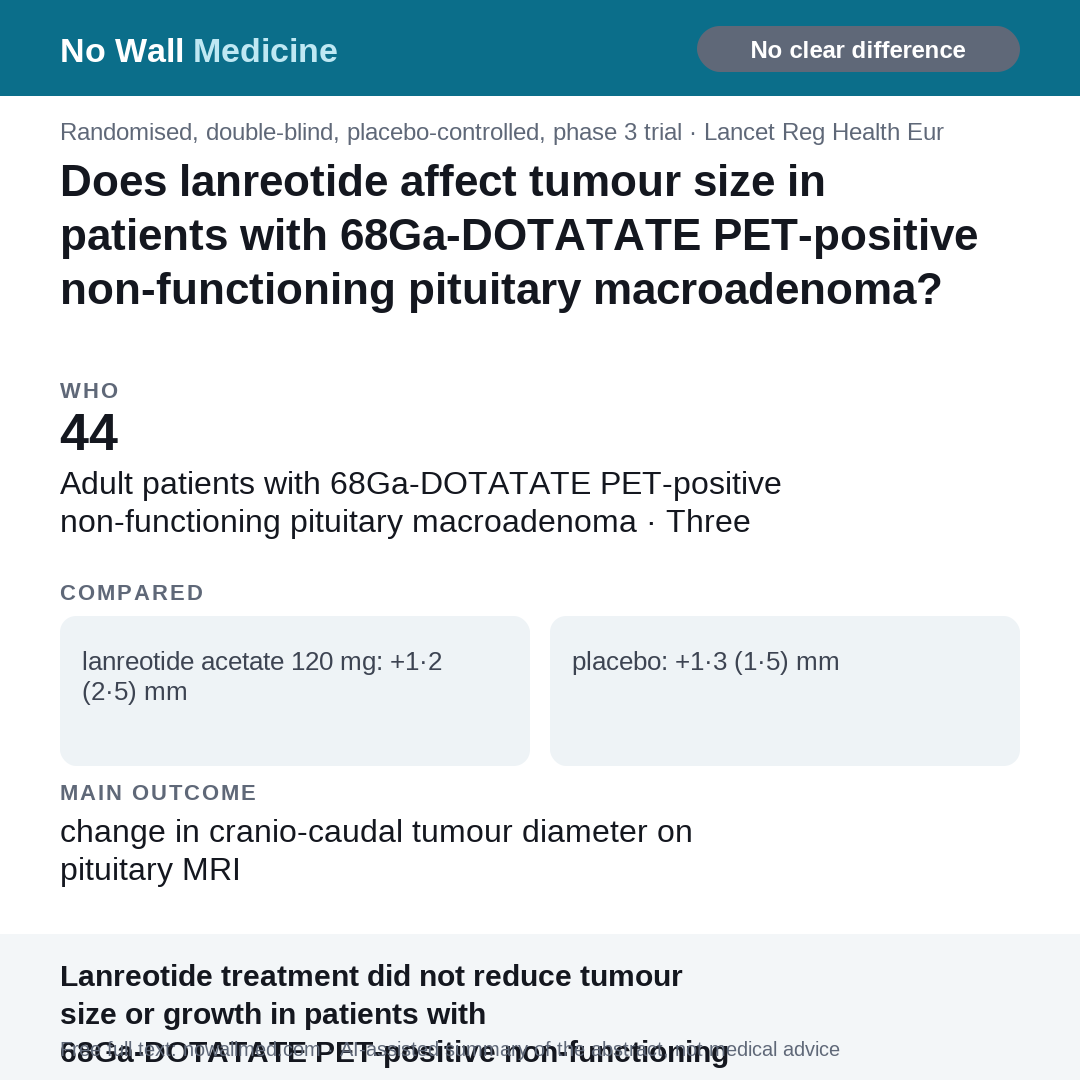
Lanreotide versus placebo for tumour reduction in patients with a 68Ga-DOTATATE PET-positive, clinically non-functioning pituitary macroadenoma (GALANT study): a randomised, multicentre, phase 3 trial with blinded outcome assessment
Randomised, double-blind, placebo-controlled, phase 3 trialNo clear difference
Does lanreotide affect tumour size in patients with 68Ga-DOTATATE PET-positive non-functioning pituitary macroadenoma?
Who
44
Adult patients with 68Ga-DOTATATE PET-positive non-functioning pituitary macroadenoma · Three academic hospitals in the Netherlands
Compared
lanreotide acetate 120 mg: +1·2 (2·5) mm
placebo: +1·3 (1·5) mm
Main outcome
change in cranio-caudal tumour diameter on pituitary MRI
Result: adjusted mean difference -0·1 mm (95% CI -1·3 to 1·2)
Bottom line: Lanreotide treatment did not reduce tumour size or growth in patients with 68Ga-DOTATATE PET-positive non-functioning pituitary macroadenoma.
Funded by: Ipsen Farmaceutica BV
Lancet Reg Health Eur · 2024-05-13Download image
Cost-effectiveness of the children and young People's health partnership (CYPHP) model of integrated care versus enhanced usual care: analysis of a pragmatic cluster randomised controlled trial in South London
Pragmatic cluster randomised controlled trialMixed results
Is the Children and Young People's Health Partnership model cost-effective for common chronic conditions?
Who
1731
Children with asthma, eczema, and or constipation · 70 general practices in South London
Compared
Children and Young People's Health Partnership
Enhanced usual care
Main outcome
Cost-effectiveness, cost-utility and cost-benefit analyses
Bottom line: The model was not cost-effective from the health service perspective but showed cost-effectiveness under a societal perspective.
Limitation: Further research beyond 12 months is needed as the model becomes embedded.
Funded by: Guy's and St Thomas' Charity, Lambeth and Southwark Clinical Commissioning Groups
Lancet Reg Health Eur · 2024-05-13Download image

Antimicrobial resistance among common bacterial pathogens in Indonesia: a systematic review
Systematic reviewMixed results
What are the antimicrobial resistance patterns among common bacterial pathogens in Indonesia?
Who
19517
19,517 bacterial isolates from hospitals and communities · Indonesia
Compared
Hospital isolates: 70.7% Acinetobacter baumannii carbapenem-resistant
Community isolates: 28.3% Klebsiella pneumoniae carbapenem-resistant
Main outcome
Antimicrobial resistance prevalence estimates
Bottom line: Antimicrobial resistance prevalence estimates were high for critical gram-negative bacteria, but data were insufficient for robust conclusions.
Limitation: Data were insufficient to draw robust conclusions about the full contemporary antimicrobial resistance situation.
Funded by: Wellcome Africa Asia Programme Vietnam
Lancet Reg Health Southeast Asia · 2024-05-13Download image

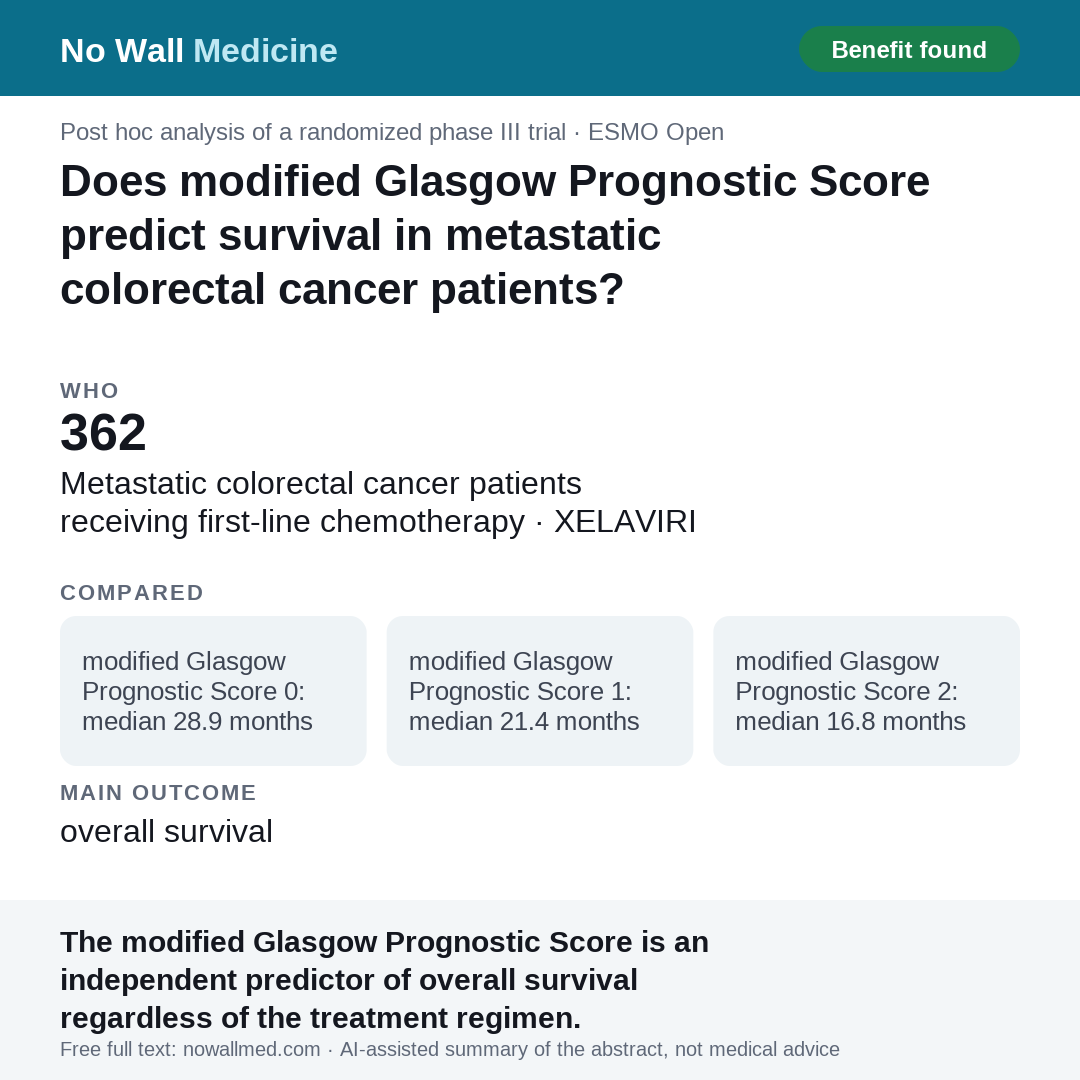
Evaluation of the inflammation-based modified Glasgow Prognostic Score (mGPS) as a prognostic and predictive biomarker in patients with metastatic colorectal cancer receiving first-line chemotherapy: a post hoc analysis of the randomized phase III XELAVIRI trial (AIO KRK0110)
Post hoc analysis of a randomized phase III trialBenefit found
Does modified Glasgow Prognostic Score predict survival in metastatic colorectal cancer patients?
Who
362
Metastatic colorectal cancer patients receiving first-line chemotherapy · XELAVIRI trial
Compared
modified Glasgow Prognostic Score 0: median 28.9 months
modified Glasgow Prognostic Score 1: median 21.4 months
modified Glasgow Prognostic Score 2: median 16.8 months
Main outcome
overall survival
Bottom line: The modified Glasgow Prognostic Score is an independent predictor of overall survival regardless of the treatment regimen.
ESMO Open · 2024-05-13Download image
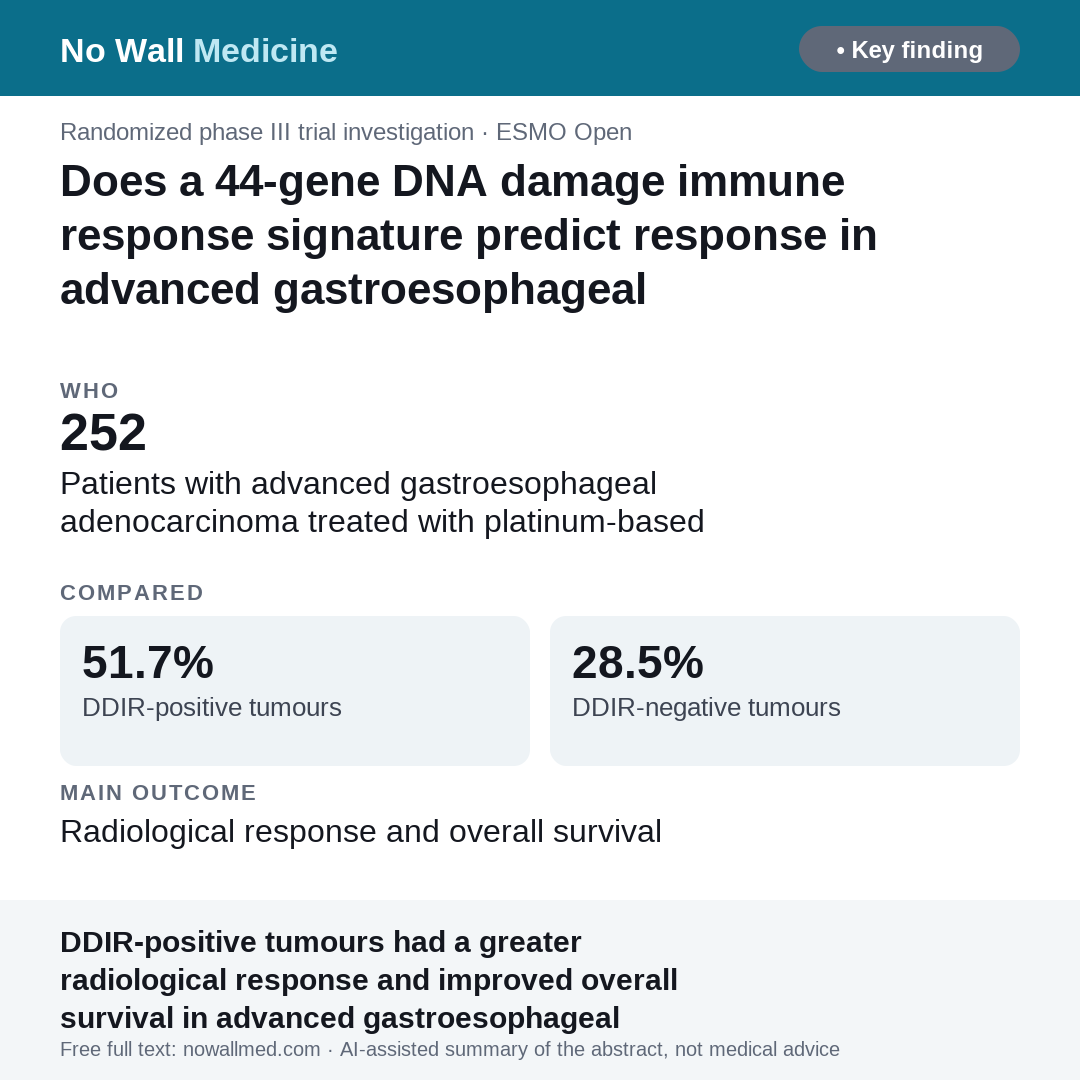
An investigation of the clinical impact and therapeutic relevance of a DNA damage immune response (DDIR) signature in patients with advanced gastroesophageal adenocarcinoma
Randomized phase III trial investigationBenefit found
Does a 44-gene DNA damage immune response signature predict response in advanced gastroesophageal adenocarcinoma?
Who
252
Patients with advanced gastroesophageal adenocarcinoma treated with platinum-based chemotherapy · GO2 trial
Compared
51.7%DDIR-positive tumours
28.5%DDIR-negative tumours
Main outcome
Radiological response and overall survival
Bottom line: DDIR-positive tumours had a greater radiological response and improved overall survival in advanced gastroesophageal adenocarcinoma.
ESMO Open · 2024-05-13Download image
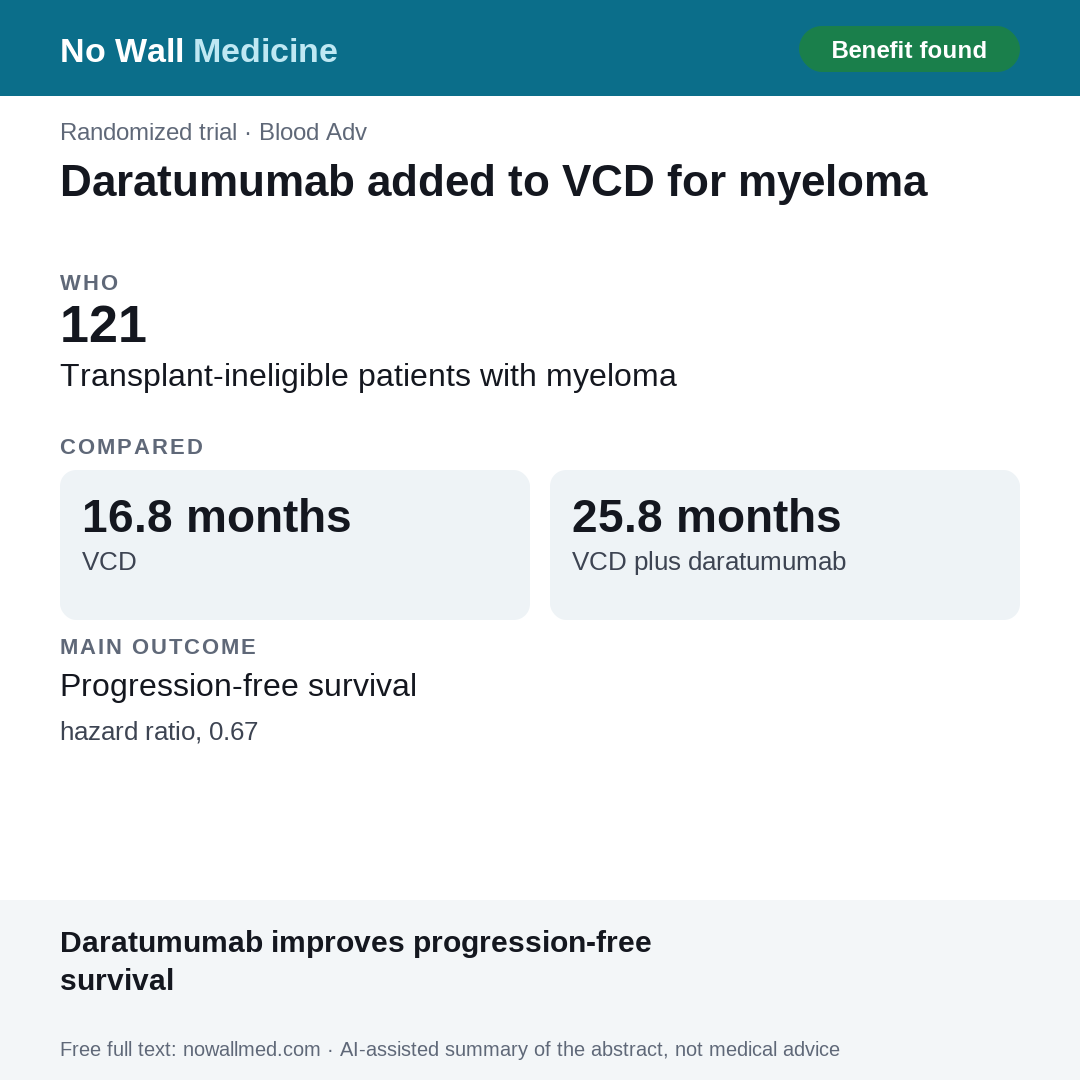
Daratumumab, cyclophosphamide, bortezomib, and dexamethasone for transplant-ineligible myeloma: AMaRC 03-16
Randomized trialBenefit found
Daratumumab added to VCD for myeloma
Who
121
Transplant-ineligible patients with myeloma
Compared
16.8 monthsVCD
25.8 monthsVCD plus daratumumab
Main outcome
Progression-free survival
Result: hazard ratio, 0.67
Bottom line: Daratumumab improves progression-free survival
Blood Adv · 2024-05-13Download image
Spatio-temporal dynamics of the human small intestinal microbiome and its response to a synbiotic
Randomized trialMixed results
How do the small intestinal microbiome and its response to a synbiotic change?
Who
20
20 healthy subjects
Compared
Synbiotic supplementation
Placebo control
Main outcome
Small intestinal microbial composition and metabolome
Bottom line: Synbiotic supplementation caused a transient spike in specific genera abundance in the small intestine.
Gut Microbes · 2024-05-13Download image

Effect of Adding Personalized Instant Messaging Apps to a Brief Smoking Cessation Model in Community Smokers in Hong Kong: Pragmatic Randomized Clinical Trial
Pragmatic randomized clinical trialNo clear difference
Does adding personalized instant messaging apps to brief smoking cessation advice improve smoking abstinence?
Who
700
Adult Chinese daily cigarette users · Hong Kong
Compared
Brief advice plus instant messaging apps: 5.4% (19/350) at 12 months
Brief advice plus SMS text messages: 6.0% (21/350) at 12 months
Main outcome
Smoking abstinence validated by carbon monoxide levels
Bottom line: Adding personalized instant messaging apps did not increase smoking abstinence rates but did encourage more use of cessation services.
J Med Internet Res · 2024-05-13Download image

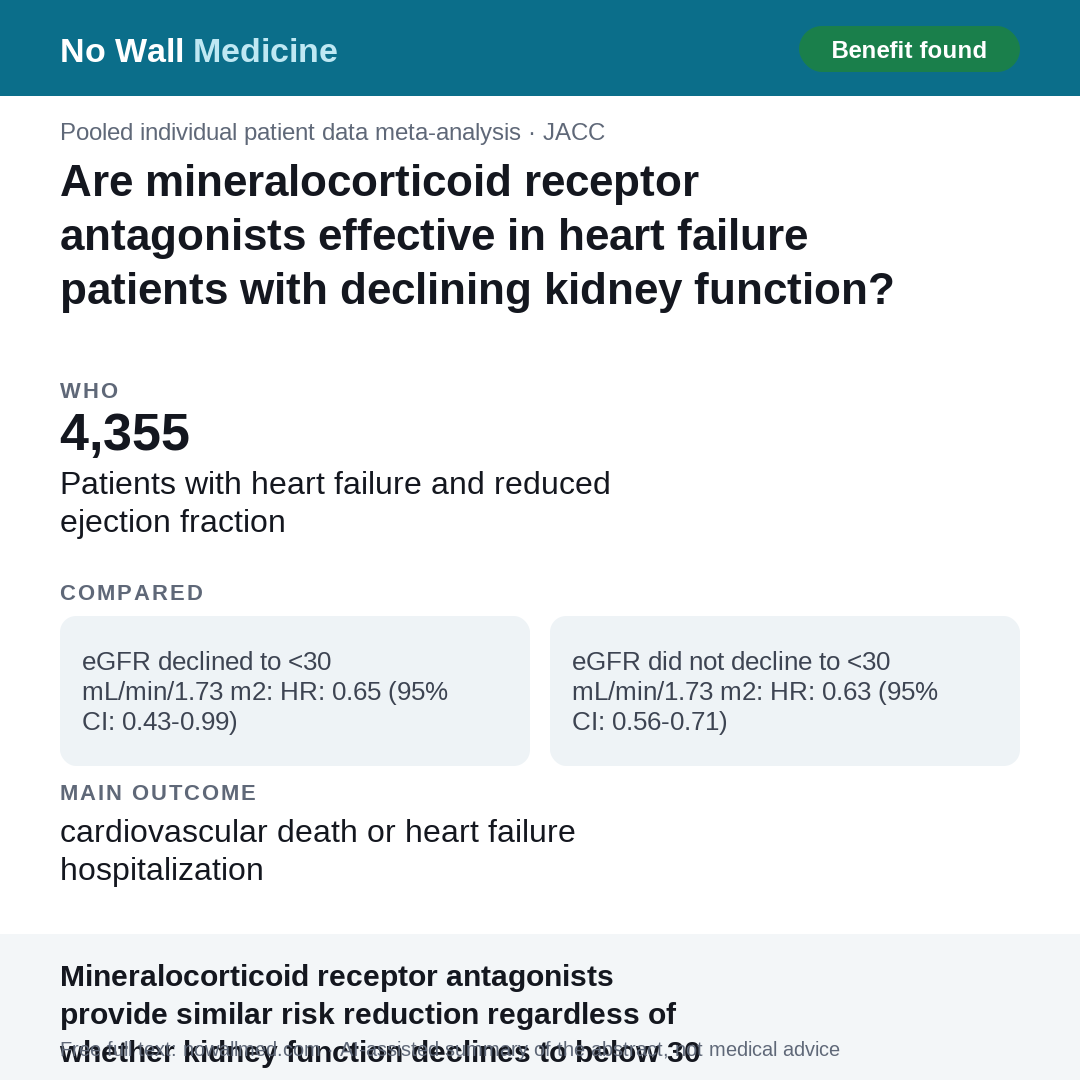
Mineralocorticoid Receptor Antagonists in Patients With Heart Failure and Impaired Renal Function
Pooled individual patient data meta-analysisBenefit found
Are mineralocorticoid receptor antagonists effective in heart failure patients with declining kidney function?
Who
4,355
Patients with heart failure and reduced ejection fraction
Compared
eGFR declined to <30 mL/min/1.73 m2: HR: 0.65 (95% CI: 0.43-0.99)
eGFR did not decline to <30 mL/min/1.73 m2: HR: 0.63 (95% CI: 0.56-0.71)
Main outcome
cardiovascular death or heart failure hospitalization
Result: HR: 0.65 (95% CI: 0.43-0.99) vs HR: 0.63 (95% CI: 0.56-0.71)
Bottom line: Mineralocorticoid receptor antagonists provide similar risk reduction regardless of whether kidney function declines to below 30 mL/min/1.73 m2.
JACC · 2024-05-12Download image
Renal function and natriuresis-guided diuretic therapy - a pre-specified analysis from the PUSH-AHF trial
Randomized controlled trialBenefit found
Does natriuresis-guided diuretic therapy affect renal function and clinical outcomes in acute heart failure?
Who
309
Patients with acute heart failure
Compared
Natriuresis-guided diuretic therapy: -11.0 ml/min/1.73 m2
Standard of care: -6.91 ml/min/1.73 m2
Main outcome
Total natriuresis at 24 hours and mortality or heart failure rehospitalization
Bottom line: Natriuresis-guided therapy improved diuresis and was effective even in patients with low estimated glomerular filtration rate.
Eur J Heart Fail · 2024-05-12Download image

Titration of Medications After Acute Heart Failure Is Safe, Tolerated, and Effective Regardless of Risk
Randomized trialBenefit found
Is high-intensity care effective regardless of heart failure risk profile?
Who
1078
Patients with acute heart failure
Compared
High-intensity care
Usual care
Main outcome
Composite of all-cause death or first heart failure rehospitalization
Result: hazard ratio 0.66 (95% CI 0.50-0.86)
Bottom line: High-intensity care led to better medication use and lower morbidity and mortality regardless of heart failure risk profile.
JACC Heart Fail · 2024-05-12Download image

Pulmonary artery pressure monitoring in chronic heart failure: effects across clinically relevant subgroups in the MONITOR-HF trial
Subgroup analysis of a randomized trialBenefit found
Are benefits of pulmonary artery guided therapy consistent across chronic heart failure subgroups?
Who
Patients with chronic heart failure
Compared
Pulmonary artery guided therapy
Standard of care
Main outcome
Quality of life, clinical events, and pulmonary artery pressure
Bottom line: Pulmonary artery guided therapy provides consistent benefits across various clinical subgroups in chronic heart failure patients.
Eur Heart J · 2024-05-11Download image

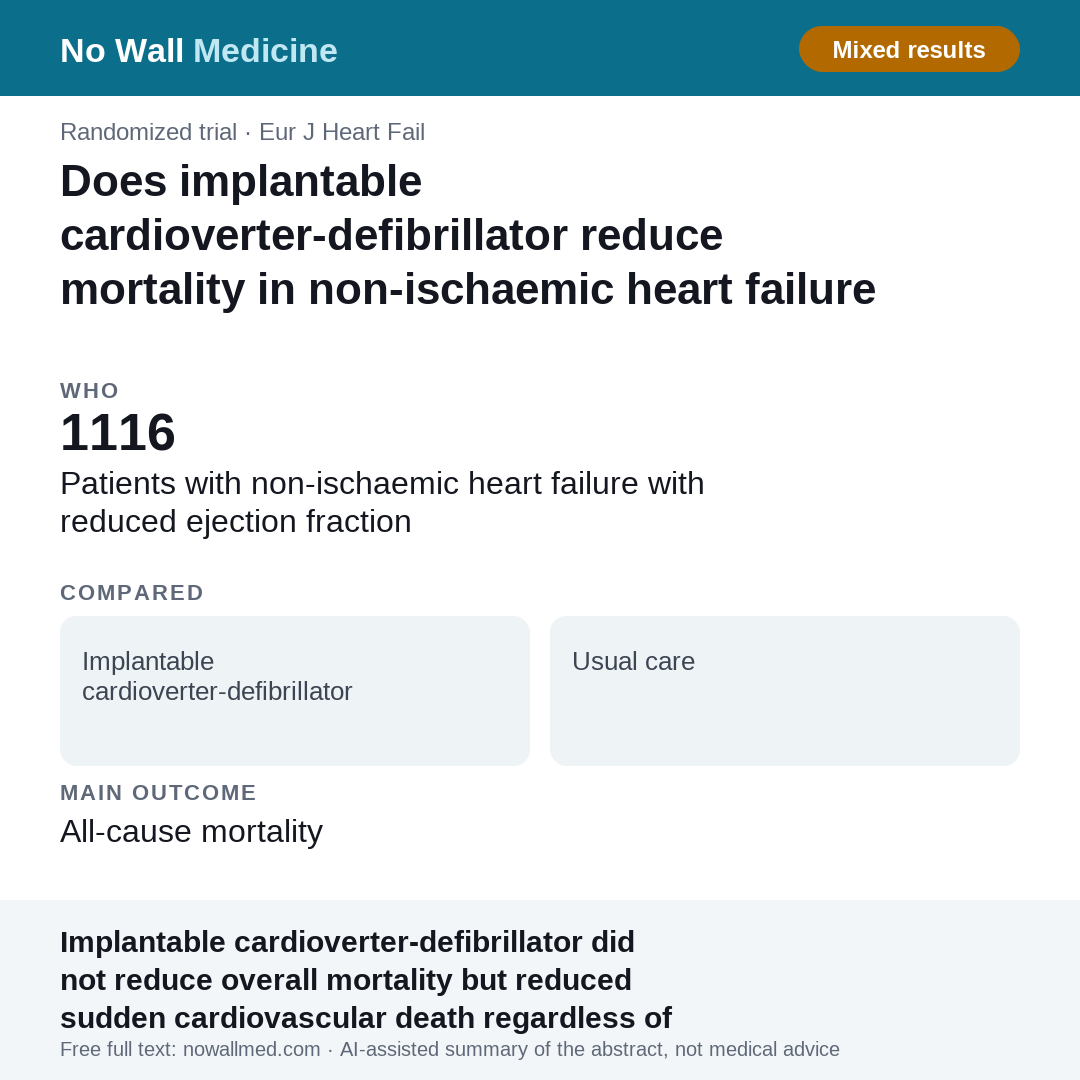
New York Heart Association functional class and implantable cardioverter-defibrillator in non-ischaemic heart failure with reduced ejection fraction: Extended follow-up of the DANISH trial
Randomized trialMixed results
Does implantable cardioverter-defibrillator reduce mortality in non-ischaemic heart failure by New York Heart Association class?
Who
1116
Patients with non-ischaemic heart failure with reduced ejection fraction
Compared
Implantable cardioverter-defibrillator
Usual care
Main outcome
All-cause mortality
Result: hazard ratio 0.89 (95% CI 0.74-1.08)
Bottom line: Implantable cardioverter-defibrillator did not reduce overall mortality but reduced sudden cardiovascular death regardless of baseline class.
Eur J Heart Fail · 2024-05-11Download image
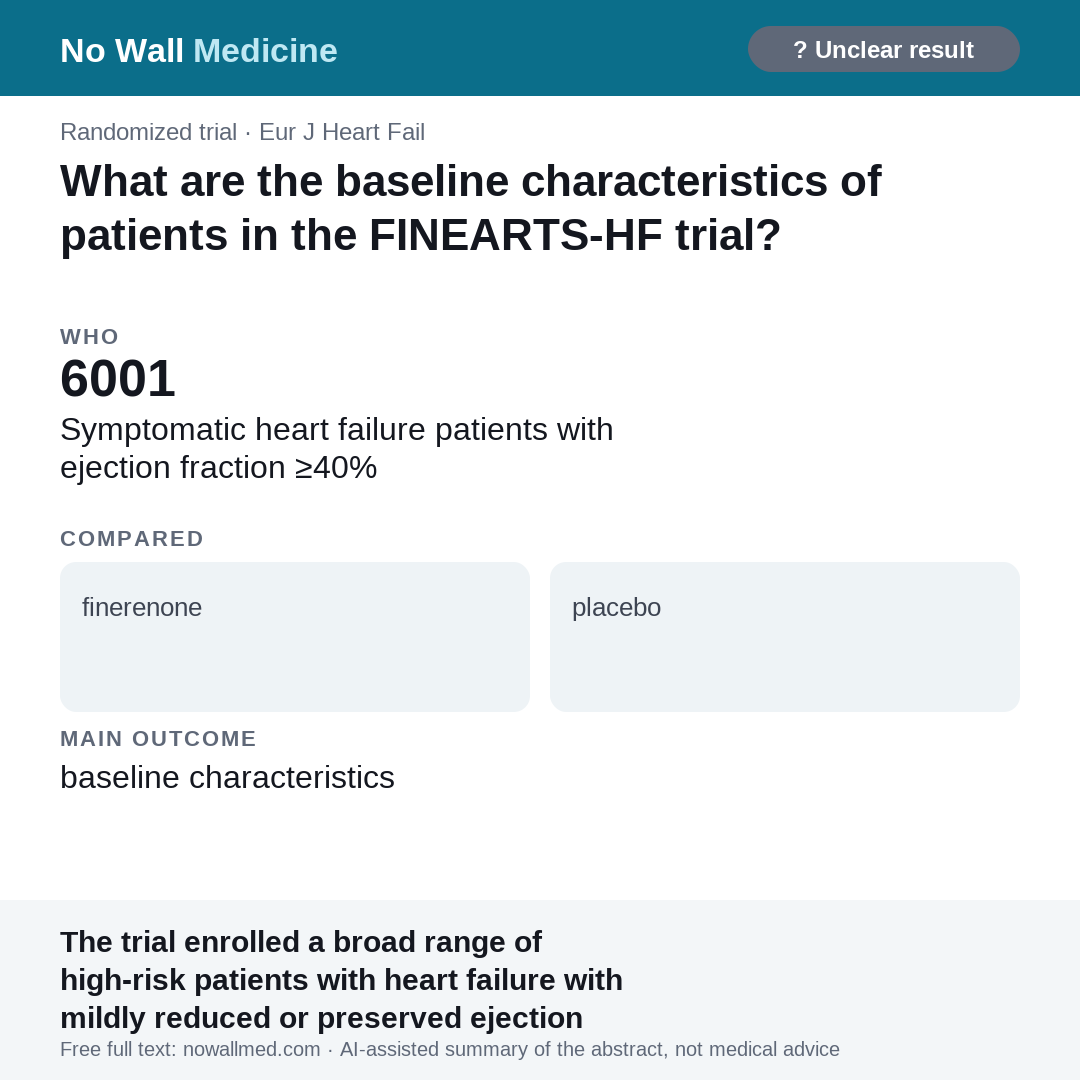
Baseline characteristics of patients with heart failure with mildly reduced or preserved ejection fraction: The FINEARTS-HF trial
Randomized trialUnclear result
What are the baseline characteristics of patients in the FINEARTS-HF trial?
Who
6001
Symptomatic heart failure patients with ejection fraction ≥40%
Compared
finerenone
placebo
Main outcome
baseline characteristics
Bottom line: The trial enrolled a broad range of high-risk patients with heart failure with mildly reduced or preserved ejection fraction.
Limitation: The trial will determine the safety and efficacy in this population.
Eur J Heart Fail · 2024-05-11Download image
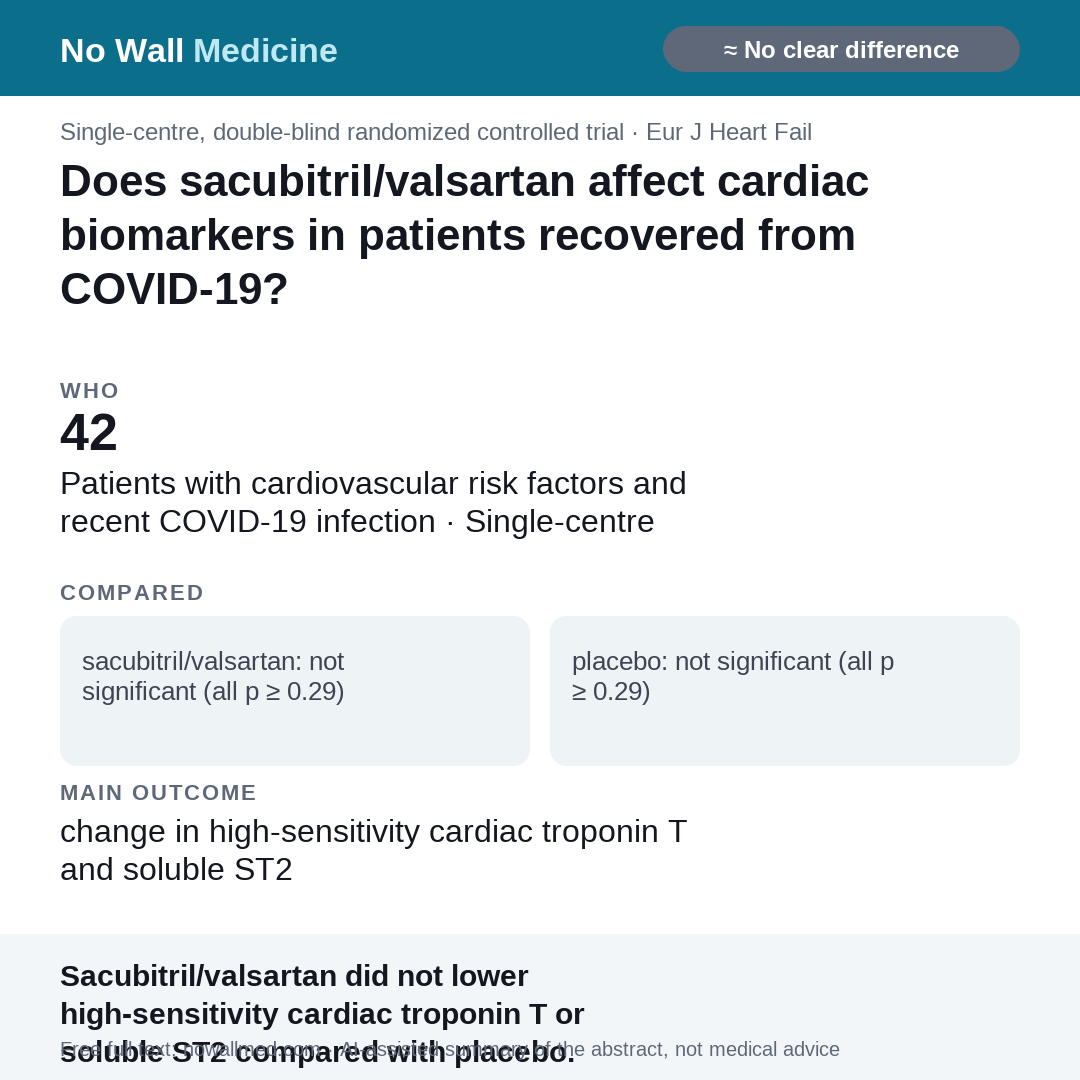
Sacubitril/valsartan and cardiovascular biomarkers among patients with recent COVID-19 infection: The PARACOR-19 randomized clinical trial
Single-centre, double-blind randomized controlled trialNo clear difference
Does sacubitril/valsartan affect cardiac biomarkers in patients recovered from COVID-19?
Who
42
Patients with cardiovascular risk factors and recent COVID-19 infection · Single-centre
Compared
sacubitril/valsartan: not significant (all p ≥ 0.29)
placebo: not significant (all p ≥ 0.29)
Main outcome
change in high-sensitivity cardiac troponin T and soluble ST2
Bottom line: Sacubitril/valsartan did not lower high-sensitivity cardiac troponin T or soluble ST2 compared with placebo.
Eur J Heart Fail · 2024-05-11Download image
Diuresis Efficacy in Ambulatory Congested Heart Failure Patients: Intrapatient Comparison of 3 Diuretic Regimens (DEA-HF)
Prospective, randomized, open-label, crossover studyMixed results
Which diuretic regimen is most effective for sodium excretion in ambulatory heart failure patients?
Who
42
New York Heart Association functional class II to IV chronic heart failure patients · Ambulatory day-care unit
Compared
Intravenous furosemide 250 mg: 3,835 mg (95% CI: 3,279-4,392 mg)
Intravenous furosemide plus oral metolazone: 4,691 mg (95% CI: 4,153-5,229 mg)
Intravenous furosemide plus intravenous acetazolamide: 3,584 mg (95% CI: 3,020-4,148 mg)
Main outcome
Total sodium excretion
Bottom line: Furosemide plus metolazone provided the highest sodium excretion but significantly increased the incidence of worsening renal function.
JACC Heart Fail · 2024-05-11Download image

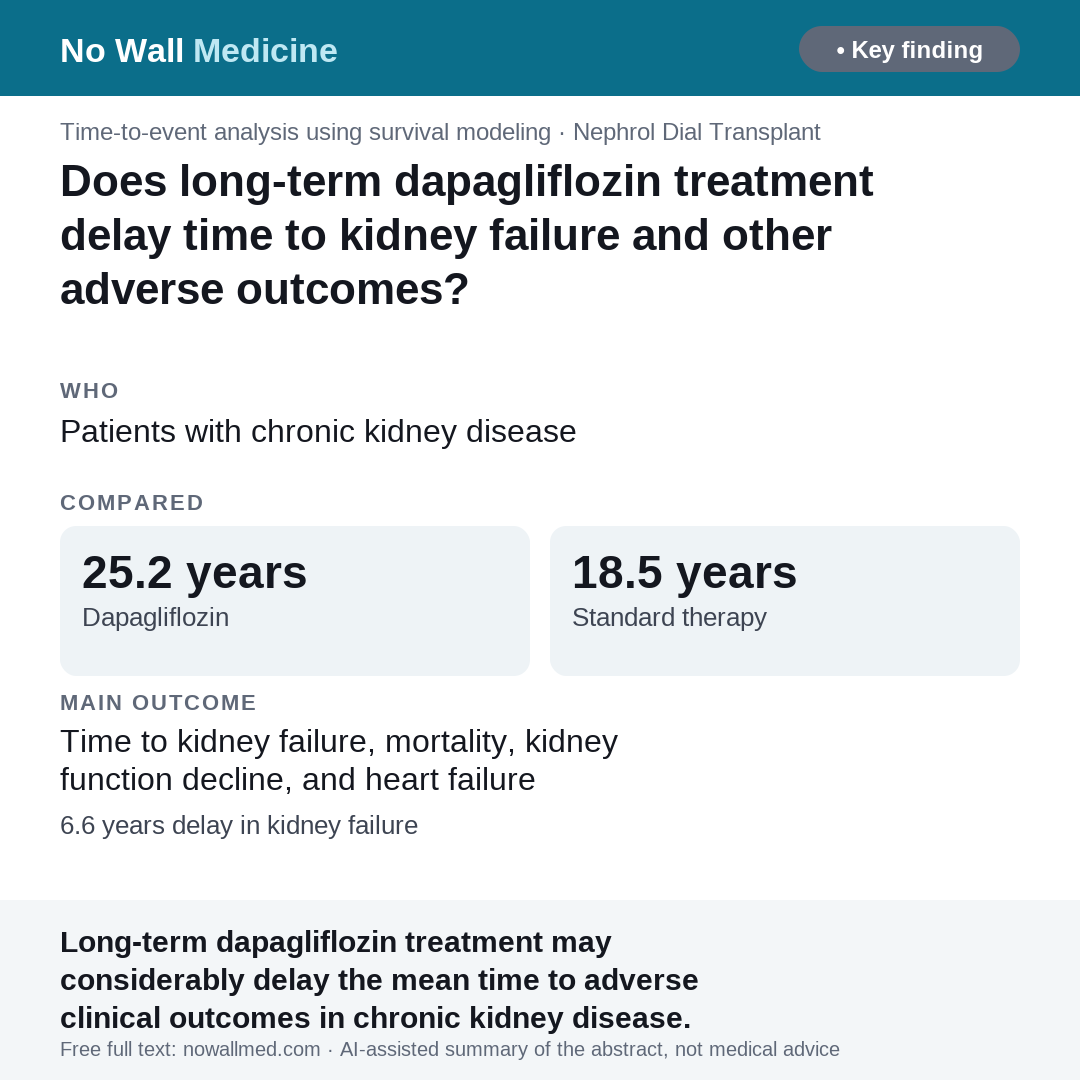
The long-term effects of dapagliflozin in chronic kidney disease: a time-to-event analysis
Time-to-event analysis using survival modelingBenefit found
Does long-term dapagliflozin treatment delay time to kidney failure and other adverse outcomes?
Who
Patients with chronic kidney disease
Compared
25.2 yearsDapagliflozin (95% CI 19.0-31.5)
18.5 yearsStandard therapy (95% CI 14.7-23.4)
Main outcome
Time to kidney failure, mortality, kidney function decline, and heart failure hospitalization
Result: 6.6 years delay in kidney failure
Bottom line: Long-term dapagliflozin treatment may considerably delay the mean time to adverse clinical outcomes in chronic kidney disease.
Nephrol Dial Transplant · 2024-05-11Download image
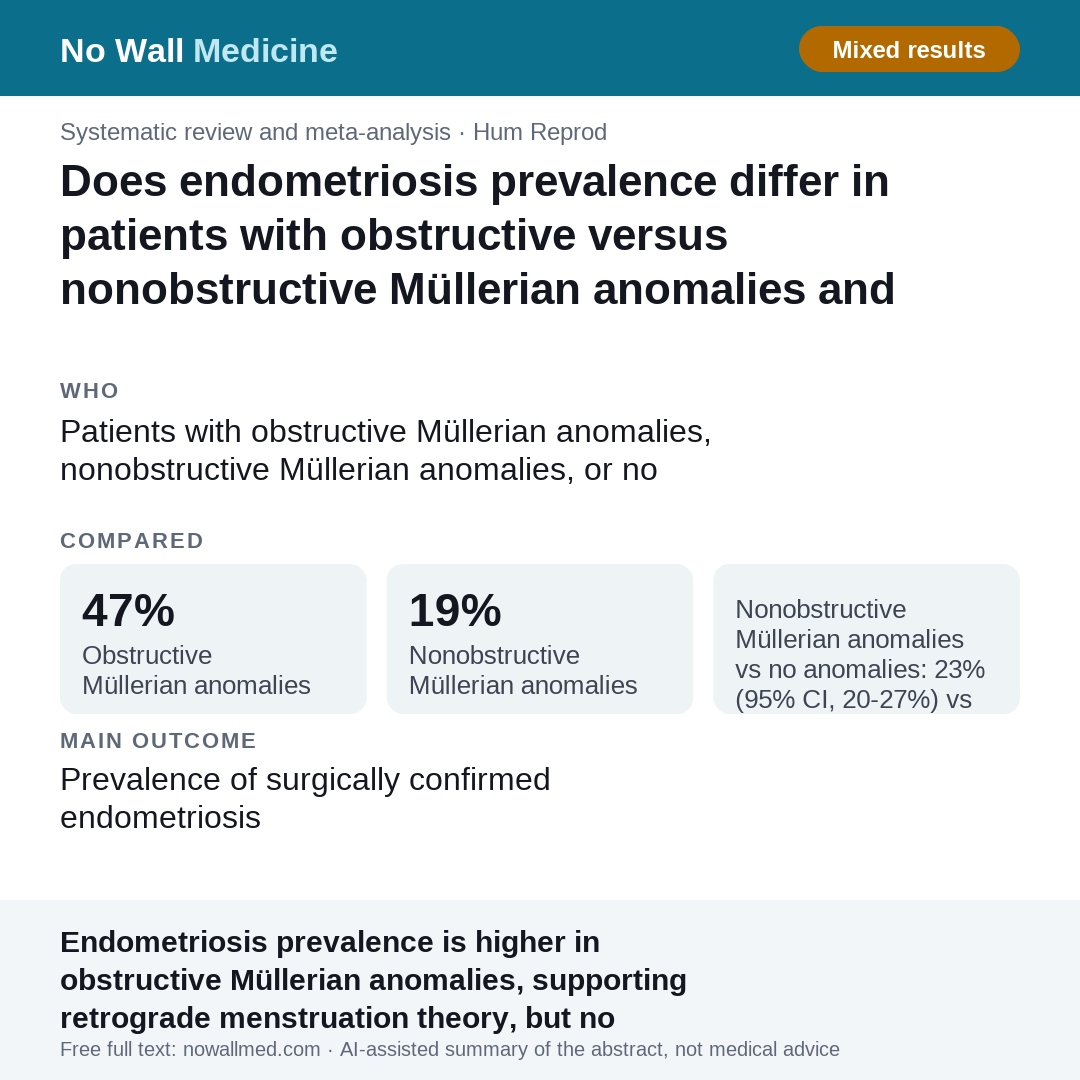
Müllerian anomalies and endometriosis as potential explanatory models for the retrograde menstruation/implantation and the embryonic remnants/celomic metaplasia pathogenic theories: a systematic review and meta-analysis
Systematic review and meta-analysisMixed results
Does endometriosis prevalence differ in patients with obstructive versus nonobstructive Müllerian anomalies and without anomalies?
Who
Patients with obstructive Müllerian anomalies, nonobstructive Müllerian anomalies, or no anomalies
Compared
47%Obstructive Müllerian anomalies (95% CI, 36-58%)
19%Nonobstructive Müllerian anomalies (95% CI, 15-24%)
Nonobstructive Müllerian anomalies vs no anomalies: 23% (95% CI, 20-27%) vs 21% (95% CI, 20-22%)
Main outcome
Prevalence of surgically confirmed endometriosis
Result: OR 4.72 (95% CI, 2.54-8.77) for OMA vs NOMA; OR 0.95 (95% CI, 0.57-1.58) for NOMA vs no anomalies
Bottom line: Endometriosis prevalence is higher in obstructive Müllerian anomalies, supporting retrograde menstruation theory, but no difference was found between nonobstructive and no anomalies.
Limitation: Low certainty of evidence and potential confounding by indication or NOMA subtypes affecting menstrual efflux.
Hum Reprod · 2024-05-11Download image
Systematic Review and Meta-analysis of the Impact of Surgeon-Physician Co-management Models on Short Term Outcomes for Vascular Surgery Inpatients
Systematic review and meta-analysisBenefit found
Does surgeon-physician co-management impact short term outcomes for vascular surgery inpatients?
Who
7410
Adult vascular surgery inpatients
Compared
Co-management
Standard of care
Main outcome
morbidity and mortality rates
Result: relative risk of death 0.64 (95% CI 0.44 - 0.92)
Bottom line: Co-management was associated with lower death, cardiac, and infective complications in vascular inpatients.
Limitation: Observational studies with high to moderate risk of bias and very low certainty of evidence.
Eur J Vasc Endovasc Surg · 2024-05-11Download image

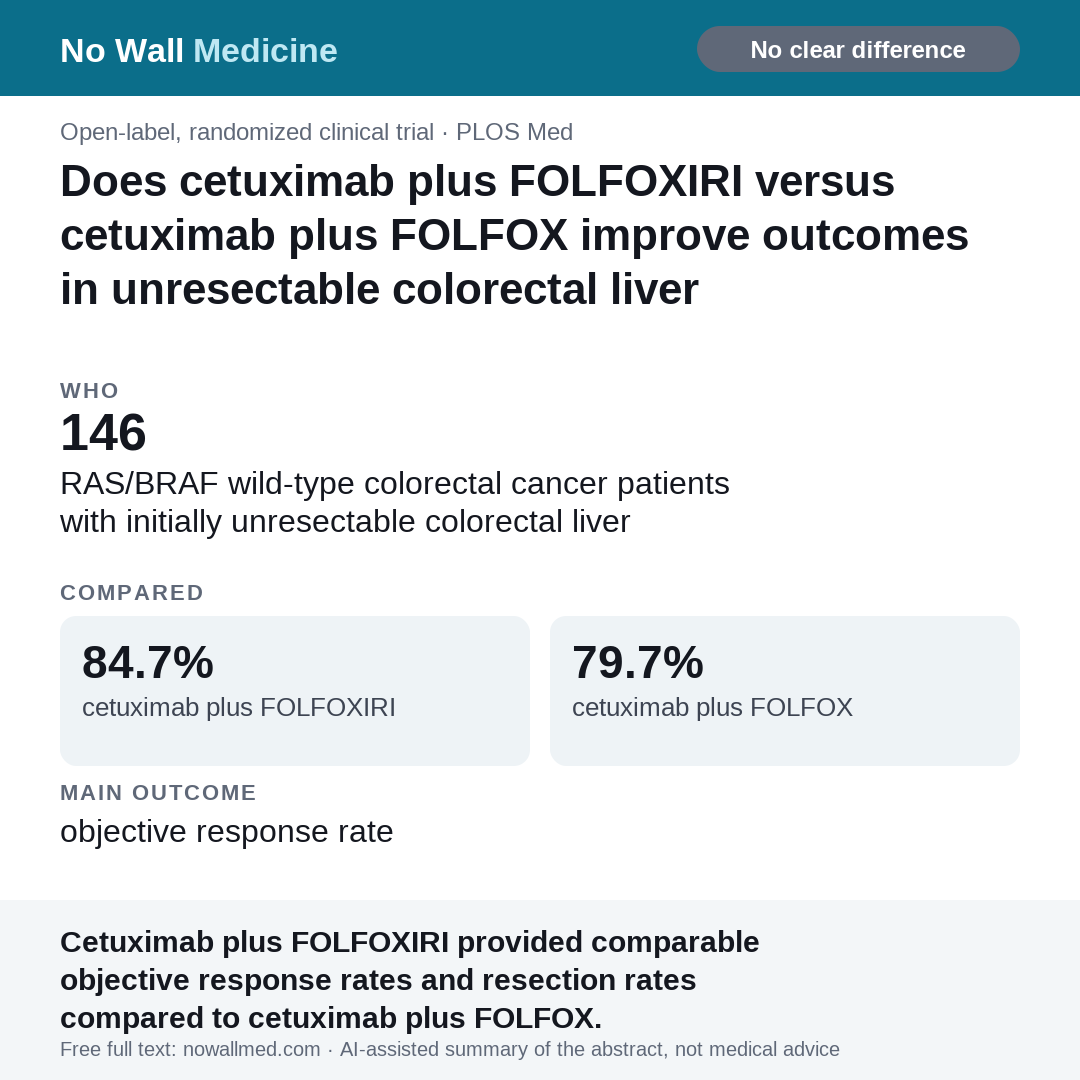
Cetuximab plus FOLFOXIRI versus cetuximab plus FOLFOX as conversion regimen in RAS/BRAF wild-type patients with initially unresectable colorectal liver metastases (TRICE trial): A randomized controlled trial
Open-label, randomized clinical trialNo clear difference
Does cetuximab plus FOLFOXIRI versus cetuximab plus FOLFOX improve outcomes in unresectable colorectal liver metastases?
Who
146
RAS/BRAF wild-type colorectal cancer patients with initially unresectable colorectal liver metastases · 7 medical centers across China
Compared
84.7%cetuximab plus FOLFOXIRI
79.7%cetuximab plus FOLFOX
Main outcome
objective response rate
Result: odds ratio 0.70 (95% confidence intervals 0.30 to 1.67)
Bottom line: Cetuximab plus FOLFOXIRI provided comparable objective response rates and resection rates compared to cetuximab plus FOLFOX.
Limitation: Inherent bias in subjective surgical decisions and lack of centralized assessment for response and resection.
PLOS Med · 2024-05-10Download image