Visual abstracts
New randomized trials and meta-analyses from leading journals at a glance: who was studied, what was compared, and what was found. Every paper is free to read in full.
All specialtiesCardiology 1310Oncology 1140Gastroenterology & Hepatology 464Infectious Disease 855Neurology 534Psychiatry & Mental Health 649Pulmonology 561Critical Care 386Endocrinology & Diabetes 727Pediatrics 767Surgery 611Orthopedics & Sports Medicine 249Neurosurgery 175Cardiothoracic & Vascular Surgery 145Plastic & Reconstructive Surgery 204Nephrology 277Rheumatology 174Hematology 273Dermatology 135Ophthalmology 144Obstetrics & Gynecology 407Public & Global Health 252Radiology & Imaging 167Anesthesiology 244Urology 239ENT (Otolaryngology) 179Emergency Medicine 142Allergy & Immunology 89Geriatrics 270Family Medicine & Primary Care 164Medical Genetics & Genomics 139Pathology & Laboratory Medicine 40Physical Medicine & Rehabilitation 226Palliative Care 119Nutrition 339Digital Health & AI 667General Medicine 121
Machine Learning and Deep Learning for the Diagnosis of Cervical Degenerative Diseases: Systematic Review and Meta-Analysis
Meta-analysis of 30 studiesBenefit found
Do machine learning models diagnose cervical diseases accurately?
Who
25301
patients with cervical degenerative diseases
Compared
Traditional machine learning
Deep learning
Main outcome
diagnostic accuracy
Bottom line: Machine learning models diagnose cervical diseases accurately
Limitation: low certainty of evidence
J Med Internet Res · 2026-10-05Download image

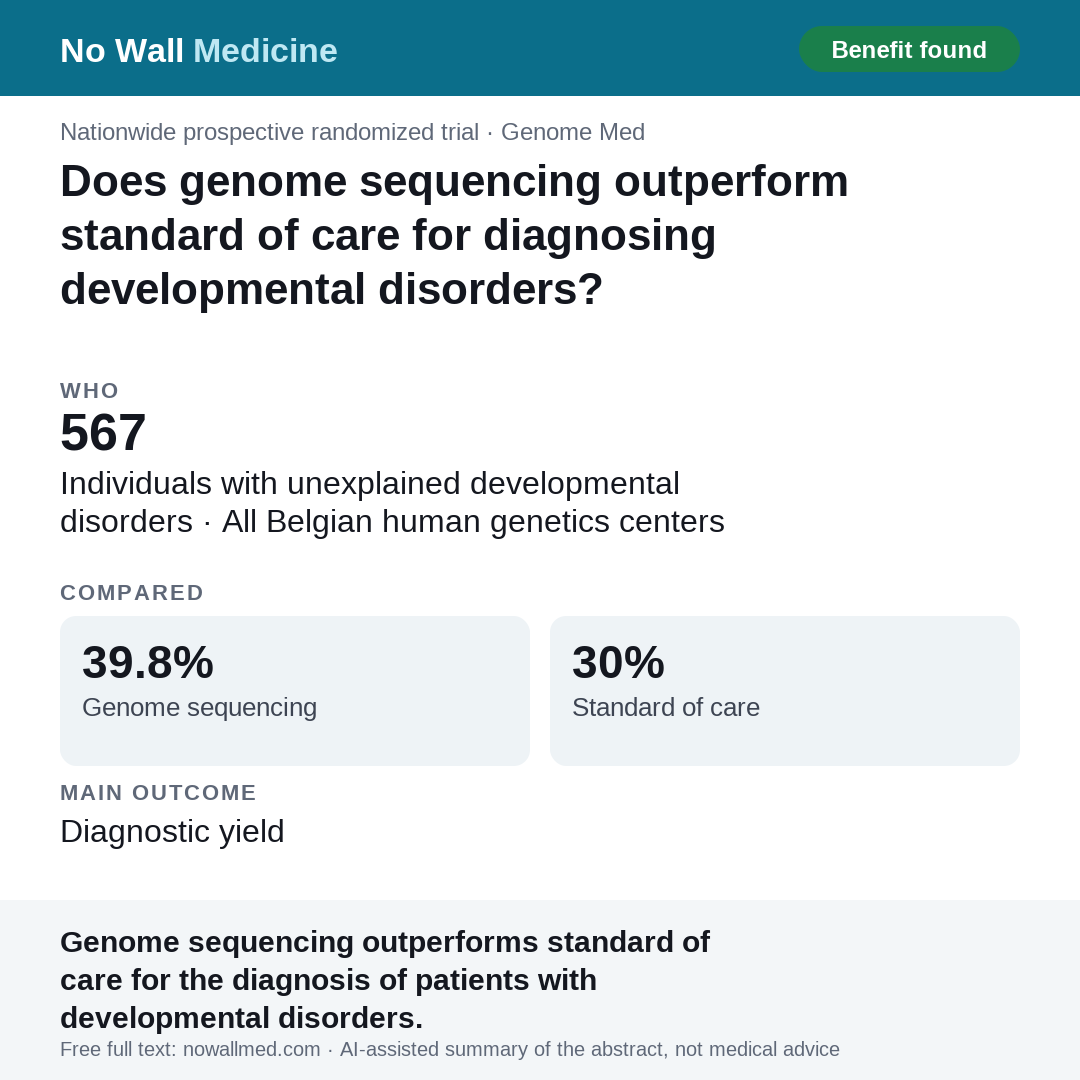
A nationwide prospective randomized trial for diagnosing developmental disorders demonstrates genome sequencing outperforms standard of care
Nationwide prospective randomized trialBenefit found
Does genome sequencing outperform standard of care for diagnosing developmental disorders?
Who
567
Individuals with unexplained developmental disorders · All Belgian human genetics centers
Compared
39.8%Genome sequencing (113/284)
30%Standard of care (85/283)
Main outcome
Diagnostic yield
Result: 7.3% difference (p = 0.069) after correction
Bottom line: Genome sequencing outperforms standard of care for diagnosing developmental disorders in a nationwide Belgian study.
Genome Med · 2026-10-05Download image
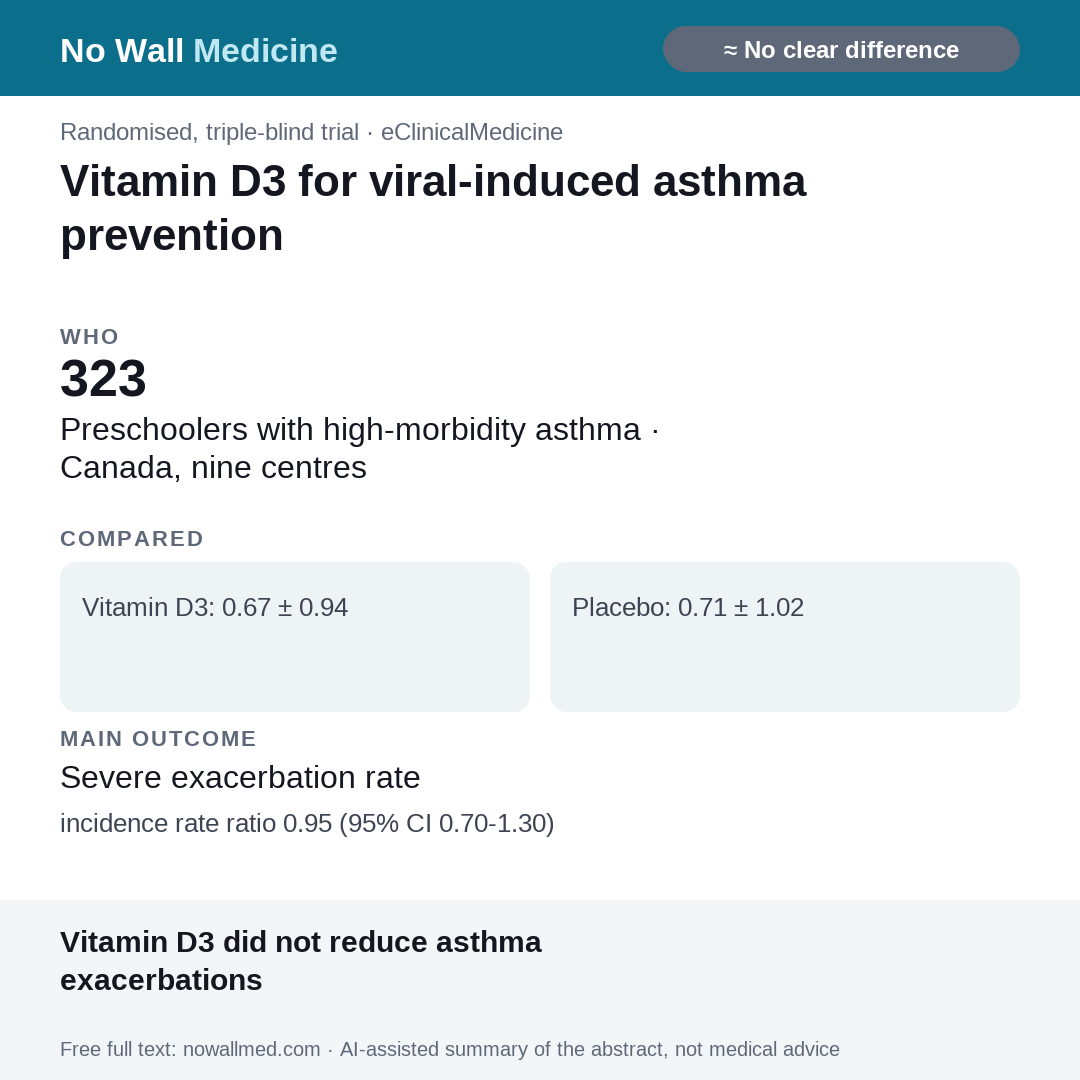
High-dose vitamin D3 supplementation in the prevention of viral-induced asthma in high-morbidity preschoolers (DIVA): a randomised controlled trial in Canada
Randomised, triple-blind trialNo clear difference
Vitamin D3 for viral-induced asthma prevention
Who
323
Preschoolers with high-morbidity asthma · Canada, nine centres
Compared
Vitamin D3: 0.67 ± 0.94
Placebo: 0.71 ± 1.02
Main outcome
Severe exacerbation rate
Result: incidence rate ratio 0.95 (95% CI 0.70-1.30)
Bottom line: Vitamin D3 did not reduce asthma exacerbations
Limitation: fewer participants than planned
Funded by: Canadian Institutes of Health Research
eClinicalMedicine · 2026-10-04Download image
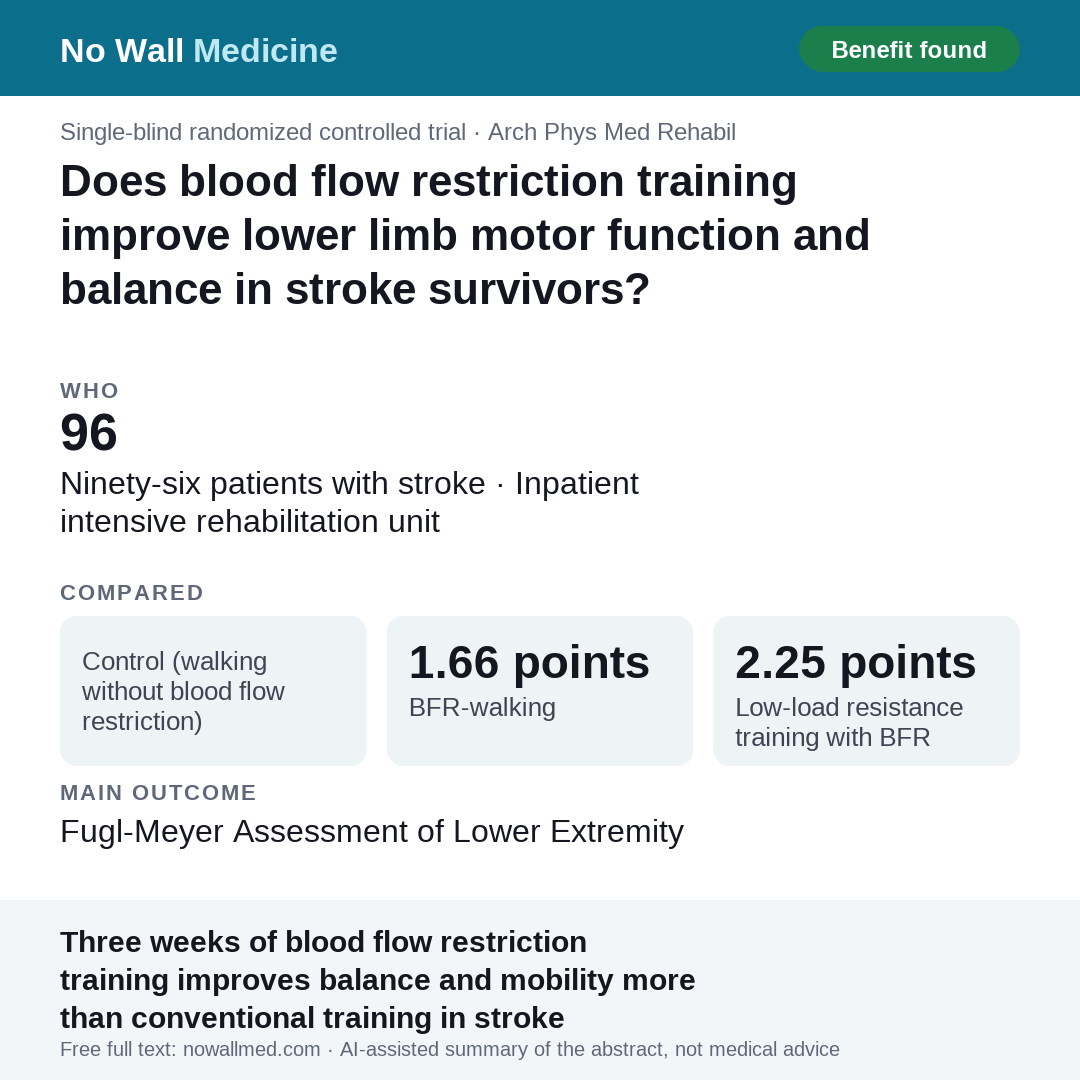
Effects of Blood Flow Restriction Training on Lower Limb Motor Function and Balance in Individuals With Stroke: A Randomized Controlled Trial
Single-blind randomized controlled trialBenefit found
Does blood flow restriction training improve lower limb motor function and balance in stroke survivors?
Who
96
Ninety-six patients with stroke · Inpatient intensive rehabilitation unit
Compared
Control (walking without blood flow restriction)
1.66 pointsBFR-walking (95% CI, 0.27-3.04)
2.25 pointsLow-load resistance training with BFR (95% CI, 0.86-3.64)
Main outcome
Fugl-Meyer Assessment of Lower Extremity
Result: adjusted mean difference vs control: 1.66 points (95% CI, 0.27-3.04) and 2.25 points (95% CI, 0.86-3.64)
Bottom line: Three weeks of blood flow restriction training improves balance and mobility more than conventional training in stroke survivors.
Arch Phys Med Rehabil · 2026-10-04Download image
Longitudinal associations between loneliness and outcomes of Common Mental Disorders (CMDs): A systematic review and meta-analysis
Systematic review and meta-analysisBenefit found
Is loneliness longitudinally associated with mental health outcomes in individuals with common mental disorders?
Who
22
Adults aged 16 years or older with common mental disorders · Clinical, community, and treatment settings
Compared
Lonely individuals
Not lonely individuals
Main outcome
Binary depression outcomes reflecting unfavourable course
Result: adjusted odds ratio 3.26 (95% CI 2.26 to 4.70)
Bottom line: Loneliness is consistently associated with poorer subsequent depression outcomes in people with common mental disorders.
Limitation: Only one of the four meta-analyzed studies adjusted for baseline depressive symptom severity.
BMC Med · 2026-10-03Download image

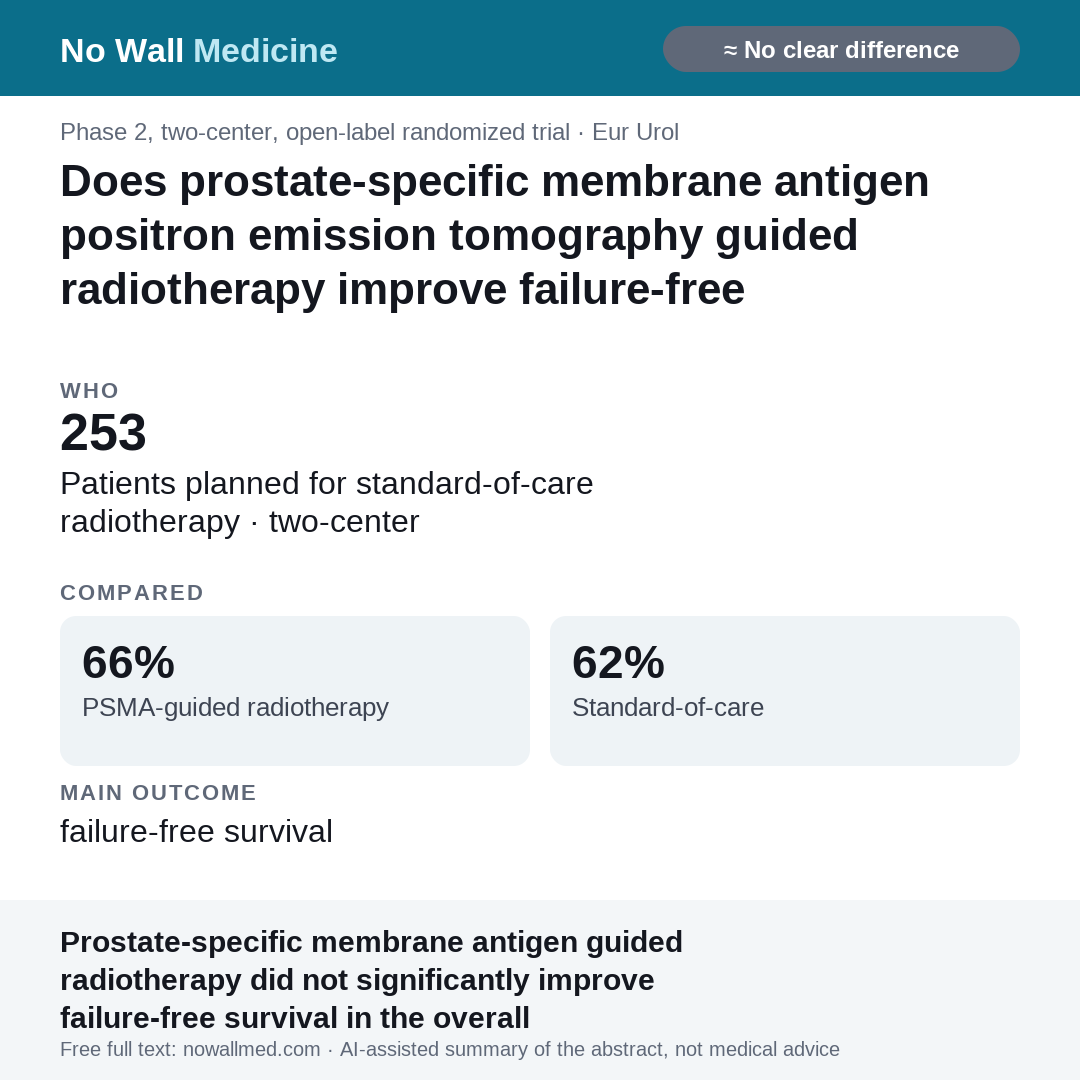
PSMA-PET/CT-guided Intensification of Radiation Therapy for Prostate Cancer (PSMAgRT): 5-yr Analysis of a Phase 2 Randomized Controlled Trial
Phase 2, two-center, open-label randomized trialNo clear difference
Does prostate-specific membrane antigen positron emission tomography guided radiotherapy improve failure-free survival?
Who
253
Patients planned for standard-of-care radiotherapy · two-center
Compared
66%PSMA-guided radiotherapy
62%Standard-of-care
Main outcome
failure-free survival
Result: hazard ratio 0.80 (one-sided 90% CI, upper bound 1.04)
Bottom line: Prostate-specific membrane antigen guided radiotherapy did not significantly improve failure-free survival in the overall population.
Limitation: phase 2 design with a heterogeneous population
Eur Urol · 2026-10-03Download image
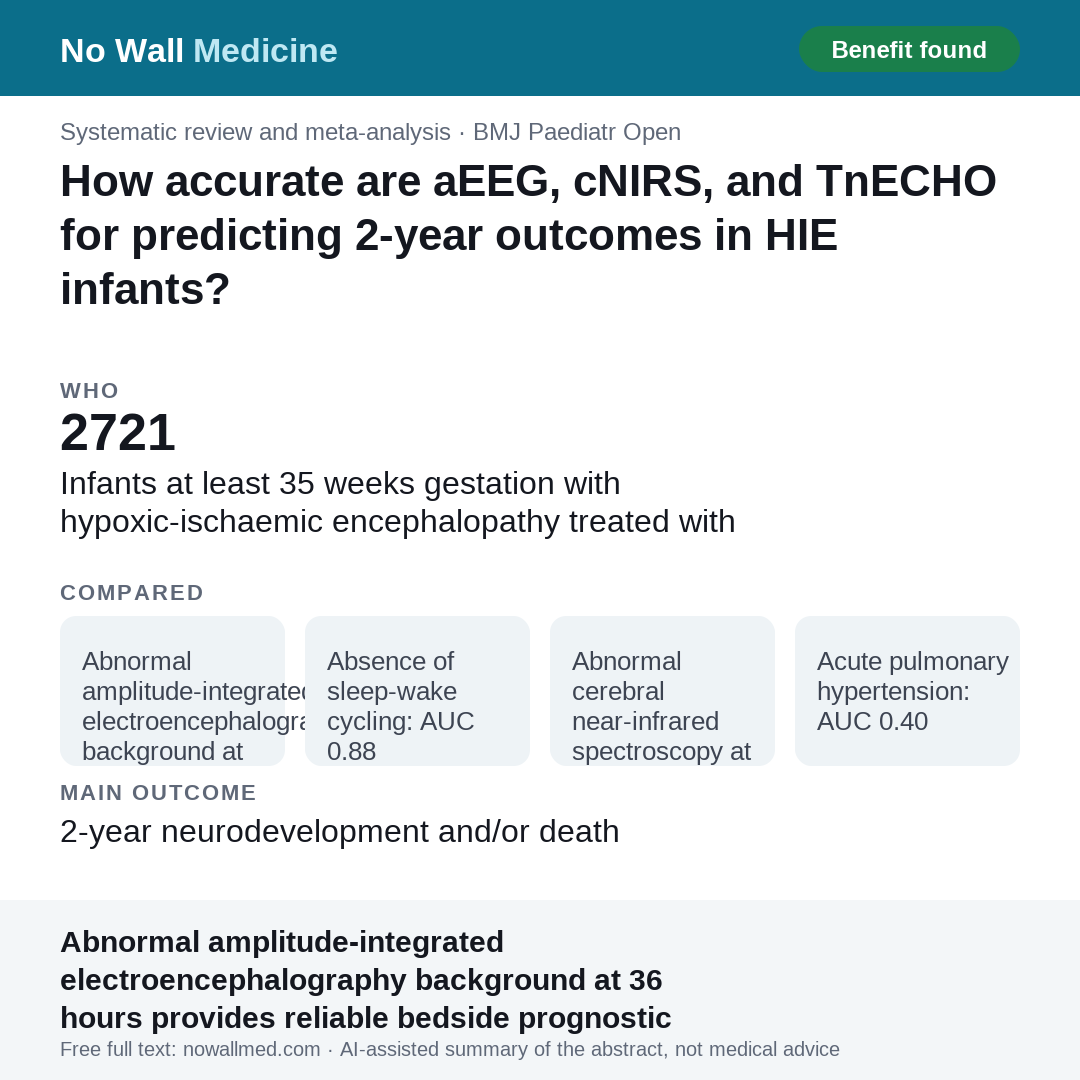
Haemodynamic and neurophysiological assessments for 2-year outcome prediction in neonates with hypoxic-ischaemic encephalopathy treated with therapeutic hypothermia: a systematic review and meta-analysis
Systematic review and meta-analysisBenefit found
How accurate are aEEG, cNIRS, and TnECHO for predicting 2-year outcomes in HIE infants?
Who
2721
Infants at least 35 weeks gestation with hypoxic-ischaemic encephalopathy treated with therapeutic hypothermia
Compared
Abnormal amplitude-integrated electroencephalography background at 36 hours: AUC 0.88
Absence of sleep-wake cycling: AUC 0.88
Abnormal cerebral near-infrared spectroscopy at 36 hours: AUC 0.86
Acute pulmonary hypertension: AUC 0.40
Main outcome
2-year neurodevelopment and/or death
Bottom line: Abnormal amplitude-integrated electroencephalography background at 36 hours provides reliable bedside prognostic information for 2-year outcomes.
Limitation: Right ventricular dysfunction showed substantial heterogeneity.
BMJ Paediatr Open · 2026-10-03Download image
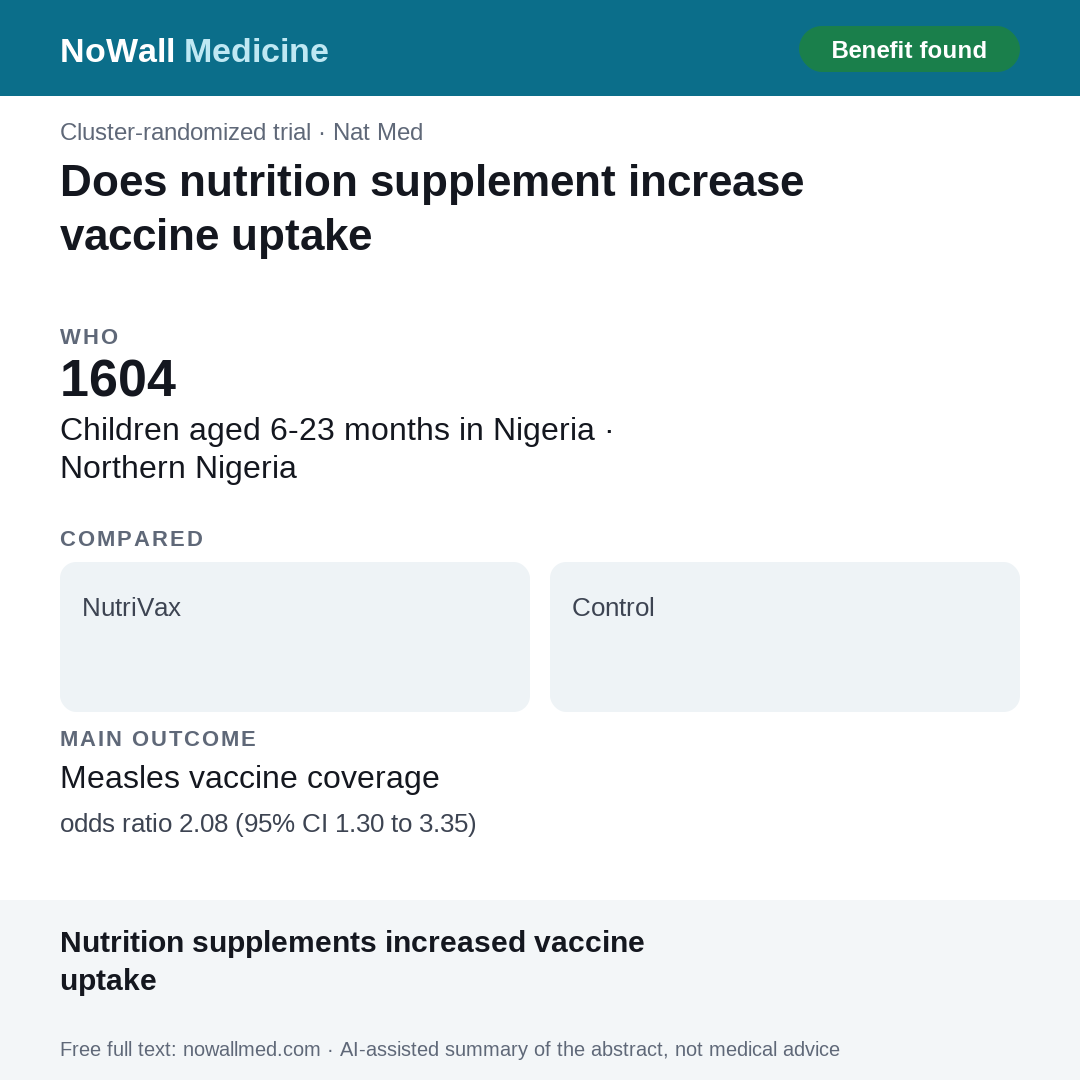
Small quantity lipid-based nutritional supplementation and measles vaccination coverage in children aged 6-23 months: a pragmatic cluster-randomized trial
Cluster-randomized trialBenefit found
Does nutrition supplement increase vaccine uptake
Who
1604
Children aged 6-23 months in Nigeria · Northern Nigeria
Compared
NutriVax
Control
Main outcome
Measles vaccine coverage
Result: odds ratio 2.08 (95% CI 1.30 to 3.35)
Bottom line: Nutrition supplements increased vaccine uptake
Nat Med · 2026-10-02Download image
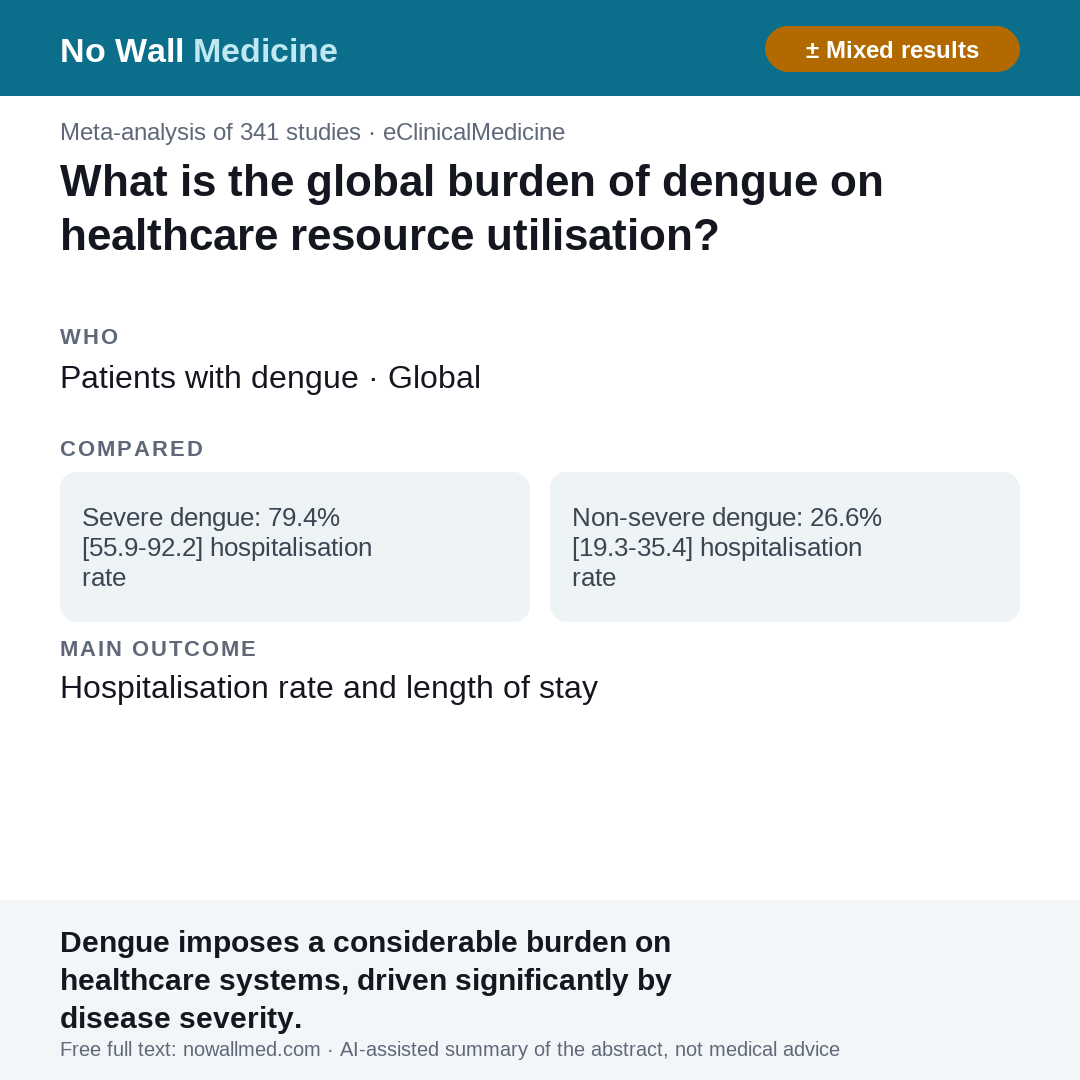
Global burden of dengue on healthcare systems: a meta-analysis of healthcare resource utilisation
Meta-analysis of 341 studiesMixed results
What is the global burden of dengue on healthcare resource utilisation?
Who
Patients with dengue · Global
Compared
Severe dengue: 79.4% [55.9-92.2] hospitalisation rate
Non-severe dengue: 26.6% [19.3-35.4] hospitalisation rate
Main outcome
Hospitalisation rate and length of stay
Bottom line: Dengue imposes a considerable burden on healthcare systems, driven significantly by disease severity.
Limitation: High heterogeneity between studies and interregional differences.
Funded by: Novartis Pharma AG
eClinicalMedicine · 2026-10-02Download image
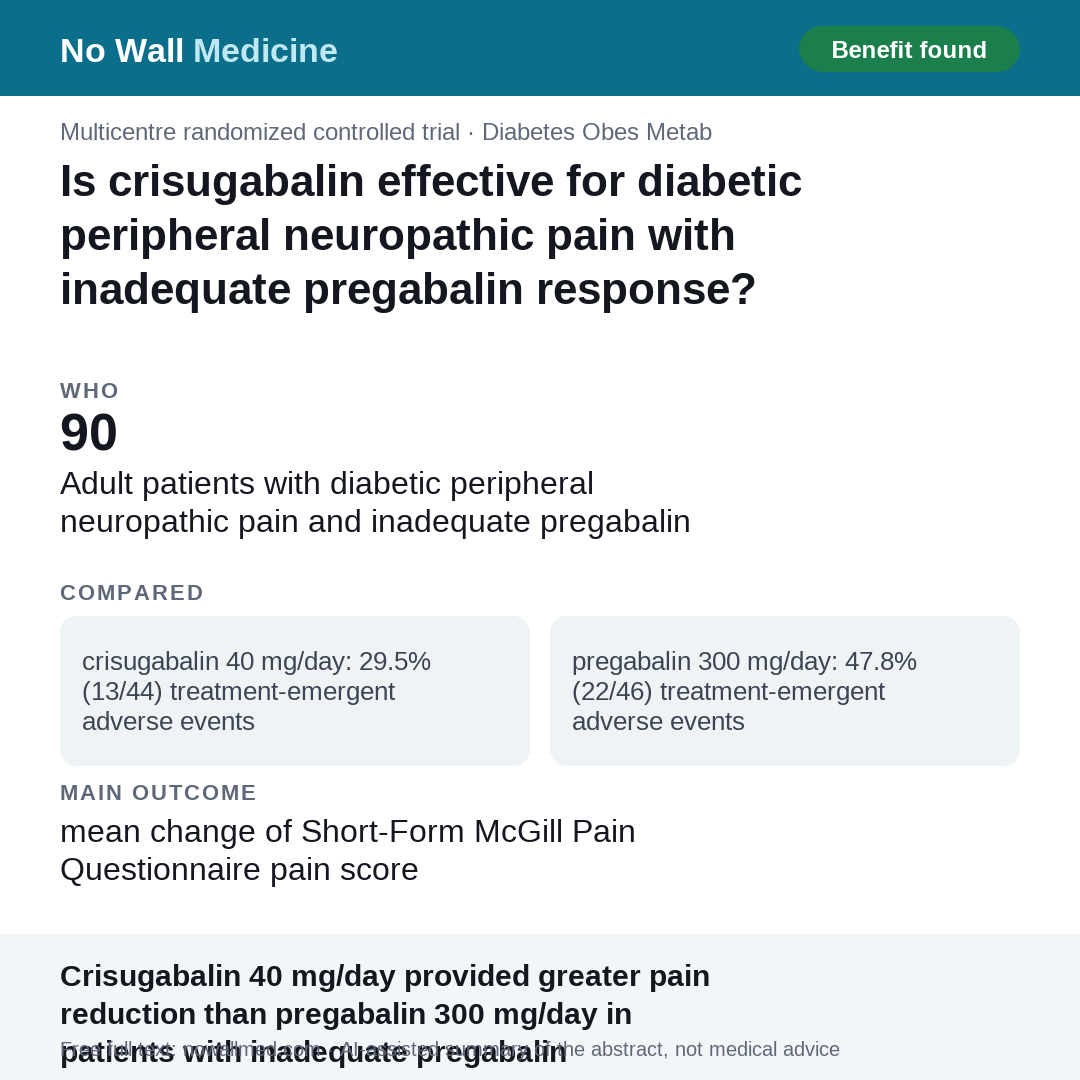
Efficacy and Safety of Crisugabalin for Inadequately Controlled Diabetic Peripheral Neuropathic Pain: A Randomized, Active-Controlled, Phase 2 Trial
Multicentre randomized controlled trialBenefit found
Is crisugabalin effective for diabetic peripheral neuropathic pain with inadequate pregabalin response?
Who
90
Adult patients with diabetic peripheral neuropathic pain and inadequate pregabalin response
Compared
crisugabalin 40 mg/day: 29.5% (13/44) treatment-emergent adverse events
pregabalin 300 mg/day: 47.8% (22/46) treatment-emergent adverse events
Main outcome
mean change of Short-Form McGill Pain Questionnaire pain score
Result: -7.2 (95% CI: -12.4, -2.0; ANCOVA p = 0.007)
Bottom line: Crisugabalin 40 mg/day provided greater pain reduction than pregabalin 300 mg/day in patients with inadequate pregabalin response.
Diabetes Obes Metab · 2026-10-02Download image
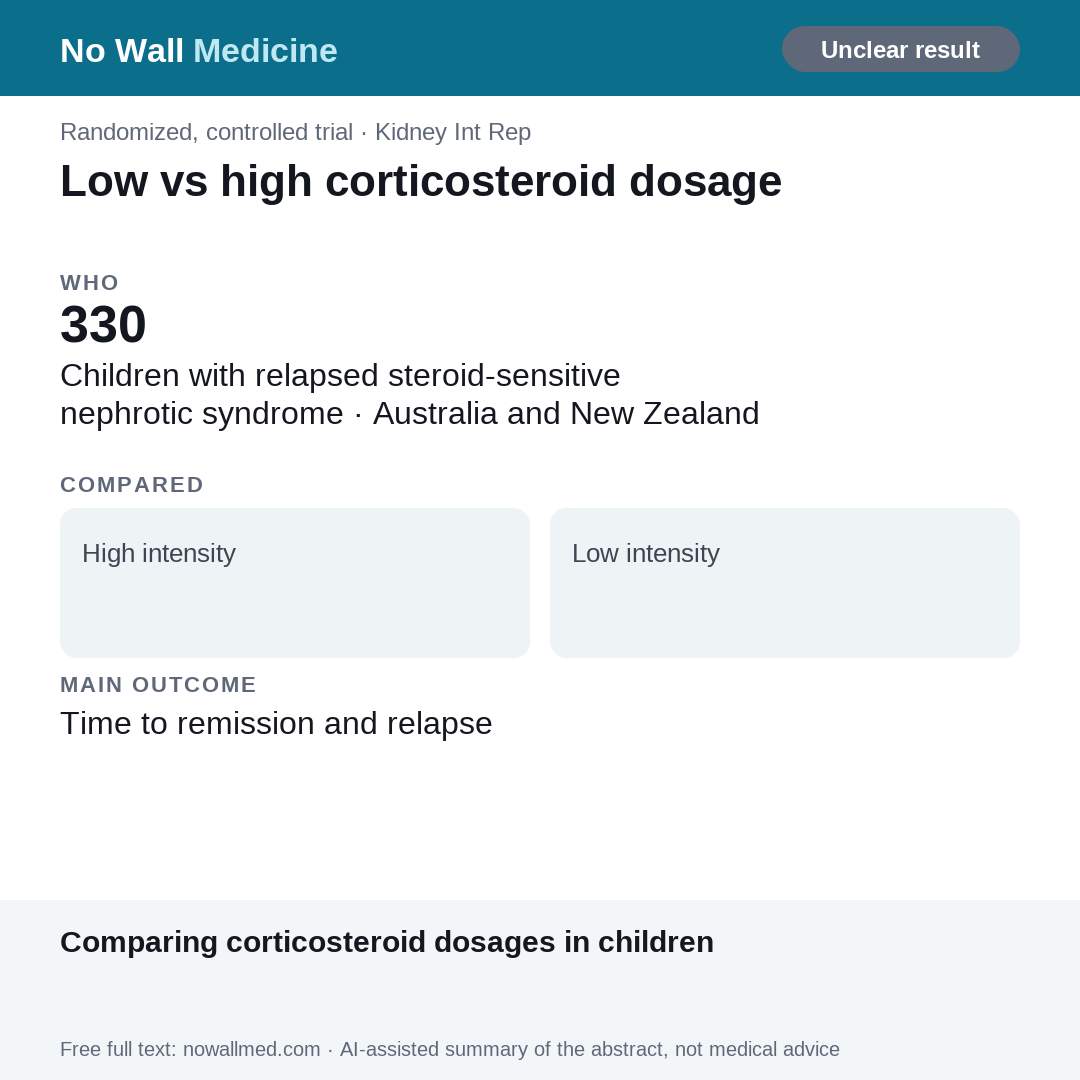
A Randomized Controlled Trial of Two Corticosteroid Dosages for Relapsed Childhood Steroid-Sensitive Nephrotic Syndrome: The OPtimising dosE in Nephrotic Syndrome (OPEN) Trial Protocol
Randomized, controlled trialUnclear result
Low vs high corticosteroid dosage
Who
330
Children with relapsed steroid-sensitive nephrotic syndrome · Australia and New Zealand
Compared
High intensity
Low intensity
Main outcome
Time to remission and relapse
Bottom line: Comparing corticosteroid dosages in children
Kidney Int Rep · 2026-10-02Download image
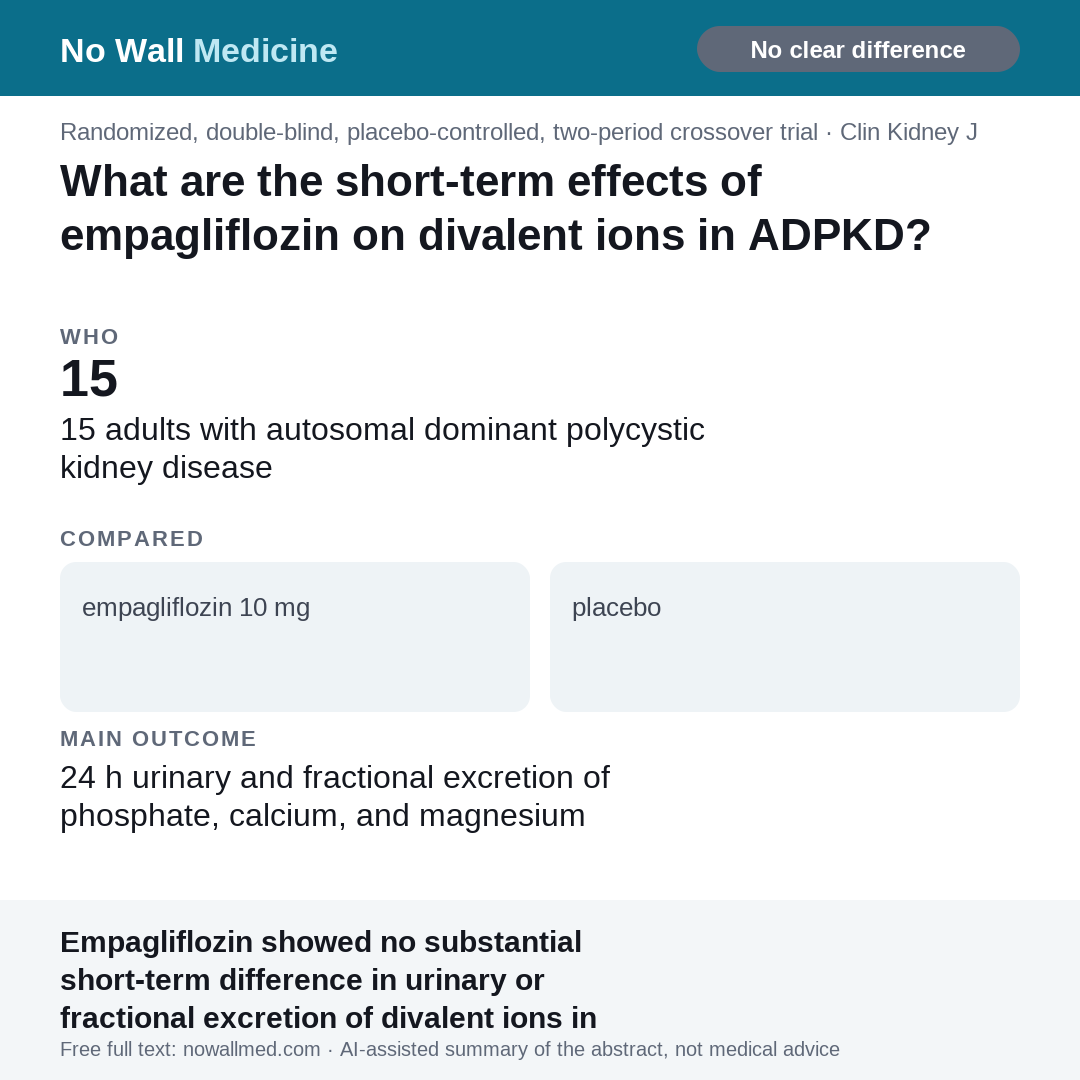
Short-term effects of an SGLT2 inhibitor on divalent ions in autosomal dominant polycystic kidney disease: a randomized crossover trial
Randomized, double-blind, placebo-controlled, two-period crossover trialNo clear difference
What are the short-term effects of empagliflozin on divalent ions in ADPKD?
Who
15
15 adults with autosomal dominant polycystic kidney disease
Compared
empagliflozin 10 mg
placebo
Main outcome
24 h urinary and fractional excretion of phosphate, calcium, and magnesium
Bottom line: Empagliflozin showed no substantial short-term difference in urinary or fractional excretion of divalent ions in ADPKD patients.
Limitation: Small sample size and exploratory nature of the analyses.
Clin Kidney J · 2026-10-02Download image
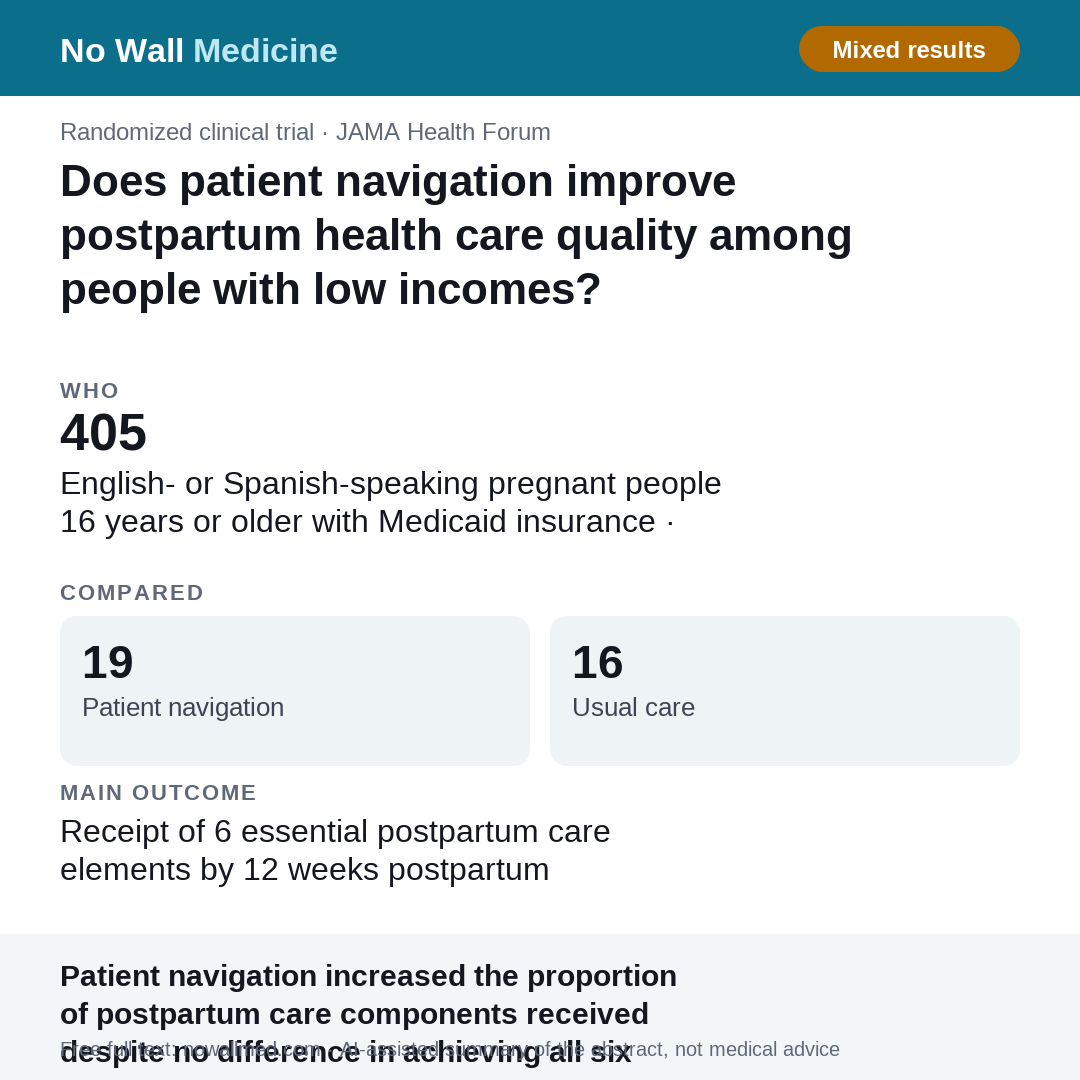
Patient Navigation and Postpartum Health Care Outcomes: A Randomized Clinical Trial
Randomized clinical trialMixed results
Does patient navigation improve postpartum health care quality among people with low incomes?
Who
405
English- or Spanish-speaking pregnant people 16 years or older with Medicaid insurance · Single urban academic medical center
Compared
19Patient navigation (9.4%)
16Usual care (7.9%)
Main outcome
Receipt of 6 essential postpartum care elements by 12 weeks postpartum
Bottom line: Patient navigation increased the proportion of postpartum care components received despite no difference in achieving all six essential elements.
JAMA Health Forum · 2026-10-02Download image
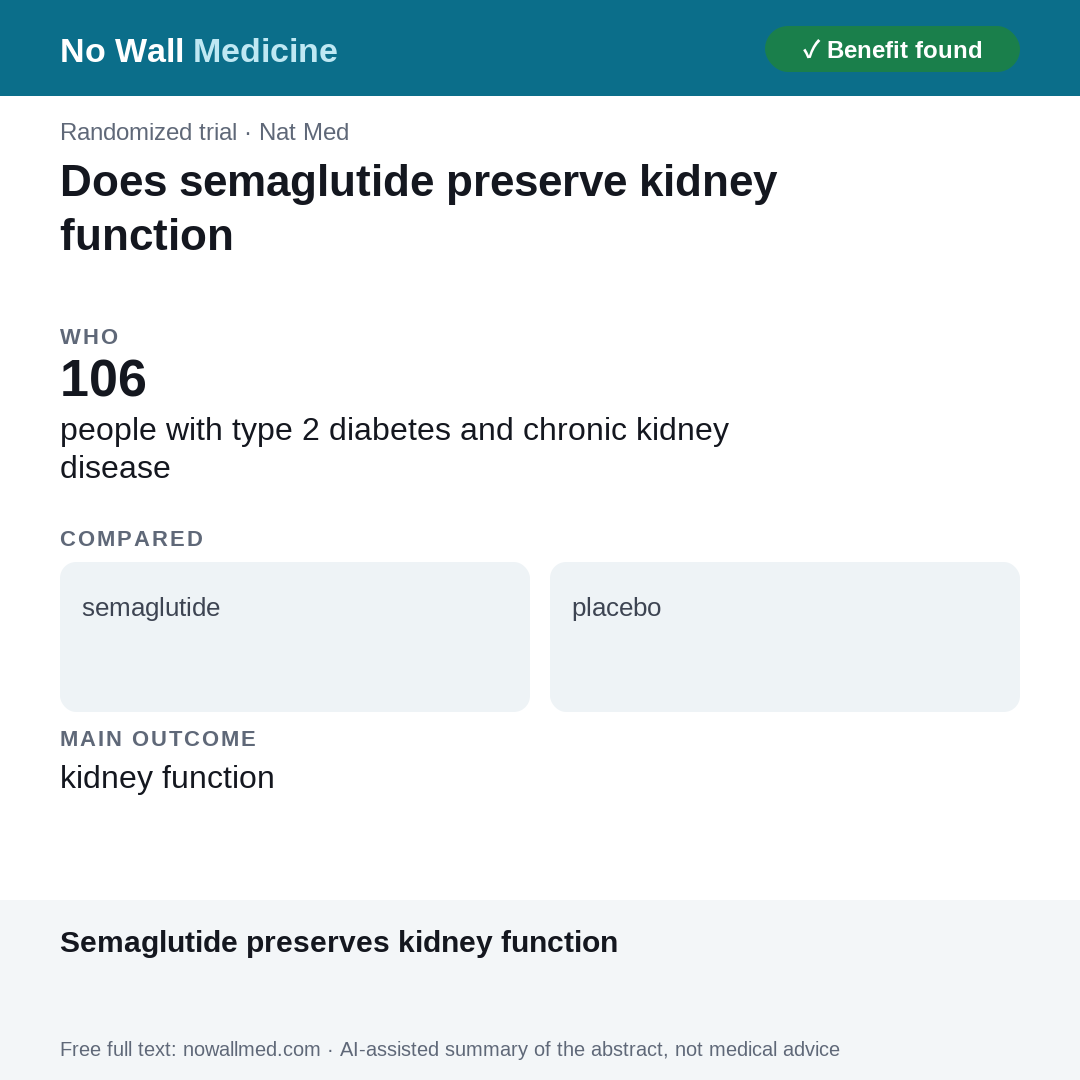
Effects of semaglutide on kidney disease in type 2 diabetes: a randomized placebo-controlled trial
Randomized trialBenefit found
Does semaglutide preserve kidney function
Who
106
people with type 2 diabetes and chronic kidney disease
Compared
semaglutide
placebo
Main outcome
kidney function
Bottom line: Semaglutide preserves kidney function
Nat Med · 2026-10-01Download image
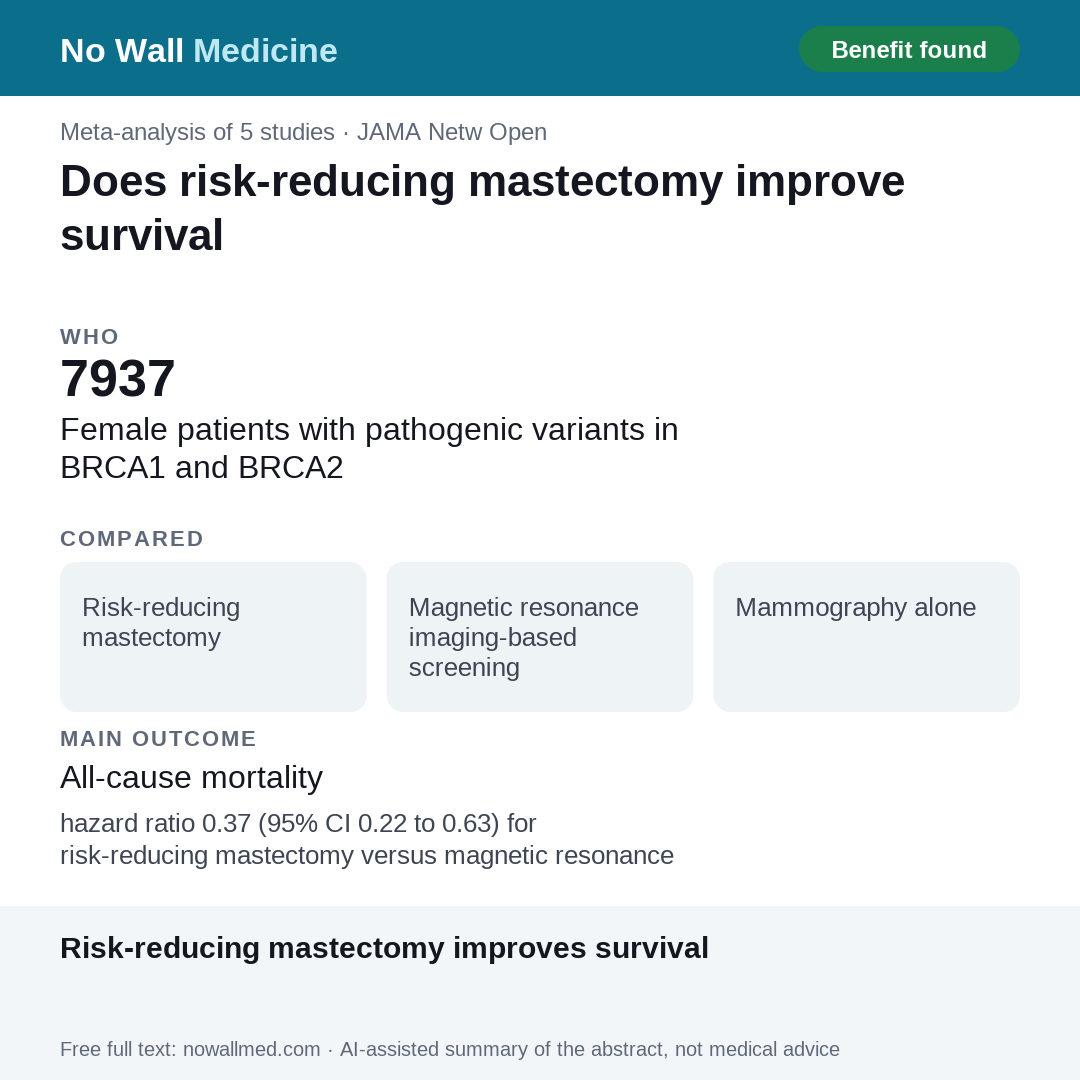
Survival After Risk-Reducing Mastectomy in Patients With Pathogenic Variants in BRCA1 and BRCA2: A Network Meta-Analysis
Meta-analysis of 5 studiesBenefit found
Does risk-reducing mastectomy improve survival
Who
7937
Female patients with pathogenic variants in BRCA1 and BRCA2
Compared
Risk-reducing mastectomy
Magnetic resonance imaging-based screening
Mammography alone
Main outcome
All-cause mortality
Result: hazard ratio 0.37 (95% CI 0.22 to 0.63) for risk-reducing mastectomy versus magnetic resonance imaging-based screening
Bottom line: Risk-reducing mastectomy improves survival
Limitation: Very low certainty of evidence
JAMA Netw Open · 2026-10-01Download image
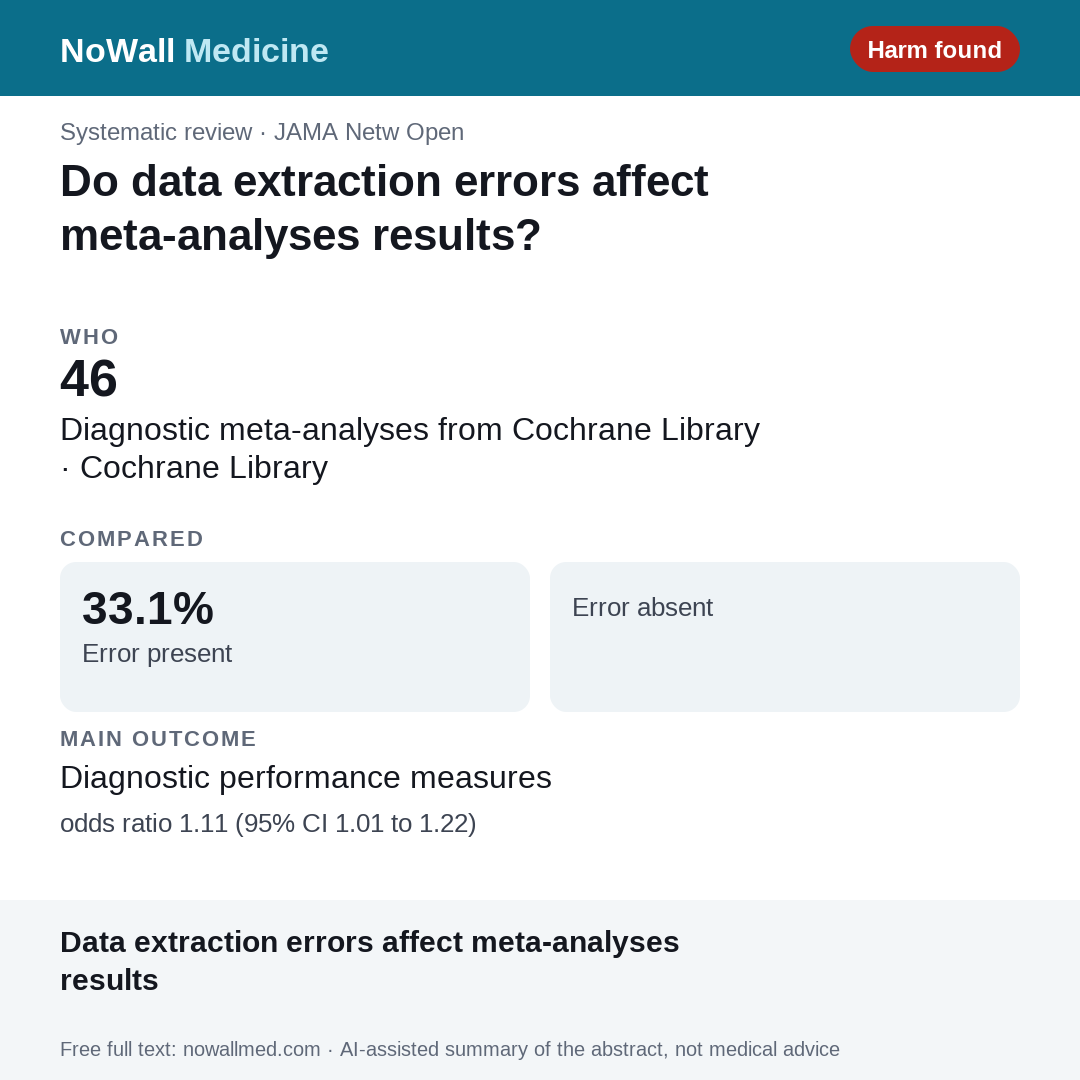
Data Extraction Errors and Diagnostic Conclusions of Meta-Analyses: A Systematic Review
Systematic reviewHarm found
Do data extraction errors affect meta-analyses results?
Who
46
Diagnostic meta-analyses from Cochrane Library · Cochrane Library
Compared
33.1%Error present
Error absent
Main outcome
Diagnostic performance measures
Result: odds ratio 1.11 (95% CI 1.01 to 1.22)
Bottom line: Data extraction errors affect meta-analyses results
JAMA Netw Open · 2026-10-01Download image
User Interface Designs to Address Cancer Misinformation: A Randomized Clinical Trial
Randomized clinical trialBenefit found
Do user interface designs reduce cancer misinformation sharing?
Who
294
US adults with cancer or caregivers · US
Compared
38%Social cue prompts (224/592)
26%Standard prompts (180/689)
12%No prompts (84/675)
Main outcome
Flagging inaccurate cancer posts
Result: rate ratio 3.12 (95% CI 1.79 to 5.42) for social cue vs control
Bottom line: Prompts reduce cancer misinformation sharing
JAMA Netw Open · 2026-10-01Download image

Studies of US Department of Health and Human Services Agency Advisory Committees: A Systematic Review
Systematic reviewMixed results
Do HHS advisory committees work
Who
146
US Department of Health and Human Services agencies · United States
Compared
FDA advisory committees
Non-FDA advisory committees
Main outcome
Advisory committee implementation and impact
Result: Generally high concordance between recommendations and agency decisions
Bottom line: Variation in use and management of advisory committees found
Limitation: Limited evidence on non-FDA advisory committees
JAMA Netw Open · 2026-10-01Download image

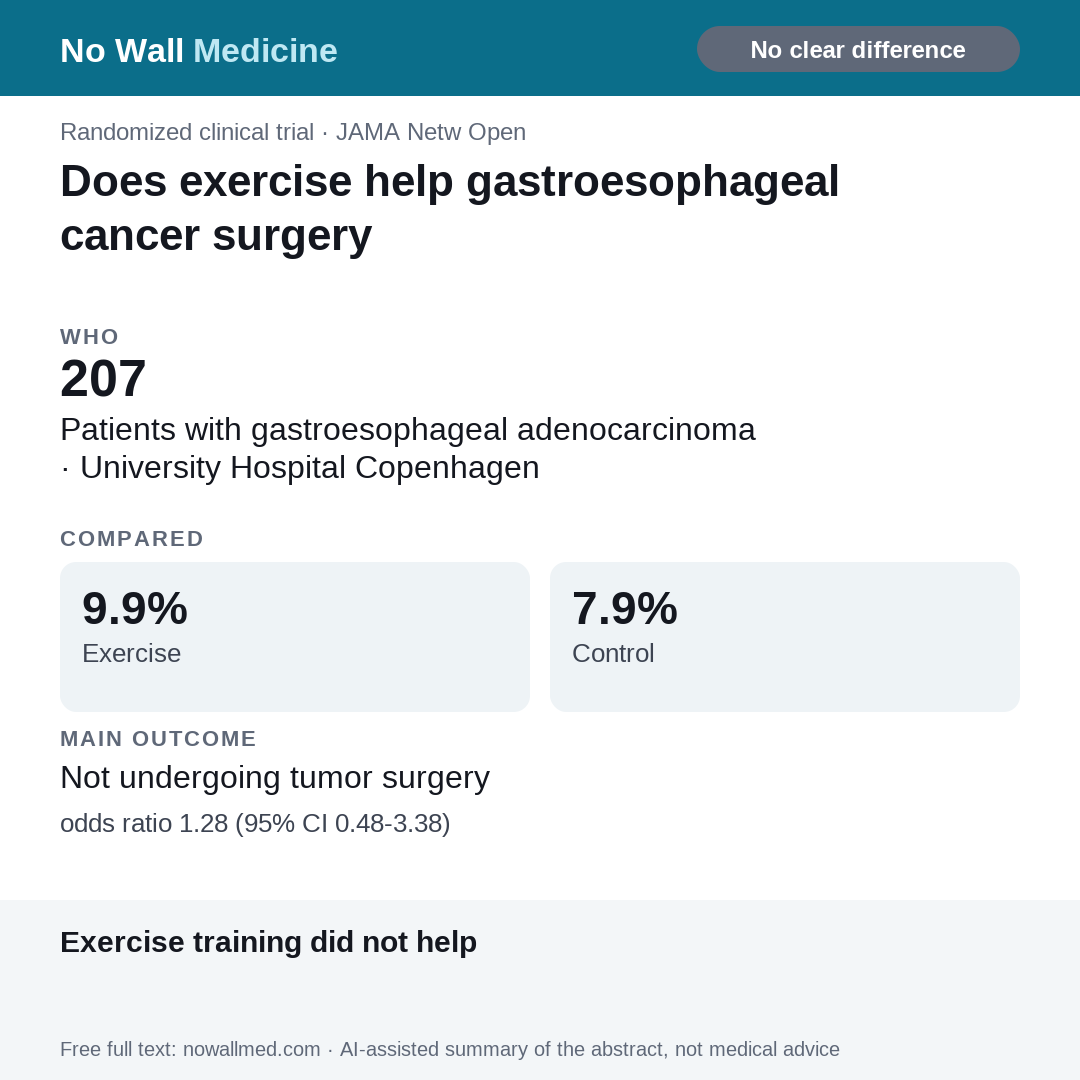
Exercise Training During Neoadjuvant Treatment for Gastroesophageal Cancer and Tumor Surgery: A Randomized Clinical Trial
Randomized clinical trialNo clear difference
Does exercise help gastroesophageal cancer surgery
Who
207
Patients with gastroesophageal adenocarcinoma · University Hospital Copenhagen
Compared
9.9%Exercise (10/101)
7.9%Control (8/101)
Main outcome
Not undergoing tumor surgery
Result: odds ratio 1.28 (95% CI 0.48-3.38)
Bottom line: Exercise training did not help
JAMA Netw Open · 2026-10-01Download image
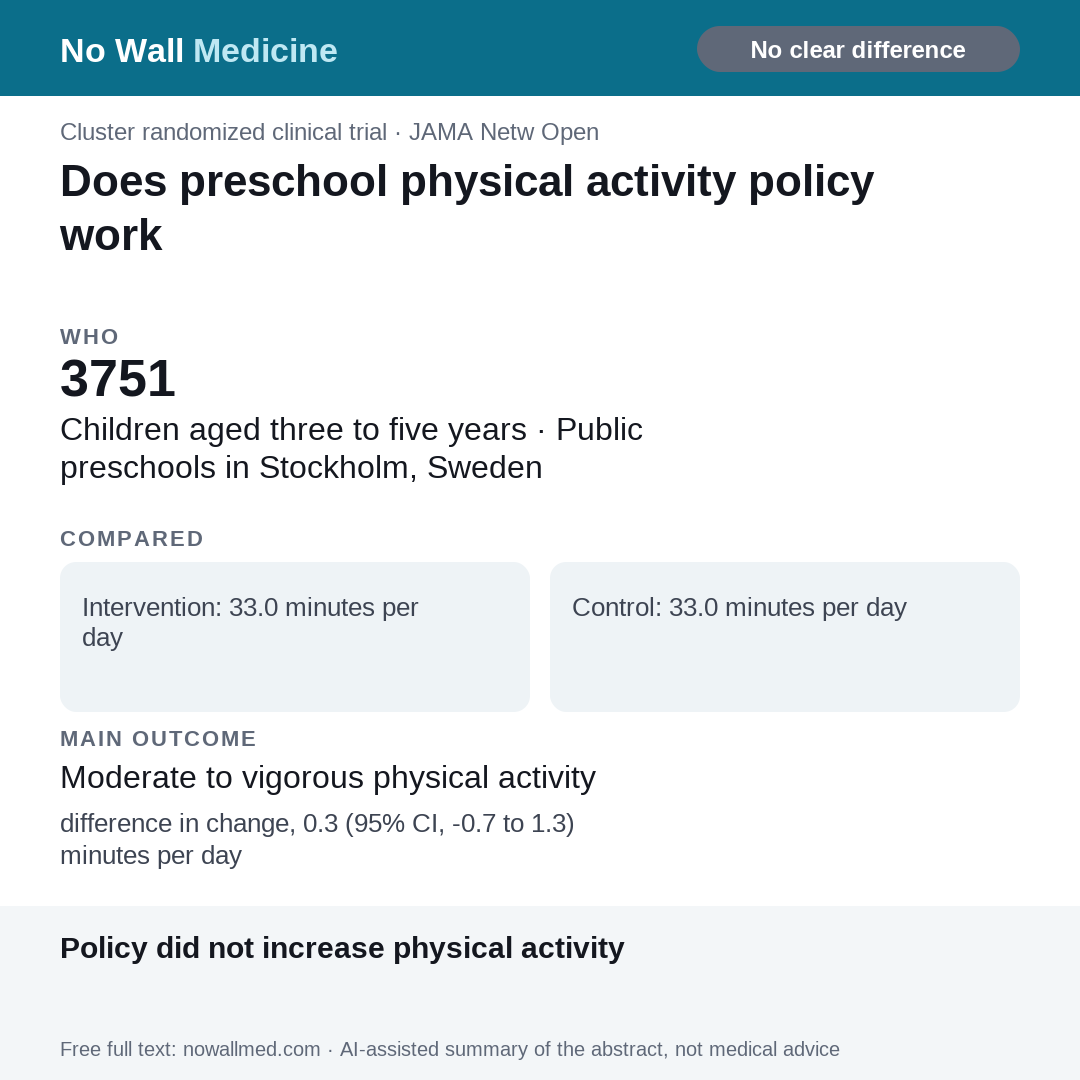
Preschool Physical Activity Policy and Children's Physical Activity: A Pragmatic Cluster Randomized Clinical Trial
Cluster randomized clinical trialNo clear difference
Does preschool physical activity policy work
Who
3751
Children aged three to five years · Public preschools in Stockholm, Sweden
Compared
Intervention: 33.0 minutes per day
Control: 33.0 minutes per day
Main outcome
Moderate to vigorous physical activity
Result: difference in change, 0.3 (95% CI, -0.7 to 1.3) minutes per day
Bottom line: Policy did not increase physical activity
Limitation: detecting change in preschool settings
JAMA Netw Open · 2026-10-01Download image