Visual abstracts
New randomized trials and meta-analyses from leading journals at a glance: who was studied, what was compared, and what was found. Every paper is free to read in full.
All specialtiesCardiology 4777Oncology 4069Gastroenterology & Hepatology 1910Infectious Disease 3769Neurology 1880Psychiatry & Mental Health 2232Pulmonology 2052Critical Care 1328Endocrinology & Diabetes 2548Pediatrics 2906Surgery 2492Orthopedics & Sports Medicine 922Neurosurgery 530Cardiothoracic & Vascular Surgery 659Plastic & Reconstructive Surgery 584Nephrology 1110Rheumatology 812Hematology 1093Dermatology 617Ophthalmology 537Obstetrics & Gynecology 1651Public & Global Health 1040Radiology & Imaging 631Anesthesiology 958Urology 748ENT (Otolaryngology) 496Emergency Medicine 484Allergy & Immunology 309Geriatrics 973Family Medicine & Primary Care 537Medical Genetics & Genomics 661Pathology & Laboratory Medicine 156Physical Medicine & Rehabilitation 743Palliative Care 422Nutrition 1564Digital Health & AI 2178General Medicine 318
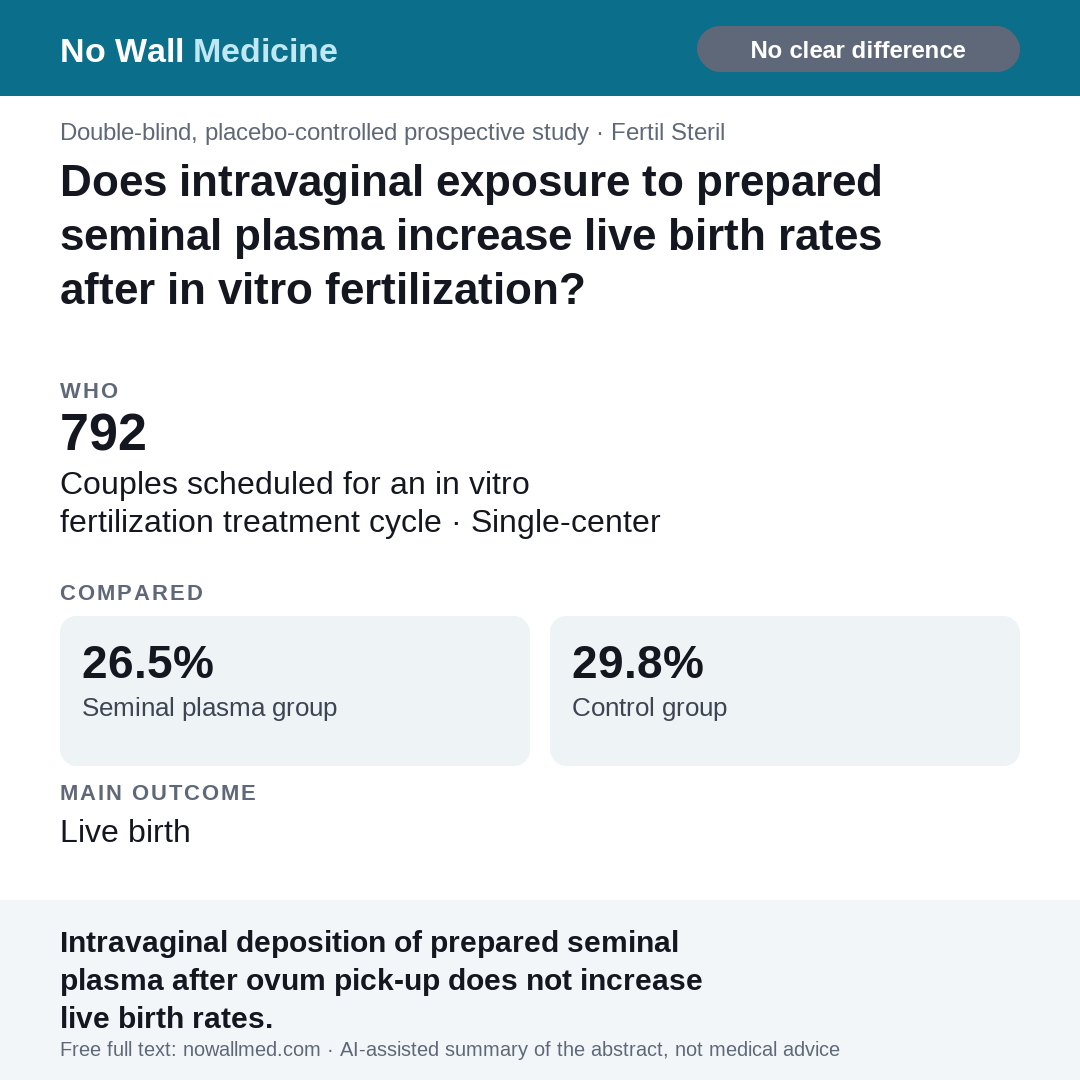
Intravaginal exposure to seminal plasma after ovum pick-up does not increase live birth rates after in vitro fertilization or intracytoplasmic sperm injection treatment: a double-blind, placebo-controlled randomized trial
Double-blind, placebo-controlled prospective studyNo clear difference
Does intravaginal exposure to prepared seminal plasma increase live birth rates after in vitro fertilization?
Who
792
Couples scheduled for an in vitro fertilization treatment cycle · Single-center University Hospital
Compared
26.5%Seminal plasma group
29.8%Control group
Main outcome
Live birth
Result: relative risk 0.86 (95% CI 0.70 to 1.07)
Bottom line: Intravaginal deposition of prepared seminal plasma after ovum pick-up does not increase live birth rates.
Fertil Steril · 2024-02-09Download image
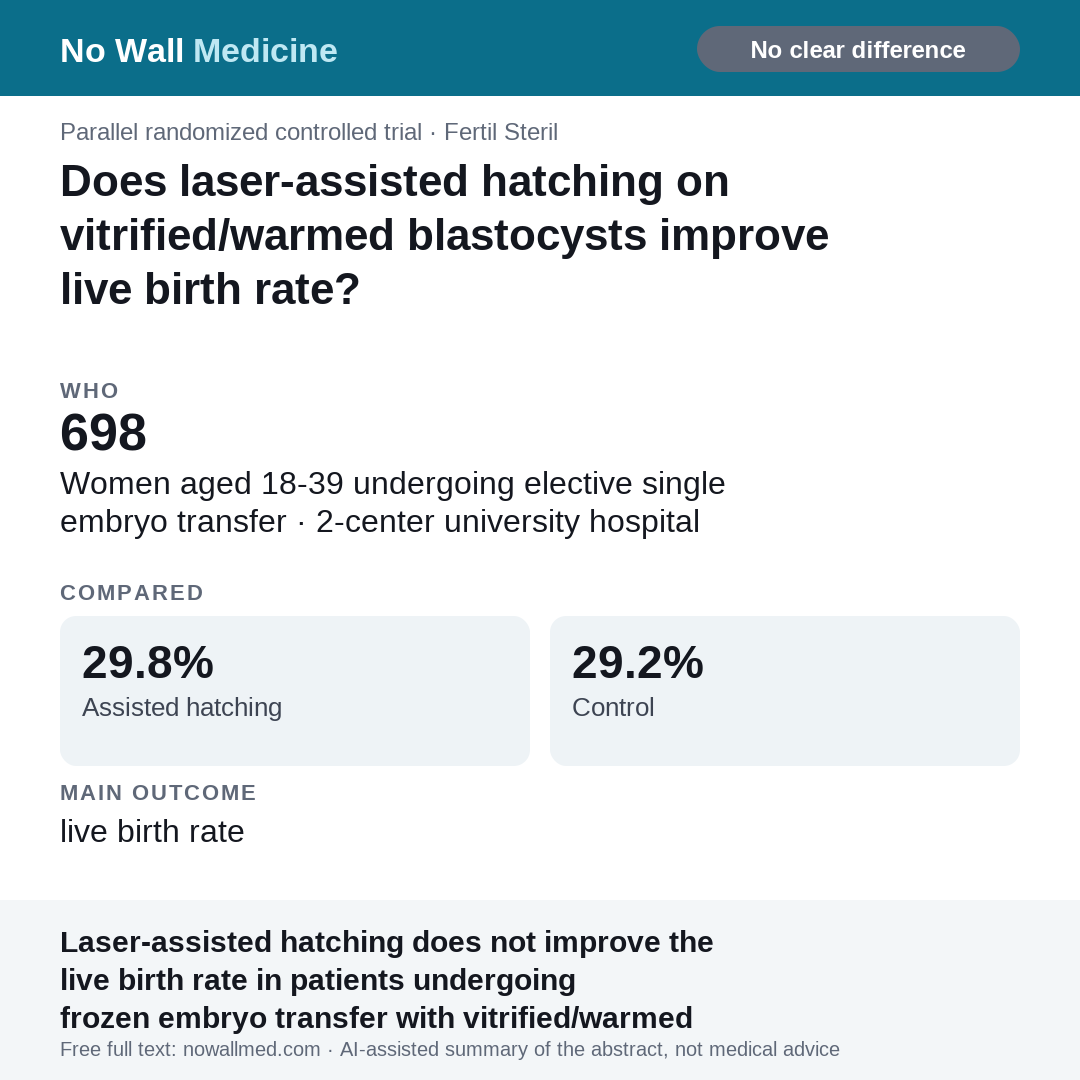
The effect of laser-assisted hatching on vitrified/warmed blastocysts: the ALADDIN randomized controlled trial
Parallel randomized controlled trialNo clear difference
Does laser-assisted hatching on vitrified/warmed blastocysts improve live birth rate?
Who
698
Women aged 18-39 undergoing elective single embryo transfer · 2-center university hospital
Compared
29.8%Assisted hatching
29.2%Control
Main outcome
live birth rate
Result: relative risk 1.02 (95% confidence interval, 0.86-1.19)
Bottom line: Laser-assisted hatching does not improve the live birth rate in patients undergoing frozen embryo transfer with vitrified/warmed blastocysts.
Fertil Steril · 2024-02-09Download image
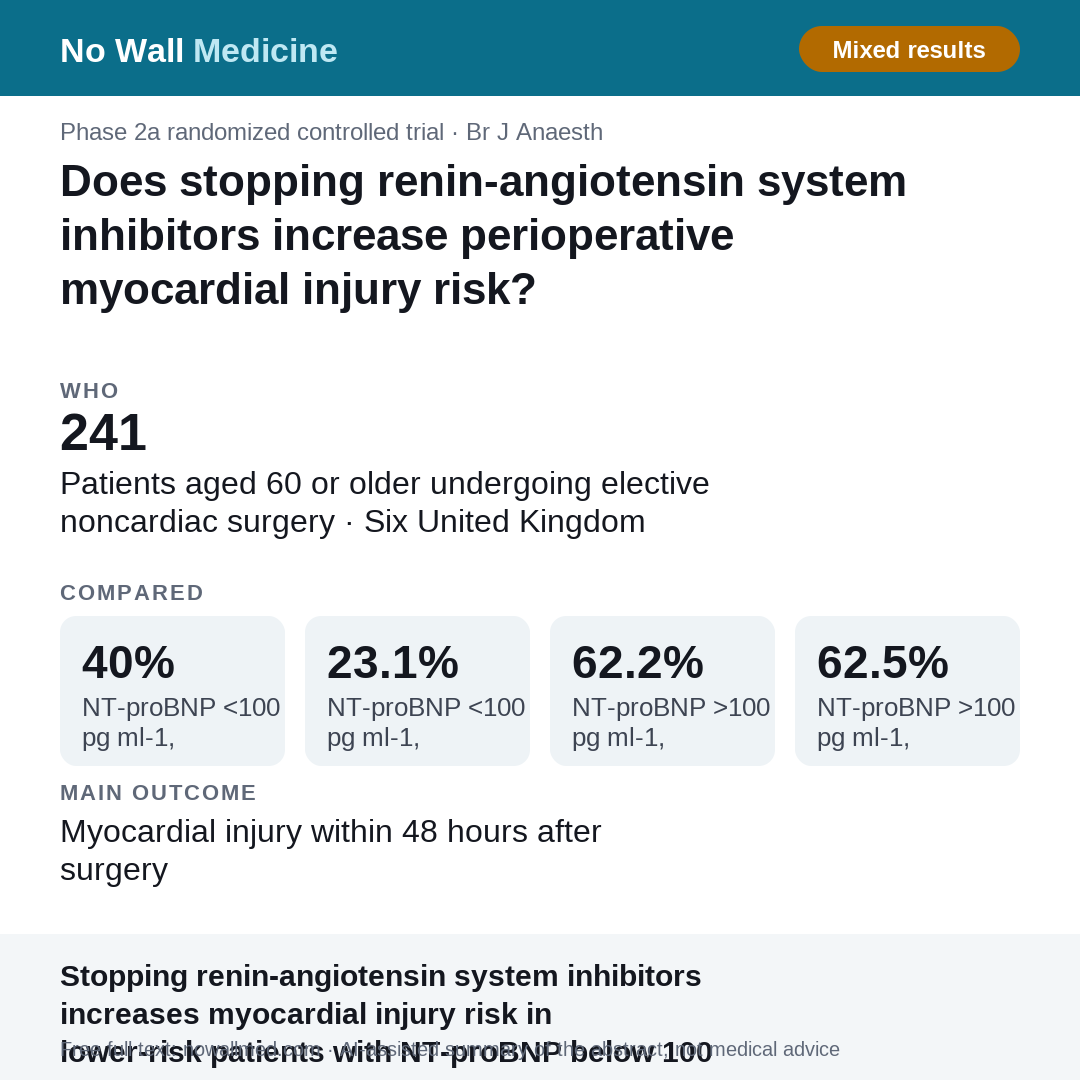
Preoperative N-terminal pro-B-type natriuretic peptide and myocardial injury after stopping or continuing renin-angiotensin system inhibitors in noncardiac surgery: a prespecified analysis of a phase 2 randomised controlled multicentre trial
Phase 2a randomized controlled trialMixed results
Does stopping renin-angiotensin system inhibitors increase perioperative myocardial injury risk?
Who
241
Patients aged 60 or older undergoing elective noncardiac surgery · Six United Kingdom centres
Compared
40%NT-proBNP <100 pg ml-1, stopped RAS inhibitors
23.1%NT-proBNP <100 pg ml-1, continued RAS inhibitors
62.2%NT-proBNP >100 pg ml-1, stopped RAS inhibitors
62.5%NT-proBNP >100 pg ml-1, continued RAS inhibitors
Main outcome
Myocardial injury within 48 hours after surgery
Result: OR 2.22 (95% CI 1.06-4.65) for NT-proBNP <100 pg ml-1
Bottom line: Stopping renin-angiotensin system inhibitors increases myocardial injury risk in lower-risk patients with NT-proBNP below 100 pg ml-1.
Br J Anaesth · 2024-02-09Download image
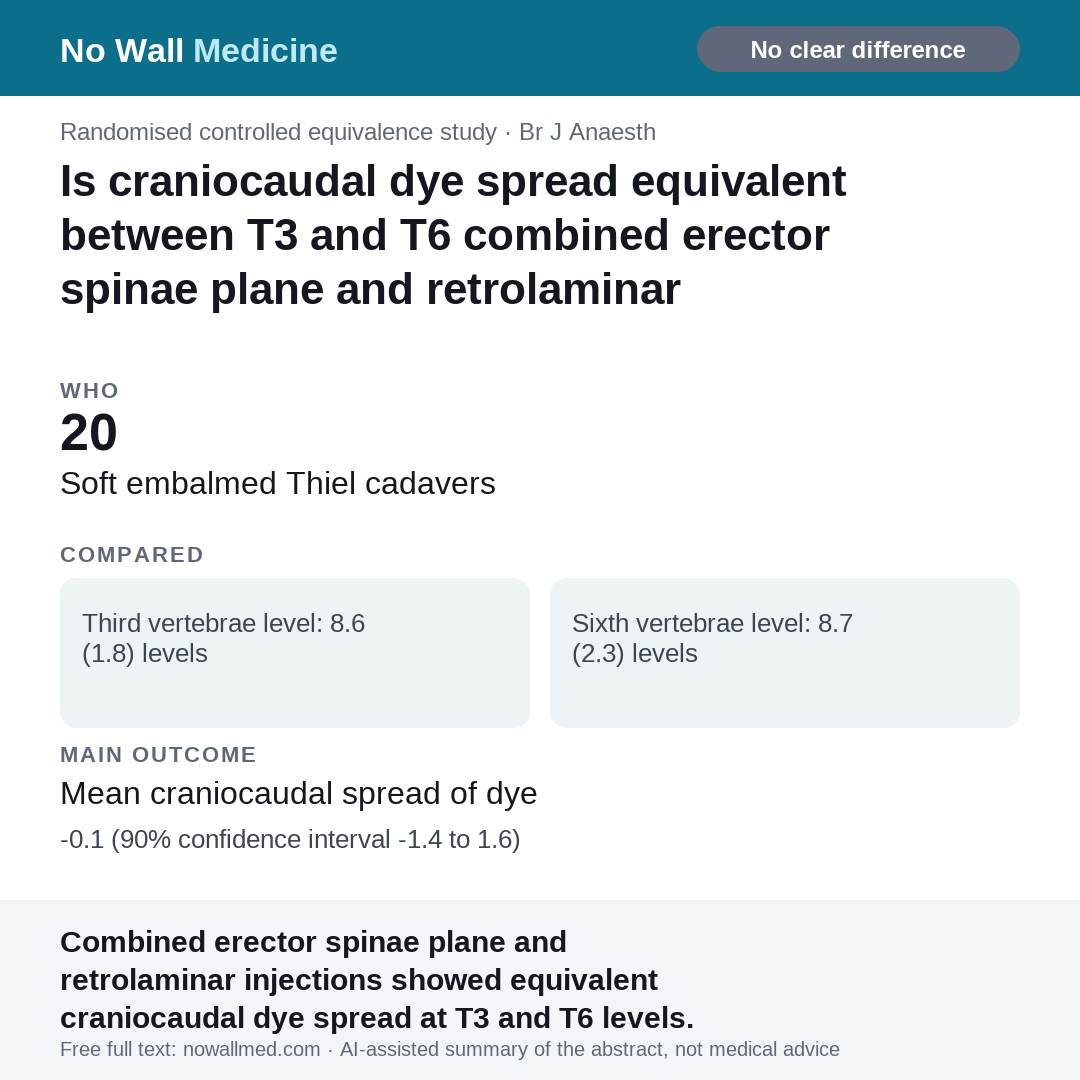
Craniocaudal spread and clinical translation for combined erector spinae plane block and retrolaminar block in soft embalmed cadavers: a randomised controlled equivalence study
Randomised controlled equivalence studyNo clear difference
Is craniocaudal dye spread equivalent between T3 and T6 combined erector spinae plane and retrolaminar injections?
Who
20
Soft embalmed Thiel cadavers
Compared
Third vertebrae level: 8.6 (1.8) levels
Sixth vertebrae level: 8.7 (2.3) levels
Main outcome
Mean craniocaudal spread of dye
Result: -0.1 (90% confidence interval -1.4 to 1.6)
Bottom line: Combined erector spinae plane and retrolaminar injections showed equivalent craniocaudal dye spread at T3 and T6 levels.
Limitation: The study was performed in soft embalmed cadavers.
Br J Anaesth · 2024-02-09Download image
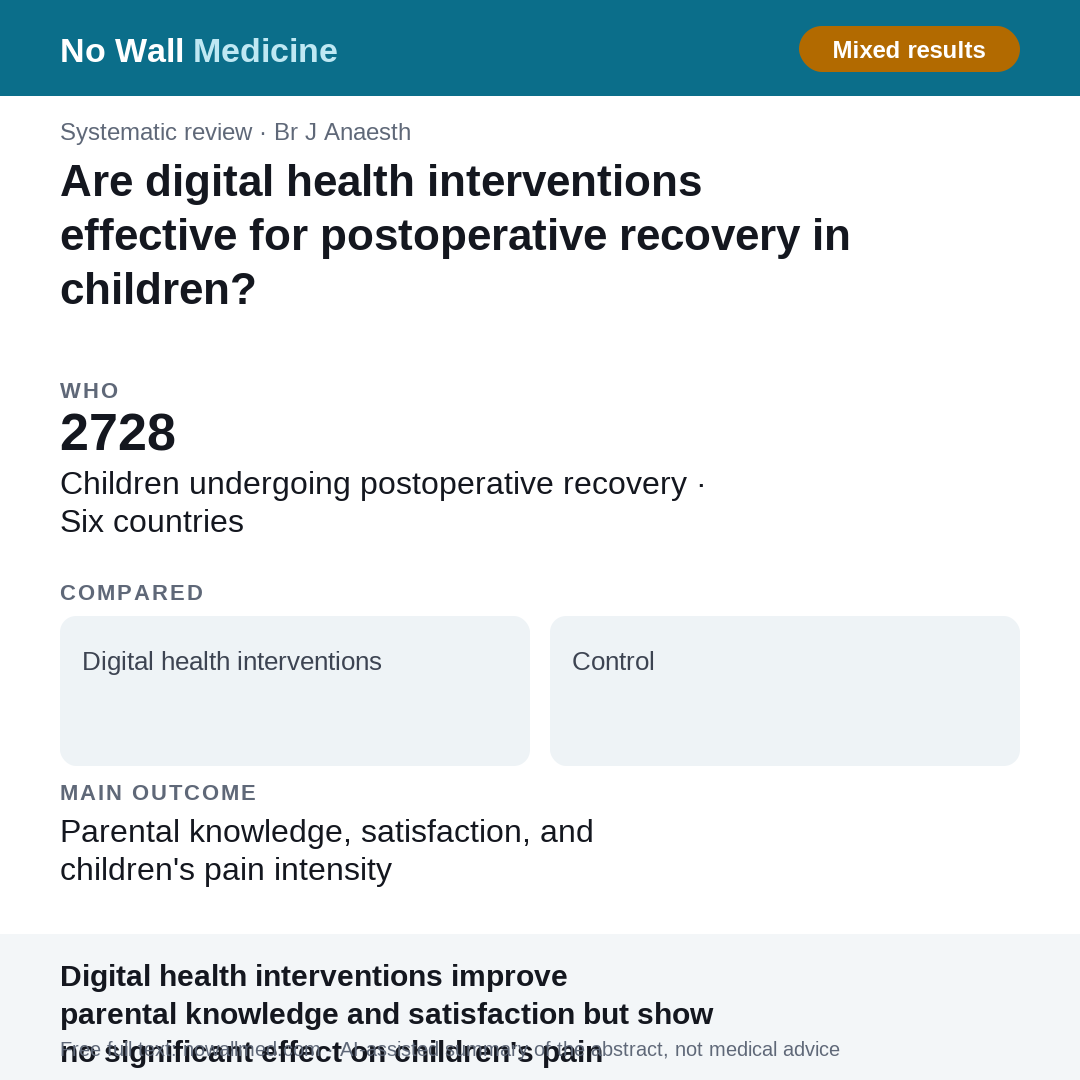
Digital health interventions for postoperative recovery in children: a systematic review
Systematic reviewMixed results
Are digital health interventions effective for postoperative recovery in children?
Who
2728
Children undergoing postoperative recovery · Six countries
Compared
Digital health interventions
Control
Main outcome
Parental knowledge, satisfaction, and children's pain intensity
Result: standard mean difference 2.16 (95% confidence interval 1.45-2.87) for knowledge and satisfaction
Bottom line: Digital health interventions improve parental knowledge and satisfaction but show no significant effect on children's pain intensity.
Limitation: More research is needed for child-centric interventions with validated outcome measures.
Br J Anaesth · 2024-02-09Download image
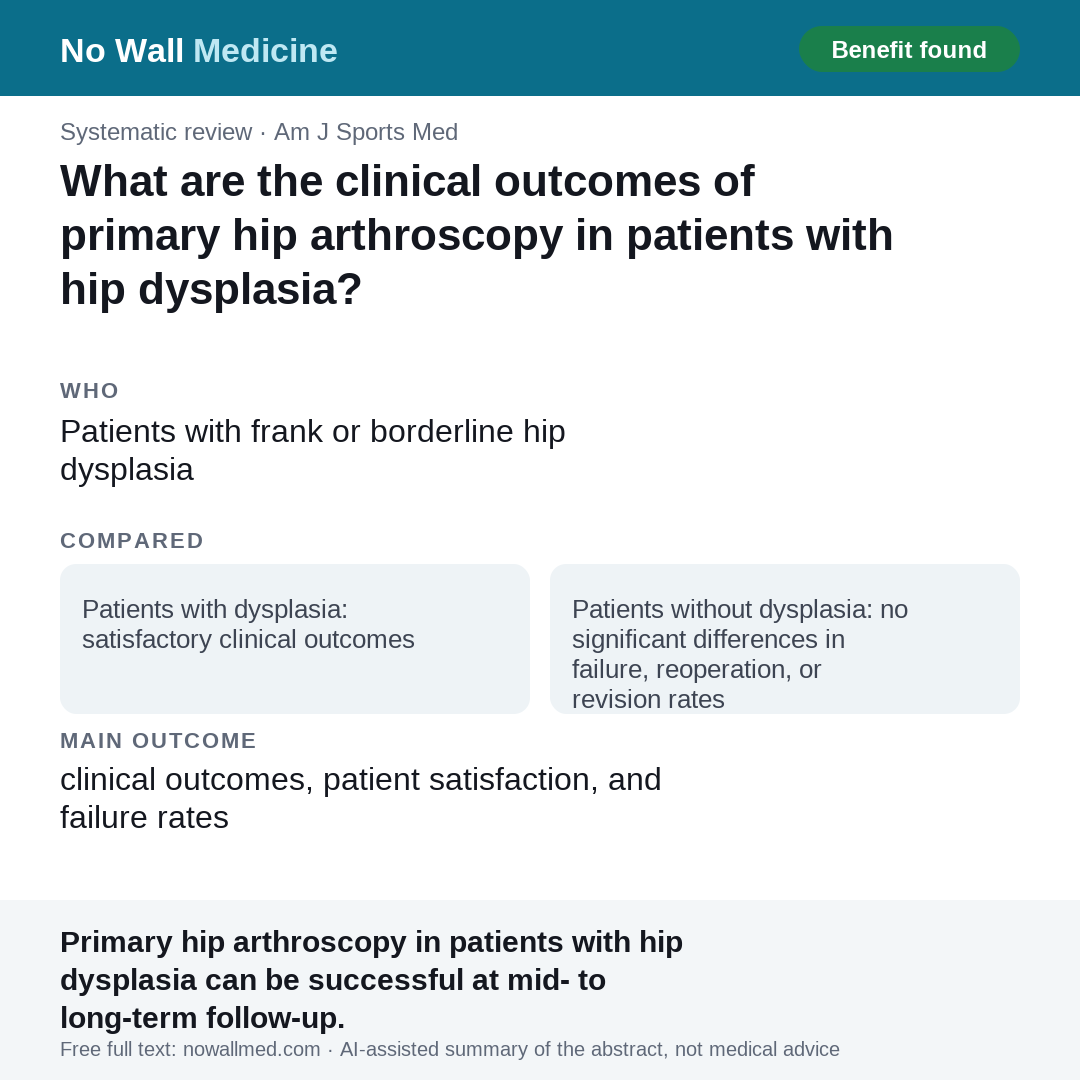
Primary Hip Arthroscopy in Patients With Acetabular Dysplasia: A Systematic Review of Published Clinical Outcomes at Minimum 5-Year Follow-up
Systematic reviewBenefit found
What are the clinical outcomes of primary hip arthroscopy in patients with hip dysplasia?
Who
Patients with frank or borderline hip dysplasia
Compared
Patients with dysplasia: satisfactory clinical outcomes
Patients without dysplasia: no significant differences in failure, reoperation, or revision rates
Main outcome
clinical outcomes, patient satisfaction, and failure rates
Bottom line: Primary hip arthroscopy in patients with hip dysplasia can be successful at mid- to long-term follow-up.
Limitation: Lateral center-edge angle is a singular, 2-dimensional measure that does not differentiate instability from impingement.
Am J Sports Med · 2024-02-09Download image
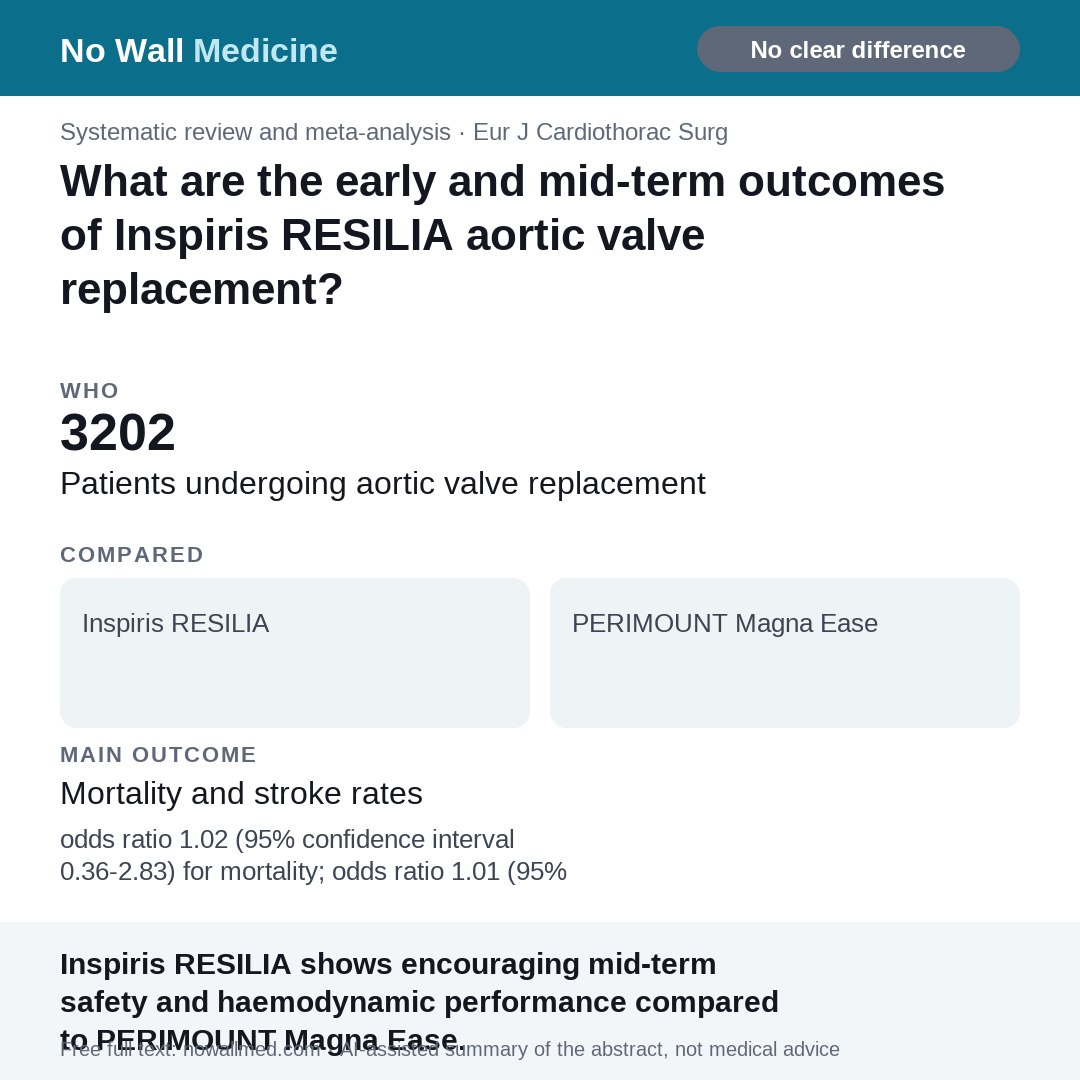
Early and mid-term outcomes after aortic valve replacement using a novel tissue bioprosthesis: a systematic review
Systematic review and meta-analysisNo clear difference
What are the early and mid-term outcomes of Inspiris RESILIA aortic valve replacement?
Who
3202
Patients undergoing aortic valve replacement
Compared
Inspiris RESILIA
PERIMOUNT Magna Ease
Main outcome
Mortality and stroke rates
Result: odds ratio 1.02 (95% confidence interval 0.36-2.83) for mortality; odds ratio 1.01 (95% confidence interval 0.38-2.73) for stroke
Bottom line: Inspiris RESILIA shows encouraging mid-term safety and haemodynamic performance compared to PERIMOUNT Magna Ease.
Eur J Cardiothorac Surg · 2024-02-09Download image
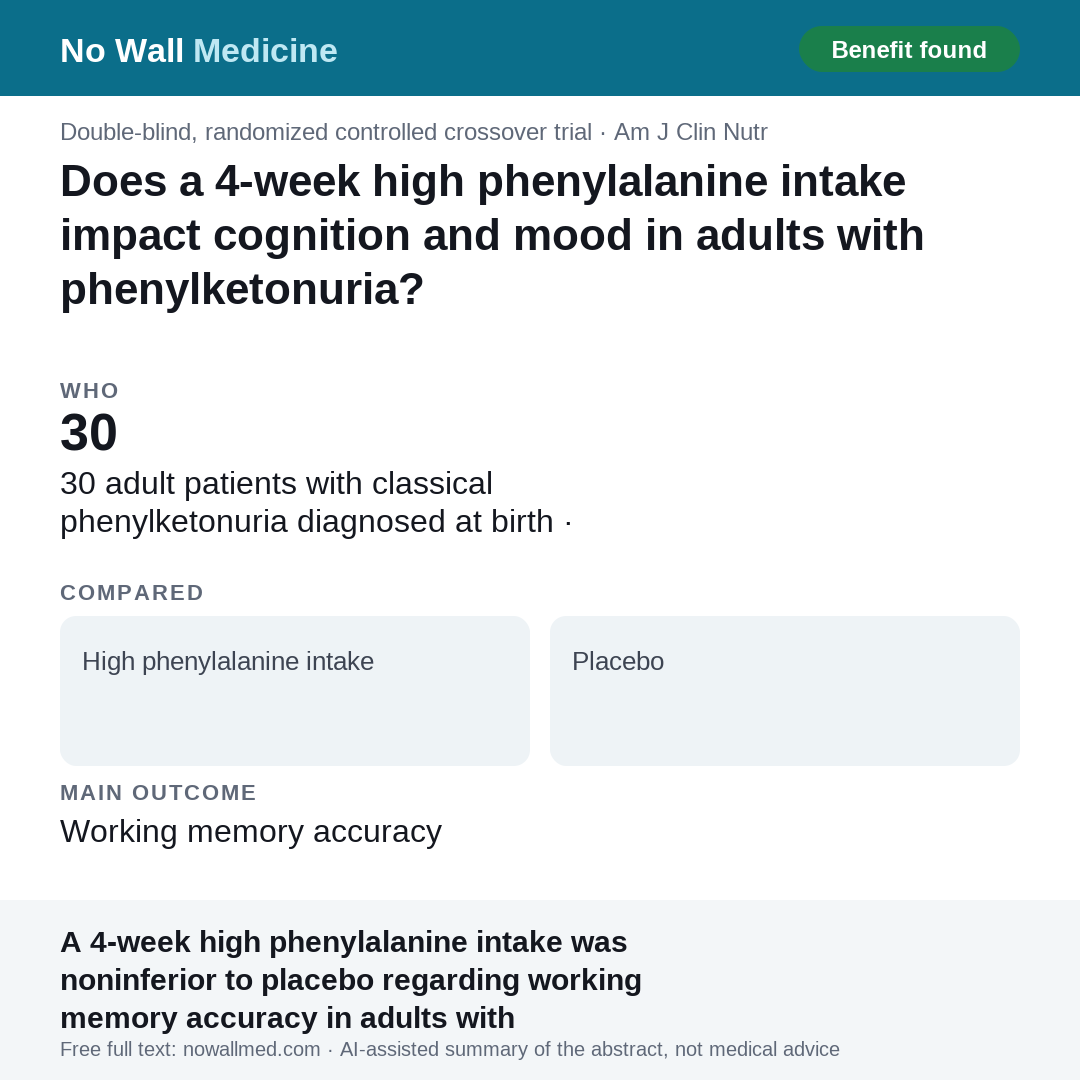
Cognition after a 4-week high phenylalanine intake in adults with phenylketonuria - a randomized controlled trial
Double-blind, randomized controlled crossover trialBenefit found
Does a 4-week high phenylalanine intake impact cognition and mood in adults with phenylketonuria?
Who
30
30 adult patients with classical phenylketonuria diagnosed at birth · Single-site
Compared
High phenylalanine intake
Placebo
Main outcome
Working memory accuracy
Result: point estimate 0.49; lower limit 95% confidence interval -1.99
Bottom line: A 4-week high phenylalanine intake was noninferior to placebo regarding working memory accuracy in adults with phenylketonuria.
Am J Clin Nutr · 2024-02-09Download image
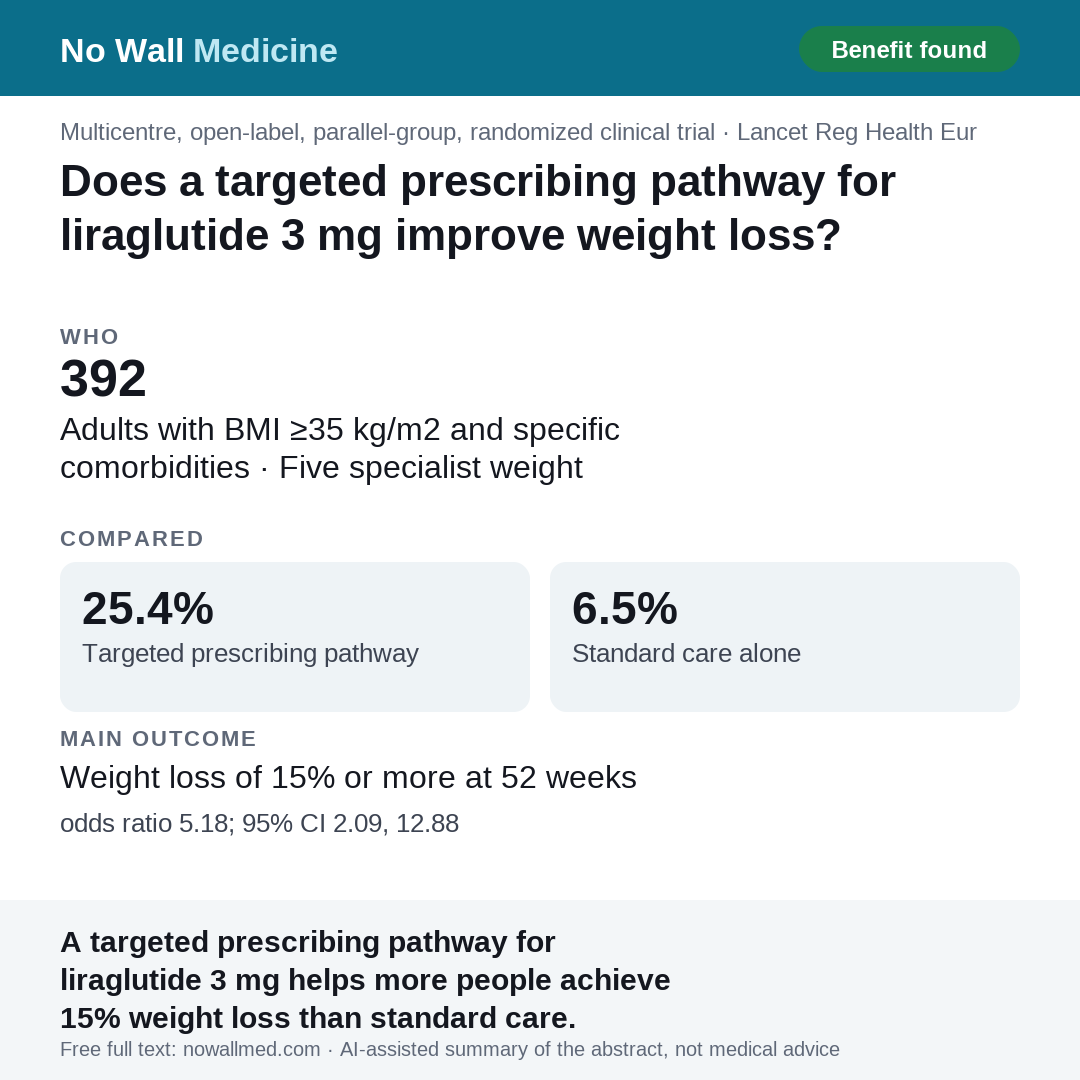
Effectiveness of integrating a pragmatic pathway for prescribing liraglutide 3.0 mg in weight management services (STRIVE study): a multicentre, open-label, parallel-group, randomized controlled trial
Multicentre, open-label, parallel-group, randomized clinical trialBenefit found
Does a targeted prescribing pathway for liraglutide 3 mg improve weight loss?
Who
392
Adults with BMI ≥35 kg/m2 and specific comorbidities · Five specialist weight management services in Ireland and UK
Compared
25.4%Targeted prescribing pathway (51/201)
6.5%Standard care alone (6/93)
Main outcome
Weight loss of 15% or more at 52 weeks
Result: odds ratio 5.18; 95% CI 2.09, 12.88
Bottom line: A targeted prescribing pathway for liraglutide 3 mg helps more people achieve 15% weight loss than standard care.
Funded by: Novo Nordisk A/S
Lancet Reg Health Eur · 2024-02-09Download image
The impact of psychiatric comorbidity on Parkinson's disease outcomes: a systematic review and meta-analysis
Systematic review and meta-analysisKey finding
How do psychiatric comorbidities affect prognosis and neurological outcomes in Parkinson's disease?
Who
165,828
Individuals with Parkinson's disease
Compared
Psychosis: cognitive impairment SMD 0.44 (95% CI 0.23-0.66)
Depression: cognitive impairment SMD 0.37 (95% CI 0.10-0.65)
Apathy: cognitive impairment SMD 0.60 (95% CI 0.02-1.19)
Main outcome
Cognitive impairment, death, disability, disease progression, falls, fractures, or care home admission
Bottom line: Psychosis, depression, and apathy are associated with worse neurological outcomes and poorer prognosis in Parkinson's disease.
Limitation: Whether this relationship is causal is not clear.
Funded by: Wellcome Trust, NIHR, and National Brain Appeal
Lancet Reg Health Eur · 2024-02-09Download image

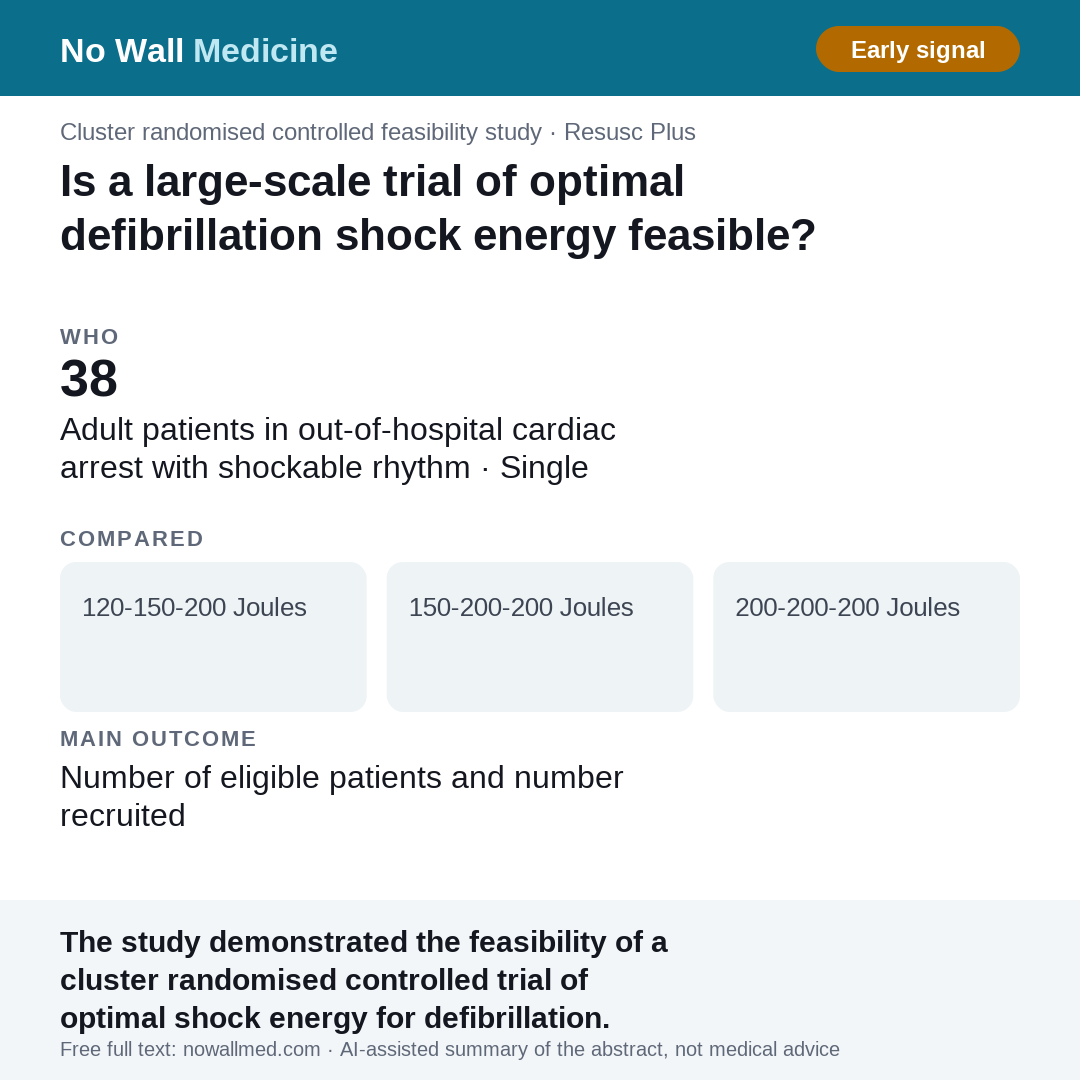
Prehospital optimal shock energy for defibrillation (POSED): A cluster randomised controlled feasibility trial
Cluster randomised controlled feasibility studyEarly signal
Is a large-scale trial of optimal defibrillation shock energy feasible?
Who
38
Adult patients in out-of-hospital cardiac arrest with shockable rhythm · Single ambulance service in southern England
Compared
120-150-200 Joules
150-200-200 Joules
200-200-200 Joules
Main outcome
Number of eligible patients and number recruited
Bottom line: The study demonstrated the feasibility of a cluster randomised controlled trial of optimal shock energy for defibrillation.
Resusc Plus · 2024-02-09Download image
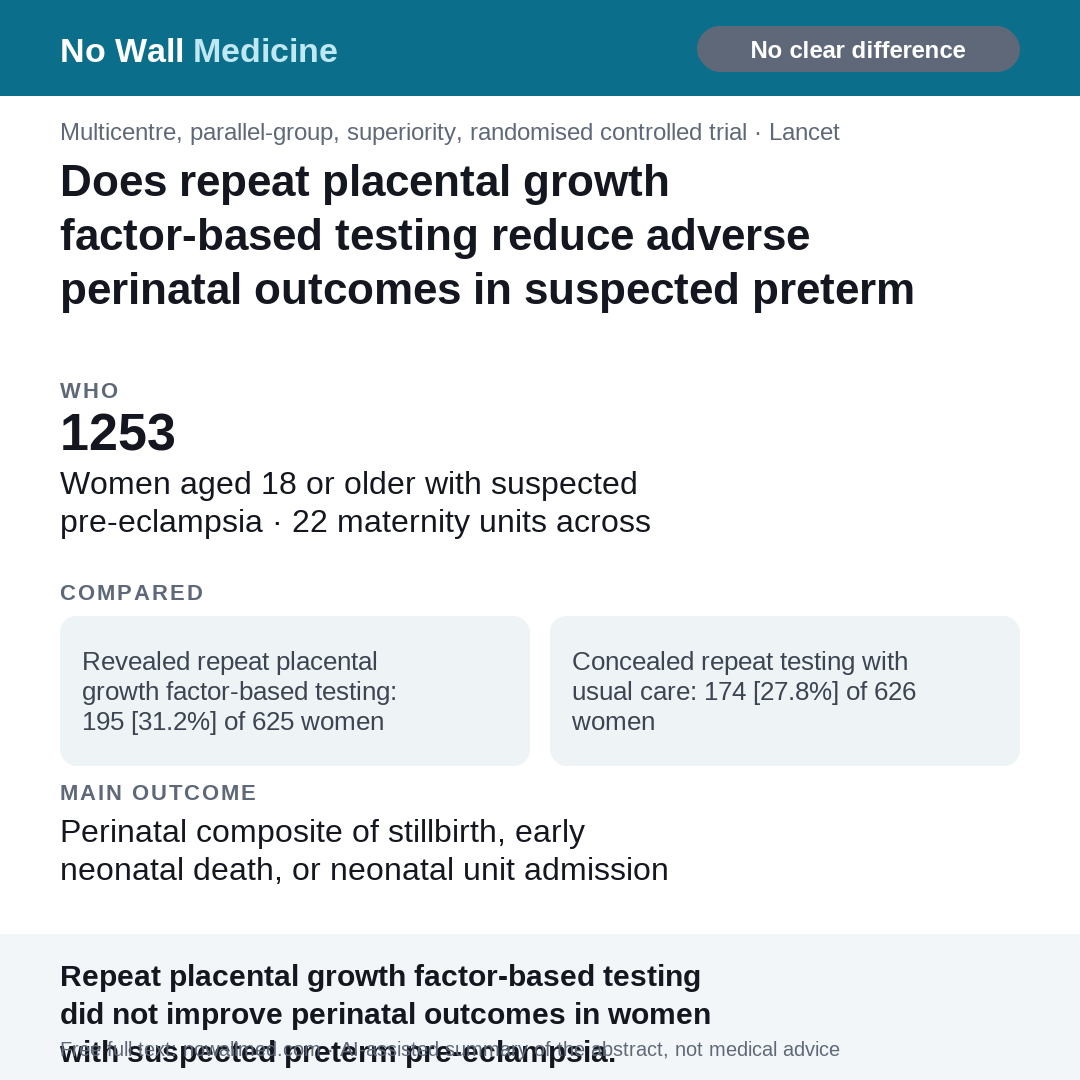
Repeat placental growth factor-based testing in women with suspected preterm pre-eclampsia (PARROT-2): a multicentre, parallel-group, superiority, randomised controlled trial
Multicentre, parallel-group, superiority, randomised controlled trialNo clear difference
Does repeat placental growth factor-based testing reduce adverse perinatal outcomes in suspected preterm pre-eclampsia?
Who
1253
Women aged 18 or older with suspected pre-eclampsia · 22 maternity units across England, Scotland, and Wales
Compared
Revealed repeat placental growth factor-based testing: 195 [31.2%] of 625 women
Concealed repeat testing with usual care: 174 [27.8%] of 626 women
Main outcome
Perinatal composite of stillbirth, early neonatal death, or neonatal unit admission
Result: relative risk 1.21 (95% CI 0.95-1.33)
Bottom line: Repeat placental growth factor-based testing did not improve perinatal outcomes in women with suspected preterm pre-eclampsia.
Funded by: Tommy's Charity, Jon Moulton Charitable Trust, and NIHR
Lancet · 2024-02-08Download image
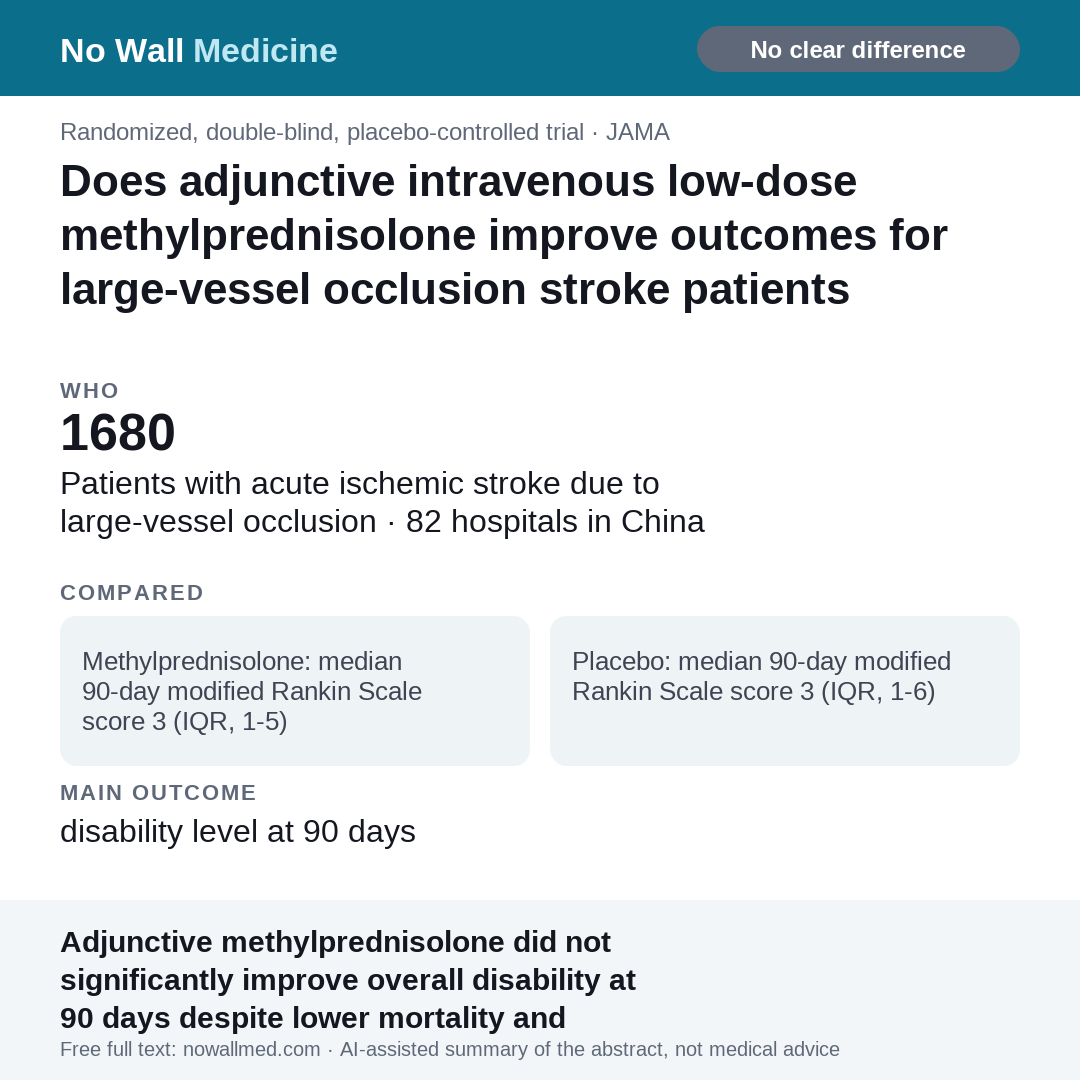
Methylprednisolone as Adjunct to Endovascular Thrombectomy for Large-Vessel Occlusion Stroke: The MARVEL Randomized Clinical Trial
Randomized, double-blind, placebo-controlled trialNo clear difference
Does adjunctive intravenous low-dose methylprednisolone improve outcomes for large-vessel occlusion stroke patients undergoing endovascular thrombectomy?
Who
1680
Patients with acute ischemic stroke due to large-vessel occlusion · 82 hospitals in China
Compared
Methylprednisolone: median 90-day modified Rankin Scale score 3 (IQR, 1-5)
Placebo: median 90-day modified Rankin Scale score 3 (IQR, 1-6)
Main outcome
disability level at 90 days
Result: adjusted generalized odds ratio 1.10 (95% CI, 0.96-1.25)
Bottom line: Adjunctive methylprednisolone did not significantly improve overall disability at 90 days despite lower mortality and hemorrhage rates.
JAMA · 2024-02-08Download image
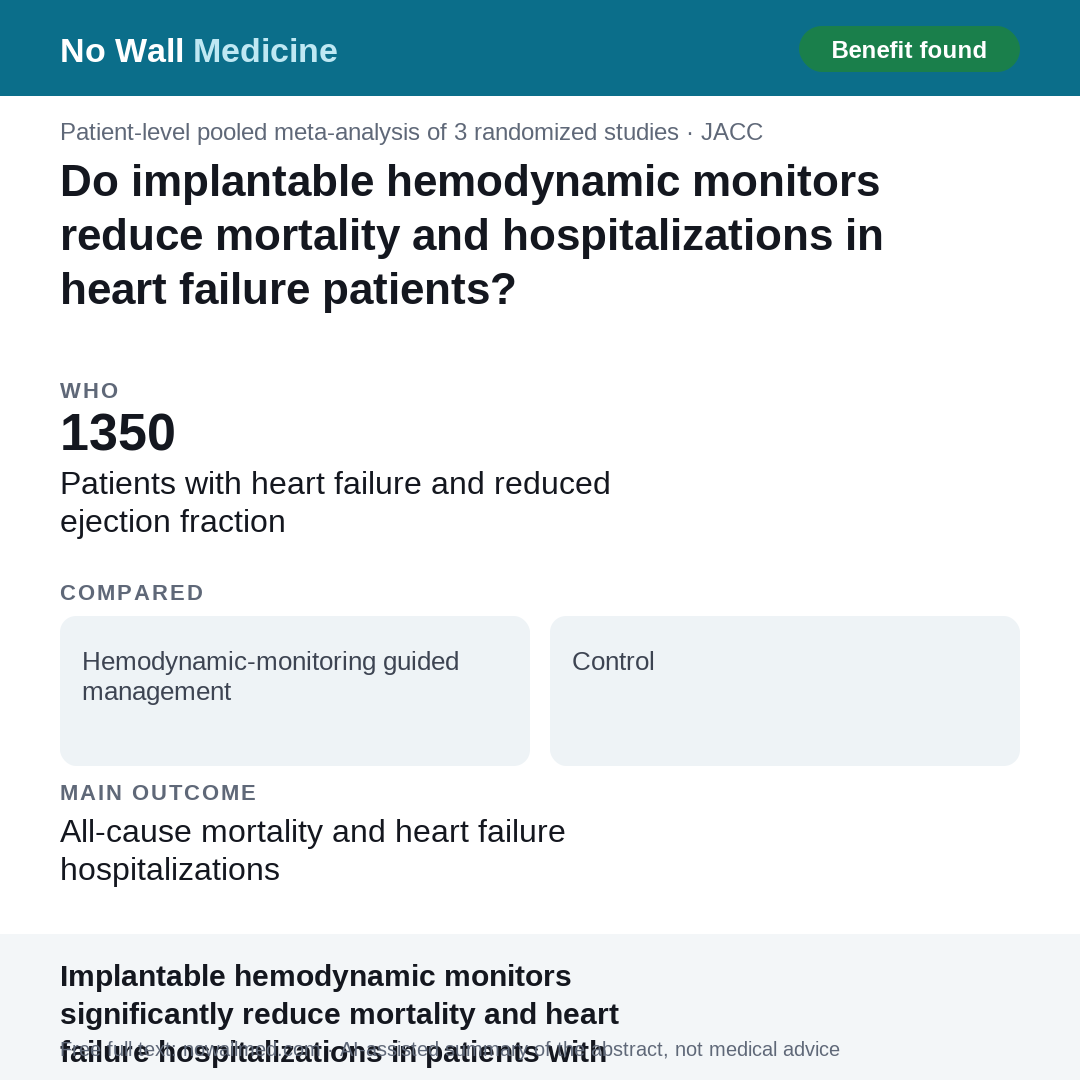
Implantable Hemodynamic Monitors Improve Survival in Patients With Heart Failure and Reduced Ejection Fraction
Patient-level pooled meta-analysis of 3 randomized studiesBenefit found
Do implantable hemodynamic monitors reduce mortality and hospitalizations in heart failure patients?
Who
1350
Patients with heart failure and reduced ejection fraction
Compared
Hemodynamic-monitoring guided management
Control
Main outcome
All-cause mortality and heart failure hospitalizations
Result: hazard ratio 0.75 (95% CI: 0.57-0.99) for mortality; hazard ratio 0.64 (95% CI: 0.55-0.76) for hospitalizations
Bottom line: Implantable hemodynamic monitors significantly reduce mortality and heart failure hospitalizations in patients with reduced ejection fraction.
Limitation: Previous meta-analyses were limited by absence of patient-level data and short-term follow-up.
JACC · 2024-02-08Download image
Randomized Trial of Effect of Bariatric Surgery on Blood Pressure After 5 Years
Randomized clinical trialBenefit found
What are the long-term effects of bariatric surgery on hypertension control and remission?
Who
100
Subjects with obesity grade 1 or 2 plus hypertension
Compared
Medical therapy alone: 13.7% medication reduction rate
Roux-en-Y gastric bypass plus medical therapy: 80.7% medication reduction rate
Main outcome
Reduction of at least 30% of antihypertensive medications
Result: relative risk 5.91 (95% CI 2.58-13.52)
Bottom line: Roux-en-Y gastric bypass surgery provides effective and durable hypertension control and medication reduction compared to medical therapy alone.
JACC · 2024-02-08Download image

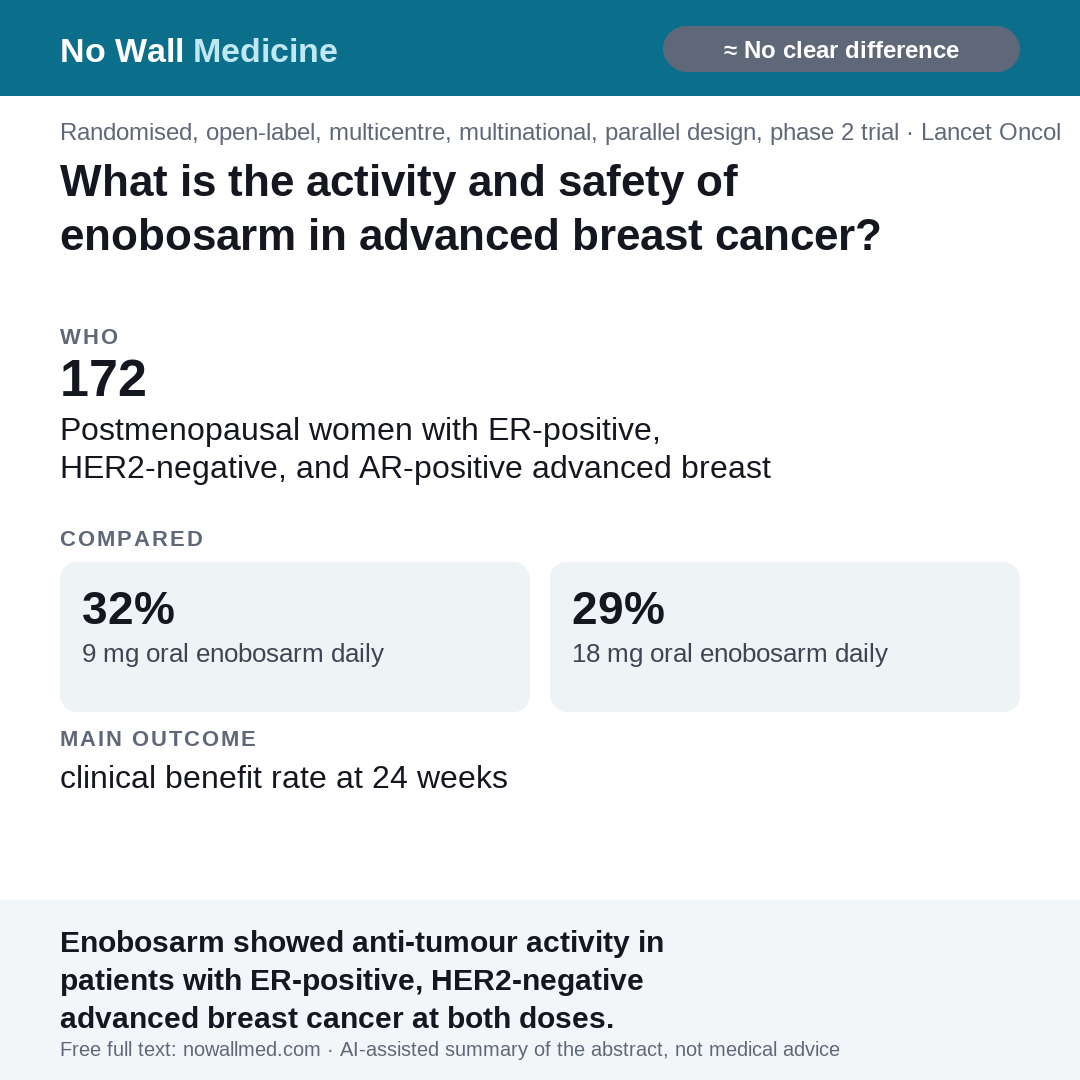
Activity and safety of enobosarm, a novel, oral, selective androgen receptor modulator, in androgen receptor-positive, oestrogen receptor-positive, and HER2-negative advanced breast cancer (Study G200802): a randomised, open-label, multicentre, multinational, parallel design, phase 2 trial
Randomised, open-label, multicentre, multinational, parallel design, phase 2 trialNo clear difference
What is the activity and safety of enobosarm in advanced breast cancer?
Who
172
Postmenopausal women with ER-positive, HER2-negative, and AR-positive advanced breast cancer · 35 cancer treatment centres in nine countries
Compared
32%9 mg oral enobosarm daily (16/50)
29%18 mg oral enobosarm daily (15/52)
Main outcome
clinical benefit rate at 24 weeks
Bottom line: Enobosarm showed anti-tumour activity in patients with ER-positive, HER2-negative advanced breast cancer at both doses.
Funded by: GTx
Lancet Oncol · 2024-02-08Download image
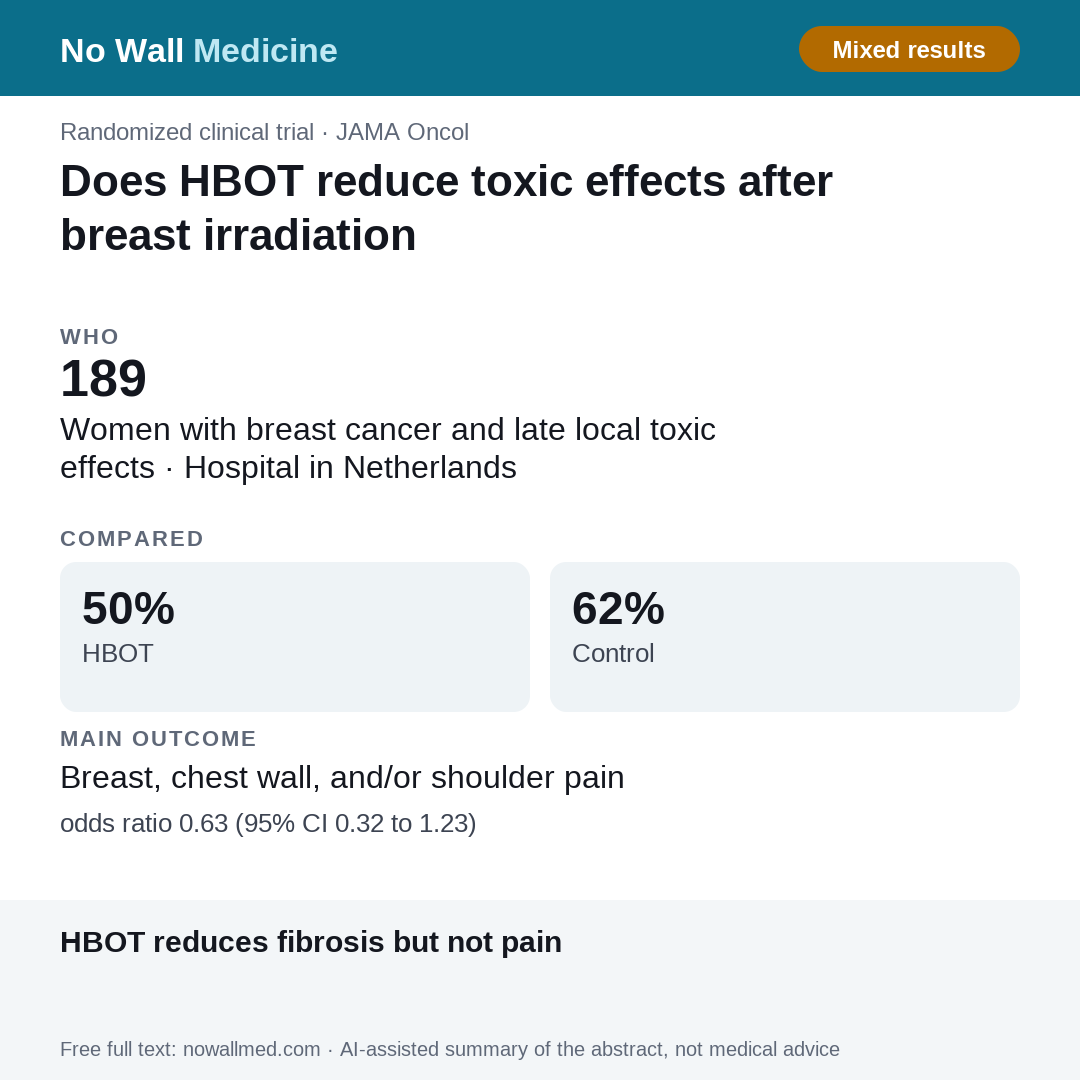
Hyperbaric Oxygen Therapy and Late Local Toxic Effects in Patients With Irradiated Breast Cancer: A Randomized Clinical Trial
Randomized clinical trialMixed results
Does HBOT reduce toxic effects after breast irradiation
Who
189
Women with breast cancer and late local toxic effects · Hospital in Netherlands
Compared
50%HBOT (58/115)
62%Control (32/52)
Main outcome
Breast, chest wall, and/or shoulder pain
Result: odds ratio 0.63 (95% CI 0.32 to 1.23)
Bottom line: HBOT reduces fibrosis but not pain
JAMA Oncol · 2024-02-08Download image
Efficacy, Safety, and Population Pharmacokinetics of MW032 Compared With Denosumab for Solid Tumor-Related Bone Metastases: A Randomized, Double-Blind, Phase 3 Equivalence Trial
Randomized, double-blind, phase 3 equivalence trialBenefit found
Is MW032 biosimilar to denosumab in patients with solid tumor-related bone metastases?
Who
708
Patients with solid tumors with bone metastasis · 46 clinical sites in China
Compared
-72.0%MW032 (95% CI, -73.5% to -70.4%)
-72.7%denosumab (95% CI, -74.2% to -71.2%)
Main outcome
percentage change from baseline to week 13 of urinary N-telopeptide/creatinine ratio
Result: difference of 0.02 (90% CI -0.04 to 0.09)
Bottom line: MW032 is biosimilar to denosumab in efficacy, population pharmacokinetics, and safety for bone metastases.
JAMA Oncol · 2024-02-08Download image

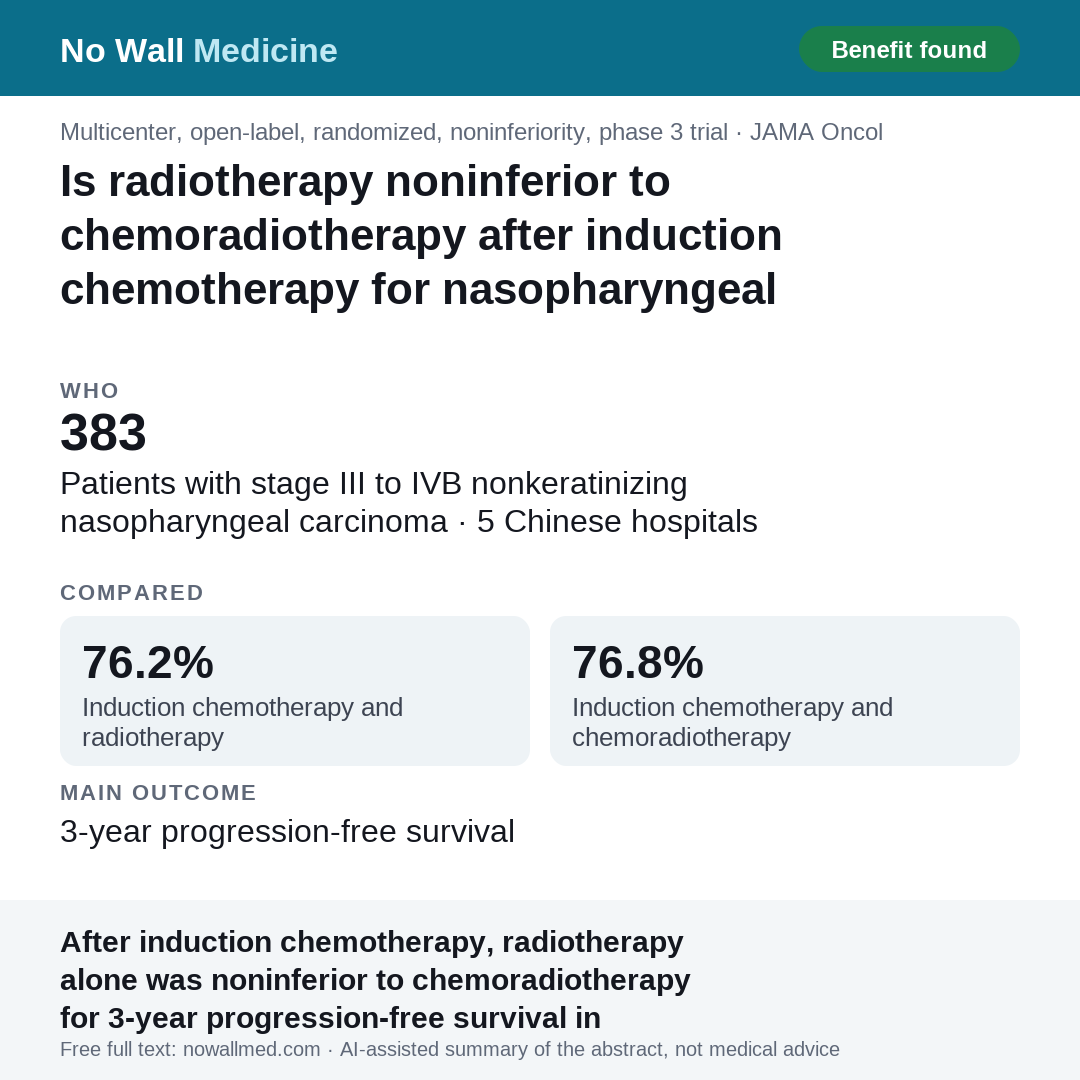
Induction Chemotherapy Followed by Radiotherapy vs Chemoradiotherapy in Nasopharyngeal Carcinoma: A Randomized Clinical Trial
Multicenter, open-label, randomized, noninferiority, phase 3 trialBenefit found
Is radiotherapy noninferior to chemoradiotherapy after induction chemotherapy for nasopharyngeal carcinoma?
Who
383
Patients with stage III to IVB nonkeratinizing nasopharyngeal carcinoma · 5 Chinese hospitals
Compared
76.2%Induction chemotherapy and radiotherapy
76.8%Induction chemotherapy and chemoradiotherapy
Main outcome
3-year progression-free survival
Result: difference of 0.6% (95% CI, -7.9% to 9.1%)
Bottom line: After induction chemotherapy, radiotherapy alone was noninferior to chemoradiotherapy for 3-year progression-free survival in nasopharyngeal carcinoma.
JAMA Oncol · 2024-02-08Download image
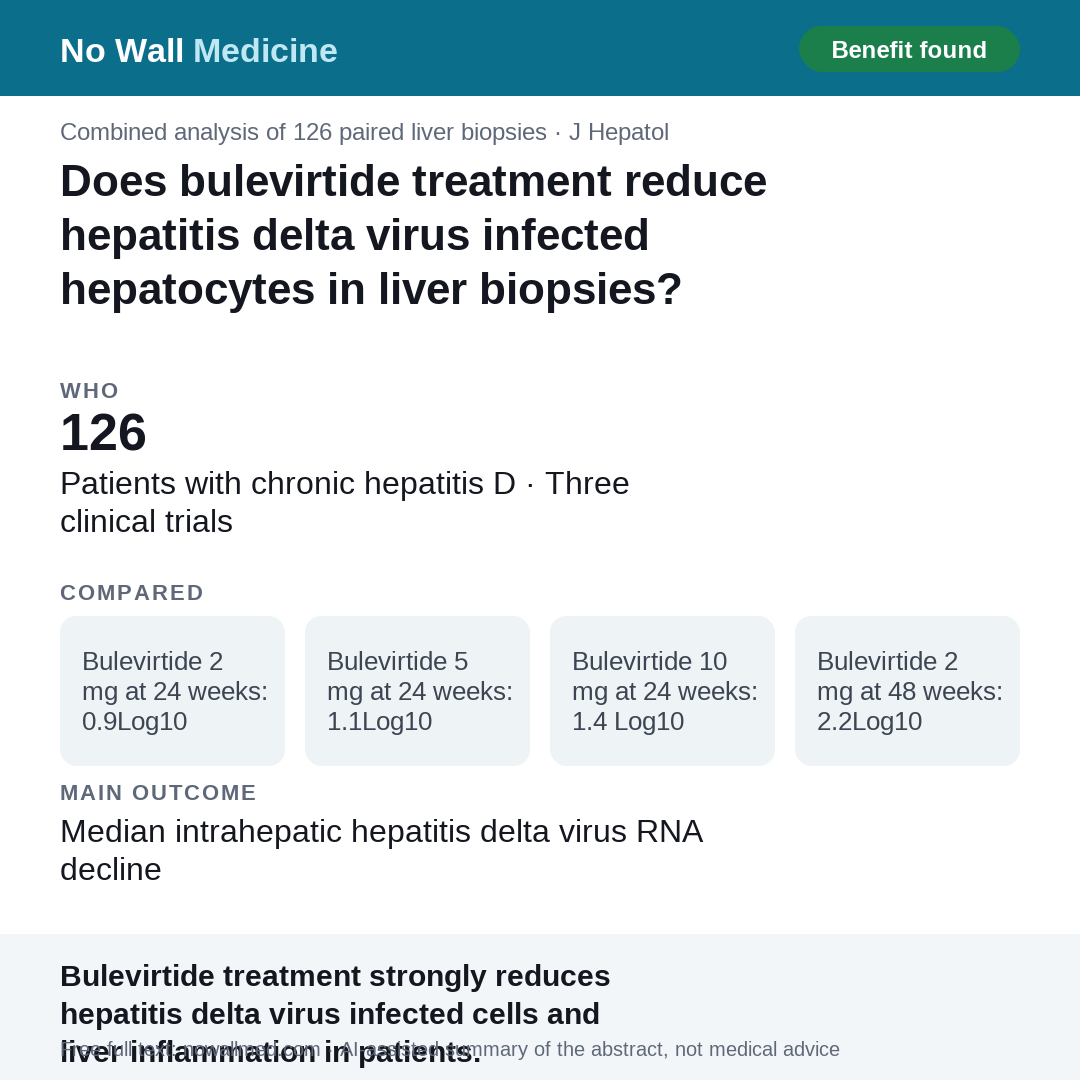
Blocking viral entry with bulevirtide reduces the number of HDV-infected hepatocytes in human liver biopsies
Combined analysis of 126 paired liver biopsiesBenefit found
Does bulevirtide treatment reduce hepatitis delta virus infected hepatocytes in liver biopsies?
Who
126
Patients with chronic hepatitis D · Three clinical trials
Compared
Bulevirtide 2 mg at 24 weeks: 0.9Log10
Bulevirtide 5 mg at 24 weeks: 1.1Log10
Bulevirtide 10 mg at 24 weeks: 1.4 Log10
Bulevirtide 2 mg at 48 weeks: 2.2Log10
Main outcome
Median intrahepatic hepatitis delta virus RNA decline
Bottom line: Bulevirtide treatment strongly reduces hepatitis delta virus infected cells and liver inflammation in patients.
J Hepatol · 2024-02-08Download image