Visual abstracts
New randomized trials and meta-analyses from leading journals at a glance: who was studied, what was compared, and what was found. Every paper is free to read in full.
All specialtiesCardiology 1873Oncology 1617Gastroenterology & Hepatology 715Infectious Disease 1191Neurology 775Psychiatry & Mental Health 916Pulmonology 805Critical Care 544Endocrinology & Diabetes 1013Pediatrics 1114Surgery 947Orthopedics & Sports Medicine 349Neurosurgery 234Cardiothoracic & Vascular Surgery 205Plastic & Reconstructive Surgery 293Nephrology 382Rheumatology 264Hematology 406Dermatology 206Ophthalmology 222Obstetrics & Gynecology 614Public & Global Health 364Radiology & Imaging 259Anesthesiology 376Urology 324ENT (Otolaryngology) 252Emergency Medicine 211Allergy & Immunology 121Geriatrics 401Family Medicine & Primary Care 222Medical Genetics & Genomics 205Pathology & Laboratory Medicine 59Physical Medicine & Rehabilitation 329Palliative Care 168Nutrition 504Digital Health & AI 994General Medicine 144
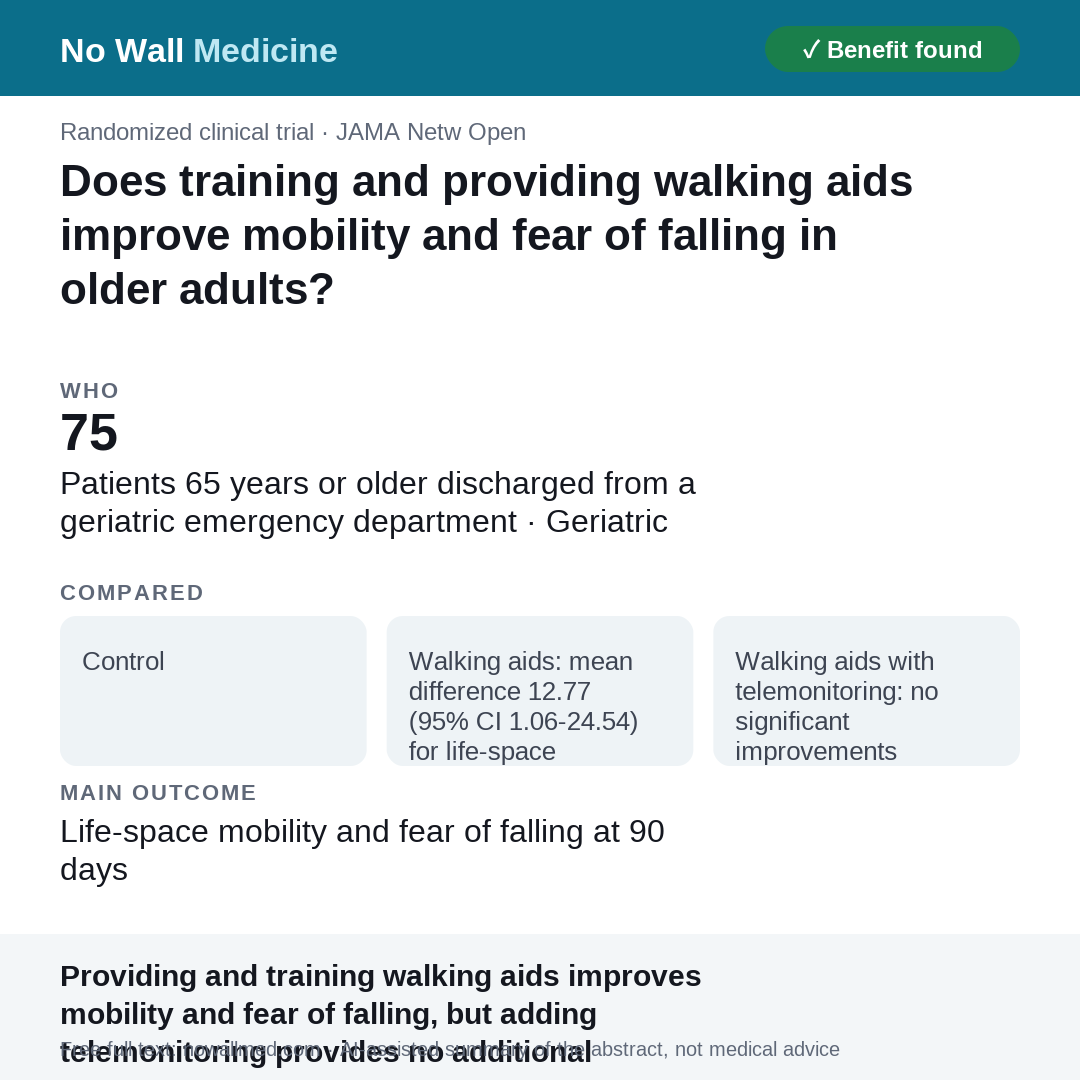
Walking Aids and Locomotion Training in the Emergency Department: A Randomized Clinical Trial
Randomized clinical trialBenefit found
Does training and providing walking aids improve mobility and fear of falling in older adults?
Who
75
Patients 65 years or older discharged from a geriatric emergency department · Geriatric Emergency Department in São Paulo, Brazil
Compared
Control
Walking aids: mean difference 12.77 (95% CI 1.06-24.54) for life-space mobility
Walking aids with telemonitoring: no significant improvements
Main outcome
Life-space mobility and fear of falling at 90 days
Result: mean difference 12.77 (95% CI 1.06-24.54) for life-space mobility
Bottom line: Providing and training walking aids improves mobility and fear of falling, but adding telemonitoring provides no additional benefit.
JAMA Netw Open · 2025-11-03Download image
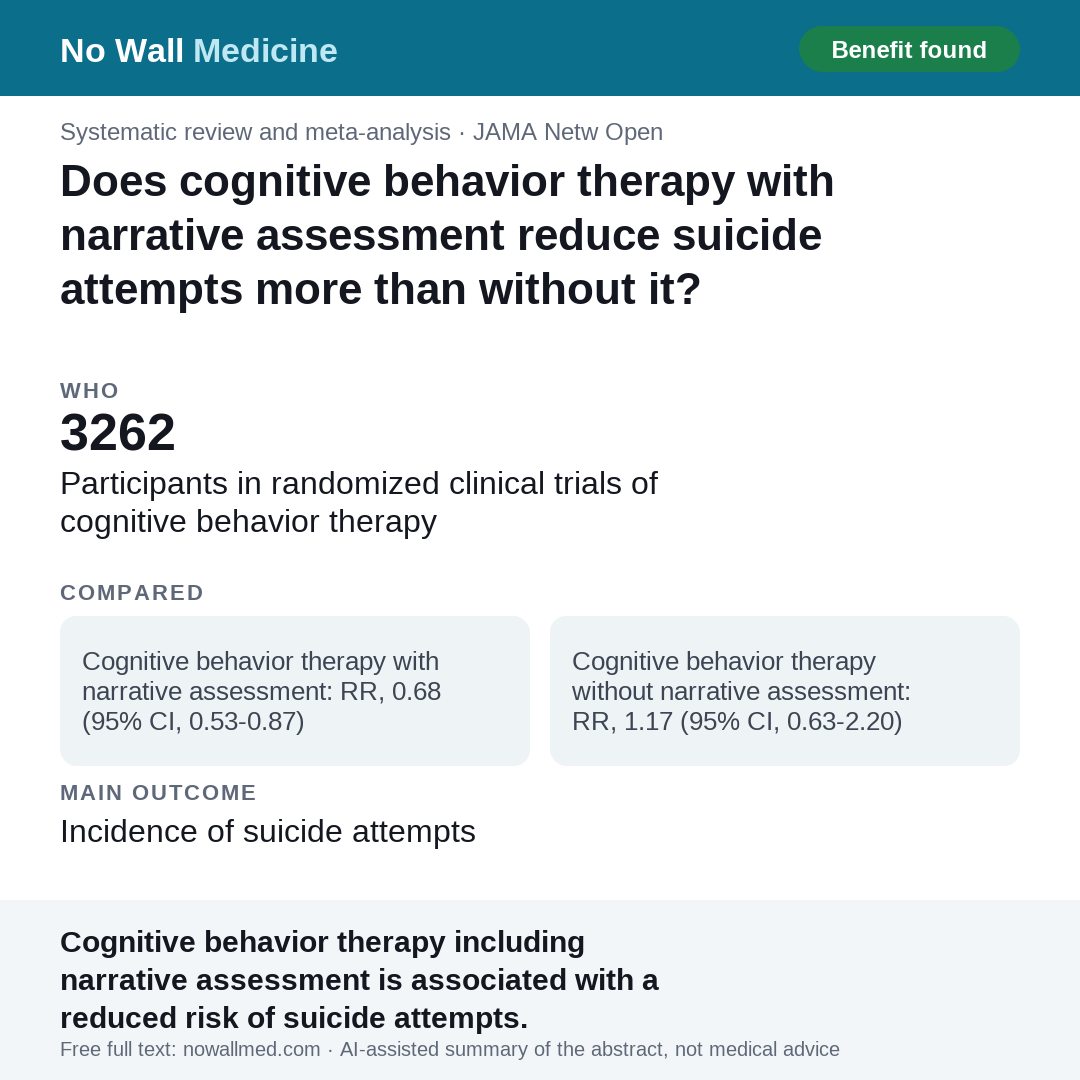
Cognitive Behavior Therapy With and Without Narrative Assessment and Suicide Attempts: A Systematic Review and Meta-Analysis
Systematic review and meta-analysisBenefit found
Does cognitive behavior therapy with narrative assessment reduce suicide attempts more than without it?
Who
3262
Participants in randomized clinical trials of cognitive behavior therapy
Compared
Cognitive behavior therapy with narrative assessment: RR, 0.68 (95% CI, 0.53-0.87)
Cognitive behavior therapy without narrative assessment: RR, 1.17 (95% CI, 0.63-2.20)
Main outcome
Incidence of suicide attempts
Result: RR, 0.68 (95% CI, 0.53-0.87)
Bottom line: Cognitive behavior therapy including narrative assessment is associated with a reduced risk of suicide attempts.
Limitation: Causal conclusions require direct head-to-head trials.
JAMA Netw Open · 2025-11-03Download image
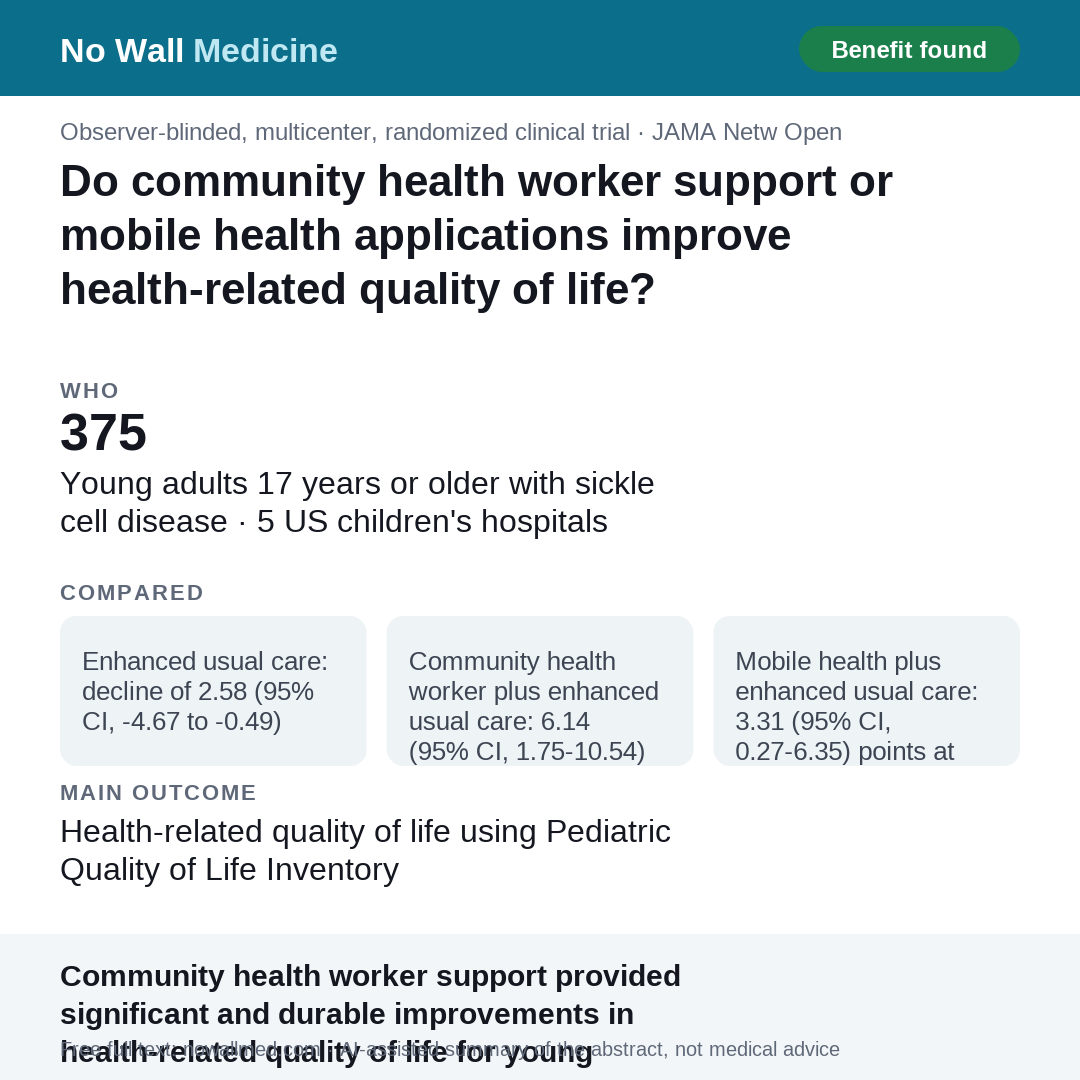
Community Health Worker and Mobile Health Interventions for Quality of Life Among Young Adults With Sickle Cell Disease: A Randomized Clinical Trial
Observer-blinded, multicenter, randomized clinical trialBenefit found
Do community health worker support or mobile health applications improve health-related quality of life?
Who
375
Young adults 17 years or older with sickle cell disease · 5 US children's hospitals
Compared
Enhanced usual care: decline of 2.58 (95% CI, -4.67 to -0.49)
Community health worker plus enhanced usual care: 6.14 (95% CI, 1.75-10.54) points at 18 months
Mobile health plus enhanced usual care: 3.31 (95% CI, 0.27-6.35) points at 6 months
Main outcome
Health-related quality of life using Pediatric Quality of Life Inventory
Result: 6.14 (95% CI, 1.75-10.54) points at 18 months for CHW
Bottom line: Community health worker support provided significant and durable improvements in health-related quality of life for young adults with sickle cell disease.
JAMA Netw Open · 2025-11-03Download image
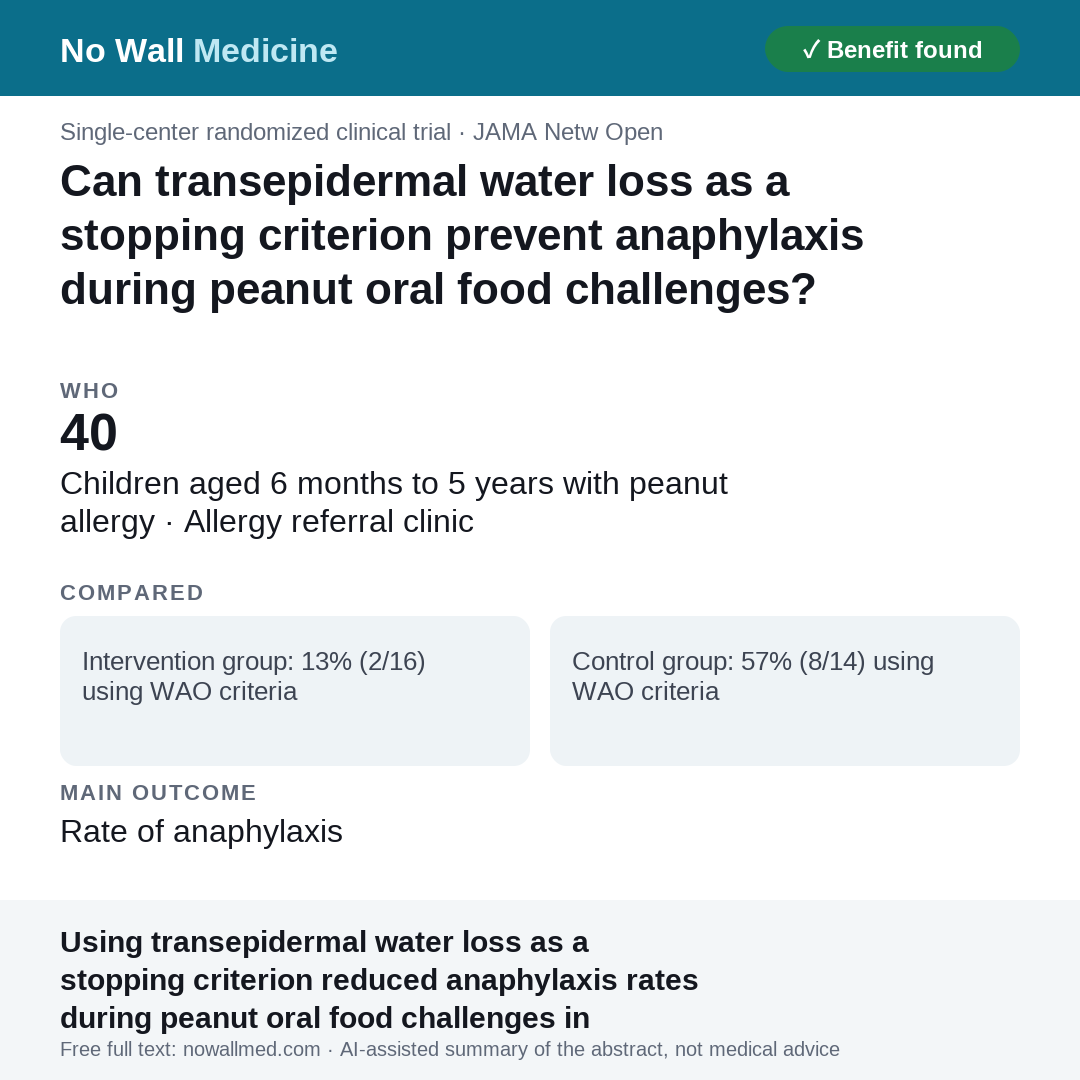
Transepidermal Water Loss in Oral Food Challenges in Children With Peanut Allergy: A Randomized Clinical Trial
Single-center randomized clinical trialBenefit found
Can transepidermal water loss as a stopping criterion prevent anaphylaxis during peanut oral food challenges?
Who
40
Children aged 6 months to 5 years with peanut allergy · Allergy referral clinic
Compared
Intervention group: 13% (2/16) using WAO criteria
Control group: 57% (8/14) using WAO criteria
Main outcome
Rate of anaphylaxis
Bottom line: Using transepidermal water loss as a stopping criterion reduced anaphylaxis rates during peanut oral food challenges in children.
Limitation: Replicating this study in a larger, multicenter population is a reasonable next step.
JAMA Netw Open · 2025-11-03Download image
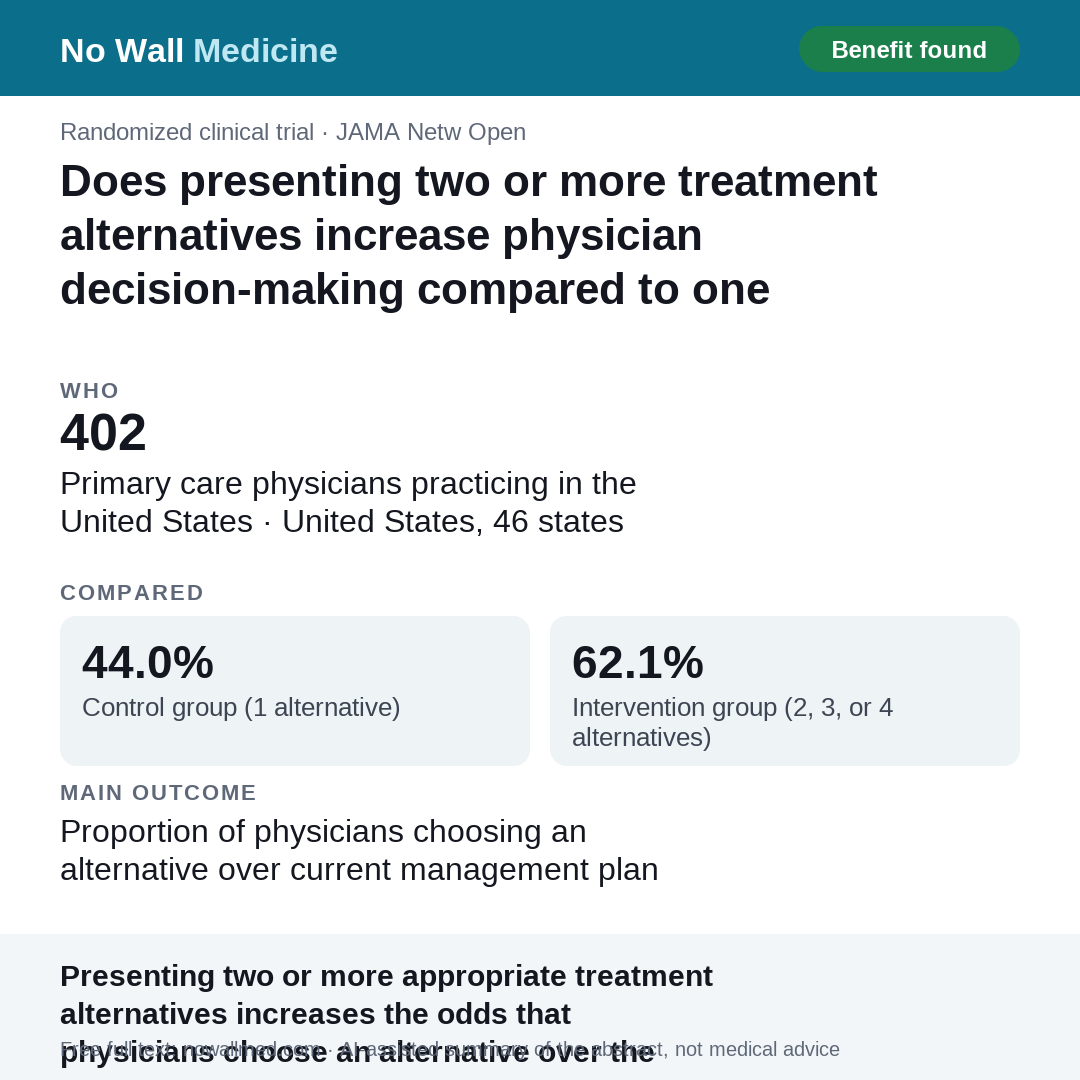
Multiple Suggested Care Alternatives and Decision-Making of Primary Care Physicians: A Randomized Clinical Trial
Randomized clinical trialBenefit found
Does presenting two or more treatment alternatives increase physician decision-making compared to one alternative?
Who
402
Primary care physicians practicing in the United States · United States, 46 states
Compared
44.0%Control group (1 alternative)
62.1%Intervention group (2, 3, or 4 alternatives)
Main outcome
Proportion of physicians choosing an alternative over current management plan
Result: adjusted odds ratio 1.90 (95% CI 1.09-3.30)
Bottom line: Presenting two or more appropriate treatment alternatives increases the odds that physicians choose an alternative over the current management plan.
JAMA Netw Open · 2025-11-03Download image
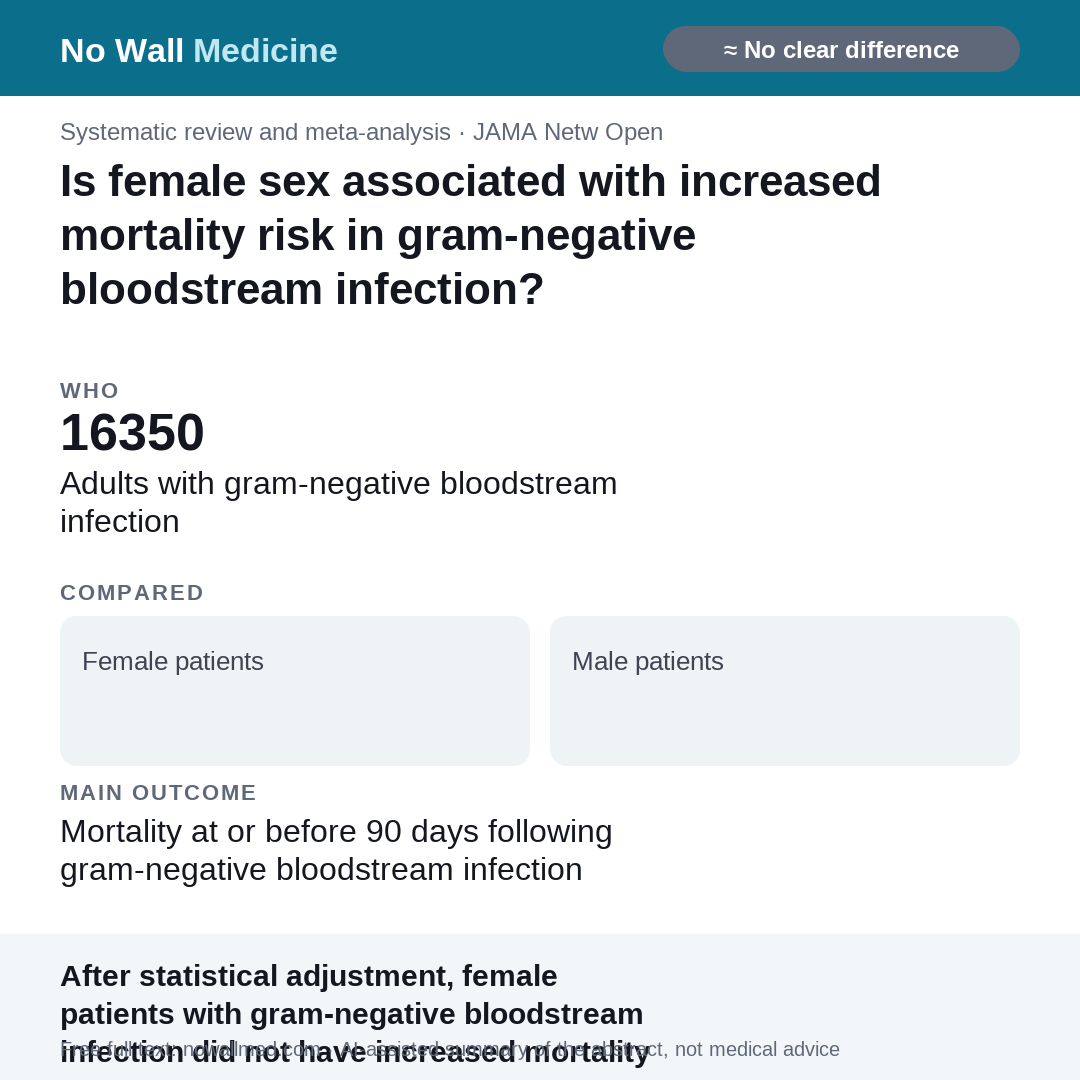
Female Sex and Mortality in Patients With Gram-Negative Bacteremia: A Systematic Review and Meta-Analysis
Systematic review and meta-analysisNo clear difference
Is female sex associated with increased mortality risk in gram-negative bloodstream infection?
Who
16350
Adults with gram-negative bloodstream infection
Compared
Female patients
Male patients
Main outcome
Mortality at or before 90 days following gram-negative bloodstream infection
Result: odds ratio 0.98 (95% CI 0.81-1.17)
Bottom line: After statistical adjustment, female patients with gram-negative bloodstream infection did not have increased mortality risk compared to males.
JAMA Netw Open · 2025-11-03Download image
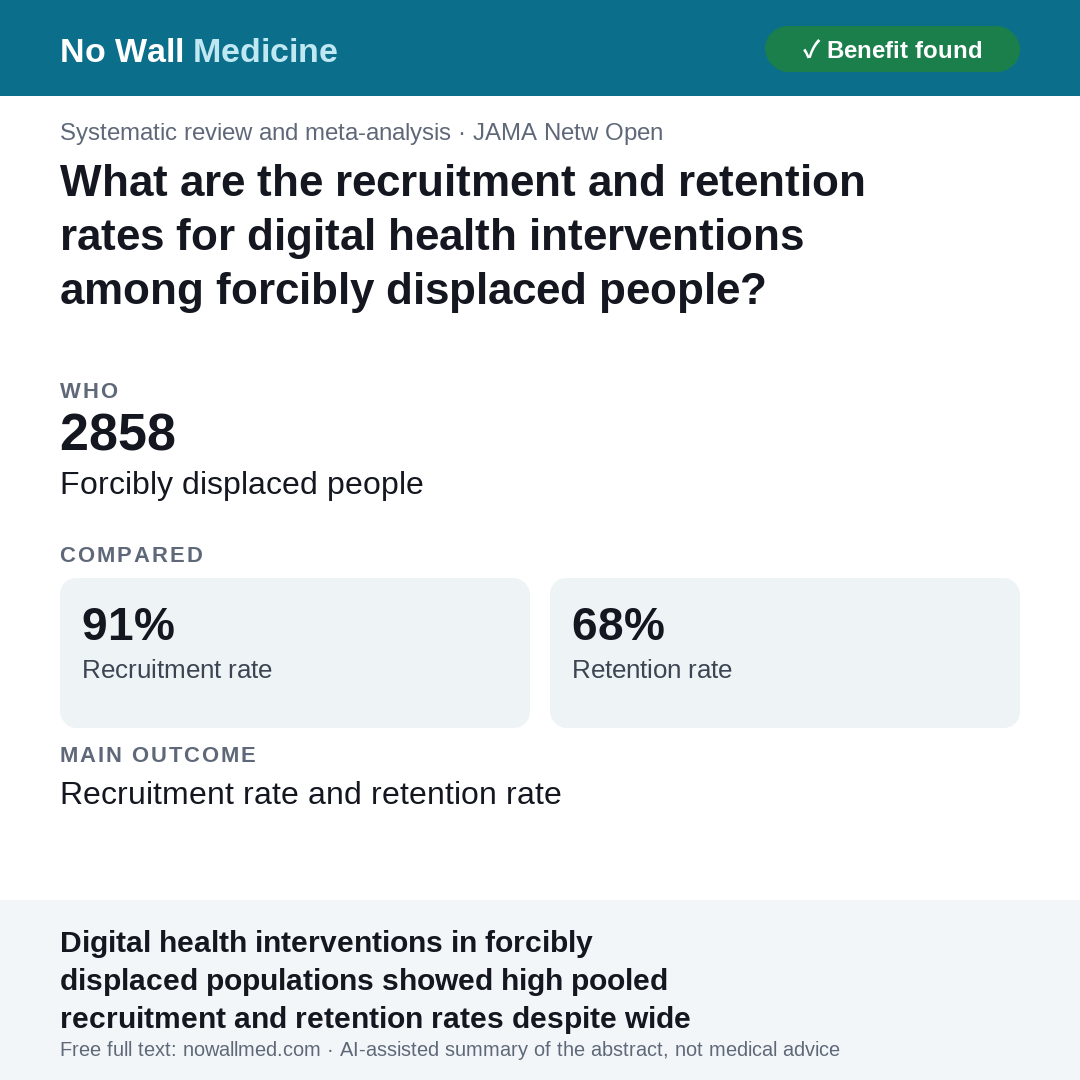
Use of Digital Health Interventions Among Forcibly Displaced People: A Systematic Review and Meta-Analysis
Systematic review and meta-analysisBenefit found
What are the recruitment and retention rates for digital health interventions among forcibly displaced people?
Who
2858
Forcibly displaced people
Compared
91%Recruitment rate (95% CI, 57%-99%)
68%Retention rate (95% CI, 48%-84%)
Main outcome
Recruitment rate and retention rate
Bottom line: Digital health interventions in forcibly displaced populations showed high pooled recruitment and retention rates despite wide variability.
JAMA Netw Open · 2025-11-03Download image
Acute Kidney Injury and Neurodevelopmental Outcomes in Extremely Premature Neonates: A Secondary Analysis of a Randomized Clinical Trial
Secondary analysis of a randomized clinical trialHarm found
Is acute kidney injury associated with neurodevelopmental outcomes in extremely premature neonates?
Who
660
Extremely premature neonates born at 24 to 27 weeks' gestation · 30 neonatal intensive care units in the US
Compared
Neonates with acute kidney injury: higher odds of the composite outcome
Neonates without acute kidney injury
Main outcome
Death or moderate to severe neurodevelopmental impairment
Result: adjusted odds ratio 1.53 (95% CI 1.07-2.18)
Bottom line: Acute kidney injury was associated with higher odds of death or moderate to severe neurodevelopmental impairment in extremely premature neonates.
JAMA Netw Open · 2025-11-03Download image
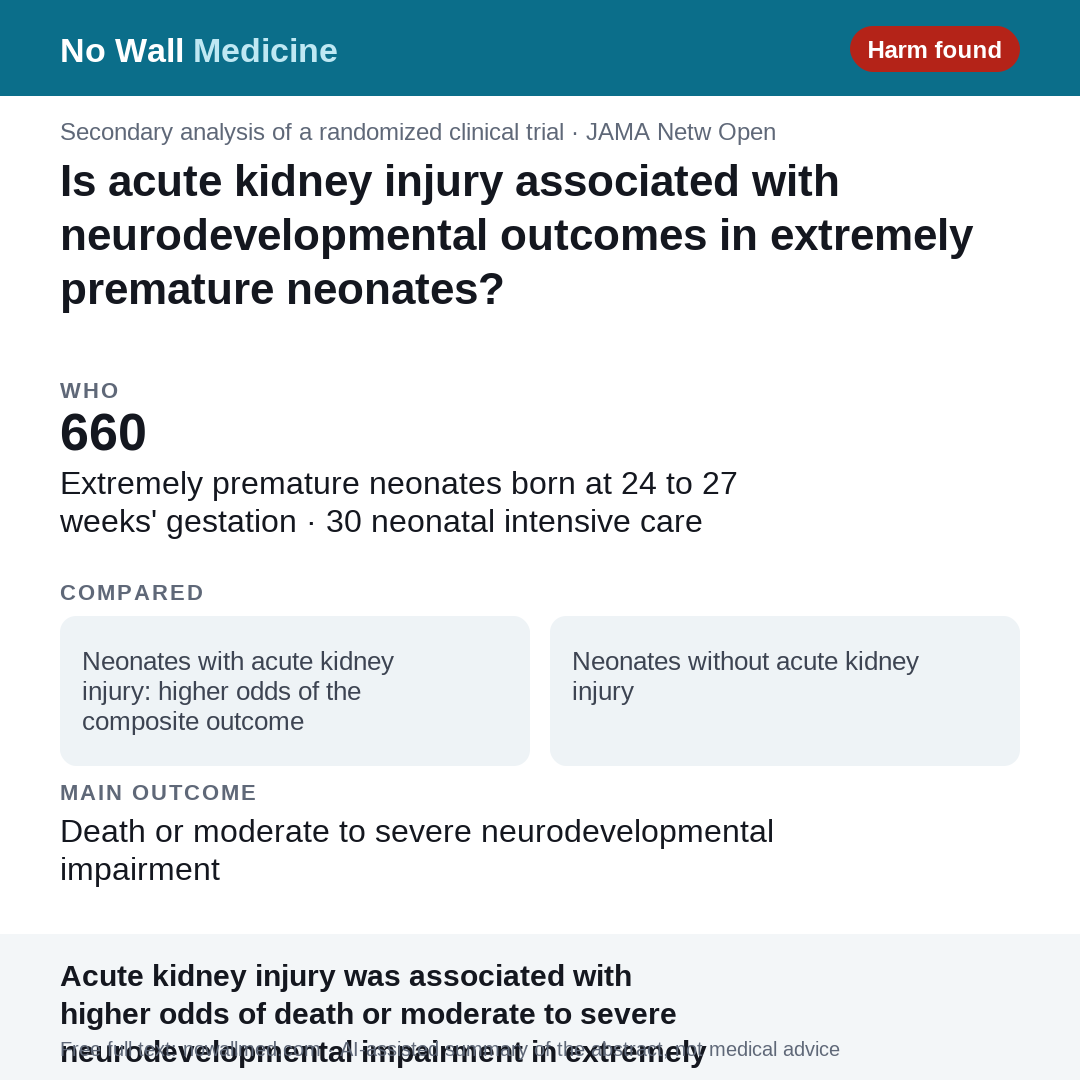
E-Health Intervention for Fear of Cancer Recurrence: A Randomized Clinical Trial
Randomized clinical trialBenefit found
Does a 10-week therapist-guided e-health intervention reduce fear of cancer recurrence?
Who
95
Cancer-free adult colorectal cancer survivors with clinical fear of cancer recurrence · Single-site, Denmark
Compared
Therapist-guided e-health intervention: -21.7 (95% CI, -30.1 to -13.3) points
Augmented control: -2.6 (95% CI, -7.8 to 2.6) points
Main outcome
Change in Fear of Cancer Recurrence Inventory total score
Result: 19.1 (95% CI, 10.0-28.3) points
Bottom line: A therapist-guided e-health intervention significantly reduced fear of cancer recurrence compared to an augmented control group.
JAMA Netw Open · 2025-11-03Download image
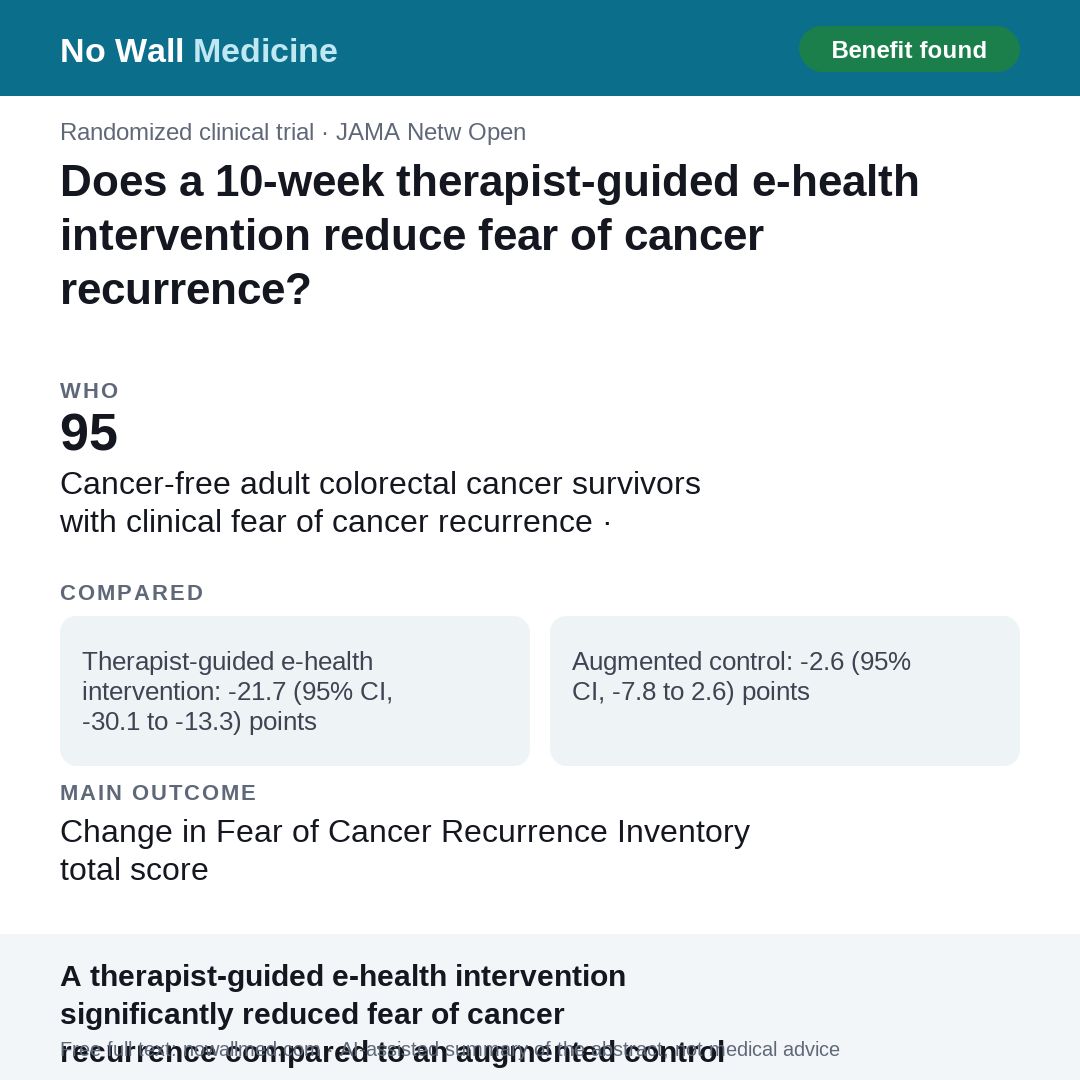
Self-Administered Hypnosis vs Sham Hypnosis for Hot Flashes: A Randomized Clinical Trial
Randomized clinical trialBenefit found
Hypnosis vs sham for hot flashes
Who
250
Postmenopausal women with hot flashes · Two US sites
Compared
Hypnosis: 53.4% decrease
Sham: 40.9% decrease
Main outcome
Hot flash score
Bottom line: Hypnosis reduces hot flashes more than sham
JAMA Netw Open · 2025-11-03Download image
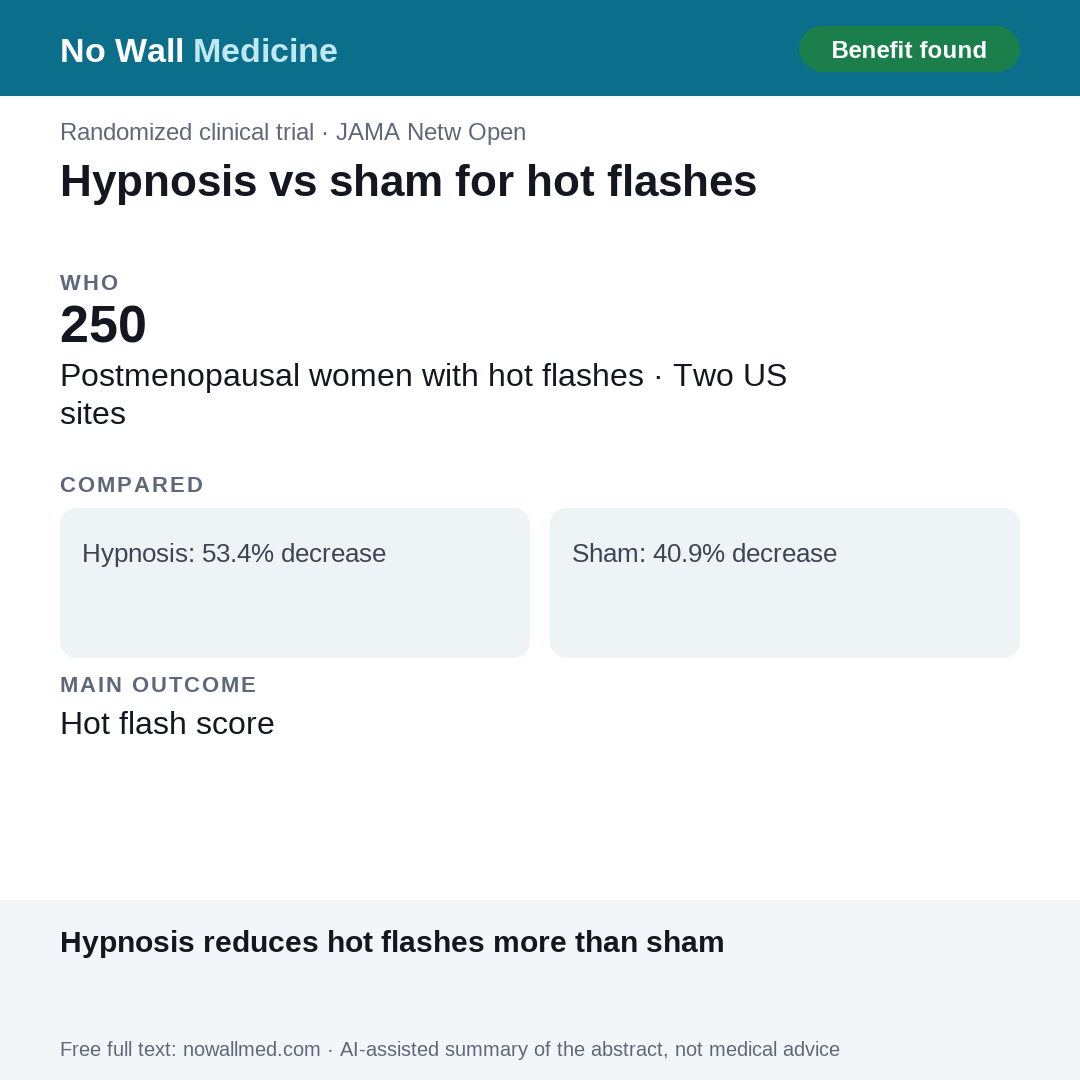
Resistance Exercise Therapy After COVID-19 Infection: A Randomized Clinical Trial
2-arm, multicenter, randomized clinical trialBenefit found
Does resistance exercise therapy improve exercise capacity, health status, and safety after COVID-19 infection?
Who
233
adults with a hospital or community diagnosis of COVID-19 infection · multicenter
Compared
resistance exercise intervention: 83 (118) m
control group: 47 (95) m
Main outcome
distance achieved in the Incremental Shuttle Walk Test
Result: adjusted mean difference, 36.5 m [95% CI, 6.6-66.3 m]
Bottom line: A 3-month resistance exercise program improves walking distance, quality of life, anxiety, depression, and grip strength after COVID-19.
JAMA Netw Open · 2025-11-03Download image
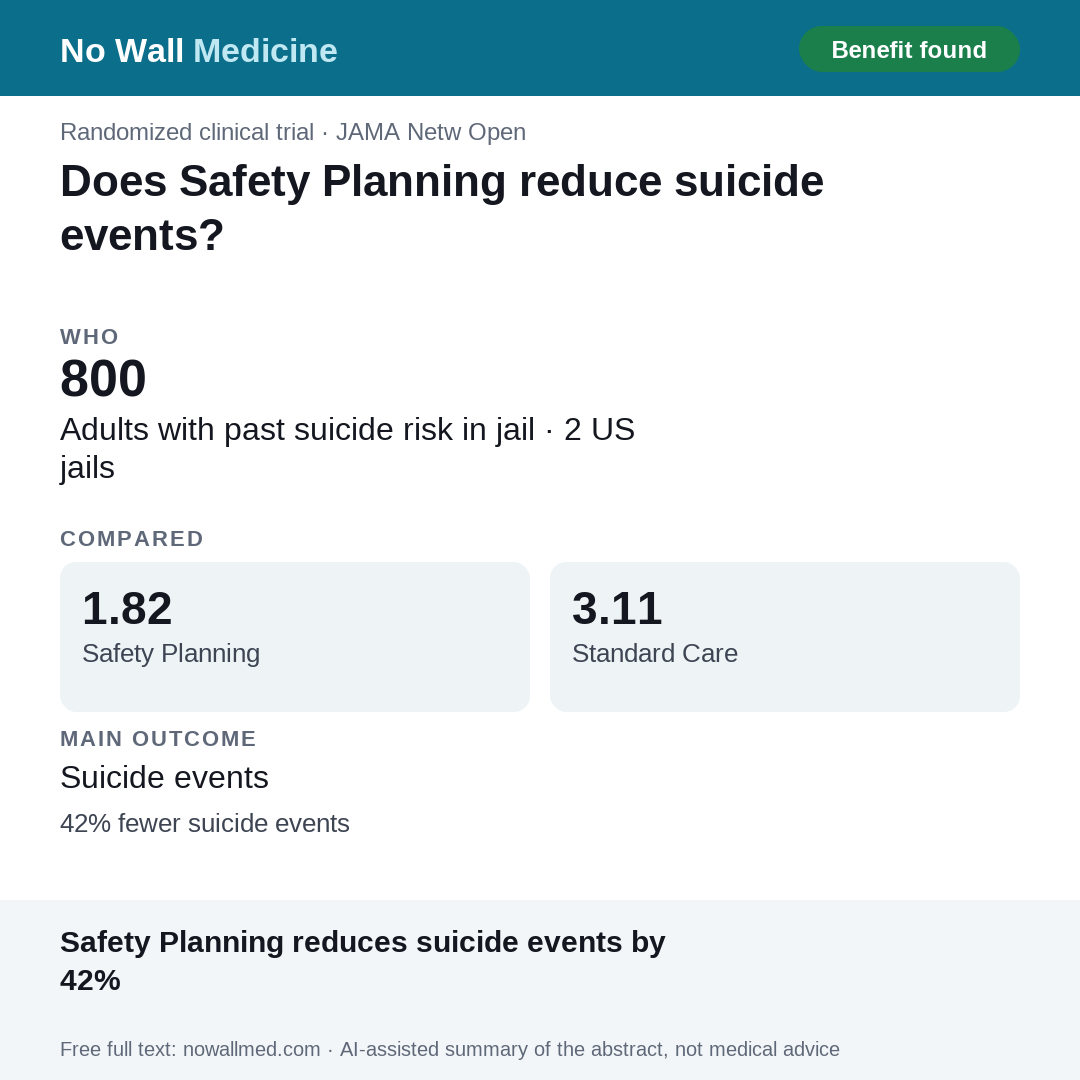
Home Health Aides Caring for Adults With Heart Failure: A Pilot Randomized Clinical Trial
2-group pilot randomized clinical trialMixed results
Does an education and communication intervention improve home health aide heart failure care?
Who
102
home health aides caring for adults with heart failure · home care agency in New York, New York
Compared
enhanced usual care
intervention group: 0.34 [95% CI, 0.2-0.49] preventable 911 calls at 90 days
Main outcome
heart failure knowledge, caregiver self-efficacy, and preventable 911 calls
Bottom line: Training improved knowledge and self-efficacy, while messaging nurses was associated with fewer preventable 911 calls.
Limitation: This pilot study was not powered for patient-level outcomes.
JAMA Netw Open · 2025-11-03Download image
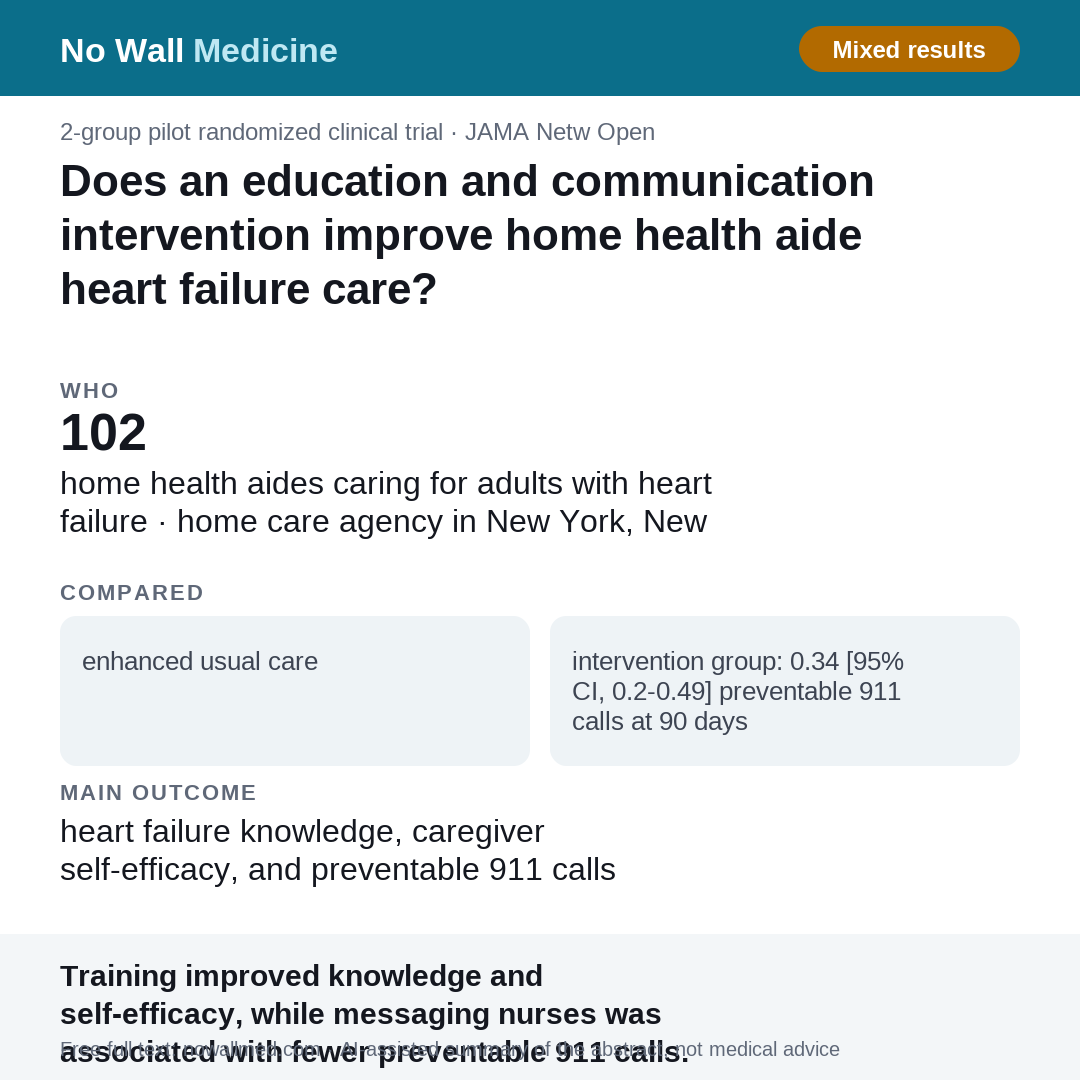
Digital Detection of Dementia in Primary Care: A Randomized Clinical Trial
Randomized clinical trialBenefit found
Does combining QDRS and PDM improve annual rates of new Alzheimer disease and related dementias diagnoses?
Who
5325
Adults 65 years and older without dementia or mild cognitive impairment · Nine federally qualified primary health care clinics in Indianapolis, Indiana
Compared
Usual care: 213 of 1724 [12.4%]
Passive Digital Marker only: 134 of 1300 [10.3%]
Quick Dementia Rating System plus Passive Digital Marker: 355 of 2301 [15.4%]
Main outcome
12-month cumulative incidence of Alzheimer disease and related dementias diagnoses
Result: adjusted odds ratio 1.31 (95% CI, 1.05-1.64)
Bottom line: Combining the Quick Dementia Rating System and Passive Digital Marker increased the odds of new Alzheimer disease and related dementias diagnoses.
JAMA Netw Open · 2025-11-03Download image
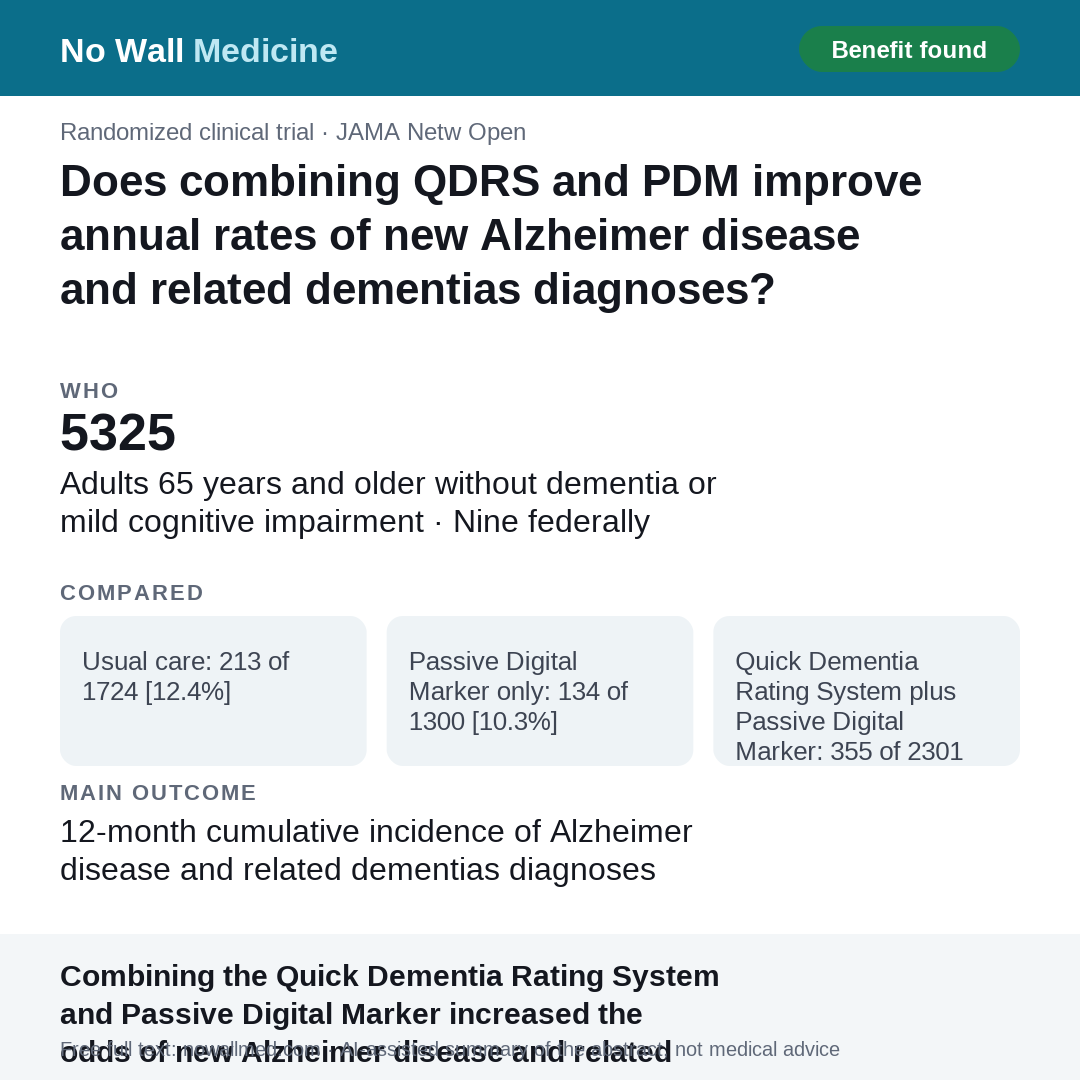
Cost-Effective Components of a Patient-Reported Symptom Monitoring System for Chemotherapy
5-group economic evaluation of a randomized clinical trialBenefit found
Which components of the Symptom Care at Home system are most cost-effective?
Who
757
adults with cancer starting a chemotherapy protocol · 2 cancer centers in Utah and Georgia
Compared
Complete Symptom Care at Home intervention
Nurse practitioner follow-up only: $23 992
Nurse practitioner follow-up with decision support: $14 590
Main outcome
incremental cost-effectiveness ratios incorporating symptom burden and healthcare utilization
Result: ICER for the complete Symptom Care at Home vs NP-only group was $4957
Bottom line: The complete Symptom Care at Home intervention was the most cost-effective strategy for managing cancer symptom burden.
JAMA Netw Open · 2025-11-03Download image
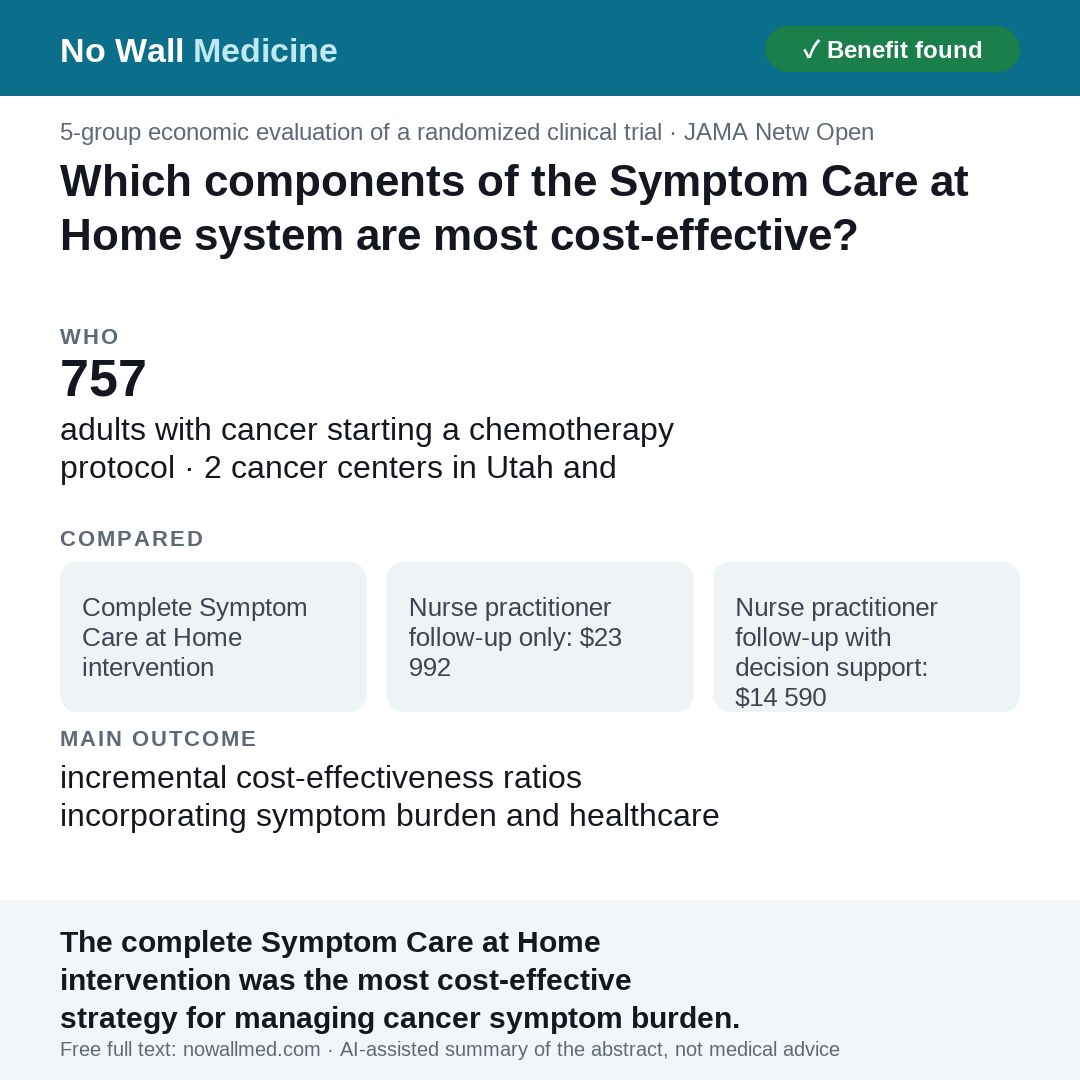
Safety Planning vs Standard Care for Suicide Prevention After Pretrial Jail Detention: A Randomized Clinical Trial
Randomized clinical trialBenefit found
Does Safety Planning reduce suicide events?
Who
800
Adults with past suicide risk in jail · 2 US jails
Compared
1.82Safety Planning (1.06 attempts)
3.11Standard Care (2.35 attempts)
Main outcome
Suicide events
Result: 42% fewer suicide events
Bottom line: Safety Planning reduces suicide events by 42%
JAMA Netw Open · 2025-11-03Download image
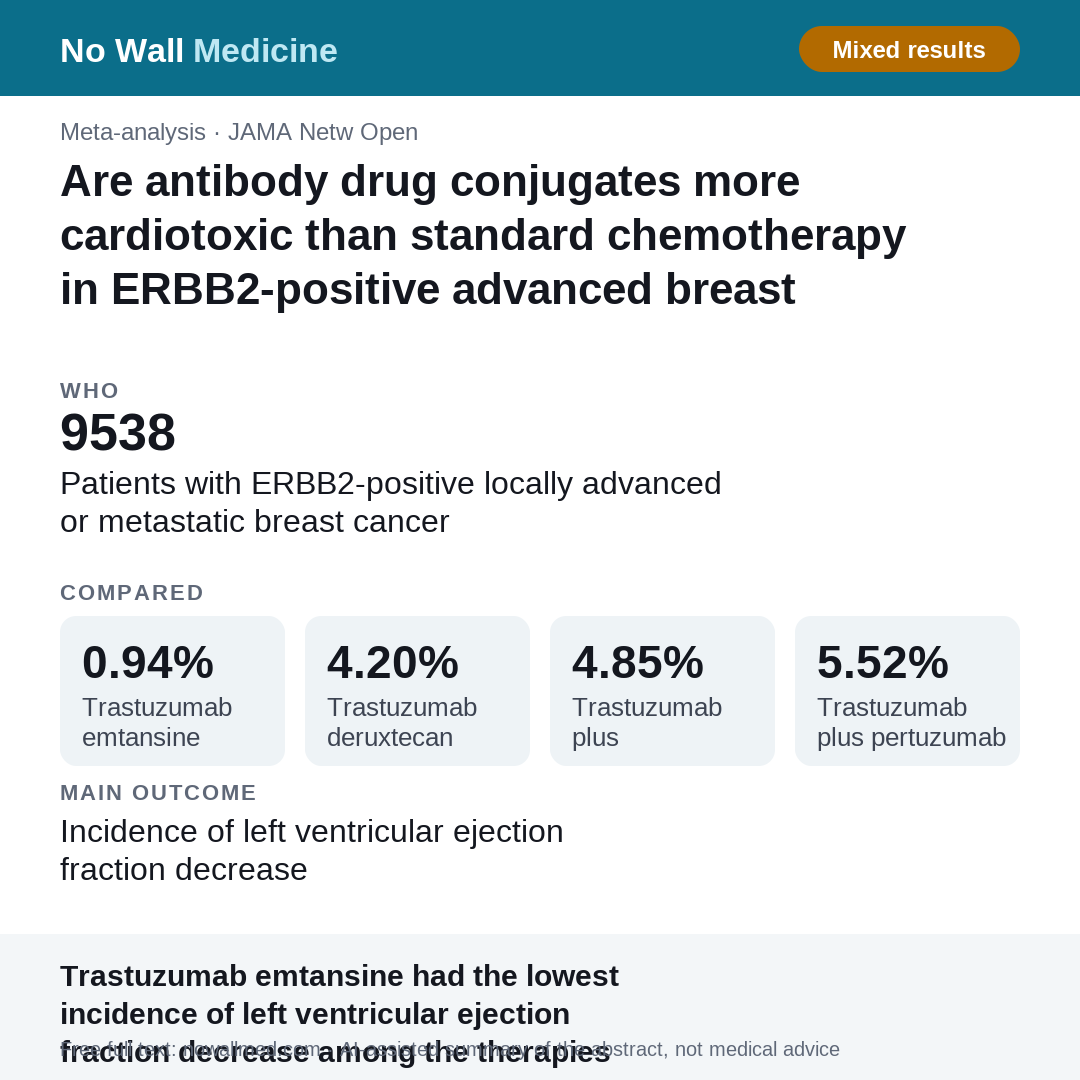
Cardiotoxic Effects of Antibody Drug Conjugates vs Standard Chemotherapy in ERBB2-Positive Advanced Breast Cancer: A Systematic Review and Meta-Analysis
Meta-analysisMixed results
Are antibody drug conjugates more cardiotoxic than standard chemotherapy in ERBB2-positive advanced breast cancer?
Who
9538
Patients with ERBB2-positive locally advanced or metastatic breast cancer
Compared
0.94%Trastuzumab emtansine (95% CI, 0.56%-1.57%)
4.20%Trastuzumab deruxtecan (95% CI, 2.91%-6.01%)
4.85%Trastuzumab plus chemotherapy (95% CI, 3.73%-6.28%)
5.52%Trastuzumab plus pertuzumab plus chemotherapy (95% CI, 3.41%-8.83%)
Main outcome
Incidence of left ventricular ejection fraction decrease
Bottom line: Trastuzumab emtansine had the lowest incidence of left ventricular ejection fraction decrease among the therapies studied.
Limitation: More research is needed into the cardiotoxic effects of these therapies.
JAMA Netw Open · 2025-11-03Download image
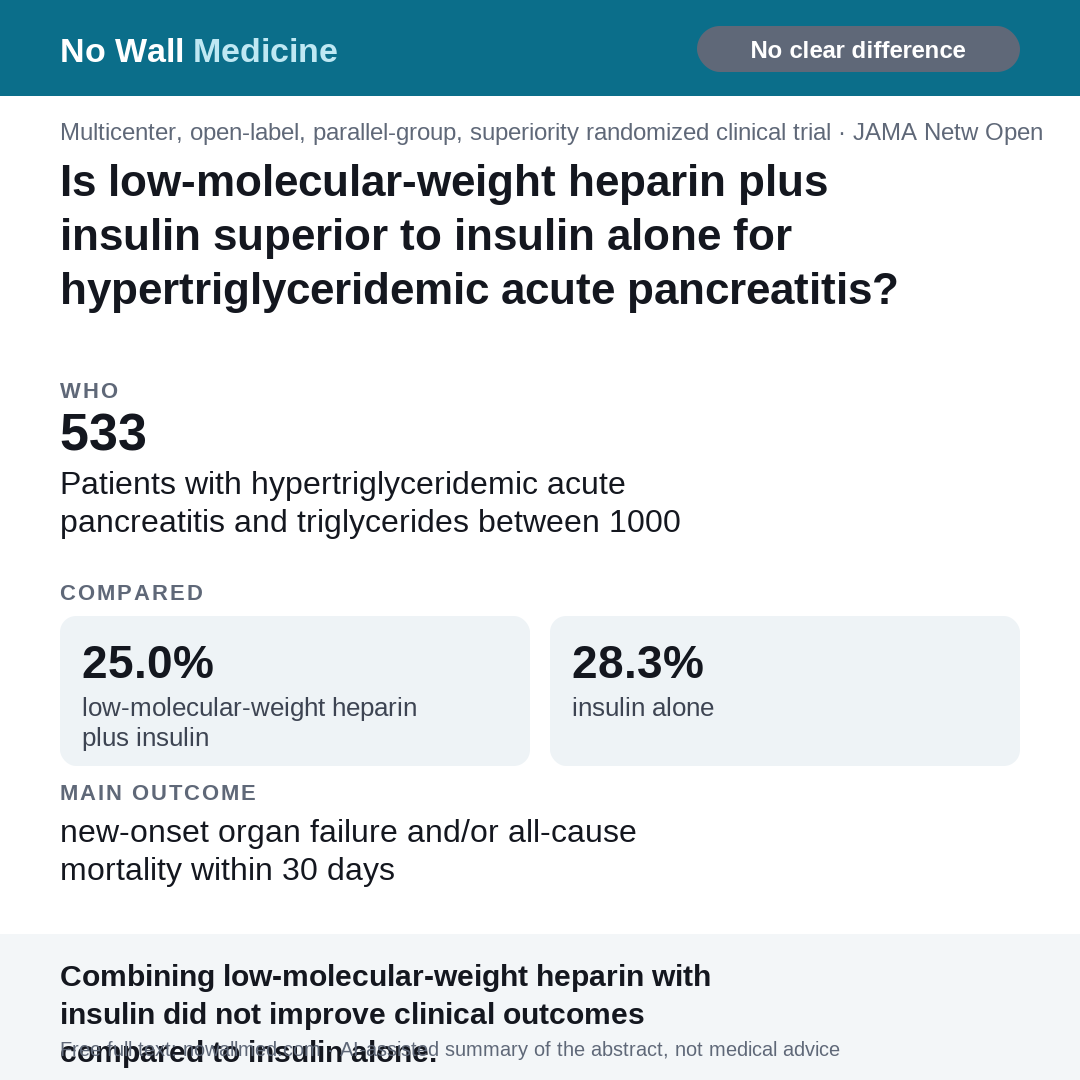
Low-Molecular-Weight Heparin Plus Insulin in Hypertriglyceridemic Acute Pancreatitis: A Randomized Clinical Trial
Multicenter, open-label, parallel-group, superiority randomized clinical trialNo clear difference
Is low-molecular-weight heparin plus insulin superior to insulin alone for hypertriglyceridemic acute pancreatitis?
Who
533
Patients with hypertriglyceridemic acute pancreatitis and triglycerides between 1000 and 3550 mg/dL · 13 tertiary hospitals in China
Compared
25.0%low-molecular-weight heparin plus insulin
28.3%insulin alone
Main outcome
new-onset organ failure and/or all-cause mortality within 30 days
Result: relative risk 0.89 (95% CI 0.67-1.17)
Bottom line: Combining low-molecular-weight heparin with insulin did not improve clinical outcomes compared to insulin alone.
JAMA Netw Open · 2025-11-03Download image
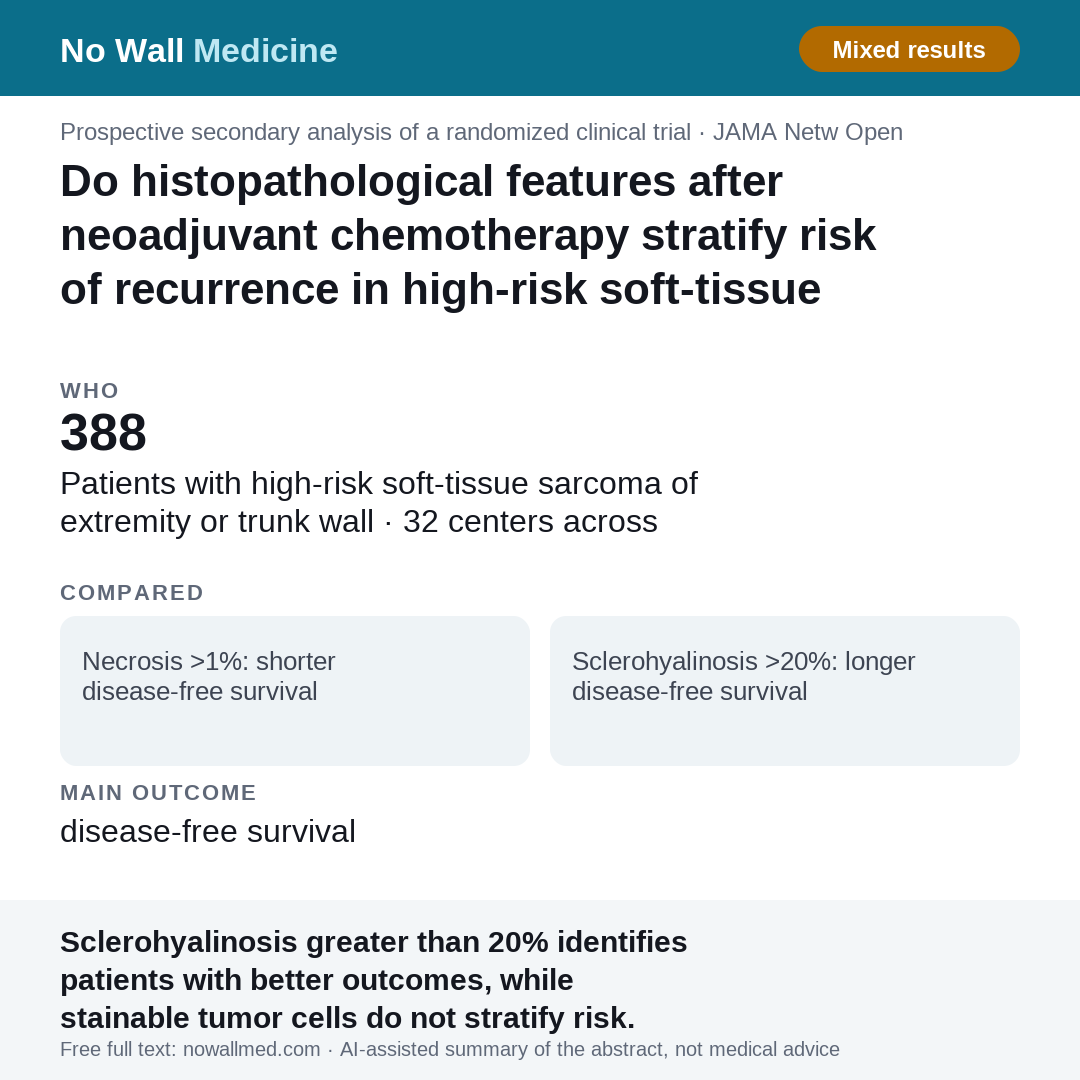
Histopathological Response After Neoadjuvant Chemotherapy for High-Risk Soft-Tissue Sarcomas: A Secondary Analysis of a Randomized Clinical Trial
Prospective secondary analysis of a randomized clinical trialMixed results
Do histopathological features after neoadjuvant chemotherapy stratify risk of recurrence in high-risk soft-tissue sarcomas?
Who
388
Patients with high-risk soft-tissue sarcoma of extremity or trunk wall · 32 centers across Italy, Spain, France, and Poland
Compared
Necrosis >1%: shorter disease-free survival
Sclerohyalinosis >20%: longer disease-free survival
Main outcome
disease-free survival
Result: hazard ratio 3.11 (95% CI 1.36 to 7.14) for necrosis; hazard ratio 0.51 (95% CI 0.28 to 0.94) for sclerohyalinosis
Bottom line: Sclerohyalinosis greater than 20% identifies patients with better outcomes, while stainable tumor cells do not stratify risk.
JAMA Netw Open · 2025-11-03Download image
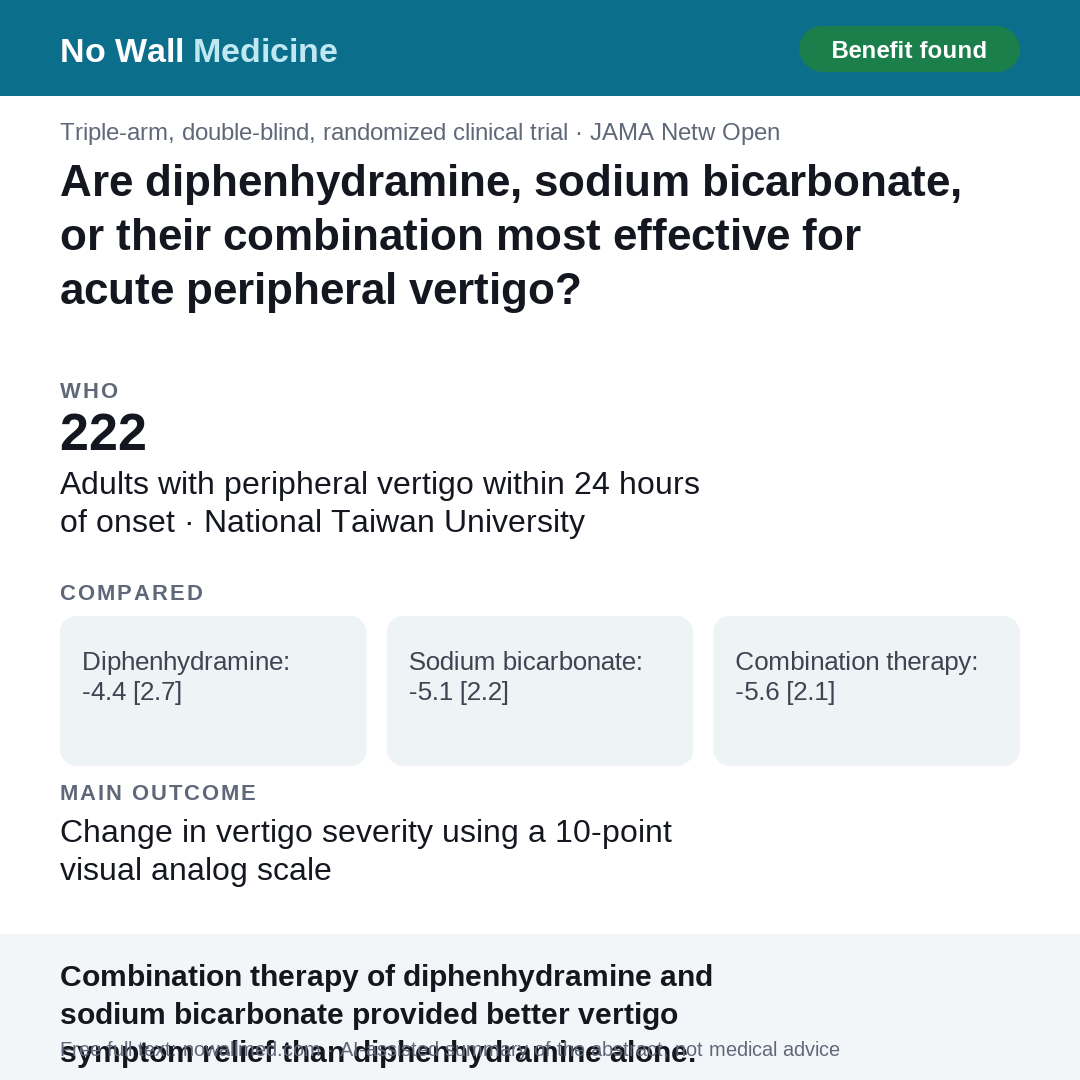
Diphenhydramine, Sodium Bicarbonate, or Combination for Acute Peripheral Vertigo: A Randomized Clinical Trial
Triple-arm, double-blind, randomized clinical trialBenefit found
Are diphenhydramine, sodium bicarbonate, or their combination most effective for acute peripheral vertigo?
Who
222
Adults with peripheral vertigo within 24 hours of onset · National Taiwan University Hospital, Yunlin Branch emergency department
Compared
Diphenhydramine: -4.4 [2.7]
Sodium bicarbonate: -5.1 [2.2]
Combination therapy: -5.6 [2.1]
Main outcome
Change in vertigo severity using a 10-point visual analog scale
Bottom line: Combination therapy of diphenhydramine and sodium bicarbonate provided better vertigo symptom relief than diphenhydramine alone.
Limitation: Further studies should focus on determining vertigo types that benefit from sodium bicarbonate and underlying mechanisms.
JAMA Netw Open · 2025-11-03Download image
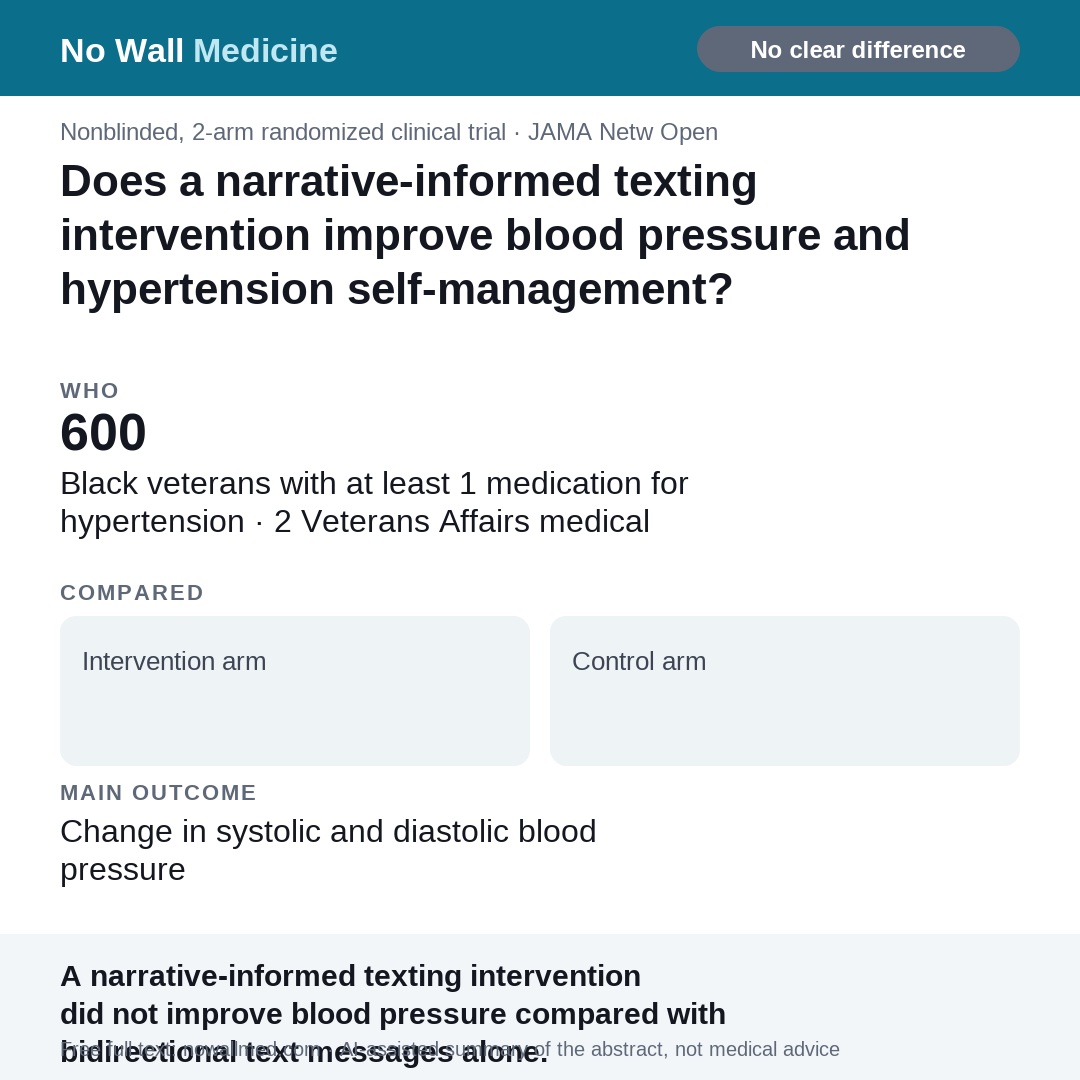
Text Messaging and Video Stories to Support Hypertension Self-Management in Black Veterans: A Randomized Clinical Trial
Nonblinded, 2-arm randomized clinical trialNo clear difference
Does a narrative-informed texting intervention improve blood pressure and hypertension self-management?
Who
600
Black veterans with at least 1 medication for hypertension · 2 Veterans Affairs medical centers
Compared
Intervention arm
Control arm
Main outcome
Change in systolic and diastolic blood pressure
Result: difference-in-differences systolic -0.8 mm Hg (95% CI, -3.9 to 2.3 mm Hg)
Bottom line: A narrative-informed texting intervention did not improve blood pressure compared with bidirectional text messages alone.
JAMA Netw Open · 2025-11-03Download image