Visual abstracts
New randomized trials and meta-analyses from leading journals at a glance: who was studied, what was compared, and what was found. Every paper is free to read in full.
All specialtiesCardiology 4877Oncology 4138Gastroenterology & Hepatology 1942Infectious Disease 3837Neurology 1905Psychiatry & Mental Health 2273Pulmonology 2143Critical Care 1365Endocrinology & Diabetes 2580Pediatrics 2980Surgery 2559Orthopedics & Sports Medicine 931Neurosurgery 537Cardiothoracic & Vascular Surgery 674Plastic & Reconstructive Surgery 591Nephrology 1133Rheumatology 823Hematology 1109Dermatology 621Ophthalmology 543Obstetrics & Gynecology 1686Public & Global Health 1058Radiology & Imaging 648Anesthesiology 986Urology 764ENT (Otolaryngology) 503Emergency Medicine 511Allergy & Immunology 313Geriatrics 981Family Medicine & Primary Care 562Medical Genetics & Genomics 676Pathology & Laboratory Medicine 159Physical Medicine & Rehabilitation 757Palliative Care 444Nutrition 1588Digital Health & AI 2201General Medicine 321
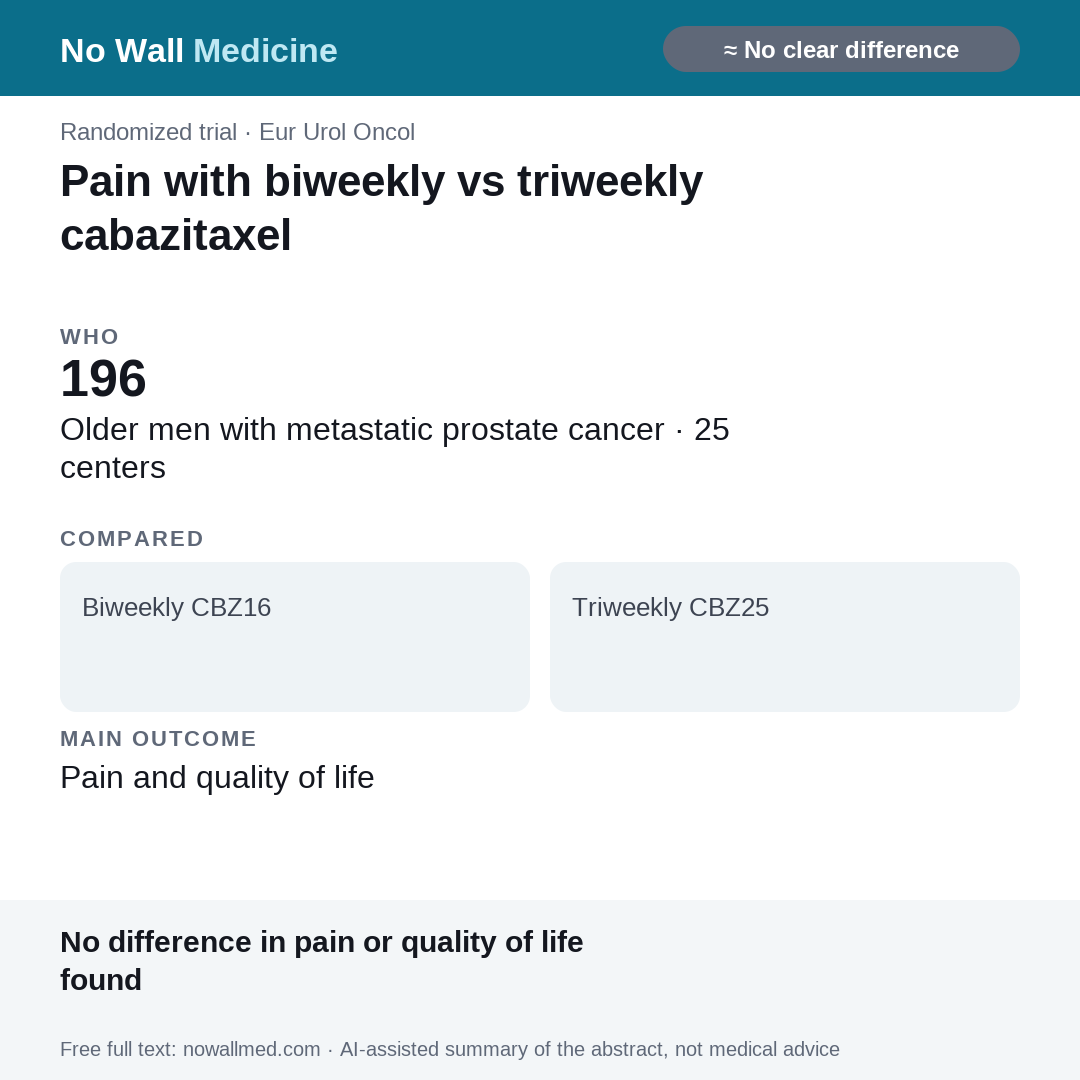
Pain and Health-related Quality of Life with Biweekly Versus Triweekly Cabazitaxel Schedule in Older Men with Metastatic Castration-resistant Prostate Cancer in the Multicenter, Randomized CABASTY Trial
Randomized trialNo clear difference
Pain with biweekly vs triweekly cabazitaxel
Who
196
Older men with metastatic prostate cancer · 25 centers
Compared
Biweekly CBZ16
Triweekly CBZ25
Main outcome
Pain and quality of life
Bottom line: No difference in pain or quality of life found
Eur Urol Oncol · 2024-08-13Download image
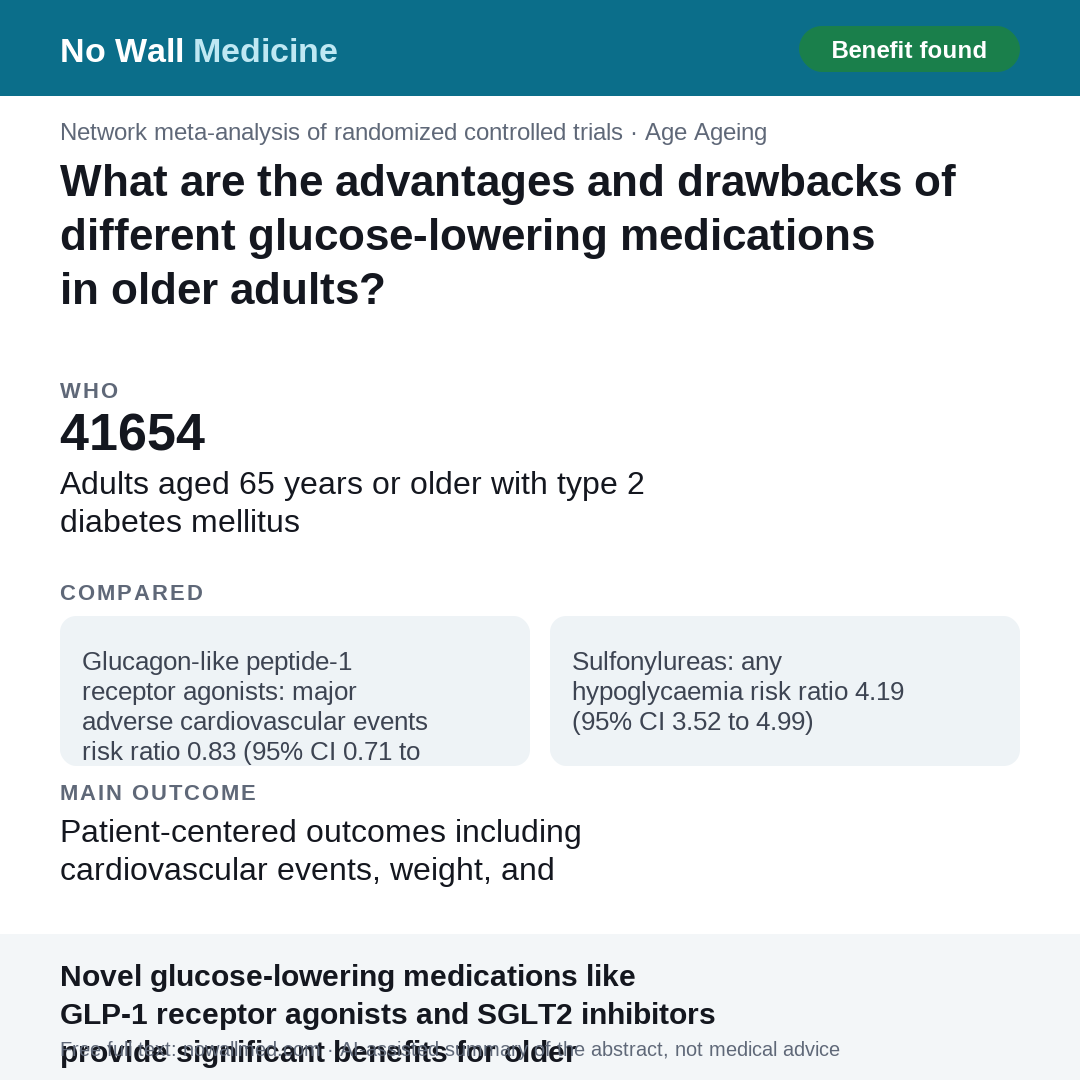
Evaluation of glucose-lowering medications in older people: a comprehensive systematic review and network meta-analysis of randomized controlled trials
Network meta-analysis of randomized controlled trialsBenefit found
What are the advantages and drawbacks of different glucose-lowering medications in older adults?
Who
41654
Adults aged 65 years or older with type 2 diabetes mellitus
Compared
Glucagon-like peptide-1 receptor agonists: major adverse cardiovascular events risk ratio 0.83 (95% CI 0.71 to 0.97)
Sulfonylureas: any hypoglycaemia risk ratio 4.19 (95% CI 3.52 to 4.99)
Main outcome
Patient-centered outcomes including cardiovascular events, weight, and hypoglycemia
Result: GLP-1RAs major adverse cardiovascular events risk ratio 0.83 (95% CI 0.71 to 0.97)
Bottom line: Novel glucose-lowering medications like GLP-1 receptor agonists and SGLT2 inhibitors provide significant benefits for older patients with diabetes.
Age Ageing · 2024-08-13Download image
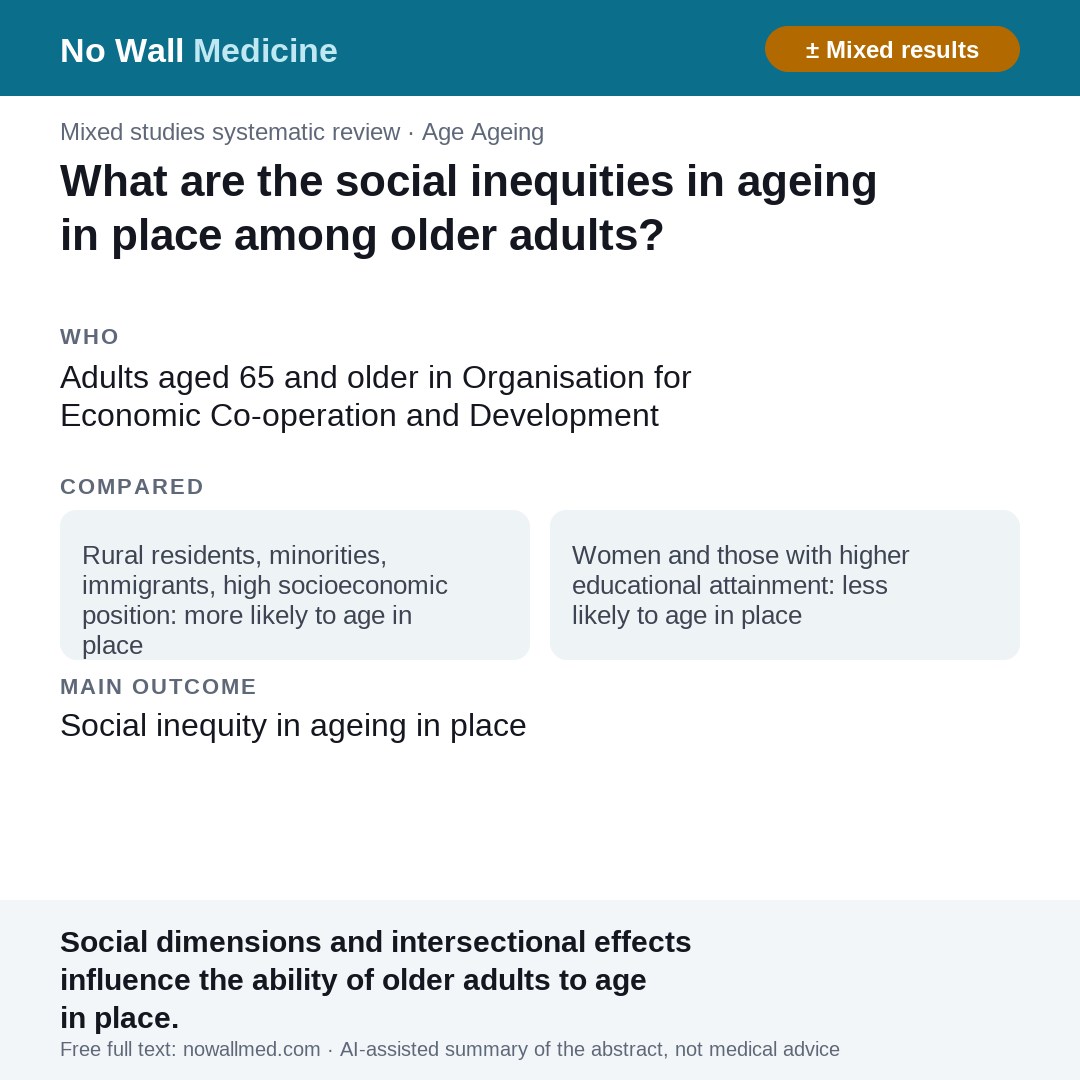
Social inequity in ageing in place among older adults in Organisation for Economic Cooperation and Development countries: a mixed studies systematic review
Mixed studies systematic reviewMixed results
What are the social inequities in ageing in place among older adults?
Who
Adults aged 65 and older in Organisation for Economic Co-operation and Development countries · Organisation for Economic Co-operation and Development countries
Compared
Rural residents, minorities, immigrants, high socioeconomic position: more likely to age in place
Women and those with higher educational attainment: less likely to age in place
Main outcome
Social inequity in ageing in place
Bottom line: Social dimensions and intersectional effects influence the ability of older adults to age in place.
Age Ageing · 2024-08-13Download image
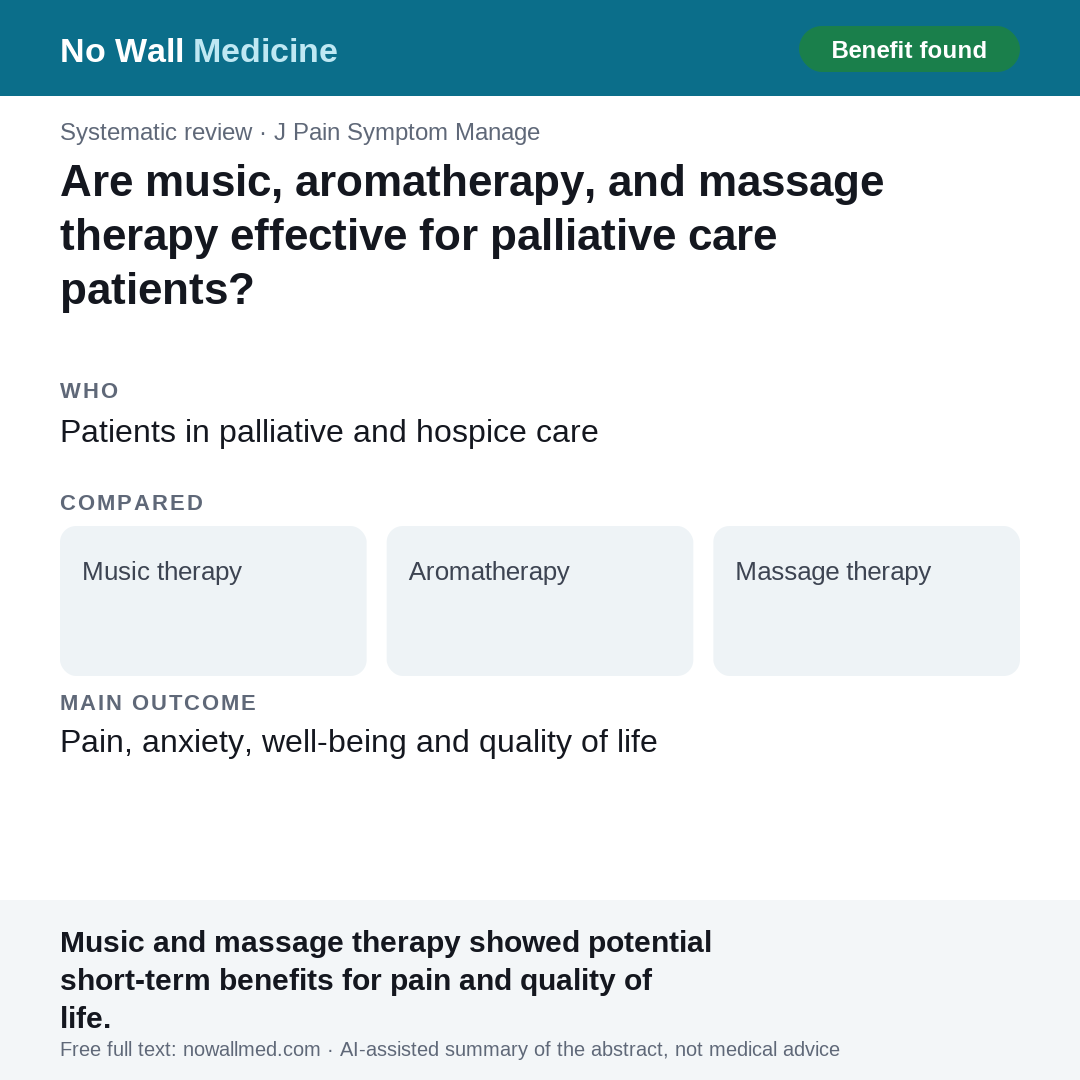
Effectiveness of music therapy, aromatherapy, and massage therapy on patients in palliative care with end-of-life needs: A systematic review
Systematic reviewBenefit found
Are music, aromatherapy, and massage therapy effective for palliative care patients?
Who
Patients in palliative and hospice care
Compared
Music therapy
Aromatherapy
Massage therapy
Main outcome
Pain, anxiety, well-being and quality of life
Bottom line: Music and massage therapy showed potential short-term benefits for pain and quality of life.
Limitation: Future studies may require more qualitative or mixed methods for comprehensive evaluation.
J Pain Symptom Manage · 2024-08-13Download image
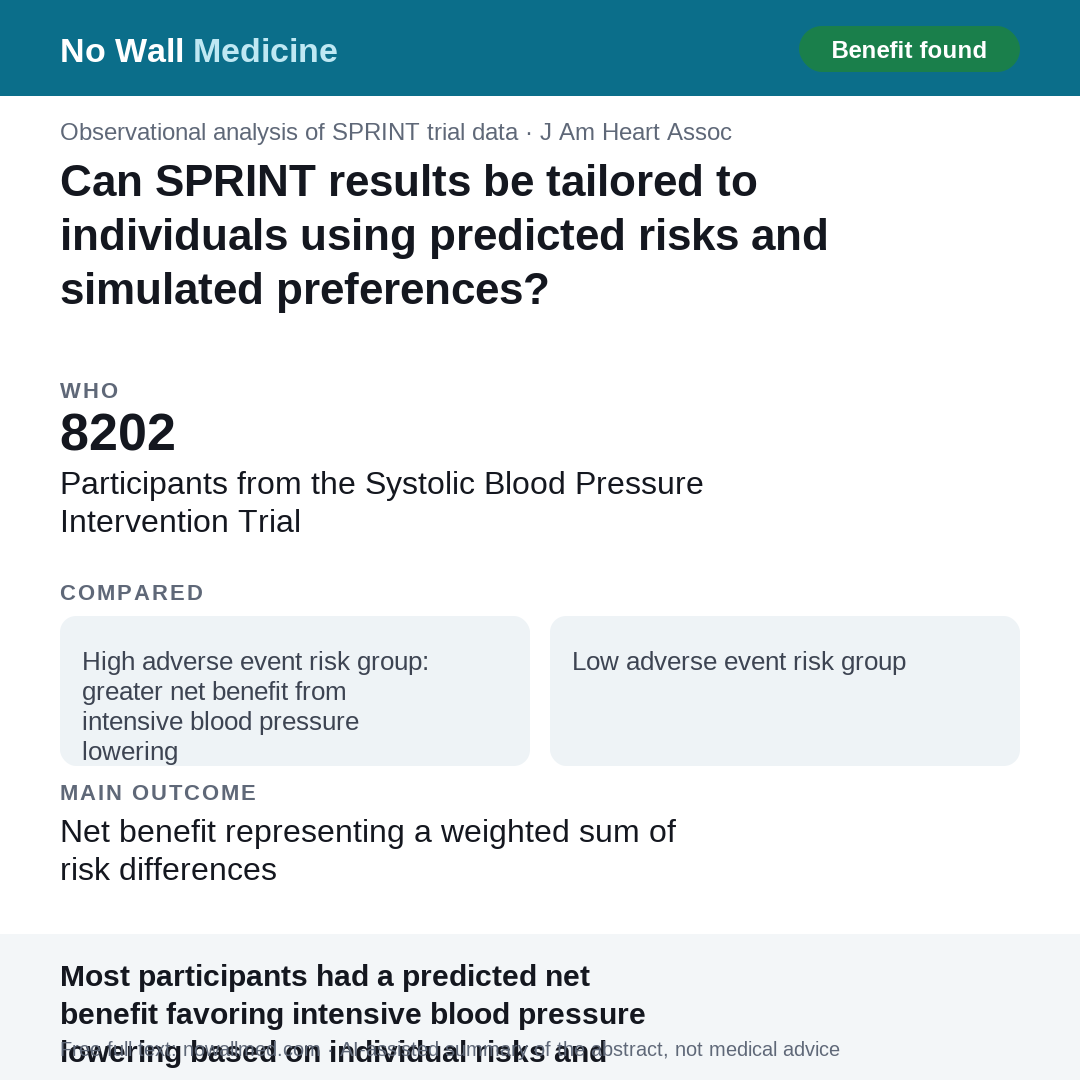
Incorporating Individual-Level Treatment Effects and Outcome Preferences Into Personalized Blood Pressure Target Recommendations
Observational analysis of SPRINT trial dataBenefit found
Can SPRINT results be tailored to individuals using predicted risks and simulated preferences?
Who
8202
Participants from the Systolic Blood Pressure Intervention Trial
Compared
High adverse event risk group: greater net benefit from intensive blood pressure lowering
Low adverse event risk group
Main outcome
Net benefit representing a weighted sum of risk differences
Bottom line: Most participants had a predicted net benefit favoring intensive blood pressure lowering based on individual risks and preferences.
J Am Heart Assoc · 2024-08-13Download image
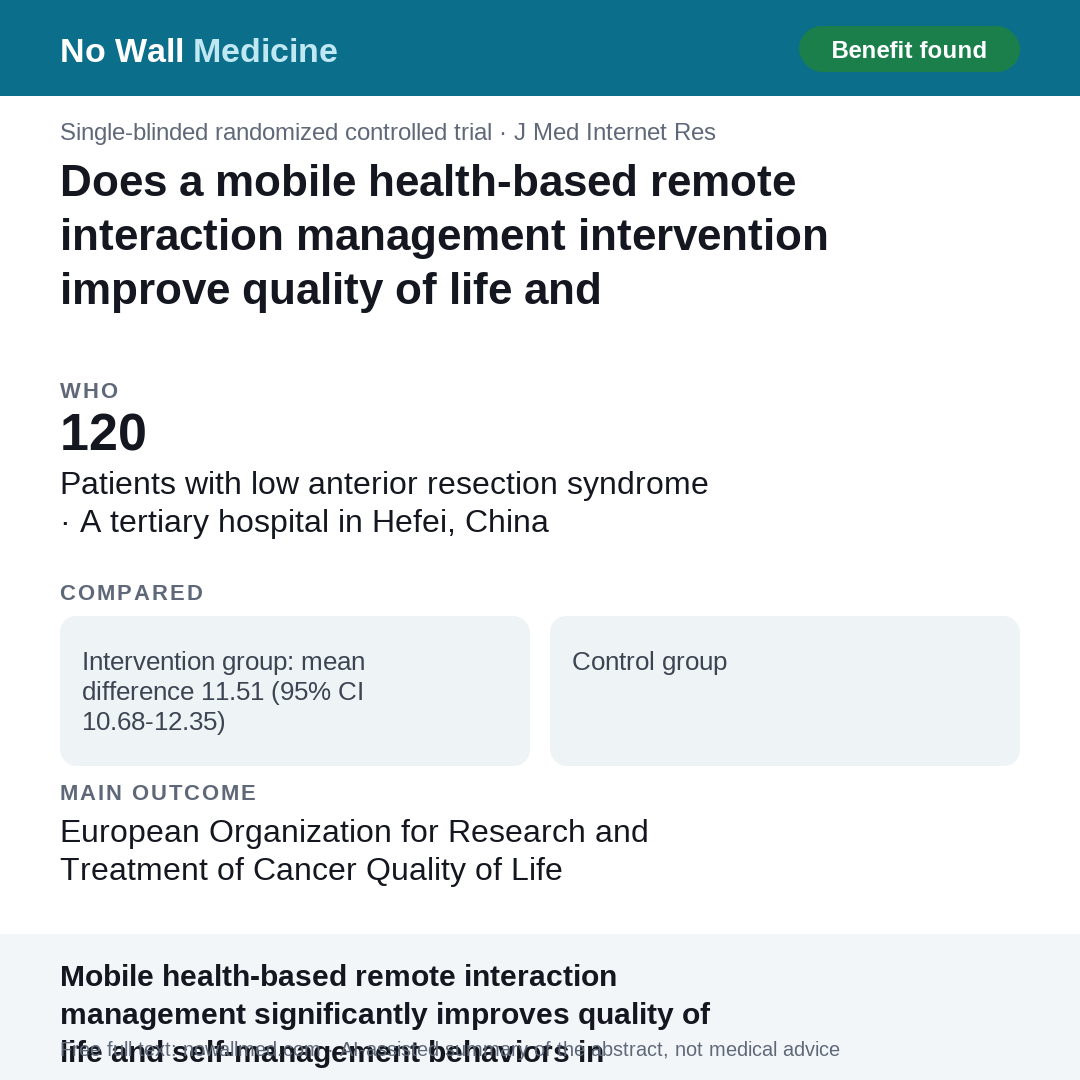
Effect of a Mobile Health-Based Remote Interaction Management Intervention on the Quality of Life and Self-Management Behavior of Patients With Low Anterior Resection Syndrome: Randomized Controlled Trial
Single-blinded randomized controlled trialBenefit found
Does a mobile health-based remote interaction management intervention improve quality of life and self-management in LARS patients?
Who
120
Patients with low anterior resection syndrome · A tertiary hospital in Hefei, China
Compared
Intervention group: mean difference 11.51 (95% CI 10.68-12.35)
Control group
Main outcome
European Organization for Research and Treatment of Cancer Quality of Life Questionnaire Core 30
Result: mean difference 11.51 (95% CI 10.68-12.35)
Bottom line: Mobile health-based remote interaction management significantly improves quality of life and self-management behaviors in patients with low anterior resection syndrome.
J Med Internet Res · 2024-08-13Download image
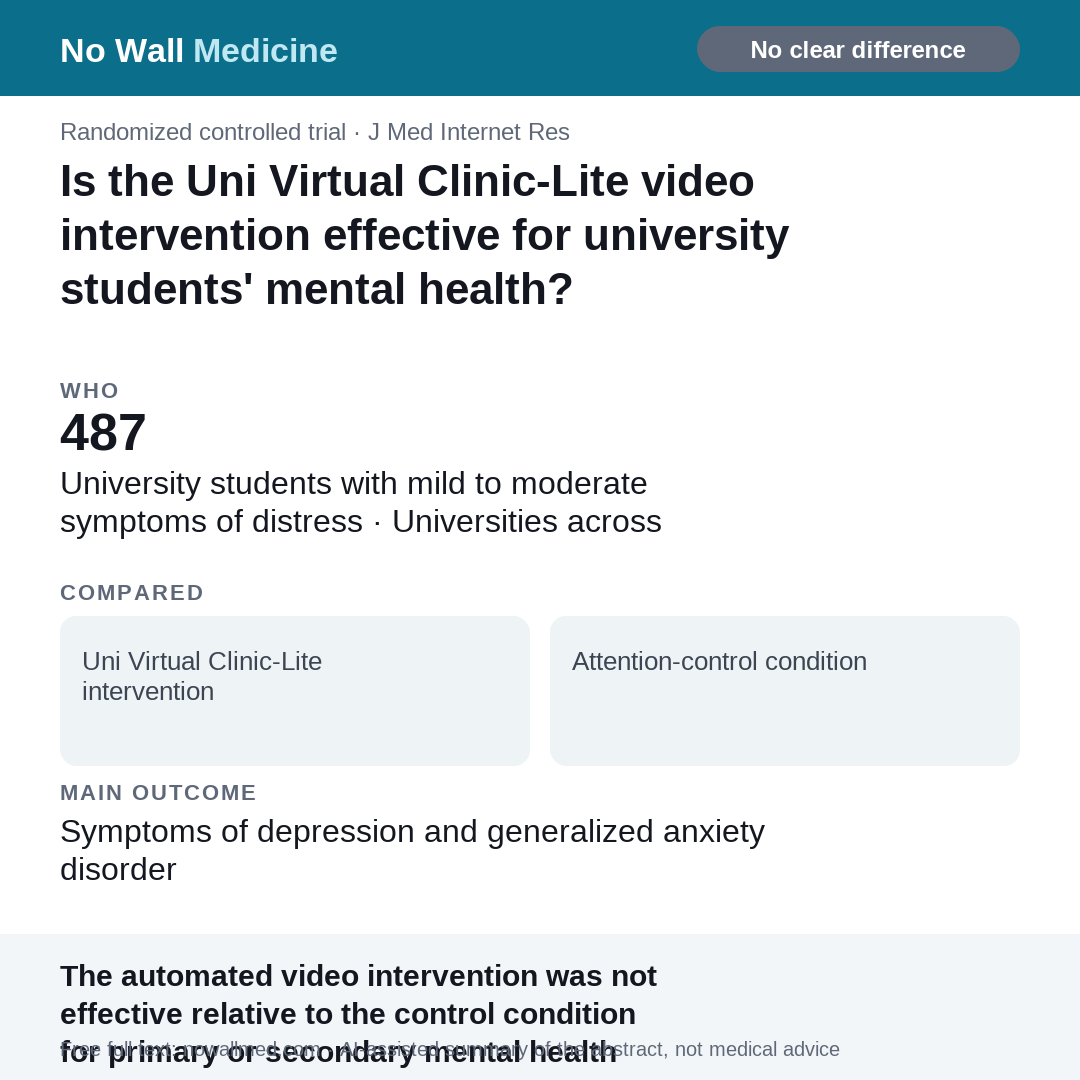
A Transdiagnostic Video-Based Internet Intervention (Uni Virtual Clinic-Lite) to Improve the Mental Health of University Students: Randomized Controlled Trial
Randomized controlled trialNo clear difference
Is the Uni Virtual Clinic-Lite video intervention effective for university students' mental health?
Who
487
University students with mild to moderate symptoms of distress · Universities across Australia
Compared
Uni Virtual Clinic-Lite intervention
Attention-control condition
Main outcome
Symptoms of depression and generalized anxiety disorder
Bottom line: The automated video intervention was not effective relative to the control condition for primary or secondary mental health outcomes.
Limitation: Low uptake and engagement, particularly among students with lower levels of symptomatology.
J Med Internet Res · 2024-08-13Download image
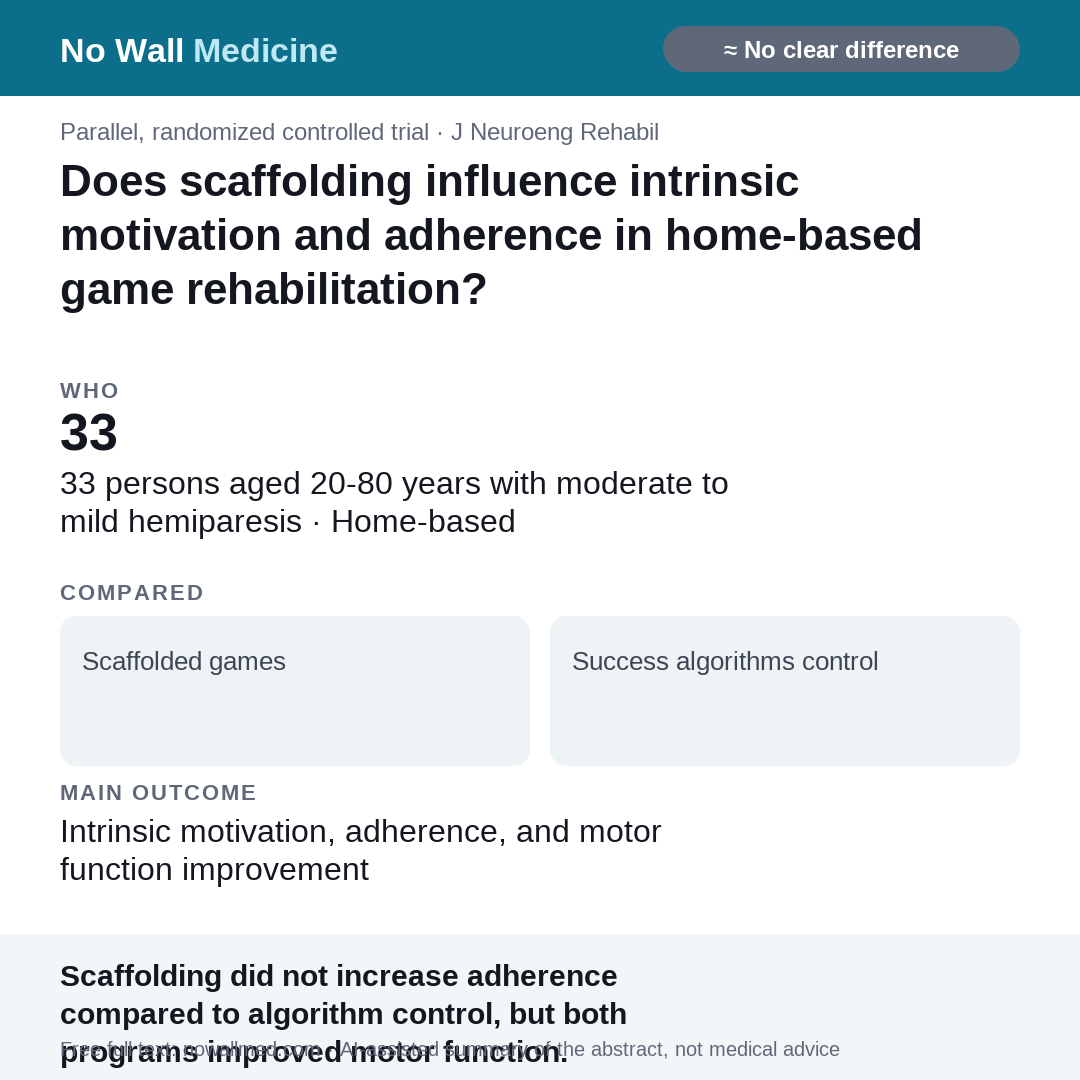
The influence of scaffolding on intrinsic motivation and autonomous adherence to a game-based, sparsely supervised home rehabilitation program for people with upper extremity hemiparesis due to stroke. A randomized controlled trial
Parallel, randomized controlled trialNo clear difference
Does scaffolding influence intrinsic motivation and adherence in home-based game rehabilitation?
Who
33
33 persons aged 20-80 years with moderate to mild hemiparesis · Home-based
Compared
Scaffolded games
Success algorithms control
Main outcome
Intrinsic motivation, adherence, and motor function improvement
Bottom line: Scaffolding did not increase adherence compared to algorithm control, but both programs improved motor function.
J Neuroeng Rehabil · 2024-08-13Download image
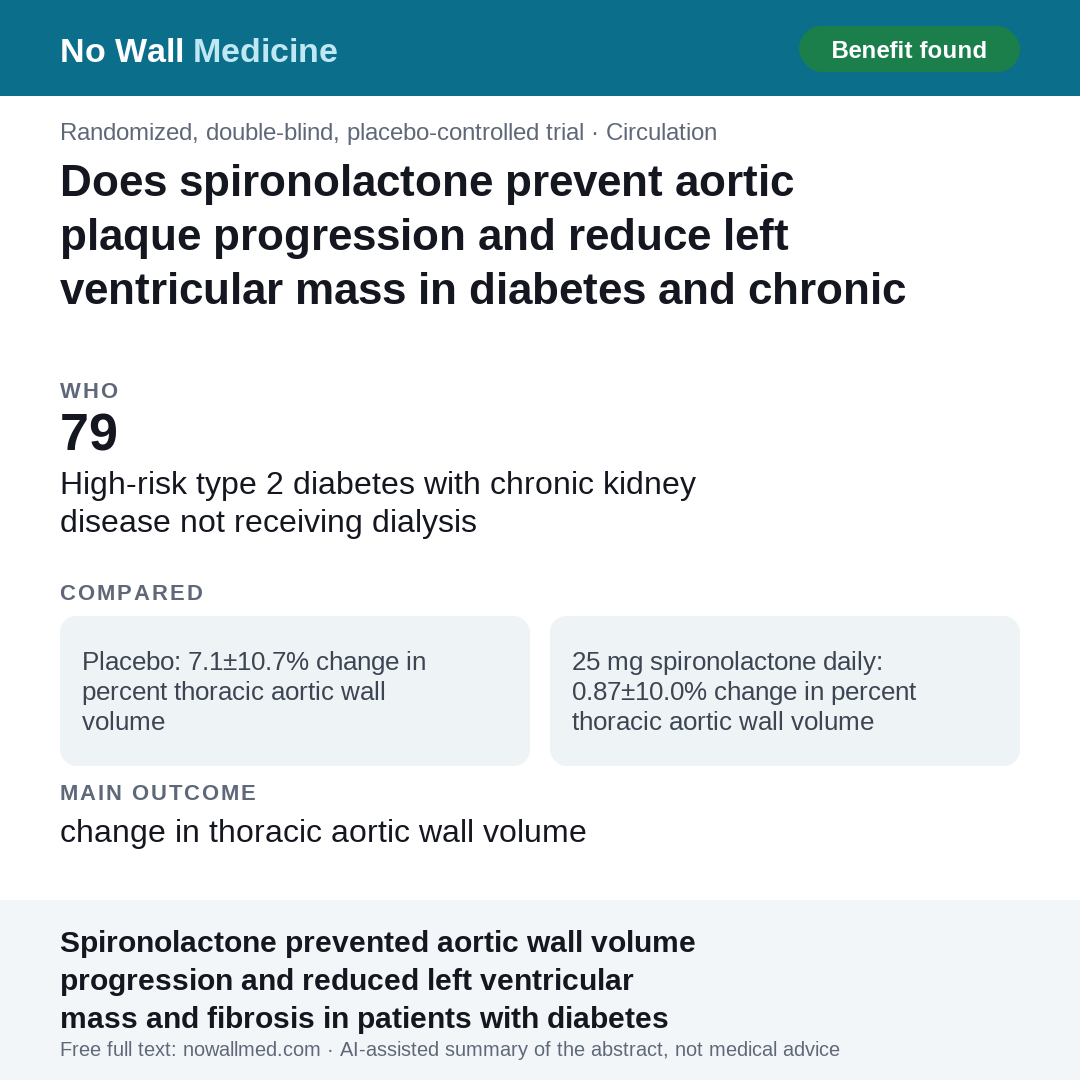
Mineralocorticoid Receptor Antagonism Prevents Aortic Plaque Progression and Reduces Left Ventricular Mass and Fibrosis in Patients With Type 2 Diabetes and Chronic Kidney Disease: The MAGMA Trial
Randomized, double-blind, placebo-controlled trialBenefit found
Does spironolactone prevent aortic plaque progression and reduce left ventricular mass in diabetes and chronic kidney disease?
Who
79
High-risk type 2 diabetes with chronic kidney disease not receiving dialysis
Compared
Placebo: 7.1±10.7% change in percent thoracic aortic wall volume
25 mg spironolactone daily: 0.87±10.0% change in percent thoracic aortic wall volume
Main outcome
change in thoracic aortic wall volume
Bottom line: Spironolactone prevented aortic wall volume progression and reduced left ventricular mass and fibrosis in patients with diabetes and chronic kidney disease.
Circulation · 2024-08-12Download image
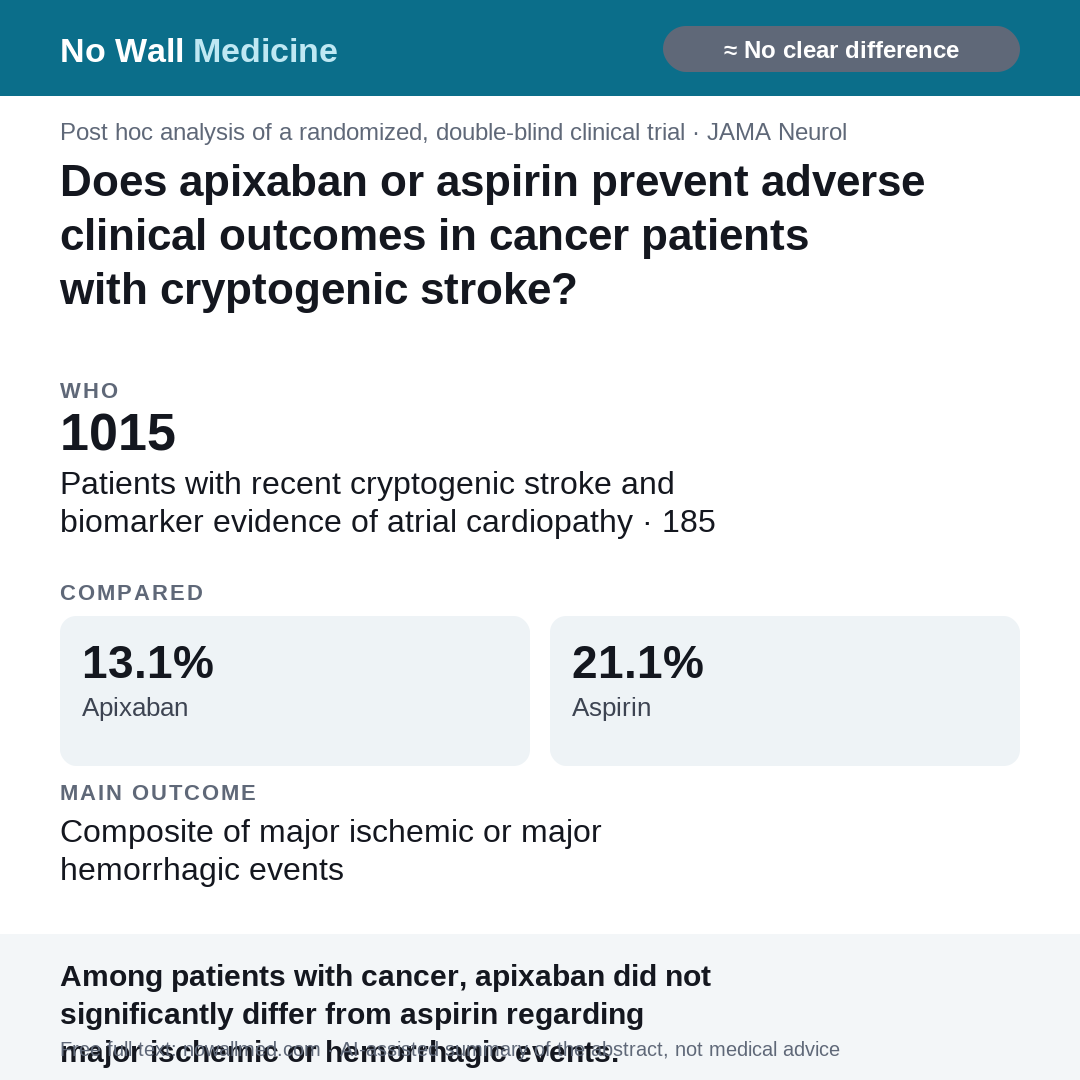
Apixaban vs Aspirin in Patients With Cancer and Cryptogenic Stroke: A Post Hoc Analysis of the ARCADIA Randomized Clinical Trial
Post hoc analysis of a randomized, double-blind clinical trialNo clear difference
Does apixaban or aspirin prevent adverse clinical outcomes in cancer patients with cryptogenic stroke?
Who
1015
Patients with recent cryptogenic stroke and biomarker evidence of atrial cardiopathy · 185 stroke centers in North America
Compared
13.1%Apixaban (8/61)
21.1%Aspirin (16/76)
Main outcome
Composite of major ischemic or major hemorrhagic events
Result: hazard ratio 0.61 (95% CI 0.26-1.43)
Bottom line: Among patients with cancer, apixaban did not significantly differ from aspirin regarding major ischemic or hemorrhagic events.
Limitation: This was a post hoc analysis of data from the ARCADIA trial.
JAMA Neurol · 2024-08-12Download image
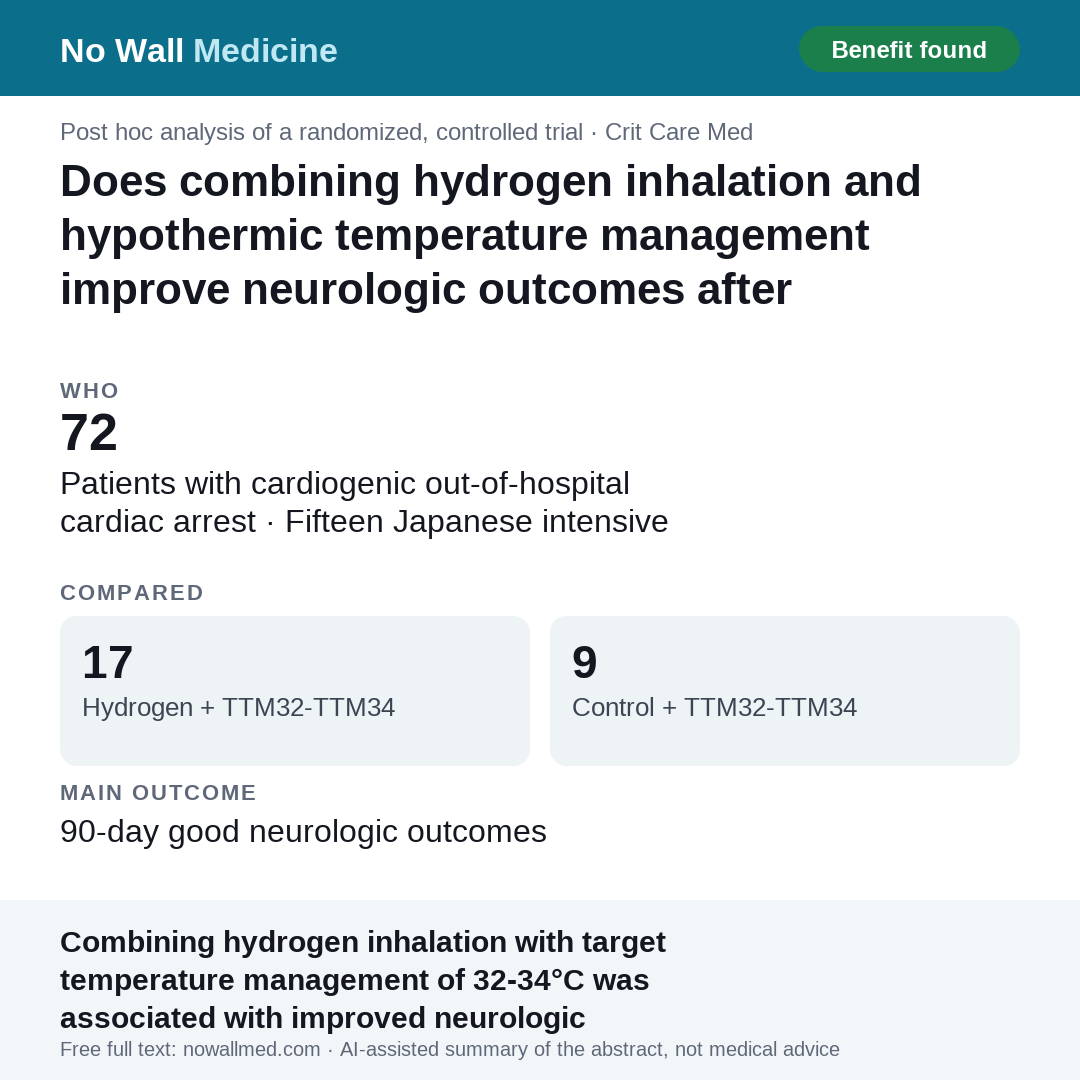
Combination of Hydrogen Inhalation and Hypothermic Temperature Control After Out-of-Hospital Cardiac Arrest: A Post hoc Analysis of the Efficacy of Inhaled Hydrogen on Neurologic Outcome Following Brain Ischemia During PostCardiac Arrest Care II Trial
Post hoc analysis of a randomized, controlled trialBenefit found
Does combining hydrogen inhalation and hypothermic temperature management improve neurologic outcomes after cardiac arrest?
Who
72
Patients with cardiogenic out-of-hospital cardiac arrest · Fifteen Japanese intensive care units
Compared
17Hydrogen + TTM32-TTM34 (68%)
9Control + TTM32-TTM34 (38%)
Main outcome
90-day good neurologic outcomes
Result: relative risk: 1.81 (95% CI 1.05-3.66)
Bottom line: Combining hydrogen inhalation with target temperature management of 32-34°C was associated with improved neurologic outcomes.
Crit Care Med · 2024-08-12Download image
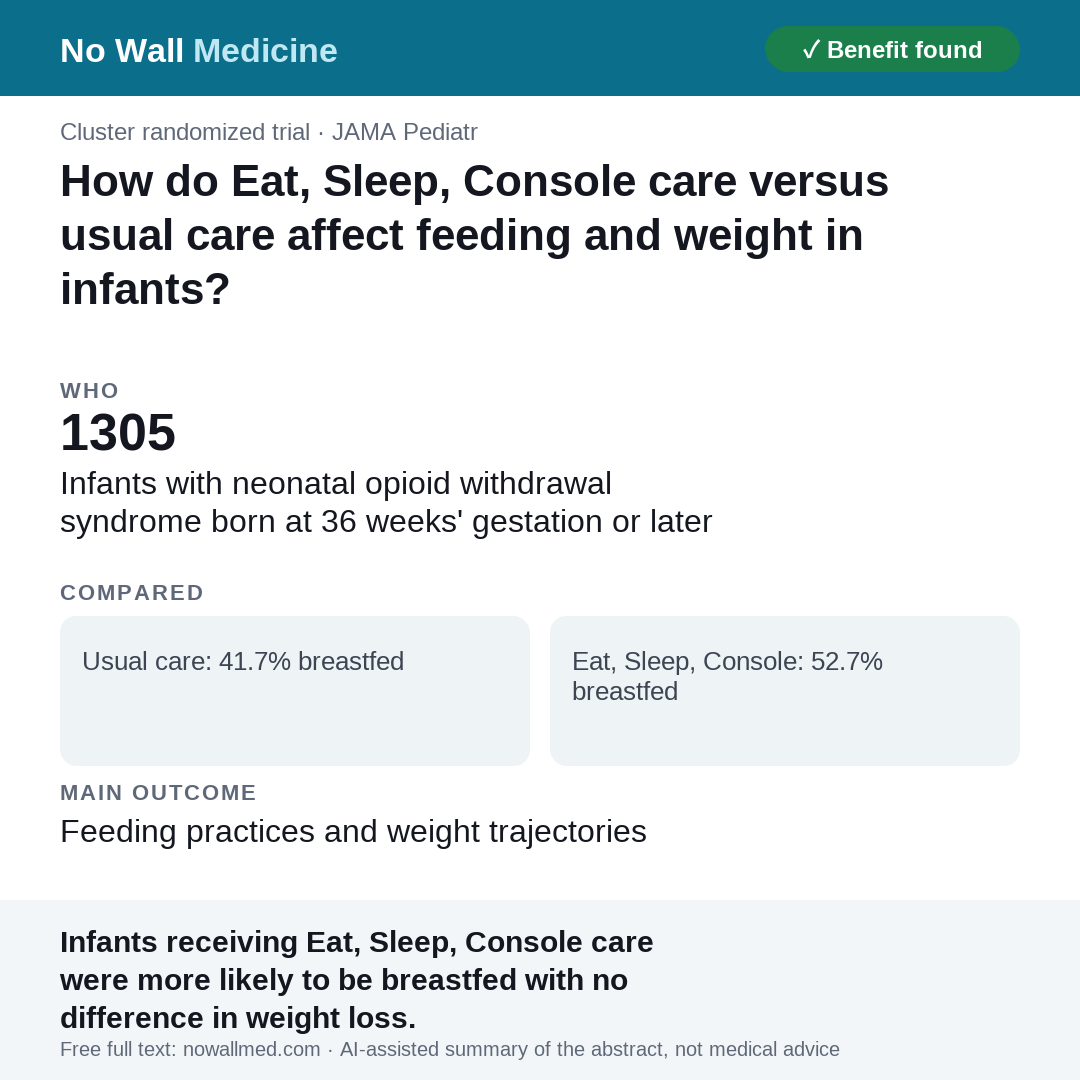
Infant Feeding and Weight Trajectories in the Eat, Sleep, Console Trial: A Secondary Analysis of a Randomized Clinical Trial
Cluster randomized trialBenefit found
How do Eat, Sleep, Console care versus usual care affect feeding and weight in infants?
Who
1305
Infants with neonatal opioid withdrawal syndrome born at 36 weeks' gestation or later · 26 US hospitals
Compared
Usual care: 41.7% breastfed
Eat, Sleep, Console: 52.7% breastfed
Main outcome
Feeding practices and weight trajectories
Result: absolute difference, 11%; 95% CI, 1.0-20.9
Bottom line: Infants receiving Eat, Sleep, Console care were more likely to be breastfed with no difference in weight loss.
JAMA Pediatr · 2024-08-12Download image
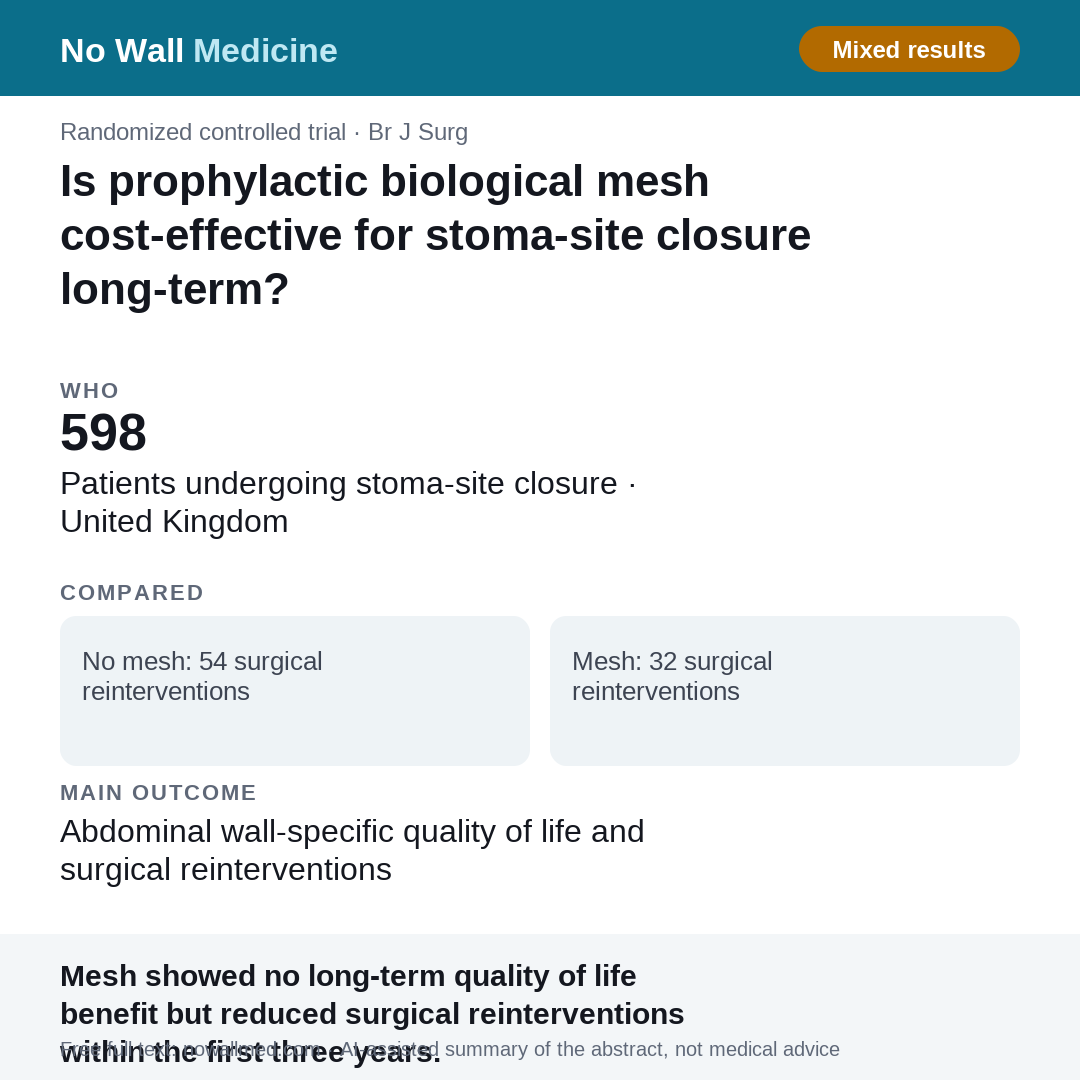
Long-term cost-effectiveness of insertion of a biological mesh during stoma-site closure: 5-8-year follow-up of the ROCSS randomized controlled trial
Randomized controlled trialMixed results
Is prophylactic biological mesh cost-effective for stoma-site closure long-term?
Who
598
Patients undergoing stoma-site closure · United Kingdom
Compared
No mesh: 54 surgical reinterventions
Mesh: 32 surgical reinterventions
Main outcome
Abdominal wall-specific quality of life and surgical reinterventions
Result: mean difference 1.48, 95% c.i. (-2.35, 5.32)
Bottom line: Mesh showed no long-term quality of life benefit but reduced surgical reinterventions within the first three years.
Limitation: HerQLes scores were only available for 396 patients.
Br J Surg · 2024-08-12Download image
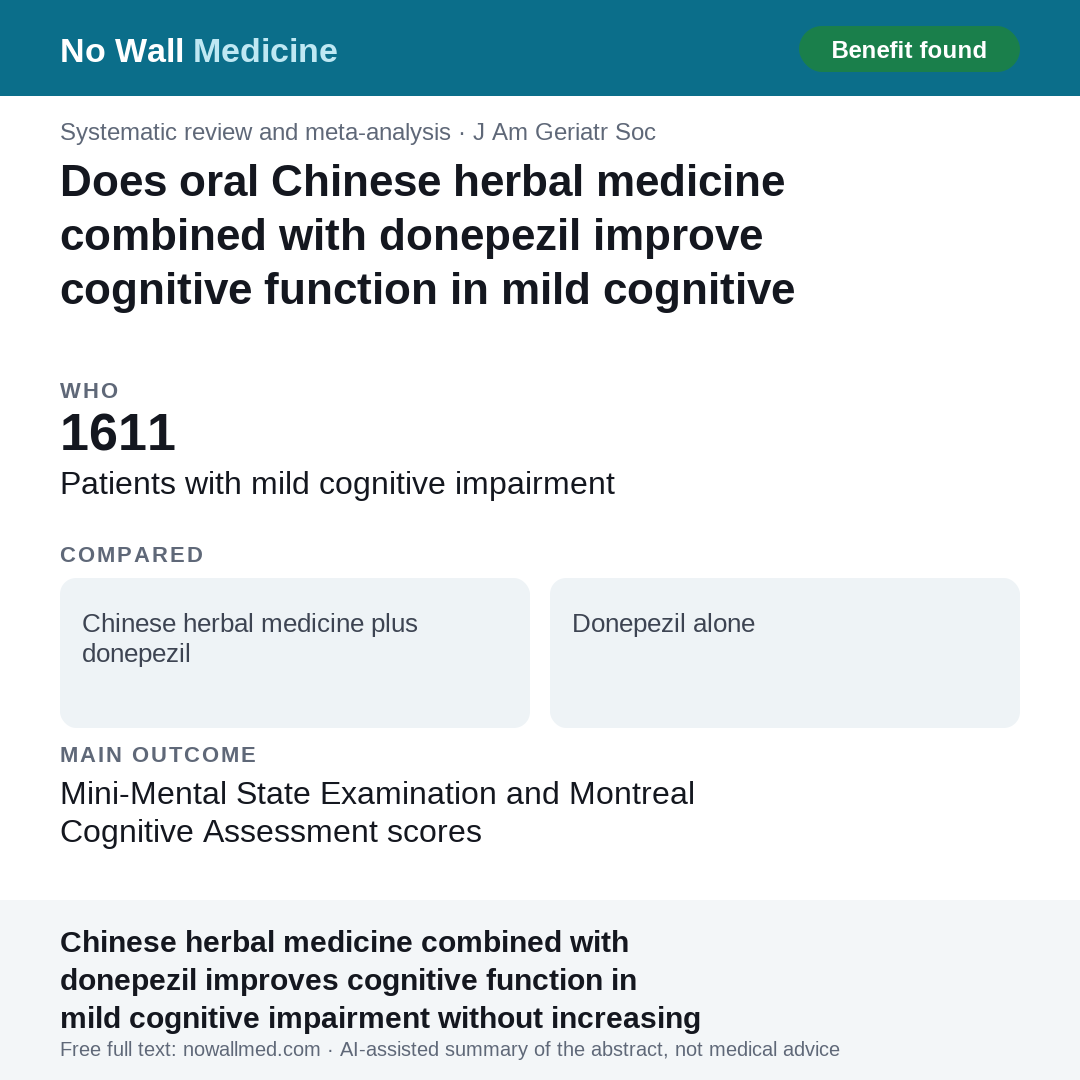
Oral Chinese herbal medicine combined with donepezil for mild cognitive impairment: A systematic review and meta-analysis
Systematic review and meta-analysisBenefit found
Does oral Chinese herbal medicine combined with donepezil improve cognitive function in mild cognitive impairment?
Who
1611
Patients with mild cognitive impairment
Compared
Chinese herbal medicine plus donepezil
Donepezil alone
Main outcome
Mini-Mental State Examination and Montreal Cognitive Assessment scores
Result: MMSE 1.88 [1.52, 2.24]; MoCA MD: 2.01 [1.57, 2.44]
Bottom line: Chinese herbal medicine combined with donepezil improves cognitive function in mild cognitive impairment without increasing adverse events.
Limitation: All studies were evaluated as having some concerns regarding the overall risk of bias.
J Am Geriatr Soc · 2024-08-12Download image
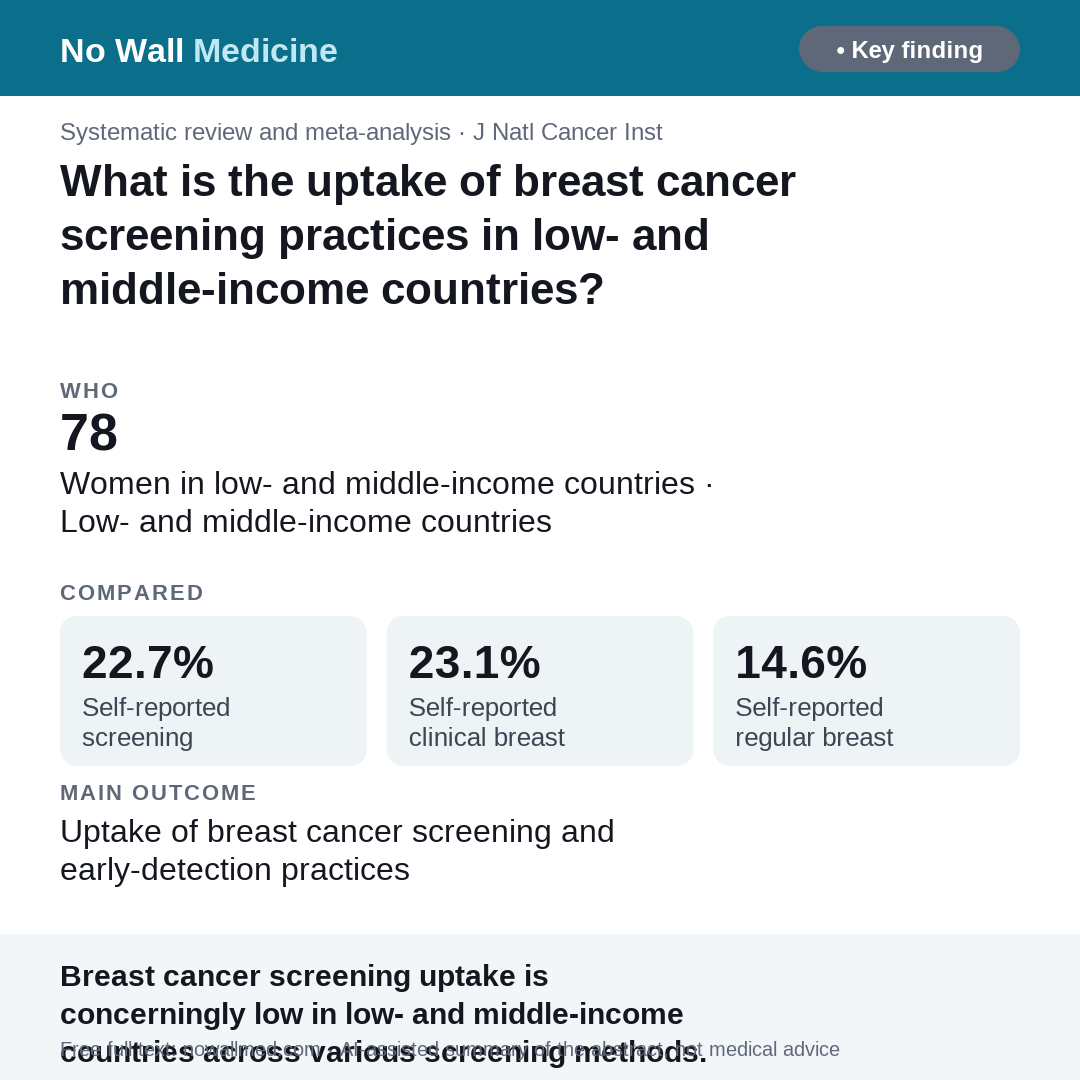
Uptake of breast cancer screening practices in low- and middle-income countries: a systematic review and meta-analysis
Systematic review and meta-analysisHarm found
What is the uptake of breast cancer screening practices in low- and middle-income countries?
Who
78
Women in low- and middle-income countries · Low- and middle-income countries
Compared
22.7%Self-reported screening mammography (95% confidence interval = 18.6% to 27.2%)
23.1%Self-reported clinical breast examination (95% confidence interval = 19.5% to 27.0%)
14.6%Self-reported regular breast self-examination (95% confidence interval = 11.6% to 17.9%)
Main outcome
Uptake of breast cancer screening and early-detection practices
Bottom line: Breast cancer screening uptake is concerningly low in low- and middle-income countries across various screening methods.
J Natl Cancer Inst · 2024-08-12Download image
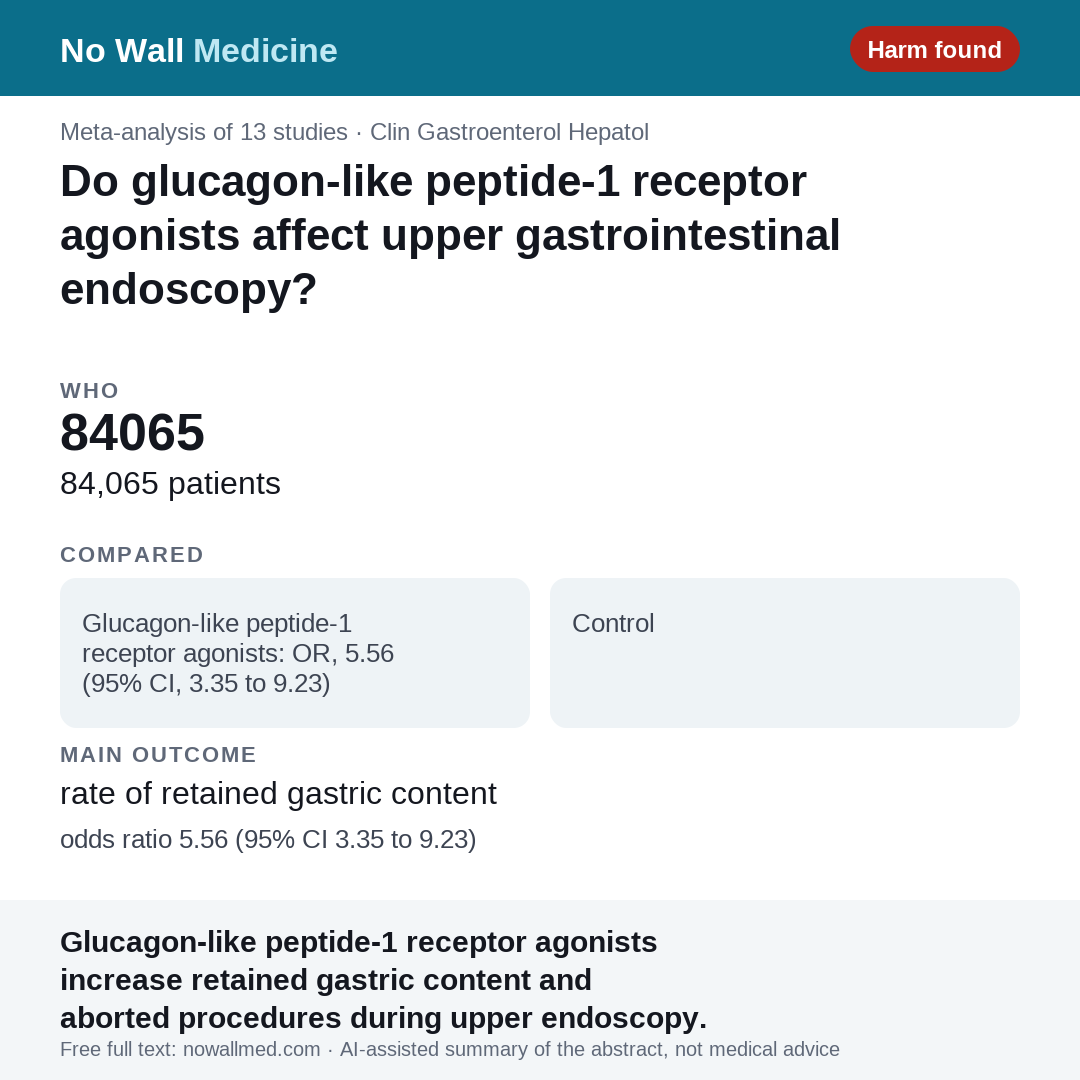
Effects of Glucagon-Like Peptide-1 Receptor Agonists on Upper Gastrointestinal Endoscopy: A Meta-Analysis
Meta-analysis of 13 studiesHarm found
Do glucagon-like peptide-1 receptor agonists affect upper gastrointestinal endoscopy?
Who
84065
84,065 patients
Compared
Glucagon-like peptide-1 receptor agonists: OR, 5.56 (95% CI, 3.35 to 9.23)
Control
Main outcome
rate of retained gastric content
Result: odds ratio 5.56 (95% CI 3.35 to 9.23)
Bottom line: Glucagon-like peptide-1 receptor agonists increase retained gastric content and aborted procedures during upper endoscopy.
Clin Gastroenterol Hepatol · 2024-08-12Download image
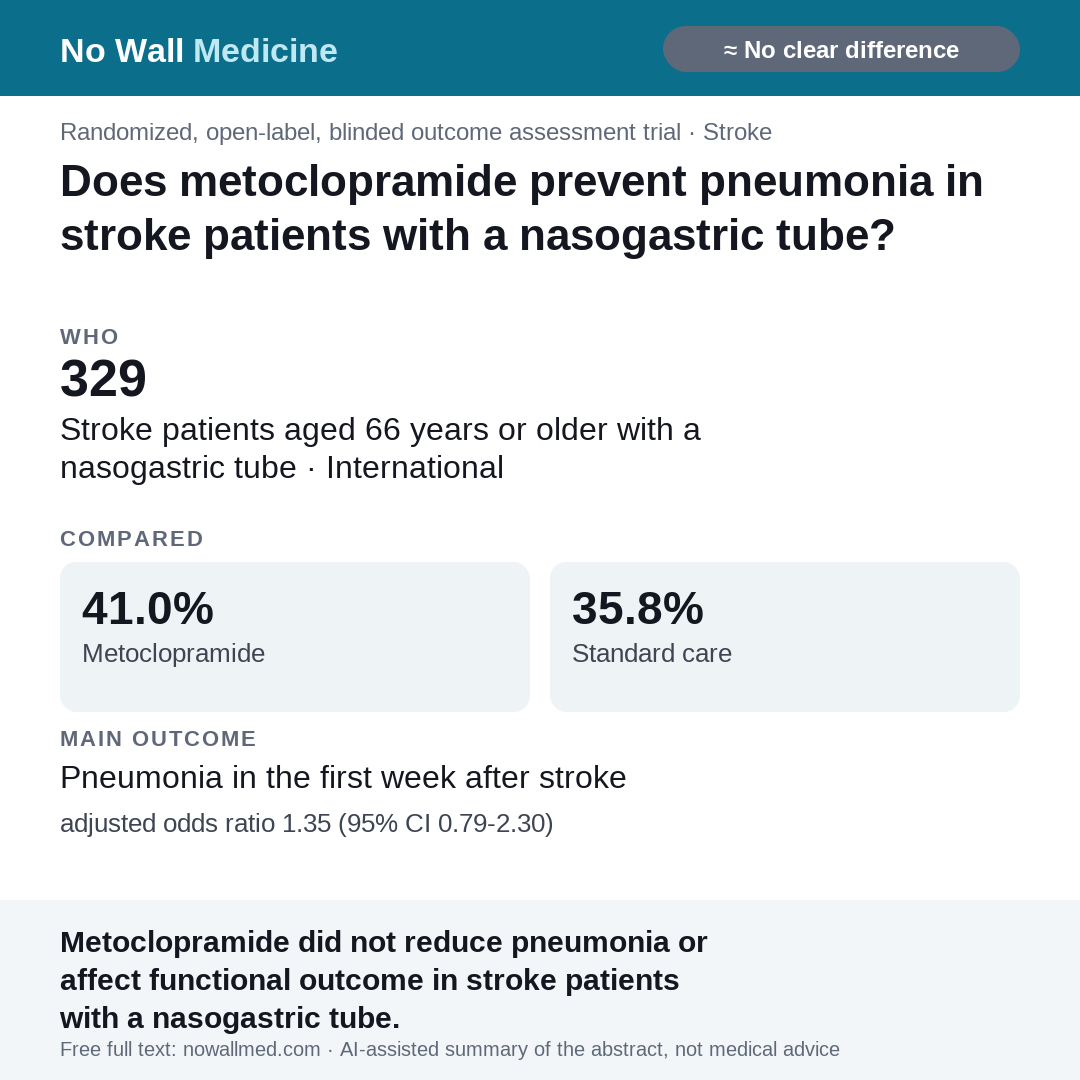
Metoclopramide to Prevent Pneumonia in Patients With Stroke and a Nasogastric Tube: Data From the PRECIOUS Trial
Randomized, open-label, blinded outcome assessment trialNo clear difference
Does metoclopramide prevent pneumonia in stroke patients with a nasogastric tube?
Who
329
Stroke patients aged 66 years or older with a nasogastric tube · International
Compared
41.0%Metoclopramide
35.8%Standard care
Main outcome
Pneumonia in the first week after stroke
Result: adjusted odds ratio 1.35 (95% CI 0.79-2.30)
Bottom line: Metoclopramide did not reduce pneumonia or affect functional outcome in stroke patients with a nasogastric tube.
Stroke · 2024-08-12Download image
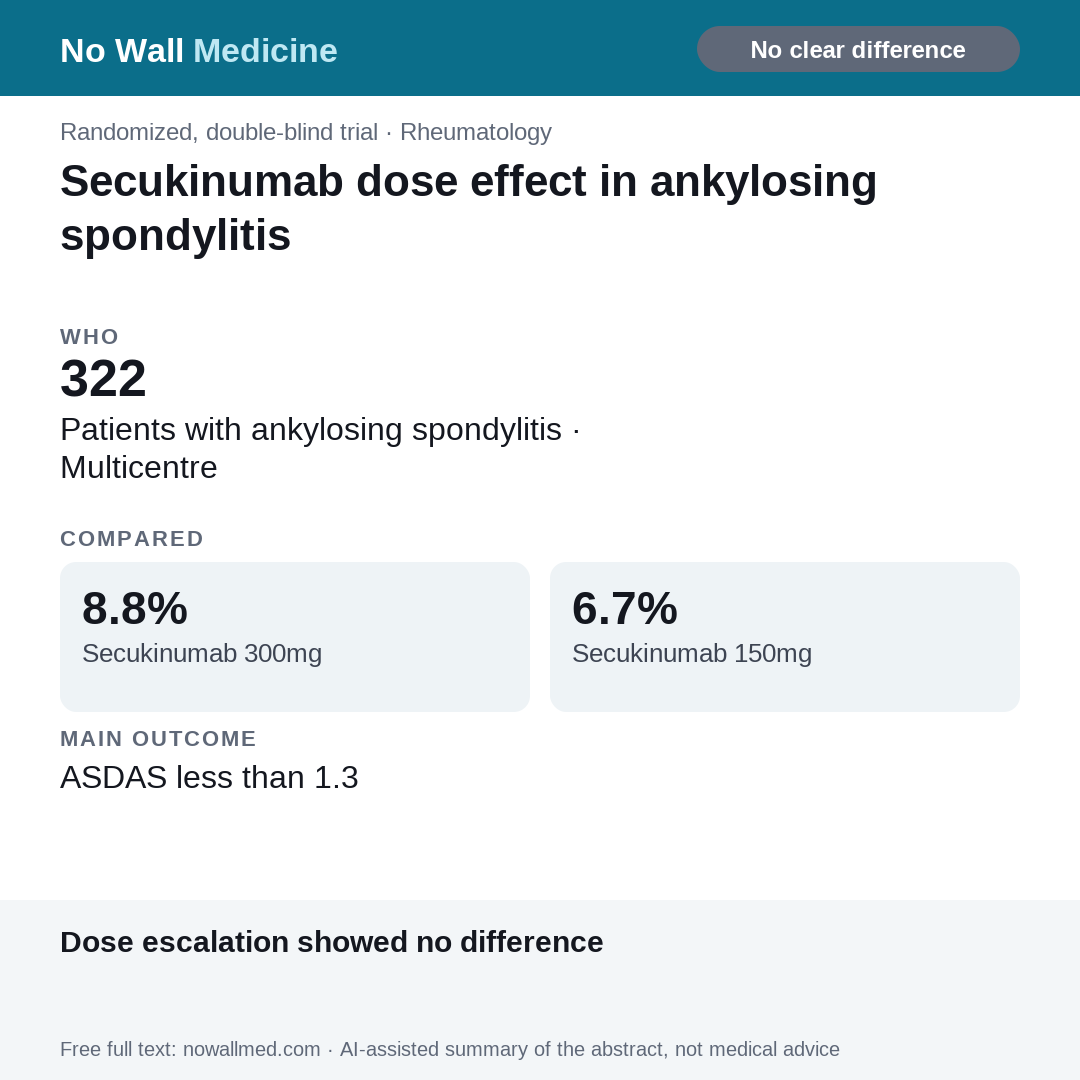
A secukinumab dose-escalation study in patients with ankylosing spondylitis not achieving inactive disease after 16 weeks of treatment
Randomized, double-blind trialNo clear difference
Secukinumab dose effect in ankylosing spondylitis
Who
322
Patients with ankylosing spondylitis · Multicentre
Compared
8.8%Secukinumab 300mg
6.7%Secukinumab 150mg
Main outcome
ASDAS less than 1.3
Bottom line: Dose escalation showed no difference
Rheumatology · 2024-08-12Download image
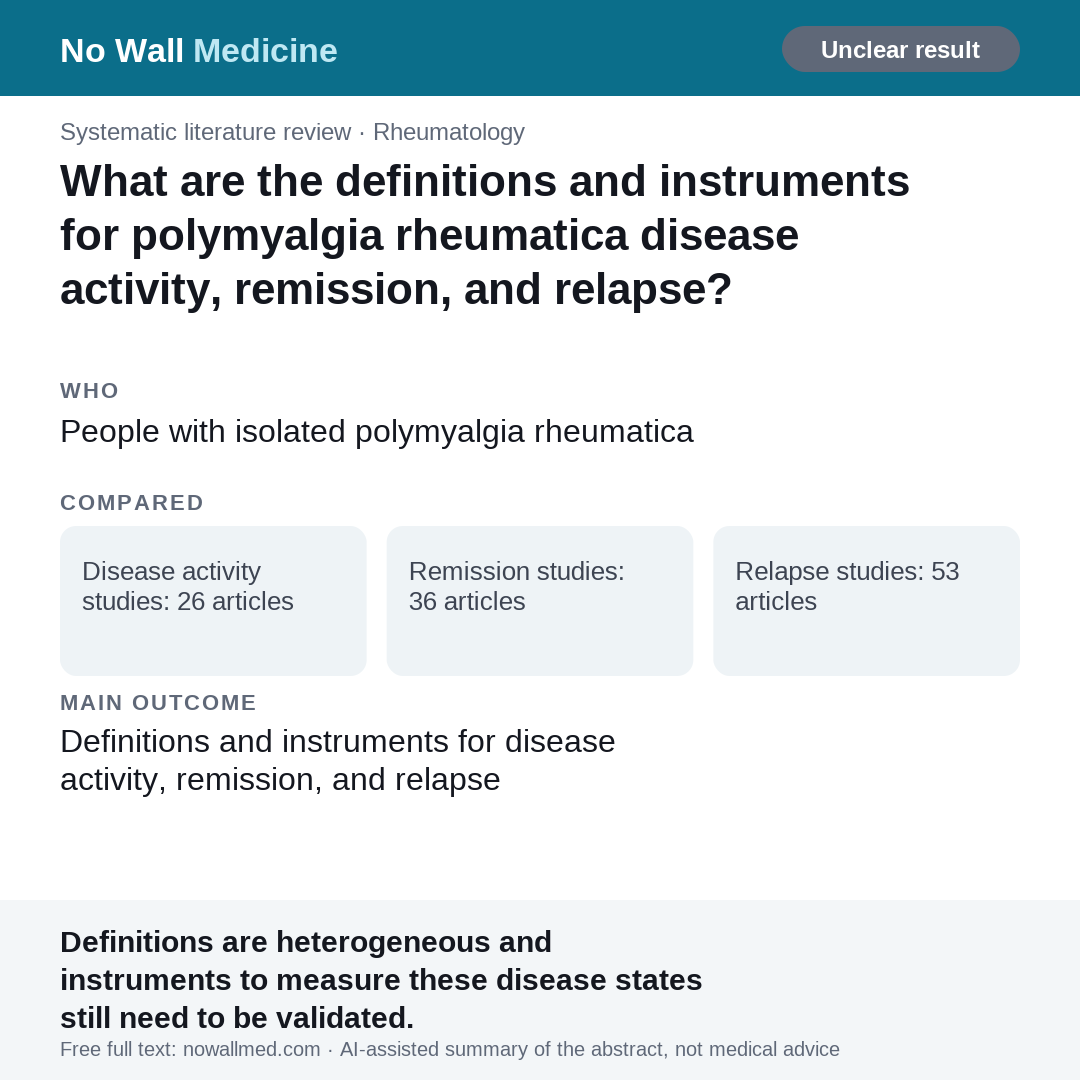
Definitions of and instruments for disease activity, remission and relapse in polymyalgia rheumatica: a systematic literature review
Systematic literature reviewUnclear result
What are the definitions and instruments for polymyalgia rheumatica disease activity, remission, and relapse?
Who
People with isolated polymyalgia rheumatica
Compared
Disease activity studies: 26 articles
Remission studies: 36 articles
Relapse studies: 53 articles
Main outcome
Definitions and instruments for disease activity, remission, and relapse
Bottom line: Definitions are heterogeneous and instruments to measure these disease states still need to be validated.
Limitation: Instruments for clinical signs were often poorly described and qualitative research is needed.
Rheumatology · 2024-08-12Download image
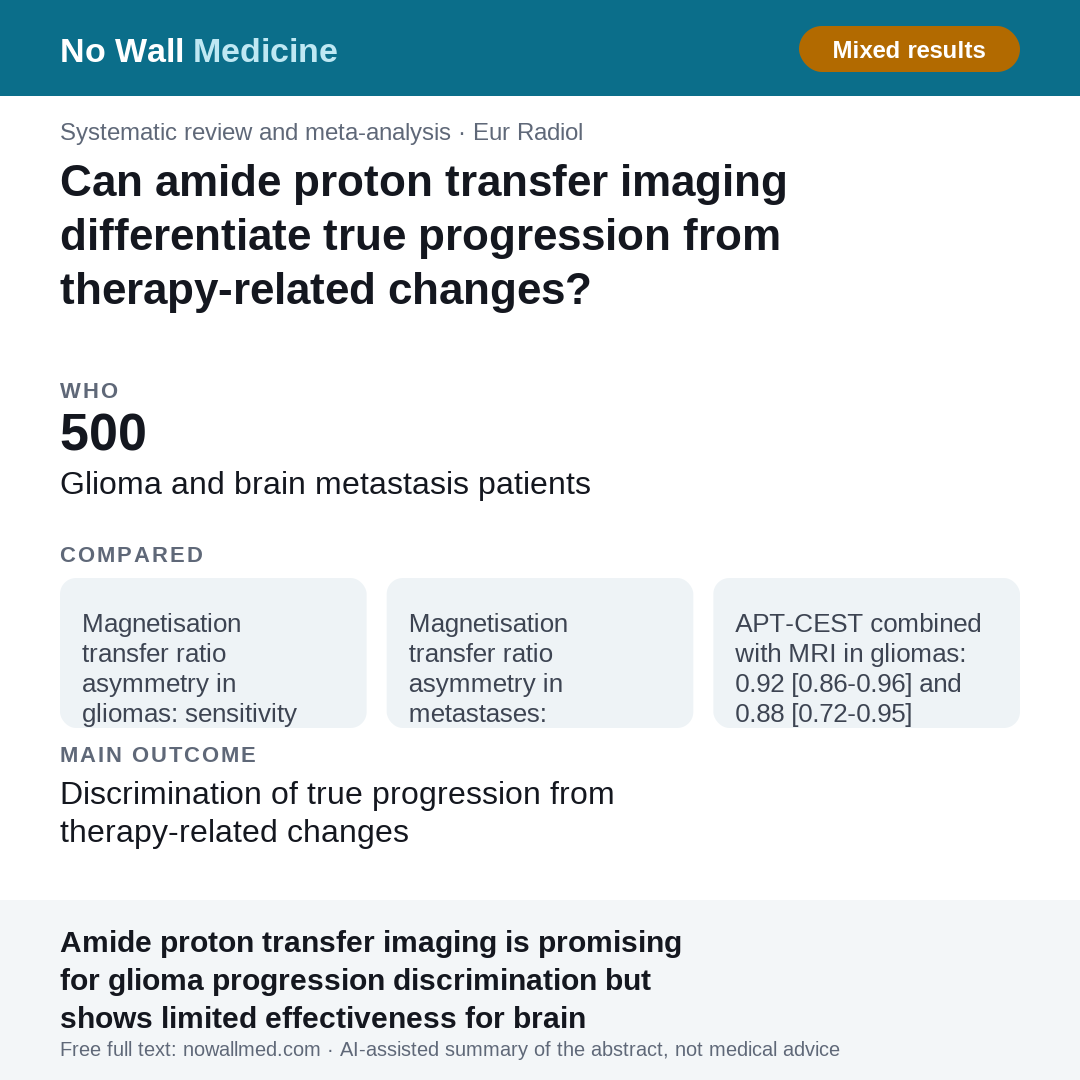
Performance of amide proton transfer imaging to differentiate true progression from therapy-related changes in gliomas and metastases
Systematic review and meta-analysisMixed results
Can amide proton transfer imaging differentiate true progression from therapy-related changes?
Who
500
Glioma and brain metastasis patients
Compared
Magnetisation transfer ratio asymmetry in gliomas: sensitivity 0.88 [0.82-0.92], specificity 0.84 [0.72-0.91]
Magnetisation transfer ratio asymmetry in metastases: sensitivity 0.64 [0.38-0.84], specificity 0.56 [0.33-0.77]
APT-CEST combined with MRI in gliomas: 0.92 [0.86-0.96] and 0.88 [0.72-0.95]
Main outcome
Discrimination of true progression from therapy-related changes
Bottom line: Amide proton transfer imaging is promising for glioma progression discrimination but shows limited effectiveness for brain metastases.
Limitation: Significant inter-study heterogeneity in sensitivity and specificity due to tumor type and protocol.
Eur Radiol · 2024-08-12Download image