Visual abstracts
New randomized trials and meta-analyses from leading journals at a glance: who was studied, what was compared, and what was found. Every paper is free to read in full.
All specialtiesCardiology 840Oncology 760Gastroenterology & Hepatology 306Infectious Disease 626Neurology 350Psychiatry & Mental Health 430Pulmonology 365Critical Care 243Endocrinology & Diabetes 480Pediatrics 534Surgery 319Orthopedics & Sports Medicine 161Neurosurgery 89Cardiothoracic & Vascular Surgery 87Plastic & Reconstructive Surgery 118Nephrology 197Rheumatology 108Hematology 181Dermatology 78Ophthalmology 97Obstetrics & Gynecology 261Public & Global Health 167Radiology & Imaging 96Anesthesiology 107Urology 162ENT (Otolaryngology) 86Emergency Medicine 68Allergy & Immunology 58Geriatrics 160Family Medicine & Primary Care 111Medical Genetics & Genomics 91Pathology & Laboratory Medicine 24Physical Medicine & Rehabilitation 148Palliative Care 81Nutrition 223Digital Health & AI 460General Medicine 101
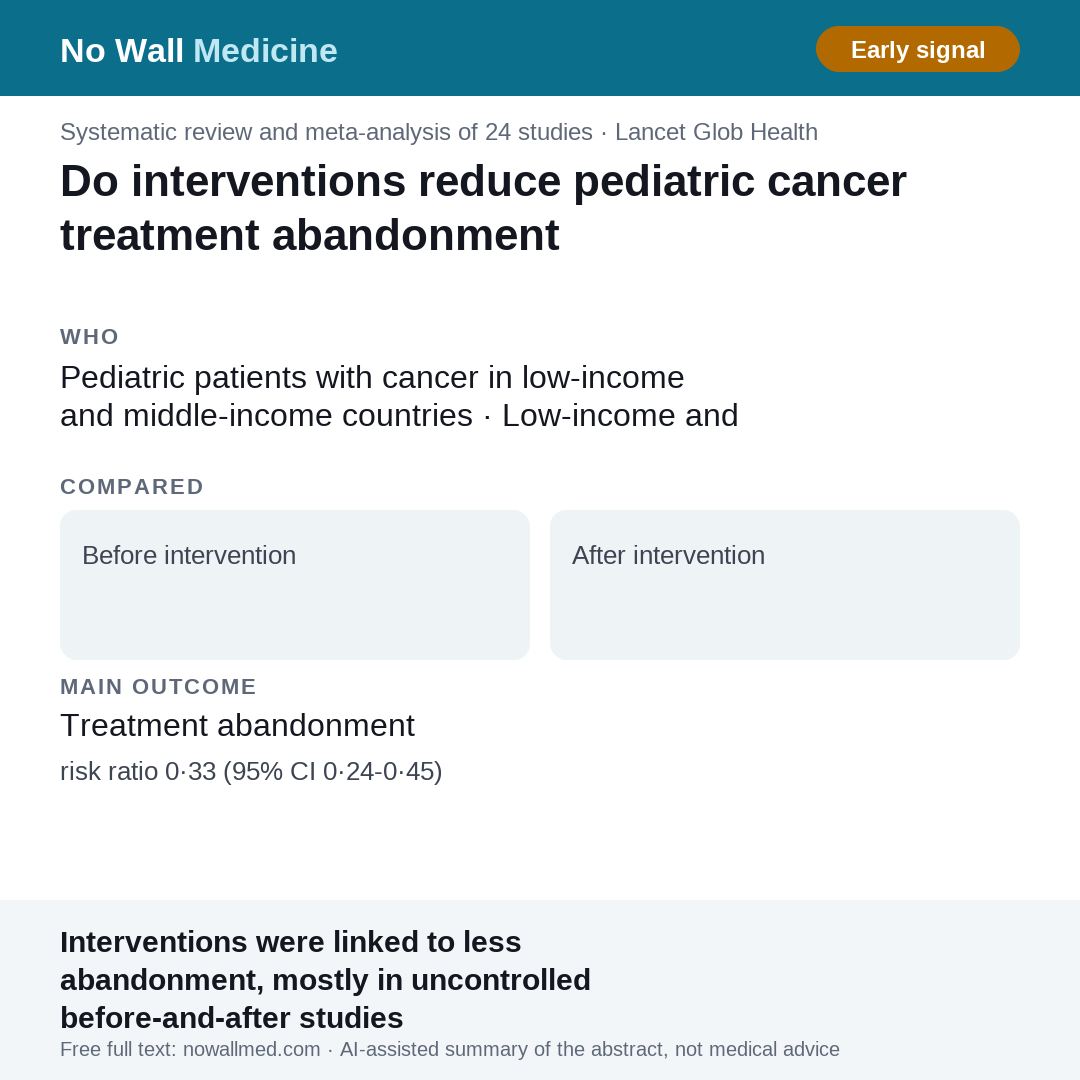
Interventions to reduce paediatric cancer treatment abandonment in low-income and middle-income countries: a systematic review and meta-analysis
Meta-analysis of 24 trialsBenefit found
Do interventions reduce pediatric cancer treatment abandonment
Who
Pediatric patients with cancer in low-income and middle-income countries · Low-income and middle-income countries
Compared
Intervention
Control
Main outcome
Treatment abandonment
Result: risk ratio 0·33 (95% CI 0·24-0·45)
Bottom line: Interventions reduce pediatric cancer treatment abandonment
Limitation: Notable methodological limitations and publication bias
Funded by: US National Institutes of Health and others
Lancet Glob Health · 2026-11-23Download image
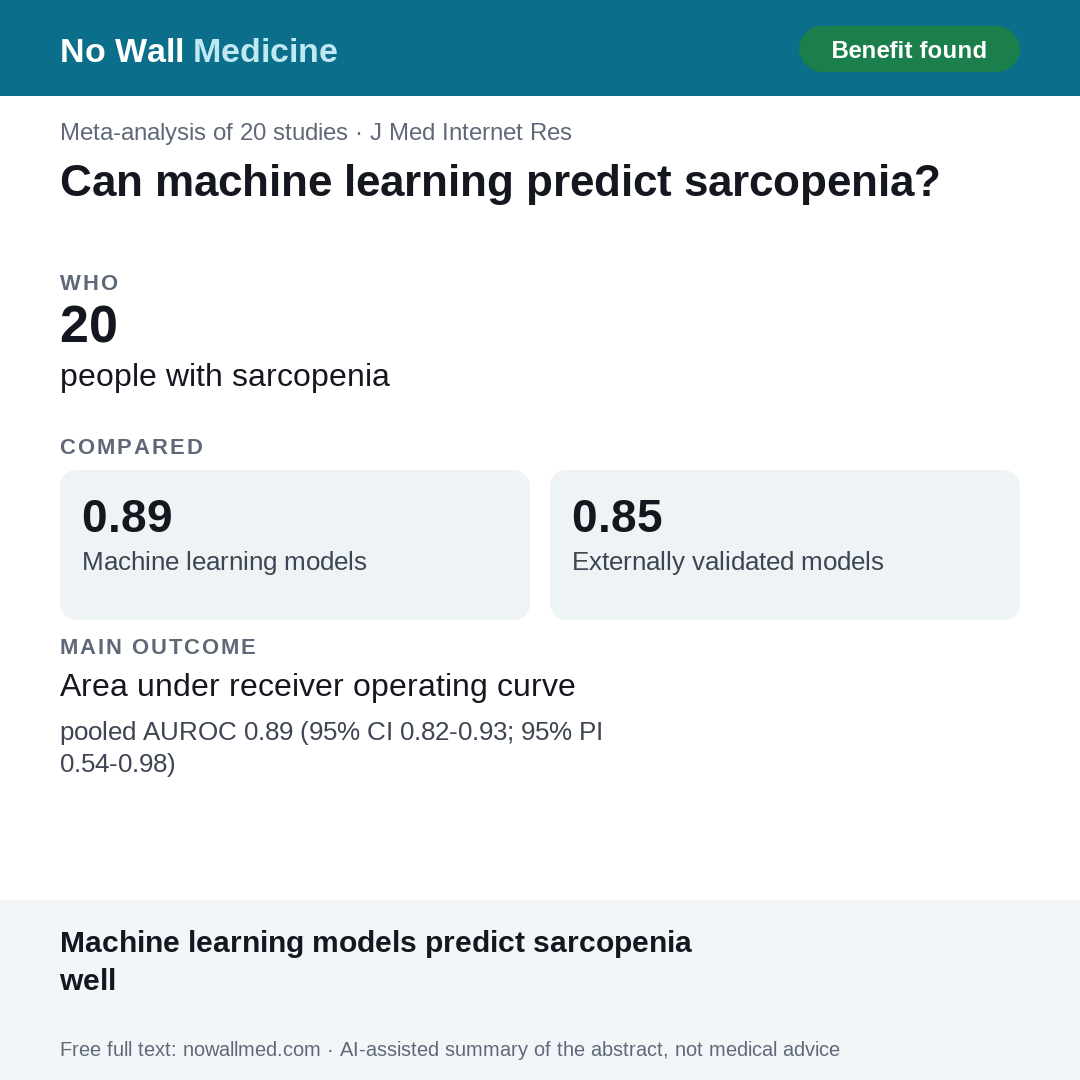
Predictive Modeling of Sarcopenia Using Machine Learning: Systematic Review and Meta-Analysis
Meta-analysis of 20 studiesBenefit found
Can machine learning predict sarcopenia?
Who
20
people with sarcopenia
Compared
0.89Machine learning models (95% CI 0.82-0.93)
0.85Externally validated models
Main outcome
Area under receiver operating curve
Result: pooled AUROC 0.89 (95% CI 0.82-0.93; 95% PI 0.54-0.98)
Bottom line: Machine learning models predict sarcopenia well
Limitation: high risk of bias and heterogeneity
J Med Internet Res · 2026-11-23Download image
Twice-daily versus once-daily intranasal therapy in allergic rhinitis: Systematic review with network meta-analysis
Meta-analysis of 80 studiesNo clear difference
Twice-daily vs once-daily intranasal therapy efficacy
Who
25134
patients with allergic rhinitis
Compared
Twice-daily
Once-daily
Main outcome
nasal symptoms and safety
Bottom line: No difference found between twice and once daily
Limitation: important certainty of evidence concerns
J Allergy Clin Immunol Pract · 2026-11-21Download image

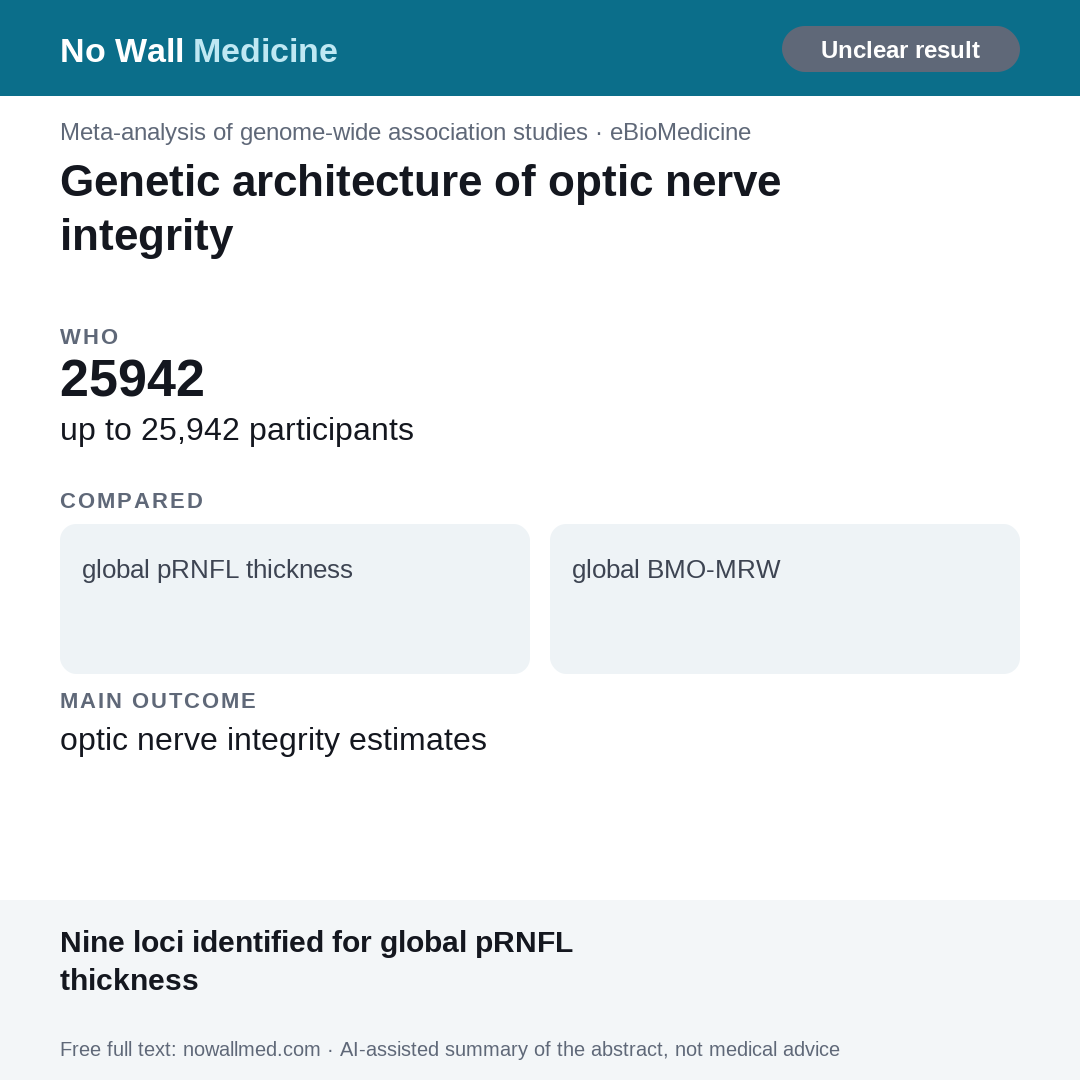
Uncovering the genetic architecture of optic nerve integrity estimates through genome-wide association study meta-analyses
Meta-analysis of genome-wide association studiesUnclear result
Genetic architecture of optic nerve integrity
Who
25942
up to 25,942 participants
Compared
global pRNFL thickness
global BMO-MRW
Main outcome
optic nerve integrity estimates
Bottom line: Nine loci identified for global pRNFL thickness
Funded by: Australian National Health and Medical Research Council
eBioMedicine · 2026-11-21Download image
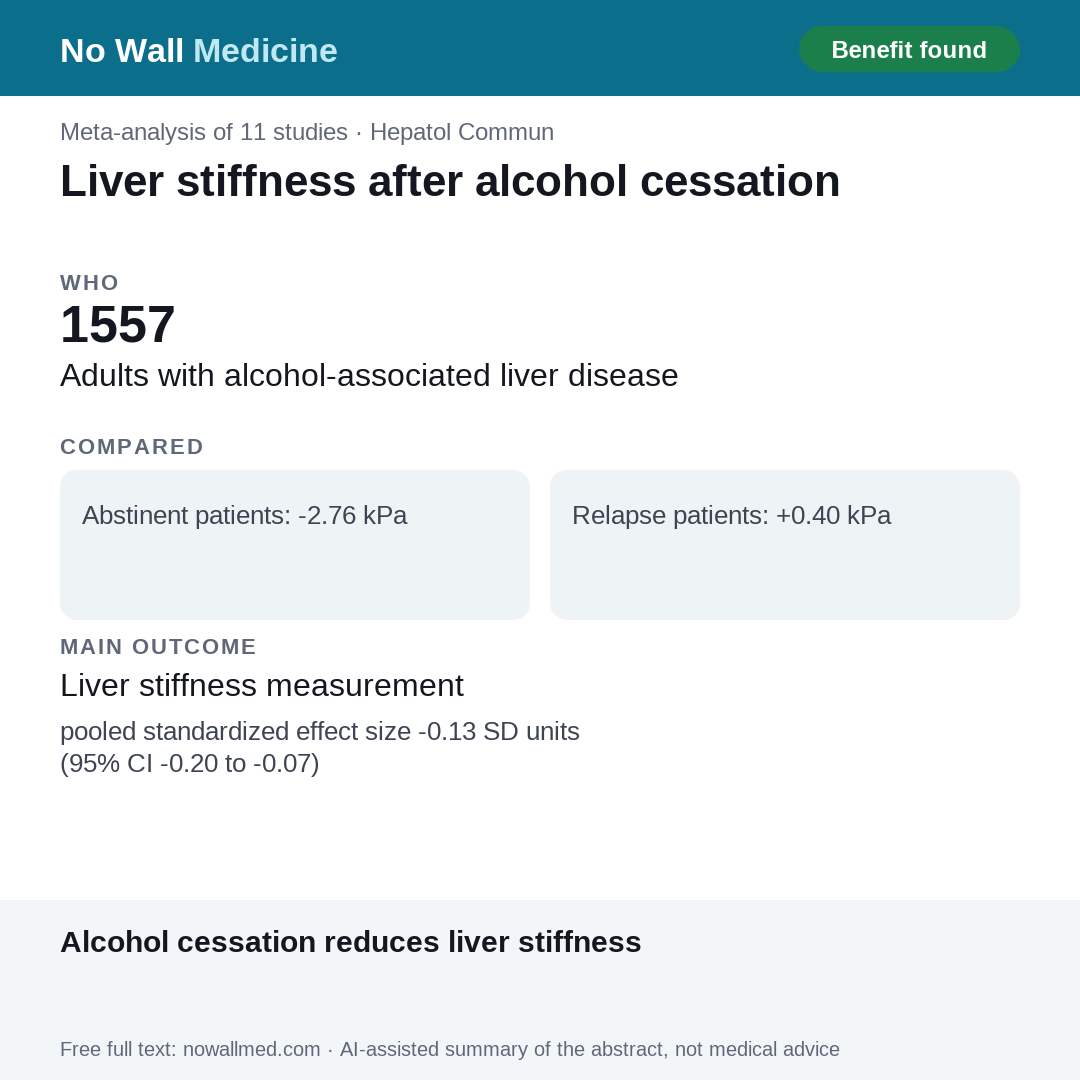
Alcohol abstinence and liver stiffness by vibration-controlled transient elastography: A systematic review and meta-analysis
Meta-analysis of 11 studiesBenefit found
Liver stiffness after alcohol cessation
Who
1557
Adults with alcohol-associated liver disease
Compared
Abstinent patients: -2.76 kPa
Relapse patients: +0.40 kPa
Main outcome
Liver stiffness measurement
Result: pooled standardized effect size -0.13 SD units (95% CI -0.20 to -0.07)
Bottom line: Alcohol cessation reduces liver stiffness
Limitation: correlation with histologic fibrosis uncertain
Hepatol Commun · 2026-11-20Download image
Mortality and prognostic factors in invasive aspergillosis: a systematic review and individual patient data meta-analysis
Meta-analysis of 46 studiesHarm found
Mortality in invasive aspergillosis
Who
3880
Patients with invasive aspergillosis
Compared
Treatment
Control
Main outcome
All-cause mortality
Bottom line: Mortality remains high
Funded by: Japan Society for Promotion of Science
Lancet Infect Dis · 2026-11-19Download image

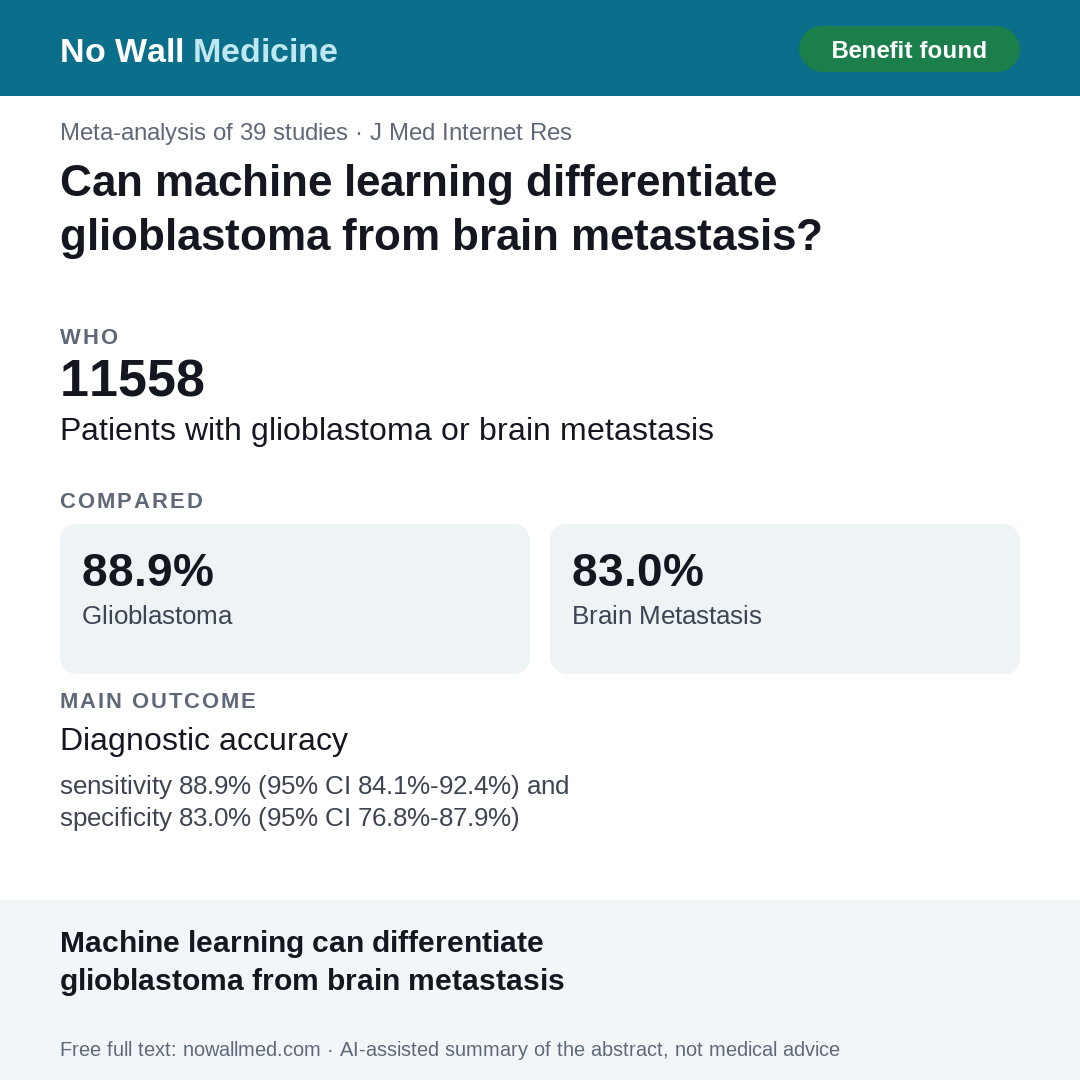
Diagnostic Performance of Radiomics-Based Machine Learning in Differentiating Glioblastoma From Brain Metastasis: Systematic Review and Meta-Analysis
Meta-analysis of 39 studiesBenefit found
Can machine learning differentiate glioblastoma from brain metastasis?
Who
11558
Patients with glioblastoma or brain metastasis
Compared
88.9%Glioblastoma (95% CI 84.1%-92.4%)
83.0%Brain Metastasis (95% CI 76.8%-87.9%)
Main outcome
Diagnostic accuracy
Result: sensitivity 88.9% (95% CI 84.1%-92.4%) and specificity 83.0% (95% CI 76.8%-87.9%)
Bottom line: Machine learning can differentiate glioblastoma from brain metastasis
Limitation: Methodological limitations and scarce evidence
J Med Internet Res · 2026-11-19Download image
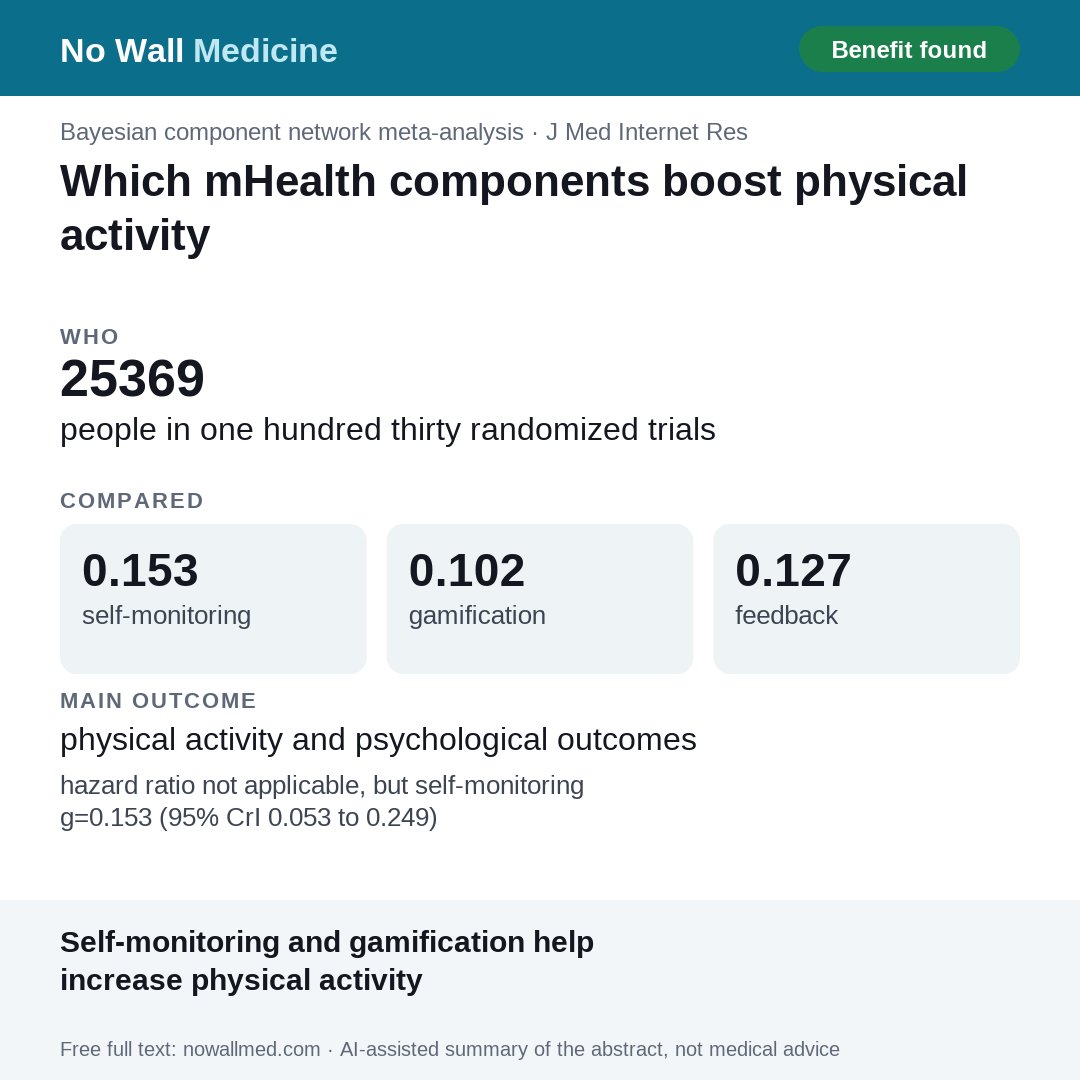
Estimated Effects of Behavior Change Components in mHealth Interventions for Physical Activity and Related Psychological Outcomes: Bayesian Component Network Meta-Analysis
Bayesian component network meta-analysisBenefit found
Which mHealth components boost physical activity
Who
25369
people in one hundred thirty randomized trials
Compared
0.153self-monitoring
0.102gamification
0.127feedback
Main outcome
physical activity and psychological outcomes
Result: hazard ratio not applicable, but self-monitoring g=0.153 (95% CrI 0.053 to 0.249)
Bottom line: Self-monitoring and gamification help increase physical activity
Limitation: small absolute effects and uncertainty
J Med Internet Res · 2026-11-19Download image
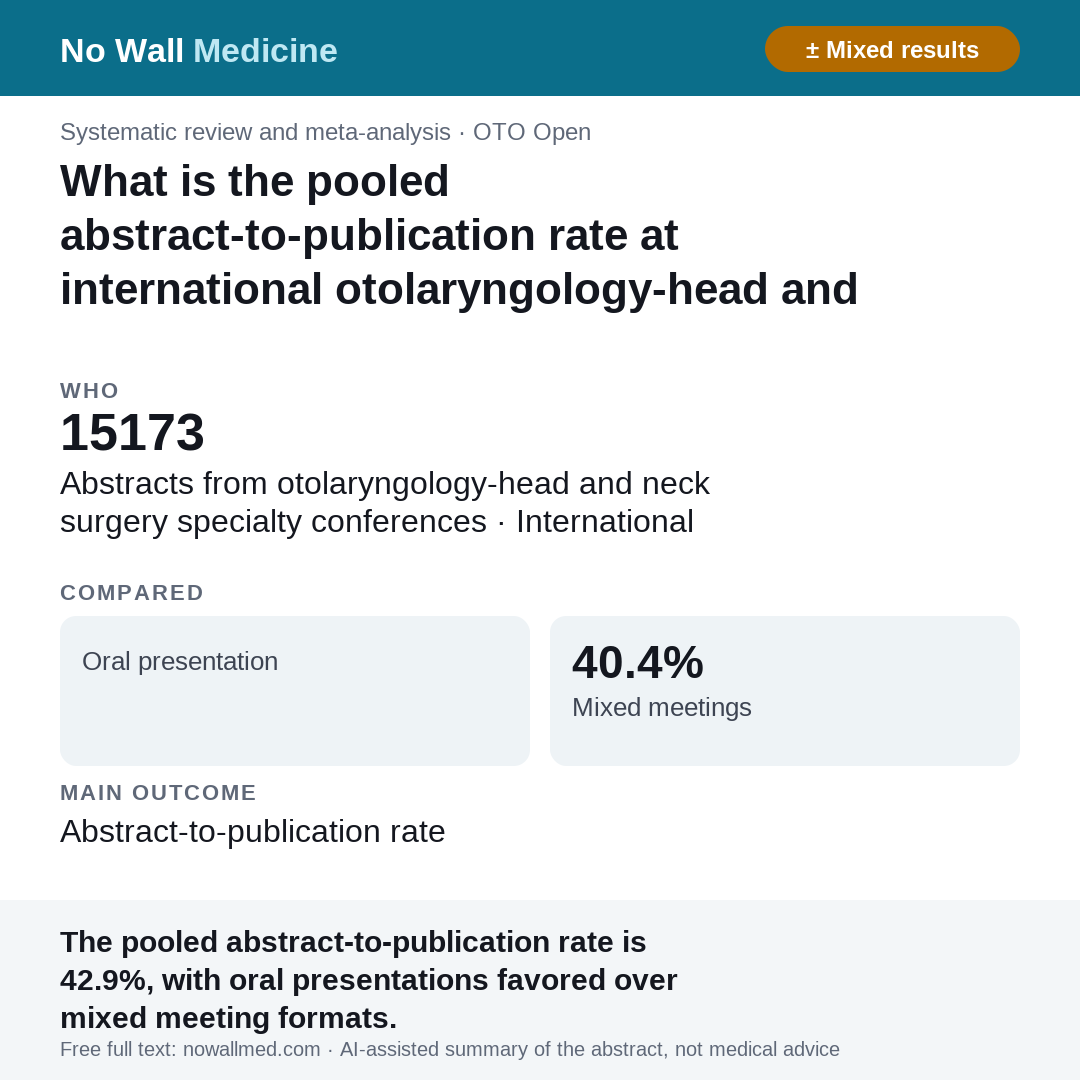
Abstract-to-Publication Rates at Otolaryngology-Head and Neck Surgery Conferences: A Systematic Review and Meta-Analysis
Systematic review and meta-analysisMixed results
What is the pooled abstract-to-publication rate at international otolaryngology-head and neck surgery conferences?
Who
15173
Abstracts from otolaryngology-head and neck surgery specialty conferences · International
Compared
Oral presentation
40.4%Mixed meetings
Main outcome
Abstract-to-publication rate
Result: 42.9% (95% CI 36.5%-49.4%)
Bottom line: The pooled abstract-to-publication rate is 42.9%, with oral presentations favored over mixed meeting formats.
OTO Open · 2026-11-19Download image
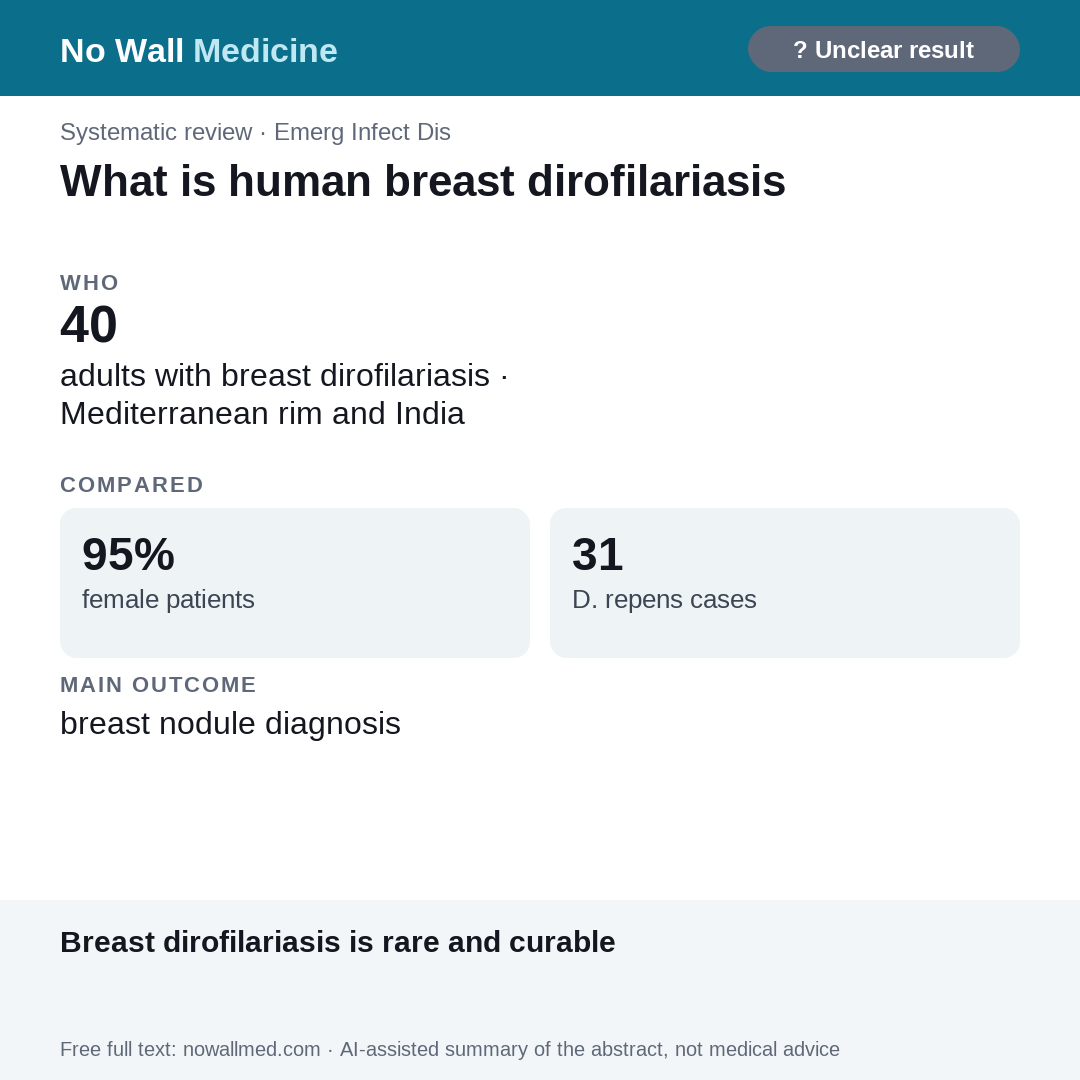
Case Report and Systematic Review of Human Breast Dirofilariasis, 1959-2025
Systematic reviewUnclear result
What is human breast dirofilariasis
Who
40
adults with breast dirofilariasis · Mediterranean rim and India
Compared
95%female patients (38/40)
31D. repens cases
Main outcome
breast nodule diagnosis
Bottom line: Breast dirofilariasis is rare and curable
Emerg Infect Dis · 2026-11-18Download image
Prevalence and Risk Factors for Recurrence of Chronic Rhinosinusitis With Nasal Polyps After Endoscopic Sinus Surgery: A Systematic Review and Meta-Analysis
Systematic review and meta-analysisMixed results
What is the recurrence rate and risk factors for chronic rhinosinusitis with nasal polyps after surgery?
Who
Patients with chronic rhinosinusitis with nasal polyps undergoing endoscopic sinus surgery
Compared
30.60%All patients (95% CI, 23.82%-38.33%)
Asthma: RR = 2.01 (95% CI, 1.26-3.20)
Aspirin intolerance: RR = 1.74 (95% CI, 1.19-2.54)
Allergy: RR = 1.15 (95% CI, 0.80-1.63)
Main outcome
Postoperative recurrence rate and associated risk factors
Bottom line: Recurrence after surgery is substantial, with asthma and aspirin intolerance increasing risk, but allergy does not.
Limitation: Need for standardized recurrence definitions and consistent reporting of surgical extent and postoperative therapy.
Laryngoscope Investig Otolaryngol · 2026-11-18Download image

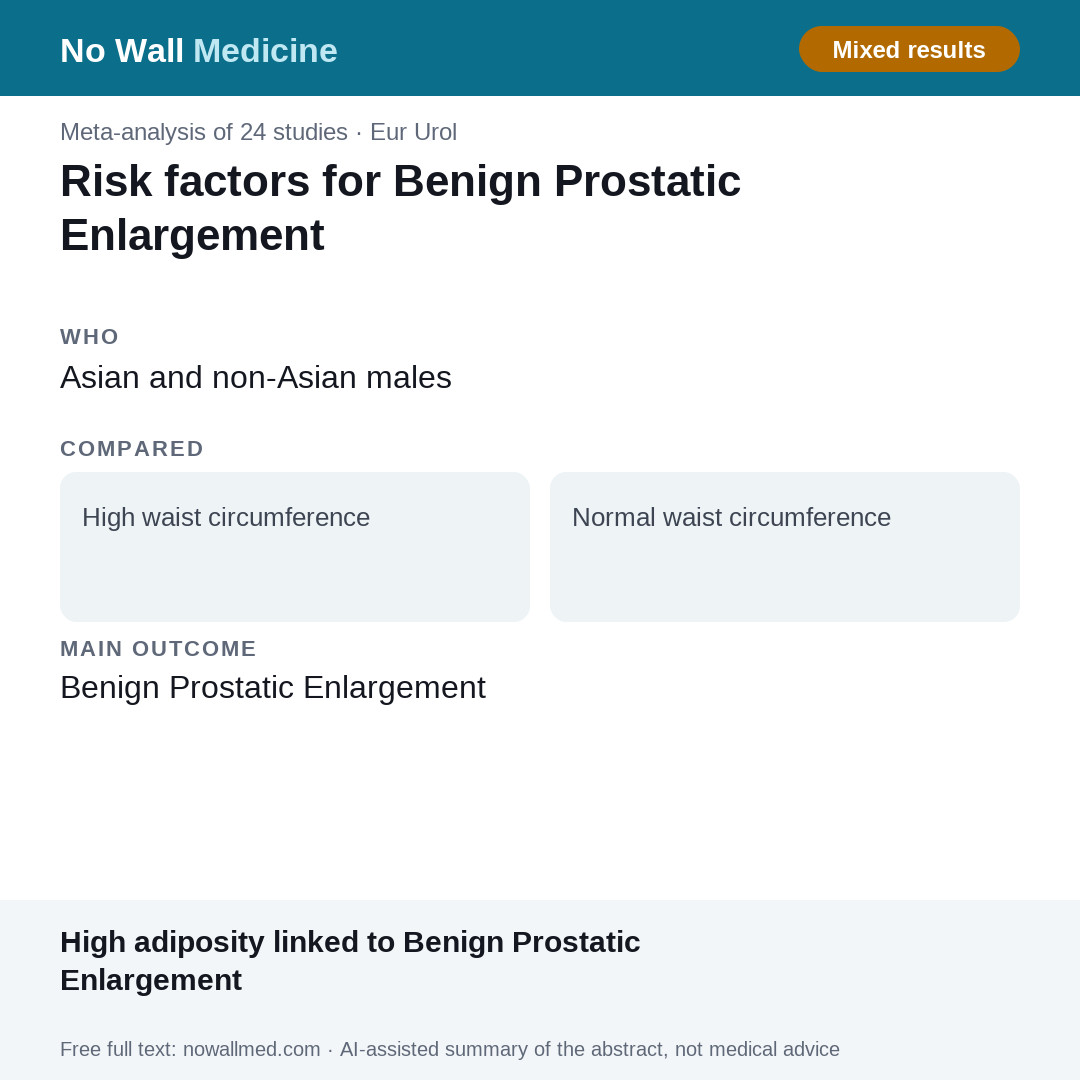
Epidemiology and Modifiable Risk Factors for Benign Prostatic Enlargement and Related Lower Urinary Tract Symptoms: A Systematic Review with Meta-analysis
Meta-analysis of 24 studiesMixed results
Risk factors for Benign Prostatic Enlargement
Who
Asian and non-Asian males
Compared
High waist circumference
Normal waist circumference
Main outcome
Benign Prostatic Enlargement
Bottom line: High adiposity linked to Benign Prostatic Enlargement
Limitation: very low certainty of evidence
Eur Urol · 2026-11-17Download image
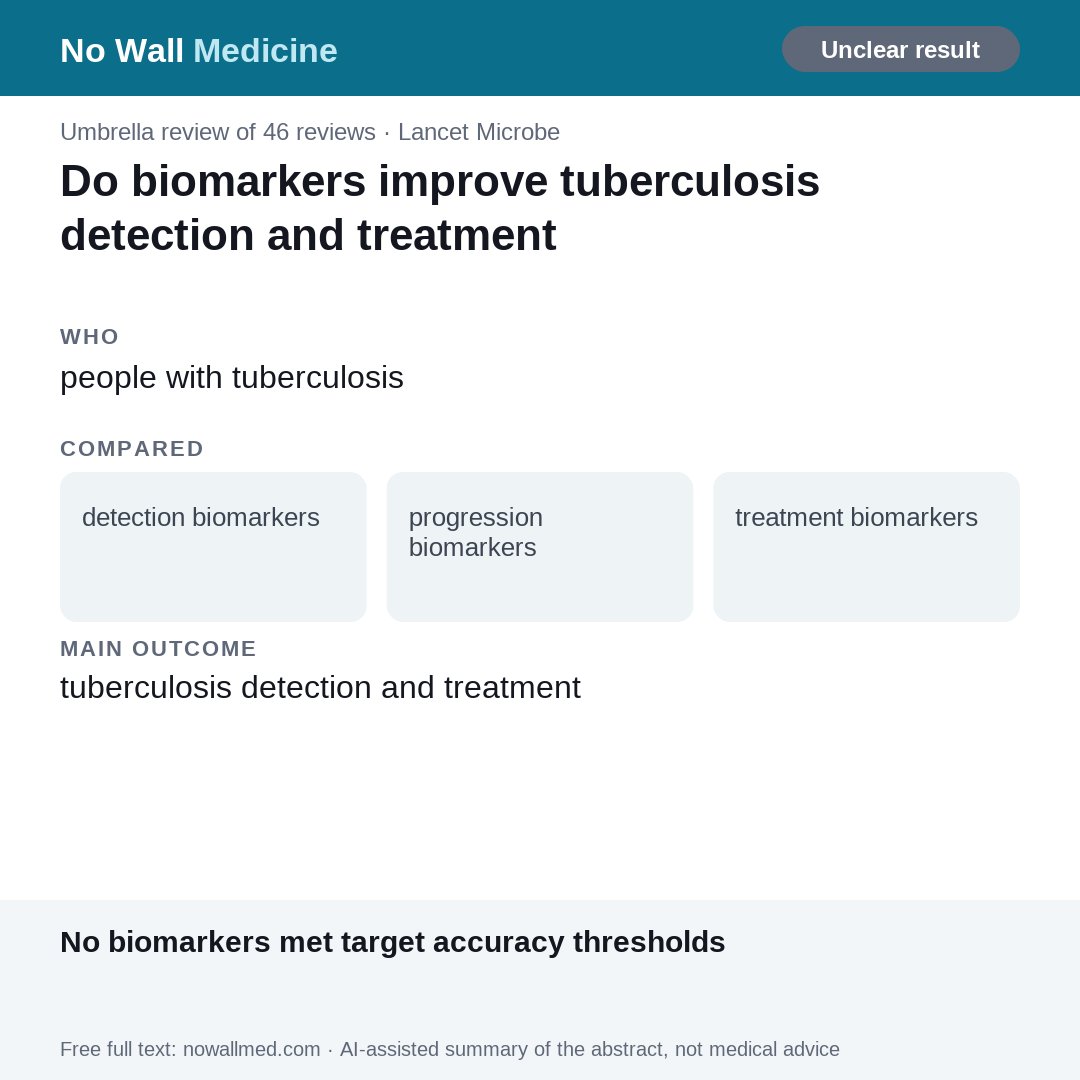
Biomarkers for tuberculosis detection, progression, and treatment optimisation: an umbrella review of systematic reviews
Umbrella review of 46 reviewsUnclear result
Do biomarkers improve tuberculosis detection and treatment
Who
people with tuberculosis
Compared
detection biomarkers
progression biomarkers
treatment biomarkers
Main outcome
tuberculosis detection and treatment
Bottom line: No biomarkers met target accuracy thresholds
Limitation: high risk of selection bias
Lancet Microbe · 2026-11-17Download image
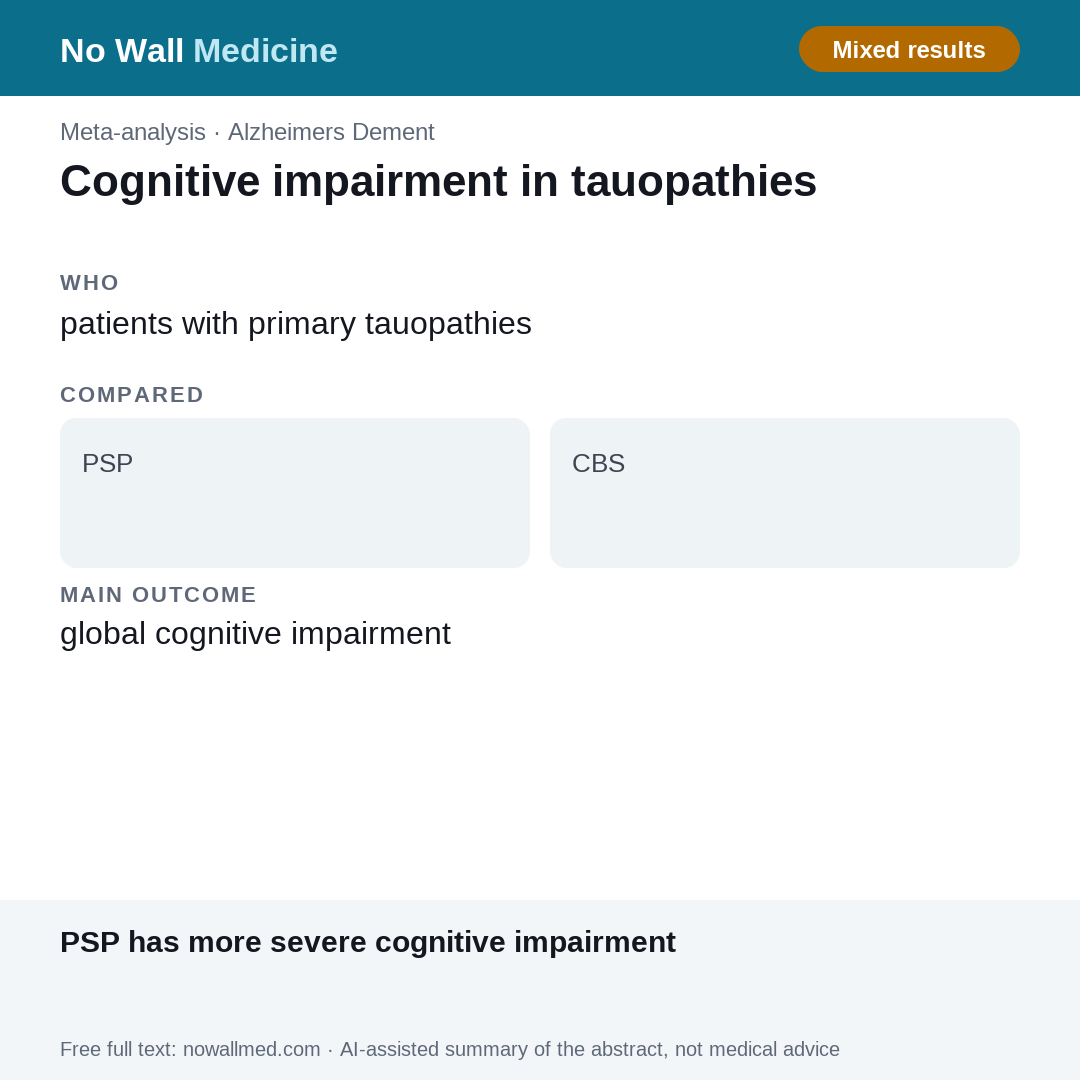
A systematic review and meta-analysis on neuropsychological measures in tauopathies
Meta-analysisMixed results
Cognitive impairment in tauopathies
Who
patients with primary tauopathies
Compared
PSP
CBS
Main outcome
global cognitive impairment
Bottom line: PSP has more severe cognitive impairment
Alzheimers Dement · 2026-11-17Download image
Which Patients with Advanced Clear Cell Renal Cell Carcinoma Benefit Most from First-line Checkpoint Inhibitor Combination Regimens: A Meta-analysis of Individual Patient Data and Aggregate Data from Randomised Trials
Meta-analysis of trialsBenefit found
Who benefits from checkpoint inhibitor combination
Who
3320
Patients with metastatic clear-cell renal cell carcinoma
Compared
Favourable prognosis
Poor prognosis
Main outcome
Overall survival
Result: hazard ratio 0.51 (95% CI 0.40 to 0.65)
Bottom line: Checkpoint inhibitors benefit poor prognosis patients
Eur Urol · 2026-11-16Download image

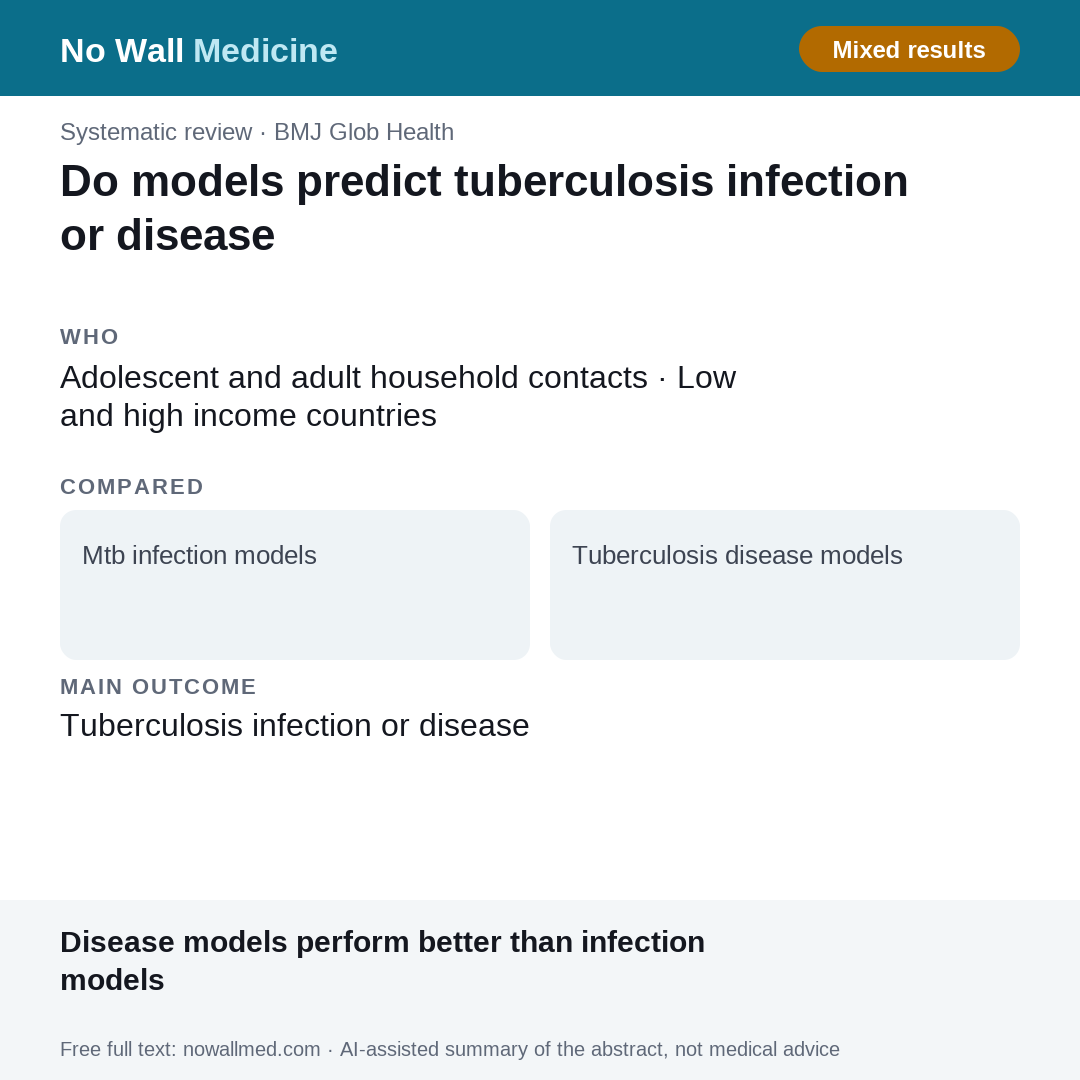
A systematic review of prediction models for tuberculosis infection and incident tuberculosis disease among adolescent and adult household contacts
Systematic reviewMixed results
Do models predict tuberculosis infection or disease
Who
Adolescent and adult household contacts · Low and high income countries
Compared
Mtb infection models
Tuberculosis disease models
Main outcome
Tuberculosis infection or disease
Bottom line: Disease models perform better than infection models
Limitation: Infection models have limited clinical utility
BMJ Glob Health · 2026-11-16Download image
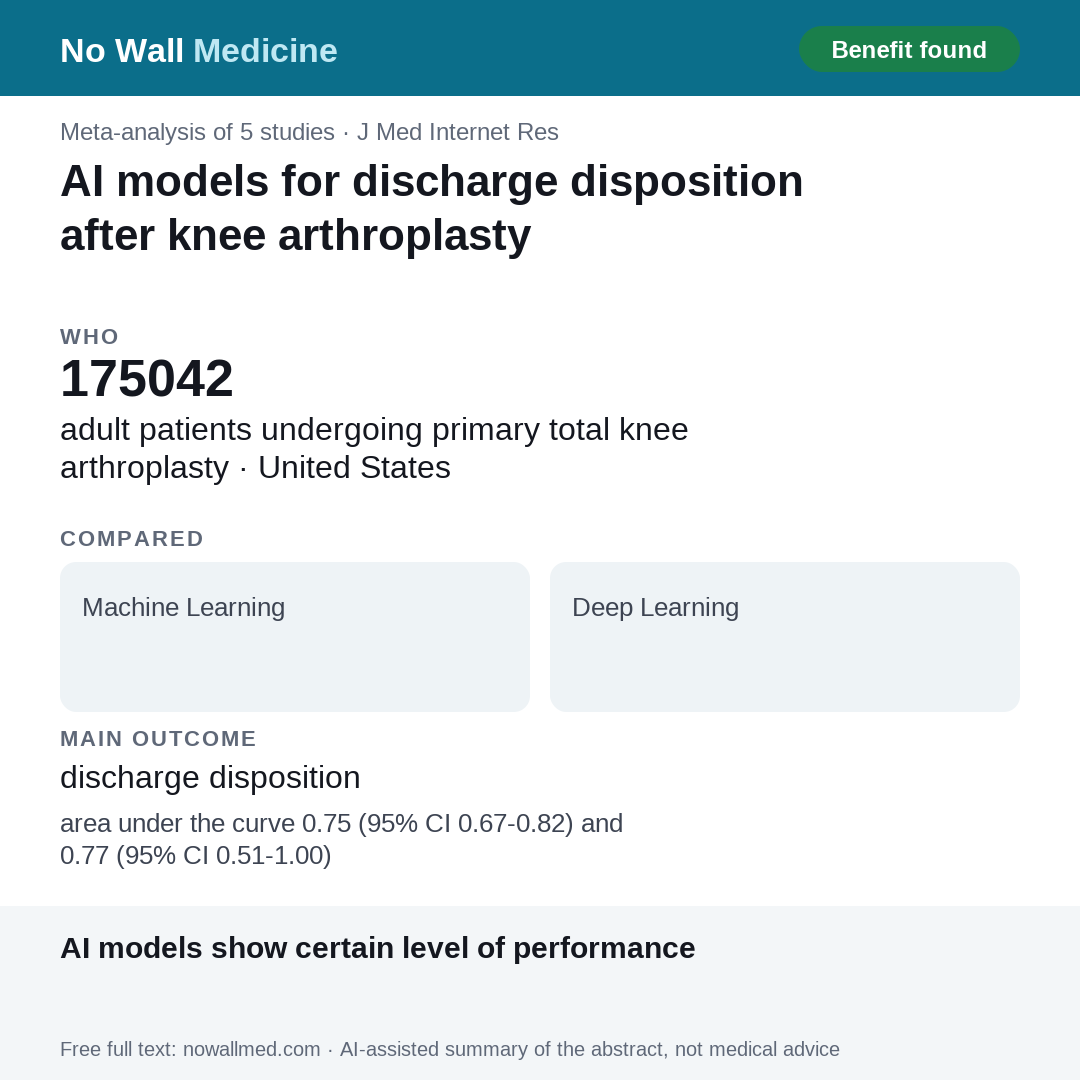
AI Predictive Models for Discharge Disposition in Patients Following Primary Total Knee Arthroplasty: Systematic Review and Meta-Analysis
Meta-analysis of 5 studiesBenefit found
AI models for discharge disposition after knee arthroplasty
Who
175042
adult patients undergoing primary total knee arthroplasty · United States
Compared
Machine Learning
Deep Learning
Main outcome
discharge disposition
Result: area under the curve 0.75 (95% CI 0.67-0.82) and 0.77 (95% CI 0.51-1.00)
Bottom line: AI models show certain level of performance
Limitation: high risk of bias and heterogeneity
J Med Internet Res · 2026-11-16Download image
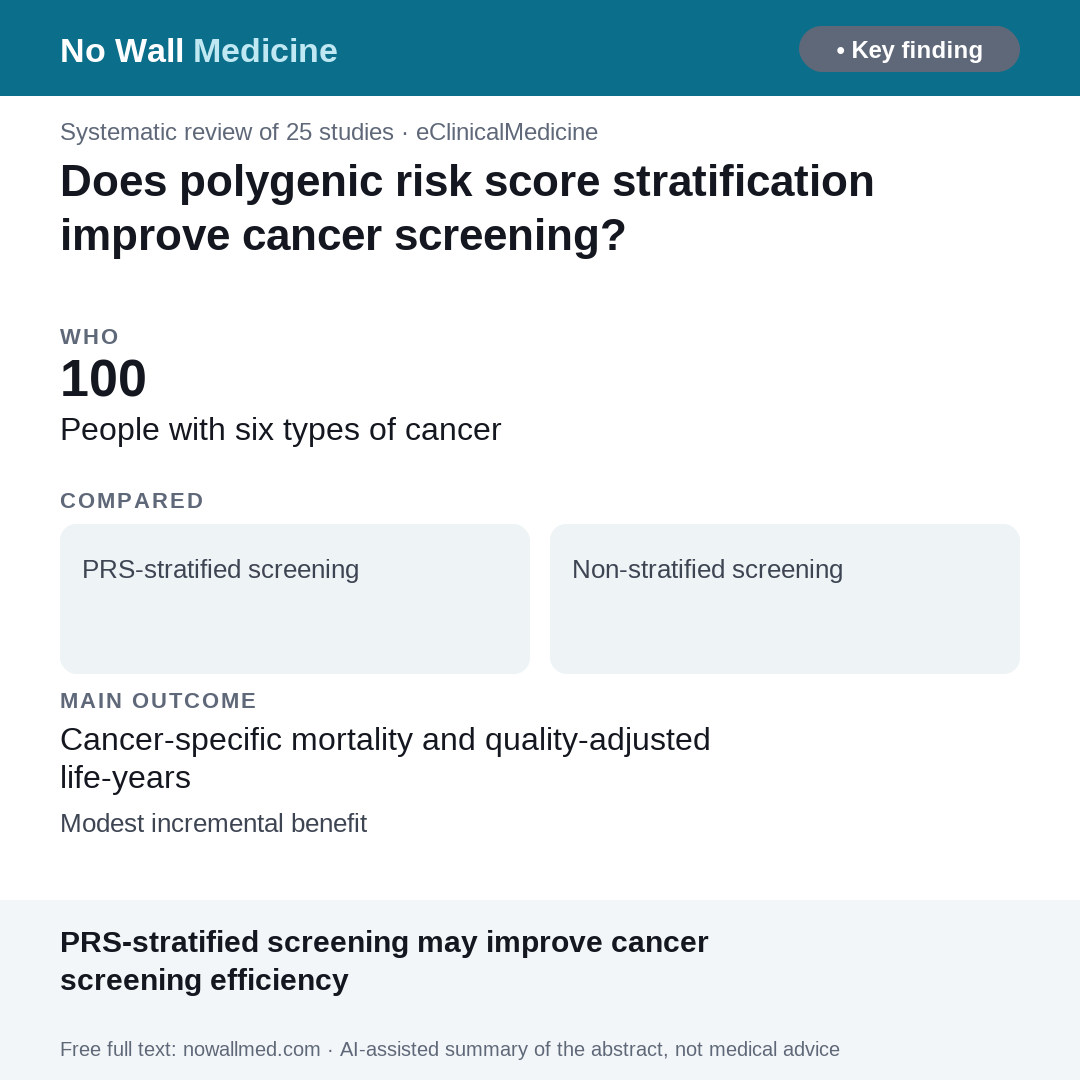
Projected clinical utility of polygenic risk score-stratified cancer screening: a systematic review
Systematic review of 25 studiesBenefit found
Does polygenic risk score stratification improve cancer screening?
Who
100
People with six types of cancer
Compared
PRS-stratified screening
Non-stratified screening
Main outcome
Cancer-specific mortality and quality-adjusted life-years
Result: Modest incremental benefit
Bottom line: PRS-stratified screening may improve cancer screening efficiency
Limitation: Very low certainty of evidence
Funded by: European Union
eClinicalMedicine · 2026-11-13Download image
Operationalizing smoking cessation models of care in oncology settings: a mixed-methods systematic review
Mixed-methods systematic reviewUnclear result
How to operationalize smoking cessation in oncology
Who
People with cancer · Oncology settings
Compared
3As brief interventions
5As brief interventions
Main outcome
Smoking cessation
Bottom line: Adaptation is key to smoking cessation in oncology
Limitation: Limited reporting of implementation outcomes
J Natl Cancer Inst · 2026-11-13Download image

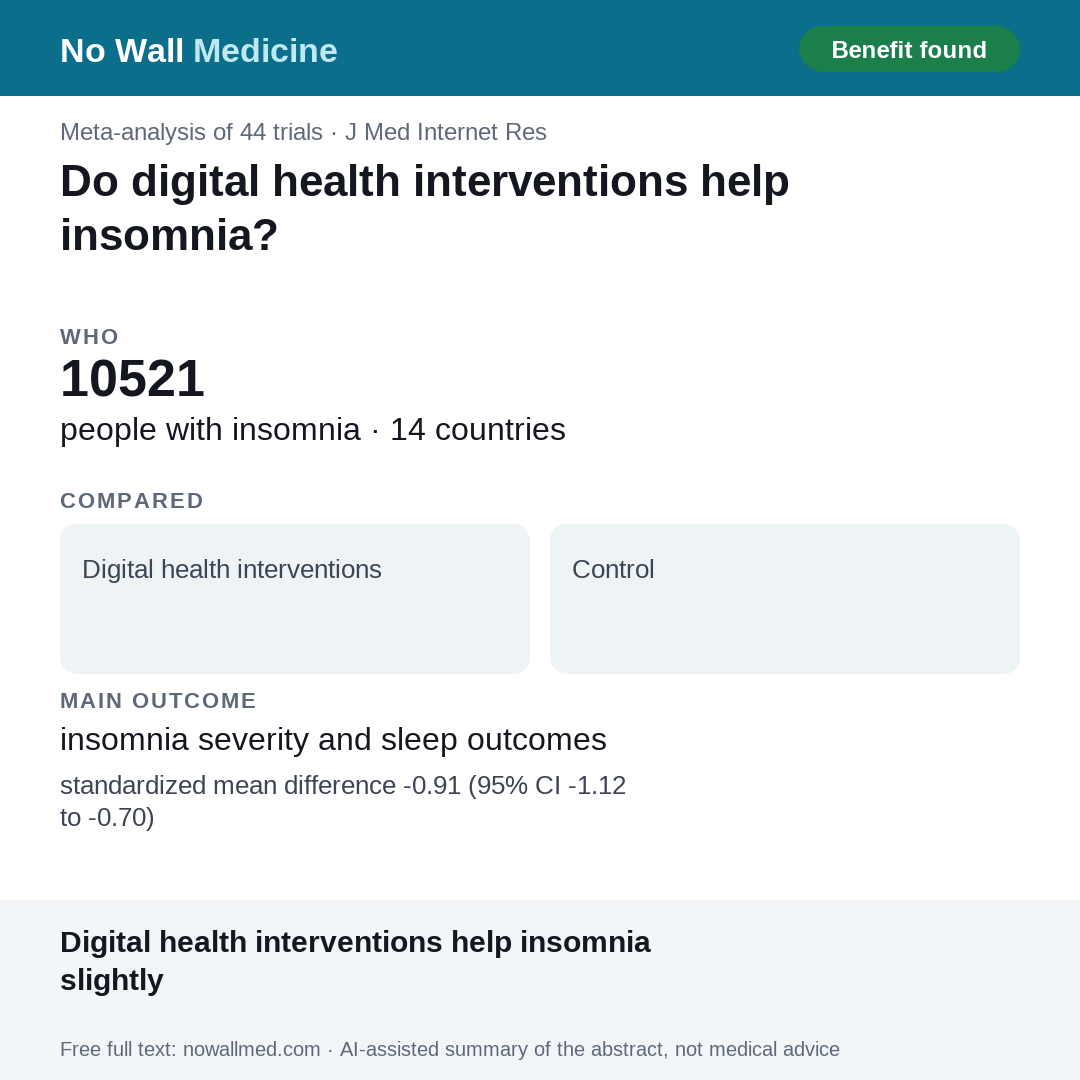
Efficacy of Digital Health Interventions for Insomnia: Systematic Review and Meta-Analysis of Randomized Controlled Trials
Meta-analysis of 44 trialsBenefit found
Do digital health interventions help insomnia?
Who
10521
people with insomnia · 14 countries
Compared
Digital health interventions
Control
Main outcome
insomnia severity and sleep outcomes
Result: standardized mean difference -0.91 (95% CI -1.12 to -0.70)
Bottom line: Digital health interventions help insomnia slightly
Limitation: very low to moderate certainty
J Med Internet Res · 2026-11-13Download image