Visual abstracts
New randomized trials and meta-analyses from leading journals at a glance: who was studied, what was compared, and what was found. Every paper is free to read in full.
All specialtiesCardiology 4763Oncology 4042Gastroenterology & Hepatology 1902Infectious Disease 3756Neurology 1872Psychiatry & Mental Health 2214Pulmonology 2042Critical Care 1319Endocrinology & Diabetes 2544Pediatrics 2889Surgery 2479Orthopedics & Sports Medicine 917Neurosurgery 525Cardiothoracic & Vascular Surgery 656Plastic & Reconstructive Surgery 574Nephrology 1107Rheumatology 810Hematology 1090Dermatology 611Ophthalmology 532Obstetrics & Gynecology 1645Public & Global Health 1037Radiology & Imaging 617Anesthesiology 957Urology 745ENT (Otolaryngology) 494Emergency Medicine 481Allergy & Immunology 309Geriatrics 972Family Medicine & Primary Care 533Medical Genetics & Genomics 659Pathology & Laboratory Medicine 156Physical Medicine & Rehabilitation 734Palliative Care 421Nutrition 1560Digital Health & AI 2133General Medicine 318
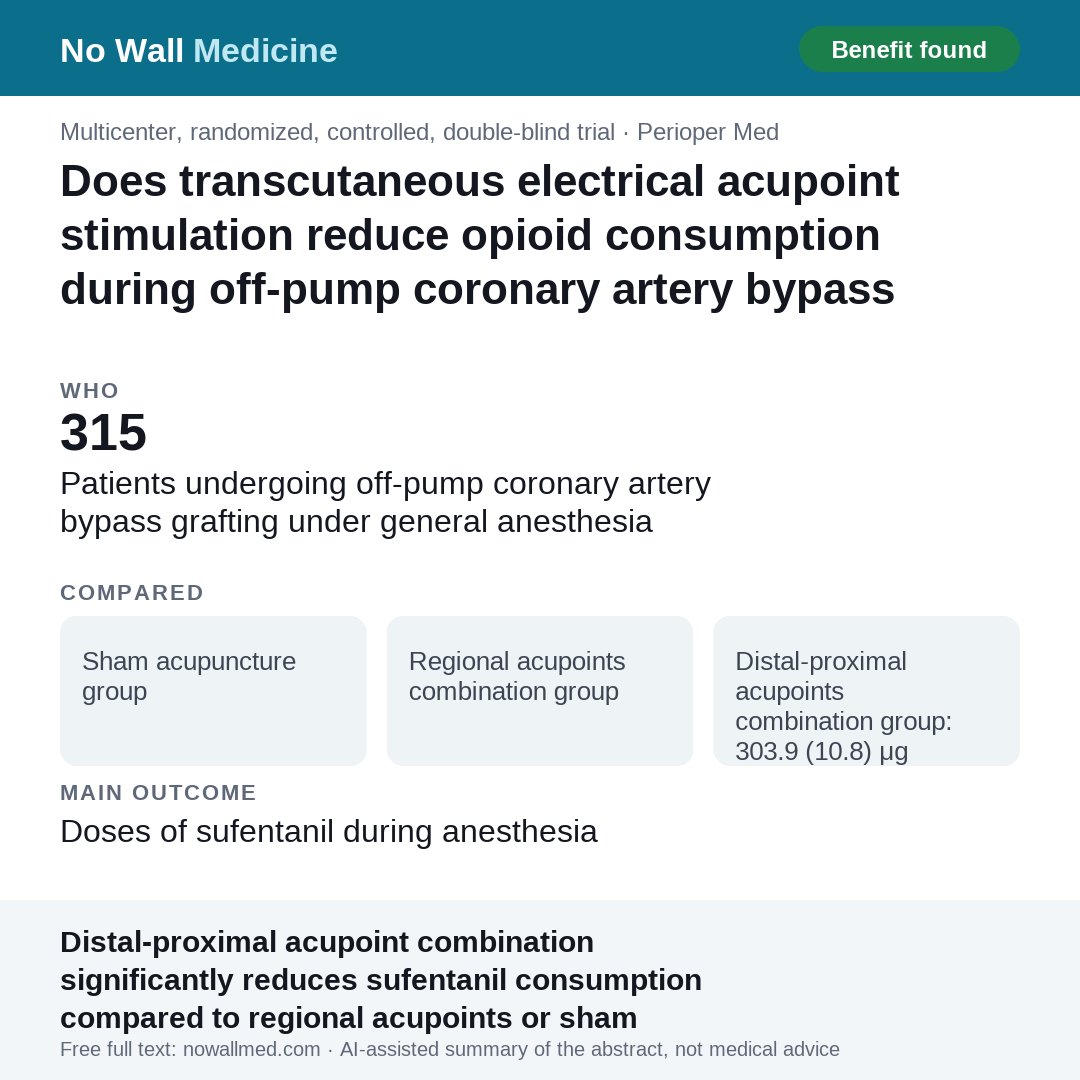
The use of transcutaneous electrical acupoint stimulation to reduce opioid consumption in patients undergoing off-pump CABG: a randomized controlled trial
Multicenter, randomized, controlled, double-blind trialBenefit found
Does transcutaneous electrical acupoint stimulation reduce opioid consumption during off-pump coronary artery bypass grafting?
Who
315
Patients undergoing off-pump coronary artery bypass grafting under general anesthesia
Compared
Sham acupuncture group
Regional acupoints combination group
Distal-proximal acupoints combination group: 303.9 (10.8) μg
Main outcome
Doses of sufentanil during anesthesia
Result: mean difference -34.9 (-64.9 to -4.9) μg
Bottom line: Distal-proximal acupoint combination significantly reduces sufentanil consumption compared to regional acupoints or sham acupuncture in off-pump bypass surgery.
Perioper Med · 2024-07-05Download image
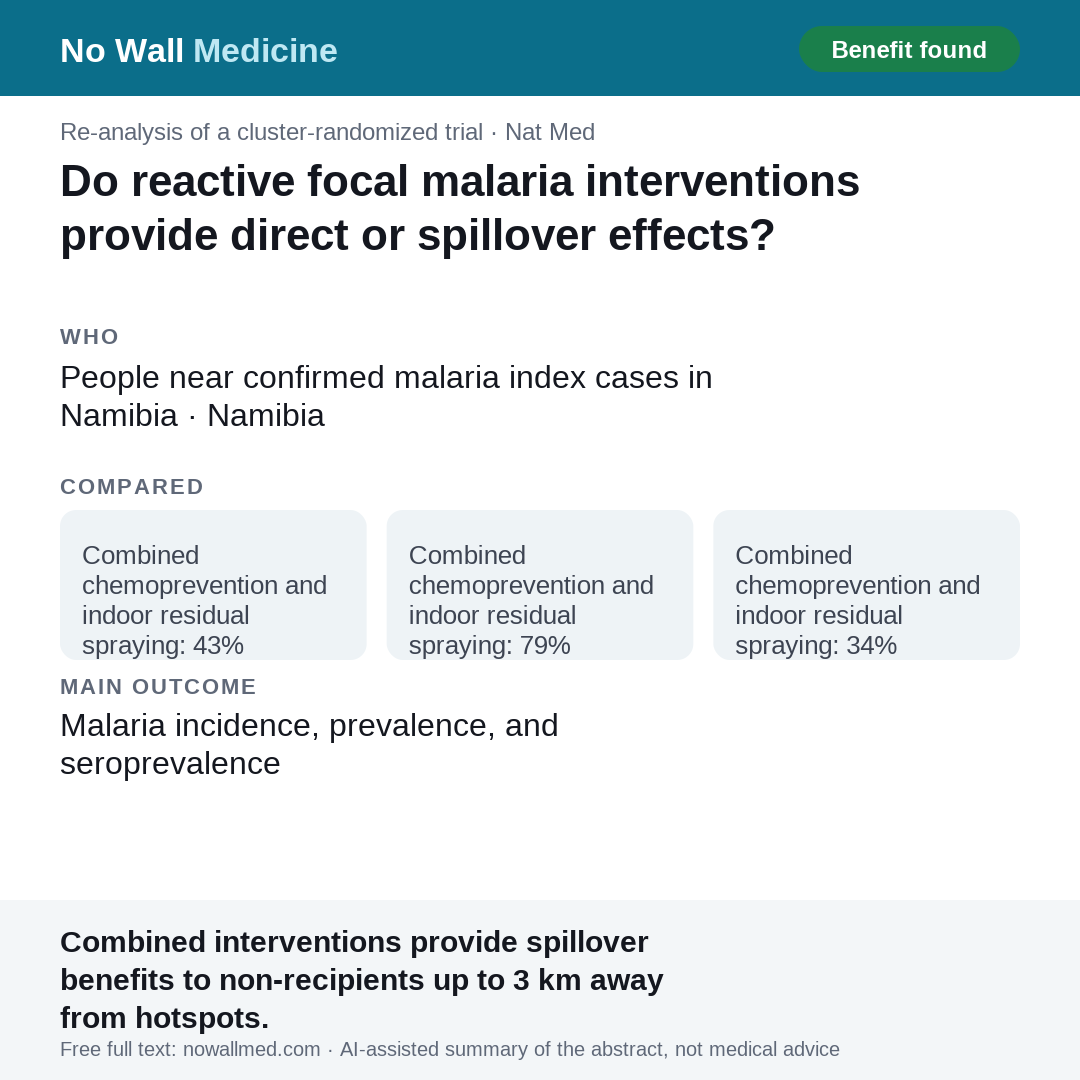
Extension of efficacy range for targeted malaria-elimination interventions due to spillover effects
Re-analysis of a cluster-randomized trialBenefit found
Do reactive focal malaria interventions provide direct or spillover effects?
Who
People near confirmed malaria index cases in Namibia · Namibia
Compared
Combined chemoprevention and indoor residual spraying: 43% reduction in incidence among non-recipients within 1 km
Combined chemoprevention and indoor residual spraying: 79% reduction in infection prevalence among non-recipients within 3 km
Combined chemoprevention and indoor residual spraying: 34% reduction in seroprevalence among non-recipients within 3 km
Main outcome
Malaria incidence, prevalence, and seroprevalence
Bottom line: Combined interventions provide spillover benefits to non-recipients up to 3 km away from hotspots.
Nat Med · 2024-07-04Download image
Comparative Cardiovascular Benefits of Bempedoic Acid and Statin Drugs
Randomized trial analysisBenefit found
Does bempedoic acid cardiovascular benefit resemble statins when standardized per unit low-density lipoprotein cholesterol lowering?
Who
13970
Statin-intolerant patients
Compared
703Bempedoic acid (10.1%)
816Placebo (11.7%)
Main outcome
Major vascular event
Result: hazard ratio 0.75 (95% CI 0.63 to 0.90) per 1 mmol/L reduction
Bottom line: Bempedoic acid provides cardiovascular risk reduction similar to statins for a given magnitude of low-density lipoprotein cholesterol lowering.
JACC · 2024-07-04Download image

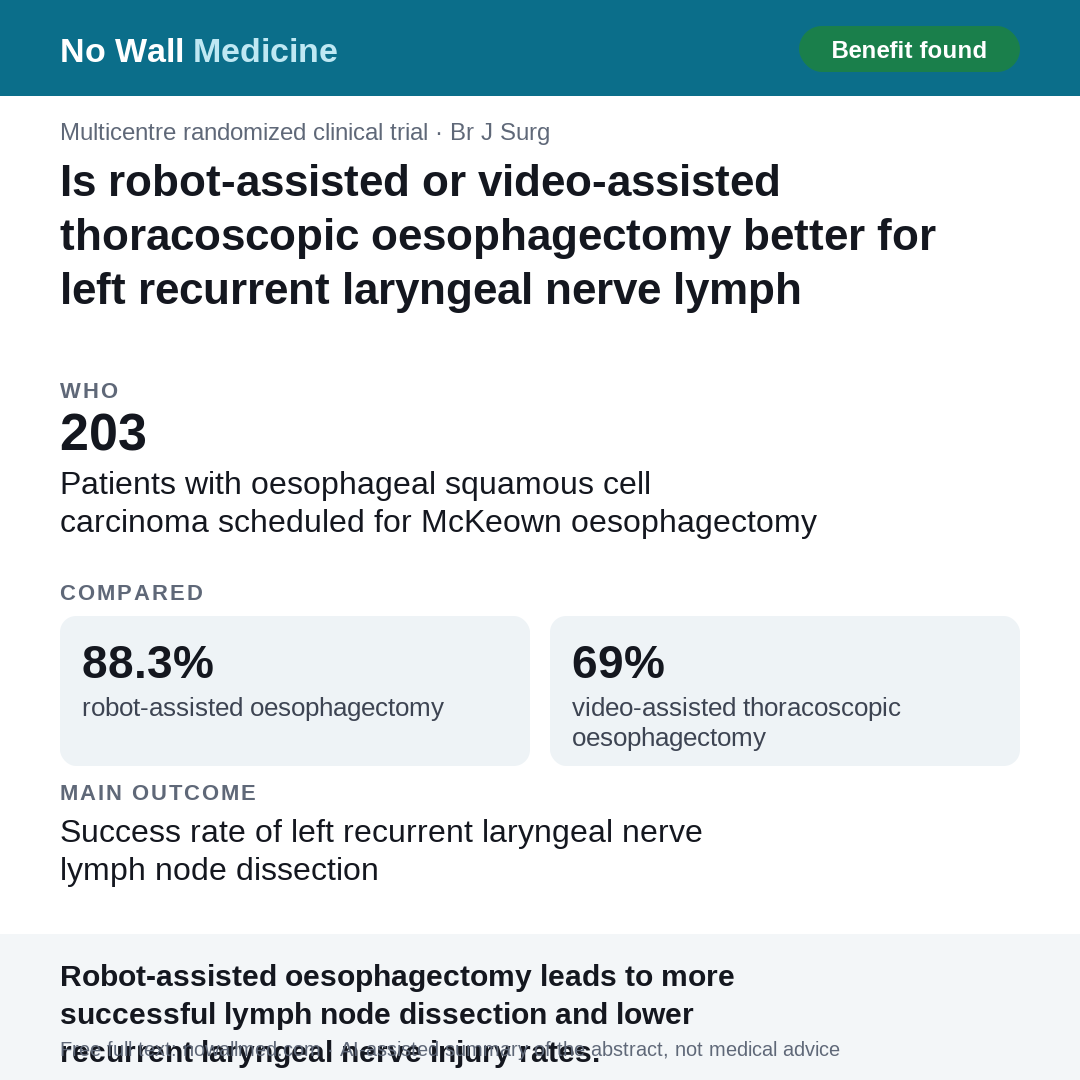
Multicentre randomized clinical trial on robot-assisted versus video-assisted thoracoscopic oesophagectomy (REVATE trial)
Multicentre randomized clinical trialBenefit found
Is robot-assisted or video-assisted thoracoscopic oesophagectomy better for left recurrent laryngeal nerve lymph node dissection?
Who
203
Patients with oesophageal squamous cell carcinoma scheduled for McKeown oesophagectomy · 3 centres in Asia
Compared
88.3%robot-assisted oesophagectomy
69%video-assisted thoracoscopic oesophagectomy
Main outcome
Success rate of left recurrent laryngeal nerve lymph node dissection
Bottom line: Robot-assisted oesophagectomy leads to more successful lymph node dissection and lower recurrent laryngeal nerve injury rates.
Br J Surg · 2024-07-04Download image
Effect of gamification with a support partner to increase physical activity in older adults at risk for Alzheimer's disease: The STEP 4Life randomized clinical trial
Randomized controlled trialBenefit found
Does gamification with a support partner increase physical activity in older adults at risk for Alzheimer's disease?
Who
94
Older adults at risk for Alzheimer's disease · National Alzheimer's disease prevention registry
Compared
Intervention group: 1699 steps/day (95% confidence interval 1149-2249)
Control group
Main outcome
Change in mean daily step count
Result: 1699 steps/day (95% CI 1149-2249)
Bottom line: Gamification with a support partner increased and sustained daily step counts in older adults at risk for Alzheimer's disease.
Alzheimers Dement · 2024-07-04Download image

Inadequate Glucagon Suppression During OGTT in Prediabetes: A Systematic Review and Meta-analysis
Systematic review and meta-analysisKey finding
Are glucagon levels and their response to glucose different in prediabetes?
Who
People with prediabetes and normal glucose tolerance
Compared
Prediabetes: significantly higher glucagon levels at 0, 0.5, 1, and 1.5 hours
Normal glucose tolerance
Main outcome
Glucagon levels during oral glucose tolerance test
Bottom line: Glucagon was not adequately suppressed during oral glucose tolerance test in prediabetes.
J Clin Endocrinol Metab · 2024-07-04Download image

Renal function as an effect modifier of intensive glucose control in delaying cognitive function decline among individuals with type 2 diabetes: A revisit to the ACCORD MIND trial
Post-hoc analysis of a randomized trialMixed results
Does renal function modify the effect of intensive glucose control on cognitive decline?
Who
2977
People with type 2 diabetes
Compared
Intensive glucose control
Standard glucose control
Main outcome
Cognitive function changes from baseline to 40th month follow-up
Bottom line: Intensive glucose control benefits those with preserved renal function but may accelerate cognitive decline in those with impaired renal function.
Diabetes Obes Metab · 2024-07-04Download image

Caesarean section and anal incontinence in women after obstetric anal sphincter injury: A systematic review and meta-analysis
Systematic review and meta-analysisUnclear result
Does planned caesarean section prevent anal incontinence after obstetric anal sphincter injury?
Who
2104
Women with obstetric anal sphincter injury
Compared
Subsequent vaginal birth
Planned caesarean section
Main outcome
adjusted anal incontinence after obstetric anal sphincter injury
Result: odds ratio 0.92 (95% CI 0.72-1.20)
Bottom line: There was no evidence that planned caesarean section prevents anal incontinence after obstetric anal sphincter injury.
BJOG · 2024-07-04Download image

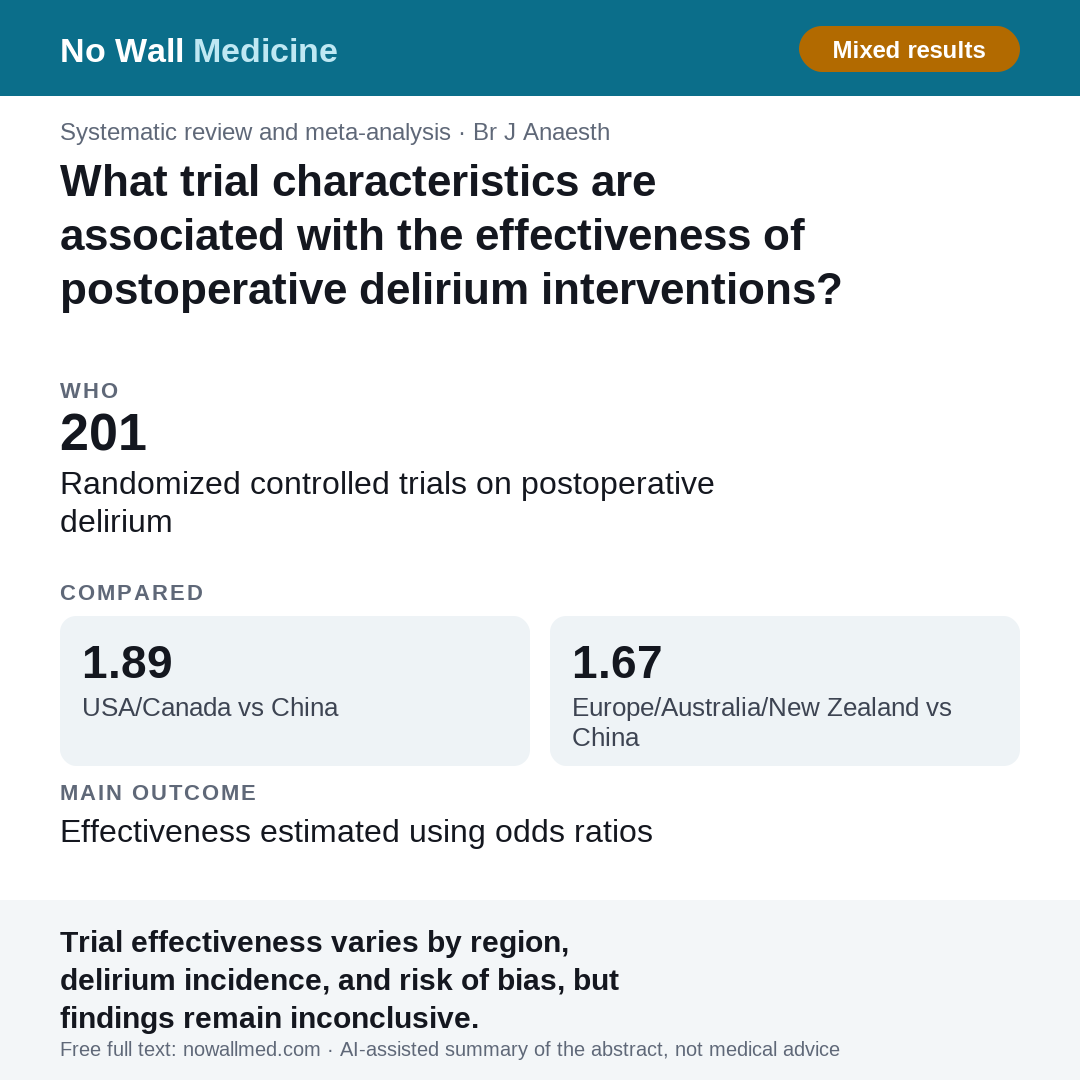
Characteristics associated with effectiveness in postoperative delirium research: a systematic review of randomised controlled trials with meta-regression and meta-analysis
Systematic review and meta-analysisMixed results
What trial characteristics are associated with the effectiveness of postoperative delirium interventions?
Who
Randomized controlled trials on postoperative delirium
Compared
1.89USA/Canada vs China (95% confidence interval, 1.45-2.45)
1.67Europe/Australia/New Zealand vs China (95% confidence interval, 1.29-2.18)
Main outcome
Effectiveness estimated using odds ratios
Bottom line: Trial effectiveness varies by region, delirium incidence, and risk of bias, but findings remain inconclusive.
Limitation: Heterogeneous interventions, limited trials, small-scale studies, and potential publication bias.
Br J Anaesth · 2024-07-04Download image
Artificial Intelligence in Malnutrition: A Systematic Literature Review
Systematic Literature ReviewUnclear result
Artificial Intelligence in Malnutrition
Who
children and adults with malnutrition
Compared
AI models
90%Unused models
Main outcome
malnutrition detection
Bottom line: Most AI models go unused in clinical practice
Limitation: most AI models unused
Adv Nutr · 2024-07-04Download image

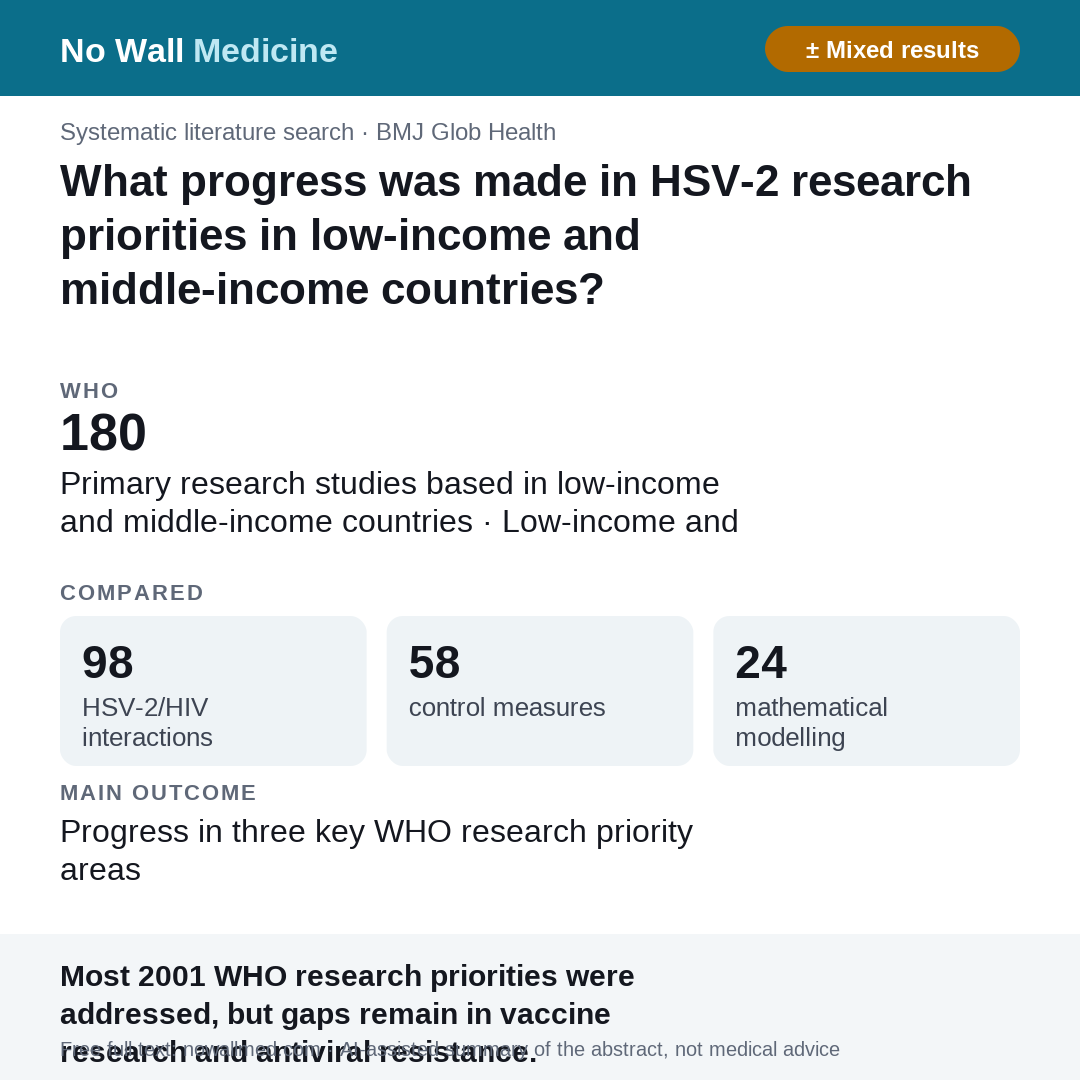
20 years of herpes simplex virus type 2 (HSV-2) research in low-income and middle-income countries: systematic evaluation of progress made in addressing WHO priorities for research in HSV-2/HIV interactions, HSV-2 control and mathematical modelling
Systematic literature searchMixed results
What progress was made in HSV-2 research priorities in low-income and middle-income countries?
Who
180
Primary research studies based in low-income and middle-income countries · Low-income and middle-income countries, mostly East Africa
Compared
98HSV-2/HIV interactions
58control measures
24mathematical modelling
Main outcome
Progress in three key WHO research priority areas
Bottom line: Most 2001 WHO research priorities were addressed, but gaps remain in vaccine research and antiviral resistance.
Limitation: Key knowledge gaps remain in vaccine research, antiviral cost-effectiveness, and antiviral resistance.
BMJ Glob Health · 2024-07-04Download image
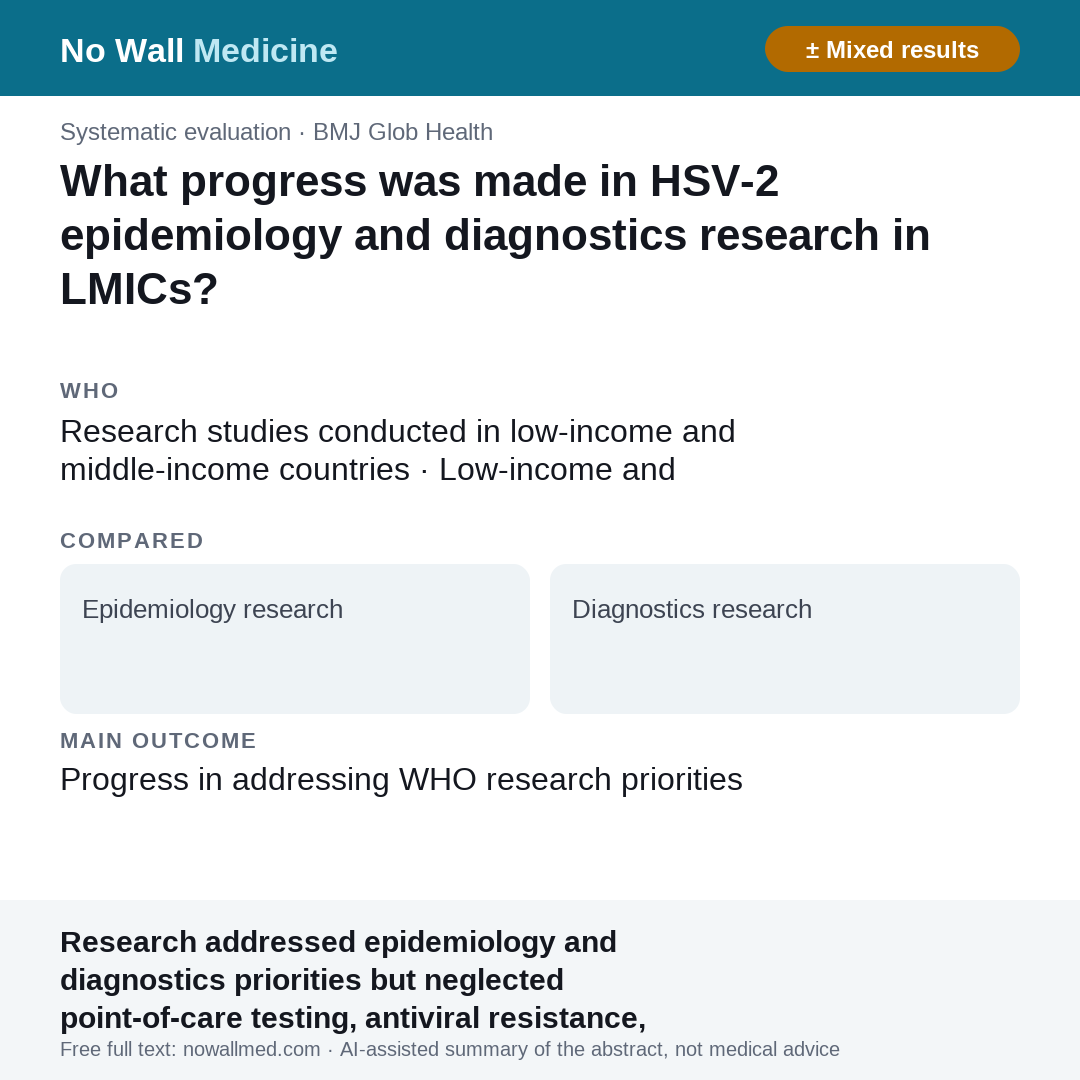
Twenty years of herpes simplex virus type 2 (HSV-2) research in low-income and middle-income countries: systematic evaluation of progress made in addressing WHO prioritiesfor research in HSV-2 epidemiology and diagnostics
Systematic evaluationMixed results
What progress was made in HSV-2 epidemiology and diagnostics research in LMICs?
Who
Research studies conducted in low-income and middle-income countries · Low-income and middle-income countries
Compared
Epidemiology research
Diagnostics research
Main outcome
Progress in addressing WHO research priorities
Bottom line: Research addressed epidemiology and diagnostics priorities but neglected point-of-care testing, antiviral resistance, and certain populations.
BMJ Glob Health · 2024-07-04Download image
Assessing the efficacy and tolerability of PET-guided BrECADD versus eBEACOPP in advanced-stage, classical Hodgkin lymphoma (HD21): a randomised, multicentre, parallel, open-label, phase 3 trial
Randomised, multicentre, parallel, open-label, phase 3 trialBenefit found
Is PET-guided BrECADD more effective and tolerable than eBEACOPP for advanced classical Hodgkin lymphoma?
Who
1482
Adults with newly diagnosed, advanced-stage, classical Hodgkin lymphoma · 233 trial sites across nine countries
Compared
BrECADD: 42% (312/738) treatment-related morbidity
eBEACOPP: 59% (430/732) treatment-related morbidity
Main outcome
treatment-related morbidity and progression-free survival
Result: hazard ratio 0.66 (95% CI 0.45-0.97)
Bottom line: PET-guided BrECADD is better tolerated and more effective than eBEACOPP in advanced-stage, classical Hodgkin lymphoma.
Funded by: Takeda Oncology
Lancet · 2024-07-03Download image

Fluid accumulation in critically ill children: a systematic review and meta-analysis
Systematic review and meta-analysisHarm found
Is fluid accumulation associated with poor outcomes in critically ill children?
Who
44,682
Critically ill children
Compared
Fluid accumulation present: OR 4.36 (95% CI 3.53-5.38)
Fluid accumulation absent
Main outcome
all-cause mortality
Result: odds ratio 4.36 (95% CI 3.53-5.38)
Bottom line: Fluid accumulation is significantly associated with increased mortality, acute kidney injury, prolonged mechanical ventilation, and longer intensive care unit stays.
Limitation: Thirty-five different fluid accumulation definitions were identified across studies.
eClinicalMedicine · 2024-07-03Download image

Ethnoracial inclusion in clinical trials of psychedelics: a systematic review
Systematic reviewHarm found
What are the ethnoracial inclusion rates in clinical psychedelic studies?
Who
1393
Studies testing psychedelic treatments for psychiatric or substance use disorders · Not specified
Compared
All included studies: 85.0% non-Hispanic White
Studies in the USA: 84.5% White
Main outcome
Ethnoracial inclusion rates of participants
Bottom line: Non-Hispanic White participants remain an over-represented majority in psychedelic research despite some progress in diversity.
eClinicalMedicine · 2024-07-03Download image

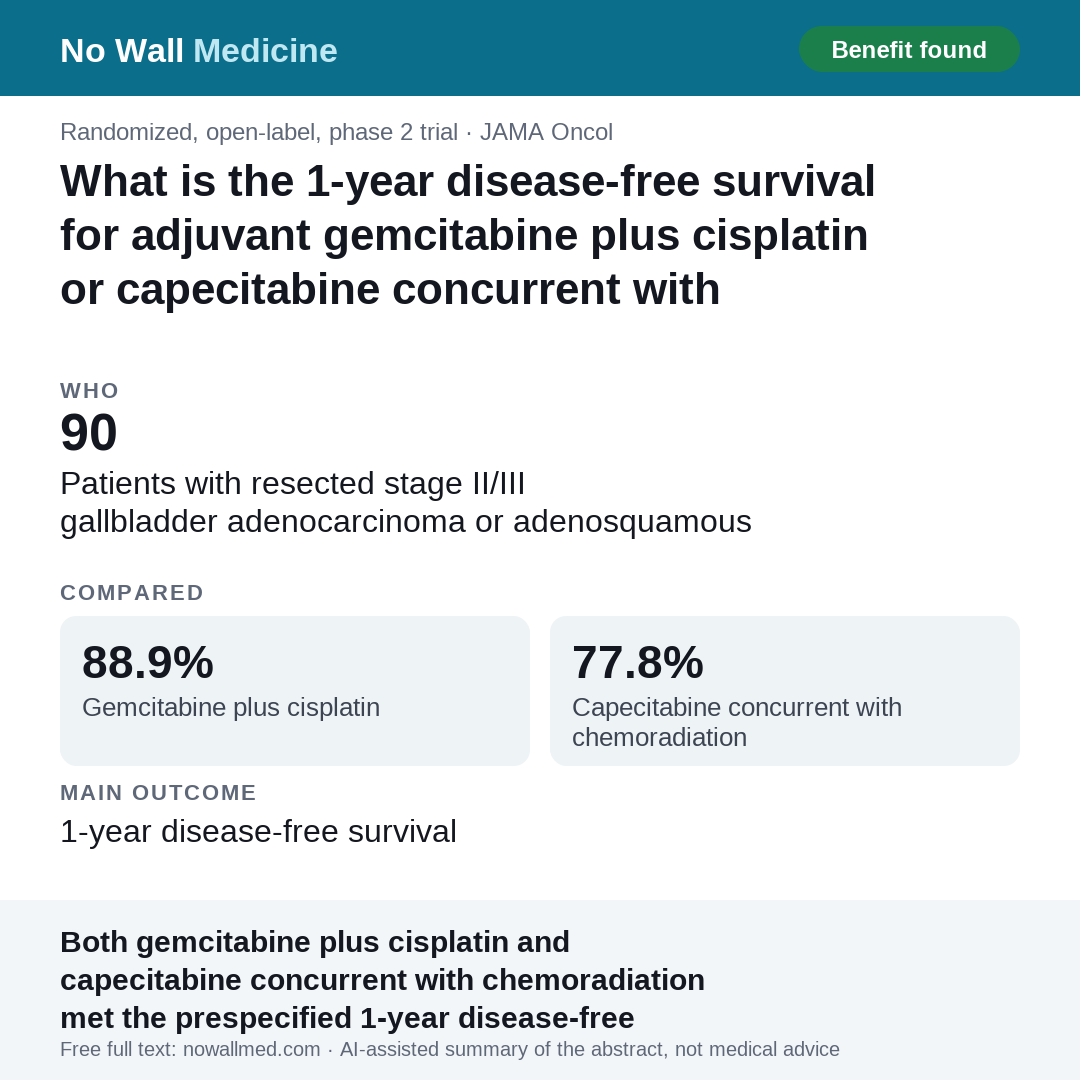
Adjuvant Gemcitabine Plus Cisplatin and Chemoradiation in Patients With Gallbladder Cancer: A Randomized Clinical Trial
Randomized, open-label, phase 2 trialBenefit found
What is the 1-year disease-free survival for adjuvant gemcitabine plus cisplatin or capecitabine concurrent with chemoradiation?
Who
90
Patients with resected stage II/III gallbladder adenocarcinoma or adenosquamous carcinoma · 3 tertiary cancer institutions in India
Compared
88.9%Gemcitabine plus cisplatin (95% CI, 79.5-98.3)
77.8%Capecitabine concurrent with chemoradiation (95% CI, 65.4-90.2)
Main outcome
1-year disease-free survival
Bottom line: Both gemcitabine plus cisplatin and capecitabine concurrent with chemoradiation met the prespecified 1-year disease-free survival endpoints.
JAMA Oncol · 2024-07-03Download image
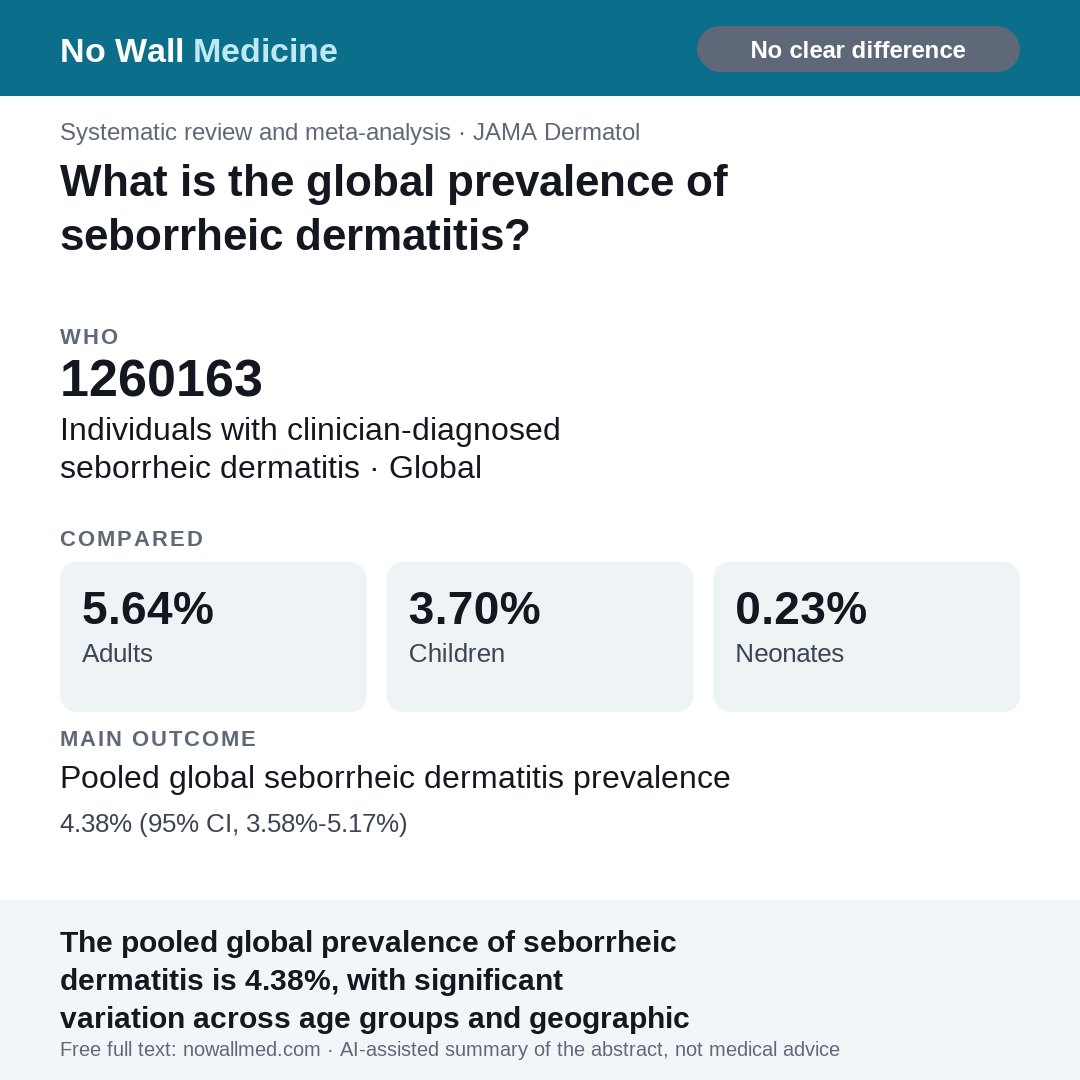
The Global Prevalence of Seborrheic Dermatitis: A Systematic Review and Meta-Analysis
Systematic review and meta-analysisNo clear difference
What is the global prevalence of seborrheic dermatitis?
Who
1260163
Individuals with clinician-diagnosed seborrheic dermatitis · Global
Compared
5.64%Adults (95% CI, 4.01%-7.27%)
3.70%Children (95% CI, 2.69%-4.80%)
0.23%Neonates (95% CI, 0.04%-0.43%)
Main outcome
Pooled global seborrheic dermatitis prevalence
Result: 4.38% (95% CI, 3.58%-5.17%)
Bottom line: The pooled global prevalence of seborrheic dermatitis is 4.38%, with significant variation across age groups and geographic locations.
JAMA Dermatol · 2024-07-03Download image
0.01% Atropine Eye Drops in Children With Myopia and Intermittent Exotropia: The AMIXT Randomized Clinical Trial
Placebo-controlled, double-masked, randomized clinical trialBenefit found
Does 0.01% atropine eye drops efficacy and safety on myopia progression and exotropia?
Who
300
Children aged 6 to 12 years with myopia and intermittent exotropia
Compared
0.01% atropine: -0.51 D
placebo: -0.75 D
Main outcome
change in cycloplegic spherical equivalent from baseline at 1 year
Result: difference = 0.24 D; 95% CI, 0.11-0.37 D
Bottom line: 0.01% atropine eye drops slow myopia progression in children with myopia and intermittent exotropia.
JAMA Ophthalmol · 2024-07-03Download image

Hormone-related side effects in new users of a levonorgestrel 52-mg intrauterine device
Multicenter phase 3 trial analysisMixed results
Do prior hormonal contraceptive users have more hormone-related side effects with a levonorgestrel intrauterine device?
Who
1714
Women aged 16 to 45 years · Multicenter
Compared
Prior combined hormonal contraception: 13.0% acne at 180 days
Prior no hormonal contraception: 8.5% acne at 180 days
Main outcome
Hormone-related adverse event rates
Result: odds ratio 1.61 (95% confidence interval 1.15-2.24)
Bottom line: Prior combined hormonal contraceptive use is weakly associated with reporting side effects like acne after levonorgestrel intrauterine device placement.
AJOG · 2024-07-03Download image

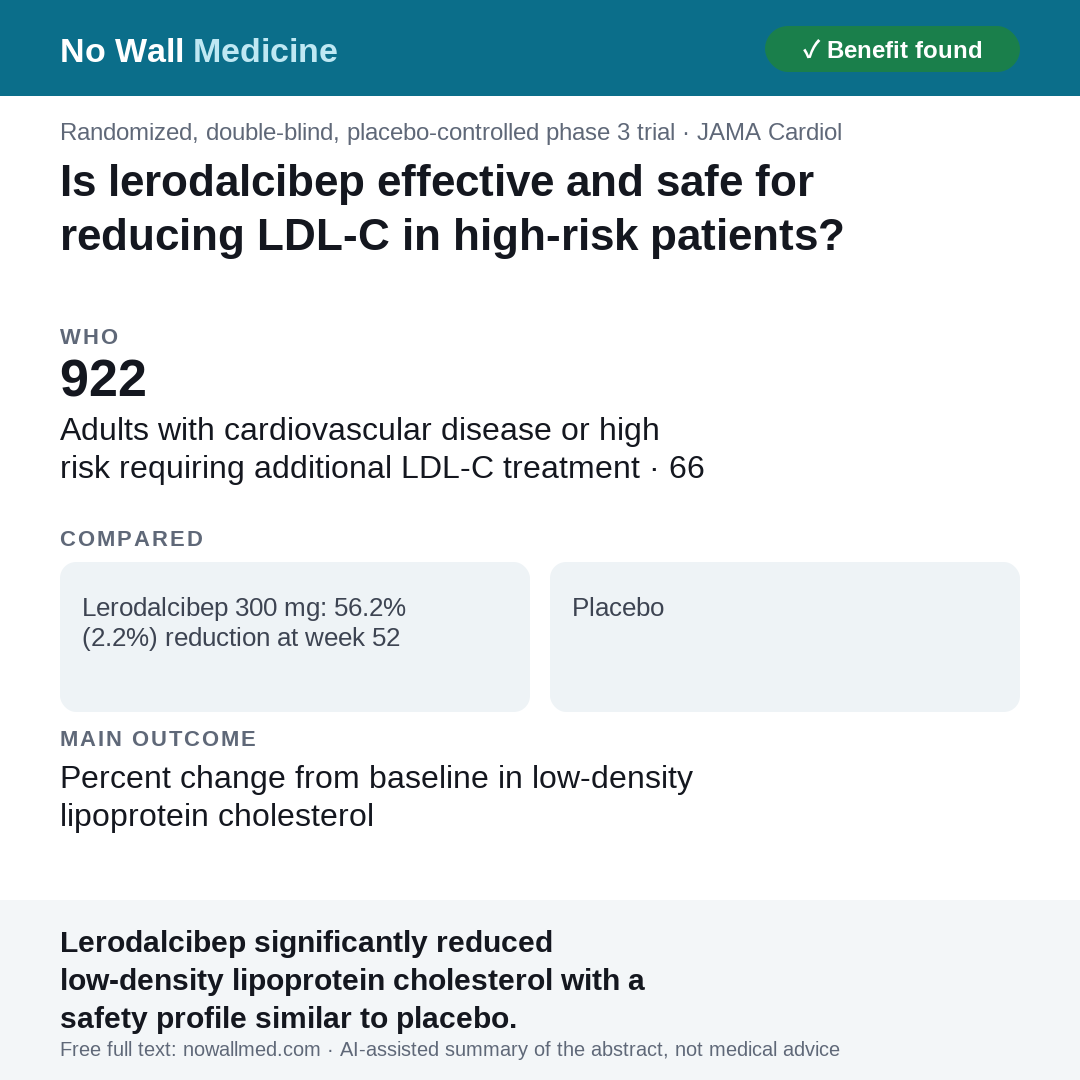
Efficacy and Safety of Lerodalcibep in Patients With or at High Risk of Cardiovascular Disease: A Randomized Clinical Trial
Randomized, double-blind, placebo-controlled phase 3 trialBenefit found
Is lerodalcibep effective and safe for reducing LDL-C in high-risk patients?
Who
922
Adults with cardiovascular disease or high risk requiring additional LDL-C treatment · 66 clinics in 11 countries
Compared
Lerodalcibep 300 mg: 56.2% (2.2%) reduction at week 52
Placebo
Main outcome
Percent change from baseline in low-density lipoprotein cholesterol
Bottom line: Lerodalcibep significantly reduced low-density lipoprotein cholesterol with a safety profile similar to placebo.
JAMA Cardiol · 2024-07-03Download image