Visual abstracts
New randomized trials and meta-analyses from leading journals at a glance: who was studied, what was compared, and what was found. Every paper is free to read in full.
All specialtiesCardiology 1027Oncology 925Gastroenterology & Hepatology 381Infectious Disease 710Neurology 440Psychiatry & Mental Health 542Pulmonology 455Critical Care 317Endocrinology & Diabetes 585Pediatrics 651Surgery 452Orthopedics & Sports Medicine 204Neurosurgery 149Cardiothoracic & Vascular Surgery 106Plastic & Reconstructive Surgery 169Nephrology 232Rheumatology 135Hematology 223Dermatology 99Ophthalmology 121Obstetrics & Gynecology 324Public & Global Health 197Radiology & Imaging 132Anesthesiology 190Urology 199ENT (Otolaryngology) 142Emergency Medicine 116Allergy & Immunology 70Geriatrics 212Family Medicine & Primary Care 135Medical Genetics & Genomics 109Pathology & Laboratory Medicine 31Physical Medicine & Rehabilitation 183Palliative Care 95Nutrition 273Digital Health & AI 542General Medicine 105
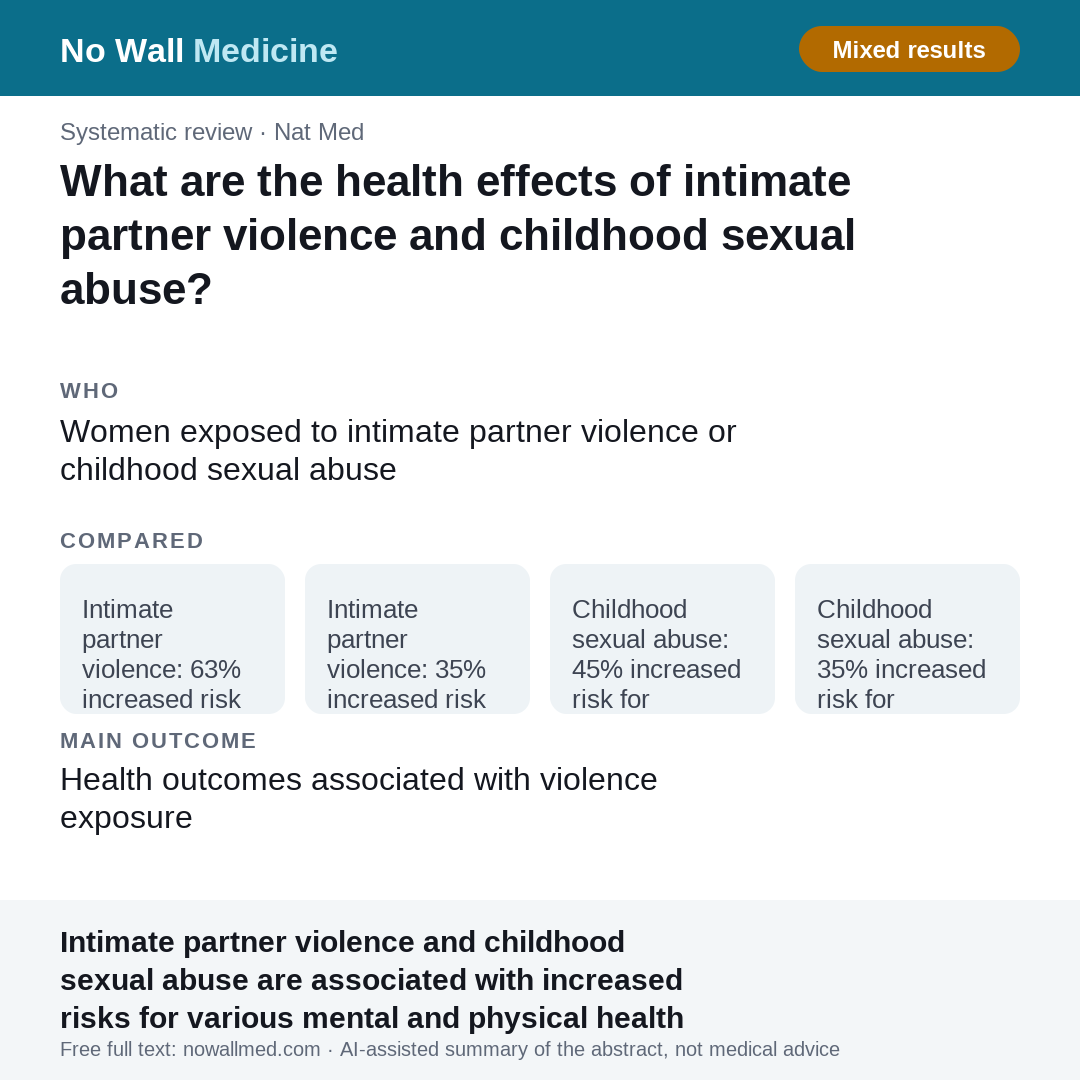
Health effects associated with exposure to intimate partner violence against women and childhood sexual abuse: a burden of proof study
Systematic reviewMixed results
What are the health effects of intimate partner violence and childhood sexual abuse?
Who
Women exposed to intimate partner violence or childhood sexual abuse
Compared
Intimate partner violence: 63% increased risk for major depressive disorder
Intimate partner violence: 35% increased risk for maternal abortion and miscarriage
Childhood sexual abuse: 45% increased risk for alcohol use disorders
Childhood sexual abuse: 35% increased risk for self-harm
Main outcome
Health outcomes associated with violence exposure
Bottom line: Intimate partner violence and childhood sexual abuse are associated with increased risks for various mental and physical health outcomes.
Limitation: Understanding remains limited by data scarcity.
Nat Med · 2023-12-11Download image
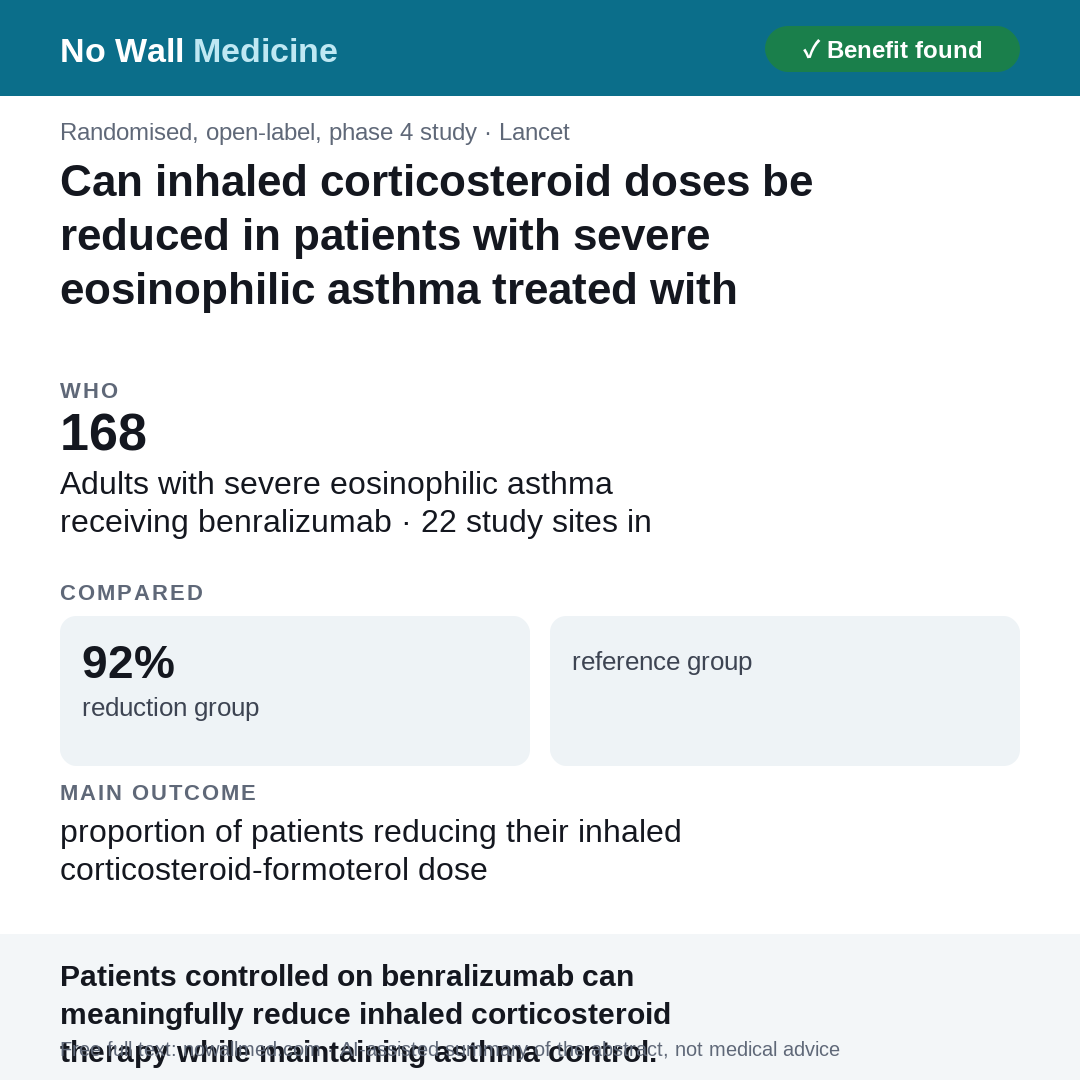
Reduction of daily maintenance inhaled corticosteroids in patients with severe eosinophilic asthma treated with benralizumab (SHAMAL): a randomised, multicentre, open-label, phase 4 study
Randomised, open-label, phase 4 studyBenefit found
Can inhaled corticosteroid doses be reduced in patients with severe eosinophilic asthma treated with benralizumab?
Who
168
Adults with severe eosinophilic asthma receiving benralizumab · 22 study sites in four countries
Compared
92%reduction group
reference group
Main outcome
proportion of patients reducing their inhaled corticosteroid-formoterol dose
Bottom line: Patients controlled on benralizumab can meaningfully reduce inhaled corticosteroid therapy while maintaining asthma control.
Funded by: AstraZeneca
Lancet · 2023-12-07Download image
Multi-ancestry study of the genetics of problematic alcohol use in over 1 million individuals
Meta-analysis of geneticsUnclear result
Genetics of problematic alcohol use
Who
1079947
Over one million individuals
Compared
European ancestry
African ancestry
Main outcome
Problematic alcohol use
Bottom line: Genetic variants linked to alcohol use
Nat Med · 2023-12-07Download image
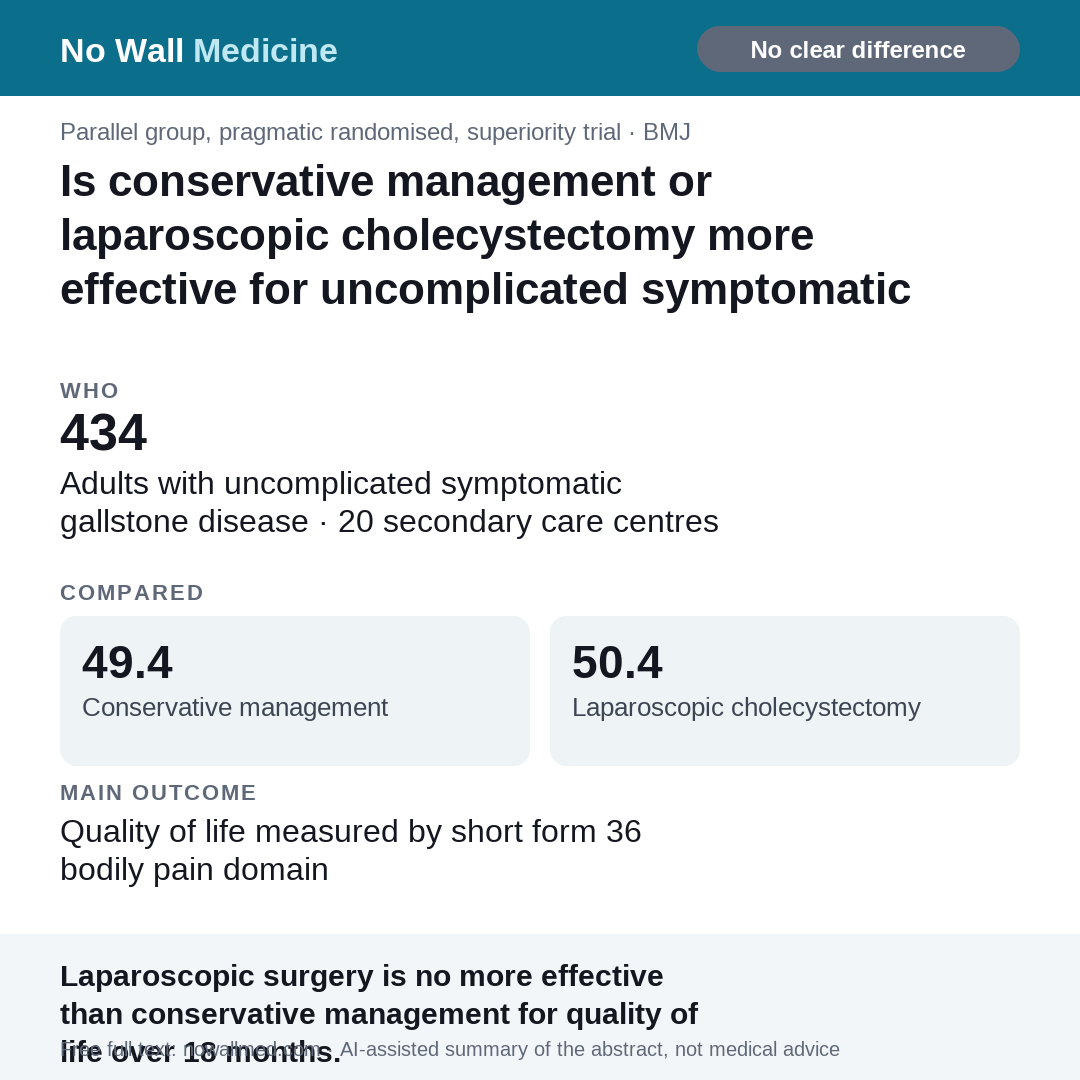
Effectiveness of conservative management versus laparoscopic cholecystectomy in the prevention of recurrent symptoms and complications in adults with uncomplicated symptomatic gallstone disease (C-GALL trial): pragmatic, multicentre randomised controlled trial
Parallel group, pragmatic randomised, superiority trialNo clear difference
Is conservative management or laparoscopic cholecystectomy more effective for uncomplicated symptomatic gallstone disease?
Who
434
Adults with uncomplicated symptomatic gallstone disease · 20 secondary care centres in the UK
Compared
49.4Conservative management (standard deviation 11.7)
50.4Laparoscopic cholecystectomy (11.6)
Main outcome
Quality of life measured by short form 36 bodily pain domain
Result: mean difference 0.0, 95% confidence interval -1.7 to 1.7
Bottom line: Laparoscopic surgery is no more effective than conservative management for quality of life over 18 months.
BMJ · 2023-12-06Download image
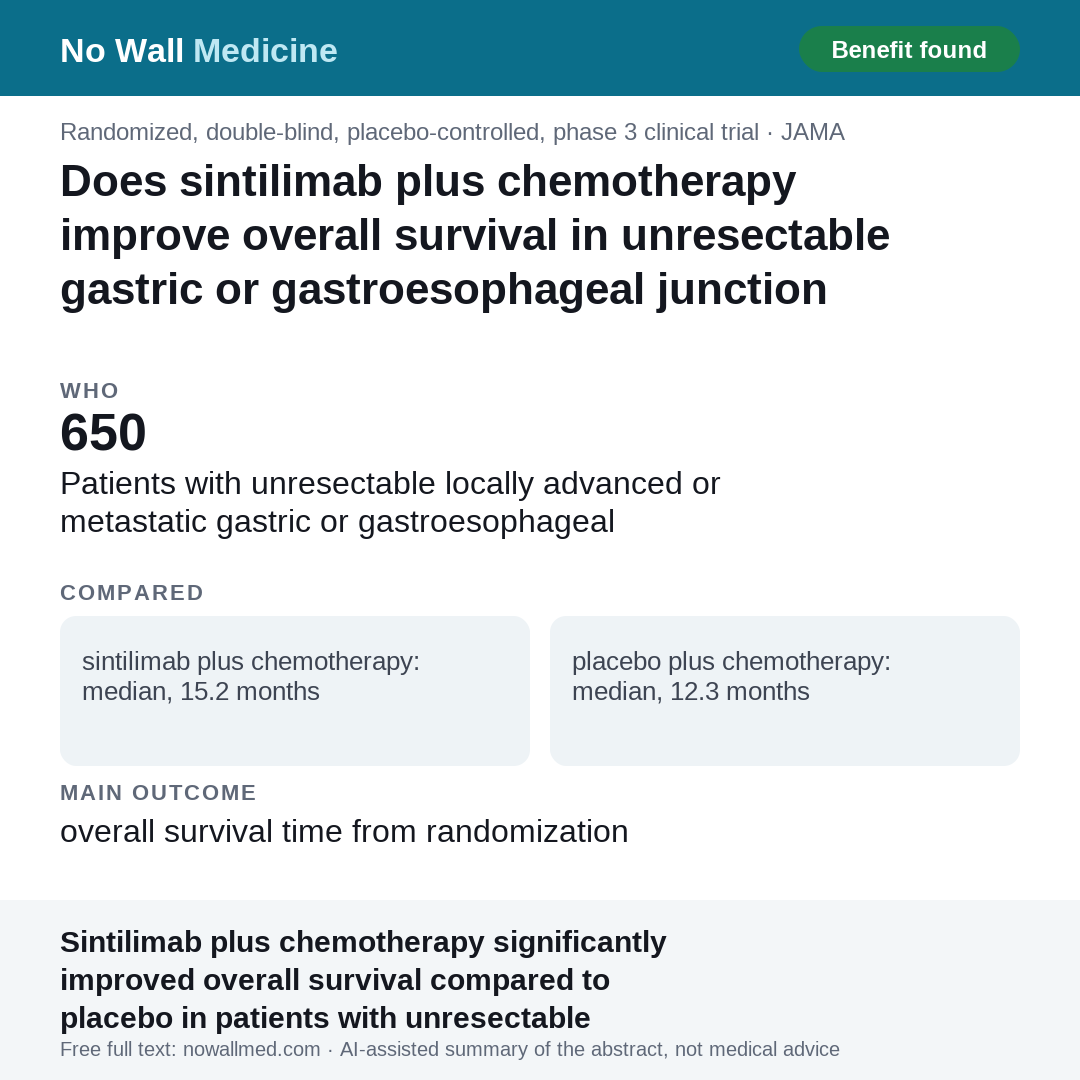
Sintilimab Plus Chemotherapy for Unresectable Gastric or Gastroesophageal Junction Cancer: The ORIENT-16 Randomized Clinical Trial
Randomized, double-blind, placebo-controlled, phase 3 clinical trialBenefit found
Does sintilimab plus chemotherapy improve overall survival in unresectable gastric or gastroesophageal junction cancer?
Who
650
Patients with unresectable locally advanced or metastatic gastric or gastroesophageal junction adenocarcinoma · 62 hospitals in China
Compared
sintilimab plus chemotherapy: median, 15.2 months
placebo plus chemotherapy: median, 12.3 months
Main outcome
overall survival time from randomization
Result: hazard ratio 0.77 (95% CI, 0.63-0.94)
Bottom line: Sintilimab plus chemotherapy significantly improved overall survival compared to placebo in patients with unresectable gastric or gastroesophageal junction adenocarcinoma.
JAMA · 2023-12-05Download image
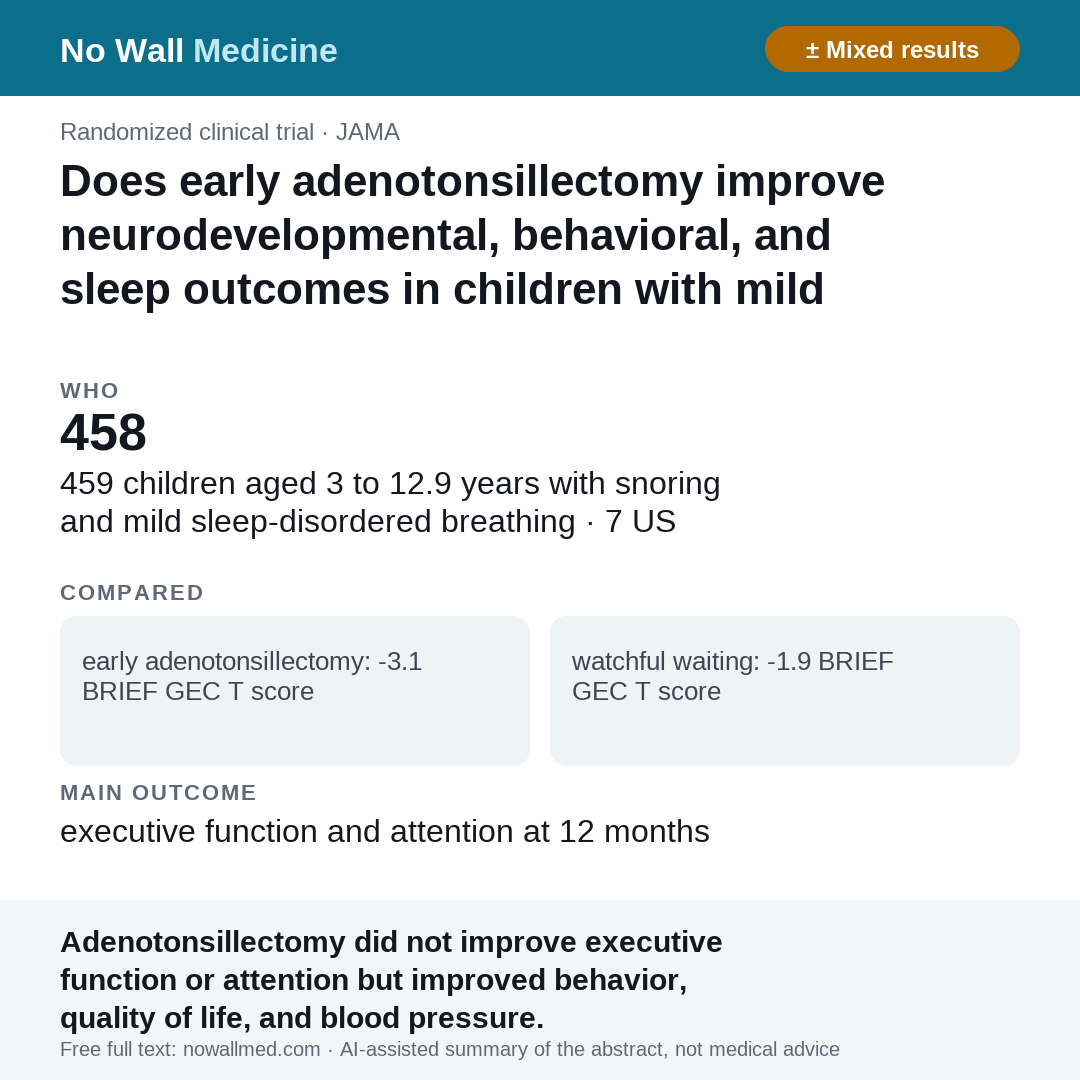
Adenotonsillectomy for Snoring and Mild Sleep Apnea in Children: A Randomized Clinical Trial
Randomized clinical trialMixed results
Does early adenotonsillectomy improve neurodevelopmental, behavioral, and sleep outcomes in children with mild sleep-disordered breathing?
Who
458
459 children aged 3 to 12.9 years with snoring and mild sleep-disordered breathing · 7 US academic sleep centers
Compared
early adenotonsillectomy: -3.1 BRIEF GEC T score
watchful waiting: -1.9 BRIEF GEC T score
Main outcome
executive function and attention at 12 months
Result: difference, -0.96 (95% CI, -2.66 to 0.74)
Bottom line: Adenotonsillectomy did not improve executive function or attention but improved behavior, quality of life, and blood pressure.
JAMA · 2023-12-05Download image
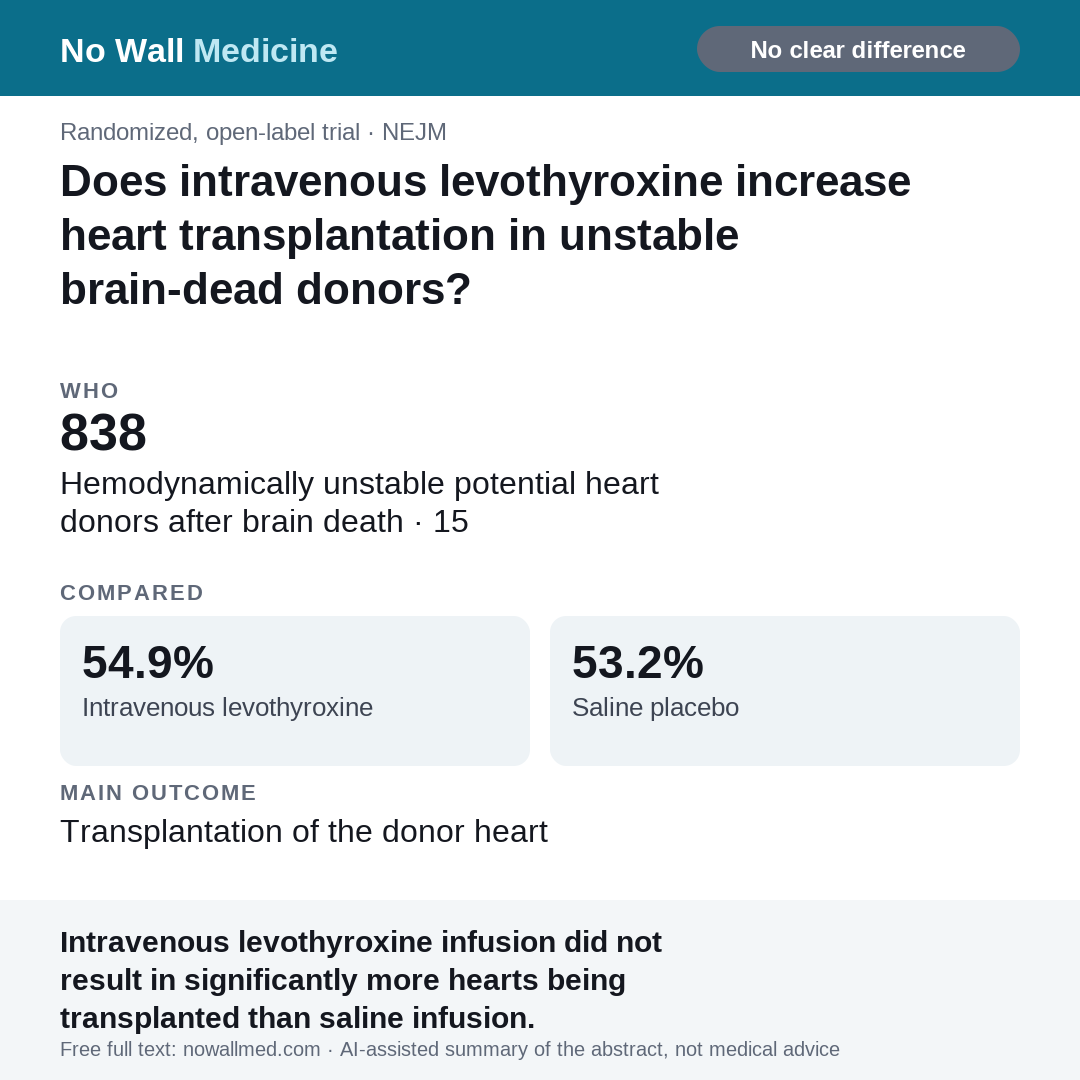
Intravenous Levothyroxine for Unstable Brain-Dead Heart Donors
Randomized, open-label trialNo clear difference
Does intravenous levothyroxine increase heart transplantation in unstable brain-dead donors?
Who
838
Hemodynamically unstable potential heart donors after brain death · 15 organ-procurement organizations in the United States
Compared
54.9%Intravenous levothyroxine (230/419)
53.2%Saline placebo (223/419)
Main outcome
Transplantation of the donor heart
Result: adjusted risk ratio 1.01 (95% CI 0.97 to 1.07)
Bottom line: Intravenous levothyroxine infusion did not result in significantly more hearts being transplanted than saline infusion.
Funded by: Mid-America Transplant and others
NEJM · 2023-12-04Download image
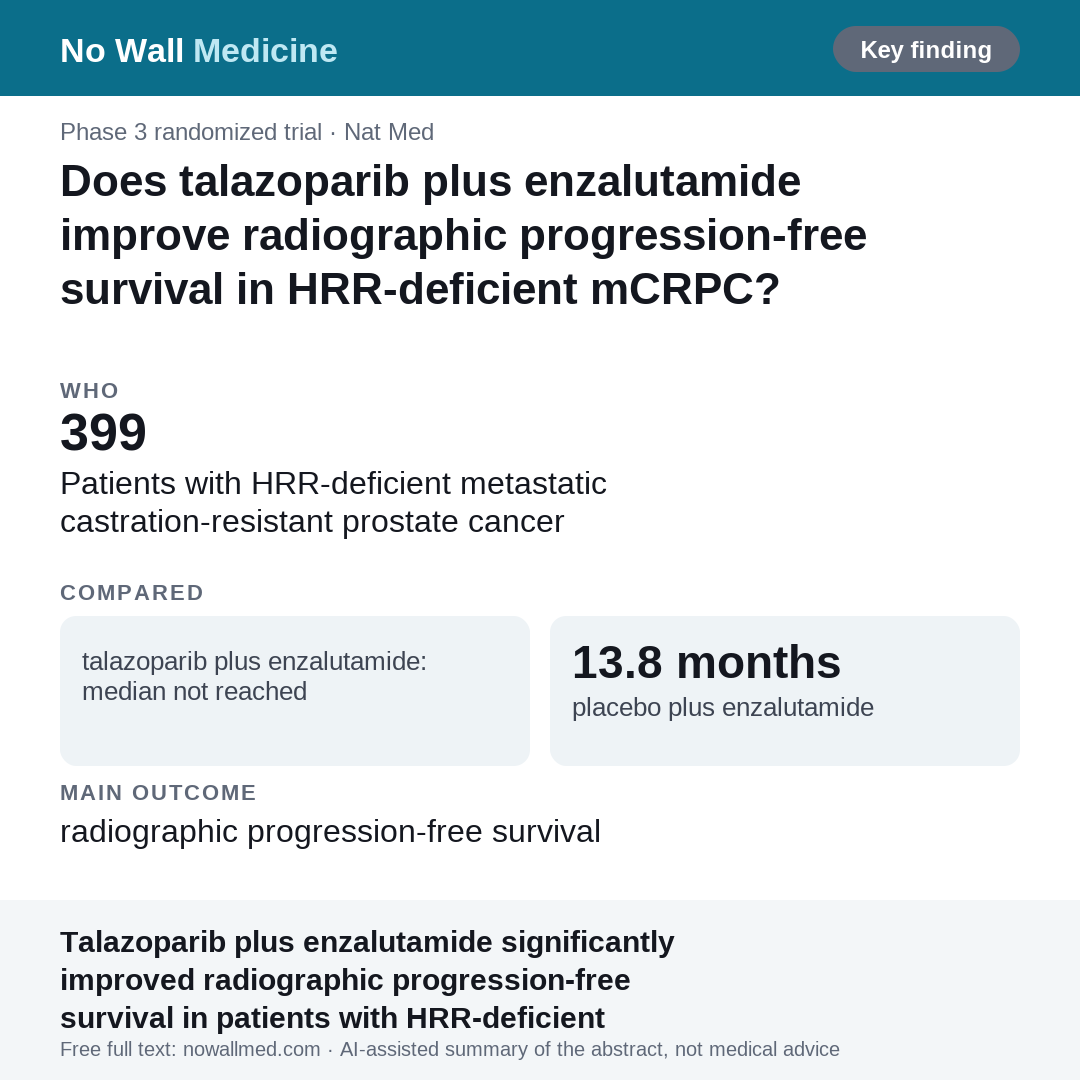
First-line talazoparib with enzalutamide in HRR-deficient metastatic castration-resistant prostate cancer: the phase 3 TALAPRO-2 trial
Phase 3 randomized trialBenefit found
Does talazoparib plus enzalutamide improve radiographic progression-free survival in HRR-deficient mCRPC?
Who
399
Patients with HRR-deficient metastatic castration-resistant prostate cancer
Compared
talazoparib plus enzalutamide: median not reached
13.8 monthsplacebo plus enzalutamide
Main outcome
radiographic progression-free survival
Result: hazard ratio 0.45 (95% CI 0.33 to 0.61)
Bottom line: Talazoparib plus enzalutamide significantly improved radiographic progression-free survival in patients with HRR-deficient metastatic castration-resistant prostate cancer.
Nat Med · 2023-12-04Download image
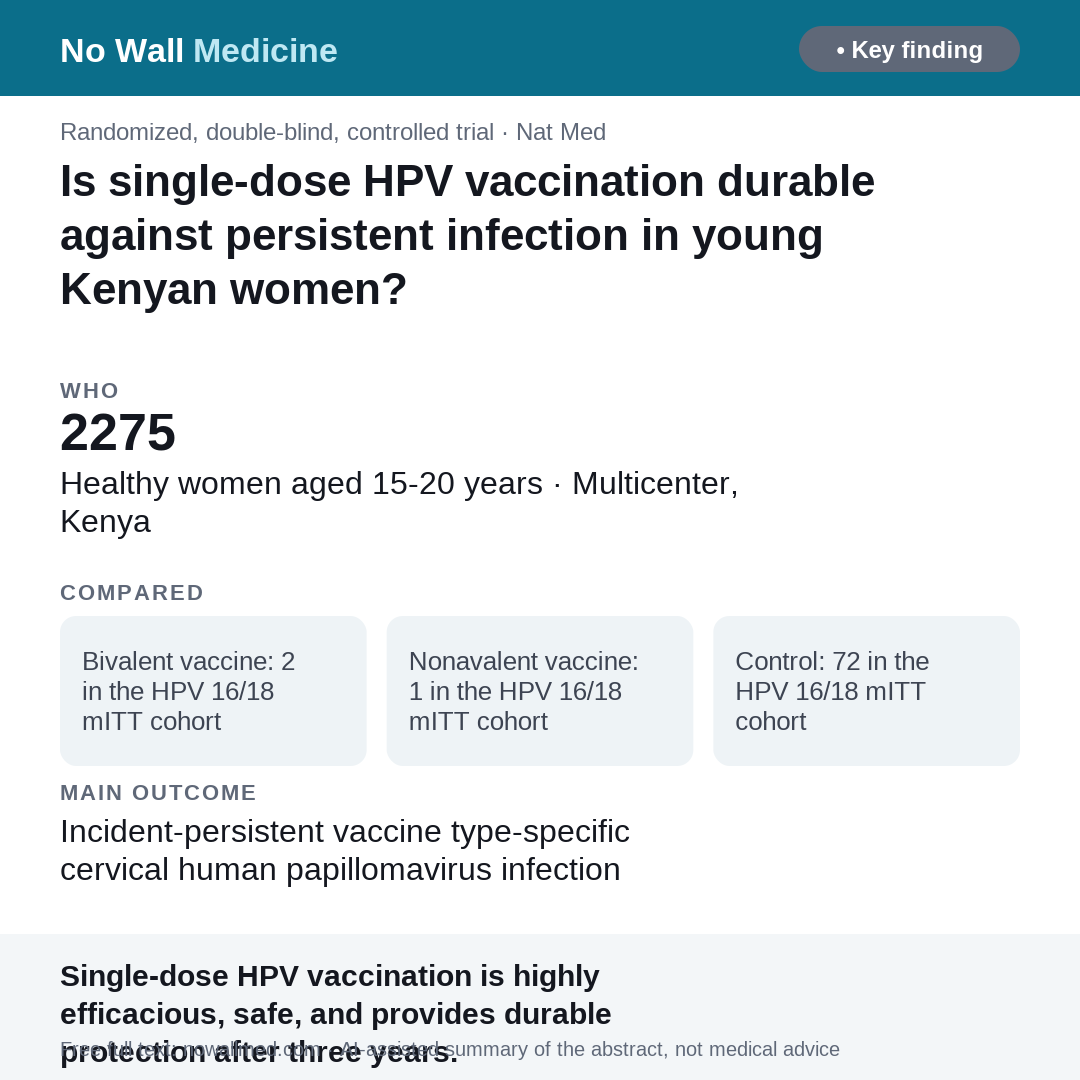
Durability of single-dose HPV vaccination in young Kenyan women: randomized controlled trial 3-year results
Randomized, double-blind, controlled trialBenefit found
Is single-dose HPV vaccination durable against persistent infection in young Kenyan women?
Who
2275
Healthy women aged 15-20 years · Multicenter, Kenya
Compared
Bivalent vaccine: 2 in the HPV 16/18 mITT cohort
Nonavalent vaccine: 1 in the HPV 16/18 mITT cohort
Control: 72 in the HPV 16/18 mITT cohort
Main outcome
Incident-persistent vaccine type-specific cervical human papillomavirus infection
Result: nonavalent vaccine efficacy 95.5% (95% CI 89.0-98.2%)
Bottom line: Single-dose HPV vaccination is highly efficacious, safe, and provides durable protection after three years.
Nat Med · 2023-12-04Download image
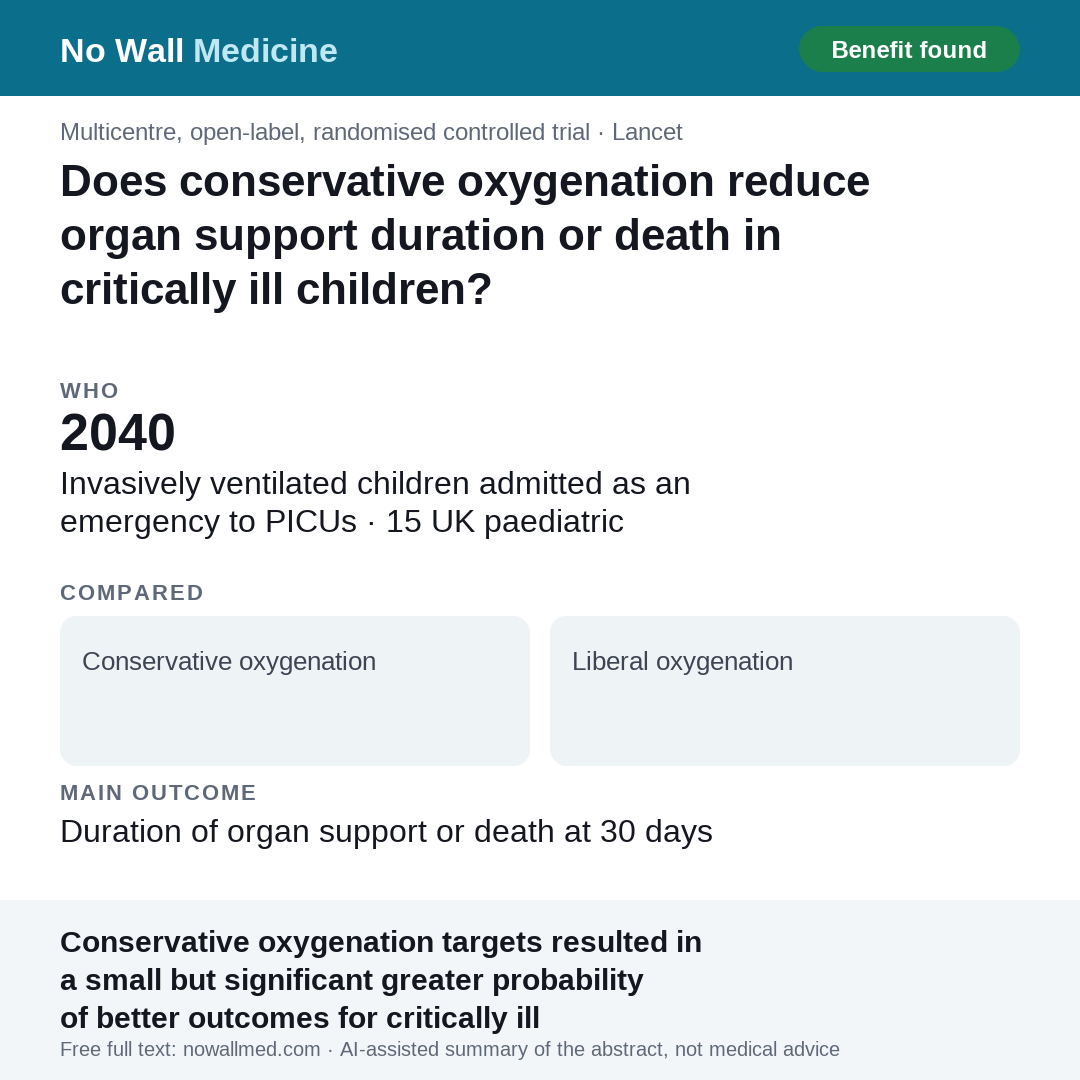
Conservative versus liberal oxygenation targets in critically ill children (Oxy-PICU): a UK multicentre, open, parallel-group, randomised clinical trial
Multicentre, open-label, randomised controlled trialBenefit found
Does conservative oxygenation reduce organ support duration or death in critically ill children?
Who
2040
Invasively ventilated children admitted as an emergency to PICUs · 15 UK paediatric intensive care units
Compared
Conservative oxygenation
Liberal oxygenation
Main outcome
Duration of organ support or death at 30 days
Result: probabilistic index 0·53, 95% CI 0·50-0·55
Bottom line: Conservative oxygenation targets resulted in a small but significant greater probability of better outcomes for critically ill children.
Funded by: UK National Institute for Health and Care Research
Lancet · 2023-12-01Download image
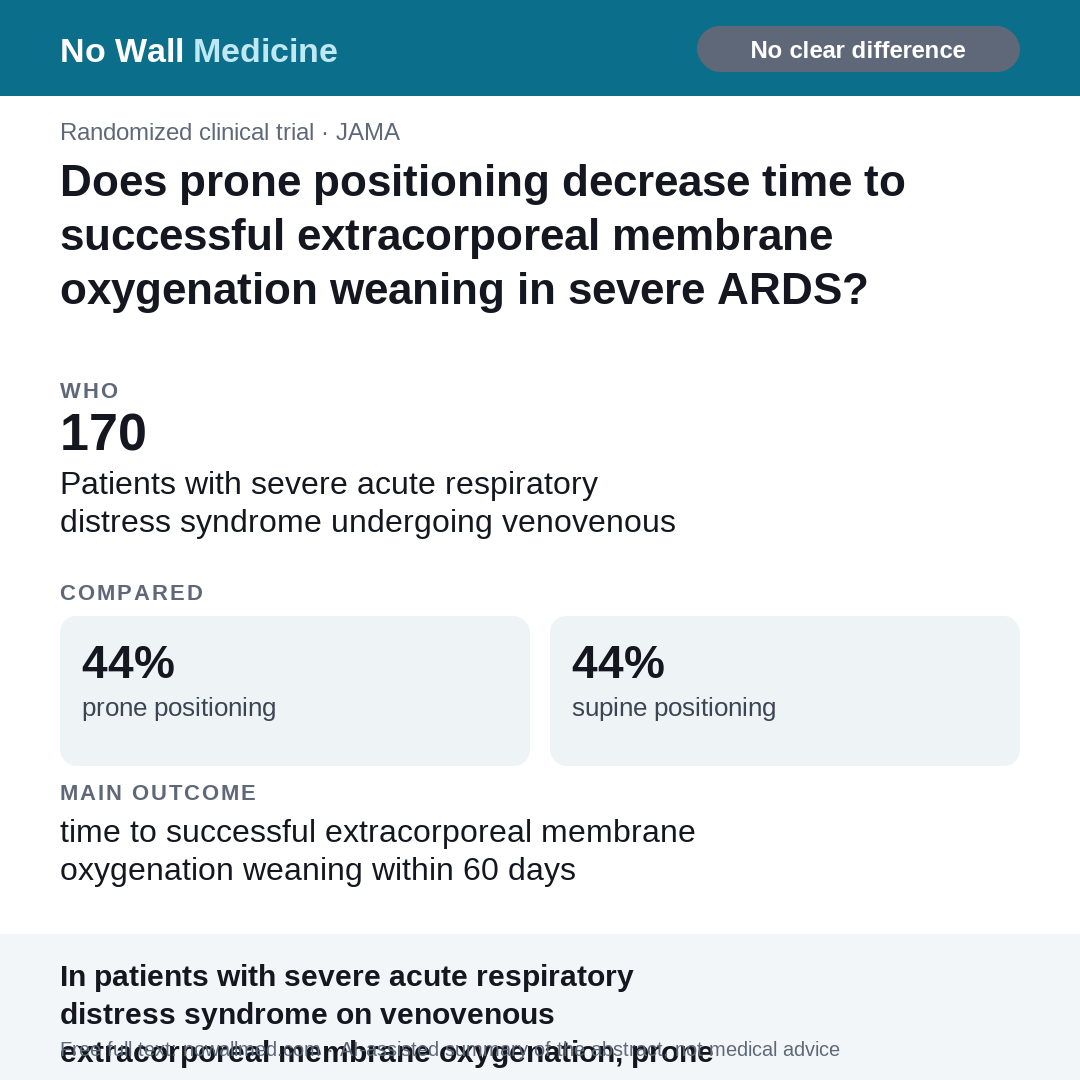
Prone Positioning During Extracorporeal Membrane Oxygenation in Patients With Severe ARDS: The PRONECMO Randomized Clinical Trial
Randomized clinical trialNo clear difference
Does prone positioning decrease time to successful extracorporeal membrane oxygenation weaning in severe ARDS?
Who
170
Patients with severe acute respiratory distress syndrome undergoing venovenous extracorporeal membrane oxygenation · 14 intensive care units in France
Compared
44%prone positioning (38/86)
44%supine positioning (37/84)
Main outcome
time to successful extracorporeal membrane oxygenation weaning within 60 days
Result: risk difference, 0.1% (95% CI, -14.9% to 15.2%)
Bottom line: In patients with severe acute respiratory distress syndrome on venovenous extracorporeal membrane oxygenation, prone positioning did not reduce weaning time.
JAMA · 2023-12-01Download image
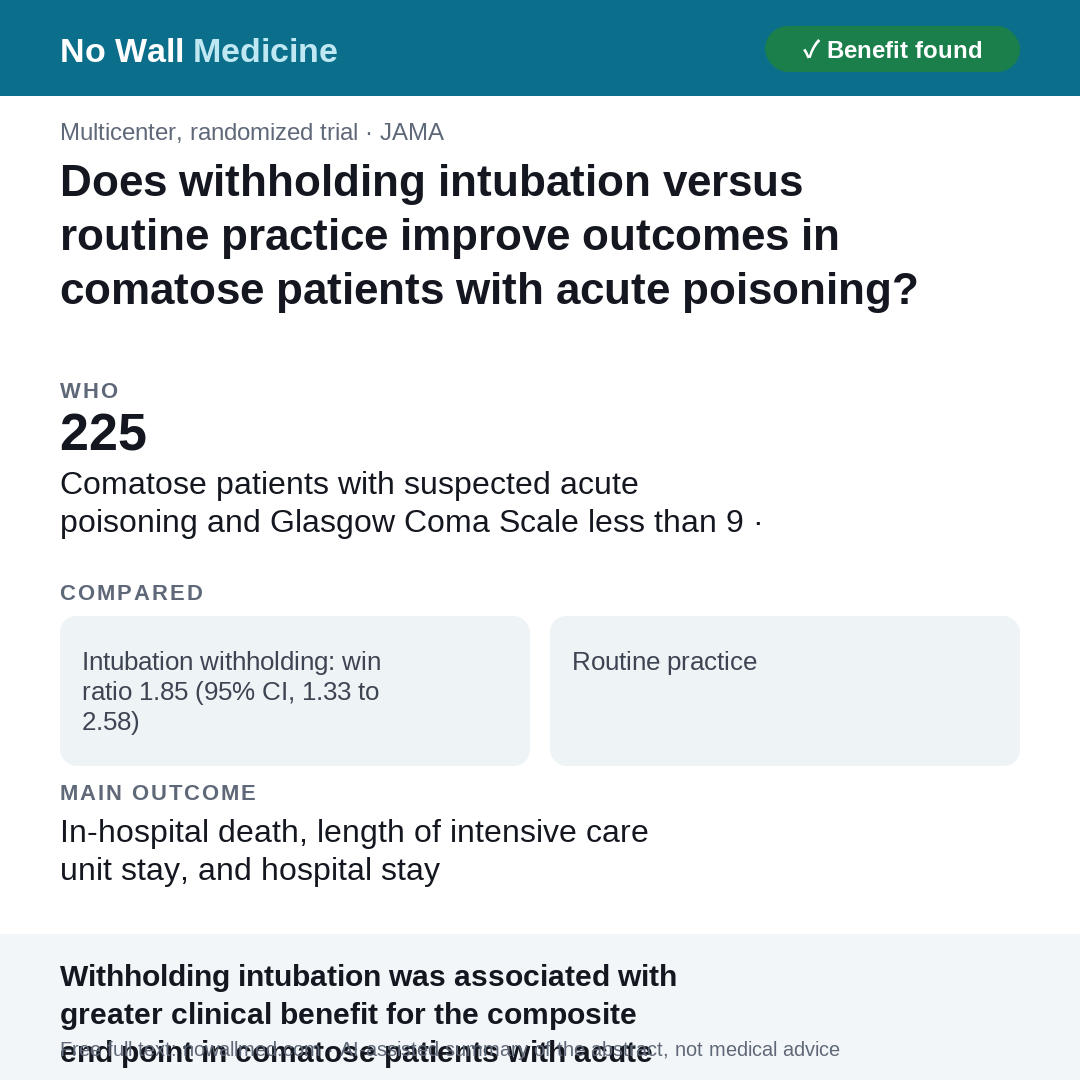
Effect of Noninvasive Airway Management of Comatose Patients With Acute Poisoning: A Randomized Clinical Trial
Multicenter, randomized trialBenefit found
Does withholding intubation versus routine practice improve outcomes in comatose patients with acute poisoning?
Who
225
Comatose patients with suspected acute poisoning and Glasgow Coma Scale less than 9 · 20 emergency departments and 1 intensive care unit in France
Compared
Intubation withholding: win ratio 1.85 (95% CI, 1.33 to 2.58)
Routine practice
Main outcome
In-hospital death, length of intensive care unit stay, and hospital stay
Result: win ratio 1.85 (95% CI, 1.33 to 2.58)
Bottom line: Withholding intubation was associated with greater clinical benefit for the composite end point in comatose patients with acute poisoning.
JAMA · 2023-11-29Download image
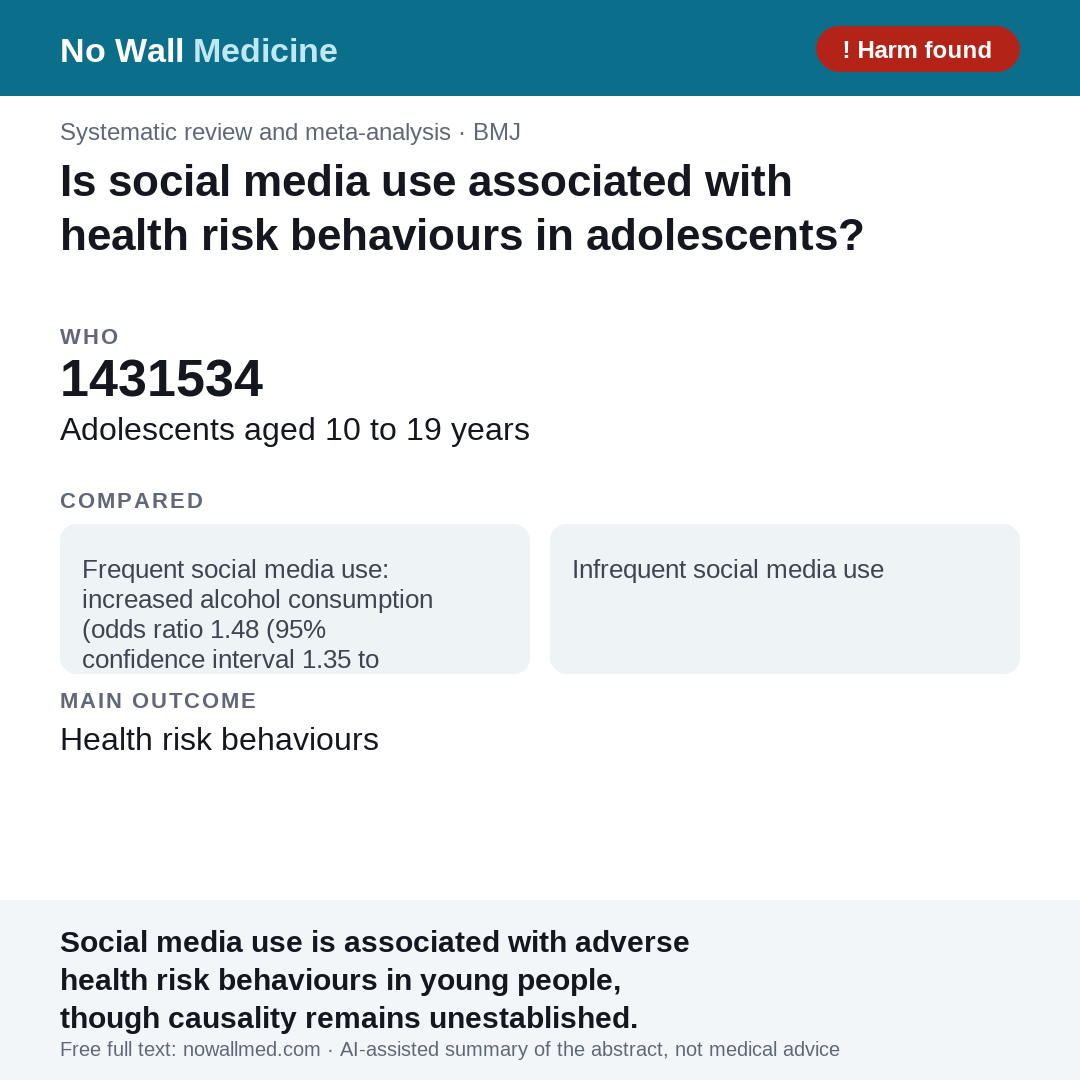
Social media use and health risk behaviours in young people: systematic review and meta-analysis
Systematic review and meta-analysisHarm found
Is social media use associated with health risk behaviours in adolescents?
Who
1431534
Adolescents aged 10 to 19 years
Compared
Frequent social media use: increased alcohol consumption (odds ratio 1.48 (95% confidence interval 1.35 to 1.62))
Infrequent social media use
Main outcome
Health risk behaviours
Bottom line: Social media use is associated with adverse health risk behaviours in young people, though causality remains unestablished.
Limitation: Further high quality research is needed to establish causality and understand effects on health inequalities.
BMJ · 2023-11-29Download image
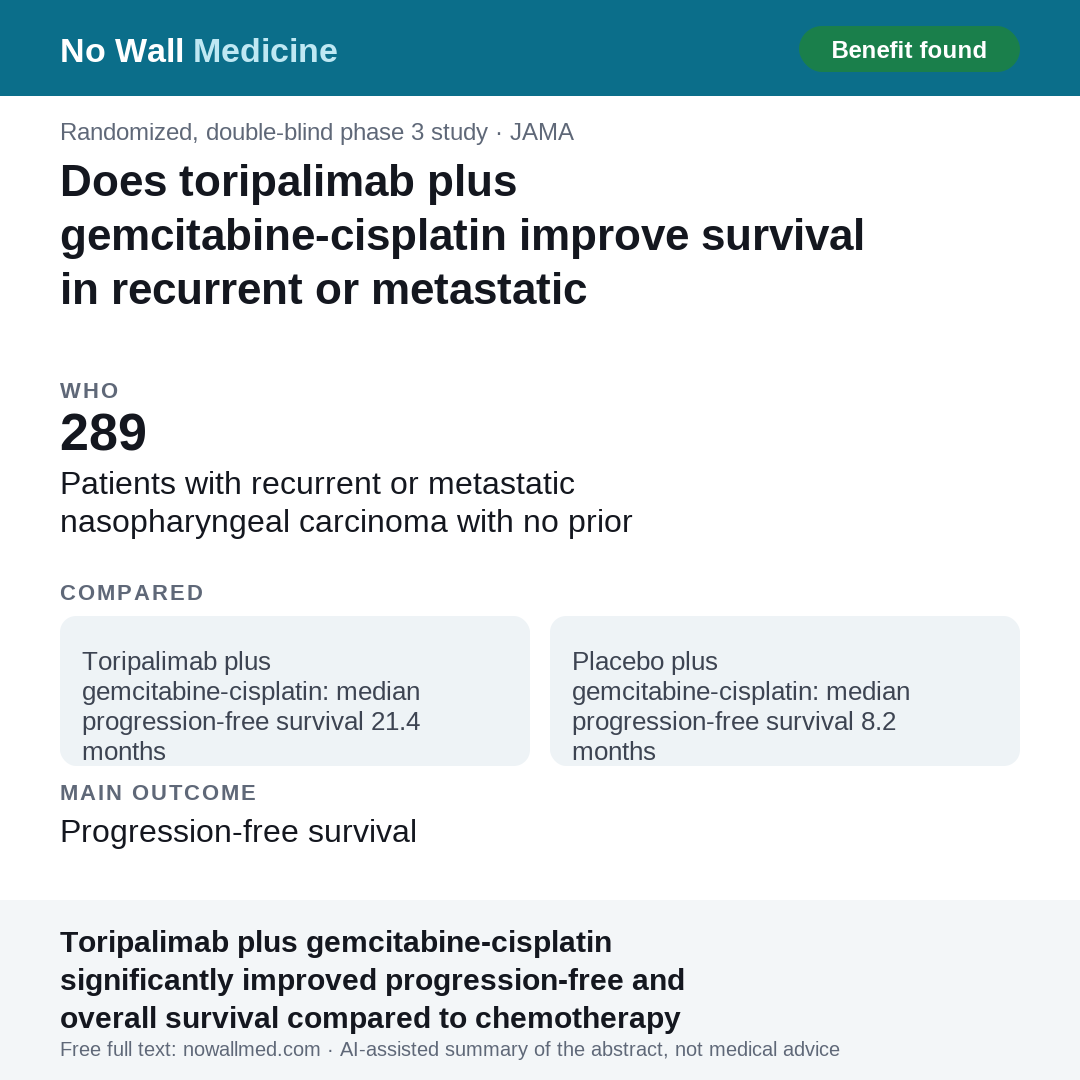
Toripalimab Plus Chemotherapy for Recurrent or Metastatic Nasopharyngeal Carcinoma: The JUPITER-02 Randomized Clinical Trial
Randomized, double-blind phase 3 studyBenefit found
Does toripalimab plus gemcitabine-cisplatin improve survival in recurrent or metastatic nasopharyngeal carcinoma?
Who
289
Patients with recurrent or metastatic nasopharyngeal carcinoma with no prior systemic chemotherapy · International, multicenter, including China, Taiwan, and Singapore
Compared
Toripalimab plus gemcitabine-cisplatin: median progression-free survival 21.4 months
Placebo plus gemcitabine-cisplatin: median progression-free survival 8.2 months
Main outcome
Progression-free survival
Result: hazard ratio 0.52 (95% CI 0.37 to 0.73)
Bottom line: Toripalimab plus gemcitabine-cisplatin significantly improved progression-free and overall survival compared to chemotherapy alone.
JAMA · 2023-11-28Download image
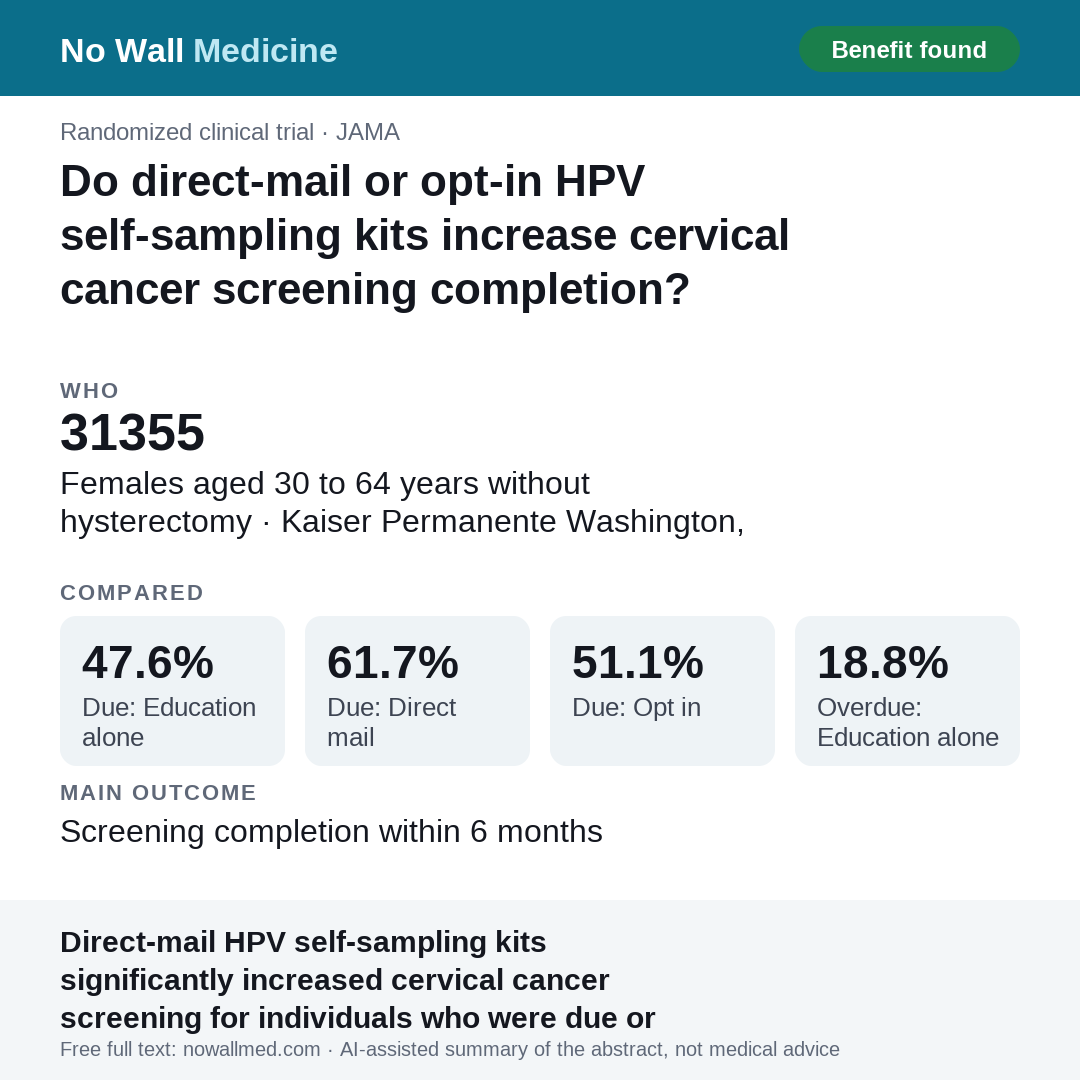
Strategies to Increase Cervical Cancer Screening With Mailed Human Papillomavirus Self-Sampling Kits: A Randomized Clinical Trial
Randomized clinical trialBenefit found
Do direct-mail or opt-in HPV self-sampling kits increase cervical cancer screening completion?
Who
31355
Females aged 30 to 64 years without hysterectomy · Kaiser Permanente Washington, US
Compared
47.6%Due: Education alone
61.7%Due: Direct mail
51.1%Due: Opt in
18.8%Overdue: Education alone
Main outcome
Screening completion within 6 months
Bottom line: Direct-mail HPV self-sampling kits significantly increased cervical cancer screening for individuals who were due or overdue.
JAMA · 2023-11-28Download image
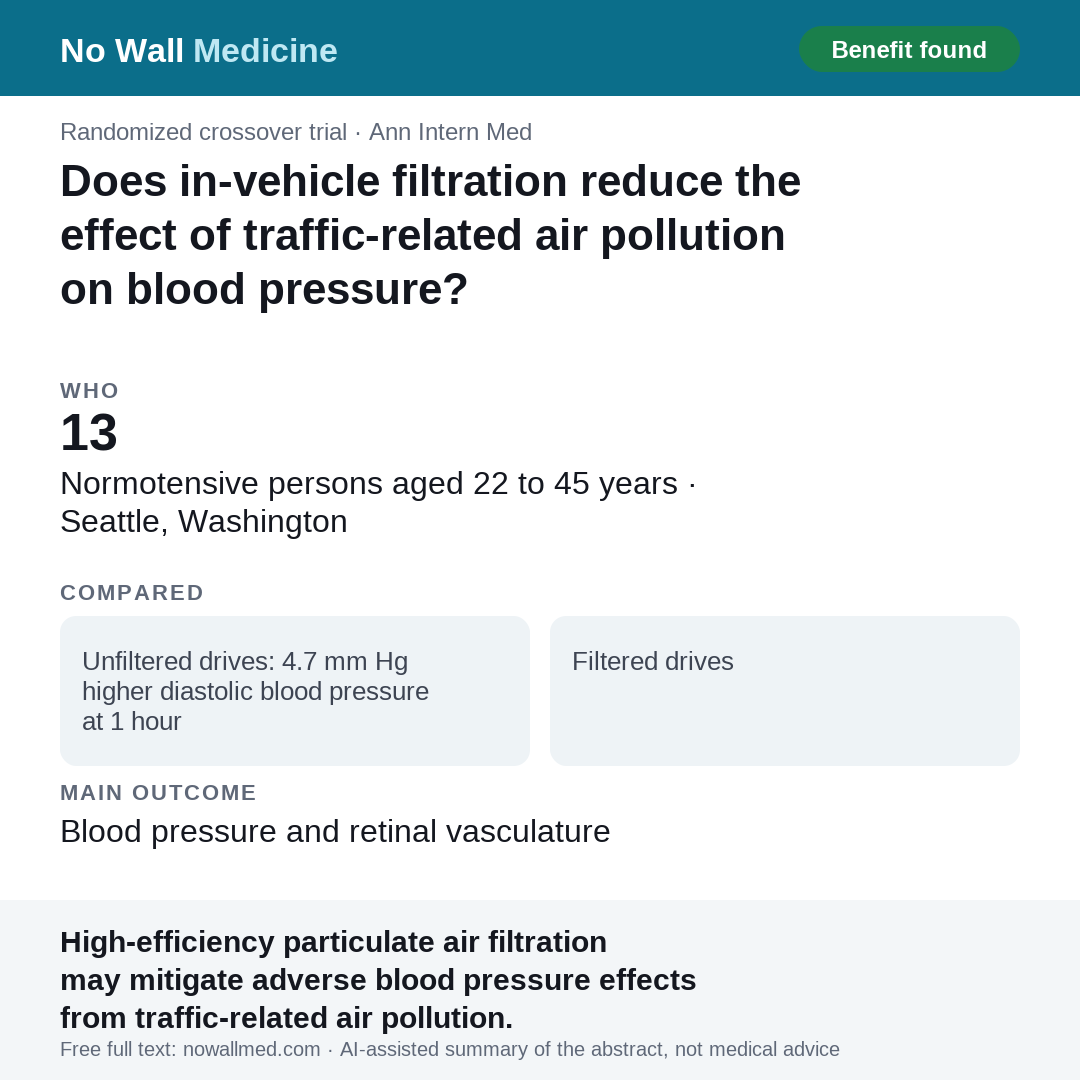
Blood Pressure Effect of Traffic-Related Air Pollution : A Crossover Trial of In-Vehicle Filtration
Randomized crossover trialBenefit found
Does in-vehicle filtration reduce the effect of traffic-related air pollution on blood pressure?
Who
13
Normotensive persons aged 22 to 45 years · Seattle, Washington
Compared
Unfiltered drives: 4.7 mm Hg higher diastolic blood pressure at 1 hour
Filtered drives
Main outcome
Blood pressure and retinal vasculature
Result: 4.7 mm Hg higher (95% CI, 0.9 to 8.4 mm Hg)
Bottom line: High-efficiency particulate air filtration may mitigate adverse blood pressure effects from traffic-related air pollution.
Limitation: Imprecise estimates due to small sample size; seasonal imbalance by exposure order.
Funded by: U.S. Environmental Protection Agency and National Institutes of Health
Ann Intern Med · 2023-11-28Download image
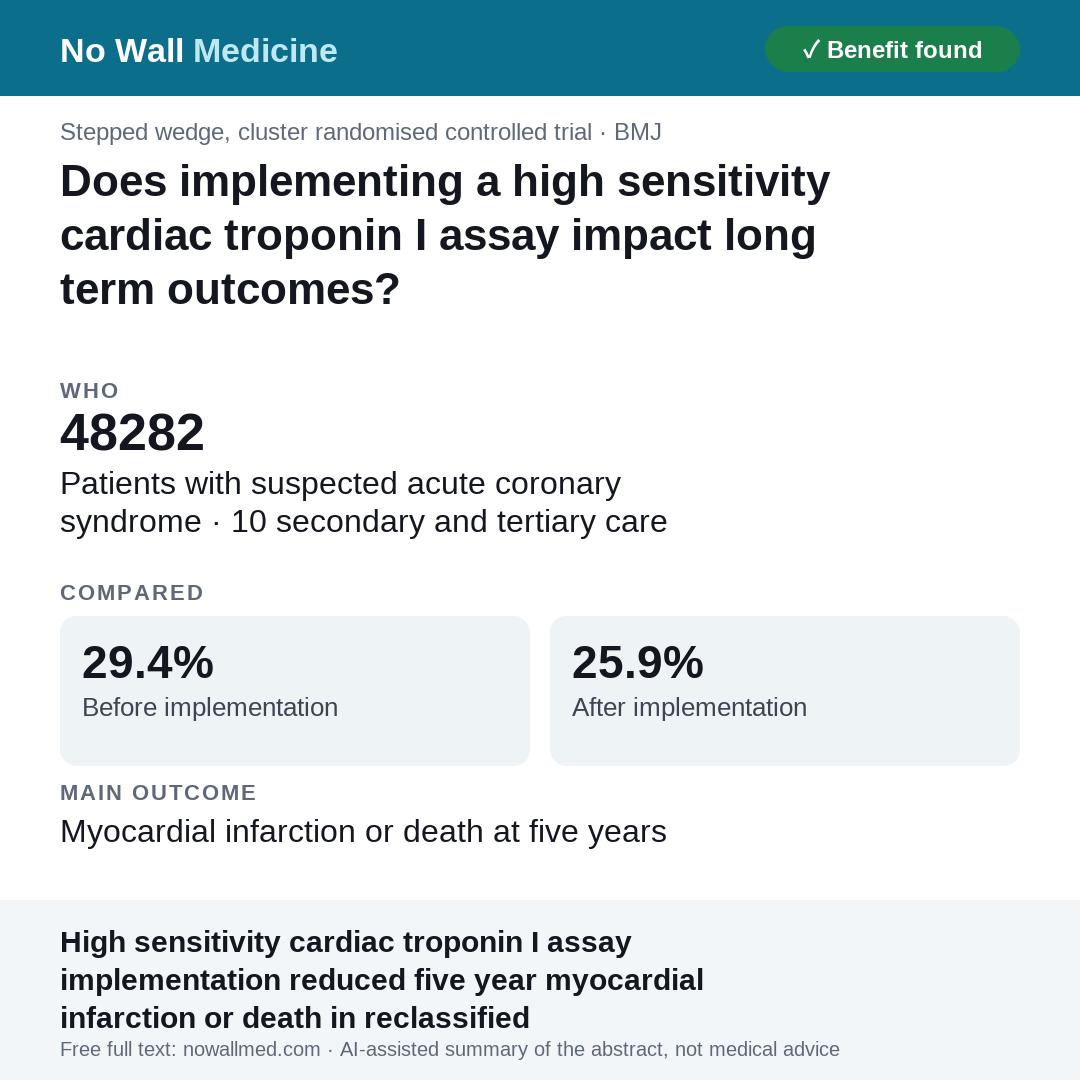
Implementation of a high sensitivity cardiac troponin I assay and risk of myocardial infarction or death at five years: observational analysis of a stepped wedge, cluster randomised controlled trial
Stepped wedge, cluster randomised controlled trialBenefit found
Does implementing a high sensitivity cardiac troponin I assay impact long term outcomes?
Who
48282
Patients with suspected acute coronary syndrome · 10 secondary and tertiary care centres in Scotland, UK
Compared
29.4%Before implementation (5588/18 978)
25.9%After implementation (7591/29 304)
Main outcome
Myocardial infarction or death at five years
Result: adjusted hazard ratio 0.97 (95% confidence interval 0.93 to 1.01)
Bottom line: High sensitivity cardiac troponin I assay implementation reduced five year myocardial infarction or death in reclassified patients.
BMJ · 2023-11-27Download image
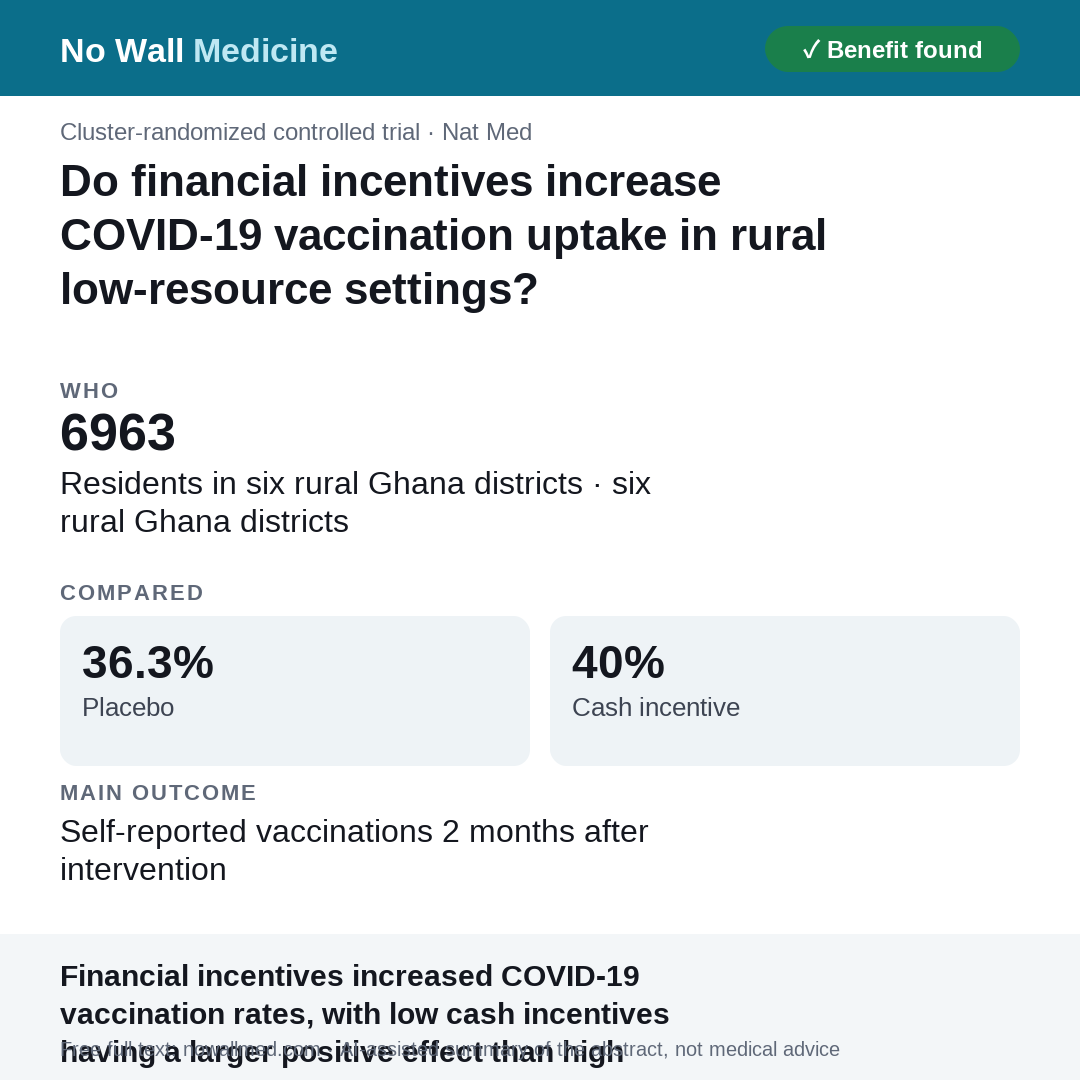
Financial incentives for COVID-19 vaccines in a rural low-resource setting: a cluster-randomized trial
Cluster-randomized controlled trialBenefit found
Do financial incentives increase COVID-19 vaccination uptake in rural low-resource settings?
Who
6963
Residents in six rural Ghana districts · six rural Ghana districts
Compared
36.3%Placebo (672 of 1,850)
40%Cash incentive (602 of 1,486)
Main outcome
Self-reported vaccinations 2 months after intervention
Result: 3.5% higher (95% confidence interval: 0.001, 6.9)
Bottom line: Financial incentives increased COVID-19 vaccination rates, with low cash incentives having a larger positive effect than high incentives.
Nat Med · 2023-11-27Download image
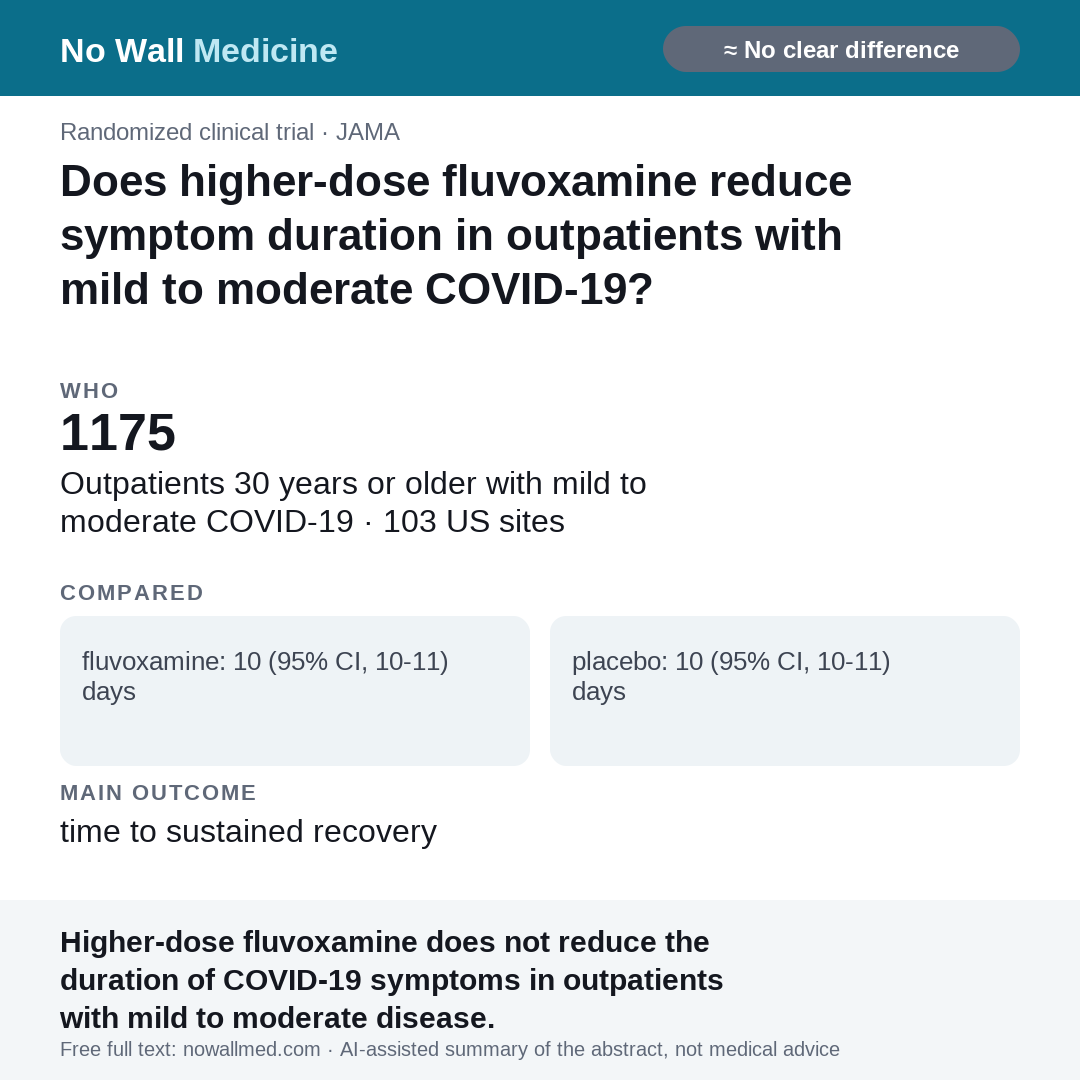
Higher-Dose Fluvoxamine and Time to Sustained Recovery in Outpatients With COVID-19: The ACTIV-6 Randomized Clinical Trial
Randomized clinical trialNo clear difference
Does higher-dose fluvoxamine reduce symptom duration in outpatients with mild to moderate COVID-19?
Who
1175
Outpatients 30 years or older with mild to moderate COVID-19 · 103 US sites
Compared
fluvoxamine: 10 (95% CI, 10-11) days
placebo: 10 (95% CI, 10-11) days
Main outcome
time to sustained recovery
Result: adjusted hazard ratio 0.99 (95% credible interval, 0.89-1.09)
Bottom line: Higher-dose fluvoxamine does not reduce the duration of COVID-19 symptoms in outpatients with mild to moderate disease.
JAMA · 2023-11-17Download image
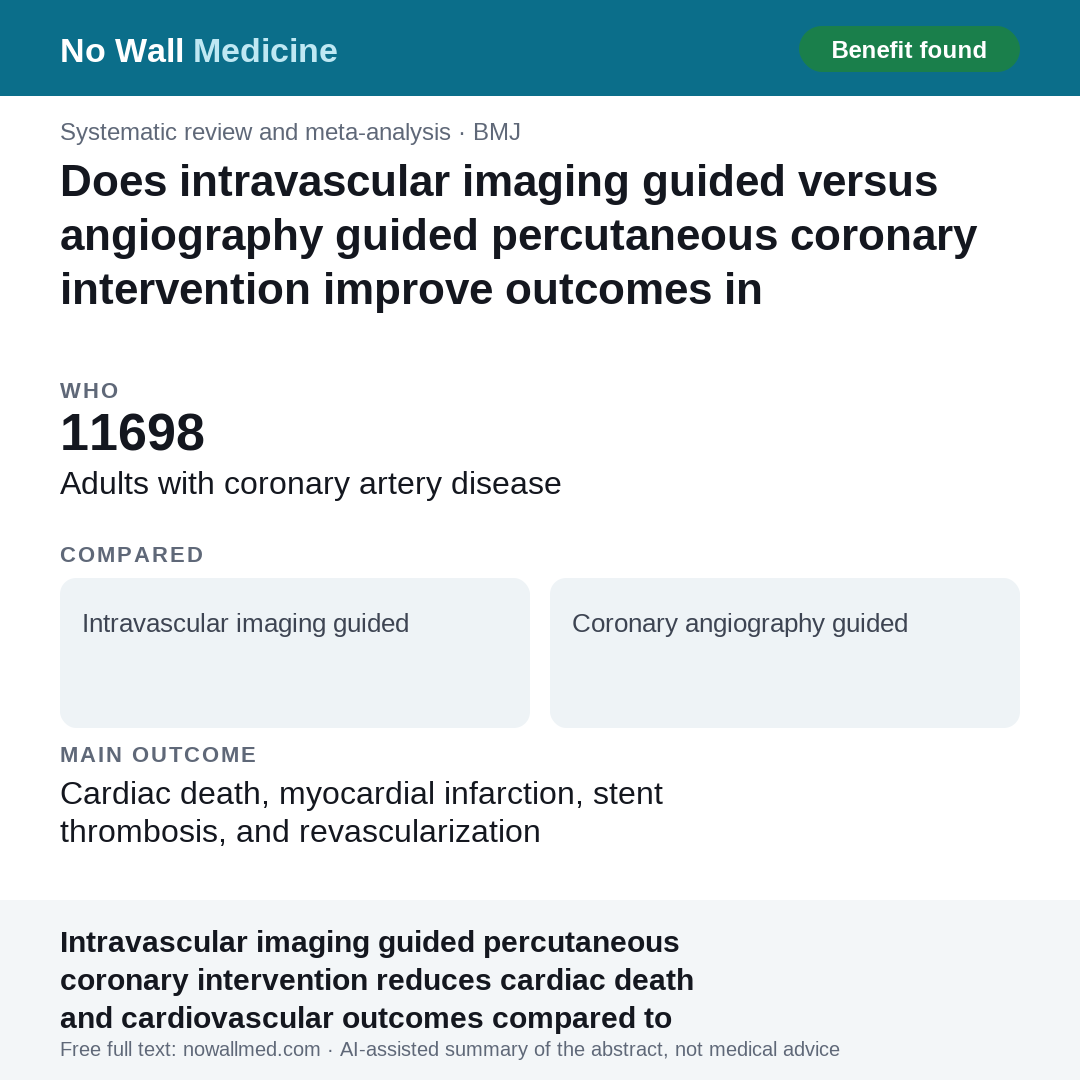
Intravascular imaging guided versus coronary angiography guided percutaneous coronary intervention: systematic review and meta-analysis
Systematic review and meta-analysisBenefit found
Does intravascular imaging guided versus angiography guided percutaneous coronary intervention improve outcomes in coronary artery disease?
Who
11698
Adults with coronary artery disease
Compared
Intravascular imaging guided
Coronary angiography guided
Main outcome
Cardiac death, myocardial infarction, stent thrombosis, and revascularization
Result: rate ratio 0.53 (95% confidence interval 0.39 to 0.72) for cardiac death
Bottom line: Intravascular imaging guided percutaneous coronary intervention reduces cardiac death and cardiovascular outcomes compared to angiography guided intervention.
BMJ · 2023-11-16Download image