Visual abstracts
New randomized trials and meta-analyses from leading journals at a glance: who was studied, what was compared, and what was found. Every paper is free to read in full.
All specialtiesCardiology 4763Oncology 4043Gastroenterology & Hepatology 1903Infectious Disease 3756Neurology 1872Psychiatry & Mental Health 2216Pulmonology 2044Critical Care 1319Endocrinology & Diabetes 2544Pediatrics 2889Surgery 2480Orthopedics & Sports Medicine 917Neurosurgery 525Cardiothoracic & Vascular Surgery 656Plastic & Reconstructive Surgery 574Nephrology 1107Rheumatology 810Hematology 1090Dermatology 611Ophthalmology 532Obstetrics & Gynecology 1645Public & Global Health 1037Radiology & Imaging 619Anesthesiology 958Urology 745ENT (Otolaryngology) 494Emergency Medicine 481Allergy & Immunology 309Geriatrics 972Family Medicine & Primary Care 534Medical Genetics & Genomics 659Pathology & Laboratory Medicine 156Physical Medicine & Rehabilitation 734Palliative Care 421Nutrition 1560Digital Health & AI 2137General Medicine 318
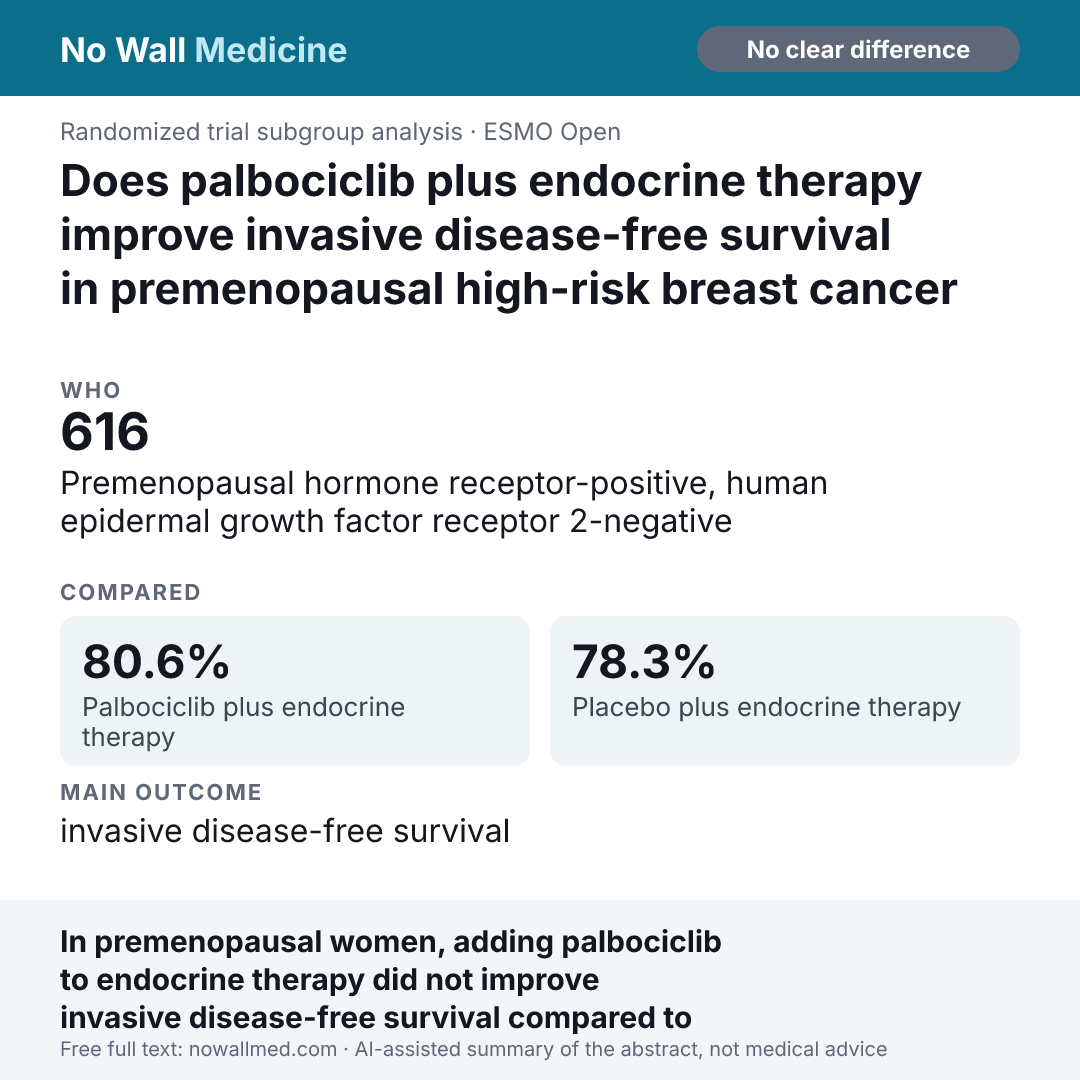
Palbociclib combined with endocrine treatment in hormone receptor-positive, HER2-negative breast cancer patients with high relapse risk after neoadjuvant chemotherapy: subgroup analyses of premenopausal patients in PENELOPE-B
Randomized trial subgroup analysisNo clear difference
Does palbociclib plus endocrine therapy improve invasive disease-free survival in premenopausal high-risk breast cancer patients?
Who
616
Premenopausal hormone receptor-positive, human epidermal growth factor receptor 2-negative breast cancer patients
Compared
80.6%Palbociclib plus endocrine therapy
78.3%Placebo plus endocrine therapy
Main outcome
invasive disease-free survival
Result: hazard ratio 0.95 (95% CI 0.69-1.30)
Bottom line: In premenopausal women, adding palbociclib to endocrine therapy did not improve invasive disease-free survival compared to placebo.
ESMO Open · 2024-06-04 · Save PNG
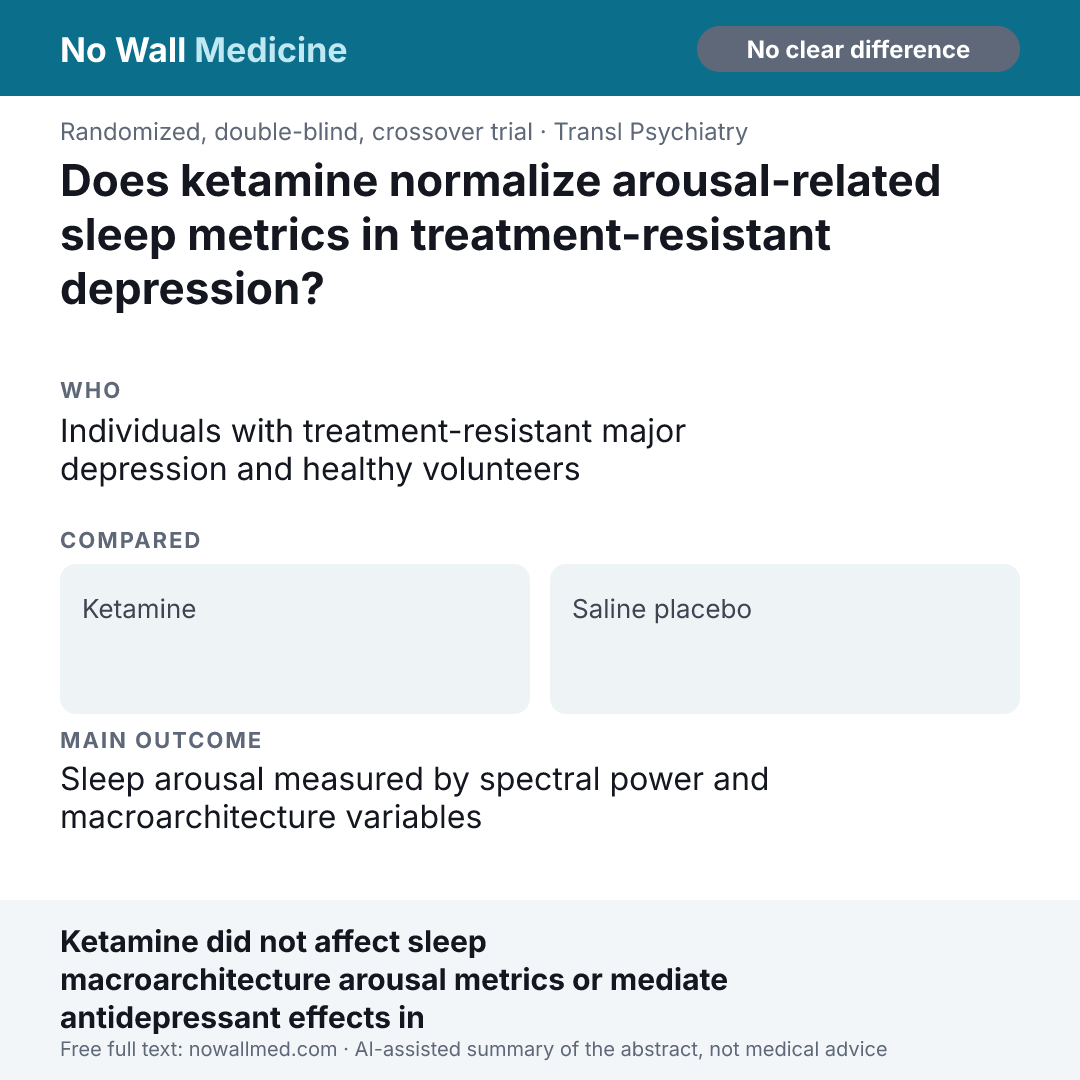
Functional changes in sleep-related arousal after ketamine administration in individuals with treatment-resistant depression
Randomized, double-blind, crossover trialNo clear difference
Does ketamine normalize arousal-related sleep metrics in treatment-resistant depression?
Who
Individuals with treatment-resistant major depression and healthy volunteers
Compared
Ketamine
Saline placebo
Main outcome
Sleep arousal measured by spectral power and macroarchitecture variables
Bottom line: Ketamine did not affect sleep macroarchitecture arousal metrics or mediate antidepressant effects in treatment-resistant depression.
Limitation: This was a secondary analysis of a biomarker-focused trial.
Transl Psychiatry · 2024-06-04 · Save PNG
A systematic review of machine learning models for management, prediction and classification of ARDS
Systematic reviewUnclear result
What are the machine learning models for management, prediction and classification of ARDS?
Who
Studies on acute respiratory distress syndrome · Google Scholar, PubMed, and EBSCO
Compared
12Gradient boosting (23.1%)
8Neural network and its variation (15.4%)
15Explainability methods (28.8%)
Main outcome
Application of machine learning and artificial intelligence in ARDS
Bottom line: Extreme gradient boosting is most successful for databases with 5000 or fewer samples.
Limitation: Small data sizes limit the use of neural network methods.
Respir Res · 2024-06-04 · Save PNG

Genetic, epigenetic and environmental factors in diverticular disease: systematic review
Systematic literature reviewUnclear result
What are the genetic, epigenetic, and environmental factors in diverticular disease?
Who
Patients with diverticular disease
Compared
Environmental factors
Genetic factors
Main outcome
Identification of hypothesized functional effects of gene loci and environmental factors
Bottom line: Genomics, epigenetics, and environmental factors like age, obesity, and smoking are associated with diverticular disease.
BJS Open · 2024-06-04 · Save PNG

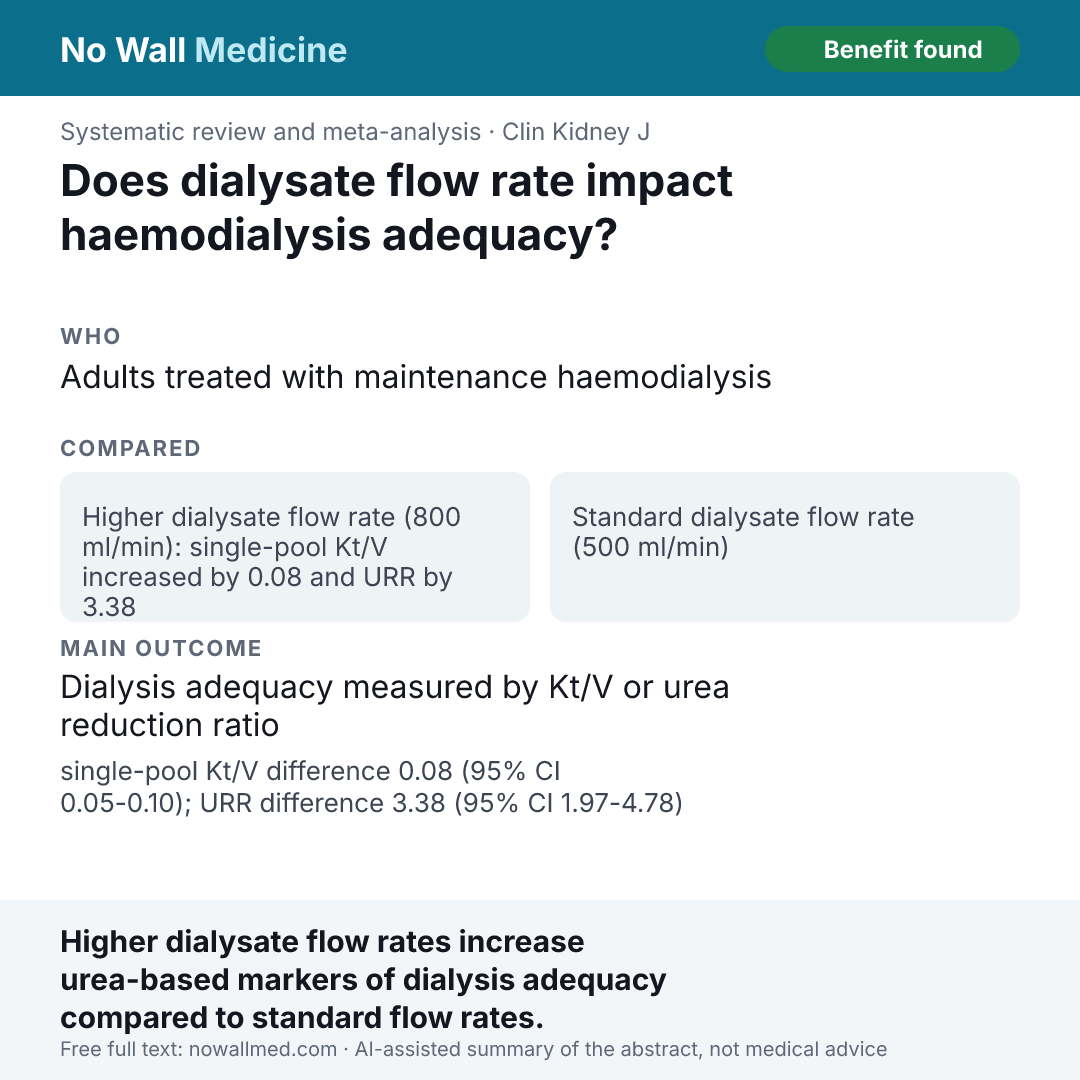
The impact of dialysate flow rate on haemodialysis adequacy: a systematic review and meta-analysis
Systematic review and meta-analysisBenefit found
Does dialysate flow rate impact haemodialysis adequacy?
Who
Adults treated with maintenance haemodialysis
Compared
Higher dialysate flow rate (800 ml/min): single-pool Kt/V increased by 0.08 and URR by 3.38
Standard dialysate flow rate (500 ml/min)
Main outcome
Dialysis adequacy measured by Kt/V or urea reduction ratio
Result: single-pool Kt/V difference 0.08 (95% CI 0.05-0.10); URR difference 3.38 (95% CI 1.97-4.78)
Bottom line: Higher dialysate flow rates increase urea-based markers of dialysis adequacy compared to standard flow rates.
Limitation: Moderate risk of bias due to randomization, allocation concealment, and blinding issues.
Clin Kidney J · 2024-06-04 · Save PNG
Improved physical functioning, sleep, work productivity and overall health-related quality of life with bimekizumab in patients with axial spondyloarthritis: results from two phase 3 studies
Phase 3 randomized trialBenefit found
Does bimekizumab improve physical functioning, sleep, work productivity, and health-related quality of life?
Who
Patients with non-radiographic and radiographic axial spondyloarthritis
Compared
bimekizumab 160 mg: 60%-70% achieved BASFI ≤4, meaningful SF-36 PCS and ASQoL improvements at Week 52
placebo: 60%-70% achieved BASFI ≤4, meaningful SF-36 PCS and ASQoL improvements at Week 52
Main outcome
Physical functioning, sleep, work productivity, and health-related quality of life
Bottom line: Bimekizumab led to early improvements in physical function, sleep, work productivity, and quality of life sustained to week 52.
RMD Open · 2024-06-04 · Save PNG

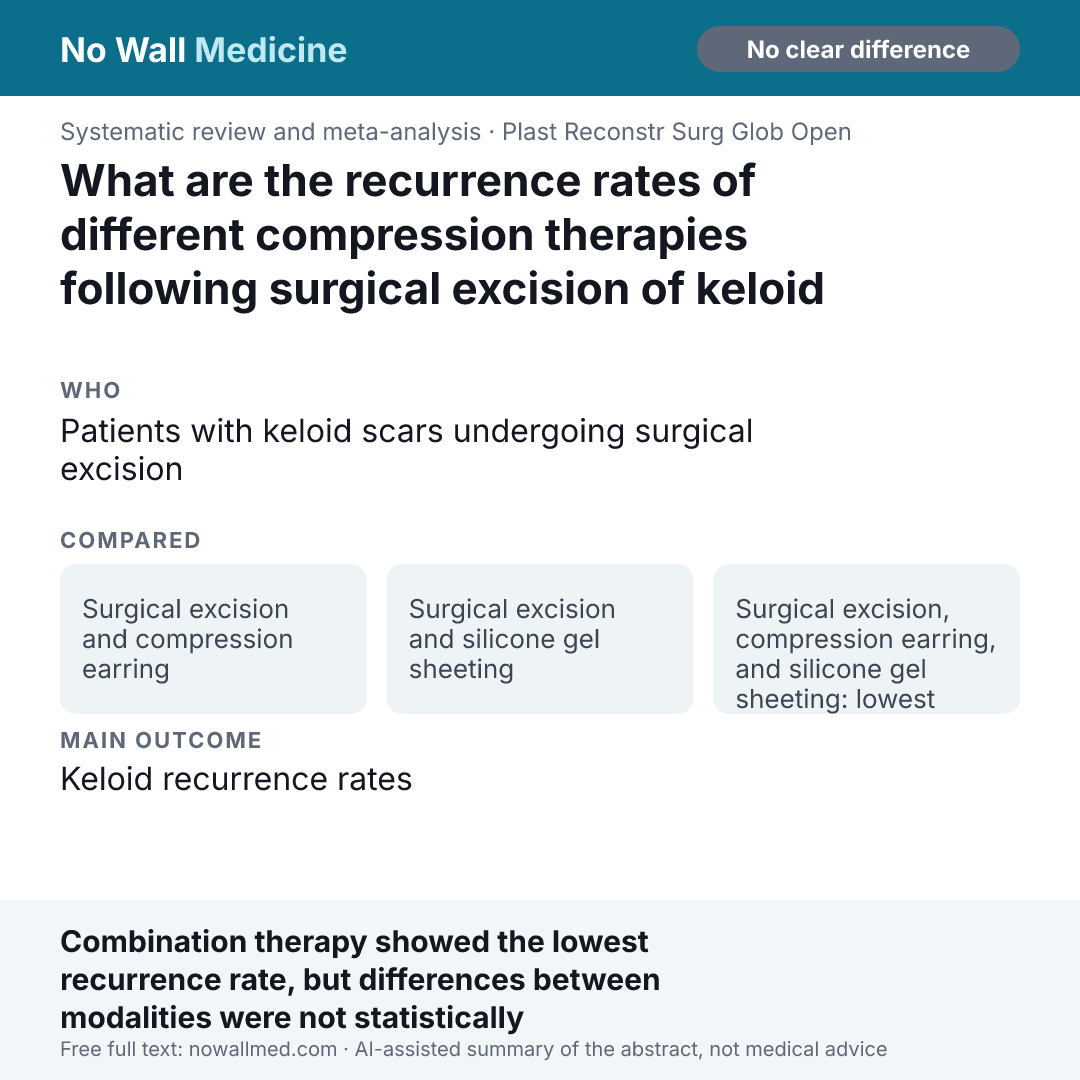
Compression Therapy for Keloid Scars: A Systematic Review and Meta-analysis
Systematic review and meta-analysisNo clear difference
What are the recurrence rates of different compression therapies following surgical excision of keloid scars?
Who
Patients with keloid scars undergoing surgical excision
Compared
Surgical excision and compression earring
Surgical excision and silicone gel sheeting
Surgical excision, compression earring, and silicone gel sheeting: lowest recurrence rate
Main outcome
Keloid recurrence rates
Bottom line: Combination therapy showed the lowest recurrence rate, but differences between modalities were not statistically significant.
Plast Reconstr Surg Glob Open · 2024-06-04 · Save PNG
New Kid on the Block: A Systematic Review of the Quadratus Lumborum Block in Plastic and Reconstructive Surgery
Systematic reviewUnclear result
Is the quadratus lumborum block effective in plastic and reconstructive surgery?
Who
Patients undergoing plastic and reconstructive surgery
Compared
Quadratus lumborum block
Control
Main outcome
Pain scores and total opioid use
Bottom line: There is limited data evaluating the use of the quadratus lumborum block in plastic and reconstructive surgery.
Limitation: Limited number of studies and heterogeneity in study type and design.
Plast Reconstr Surg Glob Open · 2024-06-04 · Save PNG

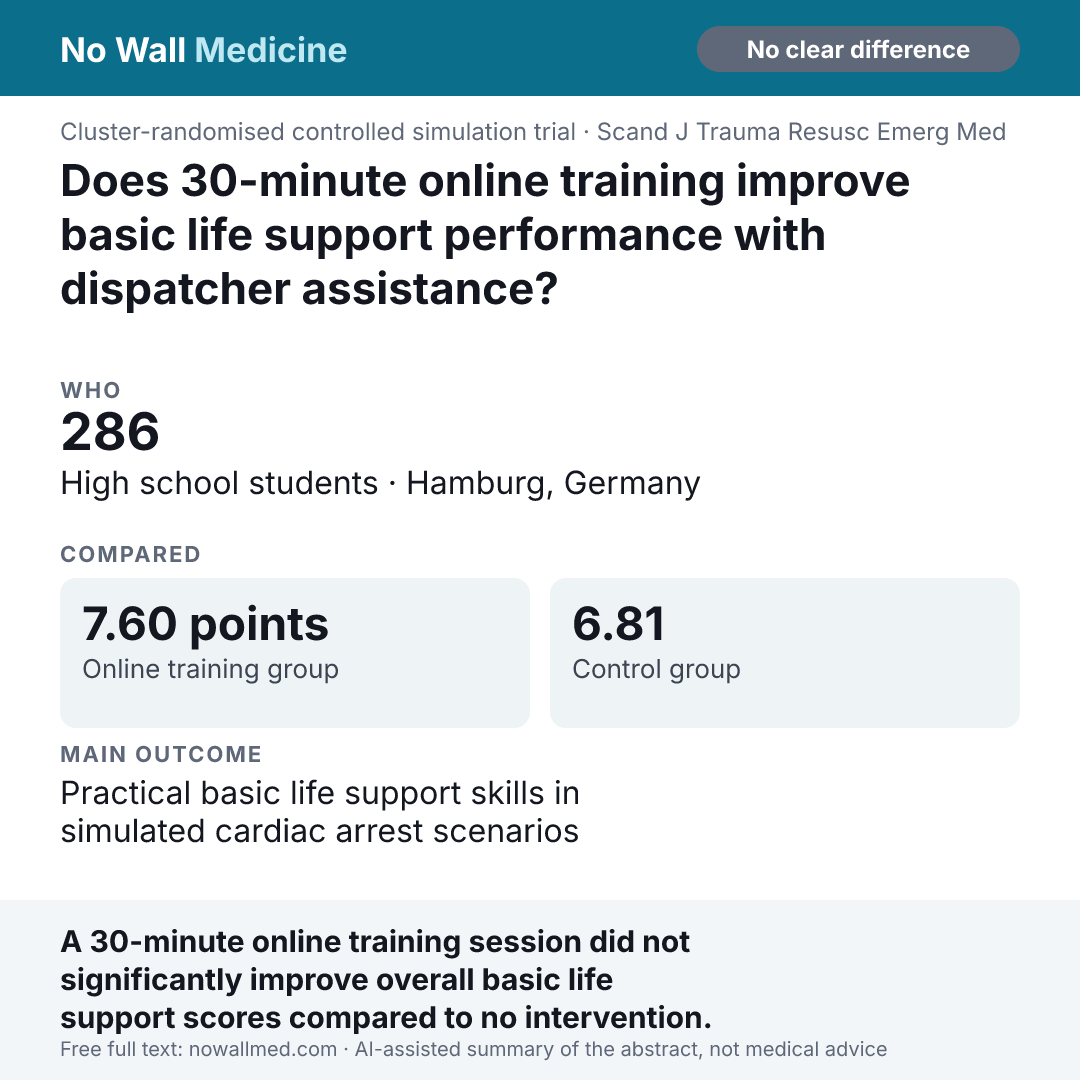
Online training to improve BLS performance with dispatcher assistance? Results of a cluster-randomised controlled simulation trial
Cluster-randomised controlled simulation trialNo clear difference
Does 30-minute online training improve basic life support performance with dispatcher assistance?
Who
286
High school students · Hamburg, Germany
Compared
7.60 pointsOnline training group (95% CI: 6.76 to 8.44)
6.81Control group (95% CI: 5.97 to 7.65)
Main outcome
Practical basic life support skills in simulated cardiac arrest scenarios
Result: mean difference 0.79 (95% CI: -0.40 to 1.97)
Bottom line: A 30-minute online training session did not significantly improve overall basic life support scores compared to no intervention.
Scand J Trauma Resusc Emerg Med · 2024-06-04 · Save PNG
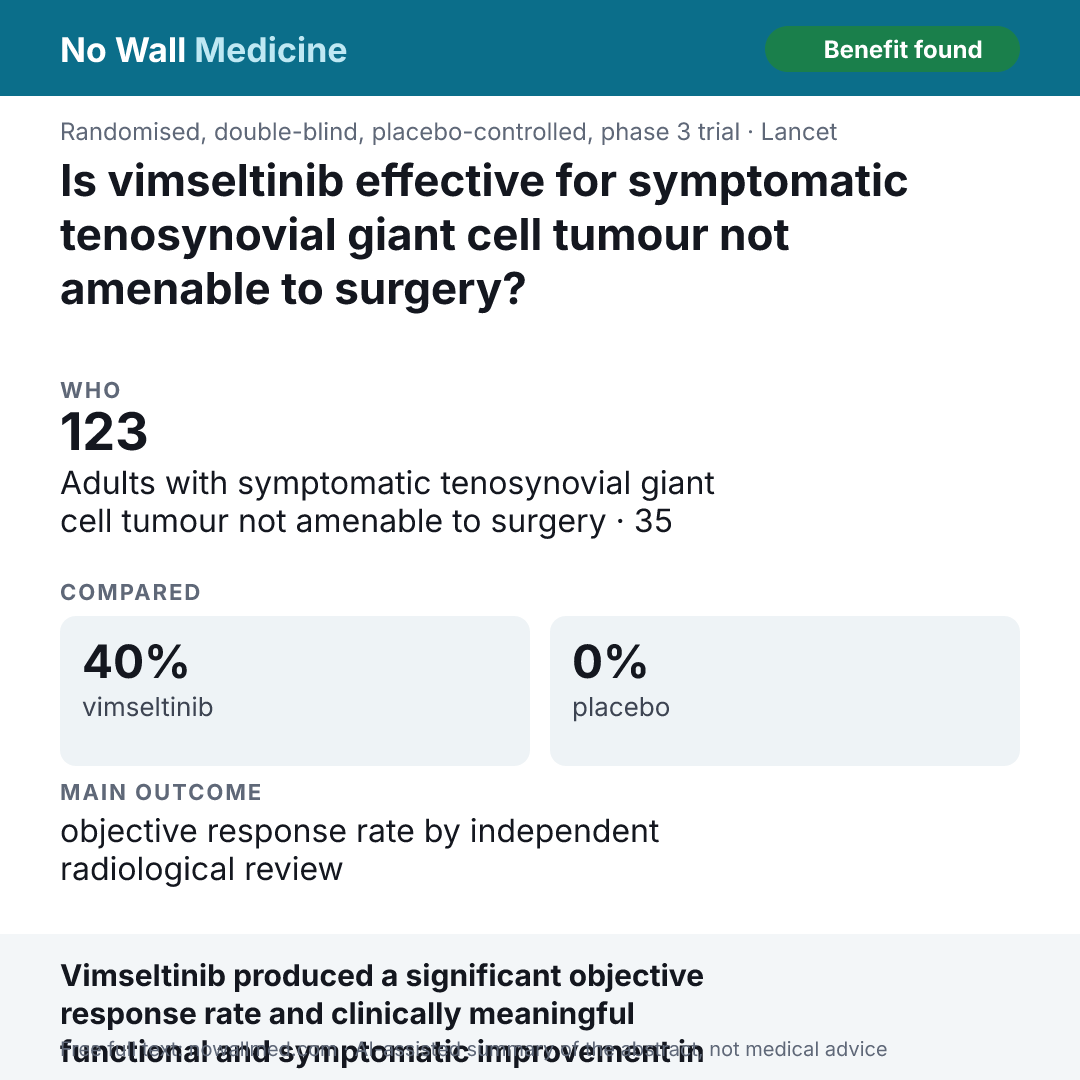
Vimseltinib versus placebo for tenosynovial giant cell tumour (MOTION): a multicentre, randomised, double-blind, placebo-controlled, phase 3 trial
Randomised, double-blind, placebo-controlled, phase 3 trialBenefit found
Is vimseltinib effective for symptomatic tenosynovial giant cell tumour not amenable to surgery?
Who
123
Adults with symptomatic tenosynovial giant cell tumour not amenable to surgery · 35 specialised hospitals in 13 countries
Compared
40%vimseltinib (33 of 83 patients)
0%placebo (none of 40)
Main outcome
objective response rate by independent radiological review
Result: difference 40% (95% CI 29-51)
Bottom line: Vimseltinib produced a significant objective response rate and clinically meaningful functional and symptomatic improvement in patients with tenosynovial giant cell tumour.
Funded by: Deciphera Pharmaceuticals
Lancet · 2024-06-03 · Save PNG
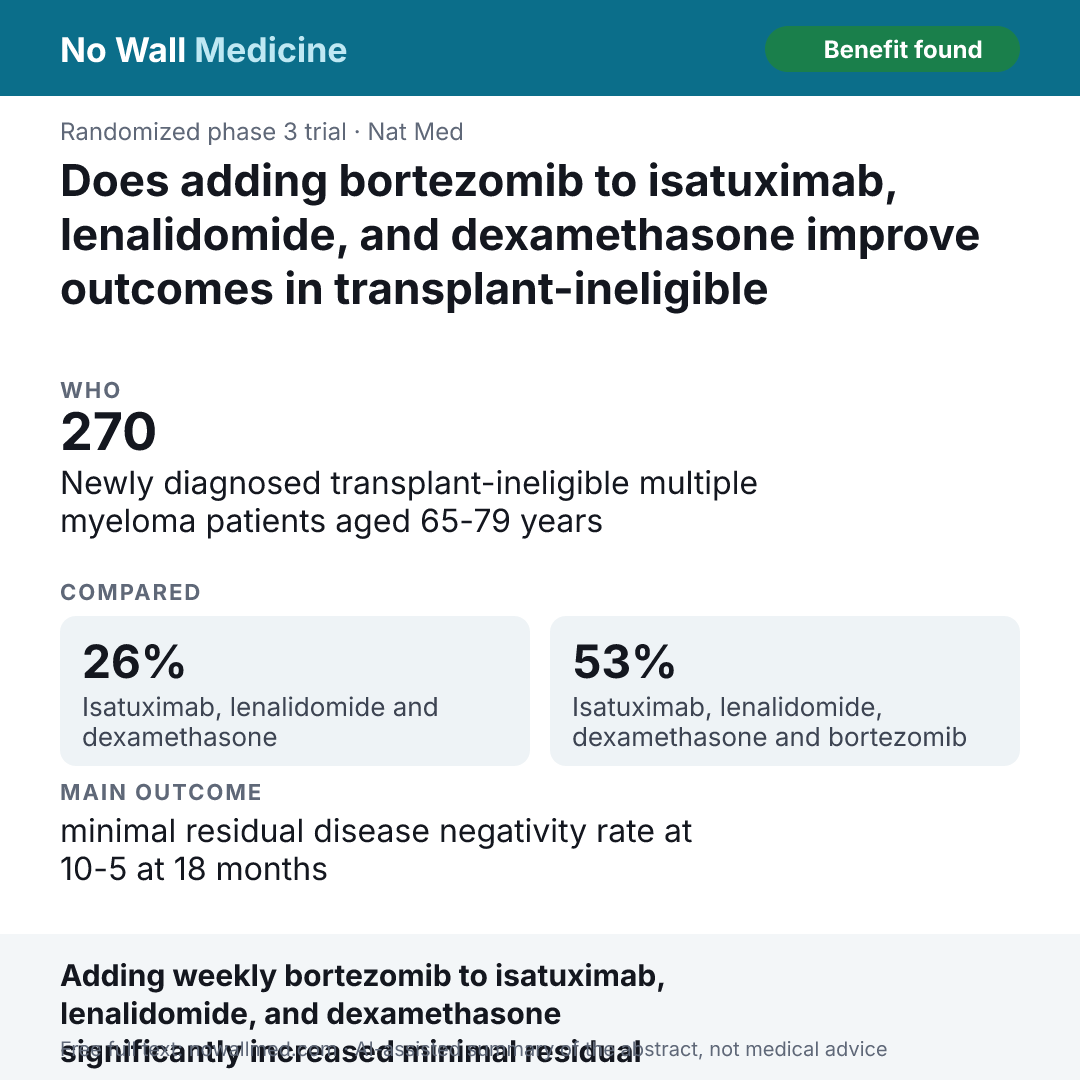
Isatuximab, lenalidomide, dexamethasone and bortezomib in transplant-ineligible multiple myeloma: the randomized phase 3 BENEFIT trial
Randomized phase 3 trialBenefit found
Does adding bortezomib to isatuximab, lenalidomide, and dexamethasone improve outcomes in transplant-ineligible multiple myeloma?
Who
270
Newly diagnosed transplant-ineligible multiple myeloma patients aged 65-79 years
Compared
26%Isatuximab, lenalidomide and dexamethasone (95% CI 19-34)
53%Isatuximab, lenalidomide, dexamethasone and bortezomib (95% CI 44-61)
Main outcome
minimal residual disease negativity rate at 10-5 at 18 months
Result: odds ratio 3.16 (95% CI 1.89-5.28)
Bottom line: Adding weekly bortezomib to isatuximab, lenalidomide, and dexamethasone significantly increased minimal residual disease negativity rates.
Nat Med · 2024-06-03 · Save PNG
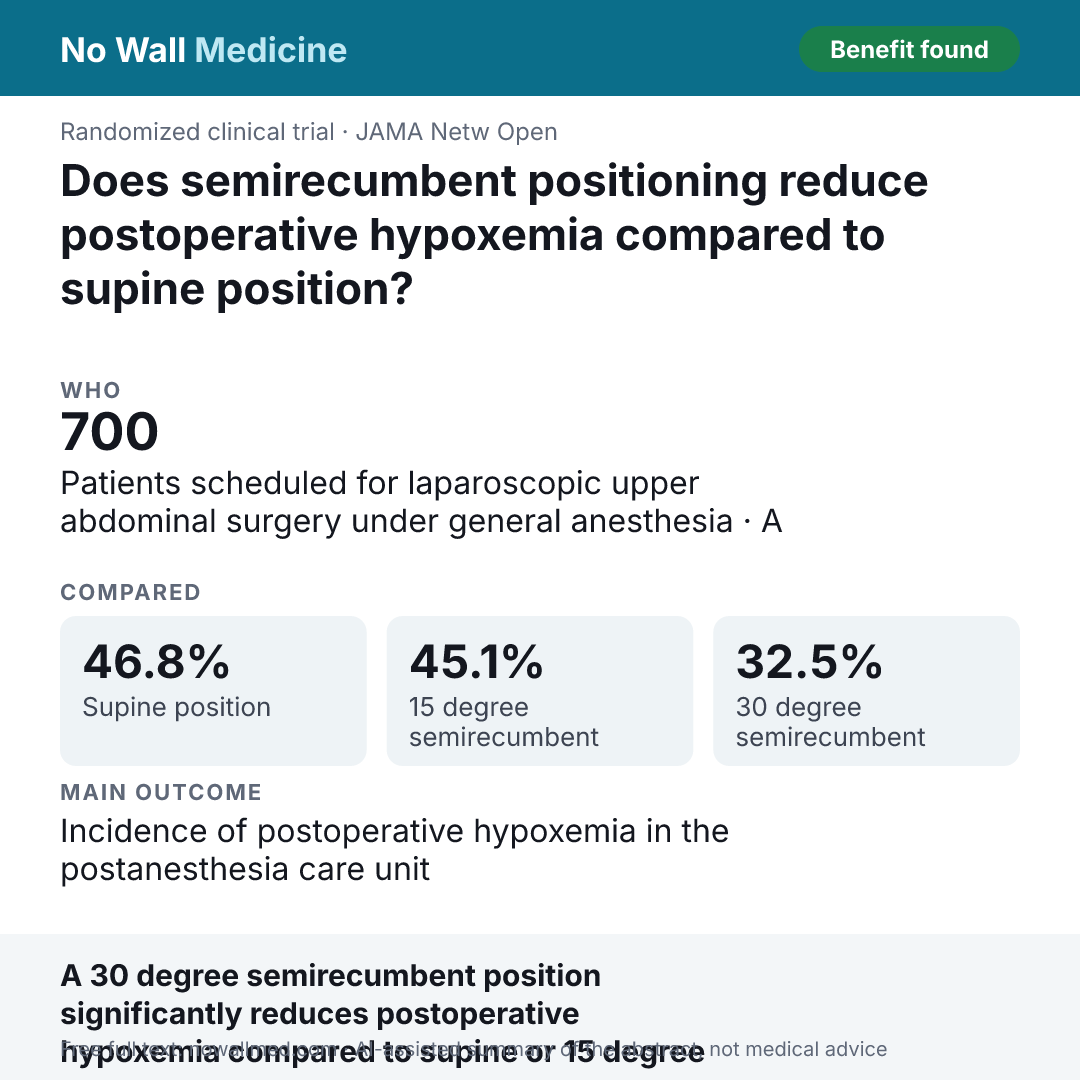
Semirecumbent Positioning During Anesthesia Recovery and Postoperative Hypoxemia: A Randomized Clinical Trial
Randomized clinical trialBenefit found
Does semirecumbent positioning reduce postoperative hypoxemia compared to supine position?
Who
700
Patients scheduled for laparoscopic upper abdominal surgery under general anesthesia · A tertiary hospital in China
Compared
46.8%Supine position
45.1%15 degree semirecumbent position
32.5%30 degree semirecumbent position
Main outcome
Incidence of postoperative hypoxemia in the postanesthesia care unit
Result: risk ratio 0.69 (95% CI, 0.55-0.87) for 30 degree vs supine
Bottom line: A 30 degree semirecumbent position significantly reduces postoperative hypoxemia compared to supine or 15 degree positioning.
JAMA Netw Open · 2024-06-03 · Save PNG
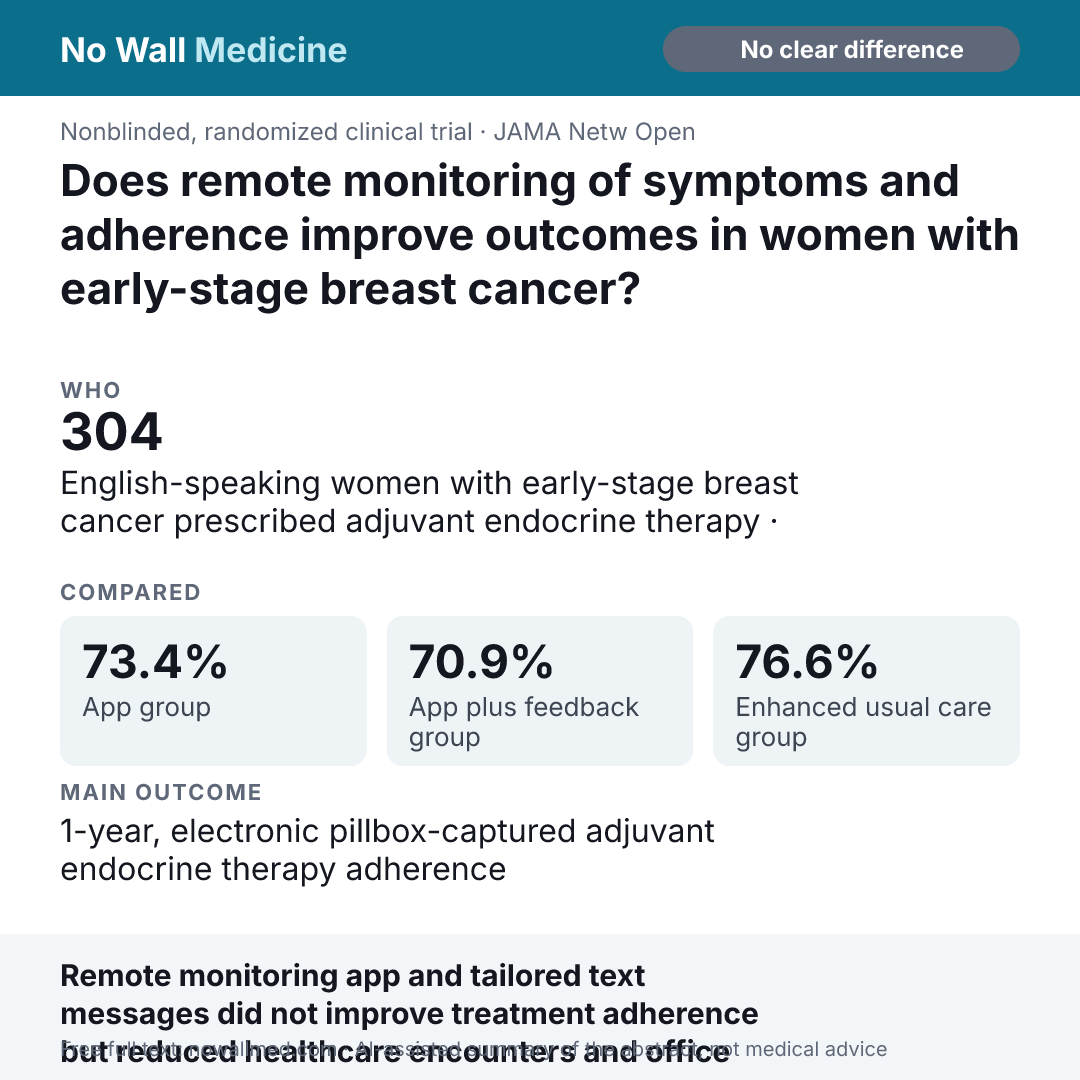
Remote Monitoring App for Endocrine Therapy Adherence Among Patients With Early-Stage Breast Cancer: A Randomized Clinical Trial
Nonblinded, randomized clinical trialNo clear difference
Does remote monitoring of symptoms and adherence improve outcomes in women with early-stage breast cancer?
Who
304
English-speaking women with early-stage breast cancer prescribed adjuvant endocrine therapy · Large cancer center with 14 clinics across 3 states
Compared
73.4%App group
70.9%App plus feedback group
76.6%Enhanced usual care group
Main outcome
1-year, electronic pillbox-captured adjuvant endocrine therapy adherence
Result: difference vs EUC, -3.3% (95% CI, -11.4% to 4.9%)
Bottom line: Remote monitoring app and tailored text messages did not improve treatment adherence but reduced healthcare encounters and office visits.
JAMA Netw Open · 2024-06-03 · Save PNG
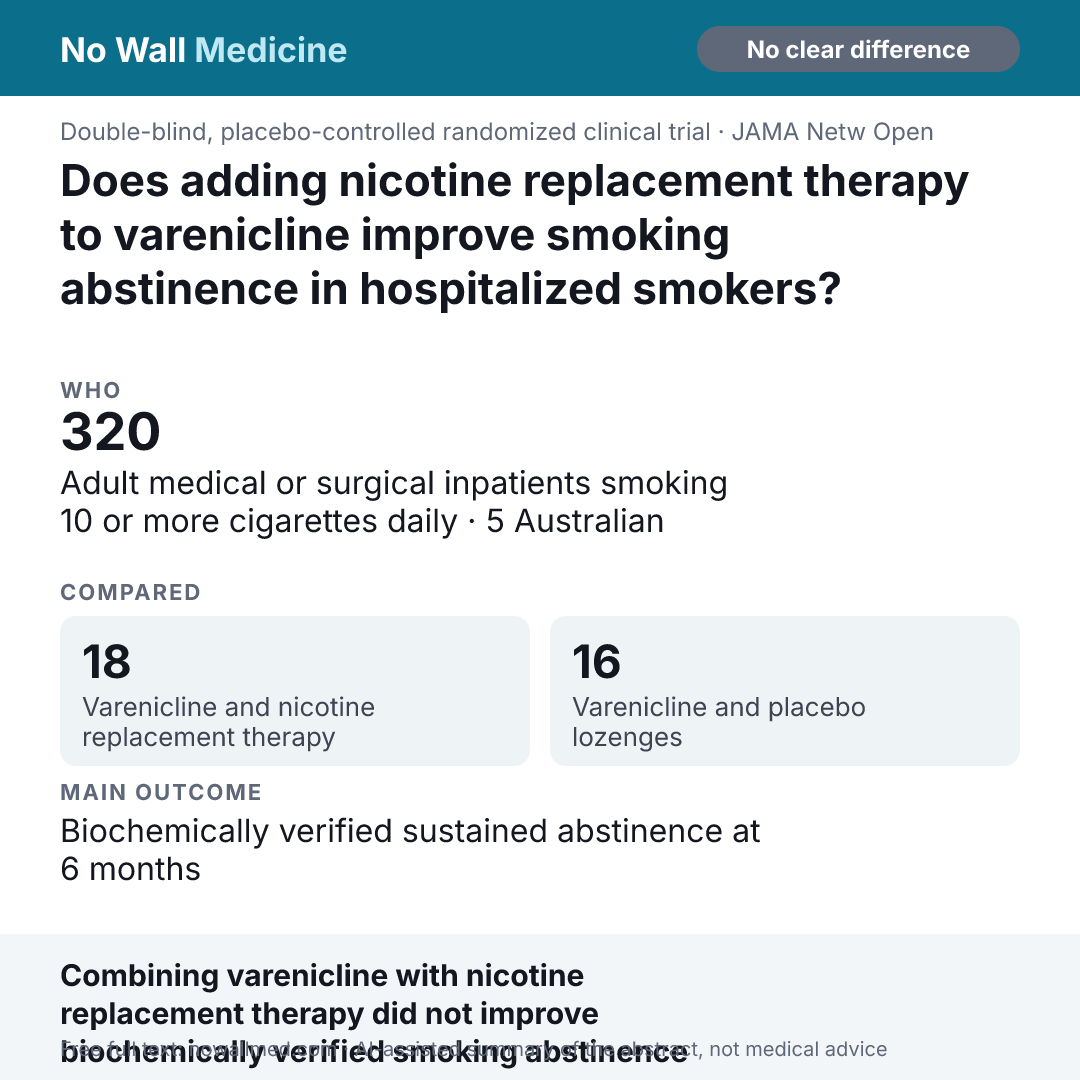
Varenicline and Nicotine Replacement Therapy for Smokers Admitted to Hospitals: A Randomized Clinical Trial
Double-blind, placebo-controlled randomized clinical trialNo clear difference
Does adding nicotine replacement therapy to varenicline improve smoking abstinence in hospitalized smokers?
Who
320
Adult medical or surgical inpatients smoking 10 or more cigarettes daily · 5 Australian public hospitals
Compared
18Varenicline and nicotine replacement therapy (11.4%)
16Varenicline and placebo lozenges (10.1%)
Main outcome
Biochemically verified sustained abstinence at 6 months
Result: odds ratio 1.14 (95% CI 0.56-2.33)
Bottom line: Combining varenicline with nicotine replacement therapy did not improve biochemically verified smoking abstinence compared to varenicline alone.
JAMA Netw Open · 2024-06-03 · Save PNG
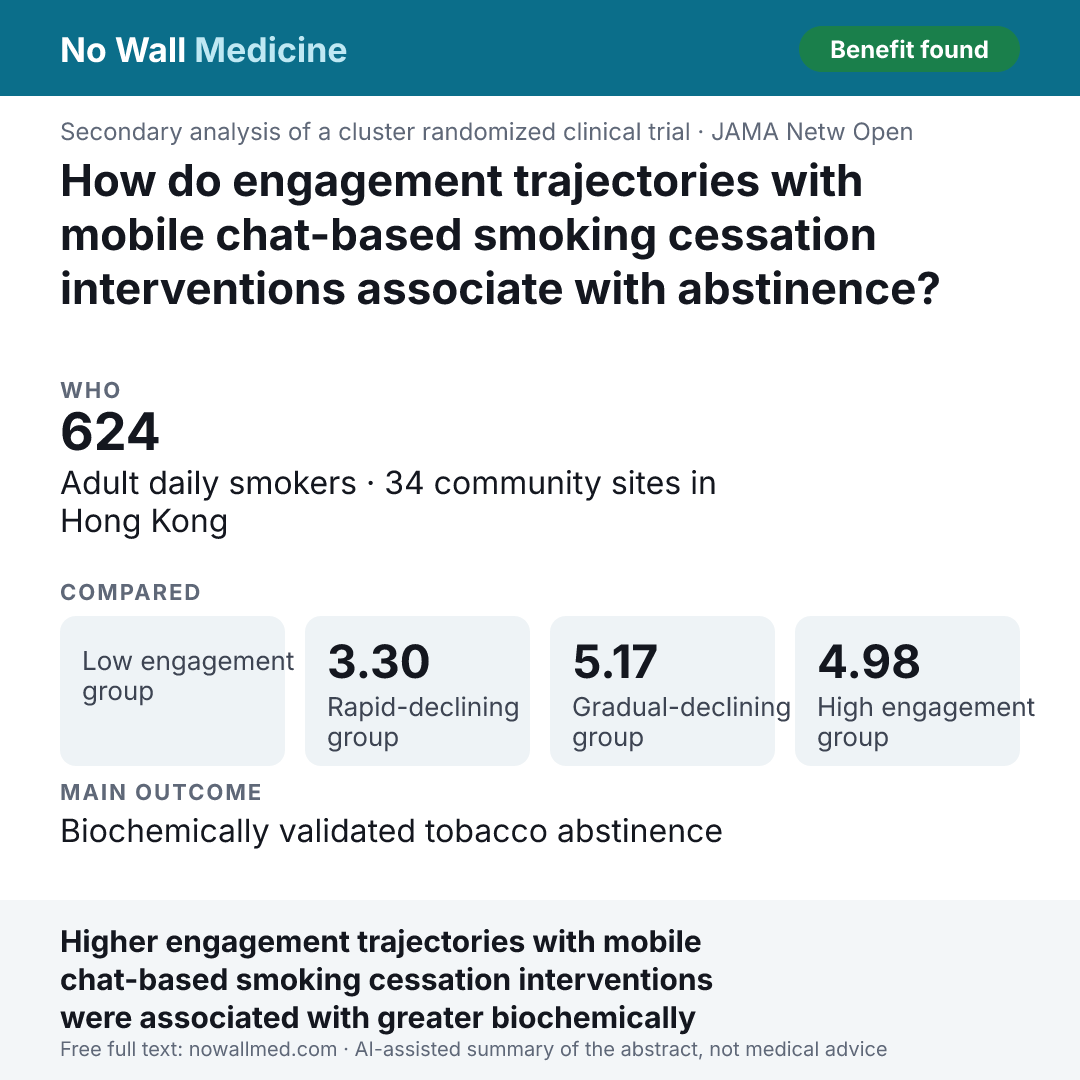
Engagement With a Mobile Chat-Based Intervention for Smoking Cessation: A Secondary Analysis of a Randomized Clinical Trial
Secondary analysis of a cluster randomized clinical trialBenefit found
How do engagement trajectories with mobile chat-based smoking cessation interventions associate with abstinence?
Who
624
Adult daily smokers · 34 community sites in Hong Kong
Compared
Low engagement group
3.30Rapid-declining group (95% CI, 1.39-7.81)
5.17Gradual-declining group (95% CI, 2.21-12.11)
4.98High engagement group (95% CI, 1.82-13.60)
Main outcome
Biochemically validated tobacco abstinence
Result: adjusted relative risk 3.30 (95% CI, 1.39-7.81) to 5.17 (95% CI, 2.21-12.11)
Bottom line: Higher engagement trajectories with mobile chat-based smoking cessation interventions were associated with greater biochemically validated tobacco abstinence.
JAMA Netw Open · 2024-06-03 · Save PNG
Acupuncture and Sleep Quality Among Patients With Parkinson Disease: A Randomized Clinical Trial
Randomized clinical trialBenefit found
Does real acupuncture improve sleep quality in patients with Parkinson disease?
Who
83
Patients with Parkinson disease and sleep complaints · Single-center hospital in China
Compared
Real acupuncture: 29.65 [95% CI, 24.65-34.65]
Sham acupuncture: 10.47 [95% CI, 5.35-15.60]
Main outcome
Change in Parkinson Disease Sleep Scale scores
Result: 19.75 [95% CI, 11.02-28.49]
Bottom line: Real acupuncture significantly improved sleep quality scores compared to sham acupuncture in patients with Parkinson disease.
JAMA Netw Open · 2024-06-03 · Save PNG

Bone Health After Exercise Alone, GLP-1 Receptor Agonist Treatment, or Combination Treatment: A Secondary Analysis of a Randomized Clinical Trial
Randomized clinical trial secondary analysisMixed results
How do exercise, liraglutide, or both affect bone mineral density after weight loss?
Who
195
Adults aged 18 to 65 years with obesity and without diabetes · Denmark
Compared
Exercise alone
Liraglutide alone: hip -0.013 g/cm2 (95% CI, -0.024 to -0.001 g/cm2)
Combination treatment: hip -0.006 g/cm2 (95% CI, -0.017 to 0.004 g/cm2)
Placebo
Main outcome
Change in site-specific bone mineral density
Bottom line: Combination of exercise and liraglutide was most effective for weight loss while preserving bone health.
JAMA Netw Open · 2024-06-03 · Save PNG

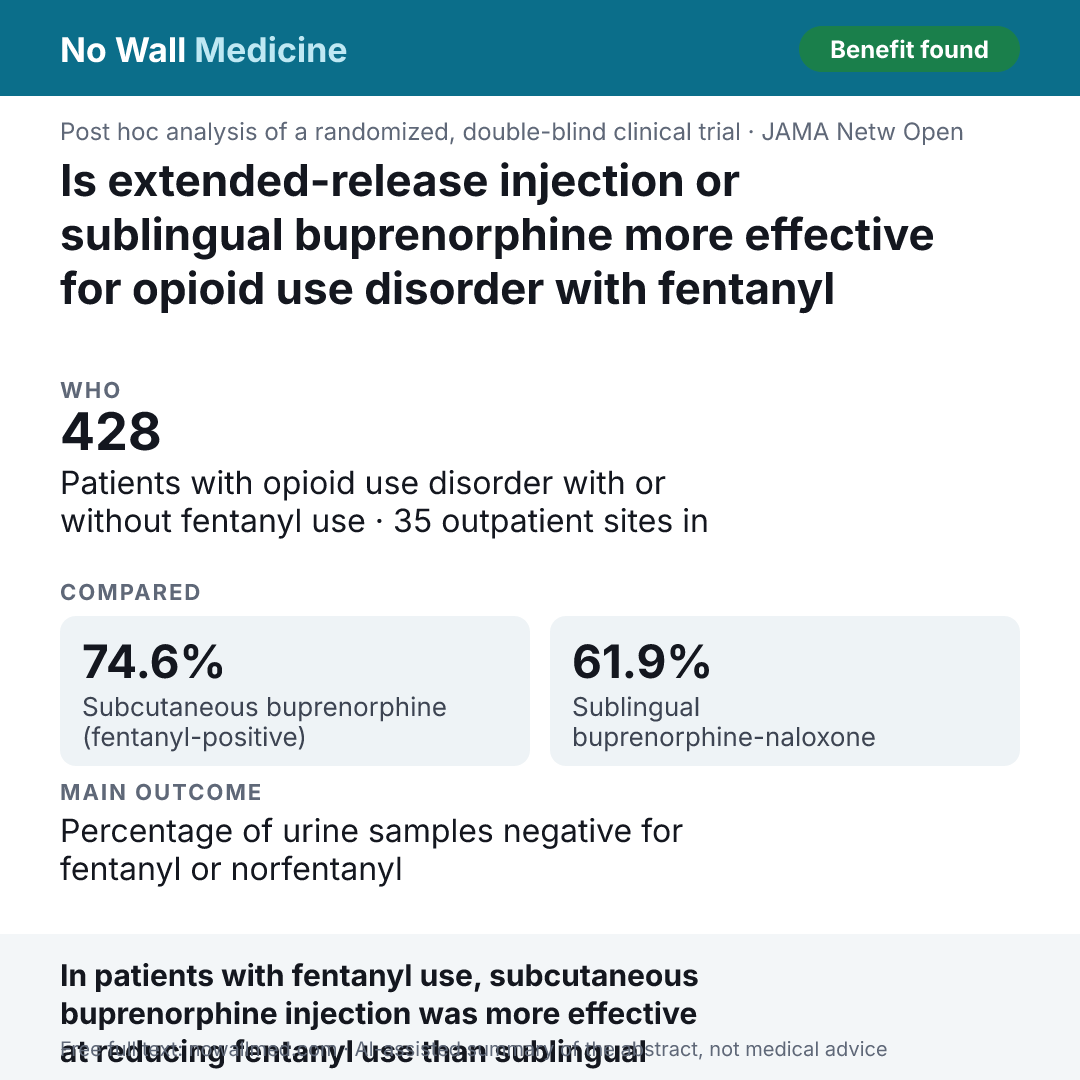
Extended-Release Injection vs Sublingual Buprenorphine for Opioid Use Disorder With Fentanyl Use: A Post Hoc Analysis of a Randomized Clinical Trial
Post hoc analysis of a randomized, double-blind clinical trialBenefit found
Is extended-release injection or sublingual buprenorphine more effective for opioid use disorder with fentanyl use?
Who
428
Patients with opioid use disorder with or without fentanyl use · 35 outpatient sites in the US
Compared
74.6%Subcutaneous buprenorphine (fentanyl-positive)
61.9%Sublingual buprenorphine-naloxone (fentanyl-positive)
Main outcome
Percentage of urine samples negative for fentanyl or norfentanyl
Result: difference, 12.7%; 95% CI, 9.6%-15.9%
Bottom line: In patients with fentanyl use, subcutaneous buprenorphine injection was more effective at reducing fentanyl use than sublingual buprenorphine-naloxone.
Limitation: This was a post hoc analysis of a randomized clinical trial
JAMA Netw Open · 2024-06-03 · Save PNG
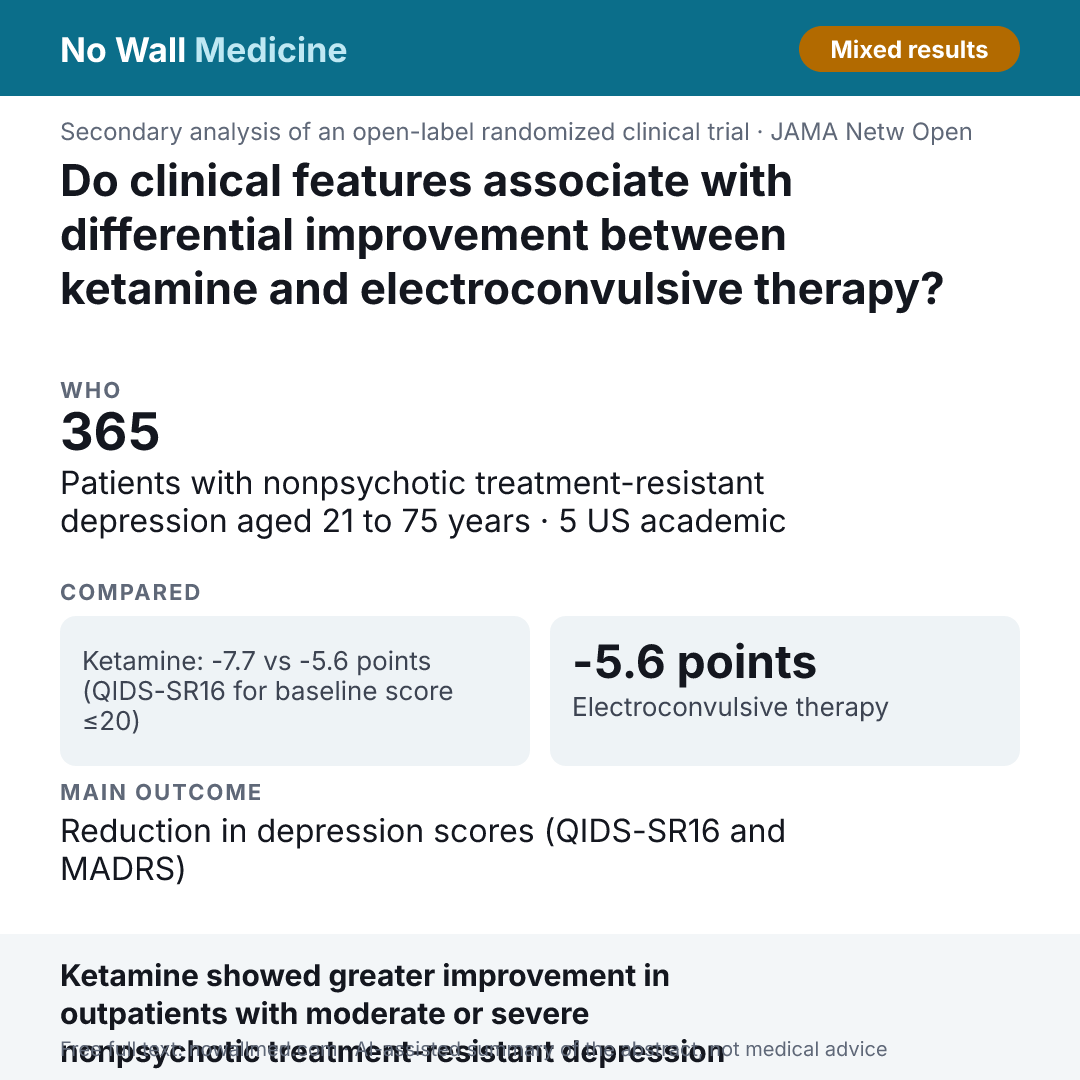
Ketamine vs Electroconvulsive Therapy for Treatment-Resistant Depression: A Secondary Analysis of a Randomized Clinical Trial
Secondary analysis of an open-label randomized clinical trialMixed results
Do clinical features associate with differential improvement between ketamine and electroconvulsive therapy?
Who
365
Patients with nonpsychotic treatment-resistant depression aged 21 to 75 years · 5 US academic medical centers
Compared
Ketamine: -7.7 vs -5.6 points (QIDS-SR16 for baseline score ≤20)
-5.6 pointsElectroconvulsive therapy (QIDS-SR16 for baseline score ≤20)
Main outcome
Reduction in depression scores (QIDS-SR16 and MADRS)
Bottom line: Ketamine showed greater improvement in outpatients with moderate or severe nonpsychotic treatment-resistant depression compared to electroconvulsive therapy.
JAMA Netw Open · 2024-06-03 · Save PNG
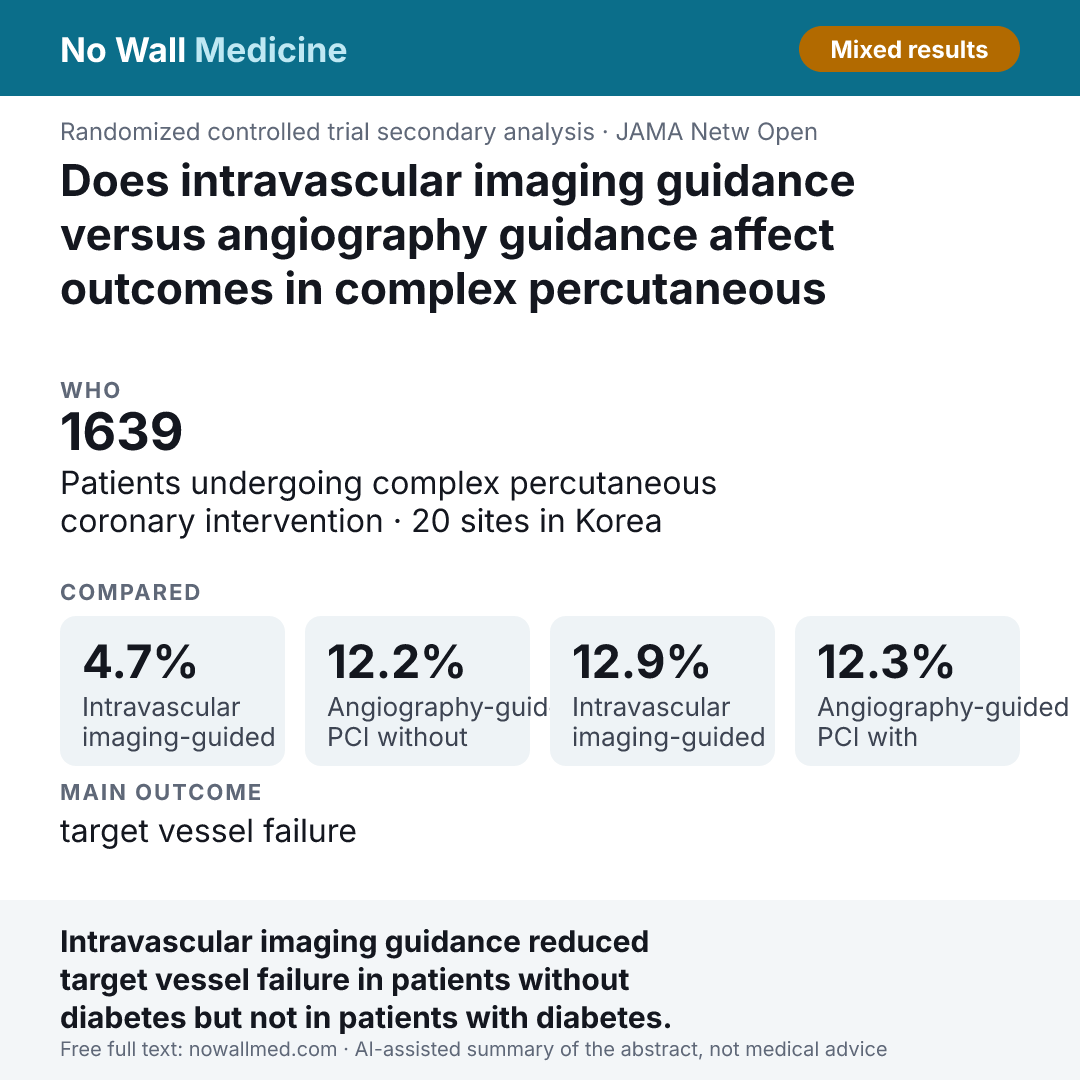
Intravascular Imaging and Angiography Guidance in Complex Percutaneous Coronary Intervention Among Patients With Diabetes: A Secondary Analysis of a Randomized Clinical Trial
Randomized controlled trial secondary analysisMixed results
Does intravascular imaging guidance versus angiography guidance affect outcomes in complex percutaneous coronary intervention?
Who
1639
Patients undergoing complex percutaneous coronary intervention · 20 sites in Korea
Compared
4.7%Intravascular imaging-guided PCI without diabetes
12.2%Angiography-guided PCI without diabetes
12.9%Intravascular imaging-guided PCI with diabetes
12.3%Angiography-guided PCI with diabetes
Main outcome
target vessel failure
Result: HR, 0.41 (95% CI, 0.25-0.67) in patients without diabetes
Bottom line: Intravascular imaging guidance reduced target vessel failure in patients without diabetes but not in patients with diabetes.
Limitation: This is a secondary analysis of a subgroup of patients.
JAMA Netw Open · 2024-06-03 · Save PNG