Visual abstracts
New randomized trials and meta-analyses from leading journals at a glance: who was studied, what was compared, and what was found. Every paper is free to read in full.
All specialtiesCardiology 4780Oncology 4080Gastroenterology & Hepatology 1914Infectious Disease 3775Neurology 1883Psychiatry & Mental Health 2238Pulmonology 2058Critical Care 1331Endocrinology & Diabetes 2550Pediatrics 2908Surgery 2496Orthopedics & Sports Medicine 922Neurosurgery 532Cardiothoracic & Vascular Surgery 662Plastic & Reconstructive Surgery 584Nephrology 1111Rheumatology 812Hematology 1095Dermatology 617Ophthalmology 537Obstetrics & Gynecology 1656Public & Global Health 1041Radiology & Imaging 637Anesthesiology 958Urology 751ENT (Otolaryngology) 497Emergency Medicine 484Allergy & Immunology 310Geriatrics 973Family Medicine & Primary Care 538Medical Genetics & Genomics 662Pathology & Laboratory Medicine 156Physical Medicine & Rehabilitation 744Palliative Care 422Nutrition 1564Digital Health & AI 2188General Medicine 318
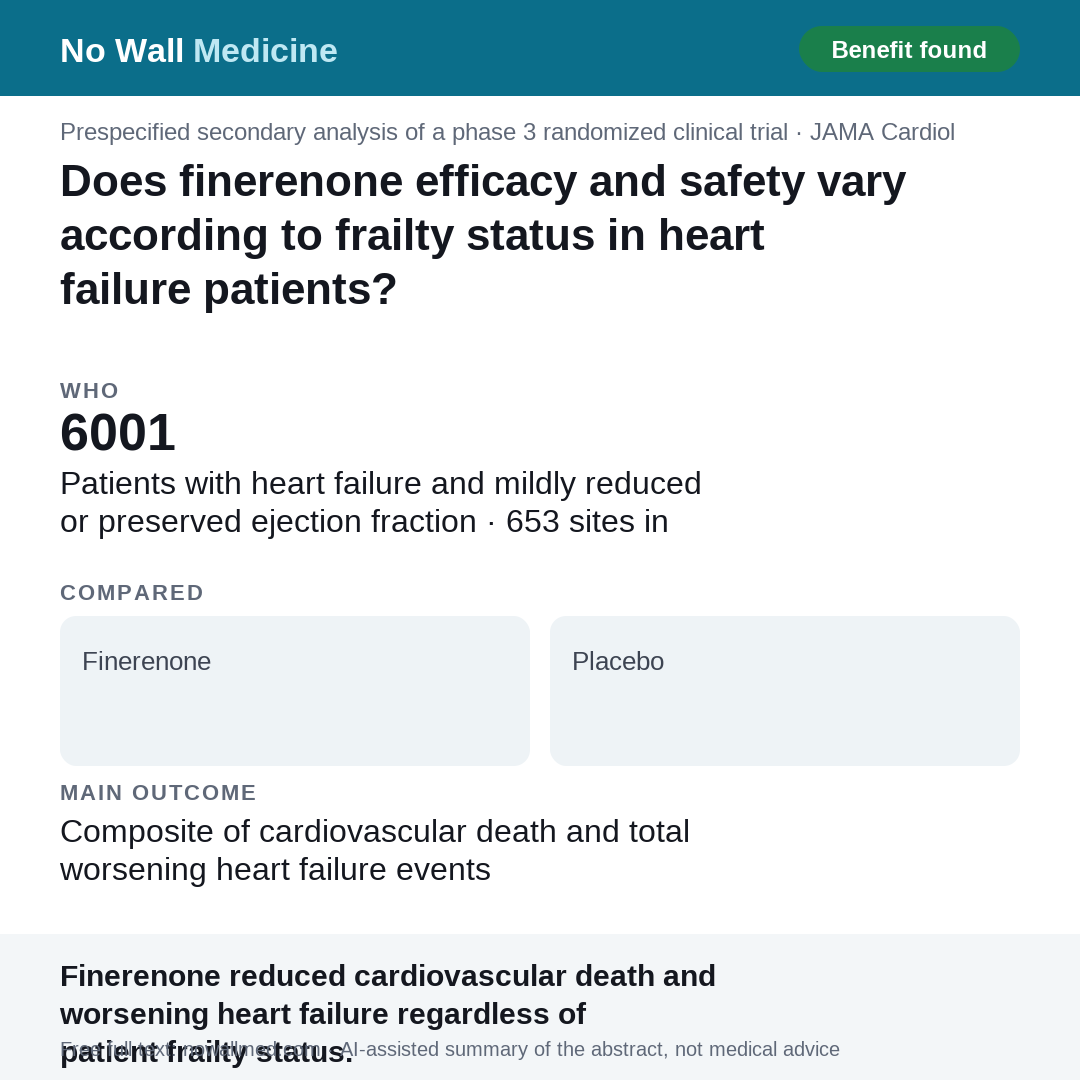
Finerenone According to Frailty in Heart Failure: A Prespecified Analysis of the FINEARTS-HF Randomized Clinical Trial
Prespecified secondary analysis of a phase 3 randomized clinical trialBenefit found
Does finerenone efficacy and safety vary according to frailty status in heart failure patients?
Who
6001
Patients with heart failure and mildly reduced or preserved ejection fraction · 653 sites in 37 countries
Compared
Finerenone
Placebo
Main outcome
Composite of cardiovascular death and total worsening heart failure events
Result: class I: RR, 1.07 (95% CI 0.77-1.49); class II: RR, 0.66 (95% CI 0.52-0.83); class III: RR, 0.91 (95% CI 0.76-1.07)
Bottom line: Finerenone reduced cardiovascular death and worsening heart failure regardless of patient frailty status.
JAMA Cardiol · 2025-06-18Download image
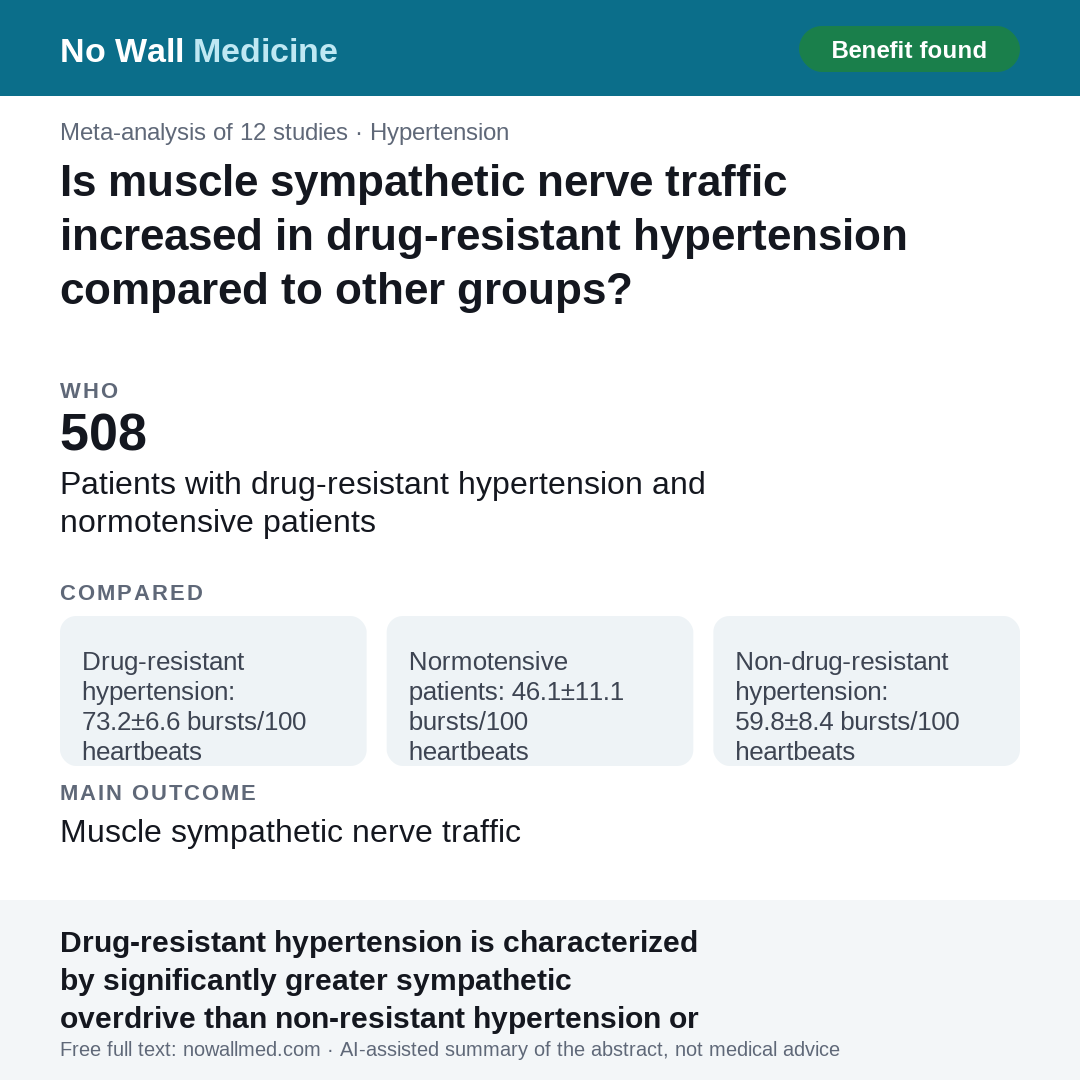
Sympathetic Overactivation in the Resistant Hypertensive Phenotype: A Meta-Analysis of Published Studies
Meta-analysis of 12 studiesBenefit found
Is muscle sympathetic nerve traffic increased in drug-resistant hypertension compared to other groups?
Who
508
Patients with drug-resistant hypertension and normotensive patients
Compared
Drug-resistant hypertension: 73.2±6.6 bursts/100 heartbeats
Normotensive patients: 46.1±11.1 bursts/100 heartbeats
Non-drug-resistant hypertension: 59.8±8.4 bursts/100 heartbeats
Main outcome
Muscle sympathetic nerve traffic
Bottom line: Drug-resistant hypertension is characterized by significantly greater sympathetic overdrive than non-resistant hypertension or normotensive patients.
Hypertension · 2025-06-18Download image
Health-related quality of life of patients with metastatic melanoma treated with tumor-infiltrating lymphocytes compared with ipilimumab in a randomized phase III trial
Randomized, multicenter, phase III trialNo clear difference
How does tumor-infiltrating lymphocyte treatment compare to ipilimumab for health-related quality of life?
Who
168
Patients with metastatic melanoma unresectable stage IIIC-IV
Compared
tumor-infiltrating lymphocyte: 78.2 global health status score
ipilimumab: 73.9 global health status score
Main outcome
health-related quality of life
Bottom line: Patients treated with tumor-infiltrating lymphocytes experienced similar health-related quality of life compared with ipilimumab monotherapy.
Limitation: Ongoing follow-up is essential to assess longer-term quality of life and generalizability.
Ann Oncol · 2025-06-18Download image

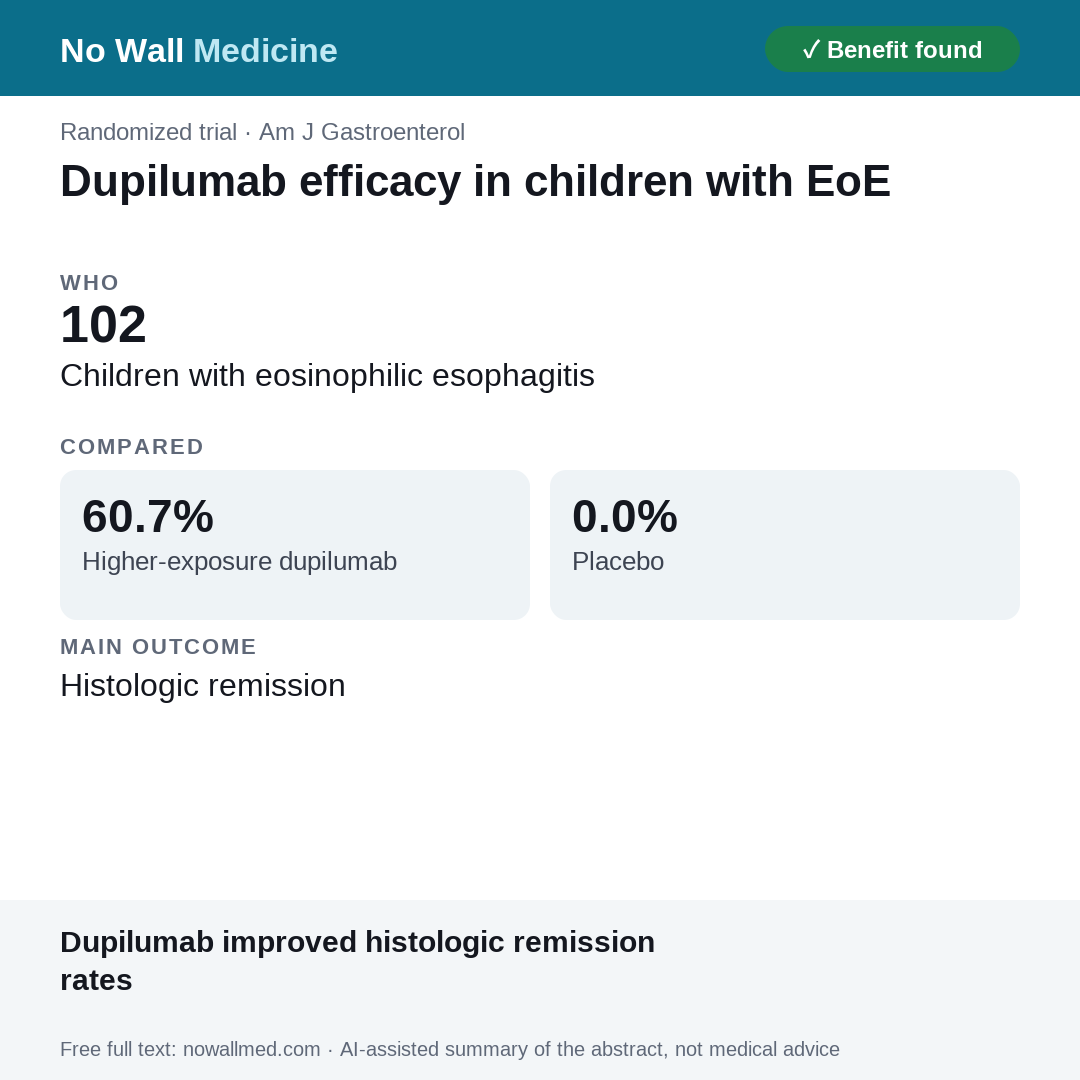
Dupilumab Efficacy in Children With Eosinophilic Esophagitis With Prior Swallowed Topical Corticosteroid Use: A Subgroup Analysis
Randomized trialBenefit found
Dupilumab efficacy in children with EoE
Who
102
Children with eosinophilic esophagitis
Compared
60.7%Higher-exposure dupilumab
0.0%Placebo
Main outcome
Histologic remission
Bottom line: Dupilumab improved histologic remission rates
Am J Gastroenterol · 2025-06-18Download image
The DEPRE'5 study: pragmatic, multicentre, five-arm, parallel-group randomised controlled trial with blinded assessment to compare treatment strategies in major depression after a failed selective serotonin reuptake inhibitor treatment
Five-arm, parallel-group randomised controlled trialBenefit found
Which second-line strategy is best for major depression after failed selective serotonin reuptake inhibitor treatment?
Who
257
Major depression patients unresponsive to a selective serotonin reuptake inhibitor · multicentre
Compared
SSRI dose optimisation: 28.2% response and 12.2% remission
Alternative second-line strategies: 28.2% response and 16.9% remission
Main outcome
week-6 response and remission rates using Hamilton Depression Rating Scale
Result: odds ratio = 2.36 (95% CI 1.0-5.6)
Bottom line: Patients may benefit from any second-line strategy aside from selective serotonin reuptake inhibitor dose optimisation.
Limitation: limited statistical power
Br J Psychiatry · 2025-06-18Download image
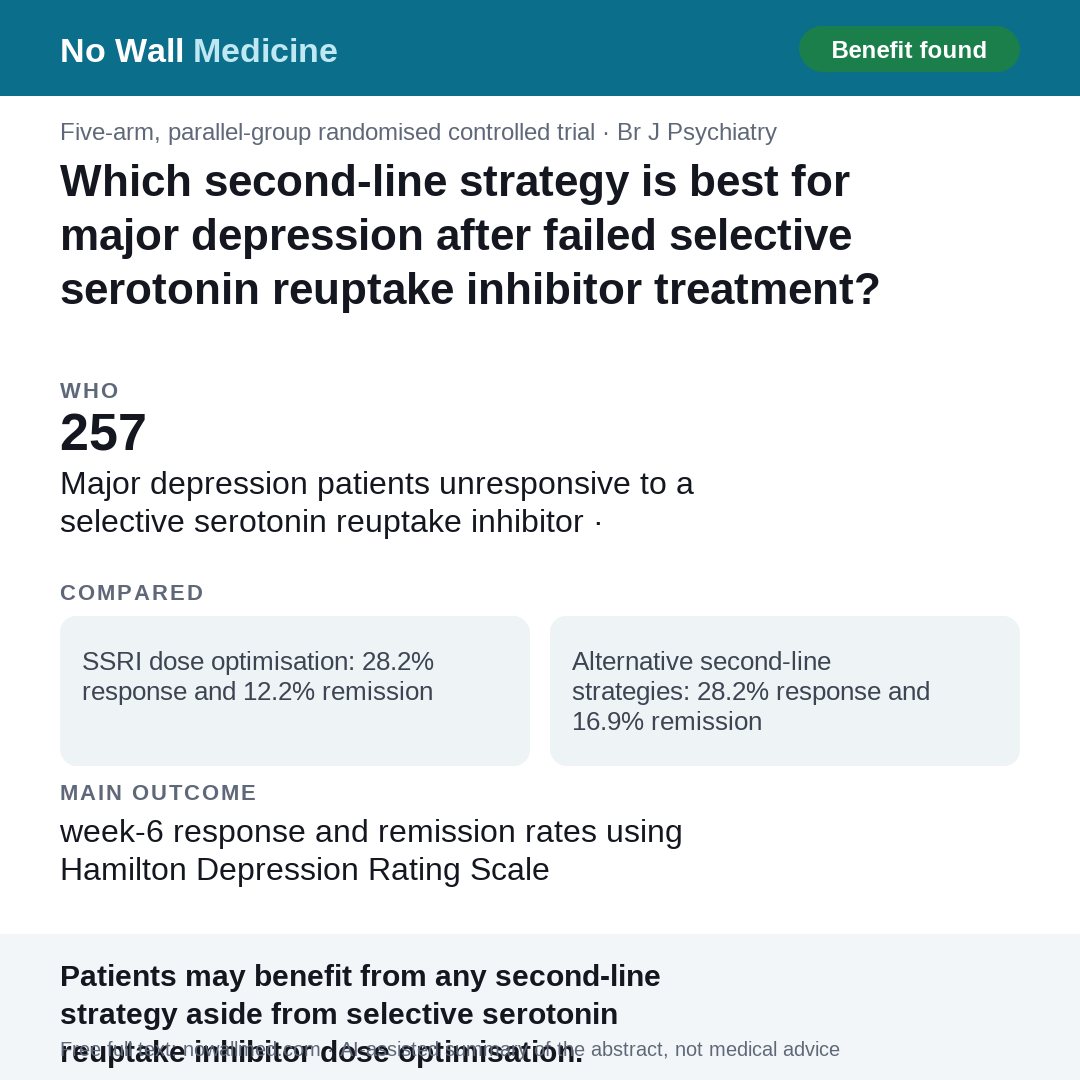
Peri-operative use of high-flow nasal oxygen in obstetric patients: a systematic review
Systematic reviewUnclear result
Does high-flow nasal oxygen improve peri-operative outcomes in obstetric patients?
Who
Obstetric patients · All countries
Compared
High-flow nasal oxygen
Facemask pre-oxygenation
Main outcome
Maternal oxygenation and clinical outcomes
Bottom line: High-flow nasal oxygen shows no clear benefit over facemask pre-oxygenation for achieving oxygenation targets in obstetric patients.
Limitation: Variation in pre-oxygenation strategies and primary outcomes across included studies.
Anaesthesia · 2025-06-18Download image
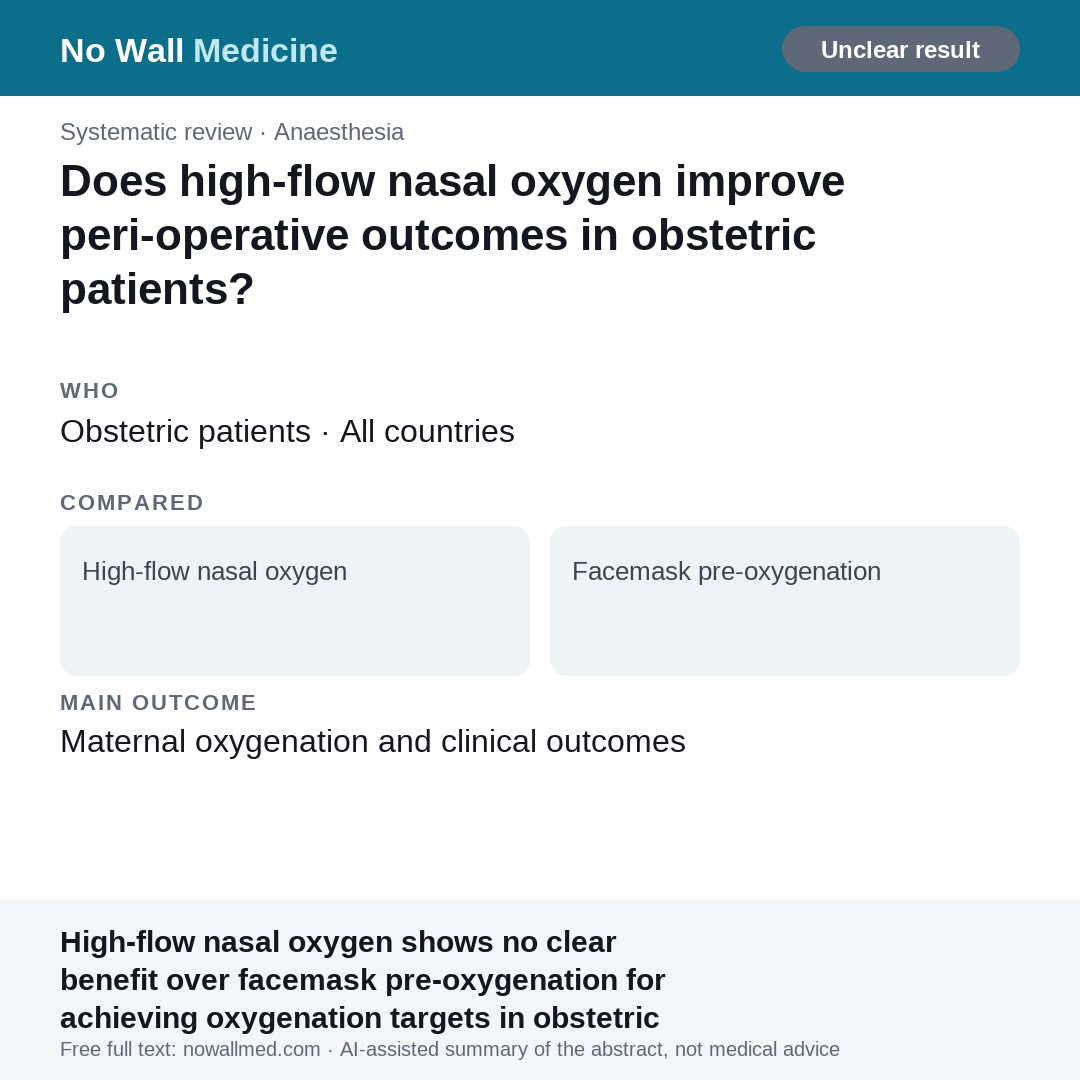
A Better Way to Care for Long-Term Care Residents in Times of Medical Urgency: An Implementation Intervention Using a Stepped-Wedge Design to Reduce Unnecessary Acute Care Transfers
Randomized stepped-wedge designBenefit found
Does a standardized care pathway reduce unnecessary acute care transfers for long-term care residents?
Who
Long-term care residents · 40 long-term care facilities and 4 emergency departments in Calgary, Canada
Compared
Preintervention: 1.91 transfers per 1000 residents
Postintervention: 1.70 transfers per 1000 residents
Main outcome
Incident rate of transfers from long-term care to emergency department
Bottom line: A standardized care pathway reduced emergency department transfers and hospital admissions while saving the health care system CAD$7.9 million.
J Am Med Dir Assoc · 2025-06-18Download image
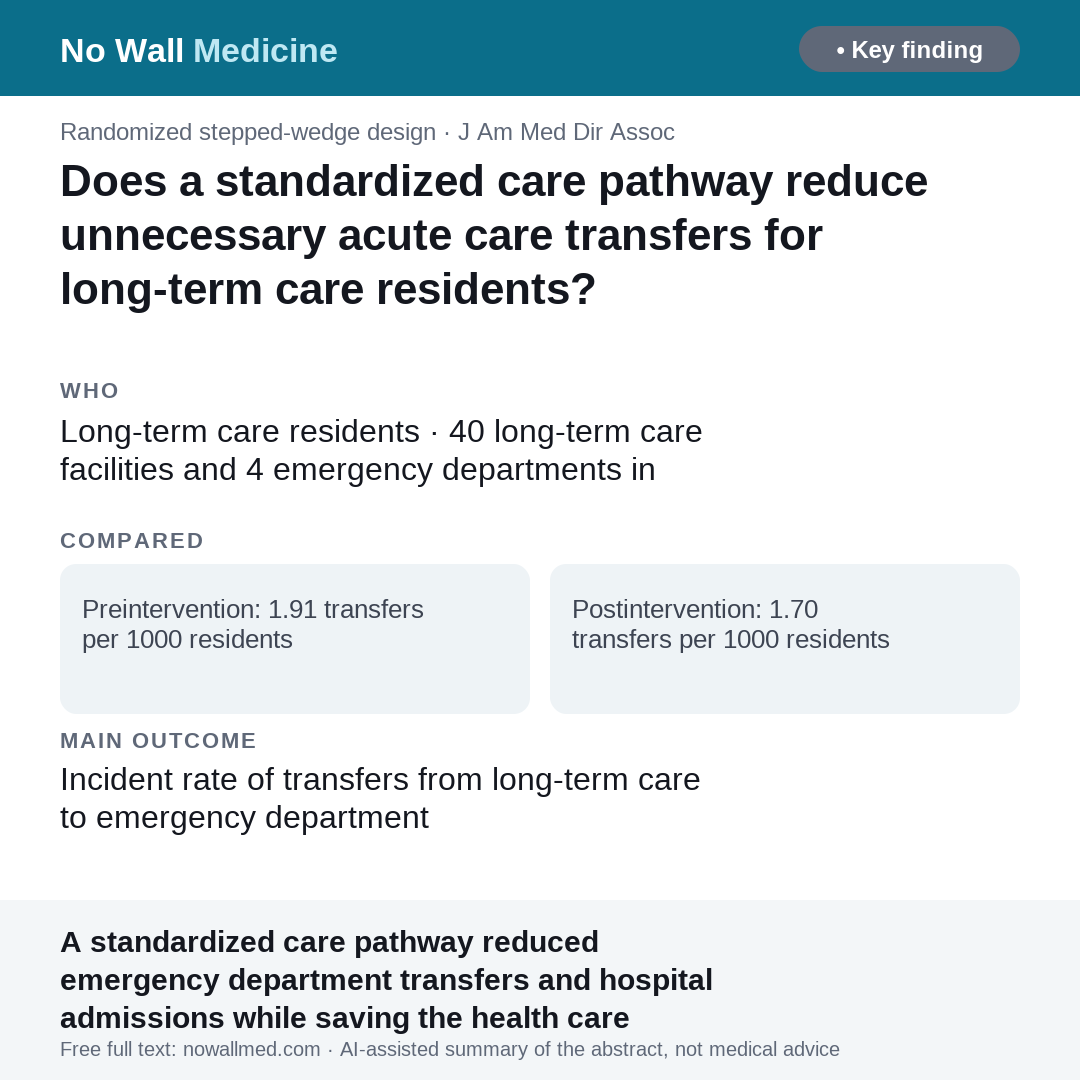
Ultrasound Guided Versus Conventional Closure Device Deployment Following Transfemoral Endovascular Procedures: A Systematic Review and Meta-analysis
Systematic review and meta-analysisBenefit found
Is ultrasound guided closure safer than conventional closure for transfemoral endovascular procedures?
Who
Patients undergoing transfemoral arterial interventions
Compared
Ultrasound guided closure: 2 339 patients
Conventional closure: 1 175 patients
Main outcome
Access site complications
Result: odds ratio 0.49 (95% CI 0.37 - 0.65)
Bottom line: Ultrasound guided vessel closure is associated with lower rates of access site complications compared to conventional closure techniques.
Eur J Vasc Endovasc Surg · 2025-06-18Download image

Identification of Clinical and Patient Reported Outcomes for Patients with Intact Abdominal Aortic Aneurysms Not Undergoing Repair: A Systematic Review
Systematic reviewUnclear result
What are the clinical and patient reported outcomes for patients with intact abdominal aortic aneurysms?
Who
Patients with intact abdominal aortic aneurysms not undergoing repair
Compared
Identified outcomes: 264 unique outcomes
Final longlist: 77 abdominal aortic aneurysm outcomes
Main outcome
Clinical and patient reported outcomes
Bottom line: A longlist of 77 outcomes was identified to develop a core outcome set for research.
Eur J Vasc Endovasc Surg · 2025-06-18Download image
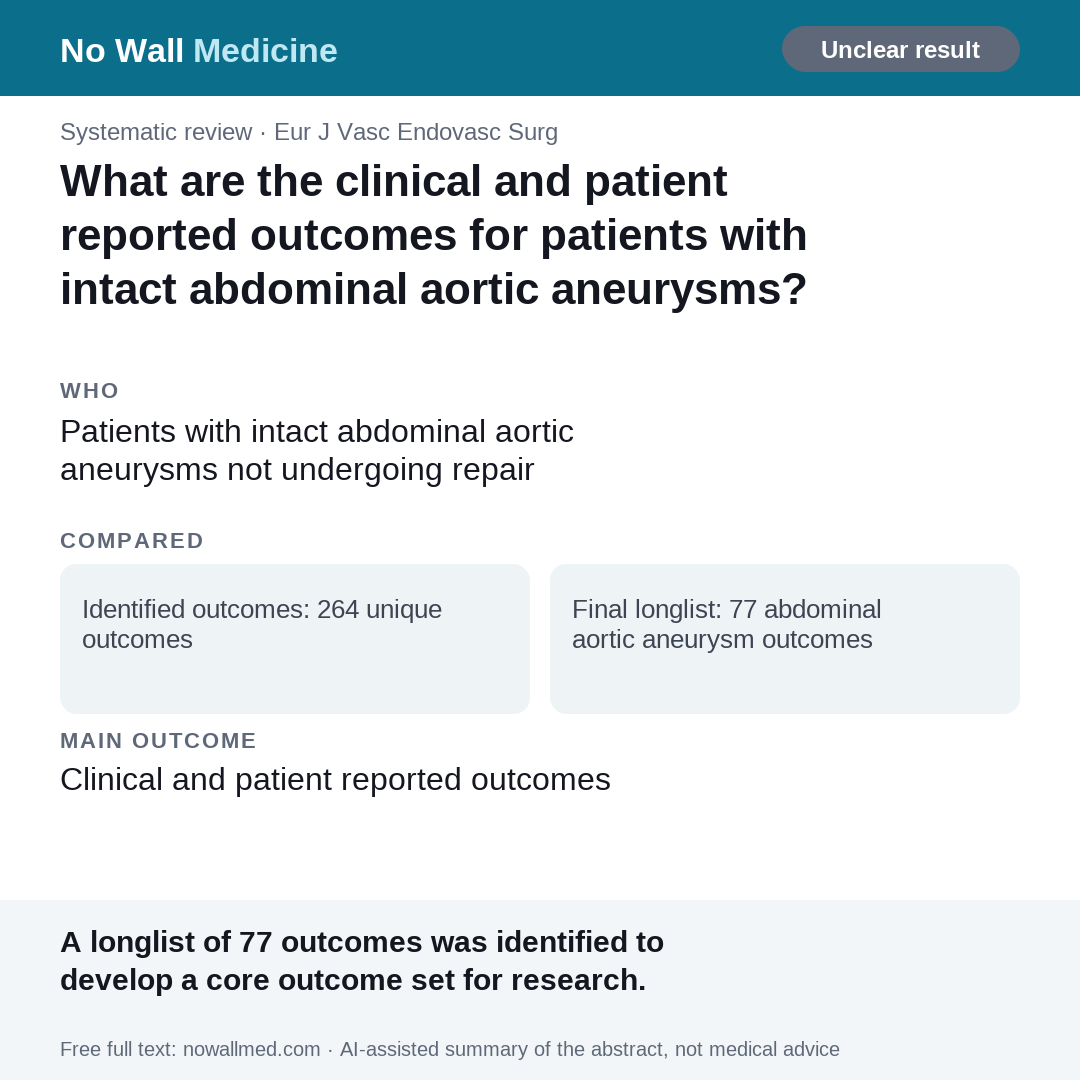
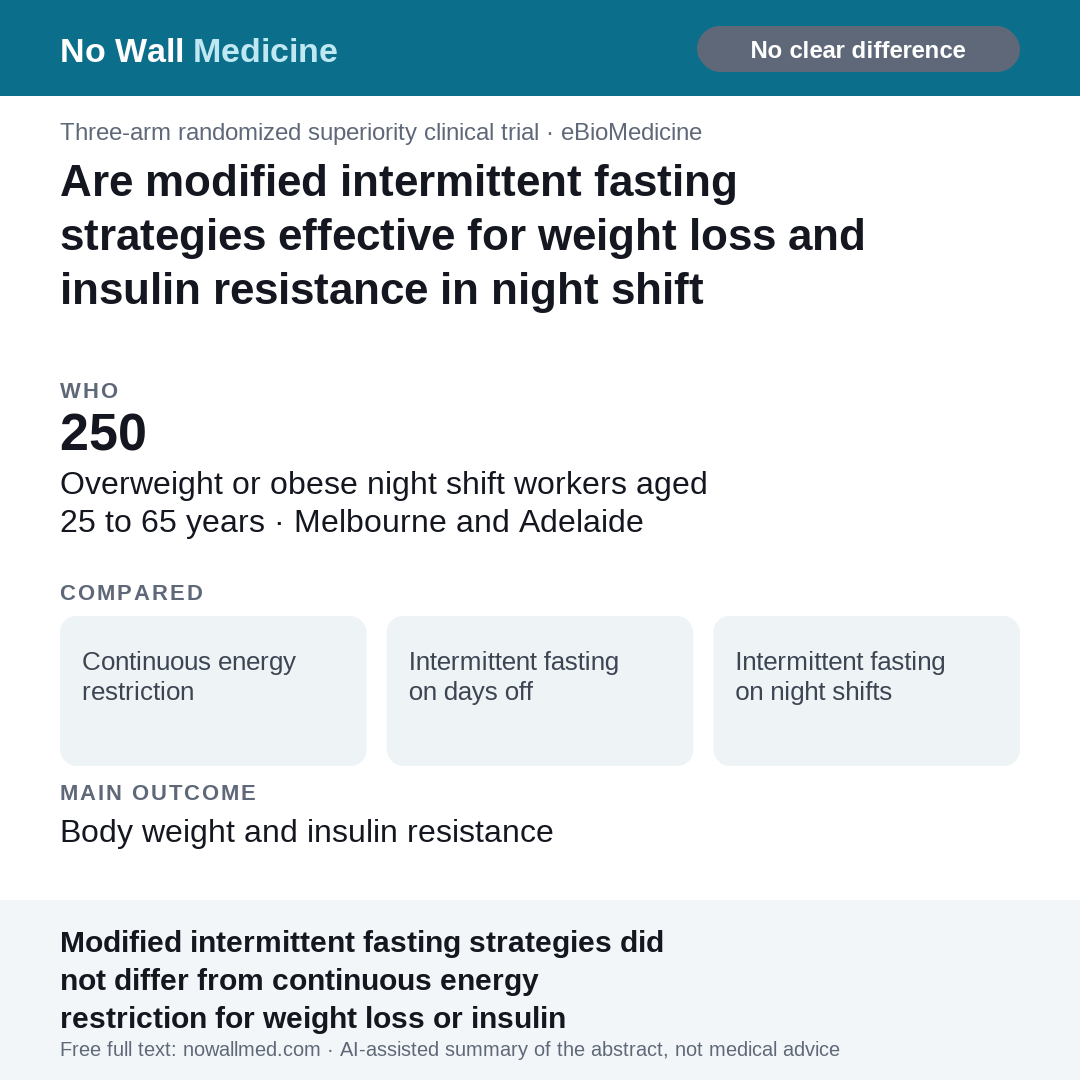
Intermittent fasting for weight loss in night shift workers: a three-arm, superiority randomised clinical trial
Three-arm randomized superiority clinical trialNo clear difference
Are modified intermittent fasting strategies effective for weight loss and insulin resistance in night shift workers?
Who
250
Overweight or obese night shift workers aged 25 to 65 years · Melbourne and Adelaide
Compared
Continuous energy restriction
Intermittent fasting on days off
Intermittent fasting on night shifts
Main outcome
Body weight and insulin resistance
Result: MD = -0.2 kg (95% CI -6.4 to 5.9) and MD = -0.6 kg (95% CI -6.8 to 5.6)
Bottom line: Modified intermittent fasting strategies did not differ from continuous energy restriction for weight loss or insulin resistance.
Funded by: National Health and Medical Research Council
eBioMedicine · 2025-06-18Download image
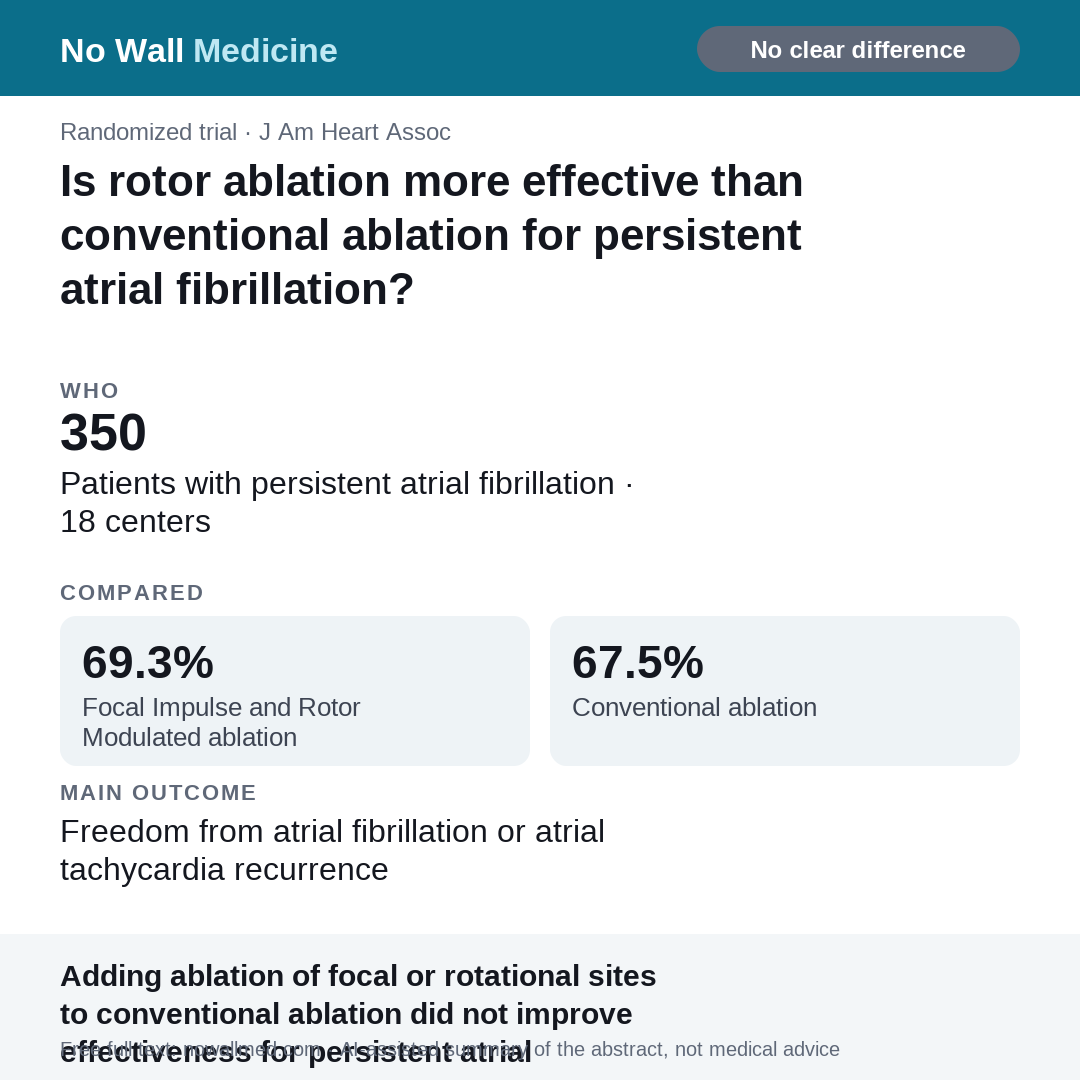
Prospective Randomized Trial of Rotor Ablation vs Conventional Ablation for Persistent Atrial Fibrillation: REAFFIRM Trial
Randomized trialNo clear difference
Is rotor ablation more effective than conventional ablation for persistent atrial fibrillation?
Who
350
Patients with persistent atrial fibrillation · 18 centers
Compared
69.3%Focal Impulse and Rotor Modulated ablation
67.5%Conventional ablation
Main outcome
Freedom from atrial fibrillation or atrial tachycardia recurrence
Bottom line: Adding ablation of focal or rotational sites to conventional ablation did not improve effectiveness for persistent atrial fibrillation.
J Am Heart Assoc · 2025-06-18Download image
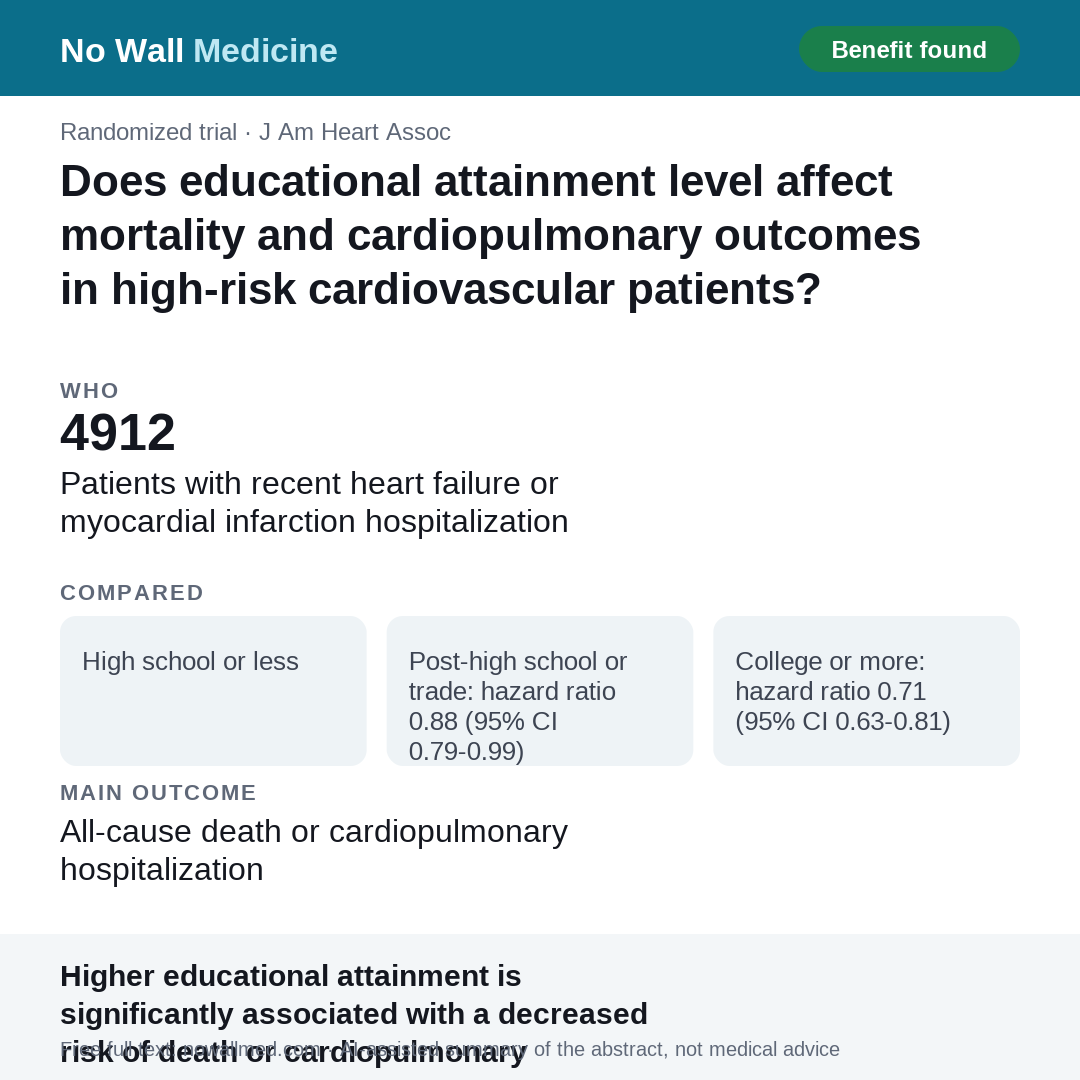
Educational Attainment Level and Risk of Mortality and Cardiopulmonary Outcomes in High-Risk Patients With Cardiovascular Disease: The INVESTED Trial
Randomized trialBenefit found
Does educational attainment level affect mortality and cardiopulmonary outcomes in high-risk cardiovascular patients?
Who
4912
Patients with recent heart failure or myocardial infarction hospitalization
Compared
High school or less
Post-high school or trade: hazard ratio 0.88 (95% CI 0.79-0.99)
College or more: hazard ratio 0.71 (95% CI 0.63-0.81)
Main outcome
All-cause death or cardiopulmonary hospitalization
Result: hazard ratio 0.71 (95% CI 0.63-0.81)
Bottom line: Higher educational attainment is significantly associated with a decreased risk of death or cardiopulmonary hospitalization in high-risk cardiovascular patients.
J Am Heart Assoc · 2025-06-18Download image
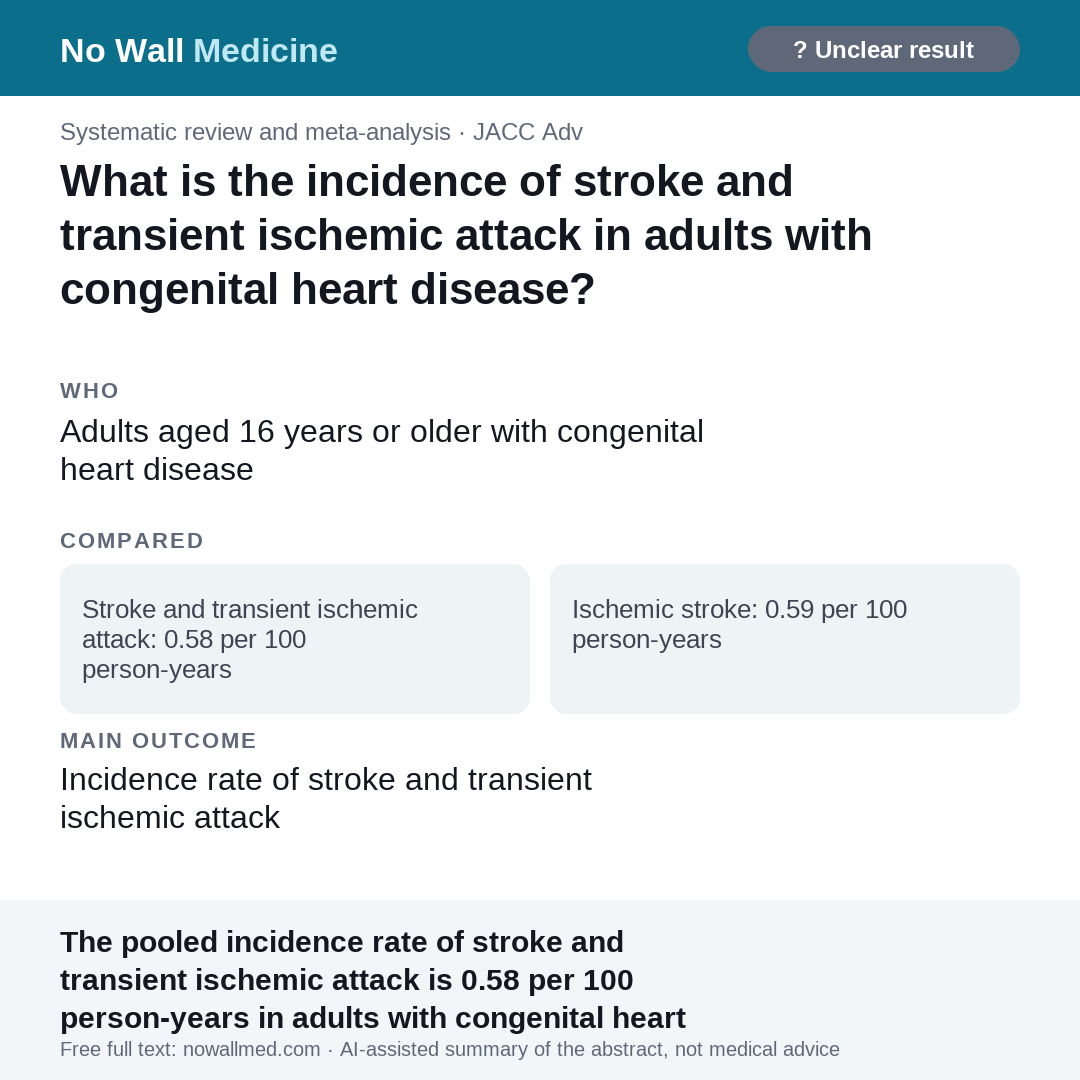
Incidence of Stroke in Adults With Congenital Heart Disease: A Systematic Review and Meta-Analysis
Systematic review and meta-analysisUnclear result
What is the incidence of stroke and transient ischemic attack in adults with congenital heart disease?
Who
Adults aged 16 years or older with congenital heart disease
Compared
Stroke and transient ischemic attack: 0.58 per 100 person-years
Ischemic stroke: 0.59 per 100 person-years
Main outcome
Incidence rate of stroke and transient ischemic attack
Result: 0.58 per 100 person-years (95% CI: 0.39-0.86)
Bottom line: The pooled incidence rate of stroke and transient ischemic attack is 0.58 per 100 person-years in adults with congenital heart disease.
Limitation: Significant heterogeneity between studies was observed.
JACC Adv · 2025-06-18Download image
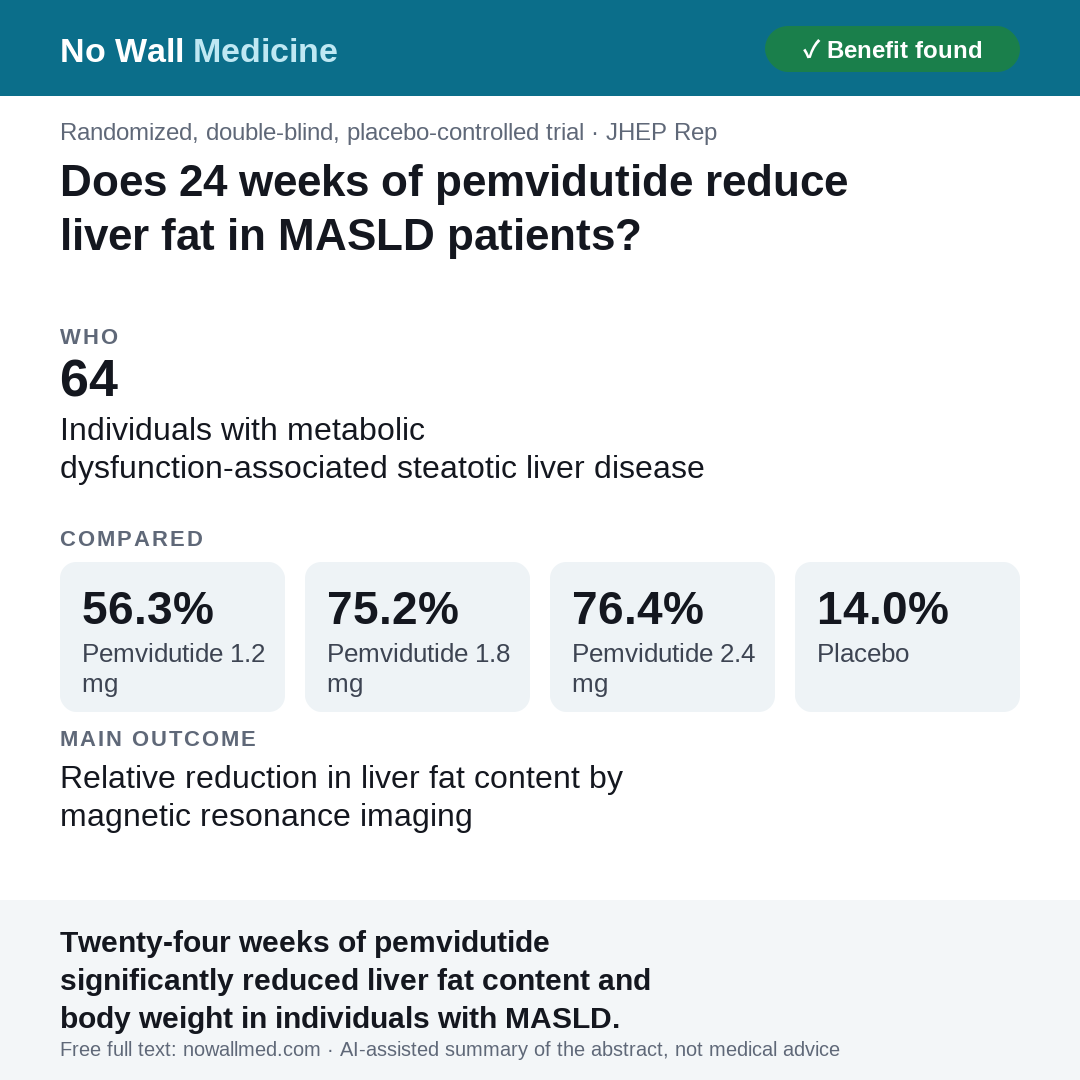
Safety and efficacy of 24 weeks of pemvidutide in metabolic dysfunction-associated steatotic liver disease: A randomized, controlled clinical trial
Randomized, double-blind, placebo-controlled trialBenefit found
Does 24 weeks of pemvidutide reduce liver fat in MASLD patients?
Who
64
Individuals with metabolic dysfunction-associated steatotic liver disease
Compared
56.3%Pemvidutide 1.2 mg
75.2%Pemvidutide 1.8 mg
76.4%Pemvidutide 2.4 mg
14.0%Placebo
Main outcome
Relative reduction in liver fat content by magnetic resonance imaging
Bottom line: Twenty-four weeks of pemvidutide significantly reduced liver fat content and body weight in individuals with MASLD.
JHEP Rep · 2025-06-18Download image
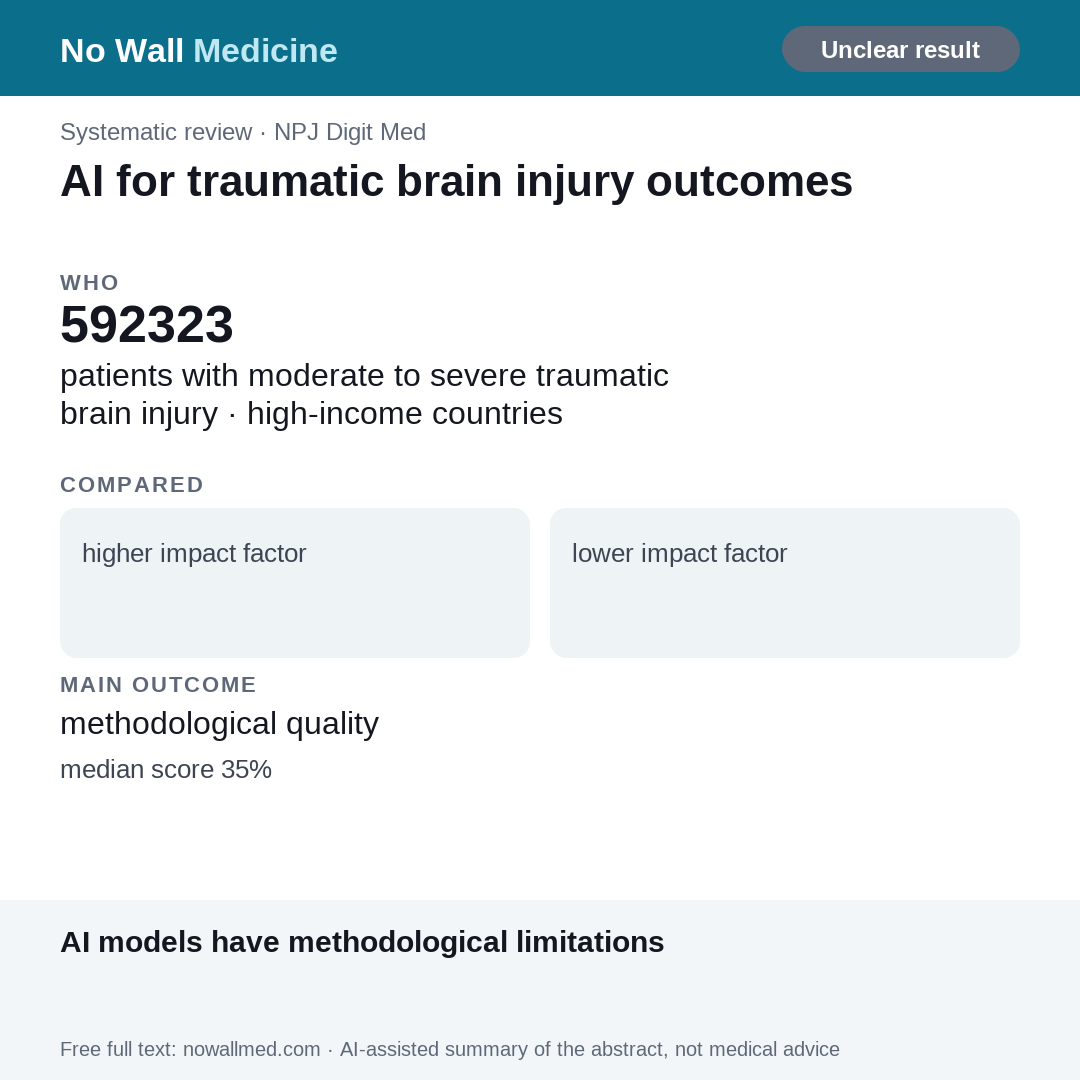
Predicting outcomes after moderate and severe traumatic brain injury using artificial intelligence: a systematic review
Systematic reviewUnclear result
AI for traumatic brain injury outcomes
Who
592323
patients with moderate to severe traumatic brain injury · high-income countries
Compared
higher impact factor
lower impact factor
Main outcome
methodological quality
Result: median score 35%
Bottom line: AI models have methodological limitations
Limitation: lack of diverse development datasets
NPJ Digit Med · 2025-06-18Download image
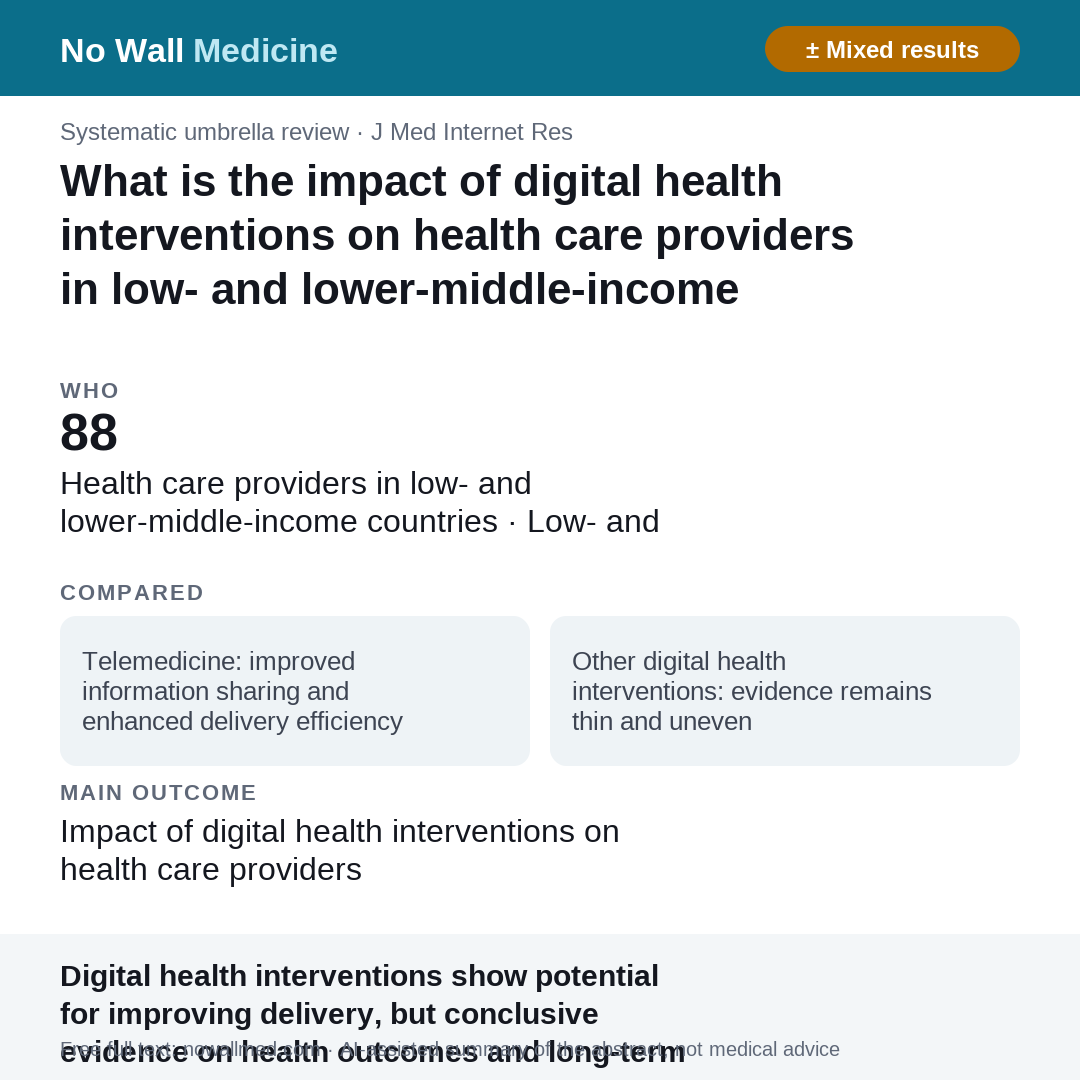
Use of Technology to Support Health Care Providers Delivering Care in Low- and Lower-Middle-Income Countries: Systematic Umbrella Review
Systematic umbrella reviewMixed results
What is the impact of digital health interventions on health care providers in low- and lower-middle-income countries?
Who
88
Health care providers in low- and lower-middle-income countries · Low- and lower-middle-income countries
Compared
Telemedicine: improved information sharing and enhanced delivery efficiency
Other digital health interventions: evidence remains thin and uneven
Main outcome
Impact of digital health interventions on health care providers
Bottom line: Digital health interventions show potential for improving delivery, but conclusive evidence on health outcomes and long-term sustainability is lacking.
Limitation: Robust evidence on health outcomes, cost-effectiveness, and long-term sustainability is lacking.
J Med Internet Res · 2025-06-18Download image
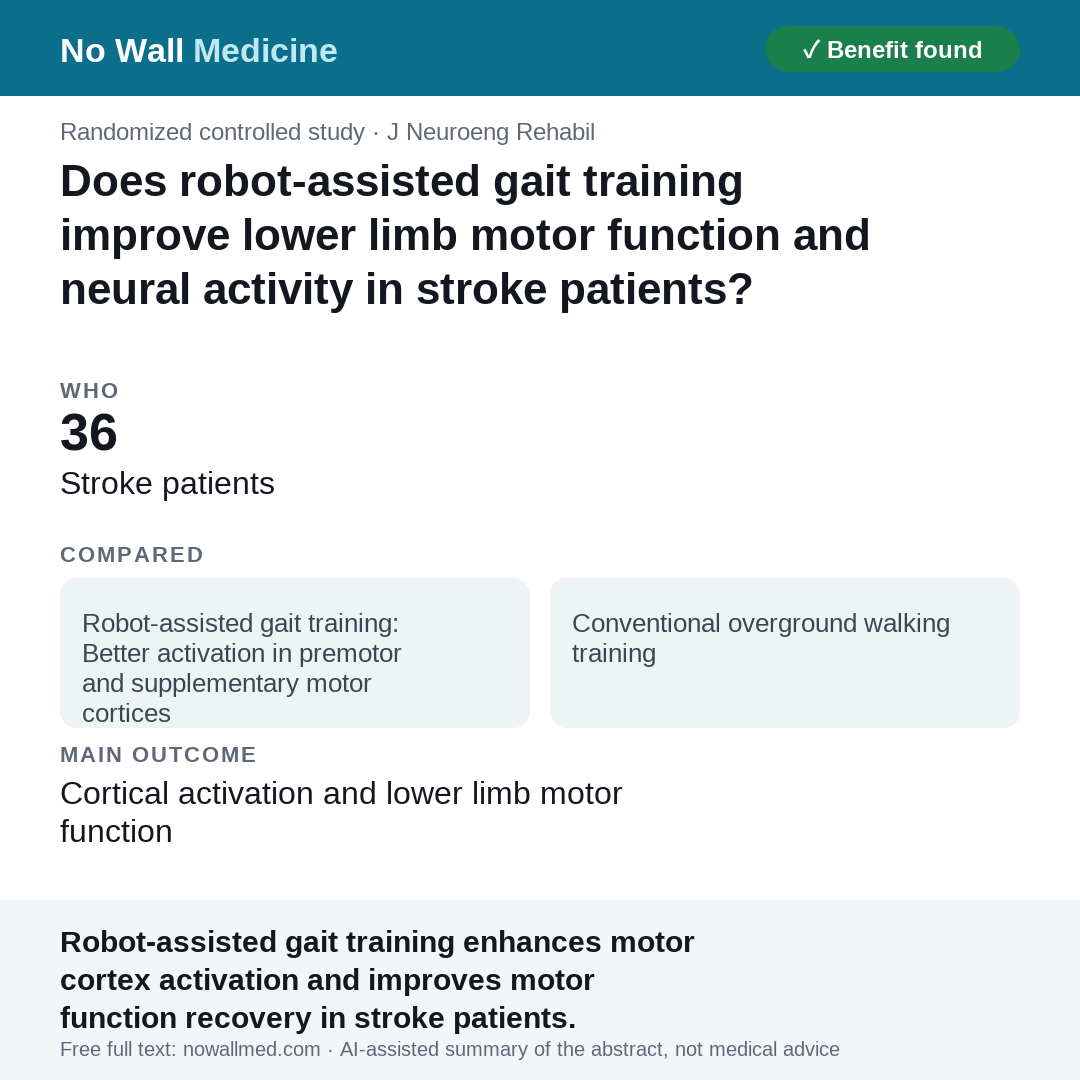
Neural mechanisms underlying the improvement of gait disturbances in stroke patients through robot-assisted gait training based on QEEG and fNIRS: a randomized controlled study
Randomized controlled studyBenefit found
Does robot-assisted gait training improve lower limb motor function and neural activity in stroke patients?
Who
36
Stroke patients
Compared
Robot-assisted gait training: Better activation in premotor and supplementary motor cortices
Conventional overground walking training
Main outcome
Cortical activation and lower limb motor function
Bottom line: Robot-assisted gait training enhances motor cortex activation and improves motor function recovery in stroke patients.
J Neuroeng Rehabil · 2025-06-18Download image
The Impact of Hormonal Therapy on Autologous Microvascular Breast Reconstruction: A Systematic Review and Meta-analysis
Systematic review and meta-analysisMixed results
Does hormonal therapy impact complications in autologous microvascular breast reconstruction?
Who
3796
Patients undergoing autologous microvascular breast reconstruction
Compared
Hormonal therapy
Control group
Main outcome
Postoperative complications of autologous microvascular breast reconstruction
Bottom line: Hormonal therapy does not increase flap complication risks, but selective estrogen receptor modulators increase systemic venous thromboembolic risk.
Limitation: Only studies with retrospective design could be included.
Plast Reconstr Surg Glob Open · 2025-06-18Download image

Anterior temporal lobectomy and selective AmygdaloHippocampectomy complications across Europe: review, meta-analysis, and Delphi consensus
Meta-analysis and Delphi consensusMixed results
What are the complication rates for anterior temporal lobectomy and selective amygdalohippocampectomy?
Who
Adult and pediatric patients with temporal lobe epilepsy · 35 European centers
Compared
Anterior temporal lobectomy: visual field deficits over 16%
Selective amygdalohippocampectomy: visual field deficits 2-10%
Main outcome
Surgical complications including mortality, morbidity, and deficits
Bottom line: Anterior temporal lobectomy has higher visual field deficit rates than selective amygdalohippocampectomy.
Brain Spine · 2025-06-18Download image

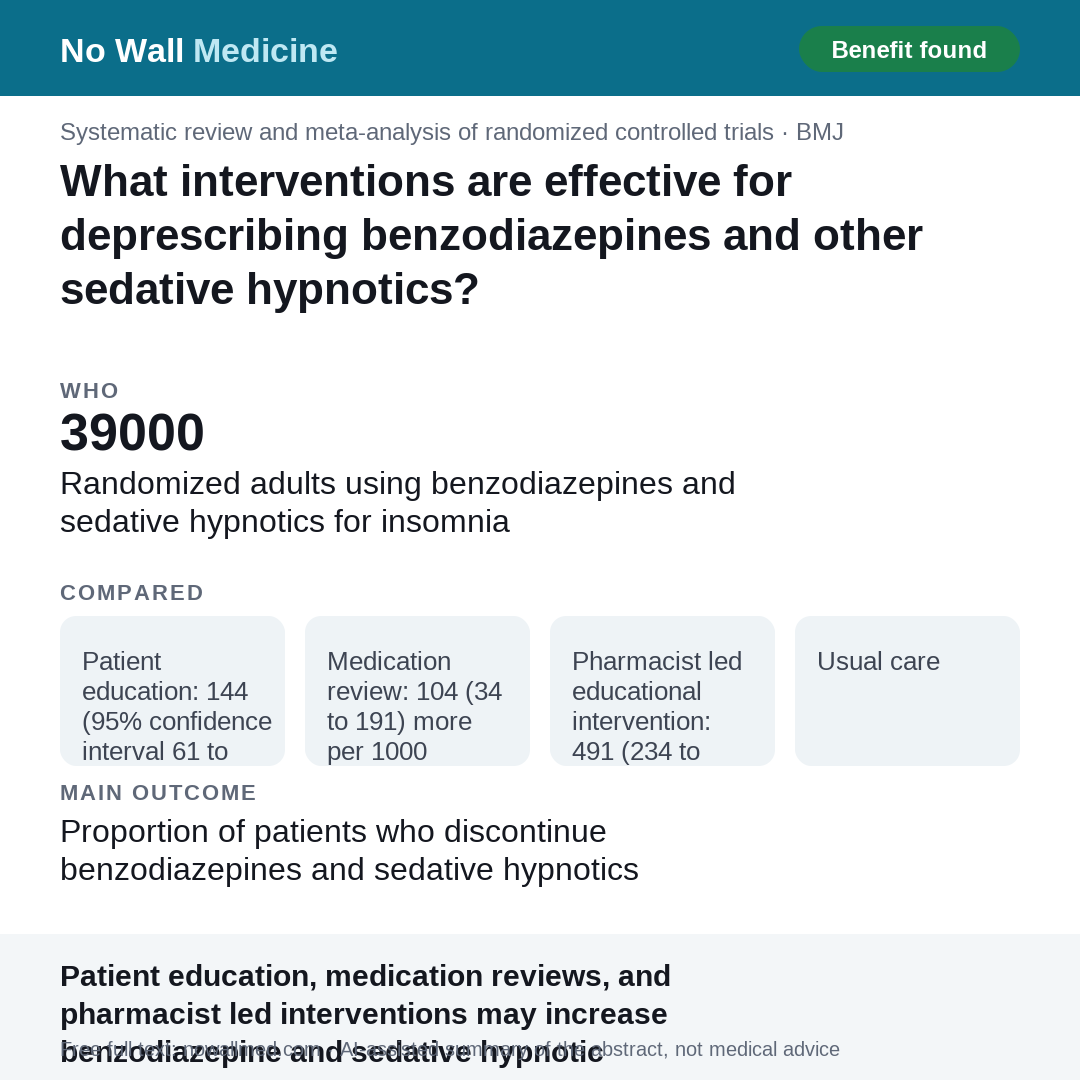
Comparative effectiveness of interventions to facilitate deprescription of benzodiazepines and other sedative hypnotics: systematic review and meta-analysis
Systematic review and meta-analysis of randomized controlled trialsBenefit found
What interventions are effective for deprescribing benzodiazepines and other sedative hypnotics?
Who
39000
Randomized adults using benzodiazepines and sedative hypnotics for insomnia
Compared
Patient education: 144 (95% confidence interval 61 to 246) more per 1000 patients
Medication review: 104 (34 to 191) more per 1000 patients
Pharmacist led educational intervention: 491 (234 to 928) more per 1000 patients
Usual care
Main outcome
Proportion of patients who discontinue benzodiazepines and sedative hypnotics
Bottom line: Patient education, medication reviews, and pharmacist led interventions may increase benzodiazepine and sedative hypnotic discontinuation rates.
Limitation: The evidence on the effectiveness of interventions is of low certainty.
BMJ · 2025-06-17Download image