Visual abstracts
New randomized trials and meta-analyses from leading journals at a glance: who was studied, what was compared, and what was found. Every paper is free to read in full.
All specialtiesCardiology 4763Oncology 4043Gastroenterology & Hepatology 1903Infectious Disease 3756Neurology 1872Psychiatry & Mental Health 2216Pulmonology 2044Critical Care 1319Endocrinology & Diabetes 2544Pediatrics 2889Surgery 2480Orthopedics & Sports Medicine 917Neurosurgery 525Cardiothoracic & Vascular Surgery 656Plastic & Reconstructive Surgery 574Nephrology 1107Rheumatology 810Hematology 1090Dermatology 611Ophthalmology 532Obstetrics & Gynecology 1645Public & Global Health 1037Radiology & Imaging 619Anesthesiology 958Urology 745ENT (Otolaryngology) 494Emergency Medicine 481Allergy & Immunology 309Geriatrics 972Family Medicine & Primary Care 534Medical Genetics & Genomics 659Pathology & Laboratory Medicine 156Physical Medicine & Rehabilitation 734Palliative Care 421Nutrition 1560Digital Health & AI 2137General Medicine 318
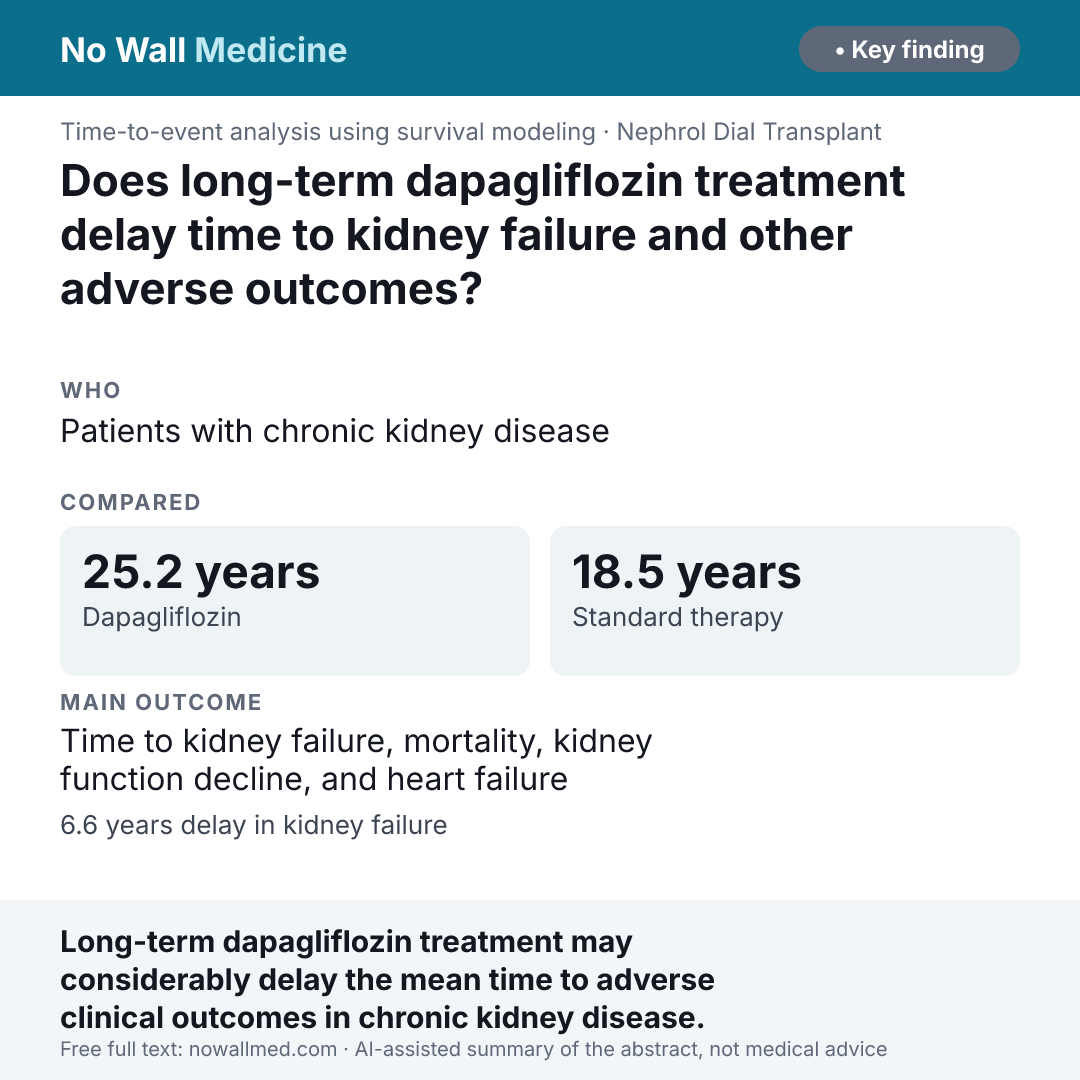
The long-term effects of dapagliflozin in chronic kidney disease: a time-to-event analysis
Time-to-event analysis using survival modelingKey finding
Does long-term dapagliflozin treatment delay time to kidney failure and other adverse outcomes?
Who
Patients with chronic kidney disease
Compared
25.2 yearsDapagliflozin (95% CI 19.0-31.5)
18.5 yearsStandard therapy (95% CI 14.7-23.4)
Main outcome
Time to kidney failure, mortality, kidney function decline, and heart failure hospitalization
Result: 6.6 years delay in kidney failure
Bottom line: Long-term dapagliflozin treatment may considerably delay the mean time to adverse clinical outcomes in chronic kidney disease.
Nephrol Dial Transplant · 2024-05-11 · Save PNG
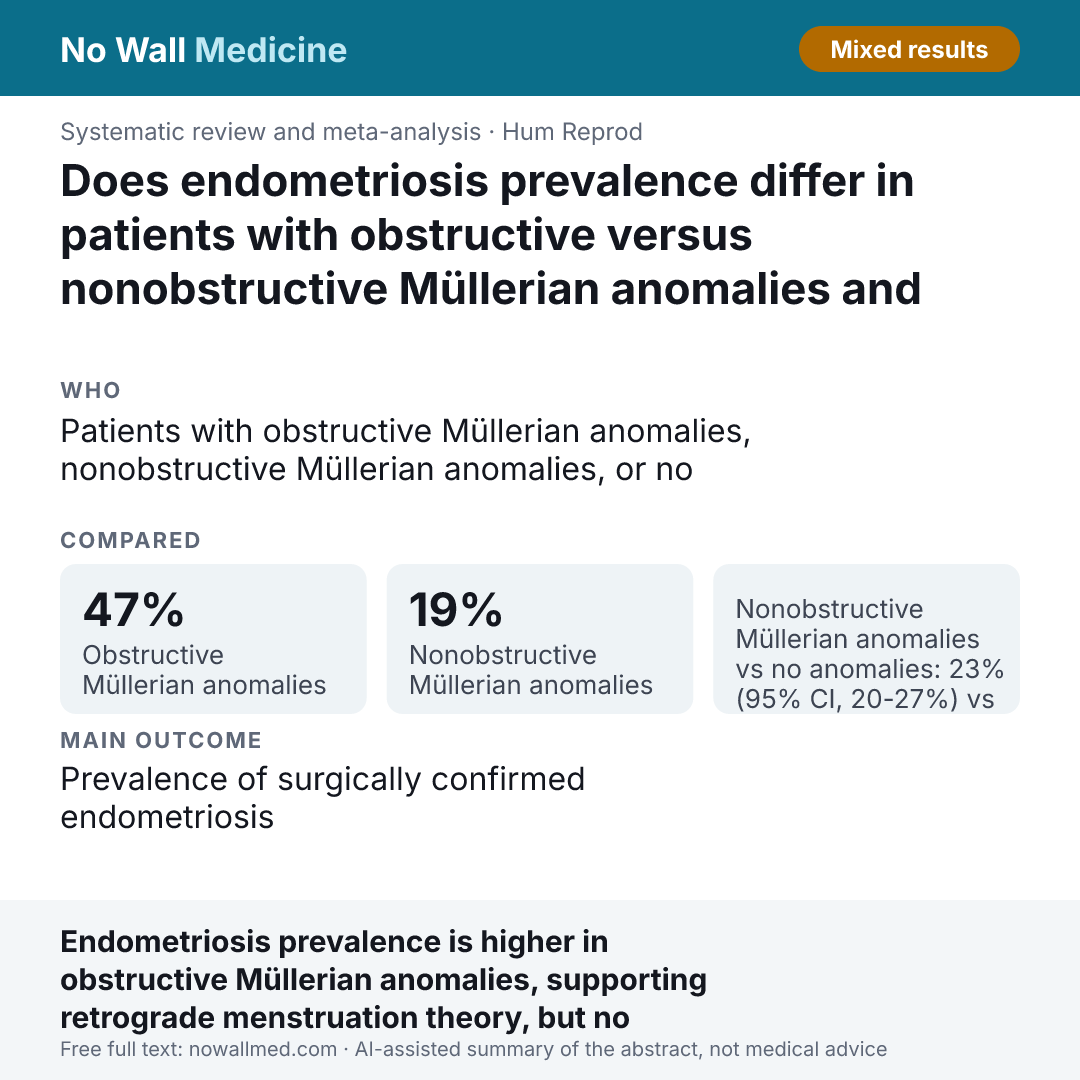
Müllerian anomalies and endometriosis as potential explanatory models for the retrograde menstruation/implantation and the embryonic remnants/celomic metaplasia pathogenic theories: a systematic review and meta-analysis
Systematic review and meta-analysisMixed results
Does endometriosis prevalence differ in patients with obstructive versus nonobstructive Müllerian anomalies and without anomalies?
Who
Patients with obstructive Müllerian anomalies, nonobstructive Müllerian anomalies, or no anomalies
Compared
47%Obstructive Müllerian anomalies (95% CI, 36-58%)
19%Nonobstructive Müllerian anomalies (95% CI, 15-24%)
Nonobstructive Müllerian anomalies vs no anomalies: 23% (95% CI, 20-27%) vs 21% (95% CI, 20-22%)
Main outcome
Prevalence of surgically confirmed endometriosis
Result: OR 4.72 (95% CI, 2.54-8.77) for OMA vs NOMA; OR 0.95 (95% CI, 0.57-1.58) for NOMA vs no anomalies
Bottom line: Endometriosis prevalence is higher in obstructive Müllerian anomalies, supporting retrograde menstruation theory, but no difference was found between nonobstructive and no anomalies.
Limitation: Low certainty of evidence and potential confounding by indication or NOMA subtypes affecting menstrual efflux.
Hum Reprod · 2024-05-11 · Save PNG
Systematic Review and Meta-analysis of the Impact of Surgeon-Physician Co-management Models on Short Term Outcomes for Vascular Surgery Inpatients
Systematic review and meta-analysisBenefit, low certainty
Does surgeon-physician co-management impact short term outcomes for vascular surgery inpatients?
Who
7410
Adult vascular surgery inpatients
Compared
Co-management
Standard of care
Main outcome
morbidity and mortality rates
Result: relative risk of death 0.64 (95% CI 0.44 - 0.92)
Bottom line: Co-management was associated with lower death, cardiac, and infective complications in vascular inpatients.
Limitation: Observational studies with high to moderate risk of bias and very low certainty of evidence.
Eur J Vasc Endovasc Surg · 2024-05-11 · Save PNG

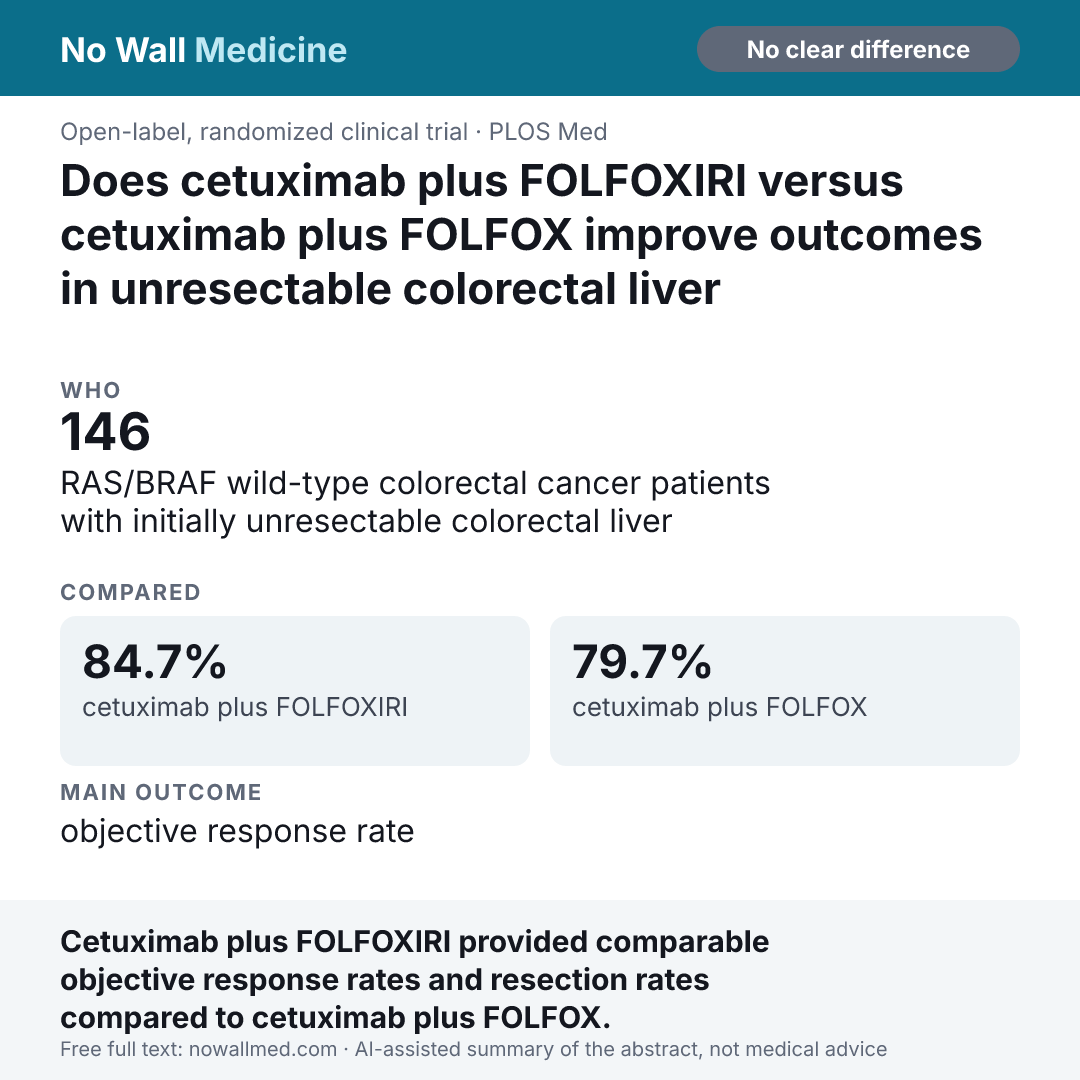
Cetuximab plus FOLFOXIRI versus cetuximab plus FOLFOX as conversion regimen in RAS/BRAF wild-type patients with initially unresectable colorectal liver metastases (TRICE trial): A randomized controlled trial
Open-label, randomized clinical trialNo clear difference
Does cetuximab plus FOLFOXIRI versus cetuximab plus FOLFOX improve outcomes in unresectable colorectal liver metastases?
Who
146
RAS/BRAF wild-type colorectal cancer patients with initially unresectable colorectal liver metastases · 7 medical centers across China
Compared
84.7%cetuximab plus FOLFOXIRI
79.7%cetuximab plus FOLFOX
Main outcome
objective response rate
Result: odds ratio 0.70 (95% confidence intervals 0.30 to 1.67)
Bottom line: Cetuximab plus FOLFOXIRI provided comparable objective response rates and resection rates compared to cetuximab plus FOLFOX.
Limitation: Inherent bias in subjective surgical decisions and lack of centralized assessment for response and resection.
PLOS Med · 2024-05-10 · Save PNG
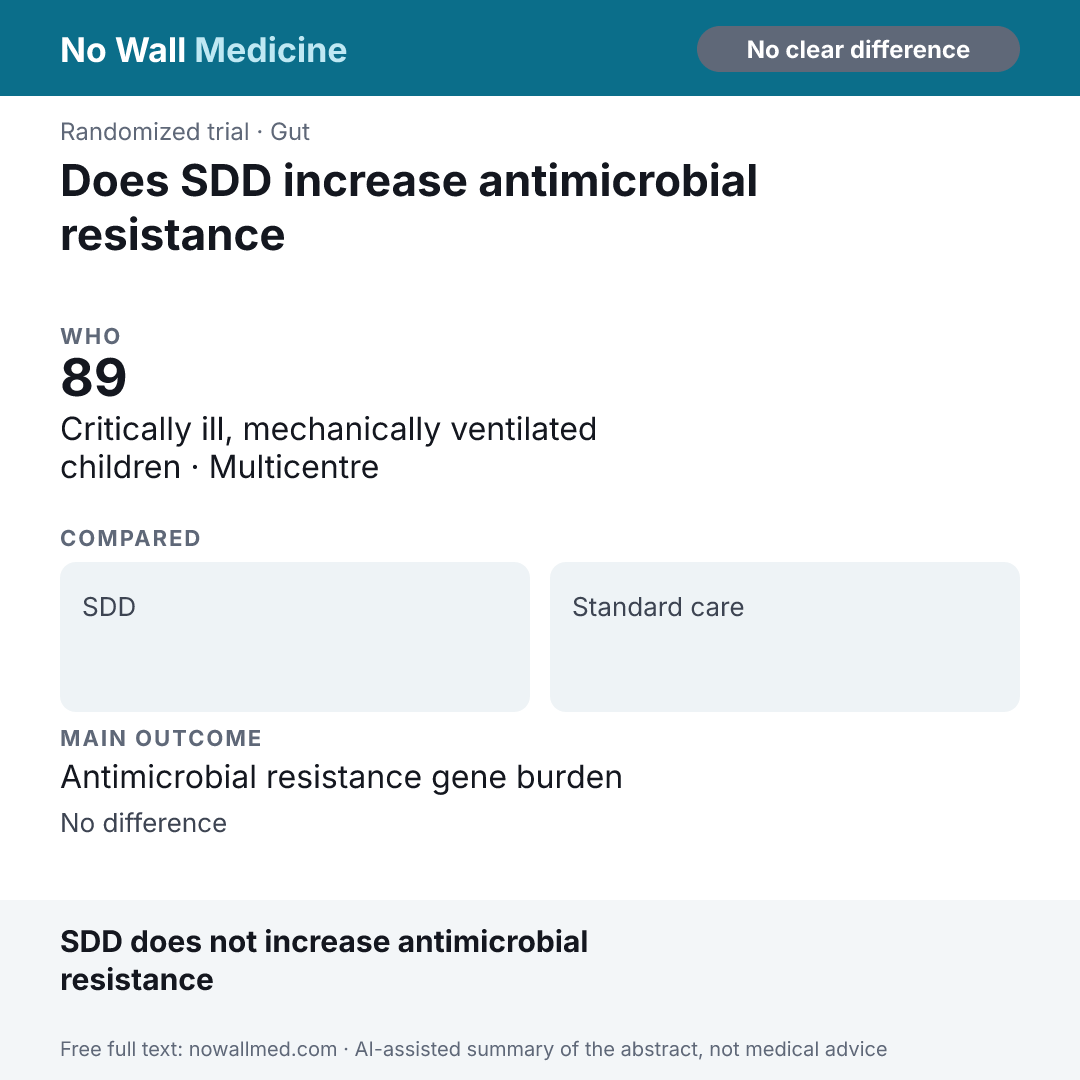
Short-duration selective decontamination of the digestive tract infection control does not contribute to increased antimicrobial resistance burden in a pilot cluster randomised trial (the ARCTIC Study)
Randomized trialNo clear difference
Does SDD increase antimicrobial resistance
Who
89
Critically ill, mechanically ventilated children · Multicentre
Compared
SDD
Standard care
Main outcome
Antimicrobial resistance gene burden
Result: No difference
Bottom line: SDD does not increase antimicrobial resistance
Gut · 2024-05-10 · Save PNG
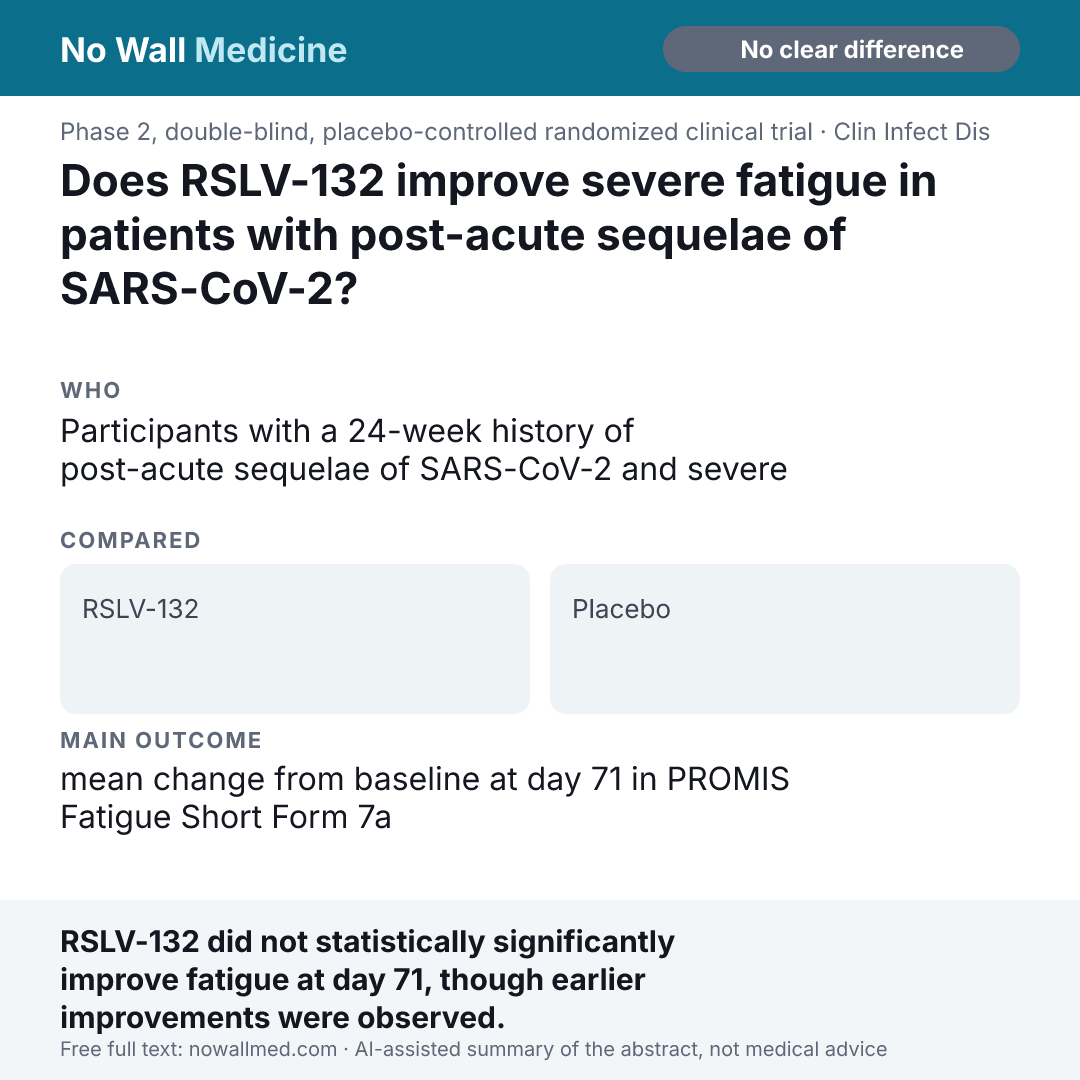
Assessment of the Impact of RNase in Patients With Severe Fatigue Related to Post-Acute Sequelae of SARS-CoV-2 Infection: A Randomized Phase 2 Trial of RSLV-132
Phase 2, double-blind, placebo-controlled randomized clinical trialNo clear difference
Does RSLV-132 improve severe fatigue in patients with post-acute sequelae of SARS-CoV-2?
Who
Participants with a 24-week history of post-acute sequelae of SARS-CoV-2 and severe fatigue
Compared
RSLV-132
Placebo
Main outcome
mean change from baseline at day 71 in PROMIS Fatigue Short Form 7a
Bottom line: RSLV-132 did not statistically significantly improve fatigue at day 71, though earlier improvements were observed.
Clin Infect Dis · 2024-05-10 · Save PNG
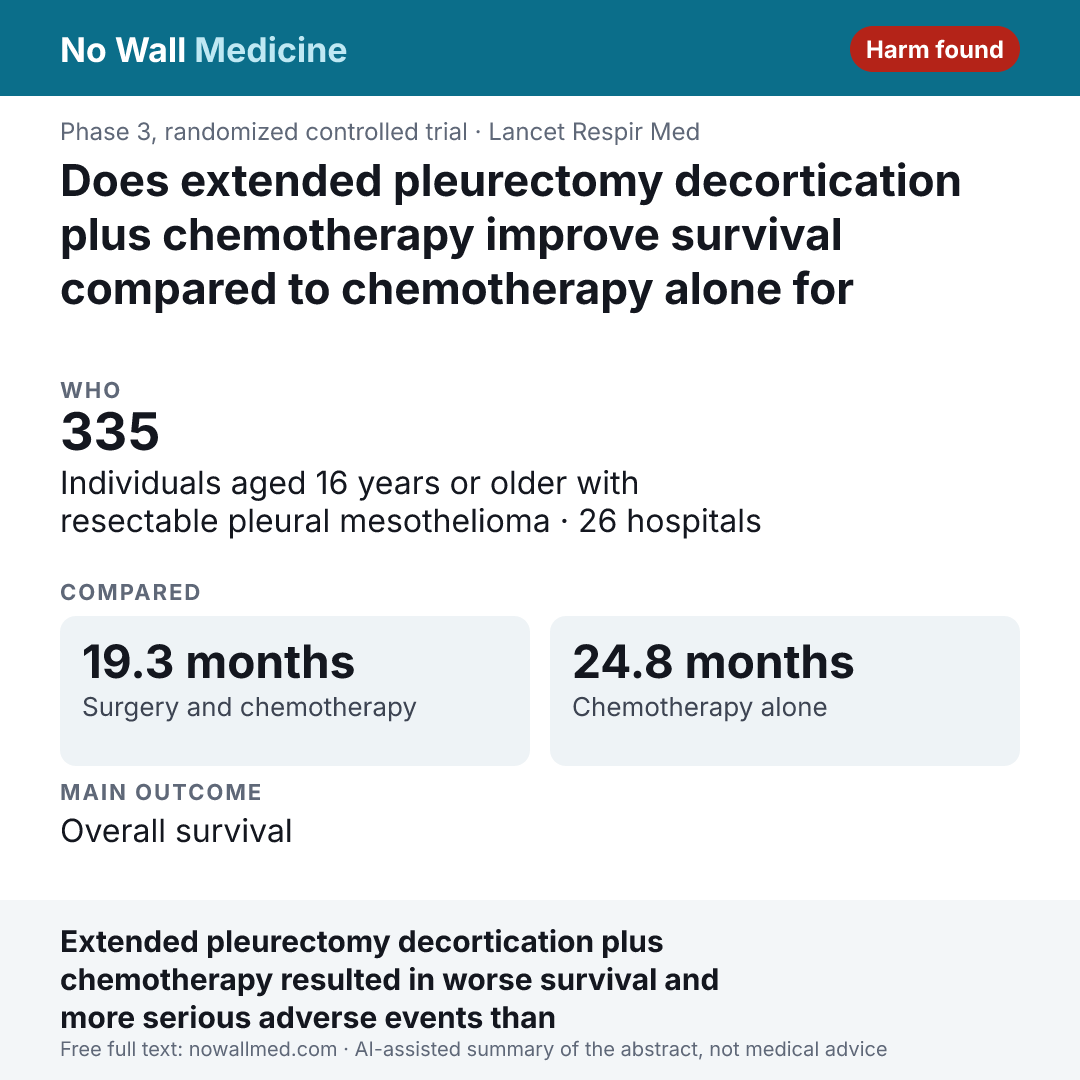
Extended pleurectomy decortication and chemotherapy versus chemotherapy alone for pleural mesothelioma (MARS 2): a phase 3 randomised controlled trial
Phase 3, randomized controlled trialHarm found
Does extended pleurectomy decortication plus chemotherapy improve survival compared to chemotherapy alone for pleural mesothelioma?
Who
335
Individuals aged 16 years or older with resectable pleural mesothelioma · 26 hospitals in the United Kingdom
Compared
19.3 monthsSurgery and chemotherapy
24.8 monthsChemotherapy alone
Main outcome
Overall survival
Result: difference in restricted mean survival time at 2 years -1.9 months (95% CI -3.4 to -0.3)
Bottom line: Extended pleurectomy decortication plus chemotherapy resulted in worse survival and more serious adverse events than chemotherapy alone.
Funded by: National Institute for Health and Care Research; Cancer Research UK
Lancet Respir Med · 2024-05-10 · Save PNG
Comparison of Postoperative Outcomes Among Patients Treated by Male Versus Female Surgeons: A Systematic Review and Meta-analysis
Systematic review and meta-analysisKey finding
Do clinical outcomes differ between patients treated by female versus male surgeons?
Who
5,448,121
Patients treated by female or male surgeons
Compared
Female surgeons
Male surgeons
Main outcome
Postoperative mortality, readmission, and complication rates
Result: adjusted odds ratio 0.93 (95% CI 0.88-0.97) for mortality
Bottom line: Patients treated by female surgeons had lower postoperative mortality compared to those treated by male surgeons.
Ann Surg · 2024-05-10 · Save PNG

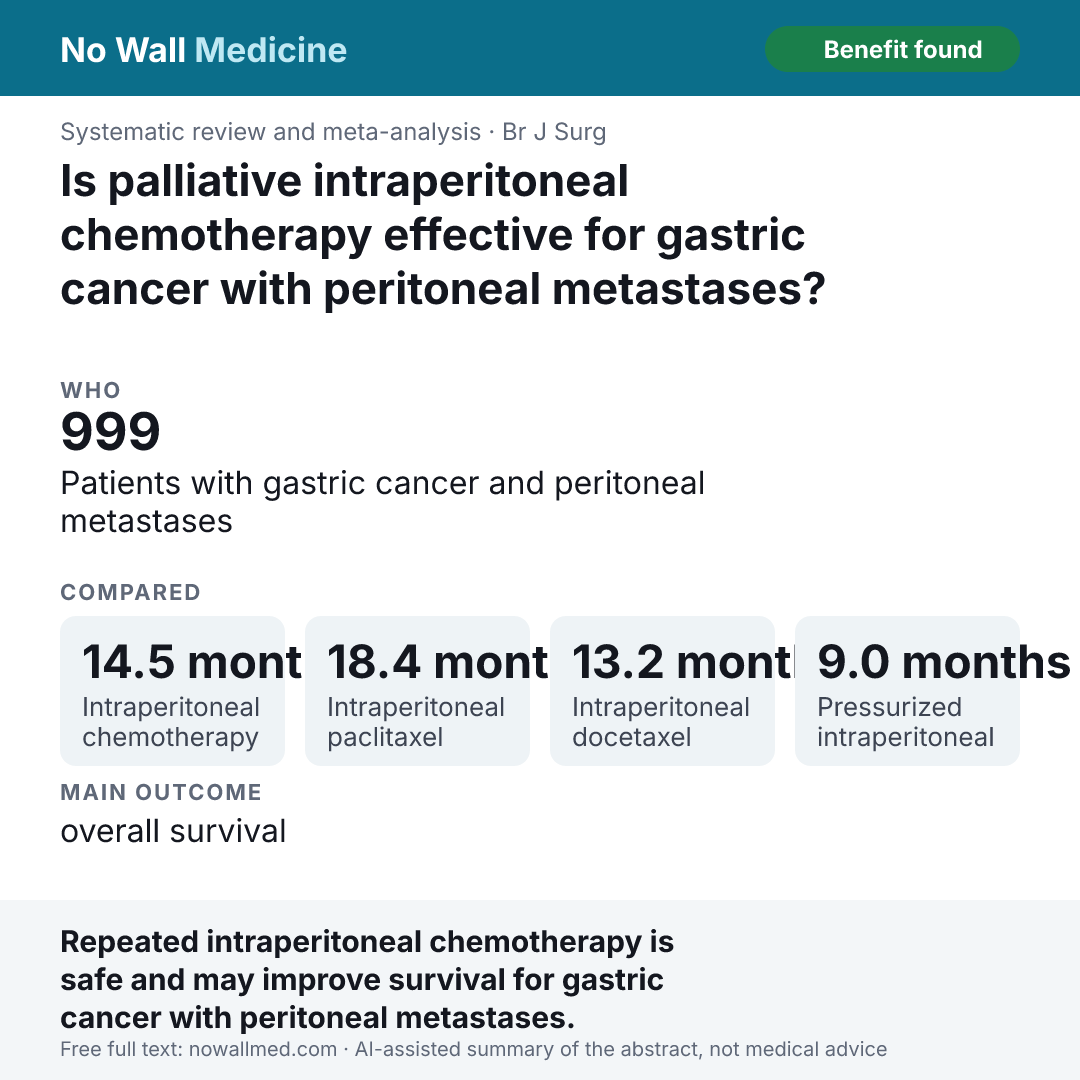
Intraperitoneal chemotherapy for peritoneal metastases of gastric origin: a systematic review and meta-analysis
Systematic review and meta-analysisBenefit found
Is palliative intraperitoneal chemotherapy effective for gastric cancer with peritoneal metastases?
Who
999
Patients with gastric cancer and peritoneal metastases
Compared
14.5 monthsIntraperitoneal chemotherapy
18.4 monthsIntraperitoneal paclitaxel
13.2 monthsIntraperitoneal docetaxel
9.0 monthsPressurized intraperitoneal aerosol chemotherapy
Main outcome
overall survival
Result: hazard ratio favoured the intraperitoneal chemotherapy arm
Bottom line: Repeated intraperitoneal chemotherapy is safe and may improve survival for gastric cancer with peritoneal metastases.
Br J Surg · 2024-05-10 · Save PNG
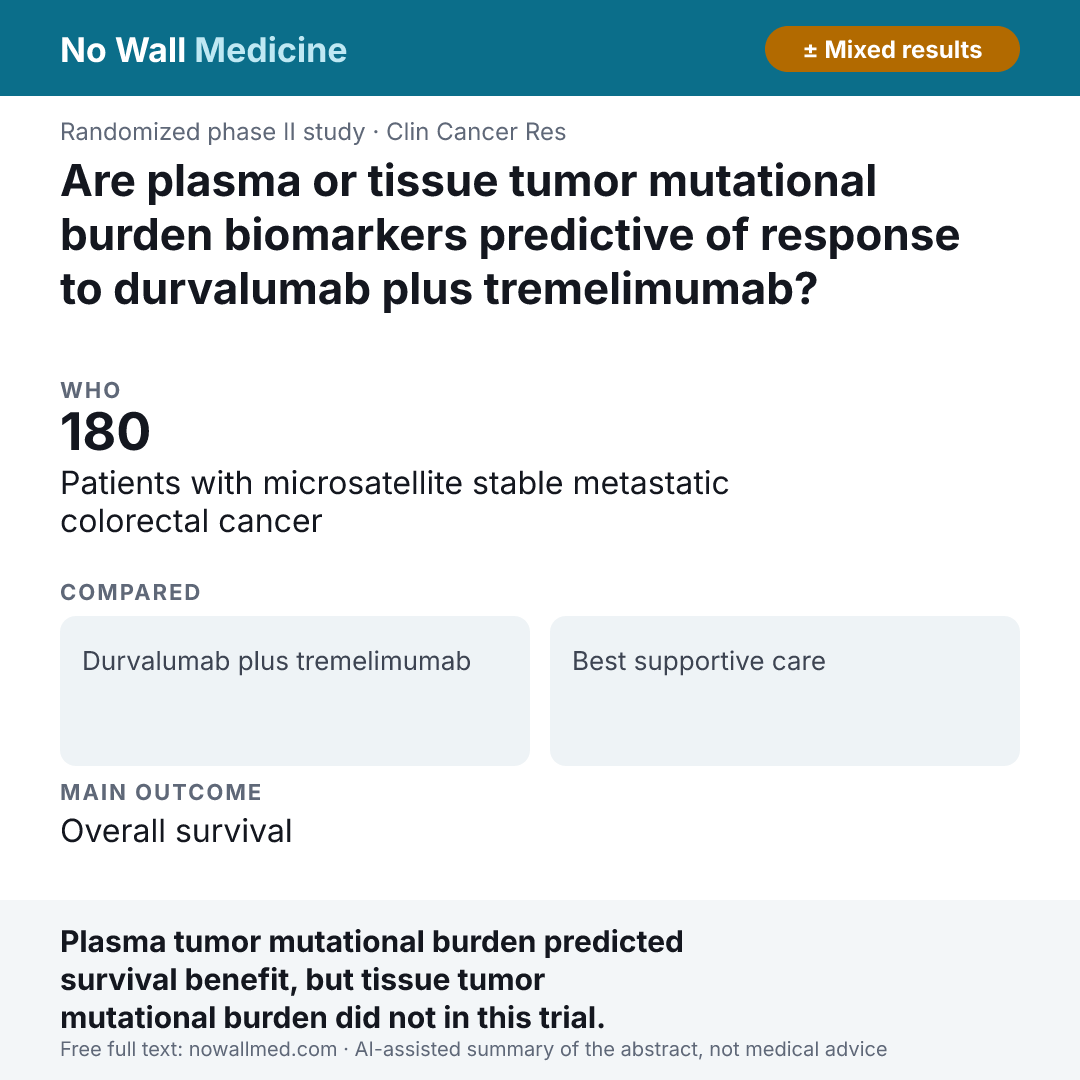
Plasma versus Tissue Tumor Mutational Burden as Biomarkers of Durvalumab plus Tremelimumab Response in Patients with Metastatic Colorectal Cancer in the CO.26 Trial
Randomized phase II studyMixed results
Are plasma or tissue tumor mutational burden biomarkers predictive of response to durvalumab plus tremelimumab?
Who
180
Patients with microsatellite stable metastatic colorectal cancer
Compared
Durvalumab plus tremelimumab
Best supportive care
Main outcome
Overall survival
Result: hazard ratio 0.34 (95% CI 0.13 to 0.85) for plasma TMB ≥28 mutations/Mb
Bottom line: Plasma tumor mutational burden predicted survival benefit, but tissue tumor mutational burden did not in this trial.
Limitation: validation is required
Clin Cancer Res · 2024-05-10 · Save PNG
Declining Antibody Affinity Over Time After Human Vaccination With a Plasmodium falciparum Merozoite Vaccine Candidate
Phase 1 malaria vaccine trialHarm found
How does antibody affinity change over time after vaccination with a malaria vaccine candidate?
Who
Participants receiving a Plasmodium falciparum merozoite vaccine candidate
Compared
After second vaccination: increased
Over 12 months: declined substantially
Main outcome
antibody affinity
Bottom line: Antibody affinity increased after a second vaccination but declined substantially over 12 months.
J Infect Dis · 2024-05-10 · Save PNG

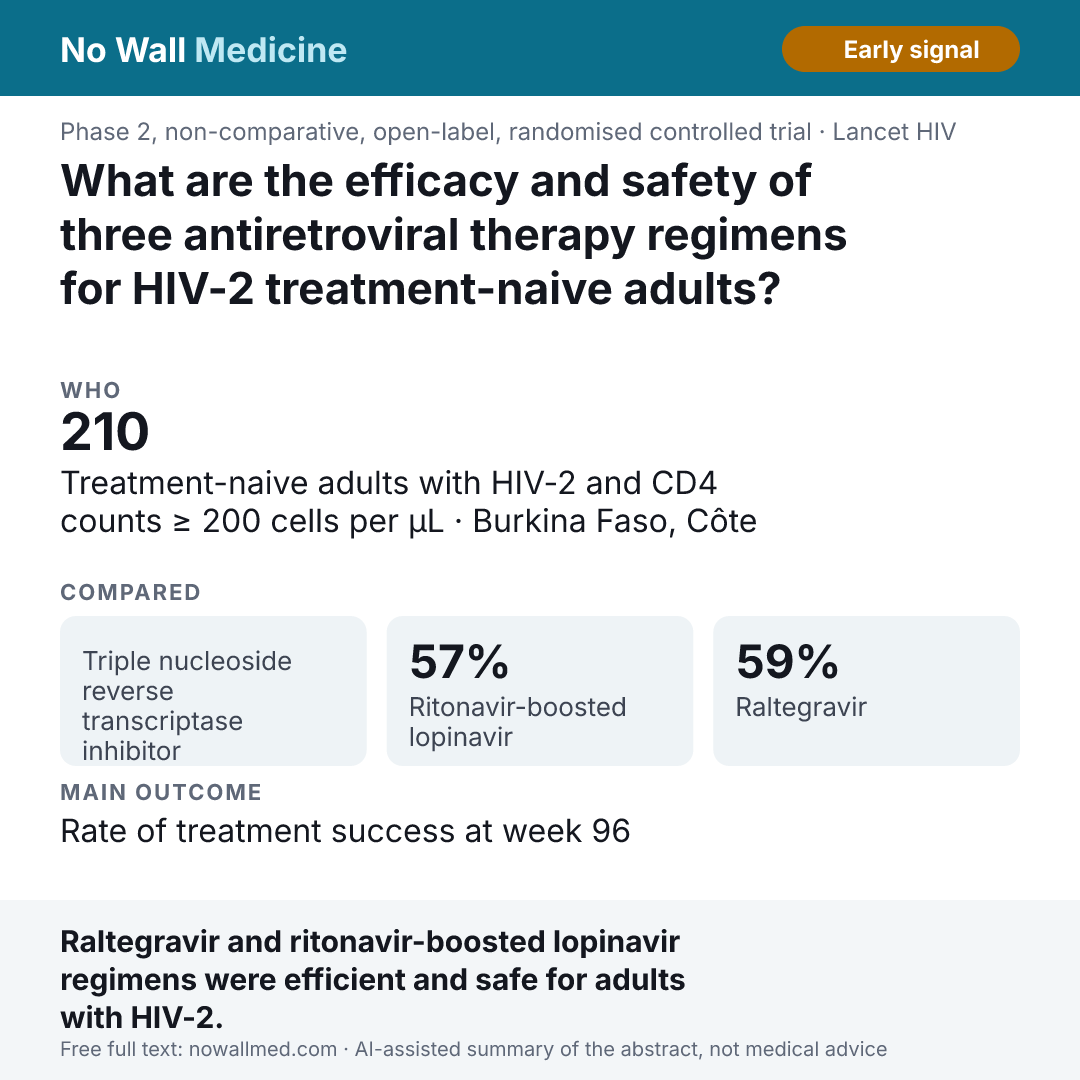
Efficacy and safety of three antiretroviral therapy regimens for treatment-naive African adults living with HIV-2 (FIT-2): a pilot, phase 2, non-comparative, open-label, randomised controlled trial
Phase 2, non-comparative, open-label, randomised controlled trialEarly signal
What are the efficacy and safety of three antiretroviral therapy regimens for HIV-2 treatment-naive adults?
Who
210
Treatment-naive adults with HIV-2 and CD4 counts ≥ 200 cells per μL · Burkina Faso, Côte d'Ivoire, Senegal, and Togo
Compared
Triple nucleoside reverse transcriptase inhibitor
57%Ritonavir-boosted lopinavir (95% CI 47-66)
59%Raltegravir (49-68)
Main outcome
Rate of treatment success at week 96
Bottom line: Raltegravir and ritonavir-boosted lopinavir regimens were efficient and safe for adults with HIV-2.
Funded by: ANRS MIE
Lancet HIV · 2024-05-10 · Save PNG
Absolute and relative outcomes of psychotherapies for eight mental disorders: a systematic review and meta-analysis
Meta-analysis of 441 randomized controlled trialsBenefit found
What are the absolute and relative outcomes of psychotherapies for eight mental disorders?
Who
33881
Patients with eight mental disorders
Compared
Psychotherapies
Control conditions
Main outcome
Absolute rate of response
Bottom line: Psychotherapies are effective compared with control conditions, but absolute response rates are modest across eight mental disorders.
World Psychiatry · 2024-05-10 · Save PNG

Algorithm-based modular psychotherapy vs. cognitive-behavioral therapy for patients with depression, psychiatric comorbidities and early trauma: a proof-of-concept randomized controlled trial
Proof-of-concept randomized controlled trialMixed results
Is algorithm-based modular psychotherapy more effective than cognitive-behavioral therapy for depression with comorbidities and trauma?
Who
70
70 adult outpatients with major depressive disorder, comorbidities, and early trauma
Compared
Cognitive-behavioral therapy: 11.4% remission
Algorithm-based modular psychotherapy: 29.4% remission
Main outcome
Hamilton Rating Scale for Depression-24 score at post-treatment
Result: odds ratio 3.2 (95% CI 0.9-11.6)
Bottom line: Algorithm-based modular psychotherapy showed feasibility and higher remission rates, though superiority over cognitive-behavioral therapy was non-significant.
Limitation: Potential interindividual heterogeneity and need for fully powered confirmation trials.
World Psychiatry · 2024-05-10 · Save PNG

Predicting short- to medium-term care home admission risk in older adults: a systematic review of externally validated models
Systematic review of external validationsMixed results
How accurately do prediction models predict care home admission risk in older adults?
Who
Adults aged 65 years or older
Compared
1-year prediction models with acceptable discrimination: area under the receiver operating characteristic curve 0.70-0.79
1-year prediction models with poor discrimination: area under the receiver operating characteristic curve < 0.70
Main outcome
Model discrimination and calibration for care home admission risk
Bottom line: Prediction models showed at best acceptable discrimination and often failed to account for competing mortality risk.
Limitation: Risk of bias was mostly high due to not reporting model calibration.
Age Ageing · 2024-05-10 · Save PNG

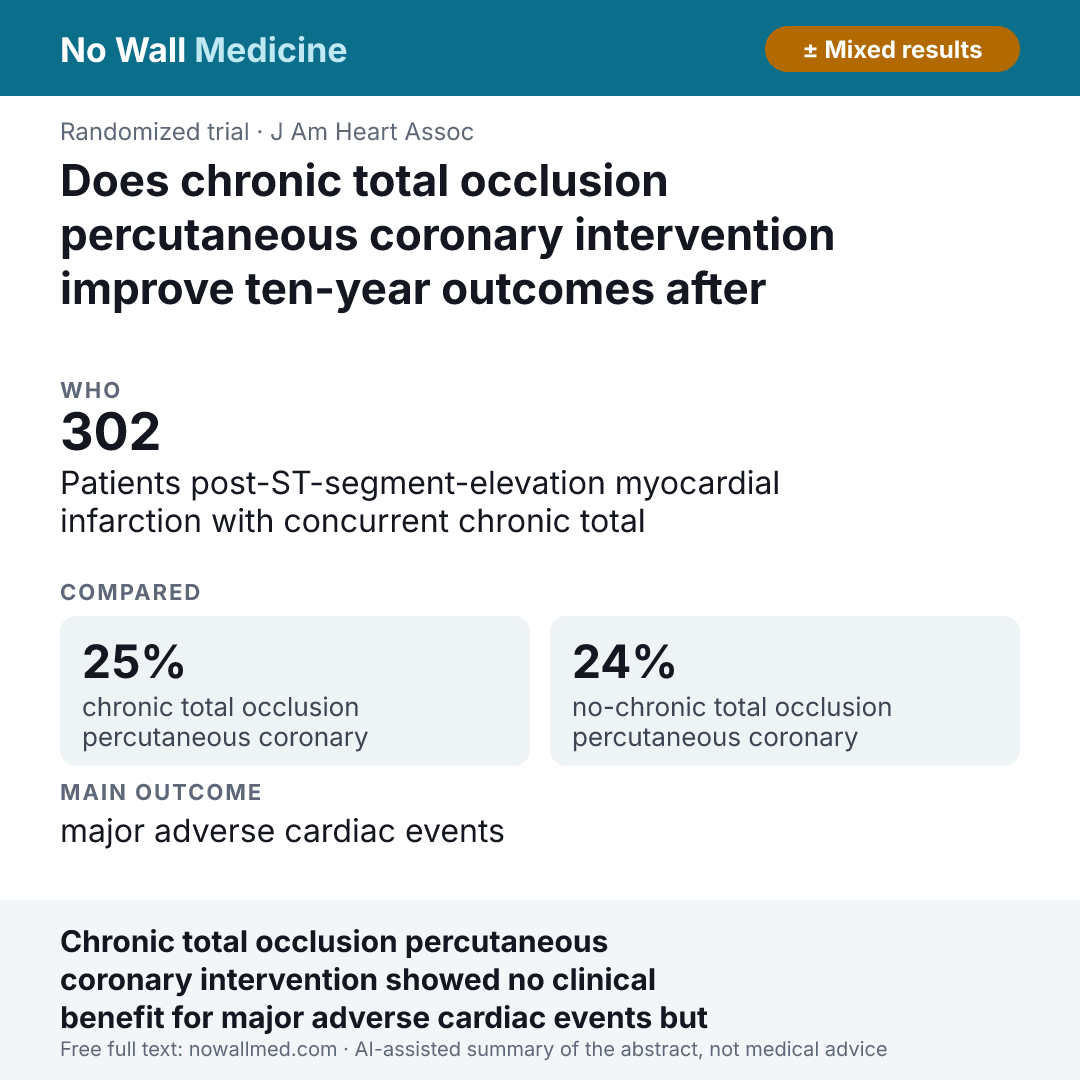
Ten-Year Outcome of Recanalization or Medical Therapy for Concomitant Chronic Total Occlusion After Myocardial Infarction
Randomized trialMixed results
Does chronic total occlusion percutaneous coronary intervention improve ten-year outcomes after myocardial infarction?
Who
302
Patients post-ST-segment-elevation myocardial infarction with concurrent chronic total occlusion
Compared
25%chronic total occlusion percutaneous coronary intervention
24%no-chronic total occlusion percutaneous coronary intervention
Main outcome
major adverse cardiac events
Result: hazard ratio 1.11 (95% CI 0.70-1.76)
Bottom line: Chronic total occlusion percutaneous coronary intervention showed no clinical benefit for major adverse cardiac events but higher cardiovascular mortality.
J Am Heart Assoc · 2024-05-10 · Save PNG
Agreement of Fractional Flow Reserve Estimated by Computed Tomography With Invasively Measured Fractional Flow Reserve: A Systematic Review and Meta-Analysis
Systematic review and meta-analysisKey finding
What is the agreement and diagnostic accuracy of computed tomography estimated fractional flow reserve?
Who
5236
7291 blood vessels from 5236 patients
Compared
Computed tomography estimated fractional flow reserve: 82.2% diagnostic accuracy
Invasively measured fractional flow reserve
Main outcome
Diagnostic accuracy of computed tomography estimated fractional flow reserve
Result: sensitivity 80.9%, specificity 83.1%
Bottom line: Computed tomography estimated fractional flow reserve shows moderate agreement and useful diagnostic accuracy for identifying hemodynamically significant lesions.
J Am Heart Assoc · 2024-05-10 · Save PNG

Effect of Incorporating 1 Avocado per Day Versus Habitual Diet on Vascular Function in Adults With Abdominal Obesity: An Ancillary Study of HAT, a Randomized Controlled Trial
Randomized, controlled, parallel-arm studyNo clear difference
Does adding 1 avocado per day improve vascular function in adults with abdominal obesity?
Who
134
Adults with abdominal obesity · Pennsylvania State University, University Park study center
Compared
1 avocado per day
Habitual diet low in avocados
Main outcome
Flow-mediated dilation and carotid-femoral pulse wave velocity
Result: mean difference -0.62% (95% CI -1.70 to 0.46) for flow-mediated dilation
Bottom line: Adding one avocado per day for 6 months did not improve vascular function in adults with abdominal obesity.
J Am Heart Assoc · 2024-05-10 · Save PNG

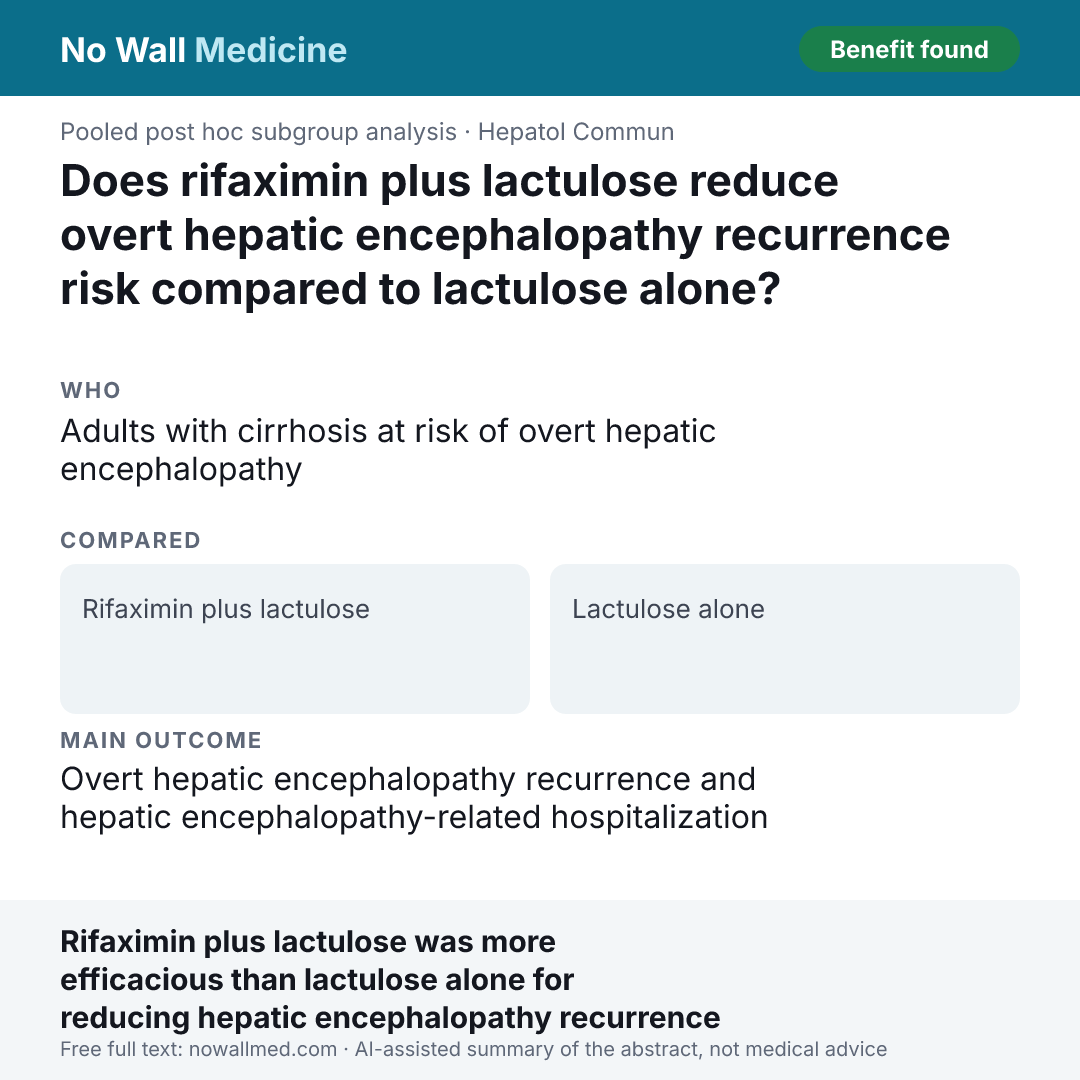
Rifaximin plus lactulose versus lactulose alone for reducing the risk of HE recurrence
Pooled post hoc subgroup analysisBenefit found
Does rifaximin plus lactulose reduce overt hepatic encephalopathy recurrence risk compared to lactulose alone?
Who
Adults with cirrhosis at risk of overt hepatic encephalopathy
Compared
Rifaximin plus lactulose
Lactulose alone
Main outcome
Overt hepatic encephalopathy recurrence and hepatic encephalopathy-related hospitalization
Bottom line: Rifaximin plus lactulose was more efficacious than lactulose alone for reducing hepatic encephalopathy recurrence and hospitalization.
Hepatol Commun · 2024-05-10 · Save PNG
Sexually transmitted infections, sexual life and risk behaviours of people living with schizophrenia: systematic review and meta-analysis
Systematic review and random-effects meta-analysisHarm found
What is the prevalence of sexually transmitted infections and sexual risk behaviours in schizophrenia?
Who
2459456
People living with schizophrenia
Compared
Schizophrenia patients: high prevalence of STIs
Healthy controls
Main outcome
Prevalence of sexually transmitted infections and sexual risk behaviours
Result: odds ratio 2.11 (95% CI 1.23-3.63) for HIV
Bottom line: People with schizophrenia have high sexually transmitted infection prevalence and increased risks for HIV, hepatitis C, and hepatitis B.
BJPsych Open · 2024-05-10 · Save PNG