Visual abstracts
New randomized trials and meta-analyses from leading journals at a glance: who was studied, what was compared, and what was found. Every paper is free to read in full.
All specialtiesCardiology 4763Oncology 4043Gastroenterology & Hepatology 1903Infectious Disease 3756Neurology 1872Psychiatry & Mental Health 2216Pulmonology 2044Critical Care 1319Endocrinology & Diabetes 2544Pediatrics 2889Surgery 2480Orthopedics & Sports Medicine 917Neurosurgery 525Cardiothoracic & Vascular Surgery 656Plastic & Reconstructive Surgery 574Nephrology 1107Rheumatology 810Hematology 1090Dermatology 611Ophthalmology 532Obstetrics & Gynecology 1645Public & Global Health 1037Radiology & Imaging 619Anesthesiology 958Urology 745ENT (Otolaryngology) 494Emergency Medicine 481Allergy & Immunology 309Geriatrics 972Family Medicine & Primary Care 534Medical Genetics & Genomics 659Pathology & Laboratory Medicine 156Physical Medicine & Rehabilitation 734Palliative Care 421Nutrition 1560Digital Health & AI 2137General Medicine 318
Safety of Triple-Dose Rifampin in Tuberculosis Treatment: A Systematic Review and Meta-Analysis
Systematic review and meta-analysisHarm found
Is triple-dose rifampin safe and effective for human tuberculosis treatment?
Who
Participants receiving rifampin for human tuberculosis treatment
Compared
Triple-dose rifampin: increase in pooled severe adverse events
Standard-dose rifampin
Main outcome
Incidence rate ratio of severe adverse events
Result: incidence rate ratio 1.48 (95% confidence interval 1.12-1.96)
Bottom line: Triple-dose rifampin was associated with an increase in severe adverse events compared to standard-dose rifampin.
Limitation: Only two included studies were blinded.
Clin Infect Dis · 2025-01-10 · Save PNG

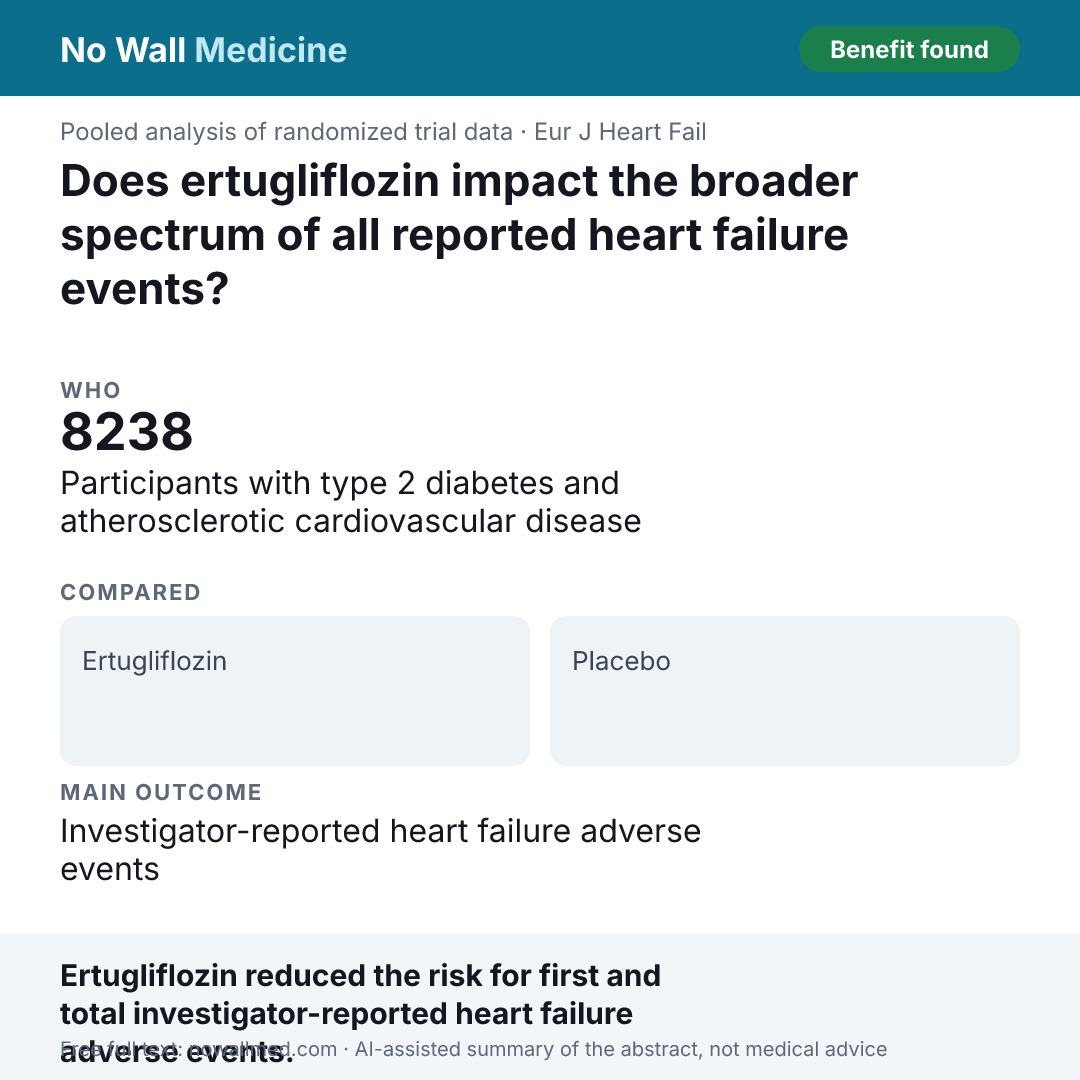
Heart failure outcomes captured by adverse event reporting in participants with type 2 diabetes and atherosclerotic cardiovascular disease: Observations from the VERTIS CV trial
Pooled analysis of randomized trial dataBenefit found
Does ertugliflozin impact the broader spectrum of all reported heart failure events?
Who
8238
Participants with type 2 diabetes and atherosclerotic cardiovascular disease
Compared
Ertugliflozin
Placebo
Main outcome
Investigator-reported heart failure adverse events
Result: hazard ratio 0.69 (95% CI 0.57-0.84) for first heart failure event
Bottom line: Ertugliflozin reduced the risk for first and total investigator-reported heart failure adverse events.
Eur J Heart Fail · 2025-01-10 · Save PNG
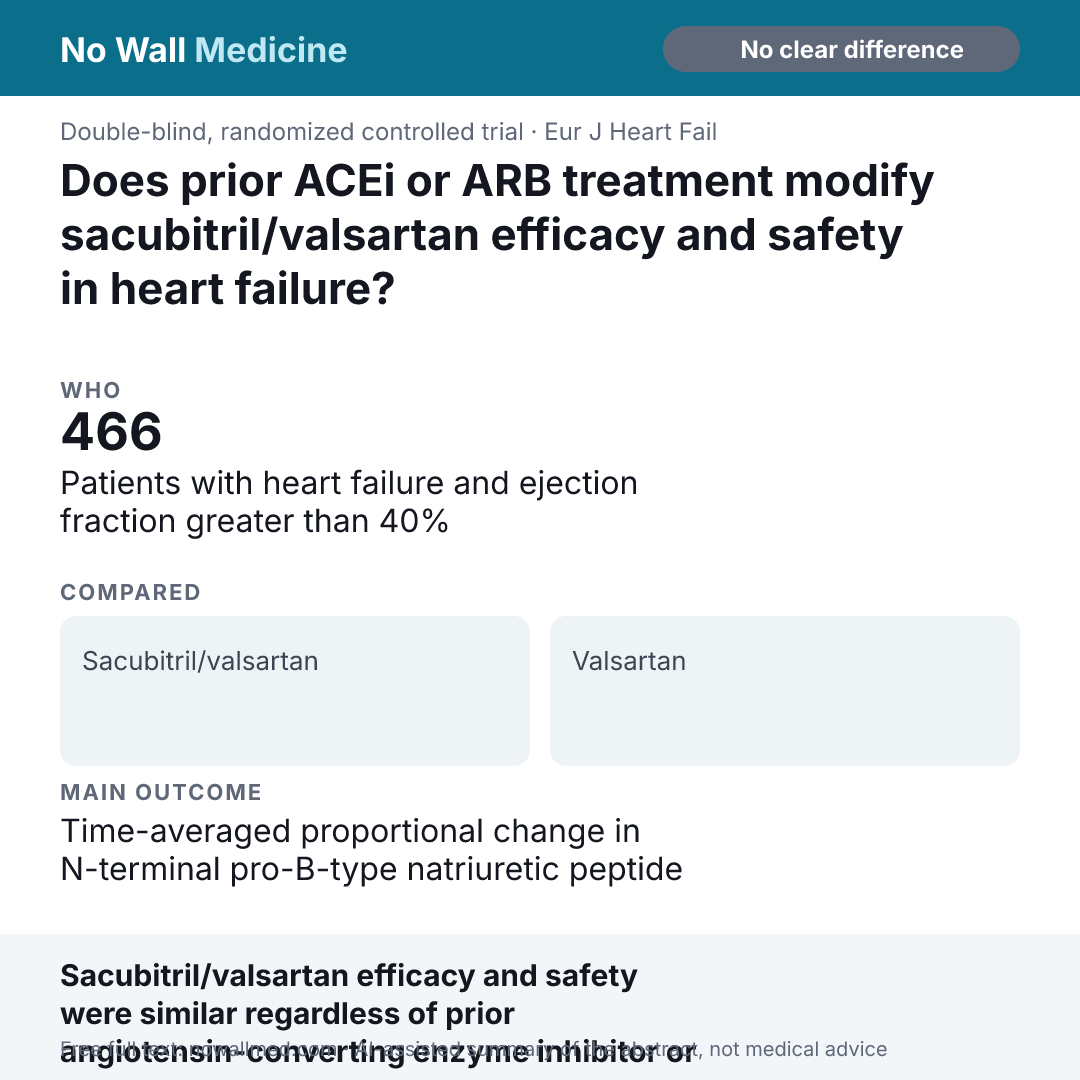
Sacubitril/valsartan versus valsartan initiation in patients naïve to renin-angiotensin system inhibitors: Insights from PARAGLIDE-HF
Double-blind, randomized controlled trialNo clear difference
Does prior ACEi or ARB treatment modify sacubitril/valsartan efficacy and safety in heart failure?
Who
466
Patients with heart failure and ejection fraction greater than 40%
Compared
Sacubitril/valsartan
Valsartan
Main outcome
Time-averaged proportional change in N-terminal pro-B-type natriuretic peptide
Result: 0.76 (95% confidence interval 0.51-1.13) for ACEi/ARB naïve
Bottom line: Sacubitril/valsartan efficacy and safety were similar regardless of prior angiotensin-converting enzyme inhibitor or angiotensin receptor blocker use.
Eur J Heart Fail · 2025-01-10 · Save PNG
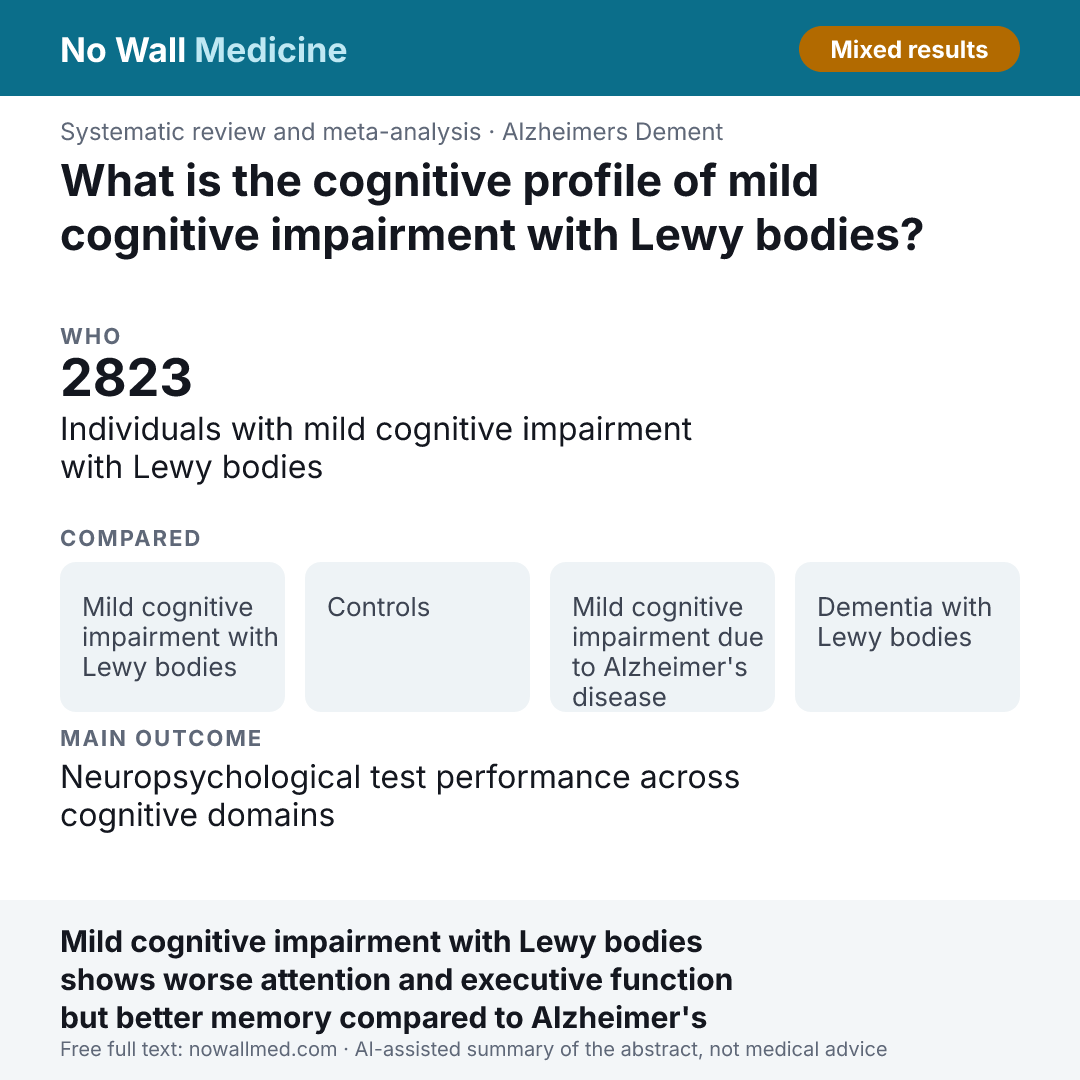
Neuropsychological test performance in mild cognitive impairment with Lewy bodies: A systematic review and meta-analysis
Systematic review and meta-analysisMixed results
What is the cognitive profile of mild cognitive impairment with Lewy bodies?
Who
2823
Individuals with mild cognitive impairment with Lewy bodies
Compared
Mild cognitive impairment with Lewy bodies
Controls
Mild cognitive impairment due to Alzheimer's disease
Dementia with Lewy bodies
Main outcome
Neuropsychological test performance across cognitive domains
Bottom line: Mild cognitive impairment with Lewy bodies shows worse attention and executive function but better memory compared to Alzheimer's disease.
Alzheimers Dement · 2025-01-10 · Save PNG
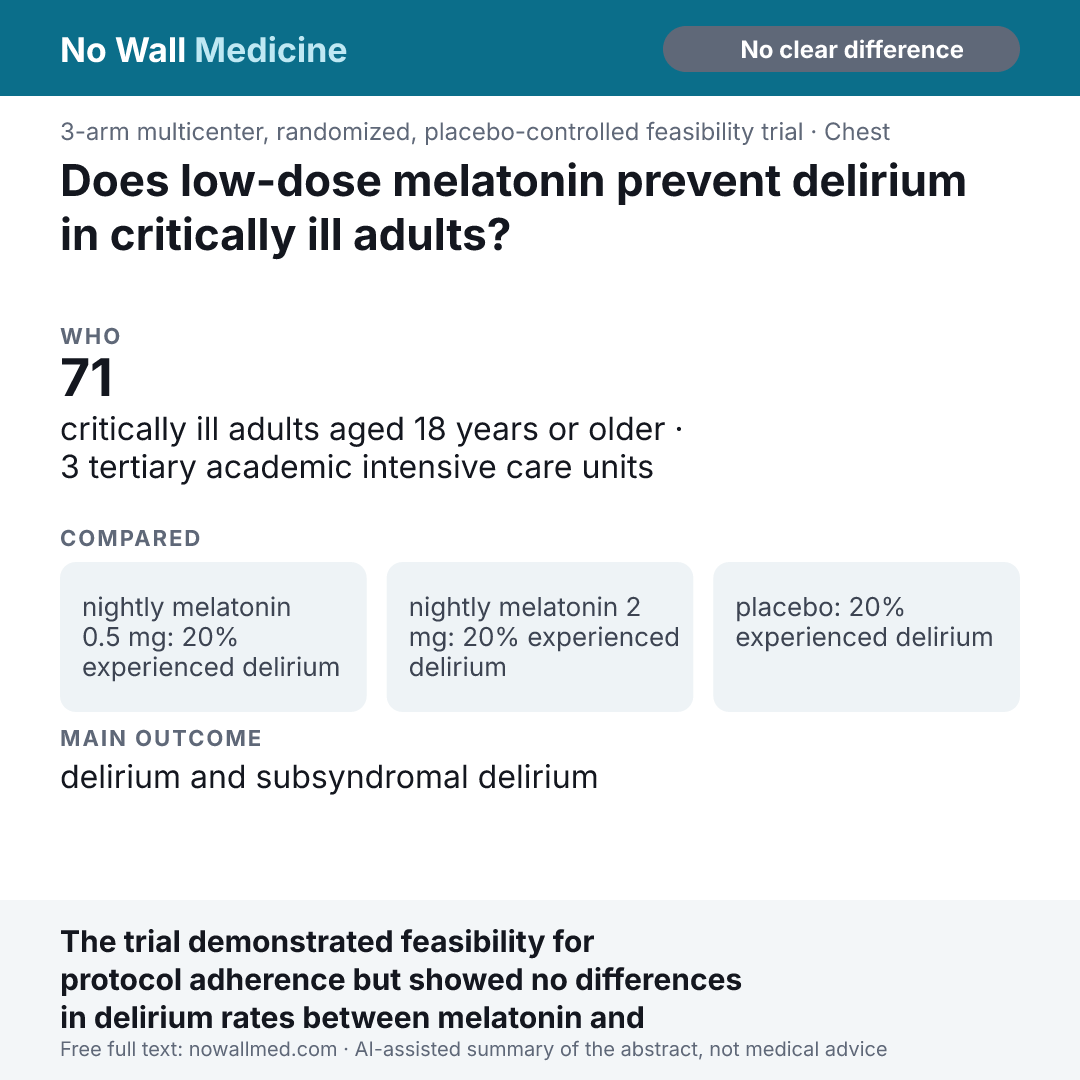
Low-Dose Melatonin for Prevention of Delirium in Critically Ill Patients: A Multicenter, Randomized, Placebo-Controlled Feasibility Trial
3-arm multicenter, randomized, placebo-controlled feasibility trialNo clear difference
Does low-dose melatonin prevent delirium in critically ill adults?
Who
71
critically ill adults aged 18 years or older · 3 tertiary academic intensive care units
Compared
nightly melatonin 0.5 mg: 20% experienced delirium
nightly melatonin 2 mg: 20% experienced delirium
placebo: 20% experienced delirium
Main outcome
delirium and subsyndromal delirium
Bottom line: The trial demonstrated feasibility for protocol adherence but showed no differences in delirium rates between melatonin and placebo groups.
Limitation: Trial eligibility and consent rates were low due to delirium presence or screening difficulties.
Chest · 2025-01-10 · Save PNG
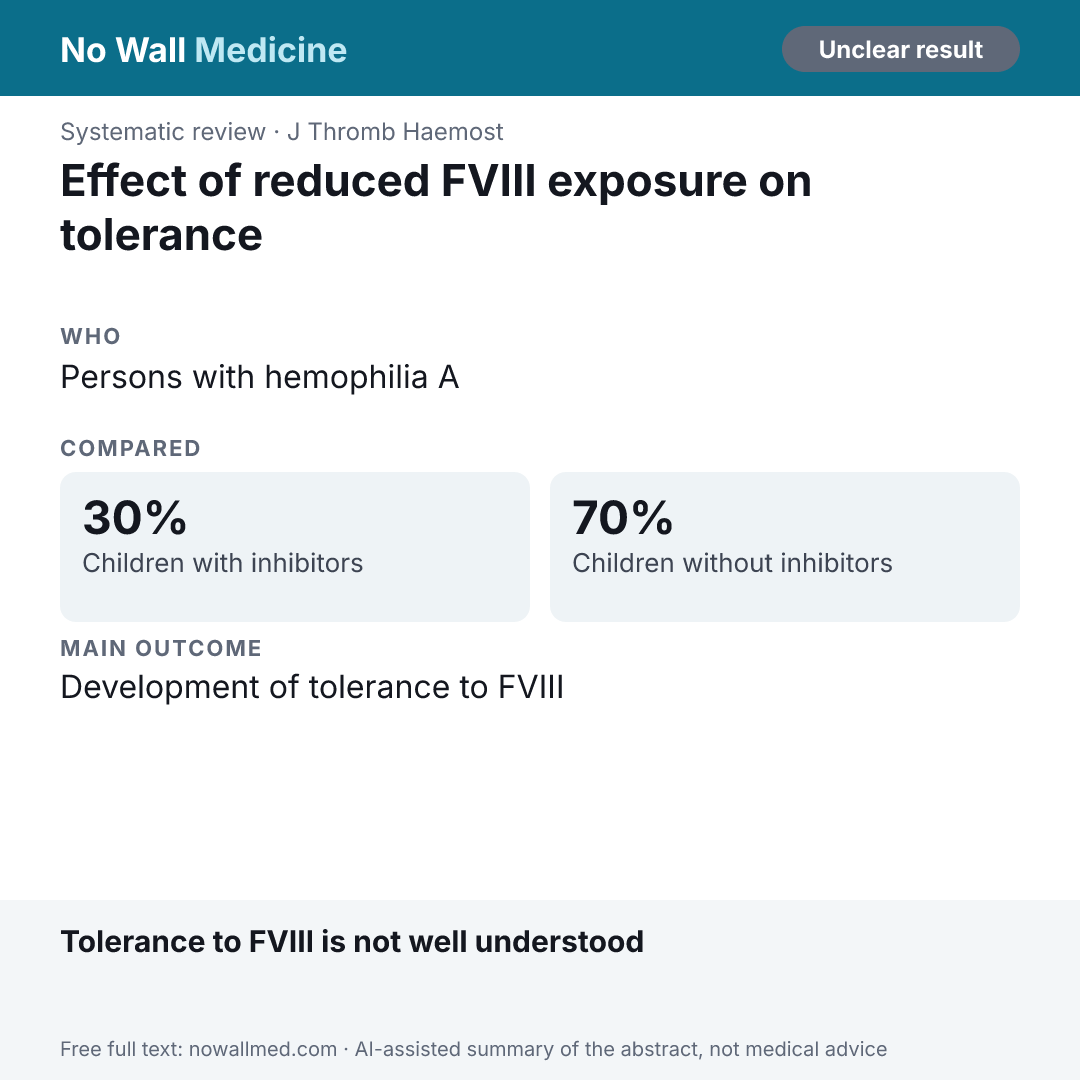
Tolerance to factor VIII in the era of nonfactor therapies: immunologic perspectives and a systematic review of the literature
Systematic reviewUnclear result
Effect of reduced FVIII exposure on tolerance
Who
Persons with hemophilia A
Compared
30%Children with inhibitors
70%Children without inhibitors
Main outcome
Development of tolerance to FVIII
Bottom line: Tolerance to FVIII is not well understood
J Thromb Haemost · 2025-01-10 · Save PNG
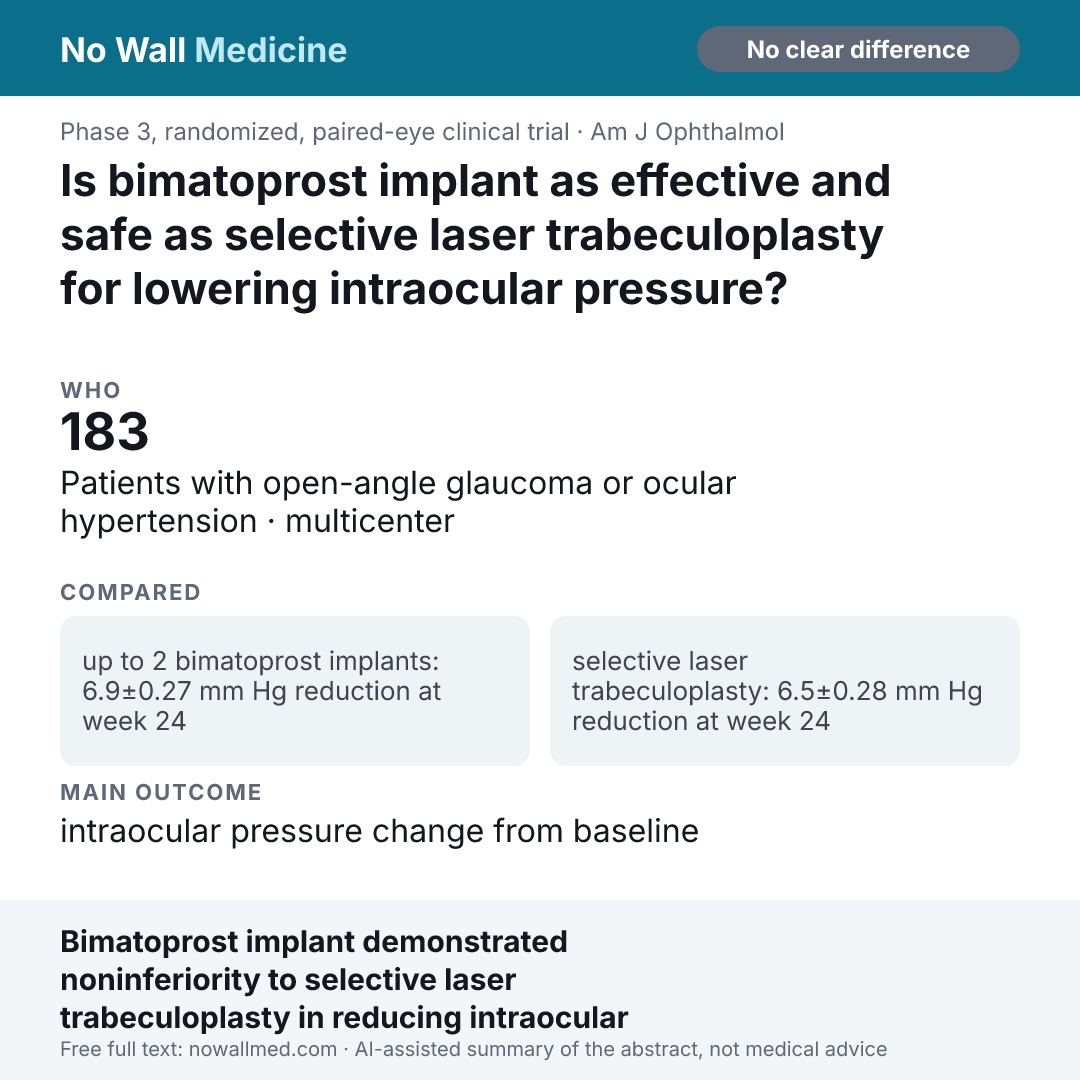
Phase 3, Randomized, Comparison Study of Intracameral Bimatoprost Implant 10 µg and Selective Laser Trabeculoplasty
Phase 3, randomized, paired-eye clinical trialNo clear difference
Is bimatoprost implant as effective and safe as selective laser trabeculoplasty for lowering intraocular pressure?
Who
183
Patients with open-angle glaucoma or ocular hypertension · multicenter
Compared
up to 2 bimatoprost implants: 6.9±0.27 mm Hg reduction at week 24
selective laser trabeculoplasty: 6.5±0.28 mm Hg reduction at week 24
Main outcome
intraocular pressure change from baseline
Bottom line: Bimatoprost implant demonstrated noninferiority to selective laser trabeculoplasty in reducing intraocular pressure over 24 weeks.
Am J Ophthalmol · 2025-01-10 · Save PNG
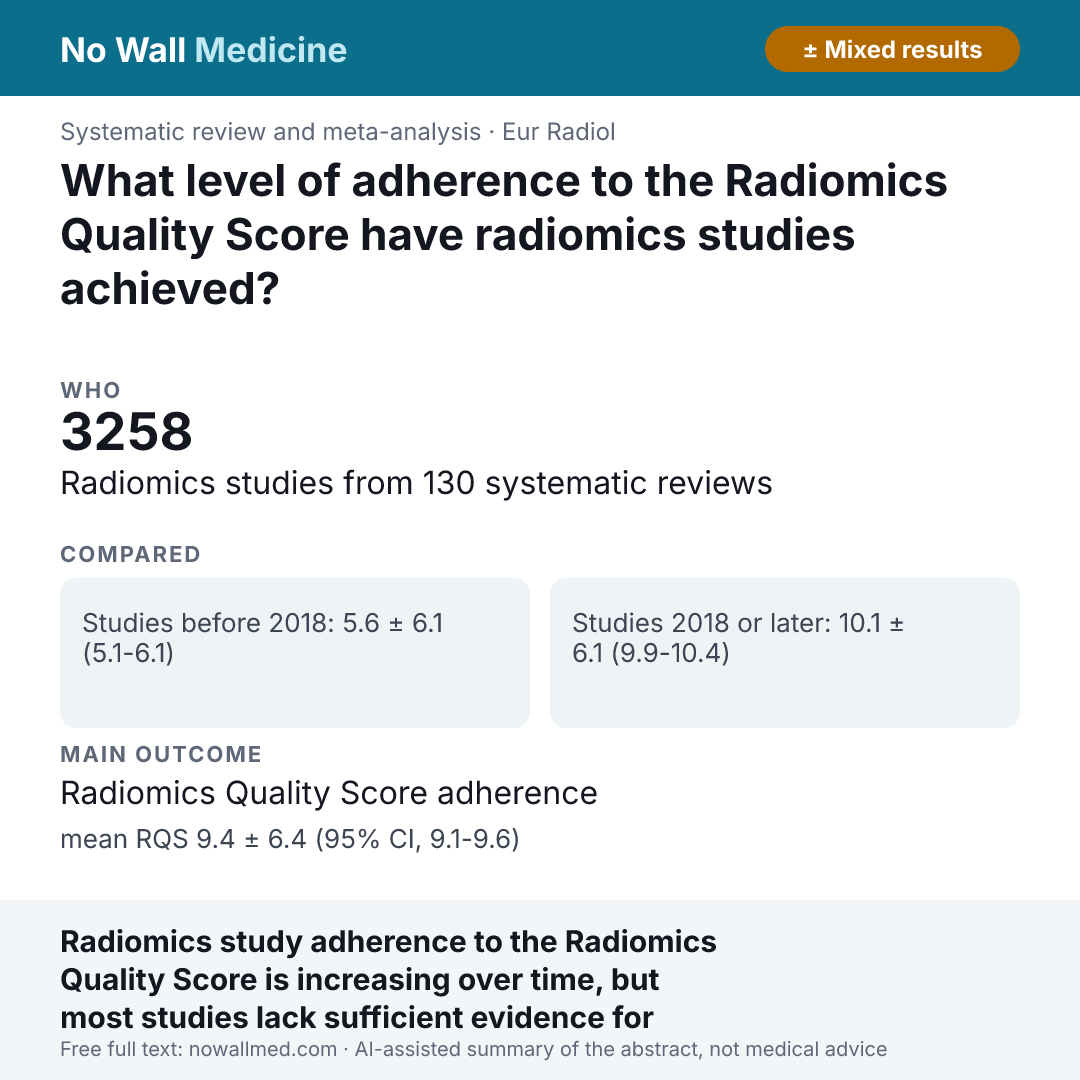
Evaluating the impact of the Radiomics Quality Score: a systematic review and meta-analysis
Systematic review and meta-analysisMixed results
What level of adherence to the Radiomics Quality Score have radiomics studies achieved?
Who
3258
Radiomics studies from 130 systematic reviews
Compared
Studies before 2018: 5.6 ± 6.1 (5.1-6.1)
Studies 2018 or later: 10.1 ± 6.1 (9.9-10.4)
Main outcome
Radiomics Quality Score adherence
Result: mean RQS 9.4 ± 6.4 (95% CI, 9.1-9.6)
Bottom line: Radiomics study adherence to the Radiomics Quality Score is increasing over time, but most studies lack sufficient evidence for clinical translation.
Eur Radiol · 2025-01-10 · Save PNG
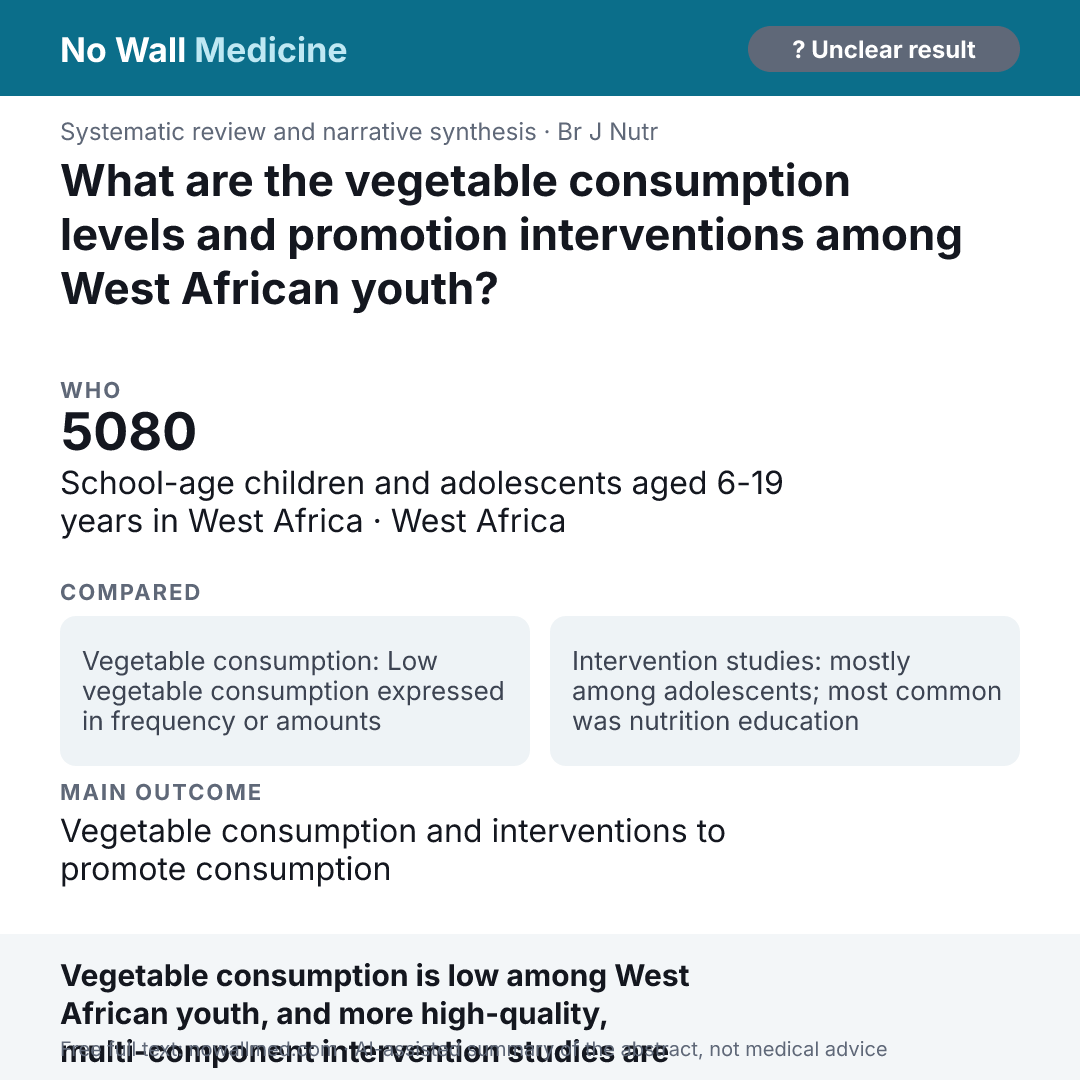
Vegetable consumption and promotion among school-age children and adolescents in West Africa: a systematic review and narrative synthesis
Systematic review and narrative synthesisUnclear result
What are the vegetable consumption levels and promotion interventions among West African youth?
Who
5080
School-age children and adolescents aged 6-19 years in West Africa · West Africa
Compared
Vegetable consumption: Low vegetable consumption expressed in frequency or amounts
Intervention studies: mostly among adolescents; most common was nutrition education
Main outcome
Vegetable consumption and interventions to promote consumption
Bottom line: Vegetable consumption is low among West African youth, and more high-quality, multi-component intervention studies are needed.
Br J Nutr · 2025-01-10 · Save PNG
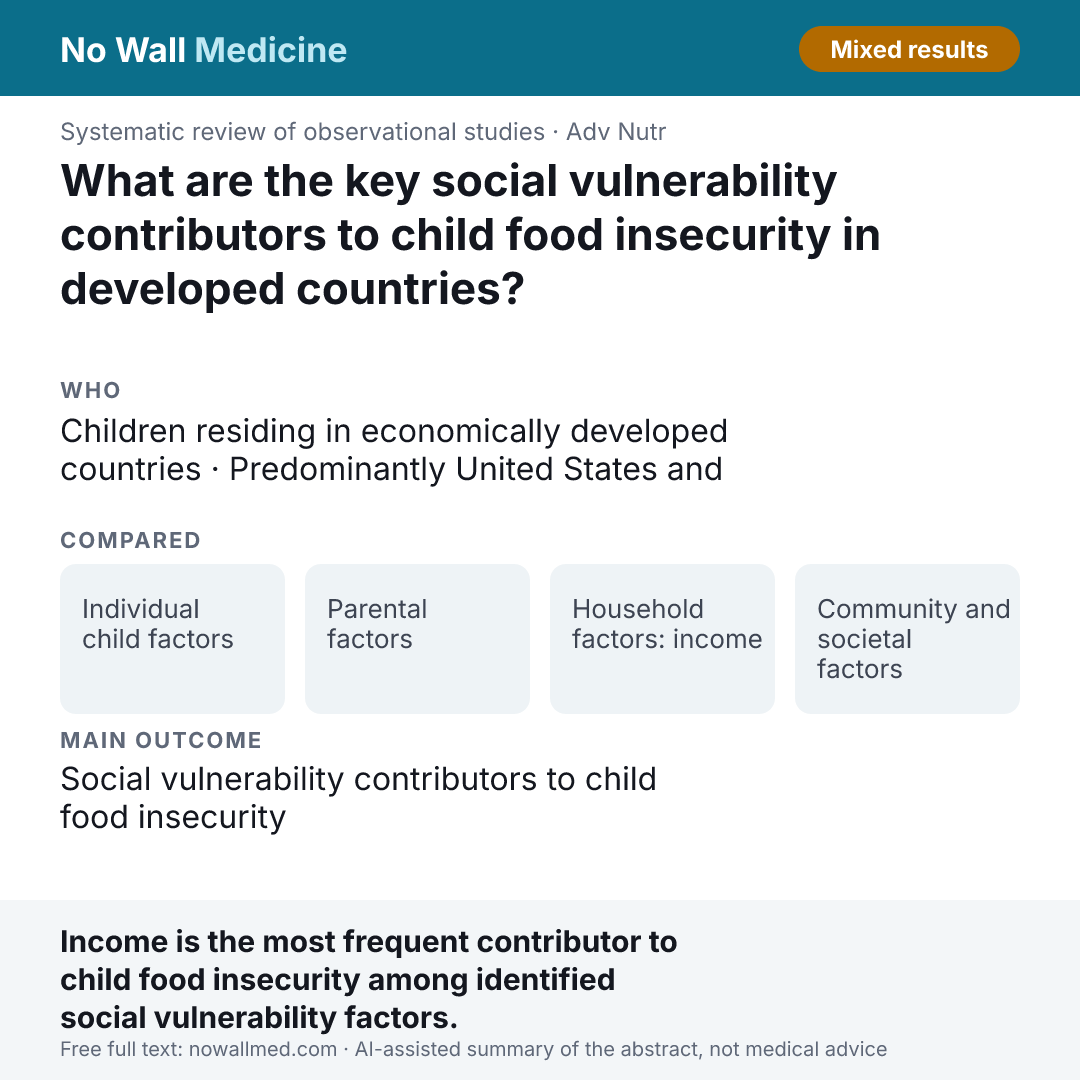
Social Vulnerability and Child Food Insecurity in Developed Countries: A Systematic Review
Systematic review of observational studiesMixed results
What are the key social vulnerability contributors to child food insecurity in developed countries?
Who
Children residing in economically developed countries · Predominantly United States and Canada
Compared
Individual child factors
Parental factors
Household factors: income
Community and societal factors
Main outcome
Social vulnerability contributors to child food insecurity
Bottom line: Income is the most frequent contributor to child food insecurity among identified social vulnerability factors.
Limitation: Lack of consistent measures to define social vulnerability and food insecurity impeded meaningful pooling.
Adv Nutr · 2025-01-10 · Save PNG
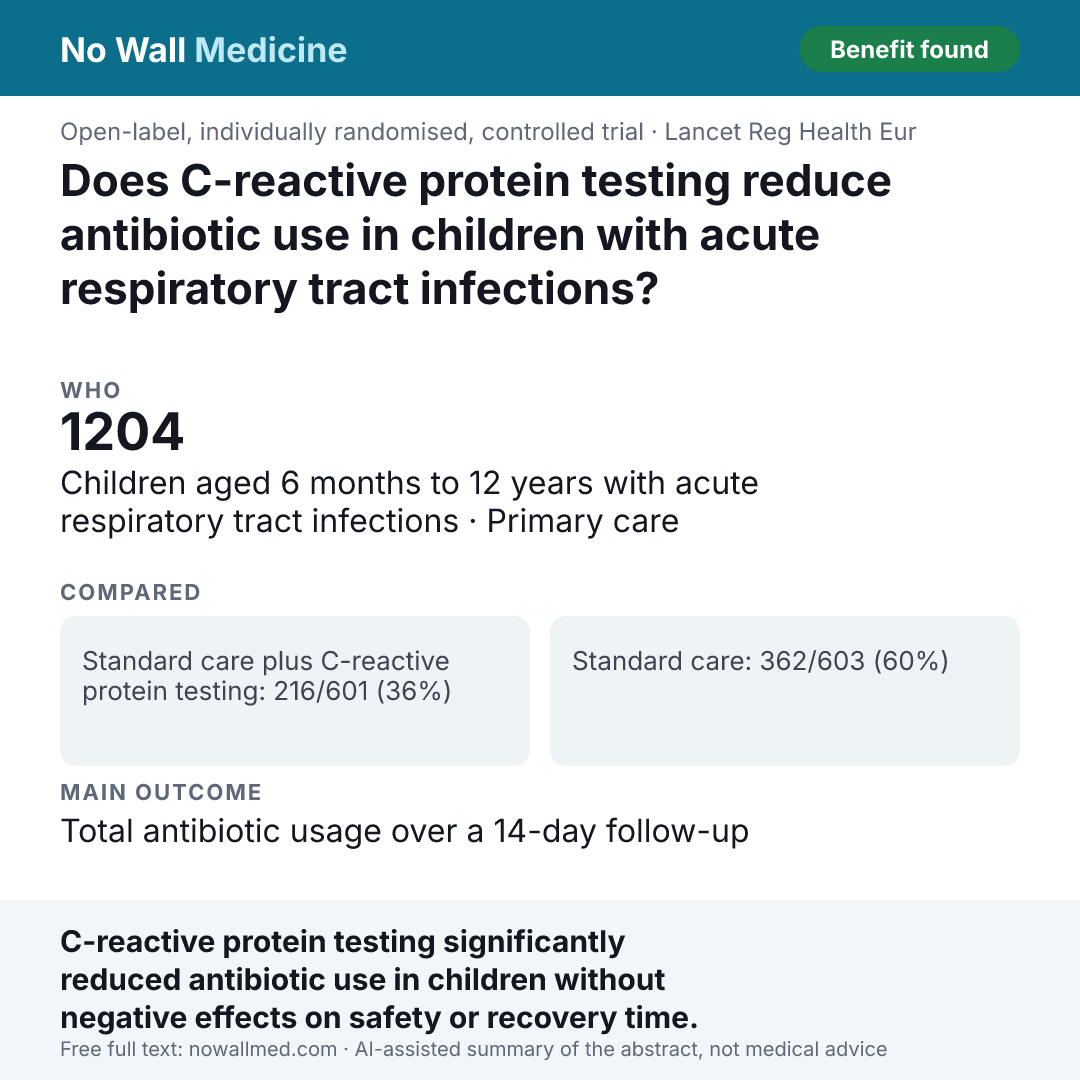
C-reactive protein testing in primary care and antibiotic use in children with acute respiratory tract infections in Kyrgyzstan: an open-label, individually randomised, controlled trial
Open-label, individually randomised, controlled trialBenefit found
Does C-reactive protein testing reduce antibiotic use in children with acute respiratory tract infections?
Who
1204
Children aged 6 months to 12 years with acute respiratory tract infections · Primary care settings in Kyrgyzstan
Compared
Standard care plus C-reactive protein testing: 216/601 (36%)
Standard care: 362/603 (60%)
Main outcome
Total antibiotic usage over a 14-day follow-up
Result: Risk difference: 24 percentage points (95% CI: 15-34)
Bottom line: C-reactive protein testing significantly reduced antibiotic use in children without negative effects on safety or recovery time.
Funded by: International Centre for Antimicrobial Resistance Solutions
Lancet Reg Health Eur · 2025-01-10 · Save PNG
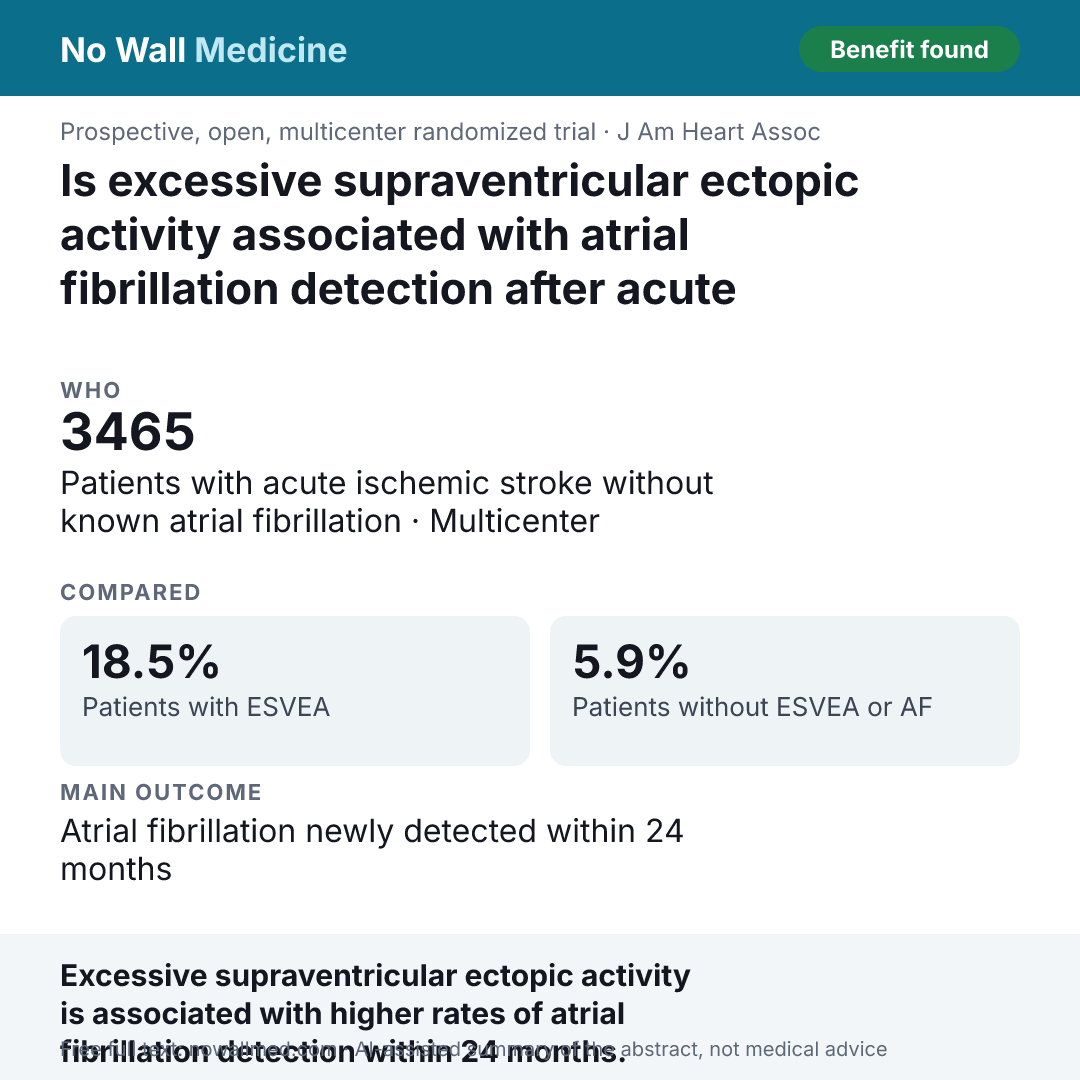
Excessive Supraventricular Ectopic Activity in Patients With Acute Ischemic Stroke Is Associated With Atrial Fibrillation Detection Within 24 Months After Stroke: A Predefined Analysis of the MonDAFIS Study
Prospective, open, multicenter randomized trialBenefit found
Is excessive supraventricular ectopic activity associated with atrial fibrillation detection after acute ischemic stroke?
Who
3465
Patients with acute ischemic stroke without known atrial fibrillation · Multicenter
Compared
18.5%Patients with ESVEA
5.9%Patients without ESVEA or AF
Main outcome
Atrial fibrillation newly detected within 24 months
Bottom line: Excessive supraventricular ectopic activity is associated with higher rates of atrial fibrillation detection within 24 months.
J Am Heart Assoc · 2025-01-10 · Save PNG
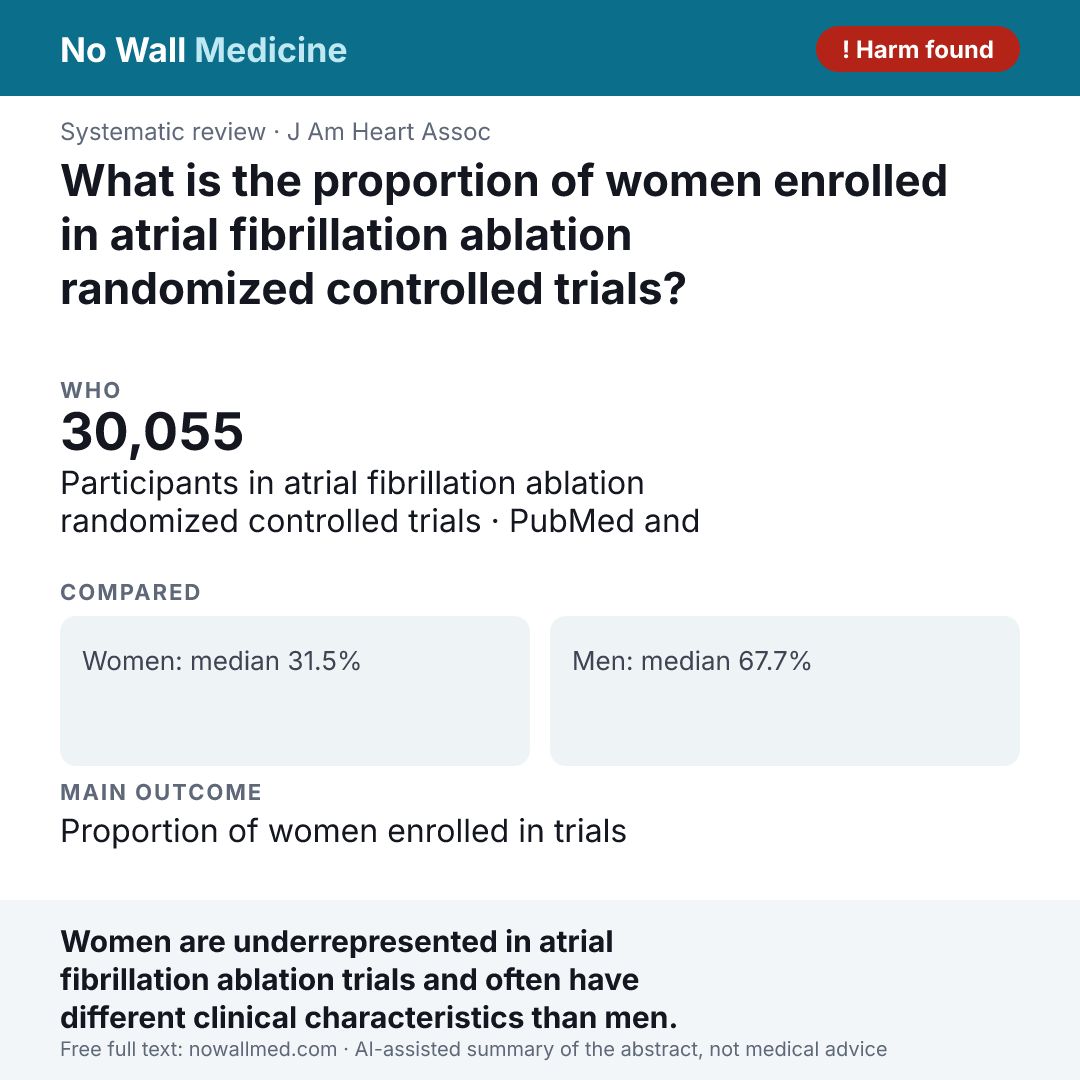
Representation of Women in Atrial Fibrillation Ablation Randomized Controlled Trials: Systematic Review
Systematic reviewHarm found
What is the proportion of women enrolled in atrial fibrillation ablation randomized controlled trials?
Who
30,055
Participants in atrial fibrillation ablation randomized controlled trials · PubMed and Embase
Compared
Women: median 31.5%
Men: median 67.7%
Main outcome
Proportion of women enrolled in trials
Bottom line: Women are underrepresented in atrial fibrillation ablation trials and often have different clinical characteristics than men.
J Am Heart Assoc · 2025-01-10 · Save PNG
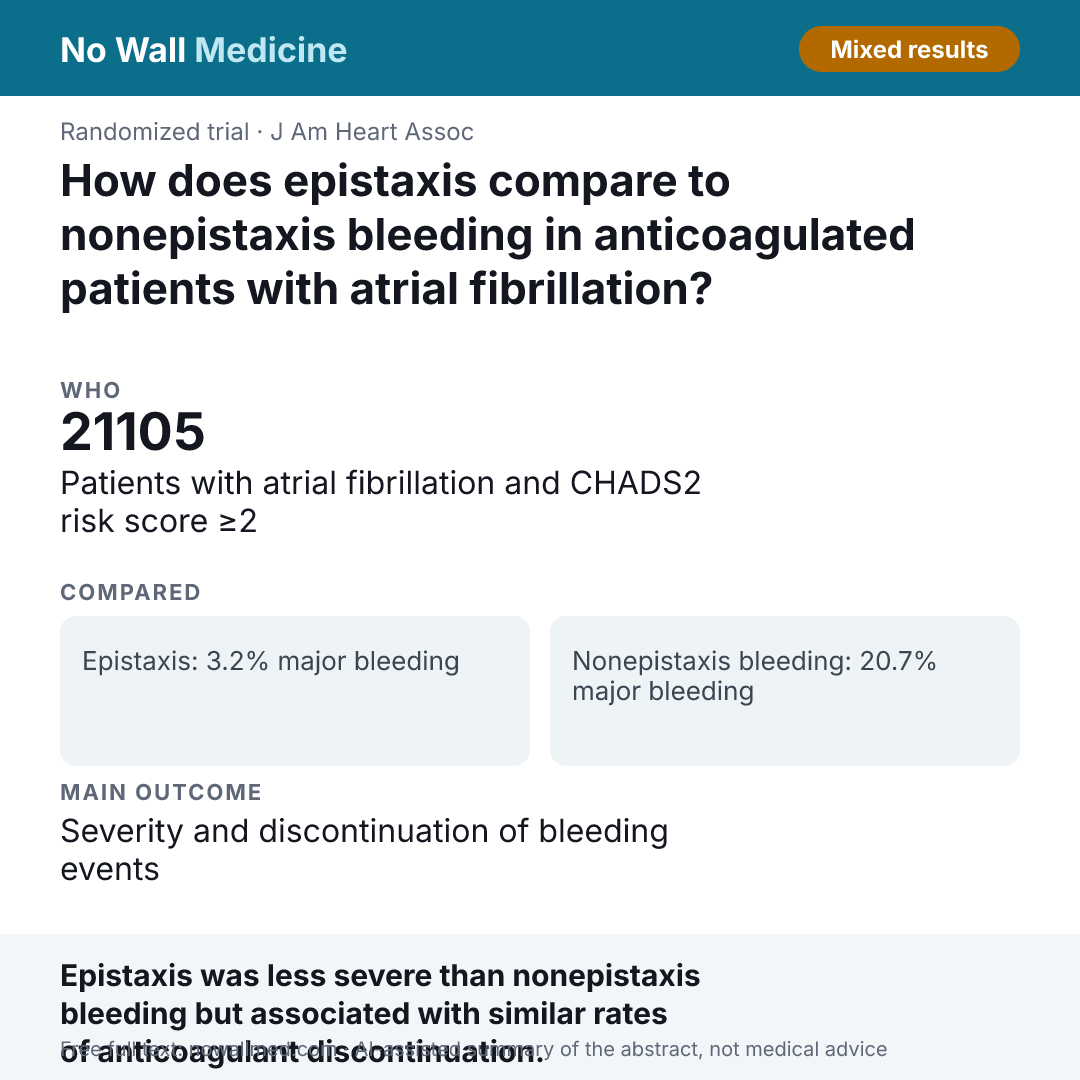
Epistaxis Versus Nonepistaxis Bleeding in Anticoagulated Patients With Atrial Fibrillation: Results From the ENGAGE AF-TIMI 48 Trial
Randomized trialMixed results
How does epistaxis compare to nonepistaxis bleeding in anticoagulated patients with atrial fibrillation?
Who
21105
Patients with atrial fibrillation and CHADS2 risk score ≥2
Compared
Epistaxis: 3.2% major bleeding
Nonepistaxis bleeding: 20.7% major bleeding
Main outcome
Severity and discontinuation of bleeding events
Result: hazard ratio 0.73 (95% CI 0.62 to 0.86) for lower-dose edoxaban
Bottom line: Epistaxis was less severe than nonepistaxis bleeding but associated with similar rates of anticoagulant discontinuation.
J Am Heart Assoc · 2025-01-10 · Save PNG
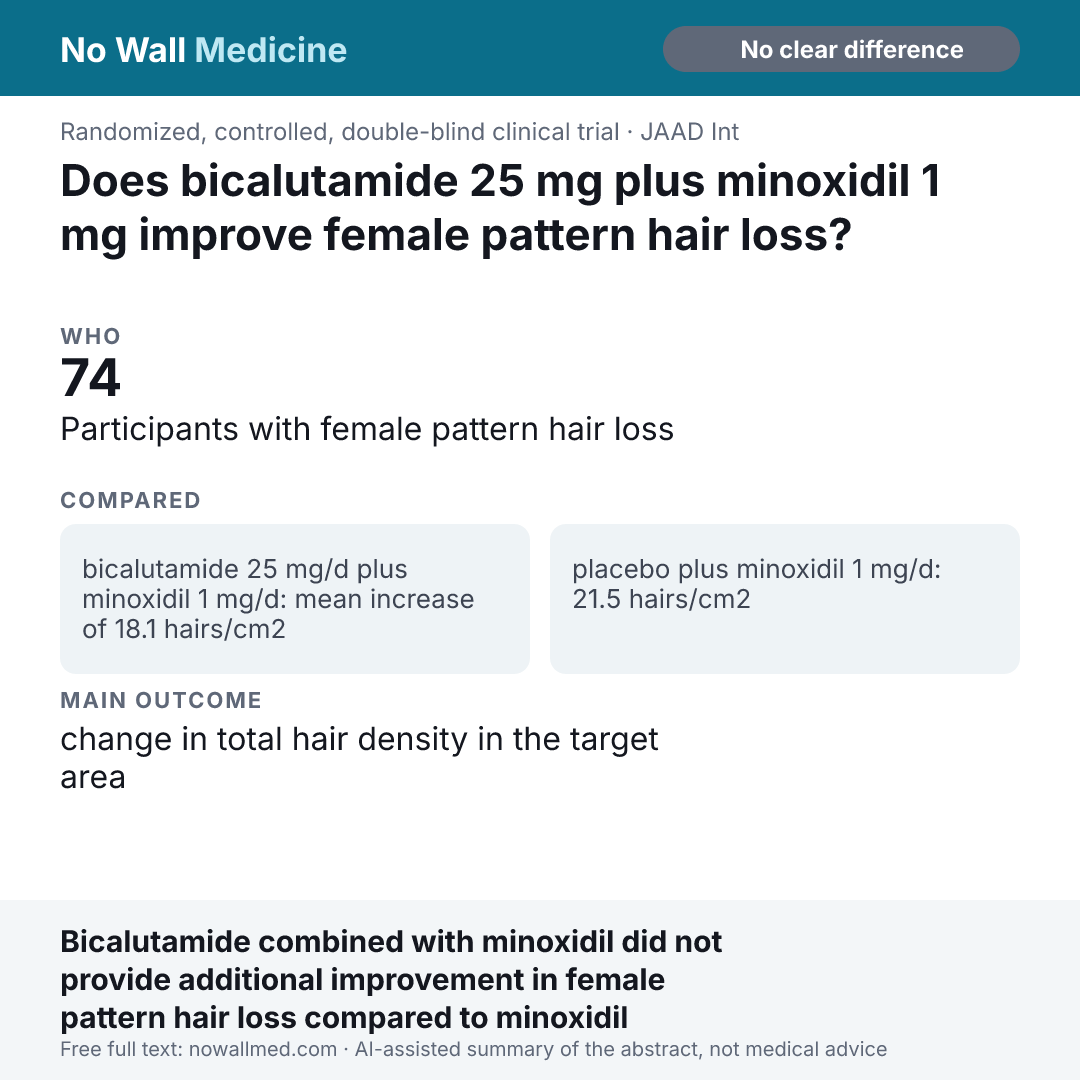
Bicalutamide 25 mg combined with minoxidil 1 mg versus minoxidil 1 mg for female pattern hair loss: A randomized double-blind clinical trial
Randomized, controlled, double-blind clinical trialNo clear difference
Does bicalutamide 25 mg plus minoxidil 1 mg improve female pattern hair loss?
Who
74
Participants with female pattern hair loss
Compared
bicalutamide 25 mg/d plus minoxidil 1 mg/d: mean increase of 18.1 hairs/cm2
placebo plus minoxidil 1 mg/d: 21.5 hairs/cm2
Main outcome
change in total hair density in the target area
Bottom line: Bicalutamide combined with minoxidil did not provide additional improvement in female pattern hair loss compared to minoxidil alone.
Limitation: Single-center study and short follow-up period (24 weeks).
JAAD Int · 2025-01-10 · Save PNG
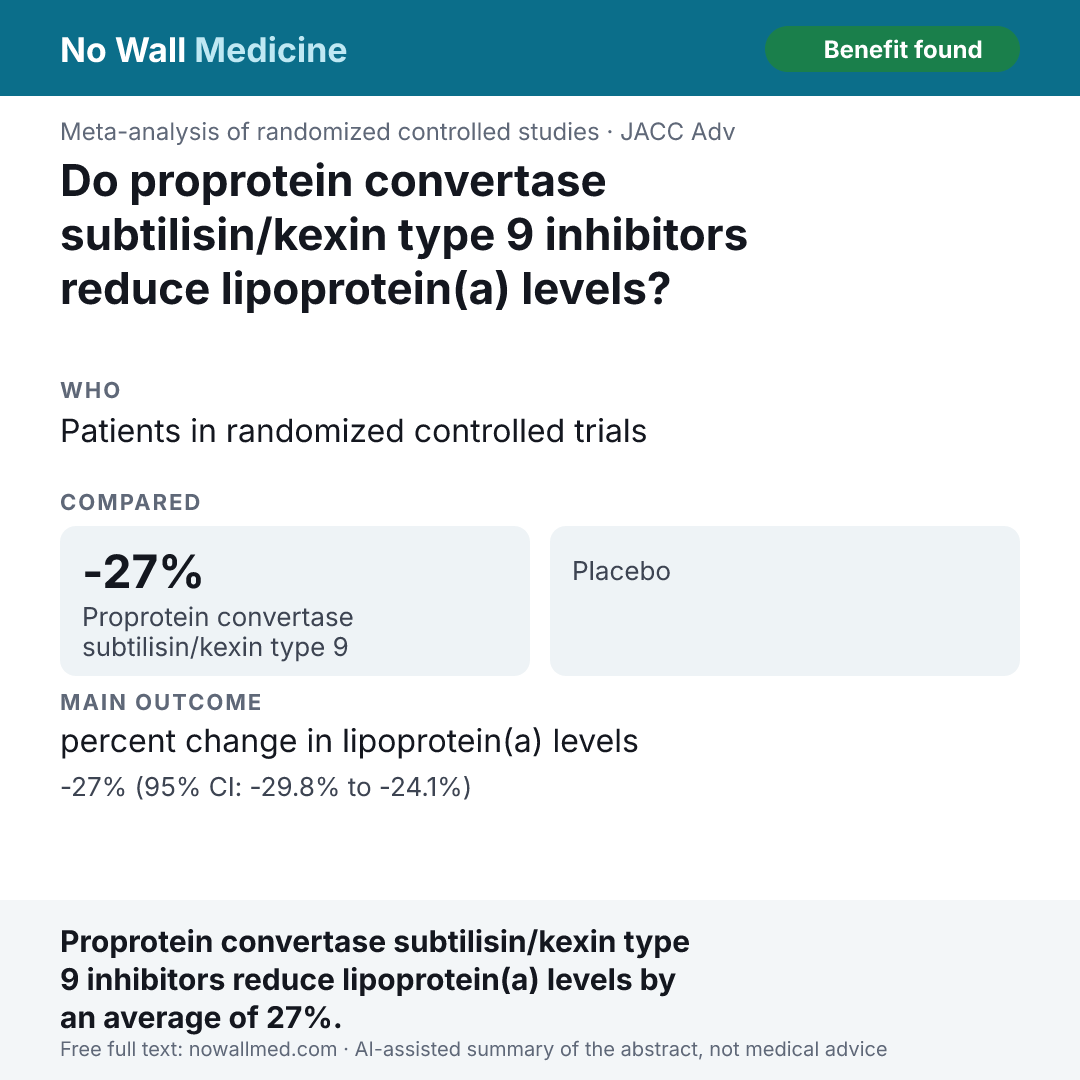
Impact of Proprotein Convertase Subtilisin/Kexin Type 9 Inhibitors on Lipoprotein(a): A Meta-Analysis and Meta-Regression of Randomized Controlled Trials
Meta-analysis of randomized controlled studiesBenefit found
Do proprotein convertase subtilisin/kexin type 9 inhibitors reduce lipoprotein(a) levels?
Who
Patients in randomized controlled trials
Compared
-27%Proprotein convertase subtilisin/kexin type 9 inhibitors
Placebo
Main outcome
percent change in lipoprotein(a) levels
Result: -27% (95% CI: -29.8% to -24.1%)
Bottom line: Proprotein convertase subtilisin/kexin type 9 inhibitors reduce lipoprotein(a) levels by an average of 27%.
JACC Adv · 2025-01-10 · Save PNG
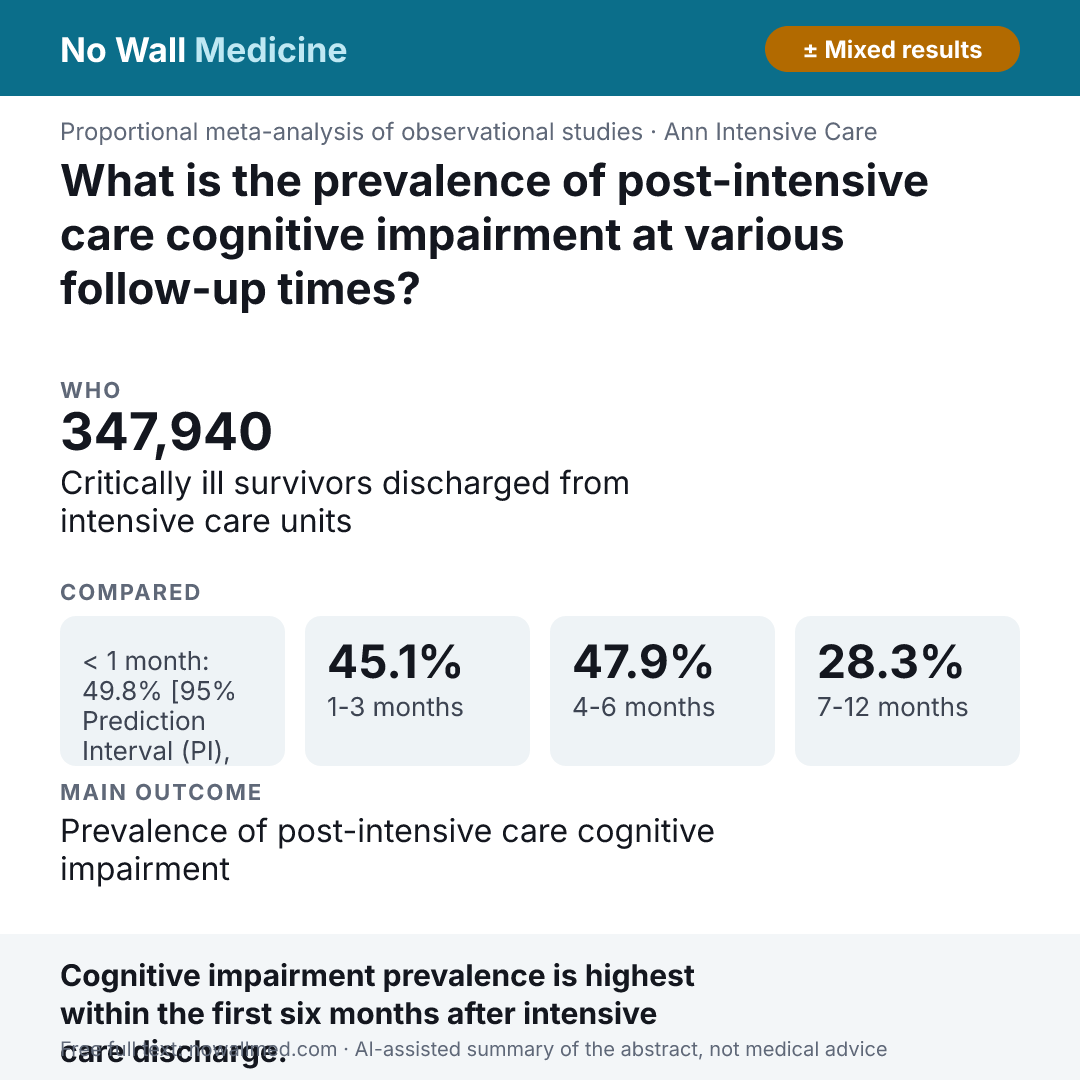
Estimated prevalence of post-intensive care cognitive impairment at short-term and long-term follow-ups: a proportional meta-analysis of observational studies
Proportional meta-analysis of observational studiesMixed results
What is the prevalence of post-intensive care cognitive impairment at various follow-up times?
Who
347,940
Critically ill survivors discharged from intensive care units
Compared
< 1 month: 49.8% [95% Prediction Interval (PI), 39.9%-59.7%, n = 19]
45.1%1-3 months (95% PI, 34.8%-55.5%, n = 23)
47.9%4-6 months (95% PI, 35.9%-60.0%, n = 16)
28.3%7-12 months (95% PI, 19.9%-37.6%, n = 19)
Main outcome
Prevalence of post-intensive care cognitive impairment
Bottom line: Cognitive impairment prevalence is highest within the first six months after intensive care discharge.
Ann Intensive Care · 2025-01-10 · Save PNG
Organ-specific malperfusion in acute type A aortic dissection: epidemiological meta-analysis of incidence rates
Meta-analysis of 40 studiesMixed results
What is the incidence and mortality of organ-specific malperfusion in acute type A aortic dissection?
Who
35 361
Patients with acute type A aortic dissection
Compared
12%Peripheral limb malperfusion (95% c.i. 10 to 14)
11%Lower limb or iliofemoral (95% c.i. 9 to 14)
1%Spinal malperfusion (95% c.i. 1 to 2)
Main outcome
In-hospital mortality rate associated with organ-specific malperfusion
Bottom line: In-hospital mortality varies by malperfusion type, with mesenteric, coronary, and cerebral malperfusion showing the highest rates.
BJS Open · 2025-01-10 · Save PNG

Incidence and Risk of Thromboembolic and Cardiovascular Adverse Events with PARP Inhibitor Treatment in Patients with Metastatic Castration-resistant Prostate Cancer: A Systematic Review and Safety Meta-analysis
Systematic review and safety meta-analysisHarm found
What are the risks of cardiovascular and thromboembolic events with PARP inhibitor treatment?
Who
Patients with metastatic castration-resistant prostate cancer
Compared
PARP inhibitor treatment
non-PARP inhibitor treatment
Main outcome
Major adverse cardiovascular events, thromboembolic events, and hypertension
Result: high-grade MACEs RR 2.03 (p = 0.03), thromboembolic events RR 2.15 (p = 0.002)
Bottom line: PARP inhibitors are associated with higher risk of high-grade cardiovascular and thromboembolic toxicity compared to other treatments.
Limitation: cardiovascular and thromboembolic adverse events are uncommon
Eur Urol Open Sci · 2025-01-10 · Save PNG

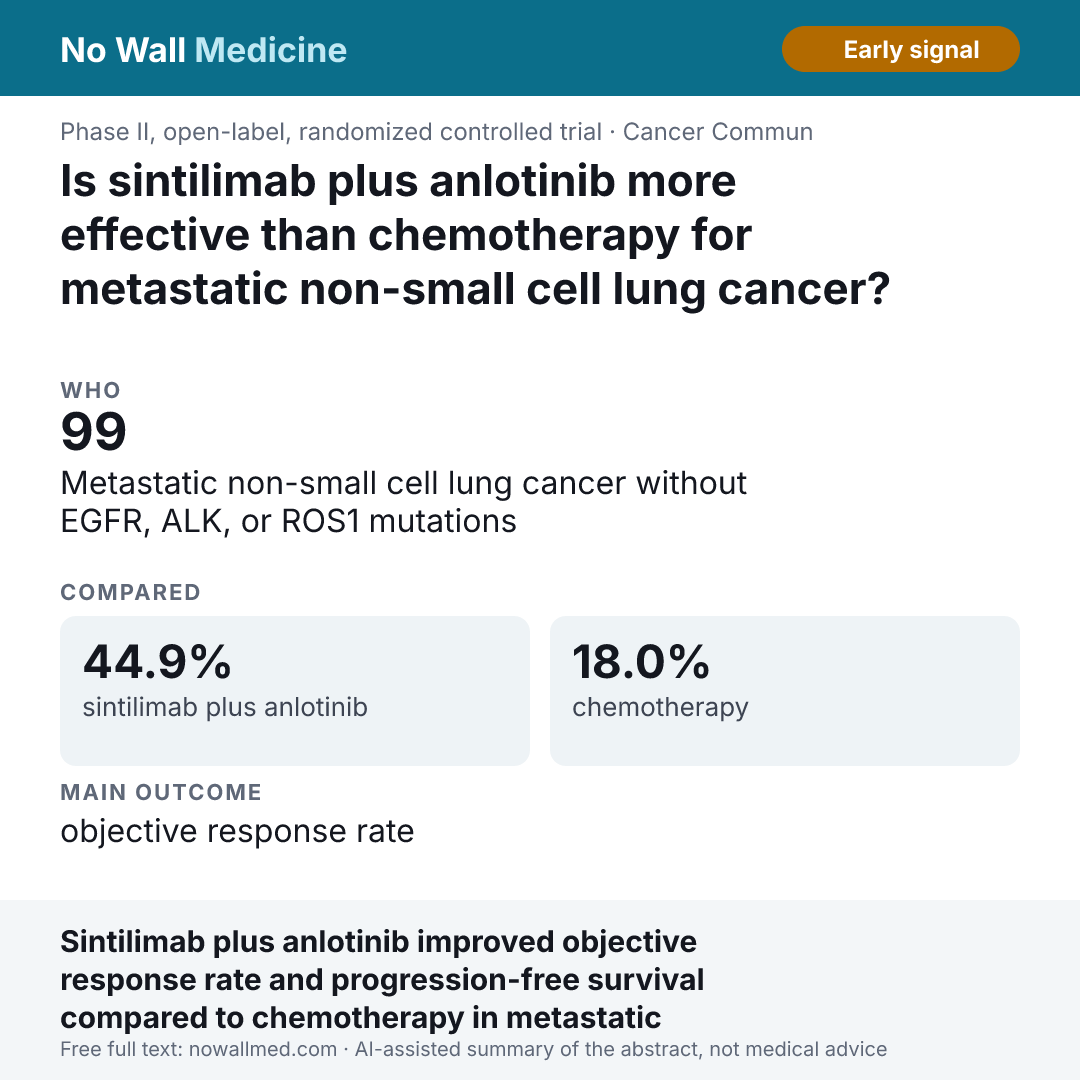
Efficacy and safety of first-line sintilimab plus anlotinib versus chemotherapy for metastatic non-small cell lung cancer: a phase II, open-label, randomized controlled trial
Phase II, open-label, randomized controlled trialEarly signal
Is sintilimab plus anlotinib more effective than chemotherapy for metastatic non-small cell lung cancer?
Who
99
Metastatic non-small cell lung cancer without EGFR, ALK, or ROS1 mutations
Compared
44.9%sintilimab plus anlotinib (95% CI 30.7%-59.8%)
18.0%chemotherapy (95% CI 8.6%-31.4%)
Main outcome
objective response rate
Result: hazard ratio 0.39 (95% CI 0.23-0.67)
Bottom line: Sintilimab plus anlotinib improved objective response rate and progression-free survival compared to chemotherapy in metastatic non-small cell lung cancer.
Cancer Commun · 2025-01-10 · Save PNG