Visual abstracts
New randomized trials and meta-analyses from leading journals at a glance: who was studied, what was compared, and what was found. Every paper is free to read in full.
All specialtiesCardiology 4346Oncology 3688Gastroenterology & Hepatology 1737Infectious Disease 3330Neurology 1716Psychiatry & Mental Health 2033Pulmonology 1894Critical Care 1223Endocrinology & Diabetes 2263Pediatrics 2631Surgery 2292Orthopedics & Sports Medicine 815Neurosurgery 487Cardiothoracic & Vascular Surgery 565Plastic & Reconstructive Surgery 565Nephrology 976Rheumatology 714Hematology 981Dermatology 553Ophthalmology 474Obstetrics & Gynecology 1485Public & Global Health 885Radiology & Imaging 579Anesthesiology 887Urology 688ENT (Otolaryngology) 462Emergency Medicine 462Allergy & Immunology 275Geriatrics 886Family Medicine & Primary Care 510Medical Genetics & Genomics 600Pathology & Laboratory Medicine 145Physical Medicine & Rehabilitation 657Palliative Care 390Nutrition 1352Digital Health & AI 2010General Medicine 297
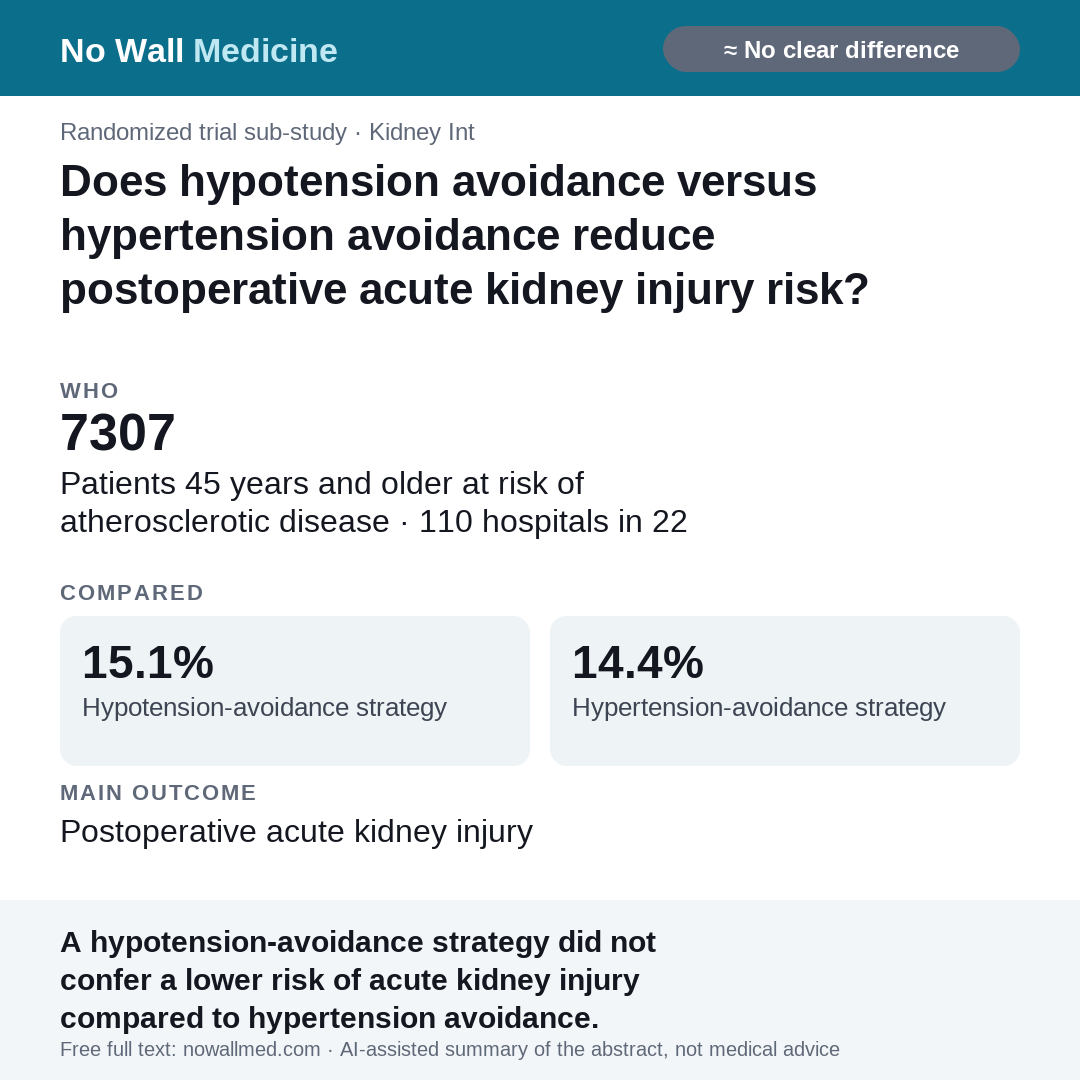
A sub-study of the POISE-3 randomized trial examined effects of a perioperative hypotension-avoidance strategy versus a hypertension-avoidance strategy on the risk of acute kidney injury
Randomized trial sub-studyNo clear difference
Does hypotension avoidance versus hypertension avoidance reduce postoperative acute kidney injury risk?
Who
7307
Patients 45 years and older at risk of atherosclerotic disease · 110 hospitals in 22 countries
Compared
15.1%Hypotension-avoidance strategy
14.4%Hypertension-avoidance strategy
Main outcome
Postoperative acute kidney injury
Bottom line: A hypotension-avoidance strategy did not confer a lower risk of acute kidney injury compared to hypertension avoidance.
Kidney Int · 2024-10-25Download image
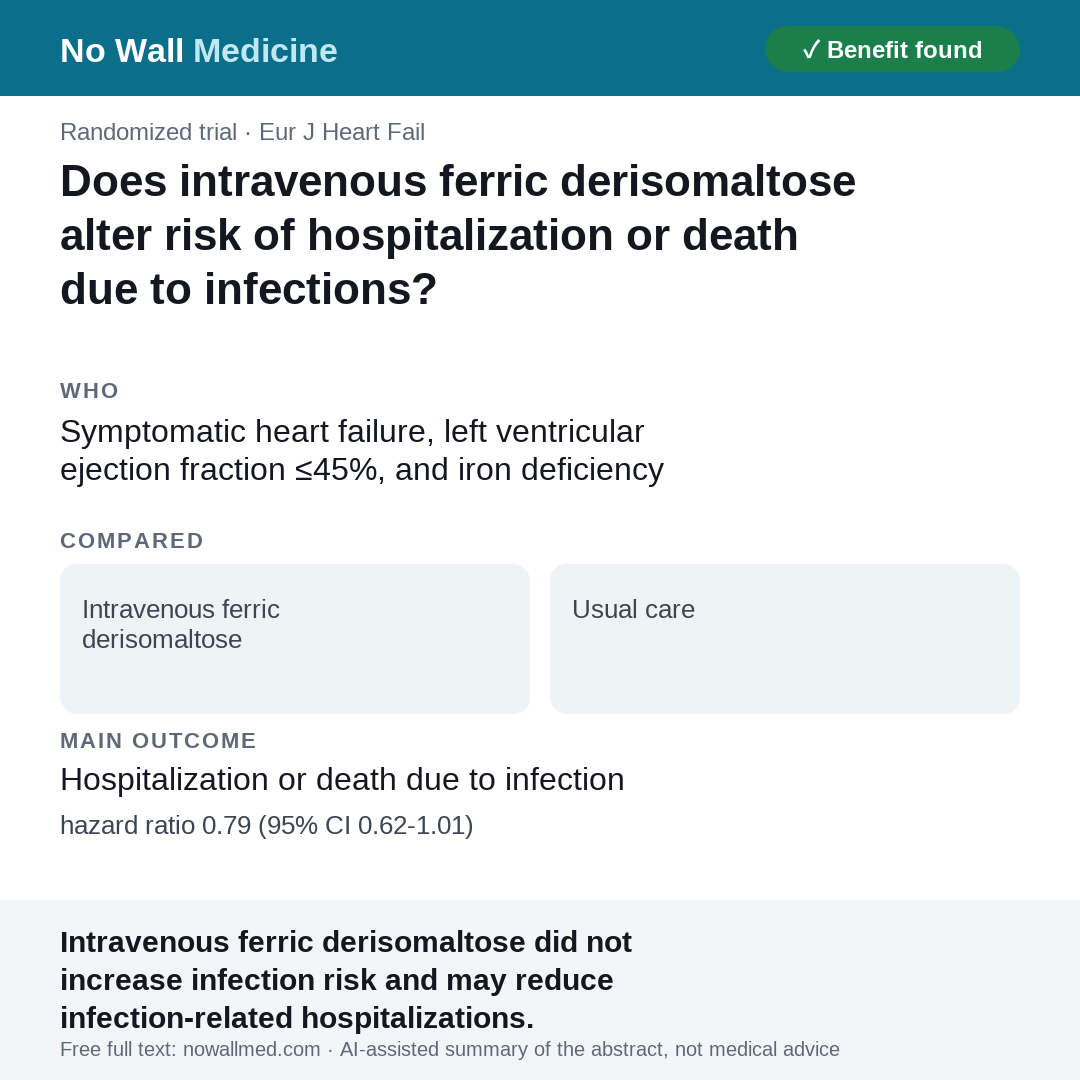
Effect of correcting iron deficiency on the risk of serious infection in heart failure: Insights from the IRONMAN trial
Randomized trialBenefit found
Does intravenous ferric derisomaltose alter risk of hospitalization or death due to infections?
Who
Symptomatic heart failure, left ventricular ejection fraction ≤45%, and iron deficiency
Compared
Intravenous ferric derisomaltose
Usual care
Main outcome
Hospitalization or death due to infection
Result: hazard ratio 0.79 (95% CI 0.62-1.01)
Bottom line: Intravenous ferric derisomaltose did not increase infection risk and may reduce infection-related hospitalizations.
Eur J Heart Fail · 2024-10-25Download image
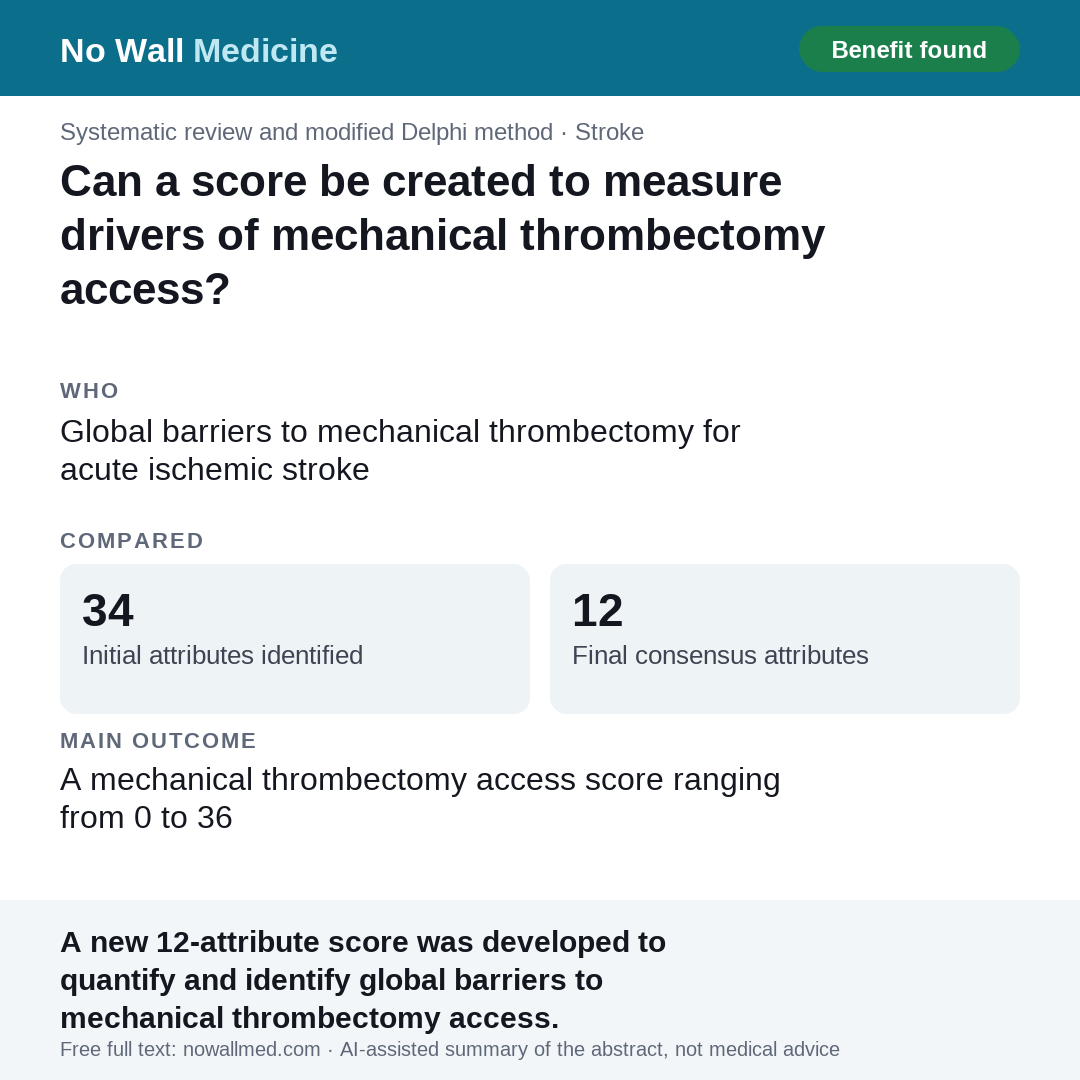
Mechanical Thrombectomy Access Score: A Systematic Review and Modified Delphi of Global Barriers to Endovascular Therapy
Systematic review and modified Delphi methodBenefit found
Can a score be created to measure drivers of mechanical thrombectomy access?
Who
Global barriers to mechanical thrombectomy for acute ischemic stroke
Compared
34Initial attributes identified
12Final consensus attributes
Main outcome
A mechanical thrombectomy access score ranging from 0 to 36
Bottom line: A new 12-attribute score was developed to quantify and identify global barriers to mechanical thrombectomy access.
Stroke · 2024-10-25Download image
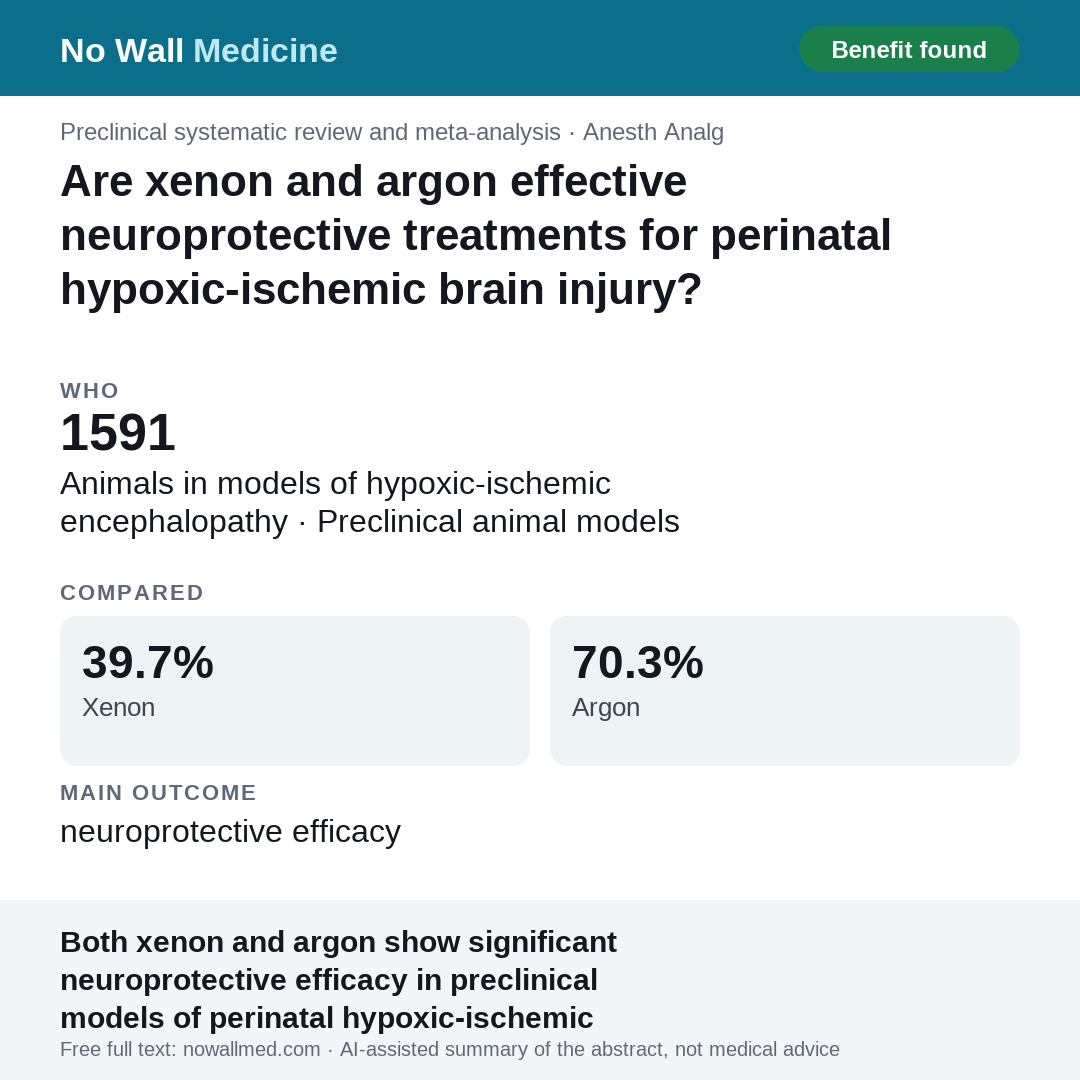
Xenon and Argon as Neuroprotective Treatments for Perinatal Hypoxic-Ischemic Brain Injury: A Preclinical Systematic Review and Meta-Analysis
Preclinical systematic review and meta-analysisBenefit found
Are xenon and argon effective neuroprotective treatments for perinatal hypoxic-ischemic brain injury?
Who
1591
Animals in models of hypoxic-ischemic encephalopathy · Preclinical animal models (mice, rats, and pigs)
Compared
39.7%Xenon (95% confidence interval 28.3%-51.1%)
70.3%Argon (95% confidence interval 59.0%-81.7%)
Main outcome
neuroprotective efficacy
Bottom line: Both xenon and argon show significant neuroprotective efficacy in preclinical models of perinatal hypoxic-ischemic encephalopathy.
Anesth Analg · 2024-10-25Download image
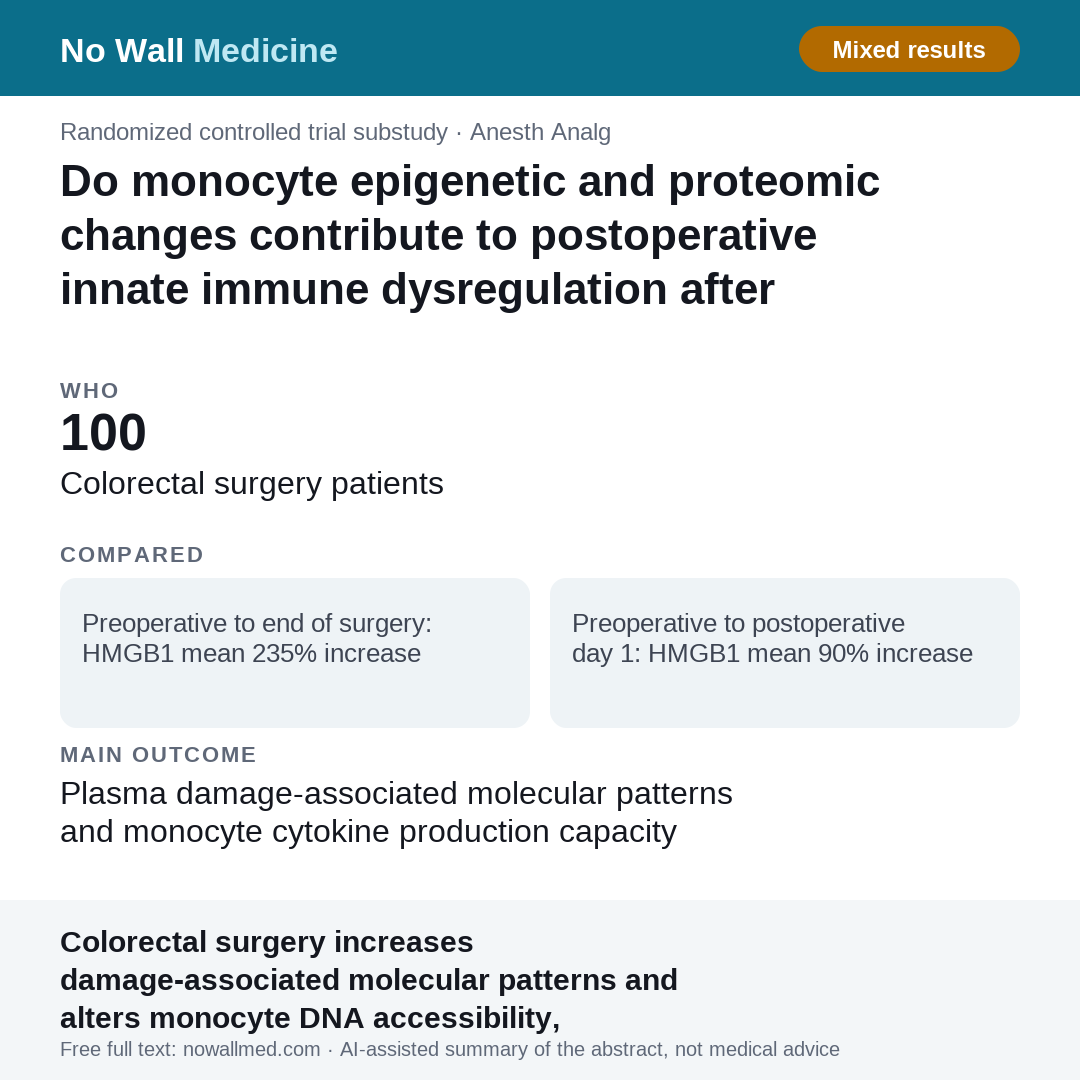
Postoperative Innate Immune Dysregulation, Proteomic, and Monocyte Epigenomic Changes After Colorectal Surgery: A Substudy of a Randomized Controlled Trial
Randomized controlled trial substudyMixed results
Do monocyte epigenetic and proteomic changes contribute to postoperative innate immune dysregulation after colorectal surgery?
Who
100
Colorectal surgery patients
Compared
Preoperative to end of surgery: HMGB1 mean 235% increase
Preoperative to postoperative day 1: HMGB1 mean 90% increase
Main outcome
Plasma damage-associated molecular patterns and monocyte cytokine production capacity
Bottom line: Colorectal surgery increases damage-associated molecular patterns and alters monocyte DNA accessibility, potentially contributing to postoperative immune dysregulation.
Anesth Analg · 2024-10-25Download image
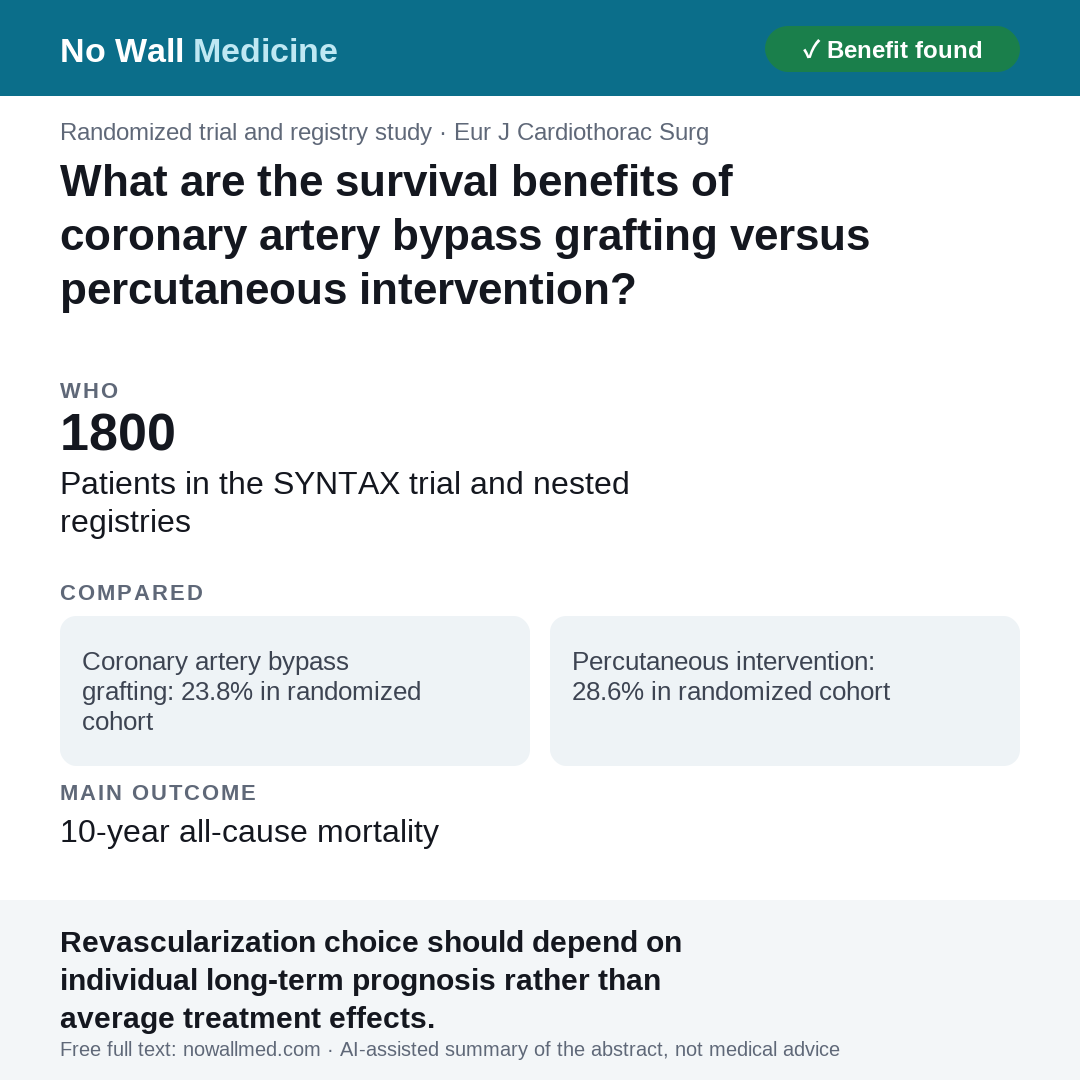
Ten-year survival benefit and appropriateness of surgical versus percutaneous revascularization in synergy between percutaneous coronary intervention with Taxus and cardiac surgery randomized trial
Randomized trial and registry studyBenefit found
What are the survival benefits of coronary artery bypass grafting versus percutaneous intervention?
Who
1800
Patients in the SYNTAX trial and nested registries
Compared
Coronary artery bypass grafting: 23.8% in randomized cohort
Percutaneous intervention: 28.6% in randomized cohort
Main outcome
10-year all-cause mortality
Bottom line: Revascularization choice should depend on individual long-term prognosis rather than average treatment effects.
Eur J Cardiothorac Surg · 2024-10-25Download image
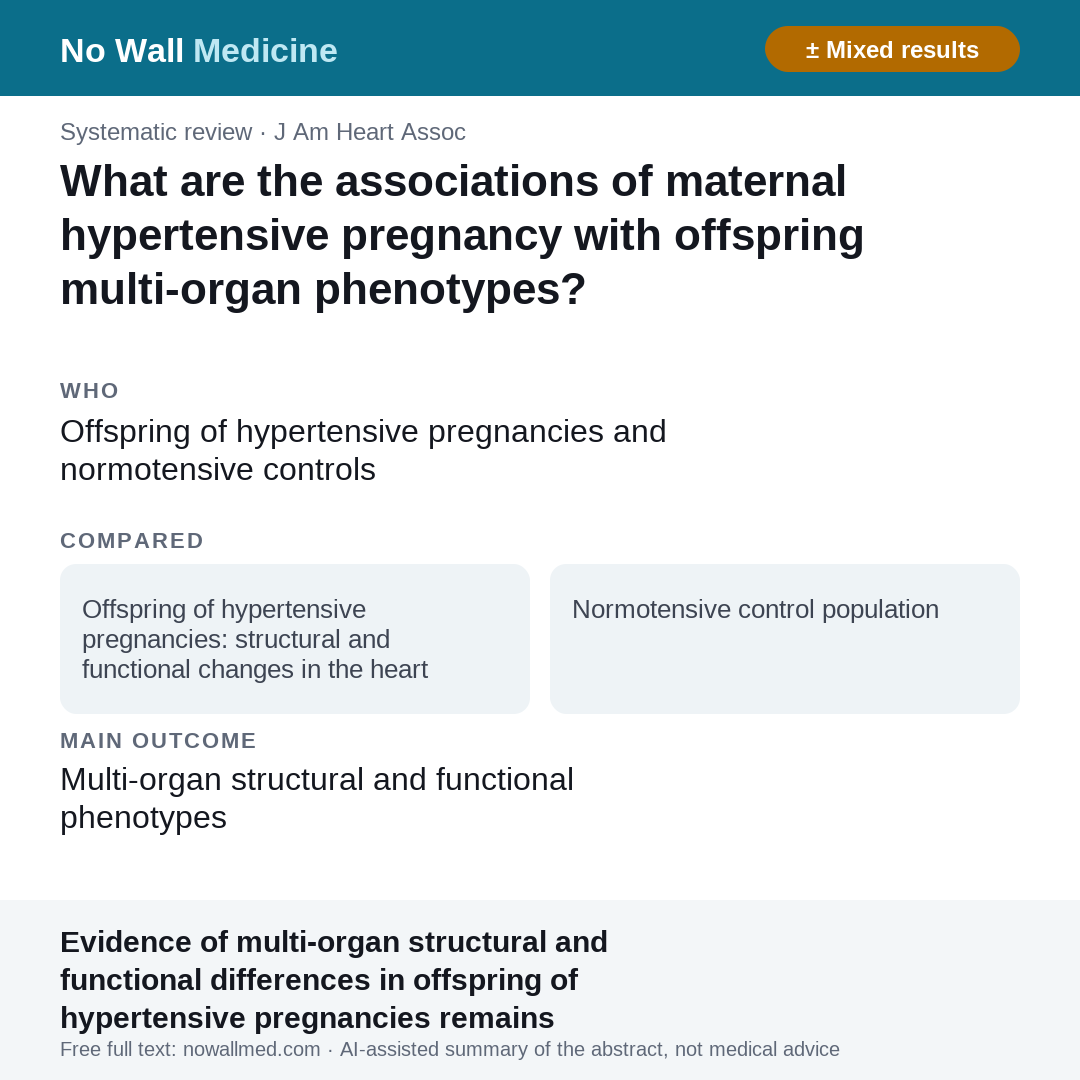
Multi-Organ Phenotypes of Offspring Born Following Hypertensive Disorders of Pregnancy: A Systematic Review
Systematic reviewMixed results
What are the associations of maternal hypertensive pregnancy with offspring multi-organ phenotypes?
Who
Offspring of hypertensive pregnancies and normotensive controls
Compared
Offspring of hypertensive pregnancies: structural and functional changes in the heart
Normotensive control population
Main outcome
Multi-organ structural and functional phenotypes
Bottom line: Evidence of multi-organ structural and functional differences in offspring of hypertensive pregnancies remains inconsistent.
Limitation: Evidence could be strengthened through well-designed and conducted prospective studies.
J Am Heart Assoc · 2024-10-25Download image
Plasma Protein Biomarkers and Long-Term Cardiovascular Mortality Risk in Patients With Chronic Coronary Heart Disease
Cohort studyBenefit found
Do plasma protein biomarkers predict long-term cardiovascular mortality in coronary heart disease patients?
Who
7745
Patients with coronary heart disease from the LIPID trial
Compared
Models with clinical risk factors: C-statistic 0.709 during trial and 0.713 during 10-year follow-up
Models with clinical risk factors and 6 biomarkers: C-statistic 0.775 during trial and 0.751 during 10-year follow-up
Main outcome
Cardiovascular death
Bottom line: Six plasma protein biomarkers are associated with cardiovascular death risk for at least 15 years.
J Am Heart Assoc · 2024-10-25Download image
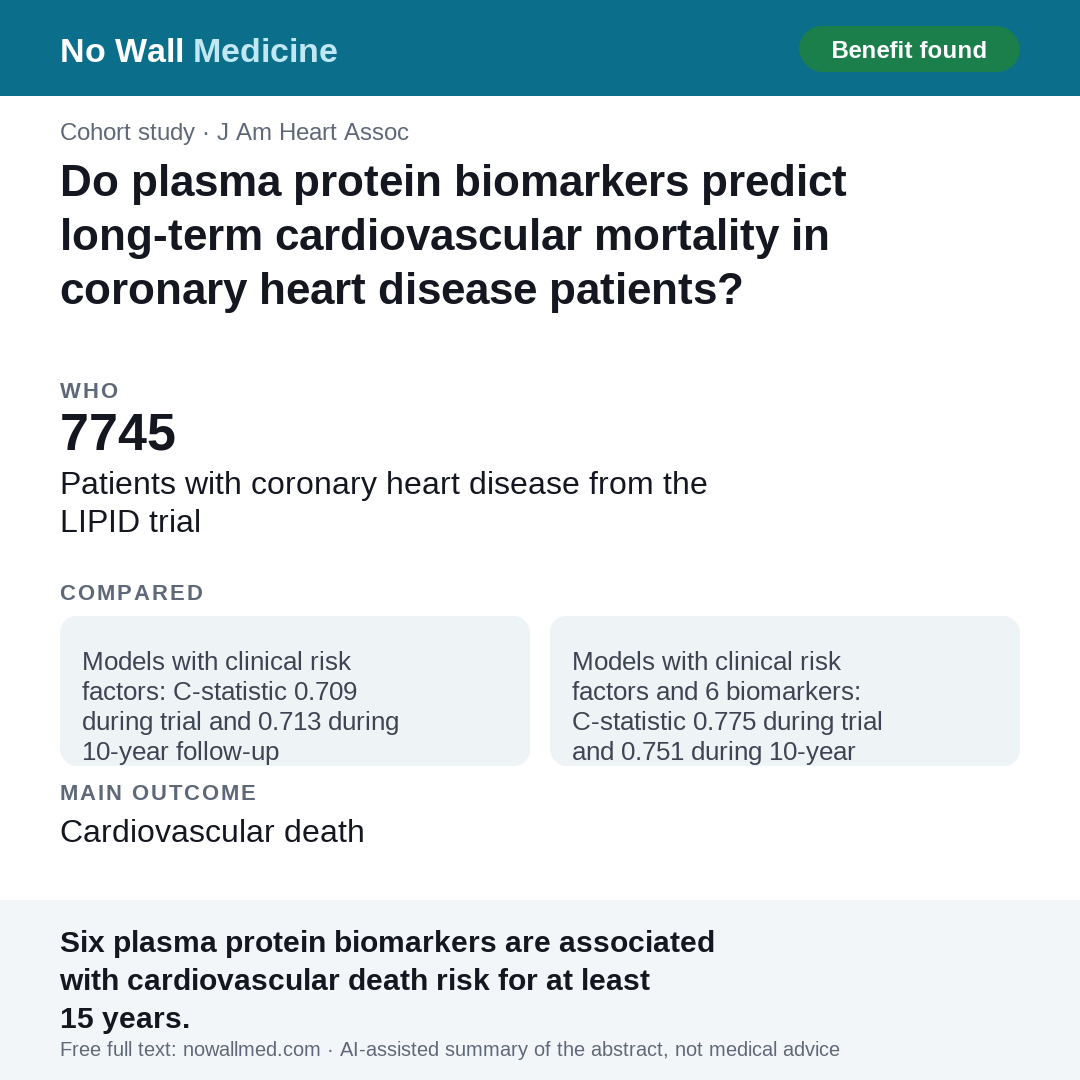
Cost-utility analysis of adapted problem adaptation therapy for depression in mild-to-moderate dementia caused by Alzheimer's disease: PATHFINDER randomised controlled trial
Randomized controlled trialNo clear difference
Is adapted problem adaptation therapy cost-effective for depression in mild-to-moderate Alzheimer's dementia?
Who
336
People with mild-to-moderate dementia caused by Alzheimer's disease and depression
Compared
Adapted PATH intervention plus treatment as usual
Treatment as usual alone
Main outcome
Quality-adjusted life-years
Result: mean difference in QALYs 0.027 (95% CI -0.004 to 0.059)
Bottom line: Adapted problem adaptation therapy showed potential cost savings and higher quality of life, but improvements were not statistically significant.
BJPsych Open · 2024-10-25Download image
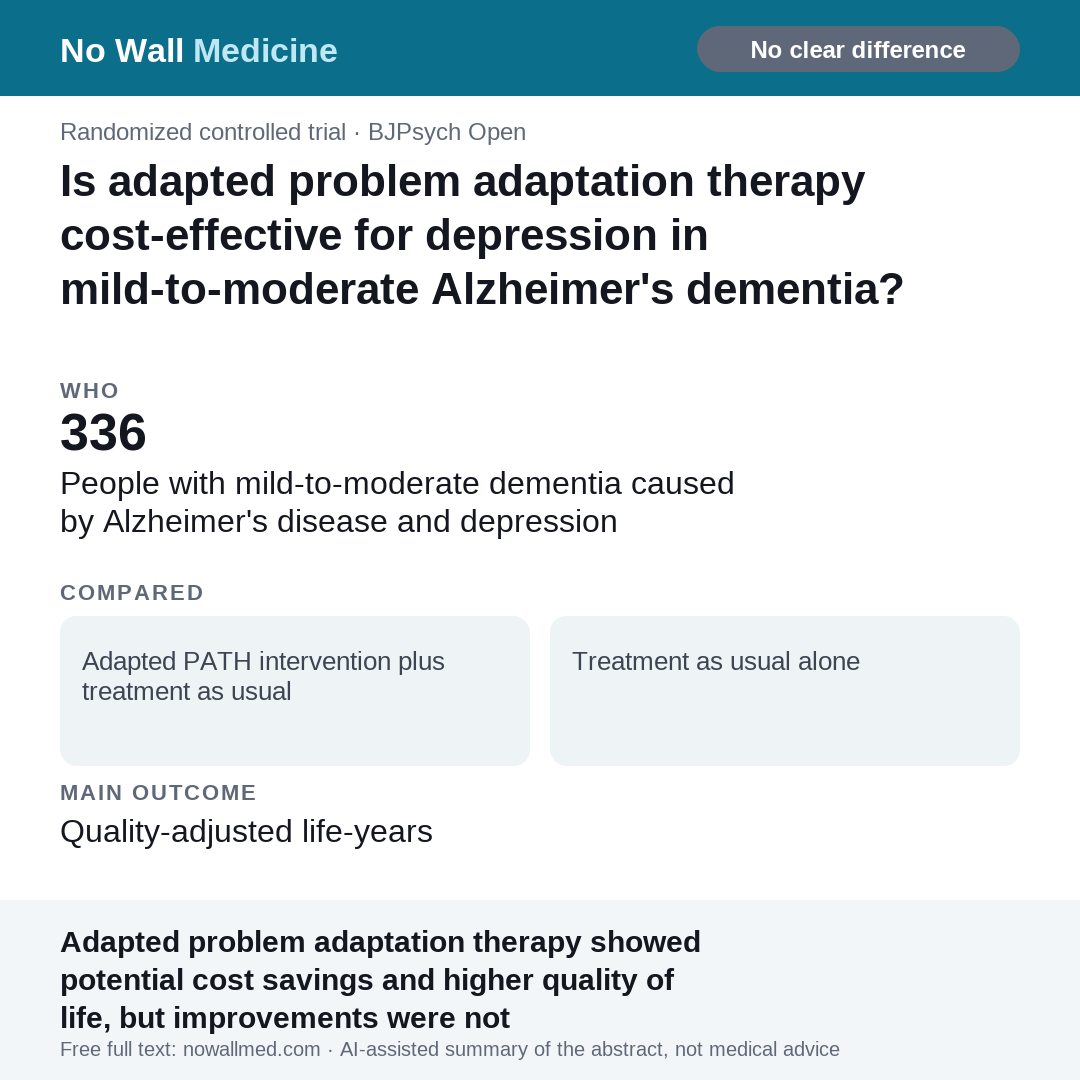
The effect of protecting women against economic shocks to fight HIV in Cameroon, Africa: The POWER randomised controlled trial
Randomised controlled trialMixed results
Does health insurance protect against economic shocks to reduce HIV and STI incidence?
Who
1508
Adolescent girls and women over age 15 in high-risk sexual activity · Cameroon, Africa
Compared
Health insurance intervention
Control group
Main outcome
Incidence of HIV and sexually transmitted infections
Result: odds ratio 0.109 (95% confidence interval [0.014, 0.870])
Bottom line: Health insurance reduced HIV incidence among women in transactional sex but had no effect on commercial sex workers or STIs.
Limitation: Challenges collecting reliable STI data and low HIV incidence among commercial sex workers.
PLOS Med · 2024-10-24Download image
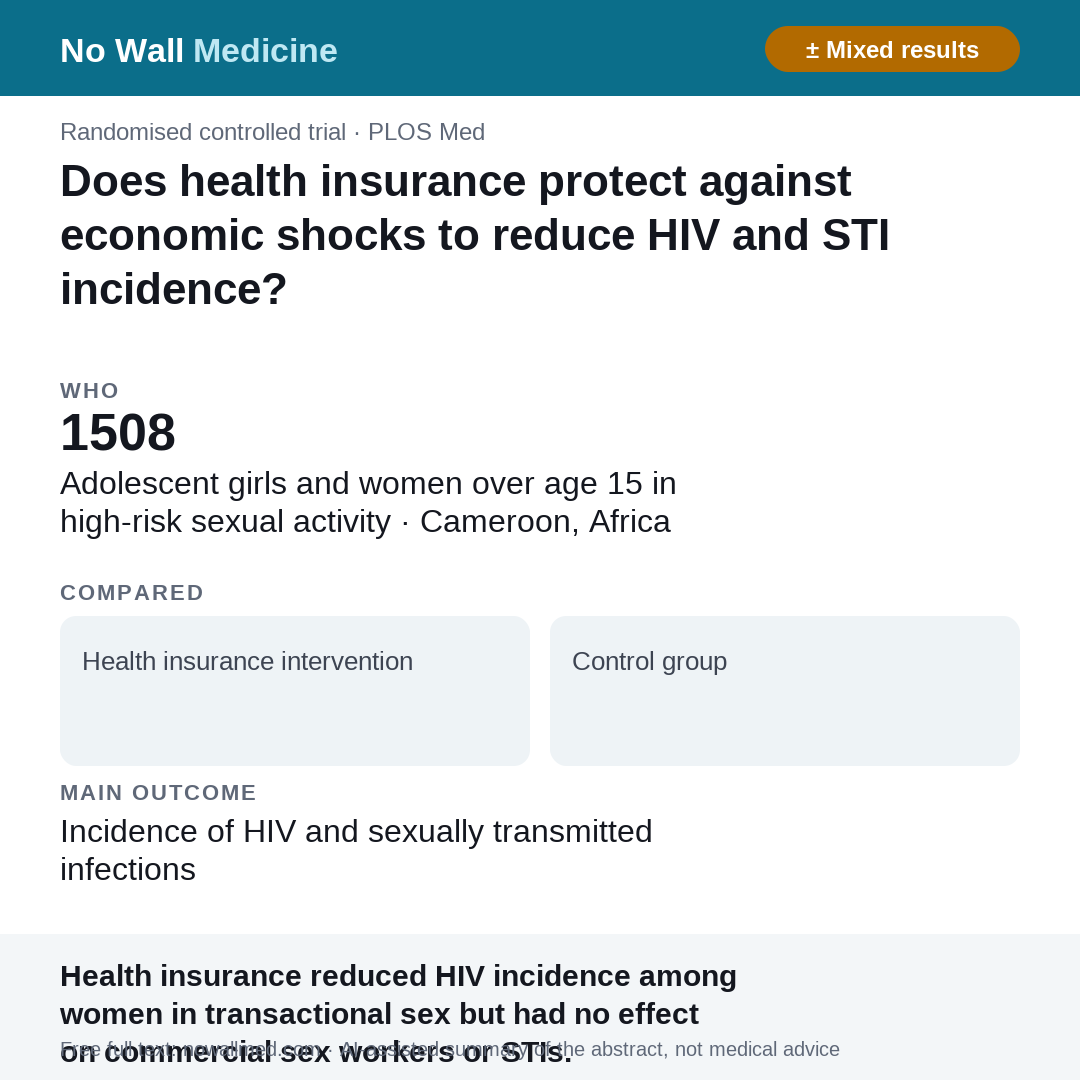
Non-invasive prediction of human embryonic ploidy using artificial intelligence: a systematic review and meta-analysis
Systematic review and meta-analysisBenefit found
How accurate is artificial intelligence for non-invasive prediction of embryonic ploidy?
Who
6879
6879 embryos (3110 euploid and 3769 aneuploid)
Compared
Artificial intelligence prediction: sensitivity 0.71 (95% CI: 0.59-0.81)
Artificial intelligence prediction: specificity 0.75 (95% CI: 0.69-0.80)
Main outcome
predicting embryonic euploidy
Result: area under the curve 0.80 (95% CI 0.76 to 0.83)
Bottom line: Artificial intelligence shows promising performance as an auxiliary decision-making tool for predicting embryonic euploidy using imaging.
Limitation: Heterogeneity was influenced by decision support system type, external validation, risk of bias, and publication year.
Funded by: National Key R&D Program of China and Shengjing Hospital
eClinicalMedicine · 2024-10-24Download image
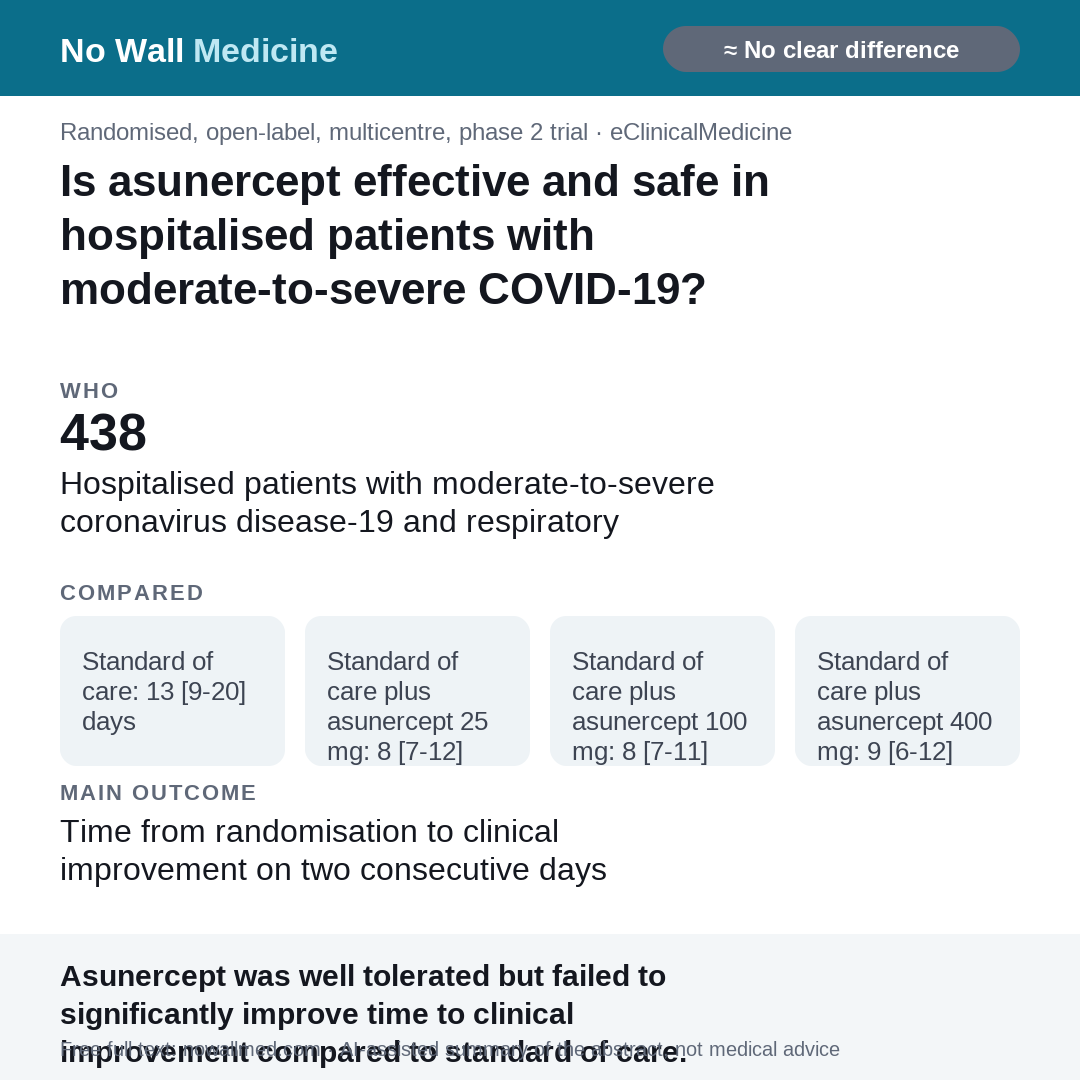
Efficacy and safety of asunercept, a CD95L-selective inhibitor, in hospitalised patients with moderate-to-severe COVID-19: ASUNCTIS, a multicentre, randomised, open-label, controlled, phase 2 trial
Randomised, open-label, multicentre, phase 2 trialNo clear difference
Is asunercept effective and safe in hospitalised patients with moderate-to-severe COVID-19?
Who
438
Hospitalised patients with moderate-to-severe coronavirus disease-19 and respiratory deterioration · 12 Russian and Spanish hospitals
Compared
Standard of care: 13 [9-20] days
Standard of care plus asunercept 25 mg: 8 [7-12] days
Standard of care plus asunercept 100 mg: 8 [7-11] days
Standard of care plus asunercept 400 mg: 9 [6-12] days
Main outcome
Time from randomisation to clinical improvement on two consecutive days
Result: one-sided p-value = 0.041
Bottom line: Asunercept was well tolerated but failed to significantly improve time to clinical improvement compared to standard of care.
Funded by: Apogenix GmbH, Heidelberg, Germany
eClinicalMedicine · 2024-10-24Download image
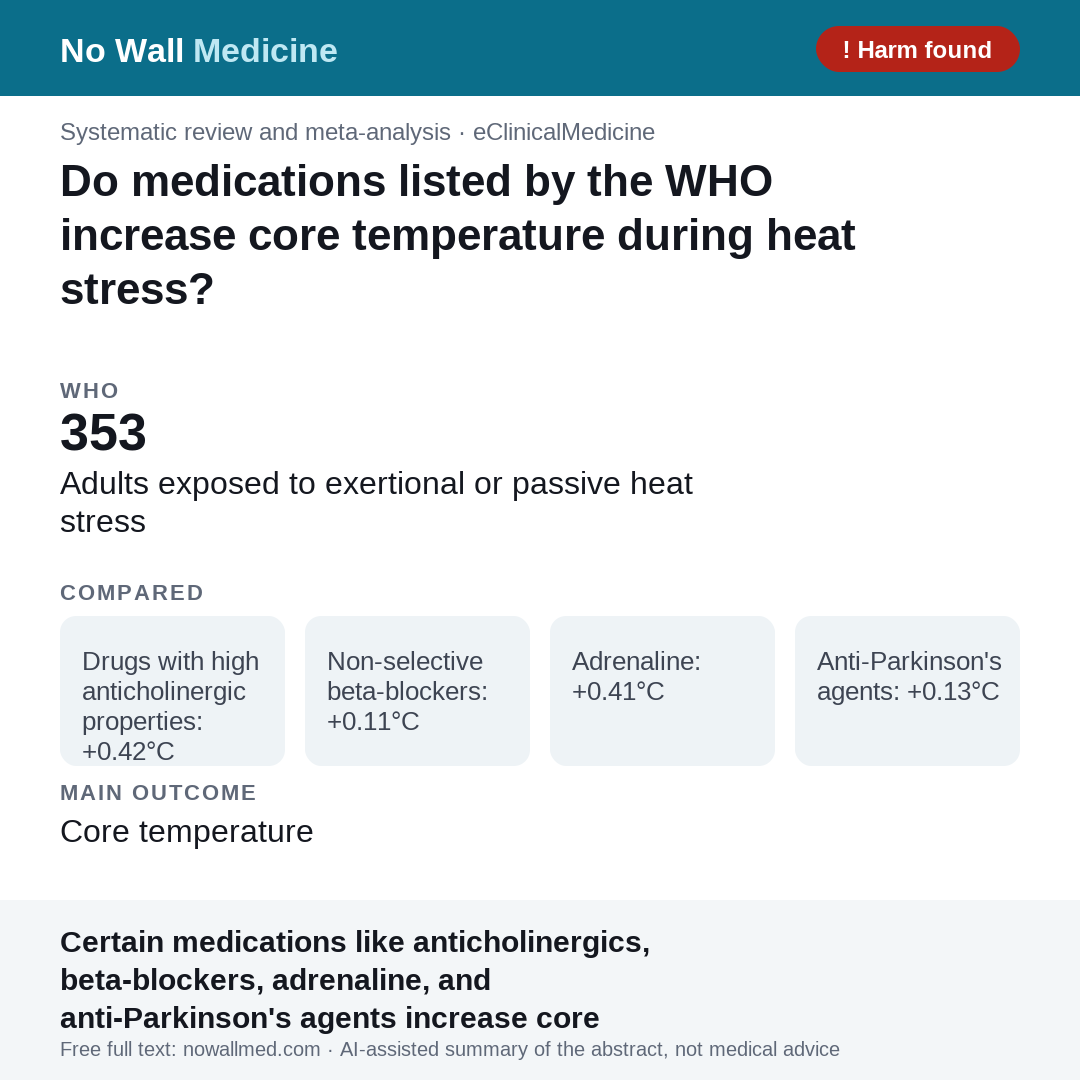
The effect of prescription and over-the-counter medications on core temperature in adults during heat stress: a systematic review and meta-analysis
Systematic review and meta-analysisHarm found
Do medications listed by the WHO increase core temperature during heat stress?
Who
353
Adults exposed to exertional or passive heat stress
Compared
Drugs with high anticholinergic properties: +0.42°C
Non-selective beta-blockers: +0.11°C
Adrenaline: +0.41°C
Anti-Parkinson's agents: +0.13°C
Main outcome
Core temperature
Result: +0.42°C (95% CI 0.04, 0.79°C)
Bottom line: Certain medications like anticholinergics, beta-blockers, adrenaline, and anti-Parkinson's agents increase core temperature during heat stress.
Limitation: Evidence is predominantly limited to healthy young men with short heat stress exposures.
Funded by: National Health and Medical Research Council
eClinicalMedicine · 2024-10-24Download image
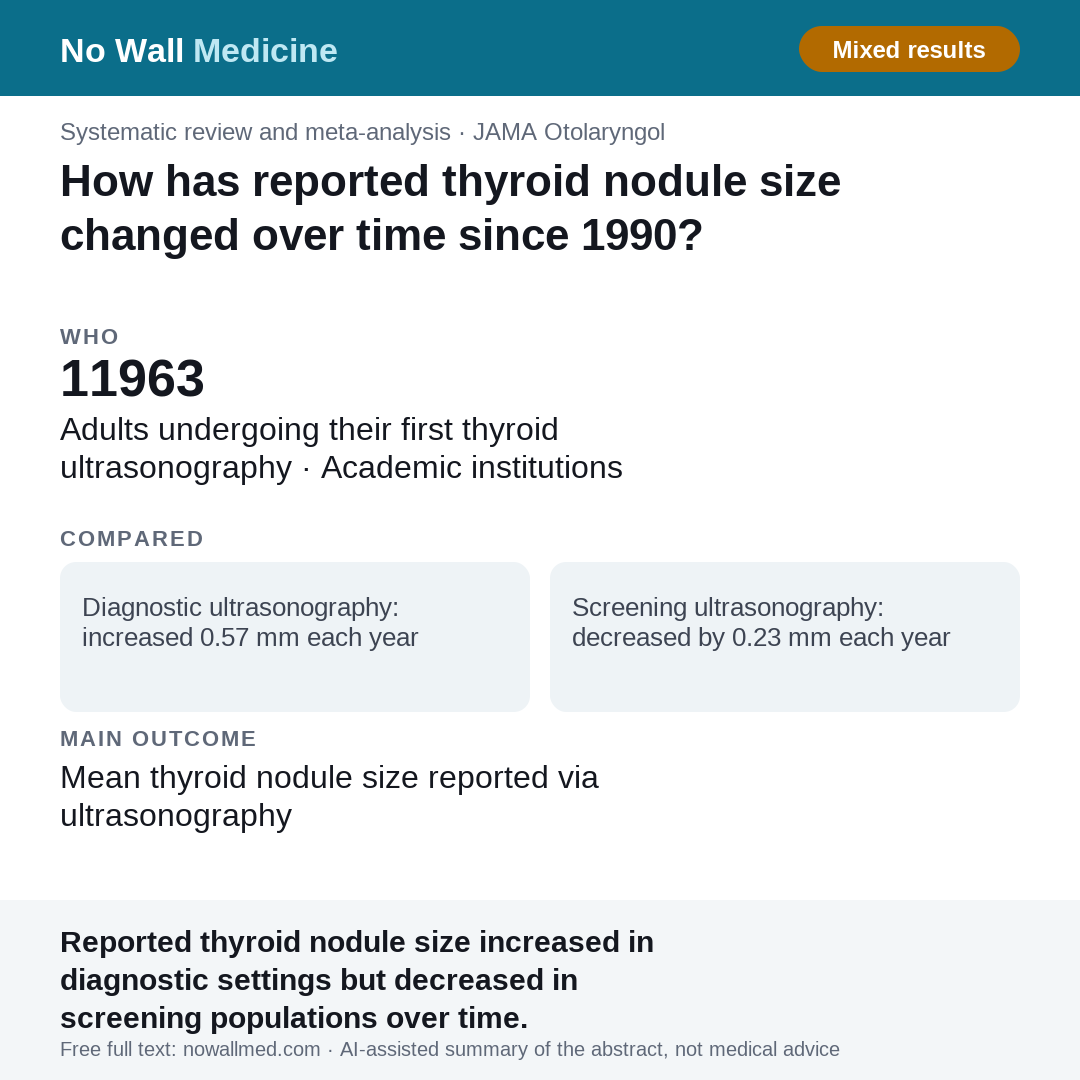
Temporal Trends in Thyroid Nodule Size on Ultrasonography: A Systematic Review and Meta-Analysis
Systematic review and meta-analysisMixed results
How has reported thyroid nodule size changed over time since 1990?
Who
11963
Adults undergoing their first thyroid ultrasonography · Academic institutions
Compared
Diagnostic ultrasonography: increased 0.57 mm each year
Screening ultrasonography: decreased by 0.23 mm each year
Main outcome
Mean thyroid nodule size reported via ultrasonography
Result: 0.52 mm increase each year (95% CI, 0.2-0.81)
Bottom line: Reported thyroid nodule size increased in diagnostic settings but decreased in screening populations over time.
JAMA Otolaryngol · 2024-10-24Download image
Effects of atrial fibrillation ablation on arrhythmia burden and ventricular function in end-stage heart failure: Lessons from CASTLE-HTx
Randomized trialBenefit found
Does atrial fibrillation ablation affect arrhythmia burden and ventricular function in end-stage heart failure?
Who
194
Patients with end-stage heart failure and atrial fibrillation
Compared
Catheter ablation: LVEF improved from 29.2±6.2% to 39.1±8.3%
Medical therapy alone
Main outcome
Atrial fibrillation burden, arrhythmia recurrences, and ventricular function
Bottom line: Atrial fibrillation ablation leads to decreased atrial fibrillation burden and improved left ventricular ejection fraction in end-stage heart failure.
Eur J Heart Fail · 2024-10-24Download image

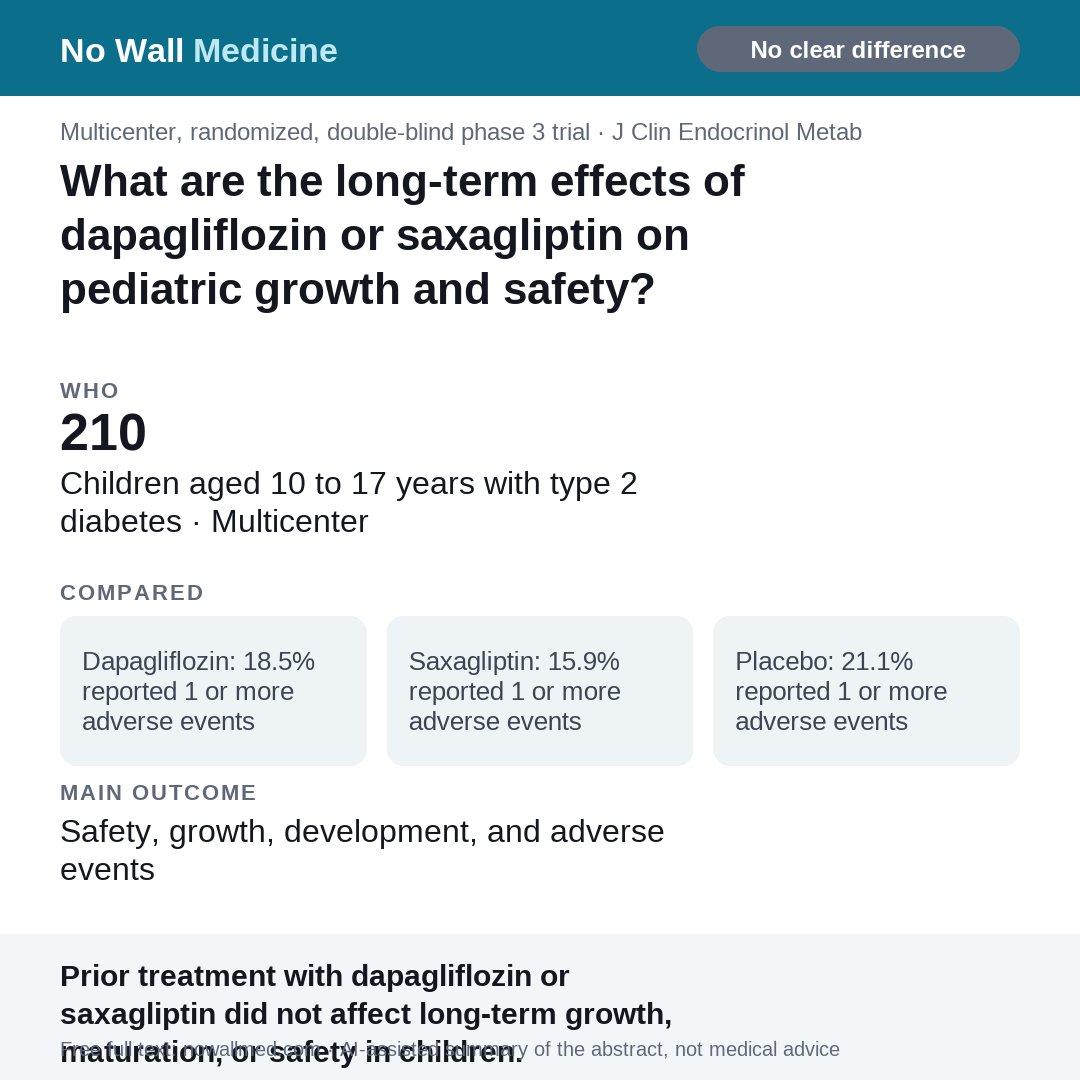
Safety, Growth, and Development After Dapagliflozin or Saxagliptin in Children With Type 2 Diabetes (T2NOW Follow-Up)
Multicenter, randomized, double-blind phase 3 trialNo clear difference
What are the long-term effects of dapagliflozin or saxagliptin on pediatric growth and safety?
Who
210
Children aged 10 to 17 years with type 2 diabetes · Multicenter
Compared
Dapagliflozin: 18.5% reported 1 or more adverse events
Saxagliptin: 15.9% reported 1 or more adverse events
Placebo: 21.1% reported 1 or more adverse events
Main outcome
Safety, growth, development, and adverse events
Bottom line: Prior treatment with dapagliflozin or saxagliptin did not affect long-term growth, maturation, or safety in children.
J Clin Endocrinol Metab · 2024-10-24Download image
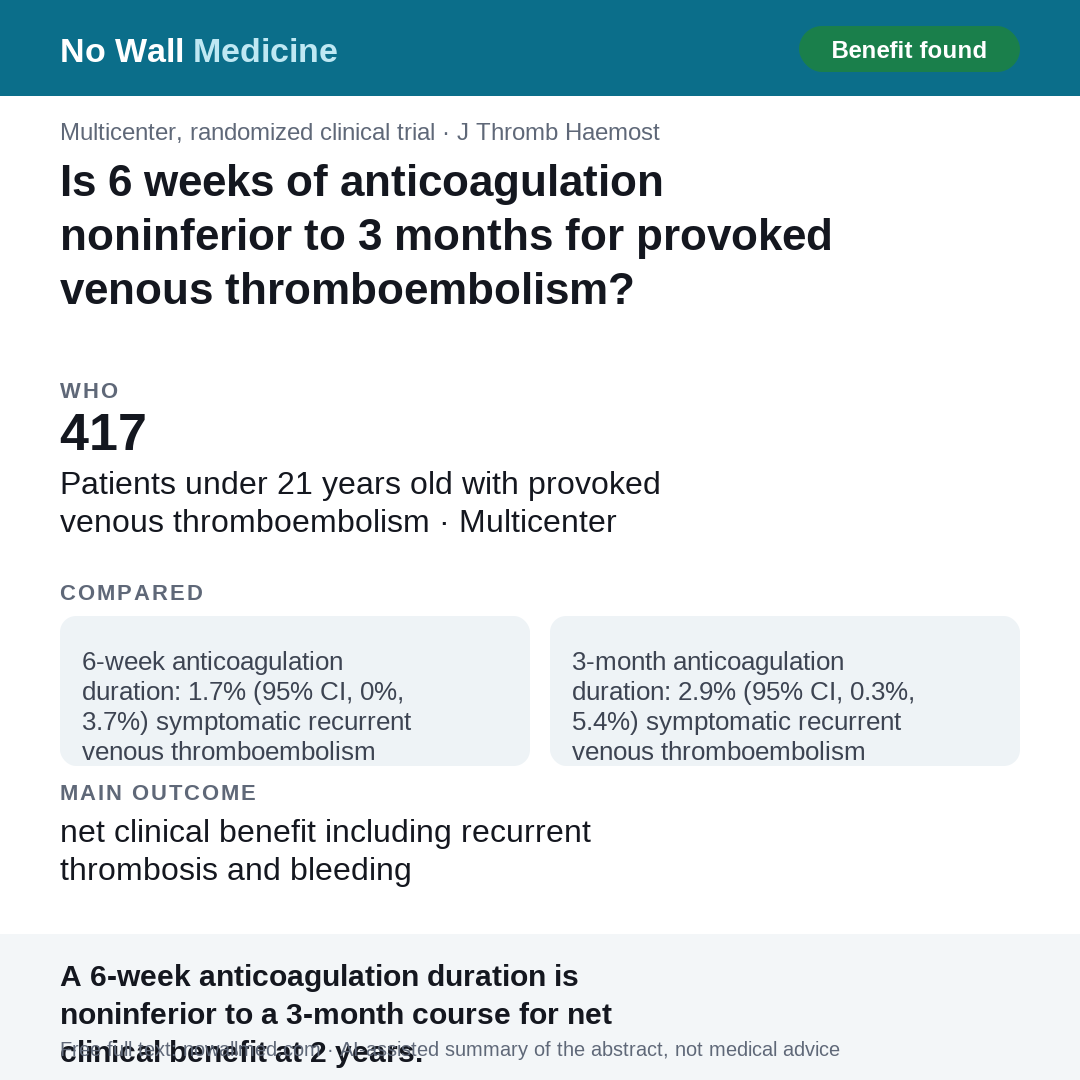
Duration of anticoagulation for venous thromboembolism in pediatric patients: Evaluation of the Duration of Therapy for Thrombosis in Children (Kids-DOTT) trial outcomes at 2 years
Multicenter, randomized clinical trialBenefit found
Is 6 weeks of anticoagulation noninferior to 3 months for provoked venous thromboembolism?
Who
417
Patients under 21 years old with provoked venous thromboembolism · Multicenter
Compared
6-week anticoagulation duration: 1.7% (95% CI, 0%, 3.7%) symptomatic recurrent venous thromboembolism
3-month anticoagulation duration: 2.9% (95% CI, 0.3%, 5.4%) symptomatic recurrent venous thromboembolism
Main outcome
net clinical benefit including recurrent thrombosis and bleeding
Bottom line: A 6-week anticoagulation duration is noninferior to a 3-month course for net clinical benefit at 2 years.
J Thromb Haemost · 2024-10-24Download image
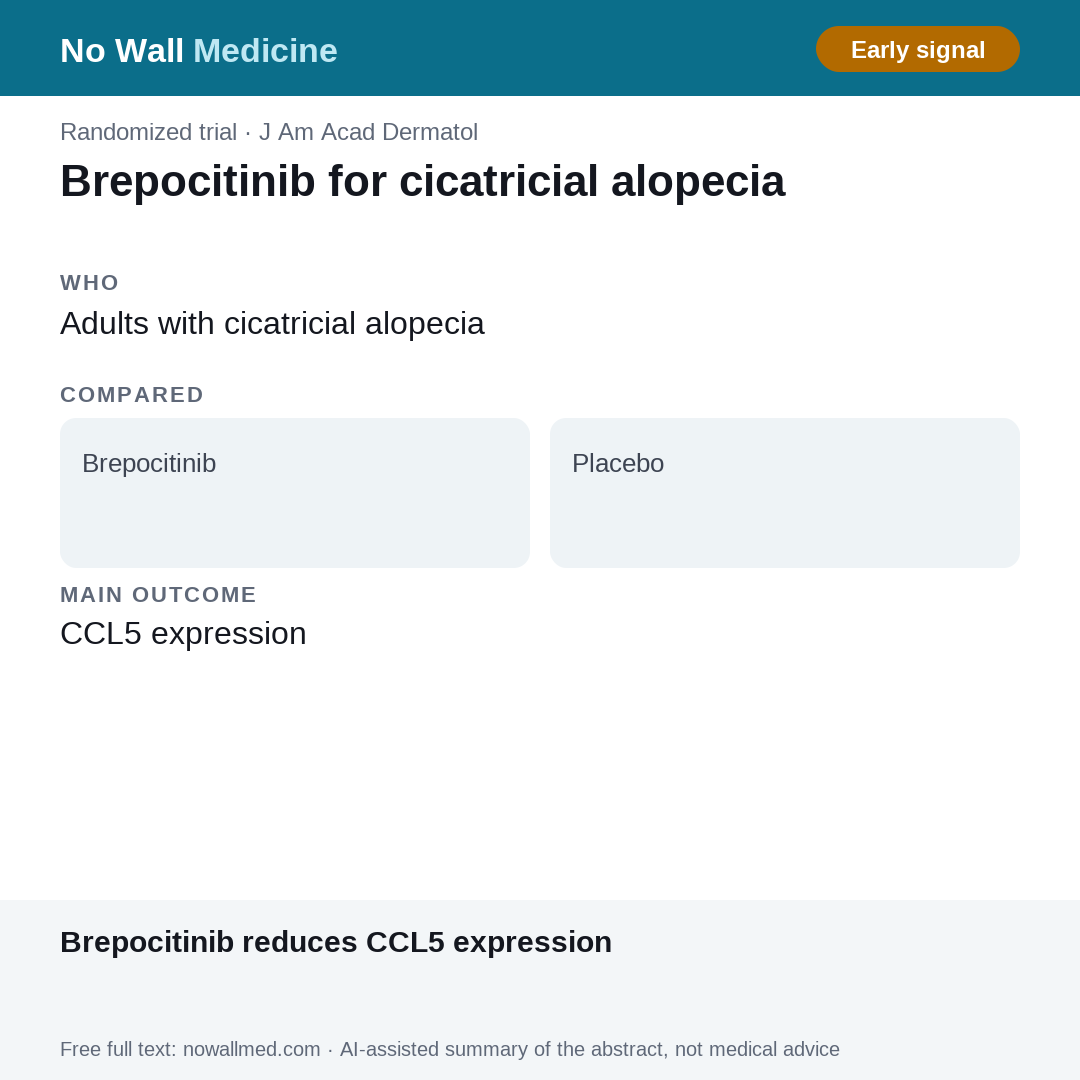
A phase 2a trial of brepocitinib for cicatricial alopecia
Randomized trialBenefit found
Brepocitinib for cicatricial alopecia
Who
Adults with cicatricial alopecia
Compared
Brepocitinib
Placebo
Main outcome
CCL5 expression
Bottom line: Brepocitinib reduces CCL5 expression
Limitation: Single-dose regimen, small placebo group
J Am Acad Dermatol · 2024-10-24Download image
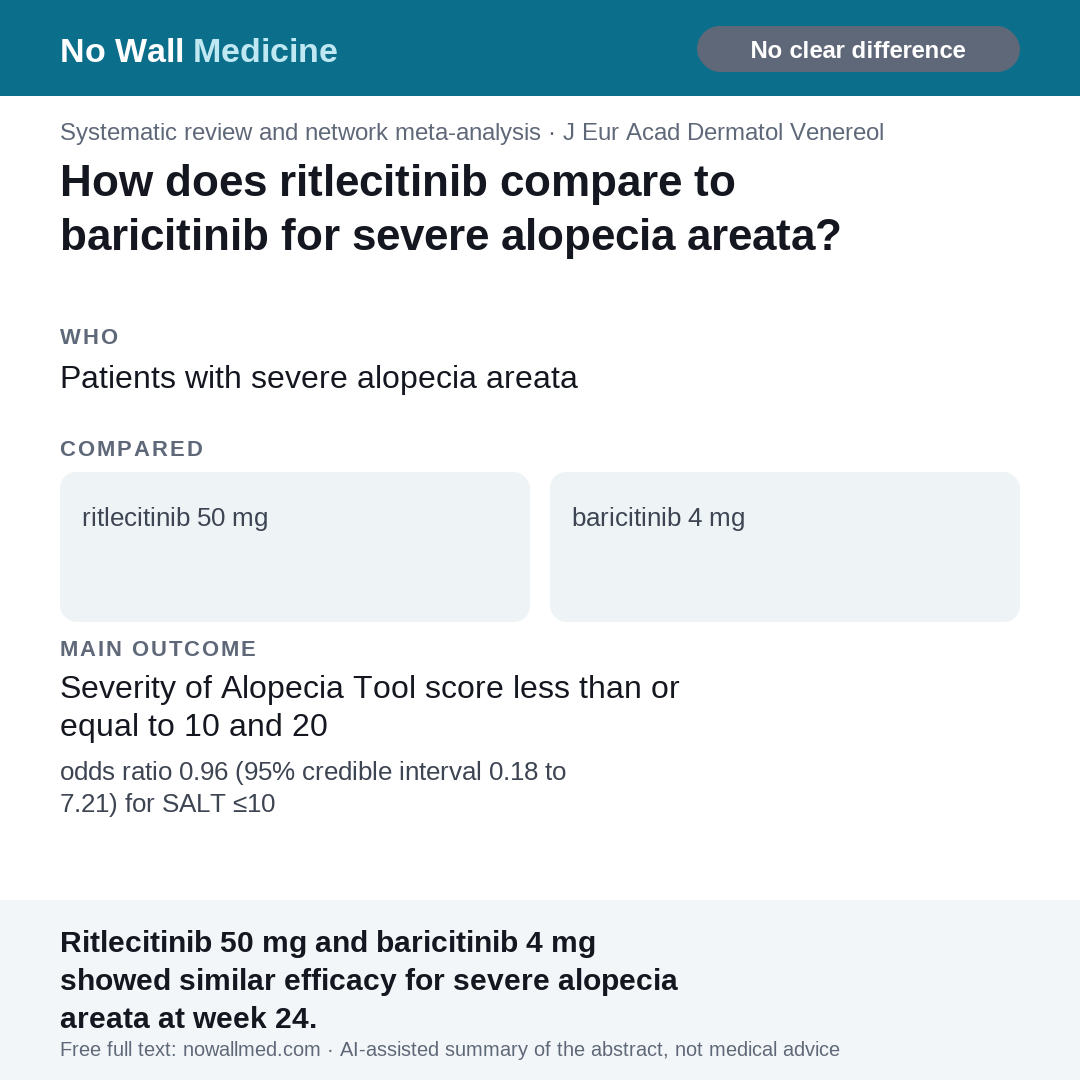
Systematic review and indirect treatment comparisons of ritlecitinib against baricitinib in alopecia areata
Systematic review and network meta-analysisNo clear difference
How does ritlecitinib compare to baricitinib for severe alopecia areata?
Who
Patients with severe alopecia areata
Compared
ritlecitinib 50 mg
baricitinib 4 mg
Main outcome
Severity of Alopecia Tool score less than or equal to 10 and 20
Result: odds ratio 0.96 (95% credible interval 0.18 to 7.21) for SALT ≤10
Bottom line: Ritlecitinib 50 mg and baricitinib 4 mg showed similar efficacy for severe alopecia areata at week 24.
J Eur Acad Dermatol Venereol · 2024-10-24Download image
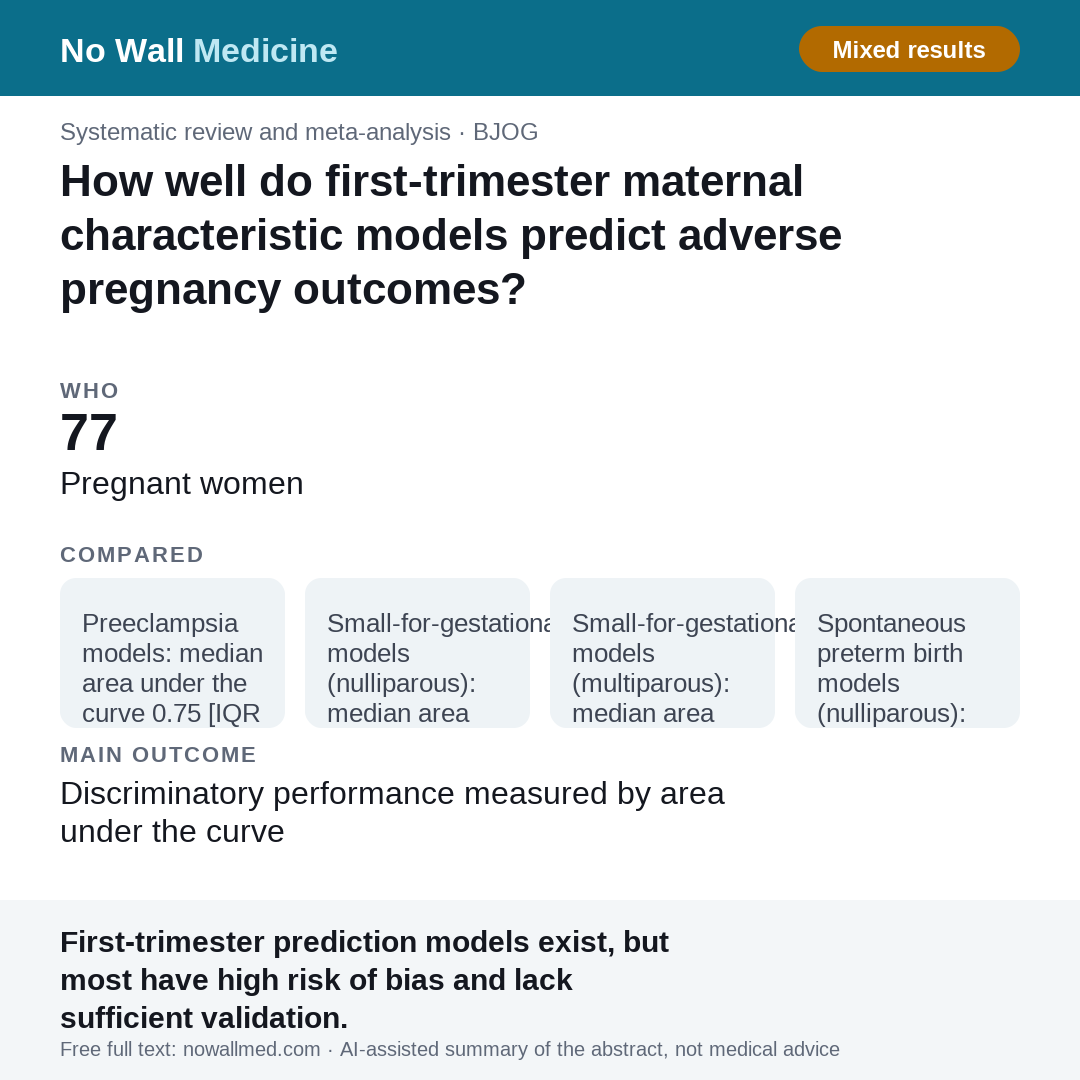
First-Trimester Prediction Models Based on Maternal Characteristics for Adverse Pregnancy Outcomes: A Systematic Review and Meta-Analysis
Systematic review and meta-analysisMixed results
How well do first-trimester maternal characteristic models predict adverse pregnancy outcomes?
Who
77
Pregnant women
Compared
Preeclampsia models: median area under the curve 0.75 [IQR 0.69-0.78]
Small-for-gestational-age models (nulliparous): median area under the curve 0.62 [0.60-0.71]
Small-for-gestational-age models (multiparous): median area under the curve 0.74 [0.72-0.74]
Spontaneous preterm birth models (nulliparous): median area under the curve 0.65 [0.61-0.67]
Main outcome
Discriminatory performance measured by area under the curve
Bottom line: First-trimester prediction models exist, but most have high risk of bias and lack sufficient validation.
Limitation: High risk of bias in 94.5% of developed models and limited validation reporting.
BJOG · 2024-10-24Download image