Visual abstracts
New randomized trials and meta-analyses from leading journals at a glance: who was studied, what was compared, and what was found. Every paper is free to read in full.
All specialtiesCardiology 4877Oncology 4138Gastroenterology & Hepatology 1942Infectious Disease 3837Neurology 1905Psychiatry & Mental Health 2273Pulmonology 2143Critical Care 1365Endocrinology & Diabetes 2580Pediatrics 2980Surgery 2559Orthopedics & Sports Medicine 931Neurosurgery 537Cardiothoracic & Vascular Surgery 674Plastic & Reconstructive Surgery 591Nephrology 1133Rheumatology 823Hematology 1109Dermatology 621Ophthalmology 543Obstetrics & Gynecology 1686Public & Global Health 1058Radiology & Imaging 648Anesthesiology 986Urology 764ENT (Otolaryngology) 503Emergency Medicine 511Allergy & Immunology 313Geriatrics 981Family Medicine & Primary Care 562Medical Genetics & Genomics 676Pathology & Laboratory Medicine 159Physical Medicine & Rehabilitation 757Palliative Care 444Nutrition 1588Digital Health & AI 2201General Medicine 321
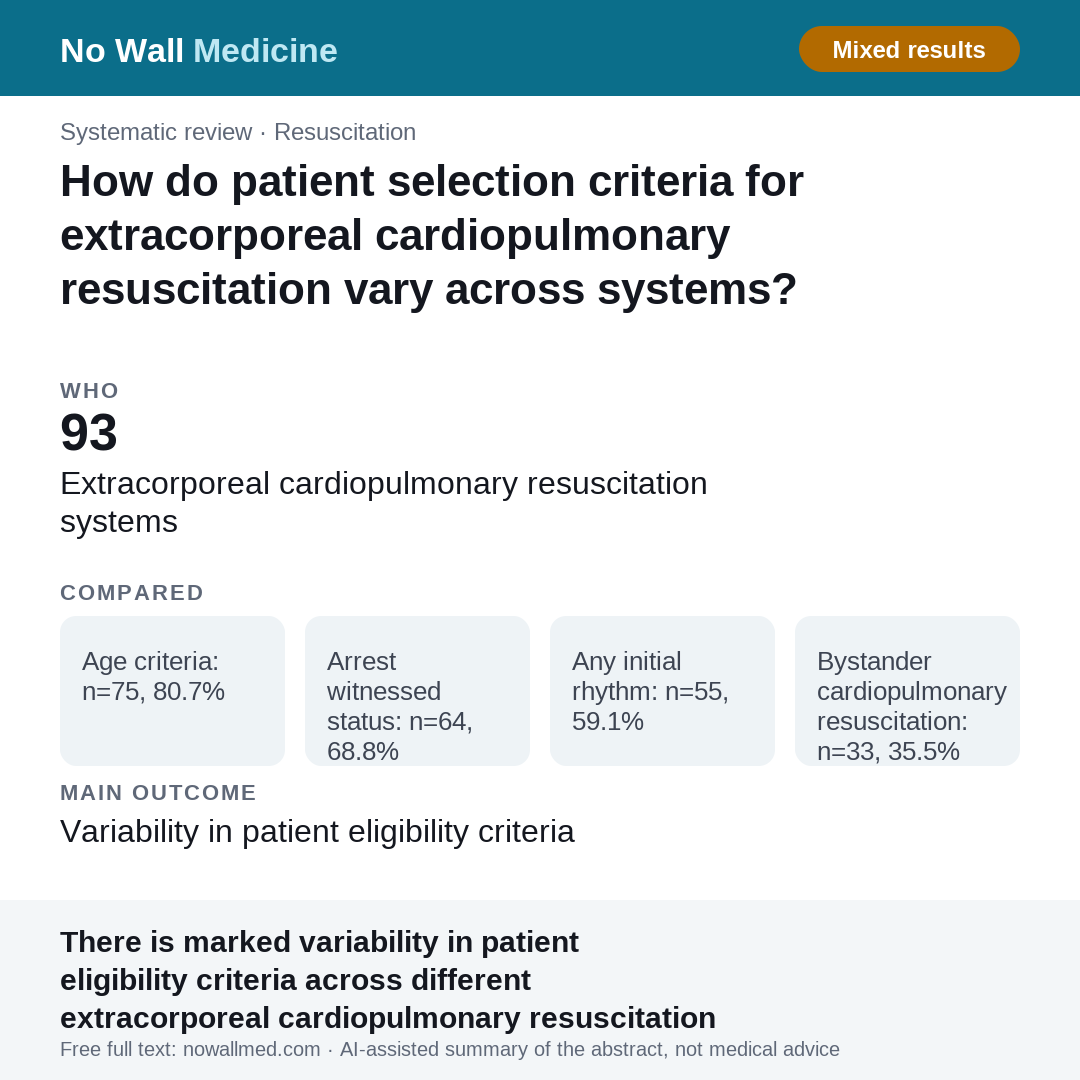
Variability in patient selection criteria across extracorporeal cardiopulmonary resuscitation (ECPR) systems: A systematic review
Systematic reviewMixed results
How do patient selection criteria for extracorporeal cardiopulmonary resuscitation vary across systems?
Who
93
Extracorporeal cardiopulmonary resuscitation systems
Compared
Age criteria: n=75, 80.7%
Arrest witnessed status: n=64, 68.8%
Any initial rhythm: n=55, 59.1%
Bystander cardiopulmonary resuscitation: n=33, 35.5%
Main outcome
Variability in patient eligibility criteria
Bottom line: There is marked variability in patient eligibility criteria across different extracorporeal cardiopulmonary resuscitation systems.
Resuscitation · 2024-09-24Download image
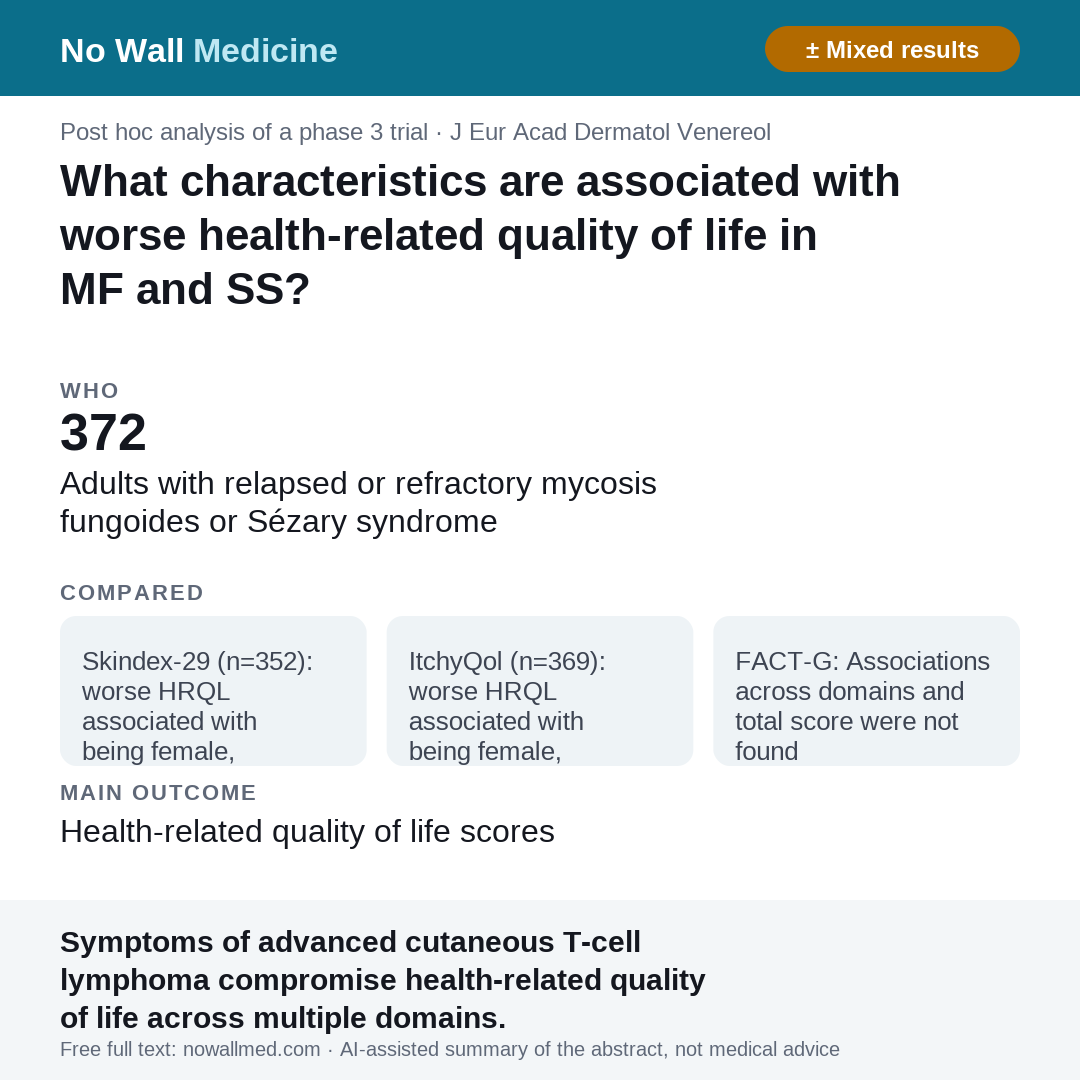
Health-related quality of life in cutaneous T-cell lymphoma: A post hoc analysis of a phase 3 trial in mycosis fungoides and Sézary syndrome
Post hoc analysis of a phase 3 trialMixed results
What characteristics are associated with worse health-related quality of life in MF and SS?
Who
372
Adults with relapsed or refractory mycosis fungoides or Sézary syndrome
Compared
Skindex-29 (n=352): worse HRQL associated with being female, younger, worse mSWAT, and worse itch
ItchyQol (n=369): worse HRQL associated with being female, younger, Black/African American, worse performance status, and worse itch
FACT-G: Associations across domains and total score were not found
Main outcome
Health-related quality of life scores
Bottom line: Symptoms of advanced cutaneous T-cell lymphoma compromise health-related quality of life across multiple domains.
J Eur Acad Dermatol Venereol · 2024-09-24Download image
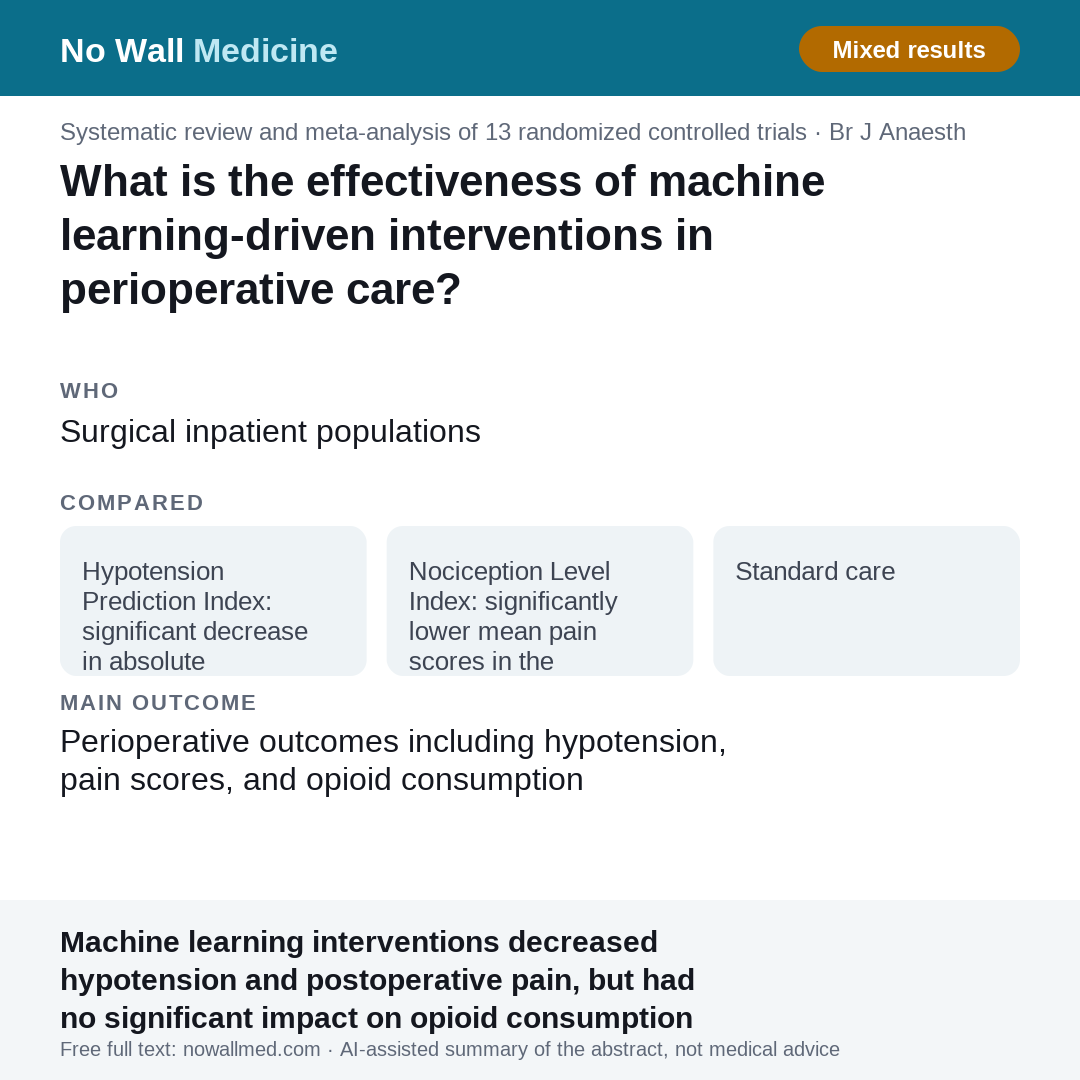
Machine learning-augmented interventions in perioperative care: a systematic review and meta-analysis
Systematic review and meta-analysis of 13 randomized controlled trialsMixed results
What is the effectiveness of machine learning-driven interventions in perioperative care?
Who
Surgical inpatient populations
Compared
Hypotension Prediction Index: significant decrease in absolute hypotension (n=421, P=0.003, I2=75%) and relative hypotension (n=208, P<0.0001, I2=0%)
Nociception Level Index: significantly lower mean pain scores in the post-anaesthesia care unit (n=191, P=0.004, I2=19%)
Standard care
Main outcome
Perioperative outcomes including hypotension, pain scores, and opioid consumption
Bottom line: Machine learning interventions decreased hypotension and postoperative pain, but had no significant impact on opioid consumption or hospital stay.
Br J Anaesth · 2024-09-24Download image
Augmented Reality-Guided Mastoidectomy Simulation: A Randomized Controlled Trial Assessing Surgical Proficiency
Randomized controlled trialBenefit found
Does augmented reality guidance improve mastoidectomy surgical proficiency in medical students?
Who
21
21 medical students in their clinical clerkship
Compared
Augmented reality group: mean overall drilling score of 19.5 out of 25
Control group: score of 12
Main outcome
surgical proficiency assessed on a modified Welling scale
Bottom line: Augmented reality simulation improved mastoidectomy proficiency in novice surgeons compared with traditional training methods.
Laryngoscope · 2024-09-24Download image

Dupilumab Versus Mepolizumab for Chronic Rhinosinusitis With Nasal Polyposis: An Indirect Treatment Comparison
Indirect treatment comparisonBenefit found
Is dupilumab more effective than mepolizumab for chronic rhinosinusitis with nasal polyposis?
Who
Patients with chronic rhinosinusitis with nasal polyposis
Compared
Dupilumab: significantly greater improvements in NPS, NC, LOS, UPSIT, and VAS
Mepolizumab
Main outcome
Chronic rhinosinusitis with nasal polyposis related outcomes
Bottom line: Dupilumab was associated with greater improvements in chronic rhinosinusitis with nasal polyposis outcomes versus mepolizumab.
J Allergy Clin Immunol Pract · 2024-09-24Download image

Chest Pain in Primary Care: A Systematic Review of Risk Stratification Tools to Rule Out Acute Coronary Syndrome
Systematic reviewMixed results
How effective are risk stratification tools for ruling out acute coronary syndrome in primary care?
Who
Adult patients with acute chest pain in primary care settings · Primary care settings
Compared
Clinical decision rules without troponin: sensitivity 75.0% to 97.0% and negative predictive value 82.4% to 99.7%
High-sensitivity troponin strategies: sensitivity 83.3% to 100% and negative predictive value 98.8% to 100%
Main outcome
Performance of tools for ruling out acute coronary syndrome
Bottom line: High-sensitivity troponin strategies are promising, but clinical decision rules without troponin are insufficient to rule out acute coronary syndrome.
Limitation: Studies on high-sensitivity troponin strategies are limited and need further prospective validation.
Ann Fam Med · 2024-09-24Download image

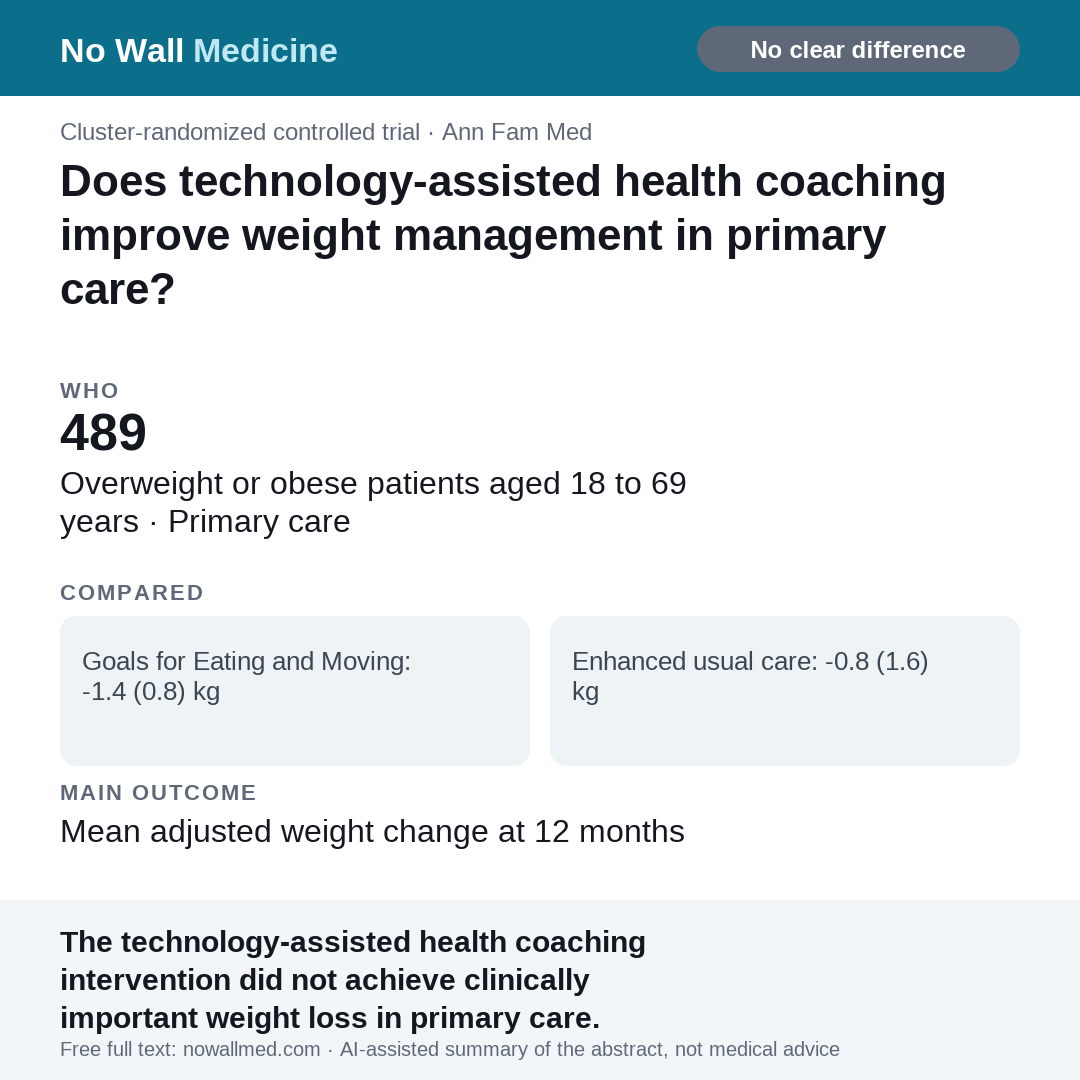
A Cluster-Randomized Study of Technology-Assisted Health Coaching for Weight Management in Primary Care
Cluster-randomized controlled trialNo clear difference
Does technology-assisted health coaching improve weight management in primary care?
Who
489
Overweight or obese patients aged 18 to 69 years · Primary care
Compared
Goals for Eating and Moving: -1.4 (0.8) kg
Enhanced usual care: -0.8 (1.6) kg
Main outcome
Mean adjusted weight change at 12 months
Bottom line: The technology-assisted health coaching intervention did not achieve clinically important weight loss in primary care.
Limitation: Possibly affected by health system resource limitations and disruptions.
Ann Fam Med · 2024-09-24Download image
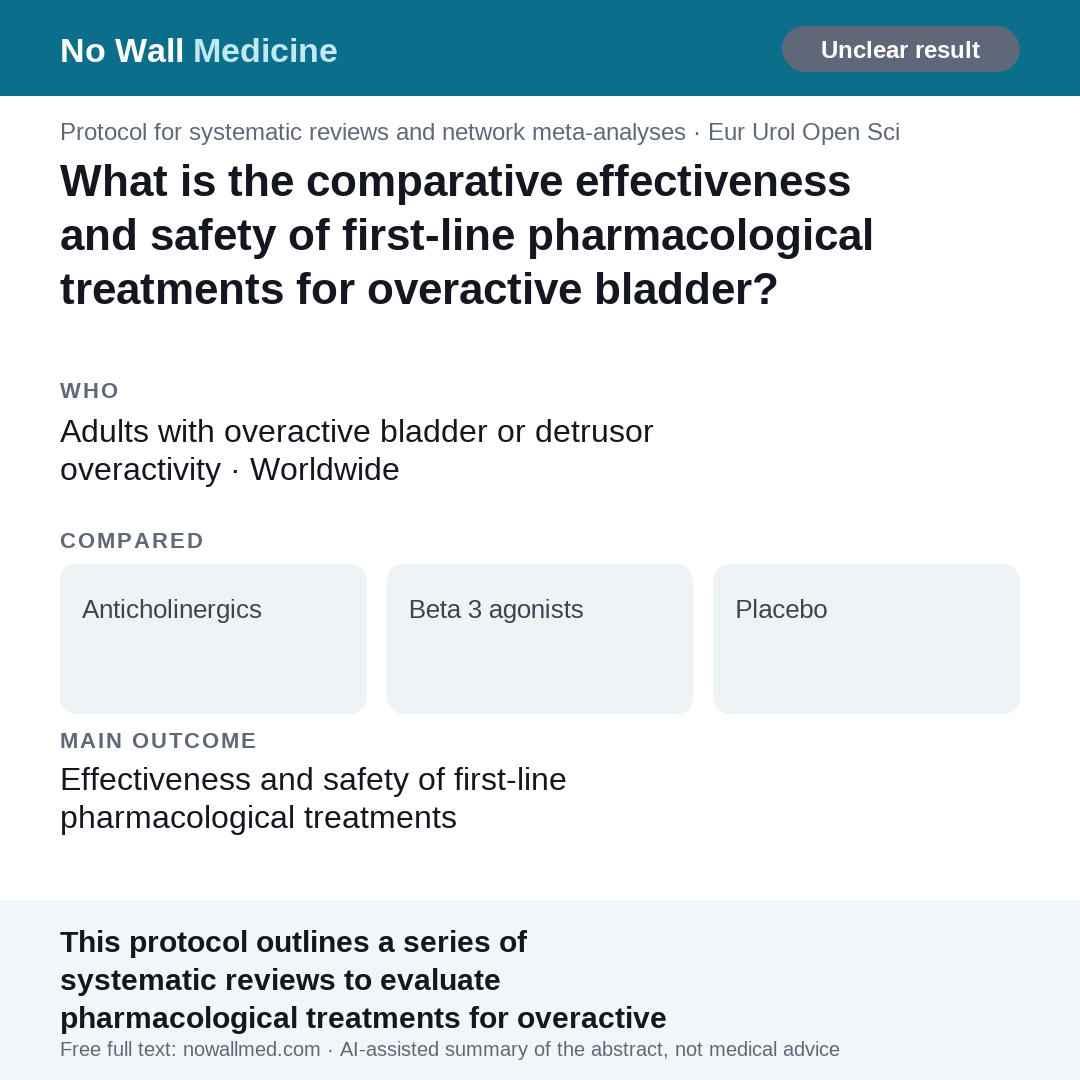
Protocol for a Series of Systematic Reviews and Network Meta-analyses of Randomized Controlled Trials of Medications for Patients with Overactive Bladder Symptoms
Protocol for systematic reviews and network meta-analysesUnclear result
What is the comparative effectiveness and safety of first-line pharmacological treatments for overactive bladder?
Who
Adults with overactive bladder or detrusor overactivity · Worldwide
Compared
Anticholinergics
Beta 3 agonists
Placebo
Main outcome
Effectiveness and safety of first-line pharmacological treatments
Bottom line: This protocol outlines a series of systematic reviews to evaluate pharmacological treatments for overactive bladder.
Eur Urol Open Sci · 2024-09-24Download image
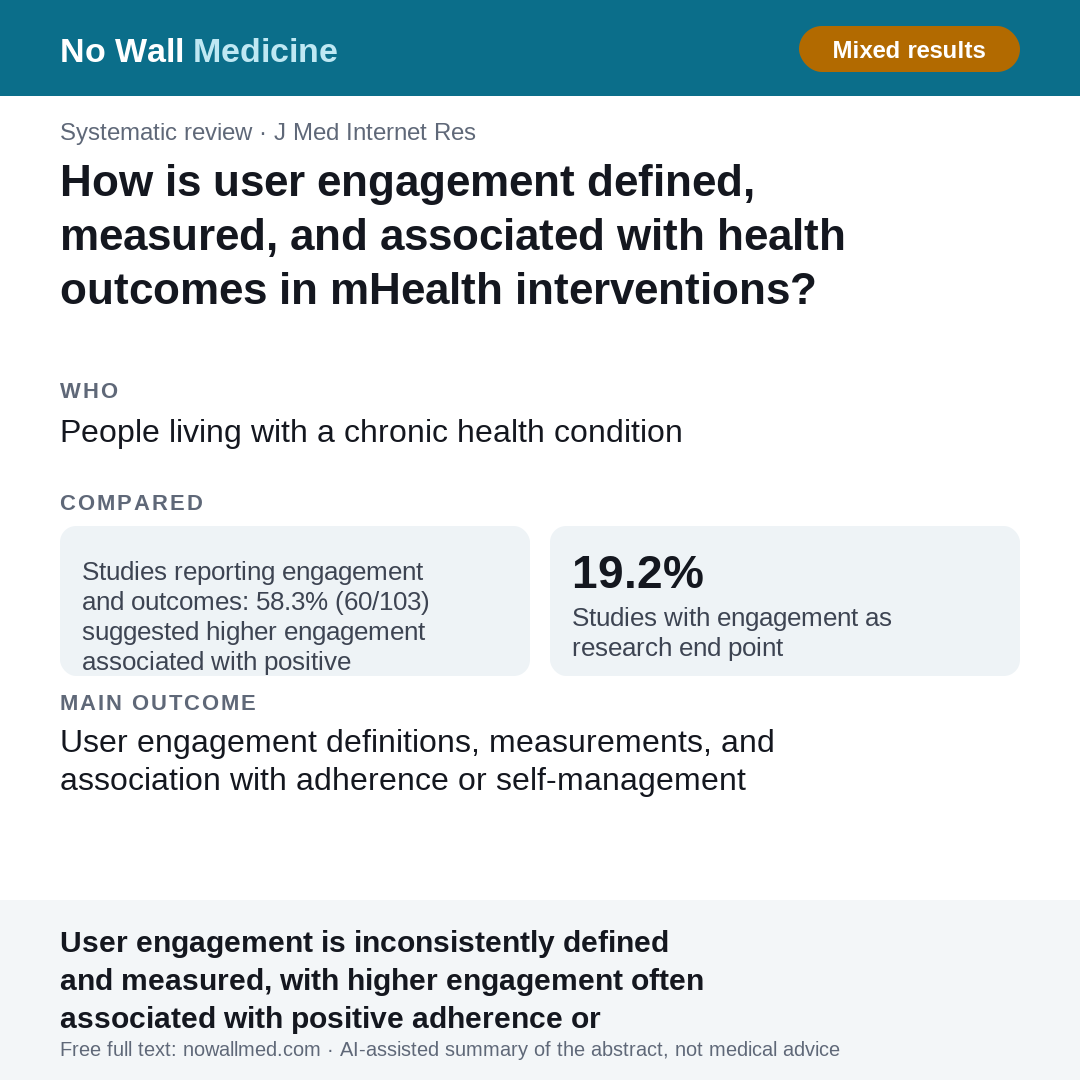
User Engagement With mHealth Interventions to Promote Treatment Adherence and Self-Management in People With Chronic Health Conditions: Systematic Review
Systematic reviewMixed results
How is user engagement defined, measured, and associated with health outcomes in mHealth interventions?
Who
292
People living with a chronic health condition
Compared
Studies reporting engagement and outcomes: 58.3% (60/103) suggested higher engagement associated with positive outcomes
19.2%Studies with engagement as research end point (56/292)
Main outcome
User engagement definitions, measurements, and association with adherence or self-management
Bottom line: User engagement is inconsistently defined and measured, with higher engagement often associated with positive adherence or self-management outcomes.
Limitation: Significant variability in definitions, reliance on log-in data, and infrequent evaluation of engagement over time.
J Med Internet Res · 2024-09-24Download image
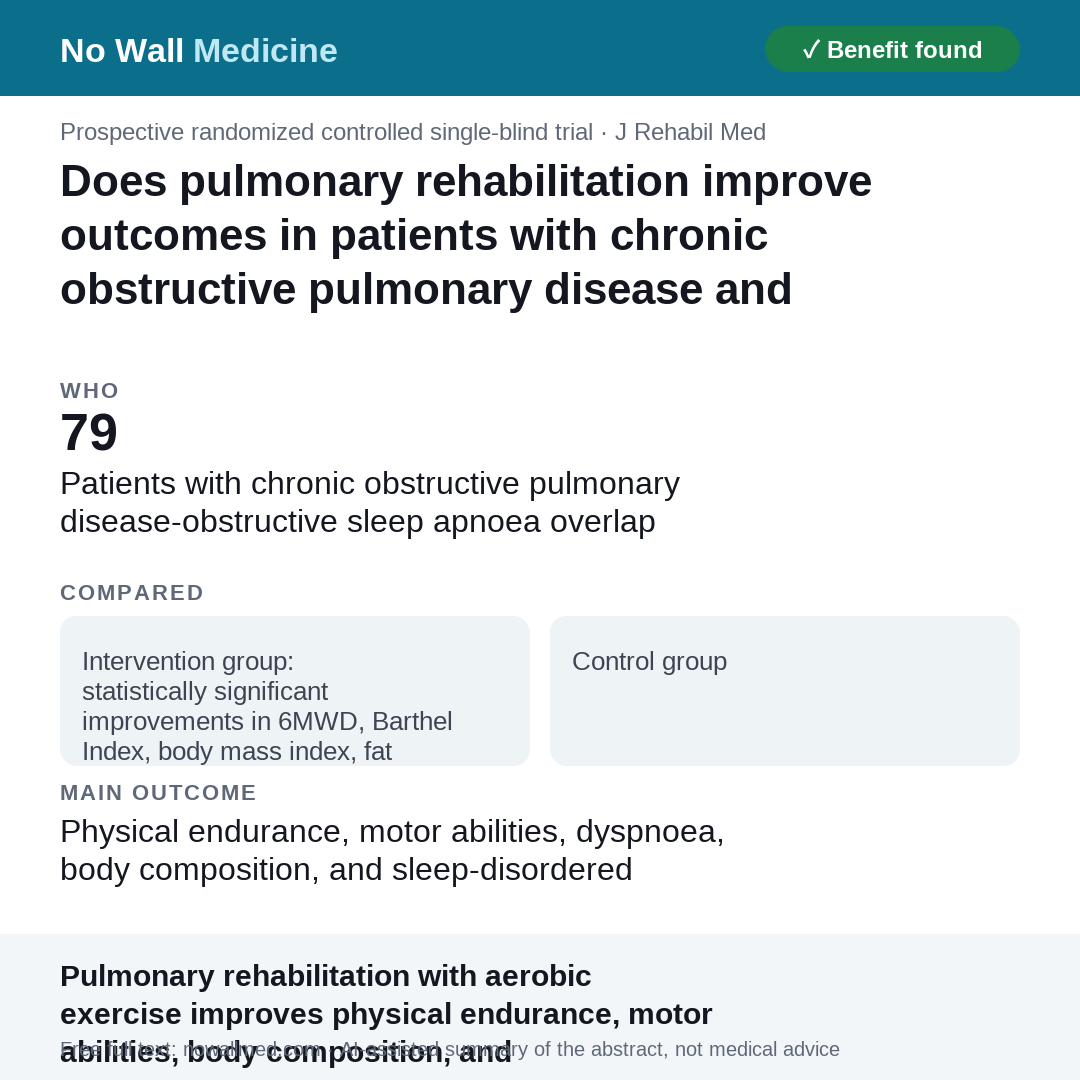
Efficacy of pulmonary rehabilitation in patients with chronic obstructive pulmonary disease and obstructive sleep apnea; a randomized controlled trial
Prospective randomized controlled single-blind trialBenefit found
Does pulmonary rehabilitation improve outcomes in patients with chronic obstructive pulmonary disease and obstructive sleep apnoea overlap syndrome?
Who
79
Patients with chronic obstructive pulmonary disease-obstructive sleep apnoea overlap syndrome using positive airway pressure
Compared
Intervention group: statistically significant improvements in 6MWD, Barthel Index, body mass index, fat mass, and modified Medical Research Council
Control group
Main outcome
Physical endurance, motor abilities, dyspnoea, body composition, and sleep-disordered breathing
Bottom line: Pulmonary rehabilitation with aerobic exercise improves physical endurance, motor abilities, body composition, and sleep-disordered breathing in these patients.
J Rehabil Med · 2024-09-24Download image
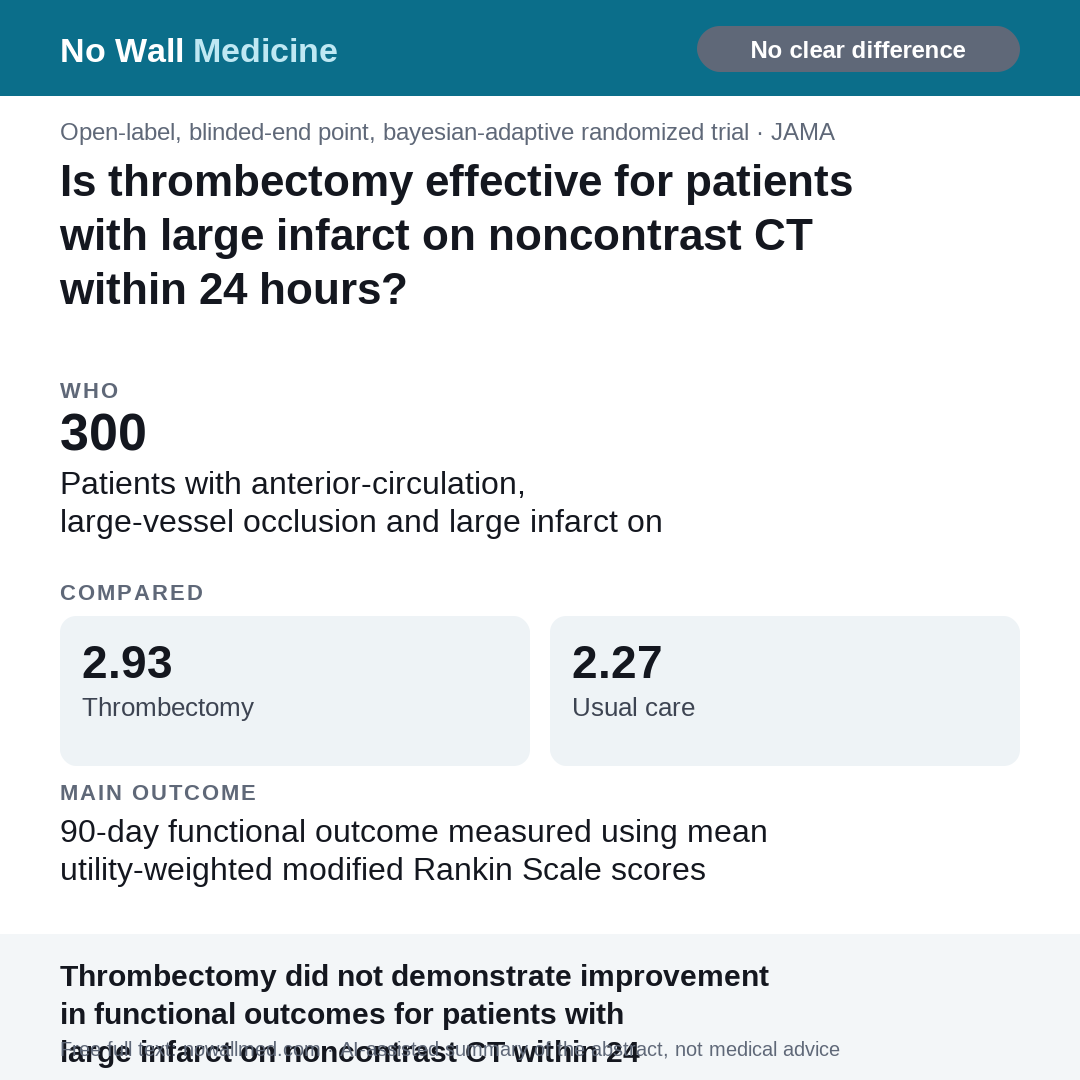
Thrombectomy for Stroke With Large Infarct on Noncontrast CT: The TESLA Randomized Clinical Trial
Open-label, blinded-end point, bayesian-adaptive randomized trialNo clear difference
Is thrombectomy effective for patients with large infarct on noncontrast CT within 24 hours?
Who
300
Patients with anterior-circulation, large-vessel occlusion and large infarct on noncontrast CT · 47 US academic and community-based stroke thrombectomy centers
Compared
2.93Thrombectomy (3.39)
2.27Usual care (2.98)
Main outcome
90-day functional outcome measured using mean utility-weighted modified Rankin Scale scores
Result: adjusted difference 0.63 (95% credible interval -0.09 to 1.34)
Bottom line: Thrombectomy did not demonstrate improvement in functional outcomes for patients with large infarct on noncontrast CT within 24 hours.
JAMA · 2024-09-23Download image
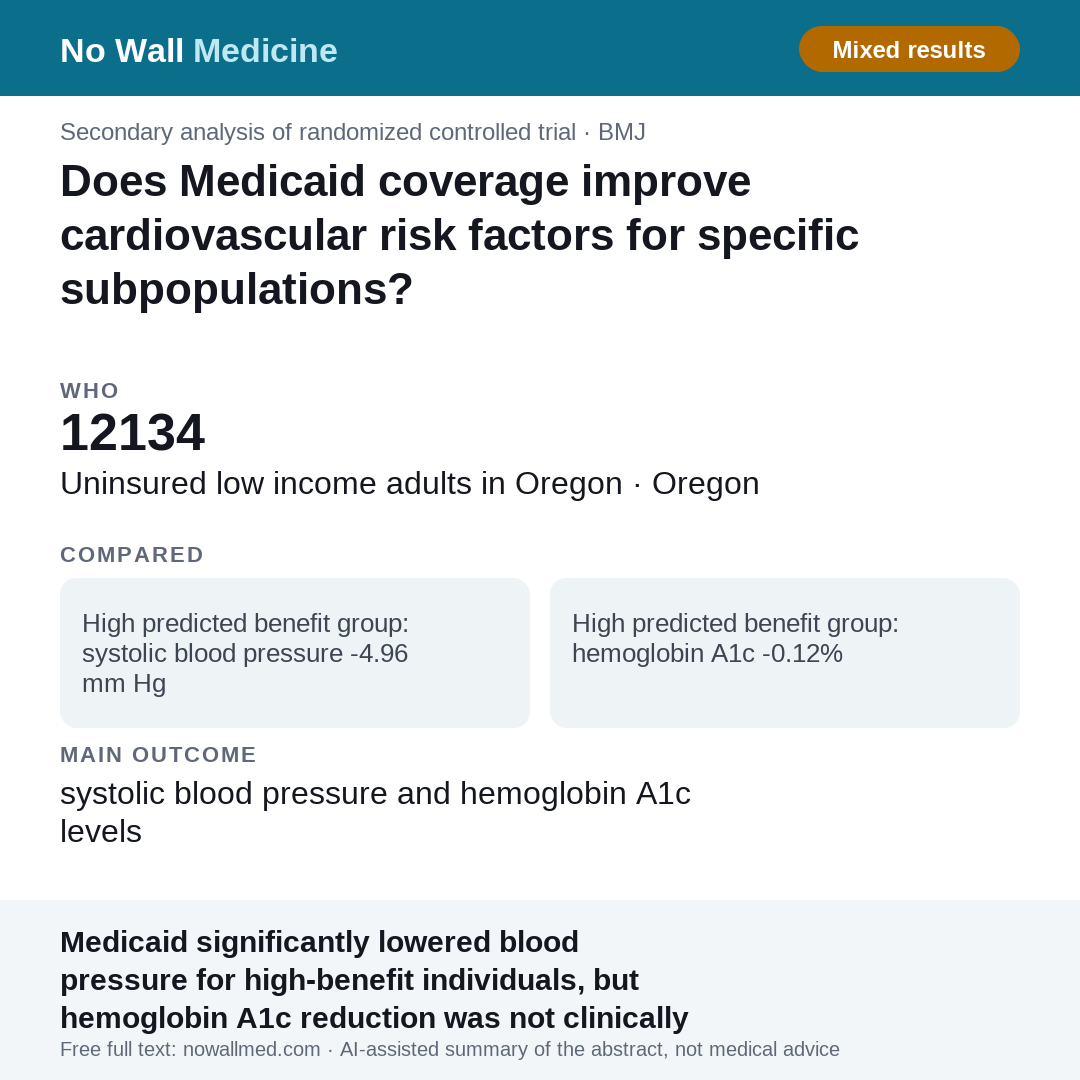
Heterogeneous effects of Medicaid coverage on cardiovascular risk factors: secondary analysis of randomized controlled trial
Secondary analysis of randomized controlled trialMixed results
Does Medicaid coverage improve cardiovascular risk factors for specific subpopulations?
Who
12134
Uninsured low income adults in Oregon · Oregon
Compared
High predicted benefit group: systolic blood pressure -4.96 mm Hg
High predicted benefit group: hemoglobin A1c -0.12%
Main outcome
systolic blood pressure and hemoglobin A1c levels
Result: -4.96 mm Hg (95% confidence interval -7.80 to -2.48)
Bottom line: Medicaid significantly lowered blood pressure for high-benefit individuals, but hemoglobin A1c reduction was not clinically meaningful.
BMJ · 2024-09-23Download image
Molecular profiling of BRAF-V600E-mutant metastatic colorectal cancer in the phase 3 BEACON CRC trial
Randomized trialBenefit found
Does encorafenib improve survival in colorectal cancer
Who
previously treated patients with BRAF-V600E-mutant mCRC
Compared
Encorafenib+cetuximab
Cetuximab+chemotherapy
Main outcome
overall survival
Bottom line: Encorafenib improves survival in colorectal cancer
Nat Med · 2024-09-23Download image
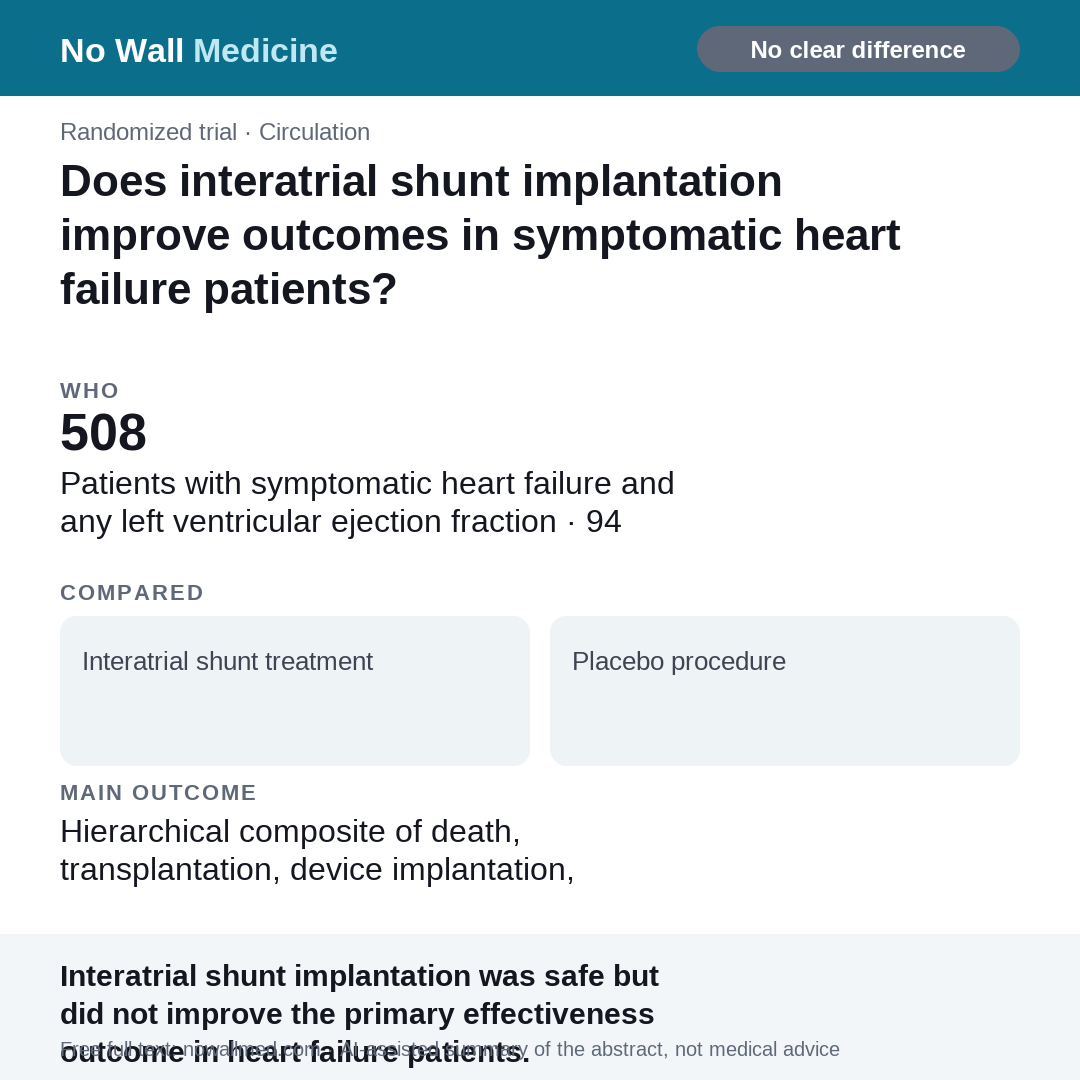
Interatrial Shunt Treatment for Heart Failure: The Randomized RELIEVE-HF Trial
Randomized trialNo clear difference
Does interatrial shunt implantation improve outcomes in symptomatic heart failure patients?
Who
508
Patients with symptomatic heart failure and any left ventricular ejection fraction · 94 sites in 11 countries
Compared
Interatrial shunt treatment
Placebo procedure
Main outcome
Hierarchical composite of death, transplantation, device implantation, hospitalization, worsening events, and quality of life
Result: win ratio 0.86 (95% CI 0.61-1.22)
Bottom line: Interatrial shunt implantation was safe but did not improve the primary effectiveness outcome in heart failure patients.
Limitation: The results from stratified groups were from prespecified exploratory analyses.
Circulation · 2024-09-23Download image
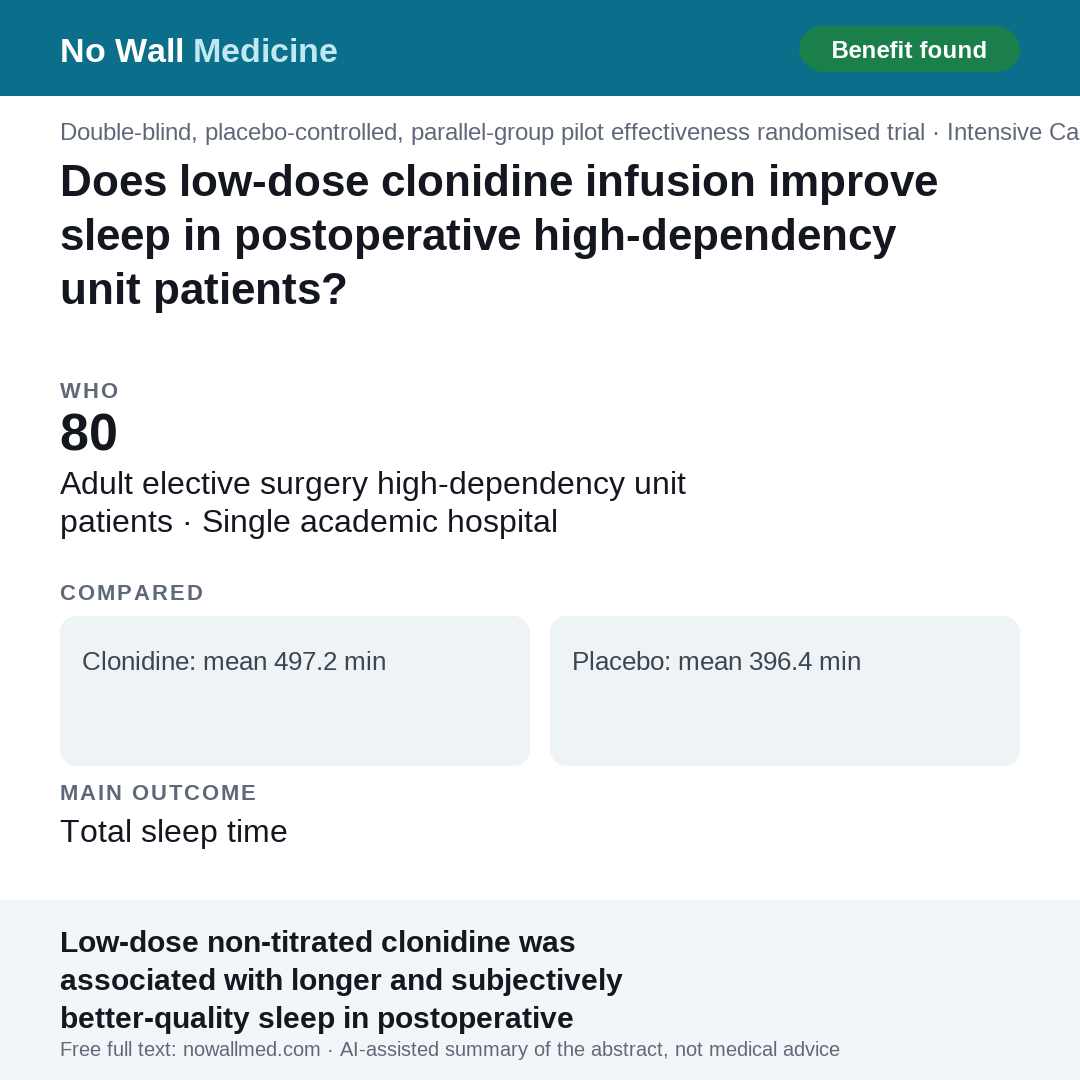
Low-dose clonidine infusion to improve sleep in postoperative patients in the high-dependency unit. A randomised placebo-controlled single-centre trial
Double-blind, placebo-controlled, parallel-group pilot effectiveness randomised trialBenefit found
Does low-dose clonidine infusion improve sleep in postoperative high-dependency unit patients?
Who
80
Adult elective surgery high-dependency unit patients · Single academic hospital
Compared
Clonidine: mean 497.2 min
Placebo: mean 396.4 min
Main outcome
Total sleep time
Result: mean 100.8 (95% confidence interval [CI] 38.2-163.4) minutes longer
Bottom line: Low-dose non-titrated clonidine was associated with longer and subjectively better-quality sleep in postoperative patients.
Intensive Care Med · 2024-09-23Download image
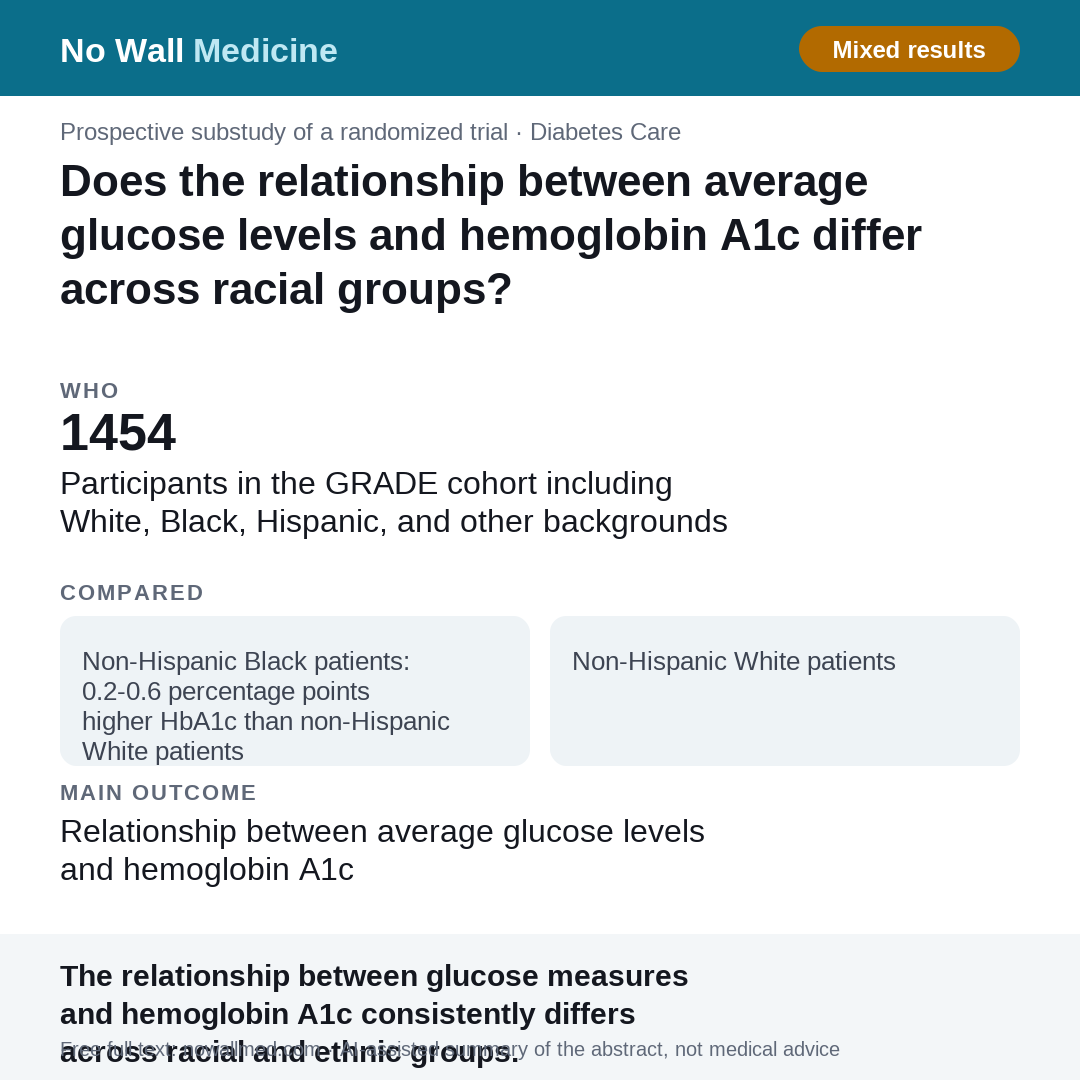
Relationship Between Average Glucose Levels and HbA1c Differs Across Racial Groups: A Substudy of the GRADE Randomized Trial
Prospective substudy of a randomized trialMixed results
Does the relationship between average glucose levels and hemoglobin A1c differ across racial groups?
Who
1454
Participants in the GRADE cohort including White, Black, Hispanic, and other backgrounds · 36 centers in the United States
Compared
Non-Hispanic Black patients: 0.2-0.6 percentage points higher HbA1c than non-Hispanic White patients
Non-Hispanic White patients
Main outcome
Relationship between average glucose levels and hemoglobin A1c
Bottom line: The relationship between glucose measures and hemoglobin A1c consistently differs across racial and ethnic groups.
Diabetes Care · 2024-09-23Download image
Metabolomic Fingerprints of Medical Therapy Versus Bariatric Surgery in Patients With Obesity and Type 2 Diabetes: The STAMPEDE Trial
Randomized trialMixed results
What are the metabolomic fingerprints of medical therapy versus bariatric surgery in obesity and type 2 diabetes?
Who
90
Patients with obesity and type 2 diabetes
Compared
Medical therapy
Roux-en-Y gastric bypass
Sleeve gastrectomy
Main outcome
Metabolomic signatures and glucose homeostasis
Bottom line: Roux-en-Y gastric bypass and sleeve gastrectomy produce distinct metabolomic profiles despite equivalent weight loss.
Diabetes Care · 2024-09-23Download image

Efficacy of Gamified Digital Mental Health Interventions for Pediatric Mental Health Conditions: A Systematic Review and Meta-Analysis
Systematic review and meta-analysis of 27 randomized clinical trialsMixed results
Are gamified digital mental health interventions effective for pediatric ADHD, depression, and anxiety?
Who
2911
Children and adolescents with ADHD, depression, or anxiety
Compared
Gamified digital mental health interventions
Control group
Main outcome
Change in ADHD, depression, or anxiety severity
Result: ADHD g 0.28 (95% CI 0.09 to 0.48), depression g 0.28 (95% CI 0.08 to 0.47), anxiety g 0.07 (95% CI -0.02 to 0.17)
Bottom line: Gamified digital interventions show modest benefits for ADHD and depression but small, nonsignificant effects for anxiety in children.
JAMA Pediatr · 2024-09-23Download image

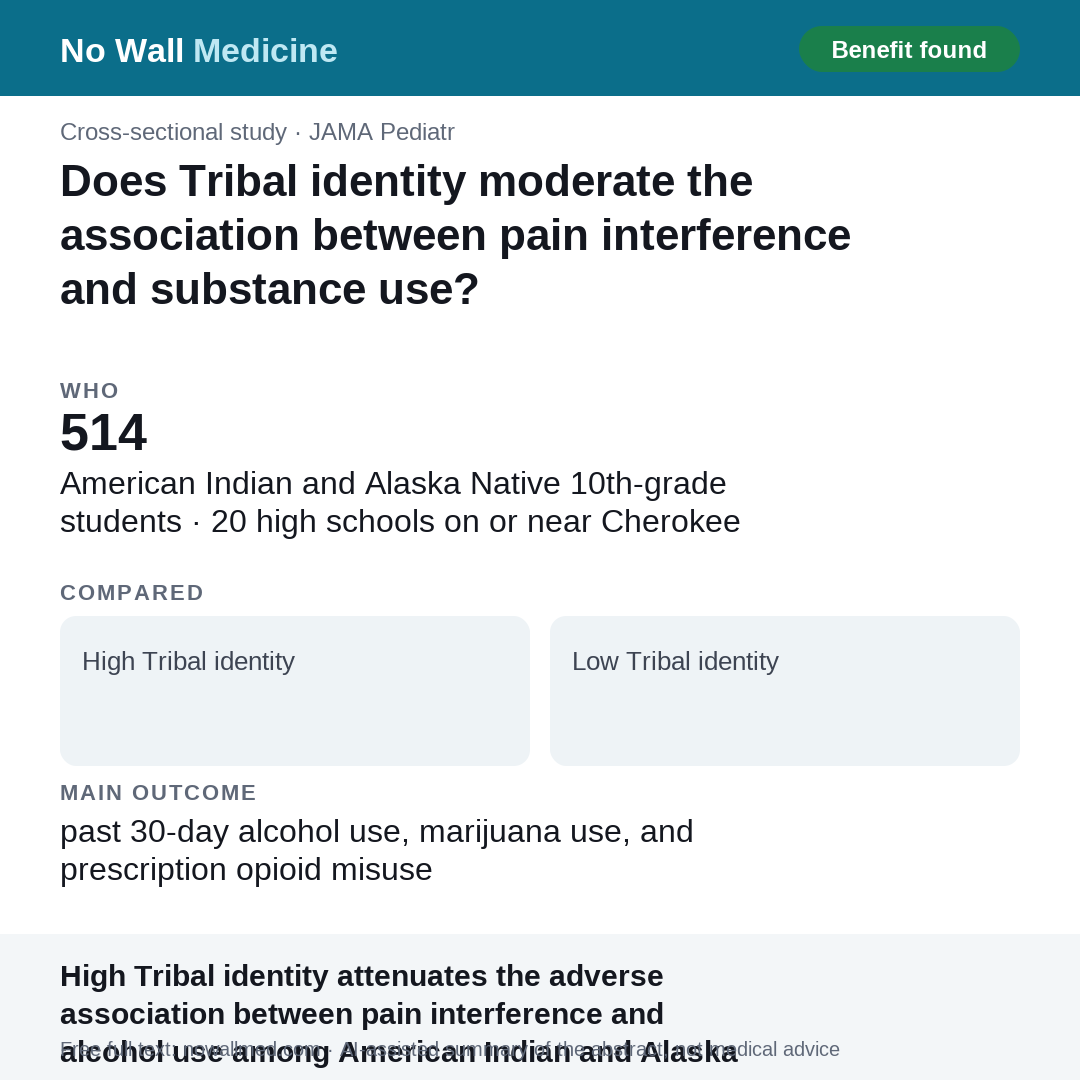
Tribal Identity, Pain Interference, and Substance Use Among American Indian and Alaska Native Adolescents
Cross-sectional studyBenefit found
Does Tribal identity moderate the association between pain interference and substance use?
Who
514
American Indian and Alaska Native 10th-grade students · 20 high schools on or near Cherokee Nation Reservation
Compared
High Tribal identity
Low Tribal identity
Main outcome
past 30-day alcohol use, marijuana use, and prescription opioid misuse
Result: coefficient, -0.13 (95% CI, -0.23 to -0.02)
Bottom line: High Tribal identity attenuates the adverse association between pain interference and alcohol use among American Indian and Alaska Native adolescents.
JAMA Pediatr · 2024-09-23Download image
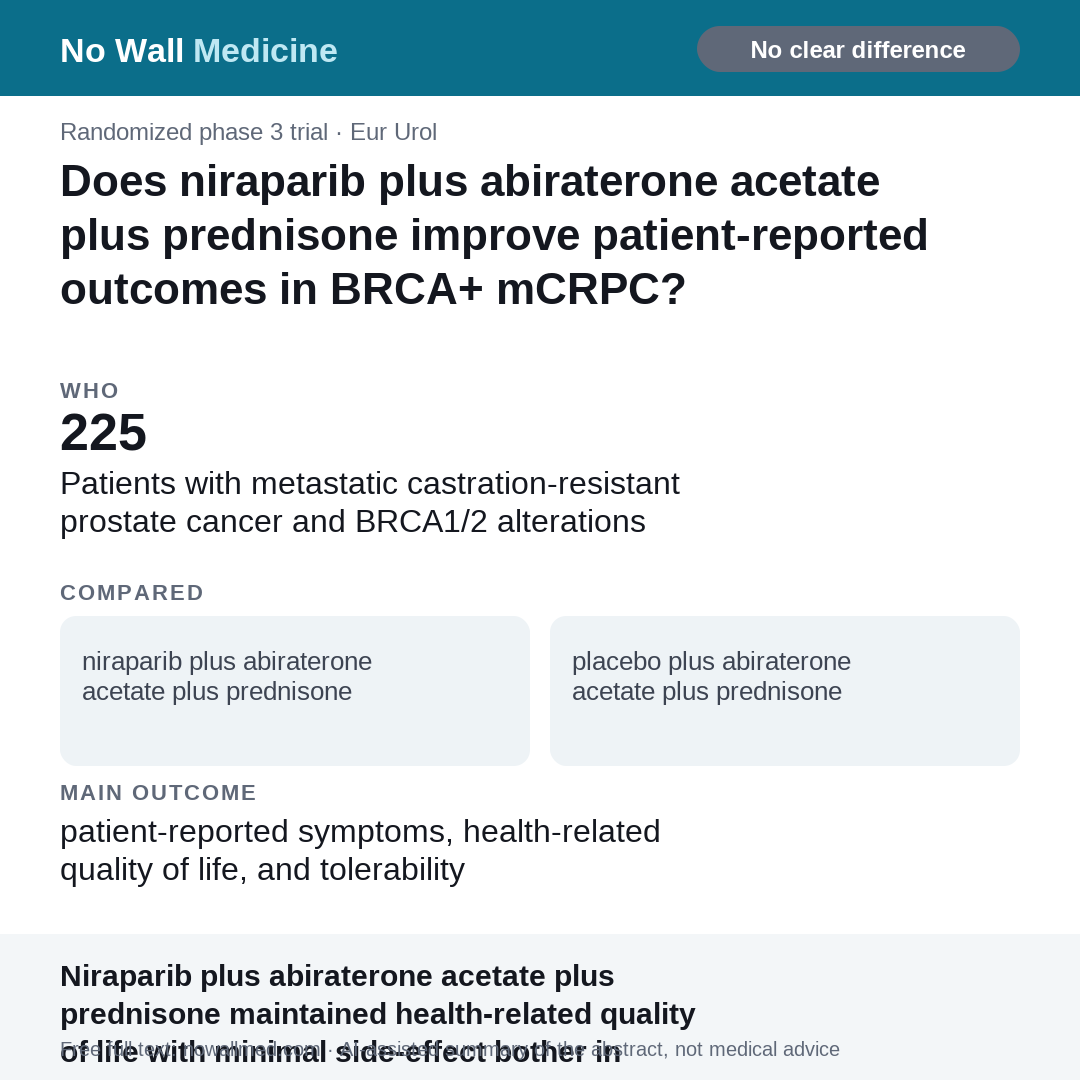
Patient-reported Outcomes for Patients with Metastatic Castration-resistant Prostate Cancer and BRCA1/2 Gene Alterations: Final Analysis from the Randomized Phase 3 MAGNITUDE Trial
Randomized phase 3 trialNo clear difference
Does niraparib plus abiraterone acetate plus prednisone improve patient-reported outcomes in BRCA+ mCRPC?
Who
225
Patients with metastatic castration-resistant prostate cancer and BRCA1/2 alterations
Compared
niraparib plus abiraterone acetate plus prednisone
placebo plus abiraterone acetate plus prednisone
Main outcome
patient-reported symptoms, health-related quality of life, and tolerability
Bottom line: Niraparib plus abiraterone acetate plus prednisone maintained health-related quality of life with minimal side-effect bother in BRCA+ patients.
Limitation: sample size that may not have been powered to detect a difference in patient-reported outcomes
Eur Urol · 2024-09-23Download image