Visual abstracts
New randomized trials and meta-analyses from leading journals at a glance: who was studied, what was compared, and what was found. Every paper is free to read in full.
All specialtiesCardiology 4877Oncology 4138Gastroenterology & Hepatology 1942Infectious Disease 3837Neurology 1905Psychiatry & Mental Health 2273Pulmonology 2143Critical Care 1365Endocrinology & Diabetes 2580Pediatrics 2980Surgery 2559Orthopedics & Sports Medicine 931Neurosurgery 537Cardiothoracic & Vascular Surgery 674Plastic & Reconstructive Surgery 591Nephrology 1133Rheumatology 823Hematology 1109Dermatology 621Ophthalmology 543Obstetrics & Gynecology 1686Public & Global Health 1058Radiology & Imaging 648Anesthesiology 986Urology 764ENT (Otolaryngology) 503Emergency Medicine 511Allergy & Immunology 313Geriatrics 981Family Medicine & Primary Care 562Medical Genetics & Genomics 676Pathology & Laboratory Medicine 159Physical Medicine & Rehabilitation 757Palliative Care 444Nutrition 1588Digital Health & AI 2201General Medicine 321
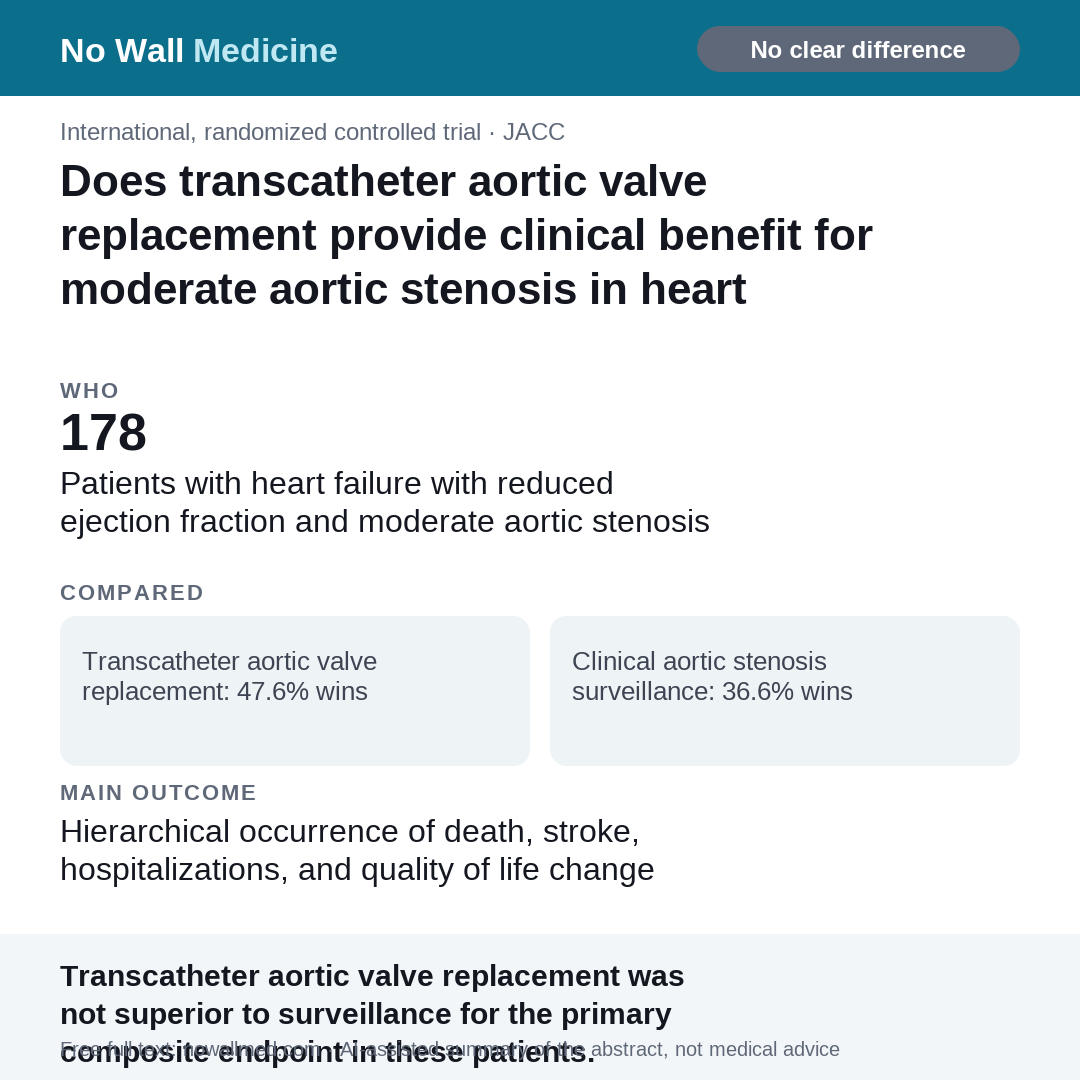
Transcatheter Aortic Valve Replacement in Patients With Systolic Heart Failure and Moderate Aortic Stenosis: TAVR UNLOAD
International, randomized controlled trialNo clear difference
Does transcatheter aortic valve replacement provide clinical benefit for moderate aortic stenosis in heart failure?
Who
178
Patients with heart failure with reduced ejection fraction and moderate aortic stenosis · International
Compared
Transcatheter aortic valve replacement: 47.6% wins
Clinical aortic stenosis surveillance: 36.6% wins
Main outcome
Hierarchical occurrence of death, stroke, hospitalizations, and quality of life change
Result: win ratio 1.31 (95% CI: 0.91-1.88)
Bottom line: Transcatheter aortic valve replacement was not superior to surveillance for the primary composite endpoint in these patients.
JACC · 2024-10-28Download image
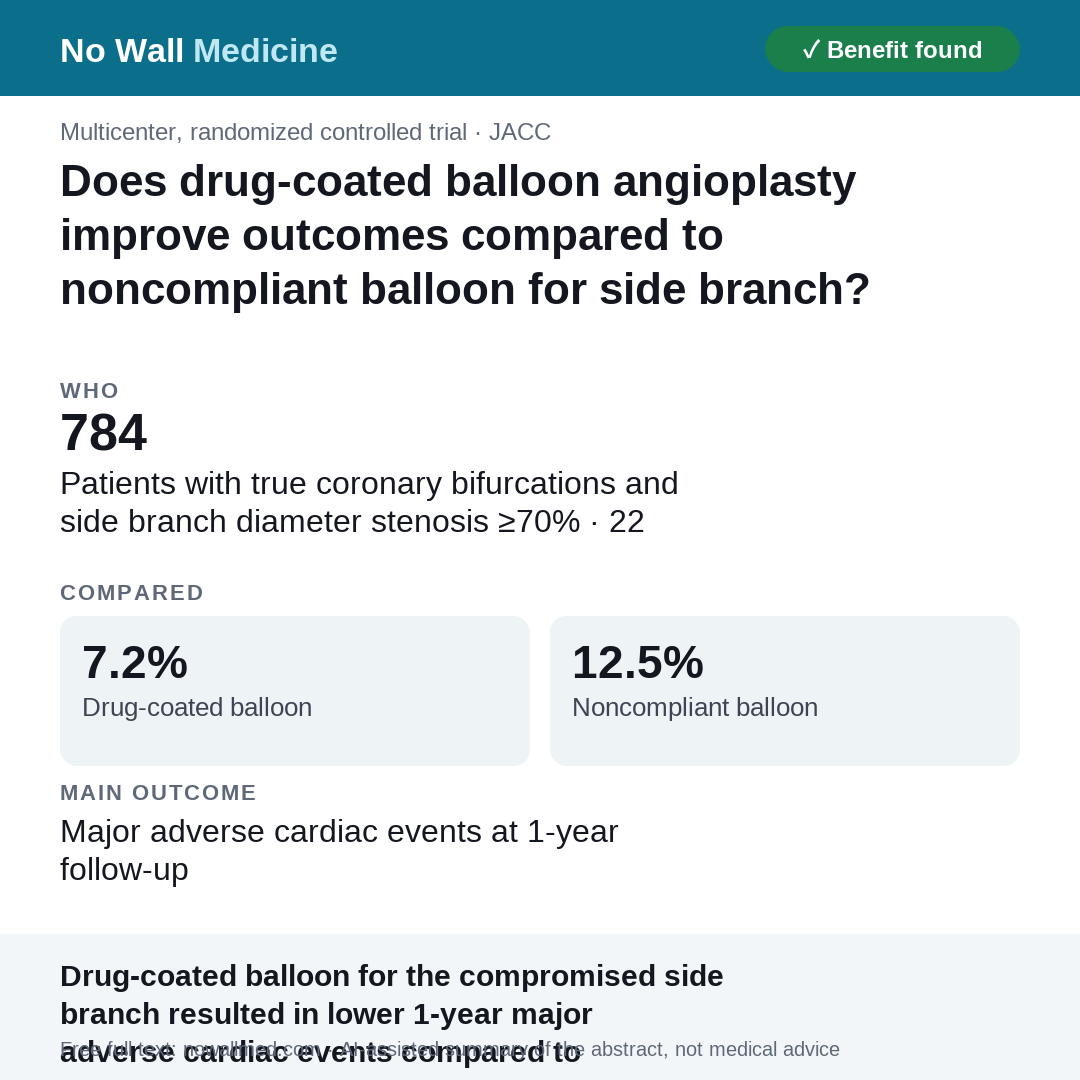
Drug-Coated Balloon Angioplasty of the Side Branch During Provisional Stenting: The Multicenter Randomized DCB-BIF Trial
Multicenter, randomized controlled trialBenefit found
Does drug-coated balloon angioplasty improve outcomes compared to noncompliant balloon for side branch?
Who
784
Patients with true coronary bifurcations and side branch diameter stenosis ≥70% · 22 centers in China, Indonesia, Italy, and Korea
Compared
7.2%Drug-coated balloon
12.5%Noncompliant balloon
Main outcome
Major adverse cardiac events at 1-year follow-up
Result: hazard ratio 0.56 (95% CI 0.35-0.88)
Bottom line: Drug-coated balloon for the compromised side branch resulted in lower 1-year major adverse cardiac events compared to noncompliant balloon.
Limitation: High rates of periprocedural myocardial infarction occurred early with unclear clinical significance.
JACC · 2024-10-28Download image
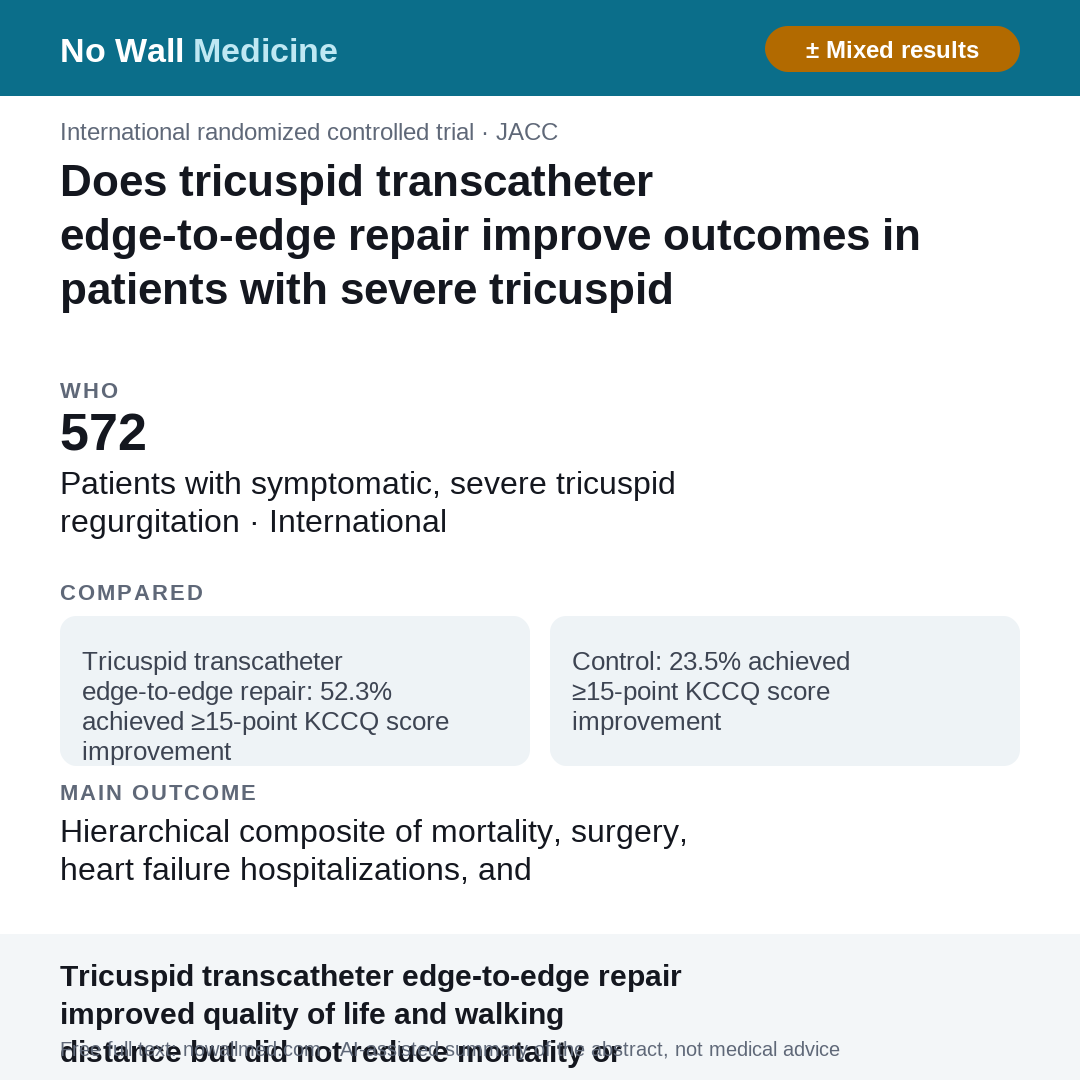
Tricuspid Transcatheter Edge-to-Edge Repair for Severe Tricuspid Regurgitation: 1-Year Outcomes From the TRILUMINATE Randomized Cohort
International randomized controlled trialMixed results
Does tricuspid transcatheter edge-to-edge repair improve outcomes in patients with severe tricuspid regurgitation?
Who
572
Patients with symptomatic, severe tricuspid regurgitation · International
Compared
Tricuspid transcatheter edge-to-edge repair: 52.3% achieved ≥15-point KCCQ score improvement
Control: 23.5% achieved ≥15-point KCCQ score improvement
Main outcome
Hierarchical composite of mortality, surgery, heart failure hospitalizations, and quality-of-life
Result: win ratio = 1.84; P < 0.0001
Bottom line: Tricuspid transcatheter edge-to-edge repair improved quality of life and walking distance but did not reduce mortality or hospitalizations.
JACC · 2024-10-28Download image
Déjà vu all over again: a recurrent flaw in anticoagulant study design
Systematic reviewUnclear result
Do FXI inhibitors cause heavy menstrual bleeding
Who
menstruating individuals and others
Compared
FXI inhibitors
control
Main outcome
heavy menstrual bleeding
Bottom line: Few studies included menstruating individuals
Limitation: few studies included menstruating individuals
J Thromb Haemost · 2024-10-28Download image
Comparing an Advanced Monofocal With a Non-diffractive Extended Depth of Focus Intraocular Lens Using a Mini-Monovision Approach
Single-center, randomized, controlled, double-masked studyNo clear difference
How do advanced monofocal and non-diffractive extended depth of focus intraocular lenses compare in mini-monovision?
Who
96
48 patients with bilateral age-related cataract · Single-center
Compared
Advanced monofocal intraocular lens: binocular mean CDVA -0.10±0.10, DCIVA 0.15±0.11, DCNVA 0.32±0.16 logMAR
Non-diffractive extended depth of focus intraocular lens: binocular mean CDVA -0.10±0.10, DCIVA 0.12±0.10, DCNVA 0.27±0.16 logMAR
Main outcome
Binocular distance, intermediate, and near visual acuity
Bottom line: In a mini-monovision setting, binocular visual acuity for far, intermediate, and near distances showed no significant differences between the two lenses.
Am J Ophthalmol · 2024-10-28Download image
Sedation for awake tracheal intubation: A systematic review and network meta-analysis
Systematic review and network meta-analysisNo clear difference
Which sedation regimens are most effective for successful and safe awake tracheal intubation?
Who
2837
Patients undergoing awake tracheal intubation
Compared
All sedation regimens
Placebo
Main outcome
Tracheal intubation success, time, and arterial oxygen desaturation
Bottom line: No individual sedation regimen was superior for intubation success, time, or oxygen desaturation.
Limitation: The quality of evidence for each outcome was low.
Anaesthesia · 2024-10-28Download image
Low glycaemic index diet in pregnancy and child asthma: follow-up of the ROLO trial
Randomized trial secondary analysisMixed results
Does a low glycaemic index diet during pregnancy decrease childhood asthma and eczema risk?
Who
514
Children of healthy women who received dietary advice during pregnancy
Compared
Low glycaemic index dietary advice: adjusted OR 0·46 (95 % CI 0·19, 1·09)
Routine care
Main outcome
Doctor-diagnosed asthma and eczema in children
Result: adjusted OR 0·46 (95 % CI 0·19, 1·09)
Bottom line: A low glycaemic index diet during pregnancy may reduce childhood asthma risk, especially in lower maternal education groups.
Br J Nutr · 2024-10-28Download image
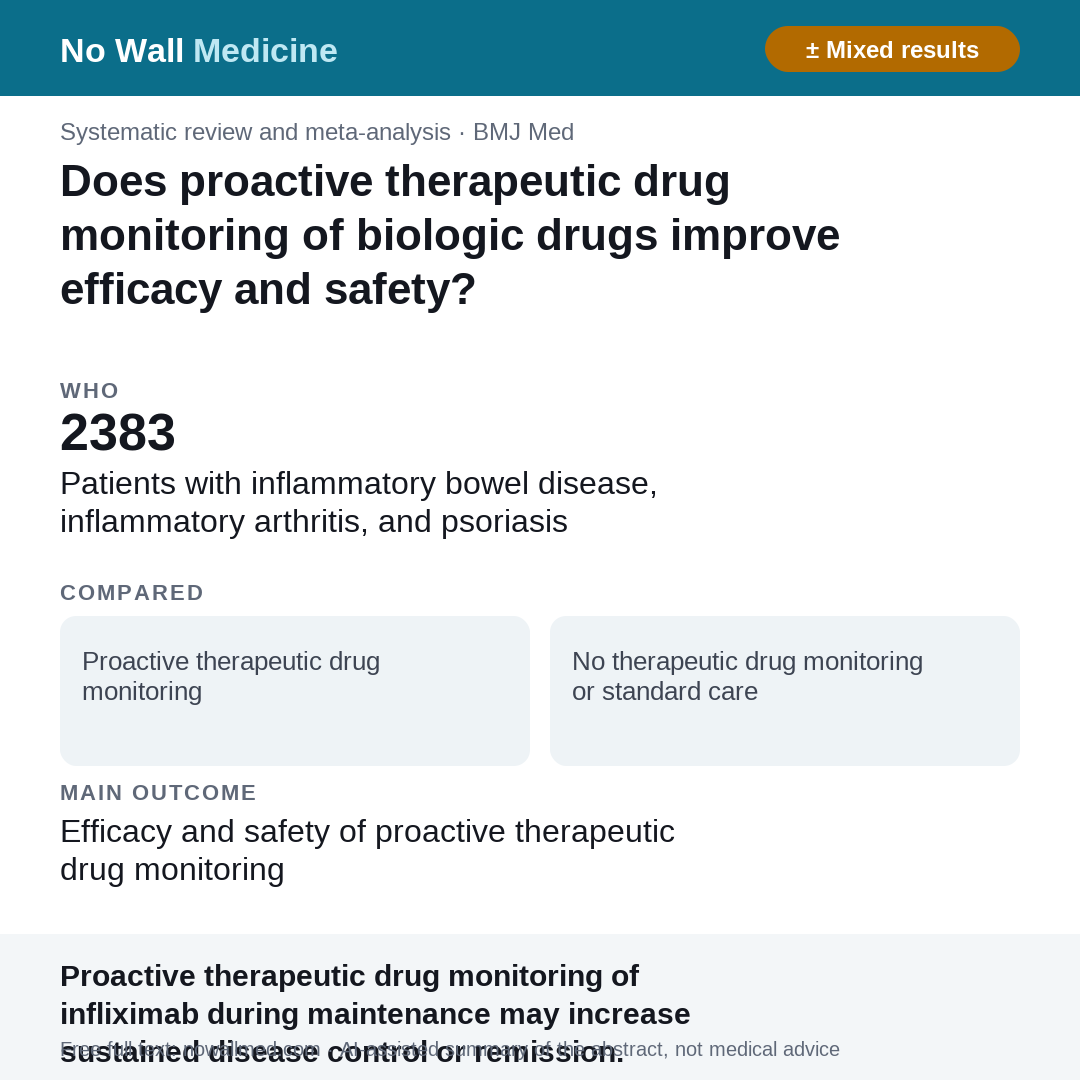
Proactive therapeutic drug monitoring of biologic drugs in patients with inflammatory bowel disease, inflammatory arthritis, and psoriasis: systematic review and meta-analysis
Systematic review and meta-analysisMixed results
Does proactive therapeutic drug monitoring of biologic drugs improve efficacy and safety?
Who
2383
Patients with inflammatory bowel disease, inflammatory arthritis, and psoriasis
Compared
Proactive therapeutic drug monitoring
No therapeutic drug monitoring or standard care
Main outcome
Efficacy and safety of proactive therapeutic drug monitoring
Result: relative risk 1.26 (95% confidence interval (CI) 1.14 to 1.40)
Bottom line: Proactive therapeutic drug monitoring of infliximab during maintenance may increase sustained disease control or remission.
BMJ Med · 2024-10-28Download image
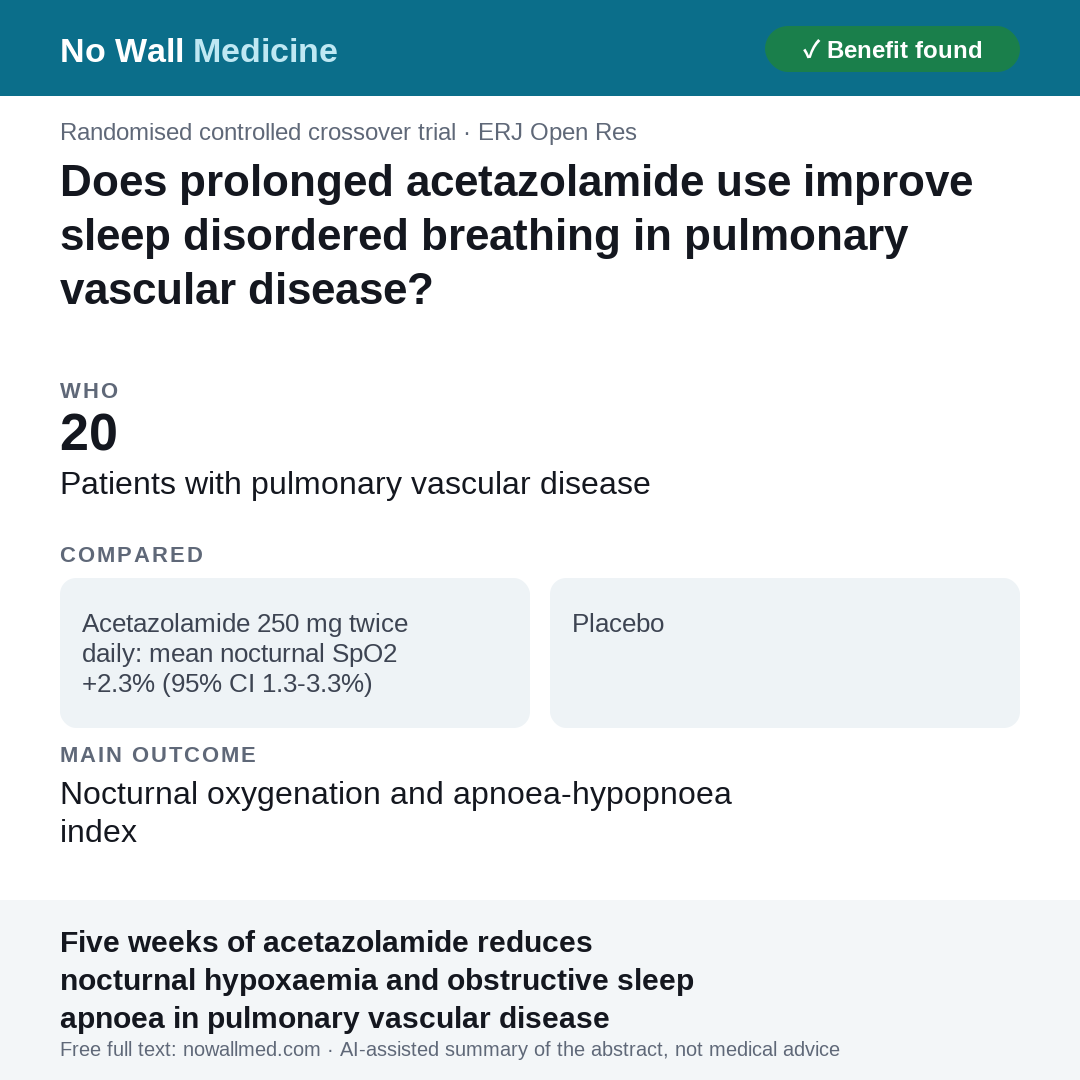
Effects of acetazolamide on sleep disordered breathing in pulmonary vascular disease: a randomised controlled trial
Randomised controlled crossover trialBenefit found
Does prolonged acetazolamide use improve sleep disordered breathing in pulmonary vascular disease?
Who
20
Patients with pulmonary vascular disease
Compared
Acetazolamide 250 mg twice daily: mean nocturnal SpO2 +2.3% (95% CI 1.3-3.3%)
Placebo
Main outcome
Nocturnal oxygenation and apnoea-hypopnoea index
Result: mean nocturnal SpO2 +2.3% (95% CI 1.3-3.3%)
Bottom line: Five weeks of acetazolamide reduces nocturnal hypoxaemia and obstructive sleep apnoea in pulmonary vascular disease patients.
ERJ Open Res · 2024-10-28Download image
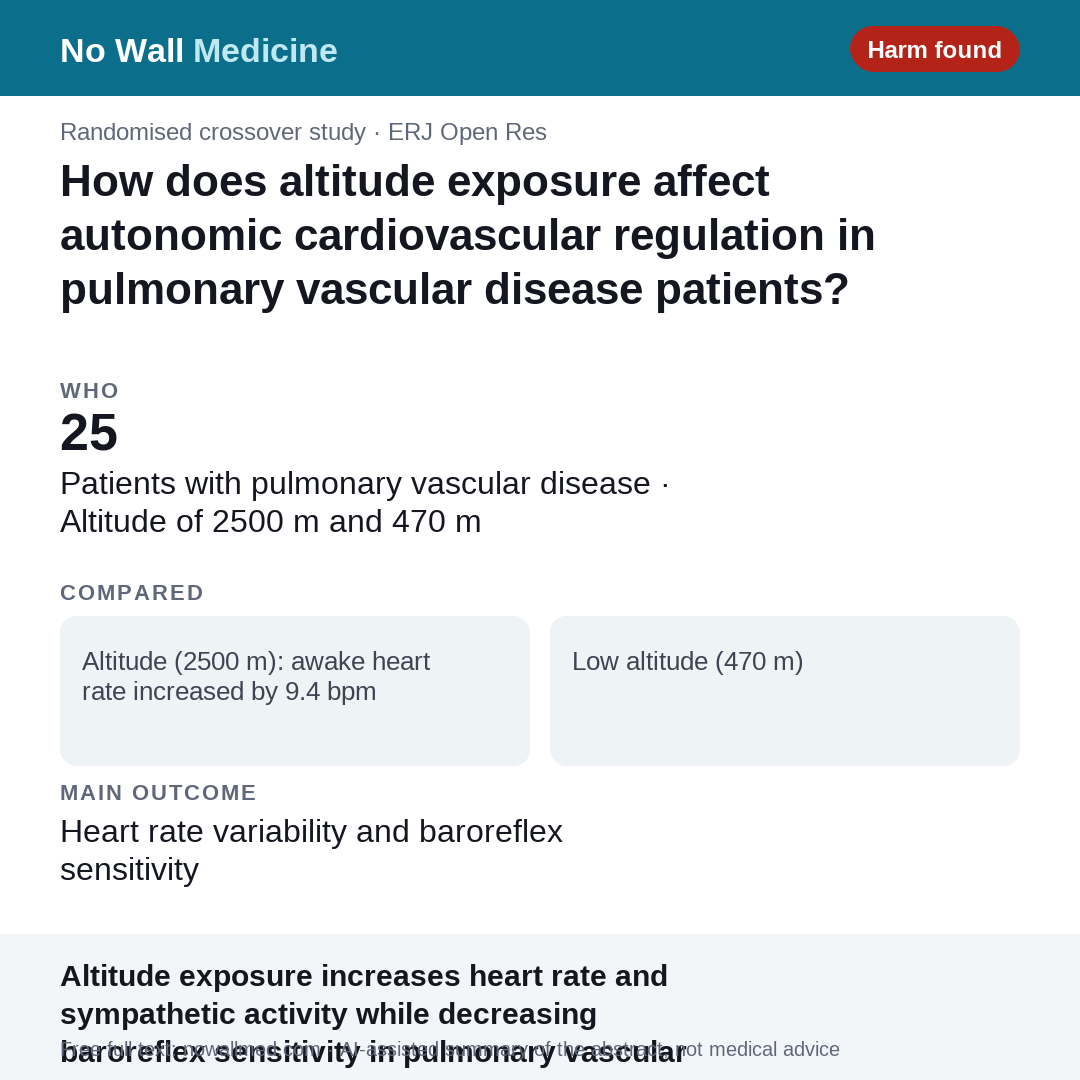
Heart rate variability in pulmonary vascular disease at altitude: a randomised trial
Randomised crossover studyHarm found
How does altitude exposure affect autonomic cardiovascular regulation in pulmonary vascular disease patients?
Who
25
Patients with pulmonary vascular disease · Altitude of 2500 m and 470 m
Compared
Altitude (2500 m): awake heart rate increased by 9.4 bpm
Low altitude (470 m)
Main outcome
Heart rate variability and baroreflex sensitivity
Bottom line: Altitude exposure increases heart rate and sympathetic activity while decreasing baroreflex sensitivity in pulmonary vascular disease patients.
ERJ Open Res · 2024-10-28Download image
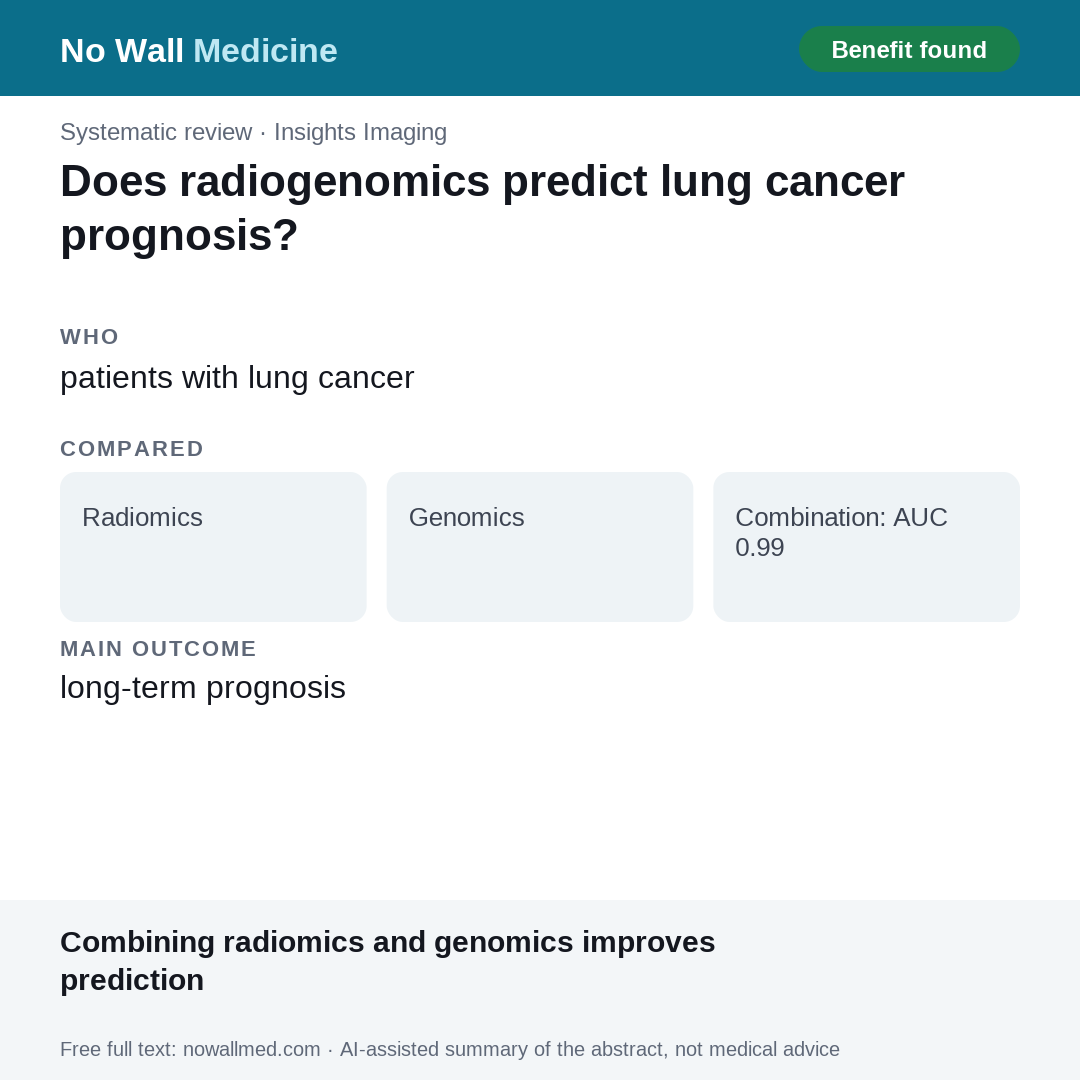
The prognostic value of radiogenomics using CT in patients with lung cancer: a systematic review
Systematic reviewBenefit found
Does radiogenomics predict lung cancer prognosis?
Who
patients with lung cancer
Compared
Radiomics
Genomics
Combination: AUC 0.99
Main outcome
long-term prognosis
Bottom line: Combining radiomics and genomics improves prediction
Limitation: standardized data and larger cohorts needed
Insights Imaging · 2024-10-28Download image
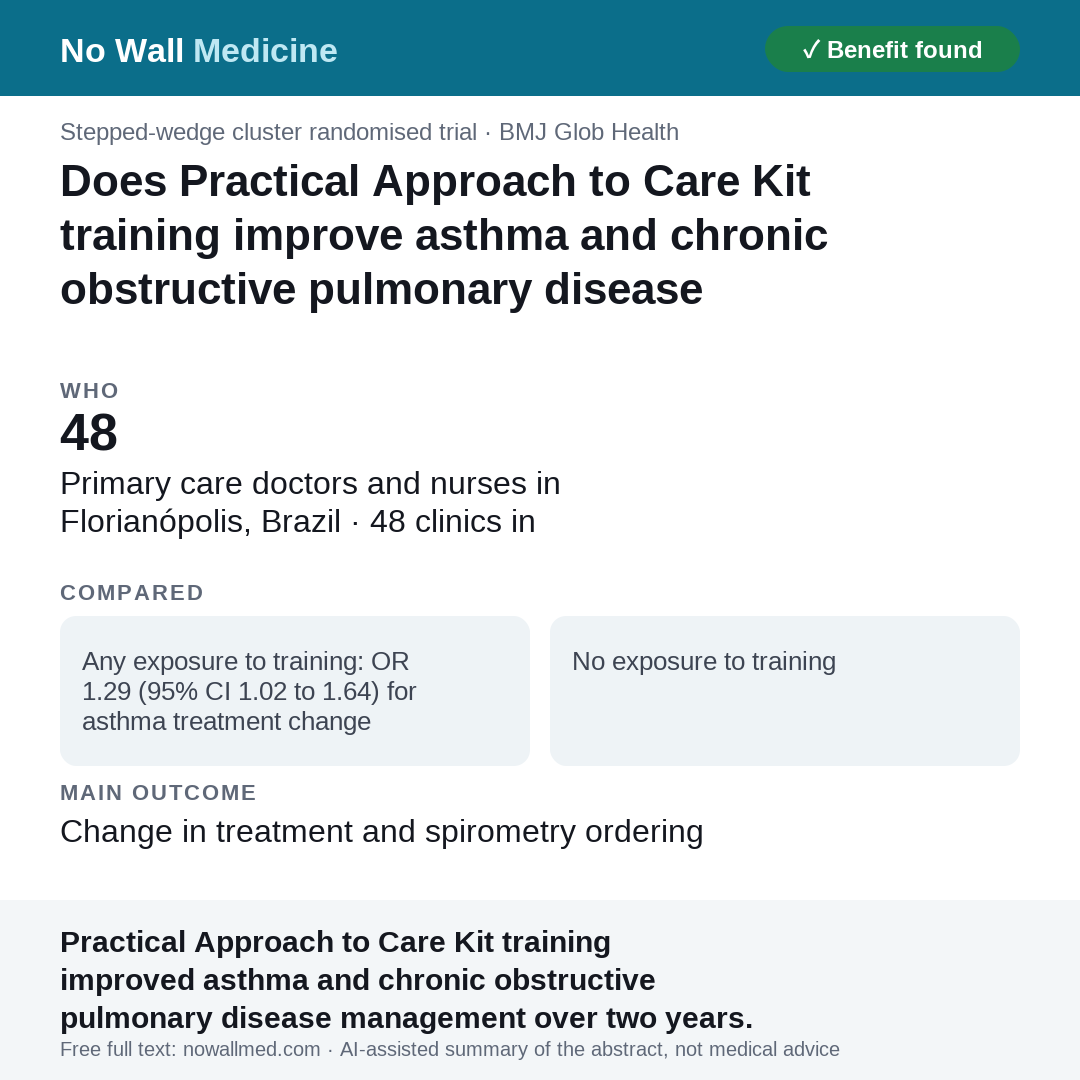
Effects of PACK training on the management of asthma and chronic obstructive pulmonary disease by primary care clinicians during 2 years of implementation in Florianópolis, Brazil: extended follow-up after a pragmatic cluster randomised controlled trial with a stepped-wedge design
Stepped-wedge cluster randomised trialBenefit found
Does Practical Approach to Care Kit training improve asthma and chronic obstructive pulmonary disease management?
Who
48
Primary care doctors and nurses in Florianópolis, Brazil · 48 clinics in Florianópolis, Brazil
Compared
Any exposure to training: OR 1.29 (95% CI 1.02 to 1.64) for asthma treatment change
No exposure to training
Main outcome
Change in treatment and spirometry ordering
Result: OR 1.29 (95% CI 1.02 to 1.64) for asthma treatment change
Bottom line: Practical Approach to Care Kit training improved asthma and chronic obstructive pulmonary disease management over two years.
BMJ Glob Health · 2024-10-28Download image
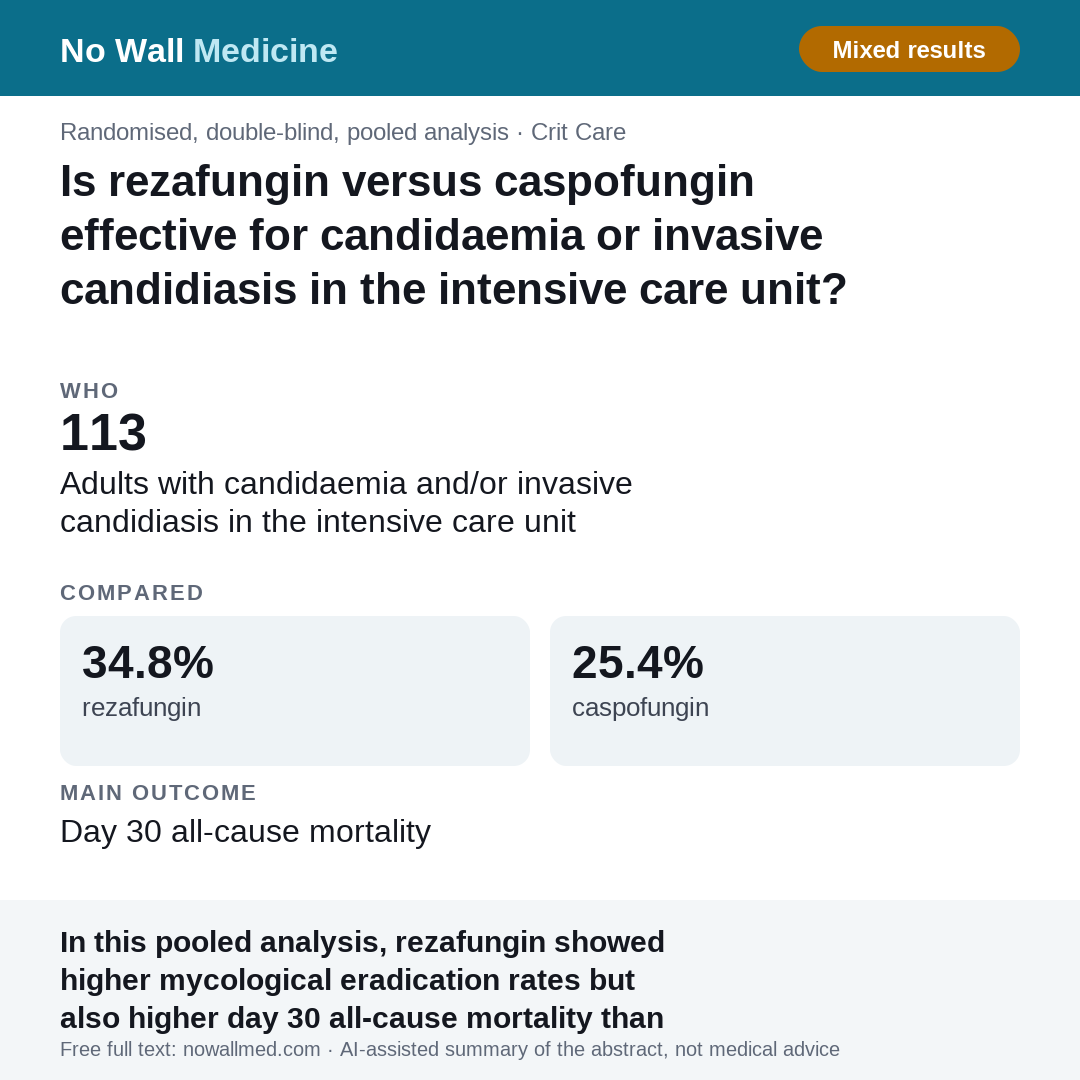
Rezafungin versus caspofungin for patients with candidaemia or invasive candidiasis in the intensive care unit: pooled analyses of the ReSTORE and STRIVE randomised trials
Randomised, double-blind, pooled analysisMixed results
Is rezafungin versus caspofungin effective for candidaemia or invasive candidiasis in the intensive care unit?
Who
113
Adults with candidaemia and/or invasive candidiasis in the intensive care unit
Compared
34.8%rezafungin
25.4%caspofungin
Main outcome
Day 30 all-cause mortality
Bottom line: In this pooled analysis, rezafungin showed higher mycological eradication rates but also higher day 30 all-cause mortality than caspofungin.
Crit Care · 2024-10-28Download image
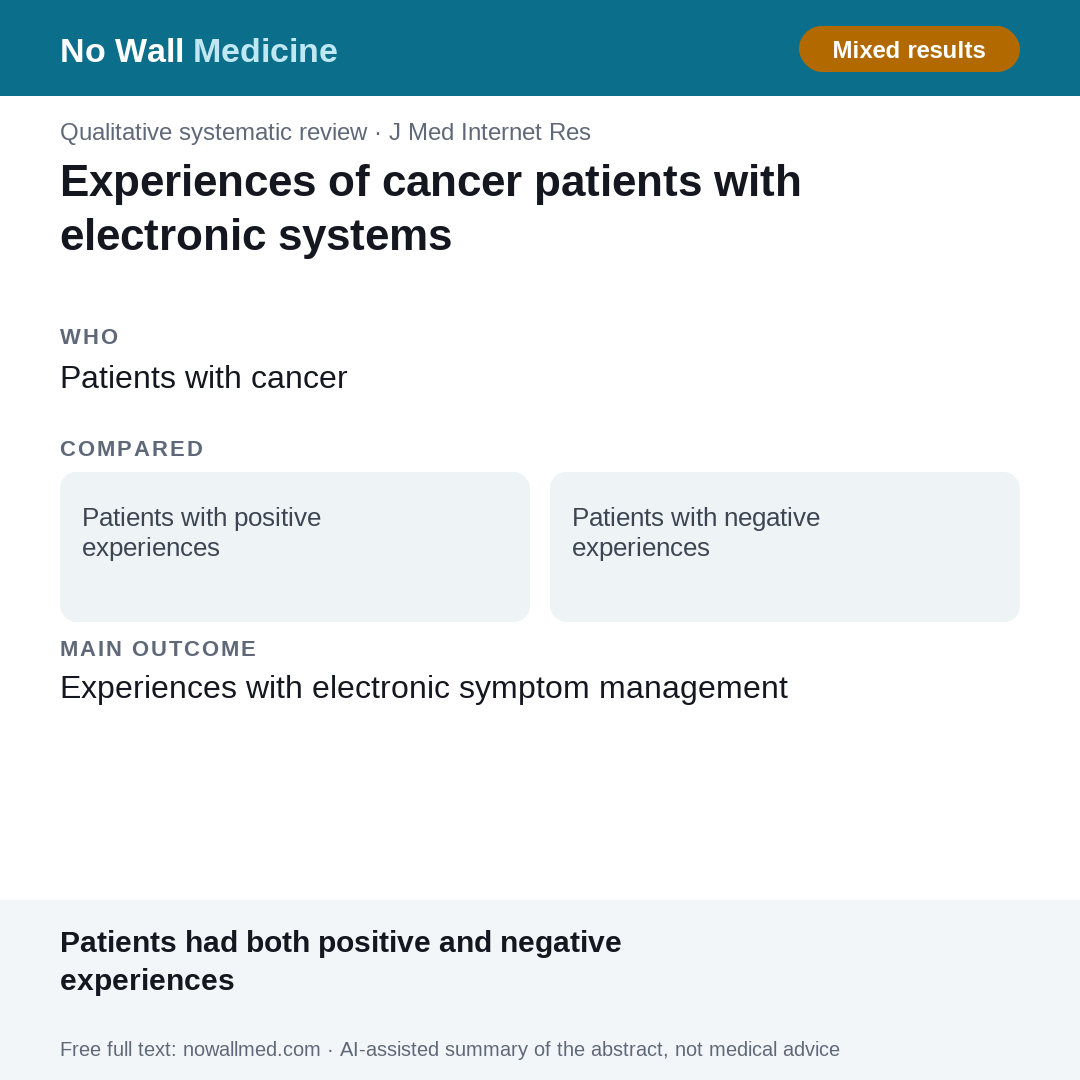
Experiences of Patients With Cancer Using Electronic Symptom Management Systems: Qualitative Systematic Review and Meta-Synthesis
Qualitative systematic reviewMixed results
Experiences of cancer patients with electronic systems
Who
Patients with cancer
Compared
Patients with positive experiences
Patients with negative experiences
Main outcome
Experiences with electronic symptom management
Bottom line: Patients had both positive and negative experiences
J Med Internet Res · 2024-10-28Download image
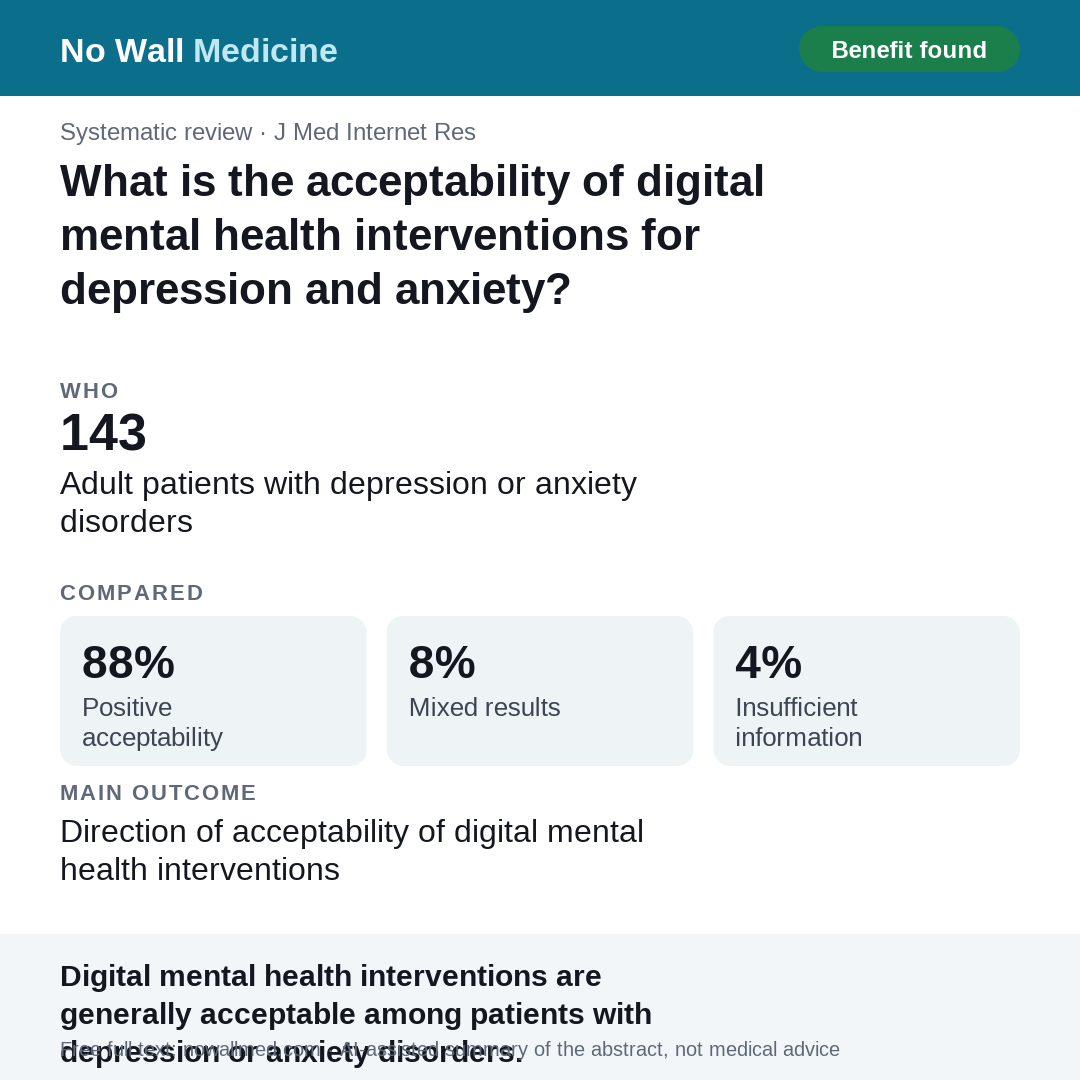
Acceptability of Digital Mental Health Interventions for Depression and Anxiety: Systematic Review
Systematic reviewBenefit found
What is the acceptability of digital mental health interventions for depression and anxiety?
Who
143
Adult patients with depression or anxiety disorders
Compared
88%Positive acceptability (126/143)
8%Mixed results (11/143)
4%Insufficient information (6/143)
Main outcome
Direction of acceptability of digital mental health interventions
Bottom line: Digital mental health interventions are generally acceptable among patients with depression or anxiety disorders.
Limitation: Consistent use of validated measures for acceptability would enhance the quality of evidence.
J Med Internet Res · 2024-10-28Download image
Effects of virtual reality rehabilitation after spinal cord injury: a systematic review and meta-analysis
Systematic review and meta-analysisBenefit found
Does virtual reality intervention improve functional performance in spinal cord injury?
Who
248
Individuals with spinal cord injury
Compared
Virtual reality intervention
Control
Main outcome
Functional performance including walking and balance
Bottom line: Virtual reality shows promise in enhancing walking ability and balance function in individuals with spinal cord injury.
Limitation: Existing evidence for virtual reality interventions in spinal cord injury patients remains limited.
J Neuroeng Rehabil · 2024-10-28Download image

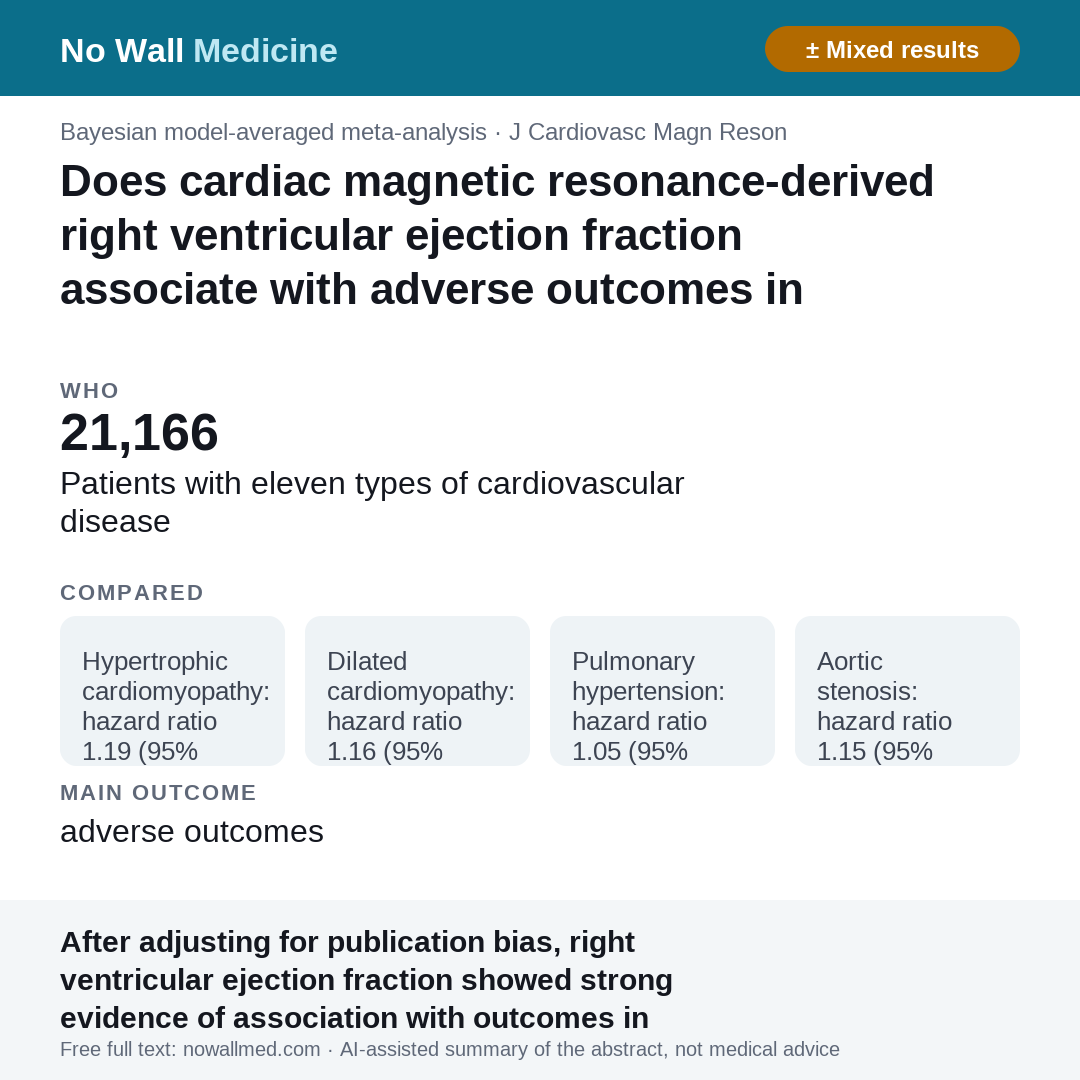
Impact of cardiovascular magnetic resonance-derived right ventricular ejection fraction on adverse outcomes: A robust Bayesian model-averaged meta-analysis
Bayesian model-averaged meta-analysisMixed results
Does cardiac magnetic resonance-derived right ventricular ejection fraction associate with adverse outcomes in cardiovascular diseases?
Who
21,166
Patients with eleven types of cardiovascular disease
Compared
Hypertrophic cardiomyopathy: hazard ratio 1.19 (95% credible interval 0.98-1.42)
Dilated cardiomyopathy: hazard ratio 1.16 (95% credible interval 1-1.22)
Pulmonary hypertension: hazard ratio 1.05 (95% credible interval 1-1.12)
Aortic stenosis: hazard ratio 1.15 (95% credible interval 0.97-1.34)
Main outcome
adverse outcomes
Bottom line: After adjusting for publication bias, right ventricular ejection fraction showed strong evidence of association with outcomes in only four diseases.
Limitation: Additional data may strengthen evidence regarding other cardiovascular diseases.
J Cardiovasc Magn Reson · 2024-10-28Download image
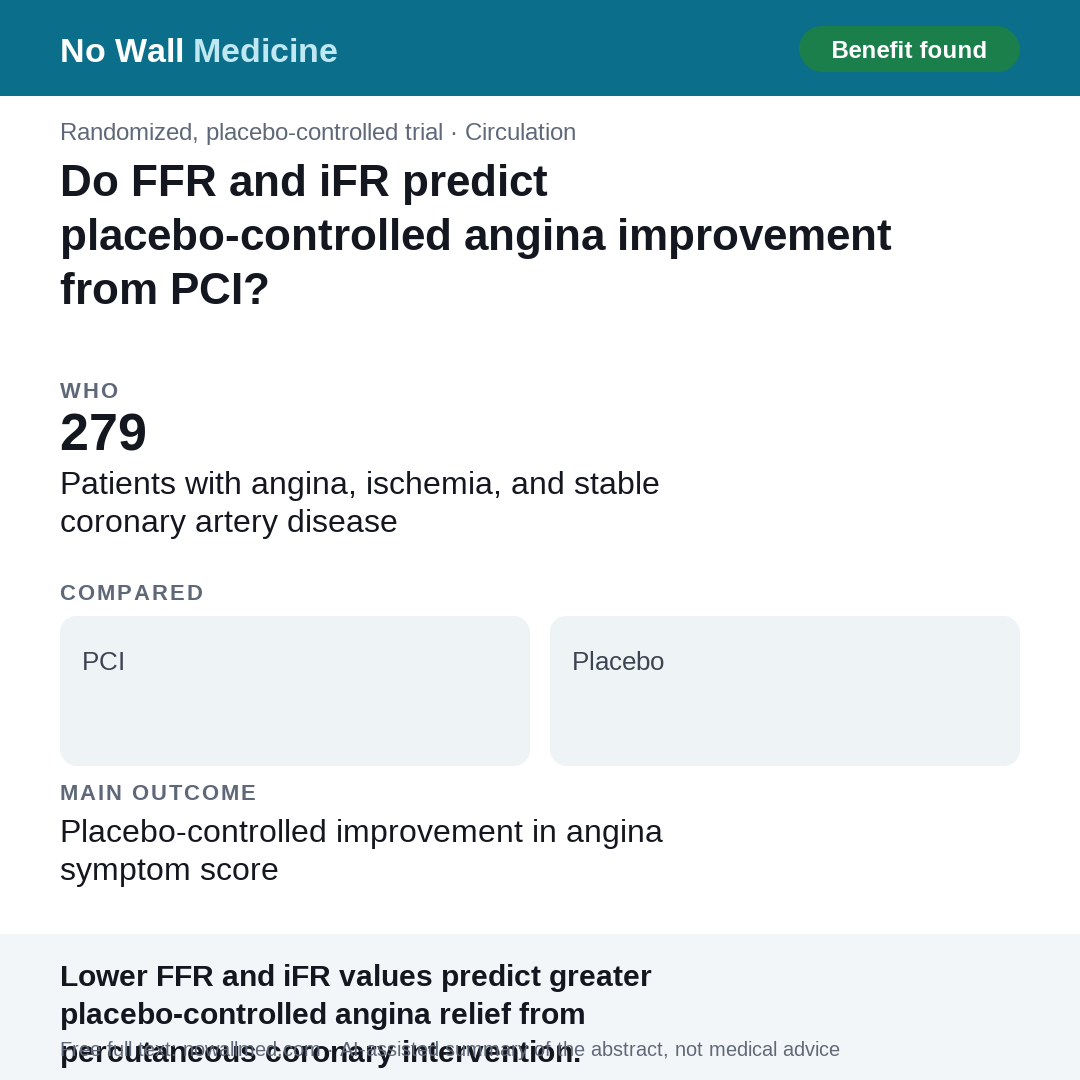
Fractional Flow Reserve and Instantaneous Wave-Free Ratio as Predictors of the Placebo-Controlled Response to Percutaneous Coronary Intervention in Stable Coronary Artery Disease
Randomized, placebo-controlled trialBenefit found
Do FFR and iFR predict placebo-controlled angina improvement from PCI?
Who
279
Patients with angina, ischemia, and stable coronary artery disease
Compared
PCI
Placebo
Main outcome
Placebo-controlled improvement in angina symptom score
Result: odds ratio 2.01 (95% credible interval 1.79-2.26) for FFR
Bottom line: Lower FFR and iFR values predict greater placebo-controlled angina relief from percutaneous coronary intervention.
Circulation · 2024-10-27Download image
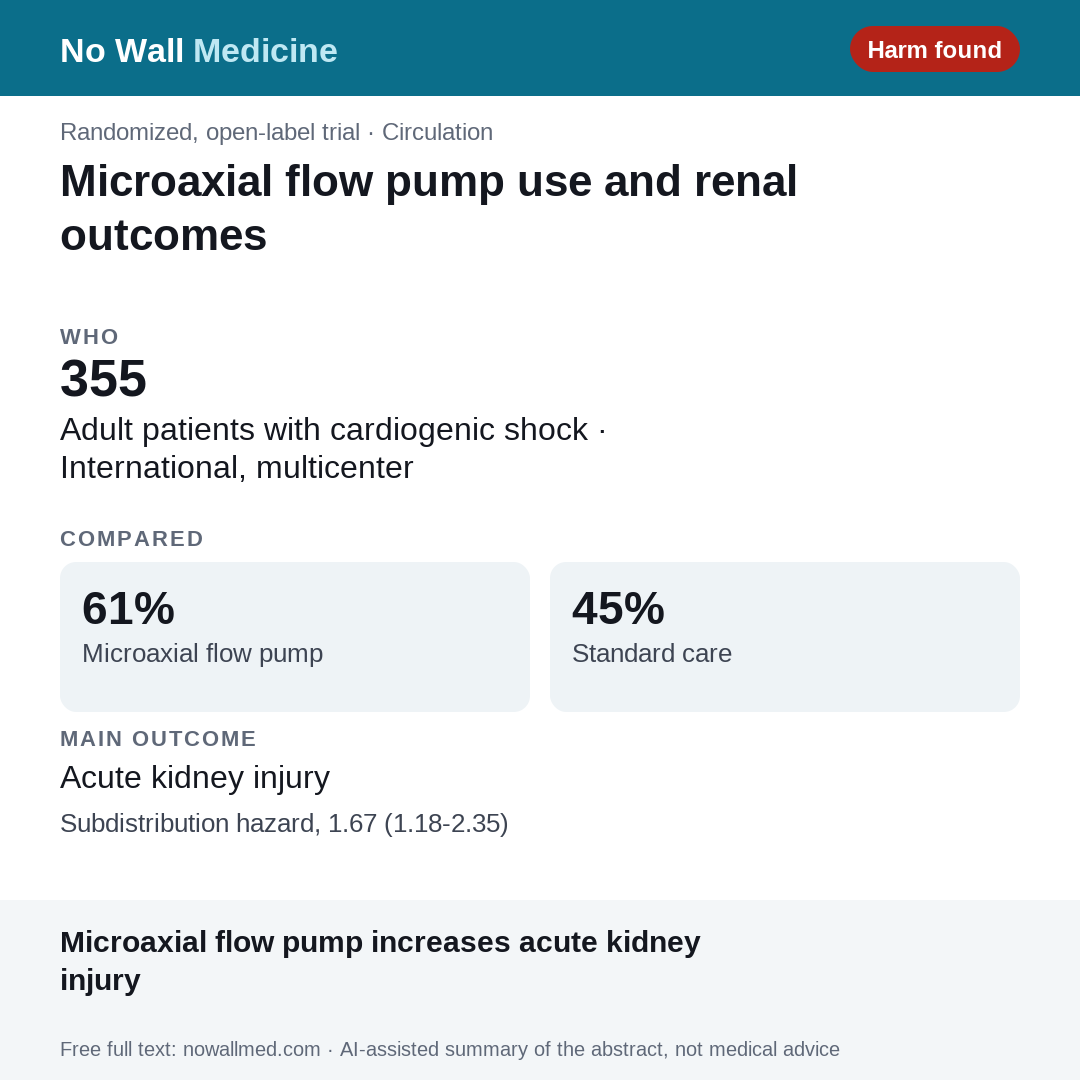
Microaxial Flow Pump Use and Renal Outcomes in Infarct-Related Cardiogenic Shock: A Secondary Analysis of the DanGer Shock Trial
Randomized, open-label trialHarm found
Microaxial flow pump use and renal outcomes
Who
355
Adult patients with cardiogenic shock · International, multicenter
Compared
61%Microaxial flow pump (110/179)
45%Standard care (79/176)
Main outcome
Acute kidney injury
Result: Subdistribution hazard, 1.67 (1.18-2.35)
Bottom line: Microaxial flow pump increases acute kidney injury
Circulation · 2024-10-27Download image
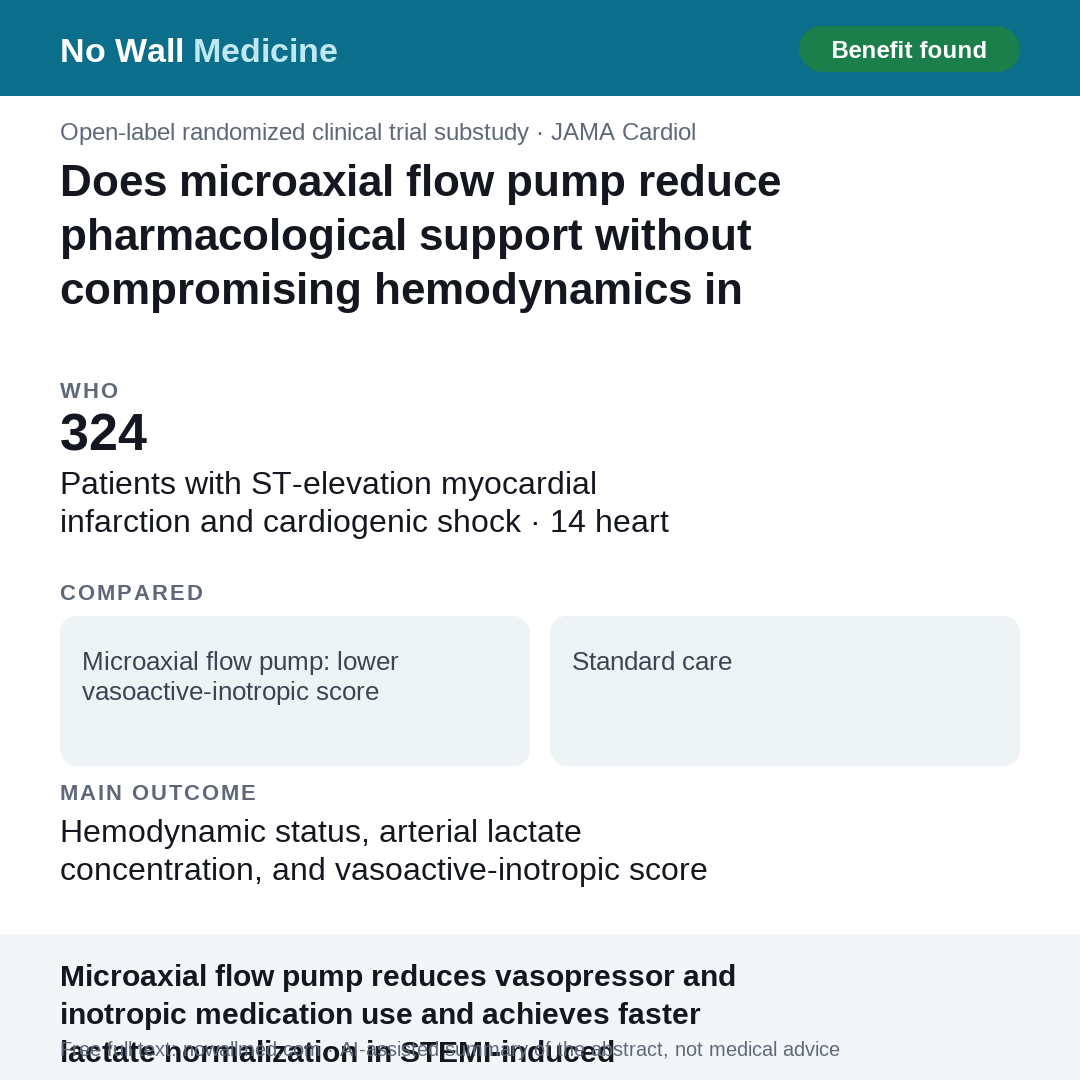
Microaxial Flow Pump Hemodynamic and Metabolic Effects in Infarct-Related Cardiogenic Shock: A Substudy of the DanGer Shock Randomized Clinical Trial
Open-label randomized clinical trial substudyBenefit found
Does microaxial flow pump reduce pharmacological support without compromising hemodynamics in STEMI-induced cardiogenic shock?
Who
324
Patients with ST-elevation myocardial infarction and cardiogenic shock · 14 heart centers in Denmark, Germany, and the UK
Compared
Microaxial flow pump: lower vasoactive-inotropic score
Standard care
Main outcome
Hemodynamic status, arterial lactate concentration, and vasoactive-inotropic score
Result: mean difference in arterial lactate 1.3 mmol/L (95% CI, 0.7-1.9 mmol/L)
Bottom line: Microaxial flow pump reduces vasopressor and inotropic medication use and achieves faster lactate normalization in STEMI-induced cardiogenic shock.
JAMA Cardiol · 2024-10-27Download image