Visual abstracts
New randomized trials and meta-analyses from leading journals at a glance: who was studied, what was compared, and what was found. Every paper is free to read in full.
All specialtiesCardiology 4877Oncology 4138Gastroenterology & Hepatology 1942Infectious Disease 3837Neurology 1905Psychiatry & Mental Health 2273Pulmonology 2143Critical Care 1365Endocrinology & Diabetes 2580Pediatrics 2980Surgery 2559Orthopedics & Sports Medicine 931Neurosurgery 537Cardiothoracic & Vascular Surgery 674Plastic & Reconstructive Surgery 591Nephrology 1133Rheumatology 823Hematology 1109Dermatology 621Ophthalmology 543Obstetrics & Gynecology 1686Public & Global Health 1058Radiology & Imaging 648Anesthesiology 986Urology 764ENT (Otolaryngology) 503Emergency Medicine 511Allergy & Immunology 313Geriatrics 981Family Medicine & Primary Care 562Medical Genetics & Genomics 676Pathology & Laboratory Medicine 159Physical Medicine & Rehabilitation 757Palliative Care 444Nutrition 1588Digital Health & AI 2201General Medicine 321
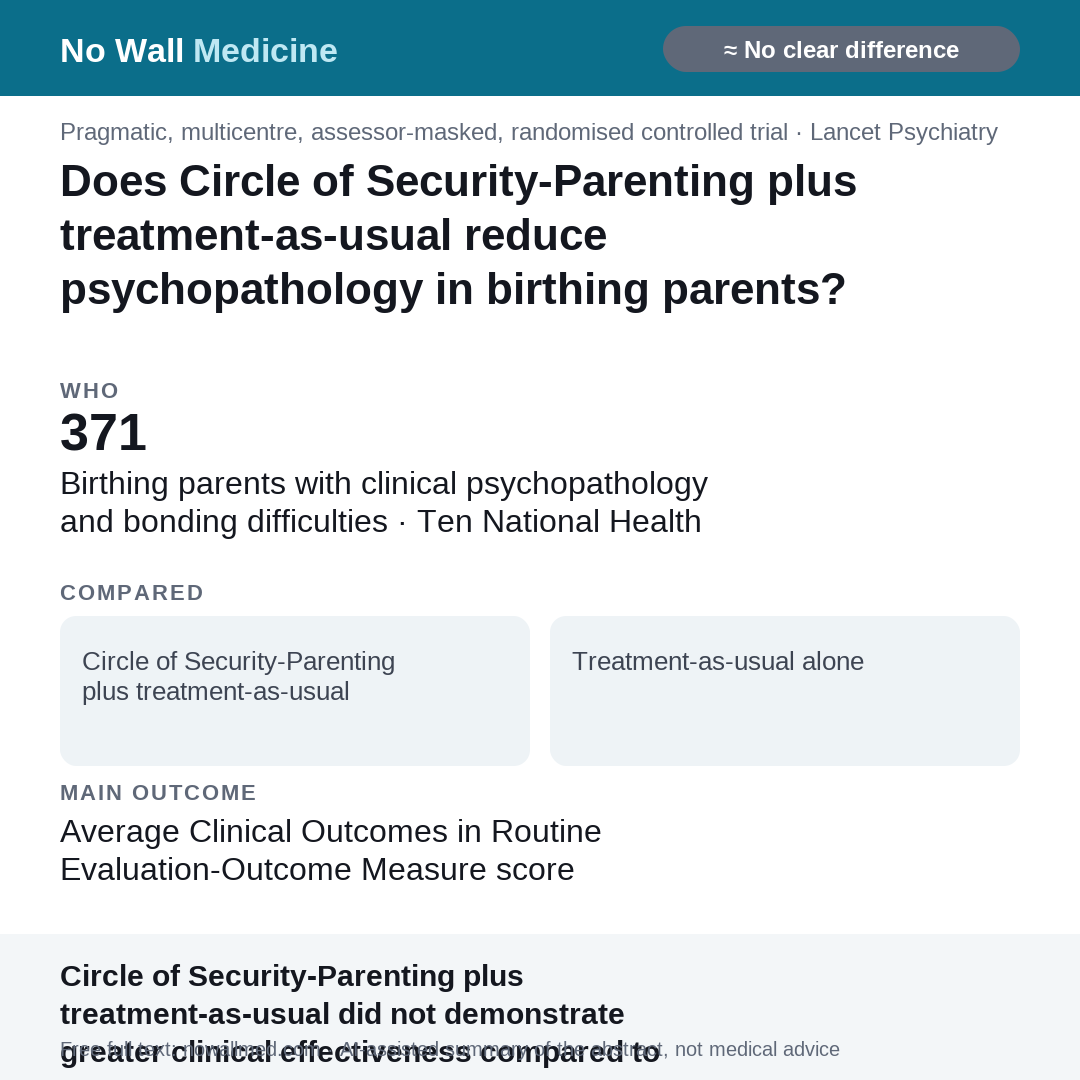
Clinical effectiveness of the Circle of Security-Parenting group intervention for birthing parents in perinatal mental health services in England (COSI): a pragmatic, multicentre, assessor-masked, randomised controlled trial
Pragmatic, multicentre, assessor-masked, randomised controlled trialNo clear difference
Does Circle of Security-Parenting plus treatment-as-usual reduce psychopathology in birthing parents?
Who
371
Birthing parents with clinical psychopathology and bonding difficulties · Ten National Health Service Trusts across England
Compared
Circle of Security-Parenting plus treatment-as-usual
Treatment-as-usual alone
Main outcome
Average Clinical Outcomes in Routine Evaluation-Outcome Measure score
Result: -1·41 (95% CI -5·11 to 2·28)
Bottom line: Circle of Security-Parenting plus treatment-as-usual did not demonstrate greater clinical effectiveness compared to treatment-as-usual alone.
Lancet Psychiatry · 2025-10-07Download image
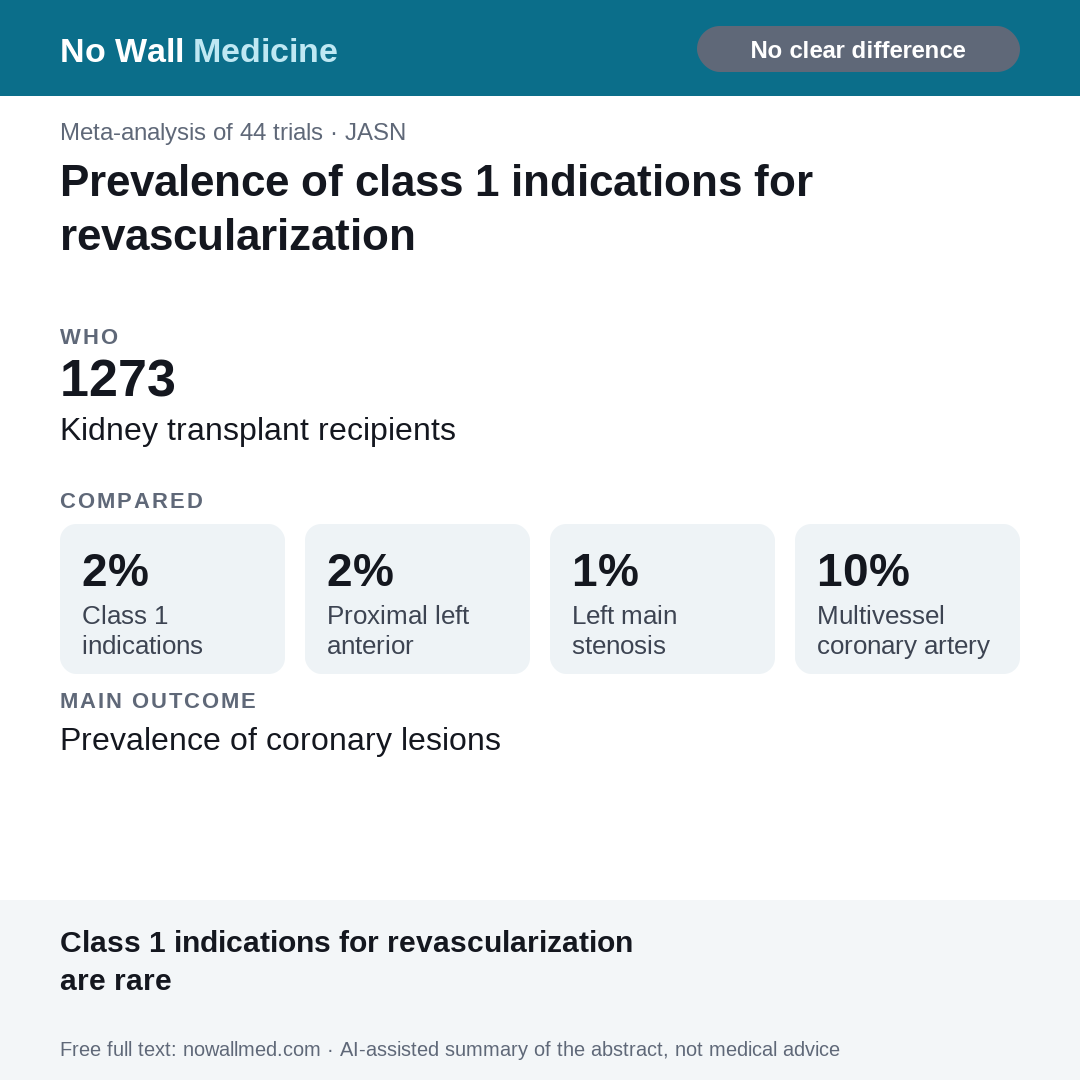
Class 1 Indications for Coronary Revascularization Identified in Prekidney Transplant Screening
Meta-analysis of 44 trialsNo clear difference
Prevalence of class 1 indications for revascularization
Who
1273
Kidney transplant recipients
Compared
2%Class 1 indications
2%Proximal left anterior descending disease
1%Left main stenosis
10%Multivessel coronary artery disease
Main outcome
Prevalence of coronary lesions
Bottom line: Class 1 indications for revascularization are rare
JASN · 2025-10-07Download image
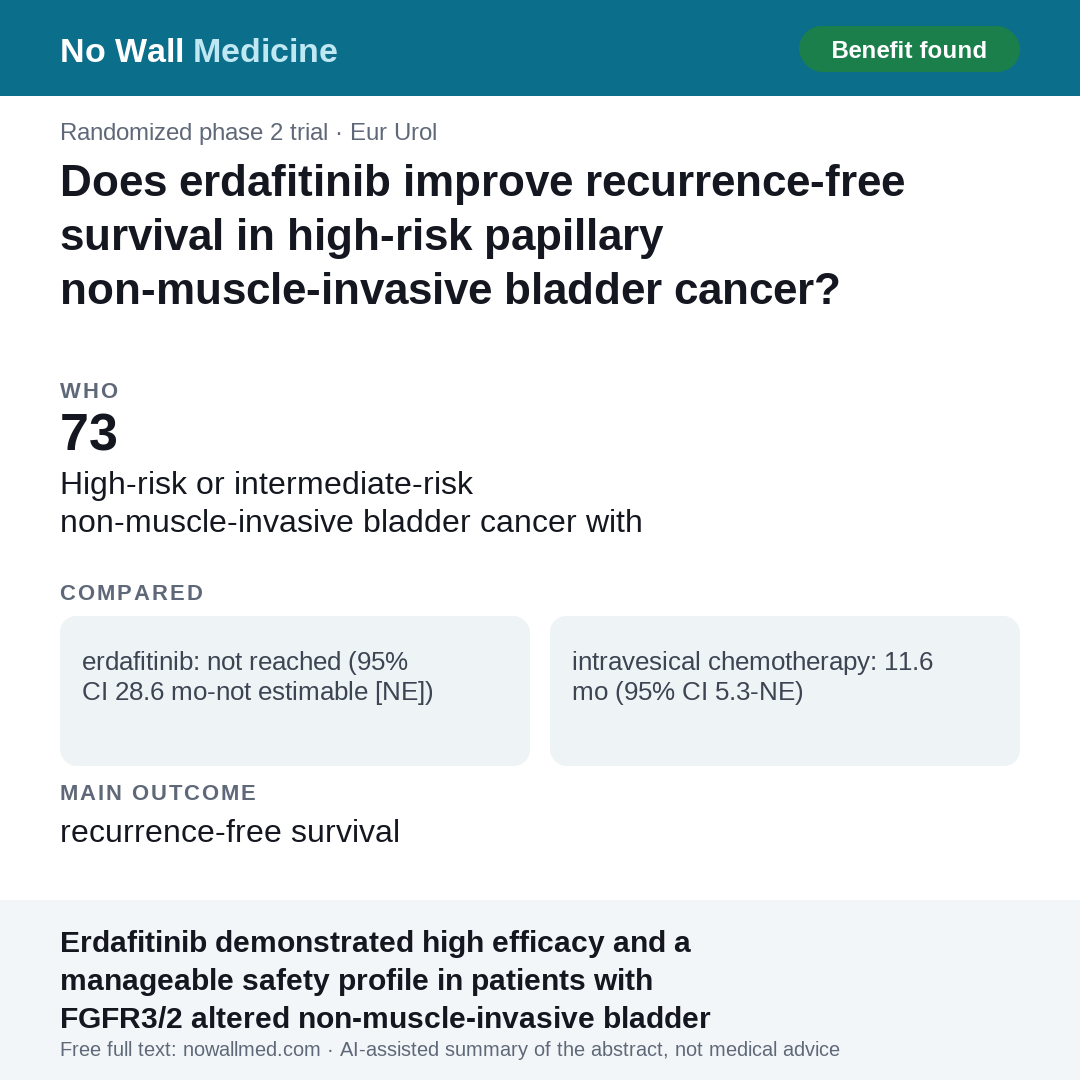
Erdafitinib in Patients with High- and Intermediate-risk Non-muscle-invasive Bladder Cancer: Final Analysis of THOR-2 Study
Randomized phase 2 trialBenefit found
Does erdafitinib improve recurrence-free survival in high-risk papillary non-muscle-invasive bladder cancer?
Who
73
High-risk or intermediate-risk non-muscle-invasive bladder cancer with FGFR3/2 alterations
Compared
erdafitinib: not reached (95% CI 28.6 mo-not estimable [NE])
intravesical chemotherapy: 11.6 mo (95% CI 5.3-NE)
Main outcome
recurrence-free survival
Result: hazard ratio 0.28 (95% CI 0.13-0.61)
Bottom line: Erdafitinib demonstrated high efficacy and a manageable safety profile in patients with FGFR3/2 altered non-muscle-invasive bladder cancer.
Limitation: Early termination in cohort 1 and small sample size that precluded prespecified hypothesis testing.
Eur Urol · 2025-10-07Download image
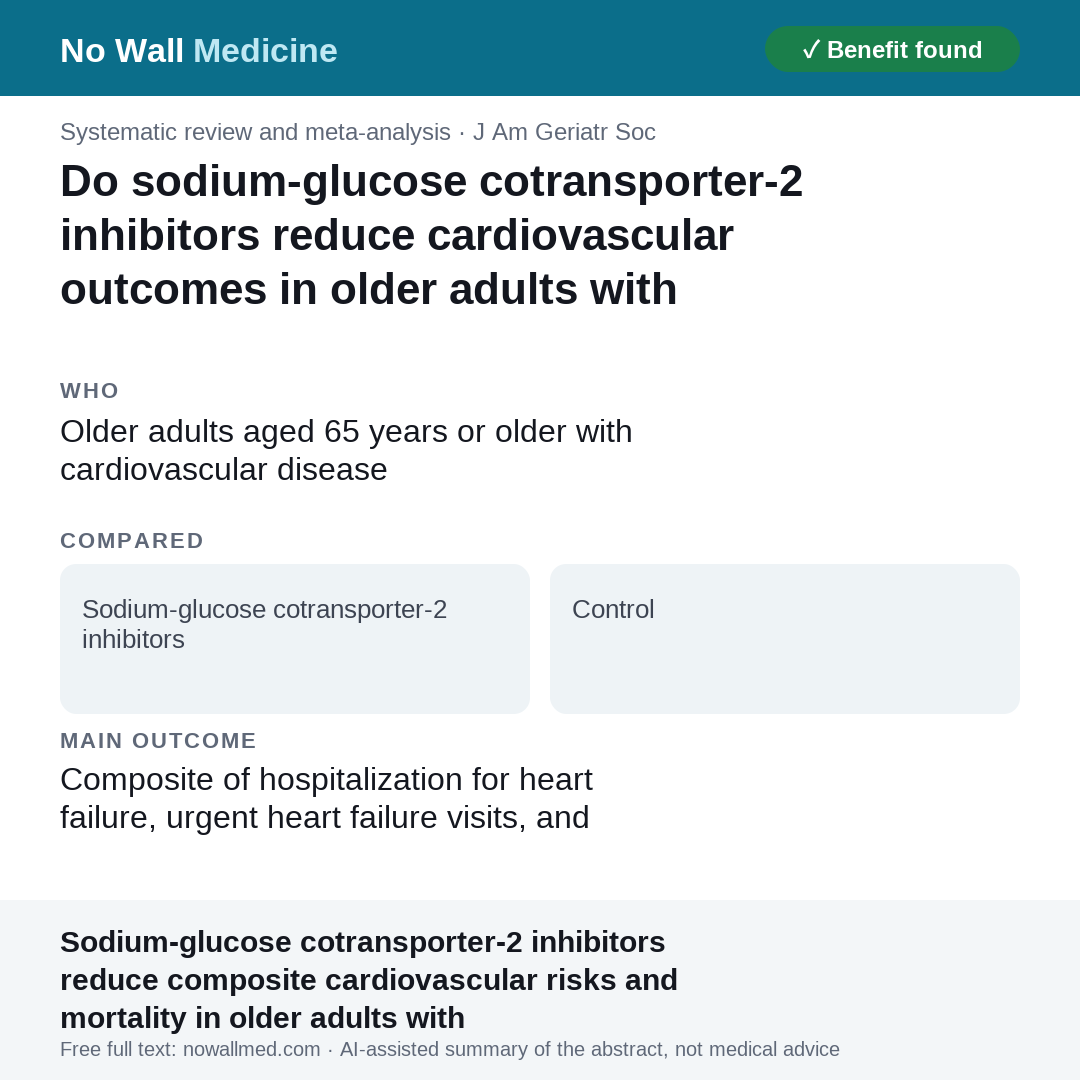
SGLT2 Inhibitors in Older Adults With Cardiovascular Disease: A Systematic Review and Meta-Analysis
Systematic review and meta-analysisBenefit found
Do sodium-glucose cotransporter-2 inhibitors reduce cardiovascular outcomes in older adults with cardiovascular disease?
Who
Older adults aged 65 years or older with cardiovascular disease
Compared
Sodium-glucose cotransporter-2 inhibitors
Control
Main outcome
Composite of hospitalization for heart failure, urgent heart failure visits, and cardiovascular death
Result: hazard ratio 0.75 (95% CI 0.67-0.83)
Bottom line: Sodium-glucose cotransporter-2 inhibitors reduce composite cardiovascular risks and mortality in older adults with cardiovascular disease.
J Am Geriatr Soc · 2025-10-07Download image
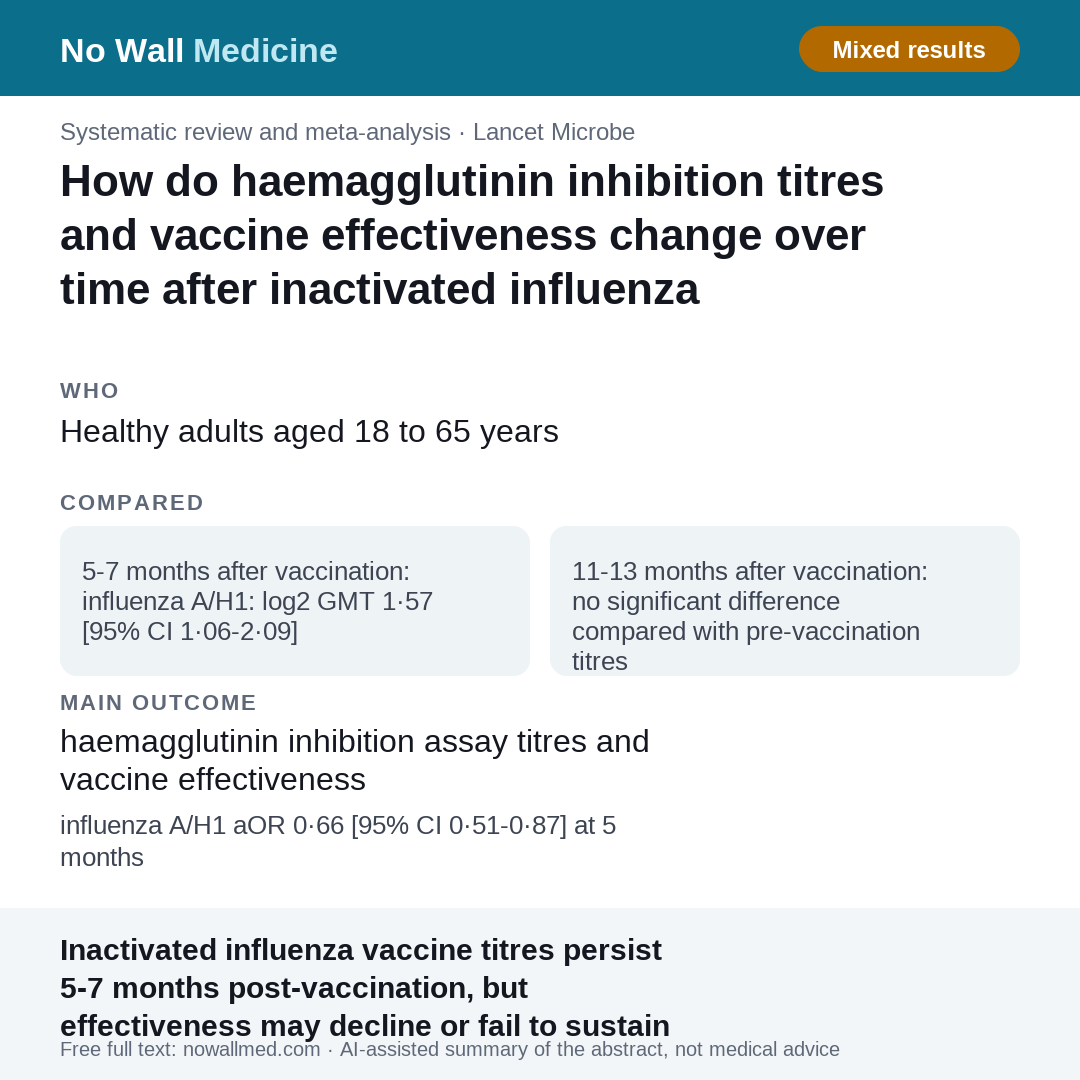
Duration of the serological response and effectiveness of the inactivated influenza vaccine in healthy adults aged 18-65 years: a systematic review and meta-analysis
Systematic review and meta-analysisMixed results
How do haemagglutinin inhibition titres and vaccine effectiveness change over time after inactivated influenza vaccine?
Who
Healthy adults aged 18 to 65 years
Compared
5-7 months after vaccination: influenza A/H1: log2 GMT 1·57 [95% CI 1·06-2·09]
11-13 months after vaccination: no significant difference compared with pre-vaccination titres
Main outcome
haemagglutinin inhibition assay titres and vaccine effectiveness
Result: influenza A/H1 aOR 0·66 [95% CI 0·51-0·87] at 5 months
Bottom line: Inactivated influenza vaccine titres persist 5-7 months post-vaccination, but effectiveness may decline or fail to sustain by 11-13 months.
Limitation: Evaluating temporal changes remains challenging due to methodological biases.
Lancet Microbe · 2025-10-07Download image
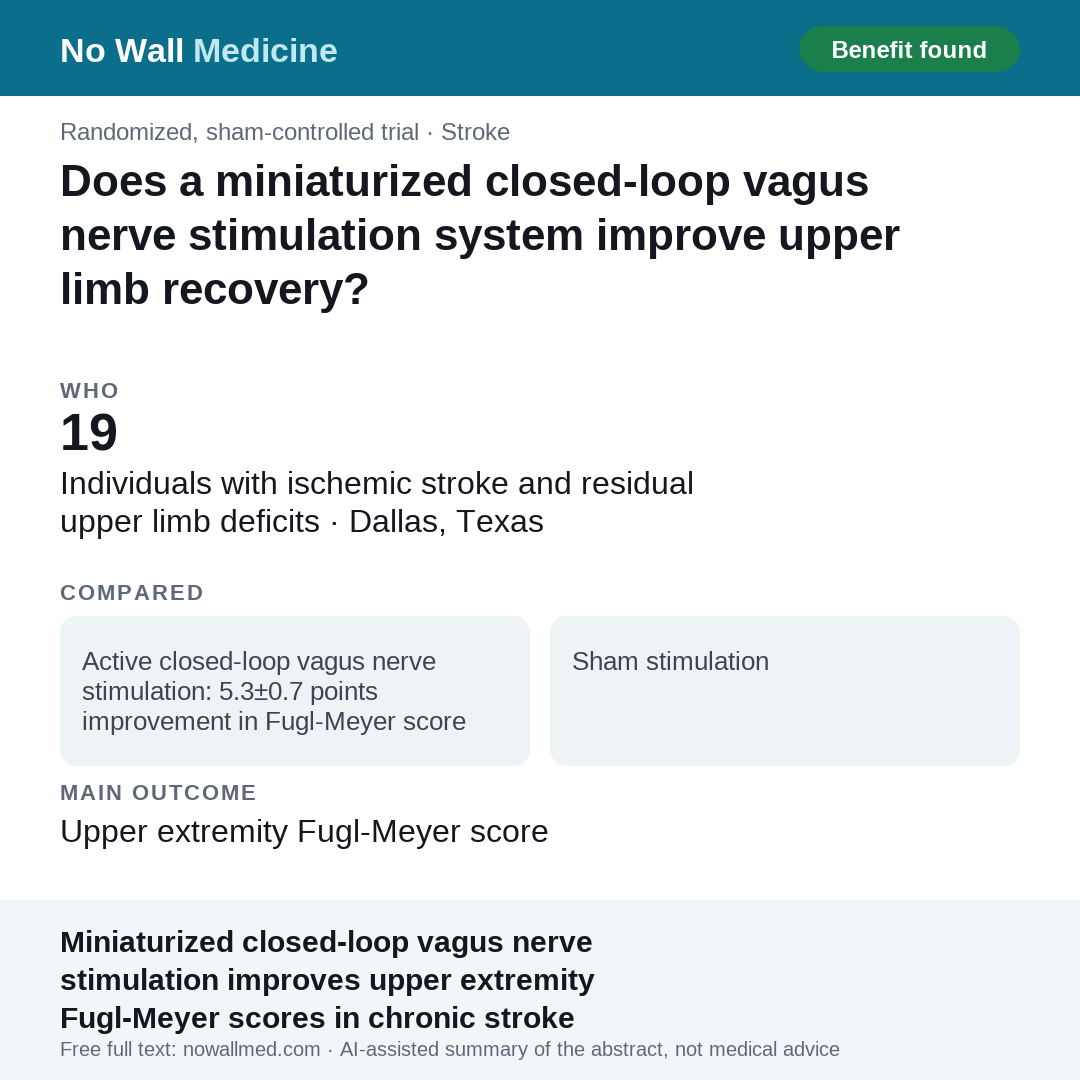
Closed-Loop Vagus Nerve Stimulation Delivered With a Miniaturized System Produces Lasting Recovery in Individuals With Chronic Stroke
Randomized, sham-controlled trialBenefit found
Does a miniaturized closed-loop vagus nerve stimulation system improve upper limb recovery?
Who
19
Individuals with ischemic stroke and residual upper limb deficits · Dallas, Texas
Compared
Active closed-loop vagus nerve stimulation: 5.3±0.7 points improvement in Fugl-Meyer score
Sham stimulation
Main outcome
Upper extremity Fugl-Meyer score
Bottom line: Miniaturized closed-loop vagus nerve stimulation improves upper extremity Fugl-Meyer scores in chronic stroke patients.
Stroke · 2025-10-07Download image
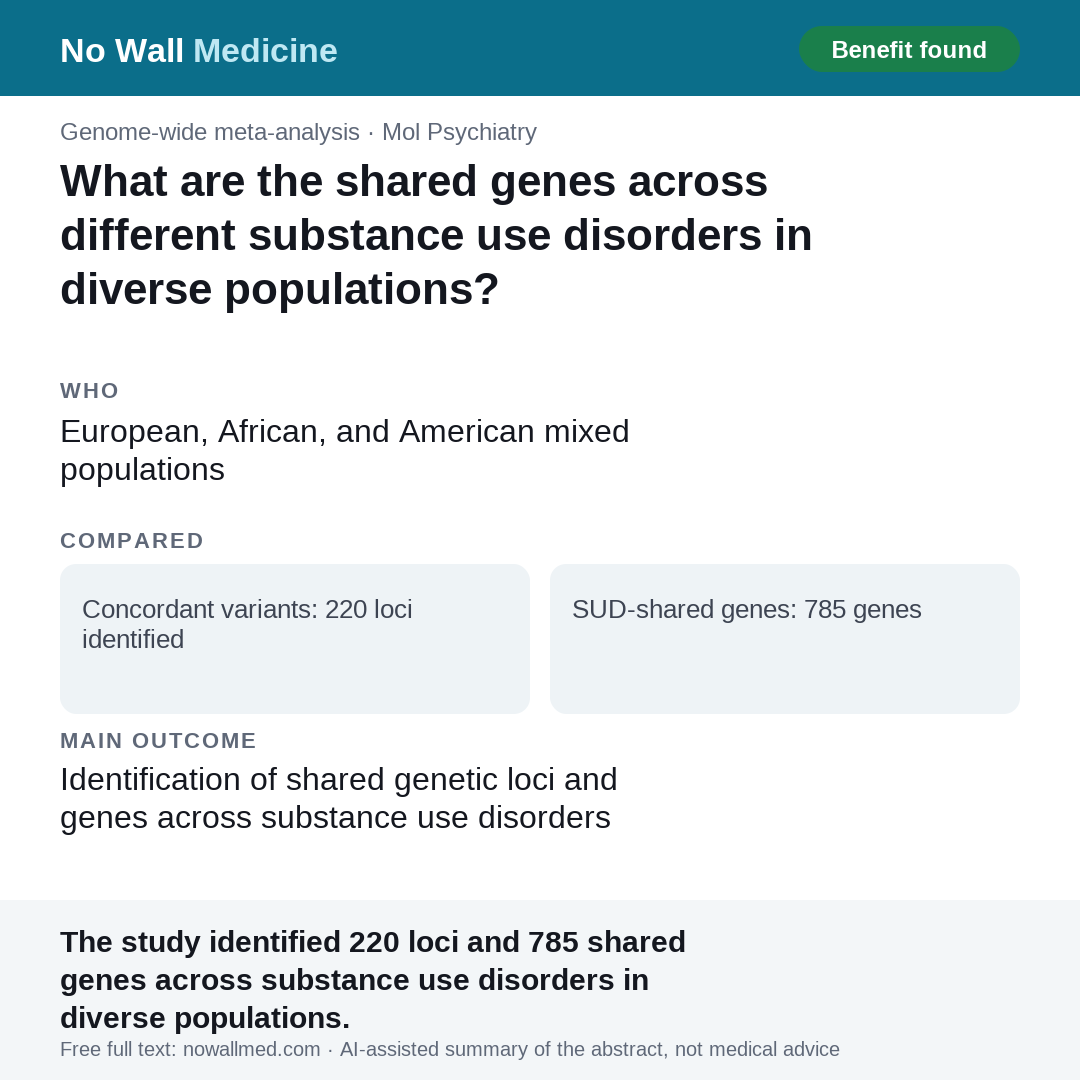
Genome-wide meta-analyses of cross substance use disorders in diverse populations
Genome-wide meta-analysisBenefit found
What are the shared genes across different substance use disorders in diverse populations?
Who
European, African, and American mixed populations
Compared
Concordant variants: 220 loci identified
SUD-shared genes: 785 genes
Main outcome
Identification of shared genetic loci and genes across substance use disorders
Bottom line: The study identified 220 loci and 785 shared genes across substance use disorders in diverse populations.
Mol Psychiatry · 2025-10-07Download image
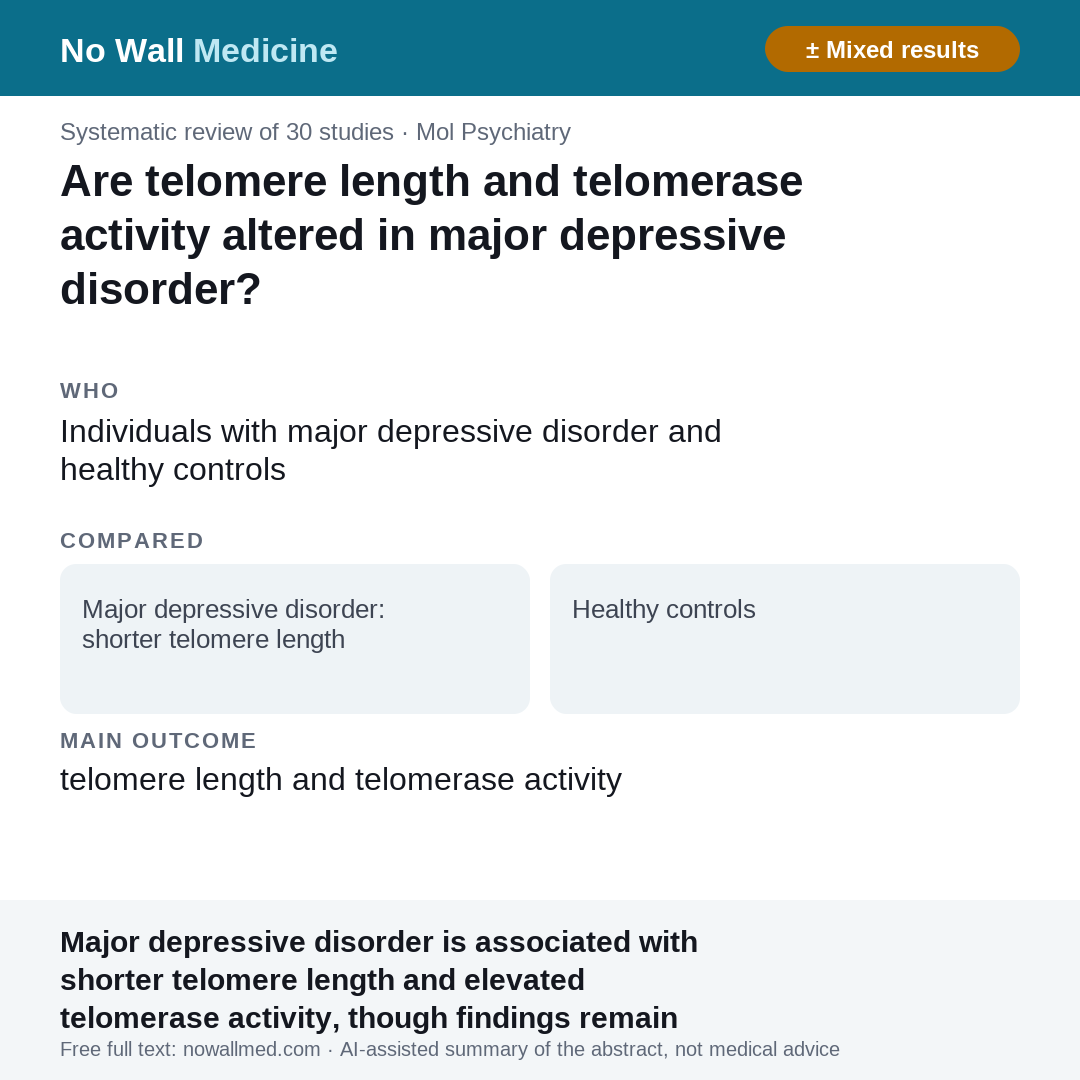
Role of telomere length and telomerase activity in accelerated cellular aging and major depressive disorder: a systematic review
Systematic review of 30 studiesMixed results
Are telomere length and telomerase activity altered in major depressive disorder?
Who
30
Individuals with major depressive disorder and healthy controls
Compared
Major depressive disorder: shorter telomere length
Healthy controls
Main outcome
telomere length and telomerase activity
Bottom line: Major depressive disorder is associated with shorter telomere length and elevated telomerase activity, though findings remain complex.
Limitation: conflicting findings and methodological variations
Mol Psychiatry · 2025-10-07Download image
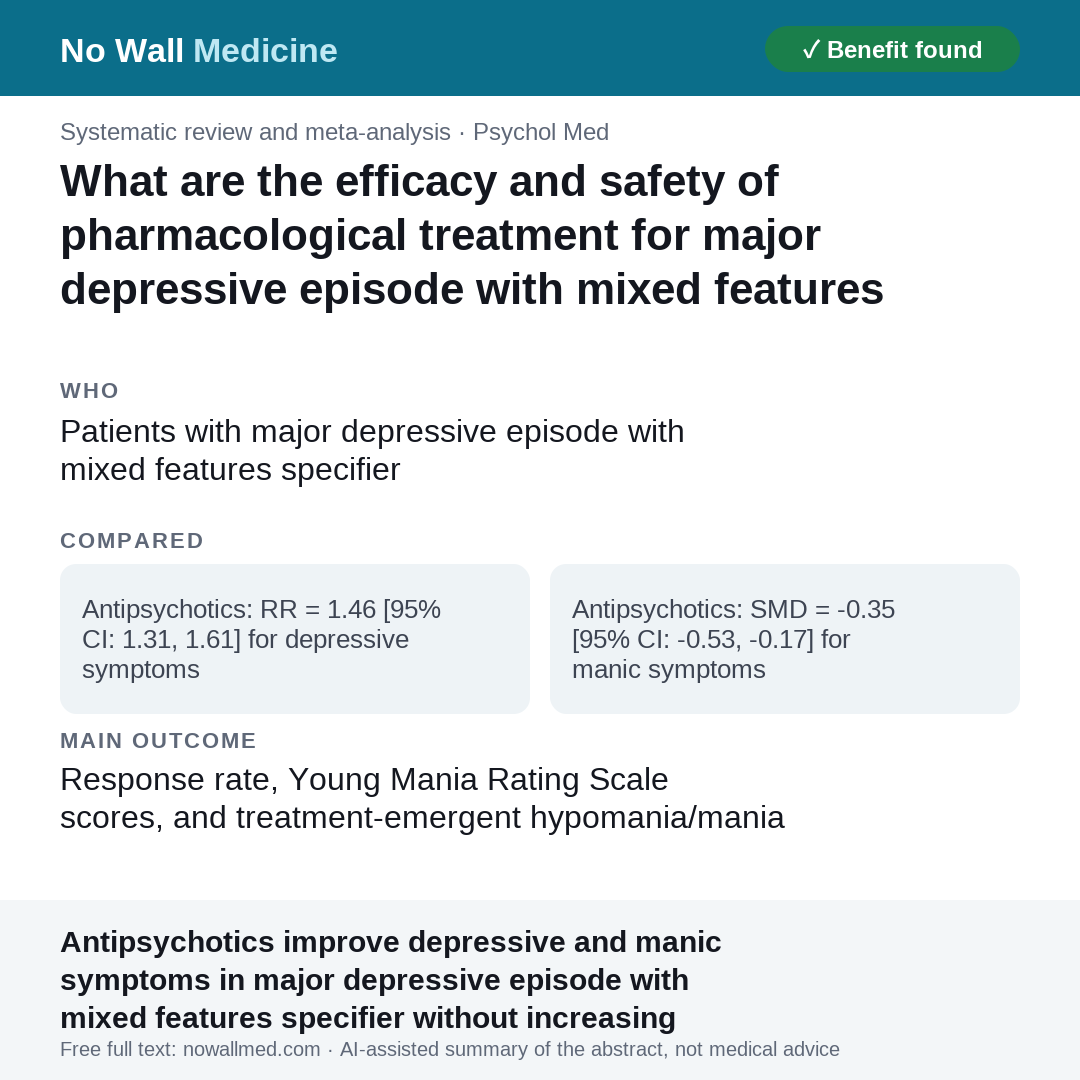
The efficacy and safety of pharmacological treatment for major depressive episode with mixed features specifier: a systematic review and meta-analysis
Systematic review and meta-analysisBenefit found
What are the efficacy and safety of pharmacological treatment for major depressive episode with mixed features specifier?
Who
Patients with major depressive episode with mixed features specifier
Compared
Antipsychotics: RR = 1.46 [95% CI: 1.31, 1.61] for depressive symptoms
Antipsychotics: SMD = -0.35 [95% CI: -0.53, -0.17] for manic symptoms
Main outcome
Response rate, Young Mania Rating Scale scores, and treatment-emergent hypomania/mania
Result: RR = 1.46 [95% CI: 1.31, 1.61] for depressive symptoms
Bottom line: Antipsychotics improve depressive and manic symptoms in major depressive episode with mixed features specifier without increasing manic switch risk.
Limitation: Findings are mostly based on post-hoc analyses, so evidence remains preliminary.
Psychol Med · 2025-10-07Download image
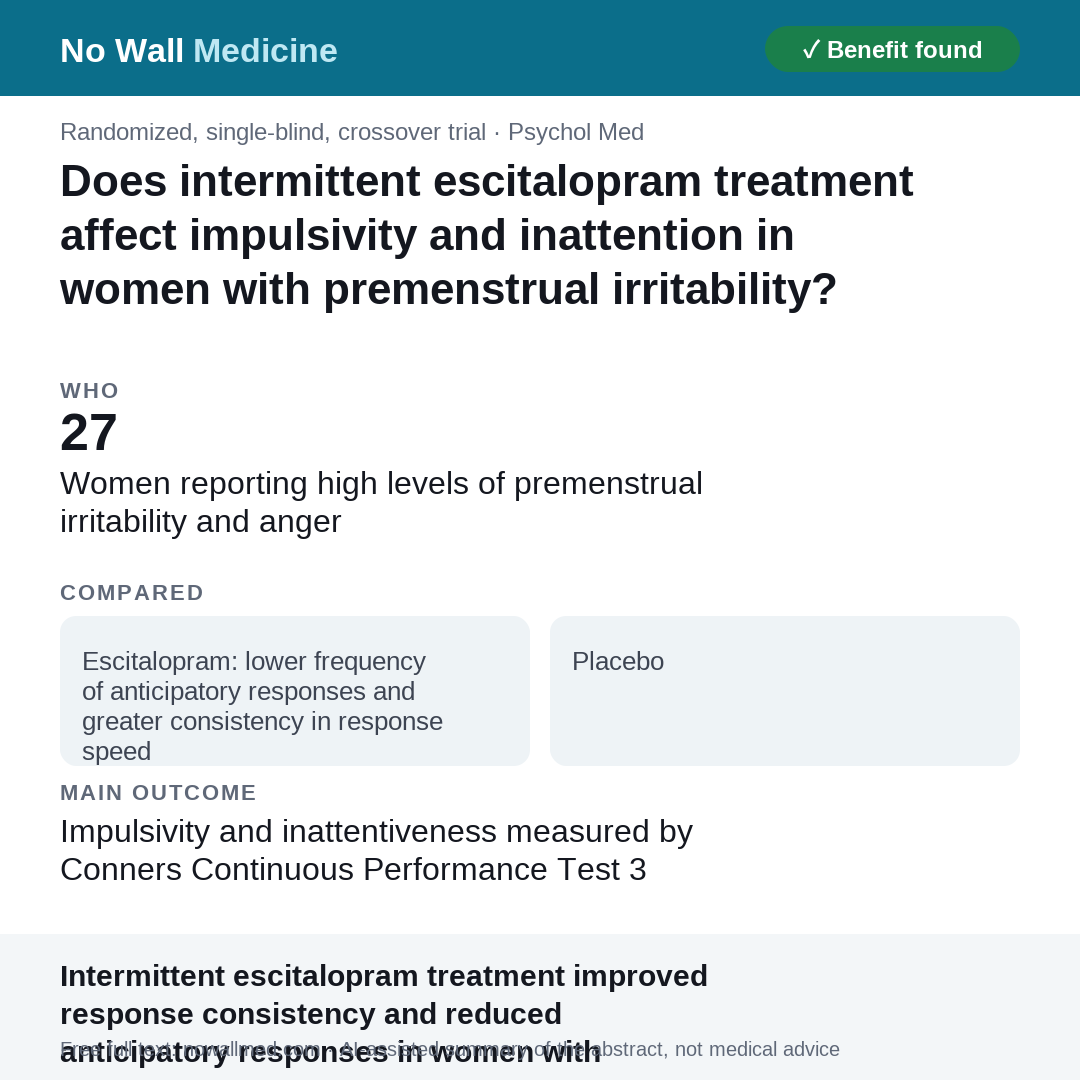
The effects of intermittent escitalopram treatment on impulsivity and inattention in women with premenstrual irritability and anger
Randomized, single-blind, crossover trialBenefit found
Does intermittent escitalopram treatment affect impulsivity and inattention in women with premenstrual irritability?
Who
27
Women reporting high levels of premenstrual irritability and anger
Compared
Escitalopram: lower frequency of anticipatory responses and greater consistency in response speed
Placebo
Main outcome
Impulsivity and inattentiveness measured by Conners Continuous Performance Test 3
Bottom line: Intermittent escitalopram treatment improved response consistency and reduced anticipatory responses in women with premenstrual irritability.
Psychol Med · 2025-10-07Download image
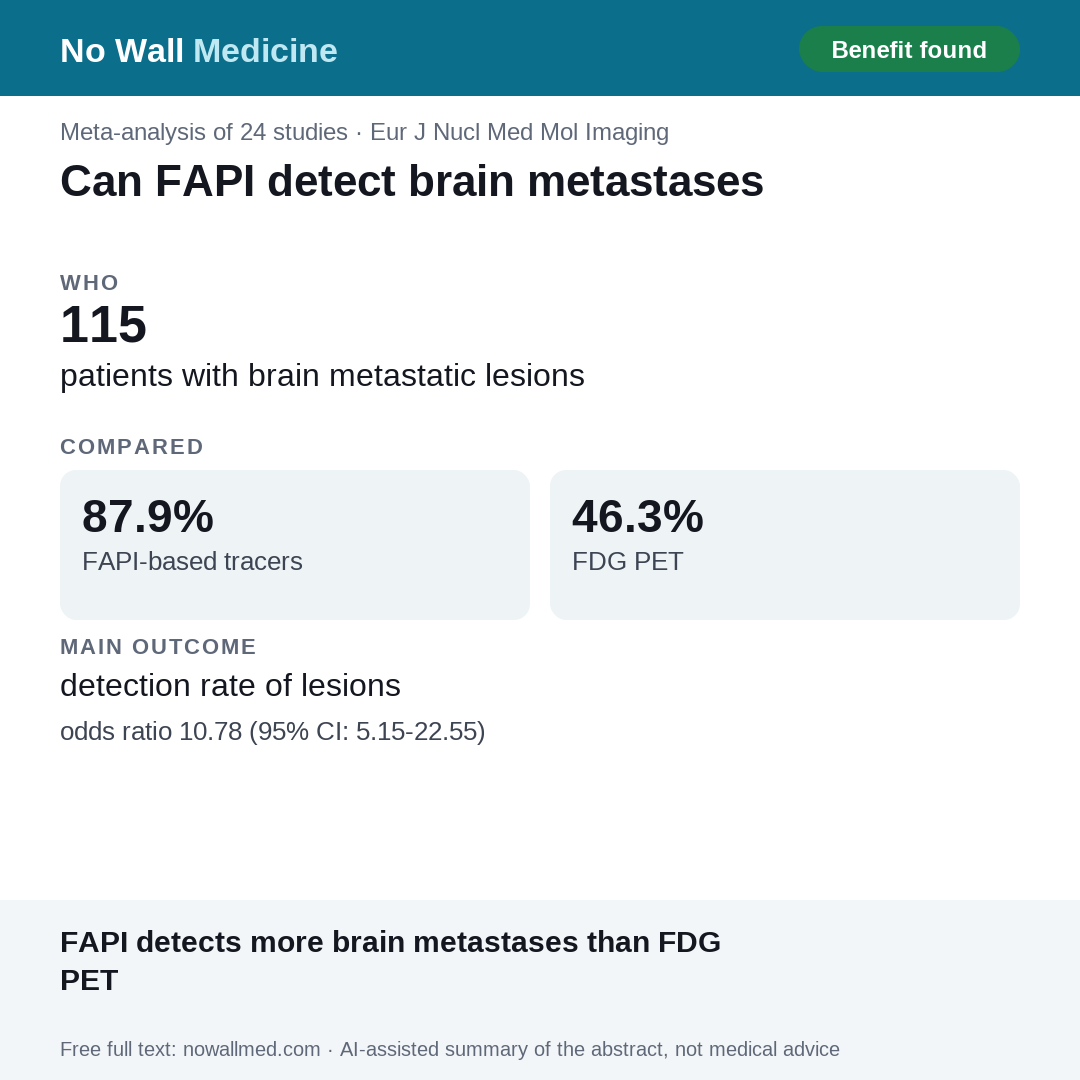
Revealing the hidden: A systematic review and meta-analysis of FAPI-based tracers imaging for brain metastatic lesions
Meta-analysis of 24 studiesBenefit found
Can FAPI detect brain metastases
Who
115
patients with brain metastatic lesions
Compared
87.9%FAPI-based tracers (95% CI: 76.1-94.3%)
46.3%FDG PET (95% CI: 30.6-62.8%)
Main outcome
detection rate of lesions
Result: odds ratio 10.78 (95% CI: 5.15-22.55)
Bottom line: FAPI detects more brain metastases than FDG PET
Eur J Nucl Med Mol Imaging · 2025-10-07Download image
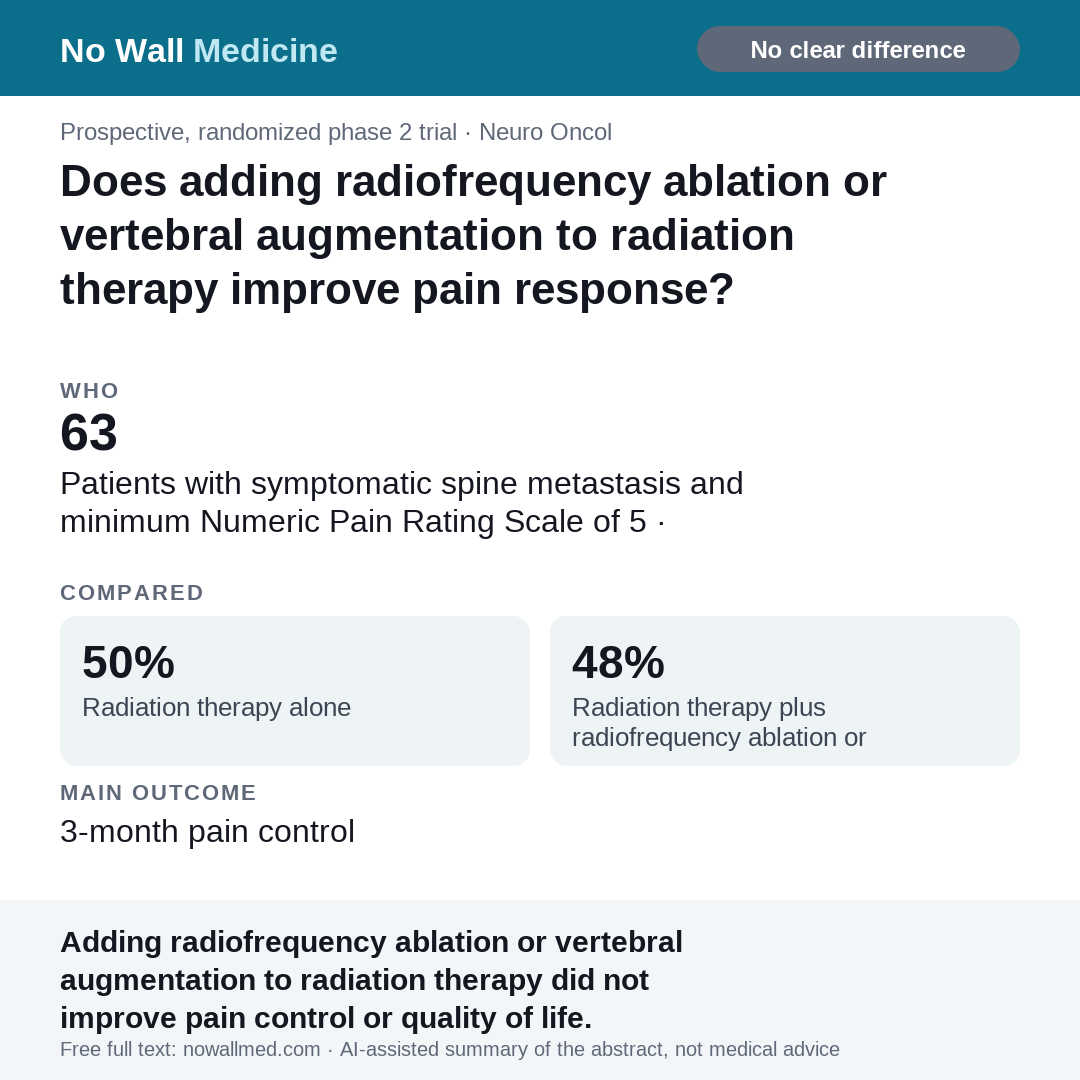
Radiation therapy alone versus radiation therapy plus radiofrequency ablation/vertebral augmentation for painful spine metastasis: A phase 2 randomized controlled trial
Prospective, randomized phase 2 trialNo clear difference
Does adding radiofrequency ablation or vertebral augmentation to radiation therapy improve pain response?
Who
63
Patients with symptomatic spine metastasis and minimum Numeric Pain Rating Scale of 5 · single-center
Compared
50%Radiation therapy alone
48%Radiation therapy plus radiofrequency ablation or vertebral augmentation
Main outcome
3-month pain control
Bottom line: Adding radiofrequency ablation or vertebral augmentation to radiation therapy did not improve pain control or quality of life.
Neuro Oncol · 2025-10-07Download image
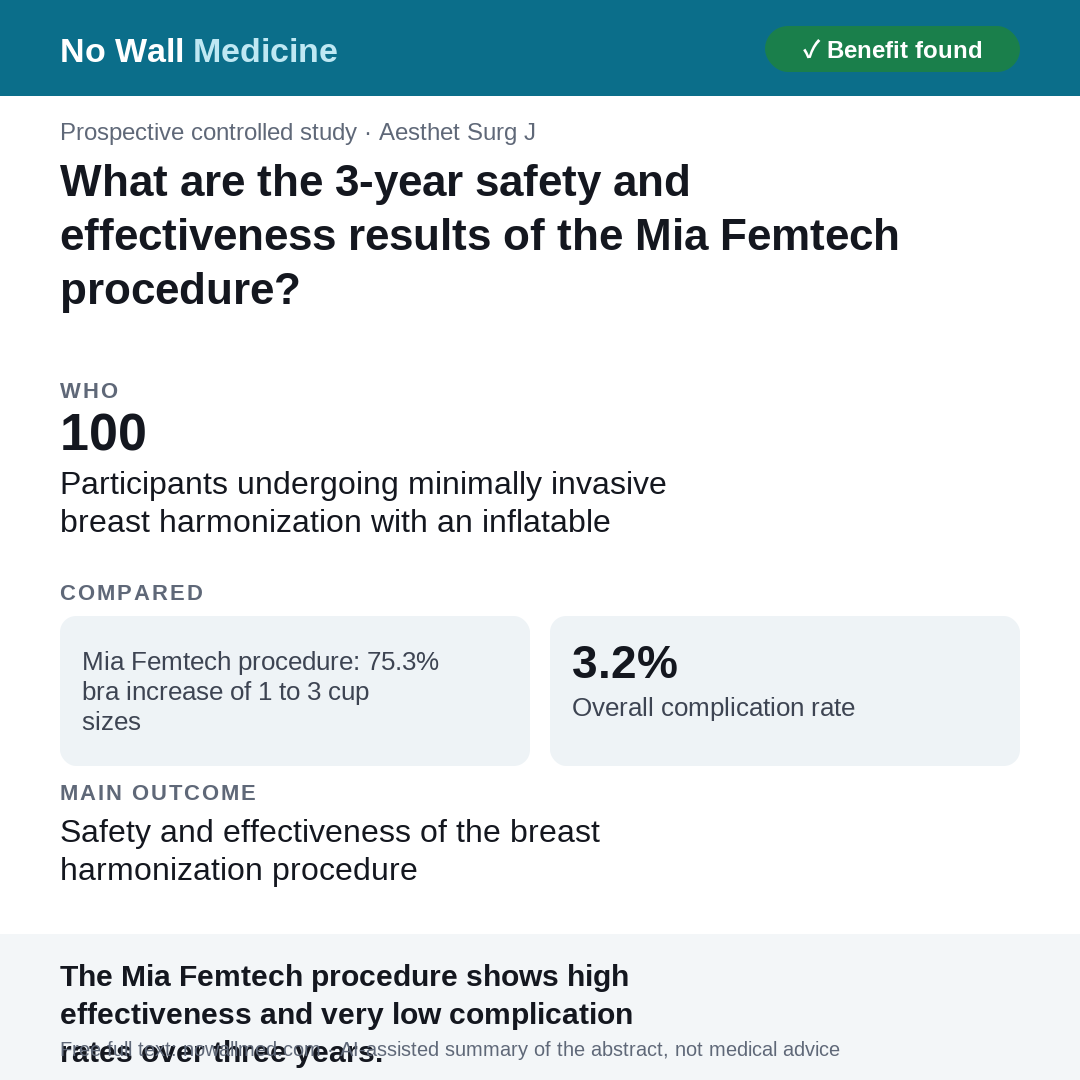
The 3-Year Results of a 100-Patient Prospective Study of the Safety and Effectiveness of Mia Femtech
Prospective controlled studyBenefit found
What are the 3-year safety and effectiveness results of the Mia Femtech procedure?
Who
100
Participants undergoing minimally invasive breast harmonization with an inflatable balloon
Compared
Mia Femtech procedure: 75.3% bra increase of 1 to 3 cup sizes
3.2%Overall complication rate
Main outcome
Safety and effectiveness of the breast harmonization procedure
Bottom line: The Mia Femtech procedure shows high effectiveness and very low complication rates over three years.
Limitation: The safety assessment used MRI evaluations in a randomized subcohort of 33 participants.
Aesthet Surg J · 2025-10-07Download image
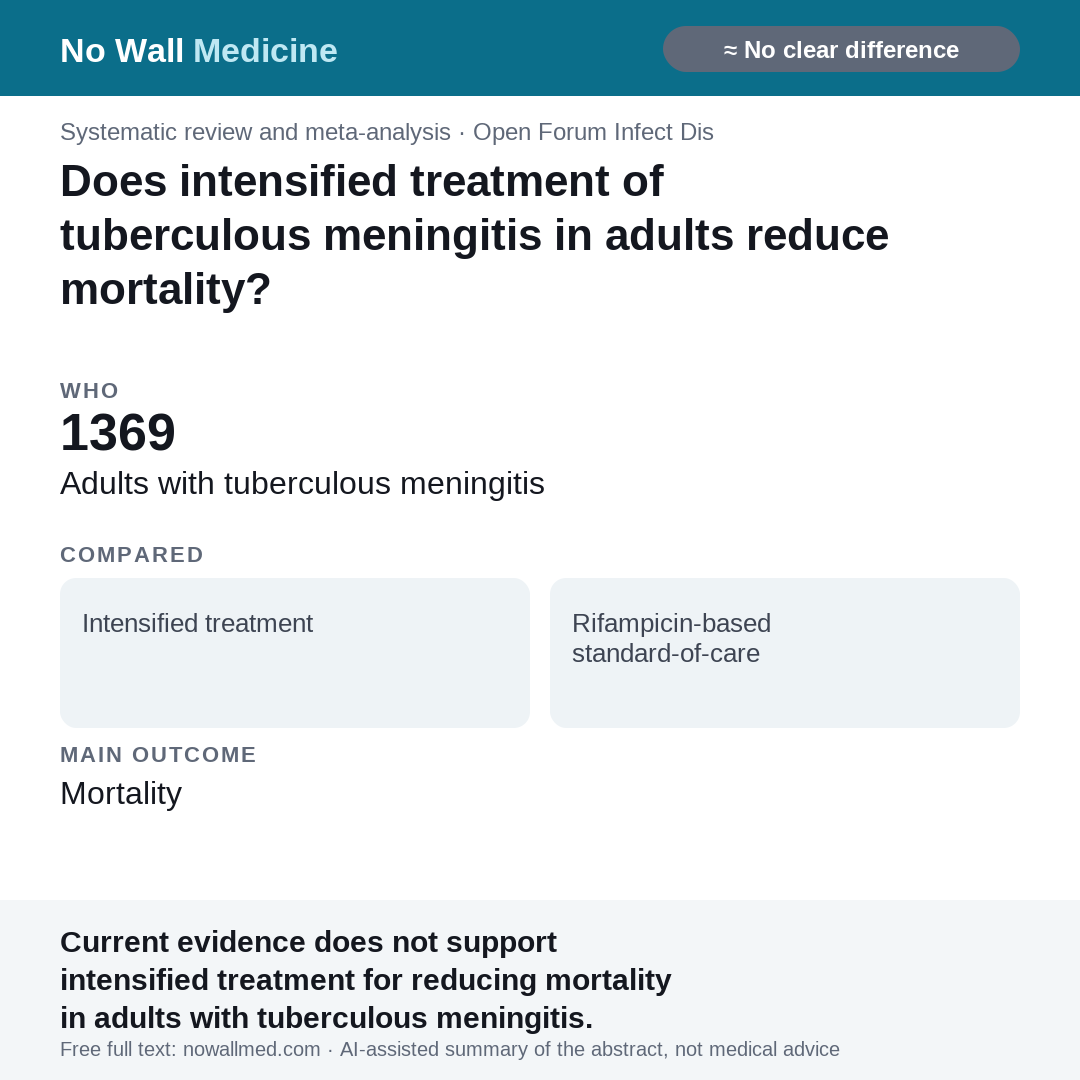
Intensified Treatment of Tuberculous Meningitis in Adults: A Systematic Review and Meta-analysis
Systematic review and meta-analysisNo clear difference
Does intensified treatment of tuberculous meningitis in adults reduce mortality?
Who
1369
Adults with tuberculous meningitis
Compared
Intensified treatment
Rifampicin-based standard-of-care
Main outcome
Mortality
Bottom line: Current evidence does not support intensified treatment for reducing mortality in adults with tuberculous meningitis.
Limitation: Diverse case definitions, variable dosing, and heterogeneous disability and safety outcomes.
Open Forum Infect Dis · 2025-10-07Download image
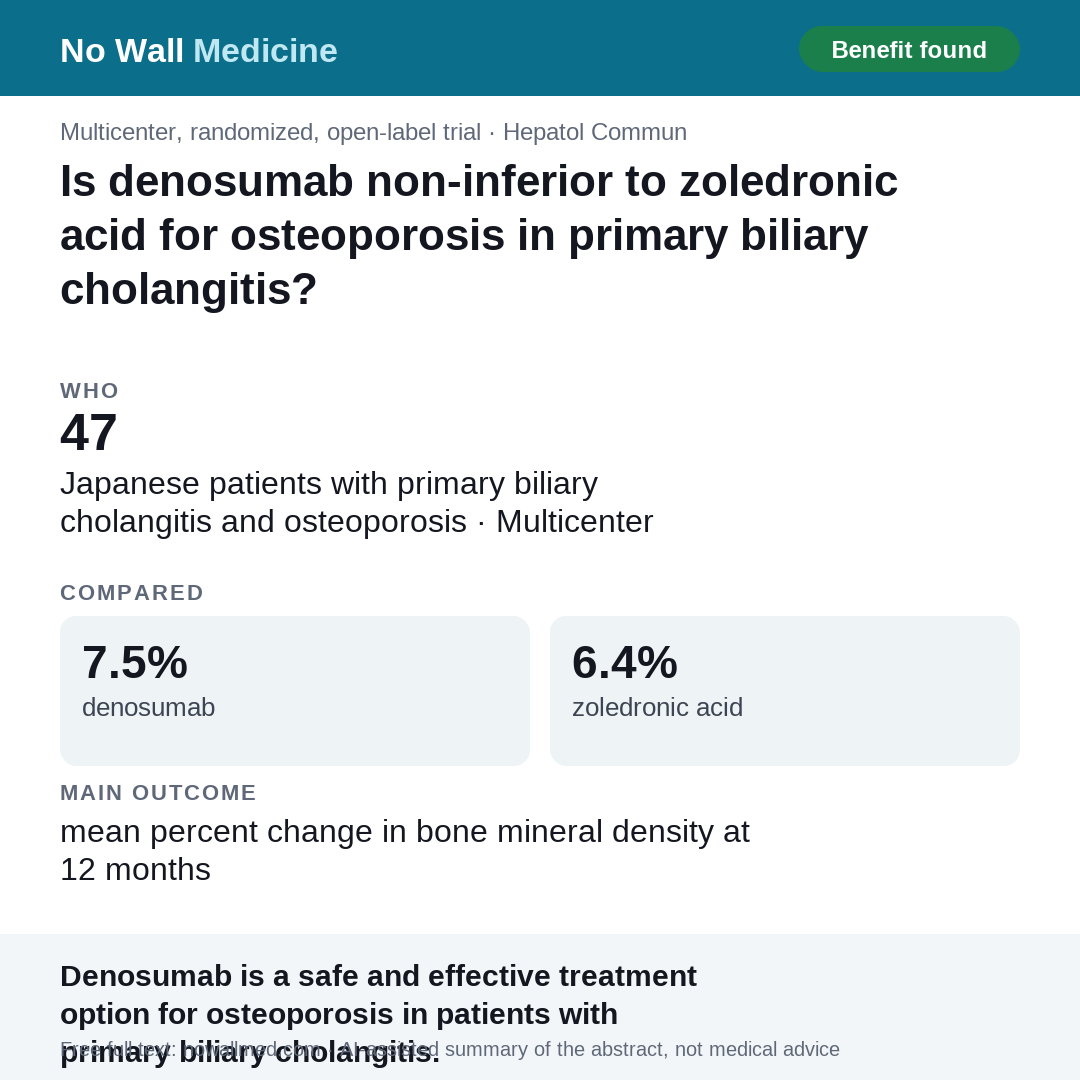
Denosumab versus zoledronic acid for osteoporosis treatment in patients with primary biliary cholangitis (the DELTA Study): A multicenter, non-inferiority randomized trial
Multicenter, randomized, open-label trialBenefit found
Is denosumab non-inferior to zoledronic acid for osteoporosis in primary biliary cholangitis?
Who
47
Japanese patients with primary biliary cholangitis and osteoporosis · Multicenter
Compared
7.5%denosumab
6.4%zoledronic acid
Main outcome
mean percent change in bone mineral density at 12 months
Result: 95% CI: -1.6% to 3.8%
Bottom line: Denosumab is a safe and effective treatment option for osteoporosis in patients with primary biliary cholangitis.
Hepatol Commun · 2025-10-07Download image
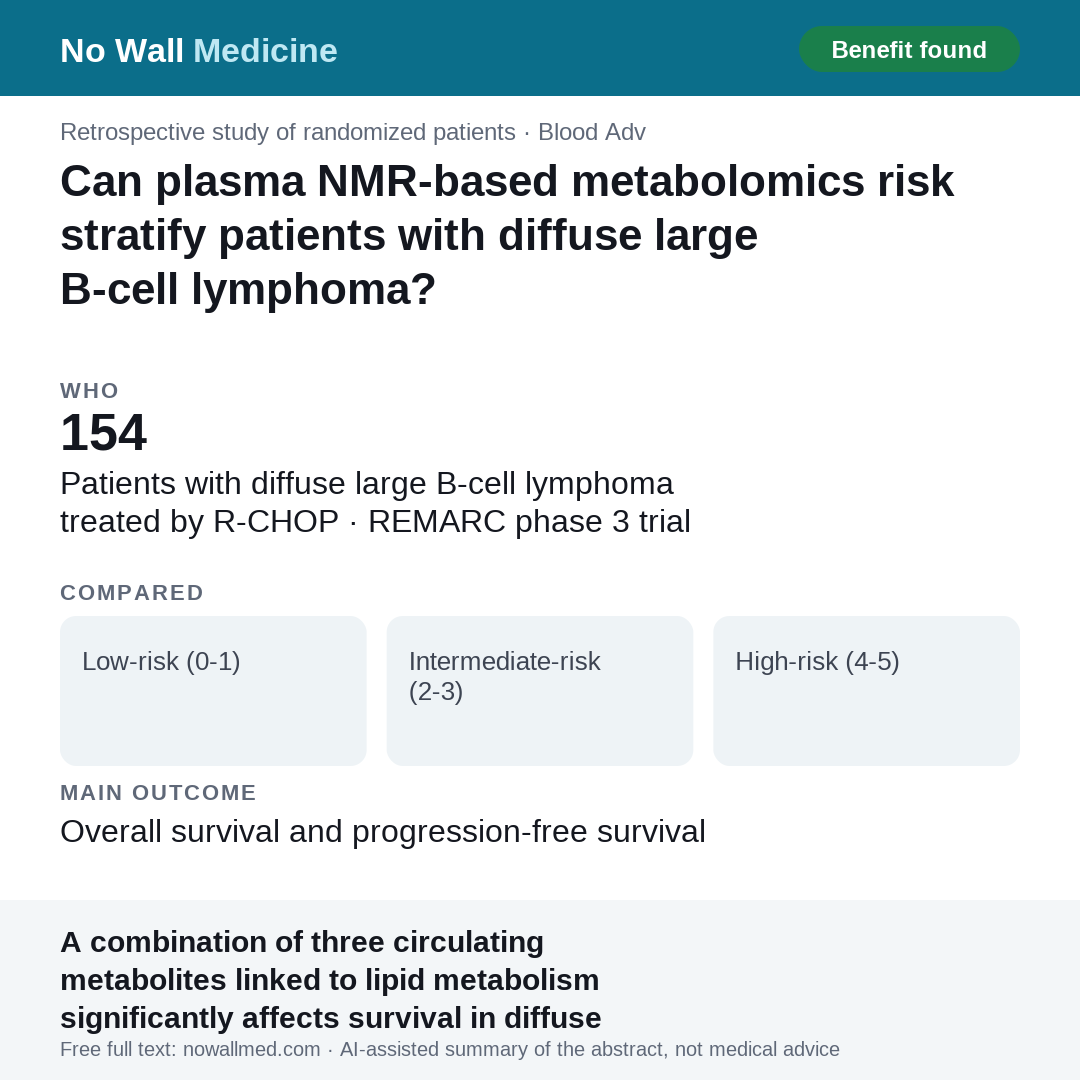
Risk stratification of patients with diffuse large B-cell lymphoma using plasma NMR-based metabolomics at diagnosis
Retrospective study of randomized patientsBenefit found
Can plasma NMR-based metabolomics risk stratify patients with diffuse large B-cell lymphoma?
Who
154
Patients with diffuse large B-cell lymphoma treated by R-CHOP · REMARC phase 3 trial
Compared
Low-risk (0-1)
Intermediate-risk (2-3)
High-risk (4-5)
Main outcome
Overall survival and progression-free survival
Bottom line: A combination of three circulating metabolites linked to lipid metabolism significantly affects survival in diffuse large B-cell lymphoma.
Blood Adv · 2025-10-07Download image
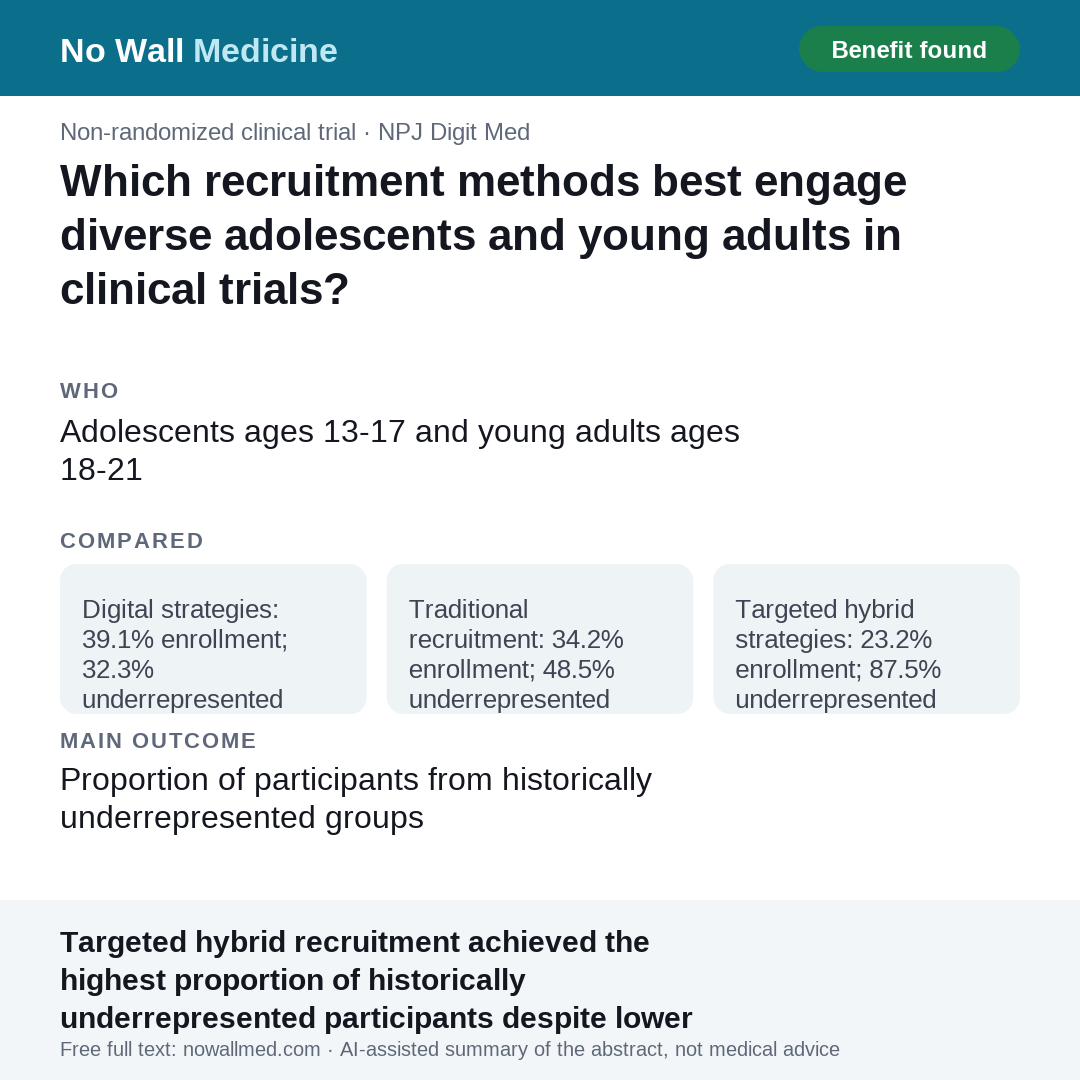
Representation is power: traditional, hybrid, and digital recruitment results from a non-randomized clinical trial engaging adolescents
Non-randomized clinical trialBenefit found
Which recruitment methods best engage diverse adolescents and young adults in clinical trials?
Who
Adolescents ages 13-17 and young adults ages 18-21
Compared
Digital strategies: 39.1% enrollment; 32.3% underrepresented groups
Traditional recruitment: 34.2% enrollment; 48.5% underrepresented groups
Targeted hybrid strategies: 23.2% enrollment; 87.5% underrepresented groups
Main outcome
Proportion of participants from historically underrepresented groups
Result: p < 0.001
Bottom line: Targeted hybrid recruitment achieved the highest proportion of historically underrepresented participants despite lower overall enrollment.
Limitation: Non-randomized clinical trial design
NPJ Digit Med · 2025-10-07Download image
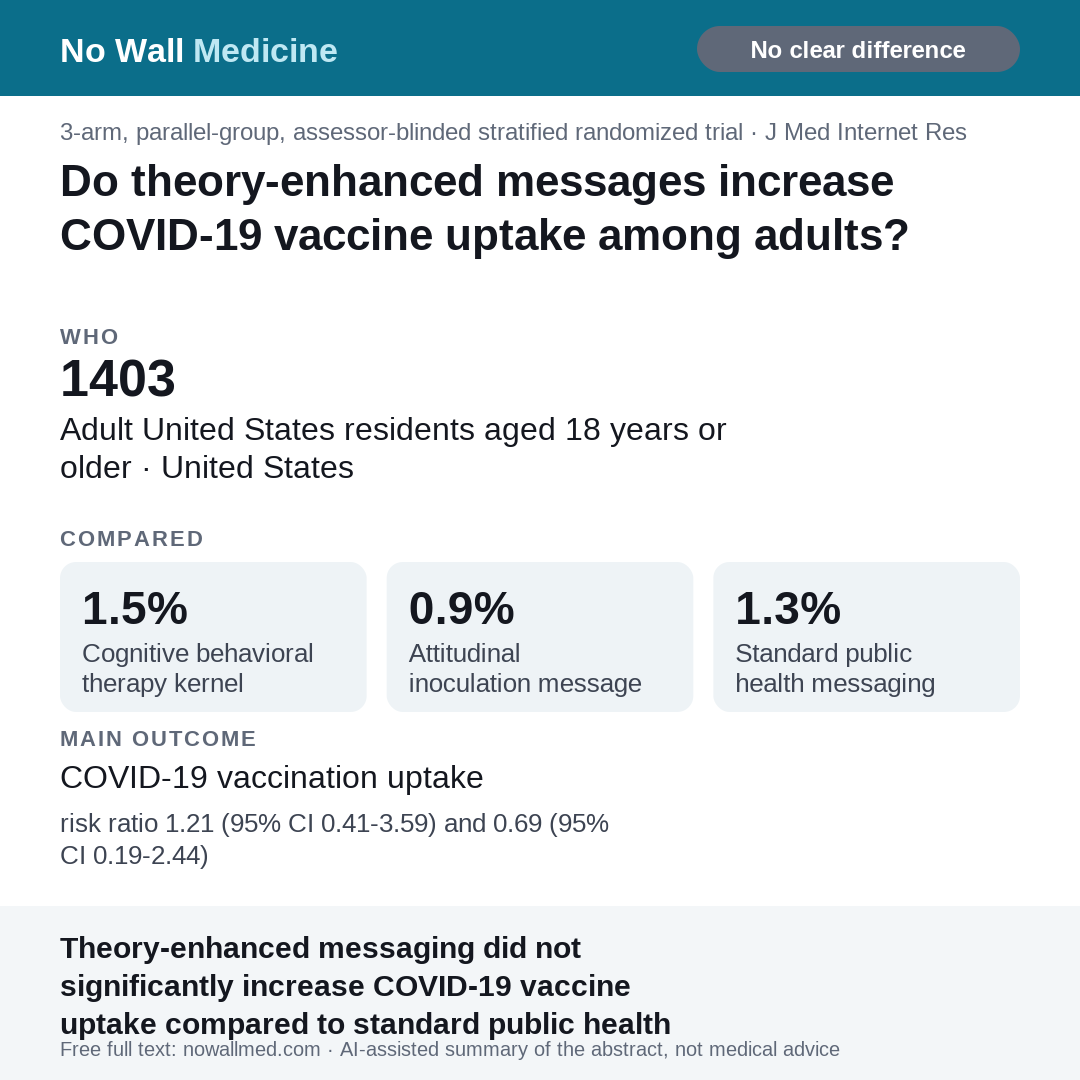
Testing Theory-Enhanced Messaging to Promote COVID-19 Vaccination Among Adults: Randomized Controlled Trial
3-arm, parallel-group, assessor-blinded stratified randomized trialNo clear difference
Do theory-enhanced messages increase COVID-19 vaccine uptake among adults?
Who
1403
Adult United States residents aged 18 years or older · United States
Compared
1.5%Cognitive behavioral therapy kernel messaging (7/469)
0.9%Attitudinal inoculation message (4/466)
1.3%Standard public health messaging (6/468)
Main outcome
COVID-19 vaccination uptake
Result: risk ratio 1.21 (95% CI 0.41-3.59) and 0.69 (95% CI 0.19-2.44)
Bottom line: Theory-enhanced messaging did not significantly increase COVID-19 vaccine uptake compared to standard public health messaging.
J Med Internet Res · 2025-10-07Download image
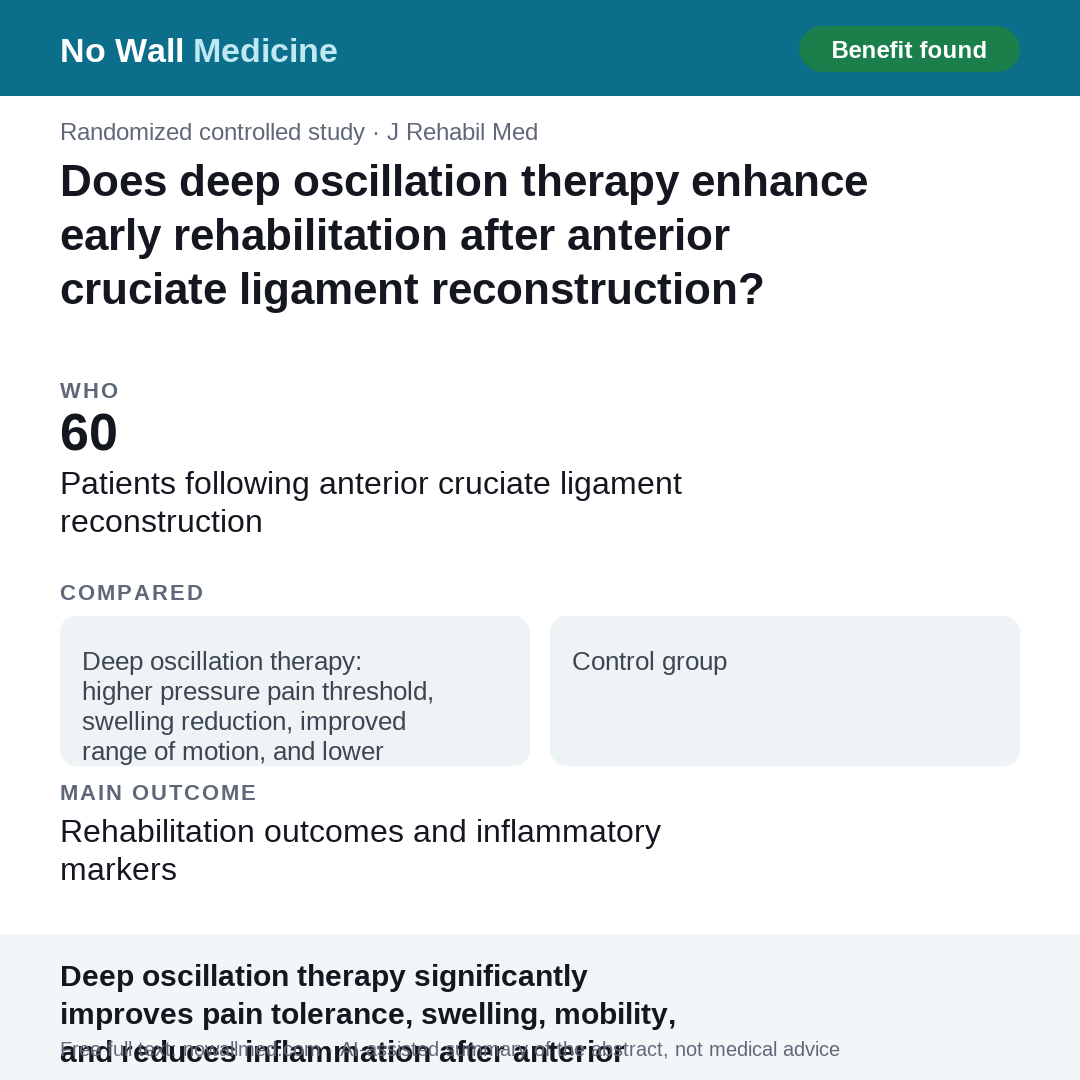
Deep oscillation therapy enhances early rehabilitation after ACL reconstruction: a randomized controlled trial
Randomized controlled studyBenefit found
Does deep oscillation therapy enhance early rehabilitation after anterior cruciate ligament reconstruction?
Who
60
Patients following anterior cruciate ligament reconstruction
Compared
Deep oscillation therapy: higher pressure pain threshold, swelling reduction, improved range of motion, and lower inflammatory markers
Control group
Main outcome
Rehabilitation outcomes and inflammatory markers
Bottom line: Deep oscillation therapy significantly improves pain tolerance, swelling, mobility, and reduces inflammation after anterior cruciate ligament reconstruction.
J Rehabil Med · 2025-10-07Download image
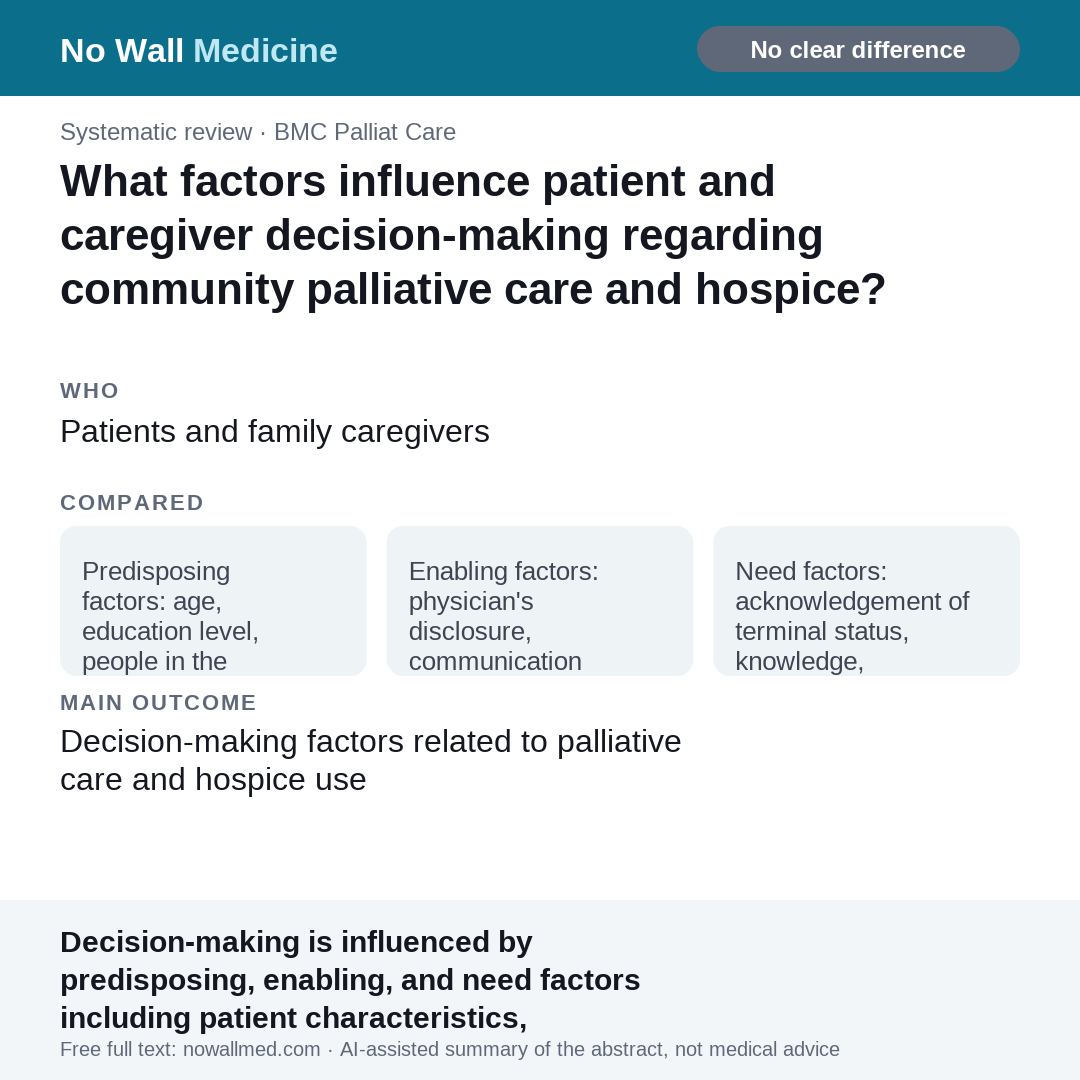
Decision-making factors related to palliative care and hospice use in the community: a systematic review based on Andersen's behavioural model of health services use
Systematic reviewNo clear difference
What factors influence patient and caregiver decision-making regarding community palliative care and hospice?
Who
Patients and family caregivers
Compared
Predisposing factors: age, education level, people in the household, experiences with institutional care, and death experience
Enabling factors: physician's disclosure, communication partner, communication context, and information about options
Need factors: acknowledgement of terminal status, knowledge, perception, end-of-life wishes, caregiver's commitment, preference for dying at home, and health condition
Main outcome
Decision-making factors related to palliative care and hospice use
Bottom line: Decision-making is influenced by predisposing, enabling, and need factors including patient characteristics, communication, and health status.
BMC Palliat Care · 2025-10-07Download image