Visual abstracts
New randomized trials and meta-analyses from leading journals at a glance: who was studied, what was compared, and what was found. Every paper is free to read in full.
All specialtiesCardiology 4765Oncology 4048Gastroenterology & Hepatology 1906Infectious Disease 3759Neurology 1874Psychiatry & Mental Health 2217Pulmonology 2046Critical Care 1323Endocrinology & Diabetes 2545Pediatrics 2891Surgery 2482Orthopedics & Sports Medicine 917Neurosurgery 526Cardiothoracic & Vascular Surgery 657Plastic & Reconstructive Surgery 574Nephrology 1108Rheumatology 810Hematology 1090Dermatology 611Ophthalmology 532Obstetrics & Gynecology 1646Public & Global Health 1037Radiology & Imaging 620Anesthesiology 958Urology 745ENT (Otolaryngology) 494Emergency Medicine 481Allergy & Immunology 309Geriatrics 973Family Medicine & Primary Care 534Medical Genetics & Genomics 659Pathology & Laboratory Medicine 156Physical Medicine & Rehabilitation 736Palliative Care 421Nutrition 1561Digital Health & AI 2136General Medicine 316
Comparative effectiveness of GLP-1 receptor agonists on glycaemic control, body weight, and lipid profile for type 2 diabetes: systematic review and network meta-analysis
Systematic review and network meta-analysisBenefit found
How effective are glucagon-like peptide-1 receptor agonists for glycaemic control, weight, and lipids in type 2 diabetes?
Who
39246
Adults with type 2 diabetes
Compared
Glucagon-like peptide-1 receptor agonists
Placebo
Main outcome
haemoglobin A1c, fasting plasma glucose, body weight, and lipid profile
Result: Tirzepatide haemoglobin A1c mean difference -2.10% (95% confidence interval -2.47% to -1.74%)
Bottom line: Glucagon-like peptide-1 receptor agonists effectively improve glycaemic control and weight, with tirzepatide and CagriSema showing superior results.
BMJ · 2024-01-29 · Save PNG

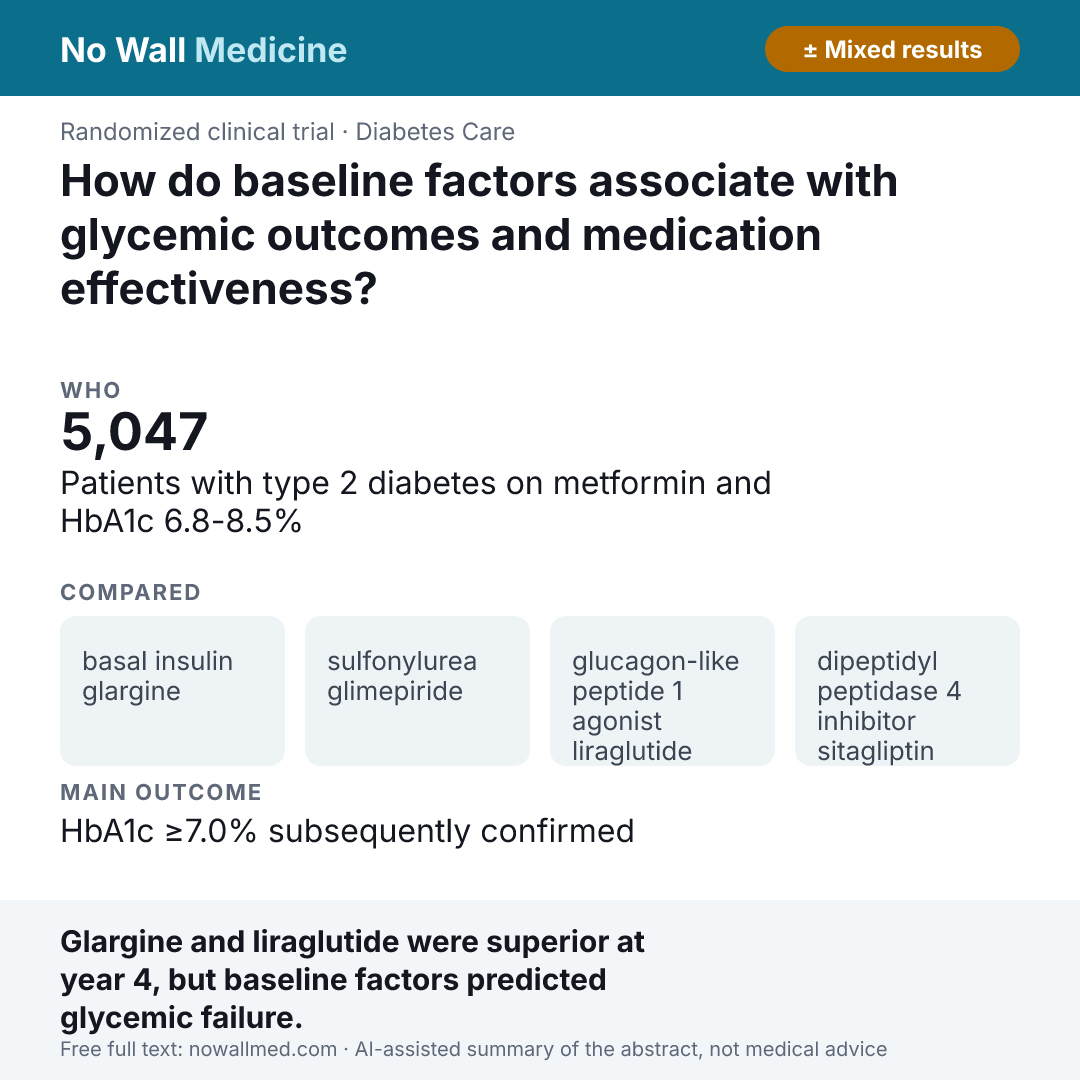
Association of Baseline Factors With Glycemic Outcomes in GRADE: A Comparative Effectiveness Randomized Clinical Trial
Randomized clinical trialMixed results
How do baseline factors associate with glycemic outcomes and medication effectiveness?
Who
5,047
Patients with type 2 diabetes on metformin and HbA1c 6.8-8.5%
Compared
basal insulin glargine
sulfonylurea glimepiride
glucagon-like peptide 1 agonist liraglutide
dipeptidyl peptidase 4 inhibitor sitagliptin
Main outcome
HbA1c ≥7.0% subsequently confirmed
Bottom line: Glargine and liraglutide were superior at year 4, but baseline factors predicted glycemic failure.
Diabetes Care · 2024-01-29 · Save PNG
Physical Activity and Mental Health in Children and Adolescents With Neurodevelopmental Disorders: A Systematic Review and Meta-Analysis
Systematic review and meta-analysisBenefit found
Do physical activity interventions improve mental health in children and adolescents with neurodevelopmental disorders?
Who
3007
Children and adolescents aged 5 to 17 years with neurodevelopmental disorders
Compared
Physical activity interventions
Control
Main outcome
Mental health including cognitive function, psychological well-being, internalizing, and externalizing problems
Result: Hedges g 0.67 (95% CI, 0.50-0.85) for overall mental health
Bottom line: Physical activity interventions significantly benefit overall mental health and specific domains in children and adolescents with neurodevelopmental disorders.
JAMA Pediatr · 2024-01-29 · Save PNG

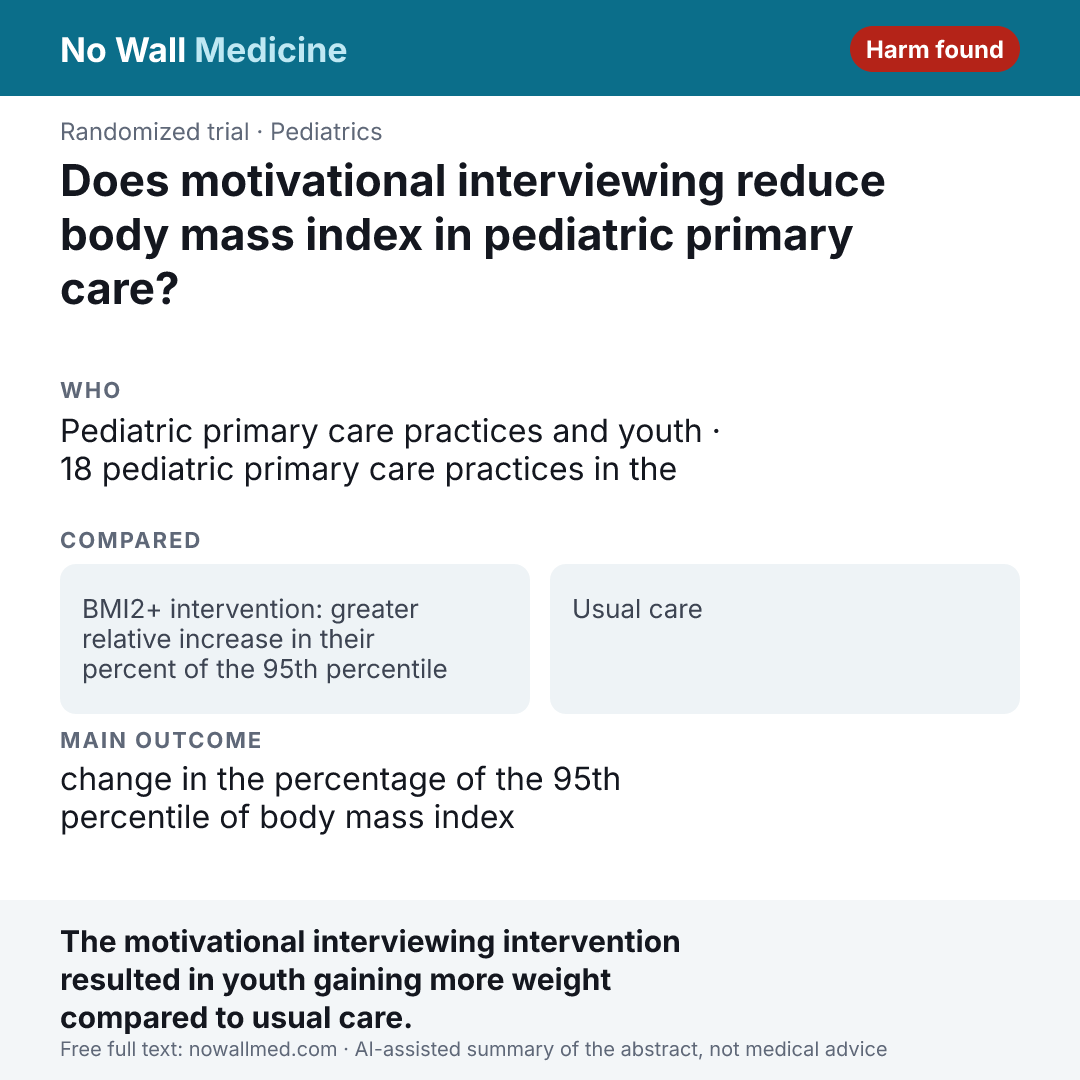
Outcome of BMI2+: Motivational Interviewing to Reduce BMI Through Primary Care AAP PROS Practices
Randomized trialHarm found
Does motivational interviewing reduce body mass index in pediatric primary care?
Who
Pediatric primary care practices and youth · 18 pediatric primary care practices in the United States
Compared
BMI2+ intervention: greater relative increase in their percent of the 95th percentile
Usual care
Main outcome
change in the percentage of the 95th percentile of body mass index
Result: b = 0.017, 95% confidence interval: [0.0066-0.027]
Bottom line: The motivational interviewing intervention resulted in youth gaining more weight compared to usual care.
Pediatrics · 2024-01-29 · Save PNG
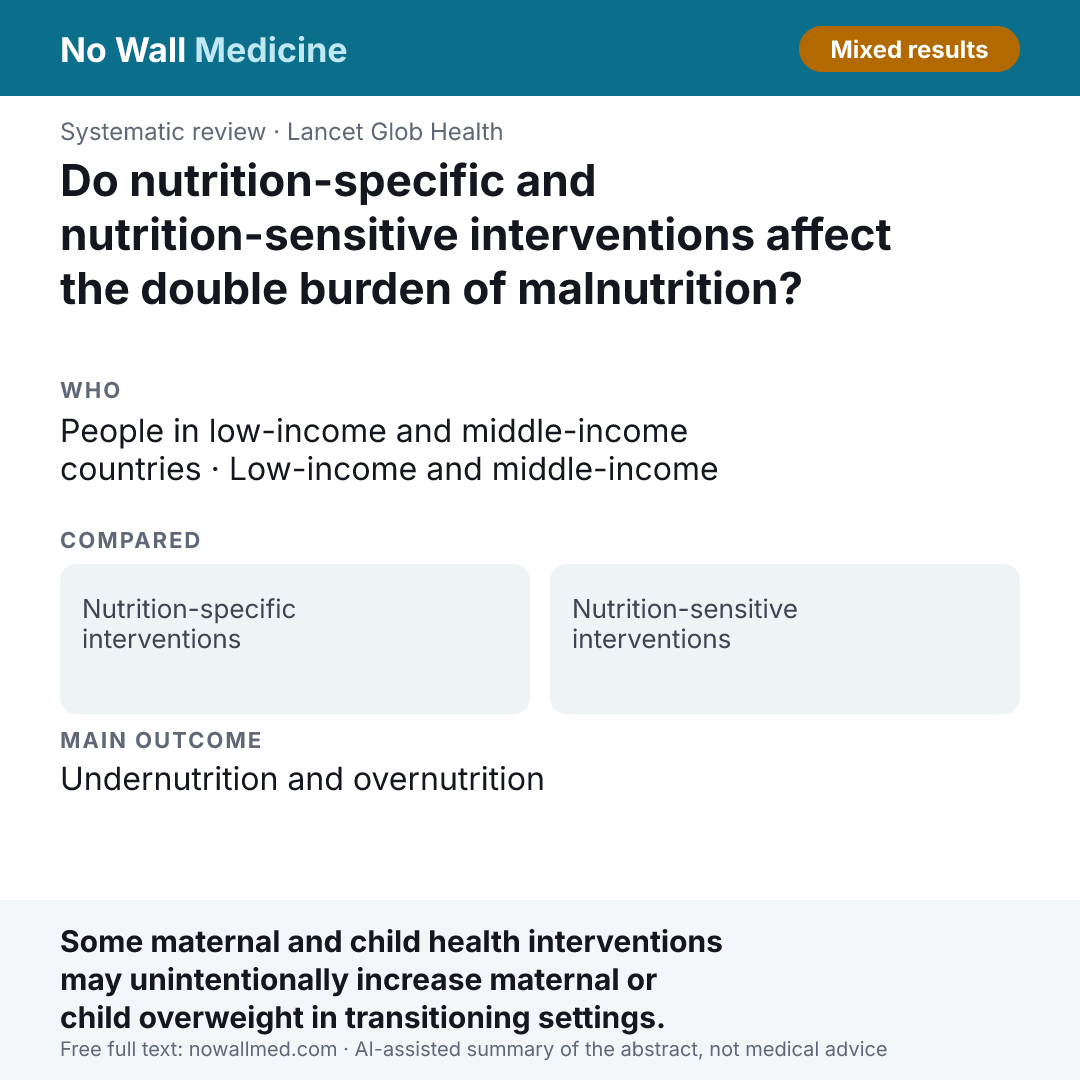
The effect of nutrition-specific and nutrition-sensitive interventions on the double burden of malnutrition in low-income and middle-income countries: a systematic review
Systematic reviewMixed results
Do nutrition-specific and nutrition-sensitive interventions affect the double burden of malnutrition?
Who
People in low-income and middle-income countries · Low-income and middle-income countries
Compared
Nutrition-specific interventions
Nutrition-sensitive interventions
Main outcome
Undernutrition and overnutrition
Bottom line: Some maternal and child health interventions may unintentionally increase maternal or child overweight in transitioning settings.
Funded by: President's Scholarship and National Institute for Health and Care Research
Lancet Glob Health · 2024-01-29 · Save PNG
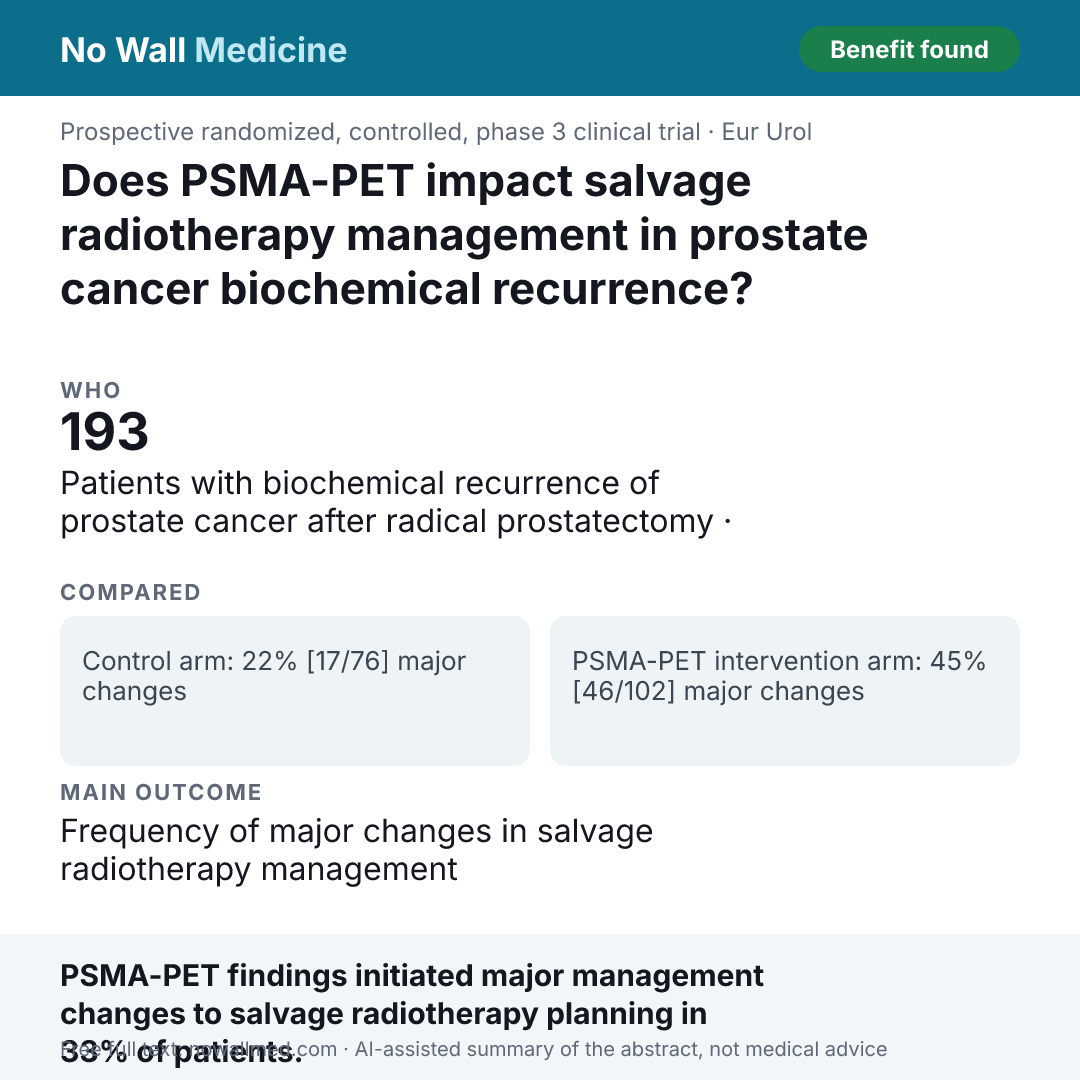
Impact of Prostate-specific Membrane Antigen Positron Emission Tomography/Computed Tomography on Prostate Cancer Salvage Radiotherapy Management: Results from a Prospective Multicenter Randomized Phase 3 Trial (PSMA-SRT NCT03582774)
Prospective randomized, controlled, phase 3 clinical trialBenefit found
Does PSMA-PET impact salvage radiotherapy management in prostate cancer biochemical recurrence?
Who
193
Patients with biochemical recurrence of prostate cancer after radical prostatectomy · Multicenter
Compared
Control arm: 22% [17/76] major changes
PSMA-PET intervention arm: 45% [46/102] major changes
Main outcome
Frequency of major changes in salvage radiotherapy management
Result: 23% difference (95% CI 9-35%, p = 0.002)
Bottom line: PSMA-PET findings initiated major management changes to salvage radiotherapy planning in 33% of patients.
Limitation: The final readout of the primary endpoint is planned for 2025.
Eur Urol · 2024-01-29 · Save PNG
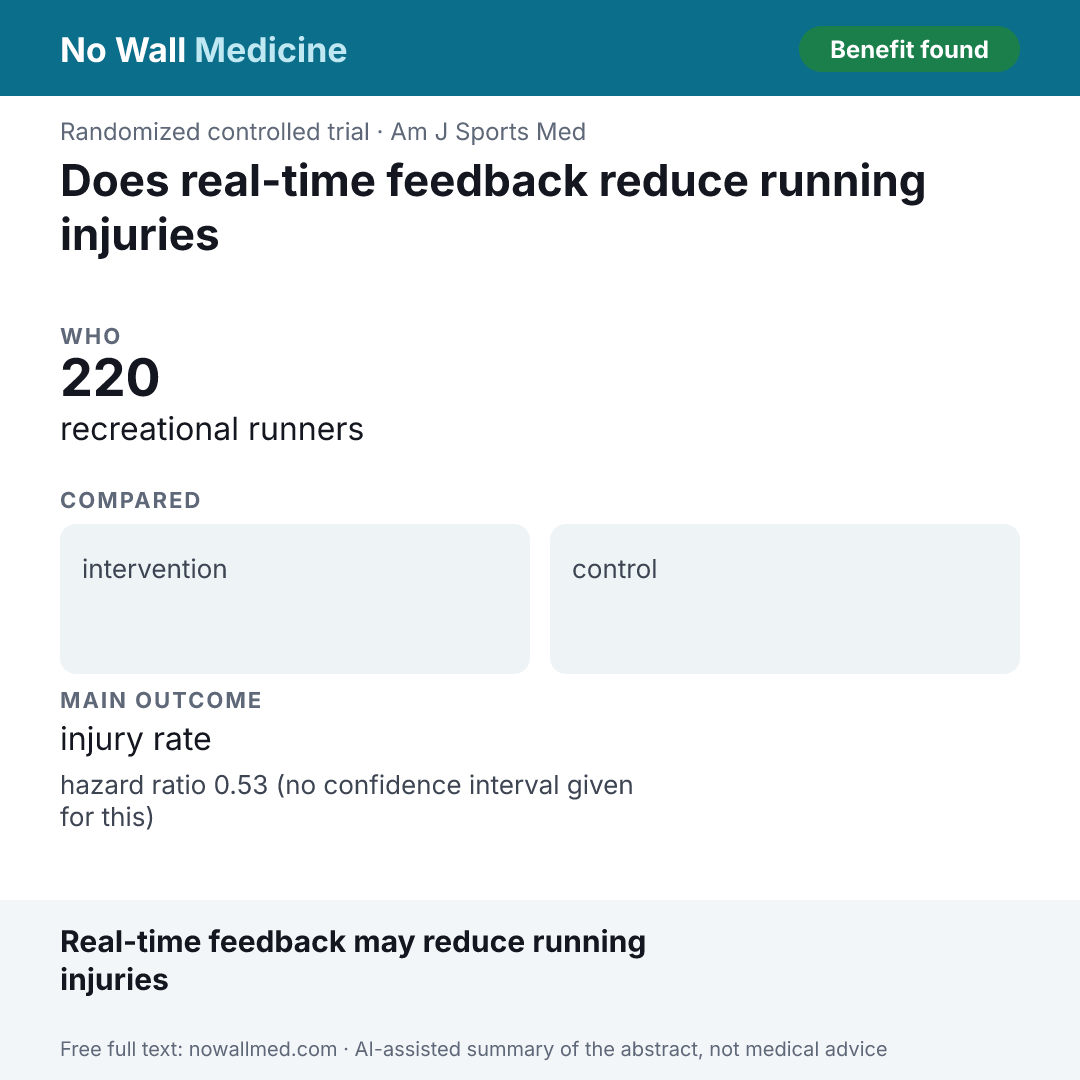
The Effect of Wearable-Based Real-Time Feedback on Running Injuries and Running Performance: A Randomized Controlled Trial
Randomized controlled trialBenefit found
Does real-time feedback reduce running injuries
Who
220
recreational runners
Compared
intervention
control
Main outcome
injury rate
Result: hazard ratio 0.53 (no confidence interval given for this)
Bottom line: Real-time feedback may reduce running injuries
Am J Sports Med · 2024-01-29 · Save PNG
A Prospective Randomized Controlled Trial Investigating Quadriceps Versus Hamstring Tendon Autograft in Anterior Cruciate Ligament Reconstruction
Randomized controlled trialMixed results
How do quadriceps versus hamstring tendon autografts compare in anterior cruciate ligament reconstruction?
Who
112
Patients undergoing anterior cruciate ligament reconstruction
Compared
Hamstring tendon autograft: HT mean 1.1 at 24 months for laxity
Quadriceps tendon autograft: QT mean 1.2 at 24 months for laxity
Main outcome
Graft laxity measured by KT-1000 arthrometer
Bottom line: Both grafts compared well for laxity and range of motion, but showed different strength and hop test limb symmetry indices.
Limitation: The longer-term review will continue to evaluate return to sports and later-stage reinjury.
Am J Sports Med · 2024-01-29 · Save PNG

Post-mastectomy Breast Reconstruction With Gas vs Saline Tissue Expanders: Does the Fill Type Matter?
Meta-analysis of 11 studiesKey finding
Does gas vs saline fill affect breast reconstruction outcomes?
Who
Patients undergoing implant-based breast reconstruction after mastectomy
Compared
Gas-filled tissue expanders: odds ratio 0.62; 95% CI, 0.47 to 0.82
Saline-filled tissue expanders
Main outcome
Postoperative infection, cellulitis, or abscess formation
Result: odds ratio 0.62; 95% CI, 0.47 to 0.82
Bottom line: Gas-filled expanders were associated with significantly lower infection risk and shorter time to definitive reconstruction.
Aesthet Surg J · 2024-01-29 · Save PNG

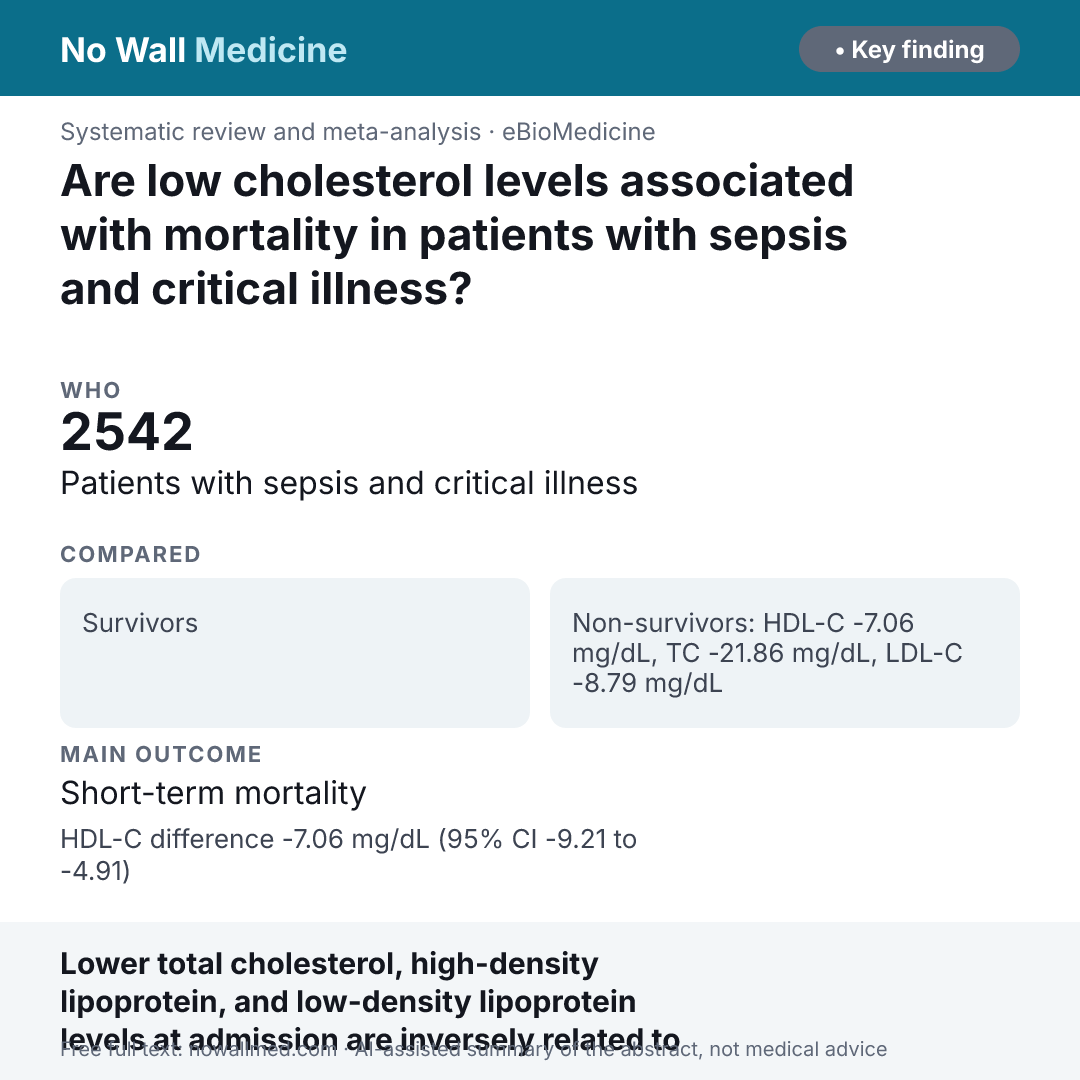
Low circulatory levels of total cholesterol, HDL-C and LDL-C are associated with death of patients with sepsis and critical illness: systematic review, meta-analysis, and perspective of observational studies
Systematic review and meta-analysisKey finding
Are low cholesterol levels associated with mortality in patients with sepsis and critical illness?
Who
2542
Patients with sepsis and critical illness
Compared
Survivors
Non-survivors: HDL-C -7.06 mg/dL, TC -21.86 mg/dL, LDL-C -8.79 mg/dL
Main outcome
Short-term mortality
Result: HDL-C difference -7.06 mg/dL (95% CI -9.21 to -4.91)
Bottom line: Lower total cholesterol, high-density lipoprotein, and low-density lipoprotein levels at admission are inversely related to mortality in critical illness.
Funded by: EU-ERDF-Welsh Government Ser Cymru, BBSRC, and EU-FP7 ClouDx-i
eBioMedicine · 2024-01-29 · Save PNG
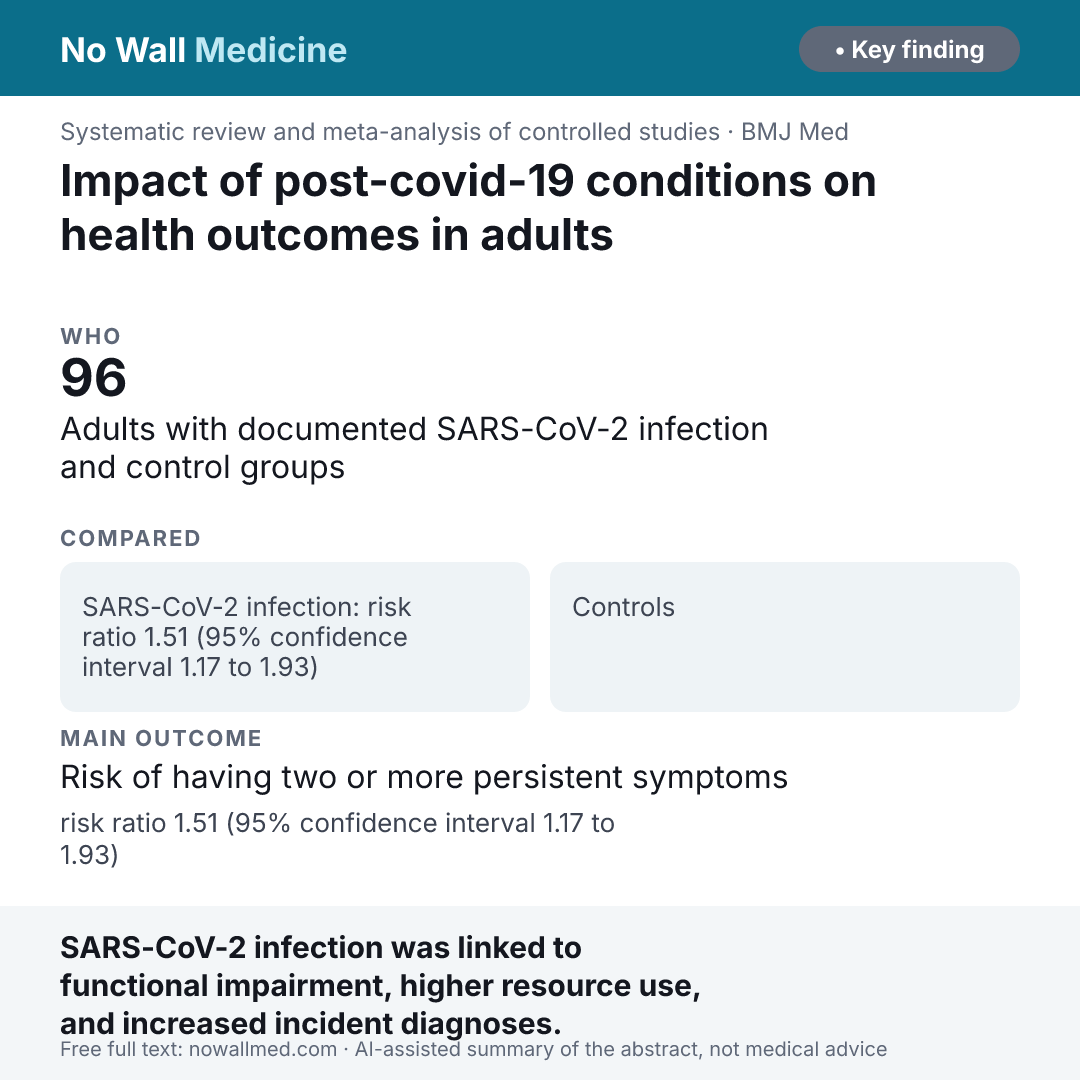
Post-covid-19 conditions in adults: systematic review and meta-analysis of health outcomes in controlled studies
Systematic review and meta-analysis of controlled studiesKey finding
Impact of post-covid-19 conditions on health outcomes in adults
Who
96
Adults with documented SARS-CoV-2 infection and control groups
Compared
SARS-CoV-2 infection: risk ratio 1.51 (95% confidence interval 1.17 to 1.93)
Controls
Main outcome
Risk of having two or more persistent symptoms
Result: risk ratio 1.51 (95% confidence interval 1.17 to 1.93)
Bottom line: SARS-CoV-2 infection was linked to functional impairment, higher resource use, and increased incident diagnoses.
Limitation: High heterogeneity across studies and limitations related to outcome measurement and attrition
BMJ Med · 2024-01-29 · Save PNG
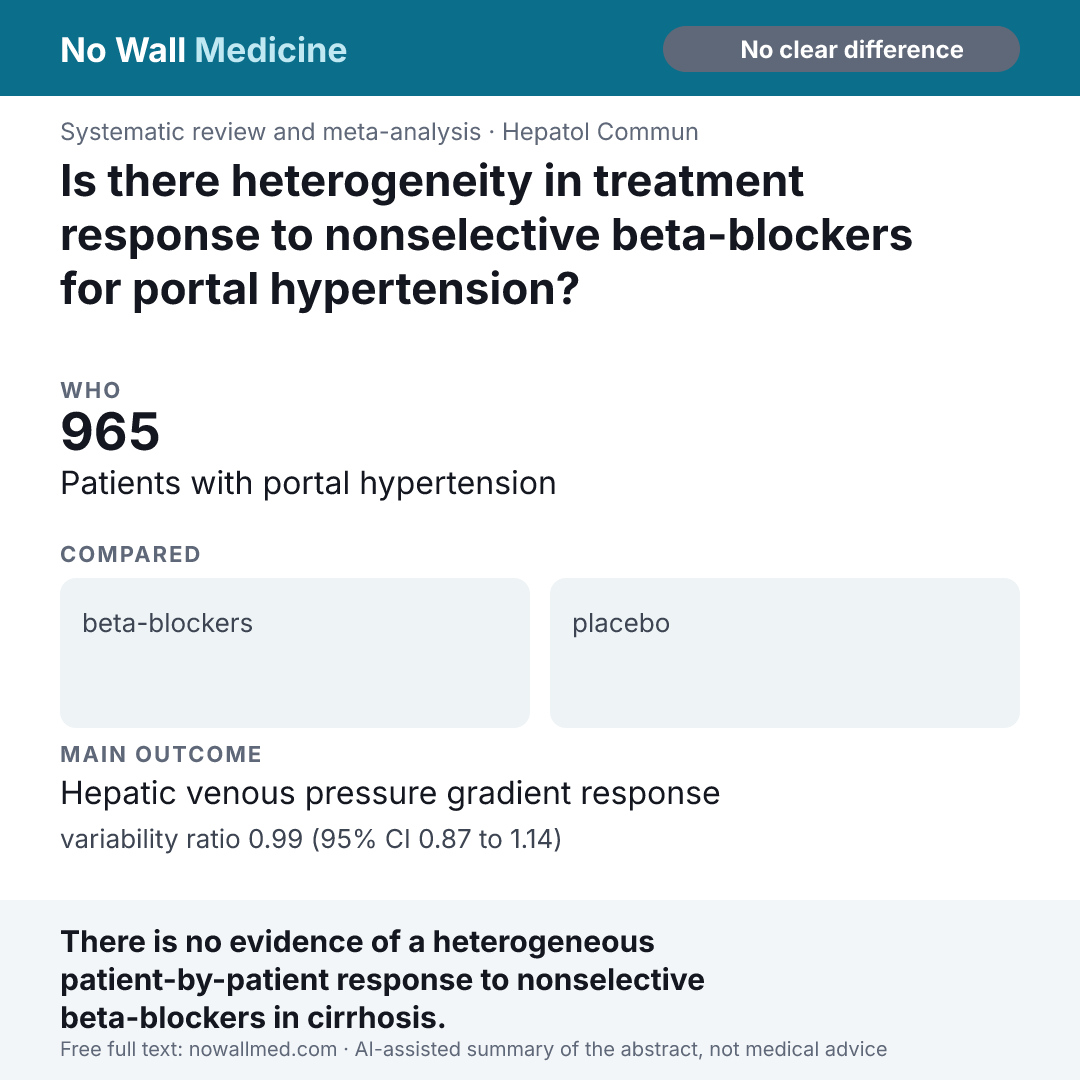
Heterogeneity of treatment response to beta-blockers in the treatment of portal hypertension: A systematic review
Systematic review and meta-analysisNo clear difference
Is there heterogeneity in treatment response to nonselective beta-blockers for portal hypertension?
Who
965
Patients with portal hypertension
Compared
beta-blockers
placebo
Main outcome
Hepatic venous pressure gradient response
Result: variability ratio 0.99 (95% CI 0.87 to 1.14)
Bottom line: There is no evidence of a heterogeneous patient-by-patient response to nonselective beta-blockers in cirrhosis.
Hepatol Commun · 2024-01-29 · Save PNG
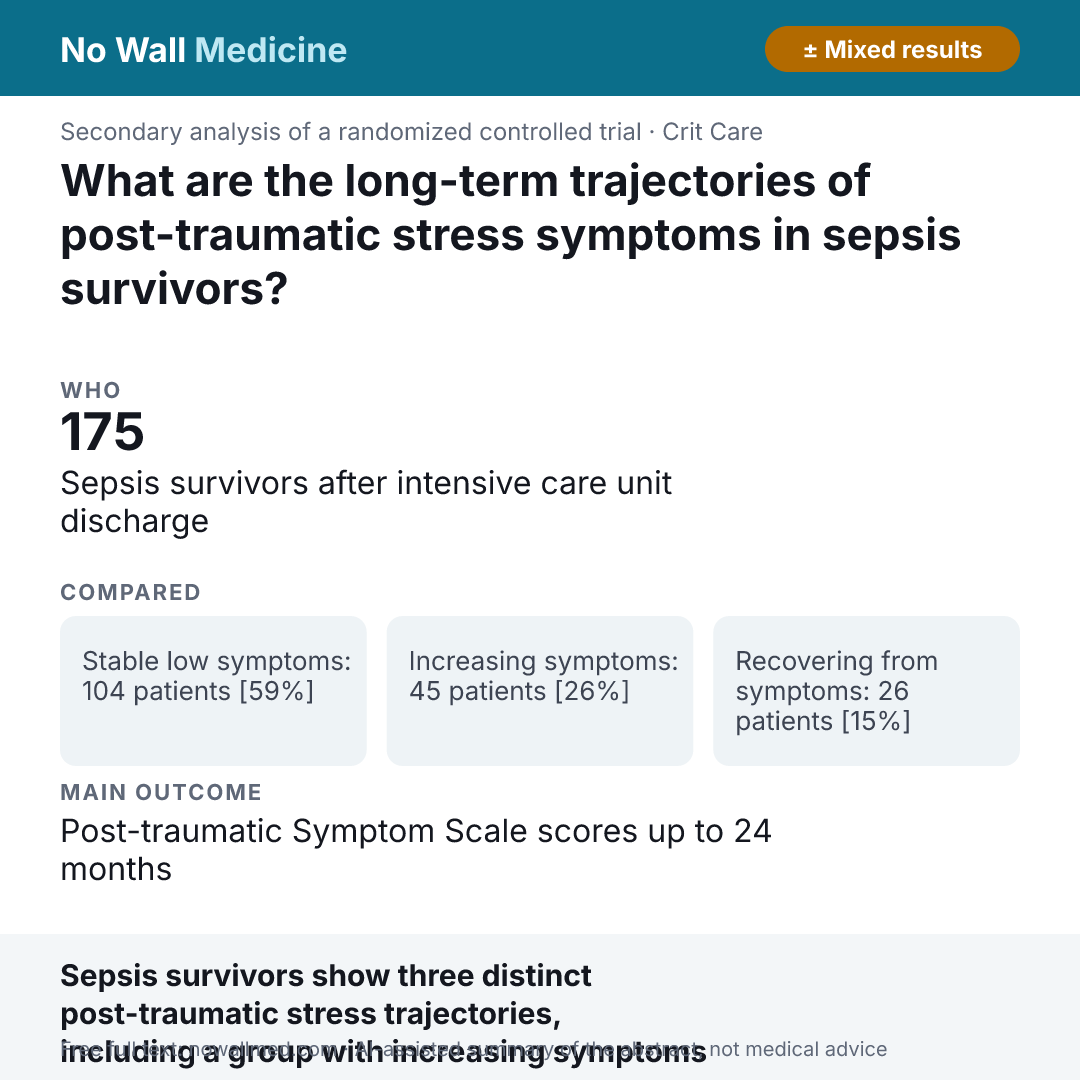
Trajectories of post-traumatic stress in sepsis survivors two years after ICU discharge: a secondary analysis of a randomized controlled trial
Secondary analysis of a randomized controlled trialMixed results
What are the long-term trajectories of post-traumatic stress symptoms in sepsis survivors?
Who
175
Sepsis survivors after intensive care unit discharge
Compared
Stable low symptoms: 104 patients [59%]
Increasing symptoms: 45 patients [26%]
Recovering from symptoms: 26 patients [15%]
Main outcome
Post-traumatic Symptom Scale scores up to 24 months
Bottom line: Sepsis survivors show three distinct post-traumatic stress trajectories, including a group with increasing symptoms over two years.
Crit Care · 2024-01-29 · Save PNG
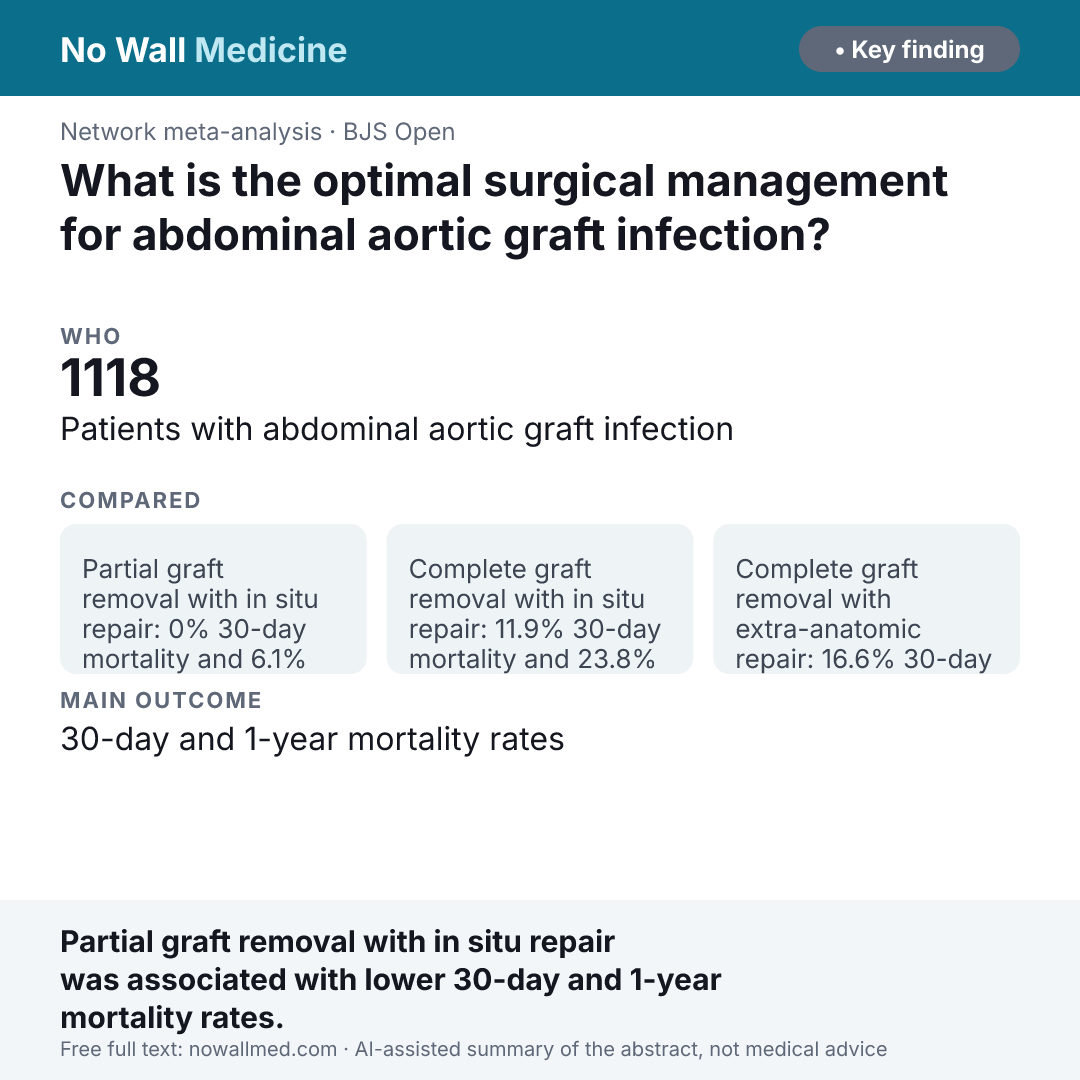
Surgical management of abdominal aortic graft infection: network meta-analysis
Network meta-analysisKey finding
What is the optimal surgical management for abdominal aortic graft infection?
Who
1118
Patients with abdominal aortic graft infection
Compared
Partial graft removal with in situ repair: 0% 30-day mortality and 6.1% 1-year mortality
Complete graft removal with in situ repair: 11.9% 30-day mortality and 23.8% 1-year mortality
Complete graft removal with extra-anatomic repair: 16.6% 30-day mortality and 41.4% 1-year mortality
Main outcome
30-day and 1-year mortality rates
Bottom line: Partial graft removal with in situ repair was associated with lower 30-day and 1-year mortality rates.
BJS Open · 2024-01-29 · Save PNG
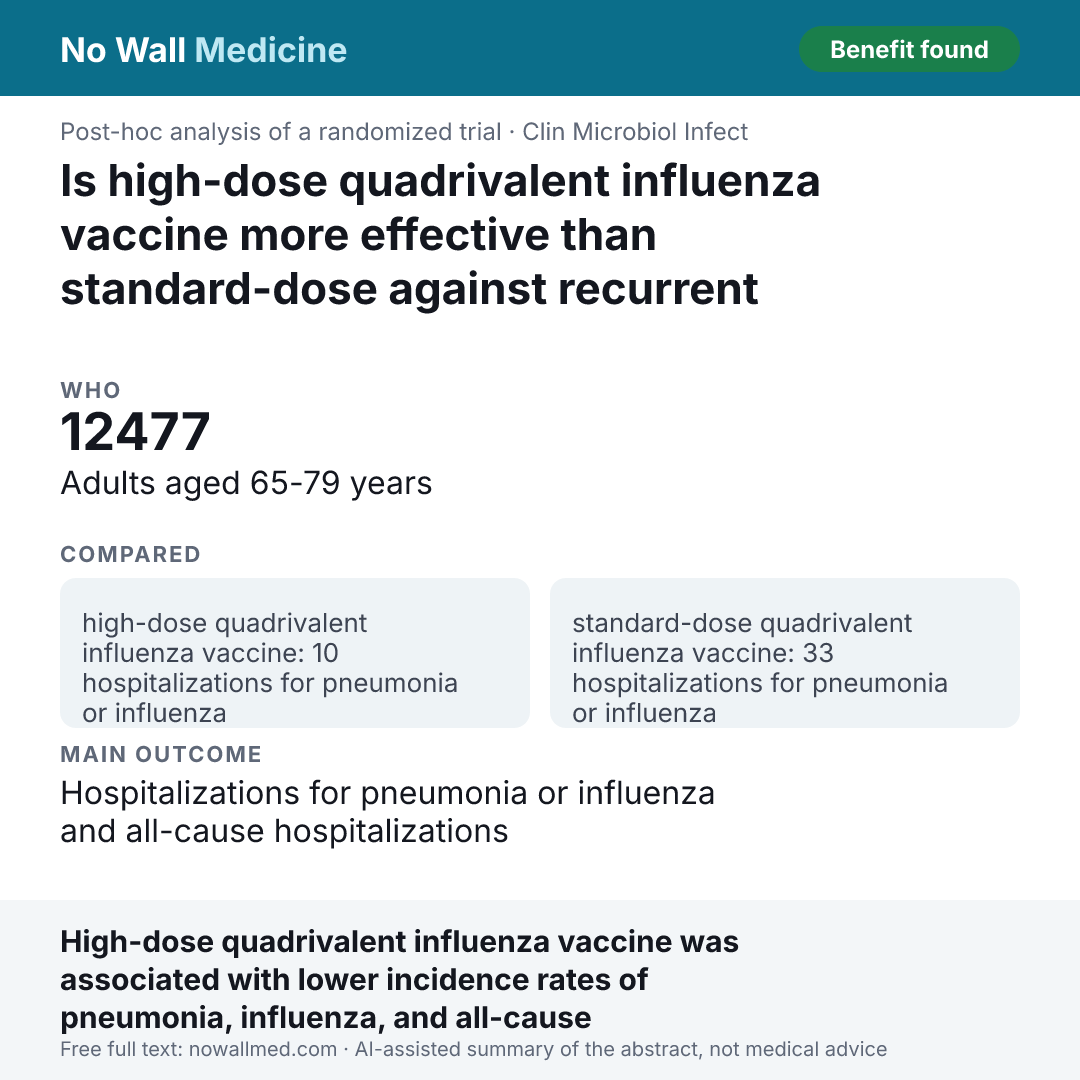
Effectiveness of high-dose versus standard-dose quadrivalent influenza vaccine against recurrent hospitalizations and mortality in relation to influenza circulation: A post-hoc analysis of the DANFLU-1 randomized clinical trial
Post-hoc analysis of a randomized trialBenefit found
Is high-dose quadrivalent influenza vaccine more effective than standard-dose against recurrent hospitalizations?
Who
12477
Adults aged 65-79 years
Compared
high-dose quadrivalent influenza vaccine: 10 hospitalizations for pneumonia or influenza
standard-dose quadrivalent influenza vaccine: 33 hospitalizations for pneumonia or influenza
Main outcome
Hospitalizations for pneumonia or influenza and all-cause hospitalizations
Result: incidence rate ratio 0.30 (95% CI 0.14-0.64) for pneumonia or influenza hospitalizations
Bottom line: High-dose quadrivalent influenza vaccine was associated with lower incidence rates of pneumonia, influenza, and all-cause hospitalizations.
Clin Microbiol Infect · 2024-01-28 · Save PNG
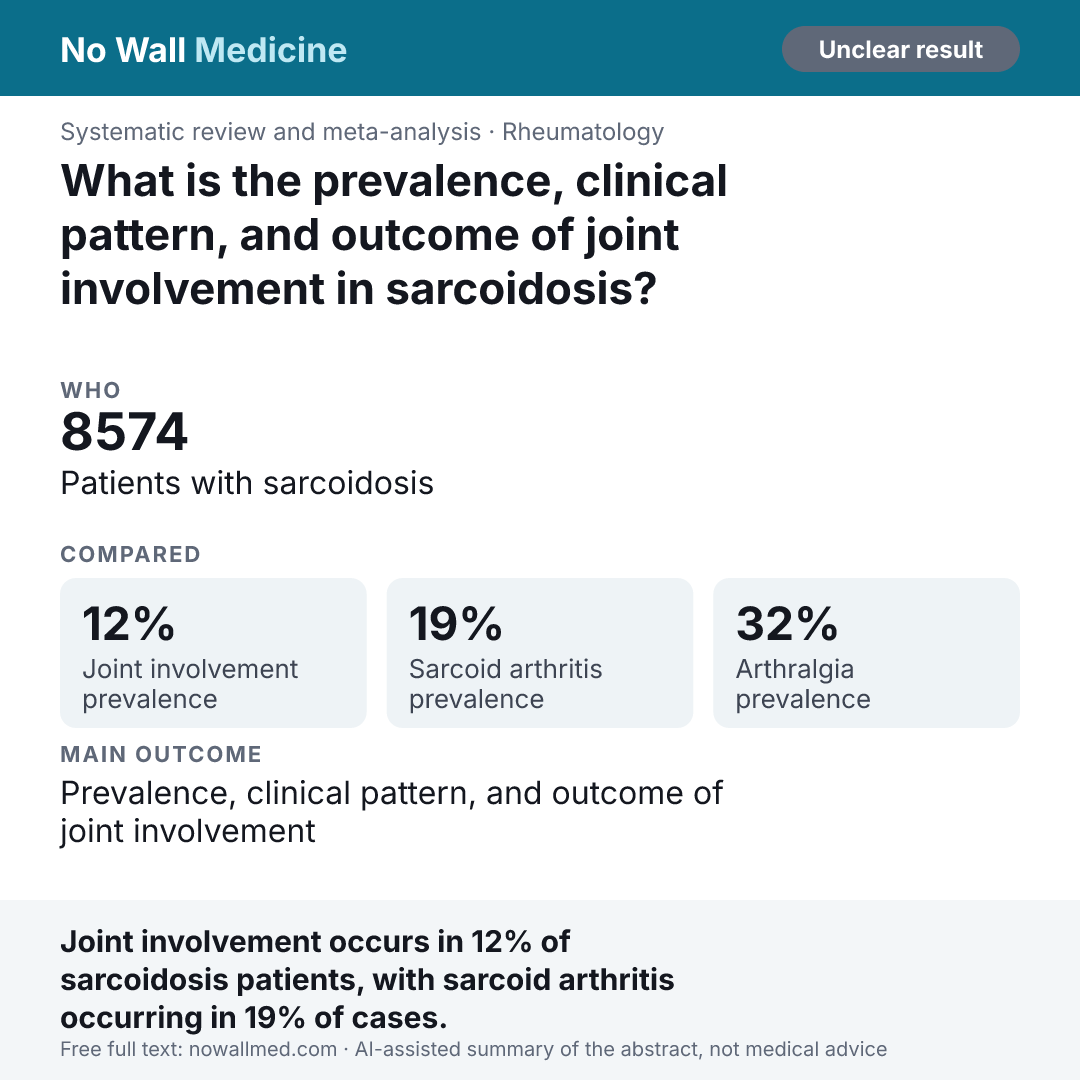
Joint involvement in sarcoidosis: systematic review and meta-analysis of prevalence, clinical pattern and outcome
Systematic review and meta-analysisUnclear result
What is the prevalence, clinical pattern, and outcome of joint involvement in sarcoidosis?
Who
8574
Patients with sarcoidosis
Compared
12%Joint involvement prevalence (95% CI 10, 14)
19%Sarcoid arthritis prevalence (95% CI 14, 24)
32%Arthralgia prevalence (95% CI 13, 51)
Main outcome
Prevalence, clinical pattern, and outcome of joint involvement
Bottom line: Joint involvement occurs in 12% of sarcoidosis patients, with sarcoid arthritis occurring in 19% of cases.
Rheumatology · 2024-01-28 · Save PNG
Genome-Wide Meta-Analysis Identifies 11 Susceptibility Variants of Vitiligo in the Chinese Han Population
Genome-wide meta-analysisKey finding
What are the genetic susceptibility variants of vitiligo in the Chinese Han population?
Who
Chinese Han population with vitiligo and healthy controls
Compared
Vitiligo cases
Healthy controls
Main outcome
Identification of susceptibility variants of vitiligo
Bottom line: The meta-analysis identified 11 previously unreported susceptibility variants of vitiligo in the Chinese Han population.
J Invest Dermatol · 2024-01-28 · Save PNG

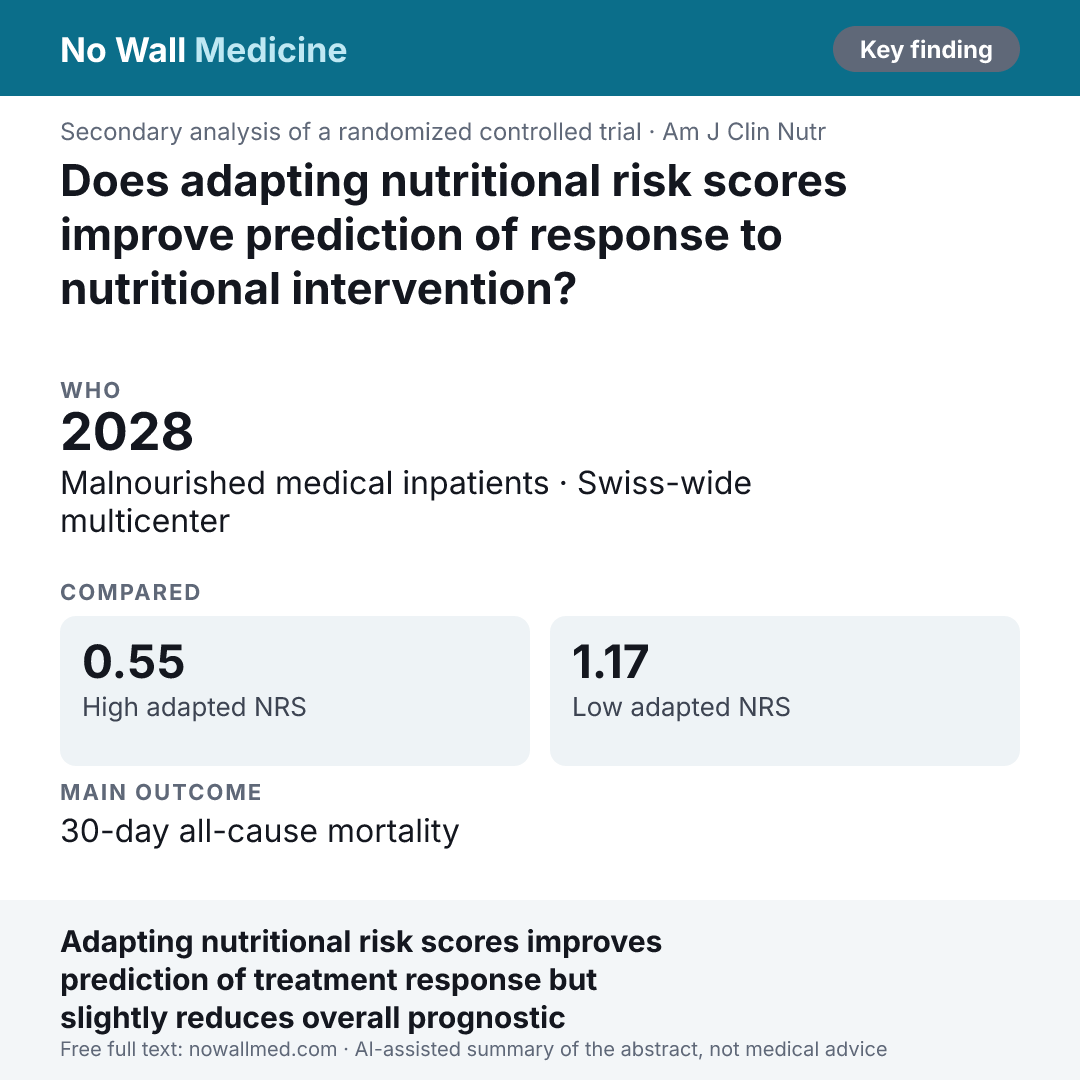
Adaptation of nutritional risk screening tools may better predict response to nutritional treatment: a secondary analysis of the randomized controlled trial Effect of early nutritional therapy on Frailty, Functional Outcomes, and Recovery of malnourished medical inpatients Trial (EFFORT)
Secondary analysis of a randomized controlled trialKey finding
Does adapting nutritional risk scores improve prediction of response to nutritional intervention?
Who
2028
Malnourished medical inpatients · Swiss-wide multicenter
Compared
0.55High adapted NRS (95% CI: 0.37, 0.80)
1.17Low adapted NRS (95% CI: 0.70, 1.93)
Main outcome
30-day all-cause mortality
Result: interaction coefficient 0.48 (95% CI 0.25 to 0.94)
Bottom line: Adapting nutritional risk scores improves prediction of treatment response but slightly reduces overall prognostic performance for mortality.
Am J Clin Nutr · 2024-01-28 · Save PNG
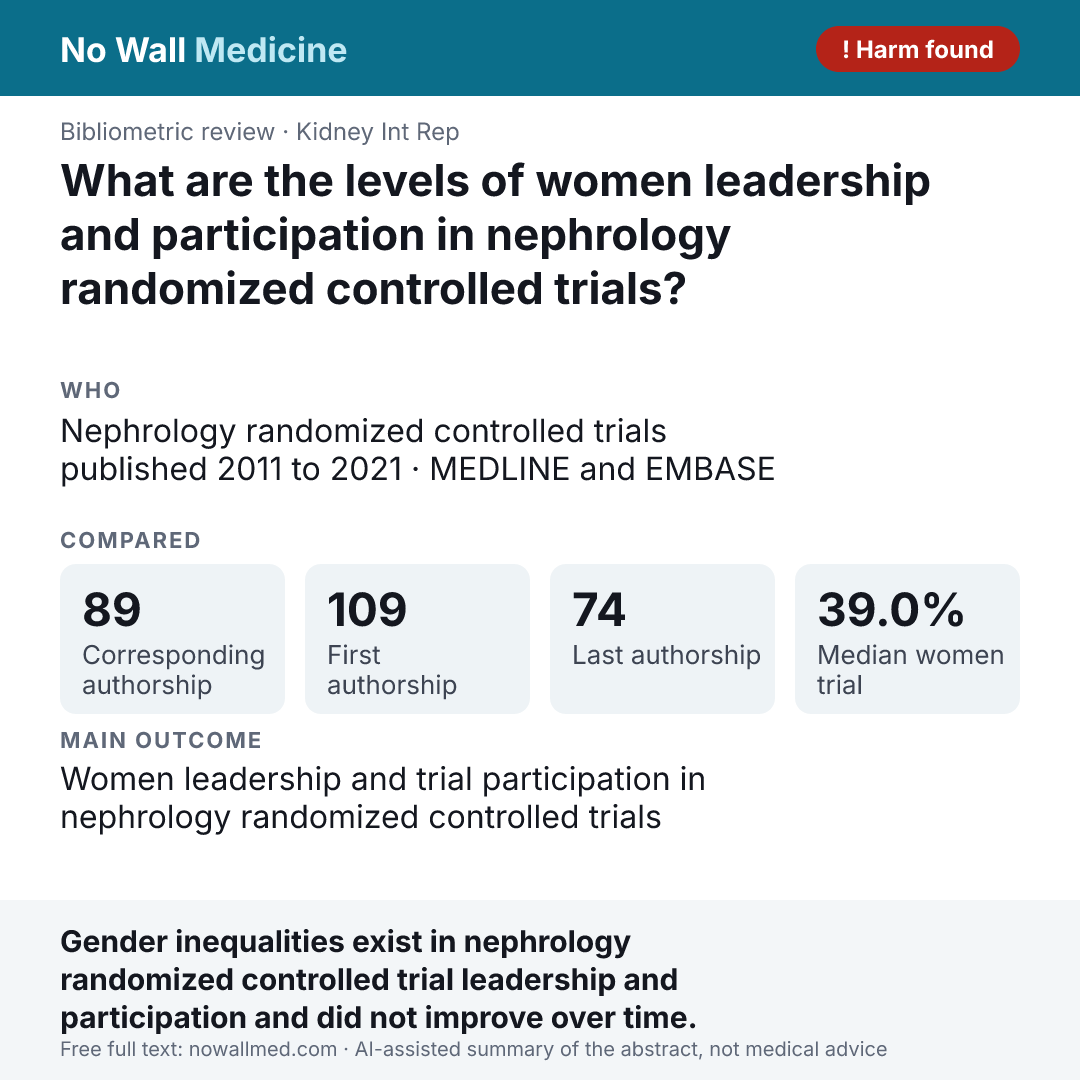
Systematic Review of Women Leading and Participating in Nephrology Randomized Clinical Trials
Bibliometric reviewHarm found
What are the levels of women leadership and participation in nephrology randomized controlled trials?
Who
Nephrology randomized controlled trials published 2011 to 2021 · MEDLINE and EMBASE databases
Compared
89Corresponding authorship (22%)
109First authorship (28%)
74Last authorship (19%)
39.0%Median women trial participants (13.5%)
Main outcome
Women leadership and trial participation in nephrology randomized controlled trials
Bottom line: Gender inequalities exist in nephrology randomized controlled trial leadership and participation and did not improve over time.
Kidney Int Rep · 2024-01-28 · Save PNG
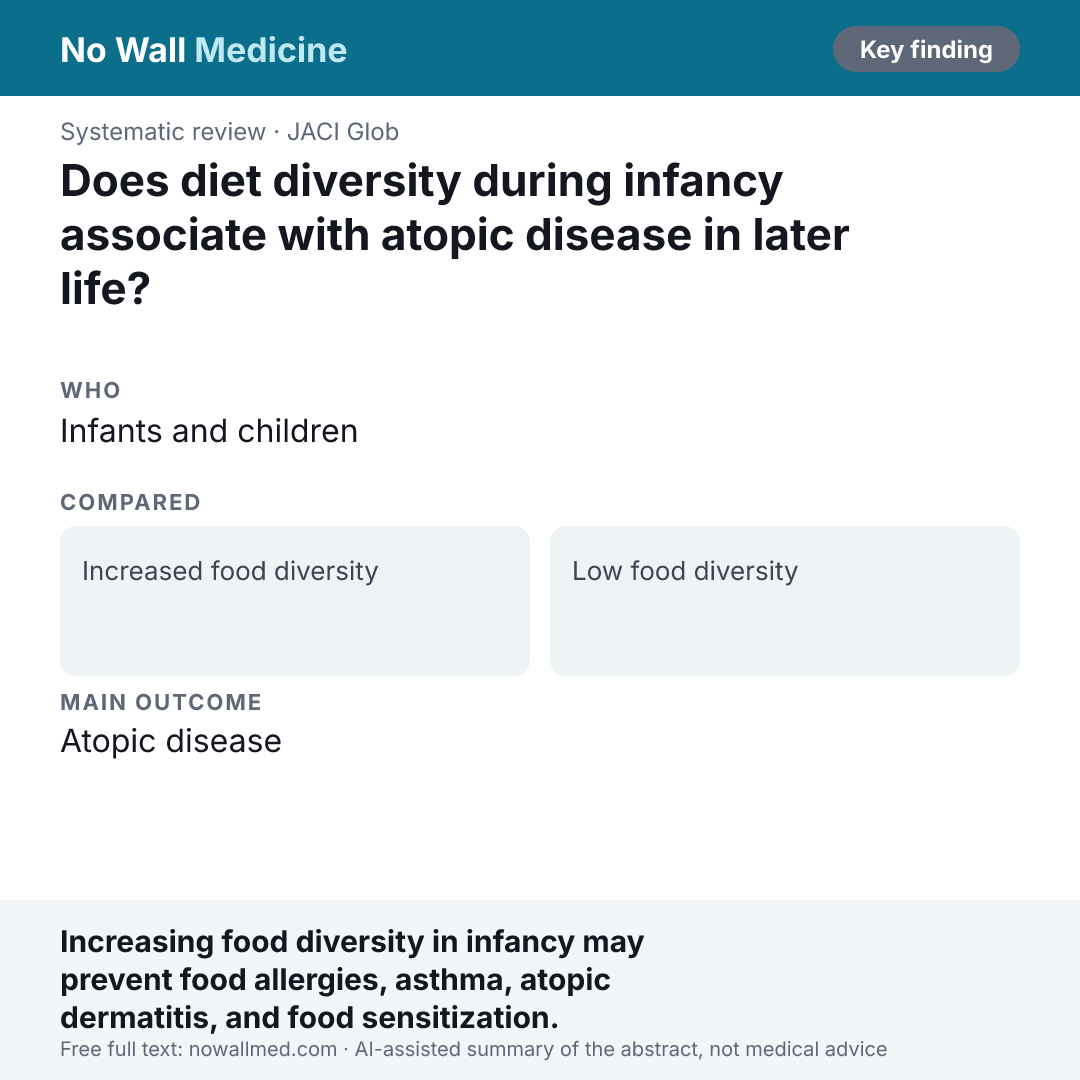
Associations between diet diversity during infancy and atopic disease in later life: Systematic review
Systematic reviewKey finding
Does diet diversity during infancy associate with atopic disease in later life?
Who
Infants and children
Compared
Increased food diversity
Low food diversity
Main outcome
Atopic disease
Bottom line: Increasing food diversity in infancy may prevent food allergies, asthma, atopic dermatitis, and food sensitization.
Limitation: Effect on eczema, allergic rhinitis, and other diseases remains controversial.
JACI Glob · 2024-01-28 · Save PNG