Visual abstracts
New randomized trials and meta-analyses from leading journals at a glance: who was studied, what was compared, and what was found. Every paper is free to read in full.
All specialtiesCardiology 2629Oncology 2224Gastroenterology & Hepatology 1004Infectious Disease 1654Neurology 1043Psychiatry & Mental Health 1214Pulmonology 1103Critical Care 720Endocrinology & Diabetes 1354Pediatrics 1538Surgery 1340Orthopedics & Sports Medicine 481Neurosurgery 319Cardiothoracic & Vascular Surgery 285Plastic & Reconstructive Surgery 396Nephrology 546Rheumatology 391Hematology 570Dermatology 304Ophthalmology 304Obstetrics & Gynecology 857Public & Global Health 482Radiology & Imaging 363Anesthesiology 519Urology 437ENT (Otolaryngology) 315Emergency Medicine 292Allergy & Immunology 170Geriatrics 566Family Medicine & Primary Care 302Medical Genetics & Genomics 298Pathology & Laboratory Medicine 82Physical Medicine & Rehabilitation 432Palliative Care 225Nutrition 698Digital Health & AI 1268General Medicine 190
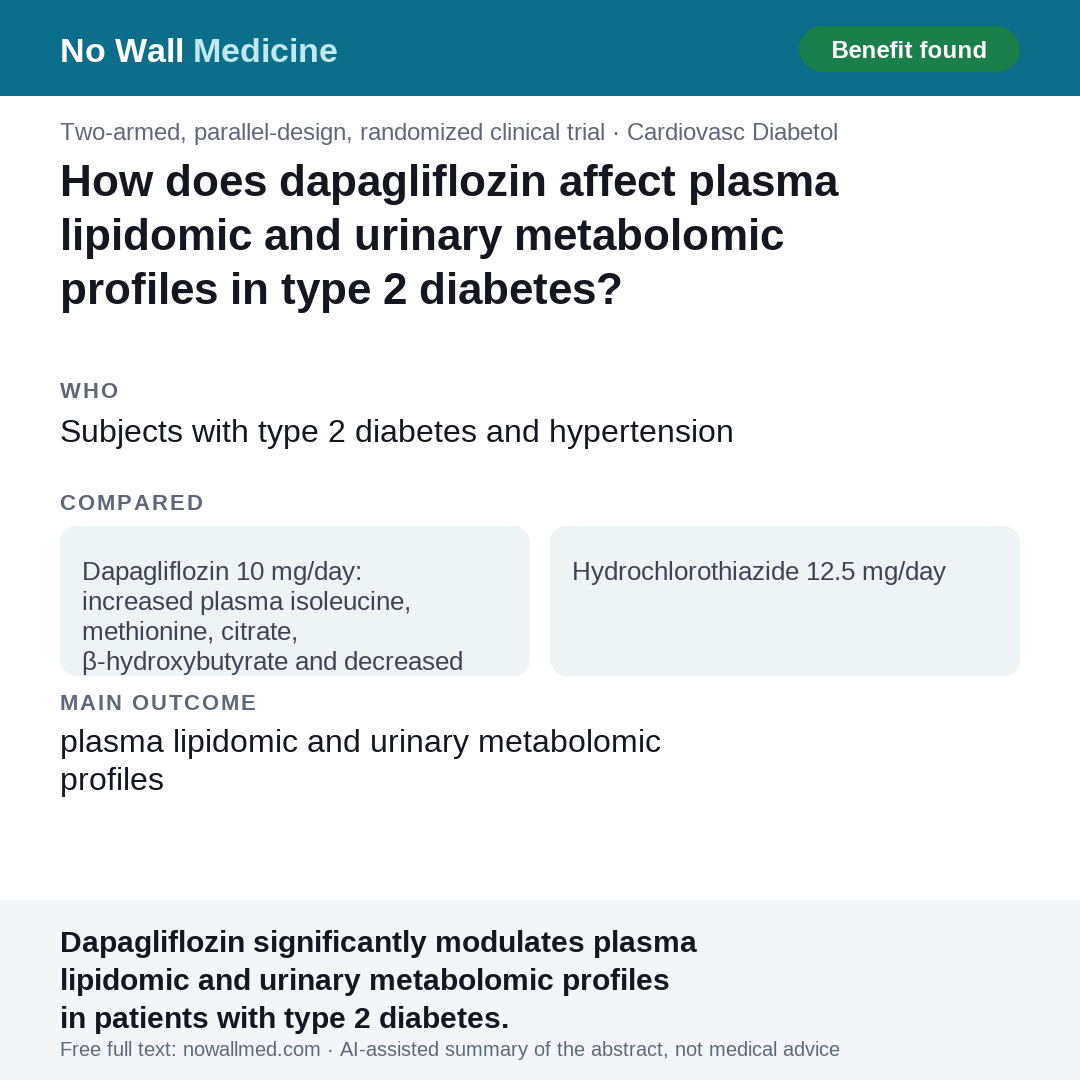
Dapagliflozin modulates plasma lipidomic profile and urinary metabolite excretion in type 2 diabetes
Two-armed, parallel-design, randomized clinical trialBenefit found
How does dapagliflozin affect plasma lipidomic and urinary metabolomic profiles in type 2 diabetes?
Who
Subjects with type 2 diabetes and hypertension
Compared
Dapagliflozin 10 mg/day: increased plasma isoleucine, methionine, citrate, β-hydroxybutyrate and decreased lactate
Hydrochlorothiazide 12.5 mg/day
Main outcome
plasma lipidomic and urinary metabolomic profiles
Bottom line: Dapagliflozin significantly modulates plasma lipidomic and urinary metabolomic profiles in patients with type 2 diabetes.
Cardiovasc Diabetol · 2025-12-30Download image
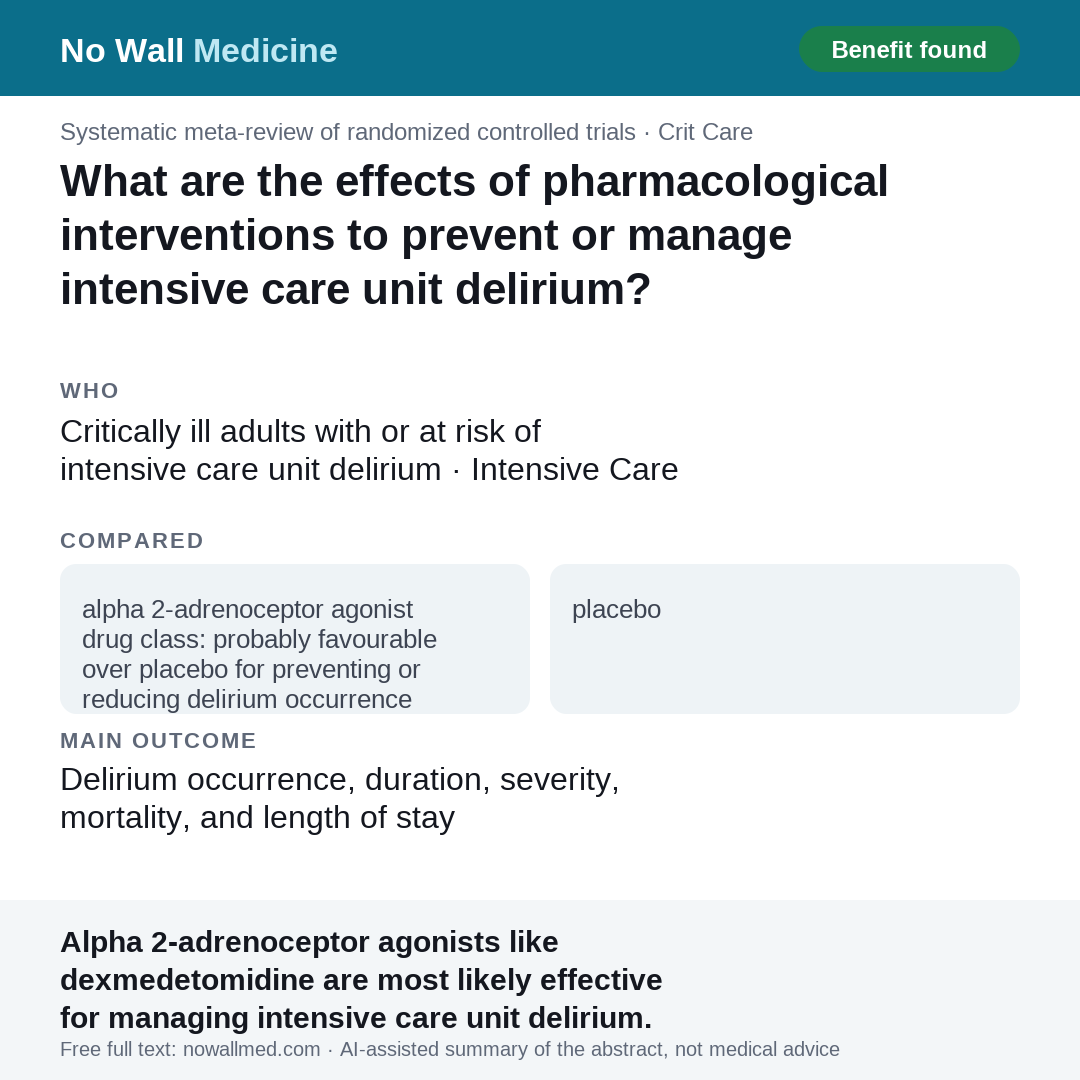
A systematic meta-review of interventions to prevent and manage delirium in the Intensive Care Unit: Part 1 - Pharmacological interventions
Systematic meta-review of randomized controlled trialsBenefit found
What are the effects of pharmacological interventions to prevent or manage intensive care unit delirium?
Who
Critically ill adults with or at risk of intensive care unit delirium · Intensive Care Unit
Compared
alpha 2-adrenoceptor agonist drug class: probably favourable over placebo for preventing or reducing delirium occurrence
placebo
Main outcome
Delirium occurrence, duration, severity, mortality, and length of stay
Bottom line: Alpha 2-adrenoceptor agonists like dexmedetomidine are most likely effective for managing intensive care unit delirium.
Limitation: Underlying conditions and the impact of loss to follow-up remain unclear.
Crit Care · 2025-12-30Download image
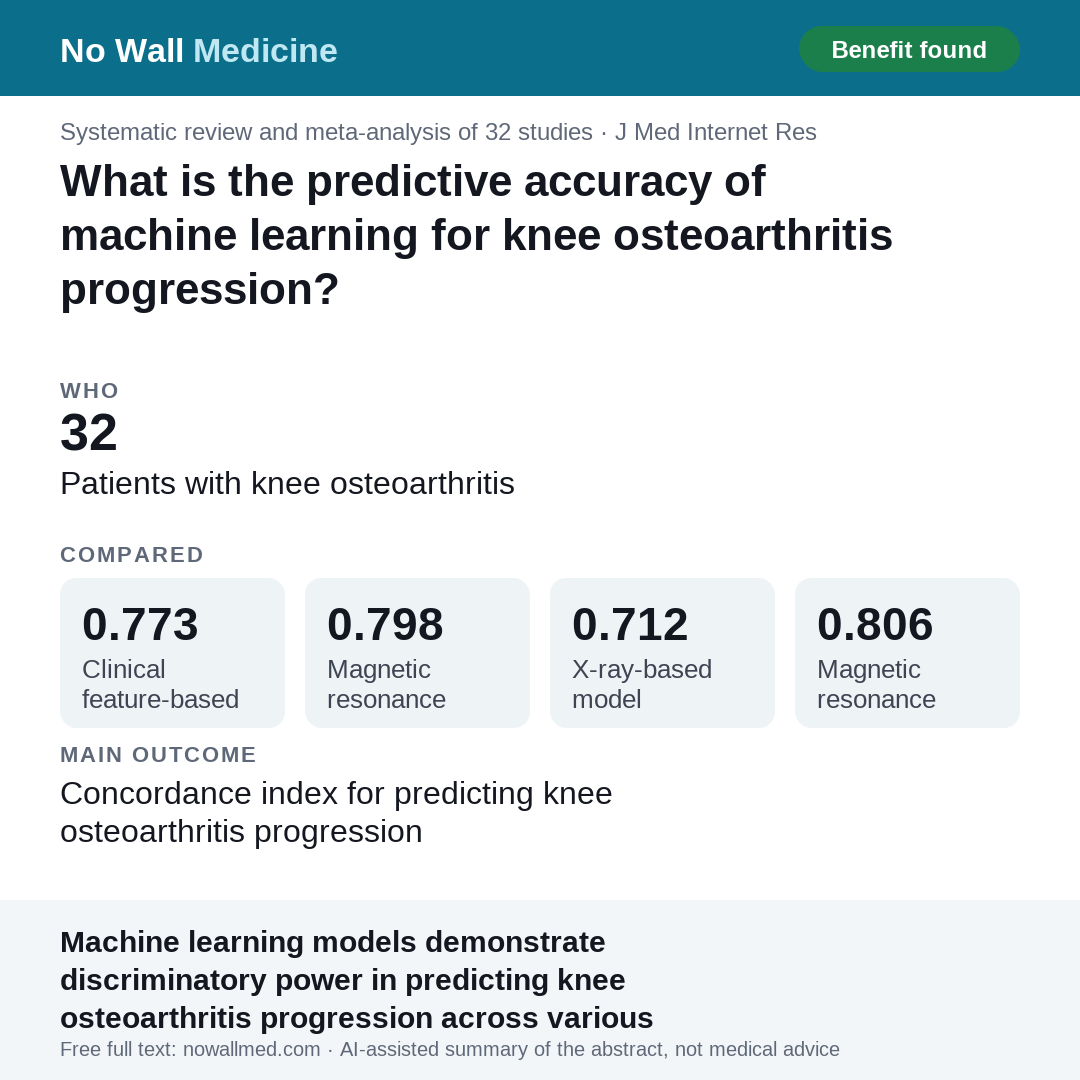
Predictive Value of Machine Learning in Knee Osteoarthritis Progression: Systematic Review and Meta-Analysis
Systematic review and meta-analysis of 32 studiesBenefit found
What is the predictive accuracy of machine learning for knee osteoarthritis progression?
Who
32
Patients with knee osteoarthritis
Compared
0.773Clinical feature-based model (95% CI 0.727-0.821)
0.798Magnetic resonance imaging-based model (95% CI 0.755-0.843)
0.712X-ray-based model (95% CI 0.657-0.772)
0.806Magnetic resonance imaging plus clinical feature-based model (95% CI 0.765-0.849)
Main outcome
Concordance index for predicting knee osteoarthritis progression
Bottom line: Machine learning models demonstrate discriminatory power in predicting knee osteoarthritis progression across various data types.
Limitation: Significant heterogeneity due to variations in progression definitions and validation strategies.
J Med Internet Res · 2025-12-30Download image
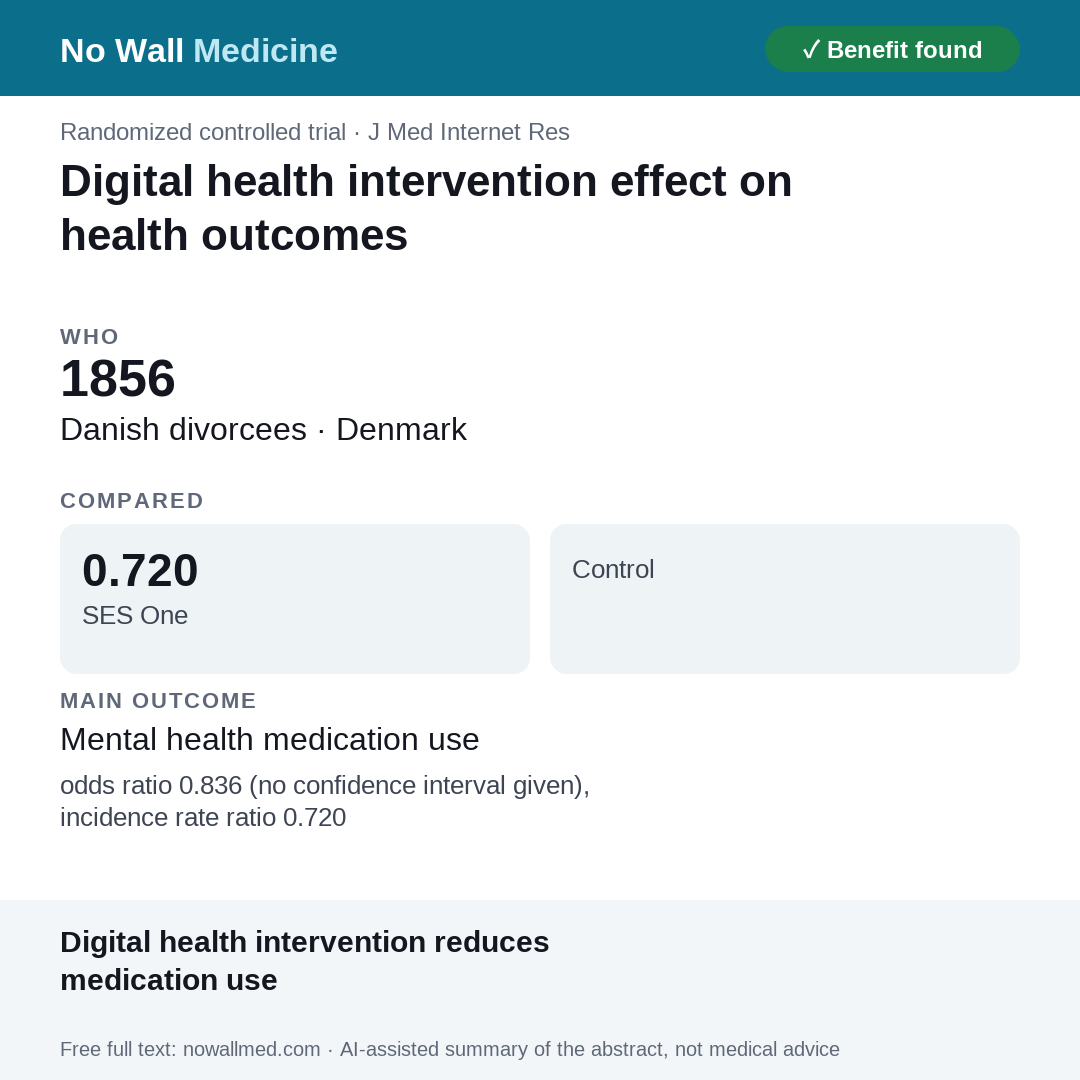
Digital Health Intervention for and Long-Term Health Outcomes of a Divorce Cohort With Linked Danish Data: 5-Year Posttrial Follow-Up of a Randomized Controlled Trial
Randomized controlled trialBenefit found
Digital health intervention effect on health outcomes
Who
1856
Danish divorcees · Denmark
Compared
0.720SES One
Control
Main outcome
Mental health medication use
Result: odds ratio 0.836 (no confidence interval given), incidence rate ratio 0.720
Bottom line: Digital health intervention reduces medication use
J Med Internet Res · 2025-12-30Download image
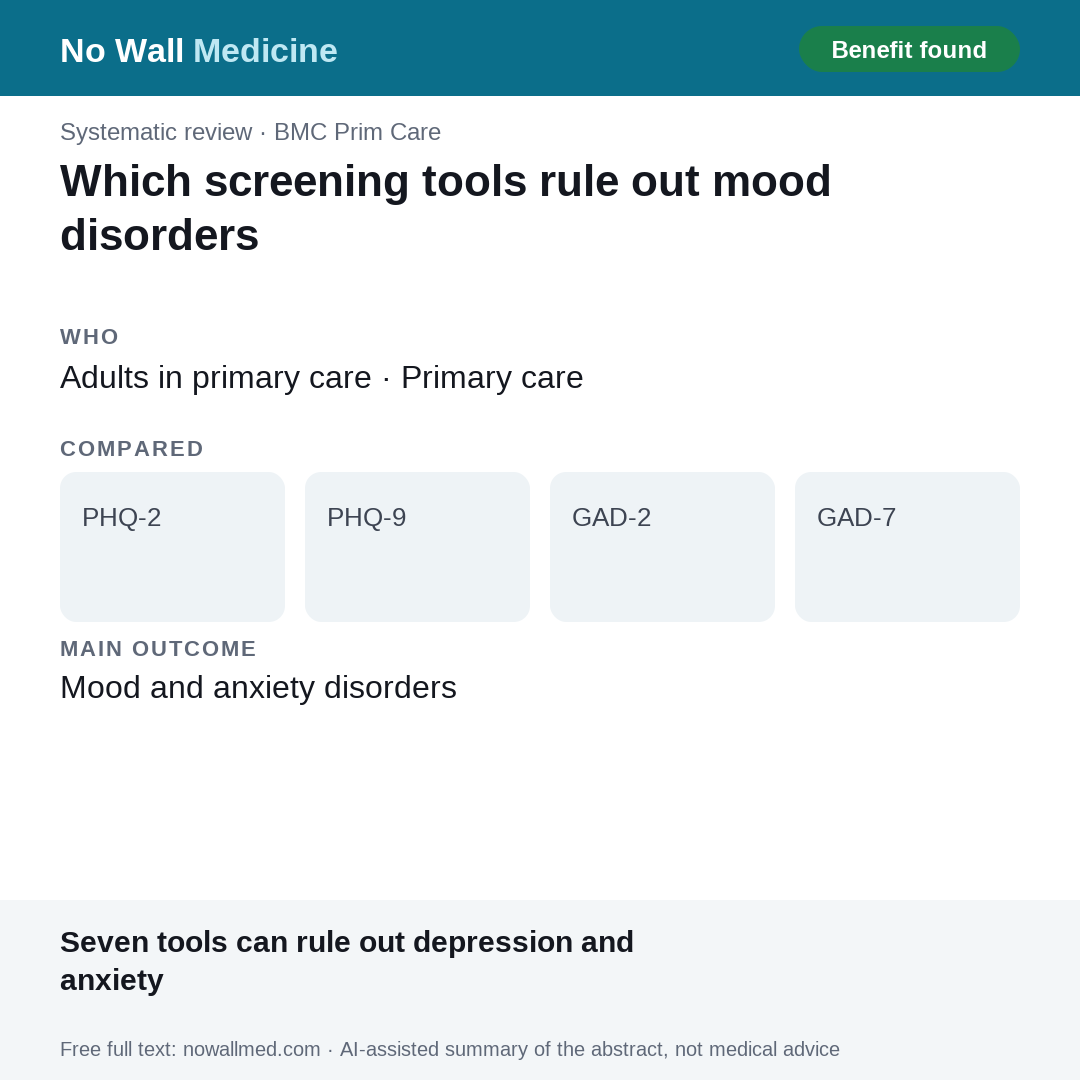
Screening tools for ruling out mood and anxiety disorders in adults in primary care: a rapid systematic review
Systematic reviewBenefit found
Which screening tools rule out mood disorders
Who
Adults in primary care · Primary care
Compared
PHQ-2
PHQ-9
GAD-2
GAD-7
Main outcome
Mood and anxiety disorders
Bottom line: Seven tools can rule out depression and anxiety
Limitation: No reliability studies
BMC Prim Care · 2025-12-30Download image
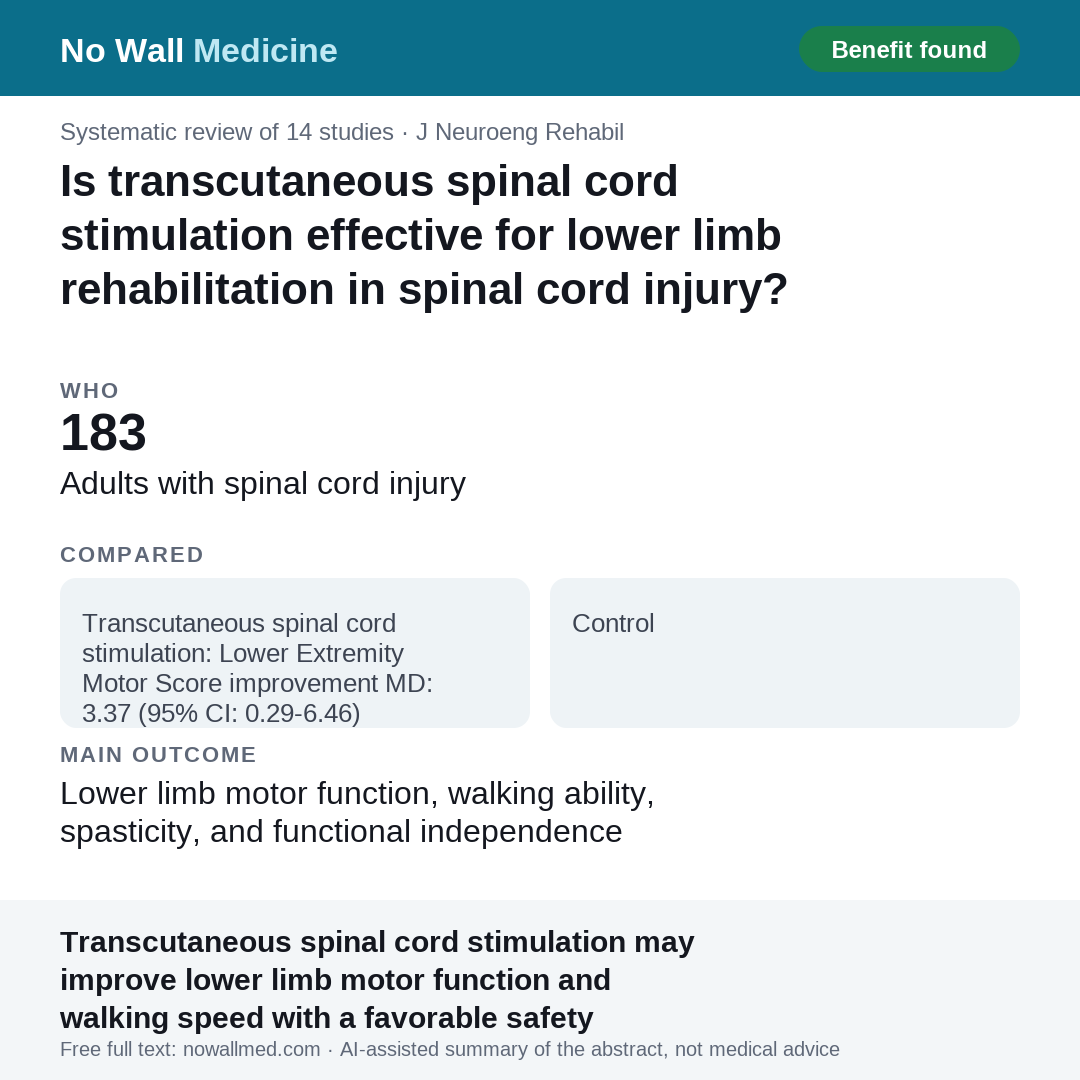
Effectiveness of transcutaneous spinal cord stimulation for lower limb rehabilitation in spinal cord injury: a systematic review
Systematic review of 14 studiesBenefit found
Is transcutaneous spinal cord stimulation effective for lower limb rehabilitation in spinal cord injury?
Who
183
Adults with spinal cord injury
Compared
Transcutaneous spinal cord stimulation: Lower Extremity Motor Score improvement MD: 3.37 (95% CI: 0.29-6.46)
Control
Main outcome
Lower limb motor function, walking ability, spasticity, and functional independence
Result: MD: 3.37 (95% CI: 0.29-6.46) for Lower Extremity Motor Score
Bottom line: Transcutaneous spinal cord stimulation may improve lower limb motor function and walking speed with a favorable safety profile.
Limitation: Small sample sizes, heterogeneous protocols, and methodological concerns with very low certainty of evidence.
J Neuroeng Rehabil · 2025-12-30Download image
Impact of environmental pollution on acne: a systematic review
Systematic reviewBenefit found
Does environmental pollution impact the development, severity, or exacerbation of acne?
Who
Human populations
Compared
Sulfur dioxide increase: 1.02% increase in acne-related visits
Nitrogen dioxide increase: 2.13% increase in acne-related visits
Main outcome
Acne development, severity, or exacerbation
Bottom line: Pollutant exposure is significantly associated with acne exacerbation, increased sebum production, and reduced antioxidants.
Limitation: Study heterogeneity, lack of diversity, and limited control for confounders limit generalizability.
Skin Health Dis · 2025-12-30Download image

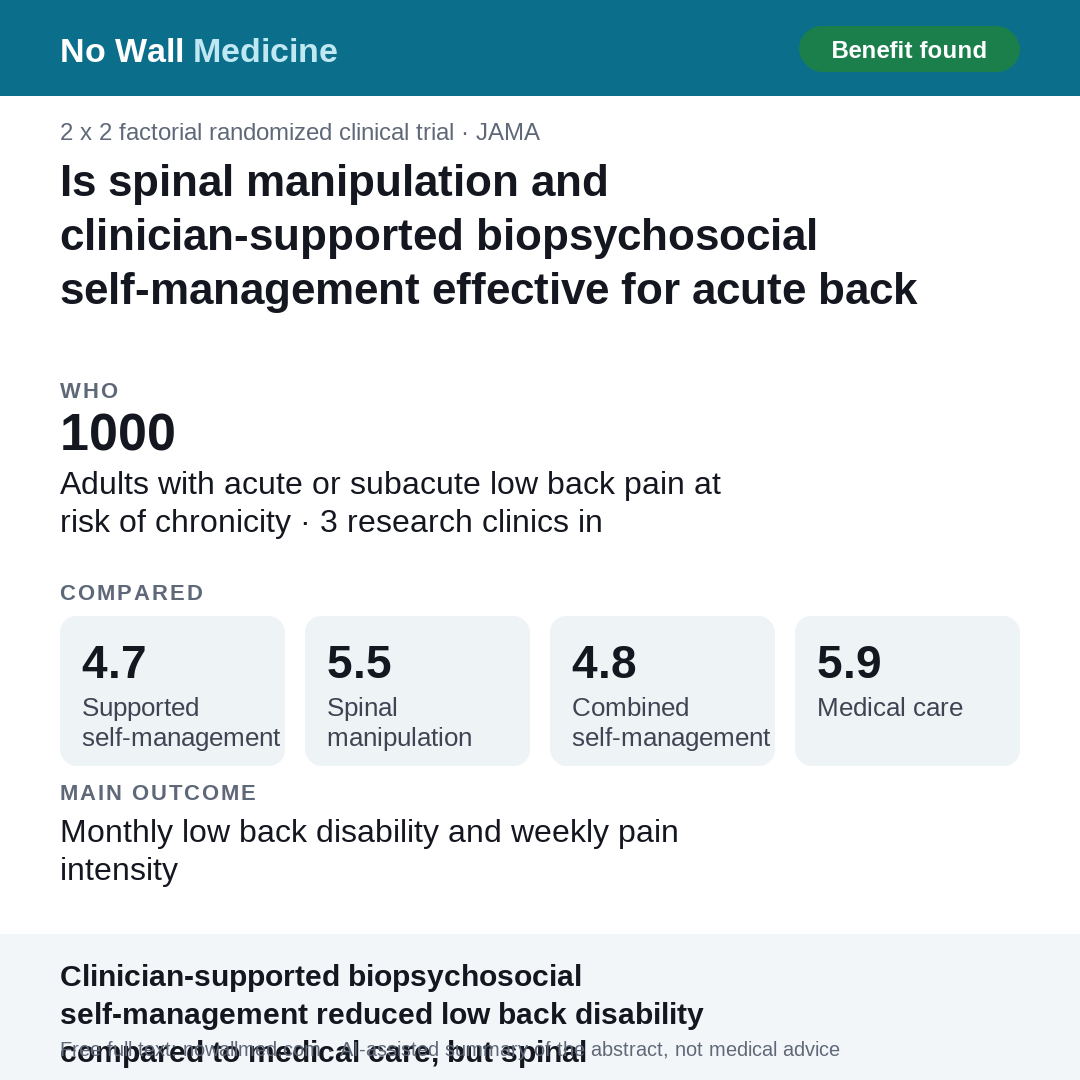
Spinal Manipulation and Clinician-Supported Biopsychosocial Self-Management for Acute Back Pain: The PACBACK Randomized Clinical Trial
2 x 2 factorial randomized clinical trialBenefit found
Is spinal manipulation and clinician-supported biopsychosocial self-management effective for acute back pain?
Who
1000
Adults with acute or subacute low back pain at risk of chronicity · 3 research clinics in Minnesota and Pittsburgh
Compared
4.7Supported self-management
5.5Spinal manipulation
4.8Combined self-management and spinal manipulation
5.9Medical care
Main outcome
Monthly low back disability and weekly pain intensity
Result: mean difference -1.2 (95% CI -1.9 to -0.5) for supported self-management
Bottom line: Clinician-supported biopsychosocial self-management reduced low back disability compared to medical care, but spinal manipulation alone did not.
JAMA · 2025-12-29Download image
Feasibility testing and preliminary trial of a crisis planning and monitoring intervention to reduce compulsory readmissions: the FINCH Study
Feasibility randomized controlled trialBenefit found
Is a crisis planning and monitoring intervention feasible to reduce compulsory psychiatric readmissions?
Who
80
Participants recruited towards the end of compulsory hospital admissions · Three areas of England
Compared
Experimental group: 66% received at least three intervention sessions
Control group
Main outcome
Compulsory admission and secondary outcomes
Bottom line: The crisis planning and monitoring intervention was found to be acceptable and feasible for reducing compulsory admissions.
Limitation: High level of persistence, flexibility, and considerable time were needed to deliver it.
BMC Med · 2025-12-29Download image

Quantification and impact of circulating cardiotonic steroids in the RATE-AF randomised trial of patients with atrial fibrillation and heart failure
Randomized trialBenefit found
Does digoxin or beta-blocker therapy improve outcomes in permanent atrial fibrillation and heart failure?
Who
160
Patients with permanent atrial fibrillation and symptoms of heart failure
Compared
low-dose digoxin: -0.57 New York Heart Association class
beta-blocker therapy
Main outcome
functional outcomes for heart failure and atrial fibrillation
Result: hazard ratio -0.57 (95% CI -0.82 to -0.32)
Bottom line: Digoxin improved heart failure and atrial fibrillation outcomes compared to beta-blockers, with no interaction from endogenous cardiotonic steroids.
Limitation: limited by low circulating levels of cardiotonic steroids
BMC Med · 2025-12-29Download image

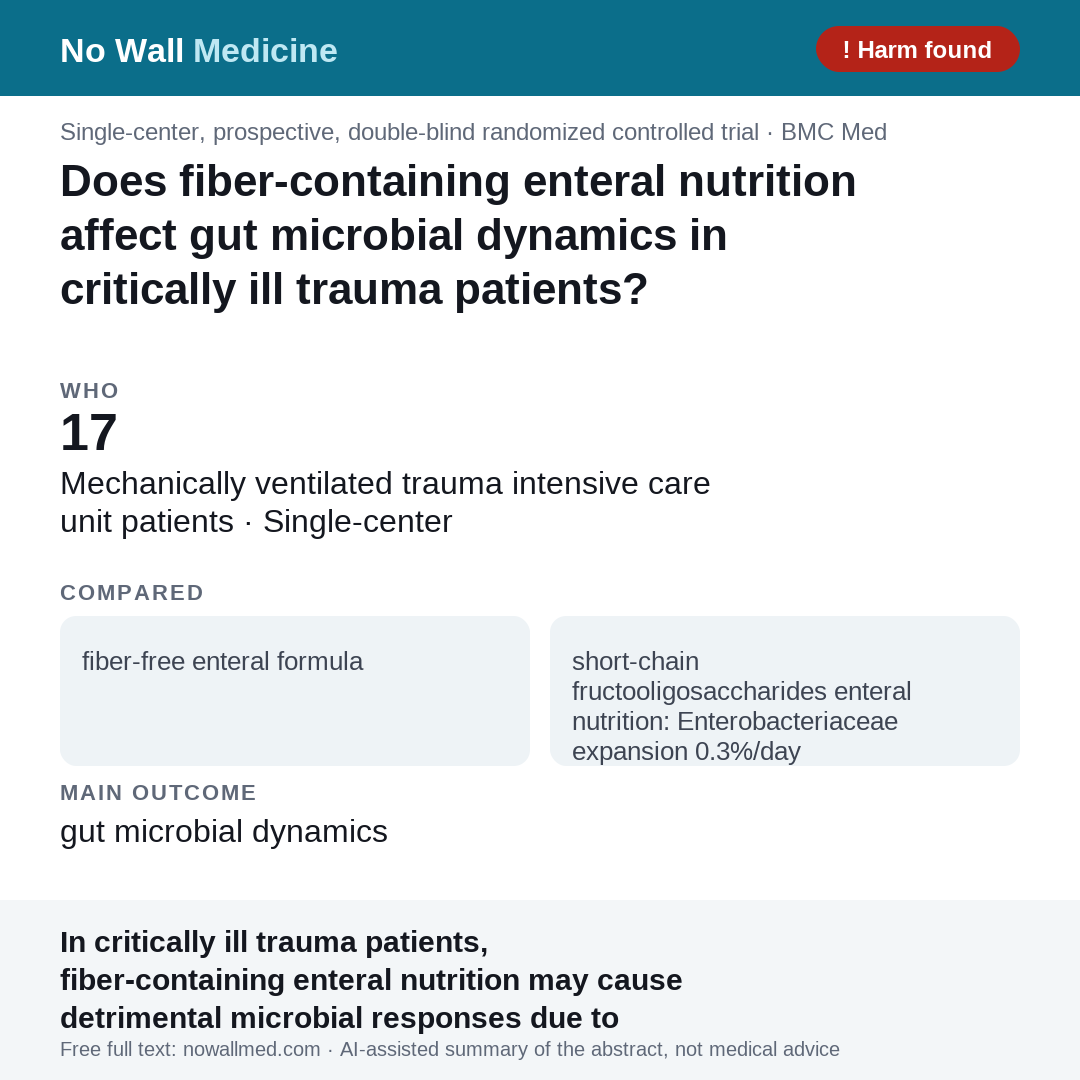
Impact of fiber-containing enteral nutrition on microbial community dynamics in critically ill trauma patients: a pilot-randomized trial
Single-center, prospective, double-blind randomized controlled trialHarm found
Does fiber-containing enteral nutrition affect gut microbial dynamics in critically ill trauma patients?
Who
17
Mechanically ventilated trauma intensive care unit patients · Single-center
Compared
fiber-free enteral formula
short-chain fructooligosaccharides enteral nutrition: Enterobacteriaceae expansion 0.3%/day
Main outcome
gut microbial dynamics
Bottom line: In critically ill trauma patients, fiber-containing enteral nutrition may cause detrimental microbial responses due to antibiotic exposure.
BMC Med · 2025-12-29Download image
Impact of surgical non-technical skills on clinical outcomes: systematic review
Systematic reviewBenefit found
What is the relationship between intraoperative non-technical skills and clinical outcomes?
Who
8536
Operating room personnel across 13 specialties · Non-simulated environments
Compared
Observational studies: 82% reported significant improvement in clinical outcomes
Interventional studies: 30% reported significant improvement in clinical outcomes
Main outcome
Patient-level clinical outcomes including mortality and postoperative complications
Bottom line: Improved intraoperative non-technical skills are significantly linked to better patient-level clinical outcomes.
Br J Surg · 2025-12-29Download image

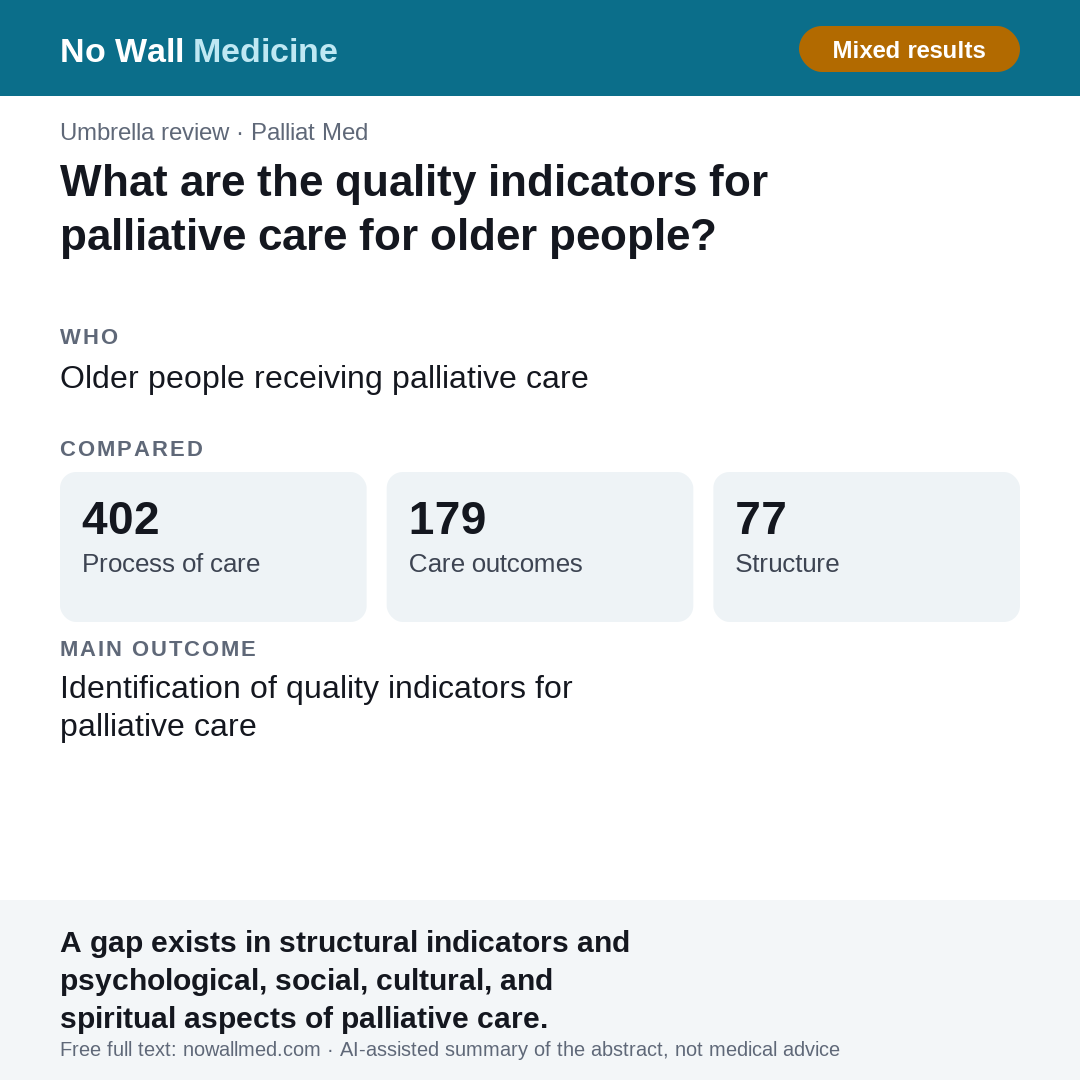
Quality indicators for palliative care for older people: An umbrella review
Umbrella reviewMixed results
What are the quality indicators for palliative care for older people?
Who
Older people receiving palliative care
Compared
402Process of care (61%)
179Care outcomes (27%)
77Structure (12%)
Main outcome
Identification of quality indicators for palliative care
Bottom line: A gap exists in structural indicators and psychological, social, cultural, and spiritual aspects of palliative care.
Palliat Med · 2025-12-29Download image
Factors Influencing Interprofessional Quality Improvement in Nursing Homes: A Systematic Review
Systematic literature reviewUnclear result
factors influencing quality improvement
Who
interprofessional teams in nursing homes · nursing homes
Compared
facilitators
barriers
Main outcome
quality improvement
Bottom line: quality improvement is complex
J Am Med Dir Assoc · 2025-12-29Download image

Quantification of heading in adult football: a systematic review and evidence synthesis
Systematic reviewUnclear result
Quantification of heading in football
Who
adult football players
Compared
male players
female players
Main outcome
acceleration and force of heading
Bottom line: Heading quantification varies by gender and position
Limitation: inconsistencies in terminology
Br J Sports Med · 2025-12-29Download image

Role of video review for sport-related concussion identification: a systematic review
Systematic reviewMixed results
What is the frequency and diagnostic utility of visible signs in video review for concussion?
Who
3281
Sport-related concussions · Professional competitions
Compared
Visible signs: slow to get up 37.6%
Visible signs: motor incoordination 26.7%
Main outcome
Diagnostic utility of visible signs and injury mechanism
Bottom line: Video review identifies visible signs with high specificity but low sensitivity, requiring multimodal assessment for diagnosis.
Limitation: Only eight studies had a low risk of bias.
Br J Sports Med · 2025-12-29Download image

Sirtuins and regulatory miRNAs as epigenetic determinants of empagliflozin-mediated recovery after acute myocardial infarction
Clinical study with baseline and 26-week follow-upBenefit found
How do empagliflozin and placebo affect sirtuin and microRNA expression after acute myocardial infarction?
Who
227
Patients with acute myocardial infarction
Compared
Empagliflozin: higher SIRT6 (p < 0.001) and lower SIRT4 (p = 0.018)
Placebo: reduction in SIRT6 expression (p = 0.006)
Main outcome
Sirtuin and microRNA expression and left ventricular ejection fraction change
Bottom line: Empagliflozin modulates sirtuin and microRNA expression and baseline markers can predict left ventricular ejection fraction improvement.
Cardiovasc Diabetol · 2025-12-29Download image

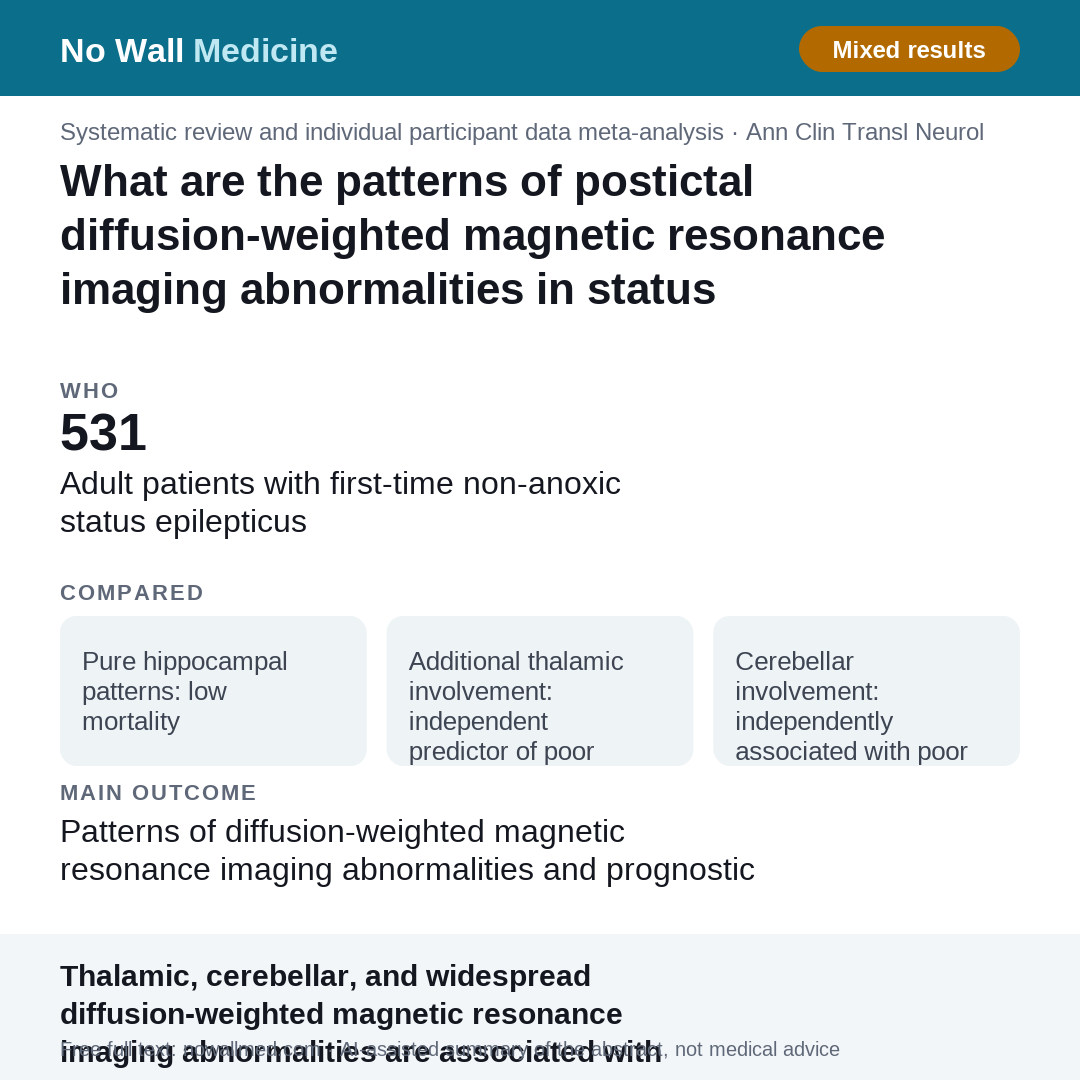
Patterns of Postictal Abnormalities in Relation to Status Epilepticus in Adults
Systematic review and individual participant data meta-analysisMixed results
What are the patterns of postictal diffusion-weighted magnetic resonance imaging abnormalities in status epilepticus?
Who
531
Adult patients with first-time non-anoxic status epilepticus
Compared
Pure hippocampal patterns: low mortality
Additional thalamic involvement: independent predictor of poor functional outcome
Cerebellar involvement: independently associated with poor functional outcome
Main outcome
Patterns of diffusion-weighted magnetic resonance imaging abnormalities and prognostic impact
Bottom line: Thalamic, cerebellar, and widespread diffusion-weighted magnetic resonance imaging abnormalities are associated with worse outcomes in status epilepticus.
Ann Clin Transl Neurol · 2025-12-29Download image
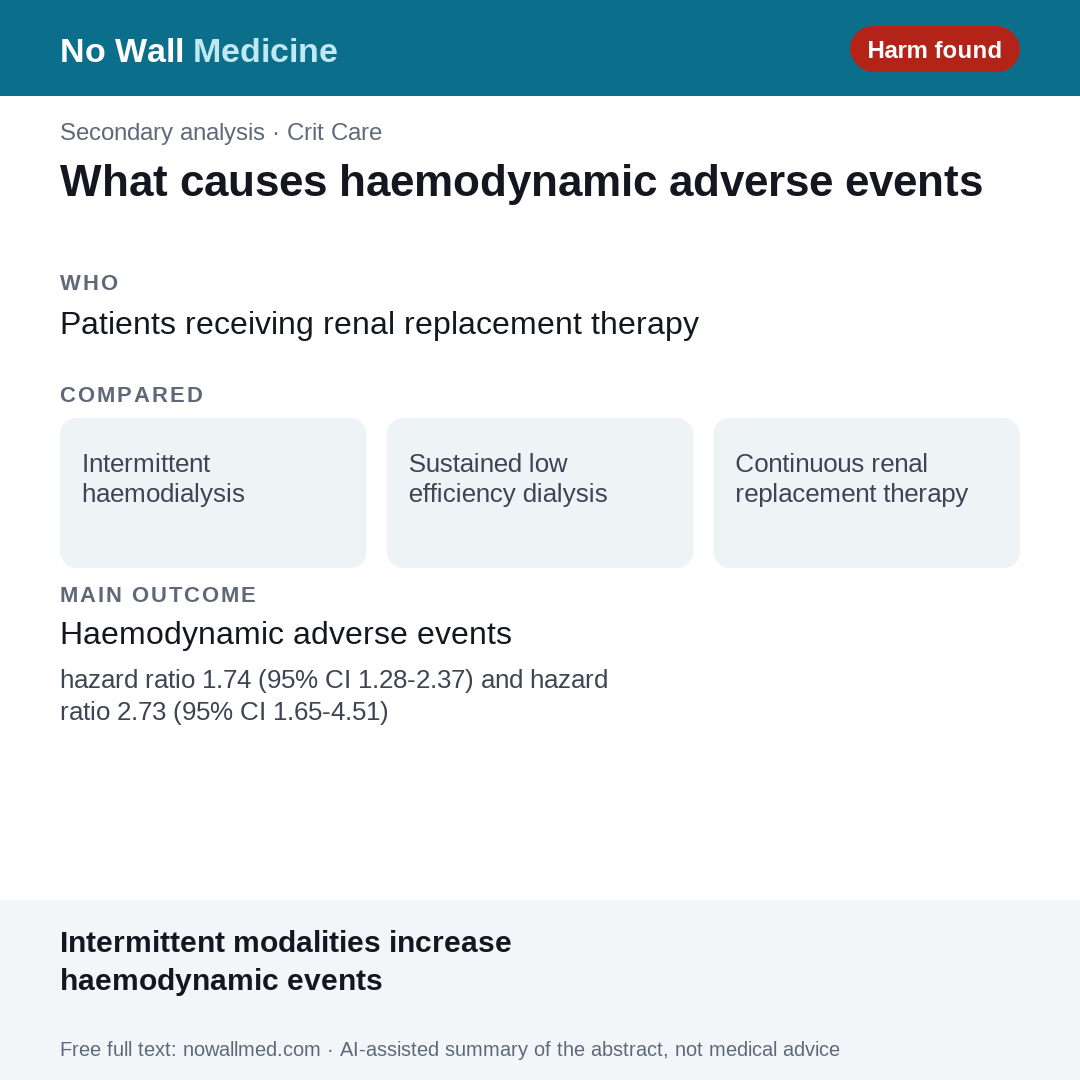
Factors associated with adverse haemodynamic events during the STARRT-AKI trial: a post-hoc secondary analysis
Secondary analysisHarm found
What causes haemodynamic adverse events
Who
Patients receiving renal replacement therapy
Compared
Intermittent haemodialysis
Sustained low efficiency dialysis
Continuous renal replacement therapy
Main outcome
Haemodynamic adverse events
Result: hazard ratio 1.74 (95% CI 1.28-2.37) and hazard ratio 2.73 (95% CI 1.65-4.51)
Bottom line: Intermittent modalities increase haemodynamic events
Crit Care · 2025-12-29Download image
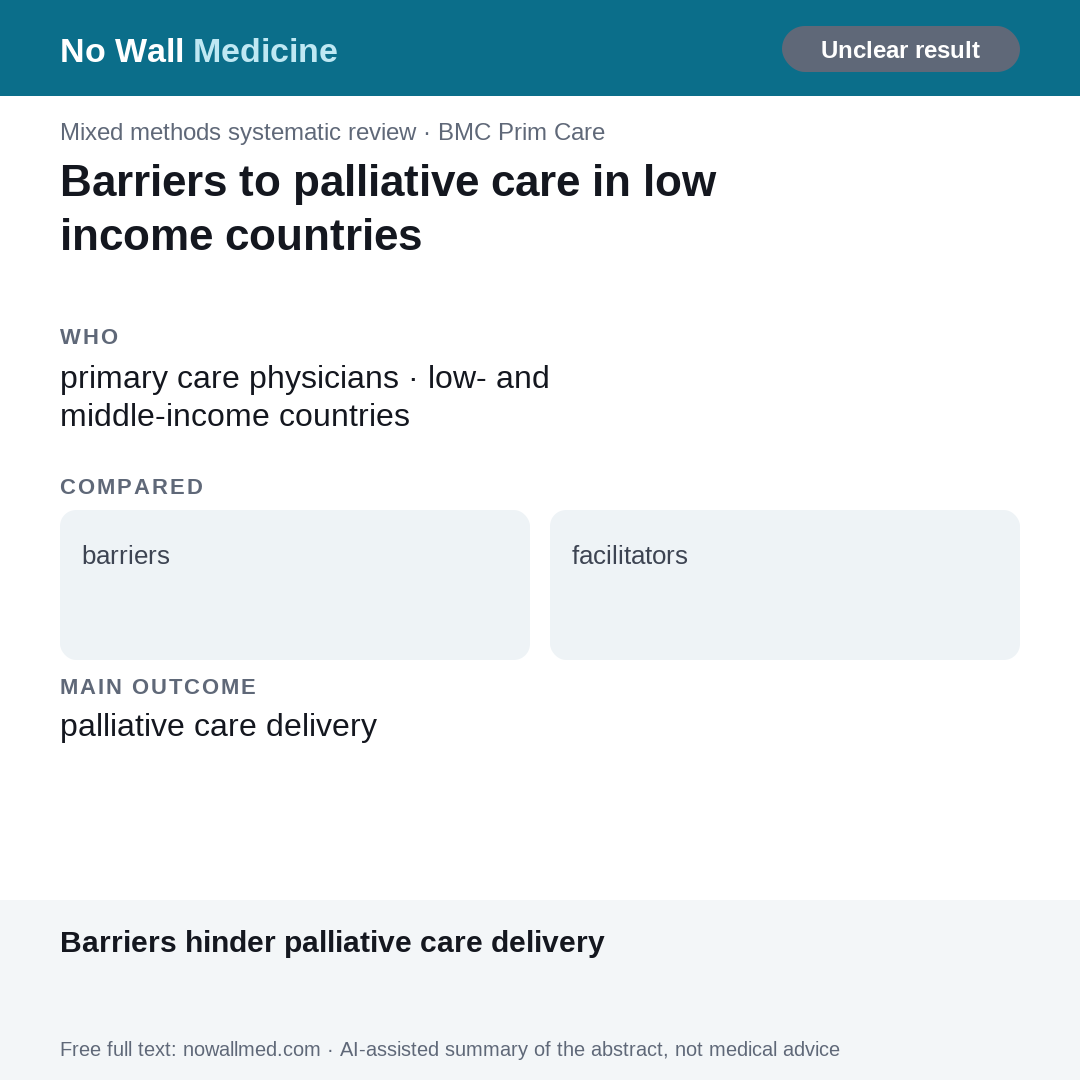
Facilitators and barriers primary care physicians face in providing palliative care in low- and middle-income countries: a mixed methods systematic review
Mixed methods systematic reviewUnclear result
Barriers to palliative care in low income countries
Who
primary care physicians · low- and middle-income countries
Compared
barriers
facilitators
Main outcome
palliative care delivery
Bottom line: Barriers hinder palliative care delivery
BMC Prim Care · 2025-12-29Download image