Visual abstracts
New randomized trials and meta-analyses from leading journals at a glance: who was studied, what was compared, and what was found. Every paper is free to read in full.
All specialtiesCardiology 4877Oncology 4138Gastroenterology & Hepatology 1942Infectious Disease 3837Neurology 1905Psychiatry & Mental Health 2273Pulmonology 2143Critical Care 1365Endocrinology & Diabetes 2580Pediatrics 2980Surgery 2559Orthopedics & Sports Medicine 931Neurosurgery 537Cardiothoracic & Vascular Surgery 674Plastic & Reconstructive Surgery 591Nephrology 1133Rheumatology 823Hematology 1109Dermatology 621Ophthalmology 543Obstetrics & Gynecology 1686Public & Global Health 1058Radiology & Imaging 648Anesthesiology 986Urology 764ENT (Otolaryngology) 503Emergency Medicine 511Allergy & Immunology 313Geriatrics 981Family Medicine & Primary Care 562Medical Genetics & Genomics 676Pathology & Laboratory Medicine 159Physical Medicine & Rehabilitation 757Palliative Care 444Nutrition 1588Digital Health & AI 2201General Medicine 321
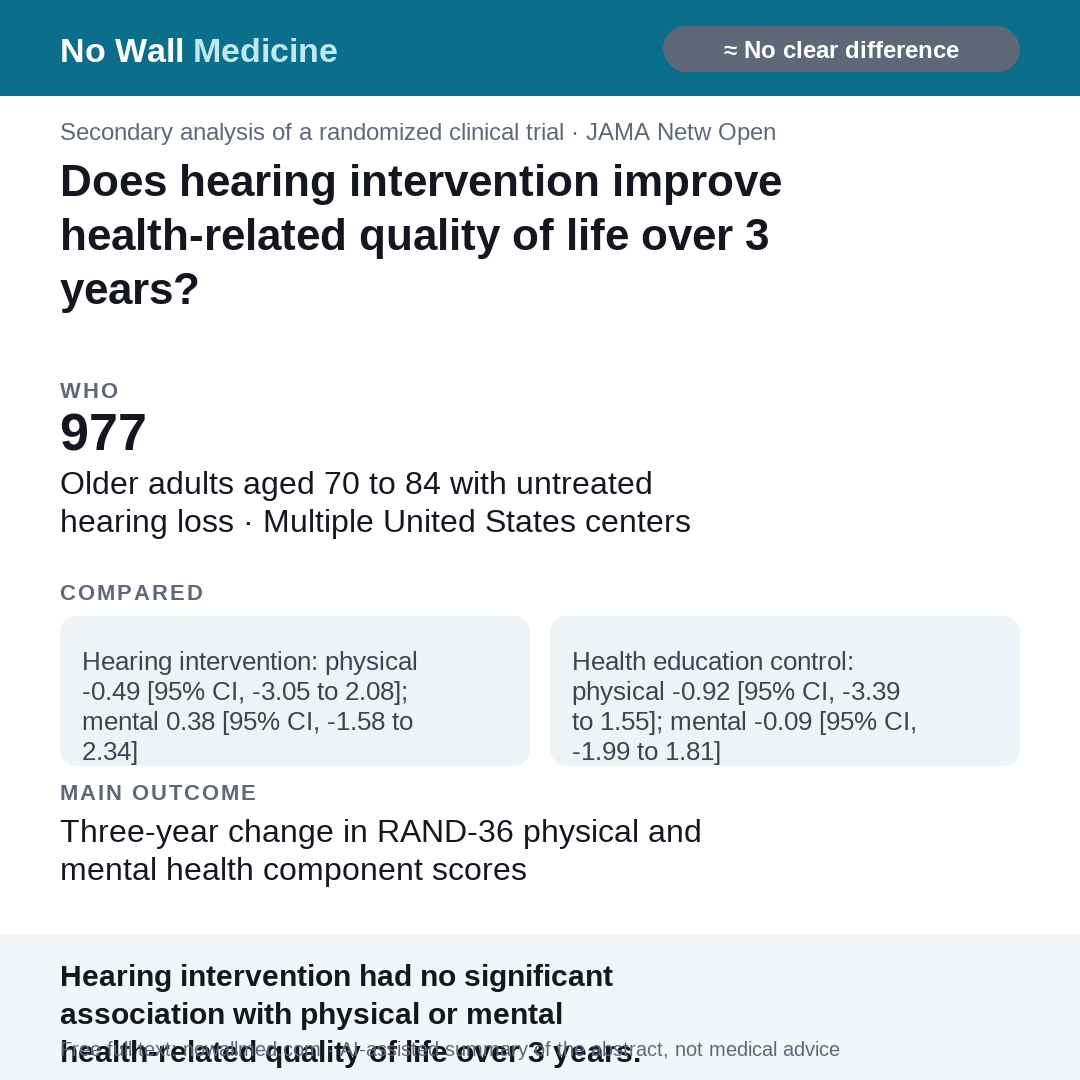
A Hearing Intervention and Health-Related Quality of Life in Older Adults: A Secondary Analysis of the ACHIEVE Randomized Clinical Trial
Secondary analysis of a randomized clinical trialNo clear difference
Does hearing intervention improve health-related quality of life over 3 years?
Who
977
Older adults aged 70 to 84 with untreated hearing loss · Multiple United States centers
Compared
Hearing intervention: physical -0.49 [95% CI, -3.05 to 2.08]; mental 0.38 [95% CI, -1.58 to 2.34]
Health education control: physical -0.92 [95% CI, -3.39 to 1.55]; mental -0.09 [95% CI, -1.99 to 1.81]
Main outcome
Three-year change in RAND-36 physical and mental health component scores
Result: difference 0.43 [95% CI, -0.64 to 1.51] for physical; 0.47 [95% CI, -0.41 to 1.35] for mental
Bottom line: Hearing intervention had no significant association with physical or mental health-related quality of life over 3 years.
JAMA Netw Open · 2024-11-04Download image
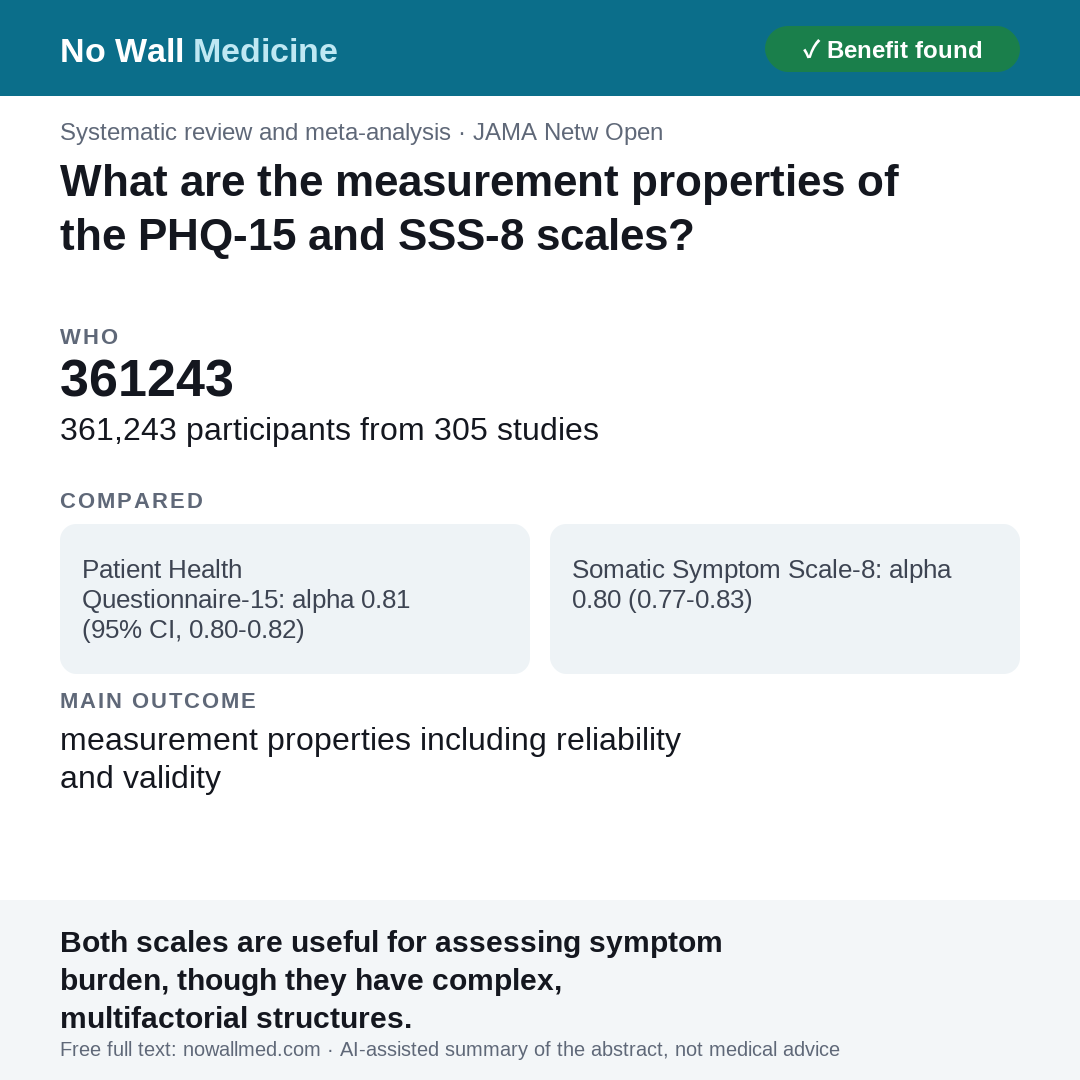
Measurement Properties of the Patient Health Questionnaire-15 and Somatic Symptom Scale-8: A Systematic Review and Meta-Analysis
Systematic review and meta-analysisBenefit found
What are the measurement properties of the PHQ-15 and SSS-8 scales?
Who
361243
361,243 participants from 305 studies
Compared
Patient Health Questionnaire-15: alpha 0.81 (95% CI, 0.80-0.82)
Somatic Symptom Scale-8: alpha 0.80 (0.77-0.83)
Main outcome
measurement properties including reliability and validity
Bottom line: Both scales are useful for assessing symptom burden, though they have complex, multifactorial structures.
JAMA Netw Open · 2024-11-04Download image
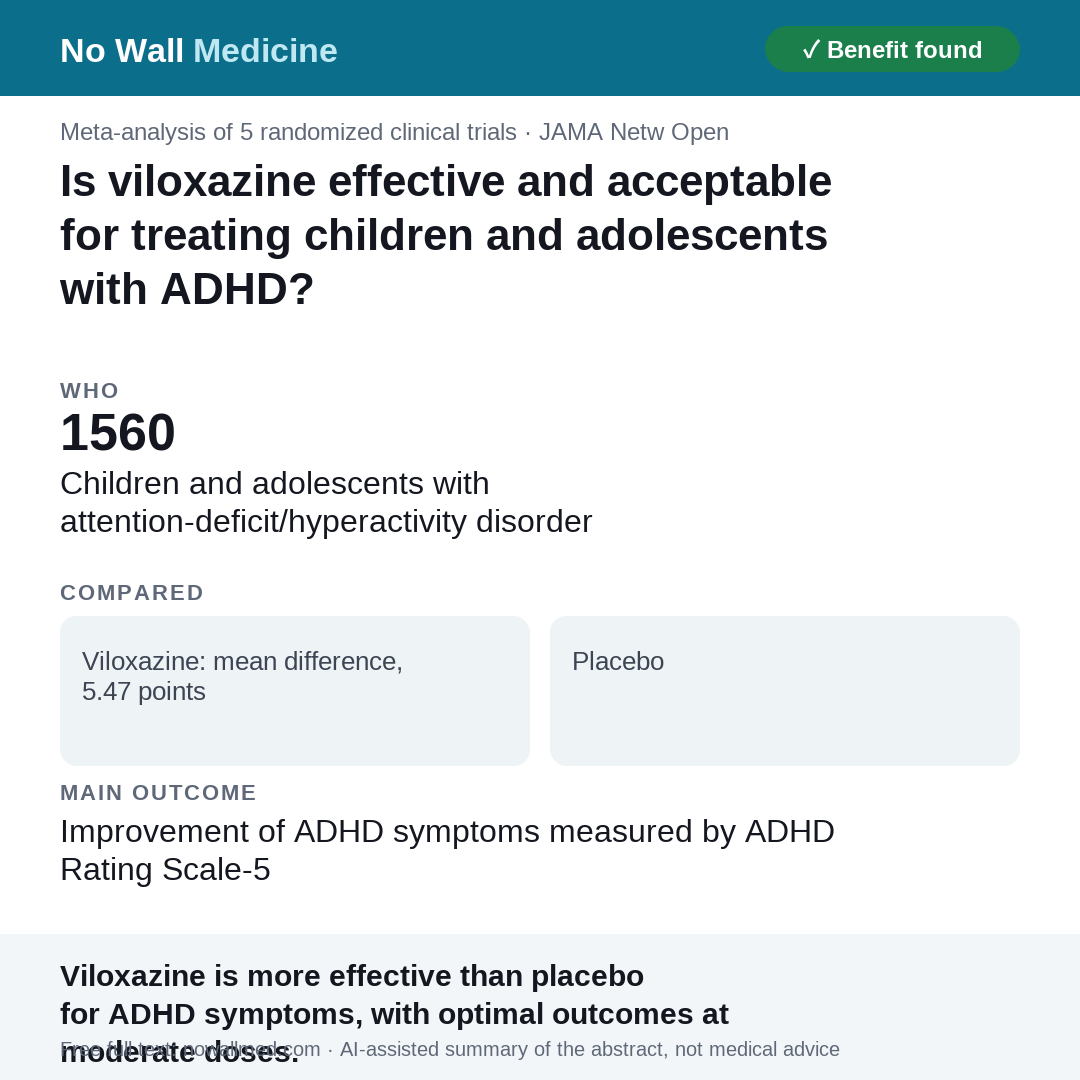
Response Trajectories and Temporal Trends of Viloxazine Treatment for Young People With ADHD: A Meta-Analysis
Meta-analysis of 5 randomized clinical trialsBenefit found
Is viloxazine effective and acceptable for treating children and adolescents with ADHD?
Who
1560
Children and adolescents with attention-deficit/hyperactivity disorder
Compared
Viloxazine: mean difference, 5.47 points
Placebo
Main outcome
Improvement of ADHD symptoms measured by ADHD Rating Scale-5
Result: mean difference, 5.47 points; 95% CI, 4.03-6.91 points
Bottom line: Viloxazine is more effective than placebo for ADHD symptoms, with optimal outcomes at moderate doses.
JAMA Netw Open · 2024-11-04Download image
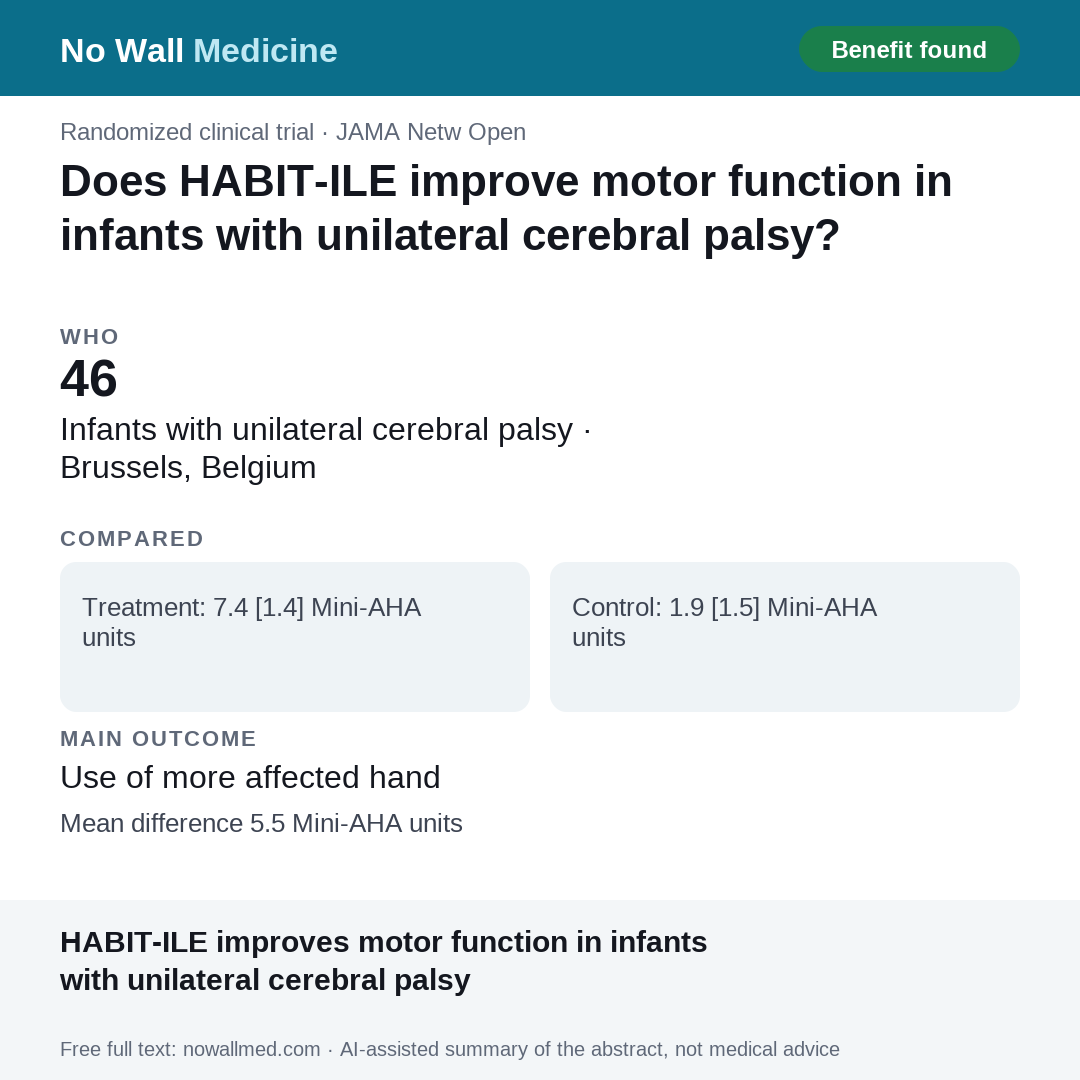
Hand-Arm Bimanual Intensive Therapy Including Lower Extremities in Infants With Unilateral Cerebral Palsy: A Randomized Clinical Trial
Randomized clinical trialBenefit found
Does HABIT-ILE improve motor function in infants with unilateral cerebral palsy?
Who
46
Infants with unilateral cerebral palsy · Brussels, Belgium
Compared
Treatment: 7.4 [1.4] Mini-AHA units
Control: 1.9 [1.5] Mini-AHA units
Main outcome
Use of more affected hand
Result: Mean difference 5.5 Mini-AHA units
Bottom line: HABIT-ILE improves motor function in infants with unilateral cerebral palsy
JAMA Netw Open · 2024-11-04Download image
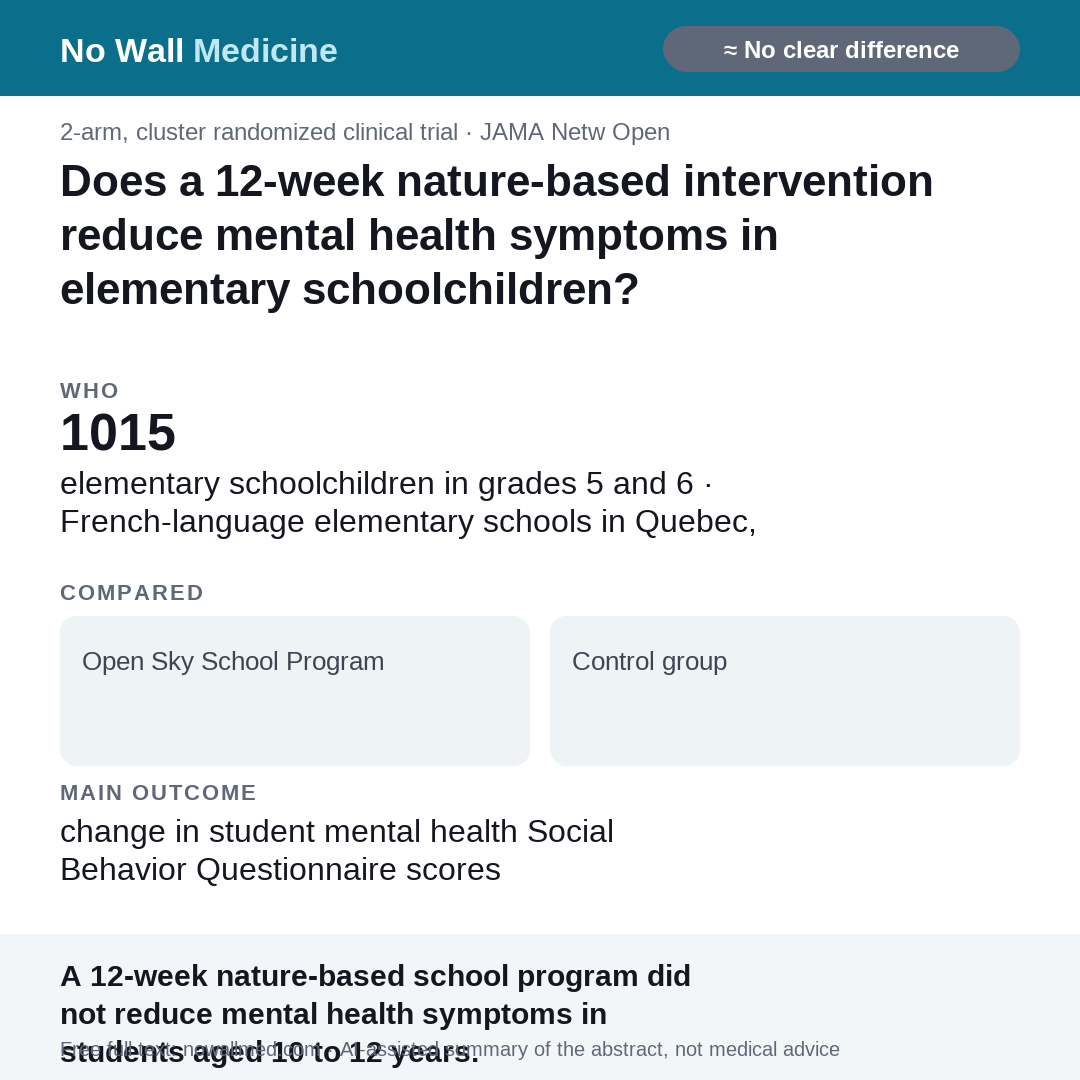
A Nature-Based Intervention and Mental Health of Schoolchildren: A Cluster Randomized Clinical Trial
2-arm, cluster randomized clinical trialNo clear difference
Does a 12-week nature-based intervention reduce mental health symptoms in elementary schoolchildren?
Who
1015
elementary schoolchildren in grades 5 and 6 · French-language elementary schools in Quebec, Canada
Compared
Open Sky School Program
Control group
Main outcome
change in student mental health Social Behavior Questionnaire scores
Result: adjusted mean difference -0.04 (95% CI, -0.13 to 0.04)
Bottom line: A 12-week nature-based school program did not reduce mental health symptoms in students aged 10 to 12 years.
Limitation: Post hoc analyses revealed low mental health symptoms at baseline, with low variability.
JAMA Netw Open · 2024-11-04Download image
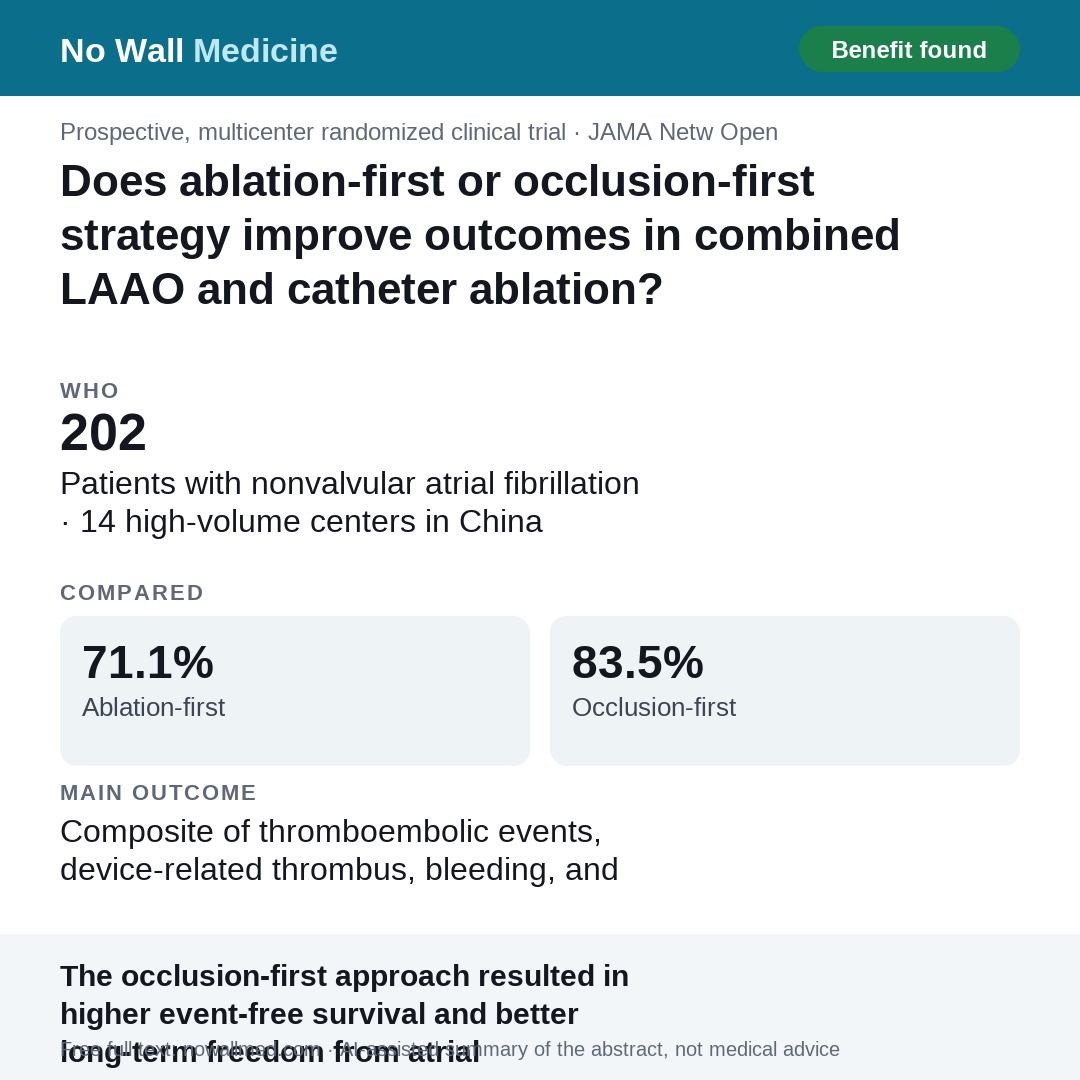
Strategy Optimization for a Combined Procedure in Patients With Atrial Fibrillation: The COMBINATION Randomized Clinical Trial
Prospective, multicenter randomized clinical trialBenefit found
Does ablation-first or occlusion-first strategy improve outcomes in combined LAAO and catheter ablation?
Who
202
Patients with nonvalvular atrial fibrillation · 14 high-volume centers in China
Compared
71.1%Ablation-first
83.5%Occlusion-first
Main outcome
Composite of thromboembolic events, device-related thrombus, bleeding, and cardiovascular rehospitalization or death
Result: hazard ratio 0.53 (95% CI, 0.29-0.95)
Bottom line: The occlusion-first approach resulted in higher event-free survival and better long-term freedom from atrial tachyarrhythmia.
JAMA Netw Open · 2024-11-04Download image
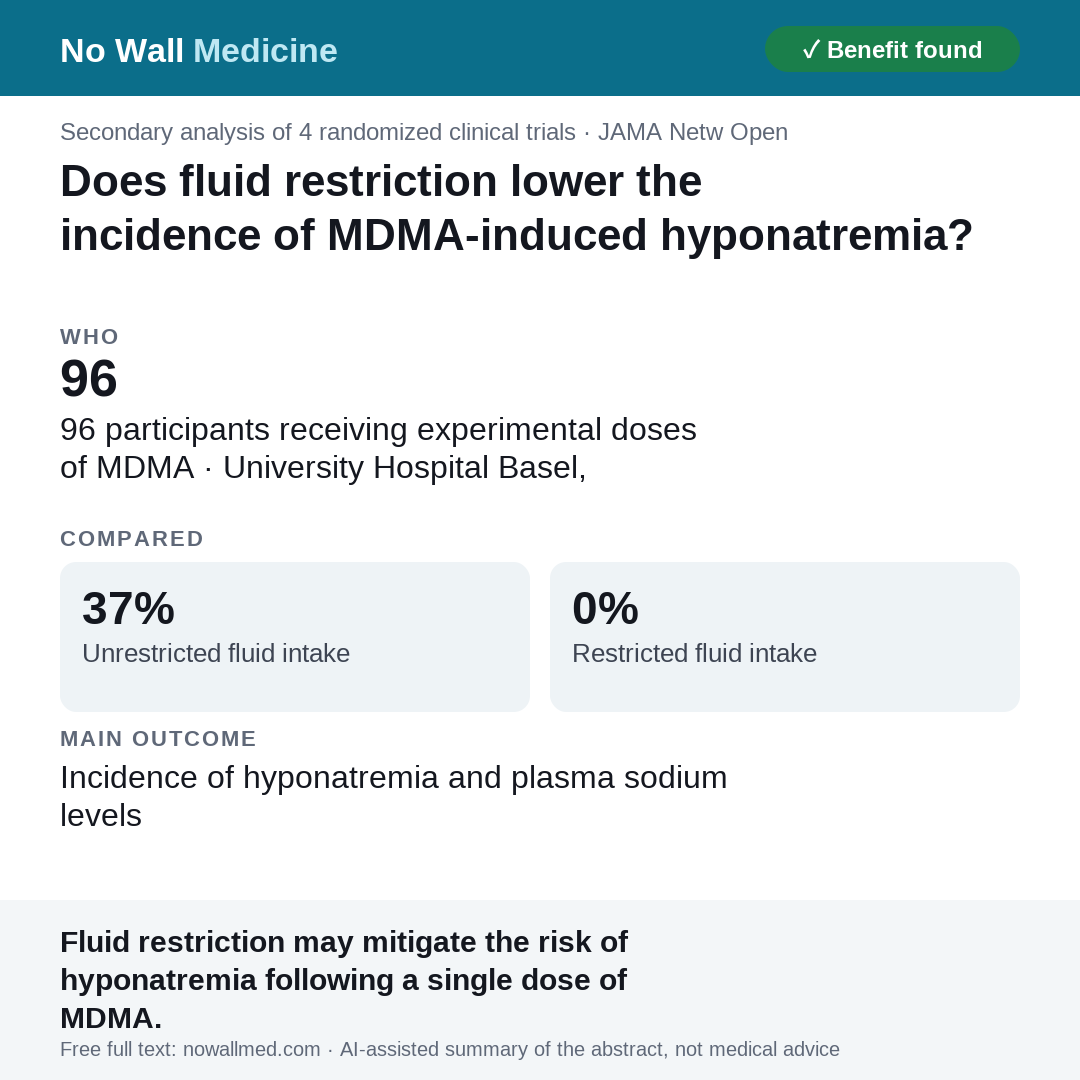
Oxytocin and the Role of Fluid Restriction in MDMA-Induced Hyponatremia: A Secondary Analysis of 4 Randomized Clinical Trials
Secondary analysis of 4 randomized clinical trialsBenefit found
Does fluid restriction lower the incidence of MDMA-induced hyponatremia?
Who
96
96 participants receiving experimental doses of MDMA · University Hospital Basel, Switzerland
Compared
37%Unrestricted fluid intake (30/81)
0%Restricted fluid intake (0/15)
Main outcome
Incidence of hyponatremia and plasma sodium levels
Result: difference in plasma sodium of 4 (95% CI, 2-5) mEq/L
Bottom line: Fluid restriction may mitigate the risk of hyponatremia following a single dose of MDMA.
JAMA Netw Open · 2024-11-04Download image
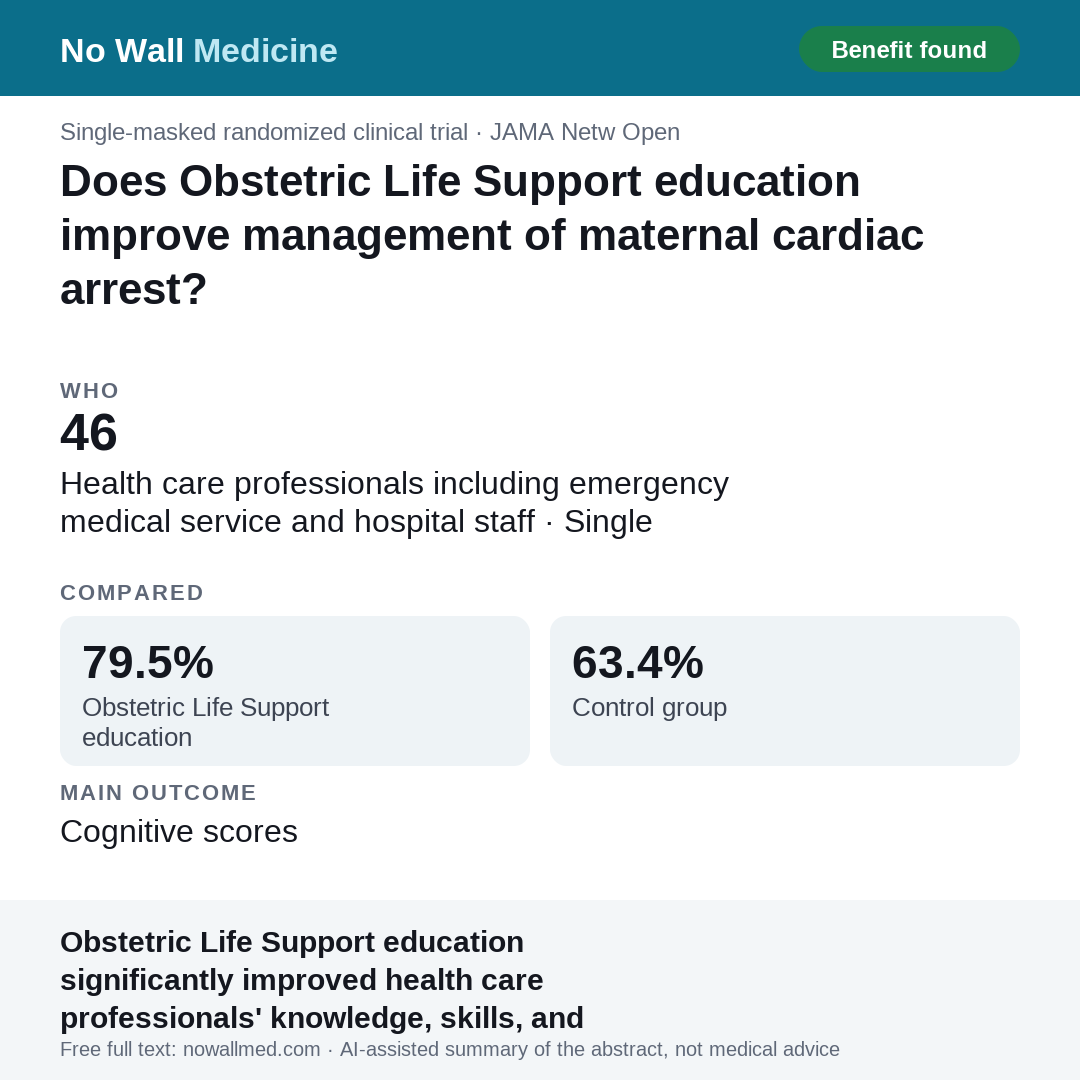
Obstetric Life Support Education for Maternal Cardiac Arrest: A Randomized Clinical Trial
Single-masked randomized clinical trialBenefit found
Does Obstetric Life Support education improve management of maternal cardiac arrest?
Who
46
Health care professionals including emergency medical service and hospital staff · Single academic medical center in Farmington, Connecticut
Compared
79.5%Obstetric Life Support education (9.4%)
63.4%Control group (12.3%)
Main outcome
Cognitive scores
Bottom line: Obstetric Life Support education significantly improved health care professionals' knowledge, skills, and confidence in managing maternal cardiac arrest.
JAMA Netw Open · 2024-11-04Download image
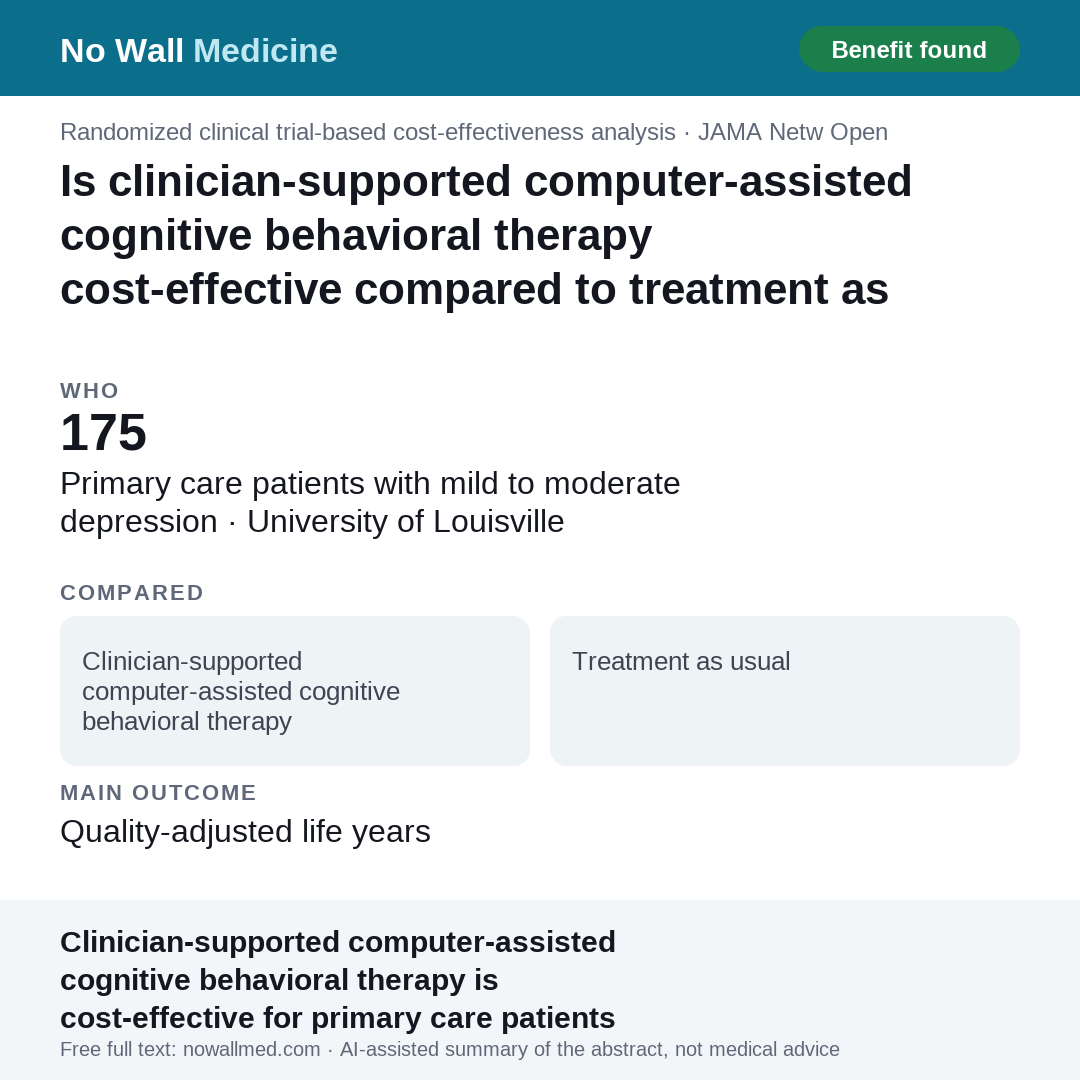
Cost-Effectiveness of Computer-Assisted Cognitive Behavioral Therapy for Depression Among Adults in Primary Care
Randomized clinical trial-based cost-effectiveness analysisBenefit found
Is clinician-supported computer-assisted cognitive behavioral therapy cost-effective compared to treatment as usual for depression?
Who
175
Primary care patients with mild to moderate depression · University of Louisville
Compared
Clinician-supported computer-assisted cognitive behavioral therapy
Treatment as usual
Main outcome
Quality-adjusted life years
Result: $37 295 (95% CI, $22 724-$66 546) per QALY
Bottom line: Clinician-supported computer-assisted cognitive behavioral therapy is cost-effective for primary care patients with depression.
JAMA Netw Open · 2024-11-04Download image
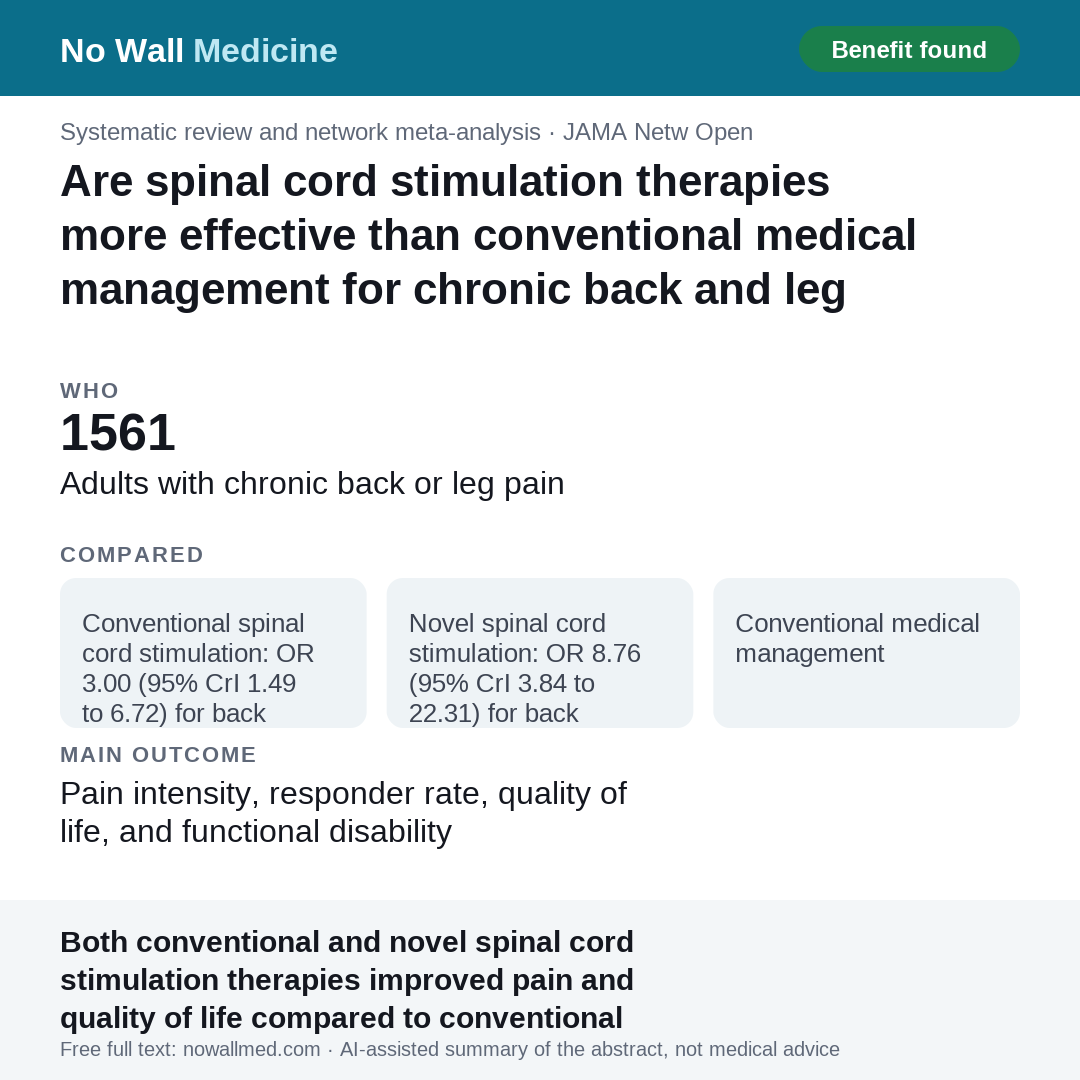
Spinal Cord Stimulation vs Medical Management for Chronic Back and Leg Pain: A Systematic Review and Network Meta-Analysis
Systematic review and network meta-analysisBenefit found
Are spinal cord stimulation therapies more effective than conventional medical management for chronic back and leg pain?
Who
1561
Adults with chronic back or leg pain
Compared
Conventional spinal cord stimulation: OR 3.00 (95% CrI 1.49 to 6.72) for back responder rate
Novel spinal cord stimulation: OR 8.76 (95% CrI 3.84 to 22.31) for back responder rate
Conventional medical management
Main outcome
Pain intensity, responder rate, quality of life, and functional disability
Result: not explicitly pooled for all, but individual estimates provided
Bottom line: Both conventional and novel spinal cord stimulation therapies improved pain and quality of life compared to conventional medical management.
JAMA Netw Open · 2024-11-04Download image
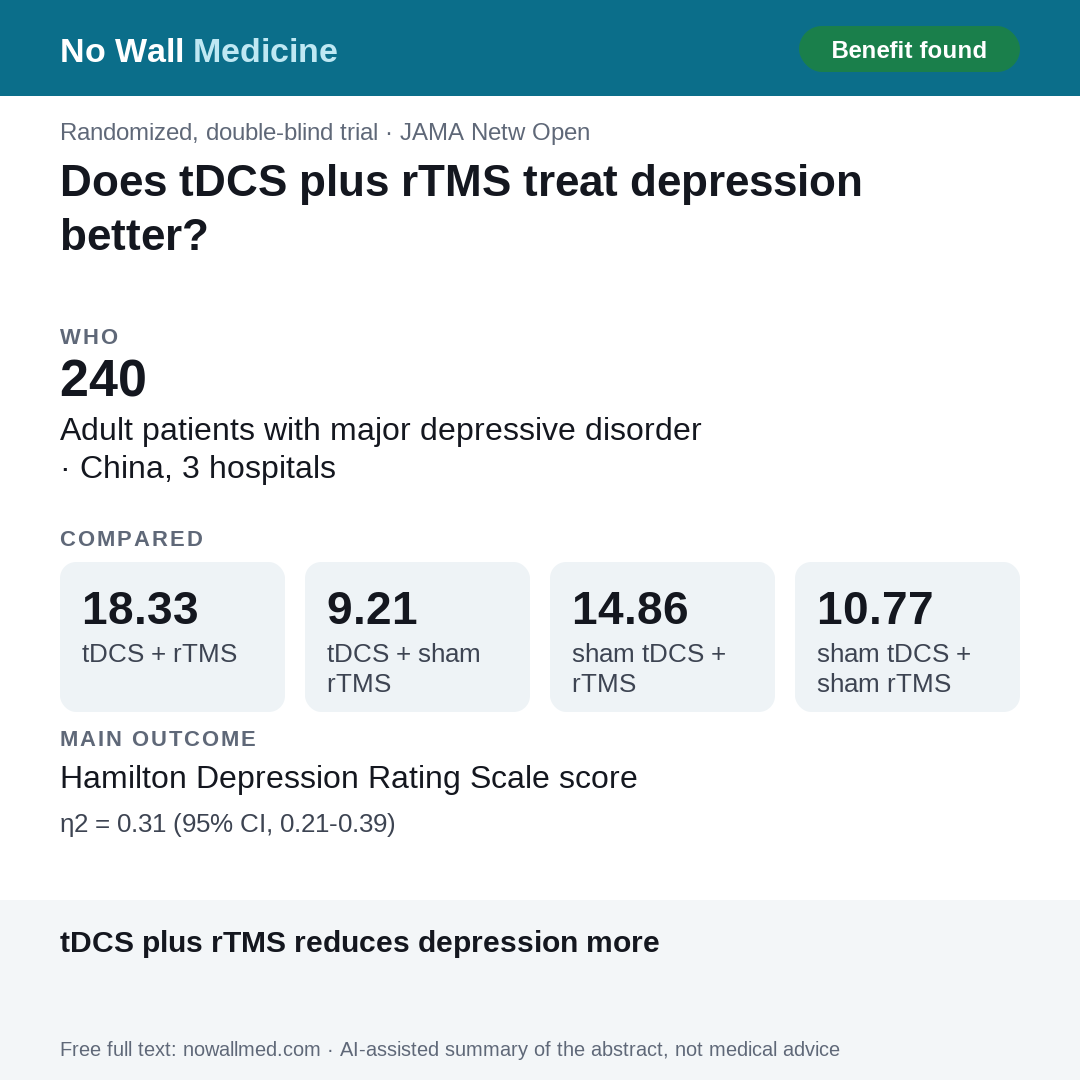
Transcranial Direct Current Stimulation Combined With Repetitive Transcranial Magnetic Stimulation for Depression: A Randomized Clinical Trial
Randomized, double-blind trialBenefit found
Does tDCS plus rTMS treat depression better?
Who
240
Adult patients with major depressive disorder · China, 3 hospitals
Compared
18.33tDCS + rTMS (5.39)
9.21tDCS + sham rTMS (4.61)
14.86sham tDCS + rTMS (5.59)
10.77sham tDCS + sham rTMS (5.67)
Main outcome
Hamilton Depression Rating Scale score
Result: η2 = 0.31 (95% CI, 0.21-0.39)
Bottom line: tDCS plus rTMS reduces depression more
JAMA Netw Open · 2024-11-04Download image
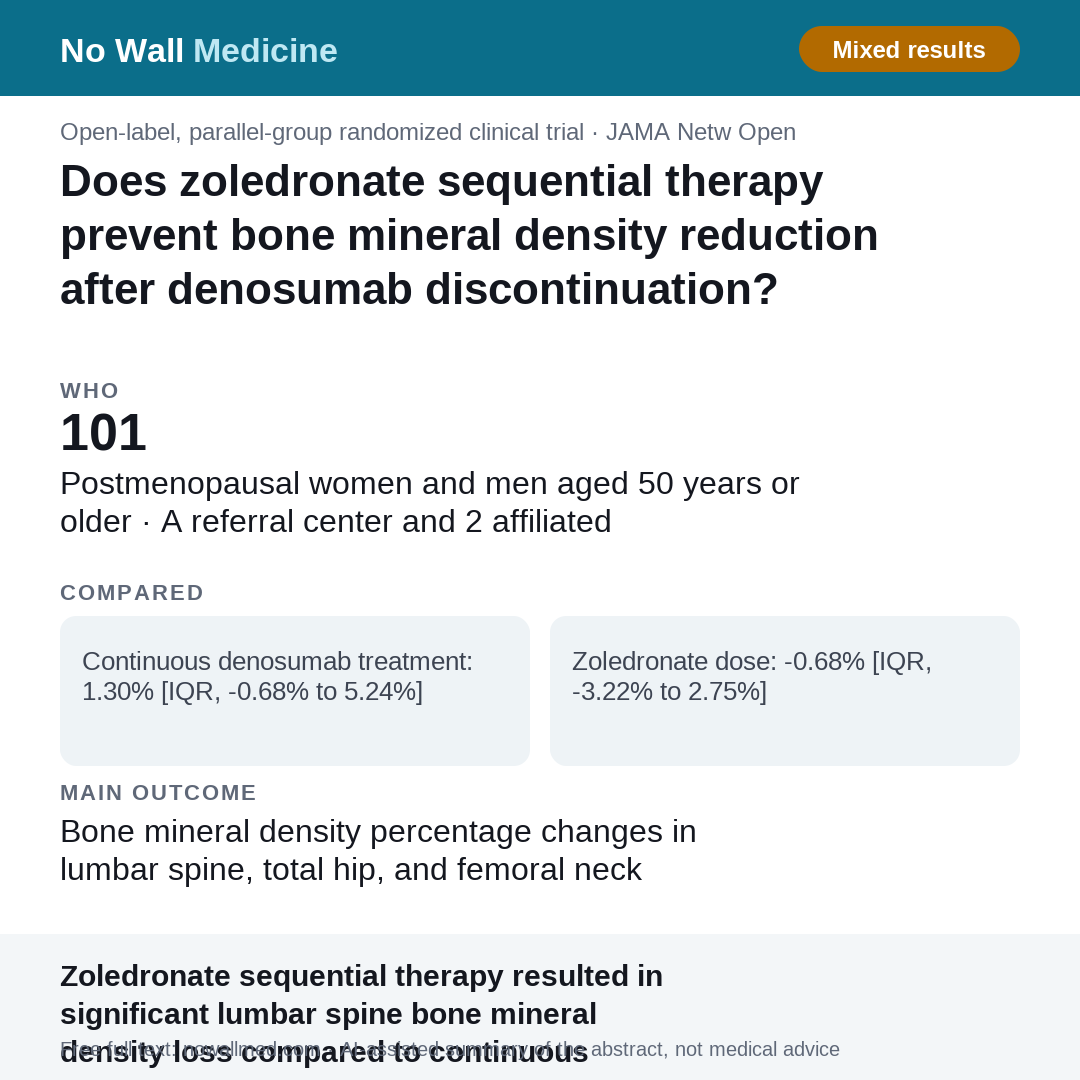
Culturally Tailored Messages and Trial Registry Enrollment: A Randomized Clinical Trial
Randomized clinical trialNo clear difference
Does culturally tailored video improve parents' decision to enroll Black children in a research registry?
Who
125
Parents of Black children in an urban primary care pediatric clinic · Urban primary care pediatric clinic
Compared
Control group (paragraph)
Generic video
Tailored video
Main outcome
Decision to enroll
Result: odds ratio 1.19 (95% CI, 0.38-3.72)
Bottom line: Culturally tailored messaging was not associated with a higher decision to enroll in a pediatric clinical trial registry.
JAMA Netw Open · 2024-11-04Download image
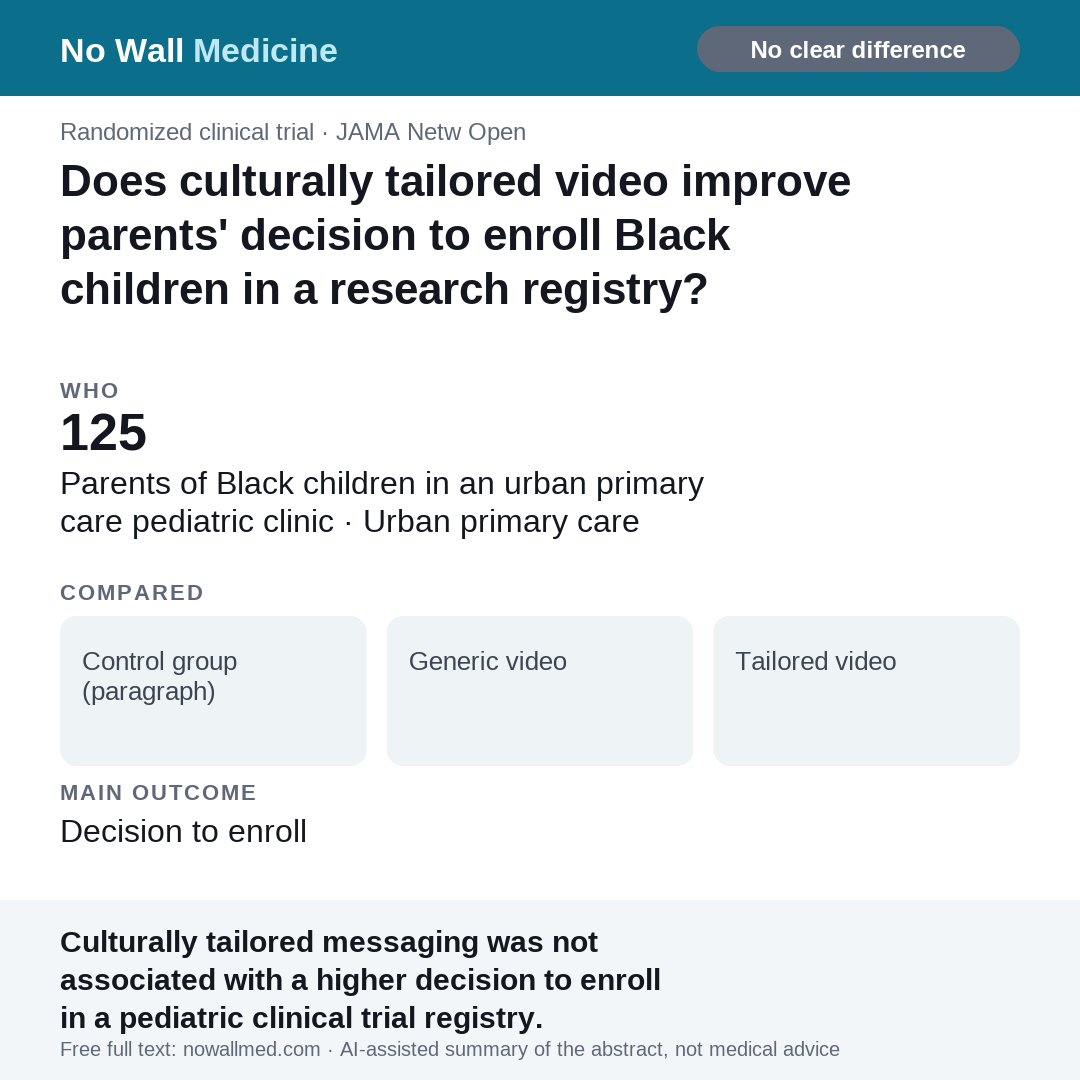
Telehealth Brief Cognitive Behavioral Therapy for Suicide Prevention: A Randomized Clinical Trial
2-group parallel randomized clinical trialBenefit found
Is telehealth brief cognitive behavioral therapy effective for reducing suicide attempts and ideation?
Who
96
high-risk adults with suicidal ideation or behavior · outpatient psychiatry clinic in the midwestern US
Compared
30.0%Brief cognitive behavioral therapy
35.6%Present-centered therapy
Main outcome
suicide attempts
Result: hazard ratio 0.59 (95% CI 0.36-0.96)
Bottom line: Telehealth brief cognitive behavioral therapy effectively reduces suicide attempts among high-risk adults compared to present-centered therapy.
JAMA Netw Open · 2024-11-04Download image
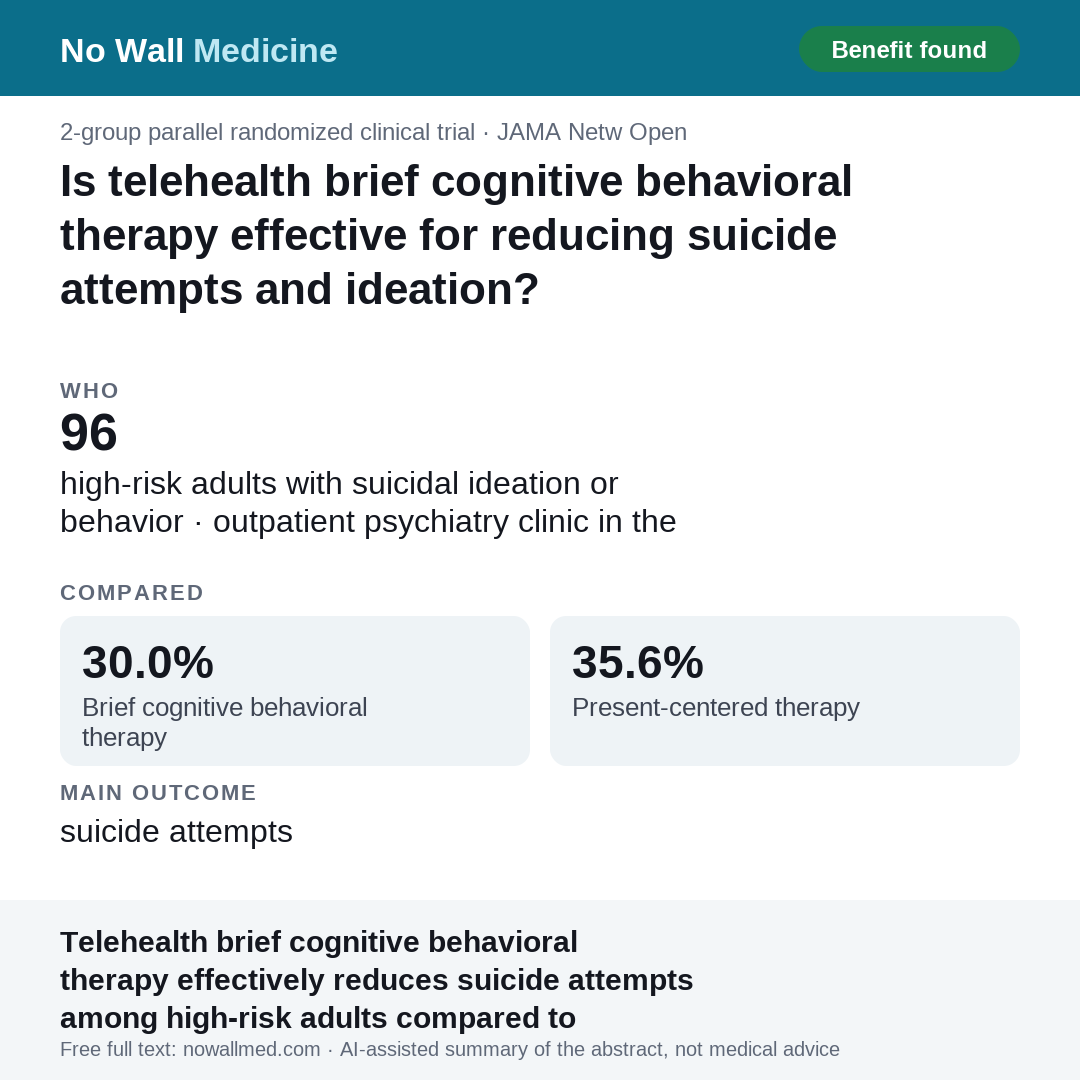
Air Purifiers and Acute Respiratory Infections in Residential Aged Care: A Randomized Clinical Trial
Randomized, double-blind, 2-period, 2-treatment crossover trialMixed results
Do in-room air purifiers with HEPA-14 filters reduce acute respiratory infections in residential aged care?
Who
135
Permanent residents in private rooms in residential aged-care facilities · 3 residential aged-care facilities in New South Wales, Australia
Compared
24.0%Air purifiers with HEPA-14 filters (25 participants)
35.6%Air purifiers without HEPA-14 filter (37 participants)
Main outcome
Incidence of acute respiratory infections
Result: OR, 0.57; 95% CI, 0.32-1.04
Bottom line: HEPA-14 air purifiers did not significantly reduce infections in intention-to-treat analysis, but showed reduction among study completers.
Limitation: No significant between-group difference was found in the intention-to-treat analysis.
JAMA Netw Open · 2024-11-04Download image
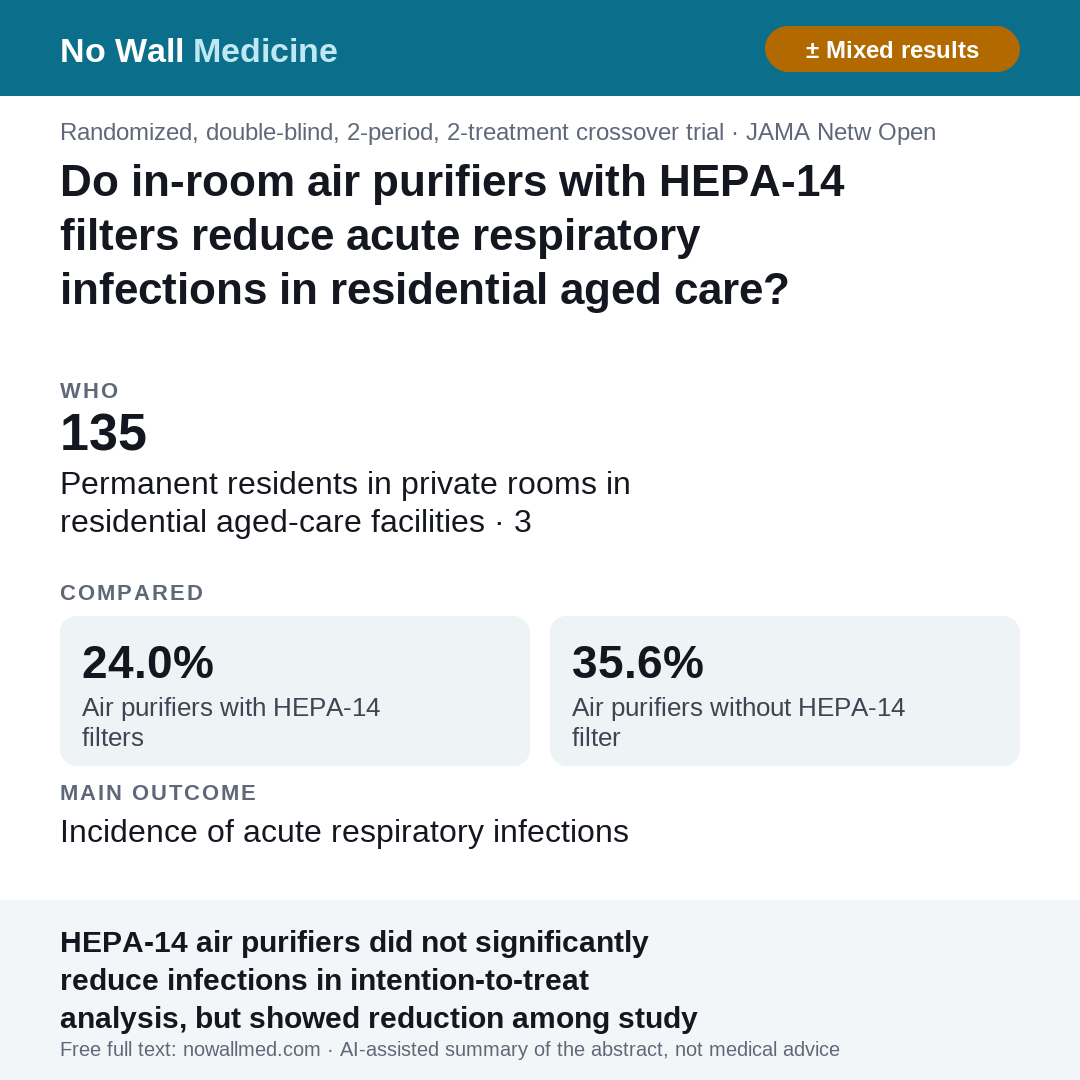
Zoledronate Sequential Therapy After Denosumab Discontinuation to Prevent Bone Mineral Density Reduction: A Randomized Clinical Trial
Open-label, parallel-group randomized clinical trialMixed results
Does zoledronate sequential therapy prevent bone mineral density reduction after denosumab discontinuation?
Who
101
Postmenopausal women and men aged 50 years or older · A referral center and 2 affiliated hospitals in Taiwan
Compared
Continuous denosumab treatment: 1.30% [IQR, -0.68% to 5.24%]
Zoledronate dose: -0.68% [IQR, -3.22% to 2.75%]
Main outcome
Bone mineral density percentage changes in lumbar spine, total hip, and femoral neck
Bottom line: Zoledronate sequential therapy resulted in significant lumbar spine bone mineral density loss compared to continuous denosumab treatment.
JAMA Netw Open · 2024-11-04Download image
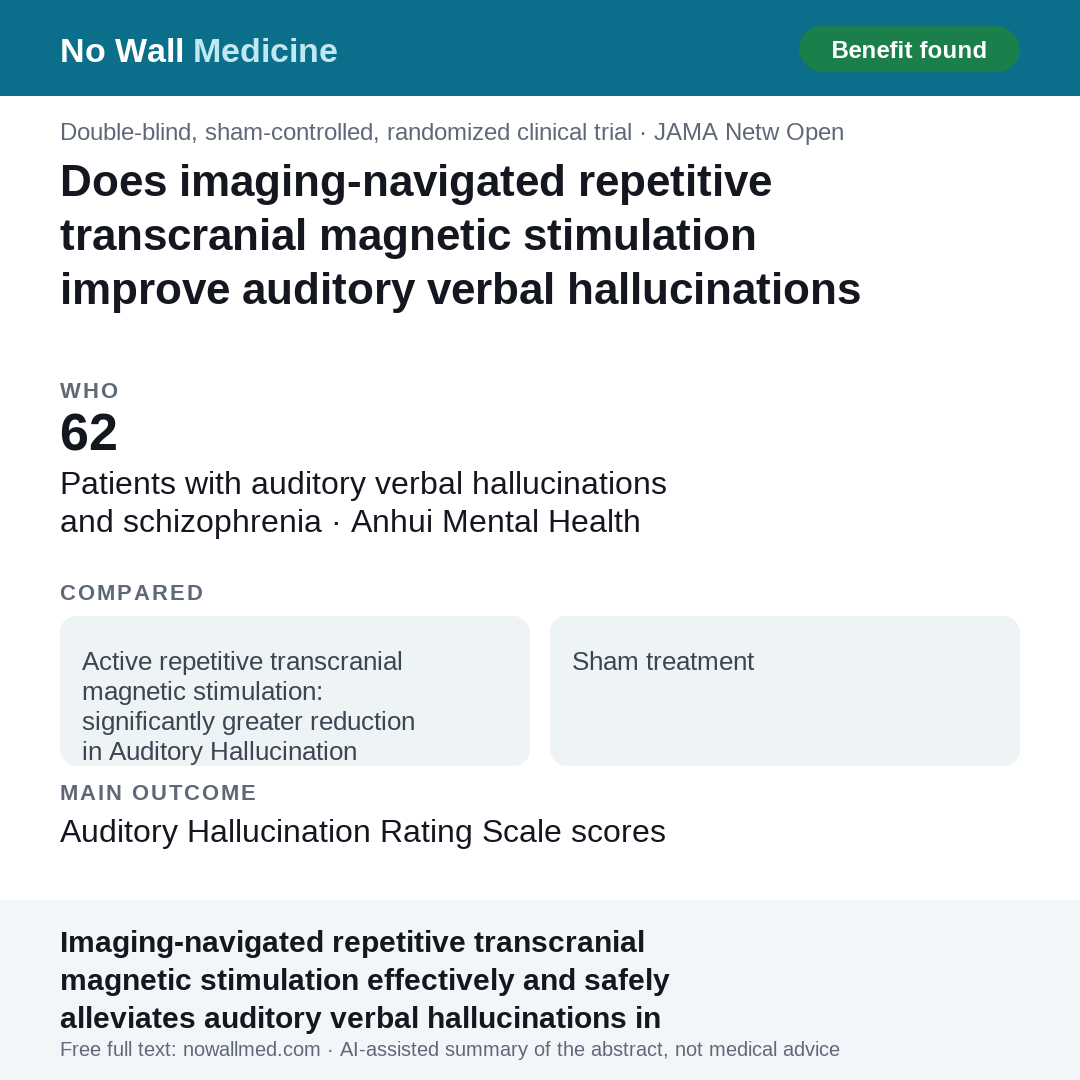
Repetitive Transcranial Magnetic Stimulation for Auditory Verbal Hallucinations in Schizophrenia: A Randomized Clinical Trial
Double-blind, sham-controlled, randomized clinical trialBenefit found
Does imaging-navigated repetitive transcranial magnetic stimulation improve auditory verbal hallucinations in schizophrenia?
Who
62
Patients with auditory verbal hallucinations and schizophrenia · Anhui Mental Health Center, Hefei, China
Compared
Active repetitive transcranial magnetic stimulation: significantly greater reduction in Auditory Hallucination Rating Scale scores
Sham treatment
Main outcome
Auditory Hallucination Rating Scale scores
Result: difference, 5.96 (95% CI, 3.42-8.50)
Bottom line: Imaging-navigated repetitive transcranial magnetic stimulation effectively and safely alleviates auditory verbal hallucinations in patients with schizophrenia.
JAMA Netw Open · 2024-11-04Download image
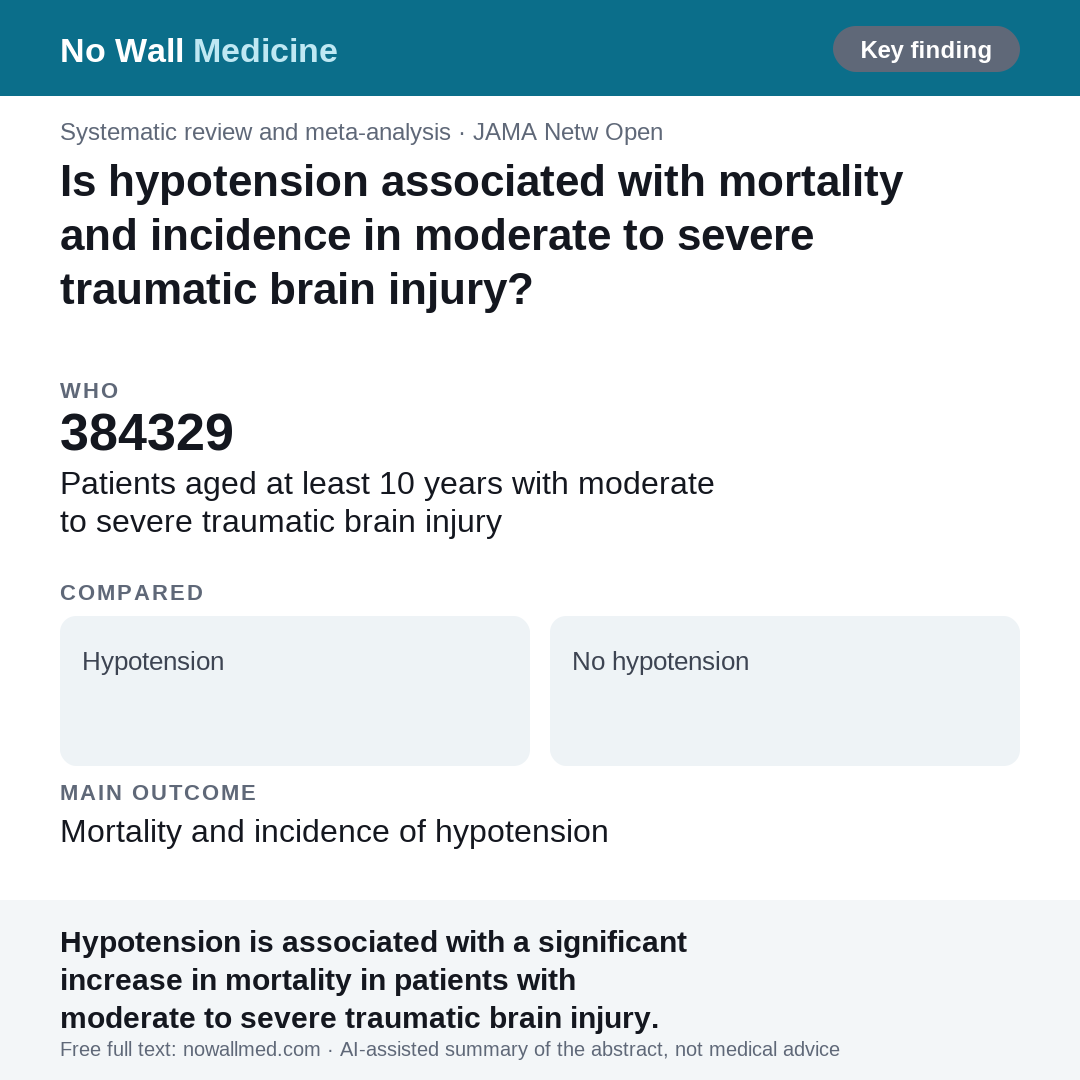
Hypotension and Adverse Outcomes in Moderate to Severe Traumatic Brain Injury: A Systematic Review and Meta-Analysis
Systematic review and meta-analysisHarm found
Is hypotension associated with mortality and incidence in moderate to severe traumatic brain injury?
Who
384329
Patients aged at least 10 years with moderate to severe traumatic brain injury
Compared
Hypotension
No hypotension
Main outcome
Mortality and incidence of hypotension
Result: adjusted odds ratio 2.22 (95% CI 1.96-2.51)
Bottom line: Hypotension is associated with a significant increase in mortality in patients with moderate to severe traumatic brain injury.
JAMA Netw Open · 2024-11-04Download image
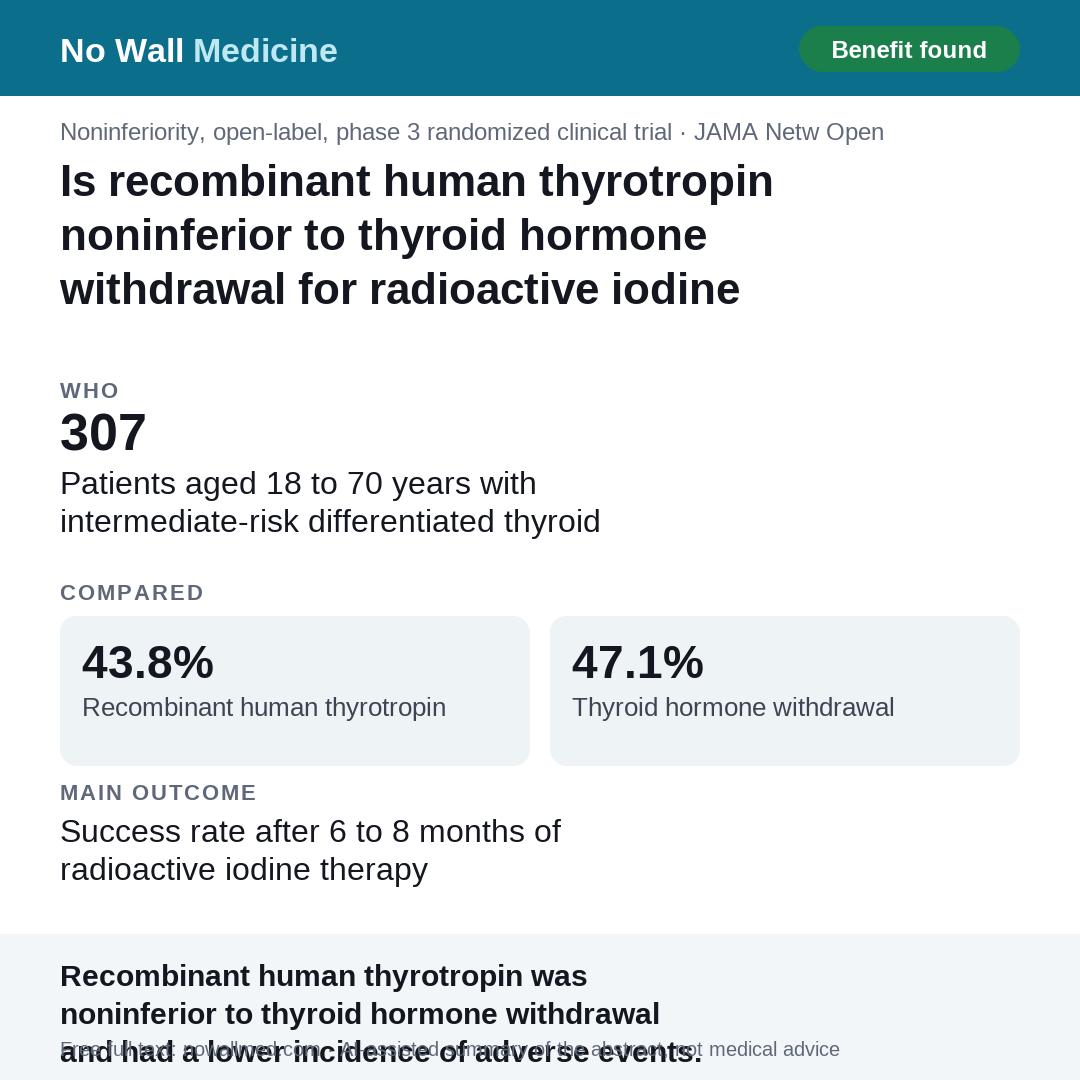
Recombinant Human Thyrotropin Plus Radioactive Iodine Among Patients With Thyroid Cancer: A Noninferiority Randomized Clinical Trial
Noninferiority, open-label, phase 3 randomized clinical trialBenefit found
Is recombinant human thyrotropin noninferior to thyroid hormone withdrawal for radioactive iodine therapy?
Who
307
Patients aged 18 to 70 years with intermediate-risk differentiated thyroid cancer · 19 sites in China
Compared
43.8%Recombinant human thyrotropin
47.1%Thyroid hormone withdrawal
Main outcome
Success rate after 6 to 8 months of radioactive iodine therapy
Result: risk difference, -3.3; 95% CI, -14.8 to 8.3 percentage points
Bottom line: Recombinant human thyrotropin was noninferior to thyroid hormone withdrawal and had a lower incidence of adverse events.
JAMA Netw Open · 2024-11-04Download image
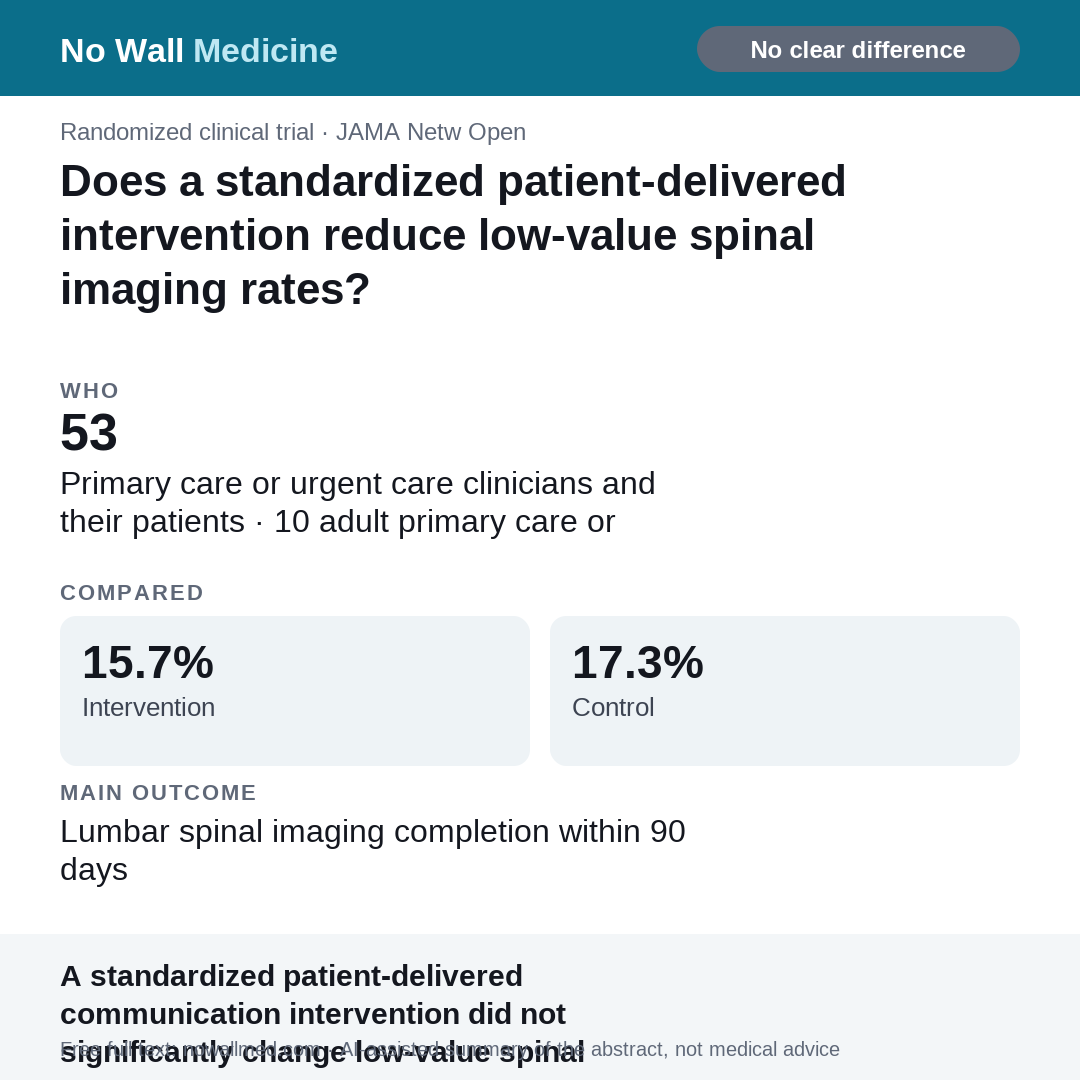
Standardized Patient Communication and Low-Value Spinal Imaging: A Randomized Clinical Trial
Randomized clinical trialNo clear difference
Does a standardized patient-delivered intervention reduce low-value spinal imaging rates?
Who
53
Primary care or urgent care clinicians and their patients · 10 adult primary care or urgent care clinics, California
Compared
15.7%Intervention
17.3%Control
Main outcome
Lumbar spinal imaging completion within 90 days
Result: adjusted ratio of postintervention vs preintervention odds ratios 1.00 (95% CI 0.72-1.40)
Bottom line: A standardized patient-delivered communication intervention did not significantly change low-value spinal imaging rates or patient experience ratings.
JAMA Netw Open · 2024-11-04Download image
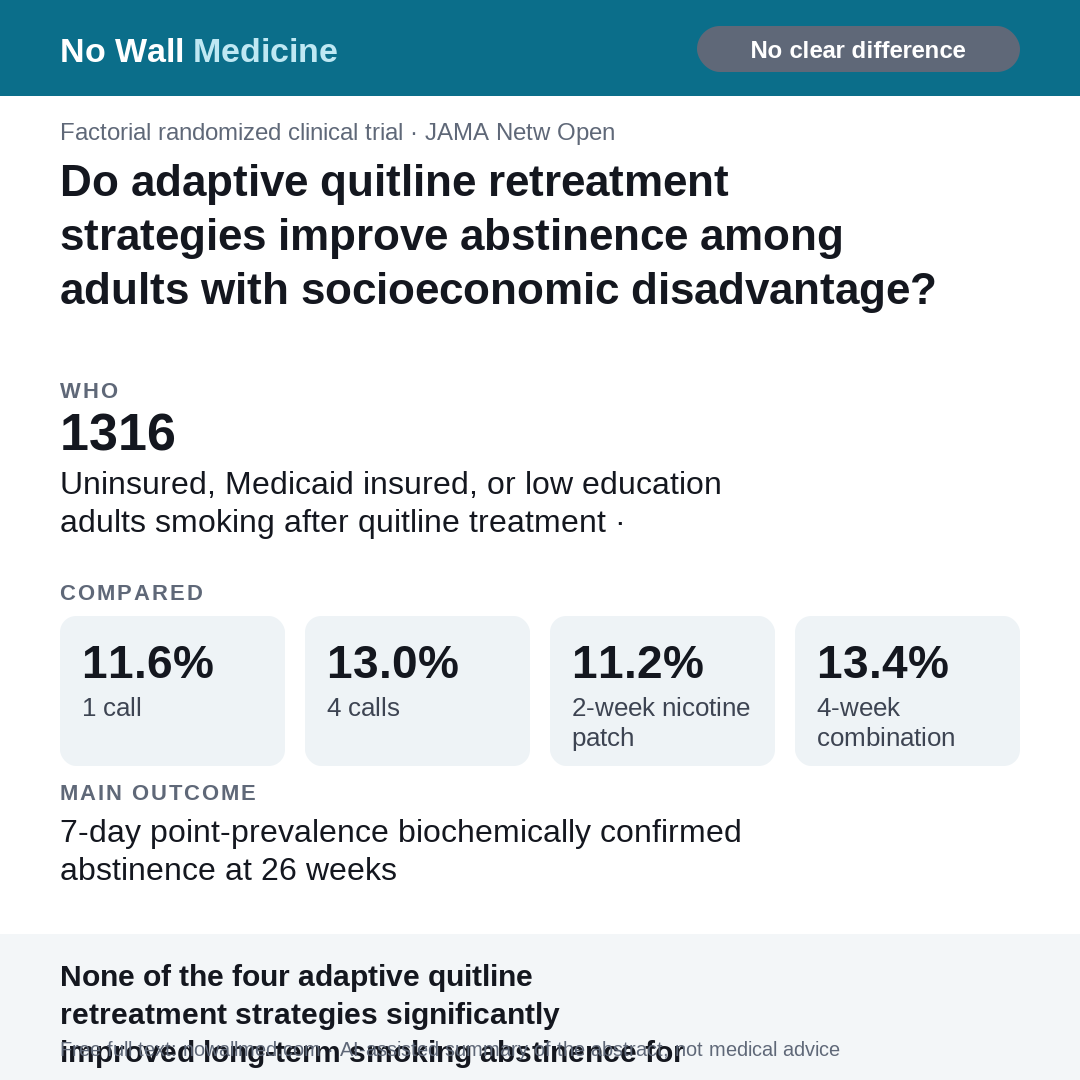
Tobacco Quitline Retreatment Interventions Among Adults With Socioeconomic Disadvantage: A Factorial Randomized Clinical Trial
Factorial randomized clinical trialNo clear difference
Do adaptive quitline retreatment strategies improve abstinence among adults with socioeconomic disadvantage?
Who
1316
Uninsured, Medicaid insured, or low education adults smoking after quitline treatment · Wisconsin Tobacco Quit Line
Compared
11.6%1 call (77/662)
13.0%4 calls (85/654)
11.2%2-week nicotine patch (73/654)
13.4%4-week combination nicotine replacement therapy (89/662)
Main outcome
7-day point-prevalence biochemically confirmed abstinence at 26 weeks
Bottom line: None of the four adaptive quitline retreatment strategies significantly improved long-term smoking abstinence for adults with socioeconomic disadvantage.
JAMA Netw Open · 2024-11-04Download image