Visual abstracts
New randomized trials and meta-analyses from leading journals at a glance: who was studied, what was compared, and what was found. Every paper is free to read in full.
All specialtiesCardiology 4877Oncology 4138Gastroenterology & Hepatology 1942Infectious Disease 3837Neurology 1905Psychiatry & Mental Health 2273Pulmonology 2143Critical Care 1365Endocrinology & Diabetes 2580Pediatrics 2980Surgery 2559Orthopedics & Sports Medicine 931Neurosurgery 537Cardiothoracic & Vascular Surgery 674Plastic & Reconstructive Surgery 591Nephrology 1133Rheumatology 823Hematology 1109Dermatology 621Ophthalmology 543Obstetrics & Gynecology 1686Public & Global Health 1058Radiology & Imaging 648Anesthesiology 986Urology 764ENT (Otolaryngology) 503Emergency Medicine 511Allergy & Immunology 313Geriatrics 981Family Medicine & Primary Care 562Medical Genetics & Genomics 676Pathology & Laboratory Medicine 159Physical Medicine & Rehabilitation 757Palliative Care 444Nutrition 1588Digital Health & AI 2201General Medicine 321
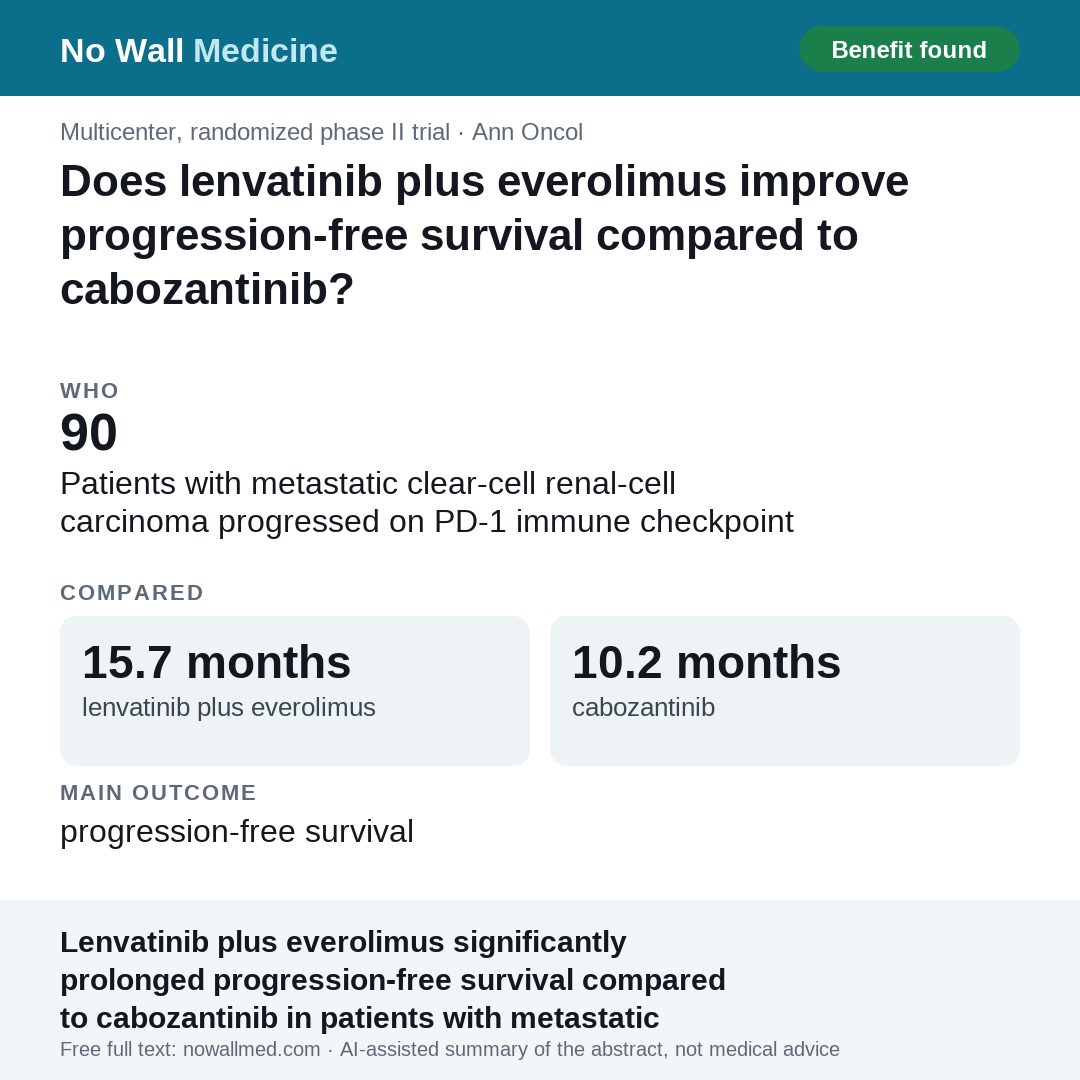
A multicenter randomized phase II trial of lenvatinib plus everolimus versus cabozantinib in patients with metastatic clear-cell RCC that progressed on PD-1 immune checkpoint inhibition (LenCabo)
Multicenter, randomized phase II trialBenefit found
Does lenvatinib plus everolimus improve progression-free survival compared to cabozantinib?
Who
90
Patients with metastatic clear-cell renal-cell carcinoma progressed on PD-1 immune checkpoint inhibition
Compared
15.7 monthslenvatinib plus everolimus
10.2 monthscabozantinib
Main outcome
progression-free survival
Result: hazard ratio 0.51, 95% confidence interval (CI) 0.29-0.89
Bottom line: Lenvatinib plus everolimus significantly prolonged progression-free survival compared to cabozantinib in patients with metastatic clear-cell renal-cell carcinoma.
Ann Oncol · 2025-10-18Download image
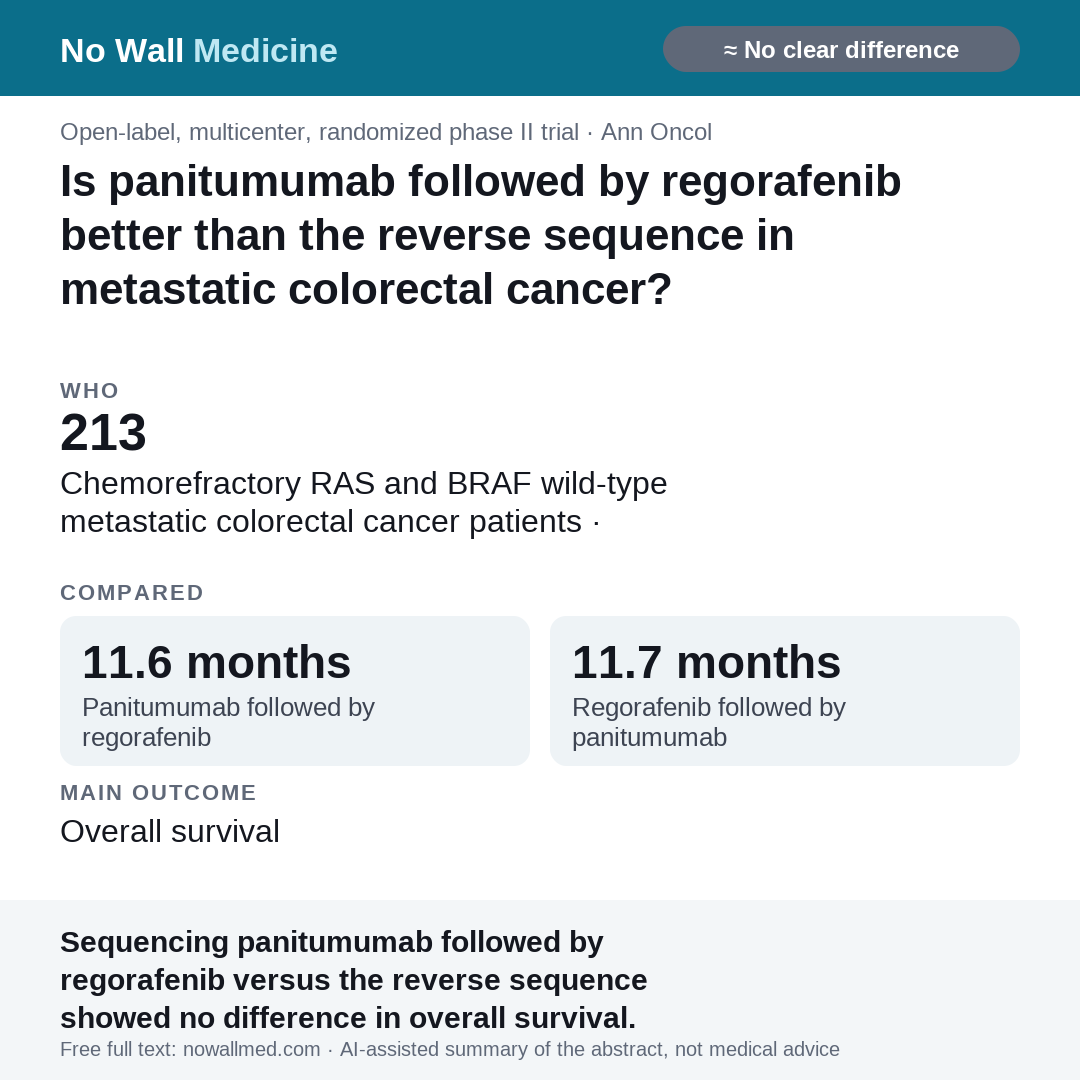
Re-treatment with panitumumab followed by regorafenib versus the reverse sequence in chemorefractory metastatic colorectal cancer patients with RAS and BRAF wild-type circulating tumor DNA: the PARERE study by GONO
Open-label, multicenter, randomized phase II trialNo clear difference
Is panitumumab followed by regorafenib better than the reverse sequence in metastatic colorectal cancer?
Who
213
Chemorefractory RAS and BRAF wild-type metastatic colorectal cancer patients · Multicenter
Compared
11.6 monthsPanitumumab followed by regorafenib
11.7 monthsRegorafenib followed by panitumumab
Main outcome
Overall survival
Result: hazard ratio 1.13, 85% confidence interval 0.90-1.41
Bottom line: Sequencing panitumumab followed by regorafenib versus the reverse sequence showed no difference in overall survival.
Ann Oncol · 2025-10-18Download image
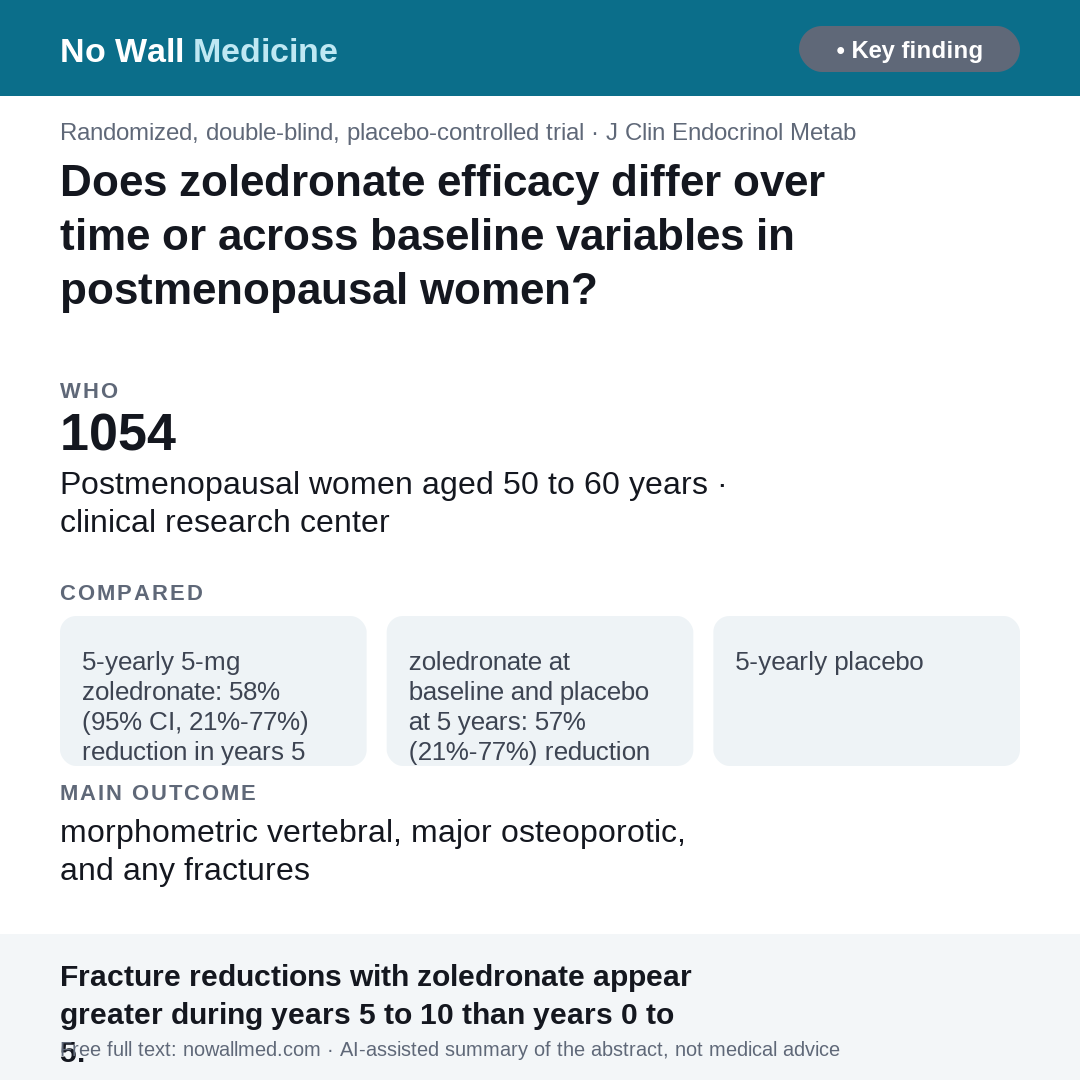
Antifracture Efficacy of 5- or 10-Yearly Zoledronate in Women Aged 50 to 60 Years: Secondary Analyses of a Randomized Trial
Randomized, double-blind, placebo-controlled trialBenefit found
Does zoledronate efficacy differ over time or across baseline variables in postmenopausal women?
Who
1054
Postmenopausal women aged 50 to 60 years · clinical research center
Compared
5-yearly 5-mg zoledronate: 58% (95% CI, 21%-77%) reduction in years 5 to 10
zoledronate at baseline and placebo at 5 years: 57% (21%-77%) reduction in years 5 to 10
5-yearly placebo
Main outcome
morphometric vertebral, major osteoporotic, and any fractures
Bottom line: Fracture reductions with zoledronate appear greater during years 5 to 10 than years 0 to 5.
J Clin Endocrinol Metab · 2025-10-18Download image
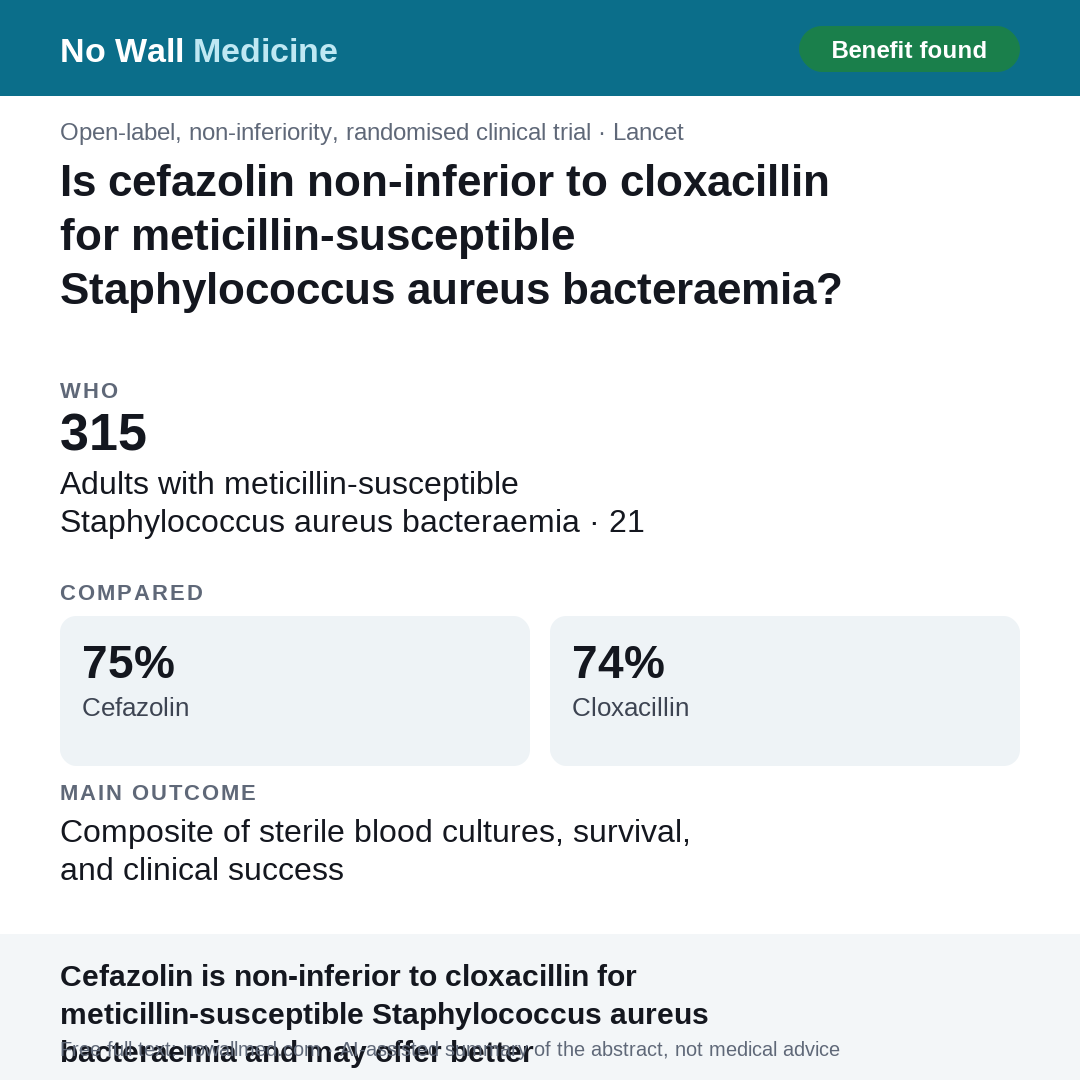
Cloxacillin versus cefazolin for meticillin-susceptible Staphylococcus aureus bacteraemia (CloCeBa): a prospective, open-label, multicentre, non-inferiority, randomised clinical trial
Open-label, non-inferiority, randomised clinical trialBenefit found
Is cefazolin non-inferior to cloxacillin for meticillin-susceptible Staphylococcus aureus bacteraemia?
Who
315
Adults with meticillin-susceptible Staphylococcus aureus bacteraemia · 21 hospitals in France
Compared
75%Cefazolin (109/146)
74%Cloxacillin (108/146)
Main outcome
Composite of sterile blood cultures, survival, and clinical success
Result: treatment difference -1% (95% CI -11 to 9)
Bottom line: Cefazolin is non-inferior to cloxacillin for meticillin-susceptible Staphylococcus aureus bacteraemia and may offer better tolerability.
Funded by: French Ministry of Health
Lancet · 2025-10-17Download image
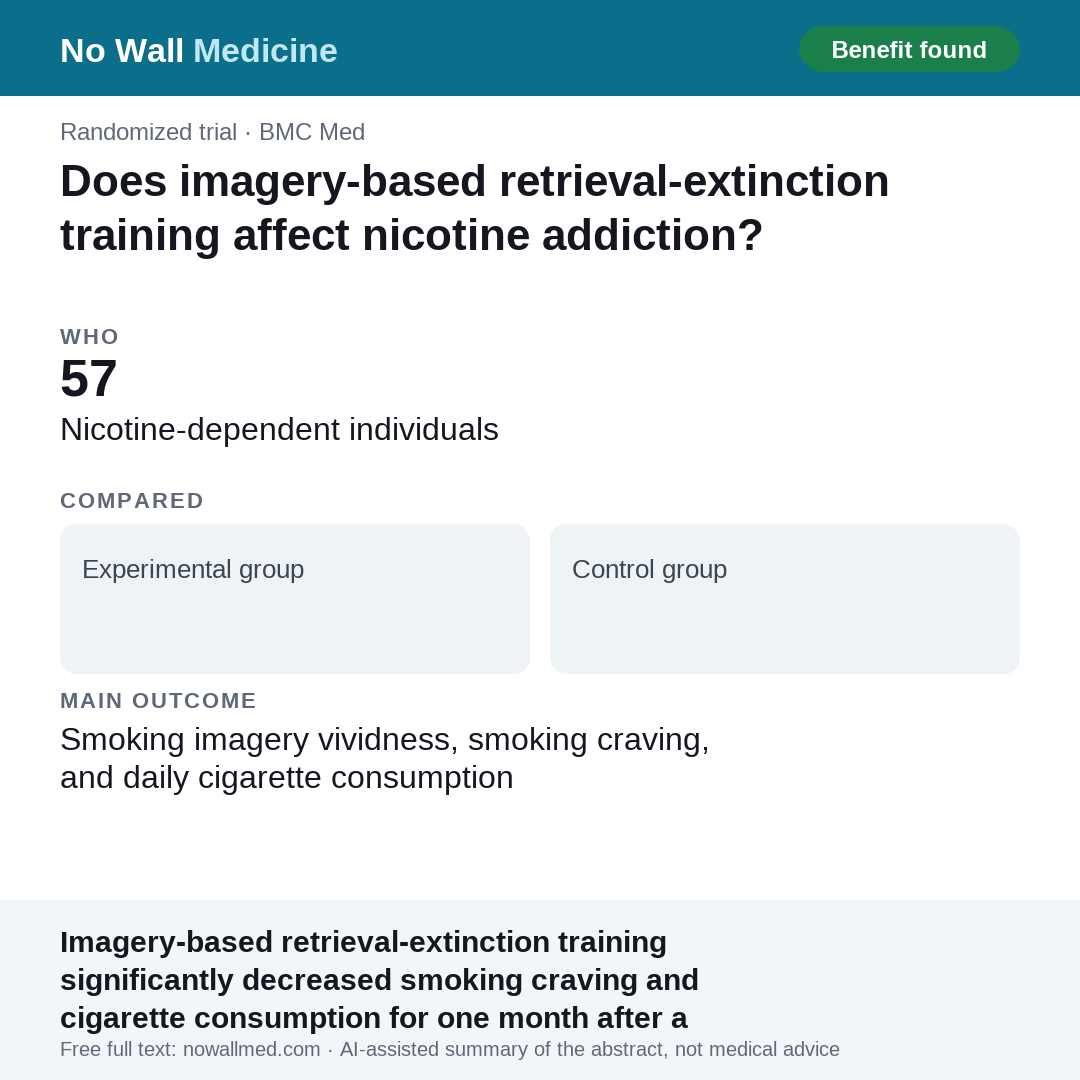
A novel imagery-based retrieval-extinction training for intervention in nicotine addiction
Randomized trialBenefit found
Does imagery-based retrieval-extinction training affect nicotine addiction?
Who
57
Nicotine-dependent individuals
Compared
Experimental group
Control group
Main outcome
Smoking imagery vividness, smoking craving, and daily cigarette consumption
Bottom line: Imagery-based retrieval-extinction training significantly decreased smoking craving and cigarette consumption for one month after a single session.
BMC Med · 2025-10-17Download image
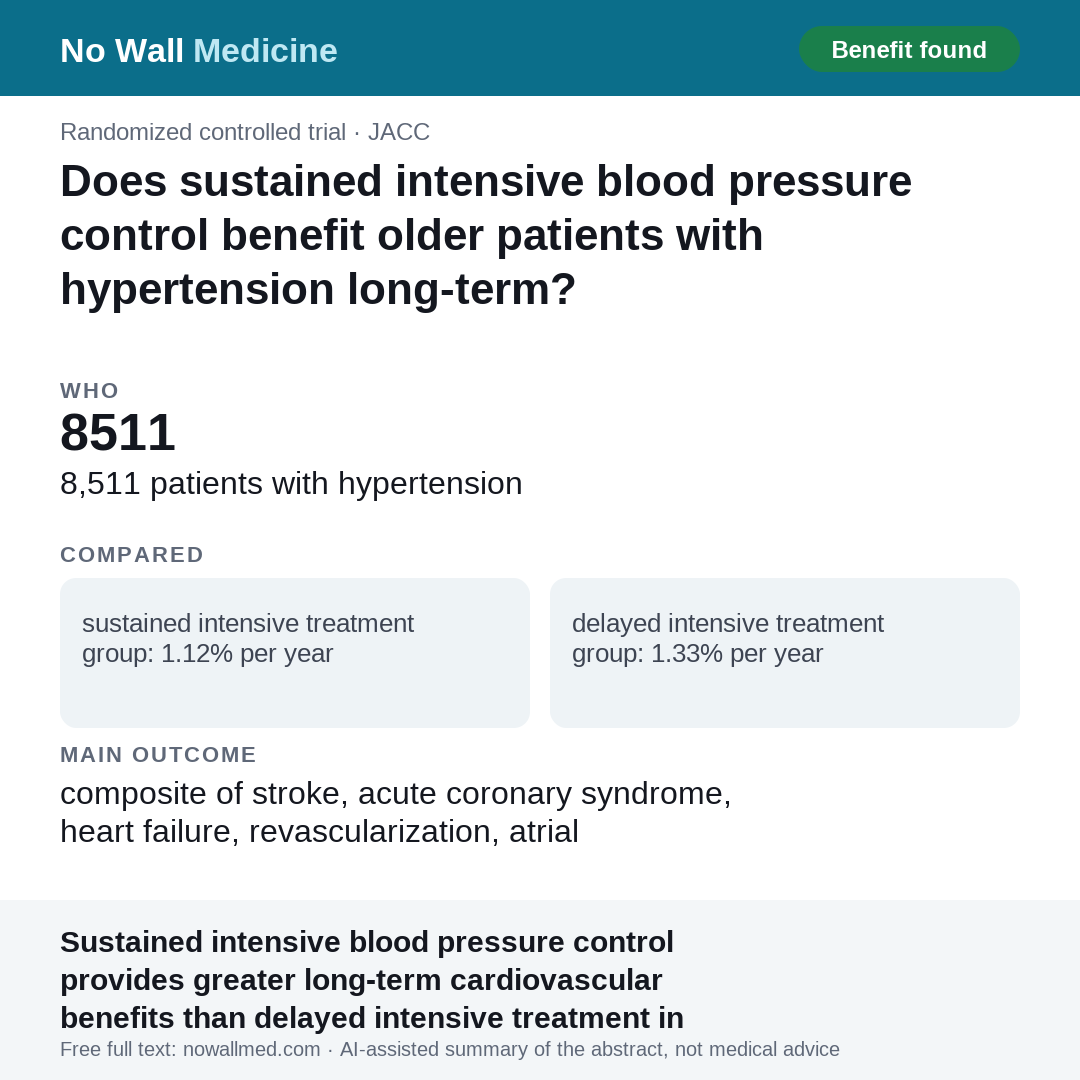
Intensive Blood Pressure Control in Older Patients With Hypertension: 6-Year Results of the STEP Trial
Randomized controlled trialBenefit found
Does sustained intensive blood pressure control benefit older patients with hypertension long-term?
Who
8511
8,511 patients with hypertension
Compared
sustained intensive treatment group: 1.12% per year
delayed intensive treatment group: 1.33% per year
Main outcome
composite of stroke, acute coronary syndrome, heart failure, revascularization, atrial fibrillation, or cardiovascular death
Result: hazard ratio 0.82 (95% CI 0.71-0.96)
Bottom line: Sustained intensive blood pressure control provides greater long-term cardiovascular benefits than delayed intensive treatment in older hypertensive patients.
JACC · 2025-10-17Download image
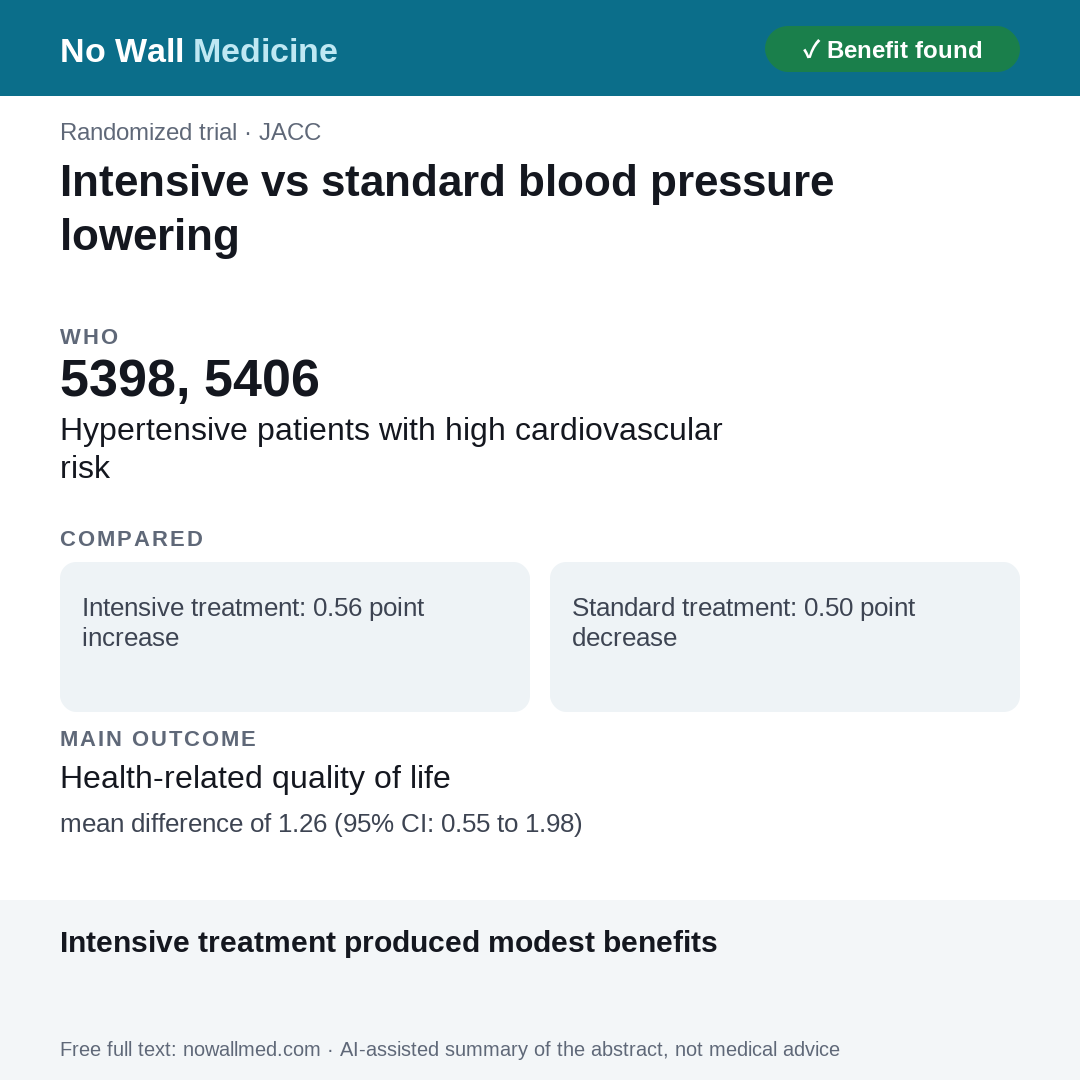
Modest Effects of Intensive Blood Pressure-Lowering on Quality of Life in Patients at High Cardiovascular Risk: The ESPRIT Trial
Randomized trialBenefit found
Intensive vs standard blood pressure lowering
Who
5398, 5406
Hypertensive patients with high cardiovascular risk
Compared
Intensive treatment: 0.56 point increase
Standard treatment: 0.50 point decrease
Main outcome
Health-related quality of life
Result: mean difference of 1.26 (95% CI: 0.55 to 1.98)
Bottom line: Intensive treatment produced modest benefits
JACC · 2025-10-17Download image
Full exclusively enteral fluids from day 1 versus gradual feeding in preterm infants (FEED1): a open-label, parallel-group, multicentre, randomised, superiority trial
Open-label, parallel-group, multicentre, randomised, superiority trialNo clear difference
Does full milk feeds from day 1 reduce length of hospital stay in preterm infants?
Who
2088
Preterm infants born at 30+0 to 32+6 weeks of gestation · 46 neonatal units in United Kingdom hospitals
Compared
Full milk feeds: 32.4 days [SD 13.3]
Gradual feeding: 32.1 days [13.5]
Main outcome
Length of hospital stay
Result: adjusted difference between means -0.02 days (95% CI -1.07 to 1.03)
Bottom line: Full milk feeds from day 1 do not alter length of hospital stay in preterm infants.
Funded by: UK National Institute of Health and Care Research
Lancet Child Adolesc Health · 2025-10-17Download image
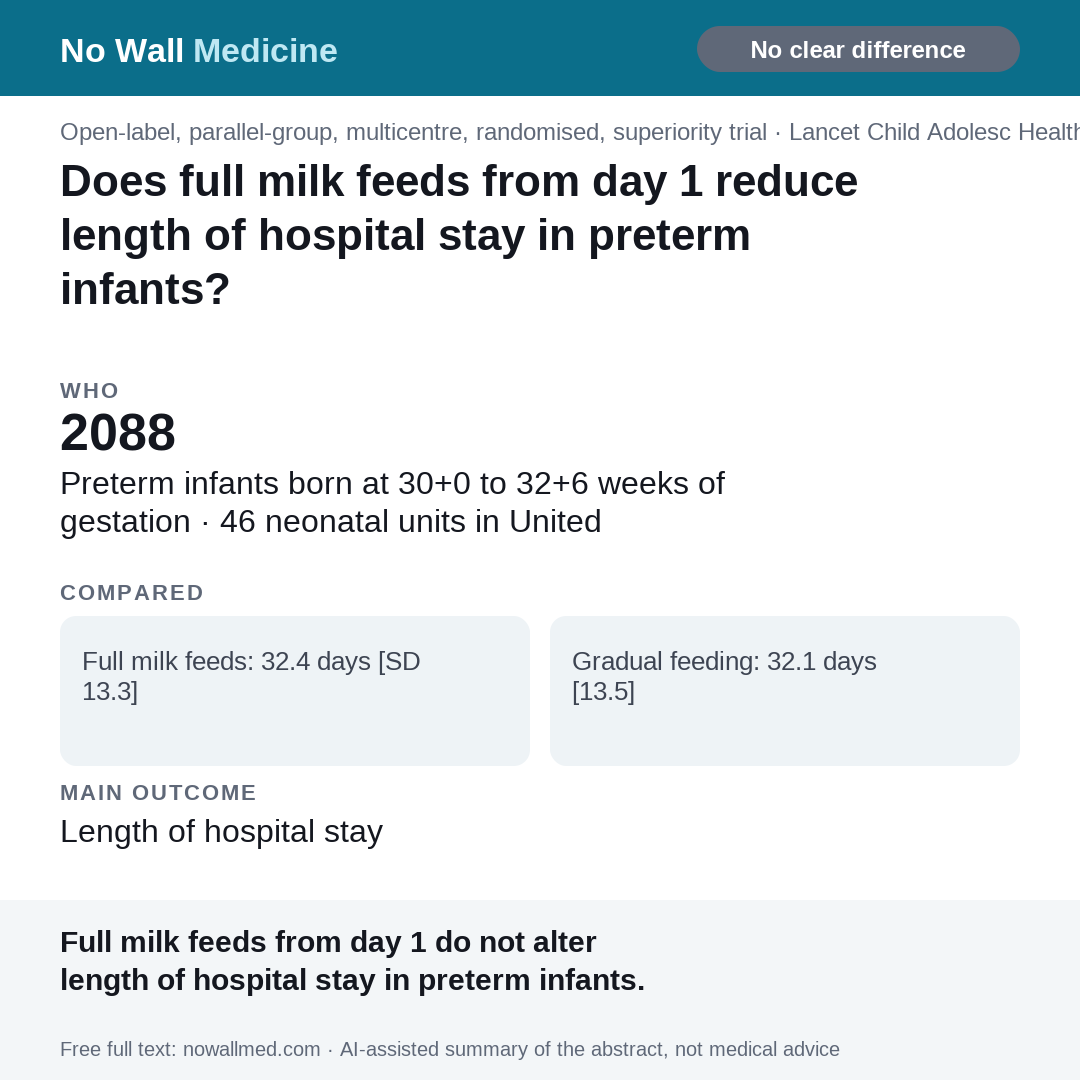
Endothelial Cell Loss 1 Year After Successful DMEK in the Diabetes Endothelial Keratoplasty Study: A Randomized Clinical Trial
Multicenter, double-masked, randomized clinical trialNo clear difference
Does cornea donor diabetes status affect endothelial cell loss and morphometry 1 year after successful DMEK?
Who
1274
Eyes of recipients undergoing successful Descemet membrane endothelial keratoplasty · 28 US clinical sites and 13 eye banks
Compared
28.3%Donors without diabetes (16.1%)
28.0%Donors with diabetes (17.0%)
Main outcome
Endothelial cell loss and morphometry at 1 year
Result: adjusted mean difference -0.4% (95% CI, -2.3% to 1.4%)
Bottom line: Endothelial cell loss and morphometry 1 year after DMEK are not affected by cornea donor diabetes status.
JAMA Ophthalmol · 2025-10-17Download image
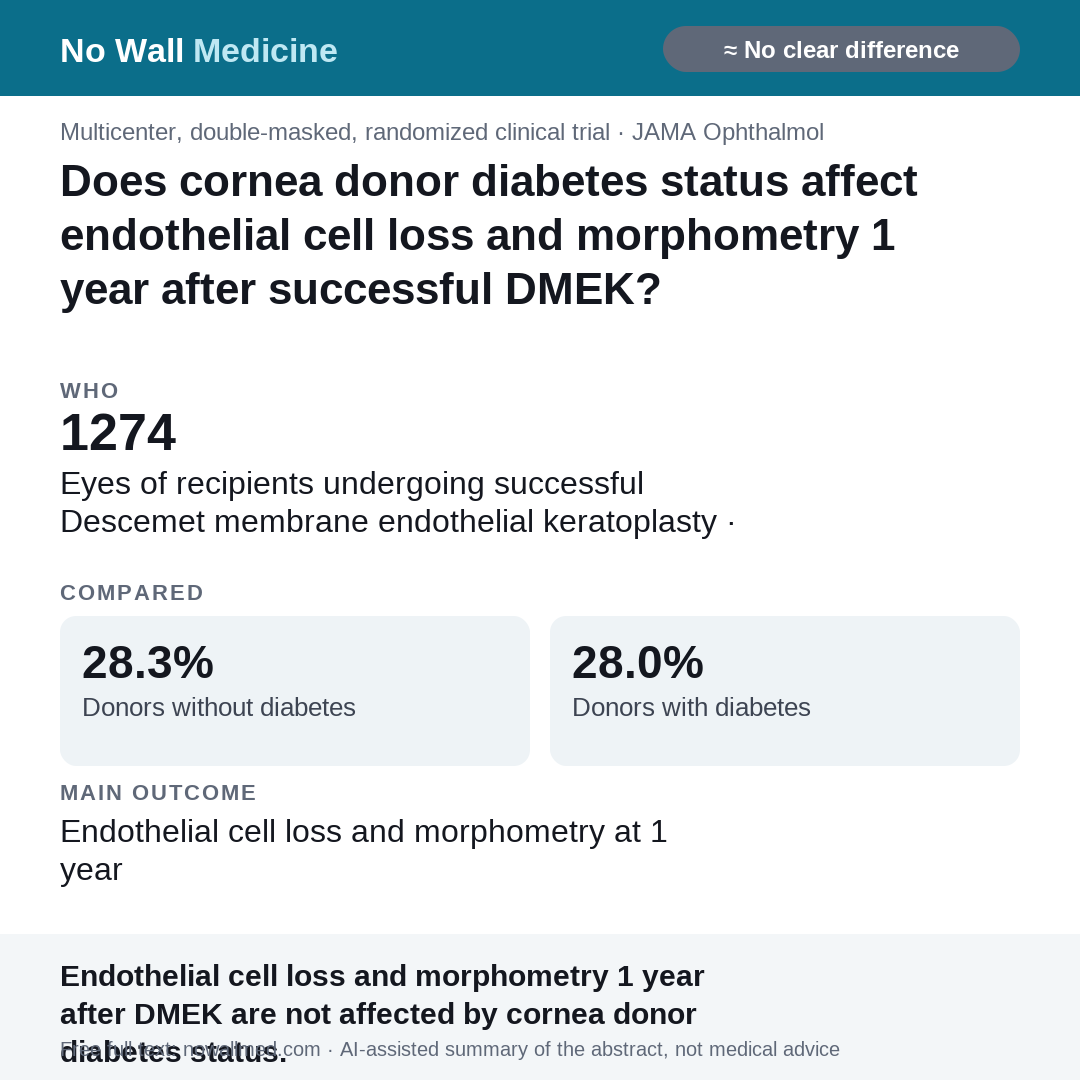
Donor Diabetes and 1-Year Descemet Membrane Endothelial Keratoplasty Success Rate: A Randomized Clinical Trial
Multicenter, double-masked, randomized clinical trialNo clear difference
Does donor diabetes affect the 1-year Descemet membrane endothelial keratoplasty success rate?
Who
1097
Individuals undergoing low to moderate risk Descemet membrane endothelial keratoplasty · 28 clinical sites in the US
Compared
96.3%Donors without diabetes (95% CI, 95.0%-97.5%)
97.1%Donors with diabetes (95% CI, 95.5%-98.4%)
Main outcome
Graft success at 1 year
Result: difference between groups = 0.7 percentage points; 95% CI, -1.2 to 2.6
Bottom line: The 1-year success rate for Descemet membrane endothelial keratoplasty was very high regardless of donor diabetes status.
JAMA Ophthalmol · 2025-10-17Download image
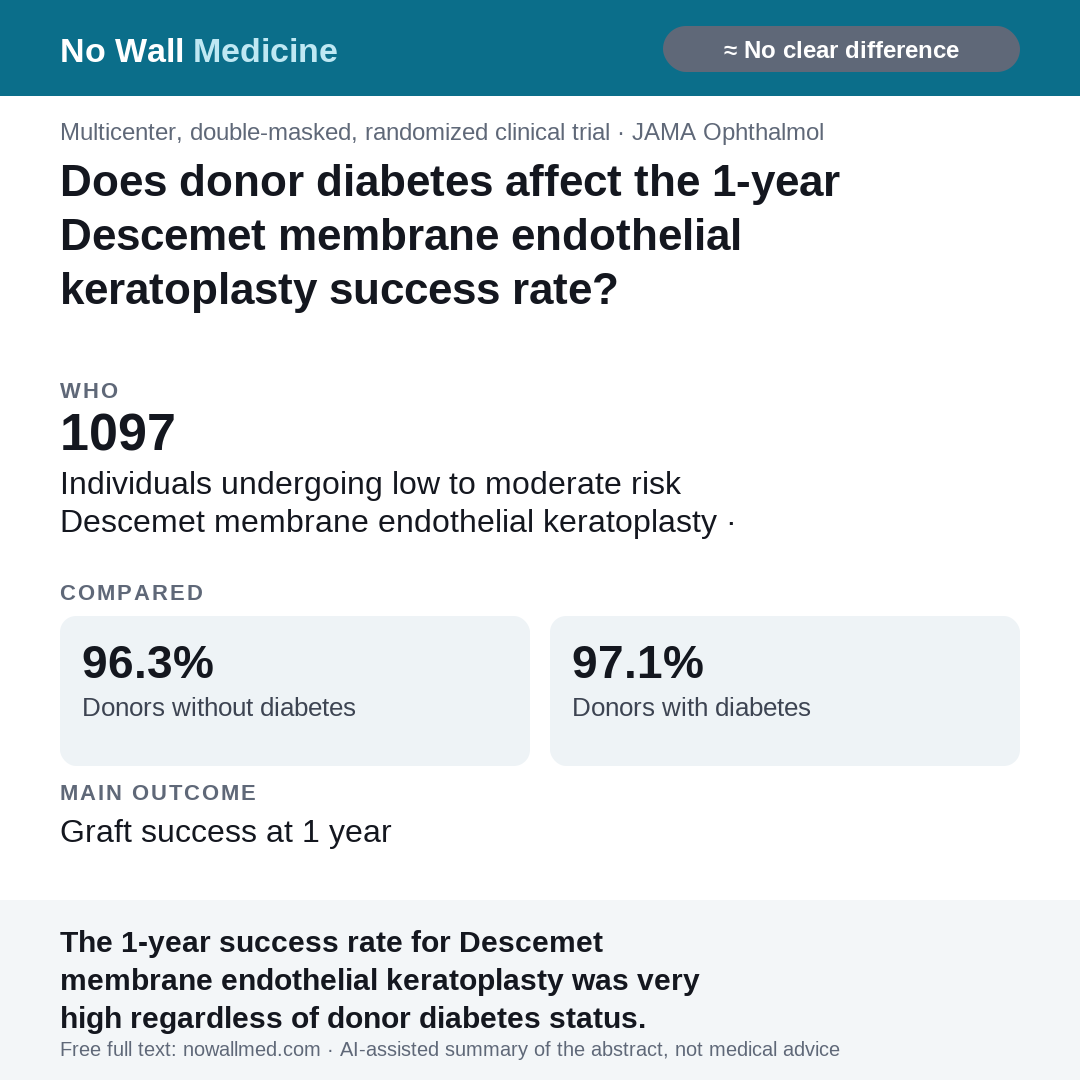
Palbociclib with adjuvant endocrine therapy in early breast cancer: 5-year follow-up analysis of the global multicenter, open-label, randomized phase III PALLAS trial (ABCSG-42/AFT-05/PrE0109/BIG-14-13)
Randomized, open-label, phase III trialNo clear difference
Does adding palbociclib to adjuvant endocrine therapy improve 5-year outcomes in early breast cancer?
Who
5753
Stage II-III hormone receptor-positive/human epidermal growth factor receptor 2-negative breast cancer · international
Compared
palbociclib plus endocrine therapy: 84.2% [95% CI 82.7% to 85.6%]
82.4%endocrine therapy alone (95% CI 80.8% to 83.9%)
Main outcome
invasive disease-free survival
Result: hazard ratio 0.88, 95% CI 0.77-1.01
Bottom line: Adding two years of palbociclib to endocrine therapy did not improve 5-year invasive disease-free survival or overall survival.
Ann Oncol · 2025-10-17Download image
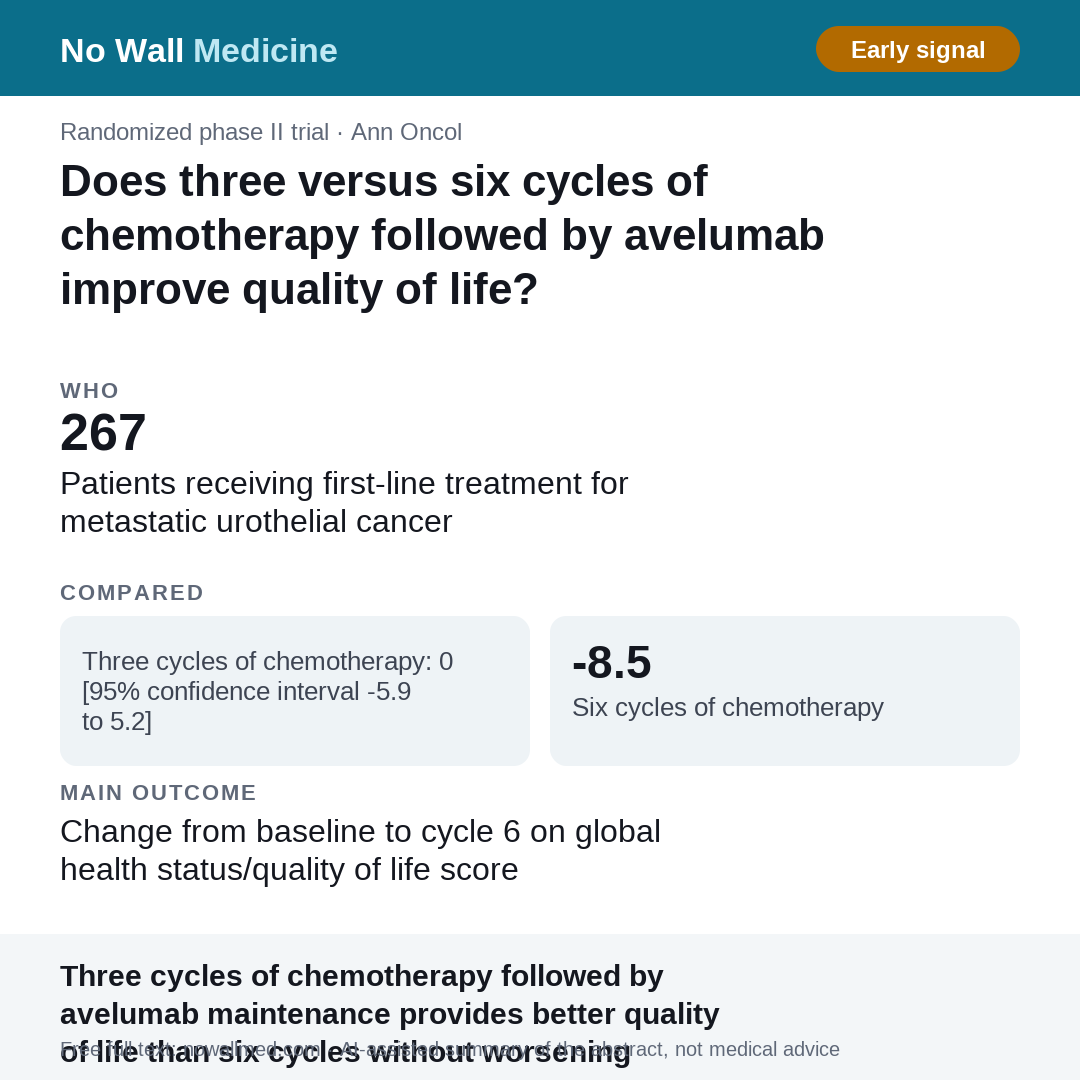
Three versus six cycles of platinum-based chemotherapy followed by avelumab maintenance as first-line treatment for advanced urothelial cancer: the phase II DISCUS trial
Randomized phase II trialBenefit found
Does three versus six cycles of chemotherapy followed by avelumab improve quality of life?
Who
267
Patients receiving first-line treatment for metastatic urothelial cancer
Compared
Three cycles of chemotherapy: 0 [95% confidence interval -5.9 to 5.2]
-8.5Six cycles of chemotherapy (95% CI -14.1 to -2.9)
Main outcome
Change from baseline to cycle 6 on global health status/quality of life score
Result: +8.5 points, 95% CI 0.7-16.3, P = 0.016
Bottom line: Three cycles of chemotherapy followed by avelumab maintenance provides better quality of life than six cycles without worsening overall survival.
Ann Oncol · 2025-10-17Download image
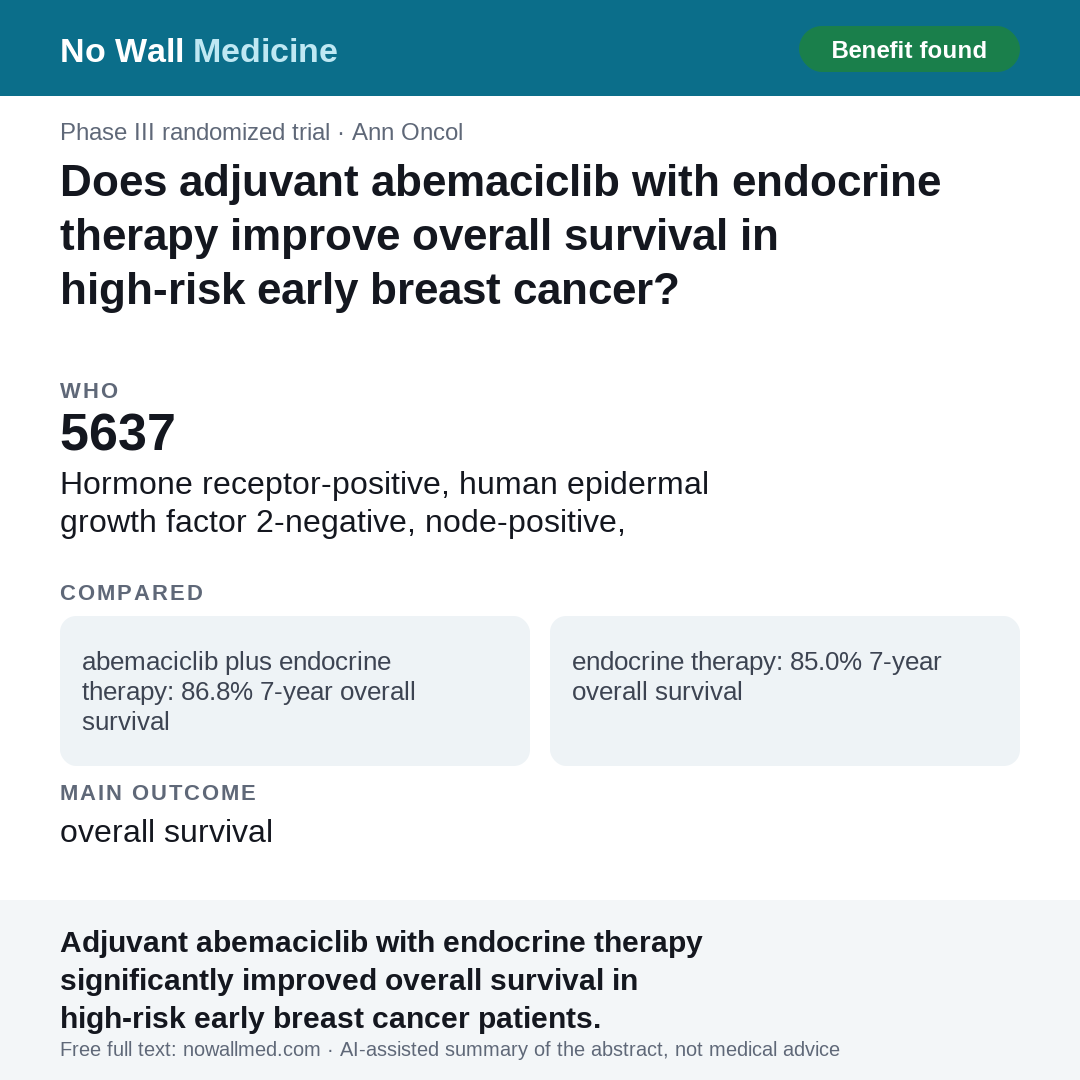
Overall survival with abemaciclib in early breast cancer
Phase III randomized trialBenefit found
Does adjuvant abemaciclib with endocrine therapy improve overall survival in high-risk early breast cancer?
Who
5637
Hormone receptor-positive, human epidermal growth factor 2-negative, node-positive, high-risk early breast cancer
Compared
abemaciclib plus endocrine therapy: 86.8% 7-year overall survival
endocrine therapy: 85.0% 7-year overall survival
Main outcome
overall survival
Result: hazard ratio 0.842, 95% confidence interval 0.722-0.981
Bottom line: Adjuvant abemaciclib with endocrine therapy significantly improved overall survival in high-risk early breast cancer patients.
Ann Oncol · 2025-10-17Download image
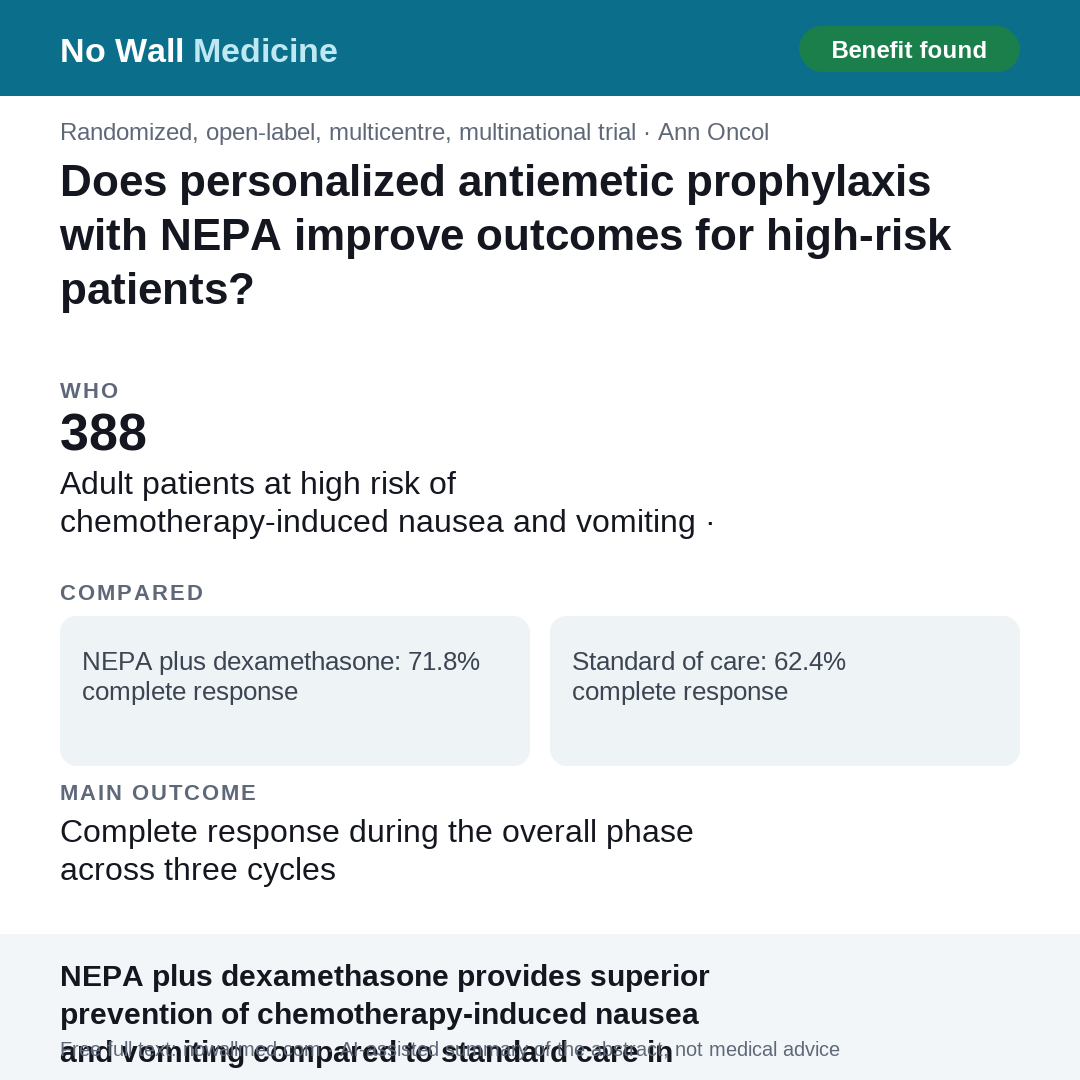
Personalised antiemetic prophylaxis with NEPA for patients at high risk of chemotherapy-induced nausea and vomiting receiving moderately emetogenic chemotherapy: results from the randomised, multinational MyRisk trial
Randomized, open-label, multicentre, multinational trialBenefit found
Does personalized antiemetic prophylaxis with NEPA improve outcomes for high-risk patients?
Who
388
Adult patients at high risk of chemotherapy-induced nausea and vomiting · Multicentre, multinational
Compared
NEPA plus dexamethasone: 71.8% complete response
Standard of care: 62.4% complete response
Main outcome
Complete response during the overall phase across three cycles
Result: odds ratio 1.67 (95% confidence interval 1.12-2.49)
Bottom line: NEPA plus dexamethasone provides superior prevention of chemotherapy-induced nausea and vomiting compared to standard care in high-risk patients.
Ann Oncol · 2025-10-17Download image
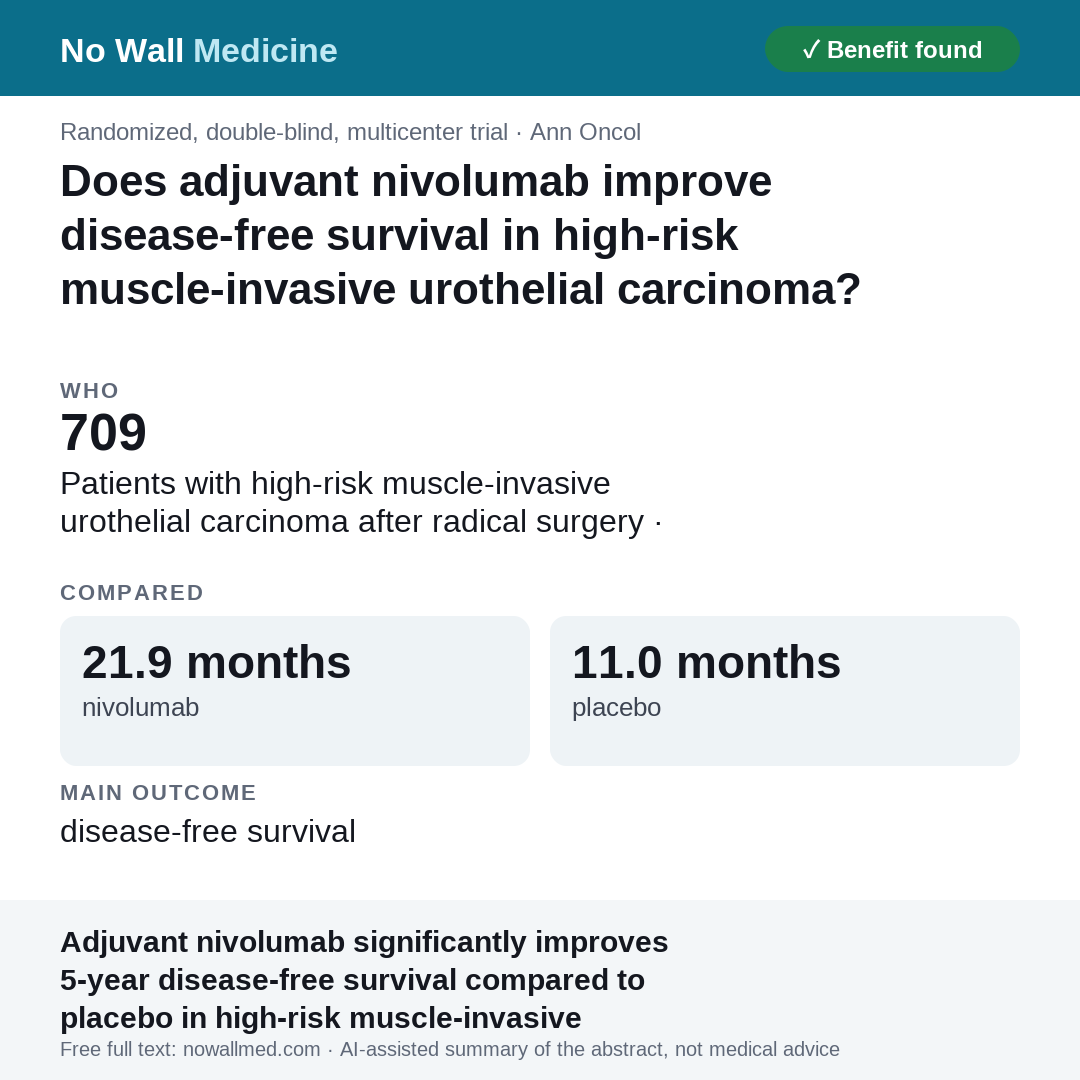
Adjuvant nivolumab versus placebo for high-risk muscle-invasive urothelial carcinoma: 5-year efficacy and ctDNA results from CheckMate 274
Randomized, double-blind, multicenter trialBenefit found
Does adjuvant nivolumab improve disease-free survival in high-risk muscle-invasive urothelial carcinoma?
Who
709
Patients with high-risk muscle-invasive urothelial carcinoma after radical surgery · multicenter
Compared
21.9 monthsnivolumab
11.0 monthsplacebo
Main outcome
disease-free survival
Result: hazard ratio 0.74 (95% CI 0.61-0.90)
Bottom line: Adjuvant nivolumab significantly improves 5-year disease-free survival compared to placebo in high-risk muscle-invasive urothelial carcinoma.
Ann Oncol · 2025-10-17Download image
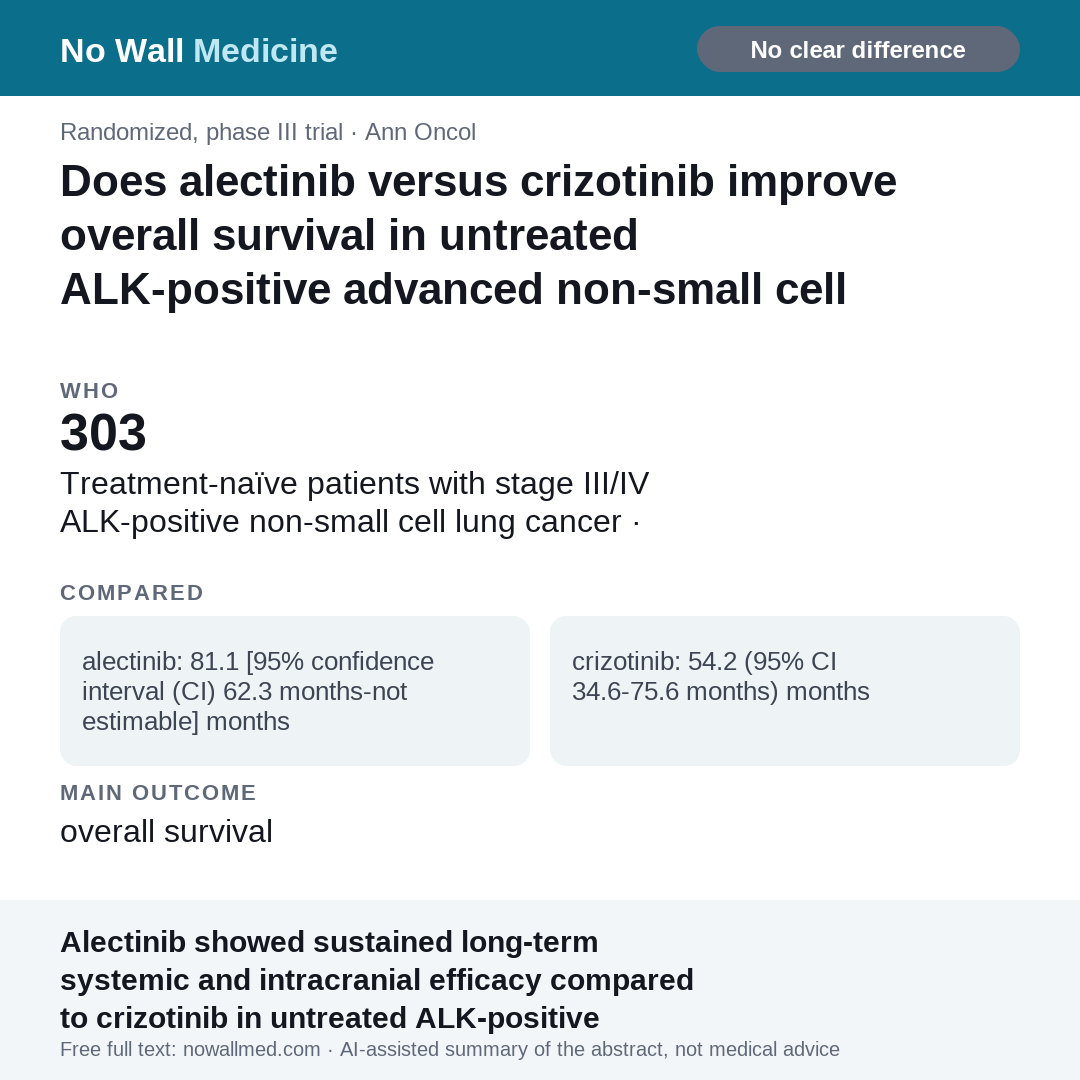
Alectinib versus crizotinib in previously untreated ALK-positive advanced non-small cell lung cancer: final overall survival analysis of the phase III ALEX study
Randomized, phase III trialNo clear difference
Does alectinib versus crizotinib improve overall survival in untreated ALK-positive advanced non-small cell lung cancer?
Who
303
Treatment-naïve patients with stage III/IV ALK-positive non-small cell lung cancer · Global
Compared
alectinib: 81.1 [95% confidence interval (CI) 62.3 months-not estimable] months
crizotinib: 54.2 (95% CI 34.6-75.6 months) months
Main outcome
overall survival
Result: hazard ratio 0.78 (95% CI 0.56-1.08)
Bottom line: Alectinib showed sustained long-term systemic and intracranial efficacy compared to crizotinib in untreated ALK-positive non-small cell lung cancer.
Ann Oncol · 2025-10-17Download image
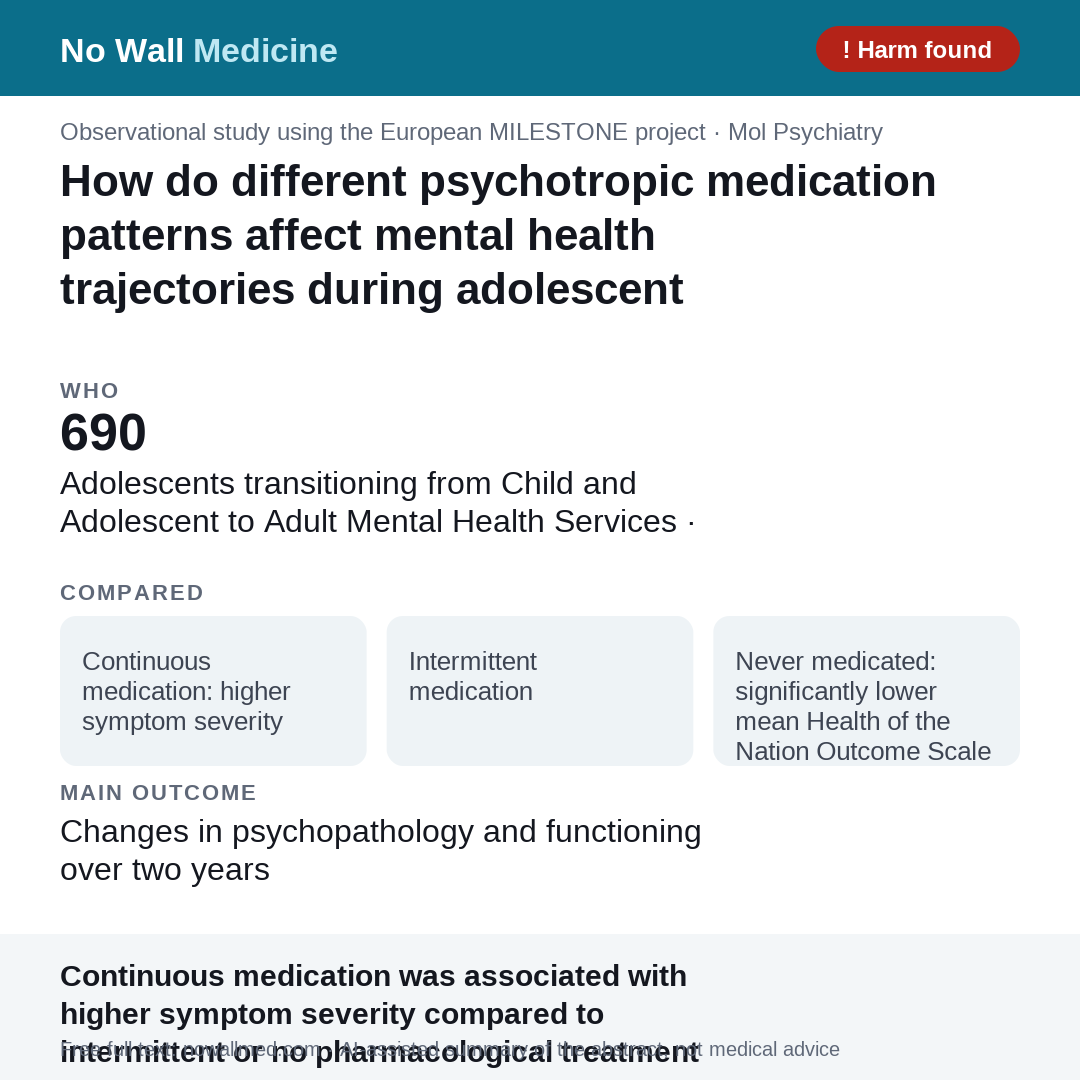
Mental health trajectories of adolescents treated with psychotropic medications: insights from the european milestone study
Observational study using the European MILESTONE projectHarm found
How do different psychotropic medication patterns affect mental health trajectories during adolescent transition?
Who
690
Adolescents transitioning from Child and Adolescent to Adult Mental Health Services · European sites
Compared
Continuous medication: higher symptom severity
Intermittent medication
Never medicated: significantly lower mean Health of the Nation Outcome Scale for Child and Adolescents ratings
Main outcome
Changes in psychopathology and functioning over two years
Bottom line: Continuous medication was associated with higher symptom severity compared to intermittent or no pharmacological treatment during transition.
Mol Psychiatry · 2025-10-17Download image
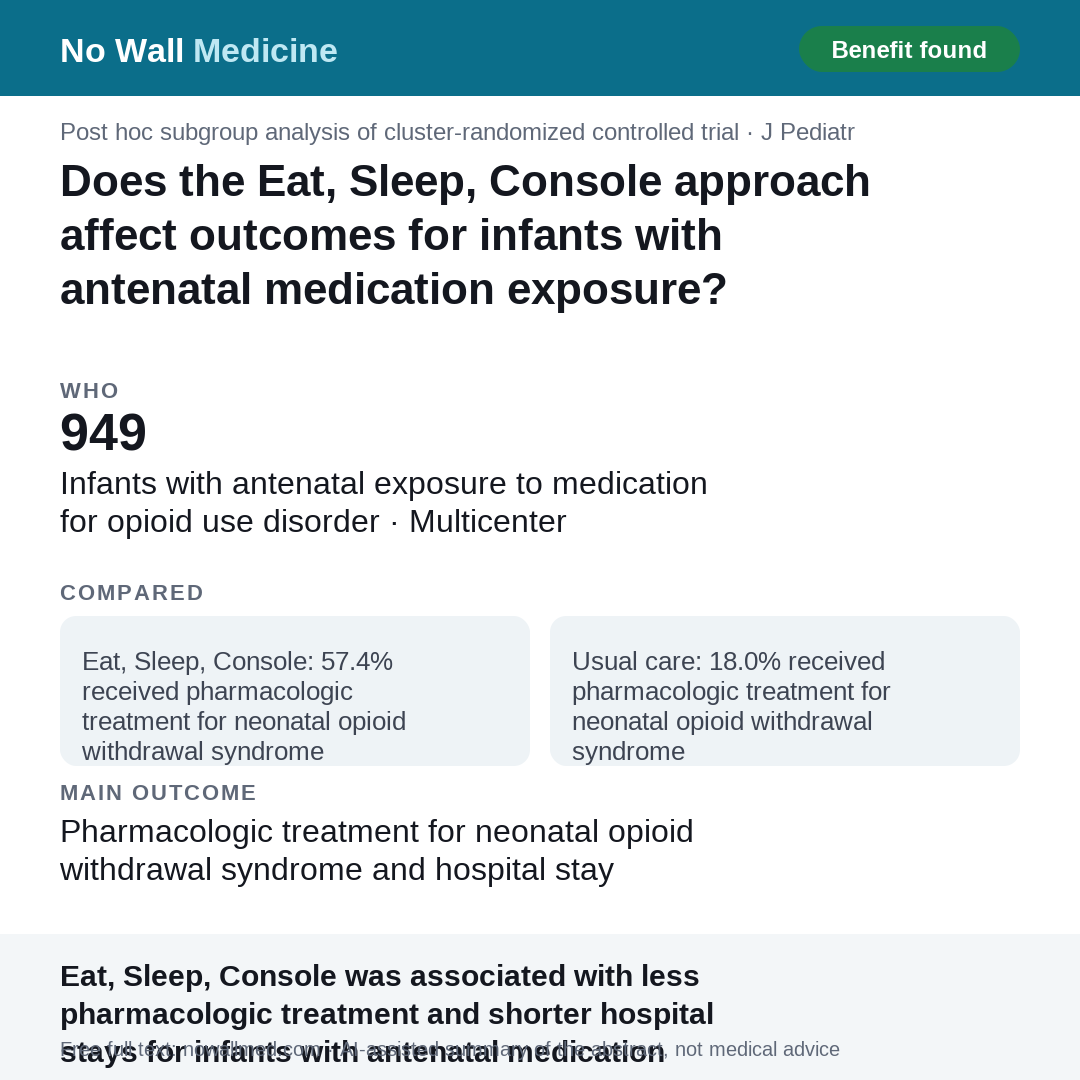
Antenatal Exposure to Medication for Opioid Use Disorder and Infant Outcomes in the Eat, Sleep, Console for Neonatal Opioid Withdrawal Randomized Controlled Trial
Post hoc subgroup analysis of cluster-randomized controlled trialBenefit found
Does the Eat, Sleep, Console approach affect outcomes for infants with antenatal medication exposure?
Who
949
Infants with antenatal exposure to medication for opioid use disorder · Multicenter
Compared
Eat, Sleep, Console: 57.4% received pharmacologic treatment for neonatal opioid withdrawal syndrome
Usual care: 18.0% received pharmacologic treatment for neonatal opioid withdrawal syndrome
Main outcome
Pharmacologic treatment for neonatal opioid withdrawal syndrome and hospital stay
Result: absolute difference 39.4%; 95% CI: 30.6-48.2
Bottom line: Eat, Sleep, Console was associated with less pharmacologic treatment and shorter hospital stays for infants with antenatal medication exposure.
J Pediatr · 2025-10-17Download image
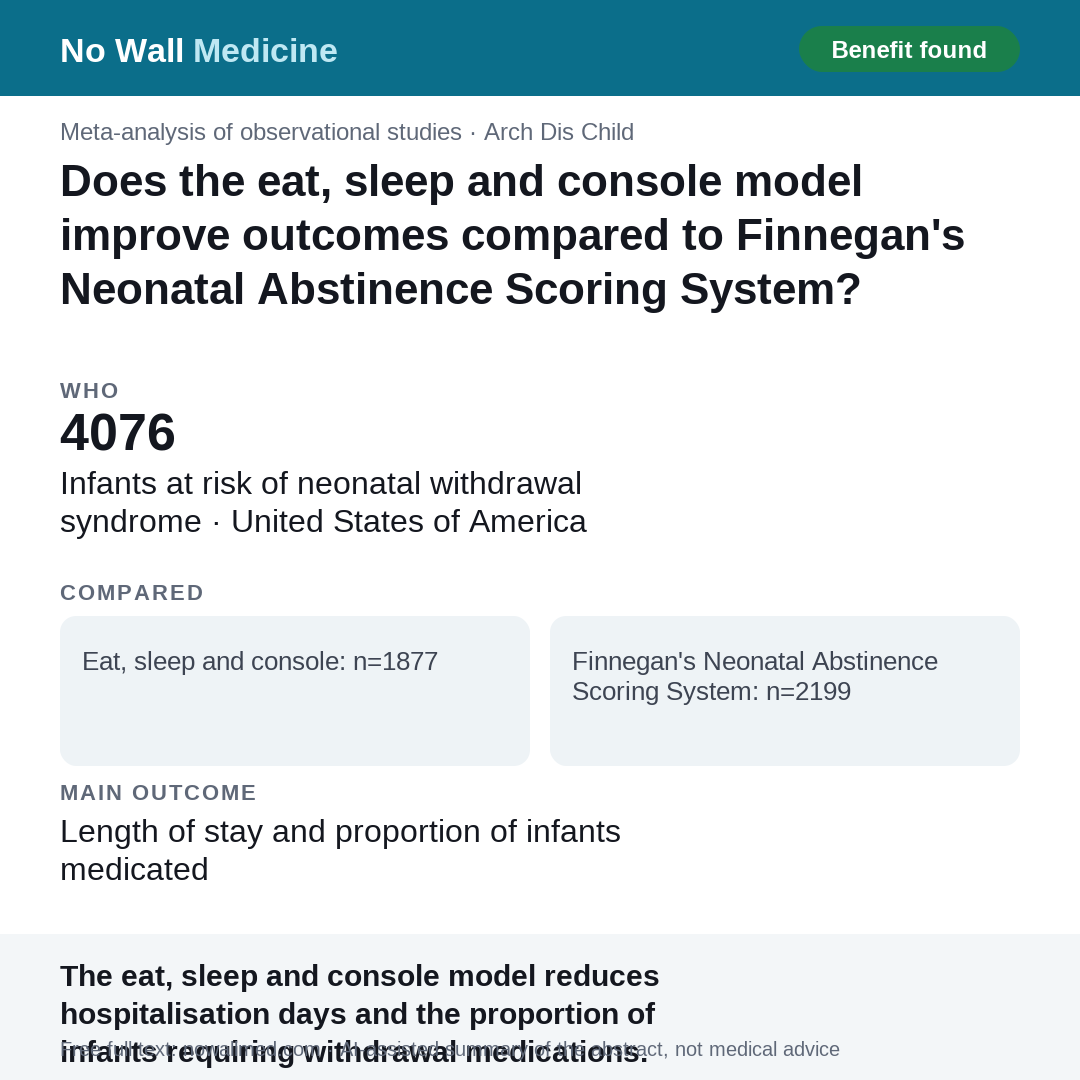
Eat, sleep and console model of care for managing infants with neonatal abstinence syndrome: a meta-analysis of observational studies
Meta-analysis of observational studiesBenefit found
Does the eat, sleep and console model improve outcomes compared to Finnegan's Neonatal Abstinence Scoring System?
Who
4076
Infants at risk of neonatal withdrawal syndrome · United States of America
Compared
Eat, sleep and console: n=1877
Finnegan's Neonatal Abstinence Scoring System: n=2199
Main outcome
Length of stay and proportion of infants medicated
Result: OR 0.36, 95% CI 0.22 to 0.60
Bottom line: The eat, sleep and console model reduces hospitalisation days and the proportion of infants requiring withdrawal medications.
Arch Dis Child · 2025-10-17Download image
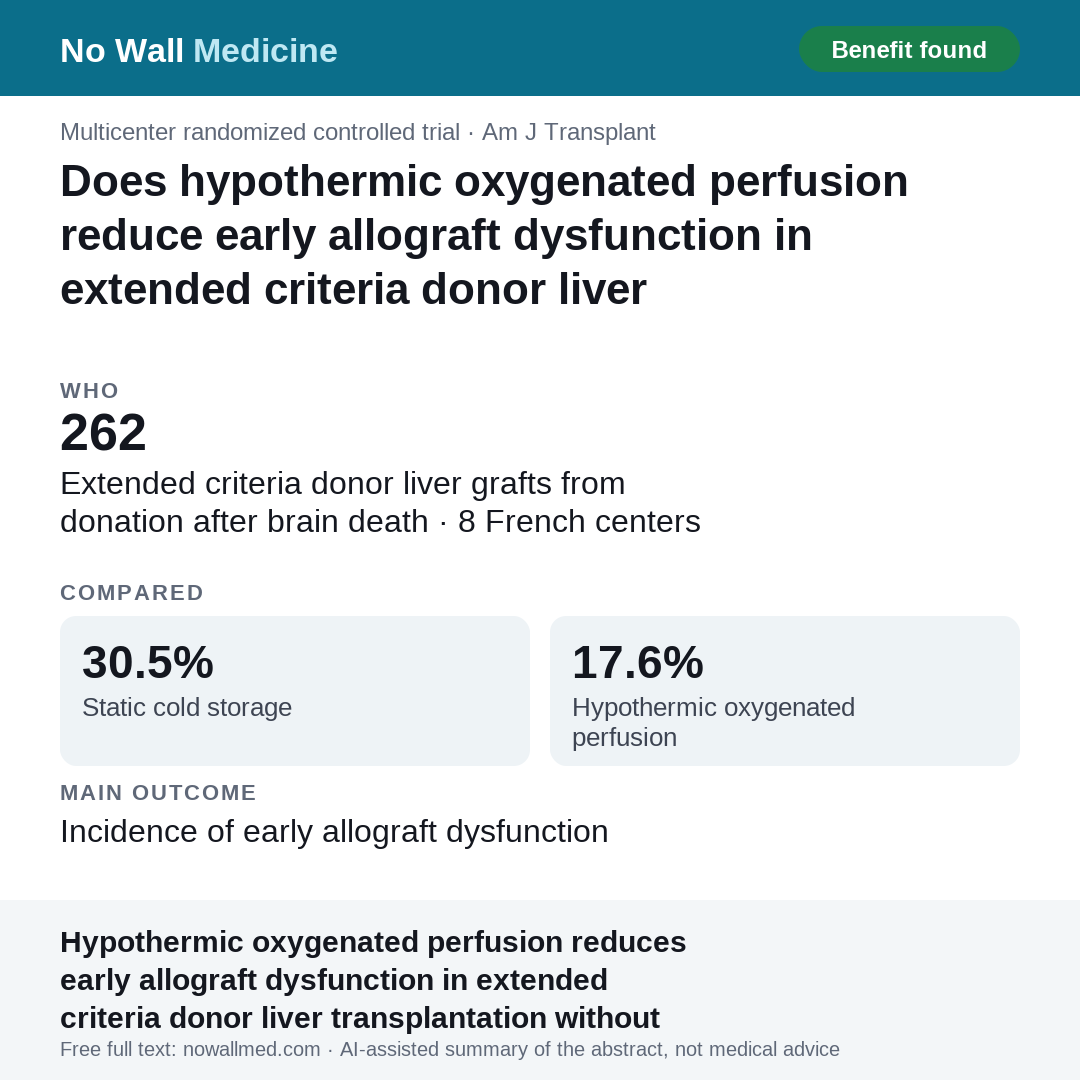
A French multicenter randomized controlled trial of hypothermic oxygenated perfusion in extended criteria donor liver transplantation
Multicenter randomized controlled trialBenefit found
Does hypothermic oxygenated perfusion reduce early allograft dysfunction in extended criteria donor liver transplantation?
Who
262
Extended criteria donor liver grafts from donation after brain death · 8 French centers
Compared
30.5%Static cold storage
17.6%Hypothermic oxygenated perfusion
Main outcome
Incidence of early allograft dysfunction
Bottom line: Hypothermic oxygenated perfusion reduces early allograft dysfunction in extended criteria donor liver transplantation without affecting mortality.
Am J Transplant · 2025-10-17Download image