Visual abstracts
New randomized trials and meta-analyses from leading journals at a glance: who was studied, what was compared, and what was found. Every paper is free to read in full.
All specialtiesCardiology 975Oncology 867Gastroenterology & Hepatology 354Infectious Disease 670Neurology 408Psychiatry & Mental Health 495Pulmonology 429Critical Care 292Endocrinology & Diabetes 546Pediatrics 610Surgery 414Orthopedics & Sports Medicine 187Neurosurgery 142Cardiothoracic & Vascular Surgery 101Plastic & Reconstructive Surgery 159Nephrology 219Rheumatology 127Hematology 208Dermatology 91Ophthalmology 117Obstetrics & Gynecology 298Public & Global Health 187Radiology & Imaging 120Anesthesiology 164Urology 186ENT (Otolaryngology) 133Emergency Medicine 110Allergy & Immunology 67Geriatrics 189Family Medicine & Primary Care 131Medical Genetics & Genomics 99Pathology & Laboratory Medicine 30Physical Medicine & Rehabilitation 171Palliative Care 91Nutrition 247Digital Health & AI 509General Medicine 105
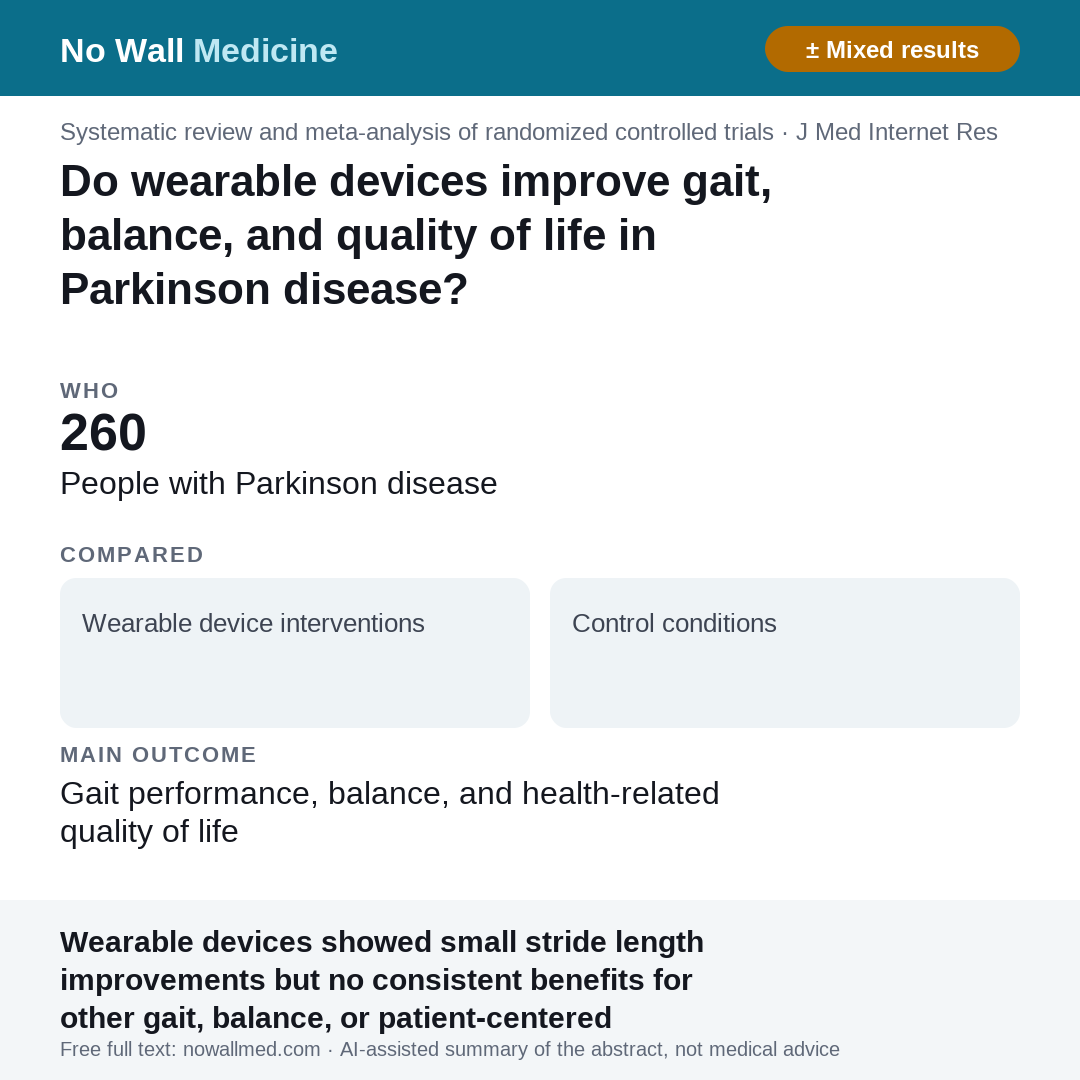
Effects of Wearable Devices on Parkinson Disease: Systematic Review and Meta-Analysis of Randomized Controlled Trials Within the International Classification of Functioning, Disability, and Health Framework
Systematic review and meta-analysis of randomized controlled trialsMixed results
Do wearable devices improve gait, balance, and quality of life in Parkinson disease?
Who
260
People with Parkinson disease
Compared
Wearable device interventions
Control conditions
Main outcome
Gait performance, balance, and health-related quality of life
Result: stride length MD 0.10 meter, 95% CI 0.03-0.17
Bottom line: Wearable devices showed small stride length improvements but no consistent benefits for other gait, balance, or patient-centered outcomes.
Limitation: Prediction intervals frequently crossed the null, suggesting effects may vary by setting and population.
J Med Internet Res · 2026-03-18Download image
Association Between Short-Form Video Use and Mental Health: Systematic Review and Meta-Analysis
Systematic review and meta-analysisHarm found
Is short-form video use associated with mental health outcomes?
Who
96676
96,676 participants across 58 studies
Compared
Problematic use: significant negative associations with subjective well-being (r=-0.25, 95% CI -0.35 to -0.14)
Routine usage: no significant associations with negative affect
Main outcome
mental health outcomes
Bottom line: Short-form video use is associated with adverse mental health outcomes, particularly through problematic usage patterns.
Limitation: Need for greater geographical diversity and longitudinal or experimental designs to establish causality.
J Med Internet Res · 2026-03-18Download image

Choice of primary healthcare providers among population in urban areas of low- and middle-income countries: a systematic review of literature
Systematic reviewUnclear result
What attributes do patients report when choosing primary healthcare providers in urban low- and middle-income countries?
Who
Populations in urban areas of low- and middle-income countries · Urban areas of low- and middle-income countries
Compared
Most frequently reported attributes: cost of services (n = 25) and distance/proximity (n = 24)
Other valued attributes: provider behaviour/attitude (n = 19) and quality of care (n = 17)
Main outcome
Attributes reported by patients when choosing primary healthcare providers
Bottom line: Patients in urban low- and middle-income countries value cost, proximity, provider attitude, and quality of care.
BMC Prim Care · 2026-03-18Download image

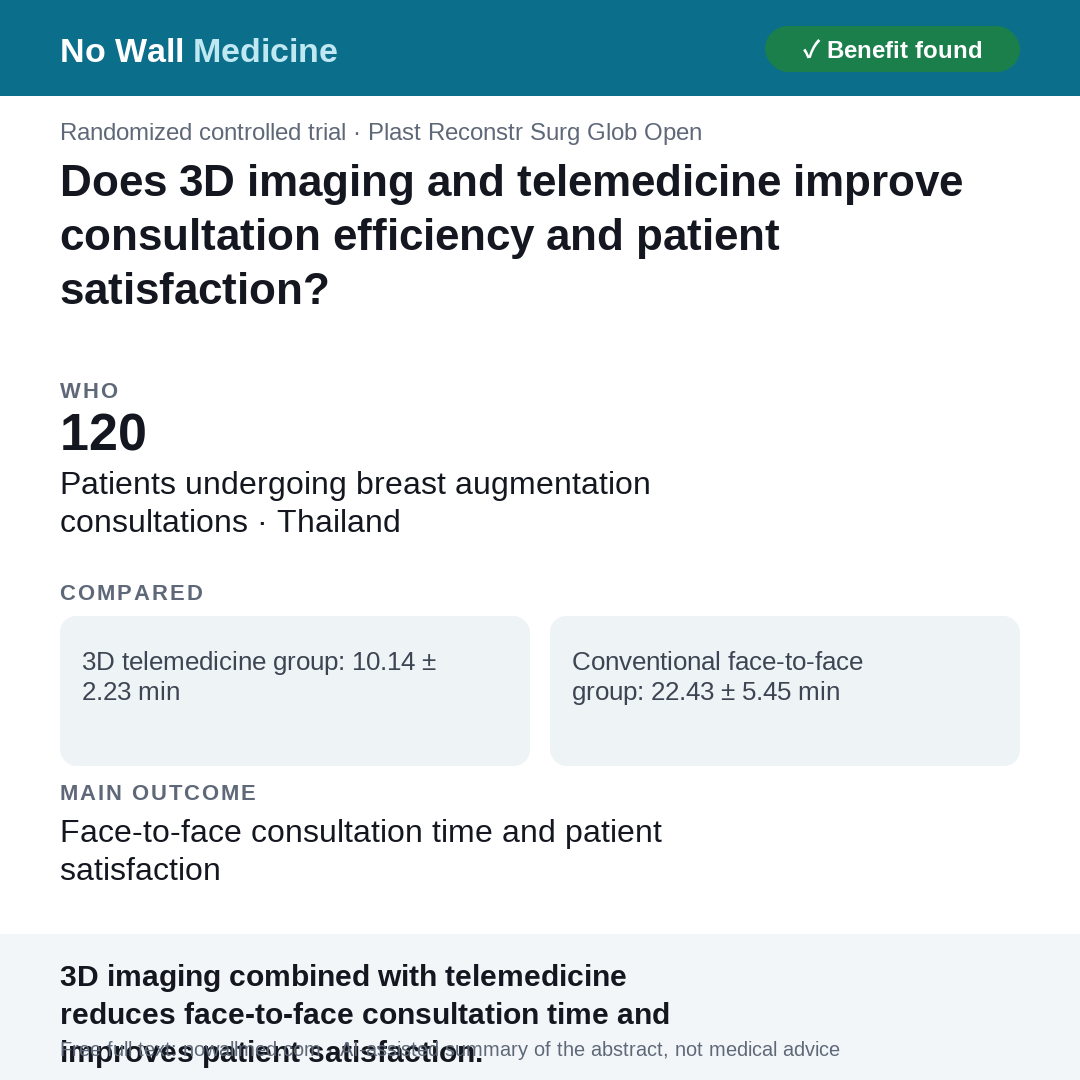
The Role of 3-dimensional Imaging and Telemedicine in Breast Augmentation Consultations: A Prospective Cohort Study of 1153 Cases and a Randomized Controlled Trial in Thailand
Randomized controlled trialBenefit found
Does 3D imaging and telemedicine improve consultation efficiency and patient satisfaction?
Who
120
Patients undergoing breast augmentation consultations · Thailand
Compared
3D telemedicine group: 10.14 ± 2.23 min
Conventional face-to-face group: 22.43 ± 5.45 min
Main outcome
Face-to-face consultation time and patient satisfaction
Bottom line: 3D imaging combined with telemedicine reduces face-to-face consultation time and improves patient satisfaction.
Plast Reconstr Surg Glob Open · 2026-03-18Download image
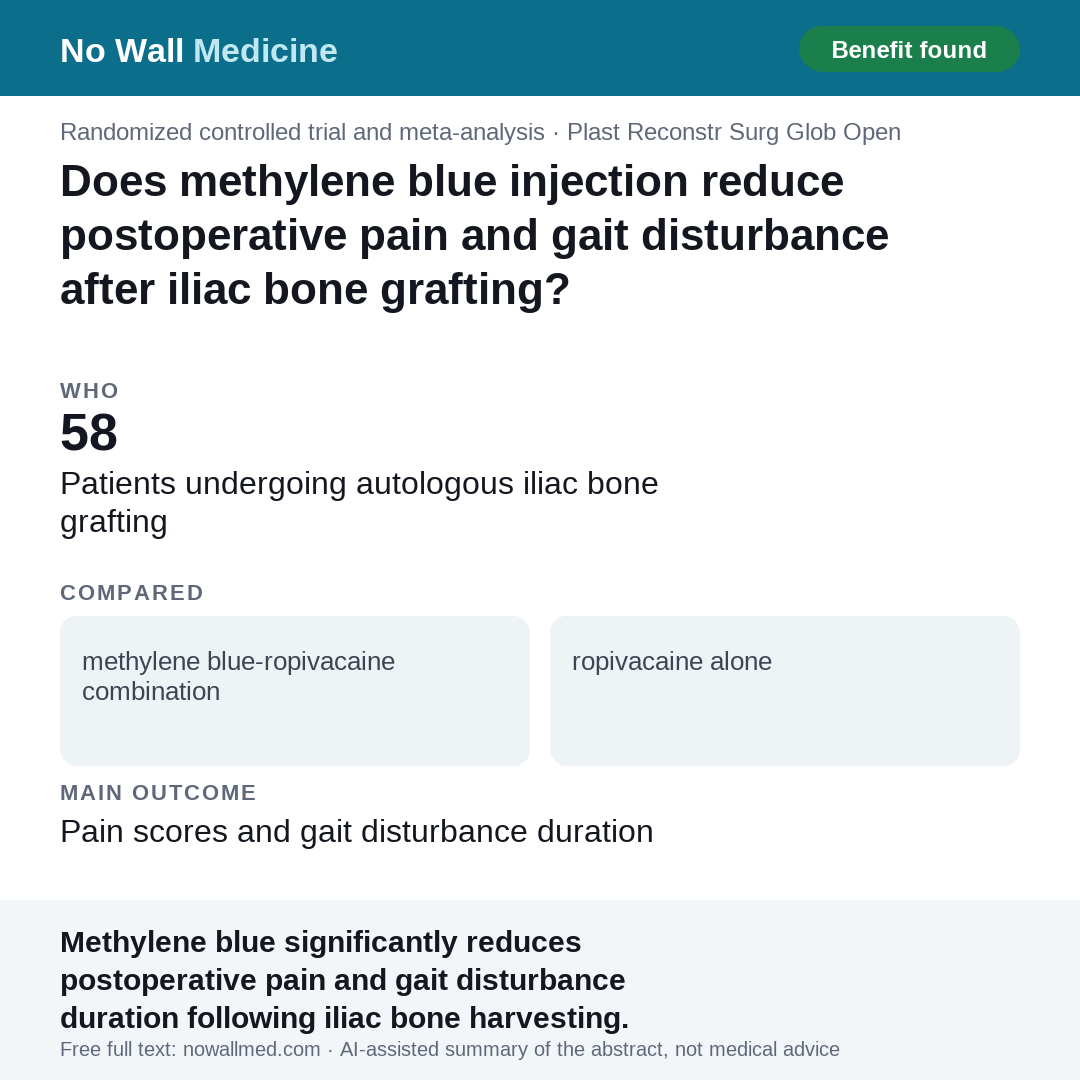
Methylene Blue Injection for Pain Reduction at Iliac Crest Donor Sites: A Randomized Trial and Meta-analysis
Randomized controlled trial and meta-analysisBenefit found
Does methylene blue injection reduce postoperative pain and gait disturbance after iliac bone grafting?
Who
58
Patients undergoing autologous iliac bone grafting
Compared
methylene blue-ropivacaine combination
ropivacaine alone
Main outcome
Pain scores and gait disturbance duration
Bottom line: Methylene blue significantly reduces postoperative pain and gait disturbance duration following iliac bone harvesting.
Plast Reconstr Surg Glob Open · 2026-03-18Download image
Intra-arrest systemic thrombolytic therapy during cardiopulmonary resuscitation: a systematic review and meta-analysis of randomized controlled trials
Systematic review and meta-analysis of randomized controlled trialsHarm found
Does intra-arrest systemic thrombolysis improve survival and neurological outcomes in cardiac arrest?
Who
1318
Patients undergoing cardiopulmonary resuscitation
Compared
Systemic thrombolytic therapy
Standard care
Main outcome
Survival to hospital discharge
Result: relative risk 0.86 (95% CI 0.65-1.14)
Bottom line: Intra-arrest thrombolysis does not improve survival or neurological outcomes and increases intracranial hemorrhage risk.
Limitation: Only three randomized controlled trials were included in the meta-analysis.
Resusc Plus · 2026-03-18Download image

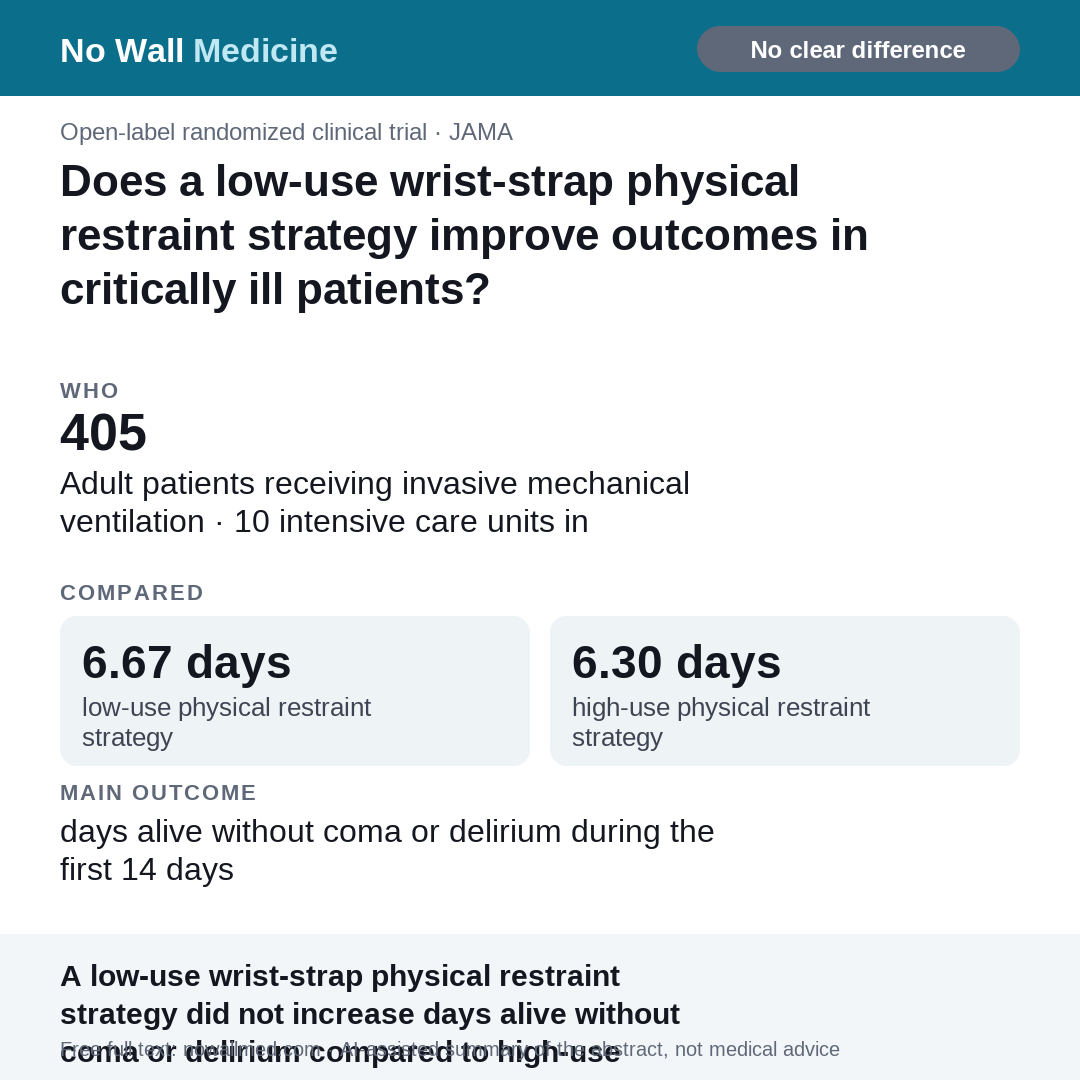
Restrictive vs Liberal Physical Restraint Strategies in Critically Ill Patients: The R2D2-ICU Randomized Clinical Trial
Open-label randomized clinical trialNo clear difference
Does a low-use wrist-strap physical restraint strategy improve outcomes in critically ill patients?
Who
405
Adult patients receiving invasive mechanical ventilation · 10 intensive care units in France
Compared
6.67 dayslow-use physical restraint strategy (95% CI, 5.69-7.65)
6.30 dayshigh-use physical restraint strategy (95% CI, 5.35-7.24)
Main outcome
days alive without coma or delirium during the first 14 days
Result: adjusted mean difference, 0.37 days (95% CI, -0.71 to 1.46)
Bottom line: A low-use wrist-strap physical restraint strategy did not increase days alive without coma or delirium compared to high-use strategy.
JAMA · 2026-03-17Download image
Mass azithromycin distribution and antibiotic resistance in the gut and nasopharynx: a cluster-randomized trial
Double-blind, cluster-randomized, placebo-controlled trialMixed results
Does mass azithromycin distribution impact gut and nasopharyngeal antibiotic resistance?
Who
Children in participating communities in Niger · Niger
Compared
child-azithromycin (1-59-month olds): 1.16 fold change in gut macrolide AMR
infant-azithromycin (1-11-month olds): 1.04× fold change in gut macrolide AMR
placebo (12-59-month olds)
Main outcome
Changes in gut and nasopharynx macrolide antimicrobial resistance
Result: 1.16, 95% confidence interval (CI): 1.06-1.28
Bottom line: Mass azithromycin administration increased gut macrolide resistance but did not significantly affect nasopharyngeal resistance.
Nat Med · 2026-03-17Download image

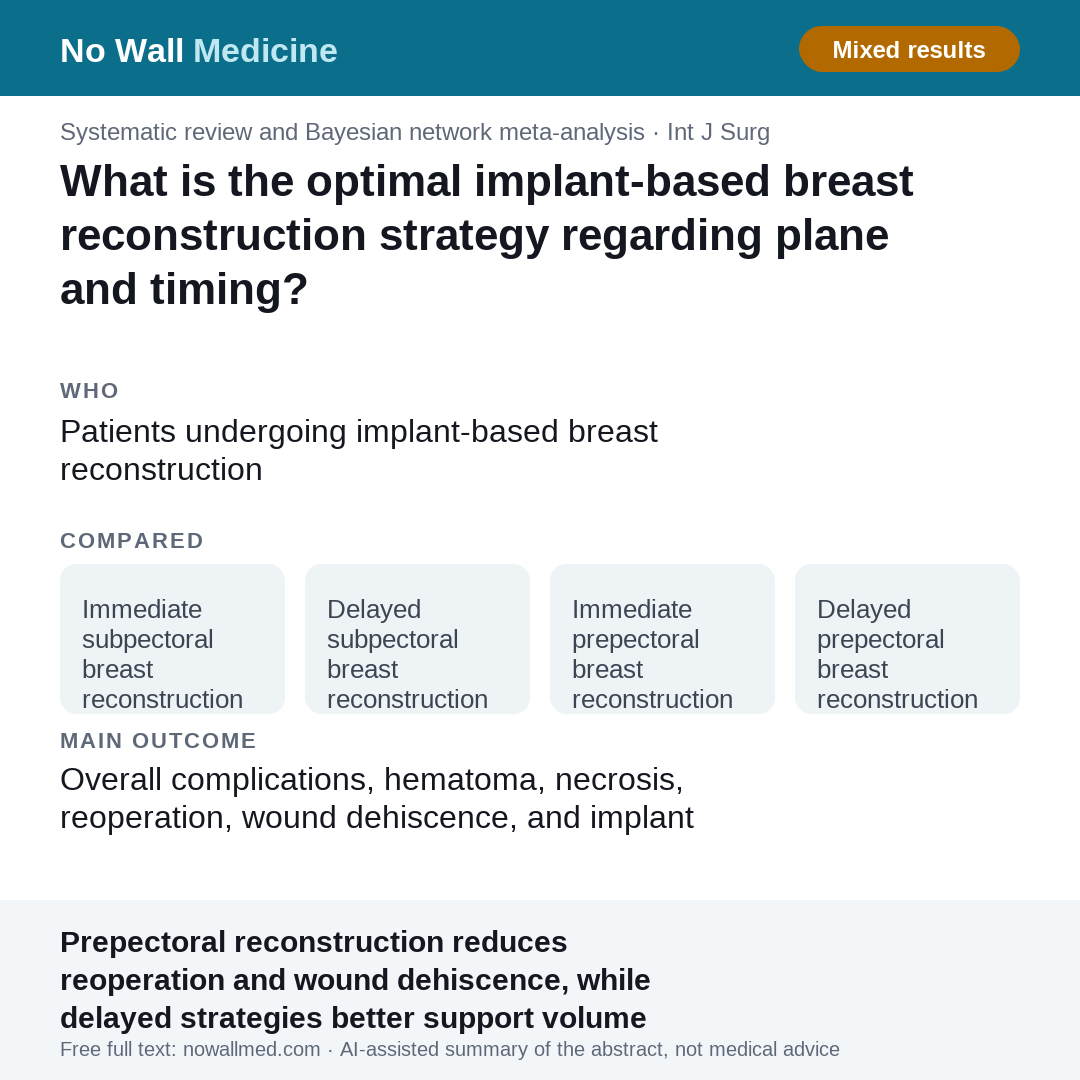
Comparison of different implant-based breast reconstruction strategies: A systematic review and Bayesian network meta-analysis
Systematic review and Bayesian network meta-analysisMixed results
What is the optimal implant-based breast reconstruction strategy regarding plane and timing?
Who
Patients undergoing implant-based breast reconstruction
Compared
Immediate subpectoral breast reconstruction
Delayed subpectoral breast reconstruction
Immediate prepectoral breast reconstruction
Delayed prepectoral breast reconstruction
Main outcome
Overall complications, hematoma, necrosis, reoperation, wound dehiscence, and implant loss
Bottom line: Prepectoral reconstruction reduces reoperation and wound dehiscence, while delayed strategies better support volume optimization.
Int J Surg · 2026-03-17Download image
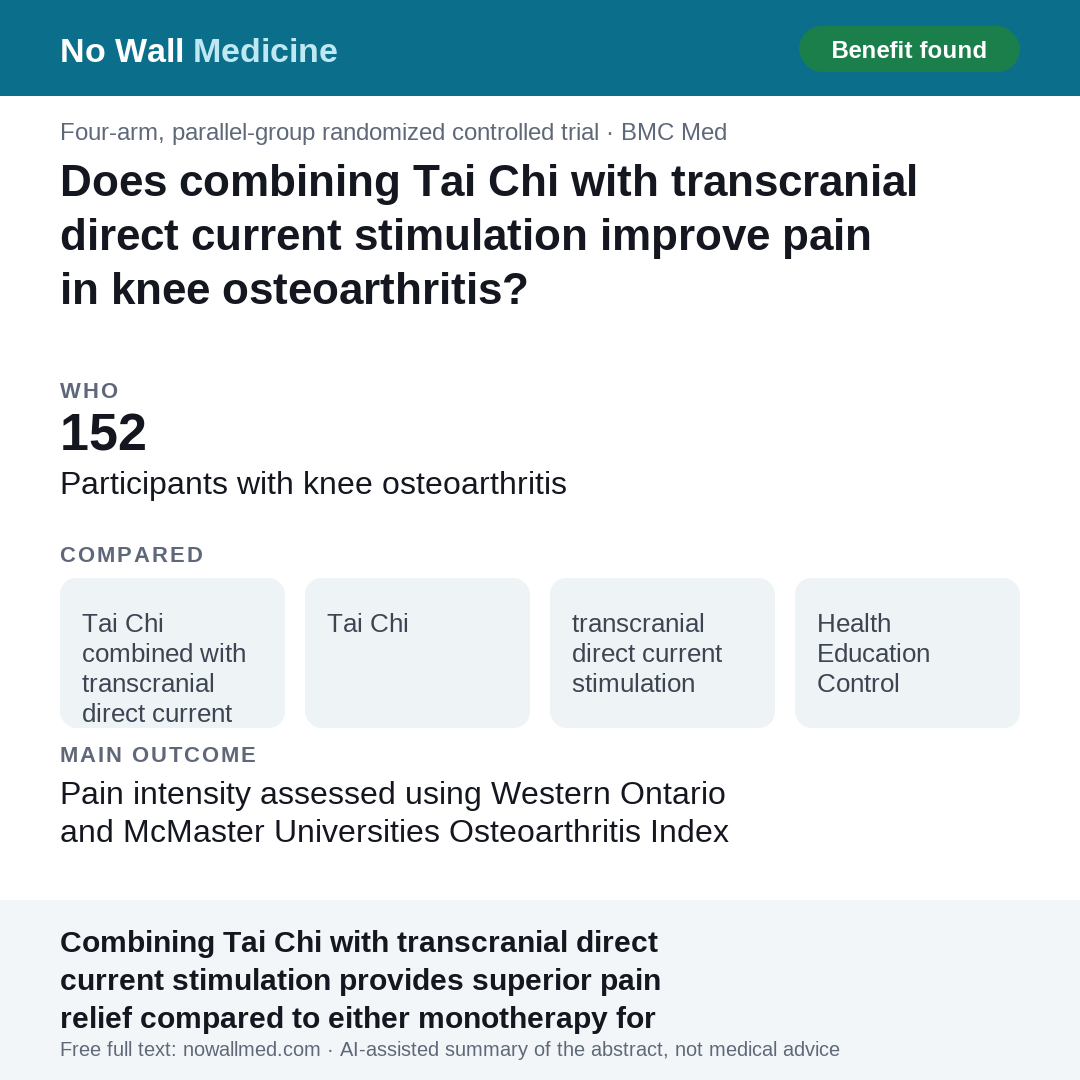
Effects of Tai Chi combined with transcranial direct current stimulation on pain in knee osteoarthritis: a randomized controlled neuroimaging trial
Four-arm, parallel-group randomized controlled trialBenefit found
Does combining Tai Chi with transcranial direct current stimulation improve pain in knee osteoarthritis?
Who
152
Participants with knee osteoarthritis
Compared
Tai Chi combined with transcranial direct current stimulation: significantly greater reduction in WOMAC Pain subscores
Tai Chi
transcranial direct current stimulation
Health Education Control
Main outcome
Pain intensity assessed using Western Ontario and McMaster Universities Osteoarthritis Index
Bottom line: Combining Tai Chi with transcranial direct current stimulation provides superior pain relief compared to either monotherapy for knee osteoarthritis.
Limitation: This was an exploratory trial
BMC Med · 2026-03-17Download image
Incidence of Postoperative Diplopia after Cataract Surgery: A Systematic Review and Meta-Analysis
Meta-analysis of 22 studiesMixed results
What is the incidence of postoperative binocular diplopia after cataract surgery by anesthesia route?
Who
88 470
Patients undergoing cataract surgery
Compared
0.01%Topical anesthesia (95% CI = 0.0%-15.33%)
1.2%Peribulbar anesthesia (95% CI = 0.5%-13.0%)
0.2%Retrobulbar anesthesia (95% CI: 0.1%-0.4%)
Main outcome
Incidence of postoperative binocular diplopia
Result: OR = 0.25, 95% CI 0.12-10.51
Bottom line: The pooled incidence of postoperative binocular diplopia after cataract surgery is 0.9%, varying by anesthesia route.
Ophthalmology · 2026-03-17Download image

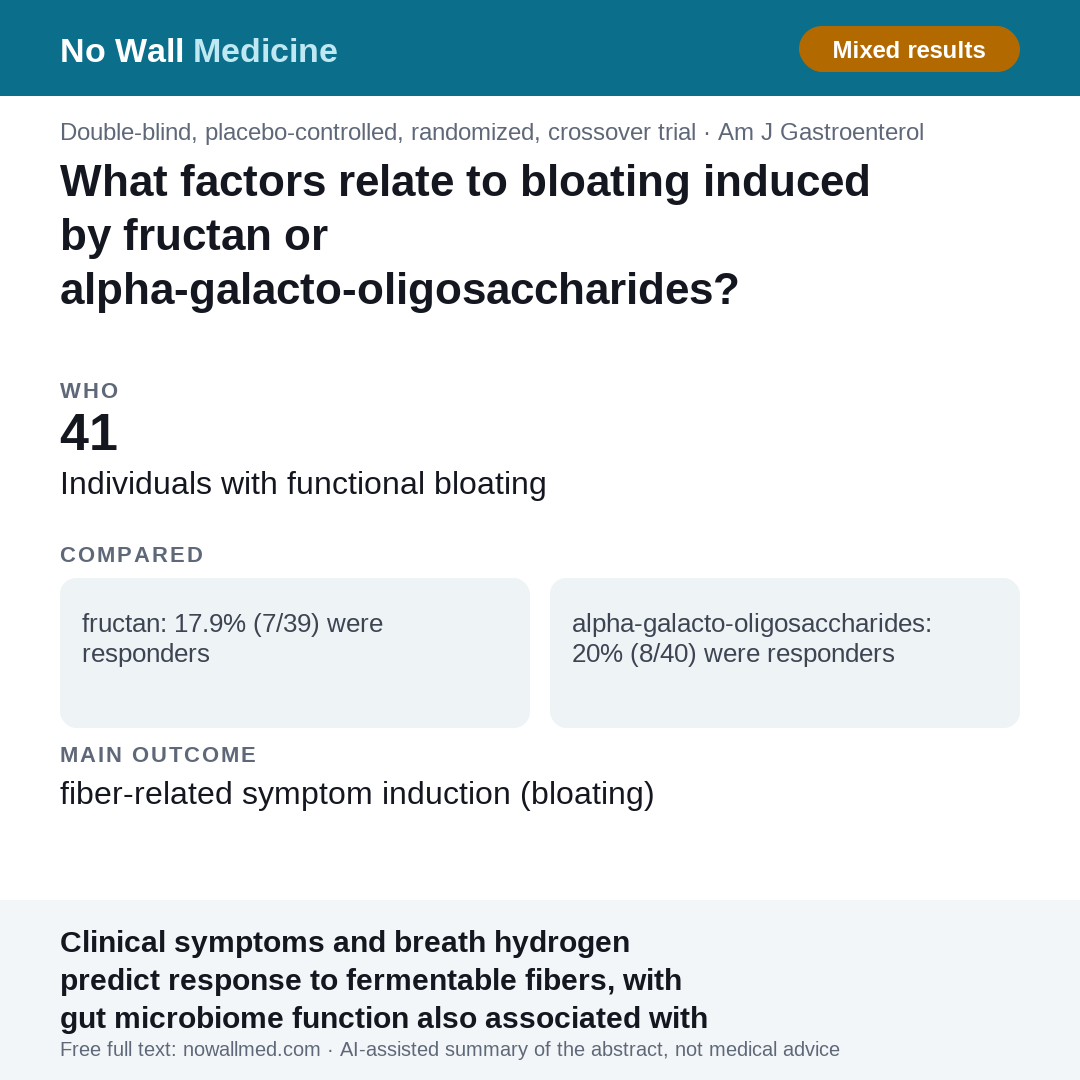
Gut Microbiome Composition and Function, Diet, and Clinical Factors in Relation to Fermentable Carbohydrate-Induced Bloating: A Double-Blind, Randomized, Crossover Trial
Double-blind, placebo-controlled, randomized, crossover trialMixed results
What factors relate to bloating induced by fructan or alpha-galacto-oligosaccharides?
Who
41
Individuals with functional bloating
Compared
fructan: 17.9% (7/39) were responders
alpha-galacto-oligosaccharides: 20% (8/40) were responders
Main outcome
fiber-related symptom induction (bloating)
Bottom line: Clinical symptoms and breath hydrogen predict response to fermentable fibers, with gut microbiome function also associated with bloating.
Limitation: further investigations are required to draw firm conclusions for the microbial influence
Am J Gastroenterol · 2026-03-17Download image
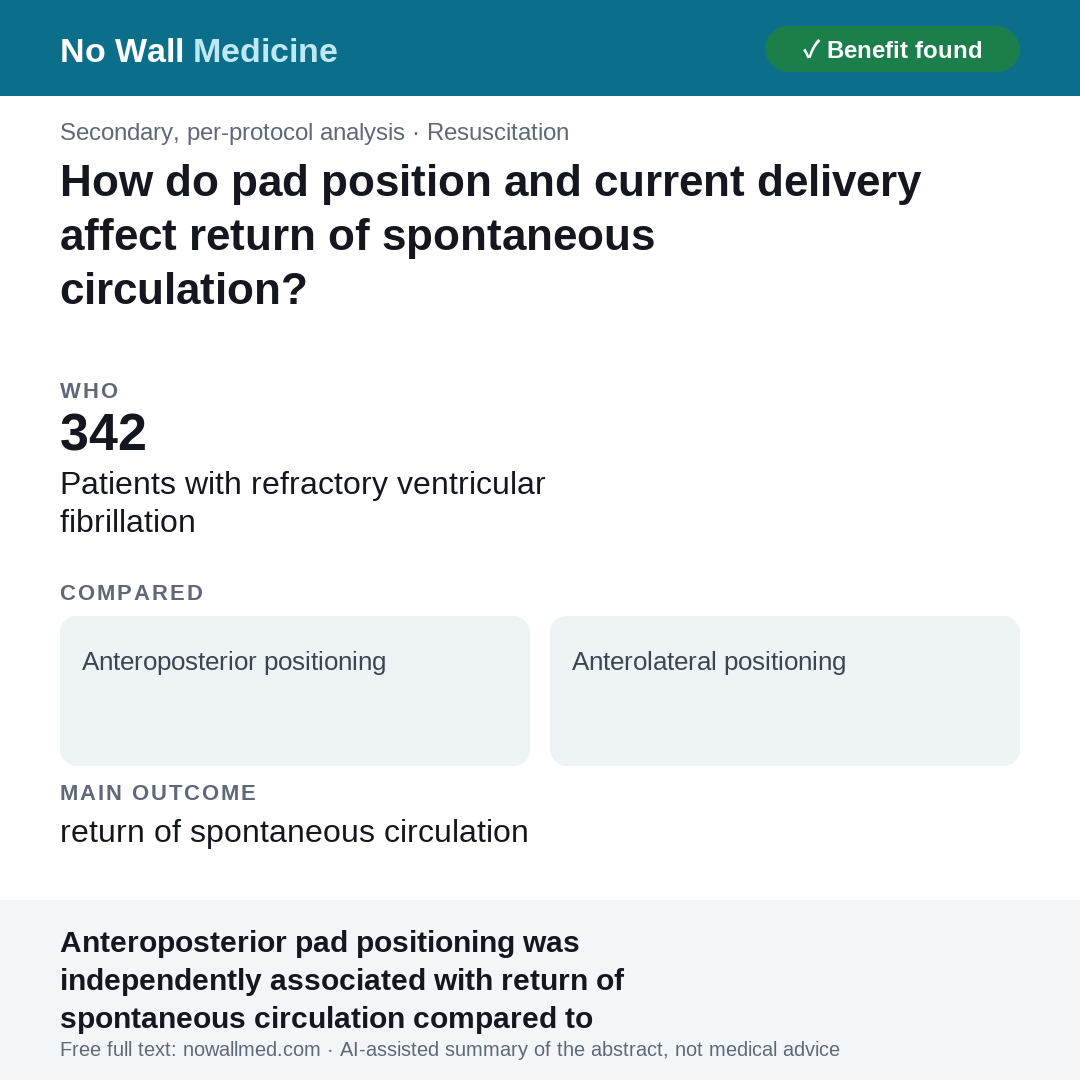
The impact of defibrillation current and pad position on return of spontaneous circulation during refractory ventricular fibrillation
Secondary, per-protocol analysisBenefit found
How do pad position and current delivery affect return of spontaneous circulation?
Who
342
Patients with refractory ventricular fibrillation
Compared
Anteroposterior positioning
Anterolateral positioning
Main outcome
return of spontaneous circulation
Result: adjusted odds ratio 2.01 (95% CI 1.12-3.59)
Bottom line: Anteroposterior pad positioning was independently associated with return of spontaneous circulation compared to anterolateral positioning.
Resuscitation · 2026-03-17Download image
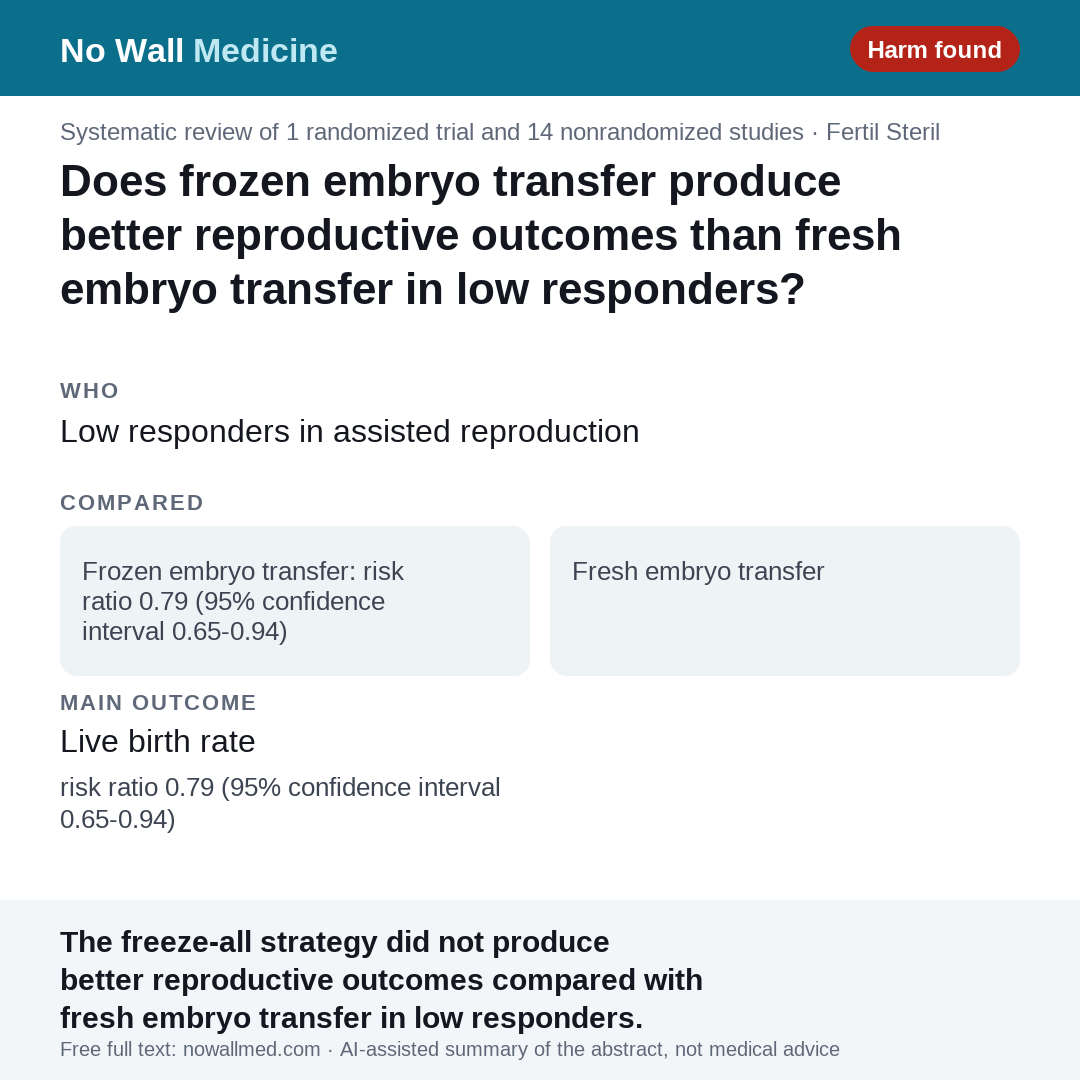
Frozen versus fresh embryo transfer in low responders: a systematic review
Systematic review of 1 randomized trial and 14 nonrandomized studiesHarm found
Does frozen embryo transfer produce better reproductive outcomes than fresh embryo transfer in low responders?
Who
Low responders in assisted reproduction
Compared
Frozen embryo transfer: risk ratio 0.79 (95% confidence interval 0.65-0.94)
Fresh embryo transfer
Main outcome
Live birth rate
Result: risk ratio 0.79 (95% confidence interval 0.65-0.94)
Bottom line: The freeze-all strategy did not produce better reproductive outcomes compared with fresh embryo transfer in low responders.
Limitation: Nonrandomized studies provided very uncertain evidence and findings should be further explored in randomized trials.
Fertil Steril · 2026-03-17Download image
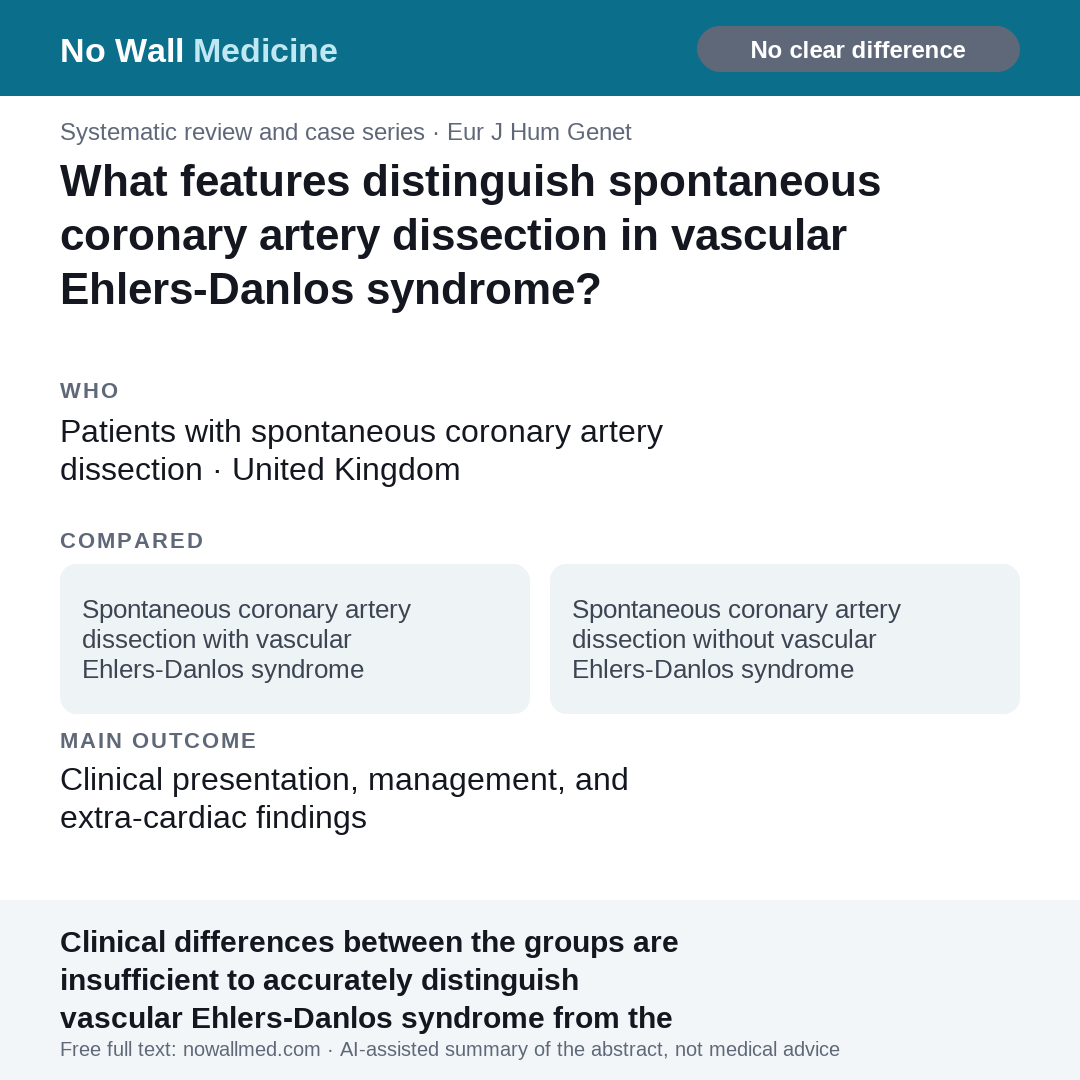
Spontaneous coronary artery dissection and vascular Ehlers-Danlos syndrome: a systematic review and case series
Systematic review and case seriesNo clear difference
What features distinguish spontaneous coronary artery dissection in vascular Ehlers-Danlos syndrome?
Who
Patients with spontaneous coronary artery dissection · United Kingdom
Compared
Spontaneous coronary artery dissection with vascular Ehlers-Danlos syndrome
Spontaneous coronary artery dissection without vascular Ehlers-Danlos syndrome
Main outcome
Clinical presentation, management, and extra-cardiac findings
Bottom line: Clinical differences between the groups are insufficient to accurately distinguish vascular Ehlers-Danlos syndrome from the general population.
Limitation: Differences should be interpreted carefully given cohort size.
Eur J Hum Genet · 2026-03-17Download image
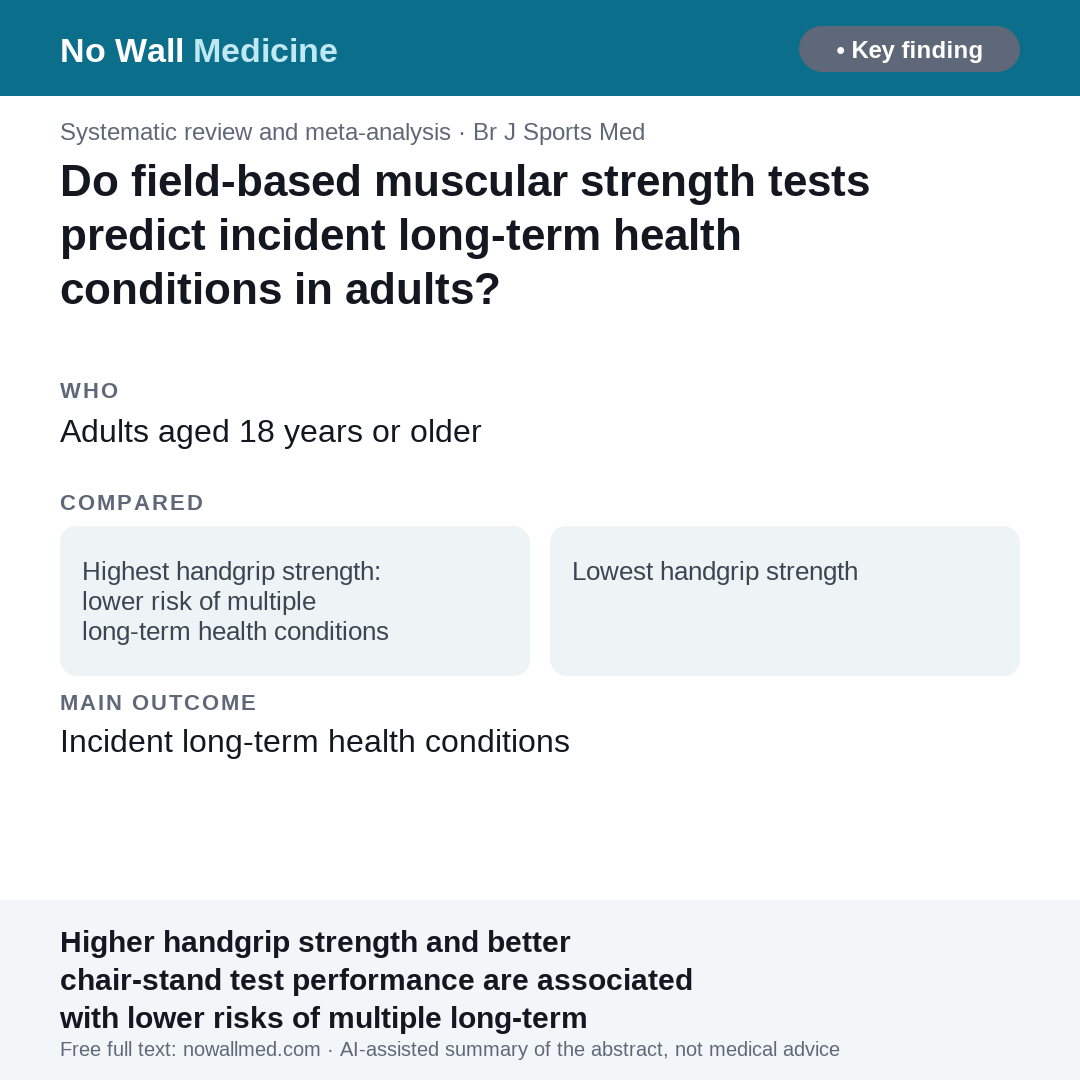
Clinical importance of simple muscular fitness tests to predict long-term health conditions: a systematic review and meta-analysis of 94 cohort studies
Systematic review and meta-analysisBenefit found
Do field-based muscular strength tests predict incident long-term health conditions in adults?
Who
Adults aged 18 years or older
Compared
Highest handgrip strength: lower risk of multiple long-term health conditions
Lowest handgrip strength
Main outcome
Incident long-term health conditions
Bottom line: Higher handgrip strength and better chair-stand test performance are associated with lower risks of multiple long-term health conditions.
Limitation: The overall quality of the evidence ranged from very low to moderate.
Br J Sports Med · 2026-03-17Download image
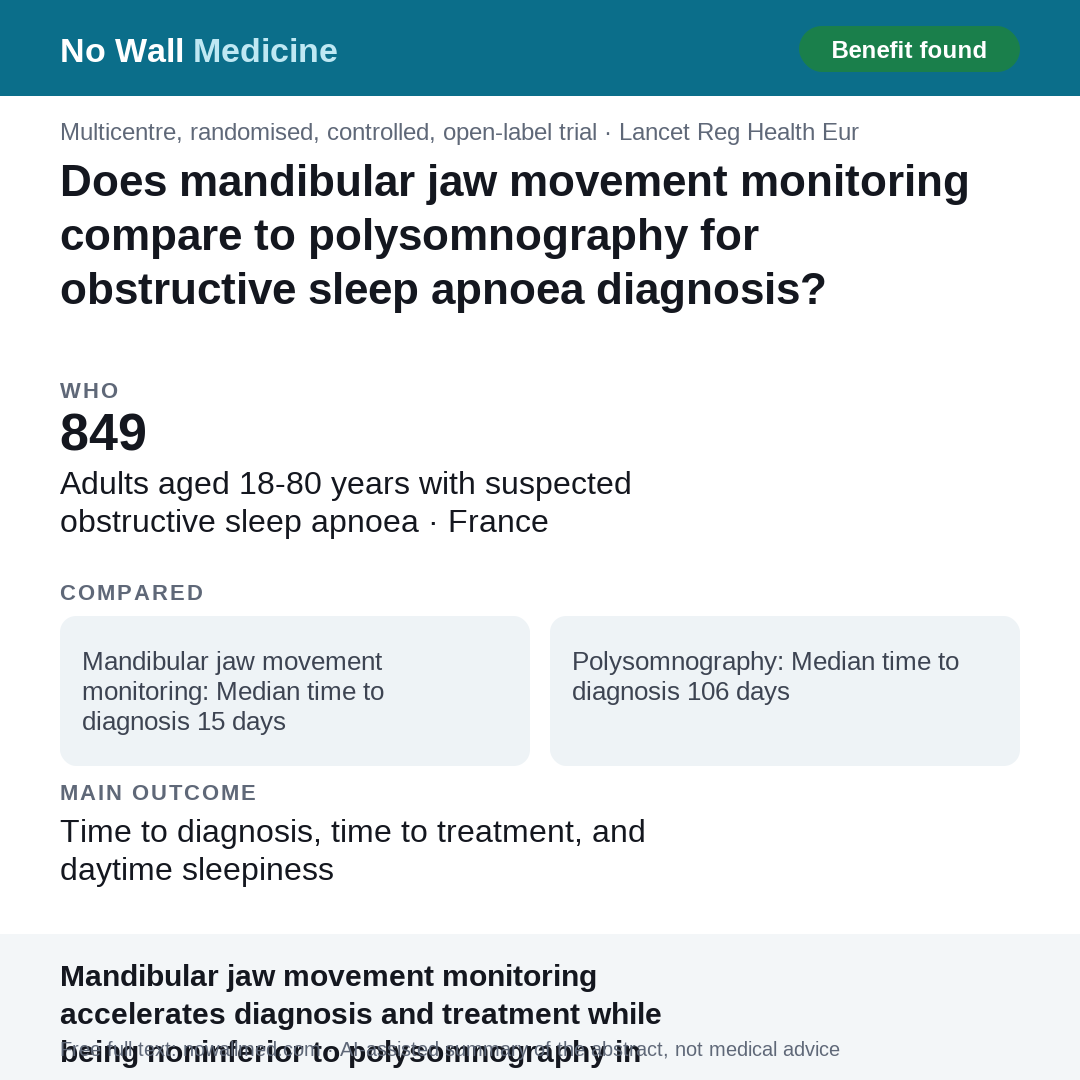
Time to diagnosis and treatment of obstructive sleep apnoea using mandibular jaw movement monitoring versus polysomnography: an open-label, multicentre, randomised, controlled trial
Multicentre, randomised, controlled, open-label trialBenefit found
Does mandibular jaw movement monitoring compare to polysomnography for obstructive sleep apnoea diagnosis?
Who
849
Adults aged 18-80 years with suspected obstructive sleep apnoea · France
Compared
Mandibular jaw movement monitoring: Median time to diagnosis 15 days
Polysomnography: Median time to diagnosis 106 days
Main outcome
Time to diagnosis, time to treatment, and daytime sleepiness
Result: difference in ESS at 3 months -2.26 vs -2.29 (95% CI -0.85, 0.79)
Bottom line: Mandibular jaw movement monitoring accelerates diagnosis and treatment while being noninferior to polysomnography in reducing daytime sleepiness.
Funded by: Sunrise and French Ministry of Health
Lancet Reg Health Eur · 2026-03-17Download image
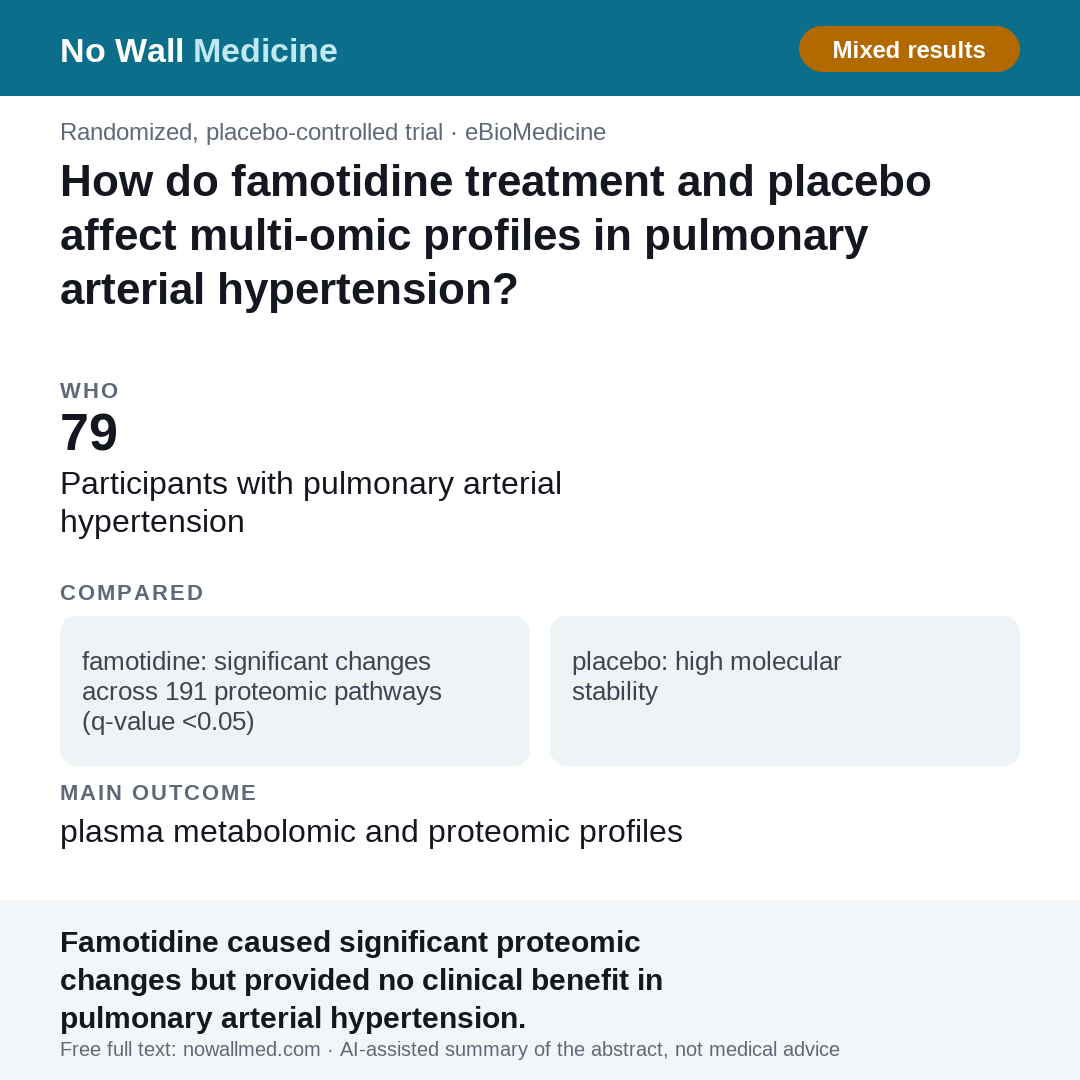
Harnessing metabolomics and proteomics in a clinical trial for pulmonary arterial hypertension: insights from post-hoc analysis of the REHAB-PH trial
Randomized, placebo-controlled trialMixed results
How do famotidine treatment and placebo affect multi-omic profiles in pulmonary arterial hypertension?
Who
79
Participants with pulmonary arterial hypertension
Compared
famotidine: significant changes across 191 proteomic pathways (q-value <0.05)
placebo: high molecular stability
Main outcome
plasma metabolomic and proteomic profiles
Bottom line: Famotidine caused significant proteomic changes but provided no clinical benefit in pulmonary arterial hypertension.
Funded by: US National Institutes of Health
eBioMedicine · 2026-03-17Download image
Phase III trial of infigratinib versus gemcitabine/cisplatin in adults with advanced cholangiocarcinoma with FGFR2 gene fusion or rearrangement: results and reflections on early termination of PROOF 301
Randomized phase III trialNo clear difference
Is infigratinib better than gemcitabine plus cisplatin for first-line FGFR2-rearranged cholangiocarcinoma?
Who
48
Adults with advanced cholangiocarcinoma with FGFR2 gene fusion or rearrangement · 120 sites
Compared
7.4 monthsinfigratinib
8.0 monthsgemcitabine plus cisplatin
Main outcome
progression-free survival
Bottom line: The study was terminated early due to poor accrual, limiting definitive conclusions on infigratinib efficacy.
Limitation: Study was terminated early due to poor accrual, limiting ability to draw definitive conclusions.
ESMO Open · 2026-03-17Download image

Evaluating the potential of acupuncture for Alzheimer's disease treatment: A meta-analysis and systematic review of mouse model studies
Meta-analysis and systematic reviewBenefit found
Does electroacupuncture show potential for treating Alzheimer's disease in mouse models?
Who
Alzheimer's disease mouse models · Controlled laboratory settings
Compared
Electroacupuncture: significantly reduces amyloid-beta, phosphorylated tau, and neuroinflammatory biomarkers
Control
Main outcome
Disease pathology and cognitive function
Bottom line: Electroacupuncture significantly reduces disease pathology and enhances cognitive functions in Alzheimer's disease mouse models.
Transl Psychiatry · 2026-03-17Download image