Visual abstracts
New randomized trials and meta-analyses from leading journals at a glance: who was studied, what was compared, and what was found. Every paper is free to read in full.
All specialtiesCardiology 4877Oncology 4138Gastroenterology & Hepatology 1942Infectious Disease 3837Neurology 1905Psychiatry & Mental Health 2273Pulmonology 2143Critical Care 1365Endocrinology & Diabetes 2580Pediatrics 2980Surgery 2559Orthopedics & Sports Medicine 931Neurosurgery 537Cardiothoracic & Vascular Surgery 674Plastic & Reconstructive Surgery 591Nephrology 1133Rheumatology 823Hematology 1109Dermatology 621Ophthalmology 543Obstetrics & Gynecology 1686Public & Global Health 1058Radiology & Imaging 648Anesthesiology 986Urology 764ENT (Otolaryngology) 503Emergency Medicine 511Allergy & Immunology 313Geriatrics 981Family Medicine & Primary Care 562Medical Genetics & Genomics 676Pathology & Laboratory Medicine 159Physical Medicine & Rehabilitation 757Palliative Care 444Nutrition 1588Digital Health & AI 2201General Medicine 321
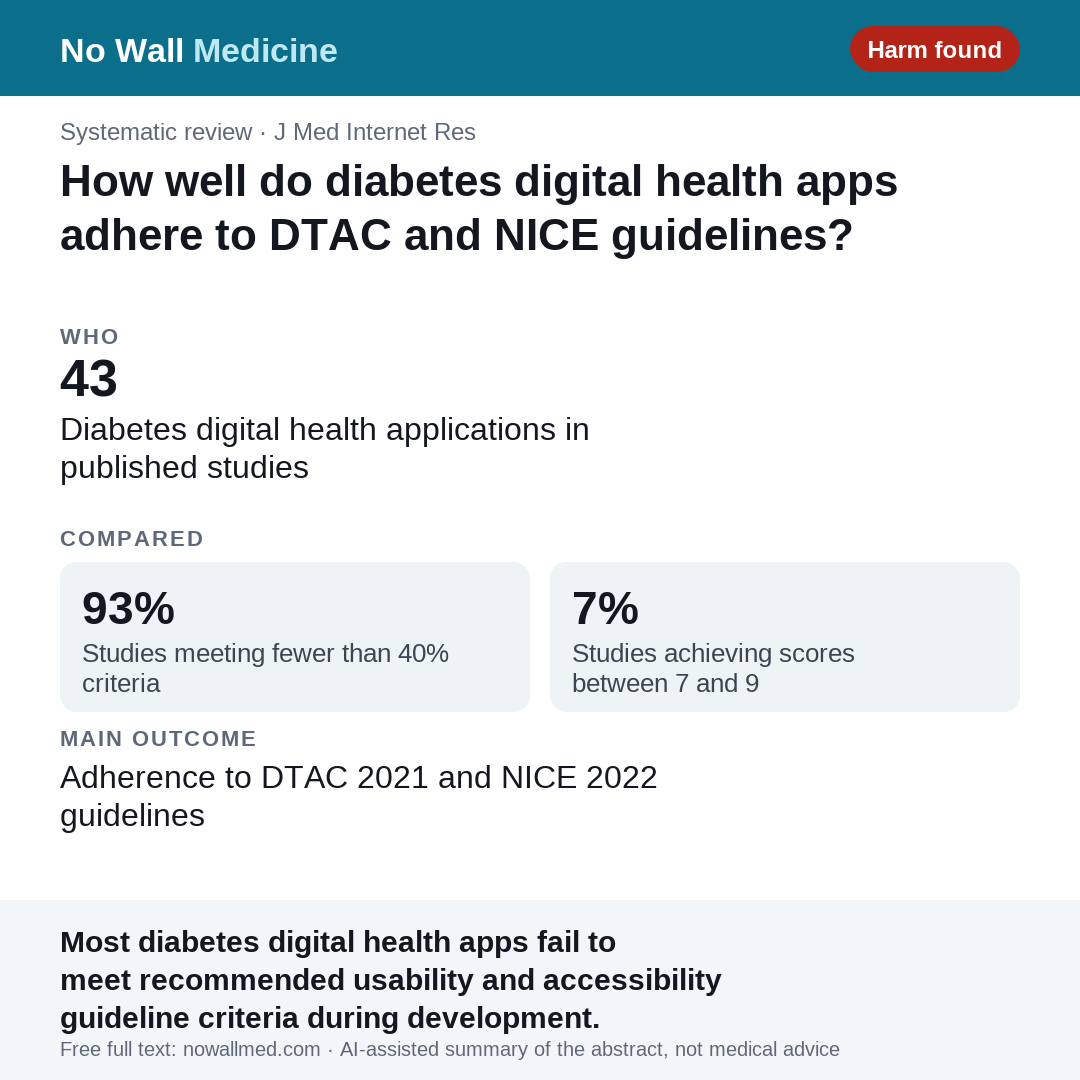
Adherence to Usability and Accessibility Principles in Digital Health Applications for Patients With Diabetes: Systematic Review
Systematic reviewHarm found
How well do diabetes digital health apps adhere to DTAC and NICE guidelines?
Who
43
Diabetes digital health applications in published studies
Compared
93%Studies meeting fewer than 40% criteria (n=40)
7%Studies achieving scores between 7 and 9 (3)
Main outcome
Adherence to DTAC 2021 and NICE 2022 guidelines
Bottom line: Most diabetes digital health apps fail to meet recommended usability and accessibility guideline criteria during development.
J Med Internet Res · 2025-09-26Download image
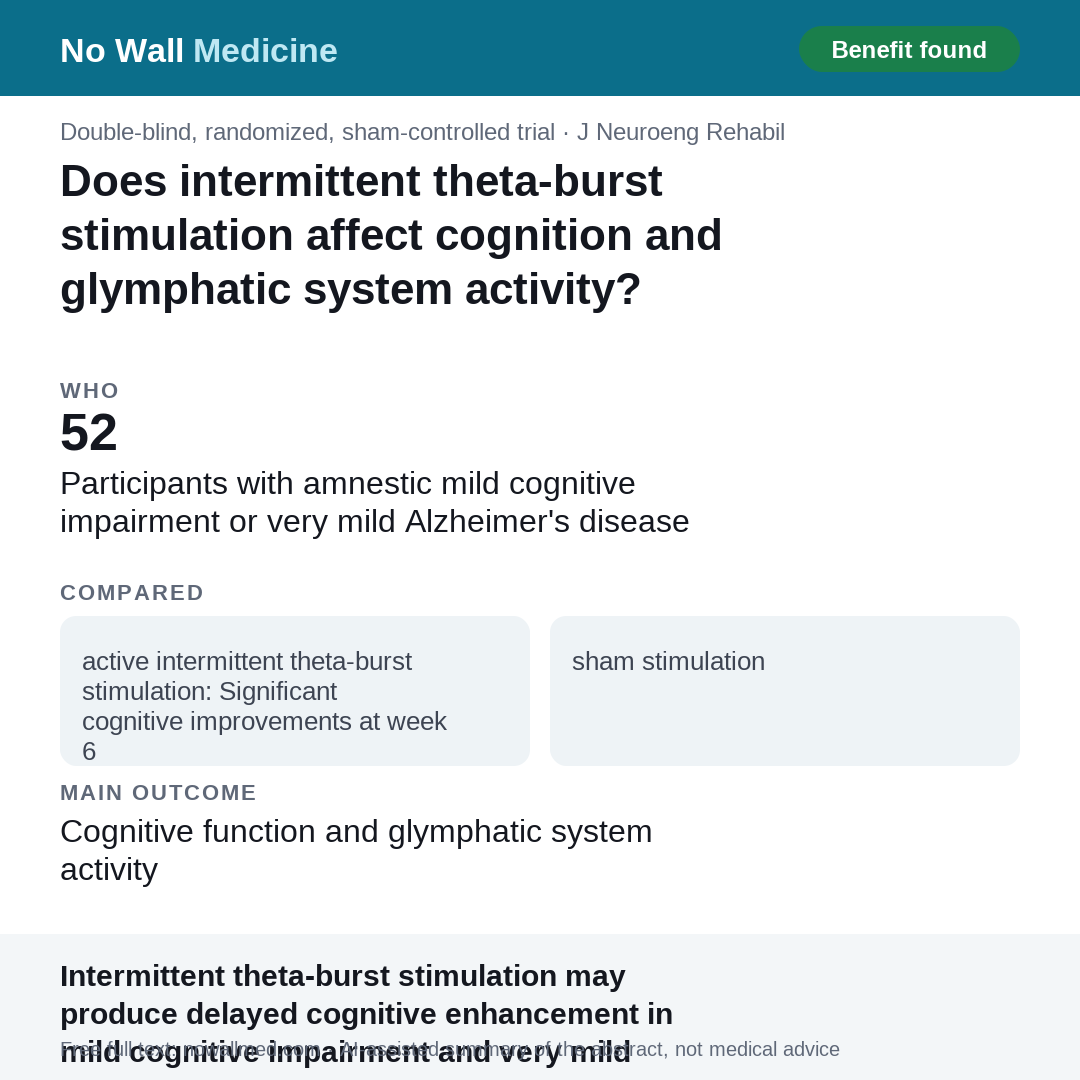
Effects of intermittent theta-burst stimulation on cognition and glymphatic system activity in mild cognitive impairment and very mild Alzheimer's disease: a randomized controlled trial
Double-blind, randomized, sham-controlled trialBenefit found
Does intermittent theta-burst stimulation affect cognition and glymphatic system activity?
Who
52
Participants with amnestic mild cognitive impairment or very mild Alzheimer's disease
Compared
active intermittent theta-burst stimulation: Significant cognitive improvements at week 6
sham stimulation
Main outcome
Cognitive function and glymphatic system activity
Bottom line: Intermittent theta-burst stimulation may produce delayed cognitive enhancement in mild cognitive impairment and very mild Alzheimer's disease.
J Neuroeng Rehabil · 2025-09-26Download image
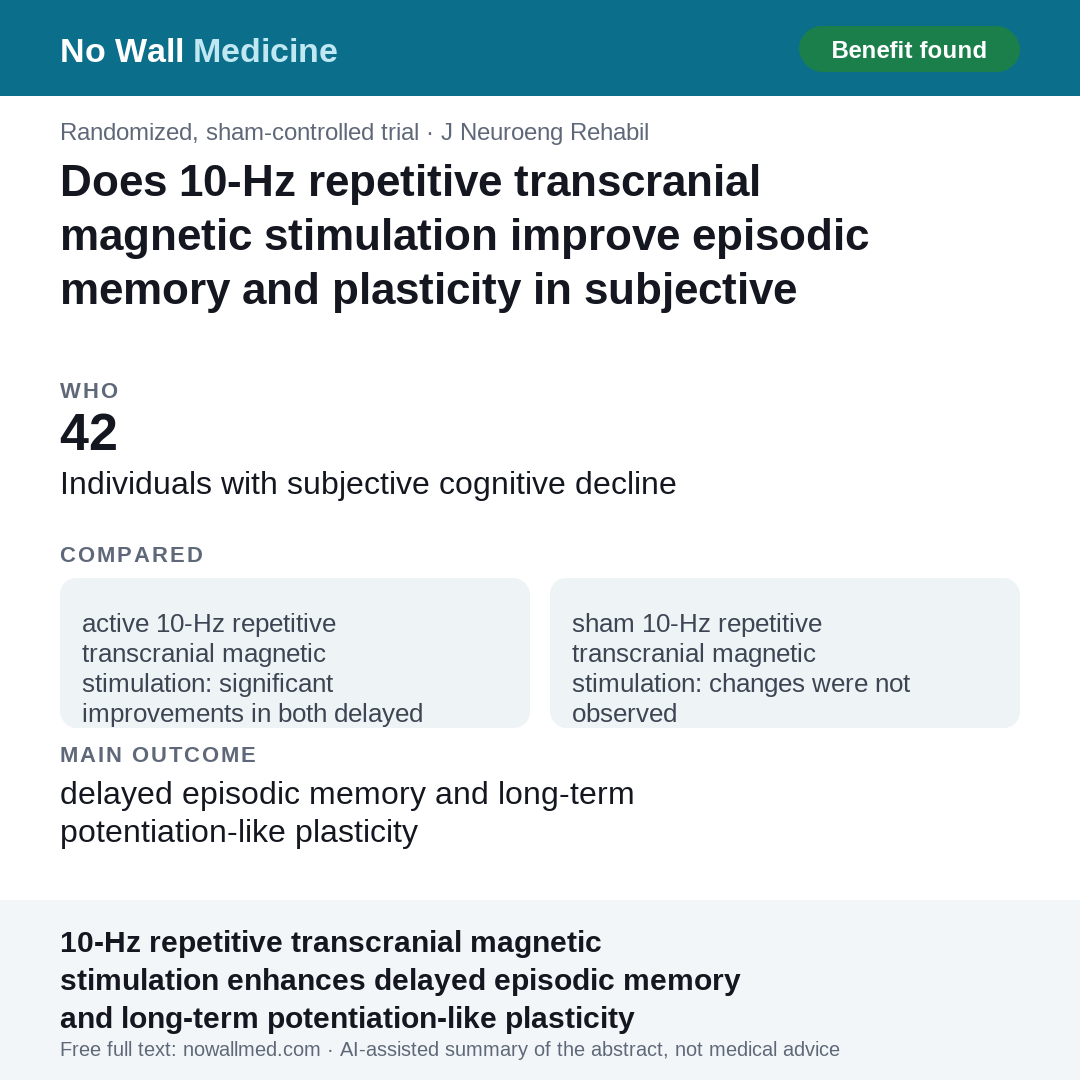
Enhanced episodic memory and LTP-like plasticity in subjective cognitive decline following 10-Hz repetitive transcranial magnetic stimulation
Randomized, sham-controlled trialBenefit found
Does 10-Hz repetitive transcranial magnetic stimulation improve episodic memory and plasticity in subjective cognitive decline?
Who
42
Individuals with subjective cognitive decline
Compared
active 10-Hz repetitive transcranial magnetic stimulation: significant improvements in both delayed episodic memory (AVLT-N5) and MEP amplitudes
sham 10-Hz repetitive transcranial magnetic stimulation: changes were not observed
Main outcome
delayed episodic memory and long-term potentiation-like plasticity
Bottom line: 10-Hz repetitive transcranial magnetic stimulation enhances delayed episodic memory and long-term potentiation-like plasticity in individuals with subjective cognitive decline.
J Neuroeng Rehabil · 2025-09-26Download image
A clinical decision tool including a decision tree, point-of-care testing of CRP, and safety-netting advice to guide antibiotic prescribing in acutely ill children in primary care in Belgium (ARON): a pragmatic, cluster-randomised, controlled trial
Pragmatic, cluster-randomised, controlled trialBenefit found
Does a clinical decision tool reduce antibiotic prescribing in acutely ill children?
Who
6750
Acutely ill children aged 6 months to 12 years · Belgian general practitioner and community paediatrician practices
Compared
16%Clinical decision tool
22%Usual care
Main outcome
Antibiotic prescribing at the index consultation
Result: adjusted odds ratio 0·72 (95% CI 0·55-0·94)
Bottom line: A clinical decision tool reduced antibiotic prescribing in children without causing harm or affecting recovery time.
Funded by: Belgian Health Care Knowledge Centre
Lancet · 2025-09-25Download image

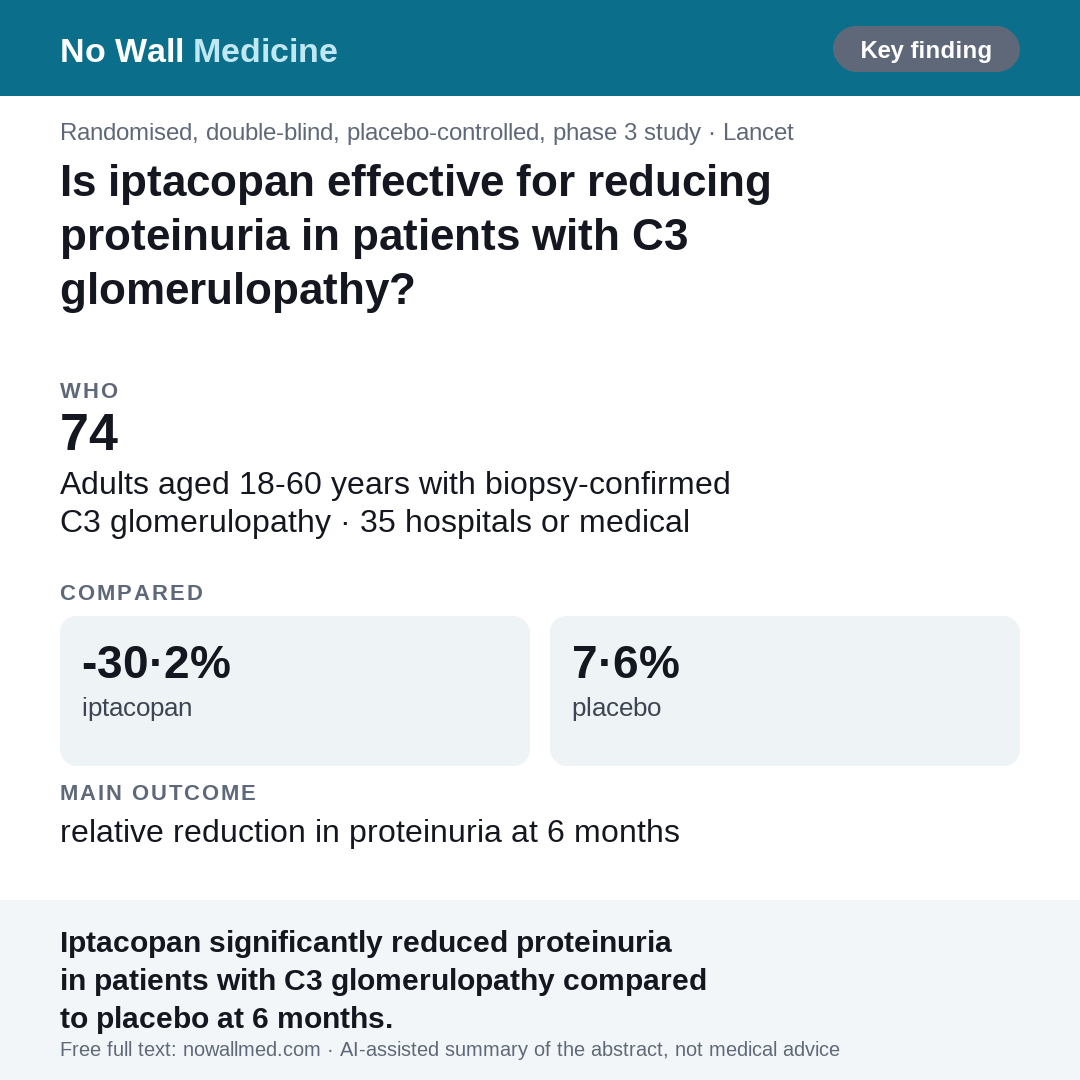
Oral iptacopan therapy in patients with C3 glomerulopathy: a randomised, double-blind, parallel group, multicentre, placebo-controlled, phase 3 study
Randomised, double-blind, placebo-controlled, phase 3 studyBenefit found
Is iptacopan effective for reducing proteinuria in patients with C3 glomerulopathy?
Who
74
Adults aged 18-60 years with biopsy-confirmed C3 glomerulopathy · 35 hospitals or medical centres in 18 countries
Compared
-30·2%iptacopan (95% CI -42·8 to -14·8)
7·6%placebo (-11·9 to 31·3)
Main outcome
relative reduction in proteinuria at 6 months
Result: 35·1% (13·8 to 51·1; p=0·0014)
Bottom line: Iptacopan significantly reduced proteinuria in patients with C3 glomerulopathy compared to placebo at 6 months.
Funded by: Novartis Pharma
Lancet · 2025-09-25Download image
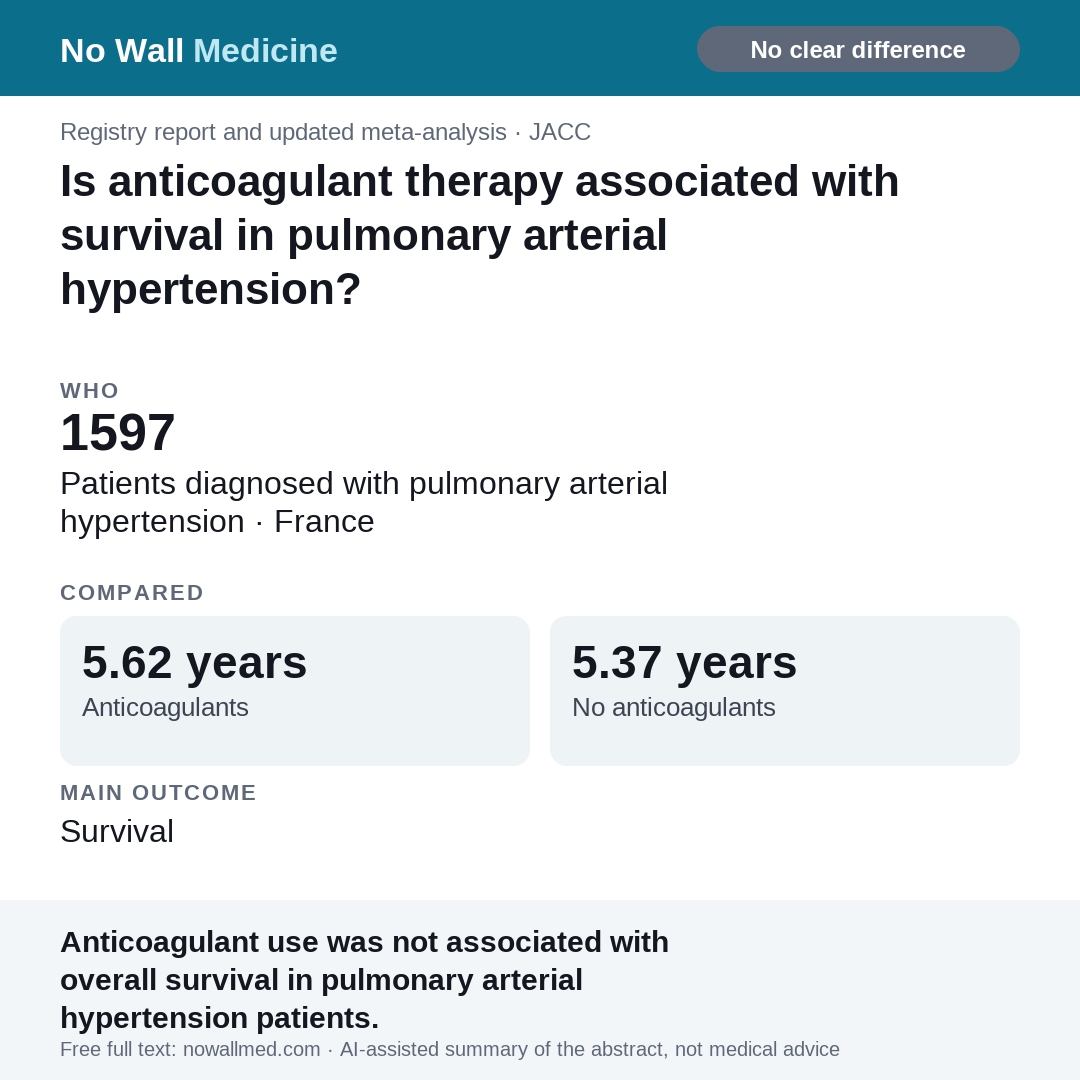
Association Between Anticoagulant Therapy and Survival in Pulmonary Arterial Hypertension: A Registry Report and Updated Meta-Analysis
Registry report and updated meta-analysisNo clear difference
Is anticoagulant therapy associated with survival in pulmonary arterial hypertension?
Who
1597
Patients diagnosed with pulmonary arterial hypertension · France
Compared
5.62 yearsAnticoagulants (95% CI: 4.76-6.58)
5.37 yearsNo anticoagulants (95% CI: 4.96-5.82)
Main outcome
Survival
Result: hazard ratio 0.98 (95% CI 0.78-1.23)
Bottom line: Anticoagulant use was not associated with overall survival in pulmonary arterial hypertension patients.
JACC · 2025-09-25Download image
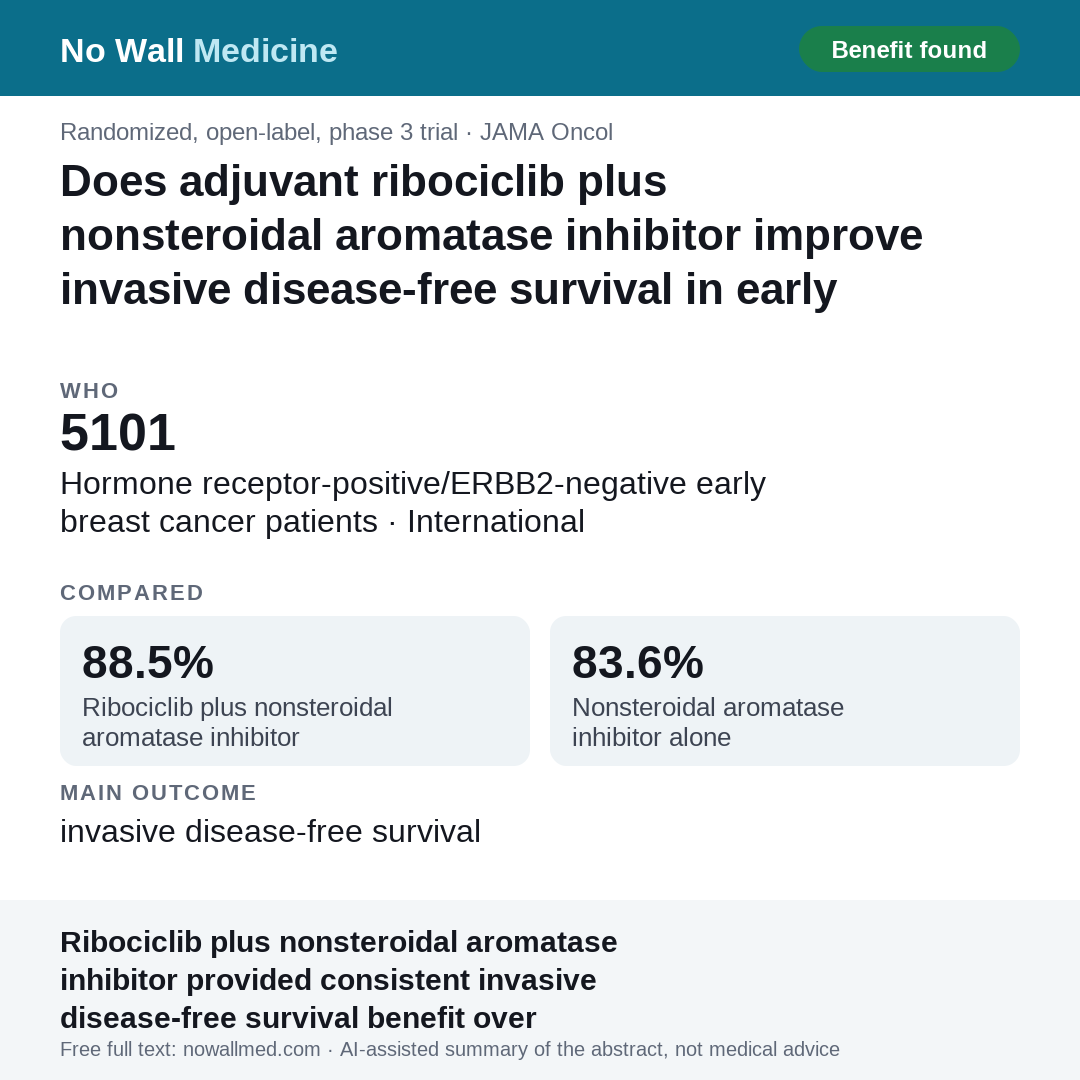
Ribociclib Plus Endocrine Therapy in Hormone Receptor-Positive/ERBB2-Negative Early Breast Cancer: 4-Year Outcomes From the NATALEE Randomized Clinical Trial
Randomized, open-label, phase 3 trialBenefit found
Does adjuvant ribociclib plus nonsteroidal aromatase inhibitor improve invasive disease-free survival in early breast cancer?
Who
5101
Hormone receptor-positive/ERBB2-negative early breast cancer patients · International
Compared
88.5%Ribociclib plus nonsteroidal aromatase inhibitor
83.6%Nonsteroidal aromatase inhibitor alone
Main outcome
invasive disease-free survival
Result: hazard ratio 0.72 (95% CI 0.61-0.84)
Bottom line: Ribociclib plus nonsteroidal aromatase inhibitor provided consistent invasive disease-free survival benefit over nonsteroidal aromatase inhibitor alone at 4 years.
JAMA Oncol · 2025-09-25Download image
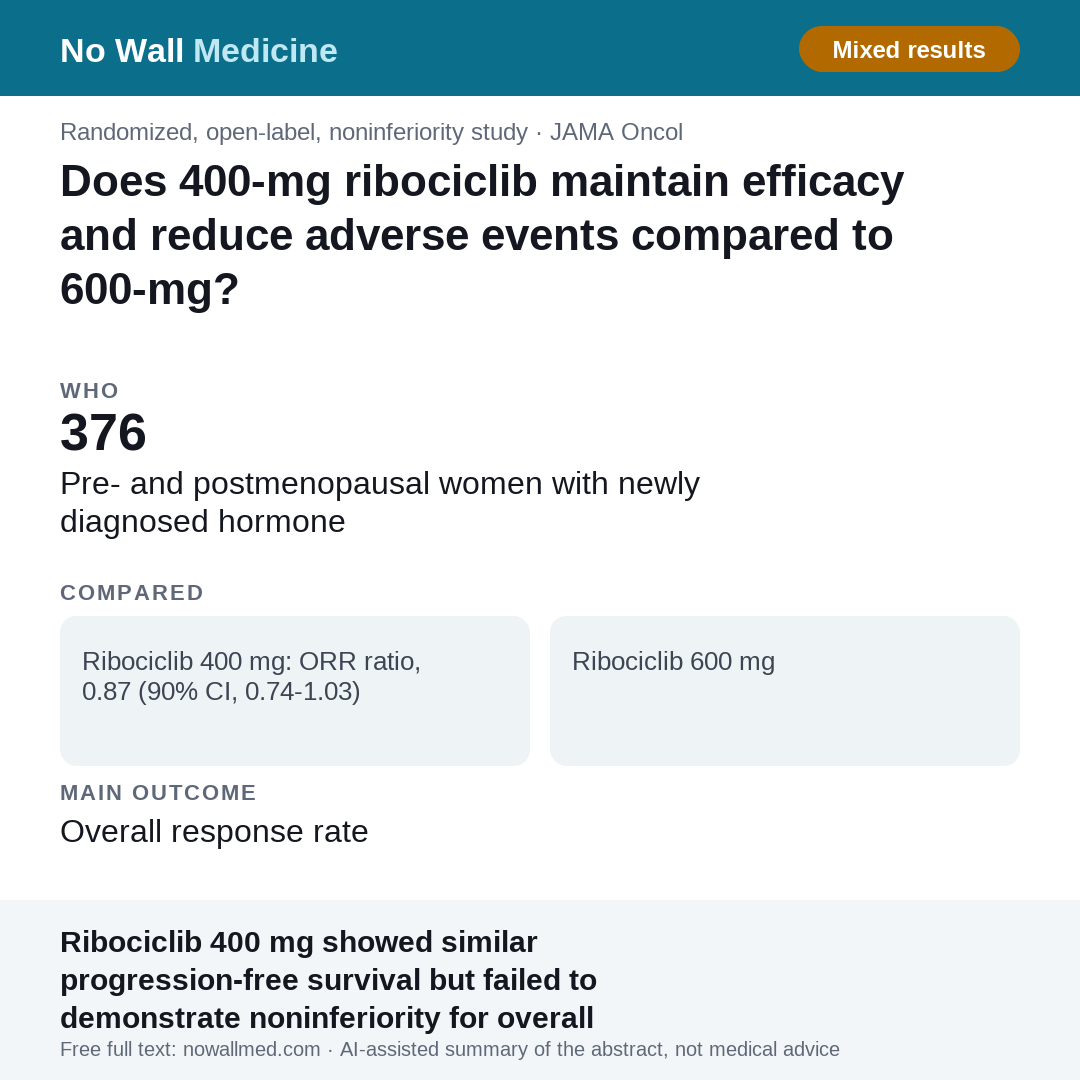
600- vs 400-mg First-Line Ribociclib in Hormone Receptor-Positive/ERBB2-Negative Advanced Breast Cancer: The AMALEE Randomized Clinical Trial
Randomized, open-label, noninferiority studyMixed results
Does 400-mg ribociclib maintain efficacy and reduce adverse events compared to 600-mg?
Who
376
Pre- and postmenopausal women with newly diagnosed hormone receptor-positive/ERRB2-negative advanced breast cancer · 107 sites in 23 countries
Compared
Ribociclib 400 mg: ORR ratio, 0.87 (90% CI, 0.74-1.03)
Ribociclib 600 mg
Main outcome
Overall response rate
Result: ORR ratio, 0.87 (90% CI, 0.74-1.03)
Bottom line: Ribociclib 400 mg showed similar progression-free survival but failed to demonstrate noninferiority for overall response rate.
JAMA Oncol · 2025-09-25Download image
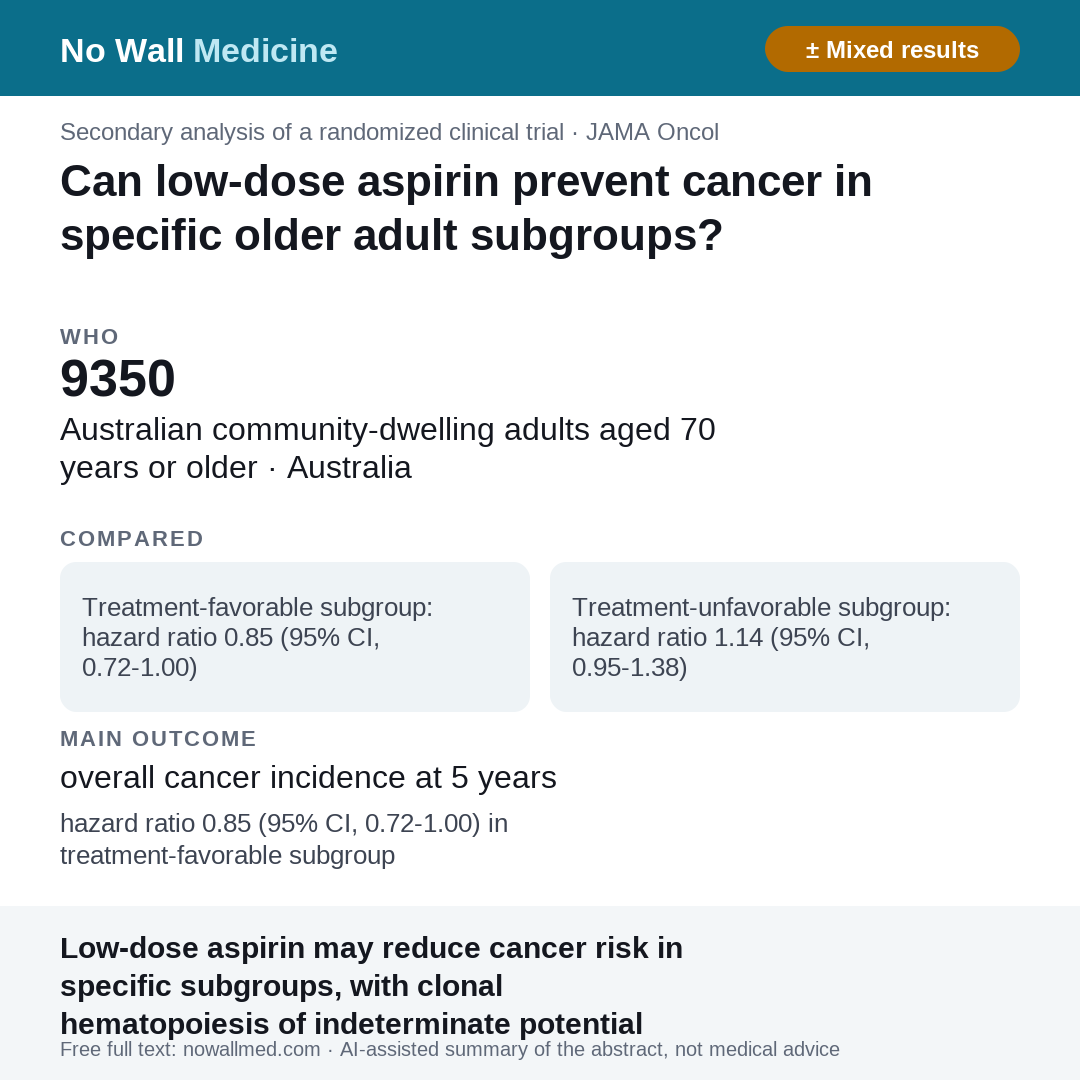
Low-Dose Aspirin for Individualized Cancer Prevention in Older Adults: A Secondary Analysis of the ASPREE Randomized Clinical Trial
Secondary analysis of a randomized clinical trialMixed results
Can low-dose aspirin prevent cancer in specific older adult subgroups?
Who
9350
Australian community-dwelling adults aged 70 years or older · Australia
Compared
Treatment-favorable subgroup: hazard ratio 0.85 (95% CI, 0.72-1.00)
Treatment-unfavorable subgroup: hazard ratio 1.14 (95% CI, 0.95-1.38)
Main outcome
overall cancer incidence at 5 years
Result: hazard ratio 0.85 (95% CI, 0.72-1.00) in treatment-favorable subgroup
Bottom line: Low-dose aspirin may reduce cancer risk in specific subgroups, with clonal hematopoiesis of indeterminate potential being a key predictor.
JAMA Oncol · 2025-09-25Download image
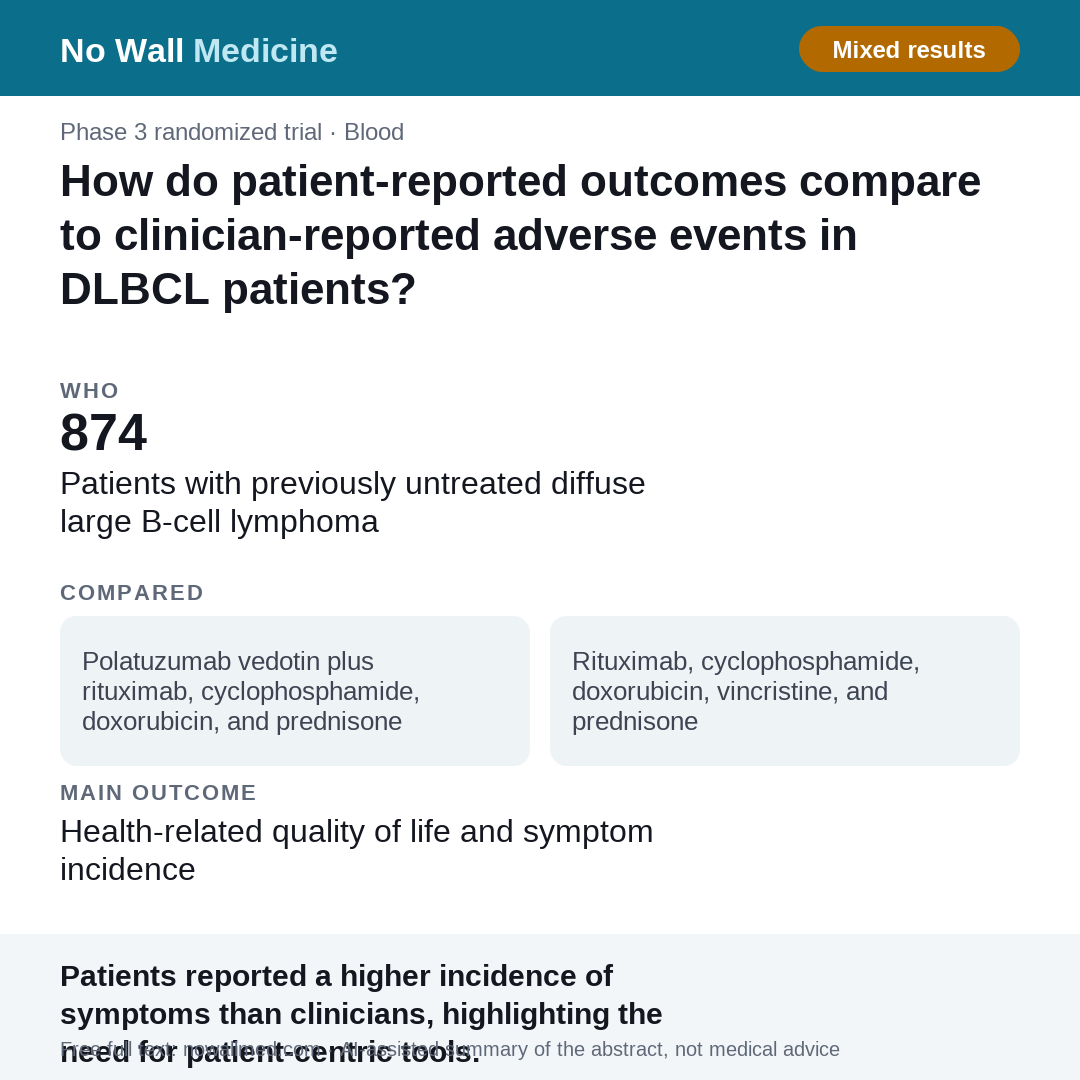
PROs vs clinician-reported adverse events in a large clinical trial: findings from the phase 3 POLARIX study
Phase 3 randomized trialMixed results
How do patient-reported outcomes compare to clinician-reported adverse events in DLBCL patients?
Who
874
Patients with previously untreated diffuse large B-cell lymphoma
Compared
Polatuzumab vedotin plus rituximab, cyclophosphamide, doxorubicin, and prednisone
Rituximab, cyclophosphamide, doxorubicin, vincristine, and prednisone
Main outcome
Health-related quality of life and symptom incidence
Bottom line: Patients reported a higher incidence of symptoms than clinicians, highlighting the need for patient-centric tools.
Blood · 2025-09-25Download image
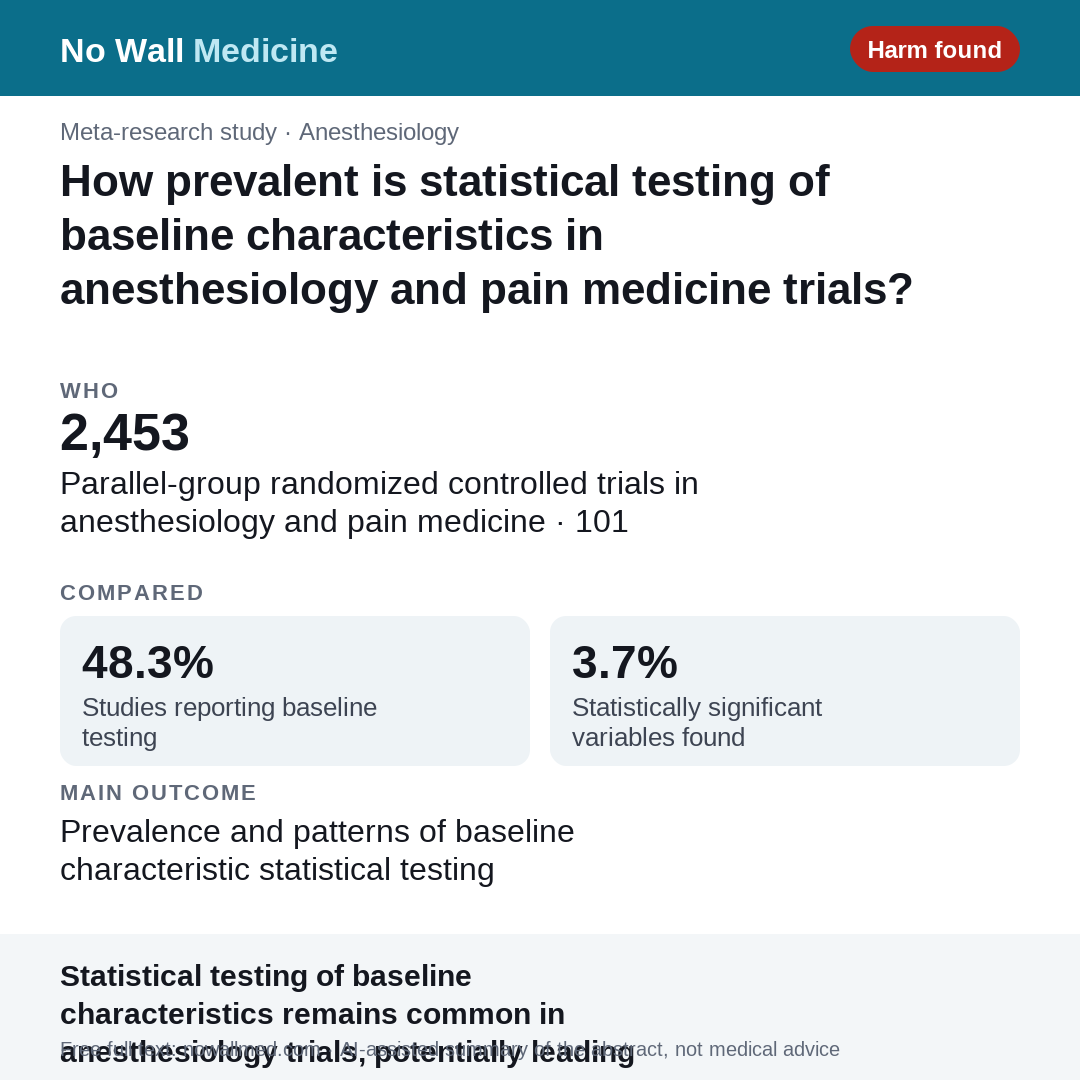
The Enduring Table 1 Fallacy: A Meta-research Study of Baseline Testing in Anesthesiology and Pain Trials
Meta-research studyHarm found
How prevalent is statistical testing of baseline characteristics in anesthesiology and pain medicine trials?
Who
2,453
Parallel-group randomized controlled trials in anesthesiology and pain medicine · 101 journals indexed in Scopus
Compared
48.3%Studies reporting baseline testing
3.7%Statistically significant variables found
Main outcome
Prevalence and patterns of baseline characteristic statistical testing
Bottom line: Statistical testing of baseline characteristics remains common in anesthesiology trials, potentially leading to misinterpretation of study validity.
Anesthesiology · 2025-09-25Download image
Bispectral Index-guided Anesthesia for Older Patients Having Noncardiac Surgery: A Randomized Multicenter Trial
Randomized, multicenter, double-blind trialNo clear difference
Does bispectral index-guided anesthesia improve outcomes for older patients undergoing noncardiac surgery?
Who
6982
Patients aged 65 years or older undergoing elective noncardiac surgery · 21 tertiary-care hospitals in China
Compared
10.2%Bispectral Index-guided (356 of 3,485)
10.0%Routine anesthetic management (351 of 3,497)
Main outcome
One-year all-cause mortality
Result: hazard ratio 1.02 (95% CI 0.88 to 1.17)
Bottom line: Bispectral index-guided anesthesia did not change one-year mortality or 30-day complications compared to routine anesthetic management.
Anesthesiology · 2025-09-25Download image

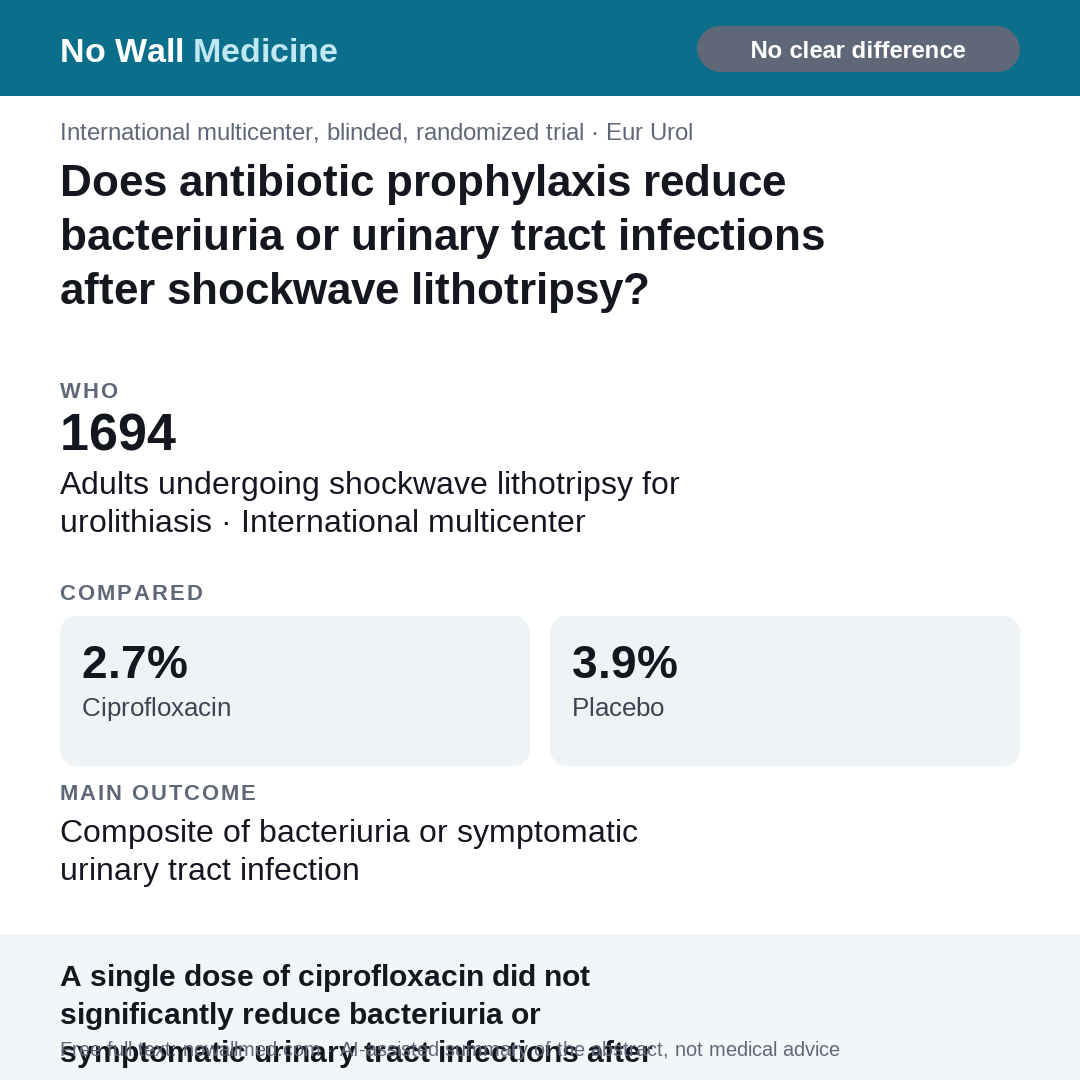
A Multicenter Randomized Controlled Trial of Antimicrobial Prophylaxis to Prevent Urinary Tract Infections after Shockwave Lithotripsy for Urolithiasis: The APPEAL Trial
International multicenter, blinded, randomized trialNo clear difference
Does antibiotic prophylaxis reduce bacteriuria or urinary tract infections after shockwave lithotripsy?
Who
1694
Adults undergoing shockwave lithotripsy for urolithiasis · International multicenter
Compared
2.7%Ciprofloxacin
3.9%Placebo
Main outcome
Composite of bacteriuria or symptomatic urinary tract infection
Result: risk ratio 0.68 (95% CI 0.41-1.15)
Bottom line: A single dose of ciprofloxacin did not significantly reduce bacteriuria or symptomatic urinary tract infections after shockwave lithotripsy.
Limitation: The patient importance depends on weighing small absolute risk reduction against antibiotic resistance implications.
Eur Urol · 2025-09-25Download image
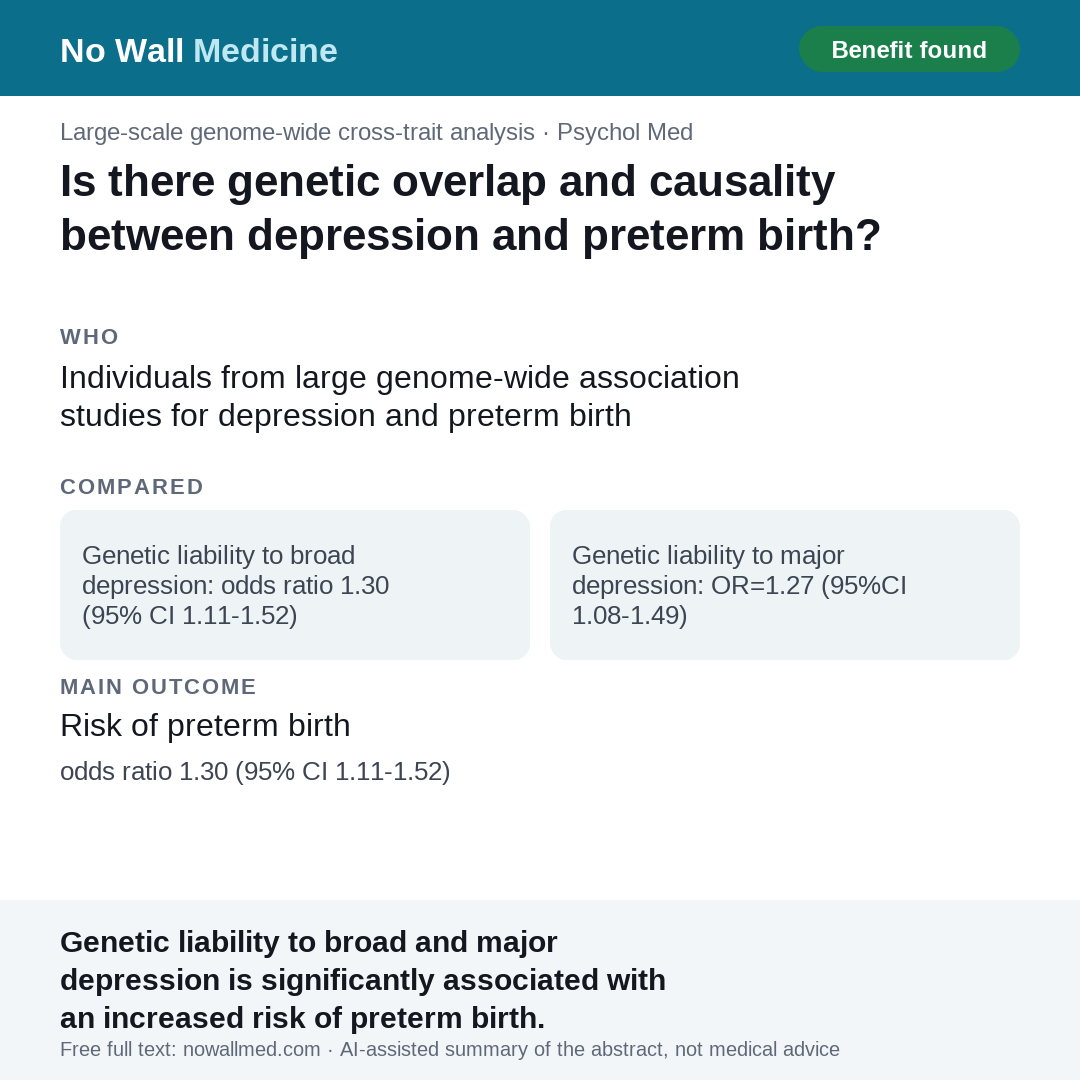
Genetic overlap and causality between depression and preterm birth: a large-scale genome-wide cross-trait analysis
Large-scale genome-wide cross-trait analysisBenefit found
Is there genetic overlap and causality between depression and preterm birth?
Who
Individuals from large genome-wide association studies for depression and preterm birth
Compared
Genetic liability to broad depression: odds ratio 1.30 (95% CI 1.11-1.52)
Genetic liability to major depression: OR=1.27 (95%CI 1.08-1.49)
Main outcome
Risk of preterm birth
Result: odds ratio 1.30 (95% CI 1.11-1.52)
Bottom line: Genetic liability to broad and major depression is significantly associated with an increased risk of preterm birth.
Psychol Med · 2025-09-25Download image
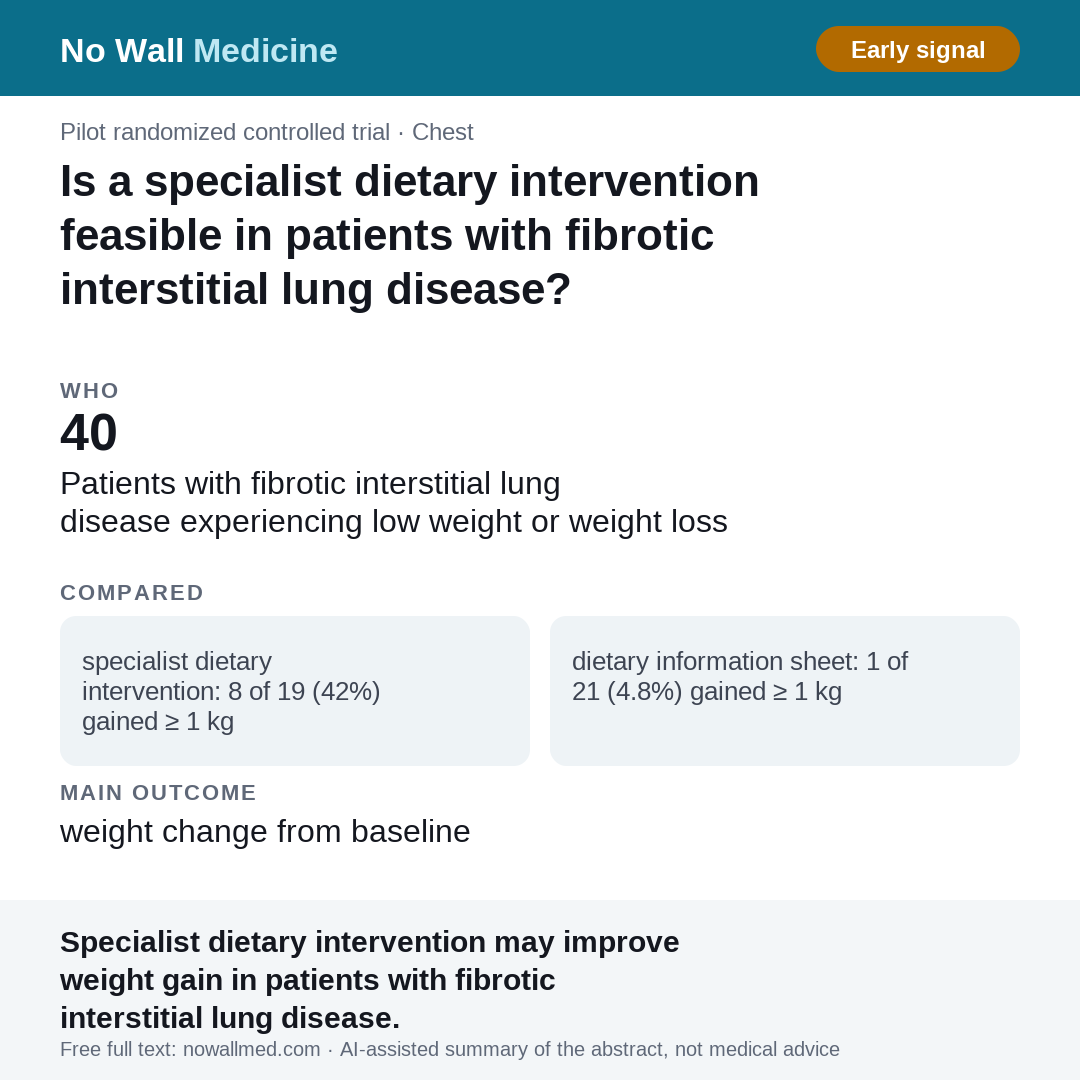
Specialist Dietary Intervention in Patients With Fibrotic Interstitial Lung Disease Experiencing Unintentional Weight Loss: A Pilot Randomized Controlled Trial
Pilot randomized controlled trialBenefit found
Is a specialist dietary intervention feasible in patients with fibrotic interstitial lung disease?
Who
40
Patients with fibrotic interstitial lung disease experiencing low weight or weight loss
Compared
specialist dietary intervention: 8 of 19 (42%) gained ≥ 1 kg
dietary information sheet: 1 of 21 (4.8%) gained ≥ 1 kg
Main outcome
weight change from baseline
Result: +0.65 kg/month (95% CI, 0.15 to 1.14)
Bottom line: Specialist dietary intervention may improve weight gain in patients with fibrotic interstitial lung disease.
Chest · 2025-09-25Download image
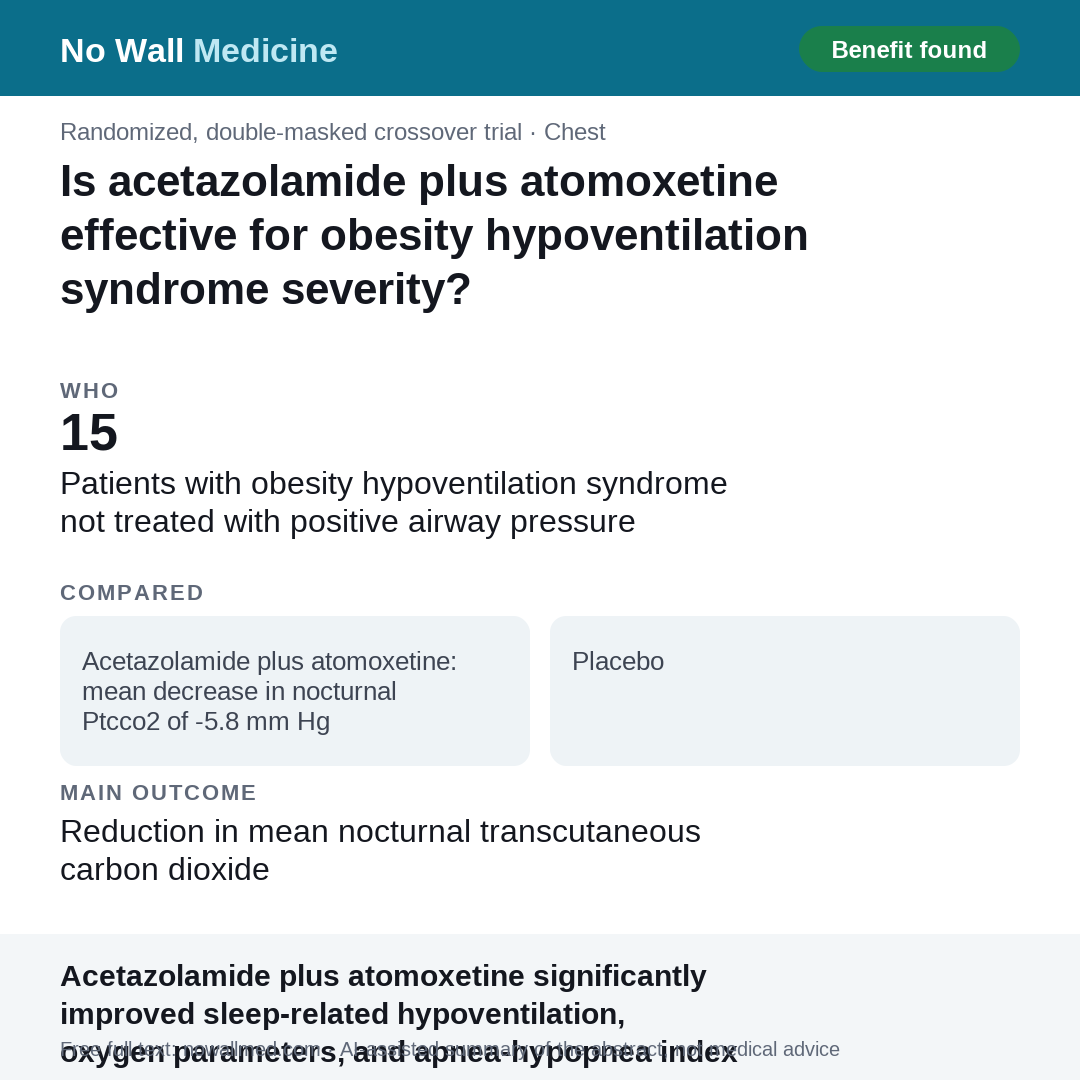
Acetazolamide Plus Atomoxetine for Obesity Hypoventilation Syndrome Treatment
Randomized, double-masked crossover trialBenefit found
Is acetazolamide plus atomoxetine effective for obesity hypoventilation syndrome severity?
Who
15
Patients with obesity hypoventilation syndrome not treated with positive airway pressure
Compared
Acetazolamide plus atomoxetine: mean decrease in nocturnal Ptcco2 of -5.8 mm Hg
Placebo
Main outcome
Reduction in mean nocturnal transcutaneous carbon dioxide
Result: -5.8 mm Hg (95% CI, -7.8 to -3.7 mm Hg)
Bottom line: Acetazolamide plus atomoxetine significantly improved sleep-related hypoventilation, oxygen parameters, and apnea-hypopnea index in obesity hypoventilation syndrome patients.
Chest · 2025-09-25Download image
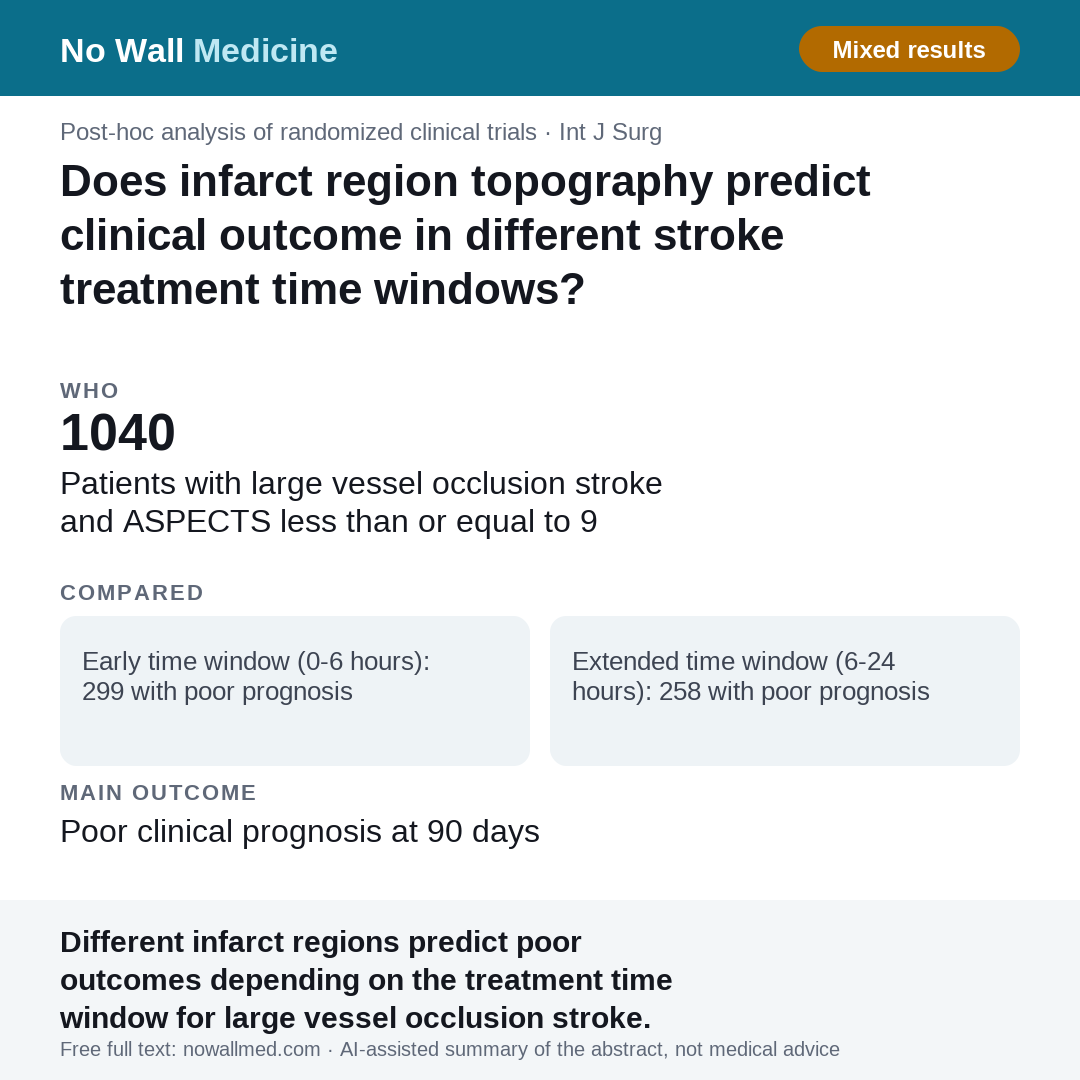
Relationship between ASPECTS-region and clinical outcome in patients with large vessel occlusion stroke: a post-hoc analysis of randomized clinical trial
Post-hoc analysis of randomized clinical trialsMixed results
Does infarct region topography predict clinical outcome in different stroke treatment time windows?
Who
1040
Patients with large vessel occlusion stroke and ASPECTS less than or equal to 9
Compared
Early time window (0-6 hours): 299 with poor prognosis
Extended time window (6-24 hours): 258 with poor prognosis
Main outcome
Poor clinical prognosis at 90 days
Bottom line: Different infarct regions predict poor outcomes depending on the treatment time window for large vessel occlusion stroke.
Int J Surg · 2025-09-25Download image
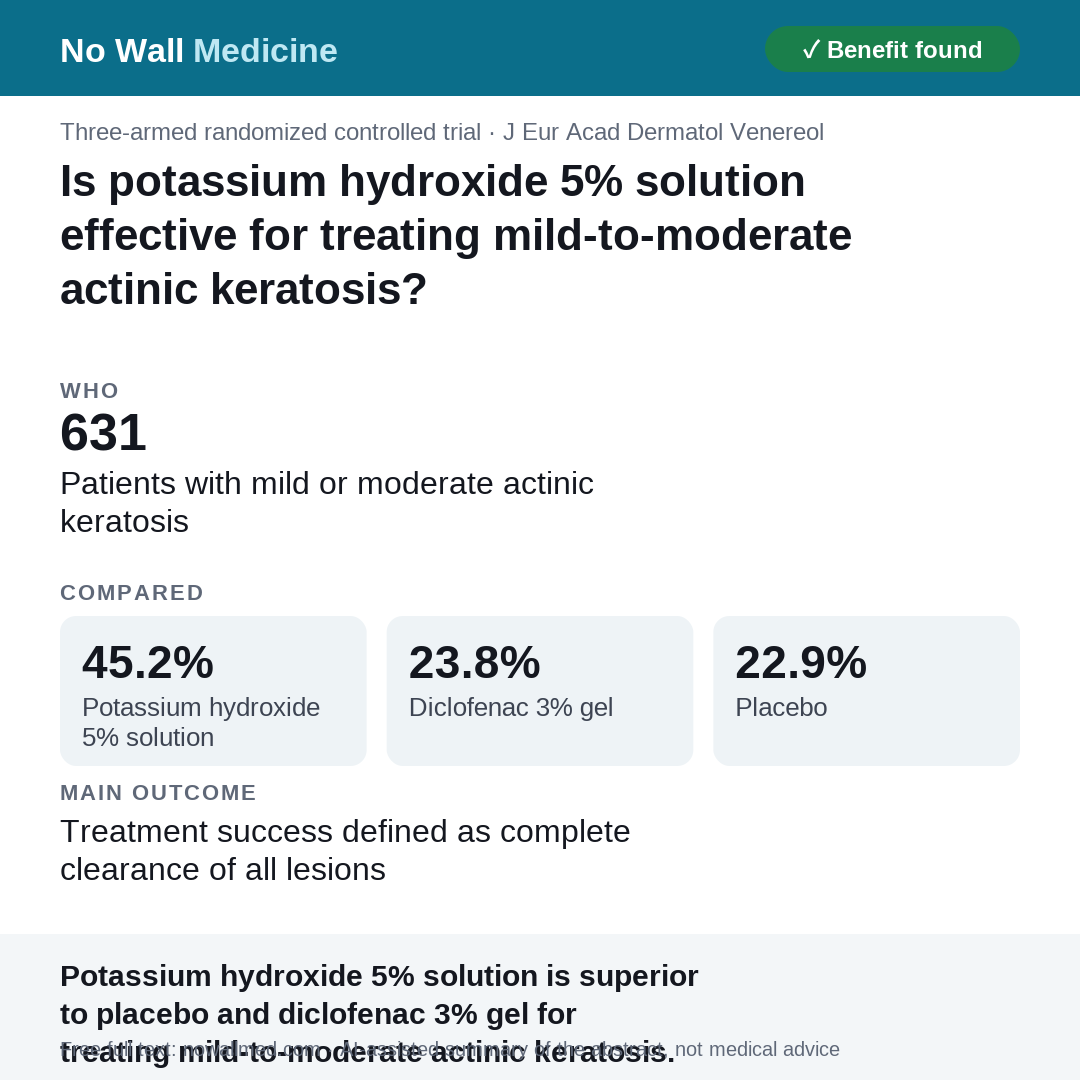
KOH 5% solution versus diclofenac 3% for the treatment of actinic keratosis - Results from a three-armed RCT
Three-armed randomized controlled trialBenefit found
Is potassium hydroxide 5% solution effective for treating mild-to-moderate actinic keratosis?
Who
631
Patients with mild or moderate actinic keratosis
Compared
45.2%Potassium hydroxide 5% solution
23.8%Diclofenac 3% gel
22.9%Placebo
Main outcome
Treatment success defined as complete clearance of all lesions
Bottom line: Potassium hydroxide 5% solution is superior to placebo and diclofenac 3% gel for treating mild-to-moderate actinic keratosis.
J Eur Acad Dermatol Venereol · 2025-09-25Download image
AI demonstrates comparable diagnostic performance to radiologists in MRI detection of anterior cruciate ligament tears: a systematic review and meta-analysis
Systematic review and meta-analysisBenefit found
Is artificial intelligence effective and accurate in diagnosing and classifying anterior cruciate ligament tears on MRI?
Who
Patients with anterior cruciate ligament tears on MRI
Compared
Artificial intelligence: 87.37% accuracy, 90.73% sensitivity, and 91.34% specificity
Clinicians
Main outcome
Diagnostic accuracy, sensitivity, and specificity for anterior cruciate ligament tears
Bottom line: Artificial intelligence demonstrates diagnostic performance comparable to clinicians for detecting and classifying anterior cruciate ligament tears on MRI.
Limitation: High heterogeneity and limited interpretability remain key challenges.
Eur Radiol · 2025-09-25Download image

The benefits of PCNL combined with ureterorenoscopy compared to isolated PCNL in urolithiasis (PRECISE): a multicentre randomised controlled trial protocol
Prospective, non-blinded, randomised, parallel-group, multicentre trial protocolUnclear result
Does combined percutaneous nephrolithotomy and ureterorenoscopy improve outcomes compared to isolated percutaneous nephrolithotomy?
Who
350
Adults aged 18 years or older eligible for percutaneous kidney stone surgery · multicentre
Compared
Endoscopic combined intrarenal surgery
Standard percutaneous nephrolithotomy
Main outcome
Grade A (0 mm) stone-free rate on postoperative computed tomography
Bottom line: This trial protocol aims to compare combined intrarenal surgery versus standard percutaneous nephrolithotomy for kidney stone clearance.
BJU Int · 2025-09-25Download image
