Visual abstracts
New randomized trials and meta-analyses from leading journals at a glance: who was studied, what was compared, and what was found. Every paper is free to read in full.
All specialtiesCardiology 855Oncology 770Gastroenterology & Hepatology 311Infectious Disease 626Neurology 354Psychiatry & Mental Health 430Pulmonology 370Critical Care 259Endocrinology & Diabetes 484Pediatrics 542Surgery 349Orthopedics & Sports Medicine 166Neurosurgery 115Cardiothoracic & Vascular Surgery 87Plastic & Reconstructive Surgery 144Nephrology 197Rheumatology 108Hematology 183Dermatology 81Ophthalmology 97Obstetrics & Gynecology 266Public & Global Health 168Radiology & Imaging 104Anesthesiology 128Urology 162ENT (Otolaryngology) 114Emergency Medicine 103Allergy & Immunology 58Geriatrics 160Family Medicine & Primary Care 111Medical Genetics & Genomics 91Pathology & Laboratory Medicine 27Physical Medicine & Rehabilitation 149Palliative Care 81Nutrition 223Digital Health & AI 462General Medicine 101
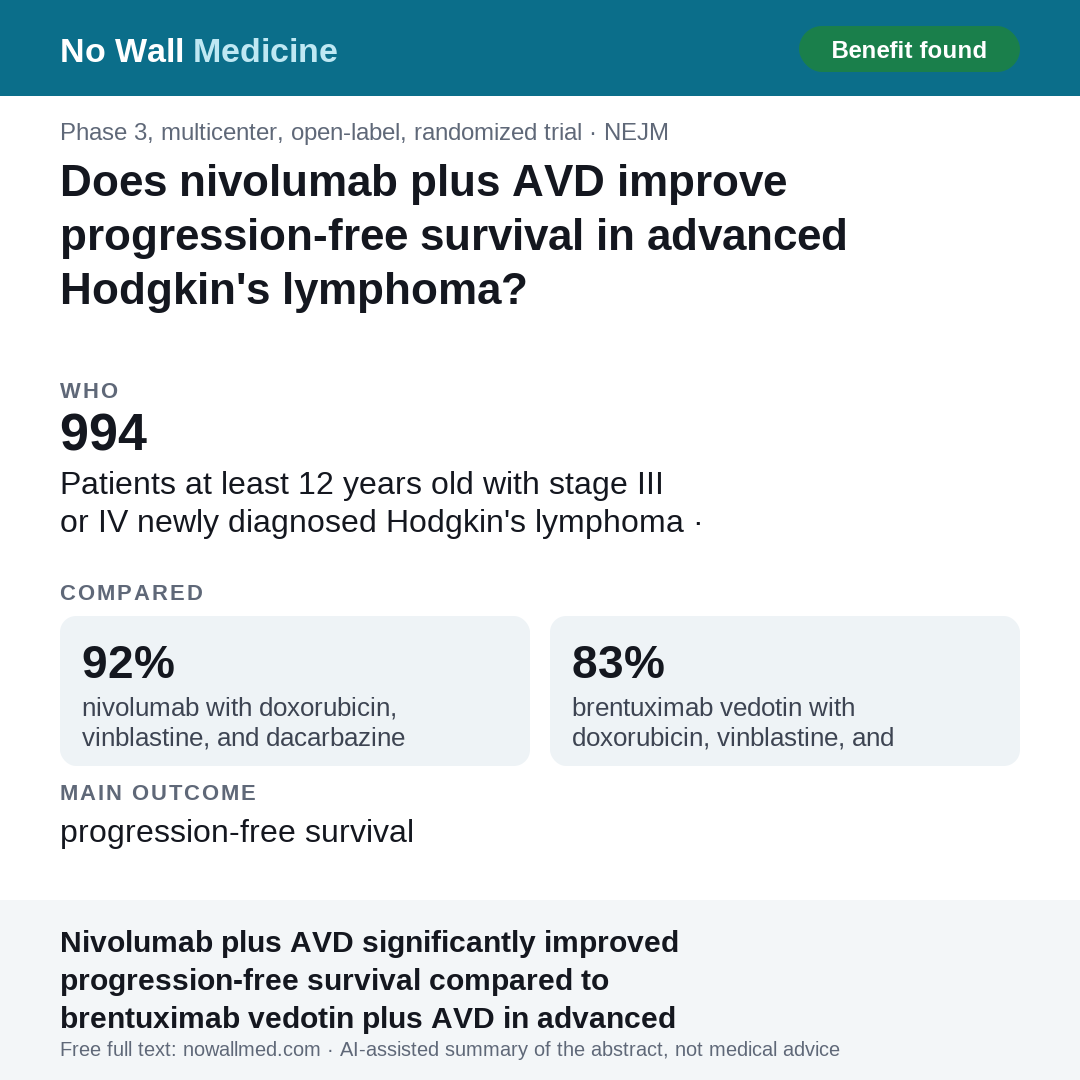
Nivolumab+AVD in Advanced-Stage Classic Hodgkin's Lymphoma
Phase 3, multicenter, open-label, randomized trialBenefit found
Does nivolumab plus AVD improve progression-free survival in advanced Hodgkin's lymphoma?
Who
994
Patients at least 12 years old with stage III or IV newly diagnosed Hodgkin's lymphoma · multicenter
Compared
92%nivolumab with doxorubicin, vinblastine, and dacarbazine (95% CI, 89 to 94)
83%brentuximab vedotin with doxorubicin, vinblastine, and dacarbazine (95% CI, 79 to 86)
Main outcome
progression-free survival
Result: hazard ratio 0.45 (95% CI, 0.30 to 0.65)
Bottom line: Nivolumab plus AVD significantly improved progression-free survival compared to brentuximab vedotin plus AVD in advanced Hodgkin's lymphoma.
Limitation: short follow-up time
Funded by: National Cancer Institute of the National Institutes of Health
NEJM · 2024-10-16Download image
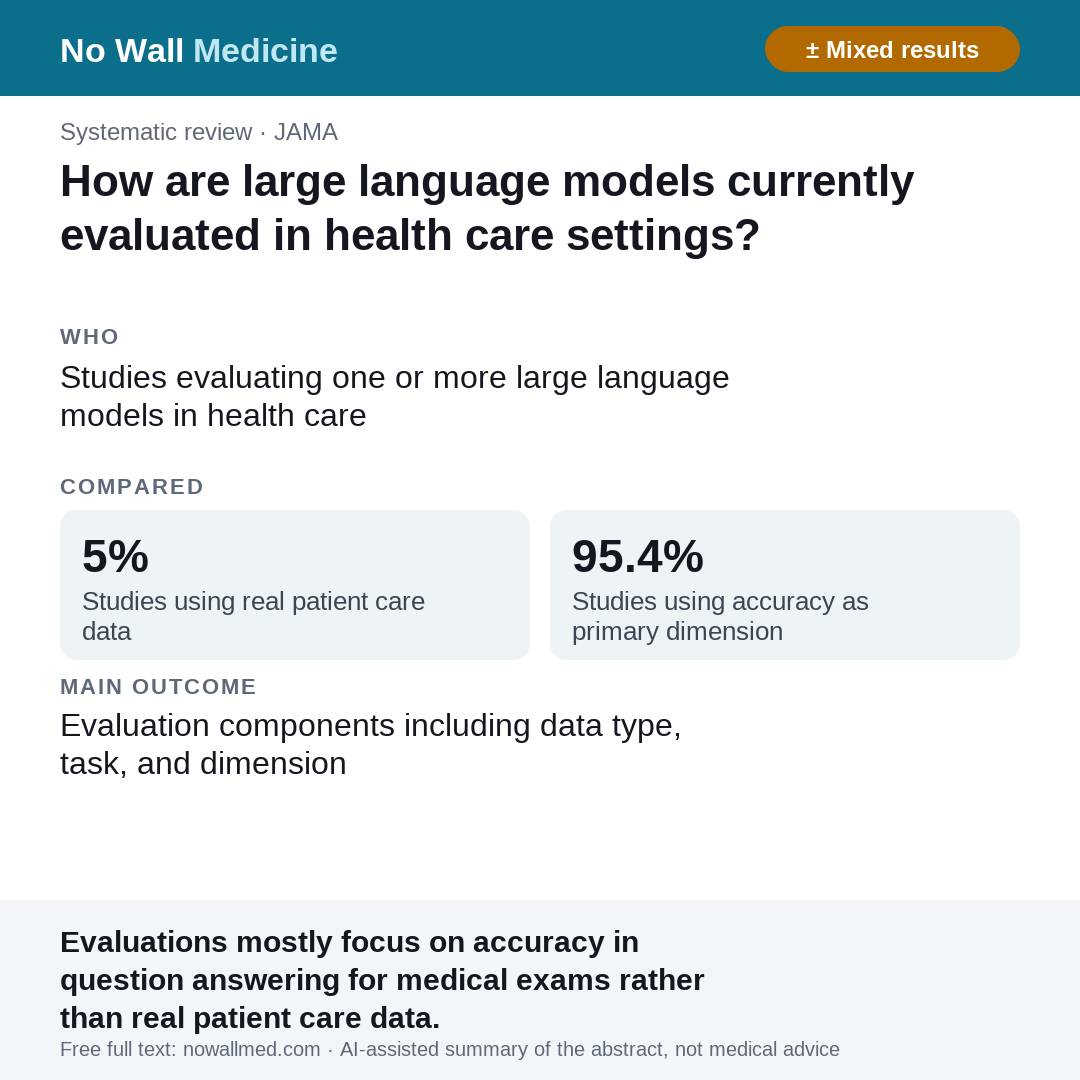
Testing and Evaluation of Health Care Applications of Large Language Models: A Systematic Review
Systematic reviewMixed results
How are large language models currently evaluated in health care settings?
Who
519
Studies evaluating one or more large language models in health care
Compared
5%Studies using real patient care data
95.4%Studies using accuracy as primary dimension
Main outcome
Evaluation components including data type, task, and dimension
Bottom line: Evaluations mostly focus on accuracy in question answering for medical exams rather than real patient care data.
JAMA · 2024-10-15Download image
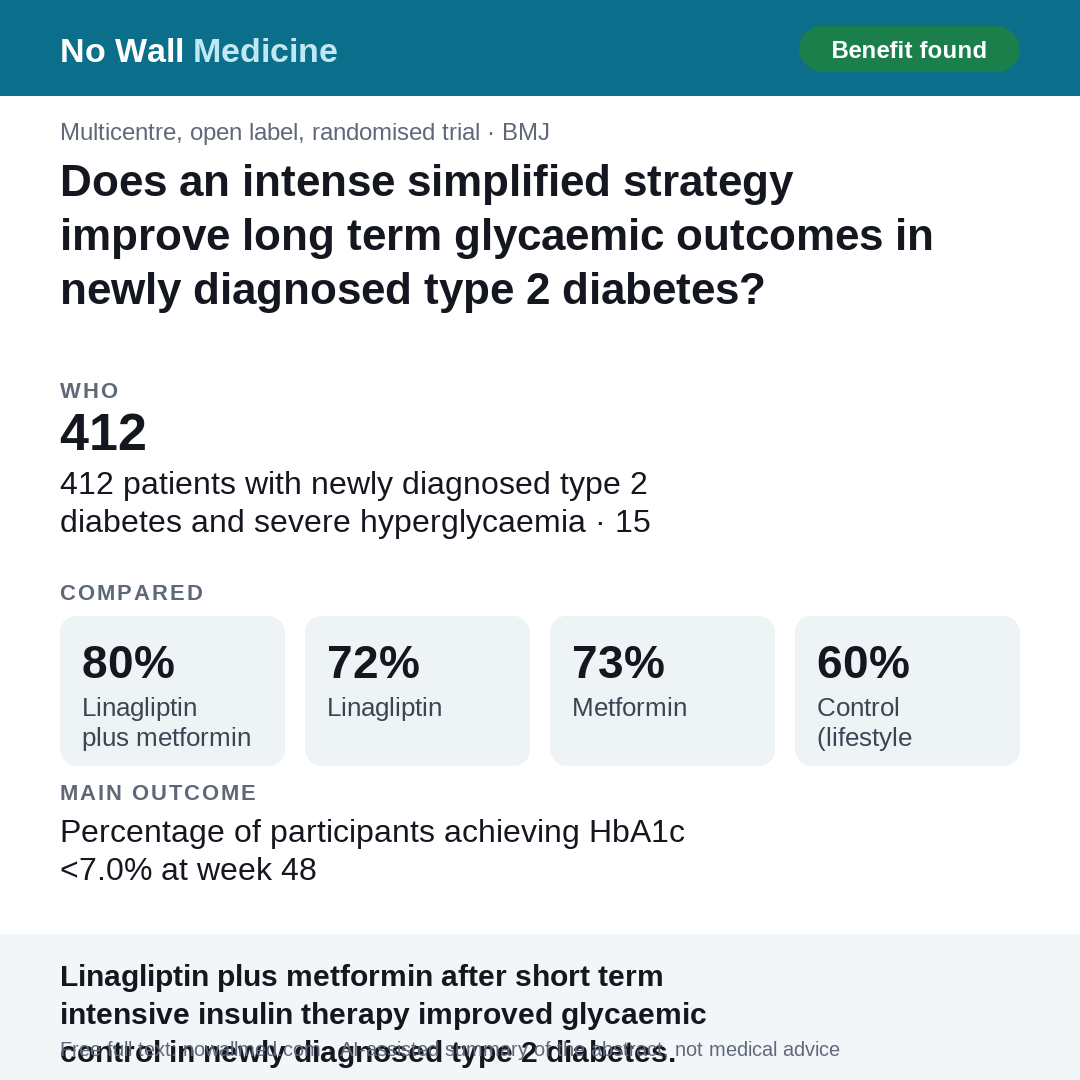
Intense simplified strategy for newly diagnosed type 2 diabetes in patients with severe hyperglycaemia: multicentre, open label, randomised trial
Multicentre, open label, randomised trialBenefit found
Does an intense simplified strategy improve long term glycaemic outcomes in newly diagnosed type 2 diabetes?
Who
412
412 patients with newly diagnosed type 2 diabetes and severe hyperglycaemia · 15 hospitals in China
Compared
80%Linagliptin plus metformin (78/97)
72%Linagliptin (63/88)
73%Metformin (69/95)
60%Control (lifestyle modification) (56/93)
Main outcome
Percentage of participants achieving HbA1c <7.0% at week 48
Result: odds ratio 2.78 (95% confidence interval 1.37 to 5.65)
Bottom line: Linagliptin plus metformin after short term intensive insulin therapy improved glycaemic control in newly diagnosed type 2 diabetes.
BMJ · 2024-10-15Download image
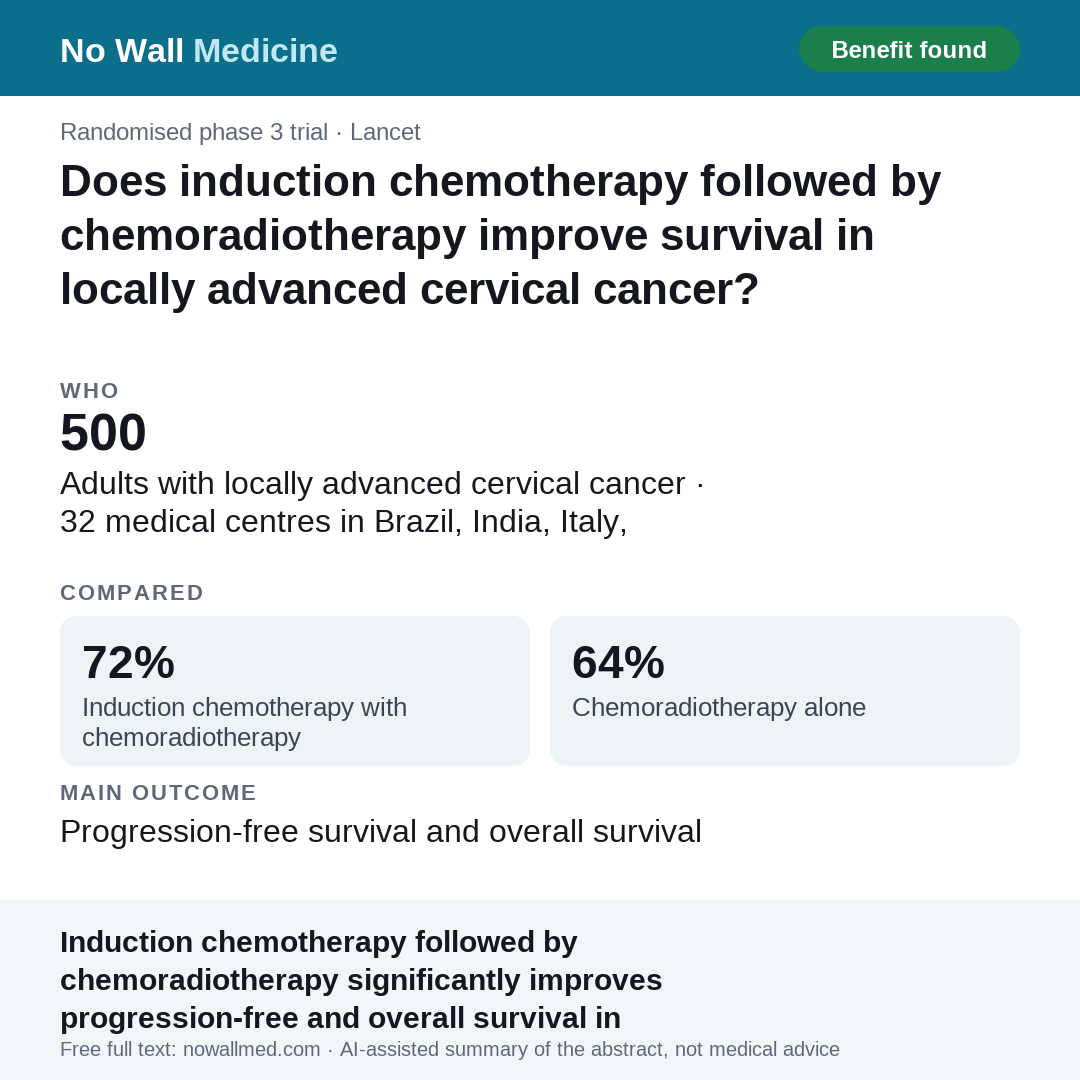
Induction chemotherapy followed by standard chemoradiotherapy versus standard chemoradiotherapy alone in patients with locally advanced cervical cancer (GCIG INTERLACE): an international, multicentre, randomised phase 3 trial
Randomised phase 3 trialBenefit found
Does induction chemotherapy followed by chemoradiotherapy improve survival in locally advanced cervical cancer?
Who
500
Adults with locally advanced cervical cancer · 32 medical centres in Brazil, India, Italy, Mexico, and UK
Compared
72%Induction chemotherapy with chemoradiotherapy (5-year progression-free survival)
64%Chemoradiotherapy alone (5-year progression-free survival)
Main outcome
Progression-free survival and overall survival
Result: hazard ratio 0·65 (95% CI 0·46-0·91)
Bottom line: Induction chemotherapy followed by chemoradiotherapy significantly improves progression-free and overall survival in locally advanced cervical cancer.
Funded by: Cancer Research UK and University College London
Lancet · 2024-10-14Download image
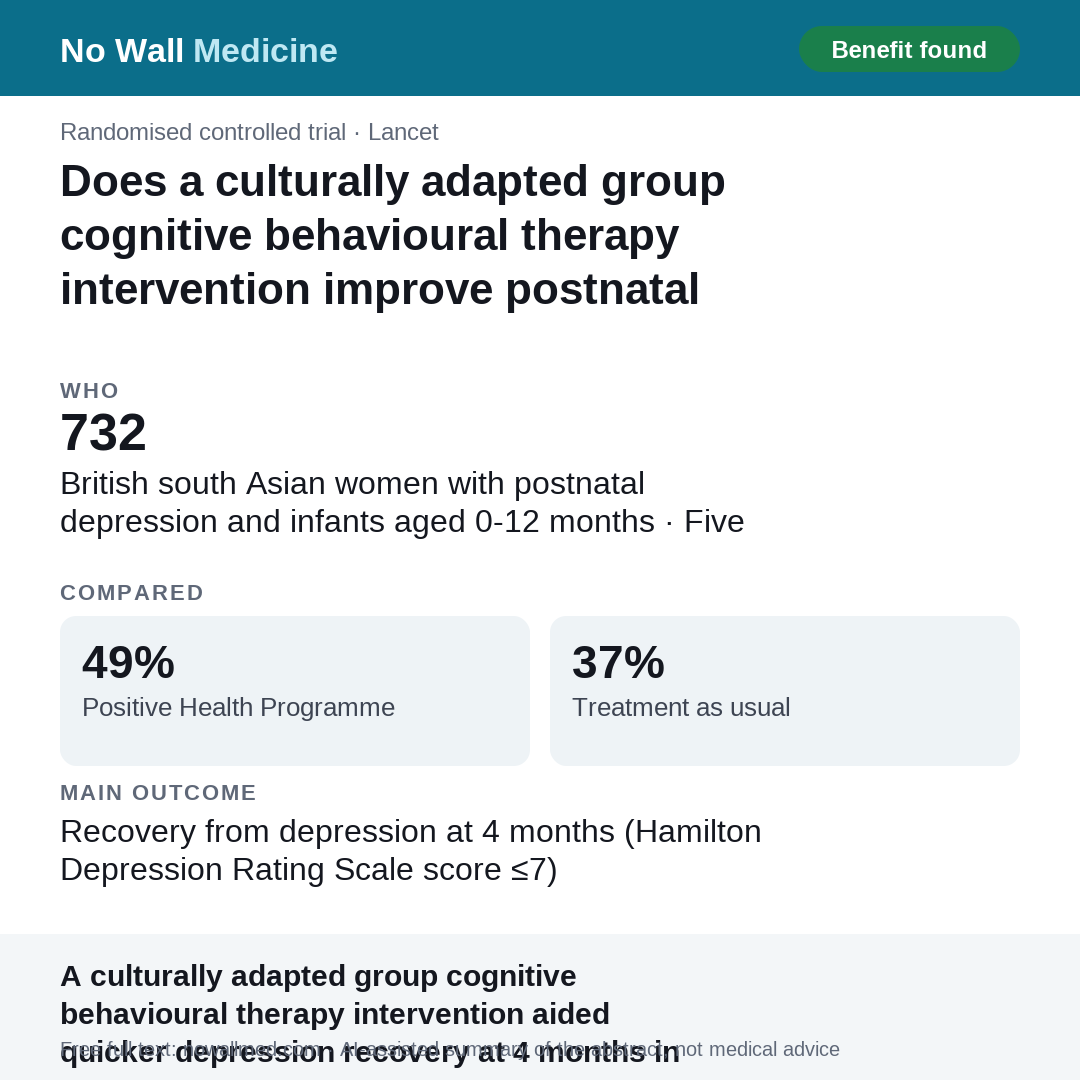
Efficacy of a culturally adapted, cognitive behavioural therapy-based intervention for postnatal depression in British south Asian women (ROSHNI-2): a multicentre, randomised controlled trial
Randomised controlled trialBenefit found
Does a culturally adapted group cognitive behavioural therapy intervention improve postnatal depression recovery?
Who
732
British south Asian women with postnatal depression and infants aged 0-12 months · Five centres across the United Kingdom
Compared
49%Positive Health Programme (138/281)
37%Treatment as usual (105/281)
Main outcome
Recovery from depression at 4 months (Hamilton Depression Rating Scale score ≤7)
Result: adjusted odds ratio 1.97 (95% CI 1.26-3.10)
Bottom line: A culturally adapted group cognitive behavioural therapy intervention aided quicker depression recovery at 4 months in British south Asian women.
Funded by: UK National Institute for Health and Care Research
Lancet · 2024-10-13Download image
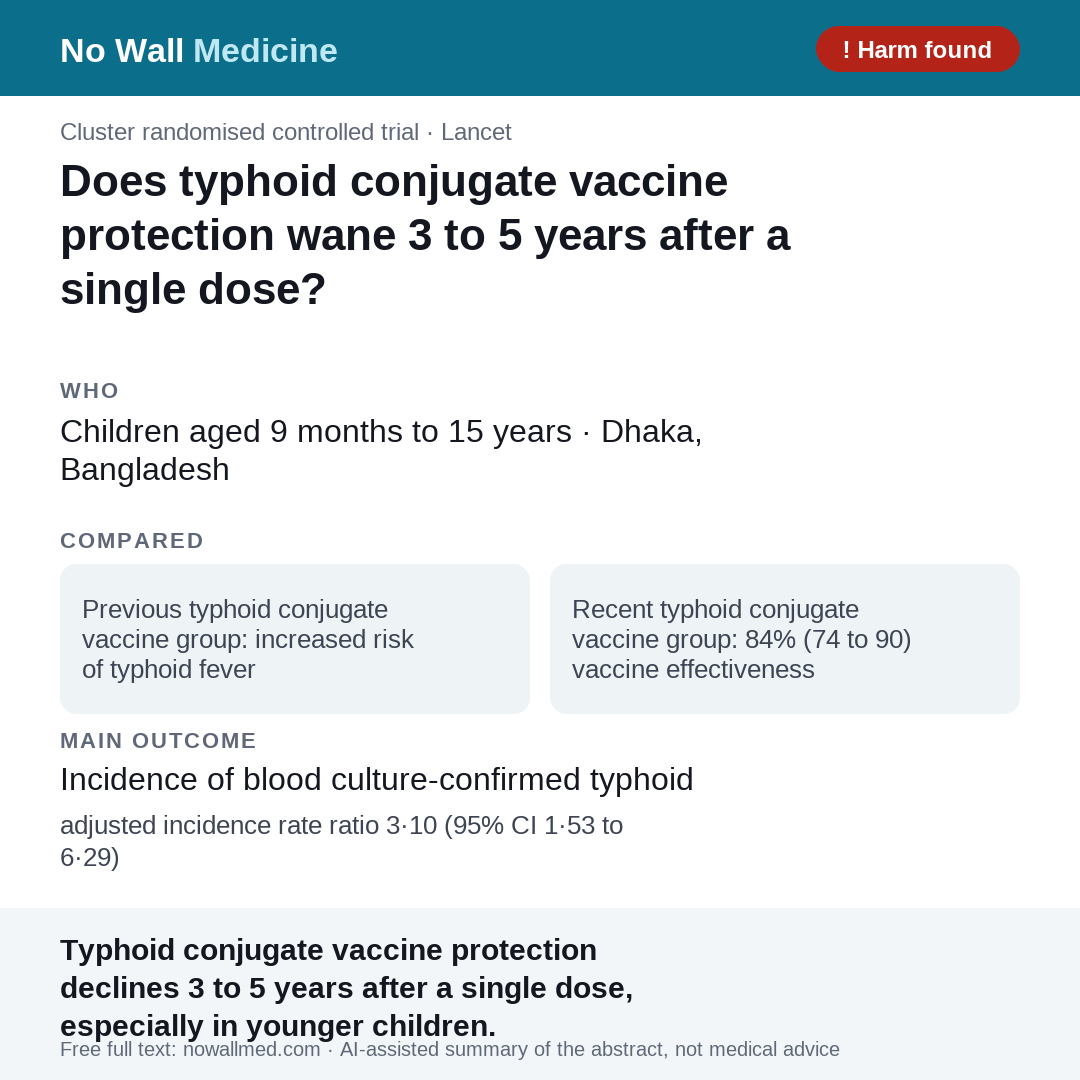
5-year vaccine protection following a single dose of Vi-tetanus toxoid conjugate vaccine in Bangladeshi children (TyVOID): a cluster randomised trial
Cluster randomised controlled trialHarm found
Does typhoid conjugate vaccine protection wane 3 to 5 years after a single dose?
Who
Children aged 9 months to 15 years · Dhaka, Bangladesh
Compared
Previous typhoid conjugate vaccine group: increased risk of typhoid fever
Recent typhoid conjugate vaccine group: 84% (74 to 90) vaccine effectiveness
Main outcome
Incidence of blood culture-confirmed typhoid
Result: adjusted incidence rate ratio 3·10 (95% CI 1·53 to 6·29)
Bottom line: Typhoid conjugate vaccine protection declines 3 to 5 years after a single dose, especially in younger children.
Funded by: Bill & Melinda Gates Foundation
Lancet · 2024-10-13Download image
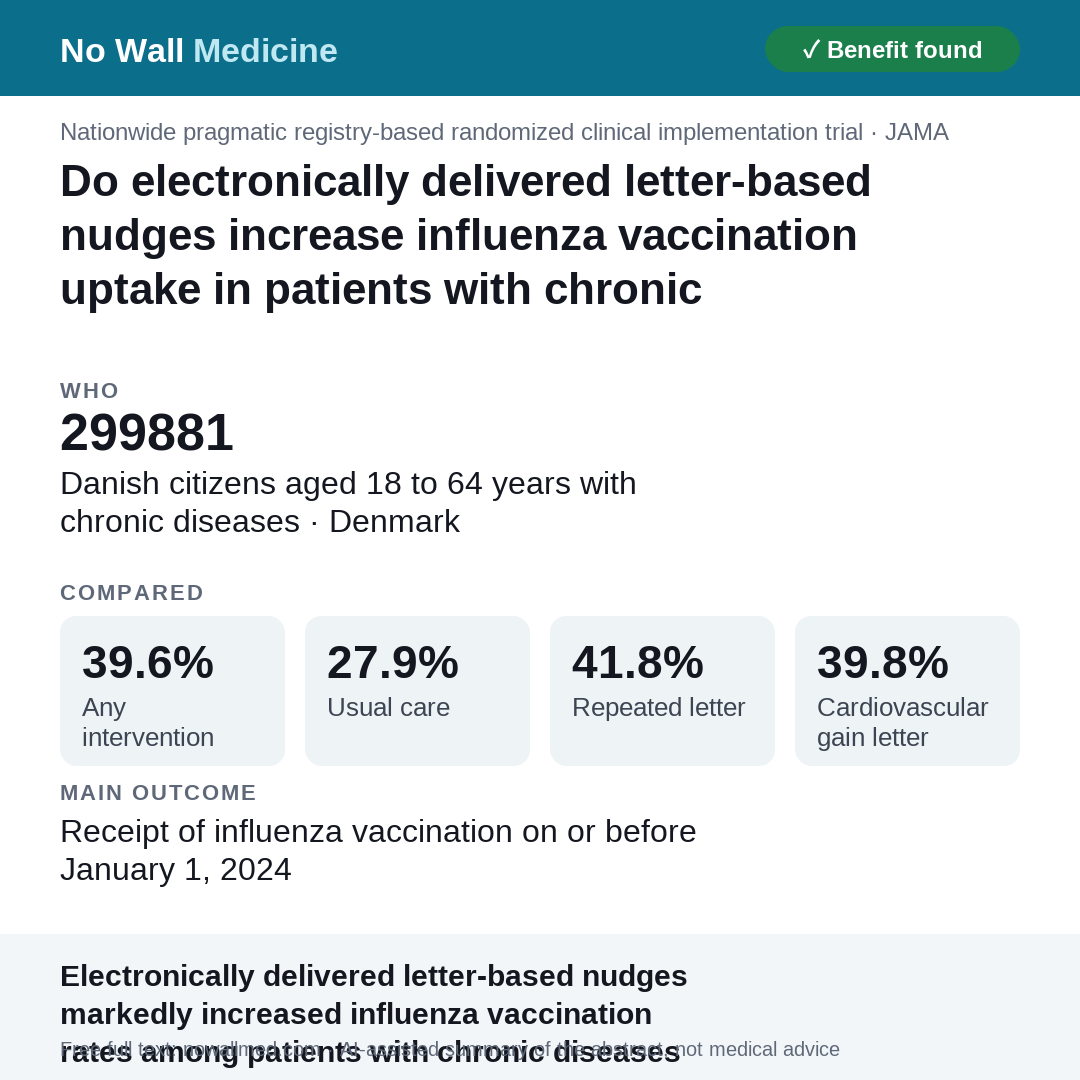
Electronic Nudges to Increase Influenza Vaccination in Patients With Chronic Diseases: A Randomized Clinical Trial
Nationwide pragmatic registry-based randomized clinical implementation trialBenefit found
Do electronically delivered letter-based nudges increase influenza vaccination uptake in patients with chronic diseases?
Who
299881
Danish citizens aged 18 to 64 years with chronic diseases · Denmark
Compared
39.6%Any intervention letter
27.9%Usual care
41.8%Repeated letter
39.8%Cardiovascular gain letter
Main outcome
Receipt of influenza vaccination on or before January 1, 2024
Result: difference, 11.7 percentage points; 99.29% CI, 11.2-12.2 percentage points
Bottom line: Electronically delivered letter-based nudges markedly increased influenza vaccination rates among patients with chronic diseases compared to usual care.
JAMA · 2024-10-11Download image
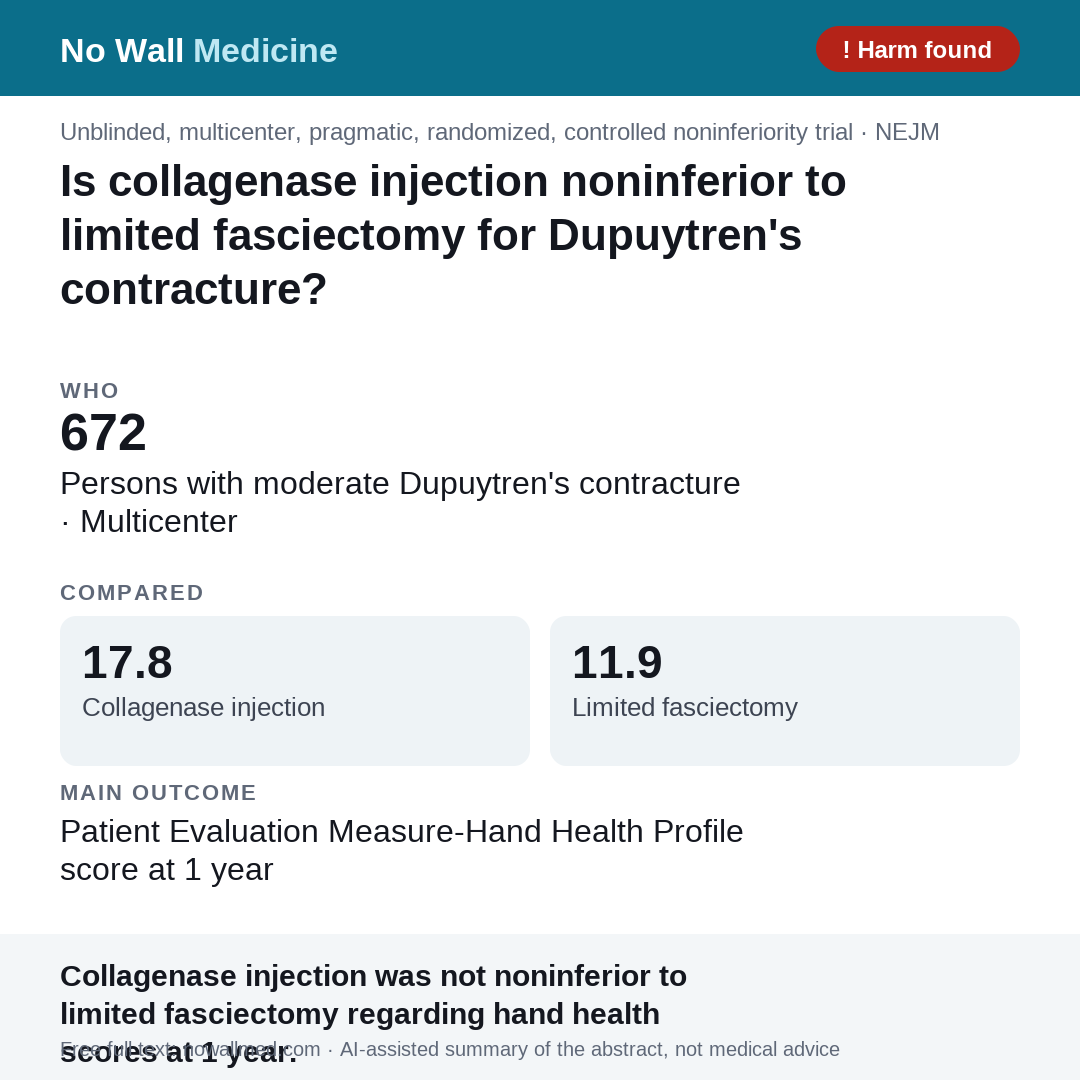
Collagenase Injection versus Limited Fasciectomy for Dupuytren's Contracture
Unblinded, multicenter, pragmatic, randomized, controlled noninferiority trialHarm found
Is collagenase injection noninferior to limited fasciectomy for Dupuytren's contracture?
Who
672
Persons with moderate Dupuytren's contracture · Multicenter
Compared
17.8Collagenase injection
11.9Limited fasciectomy
Main outcome
Patient Evaluation Measure-Hand Health Profile score at 1 year
Result: estimated difference, 5.9 points; 95% confidence interval [CI], 3.1 to 8.8
Bottom line: Collagenase injection was not noninferior to limited fasciectomy regarding hand health scores at 1 year.
Funded by: National Institute for Health and Care Research
NEJM · 2024-10-09Download image
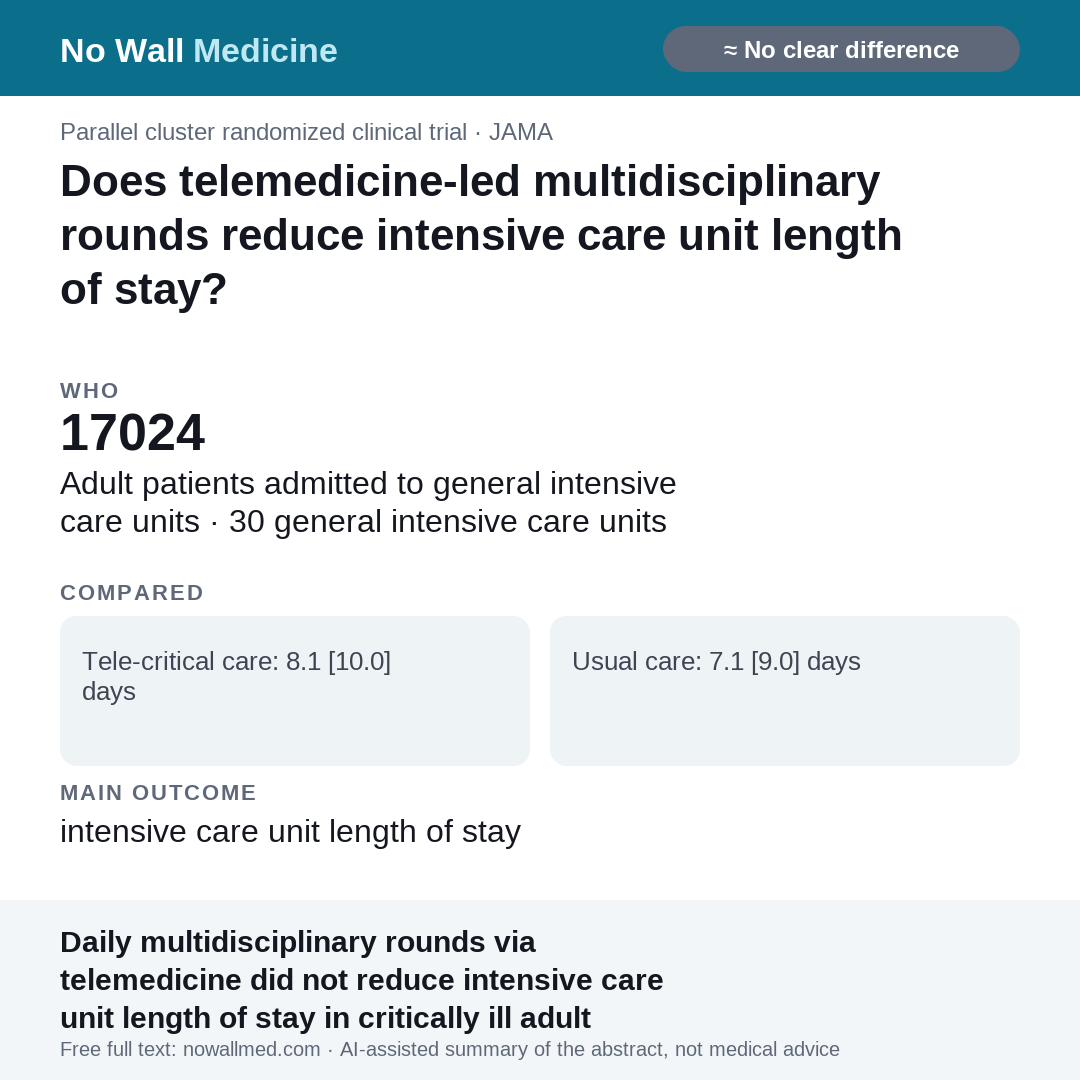
Effect of Tele-ICU on Clinical Outcomes of Critically Ill Patients: The TELESCOPE Randomized Clinical Trial
Parallel cluster randomized clinical trialNo clear difference
Does telemedicine-led multidisciplinary rounds reduce intensive care unit length of stay?
Who
17024
Adult patients admitted to general intensive care units · 30 general intensive care units in Brazil
Compared
Tele-critical care: 8.1 [10.0] days
Usual care: 7.1 [9.0] days
Main outcome
intensive care unit length of stay
Result: percentage change, 8.2% (95% CI, -5.4% to 23.8%)
Bottom line: Daily multidisciplinary rounds via telemedicine did not reduce intensive care unit length of stay in critically ill adult patients.
JAMA · 2024-10-09Download image
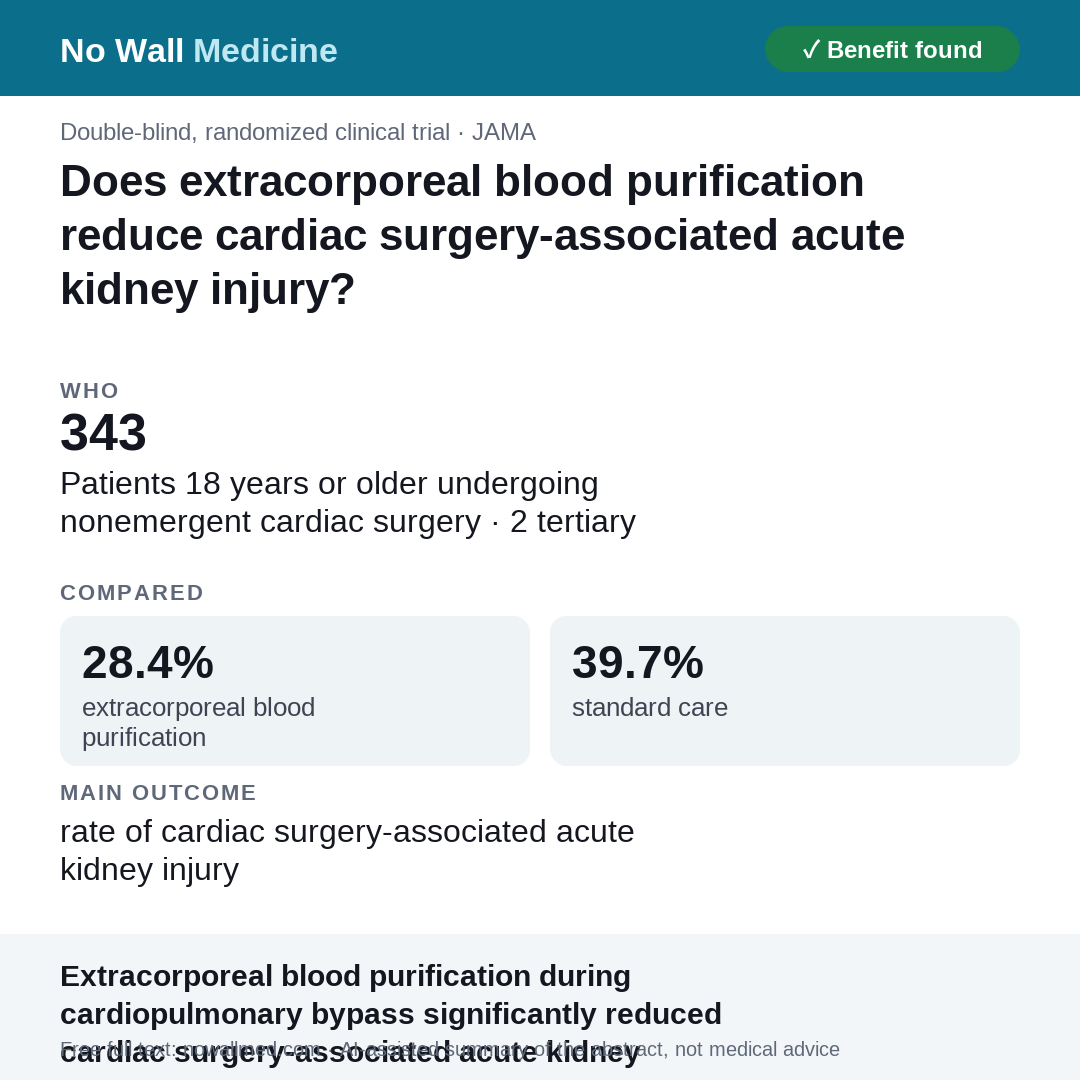
Extracorporeal Blood Purification and Acute Kidney Injury in Cardiac Surgery: The SIRAKI02 Randomized Clinical Trial
Double-blind, randomized clinical trialBenefit found
Does extracorporeal blood purification reduce cardiac surgery-associated acute kidney injury?
Who
343
Patients 18 years or older undergoing nonemergent cardiac surgery · 2 tertiary hospitals in Spain
Compared
28.4%extracorporeal blood purification (95% CI, 21.7%-35.8%)
39.7%standard care (95% CI, 32.3%-47.3%)
Main outcome
rate of cardiac surgery-associated acute kidney injury
Result: adjusted difference of 10.4% (95% CI, 2.3%-18.5%)
Bottom line: Extracorporeal blood purification during cardiopulmonary bypass significantly reduced cardiac surgery-associated acute kidney injury within 7 days.
JAMA · 2024-10-09Download image
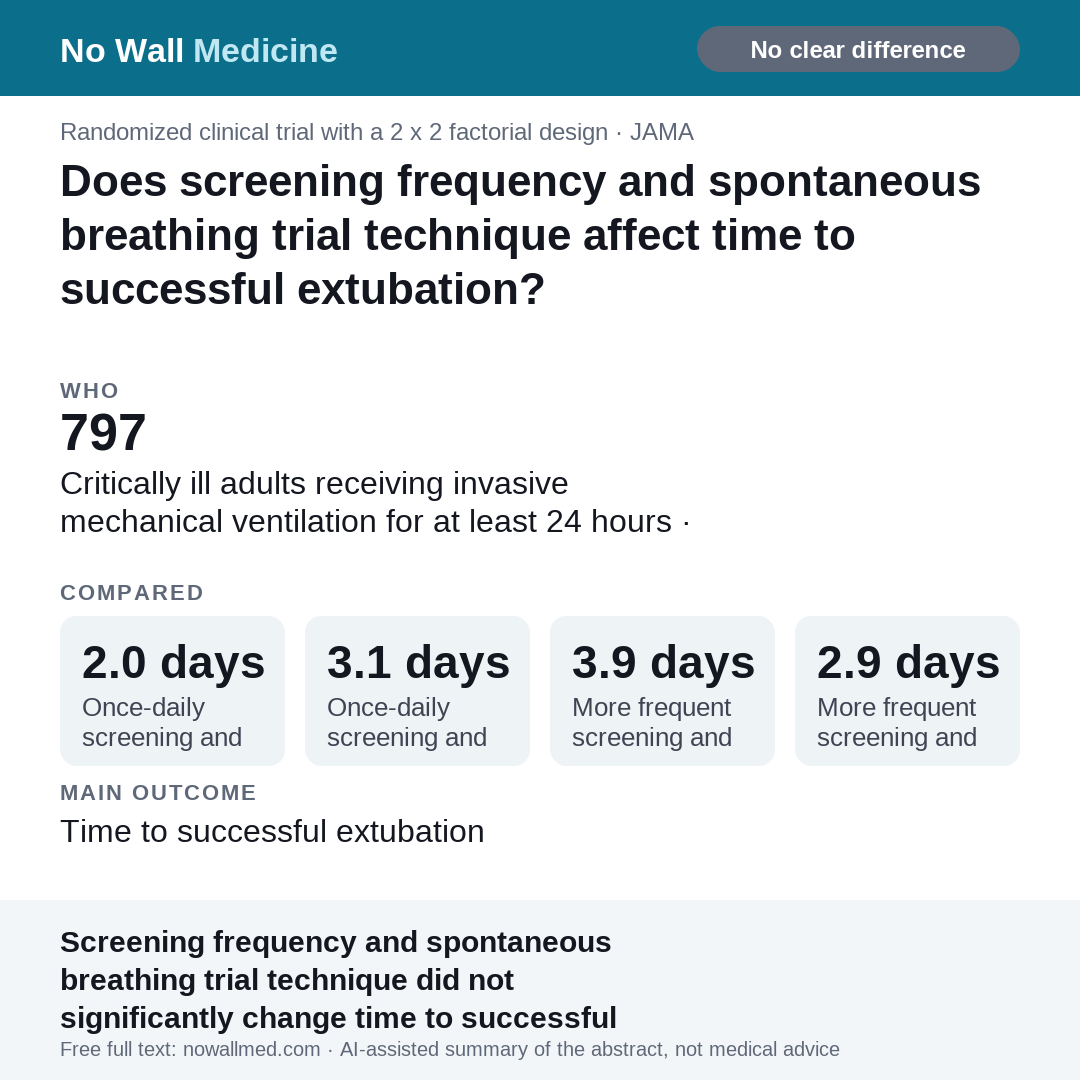
Frequency of Screening and Spontaneous Breathing Trial Techniques: A Randomized Clinical Trial
Randomized clinical trial with a 2 x 2 factorial designNo clear difference
Does screening frequency and spontaneous breathing trial technique affect time to successful extubation?
Who
797
Critically ill adults receiving invasive mechanical ventilation for at least 24 hours · 23 intensive care units in North America
Compared
2.0 daysOnce-daily screening and pressure-supported SBT (95% CI, 1.7-2.7)
3.1 daysOnce-daily screening and T-piece SBT (95% CI, 2.7-4.8)
3.9 daysMore frequent screening and pressure-supported SBT (95% CI, 2.9-4.7)
2.9 daysMore frequent screening and T-piece SBT (95% CI, 2.0-3.1)
Main outcome
Time to successful extubation
Result: hazard ratio 0.88 (95% CI, 0.76-1.03) for screening; hazard ratio 1.06 (95% CI, 0.91-1.23) for technique
Bottom line: Screening frequency and spontaneous breathing trial technique did not significantly change time to successful extubation.
JAMA · 2024-10-09Download image
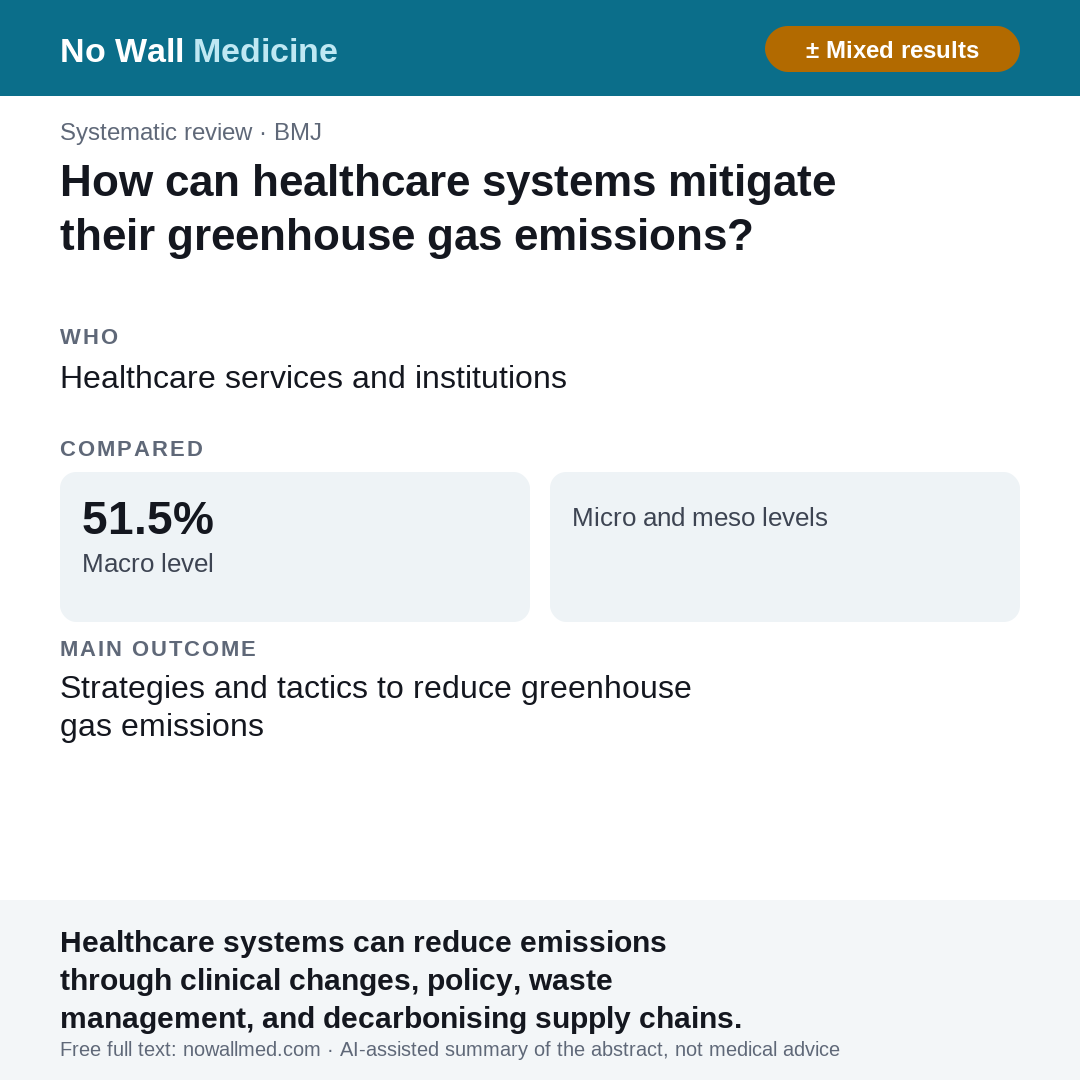
Strategies and tactics to reduce the impact of healthcare on climate change: systematic review
Systematic reviewMixed results
How can healthcare systems mitigate their greenhouse gas emissions?
Who
205
Healthcare services and institutions
Compared
51.5%Macro level
Micro and meso levels
Main outcome
Strategies and tactics to reduce greenhouse gas emissions
Bottom line: Healthcare systems can reduce emissions through clinical changes, policy, waste management, and decarbonising supply chains.
BMJ · 2024-10-08Download image
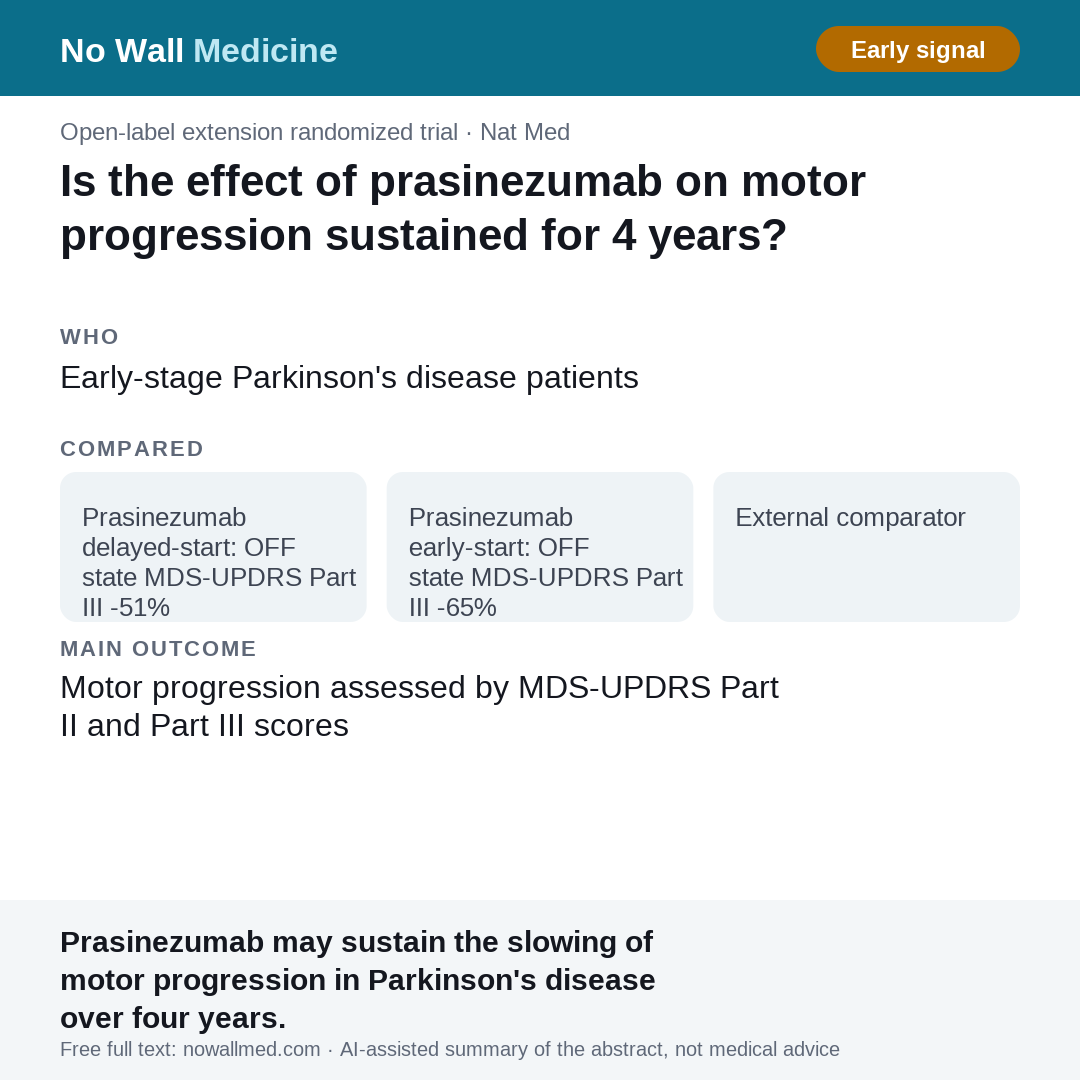
Sustained effect of prasinezumab on Parkinson's disease motor progression in the open-label extension of the PASADENA trial
Open-label extension randomized trialBenefit found
Is the effect of prasinezumab on motor progression sustained for 4 years?
Who
Early-stage Parkinson's disease patients
Compared
Prasinezumab delayed-start: OFF state MDS-UPDRS Part III -51%
Prasinezumab early-start: OFF state MDS-UPDRS Part III -65%
External comparator
Main outcome
Motor progression assessed by MDS-UPDRS Part II and Part III scores
Bottom line: Prasinezumab may sustain the slowing of motor progression in Parkinson's disease over four years.
Nat Med · 2024-10-08Download image
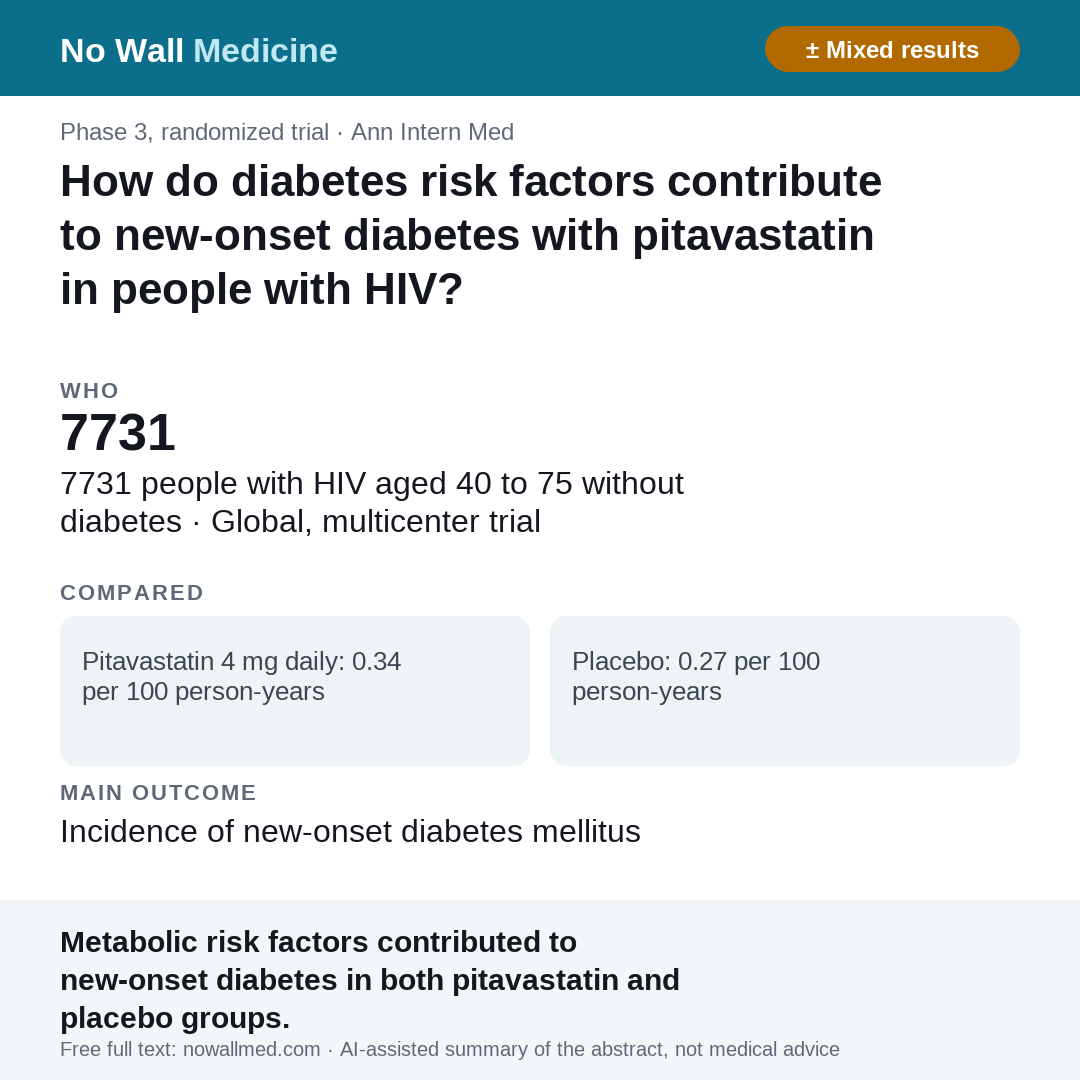
Diabetes Risk Factors in People With HIV Receiving Pitavastatin Versus Placebo for Cardiovascular Disease Prevention : A Randomized Trial
Phase 3, randomized trialMixed results
How do diabetes risk factors contribute to new-onset diabetes with pitavastatin in people with HIV?
Who
7731
7731 people with HIV aged 40 to 75 without diabetes · Global, multicenter trial
Compared
Pitavastatin 4 mg daily: 0.34 per 100 person-years
Placebo: 0.27 per 100 person-years
Main outcome
Incidence of new-onset diabetes mellitus
Bottom line: Metabolic risk factors contributed to new-onset diabetes in both pitavastatin and placebo groups.
Limitation: Pitavastatin was the only statin assessed; diabetes was assessed clinically.
Funded by: National Heart, Lung, and Blood Institute
Ann Intern Med · 2024-10-08Download image
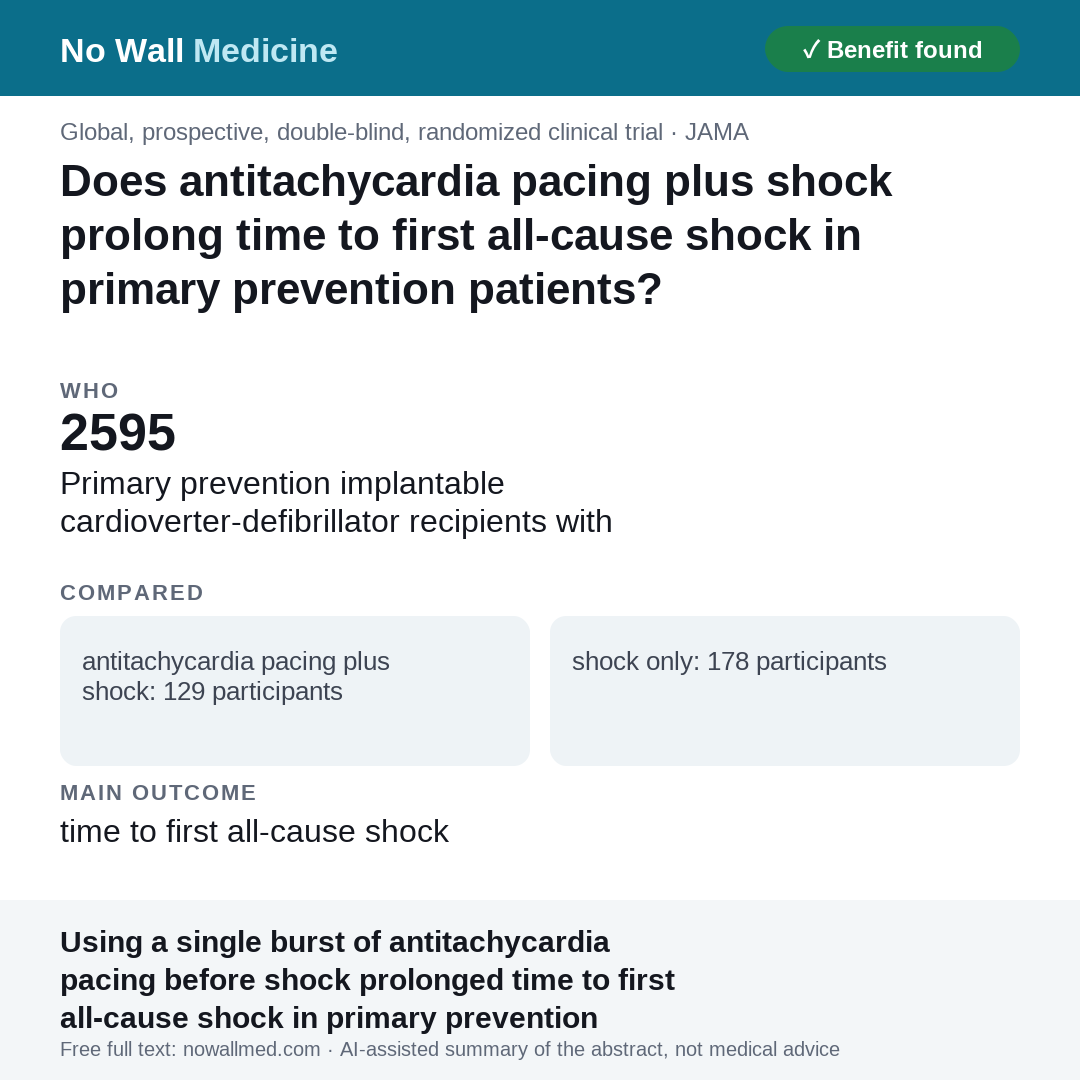
Assessment of Antitachycardia Pacing in Primary Prevention Patients: The APPRAISE ATP Randomized Clinical Trial
Global, prospective, double-blind, randomized clinical trialBenefit found
Does antitachycardia pacing plus shock prolong time to first all-cause shock in primary prevention patients?
Who
2595
Primary prevention implantable cardioverter-defibrillator recipients with left ventricular ejection fraction ≤35% · 134 sites in 8 countries
Compared
antitachycardia pacing plus shock: 129 participants
shock only: 178 participants
Main outcome
time to first all-cause shock
Result: hazard ratio 0.72 (95.9% CI, 0.57-0.92)
Bottom line: Using a single burst of antitachycardia pacing before shock prolonged time to first all-cause shock in primary prevention patients.
JAMA · 2024-10-03Download image
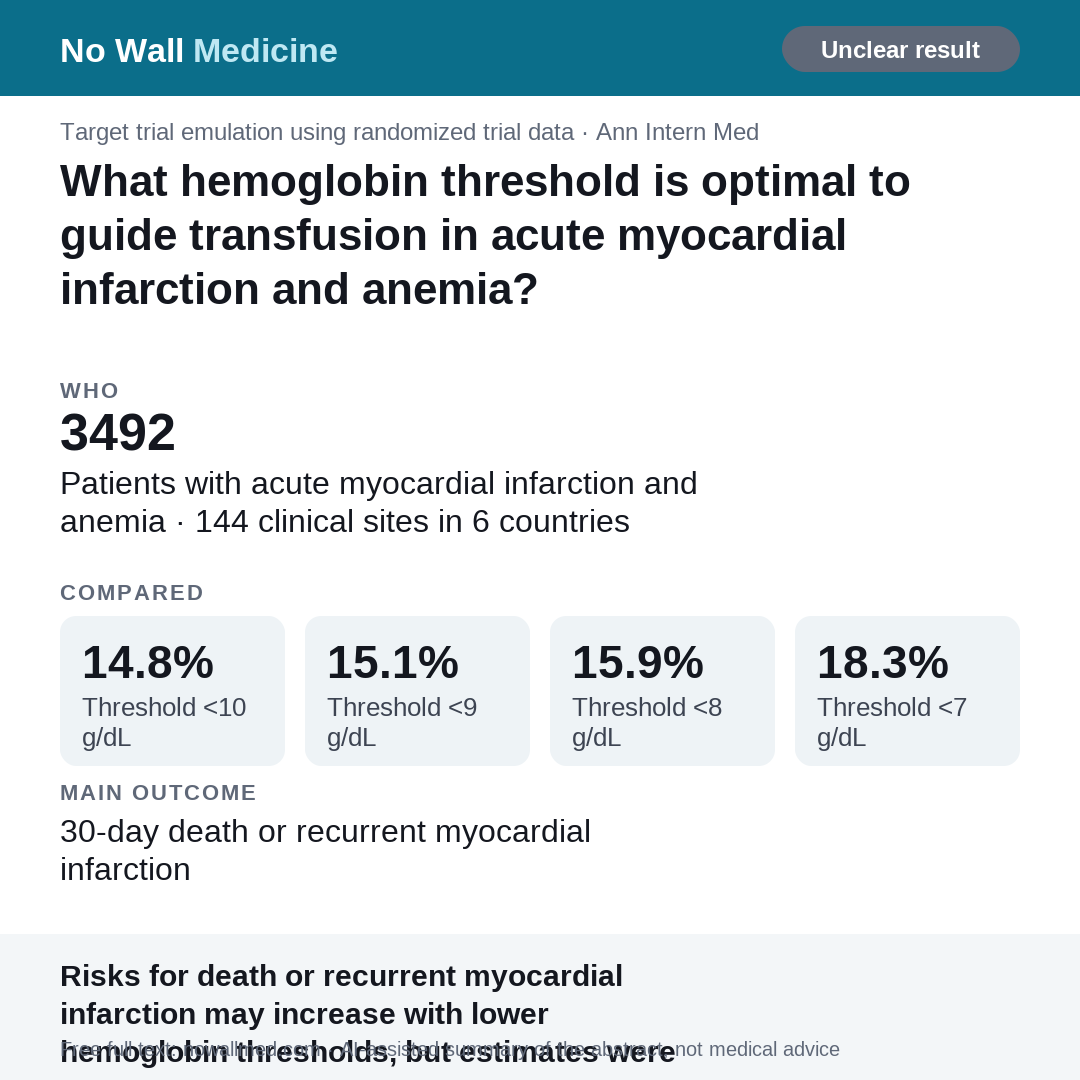
Effect of Four Hemoglobin Transfusion Threshold Strategies in Patients With Acute Myocardial Infarction and Anemia : A Target Trial Emulation Using MINT Trial Data
Target trial emulation using randomized trial dataUnclear result
What hemoglobin threshold is optimal to guide transfusion in acute myocardial infarction and anemia?
Who
3492
Patients with acute myocardial infarction and anemia · 144 clinical sites in 6 countries
Compared
14.8%Threshold <10 g/dL (95% CI, 11.8% to 18.4%)
15.1%Threshold <9 g/dL (CI, 11.7% to 18.2%)
15.9%Threshold <8 g/dL (CI, 12.4% to 19.0%)
18.3%Threshold <7 g/dL (CI, 14.6% to 22.0%)
Main outcome
30-day death or recurrent myocardial infarction
Bottom line: Risks for death or recurrent myocardial infarction may increase with lower hemoglobin thresholds, but estimates were imprecise.
Limitation: Unmeasured confounding may have persisted despite adjustment.
Funded by: National Heart, Lung, and Blood Institute
Ann Intern Med · 2024-10-01Download image
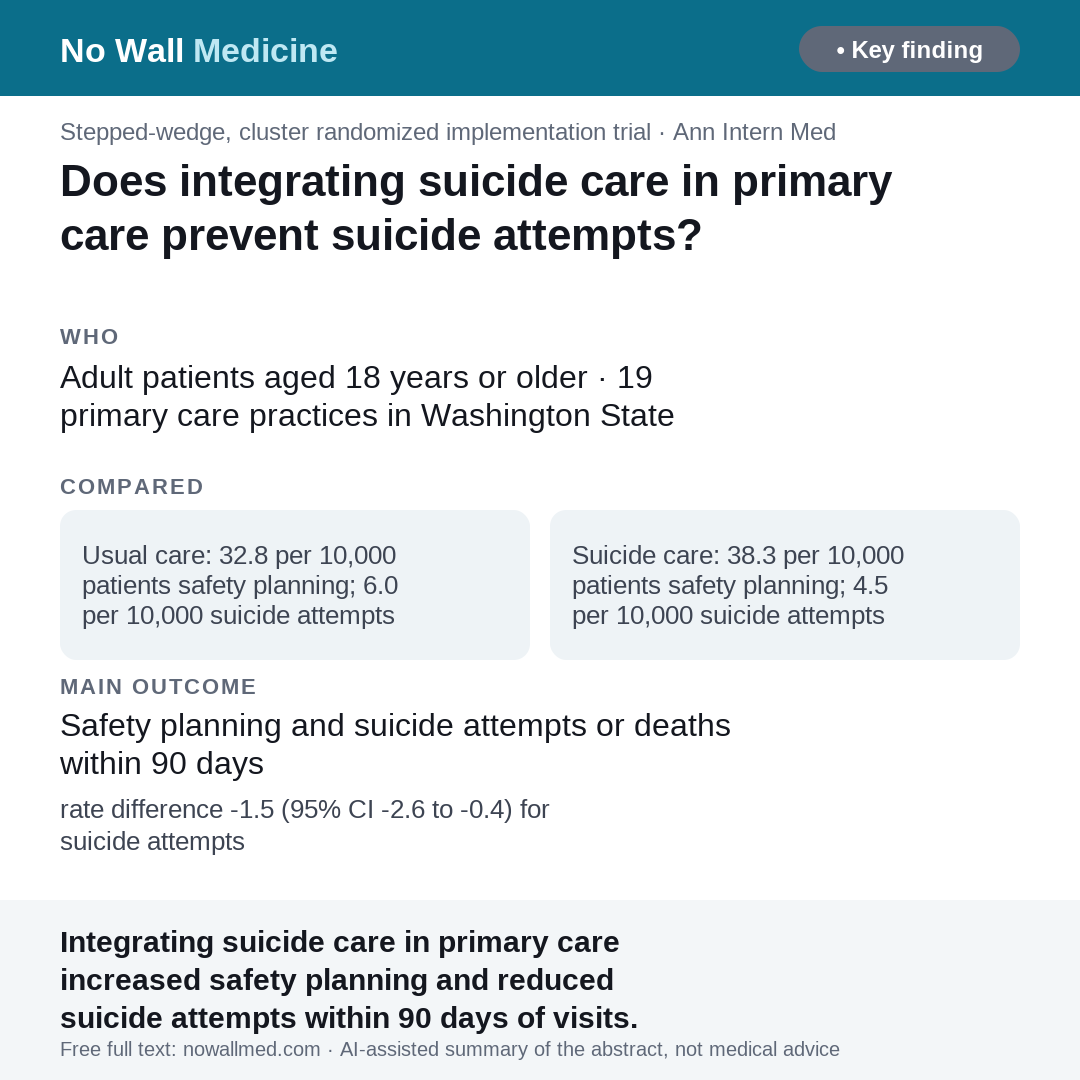
Effectiveness of Integrating Suicide Care in Primary Care : Secondary Analysis of a Stepped-Wedge, Cluster Randomized Implementation Trial
Stepped-wedge, cluster randomized implementation trialBenefit found
Does integrating suicide care in primary care prevent suicide attempts?
Who
Adult patients aged 18 years or older · 19 primary care practices in Washington State
Compared
Usual care: 32.8 per 10,000 patients safety planning; 6.0 per 10,000 suicide attempts
Suicide care: 38.3 per 10,000 patients safety planning; 4.5 per 10,000 suicide attempts
Main outcome
Safety planning and suicide attempts or deaths within 90 days
Result: rate difference -1.5 (95% CI -2.6 to -0.4) for suicide attempts
Bottom line: Integrating suicide care in primary care increased safety planning and reduced suicide attempts within 90 days of visits.
Limitation: Suicide care was implemented in combination with care for depression and substance use.
Funded by: National Institute of Mental Health
Ann Intern Med · 2024-10-01Download image
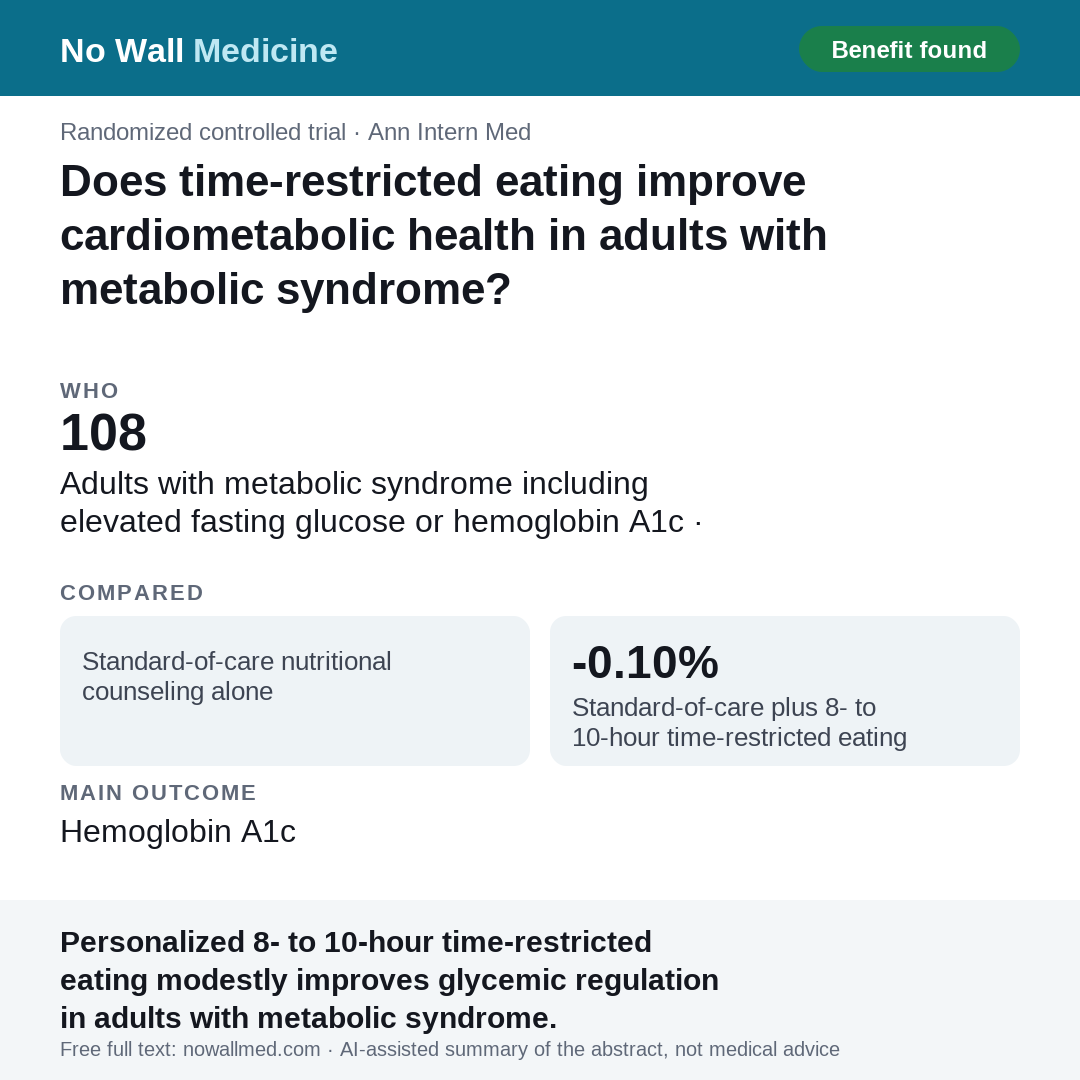
Time-Restricted Eating in Adults With Metabolic Syndrome : A Randomized Controlled Trial
Randomized controlled trialBenefit found
Does time-restricted eating improve cardiometabolic health in adults with metabolic syndrome?
Who
108
Adults with metabolic syndrome including elevated fasting glucose or hemoglobin A1c · Clinical research institute
Compared
Standard-of-care nutritional counseling alone
-0.10%Standard-of-care plus 8- to 10-hour time-restricted eating (95% CI, -0.19% to -0.003%)
Main outcome
Hemoglobin A1c
Result: -0.10% (95% CI, -0.19% to -0.003%)
Bottom line: Personalized 8- to 10-hour time-restricted eating modestly improves glycemic regulation in adults with metabolic syndrome.
Limitation: Short duration, self-reported diet, and potential for multiple elements affecting outcomes.
Funded by: National Institutes of Health
Ann Intern Med · 2024-10-01Download image
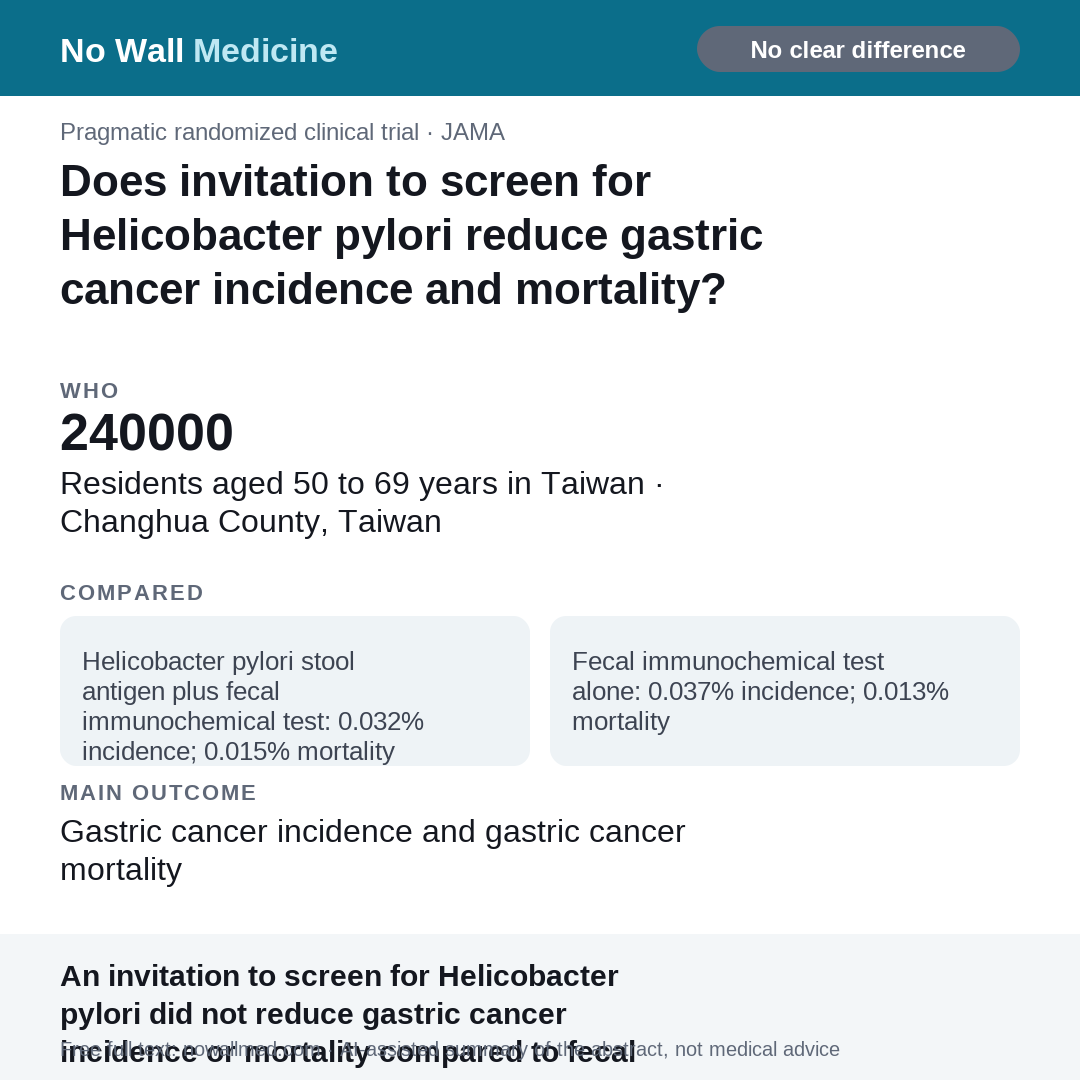
Screening for Helicobacter pylori to Prevent Gastric Cancer: A Pragmatic Randomized Clinical Trial
Pragmatic randomized clinical trialNo clear difference
Does invitation to screen for Helicobacter pylori reduce gastric cancer incidence and mortality?
Who
240000
Residents aged 50 to 69 years in Taiwan · Changhua County, Taiwan
Compared
Helicobacter pylori stool antigen plus fecal immunochemical test: 0.032% incidence; 0.015% mortality
Fecal immunochemical test alone: 0.037% incidence; 0.013% mortality
Main outcome
Gastric cancer incidence and gastric cancer mortality
Result: mean difference -0.005% (95% CI, -0.013% to 0.003%)
Bottom line: An invitation to screen for Helicobacter pylori did not reduce gastric cancer incidence or mortality compared to fecal immunochemical test alone.
Limitation: Post hoc analyses were required to account for differences in screening participation and follow-up length.
JAMA · 2024-09-30Download image
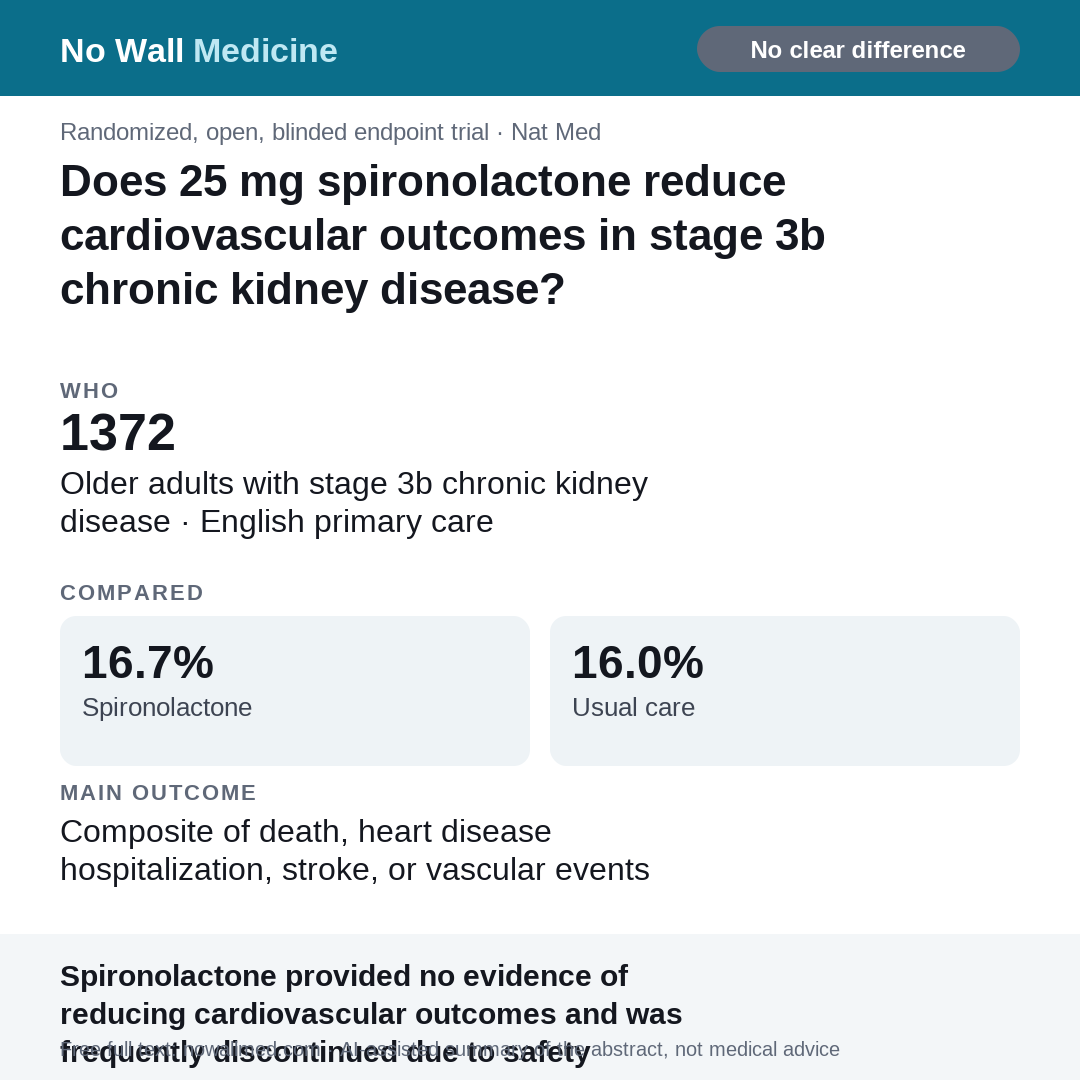
Low-dose spironolactone and cardiovascular outcomes in moderate stage chronic kidney disease: a randomized controlled trial
Randomized, open, blinded endpoint trialNo clear difference
Does 25 mg spironolactone reduce cardiovascular outcomes in stage 3b chronic kidney disease?
Who
1372
Older adults with stage 3b chronic kidney disease · English primary care
Compared
16.7%Spironolactone
16.0%Usual care
Main outcome
Composite of death, heart disease hospitalization, stroke, or vascular events
Result: hazard ratio 1.05 (95% confidence interval: 0.81-1.37)
Bottom line: Spironolactone provided no evidence of reducing cardiovascular outcomes and was frequently discontinued due to safety concerns.
Nat Med · 2024-09-30Download image