Visual abstracts
New randomized trials and meta-analyses from leading journals at a glance: who was studied, what was compared, and what was found. Every paper is free to read in full.
All specialtiesCardiology 896Oncology 801Gastroenterology & Hepatology 327Infectious Disease 644Neurology 368Psychiatry & Mental Health 443Pulmonology 387Critical Care 269Endocrinology & Diabetes 493Pediatrics 562Surgery 362Orthopedics & Sports Medicine 167Neurosurgery 115Cardiothoracic & Vascular Surgery 87Plastic & Reconstructive Surgery 145Nephrology 202Rheumatology 111Hematology 194Dermatology 85Ophthalmology 102Obstetrics & Gynecology 277Public & Global Health 179Radiology & Imaging 109Anesthesiology 135Urology 168ENT (Otolaryngology) 115Emergency Medicine 104Allergy & Immunology 63Geriatrics 163Family Medicine & Primary Care 115Medical Genetics & Genomics 93Pathology & Laboratory Medicine 28Physical Medicine & Rehabilitation 149Palliative Care 82Nutrition 228Digital Health & AI 466General Medicine 104
Maralixibat Improves Xanthomas and Hypercholesterolemia in Children with Alagille Syndrome: A Post Hoc Integrated Analysis From Two Clinical Trials
Integrated analysis from two clinical trialsBenefit found
Does maralixibat improve xanthomas and hypercholesterolemia in children with Alagille syndrome?
Who
63
Children with Alagille syndrome
Compared
All participants at week 96: CXS 0 prevalence increased from 60% to 86%
Xanthoma responders: 71% at week 48 and 64% at week 96
Xanthoma nonresponders
Main outcome
Changes in xanthoma severity, serum lipids, and serum bile acids
Bottom line: Maralixibat may reduce xanthoma burden and improve metabolic parameters in children with Alagille syndrome.
J Pediatr · 2026-04-17Download image

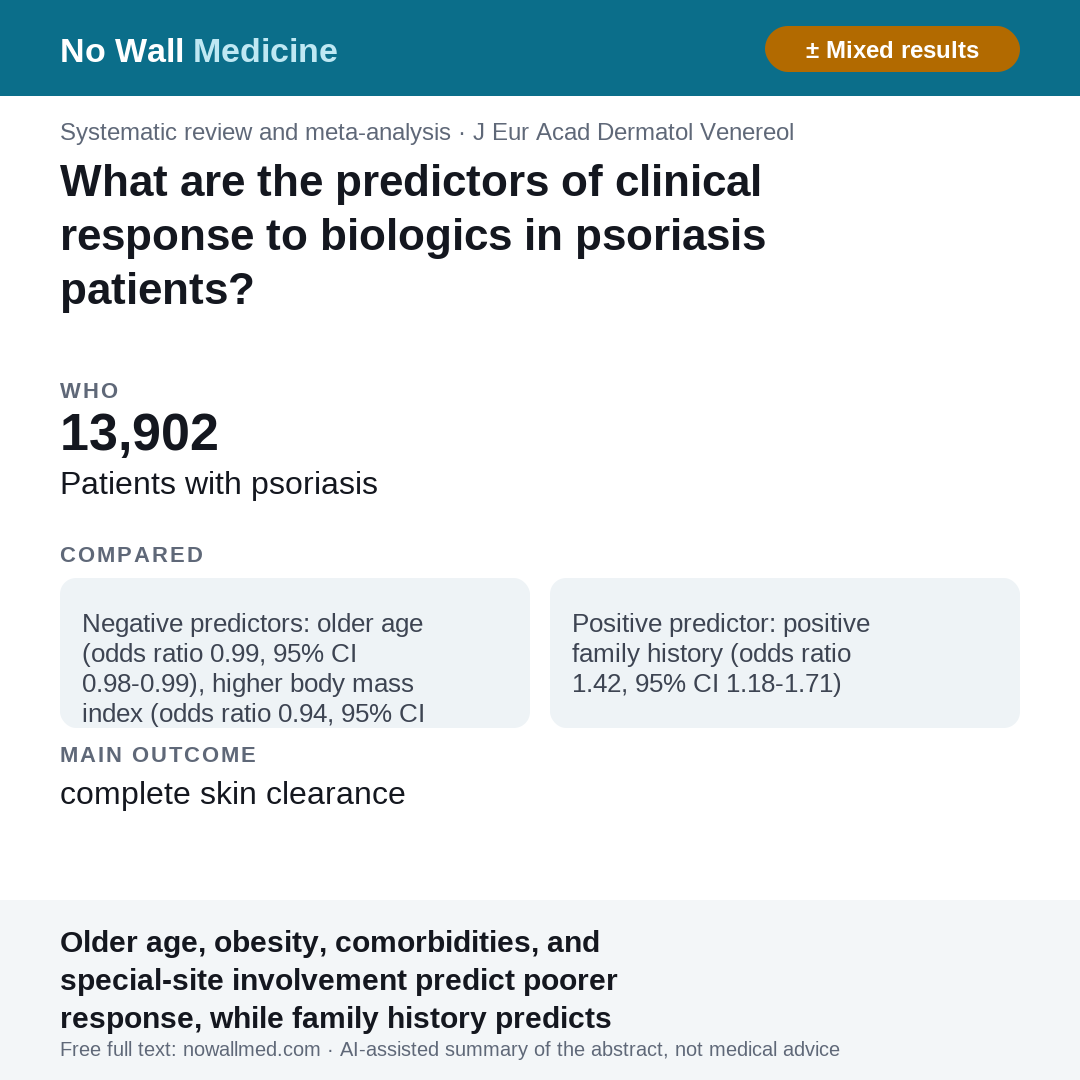
Predictors of clinical response to biologics in psoriasis: A systematic review and meta-analysis
Systematic review and meta-analysisMixed results
What are the predictors of clinical response to biologics in psoriasis patients?
Who
13,902
Patients with psoriasis
Compared
Negative predictors: older age (odds ratio 0.99, 95% CI 0.98-0.99), higher body mass index (odds ratio 0.94, 95% CI 0.92-0.97), comorbidities (odds ratio 0.75, 95% CI 0.63-0.9), special areas (odds ratio 0.71, 95% CI 0.56-0.89)
Positive predictor: positive family history (odds ratio 1.42, 95% CI 1.18-1.71)
Main outcome
complete skin clearance
Bottom line: Older age, obesity, comorbidities, and special-site involvement predict poorer response, while family history predicts better biologic outcomes.
J Eur Acad Dermatol Venereol · 2026-04-17Download image
Dietary, Food Security and Diabetes Outcomes Associated with Food Is Medicine Programs among Adults with Type 2 Diabetes in the United States: A Rapid Systematic Review
Rapid systematic reviewMixed results
Do food is medicine programs impact diabetes, diet, and food security outcomes?
Who
Adults with type 2 diabetes in the United States · United States
Compared
Food is medicine interventions: hemoglobin A1c (-0.1% to -3.0%)
Vegetable and fruit intake: +0.2 to +0.9 mean servings/d
Diet quality: +0.04 to +31.8 points
Food insecurity: -8.9% to -53.5%
Main outcome
diabetes management, dietary intake, and food security
Bottom line: Food is medicine programs showed modest improvements, but most changes in diabetes management were not clinically significant.
Limitation: Low rigor of many studies suggests caution regarding program efficacy.
Adv Nutr · 2026-04-17Download image

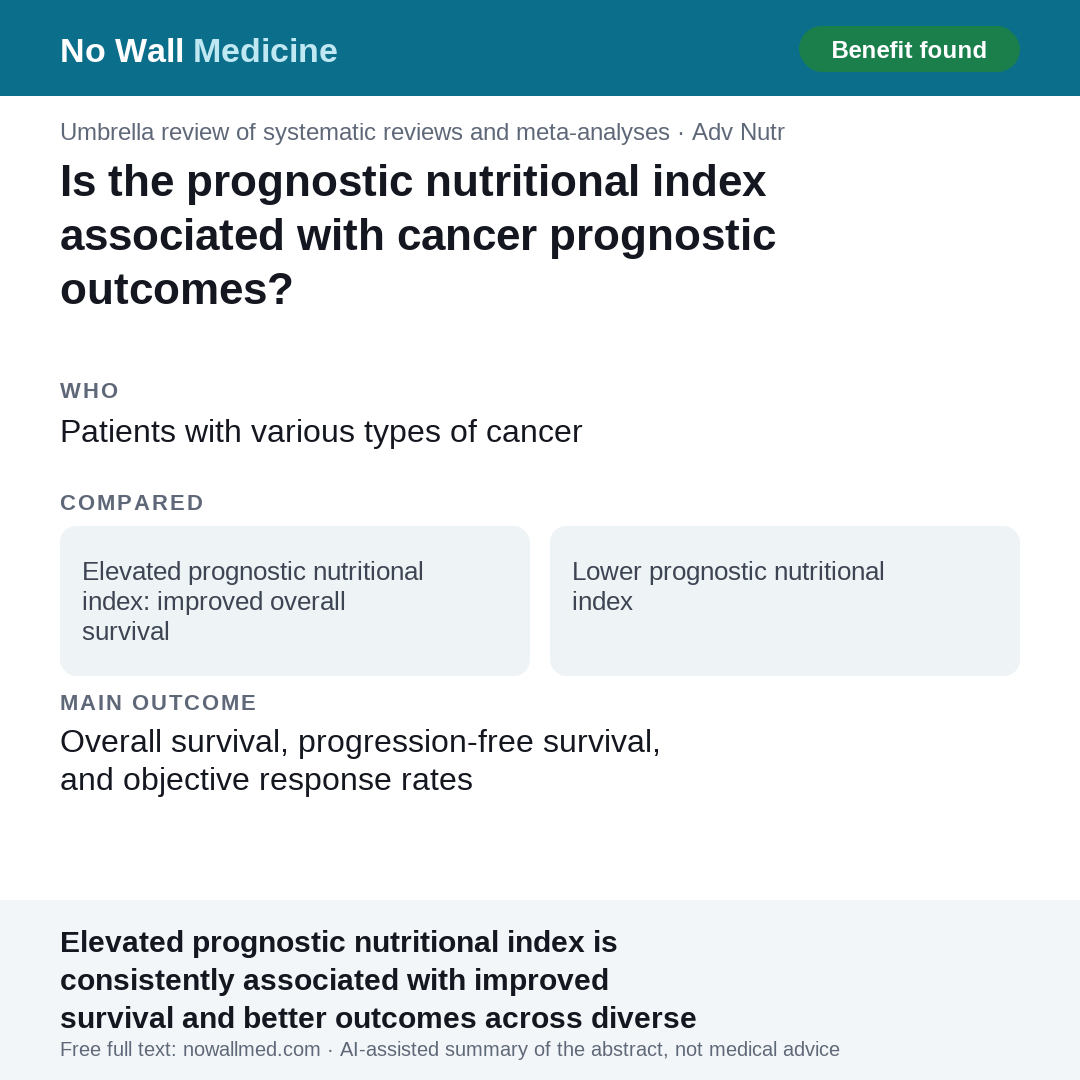
Prognostic Nutritional Index and Cancer Prognostic Outcomes: An Umbrella Review of Systematic Reviews and Meta-analyses of Observational Studies
Umbrella review of systematic reviews and meta-analysesBenefit found
Is the prognostic nutritional index associated with cancer prognostic outcomes?
Who
Patients with various types of cancer
Compared
Elevated prognostic nutritional index: improved overall survival
Lower prognostic nutritional index
Main outcome
Overall survival, progression-free survival, and objective response rates
Bottom line: Elevated prognostic nutritional index is consistently associated with improved survival and better outcomes across diverse cancer types.
Limitation: Marked heterogeneity in prognostic nutritional index cutoff values across studies.
Adv Nutr · 2026-04-17Download image
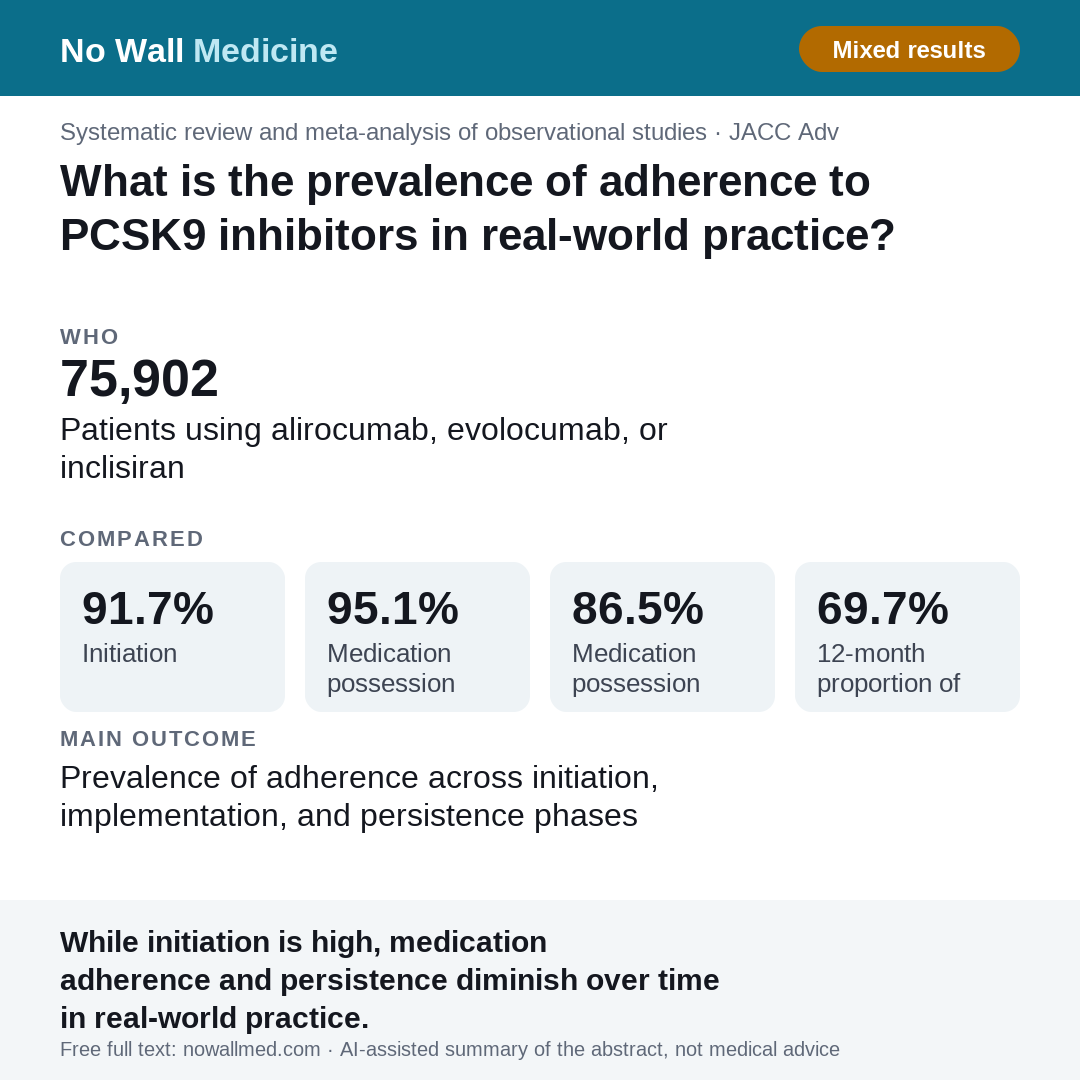
Adherence to PCSK9 Inhibitors in Clinical Practice: Systematic Review and Meta-Analysis of Observational Studies
Systematic review and meta-analysis of observational studiesMixed results
What is the prevalence of adherence to PCSK9 inhibitors in real-world practice?
Who
75,902
Patients using alirocumab, evolocumab, or inclisiran
Compared
91.7%Initiation (95% CI: 83.6-96.0)
95.1%Medication possession ratio at 6 months (95% CI: 92.7-97.5)
86.5%Medication possession ratio at 24 months (95% CI: 80.2-92.9)
69.7%12-month proportion of days covered (95% CI: 55.9-83.5)
Main outcome
Prevalence of adherence across initiation, implementation, and persistence phases
Bottom line: While initiation is high, medication adherence and persistence diminish over time in real-world practice.
Limitation: Limited evidence beyond 24 months of follow-up and for inclisiran.
JACC Adv · 2026-04-17Download image
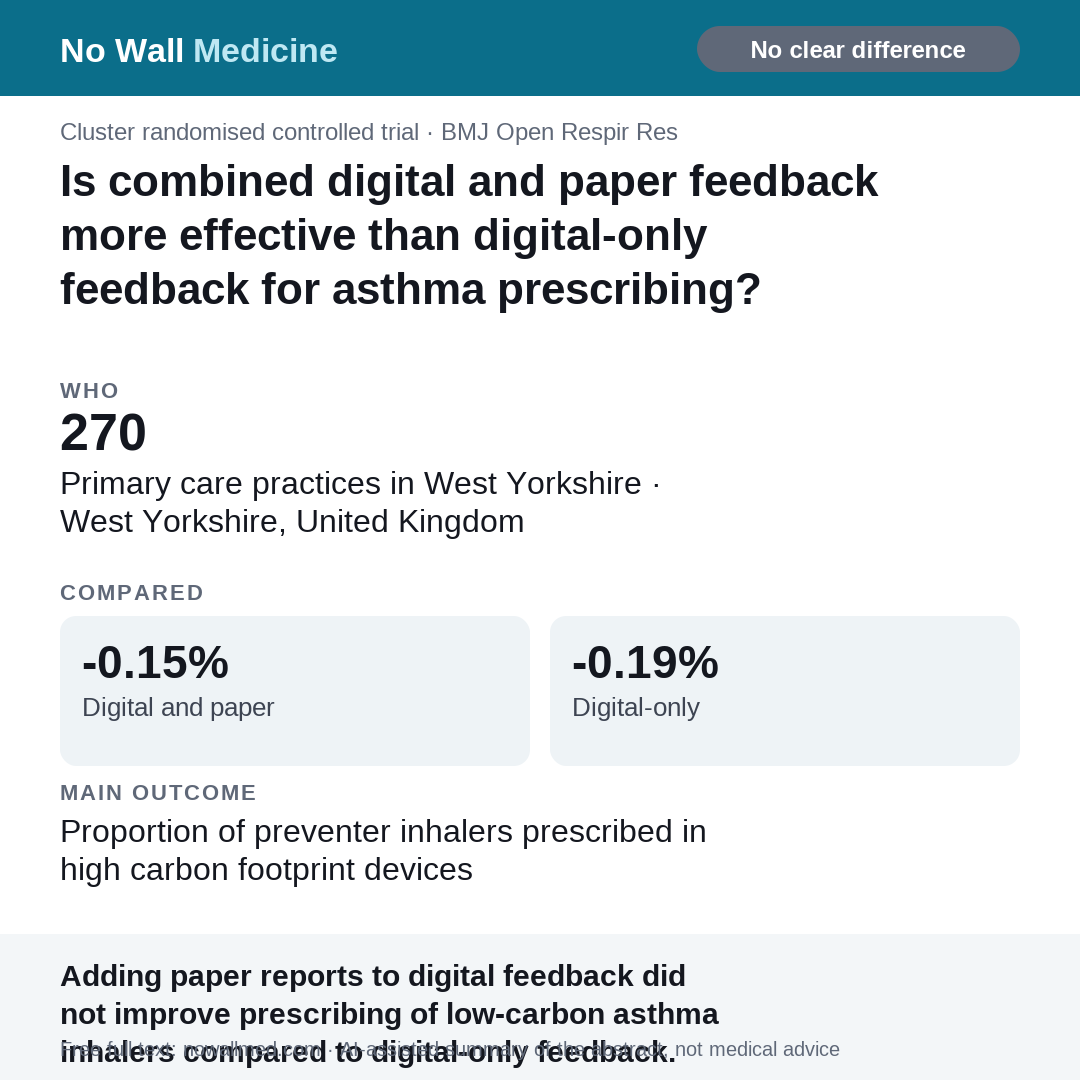
Comparing paper Letters in addition to Emailed Audit and feedback in Refining Asthma treatment to Improve clinical and environmental Results in primary care through a cluster randomised controlled trial: the CLEAR AIR study
Cluster randomised controlled trialNo clear difference
Is combined digital and paper feedback more effective than digital-only feedback for asthma prescribing?
Who
270
Primary care practices in West Yorkshire · West Yorkshire, United Kingdom
Compared
-0.15%Digital and paper
-0.19%Digital-only
Main outcome
Proportion of preventer inhalers prescribed in high carbon footprint devices
Result: risk ratio 1.00 (95% CI 0.98 to 1.03)
Bottom line: Adding paper reports to digital feedback did not improve prescribing of low-carbon asthma inhalers compared to digital-only feedback.
BMJ Open Respir Res · 2026-04-17Download image
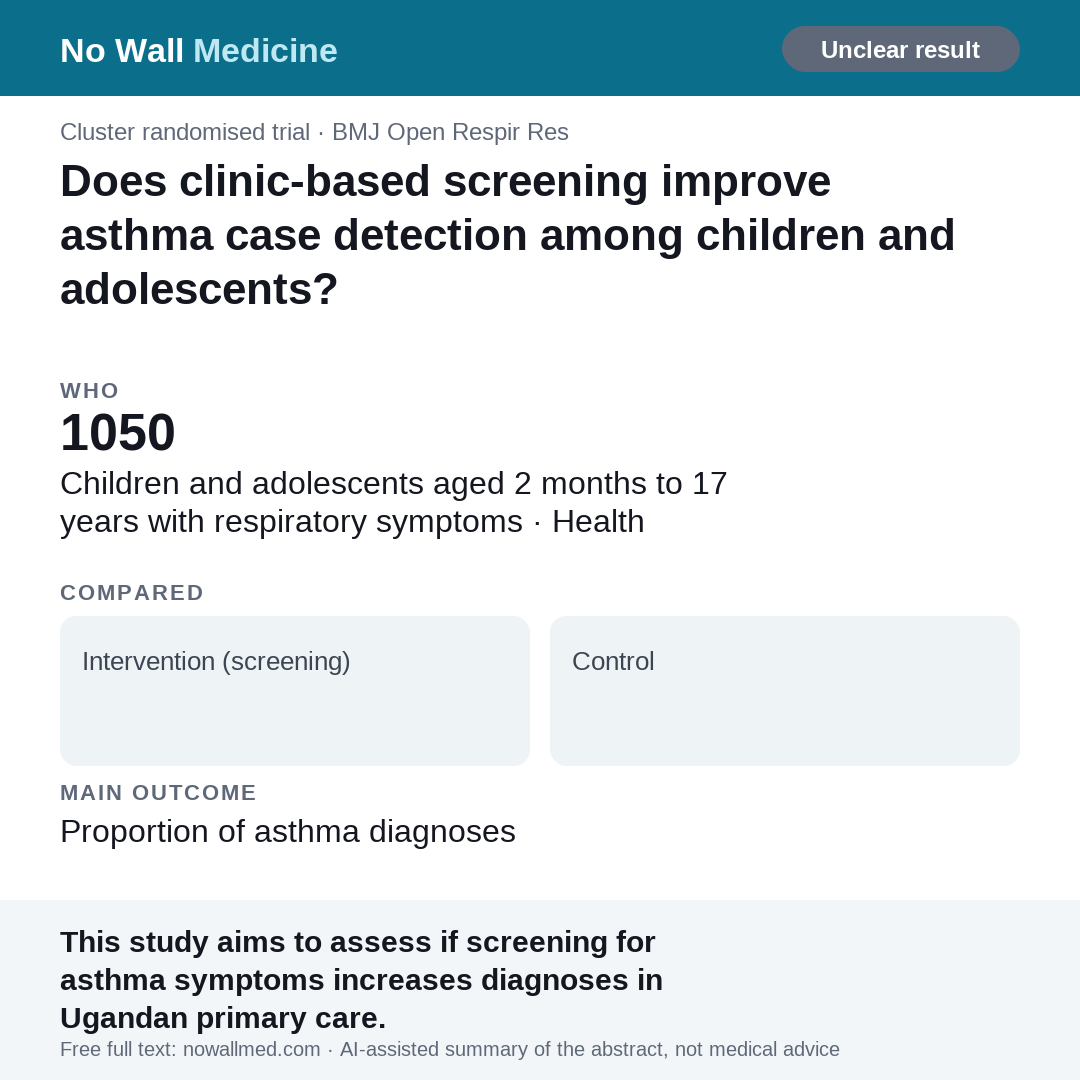
Improving asthma case detection among children and adolescents through clinic-based screening in primary care health facilities in Uganda: a cluster randomised trial
Cluster randomised trialUnclear result
Does clinic-based screening improve asthma case detection among children and adolescents?
Who
1050
Children and adolescents aged 2 months to 17 years with respiratory symptoms · Health centres in Jinja region, Eastern Uganda
Compared
Intervention (screening)
Control
Main outcome
Proportion of asthma diagnoses
Bottom line: This study aims to assess if screening for asthma symptoms increases diagnoses in Ugandan primary care.
BMJ Open Respir Res · 2026-04-17Download image
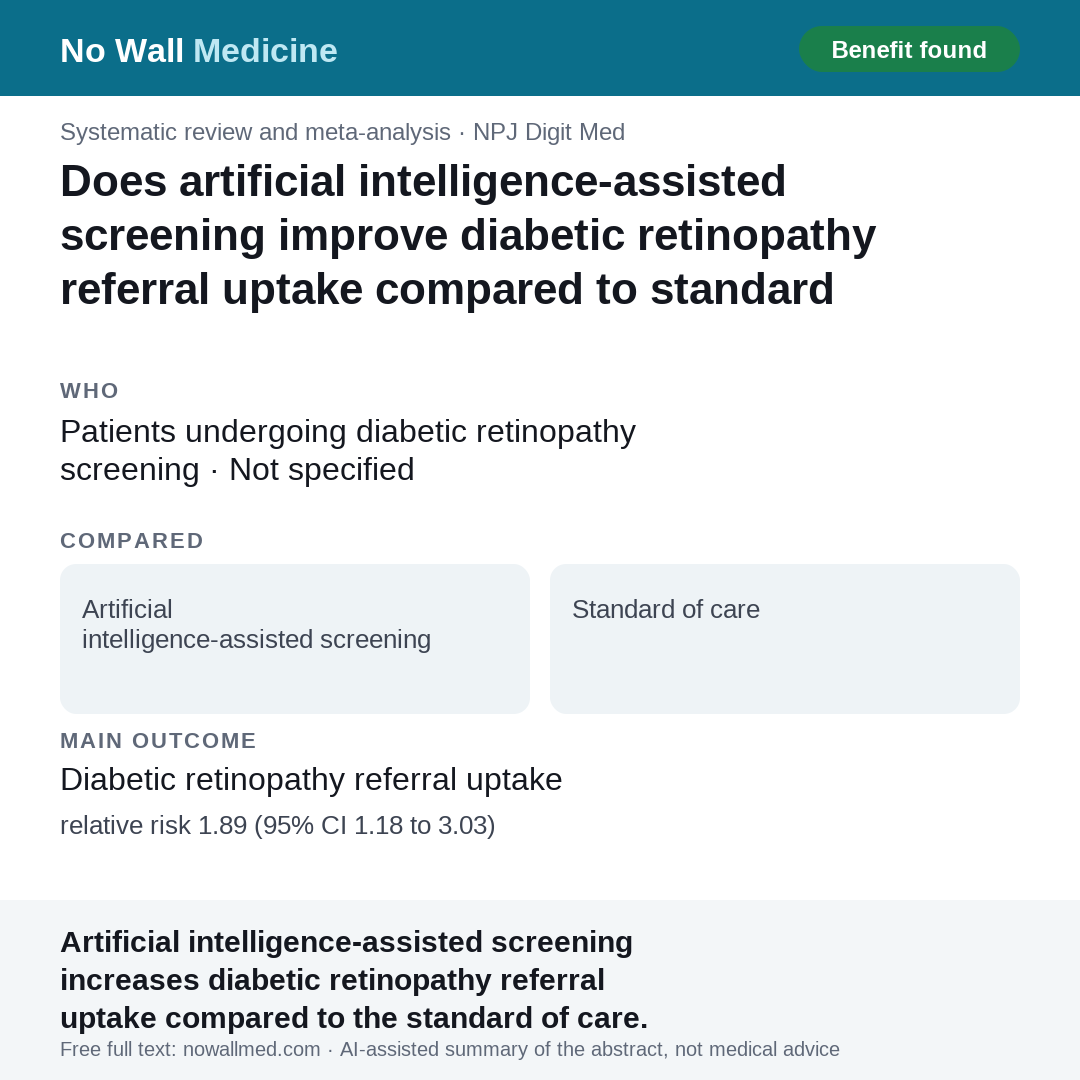
Referral uptake after diabetic retinopathy screening with artificial intelligence-assisted care pathways: a systematic review and meta-analysis
Systematic review and meta-analysisBenefit found
Does artificial intelligence-assisted screening improve diabetic retinopathy referral uptake compared to standard care?
Who
Patients undergoing diabetic retinopathy screening · Not specified
Compared
Artificial intelligence-assisted screening
Standard of care
Main outcome
Diabetic retinopathy referral uptake
Result: relative risk 1.89 (95% CI 1.18 to 3.03)
Bottom line: Artificial intelligence-assisted screening increases diabetic retinopathy referral uptake compared to the standard of care.
Limitation: High heterogeneity among included studies (I2 = 91.9%)
NPJ Digit Med · 2026-04-17Download image
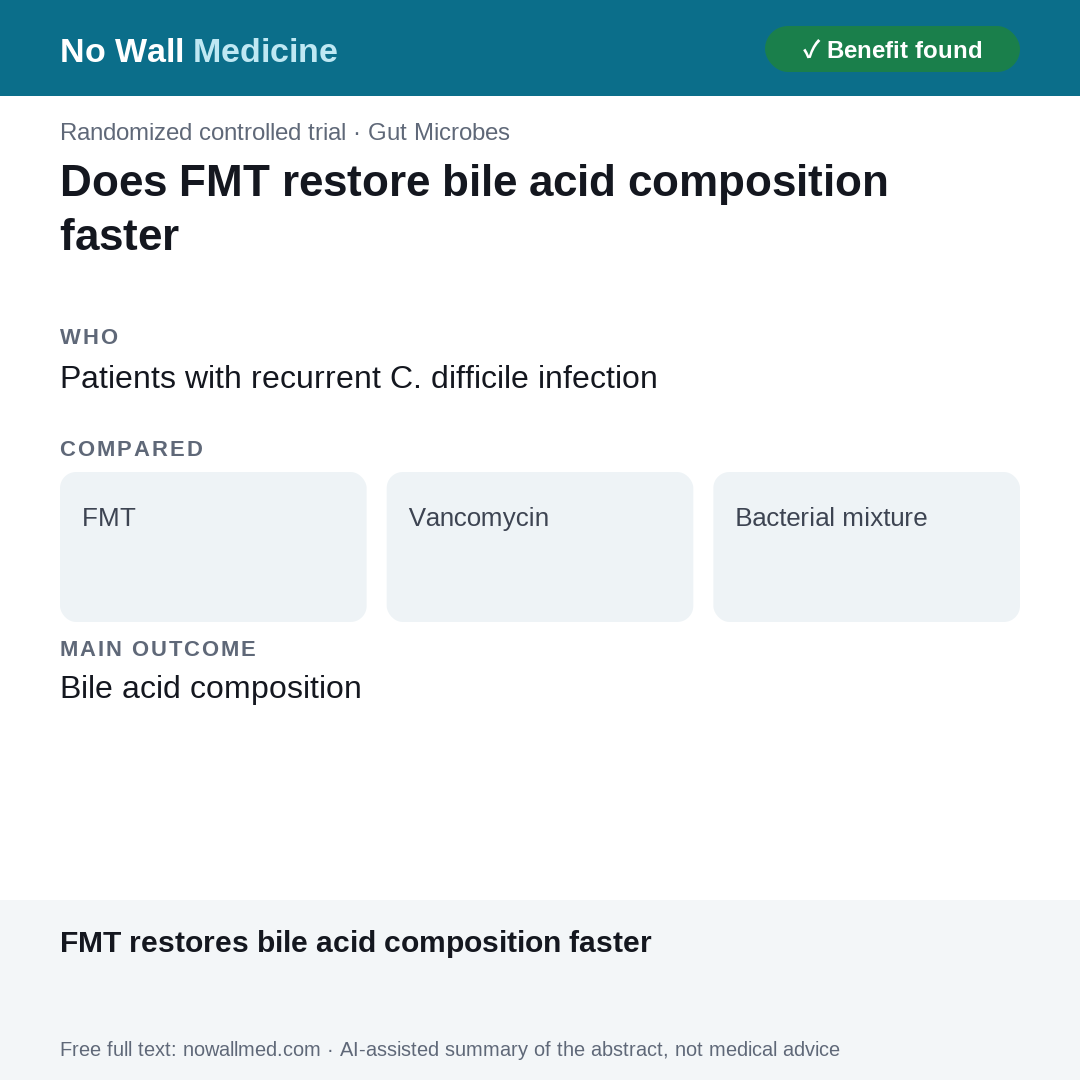
Re-establishing bile acid composition after treatment of recurrent Clostridioides difficile infection with fecal microbiota transplantation compared with oral vancomycin or a 12-strain bacterial mixture
Randomized controlled trialBenefit found
Does FMT restore bile acid composition faster
Who
Patients with recurrent C. difficile infection
Compared
FMT
Vancomycin
Bacterial mixture
Main outcome
Bile acid composition
Bottom line: FMT restores bile acid composition faster
Gut Microbes · 2026-04-17Download image
The Real-Time Support Role of Augmented Reality Technology in Shared Decision-Making in Neurosurgery Under the SEGUE Framework: Randomized Controlled Trial
Randomized controlled trialBenefit found
Does AR improve understanding in neurosurgery
Who
62
neurosurgery patients or representatives · single center
Compared
AR group: higher objective understanding
physical model: lower objective understanding
Main outcome
objective understanding
Bottom line: AR improves understanding and satisfaction
Limitation: single center, small sample
J Med Internet Res · 2026-04-17Download image

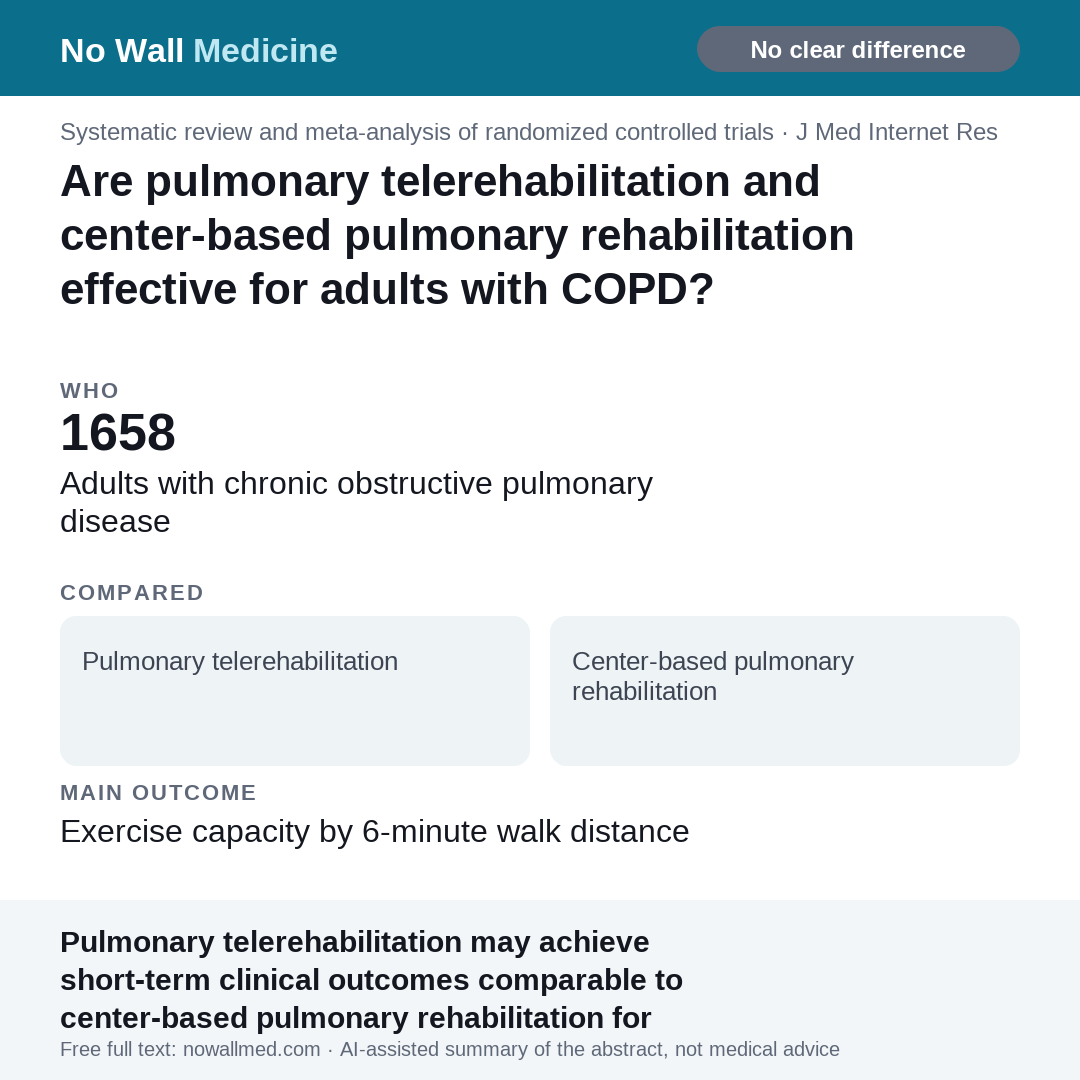
Comparing Pulmonary Telerehabilitation and Center-Based Pulmonary Rehabilitation for Effectiveness and Adherence in Chronic Obstructive Pulmonary Disease: Systematic Review and Meta-Analysis of Randomized Controlled Trials
Systematic review and meta-analysis of randomized controlled trialsNo clear difference
Are pulmonary telerehabilitation and center-based pulmonary rehabilitation effective for adults with COPD?
Who
1658
Adults with chronic obstructive pulmonary disease
Compared
Pulmonary telerehabilitation
Center-based pulmonary rehabilitation
Main outcome
Exercise capacity by 6-minute walk distance
Result: mean difference -5.37 m, 95% CI -15.68 to 4.95
Bottom line: Pulmonary telerehabilitation may achieve short-term clinical outcomes comparable to center-based pulmonary rehabilitation for exercise capacity.
Limitation: Certainty of evidence was downgraded for performance bias, inconsistency across intervention models, and imprecision.
J Med Internet Res · 2026-04-17Download image
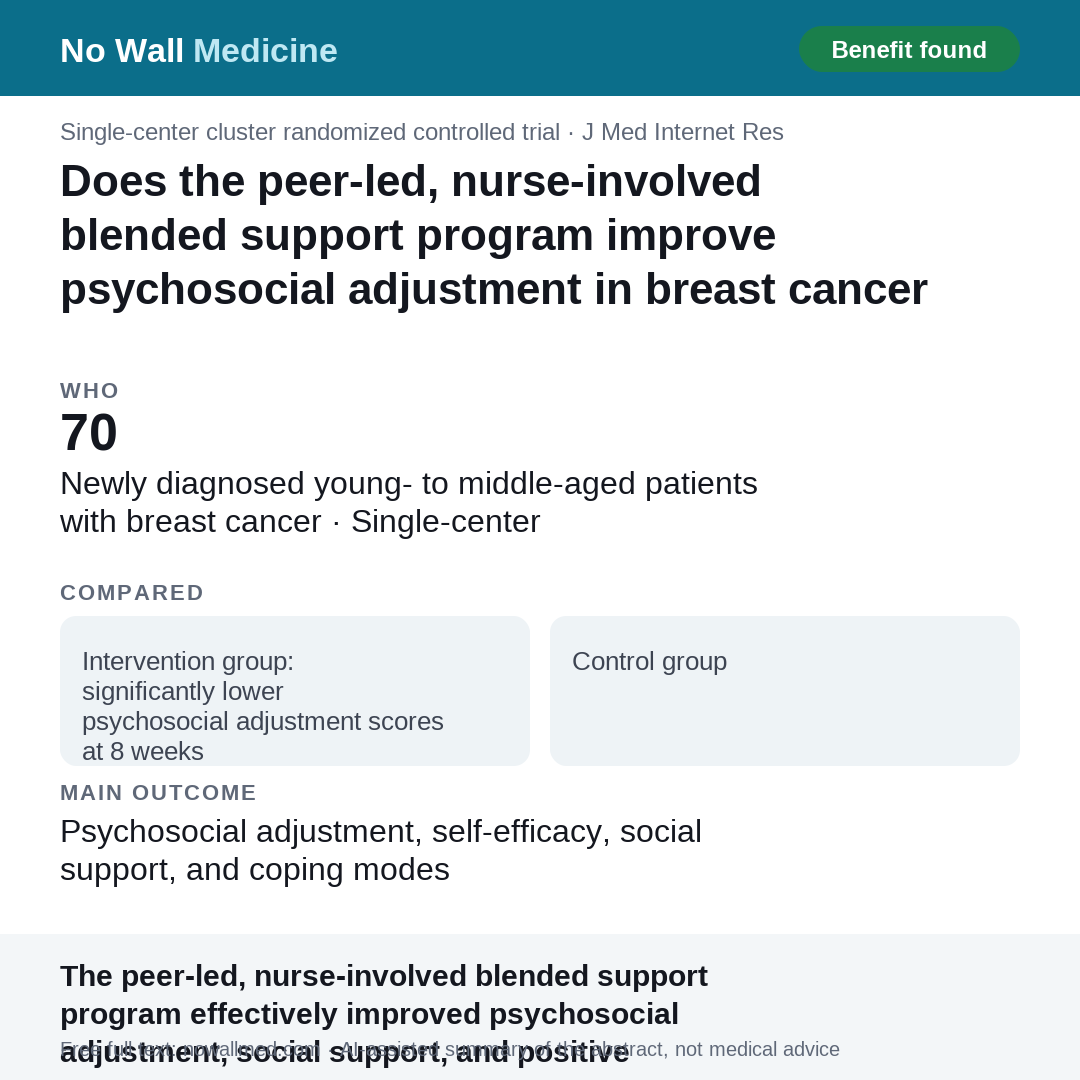
A Peer-Led, Nurse-Involved Blended Online and Offline Peer Support Program (PNO2PSP) for Psychosocial Adjustment in Young- to Middle-Aged Patients With Breast Cancer: Cluster Randomized Clinical Trial
Single-center cluster randomized controlled trialBenefit found
Does the peer-led, nurse-involved blended support program improve psychosocial adjustment in breast cancer patients?
Who
70
Newly diagnosed young- to middle-aged patients with breast cancer · Single-center
Compared
Intervention group: significantly lower psychosocial adjustment scores at 8 weeks and 12 weeks
Control group
Main outcome
Psychosocial adjustment, self-efficacy, social support, and coping modes
Bottom line: The peer-led, nurse-involved blended support program effectively improved psychosocial adjustment, social support, and positive coping in breast cancer patients.
J Med Internet Res · 2026-04-17Download image
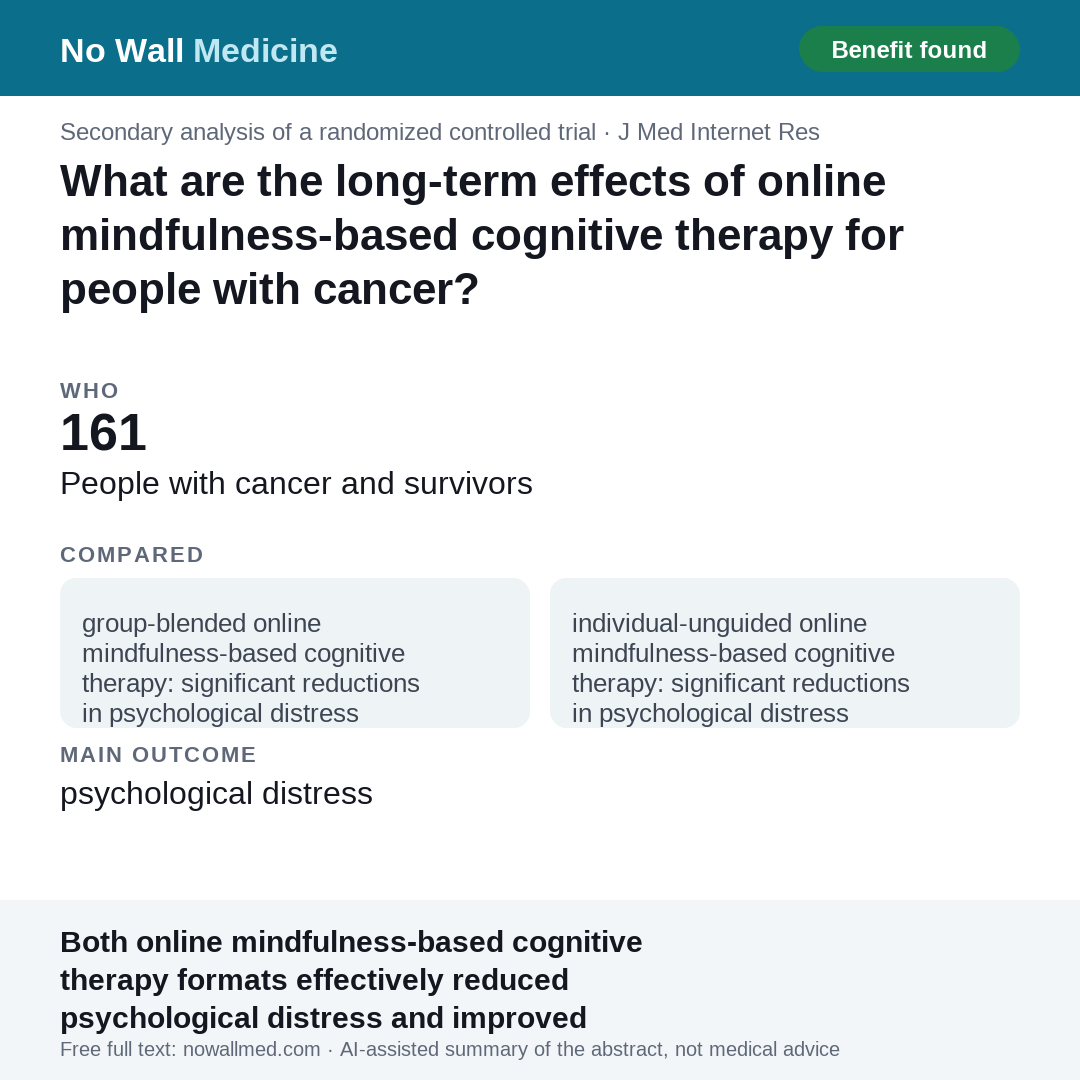
Long-Term Outcomes, Moderators, and Predictors in Online Mindfulness-Based Cognitive Therapy for People With Cancer: Secondary Analysis of a Randomized Controlled Trial
Secondary analysis of a randomized controlled trialBenefit found
What are the long-term effects of online mindfulness-based cognitive therapy for people with cancer?
Who
161
People with cancer and survivors
Compared
group-blended online mindfulness-based cognitive therapy: significant reductions in psychological distress
individual-unguided online mindfulness-based cognitive therapy: significant reductions in psychological distress
Main outcome
psychological distress
Bottom line: Both online mindfulness-based cognitive therapy formats effectively reduced psychological distress and improved well-being up to 9 months posttreatment.
Limitation: Larger, fully powered randomized controlled trials are needed to confirm these results.
J Med Internet Res · 2026-04-17Download image
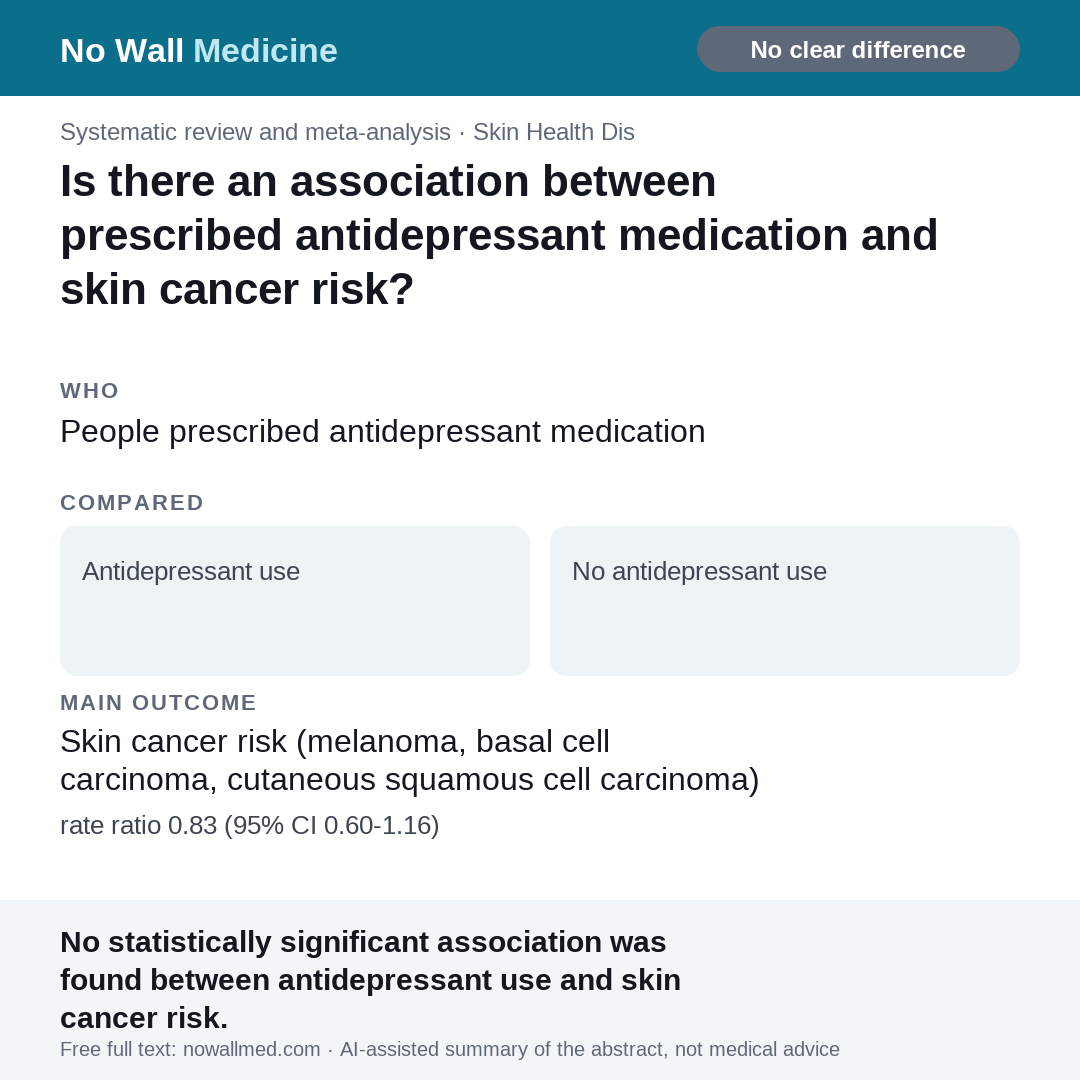
Association between prescribed antidepressant medication and skin cancer (melanoma, basal cell carcinoma and cutaneous squamous cell carcinoma) risk: a systematic review and meta-analysis
Systematic review and meta-analysisNo clear difference
Is there an association between prescribed antidepressant medication and skin cancer risk?
Who
People prescribed antidepressant medication
Compared
Antidepressant use
No antidepressant use
Main outcome
Skin cancer risk (melanoma, basal cell carcinoma, cutaneous squamous cell carcinoma)
Result: rate ratio 0.83 (95% CI 0.60-1.16)
Bottom line: No statistically significant association was found between antidepressant use and skin cancer risk.
Limitation: The certainty of evidence was very low.
Skin Health Dis · 2026-04-17Download image
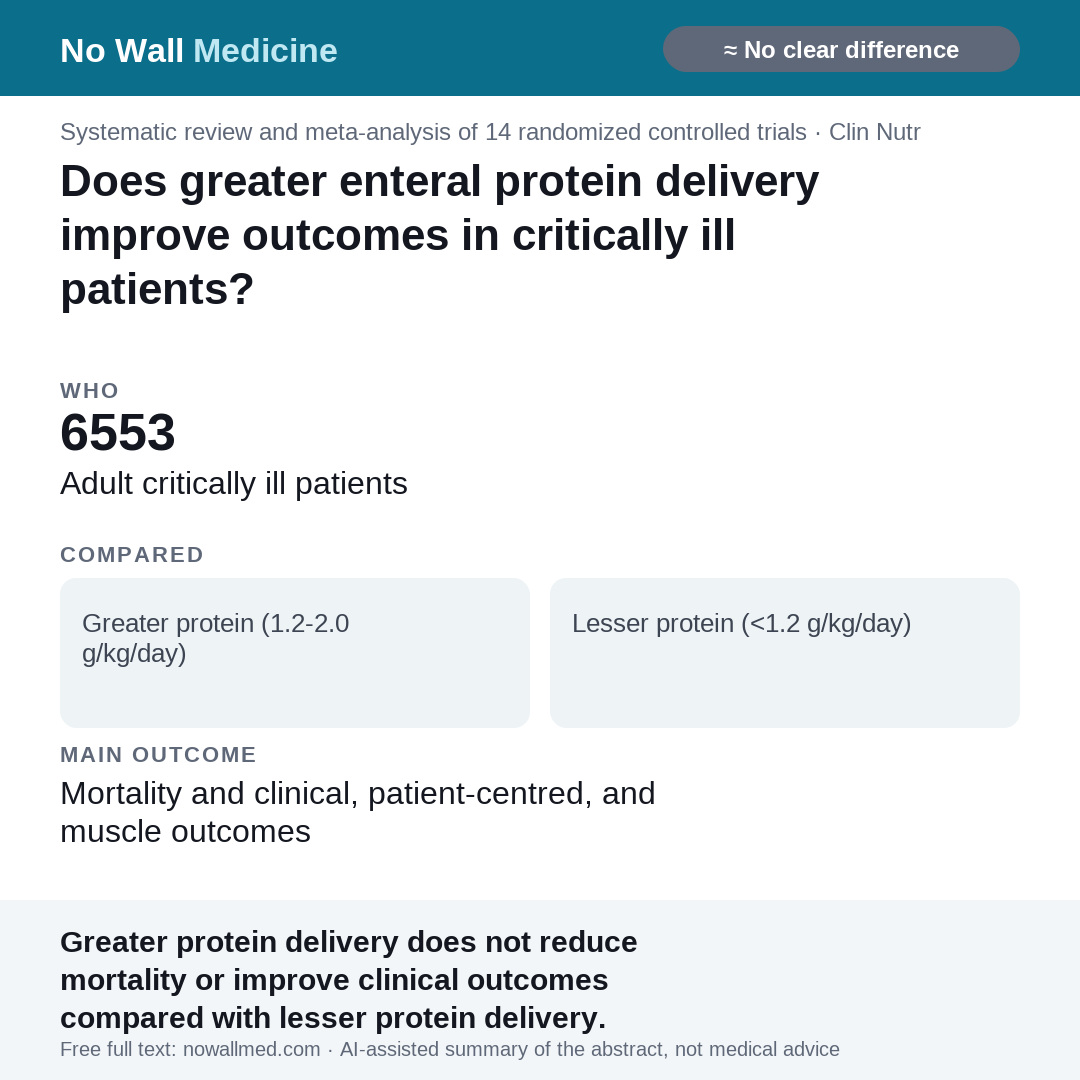
Optimal delivery of enteral protein in the critically ill: A systematic review and meta-analysis of randomised controlled trials
Systematic review and meta-analysis of 14 randomized controlled trialsNo clear difference
Does greater enteral protein delivery improve outcomes in critically ill patients?
Who
6553
Adult critically ill patients
Compared
Greater protein (1.2-2.0 g/kg/day)
Lesser protein (<1.2 g/kg/day)
Main outcome
Mortality and clinical, patient-centred, and muscle outcomes
Result: pooled risk ratio 1.01 (95% CI 0.92, 1.12)
Bottom line: Greater protein delivery does not reduce mortality or improve clinical outcomes compared with lesser protein delivery.
Limitation: Subgroup definitions for acute kidney injury varied across trials.
Clin Nutr · 2026-04-16Download image
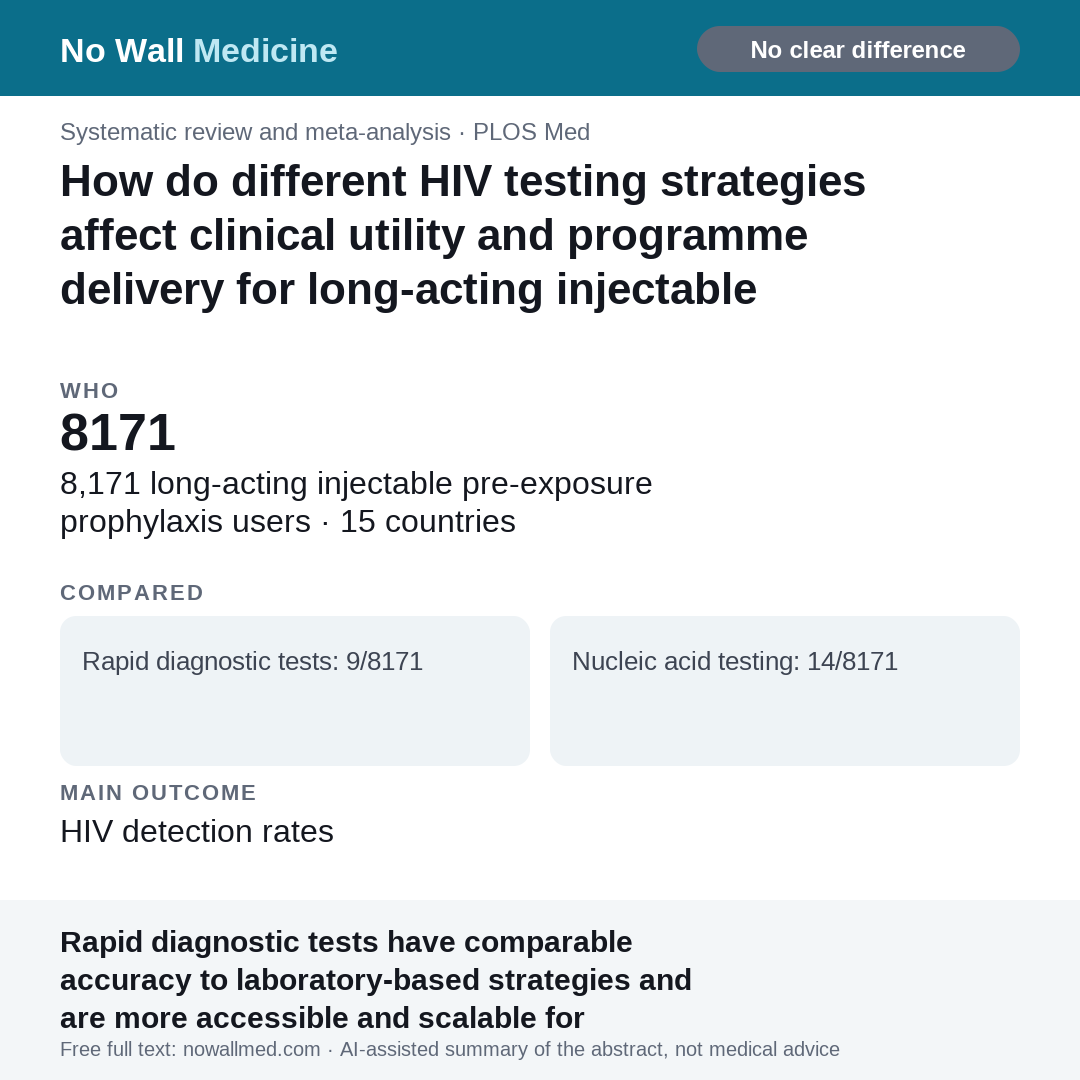
Rapid diagnostic tests, laboratory-based immunoassay and nucleic acid testing strategies for long-acting injectable pre-exposure prophylaxis: A systematic review and meta-analysis
Systematic review and meta-analysisNo clear difference
How do different HIV testing strategies affect clinical utility and programme delivery for long-acting injectable pre-exposure prophylaxis?
Who
8171
8,171 long-acting injectable pre-exposure prophylaxis users · 15 countries
Compared
Rapid diagnostic tests: 9/8171
Nucleic acid testing: 14/8171
Main outcome
HIV detection rates
Result: odds ratio 0.66 (95% confidence interval: 0.29-1.50)
Bottom line: Rapid diagnostic tests have comparable accuracy to laboratory-based strategies and are more accessible and scalable for long-acting injectable pre-exposure prophylaxis.
Limitation: Assessment of performance accuracy in different testing strategies may introduce selection bias.
PLOS Med · 2026-04-16Download image
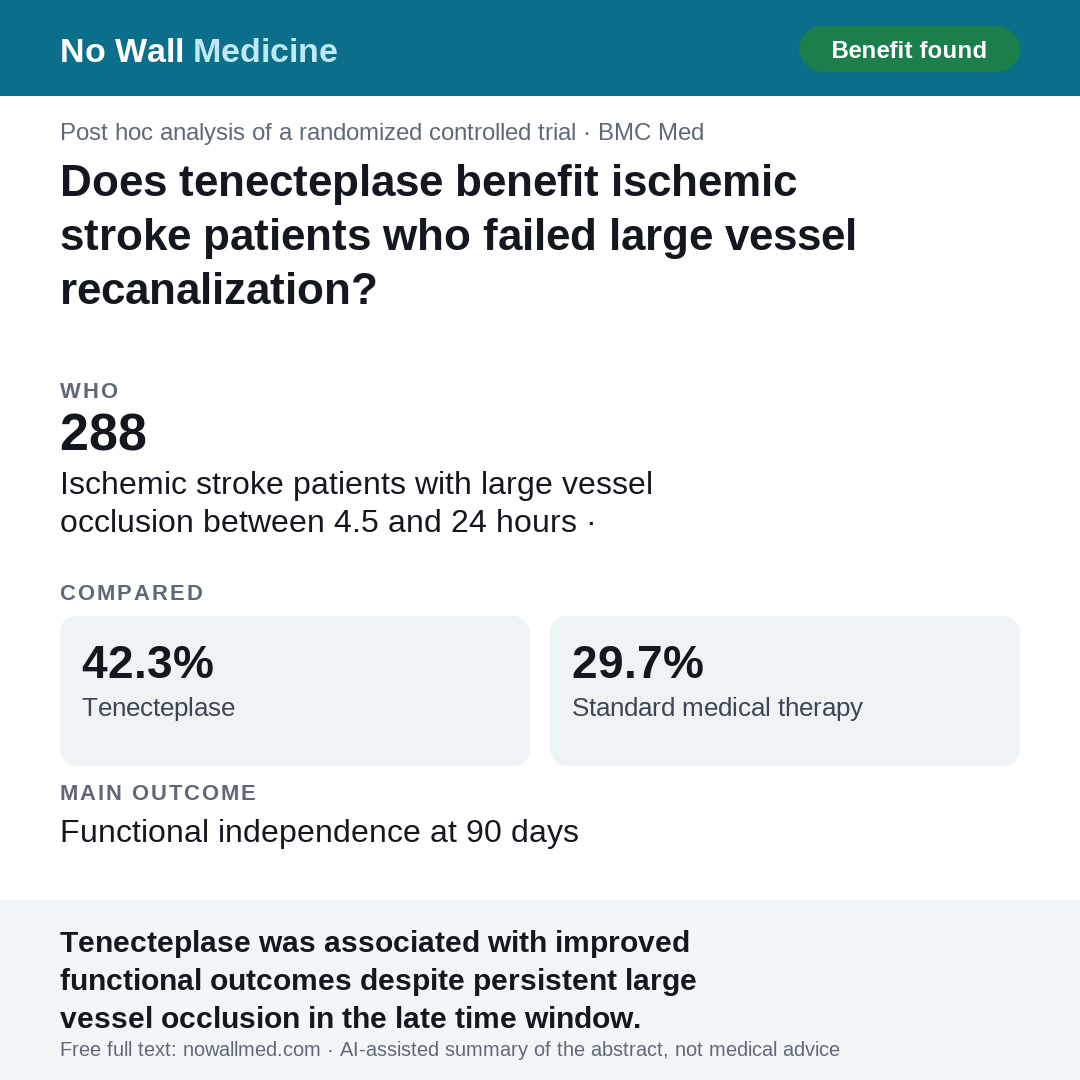
Clinical benefit of tenecteplase despite failed recanalization in late-window ischemic stroke: a post hoc analysis of the TRACE-3 trial
Post hoc analysis of a randomized controlled trialBenefit found
Does tenecteplase benefit ischemic stroke patients who failed large vessel recanalization?
Who
288
Ischemic stroke patients with large vessel occlusion between 4.5 and 24 hours · Multicenter
Compared
42.3%Tenecteplase
29.7%Standard medical therapy
Main outcome
Functional independence at 90 days
Result: adjusted risk ratio 1.37 (95% CI 1.00-1.86)
Bottom line: Tenecteplase was associated with improved functional outcomes despite persistent large vessel occlusion in the late time window.
BMC Med · 2026-04-16Download image
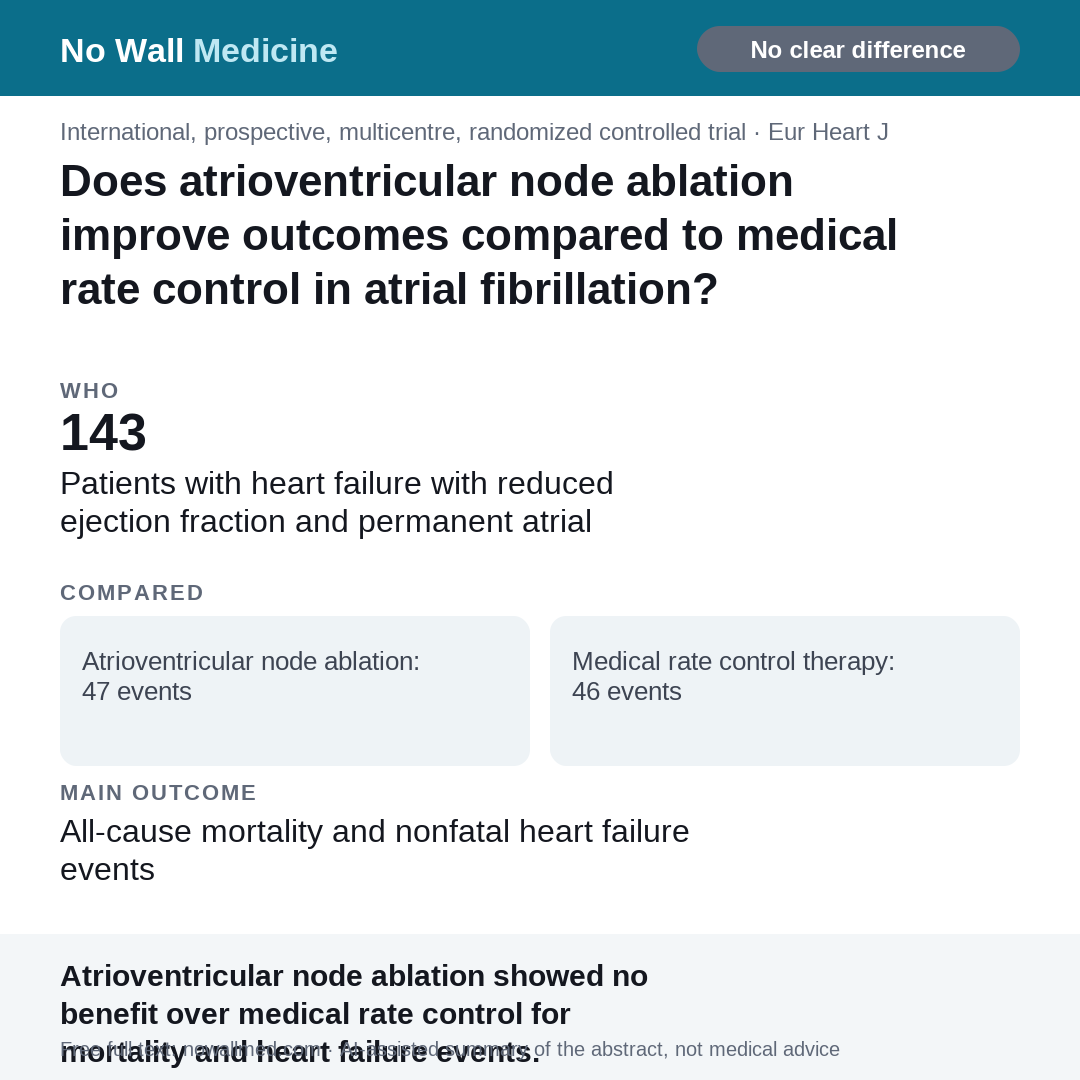
Cardiac resynchronization therapy with or without atrioventricular node ablation in atrial fibrillation: the CAAN-AF trial
International, prospective, multicentre, randomized controlled trialNo clear difference
Does atrioventricular node ablation improve outcomes compared to medical rate control in atrial fibrillation?
Who
143
Patients with heart failure with reduced ejection fraction and permanent atrial fibrillation · International, multicentre
Compared
Atrioventricular node ablation: 47 events
Medical rate control therapy: 46 events
Main outcome
All-cause mortality and nonfatal heart failure events
Result: incident rate ratio 1.16 (95% CI 0.60-2.24)
Bottom line: Atrioventricular node ablation showed no benefit over medical rate control for mortality and heart failure events.
Eur Heart J · 2026-04-16Download image
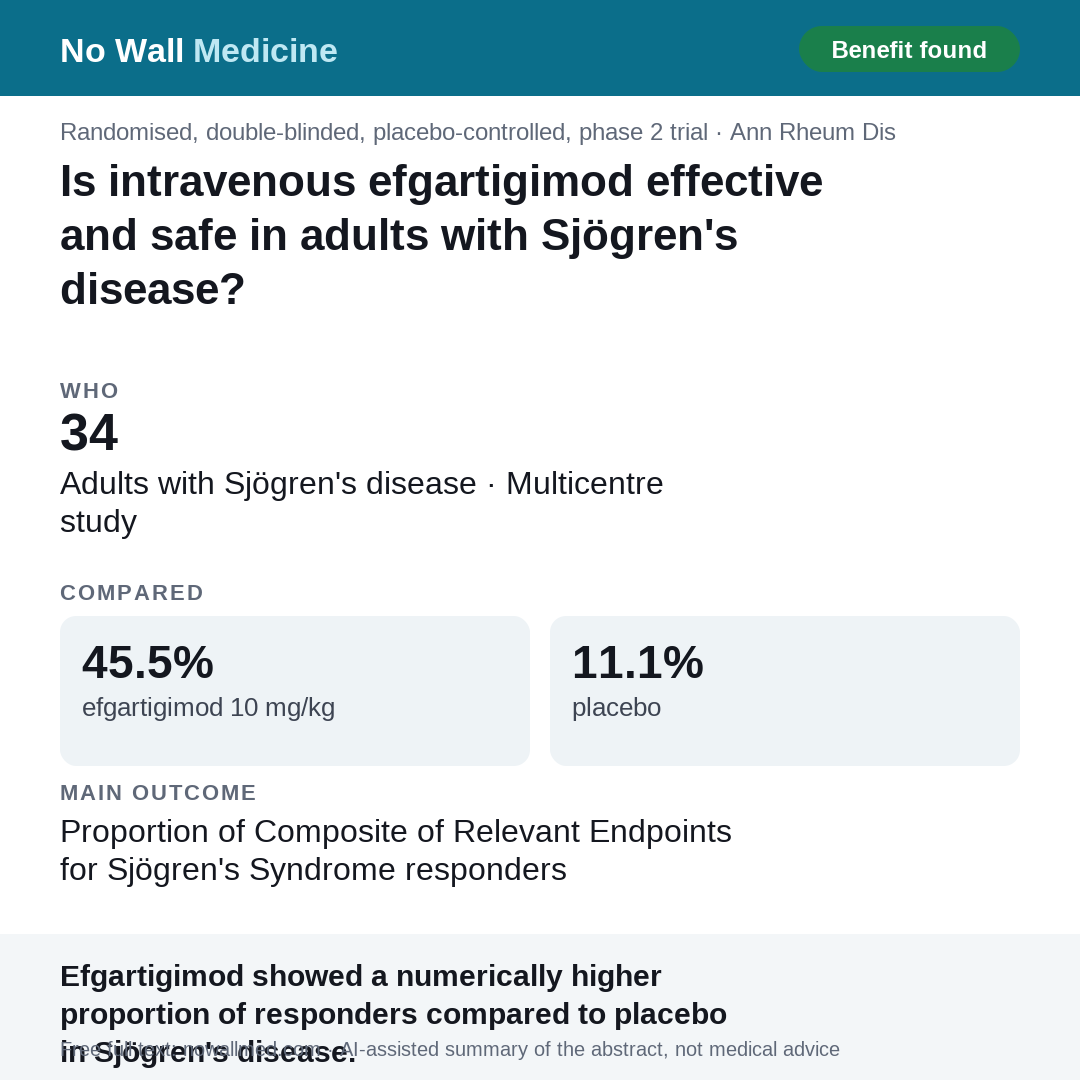
Efgartigimod in Sjögren's disease: a phase 2, randomised, placebo-controlled, parallel-group, double-blinded, proof-of-concept study (RHO)
Randomised, double-blinded, placebo-controlled, phase 2 trialBenefit found
Is intravenous efgartigimod effective and safe in adults with Sjögren's disease?
Who
34
Adults with Sjögren's disease · Multicentre study
Compared
45.5%efgartigimod 10 mg/kg
11.1%placebo
Main outcome
Proportion of Composite of Relevant Endpoints for Sjögren's Syndrome responders
Result: treatment difference 34.4%
Bottom line: Efgartigimod showed a numerically higher proportion of responders compared to placebo in Sjögren's disease.
Ann Rheum Dis · 2026-04-16Download image
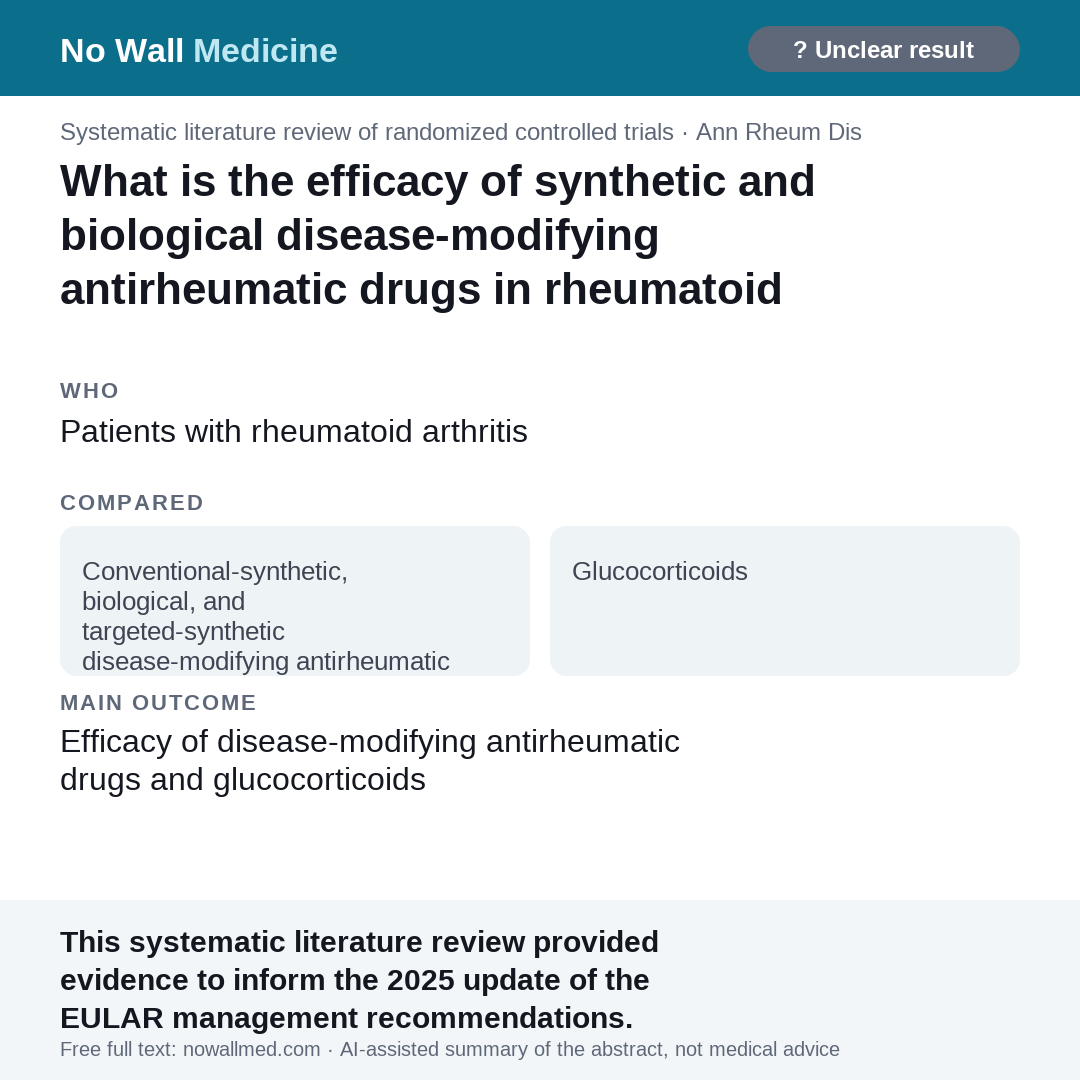
Efficacy of synthetic and biological DMARDs: a systematic literature review informing the 2025 update of the EULAR recommendations for the management of rheumatoid arthritis
Systematic literature review of randomized controlled trialsUnclear result
What is the efficacy of synthetic and biological disease-modifying antirheumatic drugs in rheumatoid arthritis?
Who
Patients with rheumatoid arthritis
Compared
Conventional-synthetic, biological, and targeted-synthetic disease-modifying antirheumatic drugs
Glucocorticoids
Main outcome
Efficacy of disease-modifying antirheumatic drugs and glucocorticoids
Bottom line: This systematic literature review provided evidence to inform the 2025 update of the EULAR management recommendations.
Ann Rheum Dis · 2026-04-16Download image