Visual abstracts
New randomized trials and meta-analyses from leading journals at a glance: who was studied, what was compared, and what was found. Every paper is free to read in full.
All specialtiesCardiology 4877Oncology 4138Gastroenterology & Hepatology 1942Infectious Disease 3837Neurology 1905Psychiatry & Mental Health 2273Pulmonology 2143Critical Care 1365Endocrinology & Diabetes 2580Pediatrics 2980Surgery 2559Orthopedics & Sports Medicine 931Neurosurgery 537Cardiothoracic & Vascular Surgery 674Plastic & Reconstructive Surgery 591Nephrology 1133Rheumatology 823Hematology 1109Dermatology 621Ophthalmology 543Obstetrics & Gynecology 1686Public & Global Health 1058Radiology & Imaging 648Anesthesiology 986Urology 764ENT (Otolaryngology) 503Emergency Medicine 511Allergy & Immunology 313Geriatrics 981Family Medicine & Primary Care 562Medical Genetics & Genomics 676Pathology & Laboratory Medicine 159Physical Medicine & Rehabilitation 757Palliative Care 444Nutrition 1588Digital Health & AI 2201General Medicine 321
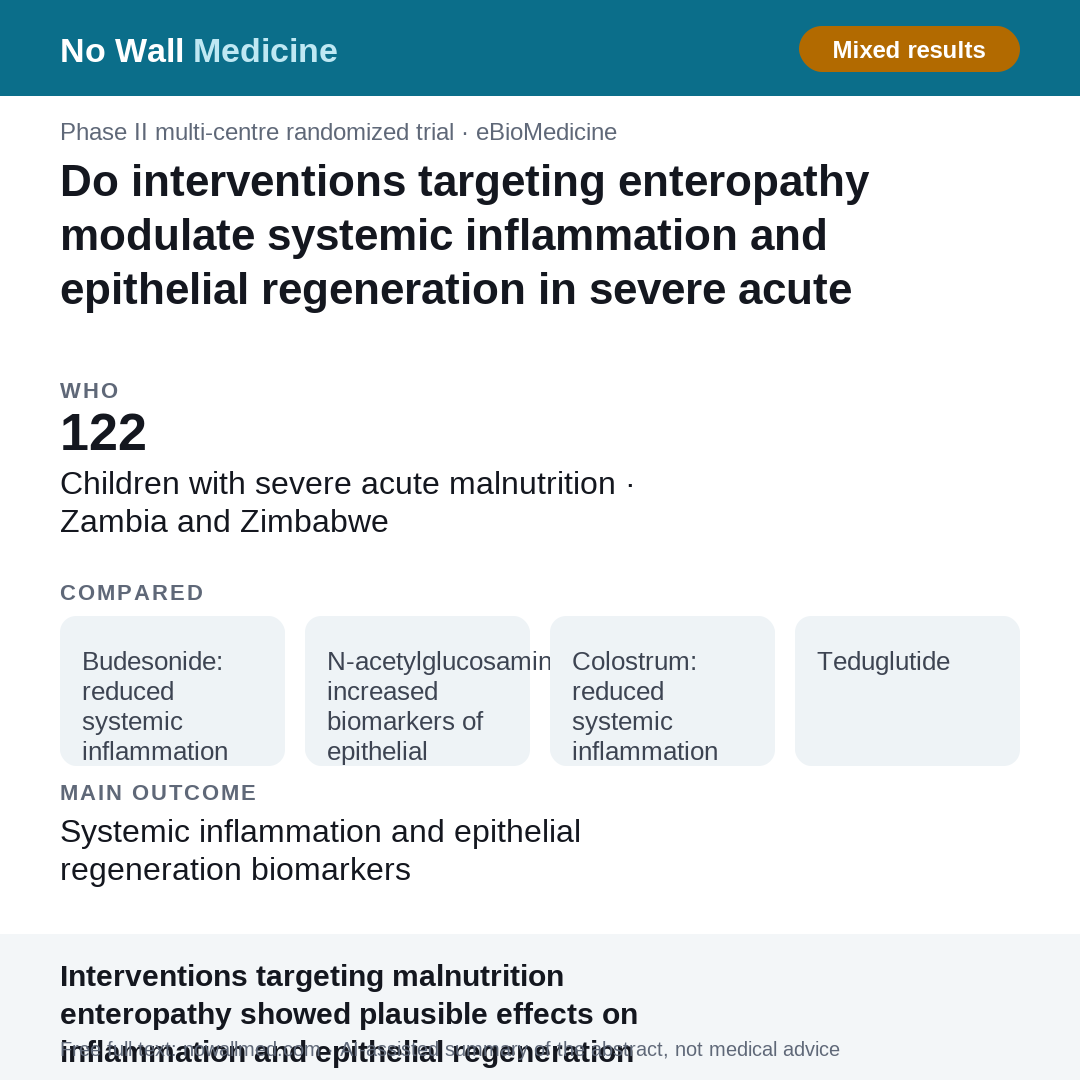
Therapeutic interventions targeting enteropathy in severe acute malnutrition modulate systemic and vascular inflammation and epithelial regeneration
Phase II multi-centre randomized trialMixed results
Do interventions targeting enteropathy modulate systemic inflammation and epithelial regeneration in severe acute malnutrition?
Who
122
Children with severe acute malnutrition · Zambia and Zimbabwe
Compared
Budesonide: reduced systemic inflammation
N-acetylglucosamine: increased biomarkers of epithelial regeneration and circulating growth factors
Colostrum: reduced systemic inflammation and suggested better restoration of epithelial barrier function
Teduglutide
Main outcome
Systemic inflammation and epithelial regeneration biomarkers
Bottom line: Interventions targeting malnutrition enteropathy showed plausible effects on inflammation and epithelial regeneration biomarkers in children.
Funded by: Wellcome, Medical Research Council (UK), and Takeda UK
eBioMedicine · 2024-12-10Download image
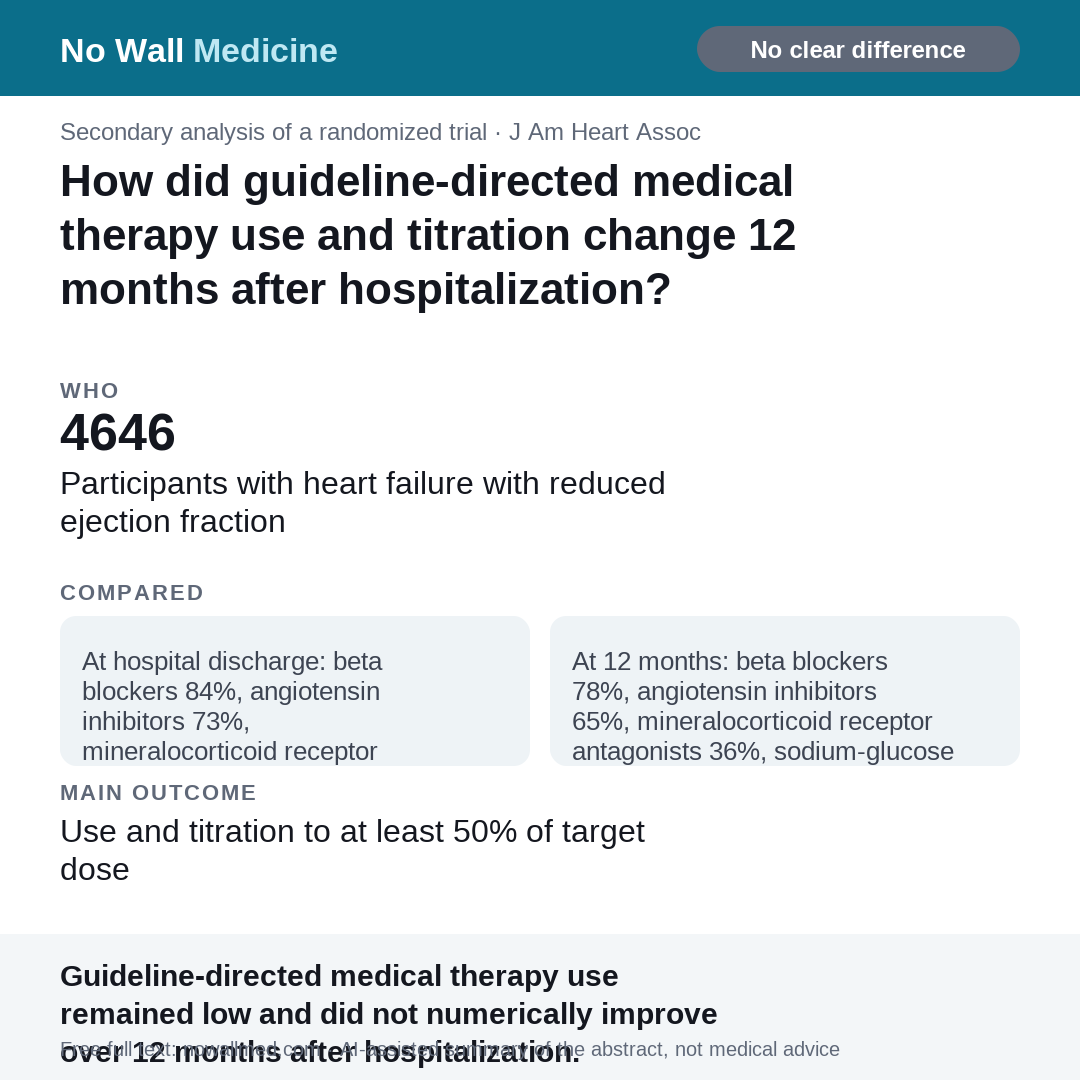
Guideline-Directed Medical Therapy After Hospitalization for Acute Heart Failure: Insights From the CONNECT-HF
Secondary analysis of a randomized trialNo clear difference
How did guideline-directed medical therapy use and titration change 12 months after hospitalization?
Who
4646
Participants with heart failure with reduced ejection fraction
Compared
At hospital discharge: beta blockers 84%, angiotensin inhibitors 73%, mineralocorticoid receptor antagonists 39%, sodium-glucose cotransporter 2 inhibitors 1.5%
At 12 months: beta blockers 78%, angiotensin inhibitors 65%, mineralocorticoid receptor antagonists 36%, sodium-glucose cotransporter 2 inhibitors 2.1%
Main outcome
Use and titration to at least 50% of target dose
Bottom line: Guideline-directed medical therapy use remained low and did not numerically improve over 12 months after hospitalization.
J Am Heart Assoc · 2024-12-10Download image
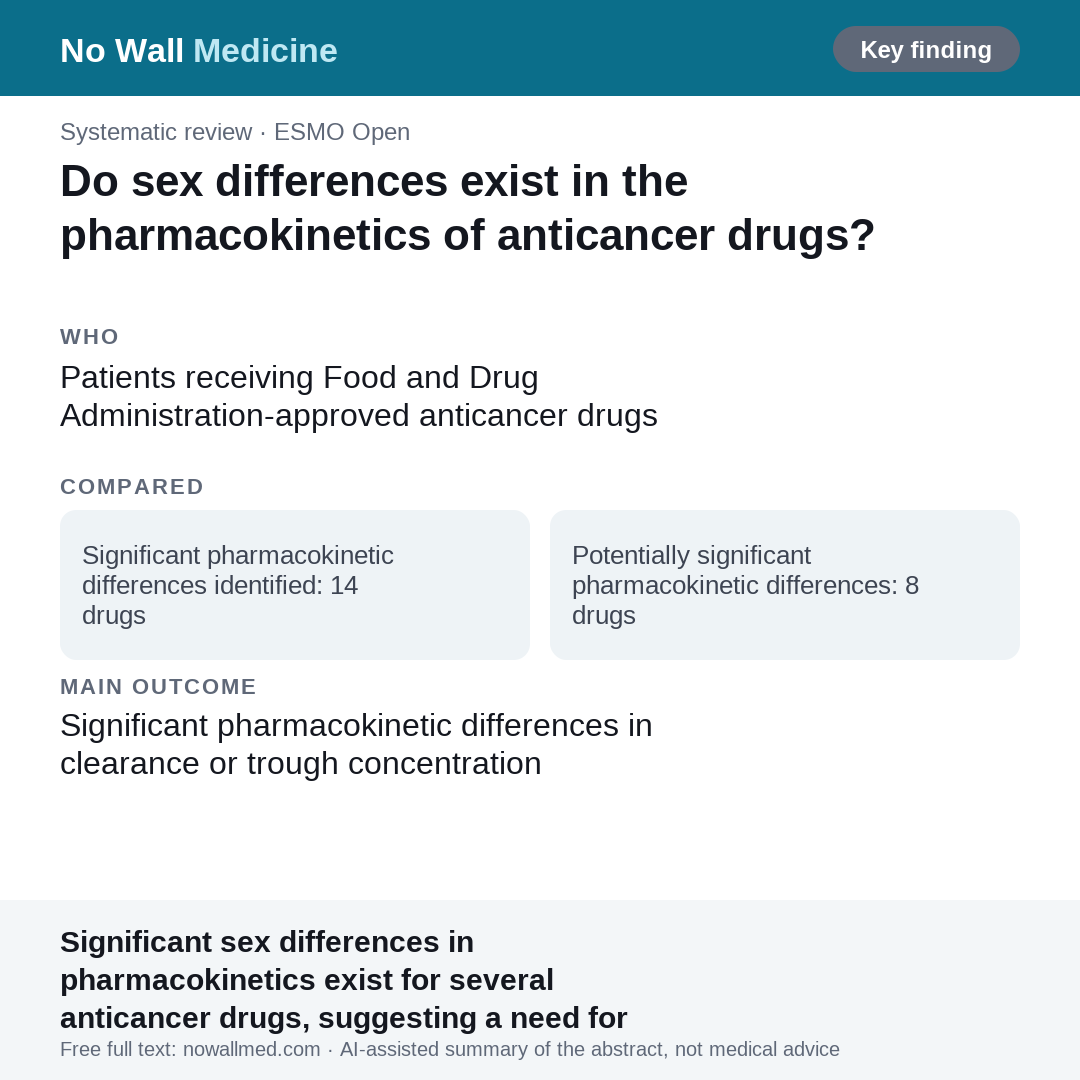
Sex differences in the pharmacokinetics of anticancer drugs: a systematic review
Systematic reviewBenefit found
Do sex differences exist in the pharmacokinetics of anticancer drugs?
Who
Patients receiving Food and Drug Administration-approved anticancer drugs
Compared
Significant pharmacokinetic differences identified: 14 drugs
Potentially significant pharmacokinetic differences: 8 drugs
Main outcome
Significant pharmacokinetic differences in clearance or trough concentration
Bottom line: Significant sex differences in pharmacokinetics exist for several anticancer drugs, suggesting a need for sex-specific dosing strategies.
Limitation: None of the studies included sex-based summaries to assess impact on efficacy or safety.
ESMO Open · 2024-12-10Download image
Preoperative Physical Activity Improvement with the Use of Activity Trackers in Patients Undergoing Radical Cystectomy-A Bicentric, Open-label, Randomised Controlled Trial: A Clinical Study Protocol of the PreAct Trial
Randomised, open-label, phase 3 trialUnclear result
Does a fitness tracker-based prehabilitation programme increase physical activity before radical cystectomy?
Who
Patients undergoing radical cystectomy · Bicentric
Compared
fitness tracker-based prehabilitation programme
control
Main outcome
average number of steps per day
Bottom line: This study protocol describes a trial to test if fitness trackers increase preoperative physical activity.
Eur Urol Open Sci · 2024-12-10Download image
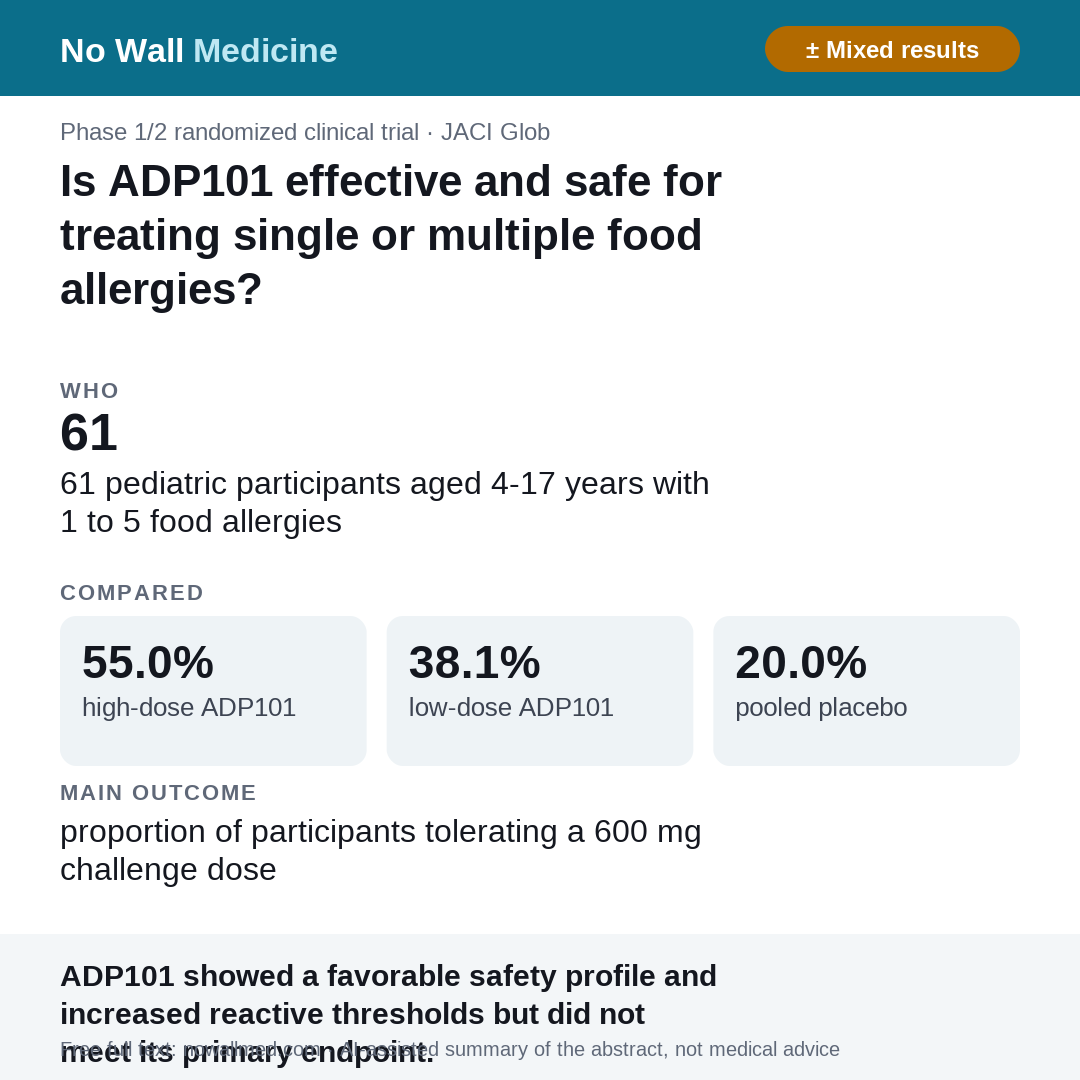
ADP101 multifood oral immunotherapy for food-allergic patients: Harmony phase 1/2 randomized clinical trial
Phase 1/2 randomized clinical trialMixed results
Is ADP101 effective and safe for treating single or multiple food allergies?
Who
61
61 pediatric participants aged 4-17 years with 1 to 5 food allergies
Compared
55.0%high-dose ADP101
38.1%low-dose ADP101
20.0%pooled placebo
Main outcome
proportion of participants tolerating a 600 mg challenge dose
Bottom line: ADP101 showed a favorable safety profile and increased reactive thresholds but did not meet its primary endpoint.
Limitation: The study did not meet its primary endpoint after adjusting for multiple comparisons.
JACI Glob · 2024-12-10Download image
Characteristics and Popularity of Videos of Abusive Head Trauma Prevention: Systematic Appraisal
Systematic appraisalMixed results
What are the characteristics and popularity of abusive head trauma prevention videos?
Who
53
English or French videos of abusive head trauma prevention · Internet
Compared
Depicting infant being shaken: β=1.74, 95% CI 1.06-2.85
Use of text or headers: β=2.15, 95% CI 1.08-4.26
Main outcome
Video Power Index popularity
Bottom line: Prevention videos were high quality but popularity was associated with depicting shaking and using text or headers.
J Med Internet Res · 2024-12-10Download image

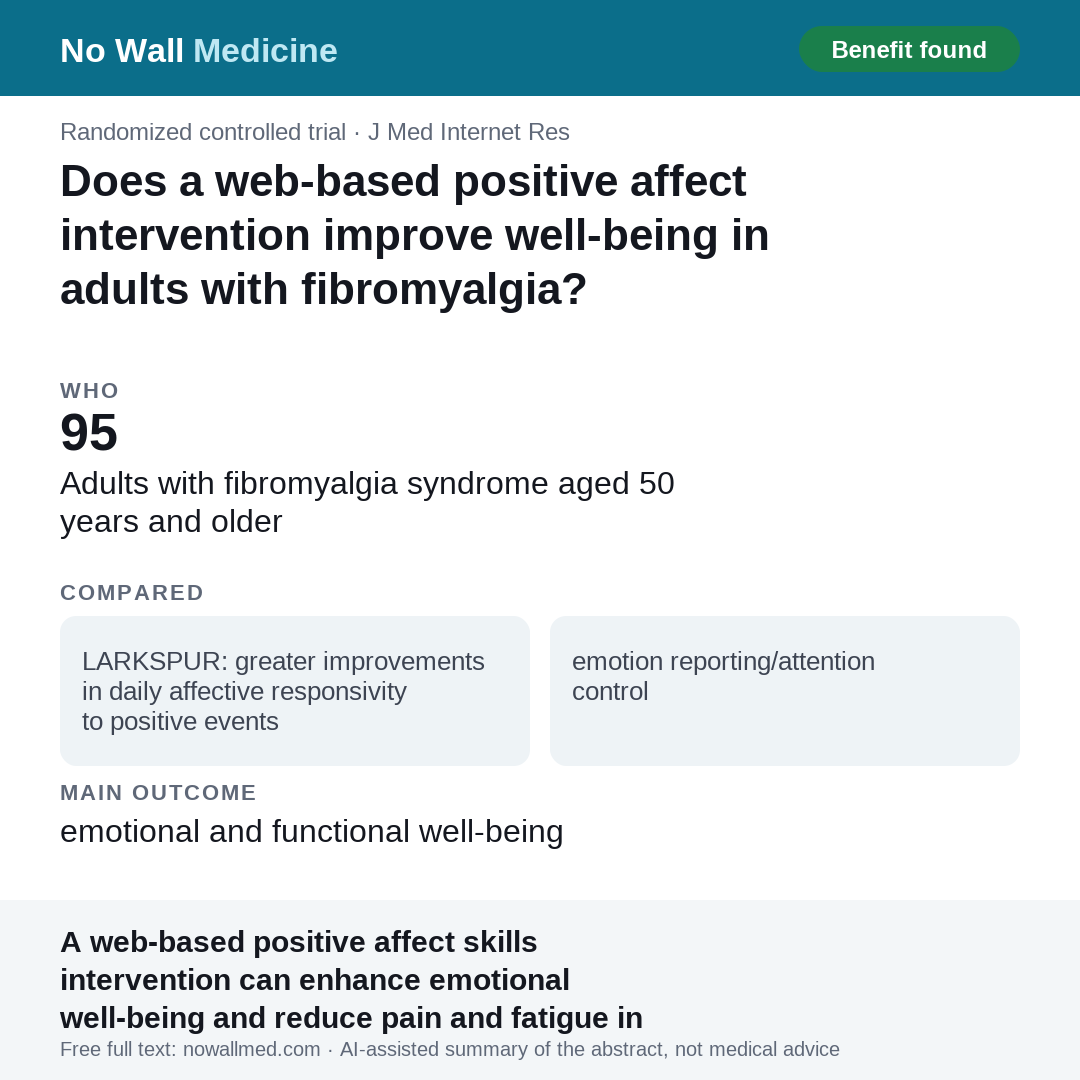
Targeting Daily Positive Events to Improve Emotional and Functional Well-Being in Adults With Fibromyalgia: Insights From the LARKSPUR Randomized Controlled Trial
Randomized controlled trialBenefit found
Does a web-based positive affect intervention improve well-being in adults with fibromyalgia?
Who
95
Adults with fibromyalgia syndrome aged 50 years and older
Compared
LARKSPUR: greater improvements in daily affective responsivity to positive events
emotion reporting/attention control
Main outcome
emotional and functional well-being
Result: negative affect bL-bC=-0.06, 95% HPD -0.10 to -0.02; positive affect bL-bC=0.10, 95% HPD 0.02-0.19
Bottom line: A web-based positive affect skills intervention can enhance emotional well-being and reduce pain and fatigue in fibromyalgia.
J Med Internet Res · 2024-12-10Download image
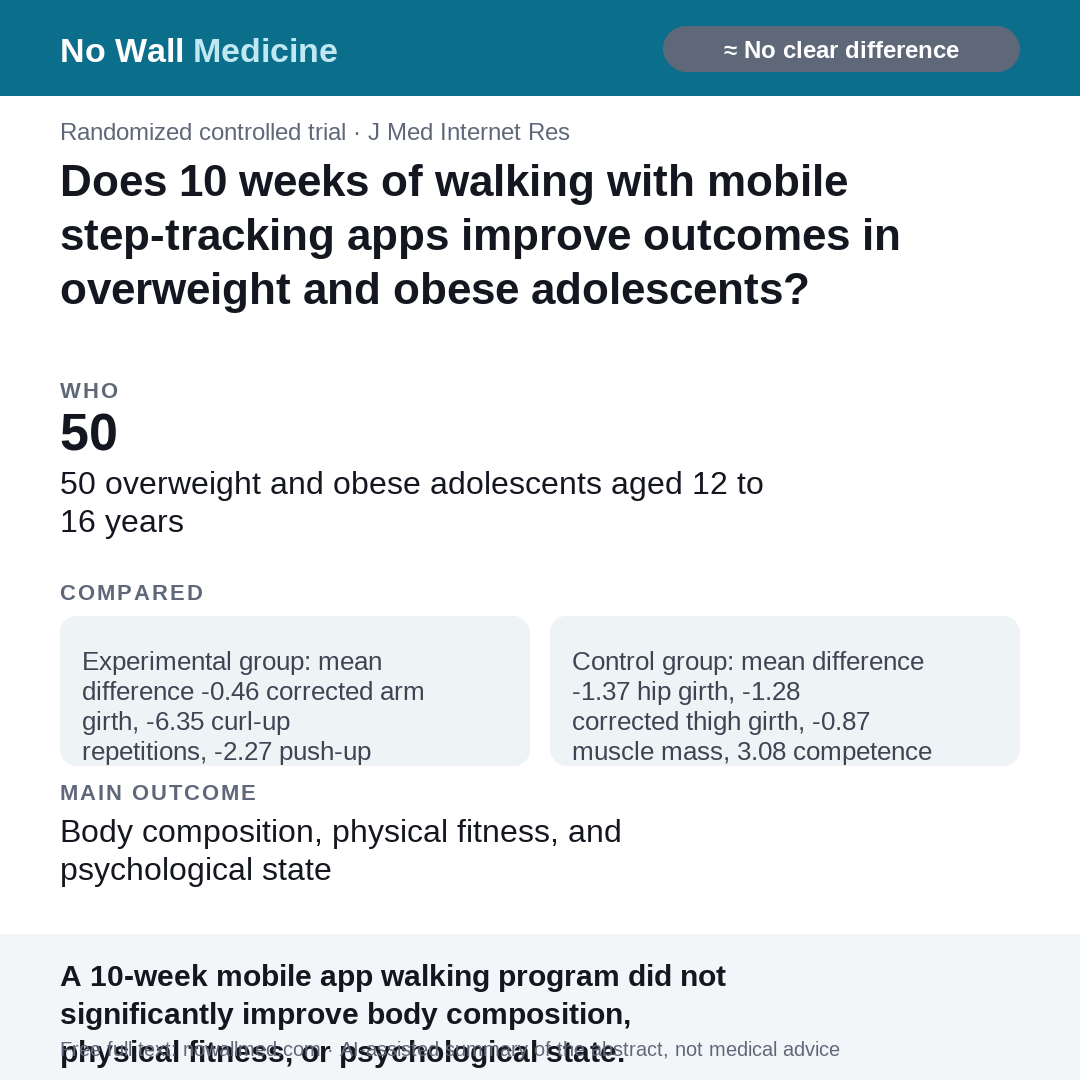
Effects of 10 Weeks of Walking With Mobile Step-Tracking Apps on Body Composition, Fitness, and Psychological State in Adolescents Who Are Overweight and Obese: Randomized Controlled Trial
Randomized controlled trialNo clear difference
Does 10 weeks of walking with mobile step-tracking apps improve outcomes in overweight and obese adolescents?
Who
50
50 overweight and obese adolescents aged 12 to 16 years
Compared
Experimental group: mean difference -0.46 corrected arm girth, -6.35 curl-up repetitions, -2.27 push-up repetitions
Control group: mean difference -1.37 hip girth, -1.28 corrected thigh girth, -0.87 muscle mass, 3.08 competence
Main outcome
Body composition, physical fitness, and psychological state
Bottom line: A 10-week mobile app walking program did not significantly improve body composition, physical fitness, or psychological state.
J Med Internet Res · 2024-12-10Download image
Biomarker-Guided Antibiotic Duration for Hospitalized Patients With Suspected Sepsis: The ADAPT-Sepsis Randomized Clinical Trial
Multicenter, intervention-concealed randomized clinical trialBenefit found
Does procalcitonin or C-reactive protein monitoring reduce antibiotic duration safely?
Who
2760
Hospitalized adults with suspected sepsis requiring intensive care · 41 United Kingdom National Health Service intensive care units
Compared
Daily procalcitonin-guided protocol: 9.8 [SD, 7.2] days
Daily C-reactive protein-guided protocol: 10.6 [7.7] days
Standard care: 10.7 [SD, 7.6] days
Main outcome
Total duration of antibiotics and 28-day all-cause mortality
Result: mean difference 0.88 days (95% CI, 0.19 to 1.58)
Bottom line: Daily procalcitonin-guided protocols safely reduce antibiotic duration compared to standard care, whereas C-reactive protein guidance does not.
JAMA · 2024-12-09Download image

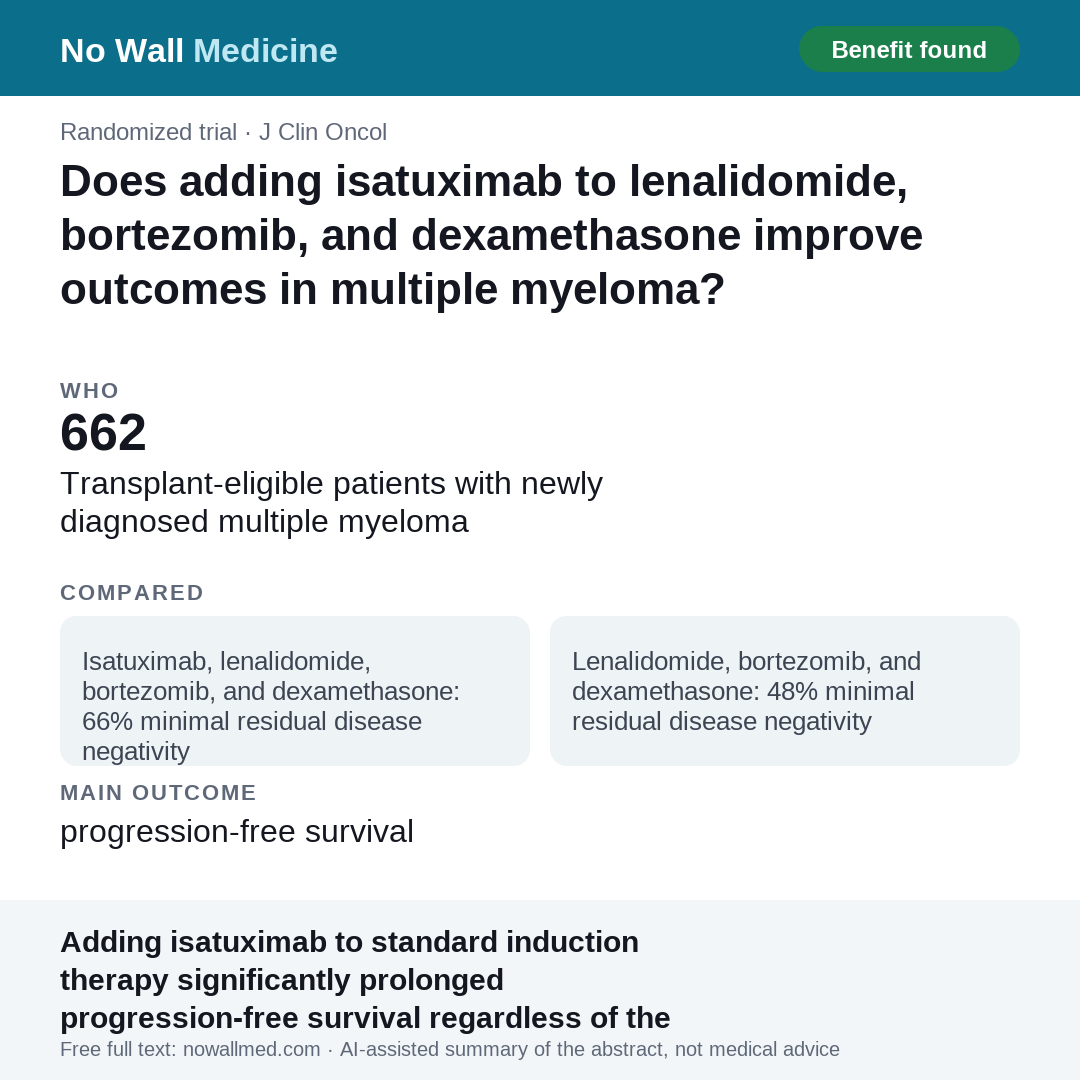
Isatuximab, Lenalidomide, Bortezomib, and Dexamethasone Induction Therapy for Transplant-Eligible Newly Diagnosed Multiple Myeloma: Final Part 1 Analysis of the GMMG-HD7 Trial
Randomized trialBenefit found
Does adding isatuximab to lenalidomide, bortezomib, and dexamethasone improve outcomes in multiple myeloma?
Who
662
Transplant-eligible patients with newly diagnosed multiple myeloma
Compared
Isatuximab, lenalidomide, bortezomib, and dexamethasone: 66% minimal residual disease negativity
Lenalidomide, bortezomib, and dexamethasone: 48% minimal residual disease negativity
Main outcome
progression-free survival
Result: hazard ratio 0.70 (95% CI 0.52 to 0.95)
Bottom line: Adding isatuximab to standard induction therapy significantly prolonged progression-free survival regardless of the maintenance strategy used.
J Clin Oncol · 2024-12-09Download image
Discontinuation of First-Line Disease-Modifying Therapy in Patients With Stable Multiple Sclerosis: The DOT-MS Randomized Clinical Trial
Multicenter, rater-blinded, noninferiority randomized clinical trialHarm found
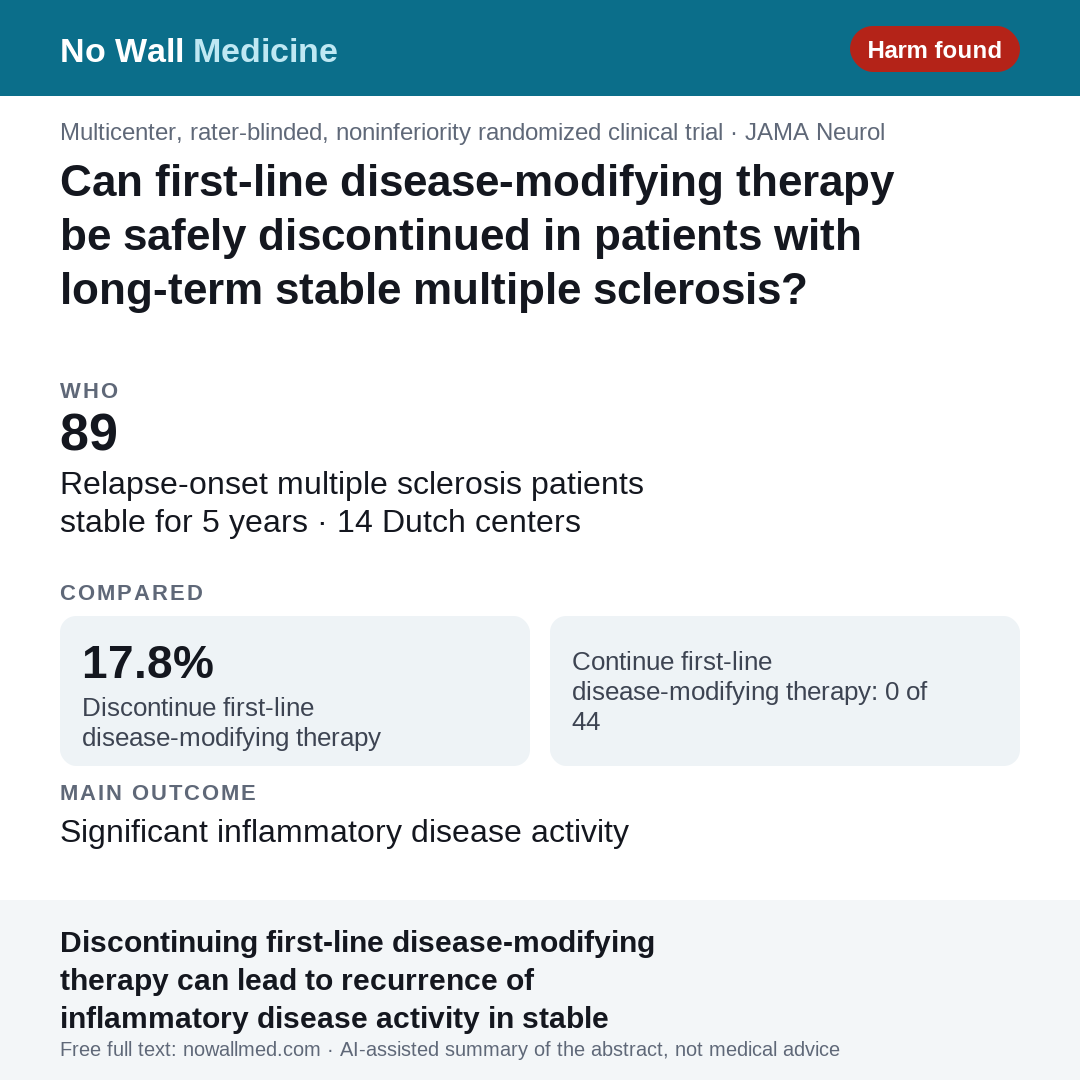
Can first-line disease-modifying therapy be safely discontinued in patients with long-term stable multiple sclerosis?
Who
89
Relapse-onset multiple sclerosis patients stable for 5 years · 14 Dutch centers
Compared
17.8%Discontinue first-line disease-modifying therapy
Continue first-line disease-modifying therapy: 0 of 44
Main outcome
Significant inflammatory disease activity
Bottom line: Discontinuing first-line disease-modifying therapy can lead to recurrence of inflammatory disease activity in stable multiple sclerosis patients.
JAMA Neurol · 2024-12-09Download image
Efficacy and safety of daratumumab in intermediate/high-risk smoldering multiple myeloma: final analysis of CENTAURUS
Phase 2 randomized trialBenefit found
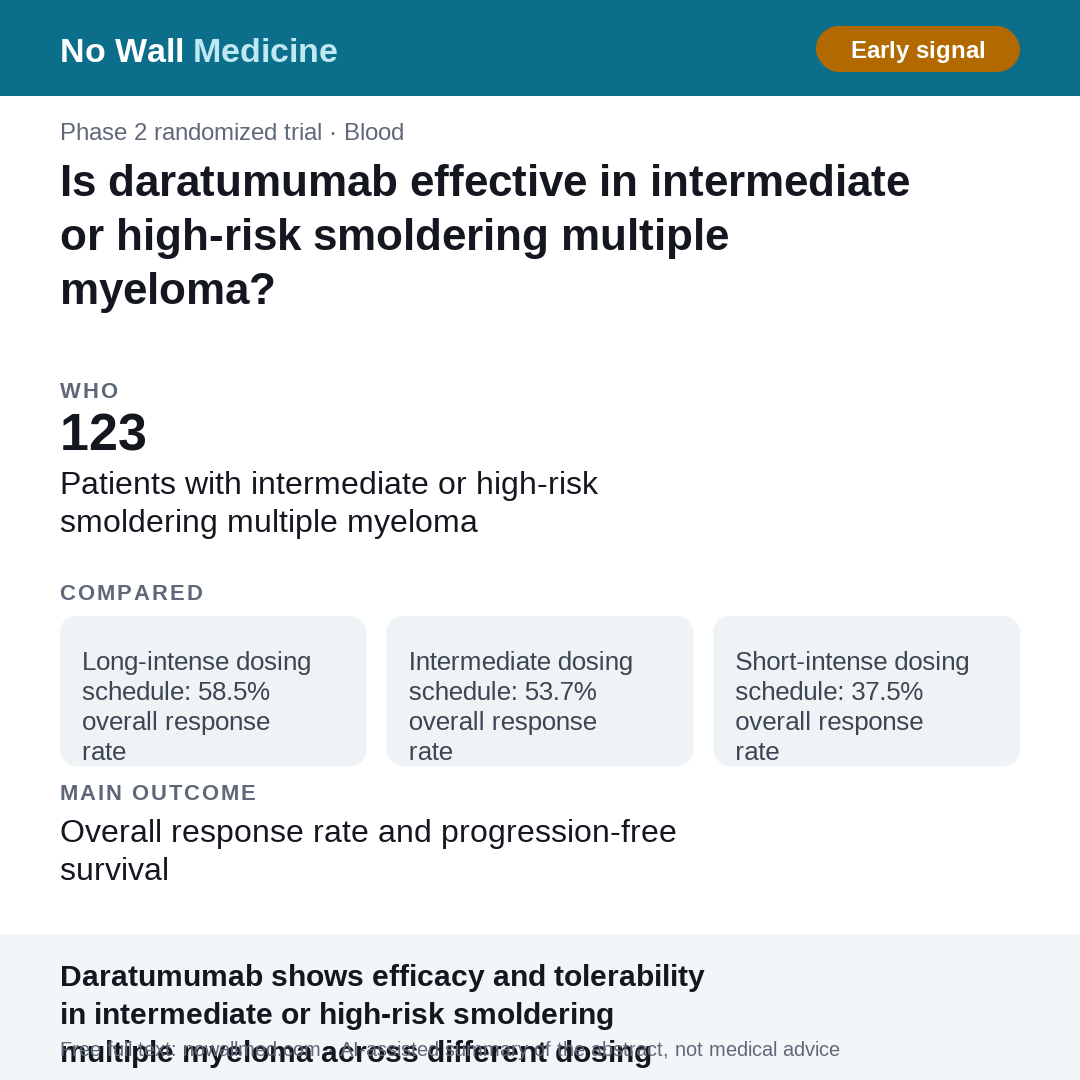
Is daratumumab effective in intermediate or high-risk smoldering multiple myeloma?
Who
123
Patients with intermediate or high-risk smoldering multiple myeloma
Compared
Long-intense dosing schedule: 58.5% overall response rate
Intermediate dosing schedule: 53.7% overall response rate
Short-intense dosing schedule: 37.5% overall response rate
Main outcome
Overall response rate and progression-free survival
Bottom line: Daratumumab shows efficacy and tolerability in intermediate or high-risk smoldering multiple myeloma across different dosing schedules.
Blood · 2024-12-09Download image
Face Masking and Risk of Endophthalmitis after Intravitreal Injection: A Network Meta-analysis of 2.6 Million Injections
Network meta-analysis of 17 studiesBenefit found
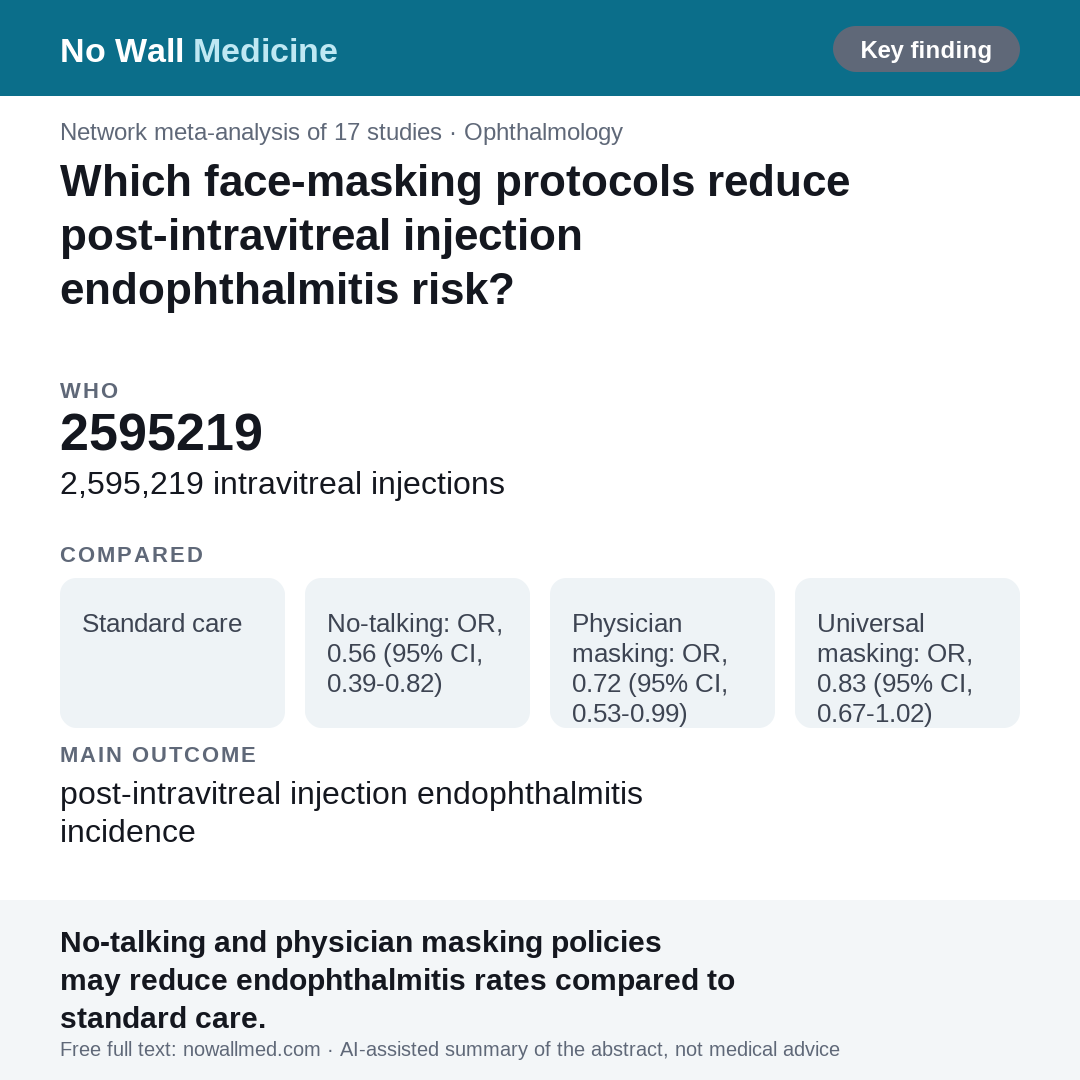
Which face-masking protocols reduce post-intravitreal injection endophthalmitis risk?
Who
2595219
2,595,219 intravitreal injections
Compared
Standard care
No-talking: OR, 0.56 (95% CI, 0.39-0.82)
Physician masking: OR, 0.72 (95% CI, 0.53-0.99)
Universal masking: OR, 0.83 (95% CI, 0.67-1.02)
Main outcome
post-intravitreal injection endophthalmitis incidence
Result: no-talking OR, 0.56 (95% CI, 0.39-0.82)
Bottom line: No-talking and physician masking policies may reduce endophthalmitis rates compared to standard care.
Limitation: Low- or very low-certainty evidence and limited study power for specific culture outcomes.
Ophthalmology · 2024-12-09Download image
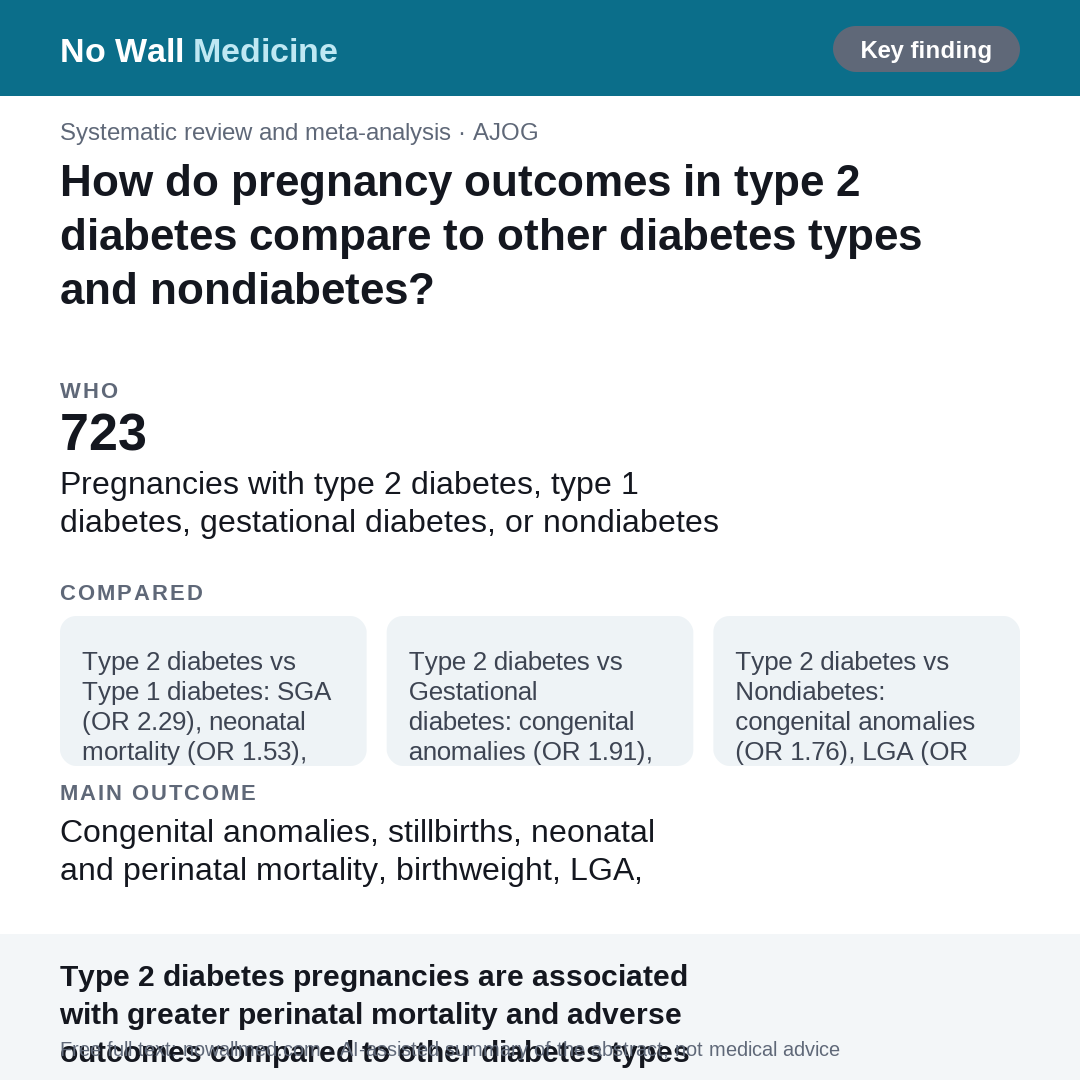
Pregnancy outcomes in type 2 diabetes: a systematic review and meta-analysis
Systematic review and meta-analysisHarm found
How do pregnancy outcomes in type 2 diabetes compare to other diabetes types and nondiabetes?
Who
723
Pregnancies with type 2 diabetes, type 1 diabetes, gestational diabetes, or nondiabetes
Compared
Type 2 diabetes vs Type 1 diabetes: SGA (OR 2.29), neonatal mortality (OR 1.53), perinatal mortality (OR 1.31)
Type 2 diabetes vs Gestational diabetes: congenital anomalies (OR 1.91), LGA (OR 3.49), neonatal mortality (OR 3.96), stillbirth (OR 16.55)
Type 2 diabetes vs Nondiabetes: congenital anomalies (OR 1.76), LGA (OR 2.79), perinatal mortality (OR 4.18), stillbirth (OR 7.27)
Main outcome
Congenital anomalies, stillbirths, neonatal and perinatal mortality, birthweight, LGA, SGA, and macrosomia
Bottom line: Type 2 diabetes pregnancies are associated with greater perinatal mortality and adverse outcomes compared to other diabetes types and nondiabetes.
AJOG · 2024-12-09Download image
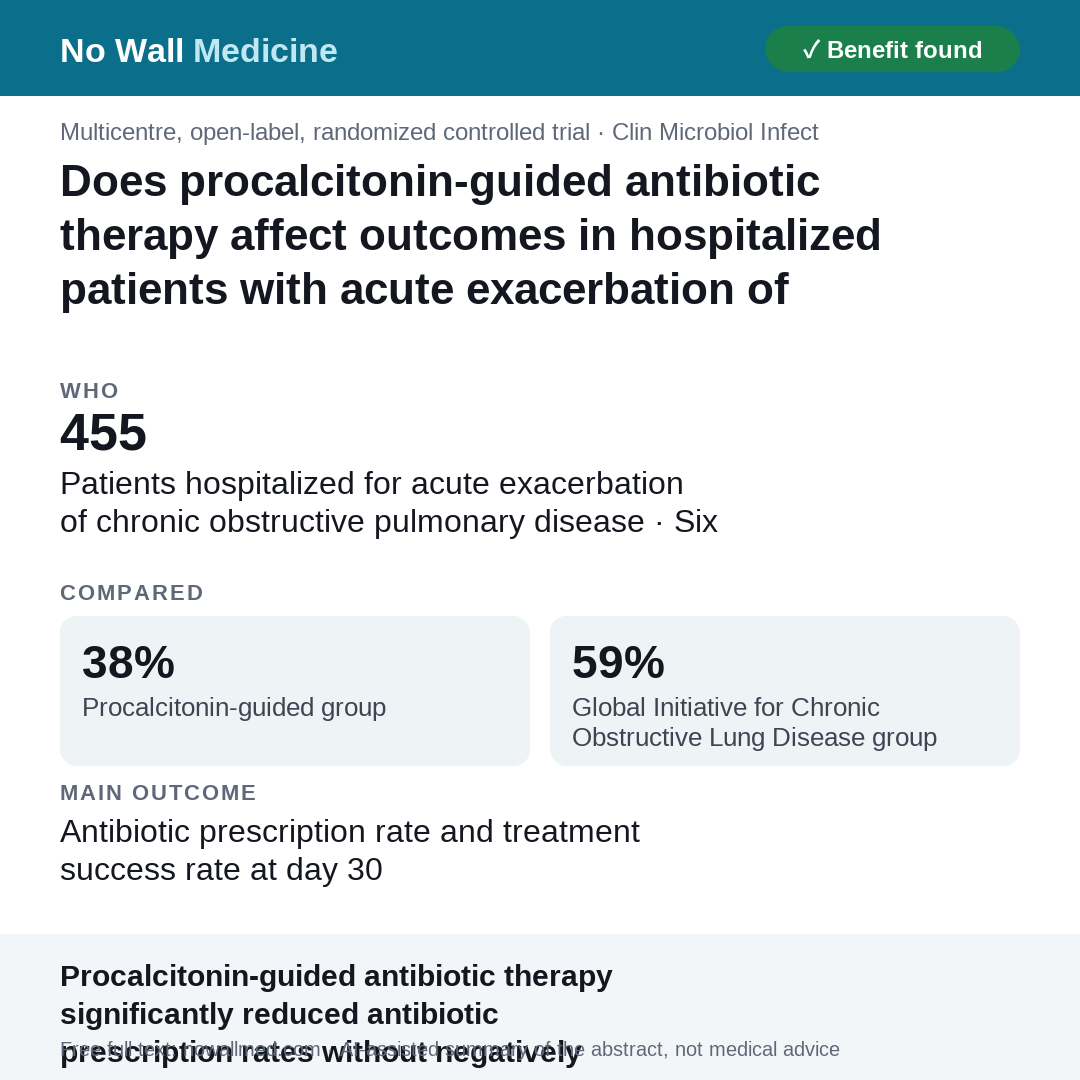
Procalcitonin-guided use of antibiotic in hospitalized patients with acute exacerbation of chronic obstructive pulmonary disease: a randomized clinical trial
Multicentre, open-label, randomized controlled trialBenefit found
Does procalcitonin-guided antibiotic therapy affect outcomes in hospitalized patients with acute exacerbation of chronic obstructive pulmonary disease?
Who
455
Patients hospitalized for acute exacerbation of chronic obstructive pulmonary disease · Six hospitals in China
Compared
38%Procalcitonin-guided group (88/229)
59%Global Initiative for Chronic Obstructive Lung Disease group (134/226)
Main outcome
Antibiotic prescription rate and treatment success rate at day 30
Result: difference -21%; 95% CI: -30% to -12%
Bottom line: Procalcitonin-guided antibiotic therapy significantly reduced antibiotic prescription rates without negatively affecting treatment success in patients with acute exacerbation of chronic obstructive pulmonary disease.
Clin Microbiol Infect · 2024-12-09Download image
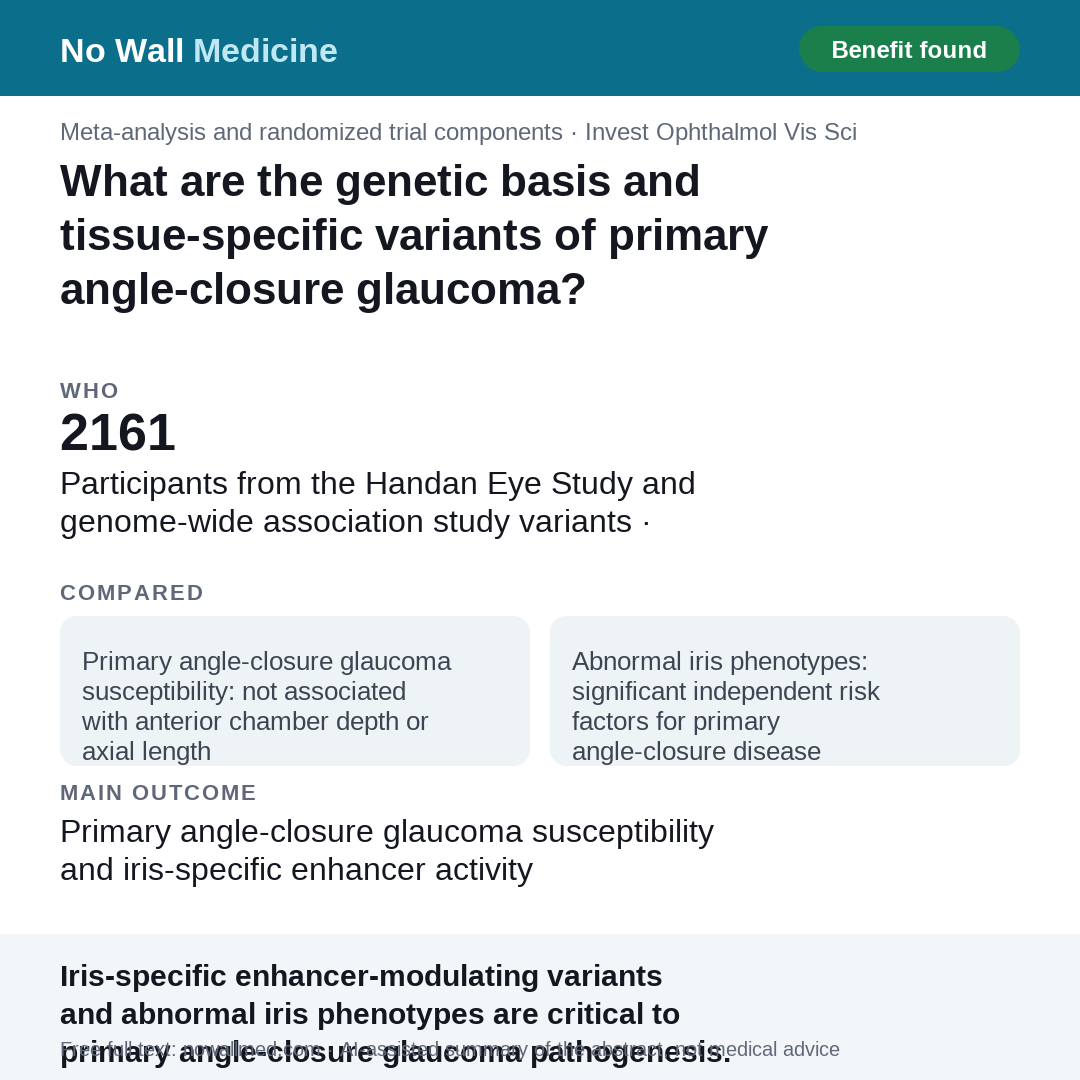
Linking Iris Cis-Regulatory Variants to Primary Angle-Closure Glaucoma Via Clinical Imaging and Multiomics
Meta-analysis and randomized trial componentsBenefit found
What are the genetic basis and tissue-specific variants of primary angle-closure glaucoma?
Who
2161
Participants from the Handan Eye Study and genome-wide association study variants · Handan Eye Study
Compared
Primary angle-closure glaucoma susceptibility: not associated with anterior chamber depth or axial length
Abnormal iris phenotypes: significant independent risk factors for primary angle-closure disease
Main outcome
Primary angle-closure glaucoma susceptibility and iris-specific enhancer activity
Bottom line: Iris-specific enhancer-modulating variants and abnormal iris phenotypes are critical to primary angle-closure glaucoma pathogenesis.
Invest Ophthalmol Vis Sci · 2024-12-09Download image
Fluconazole for Preventing Radiation-Induced Oral Mucositis: A Randomized Controlled Trial
Prospective, double-blinded, randomized controlled trialBenefit found
Does fluconazole prophylaxis reduce radiation-induced oral mucositis in head and neck cancer patients?
Who
78
Head and neck cancer patients undergoing concurrent chemoradiotherapy
Compared
Fluconazole
Placebo
Main outcome
Incidence of grade 2 or higher radiation-induced oral mucositis
Bottom line: Fluconazole significantly reduces radiation-induced oral mucositis severity and Candida colonization in head and neck cancer patients.
Head Neck · 2024-12-09Download image

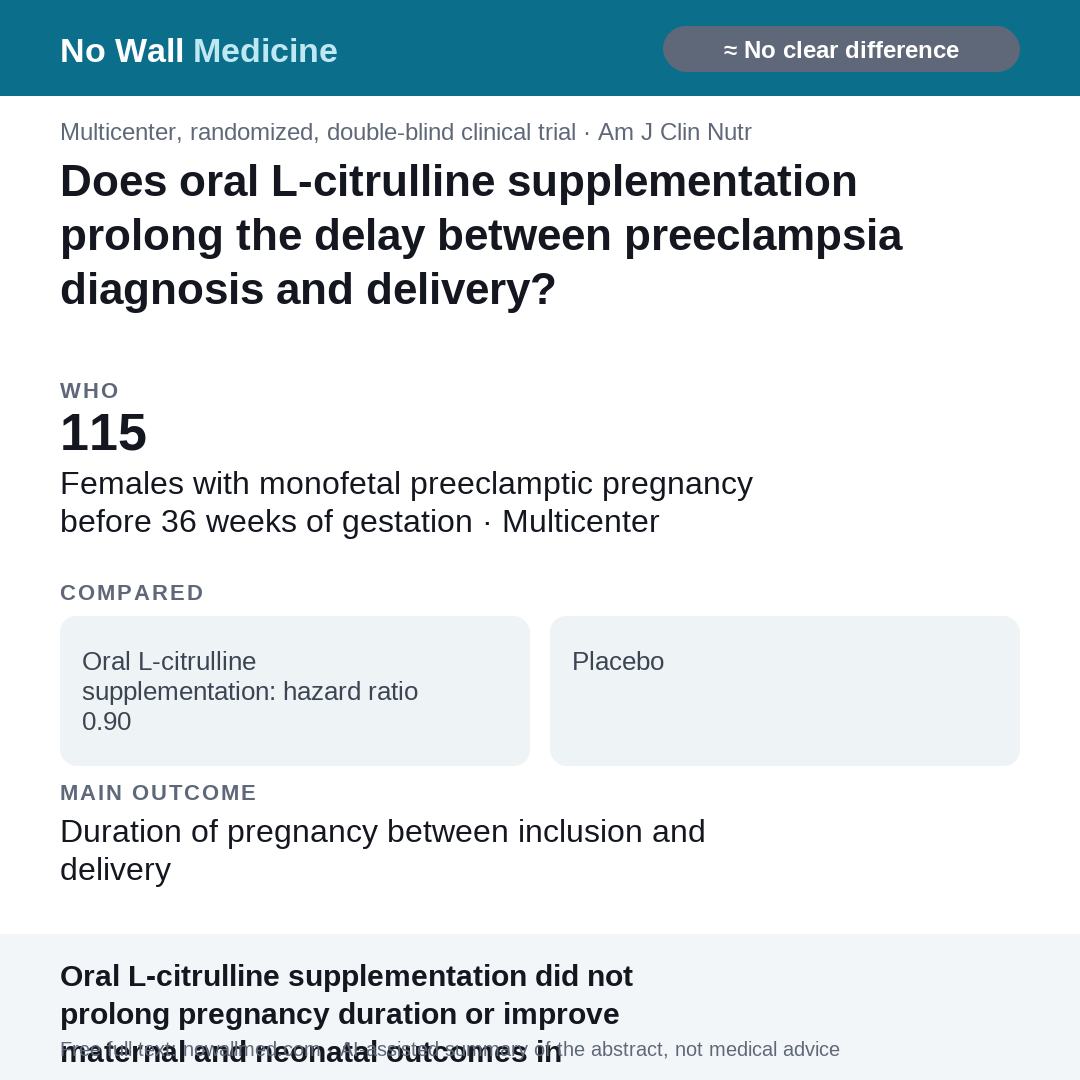
Oral citrulline supplementation in pregnancies with preeclampsia: a multicenter, randomized, double-blind clinical trial
Multicenter, randomized, double-blind clinical trialNo clear difference
Does oral L-citrulline supplementation prolong the delay between preeclampsia diagnosis and delivery?
Who
115
Females with monofetal preeclamptic pregnancy before 36 weeks of gestation · Multicenter
Compared
Oral L-citrulline supplementation: hazard ratio 0.90
Placebo
Main outcome
Duration of pregnancy between inclusion and delivery
Result: hazard ratio 0.90 (95% confidence interval 0.62, 1.31)
Bottom line: Oral L-citrulline supplementation did not prolong pregnancy duration or improve maternal and neonatal outcomes in preeclampsia.
Am J Clin Nutr · 2024-12-09Download image
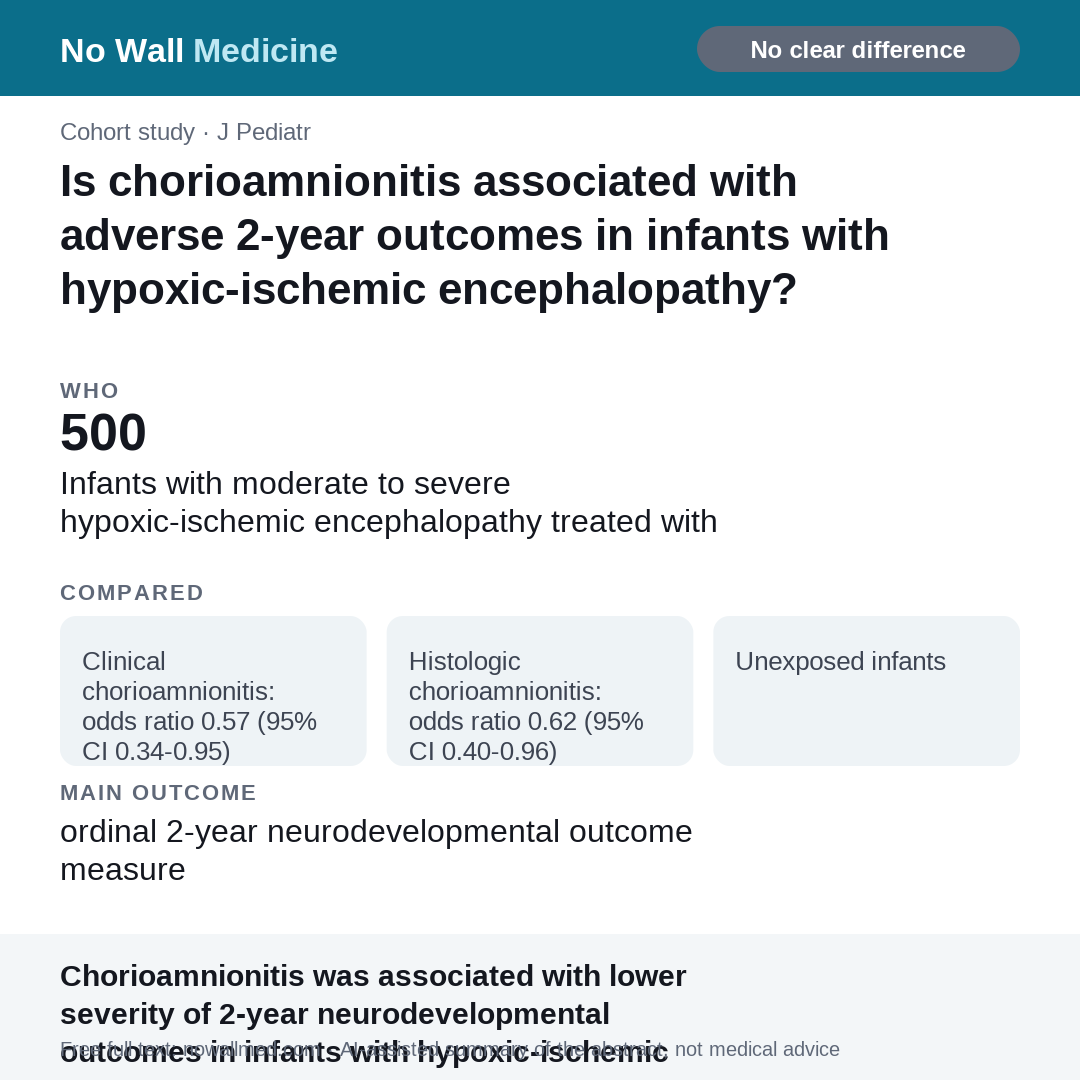
Chorioamnionitis and Two-Year Outcomes in Infants with Hypoxic-Ischemic Encephalopathy
Cohort studyNo clear difference
Is chorioamnionitis associated with adverse 2-year outcomes in infants with hypoxic-ischemic encephalopathy?
Who
500
Infants with moderate to severe hypoxic-ischemic encephalopathy treated with therapeutic hypothermia
Compared
Clinical chorioamnionitis: odds ratio 0.57 (95% CI 0.34-0.95)
Histologic chorioamnionitis: odds ratio 0.62 (95% CI 0.40-0.96)
Unexposed infants
Main outcome
ordinal 2-year neurodevelopmental outcome measure
Result: odds ratio 0.57 (95% CI 0.34-0.95) for clinical chorioamnionitis
Bottom line: Chorioamnionitis was associated with lower severity of 2-year neurodevelopmental outcomes in infants with hypoxic-ischemic encephalopathy.
J Pediatr · 2024-12-09Download image
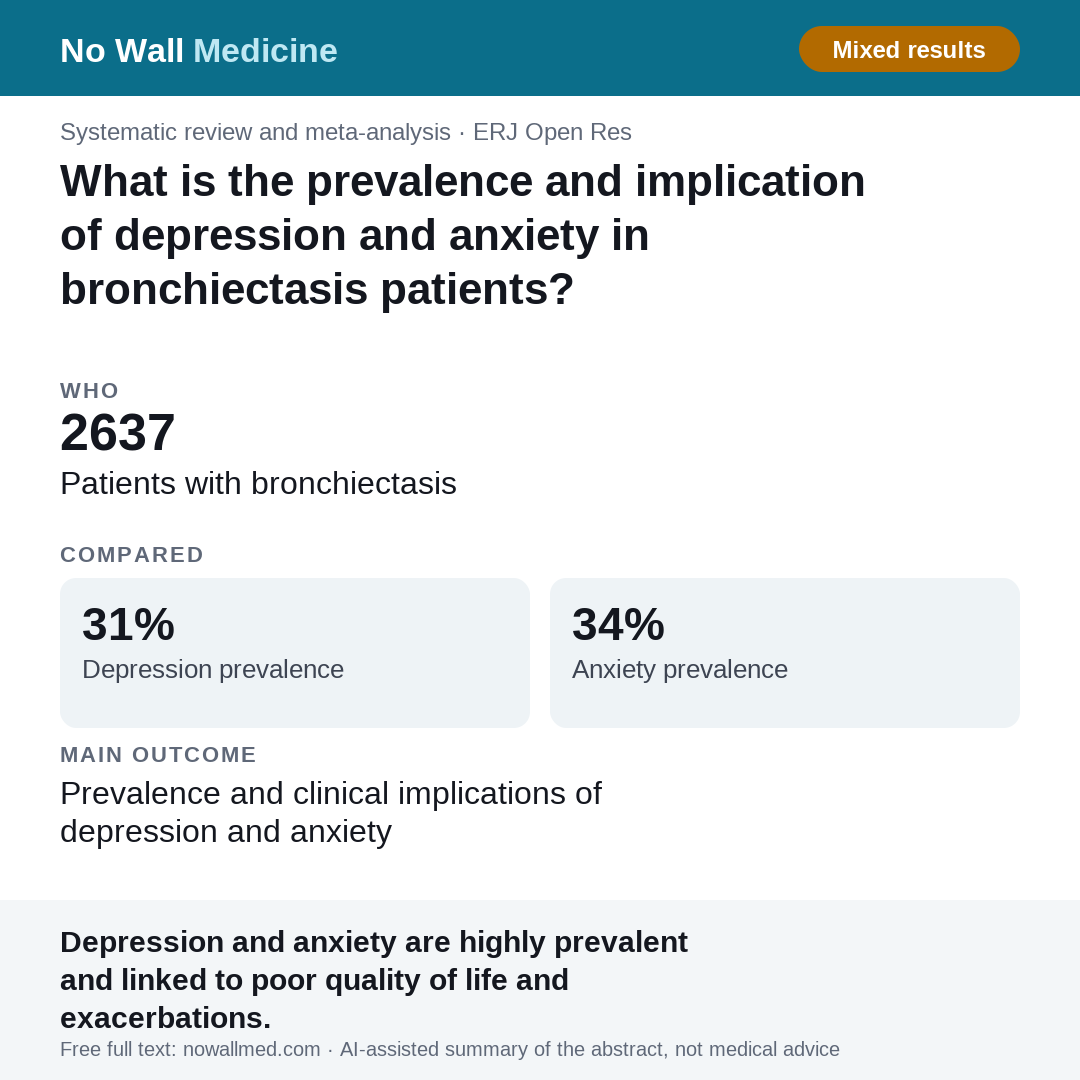
The prevalence and implications of depression and anxiety in patients with bronchiectasis: a systematic review and meta-analysis
Systematic review and meta-analysisMixed results
What is the prevalence and implication of depression and anxiety in bronchiectasis patients?
Who
2637
Patients with bronchiectasis
Compared
31%Depression prevalence (95% CI 24-38%)
34%Anxiety prevalence (95% CI 28-40%)
Main outcome
Prevalence and clinical implications of depression and anxiety
Bottom line: Depression and anxiety are highly prevalent and linked to poor quality of life and exacerbations.
Limitation: The overall risk of bias was low or moderate across included studies.
ERJ Open Res · 2024-12-09Download image