Visual abstracts
New randomized trials and meta-analyses from leading journals at a glance: who was studied, what was compared, and what was found. Every paper is free to read in full.
All specialtiesCardiology 4877Oncology 4138Gastroenterology & Hepatology 1942Infectious Disease 3837Neurology 1905Psychiatry & Mental Health 2273Pulmonology 2143Critical Care 1365Endocrinology & Diabetes 2580Pediatrics 2980Surgery 2559Orthopedics & Sports Medicine 931Neurosurgery 537Cardiothoracic & Vascular Surgery 674Plastic & Reconstructive Surgery 591Nephrology 1133Rheumatology 823Hematology 1109Dermatology 621Ophthalmology 543Obstetrics & Gynecology 1686Public & Global Health 1058Radiology & Imaging 648Anesthesiology 986Urology 764ENT (Otolaryngology) 503Emergency Medicine 511Allergy & Immunology 313Geriatrics 981Family Medicine & Primary Care 562Medical Genetics & Genomics 676Pathology & Laboratory Medicine 159Physical Medicine & Rehabilitation 757Palliative Care 444Nutrition 1588Digital Health & AI 2201General Medicine 321
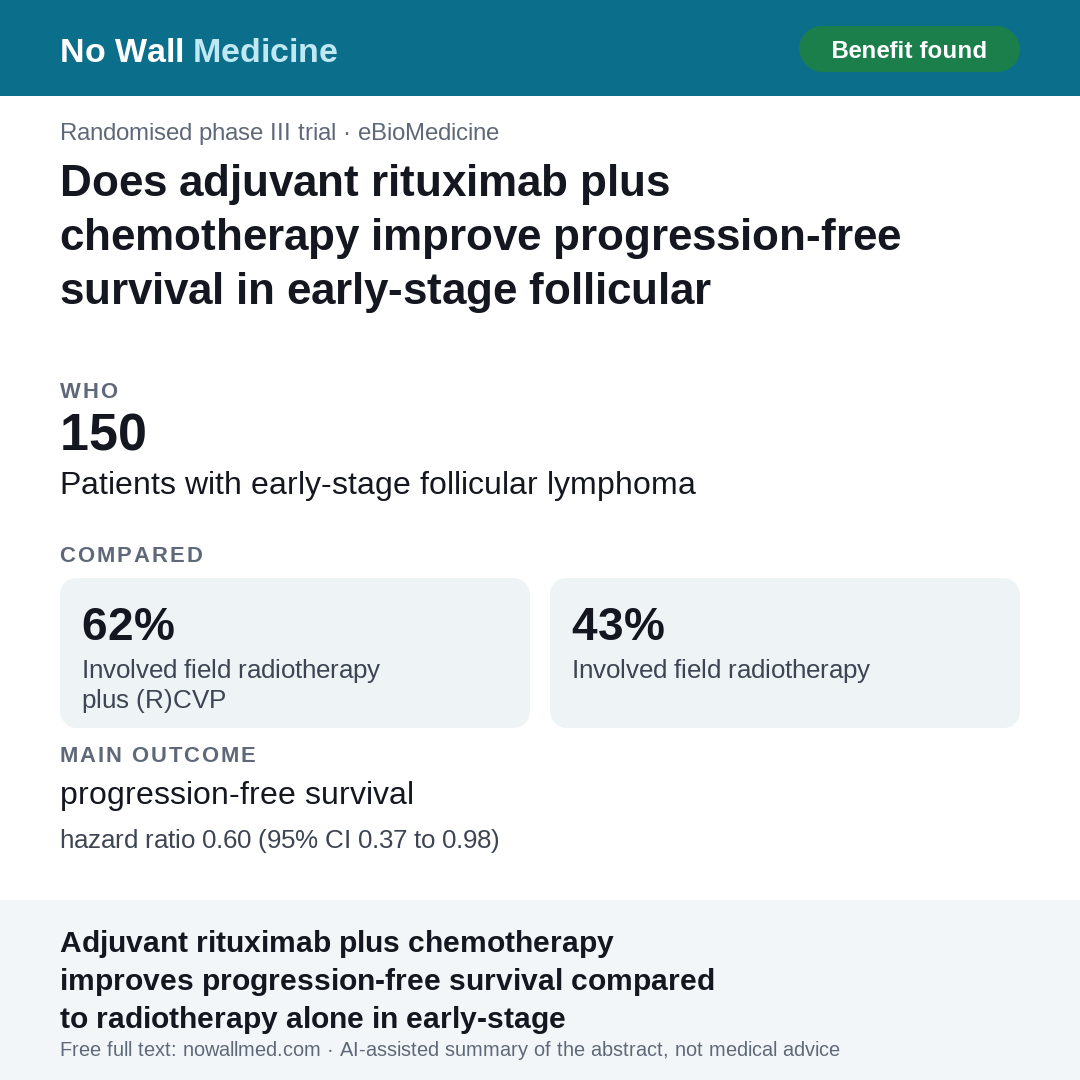
Adjuvant rituximab and elevated intratumoural CD8 expression are associated with sustained disease control after radiotherapy in a randomised trial of systemic therapy in early-stage follicular lymphoma
Randomised phase III trialBenefit found
Does adjuvant rituximab plus chemotherapy improve progression-free survival in early-stage follicular lymphoma?
Who
150
Patients with early-stage follicular lymphoma
Compared
62%Involved field radiotherapy plus (R)CVP (10-year progression-free survival)
43%Involved field radiotherapy (10-year progression-free survival)
Main outcome
progression-free survival
Result: hazard ratio 0.60 (95% CI 0.37 to 0.98)
Bottom line: Adjuvant rituximab plus chemotherapy improves progression-free survival compared to radiotherapy alone in early-stage follicular lymphoma.
Funded by: Cancer Council Victora; National Health and Medical Research Council; Leukaemia Foundation; Mater Foundation
eBioMedicine · 2024-12-03Download image
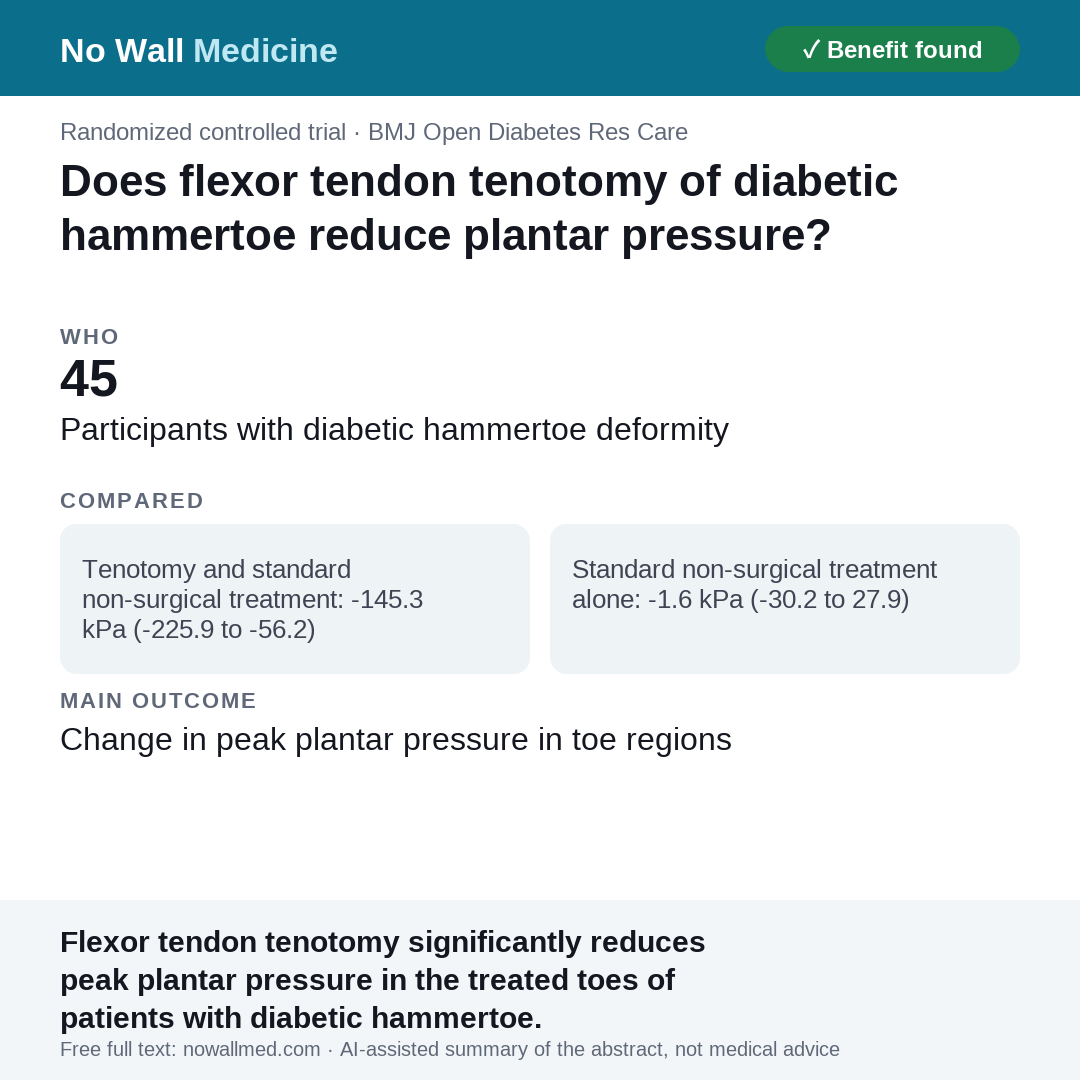
Effect of flexor tendon tenotomy of the diabetic hammertoe on plantar pressure: a randomized controlled trial
Randomized controlled trialBenefit found
Does flexor tendon tenotomy of diabetic hammertoe reduce plantar pressure?
Who
45
Participants with diabetic hammertoe deformity
Compared
Tenotomy and standard non-surgical treatment: -145.3 kPa (-225.9 to -56.2)
Standard non-surgical treatment alone: -1.6 kPa (-30.2 to 27.9)
Main outcome
Change in peak plantar pressure in toe regions
Bottom line: Flexor tendon tenotomy significantly reduces peak plantar pressure in the treated toes of patients with diabetic hammertoe.
BMJ Open Diabetes Res Care · 2024-12-03Download image
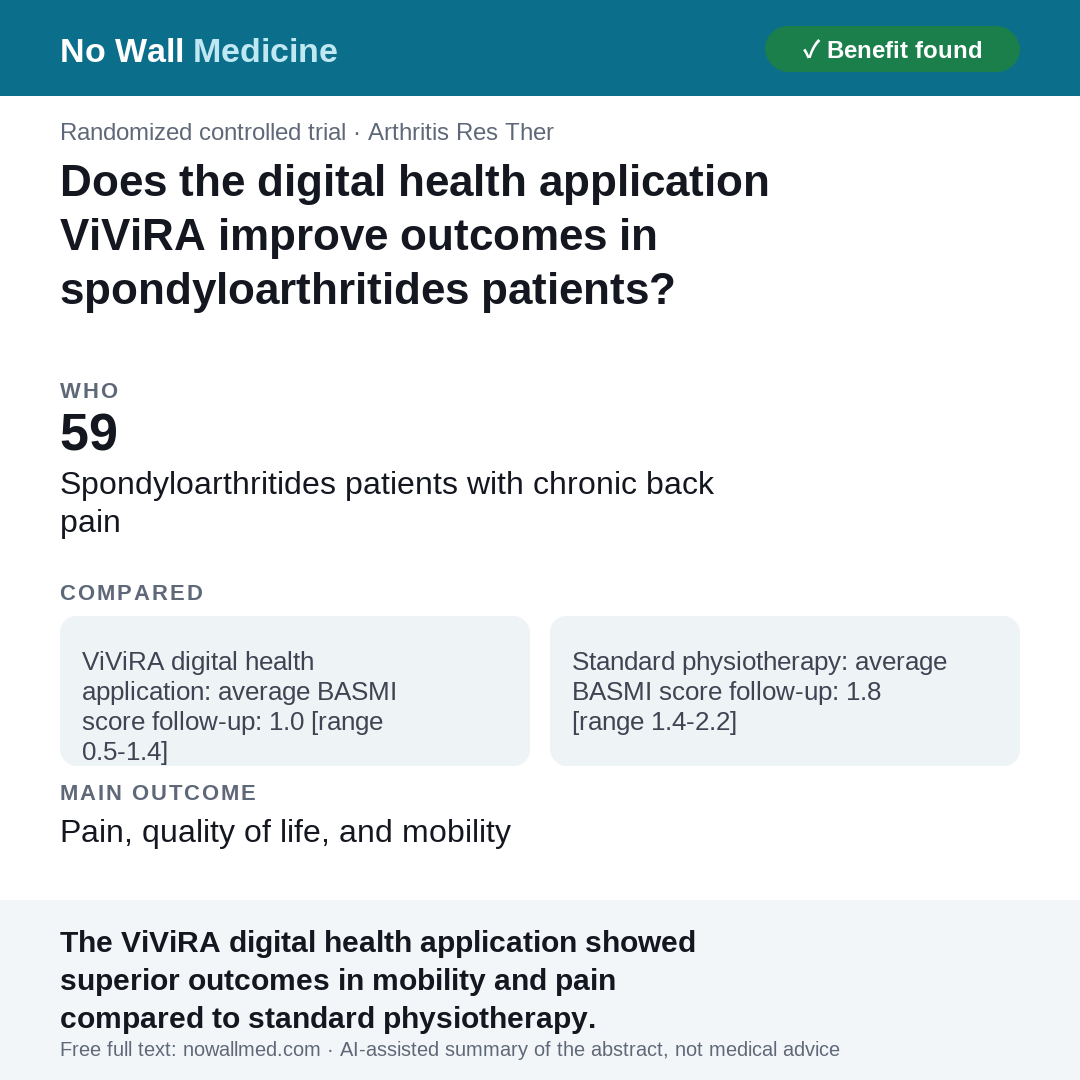
Impact of the digital health application ViViRA on spinal mobility, physical function, quality of life and pain perception in spondyloarthritides patients: a randomized controlled trial
Randomized controlled trialBenefit found
Does the digital health application ViViRA improve outcomes in spondyloarthritides patients?
Who
59
Spondyloarthritides patients with chronic back pain
Compared
ViViRA digital health application: average BASMI score follow-up: 1.0 [range 0.5-1.4]
Standard physiotherapy: average BASMI score follow-up: 1.8 [range 1.4-2.2]
Main outcome
Pain, quality of life, and mobility
Bottom line: The ViViRA digital health application showed superior outcomes in mobility and pain compared to standard physiotherapy.
Limitation: Further larger studies are needed to confirm these promising results.
Arthritis Res Ther · 2024-12-03Download image
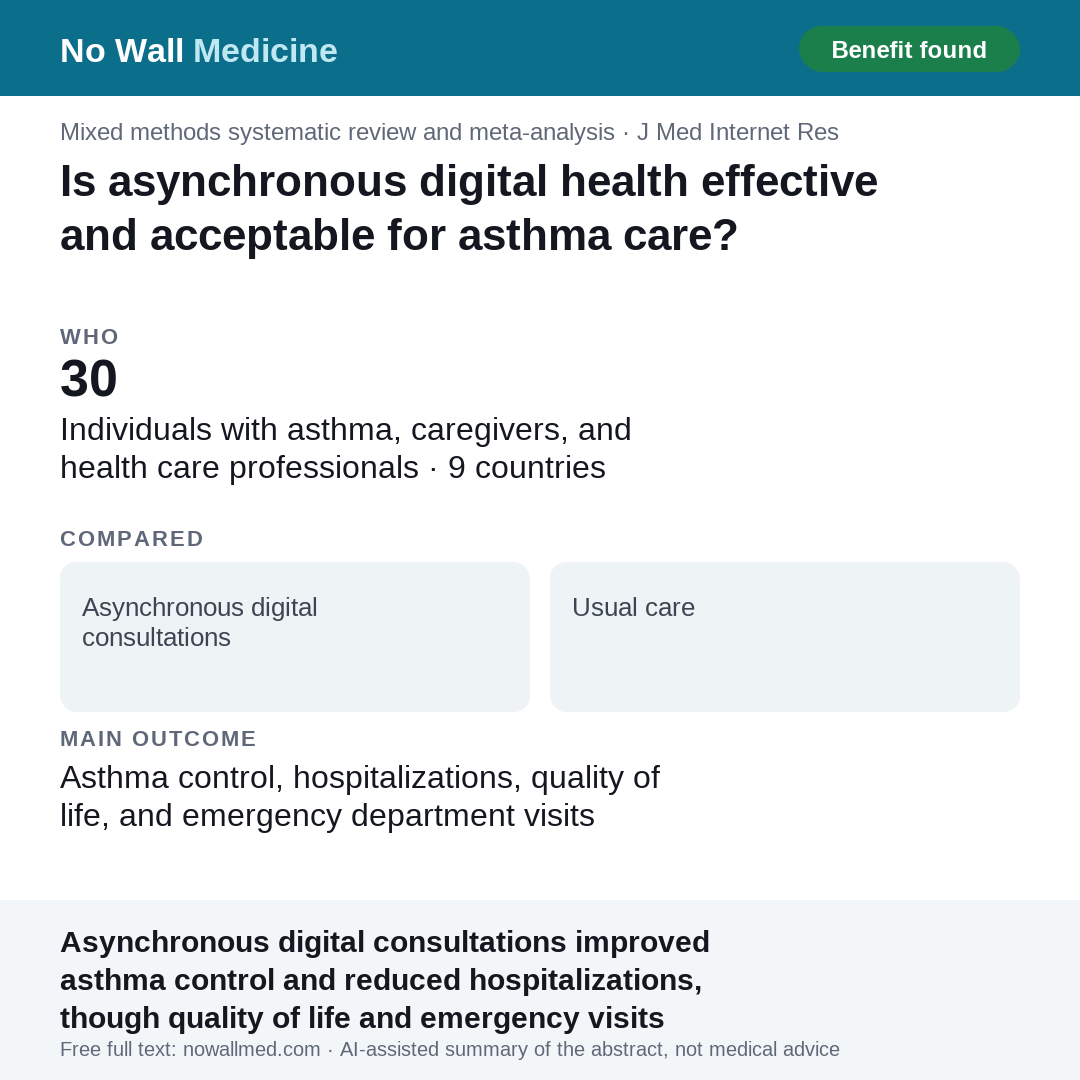
Effectiveness and Acceptability of Asynchronous Digital Health in Asthma Care: Mixed Methods Systematic Review
Mixed methods systematic review and meta-analysisBenefit found
Is asynchronous digital health effective and acceptable for asthma care?
Who
30
Individuals with asthma, caregivers, and health care professionals · 9 countries
Compared
Asynchronous digital consultations
Usual care
Main outcome
Asthma control, hospitalizations, quality of life, and emergency department visits
Result: standardized mean difference 0.32 (95% CI 0.02-0.63) for asthma control
Bottom line: Asynchronous digital consultations improved asthma control and reduced hospitalizations, though quality of life and emergency visits showed no significant difference.
Limitation: low confidence in evidence
J Med Internet Res · 2024-12-03Download image
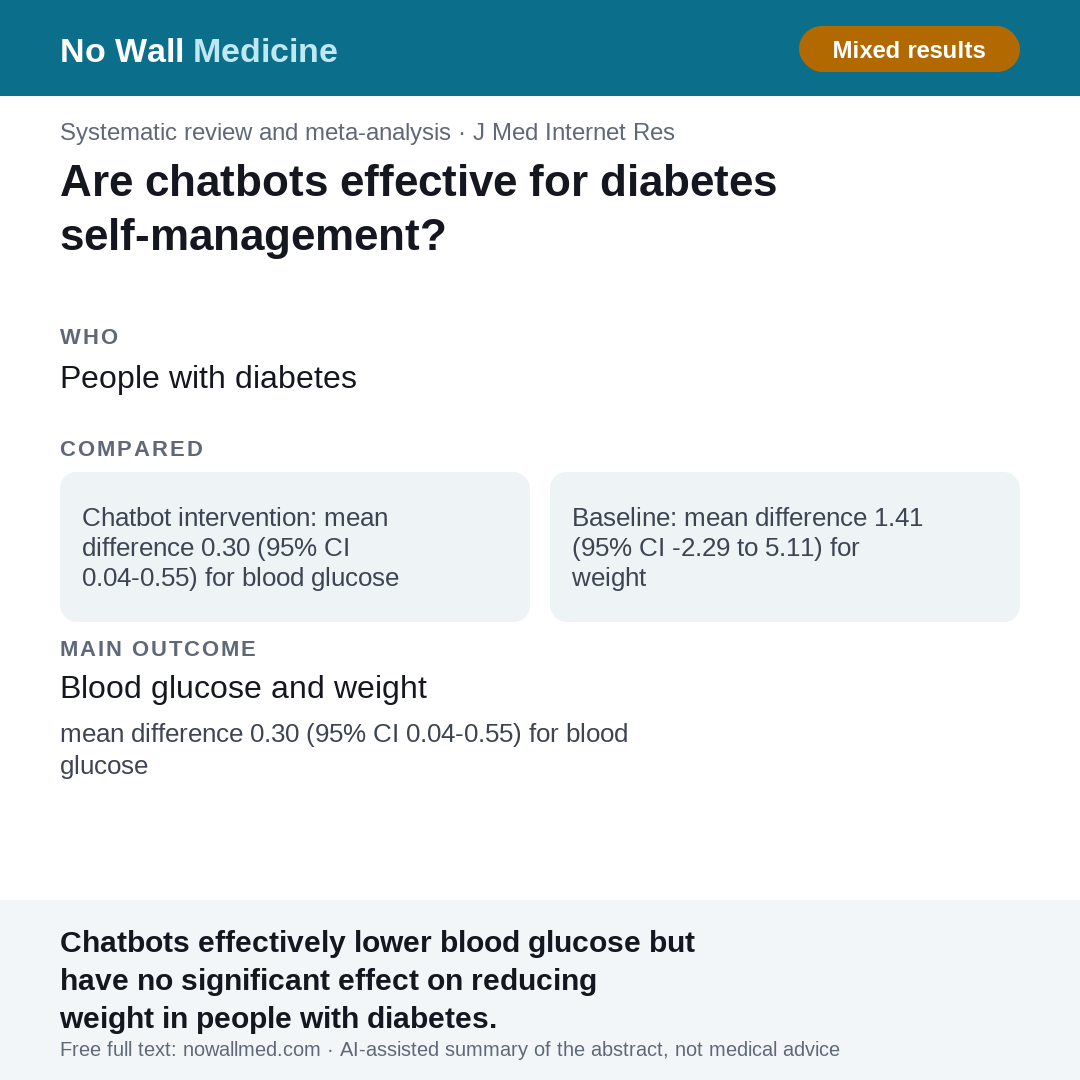
Application of Chatbots to Help Patients Self-Manage Diabetes: Systematic Review and Meta-Analysis
Systematic review and meta-analysisMixed results
Are chatbots effective for diabetes self-management?
Who
People with diabetes
Compared
Chatbot intervention: mean difference 0.30 (95% CI 0.04-0.55) for blood glucose
Baseline: mean difference 1.41 (95% CI -2.29 to 5.11) for weight
Main outcome
Blood glucose and weight
Result: mean difference 0.30 (95% CI 0.04-0.55) for blood glucose
Bottom line: Chatbots effectively lower blood glucose but have no significant effect on reducing weight in people with diabetes.
Limitation: The evidence level of current research is low, with few randomized controlled trials.
J Med Internet Res · 2024-12-03Download image
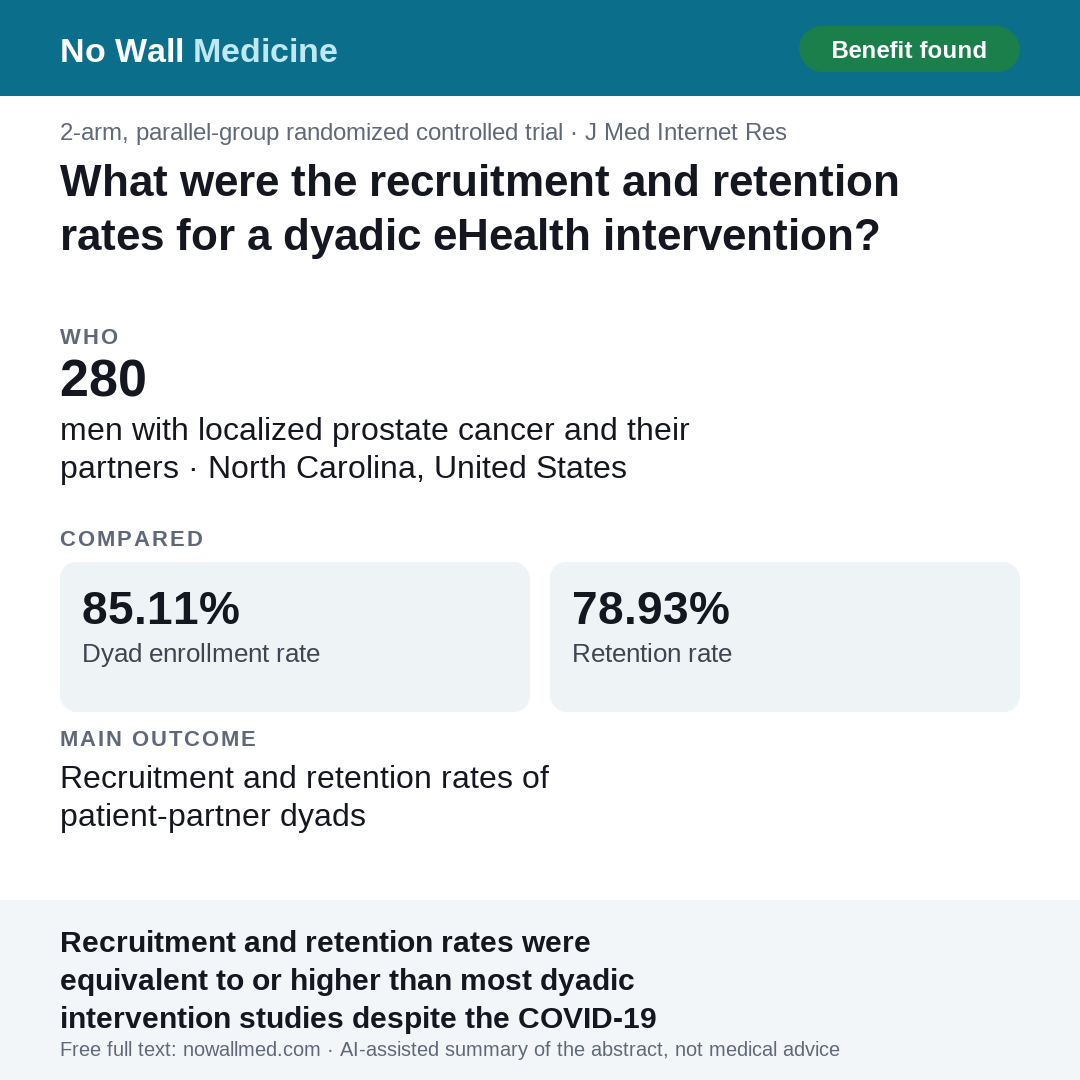
Challenges and Approaches to Recruitment for and Retention in a Dyad-Focused eHealth Intervention During COVID-19: Randomized Controlled Trial
2-arm, parallel-group randomized controlled trialBenefit found
What were the recruitment and retention rates for a dyadic eHealth intervention?
Who
280
men with localized prostate cancer and their partners · North Carolina, United States
Compared
85.11%Dyad enrollment rate (95% CI 81.3%-88.9%)
78.93%Retention rate (95% CI 74.2%-83.7%)
Main outcome
Recruitment and retention rates of patient-partner dyads
Bottom line: Recruitment and retention rates were equivalent to or higher than most dyadic intervention studies despite the COVID-19 pandemic.
J Med Internet Res · 2024-12-03Download image
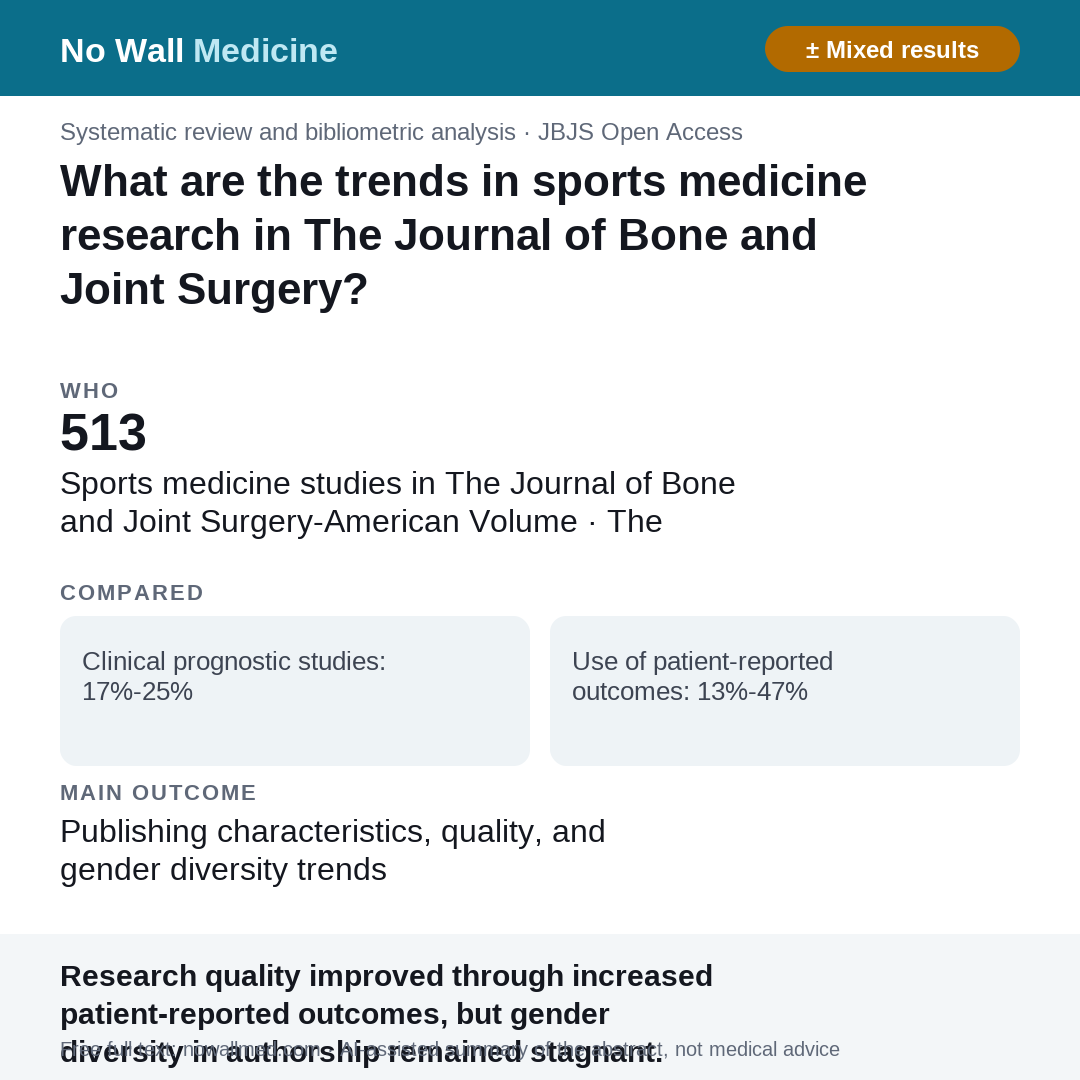
A 15-Year Bibliometric Analysis of Sports Medicine Studies in The Journal of Bone and Joint Surgery: A Systematic Review
Systematic review and bibliometric analysisMixed results
What are the trends in sports medicine research in The Journal of Bone and Joint Surgery?
Who
513
Sports medicine studies in The Journal of Bone and Joint Surgery-American Volume · The Journal of Bone and Joint Surgery-American Volume
Compared
Clinical prognostic studies: 17%-25%
Use of patient-reported outcomes: 13%-47%
Main outcome
Publishing characteristics, quality, and gender diversity trends
Bottom line: Research quality improved through increased patient-reported outcomes, but gender diversity in authorship remained stagnant.
JBJS Open Access · 2024-12-03Download image
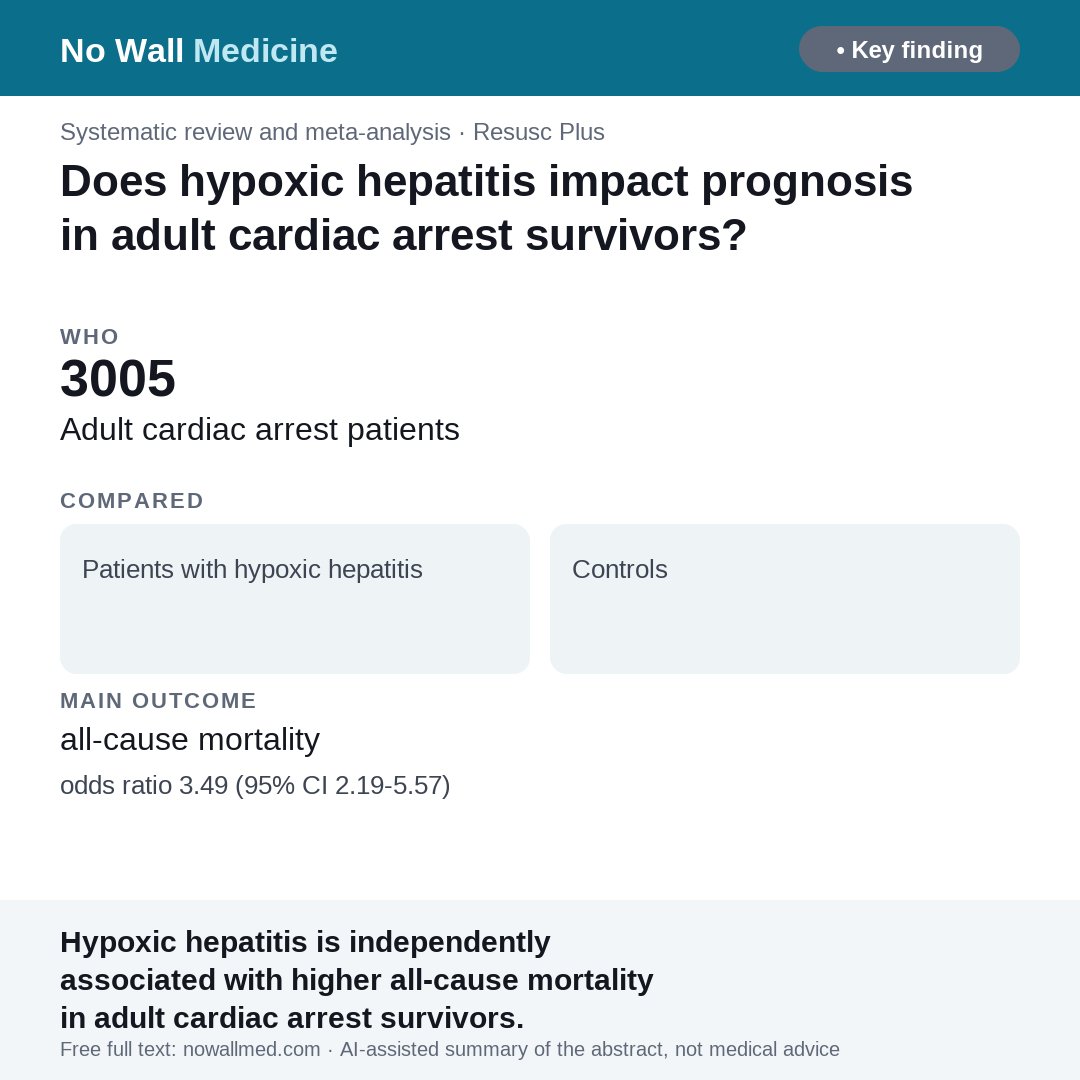
Hypoxic hepatitis in survivors of cardiac arrest: A systematic review and meta-analysis
Systematic review and meta-analysisHarm found
Does hypoxic hepatitis impact prognosis in adult cardiac arrest survivors?
Who
3005
Adult cardiac arrest patients
Compared
Patients with hypoxic hepatitis
Controls
Main outcome
all-cause mortality
Result: odds ratio 3.49 (95% CI 2.19-5.57)
Bottom line: Hypoxic hepatitis is independently associated with higher all-cause mortality in adult cardiac arrest survivors.
Limitation: Further prospective, well-designed studies are needed to validate findings.
Resusc Plus · 2024-12-03Download image
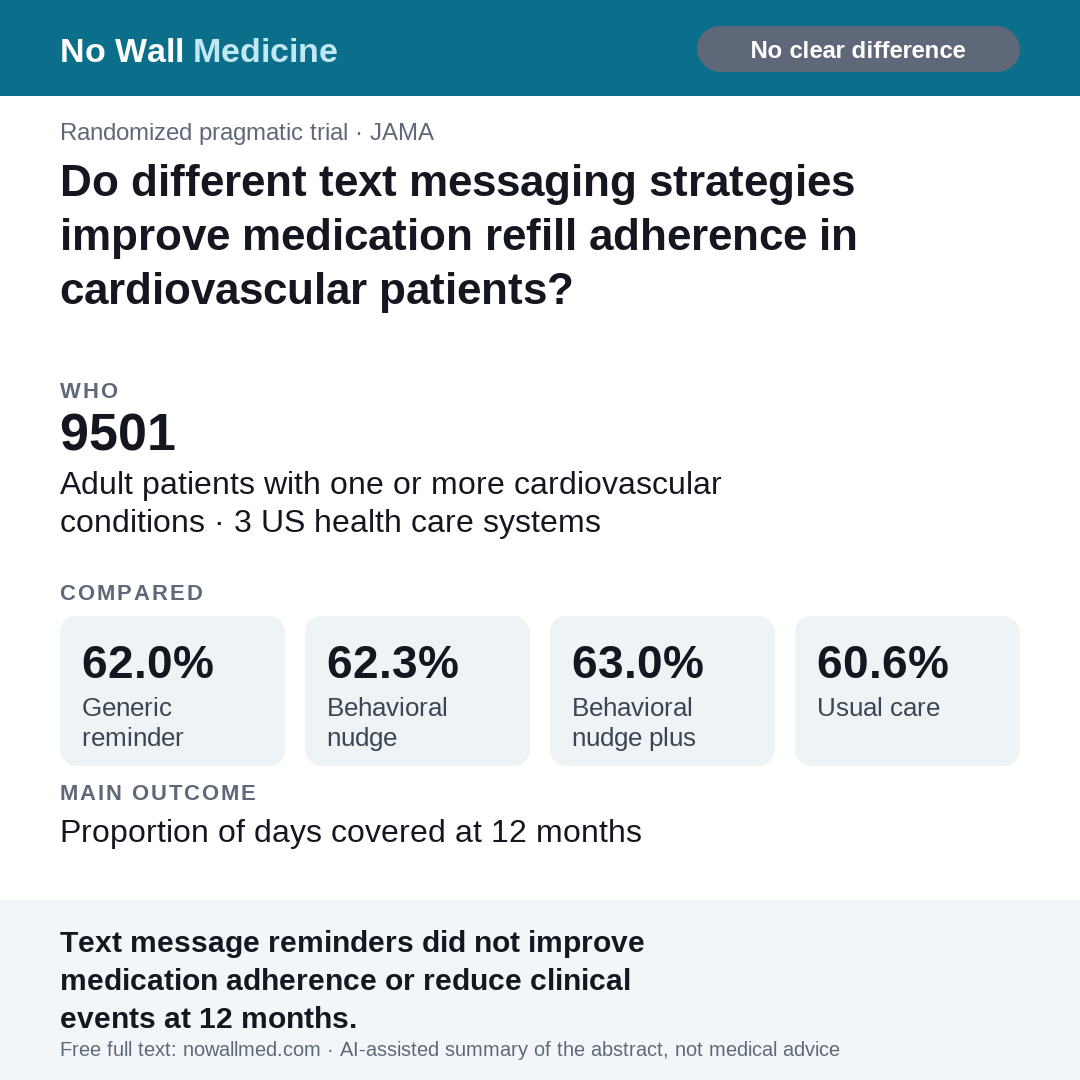
Personalized Patient Data and Behavioral Nudges to Improve Adherence to Chronic Cardiovascular Medications: A Randomized Pragmatic Trial
Randomized pragmatic trialNo clear difference
Do different text messaging strategies improve medication refill adherence in cardiovascular patients?
Who
9501
Adult patients with one or more cardiovascular conditions · 3 US health care systems
Compared
62.0%Generic reminder
62.3%Behavioral nudge
63.0%Behavioral nudge plus chatbot
60.6%Usual care
Main outcome
Proportion of days covered at 12 months
Bottom line: Text message reminders did not improve medication adherence or reduce clinical events at 12 months.
JAMA · 2024-12-02Download image
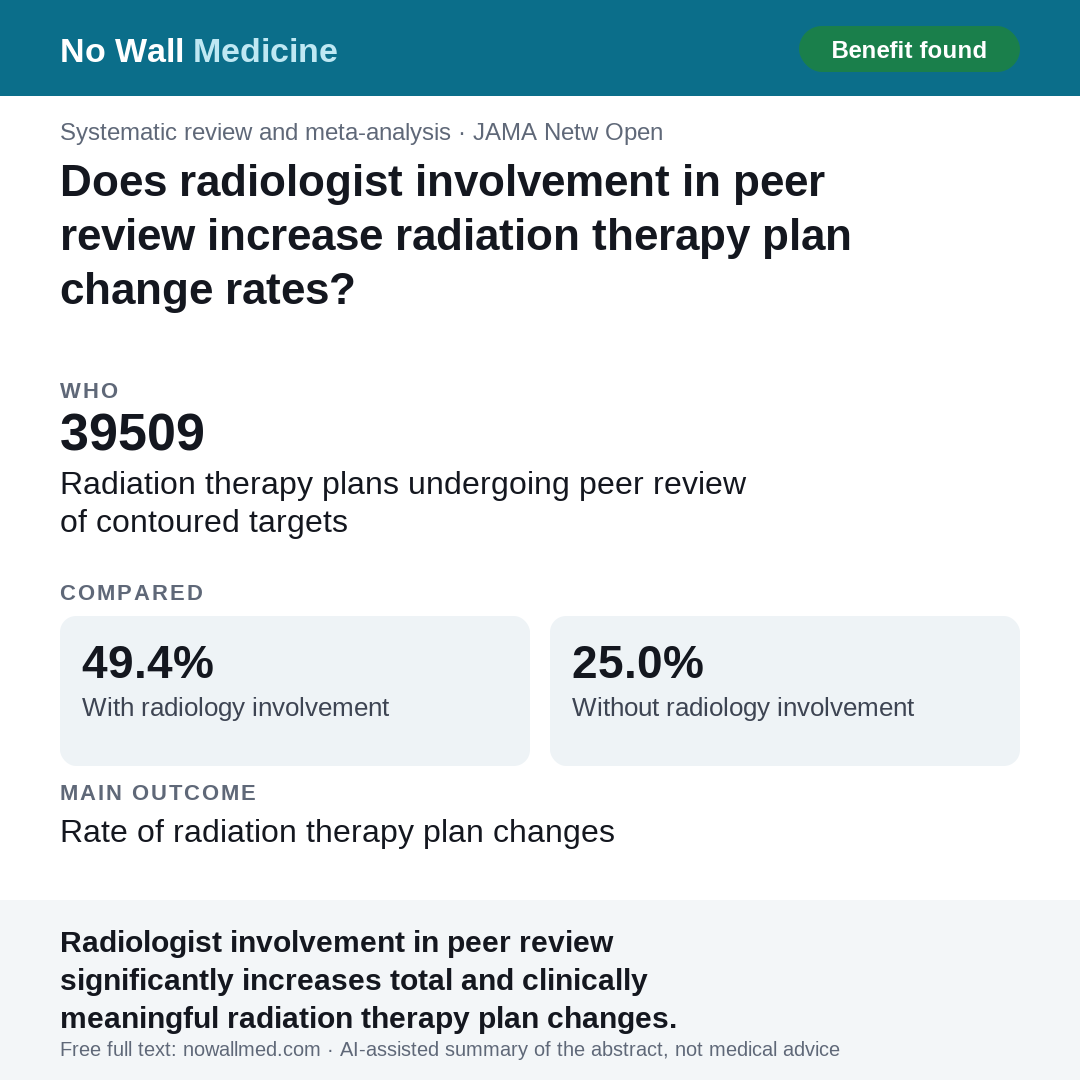
Radiologist Involvement in Radiation Oncology Peer Review: A Systematic Review and Meta-Analysis
Systematic review and meta-analysisBenefit found
Does radiologist involvement in peer review increase radiation therapy plan change rates?
Who
39509
Radiation therapy plans undergoing peer review of contoured targets
Compared
49.4%With radiology involvement (95% CI, 28.6%-70.1%)
25.0%Without radiology involvement (95% CI, 17.0%-33.1%)
Main outcome
Rate of radiation therapy plan changes
Result: 49.4% (95% CI, 28.6%-70.1%) vs 25.0% (95% CI, 17.0%-33.1%)
Bottom line: Radiologist involvement in peer review significantly increases total and clinically meaningful radiation therapy plan changes.
JAMA Netw Open · 2024-12-02Download image
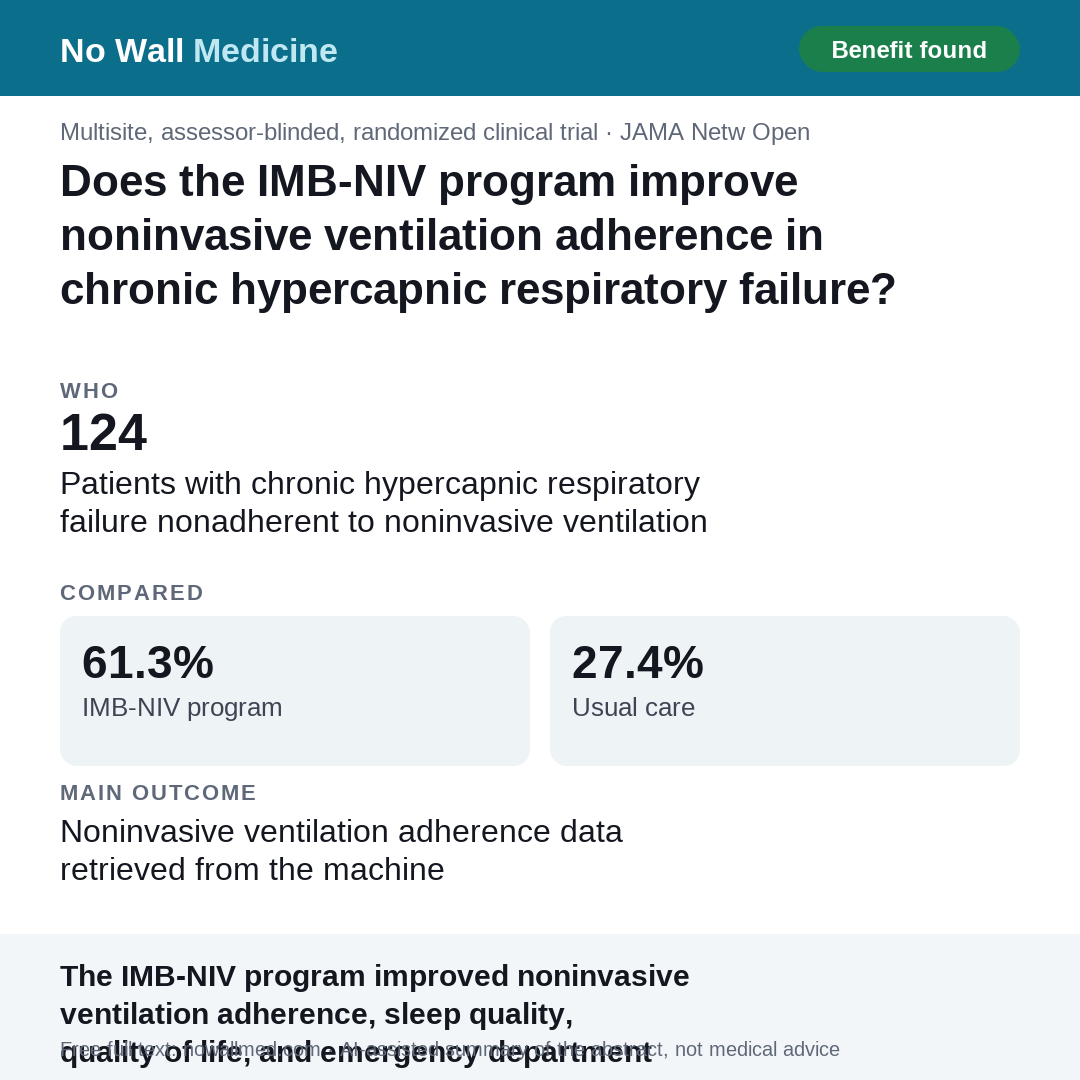
Health Communication and Adherence to Noninvasive Ventilation in Chronic Hypercapnic Respiratory Failure: A Randomized Clinical Trial
Multisite, assessor-blinded, randomized clinical trialBenefit found
Does the IMB-NIV program improve noninvasive ventilation adherence in chronic hypercapnic respiratory failure?
Who
124
Patients with chronic hypercapnic respiratory failure nonadherent to noninvasive ventilation · 2 regional hospitals in Hong Kong
Compared
61.3%IMB-NIV program
27.4%Usual care
Main outcome
Noninvasive ventilation adherence data retrieved from the machine
Result: odds ratio 2.78 (95% CI 1.69 to 4.55)
Bottom line: The IMB-NIV program improved noninvasive ventilation adherence, sleep quality, quality of life, and emergency department admissions.
JAMA Netw Open · 2024-12-02Download image
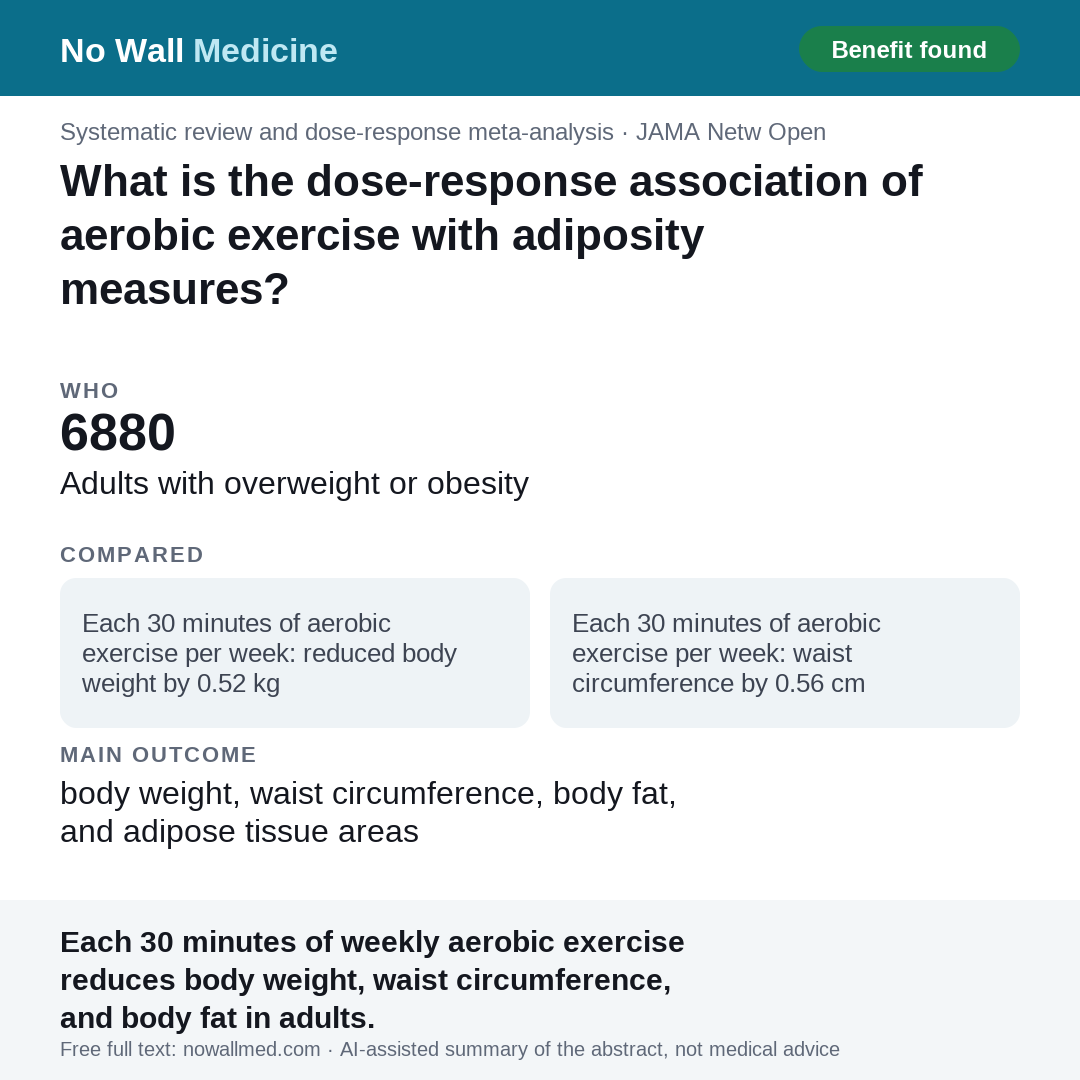
Aerobic Exercise and Weight Loss in Adults: A Systematic Review and Dose-Response Meta-Analysis
Systematic review and dose-response meta-analysisBenefit found
What is the dose-response association of aerobic exercise with adiposity measures?
Who
6880
Adults with overweight or obesity
Compared
Each 30 minutes of aerobic exercise per week: reduced body weight by 0.52 kg
Each 30 minutes of aerobic exercise per week: waist circumference by 0.56 cm
Main outcome
body weight, waist circumference, body fat, and adipose tissue areas
Result: mean difference -0.52 kg (95% CI, -0.61 to -0.44 kg) per 30 minutes
Bottom line: Each 30 minutes of weekly aerobic exercise reduces body weight, waist circumference, and body fat in adults.
JAMA Netw Open · 2024-12-02Download image
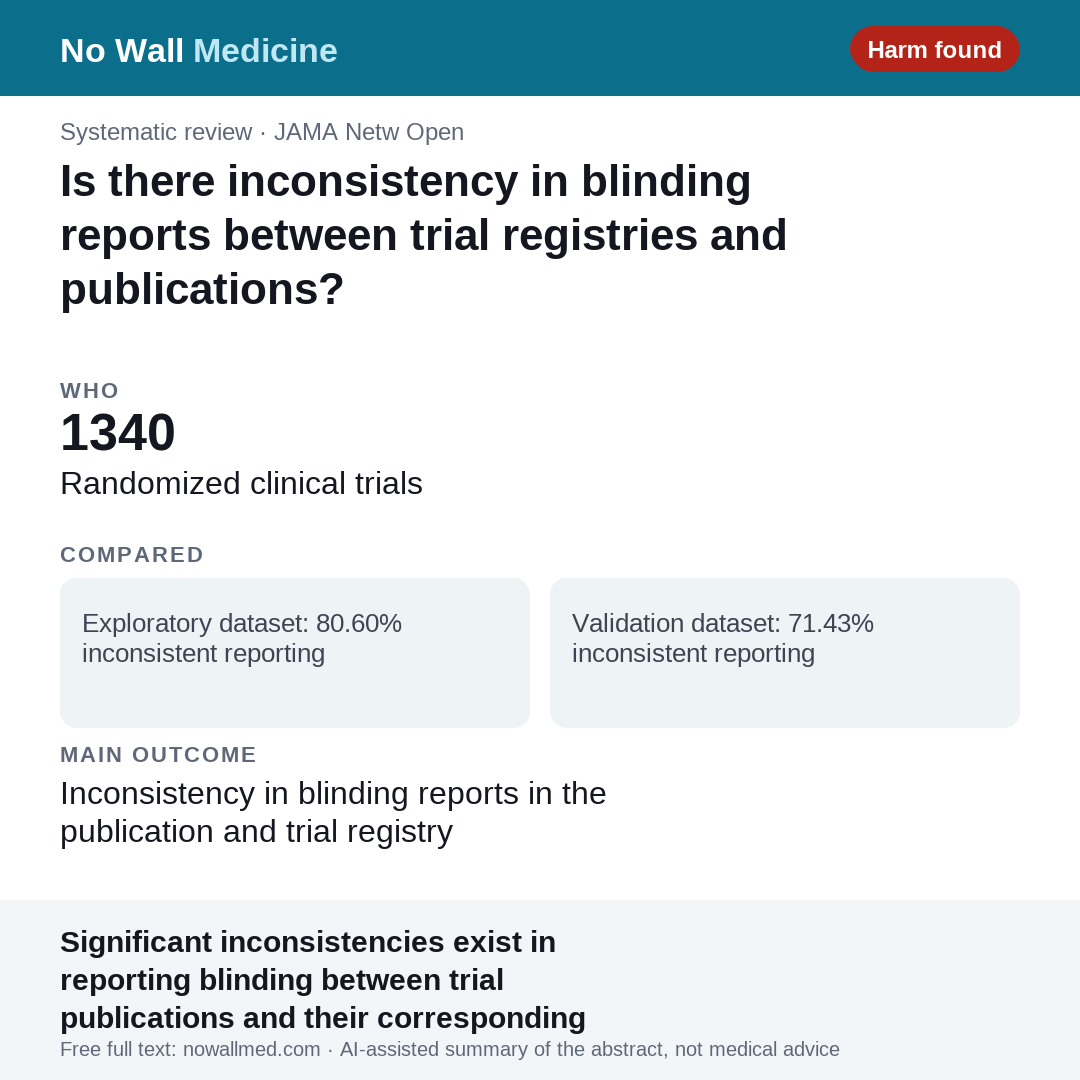
Discordant Information on Blinding in Trial Registries and Published Research: A Systematic Review
Systematic reviewHarm found
Is there inconsistency in blinding reports between trial registries and publications?
Who
1340
Randomized clinical trials
Compared
Exploratory dataset: 80.60% inconsistent reporting
Validation dataset: 71.43% inconsistent reporting
Main outcome
Inconsistency in blinding reports in the publication and trial registry
Bottom line: Significant inconsistencies exist in reporting blinding between trial publications and their corresponding registries, potentially reintroducing bias.
JAMA Netw Open · 2024-12-02Download image
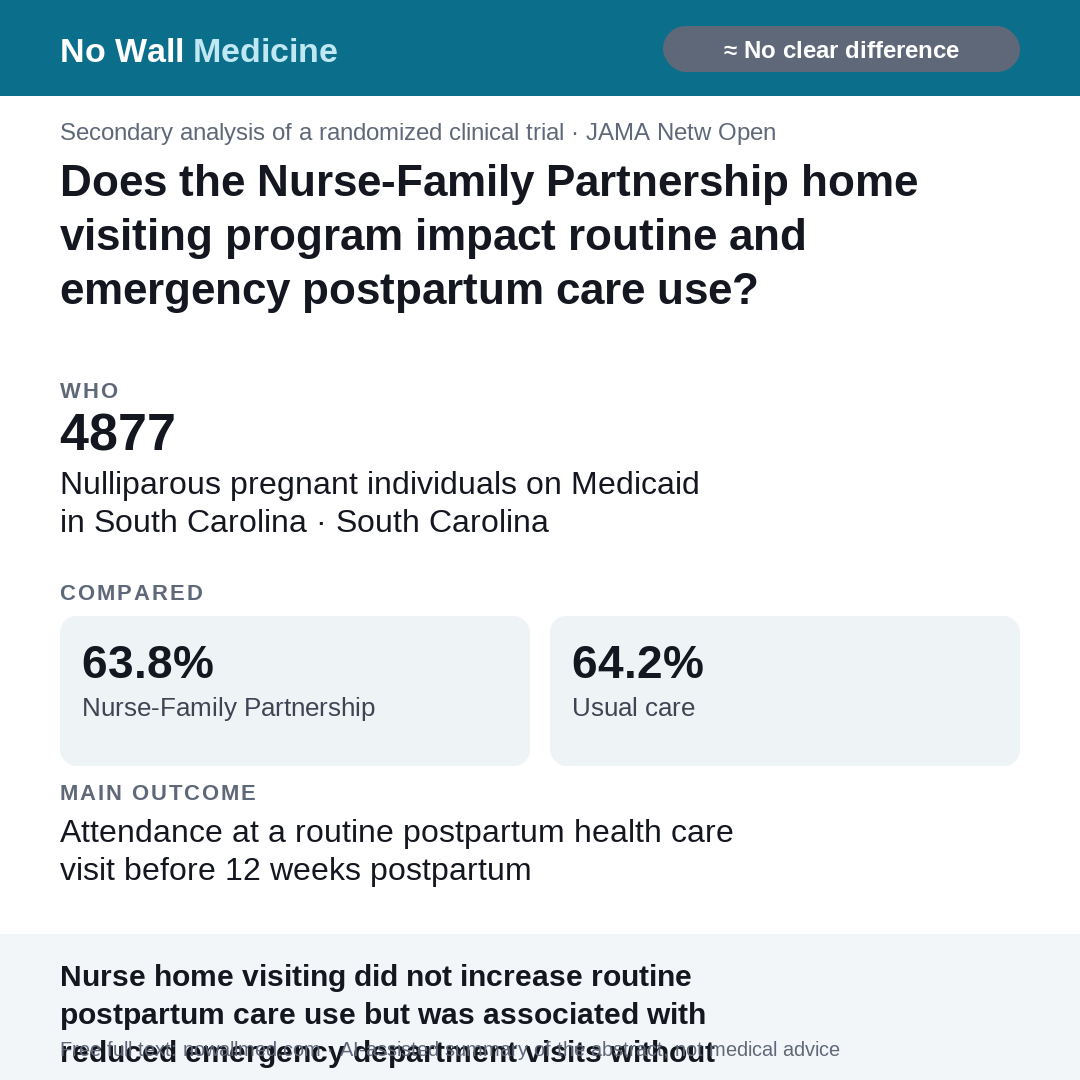
Home Visits and the Use of Routine and Emergency Postpartum Care Among Low-Income People: A Secondary Analysis of a Randomized Clinical Trial
Secondary analysis of a randomized clinical trialNo clear difference
Does the Nurse-Family Partnership home visiting program impact routine and emergency postpartum care use?
Who
4877
Nulliparous pregnant individuals on Medicaid in South Carolina · South Carolina
Compared
63.8%Nurse-Family Partnership
64.2%Usual care
Main outcome
Attendance at a routine postpartum health care visit before 12 weeks postpartum
Result: adjusted difference -0.3 (95% CI, -3.2 to 2.5) percentage points
Bottom line: Nurse home visiting did not increase routine postpartum care use but was associated with reduced emergency department visits without admission.
JAMA Netw Open · 2024-12-02Download image
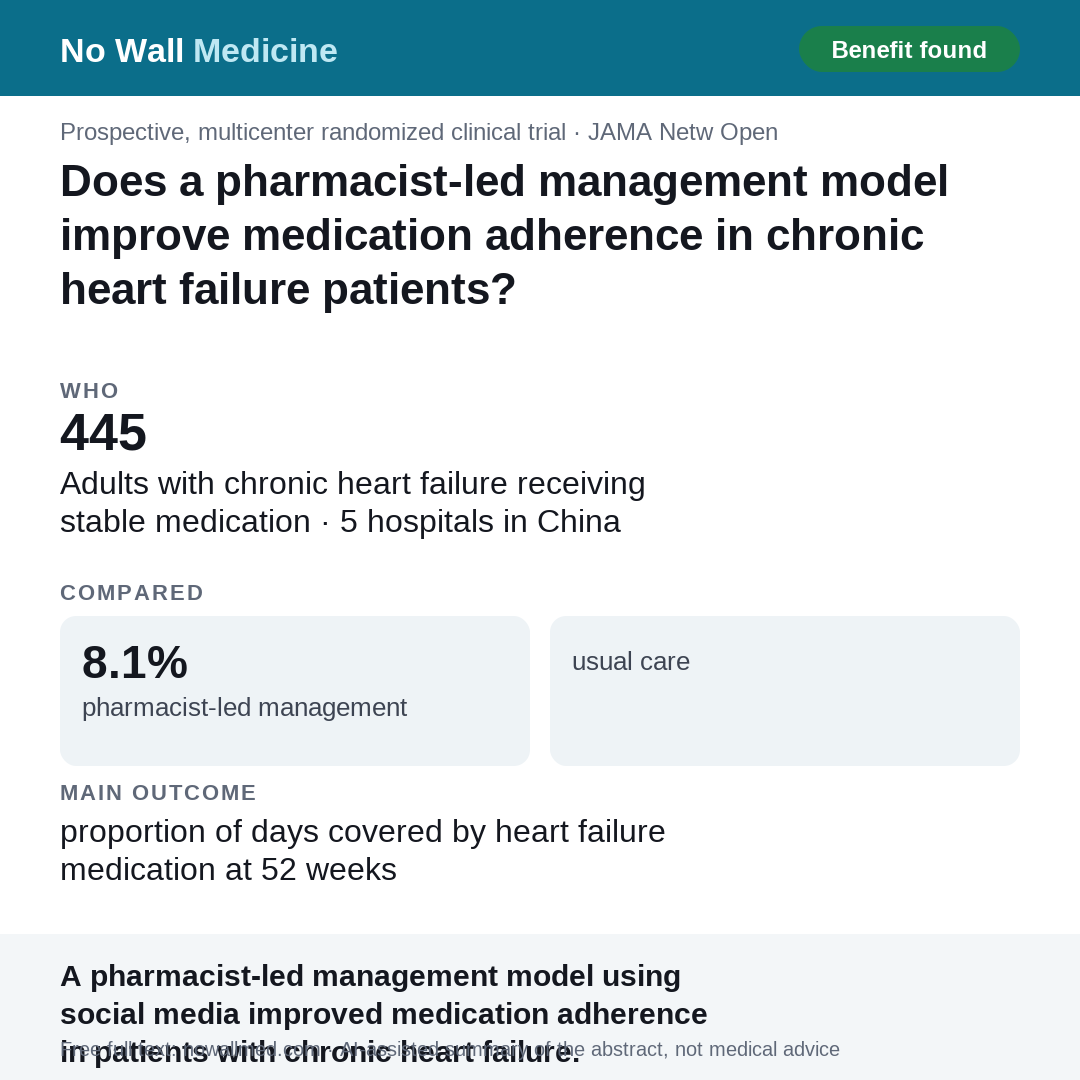
Pharmacist-Led Management Model and Medication Adherence Among Patients With Chronic Heart Failure: A Randomized Clinical Trial
Prospective, multicenter randomized clinical trialBenefit found
Does a pharmacist-led management model improve medication adherence in chronic heart failure patients?
Who
445
Adults with chronic heart failure receiving stable medication · 5 hospitals in China
Compared
8.1%pharmacist-led management (95% CI, 5.5%-10.7%)
usual care
Main outcome
proportion of days covered by heart failure medication at 52 weeks
Result: odds ratio 0.34 (95% CI 0.21-0.54)
Bottom line: A pharmacist-led management model using social media improved medication adherence in patients with chronic heart failure.
JAMA Netw Open · 2024-12-02Download image
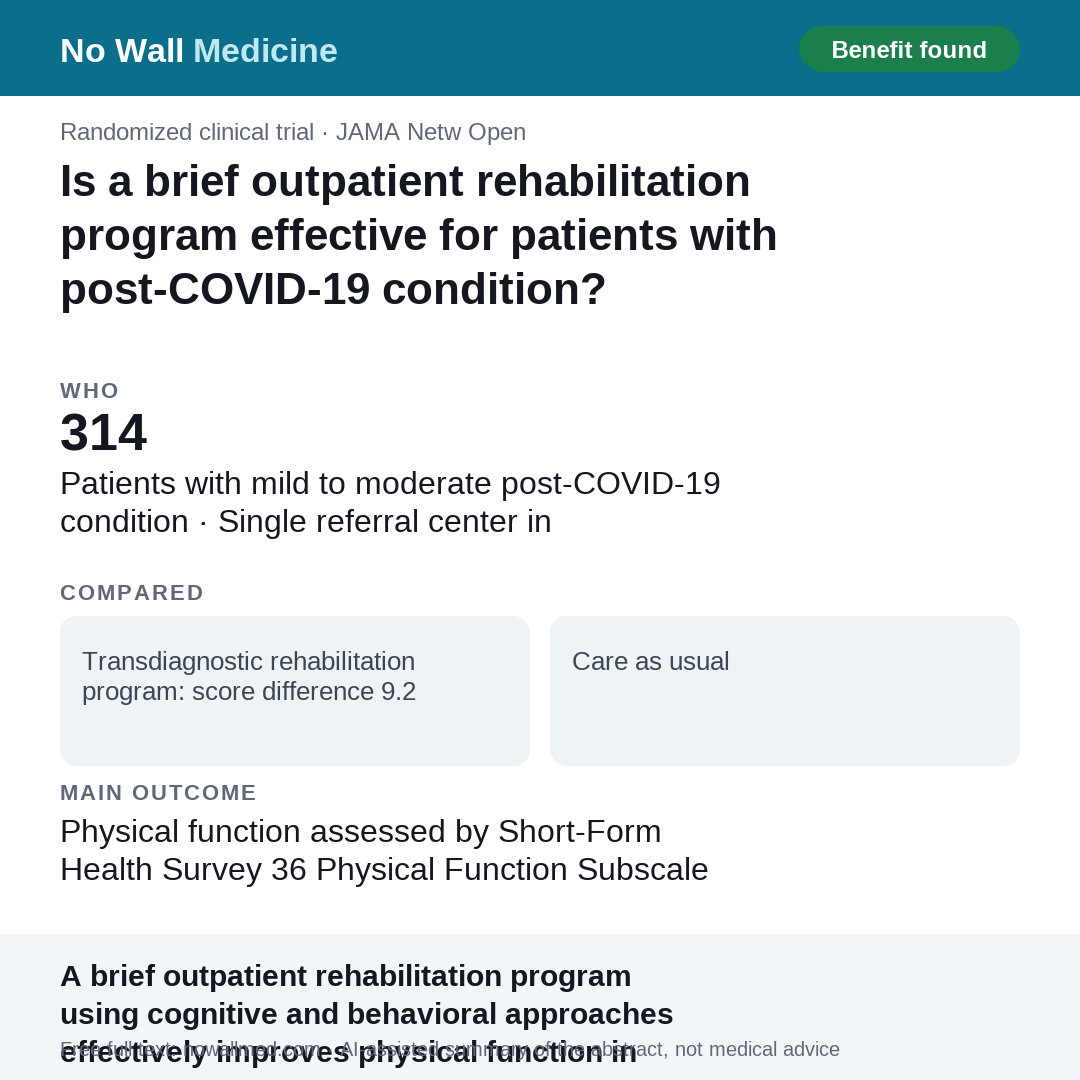
Brief Outpatient Rehabilitation Program for Post-COVID-19 Condition: A Randomized Clinical Trial
Randomized clinical trialBenefit found
Is a brief outpatient rehabilitation program effective for patients with post-COVID-19 condition?
Who
314
Patients with mild to moderate post-COVID-19 condition · Single referral center in South-Eastern Norway
Compared
Transdiagnostic rehabilitation program: score difference 9.2
Care as usual
Main outcome
Physical function assessed by Short-Form Health Survey 36 Physical Function Subscale
Result: score difference 9.2 (95% CI 4.3 to 14.2)
Bottom line: A brief outpatient rehabilitation program using cognitive and behavioral approaches effectively improves physical function in post-COVID-19 condition patients.
JAMA Netw Open · 2024-12-02Download image
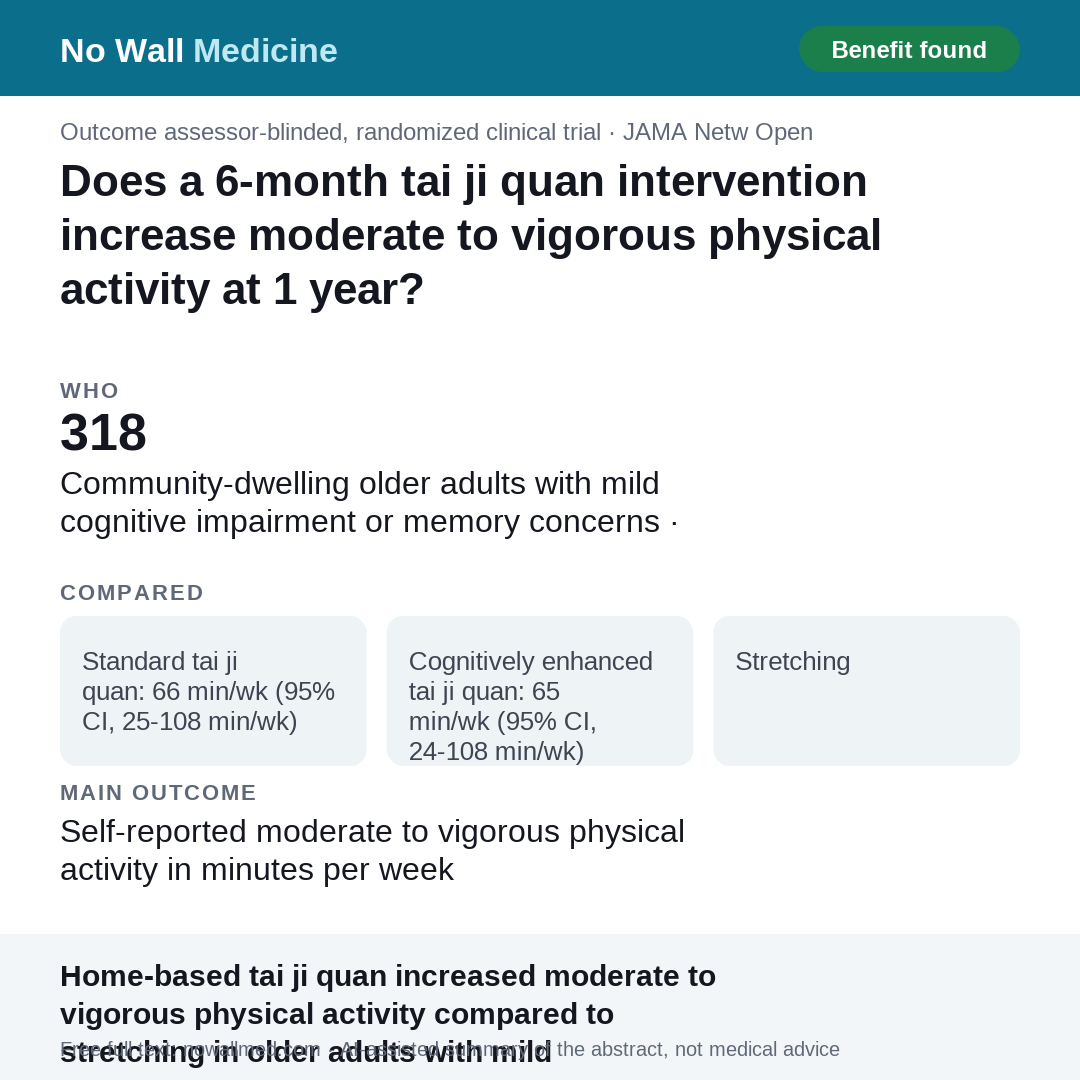
Physical Activity Engagement After Tai Ji Quan Intervention Among Older Adults With Mild Cognitive Impairment or Memory Concerns: A Secondary Analysis of a Randomized Clinical Trial
Outcome assessor-blinded, randomized clinical trialBenefit found
Does a 6-month tai ji quan intervention increase moderate to vigorous physical activity at 1 year?
Who
318
Community-dwelling older adults with mild cognitive impairment or memory concerns · United States, virtual home-based
Compared
Standard tai ji quan: 66 min/wk (95% CI, 25-108 min/wk)
Cognitively enhanced tai ji quan: 65 min/wk (95% CI, 24-108 min/wk)
Stretching
Main outcome
Self-reported moderate to vigorous physical activity in minutes per week
Result: odds ratios 3.11 (95% CI, 1.75-5.53) and 3.67 (95% CI, 2.02-6.65)
Bottom line: Home-based tai ji quan increased moderate to vigorous physical activity compared to stretching in older adults with mild cognitive impairment.
JAMA Netw Open · 2024-12-02Download image
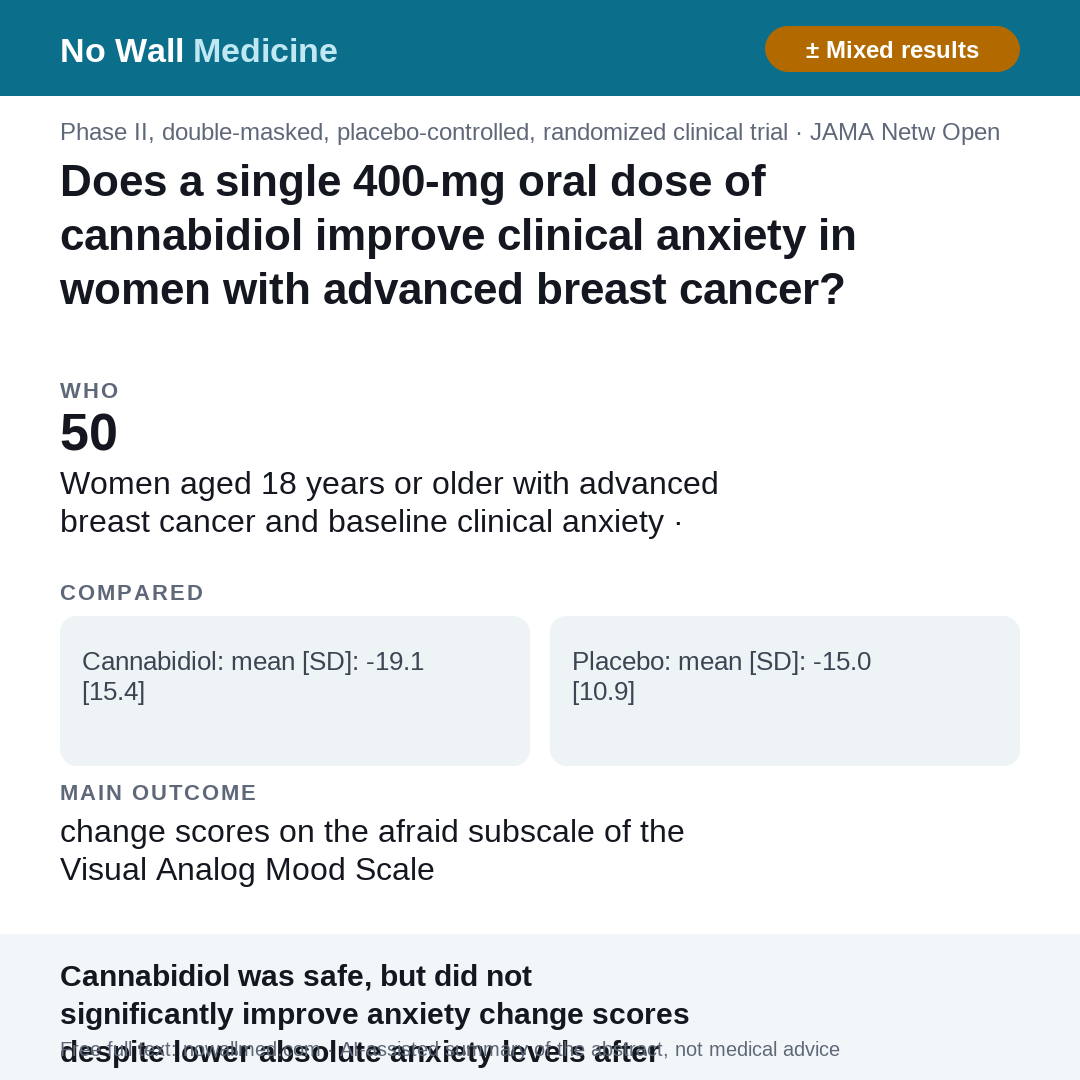
Cannabidiol for Scan-Related Anxiety in Women With Advanced Breast Cancer: A Randomized Clinical Trial
Phase II, double-masked, placebo-controlled, randomized clinical trialMixed results
Does a single 400-mg oral dose of cannabidiol improve clinical anxiety in women with advanced breast cancer?
Who
50
Women aged 18 years or older with advanced breast cancer and baseline clinical anxiety · Dana-Farber Cancer Institute's Breast Oncology Center
Compared
Cannabidiol: mean [SD]: -19.1 [15.4]
Placebo: mean [SD]: -15.0 [10.9]
Main outcome
change scores on the afraid subscale of the Visual Analog Mood Scale
Bottom line: Cannabidiol was safe, but did not significantly improve anxiety change scores despite lower absolute anxiety levels after ingestion.
JAMA Netw Open · 2024-12-02Download image
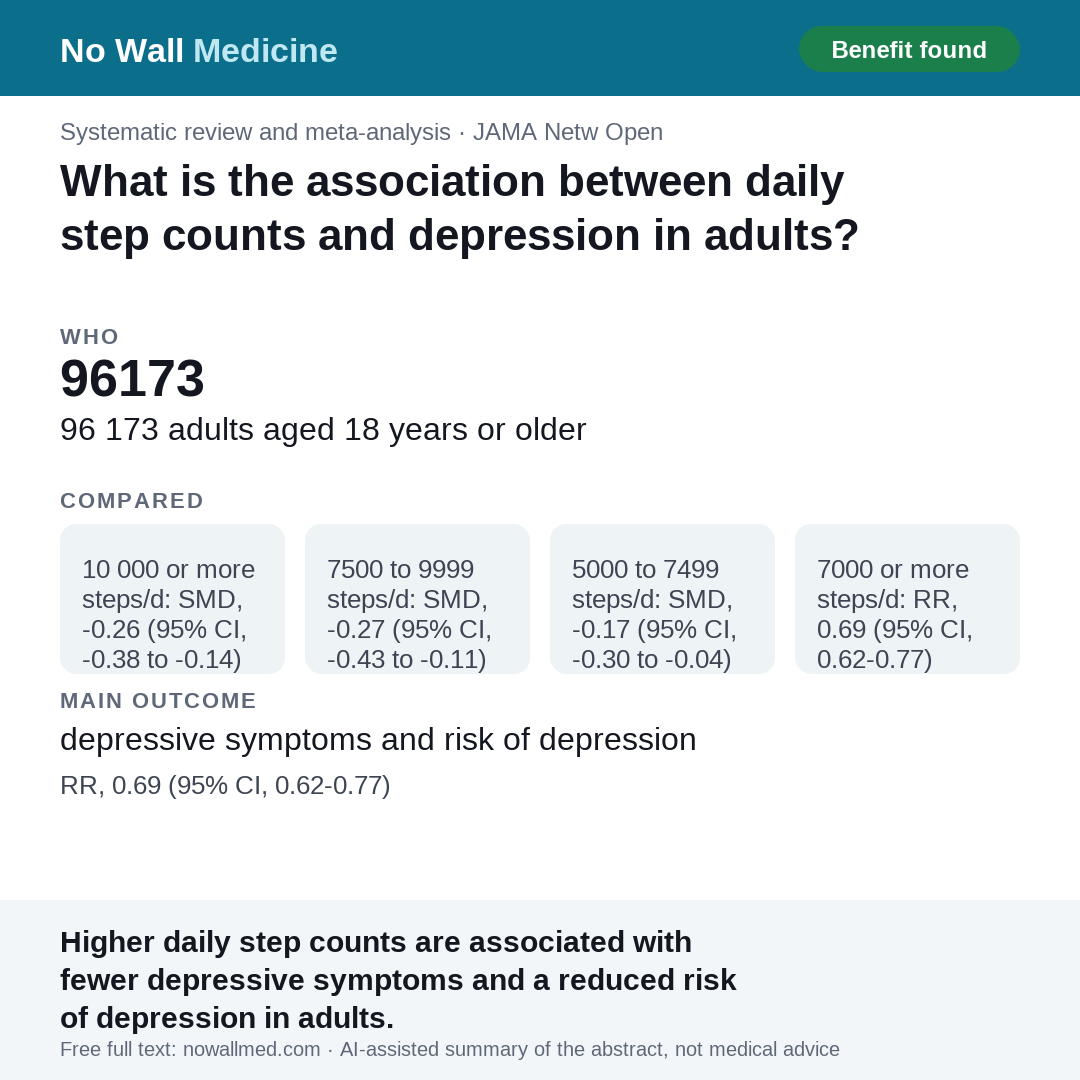
Daily Step Count and Depression in Adults: A Systematic Review and Meta-Analysis
Systematic review and meta-analysisBenefit found
What is the association between daily step counts and depression in adults?
Who
96173
96 173 adults aged 18 years or older
Compared
10 000 or more steps/d: SMD, -0.26 (95% CI, -0.38 to -0.14)
7500 to 9999 steps/d: SMD, -0.27 (95% CI, -0.43 to -0.11)
5000 to 7499 steps/d: SMD, -0.17 (95% CI, -0.30 to -0.04)
7000 or more steps/d: RR, 0.69 (95% CI, 0.62-0.77)
Main outcome
depressive symptoms and risk of depression
Result: RR, 0.69 (95% CI, 0.62-0.77)
Bottom line: Higher daily step counts are associated with fewer depressive symptoms and a reduced risk of depression in adults.
Limitation: Further prospective cohort studies are needed to clarify the potential protective role.
JAMA Netw Open · 2024-12-02Download image
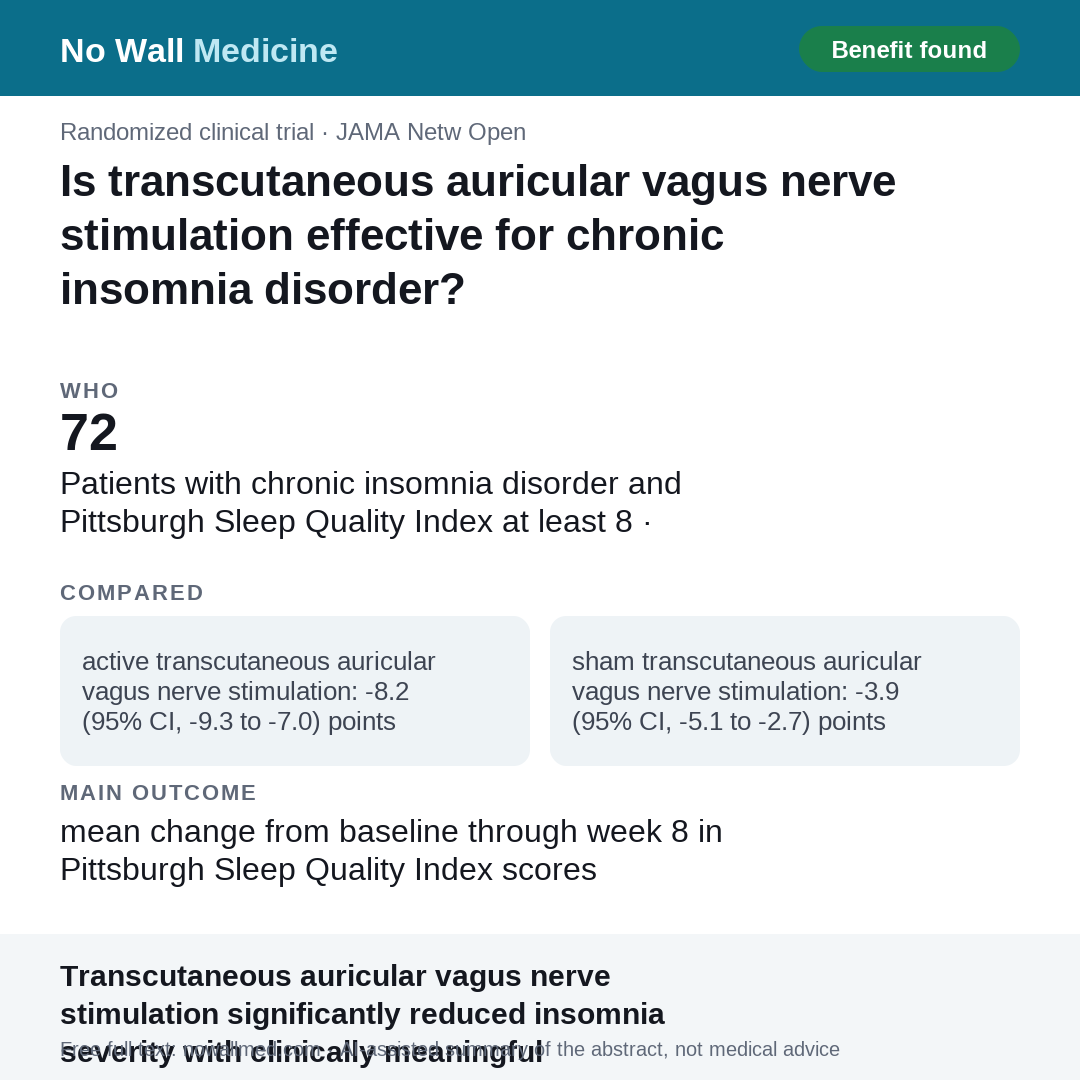
Transcutaneous Auricular Vagus Nerve Stimulation for Chronic Insomnia Disorder: A Randomized Clinical Trial
Randomized clinical trialBenefit found
Is transcutaneous auricular vagus nerve stimulation effective for chronic insomnia disorder?
Who
72
Patients with chronic insomnia disorder and Pittsburgh Sleep Quality Index at least 8 · Single center in Beijing, China
Compared
active transcutaneous auricular vagus nerve stimulation: -8.2 (95% CI, -9.3 to -7.0) points
sham transcutaneous auricular vagus nerve stimulation: -3.9 (95% CI, -5.1 to -2.7) points
Main outcome
mean change from baseline through week 8 in Pittsburgh Sleep Quality Index scores
Result: 4.2-point greater reduction (95% CI, -5.9 to -2.6 points)
Bottom line: Transcutaneous auricular vagus nerve stimulation significantly reduced insomnia severity with clinically meaningful improvements sustained over 20 weeks.
Limitation: Future multicenter clinical trials with large sample sizes are needed to validate effectiveness.
JAMA Netw Open · 2024-12-02Download image