Visual abstracts
New randomized trials and meta-analyses from leading journals at a glance: who was studied, what was compared, and what was found. Every paper is free to read in full.
All specialtiesCardiology 4763Oncology 4042Gastroenterology & Hepatology 1902Infectious Disease 3756Neurology 1872Psychiatry & Mental Health 2214Pulmonology 2042Critical Care 1319Endocrinology & Diabetes 2544Pediatrics 2889Surgery 2479Orthopedics & Sports Medicine 917Neurosurgery 525Cardiothoracic & Vascular Surgery 656Plastic & Reconstructive Surgery 574Nephrology 1107Rheumatology 810Hematology 1090Dermatology 611Ophthalmology 532Obstetrics & Gynecology 1645Public & Global Health 1037Radiology & Imaging 617Anesthesiology 957Urology 745ENT (Otolaryngology) 494Emergency Medicine 481Allergy & Immunology 309Geriatrics 972Family Medicine & Primary Care 533Medical Genetics & Genomics 659Pathology & Laboratory Medicine 156Physical Medicine & Rehabilitation 734Palliative Care 421Nutrition 1560Digital Health & AI 2133General Medicine 318
Bifidobacterium and Lactobacillus Probiotics and Gut Dysbiosis in Preterm Infants: The PRIMAL Randomized Clinical Trial
Multicenter, double-blinded, placebo-controlled, phase 3 randomized clinical trialMixed results
Do multistrain probiotics prevent multidrug-resistant organism colonization and shape the microbiome in preterm infants?
Who
643
Preterm infants with gestational age of 28 to 32 weeks · 18 German neonatal units
Compared
37.4%Probiotics
37.5%Control
Main outcome
Colonization with multidrug-resistant organisms at day 30 of life
Result: adjusted risk ratio 0.99 (95% CI 0.54 to 1.81)
Bottom line: Multistrain probiotics did not reduce multidrug-resistant organism colonization but modulated the microbiome toward eubiosis.
JAMA Pediatr · 2024-08-05 · Save PNG

Impact of respiratory pathogens detection by a rapid multiplex polymerase chain reaction assay on the management of community-acquired pneumonia for children at the paediatric emergency department. A randomized controlled trial, the Optimization of Pneumonia Acute Care (OPTIPAC) study
Randomized controlled trialBenefit found
Does rapid PCR improve antibiotic treatment?
Who
499
Children with community-acquired pneumonia · 11 French centres
Compared
68.6%PCR test (168/245)
48.2%Usual care (120/249)
Main outcome
Appropriateness of antibiotic treatment
Result: Relative risk 1.42 [1.22-1.66]
Bottom line: Rapid PCR improves antibiotic treatment appropriateness
Clin Microbiol Infect · 2024-08-05 · Save PNG

New insights on hidradenitis suppurativa phenotypes and treatment response: An exploratory automated analysis of the SUNSHINE and SUNRISE trials
Exploratory automated analysis of randomized trialsBenefit found
How do hidradenitis suppurativa clusters respond to secukinumab treatment?
Who
1084
Adult patients with moderate to severe hidradenitis suppurativa
Compared
Secukinumab every 2 or 4 weeks: demonstrated efficacy versus placebo in all clusters
Placebo
Main outcome
Hidradenitis suppurativa clinical response and disease characteristics
Bottom line: Secukinumab demonstrated benefit over placebo across three identified hidradenitis suppurativa clusters through week 52.
Limitation: This was an exploratory automated analysis using unsupervised machine learning clustering.
J Eur Acad Dermatol Venereol · 2024-08-05 · Save PNG

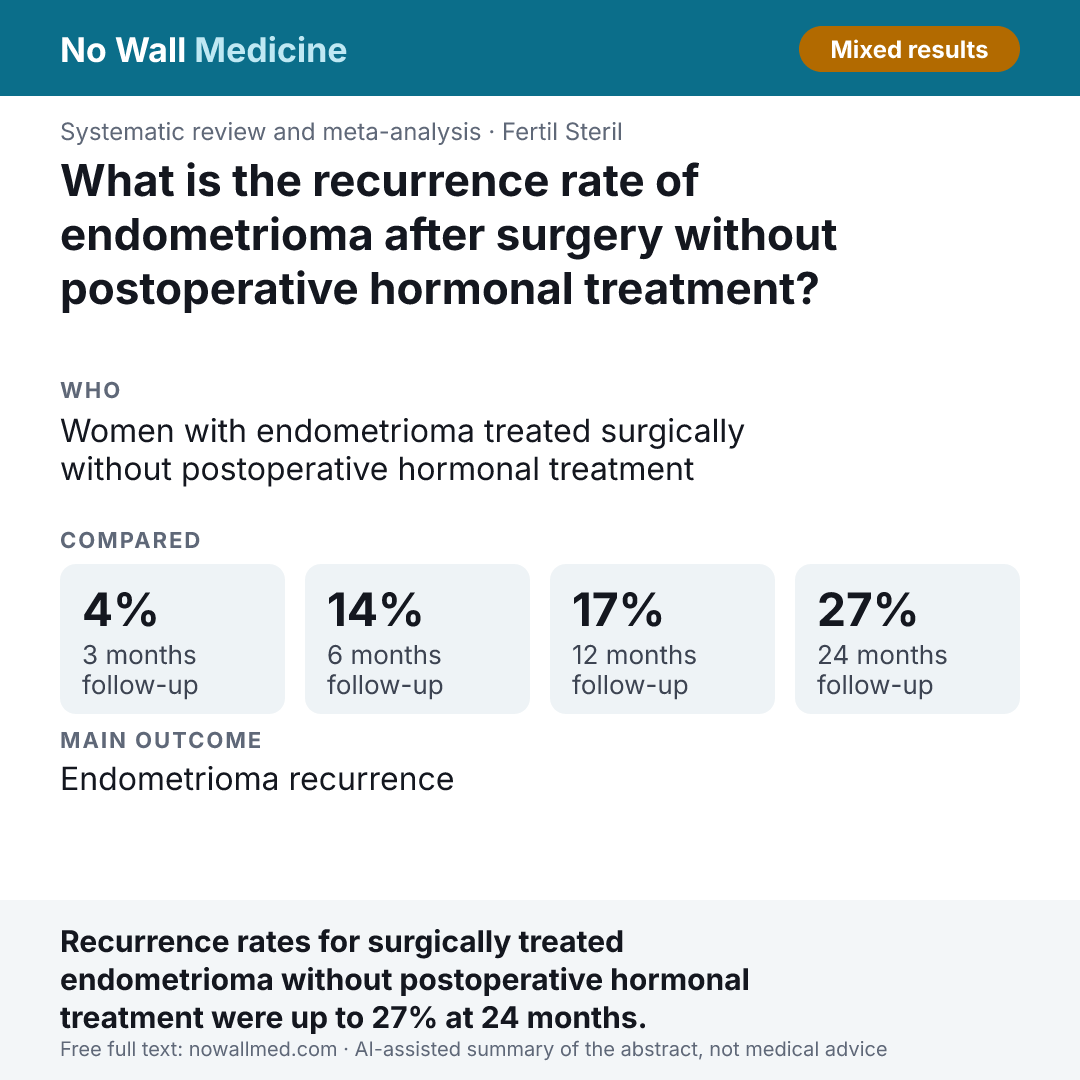
Recurrence after surgery for endometrioma: a systematic review and meta-analyses
Systematic review and meta-analysisMixed results
What is the recurrence rate of endometrioma after surgery without postoperative hormonal treatment?
Who
Women with endometrioma treated surgically without postoperative hormonal treatment
Compared
4%3 months follow-up
14%6 months follow-up
17%12 months follow-up
27%24 months follow-up
Main outcome
Endometrioma recurrence
Bottom line: Recurrence rates for surgically treated endometrioma without postoperative hormonal treatment were up to 27% at 24 months.
Limitation: Only three non-randomized controlled trials had a low risk of bias.
Fertil Steril · 2024-08-05 · Save PNG
Defibrillation strategies for patients with refractory ventricular fibrillation: A systematic review and meta-analysis
Systematic review and meta-analysisMixed results
Is double defibrillation more effective than standard defibrillation for refractory ventricular fibrillation?
Who
1360
Patients with refractory ventricular fibrillation
Compared
Double defibrillation
Standard defibrillation
Main outcome
Survival to hospital discharge
Result: relative ratio 0.91 (95% CI, 0.46-1.78)
Bottom line: Double sequential defibrillation showed benefit in one randomized trial, but cohort studies showed no benefit for survival to discharge.
Limitation: Further validation is needed through larger-scale and higher-quality trials.
Am J Emerg Med · 2024-08-05 · Save PNG

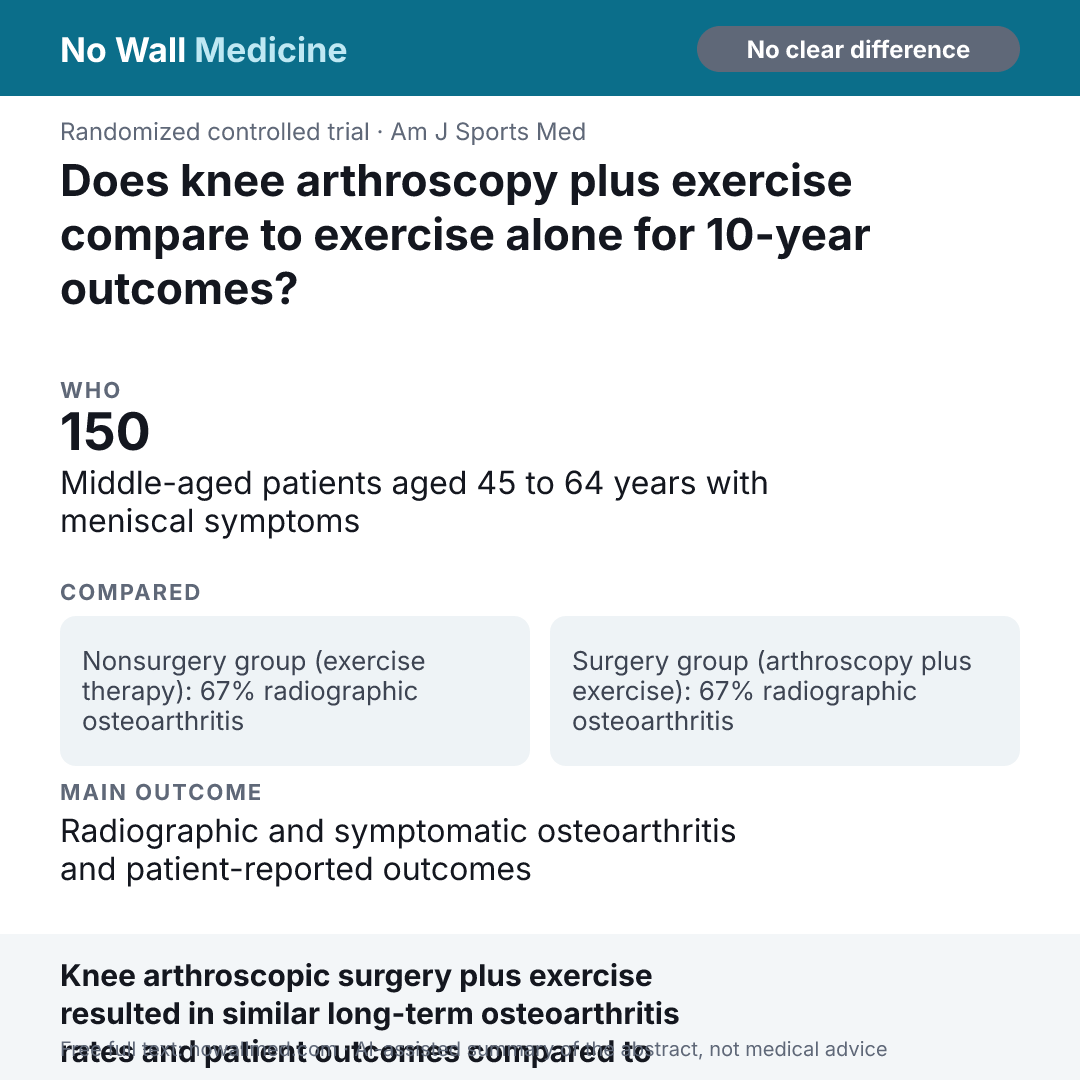
Knee Arthroscopic Surgery in Middle-Aged Patients With Meniscal Symptoms: A 10-Year Follow-up of a Prospective, Randomized Controlled Trial
Randomized controlled trialNo clear difference
Does knee arthroscopy plus exercise compare to exercise alone for 10-year outcomes?
Who
150
Middle-aged patients aged 45 to 64 years with meniscal symptoms
Compared
Nonsurgery group (exercise therapy): 67% radiographic osteoarthritis
Surgery group (arthroscopy plus exercise): 67% radiographic osteoarthritis
Main outcome
Radiographic and symptomatic osteoarthritis and patient-reported outcomes
Bottom line: Knee arthroscopic surgery plus exercise resulted in similar long-term osteoarthritis rates and patient outcomes compared to exercise alone.
Am J Sports Med · 2024-08-05 · Save PNG
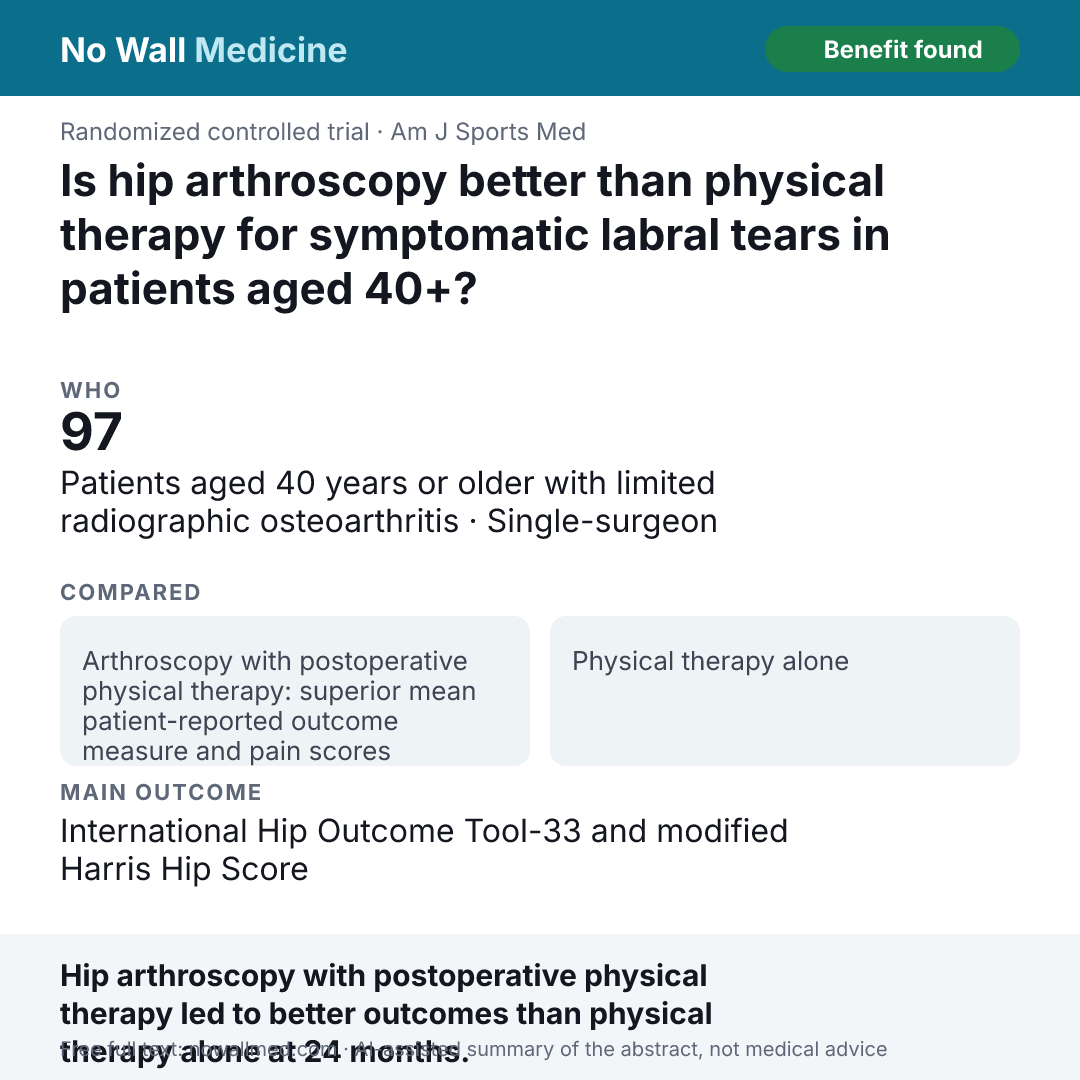
Hip Arthroscopy Versus Physical Therapy for the Treatment of Symptomatic Acetabular Labral Tears in Patients Older Than 40 Years: 24-Month Results From a Randomized Controlled Trial
Randomized controlled trialBenefit found
Is hip arthroscopy better than physical therapy for symptomatic labral tears in patients aged 40+?
Who
97
Patients aged 40 years or older with limited radiographic osteoarthritis · Single-surgeon site
Compared
Arthroscopy with postoperative physical therapy: superior mean patient-reported outcome measure and pain scores
Physical therapy alone
Main outcome
International Hip Outcome Tool-33 and modified Harris Hip Score
Bottom line: Hip arthroscopy with postoperative physical therapy led to better outcomes than physical therapy alone at 24 months.
Limitation: The study was conducted by a single surgeon.
Am J Sports Med · 2024-08-05 · Save PNG
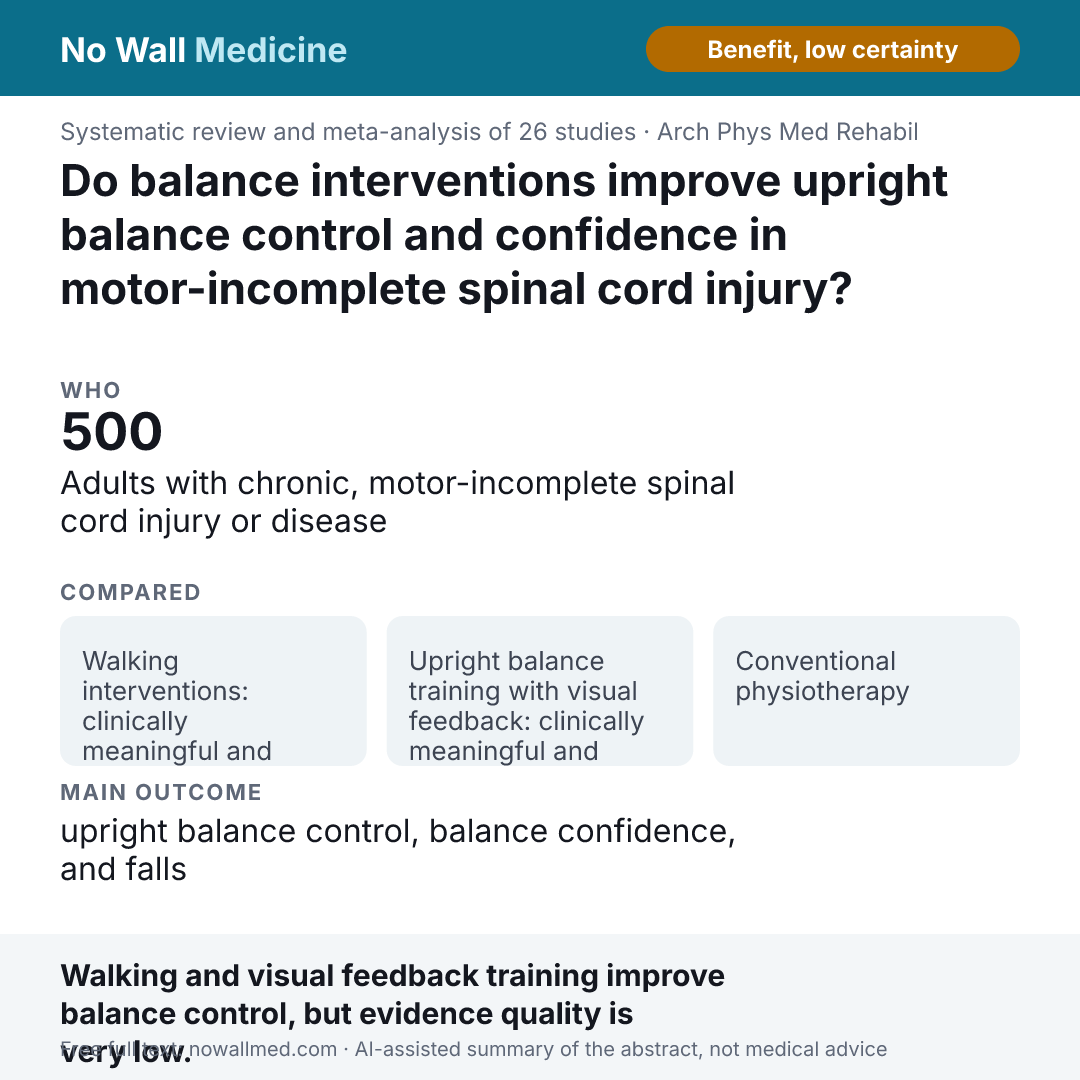
Balance Interventions to Improve Upright Balance Control and Balance Confidence in People With Motor-Incomplete Spinal Cord Injury or Disease: A Systematic Review and Meta-analysis
Systematic review and meta-analysis of 26 studiesBenefit, low certainty
Do balance interventions improve upright balance control and confidence in motor-incomplete spinal cord injury?
Who
500
Adults with chronic, motor-incomplete spinal cord injury or disease
Compared
Walking interventions: clinically meaningful and significant pooled effects
Upright balance training with visual feedback: clinically meaningful and significant pooled effects
Conventional physiotherapy
Main outcome
upright balance control, balance confidence, and falls
Bottom line: Walking and visual feedback training improve balance control, but evidence quality is very low.
Limitation: the quality of the evidence was very low
Arch Phys Med Rehabil · 2024-08-05 · Save PNG
Procedural Feasibility and Peri-procedural Outcomes of Peripheral Endovascular Therapy via Transradial versus Transfemoral Access: A Systematic Review and Meta-Analysis
Systematic review and meta-analysisMixed results
Is transradial access safe and feasible for peripheral vascular interventions compared to transfemoral access?
Who
70882
Patients undergoing lower extremity, carotid, and visceral artery vascular interventions
Compared
transradial access: 3.9 ± 0.7%
transfemoral access: 1.0 ± 0.3%
Main outcome
procedural failure rate
Result: odds ratio 3.07 (95% CI 1.84 - 5.12)
Bottom line: Transradial access has higher procedural failure and vessel occlusion but fewer total access site complications and minor bleeding.
Limitation: GRADE certainty was low to moderate in most outcomes.
Eur J Vasc Endovasc Surg · 2024-08-05 · Save PNG

Systematic Review of Outcome Reporting for Interventions to Treat Patients with Acute Lower Limb Ischaemia
Systematic reviewUnclear result
What are the currently reported outcomes for interventions treating acute lower limb ischaemia?
Who
Studies of interventions to treat acute lower limb ischaemia
Compared
19.4%Delivery of care
13.8%Vascular outcomes
12.5%Adverse events
Main outcome
Reported outcomes in literature for acute lower limb ischaemia interventions
Bottom line: A systematic review identified 72 unique outcomes to assist in developing a core outcome set.
Eur J Vasc Endovasc Surg · 2024-08-05 · Save PNG

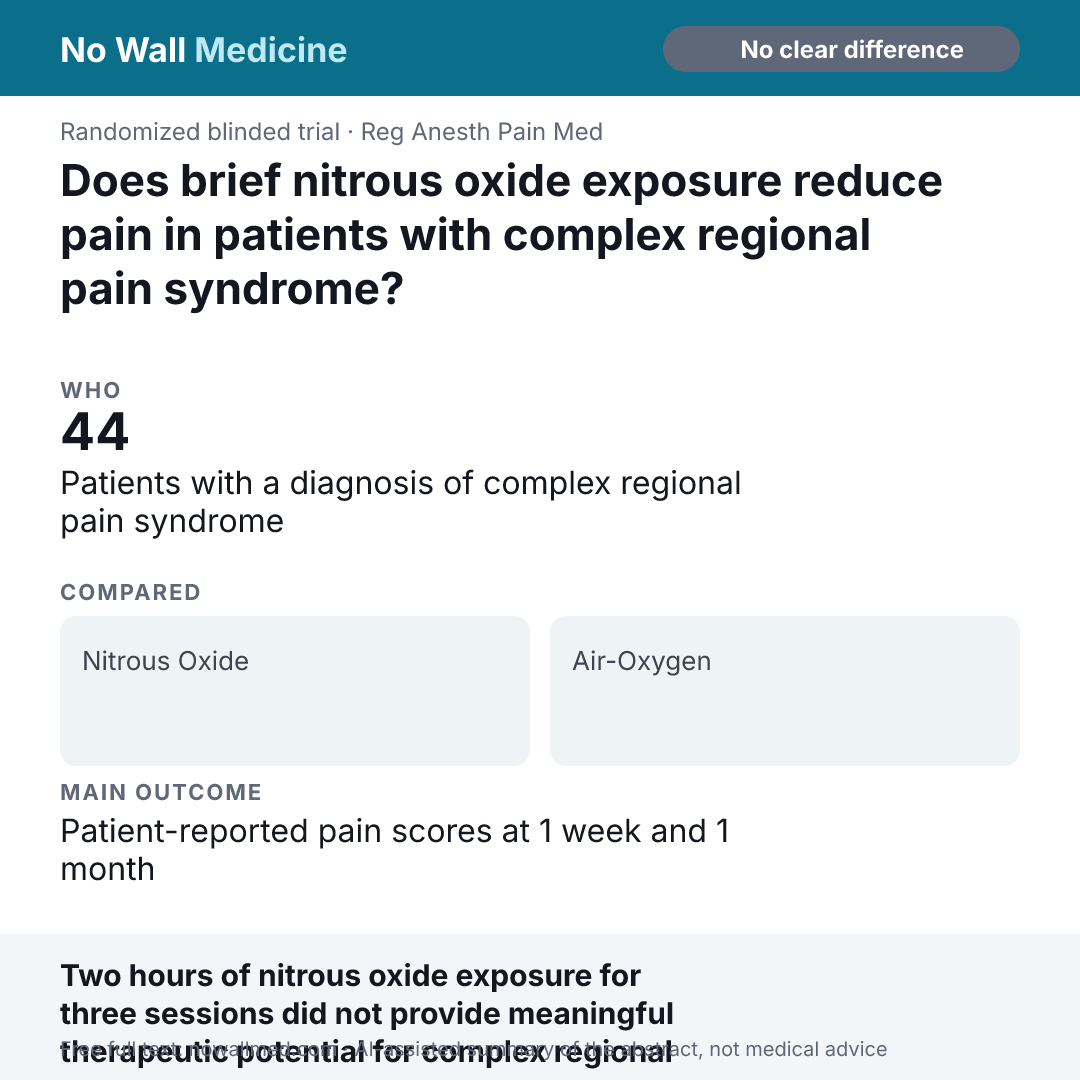
Nitrous oxide for the treatment of complex regional pain syndrome: a randomized blinded trial
Randomized blinded trialNo clear difference
Does brief nitrous oxide exposure reduce pain in patients with complex regional pain syndrome?
Who
44
Patients with a diagnosis of complex regional pain syndrome
Compared
Nitrous Oxide
Air-Oxygen
Main outcome
Patient-reported pain scores at 1 week and 1 month
Result: -0.57 (95% CI: -1.42 to 0.28)
Bottom line: Two hours of nitrous oxide exposure for three sessions did not provide meaningful therapeutic potential for complex regional pain syndrome.
Reg Anesth Pain Med · 2024-08-05 · Save PNG
Primary Aldosteronism and Risk of Cardiovascular Outcomes: Genome-Wide Association and Mendelian Randomization Study
Mendelian randomization studyHarm found
Does primary aldosteronism cause increased risk of coronary artery disease, heart failure, and stroke?
Who
East Asian and European ancestry populations
Compared
Primary aldosteronism: odds ratio 1.07 (95% CI, 1.03-1.11) for coronary artery disease
Primary aldosteronism: odds ratio 1.10 (95% CI, 1.01-1.20) for congestive heart failure
Primary aldosteronism: odds ratio 1.13 (95% CI, 1.09-1.18) for stroke
Main outcome
risk of coronary artery disease, congestive heart failure, and stroke
Bottom line: Primary aldosteronism is causally associated with increased risks of coronary artery disease, congestive heart failure, and stroke.
J Am Heart Assoc · 2024-08-05 · Save PNG

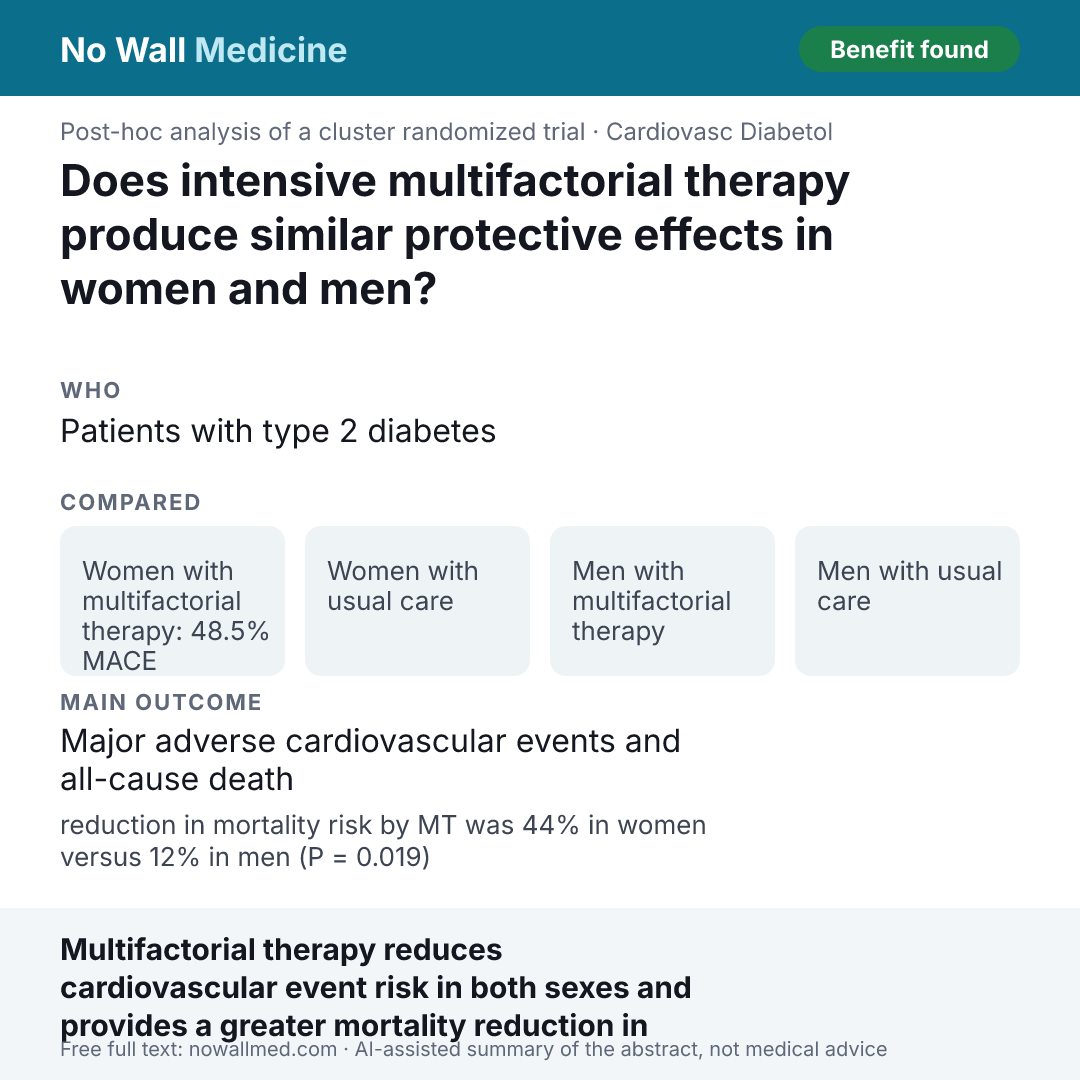
Sex-difference of multifactorial intervention on cardiovascular and mortality risk in DKD: post-hoc analysis of a randomised clinical trial
Post-hoc analysis of a cluster randomized trialBenefit found
Does intensive multifactorial therapy produce similar protective effects in women and men?
Who
Patients with type 2 diabetes
Compared
Women with multifactorial therapy: 48.5% MACE
Women with usual care
Men with multifactorial therapy
Men with usual care
Main outcome
Major adverse cardiovascular events and all-cause death
Result: reduction in mortality risk by MT was 44% in women versus 12% in men (P = 0.019)
Bottom line: Multifactorial therapy reduces cardiovascular event risk in both sexes and provides a greater mortality reduction in women.
Cardiovasc Diabetol · 2024-08-05 · Save PNG
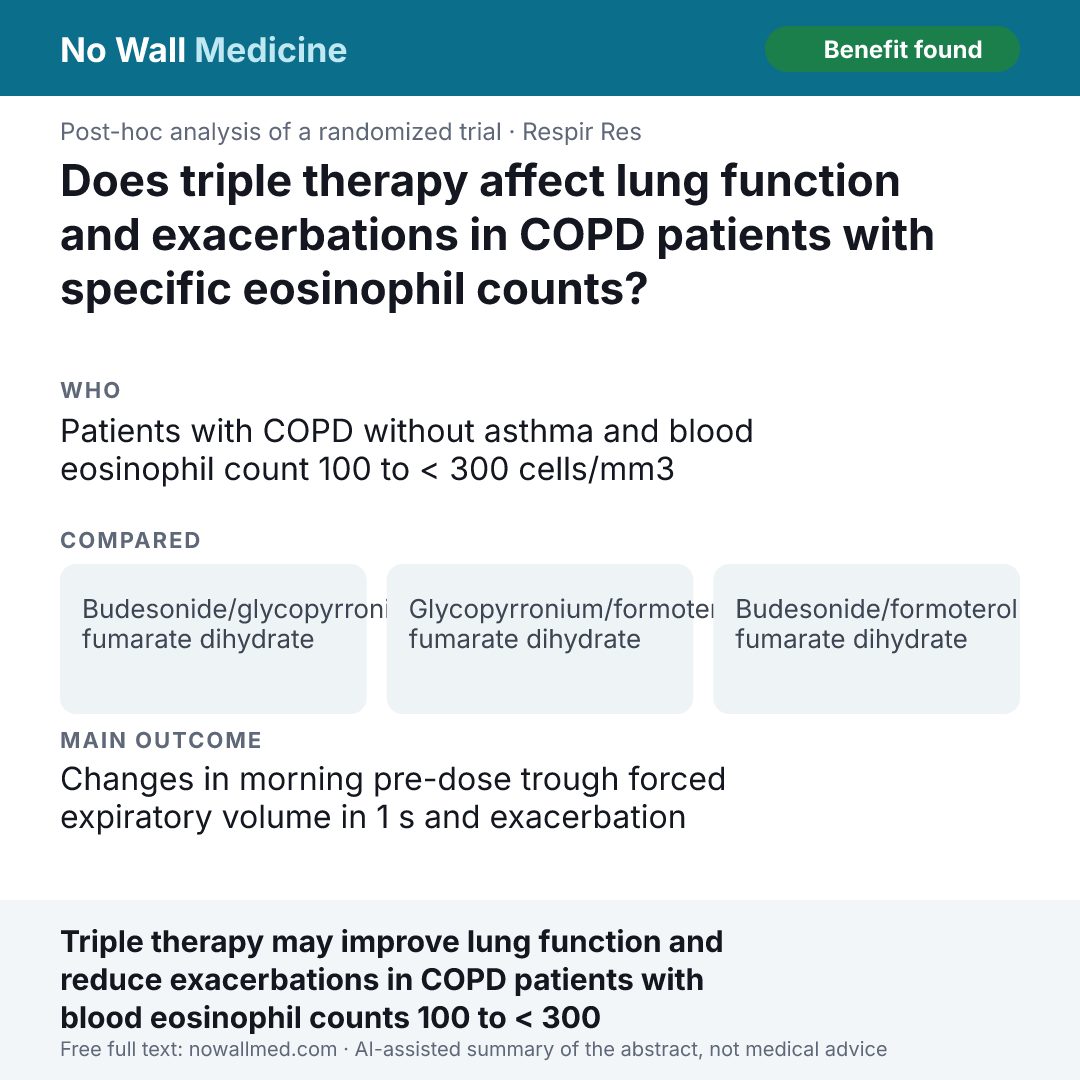
Benefits of budesonide/glycopyrronium/formoterol fumarate dihydrate on lung function and exacerbations of COPD: a post-hoc analysis of the KRONOS study by blood eosinophil level and exacerbation history
Post-hoc analysis of a randomized trialBenefit found
Does triple therapy affect lung function and exacerbations in COPD patients with specific eosinophil counts?
Who
Patients with COPD without asthma and blood eosinophil count 100 to < 300 cells/mm3
Compared
Budesonide/glycopyrronium/formoterol fumarate dihydrate
Glycopyrronium/formoterol fumarate dihydrate
Budesonide/formoterol fumarate dihydrate
Main outcome
Changes in morning pre-dose trough forced expiratory volume in 1 s and exacerbation rates
Bottom line: Triple therapy may improve lung function and reduce exacerbations in COPD patients with blood eosinophil counts 100 to < 300 cells/mm3.
Respir Res · 2024-08-05 · Save PNG
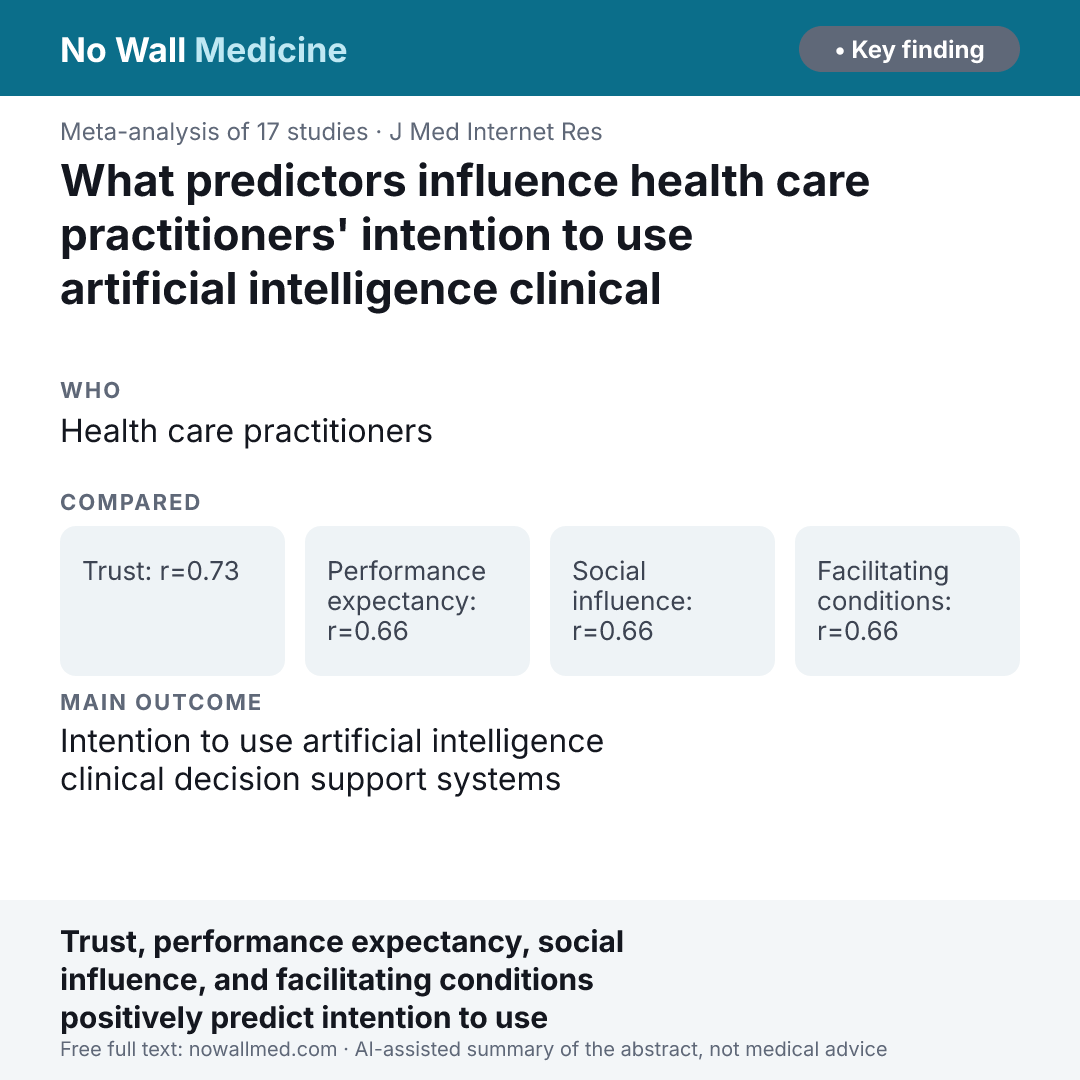
Predictors of Health Care Practitioners' Intention to Use AI-Enabled Clinical Decision Support Systems: Meta-Analysis Based on the Unified Theory of Acceptance and Use of Technology
Meta-analysis of 17 studiesKey finding
What predictors influence health care practitioners' intention to use artificial intelligence clinical decision support systems?
Who
Health care practitioners
Compared
Trust: r=0.73
Performance expectancy: r=0.66
Social influence: r=0.66
Facilitating conditions: r=0.66
Main outcome
Intention to use artificial intelligence clinical decision support systems
Bottom line: Trust, performance expectancy, social influence, and facilitating conditions positively predict intention to use artificial intelligence clinical decision support systems.
Limitation: More research is needed to substantiate identified relationships and explain observed variations in effect sizes.
J Med Internet Res · 2024-08-05 · Save PNG
Initial non-adherence to lipid-lowering medication: a systematic literature review
Systematic literature reviewMixed results
What is the prevalence and impact of initial non-adherence to lipid-lowering medication?
Who
Adult patients in the United States · United States
Compared
Prevalence of initial non-adherence: 10 to 18.2% of patients
Prevalence of prescriptions: 1.4-43.8%
Main outcome
Prevalence, associated factors, consequences, and solutions for initial medication nonadherence
Bottom line: Up to one-fifth of patients fail to obtain newly prescribed lipid-lowering medication, with limited information on clinical consequences.
Limitation: Limited information about the clinical consequences of initial medication nonadherence.
BMC Prim Care · 2024-08-05 · Save PNG

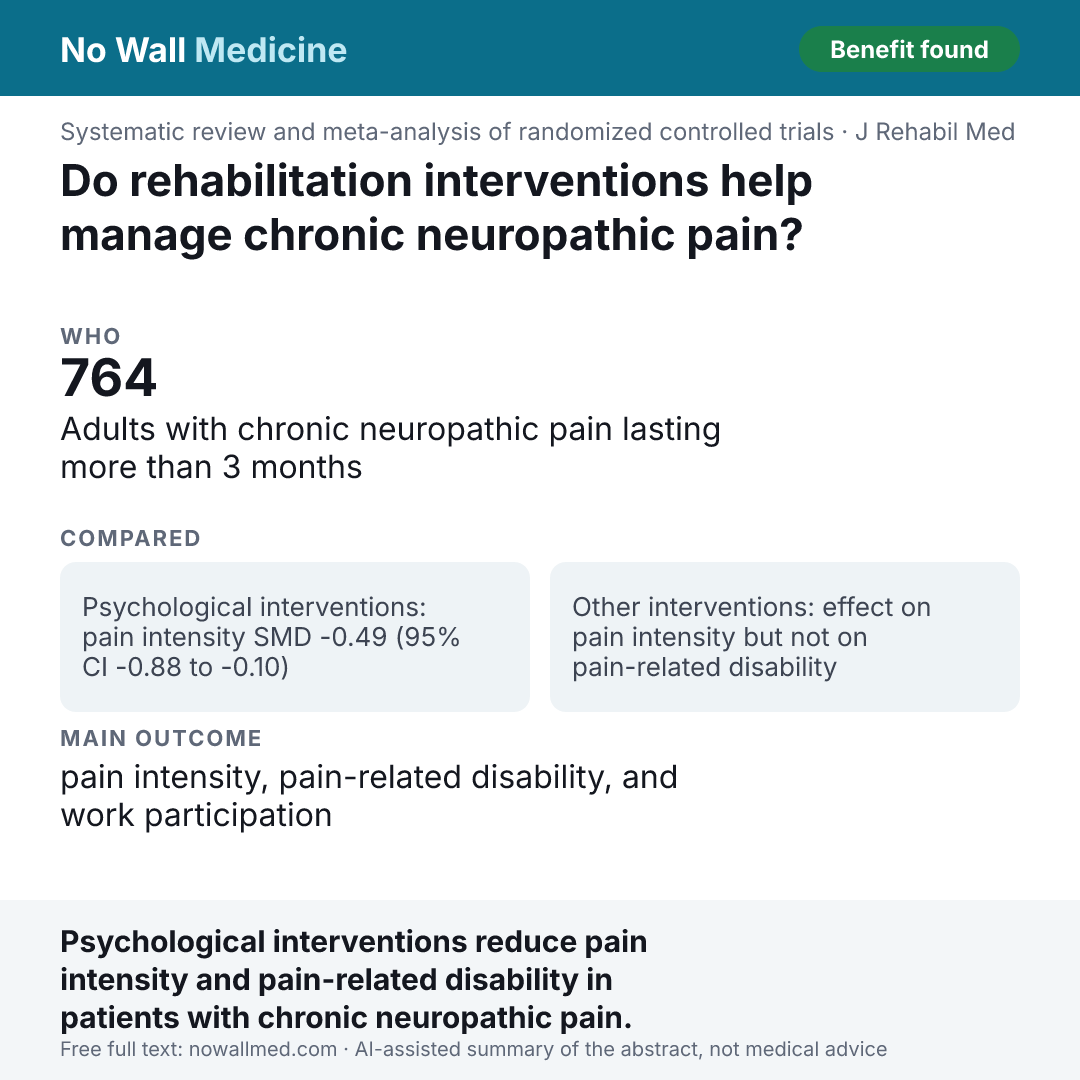
Rehabilitation interventions for neuropathic pain: a systematic review and meta-analysis of randomized controlled trials
Systematic review and meta-analysis of randomized controlled trialsBenefit found
Do rehabilitation interventions help manage chronic neuropathic pain?
Who
764
Adults with chronic neuropathic pain lasting more than 3 months
Compared
Psychological interventions: pain intensity SMD -0.49 (95% CI -0.88 to -0.10)
Other interventions: effect on pain intensity but not on pain-related disability
Main outcome
pain intensity, pain-related disability, and work participation
Result: SMD -0.49 (95% CI -0.88 to -0.10) for pain intensity
Bottom line: Psychological interventions reduce pain intensity and pain-related disability in patients with chronic neuropathic pain.
J Rehabil Med · 2024-08-05 · Save PNG
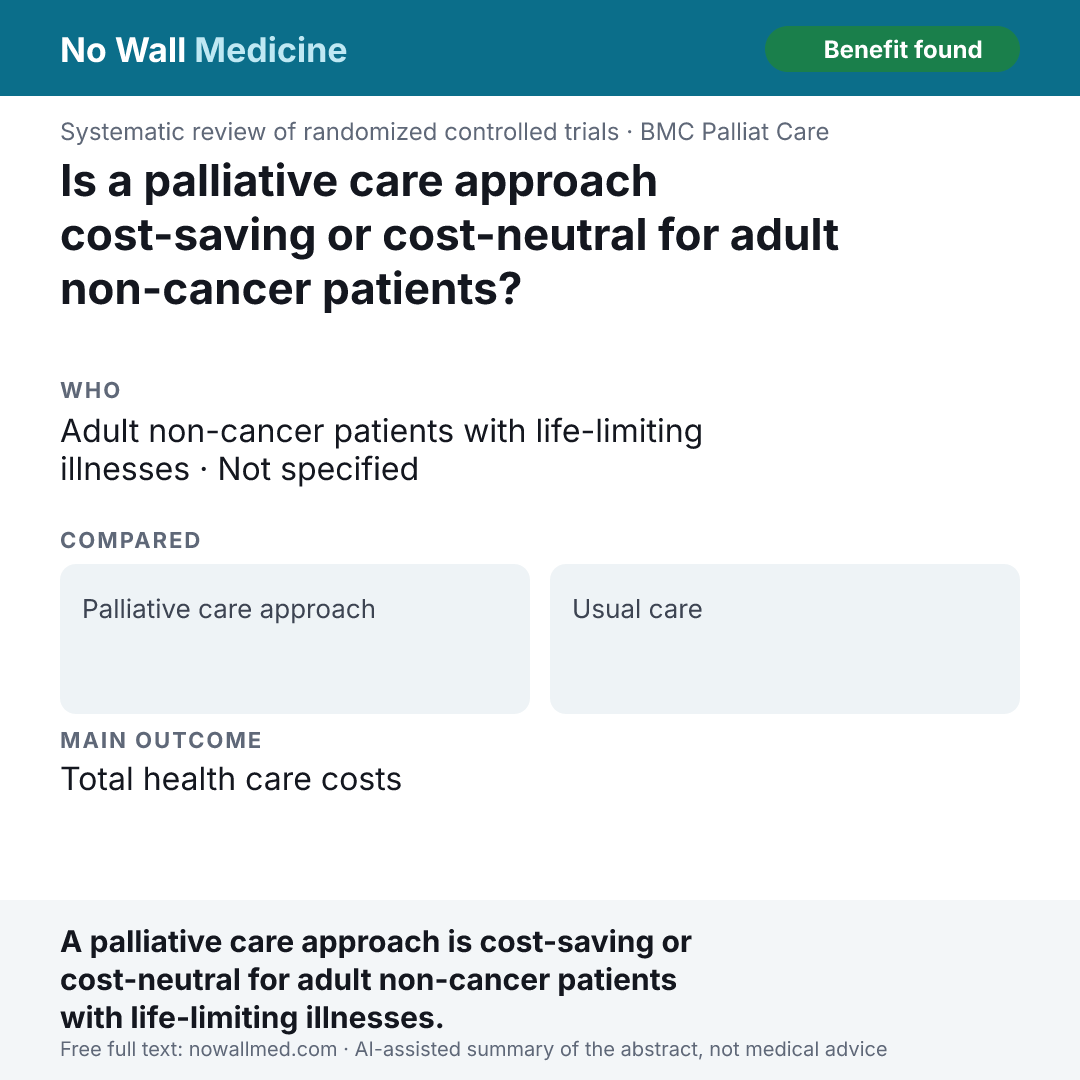
A palliative care approach for adult non-cancer patients with life-limiting illnesses is cost-saving or cost-neutral: a systematic review of RCTs
Systematic review of randomized controlled trialsBenefit found
Is a palliative care approach cost-saving or cost-neutral for adult non-cancer patients?
Who
Adult non-cancer patients with life-limiting illnesses · Not specified
Compared
Palliative care approach
Usual care
Main outcome
Total health care costs
Bottom line: A palliative care approach is cost-saving or cost-neutral for adult non-cancer patients with life-limiting illnesses.
BMC Palliat Care · 2024-08-05 · Save PNG
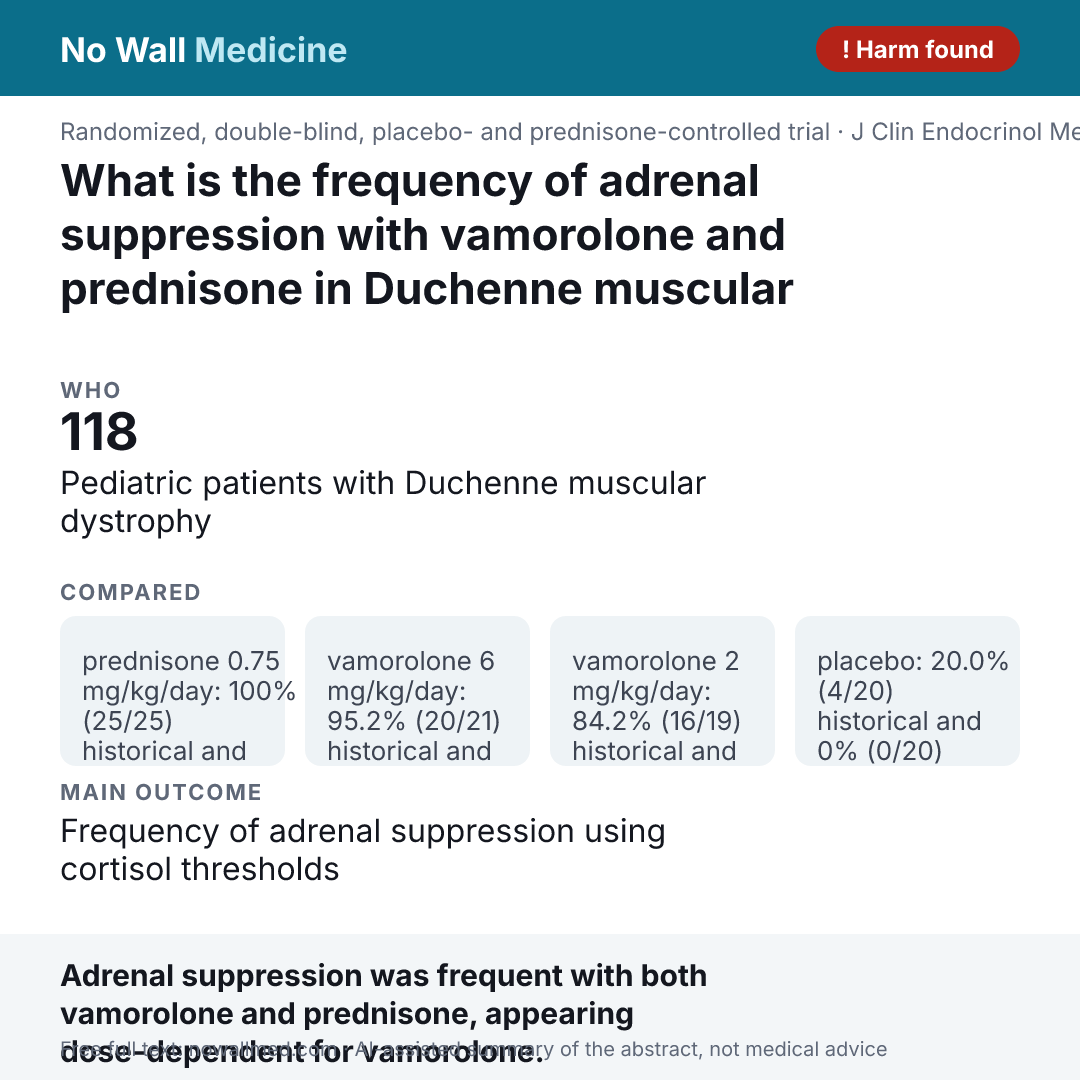
Adrenal Suppression From Vamorolone and Prednisone in Duchenne Muscular Dystrophy: Results From the Phase 2b Clinical Trial
Randomized, double-blind, placebo- and prednisone-controlled trialHarm found
What is the frequency of adrenal suppression with vamorolone and prednisone in Duchenne muscular dystrophy?
Who
118
Pediatric patients with Duchenne muscular dystrophy
Compared
prednisone 0.75 mg/kg/day: 100% (25/25) historical and 92.0% (23/25) revised threshold
vamorolone 6 mg/kg/day: 95.2% (20/21) historical and 90.5% (19/21) revised threshold
vamorolone 2 mg/kg/day: 84.2% (16/19) historical and 47.5% (9/19) revised threshold
placebo: 20.0% (4/20) historical and 0% (0/20) revised threshold
Main outcome
Frequency of adrenal suppression using cortisol thresholds
Bottom line: Adrenal suppression was frequent with both vamorolone and prednisone, appearing dose-dependent for vamorolone.
J Clin Endocrinol Metab · 2024-08-04 · Save PNG
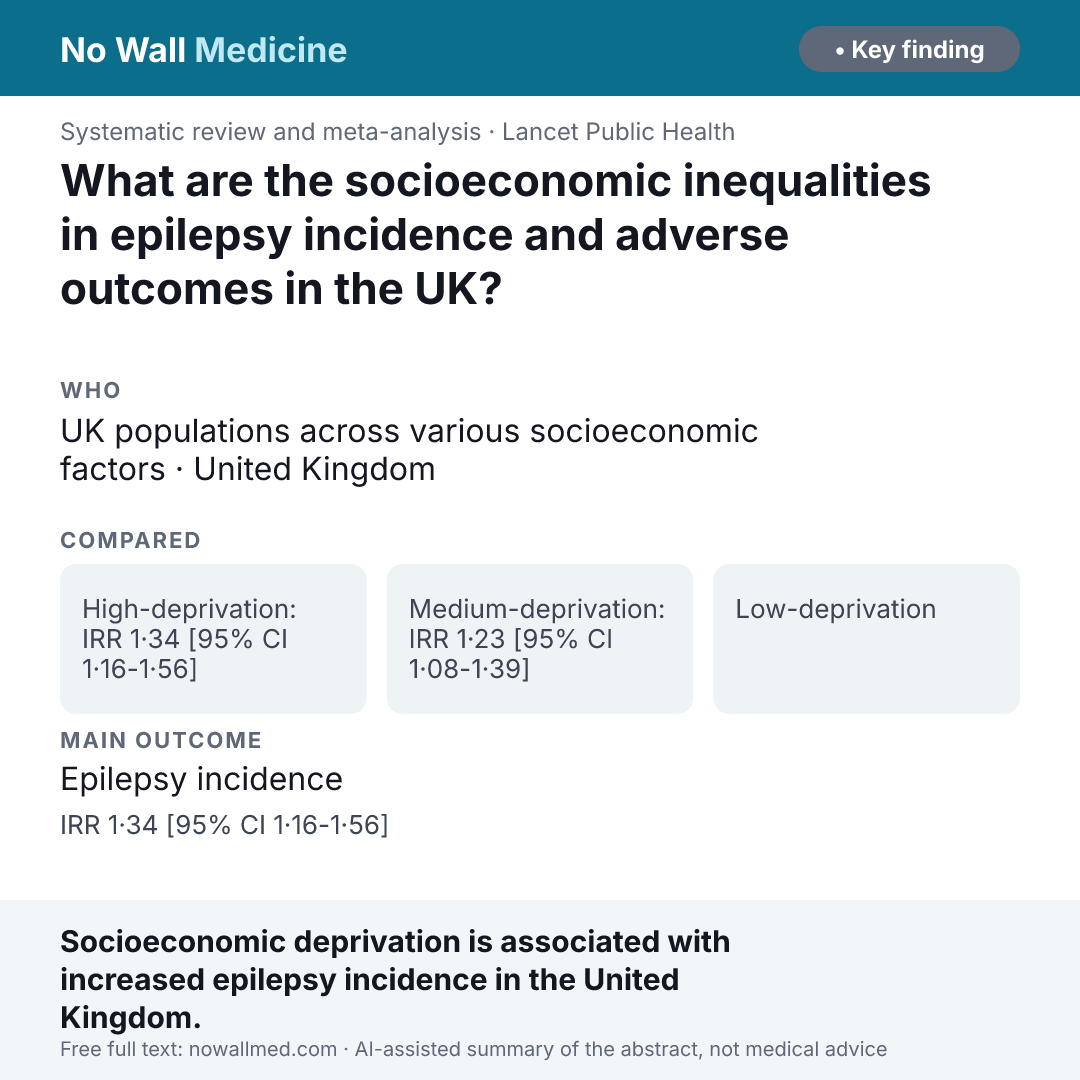
Assessing the extent and determinants of socioeconomic inequalities in epilepsy in the UK: a systematic review and meta-analysis of evidence
Systematic review and meta-analysisKey finding
What are the socioeconomic inequalities in epilepsy incidence and adverse outcomes in the UK?
Who
UK populations across various socioeconomic factors · United Kingdom
Compared
High-deprivation: IRR 1·34 [95% CI 1·16-1·56]
Medium-deprivation: IRR 1·23 [95% CI 1·08-1·39]
Low-deprivation
Main outcome
Epilepsy incidence
Result: IRR 1·34 [95% CI 1·16-1·56]
Bottom line: Socioeconomic deprivation is associated with increased epilepsy incidence in the United Kingdom.
Limitation: Misclassification, participation, and interpretive biases were identified as study quality limitations.
Funded by: Epilepsy Research Institute UK
Lancet Public Health · 2024-08-03 · Save PNG