Visual abstracts
New randomized trials and meta-analyses from leading journals at a glance: who was studied, what was compared, and what was found. Every paper is free to read in full.
All specialtiesCardiology 4877Oncology 4136Gastroenterology & Hepatology 1942Infectious Disease 3836Neurology 1904Psychiatry & Mental Health 2273Pulmonology 2143Critical Care 1364Endocrinology & Diabetes 2580Pediatrics 2980Surgery 2556Orthopedics & Sports Medicine 931Neurosurgery 537Cardiothoracic & Vascular Surgery 674Plastic & Reconstructive Surgery 591Nephrology 1133Rheumatology 823Hematology 1109Dermatology 621Ophthalmology 543Obstetrics & Gynecology 1686Public & Global Health 1058Radiology & Imaging 648Anesthesiology 986Urology 764ENT (Otolaryngology) 503Emergency Medicine 511Allergy & Immunology 313Geriatrics 979Family Medicine & Primary Care 562Medical Genetics & Genomics 676Pathology & Laboratory Medicine 159Physical Medicine & Rehabilitation 757Palliative Care 444Nutrition 1588Digital Health & AI 2197General Medicine 320
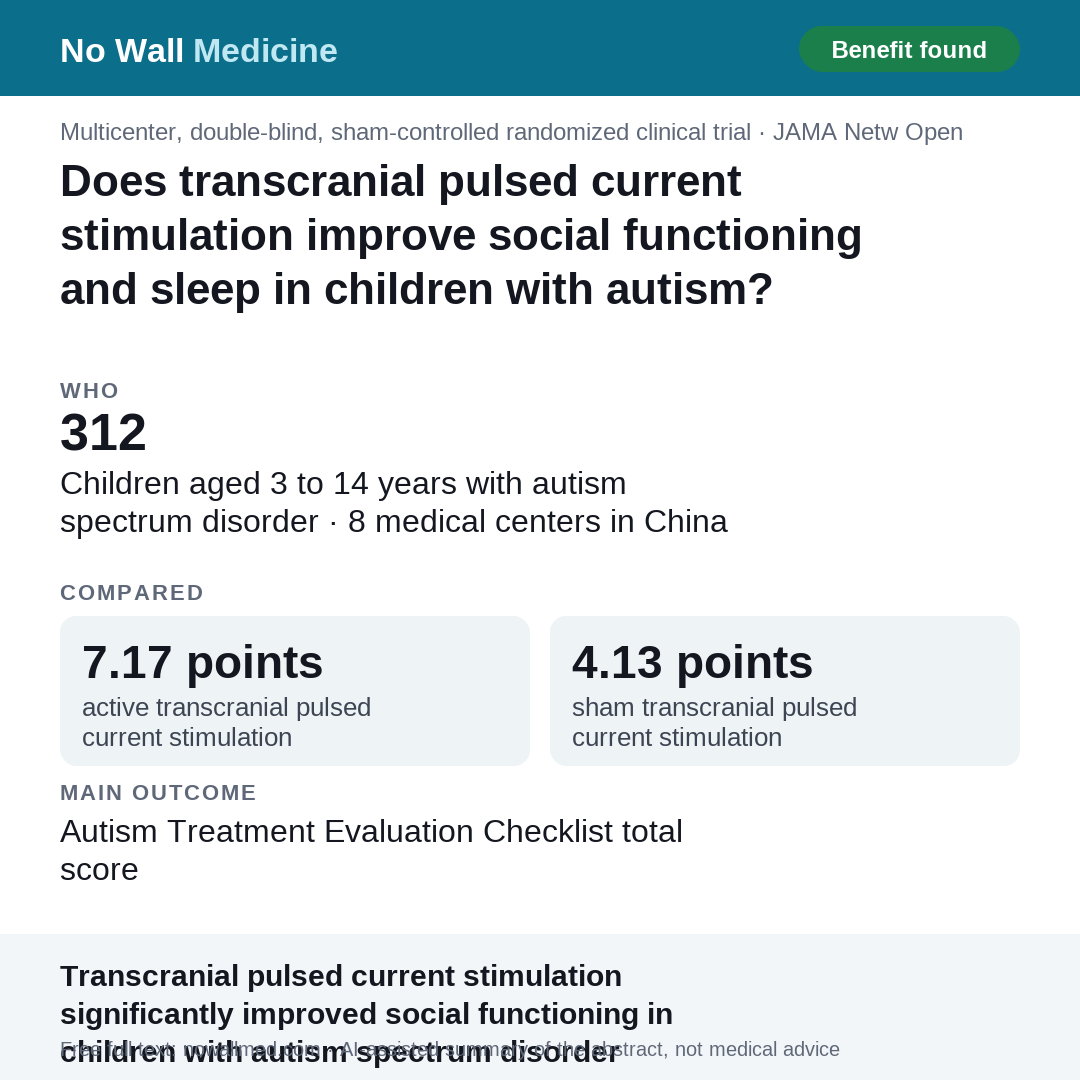
Transcranial Pulsed Current Stimulation and Social Functioning in Children With Autism: A Randomized Clinical Trial
Multicenter, double-blind, sham-controlled randomized clinical trialBenefit found
Does transcranial pulsed current stimulation improve social functioning and sleep in children with autism?
Who
312
Children aged 3 to 14 years with autism spectrum disorder · 8 medical centers in China
Compared
7.17 pointsactive transcranial pulsed current stimulation (10.7%)
4.13 pointssham transcranial pulsed current stimulation (5.8%)
Main outcome
Autism Treatment Evaluation Checklist total score
Result: difference, -3.50; 95% CI, -5.56 to -1.43
Bottom line: Transcranial pulsed current stimulation significantly improved social functioning in children with autism spectrum disorder compared to sham stimulation.
JAMA Netw Open · 2025-04-01Download image
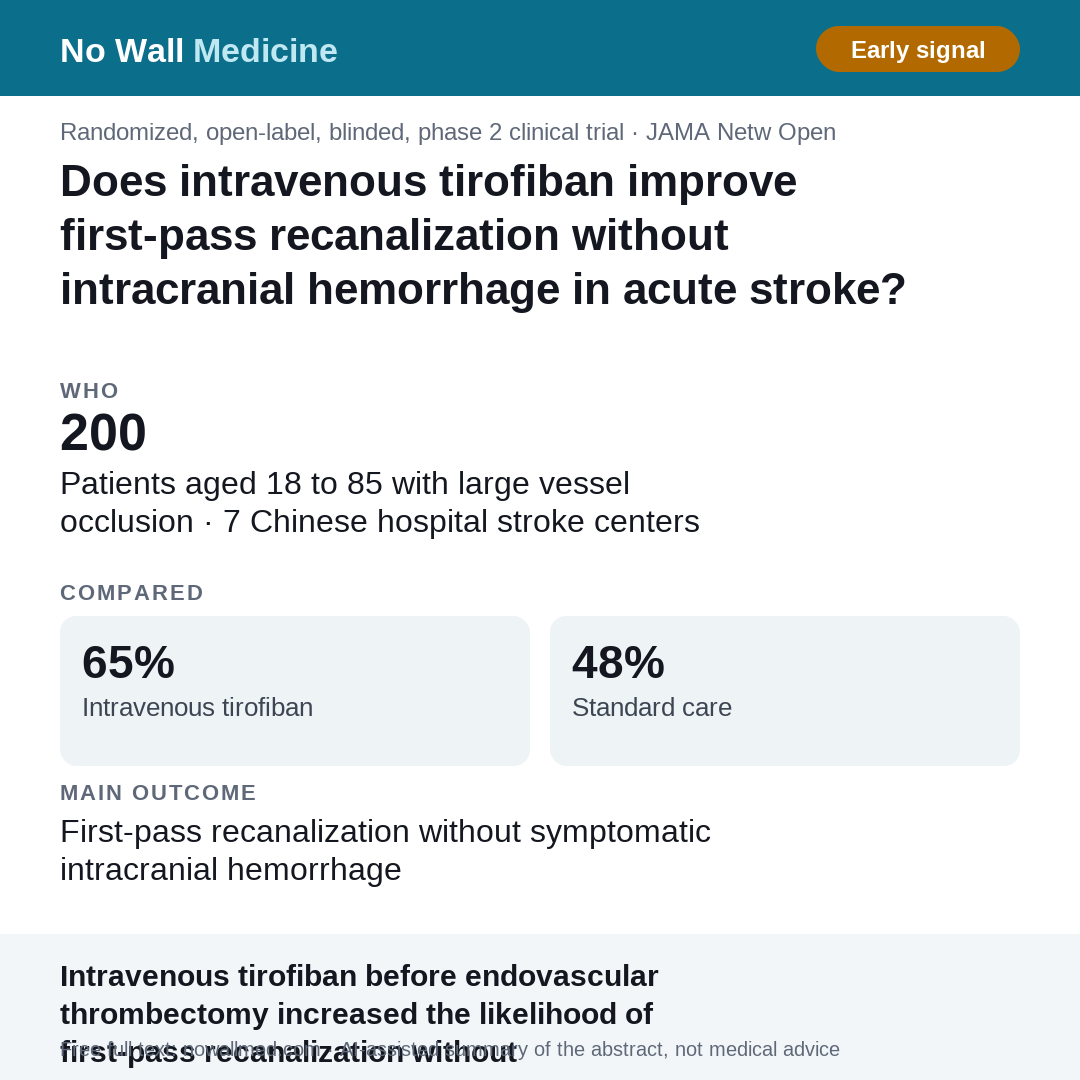
Tirofiban on First-Pass Recanalization in Acute Stroke Endovascular Thrombectomy: The OPTIMISTIC Randomized Clinical Trial
Randomized, open-label, blinded, phase 2 clinical trialBenefit found
Does intravenous tirofiban improve first-pass recanalization without intracranial hemorrhage in acute stroke?
Who
200
Patients aged 18 to 85 with large vessel occlusion · 7 Chinese hospital stroke centers
Compared
65%Intravenous tirofiban (64/99)
48%Standard care (46/95)
Main outcome
First-pass recanalization without symptomatic intracranial hemorrhage
Result: adjusted risk ratio 1.34 (95% CI 1.04-1.73)
Bottom line: Intravenous tirofiban before endovascular thrombectomy increased the likelihood of first-pass recanalization without symptomatic intracranial hemorrhage.
JAMA Netw Open · 2025-04-01Download image
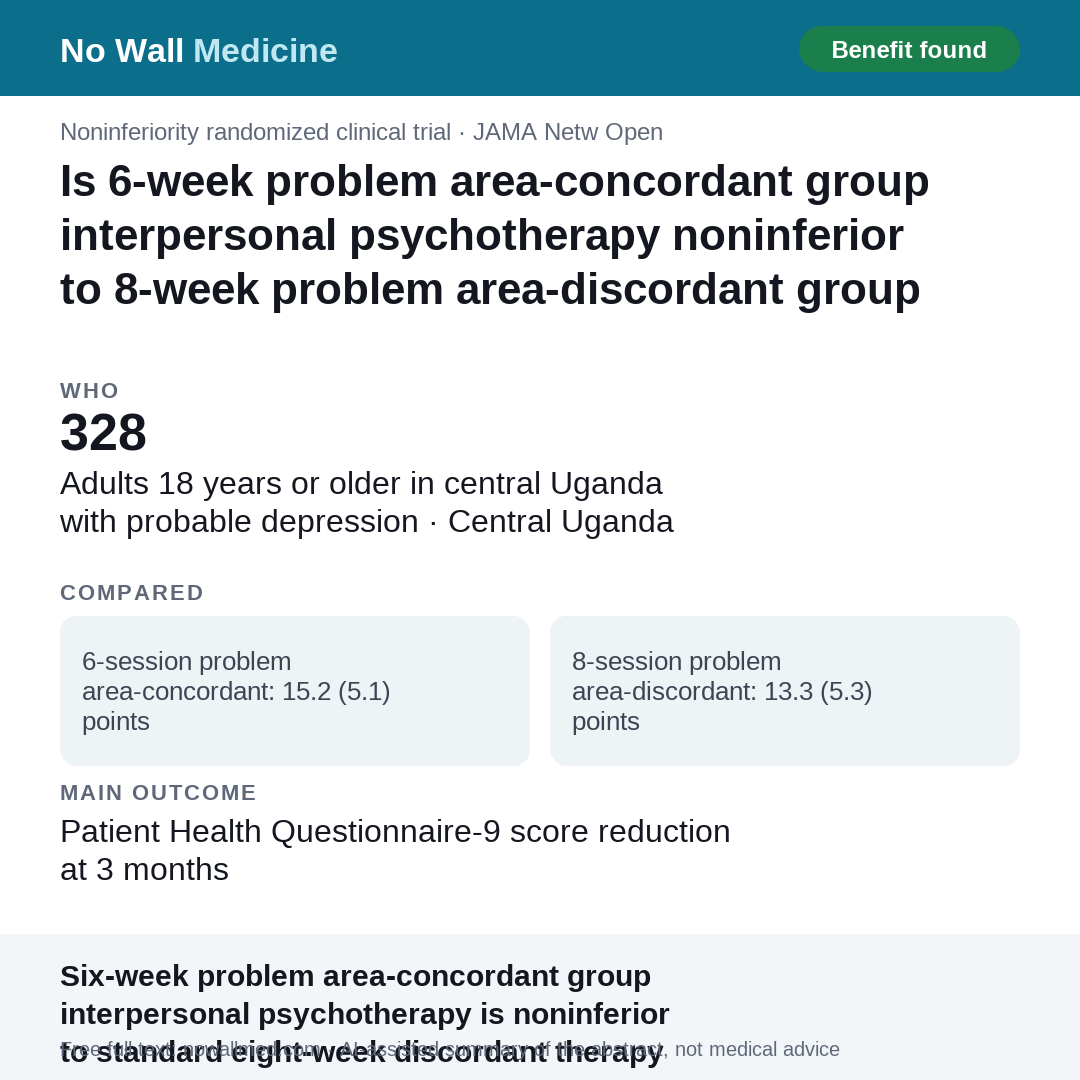
Six-Week Problem Area-Concordant vs 8-Week Problem Area-Discordant Group Interpersonal Psychotherapy: A Randomized Clinical Trial
Noninferiority randomized clinical trialBenefit found
Is 6-week problem area-concordant group interpersonal psychotherapy noninferior to 8-week problem area-discordant group interpersonal psychotherapy?
Who
328
Adults 18 years or older in central Uganda with probable depression · Central Uganda
Compared
6-session problem area-concordant: 15.2 (5.1) points
8-session problem area-discordant: 13.3 (5.3) points
Main outcome
Patient Health Questionnaire-9 score reduction at 3 months
Result: 1.98 (95% CI, 0.60-3.36) points lower at 3 months
Bottom line: Six-week problem area-concordant group interpersonal psychotherapy is noninferior to standard eight-week discordant therapy for reducing depression symptoms.
JAMA Netw Open · 2025-04-01Download image
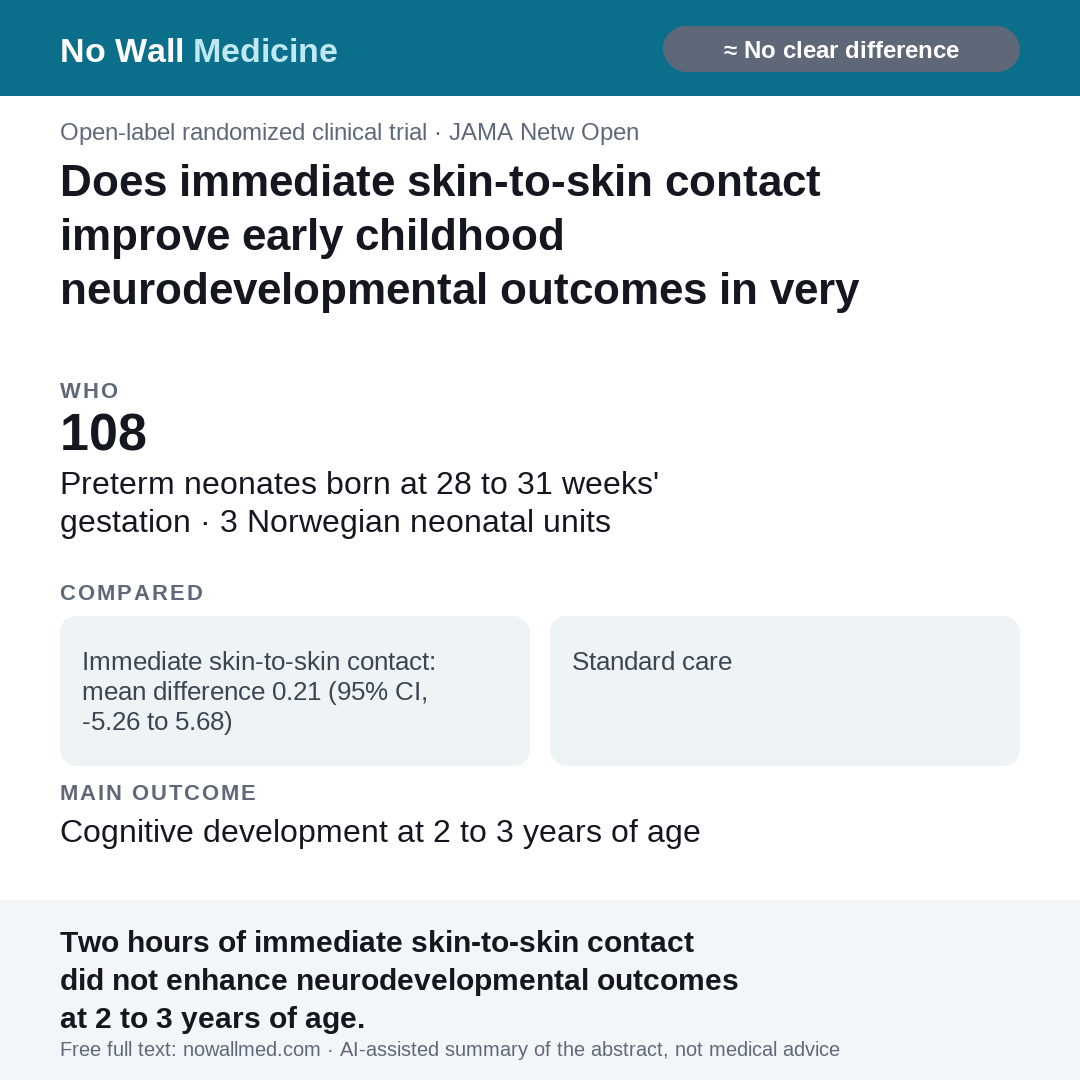
Immediate Skin-to-Skin Contact in Very Preterm Neonates and Early Childhood Neurodevelopment: A Randomized Clinical Trial
Open-label randomized clinical trialNo clear difference
Does immediate skin-to-skin contact improve early childhood neurodevelopmental outcomes in very preterm neonates?
Who
108
Preterm neonates born at 28 to 31 weeks' gestation · 3 Norwegian neonatal units
Compared
Immediate skin-to-skin contact: mean difference 0.21 (95% CI, -5.26 to 5.68)
Standard care
Main outcome
Cognitive development at 2 to 3 years of age
Result: mean difference 0.21 (95% CI, -5.26 to 5.68)
Bottom line: Two hours of immediate skin-to-skin contact did not enhance neurodevelopmental outcomes at 2 to 3 years of age.
JAMA Netw Open · 2025-04-01Download image
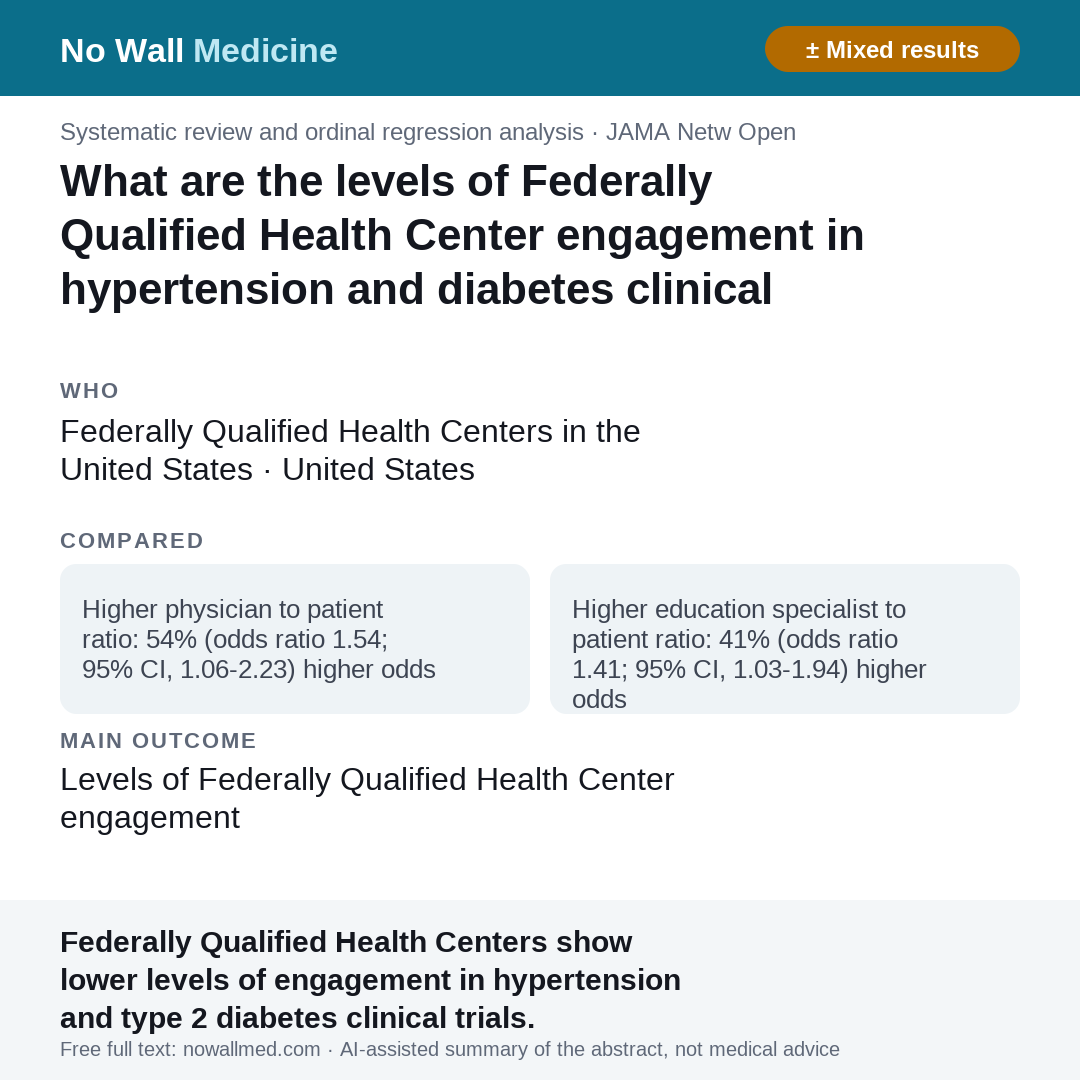
Engagement in Hypertension and Diabetes Clinical Trials at Federally Qualified Health Centers: A Systematic Review
Systematic review and ordinal regression analysisMixed results
What are the levels of Federally Qualified Health Center engagement in hypertension and diabetes clinical trials?
Who
33
Federally Qualified Health Centers in the United States · United States
Compared
Higher physician to patient ratio: 54% (odds ratio 1.54; 95% CI, 1.06-2.23) higher odds
Higher education specialist to patient ratio: 41% (odds ratio 1.41; 95% CI, 1.03-1.94) higher odds
Main outcome
Levels of Federally Qualified Health Center engagement
Bottom line: Federally Qualified Health Centers show lower levels of engagement in hypertension and type 2 diabetes clinical trials.
JAMA Netw Open · 2025-04-01Download image
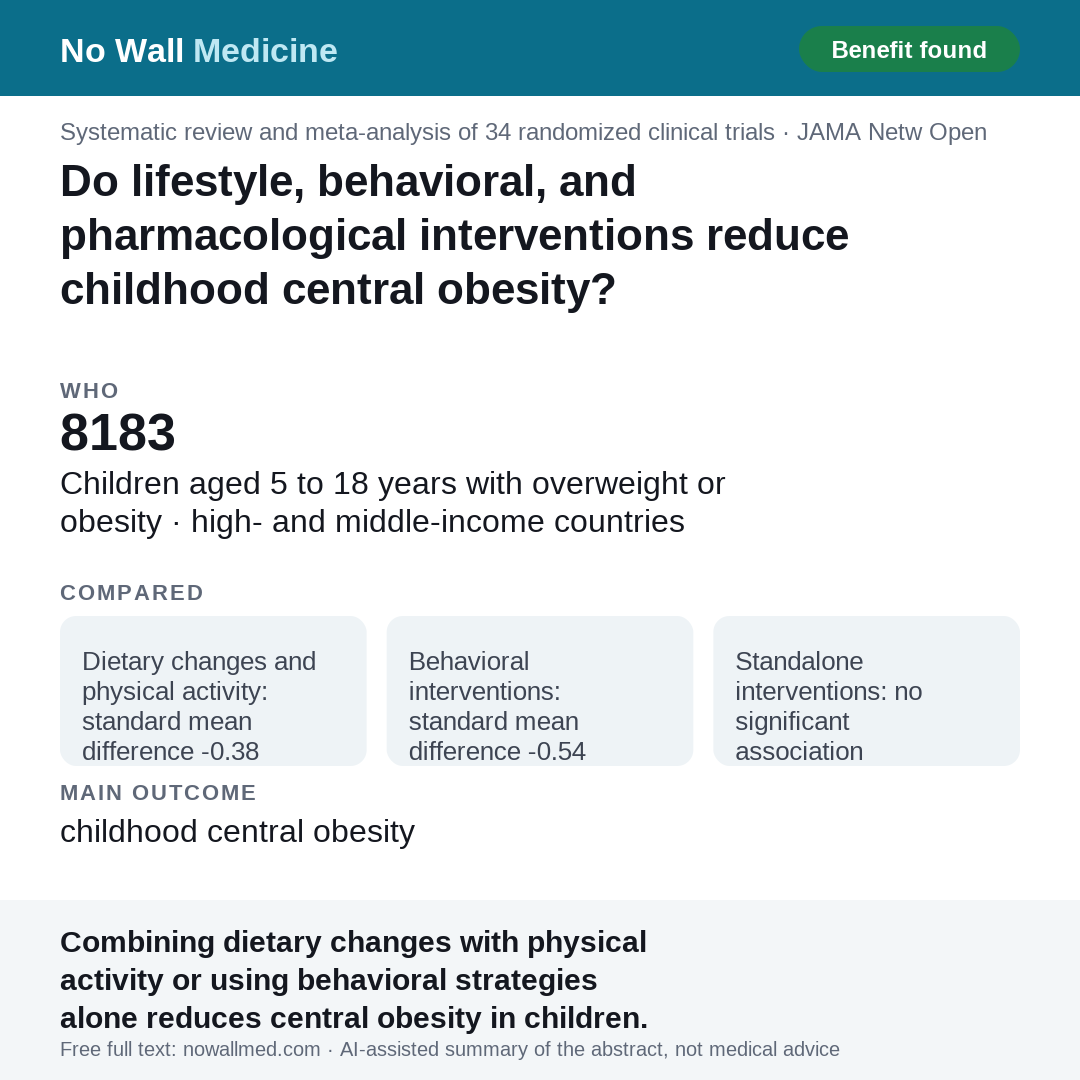
Interventions for Childhood Central Obesity: A Systematic Review and Meta-Analysis
Systematic review and meta-analysis of 34 randomized clinical trialsBenefit found
Do lifestyle, behavioral, and pharmacological interventions reduce childhood central obesity?
Who
8183
Children aged 5 to 18 years with overweight or obesity · high- and middle-income countries
Compared
Dietary changes and physical activity: standard mean difference -0.38 (95% CI -0.58 to -0.19)
Behavioral interventions: standard mean difference -0.54 (95% CI -1.06 to -0.03)
Standalone interventions: no significant association
Main outcome
childhood central obesity
Result: standard mean difference -0.38 (95% CI -0.58 to -0.19)
Bottom line: Combining dietary changes with physical activity or using behavioral strategies alone reduces central obesity in children.
Limitation: 8 studies were deemed to have a higher risk of bias
JAMA Netw Open · 2025-04-01Download image
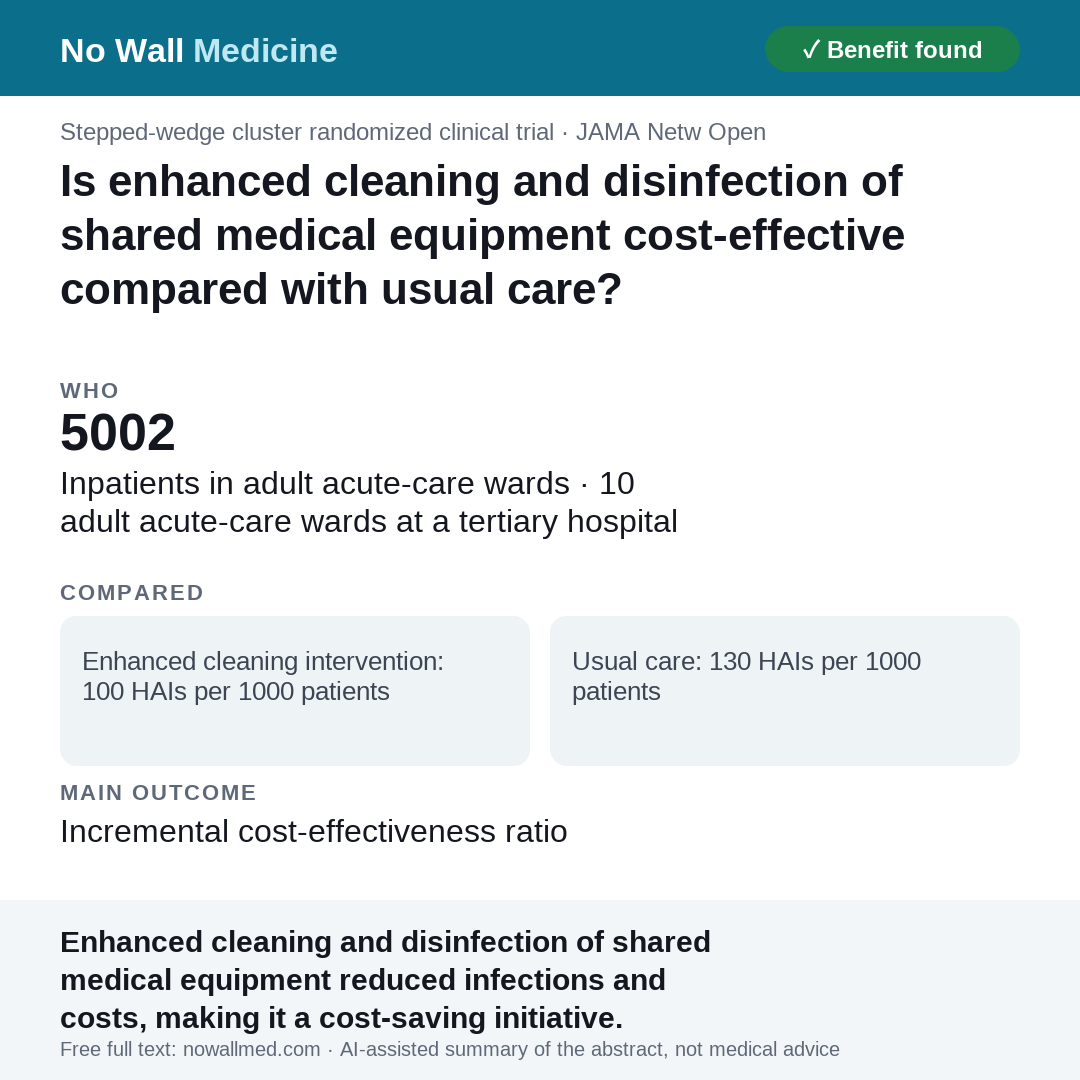
Economic Evaluation of Enhanced Cleaning and Disinfection of Shared Medical Equipment
Stepped-wedge cluster randomized clinical trialBenefit found
Is enhanced cleaning and disinfection of shared medical equipment cost-effective compared with usual care?
Who
5002
Inpatients in adult acute-care wards · 10 adult acute-care wards at a tertiary hospital in Australia
Compared
Enhanced cleaning intervention: 100 HAIs per 1000 patients
Usual care: 130 HAIs per 1000 patients
Main outcome
Incremental cost-effectiveness ratio
Result: $642 010 reduction in costs per 1000 patients
Bottom line: Enhanced cleaning and disinfection of shared medical equipment reduced infections and costs, making it a cost-saving initiative.
JAMA Netw Open · 2025-04-01Download image
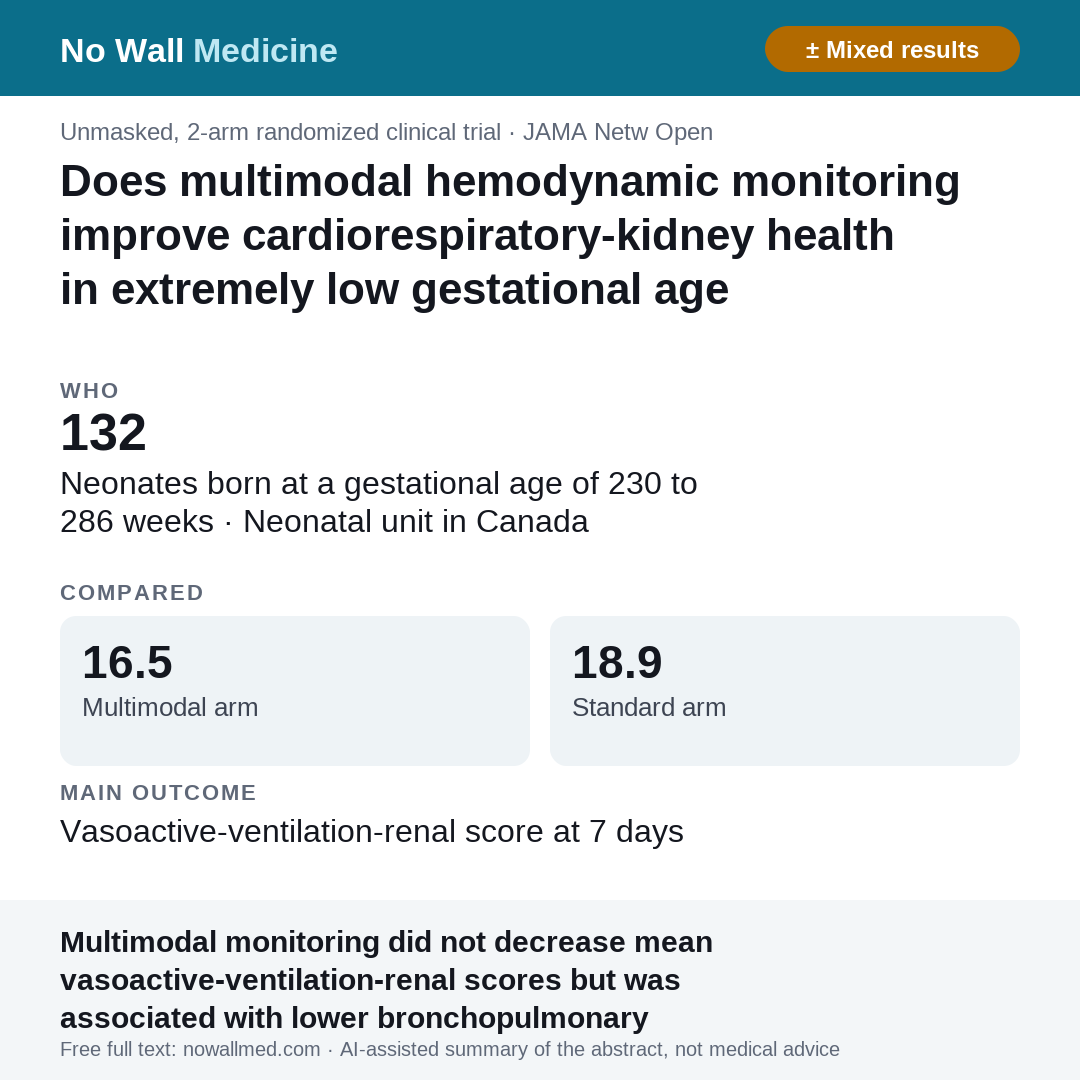
Multimodal Monitoring of Hemodynamics in Neonates With Extremely Low Gestational Age: A Randomized Clinical Trial
Unmasked, 2-arm randomized clinical trialMixed results
Does multimodal hemodynamic monitoring improve cardiorespiratory-kidney health in extremely low gestational age neonates?
Who
132
Neonates born at a gestational age of 230 to 286 weeks · Neonatal unit in Canada
Compared
16.5Multimodal arm (15.4)
18.9Standard arm (20.2)
Main outcome
Vasoactive-ventilation-renal score at 7 days
Bottom line: Multimodal monitoring did not decrease mean vasoactive-ventilation-renal scores but was associated with lower bronchopulmonary dysplasia incidence.
JAMA Netw Open · 2025-04-01Download image
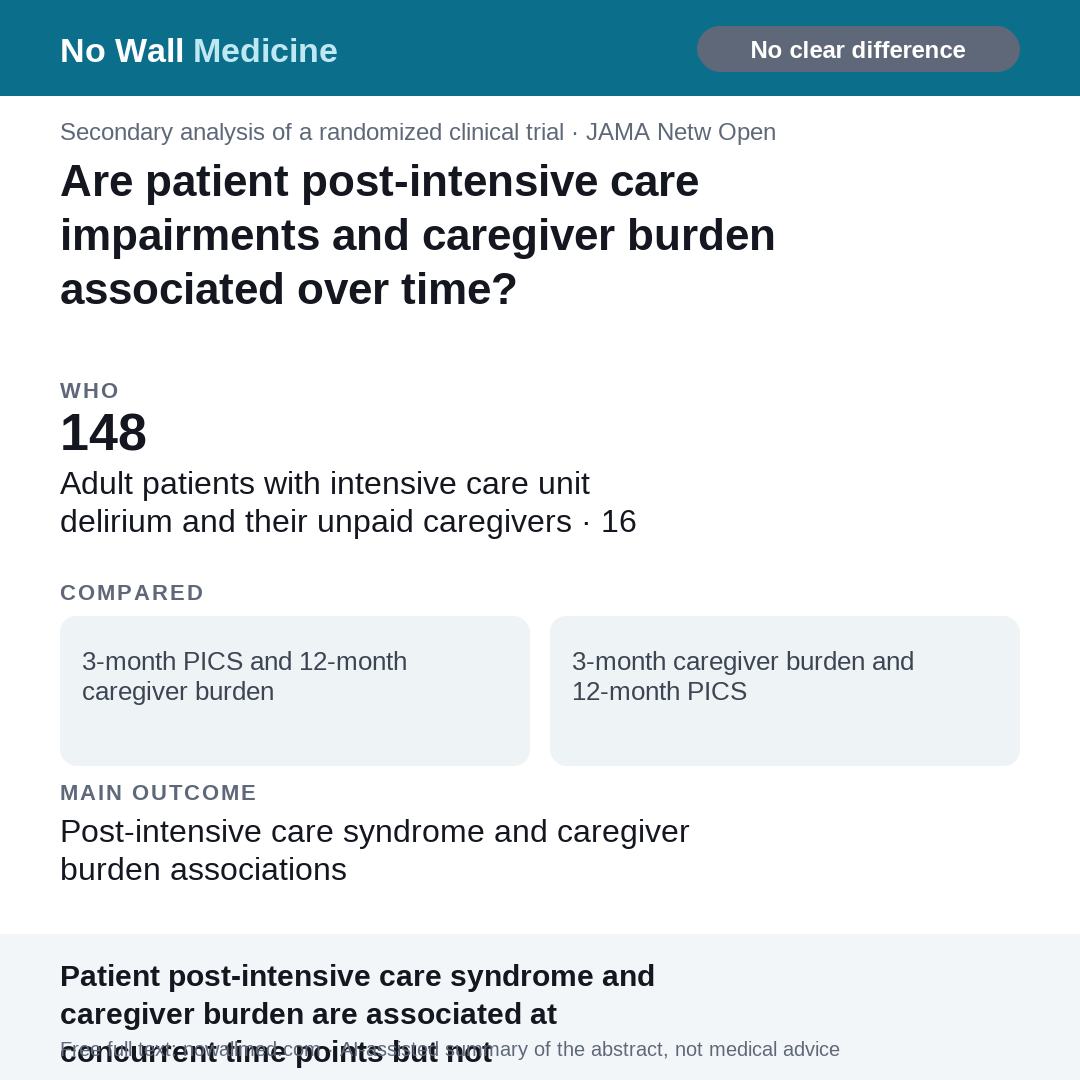
Post-Intensive Care Syndrome and Caregiver Burden: A Post Hoc Analysis of a Randomized Clinical Trial
Secondary analysis of a randomized clinical trialNo clear difference
Are patient post-intensive care impairments and caregiver burden associated over time?
Who
148
Adult patients with intensive care unit delirium and their unpaid caregivers · 16 academic medical centers across the United States
Compared
3-month PICS and 12-month caregiver burden
3-month caregiver burden and 12-month PICS
Main outcome
Post-intensive care syndrome and caregiver burden associations
Result: PICS to caregiver burden: β = 0.82 (95% CI -0.02 to 1.66)
Bottom line: Patient post-intensive care syndrome and caregiver burden are associated at concurrent time points but not longitudinally.
Limitation: This is a secondary analysis of a randomized clinical trial
JAMA Netw Open · 2025-04-01Download image
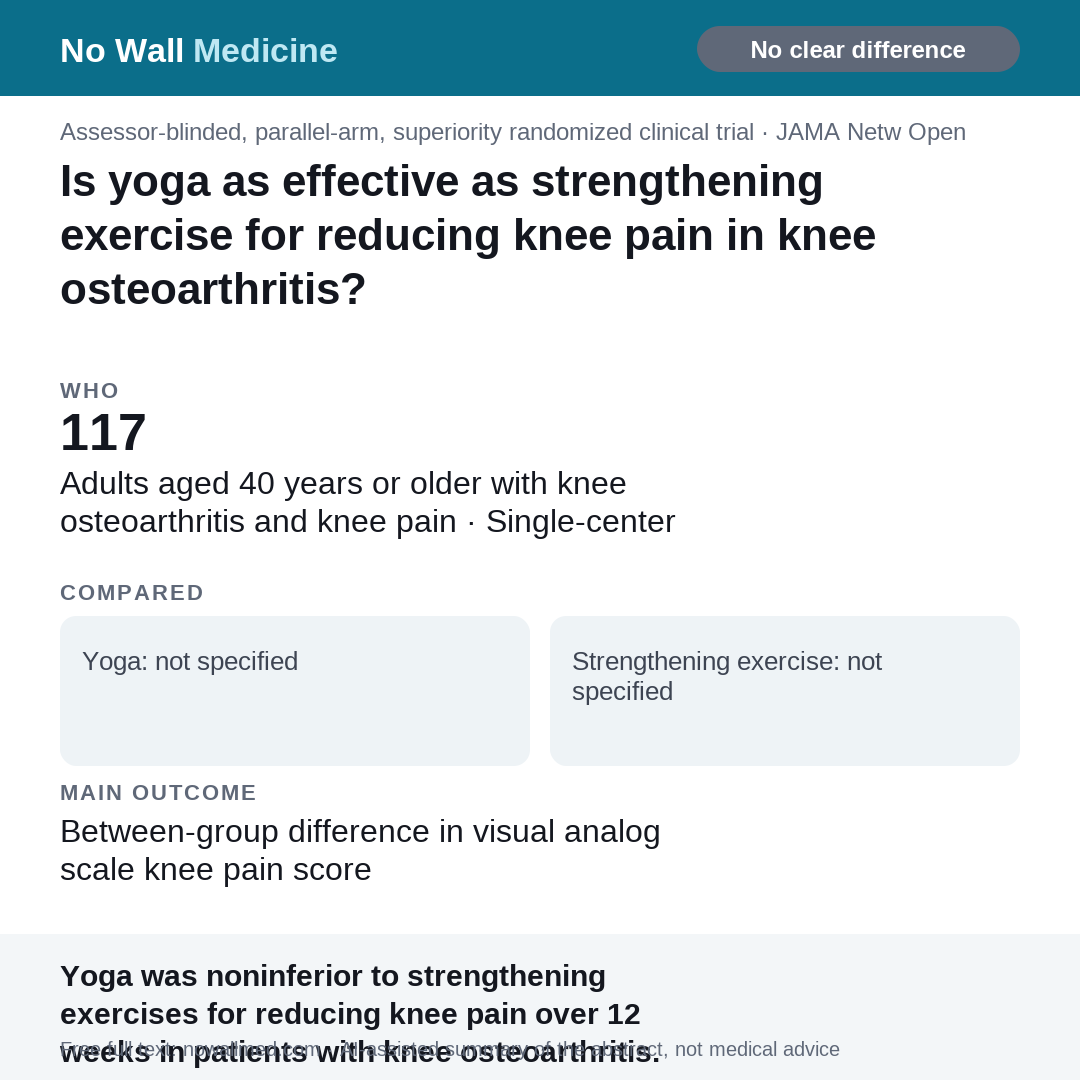
Yoga or Strengthening Exercise for Knee Osteoarthritis: A Randomized Clinical Trial
Assessor-blinded, parallel-arm, superiority randomized clinical trialNo clear difference
Is yoga as effective as strengthening exercise for reducing knee pain in knee osteoarthritis?
Who
117
Adults aged 40 years or older with knee osteoarthritis and knee pain · Single-center in Southern Tasmania, Australia
Compared
Yoga: not specified
Strengthening exercise: not specified
Main outcome
Between-group difference in visual analog scale knee pain score
Result: -1.1 mm (95% CI, -7.8 to 5.7 mm)
Bottom line: Yoga was noninferior to strengthening exercises for reducing knee pain over 12 weeks in patients with knee osteoarthritis.
JAMA Netw Open · 2025-04-01Download image
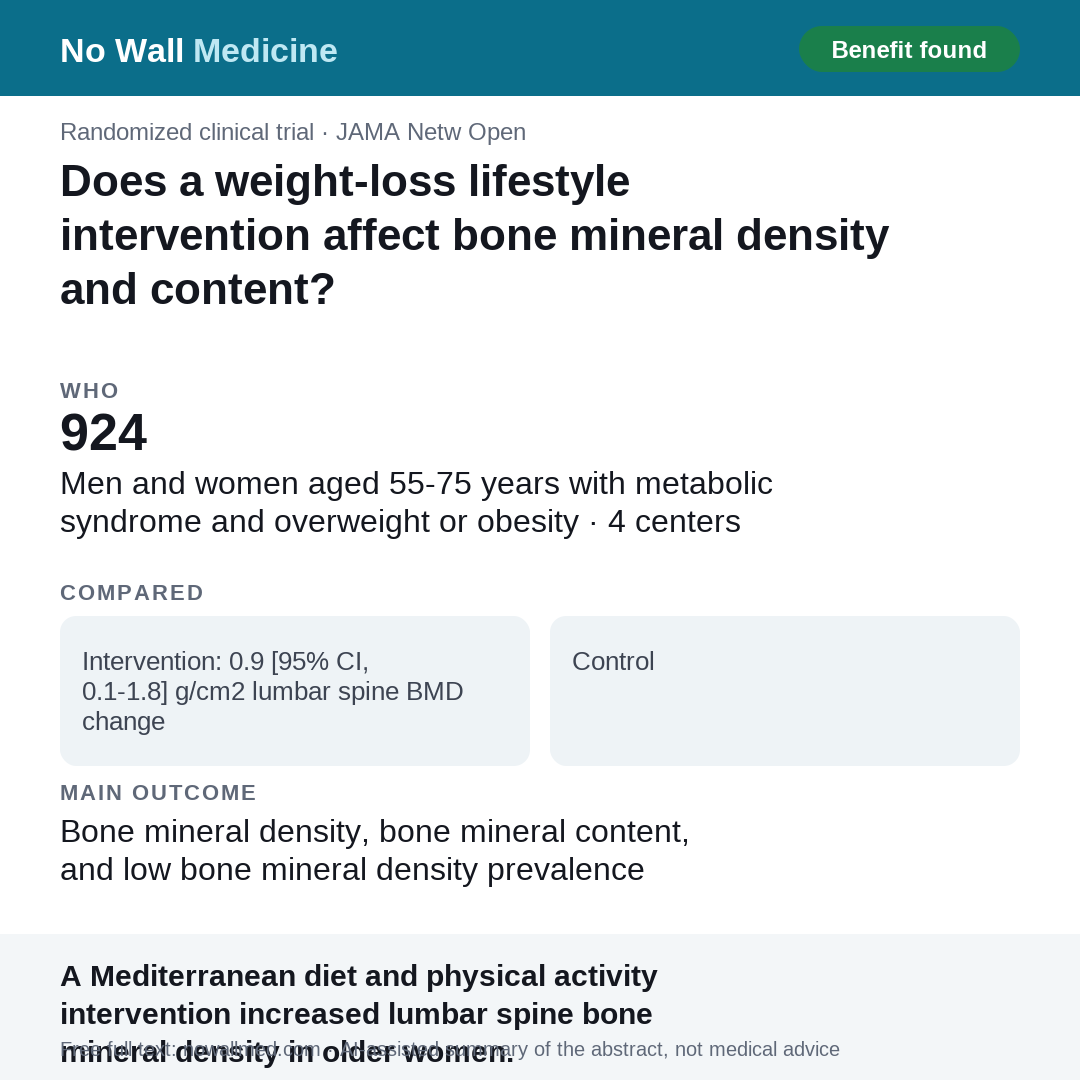
Mediterranean Diet, Physical Activity, and Bone Health in Older Adults: A Secondary Analysis of a Randomized Clinical Trial
Randomized clinical trialBenefit found
Does a weight-loss lifestyle intervention affect bone mineral density and content?
Who
924
Men and women aged 55-75 years with metabolic syndrome and overweight or obesity · 4 centers in Spain
Compared
Intervention: 0.9 [95% CI, 0.1-1.8] g/cm2 lumbar spine BMD change
Control
Main outcome
Bone mineral density, bone mineral content, and low bone mineral density prevalence
Result: 0.9 [95% CI, 0.1-1.8] g/cm2
Bottom line: A Mediterranean diet and physical activity intervention increased lumbar spine bone mineral density in older women.
JAMA Netw Open · 2025-04-01Download image
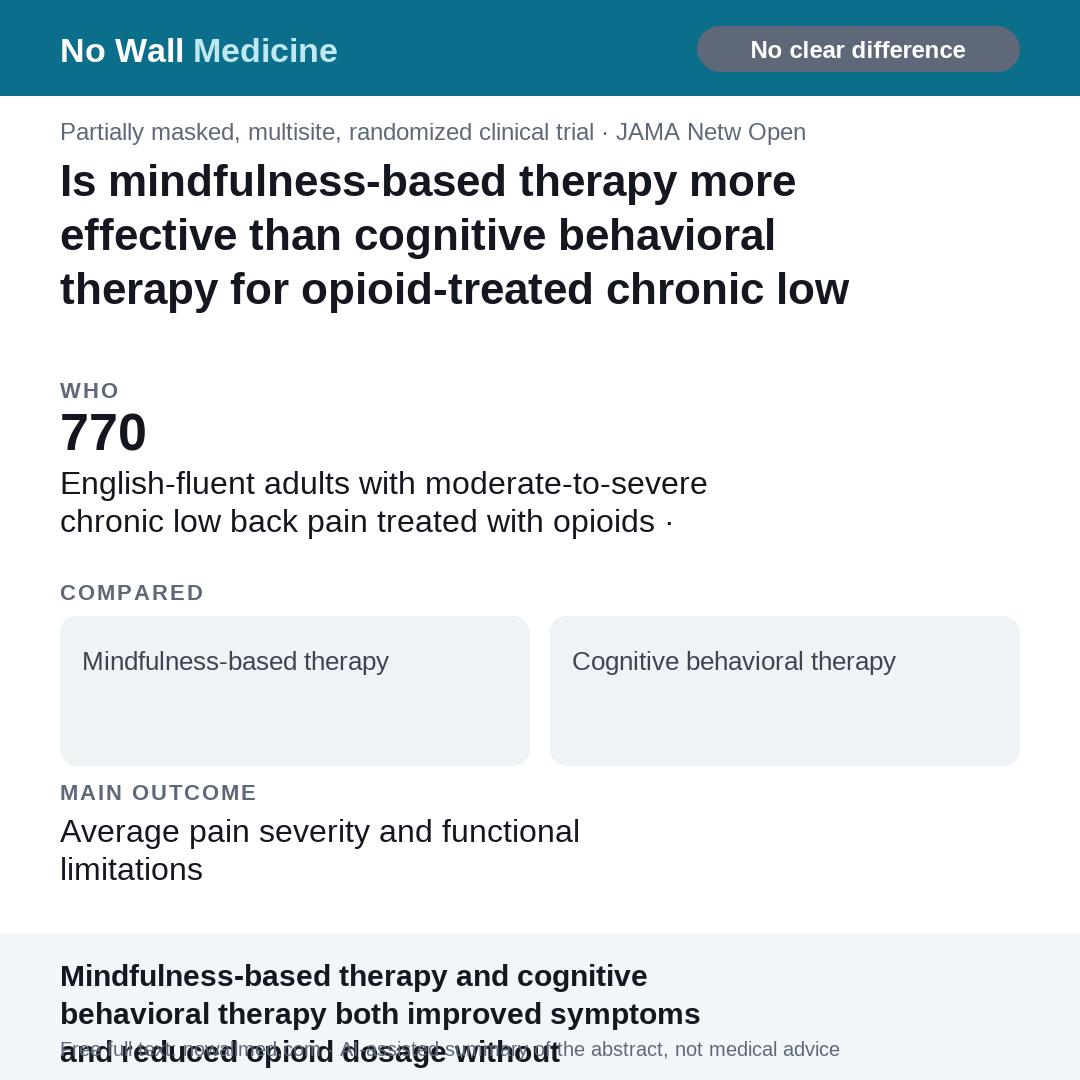
Mindfulness vs Cognitive Behavioral Therapy for Chronic Low Back Pain Treated With Opioids: A Randomized Clinical Trial
Partially masked, multisite, randomized clinical trialNo clear difference
Is mindfulness-based therapy more effective than cognitive behavioral therapy for opioid-treated chronic low back pain?
Who
770
English-fluent adults with moderate-to-severe chronic low back pain treated with opioids · Primary and specialty care clinics and community settings
Compared
Mindfulness-based therapy
Cognitive behavioral therapy
Main outcome
Average pain severity and functional limitations
Result: no significant difference at 6 and 12 months
Bottom line: Mindfulness-based therapy and cognitive behavioral therapy both improved symptoms and reduced opioid dosage without significant differences between groups.
JAMA Netw Open · 2025-04-01Download image
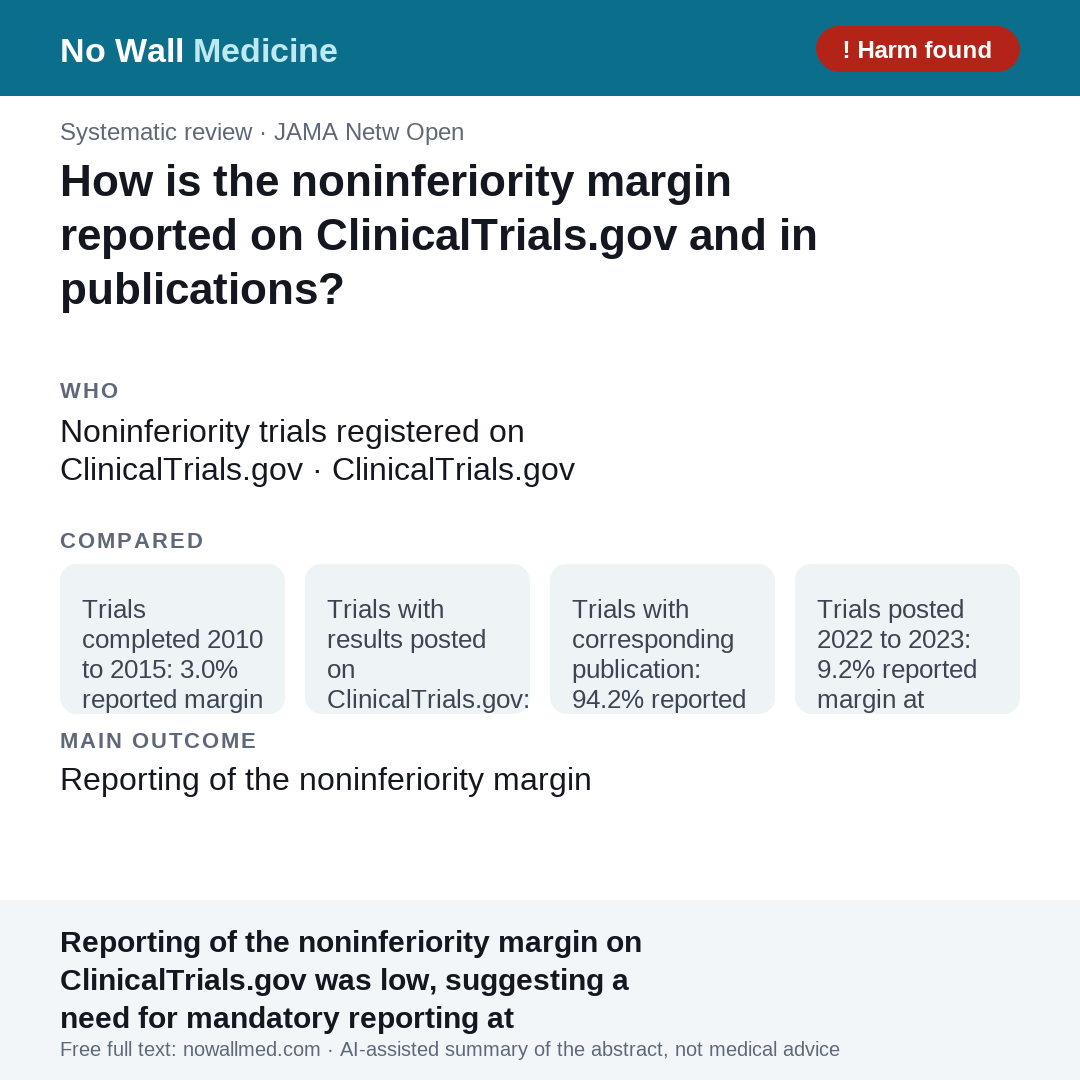
Reporting of Noninferiority Margins on ClinicalTrials.gov: A Systematic Review
Systematic reviewHarm found
How is the noninferiority margin reported on ClinicalTrials.gov and in publications?
Who
Noninferiority trials registered on ClinicalTrials.gov · ClinicalTrials.gov
Compared
Trials completed 2010 to 2015: 3.0% reported margin at registration
Trials with results posted on ClinicalTrials.gov: 59.8% reported the noninferiority margin
Trials with corresponding publication: 94.2% reported the noninferiority margin
Trials posted 2022 to 2023: 9.2% reported margin at registration
Main outcome
Reporting of the noninferiority margin
Bottom line: Reporting of the noninferiority margin on ClinicalTrials.gov was low, suggesting a need for mandatory reporting at registration.
JAMA Netw Open · 2025-04-01Download image
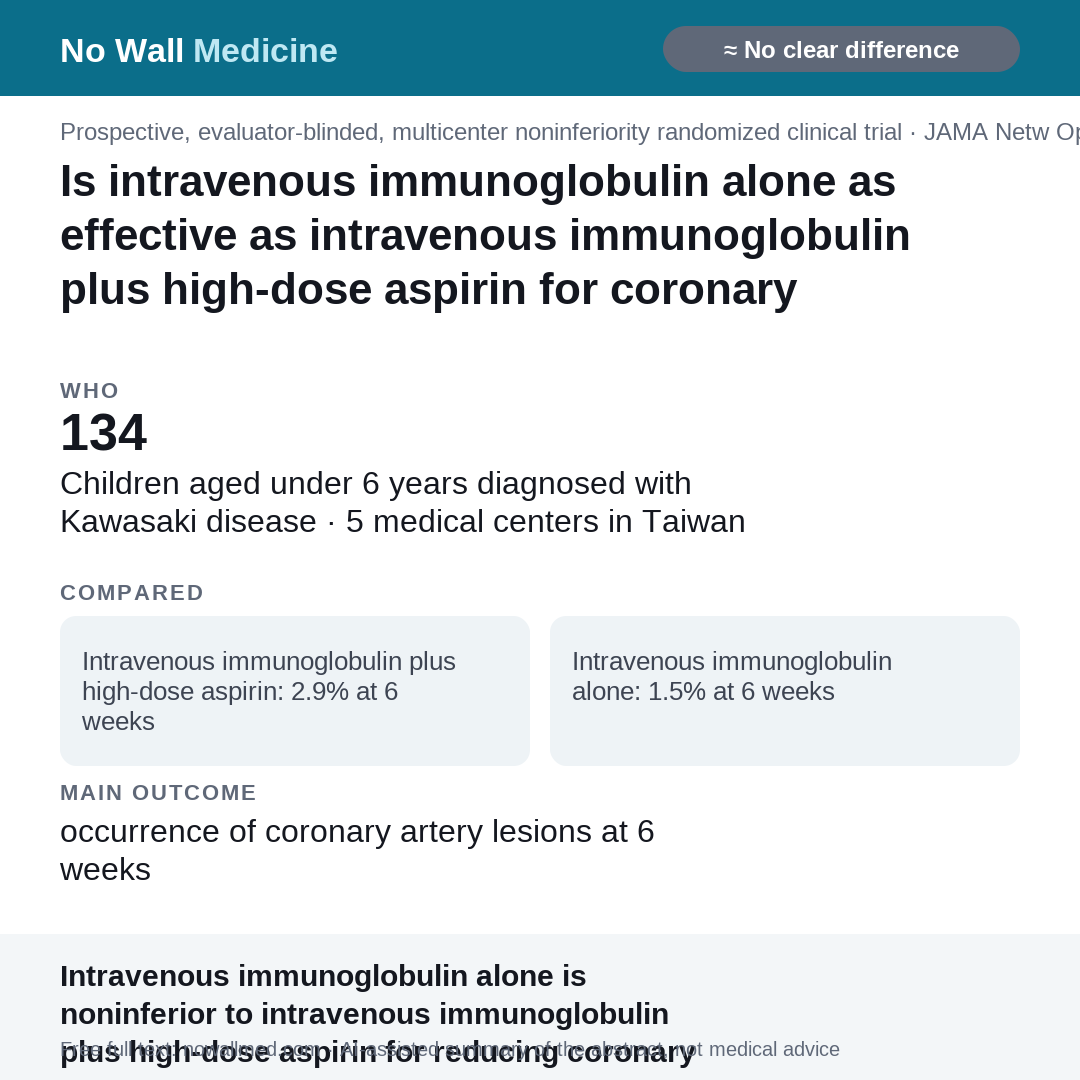
Intravenous Immunoglobulin Alone for Coronary Artery Lesion Treatment of Kawasaki Disease: A Randomized Clinical Trial
Prospective, evaluator-blinded, multicenter noninferiority randomized clinical trialNo clear difference
Is intravenous immunoglobulin alone as effective as intravenous immunoglobulin plus high-dose aspirin for coronary artery lesions?
Who
134
Children aged under 6 years diagnosed with Kawasaki disease · 5 medical centers in Taiwan
Compared
Intravenous immunoglobulin plus high-dose aspirin: 2.9% at 6 weeks
Intravenous immunoglobulin alone: 1.5% at 6 weeks
Main outcome
occurrence of coronary artery lesions at 6 weeks
Result: 0.7 percentage points (95% CI, -4.5 to 5.8 percentage points)
Bottom line: Intravenous immunoglobulin alone is noninferior to intravenous immunoglobulin plus high-dose aspirin for reducing coronary artery lesions.
Limitation: Future studies across diverse racial and ethnic groups beyond the Asian population may be necessary.
JAMA Netw Open · 2025-04-01Download image
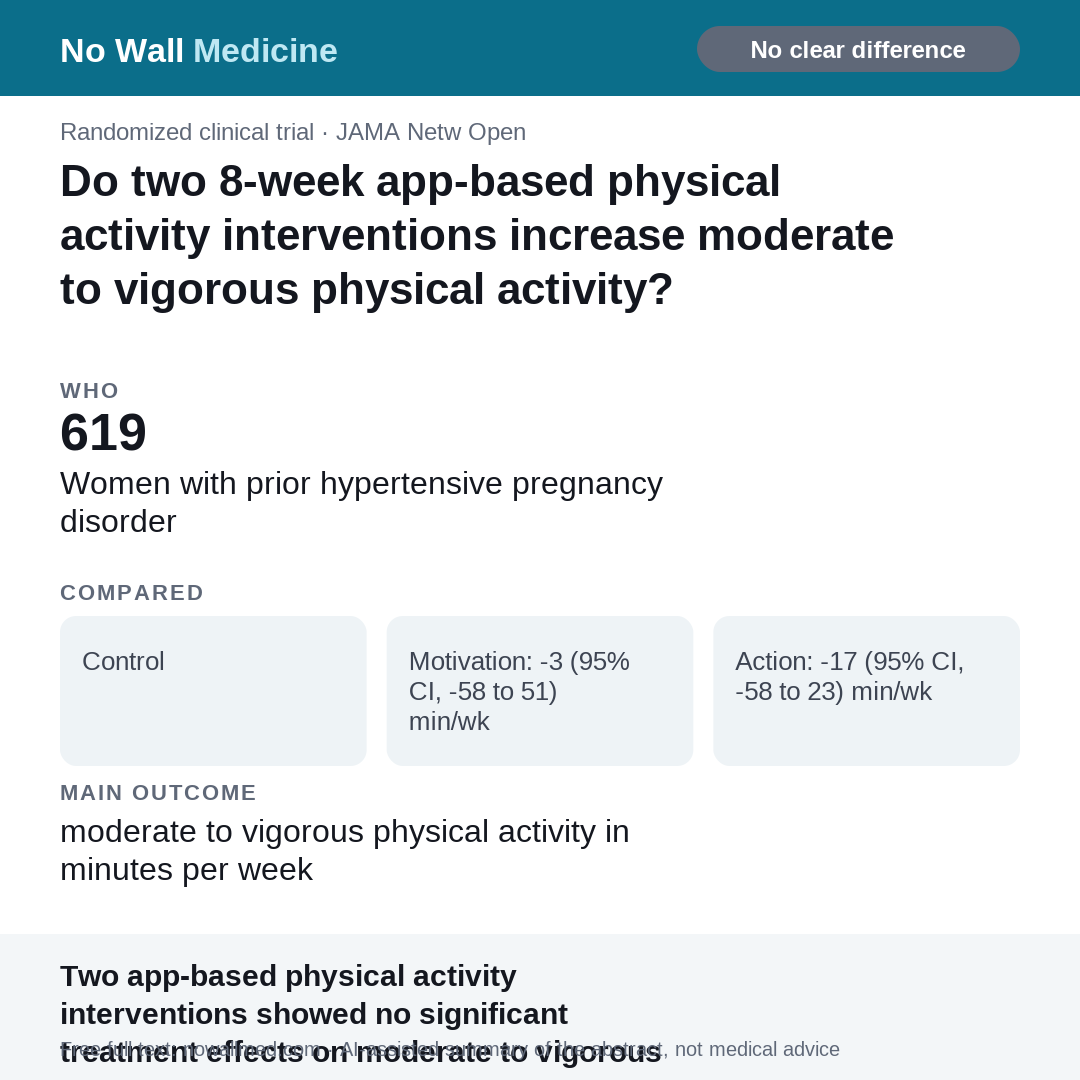
App-Based Physical Activity Intervention Among Women With Prior Hypertensive Pregnancy Disorder: A Randomized Clinical Trial
Randomized clinical trialNo clear difference
Do two 8-week app-based physical activity interventions increase moderate to vigorous physical activity?
Who
619
Women with prior hypertensive pregnancy disorder
Compared
Control
Motivation: -3 (95% CI, -58 to 51) min/wk
Action: -17 (95% CI, -58 to 23) min/wk
Main outcome
moderate to vigorous physical activity in minutes per week
Bottom line: Two app-based physical activity interventions showed no significant treatment effects on moderate to vigorous physical activity among women.
JAMA Netw Open · 2025-04-01Download image
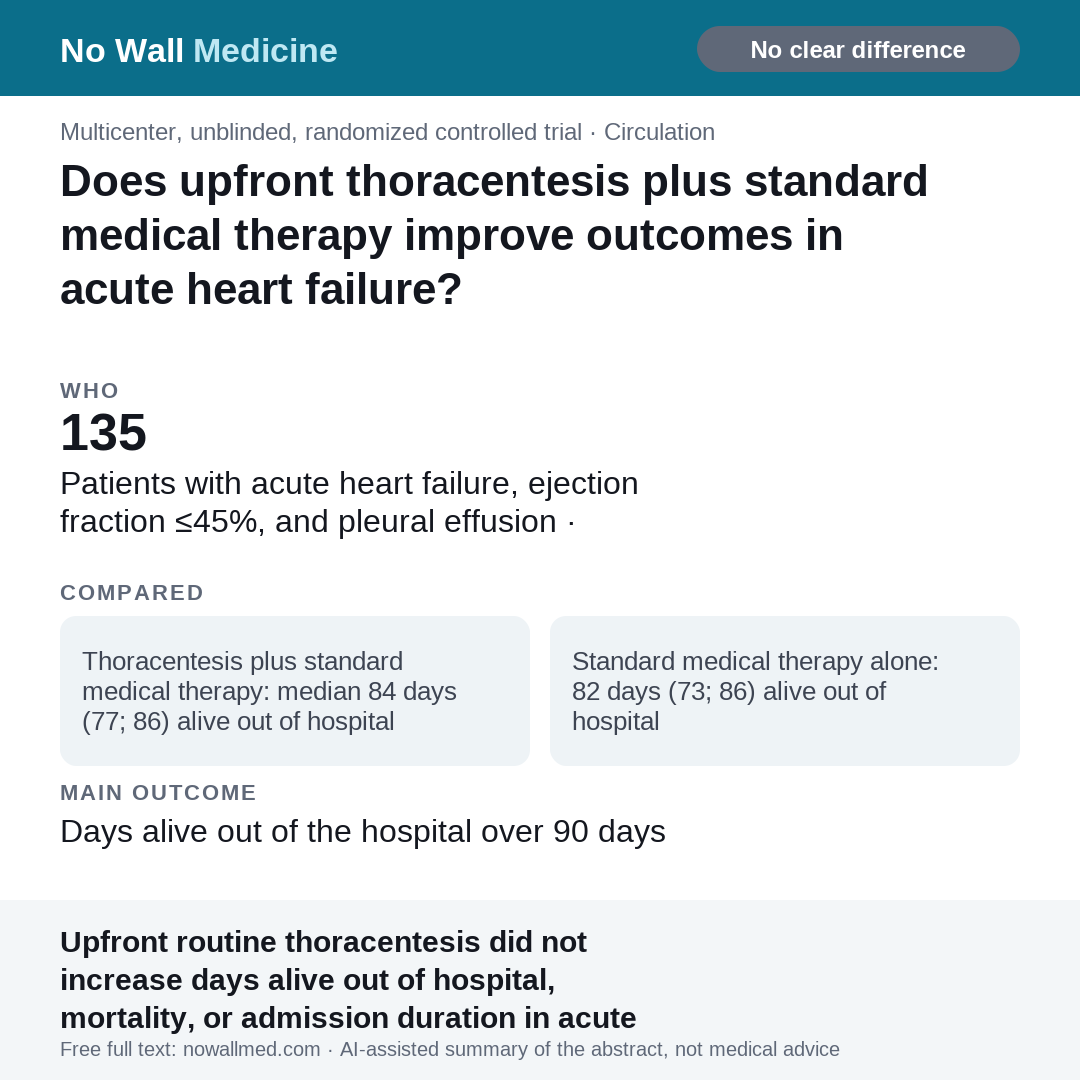
A Randomized Controlled Trial of Thoracentesis in Acute Heart Failure
Multicenter, unblinded, randomized controlled trialNo clear difference
Does upfront thoracentesis plus standard medical therapy improve outcomes in acute heart failure?
Who
135
Patients with acute heart failure, ejection fraction ≤45%, and pleural effusion · Multicenter
Compared
Thoracentesis plus standard medical therapy: median 84 days (77; 86) alive out of hospital
Standard medical therapy alone: 82 days (73; 86) alive out of hospital
Main outcome
Days alive out of the hospital over 90 days
Bottom line: Upfront routine thoracentesis did not increase days alive out of hospital, mortality, or admission duration in acute heart failure.
Circulation · 2025-04-01Download image
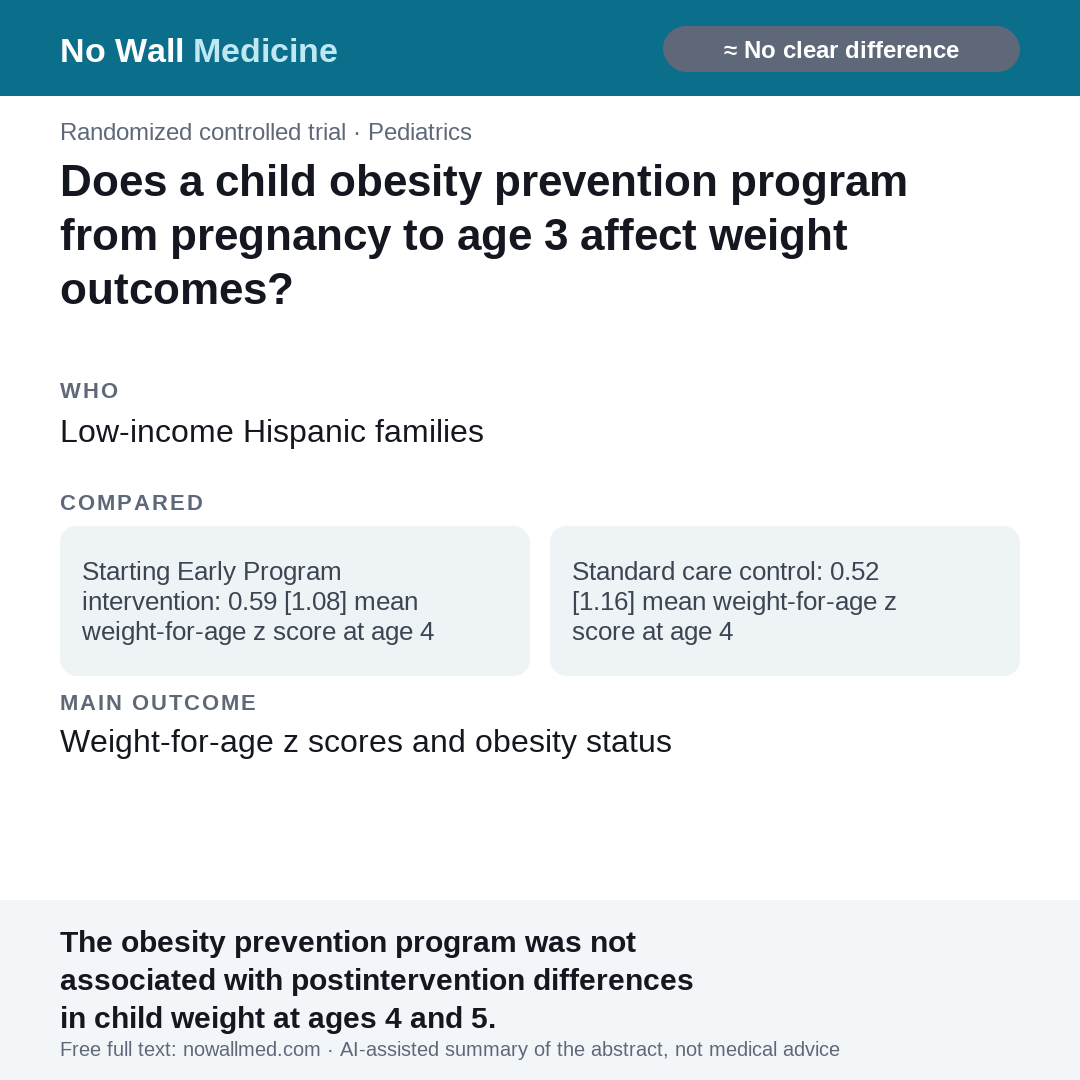
Child Obesity Prevention From Pregnancy: Long-Term Follow-Up of the Starting Early Program Trial
Randomized controlled trialNo clear difference
Does a child obesity prevention program from pregnancy to age 3 affect weight outcomes?
Who
Low-income Hispanic families
Compared
Starting Early Program intervention: 0.59 [1.08] mean weight-for-age z score at age 4
Standard care control: 0.52 [1.16] mean weight-for-age z score at age 4
Main outcome
Weight-for-age z scores and obesity status
Bottom line: The obesity prevention program was not associated with postintervention differences in child weight at ages 4 and 5.
Pediatrics · 2025-04-01Download image
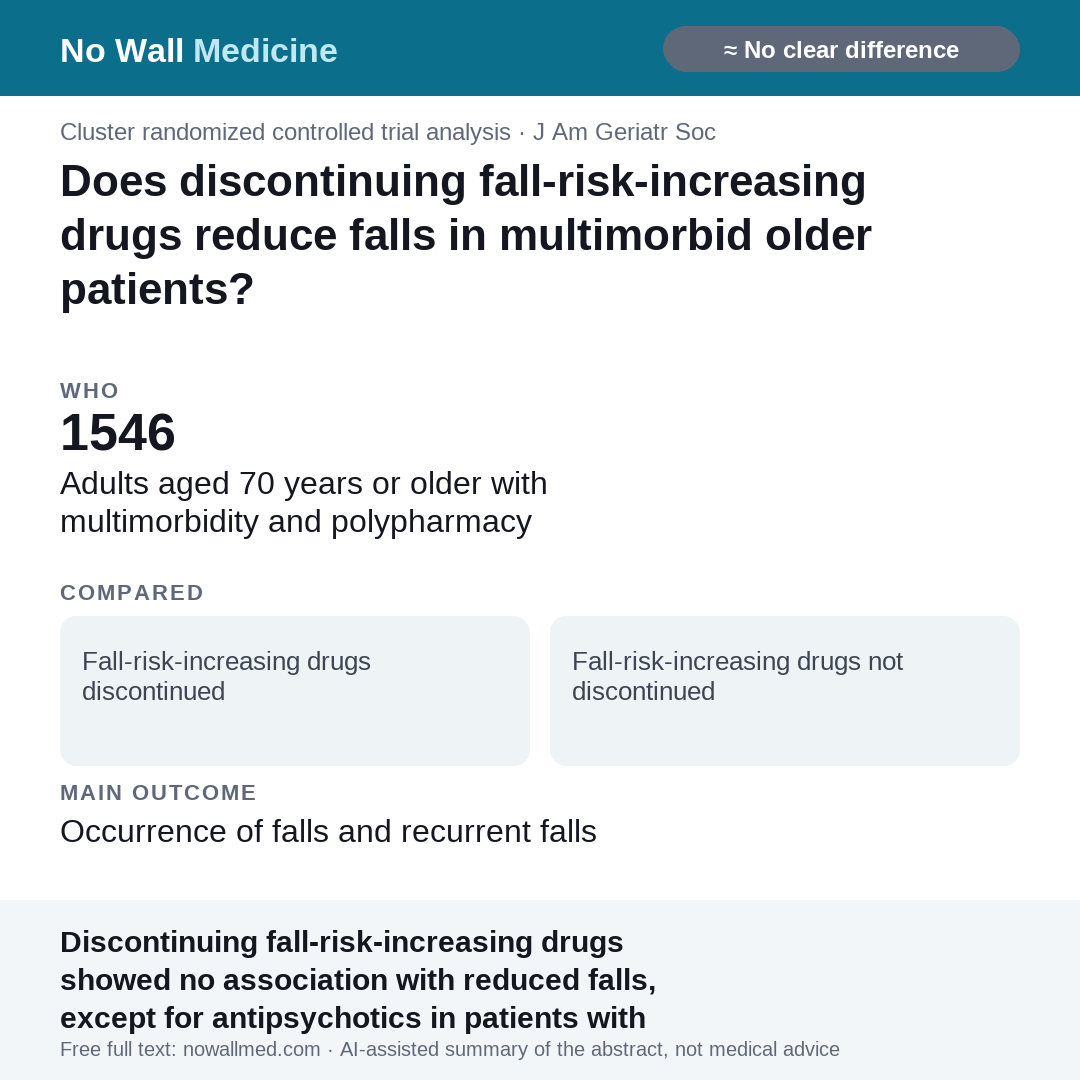
Impact of Discontinuation of Fall-Risk-Increasing Drugs on Falls in Multimorbid Older Patients With Polypharmacy
Cluster randomized controlled trial analysisNo clear difference
Does discontinuing fall-risk-increasing drugs reduce falls in multimorbid older patients?
Who
1546
Adults aged 70 years or older with multimorbidity and polypharmacy
Compared
Fall-risk-increasing drugs discontinued
Fall-risk-increasing drugs not discontinued
Main outcome
Occurrence of falls and recurrent falls
Bottom line: Discontinuing fall-risk-increasing drugs showed no association with reduced falls, except for antipsychotics in patients with previous falls.
J Am Geriatr Soc · 2025-04-01Download image
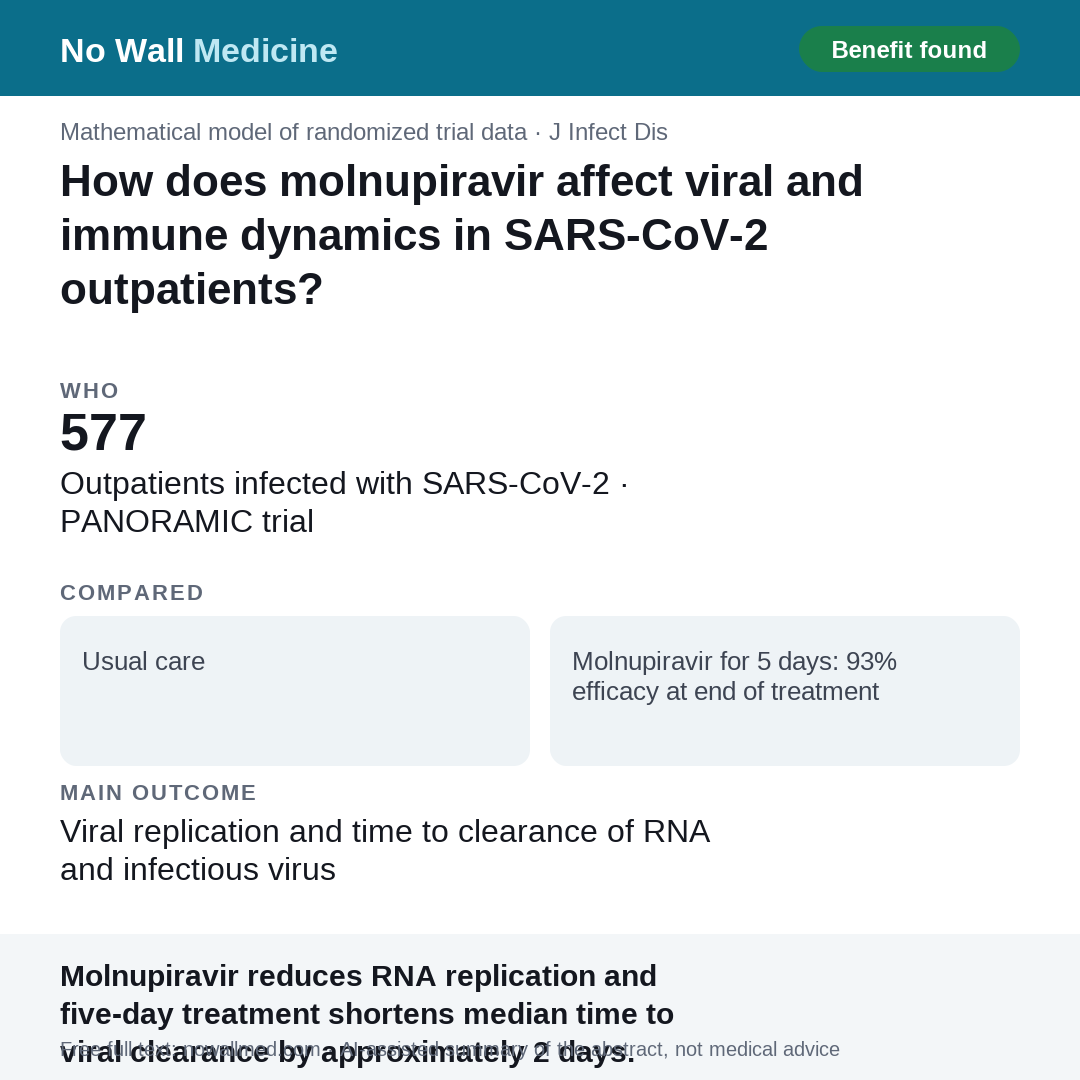
A Viroimmunologic Model to Characterize the Antiviral Effect of Molnupiravir in Outpatients Infected With SARS-CoV-2: Implication for Treatment Duration
Mathematical model of randomized trial dataBenefit found
How does molnupiravir affect viral and immune dynamics in SARS-CoV-2 outpatients?
Who
577
Outpatients infected with SARS-CoV-2 · PANORAMIC trial
Compared
Usual care
Molnupiravir for 5 days: 93% efficacy at end of treatment
Main outcome
Viral replication and time to clearance of RNA and infectious virus
Bottom line: Molnupiravir reduces RNA replication and five-day treatment shortens median time to viral clearance by approximately 2 days.
J Infect Dis · 2025-04-01Download image
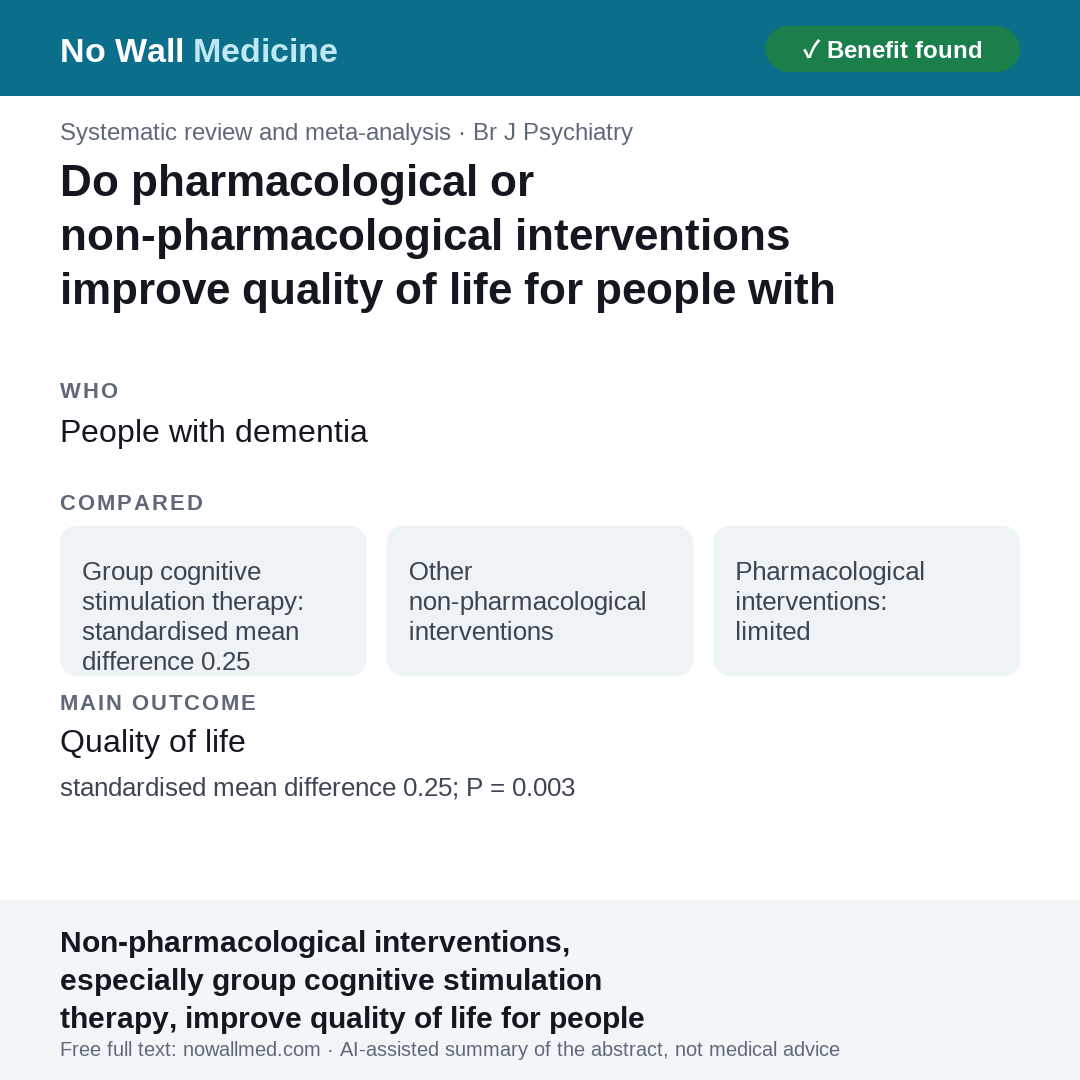
Systematic review of the efficacy of pharmacological and non-pharmacological interventions for improving quality of life of people with dementia
Systematic review and meta-analysisBenefit found
Do pharmacological or non-pharmacological interventions improve quality of life for people with dementia?
Who
People with dementia
Compared
Group cognitive stimulation therapy: standardised mean difference 0.25
Other non-pharmacological interventions
Pharmacological interventions: limited
Main outcome
Quality of life
Result: standardised mean difference 0.25; P = 0.003
Bottom line: Non-pharmacological interventions, especially group cognitive stimulation therapy, improve quality of life for people with dementia.
Limitation: Current evidence supporting the use of any pharmacological intervention is limited.
Br J Psychiatry · 2025-04-01Download image