Visual abstracts
New randomized trials and meta-analyses from leading journals at a glance: who was studied, what was compared, and what was found. Every paper is free to read in full.
All specialtiesCardiology 4877Oncology 4138Gastroenterology & Hepatology 1942Infectious Disease 3837Neurology 1905Psychiatry & Mental Health 2273Pulmonology 2143Critical Care 1365Endocrinology & Diabetes 2580Pediatrics 2980Surgery 2559Orthopedics & Sports Medicine 931Neurosurgery 537Cardiothoracic & Vascular Surgery 674Plastic & Reconstructive Surgery 591Nephrology 1133Rheumatology 823Hematology 1109Dermatology 621Ophthalmology 543Obstetrics & Gynecology 1686Public & Global Health 1058Radiology & Imaging 648Anesthesiology 986Urology 764ENT (Otolaryngology) 503Emergency Medicine 511Allergy & Immunology 313Geriatrics 981Family Medicine & Primary Care 562Medical Genetics & Genomics 676Pathology & Laboratory Medicine 159Physical Medicine & Rehabilitation 757Palliative Care 444Nutrition 1588Digital Health & AI 2201General Medicine 321
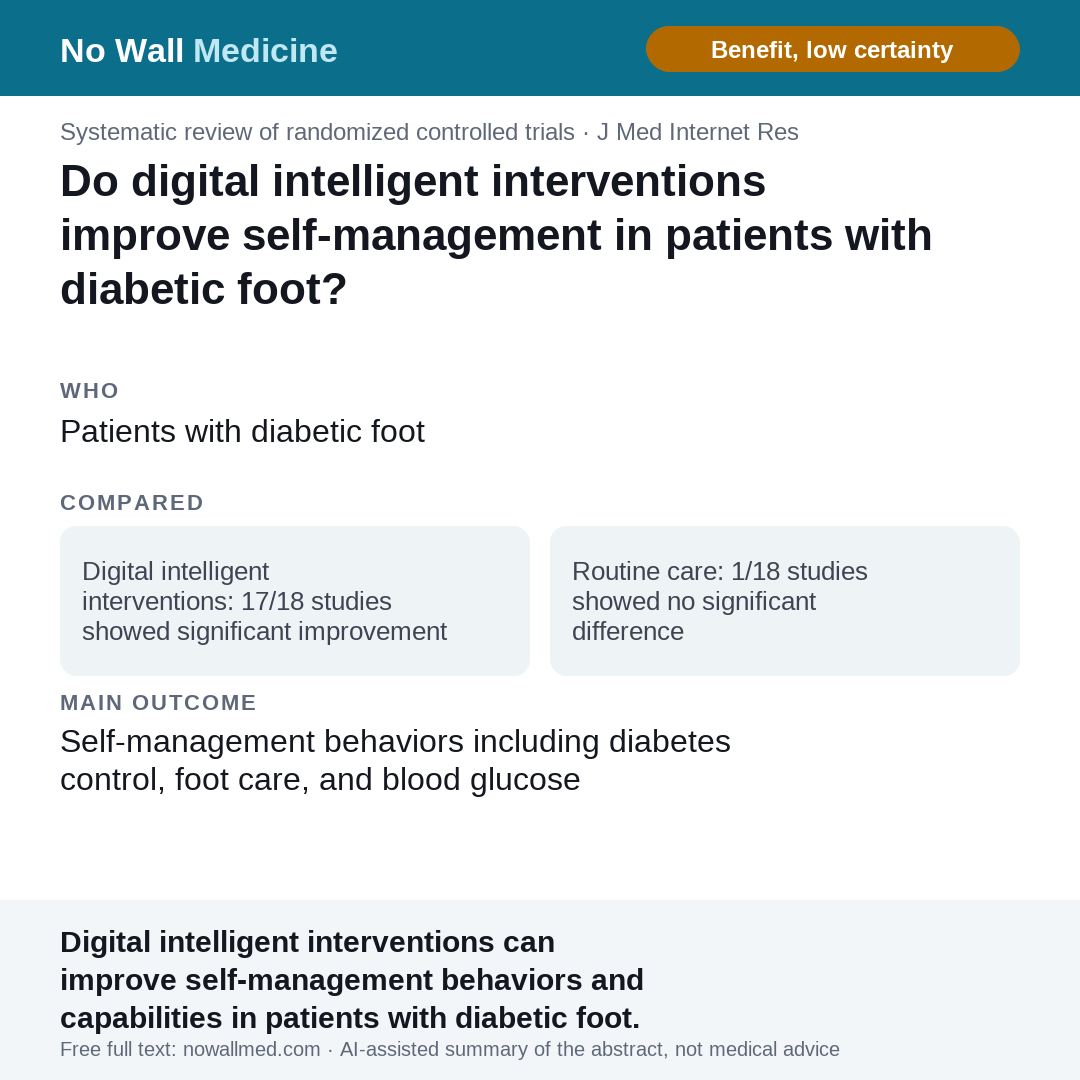
Effects of Digital Intelligent Interventions on Self-Management of Patients With Diabetic Foot: Systematic Review
Systematic review of randomized controlled trialsBenefit found
Do digital intelligent interventions improve self-management in patients with diabetic foot?
Who
Patients with diabetic foot
Compared
Digital intelligent interventions: 17/18 studies showed significant improvement
Routine care: 1/18 studies showed no significant difference
Main outcome
Self-management behaviors including diabetes control, foot care, and blood glucose monitoring
Bottom line: Digital intelligent interventions can improve self-management behaviors and capabilities in patients with diabetic foot.
Limitation: All included studies were rated as having a high risk of bias.
J Med Internet Res · 2025-03-25Download image
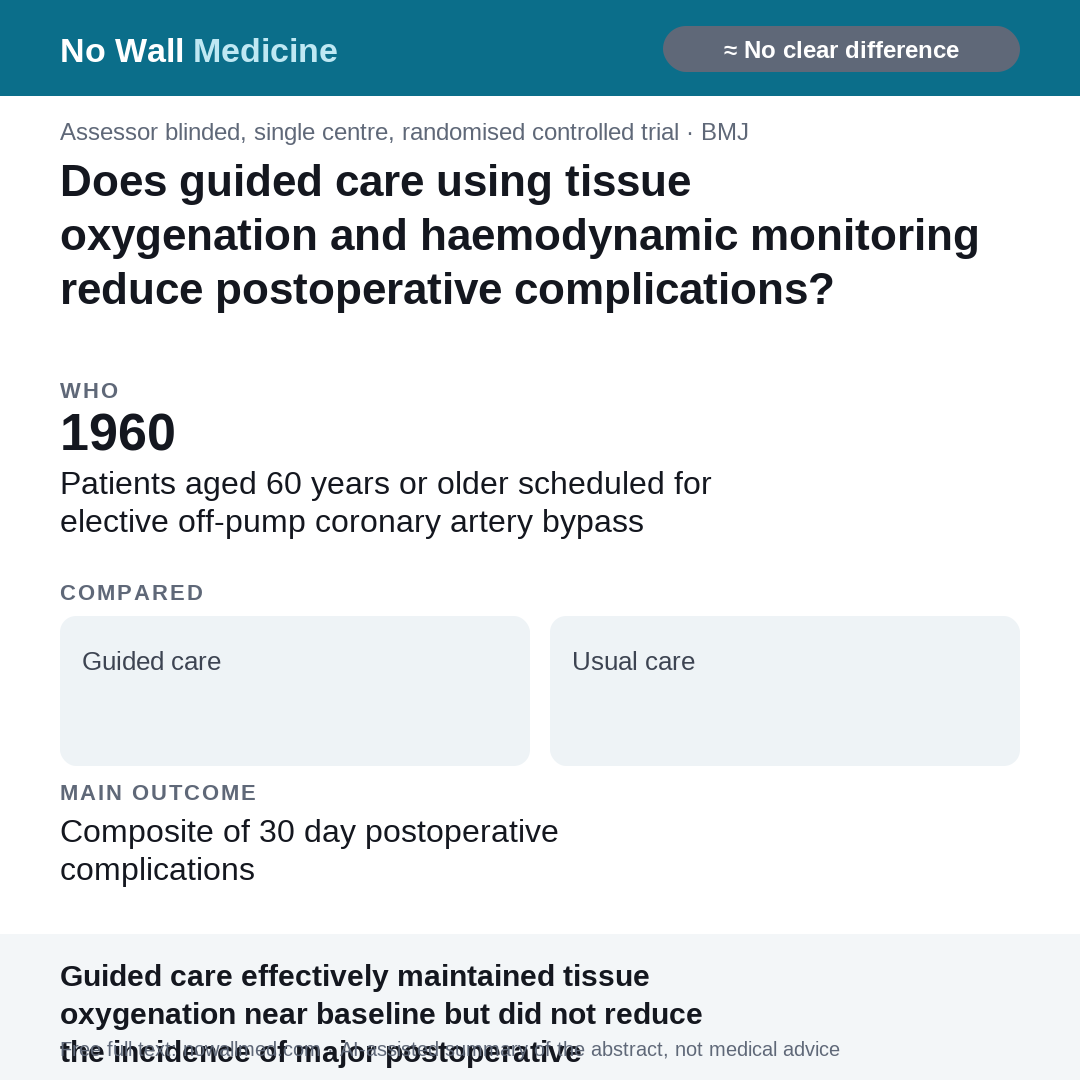
Care guided by tissue oxygenation and haemodynamic monitoring in off-pump coronary artery bypass grafting (Bottomline-CS): assessor blind, single centre, randomised controlled trial
Assessor blinded, single centre, randomised controlled trialNo clear difference
Does guided care using tissue oxygenation and haemodynamic monitoring reduce postoperative complications?
Who
1960
Patients aged 60 years or older scheduled for elective off-pump coronary artery bypass grafting · A tertiary teaching hospital in China
Compared
Guided care
Usual care
Main outcome
Composite of 30 day postoperative complications
Bottom line: Guided care effectively maintained tissue oxygenation near baseline but did not reduce the incidence of major postoperative complications.
BMJ · 2025-03-24Download image
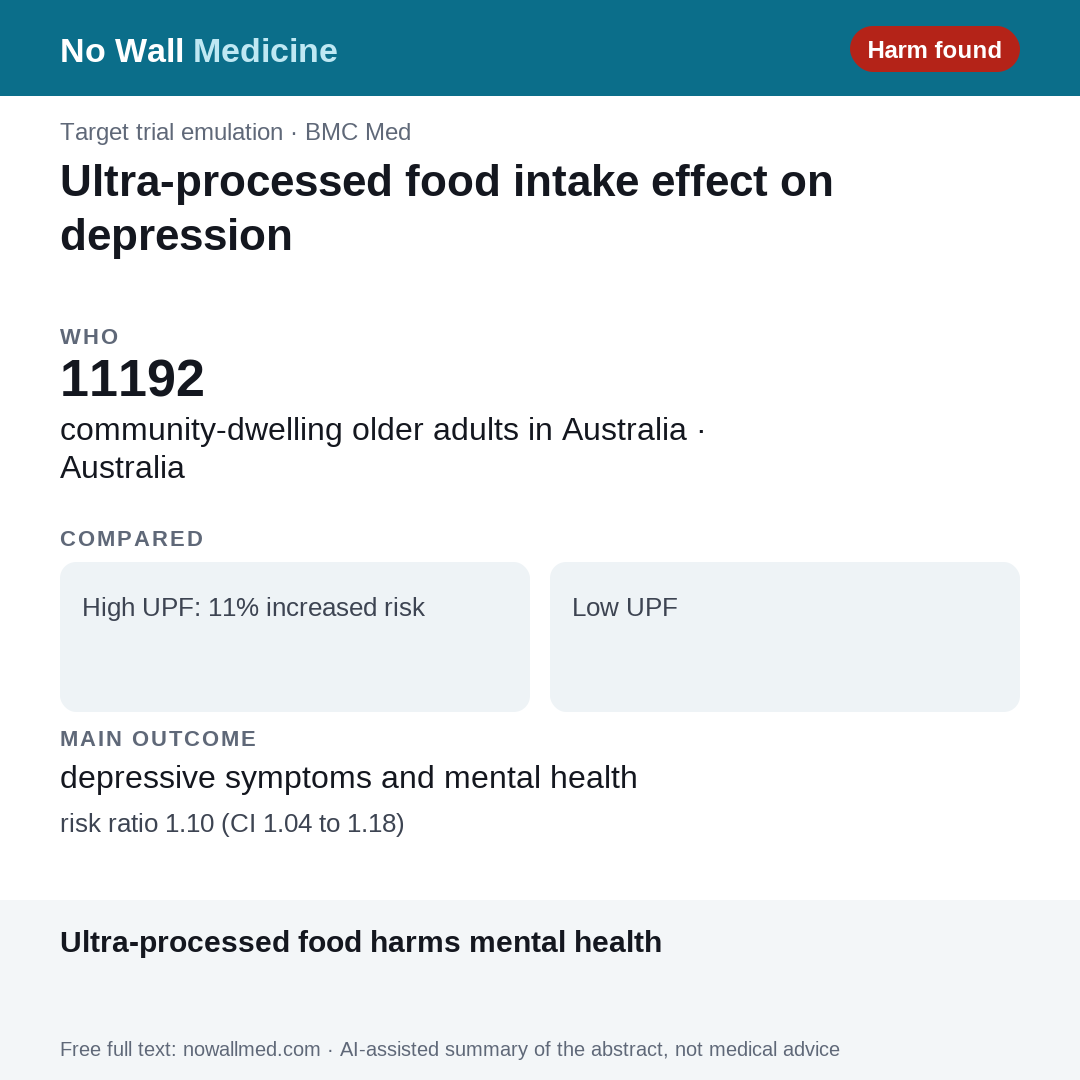
The risk associated with ultra-processed food intake on depressive symptoms and mental health in older adults: a target trial emulation
Target trial emulationHarm found
Ultra-processed food intake effect on depression
Who
11192
community-dwelling older adults in Australia · Australia
Compared
High UPF: 11% increased risk
Low UPF
Main outcome
depressive symptoms and mental health
Result: risk ratio 1.10 (CI 1.04 to 1.18)
Bottom line: Ultra-processed food harms mental health
BMC Med · 2025-03-24Download image
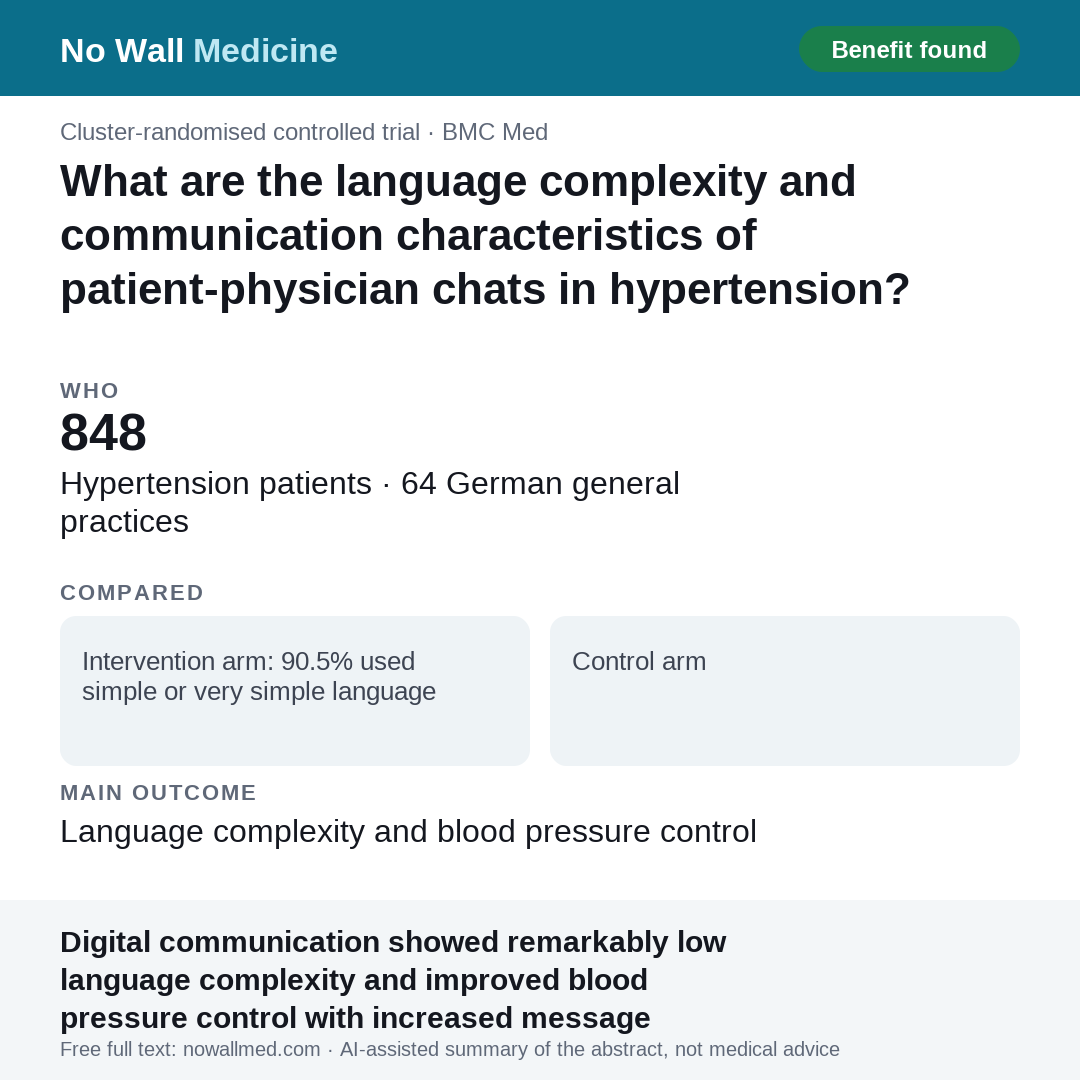
Language complexity of patient-physician chat communication on hypertension control: results of the cluster-randomised PIA study
Cluster-randomised controlled trialBenefit found
What are the language complexity and communication characteristics of patient-physician chats in hypertension?
Who
848
Hypertension patients · 64 German general practices
Compared
Intervention arm: 90.5% used simple or very simple language
Control arm
Main outcome
Language complexity and blood pressure control
Bottom line: Digital communication showed remarkably low language complexity and improved blood pressure control with increased message frequency.
BMC Med · 2025-03-24Download image
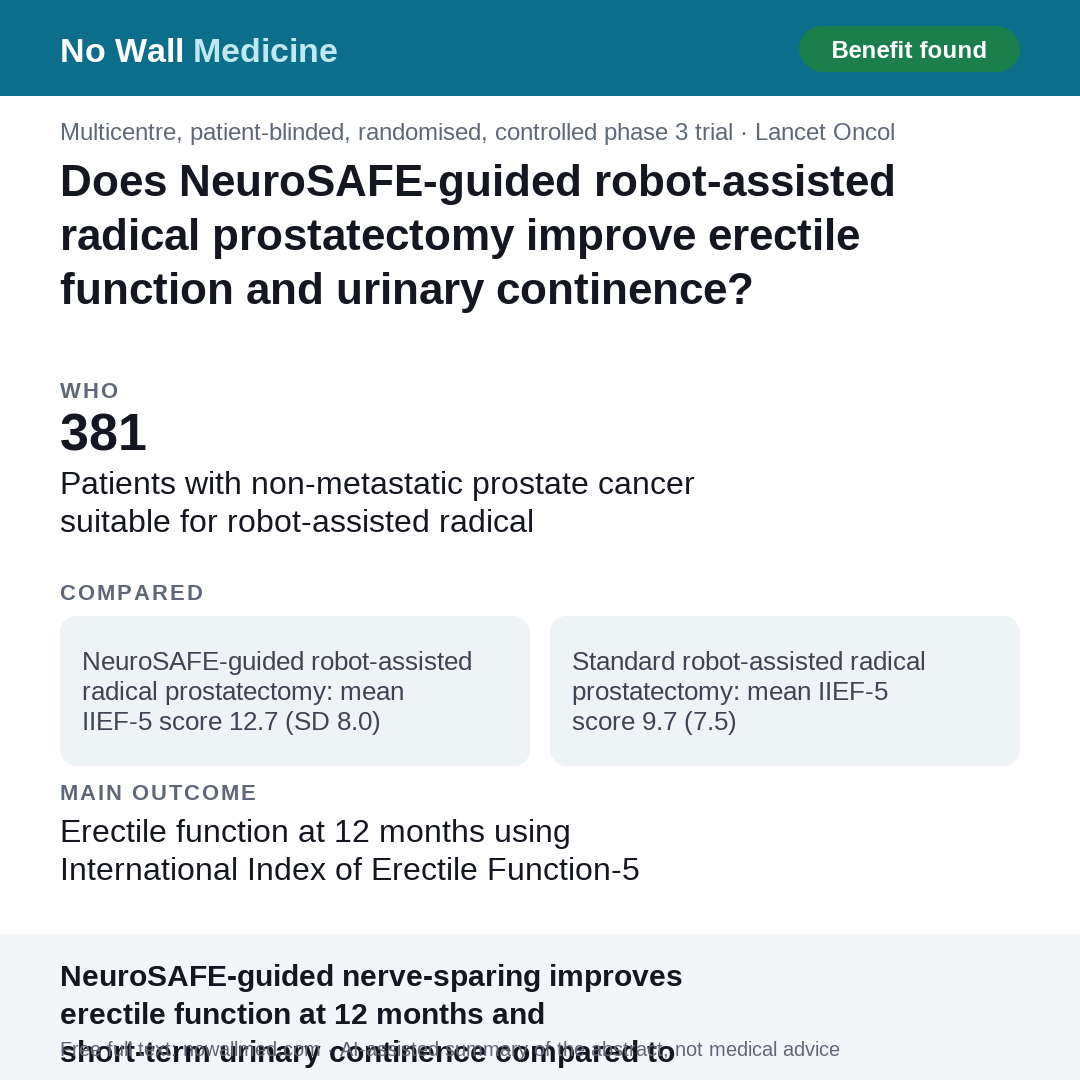
Effect of NeuroSAFE-guided RARP versus standard RARP on erectile function and urinary continence in patients with localised prostate cancer (NeuroSAFE PROOF): a multicentre, patient-blinded, randomised, controlled phase 3 trial
Multicentre, patient-blinded, randomised, controlled phase 3 trialBenefit found
Does NeuroSAFE-guided robot-assisted radical prostatectomy improve erectile function and urinary continence?
Who
381
Patients with non-metastatic prostate cancer suitable for robot-assisted radical prostatectomy · Five National Health Service hospitals in the UK
Compared
NeuroSAFE-guided robot-assisted radical prostatectomy: mean IIEF-5 score 12.7 (SD 8.0)
Standard robot-assisted radical prostatectomy: mean IIEF-5 score 9.7 (7.5)
Main outcome
Erectile function at 12 months using International Index of Erectile Function-5
Result: adjusted mean difference 3.18 (95% CI 1.62 to 4.75)
Bottom line: NeuroSAFE-guided nerve-sparing improves erectile function at 12 months and short-term urinary continence compared to standard practice.
Limitation: Operating teams were aware of treatment group due to the nature of the intervention.
Lancet Oncol · 2025-03-24Download image
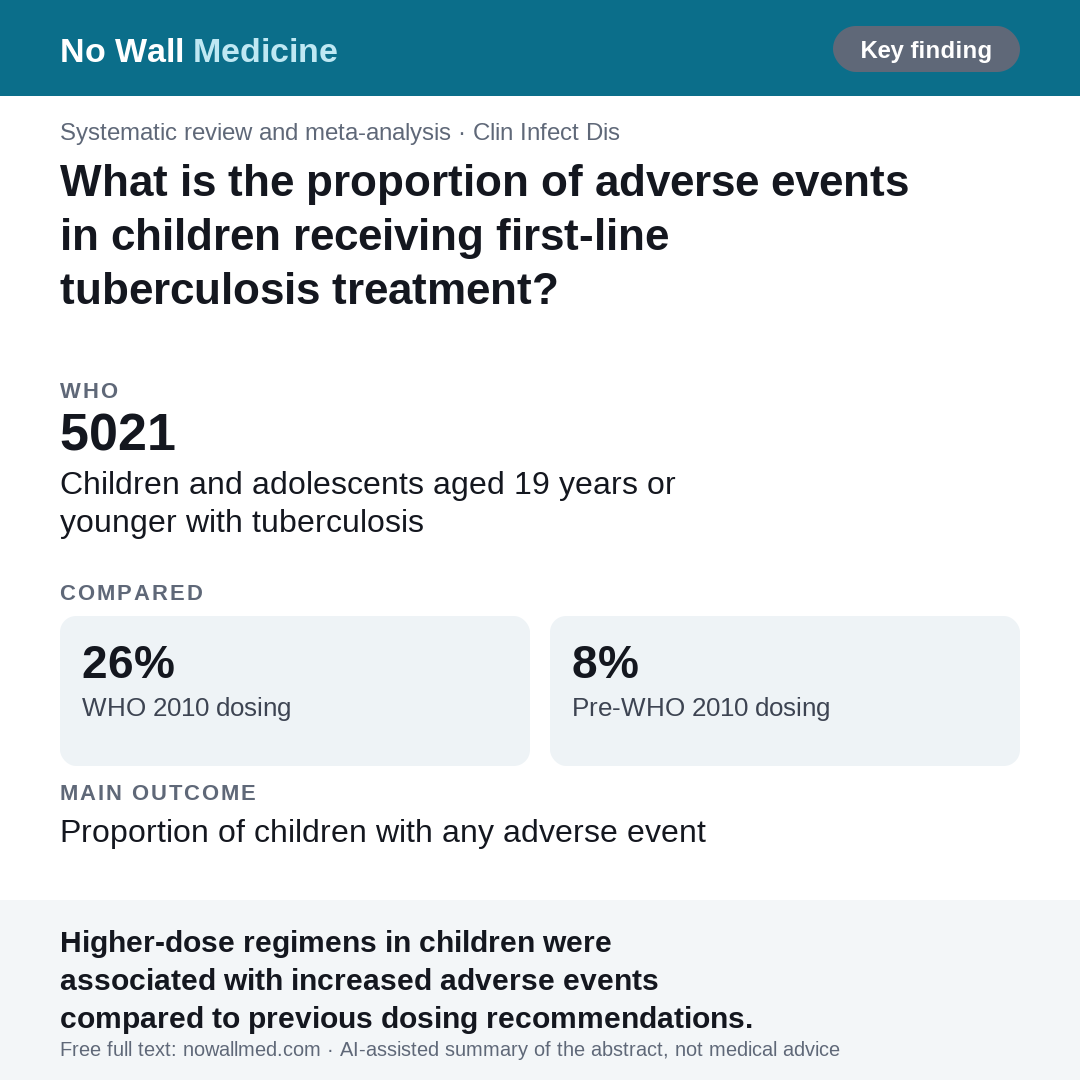
Adverse Events of First-Line Therapy for Pediatric Tuberculosis: A Systematic Review and Meta-Analysis
Systematic review and meta-analysisHarm found
What is the proportion of adverse events in children receiving first-line tuberculosis treatment?
Who
5021
Children and adolescents aged 19 years or younger with tuberculosis
Compared
26%WHO 2010 dosing (95% CI, 18%-34%)
8%Pre-WHO 2010 dosing (95% CI, 4%-15%)
Main outcome
Proportion of children with any adverse event
Bottom line: Higher-dose regimens in children were associated with increased adverse events compared to previous dosing recommendations.
Limitation: Findings are limited by publication bias in observational trials.
Clin Infect Dis · 2025-03-24Download image
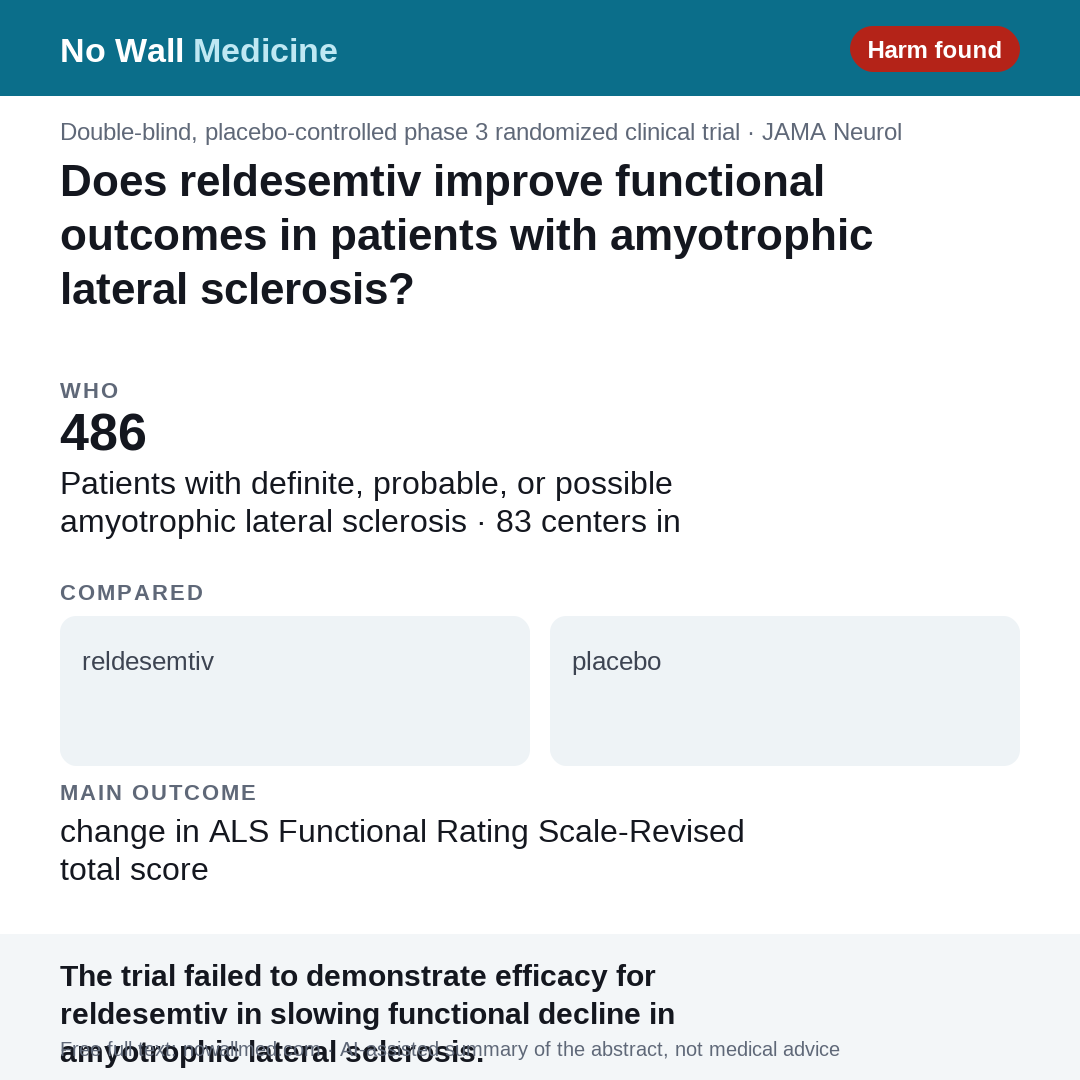
Reldesemtiv in Amyotrophic Lateral Sclerosis: Results From the COURAGE-ALS Randomized Clinical Trial
Double-blind, placebo-controlled phase 3 randomized clinical trialHarm found
Does reldesemtiv improve functional outcomes in patients with amyotrophic lateral sclerosis?
Who
486
Patients with definite, probable, or possible amyotrophic lateral sclerosis · 83 centers in 16 countries
Compared
reldesemtiv
placebo
Main outcome
change in ALS Functional Rating Scale-Revised total score
Result: mean group difference -1.1 (95% CI, -2.17 to -0.08)
Bottom line: The trial failed to demonstrate efficacy for reldesemtiv in slowing functional decline in amyotrophic lateral sclerosis.
JAMA Neurol · 2025-03-24Download image
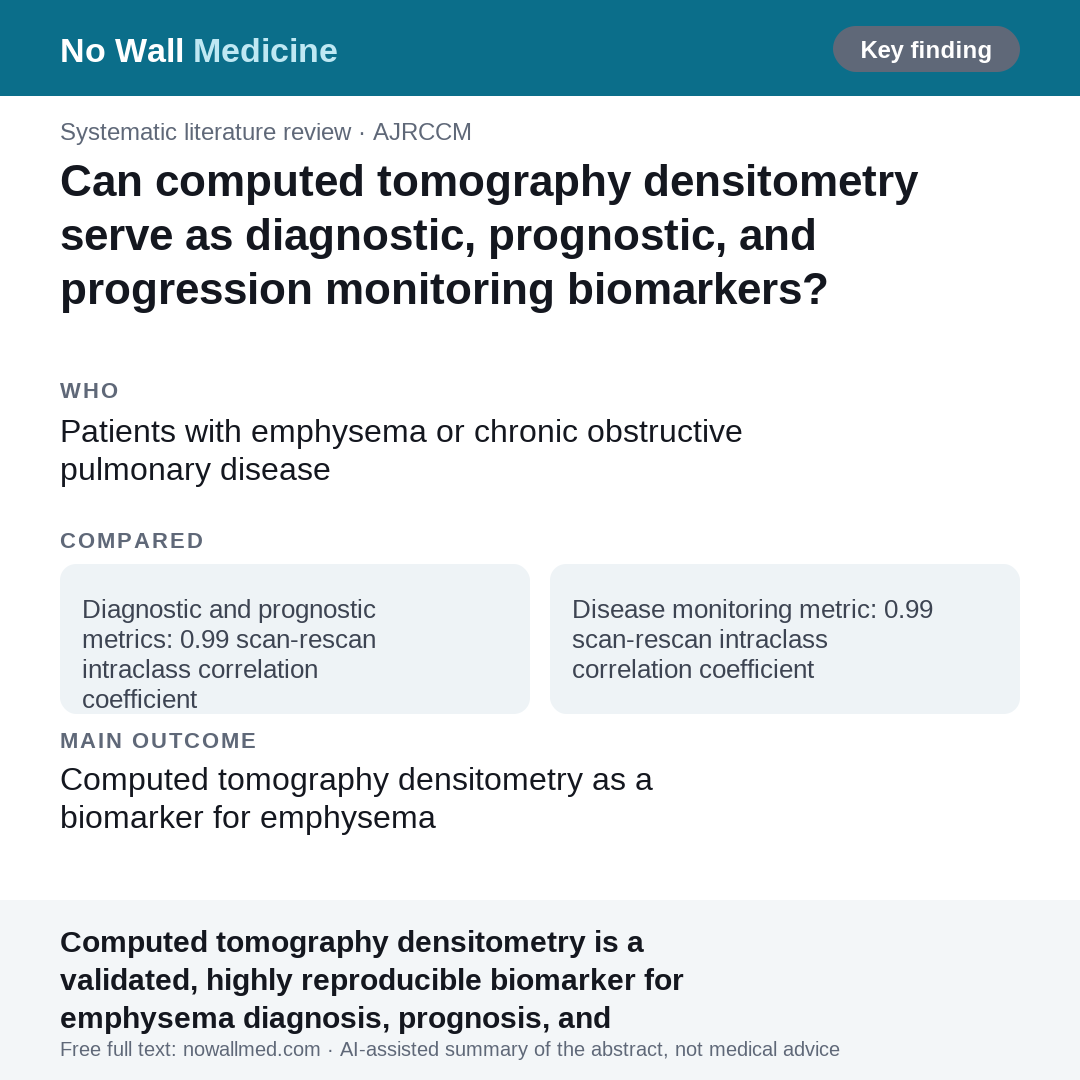
The Use of Computed Tomography Densitometry for the Assessment of Emphysema in Clinical Trials: A Position Paper from the Fleischner Society
Systematic literature reviewBenefit found
Can computed tomography densitometry serve as diagnostic, prognostic, and progression monitoring biomarkers?
Who
Patients with emphysema or chronic obstructive pulmonary disease
Compared
Diagnostic and prognostic metrics: 0.99 scan-rescan intraclass correlation coefficient
Disease monitoring metric: 0.99 scan-rescan intraclass correlation coefficient
Main outcome
Computed tomography densitometry as a biomarker for emphysema
Bottom line: Computed tomography densitometry is a validated, highly reproducible biomarker for emphysema diagnosis, prognosis, and monitoring.
AJRCCM · 2025-03-24Download image
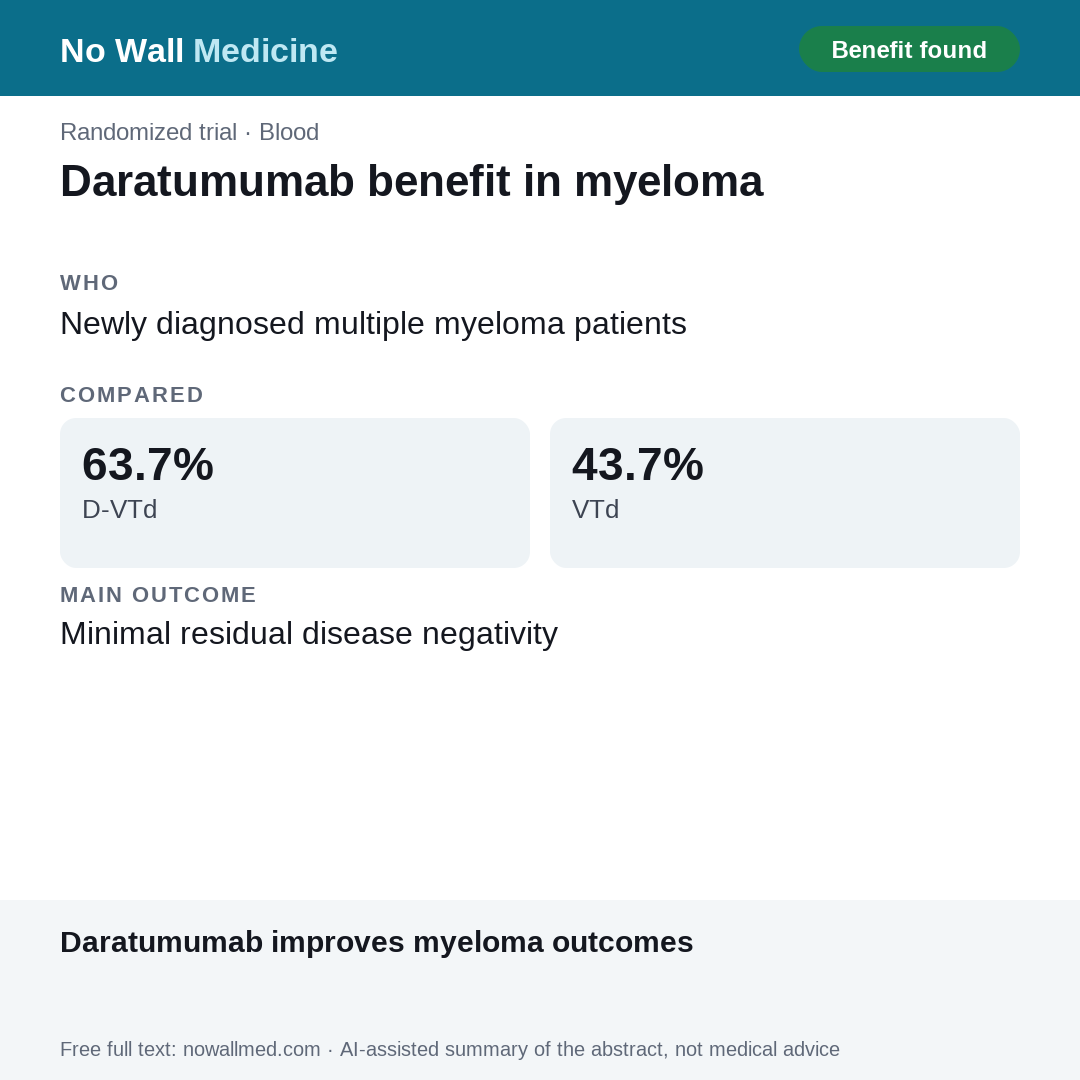
Daratumumab-bortezomib-thalidomide-dexamethasone for newly diagnosed myeloma: CASSIOPEIA minimal residual disease results
Randomized trialBenefit found
Daratumumab benefit in myeloma
Who
Newly diagnosed multiple myeloma patients
Compared
63.7%D-VTd
43.7%VTd
Main outcome
Minimal residual disease negativity
Bottom line: Daratumumab improves myeloma outcomes
Blood · 2025-03-24Download image
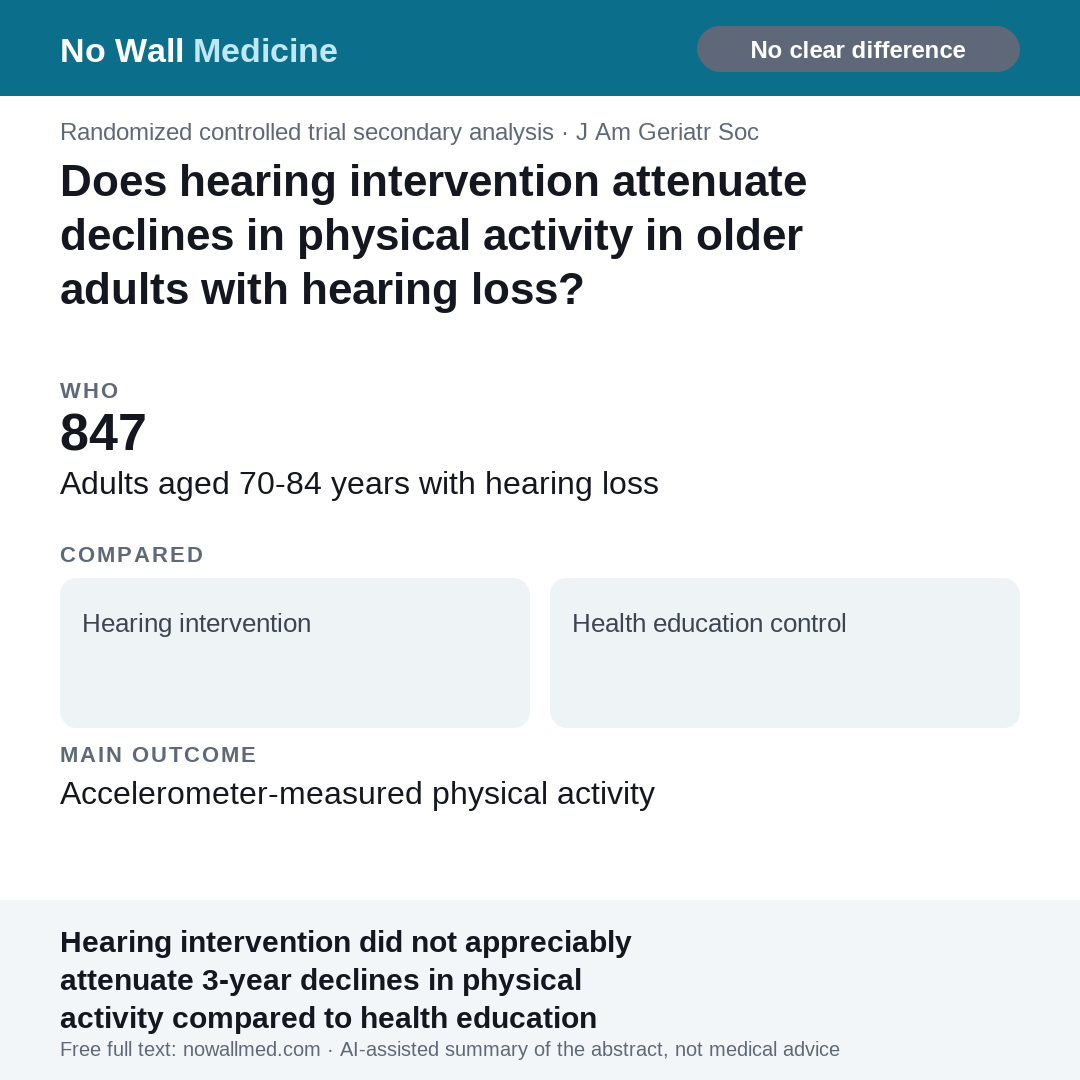
Effects of Hearing Intervention on Physical Activity Measured by Accelerometry: A Secondary Analysis of the ACHIEVE Study
Randomized controlled trial secondary analysisNo clear difference
Does hearing intervention attenuate declines in physical activity in older adults with hearing loss?
Who
847
Adults aged 70-84 years with hearing loss
Compared
Hearing intervention
Health education control
Main outcome
Accelerometer-measured physical activity
Bottom line: Hearing intervention did not appreciably attenuate 3-year declines in physical activity compared to health education control.
J Am Geriatr Soc · 2025-03-24Download image
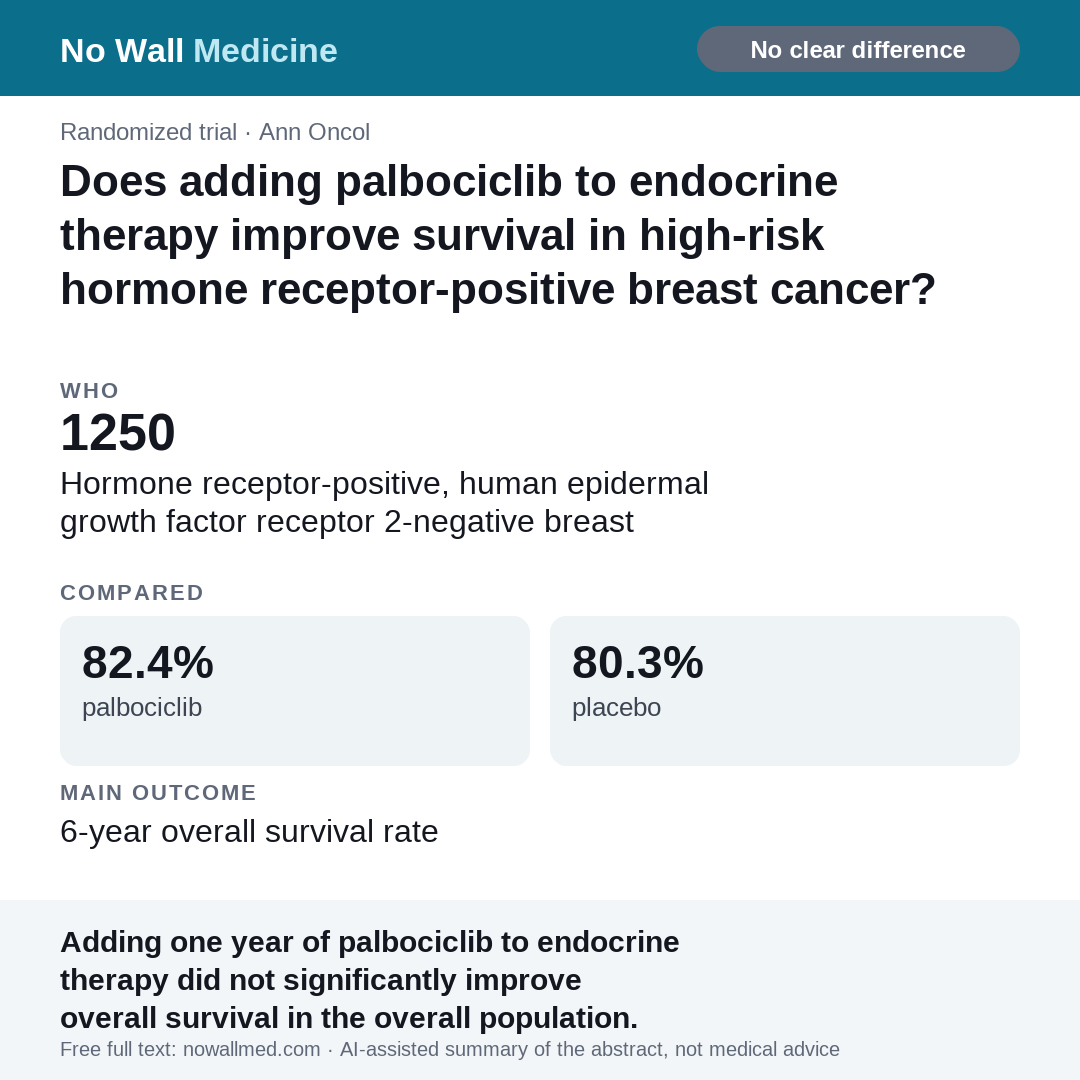
Final survival results from the PENELOPE-B trial investigating palbociclib versus placebo for patients with high-risk HR+/HER2- breast cancer and residual disease after neoadjuvant chemotherapy
Randomized trialNo clear difference
Does adding palbociclib to endocrine therapy improve survival in high-risk hormone receptor-positive breast cancer?
Who
1250
Hormone receptor-positive, human epidermal growth factor receptor 2-negative breast cancer patients
Compared
82.4%palbociclib
80.3%placebo
Main outcome
6-year overall survival rate
Result: hazard ratio 0.87, 95% confidence interval 0.67-1.14
Bottom line: Adding one year of palbociclib to endocrine therapy did not significantly improve overall survival in the overall population.
Limitation: Exploratory post hoc analyses indicated a trend in the lobular breast cancer subgroup.
Ann Oncol · 2025-03-24Download image
Evolving patterns of macrolide and fluoroquinolone resistance in Mycoplasma genitalium: an updated systematic review and meta-analysis
Systematic review and meta-analysisMixed results
What are the contemporary prevalence estimates of macrolide and fluoroquinolone resistance in Mycoplasma genitalium?
Who
Mycoplasma genitalium samples · 41 countries
Compared
33·3%Macrolide resistance (2018-21) (95% CI 27·2-39·7)
13·3%Fluoroquinolone resistance (2018-21) (10·0-17·0)
6·5%Dual-class resistance (2018-21) (4·0-9·4)
Main outcome
Prevalence of antibiotic resistance
Bottom line: In 2018-21, macrolide, fluoroquinolone, and dual-class resistance rates were 33.3%, 13.3%, and 6.5% respectively.
Funded by: Australian Research Council
Lancet Microbe · 2025-03-24Download image

Combinatorial approaches increasing neuronal activity accelerate recovery after spinal cord injury
Randomized trialBenefit found
Does combining 4-aminopyridine and Hebbian stimulation accelerate locomotor recovery in chronic spinal cord injury?
Who
Individuals with chronic spinal cord injury
Compared
4-aminopyridine and Hebbian stimulation: significantly greater improvements in walking speed and endurance, corticospinal excitability, and light touch sensation
Placebo and Hebbian stimulation
Main outcome
Locomotor recovery including walking speed, endurance, and corticospinal excitability
Bottom line: Combining 4-aminopyridine with Hebbian stimulation significantly improves walking speed, endurance, and sensation in chronic spinal cord injury.
Brain · 2025-03-24Download image

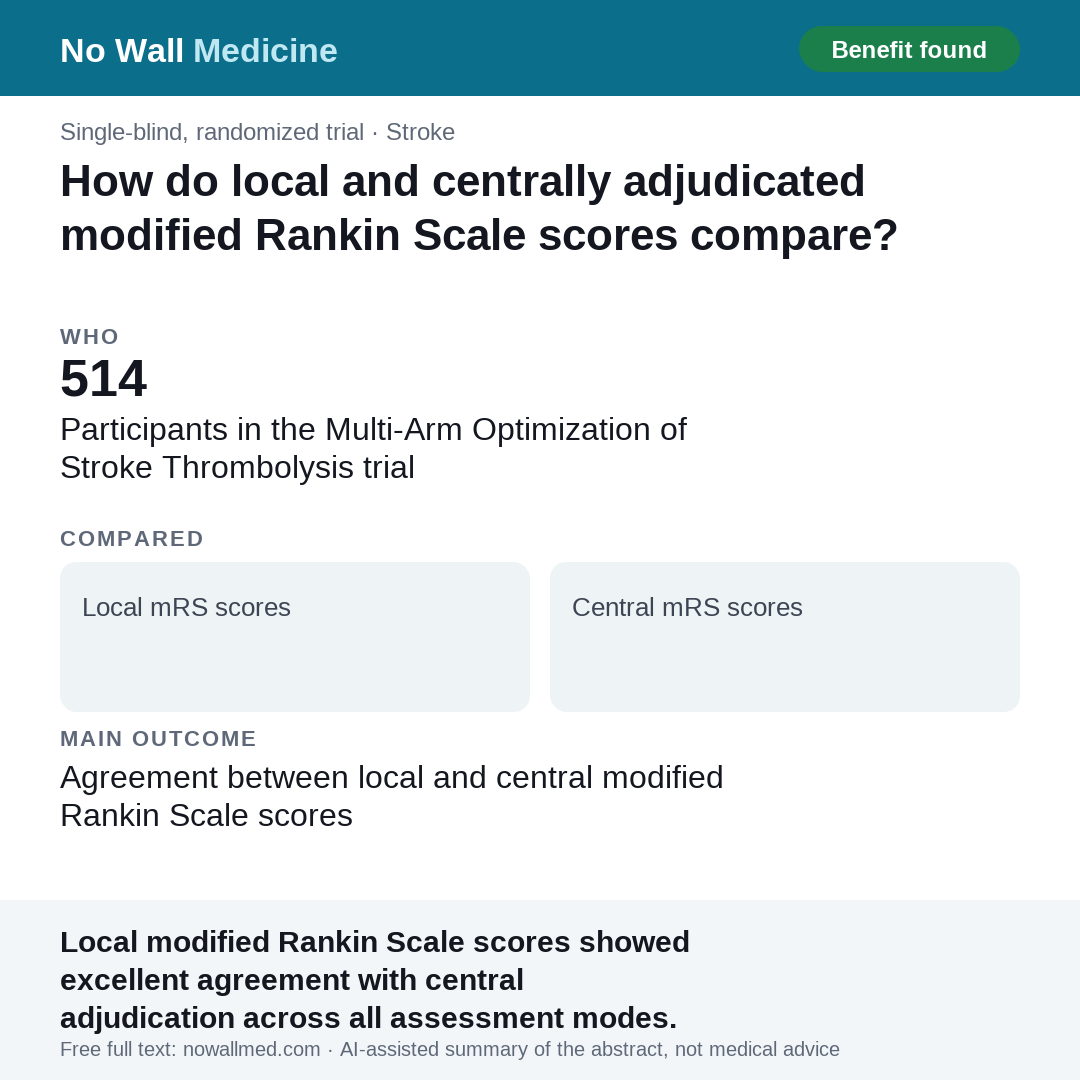
Comparison of Local and Centrally Adjudicated Modified Rankin Scale Scores in the MOST Trial
Single-blind, randomized trialBenefit found
How do local and centrally adjudicated modified Rankin Scale scores compare?
Who
514
Participants in the Multi-Arm Optimization of Stroke Thrombolysis trial
Compared
Local mRS scores
Central mRS scores
Main outcome
Agreement between local and central modified Rankin Scale scores
Result: weighted kappa 0.87 (95% CI 0.83-0.90)
Bottom line: Local modified Rankin Scale scores showed excellent agreement with central adjudication across all assessment modes.
Stroke · 2025-03-24Download image
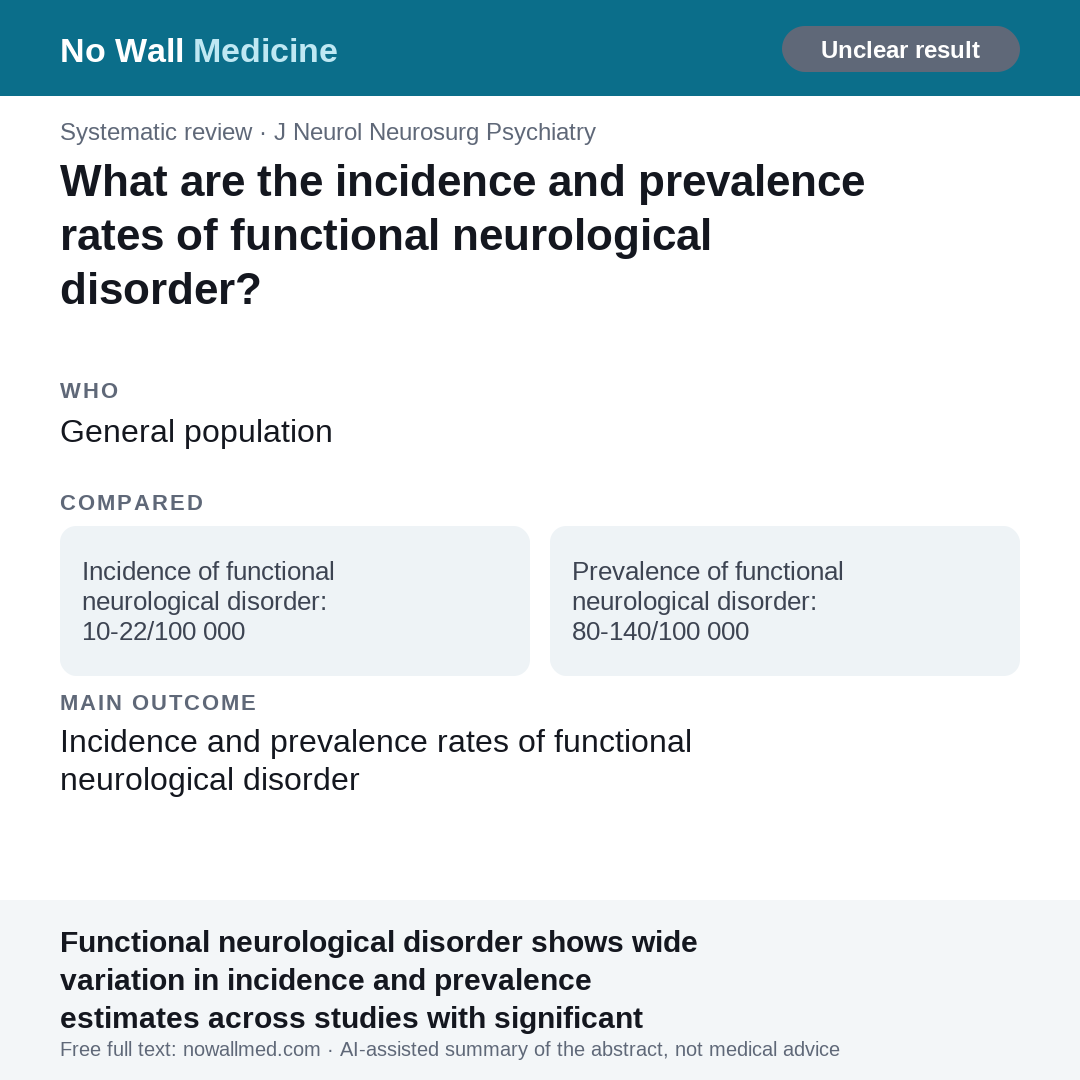
Incidence and prevalence of functional neurological disorder: a systematic review
Systematic reviewUnclear result
What are the incidence and prevalence rates of functional neurological disorder?
Who
General population
Compared
Incidence of functional neurological disorder: 10-22/100 000
Prevalence of functional neurological disorder: 80-140/100 000
Main outcome
Incidence and prevalence rates of functional neurological disorder
Bottom line: Functional neurological disorder shows wide variation in incidence and prevalence estimates across studies with significant heterogeneity.
Limitation: Methodological differences and significant heterogeneity among studies, with likely underestimates.
J Neurol Neurosurg Psychiatry · 2025-03-24Download image
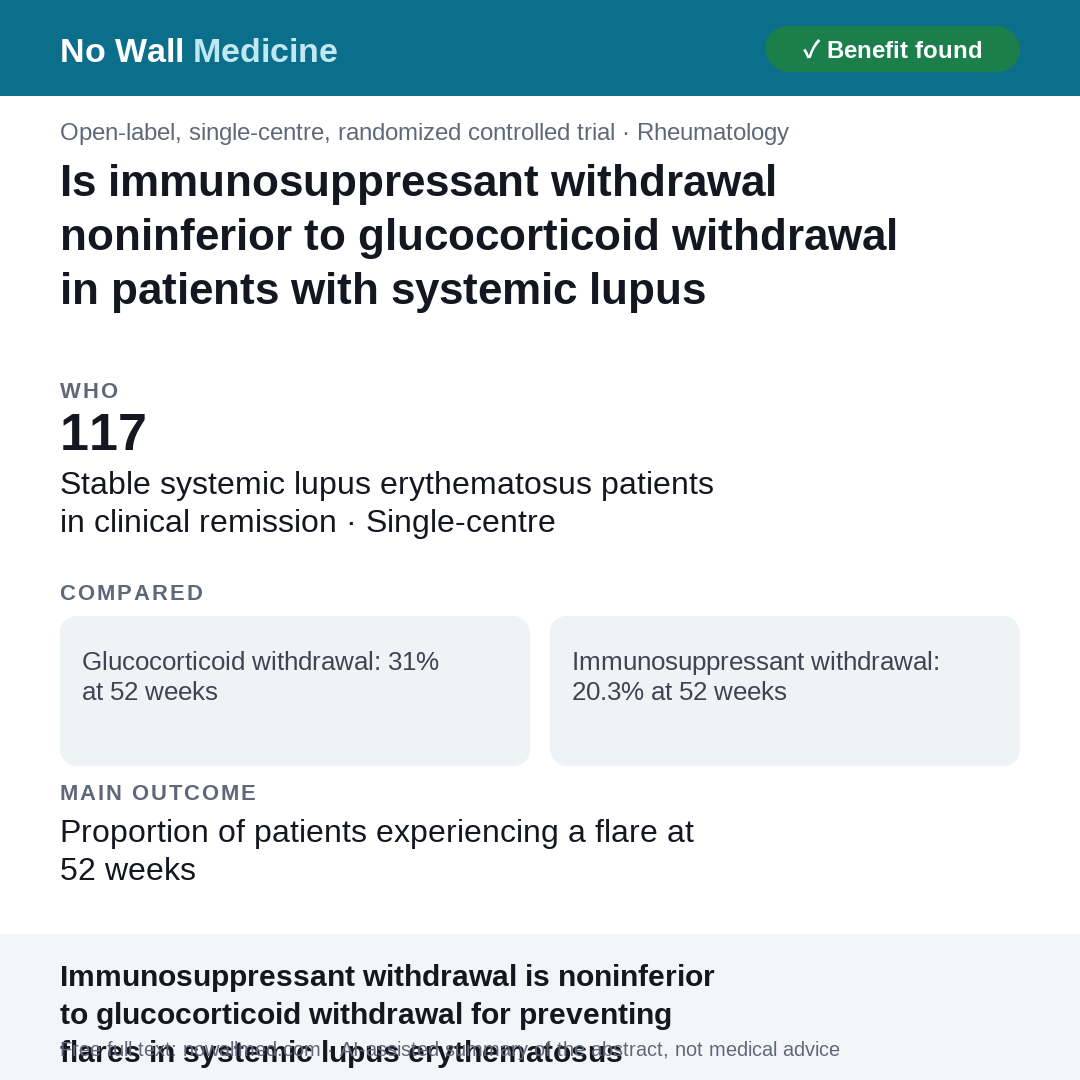
Immunosuppressant withdrawal versus glucocorticoid withdrawal in SLE: 2-year outcomes of a noninferiority randomized controlled trial
Open-label, single-centre, randomized controlled trialBenefit found
Is immunosuppressant withdrawal noninferior to glucocorticoid withdrawal in patients with systemic lupus erythematosus in remission?
Who
117
Stable systemic lupus erythematosus patients in clinical remission · Single-centre
Compared
Glucocorticoid withdrawal: 31% at 52 weeks
Immunosuppressant withdrawal: 20.3% at 52 weeks
Main outcome
Proportion of patients experiencing a flare at 52 weeks
Result: risk difference, -10.6% (95% CI, -26.5 to 5.1)
Bottom line: Immunosuppressant withdrawal is noninferior to glucocorticoid withdrawal for preventing flares in systemic lupus erythematosus patients in remission.
Rheumatology · 2025-03-24Download image
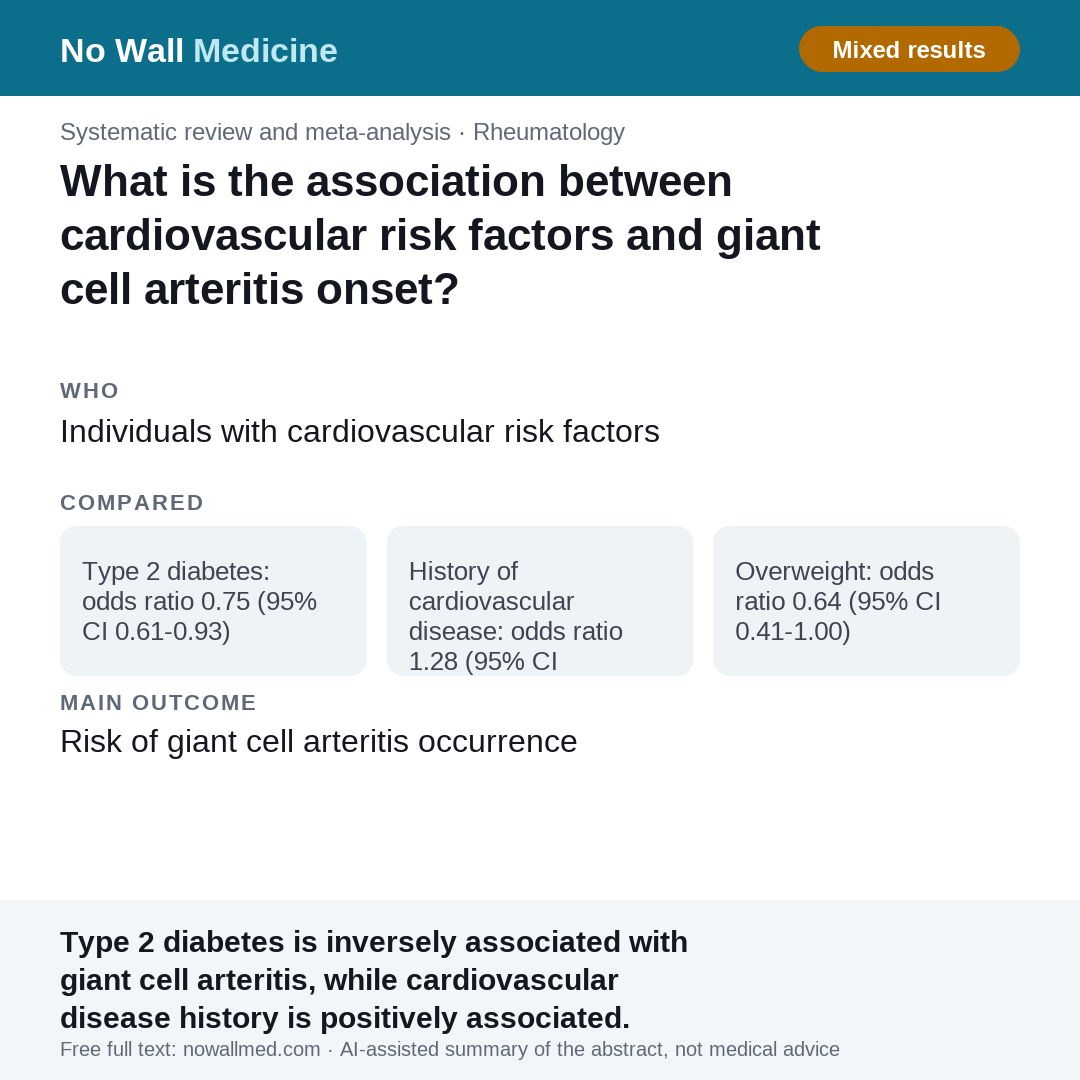
Association between cardiovascular risk factors and the occurrence of giant cell arteritis: a systematic review and meta-analysis
Systematic review and meta-analysisMixed results
What is the association between cardiovascular risk factors and giant cell arteritis onset?
Who
Individuals with cardiovascular risk factors
Compared
Type 2 diabetes: odds ratio 0.75 (95% CI 0.61-0.93)
History of cardiovascular disease: odds ratio 1.28 (95% CI 1.18-1.38)
Overweight: odds ratio 0.64 (95% CI 0.41-1.00)
Main outcome
Risk of giant cell arteritis occurrence
Bottom line: Type 2 diabetes is inversely associated with giant cell arteritis, while cardiovascular disease history is positively associated.
Rheumatology · 2025-03-24Download image
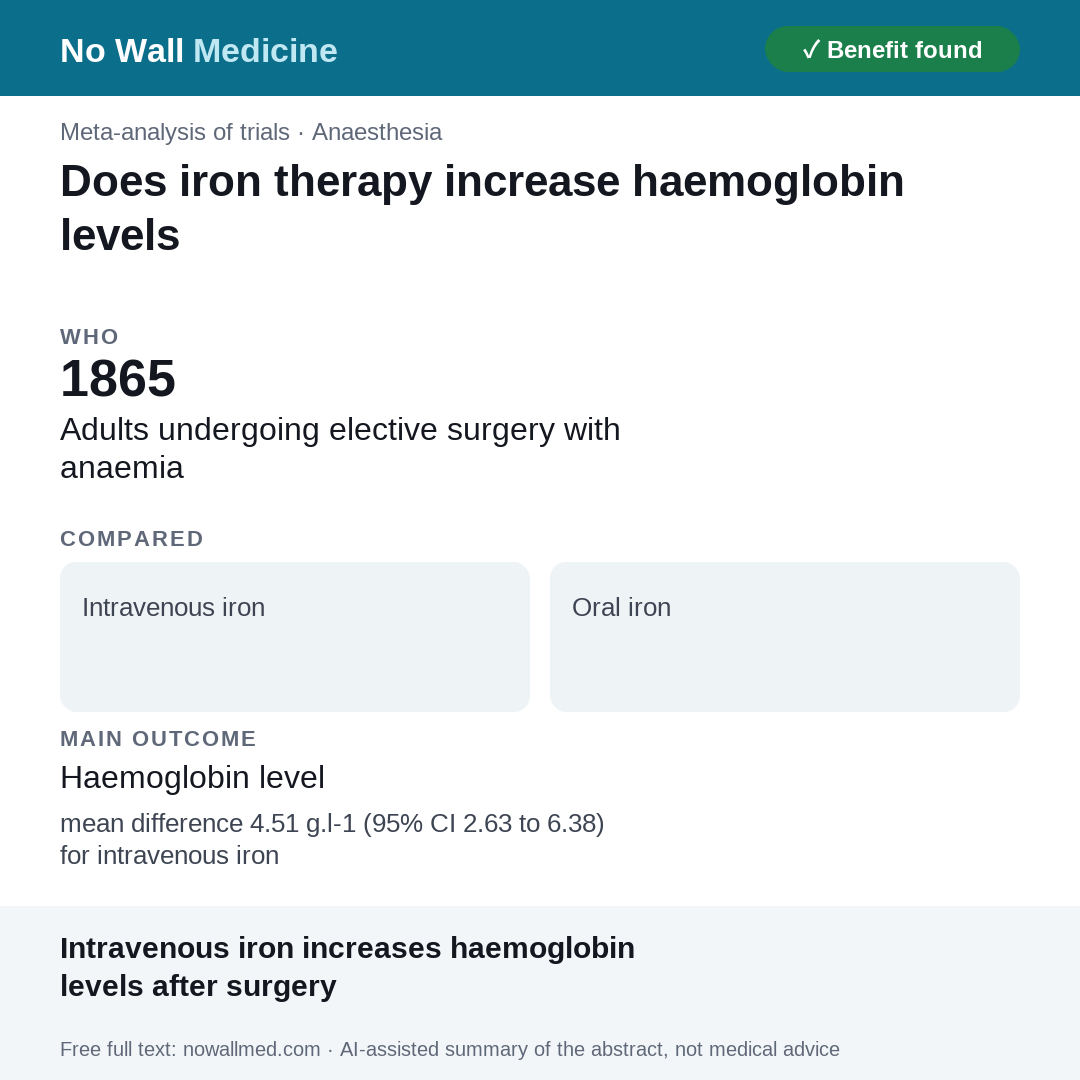
The use of iron after surgery: a systematic review and meta-analysis
Meta-analysis of trialsBenefit found
Does iron therapy increase haemoglobin levels
Who
1865
Adults undergoing elective surgery with anaemia
Compared
Intravenous iron
Oral iron
Main outcome
Haemoglobin level
Result: mean difference 4.51 g.l-1 (95% CI 2.63 to 6.38) for intravenous iron
Bottom line: Intravenous iron increases haemoglobin levels after surgery
Anaesthesia · 2025-03-24Download image
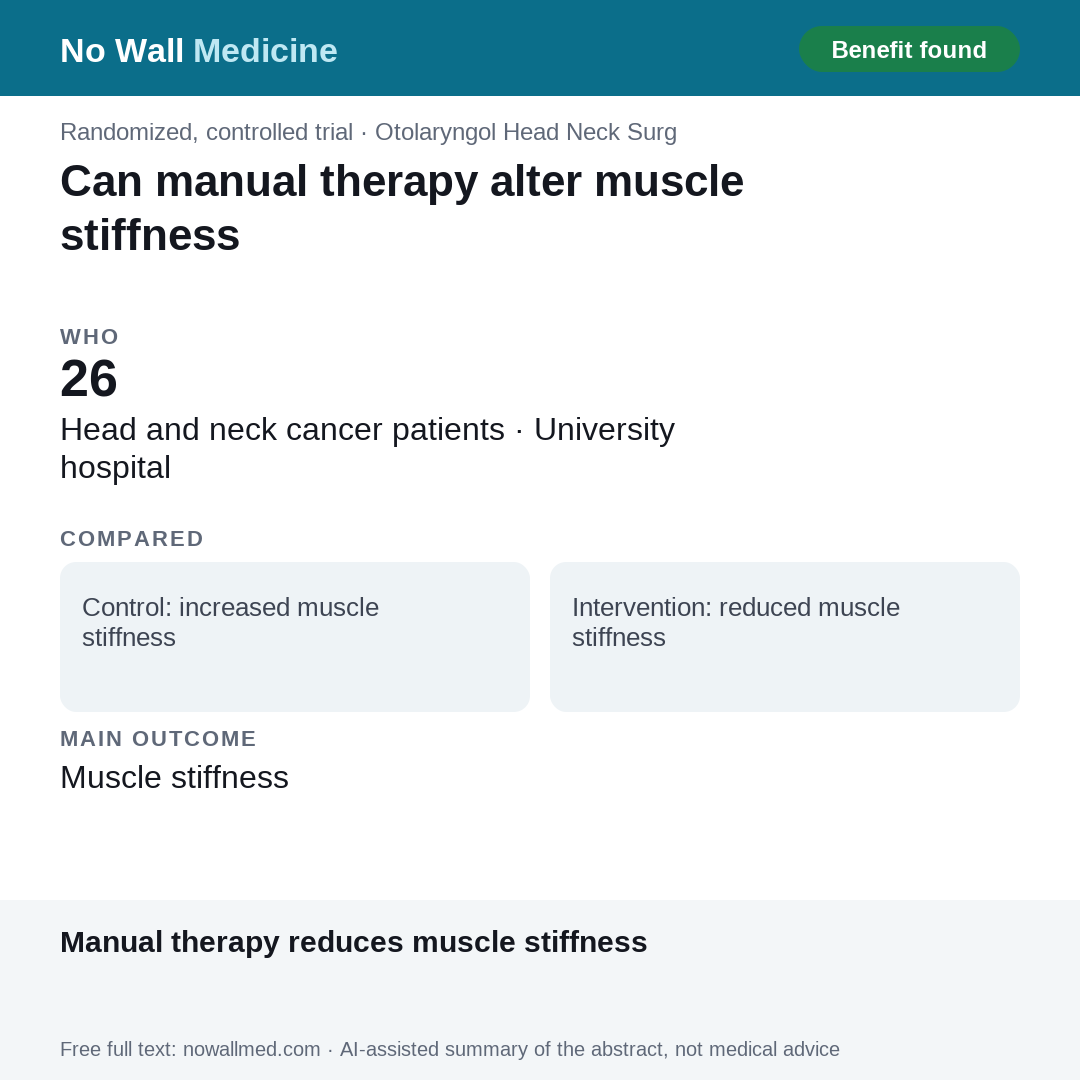
Can Manual Therapy Alter Muscle Stiffness in Patients With Spinal Accessory Nerve Injury?
Randomized, controlled trialBenefit found
Can manual therapy alter muscle stiffness
Who
26
Head and neck cancer patients · University hospital
Compared
Control: increased muscle stiffness
Intervention: reduced muscle stiffness
Main outcome
Muscle stiffness
Bottom line: Manual therapy reduces muscle stiffness
Otolaryngol Head Neck Surg · 2025-03-24Download image
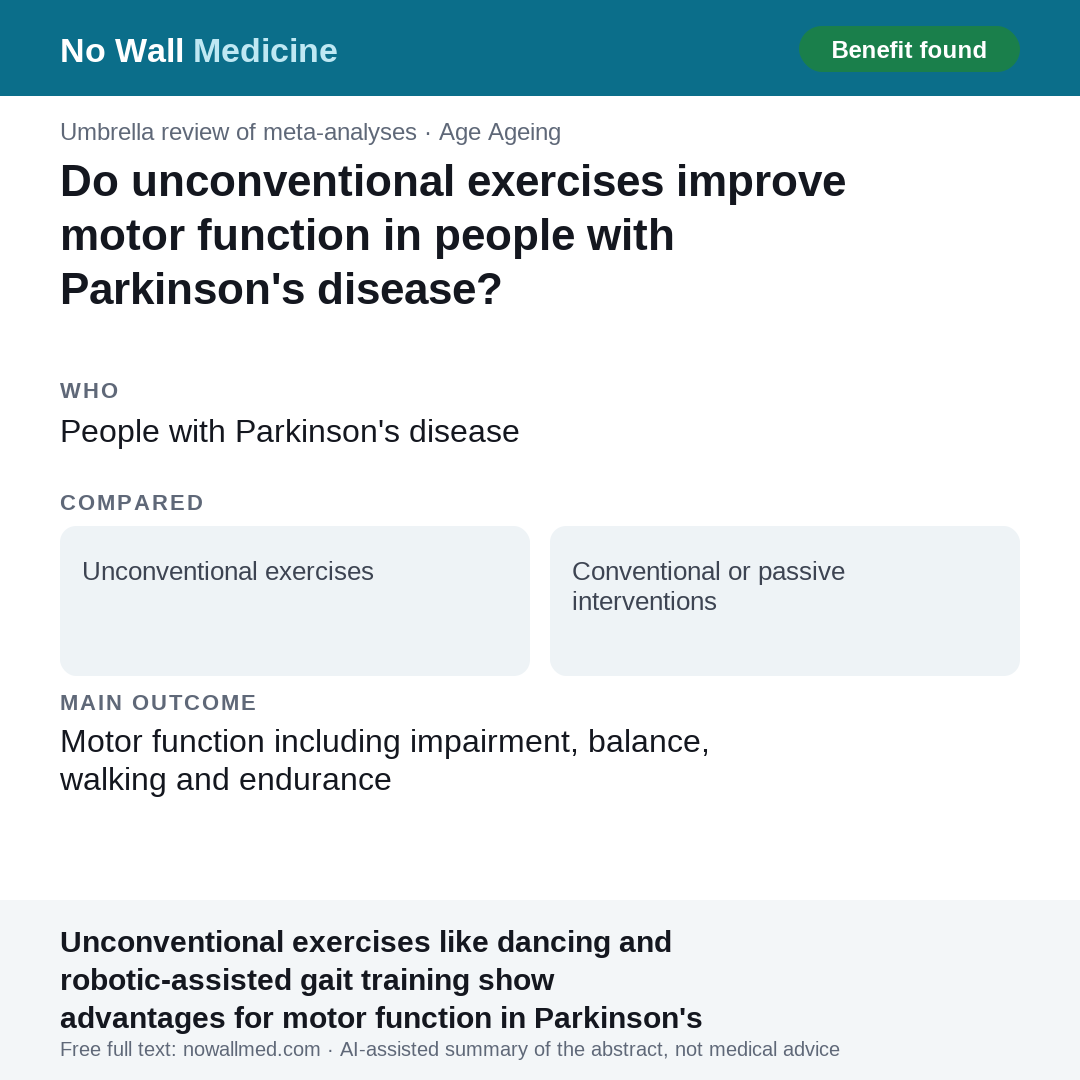
Unconventional exercises for motor function in Parkinson's disease: an umbrella review of meta-analyses
Umbrella review of meta-analysesBenefit found
Do unconventional exercises improve motor function in people with Parkinson's disease?
Who
People with Parkinson's disease
Compared
Unconventional exercises
Conventional or passive interventions
Main outcome
Motor function including impairment, balance, walking and endurance
Bottom line: Unconventional exercises like dancing and robotic-assisted gait training show advantages for motor function in Parkinson's disease.
Limitation: Variations across studies and differing certainty levels require cautious interpretation.
Age Ageing · 2025-03-24Download image