Visual abstracts
New randomized trials and meta-analyses from leading journals at a glance: who was studied, what was compared, and what was found. Every paper is free to read in full.
All specialtiesCardiology 1406Oncology 1248Gastroenterology & Hepatology 509Infectious Disease 904Neurology 579Psychiatry & Mental Health 703Pulmonology 603Critical Care 411Endocrinology & Diabetes 765Pediatrics 839Surgery 670Orthopedics & Sports Medicine 265Neurosurgery 189Cardiothoracic & Vascular Surgery 157Plastic & Reconstructive Surgery 220Nephrology 299Rheumatology 186Hematology 295Dermatology 147Ophthalmology 157Obstetrics & Gynecology 446Public & Global Health 273Radiology & Imaging 178Anesthesiology 273Urology 261ENT (Otolaryngology) 192Emergency Medicine 155Allergy & Immunology 92Geriatrics 292Family Medicine & Primary Care 175Medical Genetics & Genomics 151Pathology & Laboratory Medicine 43Physical Medicine & Rehabilitation 246Palliative Care 127Nutrition 369Digital Health & AI 731General Medicine 123
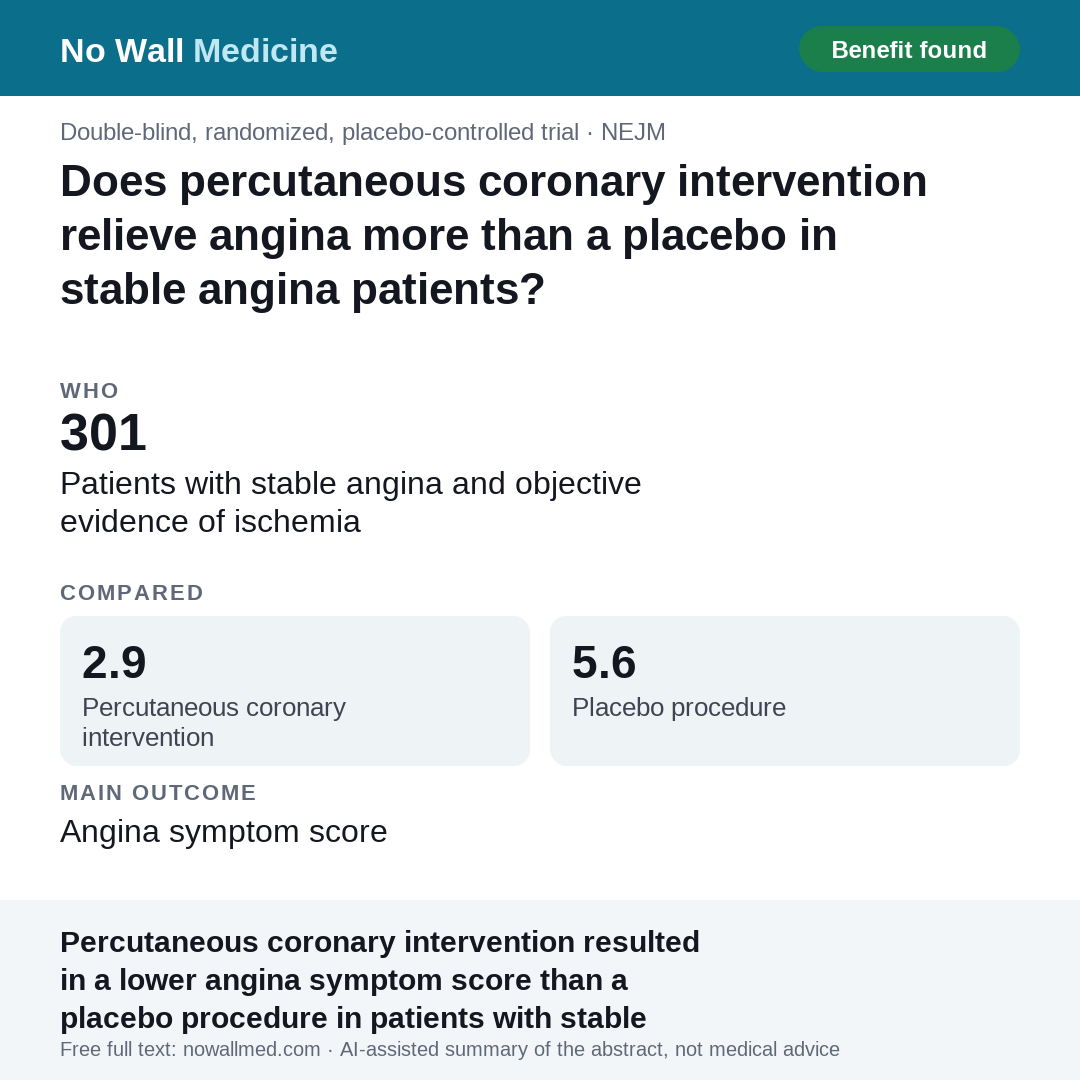
A Placebo-Controlled Trial of Percutaneous Coronary Intervention for Stable Angina
Double-blind, randomized, placebo-controlled trialBenefit found
Does percutaneous coronary intervention relieve angina more than a placebo in stable angina patients?
Who
301
Patients with stable angina and objective evidence of ischemia
Compared
2.9Percutaneous coronary intervention
5.6Placebo procedure
Main outcome
Angina symptom score
Result: odds ratio 2.21 (95% confidence interval 1.41 to 3.47)
Bottom line: Percutaneous coronary intervention resulted in a lower angina symptom score than a placebo procedure in patients with stable angina.
Funded by: National Institute for Health and Care Research Imperial Biomedical Research Centre
NEJM · 2023-11-11Download image
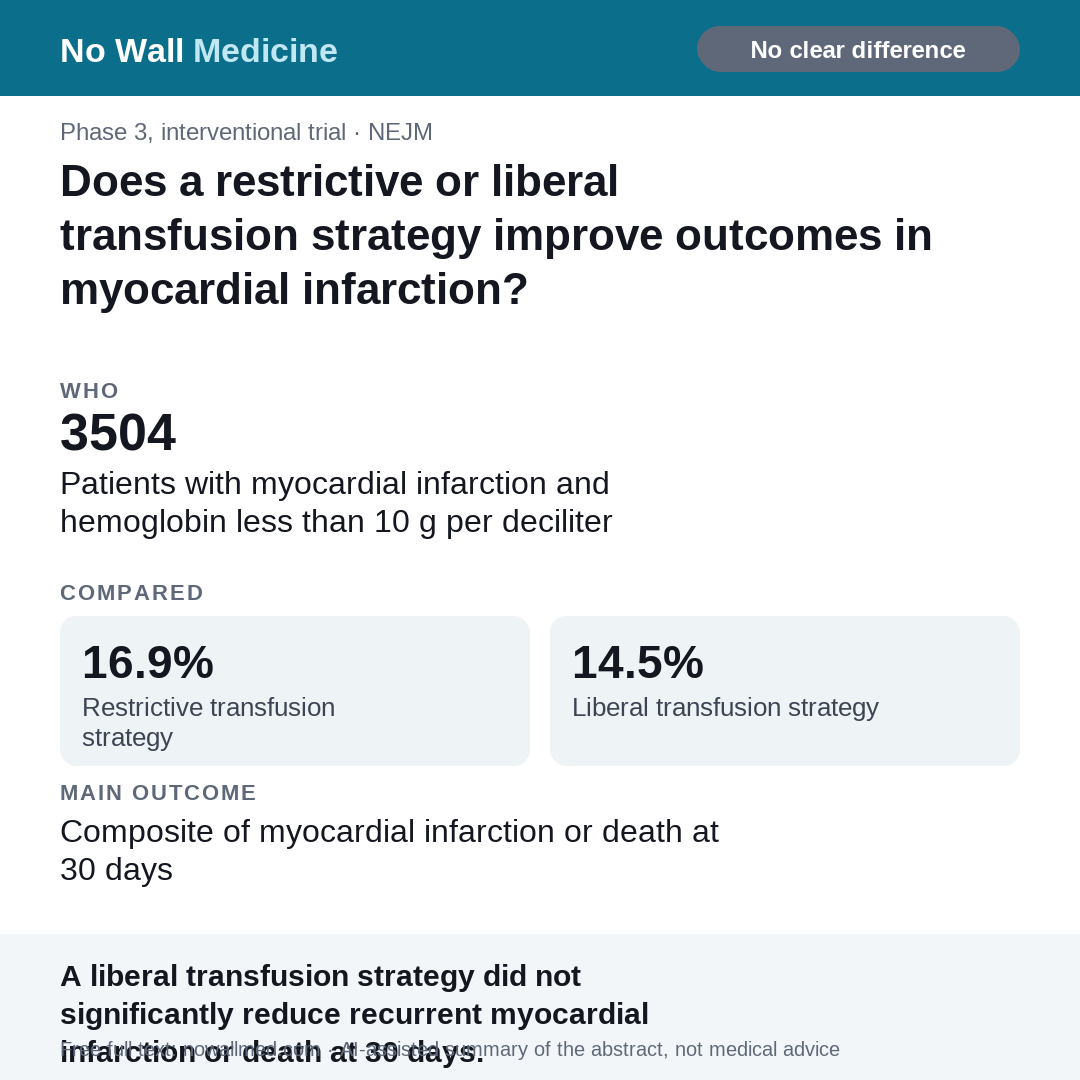
Restrictive or Liberal Transfusion Strategy in Myocardial Infarction and Anemia
Phase 3, interventional trialNo clear difference
Does a restrictive or liberal transfusion strategy improve outcomes in myocardial infarction?
Who
3504
Patients with myocardial infarction and hemoglobin less than 10 g per deciliter
Compared
16.9%Restrictive transfusion strategy (295/1749)
14.5%Liberal transfusion strategy (255/1755)
Main outcome
Composite of myocardial infarction or death at 30 days
Result: risk ratio 1.15 (95% CI 0.99 to 1.34)
Bottom line: A liberal transfusion strategy did not significantly reduce recurrent myocardial infarction or death at 30 days.
Limitation: potential harms of a restrictive transfusion strategy cannot be excluded
Funded by: National Heart, Lung, and Blood Institute and others
NEJM · 2023-11-11Download image
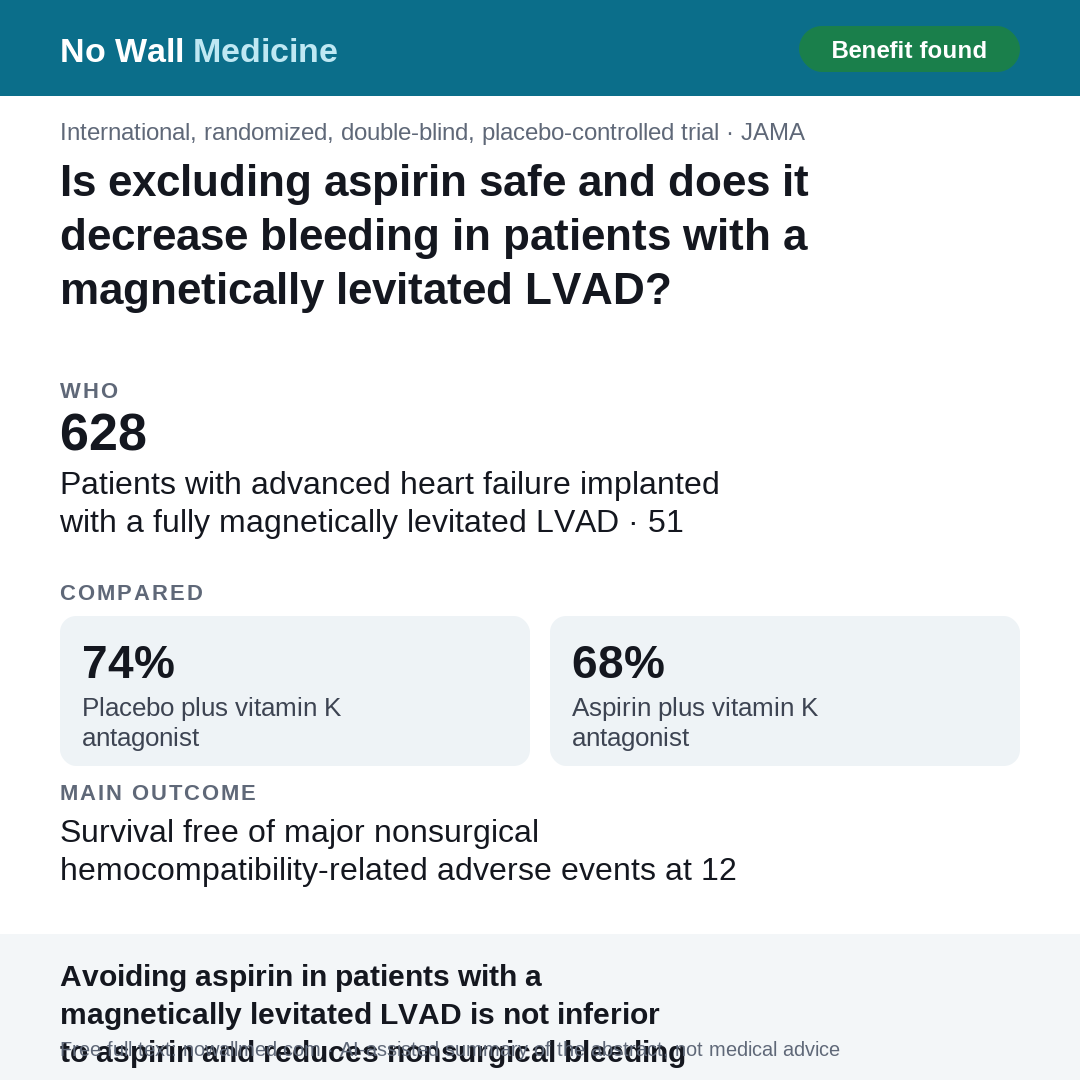
Aspirin and Hemocompatibility Events With a Left Ventricular Assist Device in Advanced Heart Failure: The ARIES-HM3 Randomized Clinical Trial
International, randomized, double-blind, placebo-controlled trialBenefit found
Is excluding aspirin safe and does it decrease bleeding in patients with a magnetically levitated LVAD?
Who
628
Patients with advanced heart failure implanted with a fully magnetically levitated LVAD · 51 centers across 9 countries
Compared
74%Placebo plus vitamin K antagonist
68%Aspirin plus vitamin K antagonist
Main outcome
Survival free of major nonsurgical hemocompatibility-related adverse events at 12 months
Result: relative risk 0.66 (95% confidence limit, 0.51-0.85) for nonsurgical bleeding events
Bottom line: Avoiding aspirin in patients with a magnetically levitated LVAD is not inferior to aspirin and reduces nonsurgical bleeding events.
JAMA · 2023-11-11Download image
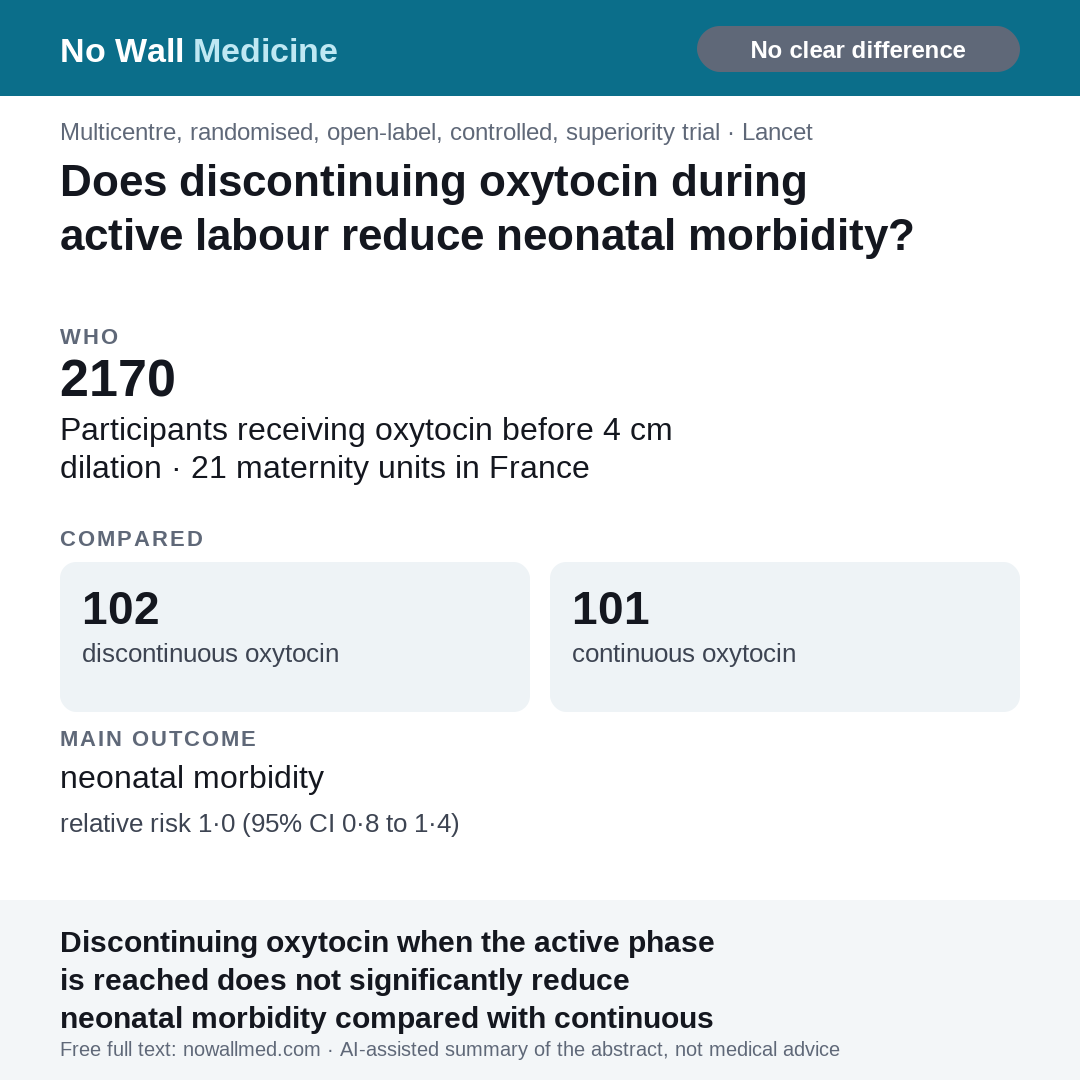
Impact of discontinuing oxytocin in active labour on neonatal morbidity: an open-label, multicentre, randomised trial
Multicentre, randomised, open-label, controlled, superiority trialNo clear difference
Does discontinuing oxytocin during active labour reduce neonatal morbidity?
Who
2170
Participants receiving oxytocin before 4 cm dilation · 21 maternity units in France
Compared
102discontinuous oxytocin (9·6%)
101continuous oxytocin (9·2%)
Main outcome
neonatal morbidity
Result: relative risk 1·0 (95% CI 0·8 to 1·4)
Bottom line: Discontinuing oxytocin when the active phase is reached does not significantly reduce neonatal morbidity compared with continuous oxytocin.
Funded by: French Ministry of Health and Assistance Publique-Hôpitaux de Paris
Lancet · 2023-11-09Download image
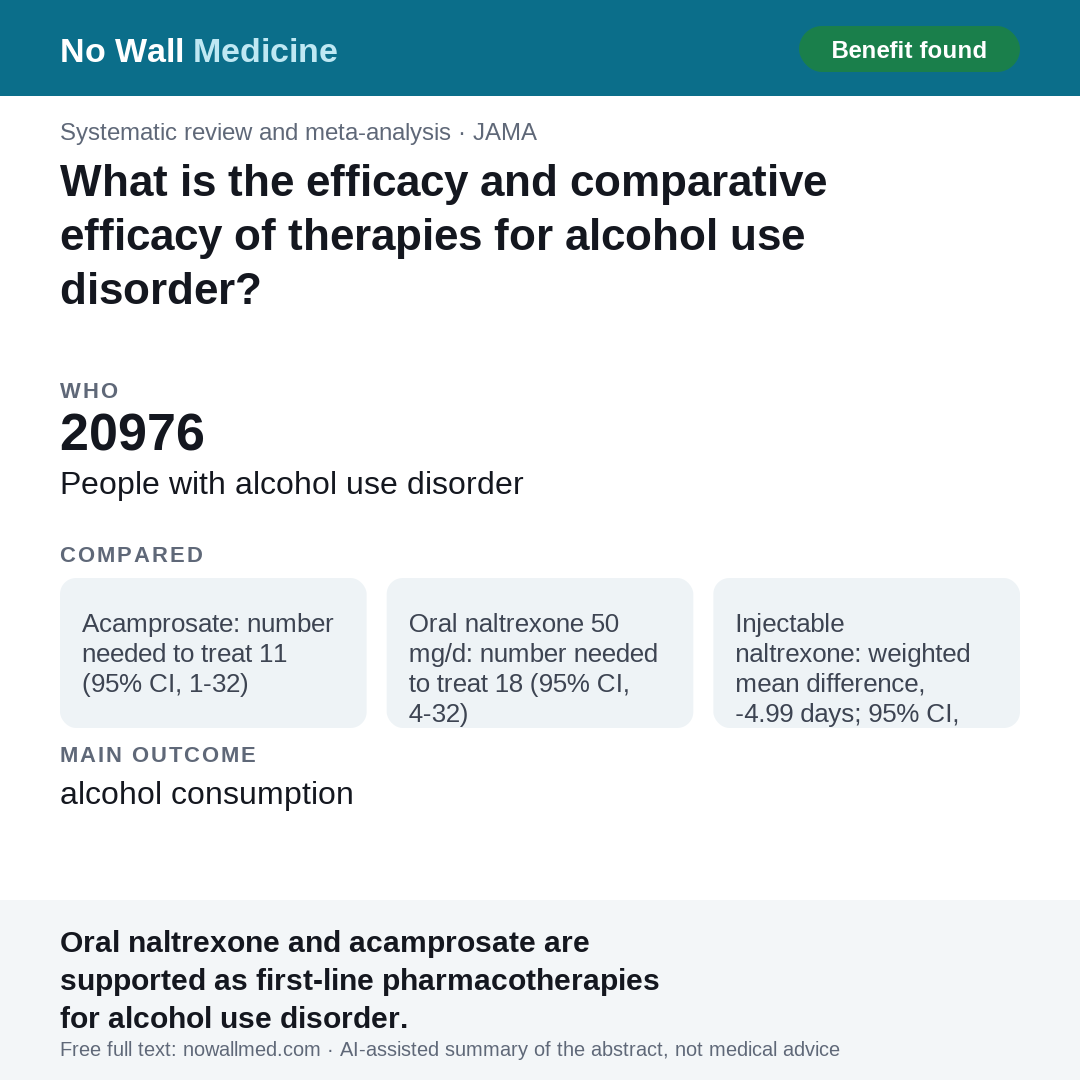
Pharmacotherapy for Alcohol Use Disorder: A Systematic Review and Meta-Analysis
Systematic review and meta-analysisBenefit found
What is the efficacy and comparative efficacy of therapies for alcohol use disorder?
Who
20976
People with alcohol use disorder
Compared
Acamprosate: number needed to treat 11 (95% CI, 1-32)
Oral naltrexone 50 mg/d: number needed to treat 18 (95% CI, 4-32)
Injectable naltrexone: weighted mean difference, -4.99 days; 95% CI, -9.49 to -0.49 days
Main outcome
alcohol consumption
Bottom line: Oral naltrexone and acamprosate are supported as first-line pharmacotherapies for alcohol use disorder.
JAMA · 2023-11-07Download image
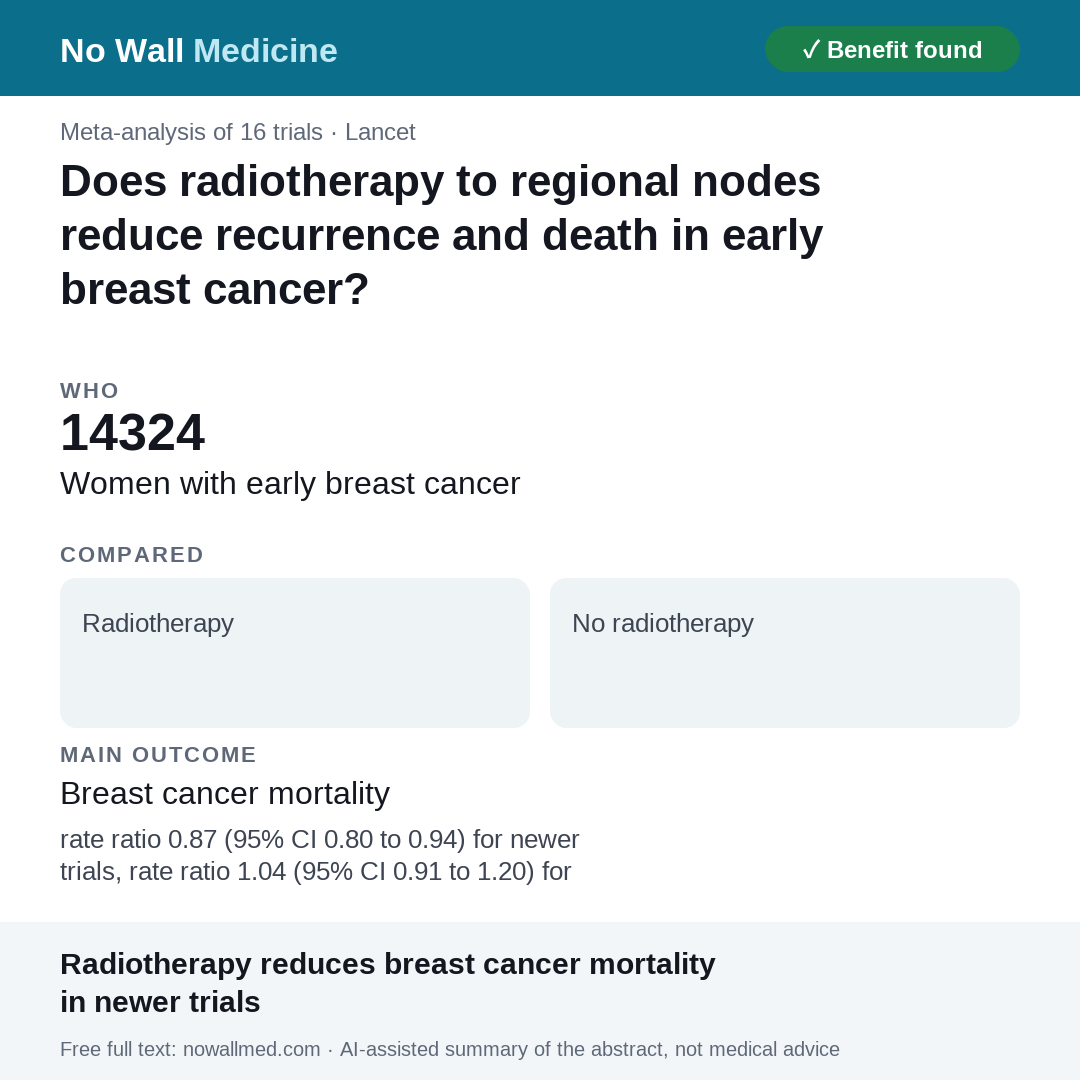
Radiotherapy to regional nodes in early breast cancer: an individual patient data meta-analysis of 14 324 women in 16 trials
Meta-analysis of 16 trialsBenefit found
Does radiotherapy to regional nodes reduce recurrence and death in early breast cancer?
Who
14324
Women with early breast cancer
Compared
Radiotherapy
No radiotherapy
Main outcome
Breast cancer mortality
Result: rate ratio 0.87 (95% CI 0.80 to 0.94) for newer trials, rate ratio 1.04 (95% CI 0.91 to 1.20) for older trials
Bottom line: Radiotherapy reduces breast cancer mortality in newer trials
Funded by: Cancer Research UK, Medical Research Council
Lancet · 2023-11-03Download image
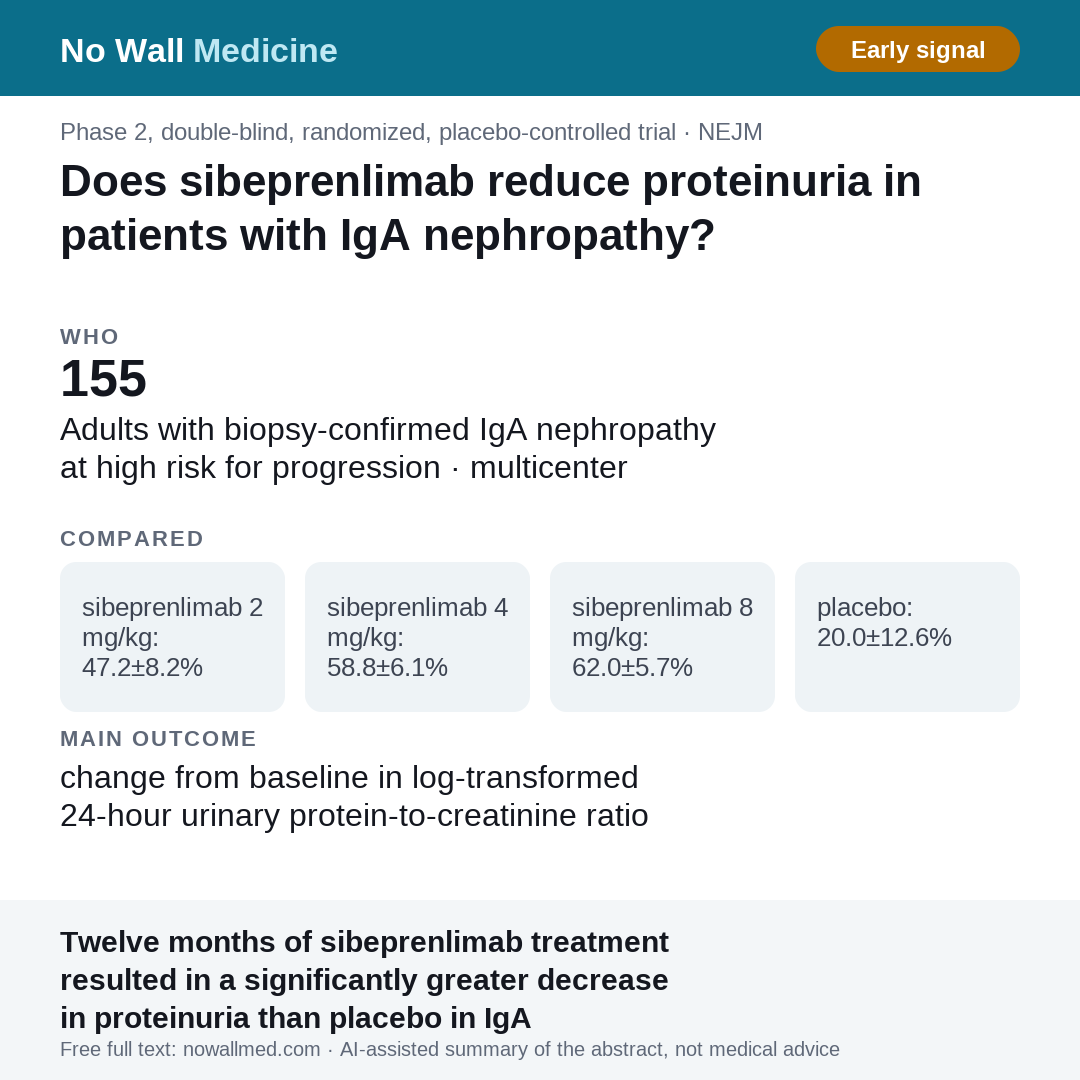
A Phase 2 Trial of Sibeprenlimab in Patients with IgA Nephropathy
Phase 2, double-blind, randomized, placebo-controlled trialBenefit found
Does sibeprenlimab reduce proteinuria in patients with IgA nephropathy?
Who
155
Adults with biopsy-confirmed IgA nephropathy at high risk for progression · multicenter
Compared
sibeprenlimab 2 mg/kg: 47.2±8.2%
sibeprenlimab 4 mg/kg: 58.8±6.1%
sibeprenlimab 8 mg/kg: 62.0±5.7%
placebo: 20.0±12.6%
Main outcome
change from baseline in log-transformed 24-hour urinary protein-to-creatinine ratio
Bottom line: Twelve months of sibeprenlimab treatment resulted in a significantly greater decrease in proteinuria than placebo in IgA nephropathy.
Funded by: Visterra
NEJM · 2023-11-02Download image
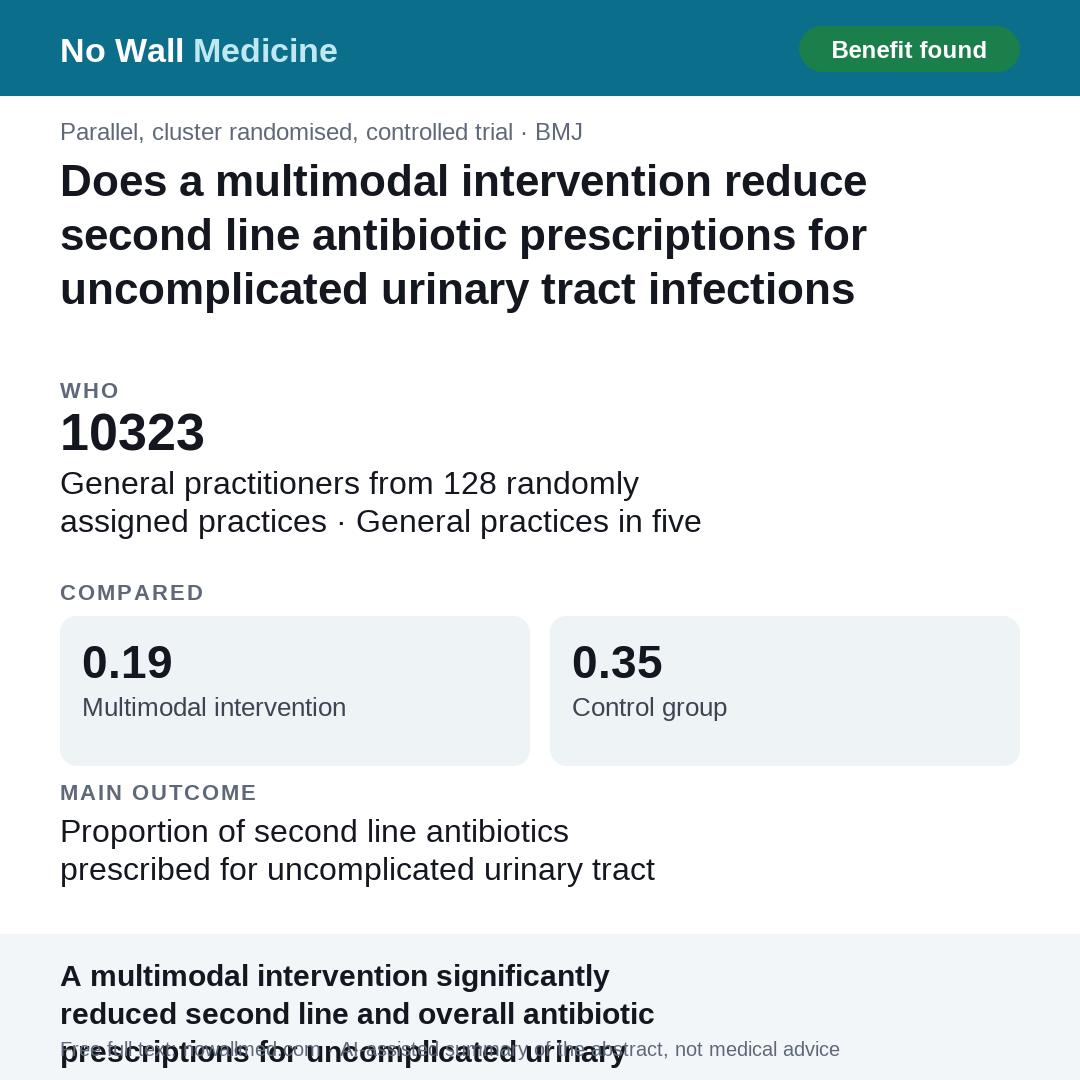
Effects of a multimodal intervention in primary care to reduce second line antibiotic prescriptions for urinary tract infections in women: parallel, cluster randomised, controlled trial
Parallel, cluster randomised, controlled trialBenefit found
Does a multimodal intervention reduce second line antibiotic prescriptions for uncomplicated urinary tract infections in women?
Who
10323
General practitioners from 128 randomly assigned practices · General practices in five regions in Germany
Compared
0.19Multimodal intervention (standard deviation 0.20)
0.35Control group (0.25)
Main outcome
Proportion of second line antibiotics prescribed for uncomplicated urinary tract infections
Result: -0.13 (95% confidence interval -0.21 to -0.06)
Bottom line: A multimodal intervention significantly reduced second line and overall antibiotic prescriptions for uncomplicated urinary tract infections in women.
BMJ · 2023-11-02Download image
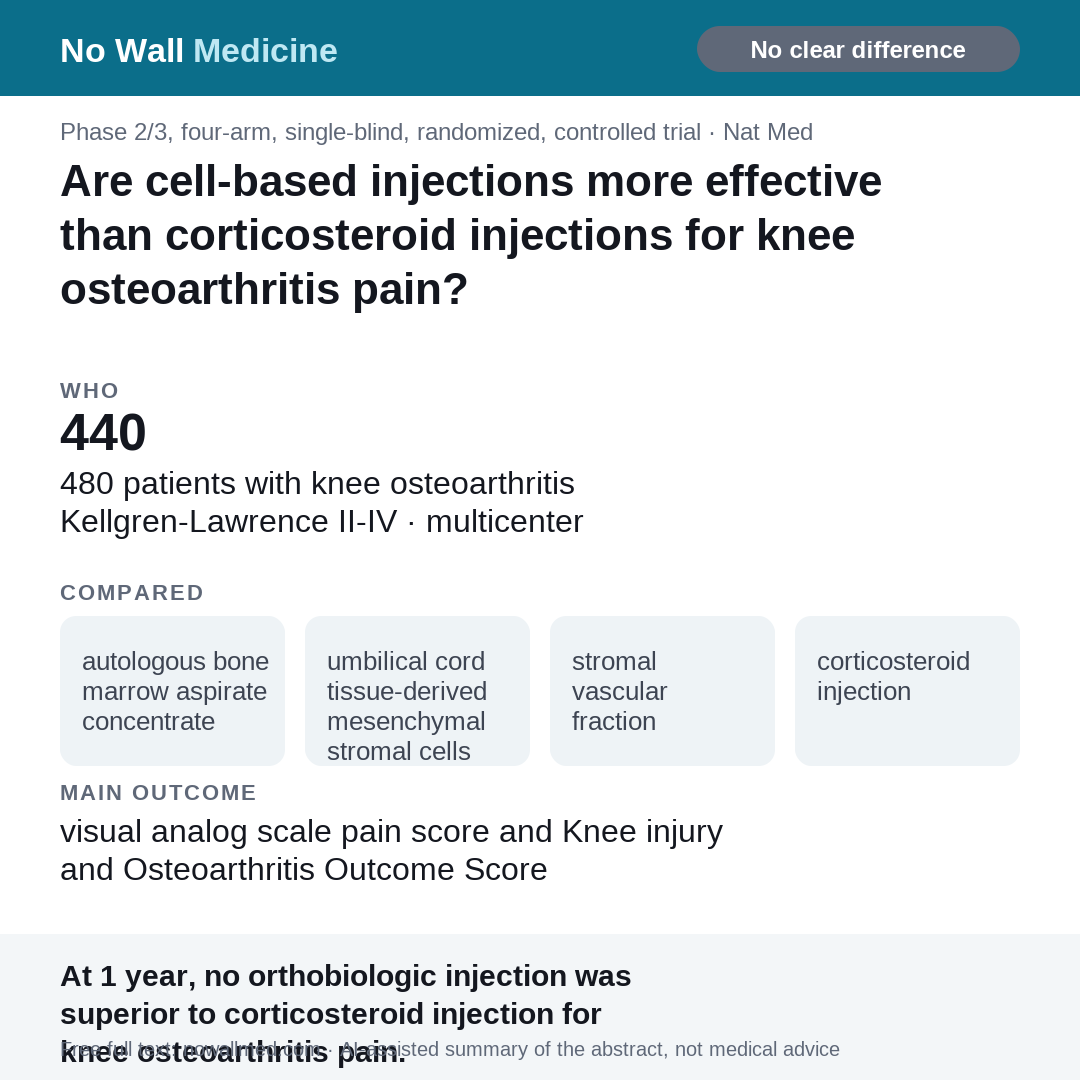
Cell-based versus corticosteroid injections for knee pain in osteoarthritis: a randomized phase 3 trial
Phase 2/3, four-arm, single-blind, randomized, controlled trialNo clear difference
Are cell-based injections more effective than corticosteroid injections for knee osteoarthritis pain?
Who
440
480 patients with knee osteoarthritis Kellgren-Lawrence II-IV · multicenter
Compared
autologous bone marrow aspirate concentrate
umbilical cord tissue-derived mesenchymal stromal cells
stromal vascular fraction
corticosteroid injection
Main outcome
visual analog scale pain score and Knee injury and Osteoarthritis Outcome Score
Bottom line: At 1 year, no orthobiologic injection was superior to corticosteroid injection for knee osteoarthritis pain.
Nat Med · 2023-11-02Download image
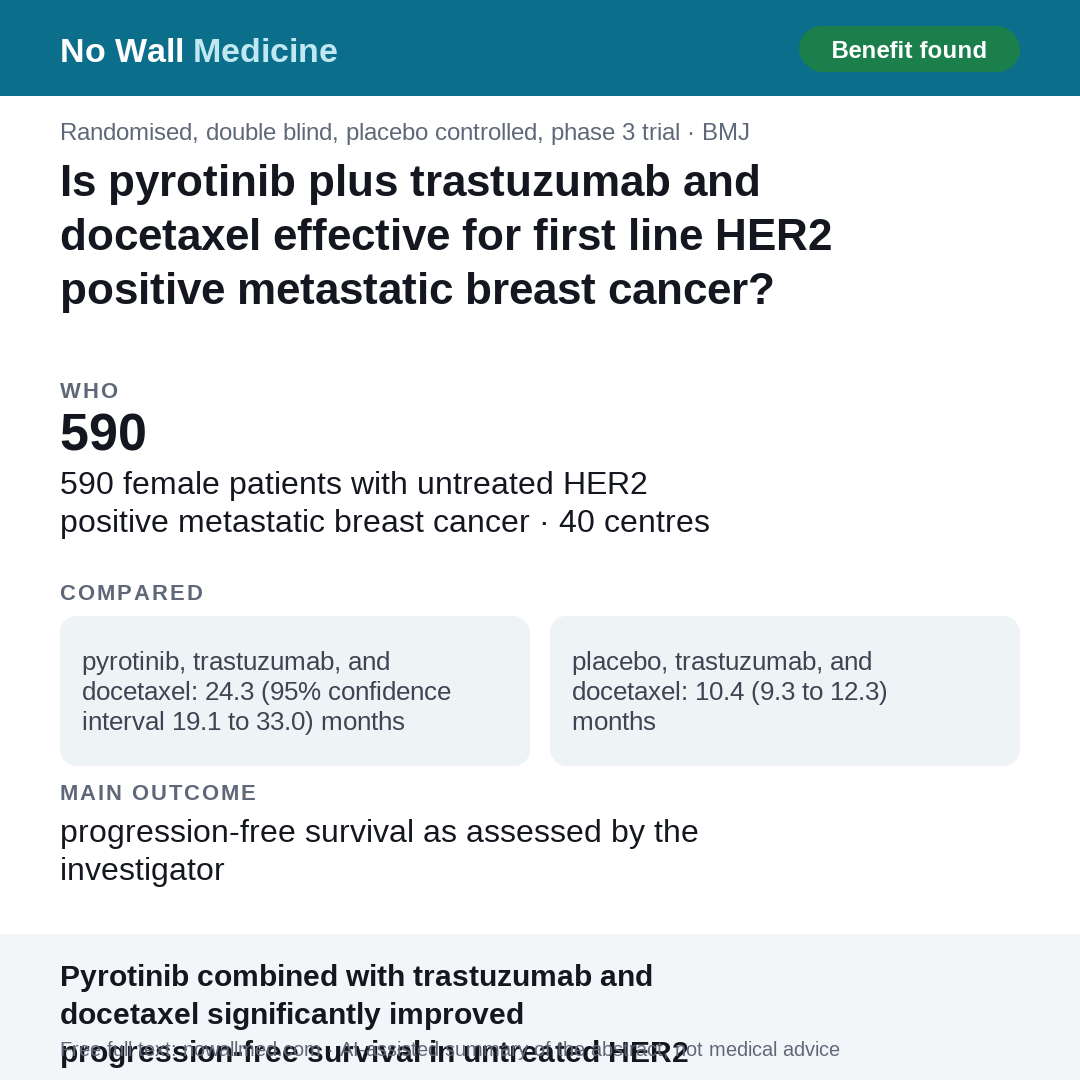
Pyrotinib versus placebo in combination with trastuzumab and docetaxel as first line treatment in patients with HER2 positive metastatic breast cancer (PHILA): randomised, double blind, multicentre, phase 3 trial
Randomised, double blind, placebo controlled, phase 3 trialBenefit found
Is pyrotinib plus trastuzumab and docetaxel effective for first line HER2 positive metastatic breast cancer?
Who
590
590 female patients with untreated HER2 positive metastatic breast cancer · 40 centres in China
Compared
pyrotinib, trastuzumab, and docetaxel: 24.3 (95% confidence interval 19.1 to 33.0) months
placebo, trastuzumab, and docetaxel: 10.4 (9.3 to 12.3) months
Main outcome
progression-free survival as assessed by the investigator
Result: hazard ratio 0.41 (95% confidence interval 0.32 to 0.53)
Bottom line: Pyrotinib combined with trastuzumab and docetaxel significantly improved progression-free survival in untreated HER2 positive metastatic breast cancer.
BMJ · 2023-10-31Download image
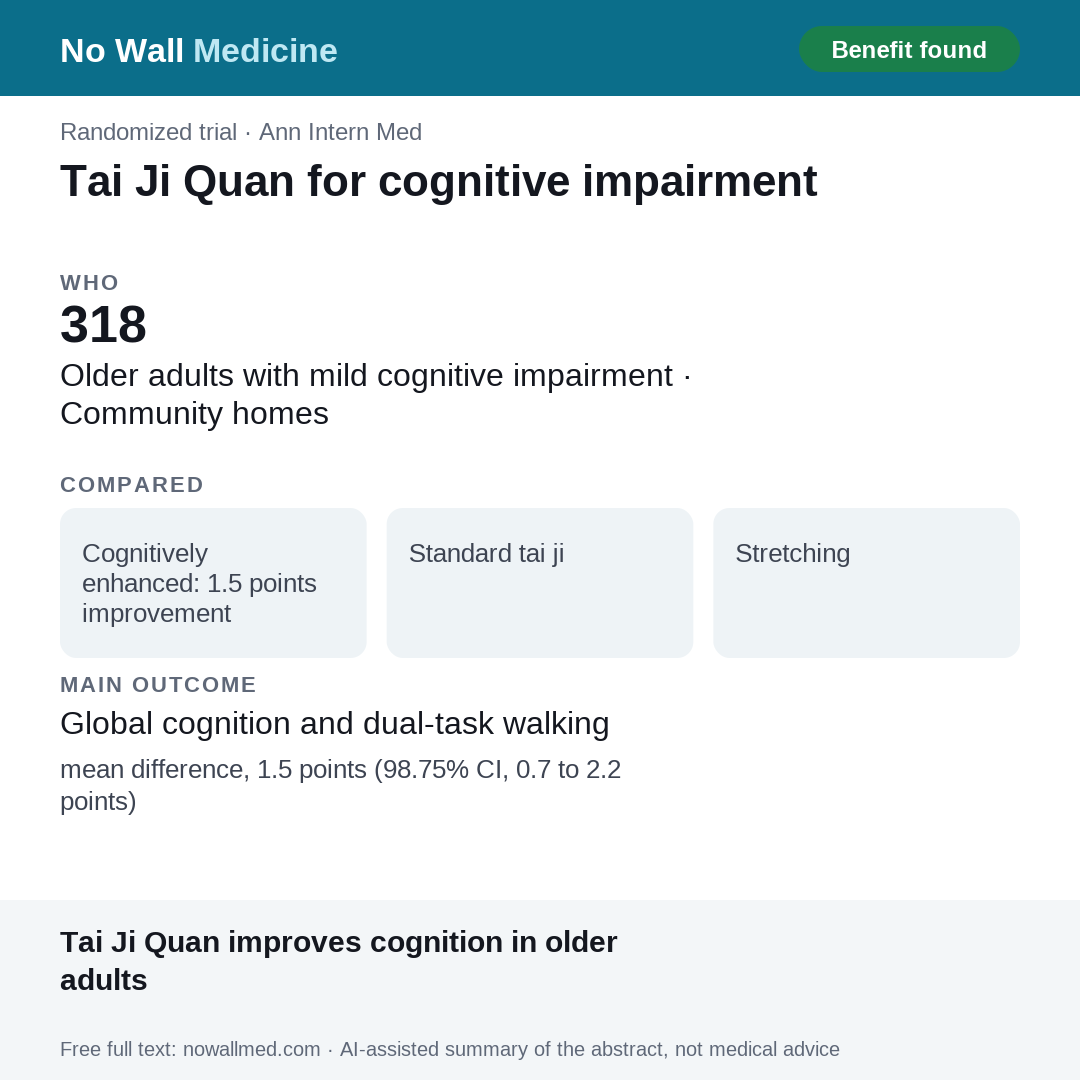
Clinical Effectiveness of Cognitively Enhanced Tai Ji Quan Training on Global Cognition and Dual-Task Performance During Walking in Older Adults With Mild Cognitive Impairment or Self-Reported Memory Concerns : A Randomized Controlled Trial
Randomized trialBenefit found
Tai Ji Quan for cognitive impairment
Who
318
Older adults with mild cognitive impairment · Community homes
Compared
Cognitively enhanced: 1.5 points improvement
Standard tai ji
Stretching
Main outcome
Global cognition and dual-task walking
Result: mean difference, 1.5 points (98.75% CI, 0.7 to 2.2 points)
Bottom line: Tai Ji Quan improves cognition in older adults
Limitation: No nonexercise control group
Funded by: National Institute on Aging
Ann Intern Med · 2023-10-31Download image
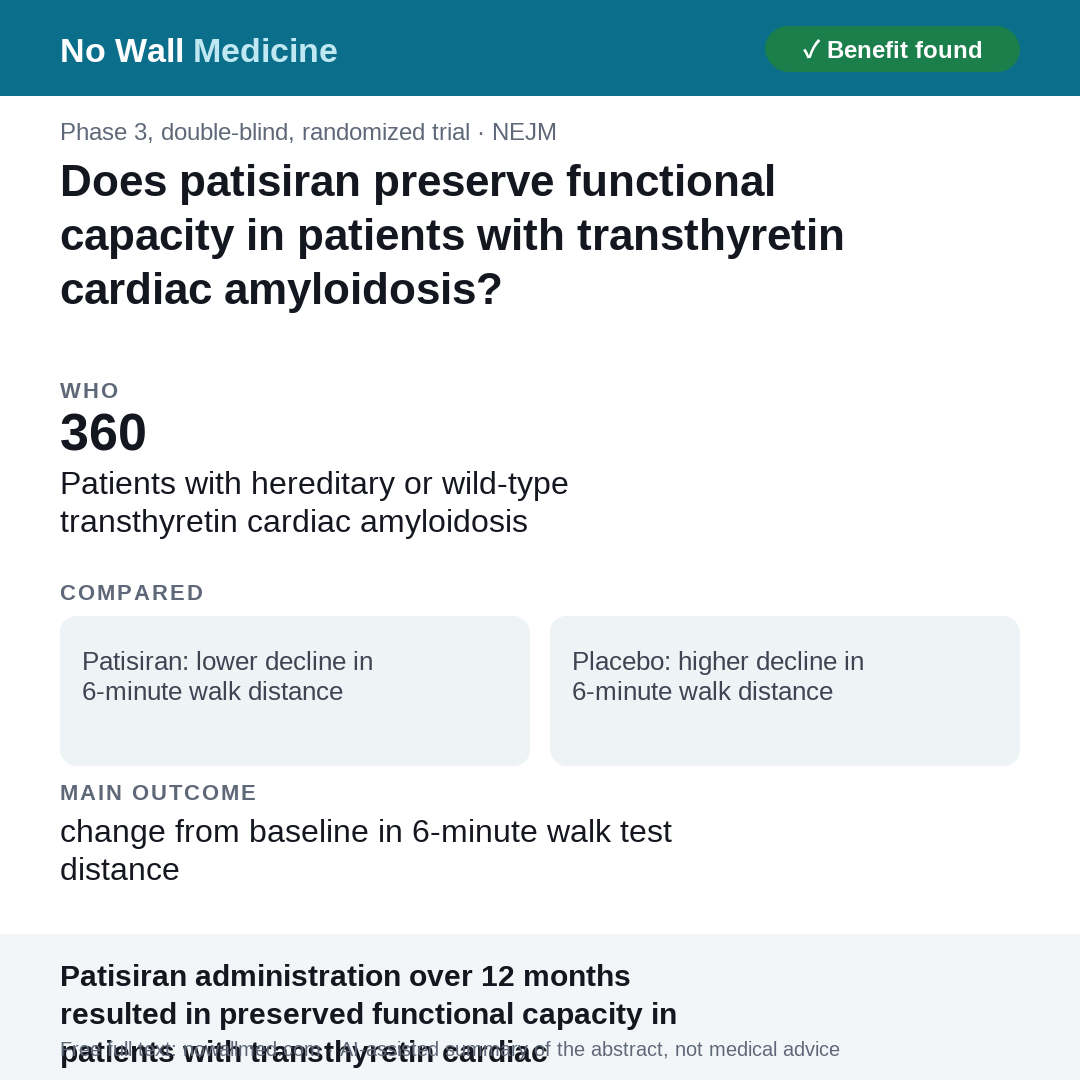
Patisiran Treatment in Patients with Transthyretin Cardiac Amyloidosis
Phase 3, double-blind, randomized trialBenefit found
Does patisiran preserve functional capacity in patients with transthyretin cardiac amyloidosis?
Who
360
Patients with hereditary or wild-type transthyretin cardiac amyloidosis
Compared
Patisiran: lower decline in 6-minute walk distance
Placebo: higher decline in 6-minute walk distance
Main outcome
change from baseline in 6-minute walk test distance
Result: Hodges-Lehmann estimate of median difference, 14.69 m; 95% CI, 0.69 to 28.69
Bottom line: Patisiran administration over 12 months resulted in preserved functional capacity in patients with transthyretin cardiac amyloidosis.
Funded by: Alnylam Pharmaceuticals
NEJM · 2023-10-27Download image
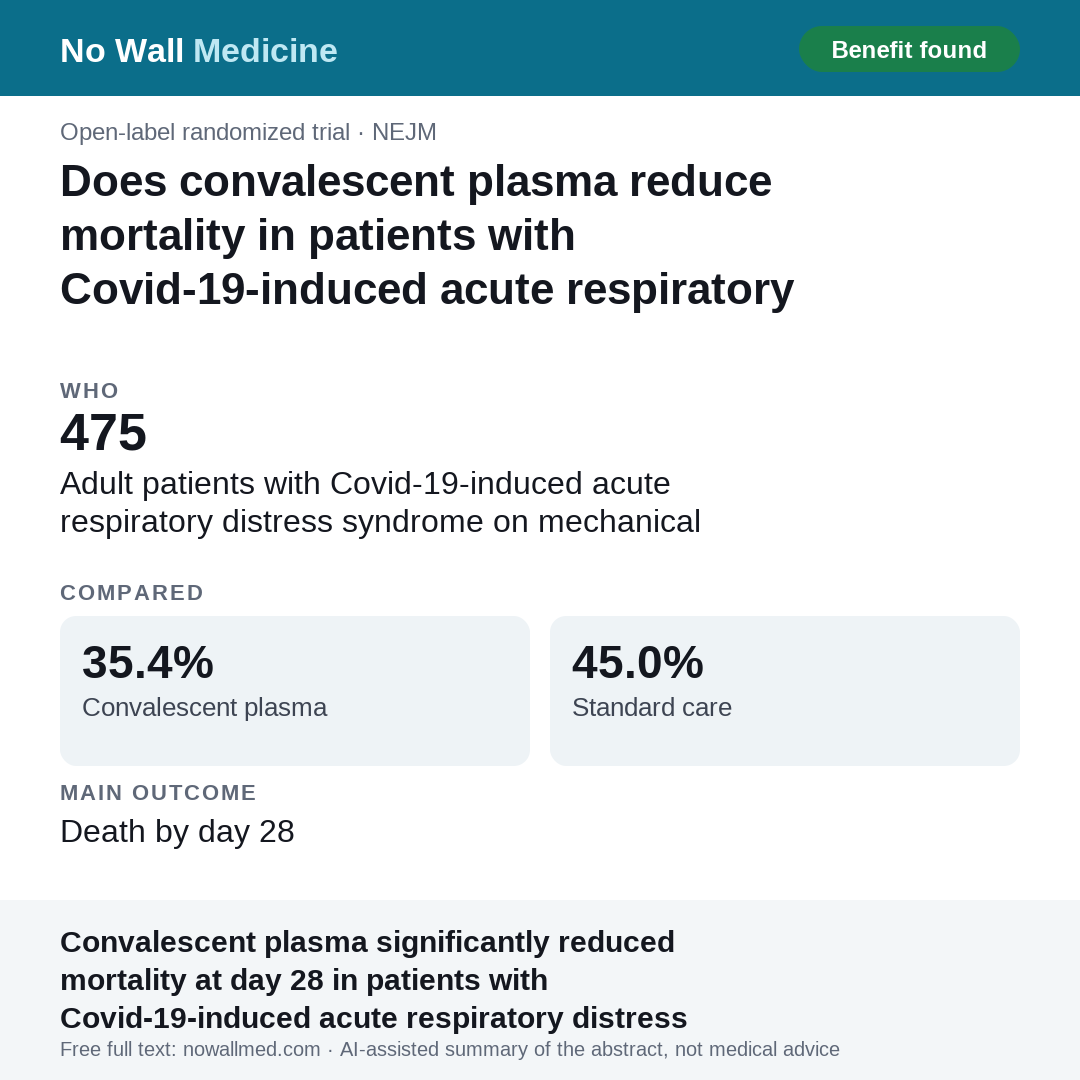
Convalescent Plasma for Covid-19-Induced ARDS in Mechanically Ventilated Patients
Open-label randomized trialBenefit found
Does convalescent plasma reduce mortality in patients with Covid-19-induced acute respiratory distress syndrome?
Who
475
Adult patients with Covid-19-induced acute respiratory distress syndrome on mechanical ventilation
Compared
35.4%Convalescent plasma
45.0%Standard care
Main outcome
Death by day 28
Bottom line: Convalescent plasma significantly reduced mortality at day 28 in patients with Covid-19-induced acute respiratory distress syndrome.
Funded by: Belgian Health Care Knowledge Center
NEJM · 2023-10-25Download image
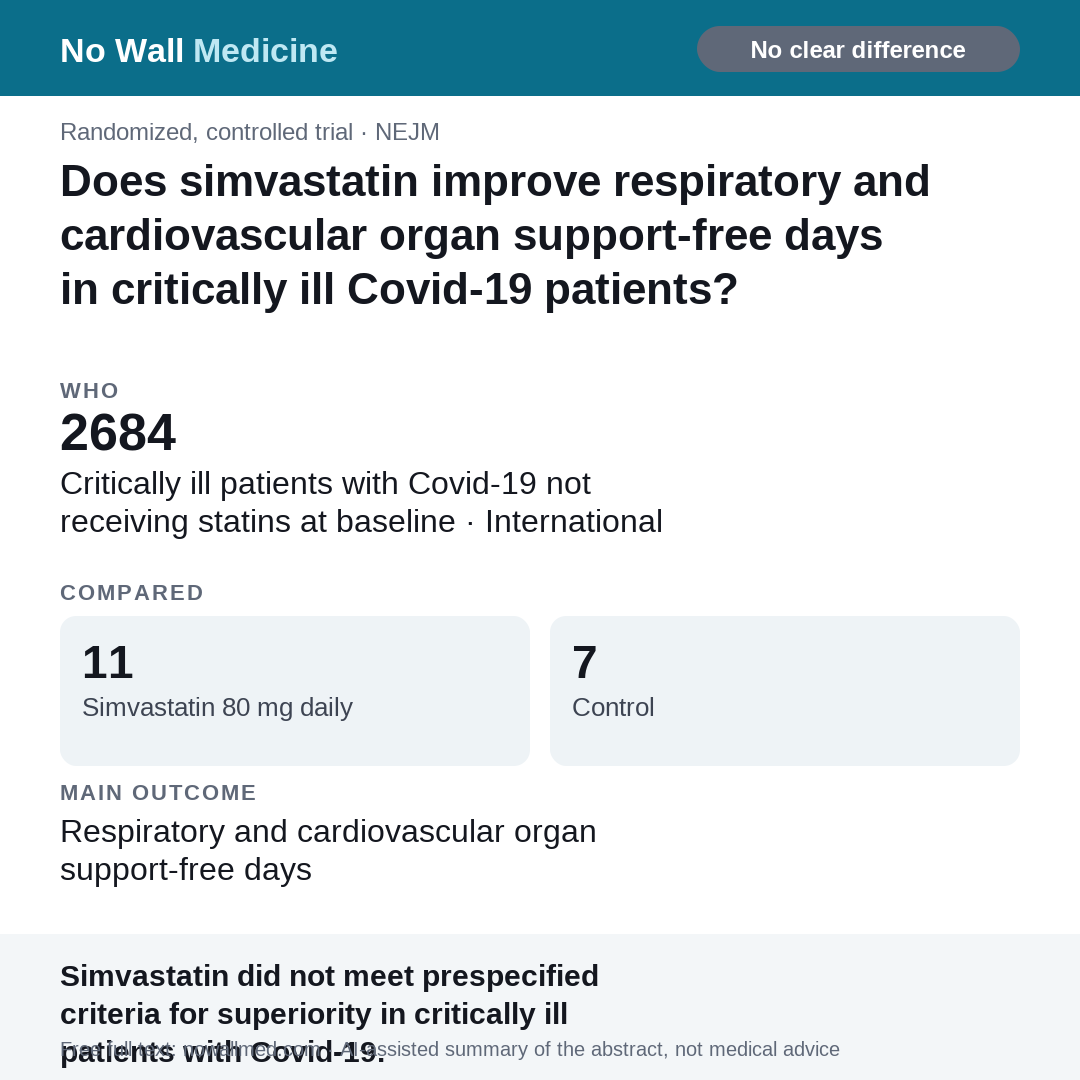
Simvastatin in Critically Ill Patients with Covid-19
Randomized, controlled trialNo clear difference
Does simvastatin improve respiratory and cardiovascular organ support-free days in critically ill Covid-19 patients?
Who
2684
Critically ill patients with Covid-19 not receiving statins at baseline · International
Compared
11Simvastatin 80 mg daily (interquartile range, -1 to 17)
7Control (interquartile range, -1 to 16)
Main outcome
Respiratory and cardiovascular organ support-free days
Result: posterior median adjusted odds ratio 1.15 (95% credible interval, 0.98 to 1.34)
Bottom line: Simvastatin did not meet prespecified criteria for superiority in critically ill patients with Covid-19.
NEJM · 2023-10-25Download image
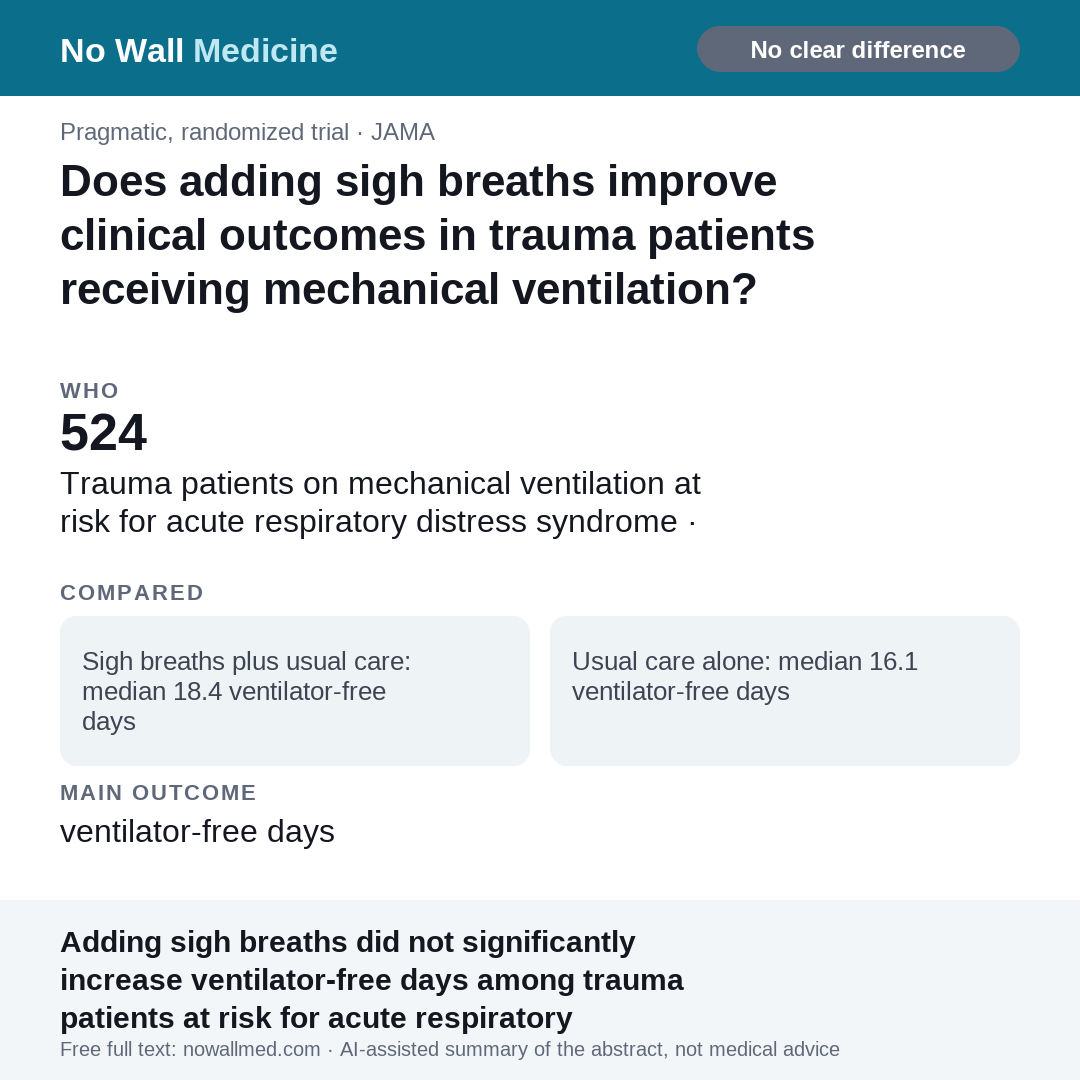
Sigh Ventilation in Patients With Trauma: The SiVent Randomized Clinical Trial
Pragmatic, randomized trialNo clear difference
Does adding sigh breaths improve clinical outcomes in trauma patients receiving mechanical ventilation?
Who
524
Trauma patients on mechanical ventilation at risk for acute respiratory distress syndrome · 15 academic trauma centers in the US
Compared
Sigh breaths plus usual care: median 18.4 ventilator-free days
Usual care alone: median 16.1 ventilator-free days
Main outcome
ventilator-free days
Result: adjusted mean difference 1.4 days (95% CI, -0.2 to 3.0)
Bottom line: Adding sigh breaths did not significantly increase ventilator-free days among trauma patients at risk for acute respiratory distress syndrome.
JAMA · 2023-10-25Download image
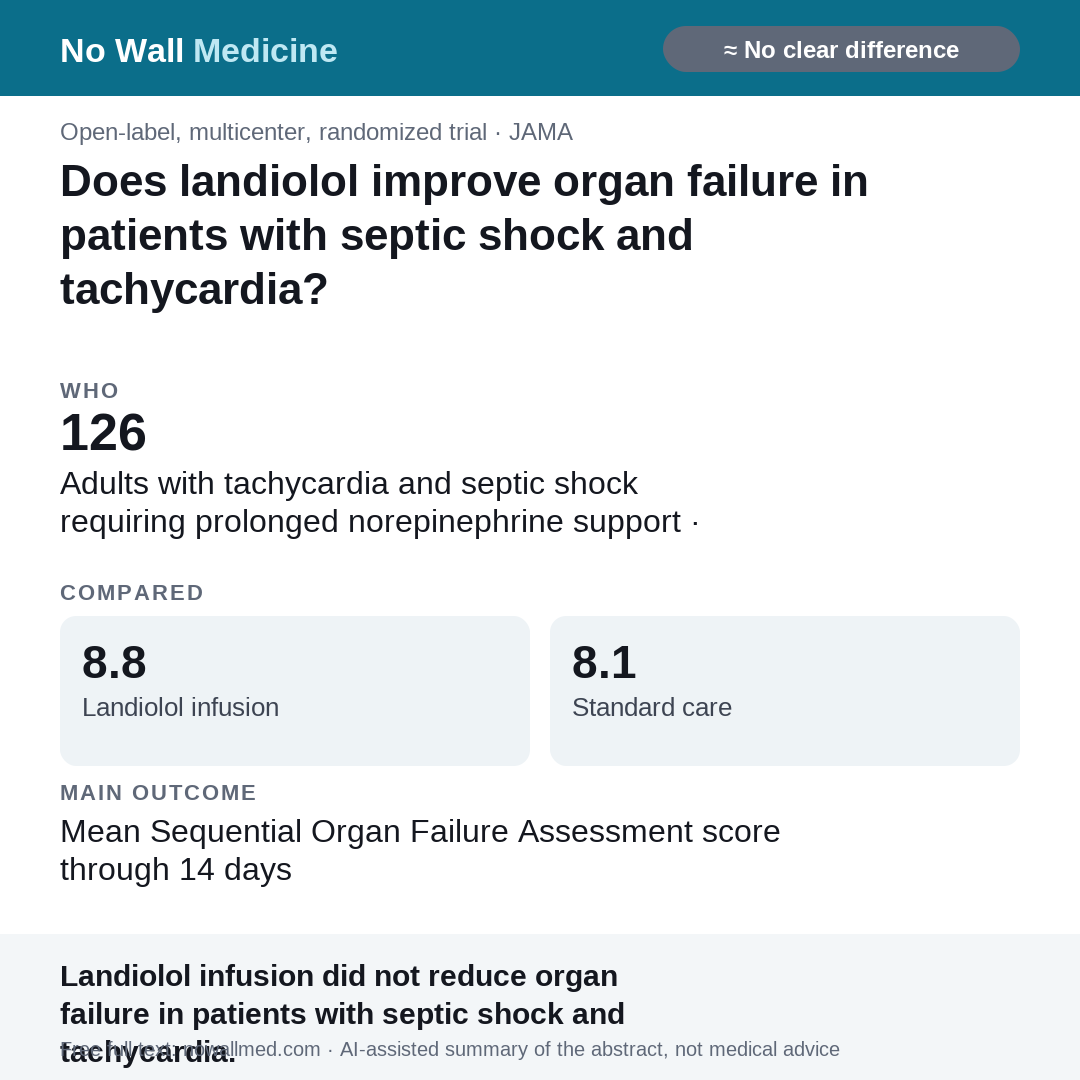
Landiolol and Organ Failure in Patients With Septic Shock: The STRESS-L Randomized Clinical Trial
Open-label, multicenter, randomized trialNo clear difference
Does landiolol improve organ failure in patients with septic shock and tachycardia?
Who
126
Adults with tachycardia and septic shock requiring prolonged norepinephrine support · 40 UK National Health Service intensive care units
Compared
8.8Landiolol infusion (3.9)
8.1Standard care (3.2)
Main outcome
Mean Sequential Organ Failure Assessment score through 14 days
Result: mean difference 0.75 (95% CI -0.49 to 2.0)
Bottom line: Landiolol infusion did not reduce organ failure in patients with septic shock and tachycardia.
JAMA · 2023-10-25Download image
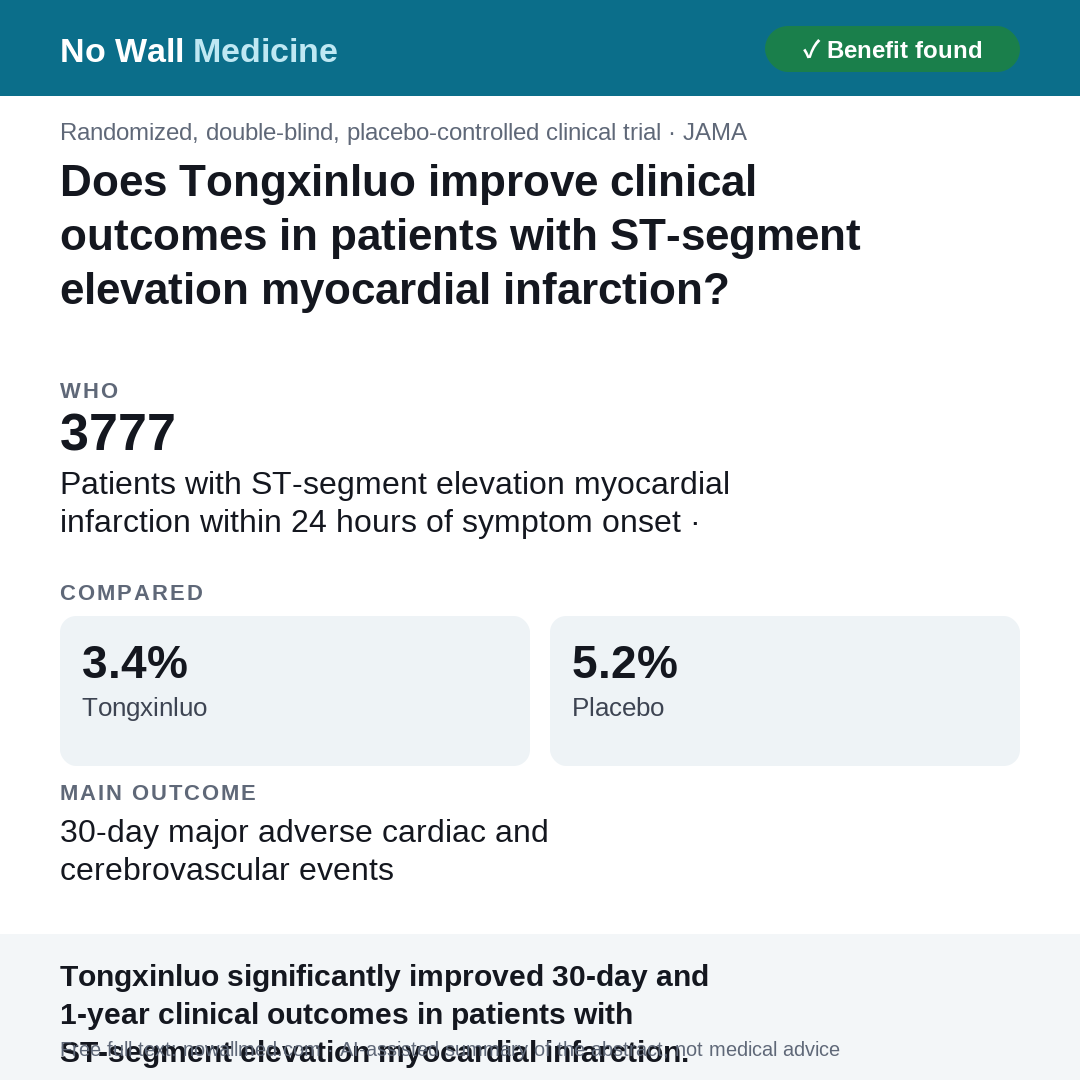
Traditional Chinese Medicine Compound (Tongxinluo) and Clinical Outcomes of Patients With Acute Myocardial Infarction: The CTS-AMI Randomized Clinical Trial
Randomized, double-blind, placebo-controlled clinical trialBenefit found
Does Tongxinluo improve clinical outcomes in patients with ST-segment elevation myocardial infarction?
Who
3777
Patients with ST-segment elevation myocardial infarction within 24 hours of symptom onset · 124 hospitals in China
Compared
3.4%Tongxinluo
5.2%Placebo
Main outcome
30-day major adverse cardiac and cerebrovascular events
Result: relative risk 0.64 (95% CI 0.47 to 0.88)
Bottom line: Tongxinluo significantly improved 30-day and 1-year clinical outcomes in patients with ST-segment elevation myocardial infarction.
JAMA · 2023-10-24Download image
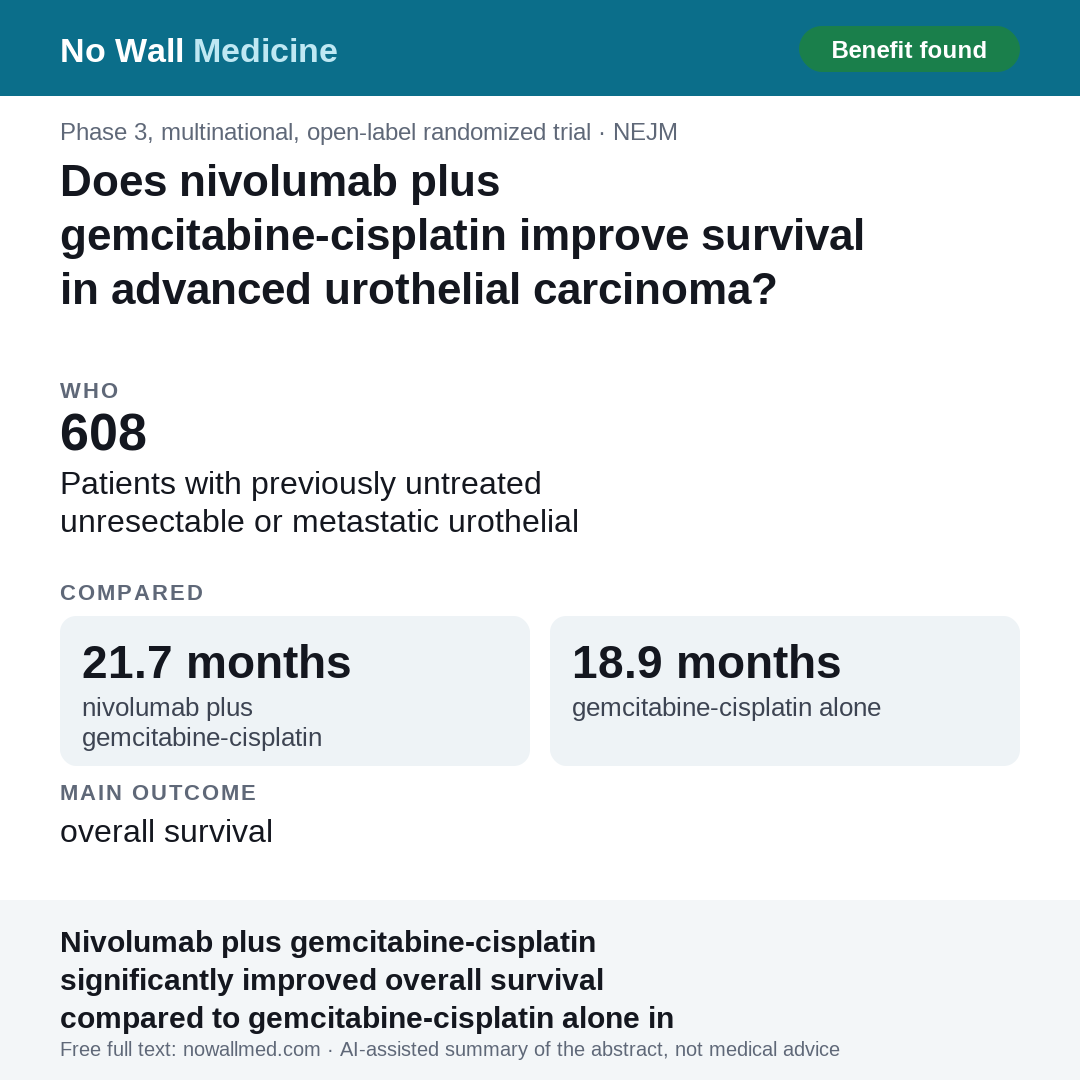
Nivolumab plus Gemcitabine-Cisplatin in Advanced Urothelial Carcinoma
Phase 3, multinational, open-label randomized trialBenefit found
Does nivolumab plus gemcitabine-cisplatin improve survival in advanced urothelial carcinoma?
Who
608
Patients with previously untreated unresectable or metastatic urothelial carcinoma · multinational
Compared
21.7 monthsnivolumab plus gemcitabine-cisplatin
18.9 monthsgemcitabine-cisplatin alone
Main outcome
overall survival
Result: hazard ratio 0.78 (95% CI 0.63 to 0.96)
Bottom line: Nivolumab plus gemcitabine-cisplatin significantly improved overall survival compared to gemcitabine-cisplatin alone in advanced urothelial carcinoma.
Funded by: Bristol Myers Squibb and Ono Pharmaceutical
NEJM · 2023-10-22Download image
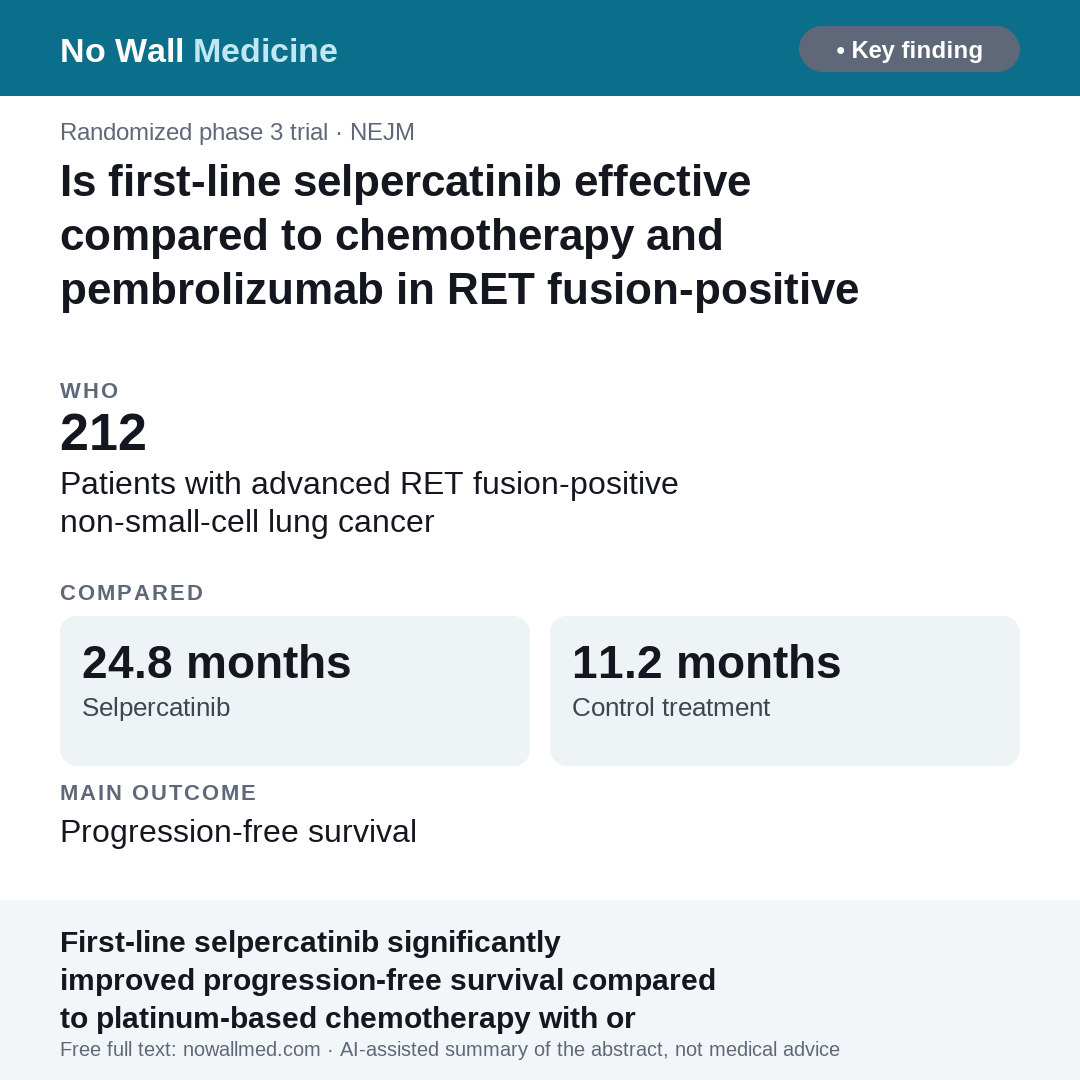
First-Line Selpercatinib or Chemotherapy and Pembrolizumab in RET Fusion-Positive NSCLC
Randomized phase 3 trialBenefit found
Is first-line selpercatinib effective compared to chemotherapy and pembrolizumab in RET fusion-positive NSCLC?
Who
212
Patients with advanced RET fusion-positive non-small-cell lung cancer
Compared
24.8 monthsSelpercatinib (95% CI, 16.9 to not estimable)
11.2 monthsControl treatment (95% CI, 8.8 to 16.8)
Main outcome
Progression-free survival
Result: hazard ratio 0.46 (95% CI, 0.31 to 0.70)
Bottom line: First-line selpercatinib significantly improved progression-free survival compared to platinum-based chemotherapy with or without pembrolizumab.
Funded by: Eli Lilly and others
NEJM · 2023-10-21Download image
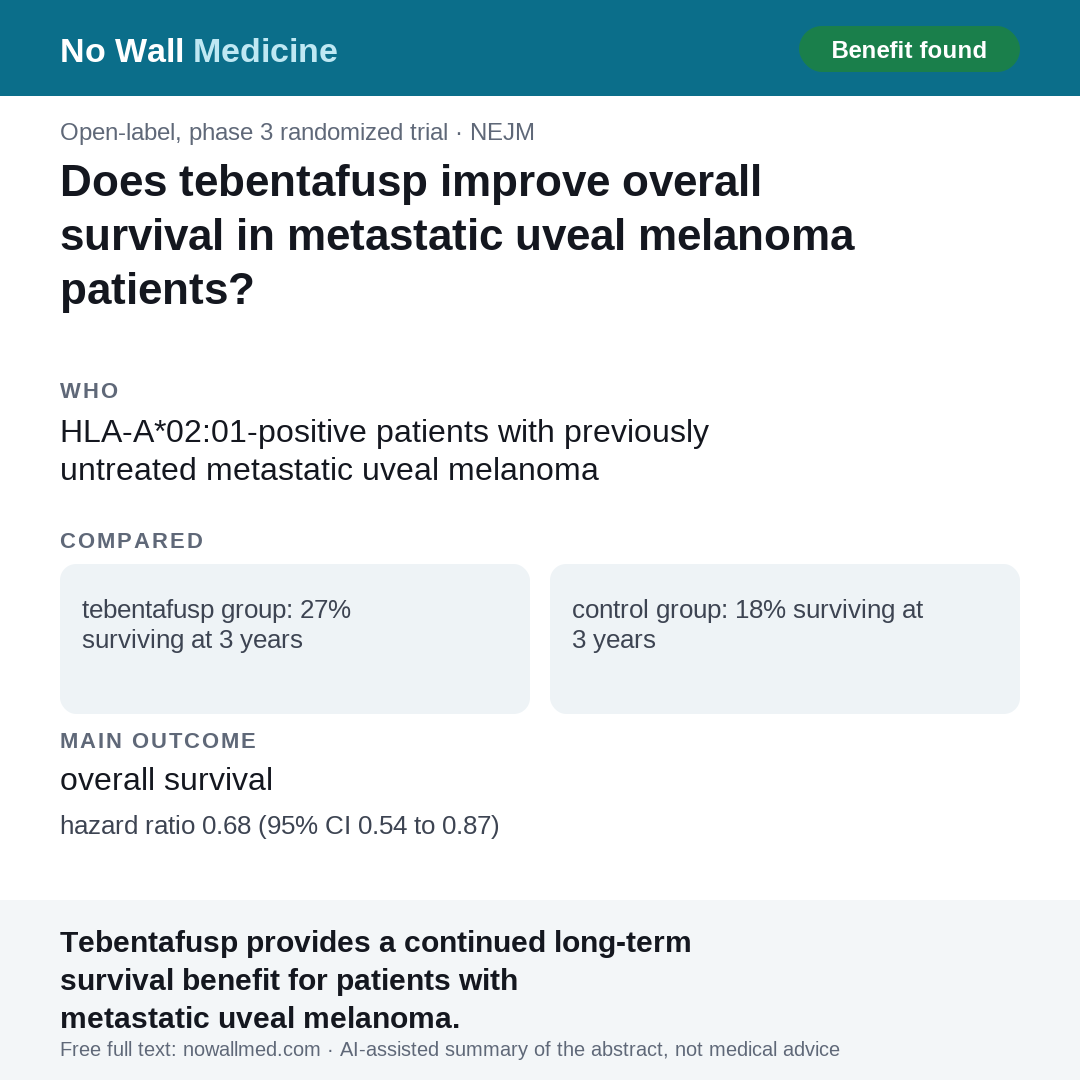
Three-Year Overall Survival with Tebentafusp in Metastatic Uveal Melanoma
Open-label, phase 3 randomized trialBenefit found
Does tebentafusp improve overall survival in metastatic uveal melanoma patients?
Who
HLA-A*02:01-positive patients with previously untreated metastatic uveal melanoma
Compared
tebentafusp group: 27% surviving at 3 years
control group: 18% surviving at 3 years
Main outcome
overall survival
Result: hazard ratio 0.68 (95% CI 0.54 to 0.87)
Bottom line: Tebentafusp provides a continued long-term survival benefit for patients with metastatic uveal melanoma.
Funded by: Immunocore
NEJM · 2023-10-21Download image