Visual abstracts
New randomized trials and meta-analyses from leading journals at a glance: who was studied, what was compared, and what was found. Every paper is free to read in full.
All specialtiesCardiology 4877Oncology 4138Gastroenterology & Hepatology 1942Infectious Disease 3837Neurology 1905Psychiatry & Mental Health 2273Pulmonology 2143Critical Care 1365Endocrinology & Diabetes 2580Pediatrics 2980Surgery 2559Orthopedics & Sports Medicine 931Neurosurgery 537Cardiothoracic & Vascular Surgery 674Plastic & Reconstructive Surgery 591Nephrology 1133Rheumatology 823Hematology 1109Dermatology 621Ophthalmology 543Obstetrics & Gynecology 1686Public & Global Health 1058Radiology & Imaging 648Anesthesiology 986Urology 764ENT (Otolaryngology) 503Emergency Medicine 511Allergy & Immunology 313Geriatrics 981Family Medicine & Primary Care 562Medical Genetics & Genomics 676Pathology & Laboratory Medicine 159Physical Medicine & Rehabilitation 757Palliative Care 444Nutrition 1588Digital Health & AI 2201General Medicine 321
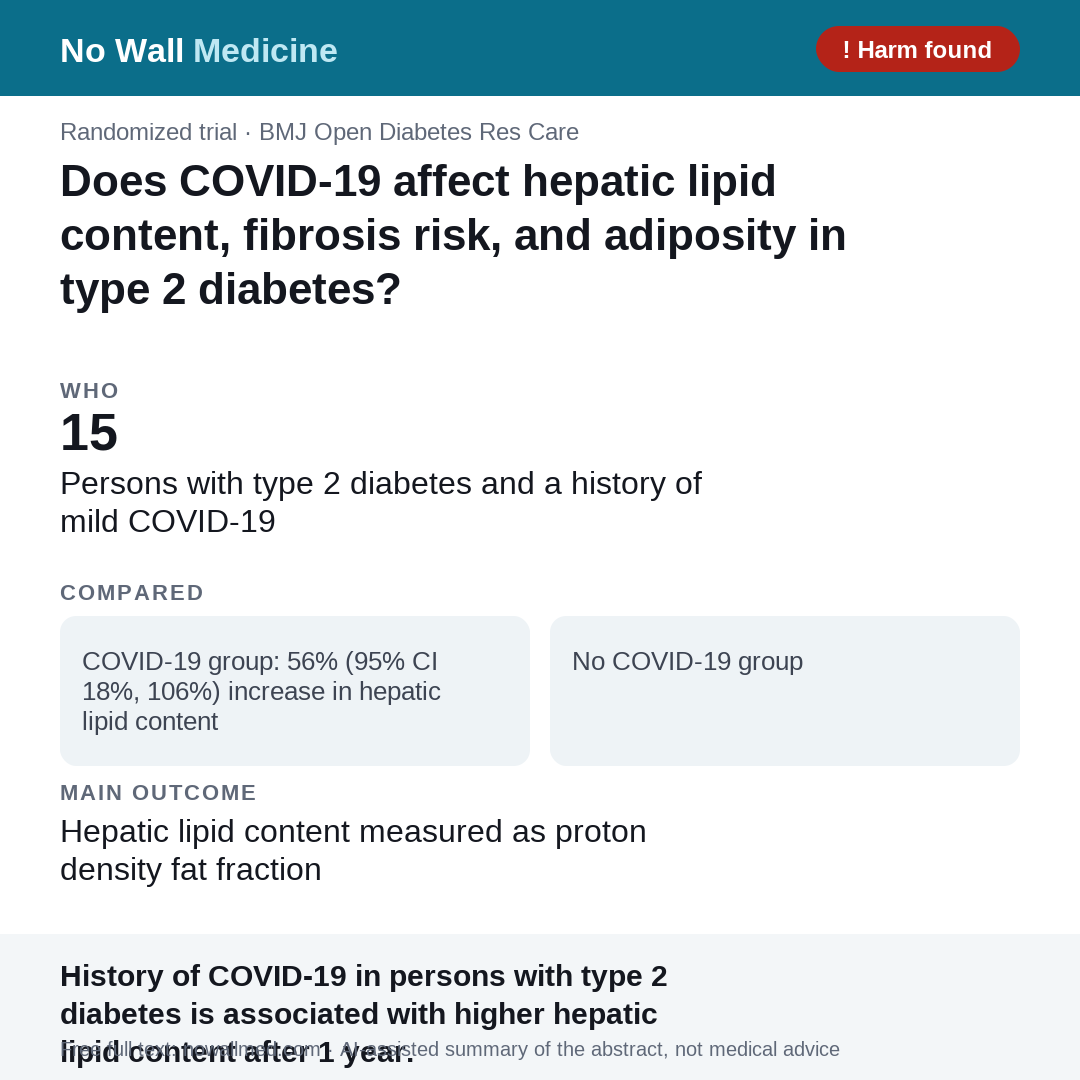
Alterations of hepatic lipid content following COVID-19 in persons with type 2 diabetes
Randomized trialHarm found
Does COVID-19 affect hepatic lipid content, fibrosis risk, and adiposity in type 2 diabetes?
Who
15
Persons with type 2 diabetes and a history of mild COVID-19
Compared
COVID-19 group: 56% (95% CI 18%, 106%) increase in hepatic lipid content
No COVID-19 group
Main outcome
Hepatic lipid content measured as proton density fat fraction
Result: 56% (95% CI 18%, 106%)
Bottom line: History of COVID-19 in persons with type 2 diabetes is associated with higher hepatic lipid content after 1 year.
BMJ Open Diabetes Res Care · 2025-02-18Download image
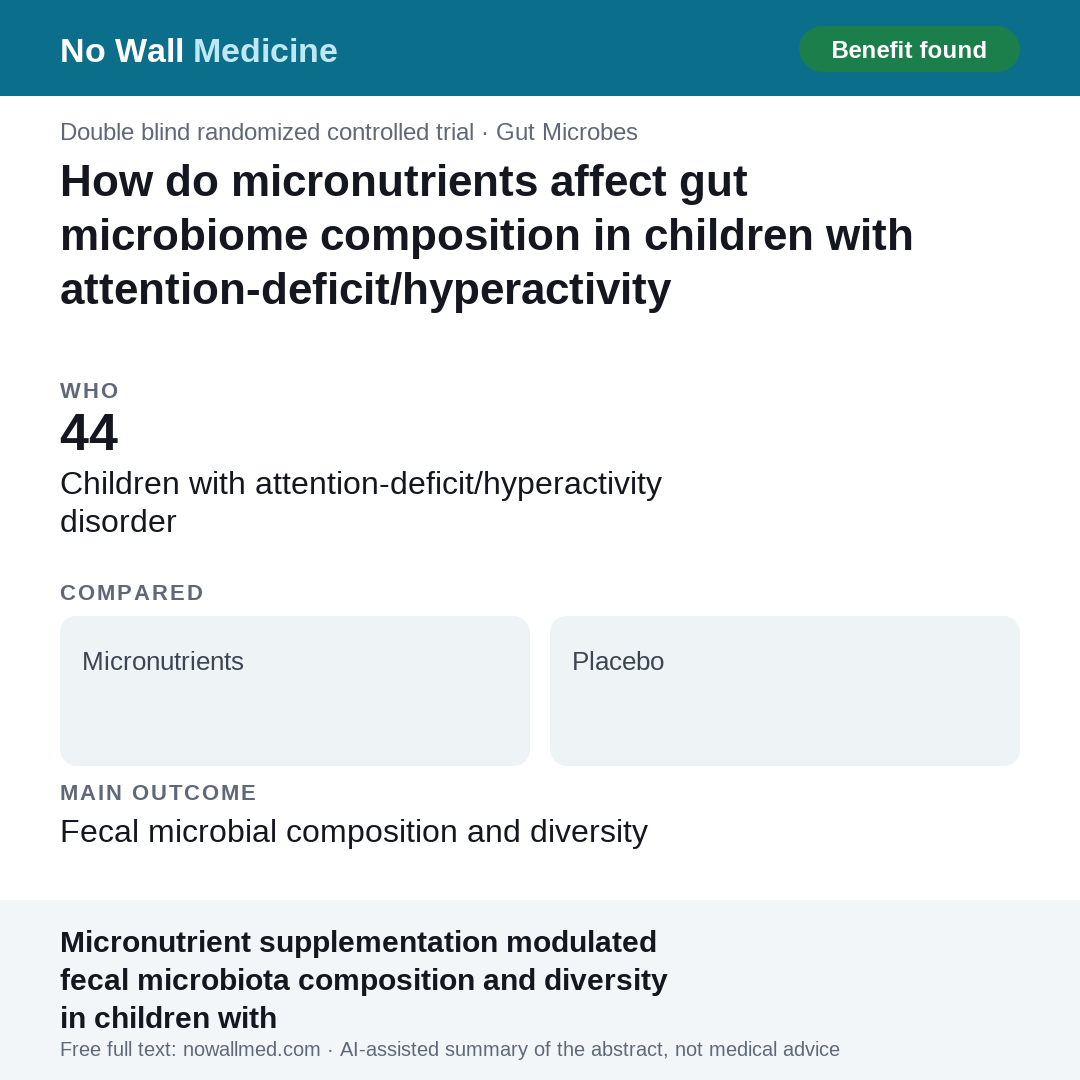
Gut microbiome changes with micronutrient supplementation in children with attention-deficit/hyperactivity disorder: the MADDY study
Double blind randomized controlled trialBenefit found
How do micronutrients affect gut microbiome composition in children with attention-deficit/hyperactivity disorder?
Who
44
Children with attention-deficit/hyperactivity disorder
Compared
Micronutrients
Placebo
Main outcome
Fecal microbial composition and diversity
Bottom line: Micronutrient supplementation modulated fecal microbiota composition and diversity in children with attention-deficit/hyperactivity disorder.
Gut Microbes · 2025-02-18Download image
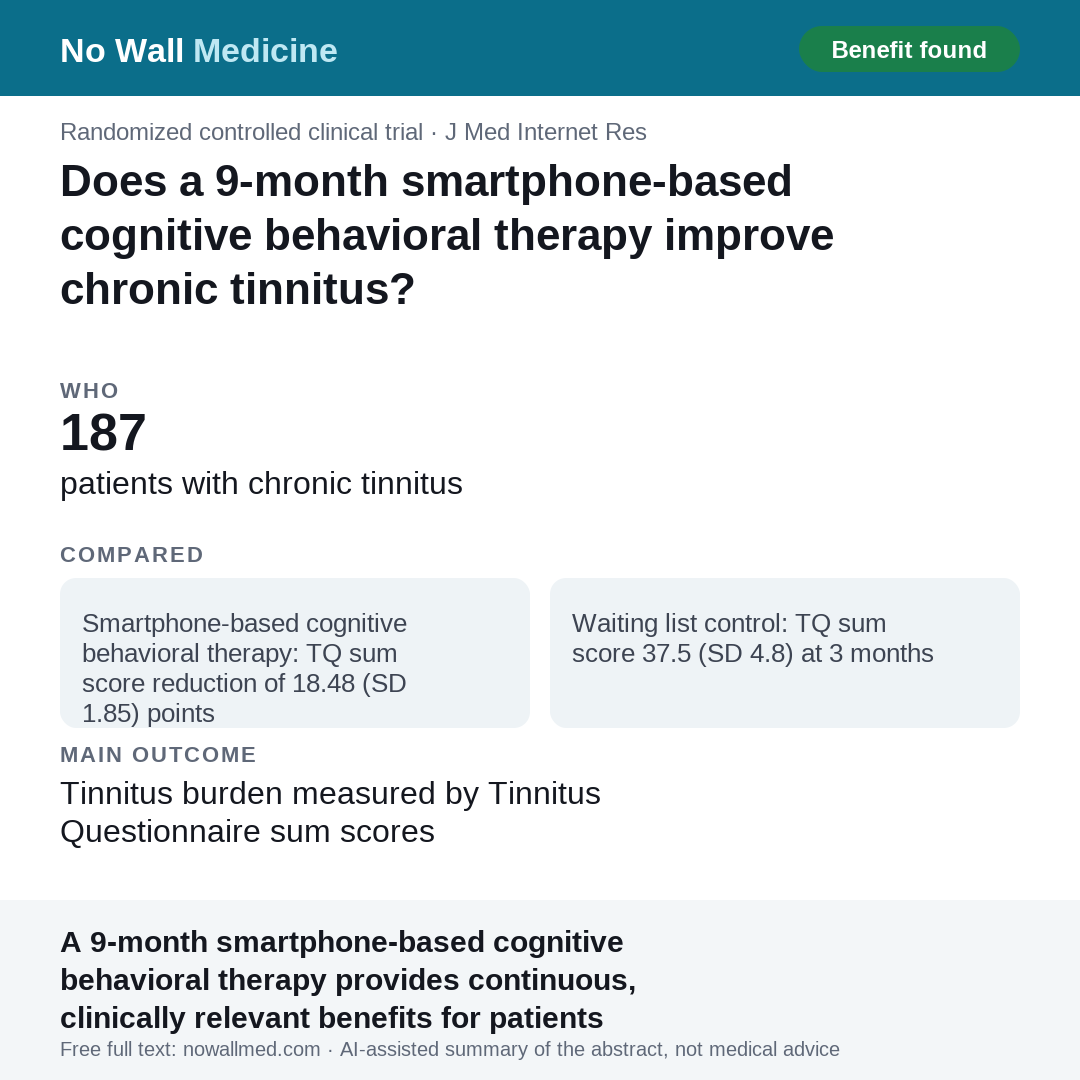
Continuous Improvement of Chronic Tinnitus Through a 9-Month Smartphone-Based Cognitive Behavioral Therapy: Randomized Controlled Trial
Randomized controlled clinical trialBenefit found
Does a 9-month smartphone-based cognitive behavioral therapy improve chronic tinnitus?
Who
187
patients with chronic tinnitus
Compared
Smartphone-based cognitive behavioral therapy: TQ sum score reduction of 18.48 (SD 1.85) points
Waiting list control: TQ sum score 37.5 (SD 4.8) at 3 months
Main outcome
Tinnitus burden measured by Tinnitus Questionnaire sum scores
Result: Cohen d 1.38
Bottom line: A 9-month smartphone-based cognitive behavioral therapy provides continuous, clinically relevant benefits for patients with chronic tinnitus.
J Med Internet Res · 2025-02-18Download image
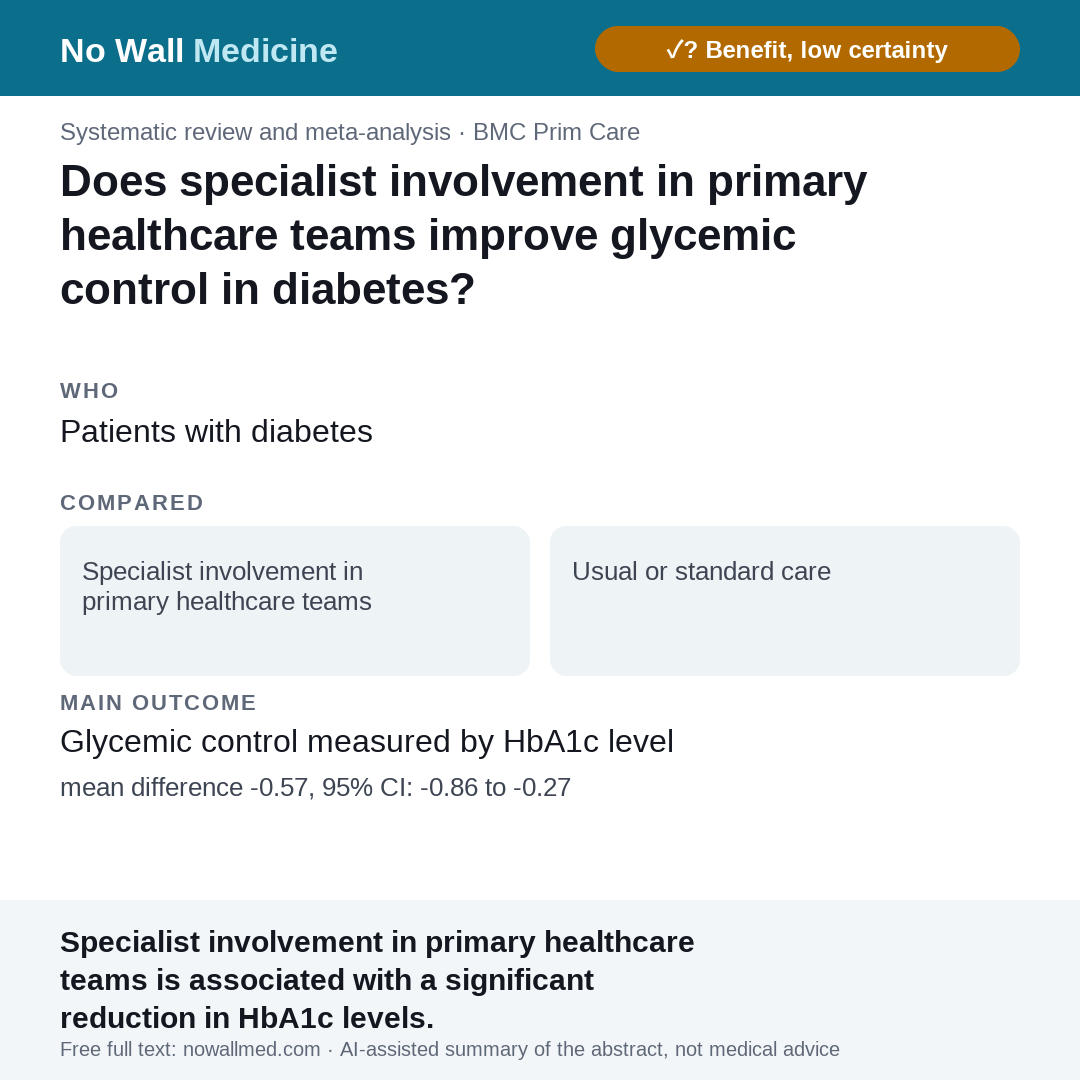
The involvement of specialists in primary healthcare teams for managing diabetes: a systematic review and meta-analysis
Systematic review and meta-analysisBenefit found
Does specialist involvement in primary healthcare teams improve glycemic control in diabetes?
Who
Patients with diabetes
Compared
Specialist involvement in primary healthcare teams
Usual or standard care
Main outcome
Glycemic control measured by HbA1c level
Result: mean difference -0.57, 95% CI: -0.86 to -0.27
Bottom line: Specialist involvement in primary healthcare teams is associated with a significant reduction in HbA1c levels.
Limitation: Very low certainty of evidence regarding effectiveness on glycemic control.
BMC Prim Care · 2025-02-18Download image
Addressing Earlobe Elongation: A Systematic Review of Surgical Reduction Techniques in the Aging Population
Systematic reviewUnclear result
What are the surgical reduction techniques for earlobe elongation in the aging population?
Who
Aging population with earlobe elongation
Compared
Inferior margin excision
Anterior earlobe resection
Other methods
Main outcome
Surgical reduction techniques for earlobe elongation
Bottom line: A systematic review of thirteen articles categorized surgical techniques and created an algorithm for earlobe reduction.
Plast Reconstr Surg Glob Open · 2025-02-18Download image
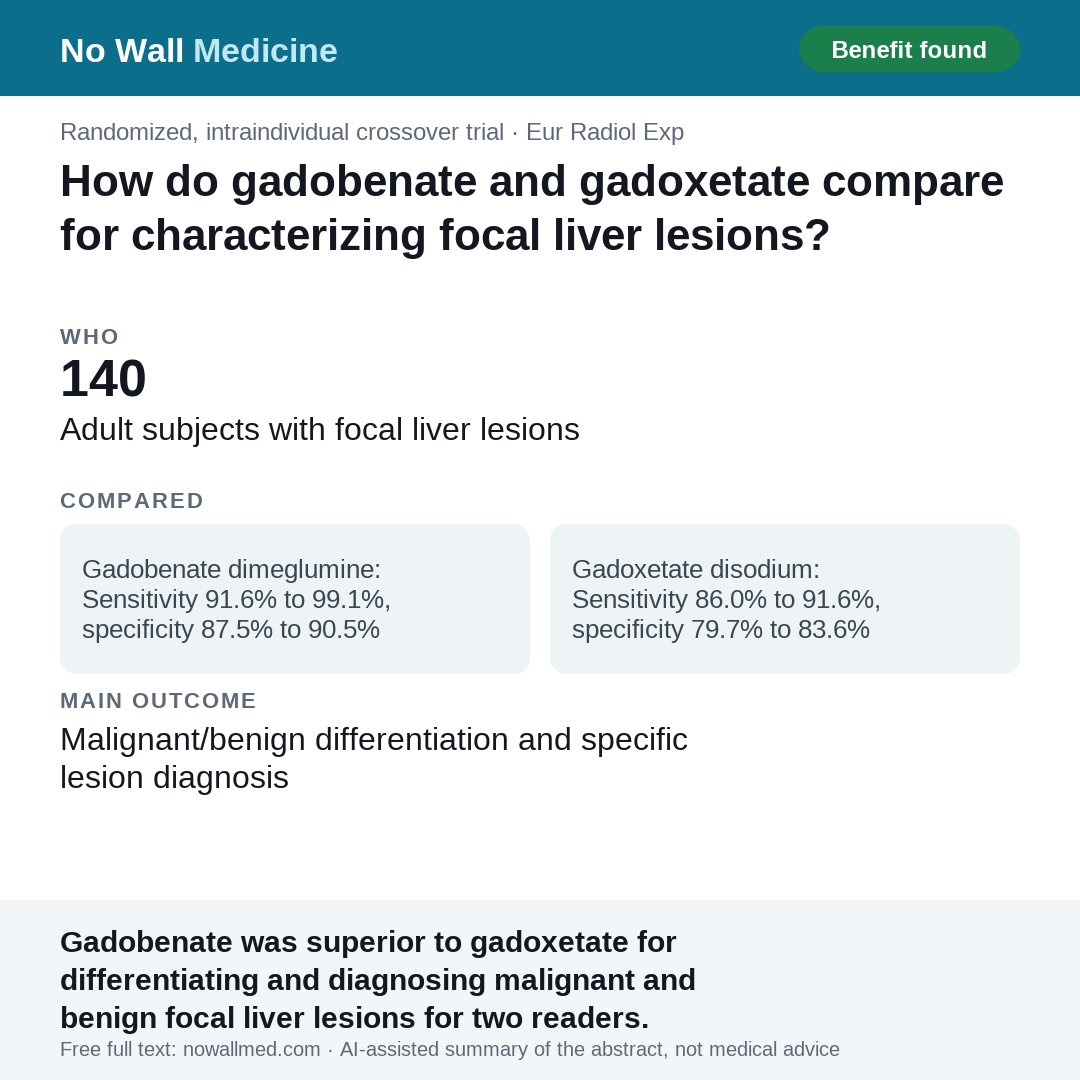
Intraindividual crossover comparison of gadobenate dimeglumine-enhanced and gadoxetate disodium-enhanced MRI for characterizing focal liver lesions
Randomized, intraindividual crossover trialBenefit found
How do gadobenate and gadoxetate compare for characterizing focal liver lesions?
Who
140
Adult subjects with focal liver lesions
Compared
Gadobenate dimeglumine: Sensitivity 91.6% to 99.1%, specificity 87.5% to 90.5%
Gadoxetate disodium: Sensitivity 86.0% to 91.6%, specificity 79.7% to 83.6%
Main outcome
Malignant/benign differentiation and specific lesion diagnosis
Bottom line: Gadobenate was superior to gadoxetate for differentiating and diagnosing malignant and benign focal liver lesions for two readers.
Eur Radiol Exp · 2025-02-18Download image
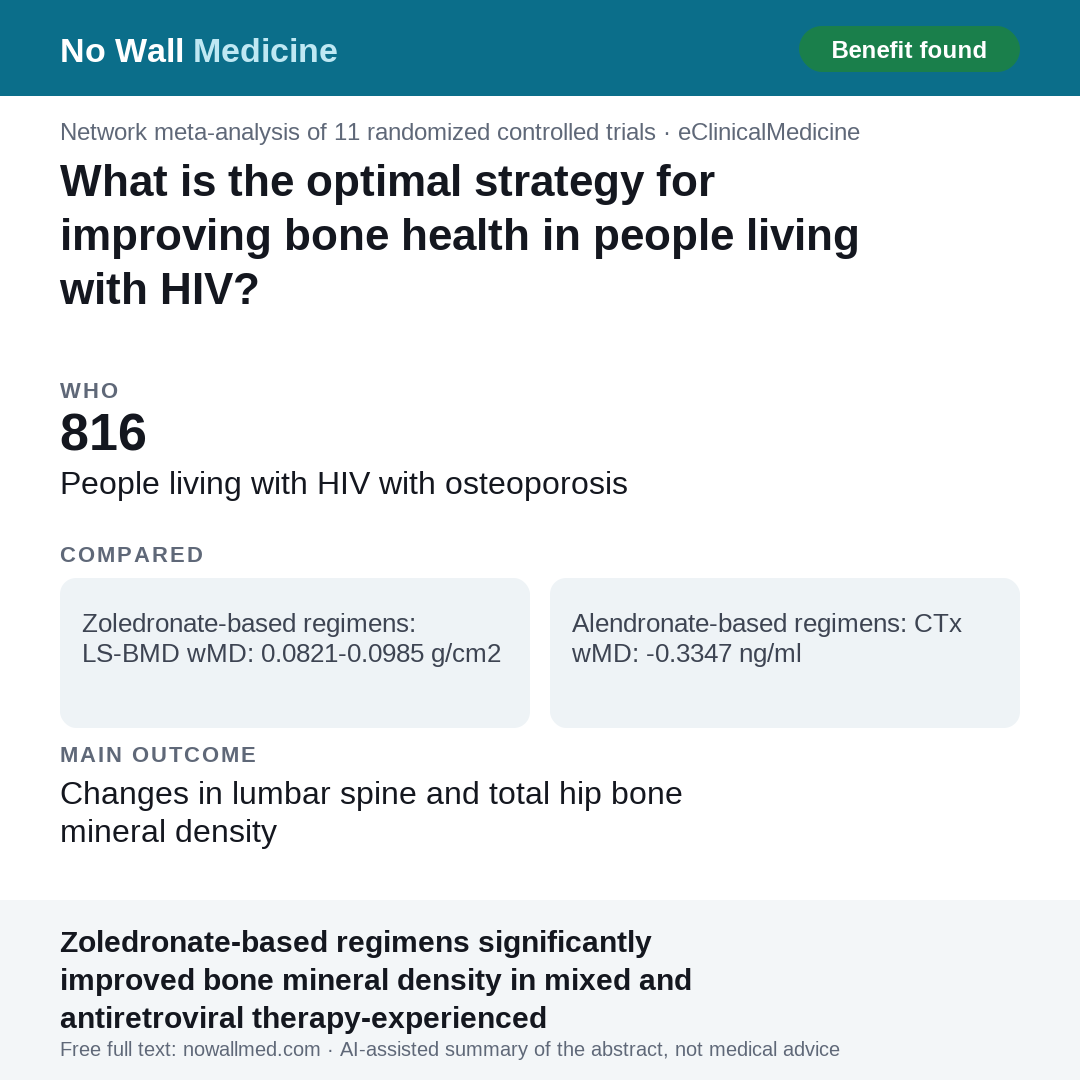
Optimizing bone health in people living with HIV: insights from a network meta-analysis of randomized controlled trials
Network meta-analysis of 11 randomized controlled trialsBenefit found
What is the optimal strategy for improving bone health in people living with HIV?
Who
816
People living with HIV with osteoporosis
Compared
Zoledronate-based regimens: LS-BMD wMD: 0.0821-0.0985 g/cm2
Alendronate-based regimens: CTx wMD: -0.3347 ng/ml
Main outcome
Changes in lumbar spine and total hip bone mineral density
Bottom line: Zoledronate-based regimens significantly improved bone mineral density in mixed and antiretroviral therapy-experienced populations.
Limitation: Limited evidence and substantial heterogeneity, especially regarding antiretroviral therapy-naïve individuals.
Funded by: National Science and Technology Council and National Cheng Kung University Hospital
eClinicalMedicine · 2025-02-17Download image
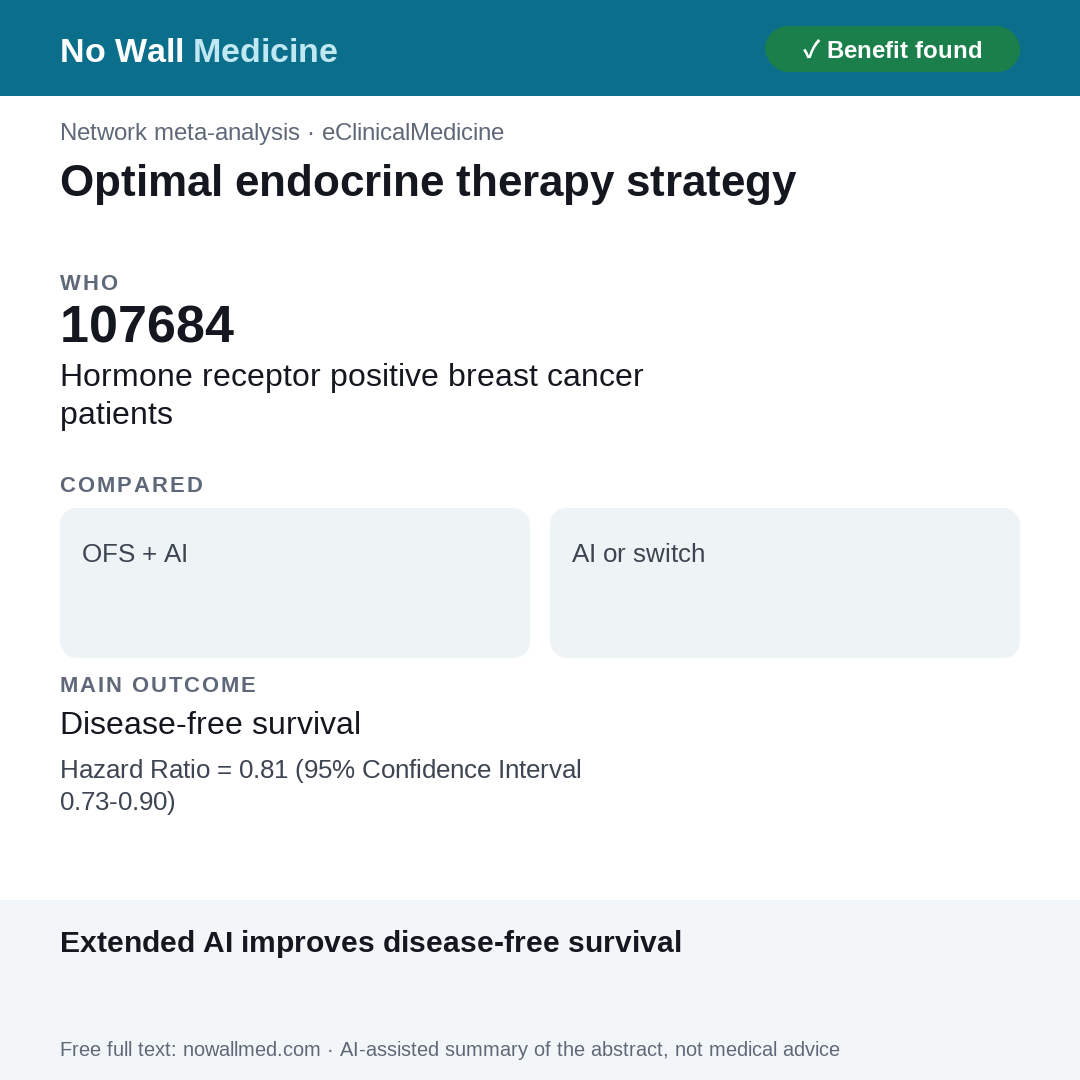
Adjuvant endocrine treatment strategies for non-metastatic breast cancer: a network meta-analysis
Network meta-analysisBenefit found
Optimal endocrine therapy strategy
Who
107684
Hormone receptor positive breast cancer patients
Compared
OFS + AI
AI or switch
Main outcome
Disease-free survival
Result: Hazard Ratio = 0.81 (95% Confidence Interval 0.73-0.90)
Bottom line: Extended AI improves disease-free survival
eClinicalMedicine · 2025-02-17Download image
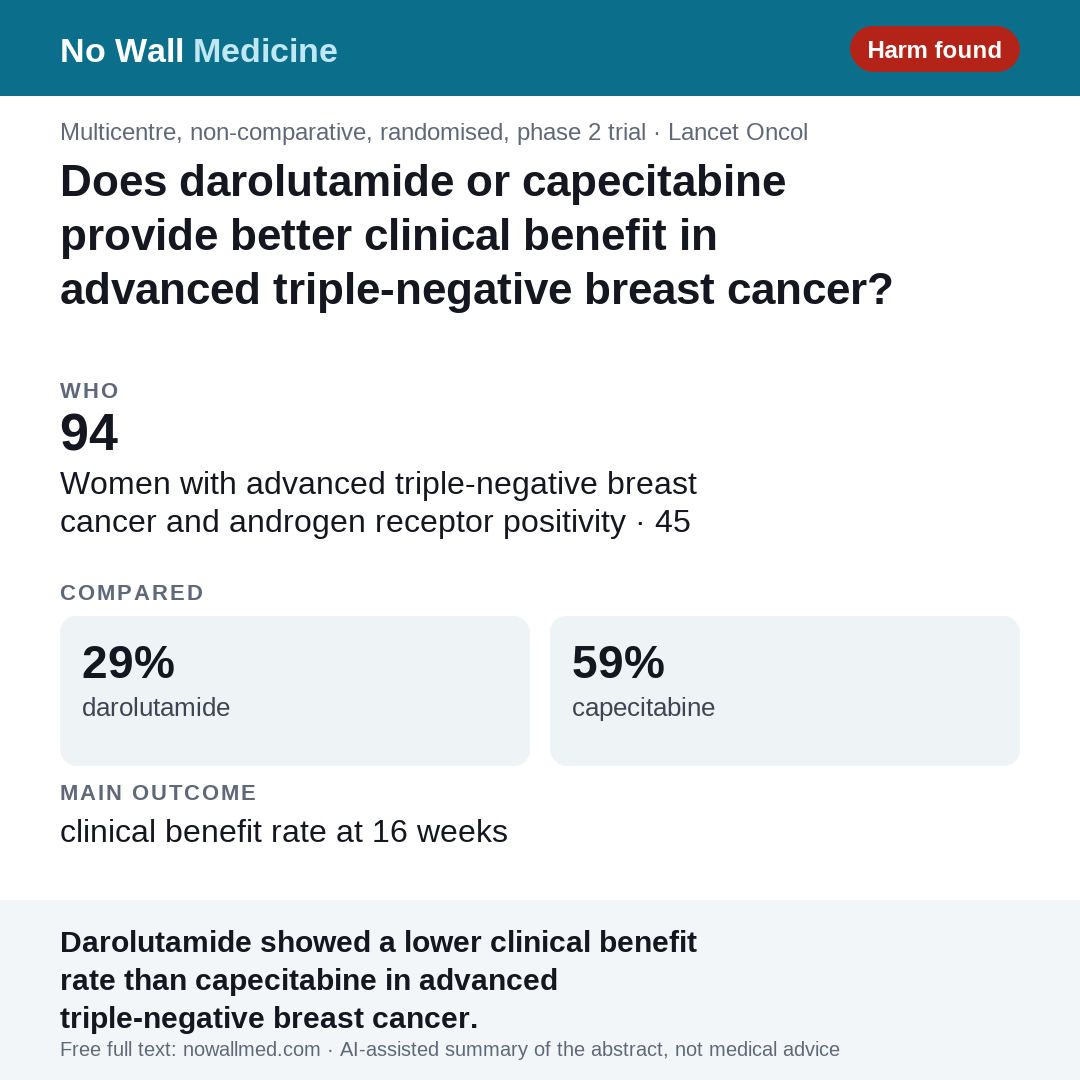
Darolutamide or capecitabine in triple-negative, androgen receptor-positive, advanced breast cancer (UCBG 3-06 START): a multicentre, non-comparative, randomised, phase 2 trial
Multicentre, non-comparative, randomised, phase 2 trialHarm found
Does darolutamide or capecitabine provide better clinical benefit in advanced triple-negative breast cancer?
Who
94
Women with advanced triple-negative breast cancer and androgen receptor positivity · 45 hospitals in France
Compared
29%darolutamide (17 of 58; 90% CI 19-39)
59%capecitabine (19 of 32; 90% CI 45-74)
Main outcome
clinical benefit rate at 16 weeks
Bottom line: Darolutamide showed a lower clinical benefit rate than capecitabine in advanced triple-negative breast cancer.
Funded by: Bayer and Fondation Bergonié
Lancet Oncol · 2025-02-17Download image
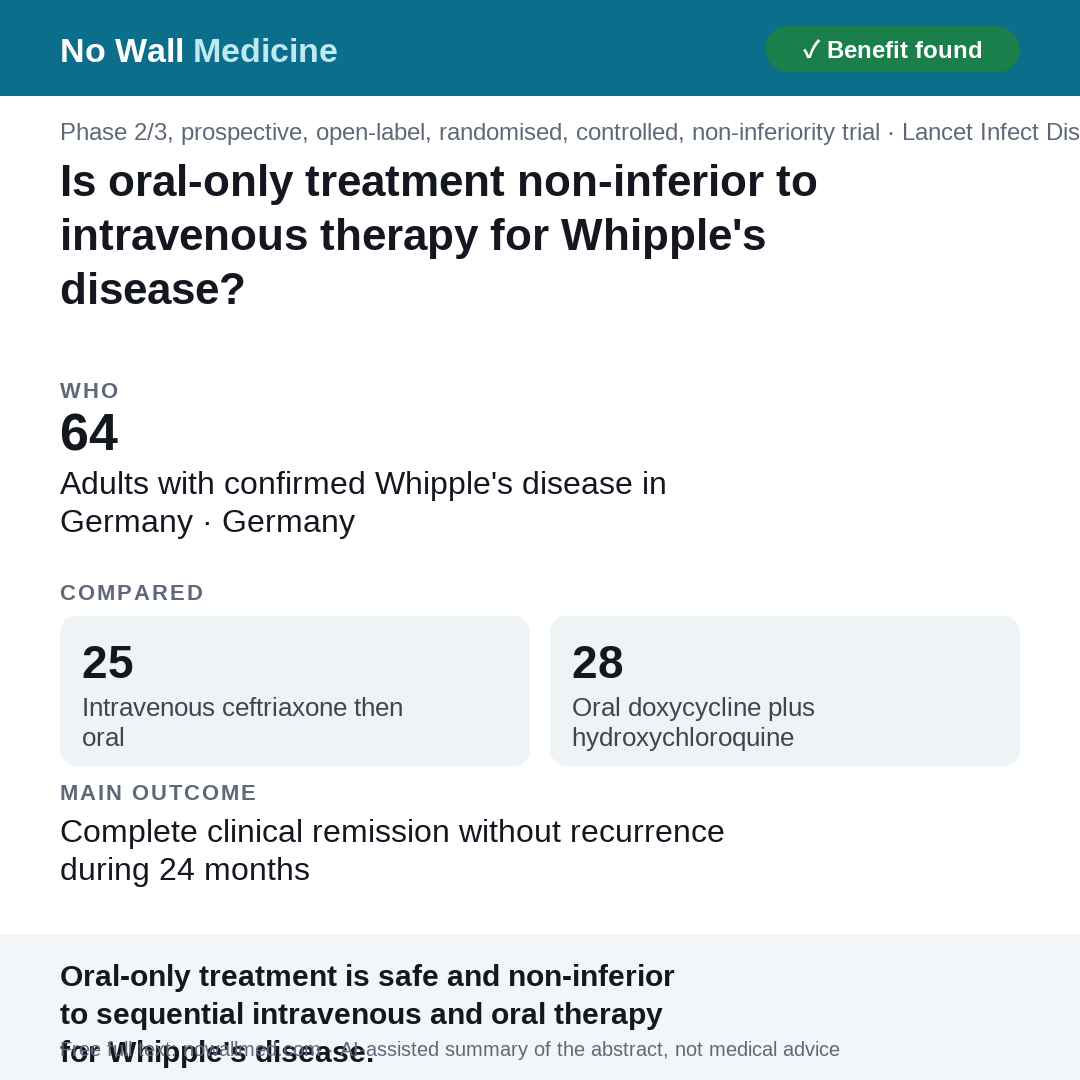
Oral treatment of Whipple's disease with doxycycline and hydroxychloroquine versus intravenous therapy with ceftriaxone followed by oral trimethoprim-sulfamethoxazole in Germany: a phase 2/3, prospective, open-label, randomised, controlled, non-inferiority trial
Phase 2/3, prospective, open-label, randomised, controlled, non-inferiority trialBenefit found
Is oral-only treatment non-inferior to intravenous therapy for Whipple's disease?
Who
64
Adults with confirmed Whipple's disease in Germany · Germany
Compared
25Intravenous ceftriaxone then oral trimethoprim-sulfamethoxazole (81%)
28Oral doxycycline plus hydroxychloroquine (97%)
Main outcome
Complete clinical remission without recurrence during 24 months
Result: risk difference 15·9 percentage points (95% CI -1·2 to 33·1)
Bottom line: Oral-only treatment is safe and non-inferior to sequential intravenous and oral therapy for Whipple's disease.
Funded by: German Research Foundation and the Robert Koch Institute
Lancet Infect Dis · 2025-02-17Download image
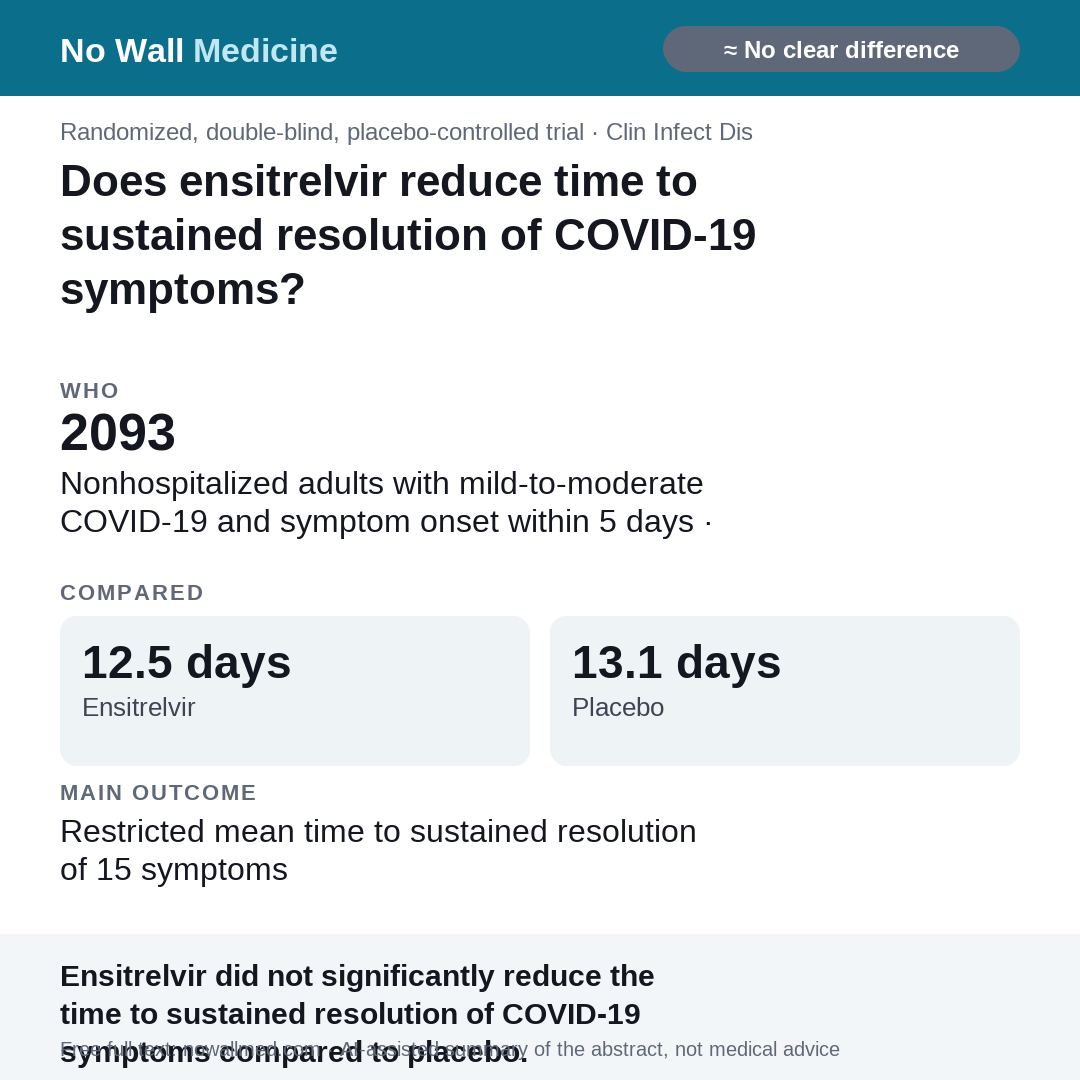
Ensitrelvir for the Treatment of Nonhospitalized Adults with COVID-19: Results from the SCORPIO-HR, Phase 3, Randomized, Double-blind, Placebo-Controlled Trial
Randomized, double-blind, placebo-controlled trialNo clear difference
Does ensitrelvir reduce time to sustained resolution of COVID-19 symptoms?
Who
2093
Nonhospitalized adults with mild-to-moderate COVID-19 and symptom onset within 5 days · Global
Compared
12.5 daysEnsitrelvir
13.1 daysPlacebo
Main outcome
Restricted mean time to sustained resolution of 15 symptoms
Result: difference, -0.6 days (95% confidence interval, -1.38 to 0.19)
Bottom line: Ensitrelvir did not significantly reduce the time to sustained resolution of COVID-19 symptoms compared to placebo.
Clin Infect Dis · 2025-02-17Download image
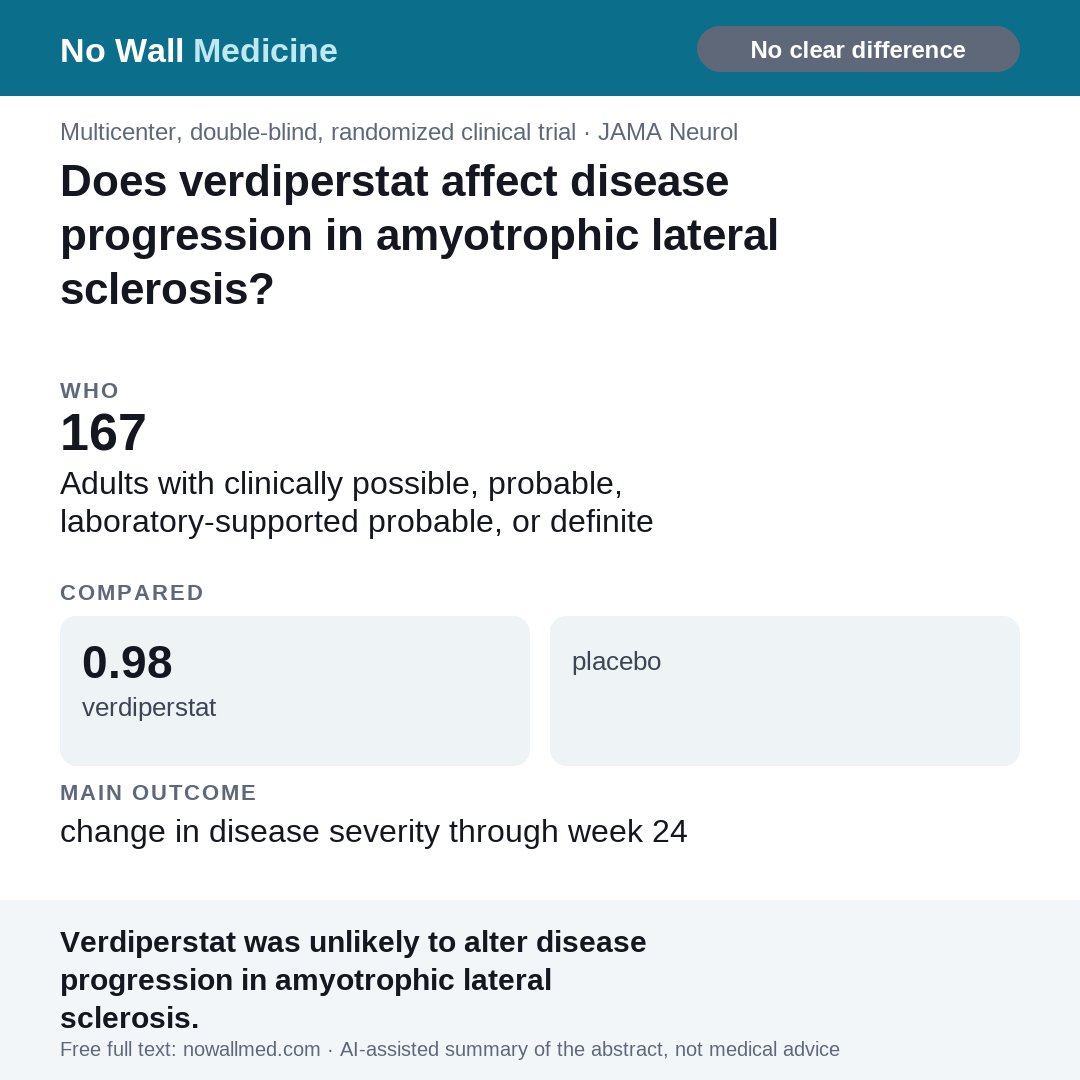
Verdiperstat in Amyotrophic Lateral Sclerosis: Results From the Randomized HEALEY ALS Platform Trial
Multicenter, double-blind, randomized clinical trialNo clear difference
Does verdiperstat affect disease progression in amyotrophic lateral sclerosis?
Who
167
Adults with clinically possible, probable, laboratory-supported probable, or definite amyotrophic lateral sclerosis · 54 referral centers across the United States
Compared
0.98verdiperstat (95% credible interval, 0.77-1.24)
placebo
Main outcome
change in disease severity through week 24
Result: disease rate ratio 0.98 (95% credible interval, 0.77-1.24)
Bottom line: Verdiperstat was unlikely to alter disease progression in amyotrophic lateral sclerosis.
JAMA Neurol · 2025-02-17Download image
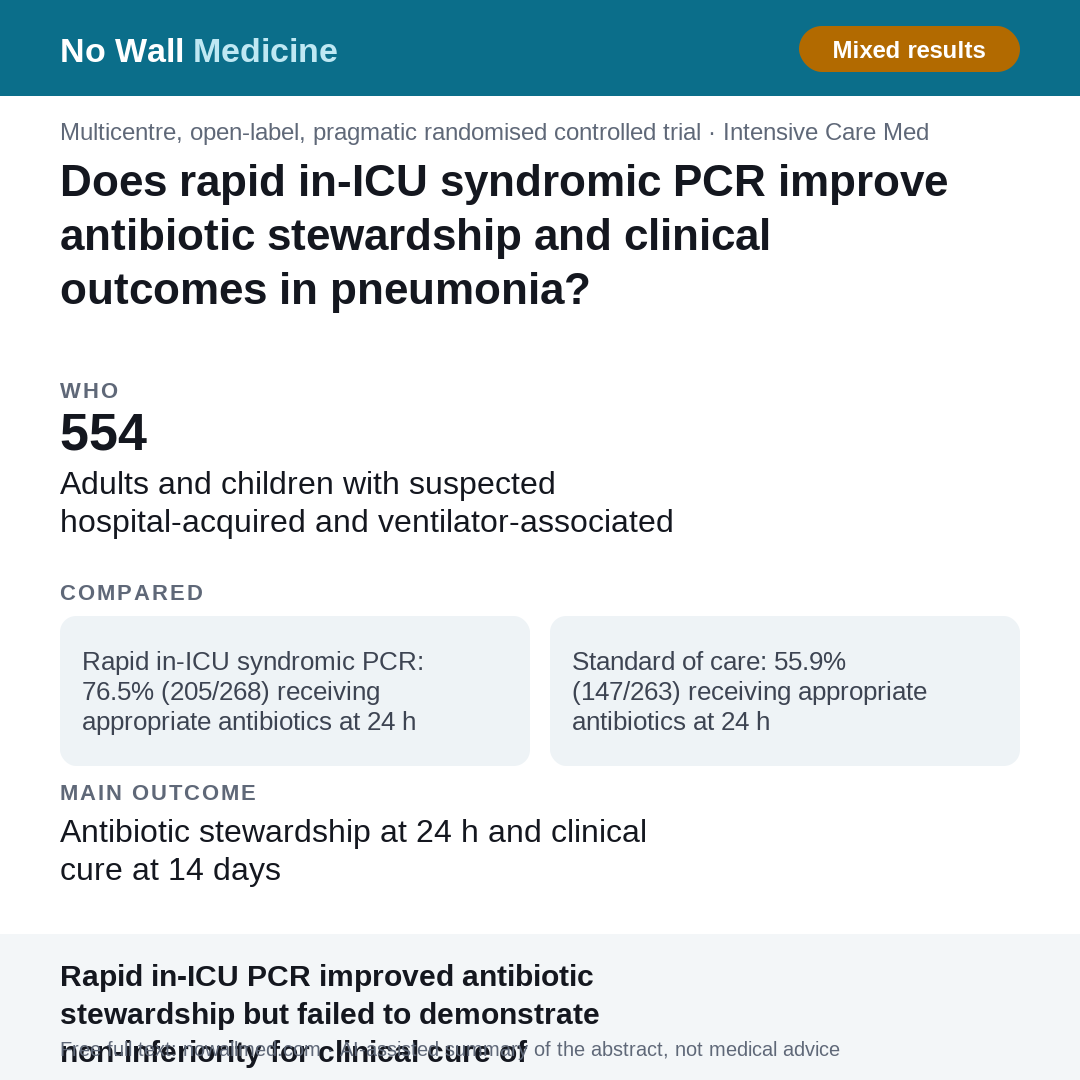
INHALE WP3, a multicentre, open-label, pragmatic randomised controlled trial assessing the impact of rapid, ICU-based, syndromic PCR, versus standard-of-care on antibiotic stewardship and clinical outcomes in hospital-acquired and ventilator-associated pneumonia
Multicentre, open-label, pragmatic randomised controlled trialMixed results
Does rapid in-ICU syndromic PCR improve antibiotic stewardship and clinical outcomes in pneumonia?
Who
554
Adults and children with suspected hospital-acquired and ventilator-associated pneumonia · 14 intensive care units
Compared
Rapid in-ICU syndromic PCR: 76.5% (205/268) receiving appropriate antibiotics at 24 h
Standard of care: 55.9% (147/263) receiving appropriate antibiotics at 24 h
Main outcome
Antibiotic stewardship at 24 h and clinical cure at 14 days
Result: estimated difference -6%, 95% CI -15 to 2%
Bottom line: Rapid in-ICU PCR improved antibiotic stewardship but failed to demonstrate non-inferiority for clinical cure of pneumonia.
Limitation: Secondary mortality and clinical score outcomes narrowly favoured the control arm without clear statistical significance.
Intensive Care Med · 2025-02-17Download image
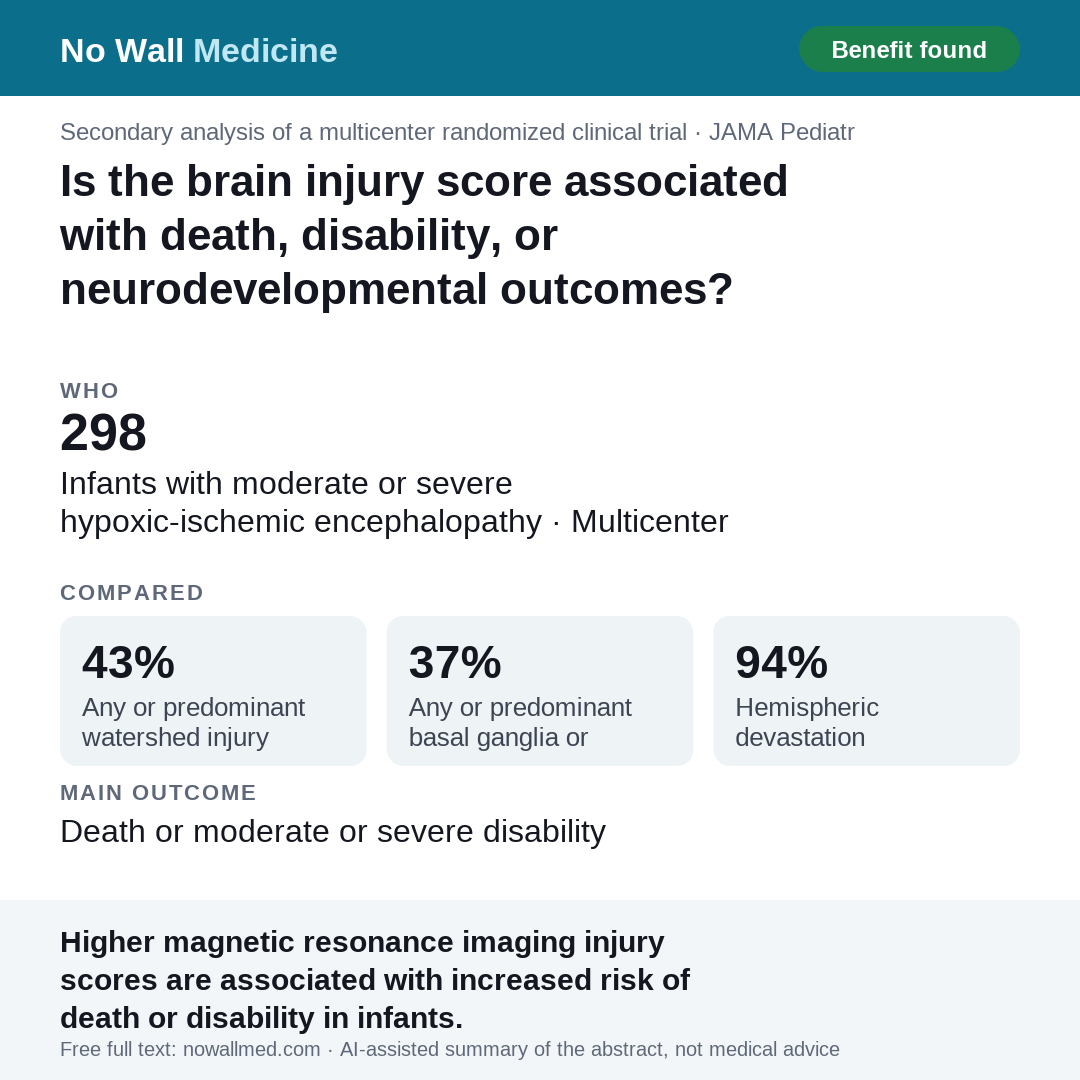
NICHD Magnetic Resonance Brain Imaging Score in Term Infants With Hypoxic-Ischemic Encephalopathy: A Secondary Analysis of a Randomized Clinical Trial
Secondary analysis of a multicenter randomized clinical trialBenefit found
Is the brain injury score associated with death, disability, or neurodevelopmental outcomes?
Who
298
Infants with moderate or severe hypoxic-ischemic encephalopathy · Multicenter
Compared
43%Any or predominant watershed injury (12/28)
37%Any or predominant basal ganglia or thalamic injury (17/46)
94%Hemispheric devastation (30/32)
Main outcome
Death or moderate or severe disability
Result: odds ratio 13.66 (95% CI 7.47-24.95)
Bottom line: Higher magnetic resonance imaging injury scores are associated with increased risk of death or disability in infants.
JAMA Pediatr · 2025-02-17Download image
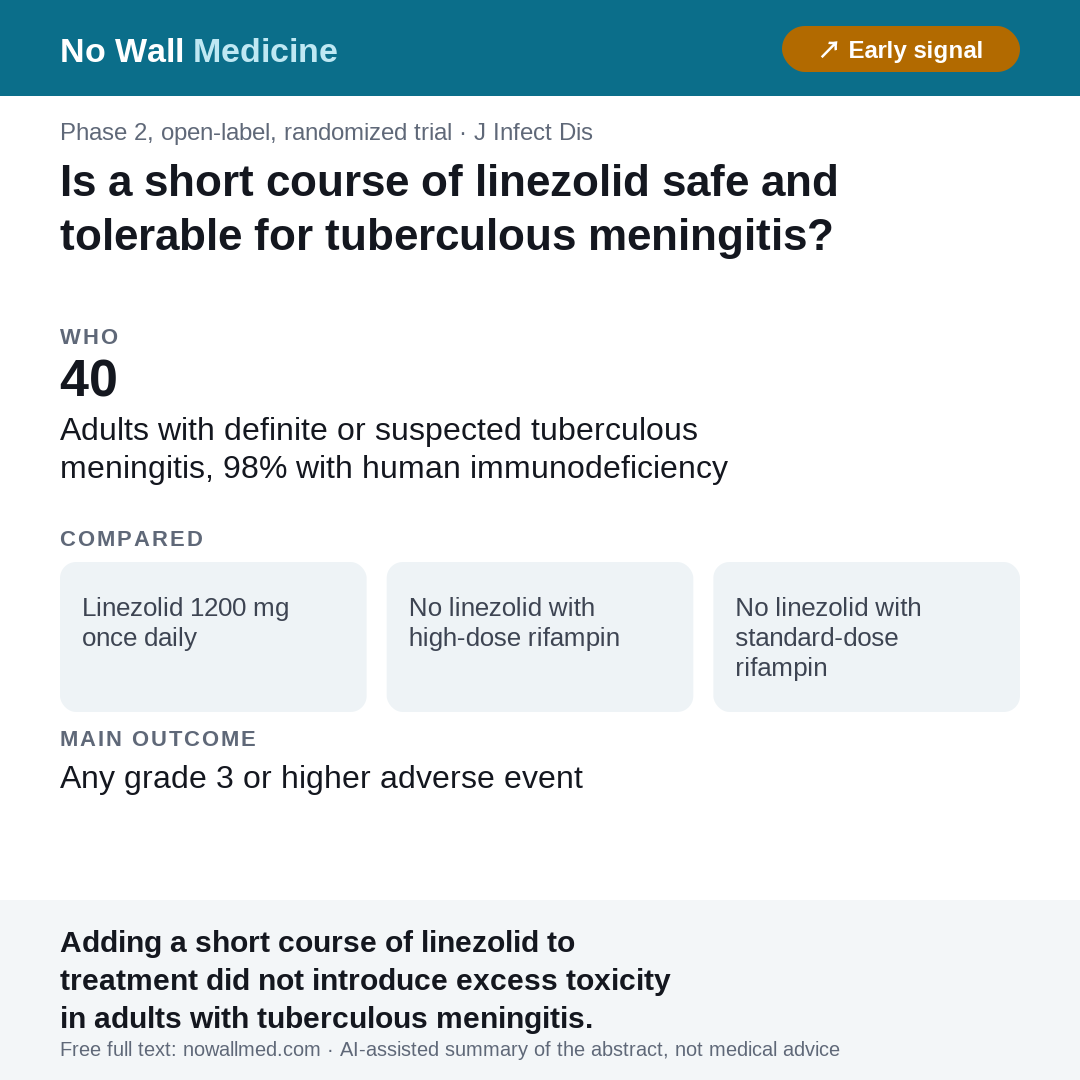
Safety and Tolerability of a Short Course of Linezolid for the Treatment of Predominantly Moderate to Severe Tuberculous Meningitis in Adults With Human Immunodeficiency Virus
Phase 2, open-label, randomized trialBenefit found
Is a short course of linezolid safe and tolerable for tuberculous meningitis?
Who
40
Adults with definite or suspected tuberculous meningitis, 98% with human immunodeficiency virus · Masaka, Uganda
Compared
Linezolid 1200 mg once daily
No linezolid with high-dose rifampin
No linezolid with standard-dose rifampin
Main outcome
Any grade 3 or higher adverse event
Bottom line: Adding a short course of linezolid to treatment did not introduce excess toxicity in adults with tuberculous meningitis.
J Infect Dis · 2025-02-17Download image
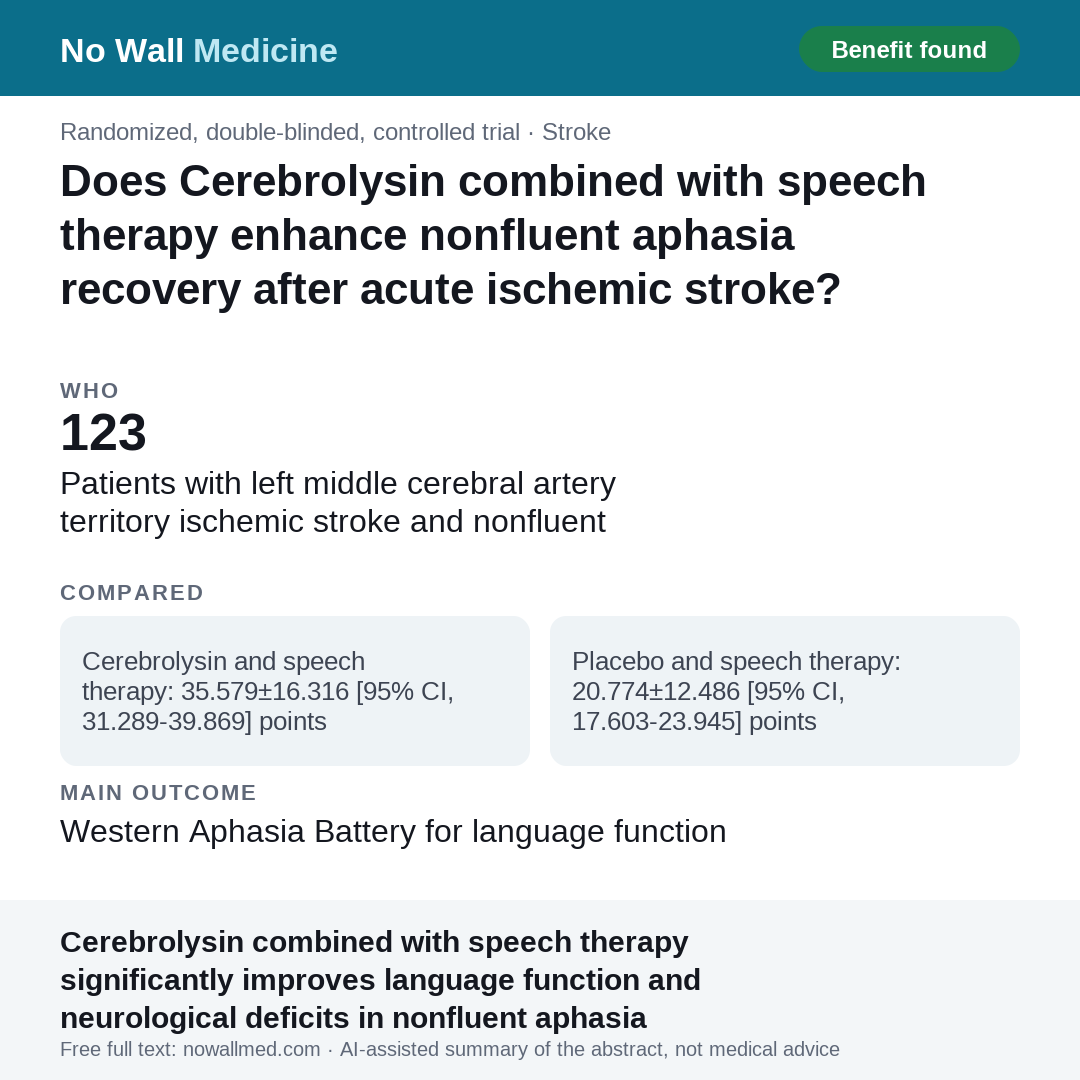
Speech Therapy Combined With Cerebrolysin in Enhancing Nonfluent Aphasia Recovery After Acute Ischemic Stroke: ESCAS Randomized Pilot Study
Randomized, double-blinded, controlled trialBenefit found
Does Cerebrolysin combined with speech therapy enhance nonfluent aphasia recovery after acute ischemic stroke?
Who
123
Patients with left middle cerebral artery territory ischemic stroke and nonfluent aphasia · 2 Romanian stroke centers
Compared
Cerebrolysin and speech therapy: 35.579±16.316 [95% CI, 31.289-39.869] points
Placebo and speech therapy: 20.774±12.486 [95% CI, 17.603-23.945] points
Main outcome
Western Aphasia Battery for language function
Result: difference in means of 14.805 (95% CI, 9.521-20.089) points
Bottom line: Cerebrolysin combined with speech therapy significantly improves language function and neurological deficits in nonfluent aphasia after acute ischemic stroke.
Stroke · 2025-02-17Download image
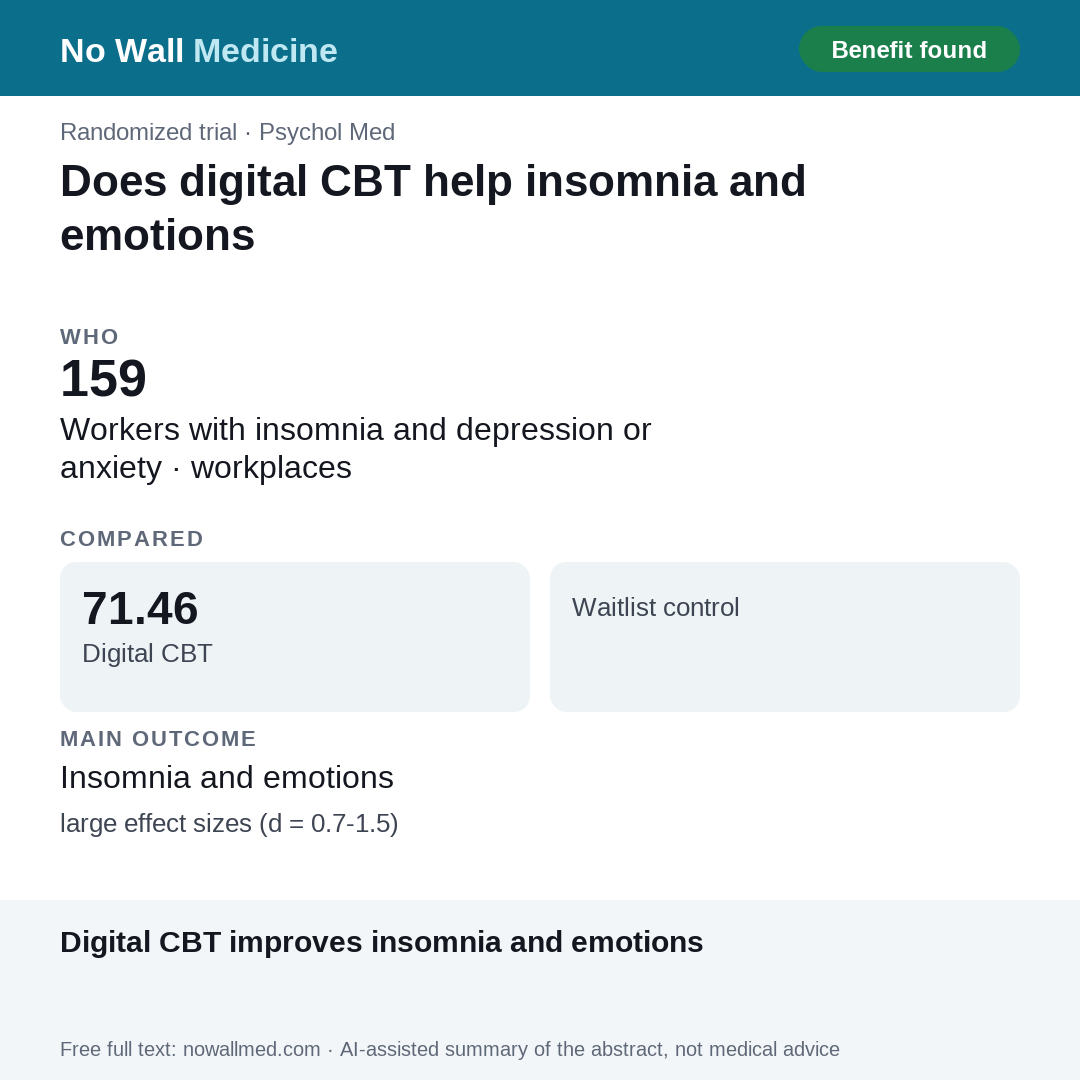
Digital CBT for insomnia and emotion regulation in the workplace: a randomised waitlist-controlled trial
Randomized trialBenefit found
Does digital CBT help insomnia and emotions
Who
159
Workers with insomnia and depression or anxiety · workplaces
Compared
71.46Digital CBT
Waitlist control
Main outcome
Insomnia and emotions
Result: large effect sizes (d = 0.7-1.5)
Bottom line: Digital CBT improves insomnia and emotions
Limitation: actigraphy data did not support findings
Psychol Med · 2025-02-17Download image
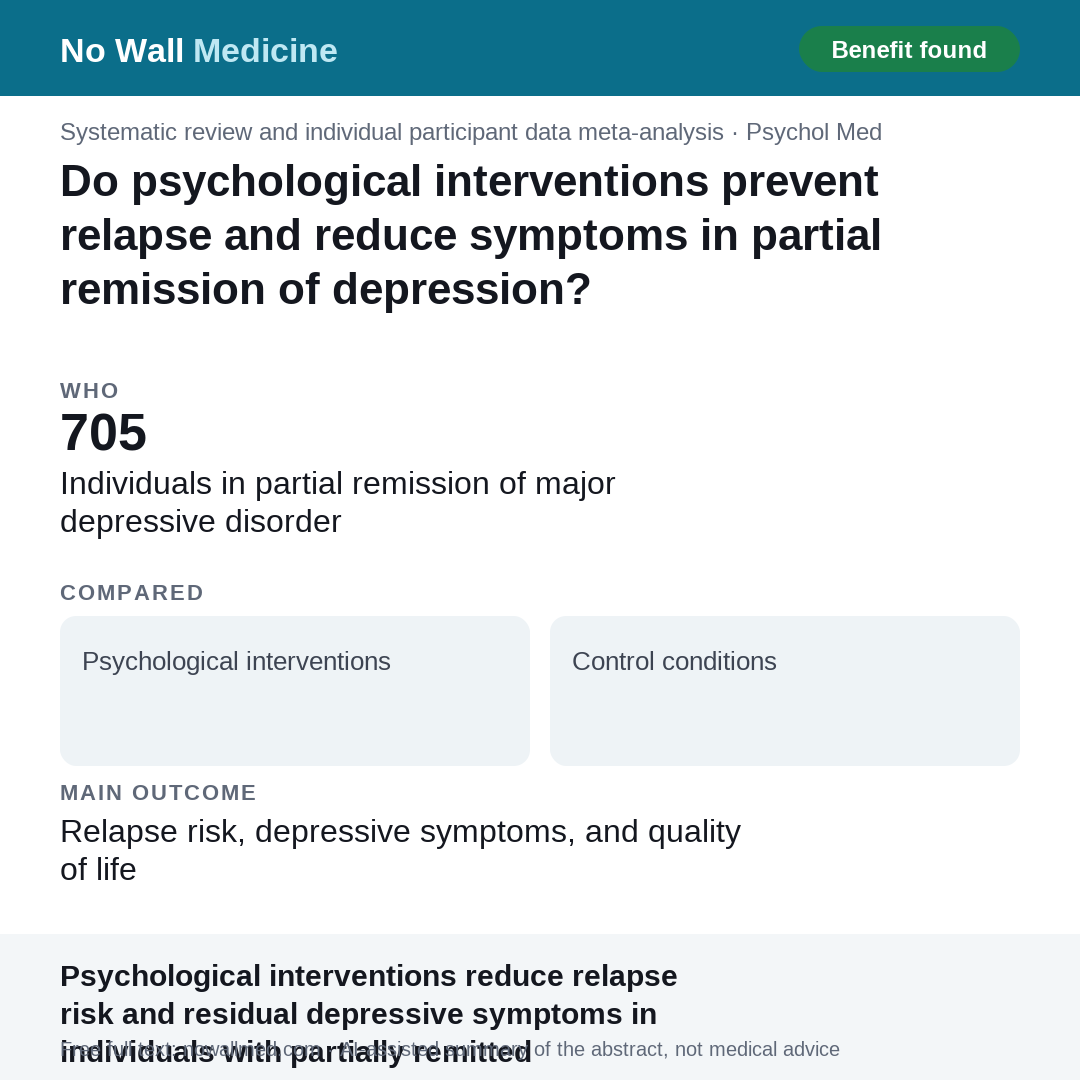
Psychological interventions for preventing relapse in individuals with partial remission of depression: a systematic review and individual participant data meta-analysis
Systematic review and individual participant data meta-analysisBenefit found
Do psychological interventions prevent relapse and reduce symptoms in partial remission of depression?
Who
705
Individuals in partial remission of major depressive disorder
Compared
Psychological interventions
Control conditions
Main outcome
Relapse risk, depressive symptoms, and quality of life
Result: hazard ratio 0.60 (95% CI 0.43-0.84)
Bottom line: Psychological interventions reduce relapse risk and residual depressive symptoms in individuals with partially remitted depression.
Psychol Med · 2025-02-17Download image
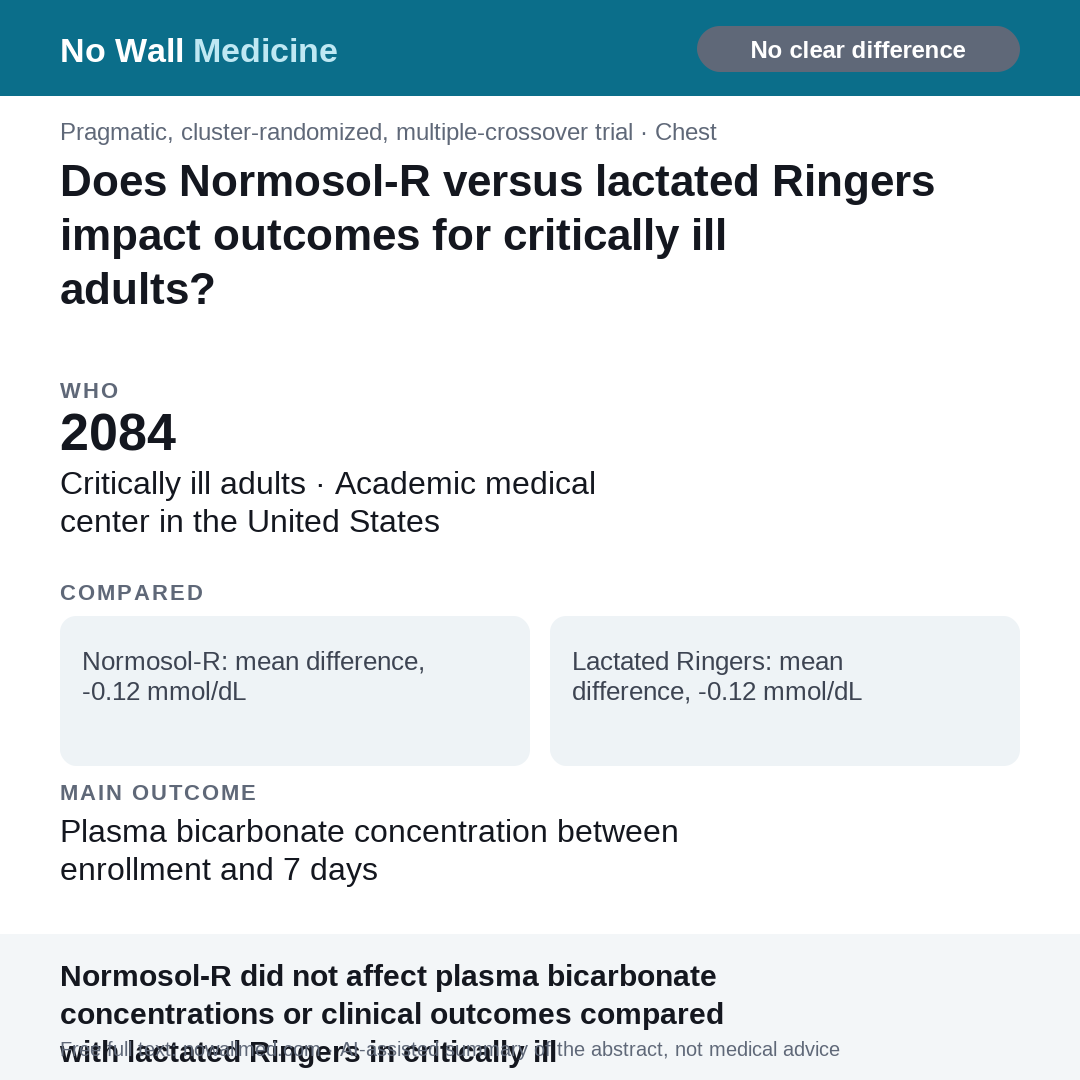
Normosol-R vs Lactated Ringers in the Critically Ill: A Randomized Trial
Pragmatic, cluster-randomized, multiple-crossover trialNo clear difference
Does Normosol-R versus lactated Ringers impact outcomes for critically ill adults?
Who
2084
Critically ill adults · Academic medical center in the United States
Compared
Normosol-R: mean difference, -0.12 mmol/dL
Lactated Ringers: mean difference, -0.12 mmol/dL
Main outcome
Plasma bicarbonate concentration between enrollment and 7 days
Result: mean difference, -0.12 mmol/dL; 95% CI, -0.61 to 0.36
Bottom line: Normosol-R did not affect plasma bicarbonate concentrations or clinical outcomes compared with lactated Ringers in critically ill adults.
Chest · 2025-02-17Download image
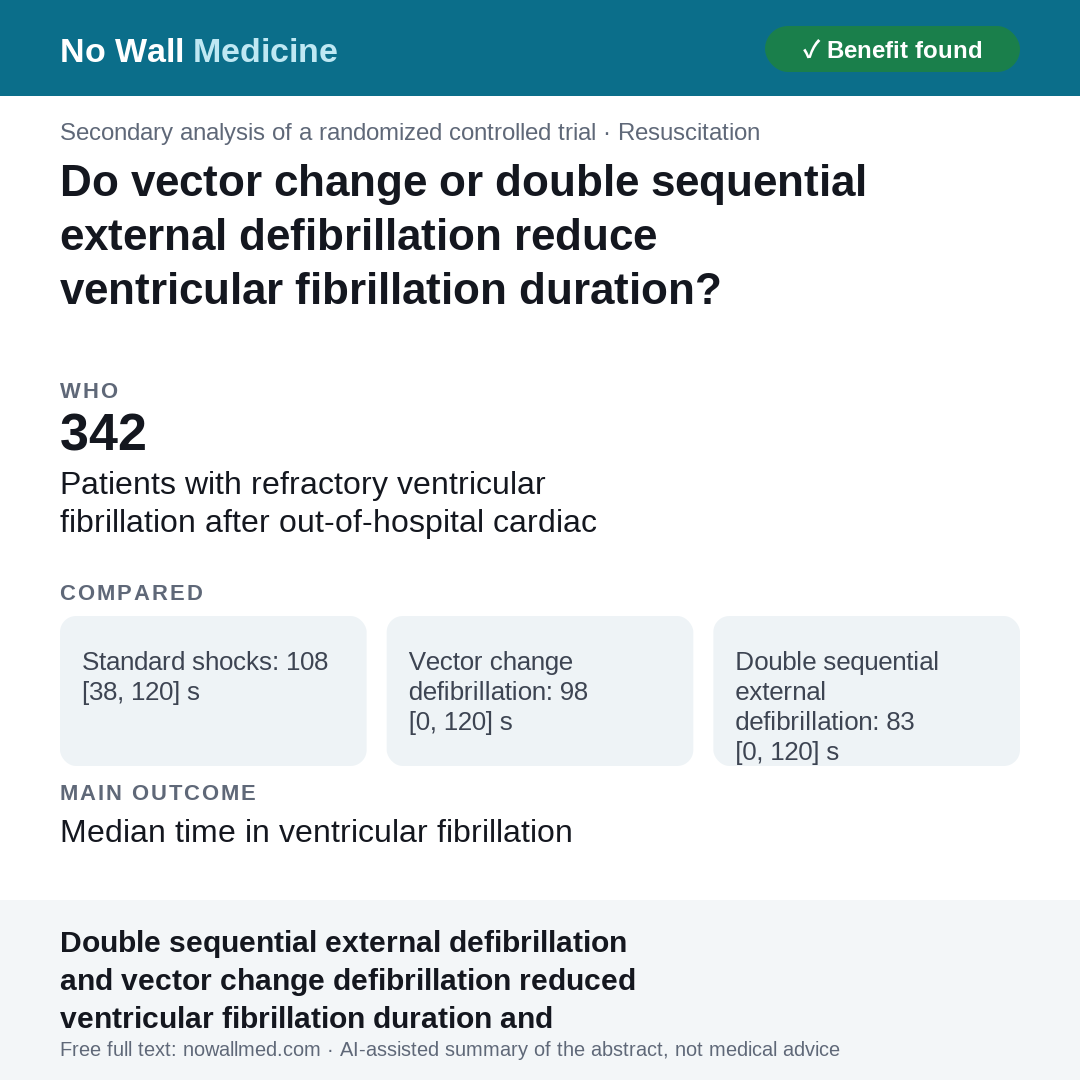
The impact of alternate defibrillation strategies on time in ventricular fibrillation
Secondary analysis of a randomized controlled trialBenefit found
Do vector change or double sequential external defibrillation reduce ventricular fibrillation duration?
Who
342
Patients with refractory ventricular fibrillation after out-of-hospital cardiac arrest
Compared
Standard shocks: 108 [38, 120] s
Vector change defibrillation: 98 [0, 120] s
Double sequential external defibrillation: 83 [0, 120] s
Main outcome
Median time in ventricular fibrillation
Bottom line: Double sequential external defibrillation and vector change defibrillation reduced ventricular fibrillation duration and improved survival outcomes.
Resuscitation · 2025-02-17Download image