Visual abstracts
New randomized trials and meta-analyses from leading journals at a glance: who was studied, what was compared, and what was found. Every paper is free to read in full.
All specialtiesCardiology 4763Oncology 4043Gastroenterology & Hepatology 1903Infectious Disease 3756Neurology 1872Psychiatry & Mental Health 2216Pulmonology 2044Critical Care 1319Endocrinology & Diabetes 2544Pediatrics 2889Surgery 2480Orthopedics & Sports Medicine 917Neurosurgery 525Cardiothoracic & Vascular Surgery 656Plastic & Reconstructive Surgery 574Nephrology 1107Rheumatology 810Hematology 1090Dermatology 611Ophthalmology 532Obstetrics & Gynecology 1645Public & Global Health 1037Radiology & Imaging 619Anesthesiology 958Urology 745ENT (Otolaryngology) 494Emergency Medicine 481Allergy & Immunology 309Geriatrics 972Family Medicine & Primary Care 534Medical Genetics & Genomics 659Pathology & Laboratory Medicine 156Physical Medicine & Rehabilitation 734Palliative Care 421Nutrition 1560Digital Health & AI 2137General Medicine 318
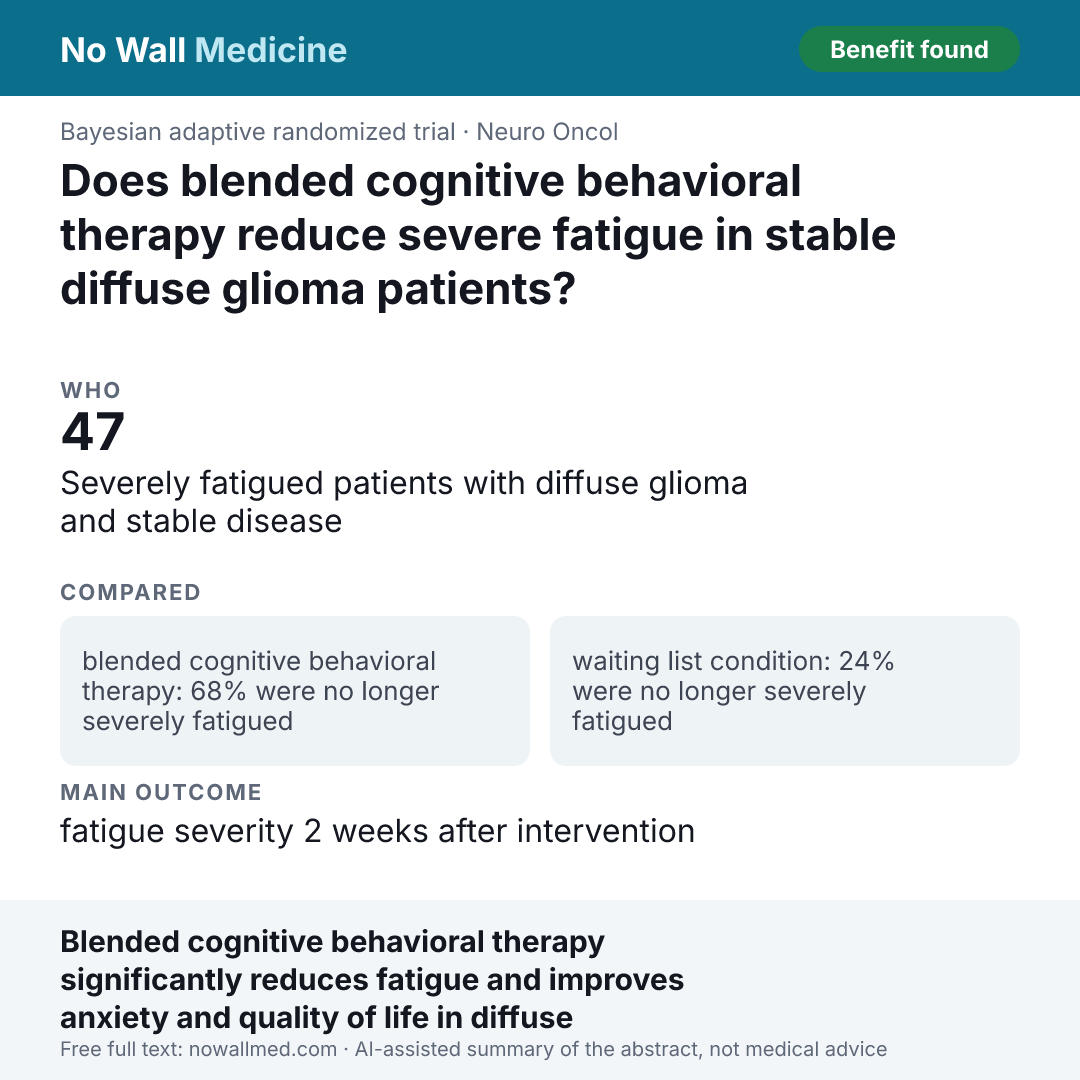
Bayesian adaptive randomized trial of blended cognitive behavioral therapy for severe fatigue in stable diffuse glioma
Bayesian adaptive randomized trialBenefit found
Does blended cognitive behavioral therapy reduce severe fatigue in stable diffuse glioma patients?
Who
47
Severely fatigued patients with diffuse glioma and stable disease
Compared
blended cognitive behavioral therapy: 68% were no longer severely fatigued
waiting list condition: 24% were no longer severely fatigued
Main outcome
fatigue severity 2 weeks after intervention
Result: Cohen's d 1.12 [95% CI: 0.43-1.81]
Bottom line: Blended cognitive behavioral therapy significantly reduces fatigue and improves anxiety and quality of life in diffuse glioma patients.
Neuro Oncol · 2025-11-10 · Save PNG
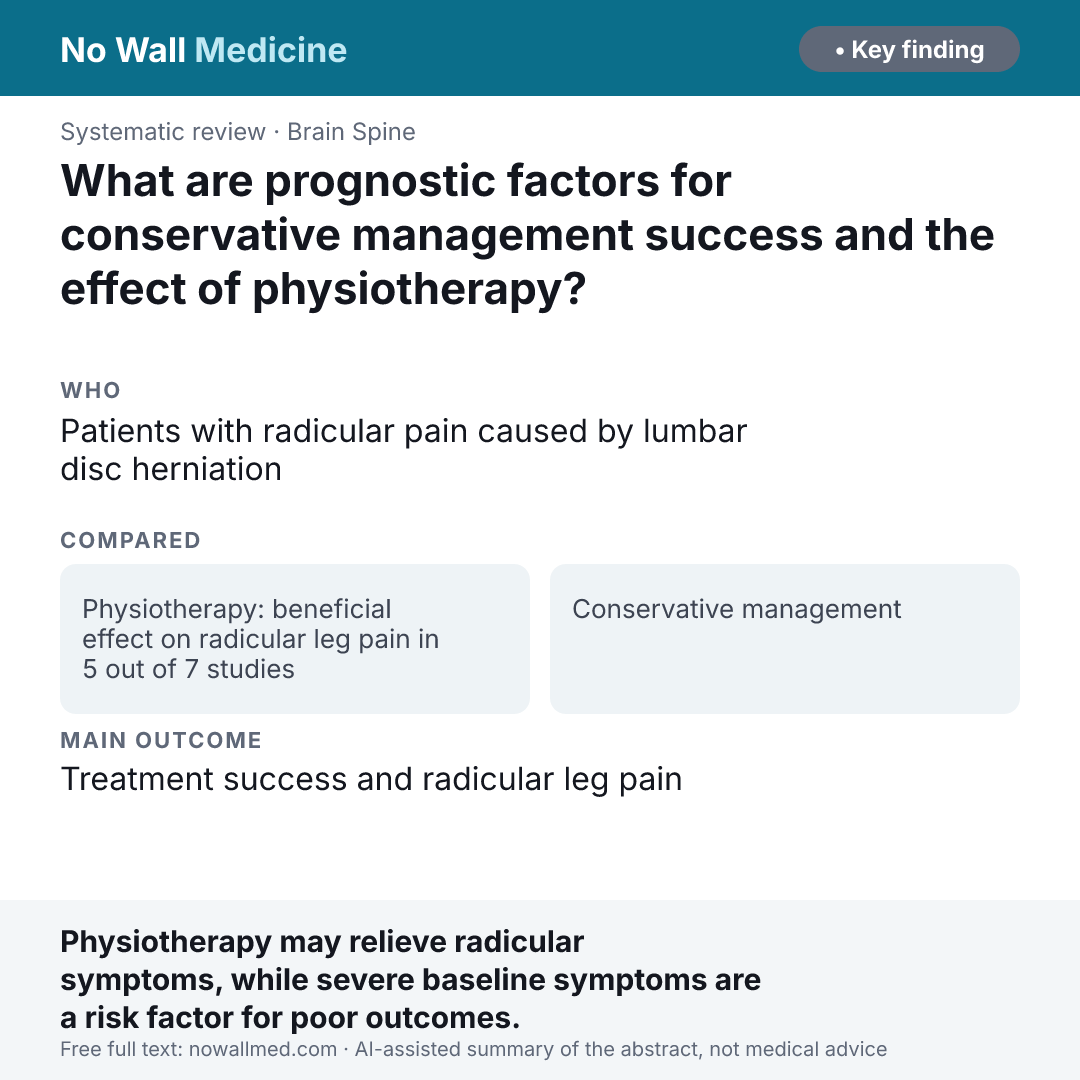
Prognostic factors for treatment success of conservative management and role for physiotherapy in radicular pain caused by a lumbar disc herniation: a systematic review
Systematic reviewKey finding
What are prognostic factors for conservative management success and the effect of physiotherapy?
Who
Patients with radicular pain caused by lumbar disc herniation
Compared
Physiotherapy: beneficial effect on radicular leg pain in 5 out of 7 studies
Conservative management
Main outcome
Treatment success and radicular leg pain
Bottom line: Physiotherapy may relieve radicular symptoms, while severe baseline symptoms are a risk factor for poor outcomes.
Limitation: Fifteen papers had moderate to high risk of bias.
Brain Spine · 2025-11-10 · Save PNG
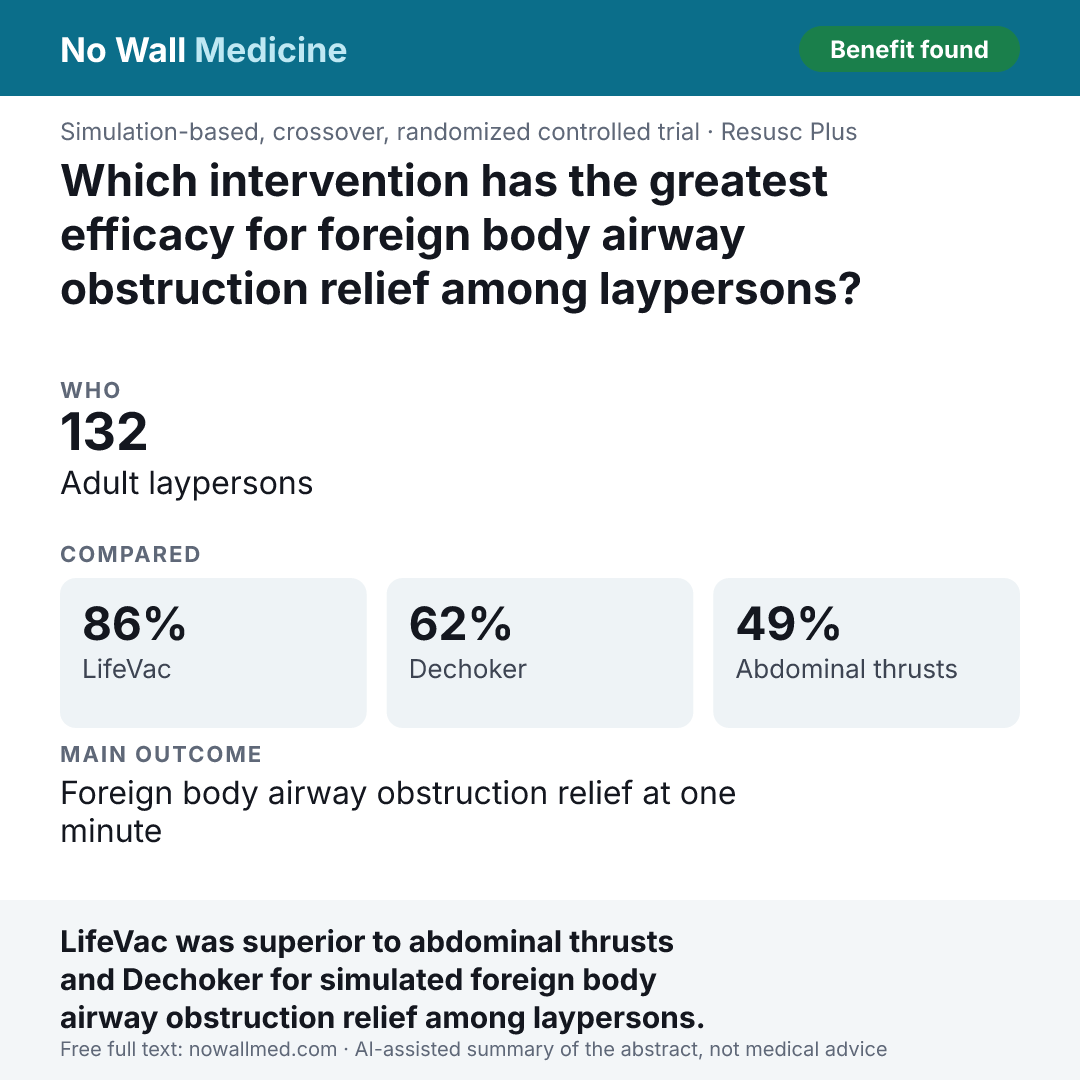
Comparison of foreign body airway obstruction interventions among laypersons: A simulation-based, crossover, randomized controlled trial
Simulation-based, crossover, randomized controlled trialBenefit found
Which intervention has the greatest efficacy for foreign body airway obstruction relief among laypersons?
Who
132
Adult laypersons
Compared
86%LifeVac
62%Dechoker
49%Abdominal thrusts
Main outcome
Foreign body airway obstruction relief at one minute
Result: OR 12.4 (95% CI 5.6-27.2) for LifeVac vs abdominal thrusts
Bottom line: LifeVac was superior to abdominal thrusts and Dechoker for simulated foreign body airway obstruction relief among laypersons.
Resusc Plus · 2025-11-10 · Save PNG
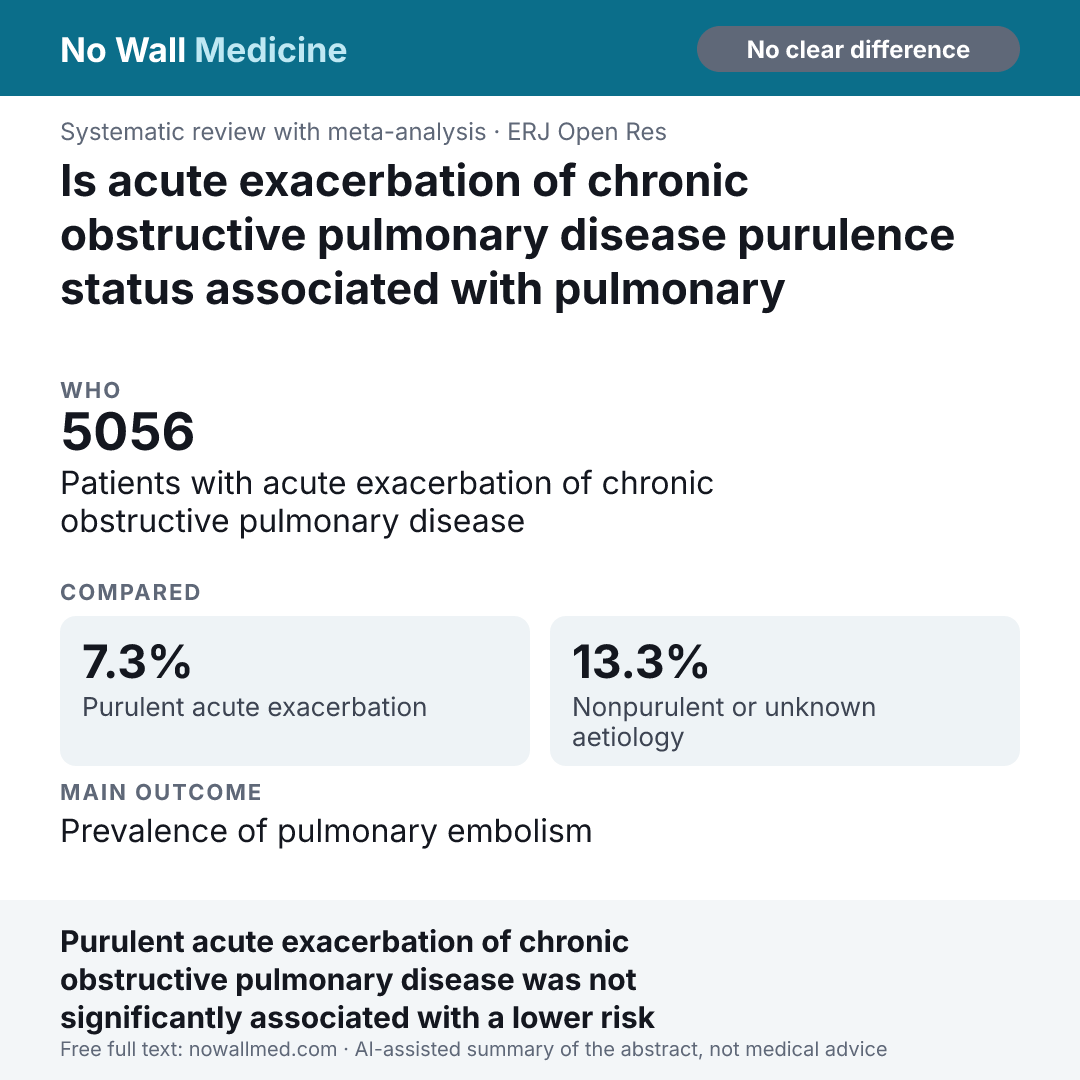
COPD exacerbation purulence status and its association with pulmonary embolism: a systematic review with meta-analysis
Systematic review with meta-analysisNo clear difference
Is acute exacerbation of chronic obstructive pulmonary disease purulence status associated with pulmonary embolism?
Who
5056
Patients with acute exacerbation of chronic obstructive pulmonary disease
Compared
7.3%Purulent acute exacerbation (95% CI 2.4-14.7%)
13.3%Nonpurulent or unknown aetiology (95% CI 8.0-19.7%)
Main outcome
Prevalence of pulmonary embolism
Result: relative risk 0.64 (95% CI 0.26-1.55)
Bottom line: Purulent acute exacerbation of chronic obstructive pulmonary disease was not significantly associated with a lower risk of pulmonary embolism.
ERJ Open Res · 2025-11-10 · Save PNG
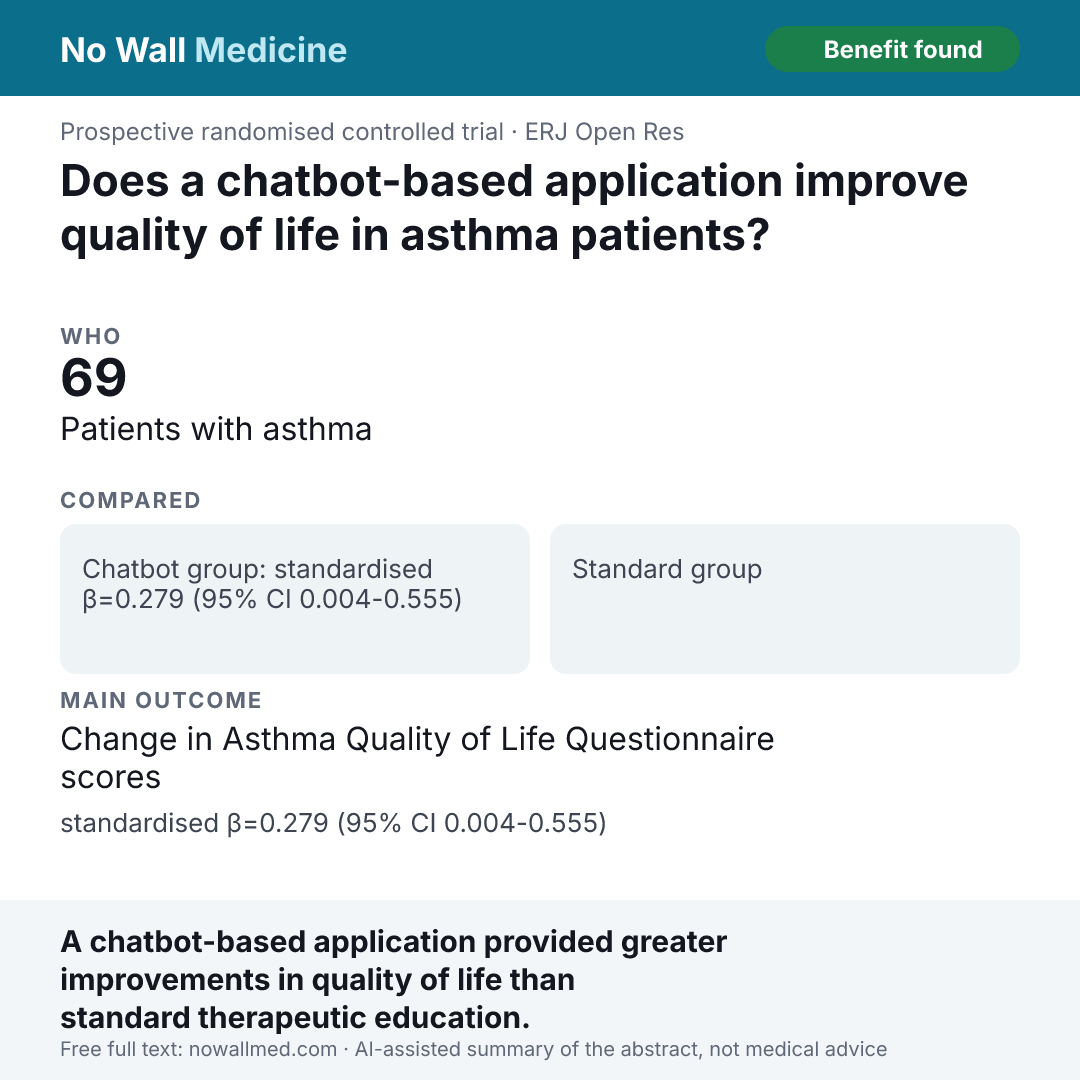
Larger quality-of-life gains with an asthma support app: a randomised controlled trial
Prospective randomised controlled trialBenefit found
Does a chatbot-based application improve quality of life in asthma patients?
Who
69
Patients with asthma
Compared
Chatbot group: standardised β=0.279 (95% CI 0.004-0.555)
Standard group
Main outcome
Change in Asthma Quality of Life Questionnaire scores
Result: standardised β=0.279 (95% CI 0.004-0.555)
Bottom line: A chatbot-based application provided greater improvements in quality of life than standard therapeutic education.
ERJ Open Res · 2025-11-10 · Save PNG
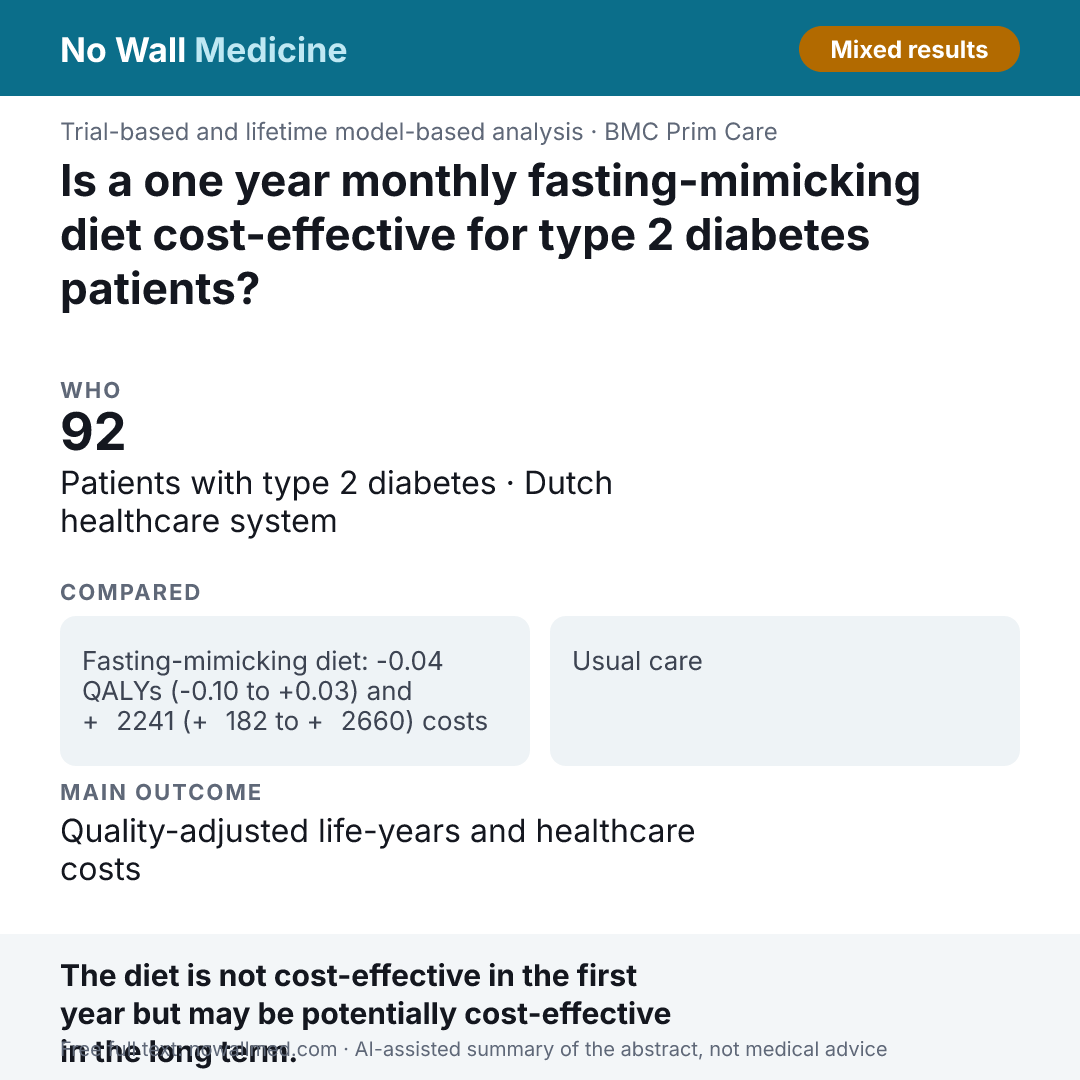
Cost-effectiveness of a periodic fasting-mimicking diet programme in patients with type 2 diabetes: a trial-based analysis and a lifetime model-based analysis
Trial-based and lifetime model-based analysisMixed results
Is a one year monthly fasting-mimicking diet cost-effective for type 2 diabetes patients?
Who
92
Patients with type 2 diabetes · Dutch healthcare system
Compared
Fasting-mimicking diet: -0.04 QALYs (-0.10 to +0.03) and +€2241 (+€182 to +€2660) costs
Usual care
Main outcome
Quality-adjusted life-years and healthcare costs
Result: incremental cost-effectiveness ratio of €8369/QALY
Bottom line: The diet is not cost-effective in the first year but may be potentially cost-effective in the long term.
Limitation: small sample size
BMC Prim Care · 2025-11-10 · Save PNG
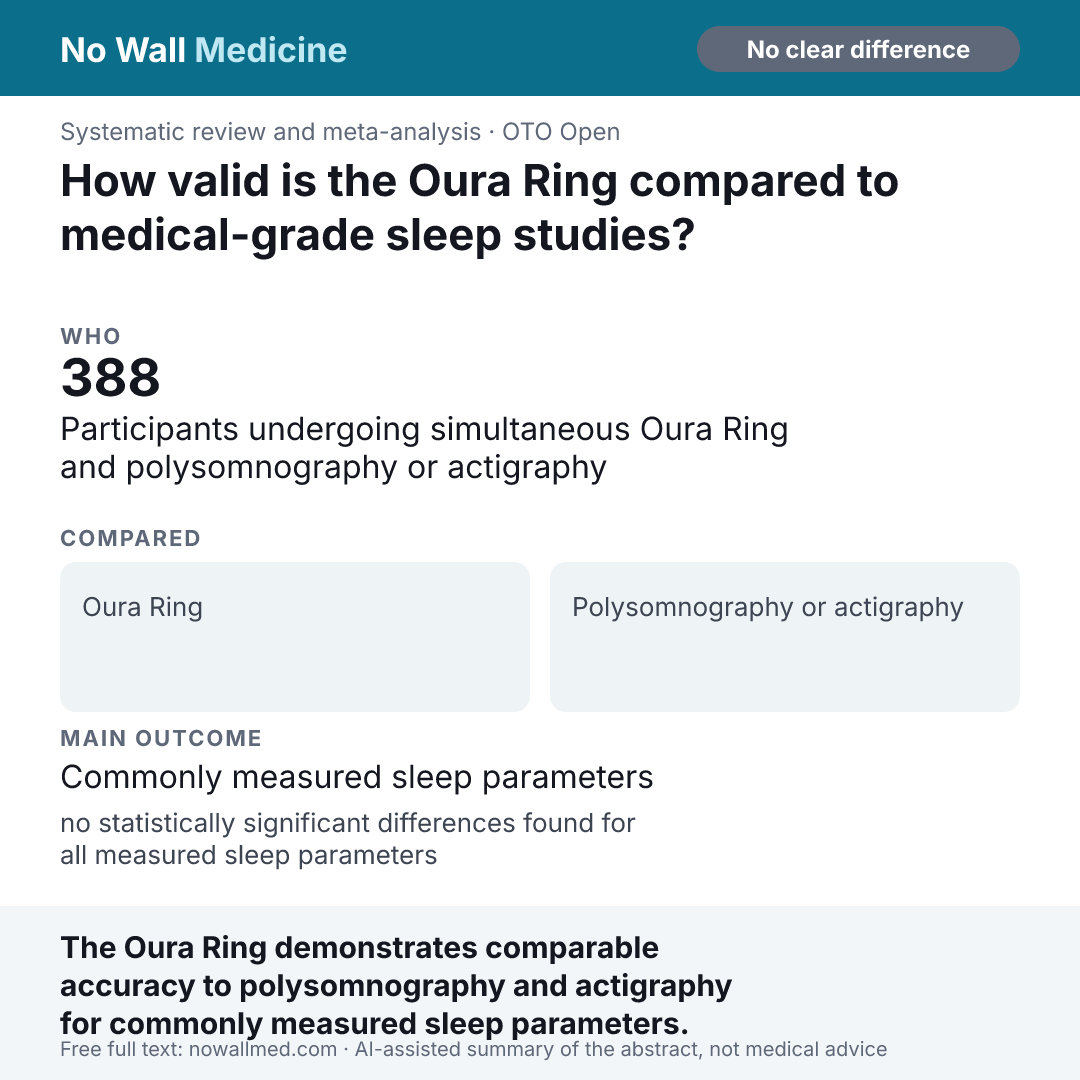
The Oura Ring Versus Medical-Grade Sleep Studies: A Systematic Review and Meta-Analysis
Systematic review and meta-analysisNo clear difference
How valid is the Oura Ring compared to medical-grade sleep studies?
Who
388
Participants undergoing simultaneous Oura Ring and polysomnography or actigraphy
Compared
Oura Ring
Polysomnography or actigraphy
Main outcome
Commonly measured sleep parameters
Result: no statistically significant differences found for all measured sleep parameters
Bottom line: The Oura Ring demonstrates comparable accuracy to polysomnography and actigraphy for commonly measured sleep parameters.
OTO Open · 2025-11-10 · Save PNG
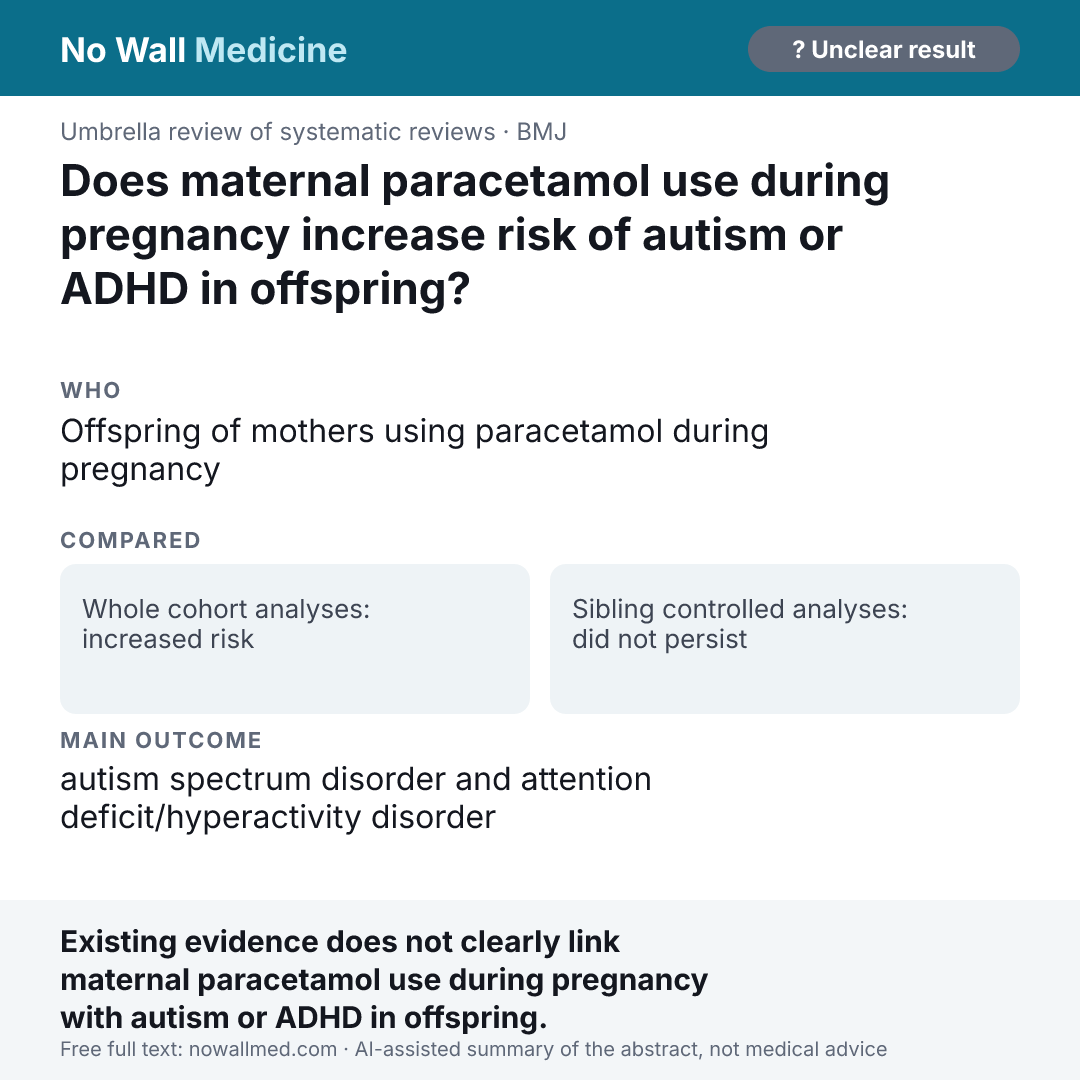
DASH-Patterned Groceries and Effects on Blood Pressure: The GoFresh Randomized Clinical Trial
Parallel-group randomized clinical trialBenefit found
Do low sodium DASH-patterned groceries affect systolic blood pressure in Black residents?
Who
180
Black residents of urban communities with elevated blood pressure · Boston
Compared
DASH-patterned groceries: -5.7 mm Hg (95% CI, -7.4, to-3.9 mm Hg)
Self-directed grocery shopping: -2.3 mm Hg (95% CI, -4.1 to -0.4 mm Hg)
Main outcome
3-month change in model-estimated office systolic blood pressure
Result: difference in changes, -3.4 mm Hg; 95% CI, -5.9 to -0.8 mm Hg
Bottom line: Home-delivered DASH-patterned groceries and dietitian counseling decreased systolic blood pressure and LDL cholesterol, but effects were not maintained.
Limitation: Effects were not maintained 6 months after the intervention was initiated.
JAMA · 2025-11-09 · Save PNG
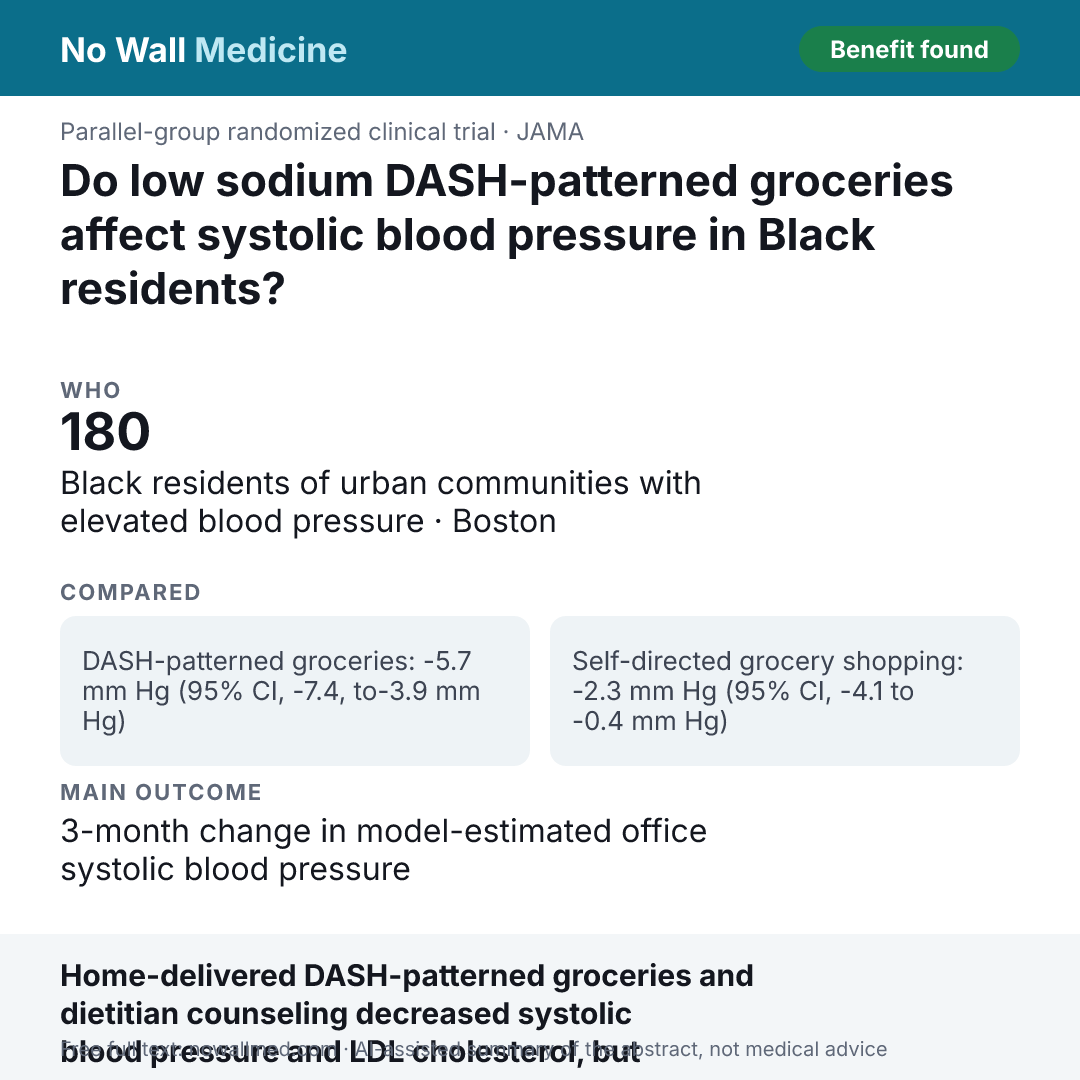
Efficacy and Safety of Oral PCSK9 Inhibitor Enlicitide in Adults With Heterozygous Familial Hypercholesterolemia: A Randomized Clinical Trial
Phase 3, randomized clinical trialBenefit found
Is enlicitide decanoate effective versus placebo in adults with heterozygous familial hypercholesterolemia?
Who
303
Adults with heterozygous familial hypercholesterolemia using statin therapy · 59 sites across 17 countries
Compared
-58.2%enlicitide
2.6%placebo
Main outcome
mean percentage change in low-density lipoprotein cholesterol level at week 24
Result: -59.4% (95% CI, -65.6% to -53.2%)
Bottom line: Enlicitide significantly reduced low-density lipoprotein cholesterol, apolipoprotein B, non-high-density lipoprotein cholesterol, and lipoprotein(a) in adults.
JAMA · 2025-11-09 · Save PNG
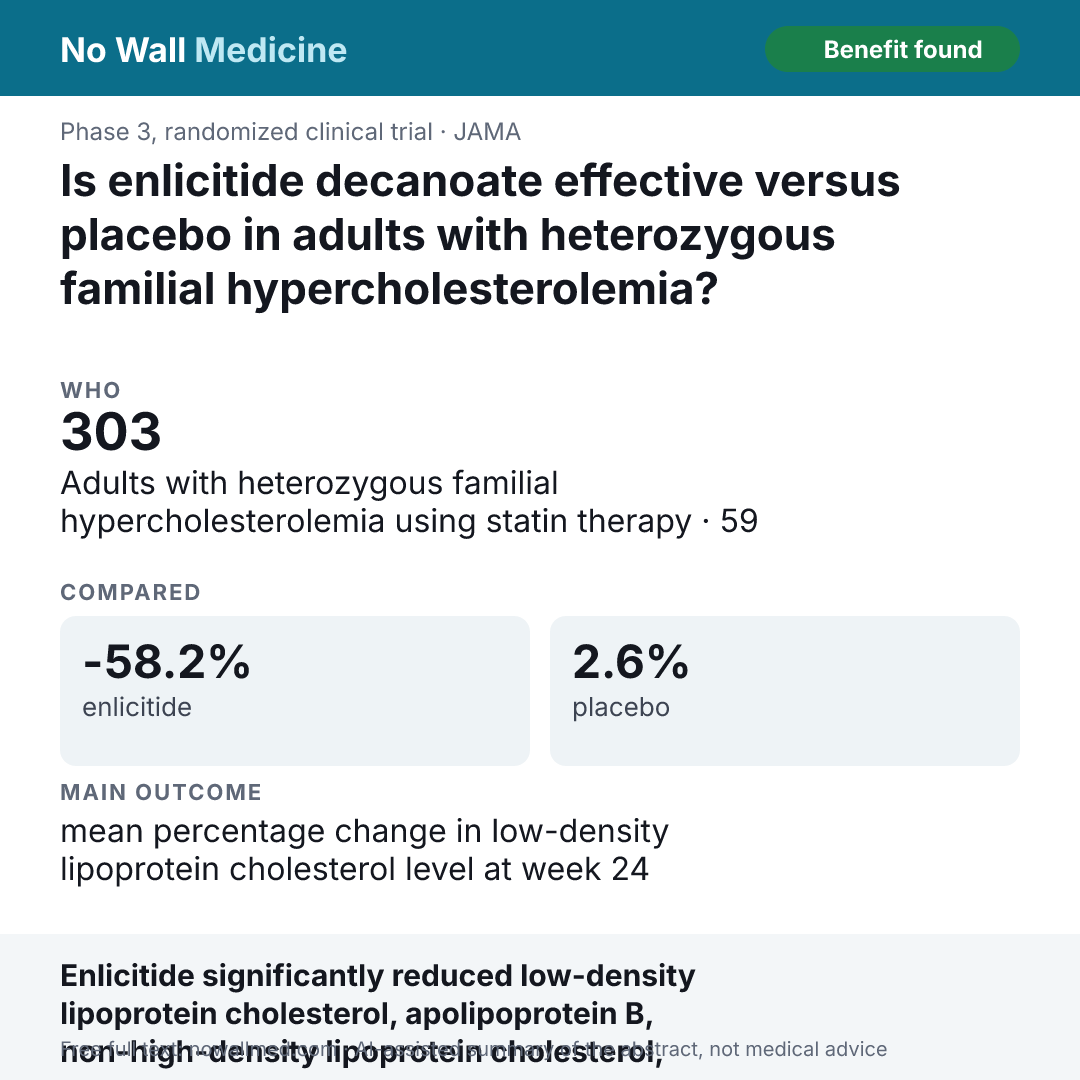
Caffeinated Coffee Consumption or Abstinence to Reduce Atrial Fibrillation: The DECAF Randomized Clinical Trial
Prospective, open-label, randomized clinical trialBenefit found
Does caffeinated coffee consumption versus abstinence reduce recurrent atrial fibrillation?
Who
200
Coffee-drinking adults with persistent atrial fibrillation or atrial flutter · 5 hospitals in the US, Canada, and Australia
Compared
47%caffeinated coffee consumption
64%coffee and caffeine abstinence
Main outcome
clinically detected recurrence of atrial fibrillation or atrial flutter
Result: hazard ratio 0.61 (95% CI 0.42-0.89)
Bottom line: Drinking at least one cup of caffeinated coffee daily was associated with less recurrence of atrial fibrillation or atrial flutter.
JAMA · 2025-11-09 · Save PNG
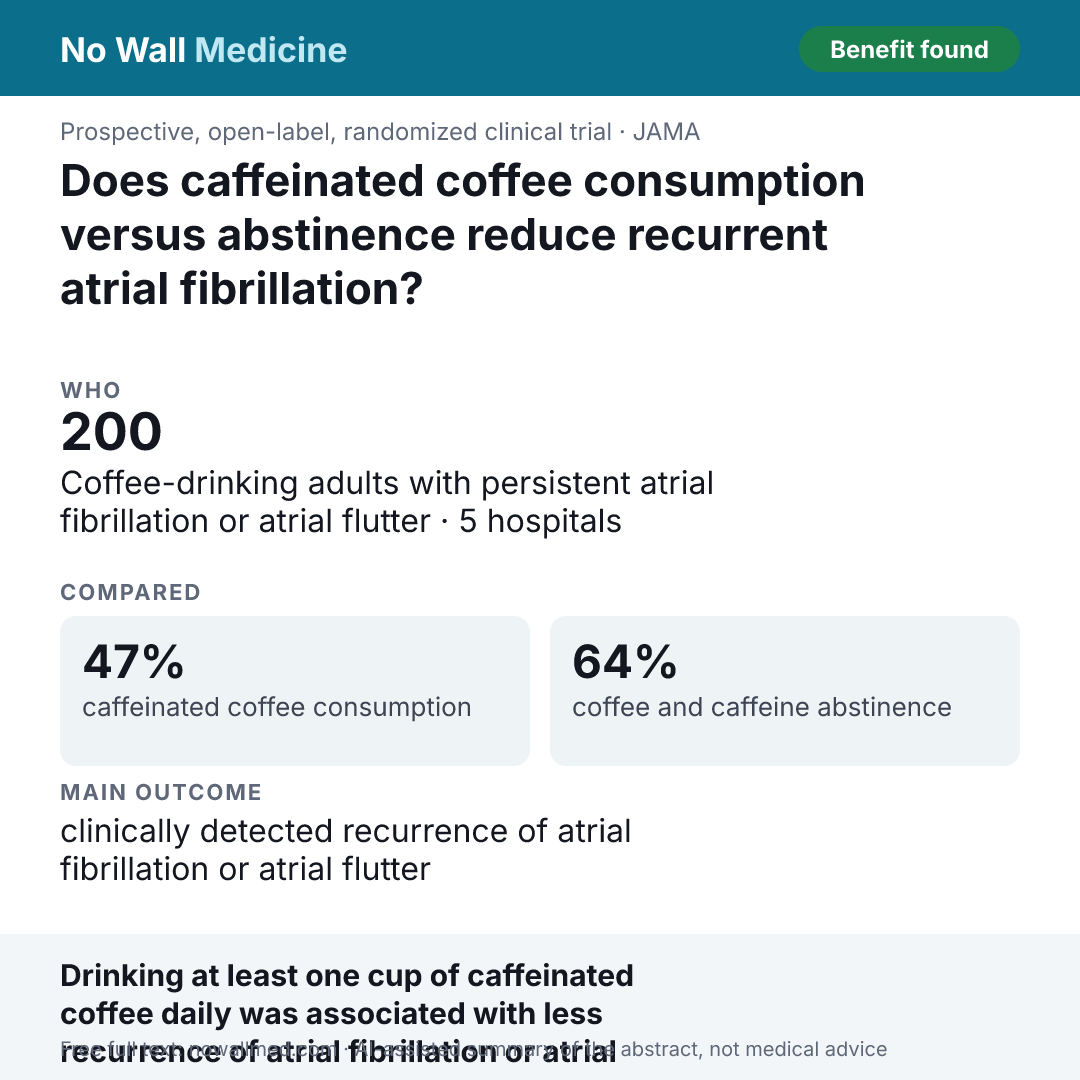
Maternal paracetamol (acetaminophen) use during pregnancy and risk of autism spectrum disorder and attention deficit/hyperactivity disorder in offspring: umbrella review of systematic reviews
Umbrella review of systematic reviewsUnclear result
Does maternal paracetamol use during pregnancy increase risk of autism or ADHD in offspring?
Who
Offspring of mothers using paracetamol during pregnancy
Compared
Whole cohort analyses: increased risk
Sibling controlled analyses: did not persist
Main outcome
autism spectrum disorder and attention deficit/hyperactivity disorder
Bottom line: Existing evidence does not clearly link maternal paracetamol use during pregnancy with autism or ADHD in offspring.
Limitation: Low to critically low confidence due to potential risk of bias and confounding in included studies.
BMJ · 2025-11-09 · Save PNG
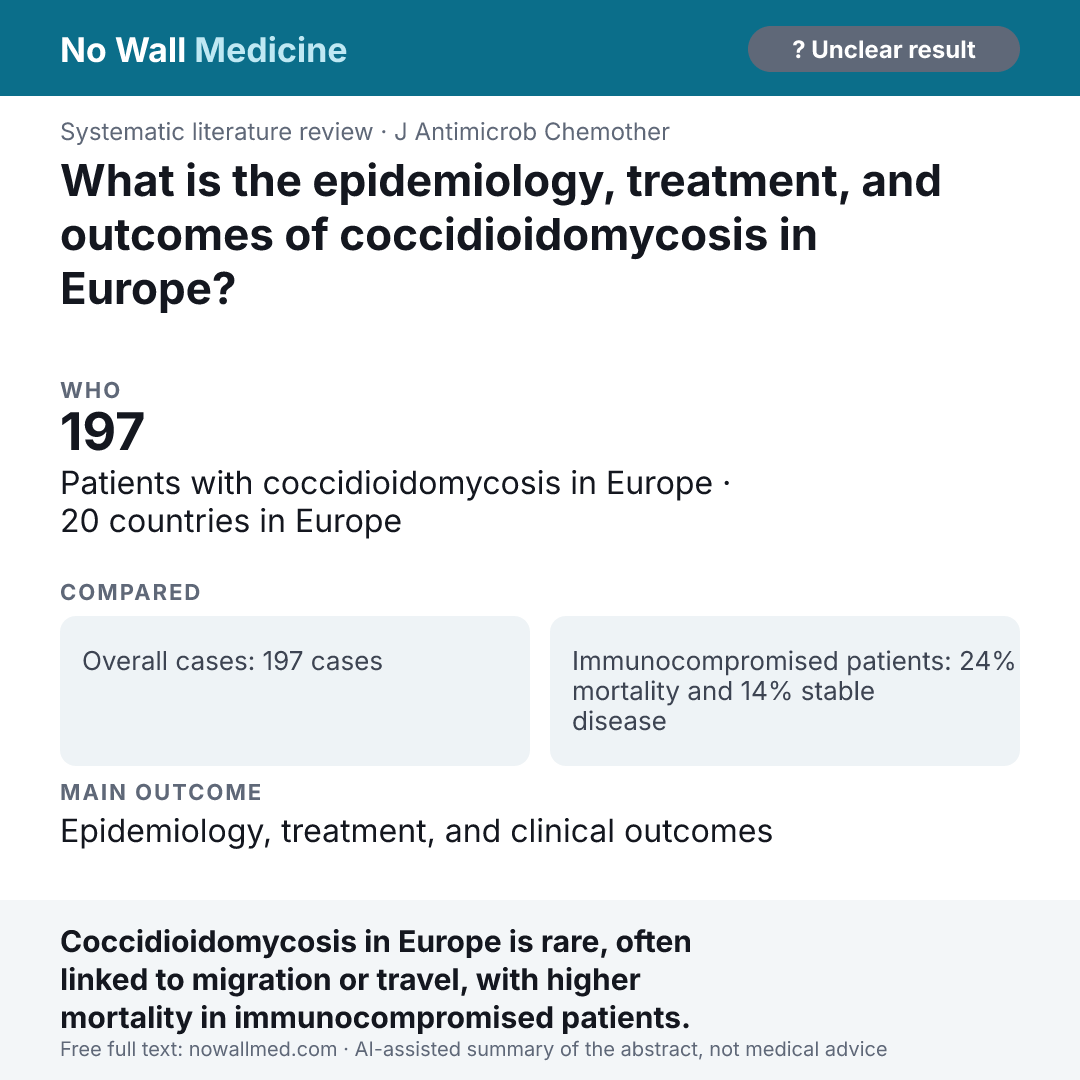
Dapagliflozin to Reduce Early Recurrence After Catheter Ablation for Atrial Fibrillation: The DARE-AF Randomized Clinical Trial
Prospective, open-label, parallel-assignment randomized controlled trialNo clear difference
Does dapagliflozin reduce early atrial fibrillation recurrence after catheter ablation?
Who
200
Patients with persistent atrial fibrillation scheduled for first catheter ablation
Compared
dapagliflozin: 7.5±23.6%
control: 8.1±25.5%
Main outcome
atrial fibrillation burden at 3 months after ablation
Result: hazard ratio 1.11 (95% CI 0.66-1.86)
Bottom line: Three-month treatment with dapagliflozin did not reduce early arrhythmia recurrence after catheter ablation in persistent atrial fibrillation patients.
Circulation · 2025-11-09 · Save PNG
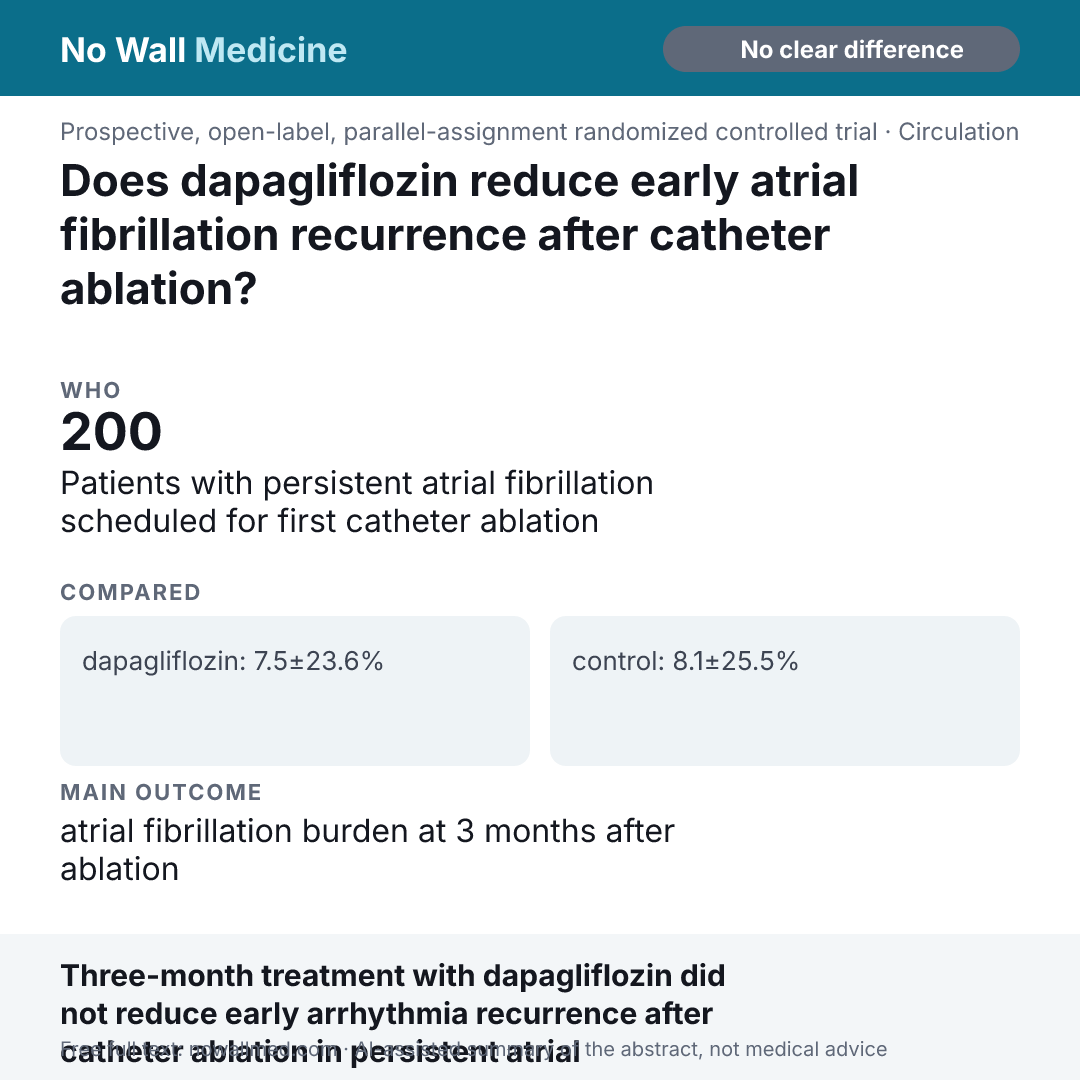
Withdrawal of aspirin in patients with left ventricular assist device treated with vitamin K antagonists: impact of anticoagulation quality in the randomized ARIES-HM3 trial
Randomized, double-blind, placebo-controlled studyMixed results
Does vitamin K antagonist management quality impact outcomes when omitting aspirin in HeartMate 3 patients?
Who
554
Patients with de-novo HeartMate 3 placement · International
Compared
High time in therapeutic range: 77% primary endpoint success
Low time in therapeutic range: 66.9% primary endpoint success
Main outcome
Primary endpoint success and bleeding rates
Result: rate ratio 1.84, 95% confidence interval [CI] 1.37-2.53
Bottom line: Higher time in therapeutic range correlates with higher primary endpoint success and lower bleeding rates in HeartMate 3 patients.
Eur Heart J · 2025-11-09 · Save PNG
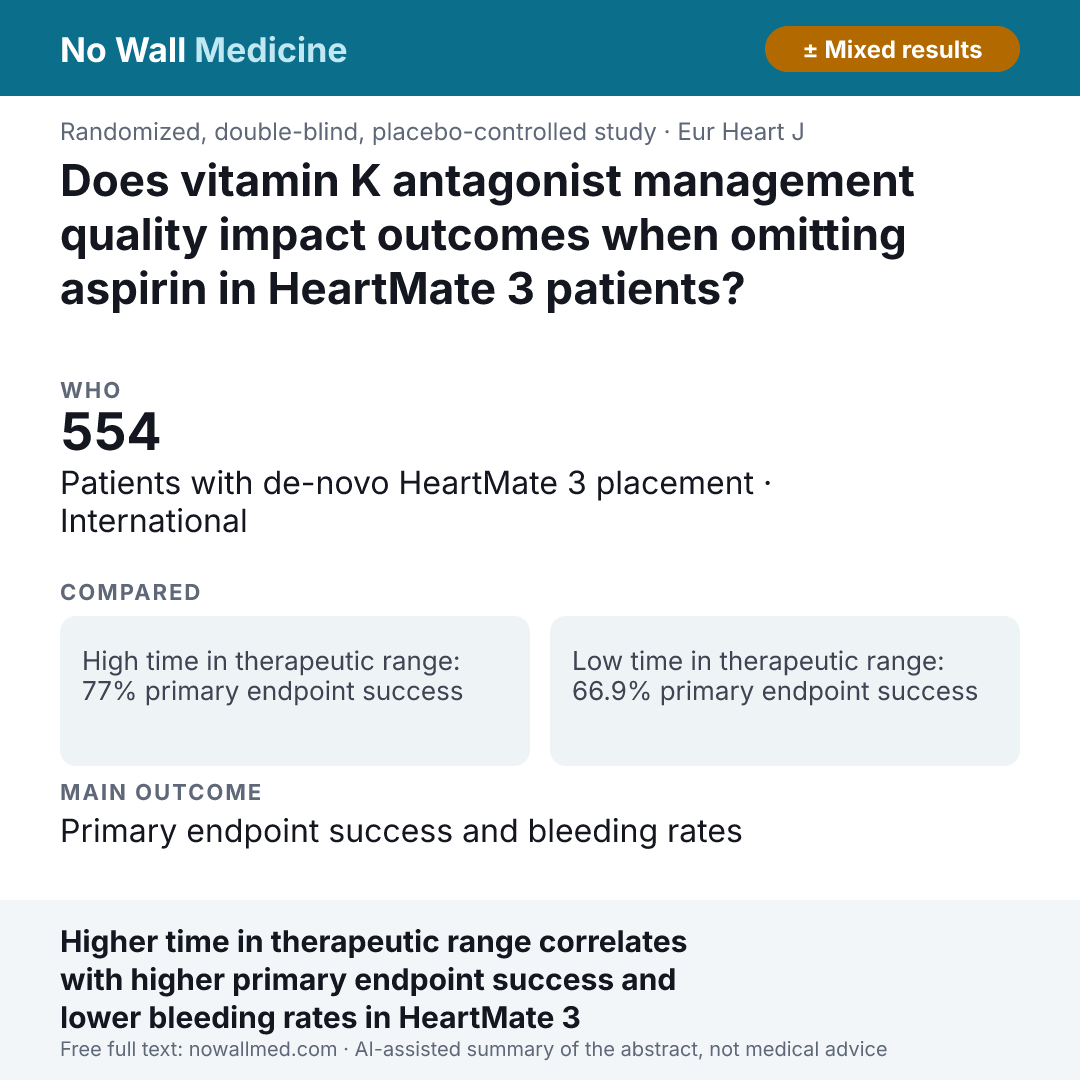
Optimizing oncology drug development: systematic review of 22 years of myeloma randomized controlled trials
Systematic review of randomized controlled trialsMixed results
What factors increase the likelihood of meeting primary endpoints in myeloma randomized controlled trials?
Who
123
Patients in myeloma randomized controlled trials
Compared
Higher median participant age: lower odds of meeting the primary endpoint
Overall survival as primary endpoint: 3 of 20 met their endpoint
Main outcome
Achieving statistical significance for primary outcomes
Result: OR 0.06 (95% CI 0.01 to 0.23) for overall survival vs progression-free survival
Bottom line: Younger age and selecting endpoints other than overall survival increase the likelihood of trial success.
J Natl Cancer Inst · 2025-11-09 · Save PNG
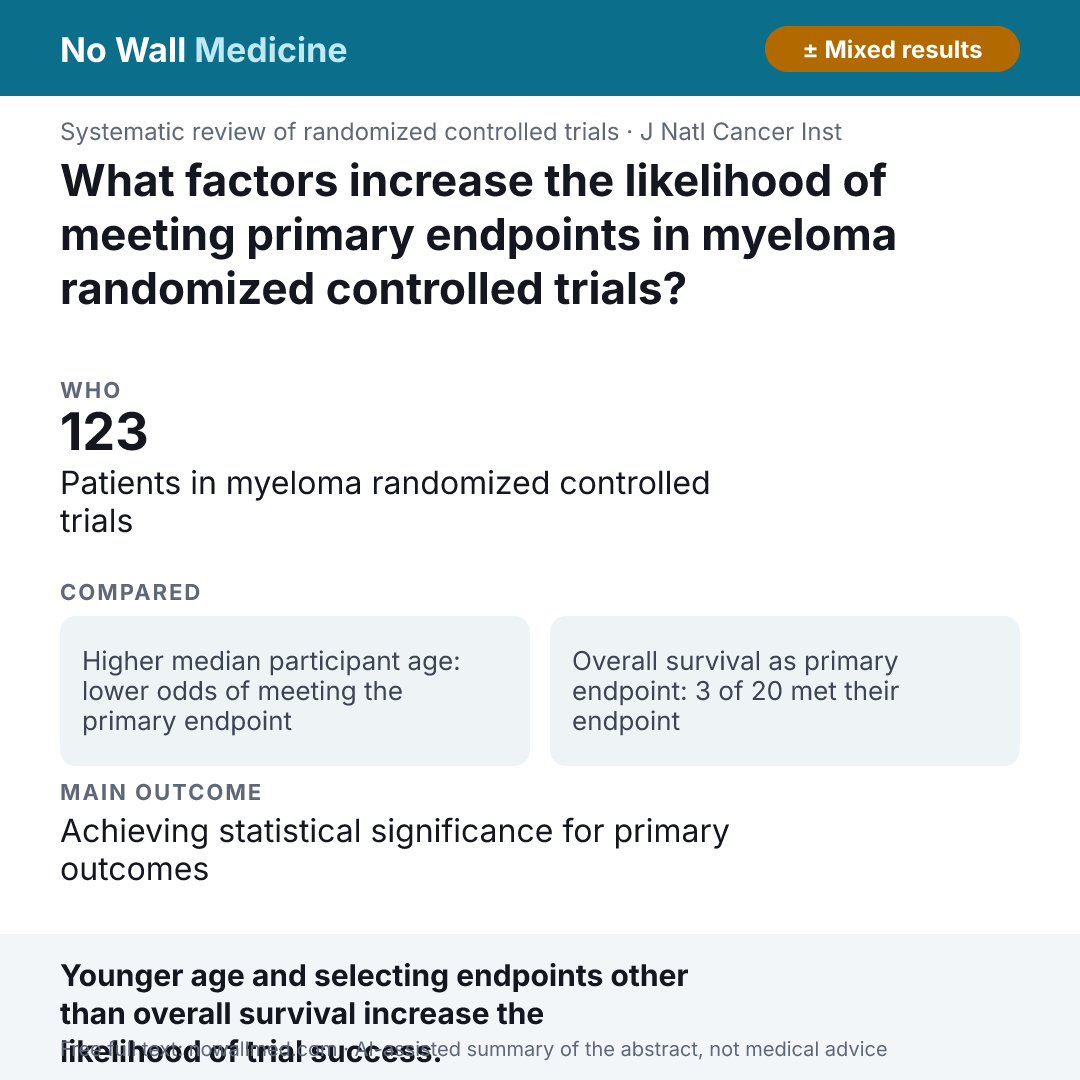
Coccidioidomycosis in Europe: a systematic literature review of epidemiology, treatment and outcomes
Systematic literature reviewUnclear result
What is the epidemiology, treatment, and outcomes of coccidioidomycosis in Europe?
Who
197
Patients with coccidioidomycosis in Europe · 20 countries in Europe
Compared
Overall cases: 197 cases
Immunocompromised patients: 24% mortality and 14% stable disease
Main outcome
Epidemiology, treatment, and clinical outcomes
Bottom line: Coccidioidomycosis in Europe is rare, often linked to migration or travel, with higher mortality in immunocompromised patients.
J Antimicrob Chemother · 2025-11-09 · Save PNG
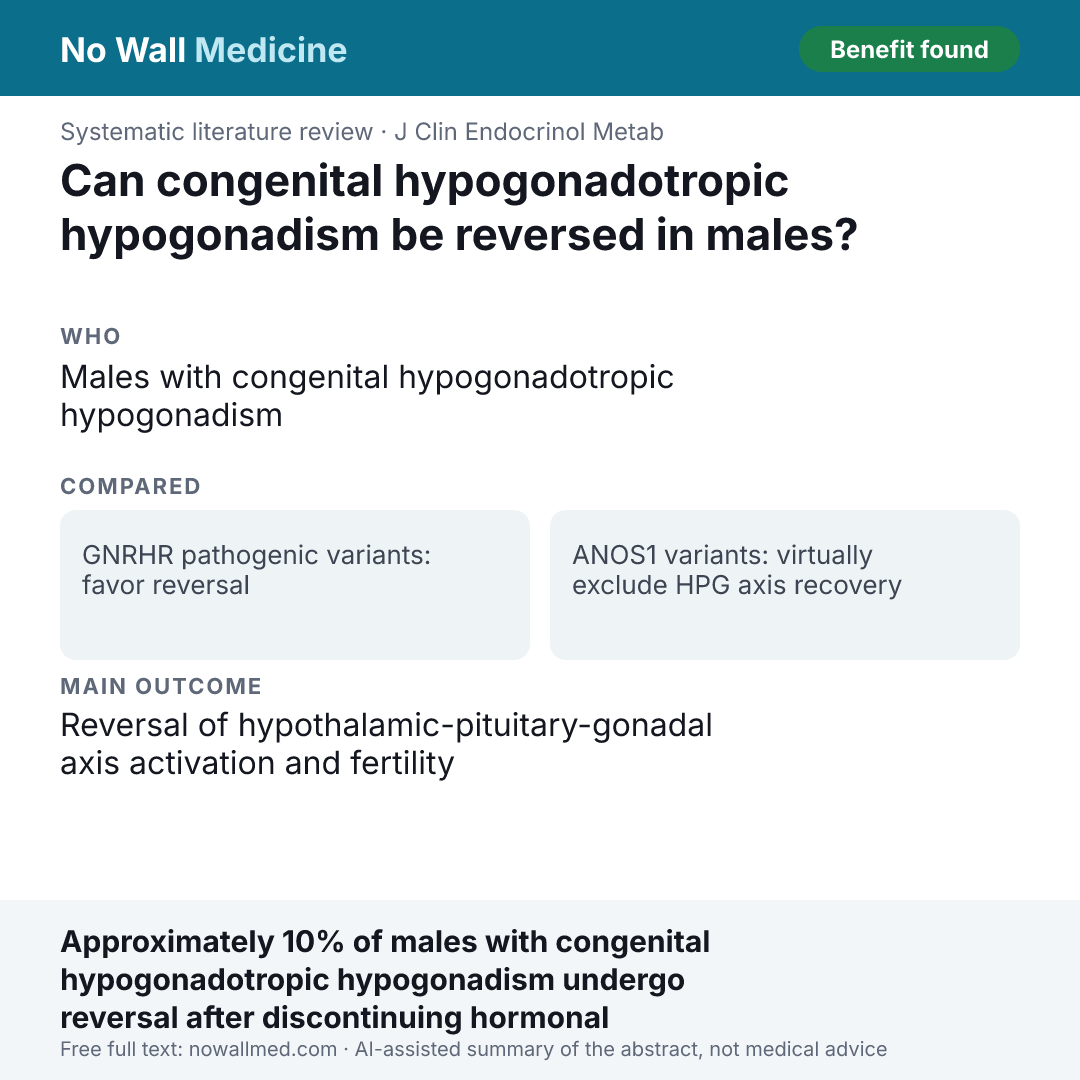
Reversal of Congenital Hypogonadotropic Hypogonadism
Systematic literature reviewBenefit found
Can congenital hypogonadotropic hypogonadism be reversed in males?
Who
Males with congenital hypogonadotropic hypogonadism
Compared
GNRHR pathogenic variants: favor reversal
ANOS1 variants: virtually exclude HPG axis recovery
Main outcome
Reversal of hypothalamic-pituitary-gonadal axis activation and fertility
Bottom line: Approximately 10% of males with congenital hypogonadotropic hypogonadism undergo reversal after discontinuing hormonal treatment.
J Clin Endocrinol Metab · 2025-11-09 · Save PNG
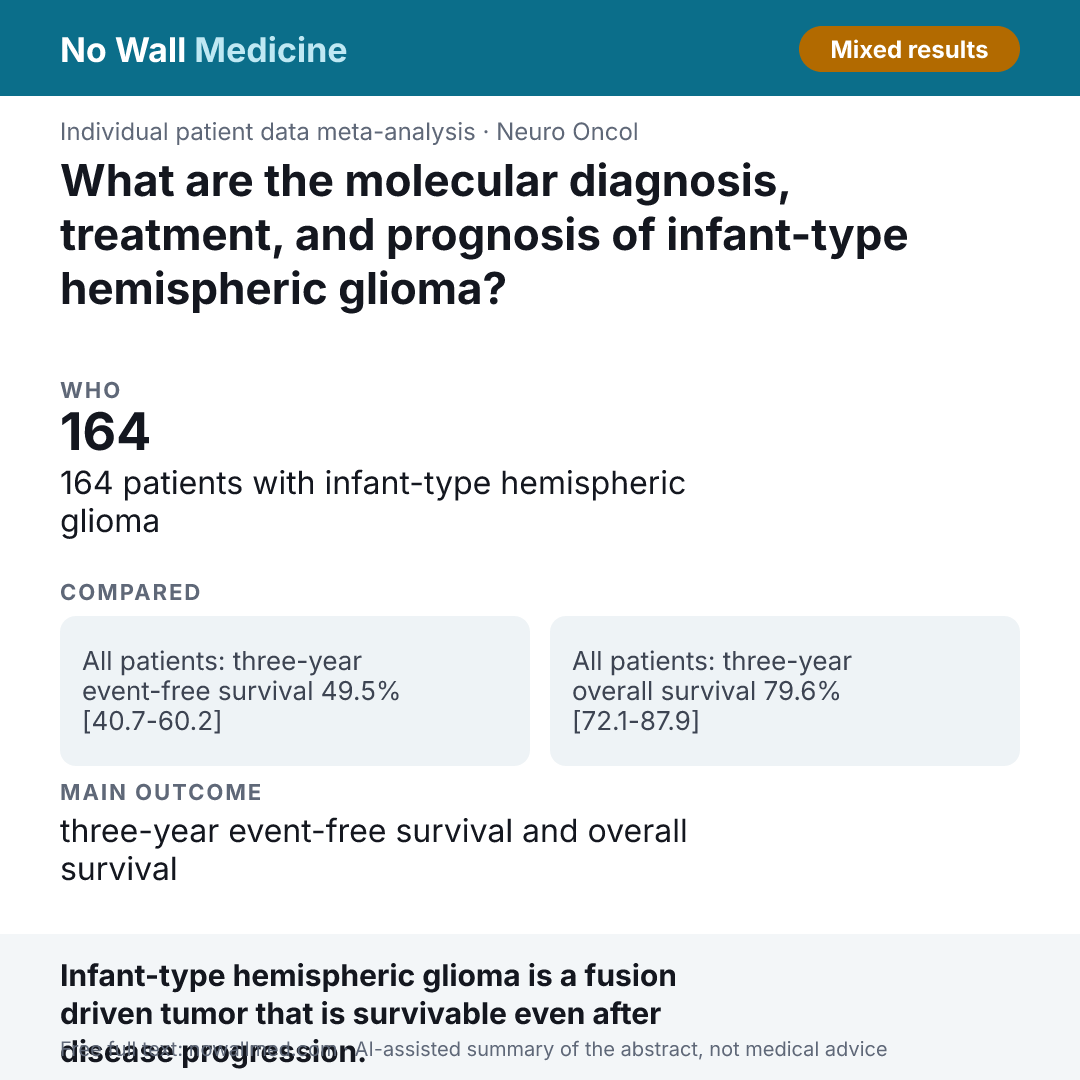
A systematic study of molecular diagnosis, treatment, and prognosis in infant-type hemispheric glioma: An individual patient data meta-analysis of 164 patients
Individual patient data meta-analysisMixed results
What are the molecular diagnosis, treatment, and prognosis of infant-type hemispheric glioma?
Who
164
164 patients with infant-type hemispheric glioma
Compared
All patients: three-year event-free survival 49.5% [40.7-60.2]
All patients: three-year overall survival 79.6% [72.1-87.9]
Main outcome
three-year event-free survival and overall survival
Bottom line: Infant-type hemispheric glioma is a fusion driven tumor that is survivable even after disease progression.
Neuro Oncol · 2025-11-09 · Save PNG
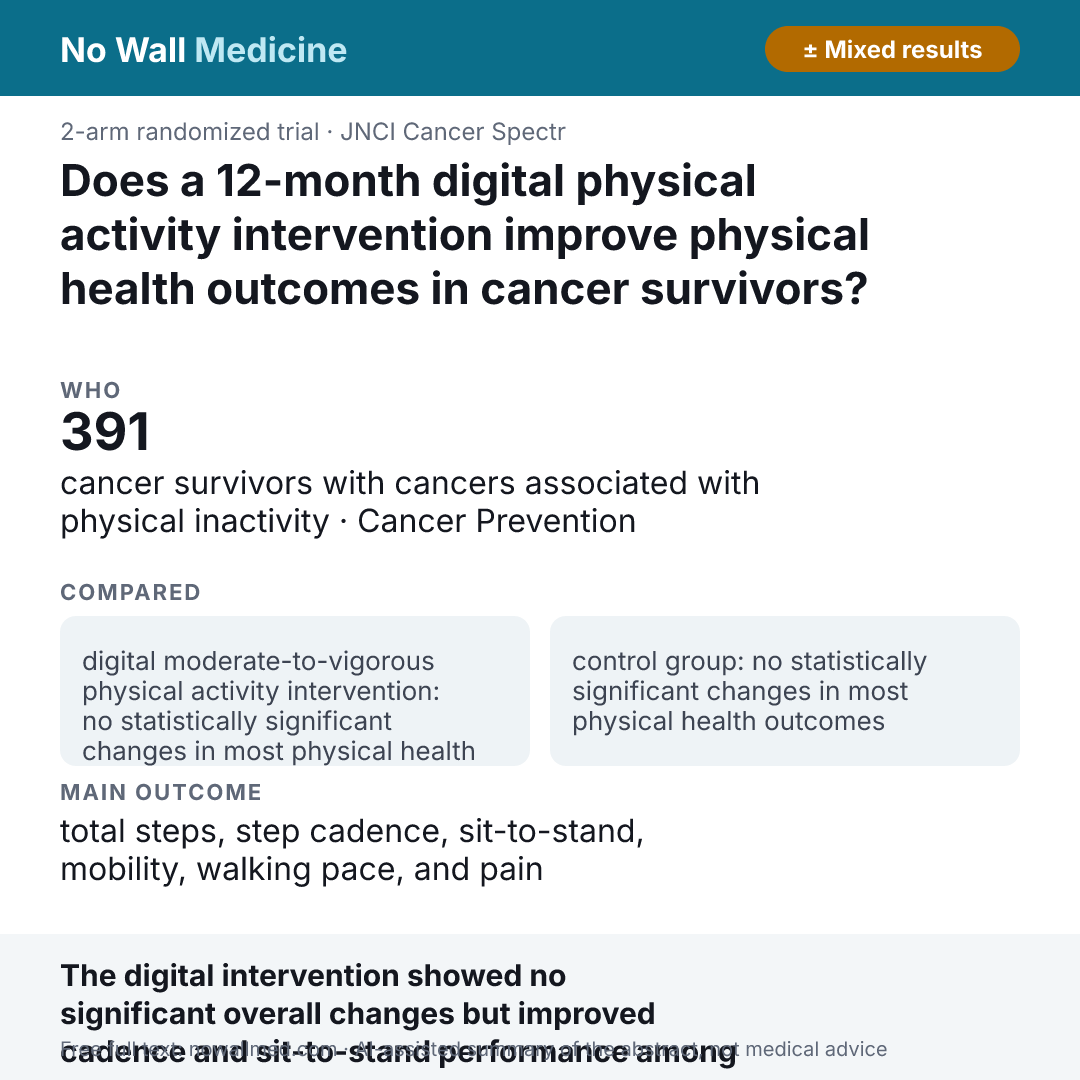
Physical health outcomes and step cadence improvements: a digital physical activity intervention in cancer survivors
2-arm randomized trialMixed results
Does a 12-month digital physical activity intervention improve physical health outcomes in cancer survivors?
Who
391
cancer survivors with cancers associated with physical inactivity · Cancer Prevention Study-3 prospective cohort study
Compared
digital moderate-to-vigorous physical activity intervention: no statistically significant changes in most physical health outcomes
control group: no statistically significant changes in most physical health outcomes
Main outcome
total steps, step cadence, sit-to-stand, mobility, walking pace, and pain
Bottom line: The digital intervention showed no significant overall changes but improved cadence and sit-to-stand performance among adherent participants.
JNCI Cancer Spectr · 2025-11-09 · Save PNG
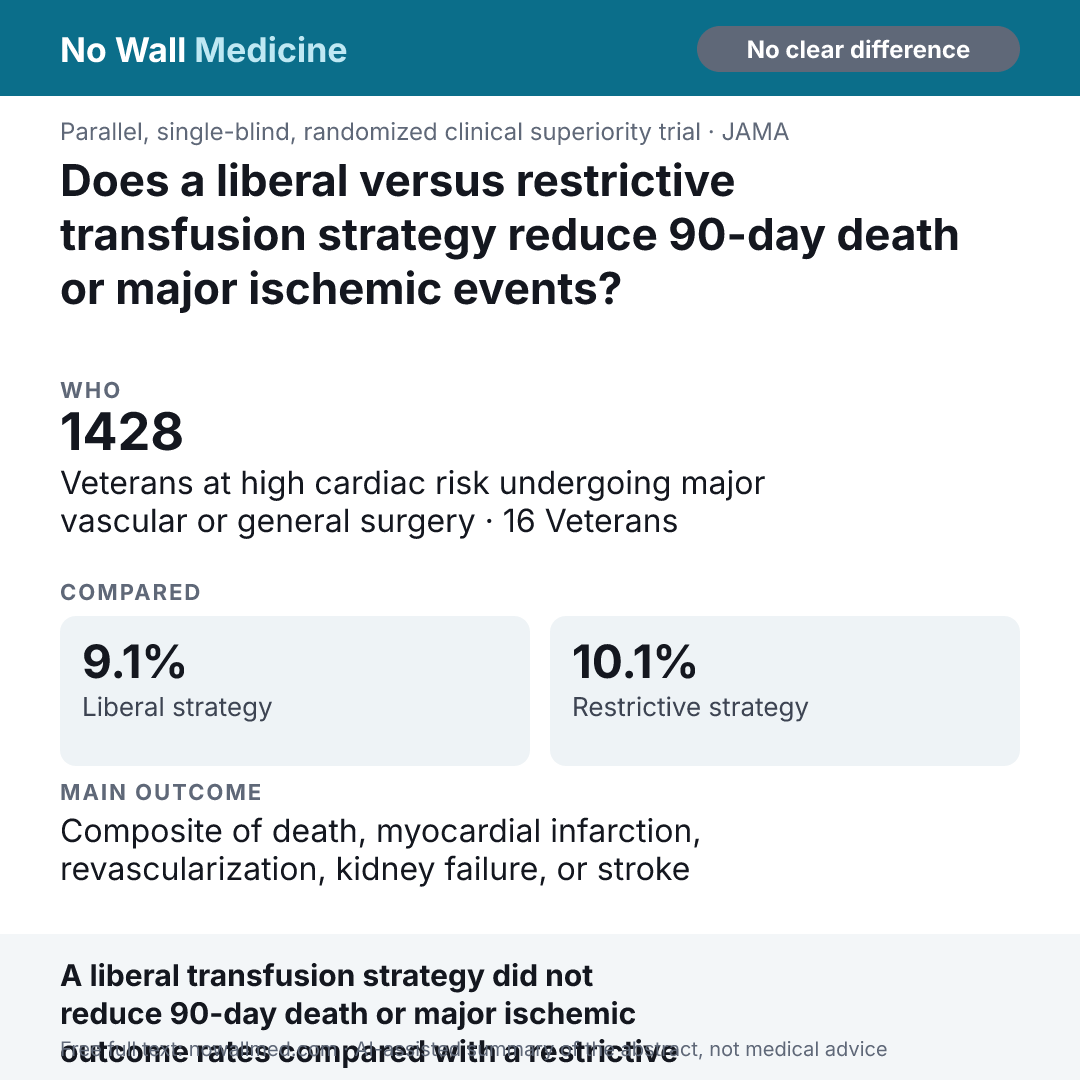
Liberal or Restrictive Postoperative Transfusion in Patients at High Cardiac Risk: The TOP Randomized Clinical Trial
Parallel, single-blind, randomized clinical superiority trialNo clear difference
Does a liberal versus restrictive transfusion strategy reduce 90-day death or major ischemic events?
Who
1428
Veterans at high cardiac risk undergoing major vascular or general surgery · 16 Veterans Affairs Medical Centers in the US
Compared
9.1%Liberal strategy (61 of 670)
10.1%Restrictive strategy (71 of 700)
Main outcome
Composite of death, myocardial infarction, revascularization, kidney failure, or stroke
Result: relative risk 0.90 (95% CI 0.65-1.24)
Bottom line: A liberal transfusion strategy did not reduce 90-day death or major ischemic outcome rates compared with a restrictive strategy.
JAMA · 2025-11-08 · Save PNG
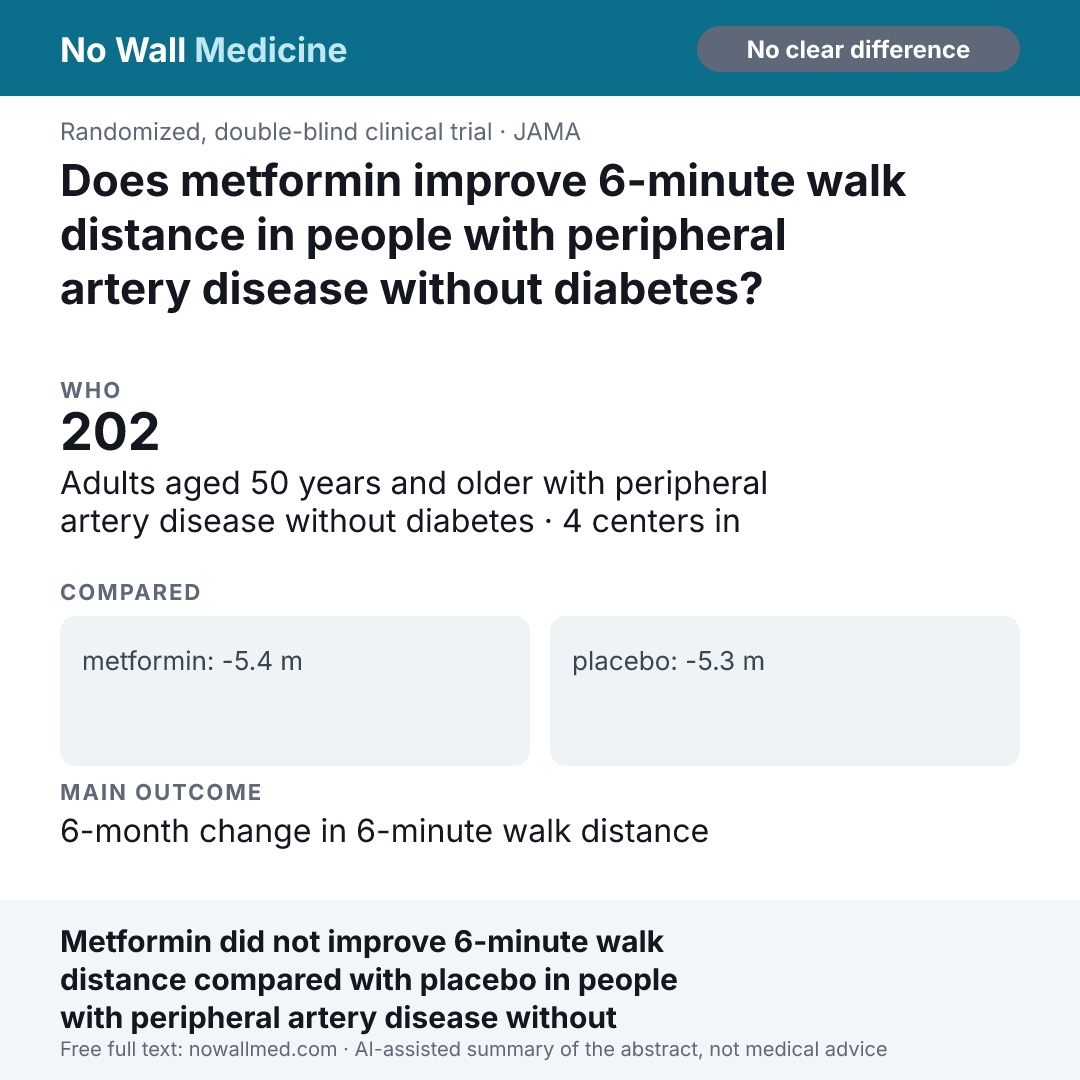
Metformin to Improve Walking Performance in Lower Extremity Peripheral Artery Disease: The PERMET Randomized Clinical Trial
Randomized, double-blind clinical trialNo clear difference
Does metformin improve 6-minute walk distance in people with peripheral artery disease without diabetes?
Who
202
Adults aged 50 years and older with peripheral artery disease without diabetes · 4 centers in the US
Compared
metformin: -5.4 m
placebo: -5.3 m
Main outcome
6-month change in 6-minute walk distance
Result: adjusted between-group difference: 1.1 m (95% CI, -16.3 to 18.6 m)
Bottom line: Metformin did not improve 6-minute walk distance compared with placebo in people with peripheral artery disease without diabetes.
Limitation: Enrollment was lower than targeted due to funding limitations.
JAMA · 2025-11-08 · Save PNG