Visual abstracts
New randomized trials and meta-analyses from leading journals at a glance: who was studied, what was compared, and what was found. Every paper is free to read in full.
All specialtiesCardiology 4877Oncology 4138Gastroenterology & Hepatology 1942Infectious Disease 3837Neurology 1905Psychiatry & Mental Health 2273Pulmonology 2143Critical Care 1365Endocrinology & Diabetes 2580Pediatrics 2980Surgery 2559Orthopedics & Sports Medicine 931Neurosurgery 537Cardiothoracic & Vascular Surgery 674Plastic & Reconstructive Surgery 591Nephrology 1133Rheumatology 823Hematology 1109Dermatology 621Ophthalmology 543Obstetrics & Gynecology 1686Public & Global Health 1058Radiology & Imaging 648Anesthesiology 986Urology 764ENT (Otolaryngology) 503Emergency Medicine 511Allergy & Immunology 313Geriatrics 981Family Medicine & Primary Care 562Medical Genetics & Genomics 676Pathology & Laboratory Medicine 159Physical Medicine & Rehabilitation 757Palliative Care 444Nutrition 1588Digital Health & AI 2201General Medicine 321
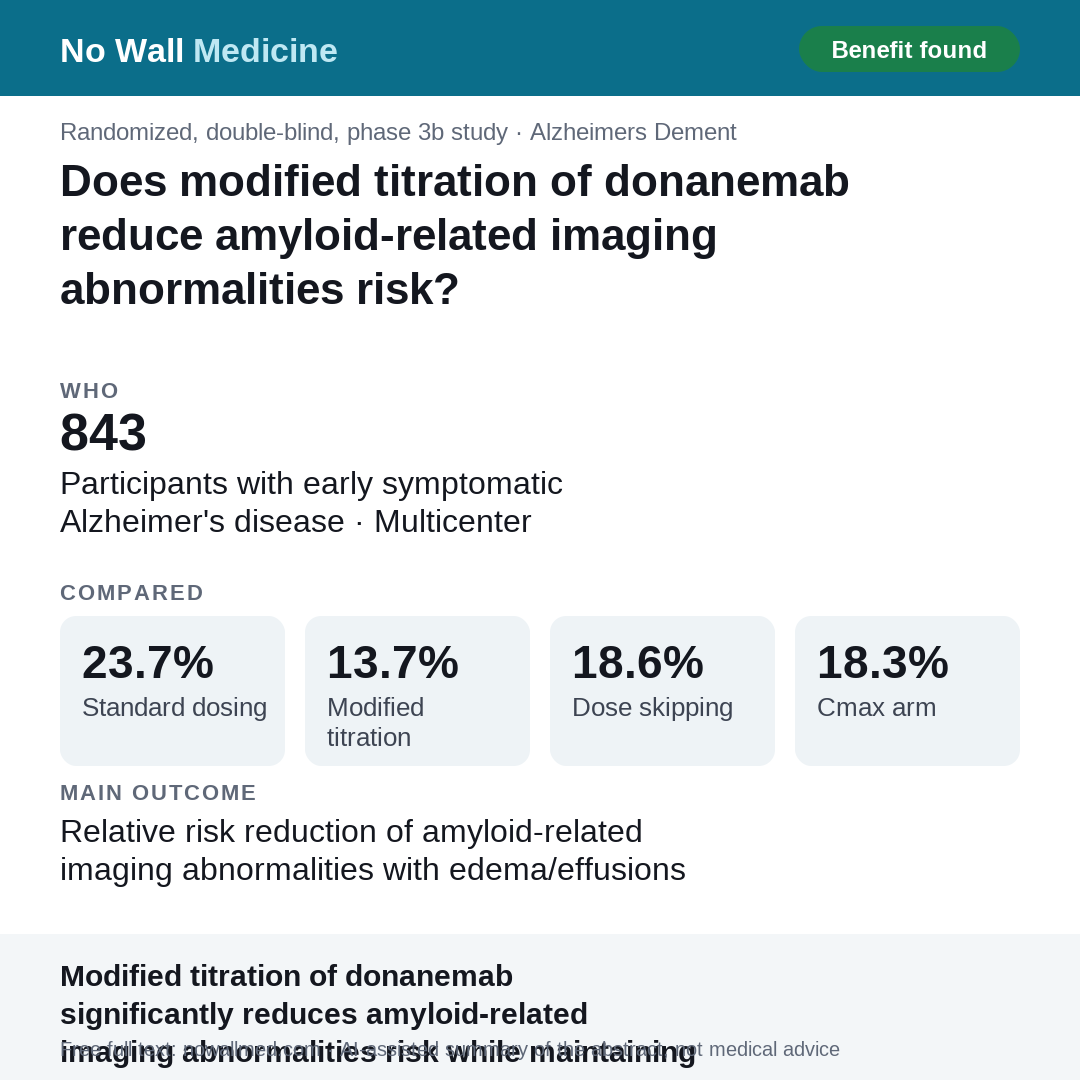
Modified titration of donanemab reduces ARIA risk and maintains amyloid reduction
Randomized, double-blind, phase 3b studyBenefit found
Does modified titration of donanemab reduce amyloid-related imaging abnormalities risk?
Who
843
Participants with early symptomatic Alzheimer's disease · Multicenter
Compared
23.7%Standard dosing
13.7%Modified titration
18.6%Dose skipping
18.3%Cmax arm
Main outcome
Relative risk reduction of amyloid-related imaging abnormalities with edema/effusions
Bottom line: Modified titration of donanemab significantly reduces amyloid-related imaging abnormalities risk while maintaining comparable amyloid reduction.
Alzheimers Dement · 2025-04-02Download image
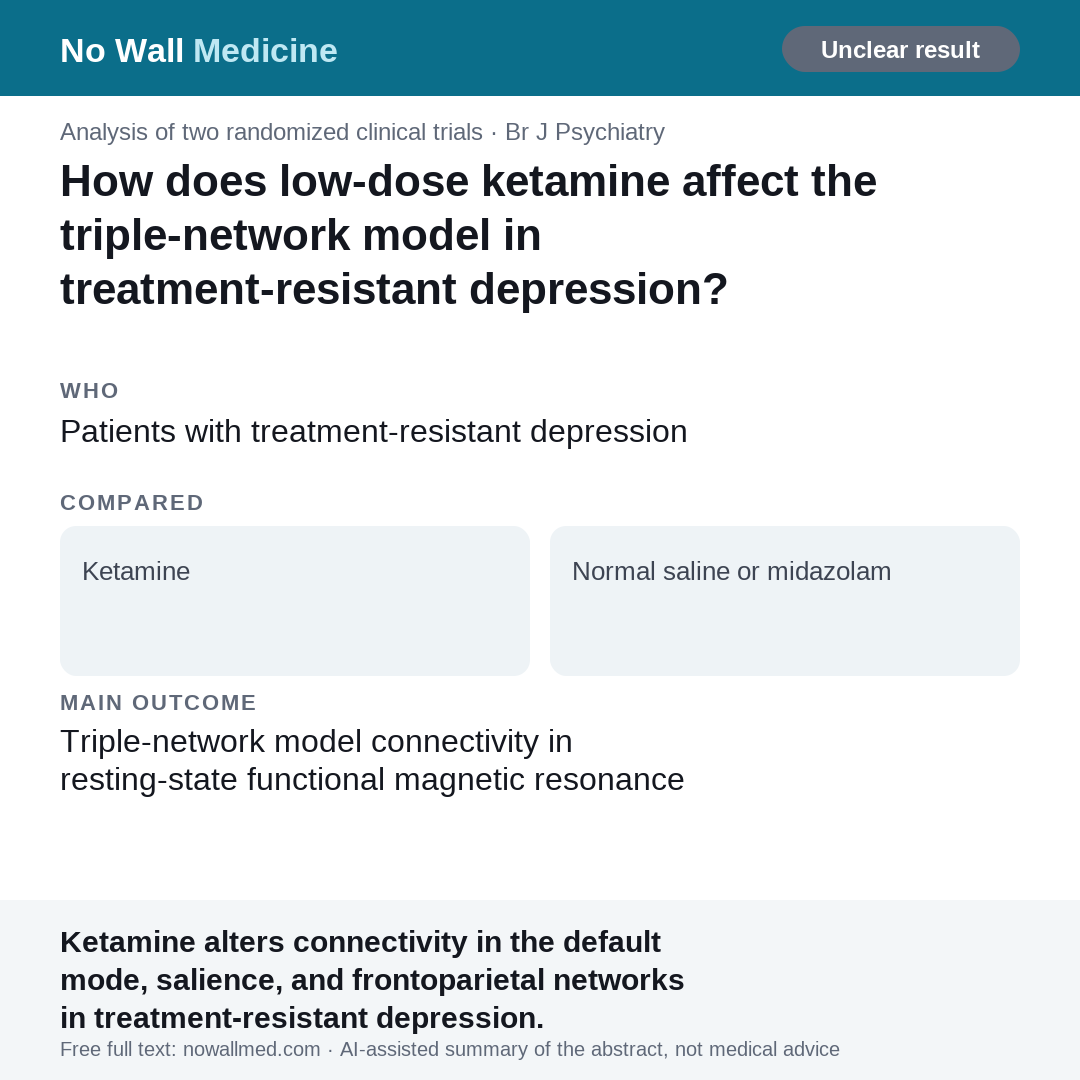
Triple-network model-based graph theory analysis of the effectiveness of low-dose ketamine in patients with treatment-resistant depression: two resting-state functional MRI clinical trials
Analysis of two randomized clinical trialsUnclear result
How does low-dose ketamine affect the triple-network model in treatment-resistant depression?
Who
Patients with treatment-resistant depression
Compared
Ketamine
Normal saline or midazolam
Main outcome
Triple-network model connectivity in resting-state functional magnetic resonance imaging
Bottom line: Ketamine alters connectivity in the default mode, salience, and frontoparietal networks in treatment-resistant depression.
Br J Psychiatry · 2025-04-02Download image
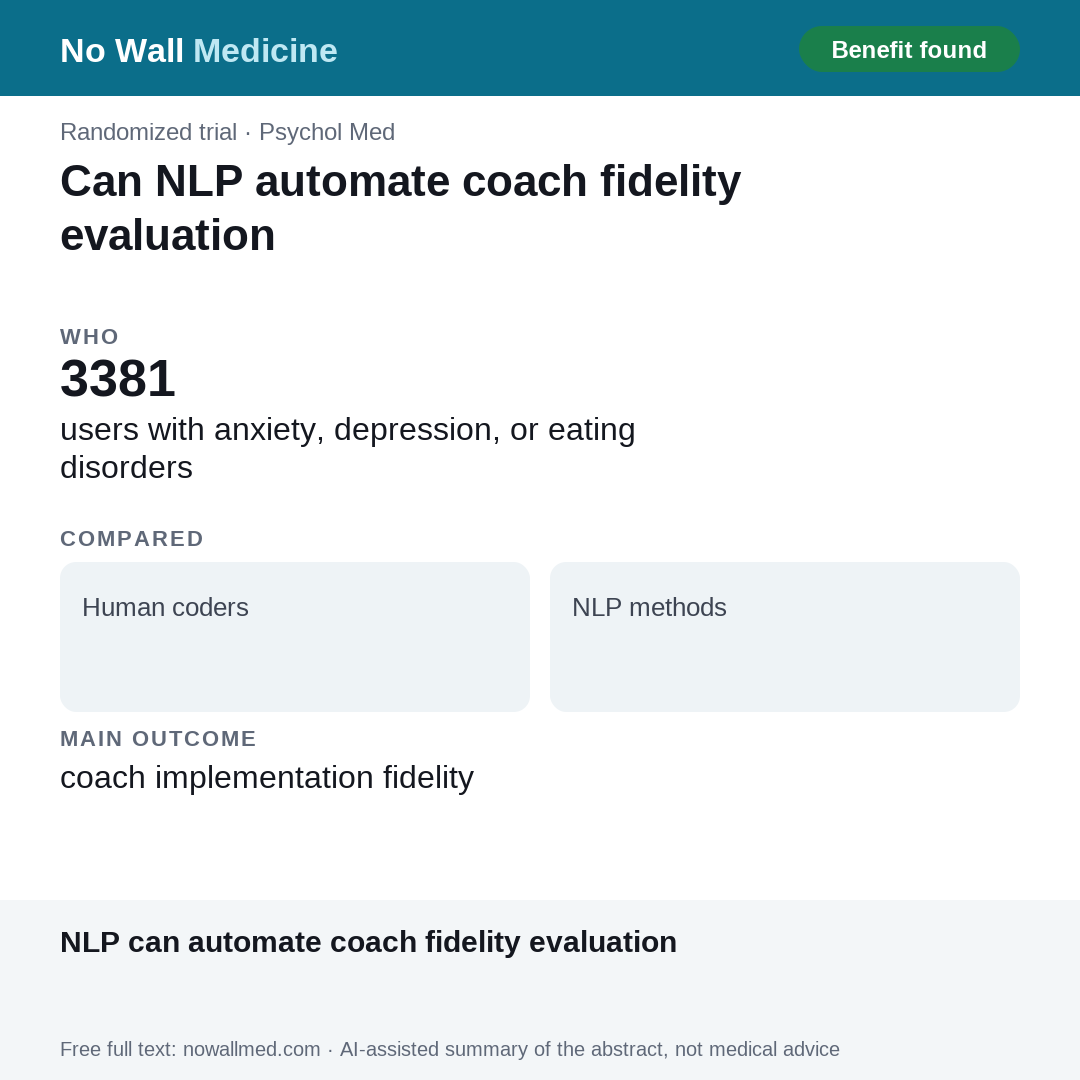
Capitalizing on natural language processing (NLP) to automate the evaluation of coach implementation fidelity in guided digital cognitive-behavioral therapy (GdCBT)
Randomized trialBenefit found
Can NLP automate coach fidelity evaluation
Who
3381
users with anxiety, depression, or eating disorders
Compared
Human coders
NLP methods
Main outcome
coach implementation fidelity
Bottom line: NLP can automate coach fidelity evaluation
Psychol Med · 2025-04-02Download image
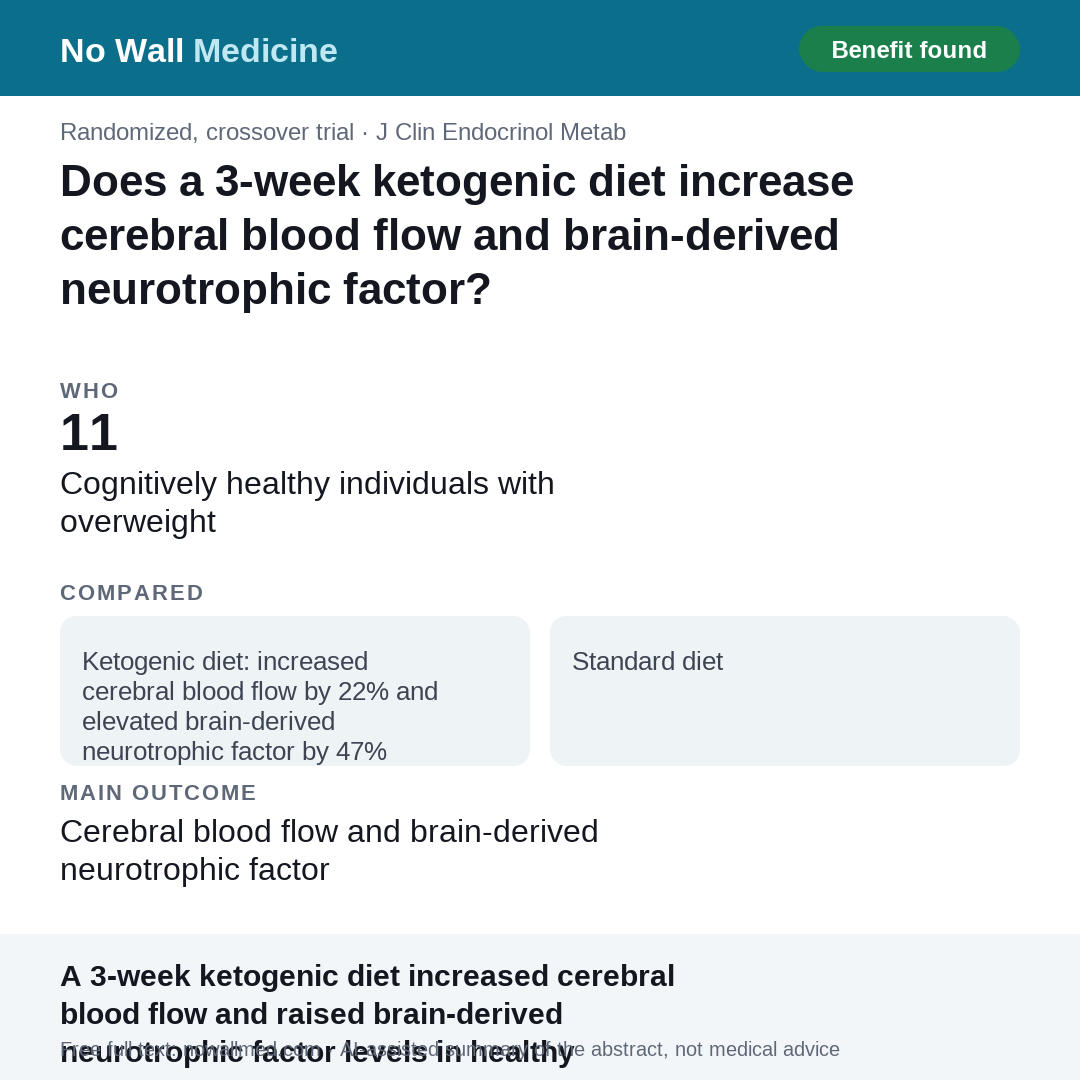
A 3-Week Ketogenic Diet Increases Global Cerebral Blood Flow and Brain-Derived Neurotrophic Factor
Randomized, crossover trialBenefit found
Does a 3-week ketogenic diet increase cerebral blood flow and brain-derived neurotrophic factor?
Who
11
Cognitively healthy individuals with overweight
Compared
Ketogenic diet: increased cerebral blood flow by 22% and elevated brain-derived neurotrophic factor by 47%
Standard diet
Main outcome
Cerebral blood flow and brain-derived neurotrophic factor
Bottom line: A 3-week ketogenic diet increased cerebral blood flow and raised brain-derived neurotrophic factor levels in healthy individuals.
J Clin Endocrinol Metab · 2025-04-02Download image
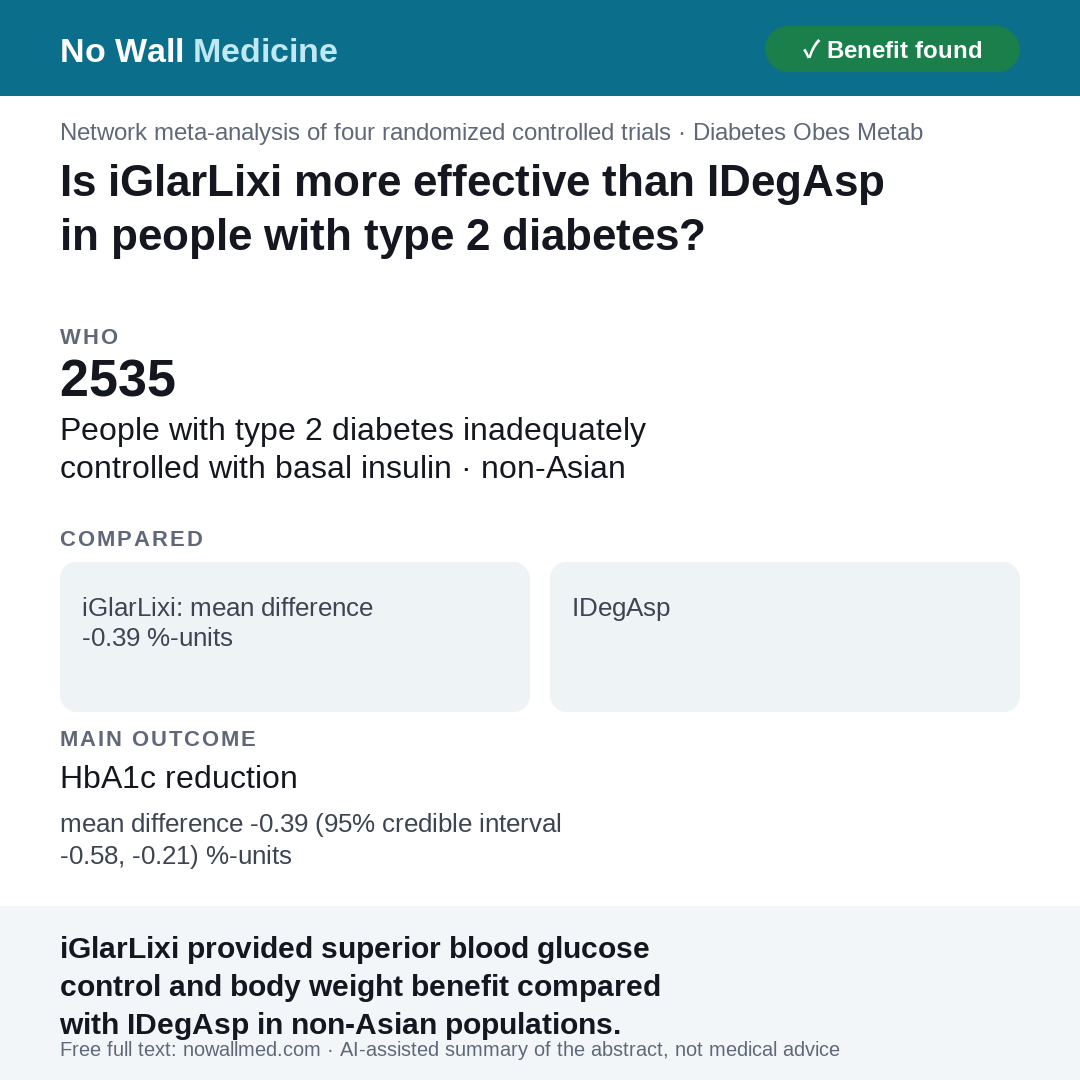
Efficacy and safety of iGlarLixi versus IDegAsp in people with type 2 diabetes inadequately controlled with basal insulin: A systematic literature review and network meta-analysis of non-Asian studies
Network meta-analysis of four randomized controlled trialsBenefit found
Is iGlarLixi more effective than IDegAsp in people with type 2 diabetes?
Who
2535
People with type 2 diabetes inadequately controlled with basal insulin · non-Asian studies
Compared
iGlarLixi: mean difference -0.39 %-units
IDegAsp
Main outcome
HbA1c reduction
Result: mean difference -0.39 (95% credible interval -0.58, -0.21) %-units
Bottom line: iGlarLixi provided superior blood glucose control and body weight benefit compared with IDegAsp in non-Asian populations.
Diabetes Obes Metab · 2025-04-02Download image
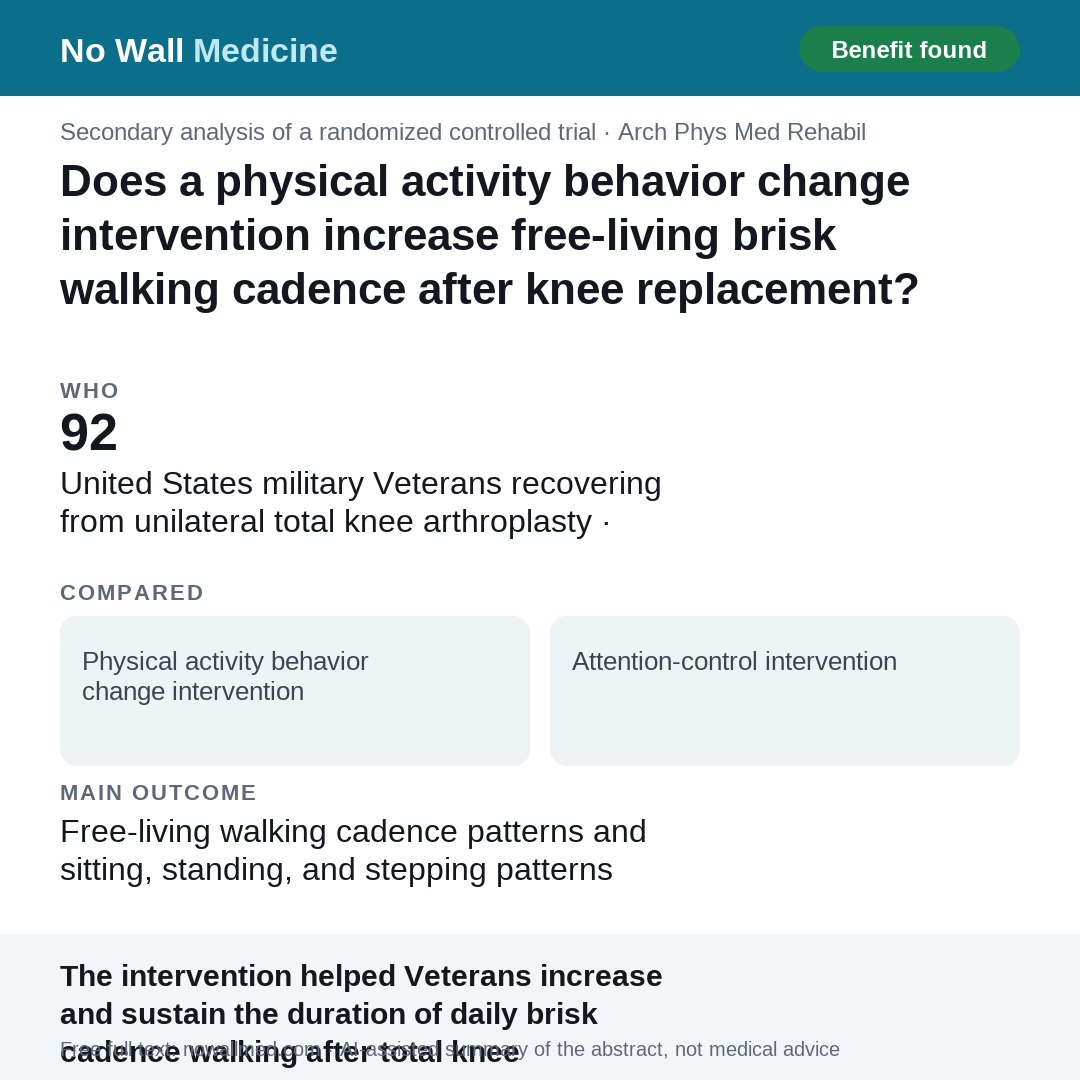
Increased Free-Living Brisk Walking Cadence Following a Physical Activity Behavior Intervention After Total Knee Arthroplasty: A Secondary Analysis of a Randomized Controlled Trial
Secondary analysis of a randomized controlled trialBenefit found
Does a physical activity behavior change intervention increase free-living brisk walking cadence after knee replacement?
Who
92
United States military Veterans recovering from unilateral total knee arthroplasty · Veterans Affairs Medical Center
Compared
Physical activity behavior change intervention
Attention-control intervention
Main outcome
Free-living walking cadence patterns and sitting, standing, and stepping patterns
Result: ∆=8.36 min; 95% confidence interval, 4.83-11.88
Bottom line: The intervention helped Veterans increase and sustain the duration of daily brisk cadence walking after total knee arthroplasty.
Arch Phys Med Rehabil · 2025-04-02Download image
A pragmatic covariate-constrained cluster-randomised controlled trial of hybrid parents and health workers adaptive intervention for optimal (timely, cumulative age-appropriate) community-wide routine childhood immunisation coverage: the AGINTOPIC trial
Pragmatic covariate-constrained cluster-randomised controlled trialBenefit found
Does a hybrid parents and health workers adaptive intervention increase optimal routine childhood immunisation coverage?
Who
Children aged 5-9 months in Ebonyi state, Nigeria · 16 geographical clusters in Ebonyi state, Nigeria
Compared
6.0%control arm (SD 8.1)
14.3%intervention arm (11.7)
Main outcome
proportion of children with optimal/timely receipt of every recommended vaccine
Result: adjusted prevalence difference 10.8%, 95% CI 0.8% to 20.9%
Bottom line: The adaptive engagement intervention significantly increased optimal and timely routine childhood immunisation coverage in Nigeria.
BMJ Glob Health · 2025-04-02Download image

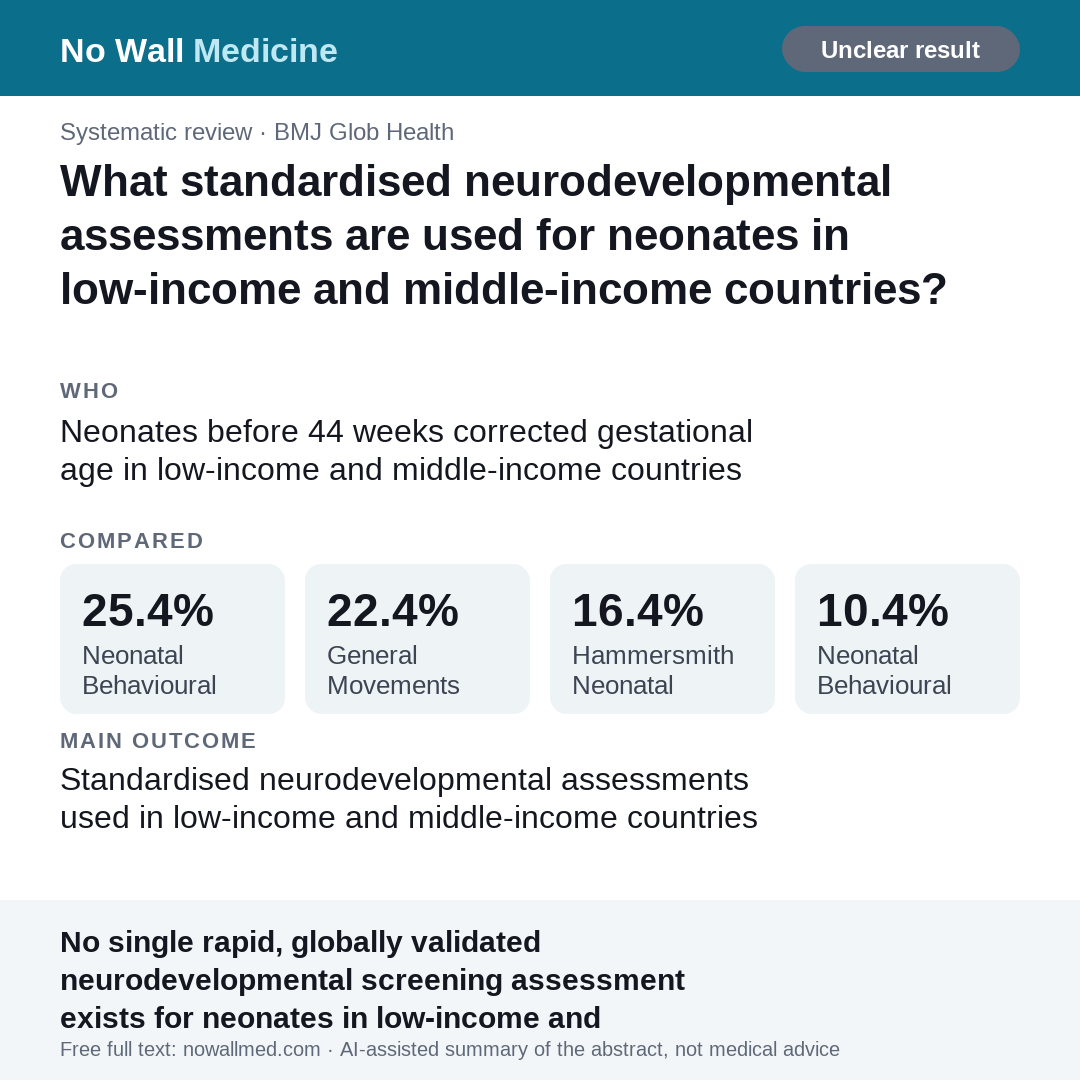
Neurodevelopmental screening for neonates less than 44 weeks gestation in low-income and middle-income countries: a systematic review
Systematic reviewUnclear result
What standardised neurodevelopmental assessments are used for neonates in low-income and middle-income countries?
Who
Neonates before 44 weeks corrected gestational age in low-income and middle-income countries · Low-income and middle-income countries
Compared
25.4%Neonatal Behavioural Neurological Assessment
22.4%General Movements Assessment
16.4%Hammersmith Neonatal Neurological Examination/Dubowitz
10.4%Neonatal Behavioural Assessment Scale
Main outcome
Standardised neurodevelopmental assessments used in low-income and middle-income countries
Bottom line: No single rapid, globally validated neurodevelopmental screening assessment exists for neonates in low-income and middle-income countries.
BMJ Glob Health · 2025-04-02Download image
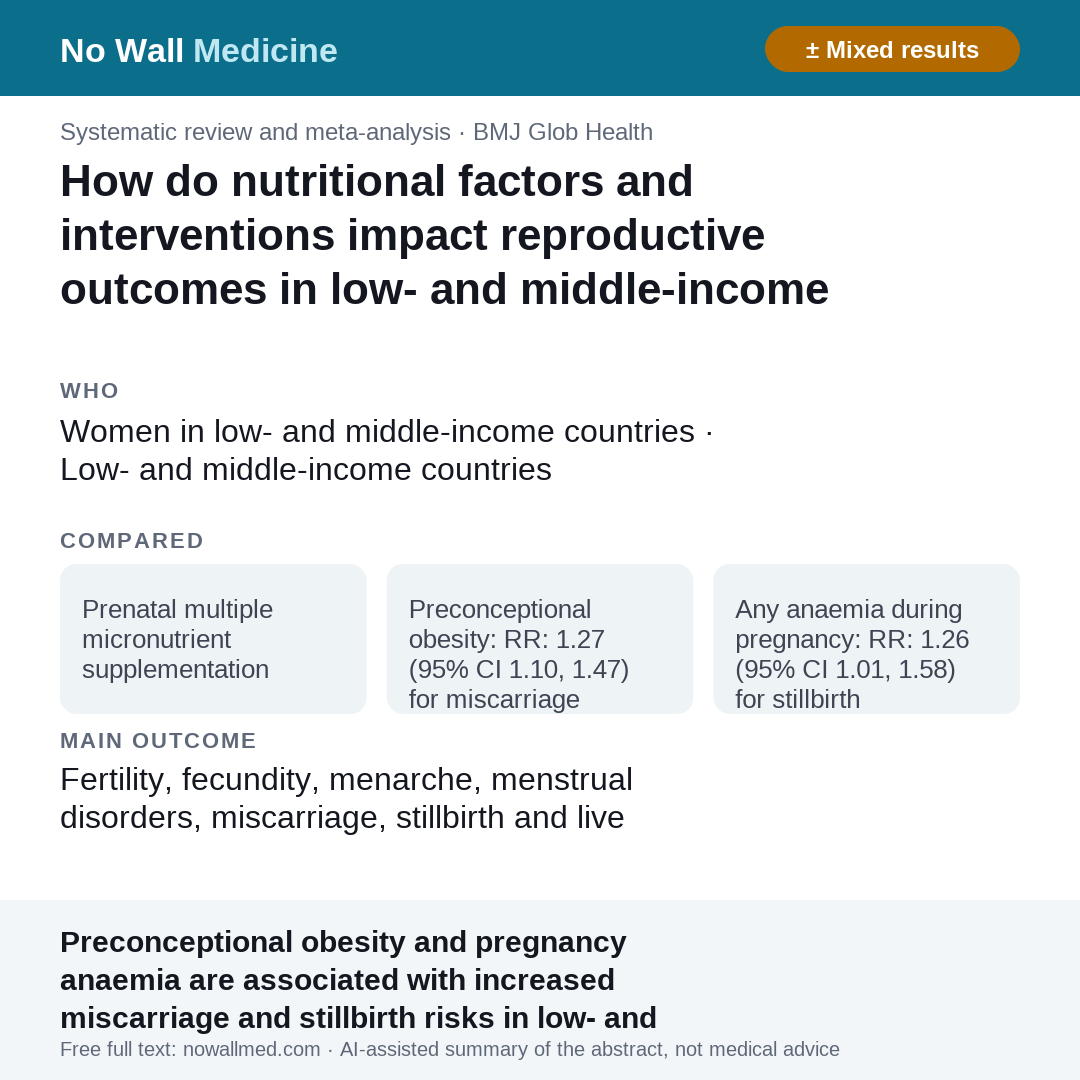
Nutrition and reproductive potential of women in low- and middle-income countries: a systematic review and meta-analysis
Systematic review and meta-analysisMixed results
How do nutritional factors and interventions impact reproductive outcomes in low- and middle-income countries?
Who
Women in low- and middle-income countries · Low- and middle-income countries
Compared
Prenatal multiple micronutrient supplementation
Preconceptional obesity: RR: 1.27 (95% CI 1.10, 1.47) for miscarriage
Any anaemia during pregnancy: RR: 1.26 (95% CI 1.01, 1.58) for stillbirth
Main outcome
Fertility, fecundity, menarche, menstrual disorders, miscarriage, stillbirth and live birth
Bottom line: Preconceptional obesity and pregnancy anaemia are associated with increased miscarriage and stillbirth risks in low- and middle-income countries.
Limitation: The review calls for more randomised controlled trials to evaluate preconceptional and prenatal interventions.
BMJ Glob Health · 2025-04-02Download image
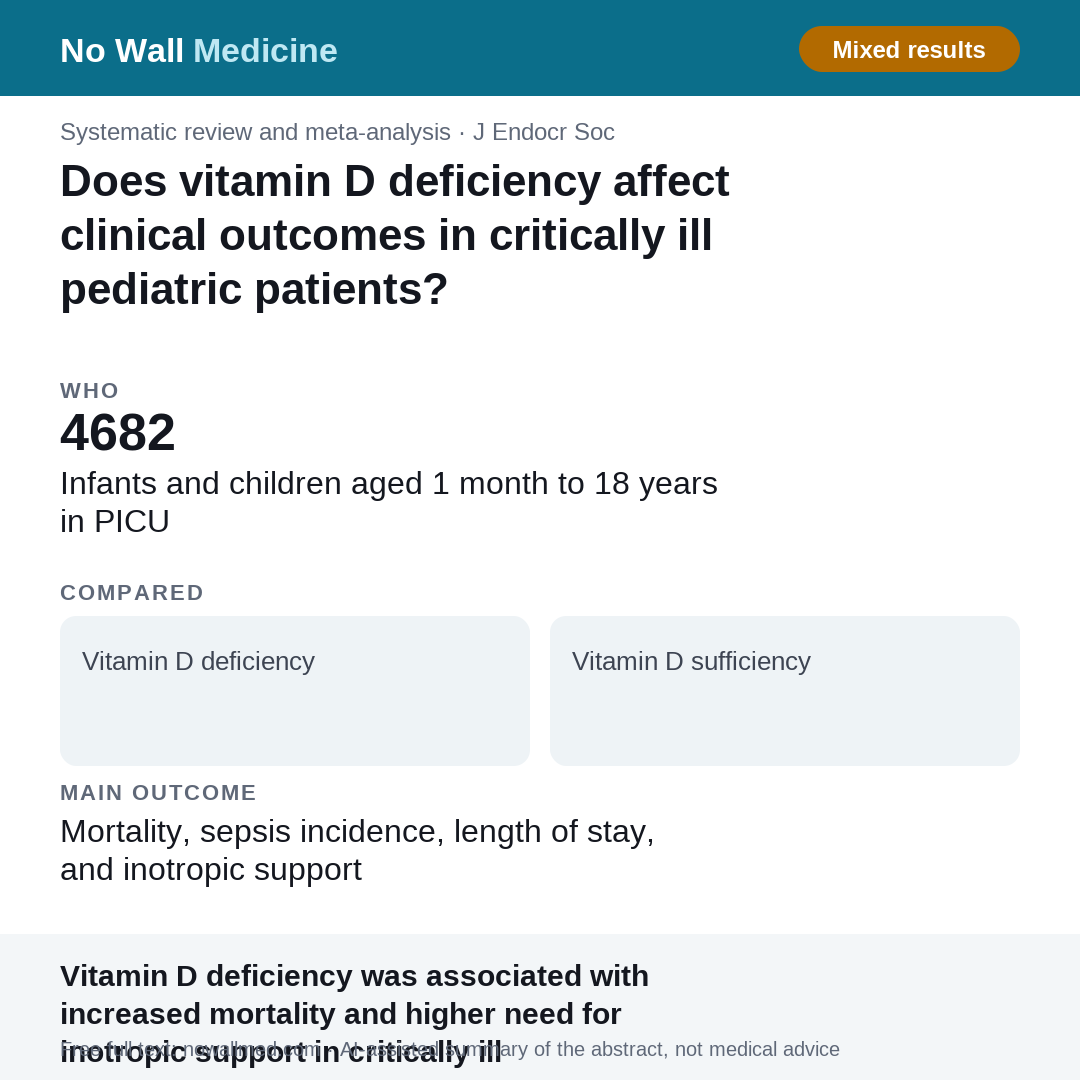
Vitamin D Deficiency and Clinical Outcomes in Critically Ill Pediatric Patients: A Systematic Review and Meta-Analysis
Systematic review and meta-analysisMixed results
Does vitamin D deficiency affect clinical outcomes in critically ill pediatric patients?
Who
4682
Infants and children aged 1 month to 18 years in PICU
Compared
Vitamin D deficiency
Vitamin D sufficiency
Main outcome
Mortality, sepsis incidence, length of stay, and inotropic support
Result: odds ratio 2.05 (95% CI 1.21-3.48) for mortality
Bottom line: Vitamin D deficiency was associated with increased mortality and higher need for inotropic support in critically ill children.
J Endocr Soc · 2025-04-02Download image
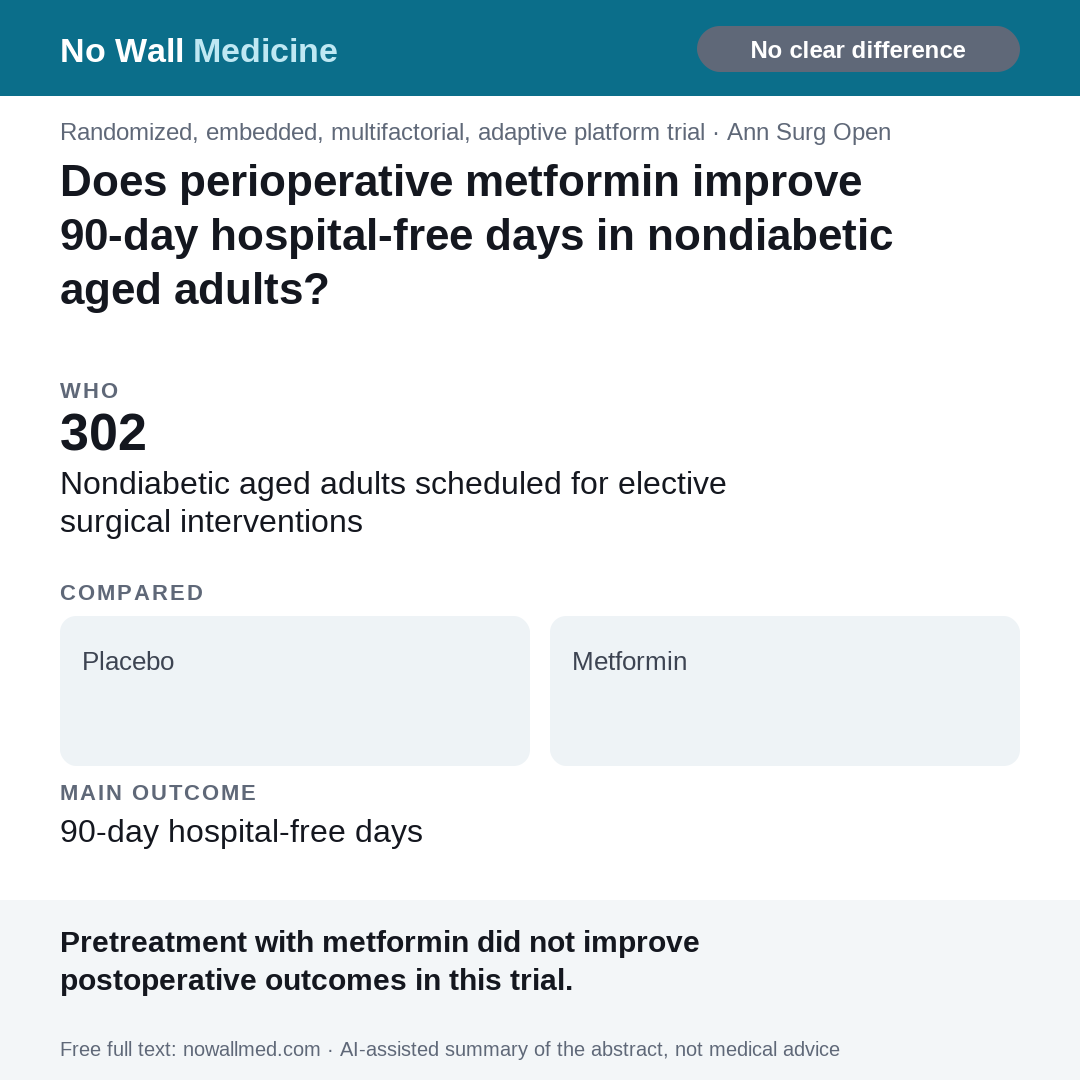
Strategies to Promote Resiliency: A Randomized Embedded Multifactorial Adaptative Platform (REMAP) Clinical Trial to Study Interventions to Improve Recovery After Surgery in High-Risk Patients
Randomized, embedded, multifactorial, adaptive platform trialNo clear difference
Does perioperative metformin improve 90-day hospital-free days in nondiabetic aged adults?
Who
302
Nondiabetic aged adults scheduled for elective surgical interventions
Compared
Placebo
Metformin
Main outcome
90-day hospital-free days
Bottom line: Pretreatment with metformin did not improve postoperative outcomes in this trial.
Limitation: Trial enrollment was markedly limited by the COVID-19 pandemic and is underpowered.
Ann Surg Open · 2025-04-02Download image
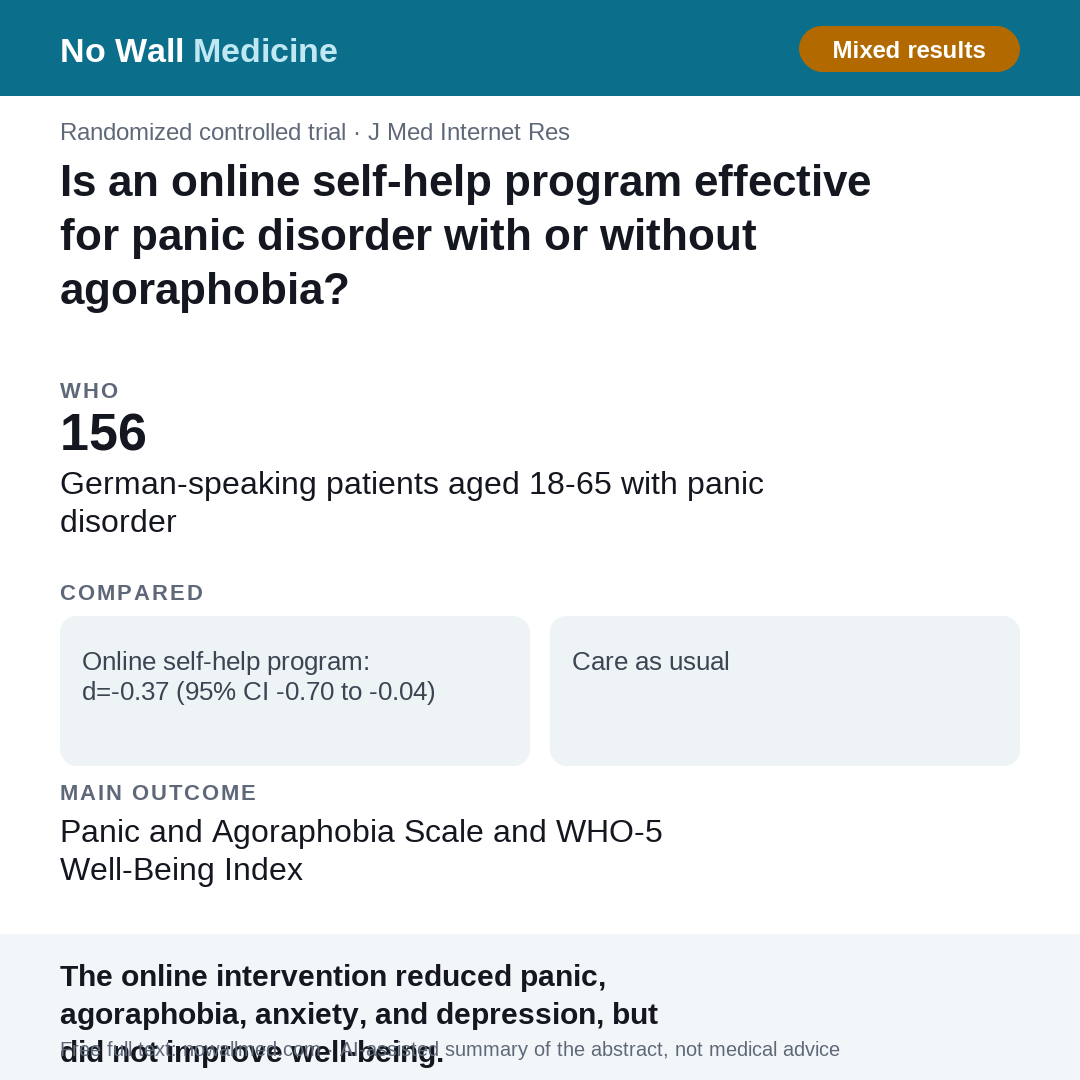
Evaluation of an Online-Based Self-Help Program for Patients With Panic Disorder: Randomized Controlled Trial
Randomized controlled trialMixed results
Is an online self-help program effective for panic disorder with or without agoraphobia?
Who
156
German-speaking patients aged 18-65 with panic disorder
Compared
Online self-help program: d=-0.37 (95% CI -0.70 to -0.04)
Care as usual
Main outcome
Panic and Agoraphobia Scale and WHO-5 Well-Being Index
Result: d=-0.37 (95% CI -0.70 to -0.04)
Bottom line: The online intervention reduced panic, agoraphobia, anxiety, and depression, but did not improve well-being.
J Med Internet Res · 2025-04-02Download image
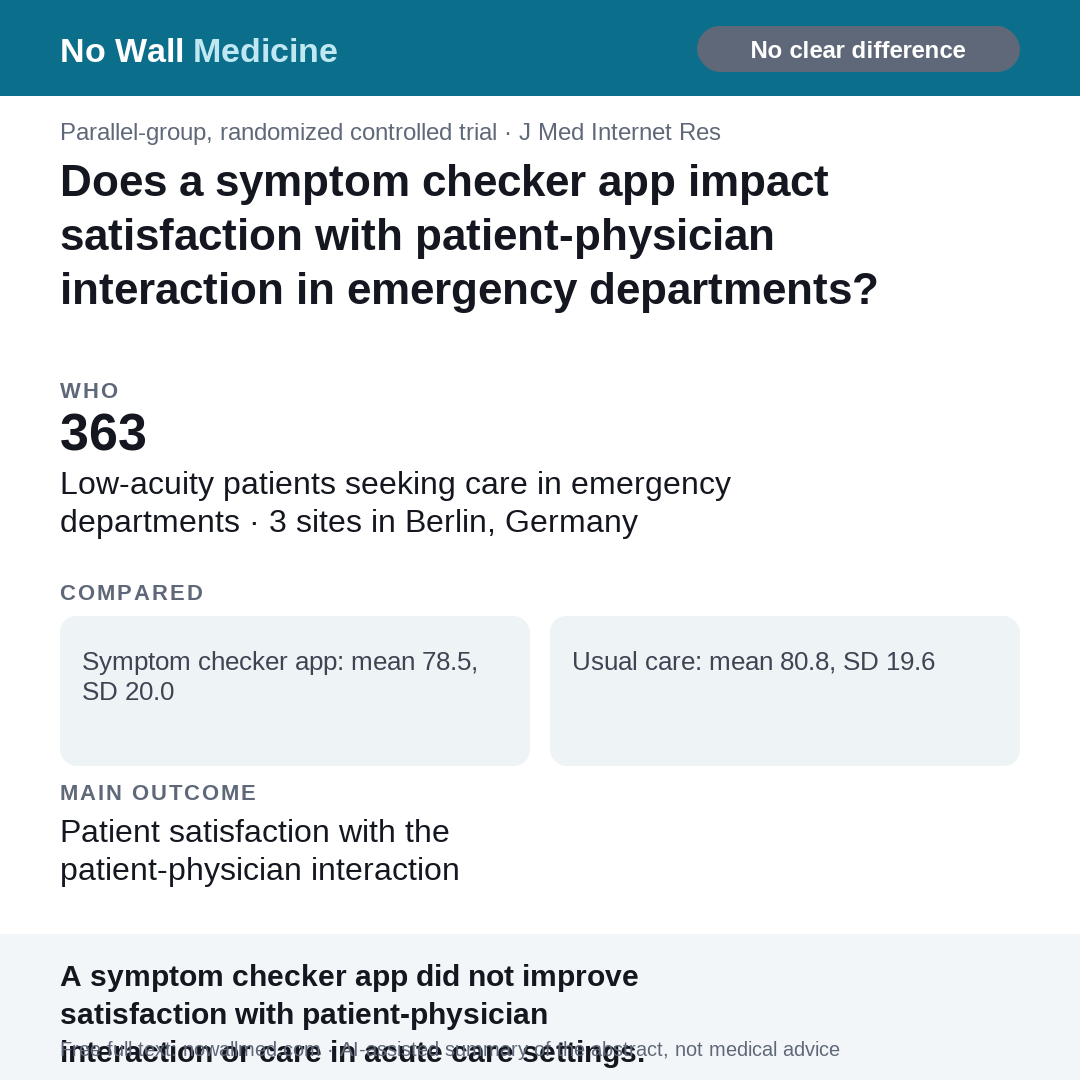
Impact of a Symptom Checker App on Patient-Physician Interaction Among Self-Referred Walk-In Patients in the Emergency Department: Multicenter, Parallel-Group, Randomized, Controlled Trial
Parallel-group, randomized controlled trialNo clear difference
Does a symptom checker app impact satisfaction with patient-physician interaction in emergency departments?
Who
363
Low-acuity patients seeking care in emergency departments · 3 sites in Berlin, Germany
Compared
Symptom checker app: mean 78.5, SD 20.0
Usual care: mean 80.8, SD 19.6
Main outcome
Patient satisfaction with the patient-physician interaction
Result: estimated difference -2.4, 95% CI -6.3 to 1.1
Bottom line: A symptom checker app did not improve satisfaction with patient-physician interaction or care in acute care settings.
J Med Internet Res · 2025-04-02Download image
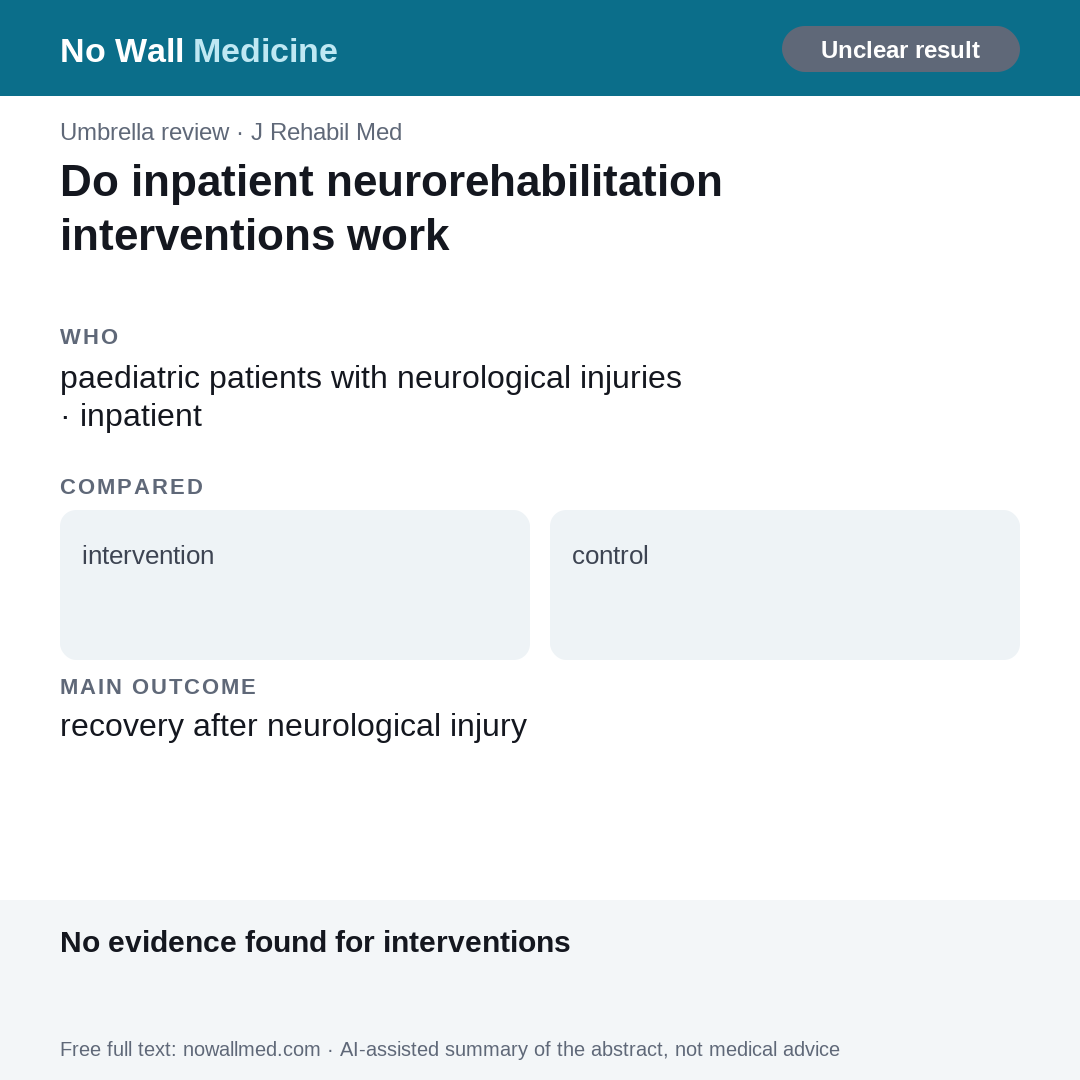
Interventions in subacute paediatric inpatient neurorehabilitation: an umbrella review
Umbrella reviewUnclear result
Do inpatient neurorehabilitation interventions work
Who
paediatric patients with neurological injuries · inpatient
Compared
intervention
control
Main outcome
recovery after neurological injury
Bottom line: No evidence found for interventions
Limitation: lack of high-quality evidence
J Rehabil Med · 2025-04-02Download image
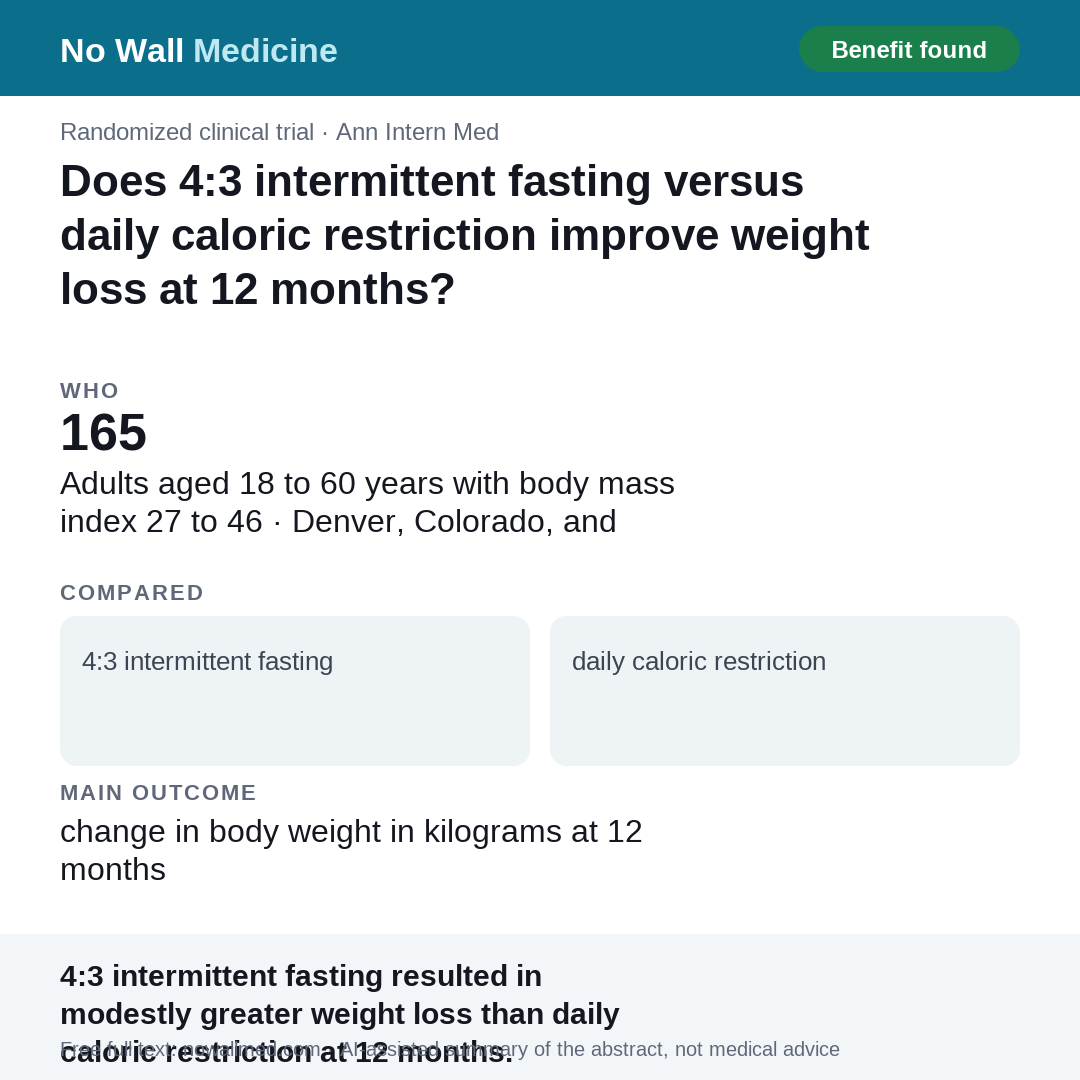
The Effect of 4:3 Intermittent Fasting on Weight Loss at 12 Months : A Randomized Clinical Trial
Randomized clinical trialBenefit found
Does 4:3 intermittent fasting versus daily caloric restriction improve weight loss at 12 months?
Who
165
Adults aged 18 to 60 years with body mass index 27 to 46 · Denver, Colorado, and surrounding metropolitan area
Compared
4:3 intermittent fasting
daily caloric restriction
Main outcome
change in body weight in kilograms at 12 months
Result: mean difference, 2.89 kg (95% CI, 5.65 to 0.14 kg)
Bottom line: 4:3 intermittent fasting resulted in modestly greater weight loss than daily caloric restriction at 12 months.
Limitation: Limited generalizability.
Funded by: National Institute of Diabetes and Digestive and Kidney Diseases
Ann Intern Med · 2025-04-01Download image
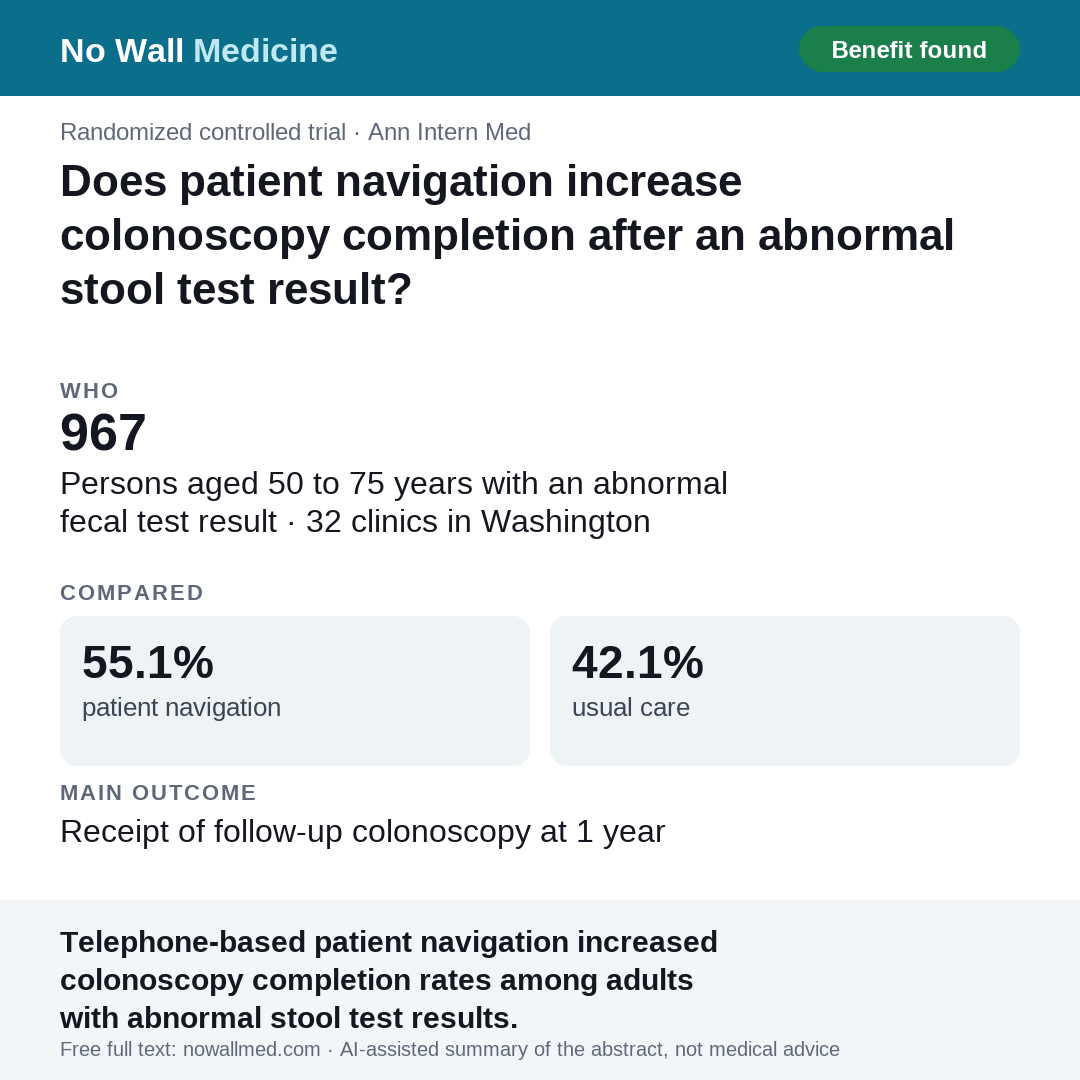
Patient Navigation to Improve Colonoscopy Completion After an Abnormal Stool Test Result : A Randomized Controlled Trial
Randomized controlled trialBenefit found
Does patient navigation increase colonoscopy completion after an abnormal stool test result?
Who
967
Persons aged 50 to 75 years with an abnormal fecal test result · 32 clinics in Washington state
Compared
55.1%patient navigation
42.1%usual care
Main outcome
Receipt of follow-up colonoscopy at 1 year
Result: risk difference, 13.0 percentage points (95% CI, 6.5 to 19.4 percentage points)
Bottom line: Telephone-based patient navigation increased colonoscopy completion rates among adults with abnormal stool test results.
Limitation: The study was primarily done during the height of the COVID-19 pandemic.
Funded by: National Cancer Institute
Ann Intern Med · 2025-04-01Download image
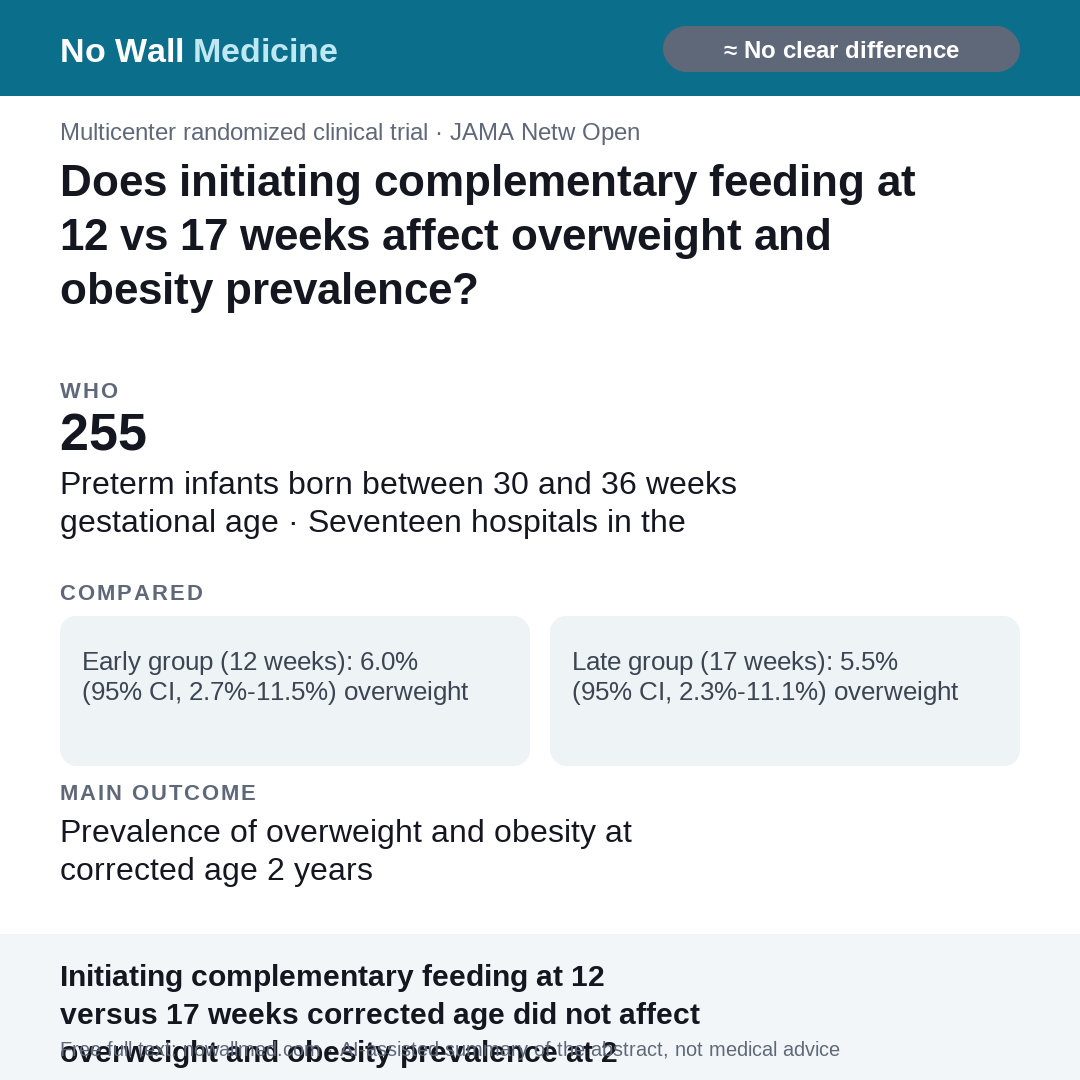
Timing of Complementary Feeding in Preterm Infants and Prevalence of Overweight and Obesity: A Randomized Clinical Trial
Multicenter randomized clinical trialNo clear difference
Does initiating complementary feeding at 12 vs 17 weeks affect overweight and obesity prevalence?
Who
255
Preterm infants born between 30 and 36 weeks gestational age · Seventeen hospitals in the Netherlands
Compared
Early group (12 weeks): 6.0% (95% CI, 2.7%-11.5%) overweight
Late group (17 weeks): 5.5% (95% CI, 2.3%-11.1%) overweight
Main outcome
Prevalence of overweight and obesity at corrected age 2 years
Bottom line: Initiating complementary feeding at 12 versus 17 weeks corrected age did not affect overweight and obesity prevalence at 2 years.
JAMA Netw Open · 2025-04-01Download image
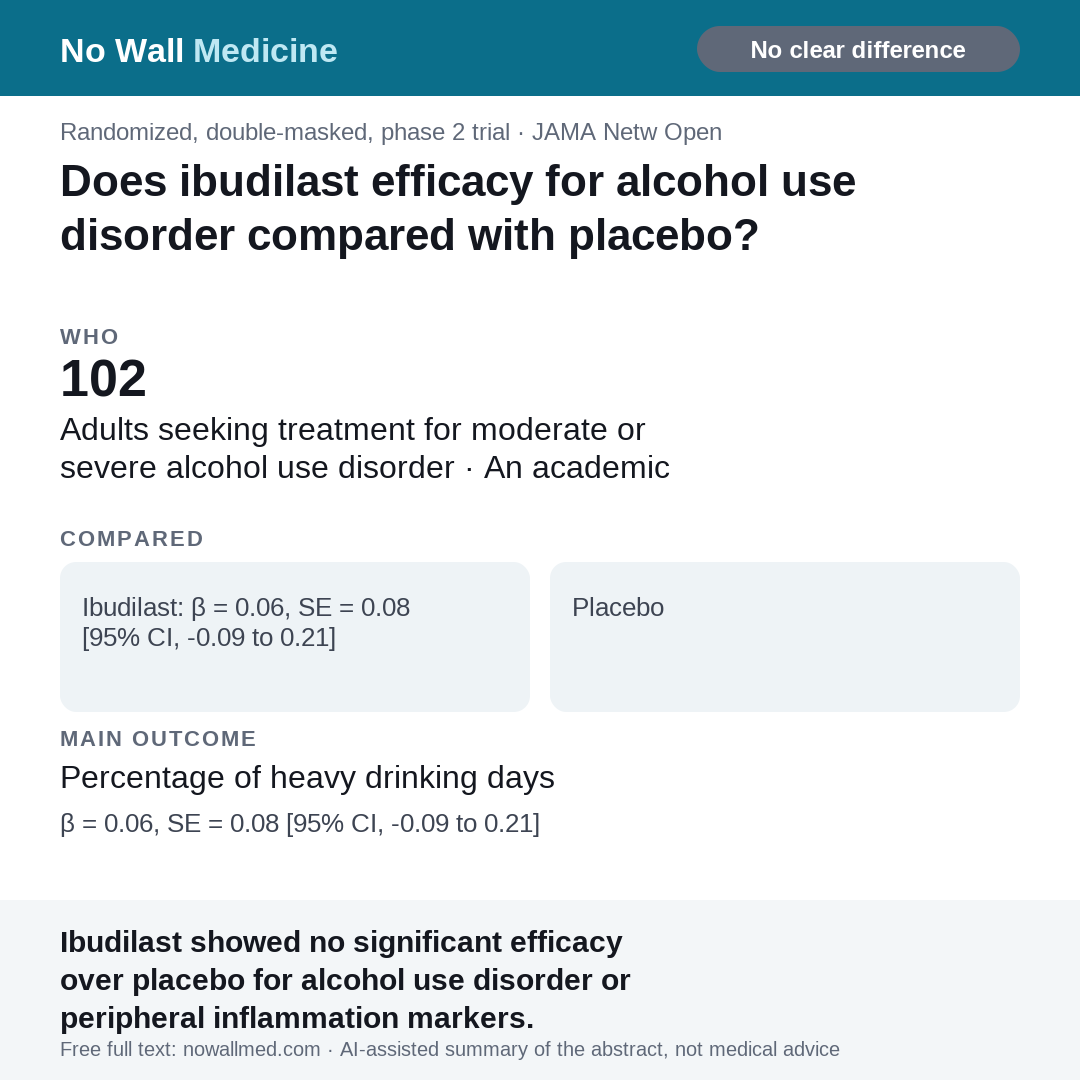
A Neuroimmune Modulator for Alcohol Use Disorder: A Randomized Clinical Trial
Randomized, double-masked, phase 2 trialNo clear difference
Does ibudilast efficacy for alcohol use disorder compared with placebo?
Who
102
Adults seeking treatment for moderate or severe alcohol use disorder · An academic research center
Compared
Ibudilast: β = 0.06, SE = 0.08 [95% CI, -0.09 to 0.21]
Placebo
Main outcome
Percentage of heavy drinking days
Result: β = 0.06, SE = 0.08 [95% CI, -0.09 to 0.21]
Bottom line: Ibudilast showed no significant efficacy over placebo for alcohol use disorder or peripheral inflammation markers.
JAMA Netw Open · 2025-04-01Download image
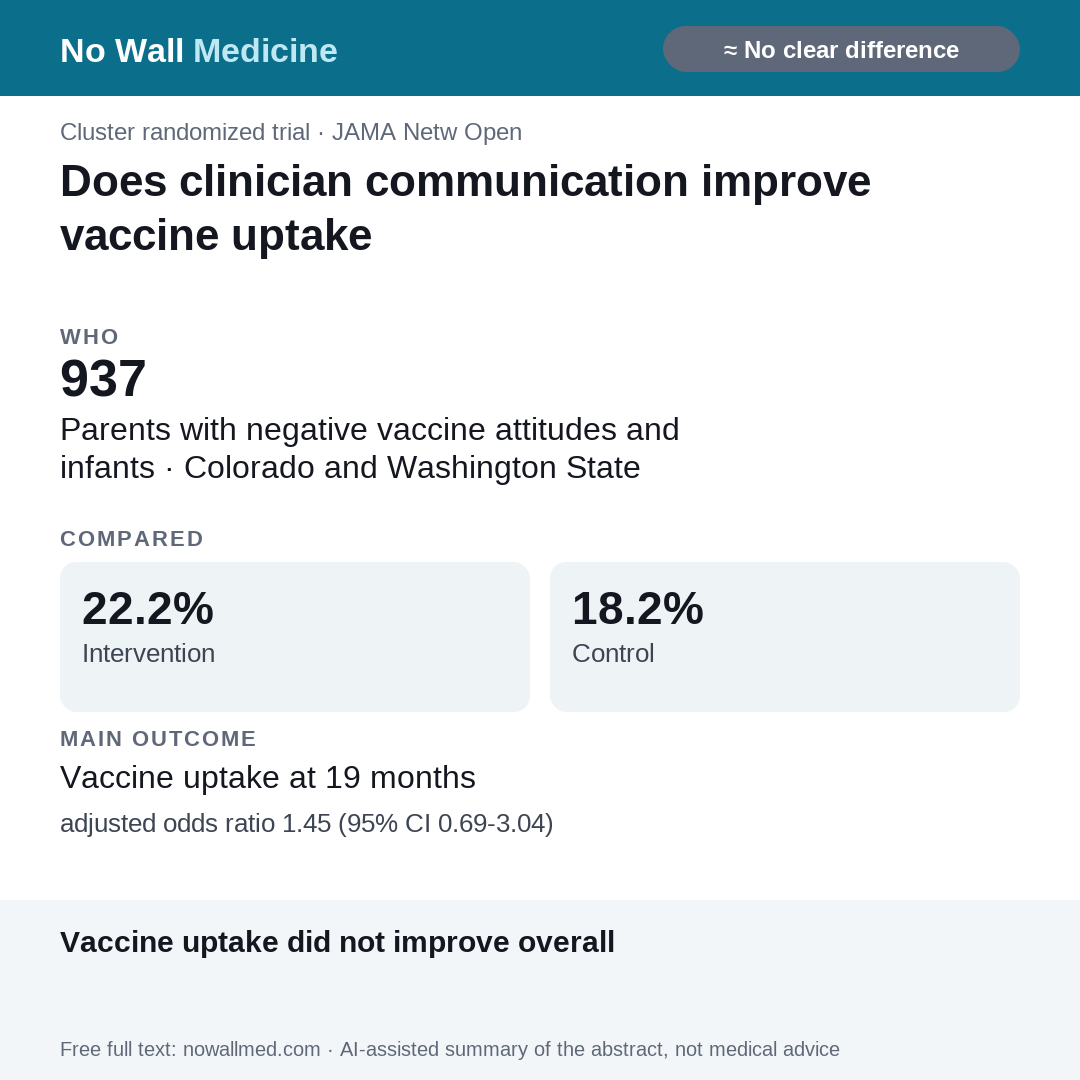
Tiered Clinician Vaccine Communication Strategy to Improve Childhood Vaccine Uptake: A Cluster Randomized Clinical Trial
Cluster randomized trialNo clear difference
Does clinician communication improve vaccine uptake
Who
937
Parents with negative vaccine attitudes and infants · Colorado and Washington State
Compared
22.2%Intervention (130/586)
18.2%Control (64/351)
Main outcome
Vaccine uptake at 19 months
Result: adjusted odds ratio 1.45 (95% CI 0.69-3.04)
Bottom line: Vaccine uptake did not improve overall
JAMA Netw Open · 2025-04-01Download image
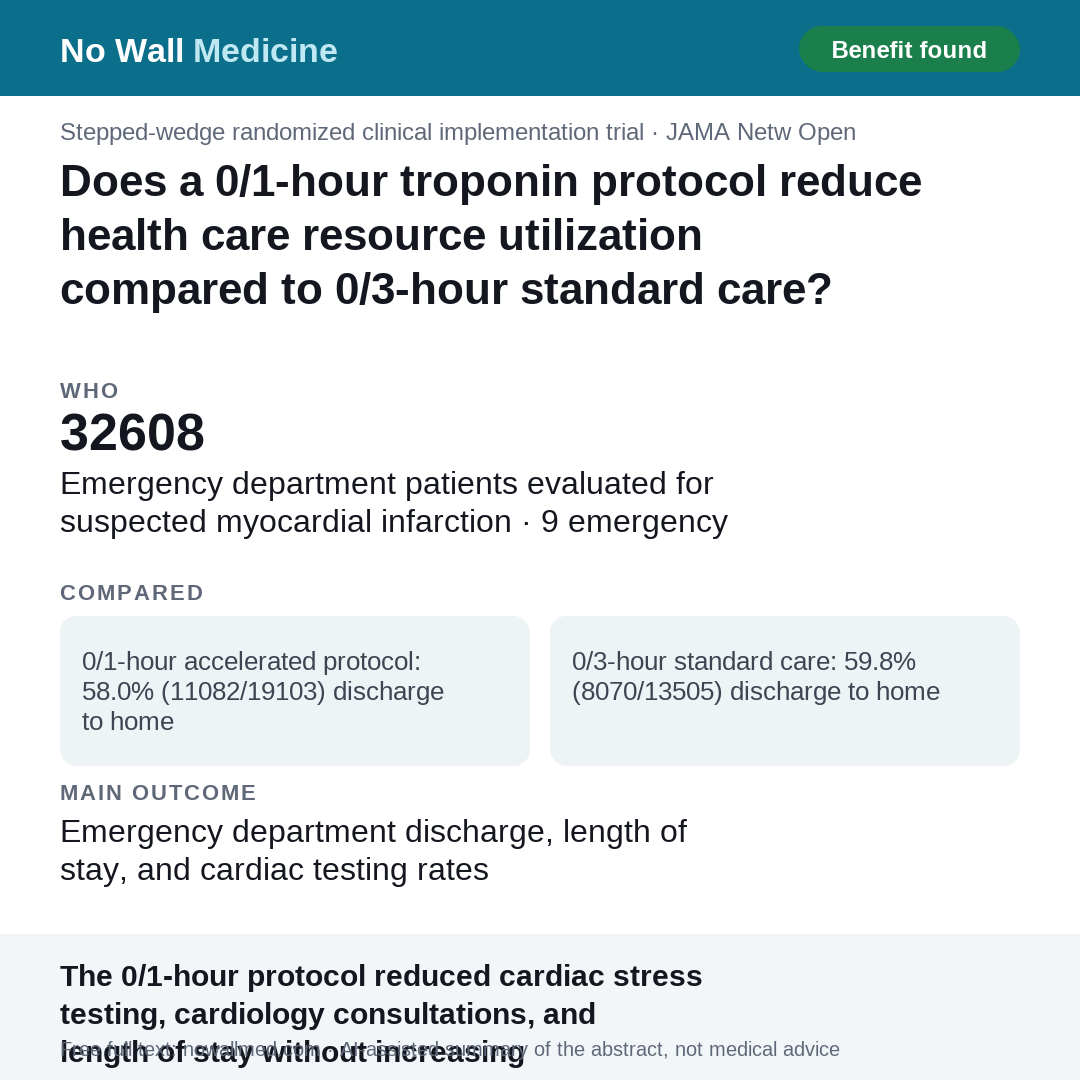
Health Care Resource Utilization for Patients With Suspected Myocardial Infarction: A Secondary Analysis of the RACE-IT Randomized Clinical Trial
Stepped-wedge randomized clinical implementation trialBenefit found
Does a 0/1-hour troponin protocol reduce health care resource utilization compared to 0/3-hour standard care?
Who
32608
Emergency department patients evaluated for suspected myocardial infarction · 9 emergency departments in Michigan
Compared
0/1-hour accelerated protocol: 58.0% (11082/19103) discharge to home
0/3-hour standard care: 59.8% (8070/13505) discharge to home
Main outcome
Emergency department discharge, length of stay, and cardiac testing rates
Result: AOR 0.62 (95% CI 0.49-0.78) for cardiac stress testing
Bottom line: The 0/1-hour protocol reduced cardiac stress testing, cardiology consultations, and length of stay without increasing revascularization rates.
JAMA Netw Open · 2025-04-01Download image