Visual abstracts
New randomized trials and meta-analyses from leading journals at a glance: who was studied, what was compared, and what was found. Every paper is free to read in full.
All specialtiesCardiology 4877Oncology 4138Gastroenterology & Hepatology 1942Infectious Disease 3837Neurology 1905Psychiatry & Mental Health 2273Pulmonology 2143Critical Care 1365Endocrinology & Diabetes 2580Pediatrics 2980Surgery 2559Orthopedics & Sports Medicine 931Neurosurgery 537Cardiothoracic & Vascular Surgery 674Plastic & Reconstructive Surgery 591Nephrology 1133Rheumatology 823Hematology 1109Dermatology 621Ophthalmology 543Obstetrics & Gynecology 1686Public & Global Health 1058Radiology & Imaging 648Anesthesiology 986Urology 764ENT (Otolaryngology) 503Emergency Medicine 511Allergy & Immunology 313Geriatrics 981Family Medicine & Primary Care 562Medical Genetics & Genomics 676Pathology & Laboratory Medicine 159Physical Medicine & Rehabilitation 757Palliative Care 444Nutrition 1588Digital Health & AI 2201General Medicine 321
CD138 expression in the endometrium associates with endometrial timing and inflammatory status but not microbiota composition
Translational cohort studyNo clear difference
Does constitutive CD138 expression in the endometrium relate to reproductive tract microbiota composition?
Who
103
Women aged 18 to 42 with two or more consecutive miscarriages · Specialist recurrent pregnancy loss clinics
Compared
CD138-negative samples
Conspicuous diffuse CD138 staining: significantly earlier endometrial histological dating (P < 0.01)
Main outcome
Endometrial timing and microbiota composition
Bottom line: CD138 expression is cycle-dependent and associates with endometrial timing but not with microbial composition.
Limitation: Relied on patient-reported ovulation-based timing and lacked data on underlying fertility-related co-morbidities.
Hum Reprod · 2026-03-20Download image
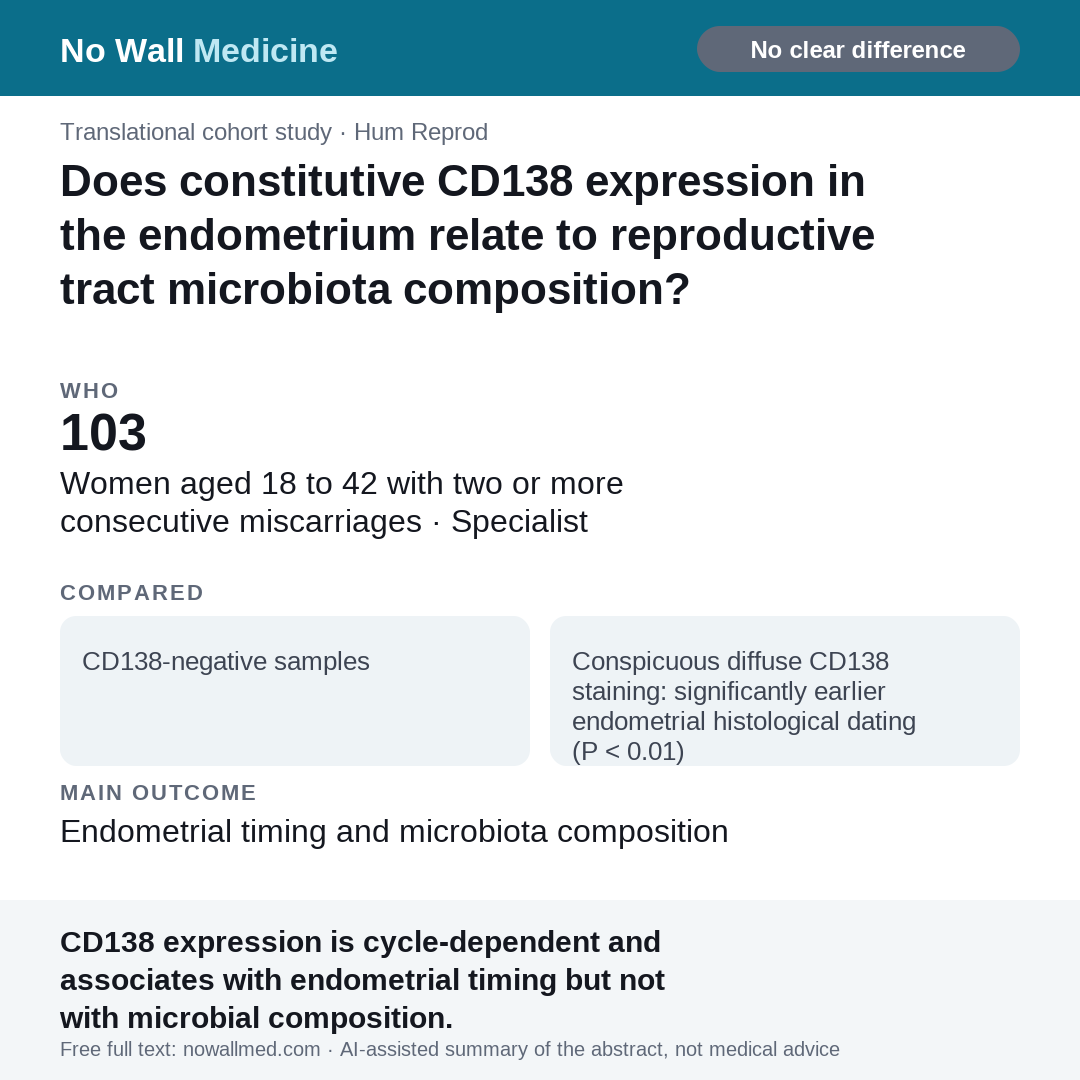
Intravesical therapy for recurrent urinary tract infection: a systematic review and meta-analysis
Systematic review and meta-analysis of 25 studiesBenefit found
Are intravesical instillations effective for preventing recurrent urinary tract infections?
Who
Patients with recurrent urinary tract infections
Compared
Aminoglycoside instillations: pooled incidence rate ratio 0.23
Hyaluronic acid monotherapy: pooled risk ratio 0.15
Hyaluronic acid and chondroitin sulphate: pooled risk ratio 0.41
Main outcome
Urinary tract infection recurrence
Result: pooled incidence rate ratio 0.23 (95% CI 0.15-0.37)
Bottom line: Intravesical instillations are safe and effective, with strongest evidence supporting aminoglycosides for preventing recurrent urinary tract infections.
BJU Int · 2026-03-20Download image
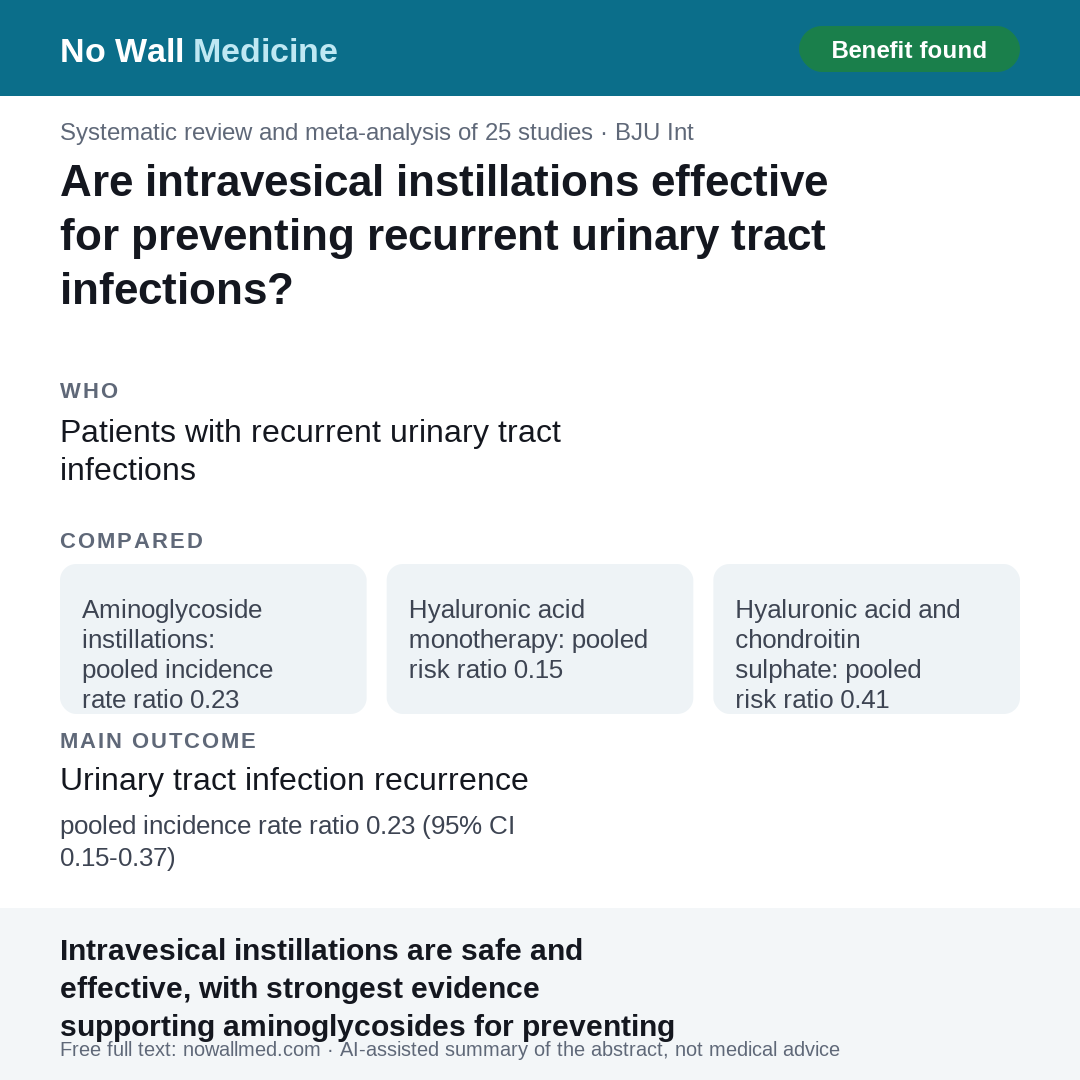
DaBlaCa-13 Study: Five-year Follow-up from the Randomized Controlled Trial of Chemoresection with Intravesical Mitomycin C in Recurrent Ta Non-muscle-invasive Bladder Cancer
Randomized controlled trialBenefit found
Does mitomycin C chemoresection reduce procedures compared to standard care in recurrent bladder cancer?
Who
120
Patients with recurrent Ta non-muscle-invasive bladder cancer
Compared
Mitomycin C chemoresection: 14% recurrence-free survival
Standard care: 28% recurrence-free survival
Main outcome
Number of procedures and recurrence-free survival
Result: hazard ratio 1.32 (95% confidence interval 0.86-2.01)
Bottom line: Mitomycin C chemoresection reduces surgical procedures without compromising long-term recurrence-free survival in recurrent bladder cancer.
Limitation: Findings are limited by a few high-grade tumors at baseline.
Eur Urol Oncol · 2026-03-20Download image
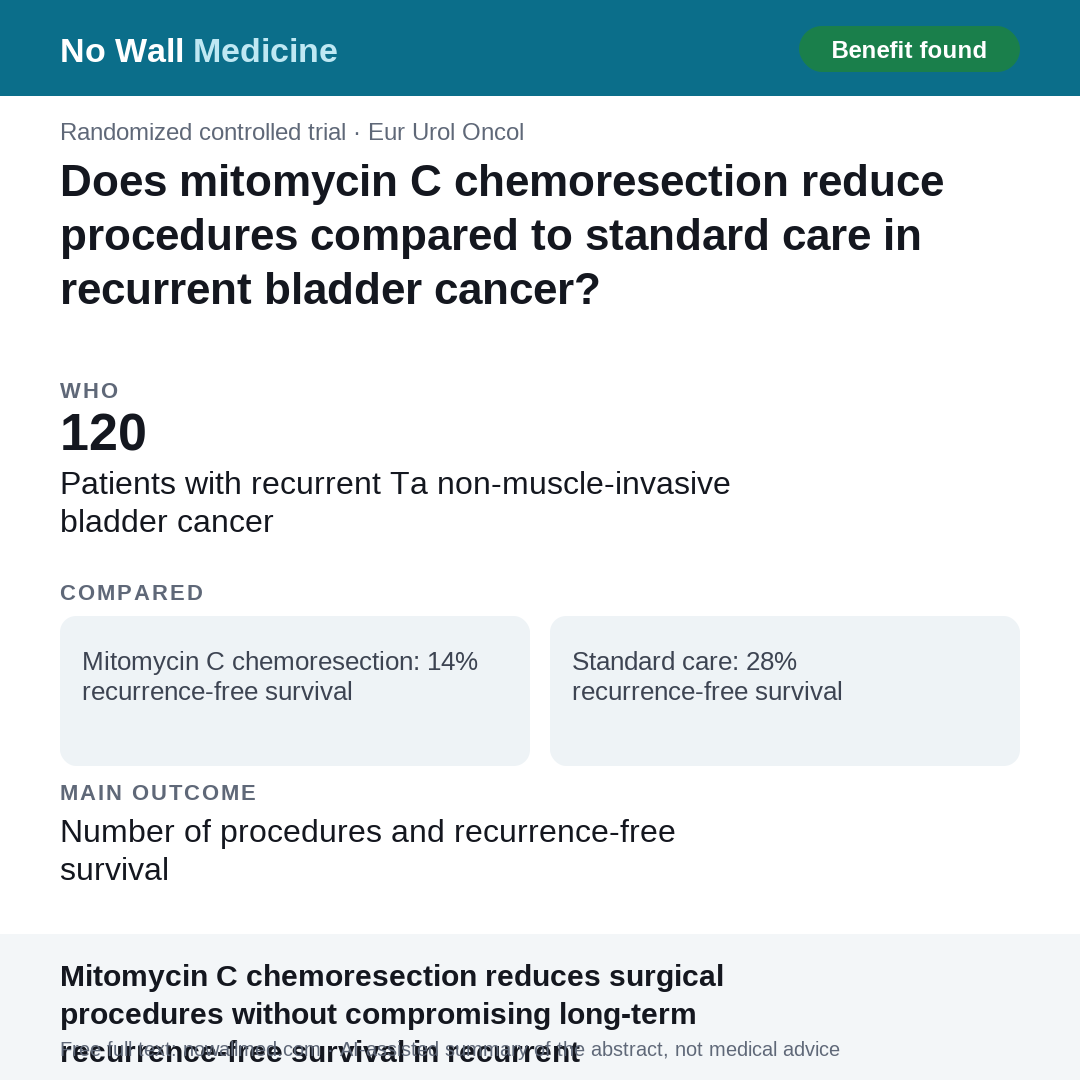
Evaluating Sleep Apnea: In-Lab Versus at-Home Recording Time and the Impact of Positional Disease
Prospective randomized crossover trialMixed results
What is the minimum required recording time for polysomnography and home sleep apnea tests?
Who
54
54 consecutive patients with suspected obstructive sleep apnea
Compared
In-lab Type 1 polysomnography: 6 h for positional obstructive sleep apnea
Home sleep apnea test: 3 h for positional obstructive sleep apnea
Main outcome
Minimum required recording time to reflect full-night apnea-hypopnea index
Bottom line: Minimum recording times to reflect end-test apnea-hypopnea index are 6 hours for polysomnography and 3 hours for home testing.
Laryngoscope · 2026-03-20Download image
A person-centred ehealth intervention for fall prevention in nursing homes lacking geriatric expertise: cost-effectiveness analysis within a randomised controlled trial
Prospective, longitudinal, randomised studyBenefit found
Is a gerontological telemedicine programme cost-effective for preventing falls in nursing homes?
Who
426
Residents aged 60 years or older in nursing homes in medical deserts · Nursing homes in medical deserts
Compared
Intervention group: 107 residents experienced non-serious falls
Control group: 134 residents experienced non-serious falls
Main outcome
Proportion of patients who experienced falls during the 1-year study period
Bottom line: The gerontological telemedicine programme is a cost-effective way to reduce non-serious falls among nursing home residents.
Age Ageing · 2026-03-20Download image

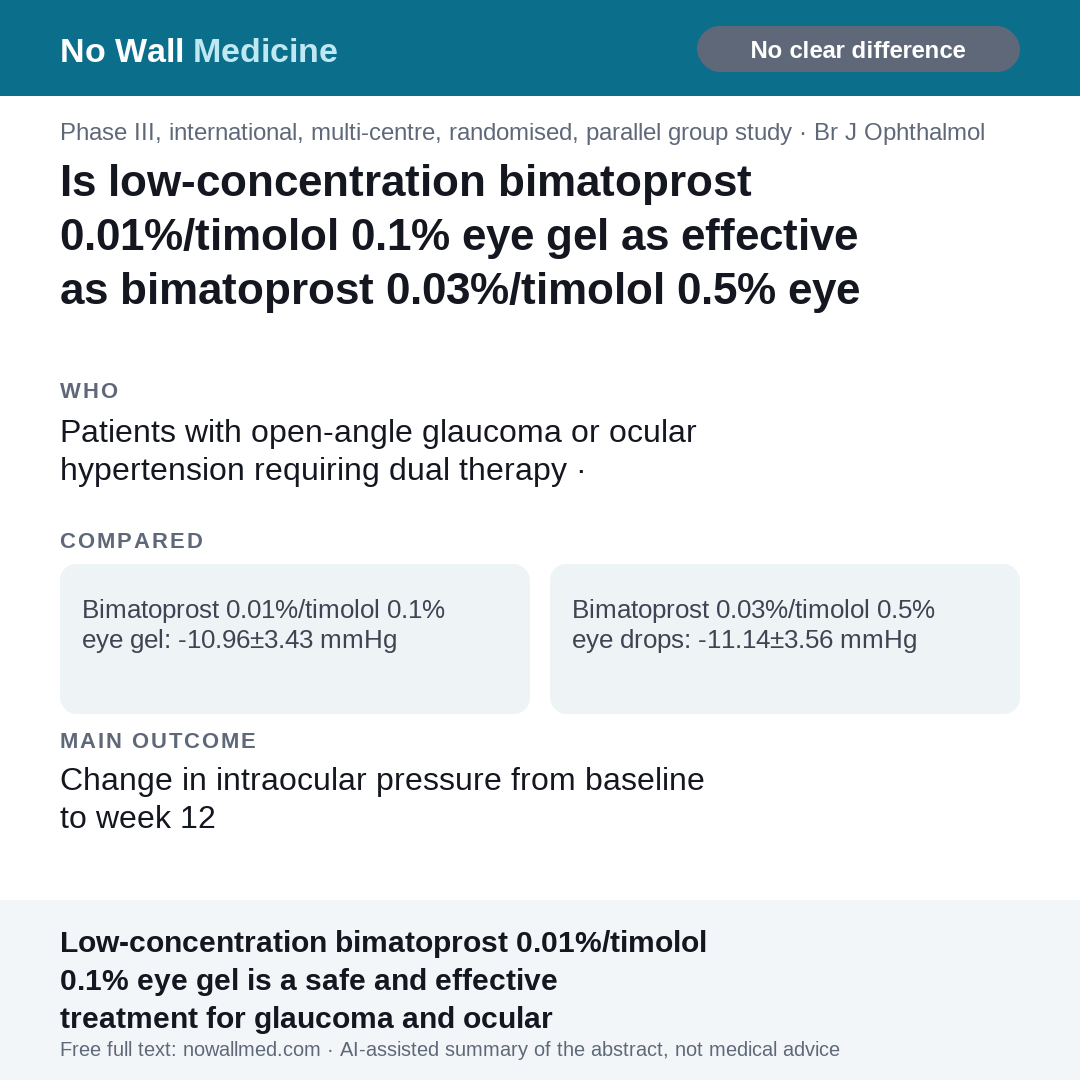
Low-concentration bimatoprost 0.01% and timolol 0.1% eye gel versus bimatoprost 0.03% and timolol 0.5% eye drops in open-angle glaucoma or ocular hypertension: a phase III randomised study
Phase III, international, multi-centre, randomised, parallel group studyNo clear difference
Is low-concentration bimatoprost 0.01%/timolol 0.1% eye gel as effective as bimatoprost 0.03%/timolol 0.5% eye drops?
Who
Patients with open-angle glaucoma or ocular hypertension requiring dual therapy · International, multi-centre
Compared
Bimatoprost 0.01%/timolol 0.1% eye gel: -10.96±3.43 mmHg
Bimatoprost 0.03%/timolol 0.5% eye drops: -11.14±3.56 mmHg
Main outcome
Change in intraocular pressure from baseline to week 12
Result: -0.04±0.24 mmHg (95% CI -0.51 to 0.43 mmHg)
Bottom line: Low-concentration bimatoprost 0.01%/timolol 0.1% eye gel is a safe and effective treatment for glaucoma and ocular hypertension.
Br J Ophthalmol · 2026-03-20Download image
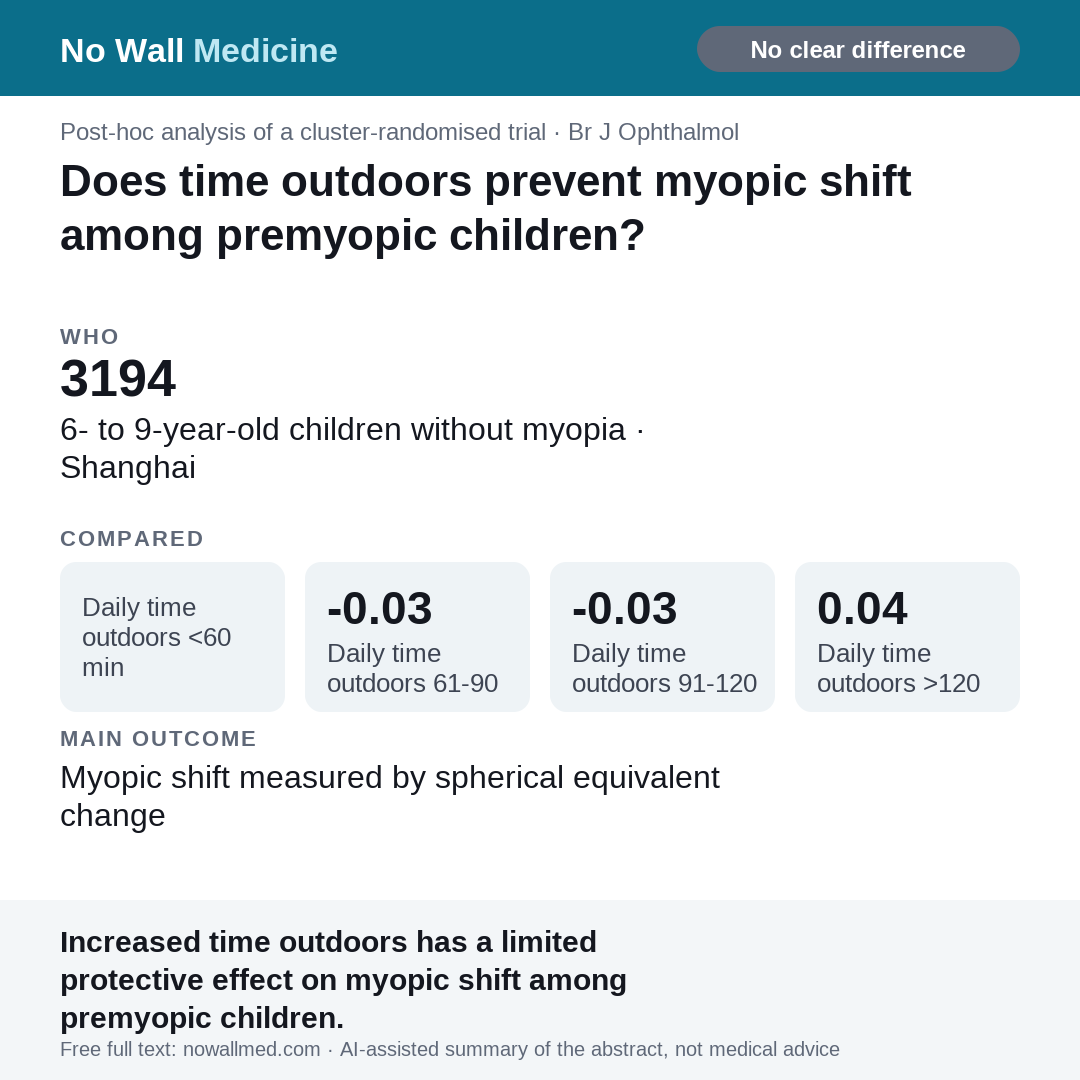
Time outdoors prevents myopia in hyperopic children, but protection is weaker in premyopic children: a post-hoc analysis of a cluster-randomised trial
Post-hoc analysis of a cluster-randomised trialNo clear difference
Does time outdoors prevent myopic shift among premyopic children?
Who
3194
6- to 9-year-old children without myopia · Shanghai
Compared
Daily time outdoors <60 min
-0.03Daily time outdoors 61-90 min/d (95% CI -0.10 to 0.05)
-0.03Daily time outdoors 91-120 min/d (95% CI -0.11 to 0.05)
0.04Daily time outdoors >120 min/d (95% CI -0.05 to 0.14)
Main outcome
Myopic shift measured by spherical equivalent change
Bottom line: Increased time outdoors has a limited protective effect on myopic shift among premyopic children.
Br J Ophthalmol · 2026-03-20Download image
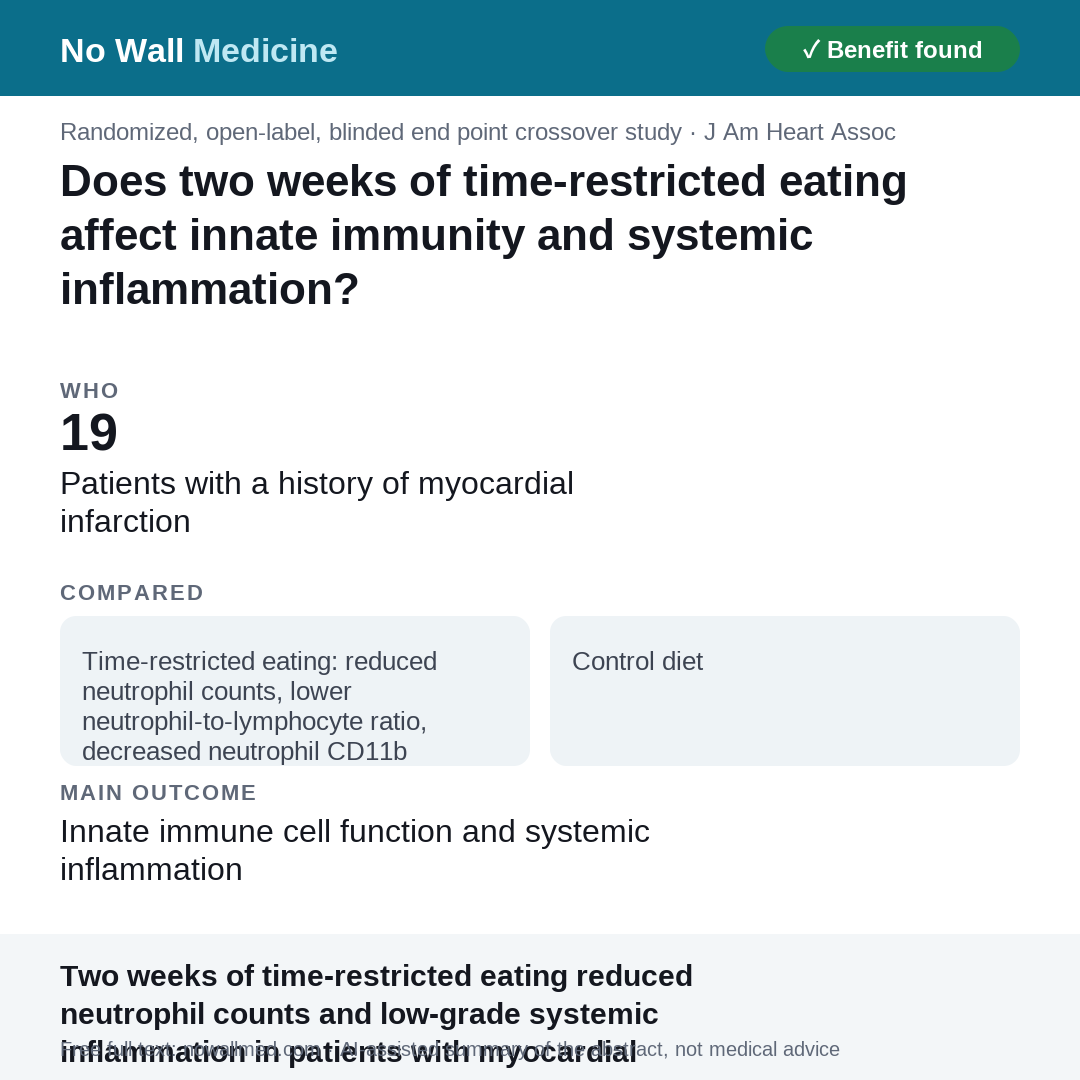
Effect of 2 Weeks of Time-Restricted Eating on Innate Immunity and Systemic Inflammation in Patients With a History of Myocardial Infarction: A Randomized-Controlled Crossover Study
Randomized, open-label, blinded end point crossover studyBenefit found
Does two weeks of time-restricted eating affect innate immunity and systemic inflammation?
Who
19
Patients with a history of myocardial infarction
Compared
Time-restricted eating: reduced neutrophil counts, lower neutrophil-to-lymphocyte ratio, decreased neutrophil CD11b expression
Control diet
Main outcome
Innate immune cell function and systemic inflammation
Bottom line: Two weeks of time-restricted eating reduced neutrophil counts and low-grade systemic inflammation in patients with myocardial infarction.
J Am Heart Assoc · 2026-03-20Download image
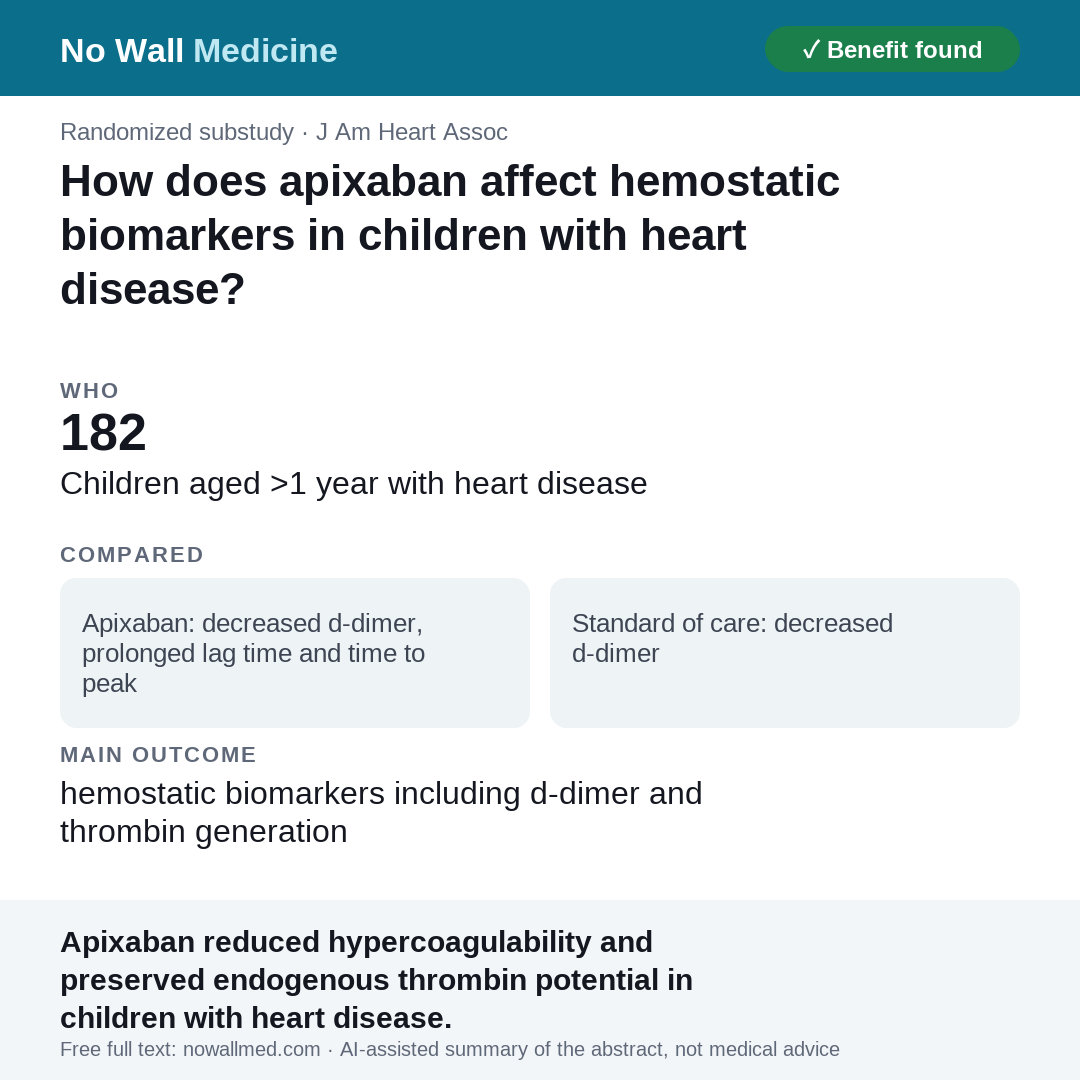
Ex Vivo Effect of Apixaban on Hemostatic Biomarkers in Children With Heart Disease: A SAXOPHONE Trial Substudy
Randomized substudyBenefit found
How does apixaban affect hemostatic biomarkers in children with heart disease?
Who
182
Children aged >1 year with heart disease
Compared
Apixaban: decreased d-dimer, prolonged lag time and time to peak
Standard of care: decreased d-dimer
Main outcome
hemostatic biomarkers including d-dimer and thrombin generation
Bottom line: Apixaban reduced hypercoagulability and preserved endogenous thrombin potential in children with heart disease.
J Am Heart Assoc · 2026-03-20Download image
Managing emotional distress in older adults with mental illness: a randomized controlled trial evaluating virtual reality relaxation
Randomized controlled trialNo clear difference
Is virtual reality relaxation effective compared to guided imagery for older adults with mental illness?
Who
39
Older psychiatric patients aged 58 to 98 years
Compared
Virtual reality relaxation: significant improvements in state anxiety, stress, negative affect, relaxation, positive affect, and well-being
Guided imagery: significant improvements in state anxiety, stress, negative affect, relaxation, positive affect, and well-being
Main outcome
state anxiety, affect, stress, relaxation, and well-being
Bottom line: Virtual reality relaxation is a feasible and effective intervention comparable to guided imagery for older adults.
Transl Psychiatry · 2026-03-20Download image

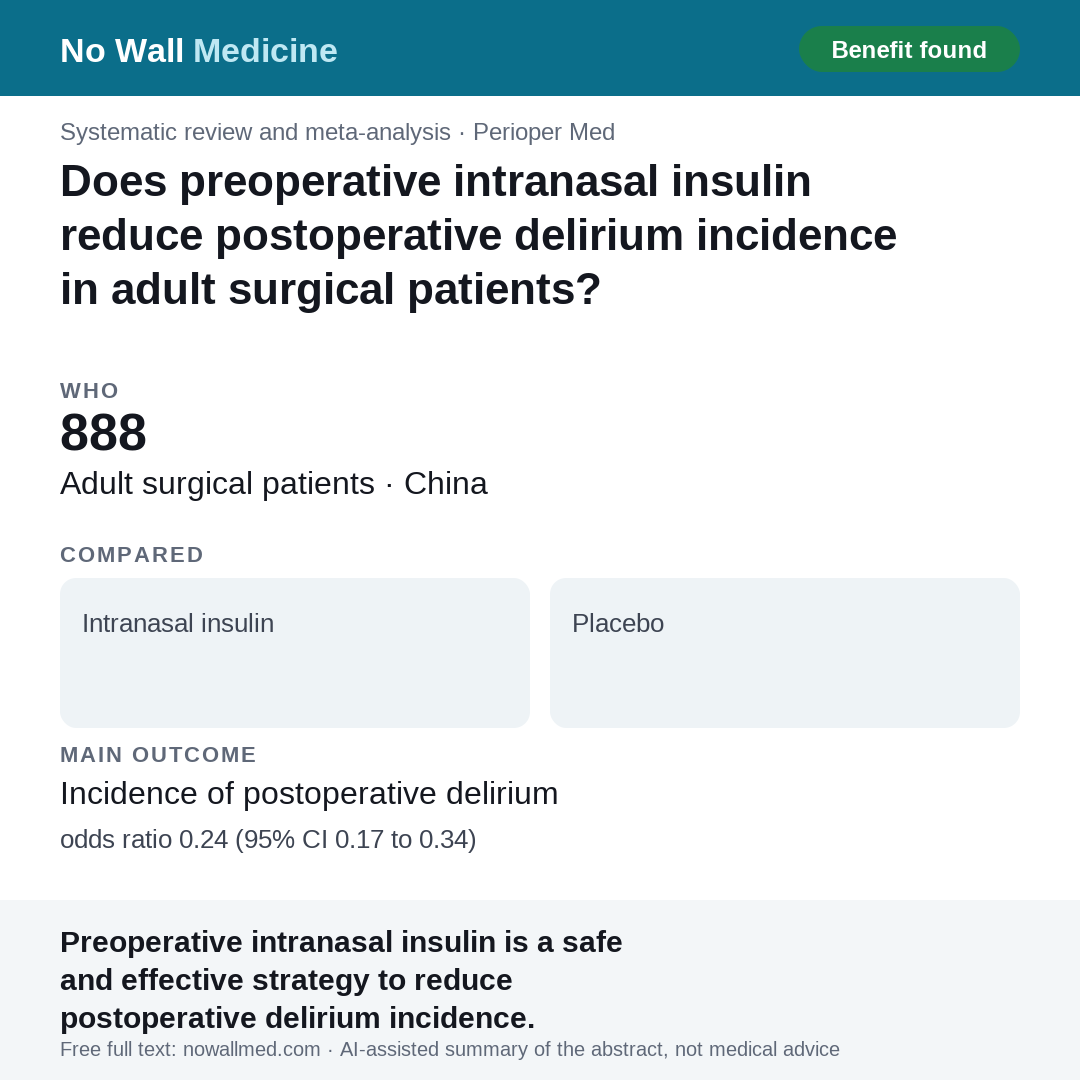
Effect of preoperative intranasal insulin on postoperative delirium in adult surgical patients: a systematic review, meta-analysis, and trial sequential analysis
Systematic review and meta-analysisBenefit found
Does preoperative intranasal insulin reduce postoperative delirium incidence in adult surgical patients?
Who
888
Adult surgical patients · China
Compared
Intranasal insulin
Placebo
Main outcome
Incidence of postoperative delirium
Result: odds ratio 0.24 (95% CI 0.17 to 0.34)
Bottom line: Preoperative intranasal insulin is a safe and effective strategy to reduce postoperative delirium incidence.
Perioper Med · 2026-03-20Download image
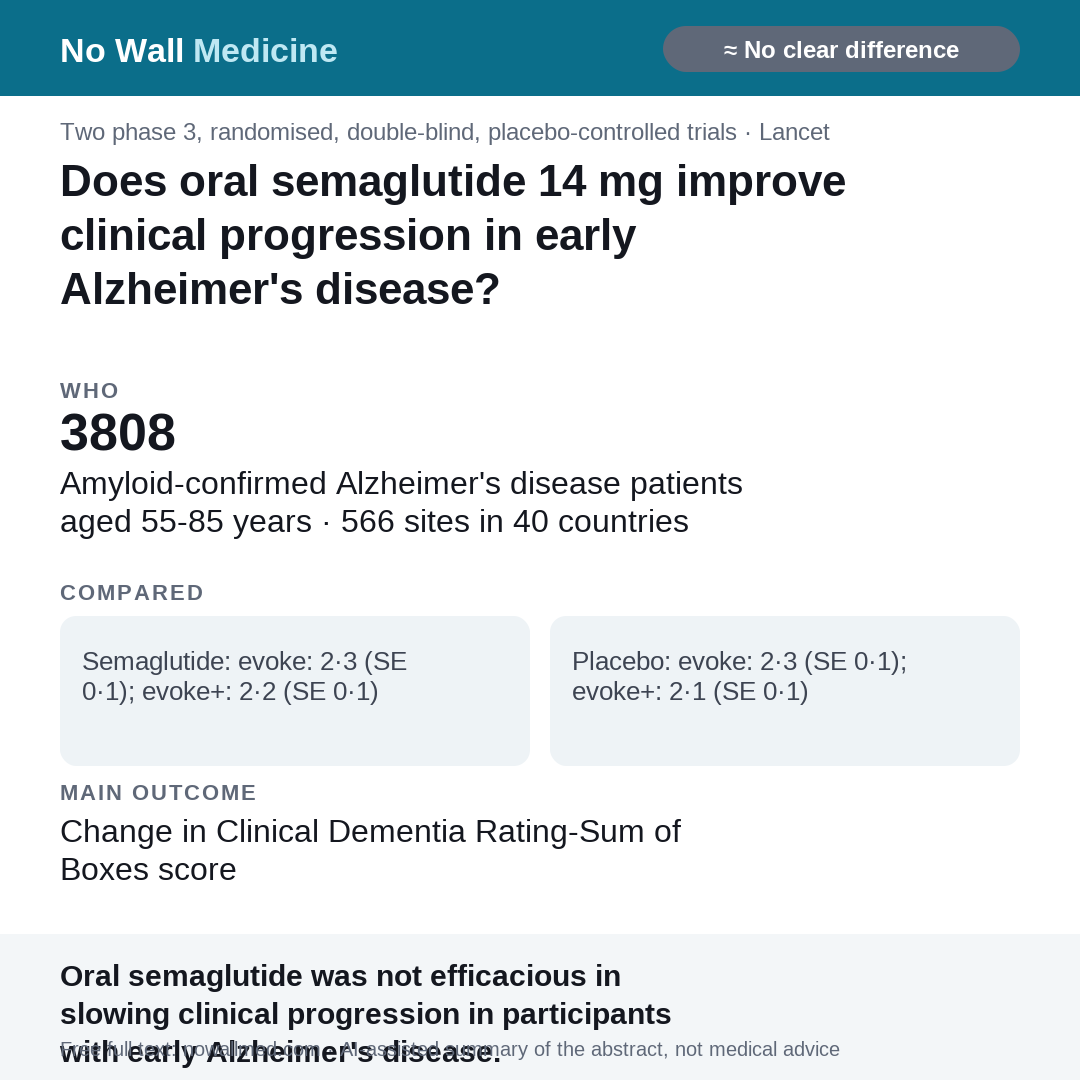
Efficacy and safety of oral semaglutide 14 mg (flexible dose) in early-stage symptomatic Alzheimer's disease (evoke and evoke+): two phase 3, randomised, placebo-controlled trials
Two phase 3, randomised, double-blind, placebo-controlled trialsNo clear difference
Does oral semaglutide 14 mg improve clinical progression in early Alzheimer's disease?
Who
3808
Amyloid-confirmed Alzheimer's disease patients aged 55-85 years · 566 sites in 40 countries
Compared
Semaglutide: evoke: 2·3 (SE 0·1); evoke+: 2·2 (SE 0·1)
Placebo: evoke: 2·3 (SE 0·1); evoke+: 2·1 (SE 0·1)
Main outcome
Change in Clinical Dementia Rating-Sum of Boxes score
Result: evoke difference -0·08 (95% CI -0·35 to 0·20); evoke+ difference 0·10 (95% CI -0·17 to 0·38)
Bottom line: Oral semaglutide was not efficacious in slowing clinical progression in participants with early Alzheimer's disease.
Funded by: Novo Nordisk
Lancet · 2026-03-19Download image
Memantine for Premature Atrial Contractions: A Phase 2 Randomized Clinical Trial
Randomized, double-blind, placebo-controlled trialBenefit found
Does memantine reduce premature atrial contractions in symptomatic adults?
Who
241
Symptomatic adults with frequent premature atrial contractions · Multicenter
Compared
Memantine: 52.4% responder rate
Placebo: 23.1% responder rate
Main outcome
Percentage change in mean 24-hour premature atrial contraction count
Result: between-group difference, 47.1 percentage points; P=0.0045
Bottom line: Memantine reduced premature atrial contraction count and atrial tachyarrhythmia burden with a favorable safety profile.
Circulation · 2026-03-19Download image

Systolic Blood Pressure Trajectory and Outcomes in Acute Intracerebral Hemorrhage: Pooled Analysis of the 4 INTERACT and ATACH-II Clinical Trials
Pooled analysis of 4 randomized controlled trialsHarm found
What is the optimal systolic blood pressure trajectory for functional recovery after acute intracerebral hemorrhage?
Who
11269
Patients with acute intracerebral hemorrhage · International
Compared
Low systolic blood pressure trajectory
1.16Moderate-to-low trajectory (0.98-1.37)
1.44Moderate trajectory (1.18-1.75)
1.46High trajectory (1.15-1.87)
Main outcome
Functional recovery at 90 days (modified Rankin Scale 3-6)
Result: p = 0.04 for trend
Bottom line: Higher systolic blood pressure trajectories over 24 hours are associated with increased odds of poor functional outcomes after intracerebral hemorrhage.
Limitation: ATACH-II showed a nonsignificant trend due to limited power.
Neurology · 2026-03-19Download image

Oral deucrictibant for on-demand treatment of hereditary angioedema attacks (RAPIDe-1): a randomised, double-blind, placebo-controlled, phase 2 trial
Randomised, double-blind, placebo-controlled, crossover, phase 2 trialBenefit found
Is oral deucrictibant effective for on-demand treatment of hereditary angioedema attacks?
Who
74
Adults aged 18-75 years with hereditary angioedema type 1 or 2 · 38 sites in North America, Europe, and Israel
Compared
-16.75Deucrictibant 10 mg (95% CI -21.52 to -11.97)
-15.02Deucrictibant 20 mg (-20.22 to -9.81)
-16.28Deucrictibant 30 mg (-21.27 to -11.29)
Placebo
Main outcome
Change in patient-reported composite VAS-3 score measuring attack severity
Bottom line: Oral deucrictibant significantly reduced the severity of hereditary angioedema attacks compared with placebo in this phase 2 trial.
Lancet Haematol · 2026-03-19Download image

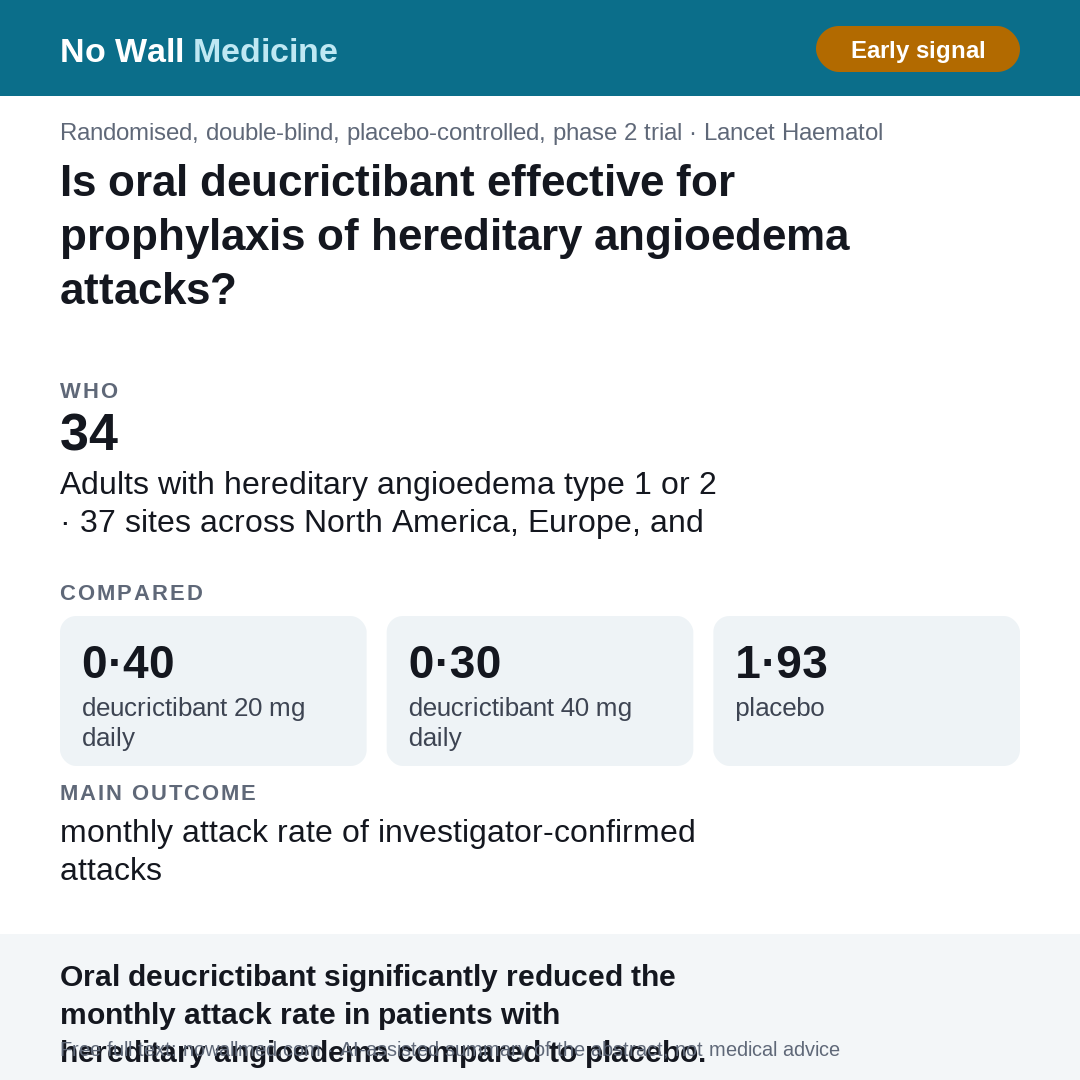
Oral deucrictibant for prophylaxis of hereditary angioedema attacks (CHAPTER-1): primary analysis of a randomised, double-blind, placebo-controlled, phase 2 trial
Randomised, double-blind, placebo-controlled, phase 2 trialBenefit found
Is oral deucrictibant effective for prophylaxis of hereditary angioedema attacks?
Who
34
Adults with hereditary angioedema type 1 or 2 · 37 sites across North America, Europe, and Israel
Compared
0·40deucrictibant 20 mg daily (95% CI 0·18-0·92)
0·30deucrictibant 40 mg daily (0·11-0·81)
1·93placebo (1·30-2·88)
Main outcome
monthly attack rate of investigator-confirmed attacks
Result: 79·2% (95% CI 47·2-91·8) reduction for 20 mg; 84·5% (95% CI 53·8-94·8) for 40 mg
Bottom line: Oral deucrictibant significantly reduced the monthly attack rate in patients with hereditary angioedema compared to placebo.
Funded by: Pharvaris
Lancet Haematol · 2026-03-19Download image
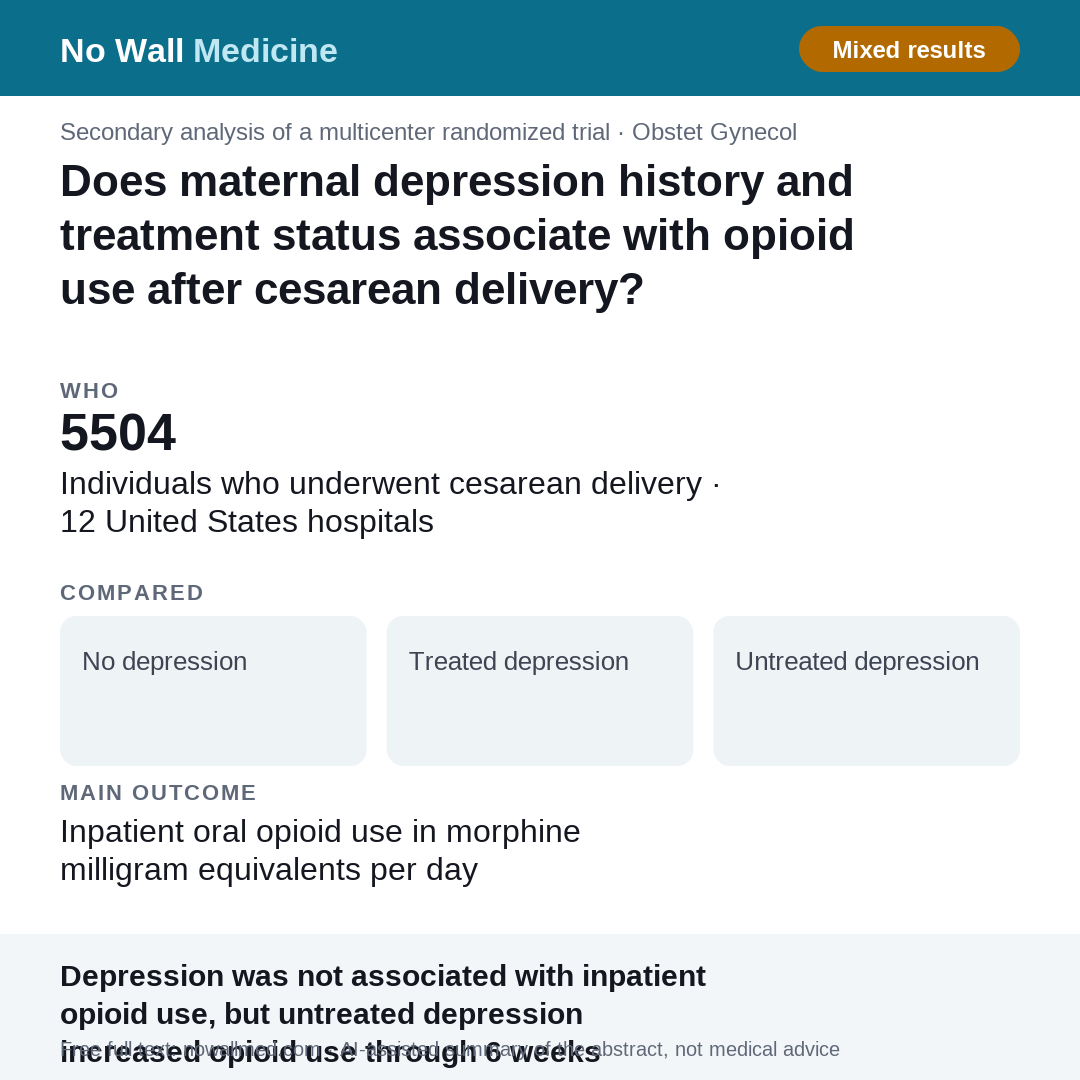
Maternal Depression and Opioid Use After Cesarean Delivery
Secondary analysis of a multicenter randomized trialMixed results
Does maternal depression treatment status associate with opioid use after cesarean delivery?
Who
5504
Individuals undergoing cesarean delivery · 12 United States hospitals
Compared
Untreated depression: adjusted median difference 16.7 MMEs/d [95% CI, 8.9-24.5]
Treated depression
No depression
Main outcome
Inpatient and outpatient oral opioid use
Result: adjusted median difference 16.7 MMEs/d [95% CI, 8.9-24.5]
Bottom line: Untreated depression was associated with higher outpatient opioid use, but depression status did not affect inpatient opioid use.
Obstet Gynecol · 2026-03-19Download image
Efficacy and safety of different vasopressor infusions on feto-maternal outcomes in normotensive patients undergoing caesarean delivery: a systematic review and network meta-analysis of randomised controlled trials
Systematic review and network meta-analysisMixed results
Which vasopressor infusions are most effective for feto-maternal outcomes during caesarean delivery?
Who
5487
Normotensive adult patients undergoing caesarean delivery
Compared
Active vasopressor infusion
Control (no active vasopressor infusion)
Main outcome
Incidence of maternal hypotension and umbilical artery base excess
Bottom line: Alpha-agonists with mild beta-activity are preferable for preventing maternal hypotension, but fetal outcome evidence remains limited.
Limitation: The evidence base for fetal outcomes remains limited.
Anaesthesia · 2026-03-19Download image

Blood and Urine Circulating Tumor DNA in Urothelial Bladder Cancer: State of the Art and Clinical Perspective
Systematic reviewBenefit found
What is the diagnostic, prognostic, and predictive value of plasma and urine circulating tumor DNA?
Who
Patients with localized, locally advanced, and metastatic urothelial bladder cancer
Compared
Circulating tumor DNA
Conventional diagnostic and monitoring methods
Main outcome
Diagnostic performance, disease monitoring, and prognostic or predictive value
Bottom line: Circulating tumor DNA is a powerful non-invasive biomarker for diagnosis, surveillance, and treatment guidance in urothelial bladder cancer.
Limitation: Heterogeneous methodologies, variable assay sensitivity, and small patient cohorts.
Eur Urol Oncol · 2026-03-19Download image

Tracheostomy vs. Delayed Extubation in Head and Neck Reconstruction: A Meta-Analysis
Meta-analysisBenefit found
Is delayed extubation better than tracheostomy in head and neck reconstruction patients?
Who
Patients undergoing head and neck reconstruction
Compared
Tracheostomy: risk ratio 4.14 (95% CI, 2.67-6.40) for airway complications
Delayed extubation: risk ratio 8.19 (95% CI, 3.41-19.65) for flap complications
Main outcome
Airway complications and flap complications
Result: risk ratio 4.14 (95% CI, 2.67-6.40) for airway complications
Bottom line: Delayed extubation may reduce airway and flap complications compared to routine tracheostomy in head and neck reconstruction.
Laryngoscope · 2026-03-19Download image