Visual abstracts
New randomized trials and meta-analyses from leading journals at a glance: who was studied, what was compared, and what was found. Every paper is free to read in full.
All specialtiesCardiology 4763Oncology 4042Gastroenterology & Hepatology 1902Infectious Disease 3756Neurology 1872Psychiatry & Mental Health 2214Pulmonology 2042Critical Care 1319Endocrinology & Diabetes 2544Pediatrics 2889Surgery 2479Orthopedics & Sports Medicine 917Neurosurgery 525Cardiothoracic & Vascular Surgery 656Plastic & Reconstructive Surgery 574Nephrology 1107Rheumatology 810Hematology 1090Dermatology 611Ophthalmology 532Obstetrics & Gynecology 1645Public & Global Health 1037Radiology & Imaging 617Anesthesiology 957Urology 745ENT (Otolaryngology) 494Emergency Medicine 481Allergy & Immunology 309Geriatrics 972Family Medicine & Primary Care 533Medical Genetics & Genomics 659Pathology & Laboratory Medicine 156Physical Medicine & Rehabilitation 734Palliative Care 421Nutrition 1560Digital Health & AI 2133General Medicine 318
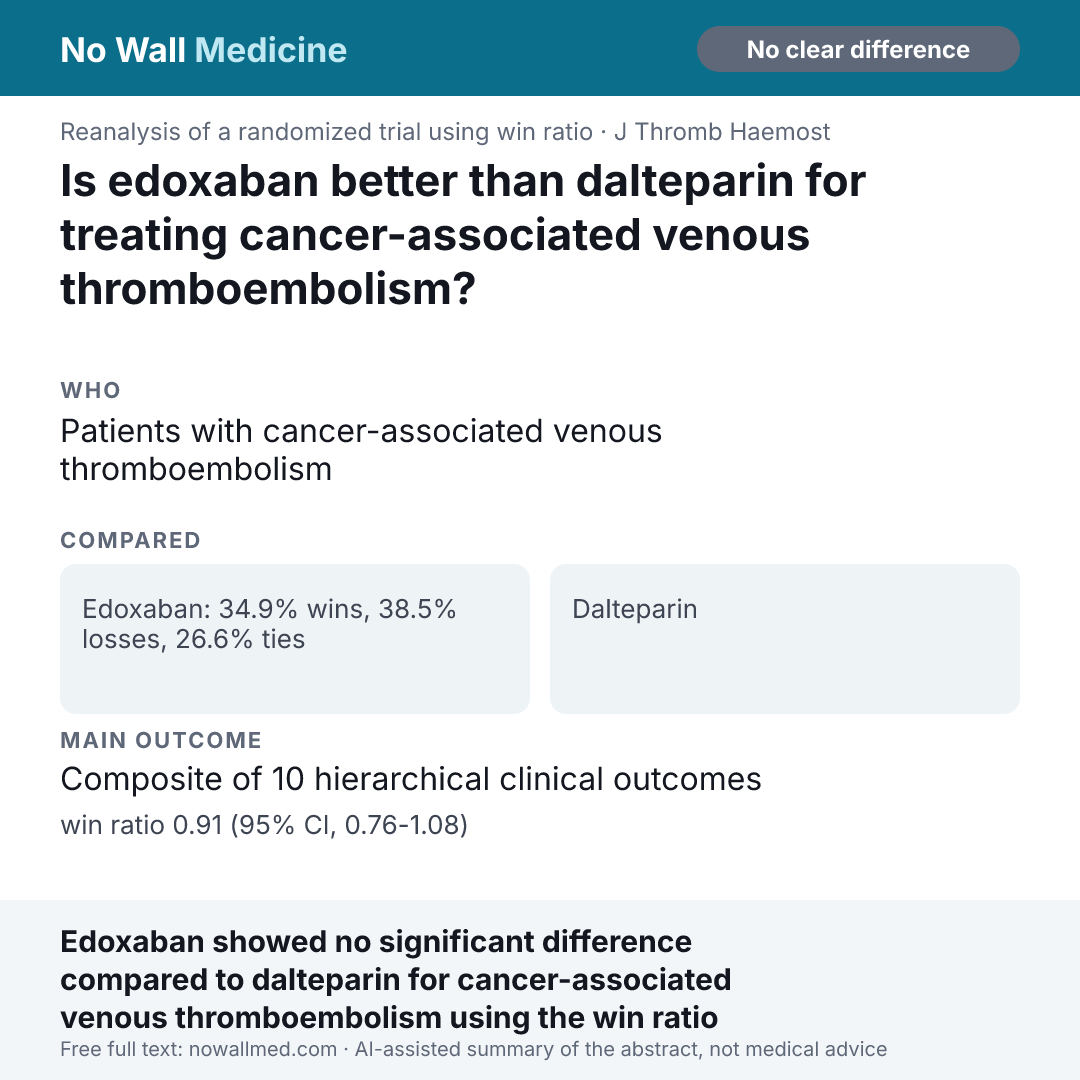
The win ratio for evaluating edoxaban vs dalteparin for cancer-associated venous thromboembolism: an analysis of the randomized Hokusai Venous Thromboembolism Cancer trial
Reanalysis of a randomized trial using win ratioNo clear difference
Is edoxaban better than dalteparin for treating cancer-associated venous thromboembolism?
Who
Patients with cancer-associated venous thromboembolism
Compared
Edoxaban: 34.9% wins, 38.5% losses, 26.6% ties
Dalteparin
Main outcome
Composite of 10 hierarchical clinical outcomes
Result: win ratio 0.91 (95% CI, 0.76-1.08)
Bottom line: Edoxaban showed no significant difference compared to dalteparin for cancer-associated venous thromboembolism using the win ratio approach.
J Thromb Haemost · 2025-12-19 · Save PNG
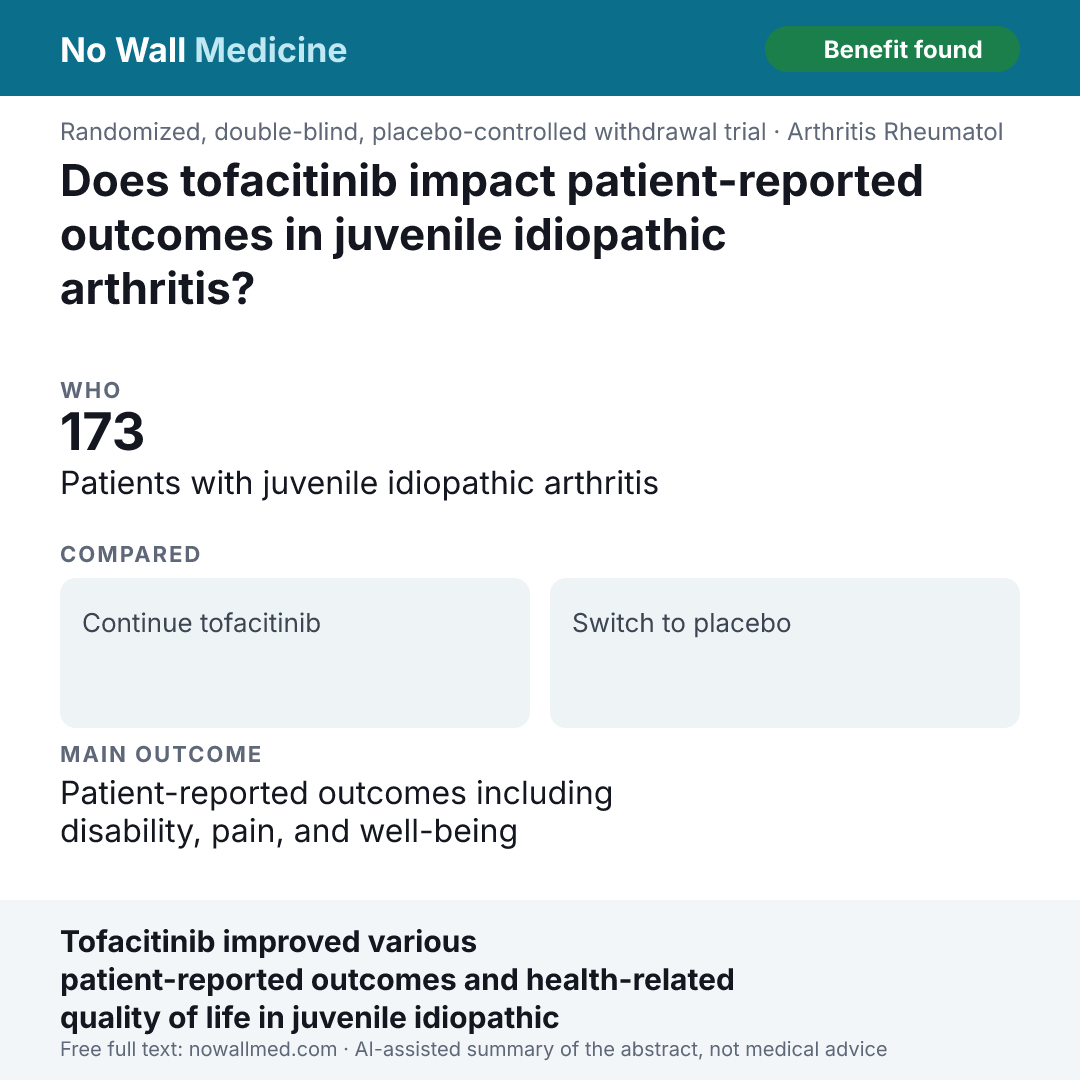
Tofacitinib for the Treatment of Juvenile Idiopathic Arthritis: Patient-Reported Outcomes in a Phase 3, Randomized, Double-Blind, Placebo-Controlled Withdrawal Trial
Randomized, double-blind, placebo-controlled withdrawal trialBenefit found
Does tofacitinib impact patient-reported outcomes in juvenile idiopathic arthritis?
Who
173
Patients with juvenile idiopathic arthritis
Compared
Continue tofacitinib
Switch to placebo
Main outcome
Patient-reported outcomes including disability, pain, and well-being
Bottom line: Tofacitinib improved various patient-reported outcomes and health-related quality of life in juvenile idiopathic arthritis.
Arthritis Rheumatol · 2025-12-19 · Save PNG
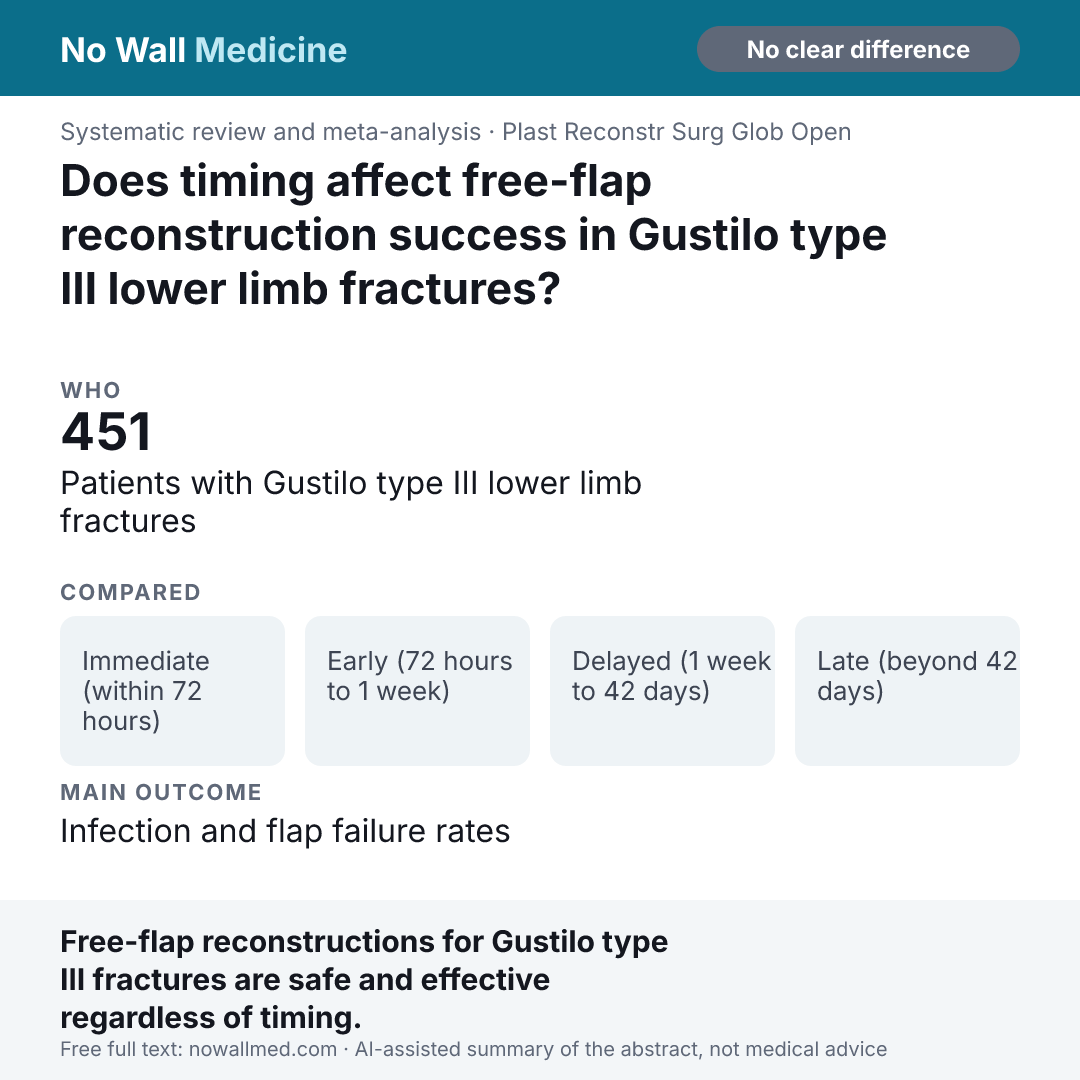
Timing for Free-Flap Reconstruction for Gustilo Type III Lower Limb Fractures: Systematic Review and Meta-analysis
Systematic review and meta-analysisNo clear difference
Does timing affect free-flap reconstruction success in Gustilo type III lower limb fractures?
Who
451
Patients with Gustilo type III lower limb fractures
Compared
Immediate (within 72 hours)
Early (72 hours to 1 week)
Delayed (1 week to 42 days)
Late (beyond 42 days)
Main outcome
Infection and flap failure rates
Bottom line: Free-flap reconstructions for Gustilo type III fractures are safe and effective regardless of timing.
Limitation: Comprehensive data assessing the effect of timing on outcomes are still limited.
Plast Reconstr Surg Glob Open · 2025-12-19 · Save PNG
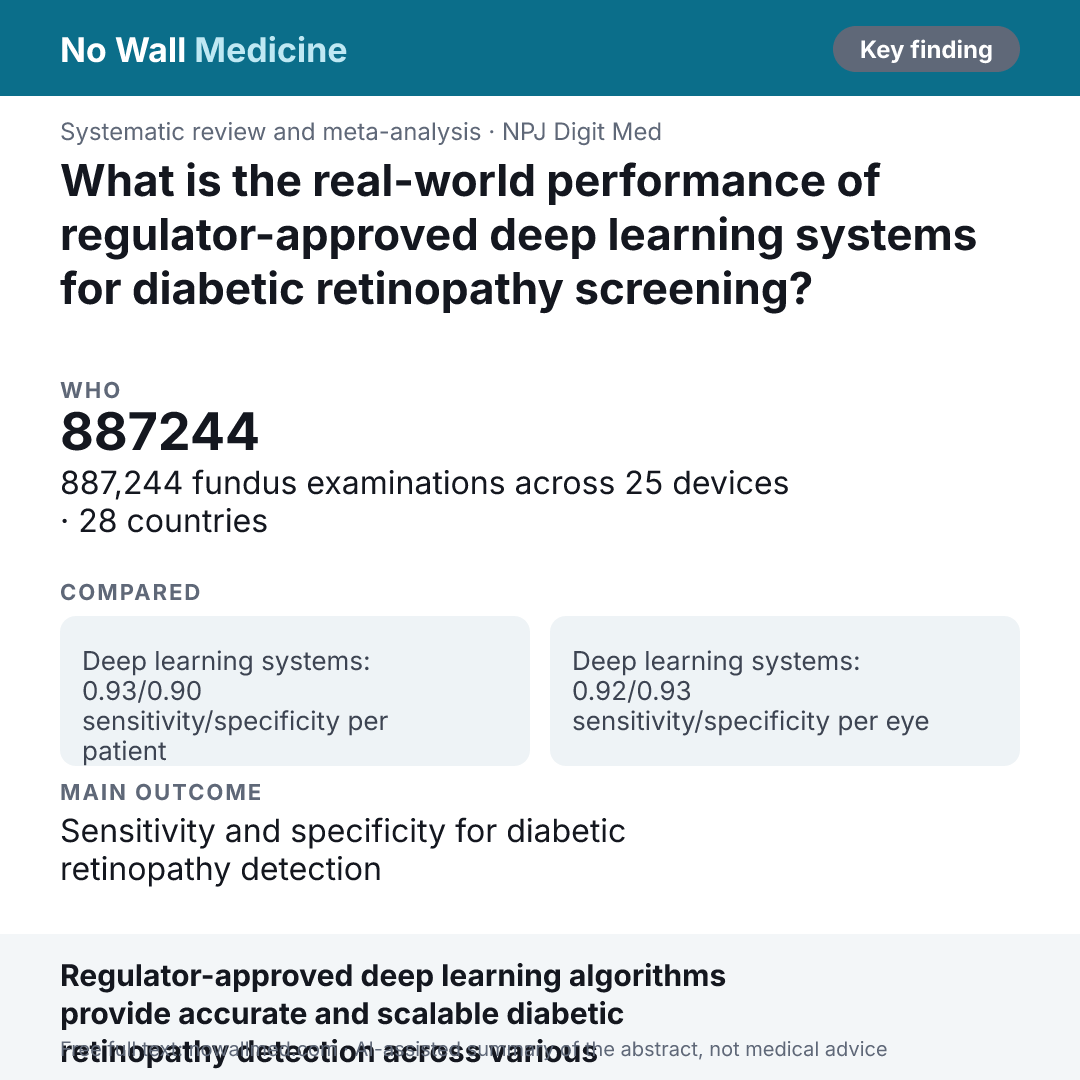
Systematic review and meta-analysis of regulator-approved deep learning systems for fundus diabetic retinopathy detections
Systematic review and meta-analysisKey finding
What is the real-world performance of regulator-approved deep learning systems for diabetic retinopathy screening?
Who
887244
887,244 fundus examinations across 25 devices · 28 countries
Compared
Deep learning systems: 0.93/0.90 sensitivity/specificity per patient
Deep learning systems: 0.92/0.93 sensitivity/specificity per eye
Main outcome
Sensitivity and specificity for diabetic retinopathy detection
Bottom line: Regulator-approved deep learning algorithms provide accurate and scalable diabetic retinopathy detection across various settings.
Limitation: Heterogeneity explained by disease severity, income level, image gradability, and diagnostic criteria.
NPJ Digit Med · 2025-12-19 · Save PNG
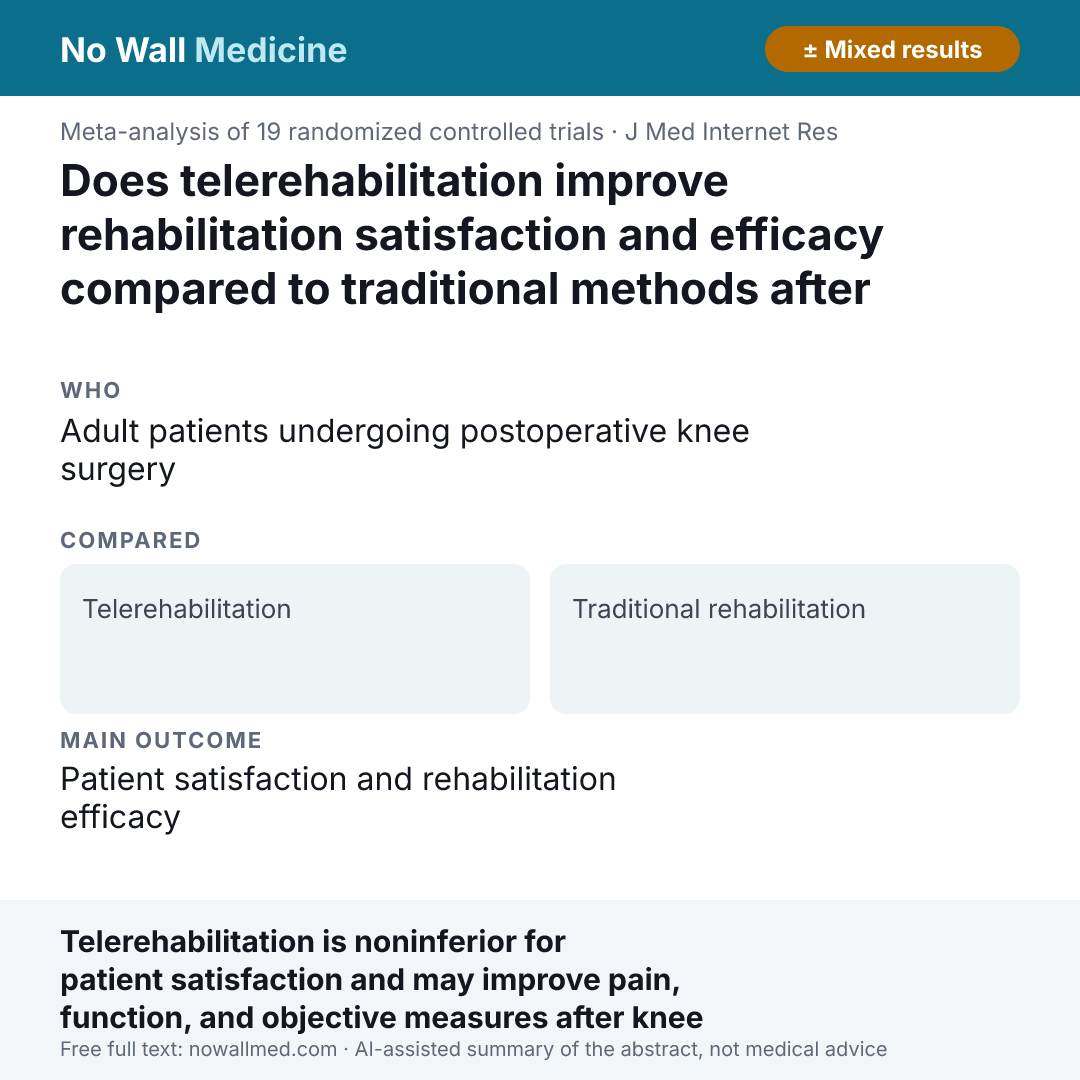
Impact of Telerehabilitation on Rehabilitation Efficacy and Patient Satisfaction After Knee Surgery: Systematic Review and Meta-Analysis of Randomized Controlled Trials
Meta-analysis of 19 randomized controlled trialsMixed results
Does telerehabilitation improve rehabilitation satisfaction and efficacy compared to traditional methods after knee surgery?
Who
Adult patients undergoing postoperative knee surgery
Compared
Telerehabilitation
Traditional rehabilitation
Main outcome
Patient satisfaction and rehabilitation efficacy
Result: standardized mean difference 0.15 (95% CI -0.48 to 0.78) for satisfaction
Bottom line: Telerehabilitation is noninferior for patient satisfaction and may improve pain, function, and objective measures after knee surgery.
Limitation: Between-study variability indicates that effects vary by context, requiring individualized implementation.
J Med Internet Res · 2025-12-19 · Save PNG
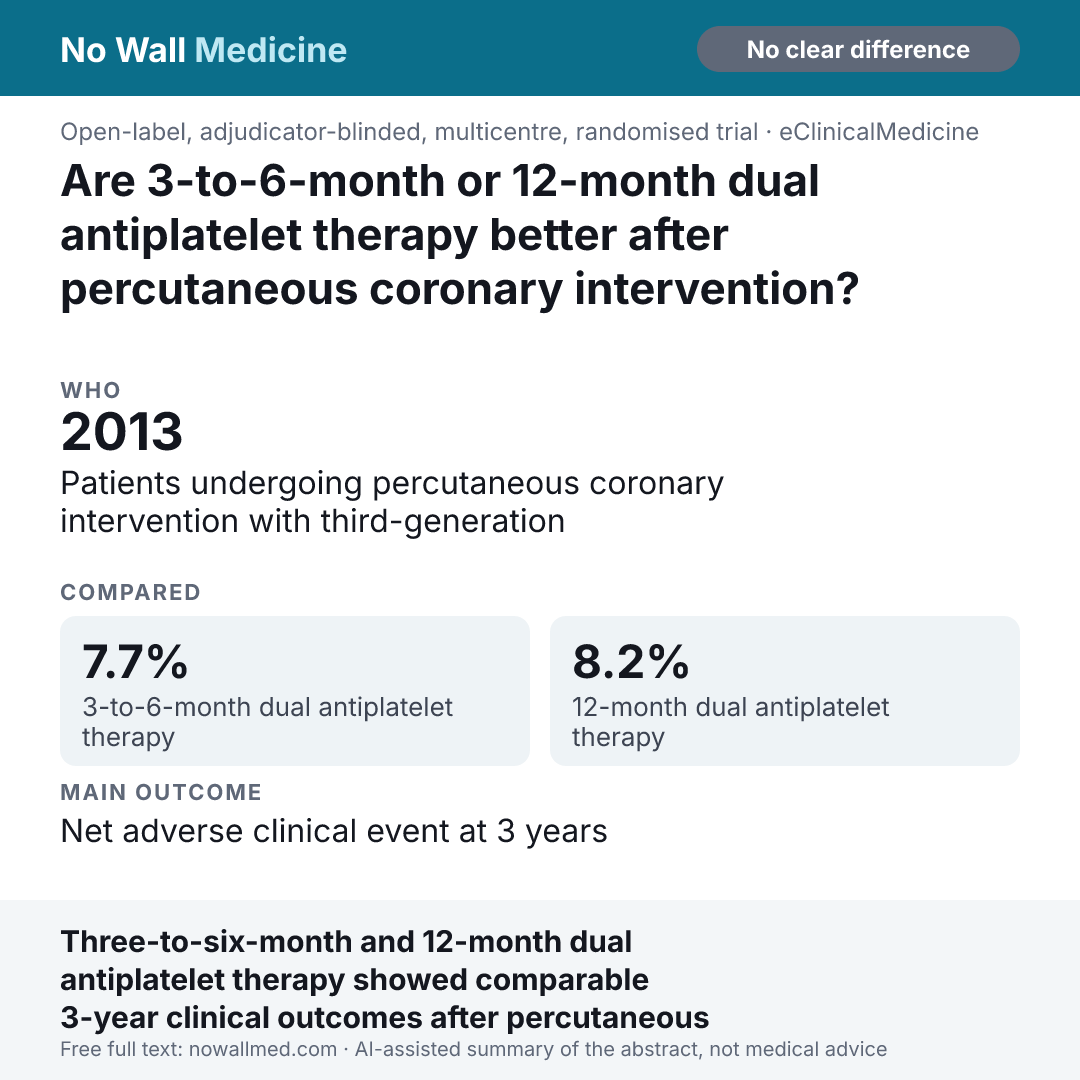
Abbreviated dual antiplatelet therapy after percutaneous coronary intervention with ultrathin-strut drug-eluting stents in South Korea: 3-year outcomes of the multicentre, randomised HOST-IDEA trial
Open-label, adjudicator-blinded, multicentre, randomised trialNo clear difference
Are 3-to-6-month or 12-month dual antiplatelet therapy better after percutaneous coronary intervention?
Who
2013
Patients undergoing percutaneous coronary intervention with third-generation drug-eluting stents · 37 hospitals in South Korea
Compared
7.7%3-to-6-month dual antiplatelet therapy
8.2%12-month dual antiplatelet therapy
Main outcome
Net adverse clinical event at 3 years
Result: hazard ratio 0.94 (95% CI 0.69-1.29)
Bottom line: Three-to-six-month and 12-month dual antiplatelet therapy showed comparable 3-year clinical outcomes after percutaneous coronary intervention.
Funded by: Biotronik Korea and B. Braun Korea
eClinicalMedicine · 2025-12-18 · Save PNG
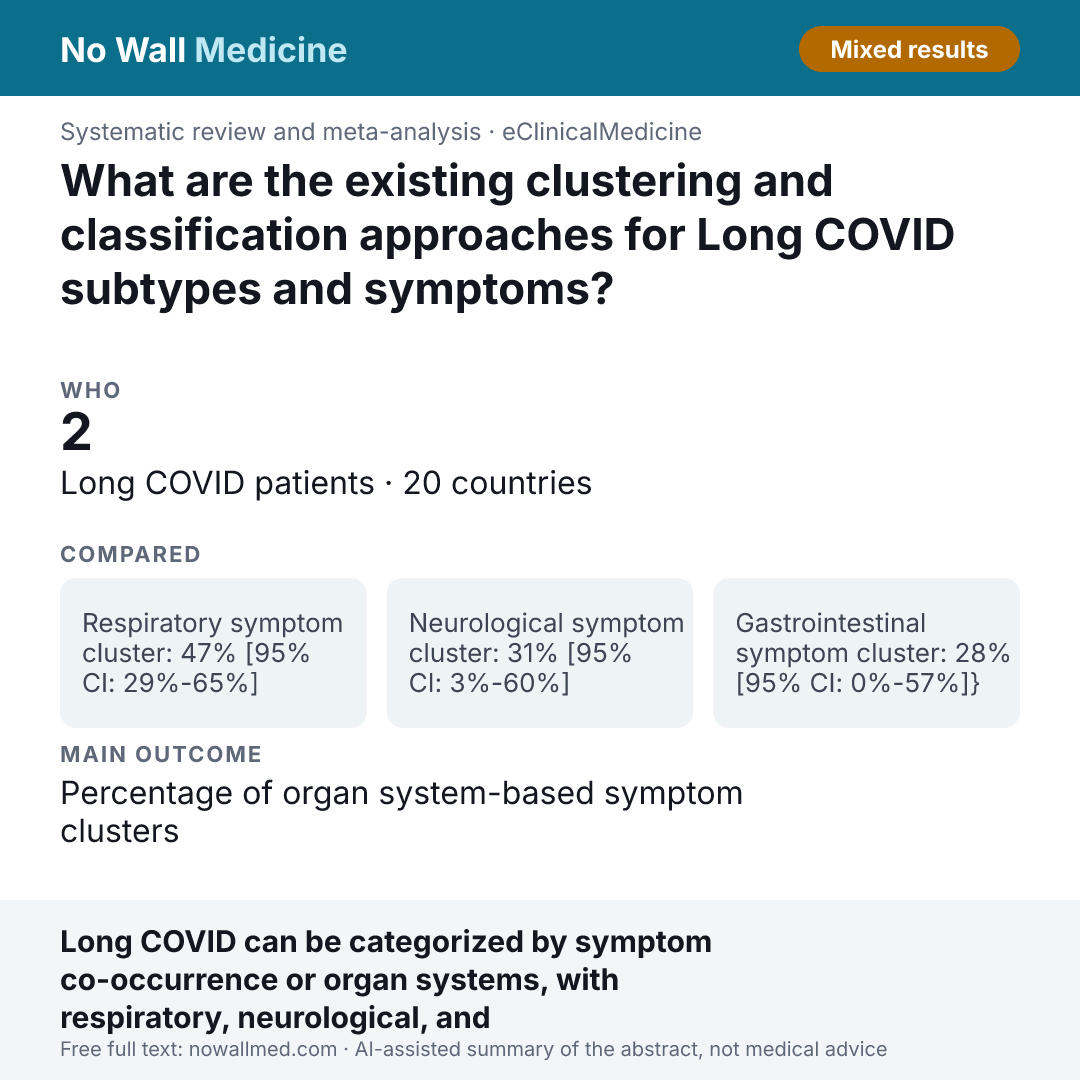
Identifying subtypes of Long COVID: a systematic review
Systematic review and meta-analysisMixed results
What are the existing clustering and classification approaches for Long COVID subtypes and symptoms?
Who
2
Long COVID patients · 20 countries
Compared
Respiratory symptom cluster: 47% [95% CI: 29%-65%]
Neurological symptom cluster: 31% [95% CI: 3%-60%]
Gastrointestinal symptom cluster: 28% [95% CI: 0%-57%]}
Main outcome
Percentage of organ system-based symptom clusters
Bottom line: Long COVID can be categorized by symptom co-occurrence or organ systems, with respiratory, neurological, and gastrointestinal clusters identified.
Funded by: K. C. Wong Education Foundation and several Chinese medical funds
eClinicalMedicine · 2025-12-18 · Save PNG
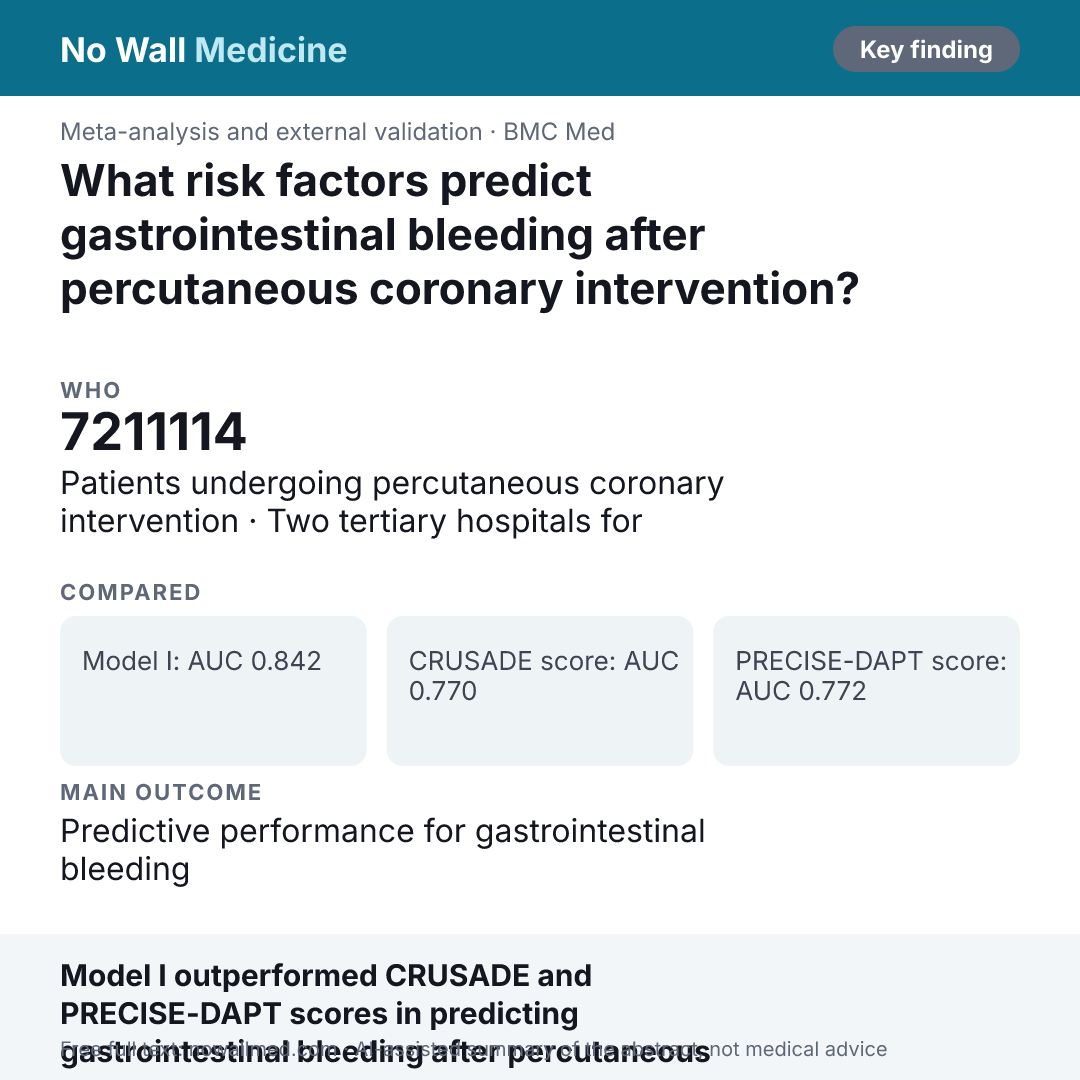
Meta-analysis and external validation of a risk model for gastrointestinal bleeding after percutaneous coronary intervention
Meta-analysis and external validationKey finding
What risk factors predict gastrointestinal bleeding after percutaneous coronary intervention?
Who
7211114
Patients undergoing percutaneous coronary intervention · Two tertiary hospitals for external validation
Compared
Model I: AUC 0.842
CRUSADE score: AUC 0.770
PRECISE-DAPT score: AUC 0.772
Main outcome
Predictive performance for gastrointestinal bleeding
Bottom line: Model I outperformed CRUSADE and PRECISE-DAPT scores in predicting gastrointestinal bleeding after percutaneous coronary intervention.
BMC Med · 2025-12-18 · Save PNG
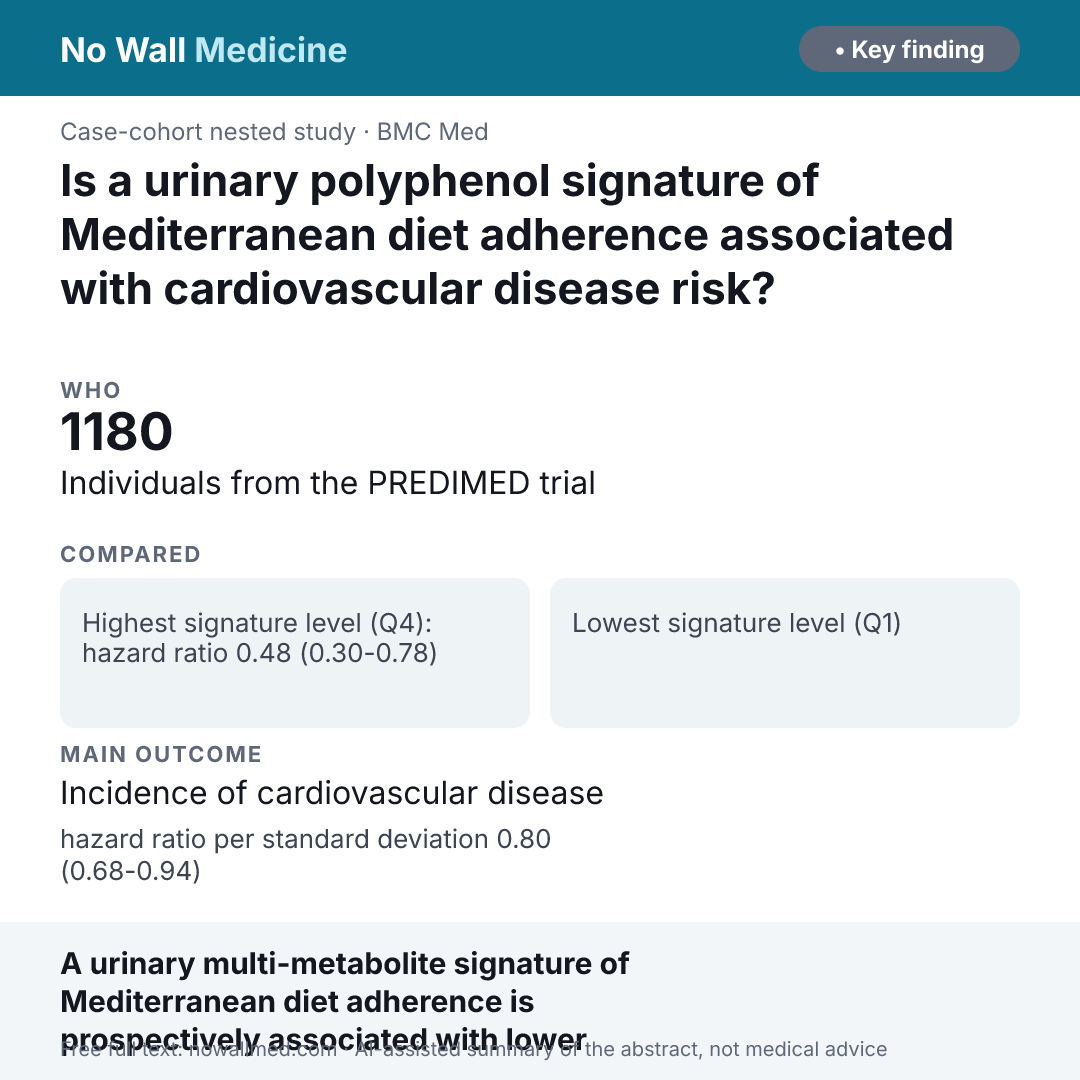
Urinary polyphenol signature of the Mediterranean diet is associated with lower cardiovascular disease risk: the PREDIMED trial
Case-cohort nested studyKey finding
Is a urinary polyphenol signature of Mediterranean diet adherence associated with cardiovascular disease risk?
Who
1180
Individuals from the PREDIMED trial
Compared
Highest signature level (Q4): hazard ratio 0.48 (0.30-0.78)
Lowest signature level (Q1)
Main outcome
Incidence of cardiovascular disease
Result: hazard ratio per standard deviation 0.80 (0.68-0.94)
Bottom line: A urinary multi-metabolite signature of Mediterranean diet adherence is prospectively associated with lower cardiovascular disease risk.
BMC Med · 2025-12-18 · Save PNG
Effects of a probiotic fermented dairy product on hippocampal metabolites, structure and function: an 8-week randomised, placebo-controlled trial in healthy women
Triple-blind, randomised, placebo-controlled trialMixed results
Does a probiotic fermented dairy product impact hippocampal metabolites, structure, and function?
Who
40
Healthy women aged 18-55 years
Compared
Fermented probiotic yoghurt
Placebo
Main outcome
Change in left hippocampal metabolites
Result: mean difference in change: -0.49 (95% CI -0.95 to -0.04)
Bottom line: Probiotic fermented dairy may modulate hippocampal metabolites and connectivity, but results did not withstand multiple comparison corrections.
Gut · 2025-12-18 · Save PNG

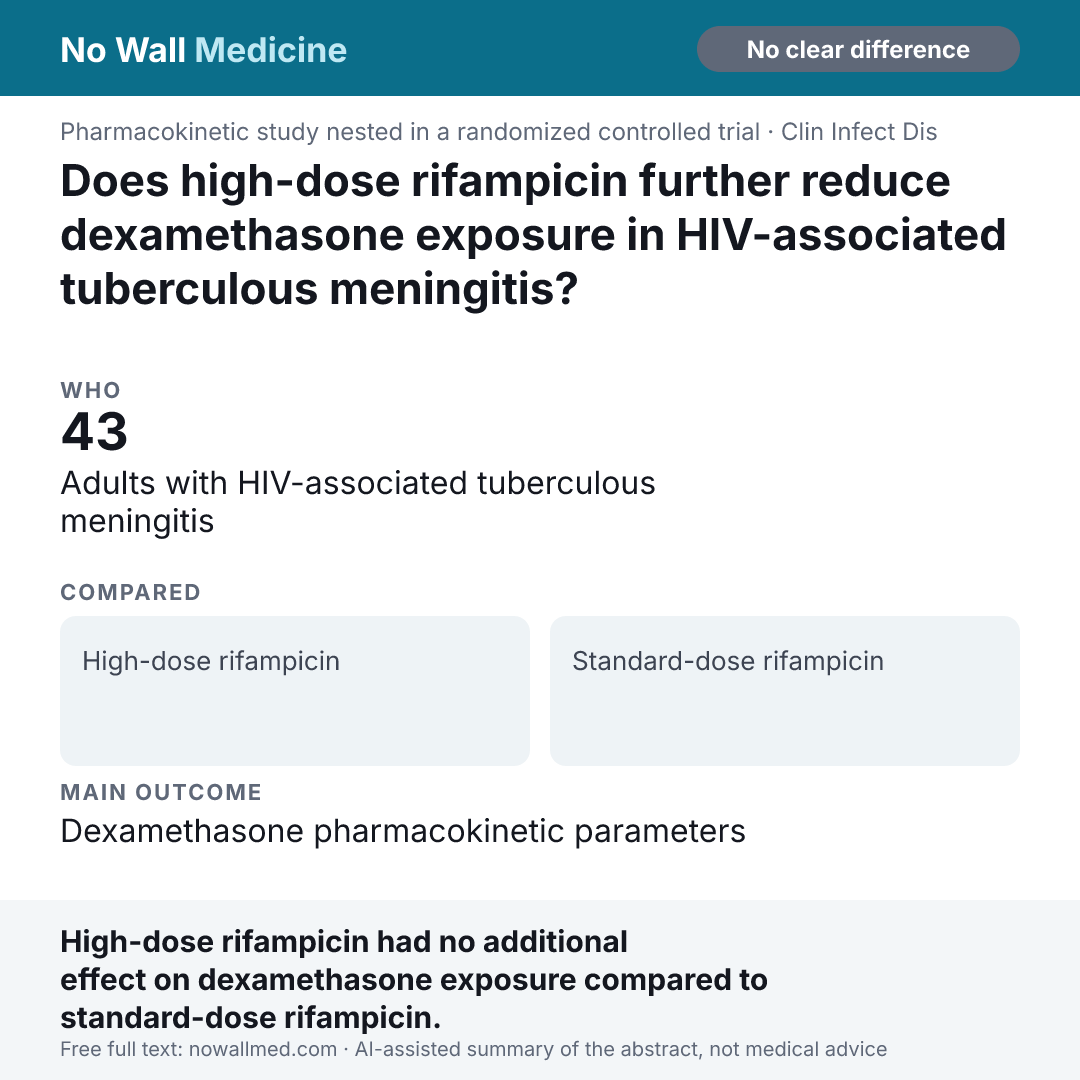
Pharmacokinetics of Dexamethasone in Tuberculous Meningitis
Pharmacokinetic study nested in a randomized controlled trialNo clear difference
Does high-dose rifampicin further reduce dexamethasone exposure in HIV-associated tuberculous meningitis?
Who
43
Adults with HIV-associated tuberculous meningitis
Compared
High-dose rifampicin
Standard-dose rifampicin
Main outcome
Dexamethasone pharmacokinetic parameters
Bottom line: High-dose rifampicin had no additional effect on dexamethasone exposure compared to standard-dose rifampicin.
Clin Infect Dis · 2025-12-18 · Save PNG
Aflibercept 8 mg in Polypoidal Choroidal Vasculopathy: Post Hoc Analysis of the PULSAR Randomized Clinical Trial
Post hoc subgroup analysis of a randomized clinical trialNo clear difference
Is aflibercept 8 mg as effective as 2 mg for polypoidal choroidal vasculopathy?
Who
139
Adults with neovascular age-related macular degeneration and confirmed polypoidal choroidal vasculopathy · Hospitals and clinics in 12 countries
Compared
Aflibercept 8 mg every 12 weeks: +9.5 letters
Aflibercept 8 mg every 16 weeks: +8.4 letters
Aflibercept 2 mg every 8 weeks: +9.1 letters
Main outcome
Least-squares mean change in best-corrected visual acuity from baseline
Result: estimated difference 0.40 (95% CI -4.4 to 5.2 letters) and -0.7 (95% CI -4.6 to 3.2 letters)
Bottom line: Aflibercept 8 mg provided similar visual outcomes to aflibercept 2 mg in patients with polypoidal choroidal vasculopathy.
JAMA Ophthalmol · 2025-12-18 · Save PNG

Postpartum management of the hypertensive disorders of pregnancy: a systematic review and meta-analysis
Systematic review and meta-analysisMixed results
What are the effective and safe management strategies for postpartum hypertension?
Who
Participants with postpartum hypertension
Compared
Diuretics plus antihypertensive: better blood pressure control
Placebo or no therapy
Self-monitoring/management or lifestyle change: lower blood pressure 8 months postpartum
Usual care
Main outcome
maternal blood pressure and laboratory parameters
Bottom line: Diuretics may aid blood pressure control with antihypertensives, and self-monitoring or lifestyle changes lower long-term blood pressure.
Limitation: Certainty of evidence was low or very low.
AJOG · 2025-12-18 · Save PNG

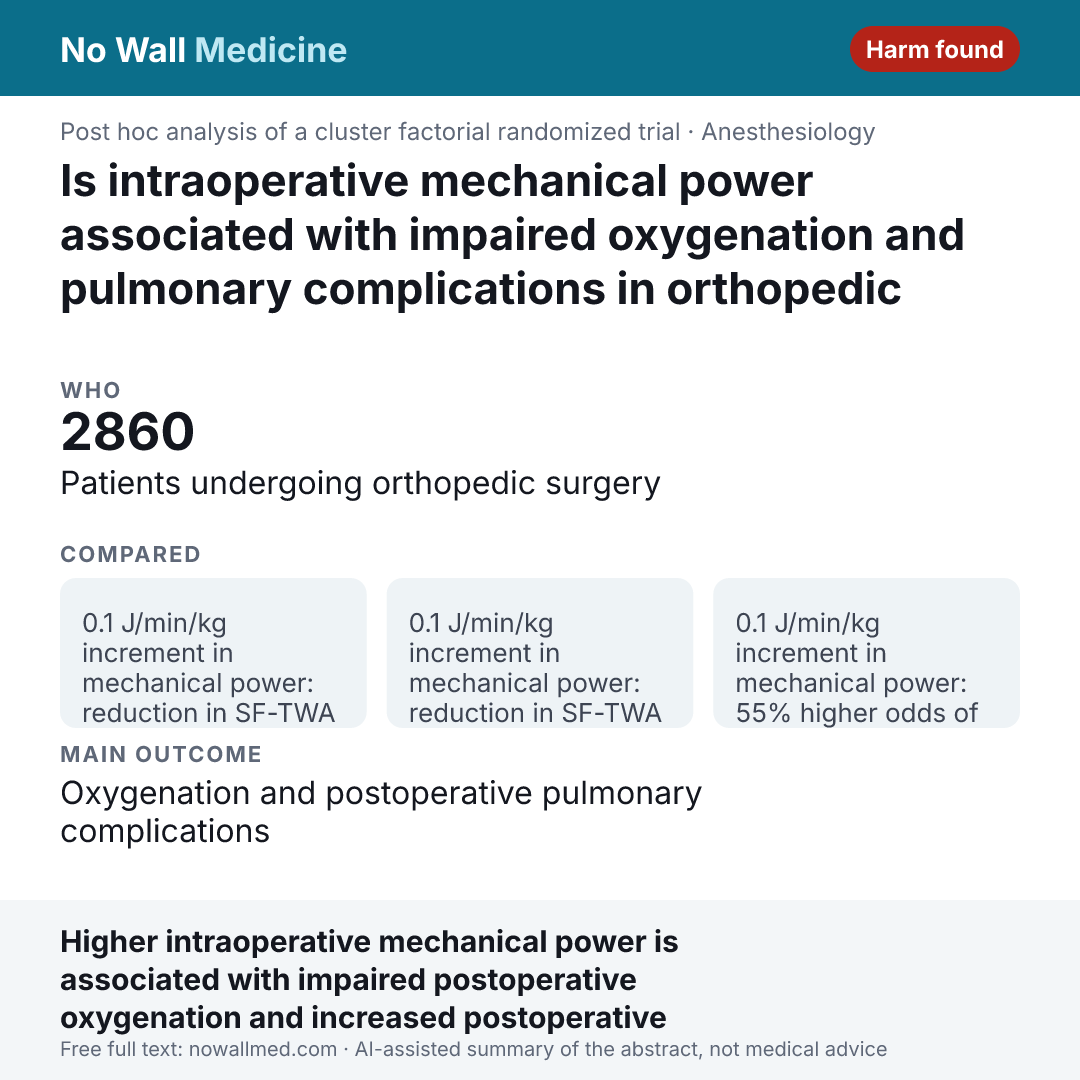
Mechanical Power and the Association with Postoperative Impaired Oxygenation and Pulmonary Complications in Orthopedic Patients: Post Hoc Analysis of a Cluster Factorial Randomized Trial
Post hoc analysis of a cluster factorial randomized trialHarm found
Is intraoperative mechanical power associated with impaired oxygenation and pulmonary complications in orthopedic patients?
Who
2860
Patients undergoing orthopedic surgery
Compared
0.1 J/min/kg increment in mechanical power: reduction in SF-TWA in PACU by -11 (95% CI, -14 to -8)
0.1 J/min/kg increment in mechanical power: reduction in SF-TWA in wards by -8 (95% CI, -11 to -5)
0.1 J/min/kg increment in mechanical power: 55% higher odds of PPCs
Main outcome
Oxygenation and postoperative pulmonary complications
Result: odds ratio 1.55 (95% CI 1.05 to 2.27)
Bottom line: Higher intraoperative mechanical power is associated with impaired postoperative oxygenation and increased postoperative pulmonary complications in orthopedic surgery patients.
Anesthesiology · 2025-12-18 · Save PNG
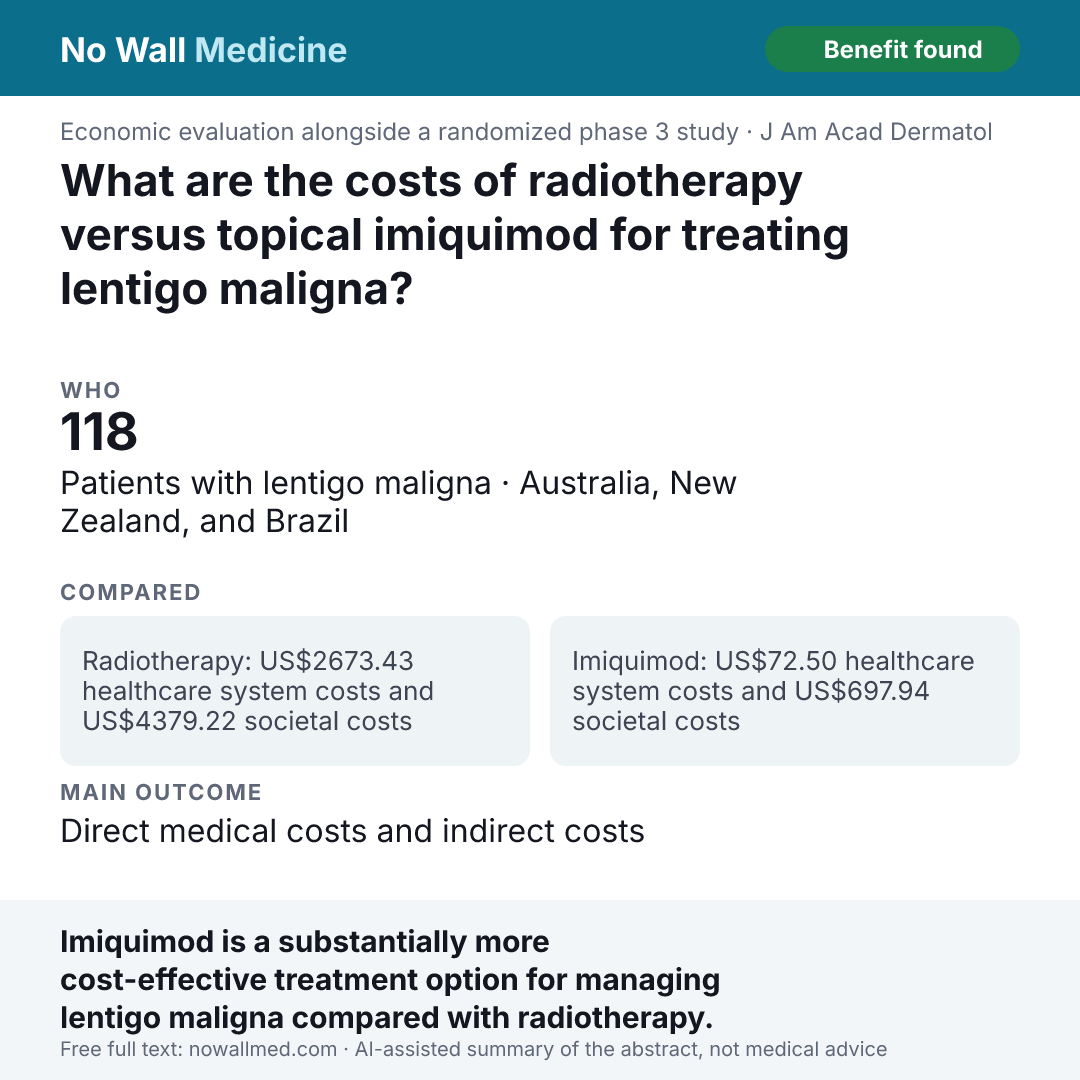
A cost comparison of radiotherapy and topical imiquimod for lentigo maligna treatment: Considerations for clinical decision-making
Economic evaluation alongside a randomized phase 3 studyBenefit found
What are the costs of radiotherapy versus topical imiquimod for treating lentigo maligna?
Who
118
Patients with lentigo maligna · Australia, New Zealand, and Brazil
Compared
Radiotherapy: US$2673.43 healthcare system costs and US$4379.22 societal costs
Imiquimod: US$72.50 healthcare system costs and US$697.94 societal costs
Main outcome
Direct medical costs and indirect costs
Bottom line: Imiquimod is a substantially more cost-effective treatment option for managing lentigo maligna compared with radiotherapy.
Limitation: Analysis relied solely on Australian health care cost data and excluded retired patients.
J Am Acad Dermatol · 2025-12-18 · Save PNG
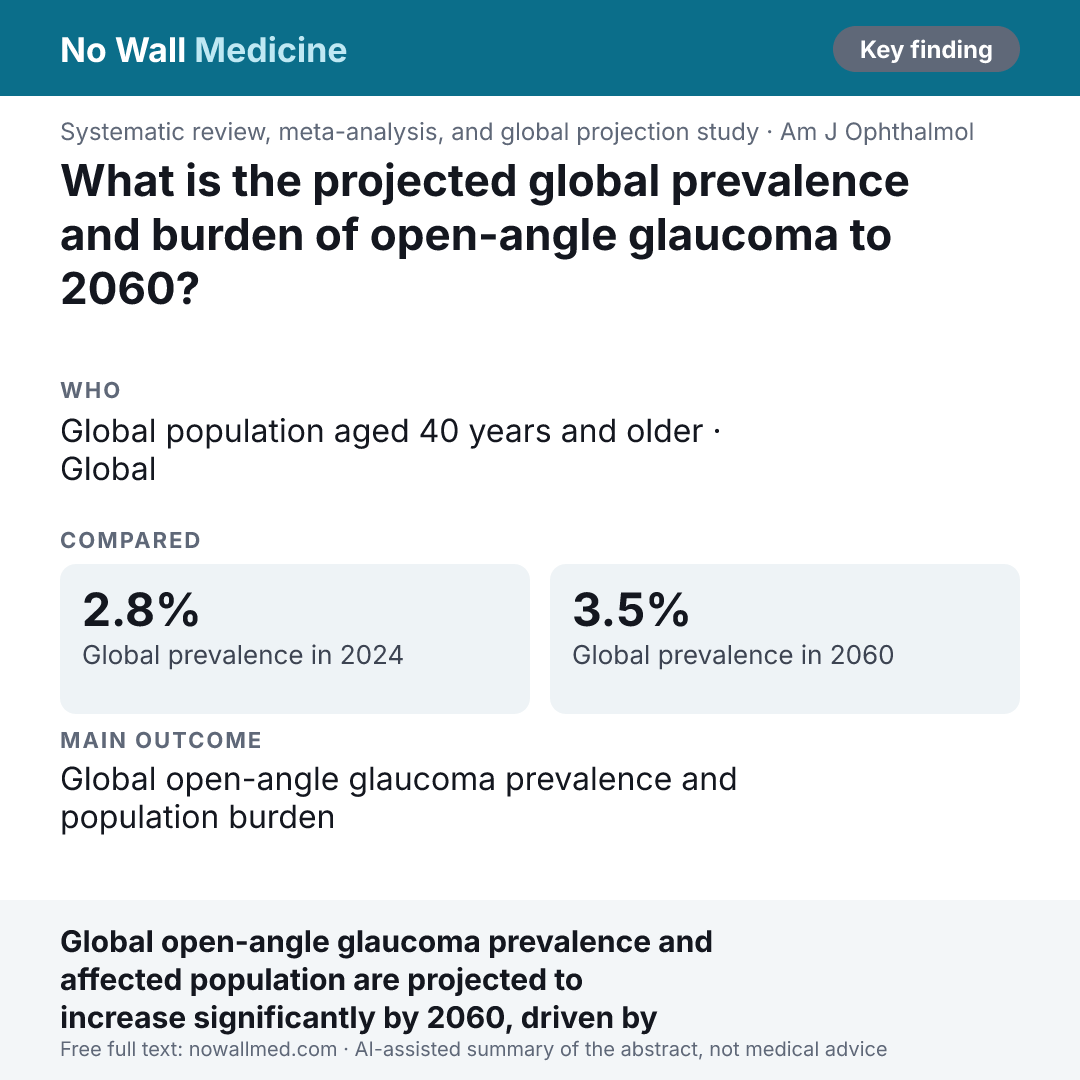
Global Glaucoma Prevalence: Burden and Projection to 2060
Systematic review, meta-analysis, and global projection studyKey finding
What is the projected global prevalence and burden of open-angle glaucoma to 2060?
Who
Global population aged 40 years and older · Global
Compared
2.8%Global prevalence in 2024 (95% CI, 2.6%-3.0%)
3.5%Global prevalence in 2060 (95% CI, 3.2%-3.8%)
Main outcome
Global open-angle glaucoma prevalence and population burden
Bottom line: Global open-angle glaucoma prevalence and affected population are projected to increase significantly by 2060, driven by aging and myopia.
Am J Ophthalmol · 2025-12-18 · Save PNG
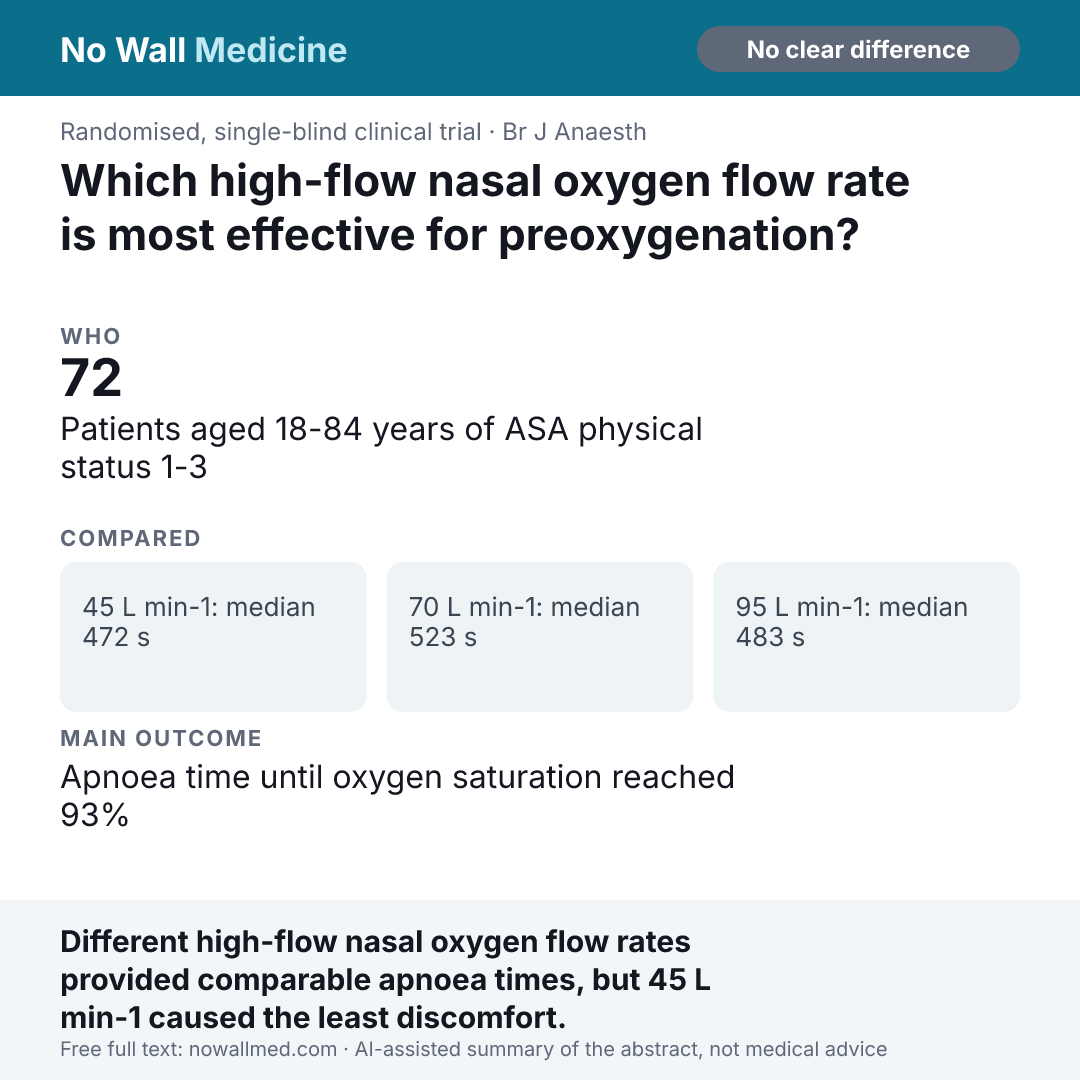
Preoxygenation with high-flow nasal oxygen at various flow rates in elective surgical patients: a prospective, randomised, single-blind clinical trial
Randomised, single-blind clinical trialNo clear difference
Which high-flow nasal oxygen flow rate is most effective for preoxygenation?
Who
72
Patients aged 18-84 years of ASA physical status 1-3
Compared
45 L min-1: median 472 s
70 L min-1: median 523 s
95 L min-1: median 483 s
Main outcome
Apnoea time until oxygen saturation reached 93%
Bottom line: Different high-flow nasal oxygen flow rates provided comparable apnoea times, but 45 L min-1 caused the least discomfort.
Br J Anaesth · 2025-12-18 · Save PNG
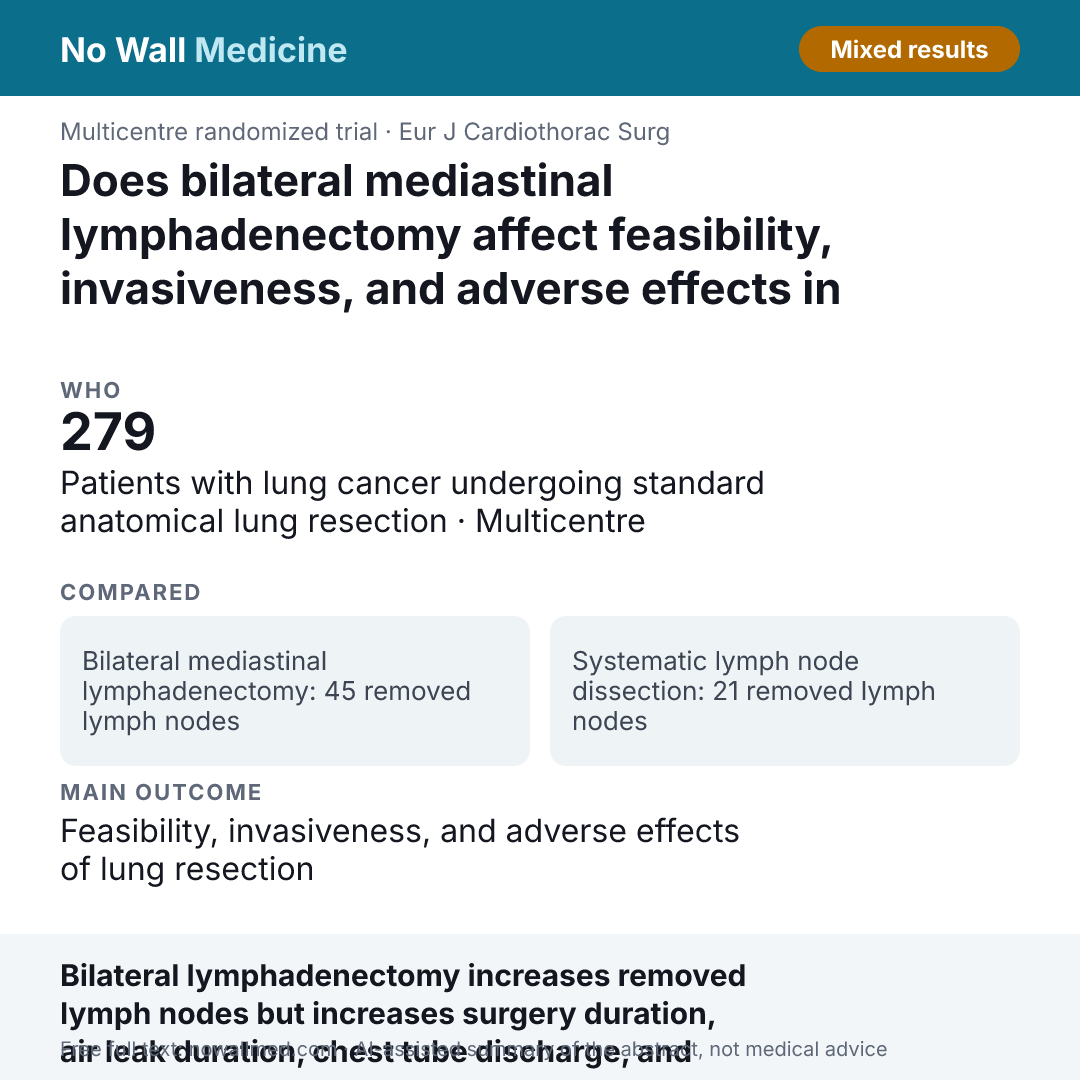
Randomized Study on Bilateral Versus Standard Mediastinal Lymphadenectomy in Patients With Lung Cancer-Early Results and Safety Analysis
Multicentre randomized trialMixed results
Does bilateral mediastinal lymphadenectomy affect feasibility, invasiveness, and adverse effects in lung cancer?
Who
279
Patients with lung cancer undergoing standard anatomical lung resection · Multicentre
Compared
Bilateral mediastinal lymphadenectomy: 45 removed lymph nodes
Systematic lymph node dissection: 21 removed lymph nodes
Main outcome
Feasibility, invasiveness, and adverse effects of lung resection
Bottom line: Bilateral lymphadenectomy increases removed lymph nodes but increases surgery duration, air leak duration, chest tube discharge, and pain.
Eur J Cardiothorac Surg · 2025-12-18 · Save PNG
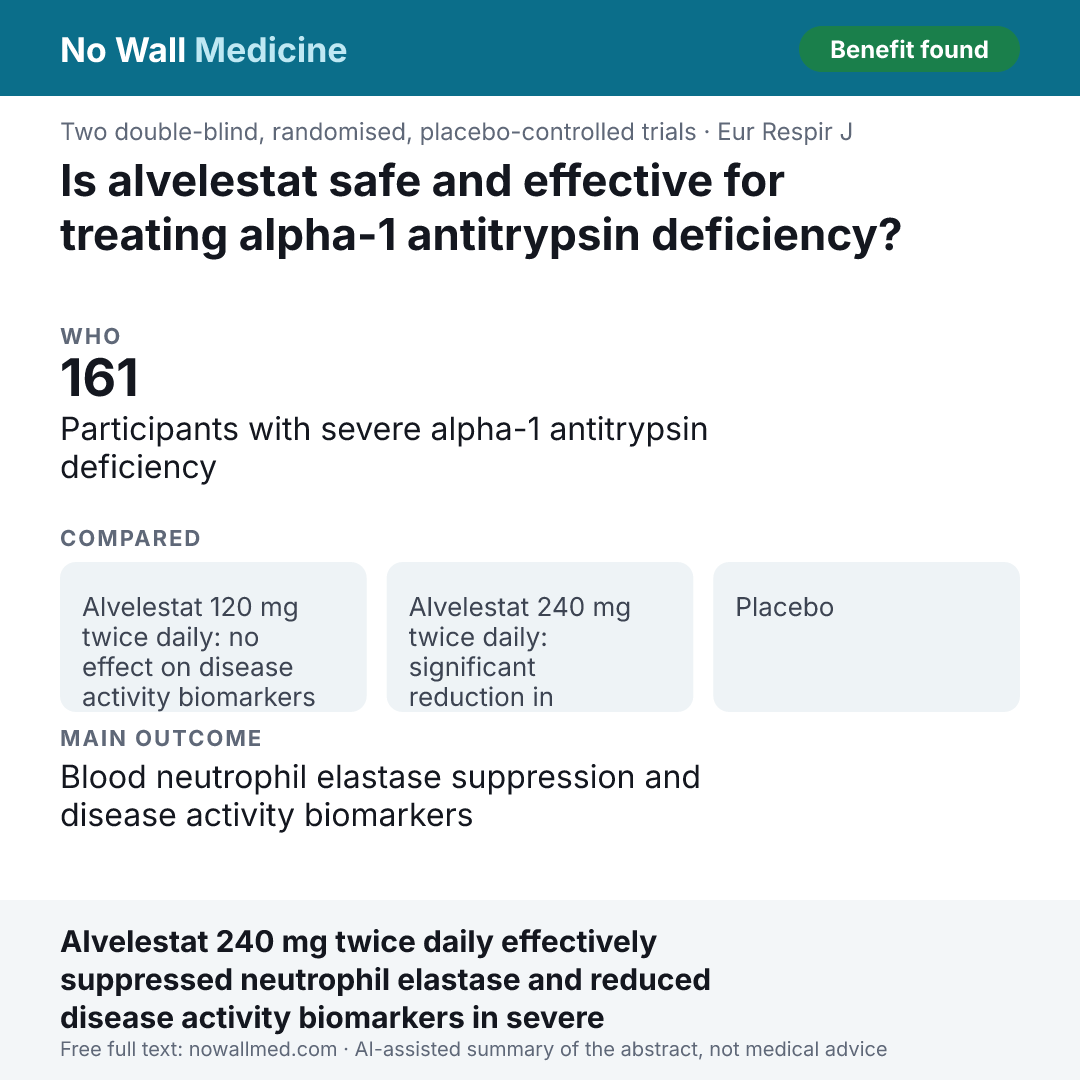
Two randomised controlled phase 2 studies of the oral neutrophil elastase inhibitor alvelestat in alpha-1 antitrypsin deficiency
Two double-blind, randomised, placebo-controlled trialsBenefit found
Is alvelestat safe and effective for treating alpha-1 antitrypsin deficiency?
Who
161
Participants with severe alpha-1 antitrypsin deficiency
Compared
Alvelestat 120 mg twice daily: no effect on disease activity biomarkers
Alvelestat 240 mg twice daily: significant reduction in Aα-Val360 and desmosine
Placebo
Main outcome
Blood neutrophil elastase suppression and disease activity biomarkers
Bottom line: Alvelestat 240 mg twice daily effectively suppressed neutrophil elastase and reduced disease activity biomarkers in severe alpha-1 antitrypsin deficiency.
Eur Respir J · 2025-12-18 · Save PNG
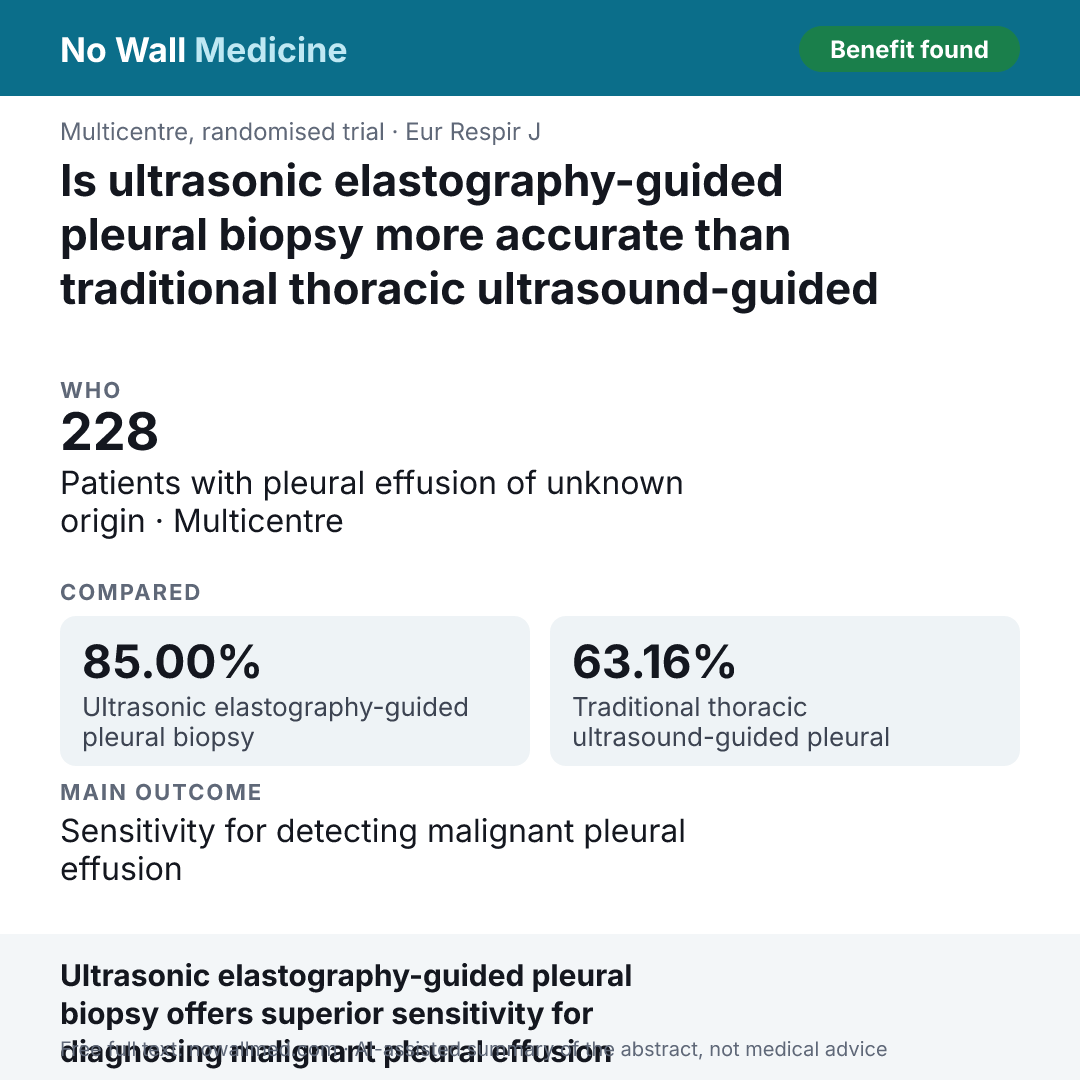
Ultrasonic elastography-guided pleural biopsy versus traditional thoracic ultrasound-guided pleural biopsy for the diagnosis of pleural effusion: a multicentre, randomised trial
Multicentre, randomised trialBenefit found
Is ultrasonic elastography-guided pleural biopsy more accurate than traditional thoracic ultrasound-guided pleural biopsy?
Who
228
Patients with pleural effusion of unknown origin · Multicentre
Compared
85.00%Ultrasonic elastography-guided pleural biopsy (51/60)
63.16%Traditional thoracic ultrasound-guided pleural biopsy (36/57)
Main outcome
Sensitivity for detecting malignant pleural effusion
Bottom line: Ultrasonic elastography-guided pleural biopsy offers superior sensitivity for diagnosing malignant pleural effusion compared to traditional thoracic ultrasound-guided biopsy.
Eur Respir J · 2025-12-18 · Save PNG