Visual abstracts
New randomized trials and meta-analyses from leading journals at a glance: who was studied, what was compared, and what was found. Every paper is free to read in full.
All specialtiesCardiology 842Oncology 763Gastroenterology & Hepatology 307Infectious Disease 626Neurology 350Psychiatry & Mental Health 430Pulmonology 366Critical Care 245Endocrinology & Diabetes 480Pediatrics 536Surgery 324Orthopedics & Sports Medicine 162Neurosurgery 93Cardiothoracic & Vascular Surgery 87Plastic & Reconstructive Surgery 124Nephrology 197Rheumatology 108Hematology 182Dermatology 80Ophthalmology 97Obstetrics & Gynecology 261Public & Global Health 167Radiology & Imaging 98Anesthesiology 114Urology 162ENT (Otolaryngology) 91Emergency Medicine 73Allergy & Immunology 58Geriatrics 160Family Medicine & Primary Care 111Medical Genetics & Genomics 91Pathology & Laboratory Medicine 24Physical Medicine & Rehabilitation 148Palliative Care 81Nutrition 223Digital Health & AI 460General Medicine 101
Market-source pathogens in traditional food markets, 2000-25: a systematic review and meta-analysis
Systematic review and meta-analysisHarm found
What is the global prevalence of market-source pathogens in traditional food markets?
Who
Pathogen detection records in traditional food markets · 41 countries across 16 regions
Compared
19.41%Bacteria (16.21-23.08)
8.40%Viruses (7.15-9.83)
27.05%Parasites (21.91-32.89)
Main outcome
Pooled prevalence of market-source pathogens
Result: 15.32% (95% CI 13.96-16.80)
Bottom line: Traditional markets are global hotspots for pathogens, with the highest prevalence found in fish, seafood, raw meat, and environmental samples.
Lancet Glob Health · 2026-07-30Download image

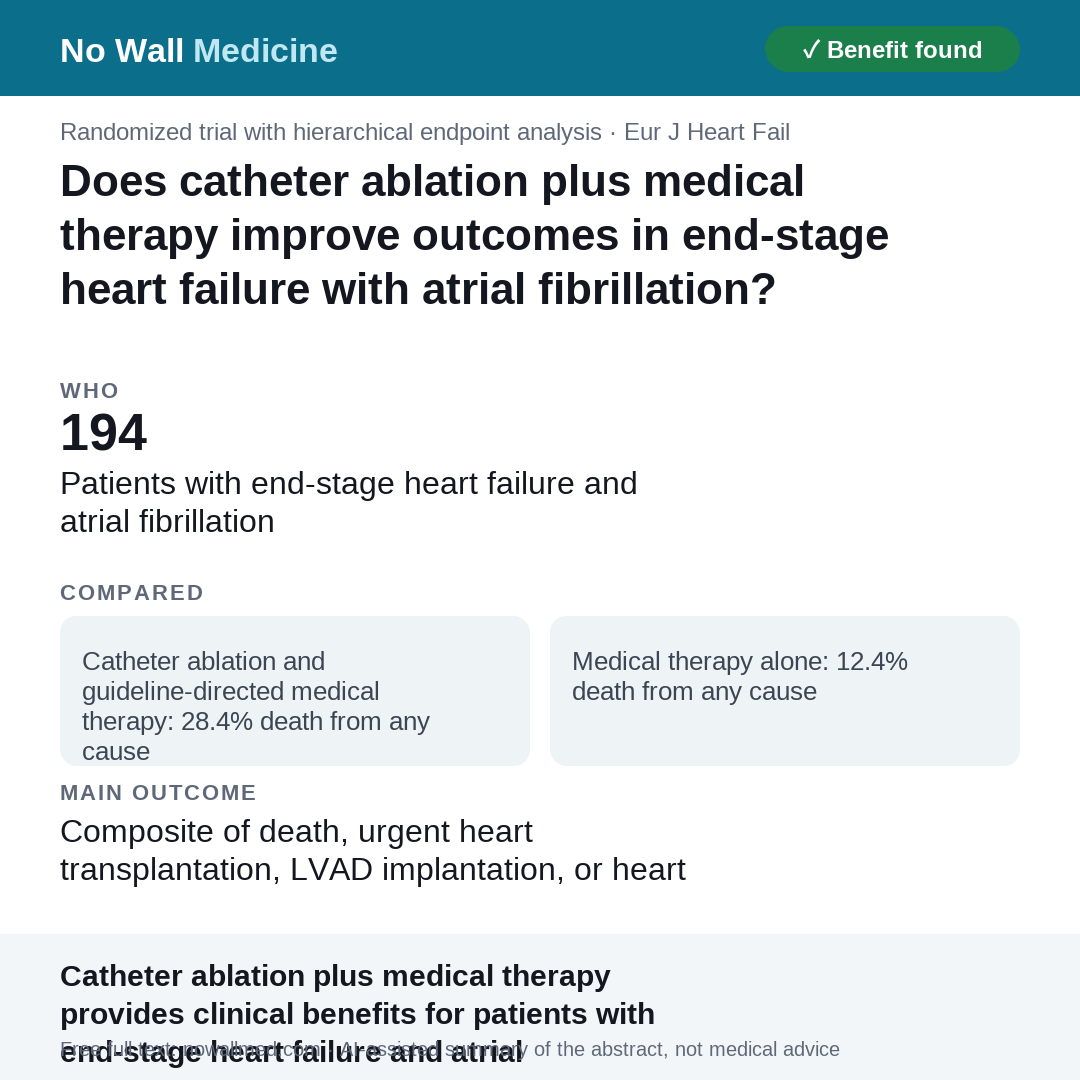
Catheter ablation in end-stage heart failure with atrial fibrillation: an hierarchical endpoint analysis of the CASTLE-HTx trial
Randomized trial with hierarchical endpoint analysisBenefit found
Does catheter ablation plus medical therapy improve outcomes in end-stage heart failure with atrial fibrillation?
Who
194
Patients with end-stage heart failure and atrial fibrillation
Compared
Catheter ablation and guideline-directed medical therapy: 28.4% death from any cause
Medical therapy alone: 12.4% death from any cause
Main outcome
Composite of death, urgent heart transplantation, LVAD implantation, or heart failure hospitalizations
Result: net treatment benefit 35.3% (95% CI, 19.8-49.0)
Bottom line: Catheter ablation plus medical therapy provides clinical benefits for patients with end-stage heart failure and atrial fibrillation.
Eur J Heart Fail · 2026-07-30Download image
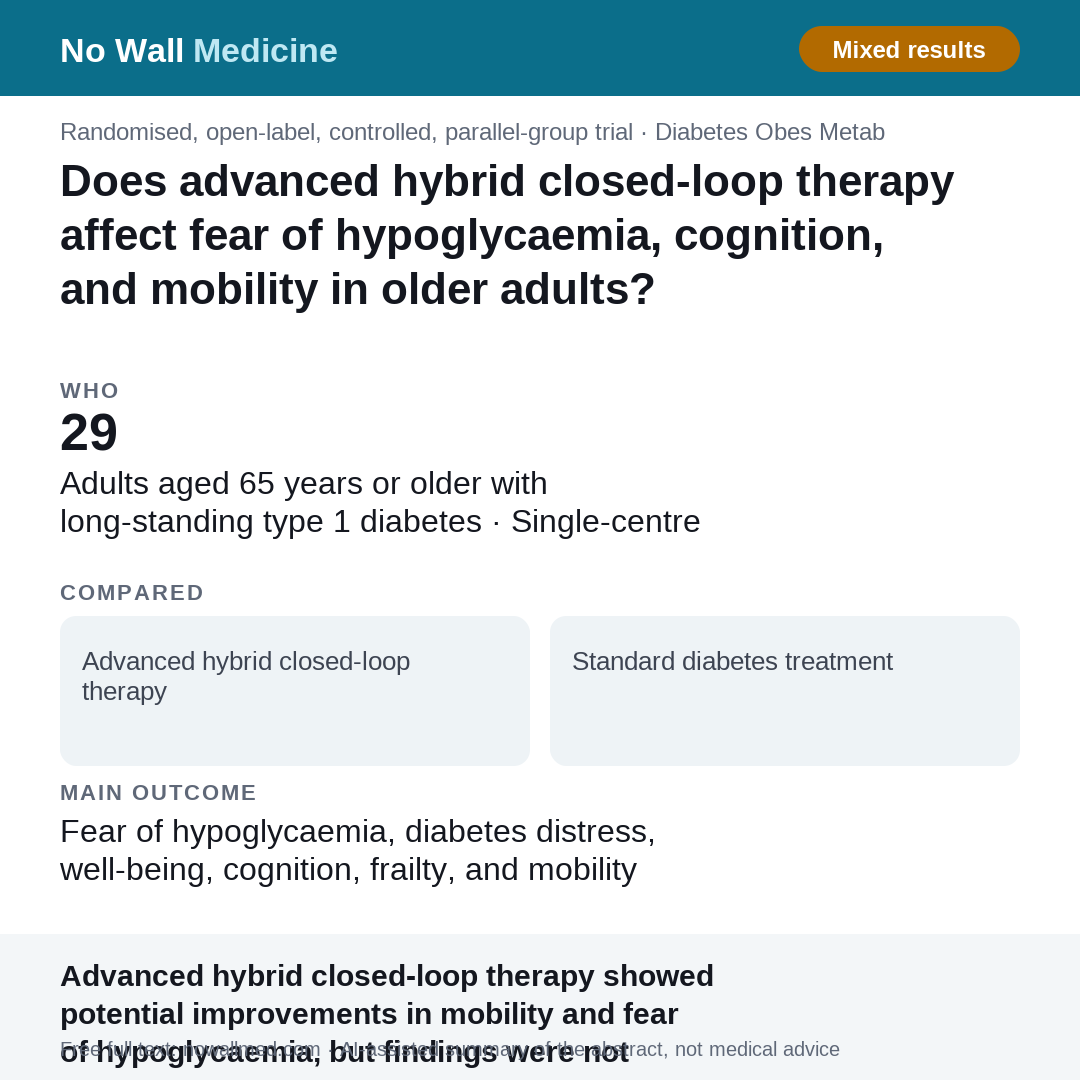
Beyond Glycaemia: Fear of Hypoglycaemia, Cognition and Functional Mobility After Advanced Hybrid Closed-Loop Therapy in Older Adults With Type 1 Diabetes: A Prespecified Secondary Analysis of a Randomised, Single-Centre Study
Randomised, open-label, controlled, parallel-group trialMixed results
Does advanced hybrid closed-loop therapy affect fear of hypoglycaemia, cognition, and mobility in older adults?
Who
29
Adults aged 65 years or older with long-standing type 1 diabetes · Single-centre
Compared
Advanced hybrid closed-loop therapy
Standard diabetes treatment
Main outcome
Fear of hypoglycaemia, diabetes distress, well-being, cognition, frailty, and mobility
Result: adjusted mean difference -18.9 (95% CI -32.4 to -5.4) for fear of hypoglycaemia
Bottom line: Advanced hybrid closed-loop therapy showed potential improvements in mobility and fear of hypoglycaemia, but findings were not statistically significant after corrections.
Limitation: Small, selected cohort; findings require confirmation in larger studies with balanced sex representation.
Diabetes Obes Metab · 2026-07-30Download image
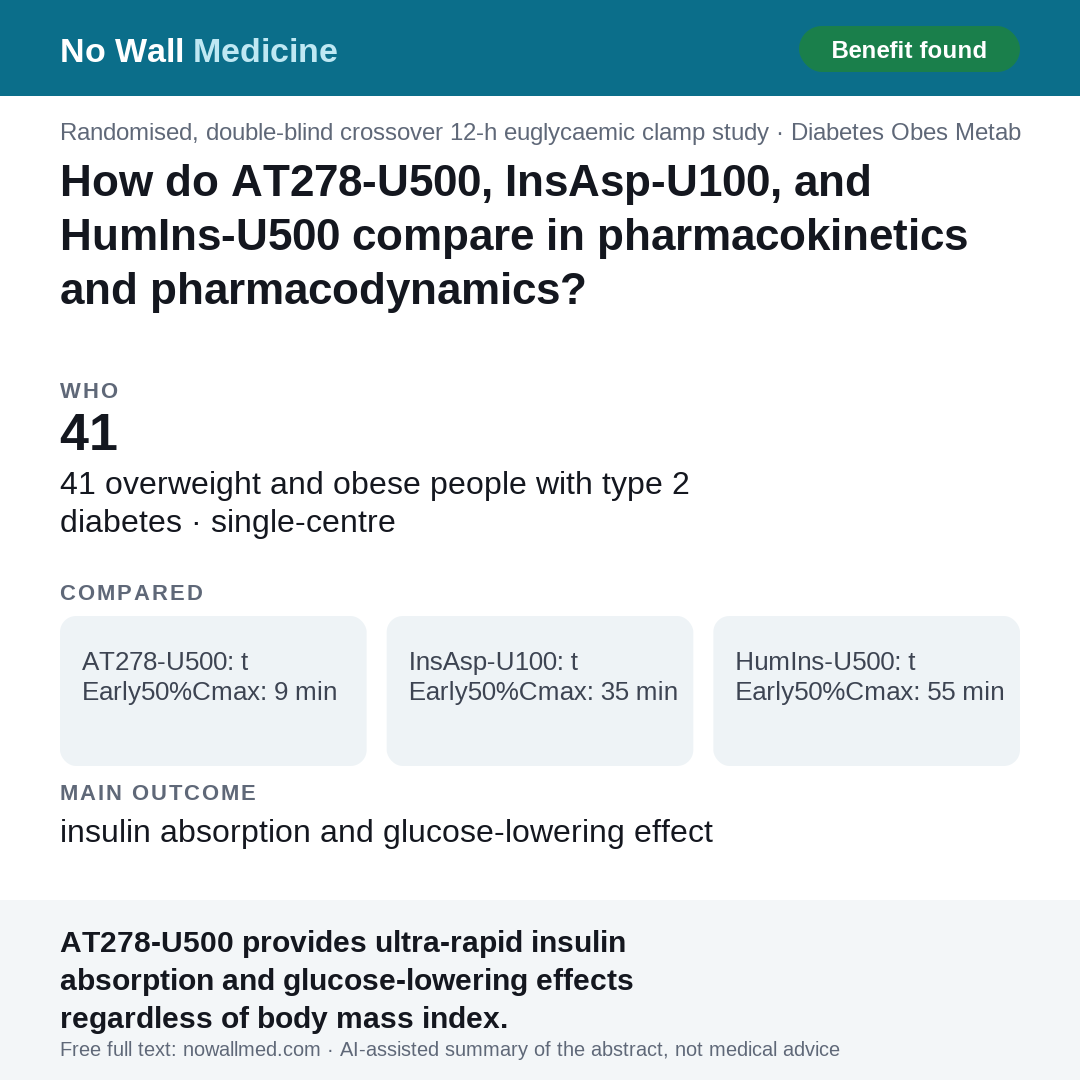
A New Highly Concentrated Insulin Aspart AT278 (500 U/mL) Demonstrates Ultra-Rapid Pharmacokinetic and Pharmacodynamic Properties in Type 2 Diabetes Regardless of BMI
Randomised, double-blind crossover 12-h euglycaemic clamp studyBenefit found
How do AT278-U500, InsAsp-U100, and HumIns-U500 compare in pharmacokinetics and pharmacodynamics?
Who
41
41 overweight and obese people with type 2 diabetes · single-centre
Compared
AT278-U500: t Early50%Cmax: 9 min
InsAsp-U100: t Early50%Cmax: 35 min
HumIns-U500: t Early50%Cmax: 55 min
Main outcome
insulin absorption and glucose-lowering effect
Result: AUCGIR,0-60min treatment ratio 2.02 (95% CI 1.64 to 2.50) vs InsAsp-U100
Bottom line: AT278-U500 provides ultra-rapid insulin absorption and glucose-lowering effects regardless of body mass index.
Diabetes Obes Metab · 2026-07-30Download image
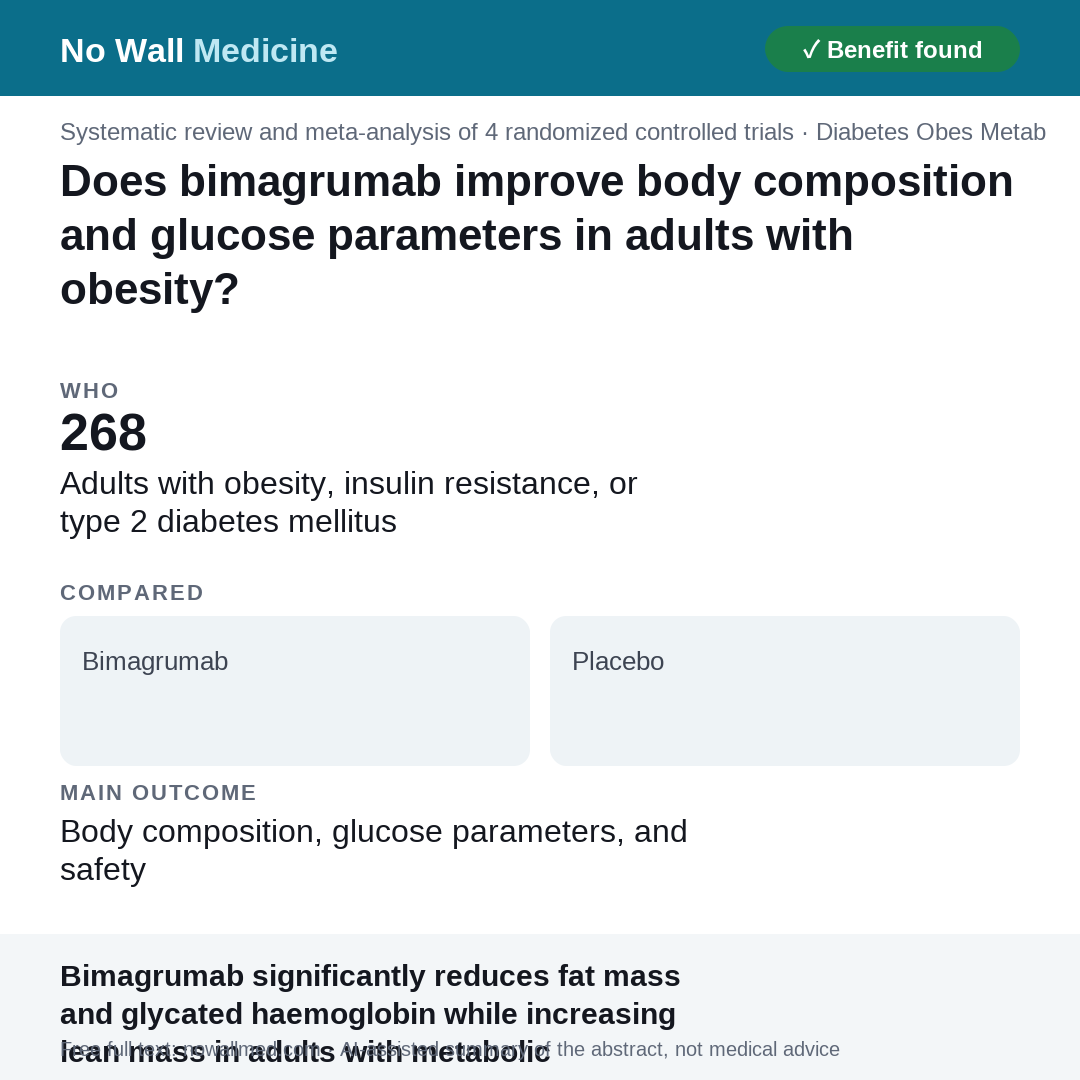
Efficacy and Safety of Bimagrumab in Adults With Obesity and Metabolic Dysfunction: A Systematic Review and Meta-Analysis of Randomized Controlled Trials
Systematic review and meta-analysis of 4 randomized controlled trialsBenefit found
Does bimagrumab improve body composition and glucose parameters in adults with obesity?
Who
268
Adults with obesity, insulin resistance, or type 2 diabetes mellitus
Compared
Bimagrumab
Placebo
Main outcome
Body composition, glucose parameters, and safety
Result: mean difference -4.85 kg (95% CI -6.82 to -2.88) for total weight
Bottom line: Bimagrumab significantly reduces fat mass and glycated haemoglobin while increasing lean mass in adults with metabolic dysfunction.
Diabetes Obes Metab · 2026-07-30Download image
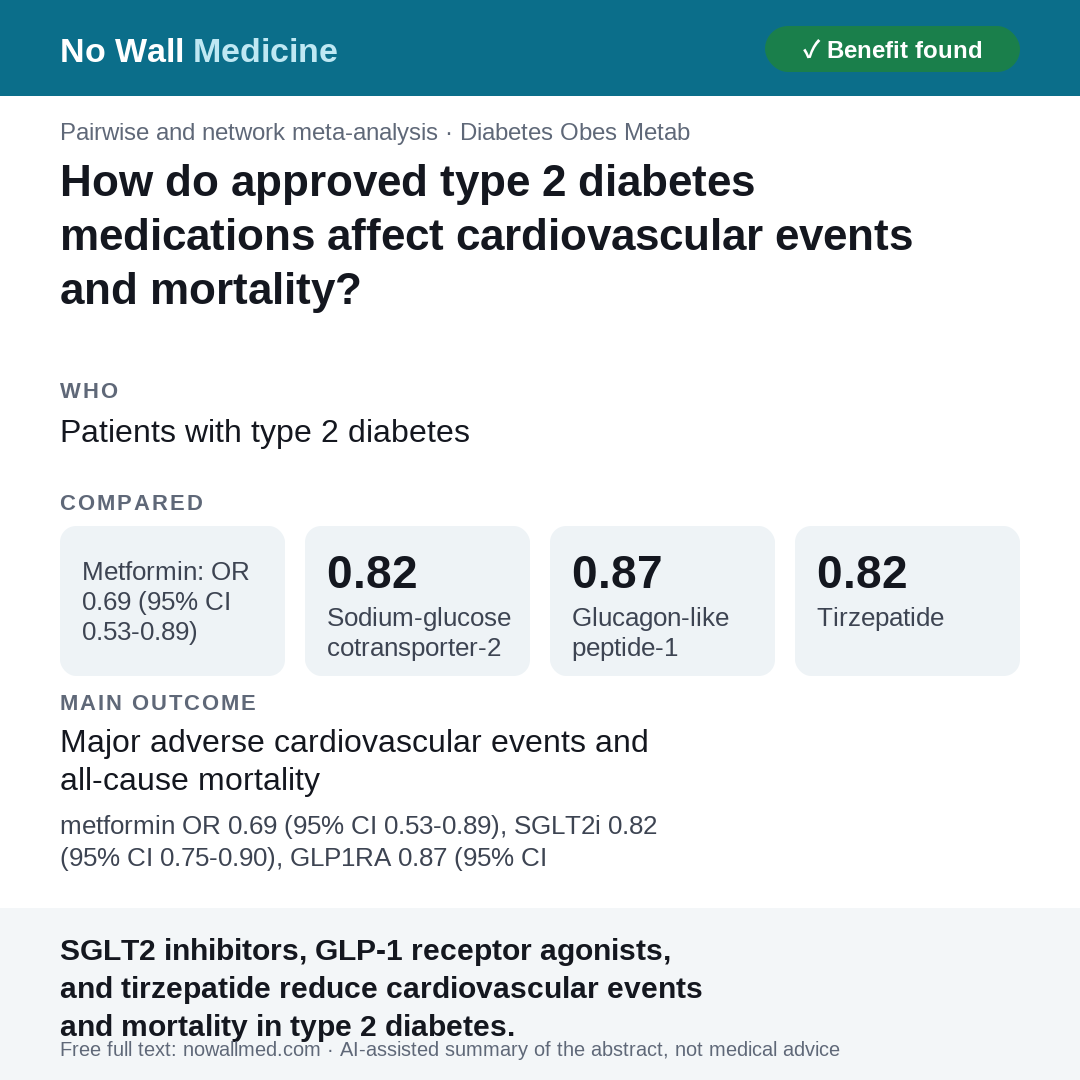
Effect of Medications for Type 2 Diabetes on Cardiovascular Events and Mortality: A Comprehensive Pairwise and Network Meta-Analysis
Pairwise and network meta-analysisBenefit found
How do approved type 2 diabetes medications affect cardiovascular events and mortality?
Who
Patients with type 2 diabetes
Compared
Metformin: OR 0.69 (95% CI 0.53-0.89)
0.82Sodium-glucose cotransporter-2 inhibitors (95% CI 0.75-0.90)
0.87Glucagon-like peptide-1 receptor agonists (95% CI 0.83-0.92)
0.82Tirzepatide (95% CI 0.72-0.93)
Main outcome
Major adverse cardiovascular events and all-cause mortality
Result: metformin OR 0.69 (95% CI 0.53-0.89), SGLT2i 0.82 (95% CI 0.75-0.90), GLP1RA 0.87 (95% CI 0.83-0.92), tirzepatide 0.82 (95% CI 0.72-0.93)
Bottom line: SGLT2 inhibitors, GLP-1 receptor agonists, and tirzepatide reduce cardiovascular events and mortality in type 2 diabetes.
Diabetes Obes Metab · 2026-07-30Download image
Mapping the global work-related impact of immune-mediated inflammatory skin diseases: A systematic review
Systematic reviewHarm found
Impact of skin diseases on work
Who
Adults with immune-mediated inflammatory skin diseases · Global, mainly Europe
Compared
Psoriasis
Atopic dermatitis
Main outcome
Work outcomes
Bottom line: Skin diseases affect work significantly
J Invest Dermatol · 2026-07-30Download image

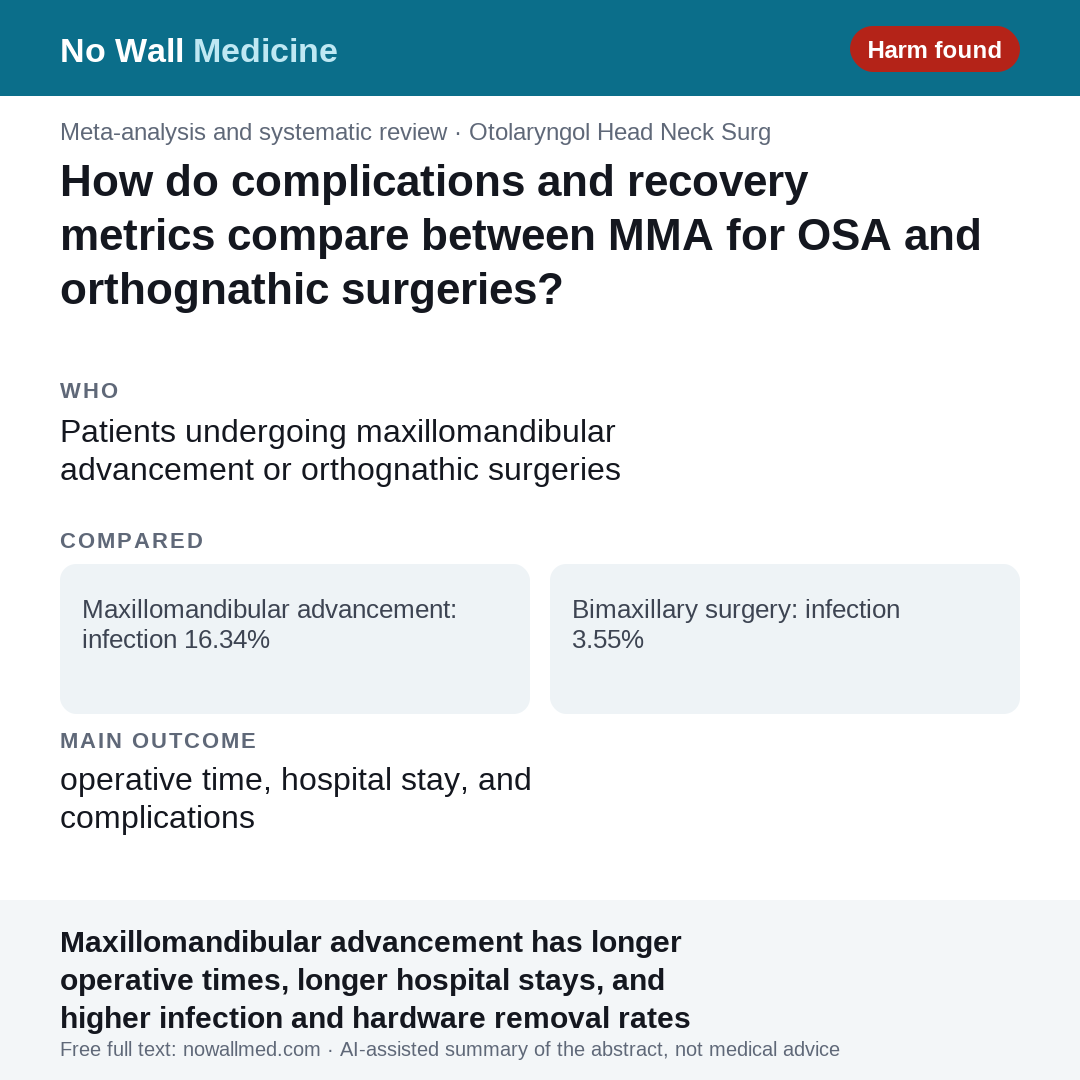
Comparative Meta-Analysis of Complications of Maxillomandibular Advancement for OSA versus Orthognathic Surgeries for Dentofacial Deformities
Meta-analysis and systematic reviewHarm found
How do complications and recovery metrics compare between MMA for OSA and orthognathic surgeries?
Who
Patients undergoing maxillomandibular advancement or orthognathic surgeries
Compared
Maxillomandibular advancement: infection 16.34%
Bimaxillary surgery: infection 3.55%
Main outcome
operative time, hospital stay, and complications
Bottom line: Maxillomandibular advancement has longer operative times, longer hospital stays, and higher infection and hardware removal rates than bimaxillary surgery.
Otolaryngol Head Neck Surg · 2026-07-30Download image
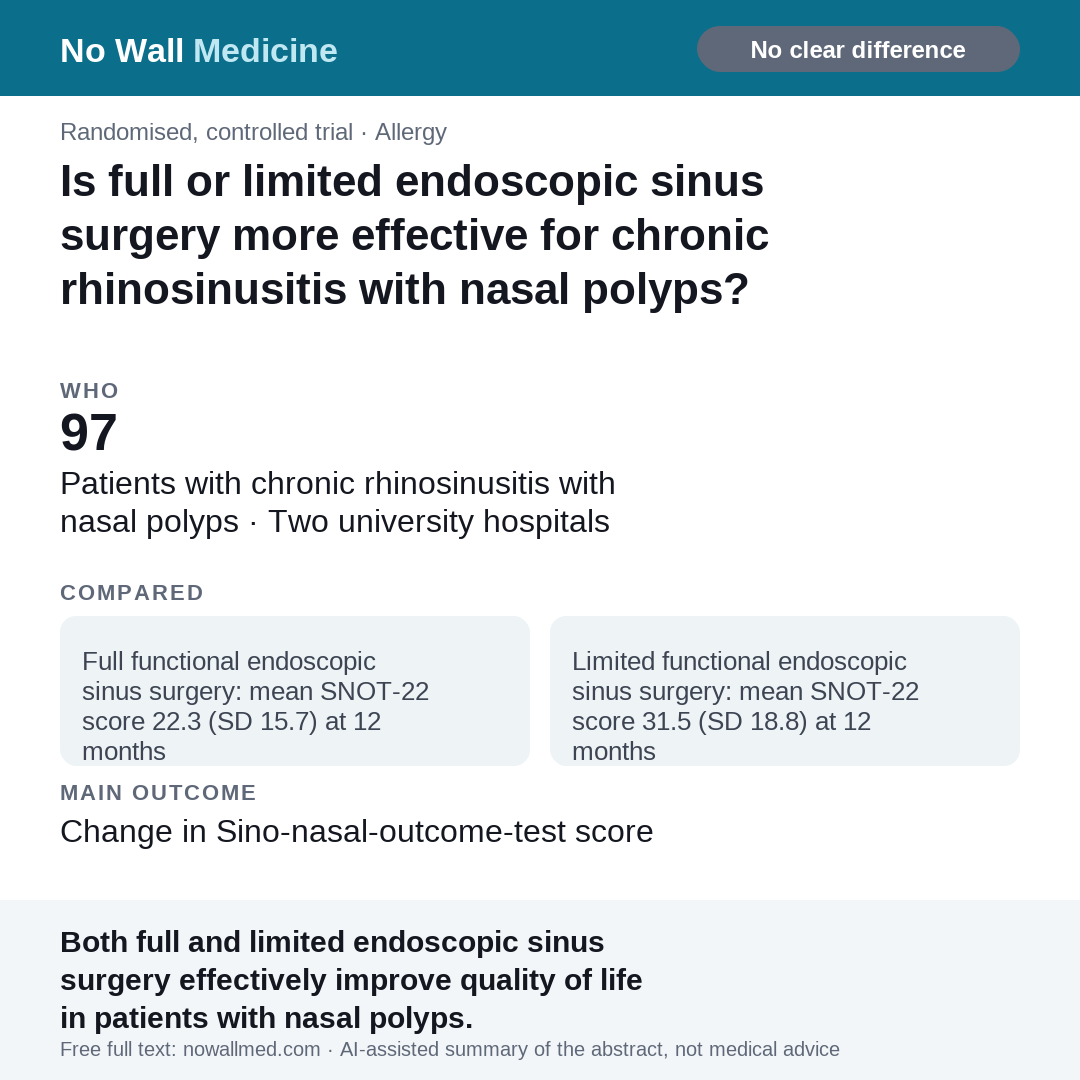
Efficacy of Full and Limited Endoscopic Sinus Surgery in Chronic Rhinosinusitis With Nasal Polyps: A Randomised Controlled Trial
Randomised, controlled trialNo clear difference
Is full or limited endoscopic sinus surgery more effective for chronic rhinosinusitis with nasal polyps?
Who
97
Patients with chronic rhinosinusitis with nasal polyps · Two university hospitals
Compared
Full functional endoscopic sinus surgery: mean SNOT-22 score 22.3 (SD 15.7) at 12 months
Limited functional endoscopic sinus surgery: mean SNOT-22 score 31.5 (SD 18.8) at 12 months
Main outcome
Change in Sino-nasal-outcome-test score
Bottom line: Both full and limited endoscopic sinus surgery effectively improve quality of life in patients with nasal polyps.
Allergy · 2026-07-30Download image
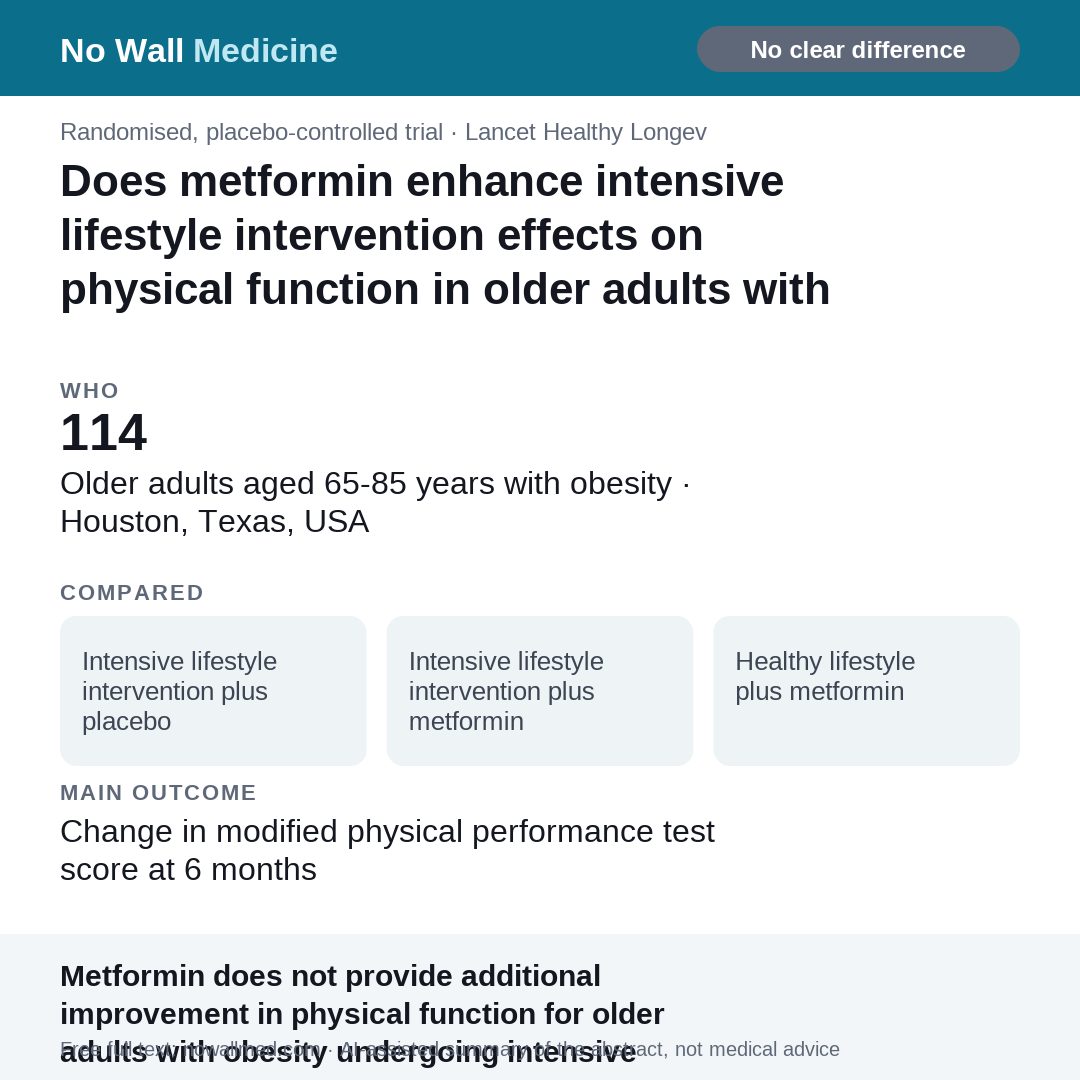
Metformin added to lifestyle intervention for physical function in older adults with obesity (DEMFOS trial): a randomised controlled trial
Randomised, placebo-controlled trialNo clear difference
Does metformin enhance intensive lifestyle intervention effects on physical function in older adults with obesity?
Who
114
Older adults aged 65-85 years with obesity · Houston, Texas, USA
Compared
Intensive lifestyle plus metformin
Intensive lifestyle plus placebo
Healthy lifestyle plus metformin
Main outcome
Change in modified physical performance test score at 6 months
Result: mean difference 0.1 points, 95% CI -1.2 to 1.4
Bottom line: Metformin does not provide additional improvement in physical function for older adults with obesity undergoing intensive lifestyle intervention.
Funded by: US Department of Veterans Affairs
Lancet Healthy Longev · 2026-07-30Download image
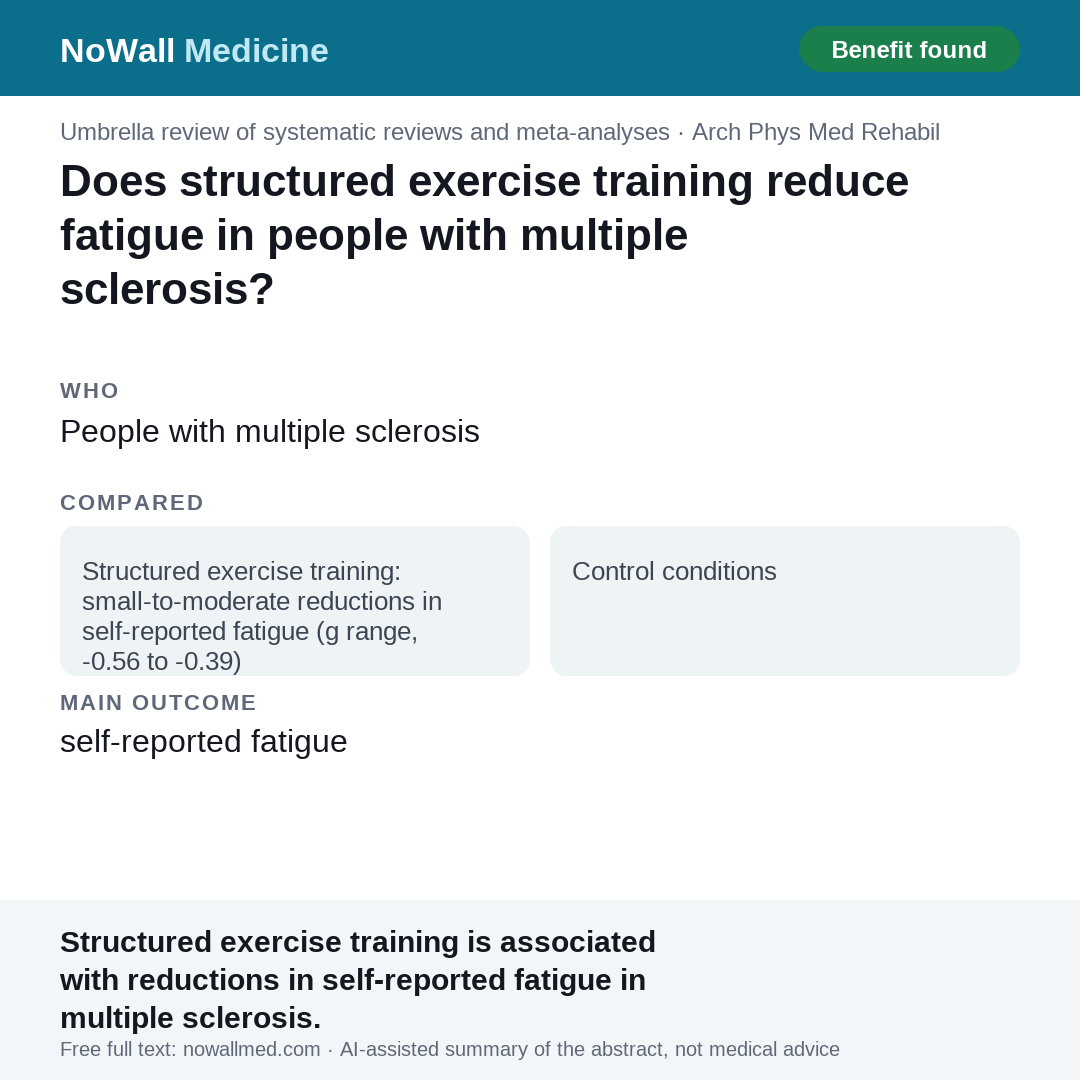
Structured exercise training for fatigue management in multiple sclerosis: an umbrella review of systematic reviews and meta-analyses
Umbrella review of systematic reviews and meta-analysesBenefit found
Does structured exercise training reduce fatigue in people with multiple sclerosis?
Who
People with multiple sclerosis
Compared
Structured exercise training: small-to-moderate reductions in self-reported fatigue (g range, -0.56 to -0.39)
Control conditions
Main outcome
self-reported fatigue
Bottom line: Structured exercise training is associated with reductions in self-reported fatigue in multiple sclerosis.
Limitation: Substantial heterogeneity, incomplete exercise-dose reporting, and high overlap across reviews.
Arch Phys Med Rehabil · 2026-07-30Download image
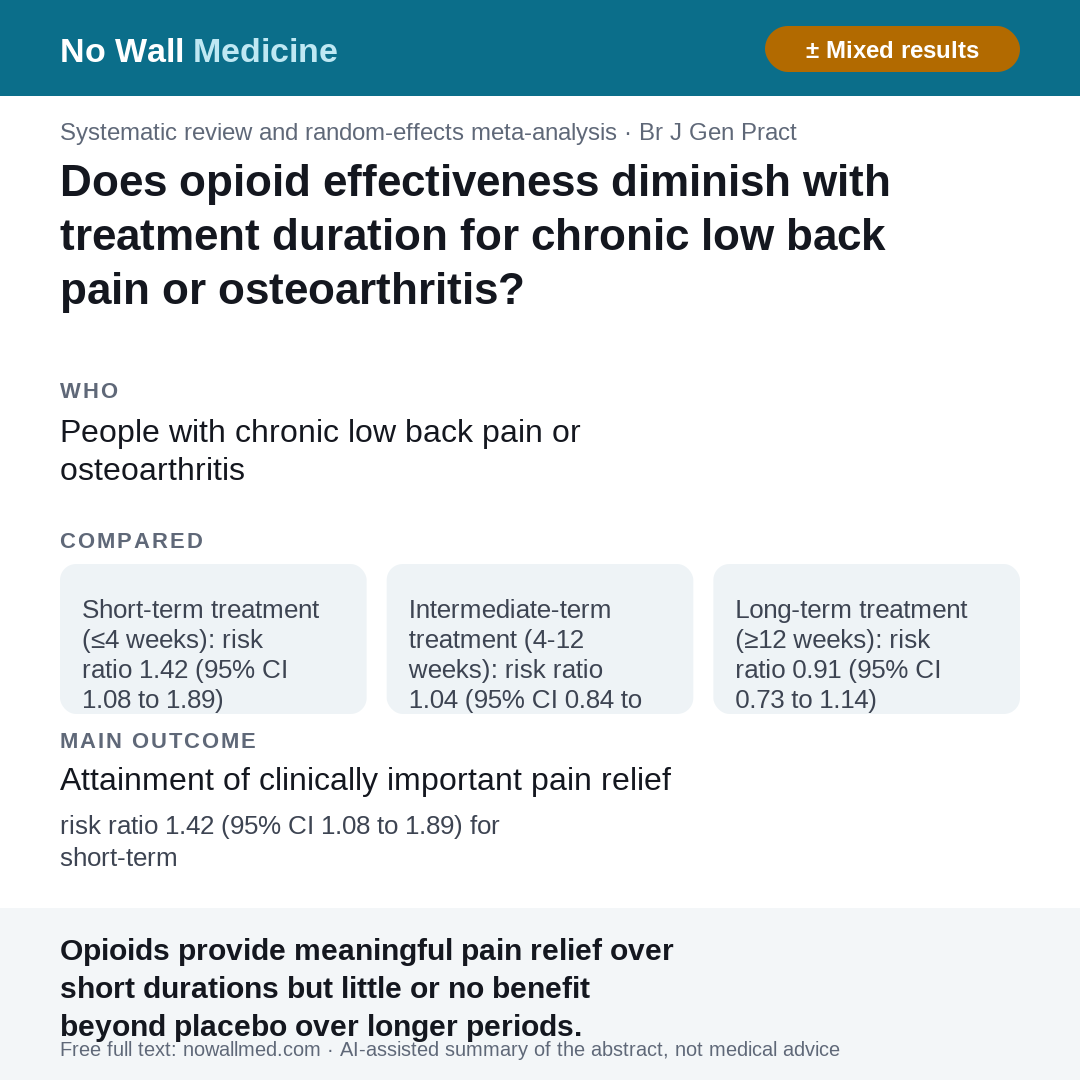
Impact of treatment duration on the effectiveness of opioid analgesia: a systematic review and meta-analysis
Systematic review and random-effects meta-analysisMixed results
Does opioid effectiveness diminish with treatment duration for chronic low back pain or osteoarthritis?
Who
27
People with chronic low back pain or osteoarthritis
Compared
Short-term treatment (≤4 weeks): risk ratio 1.42 (95% CI 1.08 to 1.89)
Intermediate-term treatment (4-12 weeks): risk ratio 1.04 (95% CI 0.84 to 1.30)
Long-term treatment (≥12 weeks): risk ratio 0.91 (95% CI 0.73 to 1.14)
Main outcome
Attainment of clinically important pain relief
Result: risk ratio 1.42 (95% CI 1.08 to 1.89) for short-term
Bottom line: Opioids provide meaningful pain relief over short durations but little or no benefit beyond placebo over longer periods.
Br J Gen Pract · 2026-07-30Download image
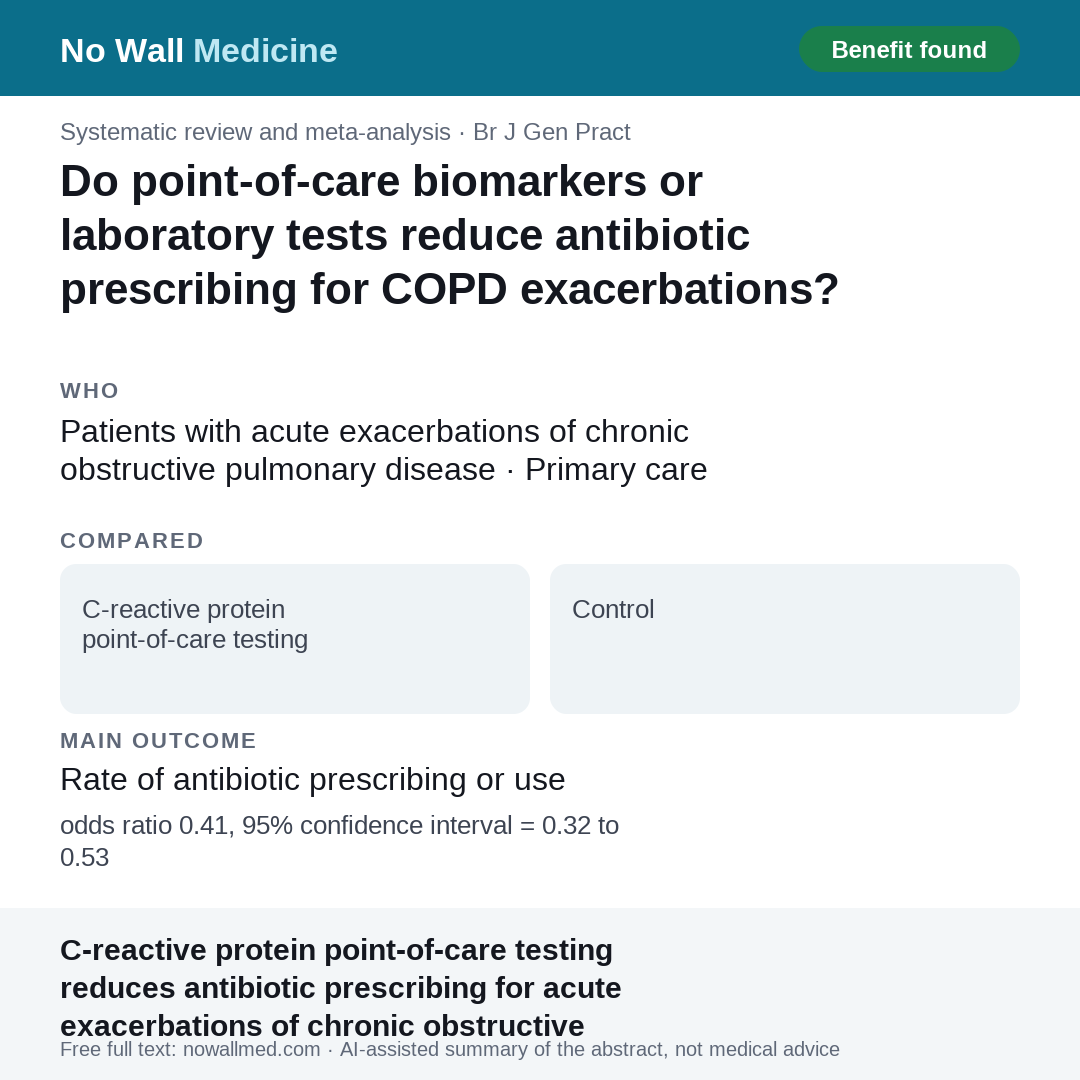
Point-of-care biomarkers or laboratory-based tests to reduce antibiotic prescribing for COPD exacerbations: a literature review and meta-analysis in primary care
Systematic review and meta-analysisBenefit found
Do point-of-care biomarkers or laboratory tests reduce antibiotic prescribing for COPD exacerbations?
Who
Patients with acute exacerbations of chronic obstructive pulmonary disease · Primary care
Compared
C-reactive protein point-of-care testing
Control
Main outcome
Rate of antibiotic prescribing or use
Result: odds ratio 0.41, 95% confidence interval = 0.32 to 0.53
Bottom line: C-reactive protein point-of-care testing reduces antibiotic prescribing for acute exacerbations of chronic obstructive pulmonary disease.
Limitation: Insufficient data to draw conclusions about procalcitonin biomarkers.
Br J Gen Pract · 2026-07-30Download image
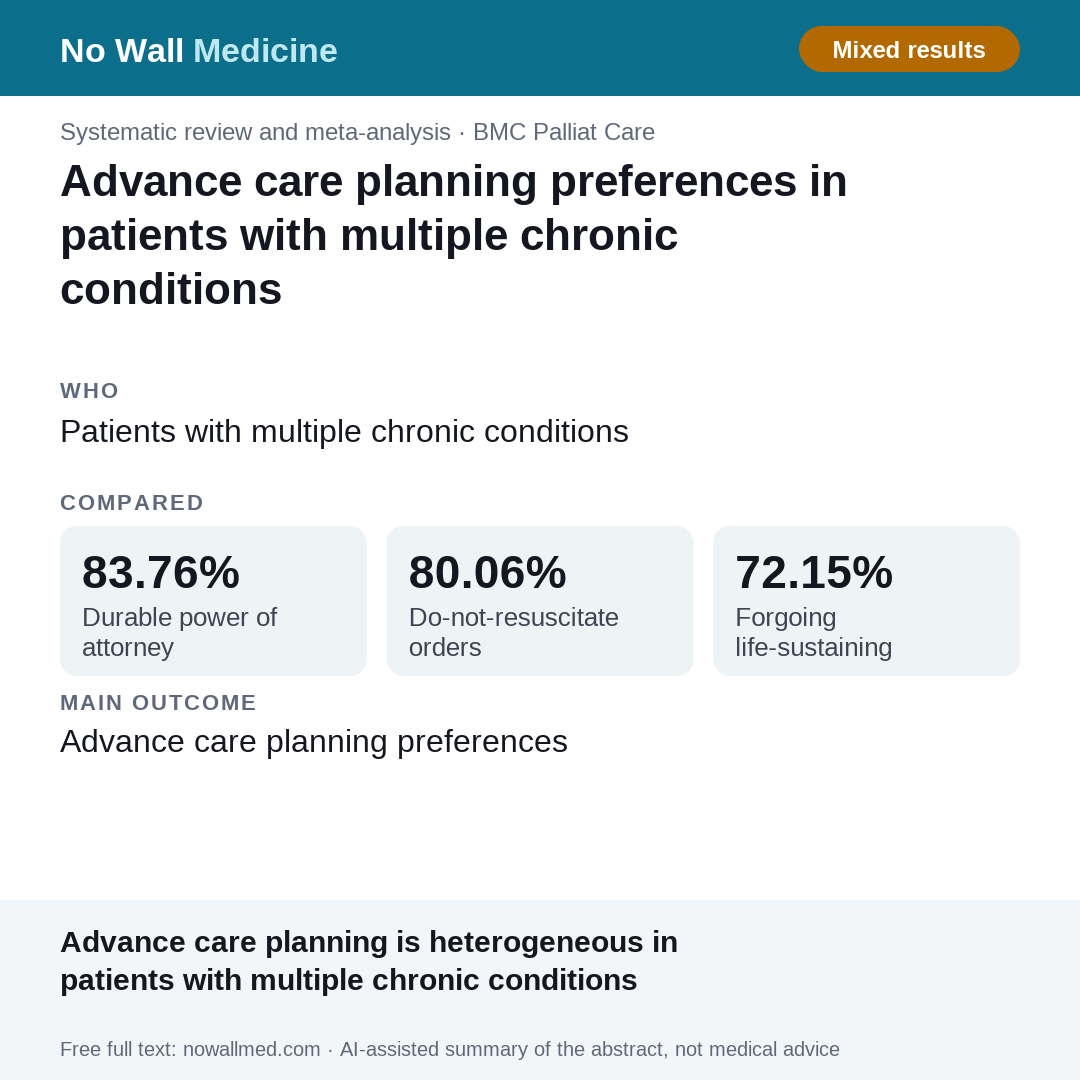
Advance care planning preferences and associated factors in patients with multiple chronic conditions: a systematic review and exploratory network meta-analysis
Systematic review and meta-analysisMixed results
Advance care planning preferences in patients with multiple chronic conditions
Who
Patients with multiple chronic conditions
Compared
83.76%Durable power of attorney
80.06%Do-not-resuscitate orders
72.15%Forgoing life-sustaining treatment
Main outcome
Advance care planning preferences
Bottom line: Advance care planning is heterogeneous in patients with multiple chronic conditions
BMC Palliat Care · 2026-07-30Download image
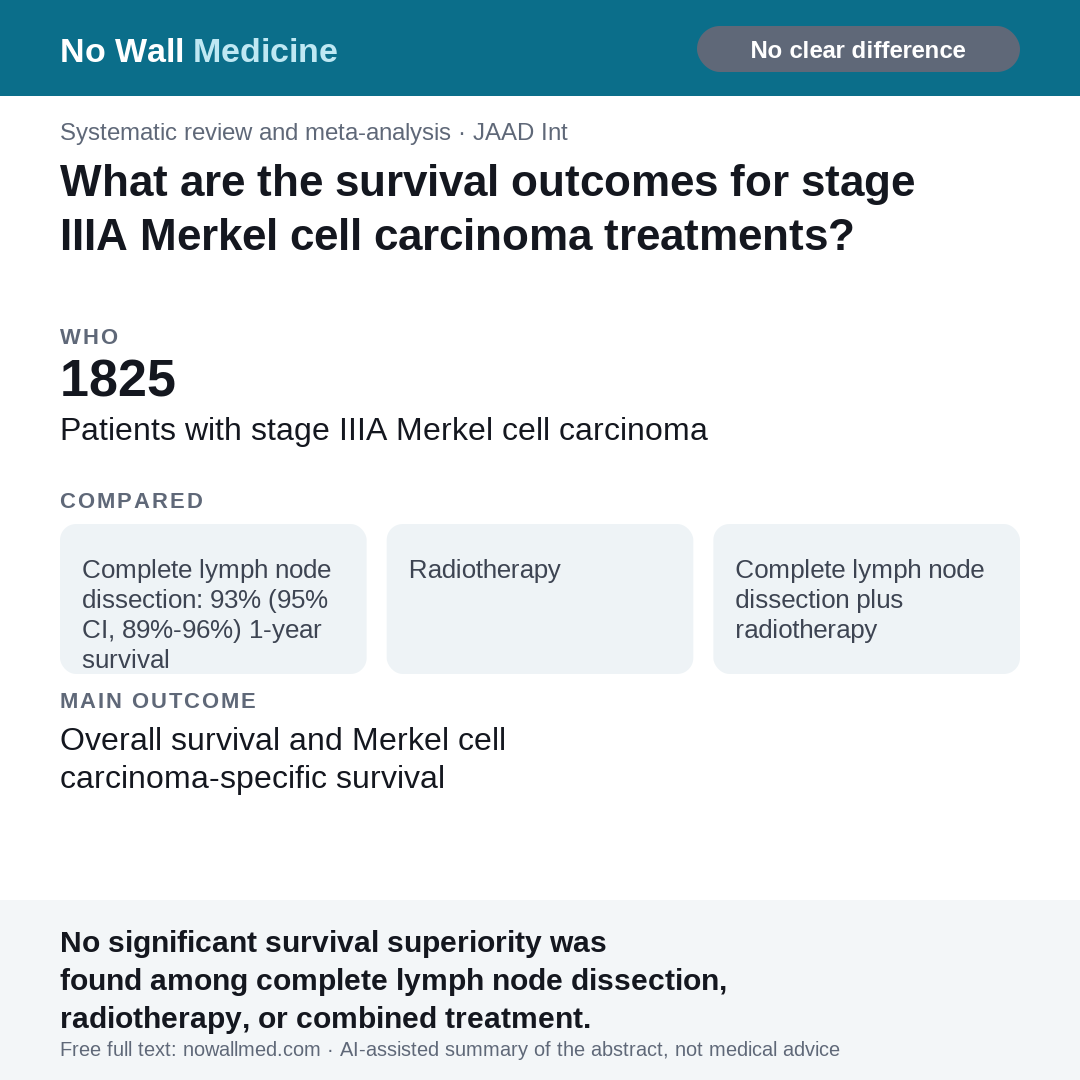
Survival after lymph node dissection, radiotherapy, and combined treatment in sentinel node-positive stage IIIA Merkel cell carcinoma: A systematic review and meta-analysis
Systematic review and meta-analysisNo clear difference
What are the survival outcomes for stage IIIA Merkel cell carcinoma treatments?
Who
1825
Patients with stage IIIA Merkel cell carcinoma
Compared
Complete lymph node dissection: 93% (95% CI, 89%-96%) 1-year survival
Radiotherapy
Complete lymph node dissection plus radiotherapy
Main outcome
Overall survival and Merkel cell carcinoma-specific survival
Bottom line: No significant survival superiority was found among complete lymph node dissection, radiotherapy, or combined treatment.
Limitation: Limited observational studies, data heterogeneity, missing immunotherapy data, and low evidence levels.
JAAD Int · 2026-07-30Download image
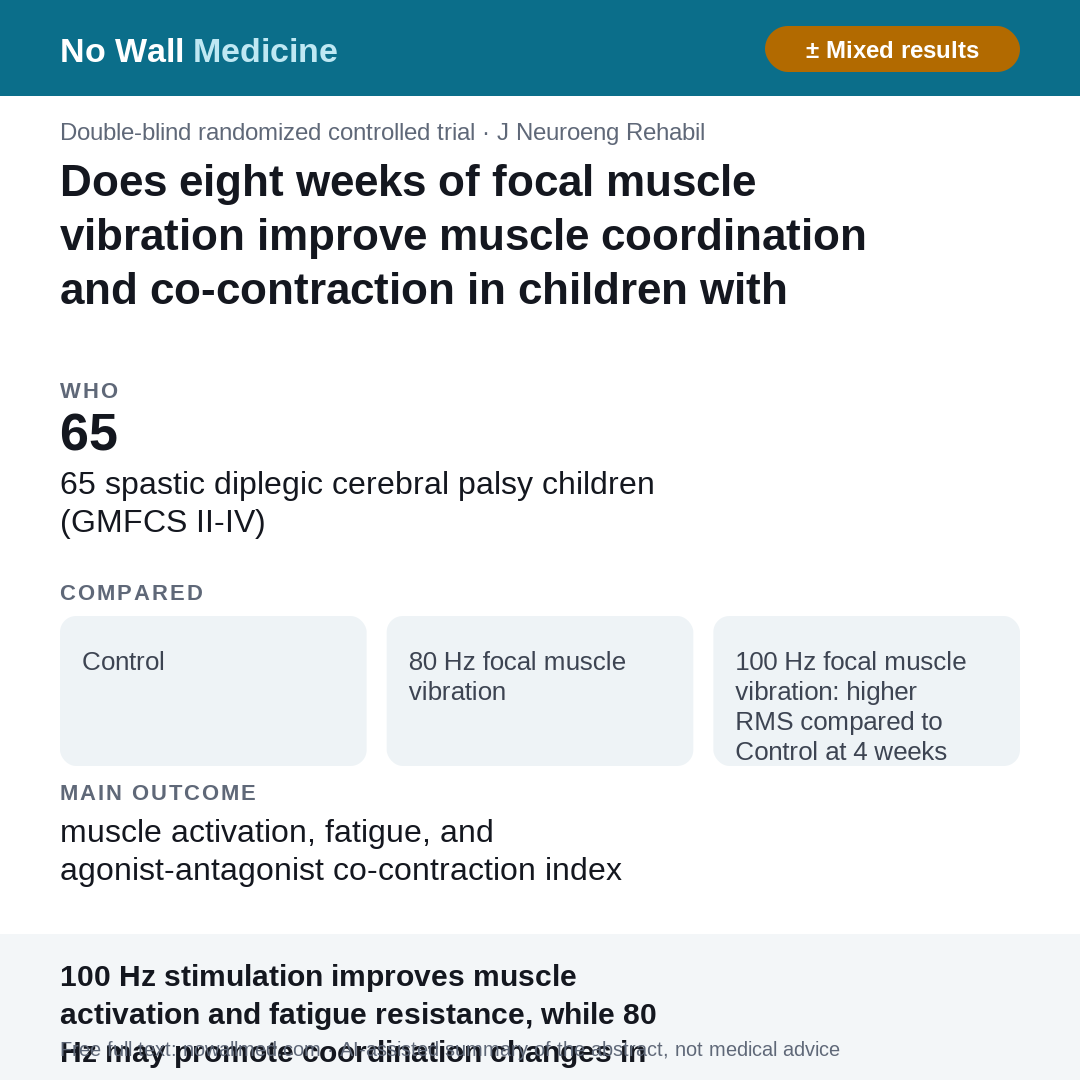
Eight weeks of focal muscle vibration shows improvements in muscle co-ordination and co-contraction in cerebral palsy children: a randomized control trial
Double-blind randomized controlled trialMixed results
Does eight weeks of focal muscle vibration improve muscle coordination and co-contraction in children with cerebral palsy?
Who
65
65 spastic diplegic cerebral palsy children (GMFCS II-IV)
Compared
Control
80 Hz focal muscle vibration
100 Hz focal muscle vibration: higher RMS compared to Control at 4 weeks (p = 0.027)
Main outcome
muscle activation, fatigue, and agonist-antagonist co-contraction index
Bottom line: 100 Hz stimulation improves muscle activation and fatigue resistance, while 80 Hz may promote coordination changes in cerebral palsy children.
J Neuroeng Rehabil · 2026-07-30Download image
A systematic review of MHPSS interventions targeting non-clinical Arabic-speaking refugees and/or displaced populations in the MENA region
Systematic reviewBenefit found
What are the effects of non-clinical mental health and psychosocial support interventions for Arabic-speaking refugees?
Who
Non-clinical Arabic-speaking adult refugees and displaced persons in MENA · Middle East and North Africa countries
Compared
Culturally adapted interventions: more favourable outcomes
Other interventions
Main outcome
Mental health and psychosocial support outcomes
Bottom line: Culturally sensitive, non-clinical interventions enhance mental health outcomes for Arabic-speaking refugee populations in the Middle East and North Africa.
BMJ Glob Health · 2026-07-30Download image

What works in educational interventions for teams caring for children and young people admitted to general acute paediatric wards for mental health? A systematic review
Systematic reviewUnclear result
What educational interventions improve care for children and young people admitted for mental health?
Who
Staff working on acute paediatric wards · Not specified
Compared
Educational interventions
Control
Main outcome
Staff care for children and young people with mental health needs
Bottom line: No single intervention could be recommended, but certain components may support behavioural and practice change among staff.
Limitation: Overall quality of evidence was poor and lacked codesign with children and carers.
BMJ Paediatr Open · 2026-07-30Download image

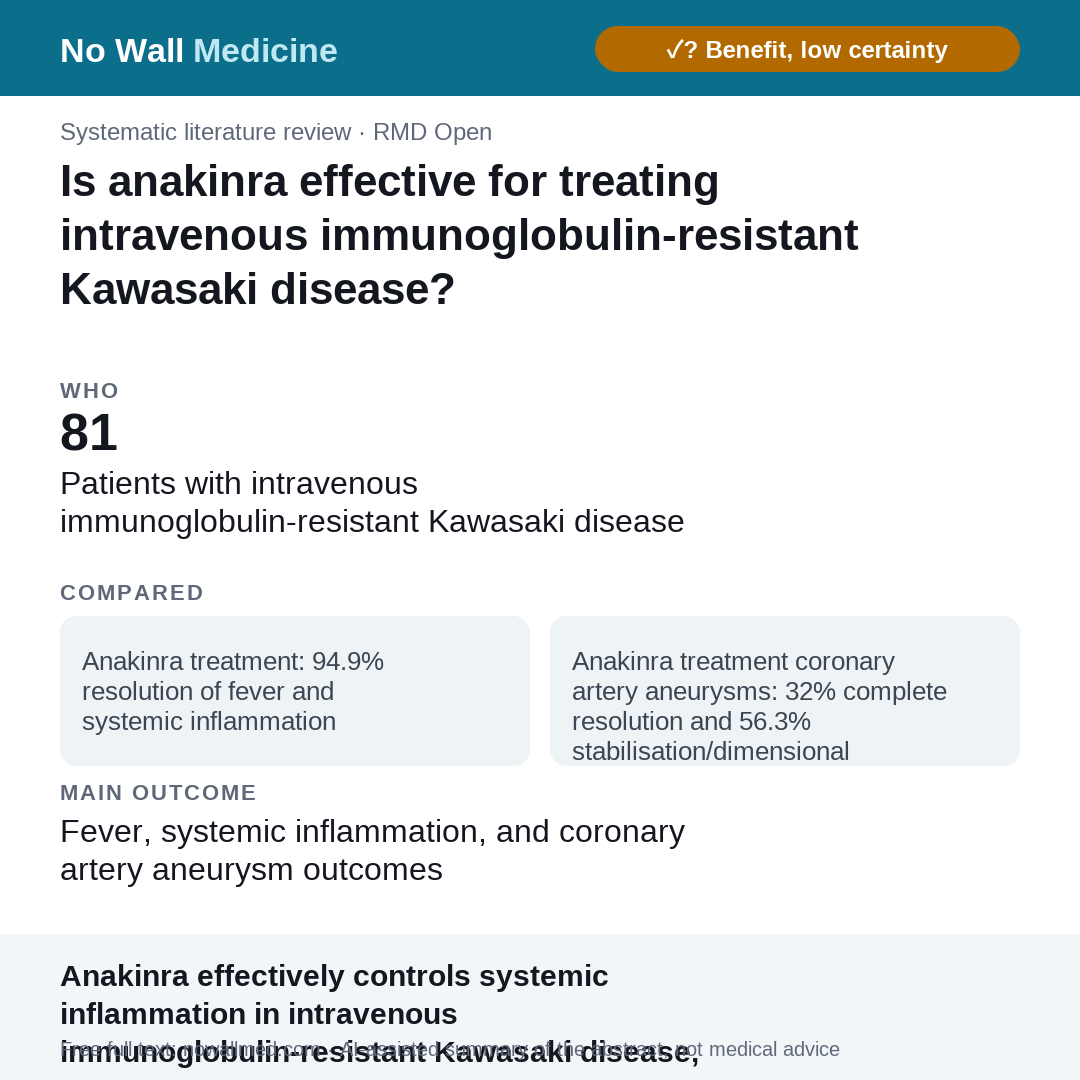
Anakinra for intravenous immunoglobulin-resistant Kawasaki disease: a systematic literature review
Systematic literature reviewBenefit found
Is anakinra effective for treating intravenous immunoglobulin-resistant Kawasaki disease?
Who
81
Patients with intravenous immunoglobulin-resistant Kawasaki disease
Compared
Anakinra treatment: 94.9% resolution of fever and systemic inflammation
Anakinra treatment coronary artery aneurysms: 32% complete resolution and 56.3% stabilisation/dimensional reduction
Main outcome
Fever, systemic inflammation, and coronary artery aneurysm outcomes
Bottom line: Anakinra effectively controls systemic inflammation in intravenous immunoglobulin-resistant Kawasaki disease, though more data on coronary outcomes are needed.
Limitation: Findings derive from heterogeneous and low-quality evidence, mostly single cases or small series.
RMD Open · 2026-07-30Download image
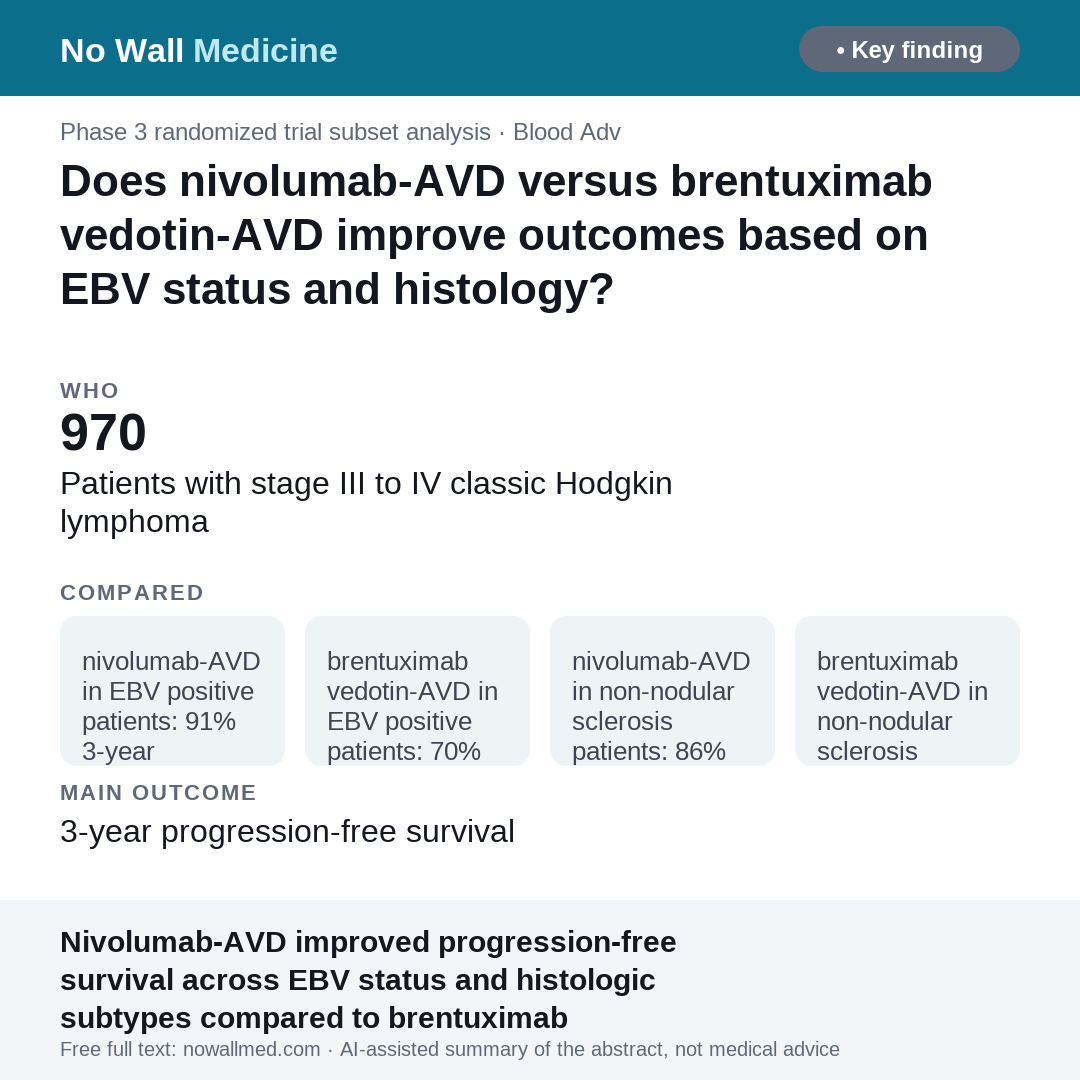
Impact of EBV status and histology on patient outcomes with nivolumab-AVD vs BV-AVD in advanced classic Hodgkin lymphoma (S1826)
Phase 3 randomized trial subset analysisBenefit found
Does nivolumab-AVD versus brentuximab vedotin-AVD improve outcomes based on EBV status and histology?
Who
970
Patients with stage III to IV classic Hodgkin lymphoma
Compared
nivolumab-AVD in EBV positive patients: 91% 3-year progression-free survival
brentuximab vedotin-AVD in EBV positive patients: 70% 3-year progression-free survival
nivolumab-AVD in non-nodular sclerosis patients: 86% 3-year progression-free survival
brentuximab vedotin-AVD in non-nodular sclerosis patients: 63% 3-year progression-free survival
Main outcome
3-year progression-free survival
Result: hazard ratio 0.30 (EBV+) and hazard ratio 0.33 (non-NS)
Bottom line: Nivolumab-AVD improved progression-free survival across EBV status and histologic subtypes compared to brentuximab vedotin-AVD.
Limitation: Subset analysis based on known EBV status and available histology slides.
Blood Adv · 2026-07-30Download image