Visual abstracts
New randomized trials and meta-analyses from leading journals at a glance: who was studied, what was compared, and what was found. Every paper is free to read in full.
All specialtiesCardiology 2393Oncology 2052Gastroenterology & Hepatology 918Infectious Disease 1493Neurology 955Psychiatry & Mental Health 1129Pulmonology 1006Critical Care 667Endocrinology & Diabetes 1255Pediatrics 1408Surgery 1219Orthopedics & Sports Medicine 439Neurosurgery 295Cardiothoracic & Vascular Surgery 260Plastic & Reconstructive Surgery 362Nephrology 499Rheumatology 342Hematology 519Dermatology 274Ophthalmology 280Obstetrics & Gynecology 784Public & Global Health 436Radiology & Imaging 328Anesthesiology 484Urology 405ENT (Otolaryngology) 305Emergency Medicine 271Allergy & Immunology 148Geriatrics 507Family Medicine & Primary Care 281Medical Genetics & Genomics 257Pathology & Laboratory Medicine 77Physical Medicine & Rehabilitation 402Palliative Care 204Nutrition 629Digital Health & AI 1184General Medicine 177
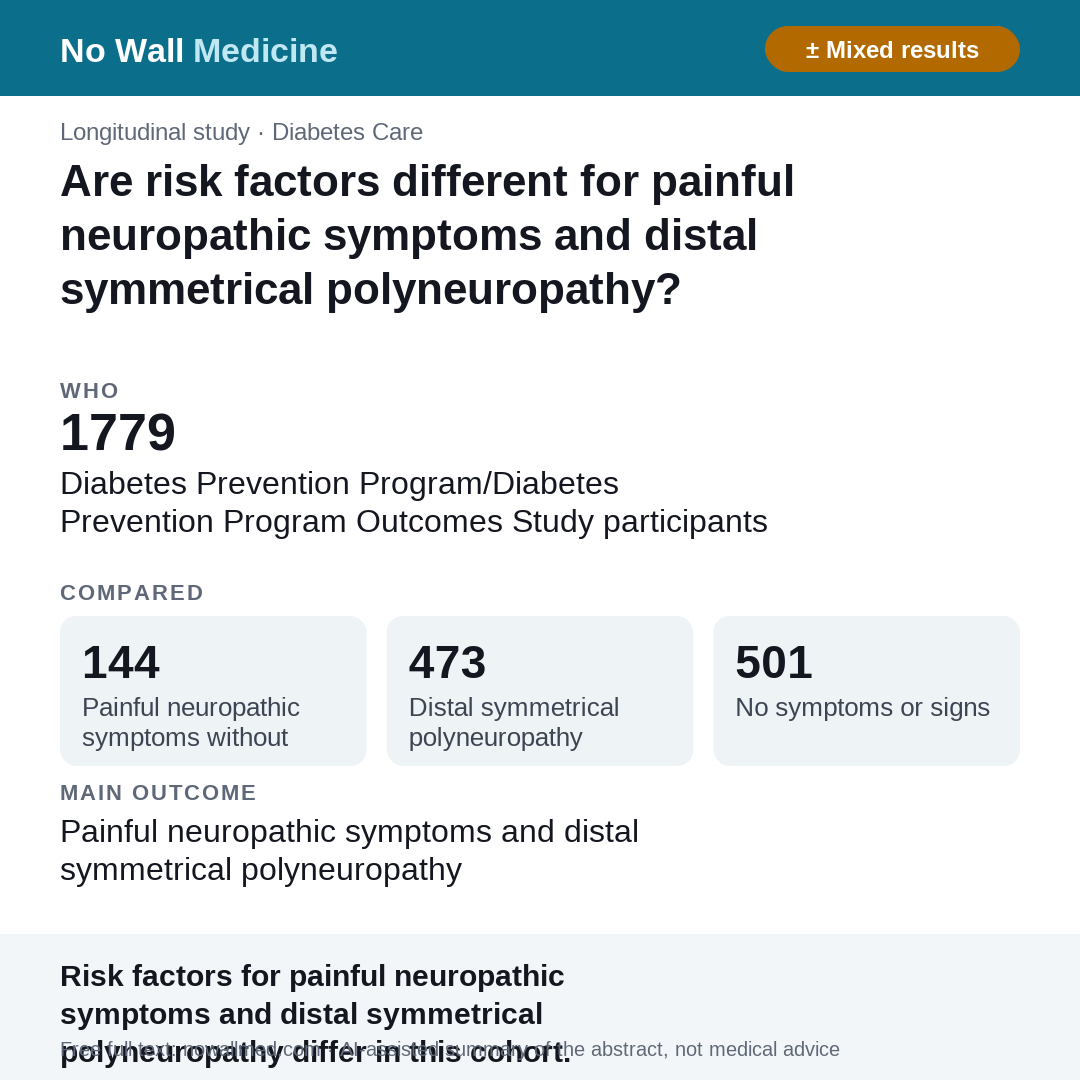
Nonglycemic and Glycemic Risk Factors for Painful Neuropathic Symptoms and for Distal Symmetrical Polyneuropathy (DSPN) in the Diabetes Prevention Program/Diabetes Prevention Program Outcomes Study
Longitudinal studyMixed results
Are risk factors different for painful neuropathic symptoms and distal symmetrical polyneuropathy?
Who
1779
Diabetes Prevention Program/Diabetes Prevention Program Outcomes Study participants
Compared
144Painful neuropathic symptoms without signs (8%)
473Distal symmetrical polyneuropathy (27%)
501No symptoms or signs (28%)
Main outcome
Painful neuropathic symptoms and distal symmetrical polyneuropathy
Bottom line: Risk factors for painful neuropathic symptoms and distal symmetrical polyneuropathy differ in this cohort.
Diabetes Care · 2025-06-18Download image
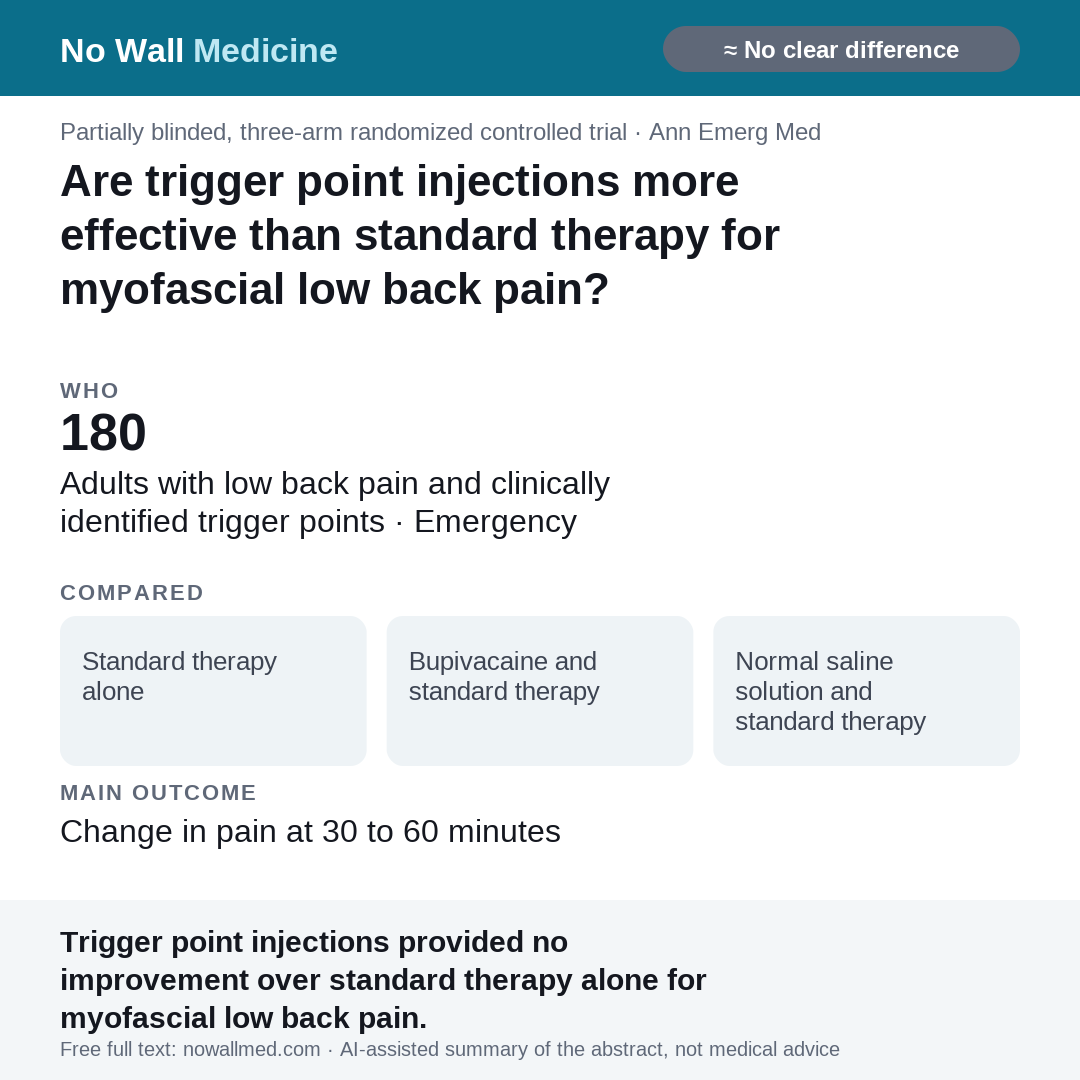
Trigger Point Injection for Myofascial Pain Syndrome of the Low Back: A Partially Blinded Three-Arm Randomized Controlled Trial
Partially blinded, three-arm randomized controlled trialNo clear difference
Are trigger point injections more effective than standard therapy for myofascial low back pain?
Who
180
Adults with low back pain and clinically identified trigger points · Emergency department
Compared
Standard therapy alone
Bupivacaine and standard therapy
Normal saline solution and standard therapy
Main outcome
Change in pain at 30 to 60 minutes
Result: 0.55 (95% CI -0.19 to 1.28) for bupivacaine; 0.71 (95% CI 0.00 to 1.43) for normal saline
Bottom line: Trigger point injections provided no improvement over standard therapy alone for myofascial low back pain.
Ann Emerg Med · 2025-06-18Download image
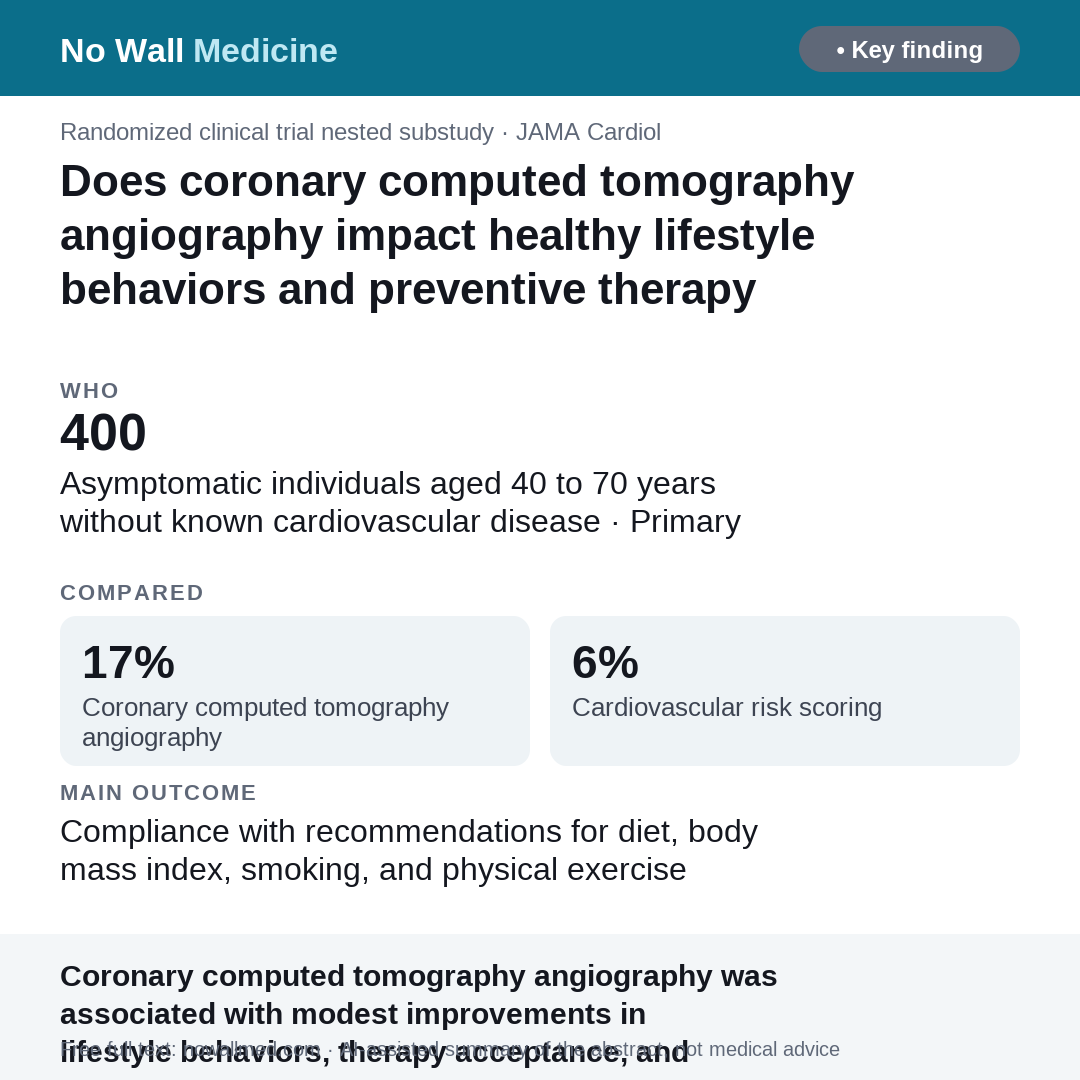
CT Angiography, Healthy Lifestyle Behaviors, and Preventive Therapy: A Nested Substudy of the SCOT-HEART 2 Randomized Clinical Trial
Randomized clinical trial nested substudyBenefit found
Does coronary computed tomography angiography impact healthy lifestyle behaviors and preventive therapy acceptance?
Who
400
Asymptomatic individuals aged 40 to 70 years without known cardiovascular disease · Primary care-based screening in Scotland
Compared
17%Coronary computed tomography angiography (33 of 194 participants)
6%Cardiovascular risk scoring (10 of 177 participants)
Main outcome
Compliance with recommendations for diet, body mass index, smoking, and physical exercise
Result: odds ratio 3.42 (95% CI 1.63-6.94)
Bottom line: Coronary computed tomography angiography was associated with modest improvements in lifestyle behaviors, therapy acceptance, and risk factor modification.
JAMA Cardiol · 2025-06-18Download image
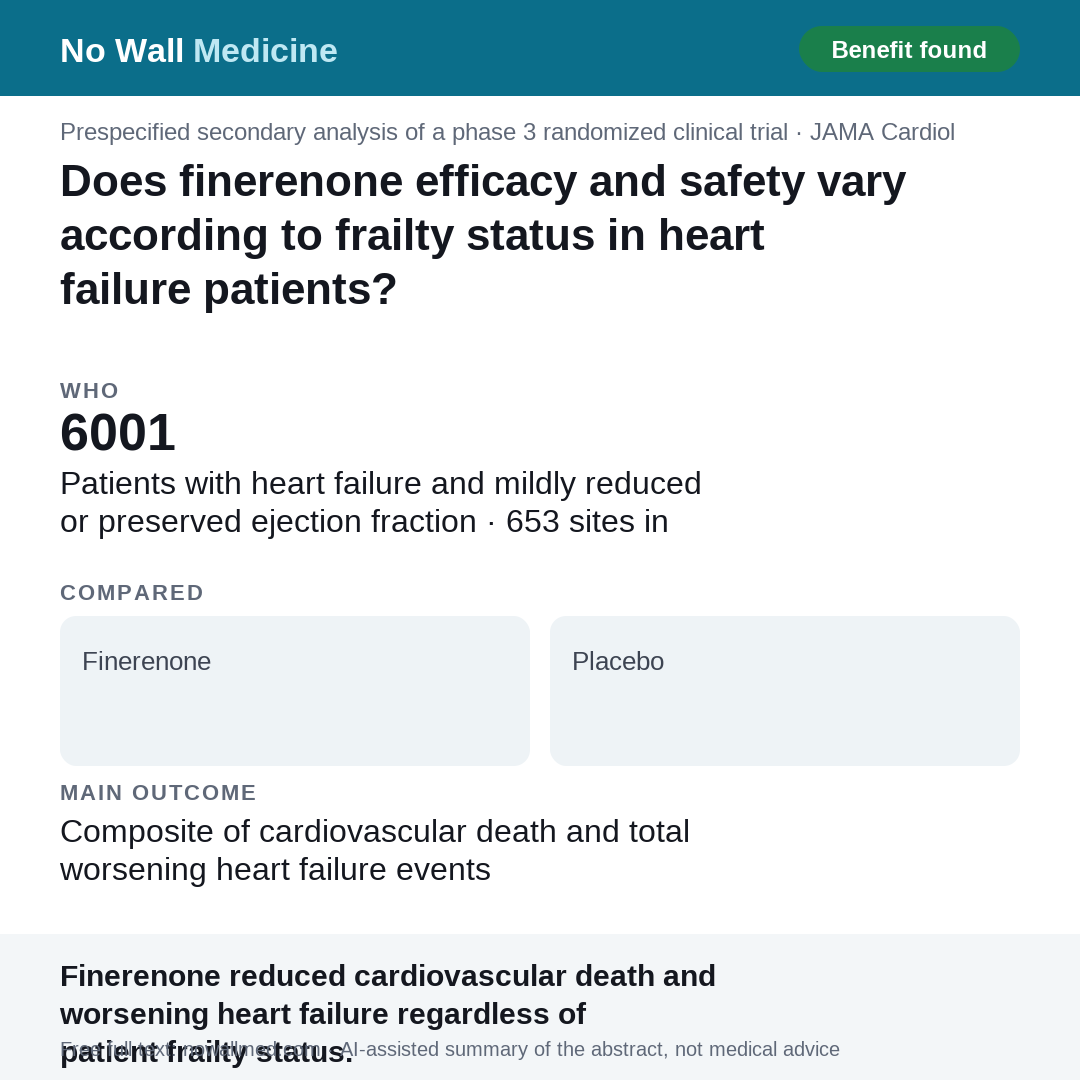
Finerenone According to Frailty in Heart Failure: A Prespecified Analysis of the FINEARTS-HF Randomized Clinical Trial
Prespecified secondary analysis of a phase 3 randomized clinical trialBenefit found
Does finerenone efficacy and safety vary according to frailty status in heart failure patients?
Who
6001
Patients with heart failure and mildly reduced or preserved ejection fraction · 653 sites in 37 countries
Compared
Finerenone
Placebo
Main outcome
Composite of cardiovascular death and total worsening heart failure events
Result: class I: RR, 1.07 (95% CI 0.77-1.49); class II: RR, 0.66 (95% CI 0.52-0.83); class III: RR, 0.91 (95% CI 0.76-1.07)
Bottom line: Finerenone reduced cardiovascular death and worsening heart failure regardless of patient frailty status.
JAMA Cardiol · 2025-06-18Download image
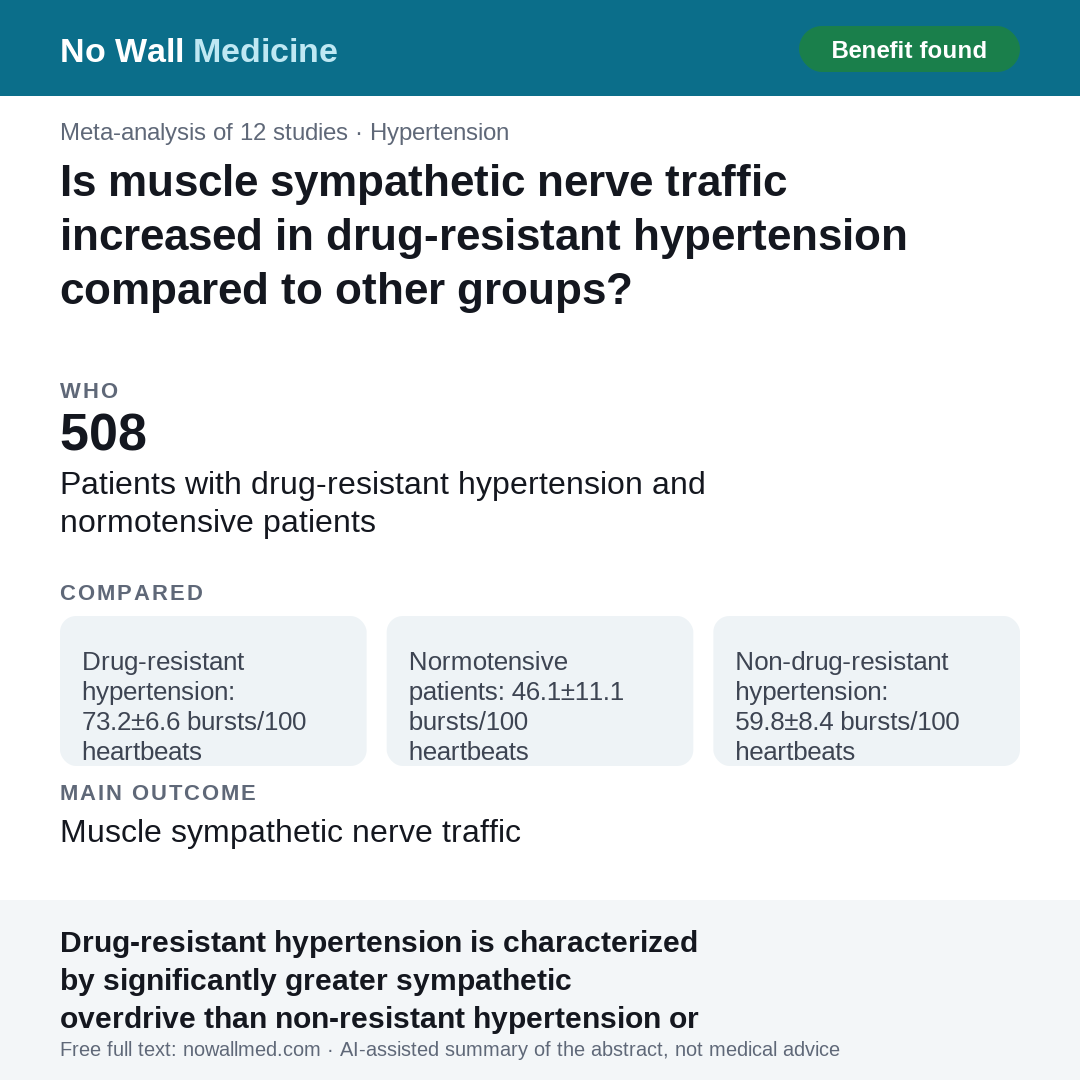
Sympathetic Overactivation in the Resistant Hypertensive Phenotype: A Meta-Analysis of Published Studies
Meta-analysis of 12 studiesBenefit found
Is muscle sympathetic nerve traffic increased in drug-resistant hypertension compared to other groups?
Who
508
Patients with drug-resistant hypertension and normotensive patients
Compared
Drug-resistant hypertension: 73.2±6.6 bursts/100 heartbeats
Normotensive patients: 46.1±11.1 bursts/100 heartbeats
Non-drug-resistant hypertension: 59.8±8.4 bursts/100 heartbeats
Main outcome
Muscle sympathetic nerve traffic
Bottom line: Drug-resistant hypertension is characterized by significantly greater sympathetic overdrive than non-resistant hypertension or normotensive patients.
Hypertension · 2025-06-18Download image
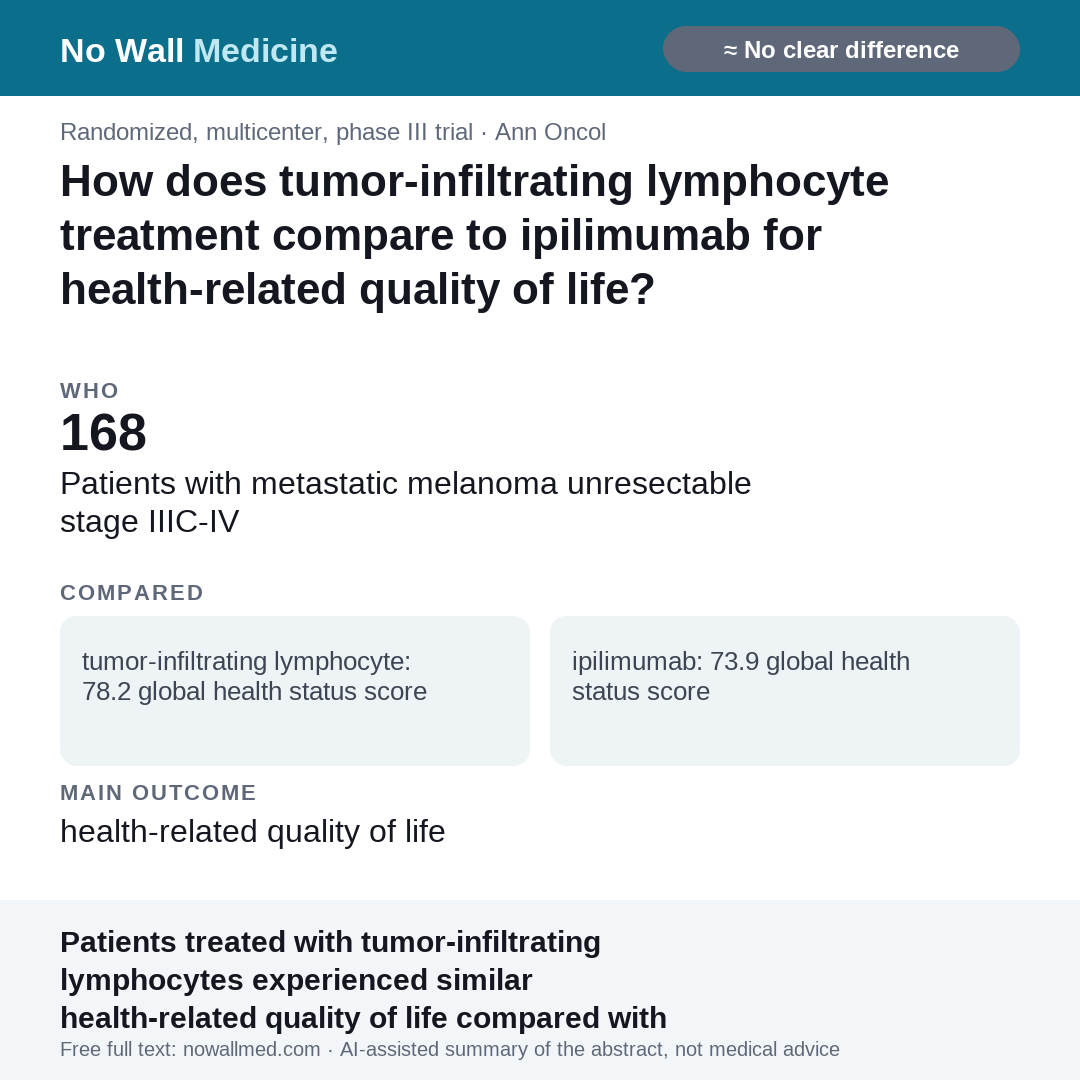
Health-related quality of life of patients with metastatic melanoma treated with tumor-infiltrating lymphocytes compared with ipilimumab in a randomized phase III trial
Randomized, multicenter, phase III trialNo clear difference
How does tumor-infiltrating lymphocyte treatment compare to ipilimumab for health-related quality of life?
Who
168
Patients with metastatic melanoma unresectable stage IIIC-IV
Compared
tumor-infiltrating lymphocyte: 78.2 global health status score
ipilimumab: 73.9 global health status score
Main outcome
health-related quality of life
Bottom line: Patients treated with tumor-infiltrating lymphocytes experienced similar health-related quality of life compared with ipilimumab monotherapy.
Limitation: Ongoing follow-up is essential to assess longer-term quality of life and generalizability.
Ann Oncol · 2025-06-18Download image
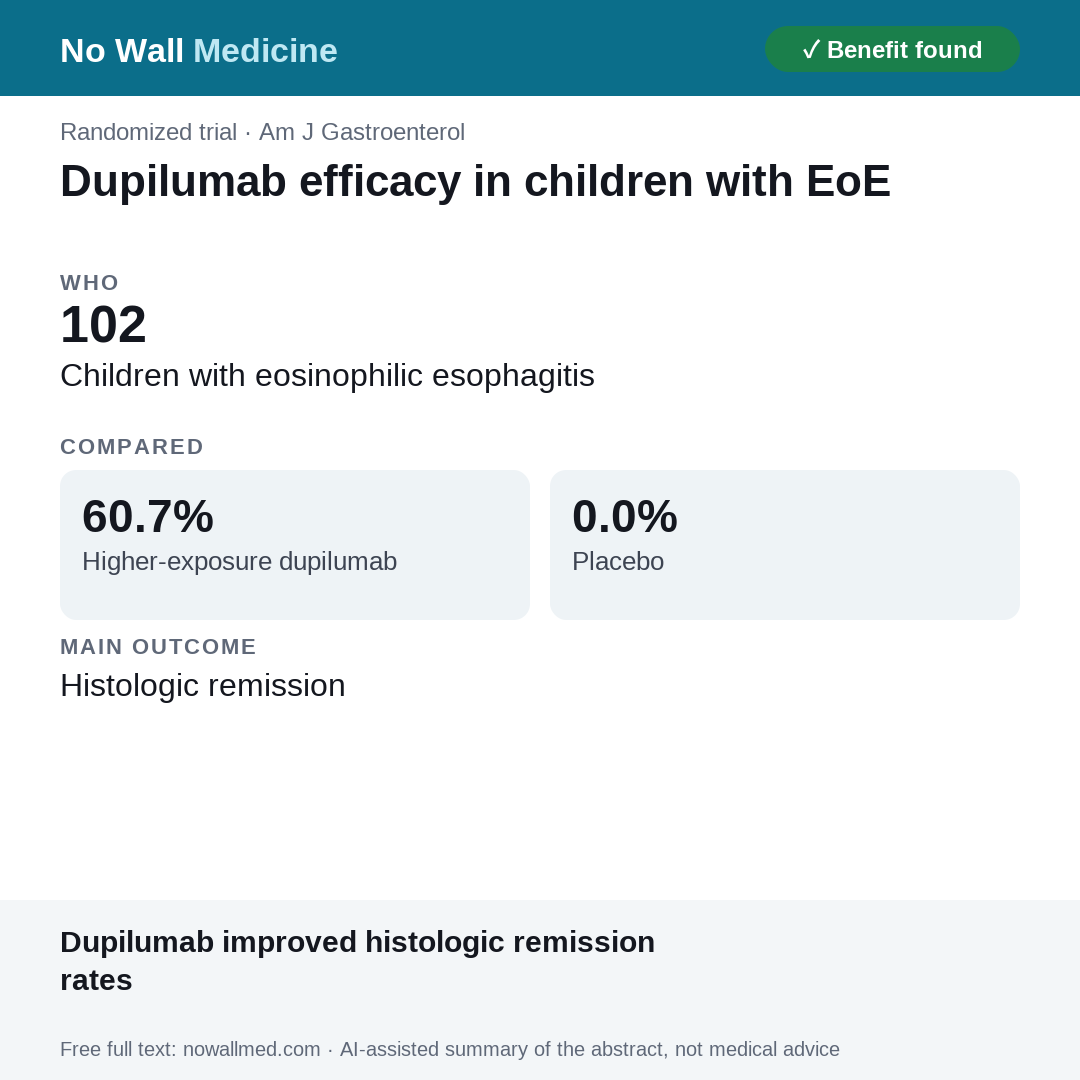
Dupilumab Efficacy in Children With Eosinophilic Esophagitis With Prior Swallowed Topical Corticosteroid Use: A Subgroup Analysis
Randomized trialBenefit found
Dupilumab efficacy in children with EoE
Who
102
Children with eosinophilic esophagitis
Compared
60.7%Higher-exposure dupilumab
0.0%Placebo
Main outcome
Histologic remission
Bottom line: Dupilumab improved histologic remission rates
Am J Gastroenterol · 2025-06-18Download image
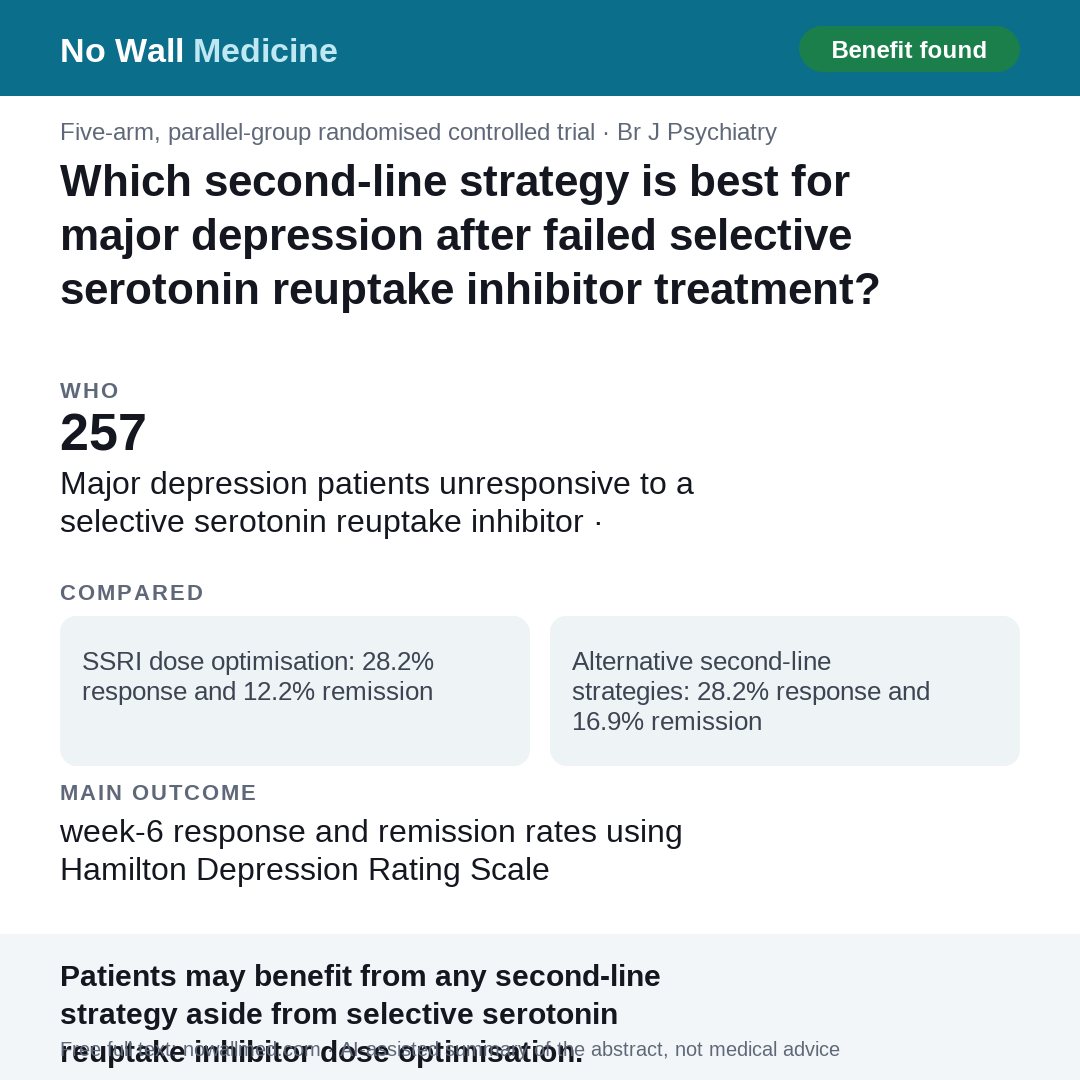
The DEPRE'5 study: pragmatic, multicentre, five-arm, parallel-group randomised controlled trial with blinded assessment to compare treatment strategies in major depression after a failed selective serotonin reuptake inhibitor treatment
Five-arm, parallel-group randomised controlled trialBenefit found
Which second-line strategy is best for major depression after failed selective serotonin reuptake inhibitor treatment?
Who
257
Major depression patients unresponsive to a selective serotonin reuptake inhibitor · multicentre
Compared
SSRI dose optimisation: 28.2% response and 12.2% remission
Alternative second-line strategies: 28.2% response and 16.9% remission
Main outcome
week-6 response and remission rates using Hamilton Depression Rating Scale
Result: odds ratio = 2.36 (95% CI 1.0-5.6)
Bottom line: Patients may benefit from any second-line strategy aside from selective serotonin reuptake inhibitor dose optimisation.
Limitation: limited statistical power
Br J Psychiatry · 2025-06-18Download image
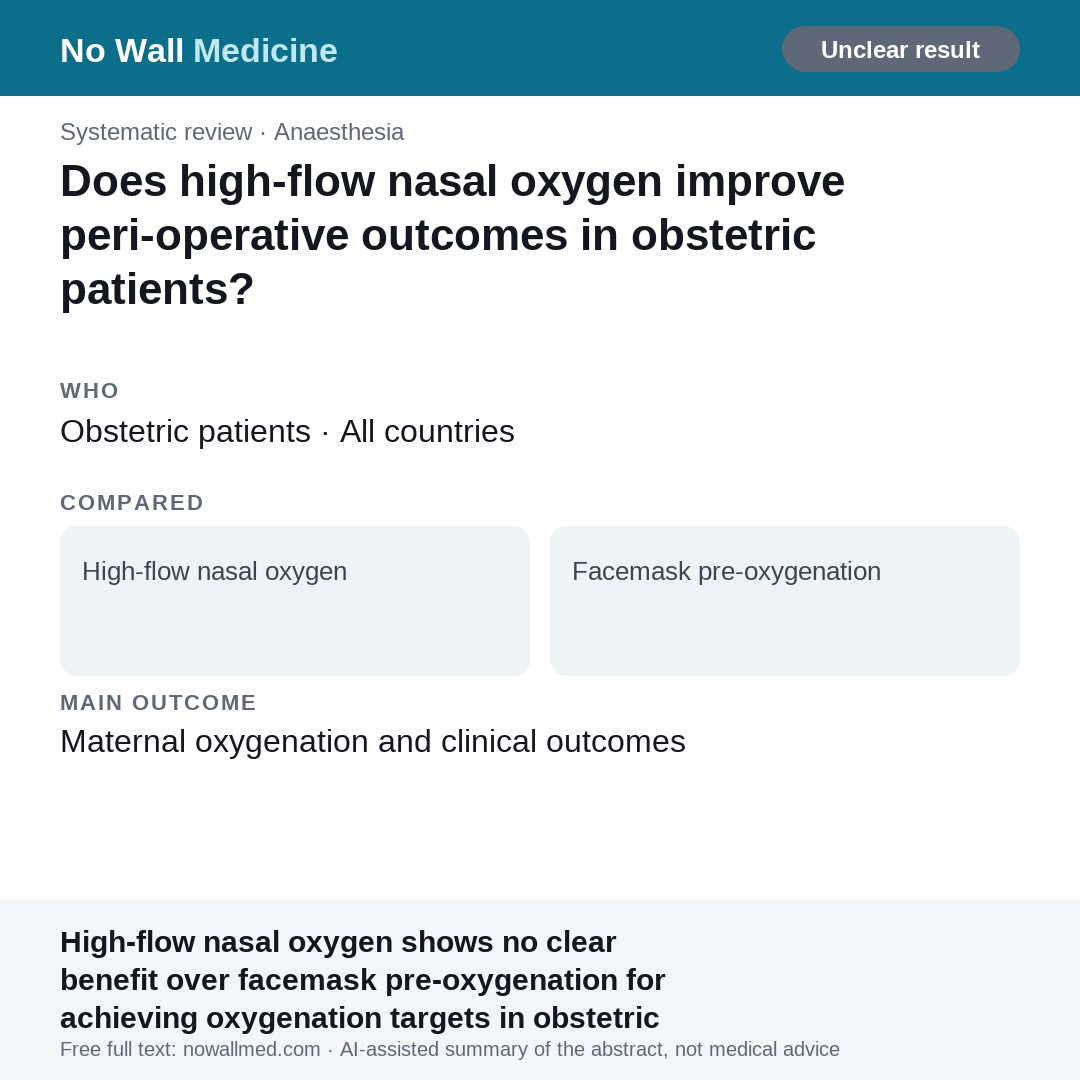
Peri-operative use of high-flow nasal oxygen in obstetric patients: a systematic review
Systematic reviewUnclear result
Does high-flow nasal oxygen improve peri-operative outcomes in obstetric patients?
Who
Obstetric patients · All countries
Compared
High-flow nasal oxygen
Facemask pre-oxygenation
Main outcome
Maternal oxygenation and clinical outcomes
Bottom line: High-flow nasal oxygen shows no clear benefit over facemask pre-oxygenation for achieving oxygenation targets in obstetric patients.
Limitation: Variation in pre-oxygenation strategies and primary outcomes across included studies.
Anaesthesia · 2025-06-18Download image
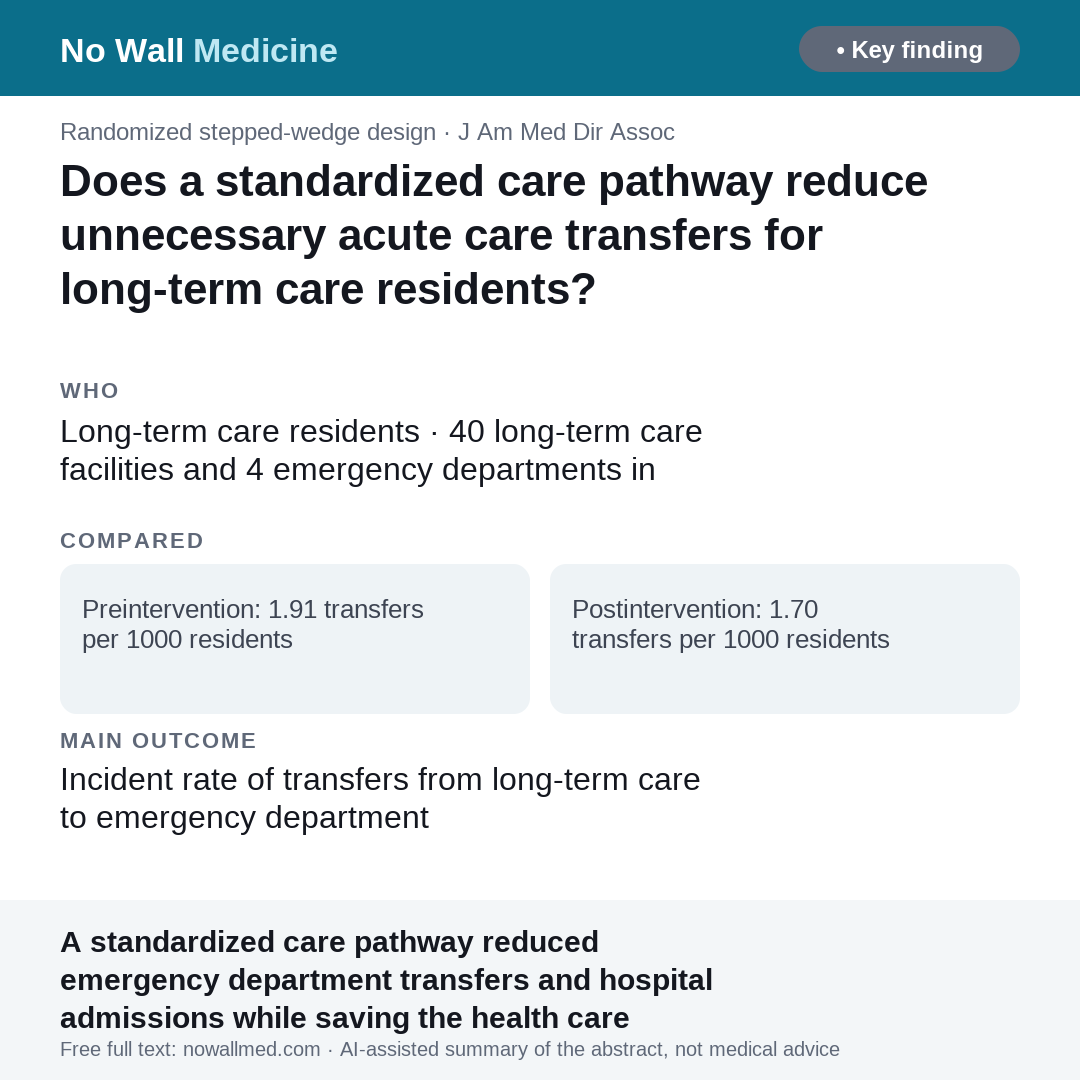
A Better Way to Care for Long-Term Care Residents in Times of Medical Urgency: An Implementation Intervention Using a Stepped-Wedge Design to Reduce Unnecessary Acute Care Transfers
Randomized stepped-wedge designBenefit found
Does a standardized care pathway reduce unnecessary acute care transfers for long-term care residents?
Who
Long-term care residents · 40 long-term care facilities and 4 emergency departments in Calgary, Canada
Compared
Preintervention: 1.91 transfers per 1000 residents
Postintervention: 1.70 transfers per 1000 residents
Main outcome
Incident rate of transfers from long-term care to emergency department
Bottom line: A standardized care pathway reduced emergency department transfers and hospital admissions while saving the health care system CAD$7.9 million.
J Am Med Dir Assoc · 2025-06-18Download image
Ultrasound Guided Versus Conventional Closure Device Deployment Following Transfemoral Endovascular Procedures: A Systematic Review and Meta-analysis
Systematic review and meta-analysisBenefit found
Is ultrasound guided closure safer than conventional closure for transfemoral endovascular procedures?
Who
Patients undergoing transfemoral arterial interventions
Compared
Ultrasound guided closure: 2 339 patients
Conventional closure: 1 175 patients
Main outcome
Access site complications
Result: odds ratio 0.49 (95% CI 0.37 - 0.65)
Bottom line: Ultrasound guided vessel closure is associated with lower rates of access site complications compared to conventional closure techniques.
Eur J Vasc Endovasc Surg · 2025-06-18Download image

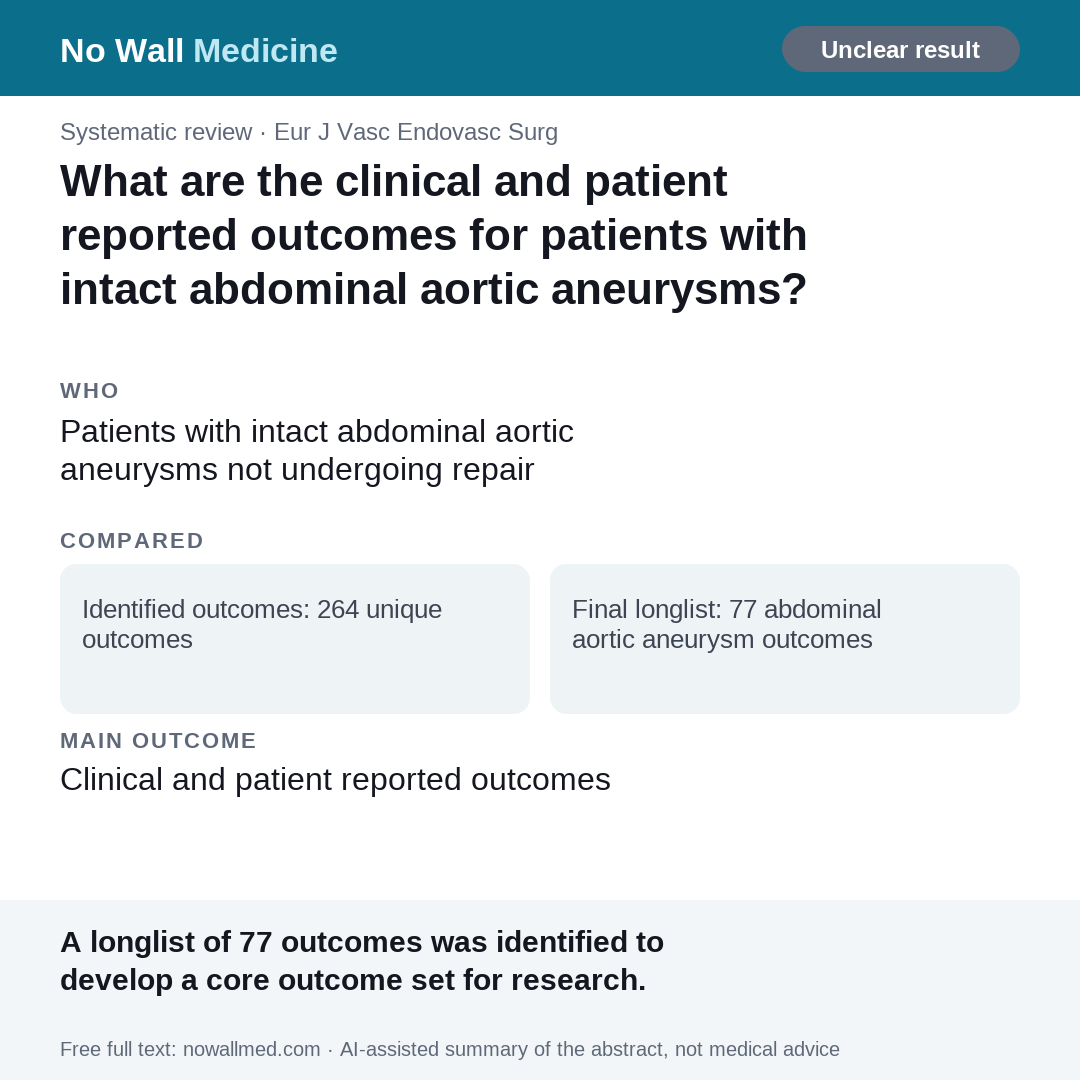
Identification of Clinical and Patient Reported Outcomes for Patients with Intact Abdominal Aortic Aneurysms Not Undergoing Repair: A Systematic Review
Systematic reviewUnclear result
What are the clinical and patient reported outcomes for patients with intact abdominal aortic aneurysms?
Who
Patients with intact abdominal aortic aneurysms not undergoing repair
Compared
Identified outcomes: 264 unique outcomes
Final longlist: 77 abdominal aortic aneurysm outcomes
Main outcome
Clinical and patient reported outcomes
Bottom line: A longlist of 77 outcomes was identified to develop a core outcome set for research.
Eur J Vasc Endovasc Surg · 2025-06-18Download image
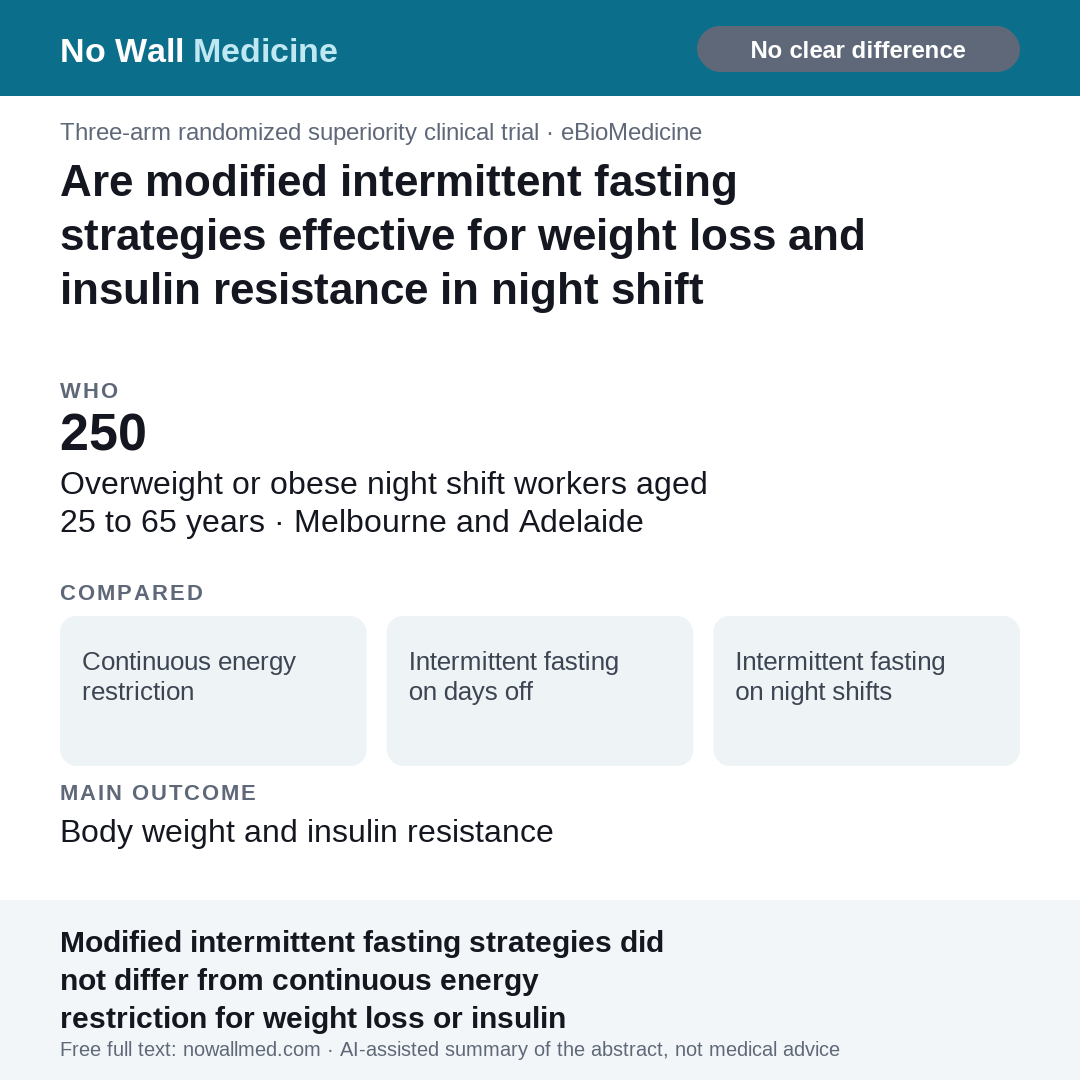
Intermittent fasting for weight loss in night shift workers: a three-arm, superiority randomised clinical trial
Three-arm randomized superiority clinical trialNo clear difference
Are modified intermittent fasting strategies effective for weight loss and insulin resistance in night shift workers?
Who
250
Overweight or obese night shift workers aged 25 to 65 years · Melbourne and Adelaide
Compared
Continuous energy restriction
Intermittent fasting on days off
Intermittent fasting on night shifts
Main outcome
Body weight and insulin resistance
Result: MD = -0.2 kg (95% CI -6.4 to 5.9) and MD = -0.6 kg (95% CI -6.8 to 5.6)
Bottom line: Modified intermittent fasting strategies did not differ from continuous energy restriction for weight loss or insulin resistance.
Funded by: National Health and Medical Research Council
eBioMedicine · 2025-06-18Download image
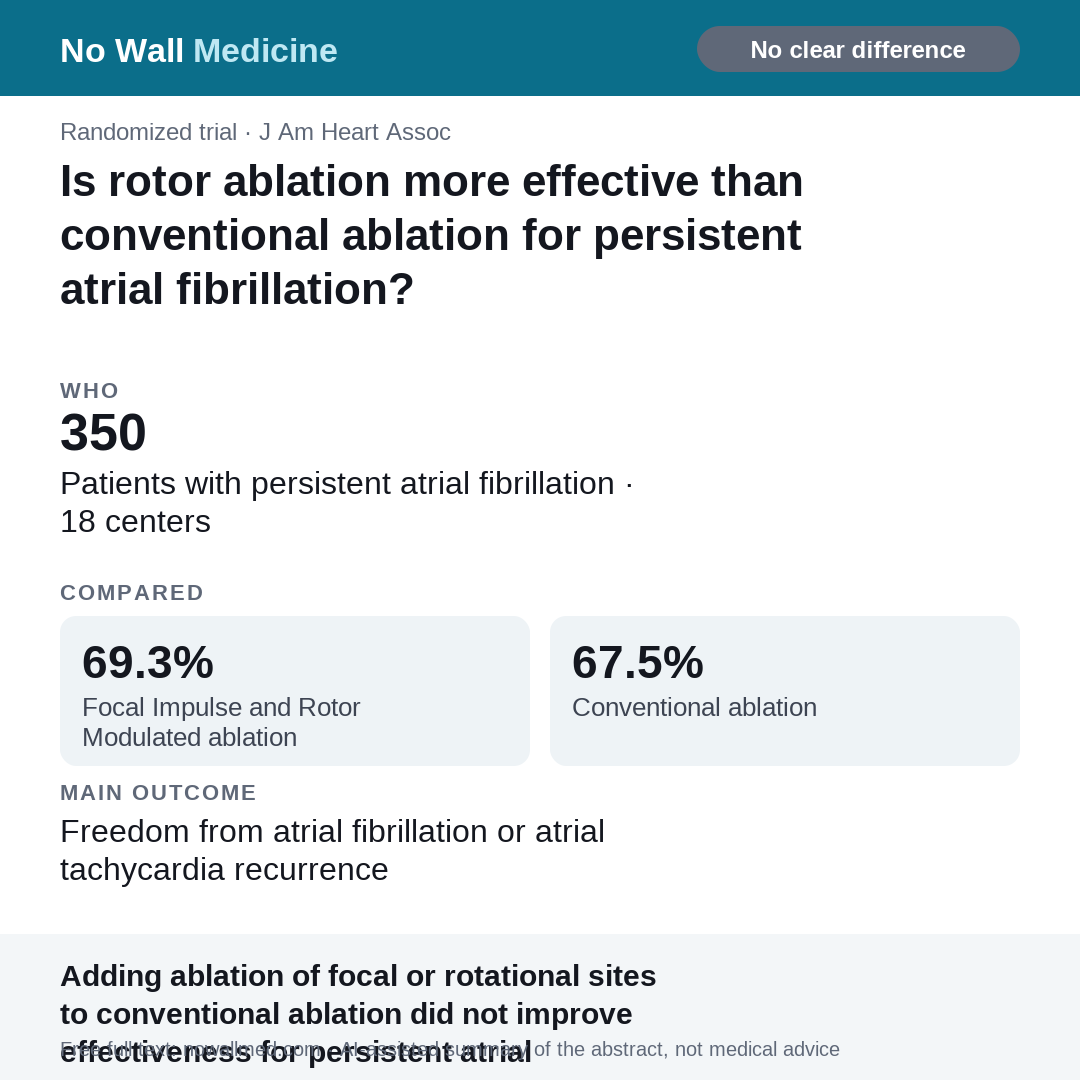
Prospective Randomized Trial of Rotor Ablation vs Conventional Ablation for Persistent Atrial Fibrillation: REAFFIRM Trial
Randomized trialNo clear difference
Is rotor ablation more effective than conventional ablation for persistent atrial fibrillation?
Who
350
Patients with persistent atrial fibrillation · 18 centers
Compared
69.3%Focal Impulse and Rotor Modulated ablation
67.5%Conventional ablation
Main outcome
Freedom from atrial fibrillation or atrial tachycardia recurrence
Bottom line: Adding ablation of focal or rotational sites to conventional ablation did not improve effectiveness for persistent atrial fibrillation.
J Am Heart Assoc · 2025-06-18Download image
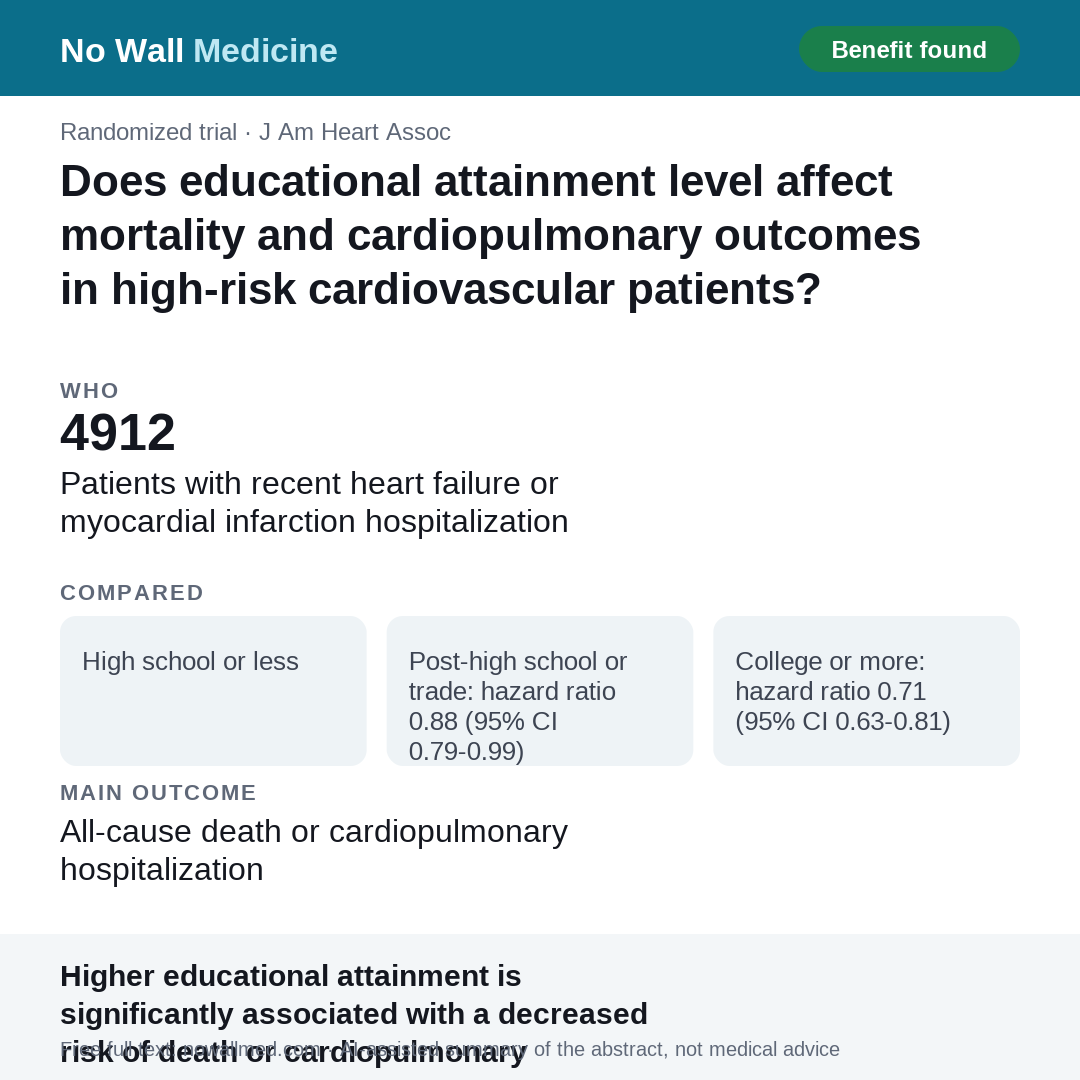
Educational Attainment Level and Risk of Mortality and Cardiopulmonary Outcomes in High-Risk Patients With Cardiovascular Disease: The INVESTED Trial
Randomized trialBenefit found
Does educational attainment level affect mortality and cardiopulmonary outcomes in high-risk cardiovascular patients?
Who
4912
Patients with recent heart failure or myocardial infarction hospitalization
Compared
High school or less
Post-high school or trade: hazard ratio 0.88 (95% CI 0.79-0.99)
College or more: hazard ratio 0.71 (95% CI 0.63-0.81)
Main outcome
All-cause death or cardiopulmonary hospitalization
Result: hazard ratio 0.71 (95% CI 0.63-0.81)
Bottom line: Higher educational attainment is significantly associated with a decreased risk of death or cardiopulmonary hospitalization in high-risk cardiovascular patients.
J Am Heart Assoc · 2025-06-18Download image
Incidence of Stroke in Adults With Congenital Heart Disease: A Systematic Review and Meta-Analysis
Systematic review and meta-analysisUnclear result
What is the incidence of stroke and transient ischemic attack in adults with congenital heart disease?
Who
Adults aged 16 years or older with congenital heart disease
Compared
Stroke and transient ischemic attack: 0.58 per 100 person-years
Ischemic stroke: 0.59 per 100 person-years
Main outcome
Incidence rate of stroke and transient ischemic attack
Result: 0.58 per 100 person-years (95% CI: 0.39-0.86)
Bottom line: The pooled incidence rate of stroke and transient ischemic attack is 0.58 per 100 person-years in adults with congenital heart disease.
Limitation: Significant heterogeneity between studies was observed.
JACC Adv · 2025-06-18Download image

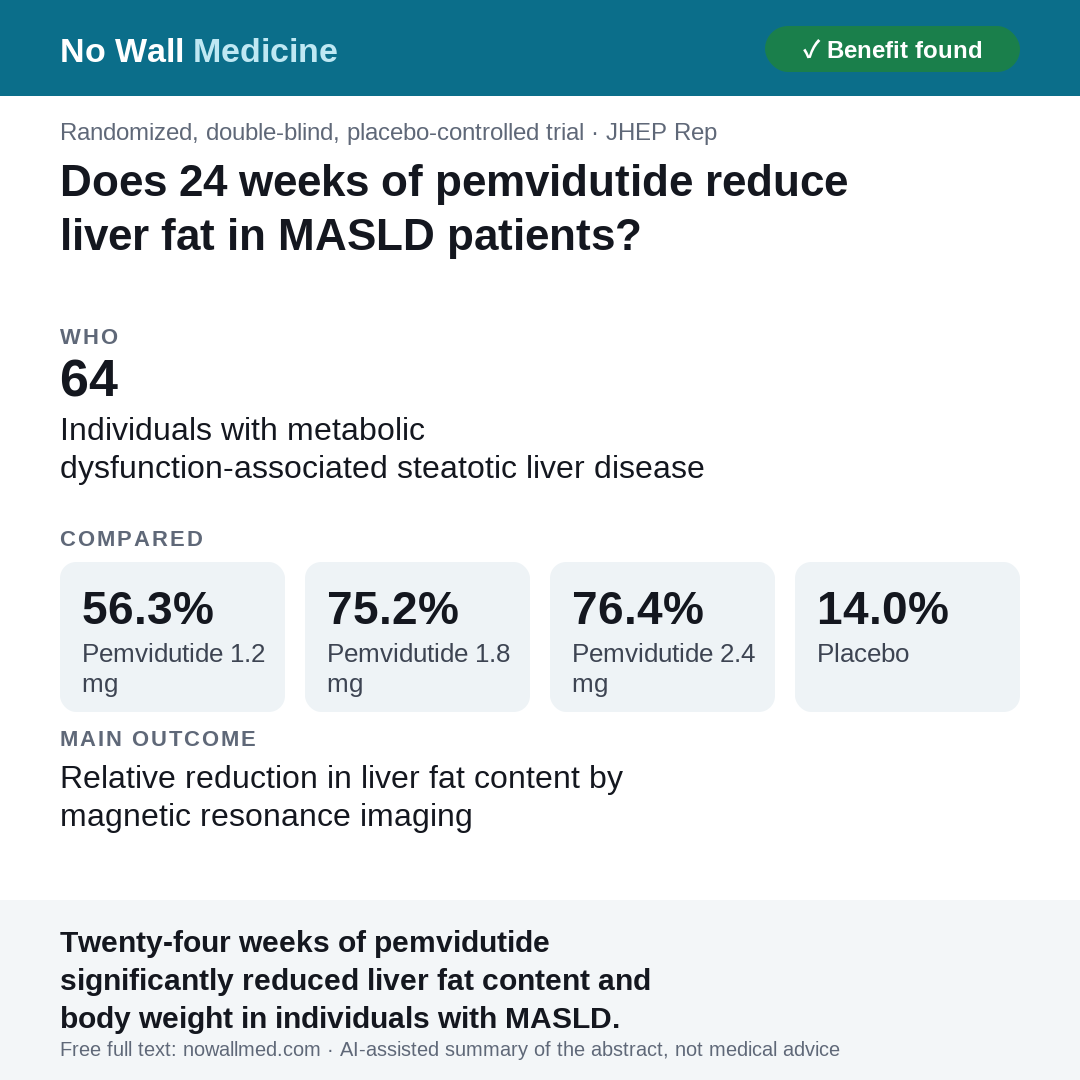
Safety and efficacy of 24 weeks of pemvidutide in metabolic dysfunction-associated steatotic liver disease: A randomized, controlled clinical trial
Randomized, double-blind, placebo-controlled trialBenefit found
Does 24 weeks of pemvidutide reduce liver fat in MASLD patients?
Who
64
Individuals with metabolic dysfunction-associated steatotic liver disease
Compared
56.3%Pemvidutide 1.2 mg
75.2%Pemvidutide 1.8 mg
76.4%Pemvidutide 2.4 mg
14.0%Placebo
Main outcome
Relative reduction in liver fat content by magnetic resonance imaging
Bottom line: Twenty-four weeks of pemvidutide significantly reduced liver fat content and body weight in individuals with MASLD.
JHEP Rep · 2025-06-18Download image
Patient preference for intraoperative opioid use and early recovery after noncardiac surgery: protocol for a randomised factorial design trial of opioid-free <i>versus</i> opioid-based anaesthesia (the PERFECT trial)
Partially randomised factorial trialUnclear result
Does patient preference for intraoperative opioid use affect early postoperative quality of recovery?
Who
240
Adults scheduled for moderate-risk laparoscopic or robotic abdominal surgery
Compared
Patient preference for opioid-free anaesthesia
Patient preference for opioid-based anaesthesia
No choice: randomised to opioid-based anaesthesia
No choice: randomised to opioid-free anaesthesia
Main outcome
Quality of Recovery-15 score at postoperative day 1
Bottom line: This protocol describes a trial to evaluate if patient preference for opioid use impacts recovery.
BJA Open · 2025-06-18Download image

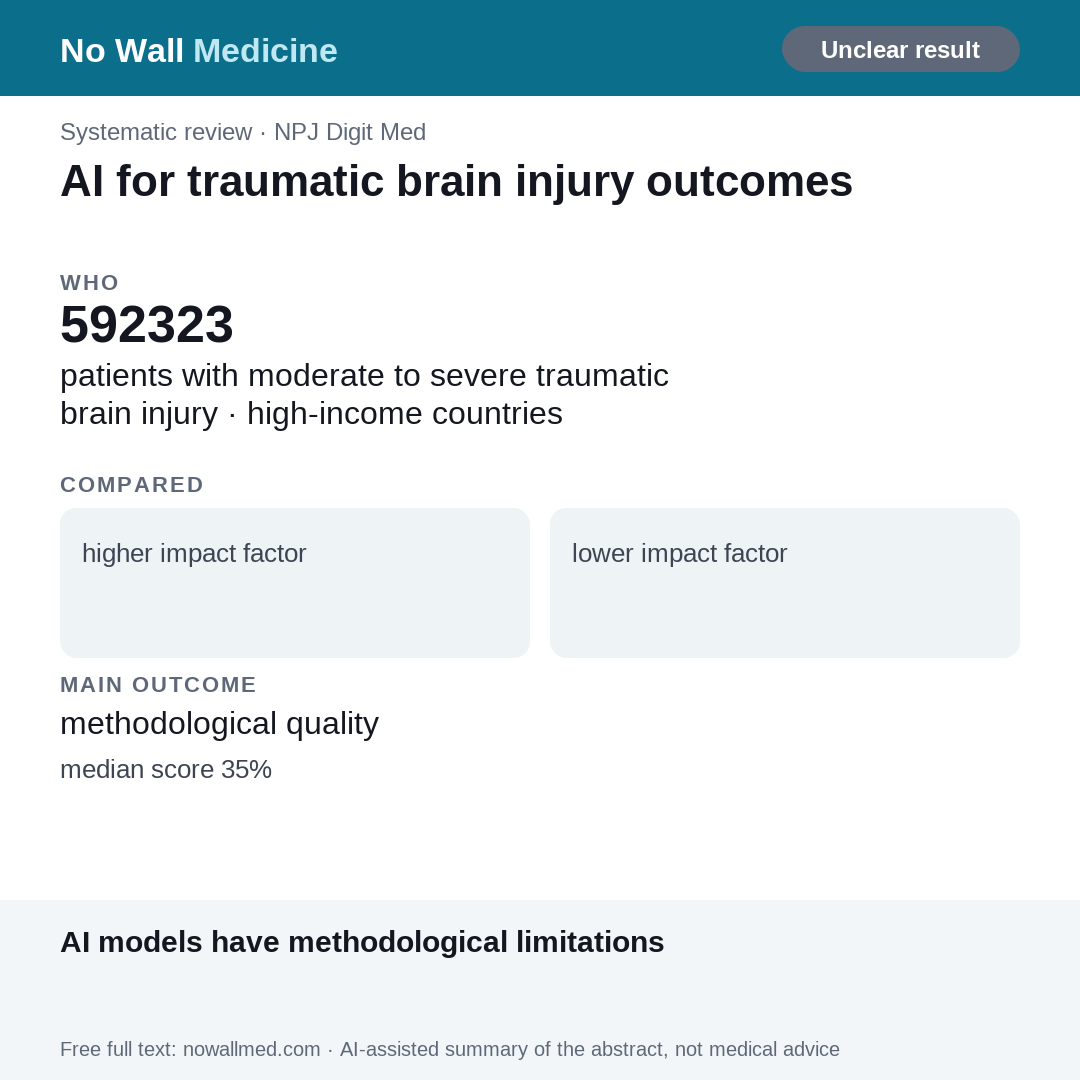
Predicting outcomes after moderate and severe traumatic brain injury using artificial intelligence: a systematic review
Systematic reviewUnclear result
AI for traumatic brain injury outcomes
Who
592323
patients with moderate to severe traumatic brain injury · high-income countries
Compared
higher impact factor
lower impact factor
Main outcome
methodological quality
Result: median score 35%
Bottom line: AI models have methodological limitations
Limitation: lack of diverse development datasets
NPJ Digit Med · 2025-06-18Download image
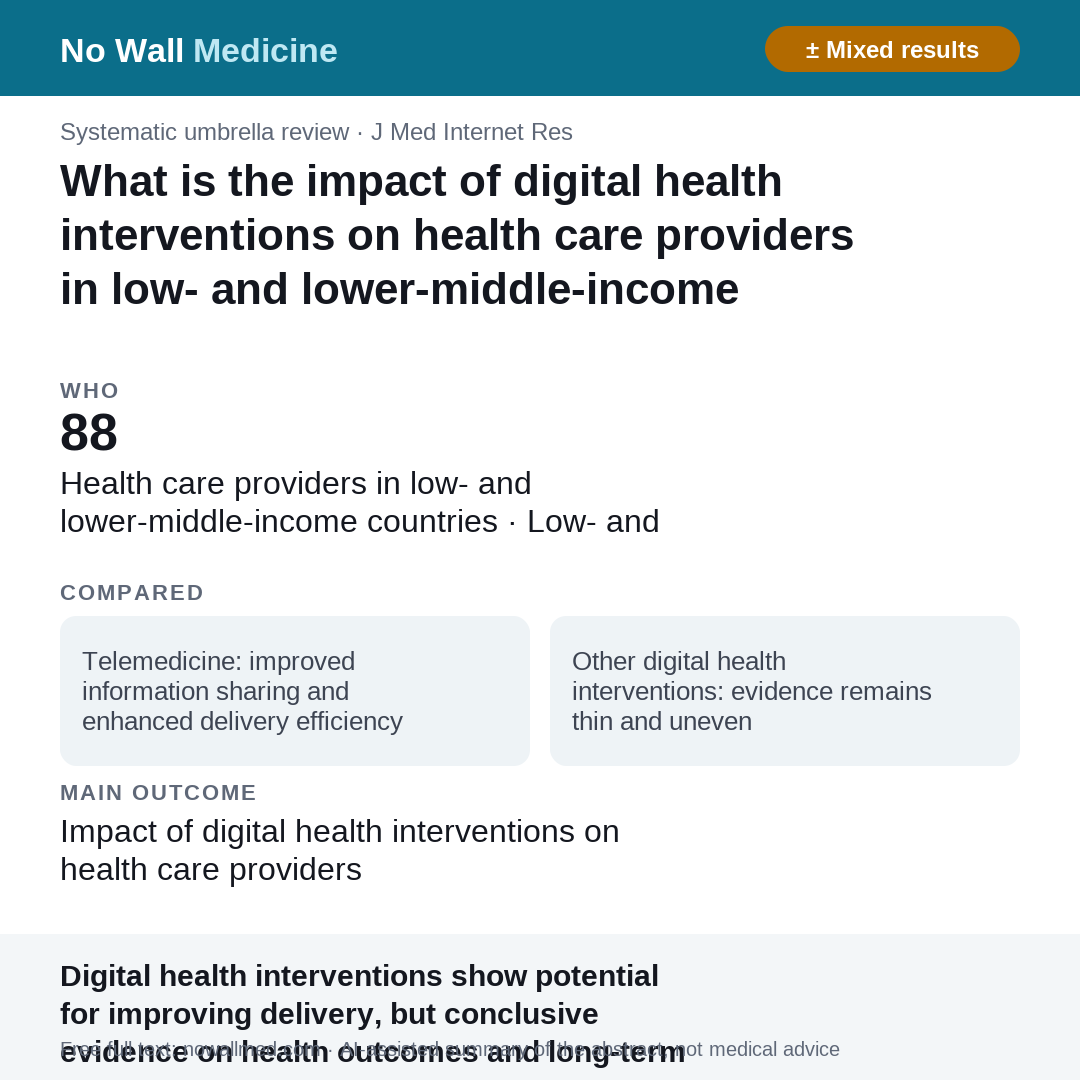
Use of Technology to Support Health Care Providers Delivering Care in Low- and Lower-Middle-Income Countries: Systematic Umbrella Review
Systematic umbrella reviewMixed results
What is the impact of digital health interventions on health care providers in low- and lower-middle-income countries?
Who
88
Health care providers in low- and lower-middle-income countries · Low- and lower-middle-income countries
Compared
Telemedicine: improved information sharing and enhanced delivery efficiency
Other digital health interventions: evidence remains thin and uneven
Main outcome
Impact of digital health interventions on health care providers
Bottom line: Digital health interventions show potential for improving delivery, but conclusive evidence on health outcomes and long-term sustainability is lacking.
Limitation: Robust evidence on health outcomes, cost-effectiveness, and long-term sustainability is lacking.
J Med Internet Res · 2025-06-18Download image