Visual abstracts
New randomized trials and meta-analyses from leading journals at a glance: who was studied, what was compared, and what was found. Every paper is free to read in full.
All specialtiesCardiology 2957Oncology 2515Gastroenterology & Hepatology 1137Infectious Disease 1907Neurology 1182Psychiatry & Mental Health 1375Pulmonology 1226Critical Care 817Endocrinology & Diabetes 1497Pediatrics 1747Surgery 1549Orthopedics & Sports Medicine 532Neurosurgery 355Cardiothoracic & Vascular Surgery 334Plastic & Reconstructive Surgery 424Nephrology 611Rheumatology 455Hematology 652Dermatology 355Ophthalmology 331Obstetrics & Gynecology 974Public & Global Health 546Radiology & Imaging 416Anesthesiology 601Urology 494ENT (Otolaryngology) 332Emergency Medicine 326Allergy & Immunology 189Geriatrics 631Family Medicine & Primary Care 339Medical Genetics & Genomics 348Pathology & Laboratory Medicine 102Physical Medicine & Rehabilitation 472Palliative Care 253Nutrition 814Digital Health & AI 1394General Medicine 212
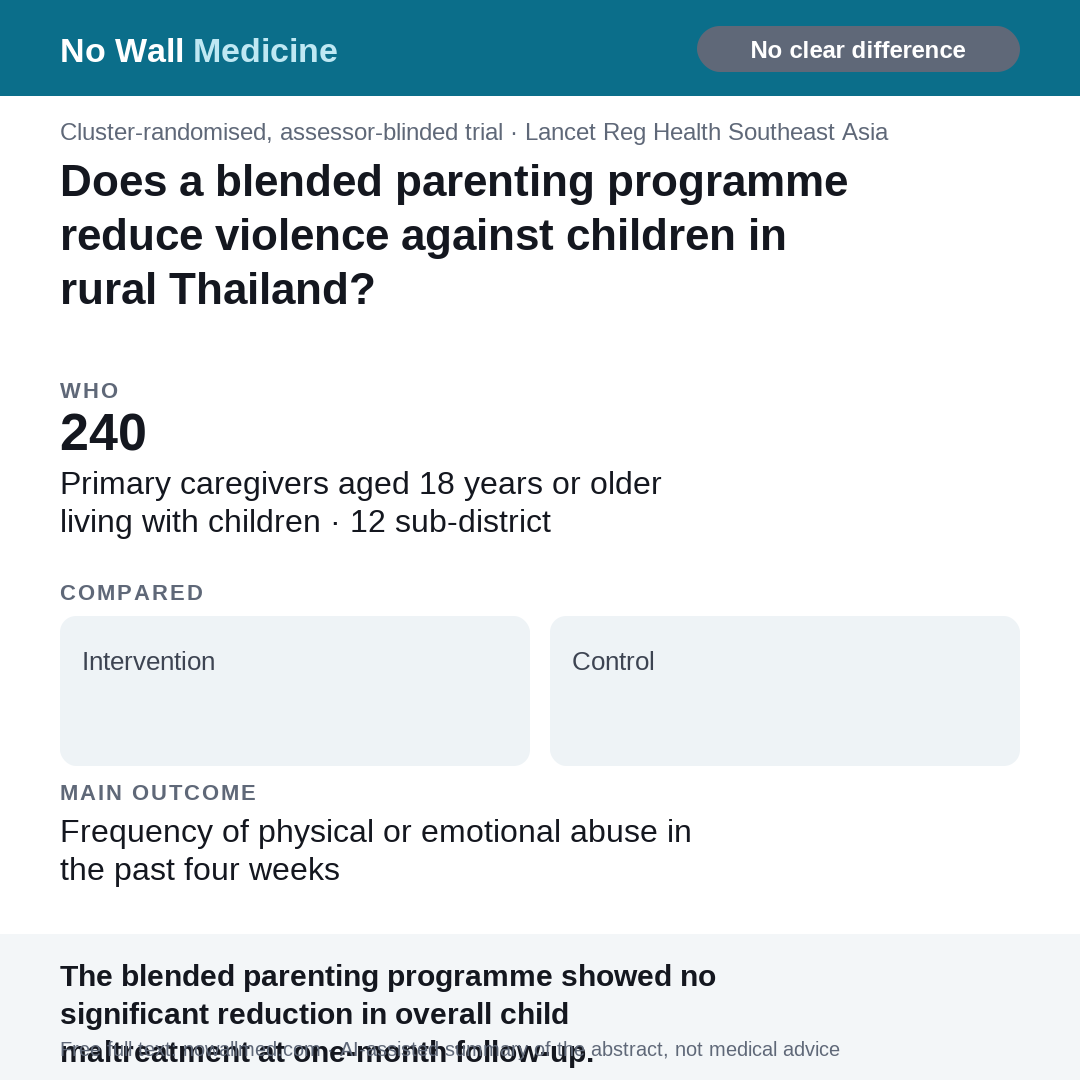
Effectiveness of a blended in-person and online parenting programme in reducing violence against children in rural Thailand: a cluster randomised controlled trial
Cluster-randomised, assessor-blinded trialNo clear difference
Does a blended parenting programme reduce violence against children in rural Thailand?
Who
240
Primary caregivers aged 18 years or older living with children · 12 sub-district health-promoting hospitals in Udon Thani, Thailand
Compared
Intervention
Control
Main outcome
Frequency of physical or emotional abuse in the past four weeks
Result: incidence rate ratio 1.46 (95% CI 0.83-2.57)
Bottom line: The blended parenting programme showed no significant reduction in overall child maltreatment at one-month follow-up.
Funded by: LEGO Foundation, Oak Foundation, and World Childhood Foundation
Lancet Reg Health Southeast Asia · 2026-05-28Download image
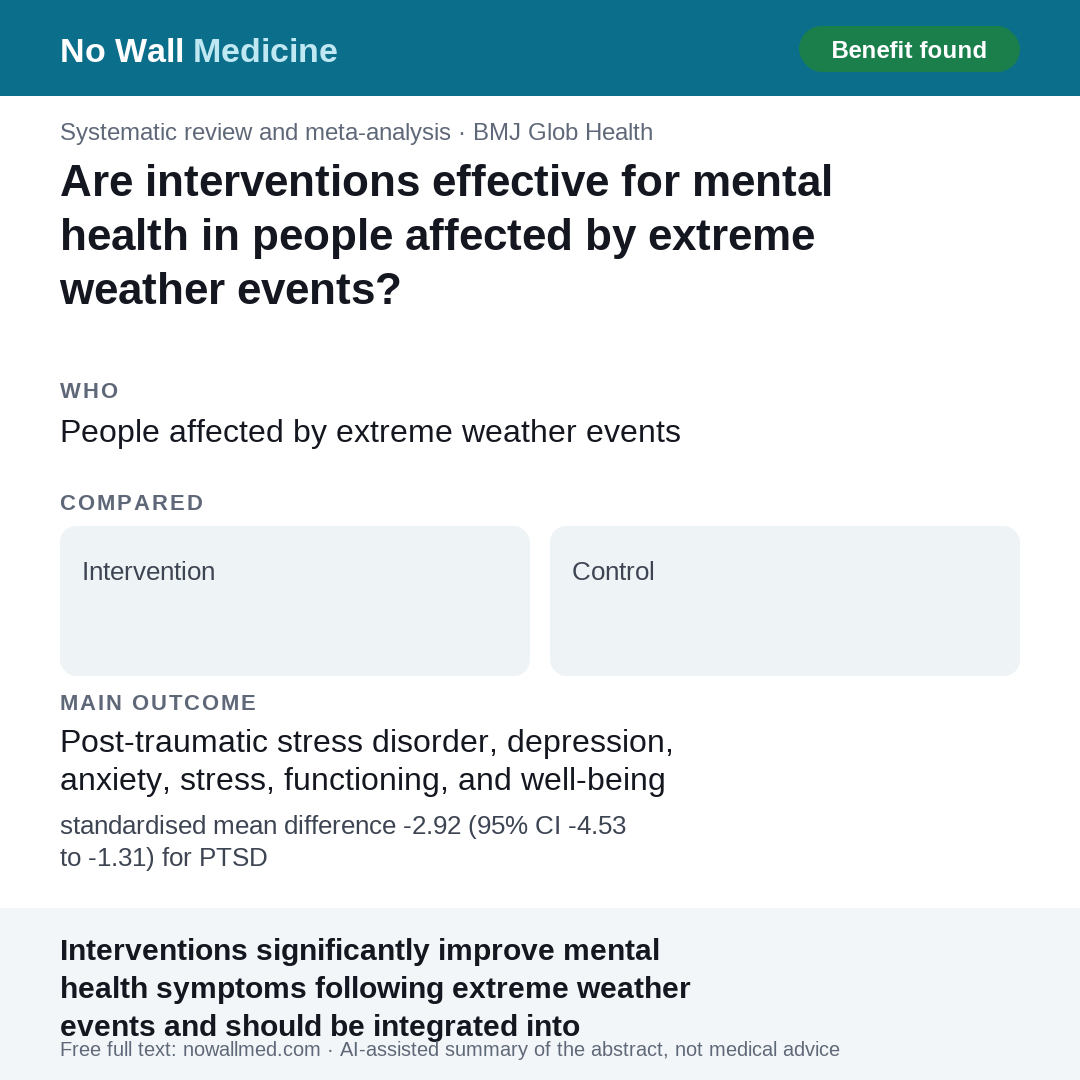
Systematic review and meta-analysis of interventions for mental health in extreme weather events
Systematic review and meta-analysisBenefit found
Are interventions effective for mental health in people affected by extreme weather events?
Who
People affected by extreme weather events
Compared
Intervention
Control
Main outcome
Post-traumatic stress disorder, depression, anxiety, stress, functioning, and well-being
Result: standardised mean difference -2.92 (95% CI -4.53 to -1.31) for PTSD
Bottom line: Interventions significantly improve mental health symptoms following extreme weather events and should be integrated into disaster management plans.
BMJ Glob Health · 2026-05-28Download image
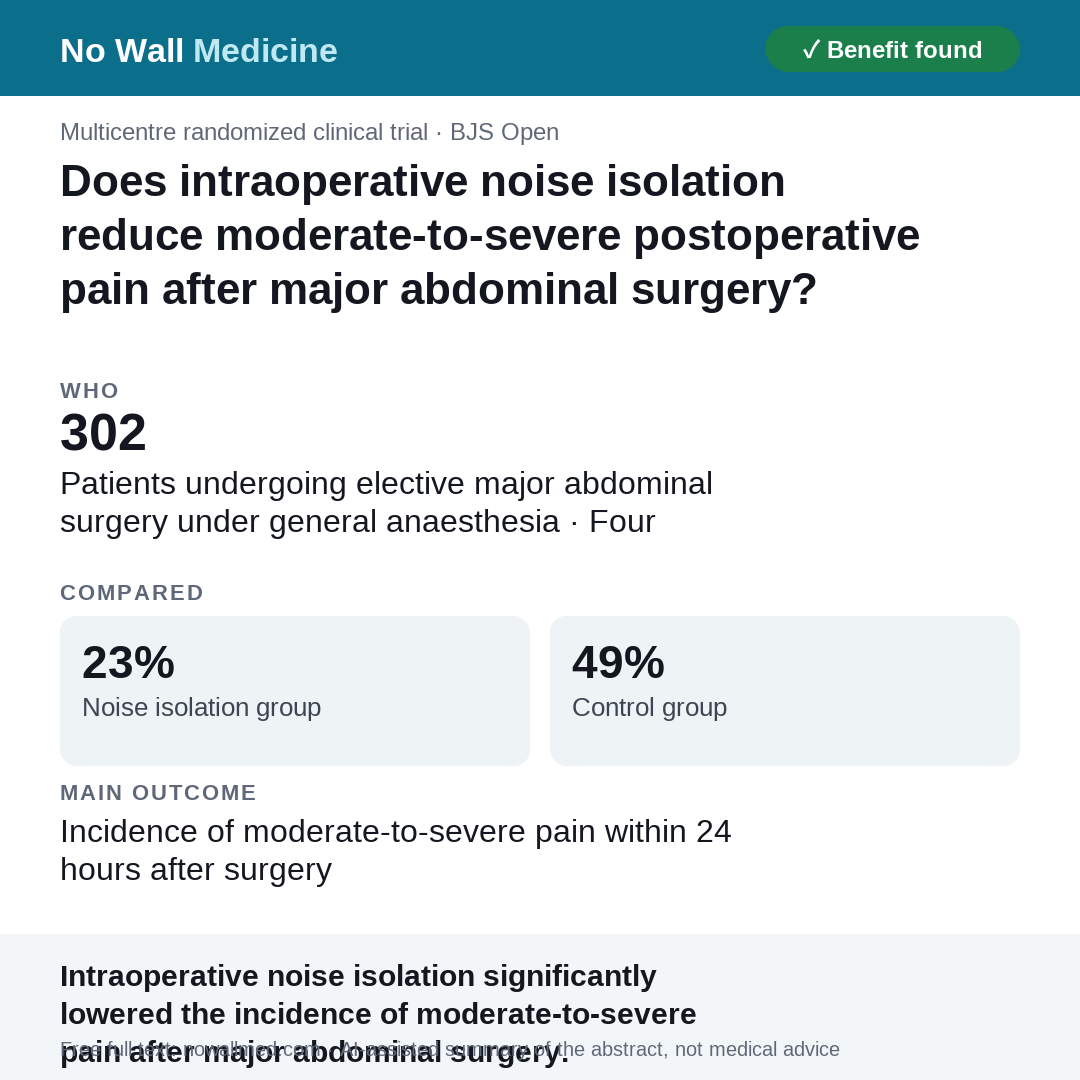
Effect of noise isolation during general anaesthesia on the incidence of moderate-to-severe pain after major abdominal surgery: multicentre randomized clinical study
Multicentre randomized clinical trialBenefit found
Does intraoperative noise isolation reduce moderate-to-severe postoperative pain after major abdominal surgery?
Who
302
Patients undergoing elective major abdominal surgery under general anaesthesia · Four medical centres in China
Compared
23%Noise isolation group
49%Control group
Main outcome
Incidence of moderate-to-severe pain within 24 hours after surgery
Result: relative risk 0.47 (95% confidence interval 0.33 to 0.65)
Bottom line: Intraoperative noise isolation significantly lowered the incidence of moderate-to-severe pain after major abdominal surgery.
BJS Open · 2026-05-28Download image
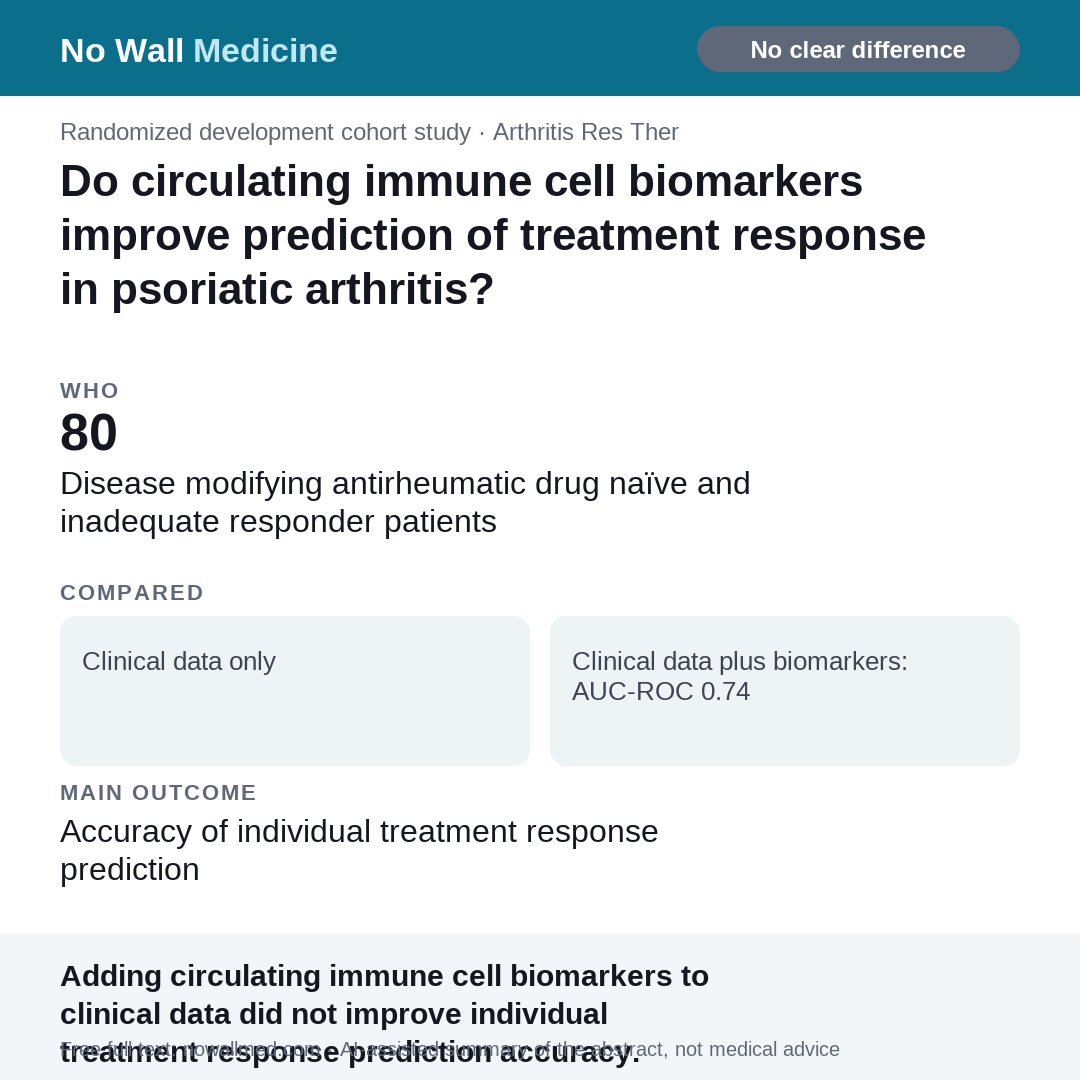
Circulating immune cell biomarkers in Psoriatic Arthritis: associations with clinical manifestations and treatment response in the TOFA-PREDICT trial
Randomized development cohort studyNo clear difference
Do circulating immune cell biomarkers improve prediction of treatment response in psoriatic arthritis?
Who
80
Disease modifying antirheumatic drug naïve and inadequate responder patients
Compared
Clinical data only
Clinical data plus biomarkers: AUC-ROC 0.74
Main outcome
Accuracy of individual treatment response prediction
Bottom line: Adding circulating immune cell biomarkers to clinical data did not improve individual treatment response prediction accuracy.
Arthritis Res Ther · 2026-05-28Download image
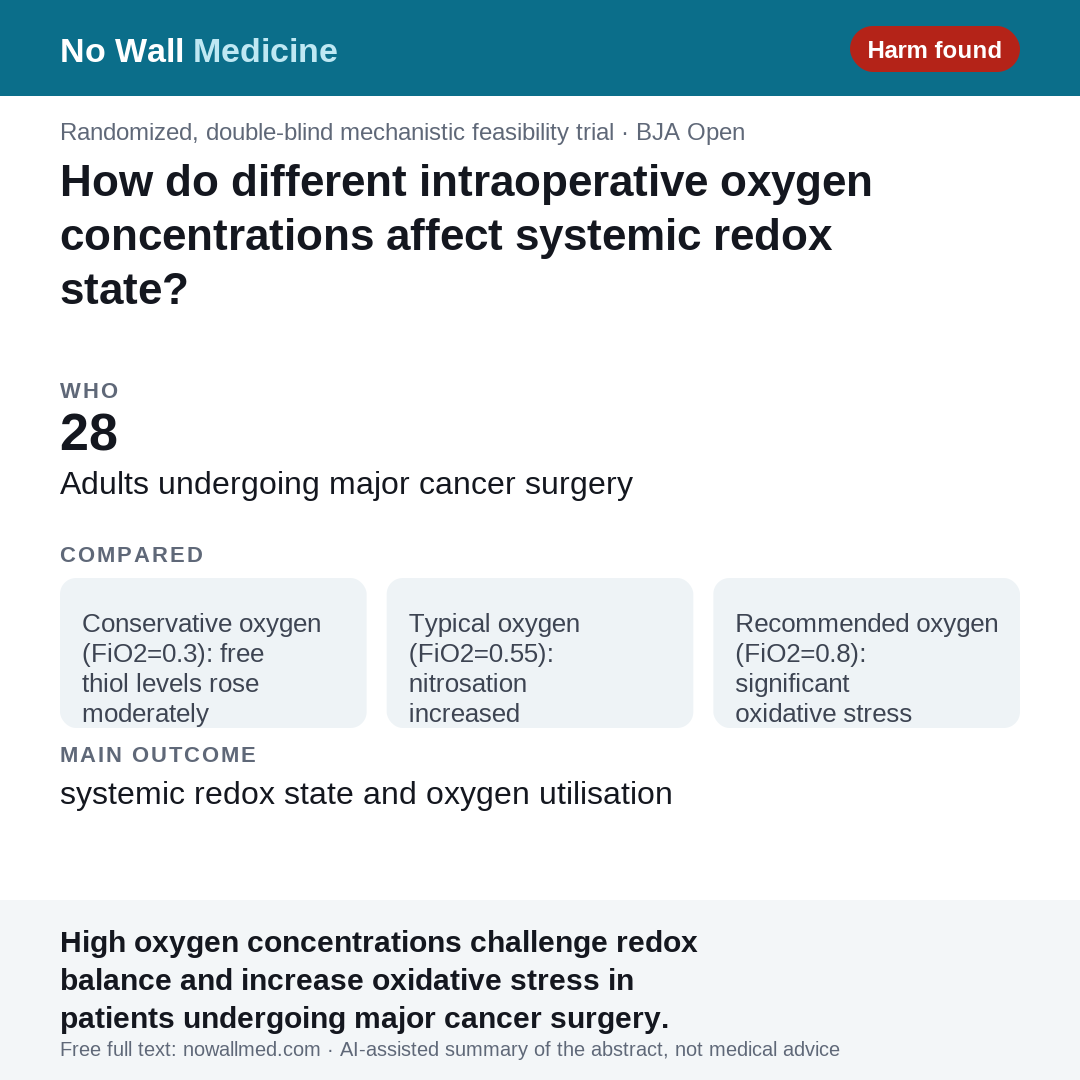
How hyperoxia affects systemic redox state: insights from PULSE-Ox, a randomised double-blind mechanistic feasibility trial
Randomized, double-blind mechanistic feasibility trialHarm found
How do different intraoperative oxygen concentrations affect systemic redox state?
Who
28
Adults undergoing major cancer surgery
Compared
Conservative oxygen (FiO2=0.3): free thiol levels rose moderately
Typical oxygen (FiO2=0.55): nitrosation increased significantly
Recommended oxygen (FiO2=0.8): significant oxidative stress
Main outcome
systemic redox state and oxygen utilisation
Bottom line: High oxygen concentrations challenge redox balance and increase oxidative stress in patients undergoing major cancer surgery.
BJA Open · 2026-05-28Download image
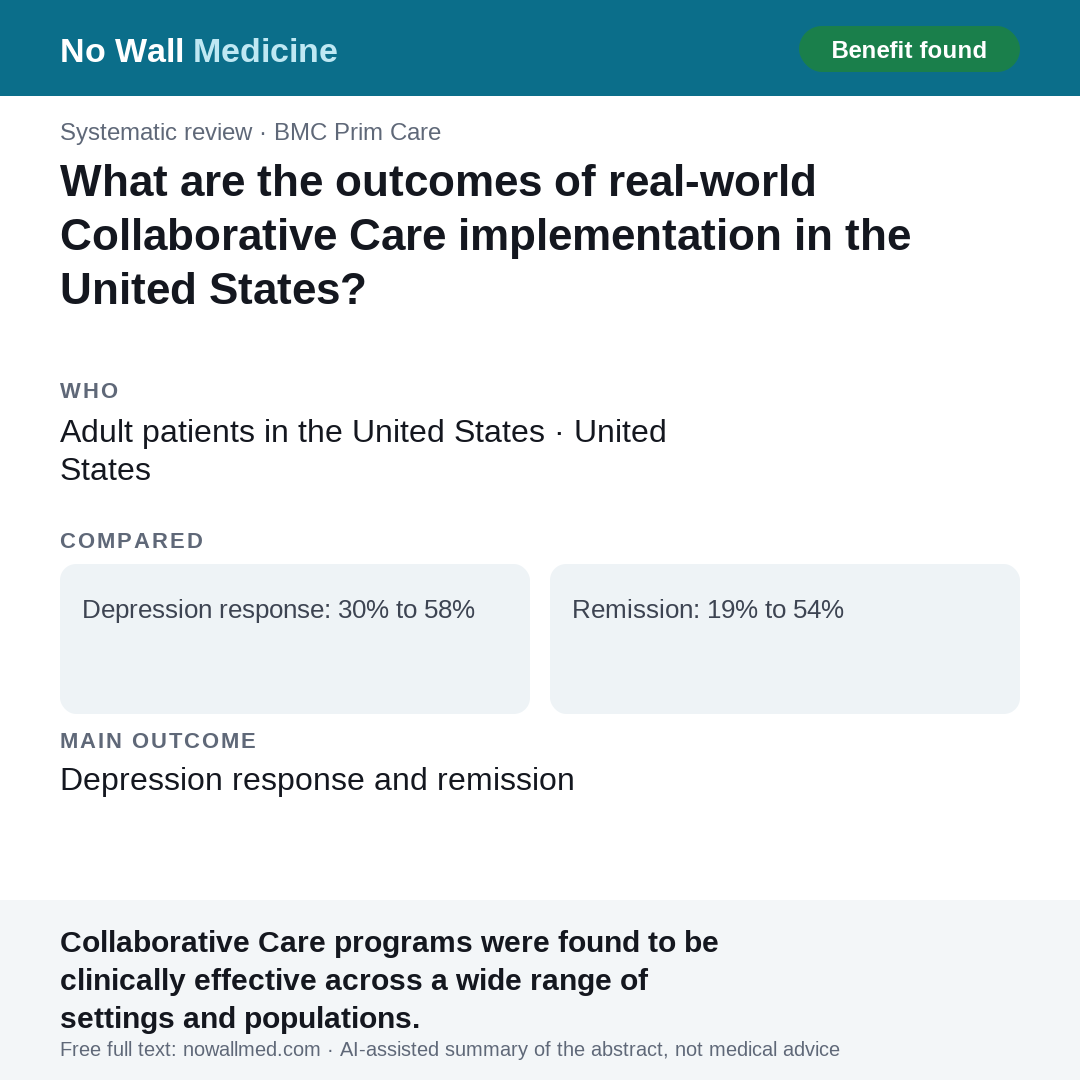
Real-world implementation of Collaborative Care in the United States: a systematic review
Systematic reviewBenefit found
What are the outcomes of real-world Collaborative Care implementation in the United States?
Who
Adult patients in the United States · United States
Compared
Depression response: 30% to 58%
Remission: 19% to 54%
Main outcome
Depression response and remission
Bottom line: Collaborative Care programs were found to be clinically effective across a wide range of settings and populations.
BMC Prim Care · 2026-05-28Download image
A Systematic Review of Pain Drawings for Perioperative Patient Management
Systematic review of 26 studiesBenefit found
Do pain drawings help patient management?
Who
5977
pediatric and adult surgical patients
Compared
Pain drawings
Standard care
Main outcome
pain management
Bottom line: Pain drawings help patient management
Limitation: heterogeneity in methodology
Plast Reconstr Surg Glob Open · 2026-05-28Download image

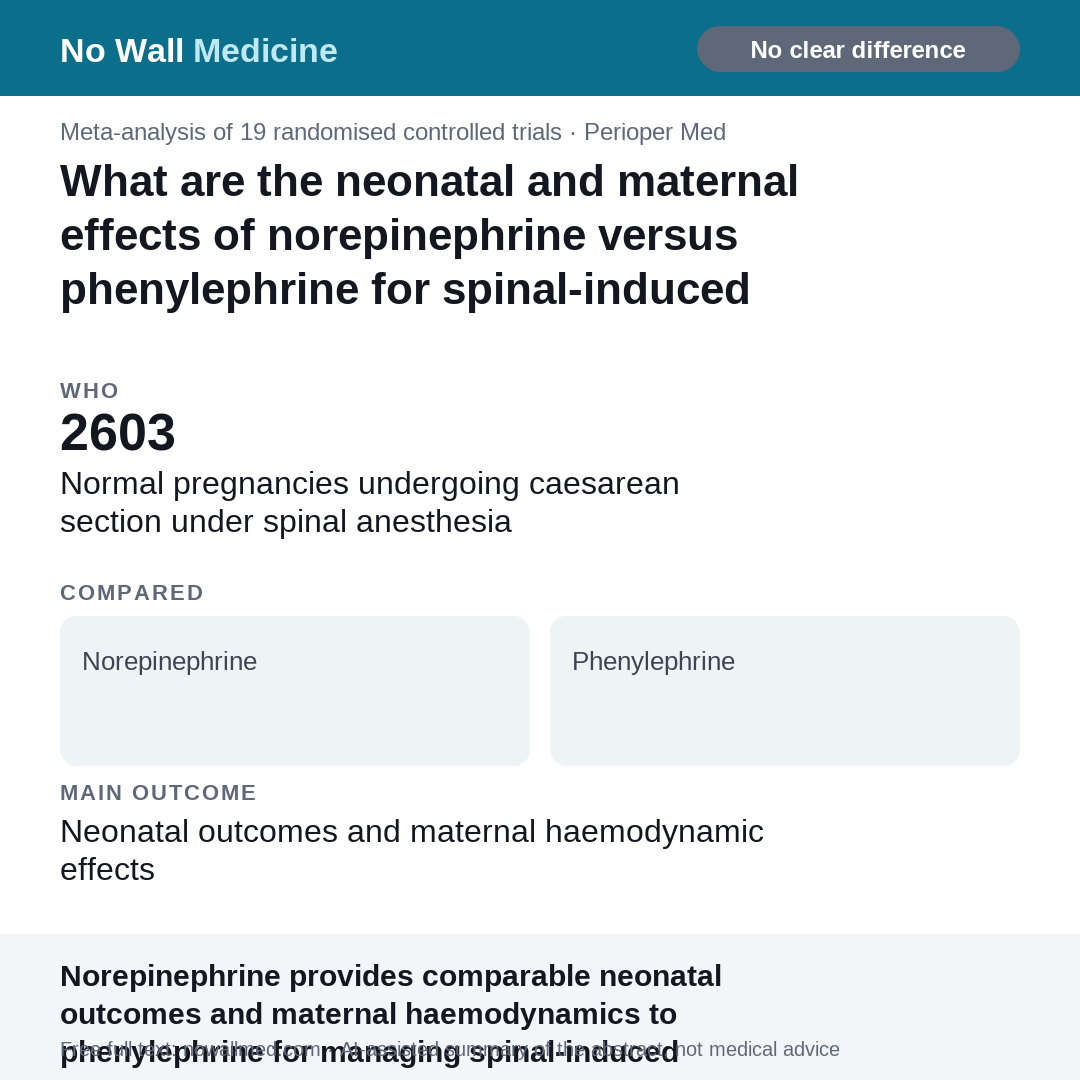
Neonatal outcome following norepinephrine versus phenylephrine for treatment of spinal-induced hypotension among women undergoing caesarean section: systematic review and meta-analysis of randomised controlled trials
Meta-analysis of 19 randomised controlled trialsNo clear difference
What are the neonatal and maternal effects of norepinephrine versus phenylephrine for spinal-induced hypotension?
Who
2603
Normal pregnancies undergoing caesarean section under spinal anesthesia
Compared
Norepinephrine
Phenylephrine
Main outcome
Neonatal outcomes and maternal haemodynamic effects
Bottom line: Norepinephrine provides comparable neonatal outcomes and maternal haemodynamics to phenylephrine for managing spinal-induced hypotension.
Perioper Med · 2026-05-28Download image
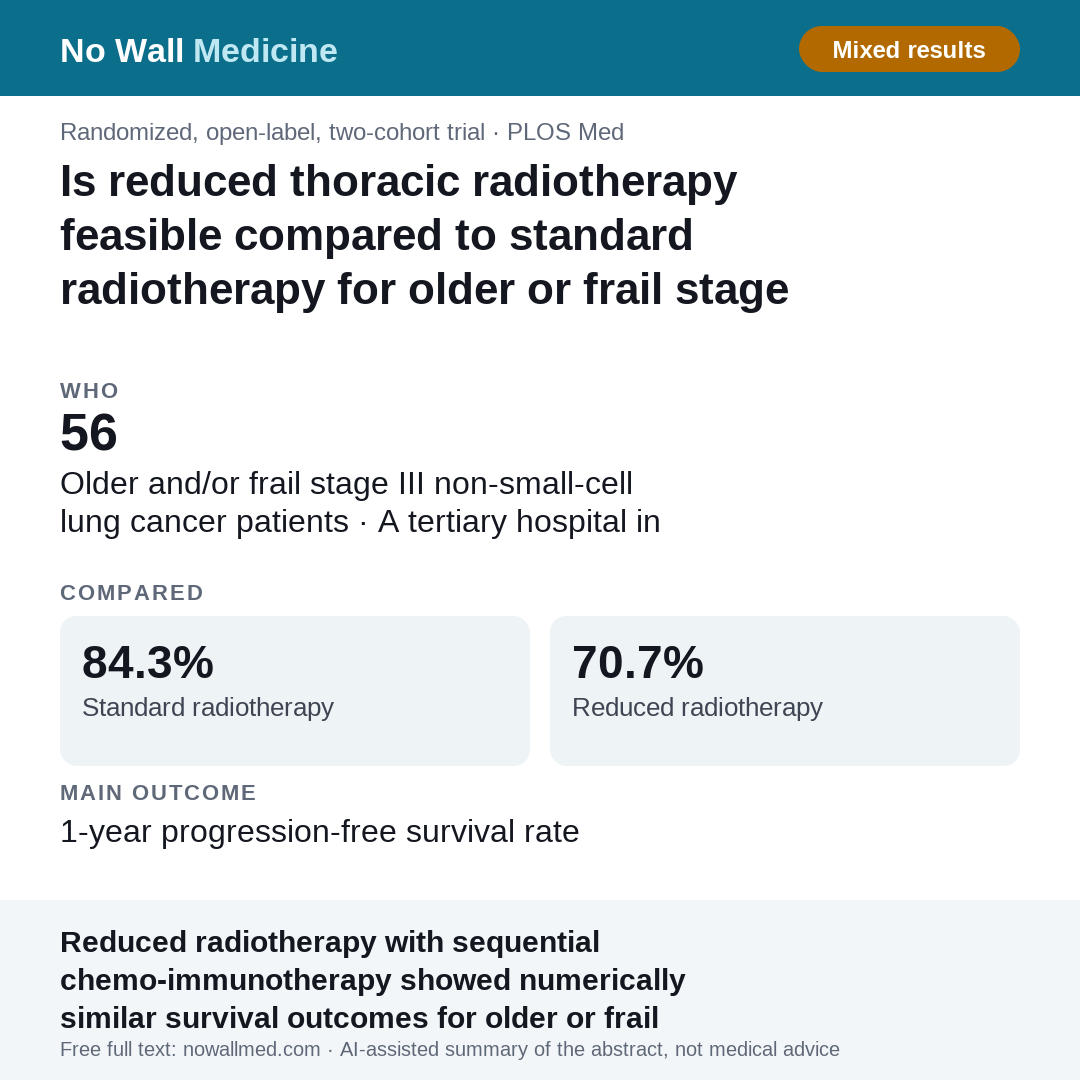
Sequential chemo-immunotherapy followed by standard versus reduced thoracic radiotherapy for older and/or frail stage III non-small-cell lung cancer: A randomized open-label cohort trial
Randomized, open-label, two-cohort trialMixed results
Is reduced thoracic radiotherapy feasible compared to standard radiotherapy for older or frail stage III lung cancer?
Who
56
Older and/or frail stage III non-small-cell lung cancer patients · A tertiary hospital in China
Compared
84.3%Standard radiotherapy (95% CI 70.3% to 98.3%)
70.7%Reduced radiotherapy (95% CI 54.3% to 87.1%)
Main outcome
1-year progression-free survival rate
Bottom line: Reduced radiotherapy with sequential chemo-immunotherapy showed numerically similar survival outcomes for older or frail patients.
Limitation: Non-comparative design, small sample size, and lack of power to establish non-inferiority or superiority.
PLOS Med · 2026-05-27Download image
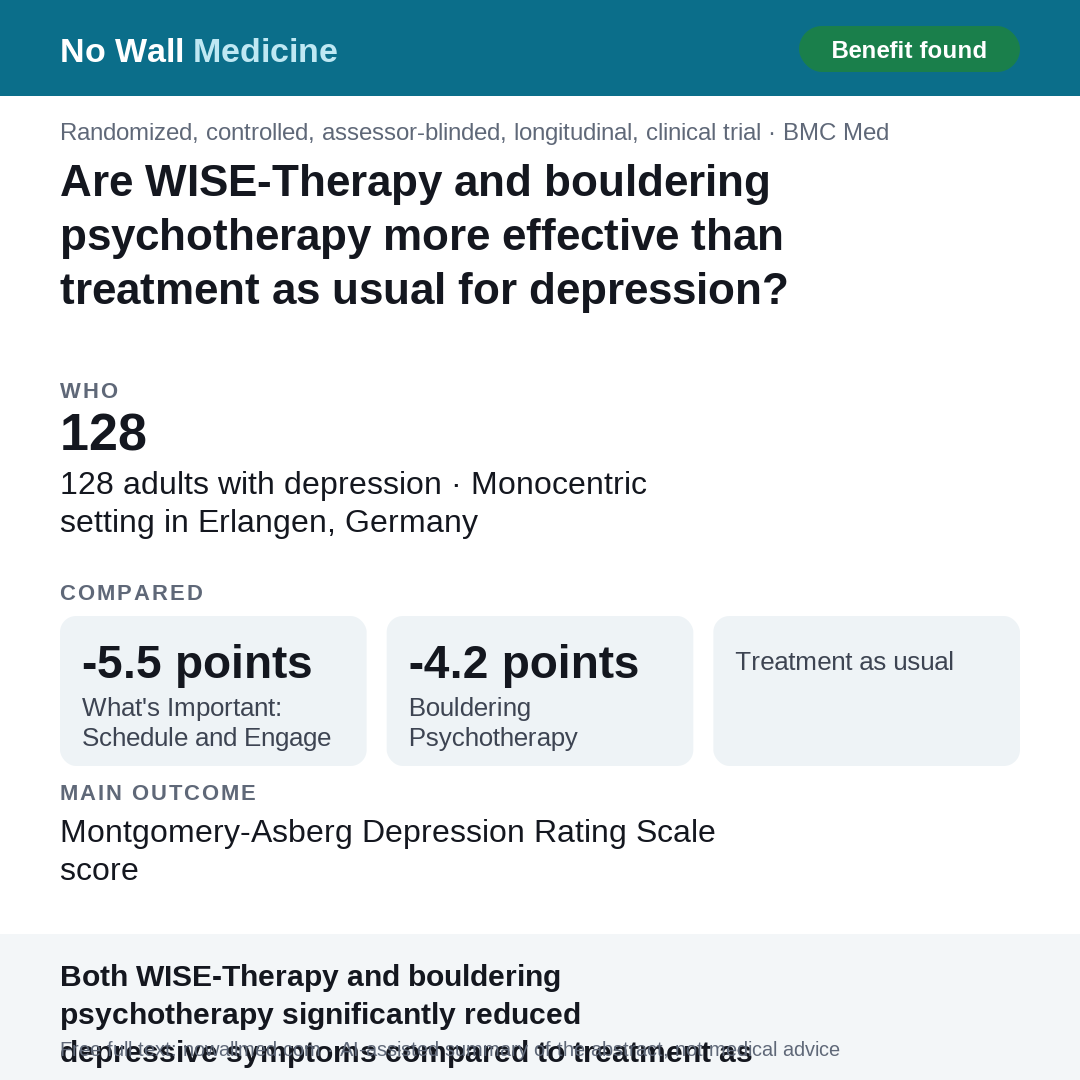
WISE-Therapy (What's Important: Schedule and Engage) and bouldering psychotherapy for depression: A randomized clinical trial
Randomized, controlled, assessor-blinded, longitudinal, clinical trialBenefit found
Are WISE-Therapy and bouldering psychotherapy more effective than treatment as usual for depression?
Who
128
128 adults with depression · Monocentric setting in Erlangen, Germany
Compared
-5.5 pointsWhat's Important: Schedule and Engage
-4.2 pointsBouldering Psychotherapy
Treatment as usual
Main outcome
Montgomery-Asberg Depression Rating Scale score
Result: WISE-T: -5.5 points, 95%-CI [-9.5 to -1.5]; BPT: -4.2 points, 95%-CI [-8.2 to -0.3]
Bottom line: Both WISE-Therapy and bouldering psychotherapy significantly reduced depressive symptoms compared to treatment as usual.
BMC Med · 2026-05-27Download image
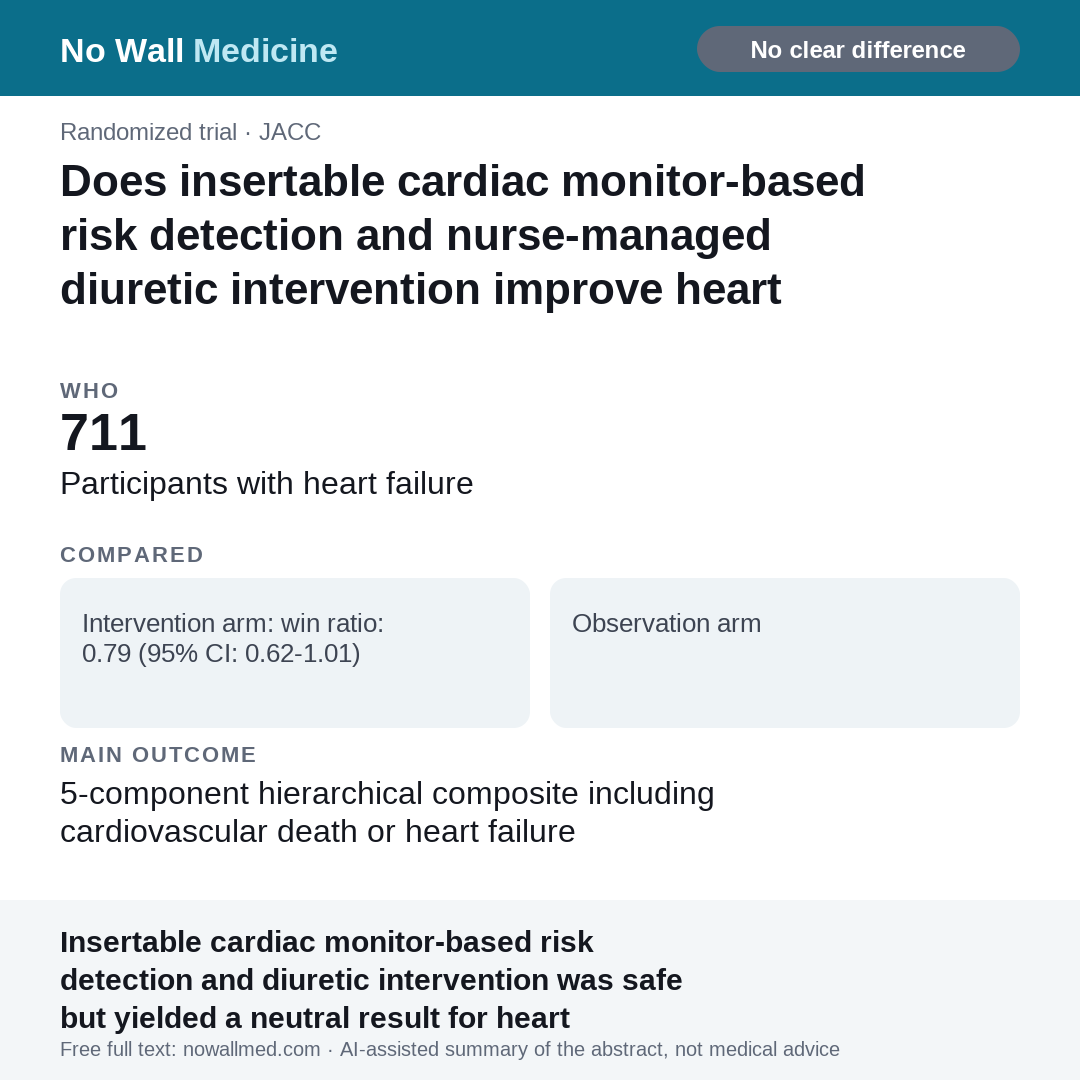
Risk-Based Nurse-Managed Personalized Heart Failure Interventions: The ALLEVIATE-HF Trial
Randomized trialNo clear difference
Does insertable cardiac monitor-based risk detection and nurse-managed diuretic intervention improve heart failure outcomes?
Who
711
Participants with heart failure
Compared
Intervention arm: win ratio: 0.79 (95% CI: 0.62-1.01)
Observation arm
Main outcome
5-component hierarchical composite including cardiovascular death or heart failure hospitalization
Result: win ratio: 0.79 (95% CI: 0.62-1.01)
Bottom line: Insertable cardiac monitor-based risk detection and diuretic intervention was safe but yielded a neutral result for heart failure outcomes.
JACC · 2026-05-27Download image
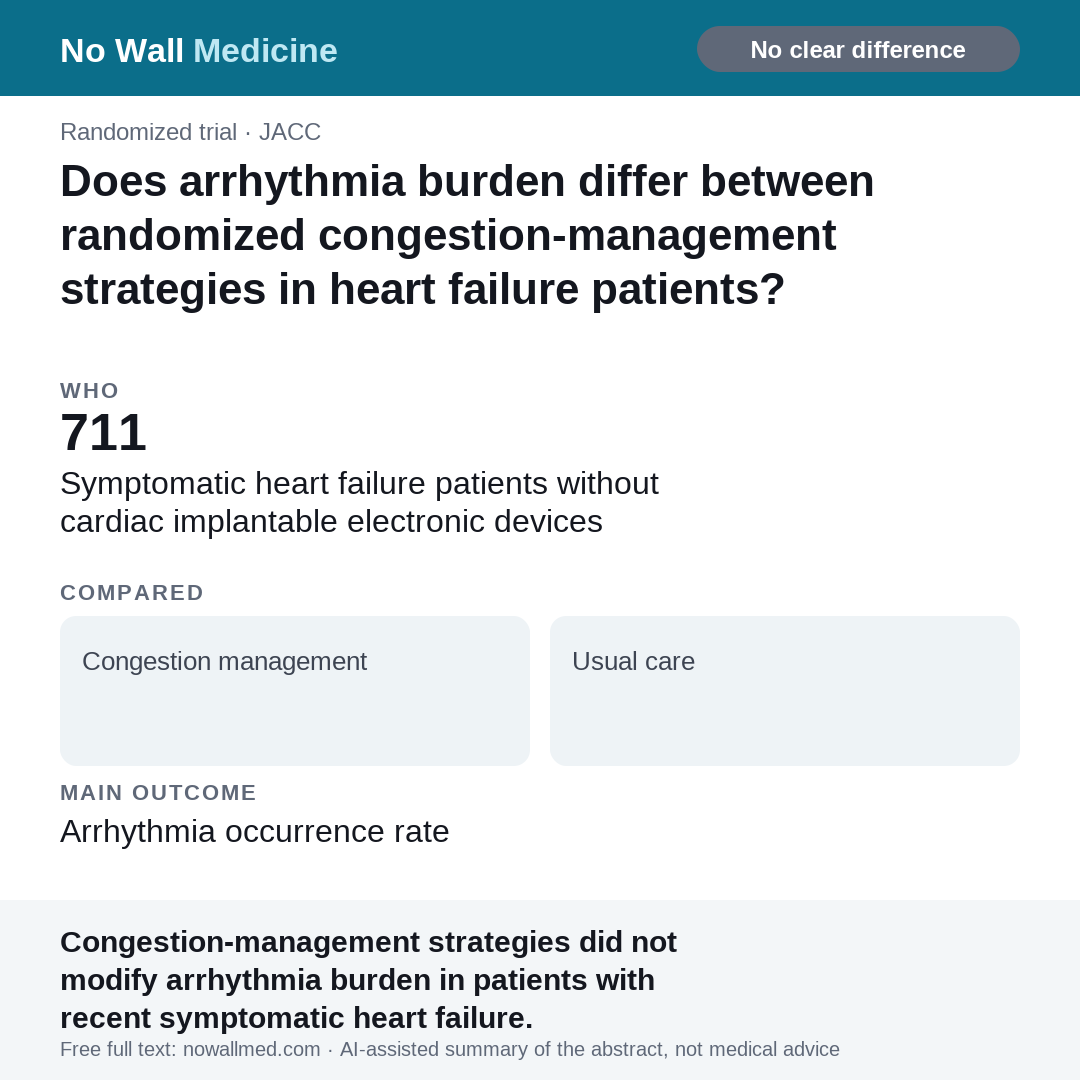
Arrhythmia Burden and Clinical Responses Under Continuous Monitoring in Heart Failure: Observations From the ALLEVIATE-HF Trial
Randomized trialNo clear difference
Does arrhythmia burden differ between randomized congestion-management strategies in heart failure patients?
Who
711
Symptomatic heart failure patients without cardiac implantable electronic devices
Compared
Congestion management
Usual care
Main outcome
Arrhythmia occurrence rate
Bottom line: Congestion-management strategies did not modify arrhythmia burden in patients with recent symptomatic heart failure.
JACC · 2026-05-27Download image
Vamorolone for Duchenne Muscular Dystrophy: A Cross-Trial Efficacy Comparison With Classic Corticosteroids From the FOR-DMD Trial
Cross-trial efficacy comparison of two randomized trialsNo clear difference
Is vamorolone efficacy and anthropometric effect similar to prednisone and deflazacort in Duchenne muscular dystrophy?
Who
Steroid-naïve ambulatory boys aged 4 to <7 years
Compared
Vamorolone 6 mg/kg/d: similar changes in TTSTAND velocity
Daily prednisone 0.75 mg/kg/d: similar changes in TTSTAND velocity
Daily deflazacort 0.9 mg/kg/d: similar changes in TTSTAND velocity
Main outcome
Time-to-stand velocity and anthropometric outcomes
Result: LSM difference vs prednisone 0.004 rises per second (95% CI -0.025 to 0.032)
Bottom line: Vamorolone showed similar motor efficacy to prednisone and deflazacort while providing a growth-protective alternative.
Limitation: Interpretations are limited by 95% confidence intervals crossing minimally important difference thresholds.
Neurology · 2026-05-27Download image

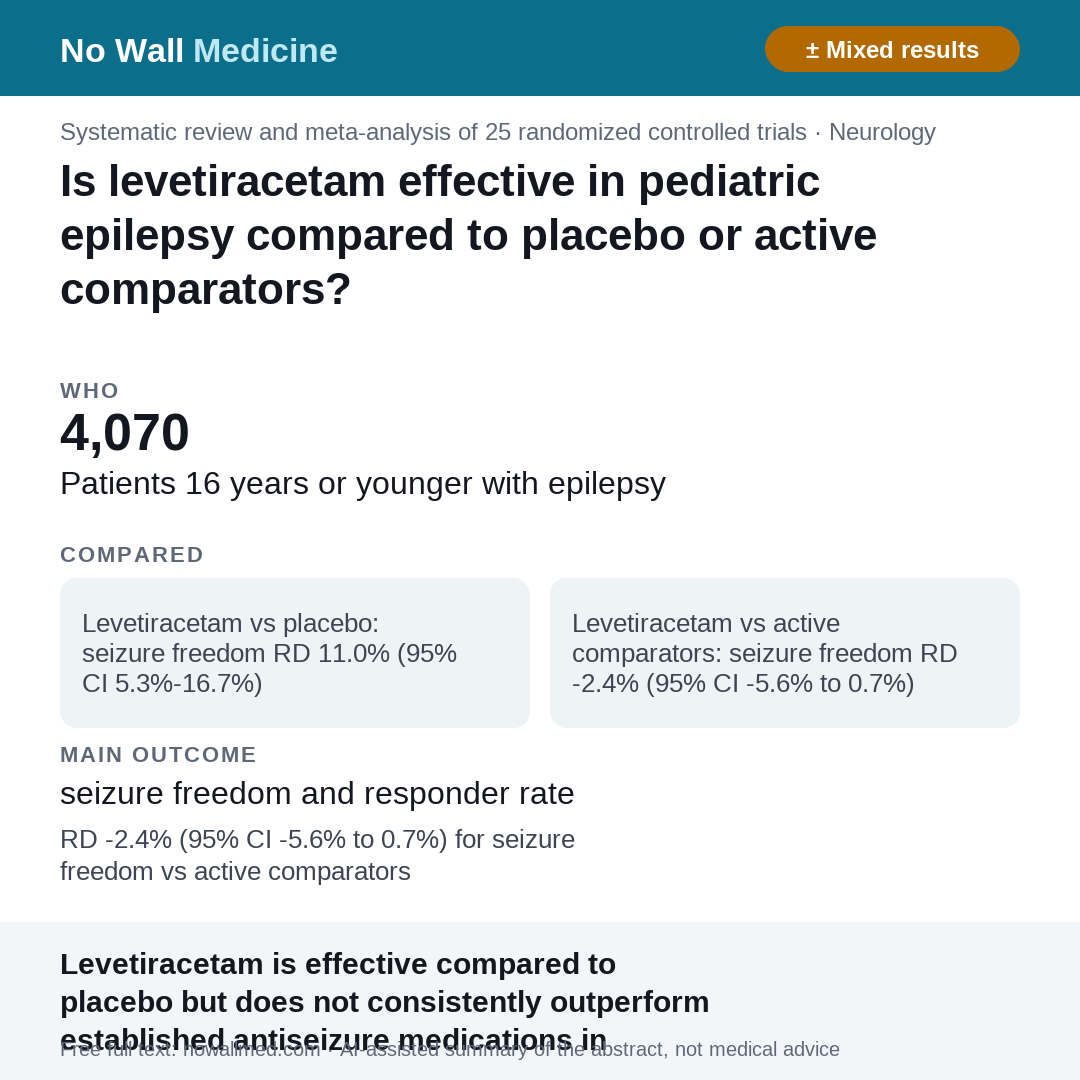
Efficacy of Levetiracetam in Patients With Pediatric Epilepsy: A Systematic Review and Meta-Analysis
Systematic review and meta-analysis of 25 randomized controlled trialsMixed results
Is levetiracetam effective in pediatric epilepsy compared to placebo or active comparators?
Who
4,070
Patients 16 years or younger with epilepsy
Compared
Levetiracetam vs placebo: seizure freedom RD 11.0% (95% CI 5.3%-16.7%)
Levetiracetam vs active comparators: seizure freedom RD -2.4% (95% CI -5.6% to 0.7%)
Main outcome
seizure freedom and responder rate
Result: RD -2.4% (95% CI -5.6% to 0.7%) for seizure freedom vs active comparators
Bottom line: Levetiracetam is effective compared to placebo but does not consistently outperform established antiseizure medications in pediatric epilepsy.
Limitation: Substantial heterogeneity, frequent high risk of bias, variable follow-up, and publication bias.
Neurology · 2026-05-27Download image
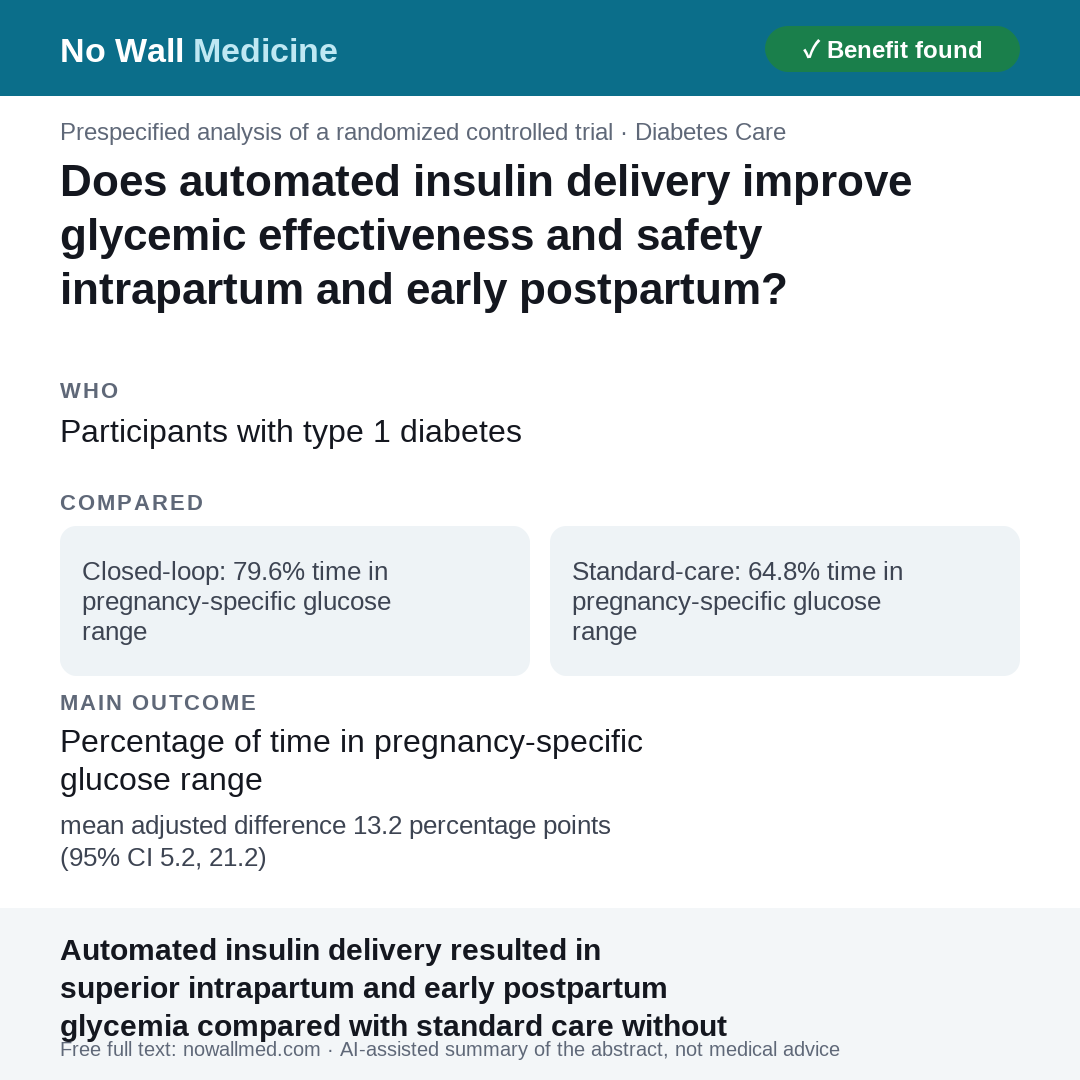
Intrapartum and Early Postpartum Use of Automated Insulin Delivery in Type 1 Diabetes: A Prespecified Analysis of the CIRCUIT Randomized Controlled Trial
Prespecified analysis of a randomized controlled trialBenefit found
Does automated insulin delivery improve glycemic effectiveness and safety intrapartum and early postpartum?
Who
Participants with type 1 diabetes
Compared
Closed-loop: 79.6% time in pregnancy-specific glucose range
Standard-care: 64.8% time in pregnancy-specific glucose range
Main outcome
Percentage of time in pregnancy-specific glucose range
Result: mean adjusted difference 13.2 percentage points (95% CI 5.2, 21.2)
Bottom line: Automated insulin delivery resulted in superior intrapartum and early postpartum glycemia compared with standard care without safety concerns.
Diabetes Care · 2026-05-27Download image
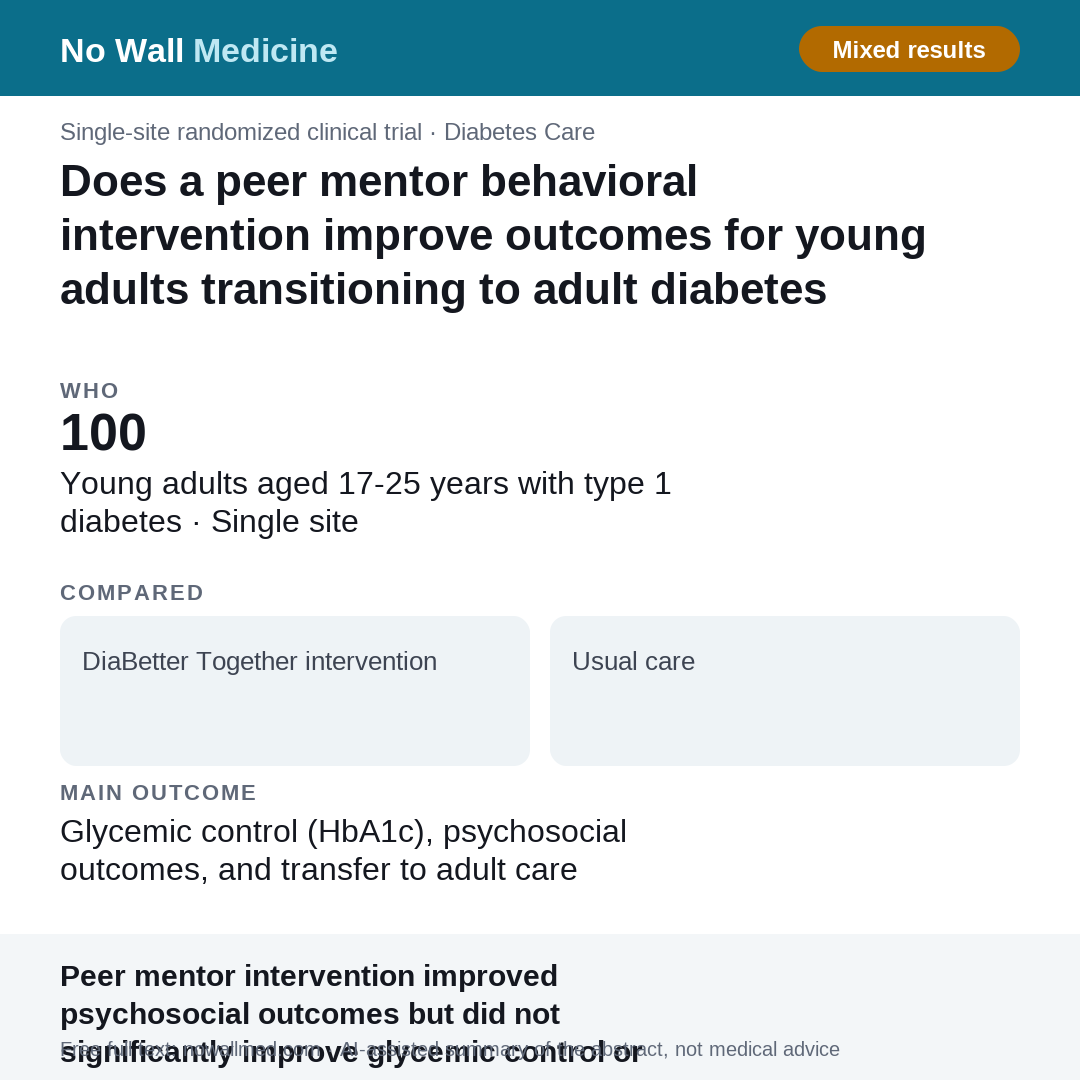
DiaBetter Together: Outcomes of a Randomized Controlled Trial Evaluating a Peer Mentor Behavioral Intervention for Young Adults With Type 1 Diabetes During the Transfer From Pediatric to Adult Care
Single-site randomized clinical trialMixed results
Does a peer mentor behavioral intervention improve outcomes for young adults transitioning to adult diabetes care?
Who
100
Young adults aged 17-25 years with type 1 diabetes · Single site
Compared
DiaBetter Together intervention
Usual care
Main outcome
Glycemic control (HbA1c), psychosocial outcomes, and transfer to adult care
Bottom line: Peer mentor intervention improved psychosocial outcomes but did not significantly improve glycemic control or transfer to adult care.
Limitation: Reduced sample size due to the coronavirus disease 2019 pandemic may have limited power.
Diabetes Care · 2026-05-27Download image
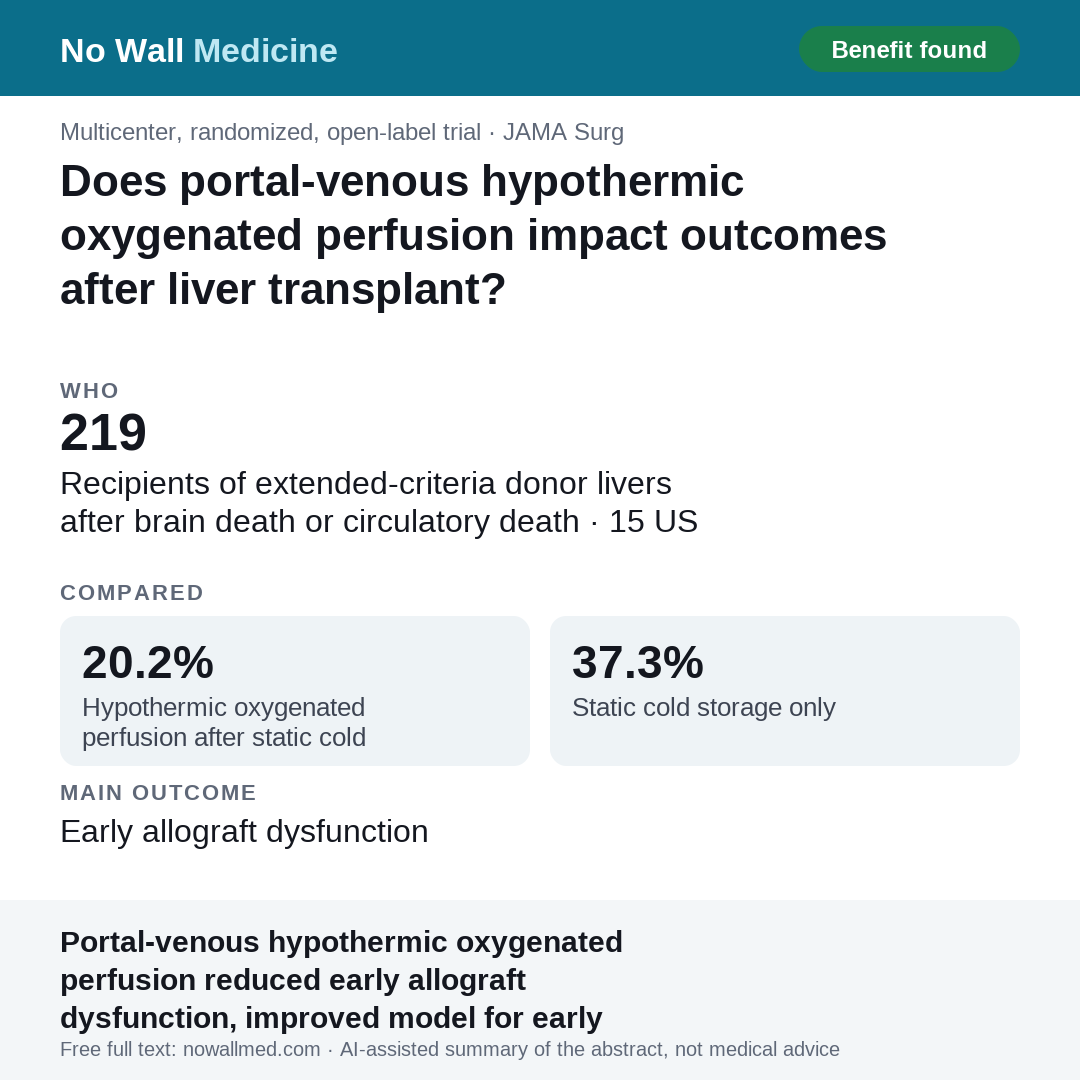
Portal-Venous Hypothermic Oxygenated Perfusion for Liver Transplant: A Randomized Clinical Trial
Multicenter, randomized, open-label trialBenefit found
Does portal-venous hypothermic oxygenated perfusion impact outcomes after liver transplant?
Who
219
Recipients of extended-criteria donor livers after brain death or circulatory death · 15 US liver transplant centers
Compared
20.2%Hypothermic oxygenated perfusion after static cold storage (22/109)
37.3%Static cold storage only (41/110)
Main outcome
Early allograft dysfunction
Result: rate difference, -17.1%; 95% CI, -27.2 to -7.0
Bottom line: Portal-venous hypothermic oxygenated perfusion reduced early allograft dysfunction, improved model for early allograft function scores, and shortened hospital stay.
JAMA Surg · 2026-05-27Download image
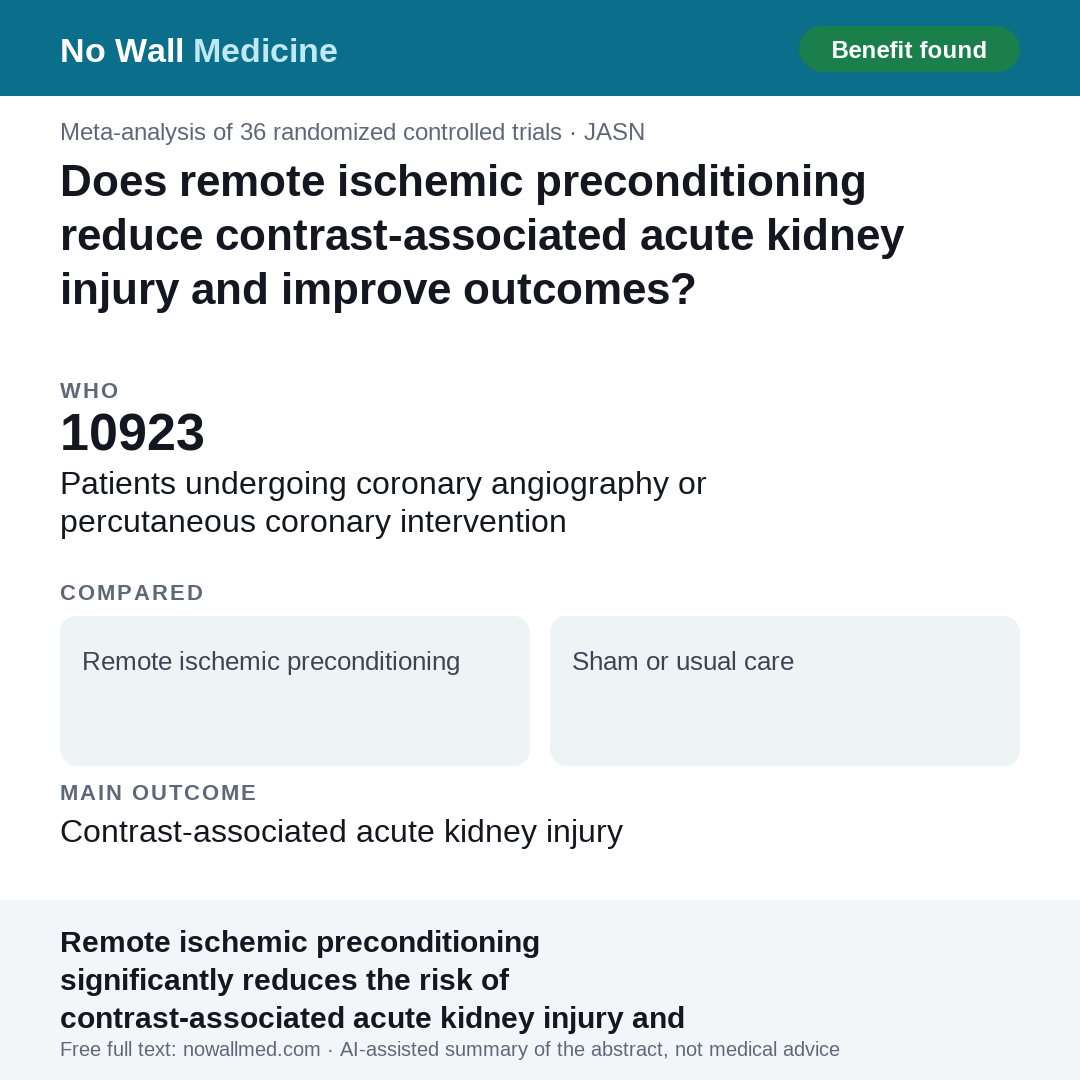
Remote Ischemic Preconditioning for Prevention of Contrast-Associated Acute Kidney Injury following Coronary Angiography or Percutaneous Coronary Intervention
Meta-analysis of 36 randomized controlled trialsBenefit found
Does remote ischemic preconditioning reduce contrast-associated acute kidney injury and improve outcomes?
Who
10923
Patients undergoing coronary angiography or percutaneous coronary intervention
Compared
Remote ischemic preconditioning
Sham or usual care
Main outcome
Contrast-associated acute kidney injury
Result: risk ratio 0.54 (95% CI 0.45 to 0.65)
Bottom line: Remote ischemic preconditioning significantly reduces the risk of contrast-associated acute kidney injury and in-hospital major adverse cardiovascular events.
JASN · 2026-05-27Download image
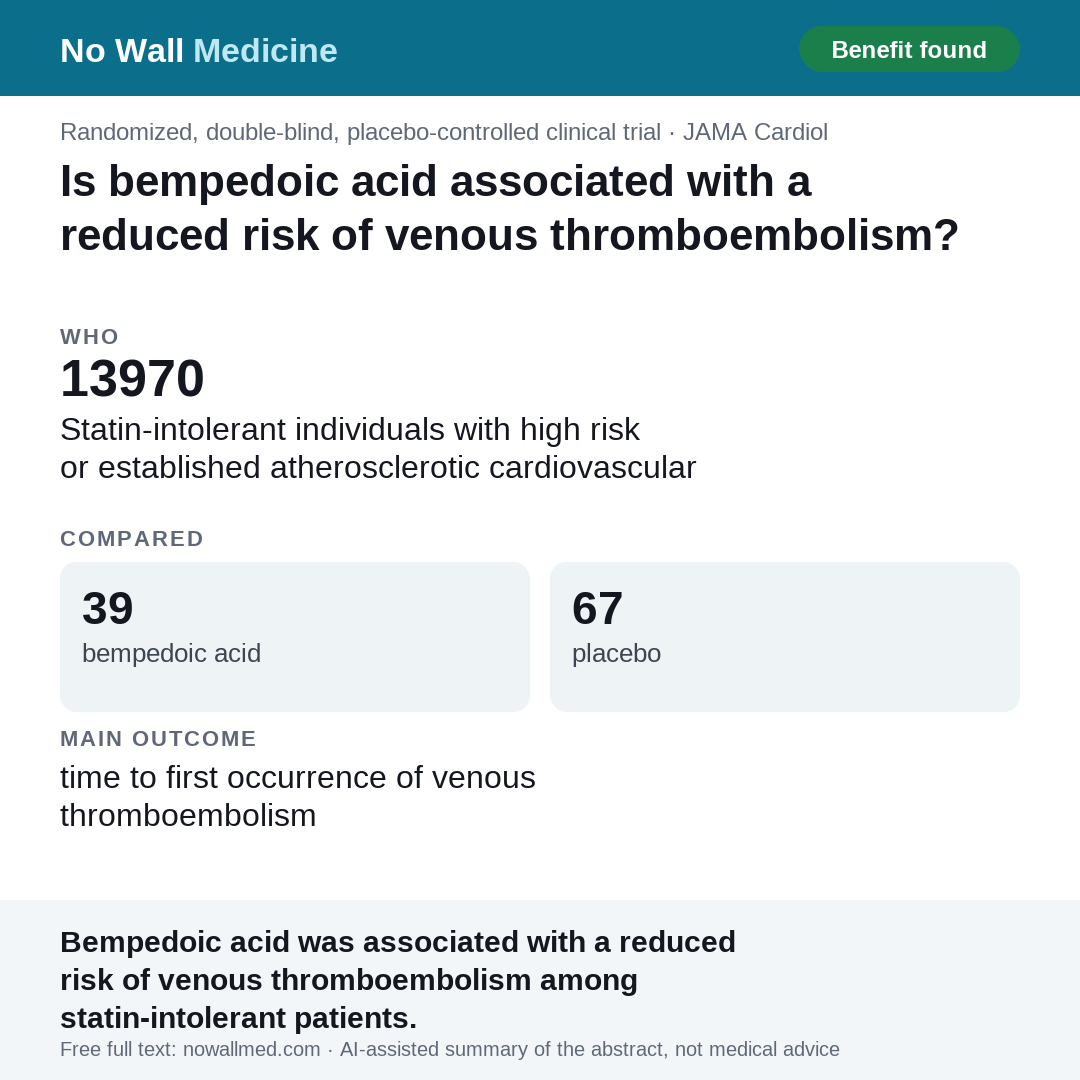
Bempedoic Acid and Venous Thromboembolism Risk Among Statin-Intolerant Patients: A Post Hoc Analysis of the CLEAR Outcomes Randomized Clinical Trial
Randomized, double-blind, placebo-controlled clinical trialBenefit found
Is bempedoic acid associated with a reduced risk of venous thromboembolism?
Who
13970
Statin-intolerant individuals with high risk or established atherosclerotic cardiovascular disease · 1250 centers across 32 countries
Compared
39bempedoic acid
67placebo
Main outcome
time to first occurrence of venous thromboembolism
Result: hazard ratio 0.58 (95% CI, 0.39-0.86)
Bottom line: Bempedoic acid was associated with a reduced risk of venous thromboembolism among statin-intolerant patients.
JAMA Cardiol · 2026-05-27Download image
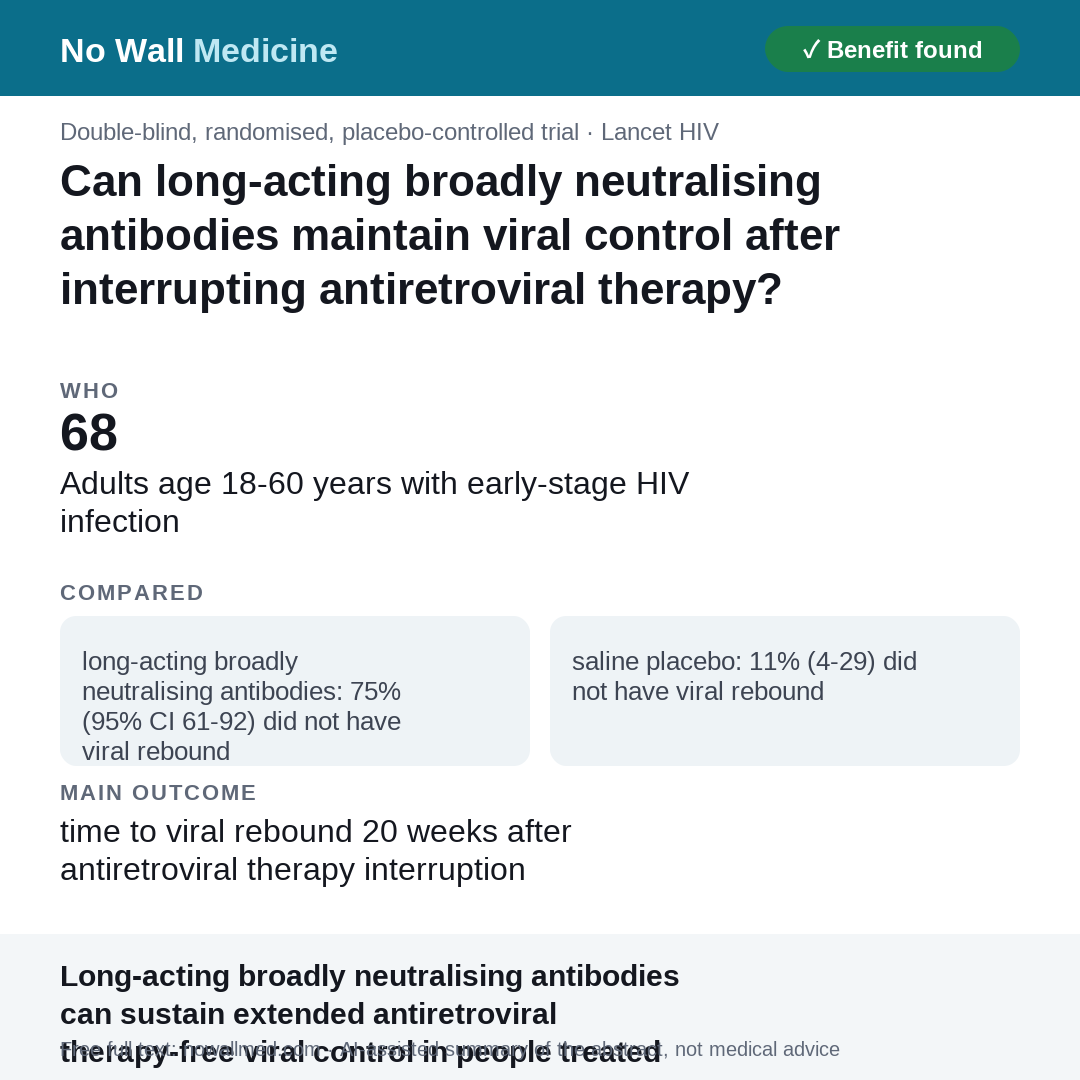
Time to HIV rebound after infusion of long-acting broadly neutralising antibodies 3BNC117-LS and 10-1074-LS and analytical treatment interruption (the RIO trial): a double-blind, randomised, placebo-controlled trial
Double-blind, randomised, placebo-controlled trialBenefit found
Can long-acting broadly neutralising antibodies maintain viral control after interrupting antiretroviral therapy?
Who
68
Adults age 18-60 years with early-stage HIV infection
Compared
long-acting broadly neutralising antibodies: 75% (95% CI 61-92) did not have viral rebound
saline placebo: 11% (4-29) did not have viral rebound
Main outcome
time to viral rebound 20 weeks after antiretroviral therapy interruption
Result: hazard ratio 0·09 (95% CI 0·04-0·21)
Bottom line: Long-acting broadly neutralising antibodies can sustain extended antiretroviral therapy-free viral control in people treated during early-stage HIV.
Funded by: Gates Foundation
Lancet HIV · 2026-05-27Download image